The Crooked Tree Arts Center is pleased to host the American Impressionist Society’s third annual AIS Impressions Small Works Showcase. The exhibit will be held through August 31, 2019, at the Crooked Tree Arts Center in Petoskey, Michigan.
The annual small works showcase is a juried exhibition opportunity open to AIS members, which demonstrates the finest examples of Impressionism produced by some of today’s American Impressionist artists. Learn more on the Crooked Tree Arts Center and AIS websites.
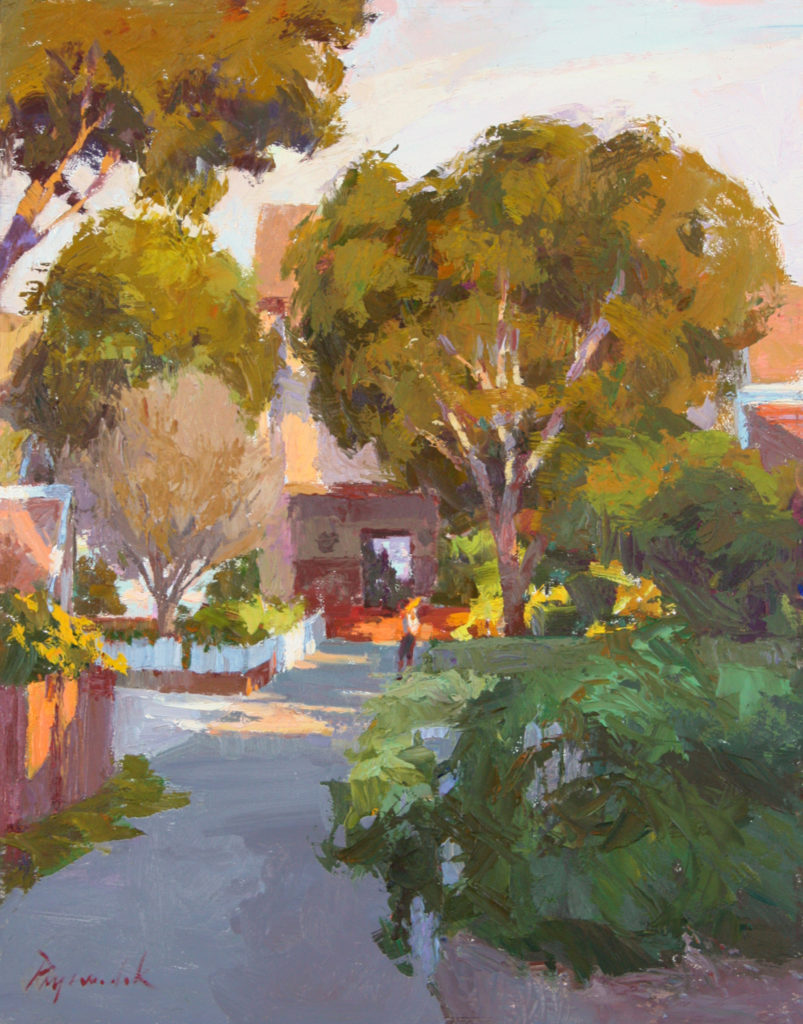
Camille Przewodek (b. 1947), “Glance at Setting Sun,” 2013, oil on panel, 14 x 11 in.
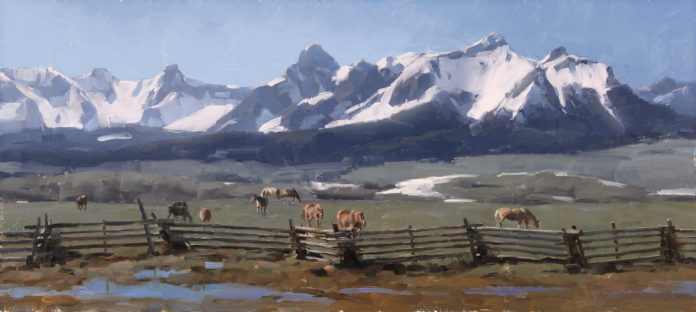
Dave Santillanes, “Last Dollar Ranch Study” oil, 10 x 22 in.
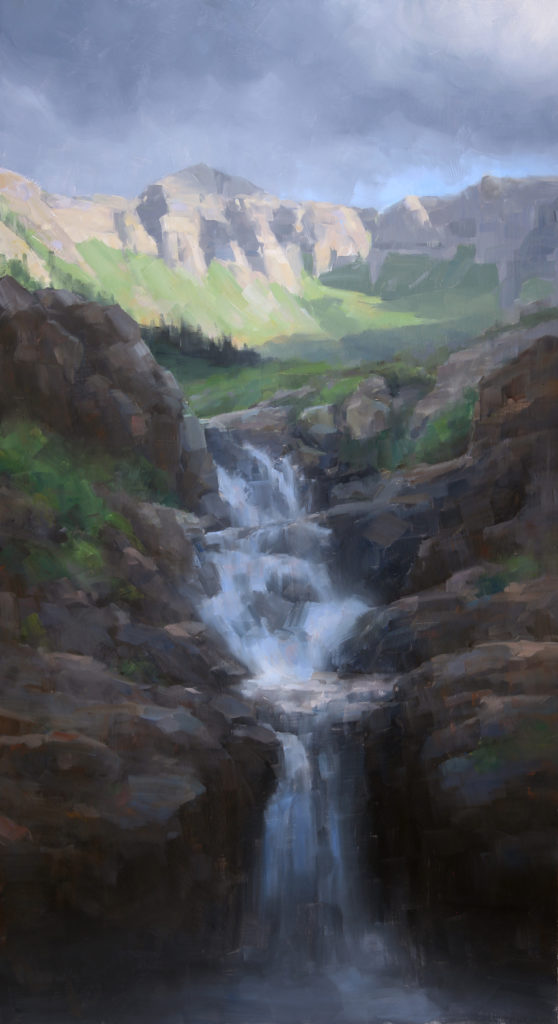
At Oh Be Joyful Gallery, June 4–16, 2019, view a selection of new landscape paintings of the Rocky Mountains and more by plein air artist Dave Santillanes.
From the gallery:
Dave’s signature style incorporates soft edges and atmospheric perspective in sophisticated, elegant compositions. Dave has received much recognition in the past couple of years, including awards from the American Impressionist Society and PleinAir Salon. His recent successes have put his work in high demand, and we are proud to offer you this latest round of ten of Dave’s newest paintings.
Dave Santillanes, “Poverty Creek,” oil, 40 x 22 in.
“As my painting style continues to evolve, my goal with each piece is not a literal rendering of the scene. Instead it is to capture and convey its essence,” says Dave.
“In terms of composition, I look for simplicity. I’ve found that there are many opportunities to simplify a scene without compromising its sense of ‘place.’ Therefore I’ll seek out the big, abstract shapes in the landscape and use them for the underlying design concept. And because I’ve departed from a literal interpretation, I’m free to rearrange elements to fit this concept. In this way I am able to describe the scene in my own ‘words.’
“Finally, capturing the essence of a landscape involves a realistic rendering of color, light, and atmosphere. This requires direct observation and is why most of my paintings begin in the field with a plein air study. But studying the physical aspects of nature isn’t the only reason I paint outdoors; for me, the sensory experience of being there is equally important. There’s no better way to get to know a place on earth than to sit for a couple of hours and contemplate it while painting. This intense observation brings a spiritual intimacy with the scene that can’t be achieved in mere passing and allows me to ‘speak’ with complete sincerity in each painting.”
Learn more about the exhibition and Oh Be Joyful Gallery (Crested Butte, CO) at www.ohbejoyfulgallery.com.
2019 marks the 350th Anniversary of Rembrandt van Rijn, the greatest master of the Dutch Golden Age. To celebrate this important anniversary, the Rijksmuseum will stage The Year of Rembrandt, an extraordinary year of special events and exhibitions celebrating the work of one of the world’s greatest artists.
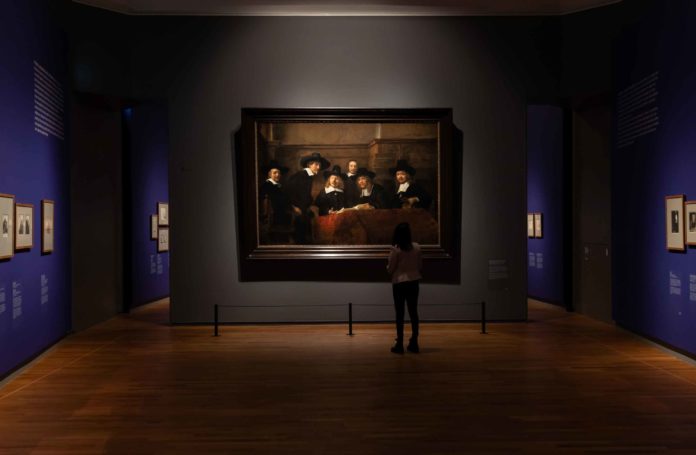
The Rijksmuseum is currently presenting the exhibition “All the Rembrandts” (through June 10, 2019). In the autumn, the Rijksmuseum will showcase a comprehensive overview of paintings by the two great masters of the 17th century in the exhibition “Rembrandt – Velázquez” (October 11, 2019 – January 19, 2020).
As well as holding the world’s largest collection of Rembrandt paintings — including “The Night Watch,” the portraits of Marten Soolmans and Oopjen Coppit, “The Jewish Bride” — the Rijksmuseum collection offers the world’s most comprehensive and representative overview of Rembrandt’s painting oeuvre.
Given the extreme rarity with which many of these delicate drawings and prints go on display, “All the Rembrandts” offers a once-in-a-lifetime opportunity to glean an unparalleled perspective on Rembrandt the artist, the human, the storyteller, the innovator.
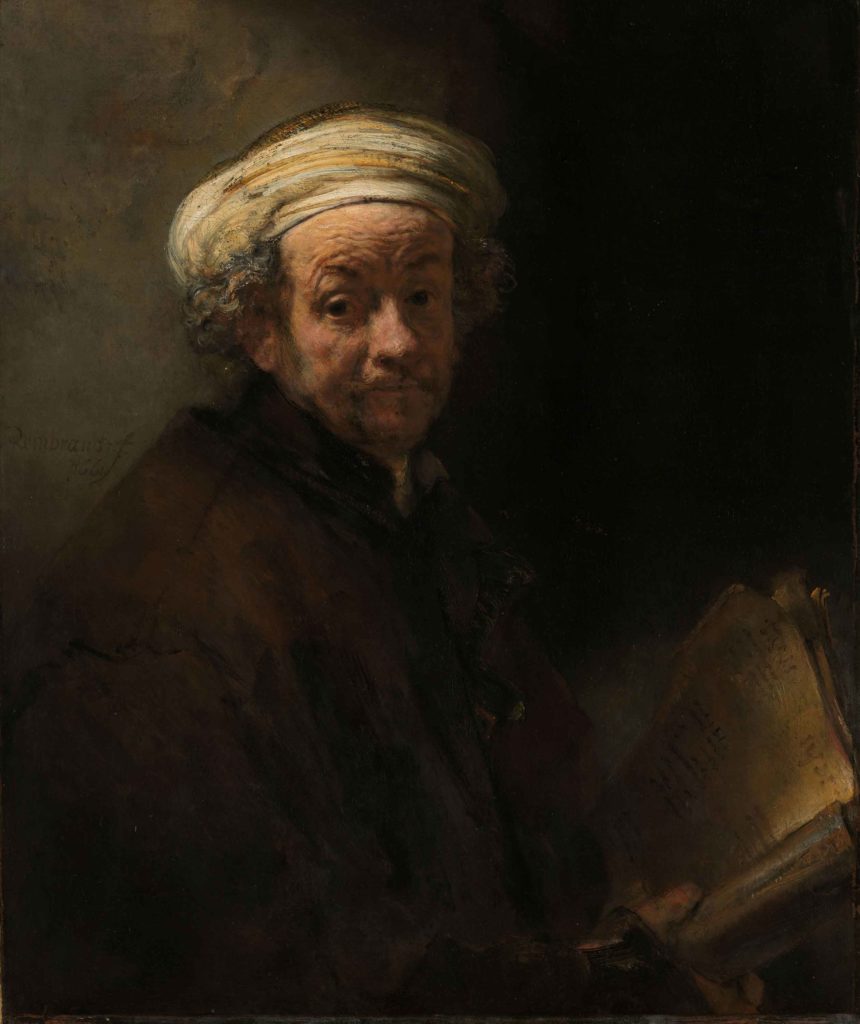
Rembrandt van Rijn, “Self-Portrait as the Apostle Paul,” 1661. De Bruijn-van der Leeuw Bequest, Muri, Switzerland
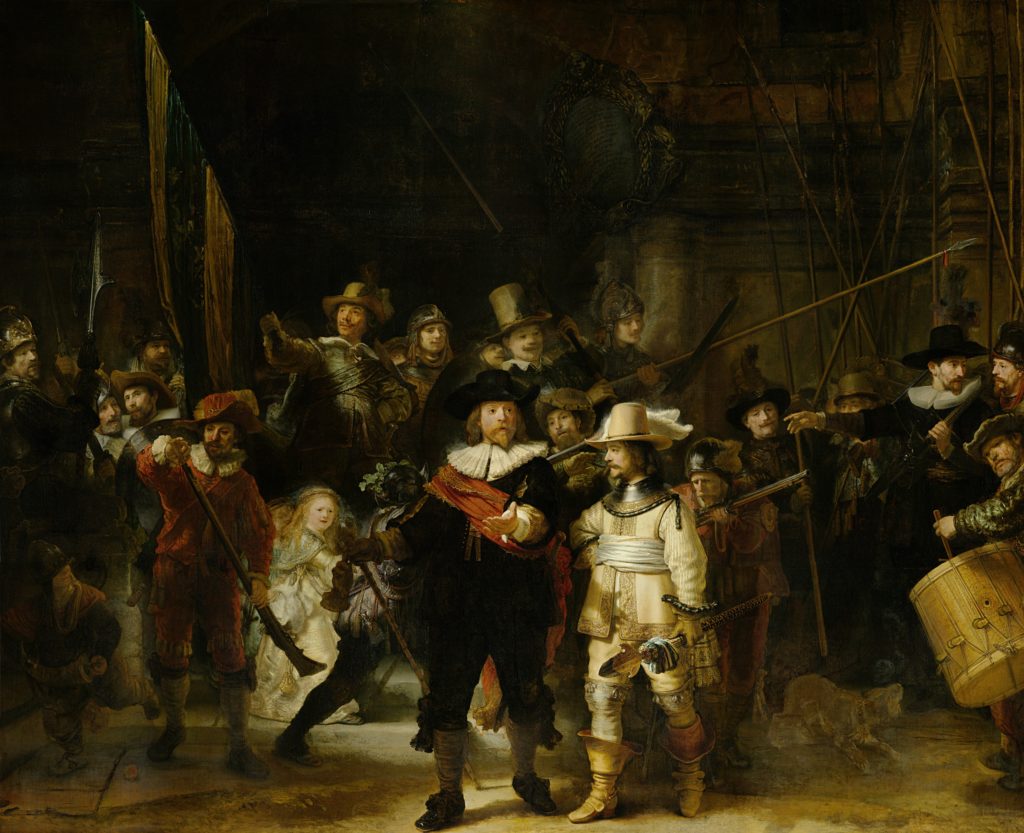
The recent acquisition of the spectacular marriage portraits of Marten Soolmans and Oopjen Coppit means the Rijksmuseum’s collection of Rembrandt paintings is now the largest in the world. With its total of 22 works, from the early “Self-Portrait as a Young Man” to the later “Self-Portrait as the Apostle Paul,” the collection forms a coherent overview of his entire life. The highlight of the collection of Rembrandt’s paintings is his greatest masterpiece, “The Night Watch.”
Rembrandt van Rijn, Militia Company of District II under the Command of Captain Frans Banninck Cocq, known as “The Night Watch,” 1642. On loan from the City of Amsterdam.
The comprehensive collection of drawings encompasses all Rembrandt’s periods and styles, and includes numerous exceptional drawings from his early period. The Rijksmuseum will show only the most beautiful and finest of Rembrandt’s 1300 prints. The 17th-century prints are exceedingly fragile and rarely displayed in public.
“All the Rembrandts” will explore different aspects of Rembrandt’s life and work through a number of themes. The first section presents the milestones of his career as a young artist; when Rembrandt looks at himself in the mirror, the viewer looks over his shoulder. A close examination of Rembrandt’s many self-portraits reveals his growth as an artist of incomparable talent.
The second section of the exhibition focuses on Rembrandt’s surroundings and the people in his life. As a young man Rembrandt honed his craft by painting portraits of his mother, his family, and acquaintances. He even made a powerful portrait of his wife Saskia as she lay ill in bed. The artist was also fascinated by the wider world around him: the beggars, the buskers, the vagrants, the actors. He drew and painted countless portraits of the people he encountered.
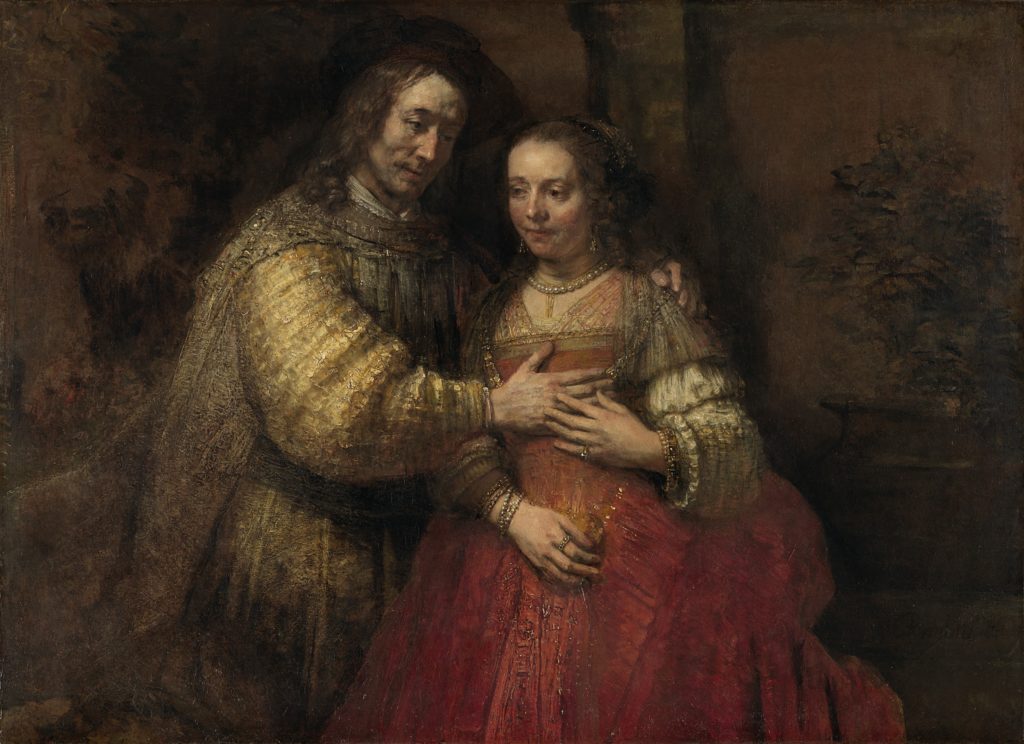
Rembrandt van Rijn, “Isaac and Rebecca,” known as “The Jewish Bride,” c. 1665 – c. 1669. On loan from the City of Amsterdam (A. van der Hoop Bequest)
Watch the PBS News video “For the First Time Ever, ‘All the Rembrandts’ Are on Display in Amsterdam”:
Rembrandt was a gifted storyteller, and his stories are at the heart of the last section of the exhibition. Tales from the Bible inspired “Isaac and Rebecca” (the alternative title for “The Jewish Bride,” c. 1665–1669) and “Self-Portrait as the Apostle Paul” (1661), in which he gives masterful expression to gestures and emotions that are familiar, tangible, and intimate. Early depictions of these tales tend to be delicate and refined; later in life Rembrandt used a coarser experimental technique, applying ingenious color and light effects to further enhance the narrative and draw out its essence.
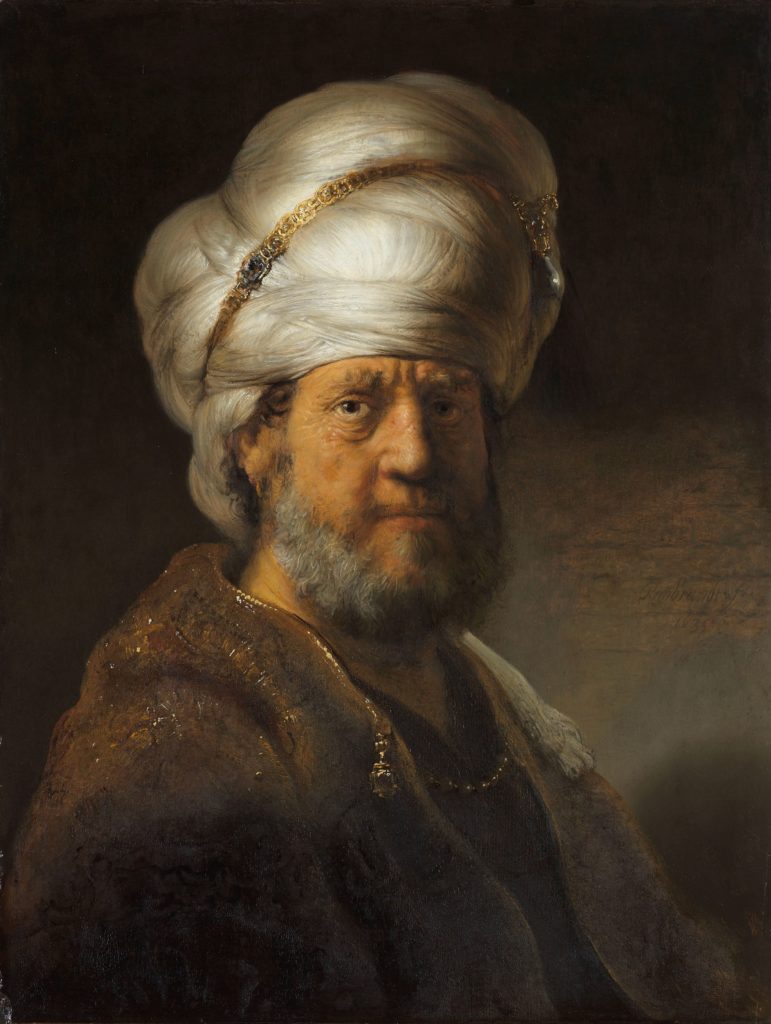
Rembrandt van Rijn, “Man in Oriental Dress,” 1635. Gift of Mr. and Mrs. Kessler-Hülsmann, Kapelle op den Bosch
More About Rembrandt:
Rembrandt van Rijn (1606–1669) was born in Leiden, the son of a miller. After finishing Latin School, his parents enrolled him at Leiden University. Rembrandt soon dropped out and became an apprentice painter under Jacob van Swanenburg in Leiden, and later Pieter Lastman in Amsterdam. Back in Leiden, he set up as an independent artist together with Jan Lievens. At this time, Rembrandt mainly painted biblical scenes in a precise style and with vibrant colors.
In 1631, he moved to Amsterdam, where he received numerous commissions for portraits. His many pupils included Ferdinand Bol, Govert Flinck, and Carel Fabritius. In this period, Rembrandt develop a more powerful chiaroscuro, a looser brush, and a greater sense of drama. He focused more on historical scenes and made numerous etchings and drawings.
In 1634, Rembrandt married Saskia Uylenburgh. They had a son, Titus, in 1641. Then a year later Saskia died. In 1654, Rembrandt had a daughter with Hendrickje Stoffels. By now, he had accumulated huge debts and was forced to sell his house and property. He died in 1669 and was buried in Amsterdam’s Westerkerk.
An array of 80 pastel paintings from across the country will be on display at the Pastel Society of Colorado’s Mile High National Pastel Exhibition. This show has been juried by renowned pastelist Barbara Jaenicke and represents a diverse selection of recent work.
The Pastel Society of Colorado’s (PSC) 15th Annual Mile High National Pastel Exhibition will be on display through June 29, 2019, at the Curtis Center for the Arts (Greenwood Village, Colorado).
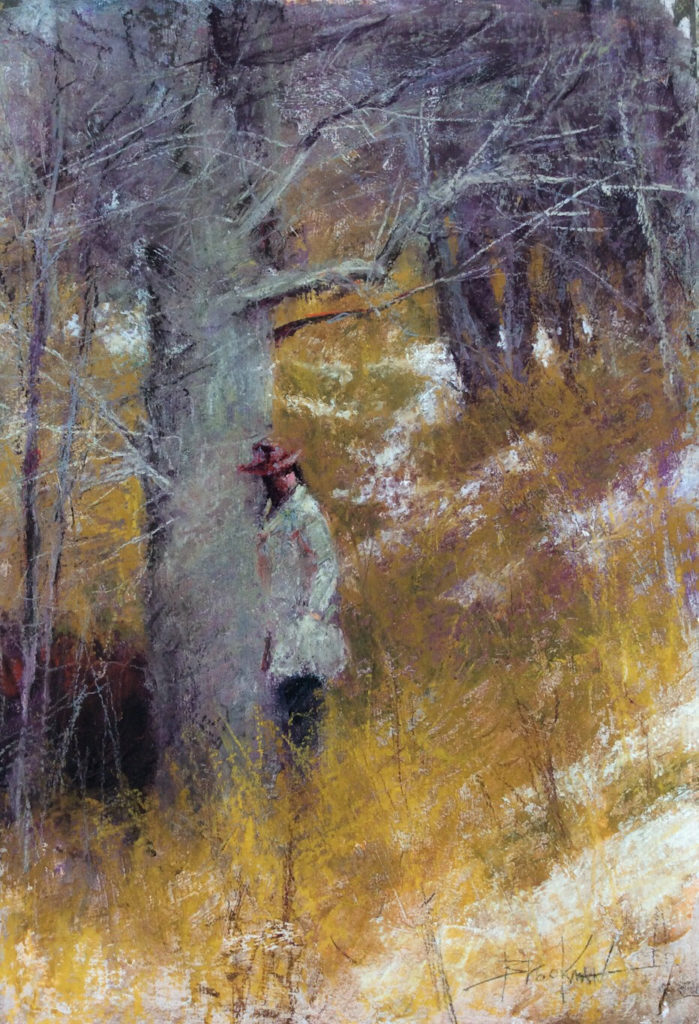
Mark Brockman (Colorado), “Among the Cottonwood”
This is the premier exhibition held by the PSC annually and features 80 luminous pastel paintings in a variety of genres — landscape, urbanscape, portrait, and still life — rendered in realistic to abstract forms. The exhibition works were selected from more than 350 paintings submitted by 122 artists from 18 states.
Submissions were judged by eminent pastel artist Barbara Jaenicke, Master Pastelist in the Pastel Society of America and Eminent Pastelist in the International Association of Pastel Societies. Jaenicke has received numerous awards for her pastel and oil paintings in addition to being a highly sought-after instructor.
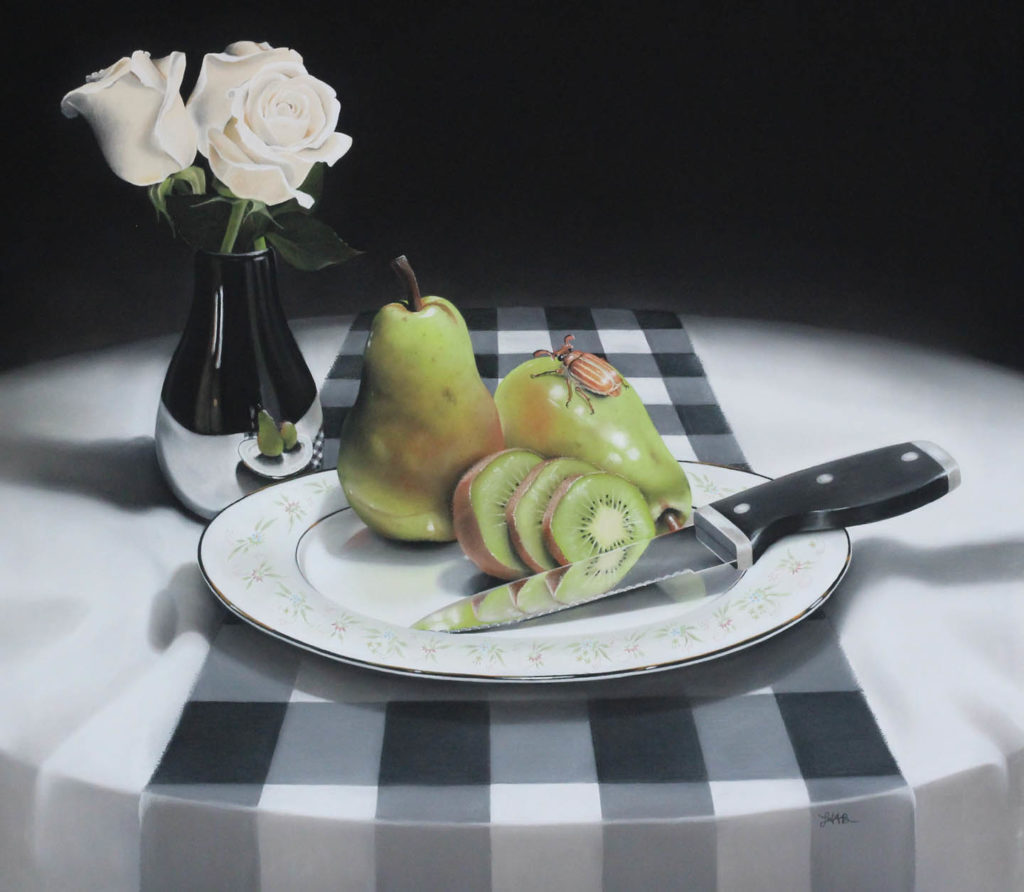
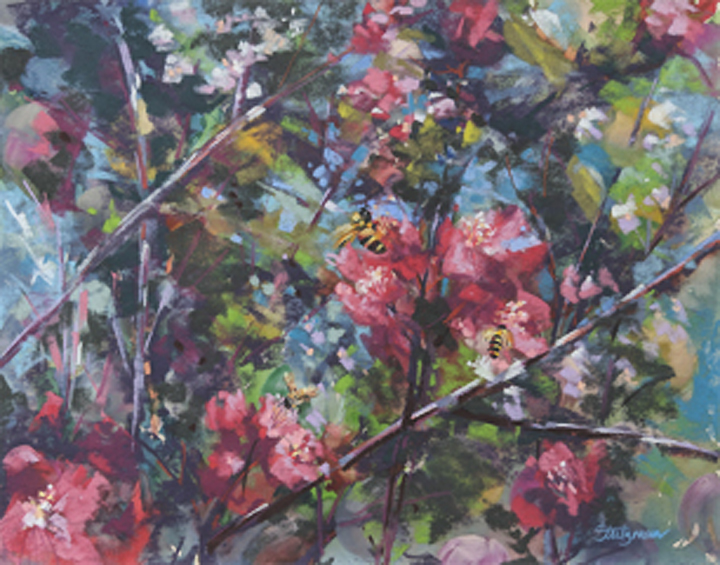
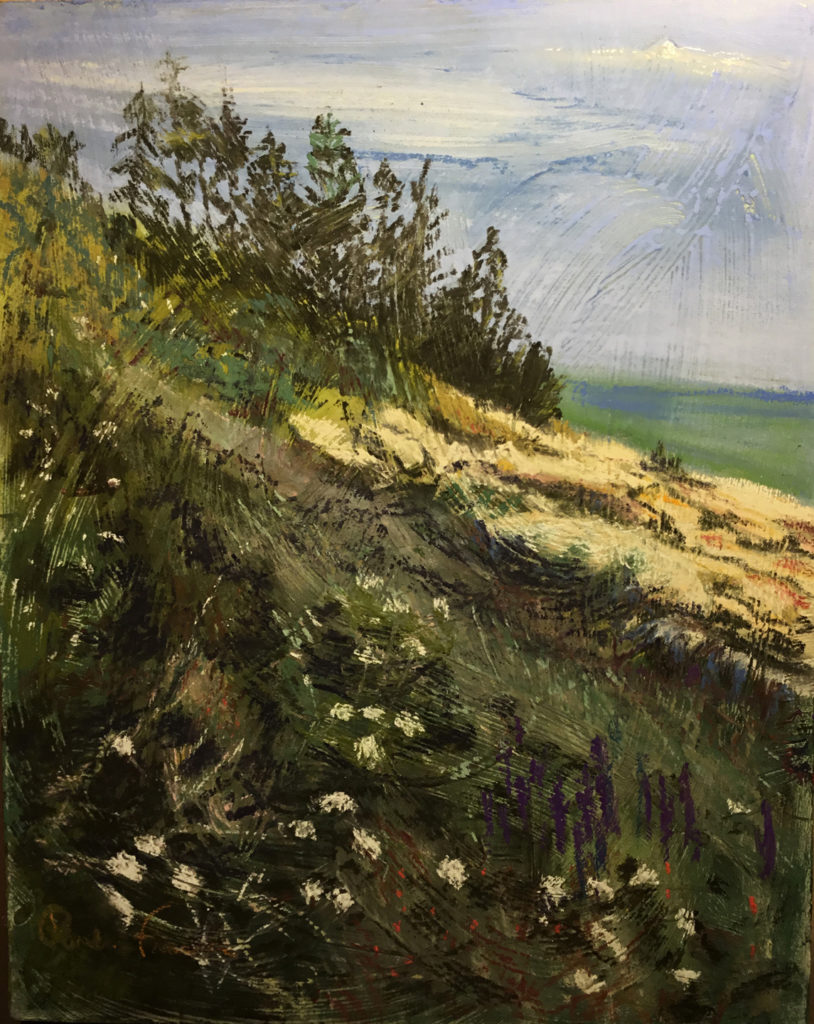
Leslie Trujillo-Batts (Colorado), “Party of One”Jeannette Stutzman (Colorado), “Save the Bees”“Cliff Rock,” a pastel by Paula Fraser (Massachusetts) will be one of the pastel paintings on display during the Pastel Society of Colorado’s 2019 Mile High National Pastel Exhibition at the Curtis Center for the Arts in Greenwood Village.
“We are delighted that this year’s exhibition is featured at the Curtis Center for the Arts for the first time,” said Sandy Marvin, PSC Exhibition Show Co-Chair. “The Curtis Center is an arts and cultural hub, and we look forward to showcasing a diverse selection of this art form. It’s a wonderful opportunity for the community to see paintings by some of the finest pastel artists in the nation and to learn more about this enduring art form made popular by painters such as Degas, Renoir, and Cassatt.”
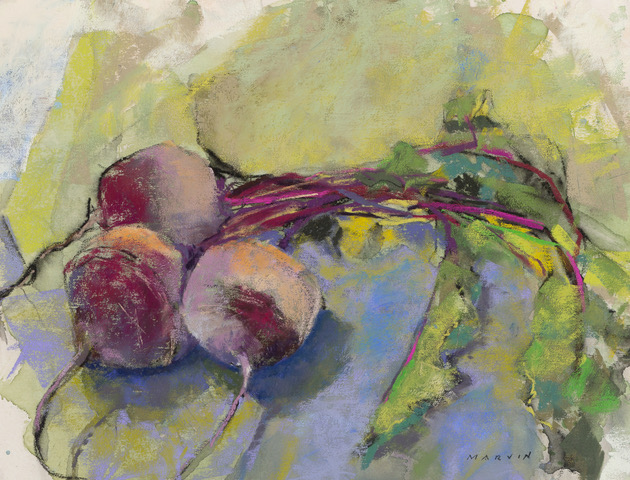
Sandy Marvin (Colorado), “Beets”
For more information about the Mile High National Pastel Exhibition, visit www.pastelsocietyofcolorado.org. Established in 1994, the Pastel Society of Colorado promotes the soft pastel medium and pastel artists and encourages the appreciation and art of pastel painting. The Society is a nonprofit organization with more than 300 members and is run by a volunteer board of directors.
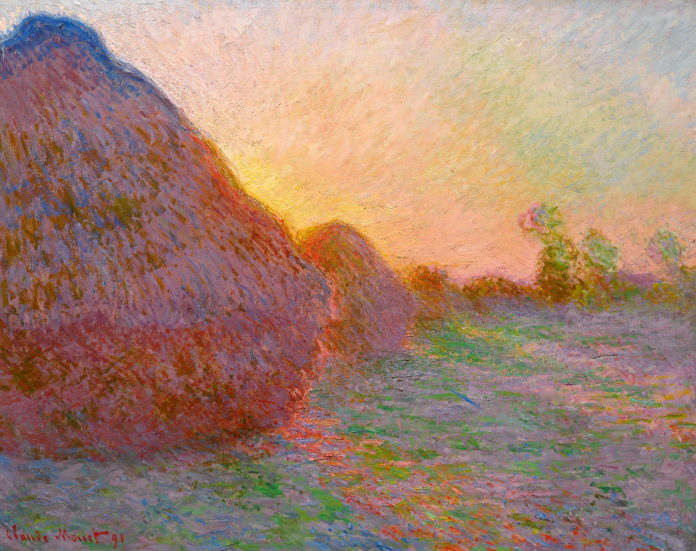
Claude Monet, “Meules,” oil on canvas, 1890. Auction Record for the artist, and Auction Record for any work of Impressionist art. $110,747,000 (Buyer: Anonymous)
Record-breaking “Haystacks” painting by Claude Monet leads Sotheby’s $350 million evening sale of Impressionist and Modern art.
August Uribe, Sotheby’s Head of Impressionist & Modern Art in New York, commented: “It was a fantastic night for classic Impressionist art, highlighted of course by the extraordinary work by Claude Monet that made auction history both for the artist and for any Impressionist work of art. One of the most recognizable images in art history, Monet’s “Haystacks” series has long served as an inspiration to countless artists since its creation in the early 1890s. It was a true honor to present “Meules” among a remarkable group of Impressionist pictures emerging from the same distinguished private collection — one of several important collections offered tonight that propelled our results.”
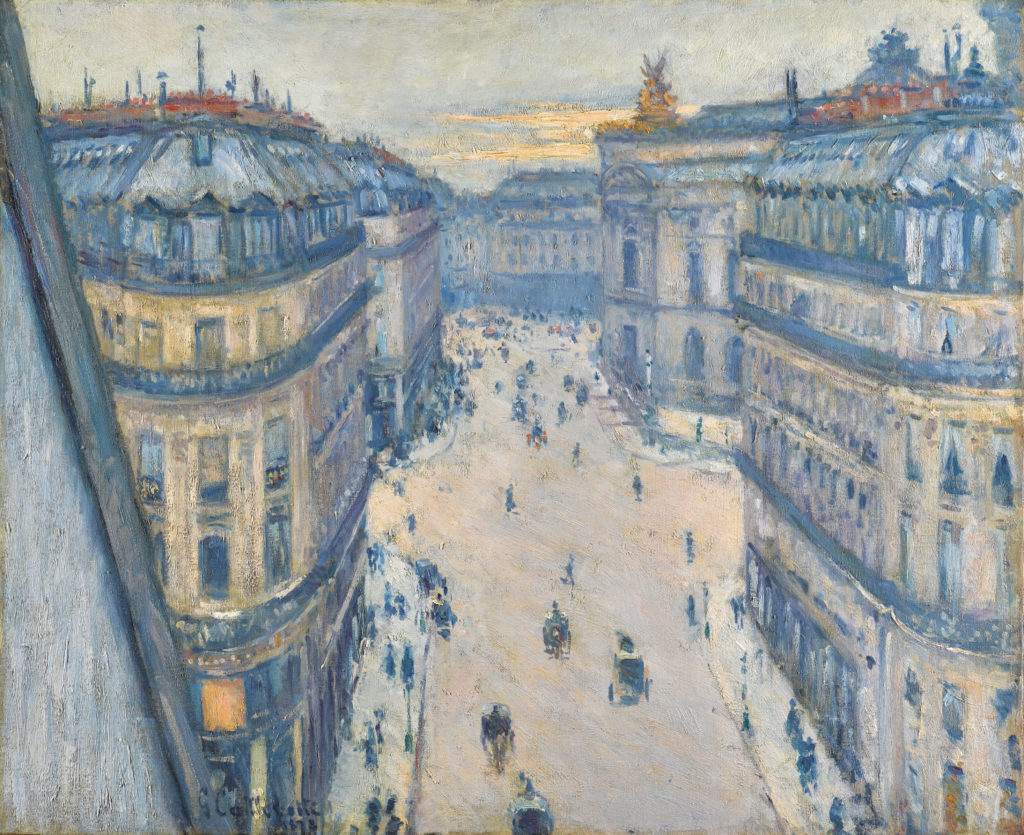
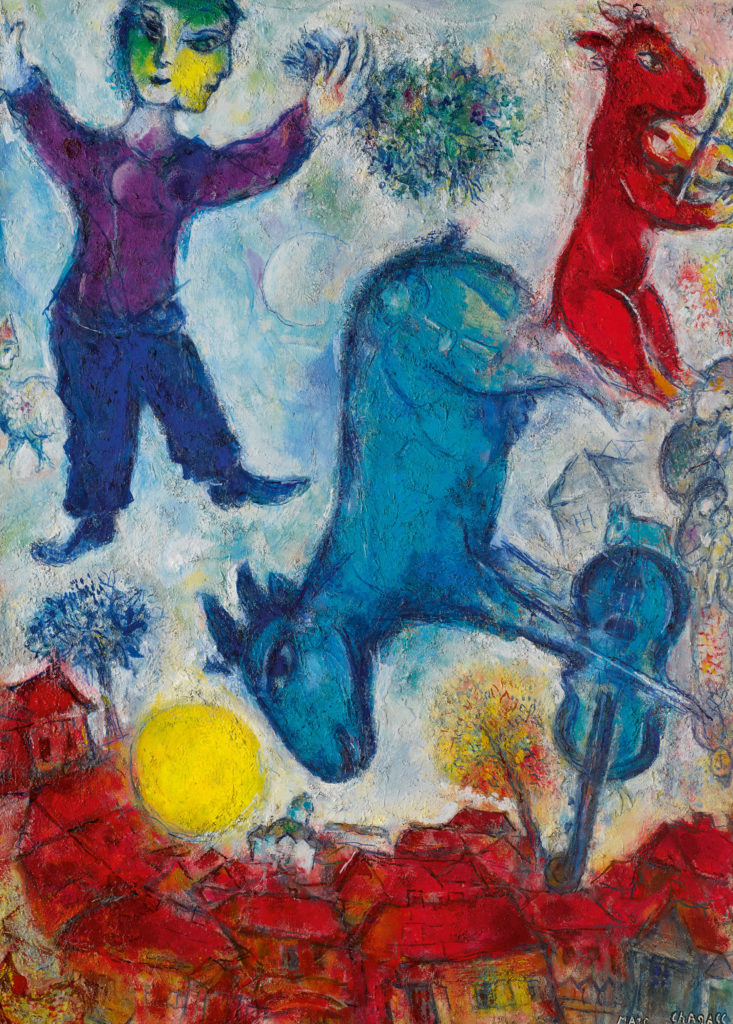
Gustave Caillebotte, “La Rue Halévy, vue du sixième étage,” oil on canvas, 1878. $13,932,000 (Buyer: Anonymous)Marc Chagall, “Le Paysan,” oil and watercolor on canvas, 1956–66. $7,553,600 (Buyer: Anonymous)
“Tonight we saw a great depth of impassioned bidding from around the globe, fueled by works long-cherished in private collections,” said Helena Newman, Sotheby’s Worldwide Head of Impressionist & Modern Art. “Nearly two-thirds of the lots offered tonight had never before appeared at auction, and the market responded enthusiastically . . . With the record-breaking Monet leading the charge, the Impressionist and Modern market is as strong as it has ever been in my more than 30 years in this business.”
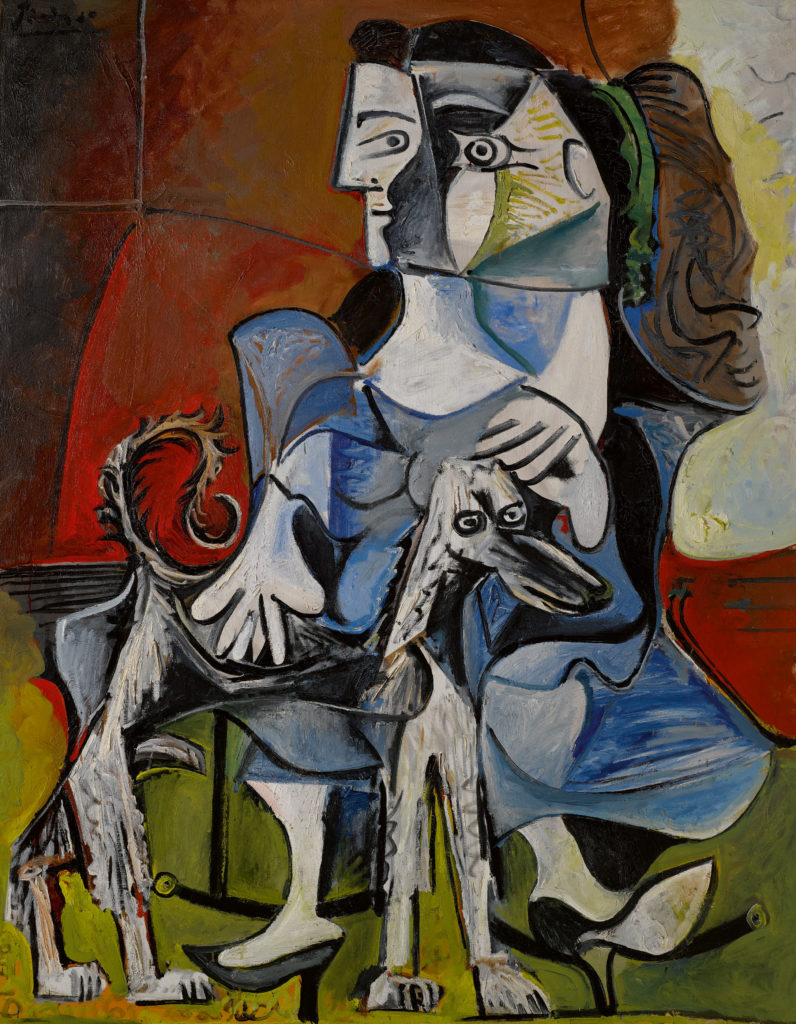
Pablo Picasso, “Femme au chien,” oil on canvas, 1962. Auction Record for a 1960s Picasso. $54,936,000 (Buyer: Wynn Fine Art LLC)
Julian Dawes, Head of Sotheby’s Impressionist & Modern Art Evening Sales in New York, commented: “Picasso dedicated an entire month in 1962 to painting ‘Femme au chien,’ a portrait of his new wife, Jacqueline, and his beloved Afghan hound — a sign that the work was of great personal value to him. The spectacular canvas demonstrates the artist’s full creative force in the later years of his life, and tonight the market affirmed that the greatest works produced in the 1960s are considered equal to the finest created throughout his career. From a fantastic work on paper from 1906 to our two 1960s canvases, Picasso proved a driving force throughout our sale tonight and reaffirmed the enduring strength of his market.”
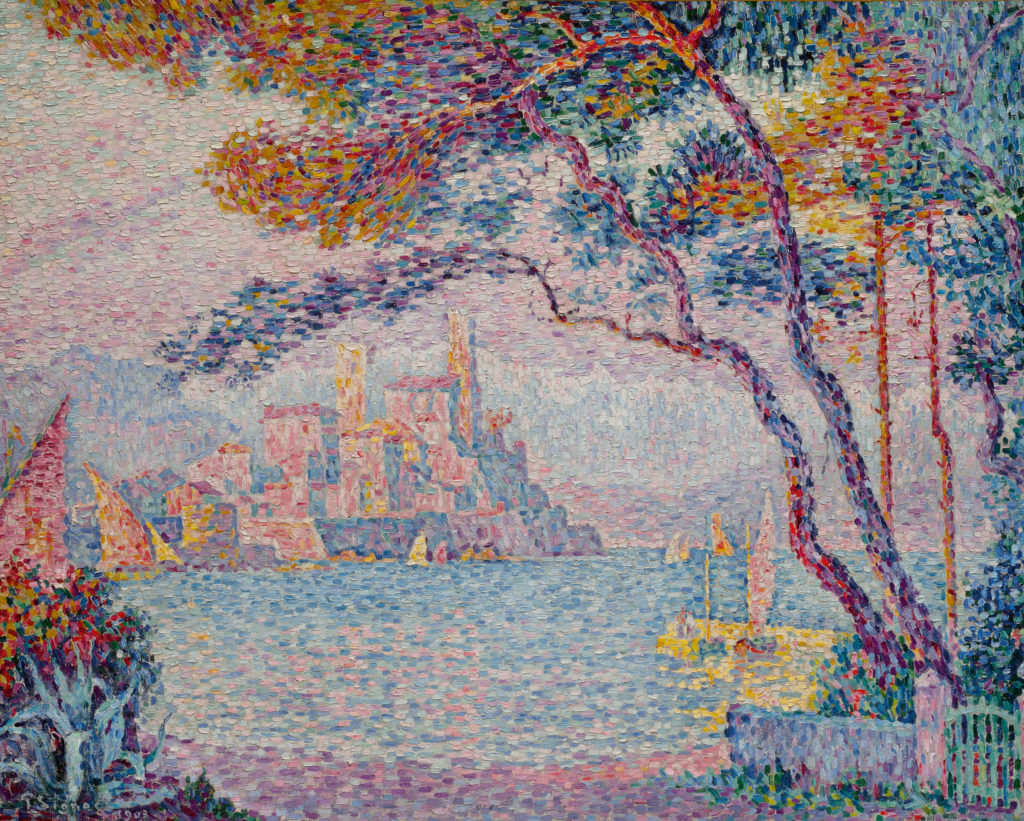
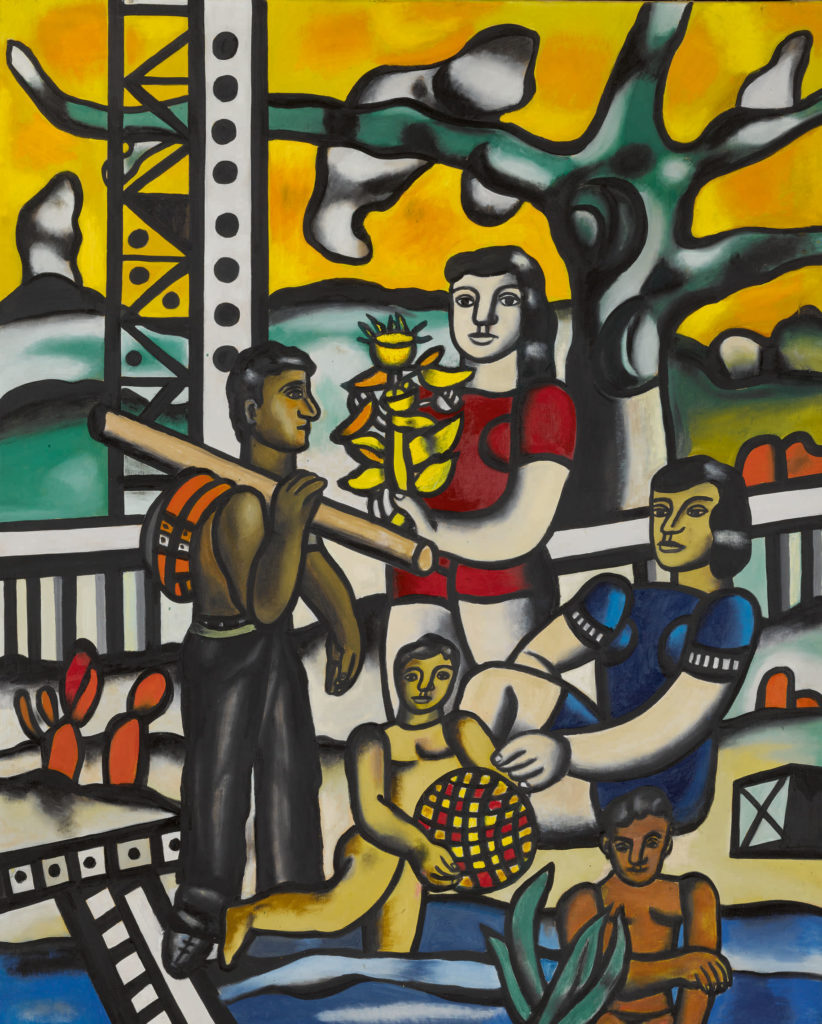
Paul Signac, “Antibes. Soir,” oil on canvas, 1903. $7,667,500 (Buyer: American Private Collector)Fernand Léger, “Le Campeur. 1er état,” oil on canvas, 1954. $8,237,000 (Buyer: anonymous)
“Meules” led a group of eight outstanding Impressionist works on offer from an important private collection, all of which were sold for a combined total of $129.5 million. A portion of the proceeds from the sale of the collection will significantly benefit two world-renowned, not-for-profit institutions in the fields of science and music.
For information on upcoming fine art auctions, please visit www.sothebys.com.
The National Museum of American Illustration (NMAI) in Newport, RI, is pleased to announce the debut of its newest exhibition, “Norman Rockwell & His Contemporaries: Fabulous Forties to Sensational Sixties,” culminating with a celebration of the 50th anniversary of the Apollo 11 Moon Landing on July 20, 1969.
The period from the 1940s through the 1960s was a tumultuous time in the history of the United States. Significant political and social changes defined daily life for Americans as a result of the frequent shift between wartime and peacetime. The Second World War (1939–1945), the Cold War (1947–1991), the Korean War (1950–1953), and the Vietnam War (1955–1975) made their marks on the culture of the United States and affected all aspects of life, beyond the political sphere.
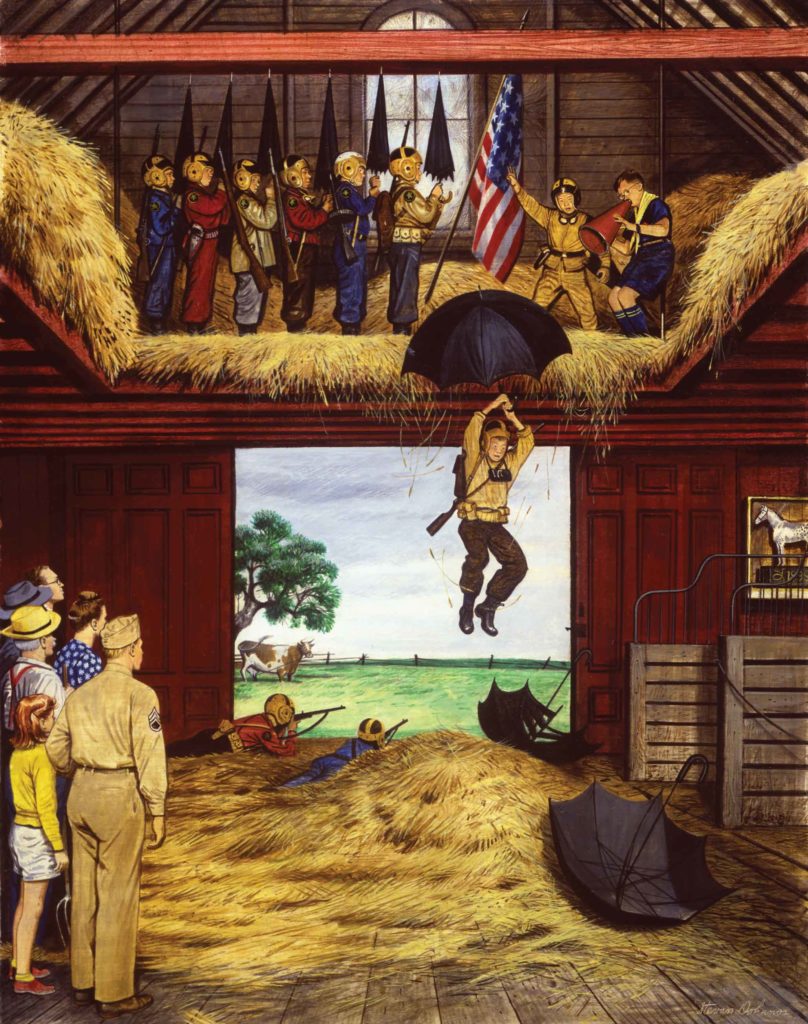
During WWII, American men fought for the side of the Allies along with the Soviet Union, the United Kingdom, and China, while the opposition Axis powers consisted of Nazi Germany, Japan, and, initially, Italy. At the same time, American women experienced new-found freedom as they entered the workforce, taking on the jobs that men left behind. WWII influenced everyday life in innumerable ways for Americans of all ages. Stevan Dohanos highlights this effect on America’s youth in “Another War to Go,” illustrating a group of Boy Scouts as they practice parachuting in a hay loft, pretending to be soldiers.
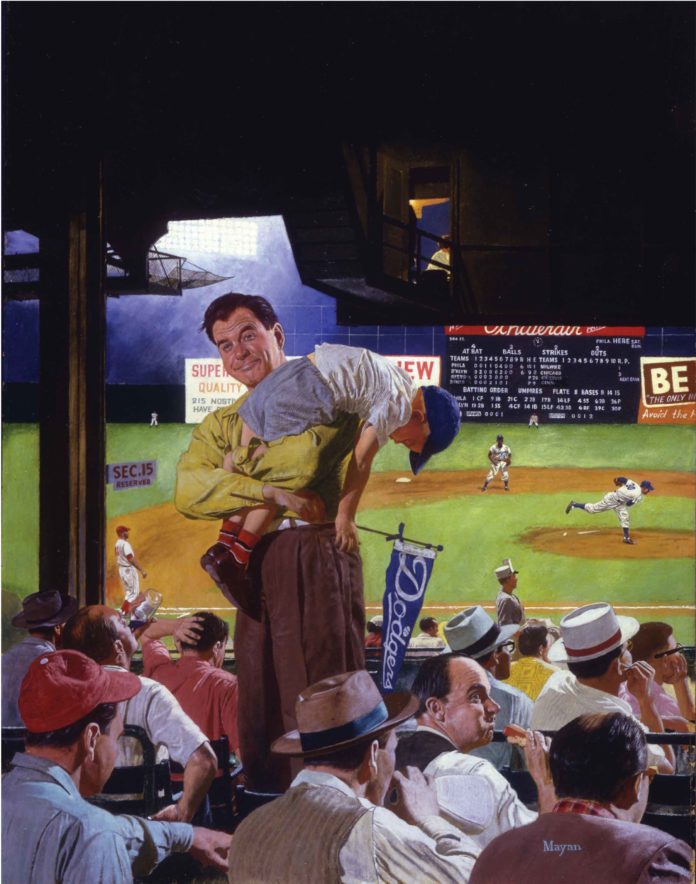
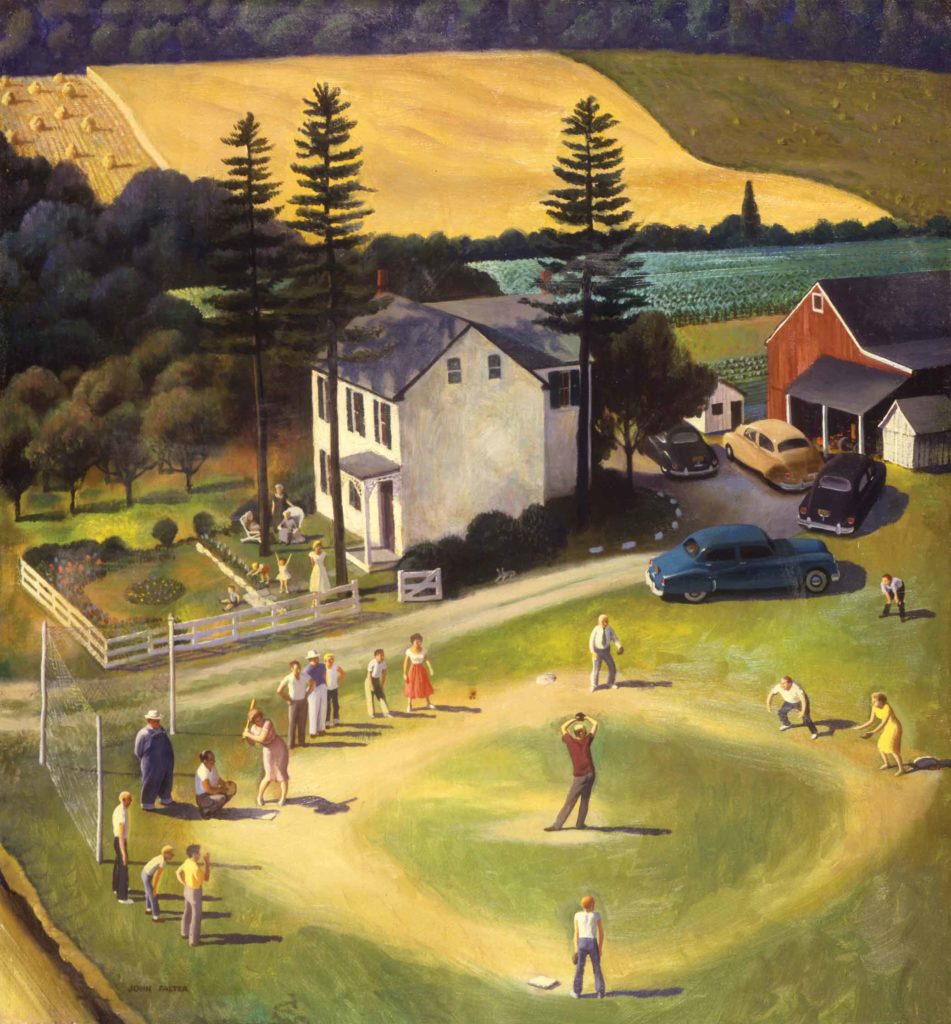
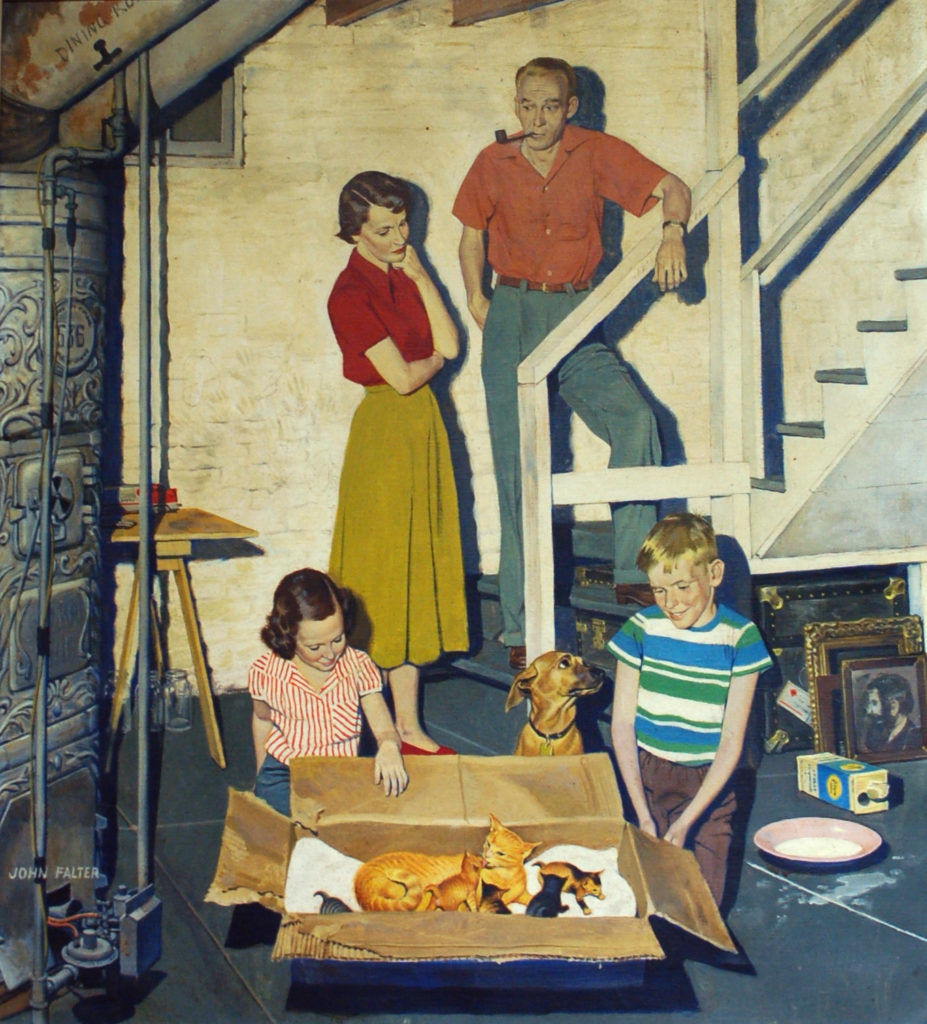
When WWII ended, many of the veterans who returned home went back to work, got married, and started families. This ushered in the era of the 1950s nuclear family – a term for the stereotypical family consisting of a working husband, housewife, and typically two children. Images of leisure and wholesome family life prevailed in the fifties, such as John Falter’s “Family Picnic,” featuring the artist himself on the pitcher’s mound during a friendly game of baseball. While this period was often idealized, it was interrupted by both the Korean and Vietnam Wars and gave way to the social upheaval of the 1960s.
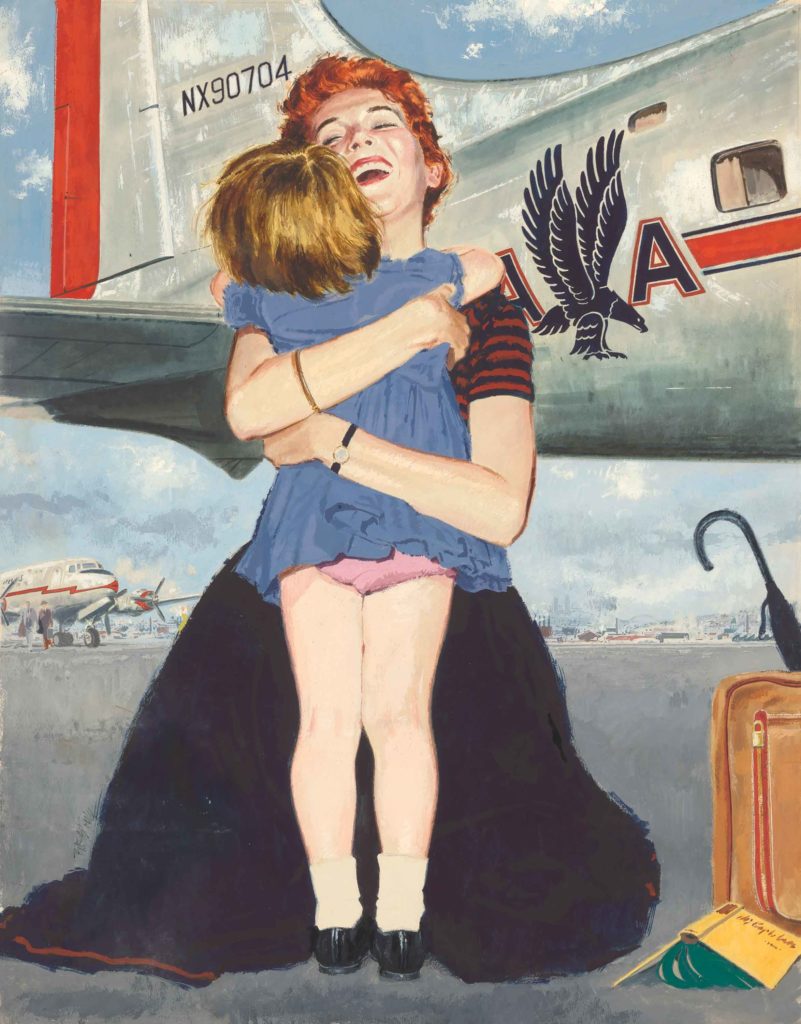
In the sixties, the Civil Rights and Women’s Rights Movements sought to overturn political policies and improve the daily lives of women and minorities. During this time, travel was booming, expanding the average American’s accessibility to the rest of the world. Richard Stone’s 1956 advertisement for American Airlines, “Welcome Home!,” epitomizes the types of campaigns airlines were commissioning to expand commercial air travel, highlighting the joys it can bring by reuniting families from afar with efficiency and safety.
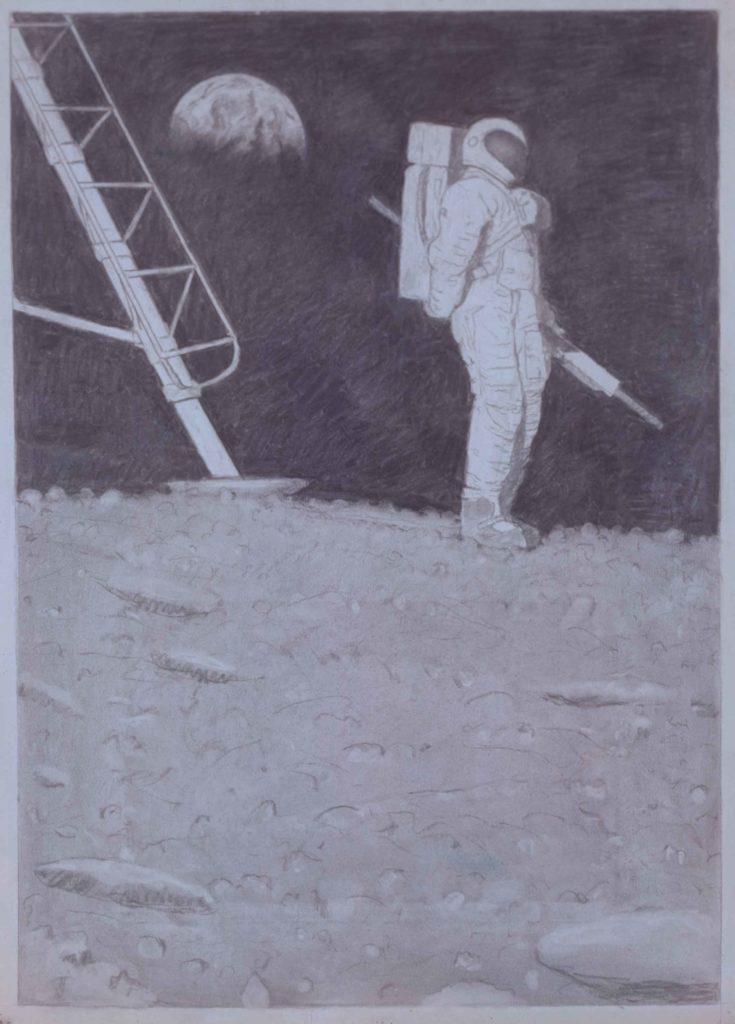
While the 1950s and 1960s have been called the “Golden Age of Plane Travel,” it was also a momentous time of technological innovation that led to an American, Neil Armstrong, becoming the first person to set foot on the moon. To quote Armstrong, the Apollo 11 Moon Landing was “one small step for man, one giant leap for mankind.” Norman Rockwell depicted this moment in his studies for “The Final Impossibility: Man’s Tracks on the Moon,” created for Look magazine.
Featuring original paintings, works on paper, vintage posters, and accompanying artifacts, “Norman Rockwell & His Contemporaries: Fabulous Forties to Sensational Sixties,” highlights the changes to daily life in America during three very different decades. Through illustrations created for advertisements, magazines, newspapers, and more, artists showed how American culture and values changed in concert with the constant political unrest.
The exhibition is curated into three main focuses: War & Politics in the 1940s; Leisure, the Nuclear Family, & the Economy in the 1950s; and Civil Rights, Women’s Rights, Travel & Expansion in the 1960s. The culmination of the exhibition will be a spotlight on the Apollo 11 Moon Landing in 1969.
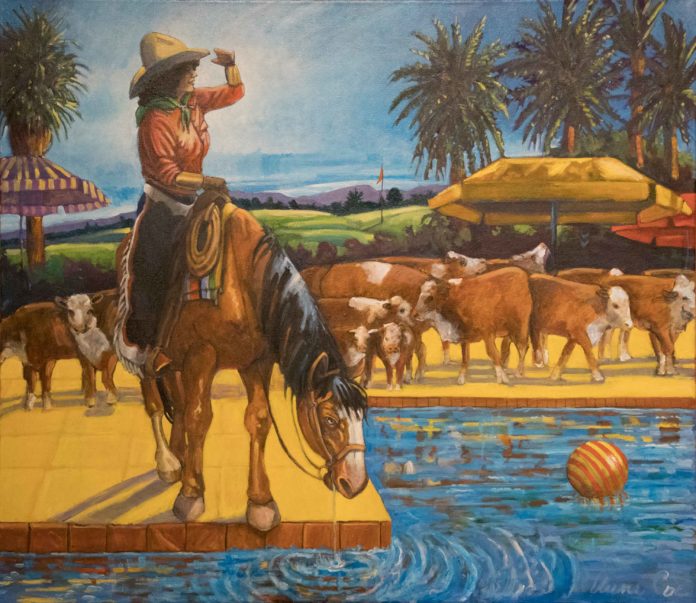
Anne Coe, “Suburban Ranchette: The New Watering Hole”
Explore Cultural Topics and Expressions of the West at the Briscoe Museum through September 1, 2019
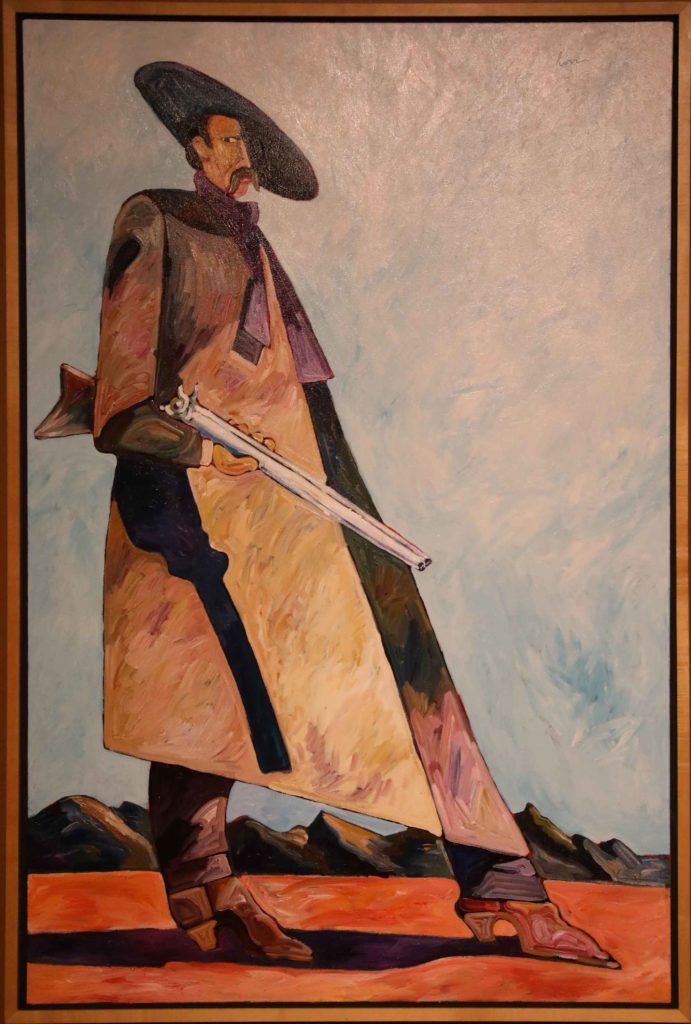
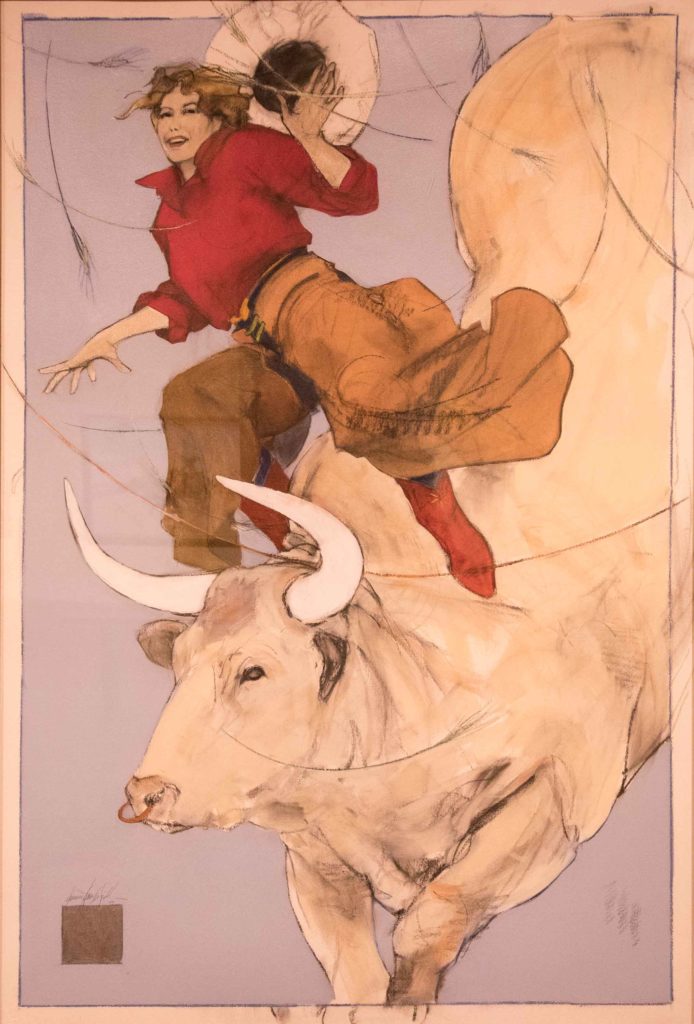
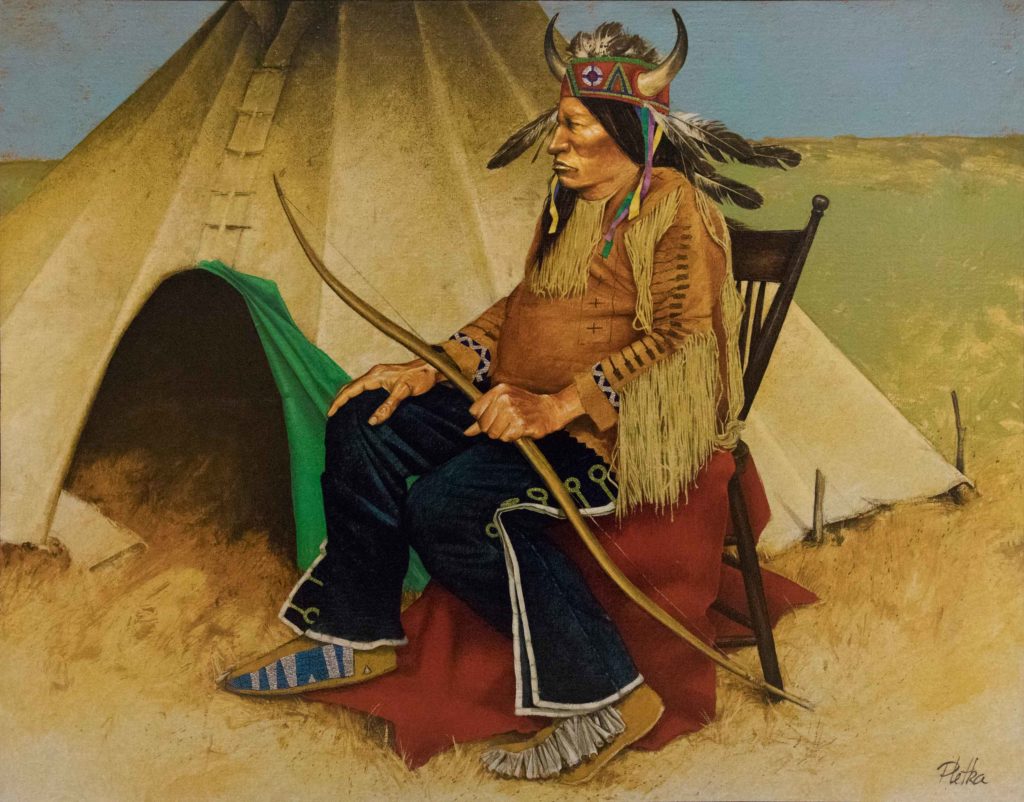
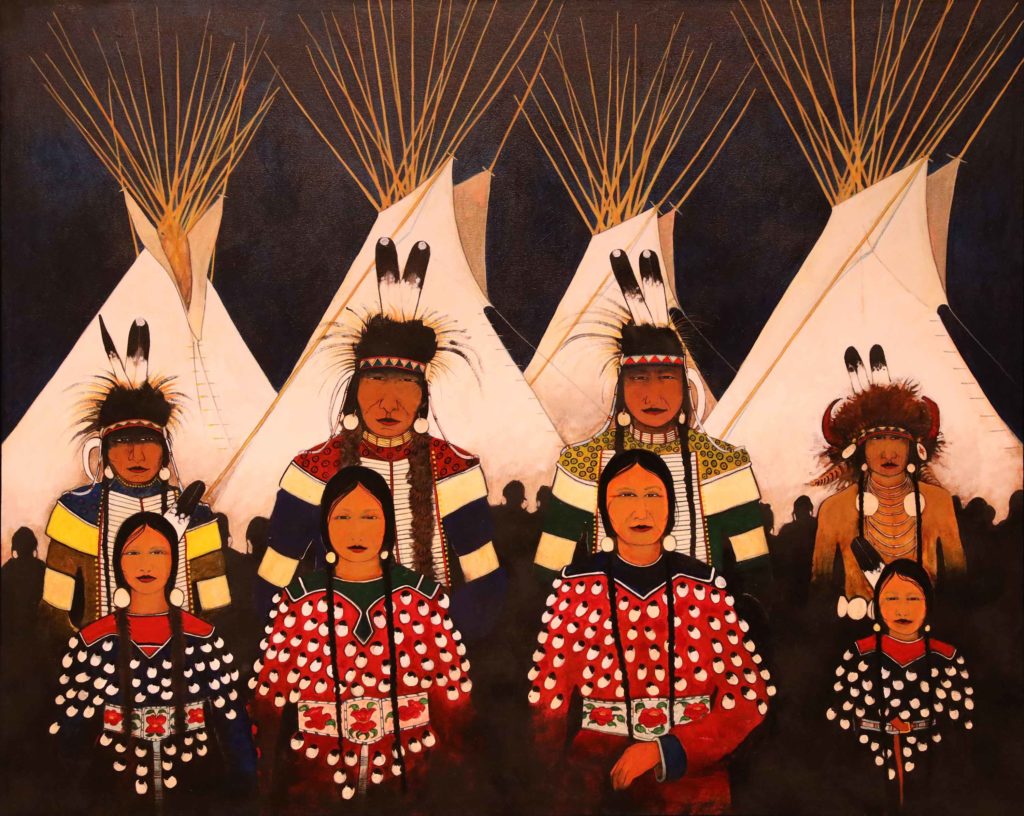
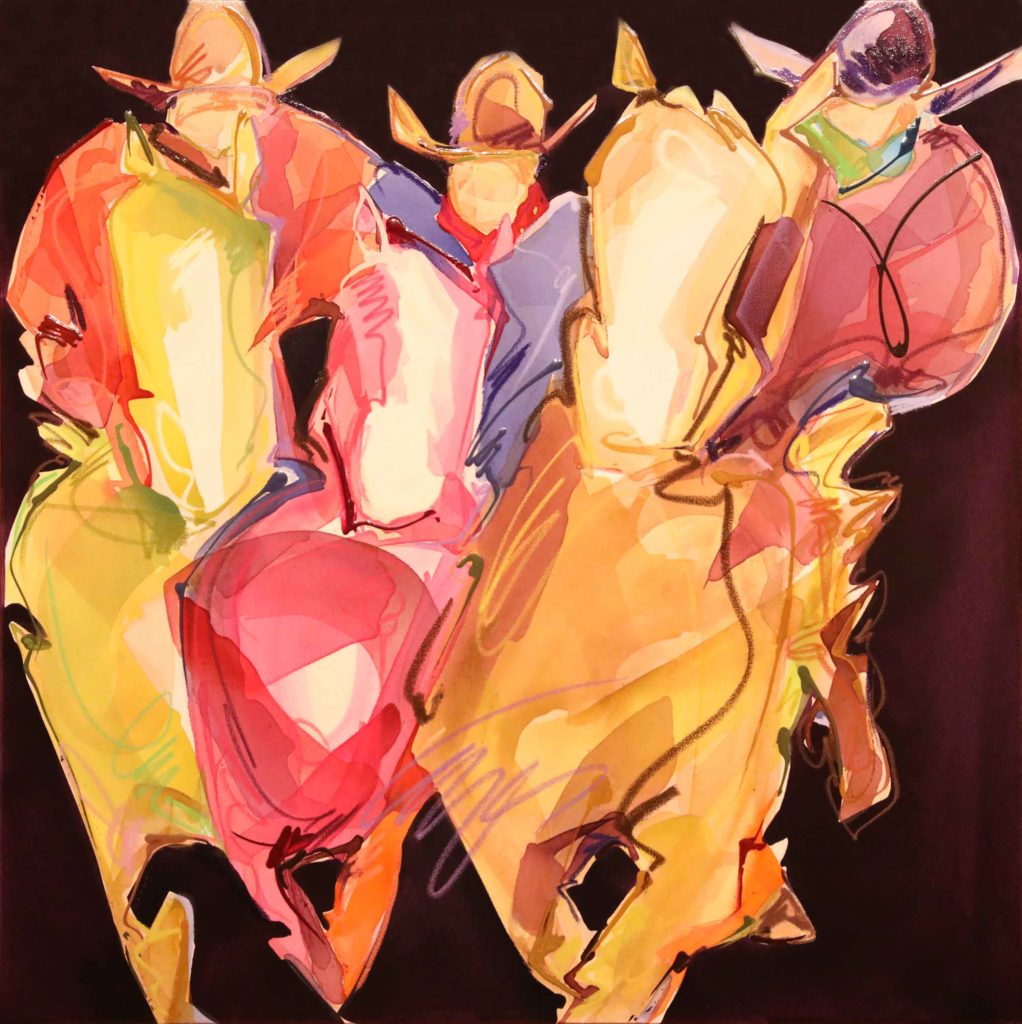
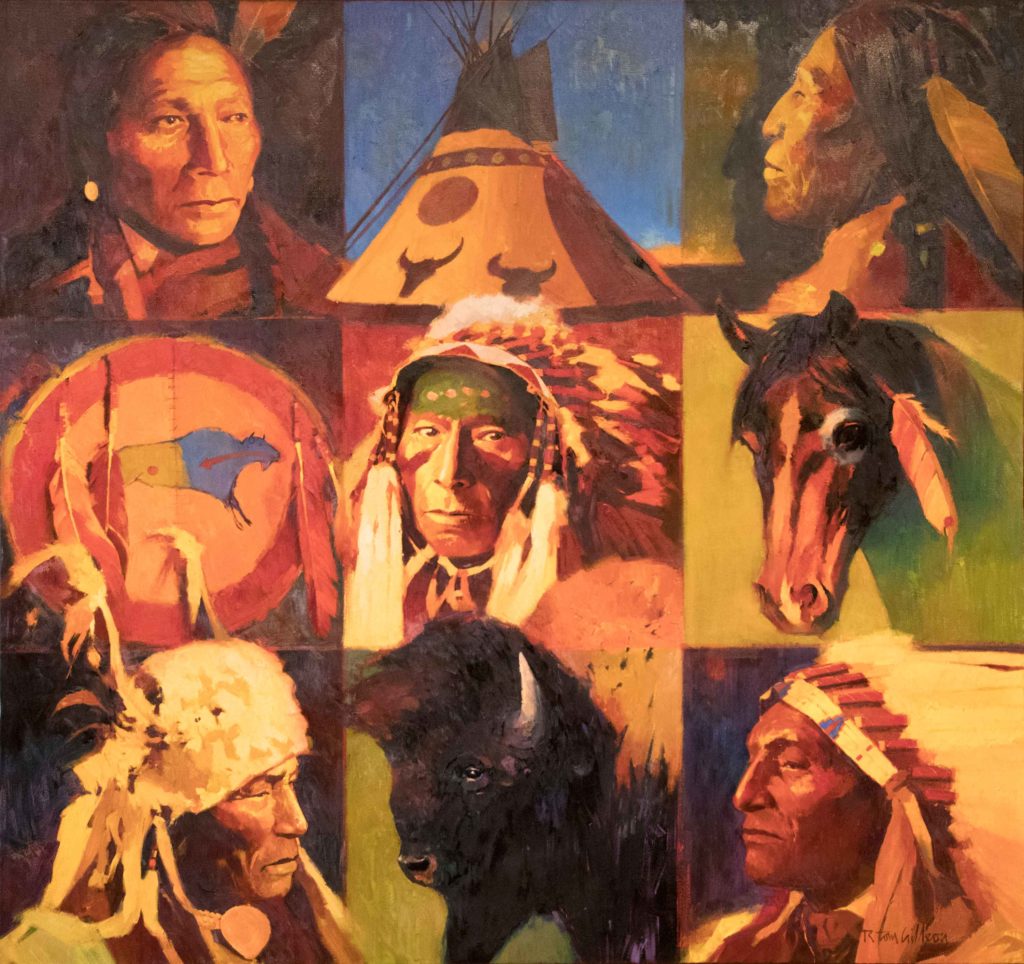
The Briscoe Western Art Museum (Texas) is pleased to present “Into a New West,” a summer contemporary art exhibition featuring nearly 50 works of art on loan from the Booth Museum of Western Art. Exploring cultural topics such as the environment, feminism, and social commentary, this exhibit showcases a shift from traditional representations to new ideologies and expressions of the West.
Thom Ross, “Doc Holliday”Donna Sickles, “Not Without Its Ups and Downs”
“The Briscoe is excited to share these groundbreaking works from the Booth Museum with the city of San Antonio and its visitors,” said Liz Jackson, vice president of the Briscoe Western Art Museum. “The exhibition will resonate with audiences across generations by exploring universal themes presented in a new light.”
Paul Pletka, “Mescaleros – La Silla Negra”Kevin Red Star, “Ready for the Two Step”
Open to the public through September 1, 2019, museum-goers will enjoy an exciting exhibition of Western contemporary art ranging from the 1960s to the present. The works challenge the conventions of representation that hallmark traditional Western art and engage audiences with the culture of the present day.
Carrie Fell, “Crazy Mountain Saddle Slickers”R. Tom Gilleon, “Northern Plains”
For more information about “Into a New West,” visit BriscoeMuseum.org.
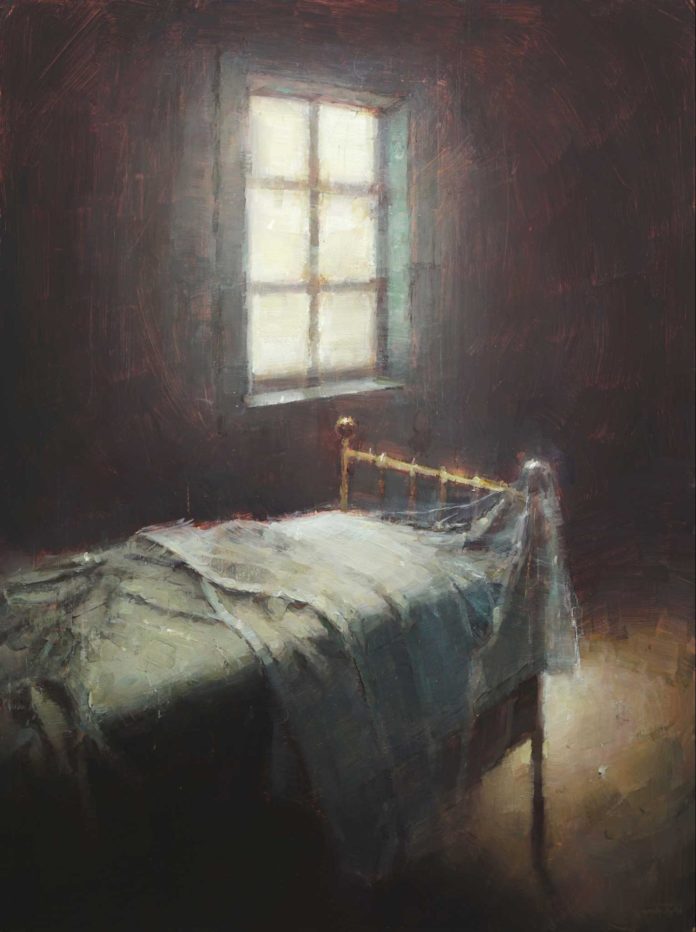
Nicolas Martin, “Warm Bed,” 2019, oil on panel, 9 x 12 in.
By Nicolas Martin
Painting interior scenes has become an important step in my evolution. They have allowed me to change, to be more be attentive to my environment. I started to be more sensitive to what surrounds me. I began to appreciate the banality of a place and finding some beauty. I realized that I am surrounded in all circumstances by interesting subjects as long as there is a source of light. This opened the door to a lot of possibilities, and I never had a day during which I had no subjects to paint.
I do not consider myself a narrative painter, but the development of a story by the viewer is essential for me. I’m not only looking to represent something aesthetic. I tell the beginning of a story and let the viewer continue his or her own. The less information I give, the more people tell me the story that they are seeing and feeling. I find it fascinating because I do not want to own the only truth in my paintings. I want everyone to find theirs. Painting is about sharing, and this is my way of proceeding.
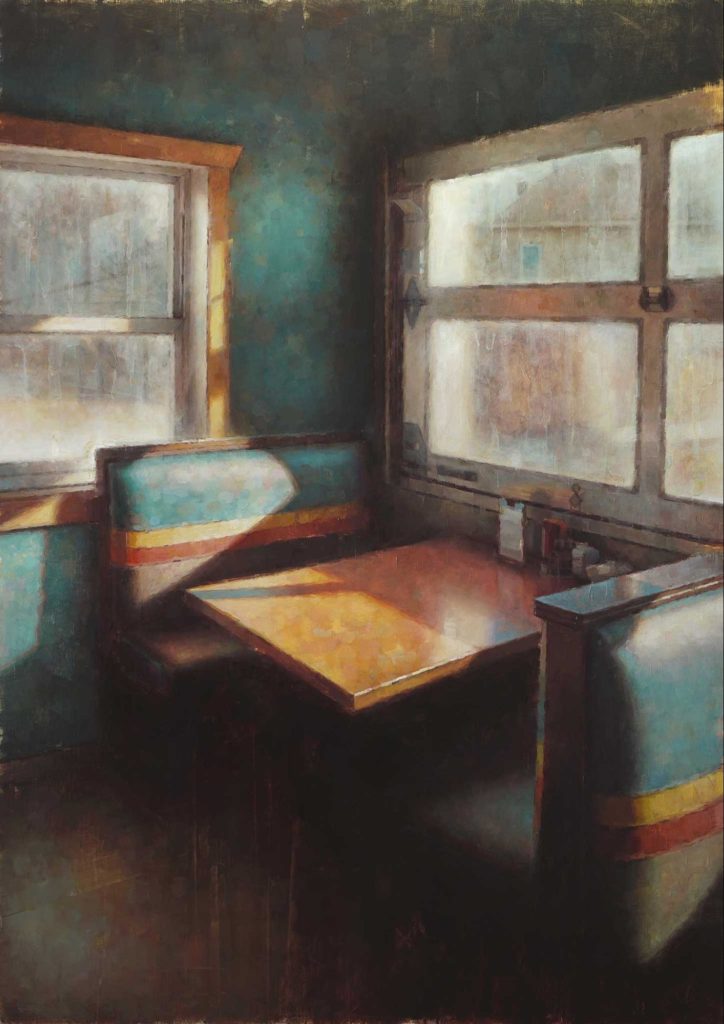
Nicolas Martin, “Les Banquettes,” 2018, oil on linen, 24 x 36 in.
I often like painting lonely places, because I invite the viewer to become the figure in the painting. The painting “Les Banquettes” is a good example. Banquettes is the French term to describe these restaurant booths. I composed my painting with the desire to invite people to sit on these. My paintings, in general, are invitations.
There can be a voyeur aspect, because I place the observer in front of a scene full of intimacy. This intimacy is created by the atmosphere, the apparent simplicity, and the composition. I often use foregrounds that define a framework and invite the viewr to enter into the scene. I want to give just enough information so there is more to discover.
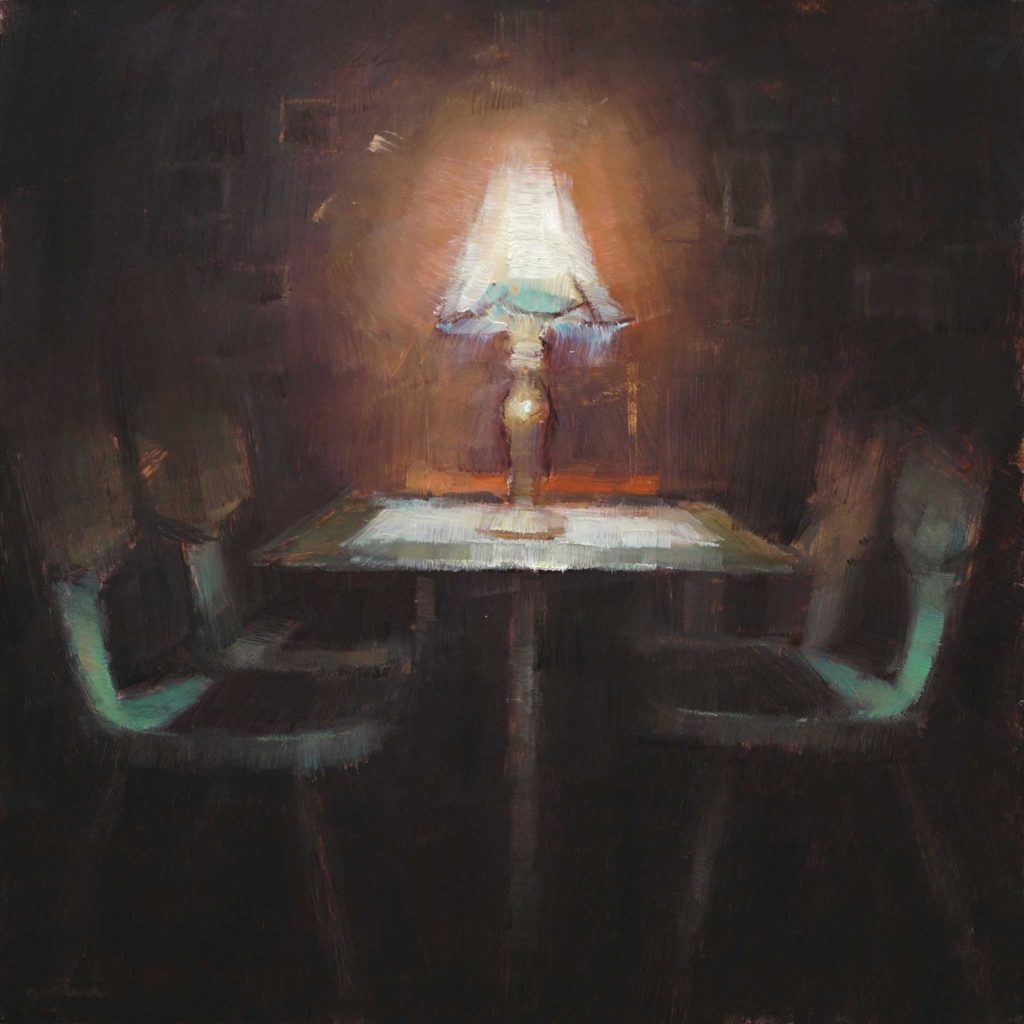
Nicolas Martin, “Le Rendez-vous,” 2018, oil on panel, 6 x 6 in.
In the painting “Le Rendez-vous,” I invite the viewer to an appointment. I made this painting in alla prima because I wanted to keep the same rhythm, the same mood. Painting in alla prima is an extraordinary sensation — the painting is fresh during all the steps, everything moves, all is in contact. You can paint with thin layers and blend them together while playing with light and shadows. I now want to paint as much as possible in alla prima for this reason. One session, one painting. There is something strong, authentic, and deep about painting in one session. I will paint big paintings in alla prima to see my limits with this process.
I’m looking for some poetry in places that do not always have it. I like the banality of a place that becomes poetic when caressed by light. If I am interested so much in the light, it is for this reason — the fact that light can change a reality.
The way light reacts with its environment fascinates me. I remember when I was a kid and discovered that Claude Monet painted haystacks at different times of the day. It was a revelation for me. I found a meaning to the painting that connected with me — the ability to depend on light and tame it, chasing it.
Over the years, my way of painting light has evolved. I understood how I wanted to represent it, but I was looking for more. The years have led me to refine my technique, to be lighter in my application of layers, to take care of the light. Every brushstroke counts, and I know every step brings me to my goal.
I am looking for depth and painting the air, to make the viewer feel this suspended light ready to change. I have a notebook where I write down the times, places, and how light affects a scene. I like this search for a specific moment. I like to make the comparison with a musical instrument.
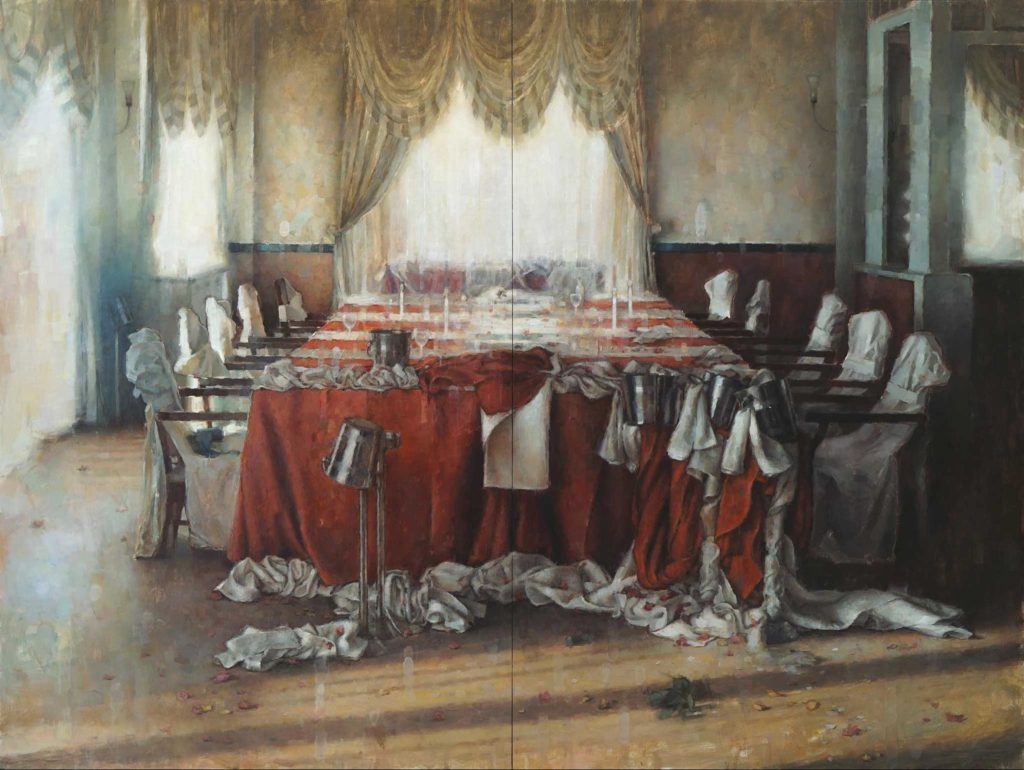
Nicolas Martin, “L’union,” 2018, oil on linen, 36 x 48 in.
The choice of support can also play an important role in the meaning of the painting. This painting represents a wedding table after the party. I decided to paint on two large panels and assemble them together to symbolize the union of two people. The visible junction of the two panels plays its role in the scene.
When you set the pickups of an electric guitar you are looking for the sweet spot — this allows the instrument to flourish and show its real abilities. Every guitar should react differently, so this setup is unique for each one. I am always looking for the sweet spot while I am searching the right moment at the right place. This is another reason why I like to paint very common places. Would this place be sublime at another time? Probably. The contrast is even more interesting when it is a banal place at first sight.
I feel like a light hunter. It’s a special energy that keeps me awake all the time. I want to discover new places that influence me. All the imagery around me also has an impact on my painting. I feel like a sponge. I leave the space and I keep the images fresh in my mind.
What I am keeping today would not have interested me yesterday. It’s interesting to feel my eyes evolve, to refine what surrounds me.
I see beauty in what is not supposed to be beautiful according to the ideal of beauty of our time. I have been a designer in the past, and I think it has been important for me to experience this before. The aesthetic rigor could have been a cage in which I could lock myself very easily. The day I started painting, I stopped being someone else.
I do not want my paintings to be only aesthetic moments; there is always a reason behind it. Since most of my paintings are invitations, people’s reactions (so they tell me) are very often based on what they would like to do in this room.
They identify and interact with the scene. I am always fascinated by these discussions, their feelings about what this scene represents to them. They are talking to me like I didn’t create this painting. I understand very well that my work does not belong to me anymore. When I paint interiors, I know that people can easily recognize themselves in these scenes. These are places that often bring them back in their memory. I rarely paint modern interiors for this reason. I do not feel the weight of history — it feels empty. I have nothing to tell despite the fact that I could find a certain aestheticism.
I want to transport people in their memories as I do with myself. I think most people have this sensitivity. The viewer sees a chair and a window in a room and these elements are whistling to evoke memories. That’s why I’m a figurative painter.
Representing calm and quiet moments is also a characteristic of my work because it is a state that I look for. I find that it goes with intimacy — it’s like lowering the sound of a room. If I put all my paintings side by side, there is a calm and intimate aspect that emerges even when the subject is not supposed to be in this category. When I paint a crowd on a street, the first thing I will look for is intimacy, even more in this kind of scene. Later, I realized, it allowed me to better understand myself.
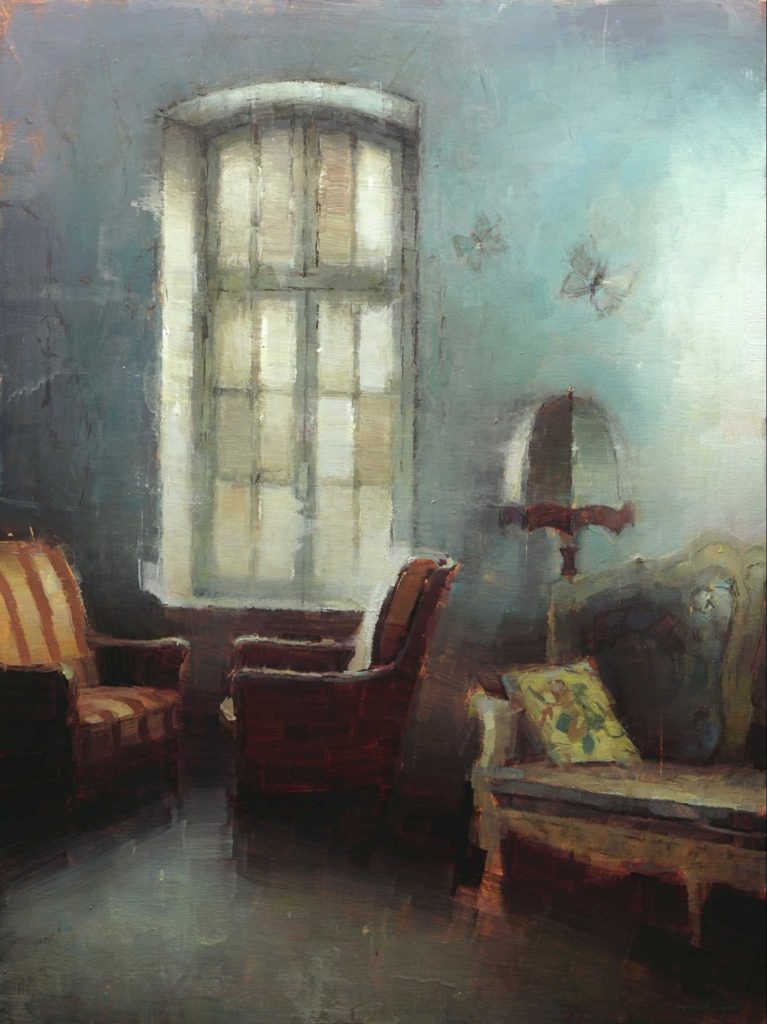
Nicolas Martin, “The Butterflies,” 2019, oil on panel, 9 x 12 in.
When I began painting, I was fascinated by the codes and references that some painters of the past were able to integrate into their canvases. They found a way to stay in control of their work or to convey a message. As my paintings leave the studio, I lose this link that I had for many hours of work. So I began to think about the use of elements of my daily life in my paintings, that way while the canvas no longer belongs to me, I still keep a link with it in this way, a confidence between the paintings and myself.
For example, when my wife told me that she was pregnant and we would have a second child, I decided to integrate two butterflies in the painting in front of me. The meaning of the painting changed after this wonderful news. It is now called “The Butterflies,” and this painting celebrates this beautiful moment. If I don’t explain it, it will be a very different story for the viewer, so I rarely say what I incorporate into paintings, to not influence people in their reactions.
An event in my life can change the full meaning of my paintings. When I live an important moment that I want to keep, I select an element around me and then integrate it into my painting. It can be absolutely anything as long as it makes sense to me. It can be a number, a word, a pattern of curtain or carpet, a piece of clothes, a jewel — I want to think that I can change the meaning of my painting at any time in relation to what I live. I started painting in this way from the beginning, and my paintings are chronologically related to my life. It is not understandable if the person is not aware of it.
A Chronology of My Life, a Visual Testimonial
It was important for me to know why I decided to paint. When I made the decision a few years ago, I had to organize my life around painting so I needed to understand it. What I learned: I wanted to express myself and evolve. Painting allowed me to know myself better and feel more connected with my environment. It is a good thing to understand our own approach; it can help to better target our needs, desires, and goals.
The desire to evolve and progress is crucial. Painting interiors is the result of a logical reflection.
I painted outdoor night scenes with people, so it was crucial for me to paint lonely interiors scenes. (Painting the opposite of what I knew to evolve.) I always wonder what to do to move forward. I am not a painter of a single subject. I never saw myself painting some fruits in a bowl for the rest of my life. It does not make sense to me. If my reason for painting is to express myself, then why repeat the same thing again and again? In a discussion it would be meaningless, so it’s the same about painting, in my opinion.
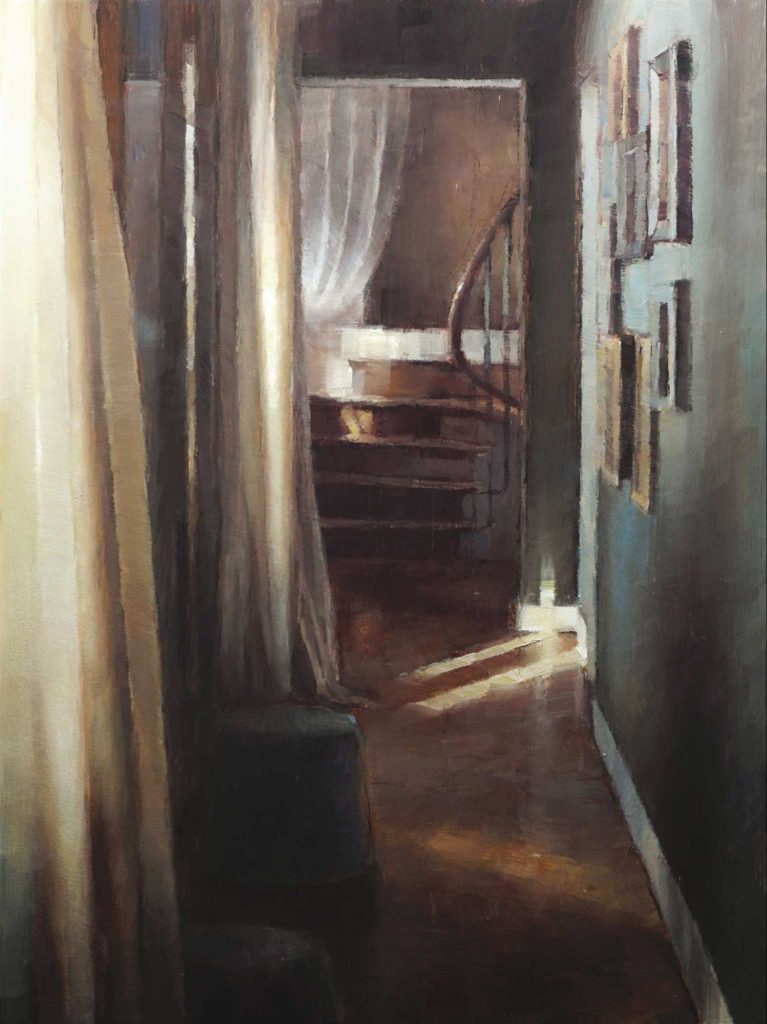
Nicolas Martin, “The Hallway,” 2018, oil on panel, 9 x 12 in.
I want to express myself but what I have to say does not take into account what is happening in the world. I sometimes watch the news, but it does not influence me in my choice of painting. I focus on my life, what I live personally, my surroundings, my discoveries, the people I meet. I don’t want to include political messages in my paintings. I do not seek to inform or denounce even if I can understand the people who do it. They express themselves, and I respect that. For the moment, my desire is not there.
I ask myself a lot about painting but never about my own place in today’s world of art. I am not interested in art movements at all. The questions I ask myself are about the meaning of what I’m doing and my visual identity. I wonder about my evolution and how to proceed, what I want to share with people.
I painted a lot of different subjects because I had this desire to discover new things, to focus on my weaknesses so that they become strengths. To insist where it hurts. I refuse to have a methodology or a routine. If I feel that I do not progress with what I’m actively working on anymore, then I seek the key to advance and evolve. It often passes by a change of subject, brushes, colors or, of course, different locations.
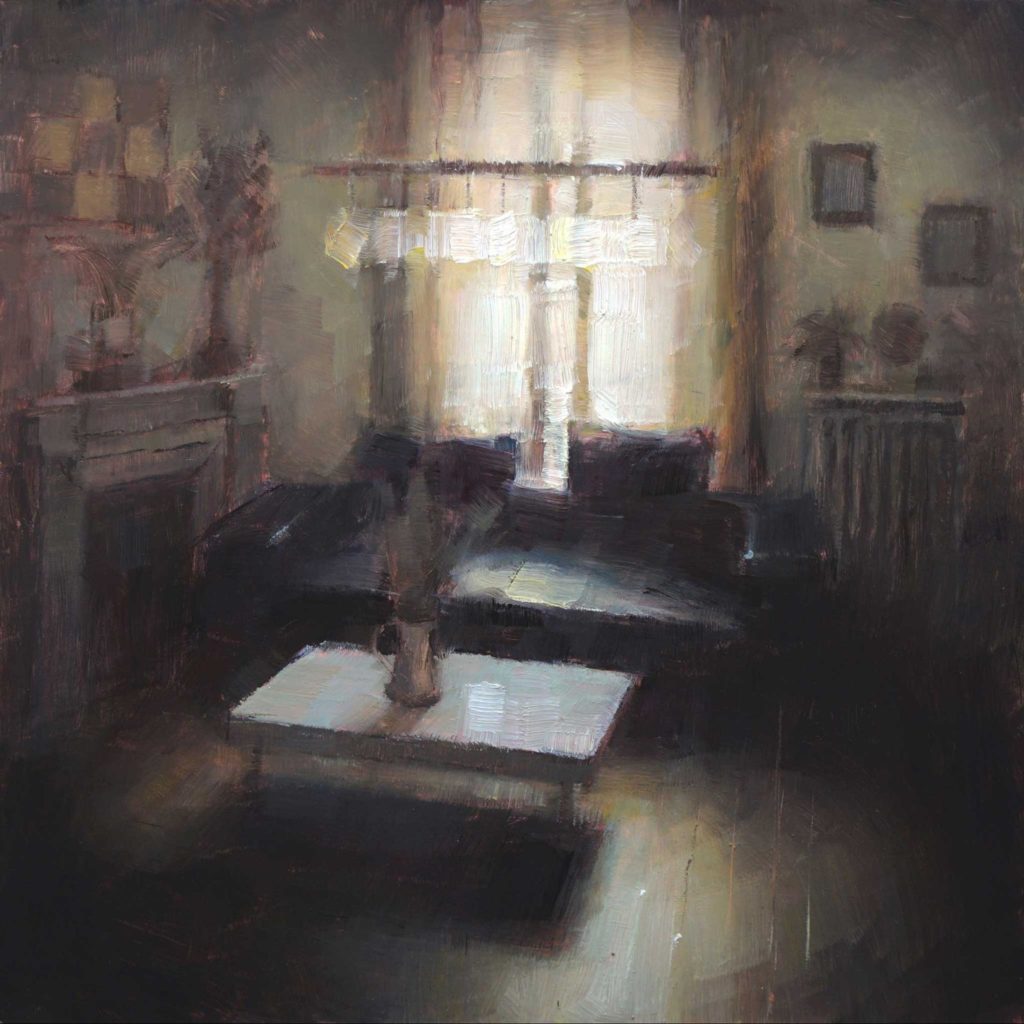
Nicolas Martin, “The Living Room,” 2018, oil on panel, 6 x 6 in.
When I started painting with a single medium-large brush, I felt myself moving forward. I did not have to paint some areas of my canvas with a different brush. I was looking for homogeneity — and forcing myself to stay with only one tool helped me a lot. I was looking for a balance. I also use the knife a lot. It allowed me to break my forms and to question myself. I break my routine until it becomes one itself.
This then led me to think of something important: As a man I have flaws, so why should I try to correct my paintings until there are no flaws? If I want to be honest with myself, I cannot ignore my flaws. If I decide to consciously leave mistakes, they are no longer mistakes — they are my identity.
From that moment on I had contradictions in my brain, and I had to learn what to leave and what to keep. What to correct and what not to correct. My perspective changed from that moment on. My lines have become less straight, no longer respecting the logical pattern. No more golden ratio, no more mahl stick. I felt trapped and I wanted to escape. Today I know where I am going: I am looking for freedom.
For example, I loved the fine details of paintings when I was younger. Today I am more touched by a less static perspective, less respectful of reality, less corrected. I want to discover someone’s vision rather than the ideal representation. My ideal of beauty has changed, so I’ve discovered many paintings that I didn’t see as interesting many years ago. I discovered a deep authenticity.
Today when I compose a painting, I do not put any limits on my process. I know that I can change, deform, remove. I do not have to respect what the subject is supposed to be.
I want to be free when I’m facing a blank canvas. I just want to express myself with my freedom and my identity.
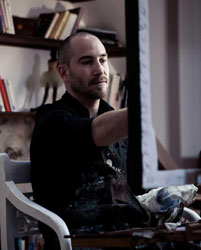
Nicolas Martin, “Weapons,” 2018, oil on linen, 24 x 36 in.Artist Nicolas Martin. Photo credit: Matt Guegan
About the Artist: Nicolas Martin (www.theartofnicolasmartin.com) (b.1980) is a French artist from Paris, now living and working in Montreal, Canada. After completing his studies at the respected Auguste Renoir school in Paris, Nicolas decide to deepen his artistic knowledge and diversify his skills by completing the Graphic Design program at the University of Laval in Quebec, Canada.
In 2003 he won First Prize in the “La Fondation de la Vocation” scholarship in Paris. Throughout his career, Martin has worked as a designer for the famous Galeries Lafayette in Paris and as art director for various companies in Europe and North America.
He started his career as a professional painter in 2013 with a highly successful solo show at the L’Oeil du Prince Gallery in Paris, followed by a second equally successful solo exhibition there the following year. In 2015 he made his U.S. debut in “Urban Life” at Abend Gallery in Denver and was a finalist at the respected ARC Salon. He was also named an “Artist to Watch” by Southwest Art magazine and featured in the book Tall Trees of Paris. Nicolas’s work has also recently been included in the “Realism Without Borders” international group and exhibitions, as well as featured in the Jetset Collection exhibition at Vanessa Rothe Fine Art in California.
In 2016, his third solo exhibition at the L’Oeil du Prince Gallery in Paris, entitled “Cinemascope,” was highly acclaimed and proved to be another successful achievement for his career. Nicolas is proud to be exhibiting among top artists. His work is now widely collected in both Europe and North America. His primary goal as a painter: constant evolution.
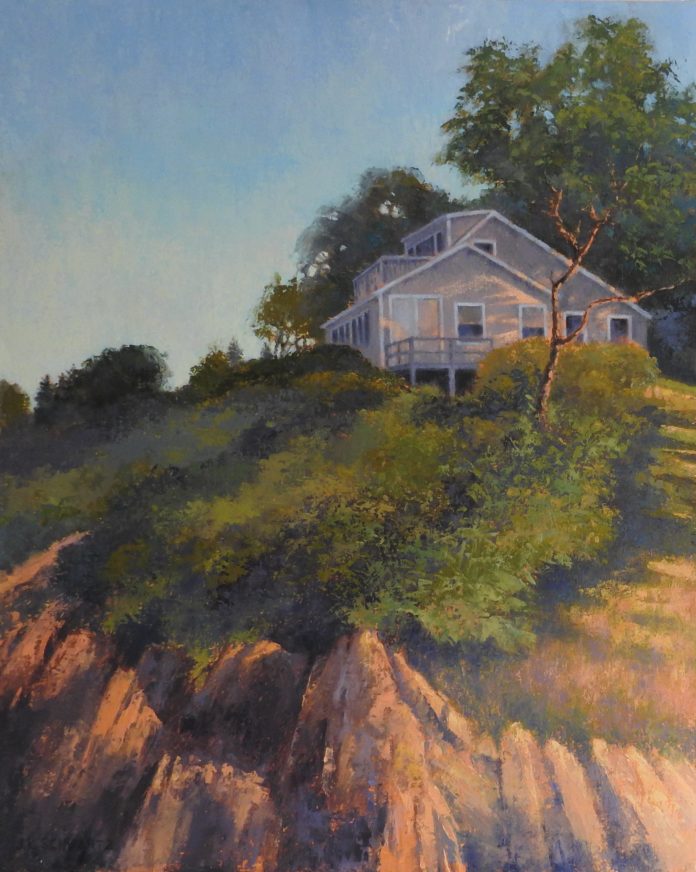
Casco Bay Cottage
Oil on linen panel
30 x 24 in. (36 x 30 in. framed)
$3400 Available through the artist
Casco Bay Cottage is unique among the paintings in artist Jean Schwartz’ coastal series in that it does not depict a body of water. However, while not seen, it is sensed. The cottage’s lofty perch over the rocks suggests it’s view out to sea.
“I was on a painting trip to Maine with friends. Most of the week was overcast, rainy and foggy. Early one particular morning, I woke to find the sun was drenching everything in a golden light. I rushed to the dock with watercolors and camera to catch the light on the bay. As I turned to go back up the hill the cottage and its surroundings greeted me. I instantly knew it was what I wanted to paint!”
Viewing the painting, Andrei Kushnir, artist and owner of American Paintings Fine Art in Washington DC, says, “Jean’s painting, Casco Bay Cottage, provides a dramatic experience for the viewer. The eye is directed by rock formations that point toward the subject but the encounter is immediately tempered with lush verdure and a bath of soft, golden light. The resulting feeling, for me, is one of appreciation for the idea of a safe respite from nature’s harsher elements. The artist not only knows her subject intimately but, as in all of her work, constructs a vision that conveys multiple layers of meaning through a masterly use of her medium. Can one ask for more from a work of art?”
In addition to coastal scenes, Jean also paints landscapes and cityscapes and can often be found painting plein air at locations in DC or northern Virginia, particularly along the Potomac near her home. These small paintings either stand on their own or are used as references for larger studio paintings.
“Sometimes I go out painting with the goal of information gathering for something I have planned as a studio work. I am often surprised that what I set out to paint is abandoned when I am inspired by something entirely different in the moment.”
Jean majored in Fine Arts in college. Painting classes emphasized abstraction and experimentation with different mediums. “My college, Upsala College, was only 20 minutes from NYC and we were encouraged to visit galleries and museums in the city as often as our schedules allowed. It was an exciting and dynamic time to be a young painter but the basics, particularly composition were also instilled in us.”
In her representational work Jean still pays close attention to such training but light plays a stronger role. “It is always the light that first draws me to a scene, and it is what inspires me the most when painting. Light sets the mood, it defines form, it is what I find exciting to capture on canvas.”
Jean is a juried member of the Washington Society of Landscape Painters, The Salmagundi Club, Oil Painters of America and is an elected fellow of American Artists Professional League. Her paintings have been exhibited nationally and internationally and can be found in private and corporate collections in the U.S. and France.
To view more of Jean’s work and “Join the Journey,” visit her website and follow her on Facebook and Instagram.
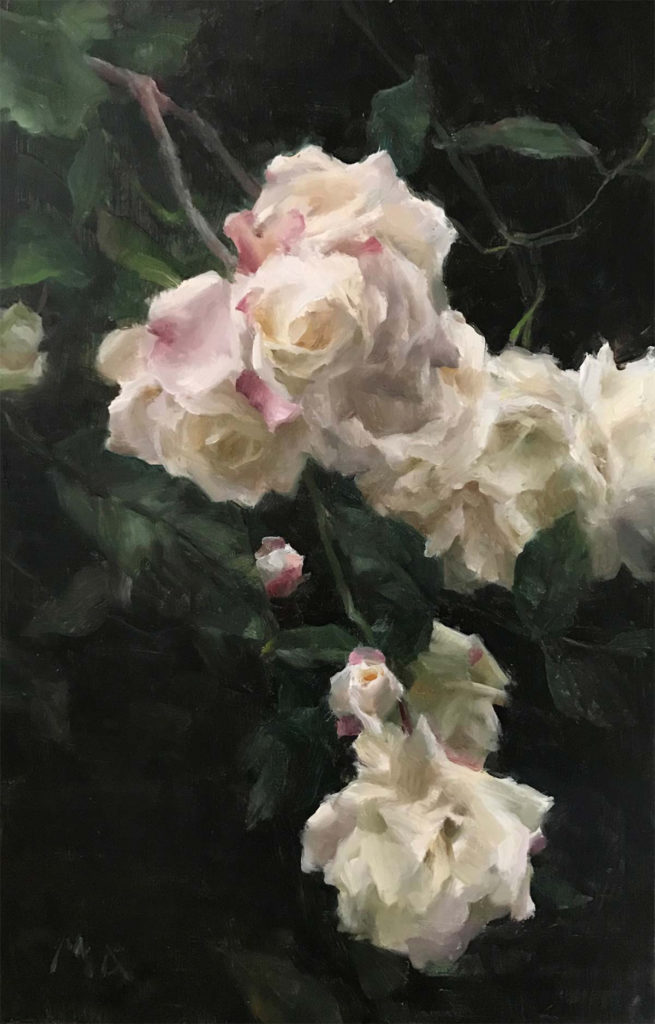
The paint was still drying on “Early Spring Blooms” when artist Kyle Ma shared with us his thoughts about his latest work.
“Early Spring Blooms” by Kyle Ma
“The vertical composition of this piece was inspired by florals from Chinese ink painting. Often the Chinese ink paintings would also include a poem written along with the artwork. While there is no writing involved in this painting, I did try and describe the roses in the most poetic way I could by paying close attention to the unique characteristics of each petal and each leaf.
“Something that was also important to me was to paint these roses truthfully as how they were found rather than attempting to idealize them. So I chose a design with flowers of different sizes, different stages of bloom, and facing different directions.
“I also included some going off the canvas to suggest this rose garden extending beyond the bounds of this canvas.”
The takeaway: Paintings are more than paint on paper. They offer a chance to communicate meaning. As an artist, you can do this in many ways, such as how Kyle did, painting the roses at different stages of bloom. This would have been a very different painting if all the roses had been young buds. Think about how the choices you make can change the meaning conveyed in your painting.
Fill your mind with useful art stories, the latest trends, upcoming art shows, top artists, and more. Subscribe to Fine Art Today, from the publishers of Fine Art Connoisseur magazine.