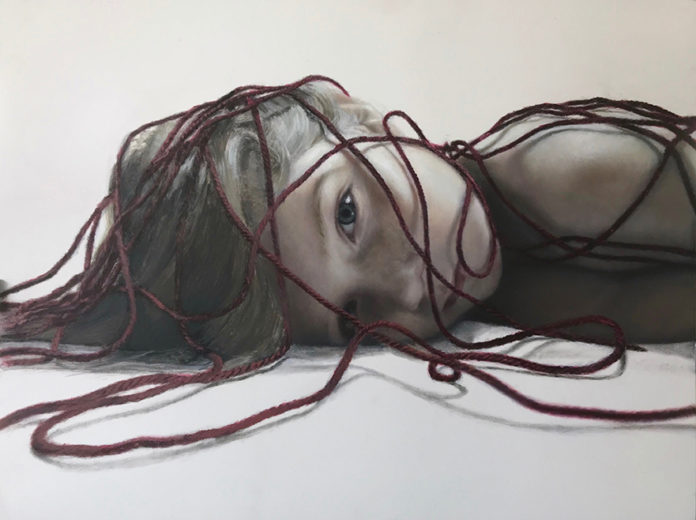
Opening at California’s New Museum Los Gatos (NUMU), “On the Shoulders of Giants: Selected Works from the NUMU Atelier Masters and Students” features the works of master artists and students from NUMU’s Classical Drawing and Painting Atelier Program. The exhibition showcases all levels of mastery in the traditional style of classical drawing and painting.
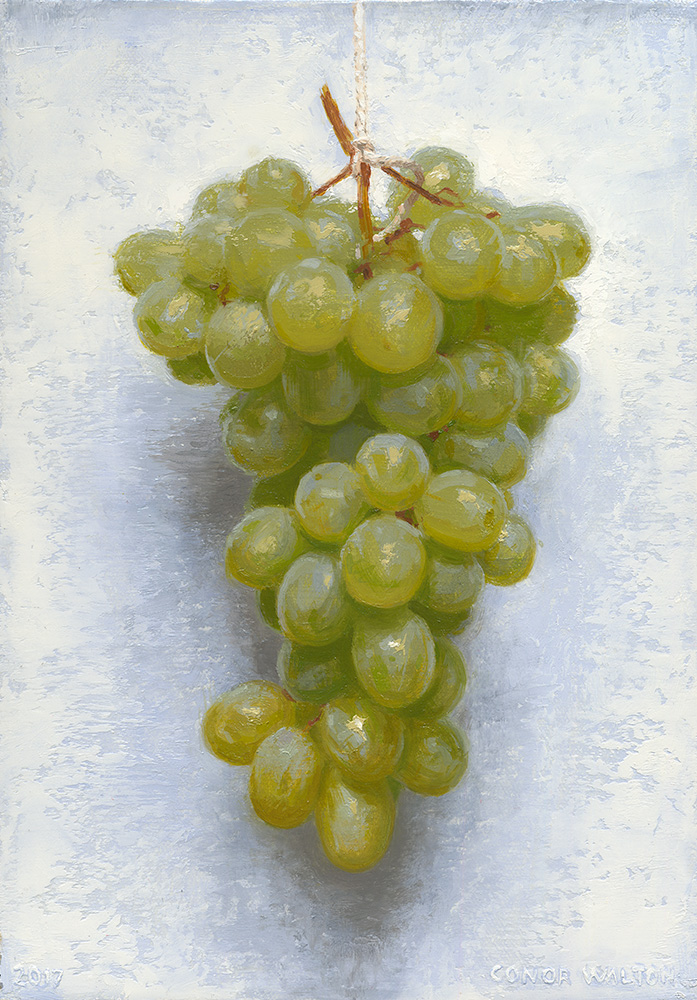
“Green Grapes” by Conor Walton
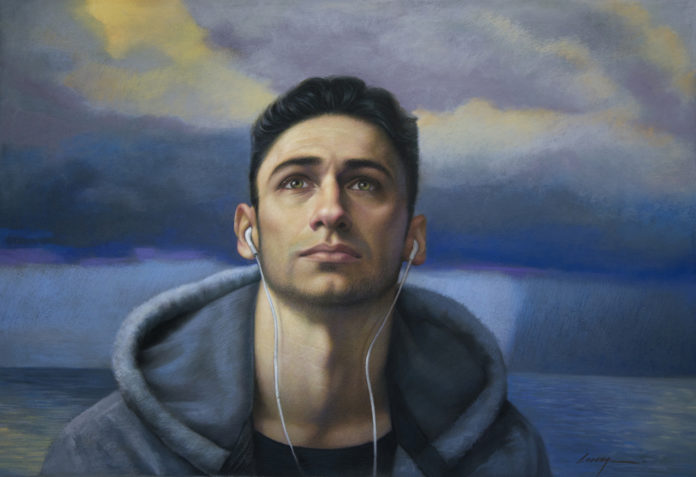
Featured artists include NUMU Atelier Director, Gabriel Coke, and Master Artists from NUMU’s Visiting Artists Workshops program: Adrian Gottlieb, David Gray, Brianna Lee, Jim McVicker, Cuong Nguyen, Sarah Sedwick, Enzo Segovia, Robert K. Semans, Oliver Sin, Conor Walton, Zhaoming Wu, and Elizabeth Zanzinger.
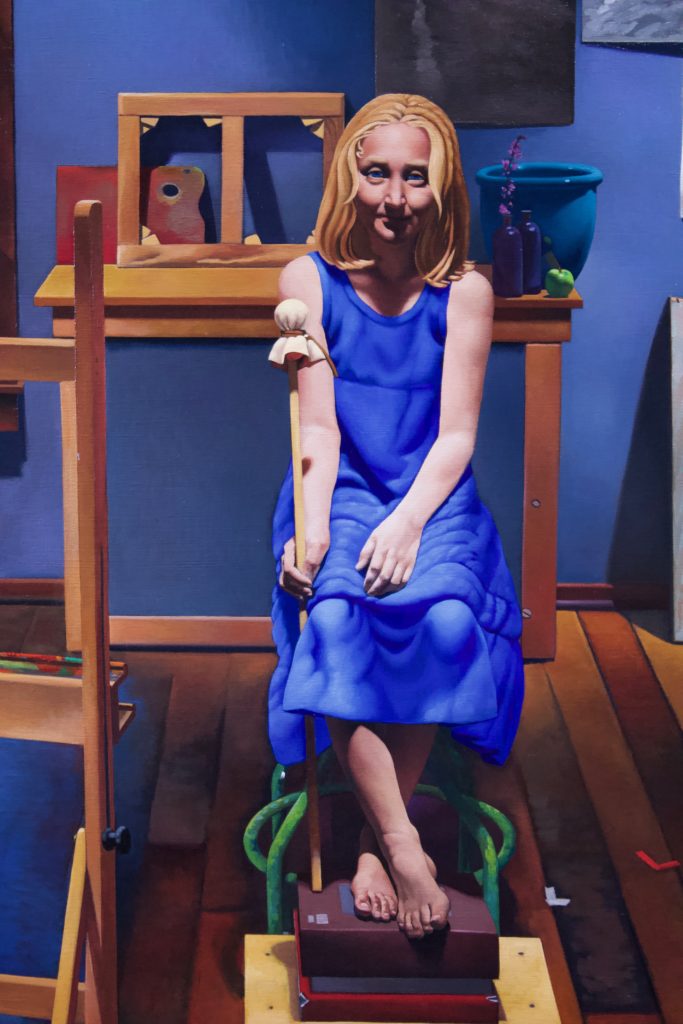
“My Children in the Studio” by Gabriel Coke
Gabriel Coke shares his insights on the atelier, NUMU, and more:
I knew that to have an atelier in the South Bay Area I had to create it myself. I began the process of changing the culture of the local community. It took about 15 years, but I accomplished what I set out to do. Now we have an excellent studio for talented young artists, a resource for parents needing an education for their children, and a community for local adults to study with globally connected visiting artists. Seeing kids work on a genius level every week is the best reward.
NUMU adopted my program in 2015. I began searching for a host in 2005 but every arts organization didn’t want to host atelier programming. In 2012 I began teaching full time as an independent atelier. In 2014 I was recognized by Lisa Coscino during NUMU’s expansion. My successes aligned with NUMU’s mission to provide youth education to the community through my After School Art Studio. Adult artists could attend regular day and night classes. The goal of connecting to the global arts community was realized through the Visiting Artists Program, which was made possible by my many friendships with master painters in the United States and Europe.
The studio was built to be the best resource a parent could find for their artistic children. The love and support that grew every year has truly been remarkable. During an After School Art Studio class, the room is filled with some of the Bay Area’s brightest and most talented kids. They regularly out-perform the adults. Many kids have been attending for years, and some have begun as middle school students and are now in college or art school. They have won several awards and scholarships and have been accepted into competitive art schools and pre-college summer programs throughout California.
The studio at NUMU allows me to bring local artists and professional fine art teachers together on a yearly basis . . . This quality of friendship is my most trusted measure for choosing teachers who are kind and treat students the way I want them to be treated.
“Mixed Bouquet” by Robert K. Semans“The World” by Sarah Sedwick“Feedback Loop” by Elizabeth Zanzinger
To learn more about “On the Shoulders of Giants,” which runs through October 13, 2019, visit www.numulosgatos.org.
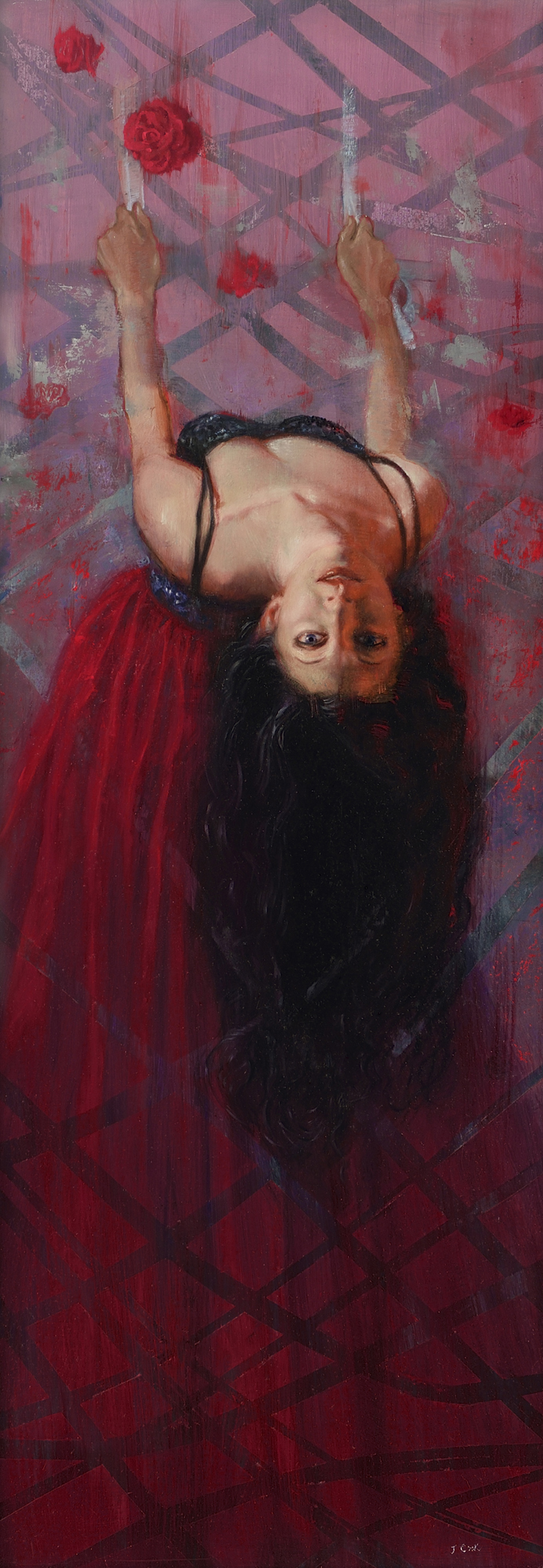
Janet Cook, “Bending over Backwards,” oil on panel, 34 x 12 in.
The artist’s collection of work is on view in the exhibition “Defying Gravity and Expectations” at Dacia Gallery (New York) May 19–30, 2019.
By Janet Cook
Throughout our lives many things push and pull us in different directions, resulting in complex internal struggles. This show examines these struggles through metaphor and humor, running the gamut from imaginative combinations to straightforward realism.
Over the past couple of years I have experienced losses, including the death of my mother, which has led me to create more personal work. As Brits we tend to bottle up our emotions, and then, one day, we die. Before that happened, I decided to reexamine my own experiences and my relationship to art: my subjects and my media.
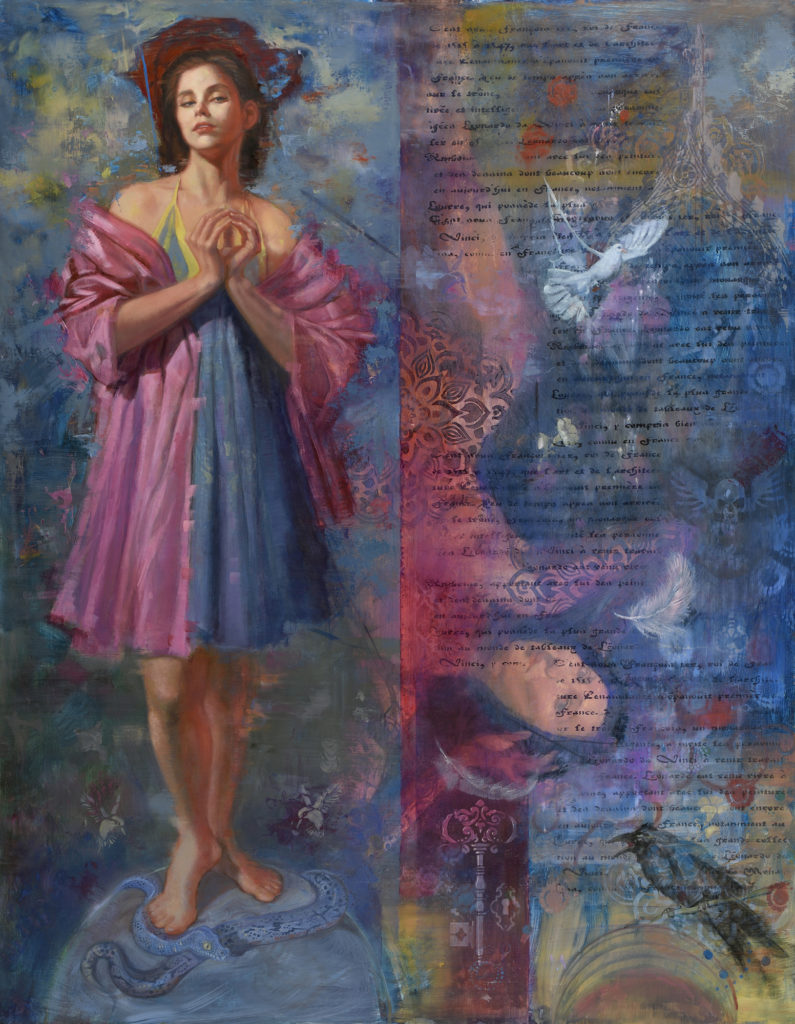
Janet Cook, “Sacred and Profane,” oil on panel, 48 x 36 in.
I consider myself a contemporary representational artist. A common thread running throughout my work is my fascination with the figure: timeless, beautiful, and powerful. Additional inspiration comes from a variety of sources, ranging from the Old Masters to modern-day advertising, graffiti, and body art. My goal is to combine these elements, along with my own imagination, into a cohesive whole that intrigues and engages the viewer.
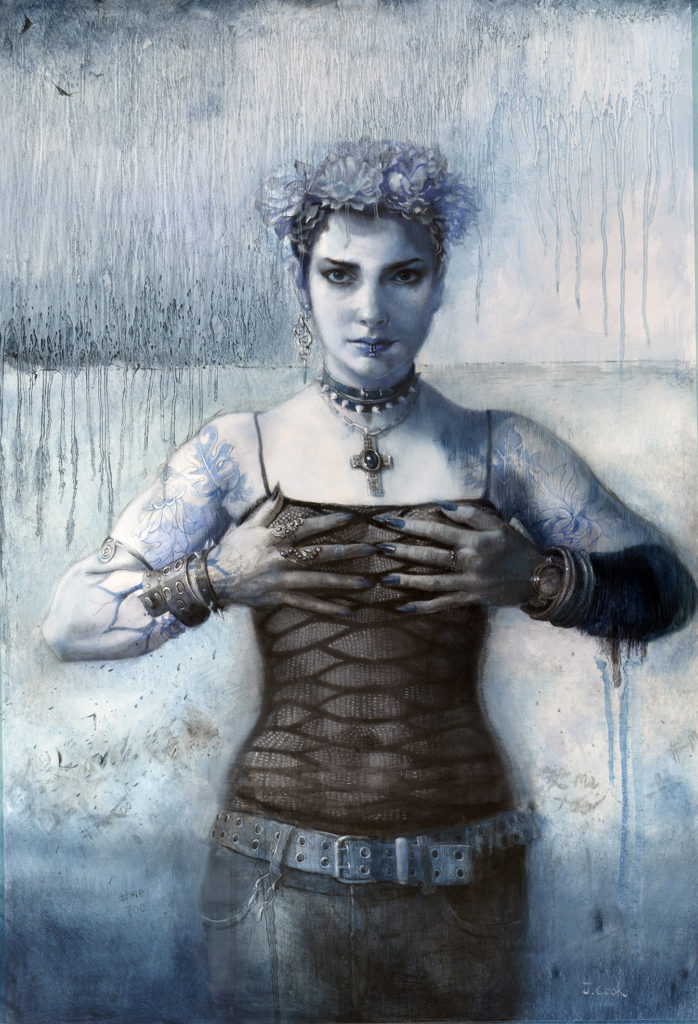
Janet Cook, “#MeToo,” oil and ink on panel, 30 x 20 in.
Drawing has been my main focus for the last two years. I used to see it as a tool for planning paintings, but embracing pen and ink has opened up a whole new approach, and I now look for ways to combine it with other media such as watercolor and, more recently, oil. “#MeToo” combines two media: Micron pens in blue and black with Vasari oil paint in Prussian blue, Payne’s gray, and titanium white. The painting was inspired by my own personal experiences, but I don’t see the figure as a victim; I see her in control of her body and mind, confronting the past, and the viewer. The flowers in her hair are a nod to Frida Kahlo’s strength in adversity.
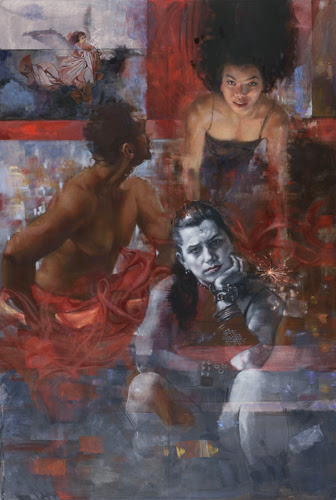
Janet Cook, “Pulling, A Tangent of Opposites,” oil on panel, 60 x 40 in. (diptych, two panels 60 x 20 in. each)
“Pulling, A Tangent of Opposites” explores the intrigue and ambiguity between people in relationships and our perception of the situation when observed from afar. The original idea was based on a painting by Rubens of Hercules struggling with a serpent, while an angel looked down. As the composition evolved, I felt I needed to add more energy in the lower right portion of the painting, so I played around with adding objects and animals, and finally decided to just add another person; androgynous in looks, painted in a binary manner (black and white), this figure reflects our culture’s slow acceptance of differences in relationships and gender. This painting has been selected as a 2019 ARC finalist.
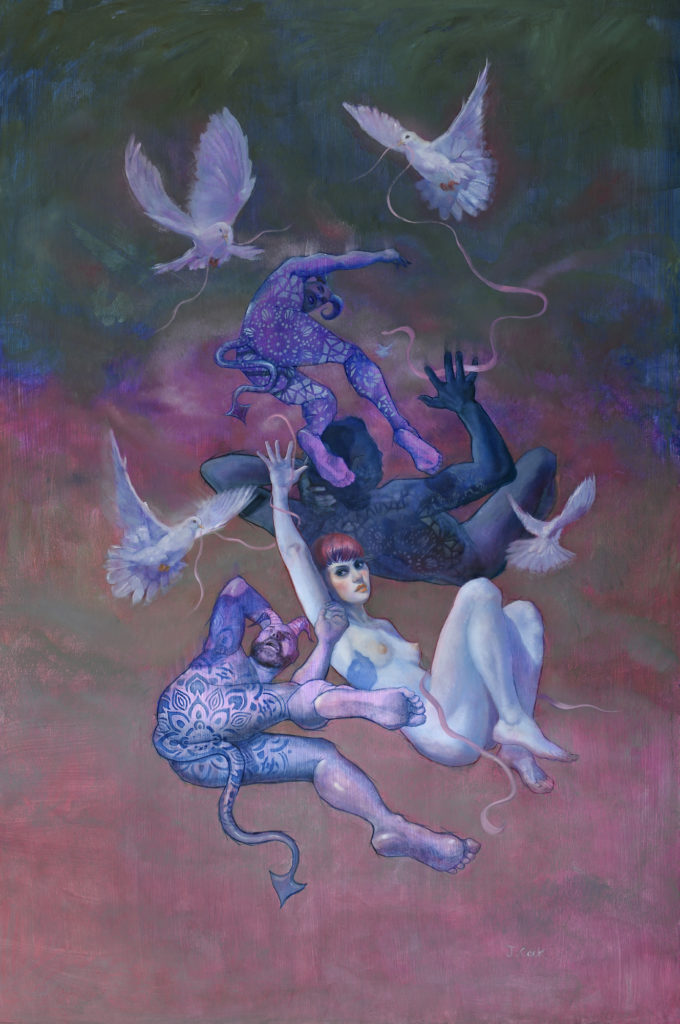
Janet Cook, “Falling Up,” oil on aluminum, 60 x 40 in.
“Falling Up” is the third in a series of figures in free fall and flight. The original concept was based on a small drawing of four figures by Gericault, which in turn was based on a Rubens painting, “Fall of the Damned.” I loved how the figures entwined, so I sketched it. Back in the studio I hired four models separately to recreate the poses, playing around with different configurations. Serendipity played a part in the process too — when a drawing landed on the floor upside down, the figures were suddenly falling up, which had the more positive meaning of overcoming adversity. Despite this, there is still some ambiguity about which way they are going. I retained the feeling of a pen and ink drawing in this painting by outlining the figures and keeping some areas unfinished, revealing the underdrawing.
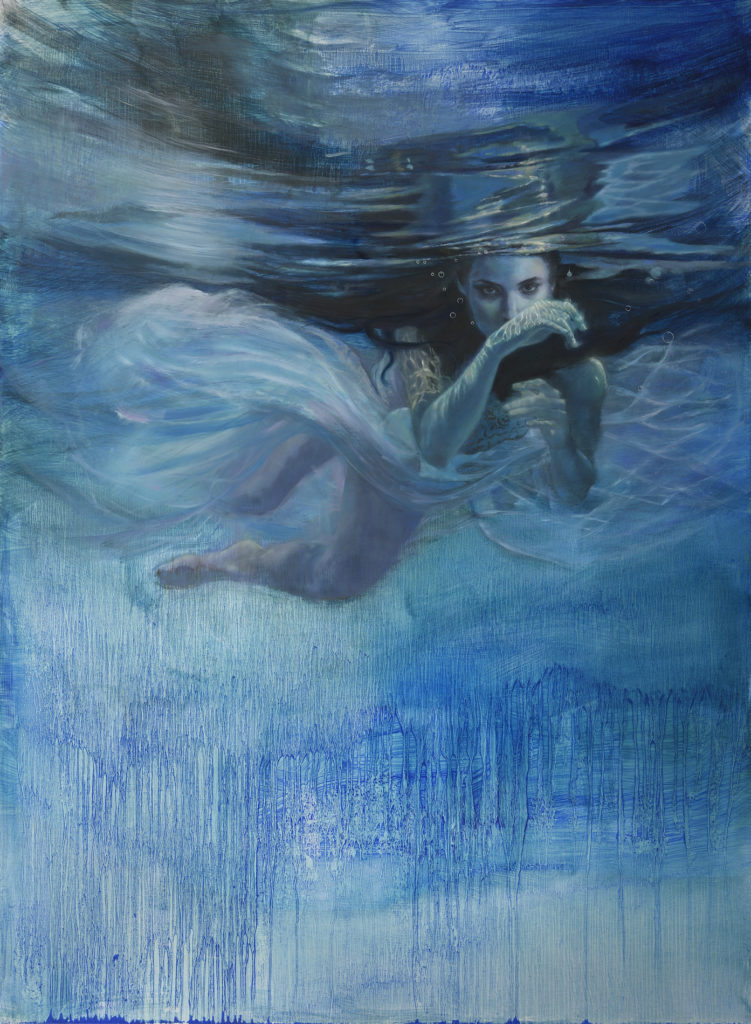
Janet Cook, “Seventh Wave,” oil on aluminum panel, 48 x 36 in.
About Janet Cook:
Cook teaches workshops at the Art Students League, NYC, and holds a weekly class at the Pastel Society of America NYC. Cook currently serves as a member of the Arts Committee at the Salmagundi Club. “Defying Gravity and Expectations” is on view at Dacia Gallery (New York) May 19–30, 2019.
Ethan Murrow, “Boundary Theft,” 2019, graphite on paper, 48 x 48 in.
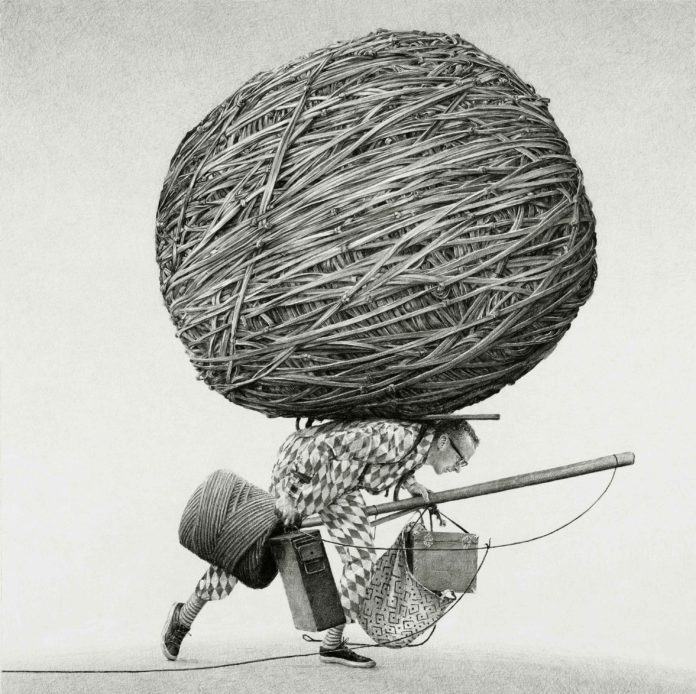
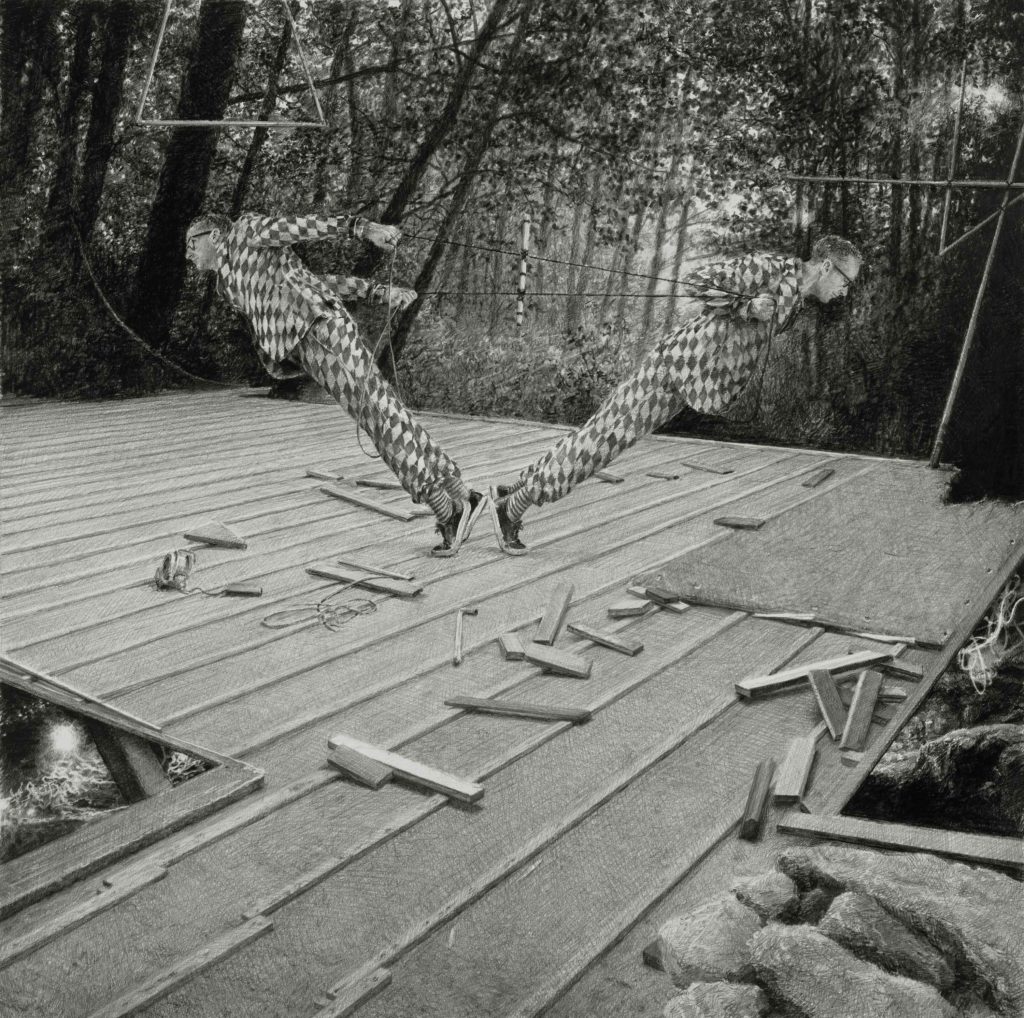
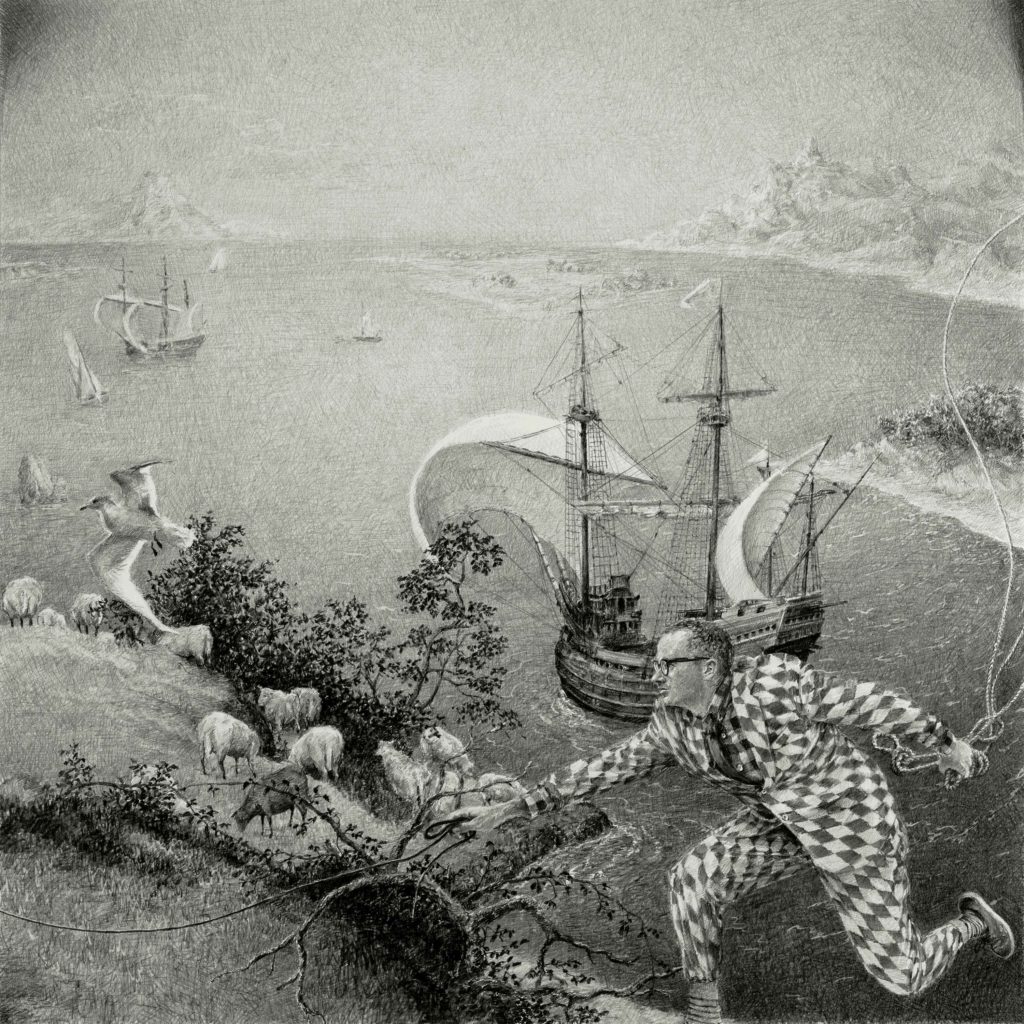
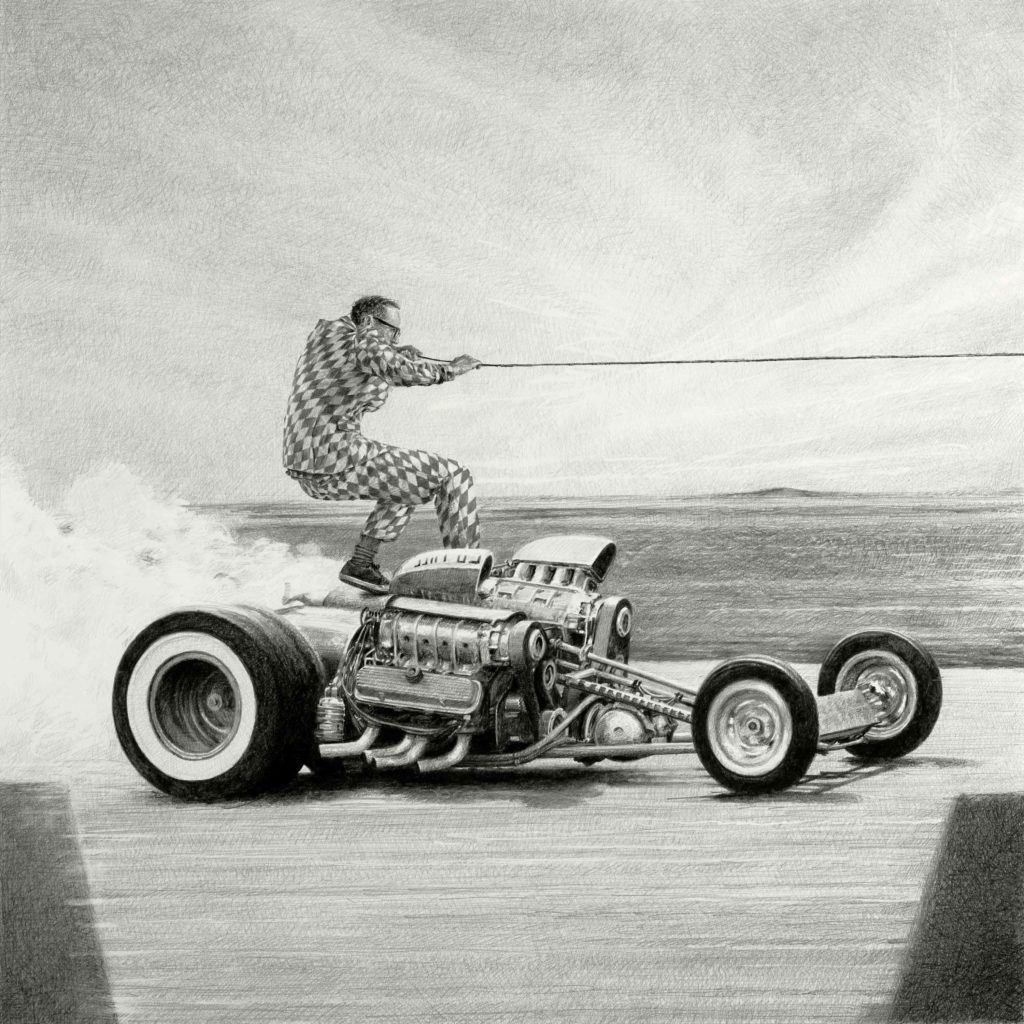
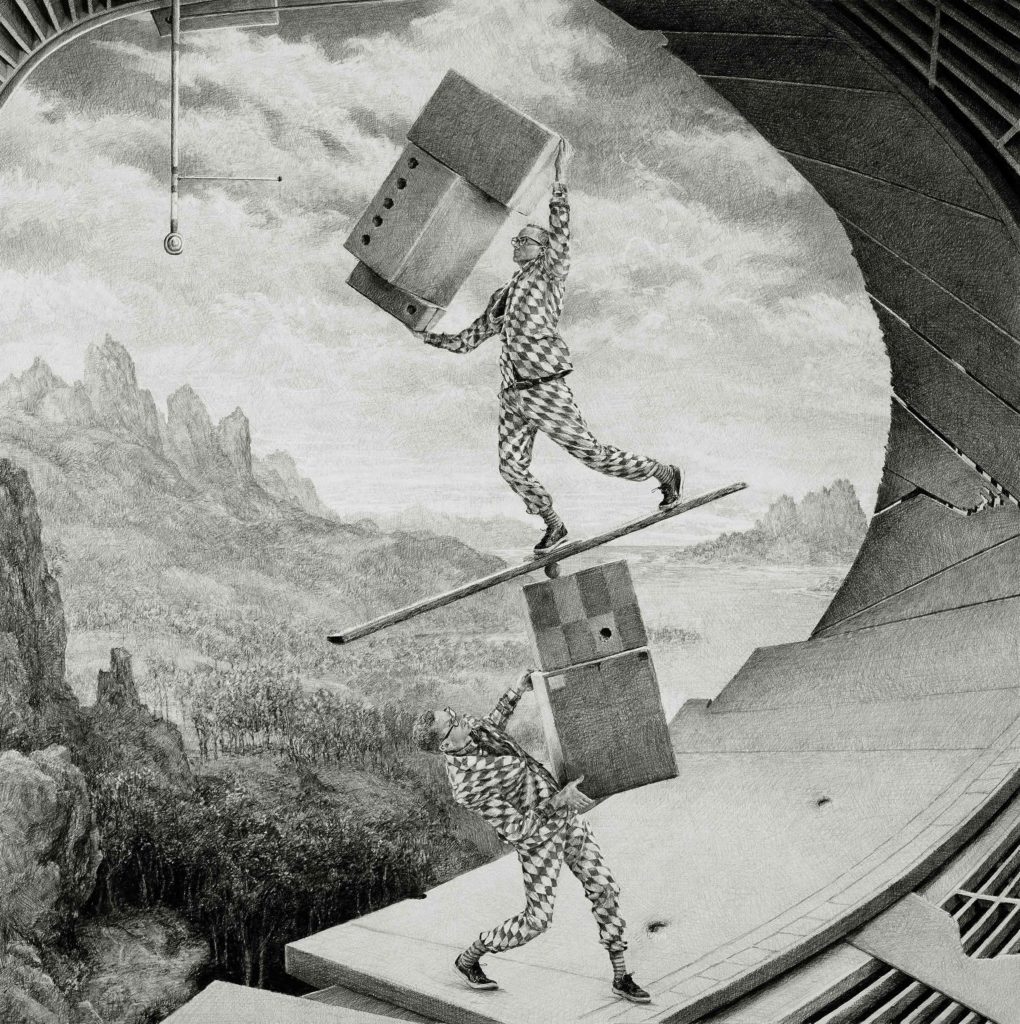
Winston Wächter Fine Art, New York is excited to announce “American Commerce,” a new series of large-scale drawings by Ethan Murrow. The series follows a fictitious pair of men as they traipse across the earth employing elaborate and perplexing methods to steal and transport precious cargo. “American Commerce” explores concepts of appropriation, colonialism, and trade economics with a delightful deadpan humor.
Ethan Murrow, “Contract Magic,” 2019, graphite on paper, 36 x 36 in.
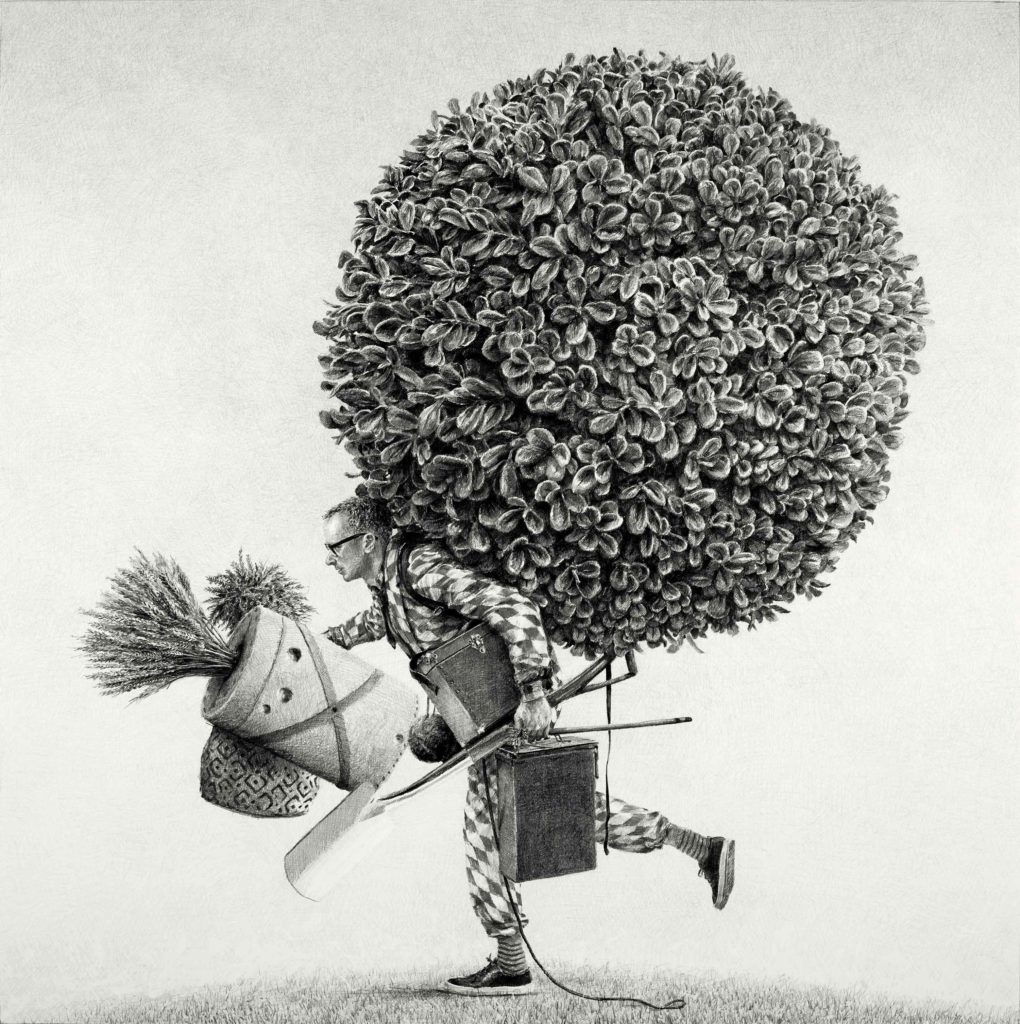
The duo is dressed in identical flashy checkered suits, and they are in part self-portrait and self-parody. Murrow considers the role white men like him have played in global history as they romp the world taking whatever strikes their fancy, regardless of inherent value. For example, “Vernal Theft” (below) features the earnest looting of potted plants and gardening tools, the thief bowing under the weight of an enormous well-groomed topiary.
Ethan Murrow, “Vernal Theft,” 2019, graphite on paper, 48 x 48 in.
The characters Murrow creates go to great lengths to collect their arbitrary treasures, yet they remain completely oblivious to the harm they inflict on the environment or their impact on native communities.
Ethan Murrow, “To the Last,” 2019, graphite on paper, 36 x 36 in.
Murrow was initially inspired to create “American Commerce” through reading about the Opium Wars of the 19th century, and the massive impact the drive to control a single resource can have on the world. Stemming from this research, Murrow conducted archival image searches, which he then built into elaborate storyboards, often photographing homemade props and digitally altering them before arriving at a final scene to draw. His intentionally plodding practice reflects on the way histories are told, retold, and formed into grand and often whitewashed heroic narratives.
Ethan Murrow, “Reasonable Risk,” 2019, graphite on paper, 36 x 36 in.
These highly detailed black-and-white drawings recall antique advertisements for bizarre contraptions, or depictions of inventive early attempts at flight. The work evokes a sense of looking back at the past and wondering “What were we thinking?” Yet, the issues of white privilege and colonialism Murrow examines are current and often devastating. Through this crucial examination of how we behave in the world and how we can do better, we are reminded that there is always room for laughter at the absurd and obvious ways in which we expose our flaws and misunderstandings.
Ethan Murrow, “American Commerce,” 2019, graphite on paper, 56 x 56 in.
Ethan Murrow is a Boston-based artist who uses film and photography to create farcical, theatrical narratives that are then translated into large-scale graphite drawings. His practice creates stylized narratives that mirror and then transgress reality, investigating the way in which histories are developed and passed on.
Murrow is a professor of the practice in painting at the School of the Museum of Fine Arts at Tufts University. He has exhibited at the Institute of Contemporary Art, Boston, the Currier Museum of Art, Manchester, and La Galerie Particulière, Paris, among others. In 2015, he published a children’s book, The Whale, in collaboration with his wife, Vita Murrow.
Having always wanted to be an artist, I assumed I would paint landscapes, which is what I was taught, what I knew, and where I thought my passion was.
It would be years before my dream of being an artist would be realized, and surprisingly my journey would take me away from landscapes to an entirely different focus. That focus, as I call it, is “painting the ordinary.”
A Little Background
I am a Denver native who began oil painting at the age of seven. As the story goes, an elementary school teacher told my parents that I showed unusual talent in art.
My parents searched for an art teacher, but few art teachers wanted to work with a child so young. After some time they located a local artist and illustrator by the name of Harold Wolfinbarger, Jr. I clearly remember my lessons and the welcome odors of paint, turpentine, varnish, and linseed oil that permeated the room.
My lessons were on Saturday afternoons, with a small group of other students who were adults. We sat in a room, painting from a slide projected onto a screen. The images were all Colorado landscapes.
With Mr. Wolfinbarger’s help, I learned the basics of drawing, value, color, and mixing and applying paint. I continued studying with Mr. Wolfinbarger for several years and also studied art in school. During my teenage years, however, I became disillusioned with some of the contemporary art I was introduced to. I turned my focus from art to other endeavors, working and raising a family.
Although I was always dabbling in art and painting murals throughout my home, it took many years before I began to realize my dream as an artist.
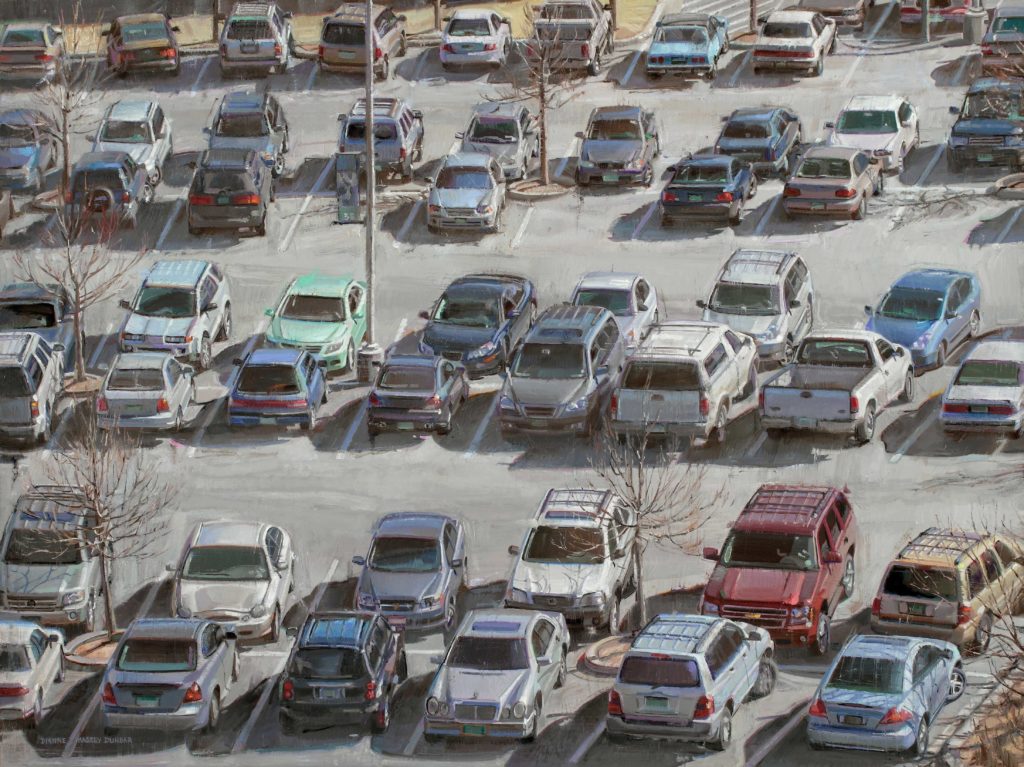
“Parked,” oil on gessobord, 18 x 24 in.
In 1997 I discovered the Art Students League of Denver (ASLD). It was at a time in my life when I needed to make a change, and I was ready to rediscover my art. I noticed there was a year-long professional studies class then offered by the ASLD and taught by Quang Ho.
I applied for admission into the class and was accepted. That class changed my art and my life. It launched me into a three-year amazing and intense honeymoon with art, testing new ideas, questioning my underlying assumptions, experimenting, and relearning. During this time I also sought out other instructors, including Mark Daily, Ron Hicks, and Kevin Weckbach.
In 1999 I began painting professionally and was accepted into my first gallery.
True to my roots, I resumed painting landscapes. But during my studies at the ASLD, I was introduced to figurative and still life work and I began to play with those as well as other ideas. I wanted to discover where my voice was, where my passion was. And bit by bit, painting by painting, the “ordinary” began to emerge.
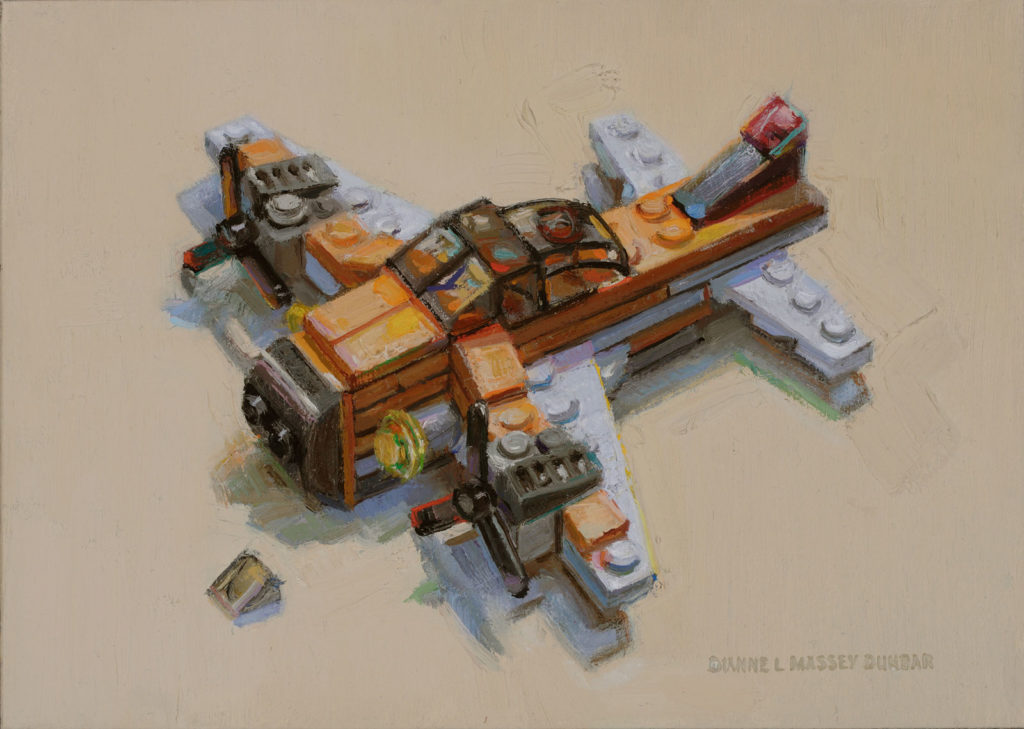
“Some Like it Hot,” oil on gessobord, 8 x 8 in.“Plane,” oil on gessobord, 5 x 7 in.
Why the Ordinary
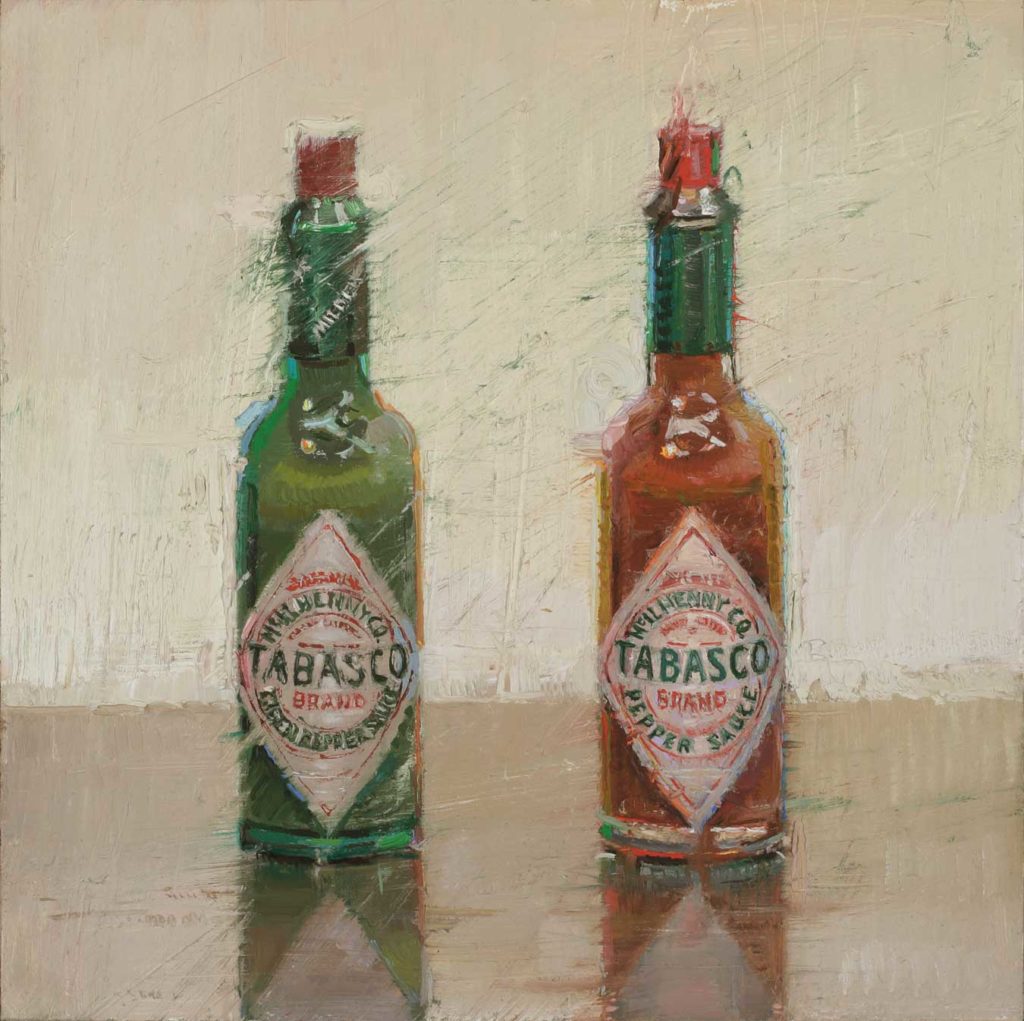
I love seascapes, landscapes, portraits, gardens, and the like. They are unquestionably beautiful and certainly art worthy. I am grateful to artists who bring us breathtaking vistas and panoramas. However, the more I painted, the more I was intrigued by ordinary objects and scenes. Almost all of life is lived in the ordinary. I wanted to honor what we see every day, our shared experiences. Rain. Street workmen. Coke bottles. The more I looked, the more I realized there are wonderful shapes and colors and beauty to be found everywhere.
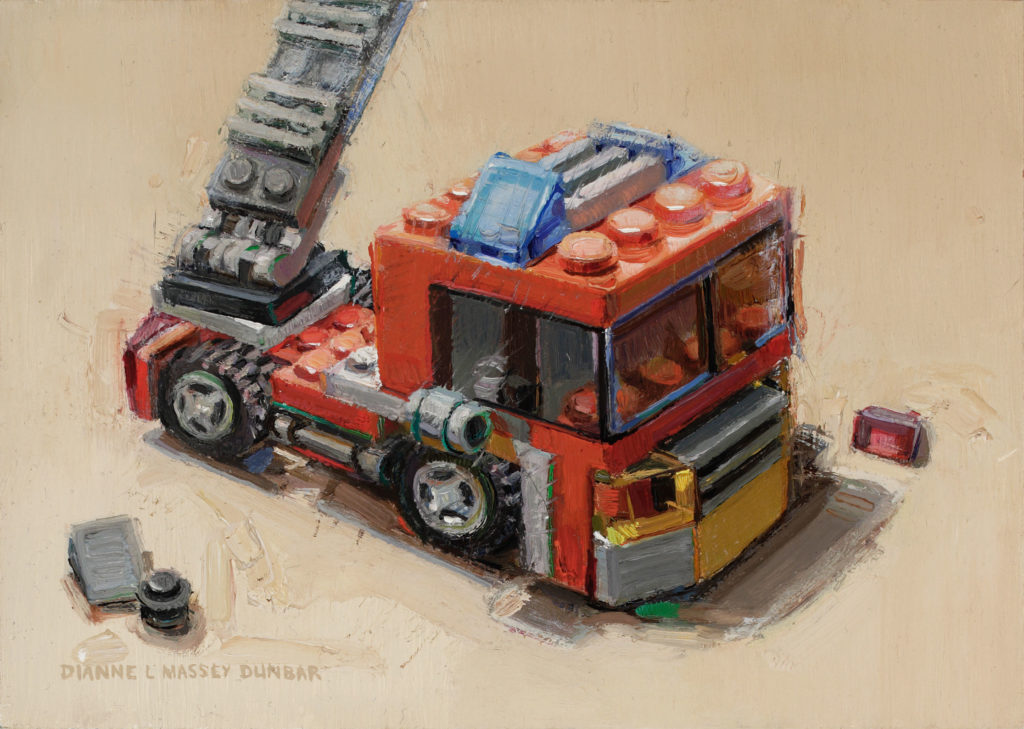
“Fire Truck,” oil on gessobord, 5 x 7 in.
I also tend to be a storyteller in my work, and I create paintings of objects or scenes out of my own experiences, or an image I want to say something about. I have painted ketchup bottles to celebrate the ketchup I pulled out of the refrigerator nearly every day when my sons were young.
I painted a series of Lego cars and trucks to recall the time my younger son and I walked into a Lego store together to investigate key chains. I did a painting of a parking lot from the upper window of a medical office that I would stare out of while waiting to be seen. People probably best know me for my paintings of bottles and jars, as well as rain, workmen, and fallen leaf paintings.
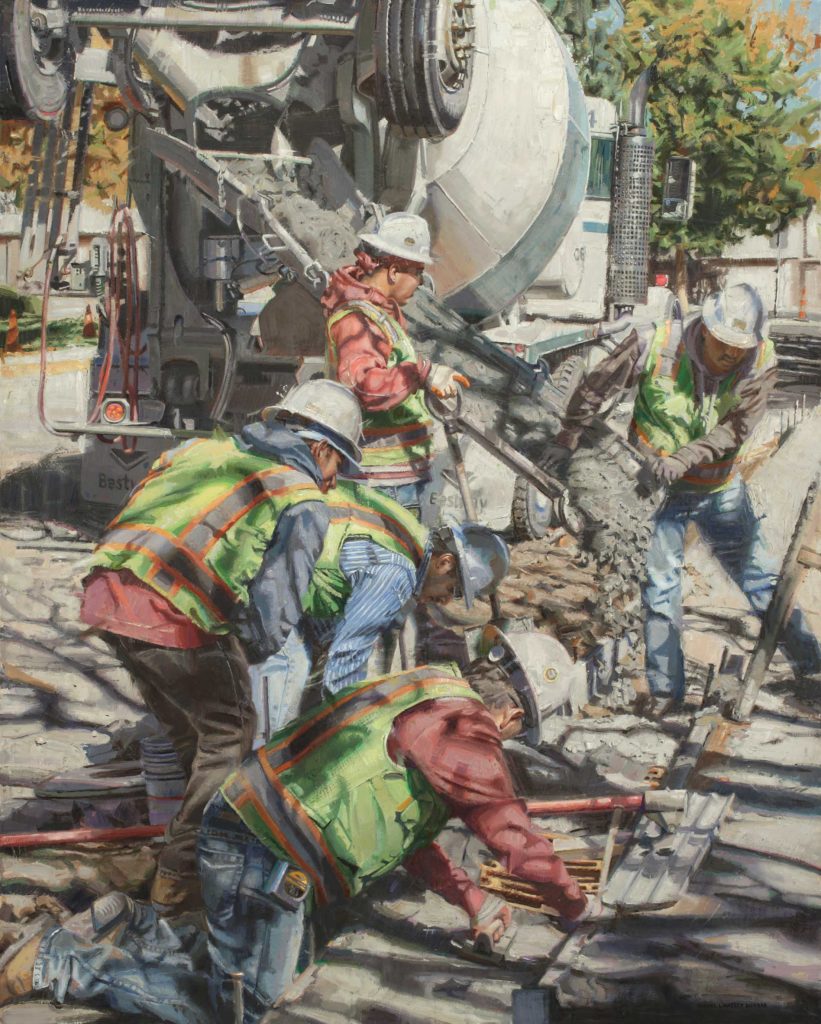
“Cement and Tree Shadows,” oil on gessobord, 30 x 24 in.
The workmen series started years ago when I drove past a road crew working at night and was fascinated by the bright lights and heavy equipment. I returned to the site a few days later to take photographs, only to discover my tripod was broken and would only stand about two feet high. So I literally took photos while crawling around on the sidewalk with my camera on a broken tripod.
It was fairly late in the evening, and a policeman stopped to ask what I was doing. I explained and he let me be. I admit it was a rather humiliating experience. However, the painting from that photo shoot won Best of Show in the 2007 Oil Painters of America Central Regional Exhibition.
Then, several years later, roadwork was being done in my neighborhood. I would visit the site daily to take photographs. I was struck by the skill and artistry of the workers.
I took hundreds of photos as they worked on the streets for nearly two months. I wanted to honor their weeks of labor, hard work, and ten- to twelve-hour days.
I have proudly done a number of paintings highlighting those men and their work.
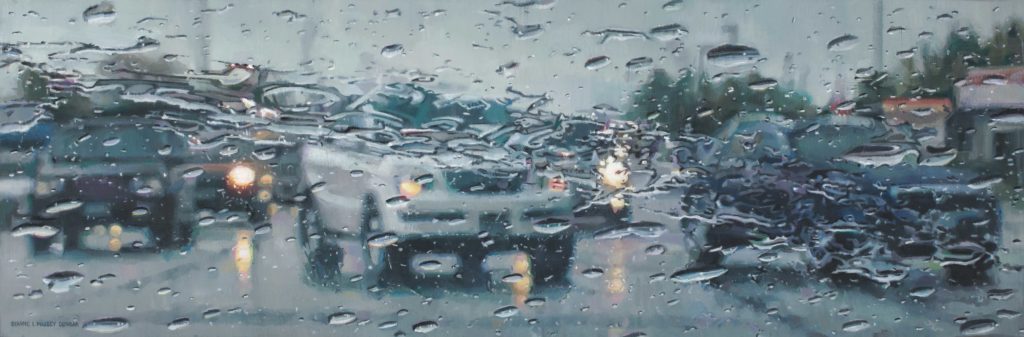
“Rain on Windshield: Left Turn,” oil on gessobord, 12 x 36 in.
My rain series started with an intense fear of thunderstorms. That fear bothered me for years, and I would strive to be safe in my studio whenever rain was predicted. However, one afternoon I was caught under a thunderstorm during rush hour traffic with nowhere to take cover. Sitting in my car, feeling trapped and anxious, I instinctively picked up my camera and began to take photos of the rain on the windshield. The more I got involved with looking at the rain and taking pictures, the less anxious I became.
When you really look at raindrops, they are amazing, from their shapes to their color. When they hit the windshield, they are transformed and often look like dragons or fish or other creatures and they reflect wonderful colors. Thus began a healing process and a series of paintings featuring rain on windshields, rain on windows, rain falling in puddles or ponds. And, while I still don’t like tornado warnings or hail, thunderstorms rarely bother me now. Sometimes I actually look forward to rain so that I can get more resource material.
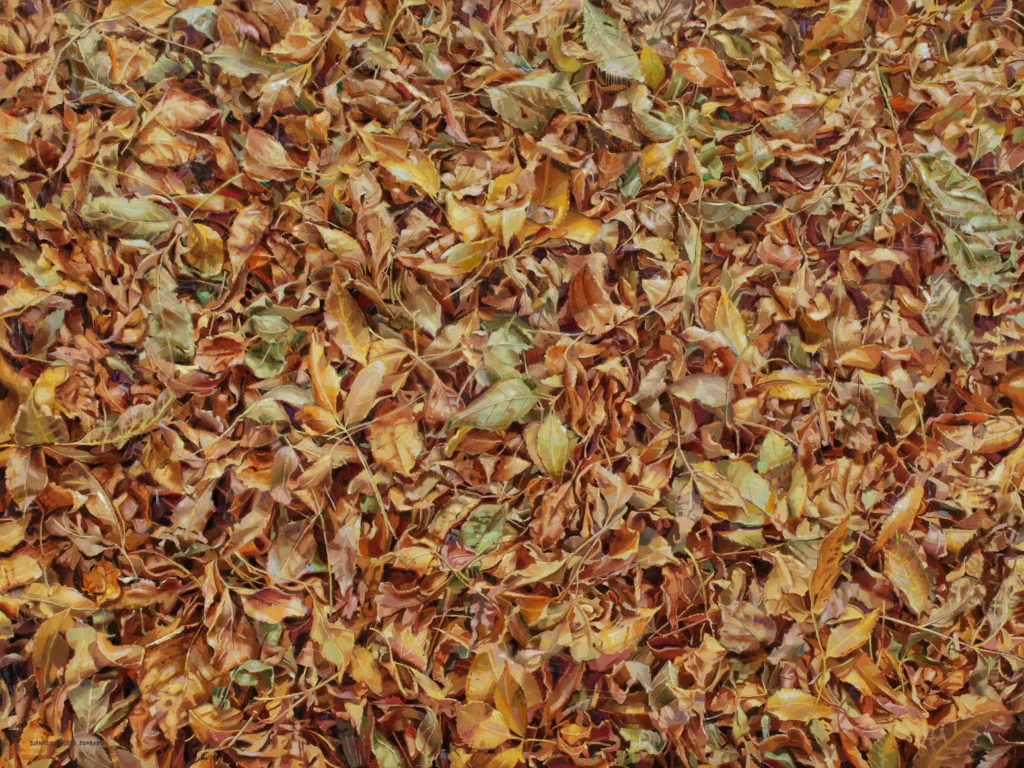
“The Fallen,” oil on gessobord, 30 x 40 in.
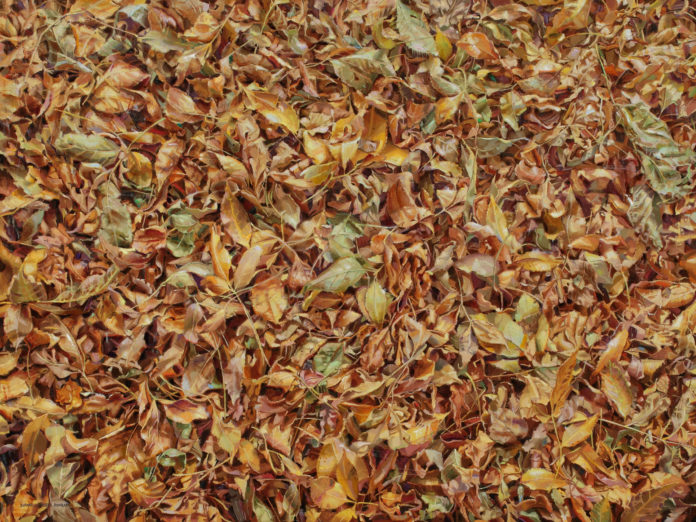
The fallen leaf painting arose from a walk in the park during autumn. I was in a reflective mood, musing about life and legacy. The leaves had fallen off the trees and I was shuffling through them, noticing the patterns of the leaves as I continued to contemplate. I pulled out my phone and started taking photos of the leaves, and then began to arrange the leaves on the ground. As I worked with the leaves and continued to think about life, it occurred to me that the leaves fall, but are never lost. They nourish the soil for a new crop of leaves. So “The Fallen” is a tribute to those that came before, those who will come after, and our place in space and time.
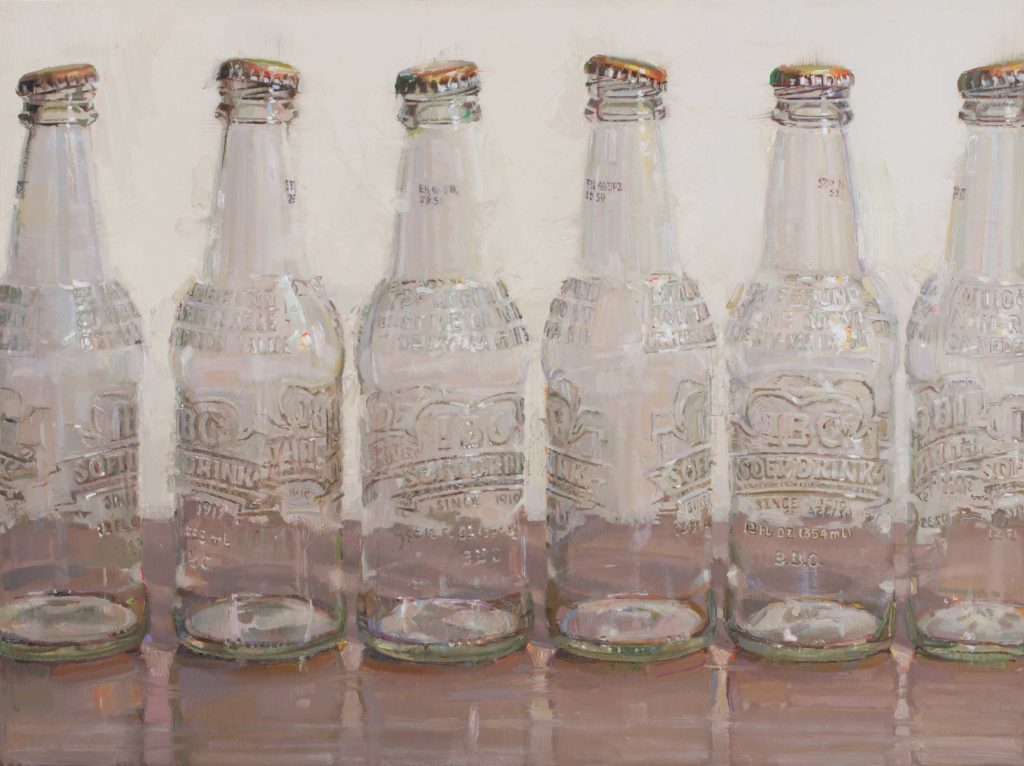
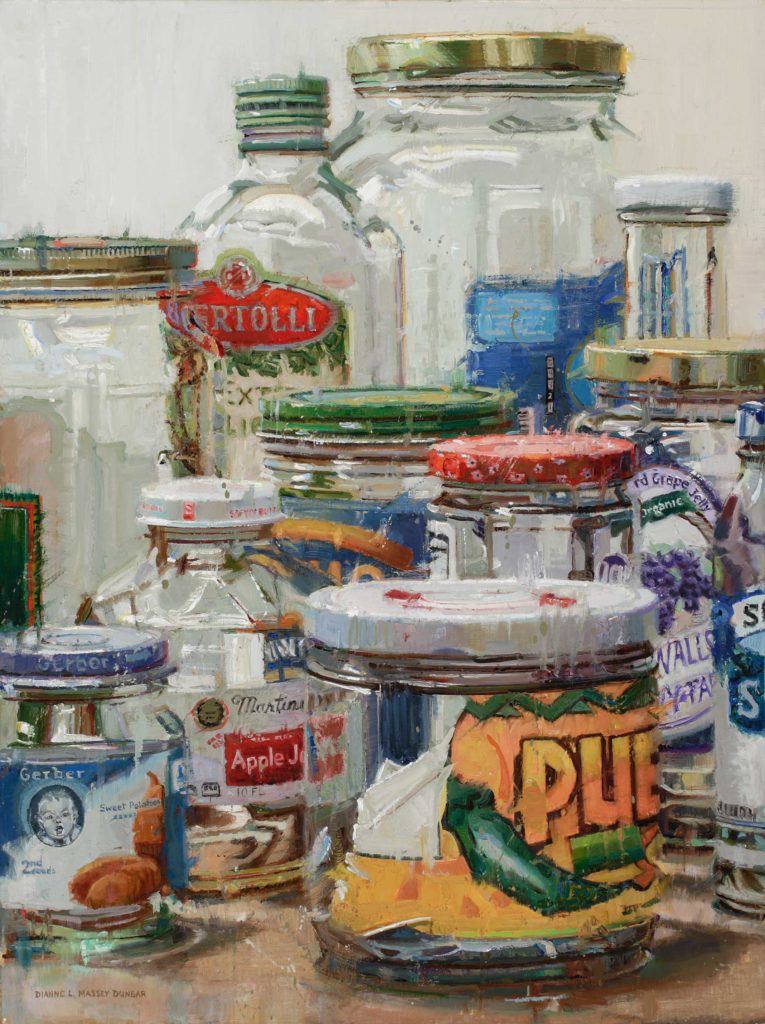
As to my still life paintings of bottles and jars? I love them!
Bottles and jars are full of exciting reflections, they come in a variety of shapes, colors, and sizes, they are readily available, and they can be arranged in an infinite number of ways. I never tire of painting them.
“Soda Bottles,” oil on gessobord, 18 x 24 in.“Jar Collection,” oil, 24 x 18 in.
Painting and Process
Of course, the subject matter is only the beginning step in creating a painting. A thought, a good idea, is not enough. An artist needs to use the tools available to turn a thought into a painting. There is intention, composition, shape, value, color, texture, and edges. And then there is painting with love.
I paint slowly. It takes me weeks to months to complete some of my complex paintings. During that time I am looking at the subject matter, trying to turn the ordinary into the extraordinary with paint.
I need to love what I paint because I will be staring at it for weeks.
As to my painting process, I begin each painting with a value sketch. If I am doing a still life, I will work from the objects themselves, set up in my studio. I will then do a thumbnail or a series of thumbnails to solve as many problems as possible. Once I am satisfied with the composition, I might lightly draw the still life onto the painting surface with light pencil strokes or simply block it in with paint. Then I will begin the painting process, working in a conventional fashion from the background to the foreground, larger shapes to smaller shapes. I prefer working on gessoed board because it gives me a stable surface for heavy brushstrokes, knife work, or even occasional sanding.
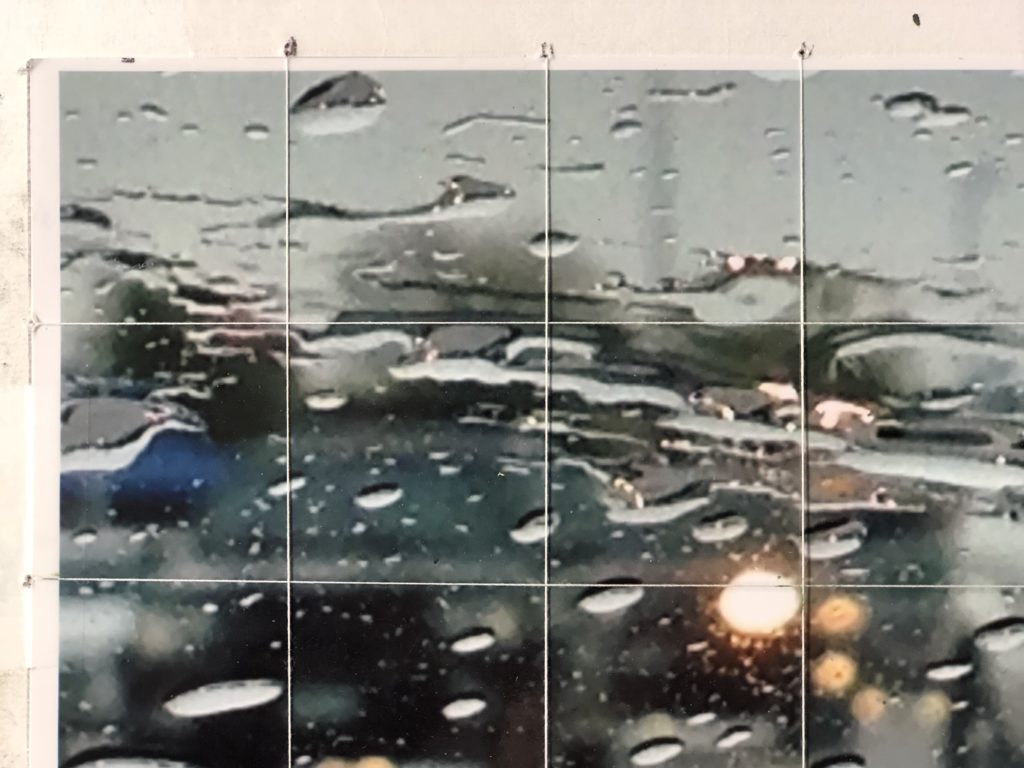
Close-up of “Rain on Windshield: Left Turn,” showing the grid system I use
The process is different, however, if I am painting one of my larger, complex paintings, as in the case of the rain, workmen, or leaf paintings. For these I use a grid system to ensure a more accurate drawing of these complex paintings.
It is easier to transfer information from one square to another than to try and draw or paint thousands of small shapes on an entire large painting surface without getting lost. In that case I use my own photography and I narrow down my choices for the painting to about five or six photographs. I then make black and white enlarged photocopies of the images I am interested in painting.
I will choose the top three to five photocopies and use black, white, and gray tempera paint to paint directly on the photocopies to create a three- or four-value study of the scene.
Although this is labor intensive, I prefer to do this work by hand rather than rely on the computer. I can make different decisions when working by hand, and I become much more familiar with the image.
Sometimes I will use the same image in different ways, making different value decisions. I may play around with cropping an image. Then I tape the value studies around my studio, turning them upside down and sideways, and spending a few hours or a few days looking at them and studying them.
After I have decided on what I think is the best composition, I enlarge the chosen photo, then I grid the photo as well as the painting surface. (If you decide to try this, the photo and the surface must be the same ratio or this process will not work.)
When I grid a photo, I tape the photo down on cardboard. I then use a needle and thread and sew the grid in place. That way, I can simply move the thread aside if I need to see what is underneath it. When I grid the painting surface, I use light pencil lines.
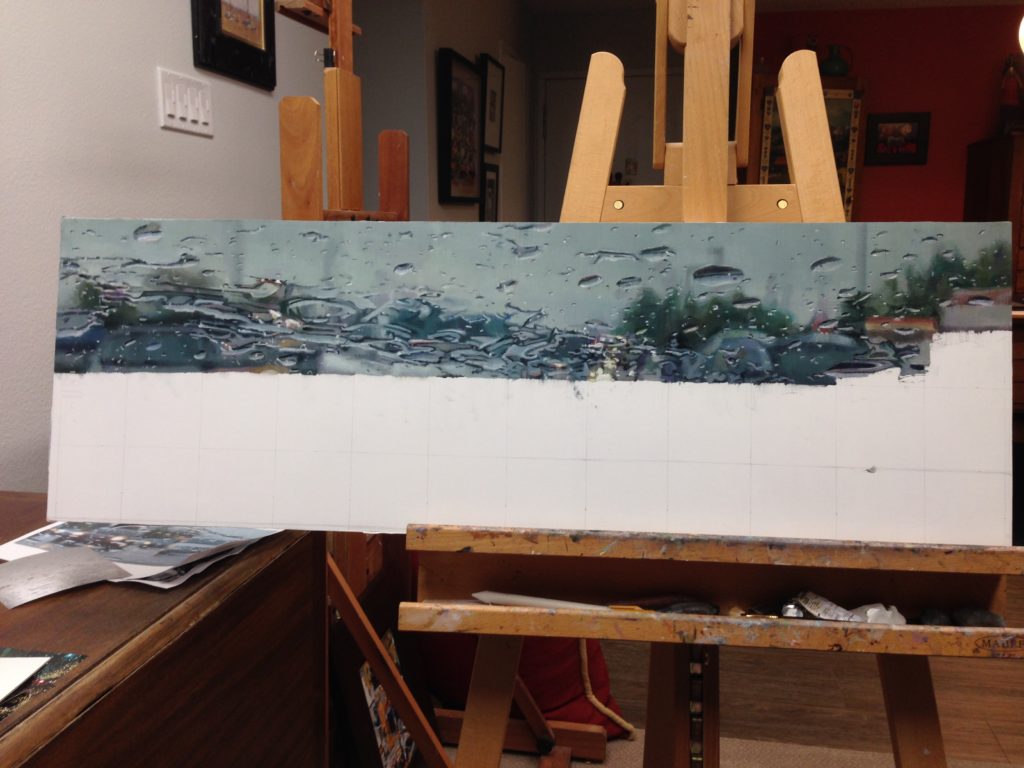
Rain on Windshield: Left Turn,” in progress
When I paint, I work from the color photo, using the value study as a guide for the values. I will paint each square individually, making changes and integrating the painting as I proceed from square to square, beginning with the upper left-hand square and working across and then down, square by square, row by row.
This work requires a great deal of patience as the painting slowly emerges. When the entire painting is in place, I will then do finish work, softening or losing edges, building up areas of texture, or adding hints of color. I generally take a nearly finished painting outside into natural light, or into the garage to back well away from it to see if it has all come together.
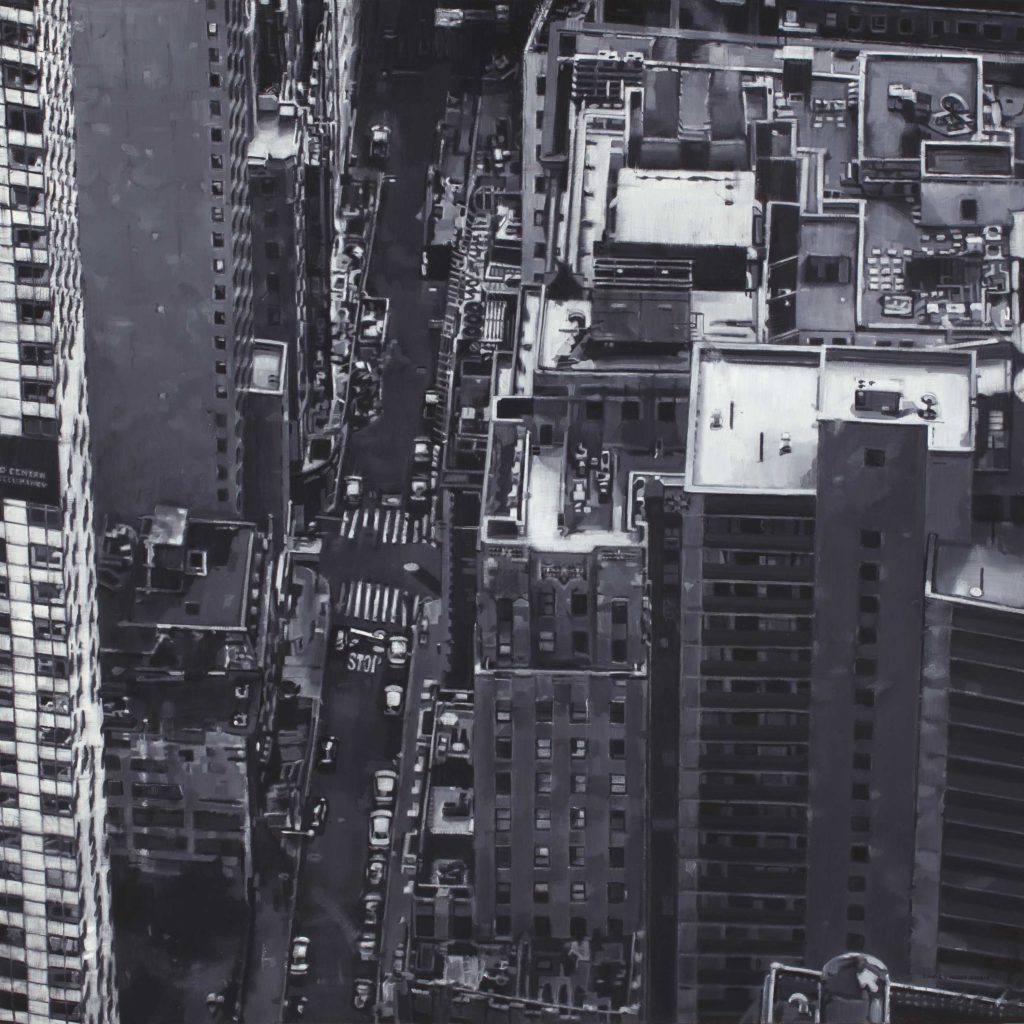
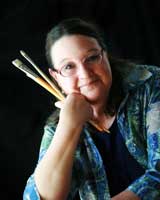
“Looking Down From One World Observatory,” oil on gessobord, 30 x 30 in.Dianne Massey Dunbar, contemporary artist
ABOUT THE AUTHOR Dianne Massey Dunbar has been painting professionally since 1999. She is a Master Signature Member of American Women Artists, a Signature Member of Oil Painters of America, and a member of the Art Students League of Denver. She is proudly represented by Gallery 1261, Denver, CO; Grapevine Gallery, Oklahoma City, OK; RS Hanna Gallery, Fredericksburg, TX; and Edward Montgomery Fine Art, Carmel, CA.
Organized by Big Medium, a nonprofit organization dedicated to championing and cultivating artists and the contemporary arts in Austin and across Texas, the West Austin Studio Tour (WEST) is free and self-guided, and takes place this weekend (May 18–19, 2019). WEST provides opportunities for the public to meet the artists of Austin in their creative spaces.
“Through our programs and partnerships, we are working to foster the arts and facilitate an inclusive cultural dialogue between artists and their communities,” says the organization. “The mission of WEST is to provide an inclusive and accessible platform for a diverse group of artists to create, exhibit, and discuss their work, to increase the audience that experiences the artists’ work, and for that experience to create conversation and build relationships around art and the creative practice. WEST isn’t a craft fair or a street festival, and while sales are an important aspect of any artist’s career, they are not our primary focus. We believe an interconnected art community that supports each other will produce more impactful and sustainable benefits for everyone involved.”
Some of the participating artists this year include:
Amanda Jones: I’m a realist oil painter who enjoys creating highly rendered figurative works as much as I do painterly plein air studies. My current work explores themes of mortality, vulnerability, fear, disappointment, loss, loneliness, and hope. In addition to painting, I teach realist art to children ages 8–18 in my studio, and some of their work will also be on display.
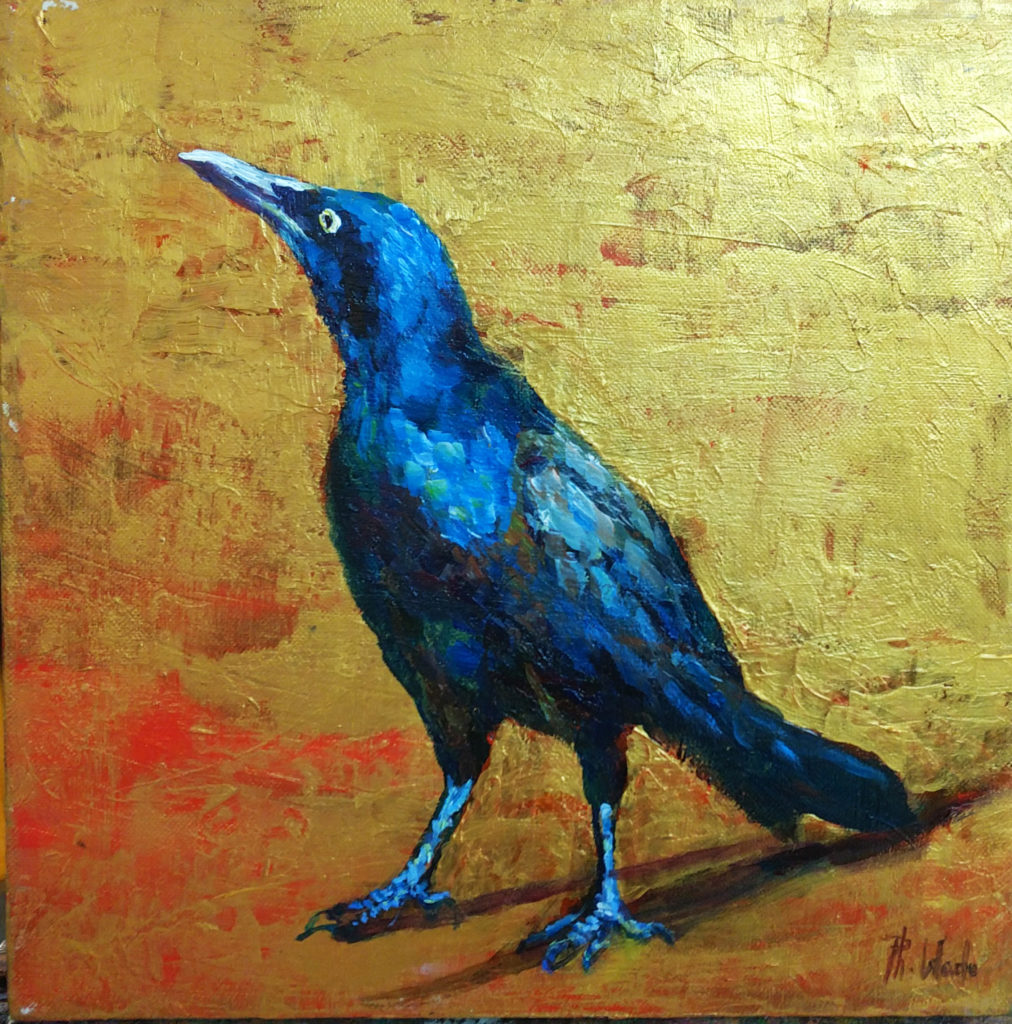
Phillip Wade: “Lately I’ve returned to my roots, painting the books I read as a child — Paddington, The Owl and the Pussycat — besides my portrait paintings. When young, I moved back and forth from North Jersey to family in Cornwall, England, and loved painting there. And I loved the blinding light of Texas when I came here after studying at the Pennsylvania Academy.”
Phillip Wade, “Curious Grackle,” 2018, acrylic on canvas, 24 x 24 in.
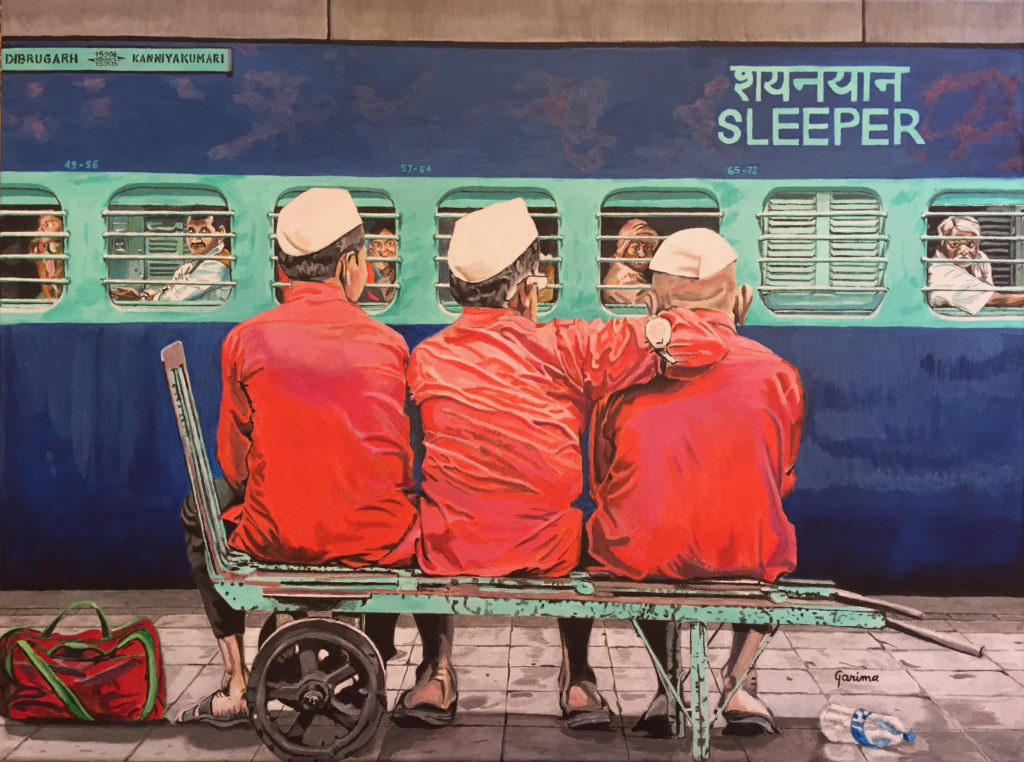
Garima Sharma Heath: “I love creating beautiful, soulful art: delicate watercolors, romantic realistic paintings with vibrant colors, and meticulous architectural precision. My paintings and drawings emanate emotions and feelings. I speak three languages, am the product of three cultures—French, Indian, American. I have two degrees in architecture, worked as an architect, and I am still getting back to my art.”
Garima Sharma Heath: “The Three Coolies,” 2017, acrylic on canvas, 18 x 24 in.
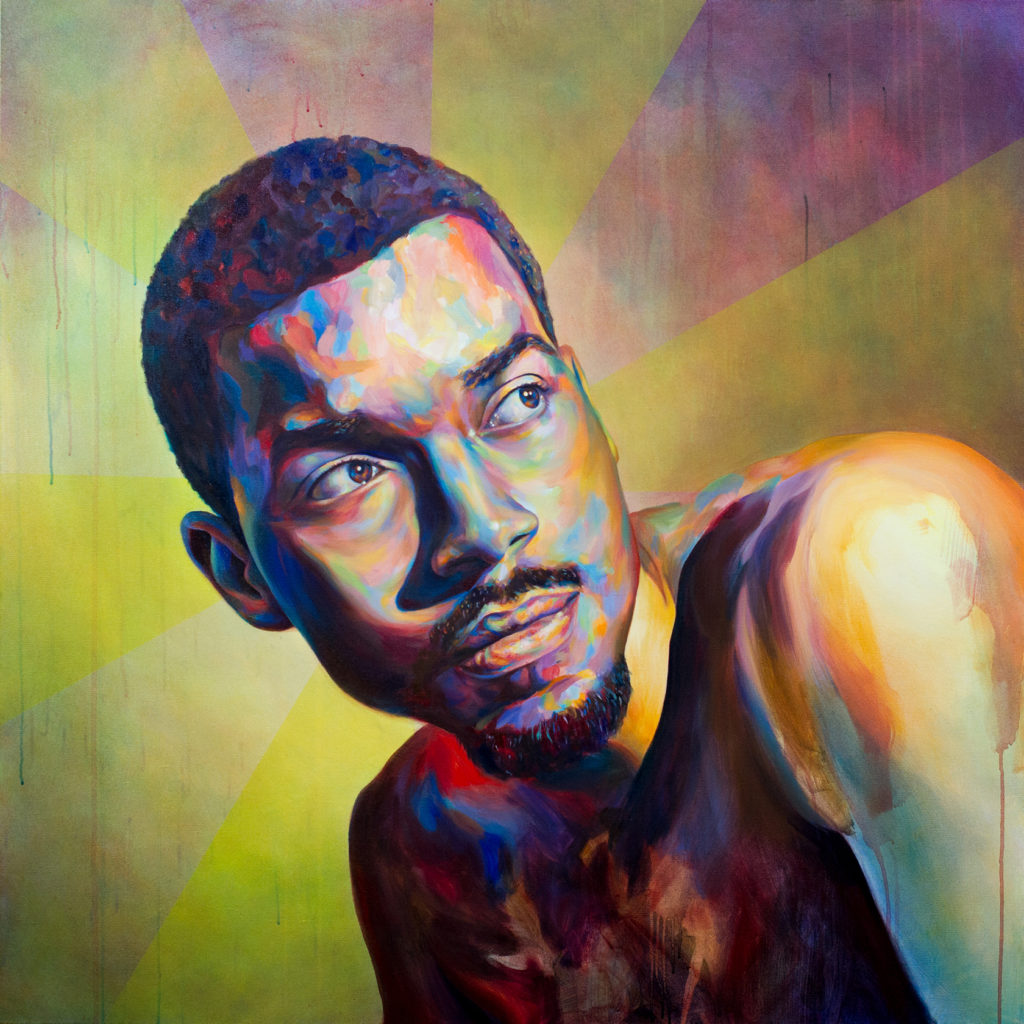
Ryan Runcie: Runcie creates acrylic paintings that incorporate psychology and intrigue. Although he is a first-generation American, Runcie’s Jamaican heritage shows through in his use of vivid and saturated colors in his dynamic figurative work. He uses color to breathe humanity into his subjects that are dignified, vulnerable, and alluring. His work explores the grounds for social reconciliation and a healthy coexistence.
Ryan Runcie, “The Answer Is Out There,” 2017, acrylic, 48 x 48 in.
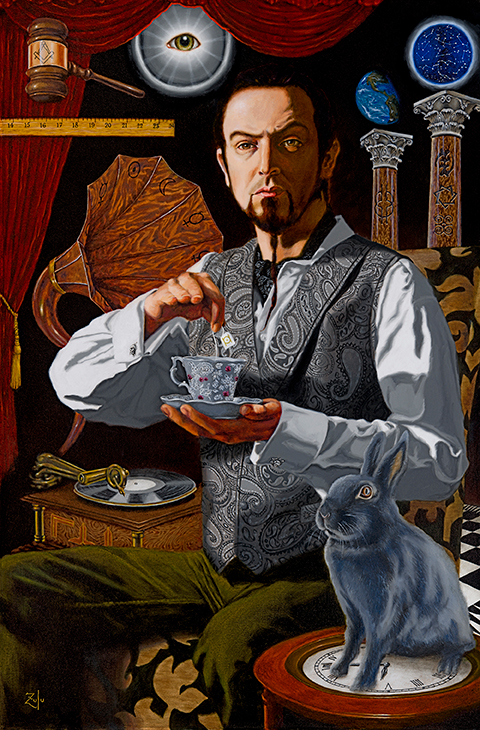
Roni Zulu: “My oil paintings capture a real or fictional person’s seen and obscured world. I enjoy the juxtaposition of bodies, alchemic symbols, numerology, equations, glyphs, and specified sacred objects layered into a lush romantic storytelling setting. My work is a mirror of who we are — to celebrate and be fascinated with ourselves and the world we live in.”
Roni Zulu, “The Attentive Ear,” 2017, oil on canvas, 38 x 25 in.
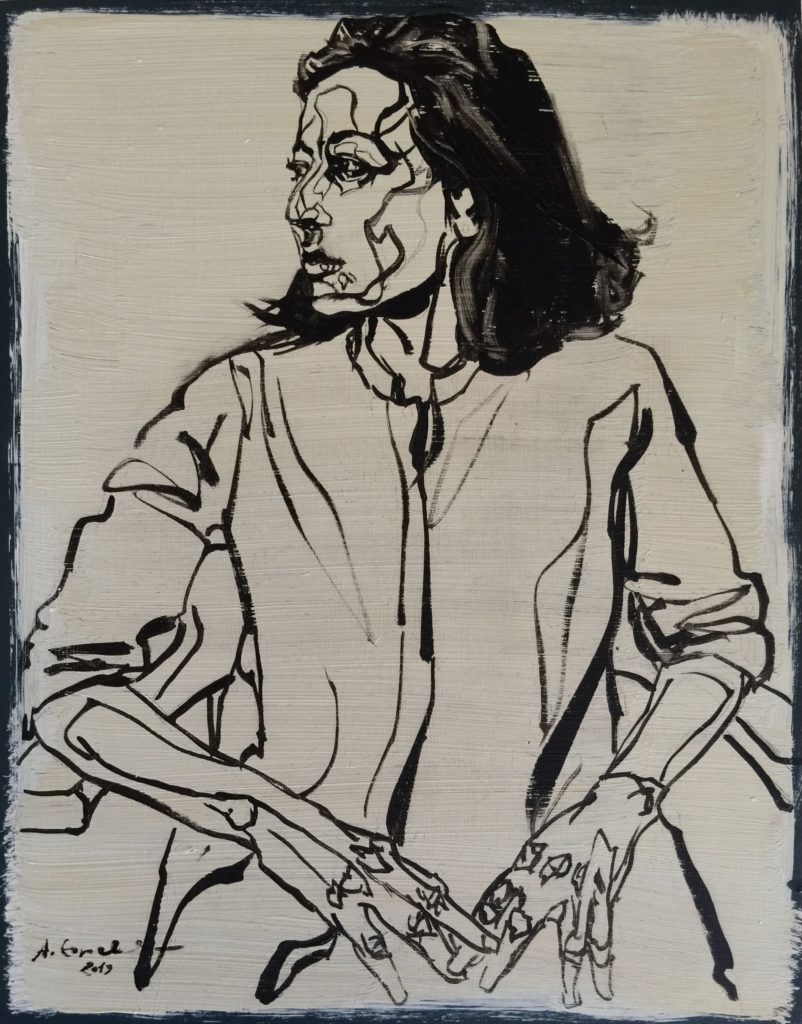
Agnes Grochulska, “Robyn 1,” oil on panel, 11 x 14 in.
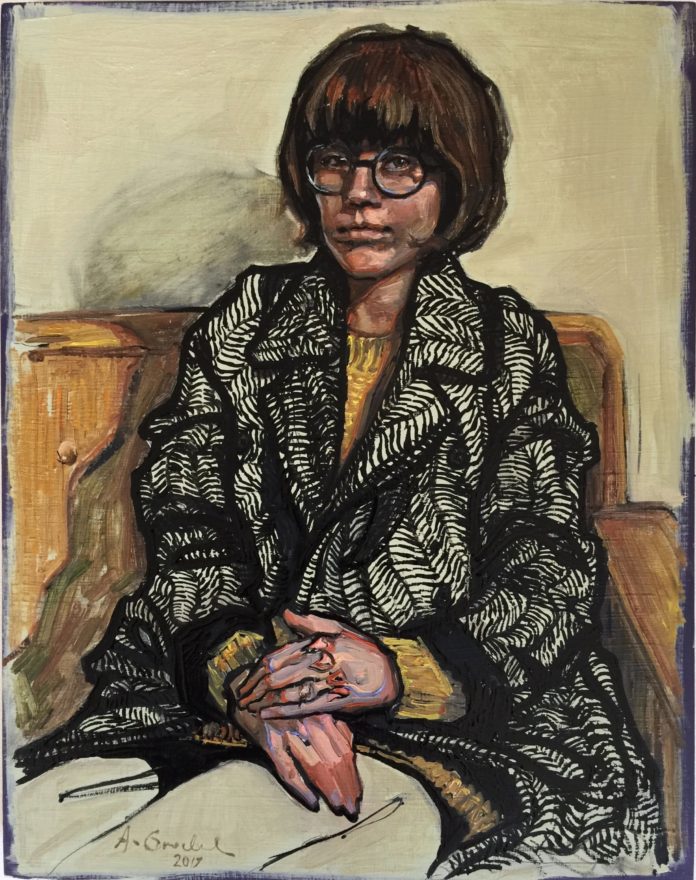
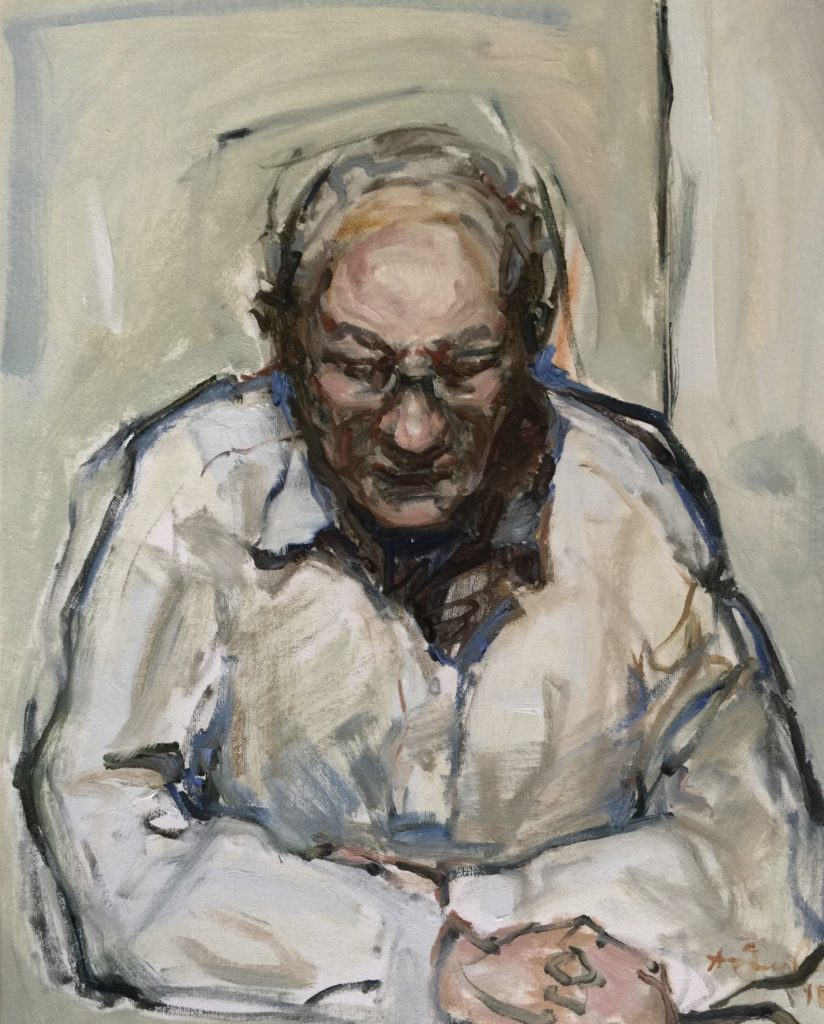
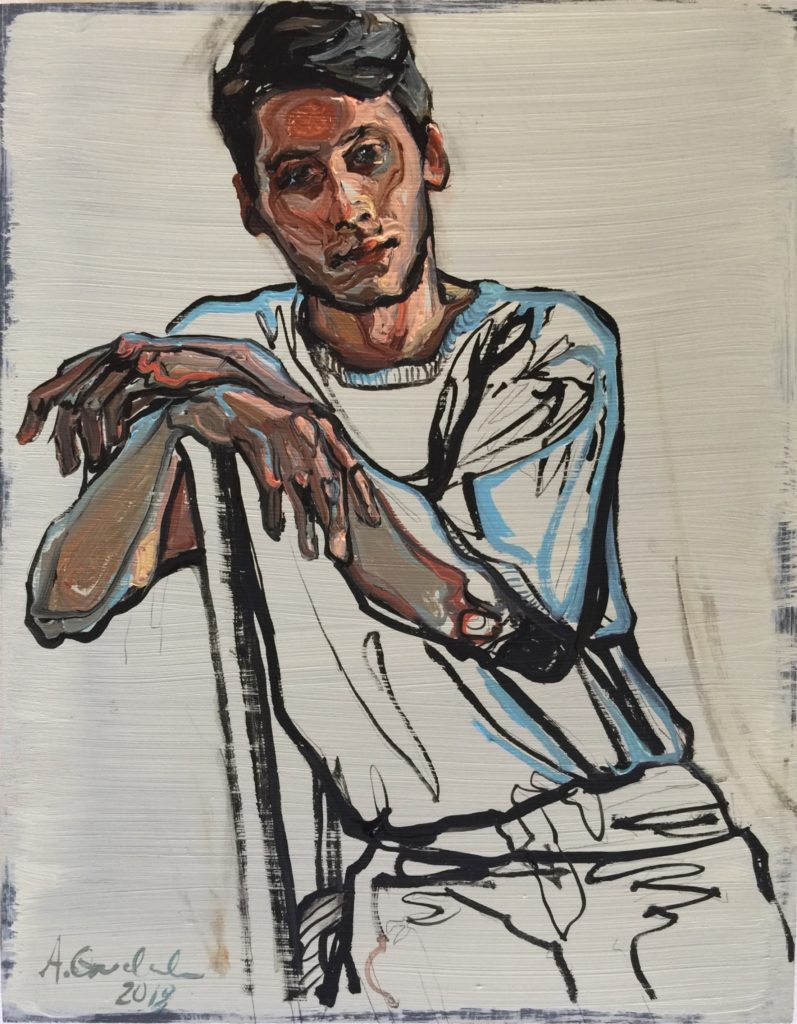
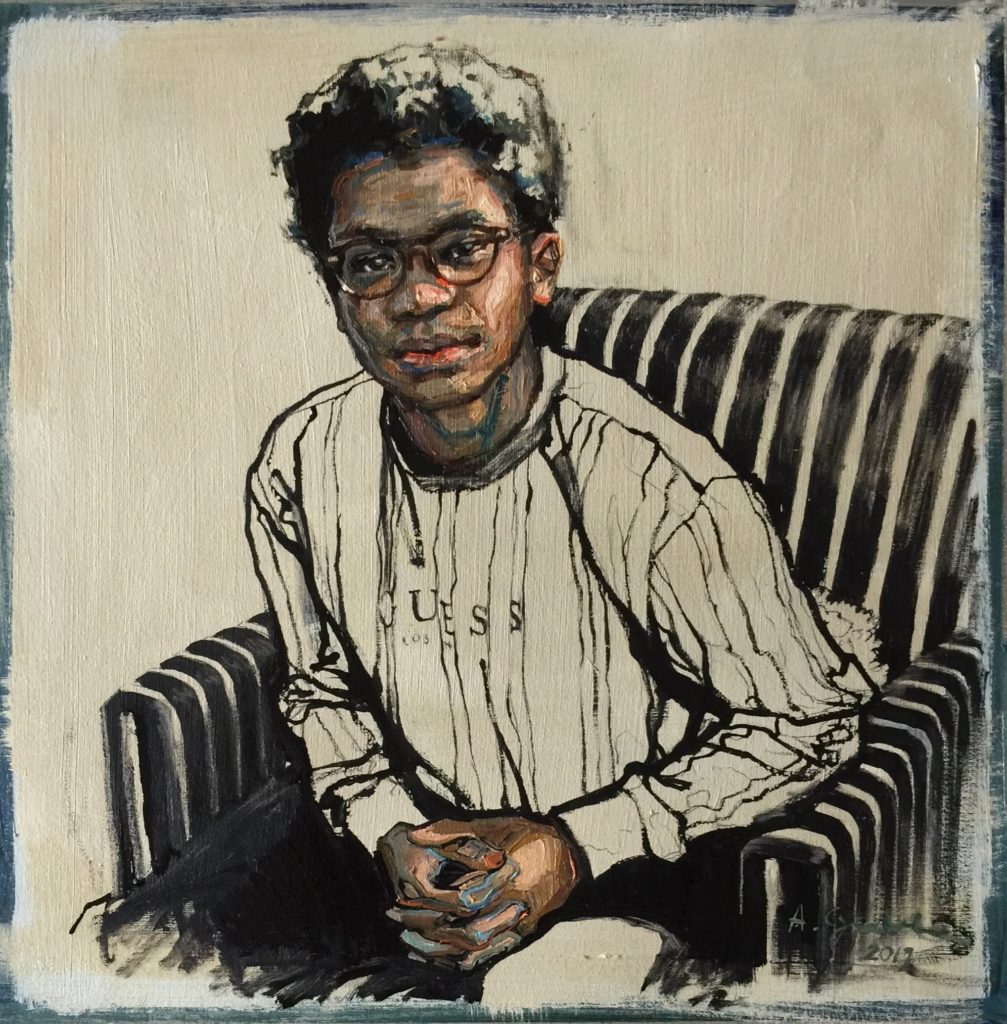
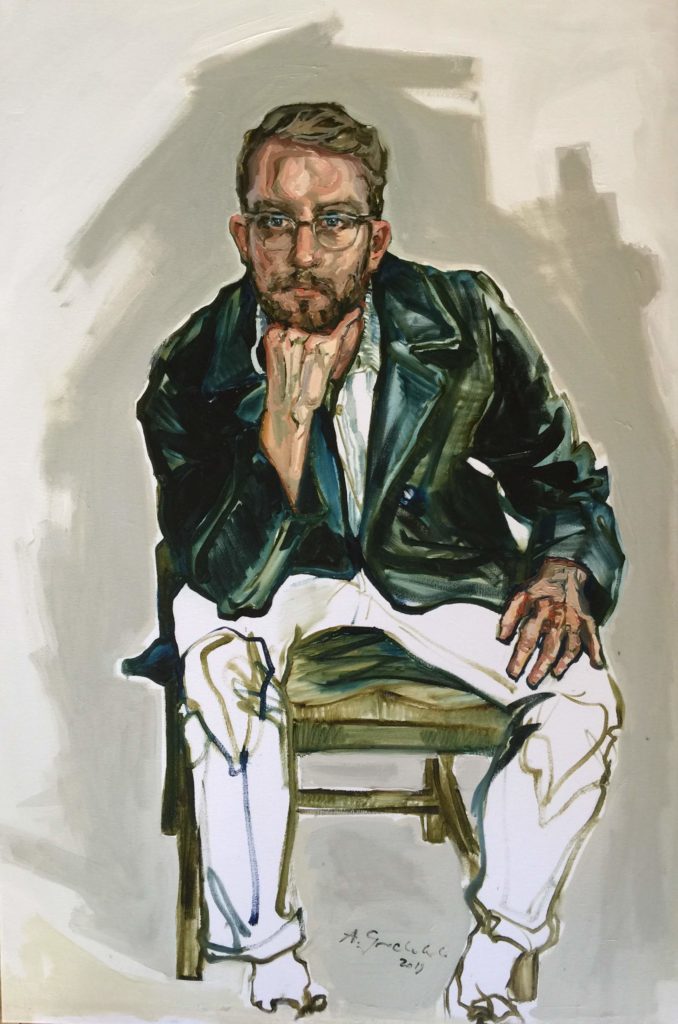
In her new show “Line and Color: Paintings of People,” Agnes Grochulska focuses on what is the most essential in the way she sees and interprets ideas in her art: the use of line and color, this time applied exclusively to the human subject.
“Agnes Grochulska is a fine artist with the enviable trait of having a distinct sense of line. Her lines skitter across the surfaces of her faces, figures, animals, and scenes, presenting a vivid and unique record of the movement of her eye over the sights she surveys,” says art writer Daniel Maidman.
Agnes further explains it this way: “A line both creates a boundary between areas and connects them. Contour line specifies and informs our brain where an object ends. By putting down a line, I feel I am both describing the division between me and the painting subject, and connecting with it.”
Agnes Grochulska, “Ove,” oil on canvas, 16 x 20 in.Agnes Grochulska, “Joey 2,” oil on panel,11 x 14 in.
For this painting series, the artist has invited several people to model for her who in some special way struck her as interesting subjects to portray. Each of the portraits has an underlying idea that expresses either the subject’s character, an inner emotion, or a particular feature — something unique that initially drew the artist’s interest. Employing simplified composition and using expressive, gestural lines and bold colors, her intention is to reveal something visceral and true about the subject, and connect it to a larger and more significant message about human existence, rather than creating a close recording of a physical likeness.
Agnes Grochulska, “Elaine 2,” oil on panel, 11 x 14 in.Agnes Grochulska, “Carlos 2,” oil on canvas, 16 x 16 in.
Born in Poland in 1974, Agnes Grochulska is a contemporary realist painter working mainly in oils. She also enjoys creating drawings in graphite and charcoal. Agnes studied design at the Academy of Fine Arts in Warsaw, Poland. She currently resides in Richmond, Virginia. Her work has been shown at Dacia Gallery in New York City, Abend Gallery in Denver, Colorado, and the Frank Gallery and Conde Contemporary near Miami, Florida. Agnes’s work has won several awards and has been published in Artists magazine, Drawing magazine, Artists on Art magazine, PoetsArtists, and the Strokes of Genius publication.
Agnes Grochulska, “Jacob 1,” oil on canvas, 24 x 36 in.
“Line and Color” is on view at Eric Schindler Gallery (Richmond, VA) through June 14, 2019. For more details about this exhibition, please visit www.ericschindlergallery.com.
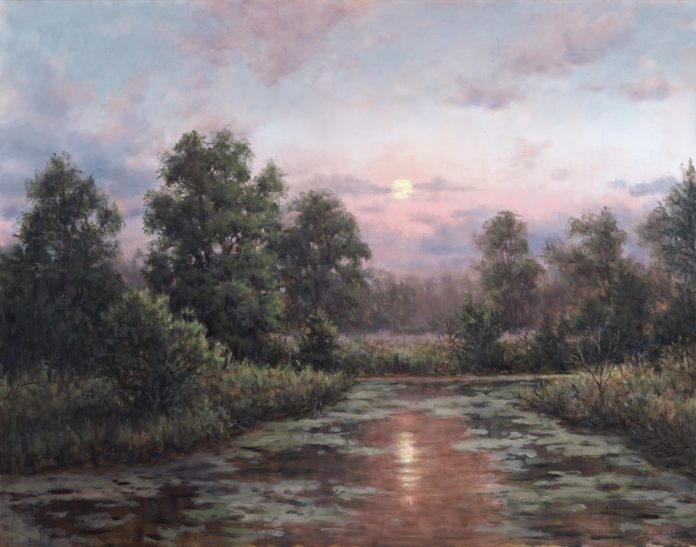
Once Upon A Pond Oil on Belgian Linen 22 x 28 in. $5,800 Available Through Berkley Gallery [email protected]
If the title Once Upon A Pond feels as if was taken right out of the pages of Grimm’s Fairy Tales, you would be correct in drawing the correlation that artist Christine Drewyer intended. According to her, nature is the most magical place still available to us and the ability to uncover hidden places that call her to paint them are a dream come true and a privilege.
The location for this painting, according to Christine, was discovered while wandering through the low areas of the Eastern Shore of Maryland last summer. “The air was humid, the frogs were singing, the dragon flies were flitting across the top of the water in this pond and the sun was just rising. Places like this never cease to amaze me with their serene beauty and stillness. Call me a bit of a loner and explorer of the natural world, solitary discovery gives me back to myself and at the same time connects me to the ALL THAT IS simultaneously.”
Christine was raised in the country, surrounded by woods and streams and lots of open fields and was accustomed to exploring and venturing out with her hound dog Elvis for hours at a time. The practice has never left her, the only difference seems to be that she now brings along a plein air rig and sketch books with the sole purpose of running across these special places, which still touch her. For her it is exceptionally valuable to preserve and capture those moments that for herself and so many others seem to be all too rare.
“We are so busy in our daily lives; we hardly have time to walk by a brook or dig in the dirt or take a sunset evening stroll. If my paintings remind the viewer of those precious moments of the natural world and to go out and enjoy it, then I have succeeded with my job,” claims Christine.
Once Upon A Pond is part of a three-person exhibition called Seasons in Time at Berkley Gallery opening June 1st. It is framed in a Masterworks Tabernacle museum frame and is a personal favorite of the artist. There will be twenty new works available at the exhibition.
Christine paints in plein air monthly with other members of the Washington Society of Landscape Painters. “The experience only adds more fuel to the exploration component and bonding with both nature and fellow artists,” says Christine. She is Also a regular guest blogger for PleinAir Today. Her latest blog is about setting goals.
Most recently, Christine was juried into the very prestigious American Women Artists exhibition Looking West: Highlighting works by American Women Artists. The venue is Steamboat Springs Museum, and exhibition dates are May 24th-September 2nd.
Upcoming Exhibitions: Seasons in Time with artists Nancy Peach & Barbara Nuss at Berkley Gallery, Warrenton, VA June 1-30 2019. The exhibition will include twenty new oil paintings by Christine.
Tula Telfair, “The Unfamiliar Truth,” 2014, oil on canvas, 72 x 90 in.
From Haynes Galleries
The written word has conjured images in the mind’s eye for millennia. For nearly as long, visual artists have taken those words and phrases, condensed them, and with their own magic created artwork that encompasses a moment from the story. This idea — the story inspiring the artwork — was flipped a few years ago.
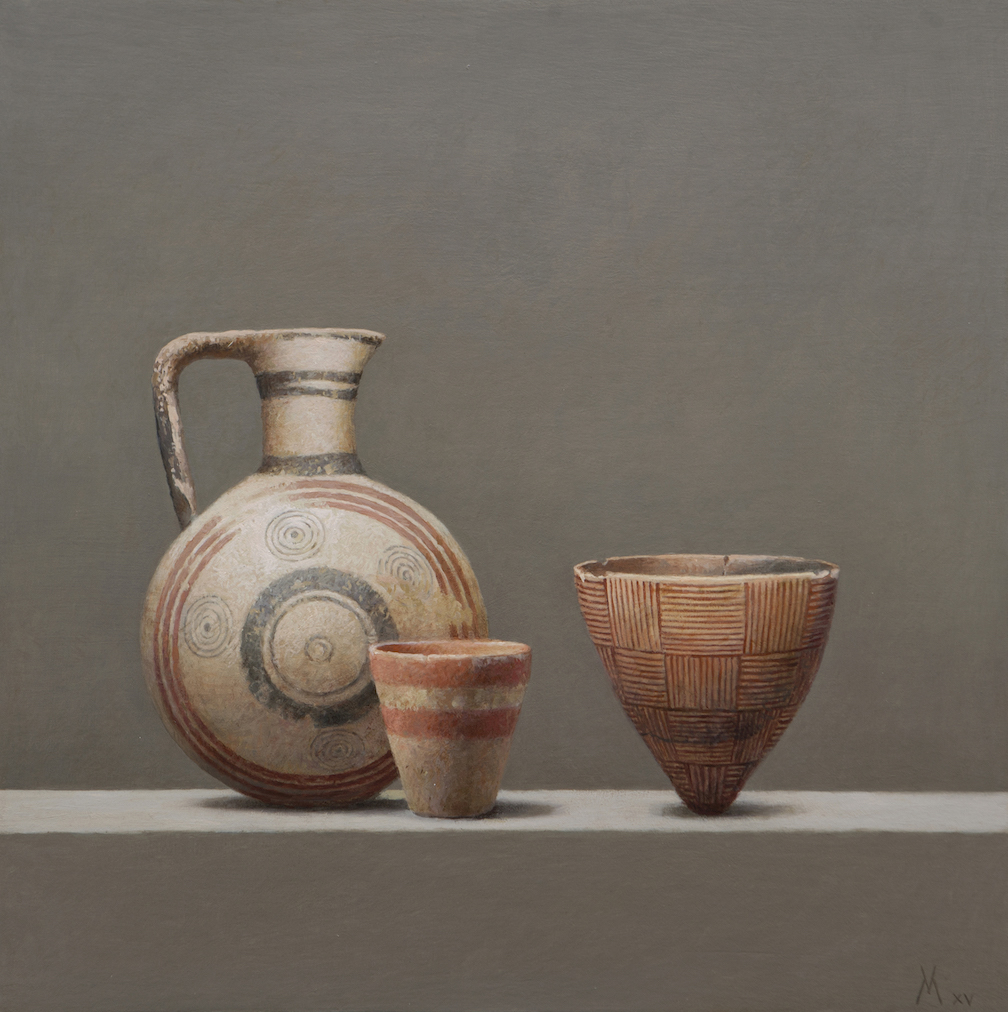
Guillermo Muñoz Vera, “Aegean Sea Bichrome Ware,” 2015, oil on canvas mounted on panel, 22 1/2 x 22 1/2 in.
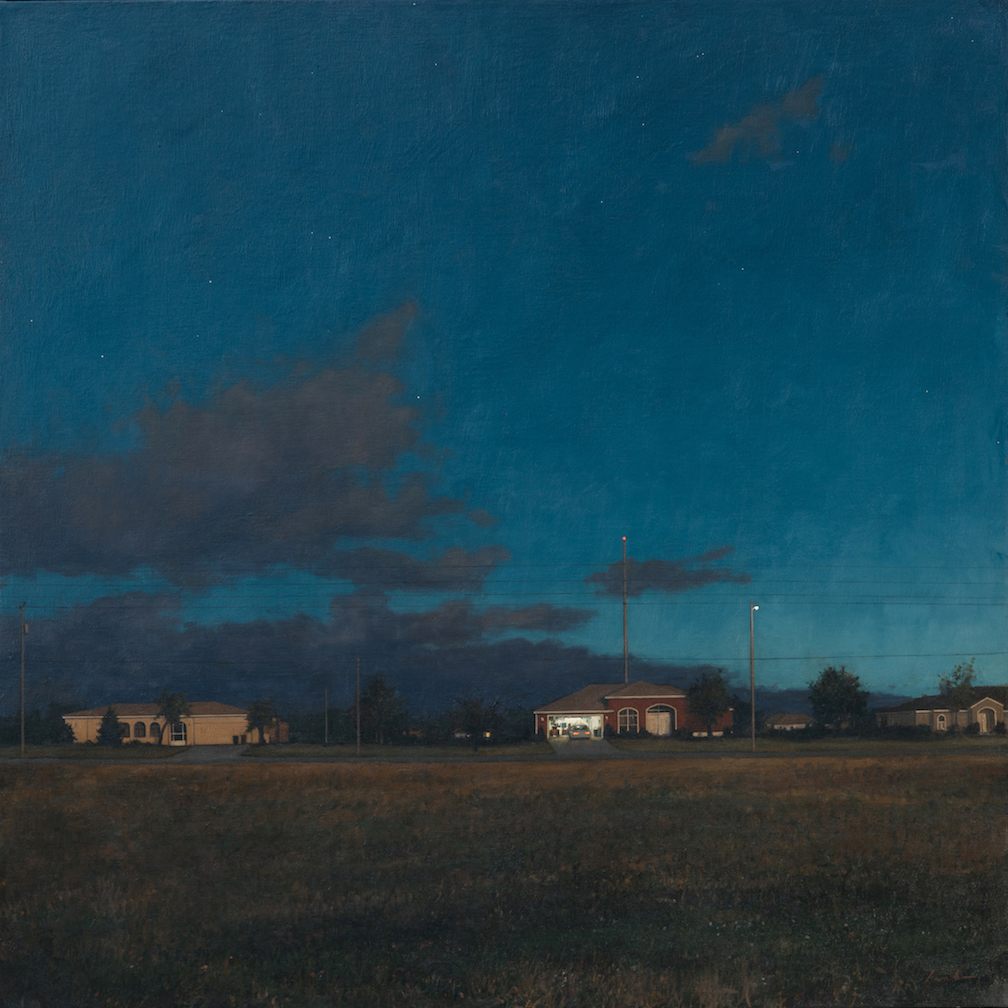
Maine-based artist Linden Frederick painted 15 of his haunting nocturnal landscapes, and a handful of the country’s best writers were asked to put into words what sprang forth when they viewed a painting. Both the paintings and the words resulted in “Night Stories,” a cross-genre exhibition originally staged at Forum Gallery in 2017. Novelist Ann Patchett, author of the award-winning Bel Canto, was paired with the Frederick painting “Vacant.”
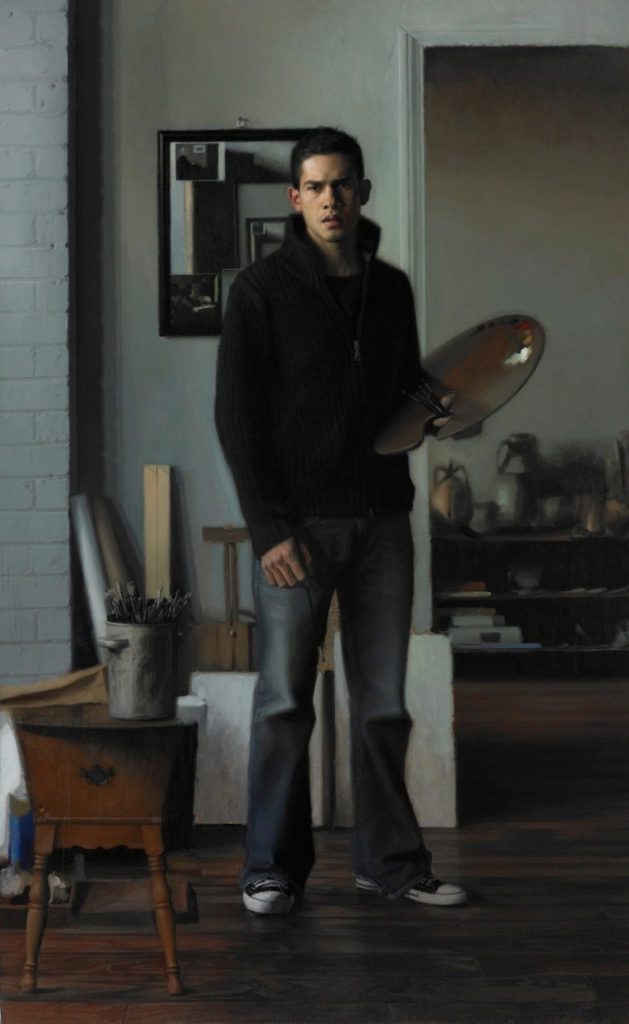
Jesus Villarreal, “El Espejo (The Mirror),” 2010–11, oil on linen, 68 x 40 in.
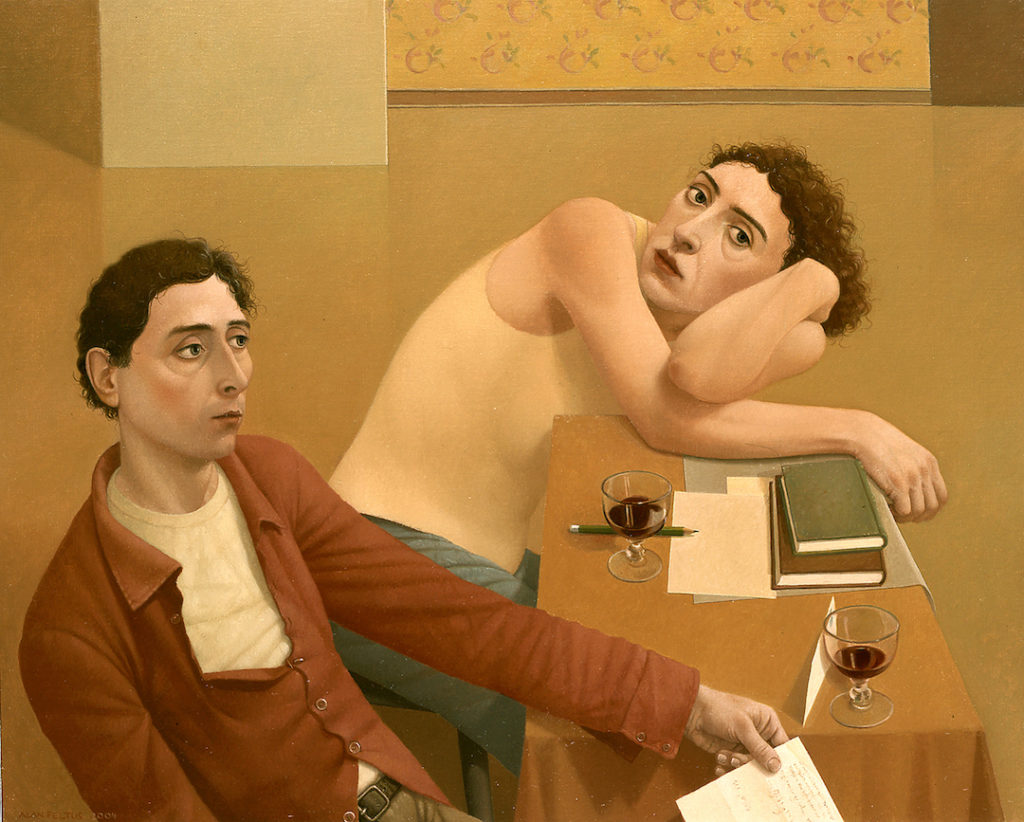
Now “Vacant” is the centerpiece of a new collaboration at Haynes Galleries in Franklin, Tennessee, joined by other Frederick paintings along with artworks by exceptional fellow painters. The special exhibition of contemporary guest artists continues through June 29, 2019. The distinguished guest painters are Alan Feltus, Alan Magee, Alyssa Monks, Guillermo Muñoz Vera, Brian Rutenberg, Tula Telfair, and Jesus Villarreal. The exhibition is a collaboration with Forum Gallery of New York.
Alan Magee, “The Winter Months,” acrylic and oil on panel, 40 1/4 x 32 1/4 in.
Clarity of artistic vision and craft are the common threads of these artworks. Each artist works in a different style depicting a variety of genres. There is Magee’s close-up still lifes and smooth river rocks, while Muñoz focuses on arrangements of ancient pottery and images of exquisitely manicured courtyards. Telfair’s views of icebergs on perfectly still water are seen alongside Monk’s sun-splashed forestscapes. A focus on the human figure appears in Villarreal’s cool self portrait and Feltus’s posed surrealistic groupings. And of course Frederick’s small-town views, devoid of figures, contemplate modern life in often forgettable places.
Alan Feltus, “Wine and Words,” 2004, oil on linen, 31 1/2 x 39 1/2 in.
These are heavy hitters of contemporary painting, but their paintings don’t feel oppressive in their grandness. Rather, they envelope viewers in a mood or state of being, just as a written story would.
Tula Telfair, “The Unfamiliar Truth,” 2014, oil on canvas, 72 x 90 in. Linden Frederick, “Vacant,” 2016, oil on linen, 36 x 36 in.
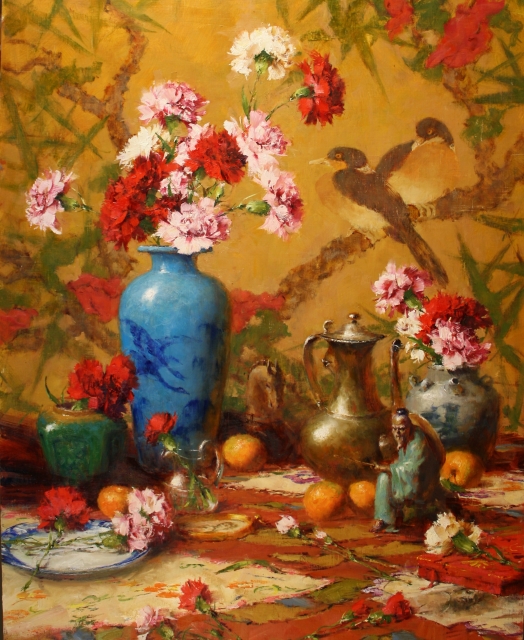
Robert A. Johnson, OPAM, “Carnations,” 30 x 24 in., $7,500
The Oil Painters of America (OPA) presents the 28th Annual National Juried Exhibition of Traditional Oils
From OPA:
Oil Painters of America is pleased to announce that the 28th National Exhibition and Convention will be hosted by Illume Gallery of Fine Art, located in Saint George, Utah, through June 7, 2019.
Renowned artist Kenn Backhaus, OPAM, will serve as Juror of Awards. His works have been juried into many shows across the country, and his paintings have been honored with numerous Best of Show awards and distinctions. He enjoys giving back and has served as an instructor for over 10 years. Backhaus is one of the host artists of a new high-definition 13-part series, Passport & Palette™ which represents the next generation of art education on public television.
Christopher Zhang, OPAM, “Woman in Kitchen,” 40 x 30 in., $16,000
Albert Handell, OPAM, “Peaceful Flow,” 30 x 36 in., $16,500
OPA’s membership comprises over 3,600 artists from across the United States, Canada, and Mexico. Total awards for this year’s exhibition will be approximately $100,000 in cash and merchandise, including a $25,000 cash Gold Medal award.
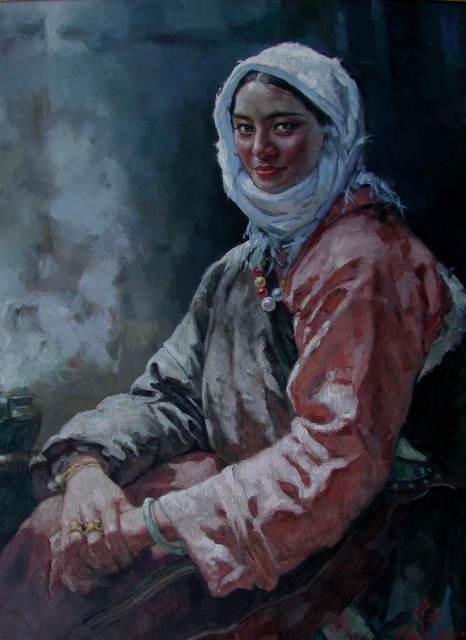
Shizhong Yan, OPAM, “Resting,” 36 x 30 in., $22,500
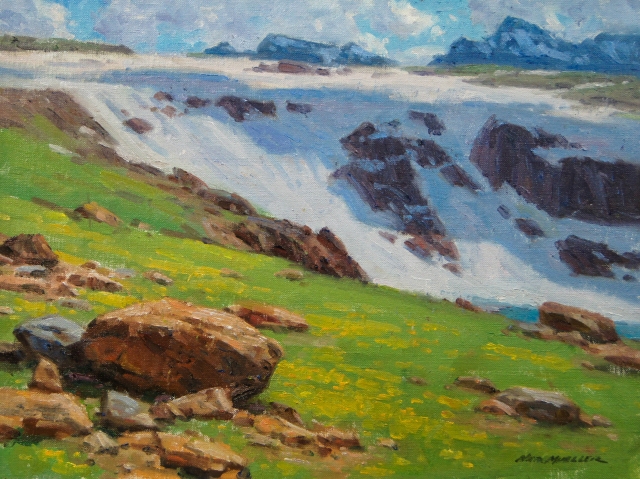
Ned Mueller, OPAM, “Beartooth Spring,” 12 x 16 in., $2,800
In addition to the exhibition, the opening weekend convention events will include painting demonstrations by Juror of Awards Kenn Backhaus, OPAM, Lori Putnam, OPA, Gary Ernest Smith, and David Dibble, OPA. There will also be a presentation by prominent artist & BLICK Art Materials representative Joe Gyurcsak, OPA, as well as group demos by Lyn Boyer, Michael Malm, Stephanie Birdsall, OPA, Ron Rencher, and Doug Fryer.
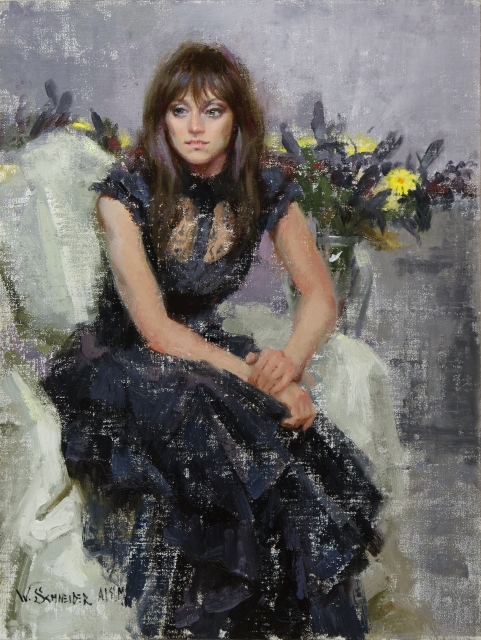
William Schneider, OPAM, “Black Widow,” 24 x 18 in., $3,950
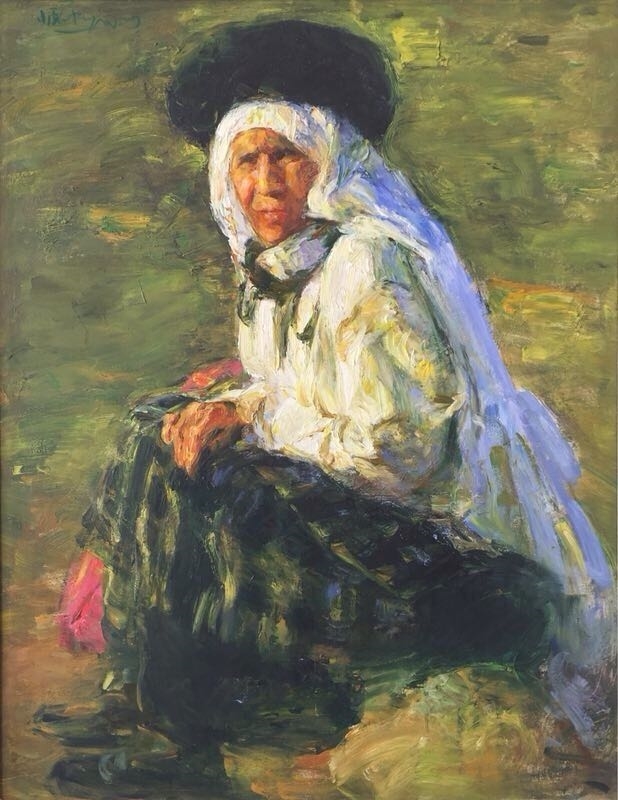
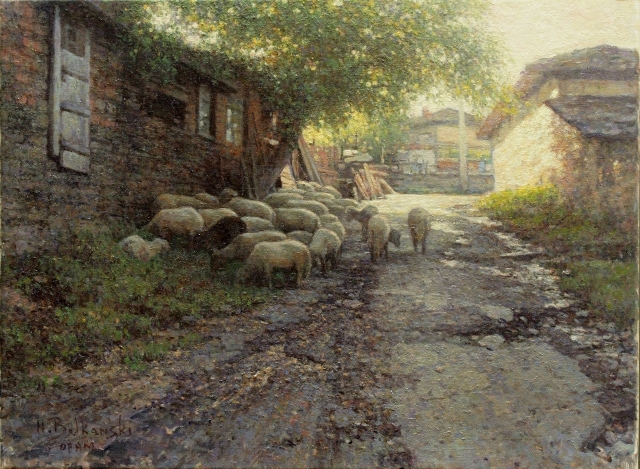
Nikolo Balkanski, OPAM, “Village Shades,” 18 x 24 in., $4,800
Convention activities begin on May 6, with a Wet Paint Competition in both studio and plein air divisions. Cash and merchandise awards for the Wet Paint competition will be a minimum of $10,000. The opening reception for artists, collectors, the public, and the press will be held on Friday, May 10, from 6:00 p.m. to 9:00 p.m., with the awards presentation taking place at 7:30 p.m. Many informative and educational seminars are being planned for the convention, preceding the opening of the exhibition.
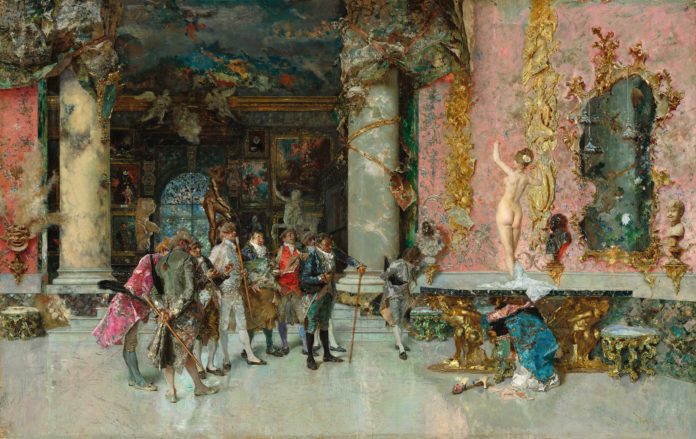
Mariano Fortuny y Marsal (Spanish, 1838–1874), “The Choice of a Model,” 1868–74, oil on wood. National Gallery of Art, Washington. Corcoran Collection (William A. Clark Collection), 2015.143.12.
The Meadows Museum, SMU, will examine the far-reaching influence of 19th-century Spanish painter Mariano Fortuny y Marsal (1838–1874) in the new exhibition “Fortuny: Friends and Followers.”
During his lifetime and well into the early 20th century, Fortuny was extremely popular in both Europe and the United States. His proto-Impressionist style and “exotic” genre scenes influenced so many artists that the style came to be described with its very own “ism”: “Fortunismo.”
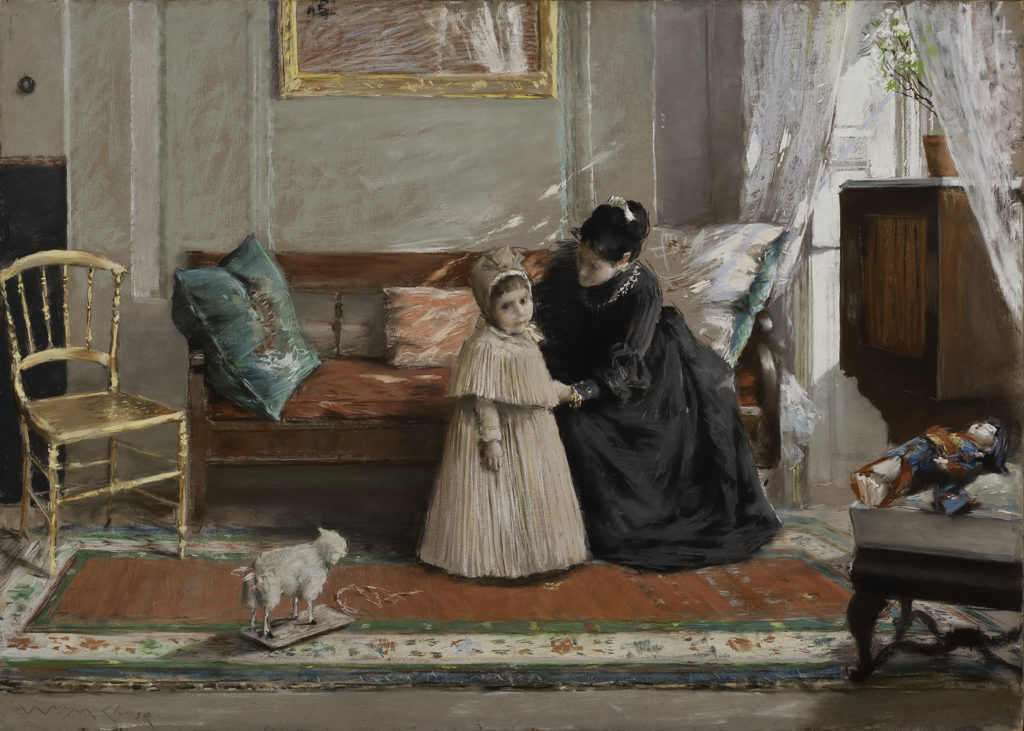
William Merritt Chase (American, 1849-1916), “Mrs. Chase and Child (I’m Going to See Grandma),” c. 1889, pastel on paper, 29 x 41 in. (73.7 x 104.1 cm). San Antonio Museum of Art. Gift of Mrs. Frederic G. Oppenheimer, 50.6. Courtesy of the San Antonio Museum of Art.
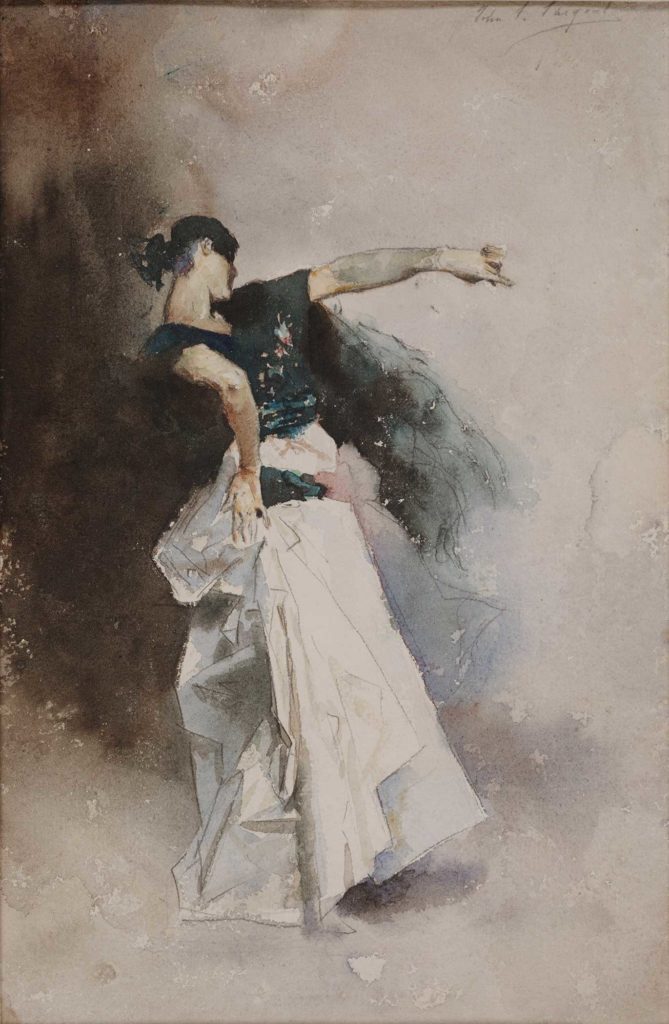
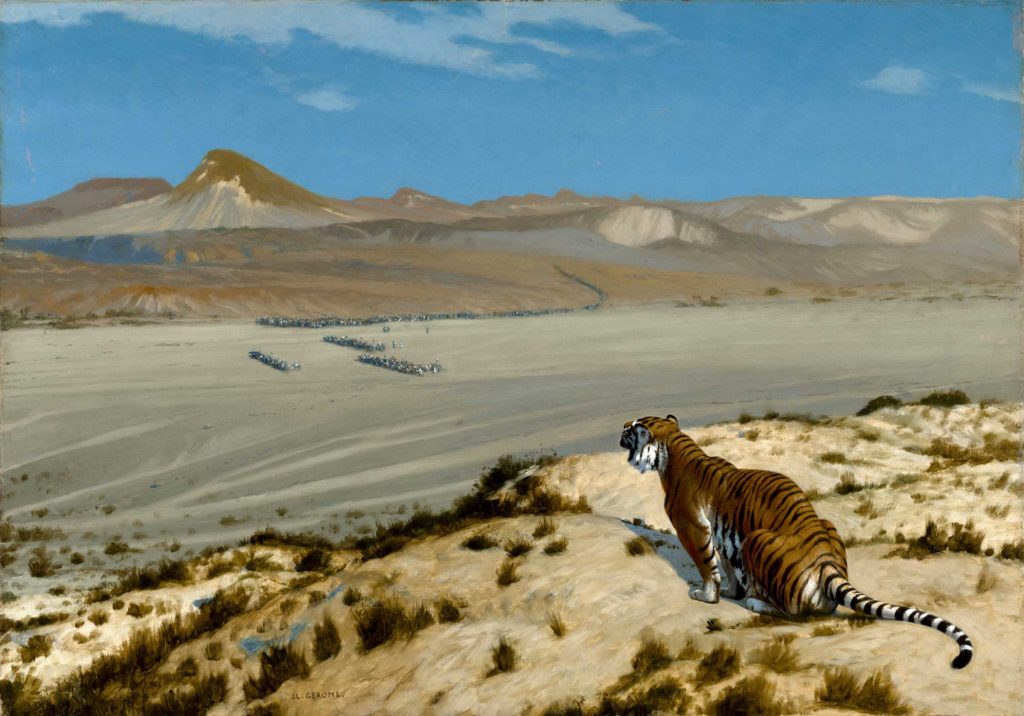
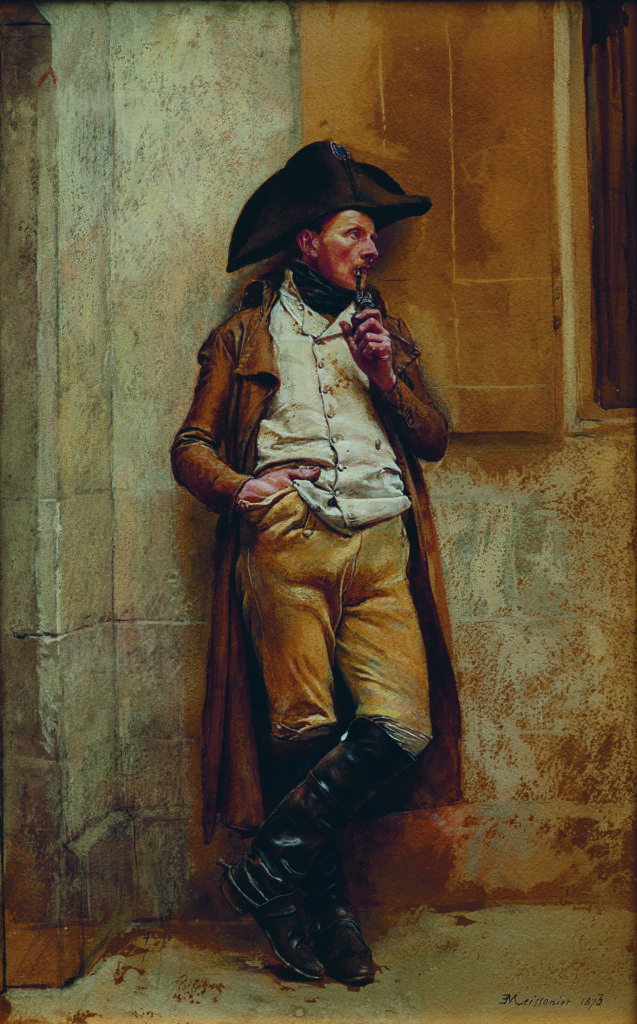
“Fortuny: Friends and Followers” will explore that legacy by bringing together works from a diverse group of artists, including William Merritt Chase (1849–1916), Jean-Léon Gérôme (1824–1904), Jean Louis Ernest Meissonier (1815–1891), John Singer Sargent (1856–1925), and James Tissot (1836–1902), as well as major works by Fortuny.
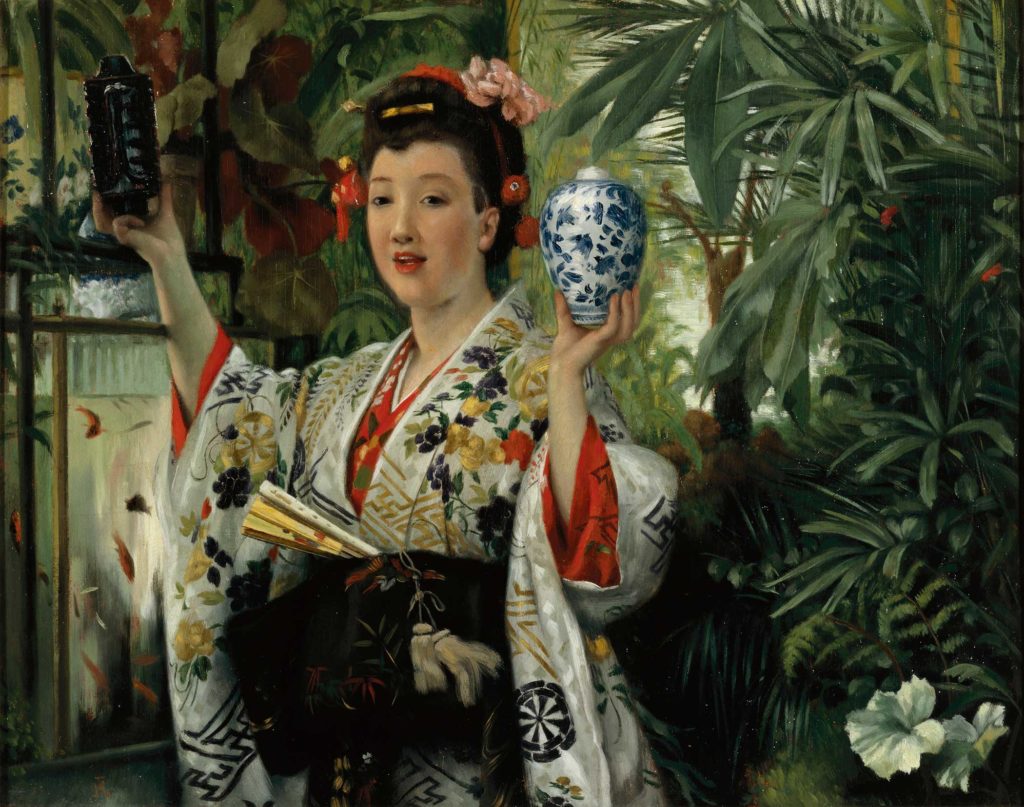
James Tissot (French 1836–1902), “Young Woman Holding Japanese Objects,” c. 1864–65, oil on panel, 14 3/8 x 18 in. (36.5 x 46 cm). Private collection.
John Singer Sargent (American, 1856–1925), Study for “The Spanish Dancer,” 1882, watercolor, 11 13/16 x 7 7/8 in. (30 x 20.02 cm). Dallas Museum of Art, Foundation for the Arts Collection, gift of Margaret J. and George V. Charlton in memory of Eugene McDermott, 1974.1.FA. Image courtesy Dallas Museum of Art.
Jean Louis Ernest Meissonier (French 1815–1891), “The Smoker (A Man of the First Empire),” 1873, watercolor and gouache on paper, 13 7/8 x 8 5/8 in. (35.2 x 21.9 cm). Private collection. Image courtesy Dallas Museum of Art.
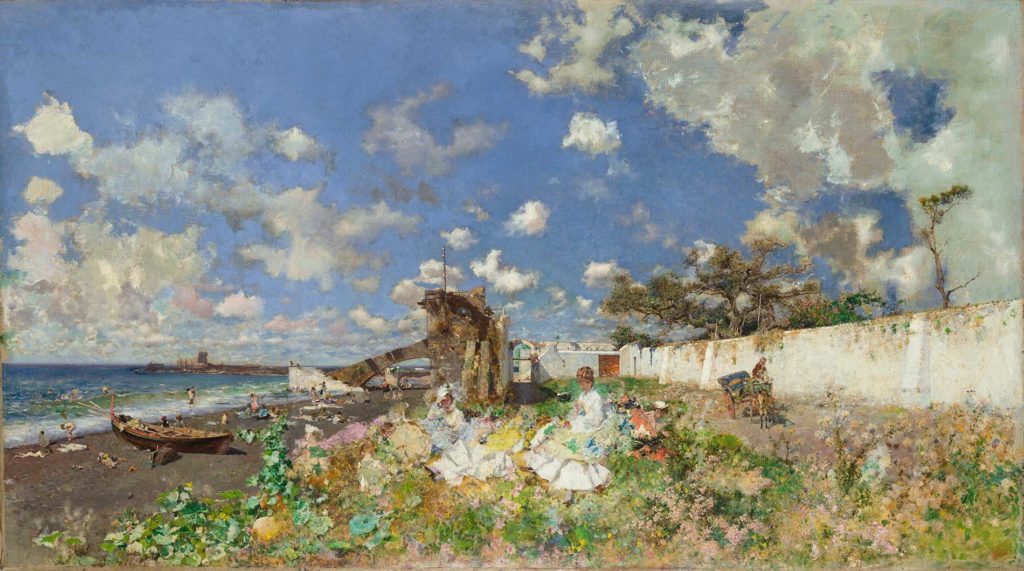
With almost 70 works by 23 artists, the exhibition will address a variety of themes, including intimate representations of family and home, cosmopolitan life in Europe’s major cities at the time, and the connections between and among the artists themselves. Included in the show are “Beach at Portici” (1874), the major painting Fortuny was working on at his death, acquired by the Meadows Museum in January 2018, and “The Choice of a Model” (1868–74), an important work by the artist on long-term loan from the National Gallery of Art, Washington, D.C.
Mariano Fortuny y Marsal (Spanish, 1838–1874), “Beach at Portici,” 1874, oil on canvas. Meadows Museum, SMU, Dallas. Museum purchase with funds from Mary Anne Cree, Mrs. Eugene McDermott, Susan Heldt Albritton, Linda P. and William A. Custard, Gwen and Richard Irwin, Shirley and Bill McIntyre, Cyrena Nolan, Peggy and Carl Sewell, Gene and Jerry Jones, Pilar and Jay Henry, Barbara and Mike McKenzie, Caren Prothro, Marilyn Augur, Dr. and Mrs. Lawrence S. Barzune, Diane and Stuart Bumpas, the Honorable Janet Kafka and Mr. Terry Kafka, the Mr. and Mrs. Walter M. Levy Fund of Communities Foundation of Texas, Stacey and Nicholas McCord, Linda and John McFarland, Catherine Blaffer Taylor, Julie and George Tobolowsky, Cheryl and Kevin Vogel, Diane and Gregory Warden, Natalie and George Lee, Estelle and Michael Thomas, Bethany and Samuel Holland, President R. Gerald and Gail Turner, Kathleen and Mark Roglán, and an Anonymous Donor; MM.2017.03. Photo by Robert LaPrelle.
Also on view will be a number of drawings and illustrated letters from the album compiled by William Hood Stewart (1820–1897), Fortuny’s chief American patron. Also in the Meadows Museum’s collection, “The Stewart Album” (1860–90) impressionistically records the great American collector’s acquaintance with the Parisian artistic community, and is crucial to understanding Fortuny’s social world.
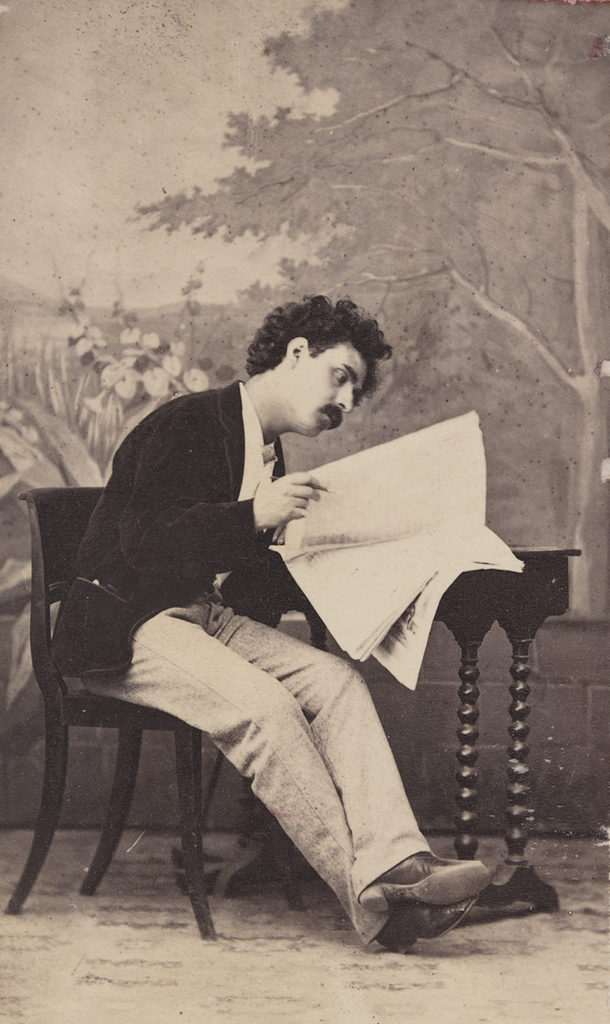
Photograph of Mariano Fortuny y Marsal (1838–1874), c. 1871, from “The Stewart Album,” 1860–90. Meadows Museum, SMU, Dallas. Museum purchase thanks to a gift from the Eugene McDermott Foundation and Ms. Jo Ann Geurin Thetford, MM.2013.02.19. Photo by Michael Bodycomb.
“Today Fortuny is not a household name, but his popularity and influence in the 1860s and early 1870s cannot be overstated,” says Meadows Museum Curator Amanda W. Dotseth. “He was one of the best-selling artists of his time and lived a cosmopolitan lifestyle that seamlessly blended work with leisure. He traveled frequently between southern Spain, Paris, Rome, Naples, and Venice with an impressive entourage of friends and followers in tow. And, although he died at only thirty-six years old, his legacy long survived him through his works, which would inspire later generations of artists, from Vincent van Gogh to Dalí and Picasso.”
Fill your mind with useful art stories, the latest trends, upcoming art shows, top artists, and more. Subscribe to Fine Art Today, from the publishers of Fine Art Connoisseur magazine.