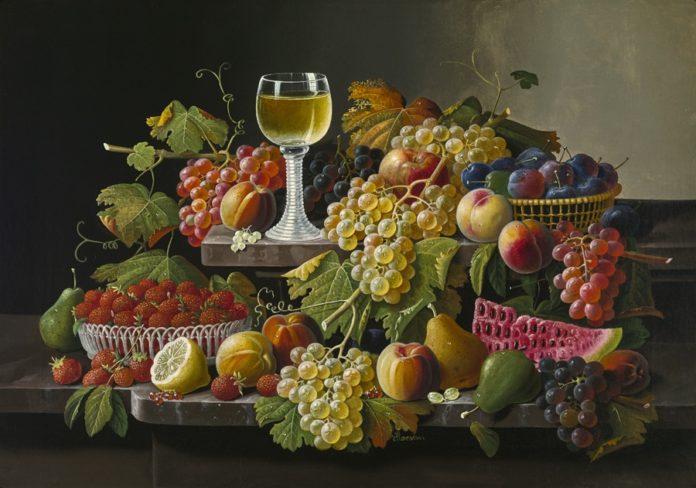
Severin Roesen, “Still Life with Fruit and Wine,” 1862, oil on canvas, 24 x 30 in. Crocker Art Museum, Judith G. and Steaven K. Jones Collection
Learn about “American Beauty and Bounty,” an upcoming exhibition at the Crocker Art Museum (Sacramento, CA):
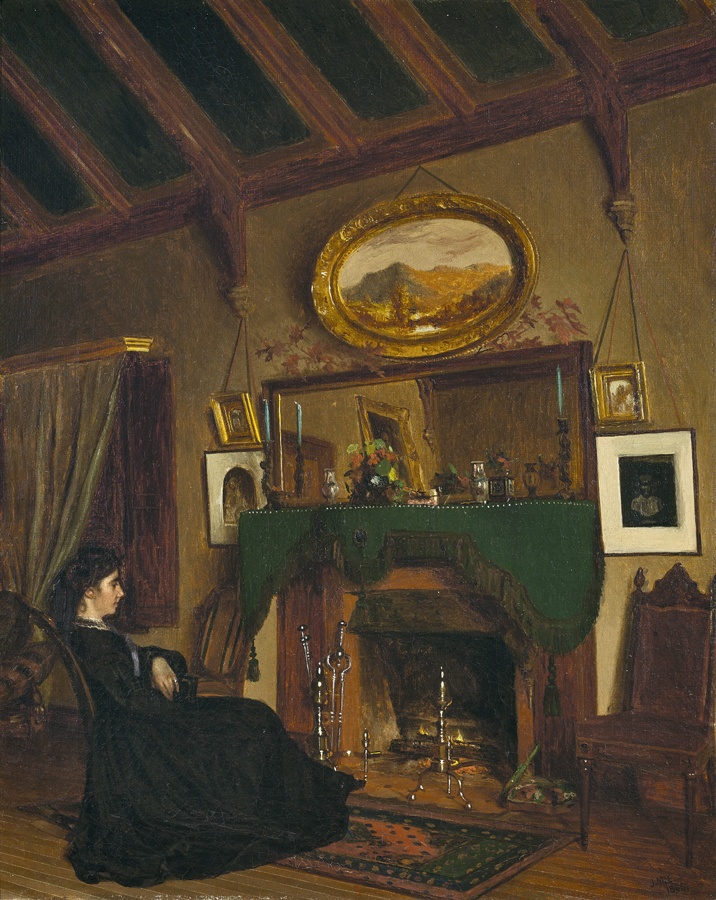
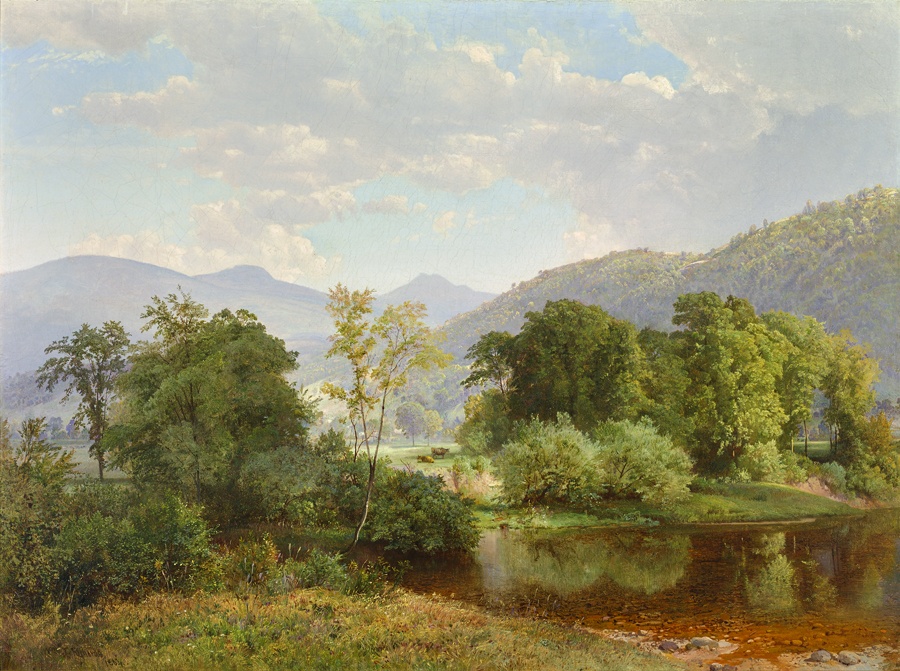
Judith and Steaven Jones began to acquire 19th-century American paintings in the late 1970s. This collection has grown to include 29 works that the Joneses will ultimately gift to the Crocker. Many are by Hudson River School painters, who focused on the landscape and pursued a highly polished, detailed technique.
Jervis McEntee, “Sitting by the Fire,” 1865, oil on canvas, 15 x 12 in. Crocker Art Museum, Judith G. and Steaven K. Jones Collection
Key artists include first-generation practitioners Asher B. Durand and Thomas Doughty, as well as important landscape painters of the second generation, including Albert Bierstadt, Sanford Gifford, John Kensett, and Worthington Whittredge.
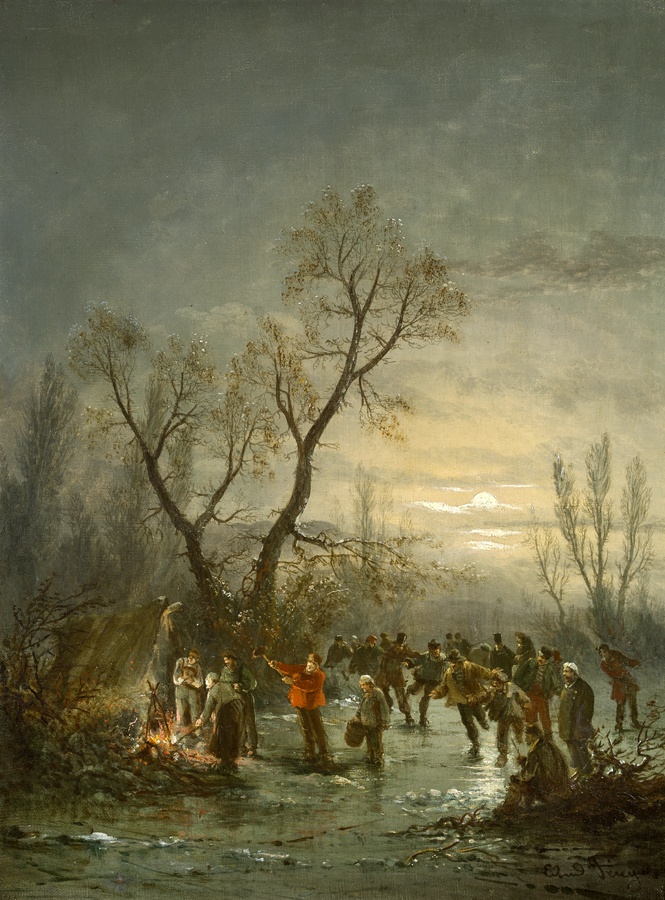
Enoch Wood Perry, “Ice Skating Party,” ca. 1870, oil on canvas, 20 x 15 in. Crocker Art Museum, Judith G. and Steaven K. Jones Collection
The collection also includes meticulously rendered still-life paintings by artists such as Severin Roesen and William Michael Harnett, as well as scenes of American daily life by Eastman Johnson, Enoch Wood Perry, and others. Collectively, these paintings communicate a spirit of American optimism, of transcendental wonderment in nature, of national abundance, and of nostalgia for ways of life that, even as the scenes were being painted, seemed already to be passing.
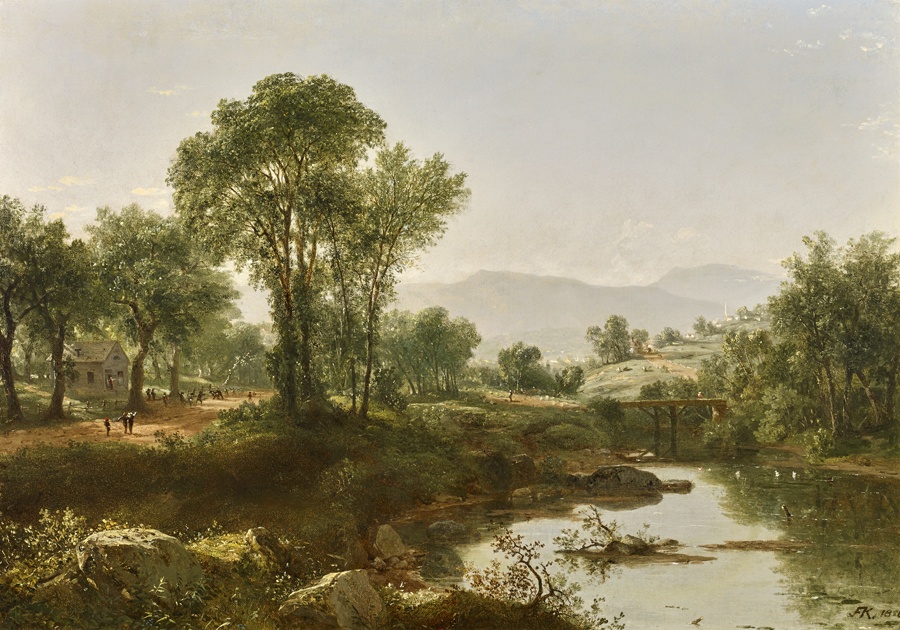
William Trost Richards, “Delaware River Valley,” 1864, oil on canvas, 18 x 24 in. Crocker Art Museum, Judith G. and Steaven K. Jones CollectionJohn Frederick Kensett, “School’s Out,” 1850, oil on canvas, 18 x 30 in. Crocker Art Museum, Judith G. and Steaven K. Jones Collection
“American Beauty and Bounty” is on view through January 27, 2019. For more information, please visit www.crockerart.org.
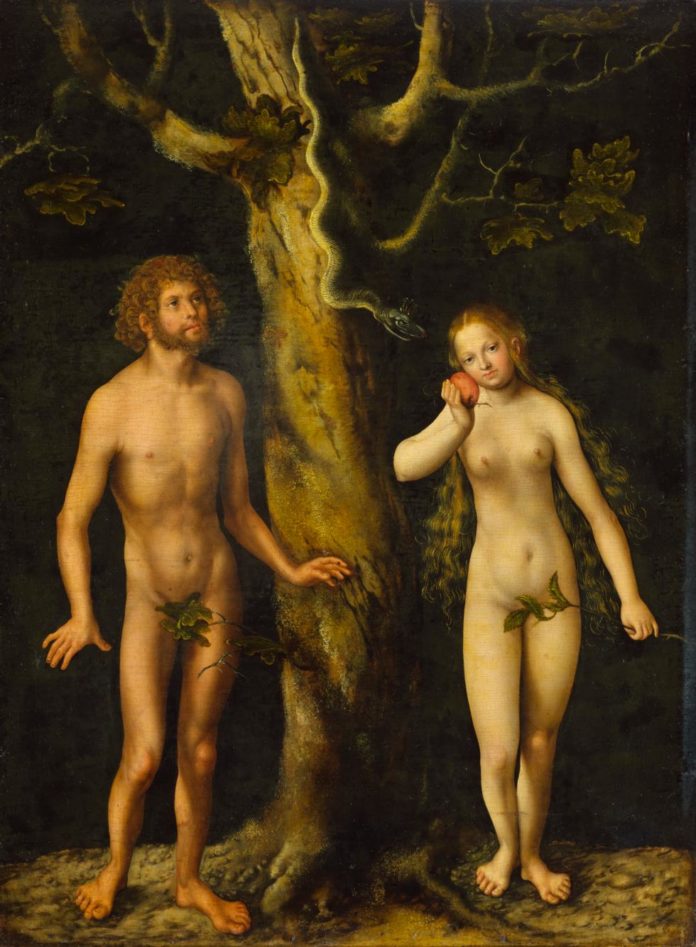
Lucas Cranach the Elder (German, 1472–1553), “The Temptation of Adam and Eve,” about 1510, oil on panel, unframed: 23.25 x 17.31 in. Muzeum Narodowe w Warszawie. Image courtesy of the Muzeum Narodowego w Warszawie. EX.2018.1.174
Drawing inspiration from classical sculpture and the study of the live model, Renaissance artists made the nude central to their art, creating lifelike, vibrant, and varied representations of the human body. This transformative moment is one that would shape the course of European art history and resonate through the present day.
On view at the J. Paul Getty Museum through January 27, 2019, “The Renaissance Nude” traces the rise of the nude over the course of a century with masterpieces made in Italy, France, Germany, and the Netherlands, from the early 15th to the early 16th century.
“Since the Renaissance, the nude has a central preoccupation of European art. Yet until now no museum has undertaken a comprehensive examination of where and how the nude obtained its preeminent place in art practice and history,” says Timothy Potts, director of the J. Paul Getty Museum. “In bringing together some of the greatest examples of Renaissance art from major European and American collections, the exhibition explores the various aspects of this enduring and captivating subject, allowing visitors an unprecedented opportunity to immerse themselves in one of Western art’s richest and most innovative traditions.”
Featuring more than 100 works in a variety of media, the exhibition casts its net widely. Painting and sculpture feature prominently, but so do drawings, illuminated manuscripts, and prints.
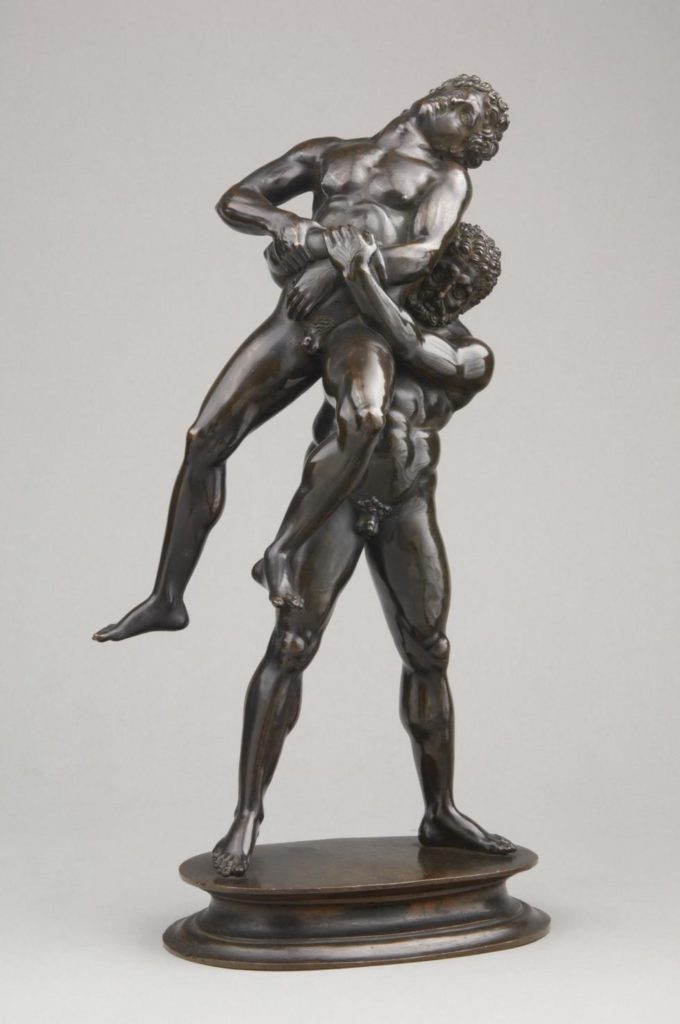
Antico (Pier Jacopo Alari-Bonacolsi; Italian, about 1455–1528), “Hercules and Antaeus,” model created by 1511, cast 1519, bronze, 17 x 8.81 x 6 in., 15.2845 lb.). KHM-Museumsverband, Kunstkammer. Image: KHM-Museumsverband / Kunsthistorisches Museum, Vienna. EX.2018.1.23
The exhibition looks not only at the centers most often associated with the Renaissance nude — such as Florence, Venice, Rome, and Nuremberg — but also Paris, Bruges, and lesser known centers of northern Europe. Artists represented include Leonardo da Vinci (Italian, 1452–1519), Raphael (Italian, 1483–1520), Michelangelo (Italian, 1475–1564), Titian (Italian, 1487–1576), Giovanni Bellini (Italian, about 1431/1436 – 1516), Albrecht Dürer (German, 1471–1528), Lucas Cranach the Elder (German, 1472–1553), Jean Fouquet (French, born about 1415–1420, died before 1481), Jan Gossart (Netherlandish, about 1478–1532), Hans Memling (Netherlandish, about 1440–1494), and many others.
“In taking a broad view, this exhibition embraces the tremendous variety of nudes in the Renaissance across subjects, functions, media, and regions, tracing numerous strands of development, some familiar and enduring, some parallel but separate, and others short-lived but prophetic,” says lead exhibition curator Thomas Kren.
“The Renaissance Nude” is organized around five major themes: Christian Culture, Humanist Culture, Artistic Theory and Practice, the Abject Body, and the Nude in Personal Iconography. Within this framework, the exhibition looks at how artists across Europe approached particular subjects and themes, ranging from the bodies of Christ and Saint Sebastian to the nude in the landscape to Venus, the power of women, and male sexuality.
For example, no figure from ancient art and literature held more appeal for Renaissance artists than Venus, the Roman goddess of love. By the 1520s, major artists in nearly every corner of Europe were representing her in different media. The very different paintings by Titian and Gossart in the exhibition emphasize the goddess’s beauty and charm; both also have sophisticated intellectual underpinnings in classical narratives that underscore the brilliance of each artist in making these sensual figures at once meaningful and alluring for the viewer.
The exhibition also draws upon recent scholarship that reexamines controversies around the nude, including the complex and varied reactions to individual works. For example, the show opens with a section on the nude in Christian art that establishes a broader cultural framework than humanist culture. The first image visitors will encounter is Cranach’s “Adam and Eve,” a narrative of the Fall of Man from the Hebrew and Christian book of Genesis that establishes bodily shame as originating in human history. In this way, the exhibition and accompanying catalogue explore the way humanist culture, new artistic attitudes, and spiritual beliefs shaped the appearance, meaning, and reception of the nude and how they continue to do so in our own time.
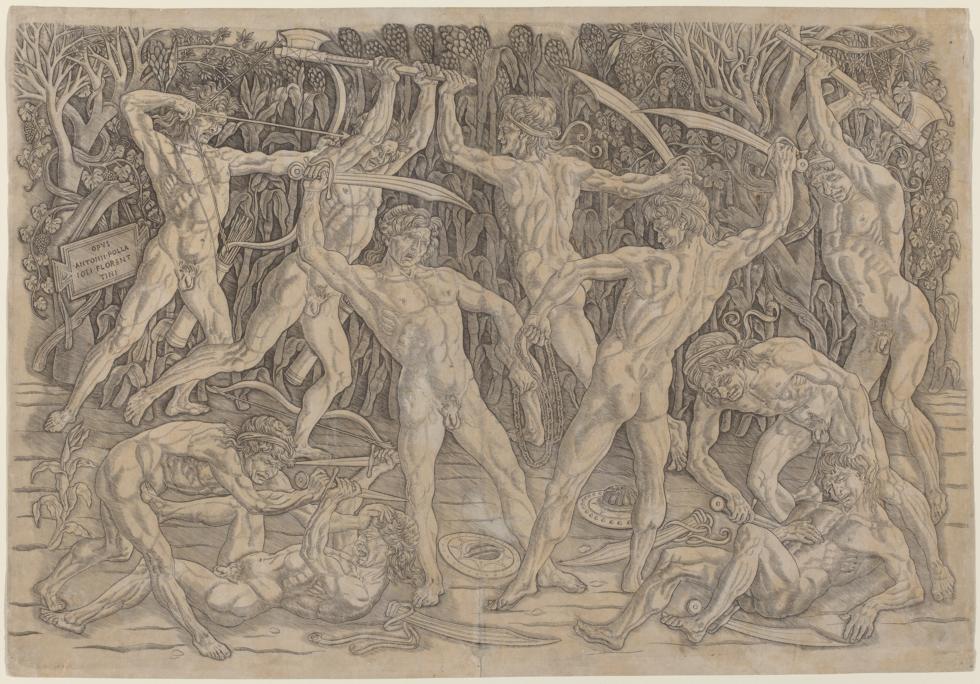
Antonio Pollaiuolo (Italian, about 1431–1498), “Battle of the Nudes,” 1470s, engraving, unframed: 16.88 x 24.31 in. National Gallery of Art, Washington, Gift of W.G. Russell Allen, 1941. EX.2018.1.170
“The Renaissance Nude” also examines the relative prominence of male and female nudes at this time. Whereas female nudes by Titian, Giorgione, and Correggio, all represented in the exhibition, helped make the female nude one of the most popular themes in European art, the exhibition shows that in Italy, especially in the fifteenth century, the male nude was pre-eminent. As Italian artists from the 1460s began to be trained in drawing from live models, who for many decades were only male, the male nude became the most important subject for demonstrating skill in depicting the human figure. For example, Antonio Pollaiuolo’s large engraving from the 1470s, “Battle of the Nudes,” in which ten naked male figures are displayed in various postures, became famous throughout Europe. Reputed to be one of the first artists to dissect corpses for study, Pollaiuolo was painstaking in his rendition of the male form. Meanwhile, Saint Sebastian, always shown unclothed as he suffers the arrows of his persecution, was invoked for protection from the plague; its frequent recurrences created a large demand for images of Sebastian across Europe. As depictions by Donatello, Cima da Conegliano, and Martin Schongauer in the exhibition demonstrate, the subject offered an unparalleled opportunity to display mastery of the male form in a range of media.
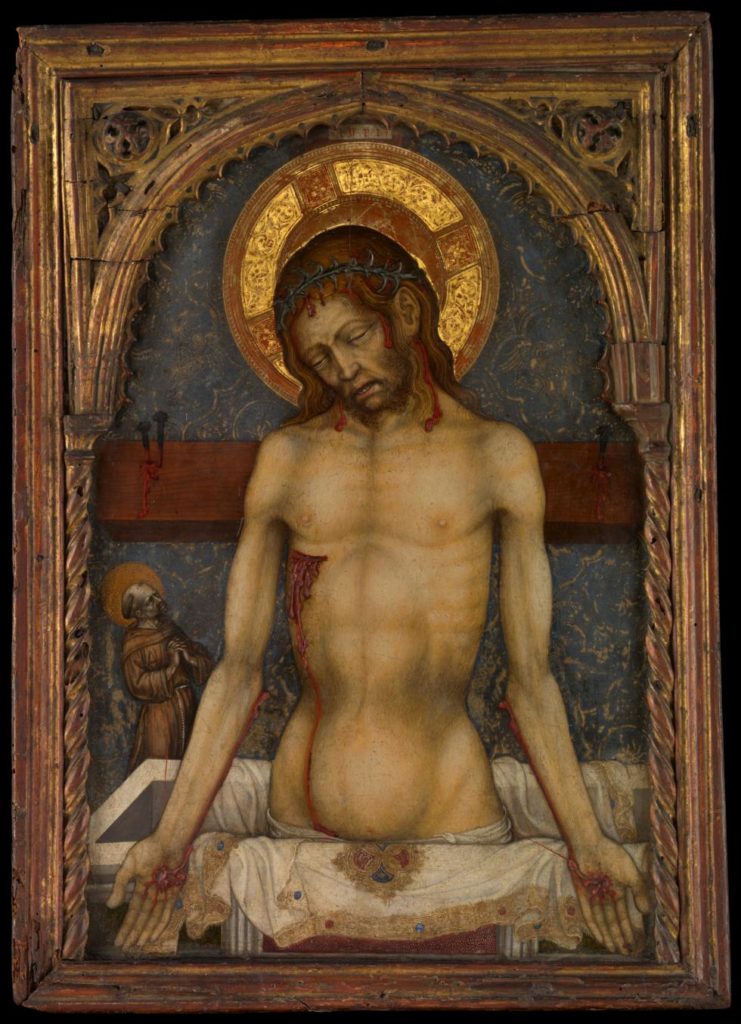
Michele Giambono (Michele Giovanni Bono; Italian, active 1420–1462), “The Man of Sorrows,’ about 1430, tempera and gold on wood, painted surface: 18.5 x 12.25 in. Lent by the Metropolitan Museum of Art, Rogers Fund, 1906 (06.180). Image: www.metmuseum.org. EX.2018.1.120
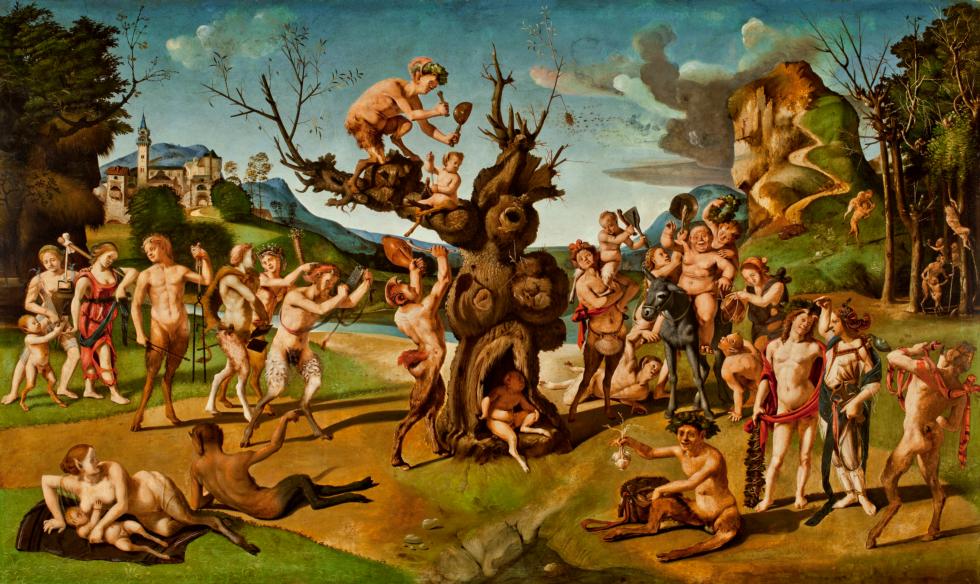
The exhibition explores not only the very different notions of ideal beauty represented in Renaissance art but also the interest that artists often had in other types of unclothed bodies, including the ascetic, the emotionally distraught, and the aged. Donatello’s “St. Jerome in Penitence,” 1454–55, represents in wood a life-size sculpture of the nude saint scourging himself with a rock, his body showing the results of his denial of worldly pleasures, including conventional sustenance, and of exposure to the hardships of the desert in his pursuit of spiritual truths. By contrast, “The Discovery of Honey,” a painting by Piero di Cosimo from about 1499, is a bawdy classical scene that depicts Bacchus and his entourage of satyrs and maenads drunkenly stealing honey from a hive in a dead tree.
The exhibition is curated by Thomas Kren, with Jill Burke and Stephen J. Campbell, and with the assistance of Andrea Herrera and Thomas de Pasquale.
Following its presentation at the Getty, the exhibition will travel to the Royal Academy of Art in London, where it will be on view March 3 through June 2, 2019.
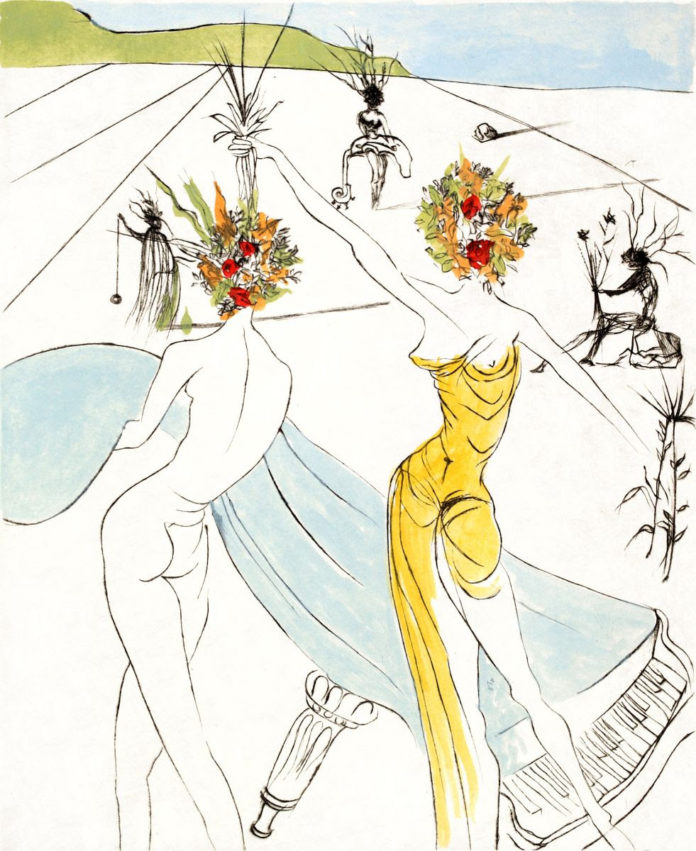
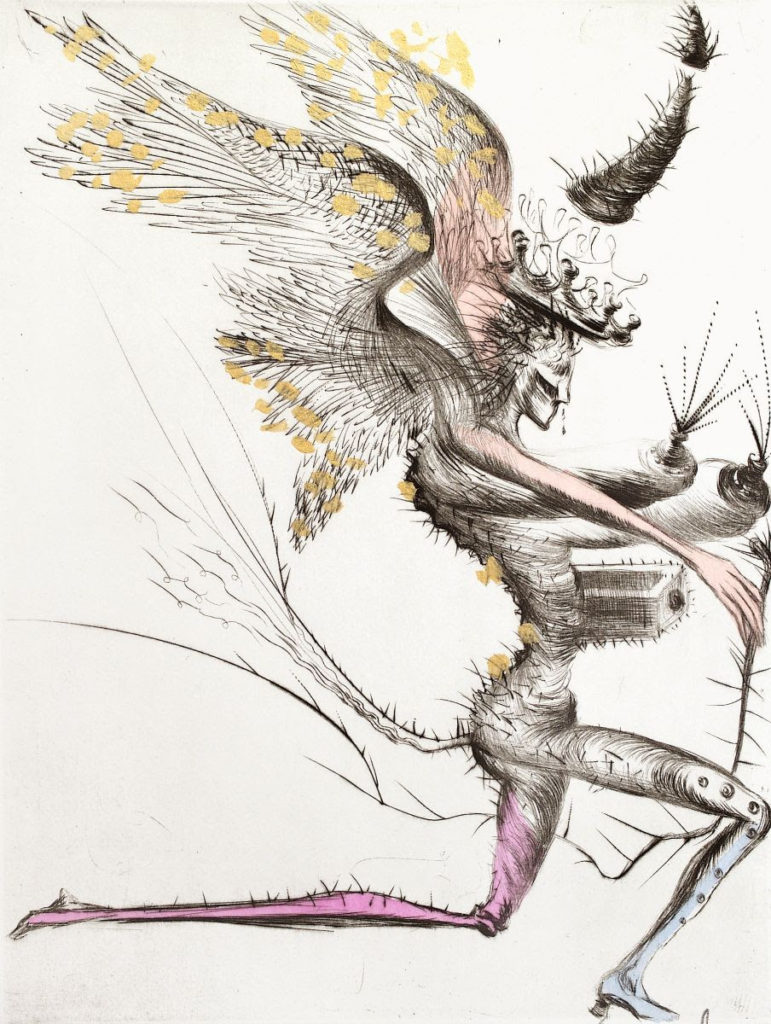
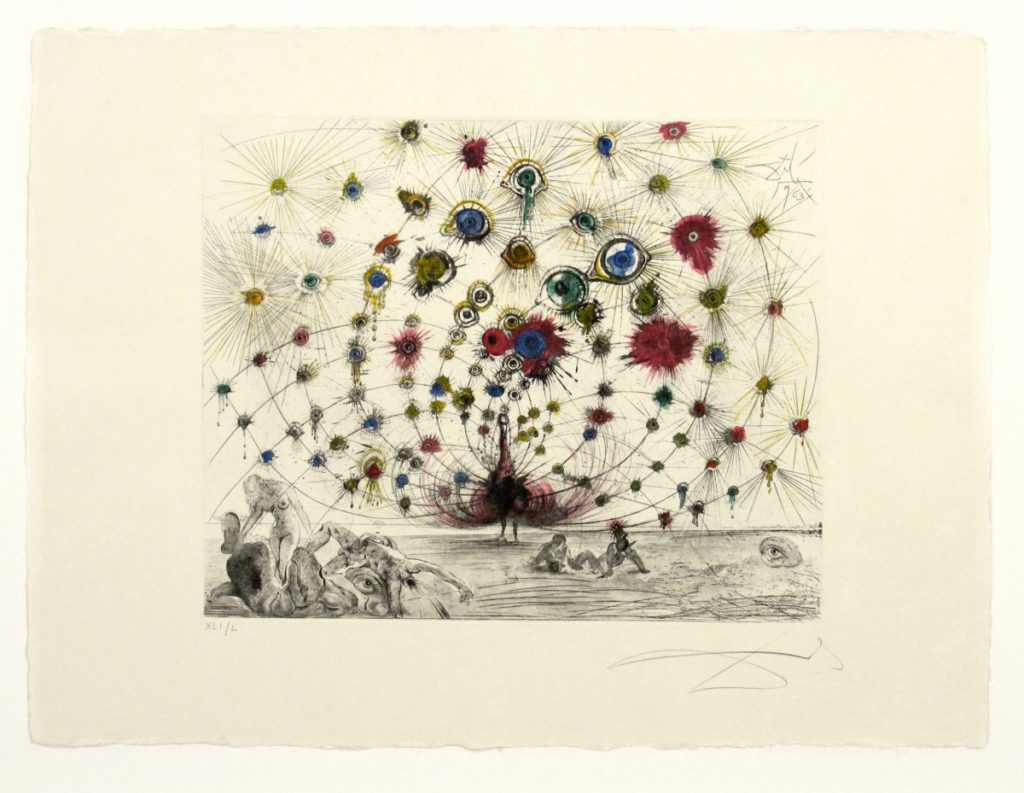
ACA Galleries is pleased to present “Salvador Dalí,” a solo exhibition featuring selected etchings, Aubusson tapestries, and drawings from the Argillet Collection.
Dalí and Pierre Argillet began working together in 1959 and produced nearly 200 etchings over a 15-year period. They are noted for their attention to detail with wide-ranging themes such as mythology, Faust, and bullfights, as well as the writings of Apollinaire, Chairman Mao, and Don Juan among others.
Salvador Dalí, “Petit Nu Apollinaire 7”Salvador Dalí, “Argus in Color,” 1963
The prints they produced during this fertile collaboration have been shown at museums throughout the world: Musée Boijmans, Rotterdam; Musée Pushkin, Moscow; Kunsthaus, Zurich; Staatsgalerie, Stuttgart; Isetan Museum of Art, Tokyo; and Daimaru Art Museum, Osaka, among others.
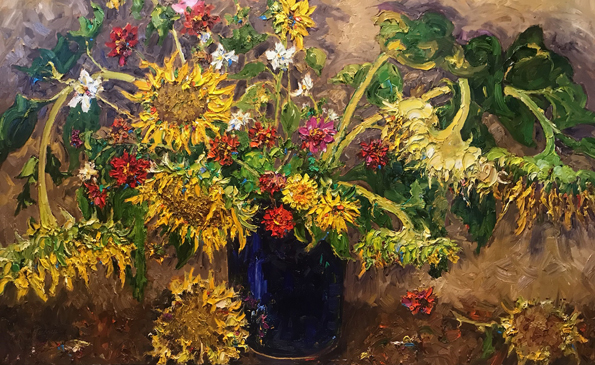
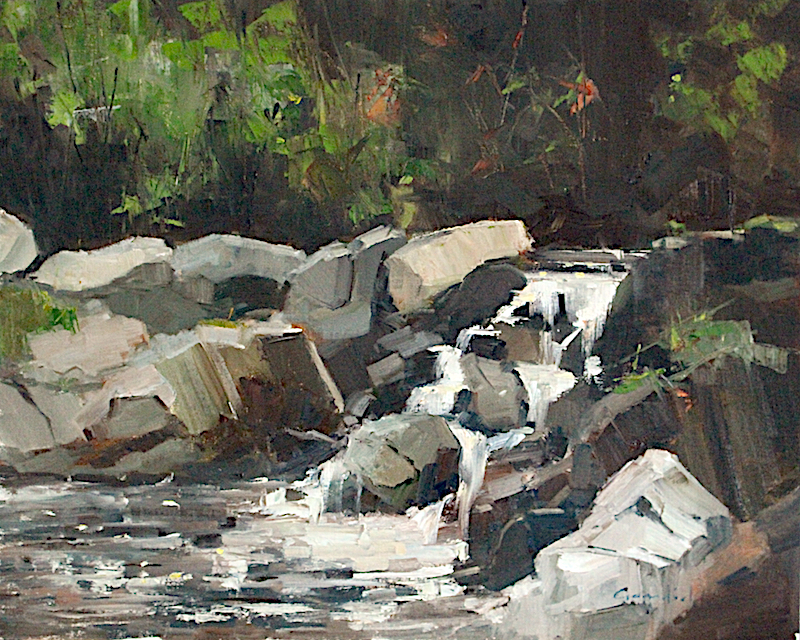
Graydon Foulger resides in Utah, a state he enjoys painting for its diversity. He relishes plein air painting (on site) in all weather conditions, yet equally enjoys the challenges of studio work. His interest in a wide variety of subjects is served by traveling extensively in the U.S., South America and Europe. Graydon’s goal is to paint competent, honest, interesting paintings ranging from the subtle rendering to the colorful impasto. You can find him and his work, along with 100 other artists, at the Celebration of Fine Art in Scottsdale, Arizona, January 12-March 24, 2019.
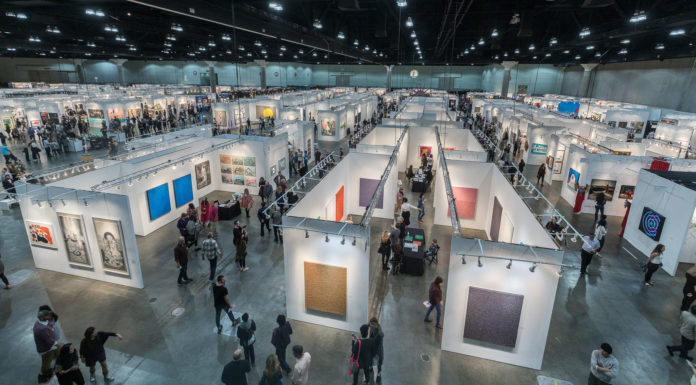
Discover an encyclopedic lineup of exhibitors not only in contemporary art, but also classical art, antiques, folk art, and other specialized art scenes that often command their own dedicated shows.
For its 24th edition, the LA Art Show is expanding even further into the global art market with a new lineup of DIVERSEartLA programming, conceived by curator Marisa Caichiolo and premiered in 2017. DIVERSEartLA is a special programming space within the fair dedicated to exhibiting diverse, often international institutions and artists from around the Pacific Rim and beyond. With a focus on civic engagement, the LA Art Show donates 50,000 square feet of exhibition space to the participating organizations, and the work is not for sale.
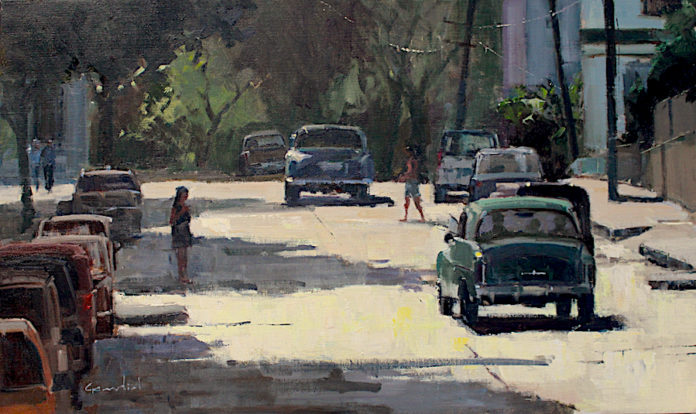
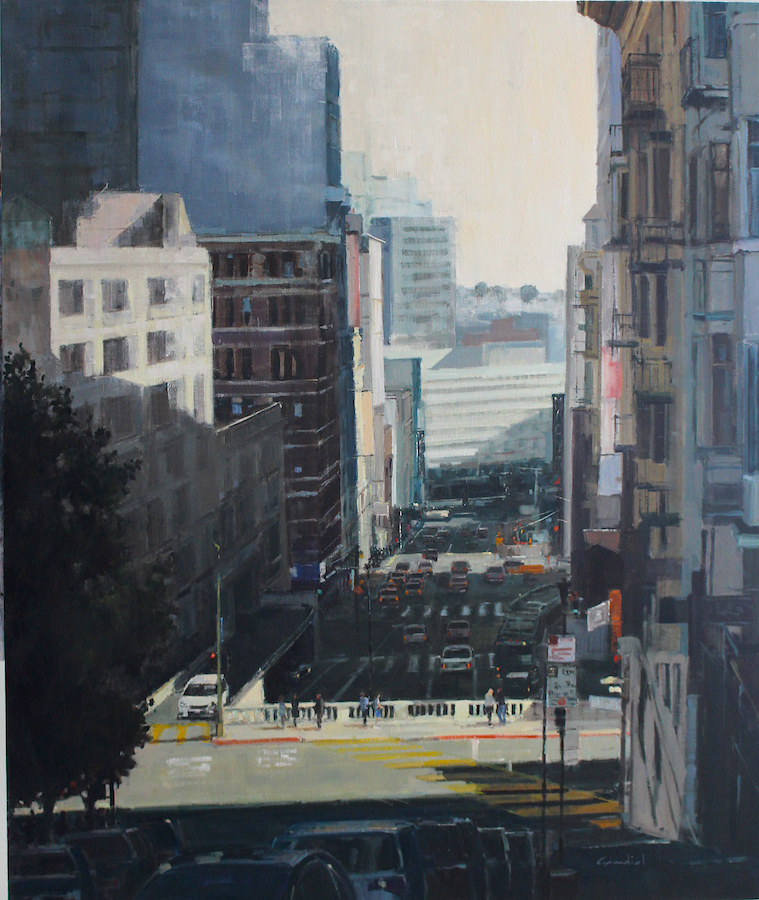
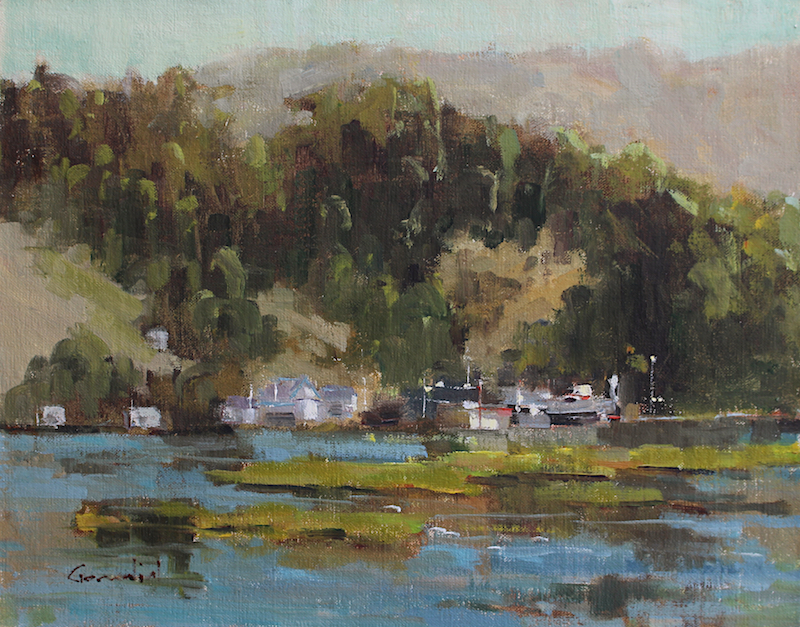
The Markham Vineyards Gallery (St. Helena, California) presents “The Language of Light,” featuring the oil paintings of Philippe Gandiol.
From the gallery:
Philippe Gandiol, a Northern California painter, was born in Paris and moved to California in 1975. He has been painting with oils for over 20 years. He pursued an independent program of study, taking classes in France, San Francisco, and Sacramento and with several renowned West Coast painters. Philippe paints landscapes and cityscapes en plein air, and still lifes and models in the studio.
He works almost exclusively from life, believing that only in life can he find the full range of light and color he wants in his paintings. He is actively involved with the California artist community, art events, and juried art festivals, where he has won many awards. He teaches both privately and at the Davis Art Center. As an instructor, Philippe is appreciated as a thorough, supportive, and inspiring mentor.
“Bush Over Stockton” by Philippe Gandiol“Jenner” by Philippe Gandiol“Gem Lakes Creek” by Philippe Gandiol
“The Language of Light” is on view through April 15, 2019. For more information: www.markhamvineyards.com.
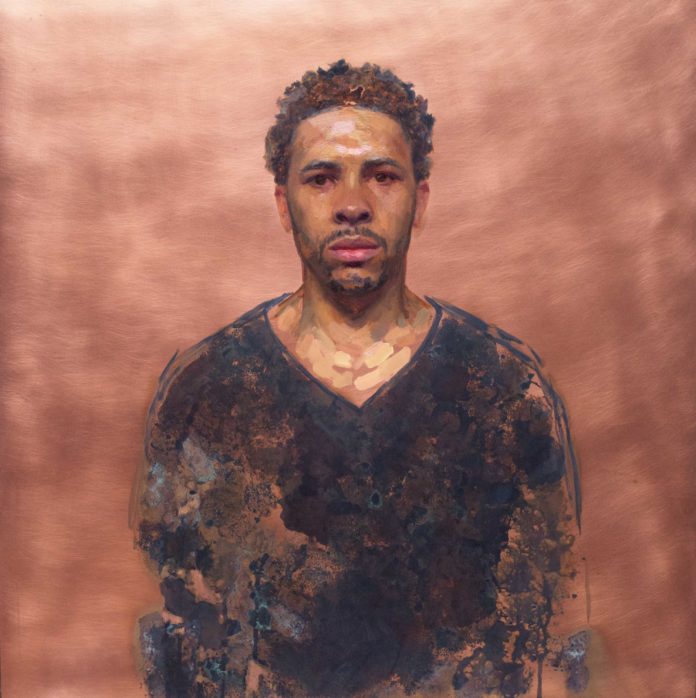
Kate Lehman, “Artist and Inspiration George Morton,” oil and patina on copper
Upcoming art exhibition > “Prism”
The meaning of a work of art is conveyed not only through content, but is embedded in the technical language of the artwork. An artist’s unique use of their material can transform a subject, uniting form and content in one potent form of expression.
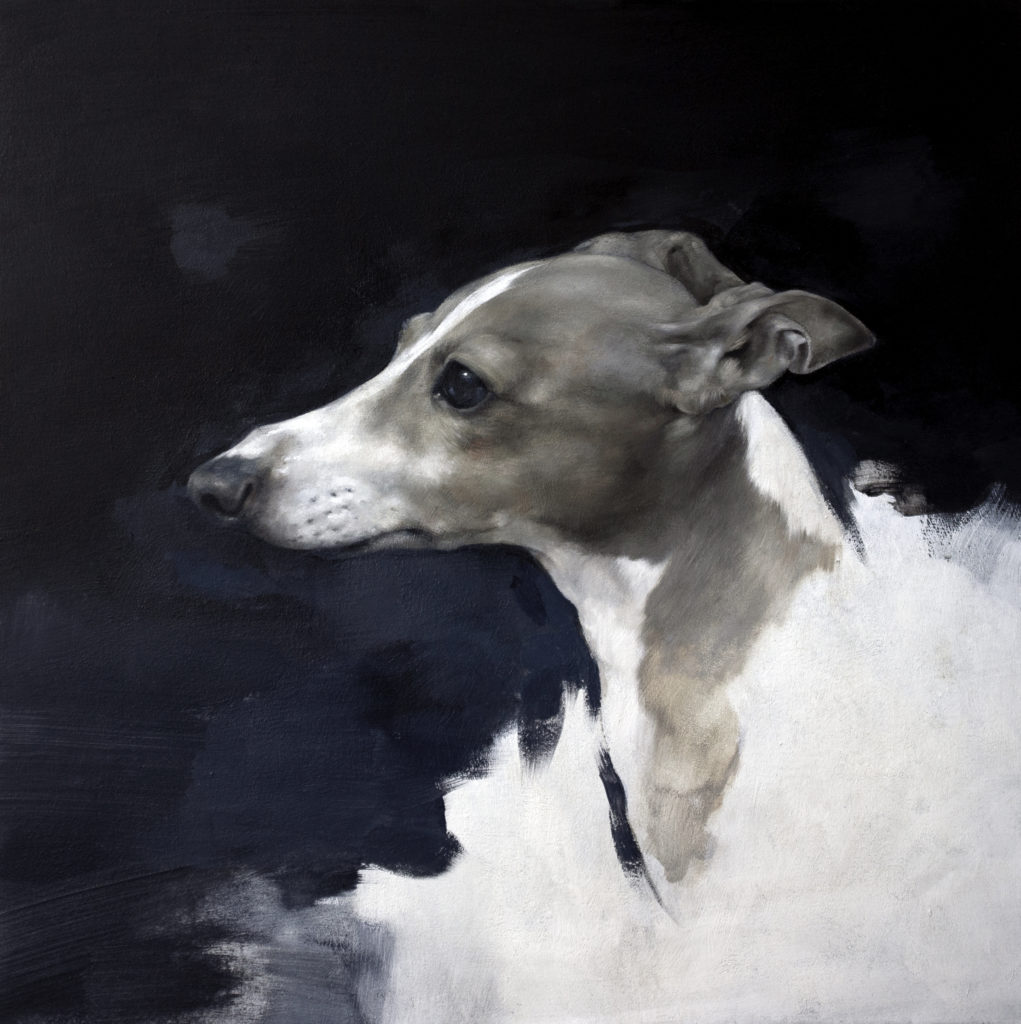
Justin Coburn, “Whippet Head Study,” oil on wood panel, 40 x 40 cm
On January 18, the Florence Academy of Art U.S. presents its newest exhibition, “Prism,” curated by Stephen Bauman and Edmond Rochat. The exhibition features a range of subject matter from landscape and still life to sculpture and portraiture. “Prism” presents the work of more than 15 artists who skillfully translate the visual world through the prism of their own distinct vision.
Connect with 30 artists in 23 studio locations participating from Hobe Sound to Jensen Beach, Florida, during the 3rd Annual Martin County Open Studio Tour. The weekend event is a free self-guided tour allowing visitors to meet and talk with artists in their studio work spaces, view new artwork, and purchase directly from the artists. Some studios are hosting other artists and some will have demonstrations.
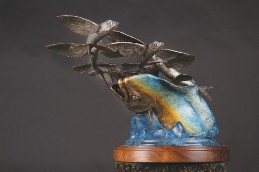
Contemporary fine art sculpture by Geoffrey Smith
Some of the notables include sculptor Geoffrey Smith, nationally known for his wildlife bronzes. His work has been presented to President George Bush and to the Vatican.
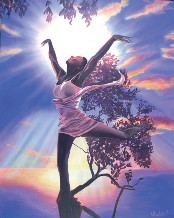
Artwork by Lynne Barletta
Another notable is Lynne Barletta of Visionary School of the Arts, which fills in the gaps of art education in local schools. Barletta is a painter and also the founder of Catch the Wave of Hope, whose aim is to bring awareness, healing, and action to abolish human trafficking. She has received national notice for her work.
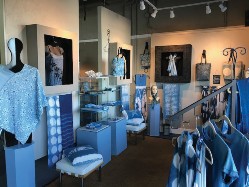
Aya Fiber Studio, of Suzanne Connors
Textile artist Suzanne Connors heads the Martin Artisan Guild, a group of local professional artists. Connors works with fabrics hand-dyed with indigo or natural dye and teaches workshops in Shibori, as well as several other techniques, around the country and in her waterfront studio in the Stuart – Port Salerno (FL) area.
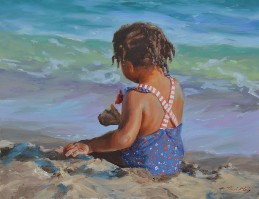
Painting by Chris Kling
Artist Chris Kling paints portraits, figuratives, and landscapes, and teaches oil portraiture at the Lighthouse Museum and Art Center (Tequesta). Kling and her family recently opened Kling Gallery, Wine & Décor. “Being an artist is not just my career,” Kling says. “It is an integral part of who I am and is something that I am compelled to do. My work reflects my interest in boats, water, nature, and the human figure . . . Painting, to me, is reaching out to find the common emotional connection between all of us and life around us.”
The 3rd Annual Martin County Open Studio Tour takes place January 20–22, 2019. For more information, visit https://mcost.org.
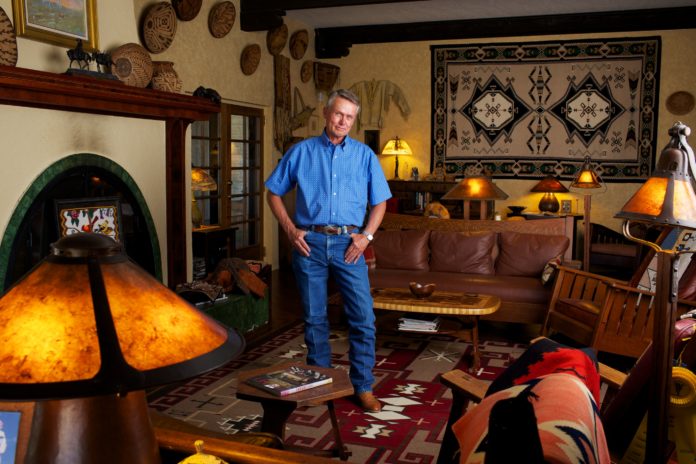
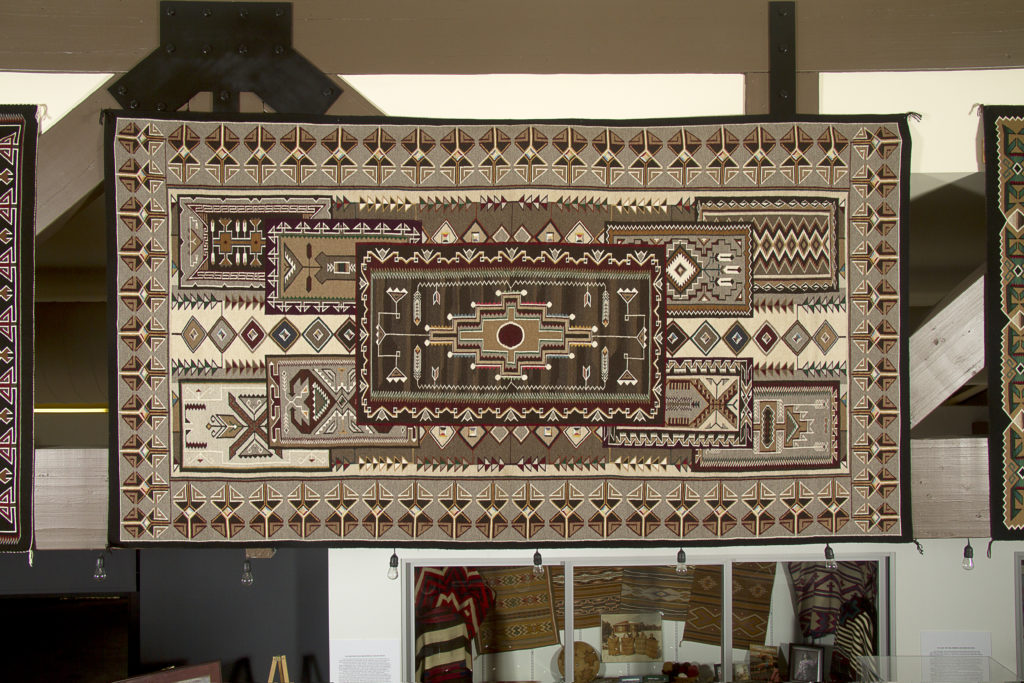
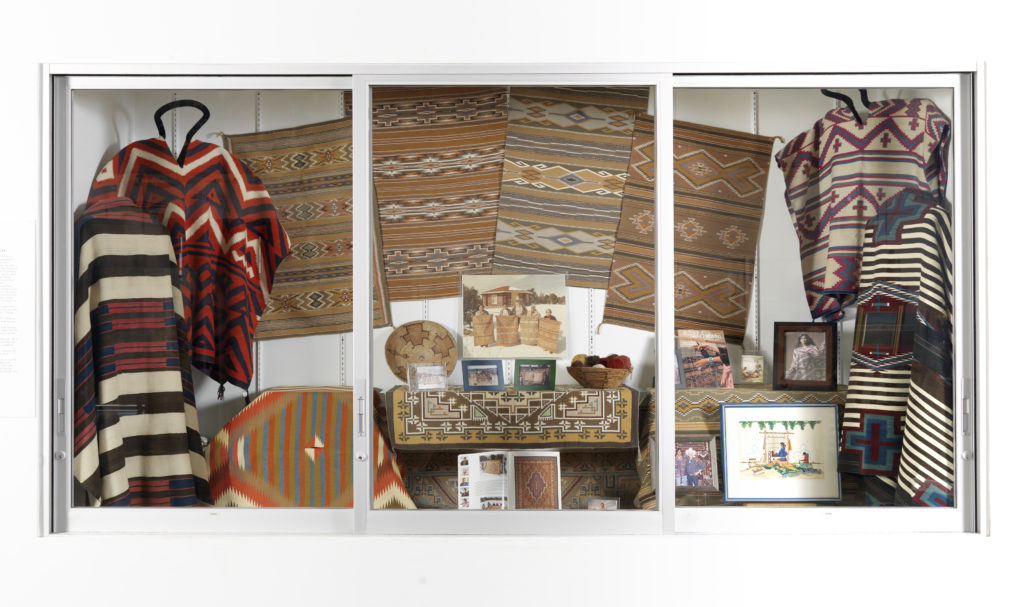
For 50 years, native Arizonan Steve Getzwiller has been evolving into the premier collector, trader, and expert on the subject of Navajo weavings. Steve has made countless trips to the Navajo Nation, working closely with generations of the best weavers, true artists of their looms, supporting them and helping them to expand their talents and horizons. But for 50 years, Steve Getzwiller has also been collecting other bits and pieces of the West itself, tracking down and ferreting out timeless treasures before they could vanish.
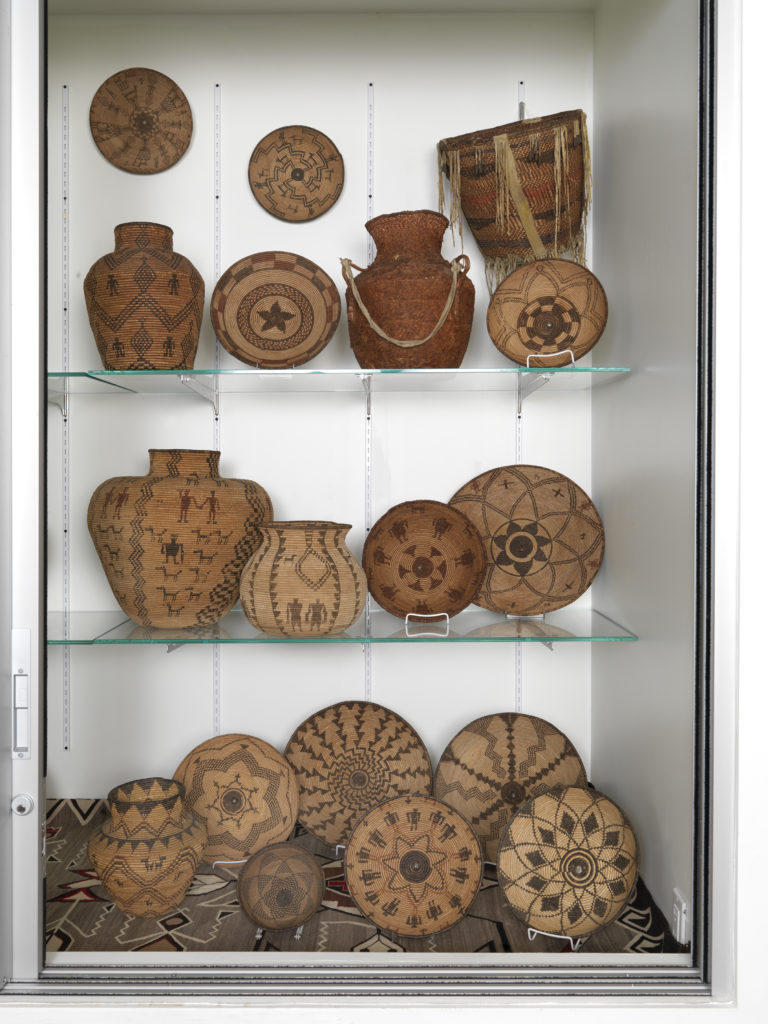
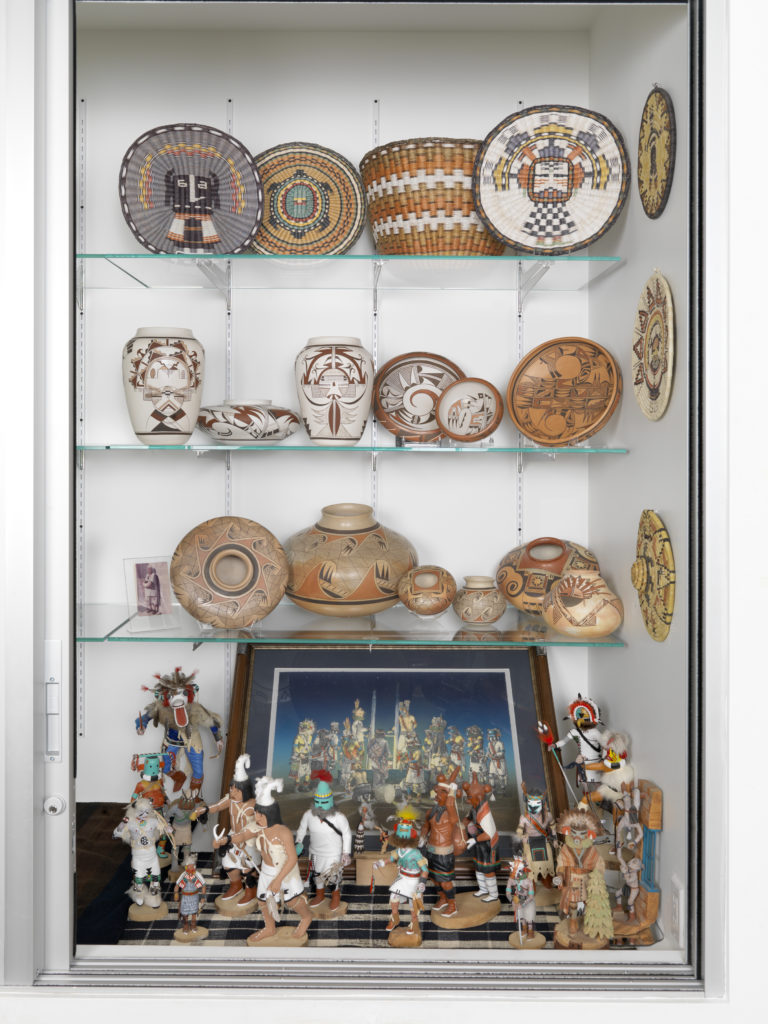
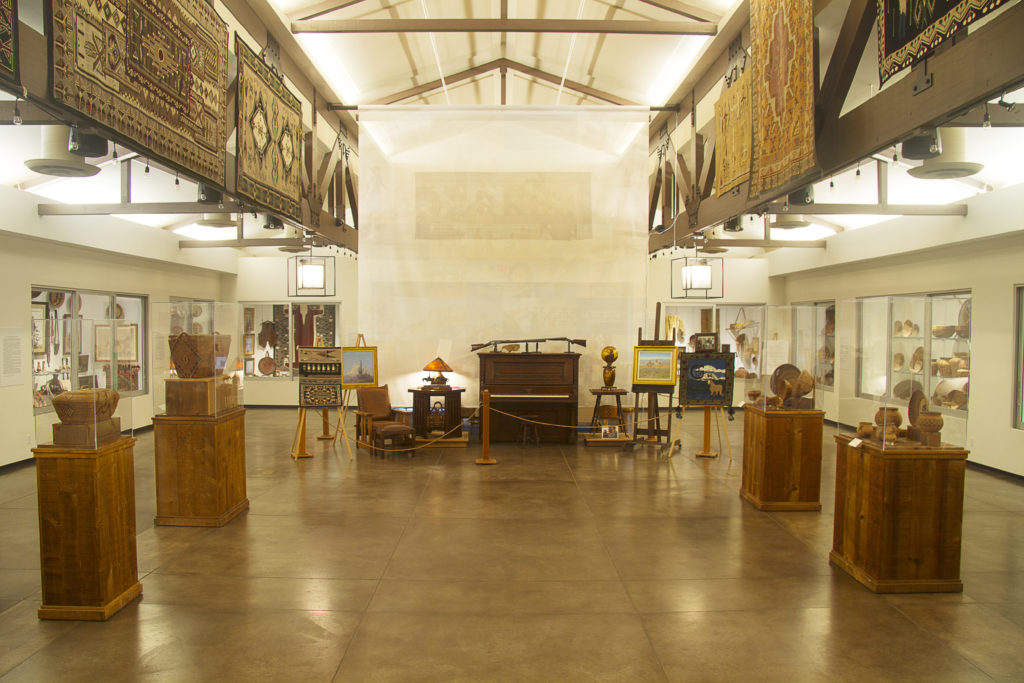
While Steve has had exhibits and showings in museums and galleries before, this is the first time he’s been asked to share his other pieces, bringing out pottery, kachinas, baskets, paintings, and other Native American artifacts as well as firearms, furniture, photographs, and even a rodeo lariat or two of his dad’s. And it’s all at the request of the Desert Caballeros Western Museum in an exhibition titled “One Trader’s Legacy: Steve Getzwiller Collects the West.”
“This represents an opportunity to share my lifelong collection with my friends in Wickenburg, those who have supported me for five shows in 20 years,” he says.
When he was 18, Steve traded his childhood collection of Winchester .22 rifles for his first Navajo rugs, and never looked back. Licensed as a trader, he started first with Zuni, and then went on to Hopi and Navajo before focusing on Navajo weavings and slowly developing the best weavers into the master artists with fibers that they are. Some weavers are the third generation in their family to work with Steve, and they consider him part of their family.
A fourth generation Arizonan himself, Steve has roots planted deeply in the ranching soil of southeastern Arizona, even having ancestors who first settled in the Republic of Texas. His deep respect for history and for the “stuff the survivors were made of” has honed his attention on those artifacts which best tell the true stories of life back then, for the cowboy, and for the Native American.
Steve always says he’s a collector first and foremost — and now he wants to share some of his timeless, irreplaceable collection with others.
The Museum would like to thank the following donors who have stepped forward to sponsor its 2017-18 exhibition season: John and Lynne Boyer; Dita and John Daub; The DeVore Foundation, Alta and Bill DeVore, Trustees; Jim and Rea Ludke; Sharon and Lanny Martin; Elaine and Peter Schweitzer; and Kathleen Parrish and Doug Spencer. They also thank the Arizona Commission on the Arts; National Endowment for the Arts; the Wellik Foundation; and the Town of Wickenburg for their continued support.
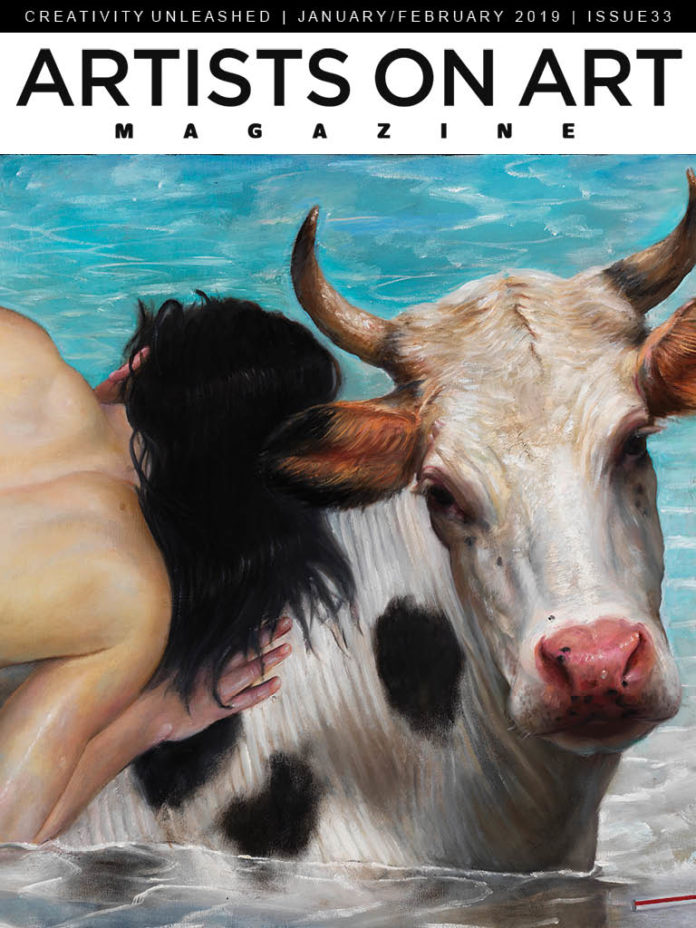
The January/February issue of Artists on Art magazine features Bruno Surdo’s 10 principles of success for artists; a look into the “other” with illustrations by Lori Field; honest paintings of the aging female figure by Francien Krieg; a philosophical look with Timothy Holton at why frames matter; and more.
Here’s a sneak preview of the new Artists on Art magazine:
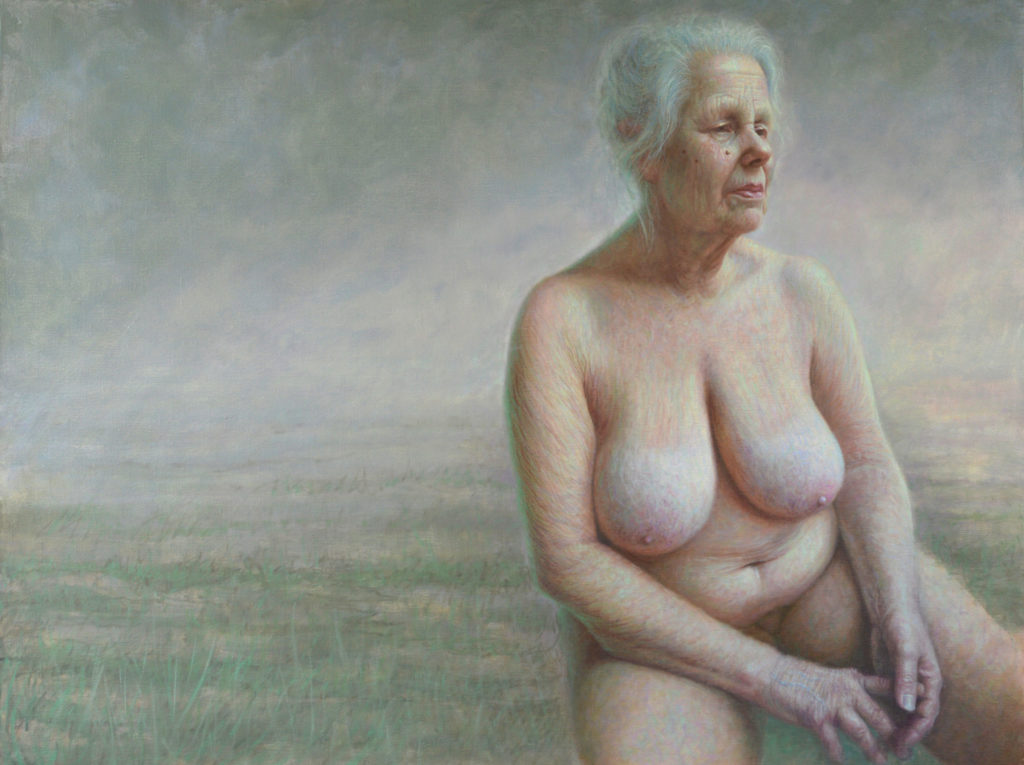
Francien Krieg, “Perfect Imperfections,” 2016, oil on linen, 47 x 39 in.
From “Not Above My Couch” (essays on the work of Francien Krieg):
“Dutch painter Francien Krieg paints older women who have moved on from the pressures of beauty to a place where spirit becomes the means of physical attraction. Her women are struggling with aged bodies that severely limit their quality of life . . . By throwing aging in our face like a violent Western, we have to respond. The response is what Krieg is after. She feels her point is made by the extreme response.
“Yes, men and women’s ideal view of young beauty does get shattered with age, but something else takes place of more importance: The realization that when idealized beauty is gone, the innate inner beauty of spirit has the potential to create an outer beauty with a greater depth.” ~ written by Alan Katz
From How to Create a Vibrant Posthumous Portrait by Patricia Watwood
“In my years of creating portraits, I’ve had a number of commissions to paint historical figures. Posthumous projects are quite common, as it is often after someone has passed away that his or her family and colleagues want to celebrate that person’s life and contributions.
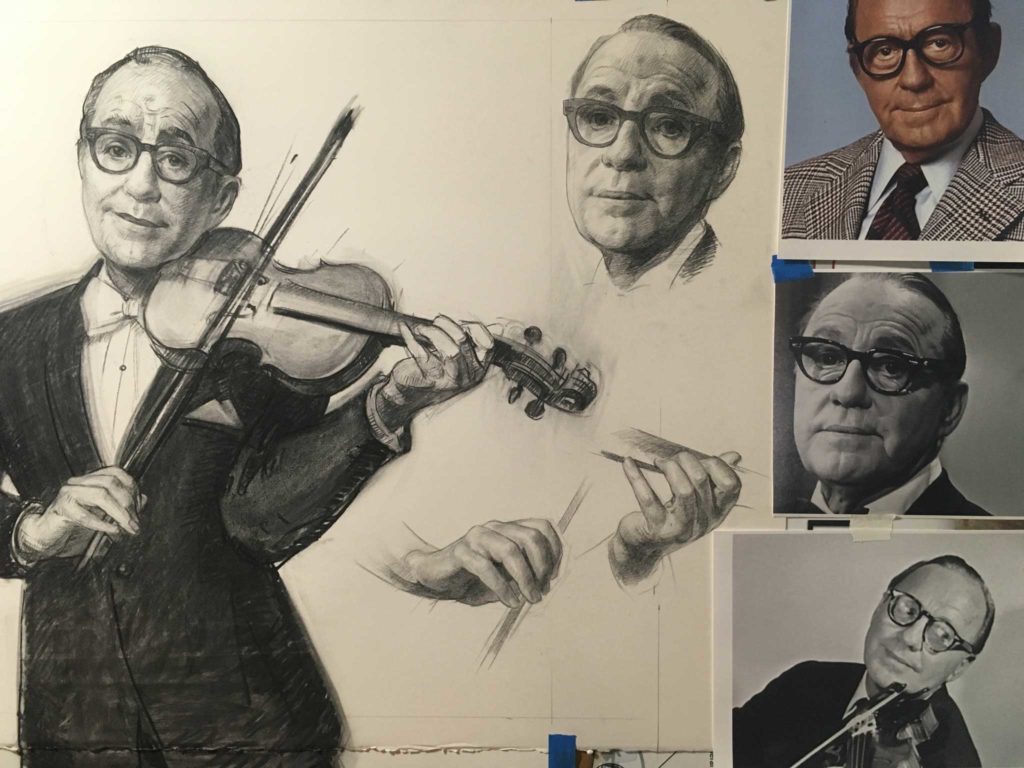
“Recently, I had a commission to paint the American comedian Jack Benny. Often, formal commissions are of some sober and serious type, like an academic or a politician. I was excited to portray an entertainer and capture the lighthearted, dynamic energy of the mid-century American icon.
“For a private individual, I ask the people who knew her best, “Which smile or expressions make you say ‘Oh, that’s her!’?” I consider what age and dress best personify that person to the intended audience of the portrait, and at what time in her life she made an important impact. All these considerations should factor into the image you want to capture.”
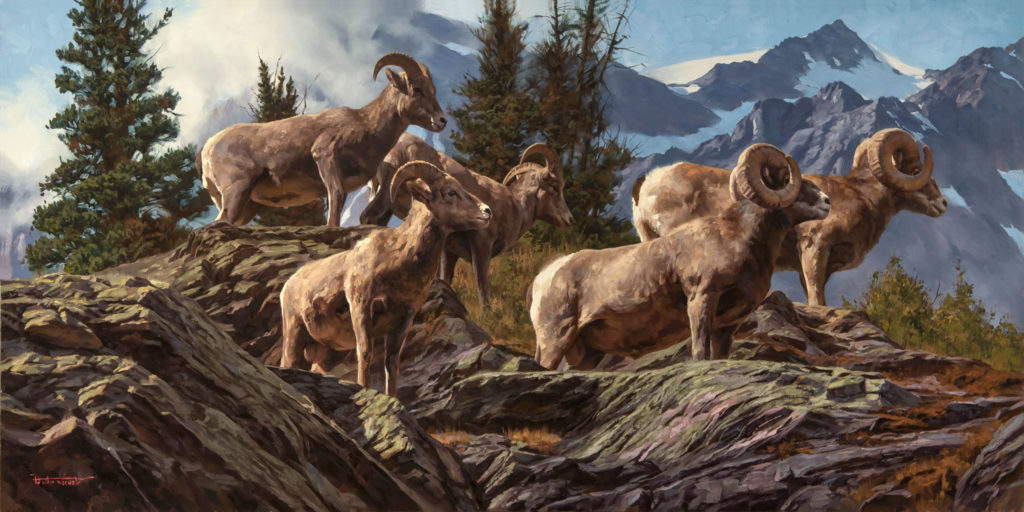
Dustin Van Wechel, “Rock Jockies,” oil on canvas, 48 x 24 in.
From “An Artist’s Romance with the Wilds of North America” by Dustin Van Wechel
“Memory is an interesting thing. When I think about it, those moments where I have been lucky enough to have had an extraordinary wildlife encounter — whether via the car or out hiking — are actually quite few. In the nearly 20 years I’ve been working as a full-time artist, I can think of only a handful of those times. And yet, my memory of them is so strong, and the excitement of the encounter so vivid, that it feels as though it’s happened much more often.
“It’s these kinds of experiences that keep the passion I have for wildlife and nature so strong, and they have provided me a wealth of ideas from which to create paintings.
“While my process has evolved over the years, one constant remains: I’m always looking to communicate my obsession with the creatures and landscape of the Rocky Mountain West through my work.”
Watch a time-lapse video of Francien Krieg painting a portrait:
Fill your mind with useful art stories, the latest trends, upcoming art shows, top artists, and more. Subscribe to Fine Art Today, from the publishers of Fine Art Connoisseur magazine.