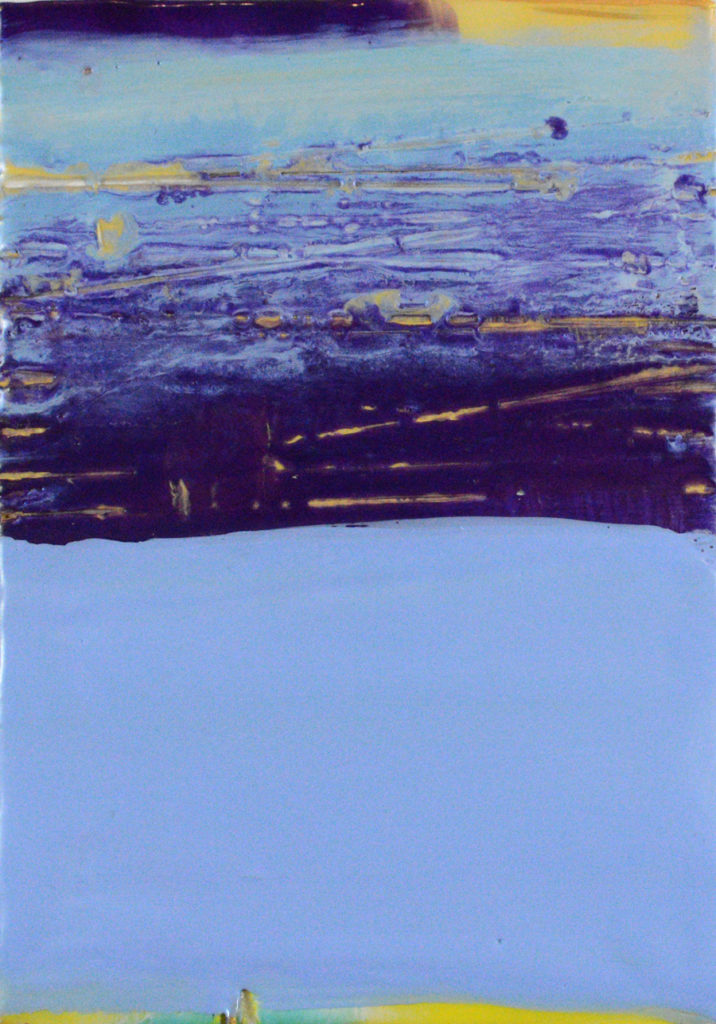
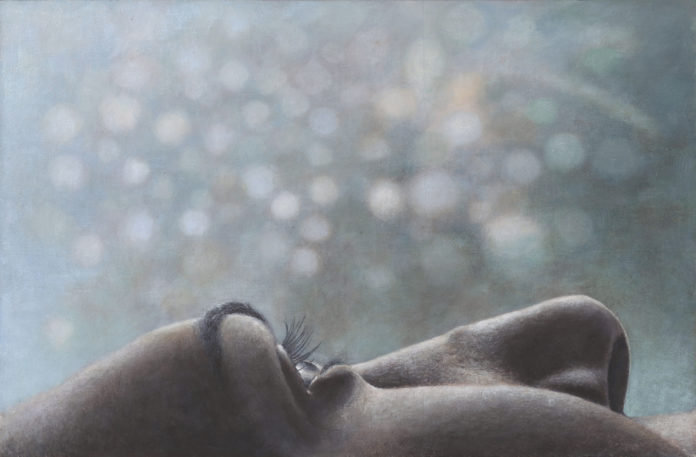
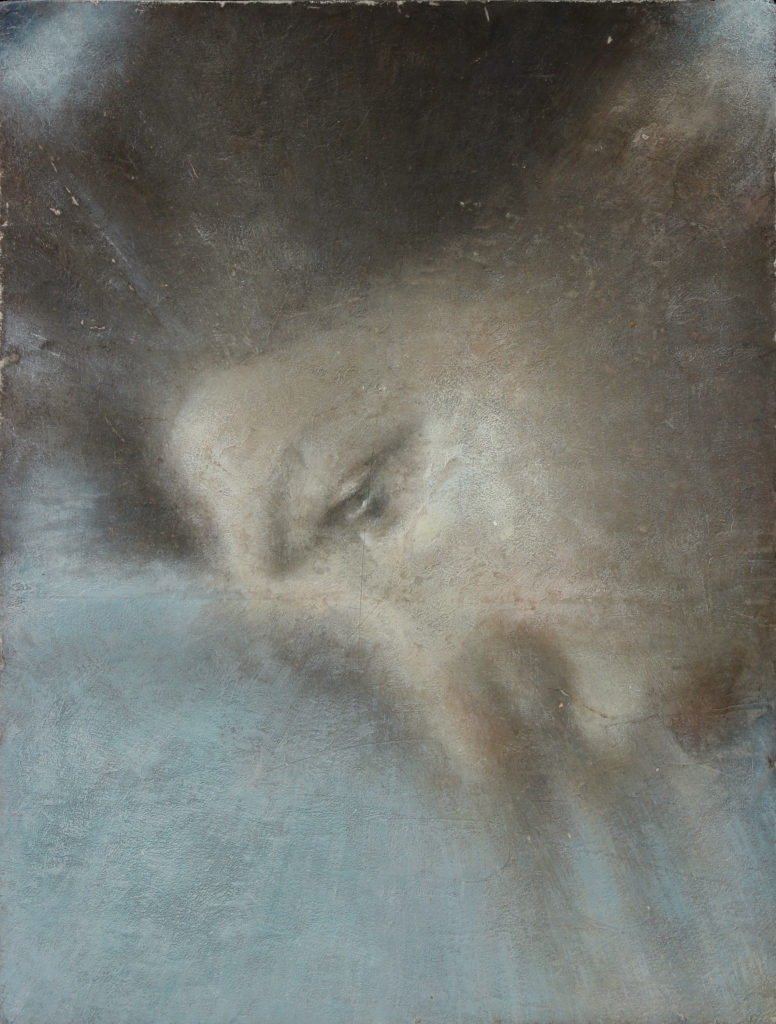
Tim Lowly, “Regarder,” 2018, acrylic on panel, 18 x 27 in.
“I see her face every day.”
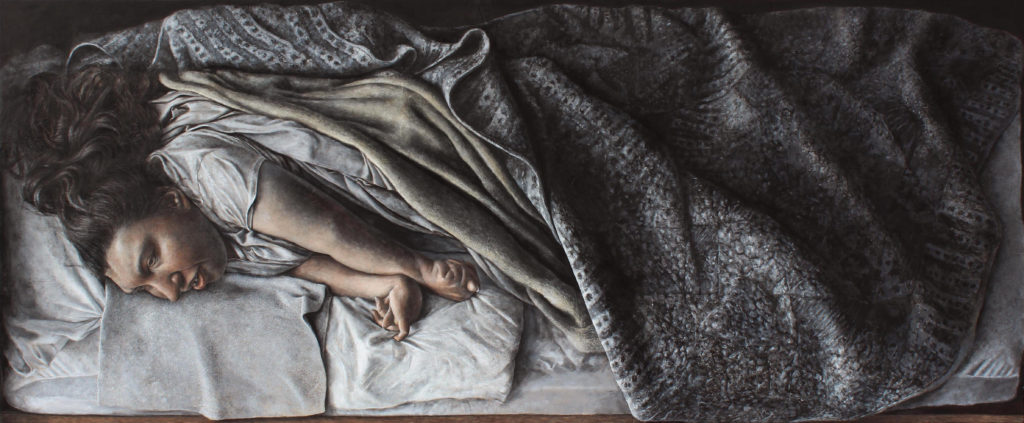
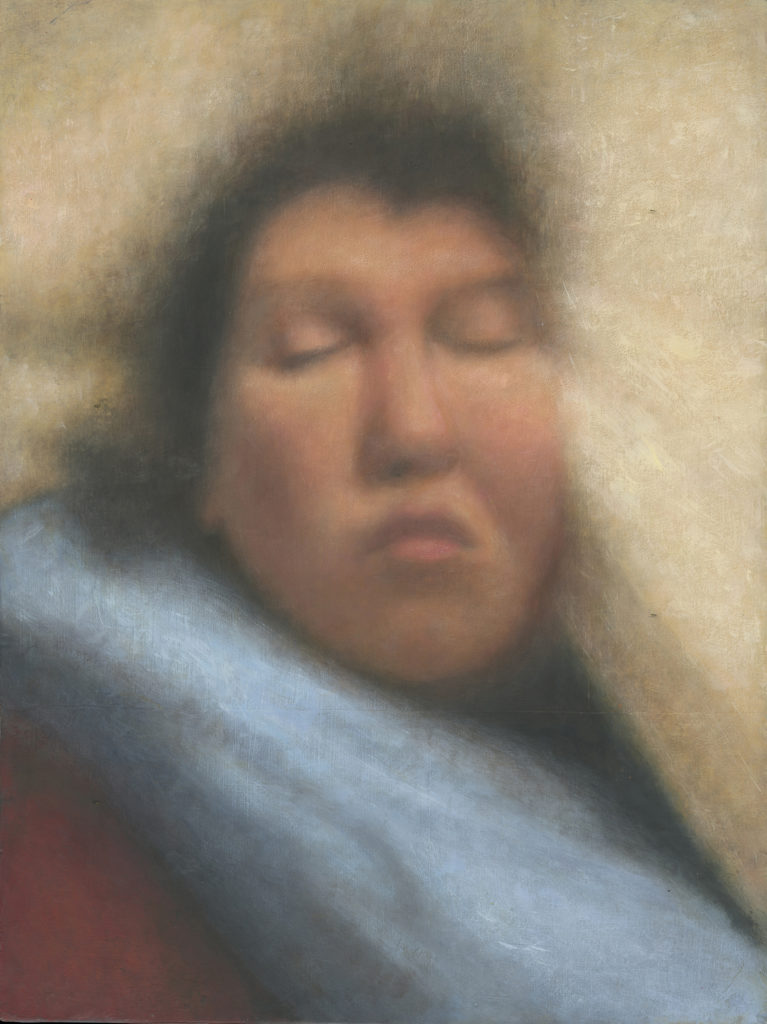
Comprising seven acrylic paintings completed over the course of the last year, including one monumental work, “Radiator,” which lends the exhibition its title, this body of work is a continuation of Tim Lowly’s long-term project involving his daughter, Temma.
Tim Lowly, “Radiator,” 2018, acrylic on panel, 48 x 117 in.
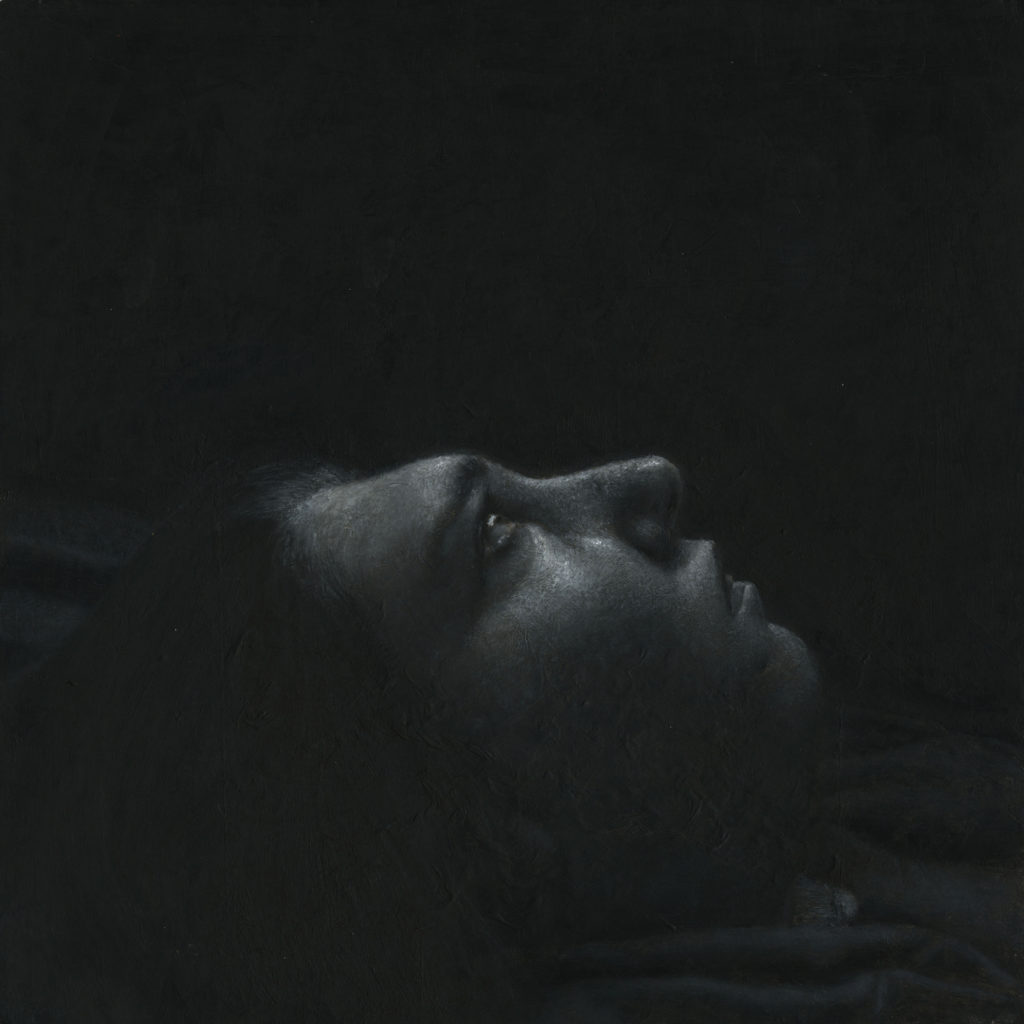
Often referring to her as “profoundly other, ” Lowly explores issues of meaning, identity, spirituality, and politics in his paintings of Temma, which can be understood as reflections on subtle — perhaps mystical — kinds of agency that she manifests.
Tim Lowly, “Receptor,” 2018, acrylic on panel, 17 x 17 in.
The clinical diagnoses of “multiple impairment” or “spastic quadriplegia” do little to address the compelling presence of this young woman and the way her being and essence have shaped her father’s work.
Tim Lowly, “Revelator,” 2018, acrylic on panel, 13 x 9.5 in.
“My hope is that in suggesting various ways I find her life to be meaningful, there might be a broadened possibility of considerations for others who are culturally, politically, and socially marginalized.”
“I think of (the making of) art as a relational practice, a representational practice, a political practice, a conceptual practice, a material practice, a contemplative practice, a practice in being (present to), a practice in longing, a practice in loving*.”
*Loving: to deeply and empathetically engage the other towards giving the other agency.
Tim Lowly, “Reflector,” 2018, acrylic on panel, 24 x 18 in.
Lowly is an interdisciplinary artist, working with painting, drawing, installation, digital media, photography and music: both individually and collaboratively. “Radiator” is on view at Koplin Del Rio (Seattle, WA) through December 1, 2018.
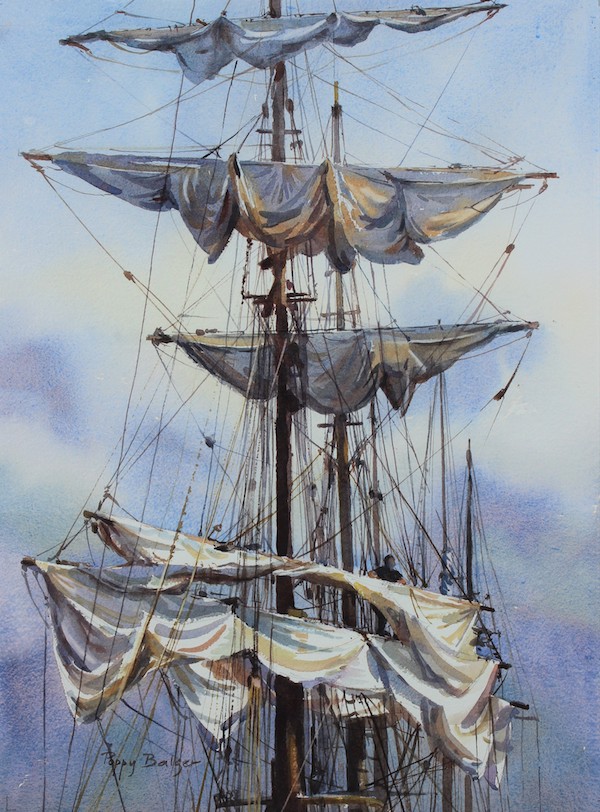
Setting the Sails
16 x 12 in.
Watercolor on panel
$750 Available from the artist
Setting the Sails is a tribute to the craft and labor inherent in preparing a tall ship to voyage under sail.
Most marine art includes the sea. Poppy Balser intentionally omitted the ocean in this piece, painting it as a response to her plein air studies of the intricate sails and lines of a tall ship visiting her home port of Digby, Nova Scotia. Rather than looking down at the sea, she looked up into the rigging, delighting in the interwoven patterns and shapes outlined against the sky.
The interplay of delicate lines of rigging contrasted against the solid masts and spars affords the artist the opportunity to play with a sense of space and light. One solitary figure is included in the composition to give a sense of scale, and yet only one so as to not detract from the lines of the ship itself.
Poppy is an internationally-awarded plein air painter from the Canadian Maritimes. Her work is recognized for its fresh brushwork and color. Informed Collector wrote, “Gorgeous use of values and color hues to depict moments in the life of her subjects.”
Having grown up on the shores of the Bay of Fundy, the daily rise and fall of the tides shaped her early days. Now her love of the ocean continues to inspire and shape her work.
A signature member of the American Society of Marine Artists, Poppy paints sailboats with an insider’s eye. A sailor herself, she understands of the purpose and nature of ship construction. Her feel for the working parts of a craft help her accurately and clearly depict a sailing ship without resorting to overt fussiness. She weaves the fabric of the ships rigging into the atmosphere that surrounds it in a convincing and realistic manner. Balser brings the same attention and consideration to all her works.
Read more specifically more about the Tall Ships’ visit to the port of Digby and how that inspired several works.
Also view more paintings by Poppy on her website and sign up for her e-newsletter. Poppy maintains an active presence on social media via Instagram and Facebook.
Kevin Chambers (b. 1982) is a sculptor from Atlanta who has been exploring a range of subjects, scales, and stories for more than 15 years. An elected member of the National Sculpture Society, Chambers was introduced to the art of creating in three dimensions at the age of 12 during an apprenticeship with Georgia artist Colleen Sterling.
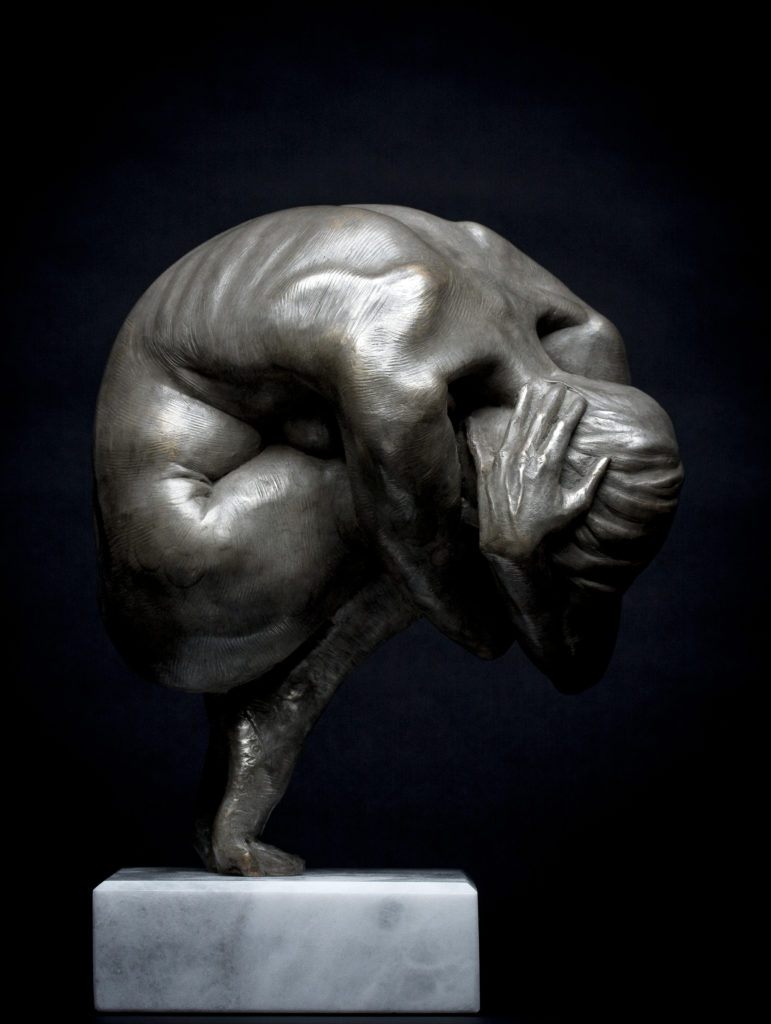
Kevin Chambers, “Awaken,” 2016, bronze, 18 x 10 x 10 in., private collection
He went on to pursue a B.F.A. in media arts and animation from the Art Institute of Atlanta, studied the figure in Naples with draftsman Glenn Vilppu, and worked with Atlanta painter and illustrator Elio Guevara. The young artist next spent 10 years as an apprentice in a large-scale commission studio, where he learned the business of being a professional sculptor.
After incorporating this wide range of influences into the development of his own style, Chambers set up a studio in Atlanta and has been working on personal projects, public commissions, and collaborations ever since. Although Chambers clearly enjoys celebrating the fluidity, flexibility, and sensuality of the human form, there is more to his sculpture than meets the eye.
In a work such as “Awaken,” for instance, the body is crouched down and clenched in what appears to be a position of self-protection, despondence, or self-defense — yet that is only half the story.
“The piece started as a quick sketch during a difficult time in my life and sculpture career,” Chambers shares. “I was putting a lot of myself into the piece, as I was feeling as if I just wanted to curl up in a ball and hide from the world. After a while, as my life transitioned, I decided to rework the idea slightly. At first glance, this figure still appears introverted and turning in on herself, but actually it’s the opposite. From a certain angle, the observer can see her face emerging from the form and you realize she is, in fact, ‘awakening’ from the closed-off position and transitioning to a (hopefully) happier state of mind.”
In addition to working independently on these and other types of projects, Chambers has a passion for teaching. KLC Studios, a creative space he shares with his photographer wife, Lauren Chambers, has become the site of his regular workshops focused on teaching anatomy, gesture, and proportion to those eager to learn how to sculpt the figure.
“As a teacher, I gain new insight by feeding off the energy of my students,” Chambers says. “In a way, it makes me a permanent student of sculpture as well, and I plan to spend the rest of my life learning from the human figure and following my ever-evolving inspirations.”
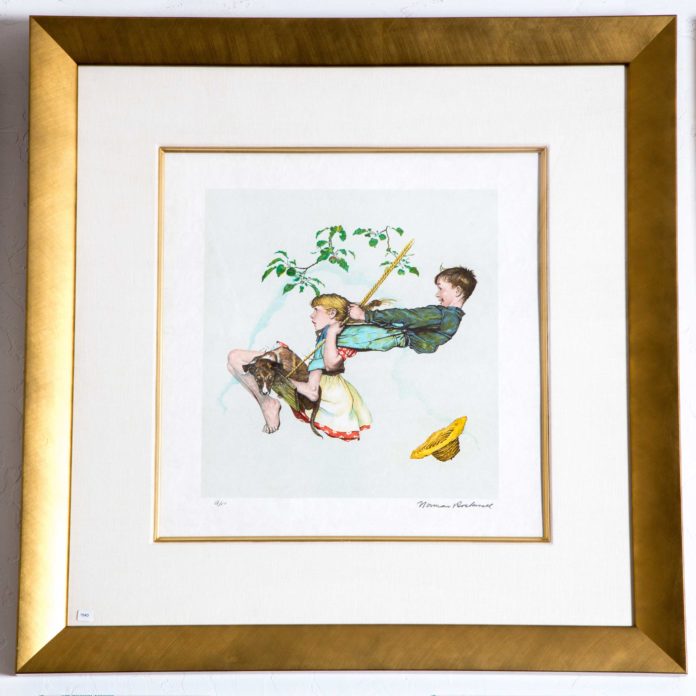
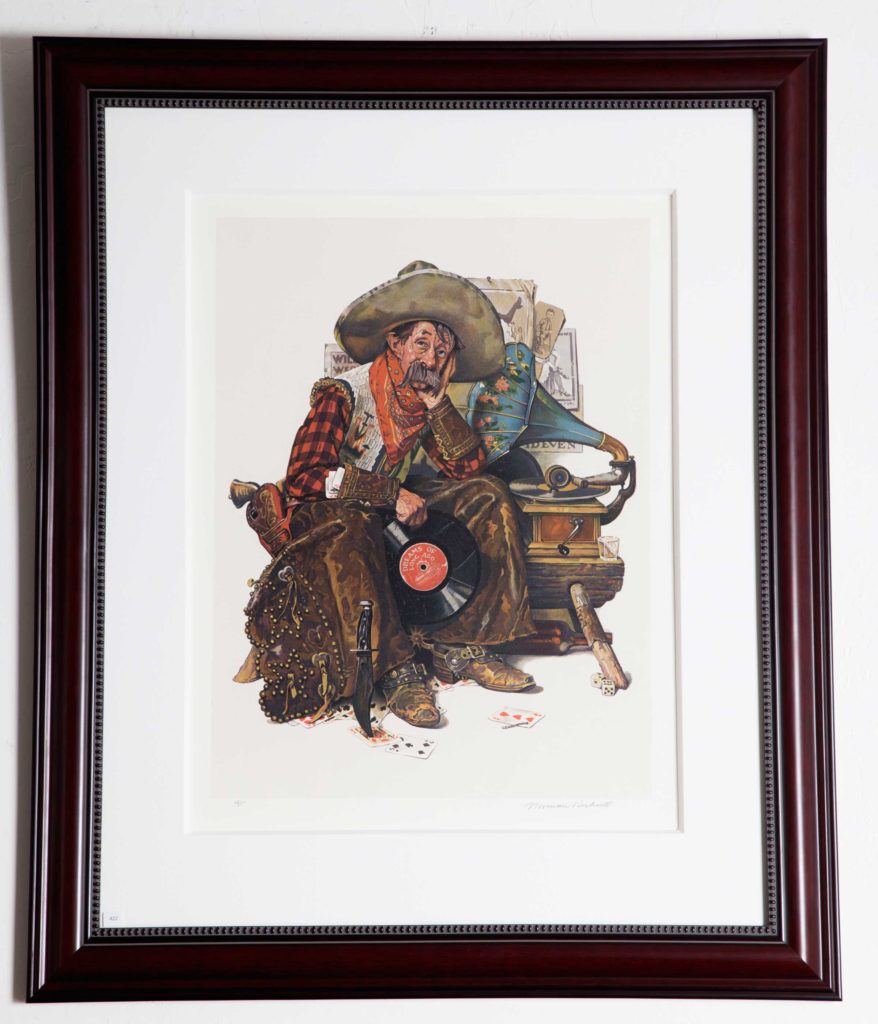
On view at American Fine Art (Scottsdale, AZ): “Spirit of America: Norman Rockwell”
From the gallery:
“Spirit of America: Norman Rockwell” offers collectors an amazing opportunity to acquire important works of art and iconic imagery by Rockwell, including his Four Freedoms — “Freedom of Speech,” “Freedom of Worship,” “Freedom from Fear,” and “Freedom from Want” — along with “Doctor and the Doll” and “Art Connoisseur.” Over 100 pieces are featured and available for sale to the public in this must-see collection. Unlike at the Smithsonian, the Metropolitan Museum, or the Los Angeles County Museum, the original artwork on display at American Fine Art is offered for sale and available to the general public.
Norman Rockwell is heralded as being the greatest storyteller of our time. This, along with the fact that two of his most ardent collectors happen to be George Lucas and Steven Spielberg, speaks volumes of the innate ability Rockwell had to reach his audience. Rockwell’s imagery and genius convey the “spirit of America,” a universal theme and feeling that he branded during his tenure at The Saturday Evening Post. Winner of the Presidential Medal of Freedom, Norman Rockwell was always a humble and quiet man, painting the traditions, ideals, and events that shaped America.
Art by Norman Rockwell
Rockwell described his approach to art quite simply: “Without thinking too much about it in specific terms, I was showing the America I knew and observed to others who might not have noticed.”
Norman Rockwell was born in New York City on February 3, 1894. In 1916 he painted his first cover for The Saturday Evening Post, beginning a relationship of 47 years with the American magazine, for which he created 322 covers. His paintings largely focus on everyday American humor and charm. He painted what he saw and what he wanted the world to be like. This includes “The Four Freedoms,” inspired by President Franklin D. Roosevelt’s speech to congress about the “four essential human freedoms.” Rockwell completed the paintings within six months, published by the Post in 1943. These paintings toured the United States, raising more than $130 million toward the World War II effort.
“Spirit of America: Norman Rockwell” is on view at American Fine Art (Scottsdale, AZ). American Fine Art specializes in the original 19th- to 21st-century masters of fine art, including but not limited to Andy Warhol, Norman Rockwell, LeRoy Neiman, Joan Miro, Andrew Wyeth, Pablo Picasso, and Marc Chagall.
Nicolas Martin, “La Pause (The Break),” 2016, oil on canvas, 24 x 36 in., private collection
By Vanessa Françoise Rothe
It is often said that to succeed in painting, you must dedicate your life to it. For Nicolas Martin (b.1980), that dedication has made all the difference.
Born and raised in the suburban town of Chelles, near Paris, young Martin was often found holding a pencil and paper. He remains grateful for the encouragement he received, especially from his mother, who corrected his drawings, spurred his artistic curiosity, and taught him about aesthetics. Instead of buying him new bicycles, she would give him books on Monet and other famous artists. Martin particularly recalls his failure in an art competition as a powerful impetus to succeed: “As a child, I always felt a bit different, a rebel, on the side, but without being completely anti-social.”
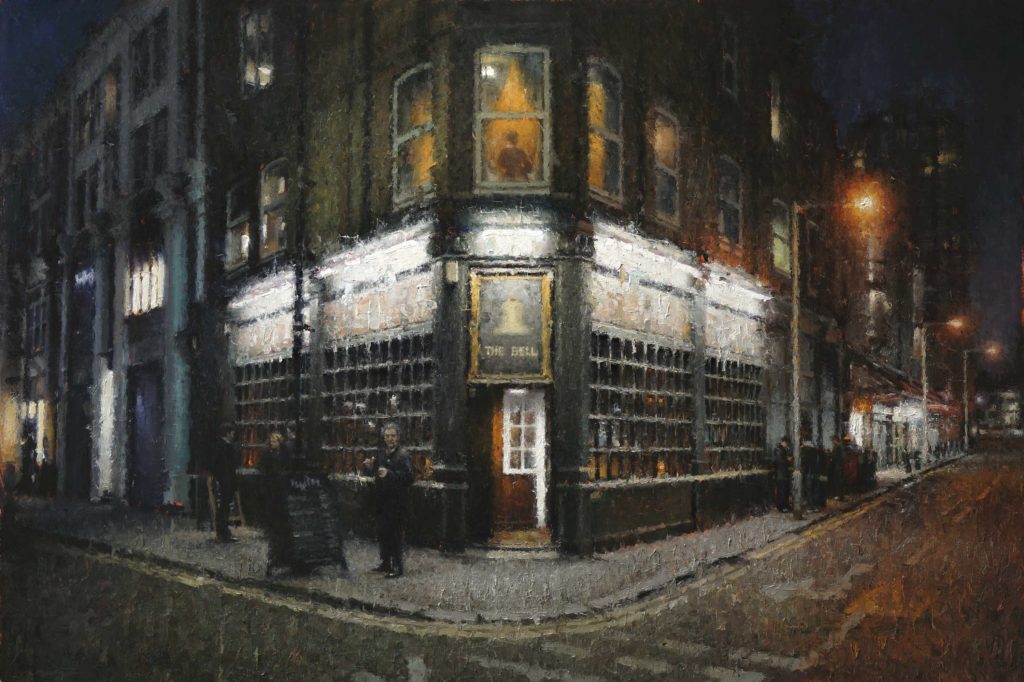
Nicolas Martin, “The Bell,” 2015, oil on linen, 24 x 36 in., private collection
Growing up near Paris, Martin had many of the world’s most revered master-works available to consult. He frequented the Musée du Louvre and Musée d’Orsay, as well as smaller museums, attending their special exhibitions and referencing their publications. At 15, Martin passed a difficult exam to enter the Auguste Renoir School of Art, where his talent was nurtured for three years. Upon earning his high school diploma there, he could opt to enter another Parisian art school, or take a road less traveled — a degree from the Université Laval in the historic Canadian city of Québec. Being adventurous, even rebellious, by nature, Martin studied graphic design and communications there because he had been advised that these fields constituted the only way to make a living in the art world. Ultimately, he won a competition run by La Fondation Marcel Bleustein-Blanchet pour la Vocation, which offered him unique opportunities back in France. Martin went on to work as a successful designer and art director in both France and Canada, engaging with such prestigious clients as the Parisian department store Galeries Lafayette.
Throughout this period, full-time work as a fine artist seemed inconceivable; Martin was warned that “many are called to painting, but few are chosen.” Yet his impulse to paint endured, and one day his life circumstances aligned so that he could take up his brushes again, this time for good.
He explains, “I started life as a painter at age 30, yet the need to create has been a constant in my life. The fact that I can do this as my profession, and my son James, are my two greatest achievements.”
Martin stopped drawing in order to devote his energy solely to painting: “I have set aside every element of life that would affect my concentration, and I dedicate all my time to my craft. I surround myself with positive things and people, bypassing anything that might slow my progress.” He adds with a wink: “If you decide to become a painter, you have it in you, and you can’t make yourself lead a ‘normal’ life. You really see life differently.”
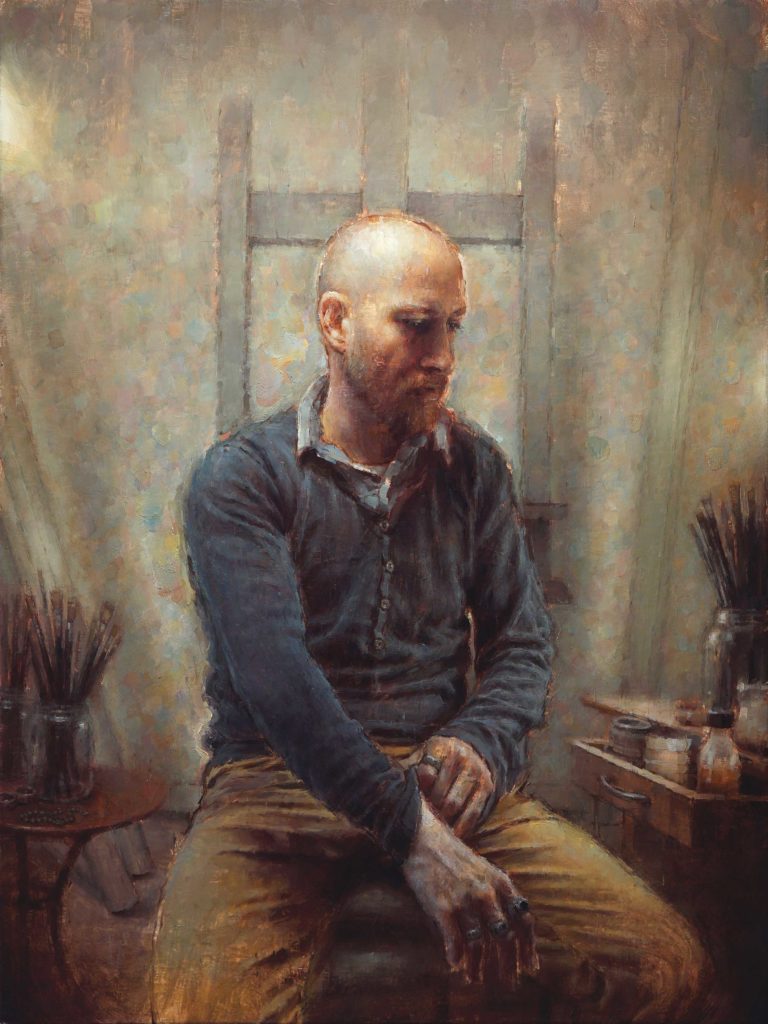
Nicolas Martin, “Je Suis le Plus Libre: Self-Portrait (I Am the Most Free),” 2017, oil on linen, 24 x 18 in., private collection
Influences, Subjects, and Techniques
Martin has always been impressed by the boldness of the French Impressionists, their rebellion against the salons and academies, and their discernment of beauty in everyday life. He has been especially inspired while reading the biographies of such talents as Manet and Monet, yet he is not devoted to the 19th century only: he also reveres the British painter Lucian Freud (1922–2011). “Never was human flesh made so believable,” Martin enthuses. “It’s not Freud’s style of painting, but his way of thinking. To appreciate him, you must understand his obsession with the authenticity of his subjects, then the brushstrokes he used to express it. I admire his obsession, devotion, and work ethic.” Martin also draws inspiration from the intriguing interiors painted by Greece’s Giorgos Rorris (b. 1963).
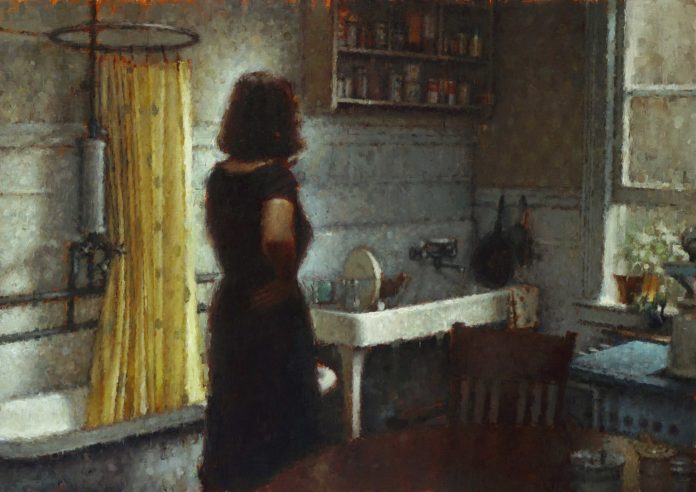
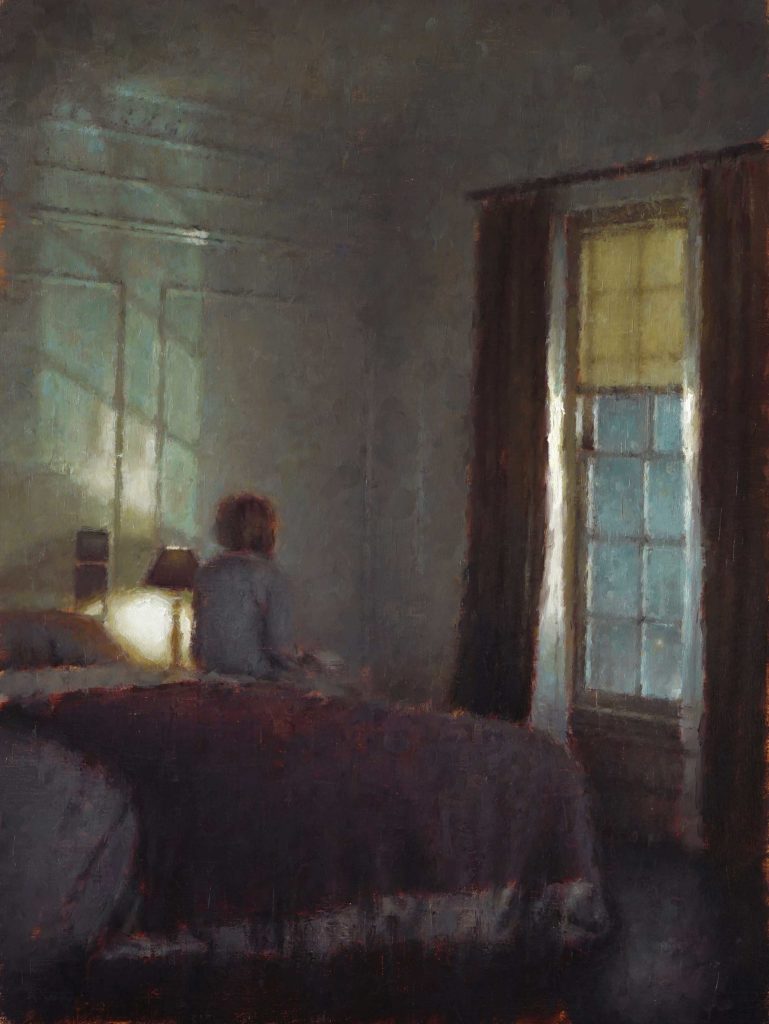
Nicolas Martin, “Femme Assise Sur Son Lit (Woman Seated on Her Bed),” 2016, oil on linen, 24 x 18 in., private collection
Martin’s subjects range from landscapes to interiors, from nocturnes to figures. He explains, “I don’t pursue what I think will sell or please someone, but rather what I see and am attracted to, how it makes me feel at that moment. I want to share that with others.” The 19th-century American thinker Henry Ward Beecher said, “Every artist dips his brush into his own soul, and paints his own nature into his pictures.” For Martin, then, paint is a translator; with it, he interprets what he sees and feels. He is particularly captivated by moments of intimacy and self-reflection: figures paused in thought, in the bath or bed, leaning against walls.
Most artists notice everything around them, seeing everything in their lives as fodder for their next artwork, even as a tableau vivant. They might note the exact color of a person’s eyes upon meeting, the texture of a fabric, the subtle effects of light falling on a wall. Martin sees the world this way. He is particularly attracted to interiors and finds that viewers identify with them as well. Interiors are often linked to someone and tell a story, or many stories, of what occurred there. They especially resonate with Martin because he can devote attention to how light affects the room’s atmosphere. “We see things only because of light,” he notes. “I’m obsessed with light, which greatly influences my choice of subjects.” Martin has also painted many night scenes in his effort to understand the effects of artificial light. With that knowledge under his belt, he moved on to interiors where light bathes old wooden floors. “There are different types of light,” says Martin, “and each of my paintings brings a new challenge and perhaps the solution to my next one. I’m constantly trying to tame the light.”
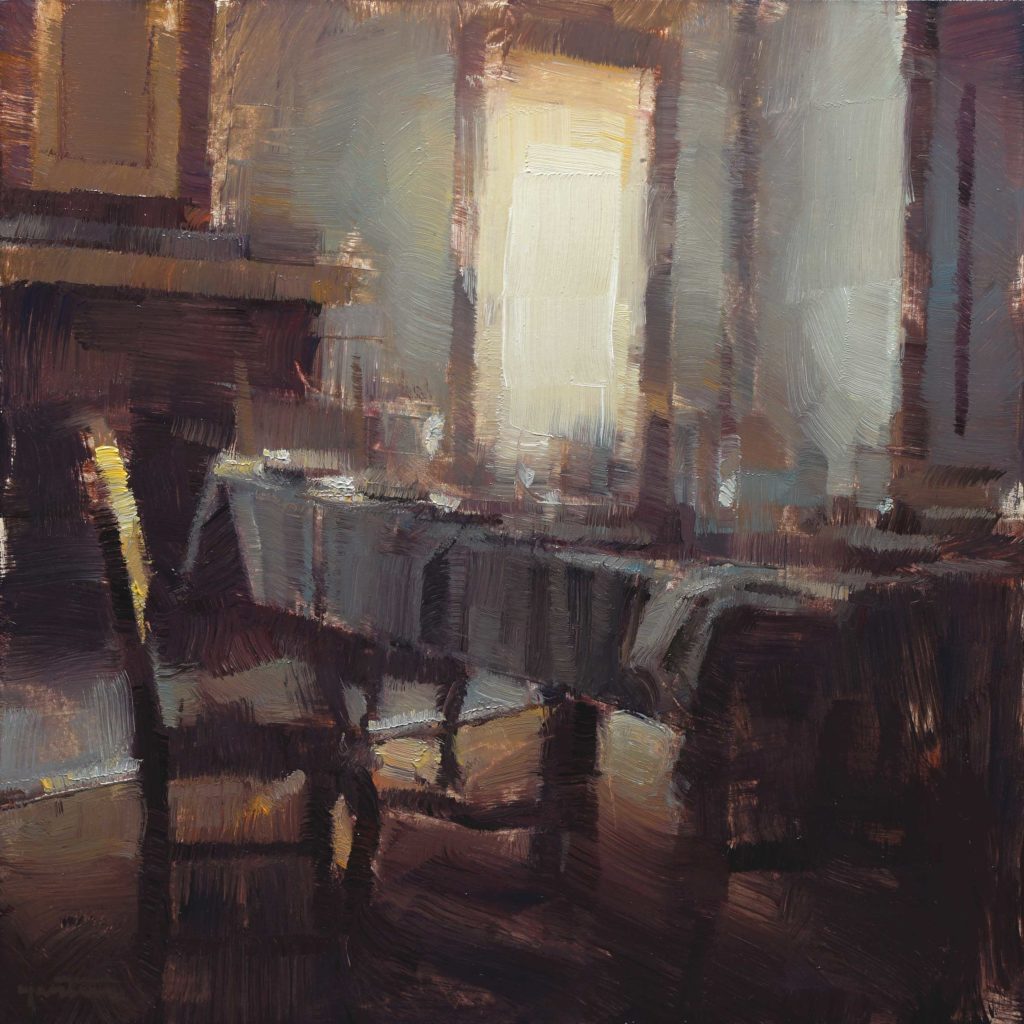
Nicolas Martin, “Dimanche (Sunday),” 2017, oil on panel, 6 x 6 in., private collection
In a scene like “Dimanche,” viewers focus not on the dining table itself, but rather on the space’s elements, lighting, and color. Martin says it “can be interpreted in various ways — simply enjoyed for what it is, or there may be a story there.” His manner is a subtle mix of realism and impressionism, with softly blended edges most noticeable where one object meets another, or where an object meets the background. Through deft drawing and crisp corners, Martin delivers just enough realism to convey how the scene’s contents are constructed, but also the delicate lighting effects that impressionists use to convey mood. Martin builds up many layers of paint, sometimes as many as 20, to convey volume and depth. “Dimanche” epitomizes this mix of straightforward subject and combining of realism and impressionism: the edges are soft (note the chair dabbed with yellow sunlight) and their interplay with light enhances the mood. We view the ordinary world that Martin sees, and also the grace of his process.
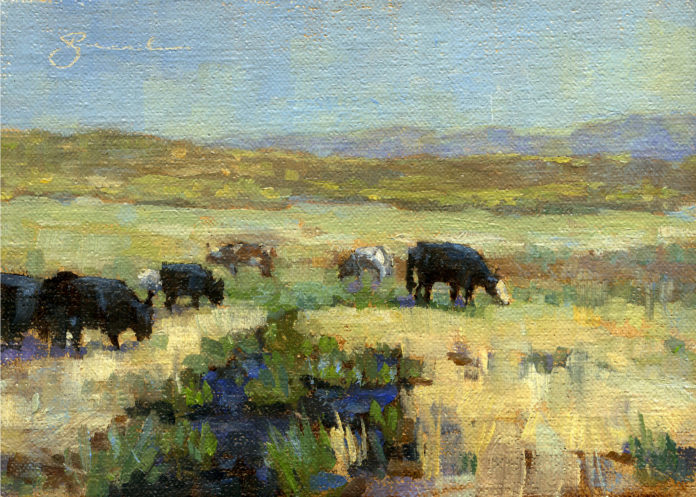
Brandon Smith, “Eastern Sierra Cattle,” oil on canvas on panel, 7 x 5 in.
“Tiny” is an annual small works exhibit at Studio Gallery, featuring artworks that are smaller than 7 x 7 inches, and under $500 (many under $250). The show is in its 14th year and includes work from more than 200 artists in a variety of media. As pieces sell, the gallery is hanging new work, evolving the show as it goes.
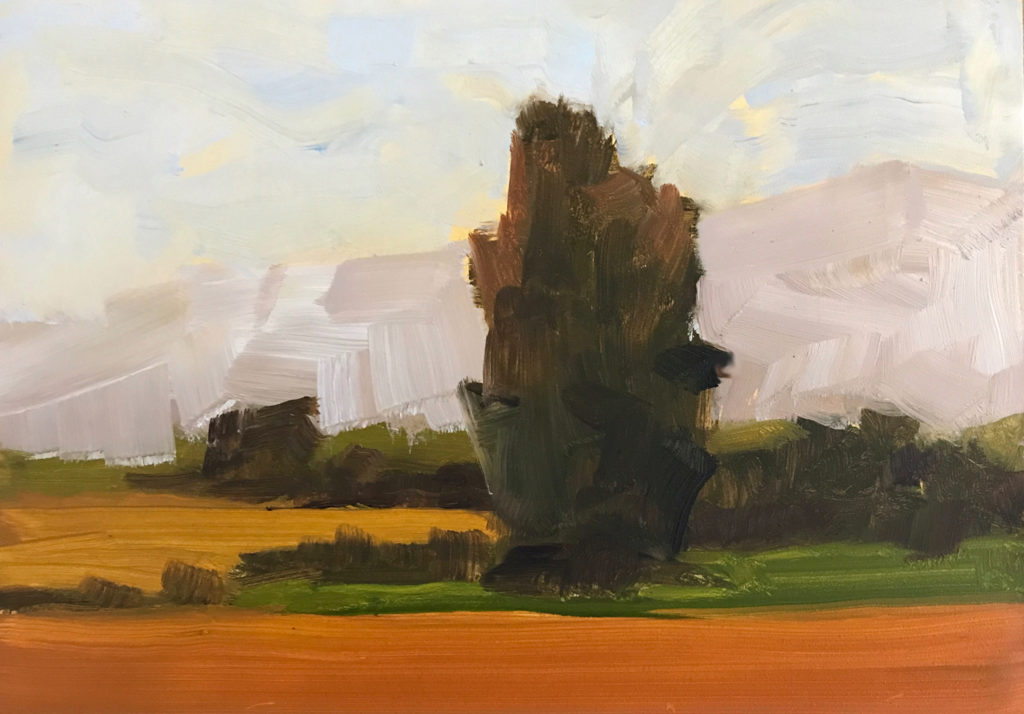
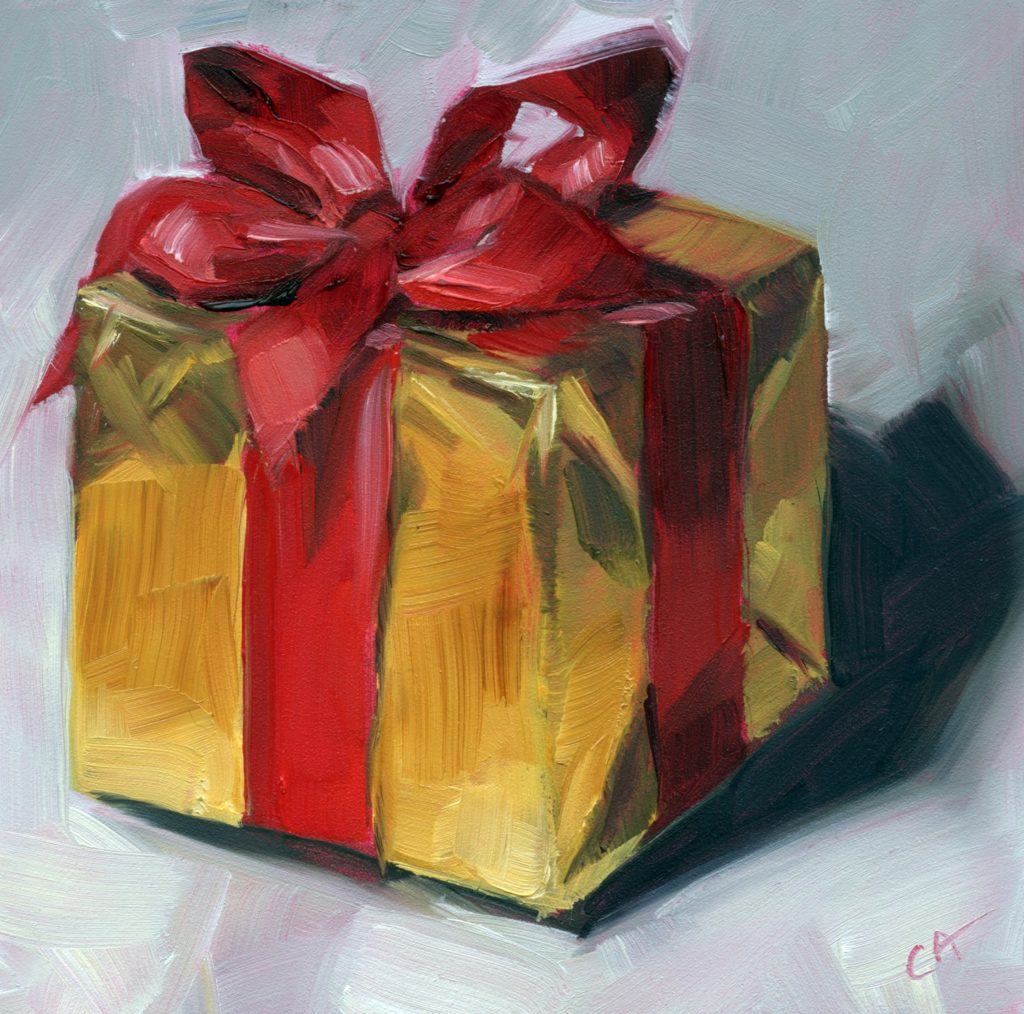
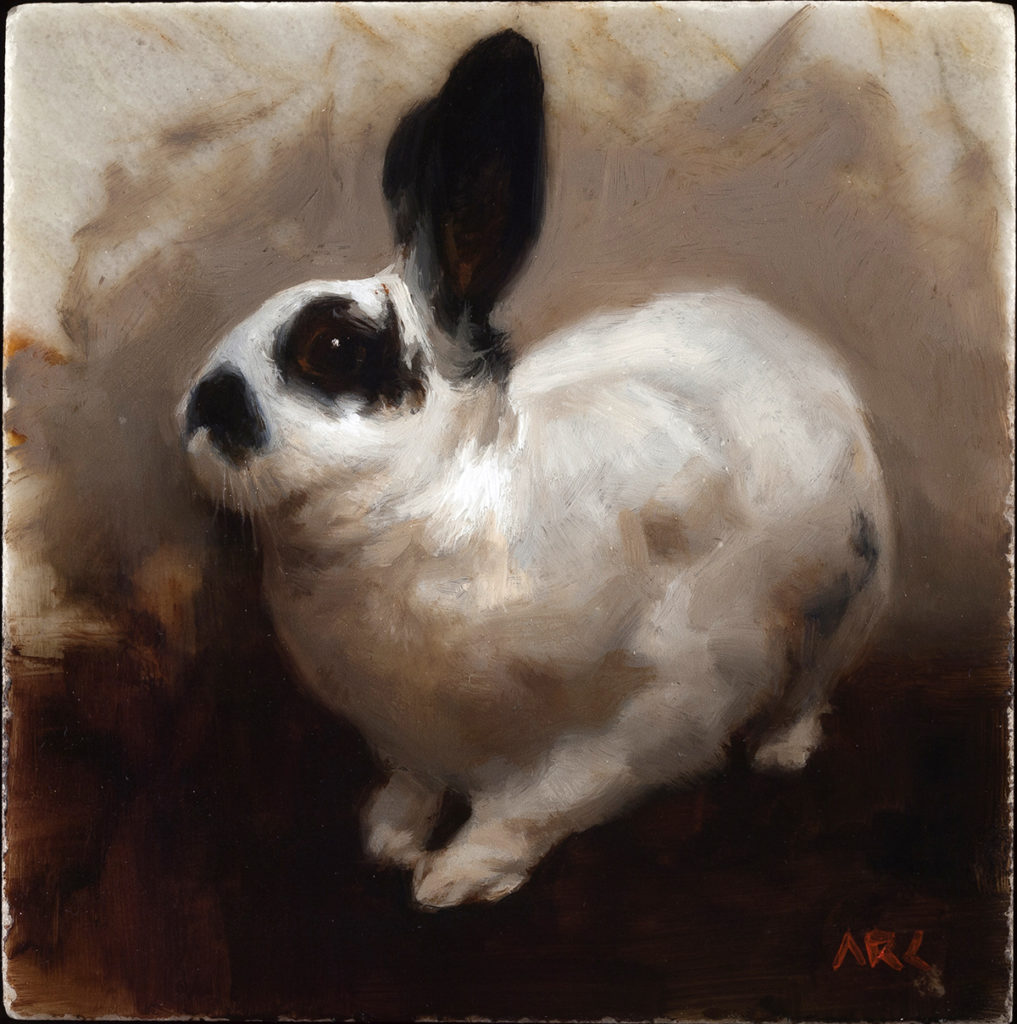
Donna Slote, “Tree with Orange Land,” oil on panel, 7 x 5 in.Francesca Saveri, “One Less Petal,” encaustic, 5 x 7 in.Cynthia Armstrong, “For Me?” oil on panel, 6 x 6 in.Albert Ramos, “The Littlest One,” oil on marble, 4 x 4 in.
“As always, we’ve mixed in a few larger pieces; they aren’t tiny, but we couldn’t resist,” says the gallery. “We jokingly called these ‘Huge.’”
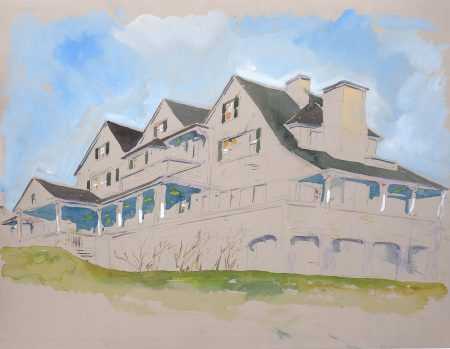
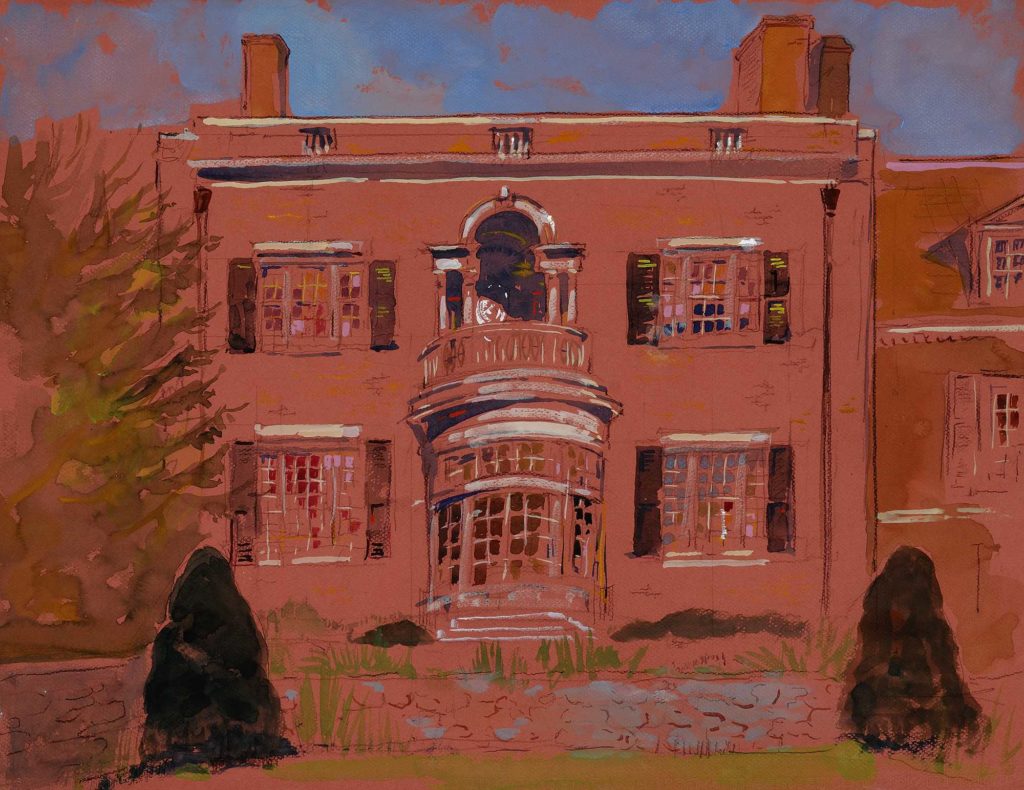
Adam Van Doren, “Hyannisport from Lawn (John F. Kennedy),” 2015, watercolor and gouache, 19 1/4 x 25 1/4 in.
Childs Gallery is pleased to announce “Adam Van Doren: Homes of the American Presidents,” an exhibition of watercolors by the artist and author. Featuring vibrant artwork from Van Doren’s book, The House Tells the Story: Homes of the American Presidents, the show explores the famous lodgings both of living presidents and of those from the past. Van Doren, a trained architect, visited each house and even corresponded with former presidents to ensure the details of every home were faithfully recorded in his watercolors.
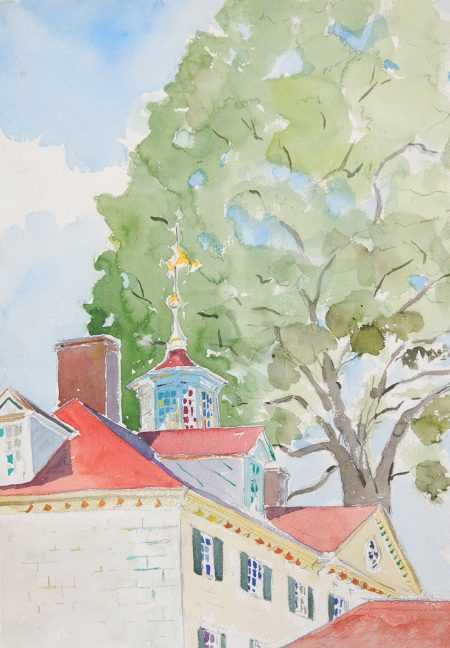
Adam Van Doren, “Mount Vernon with Tree (George Washington),” 2015, watercolor, 21 1/2 x 13 3/4 in.
The homes of George Washington, FDR, and Teddy Roosevelt are included in the exhibition, as well as Thomas Jefferson’s famed Monticello, among others. Van Doren’s watercolors represent the artist’s personal journey across the country to view these homes and understand not just the structures, but their owners as well. By opening the doors of presidential homes, Van Doren encourages an intimate dialogue between his audience and the past. Through colorful images, he captures the spirit of these grand houses and those who resided within them.
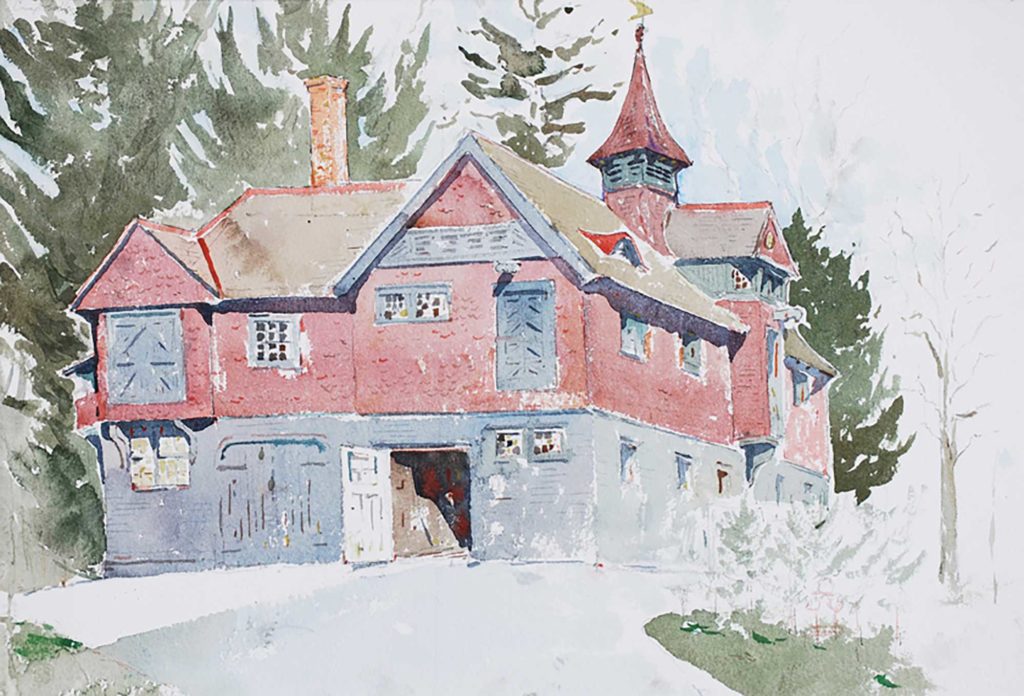
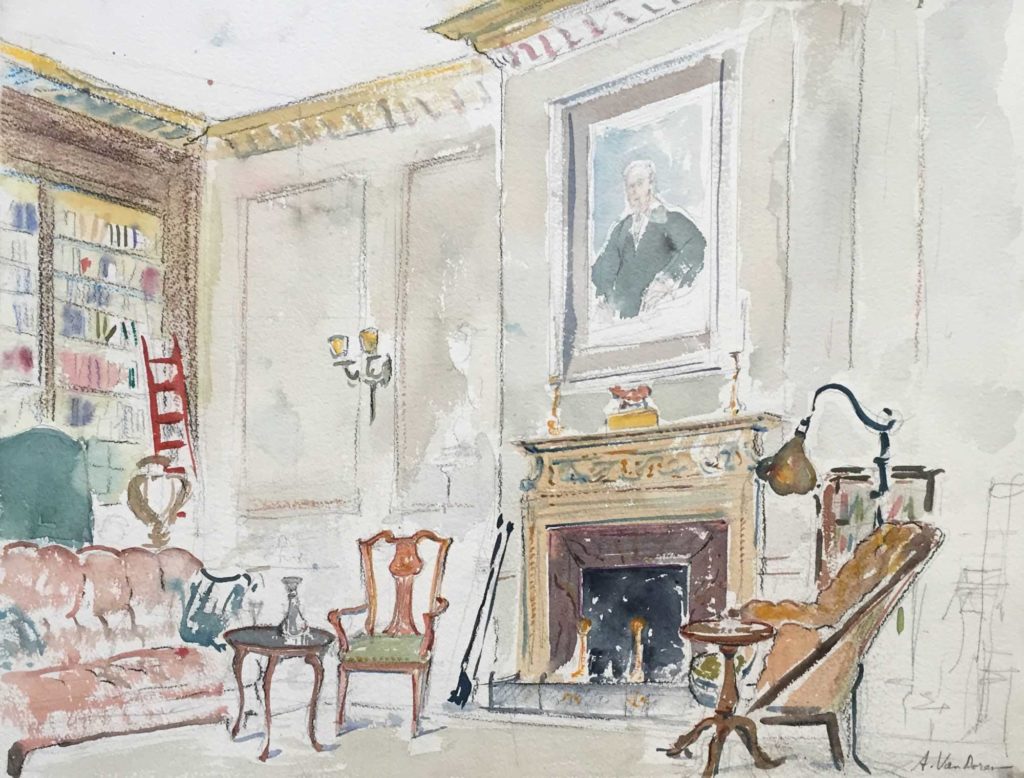
Adam Van Doren, “Hyde Park Carriage House (Franklin D. Roosevelt),” 2015, watercolor, 15 x 22 in.Adam Van Doren, “Woodrow Wilson’s Library,” 2015, watercolor and graphite, 20 x 25 3/4 in.Adam Van Doren, “Woodrow Wilson House from Garden,” 2015, watercolor and gouache, 19 1/4 x 25 1/4 in.
“Adam Van Doren: Homes of the American Presidents” is on view at Childs Gallery (Boston, MA) through December 30, 2018.
Tallgrass Warriors
11 x 20 x 13 in.
Bronze
Edition of 13
Available through Carriage Factory Gallery, Newton, KS
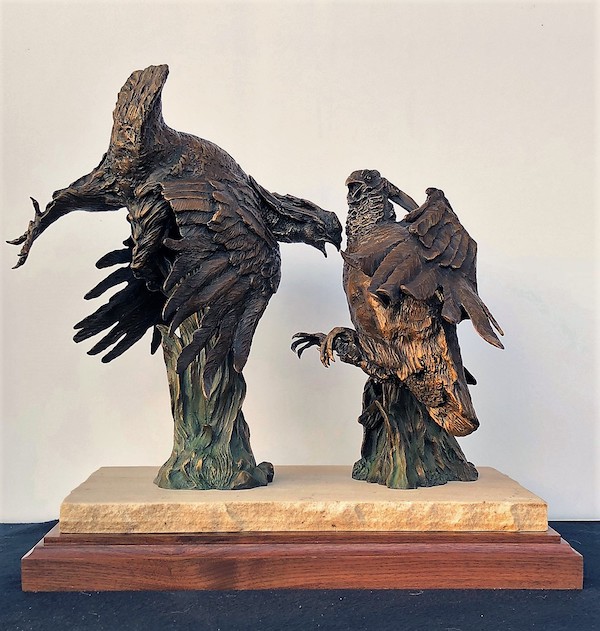
Sculptor Burneta Venosdel recalls seeing a documentary in the early 80’s filmed by the Colorado Wildlife Department at ranch near Dexter, Kansas. The film focused on the capture, study, film and transplant of Greater Prairie Chicken to Colorado. Little did she know at the time this memory would inspire her own research of the magnificent prairie chickens now facing extinction, as well as her recent bronze sculpture, Tallgrass Warriors, Fighting Greater Prairie Chickens.
Tallgrass Warriors is in an upcoming exhibition, Creatures Great and Small at Carriage Factory Gallery, along with paintings by artists Carolyn Mock and Julie Gowing Hayes. The show and sale opens with artists talks on Saturday, November 17 and continues through January 11, 2019.
“I have always thought part of my work as a sculptor artist is to create works which raise awareness of historic subjects and endangered species,” says Burneta.
While not on the official endangered list yet, Burneta learned during her research trip to the George Miksch Sutton Avian Research Center near Bartlesville, Oklahoma, the prairie chicken numbers are dwindling.
“Through the work of the Nature Conservancy, four hundred eggs were collected last year from different parts of the Tallgrass Prairie and brought to the Sutton Center to hatch.”
The Tallgrass Prairie now stretches from northern Oklahoma to Canada. The eggs collected range in color from pinky mauve, peach, tan through various shades of brown. Once placed in warmed incubators the eggs have to be turned several times a day. Volunteers acted as surrogate mothers around the clock each day until the eggs hatch.
“The whole process was very fascinating to me,” says Burneta, who grew up on a farm near her pioneer family in northwestern Oklahoma. The process was the same Burneta witnessed as a young child when her grandmother provided fertile chicken eggs to the local hatchery, which then supplied baby chicks to the local farmers.
Burneta was inspired to create two fighting Prairie Chickens, fighting for the right to breed the hens in their lech, or territory. The sculpture Tallgrass Warriors tells the story of the declining species of the Greater Prairie Chicken in the Tallgrass Prairie and their quest for survival.
Burneta, the great granddaughter of northwestern Oklahoma pioneers, is an award-winning sculptor. For Women Artists of the West (WAOW) ‘Tallgrass Rendezvous’ 2018 exhibition and sale she served as co-chair with artist Julie Gowing Hayes. Women Artists of the West in the oldest and largest Women’s art organization, celebrating its 48th year with over 300 members from the United States, Canada and Australia. Burneta is a Master-Signature member of WAOW. She is also a Signature Member of both the American Plains Artists and the American Women Artists. National recognition and awards from juried shows and exhibitions include being the featured Artist of the Month at the Museum of Western Art.
Other galleries representing Burneta include R.S. Hanna Gallery in Fredericksburg, Texas, and Echota Arts Gallery in Tahlequah, Oklahoma.
Tallgrass Warriors and many of her other sculptures and paintings may be viewed on her website. To be the first to see new works, follow her on Facebook.
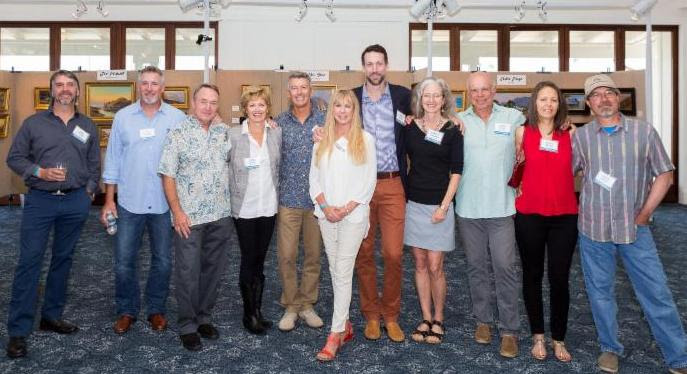
The 2018 Catalina: The Wild Side Artists at Newport Harbor Yacht Club. From left to right: Andy Evansen, Joe Paquet, Don Demers, Cindy Baron, Michael Obermeyer, Debra Huse, Colin Page, Kathleen Dunphy, John Cosby, Laurie Kersey, and Brian Blood. All photos by Robb Rosenfeld.
8th Annual “Catalina: The Wild Side” Art Show and Sale Draws Art Fans — Sale of Works by 11 Nationally Recognized Plein Air Painters Grosses Over $190,000
Art lovers filled the second-floor ballroom of the newly completed Newport Harbor Yacht Club on October 22, for the Catalina Island Conservancy’s annual “Catalina: The Wild Side” Art Show and Sale, where they admired and purchased the works of the 11 nationally recognized plein air artists who showcased their interpretations of Catalina Island’s wildlands, Avalon, and Two Harbors.
Newcomer Colin Page joined this year’s roster of returning artists: Cindy Baron, Brian Blood, John Cosby, Don Demers, Kathleen Dunphy, Andy Evansen, Debra Huse, Laurie Kersey, Michael Obermeyer, and Joe Paquet.
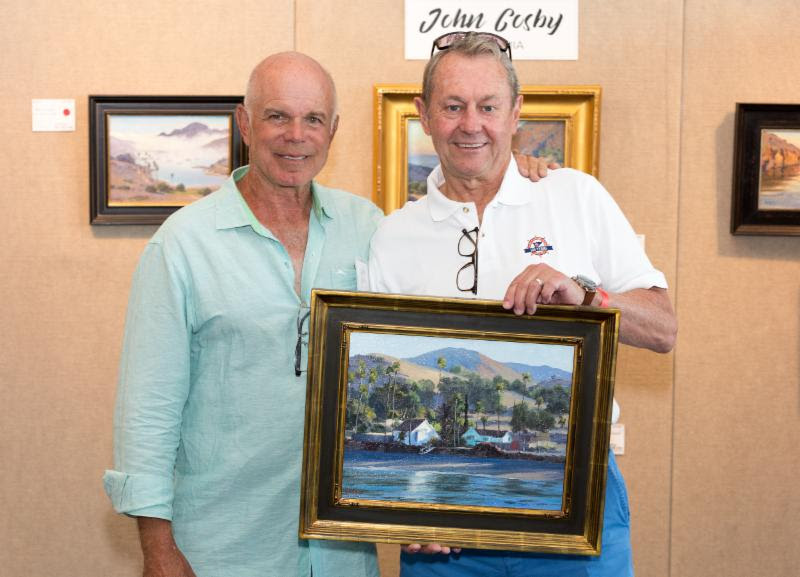
Artist John Cosby with his painting “View from the Wharf” and collector Jim Connelly
“We extend our thanks to the artists as well as the Catalina Island Conservancy supporters and art lovers who joined us at this spectacular location. The 2018 “Catalina: The Wild Side” Art Show was one of the highest grossing in its history, raising a gross of over $190,000 to support the programs of the Conservancy,” said Tony Budrovich, Conservancy president and CEO.
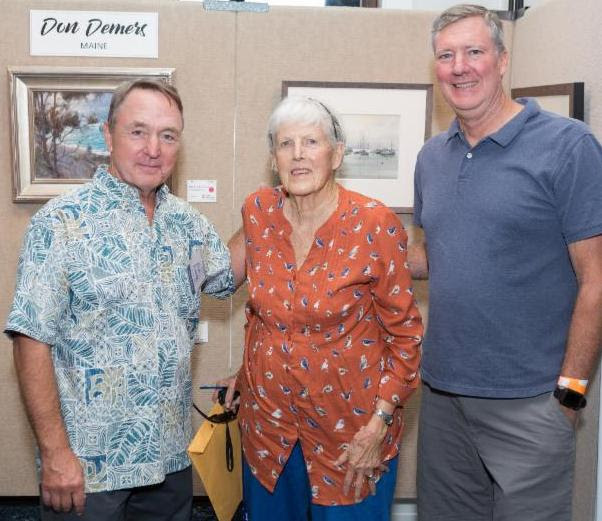
Artist Don Demers with collector Mimi Jones and guest
Proceeds from the sales of the artworks benefit the Conservancy’s conservation, education, and recreation programs and support the Conservancy’s permanent collection of plein air art that documents the organization’s conservation efforts and progress in habitat restoration. Paintings in the Conservancy’s collection will be displayed in rotating exhibits at the new Trailhead Visitor Center in Avalon, opening this year.
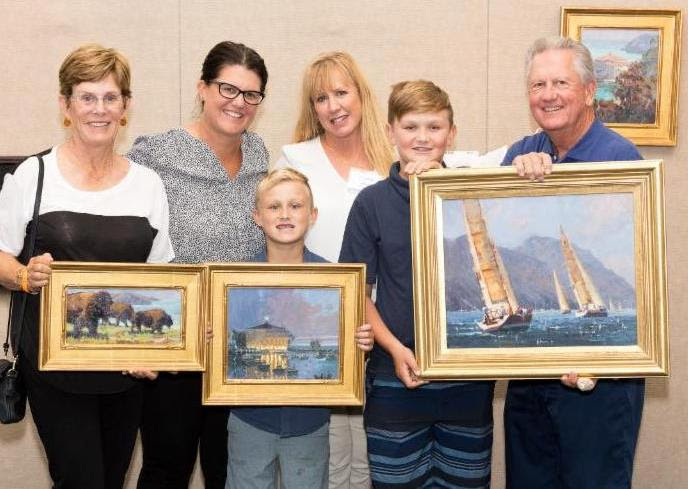
Three generations of collectors in the Collins family show off their new acquisitions painted by artist Debra Huse. From left: Sheila Collins, Erin Kennedy and sons, Debra Huse and Tim Collins.
“The ‘Catalina: The Wild Side’ Art Show is unique because it allows us to connect with those who love Catalina Island through nationally recognized artists’ views of the landscape which represent the conservation side of the Conservancy’s work,” said Conservancy board member and event chair Victoria Seaver Dean.
Artists traveled to Catalina Island several times during the year to paint in the plein air style, which is art created in nature and capturing the light in the moment, a tradition that has been taking place on Catalina Island for over 100 years.
Remaining works are still available for purchase through an online sale that will run through 11:59 PM PST on November 17. The full collection of over 100 paintings (including paintings available for purchase) is available at www.catalinaconservancy.org.
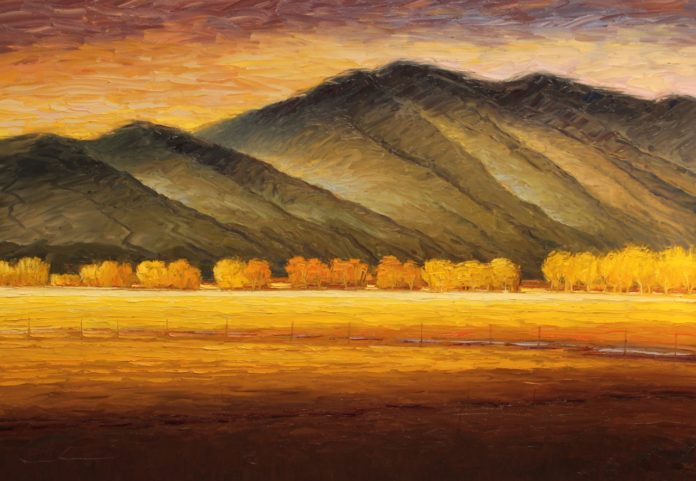
Jeff Cochran, “October at Taos Mountain,” oil on canvas, 34 x 48 in.
Manitou Galleries’ “Taos 6 Show” is a celebration of just that, Manitou artists who have studios in Taos and whose imagery of choice emphasizes the local people and environment. These featured artists are not integrated under a single style but simply a desire to create.
From the galleries:
This show’s conception began with a quote we read where Bert Phillips said to Ernest Blumenschein in September of 1898, “For heaven’s sake, tell people what we have found! Send some artists out here. There is a lifetime’s work for twenty men.” By 1915, six artists had formed the Taos Society of Artists and forever changed the course of Southwestern Art. The modern-day Taos art colony is a collection of artists who are drawn to the landscape and people of northern New Mexico.
Jerry Jordan, “We Make Our Own Tracks Through Time,” oil on canvas, diptych, 16 x 20 in.
Jerry Jordan
Jerry Jordan’s paintings are rich and vivid with elaborate details, capturing not only the drastic landscapes of Taos and traditional pueblo life but also the magic of Taos itself. Using his mastery of color and strong brushwork to create incredible texture, Jordan breathes life into the images of this beloved land.
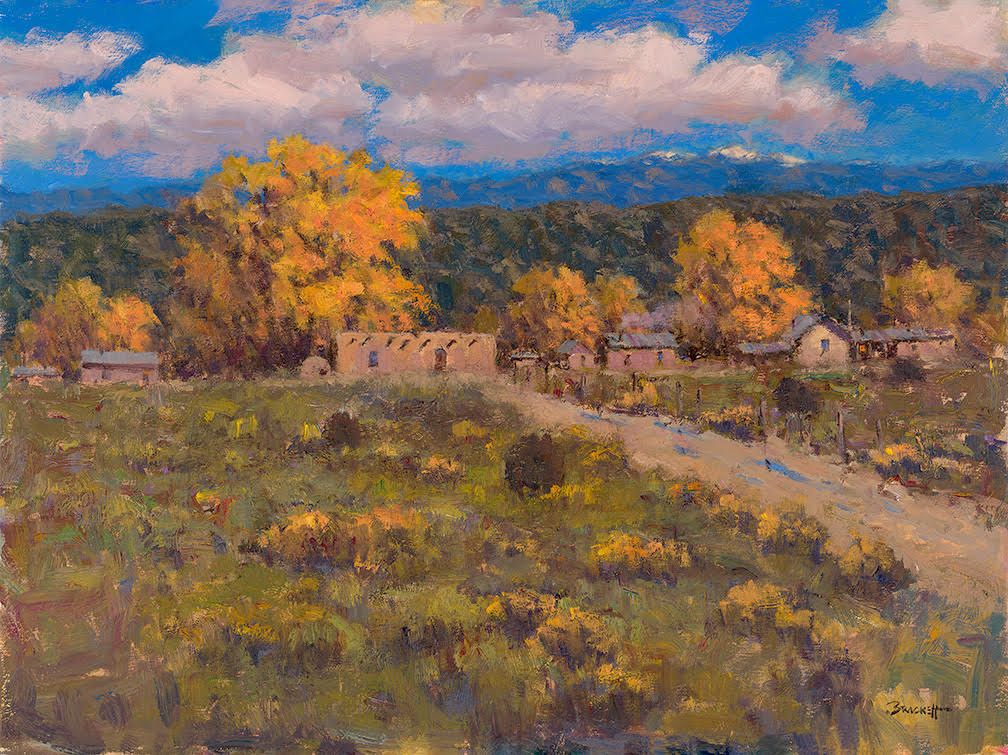
Don Brackett, “Autumn in the Rio Grande Valley,” oil on canvas, 30 x 40 in.
Don Brackett
After more than 40 years of painting Taos and its surrounding areas, Don Brackett says the experience — and the landscape — remains fresh in his eyes and his art. And if nature’s composition requires some adjustment, the artist draws on a well-earned fluency in the language of landforms and light. Of the landscape he loves to paint: “After a while it just gets in your blood.”
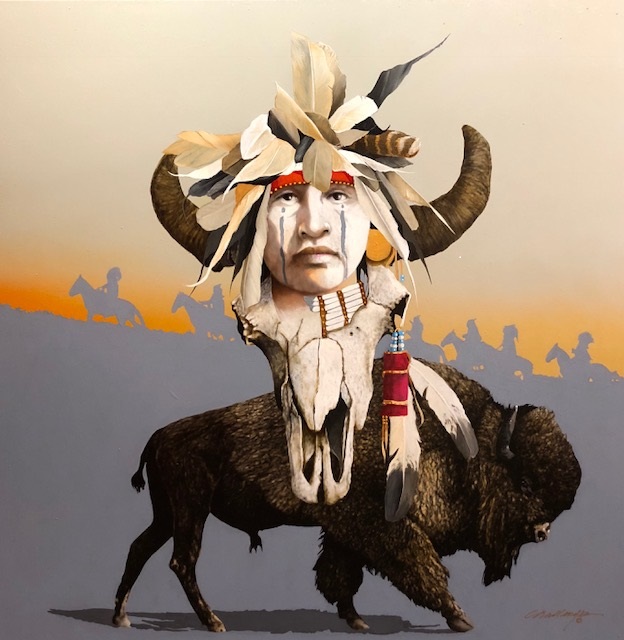
JD Challenger, “Last Bison Hunt,” acrylic on canvas, 40 x 40 in.
JD Challenger
At first, JD Challenger was reluctant to have his work seen by the public for fear of offending the very people he so admired. His wife encouraged him to show the finished paintings to his closest Native American friends and to ask them for their feelings about him painting their people. When he finally did so, he received their blessings. A Kiowa holy man told him, “There needs to be messengers; the creator chooses his own messengers. They take many forms. You are a messenger; your path is to tell the stories of the Native people to those who do not know what has happened in the past or what is still happening today. You make them see who we are, that we are real living human beings and that we are still here.”
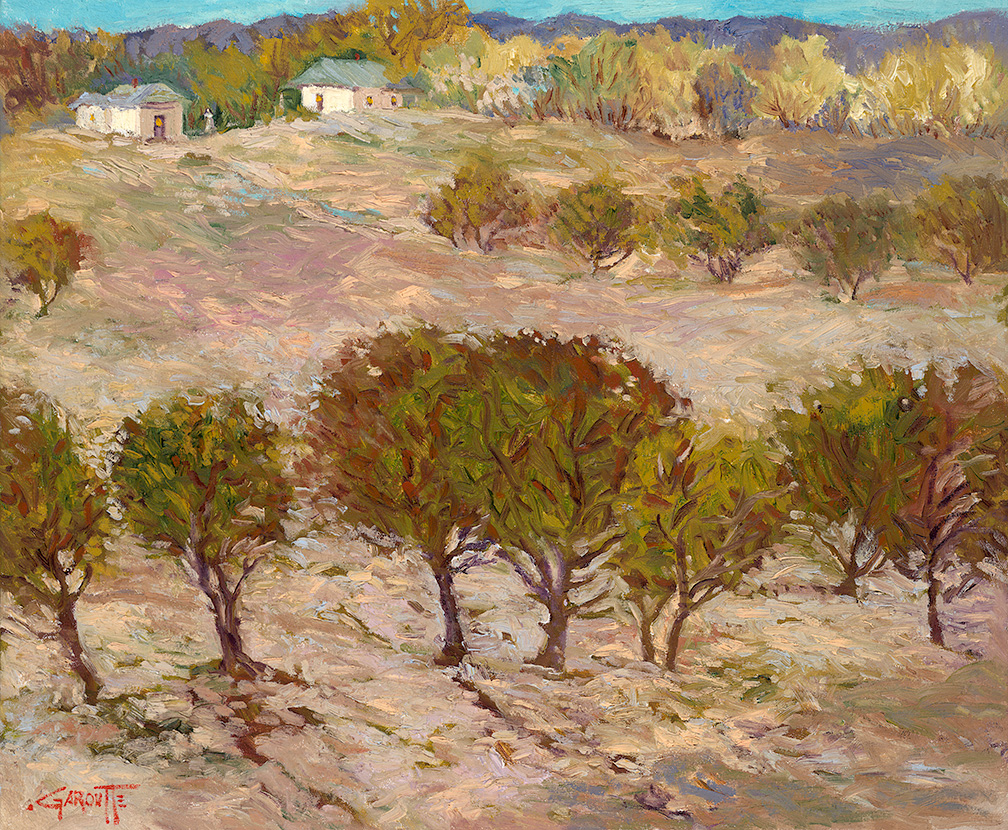
PJ Garoutte, “Elena’s Autumn Orchard,” oil on canvas, 20 x 24 in.
PJ Garoutte
“Complexity within simplicity” is the motto PJ Garoutte uses as she approaches her paintings. She says, “I love simple images juxtaposed to a vibrantly complex background, or vice versa. I spend a lot of time visualizing my paintings before and after I paint them.” PJ’s paintings evolve into representational images as she expands the forms that emerge. “My paintings are a diary of my everyday life; there has been a continuous dialogue between myself and my works of art my whole life.”
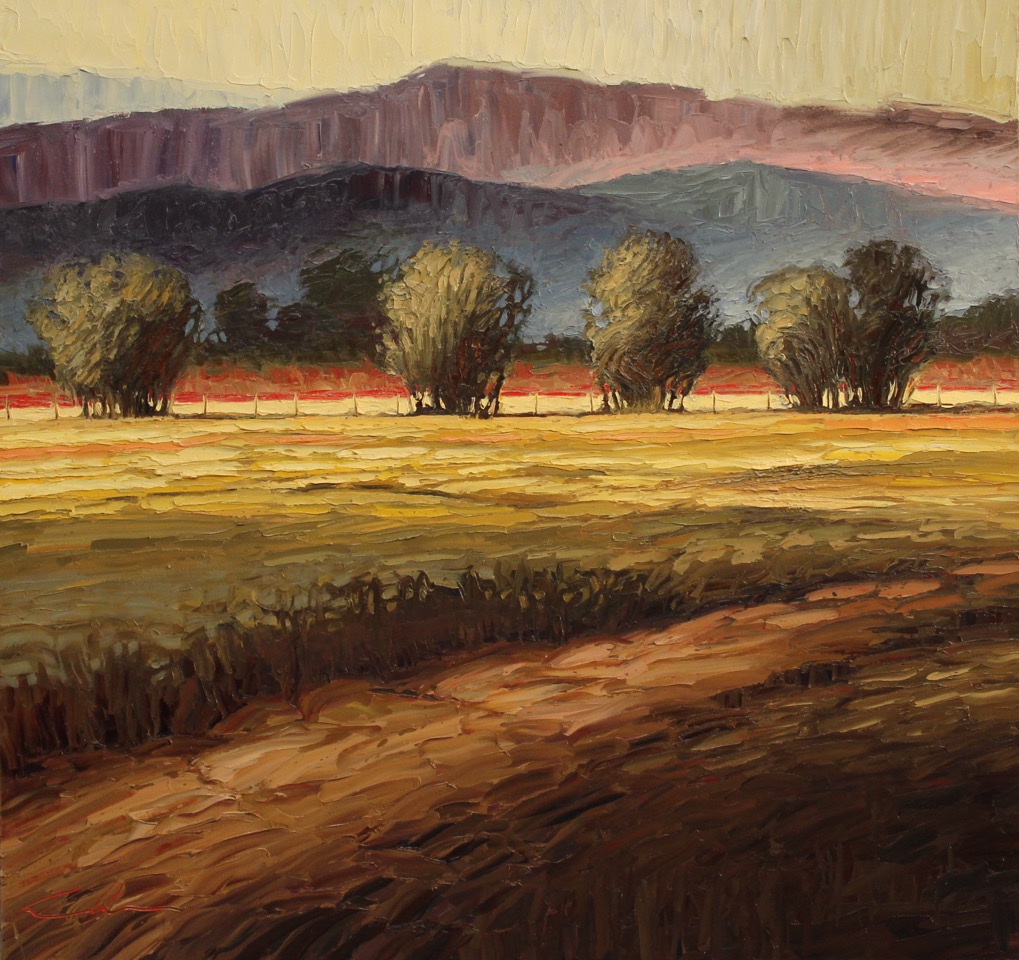
Jeff Cochran, “All That I Want,” oil on canvas, 38 x 40 in.
Jeff Cochran
Jeff Cochran’s impasto oil paintings depicting the New Mexico landscape are a mix of realism and romanticism. They depict a world where the perfect light meets the perfect view. Stemming from his work as an organic farmer, he is well-tuned to notice every nuance and subtle change in the landscape. Cochran thinks of his farming as an extension of his art and as a form of large-scale sculpture made of the Earth. He says, “The different colors of plants, soil, and mulch contrasting with furrows and beds are like a three-dimensional painting.”
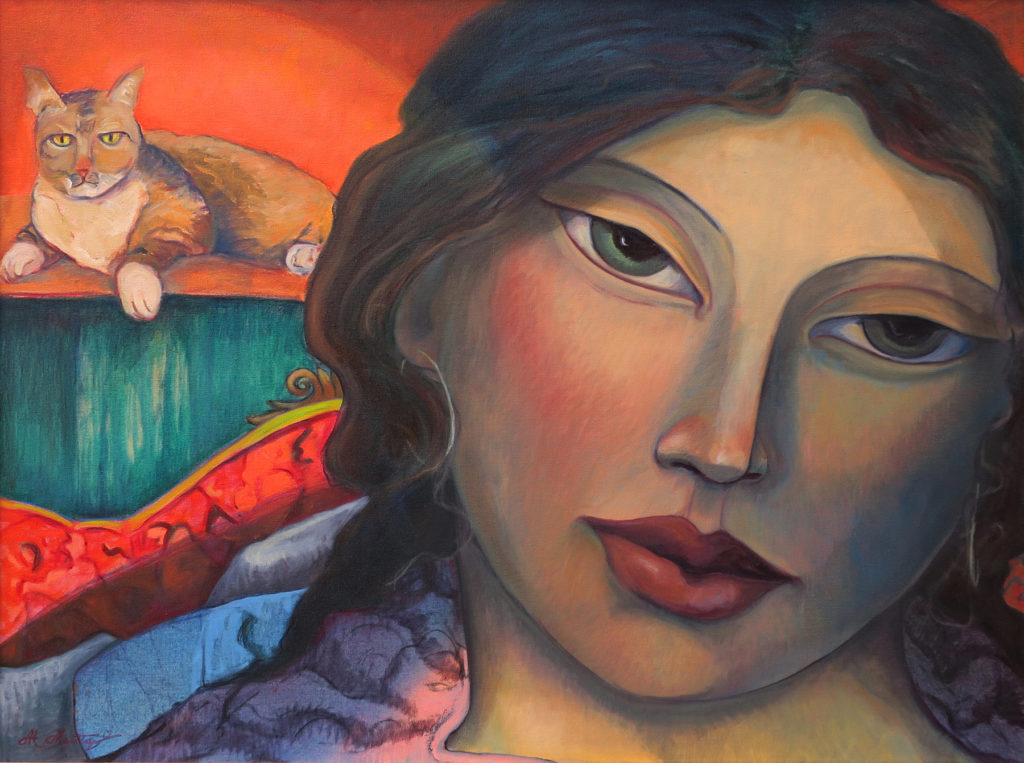
Miguel Martinez, “Woman with Matisse the Cat,” oil on canvas, 30 x 40 in.
Miguel Martinez
Miguel Martinez claims to be inspired by Mexican artists Rivera and Zuniga for their portrayal of the dignity of common folk, and he admired Modigliani’s works of powerful and poignant human emotions. He knew these were the kinds of messages stirring in his soul and waiting to be painted. Moved by deep respect and admiration, he began a series of large faces of women, enlarging and stylizing the eyes, and endowed them with mystery of illusive and provocative expressions. He has created them in an ambiance of everyday life, giving them a voice which has inordinately proved to speak to the hearts of a universal following.
Fill your mind with useful art stories, the latest trends, upcoming art shows, top artists, and more. Subscribe to Fine Art Today, from the publishers of Fine Art Connoisseur magazine.


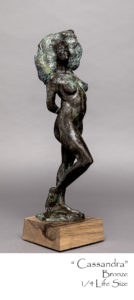 After incorporating this wide range of influences into the development of his own style, Chambers set up a studio in Atlanta and has been working on personal projects, public commissions, and collaborations ever since. Although Chambers clearly enjoys celebrating the fluidity, flexibility, and sensuality of the human form, there is more to his sculpture than meets the eye.
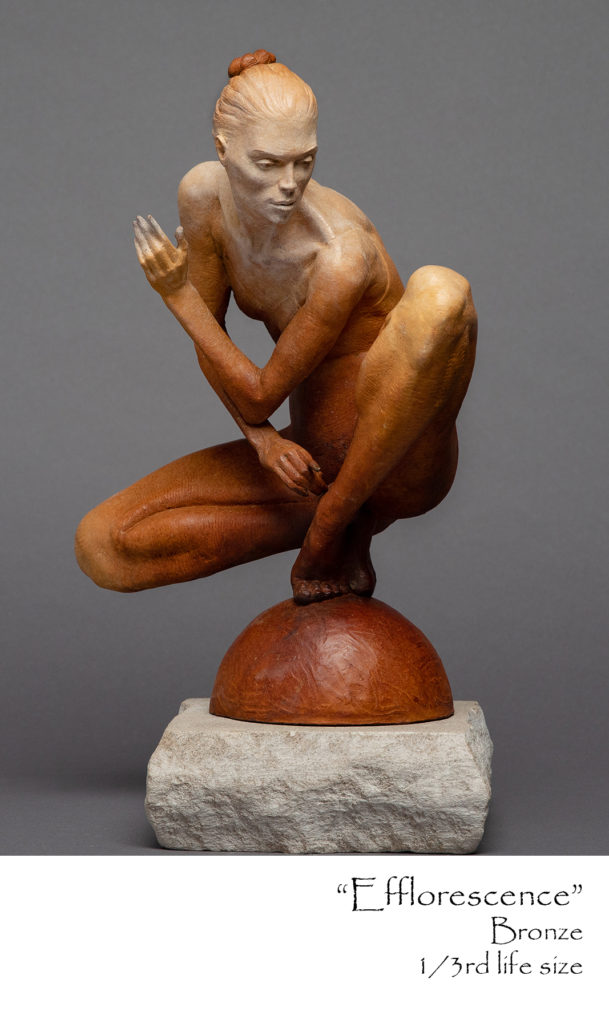 In addition to working independently on these and other types of projects, Chambers has a passion for teaching. KLC Studios, a creative space he shares with his photographer wife, Lauren Chambers, has become the site of his regular workshops focused on teaching anatomy, gesture, and proportion to those eager to learn how to sculpt the figure.
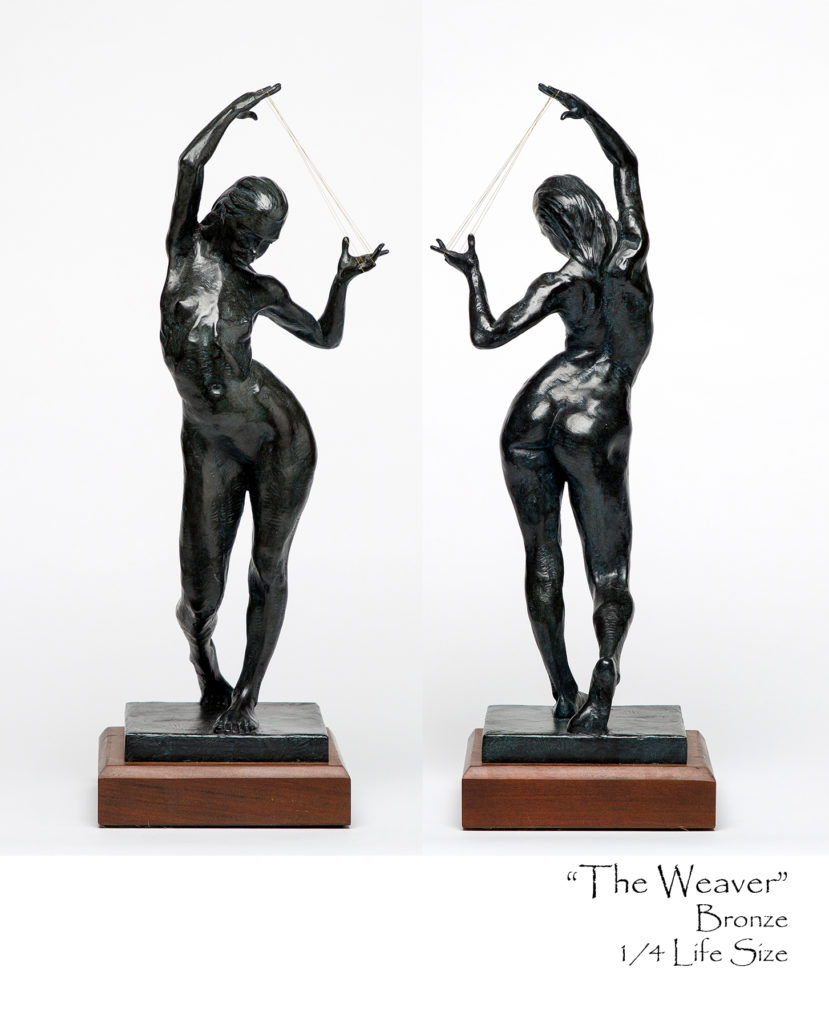 “As a teacher, I gain new insight by feeding off the energy of my students,” Chambers says. “In a way, it makes me a permanent student of sculpture as well, and I plan to spend the rest of my life learning from the human figure and following my ever-evolving inspirations.”
 Visit the website of Kevin Chambers at