
Home Blog Page 293

Featured Artwork: Miles Glynn presented by Creighton Block Gallery

0

Featured Artwork: Miles Glynn presented by Creighton Block Gallery

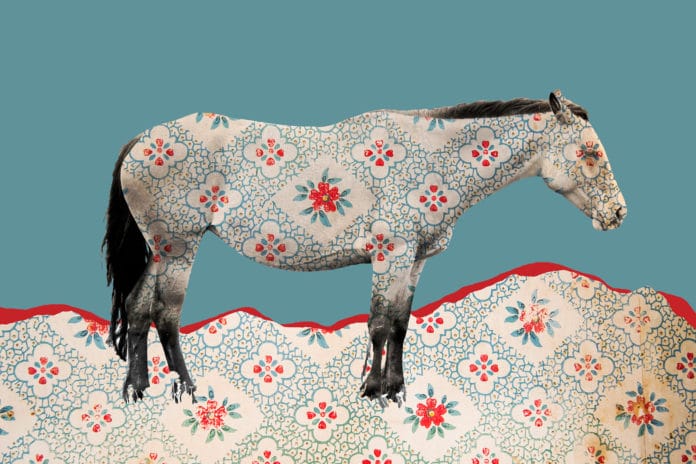
Horse No. 16
26 x 39 in.
Archival print on 5.5 oz. Belgian Linen
2018, edition of 25

In Wallflower Series I combine photographs I take of animals and vintage wallpapers. I travel to abandoned homesteads, gritty ghost towns, and buildings dripping with history to photograph these exquisite wallpapers – these glorious relics of an effort made by people who wished to enjoy a simple bit of beauty inside their dwelling on the harsh and hostile American frontier. But time has had its way with these buildings, and in my own way, I take comfort in helping the grace and grandeur of these relics to live on.

I photographed this horse on the Crow Reservation, near Little Bighorn Battlefield National Monument, in southeastern Montana. On this land in 1876 the infamous battle took place between native tribes of the northern plains, lead by Crazy Horse and Sitting Bull, and the U.S. Army’s 7th Cavalry, lead by General George Armstrong Custer. In this battle, known as “Custer’s Last Stand”, General Custer and every soldier of the five battalions under his command were killed. Today, upon the vast expanse of rolling hills and oceans of prairie grass, there is a heaviness that still persists. Scattered simple headstones mark the locations of the fallen native warriors, soldiers, and horses. For me, it is a place filled with contrasting solace and somberness all at once. In the stillness of the vast prairie one can not help but be moved by the significance of this place and the energy which still lingers here.

I photographed this wallpaper in the kitchen of an abandoned homestead on the northern Montana prairie along Highway 2, also known as the “Hi-Line.” The Homestead Act of 1862 provided 160 acres free to anyone who agreed to live upon and improve it for a period of five years. Though slow to stake claims at first, homesteaders eventually flooded to Montana’s northern prairie despite the harsh climate and foreboding conditions. Between 1909 and the early 1920s more than 80,000 eager homesteaders set out to “better their condition” by staking their slice of the frontier. By the late 1920’s, 60,000 of them had either packed up and left or were sent off to fight in World War I. Both farmers and ranchers had exploited the land during the wet years. They’d overgrazed, overfarmed, and spread themselves too thin. Banks sprang up and new counties were formed almost on a whim. No one realized that when the rains subsided, all that free land would come back to haunt them. Today this region is still sparse, vast, and epitomizes “Big Sky Country”. The hearty souls who live there have bettered their condition and continue to improve their land, day by day.
Artist Bio
Miles Glynn is an American artist residing in Bozeman, Montana. The son of a U.S. Army
photojournalist, Miles spent his formative years tagging along with his father on photo assignments and
learning the science and art of developing photographs in the dark room.

These early experiences and memories forged what would become driving forces in Miles’ personal and
professional life: the joy of exploring our vast country, the solace found in simple moments on the open
road, the drive to constantly move toward the next bend and beyond. With each passing mile he seeks to
reconcile the natural and man-made worlds and contextualize the effect time has had on them.

Rather than merely documenting his subjects, Miles instead aims to present his interpretation of them.
And therein lies the challenge and the art: to present unique and compelling interpretations which nobody
else viewing the same scene could create.

In Wallflower Series, Miles combines photographs of vintage wallpapers and animals. He travels to
abandoned homesteads, gritty ghost towns, and buildings dripping with history to photograph these
exquisite wallpapers from a bygone time. To him, these glorious relics portray an effort made by people
who wished to enjoy a simple bit of beauty inside their dwelling on the harsh and hostile American
frontier. But time has had its way with these buildings, and in his own way, he takes comfort in helping
the grace and grandeur of these relics to live on.

Artist Statement
Through photography I present my distinct interpretations of scenes and subjects which I find compelling.
I am most intrigued by images which offer contrast, conflicts, and contradictions: warm and cool, striking
yet soothing, familiar but curious. Perhaps the greatest conflict of all is the natural and man-made worlds
and how they have played out over time in the American West. The artwork I create is an attempt at
framing these worlds and the haunting allure that has drawn folks out West for years.
View more of Miles’ work at Creighton Block Gallery at www.creightonblockgallery.com/artist/glynn-miles/
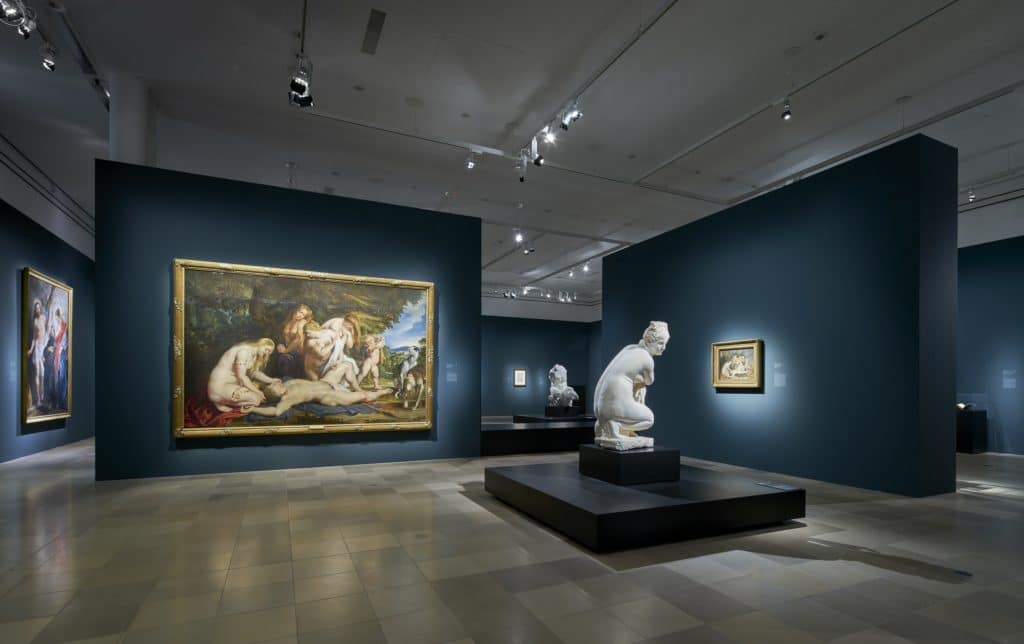
Peter Paul Rubens and the Power of Transformation

0
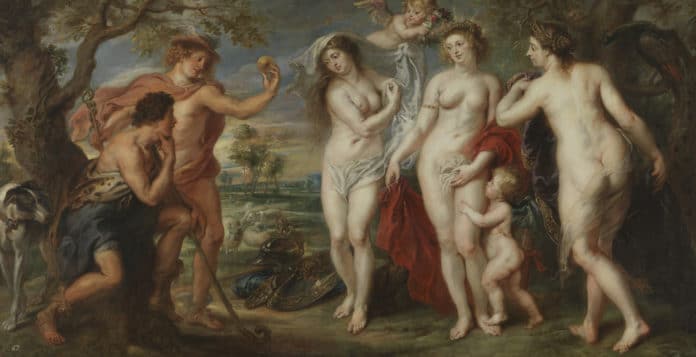
Peter Paul Rubens (1577-1640), "The Judgment of Paris,” C. 1639, Oil on canvas, 199 cm x 381 cm, Museo Nacional del Prado, Madrid © Museo Nacional del Prado, Madrid

Through May 21, 2018
The Städel Museum (Frankfurt)

From the museum:

Almost no other artist exercised such a decisive influence on European Baroque painting as Peter Paul Rubens (1577–1640).

Exhibition view of “Rubens. The Power of Transformation” Photo: Städel Museum

“Rubens. The Power of Transformation” comprises about 100 items — including 31 paintings and 23 drawings by the master — and explores a hitherto little-regarded aspect in his creative process. The presentation reveals how profound the dialogue was into which Rubens entered with his predecessors’ and contemporaries’ achievements and fathoms the scope of their impact on the five decades of his production.

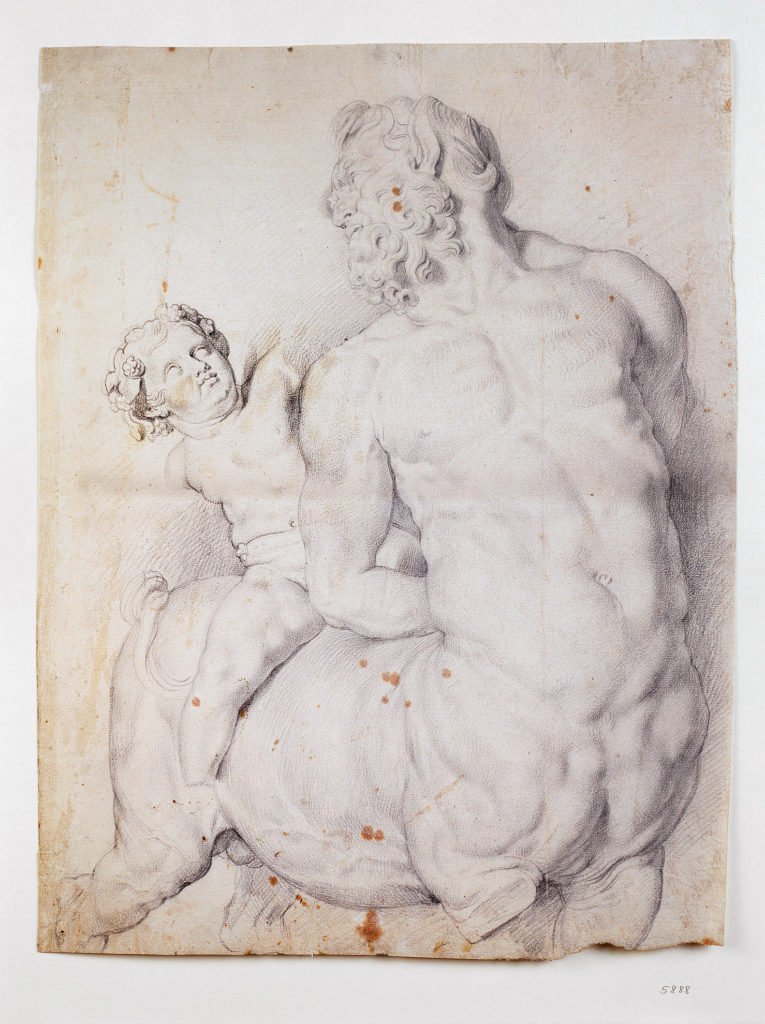
Peter Paul Rubens (1577-1640), “Centaur Tamed by Cupid,” C. 1601/02, Black chalk on paper, 481 mm x 371 mm, Cologne, Wallraf-Richartz-Museum & Fondation Corboud Graphische Sammlung © Photo: Rheinisches Bildarchiv Köln, rba_c016031

Rubens’s extensive oeuvre reflects the influences of ancient sculpture as well as that of the later art from Italy and north of the Alps, from the masters towards the close of the fifteenth century to the artists of his own day. Frequently, only a closer look will reveal how Rubens drew on the work of artists of different epochs: the exhibition offers an opportunity to comprehend the sometimes astonishing correlations in detail. The cross-genre presentation brings together paintings, drawings, prints, sculptures, and objets d’art.

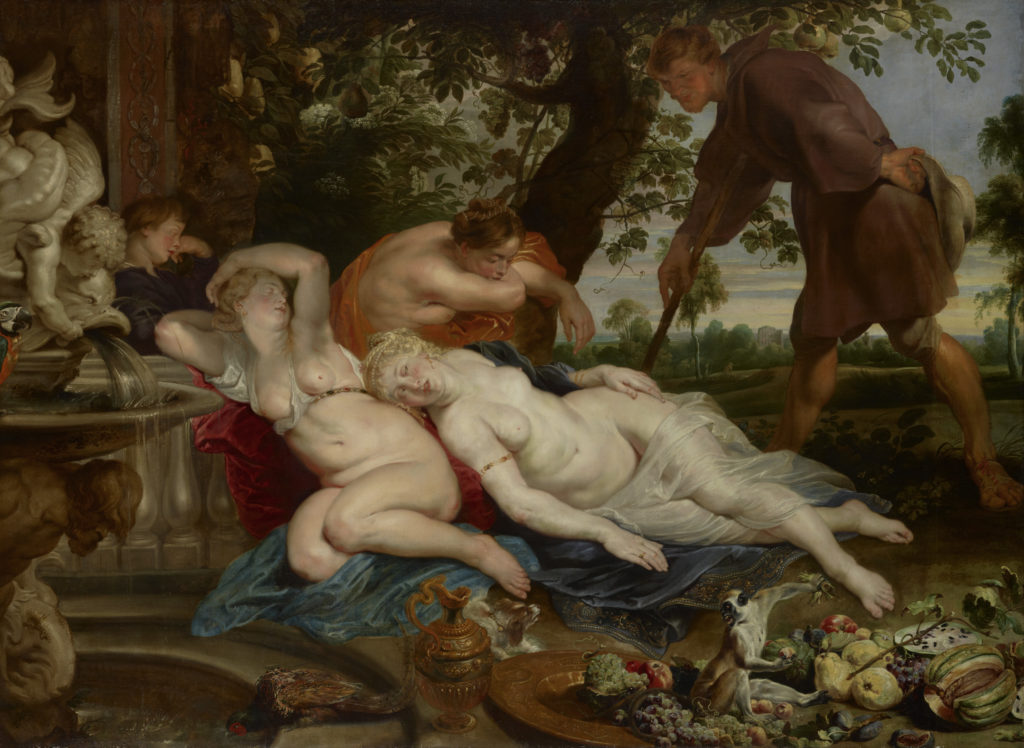
Peter Paul Rubens (1577-1640), “Frans Snyders (still life with monkey), Jan Wildens (landscape) Cimon and Efiginia,” C. 1617, Oil on canvas 208 cm x 282 cm, Gemäldegalerie, Kunsthistorisches Museum, Vienna © KHM-Museumsverband

In addition to original sculptures dating from classical antiquity to the Renaissance, the show also encompasses paintings and prints by Rubens’s precursors and contemporaries, among them key works by Titian and Tintoretto, by Goltzius, Rottenhammer, and Elsheimer, as well as by Giambologna, Van Tetrode, and Van der Schardt.

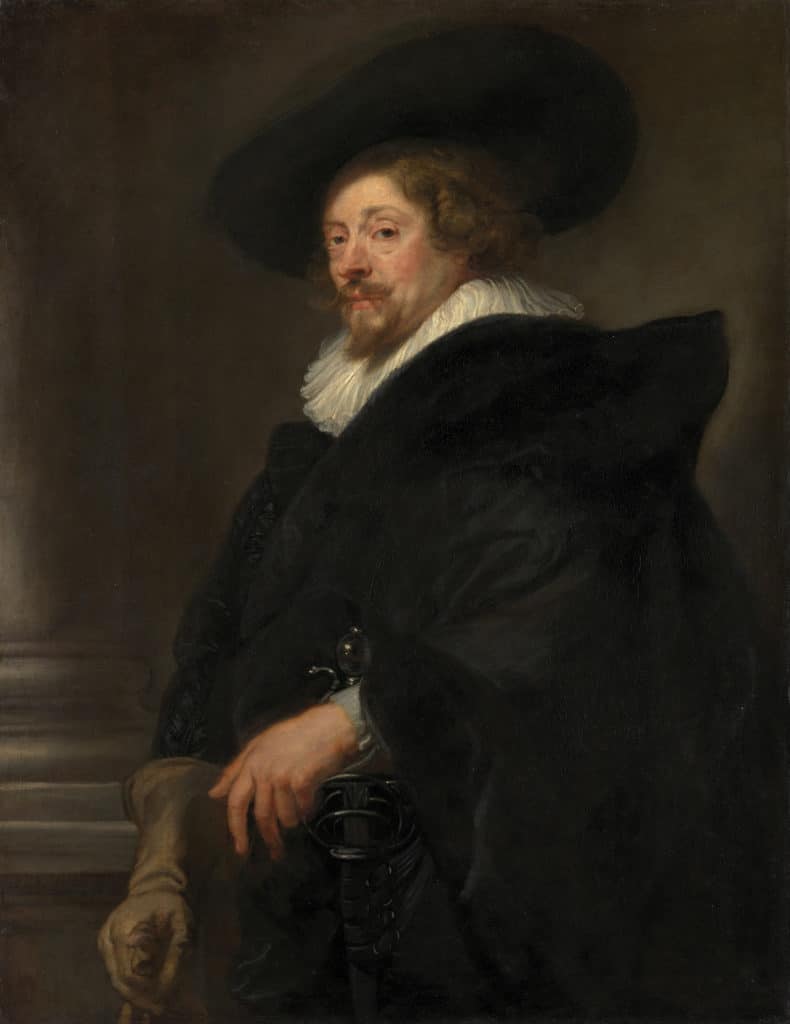
Peter Paul Rubens (1577-1640), “Self Portrait,” C. 1638, Oil on canvas, 110 cm x 85.5 cm, Gemäldegalerie, Kunsthistorisches Museum, Vienna © KHM-Museumsverband

The direct comparison between Rubens’ works and their models offers fascinating insights into the ingenious development of the master’s solutions and surprising motific metamorphoses, as well as his intense endeavours for an adequate format and the right form. The peculiarly modern, dynamic appearance of Rubens’s creations is frequently indebted to the very deliberate return to identifiable models, which the artist — in the understanding of the concept of ‘aemulatio’ crucial within his era’s theory of art — even tried to outdo. Each of the transformation processes resulted in a work that immediately enthralled the contemporary viewer and still fascinates us today.

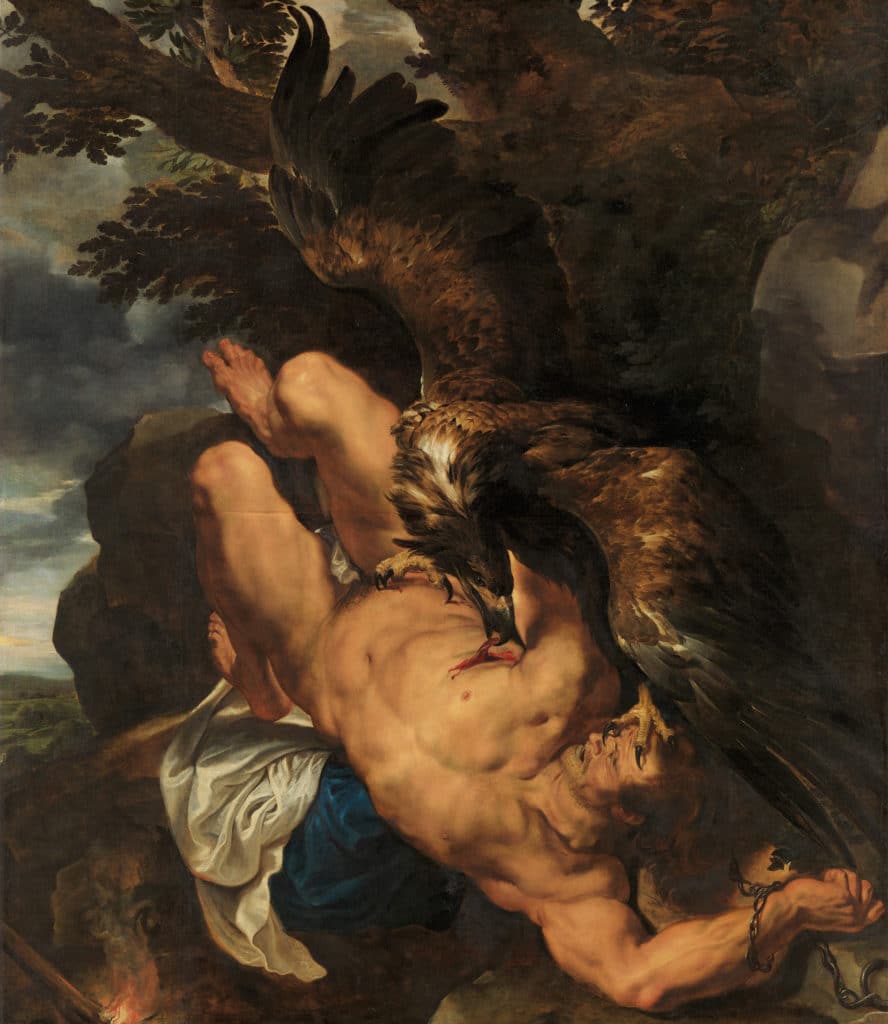
Peter Paul Rubens (1577-1640) and Frans Snyders, “(Eagle)” (1579-1657), “Prometheus,” 1611/12 -1618, Oil on canvas, 242.6 cm x 209.6 cm Philadelphia Museum of Art, Philadelphia © Philadelphia Museum of Art, Philadelphia, purchased with the W. P. Wilstach Fund, 1950

To view a beautiful and detailed overview of Rubens and this exhibition, click here. 


Sign up to receive Fine Art Today, the weekly e-newsletter from
Fine Art Connoisseur magazine.

Britishness, Identity, and Craftsmanship: The Work of Grayson Perry

0
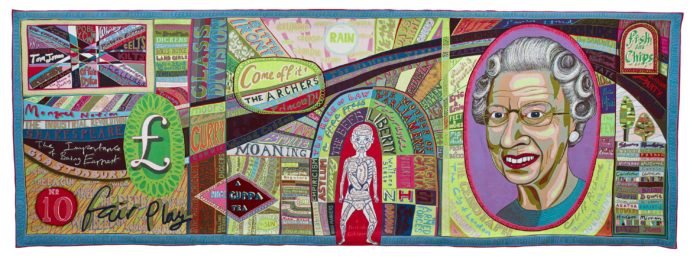
Grayson Perry, "Comfort Blanket," Courtesy Windsor; Photo: Scott Rudd (2018)

Making Meaning
Through April 27, 2018
The Gallery at Windsor, Vero Beach, Florida

From the gallery:
The exhibition “Making Meaning” offers an overview of Grayson Perry’s work, exploring themes of Britishness, identity, craftsmanship and the art establishment. It includes some of his major works in ceramic, tapestry, sculpture and etching, as well as featuring vignettes from some of the artist’s recent museum shows. The exhibition has been curated by Erin Manns, Director of Exhibitions, Victoria Miro, London.

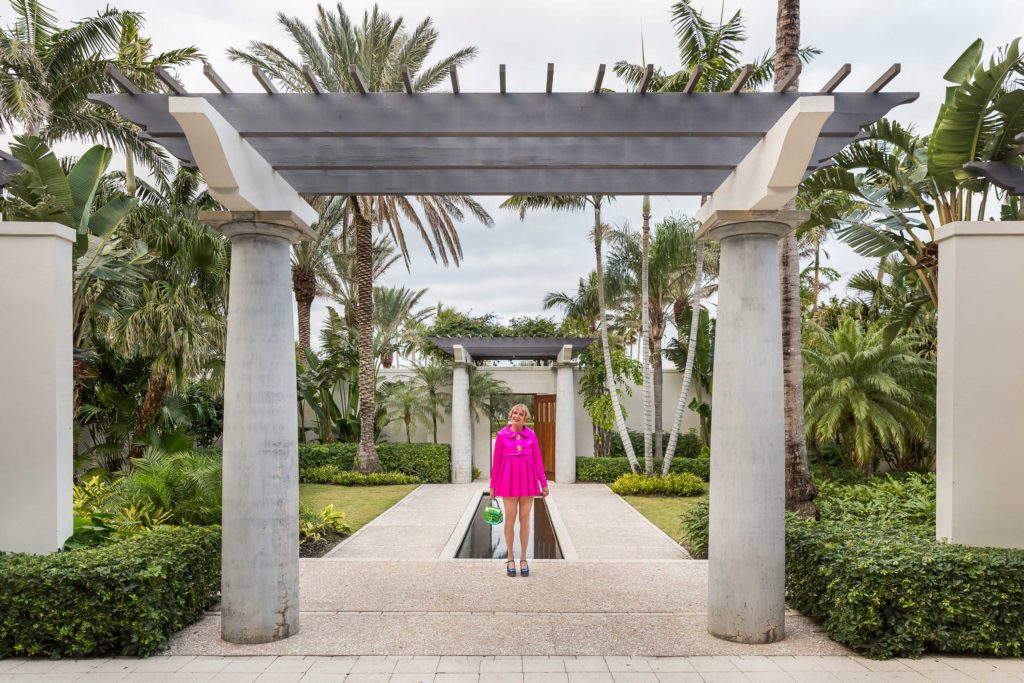
Artist Grayson Perry, Courtesy Windsor; Photo: Scott Rudd (2018)

Turner Prize winner Grayson Perry is a vivid chronicler of contemporary life, boldly tackling subjects that are universally human, such as identity, gender, social status, sexuality and religion.

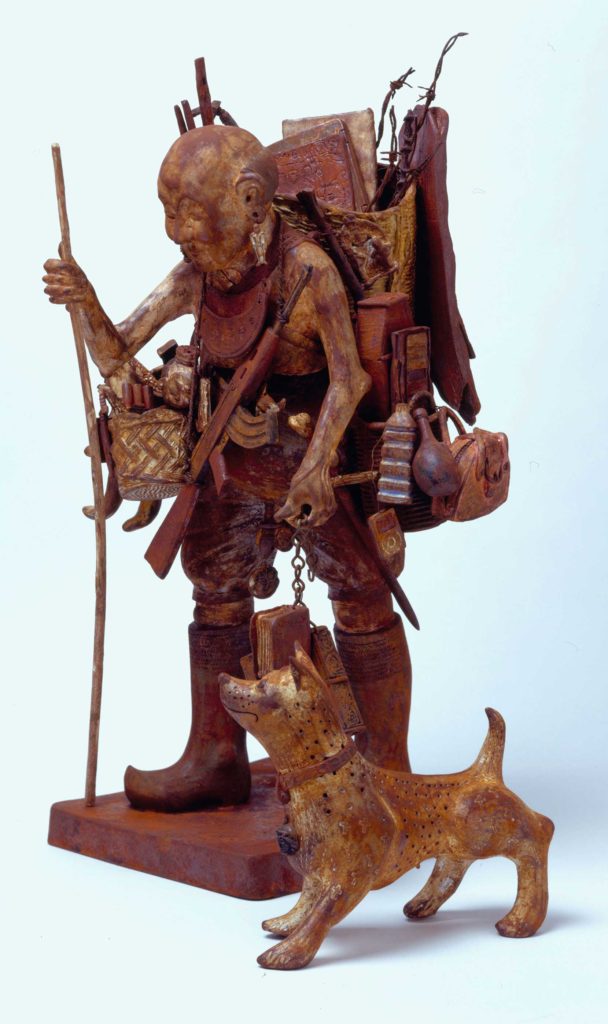
Grayson Perry, “Our Father,” Courtesy Windsor; Photo: Scott Rudd (2018)

Autobiographical references — to the artist’s childhood, his family and his transvestite alter ego Claire — can be read in tandem with questions about décor and decorum, class and taste, and the status of the artist versus that of the artisan. Perry uses the seductive qualities of ceramics and other traditional art forms, including cast iron, bronze, printmaking and tapestry, to make stealthy comments about society, past and present, and its pleasures, as well as its injustices and flaws.

To learn more about the Grayson Perry art exhibition at The Gallery at Windsor, click here. 


Sign up to receive Fine Art Today, the weekly e-newsletter from
Fine Art Connoisseur magazine.

The Gestural, Massive Totems of Herb Alpert

0
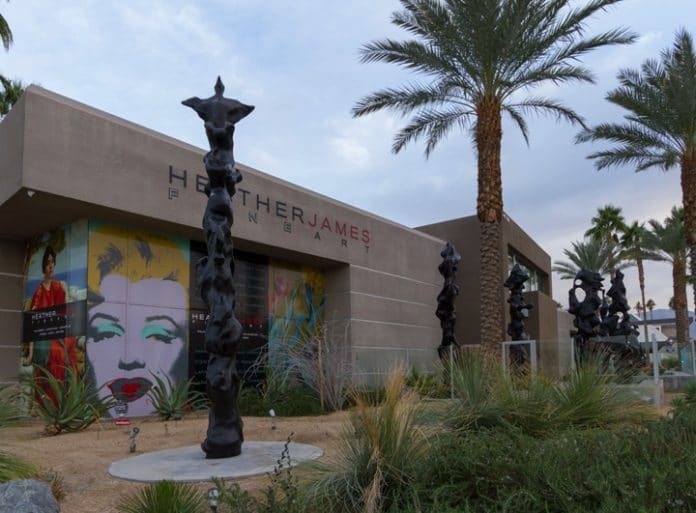
A Herb Alpert sculpture, as seen in front of Heather James Fine Art

Herb Alpert: A Visual Melody
February 17 through May 31, 2018
Heather James Fine Art (California)

From the gallery:
Heather James Fine Art is pleased to present an exhibition of paintings and sculptures by artist and musician Herb Alpert. The exhibition, “Herb Alpert: A Visual Melody,” consists of abstract mixed-media paintings and large and small-scale bronze sculptures. Alpert’s expressive use of various media engages the viewer with a captivating sense of movement and form, translating into a lyrical and unforgettable experience.

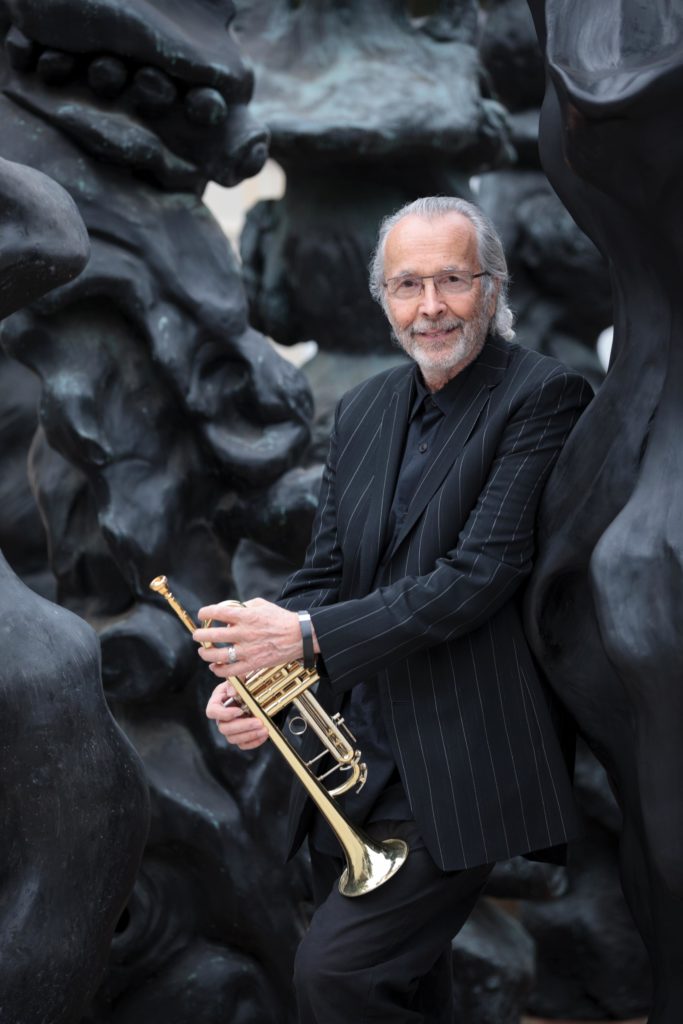
Artist and musician Herb Alpert

In addition to being a world-renowned musician, Alpert has spent more than half his life as a respected abstract expressionist painter and sculptor, whose work has been widely exhibited in the U.S. and Europe. Since he began painting in 1969, Alpert has experimented with a number of different styles and materials. In 2013, Alpert was recognized by President Barack Obama with the National Medal of Arts Award.

Always personal and expressive, Alpert’s paintings articulate fluidity and motion. Alpert’s sculptures draw interest with their freedom of form. His first totems were inspired by indigenous sculptural forms from the Pacific Northwest, but his Black Spirit Totems series, with their massive form, became more gestural. Walking among these giants is awe-inspiring.

Visit the website of Heather James Fine Art to learn more about this exhibition. 


Sign up to receive Fine Art Today, the weekly e-newsletter from
Fine Art Connoisseur magazine.

Sporting and Wildlife Art in South Georgia

The façade of Pebble Hill Plantation main house

Fine art is especially enjoyable when seen in beautiful surroundings. In November, I was invited to experience both of them in southwestern Georgia, a region I had never really noticed on maps before. My hosts were the proprietors of Pebble Hill Plantation, an estate open to the public and located five miles south of Thomasville, Georgia, and 22 miles north of Florida’s capital, Tallahassee. I was intrigued to learn that Pebble Hill holds a superb collection of sporting art, and is currently exhibiting 22 masterworks of wildlife art loaned by the Genesee Country Village & Museum in upstate New York. My curiosity was piqued, so I headed south to see for myself.

An Unusual History

When northerners like me hear the word “plantation,” we instinctively think of Gone with the Wind, but that is not actually Pebble Hill’s story. Established in the 1820s, the plantation weathered the Civil War and Reconstruction fairly well, but everything changed in and around Thomasville from the 1870s onward. Why? Because this town (current population, 19,000) was the terminus of the railway that brought well-heeled northerners south every winter, 20 years before the line was extended into Florida.

Fine art watercolor paintings | Pebble Hill
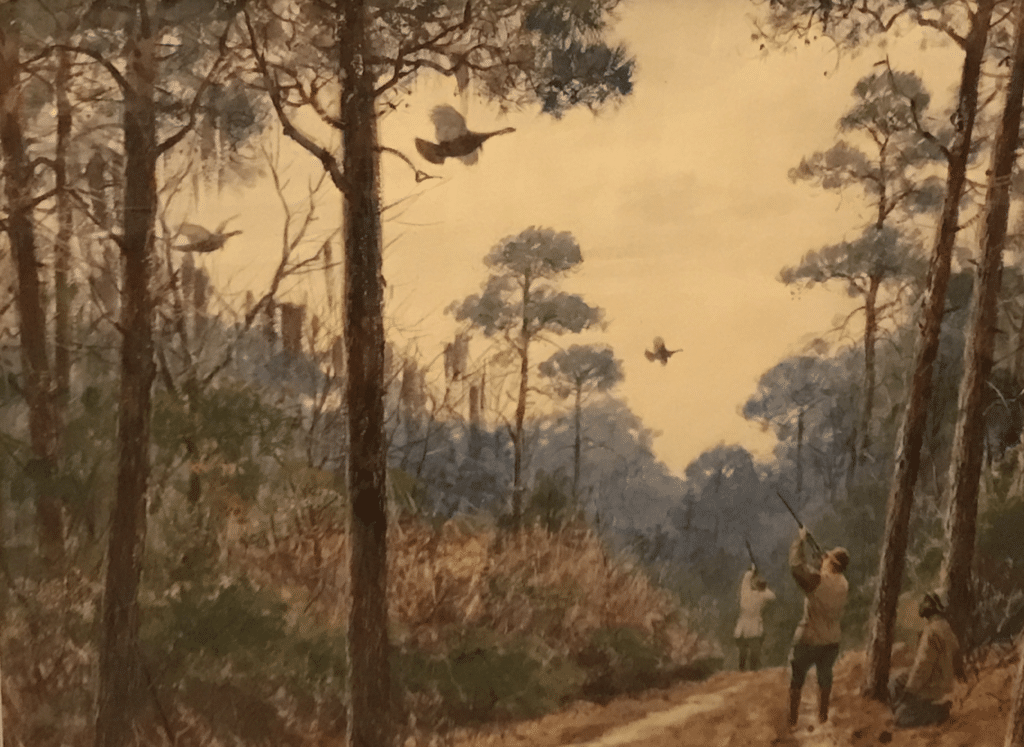
Aiden Lassell Ripley, (1896–1969), Mrs. Poe Turkey Shooting, 1941, watercolor on paper, 21 x 28 in., Pebble Hill Plantation

Fleeing cold weather, these tourists were charmed by the mild climate, rolling landscape, and longleaf pine forests of the Red Hills region, which extends southward from Thomasville to Tallahassee. They believed then that its pine-scented air helped people with pulmonary ailments, and they were astonished to learn that it was cheaper to buy land than to rent hotel rooms. As a result, Thomasville features several districts of grand Victorian mansions–think verandahs and gingerbread trim–built by these families, who socialized in town and hunted, fished, golfed, and raced horses in the surrounding countryside.

By the 1890s, the resort tourists realized they could afford to buy an entire plantation outside town, and that’s what happened at Pebble Hill. In the mid-1890s, it and several neighboring plantations were acquired by Cleveland industrialist Howard Melville Hanna (1840–1921), who moved in the same circles as John D. Rockefeller. These properties were ultimately transferred to Hanna’s various children. In 1901, Pebble Hill went to his daughter, Kate Benedict Hanna Ireland Harvey (1871–1936), who transformed it into a proper hunting retreat, and remained there until her death.

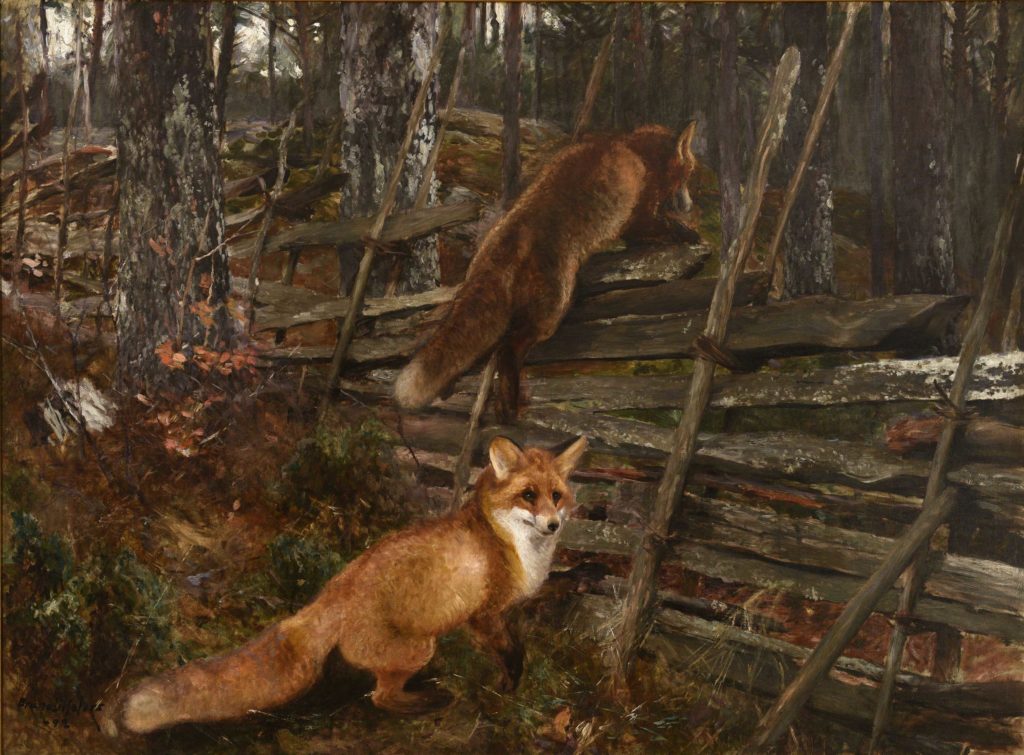
Bruno Liljefors, (1860–1939), “The Foxes,” 1890–92, oil on canvas, 63 x 84 3/4 in., Genesee Country Village & Museum

Her tenure overlapped with the heyday of America’s Gilded Age. Every year, from November through April, the family welcomed large parties of relatives, out-of-town guests, and neighbors for horse riding and well-organized hunts for bobwhite quail, duck, deer, dove, and turkey on their nearly 10,000 acres. (One hesitates to compare this scenario with Downtown Abbey, but there are parallels.) In 1914, a handsome loggia wing designed by the Cleveland architect Abram Garfield (son of President Garfield) was added to the main house. Ironically, it was the only portion to survive a disastrous fire in 1934.

Kate Harvey brought Garfield back to rebuild the main house. They completed their project in 1935, also the year she died. Its floor plan has remained the same since then, encompassing 26,000 square feet of living space spread over two floors. Kate Harvey bequeathed Pebble Hill to her daughter Elisabeth (“Pansy”) Ireland Poe (1897–1978), a nationally renowned equestrian, hunter, and breeder.

Maud Earl (1864–1943), “Hound Study,” n.d., oil on canvas, 18 x 24 in., Pebble Hill Plantation

Partly because she was childless, Pansy decided in 1956 that the property would become a museum upon her death, and thus formed the Pebble Hill Foundation. The site opened to the public in 1983, five years after she passed, and now encompasses the main house, a large and impressive stable complex, and many event-rental and support buildings spread across 3,000 acres, most of them covered with pine forests. The public is welcome to explore 80 of these acres, which are impeccably manicured with plantings of live oak, magnolia, dogwood, azaleas, and wisteria.

Pansy Poe must have been an extraordinary person. In his book Pebble Hill: The Story of a Plantation, William Warren Rogers writes that she “was shy in the presence of crowds, but she had an Irish wit and temper . . . What mattered to her was preserving the beauty of Thomasville and Thomas County, and she led numerous battles to keep trees from being cut down, to restore historic homes, and to prevent the needless widening of streets. She often wondered aloud–in one of her favorite expressions–what was going to happen, “When I kick the bucket.” She needn’t have worried. The trustees and staff of Pebble Hill Plantation have kept it humming as a window on a slowly disappearing lifestyle of hospitality, good taste, and genuine engagement with nature.

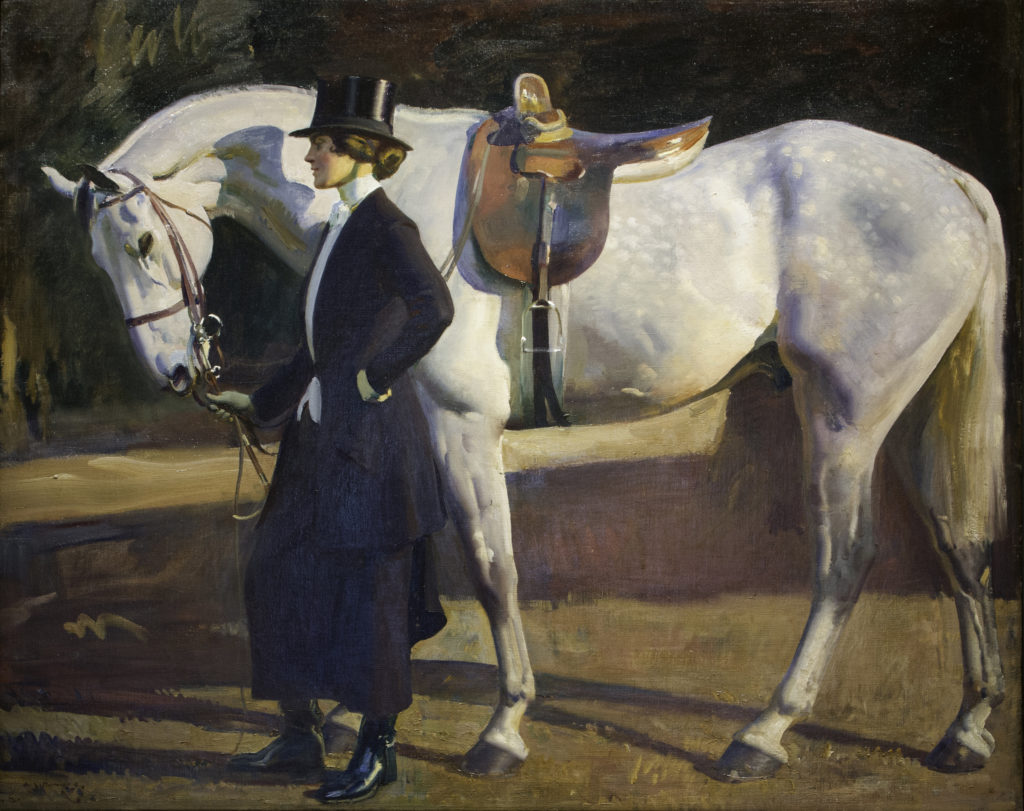
Alfred Munnings (1878–1959), “My Horse Is My Friend: The Artist’s Wife and Isaac,” 1922, oil on canvas, 40 x 50 in., Pebble Hill Plantation

Art Galore

Art lovers should particularly plan a visit because the house is filled with interesting paintings, sculpture, drawings, and prints, most related to nature and hunting. Mrs. Poe commissioned several artists to decorate specific rooms, and her guest book contains such leading names as Aiden Lassell Ripley (illustrated here is his painting of Pansy hunting turkey), Ogden Pleissner, Richard Bishop, and J. Clinton Shepherd.

The collection includes 33 works by John James Audubon, each depicting a bird that either lives in Georgia or migrates through it. For decades, Pansy Poe purchased sporting artworks from dealers and auctions in New York and London. She ultimately assembled a collection that emphasizes British artists, including Francis Sartorius, Charles Towne, Ben Marshall, George Armfield, John F. Herring, Jr., John Emms, John Charlton, Thomas Blinks, Walter Hunt, and Maud Earl, as well as American artists including Edward Troye, Arthur Tait, Edmund Osthaus, Lynn Bogue Hunt, Gene Pullen, Paul Brown, Tex Wheeler.

The jewel of her collection is Alfred Munnings’s masterpiece of 1922, “My Horse Is My Friend: The Artist’s Wife and Isaac” (above). Normally it hangs in glory upstairs in the Elisabeth Ireland Poe Gallery, which was created several years ago in a space once occupied by guest bedrooms. This season it has been returned to the main floor, where it glows among Mrs. Poe’s busy yet not over-cluttered décor, replete with antique furniture, porcelain, crystal, silver, glass, scrimshaw, horn carvings, arrowheads, and books.

The temporary exhibition “Wild in the Country” is on view in the gallery until April 29, and highlights four major artists represented in depth at the Genesee Country Village & Museum, Mumford, New York.


This article originally appeared in Fine Art Connoisseur magazine (subscribe here).

Sign up to receive Fine Art Today, the weekly e-newsletter from
Fine Art Connoisseur magazine.

The Revitalization of Cincinnati, Caught on Canvas

0
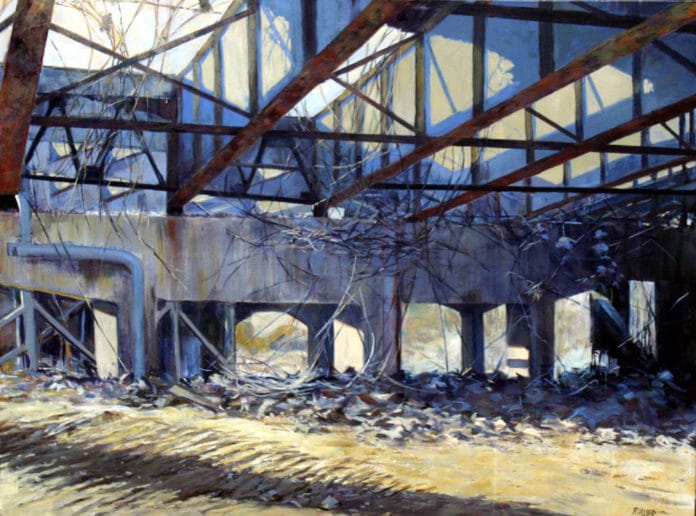
Ray Hassard, “Under Rebar,” acrylic on canvas, 36 x 48 in.

Hassard & Steele: Concrete Dreams
February 11 – April 7, 2018
Richmond Art Museum (Indiana)

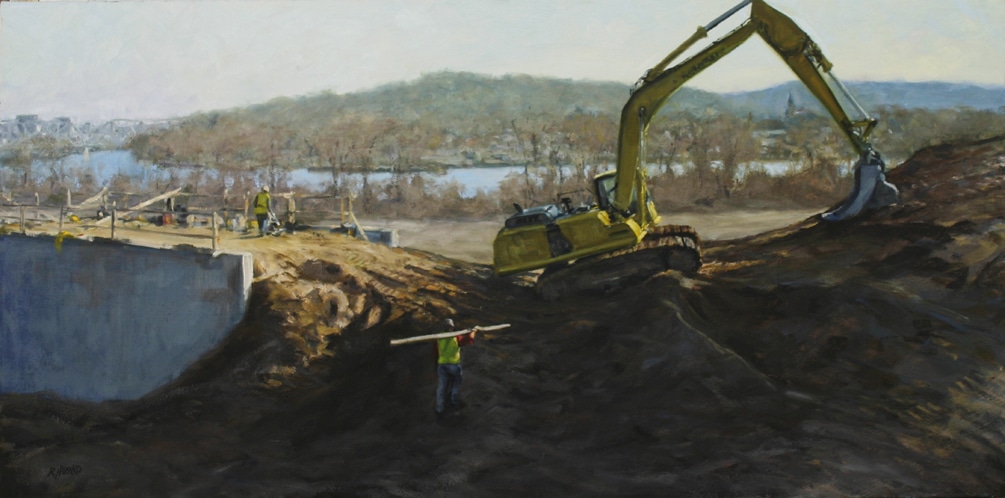
Opening this weekend at Richmond Art Museum (the second oldest museum in Indiana), you can view the works of nationally recognized artists Ray Hassard and Marlene Steele, whose paintings “reveal the revitalizing and transformative processes of man and machine of America’s urban infrastructure,” the museum explains.

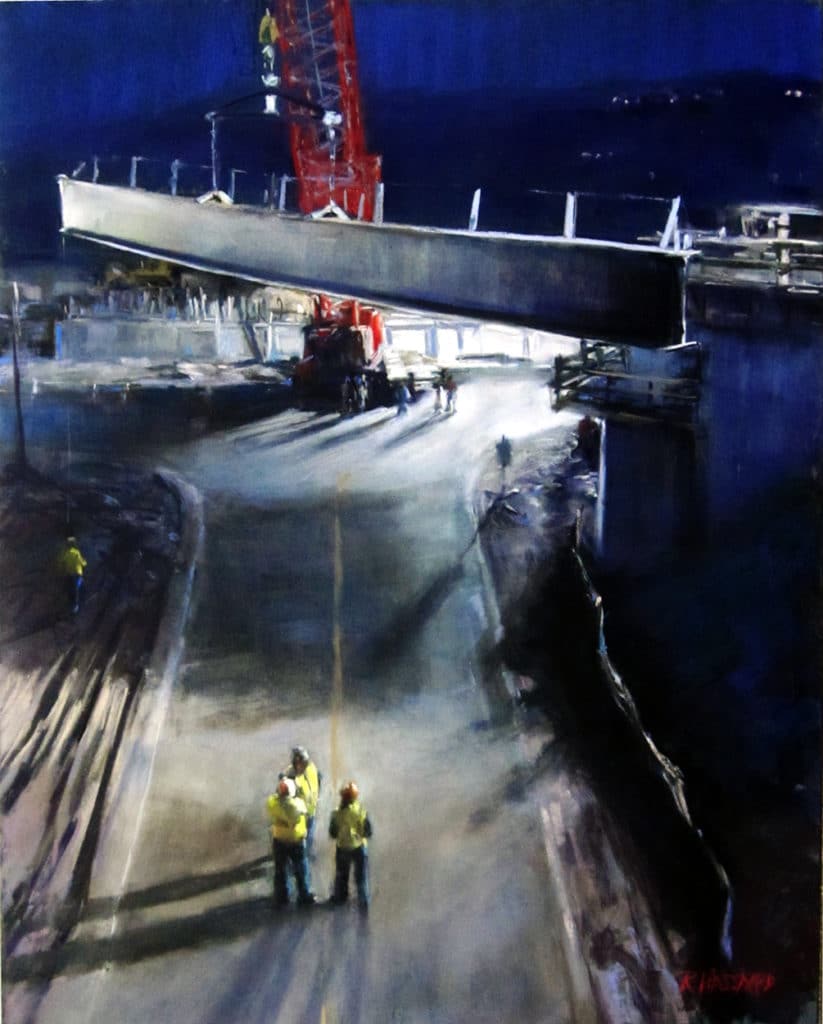
Ray Hassard, “Flying the Beam,” pastel on panel, 20 x 16 in.

“The demolition and replacement of a highway viaduct from the 1930s was the impetus for this body of work”, says Hassard. “Because of the scale of the project and the drama of the huge shapes, I felt it necessary to move beyond my usual sizes of pastels into larger oils and acrylic paintings. Watching the massive beams being hoisted into place with dramatic spotlights at night was one of the most exciting things ever. The workmen spent hours making sure they were balanced properly, so when they floated, seemingly effortlessly, into the sky, it just took my breath away and I knew I had to paint the scene. ‘Flying the Beam’ was the resulting pastel. The night they did this was also my birthday – what a great gift from the universe!”

Ray Hassard, “Dirt,” oil on canvas, 24 x 48 in.
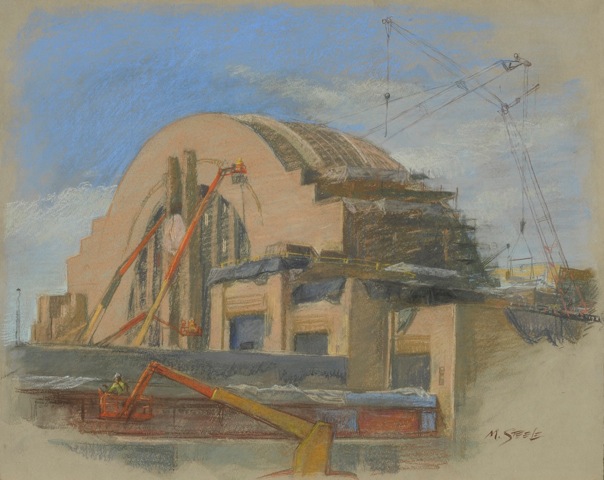
Marlene Steele, “Cleaning the Surface,” pastel

Cincinnati Union Terminal (shown above), a beloved work of architecture to many, was an inspiration for Steele; the building is the focus of her new series. “I loved following the transformation of this Art Deco classic, as I painted at the site on a daily basis,” Steele says. “The modern restoration processes to save this historic icon were fascinating to witness.”

For more information about the art exhibition “Concrete Dreams,” visit www.richmondartmuseum.org.


Sign up to receive Fine Art Today, the weekly e-newsletter from
Fine Art Connoisseur magazine.

Art News: Portrait Unveiling for President and Mrs. Barack Obama

0
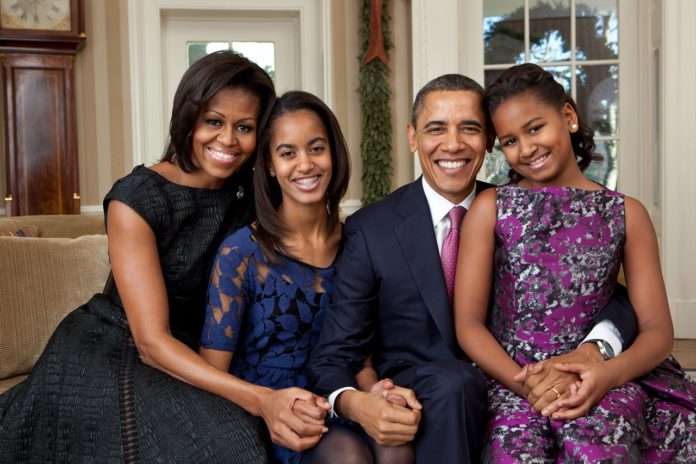
The Obama family

This coming Monday, February 12, 2018, there will be a portrait unveiling for President and Mrs. Barack Obama at the Smithsonian’s National Portrait Gallery.

The two portraits were commissioned by the Smithsonian’s National Portrait Gallery. Artist Kehinde Wiley — best known for his vibrant, large-scale paintings of African Americans — was selected to create President Obama’s portrait. Baltimore-based artist Amy Sherald, first-prize winner of the Portrait Gallery’s 2016 Outwin Boochever Portrait Competition, was selected to paint Mrs. Obama.

Wiley’s painting will be permanently installed in the Portrait Gallery’s acclaimed “America’s Presidents” exhibition. Sherald’s painting will be on view in the museum’s “Recent Acquisitions” corridor through early November 2018.


Sign up to receive Fine Art Today, the weekly e-newsletter from
Fine Art Connoisseur magazine.

Featured Artwork: Tyson Snow presented by the Celebration of Fine Art

0

“Time of Waiting Moon” by Tyson Snow
Bronze
16 x 7 x 5 in.

Tyson works in various media sculpts in bronze, paints in oil, and creates highly complex black and white drawings using white pencil over black substrate. A motivated creator, he recently won first place in sculpture at the International Art Renewal Center Salon. Come watch him and 100 other artists create at the Celebration of Fine Art, where art lovers and artists connect, in Scottsdale, Arizona, January 13—March 25, 2018. Contact us at 480-443-7695 or [email protected].

View more of Tyson’s work for the Celebration of Fine Art at http://celebrateart.com/artsy_gallery/tyson-snow/

Coming Soon: The Art Show 2018 (New York)

0
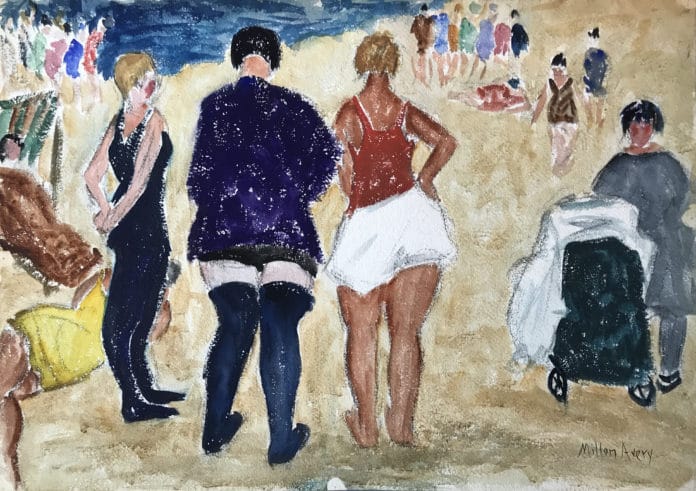
Milton Avery, "Untitled (Beach Backs)," ca. 1930s, watercolor with charcoal on paper, 15 x 22 in., Courtesy of Yares Art

The Art Show 2018
February 28 through March 4, 2018
Presented by The Art Dealers Association of American (ADAA)

From the ADAA:
The ADAA recently announced highlights of the 30th edition of The Art Show, the nation’s longest running and most respected art fair. The Art Show 2018 marks an unprecedented three decades of partnership between three major cultural organizations, the ADAA, the venerable community nonprofit Henry Street Settlement and New York City’s foremost cross-disciplinary cultural institution, the Park Avenue Armory. Since the fair’s inception, The Art Show has raised nearly $30 million for Henry Street Settlement through fair admission and proceeds from the annual Gala Preview.

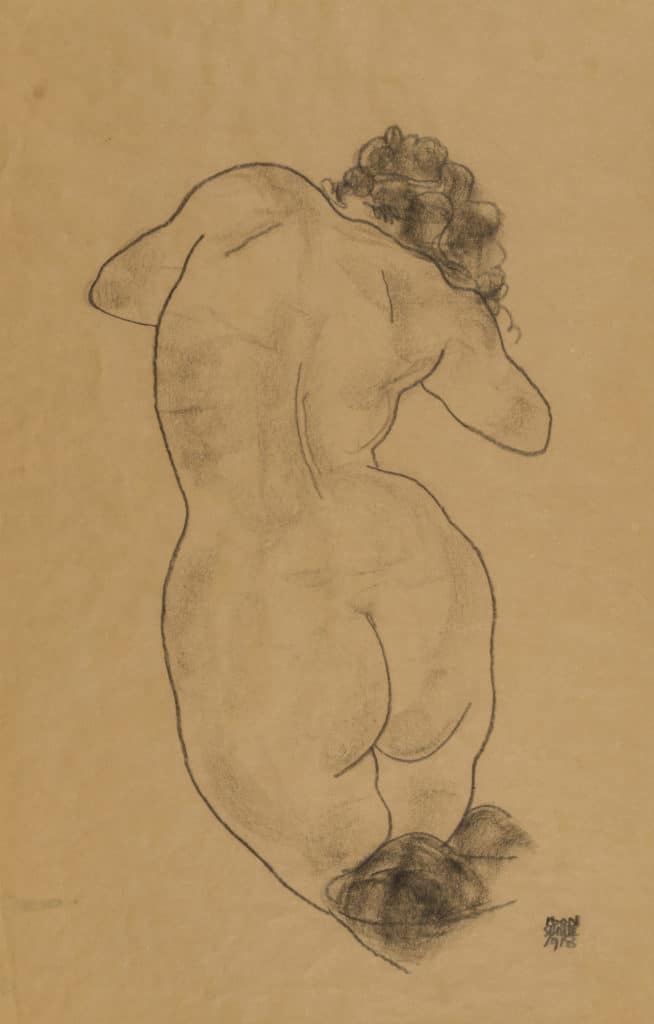
Egon Schiele, “Female Nude, Back View,” 1918, black crayon on tan wove paper, 18 1/8 x 11 3/8 in., Courtesy Galerie St. Etienne, New York

Presented by the ADAA, The Art Show is distinguished by its intimate scale and thoughtfully curated presentations. This year’s fair will welcome ten returning galleries from the first-ever edition of The Art Show in 1989, and many first-time exhibitors, including Altman Siegel, Chambers Fine Art, Danziger Gallery, Jonathan Boos, Maccarone, and Sicardi Gallery.

Highlights of the fair include a range of new works, including many specially conceived for The Art Show such as new works on paper by Nicole Eisenman presented by Anton Kern Gallery (New York); a suite of new drawings by Tal R presented by Cheim & Read (New York); and photographs by Catherine Opie of Lehmann Maupin (New York). Acclaimed ink artist Wang Dongling will also create new work during a public performance on Wednesday, February 23.

Learn more about The Art Show 2018 here. 


Sign up to receive Fine Art Today, the weekly e-newsletter from
Fine Art Connoisseur magazine.

Rushnyky: Sacred Ukrainian Textiles

0
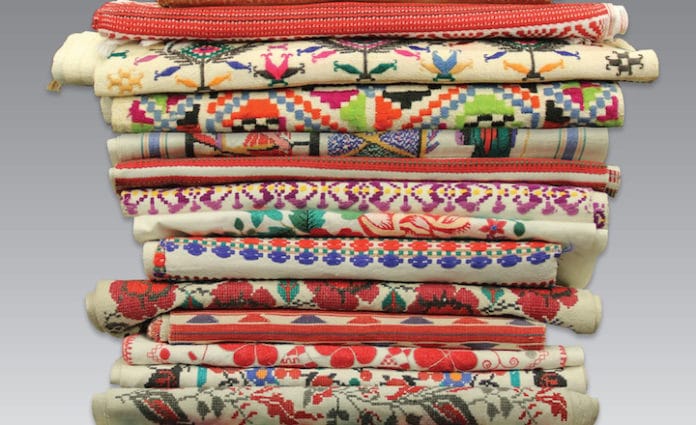
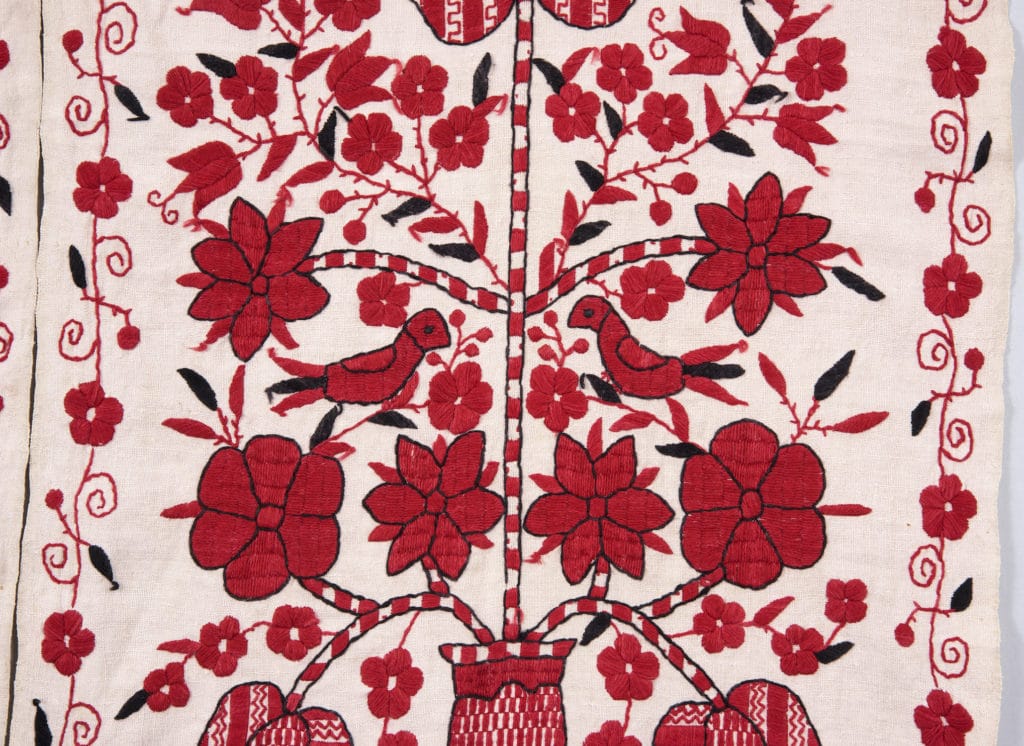
Detail of a "rushnyk." Ukrainian Rushnyky. Courtesy Frank Sciacca and Museum of Russian Icons.

Through June 10, 2018
Museum of Russian Icons (MA)

From the museum:

The Museum of Russian Icons presents “Rushnyky: Sacred Ukrainian Textiles,” an exhibition celebrating and exploring Ukrainian culture through one of its most ancient and valued traditions. The exhibition will feature more than 80 rushnyky, Ukrainian icons, and related artifacts.

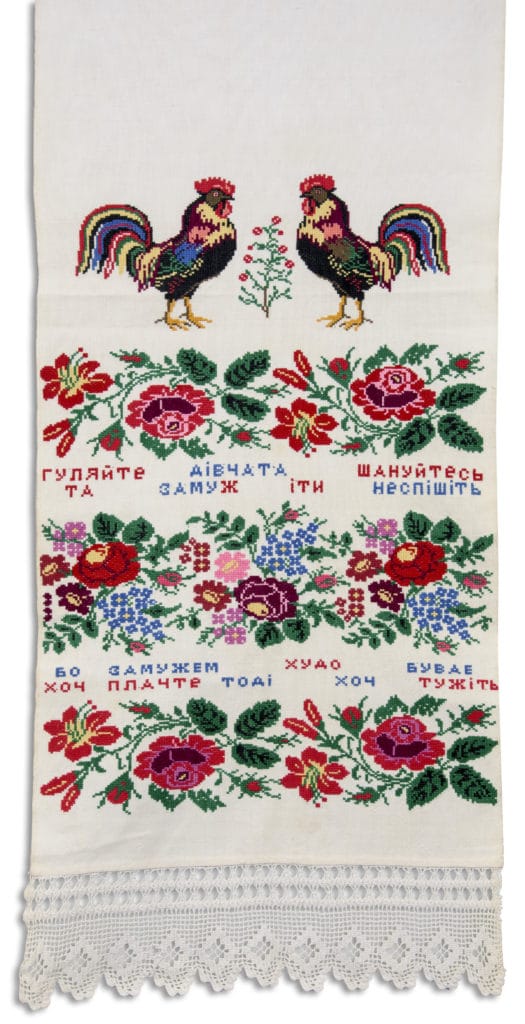
Ukrainian Rushnyky. Courtesy Frank Sciacca and Museum of Russian Icons.

What are rushnyky?

Rushnyky are ornately embroidered woven textiles that function at the core of many life-cycle ceremonies and rituals of the Ukrainian people. A rushnyk is a long rectangular cloth, typically handwoven in one solid piece from white linen or hemp, measuring 6-8 feet long by 1-2 feet wide. They are often adorned with brightly colored patterns; the symbolic decoration preserves archaic magical signs, symbolic colors and motifs, as well as Slavic artistic folk styles. Some cloths are decorated with intricate white-on-white satin stitch, cutwork, lace, and drawn thread work embroidery. Rushnyky have distinctive regional characteristics. For example, in central Ukraine, cloths typically feature the tree of life surrounded by animal, bird, and floral motifs.

Ukrainian Rushnyky. Courtesy Frank Sciacca and Museum of Russian Icons.

Steeped in tradition and faith, the shape of the rushnyk represents life’s journey, and the cloths are believed to be a median between the secular and the divine. The process of spinning thread and weaving linen embodies spiritual power reflecting the ancient deity Mokosh, often represented in embroidery. The needle has its own energy (similar to the chi of acupuncture), and the color of the thread has sacred meaning. Red, for example, represents life and is the main color used.

Learn more about “Rushnyky: Sacred Ukrainian Textiles” at http://www.museumofrussianicons.org/


Sign up to receive Fine Art Today, the weekly e-newsletter from
Fine Art Connoisseur magazine.

WEEKLY NEWS FROM THE ART WORLD

Fill your mind with useful art stories, the latest trends, upcoming art shows, top artists, and more. Subscribe to Fine Art Today, from the publishers of Fine Art Connoisseur magazine.

  • This field is for validation purposes and should be left unchanged.