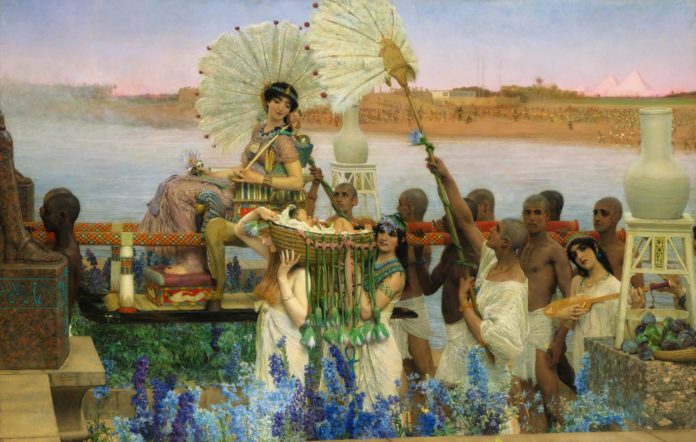
Lawrence Alma-Tadema, “The Finding of Moses,” oil on canvas, 53 3/4 by 84 in.
Ancient Rome in Victorian London: Time-Traveling with the Painter Lawrence Alma-Tadema
Tuesday, January 23, 2018
The General Society Library, Manhattan, New York
The Royal Oak Foundation announces a special lecture with Peter Trippi, Independent curator and editor-in-chief of Fine Art Connoisseur on “Ancient Rome in Victorian London: Time-Traveling with the Painter Lawrence Alma-Tadema.”
“Alma-Tadema has always intrigued viewers with the immediacy of his settings and the tactility of his artifacts,” Trippi says. “Now, in this era of 3-D movies and virtual reality, his vision is more appealing than ever, and I look forward to more fully exploring these themes during my lecture.”
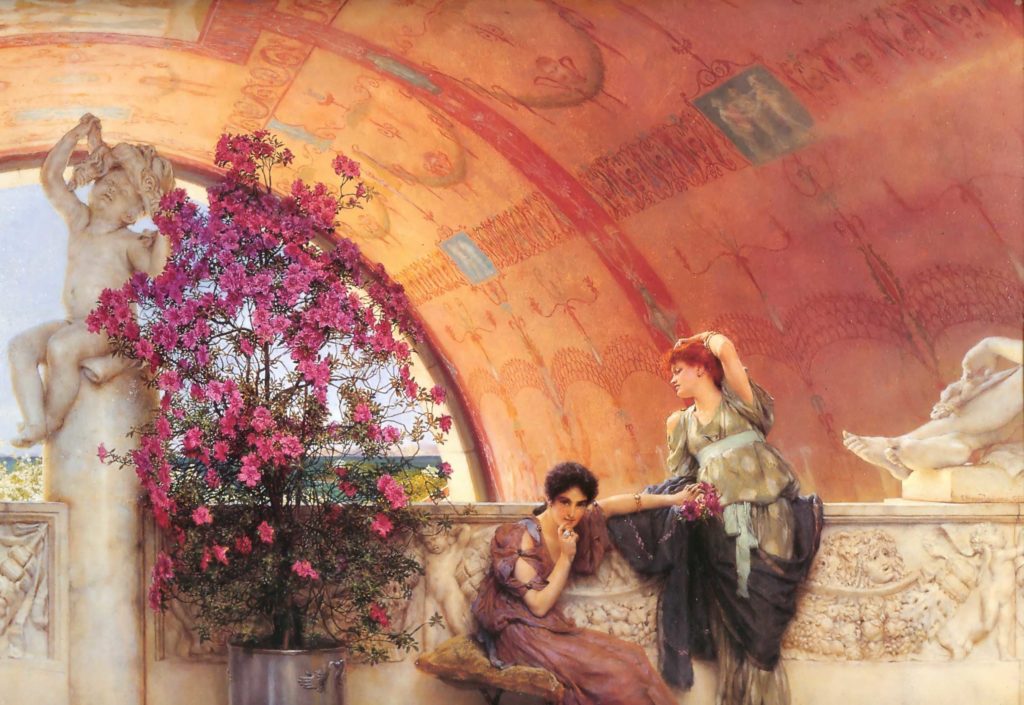
Lawrence Alma-Tadema, “Unconscious Rivals,” 1893, Bristol Museums & Art Gallery
“The High Victorians were fascinated with ancient Rome because they saw the British Empire as a bigger, more benevolent version of Rome’s,” says the foundation. “No one reanimated Rome more convincingly for them than the London-based painter Sir Lawrence Alma-Tadema, R.A. (1836–1912).
“Acclaimed for the painstaking realism of the expensive pictures he exhibited at the Royal Academy, Alma-Tadema immersed his viewers in a vanished world through compelling compositions full of carefully researched costumes and artifacts. Ultimately he extended his vision to grand theatre productions, working closely with stars such as Dame Ellen Terry, whose mementos of their partnership can be seen at Smallhythe, now a National Trust property.
“Alma-Tadema’s wife and two daughters were equally friendly with Terry: all of them proudly wore the loose-fitting ‘artistic’ clothing that Alma-Tadema painted and designed. Not surprisingly, filmmakers were captivated, too: they transferred his scenes to the screen while he was still alive and have continued to do, most recently in the sumptuous ‘sword-and-sandal’ movies of Sir Ridley Scott.”
Cost: $30 members; $40 non-members. Fine Art Today readers are invited to enjoy the Royal Oak Foundation member price ($30) by using the promo code TADEMA when calling to register.
Call 212-480-2889 x 201 to register and learn more at www.royal-oak.org.
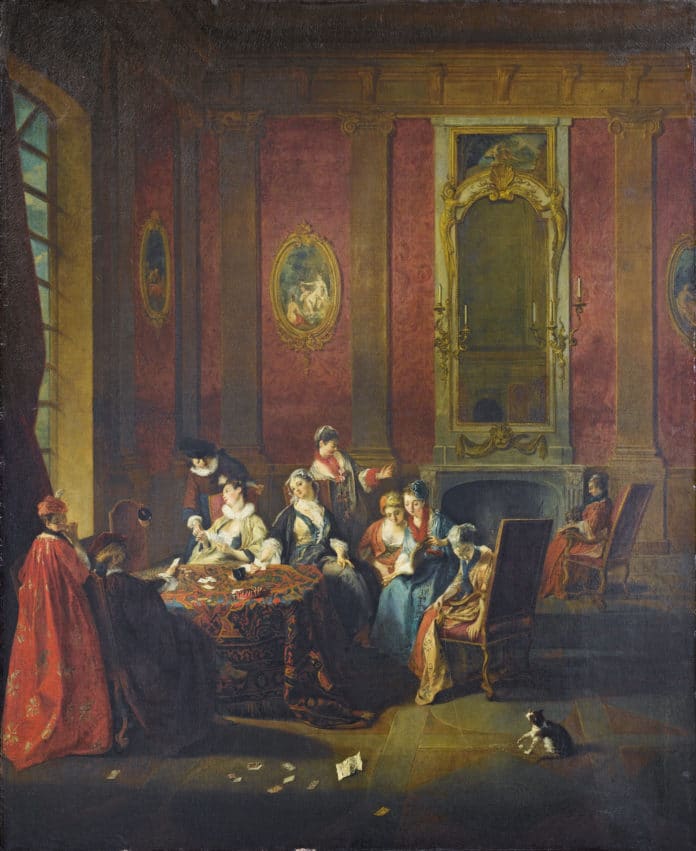
Nicolas Lancret (1690–1743), “Winter,” c. 1719–21, oil on canvas, 45 1/4 x 37 in., estimate $1,500,000–$2,000,000
Evening Sale of “Winter” by Nicolas Lancret at Sotheby’s
February 1–2, 2018 (Preview exhibition January 26)
New York, New York
Sotheby’s will soon auction a range of Old Master and 19th-century paintings and sculptures. At the evening sale, the highlight will be “Winter” from Nicolas Lancret’s “Four Seasons” cycle, a masterwork unlocated since 1889. “Winter” was commissioned from the artist by Jean-François Lériget de la Faye (1674–1731), Paris.
The day sale’s highlight also dates from the 18th century: Pierre-Antoine Demachy’s “Book Market Beneath the Louvre Galleries” (estimate $100,000–$150,000). Both auctions will include impressive British portraits and Dutch paintings.
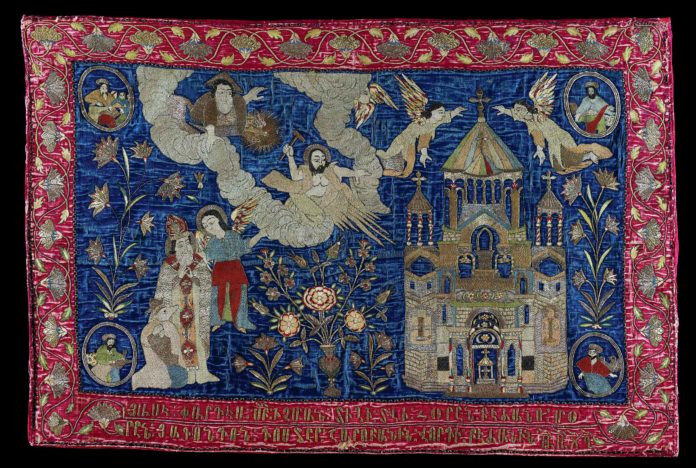
Altar Frontal, New Julfa, 1741, Gold, silver, and silk threads on silk, 26 9⁄16 × 38 3⁄8 in. (67.5 × 97.5 cm), Mother See of Holy Etchmiadzin, Armenia (626) Photo: Hrair Hawk Khatcherian and Lilit Khachatryan
Opening September 22 at the Metropolitan Museum of Art, “Armenia!” explores the arts and culture of the Armenians from their conversion to Christianity in the early fourth century through their leading role on international trade routes in the 17th century. The exhibition emphasizes how Armenians developed a distinctive national identity in their homeland at the base of Mount Ararat (widely accepted as the resting place of Noah’s Ark) and how they maintained and transformed their traditions as their communities expanded across the globe.
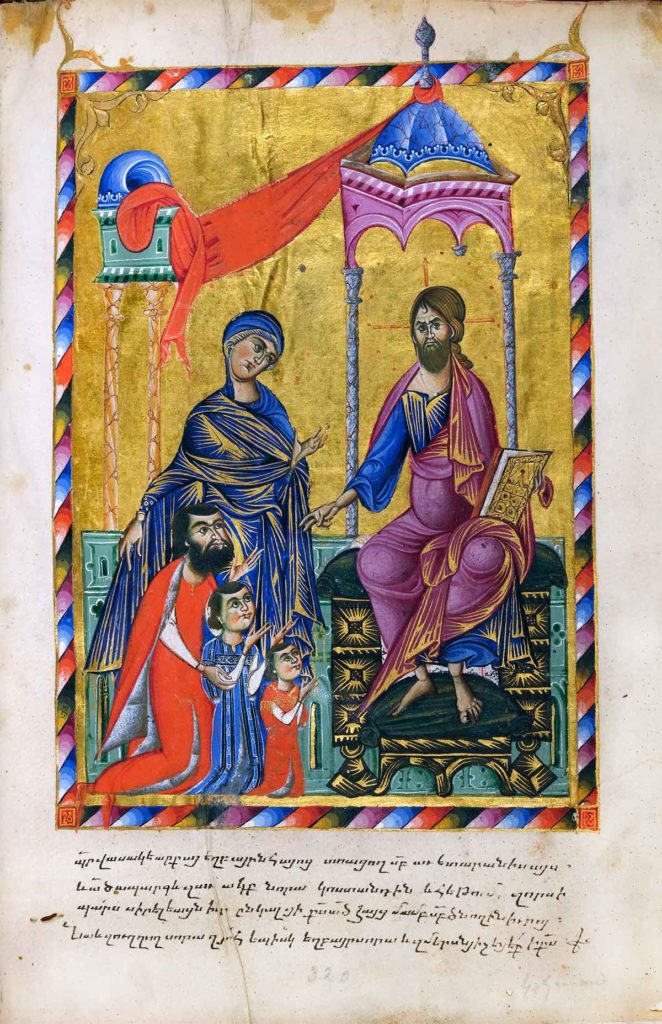
Portrait of Prince Vasak and His Family Second Prince Vasak Gospel Book, Sis, 1268–85, Ink, tempera, and gold on parchment; 323 folios 10 1⁄4 × 7 7⁄8 in. (26 × 20 cm), Armenian Patriarchate of Jerusalem, (ms 2568/13), fol. 320r, Photo: Courtesy of the Armenian Patriarchate of Jerusalem
More than 140 opulent gilded reliquaries, richly illuminated manuscripts, rare textiles, liturgical furnishings made of precious materials, khachkars (cross stones), church models, and printed books demonstrate Armenia’s distinctive imagery in their homeland and other major Armenian sites, from the Kingdom of Cilicia on the Mediterranean to New Julfa, in Safavid Persia. Selected comparative works display Armenian interaction with other cultures.
Major Armenian repositories of their culture provide almost all the works in the exhibition. Most are on view in the United States for the first time; many have not traveled for centuries.
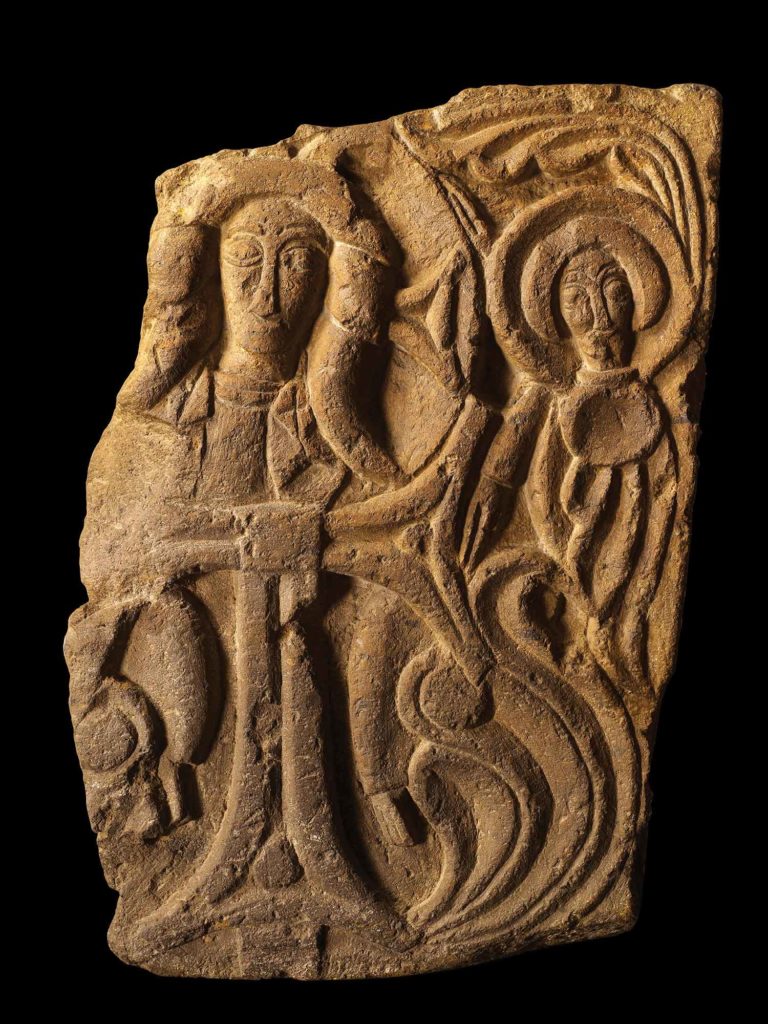
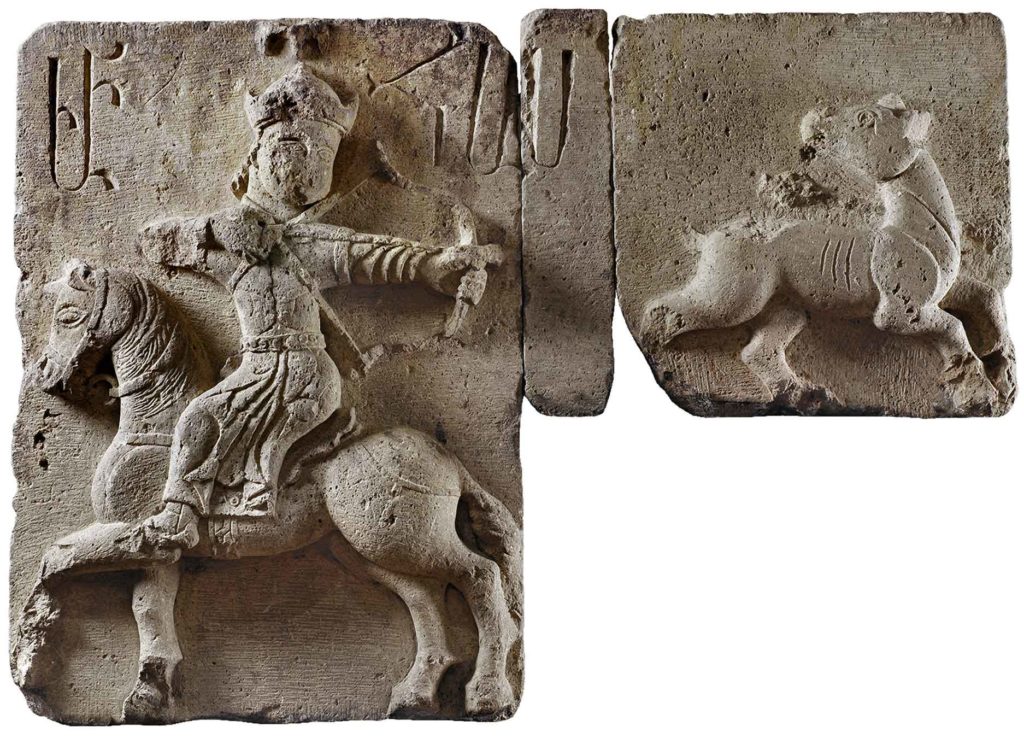
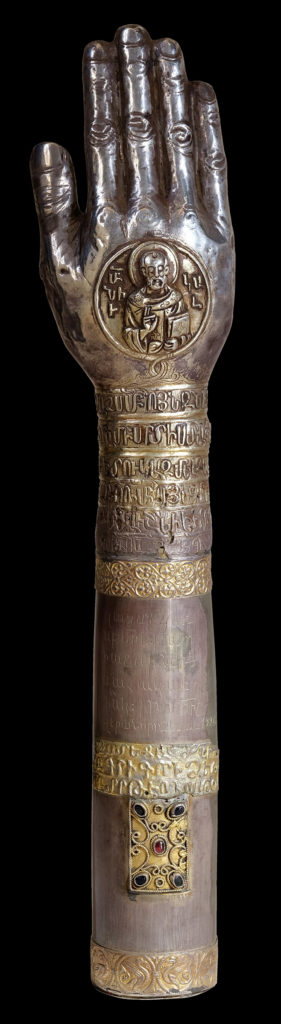
Fragmentary Capital, Dvin, 5th–7th century, Tuff, 23 5⁄8 × 13 13⁄16 × 16 9⁄16 in. (60 × 35 × 42 cm) History Museum of Armenia, Yerevan (2604-7) Photo: Hrair Hawk Khatcherian and Lilit KhachatryanBas-Relief of Amir Hasan Hunting on Horseback Church of the White Virgin (Spitakavor Astuatsatsin), Monastery of Spitakavor, Siwnik‘, early 14th century Felsite, 37 × 53 9⁄16 × 13 3⁄8 in. (94 × 136 × 34 cm), History Museum of Armenia, Yerevan (1320–22) Photo: Hrair Hawk Khatcherian and Lilit KhachatryanArm Reliquary of Saint Nicholas, Cilicia, probably Sis, 1315, Silver with parcel-gilded silver sheet, twisted filigree, and gemstones, 18 11⁄16 × 3 3⁄4 in. (47.5 × 9.5 cm), Holy See of Cilicia, Antelias, Lebanon (2v), Photo: Hrair Hawk Khatcherian and Lilit Khachatryan
“Armenia!” focuses on major Armenian centers of production from their homeland west and east, with emphasis on images of Armenians, from self-portraits to depictions of male and female rulers, donors, theologians, and historians. Special attention is given to works by major artists such as Toros Roslin, Sargis Pidzak, Toros Taronatsi, and Hakob of Julfa working in the Armenian homeland, the Kingdom of Cilicia, and New Julfa.
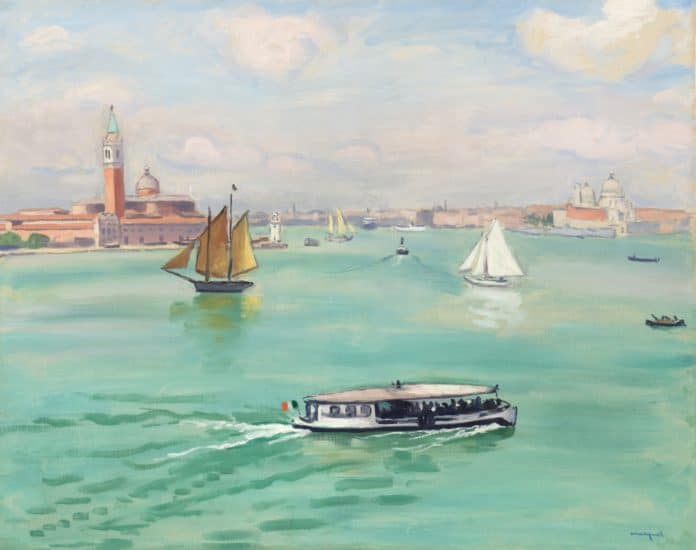
Albert Marquet (1875–1947), “Venise le Vaporetto,” 1936, oil on canvas, 25 3/4 x 31 3/4 in., Hélène Bailly Gallery, Paris
The Brussels Art Fair (BRAFA) searches out and features top-level works of art and discoveries in multiple disciplines, crossing media, cultures, and even centuries. View paintings, drawings, sculptures, glassware, ceramics, and other artful objects from 134 art dealers and galleries now through February 4.
The BRAFA credo is “that of the highest possible quality,” reflected by galleries that are both historically represented and new to the show. The organization’s president, Harold t’Kint de Roodenbeke, says, “It’s really a great source of pride for BRAFA to be able to present such a panel, comprising so many galleries of international renown and such strong sections. I think the quality will never have been as high, and I am delighted at the prospect. We are looking forward with great anticipation to being able to open our doors to our visitors!”
New to BRAFA this year are:
ArtAncient (London — archaeology, numismatics) Galeria Bernat (Madrid/Barcelona — Haute Epoque) Galerie Chastel-Maréchal (Paris — 20th-century decorative arts) Galerie Philippe David (Zurich — modern and contemporary art) Gladstone Gallery (Brussels — contemporary art) Galerie Maeght (Paris — 20th-century paintings and sculptures) Guilhem Montagut Gallery (Barcelona — tribal art) Renaud Montméat (Paris — Asian art) Osborne Samuel Gallery (London — modern British painting and sculpture) Galerie de la Présidence (Paris — 20th-century masters and figurative painters of the 1950s) Galerie Ratton (Paris — tribal art) Repetto Gallery (London — Italian post-war art, Arte Povera, Land Art) Galerie Schifferli (Geneva — 20th-century paintings and works on paper) Theatrum Mundi (Arezzo — 21st-century cabinet of curiosities) Tornabuoni Arte (Florence — modern and contemporary art)
Created in 1956, the Brussels Art Fair is one of the world’s oldest art fairs, known for the superb art, antiques, and design objects its international exhibitors offer. It is held at Tour & Taxis, an impressive 19th-century complex of warehouses surrounding a former train station.
This article was featured in Fine Art Today, a weekly e-newsletter from Fine Art Connoisseur magazine.Click here to start receiving Fine Art Today for free.
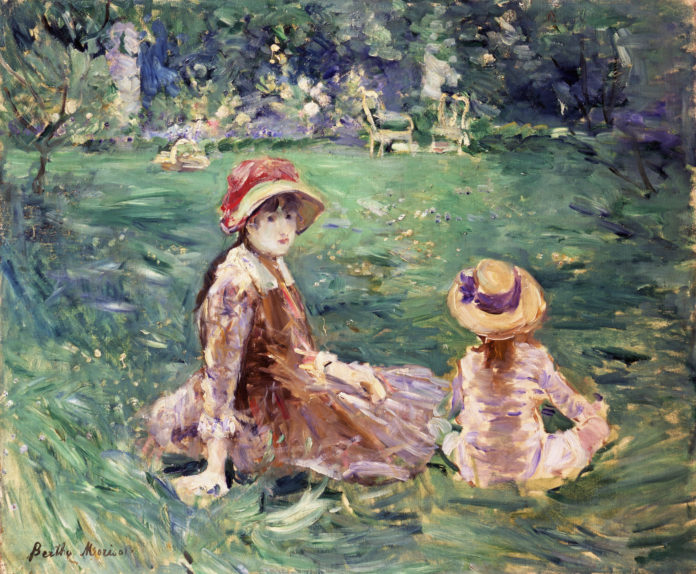
Berthe Morisot. "The Garden at Maurecourt," about 1884. Oil on canvas. Toledo Museum of Art, purchased with funds from the Libbey Endowment, Gift of Edward Drummond Libbey, 1930.9. Photo courtesy Toledo Museum of Art.
Major Exhibition of Work by Under-recognized Founding Member of Impressionist Art to Make U.S. Premiere at Barnes Foundation
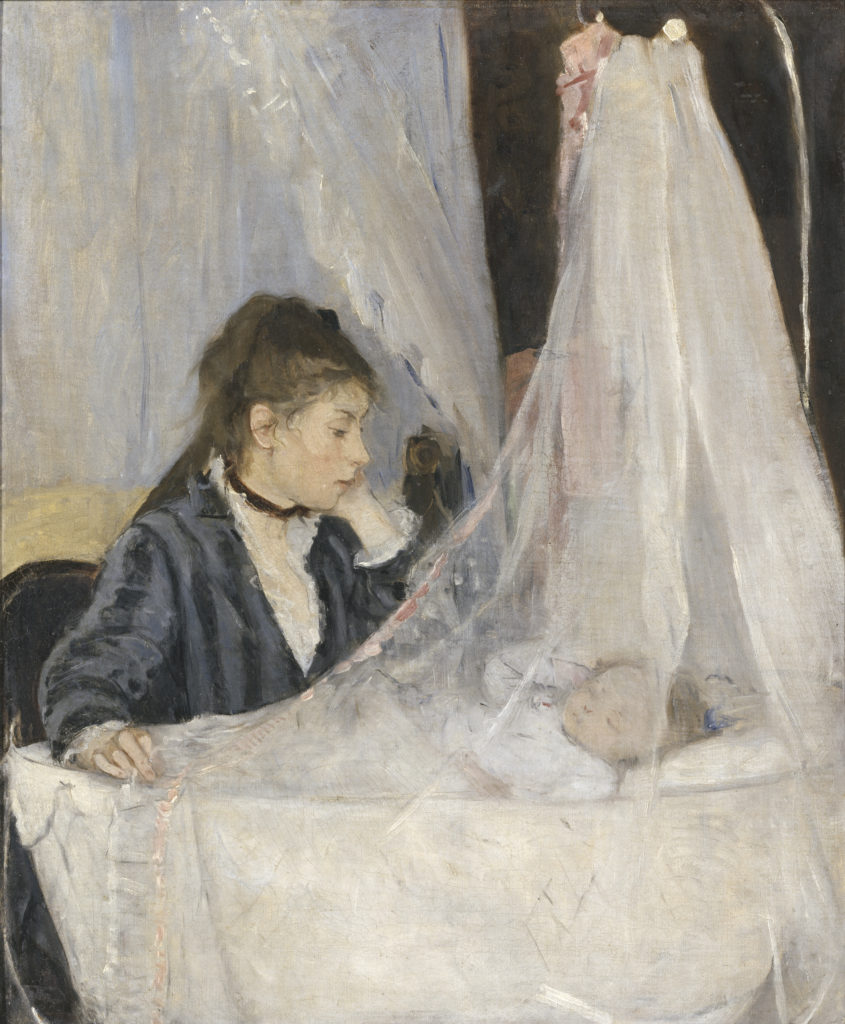
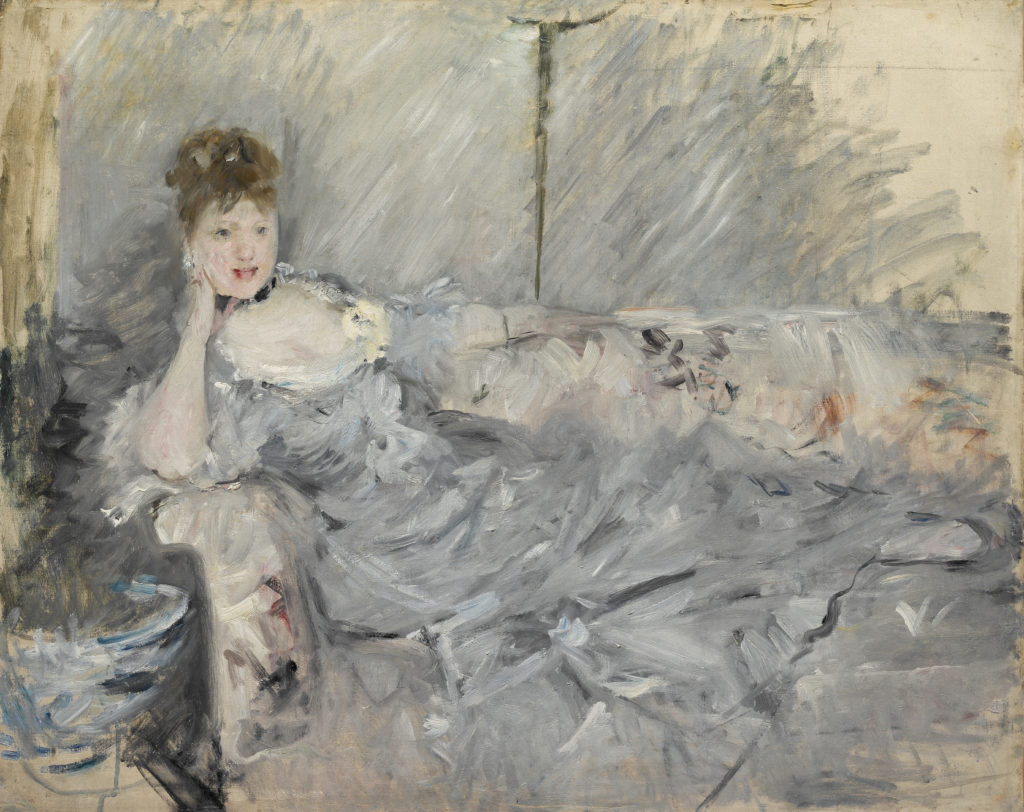
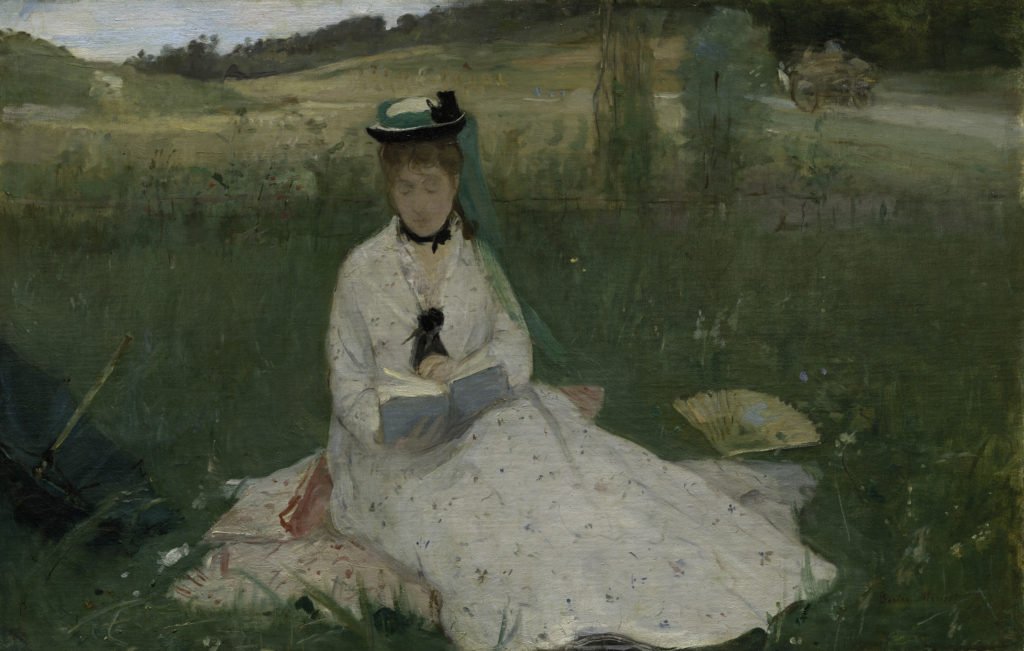
The Barnes Foundation will present the U.S. debut of a landmark exhibition exploring the significant yet under-recognized contributions of Berthe Morisot (1841–1895), one of the founders of impressionism. The first monographic exhibition of the artist to be held in the U.S. since 1987, “Berthe Morisot: Woman Impressionist” provides new insight into a defining chapter in art history and the opportunity to experience Morisot’s work in context of the Barnes’s unparalleled collection of impressionist, post-impressionist, and early modernist paintings. The internationally touring exhibition is co-organized by the Barnes Foundation, Dallas Museum of Art, Musée national des beaux-arts du Québec, and the Musées d’Orsay et de l’Orangerie, Paris. It will be on view at the Barnes from October 21, 2018, through January 14, 2019.
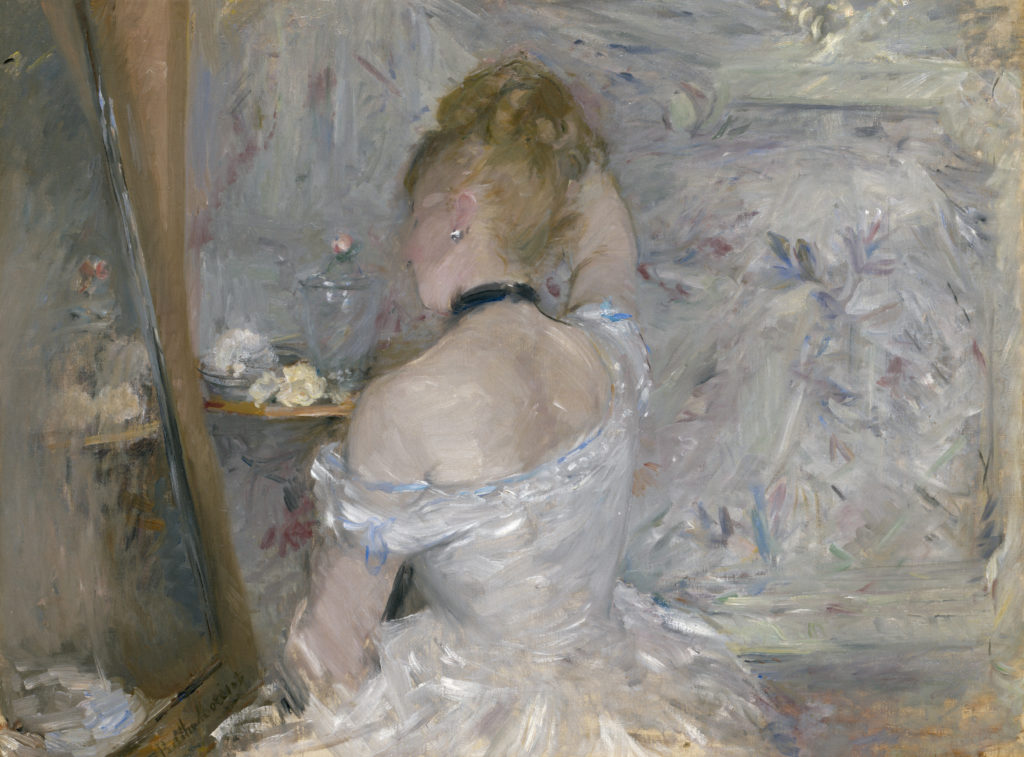
Berthe Morisot. “Woman at Her Toilette,” 1875–1880. Oil on canvas. The Art Institute of Chicago, Inv. no. 1924.127. Photo courtesy The Art Institute of Chicago / Art Resource, NY.
Morisot was celebrated in her time as a leader of the movement, and her innovative works were coveted by dealers and collectors alike. Despite her accomplishments, today she is not as well-known as her impressionist colleagues, a group that includes Claude Monet, Edgar Degas, and Pierre-Auguste Renoir. Co-curated by Sylvie Patry, consulting curator at the Barnes Foundation and chief curator/deputy director for curatorial affairs and collections at the Musée d’Orsay, Paris, and Nicole R. Myers, the Lillian and James H. Clark curator of European painting and sculpture at the Dallas Museum of Art, “Berthe Morisot: Woman Impressionist” will both illuminate and reassert Morisot’s role as an essential figure within the impressionist movement and the development of modern art in Paris in the second half of the 19th century.
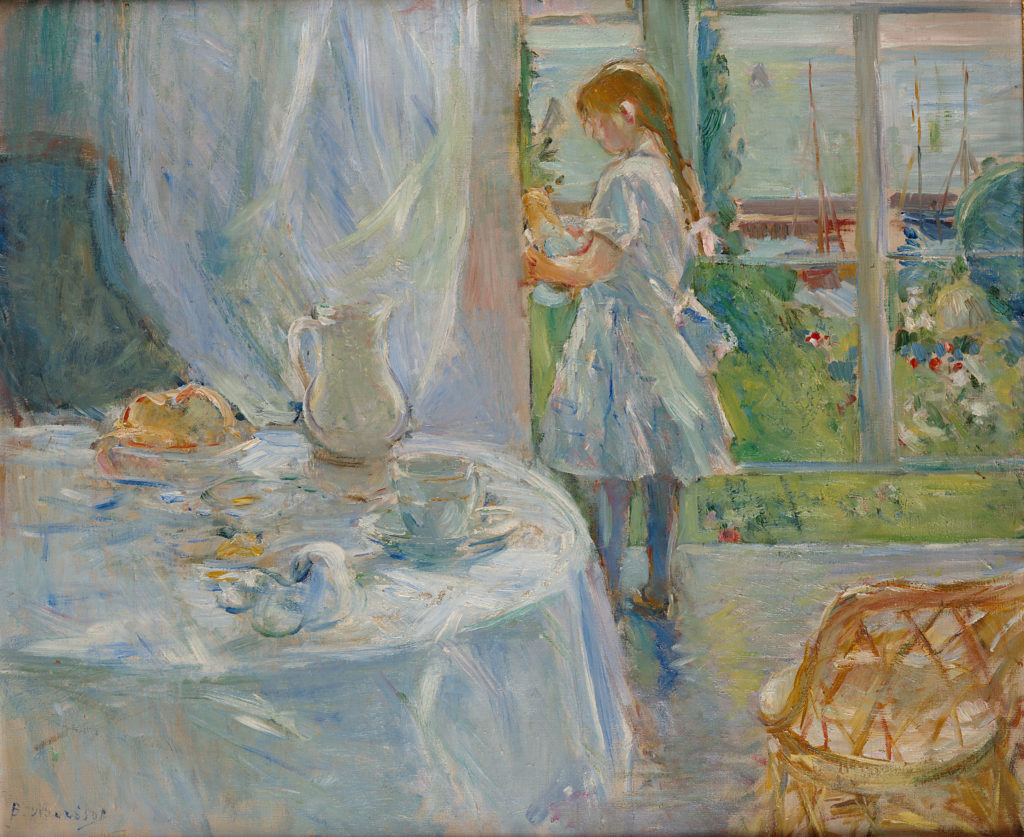
Berthe Morisot. “Cottage Interior,” 1886. Oil on canvas. Musée d’Ixelles, Gift of Fritz Toussaint, F.T. 104. Photo courtesy Collection Musée d’Ixelles.
“We look forward to fleshing out the story of impressionism represented in our holdings with the presentation of this groundbreaking exhibition,” says Thom Collins, executive director and president of the Barnes Foundation. “This international collaboration introduces important new scholarship that contributes to a more complete understanding of impressionism and Berthe Morisot as a revolutionary figure within the movement.”
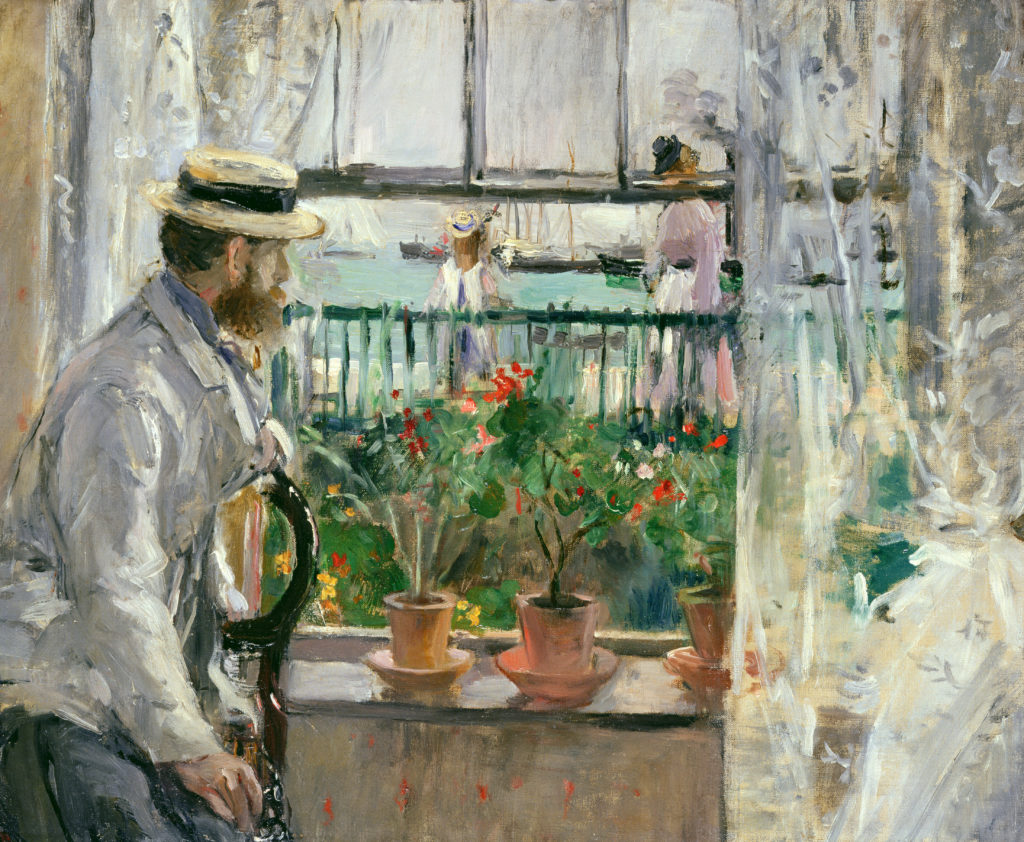
Berthe Morisot. “In England (Eugène Manet on the Isle of Wight),” 1875. Oil on canvas. Musée Marmottan Monet, Denis and Annie Rouart Foundation. Photo by Erich Lessing / Art Resource, NY.
“Berthe Morisot: Woman Impressionist” focuses on the artist’s figure paintings and portraits, with approximately 70 paintings from public and private collections on view. The exhibition traces the exceptional path of a female painter who, in opposition to the norms of her time and social background, became an important member of the Parisian avant-garde from the late 1860s until her death in 1895. Through her portrayal of the human figure, Morisot was able to explore the themes of modern life that came to define impressionism, such as the intimacy of contemporary bourgeois living and leisure activities, the importance of fashion and the toilette, and women’s domestic work, all while blurring the lines between interior and exterior, public and private, finished and unfinished.
“Though Berthe Morisot held an important place at the heart of the impressionist movement, she has historically enjoyed far less acclaim than her male counterparts,” says Patry. “Through this landmark exhibition, together with colleagues at our partner museums around the world, we are thrilled to bring renewed international attention to the significant work of Morisot.”
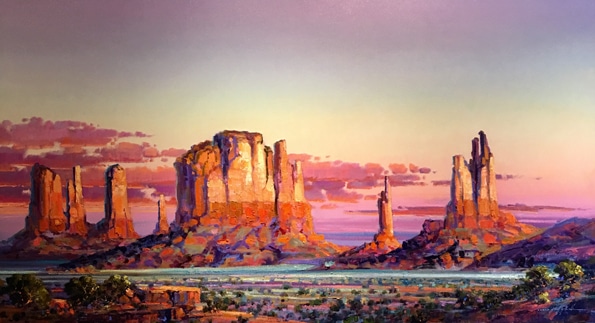
A native of Utah, Kirk’s works depict a sense of place. He is known for painting sweeping landscapes and vivid skies, showcasing the intense beauty and reflective light of the West. His artistic career spans decades, including 28 years as a participant in the Celebration of Fine Art. Come watch him and 100 other artists create at the Celebration of Fine Art, where art lovers and artists connect, in Scottsdale, Arizona, January 13-March 25, 2018. Contact us at 480.443.7695 or [email protected].
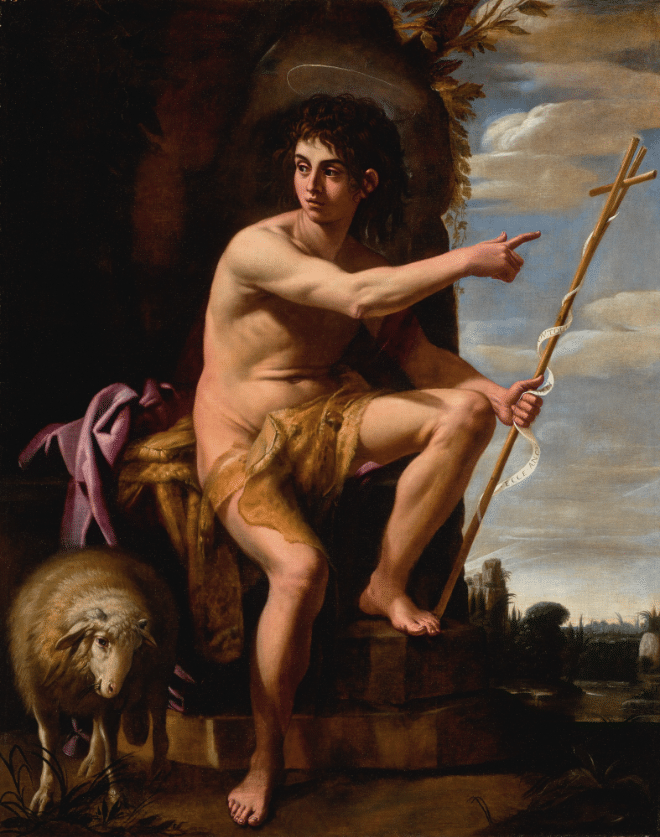
Giovanni Baglione, “Saint John the Baptist in the Wilderness,” circa 1610, oil on canvas, 76-3/8 x 59 1/2 inches
In this ongoing series forFine Art Today, we take a longer look at the history and features of a soon-to-be-available artwork of note. This weekwe highlight a magnetic painting of Saint John the Baptist that leads Sotheby’s January 31 Otto Naumann Sale.
On January 31, Sotheby’s New York will be delighted to offer property from the collection of Otto Naumann, who, in addition to being a world-renowned art dealer, is an art historian and voracious collector. The sale features European paintings from the 16th to the 19th centuries that exemplify Otto’s impressive eye for timeless pictures of the highest quality.
Highlighting the sale is a brilliant painting of Saint John the Baptist, painted circa 1610 by Giovanni Baglione (1566-c.1643). Baglione is perhaps best known for his scathing criticisms of a contemporary, painter Michelangelo Caravaggio. Baglione’s detailed biography of the troubled Caravaggio has proved invaluable to history — but scholars often look at his information with a bit of caution, citing his obvious bias and vitriol toward his fellow artist.
The canvas available during the January 31 sale in New York is a fantastic example of early baroque theatricality and tenebrist light. According to the auction house, “the painting was rediscovered in a private collection where it had remained since 1970, bearing a later inscription in the lower right corner, reading CARRACCI. Despite the inscription, the hand was recognized as that of Giovanni Baglione and the painting was sold with the correct attribution at Sotheby’s London in 2012 with a tentative dating to 1603. A later cleaning of the painting under the ownership of Naumann revealed Baglione’s actual signature and a significant amount of detail.
“With its starkly lit figure and pronounced tenebrism effect, it is tempting to compare this Saint John the Baptistto Caravaggio’s treatment of the subject in the Nelson Atkins Museum, Kansas City. Baglione, in fact, painted the saint on numerous occasions in the course of his career, though the present work is by far the largest and most accomplished. A preparatory drawing was sold at Sotheby’s London in 1977 and is typically rapid in execution, as was Baglione’s style as a draughtsman. It maps out the composition very clearly and shows that from an early stage in the creative process Baglione was keen to include both the foreground plants and the background landscape, elements which are more often merely alluded to in his work. This notably disciplined approach runs counter to Caravaggio’s preparatory methods.”
Auction estimates anticipate the painting will sell for $400,000-$600,000. To learn more, visit Sotheby’s.
This article was featured in Fine Art Today, a weekly e-newsletter from Fine Art Connoisseur magazine. To start receiving Fine Art Today for free, click here.
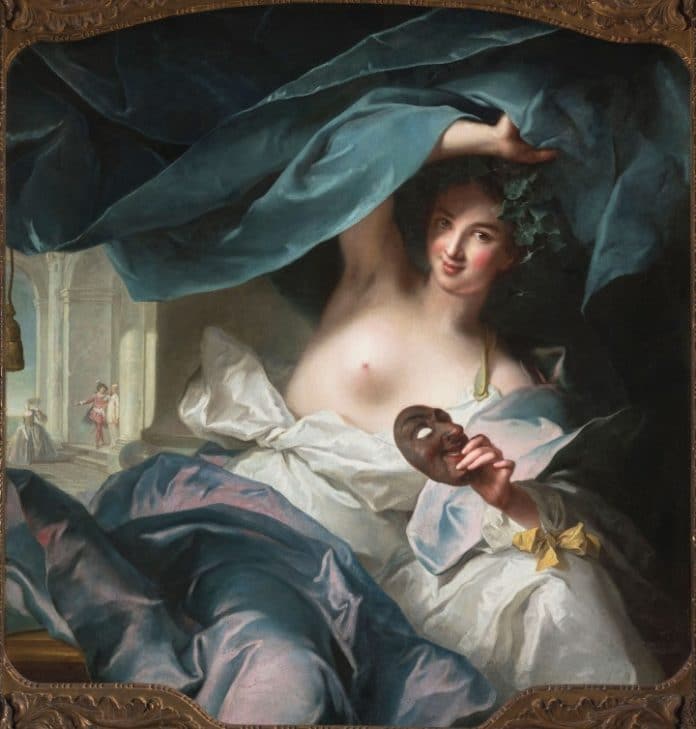
Jean-Marc Nattier, “Thalia, Muse of Comedy,” 1739, oil on canvas, 53 1/2 x 49 inches, Fine Arts Museums of San Francisco
Renowned today as a seducer and an adventurer, Giacomo Casanova (1725-1798) was known to his contemporaries as a charming and witty conversationalist, an expert on many topics, and an international man of letters.
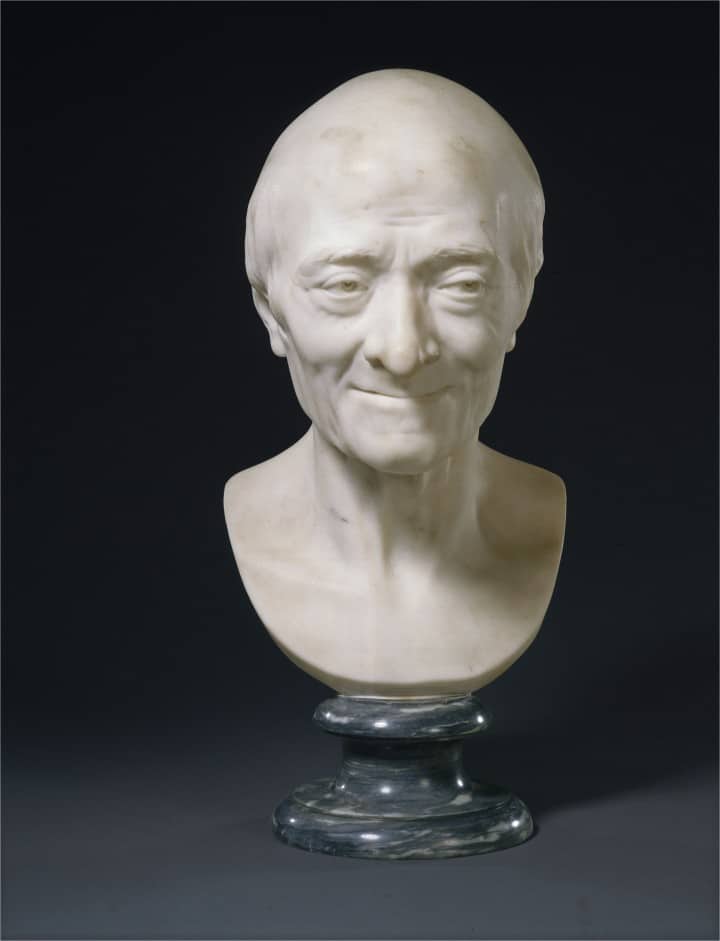
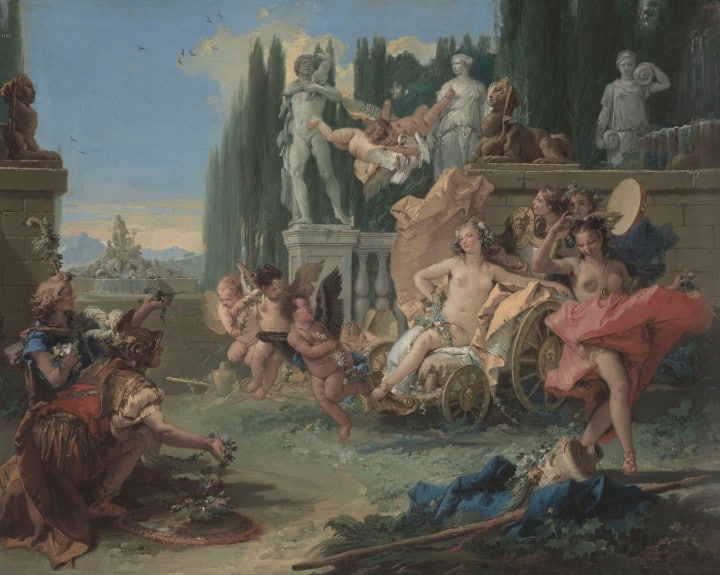
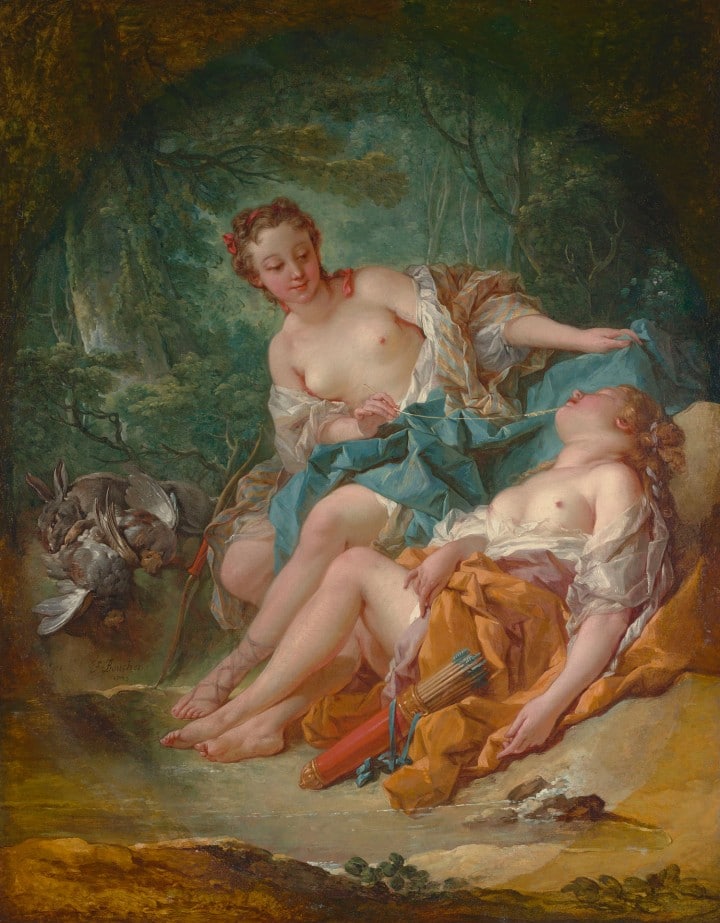
“He was also a gambler, a spy, and one of history’s greatest travelers,” The Legion of Honor, San Francisco, writes of Casanova. From February 10 through May 28, the museum will be presenting approximately 90 incredible artworks during “Casanova: The Section of Europe.” Including paintings by Canaletto, Pietro Longhi, William Hogarth, Jean-Honoré Fragonard, and François Boucher; sculptures by Jean-Antoine Houdon; works on paper by Giovanni Battista Piranesi; period furnishing, delicate porcelains, silver, and period costumes, the exhibition seeks to bring the world of Casanova to life.
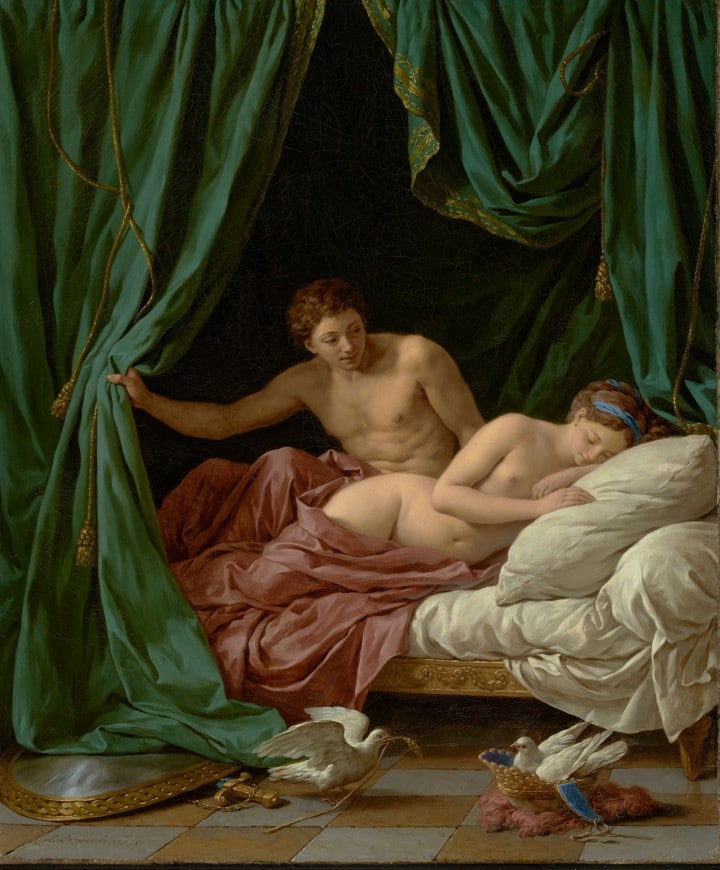
Louis Jean François Lagrenée, “Mars and Venus, Allegory of Peace,” 1770, oil on canvas, 25 1/2 x 21 1/8 inches, J. Paul Getty MuseumJean-Antoine Houdon, “Voltaire,” 1778, marble, 14 3/8 x 8 3/8 x 8 3/8 inches, National Gallery of Art, WashingtonGiovanni Battista Tiepolo, “The Empire of Flora,” circa 1743, oil on canvas, 28 1/4 x 35 inches, Fine Arts Museums of San FranciscoFrançois Boucher, “Companions of Diana,” 1745, oil on canvas, 46 1/8 x 36 1/8 inches, Fine Arts Museums of San Francisco
“Of special note are three tableaux, illustrating, respectively, a visit to a convent in Venice, a morning toilette in Paris, and a dissipated night of cards in London — scenes composed of mannequins in 18th-century costumes amid period furniture,” the museum continues. “Thematic threads running through the exhibition include travel; courtship and seduction; theater and identity; and the pleasures of dining.”
This article was featured in Fine Art Today, a weekly e-newsletter from Fine Art Connoisseur magazine. To start receiving Fine Art Today for free, click here.
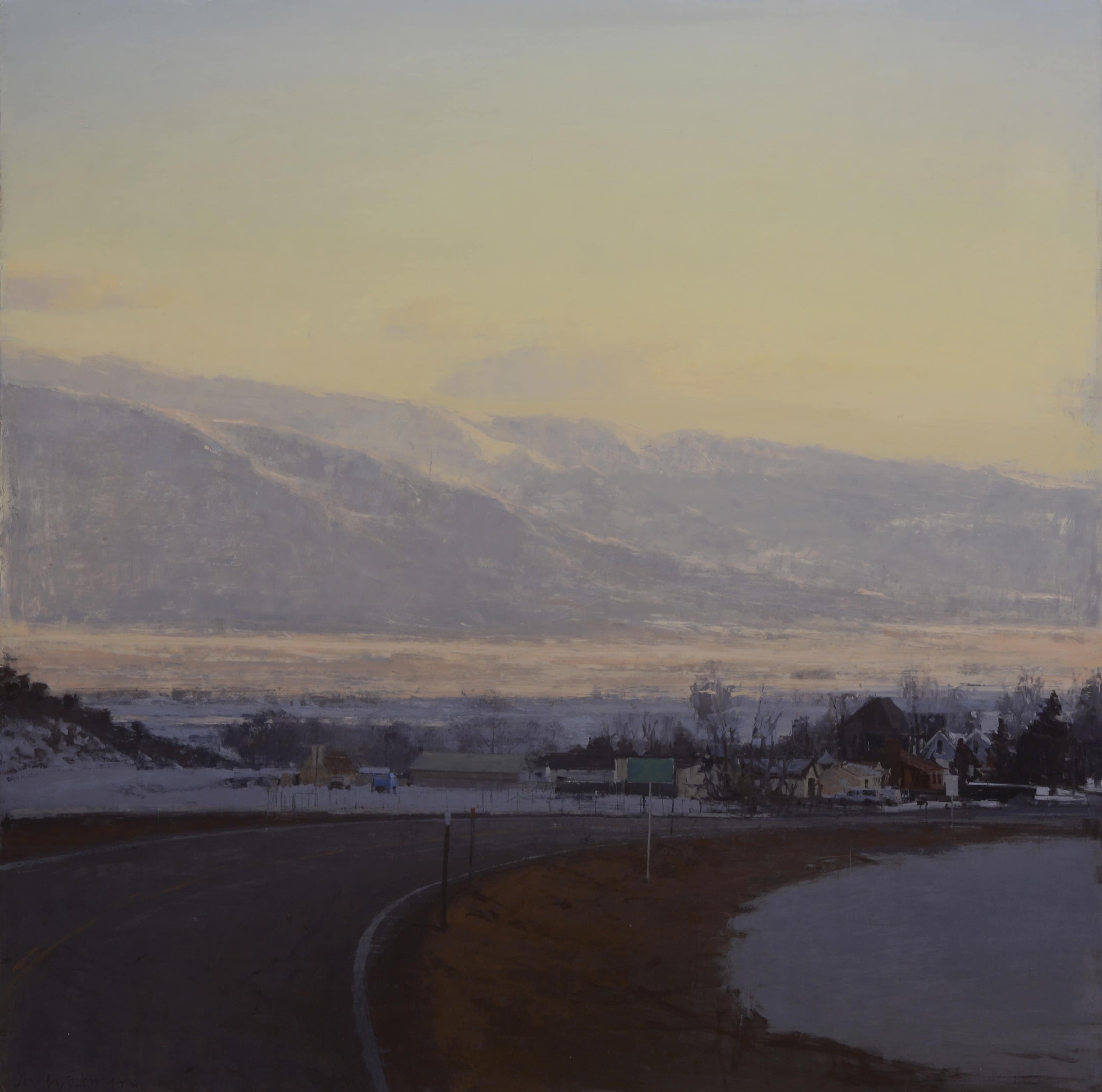
Michael Workman, “...And Come Home in the Evening...2,” oil, 27 x 48 inches
As one of the major New American Tonalist painters, this artist’s use of color, texture, and light creates a harmonious balance between realistic and abstract interpretations of the landscape. This painter is following in the footsteps of the great George Inness, and viewers will surely want to see this solo exhibition.
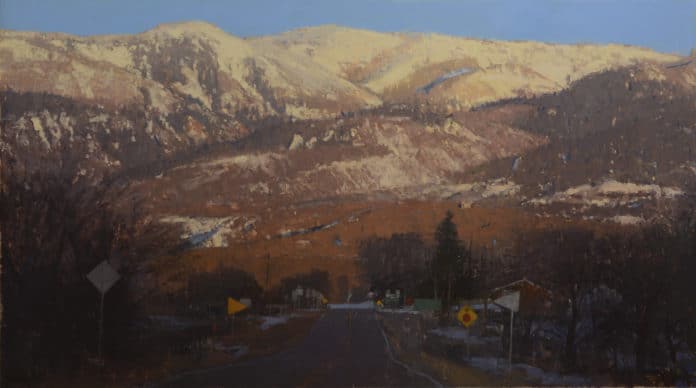
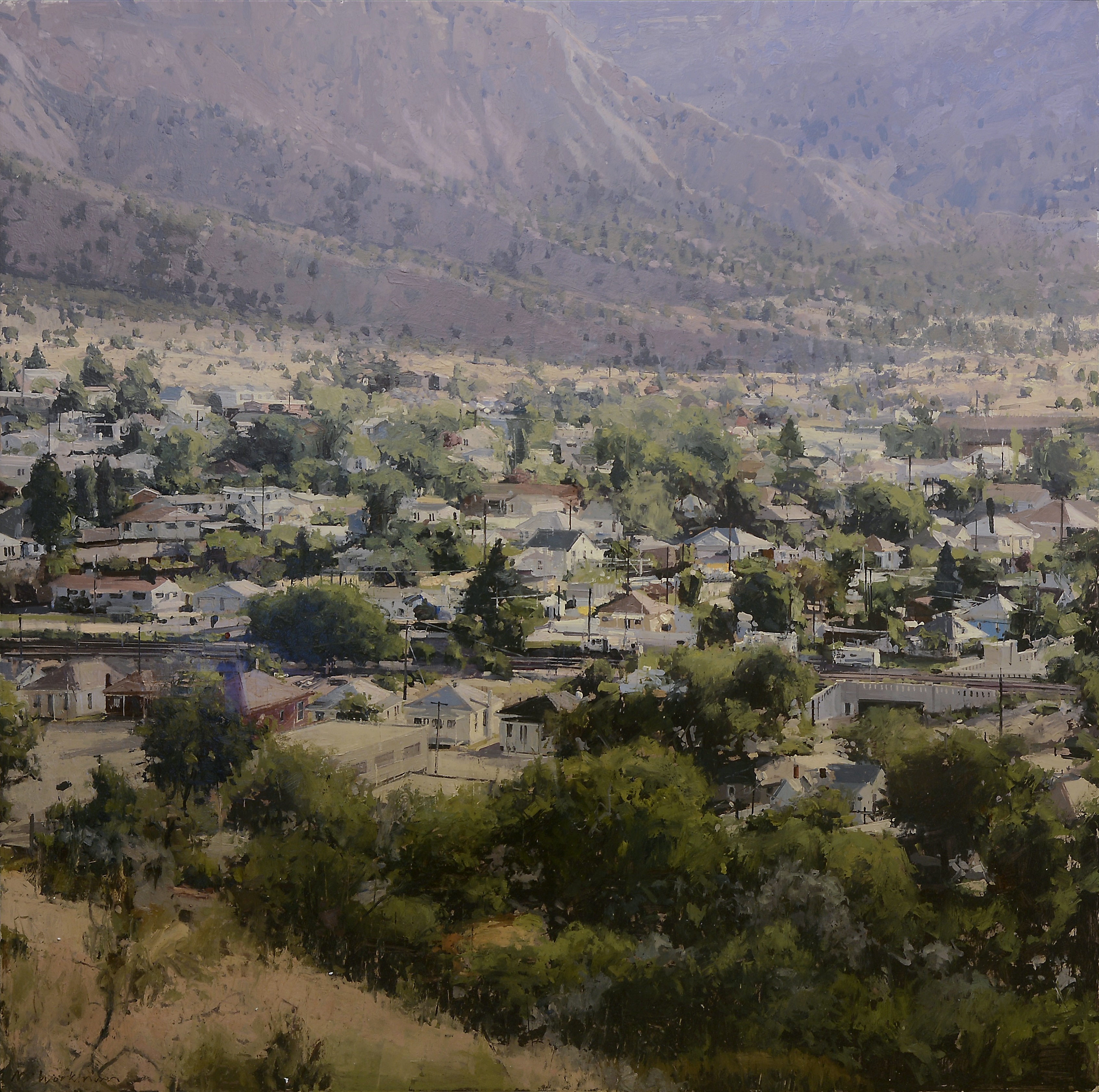
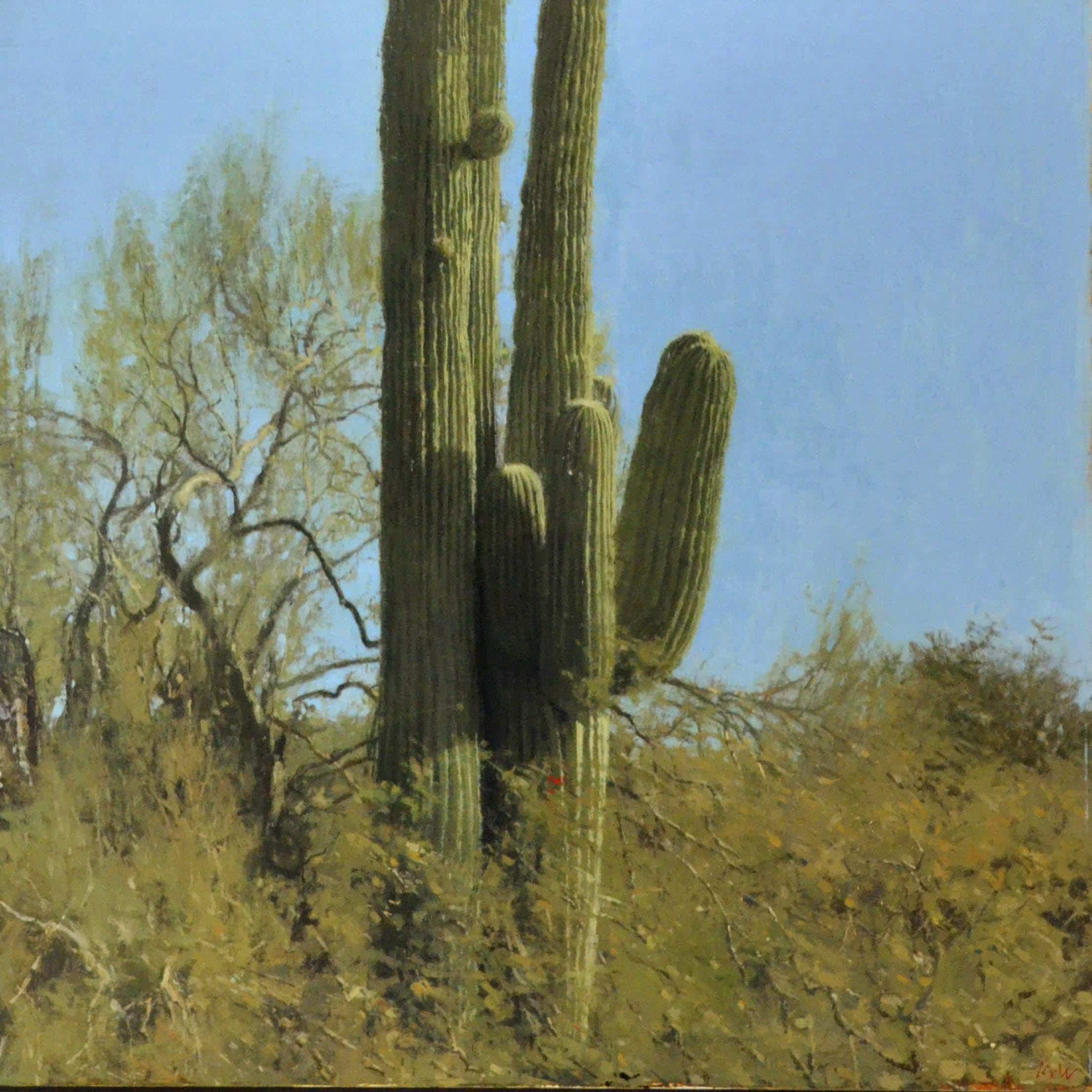
Opening with a reception on January 6 will be a must-see exhibition of new works by master painter Michael Workman. It’s on view through January 27 at Gallery 1261 in Denver, and viewers will be treated to 13 of the artist’s recent pictures with landscape subjects that include mountains, deserts, barns, and urban sprawl. A few of the paintings even drift into the portraiture category, offering sensitive and individualistic renderings of cattle.
Michael Workman, “…And Come Home in the Evening…1,” oil, 33 x 33 inchesMichael Workman, “Helper, August,” oil, 35 1/2 x 35 1/2 inchesMichael Workman, “Saguaro,” oil, 32 x 32 inches
“To view artist Michael Workman’s paintings is to spend a quiet moment in a serene locale, where life’s rough edges are somehow absorbed,” writes David Ericson Fine Art. “Workman’s rural landscapes are subtle yet powerful, evoking strong emotions in those who experience their silent wonder. Whether it is a silvery evening slipping soundlessly into the dusk or a bashful sun, tentatively extending its rays across a vast green pasture awake but still yawning, Workman’s tonal paintings create a mood that is both mysterious and compelling, yet never disquieting. His color, texture, and light are soft and harmonious, creating a dreamy effect.”
This article was featured in Fine Art Today, a weekly e-newsletter from Fine Art Connoisseur magazine. To start receiving Fine Art Today for free, click here.
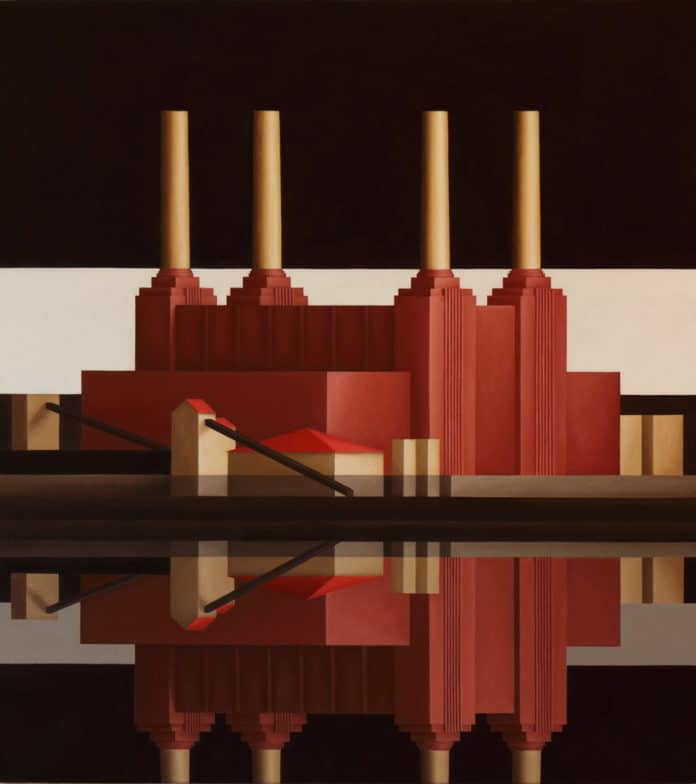
Renny Tait, “Battersea, Reflection White Stripe,” 2017, oil on canvas
Scottish artist Renny Tait is internationally recognized for his painted depictions of idealized architectural landscapes, exploring the underlying geometric order of the built environment in pursuit of pure, simple form. His newest oils head to the walls of this established gallery next week.
Flowers Gallery in London is overjoyed to soon be presenting the latest artworks to emerge from the studio of Scottish artist Renny Tait. “Thresholds to Brighter Worlds” opens on January 11 and continues through February 17. Empty of human life and arranged in harmonious formal groupings, Tait’s landscapes have often been likened to still life and are “guided by principles of abstraction rather than naturalism,” the gallery writes. Of his process, the artist points to “moving elements of sky or background as a still life painter like Morandi might move his bottles.”
“Many of the buildings represented in Tait’s current exhibition are familiar London landmarks, such as Battersea Power Station, and subject to which he has returned over many years,” the gallery continues. “Referring to the power station as a ‘cathedral of industry,’ he draws comparisons between its grand chimneys and Greek columns or the spires of Gothic churches. In ‘Battersea, Reflection White Stripe,’ a black void replaces the sky, heightening the structure’s mysterious, metaphysical properties, while the solid reflection underpinning the composition on the glass-like surface of the river below evokes a sense of the building’s towering strength.
“Architectural details are simplified to highlight their classical form (for example, the domed structure of ‘St Paul’s Cathedral, Blue Sky, Clouds, from the Thames’). Here, Tait explores ideas of memory associated with architectural form, considering the imprint of iconic buildings on the imagination and how this affects the way that we view the world around us. In ‘Hayward Blue Sky,’ Tait has reconfigured the Brutalist architecture of the Hayward Gallery on London’s South Bank to include a dominant central tower. The darkened lookouts and pointed apexes of its design recall Tait’s theme of Scottish castles, which he has described as symbols of refuge and hope in a hostile environment. The lighthouse is another long-running motif, which can also be considered a haven or outpost, set against a backdrop of the seemingly infinite and untamable ocean. In ‘Bell Rock Lighthouse,’ Tait captures the structure as it might have looked when it was first built, displaying an appreciation for the pleasing, and yet entirely functional, bell-like tapering design. The archetypal bright blue sky, present in many of the paintings in the exhibition, offers an opening or threshold, according to Tait, ‘to brighter worlds.’
“While his urban and industrial landscapes recall the factory paintings of American artist Charles Sheeler, Tait’s precise lines and hard-edged shapes reflect an attentiveness to the picture’s surface more closely aligned with the concerns of modernist abstraction. According to the late author and journalist Robert Heller, Tait’s paintings “with their virtuoso technique, bridge the worlds of classicism and abstraction. The later influences — Mondrian, Morandi, Barnett Newman — blend comfortably with the very different worlds of Bellini and Wren to form Tait’s own mysteriously depopulated universe of color harmonies and glowing light.’”
This article was featured in Fine Art Today, a weekly e-newsletter from Fine Art Connoisseur magazine. To start receiving Fine Art Today for free, click here.
Fill your mind with useful art stories, the latest trends, upcoming art shows, top artists, and more. Subscribe to Fine Art Today, from the publishers of Fine Art Connoisseur magazine.