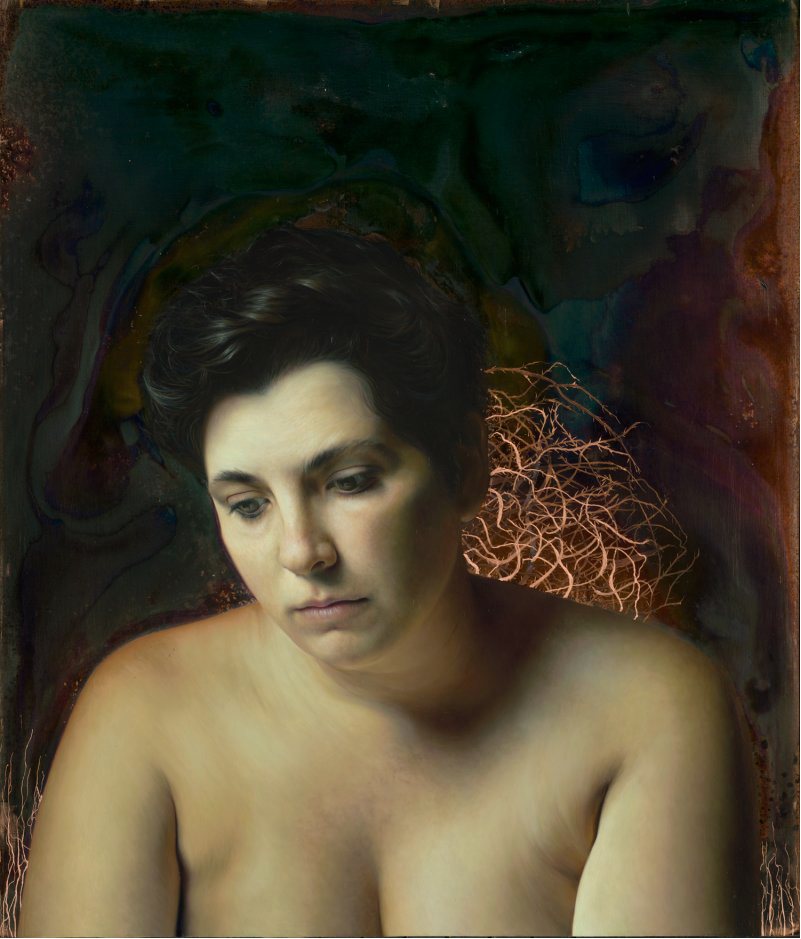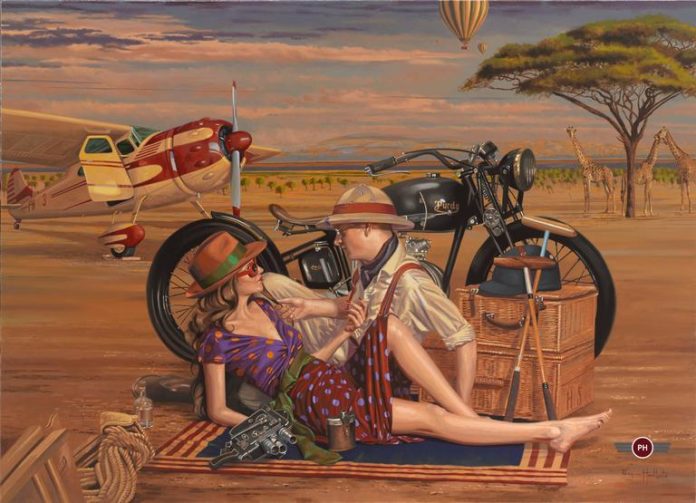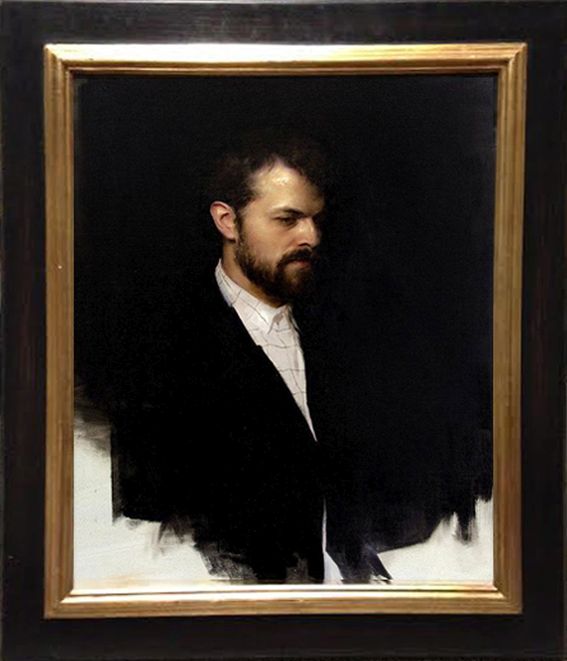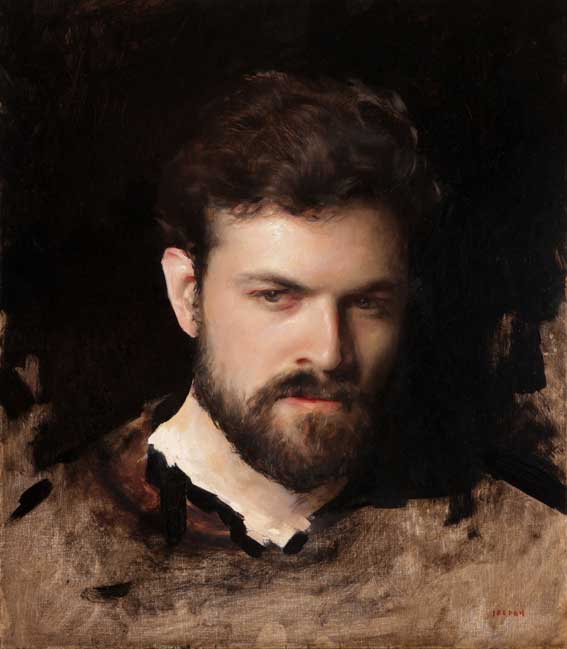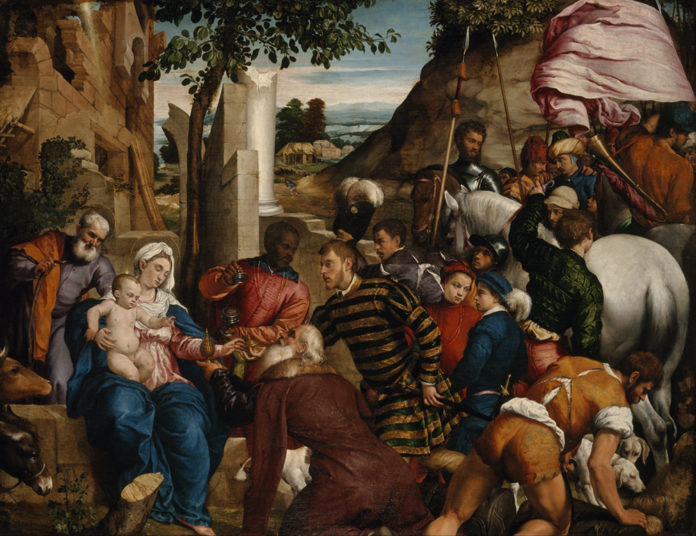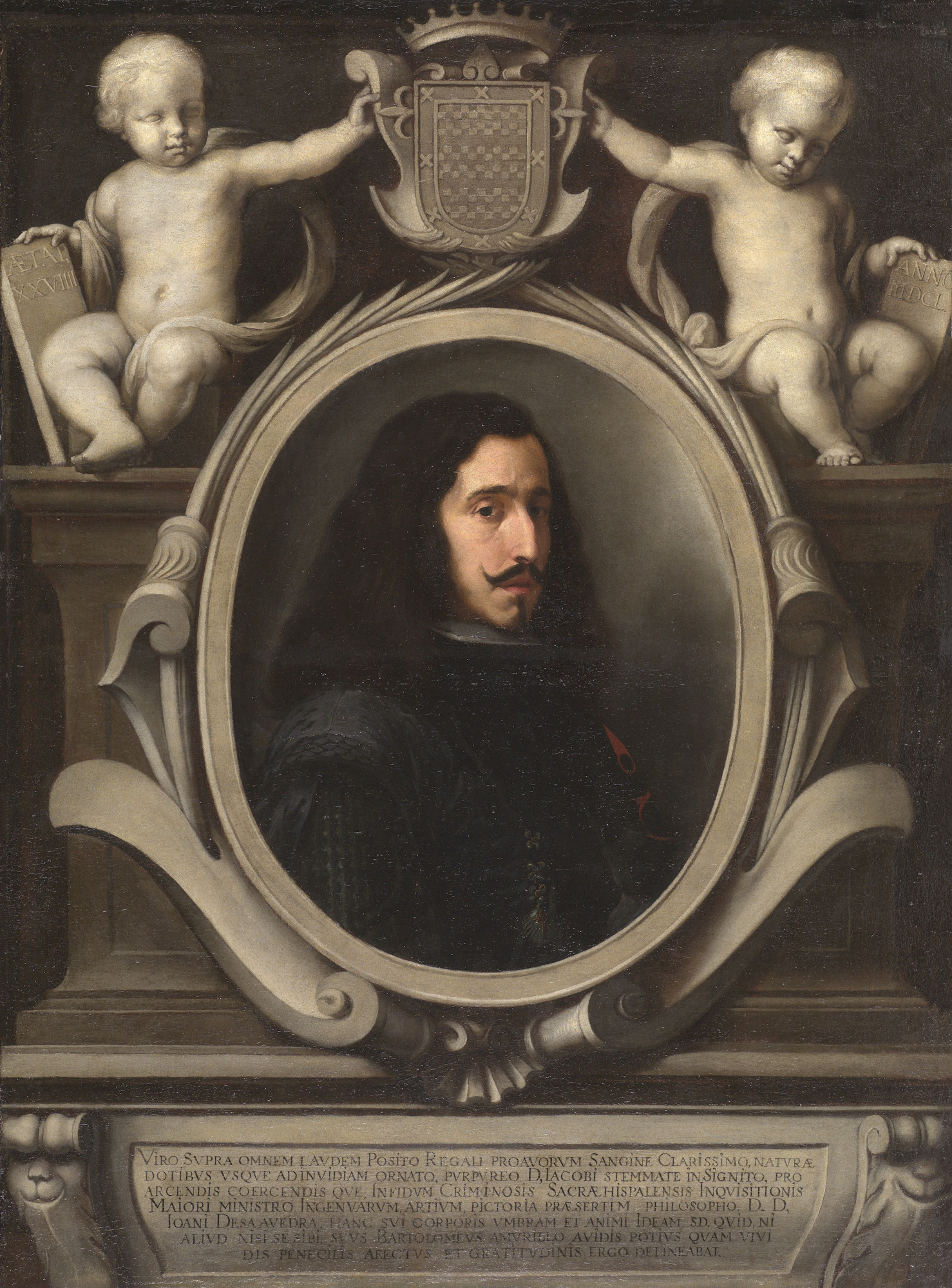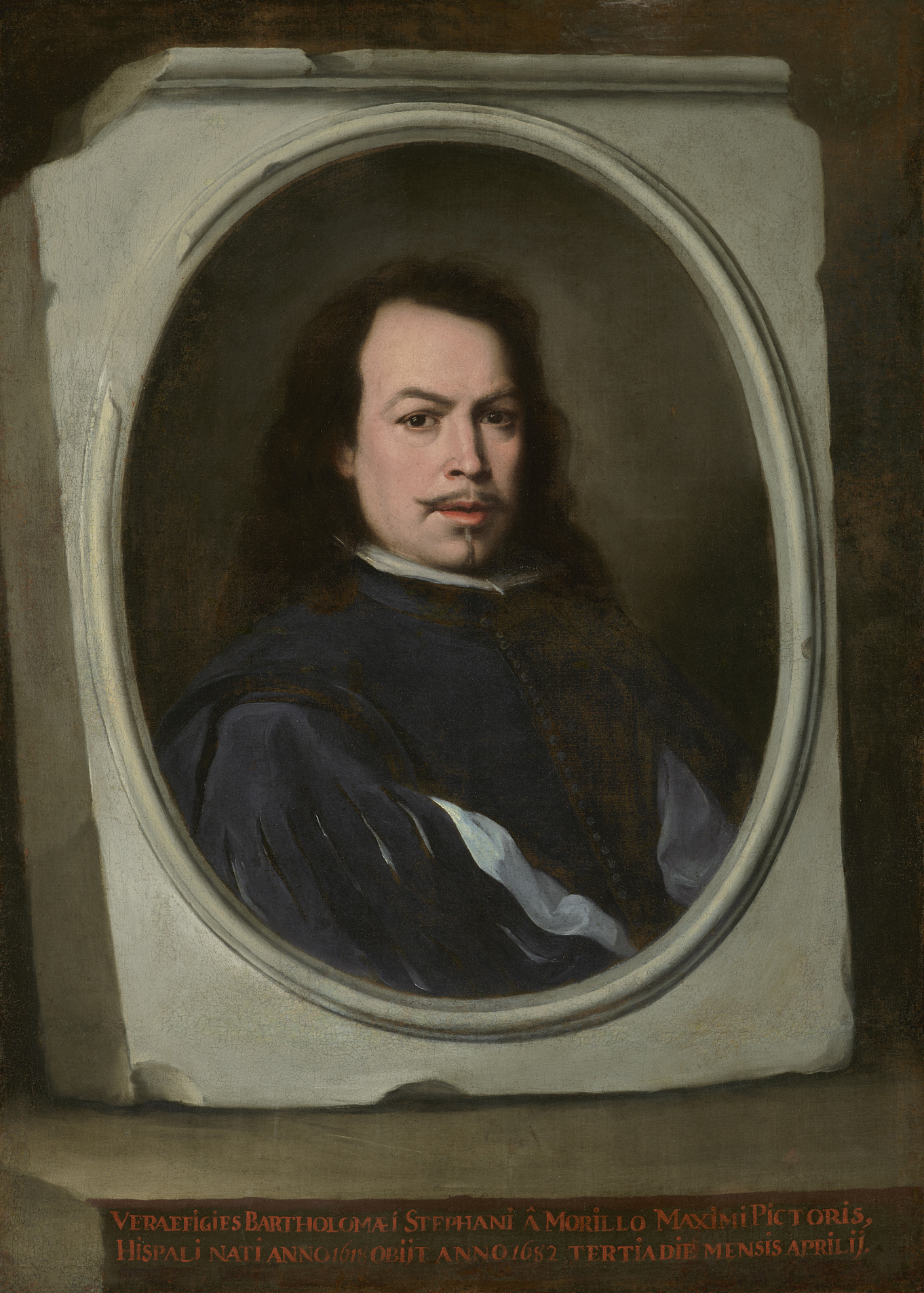

Screenshot of the new website via the Barnes Foundation
In celebration of its fifth anniversary in the heart of Philadelphia, the Barnes Foundation has made fine art enthusiasts very happy by boosting the collection’s accessibility. What’s the news?
The Barnes Foundation recently launched a new website that allows audiences to search thousands of works from its permanent collection based on a number of personalized criteria. In celebration of the foundation’s fifth anniversary in Philadelphia, Pennsylvania, users will be able to download high-resolution images of over 1,400 works that are now in the public domain.
Led by Shelley Bernstein, Barnes Foundation deputy director for audience engagement & chief experience officer, and funded by a grant from the John S. and James L. Knight Foundation, the new online tool is the first in the museum field to search holdings with a deep focus on visual properties such as light, line, color, and space, rather than requiring users to be familiar with artist names or art historical movements.
According to the press release, “This project extends into the digital realm the same pioneering approach Dr. Albert C. Barnes used to display his collection in ensembles — combining masterpieces by artists such as Cézanne, Renoir, Matisse, and Van Gogh with ancient, medieval, Renaissance, and non-Western art as well as metalwork, furniture, and decorative art.”
This article was featured in Fine Art Today, a weekly e-newsletter from Fine Art Connoisseur magazine. To start receiving Fine Art Today for free, click here.
Victoria Adams, "Blue Venture," oil on linen, 36 x 60 in.
Fine Art Today had a compelling conversation with an amazing landscape painter, who gave us detailed insight into her creative goals and processes that deserve quotation in full. You’re invited to bask in her tranquil illumination. Do you know her yet?
Victoria Adams, “Lowlands #120,” 2019, oil on linen, 24 x 24 in.
Fine Art Today: Tell me a little about your creative process. Once inspiration hits, how do you approach the panel/canvas? In other words, do you always start a piece the same way even if the sources of inspiration are different? How do you know when a painting is completed; is it that sense of personal fulfillment, or that a particular experience/idea is re-achieved?
Victoria Adams: All of my paintings include large areas of stormy sky above either a landscape or a waterscape. The scenes are fictional, generated entirely from my imagination or constructed from the memory of an actual scene and its details. Or sometimes a scene emerges from a combination of these techniques. My canvases are completed wholly in my studio, but they do include many details from the real world. During the process of painting, I usually rely on segments of multiple photographs that I take during walks or trips. I render fragments and details from these photos of skies, water, land features, trees, etc. in each painting in order to give my imagined or remembered scenes a greater illusion of representational truth.
My works range in size from very small miniatures to very large pieces. Since I want to emphasize the horizontal nature of my subject matter, I frequently use canvases that are rectangular or elongated rectangles. Squares also are a favorite, and I strive to create as much horizontality in those as possible. I normally begin a painting by setting the horizon line at some level in the lower third of the composition, depending on the overall height of the canvas. A horizon height of anywhere from one-third to one-seventh allows the “sky” area above to dominate. The lower the horizon line sits, the more opportunity I have to use the perspective of clouds in the sky to create a deep illusion of space.
The idea for a painting typically begins with some type of sunset or storm scene that has caught my interest, and based on that I decide on a general color key, warm or cool, that seems appropriate to use with that particular type of sky. The sky and the general look of the composition may also be informed by a previous painting I’ve made, and that I want to explore further, but in a differently proportioned canvas. I also make an initial decision about where the light source in the sky is coming from — is it to the left or right? Will the clouds be lit from above or below? Where along the horizon does the light either land or emanate from?
I spend time painting in my studio on a regular daily schedule — I tend not to wait for inspiration. I instead rely on the act of painting to get me excited. I love witnessing how any one painting is developing, and I have an attitude of open curiosity as it develops. Each painting becomes all-engrossing, and that keeps me interested and present. I tend to work on only one painting at a time. Miniature paintings or large paintings seem to require the same intense process. I typically work from the top down on the sky area first, completing it almost entirely before then moving on to the area below the horizon. I work directly with a little Liquin or Galkyd using smooth brushes and feathering as I go. I consult various photos I have printed out in the studio to render details that approximate a real sky.
Using weather websites, I also instruct myself on the names and visual characteristics of types of clouds I’m painting. I may rework portions of the sky several times before I get the effect of luminosity I’m after. I then move on to the area below the horizon, using the logic of the sky I’ve almost completed to design the rest of the composition. The nearly finished sky provides numerous clues about how to develop the area below the horizon — the direction of the light source will remain the same, for instance. And the position of the mass of clouds will need to be balanced by the land or water below. I make use of all the typical tools of linear and aerial perspective to create the final composition, making corrections in the sky also if necessary.
I create receding space, always emphasizing subtle horizontal alignments. Numerous photos provide detailed references in rendering groups of trees, shoreline configurations, distant horizon lines, wave patterns, etc. — all with the intention of making the composition I’m working on have the look of someplace that could actually exist. I eventually end up with a composition that I rework all over until I’m satisfied that it is unified and that nothing else needs to be “fixed.” It’s at that point that I feel the painting is finished.
Victoria Adams, “Undulant Sea,” 2015, oil on linen, 48 x 48 in. (c) Victoria Adams, 2016
Fine Art Today: Forgive me for projecting, but I get a strong evocation of Albert Bierstadt, Thomas Cole, and other Hudson River School artists in the brilliant illumination and deep space within your work. Are you particularly moved by these artists, and do you see yourself working in this tradition? If so, why? If not, then who?
Victoria Adams: I have certainly been strongly influenced by the American Luminists and the Hudson River School artists. The skies of Church, the panoramas of Bierstadt, the dreamy shorelines of Heade and Gifford are always guiding me. The way I paint light, for instance — with subtle value gradations of translucent color — is a hallmark of Luminist influence. But I’ve also learned from so many earlier European landscape artists: Rembrandt, Rubens, van Goyen in the Dutch tradition; and the 19th century, Constable, Turner as well as painters of the French Barbizon School. I keep a large library handy to refresh my memory. Among contemporary painters, I’m also drawn to Gerhard Richter’s landscapes. I’m constantly discovering new names all the time. It may surprise people who like my work to know that I keep coming back to Peter Paul Rubens. He’s most known as a painter of figures, but he also was fascinated by landscape, and did a number of private paintings that he gave to friends of the countryside near his home outside Amsterdam. These images feature the kind of ideal poetic landscape of broad views with bold skies that interests me.
Victoria Adams, “Duration,” 2016, oil on linen, 36 x 60 in. (c) Victoria Adams, 2016
Fine Art Today: What would you consider your primary goals to be in art? What do you hope your viewers take away from your paintings?
Victoria Adams: My painted scenes are less about reproducing the look of an actual real place than about constructing an image of an ideal place, but one that has believable space, light, and atmosphere. I have often been told by collectors that the places I depict look like places viewers feel they could step into or wish they could go to. The images remind them of places they half-remember or feel they have dreamt about.
This feedback is in line with my intent — my work isn’t about depicting any one particular place, although I thoroughly enjoy painters’ work that achieves that goal. I feel my work is conceptual rather than strictly realist. In each painting I strive to evoke a moment of envelopment in — and an enchantment with — a wide uninterrupted expanse of the natural world. None of my works include people, buildings, roads, or other signals of human presence. I want the image I’m presenting to be solely about the natural world rather than a backdrop to some imagined narrative about the characters in it. The places I paint are outside of any identifiable time period — instead, they are about timelessness.
Emphasizing horizontal elements promotes a feeling of quiet and stillness. The qualities of timelessness and stillness are what make these images less about the real and more about the ideal, more poetic than strictly accurate. I’m very interested in the emotional and psychological effects that standing in an actual landscape or viewing a painted landscape can have.
Victoria Adams, “Towards the Blue,” oil on linen, 36 x 36 in. (c) Victoria Adams, 2016
Fine Art Today: Tell me about your surfaces. It can be hard to tell from photos, but it appears as though you have a nice traditional finish. How important are these — and other — surfaces to your art?
Victoria Adams: My surfaces are intentionally quite smooth. I want the emphasis to be on the image, so I stay away from leaving lots of brushstrokes, since those would be a reminder of my presence. The illumination on the clouds is more believable, for instance, if the gradations of value are very subtle.
Victoria Adams, “Far Shore,” 2016, oil on linen, 33 x 38 in. (c) Victoria Adams, 2016
Fine Art Today: What has your journey to becoming a successful artist been like? Were you always interested in art?
Victoria Adams: During childhood I was drawn to making things, and painting and drawing. However, I took my first art courses in my mid-20s, just as a fun thing to do, but I eventually became enthralled. My first works were abstract, with lots of straight lines and layered planes. After a few years, my abstract work morphed into representational painted landscapes with softer edges and deeper space.
Victoria Adams, “Remembering,” oil on linen, 24 x 54 in. (c) Victoria Adams, 2016
Fine Art Today: Finally, where are Victoria and her art in a year, or even five years? How do you see your career and artwork evolving in the near and distant future, and what are some things you seek to achieve?
Victoria Adams: I will probably always be drawn to painting landscape, since I love being in actual landscape so much and since I never run out of new ideas for paintings. I tend to stay with a type of painting for a long while, and I get more satisfaction out of going deep while I explore the same aesthetic and conceptual territory than I would if I were switching to another genre. I’m always striving to do what I do already, but do it better.
Victoria Adams, “Drift,” 2018, oil on linen, 40 x 34 in.Victoria Adams, “Lost River Plain,” 2019, oil on linen, 12 x 36 in.Victoria Adams, “Blue Venture,” oil on linen, 36 x 60 in.
—-
Adams’ work has been shown extensively throughout the U.S. and is included in numerous private and public collections. Adams’s work is also represented by Gail Severn Gallery, Ketchum, ID; Woodside/Braseth, Seattle, WA; Somerville Manning Gallery, Greenville DE; and Zolla/Lieberman Gallery, Chicago IL. Interested viewers may see more of her work at her website: www.victoriaadamsart.com
This article was originally written by Andrew Webster and featured in Fine Art Today.
Ron Donoughe has been painting the western Pennsylvania landscape for 30 years. He explores its rural and urban settings on a daily basis as he works in plein air throughout the seasons.
As curator V. Scott Diamond has noted, “Ron Donoughe has spent many years recording the often unassuming and occasionally magnificent landscape of the Allegheny Mountain region. Approaching this landscape with the eyes of one who knows it like a brother, Donoughe renders it ineffably compelling.”
For an installation project Donoughe may take a year or more to complete 60-100 plein air paintings. In these exhibits the small paintings interact with each other, giving a textural overview of a particular time and place. Donoughe believes such in-depth projects allow for a more thoughtful understanding of his subject. It is a contemporary take on a traditional approach to painting.
“The affection of his gaze catches our attention, and through his brush, even the most mundane subjects become eminently worthy. This is the power of a great artist, and it is one that Donoughe clearly knows how to wield.”
“Ron Donoughe is one of those American artists intimately linked with the region where he lives,” noted writer Max Gillies, comparing Donoughe’s tie to that of others like Andrew Wyeth (the Brandywine Valley and Cushing, Maine), Winslow Homer (the Bahamas and coastal Maine) and Edward Hopper (New York City and Cape Cod).
Donoughe has completed murals for the Cambria County courthouse, has been a featured artist in the Pennsylvania governor’s residence, and recently his collection of 90 Pittsburgh Neighborhoods was acquired by the Heinz History Center in Pittsburgh, an affiliate of the Smithsonian Institution.
His interest in plein air painting led to the formation of the Plein Air Painters of Western Pennsylvania. And his work can be found in many corporate, private, and public collections including The Westmoreland Museum of American Art, The Southern Alleghenies Museum of Art, The University Museum at Indiana University of Pennsylvania, and the Pennsylvania Convention Center.
A ‘Today’s Masters’ section featured article titled, “Looking Local: Ron Donoughe’s Painting of Western Pennsylvania” recently appeared in the October issue of Fine Art Connoisseur magazine.
Ron Donoughe has also published three books about his work. For information, please contact the artist at [email protected]. View more of Ron’s work at http://donoughe.com/.
Jeremy Mann, “Portrait of Jillian,” oil on panel, 24 x 36 inches
Principle Gallery in Alexandria, Virginia, is the latest gallery to display the works of renowned painter Jeremy Mann. Featuring works that explore the artist’s experiments, process, and emotions, this isn’t a solo show to miss.
Principle Gallery is overjoyed to be presenting the latest body of work from the mind of Jeremy Mann. On view from November 17, the solo show is once again a fascinating representation of Mann’s self-reflection as one of the nation’s top artists.
Jeremy Mann, “Chandelier Dress at Night,” oil on panel, 26 x 39 inches
An excerpt from Fine Art Connoisseur magazine’s profile on Mann:
Dramatically and skillfully rendered, the cityscapes and figurative works of Jeremy Mann give visual form to the emotive essence of modern life. Jeremy Mann’s paintings capture the tenor of these moments that characterize life in the city. Whether depicting the distinctive hills and winding roads of San Francisco, or the bustle of the city that never sleeps, Mann paints the heart of his setting.
Jeremy Mann, “NYC 18,” oil on panel, 48 x 48 inches
Confident, gestural strokes and brilliant highlights define his style. Any detail of one of his cityscapes would almost certainly look abstract. But as the eye moves away from the canvas, dots of red emerge into rows of brake lights and slashes of blue signal the glow of neon street signs. Mann works to manipulate paint in a variety of techniques, sometimes staining the surface of the canvas, using solvents to thin and remove paint, or exploiting the gritty quality of an ink brayer. The result is a personalized, expressive style.
Interestingly, Mann’s cityscapes are almost completely devoid of figures. His figurative works form a separate part of his artistic output and are just as masterfully executed. These interior scenes of women picture loneliness and ennui, self-reflection and melancholy, all expressed in a deeply sensuous visual language.
Though his work divides easily into these categories, a common theme underlies both. The modern city – dark, sexy, stimulating, seductive – is Mann’s true subject.
This article was featured in Fine Art Today, a weekly e-newsletter from Fine Art Connoisseur magazine. To start receiving Fine Art Today for free, click here.
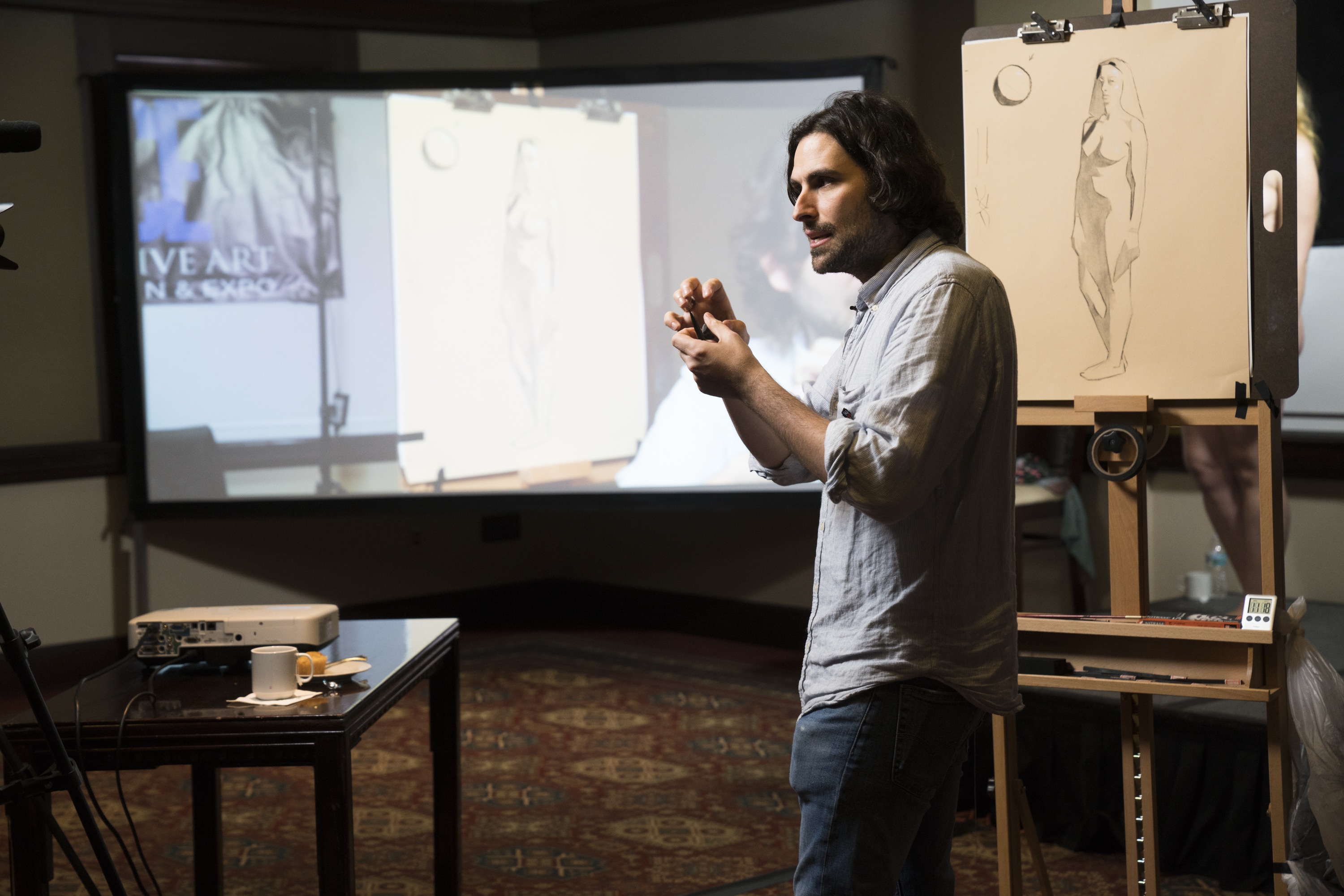
Bowman Sculpture is delighted to present a solo exhibition of new works by Emily Young, widely regarded as Britain’s greatest contemporary stone sculptor. The exhibition will include a new series of heads, discs, and torsos carved from stone and rarely seen bronze works.
On view November 17 through January 11, 2018 at Bowman Sculpture will be the incredible sculptures by Emily Young. “Young is recognized for her sculptures and public artworks that investigate the relationships between the ancient world and our own; humankind and the natural world; and an artwork and its origins,” the gallery writes. “She continues to explore a connection between time, land, and cultures through her deeply personal approach to sculpture. Her work is a direct manifestation of the human consciousness, allowing her to carve, for example, a human face directly onto a piece of stone which in turn marks her relationship to nature. Through a profound engagement with each individual stone’s geological history and its geographical source, Young forms a personal dialogue with the past and the future.
“Young’s studio in Tuscany is situated in a 17th-century monastery located between the Ligurian Sea and Mount Amiata, a mountainous volcanic area inland, the area is rich in natural, cultural, and historic significance. She sources her materials locally in Italy and across the world. Young demonstrates the extraordinary qualities of stone, allowing the material to convey profound messages about life, time, and the universe.
“For this exhibition, the artist has carved works from stones ranging from Indian Forest Green marble, white onyx, Rouge de Vitrolles, Quartzite and Dolomitic limestone, among others. A rich variety of attributes characterize each type of stone and therefore each work. Agate, for example, is characterized by its fineness of grain and brightness of color whereas Kilkenny marble is a fine-grained Carboniferous limestone that contains fossils thus revealing the preserved traces of animals, plants, and other organisms from the distant past.
“The artist’s approach is to ‘work with the stone,’ allowing the material to reveal its inherent beauty. Young arrives at the finished work through a process of carving that guides the artist according to the unique character and traits of the material.”
The artist added, “The grace, power, and pleasure that the natural world can show us is what drives the making of these pieces. The human form, the most complex of all life forms on earth, is carved out of stone, out of the same minerals, elements, atoms, and molecules that have always made up our physical universe.”
She continues, “Throughout my working life as an artist, the connections, or lack of them, between humankind and the astonishingly rare and precious natural world has been the predominant story. Really, it’s the only story now, the biggest story of all time for humanity.”
This article was featured in Fine Art Today, a weekly e-newsletter from Fine Art Connoisseur magazine. To start receiving Fine Art Today for free, click here.
Jan Hendrik Weissenbruch, “The House of the Artist Millet,” 1900, oil on canvas, private collection
The Mesdag Collection in The Hague has recently hung a significant exhibition surrounding the special attraction the French village of Barbizon held for Dutch painters in the 19th century. Yes, please!
From October 27, 2017 through January 7, 2018, the Mesdag Collection in The Hague will present “The Dutch in Barbizon: Maris, Mauve, Weissenbruch,” an exhibition about 19th-century Dutch painters who were drawn to the French village of Barbizon and the nearby Forest of Fontainebleau. French artists went to that area — just a stone’s throw from Paris — to work in the open air, capturing their personal, often rough or sketchy impressions of the unspoiled nature around them.
This exhibition features Dutch painters who followed the example of their French peers, visiting the same spots in and around the Forest of Fontainebleau to depict magnificent trees, unusual rock formations, and village life. The artworks of these French and Dutch artists hang side by side in this exhibition, in the museum that holds one of the finest collections of Barbizon paintings outside France, once assembled by Hendrik Willem Mesdag himself.
“The Dutch in Barbizon” consists of 42 works, grouped into themes such as “Rocks” and “In the Village.” A number of remarkable loans will be on display, including two drawings by Martinus Kuytenbrouwer that for many years were in the possession of two Dutch monarchs: King William III and later Queen Juliana. The exhibition concludes with recent photographs, which show that Barbizon is still as magical as ever.
“The Dutch in Barbizon” complements “The Dutch in Paris, 1789-1914,” running concurrently in the Van Gogh Museum in Amsterdam. To learn more, visit here.
This article was featured in Fine Art Today, a weekly e-newsletter from Fine Art Connoisseur magazine. To start receiving Fine Art Today for free, click here.
Winners will be awarded more than $7,000 in prizes during the 41st International Watermedia Exhibition, juried by Iain Stewart. Want to throw your hat in the ring? The deadline is approaching.
The 41st Annual International Watermedia Exhibition will highlight the artistic excellence of its global participants in a gallery exhibition held in Houston’s popular Museum District. In March 2018, selected entries will receive maximum exposure in a juried, month-long exhibit and have an opportunity to win generous awards from sponsors.
This year, highly sought-after painter Iain Stewart is the honorary juror and instructor. Through strong marketing efforts, public relations, and advertising, the 2018 International Watermedia Exhibition is intended to help provide optimal exposure for outstanding international artists who excel in water media.
The deadline for entries is January 12, 2018, with the exhibition running from March 4 through April 5. Artworks must be original and in water-soluble media (at least 80 percent water media: watercolor, acrylic, gouache, egg tempera, casein, ink). No water-mixable oils are accepted.
This article was featured in Fine Art Today, a weekly e-newsletter from Fine Art Connoisseur magazine. To start receiving Fine Art Today for free, click here.
The “Little Pictures Show” in 1920, image courtesy Providence Art Club
The nation’s oldest “Little Pictures” show turns 113 in 2017, with a prolific display of over 600 artworks priced to sell. When and where?
The annual “Little Pictures Show” at the Providence Art Club in Rhode Island is the nation’s oldest, and on November 12, the 113th edition will go live to much anticipation. First held in 1904, the show features hundreds of artworks no larger than 16 x 16 inches and priced no higher than $300.
This year’s installment of “Little Pictures” will open on November 12 and continue through December 23. The Galleries of the Providence Art Club will be open seven days a week 12-5 p.m. during the exhibition.
The show will take place throughout the Art Club’s three historic gallery spaces located on Providence’s charming College Hill, steps from the First Baptist Church in America. Over 100 artists, all members of the Providence Art Club, will take part. Works on view will include paintings, drawings, photographs, collages, hand-pulled prints, and handmade artist books, along with sculpture, ceramics, glass, and jewelry. With such a breadth and diversity of styles and media present, there is truly something for everyone.
Each participating member of the Art Club may exhibit up to six original works at a time for exhibition in the “Little Pictures Show.” Sales are “cash and carry,” meaning purchased works may be taken home immediately. New works then replace works that have been sold. This results in a constantly changing exhibition of local, affordable artwork — perfect for gift-giving this holiday season!
This show is the perfect opportunity for art lovers to purchase works for their own collection, or find a unique gift for friends and loved ones. It is also a great way to explore the Providence Art Club and learn more about the artists who make up the membership of one of the oldest arts organizations in the nation.
This article was featured in Fine Art Today, a weekly e-newsletter from Fine Art Connoisseur magazine. To start receiving Fine Art Today for free, click here.
Big things come in small packages this month at the National Cowboy & Western Heritage Museum as the institution is poised to present an exciting opportunity for fine art lovers and collectors.
On November 10, the National Cowboy & Western Heritage Museum will host “Small Works, Great Wonders,” an exhibition and sale that features a fusion of traditional and contemporary paintings and sculptures at affordable prices for collectors. More than 100 of the nation’s finest artists, including many from the prestigious Prix de West, will be on hand and represented during the event.
Julie T. Chapman, “Fast Break,” charcoal and graphiteValeriy Kagounkin, “Working Under an Idaho Sky,” oil
Attendees will enjoy not just the great artworks, but also door prizes, cocktails, hors d’oeuvres, and live music. During this unique sales exhibition, purchasers may leave with art in hand at the end of the night. Unsold art will remain on display and available for purchase through November 26.
This article was featured in Fine Art Today, a weekly e-newsletter from Fine Art Connoisseur magazine. To start receiving Fine Art Today for free, click here.
Camie Salaz, “Narcissus,” oil on linen, 30 x 40 inches
Inspired by Robert Zeller’s recent book titled The Figurative Artist’s Handbook, this New York gallery will host “The New Baroque,” an exhibition of outstanding figurative art curated by Zeller himself with Casey Gleghorn. Where?
On view from November 18 through January 13 at New York City’s Booth Gallery, “The New Baroque” is a fascinating figurative exhibition curated by Robert Zeller and Casey Gleghorn and inspired by Zeller’s recent publication The Figurative Artist’s Handbook. The exhibition includes many artists who are featured in the book, plus additional artists including both painters and sculptors.
Chie Shimizu, “The Story of the River,” ultra-cal, plaster, and pigment, 37 inchesAlex Kanevsky, “The Most Sinister Model,” graphite on paper, 30 x 22 inchesChristian Johnson, “Untitled,” graphite and charcoal on paper, 4 x 5 feet
Among the artists represented are Steven Assael, Bo Bartlett, Aleah Chapin, Carl Dobsky, Randall Exon, Zoey Frank, Alex Kanevsky, David Kassan, Kurt Kauper, Evan Kitson, Maria Kreyn, Brad Kunkle, Christian Johnson, Adam Miller, Matthew Miller, Alyssa Monks, Odd Nerdrum, Ashley Oubre, Camie Salaz, Chie Shimizu, Nicola Verlato, and Rob Zeller. A reception will be hosted at the gallery on November 18 at 7 p.m.
This article was featured in Fine Art Today, a weekly e-newsletter from Fine Art Connoisseur magazine. To start receiving Fine Art Today for free, click here.
Fill your mind with useful art stories, the latest trends, upcoming art shows, top artists, and more. Subscribe to Fine Art Today, from the publishers of Fine Art Connoisseur magazine.