
Home Blog Page 315

Publisher Invests in Art’s Future

0

A nonprofit publisher recently announced the first monograph to document award-winning artist Kim Keever’s dazzling work. Just as exciting are plans to donate at least 500 copies to public high school students.

Kim Keever, who has been referred to as a “hydroponic Jackson Pollock,” is a former engineer who traded his career at NASA for a life of art. His artwork is held in collections at the Metropolitan Museum of Art, MoMA, the Brooklyn Museum of Art, and dozens more. Over the course of his illustrious career, Keever has collaborated with incredible artists like harpist Joanna Newsom and director Paul Thomas Anderson.

Focusing largely on Keever’s most recent series, “Abstracts,” the upcoming monograph titled “Water Colors” includes more than 150 high-resolution reproductions of his expressionistic photographs, which capture the diffusion of liquid and the interplay between water and light. His artwork displays what at first appear to be vast, sublime landscape paintings, but are in fact photographs of paint dropped into a 200-gallon tank of water at his East Village home.

The New York-based publisher is turning to Kickstarter to raise funding for the book’s publication and to give books to students. The 200-page volume will be available as both a softcover edition and a limited-edition hardcover. Each hardcover volume, packaged in a handmade clamshell case, will be signed and numbered by the artist and will include a high-quality print. 150 limited-edition books will be released, and both the limited edition and softcover editions will be printed in Italy. The book will include a foreword by digital designer and architect Evan Douglis, a complete exhibition history of the artist, and original essays by artists Hovey Brock and David Molesky.

A major component of the team’s mission is to promote the importance of art programs in public school. To this end, the publisher has partnered with Minneapolis-based non-profit Project Success to donate at least 500 softcover copies of the monograph to public high school students.

“When I went to school we had art, and it was a joyous time in my life and most of the other kids’ — and now, as I understand it, it’s not so typical that schools still have art,” says Keever. “This project will bring art books to students who would really love to see the work, and hopefully it will encourage them in their lives.”

The Kickstarter campaign  began yesterday and will run for 30 days. Campaign rewards include the 150 hardcover, limited-edition copies of the monograph at the discounted Kickstarter price of $750, and the softcover edition at the discounted price of $50.

This article was featured in Fine Art Today, a weekly e-newsletter from Fine Art Connoisseur magazine. To start receiving Fine Art Today for free, click here.
Portrait of the Week: Correcting History?

0
Francis Bicknell Carpenter, “The First Reading of the Emancipation Proclamation of President Lincoln,” 1864, oil on canvas, 9 x 15 feet, U.S. Capitol Building

In this occasional series, Fine Art Today delves into the world of portraiture, highlighting historical and contemporary examples of superb quality and skill. This week we look at one artist’s attempt to make an accurate group portrait even more so. How?

Via Troika Gallery in Easton, Maryland:

After spending the summer on a sojourn honoring art from the Civil War, Anna Ella Carroll is coming home to celebrate her birthday, which is August 29. Anna Ella Carroll is the centerpiece of a painting created by renowned portrait artist Laura Era (after F.B. Carpenter). After being exhibited at the Carroll County Arts Center in Westminster for most of the summer (Carroll County is named after Anna Ella Carroll’s family), the painting has recently returned to the Eastern Shore. You can see the painting and give birthday wishes to Anna Ella Carroll at Troika Gallery in downtown Easton.

The Carroll County Arts Council invited artists to submit work for a summer exhibit that ran from June 13-August 16, 2013, in observance of the 150th anniversary of the Civil War. The works of art were viewed by thousands of people who were in the area to see re-enactments of the Battles of Gettysburg and Pickett’s Charge.

Born August 29, 1815, in Somerset County, Anna Ella Carroll later lived in Dorchester County. Carroll was an intriguing and atypical 19th century woman who emerged from the male-dominated realm of war, politics, and diplomacy. As a key military strategist, Presidential advisor, and “unofficial” member of Abraham Lincoln’s Cabinet, Carroll was probably the most powerful woman in America during the Civil War. Yet, her accomplishments are virtually unknown. When Carroll died in 1894, deprived of honor, title, pension, and acknowledgement, her life story was already considered a model for the Women’s Suffrage Movement. A modern biographer described Carroll as “hands down, the most important political woman of the 19th century.”

Laura Era, “The First Reading of the Emancipation Proclamation of President Lincoln,” 2016-17, oil on canvas. Depicted in the painting (left to right) are Cabinet members Edwin M. Stanton, Salmon P. Chase, President Abraham Lincoln, Gideon Welles, Caleb B. Smith, William H. Seward (seated), Montgomery Blair, Anna Ella Carroll (reincarnated), and Edward Bates.

Carroll was a war spy, politician, Unionist writer, pamphleteer, author and legal expert. She is credited with helping to prevent Maryland’s secession from the Union. President Lincoln sent her, accompanied by an army officer, to observe and report on the War on the western front. Her reports resulted in major military strategies that eventually doomed the Confederacy and ended the intervention of the European nations on the behalf of the South.

Carroll is credited with changing the direction of the Civil War by devising the crucial Tennessee River Plan. Fearing that Union generals and soldiers would not follow a plan devised by a woman civilian, Lincoln and his Cabinet kept Carroll’s authorship a secret. Carroll also presented legal arguments and opinions as to why Lincoln could issue the Emancipation Proclamation and detailed his war powers authority.

Evidence exists that Lincoln had intended to honor Carroll after the war with a title and pension equal to that of a Major General. However, after Lincoln was assassinated, Carroll’s male counterparts, assisted by General Grant himself, conspired to take credit for her successes and totally erase her from history.

In 2010, Era was commissioned to paint a stylized version of Francis Bicknell Carpenter’s famous 1864 painting, “The First Reading of the Emancipation Proclamation of President Lincoln.” Carpenter’s painting hangs over the west staircase in the Senate wing of the U.S. Capitol. It prominently depicts an empty chair draped with a red shawl, along with maps and notes similar to those Carroll carried. Many historians feel it was Carpenter’s way of acknowledging Carroll as the unrecognized member of the Cabinet.

Era painstakingly recreated the painting, placing Anna in her rightful chair with Abraham Lincoln and his cabinet. The new painting with the addition of Miss Carroll is titled “Maryland’s Version of First Reading of the Emancipation Proclamation.”

Susan Williamson from the Carroll County Arts Council says, “Visitors to the exhibit were intrigued and enlightened by Anna’s story and the masterful recreation of the painting.”

A separate portrait of Abraham Lincoln titled “My Favorite President,” also by Laura Era, created a full complement of these historical figures during this critical time in American history.

Era says, “I am pleased that ‘Anna and the boys’ have returned to my Easton gallery, but the ultimate goal is to have the painting hang in a museum or public building where as many people as possible can view it and learn about the life and significance of Anna Ella Carroll.”

This historic painting is currently displayed at Troika Gallery. For information about prints or to see step-by-step progress photographs of the painting being made, visit Anna Ella Caroll.

This article was featured in Fine Art Today, a weekly e-newsletter from Fine Art Connoisseur magazine. To start receiving Fine Art Today for free, click here.
Restored Masterpieces Now on View

0
Michelangelo, “River God,” circa 1526-27, clay around iron wire core, 65 x 140 x 70 cm., Accademia delle Arti del Disegno

Friends of Florence recently announced that six seminal artworks from the Italian Renaissance — meticulously restored with their support — are currently featured in a major exhibition here.

Hosted at the Palazzo Strozzi in Florence, Italy, “The Cinquecento in Florence from Michelangelo and Pontormo to Giambologna” is a significant exhibition featuring 70 paintings and sculptures — among them several important works that were recently restored.

On view through January 21, 2018, the exhibition was organized to illuminate what Giorgio Vasari (1511-1574) called “the modern manner” juxtaposed with the dictates of the Counter-Reformation. Of the major works included in the show, recently restored masterpieces on view include Pontormo’s iconic “Deposition” from the Church of Santa Felicita; Agnolo Bronzino’s “Immaculate Conception” from the Church of Santa Maria Regina della Pace; Michelangelo’s “River God”; Giambologna’s bronze “Crucifix” from the Basilica of Santissima Annuziata; and two paintings by Alessandro Allori from the Basilica of Santo Spirito.

Pontormo, “Deposition,” circa 1525-28, tempera on panel, 313 x 192 cm., Church of Santa Felicita

Via Friends of Florence, “Restoration of the Capponi Chapel and all the works in it, including Pontormo’s majestic altarpiece depicting the Deposition from the Cross, began in March 2017, and was enabled by a major donation to Friends of Florence from Kathe and John Dyson. The comprehensive restoration project, approved by the Soprintendenza Archeologia Belle Arti e Paesaggio per la Città Metropolitana di Firenze e le province di Pistoia e Prato, was entrusted to the restorer Daniele Rossi and closely monitored by Daniele Rapino, the Soprintendenza officer with responsibility for the Santo Spirito neighborhood.”

Giambologna, “Crucifix,” circa 1598, bronze, 200 x 170 x 53 cm., Basilica of Santissima Annunziata

Simonetta Brandolini d’Adda, co-founder and president of Friends of Florence, suggested, “Having these six works featured in this historic presentation of Florentine masters is a dream come true. Whereas a key focus of the work we do is to restore and safeguard irreplaceable Tuscan treasures, our twin goal is to make them available to the public both where they are regularly installed and through loans to venerable institutions like the Palazzo Strozzi. We remain eternally grateful to our devoted supporters, many of whom are based in the U.S., and the teams of specialists at Florence’s esteemed restoration laboratories.”

“Pontormo’s Santa Felicita ‘Deposition’ is an absolute masterpiece in the history of art and is going to be one of the most important works loaned to Palazzo Strozzi for its ‘Cinquecento in Florence’ exhibition,” added Arturo Galansino, director general of the Fondazione Palazzo Strozzi. “The Friends of Florence’s outstanding contribution to its restoration, with the crucial cooperation of the Soprintendenza Belle Arti e Archeologia di Firenze, Prato e Pistoia, returned the painting to its pristine splendor and allows Palazzo Strozzi’s visitors to admire it in the context of a unique exhibition.”

To learn more, visit here.

This article was featured in Fine Art Today, a weekly e-newsletter from Fine Art Connoisseur magazine. To start receiving Fine Art Today for free, click here.
Natural Drawing Materials, Circa 1500-1800

1
Timothy David Mayhew, “Blue Sunrise,” oil on Belgian linen, 16 x 16 inches

Harvard University’s Fogg Museum will soon be hosting a lecture and seminar surrounding the traditional use of natural graphite drawing materials by artists from the 16th to 19th centuries. Who’s their expert guest?

Artist and scholar Timothy David Mayhew will be lecturing on the fascinating topic of natural graphite materials and techniques, circa 1500-1800, during an October 26 presentation at the Fogg Museum. Geared toward conservators, curators, scientists, and art historians, the talk will focus on the technical aspects of historical graphite and drawing media.

Timothy David Mayhew, “Lewis River Morning,” traditional mid-19th century French dessin au fusain on paper, 18 x 26 inches

“Natural graphite was implemented for drawing and writing in the mid-1500s,” Mayhew said. “While much has been written on the history of graphite, most of it focuses on the history and development of the modern wood-encased fabricated graphite pencils most widely used for writing. Less well known is the way that natural graphite was used by artists for over three centuries, both before and after the development of modern fabricated graphite pencils. This presentation covers natural graphite’s geological formation, its unique working properties, field emission scanning electron microscopic images, and importantly it will document how it was used by artists from the 16th to 19th centuries organized century-by-century with historical references and images of extant drawings.”

To learn more, visit Harvard Art Museums.

This article was featured in Fine Art Today, a weekly e-newsletter from Fine Art Connoisseur magazine. To start receiving Fine Art Today for free, click here.
‘Welcome to the Orange West’

0
Joel Daniel Phillips, “This Land Was Not Your Land,” charcoal & graphite on paper, 30 x 52 1/2 inches

By now, you’ve probably become familiar with the name Joel Daniel Phillips — he’s a remarkably talented draughtsman with a penchant for engaging narrative and hyper-realism who recently relocated from the Bay Area to Tulsa, Oklahoma. His newest body of work is currently on view. What’s the story?

The newest body of work from Joel Daniel Phillips — 25 drawings in all — is part of a current solo exhibition at Tinney Contemporary in Nashville, Tennessee. At the beginning of 2017, Phillips relocated from San Francisco, California, to Tulsa, Oklahoma, and his new series of works was spawned by his “search for an understanding of new surroundings,” he says.

Joel Daniel Phillips, “Then Your Prairies Can Be Covered in Speckled Cattle, 1-15,” after Eadweard Muybridge, 1883), 2017, charcoal & graphite on paper
Joel Daniel Phillips, “Used Cars (The Working Man’s Friend),” (crop), charcoal & graphite on paper, 92 x 60 inches

Titled “Welcome to the Orange West,” this series of drawings “examine the historical and cultural events that shaped Westward Expansion in the United States at the turn of the 20th Century,” the artist says. “Through the lens of abandoned and decaying advertising littering the landscape along Route 66, the exhibition focuses on the sociological factors surrounding Manifest Destiny. Contrasted with renderings of historical moments central to the formation of the American West, the works explore the ways in which the United States has been shaped by, for better and worse, a deeply nostalgic relationship with Westward Expansion and the idea of power.

(left) Joel Daniel Phillips, “Sirloin Stockade,” charcoal & graphite on paper, 27 1/2 x 44 inches
(right) Joel Daniel Phillips, “New York Café Hookah Lounge,” charcoal & graphite on paper, 49 x 44 inches

“Most particularly, the drawings speak to the juxtaposition between history and nostalgia. We are in the midst of a cultural moment that sees many Americans hoping to return the country to their own individual understanding of its past; ‘Welcome to the Orange West’ is an exploration of that past, and how our fascination with its glamour continues to shape decisions that affect our future.”

The exhibition will continue now through November 11. To learn more, visit Tinney Contemporary Gallery.

This article was featured in Fine Art Today, a weekly e-newsletter from Fine Art Connoisseur magazine. To start receiving Fine Art Today for free, click here.

The Loaded Brush

0
Cecilia Beaux, “Seated Girl in a Long Black Dress,” oil sketch

Historical master Thomas Eakins (1844-1916) used oil sketches both in his studio practice and as a teaching tool at the Pennsylvania Academy of the Fine Arts. The institution is now offering a great exhibition featuring artworks by alumni and faculty that provides insight into the efficacy and practice of oil sketches, highlighting Eakins’ influence.

On view now through February 4, 2018 at the Pennsylvania Academy of the Fine Arts, “The Loaded Brush” is a must-see exhibition that demonstrates the depth and breadth of the legacy of oil sketching. Among the artist alumni and faculty represented are Susan Macdowell Eakins, Thomas Anshutz, Cecilia Beaux, Alica Barber Stephens, Violet Oakley, Arthur B. Carles, Faye Swengel Badura, Arthur DeCosta, Seymour Remenick, Lou Sloan, Elizabeth Osborne, Vincent Desiderio, Bill Scott, Stanley Bielen, and Renée Foulks.

“Included are a number of rarely-seen artworks from the 19th century to the present,” the exhibition webpage says, “featuring diverse talents and styles depicting a variety of subject matter. Artists who followed [Eakins] were inspired by the visual poetry and potential of the practice and were inspired in turn to follow his methods. Others reacted against the method, but grasped the intent, applying oil sketching to expressive, chromatic, or perceptive experiments.”

To learn more, visit the Pennsylvania Academy of Fine Arts.

This article was featured in Fine Art Today, a weekly e-newsletter from Fine Art Connoisseur magazine. To start receiving Fine Art Today for free, click here.
Boston Gears Up for International Fine Art Show

0
Robert E. Wells, “Carousel,” oil on board, 50 x 50 cm. (Presented by Signet Contemporary Art, UK)

The 21st Annual Boston International Fine Art Show is just around the corner, featuring an exciting roster of 40 galleries from France, the United Kingdom, Canada, and the United States. Is your diamond-in-the-rough here?

More than 3,000 original and highly vetted works of fine art ranging from Old Master drawings, sculpture, painting, and much more are slated for the 21st edition of the Boston International Fine Art Show this October. Taking place October 19-22, the event each year draws thousands of attendees — among them collectors, gallery owners, artists, and fine art enthusiasts. “As the only show and sale of its kind in New England,” the press release reads, “the Boston International Fine Art Show features everything from Old Master drawings to contemporary art by emerging and established artists. Works on offer range from fine original prints priced at a few hundred dollars to museum quality masterpieces, priced in the millions.”

Debbie Kinson, “Blossoming Perspective,” oil on clayboard, 24 x 18 inches (Presented by Bowersock Gallery)
William Lamb Picknell, “Wash Day, Annisquam,” oil on canvas, 22 x 30 inches (Presented by Avery Galleries)

Opening with a Gala Preview on the 19th, the events kick off with a presentation from two Gold Sponsors: Yvel and Cutting Edge Homes. The show will open to the public on Saturday, October 20 after a Designer Luncheon.

To find a complete listing of events, galleries, and sponsors, visit the Boston International Fine Arts Show.

This article was featured in Fine Art Today, a weekly e-newsletter from Fine Art Connoisseur magazine. To start receiving Fine Art Today for free, click here.
Tableaux of Urban Geometry

0
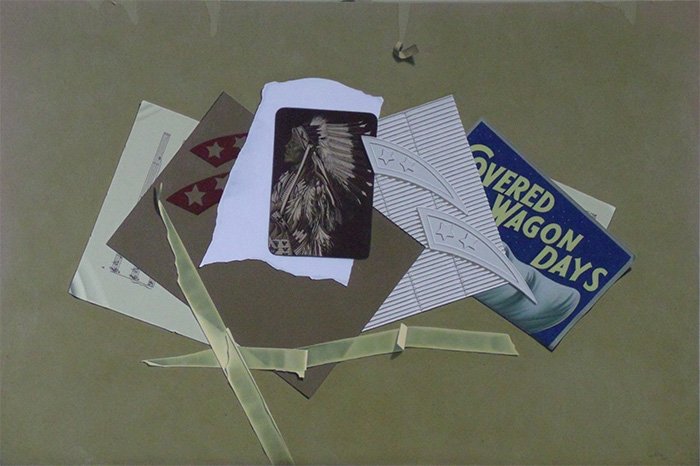
Ben Aronson, “Fairmont at Dusk,” 2010, oil on panel, 12 x 12 inches

Interested parties have until October 22 to catch a viewing of works by one of America’s most respected painters of the contemporary urban landscape. Who is he, and where are they on view?

Well-known painter Ben Aronson is the focus of a solo exhibition this fall via LewAllen Galleries in Santa Fe, New Mexico. Titled “Perspective and the Ephemeral,” the exhibition presents several of the artist’s newest works that highlight his signature synthesis of realism and abstraction in urban landscape subjects.

Ben Aronson, “Fifth Avenue, Toward Downtown,” 2017, oil on panel, 12 x 12 inches
Ben Aronson, “Closed Ramp,” 2014, pastel on board, 35 1/2 x 31 inches

Activating both memory and the imagination, “Aronson’s gestural, impressionistic application of paint — while underpinned by a precision indicative of a remarkable eye for realism — conveys his imagery of streets, buildings, and faceless figures through suggestions of implied movement and space,” the gallery writes. “These works reveal his sense of impressionist spontaneity and the capacity of his paintings to pause upon a moment, prompting closer regard, and in looking, one is seductively drawn into the action of the painting itself. ‘Perspective and the Ephemeral’ also includes stunning floral still-lifes that reveal Aronson’s eloquence in describing the effects of light, color and shadow on a more delicate scale.”

Ben Aronson, “Divided Highway, Closed Ramp Series,” 2014, oil on panel, 30 x 30 inches
Ben Aronson, “Manhattan Sunrise, 6th & 55th,” 2010, oil on panel, 60 x 31 1/2 inches
Ben Aronson, “Cap Ferrat and Cliffs, Côte d’Azur,” 2017, oil on panel, 12 x 12 inches
Ben Aronson, “Flowers in Glass,” 2006, oil on panel, 14 x 11 inches

The exhibition opened on September 29 and continues through October 22. To learn more, visit LewAllen Galleries.

This article was featured in Fine Art Today, a weekly e-newsletter from Fine Art Connoisseur magazine. To start receiving Fine Art Today for free, click here.
Star-Studded Prints at Swann

0
Agostino Carracci, “Saint Jerome,” circa 1602, engraving, 15 1/4 x 10 3/4 inches

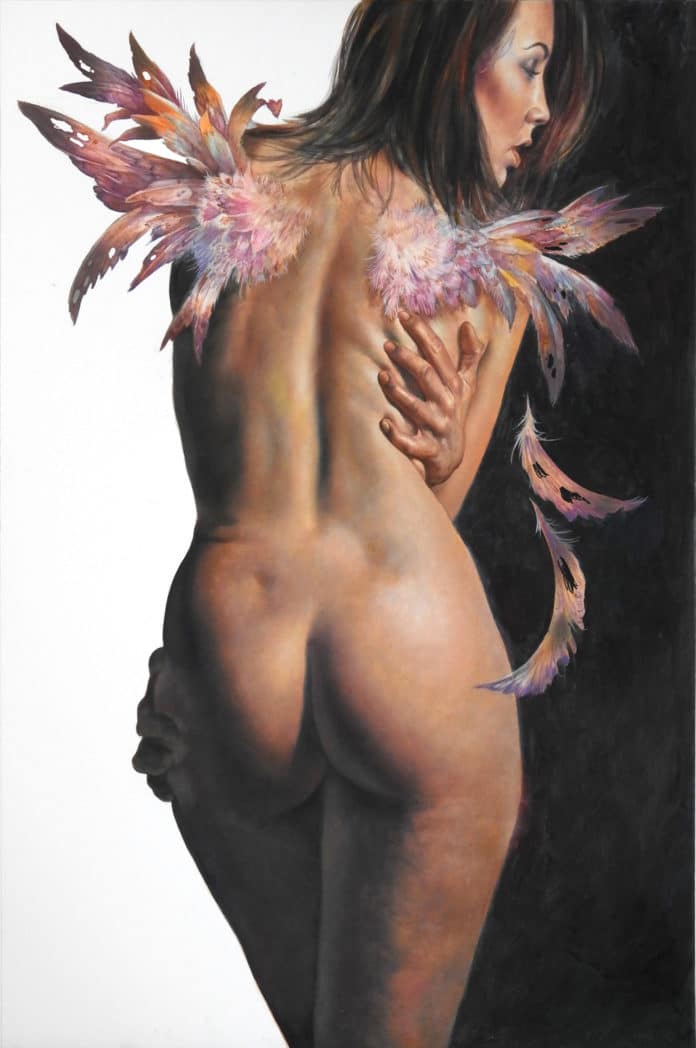
An impressive lot of seminal works from the dawn of printmaking in Europe is headed to the auction block via Swann Galleries late this fall. Find the iconic highlights here! Don’t drag your feet, however.

In just a few weeks, on November 2, Swann Galleries in New York will be hosting a major auction of prints circa 15th century through the modern era. The lots available represent some of the most iconic printmakers — and artists — in history, including Albrecht Dürer, Edward Hopper, Rembrandt, and Francisco José de Goya, to name a few.

Giovanni B. Piranesi, “The Round Tower,” circa 1749 50, etching, engraving, 22 x 16 1/2 inches

Via Swann Galleries: “A powerful section of works by American artists in the first half of the twentieth century is led by Edward Hopper’s scarce and haunting etching, ‘The Lonely House,’ 1923, with an estimate of $150,000 to $200,000. Gritty, iconic views of working-class Manhattan by Hopper’s mentor Martin Lewis, including ‘Snow on the El,’ 1931, and ‘Relics (Speakeasy Corner), 1928 (each with a value of $40,000 to $60,000), are complemented by works executed during his Depression-era stay in the suburbs with friend and fellow artist Armin Landeck. Regionalists Thomas Hart Benton, Grant Wood and Paul Landacre are well-represented with pastoral scenes evoking the anxiety of encroaching technology.

Edward Hopper, “The Lonely House,” 1923, etching, 8 x 10 inches

“A run of works by Pablo Picasso includes myriad media from all periods of his decades-long career. The aquatint and etching ‘Faune dévoilant une femme,’ 1934, is valued at $80,000 to $120,000, while ‘La Grande Corrida, aven Femme Torero,’ an etching of the same year, is expected to sell between $70,000 and $100,000.

Albrecht Dürer, “The Martyrdom of the Ten Thousand,” 1497, woodcut, 15 1/4 x 11 1/8 inches

“Seminal works from the dawn of printmaking in Europe include such iconic works as Israel van Meckenem’s engraving, ‘The Dance of the Daughters of Herodias,’ circa 1480, with an estimate of $80,000 to $120,000. A run of scarce and powerful works by the master of engraving Albrecht Dürer is led by ‘The Nemesis,’ circa 1501-02, estimated at $80,000 to $120,000. Additional early prints by the visionary include ‘Coat-of-Arms with a Skull,’ 1503, and ‘The Sea Monster,’ before 1500 ($50,000 to $80,000 and $40,000 to $60,000, respectively). An after-print of Heironymus Bosch’s engraving ‘The Temptation of St. Anthony,’ 1561, replete with distended frogs and damned souls, is valued at $40,000 to $60,000. Works by Pieter Bruegel, Hans Baldung Grien, Augustin Hirschvogel and Lucas van Leyden — the latter’s 1510 engraving ‘Ecce Homo’ is valued at $40,000 to $60,000 — will also be available.

Odilon Redon, “Arbre,” 1892, lithograph, 18 3/4 x 12 1/2 inches

“Etchings covering a variety of subjects by Rembrandt van Rijn, with portraits, nudes and landscapes, are led by the 1633 etching ‘Self Portrait in a Cap and Scarf with the Face Dark: Bust,’ at $30,000 to $50,000. Francisco José de Goya is well-represented in the sale with lithographs and portfolios, including the limited first edition of ‘Los Caprichos,’ circa 1799, complete with 80 etchings with aquatint, condemning the foibles of the aristocracy and clergy, which carries an estimate of $70,000 to $100,000. Also from the eighteenth century come two works by the master of English faunal portraits, George Stubbs: the 1788 mezzotint ‘A Sleeping Cheetah,’ and an engraving with stippling, etching and roulette from the same year, ‘A Horse Frightened by a Lion,’ each with an estimate of $20,000 to $30,000.

Albrecht Dürer, “The Nemesis,” circa 1501 02, engraving, 13 1/8 x 9 1/4 inches

“Nineteenth-century works include James Ensor’s hand-colored etching, ‘La Vengeance de Hop-Frog,’ 1898, a macabre scene probably based on a short story by Edgar Allan Poe, in which Hop-Frog the jester hangs tarred, flaming noblemen on a chandelier. Ensor’s prints are often extensively hand-colored with watercolor and gouache, making each a unique work of art; this one has an estimate of $60,000 to $90,000. Another work by Goya, ‘Picador Caught by a Bull,’ 1825, was likely an experimental lithograph for ‘Los Toros de Burdeos’ ($80,000 to $120,000). Also available are works by Jean-Auguste-Dominique Ingres, Pierre-Auguste Renoir, Henri Toulouse-Lautrec and Odilon Redon, whose 1892 lithograph ‘Arbre’ is expected to sell between $50,000 and $80,000.

Rembrandt van Rijn, “Old Man with Beard, Fur Cap and Velvet Cloak,” 1632, etching and drypoint, 5 1/2 x 5 1/8 inches
Francisco José de Goya, “Los Caprichos,” bound volume with complete set of 80 etchings, circa 1799, 8 1/4 x 6 1/8 each

“A strong selection of works by German Expressionists is led by the 1912 woodcut ‘Prophet,’ by Emil Nolde, and Edvard Munch’s 1902 etching ‘Puberty,’ each with a value of $30,000 to $50,000. A rare woodcut by Karl Schmidt-Rottluff, ‘Frau im Stuhl,’ 1913, carries an estimate of $25,000 to $35,000. Across the border in Austria, Egon Schiele created the drypoint ‘Kümmernis’ in 1914; in this sale, it is valued at $12,000 to $18,000.”

The complete catalogue and bidding information are available at www.swanngalleries.com.

This article was featured in Fine Art Today, a weekly e-newsletter from Fine Art Connoisseur magazine. To start receiving Fine Art Today for free, click here.
Luxury and Leisure in Britain

0
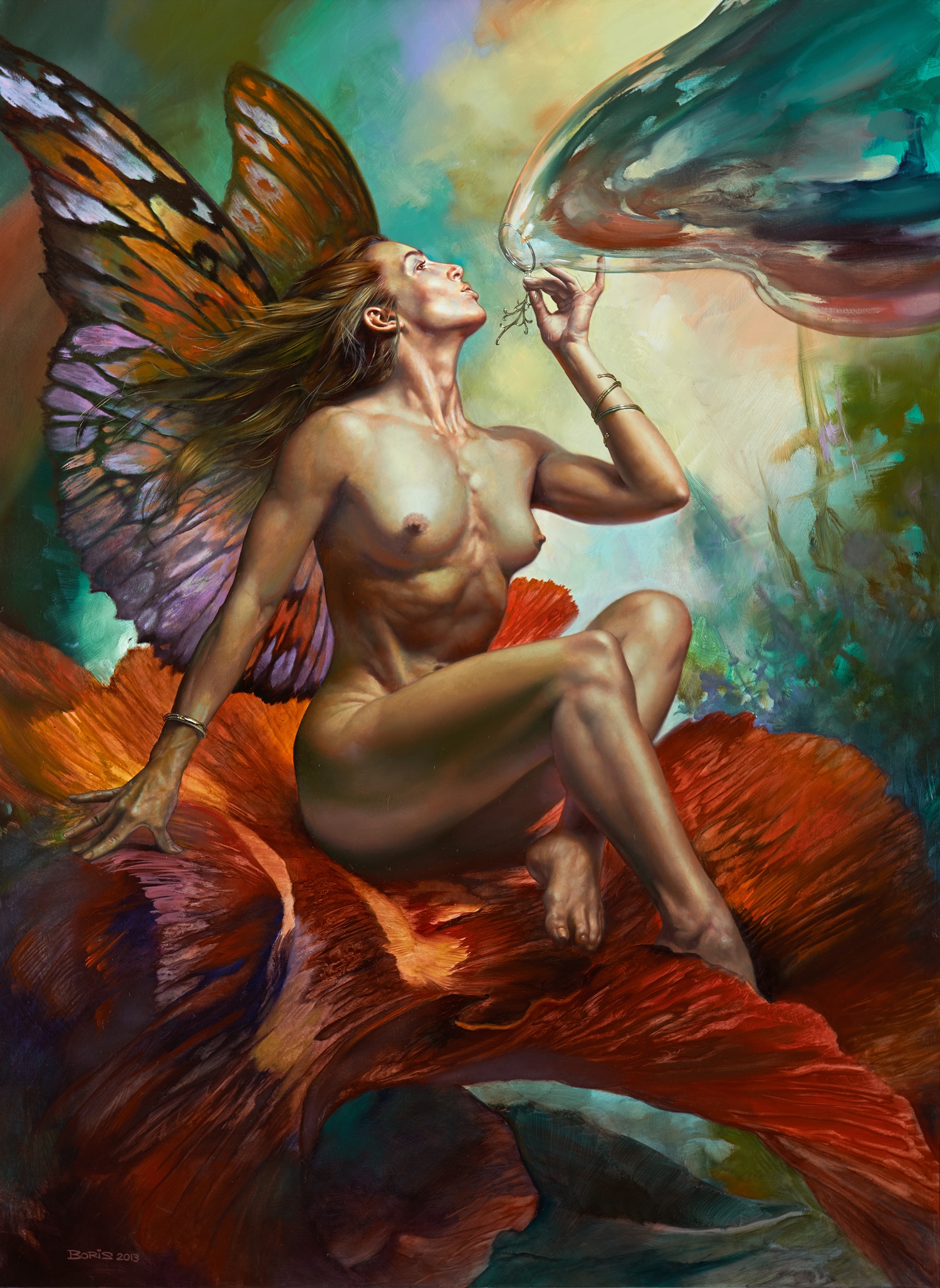
John William Godward, “Summer Idleness: Day Dreams,” 1909, oil on canvas, 23 x 29 inches ($1,350,000)

The evolution of luxury and leisure in 19th-century England was remarkable as the country experienced profound change in scientific innovation, economic growth, and artistic exploration. As a new culture of leisure emerged, fueled by wealth and affluence, artists took note with brush and paint.

M.S. Rau Antiques will soon be opening a great exhibition featuring — among many other fantastic objects — works by some of the greatest English artists of the 19th century. On view from October 21 through January 20 at its French Quarter gallery in New Orleans, “Aristocracy: Luxury and Leisure in Britain” is a story about how British culture of the 19th century found itself at a crossroads.

Domenico Moglia, “Roman Forum Micromosaic,” circa 1850, oil on canvas, 47 1/4 x 73 5/8 inches ($985,000)

“While strict rules of etiquette still governed society, opulence and entertainment emerged as a driving socioeconomic force that became a central facet of aristocratic life,” the gallery writes. “Through an exploration of the elaborate leisure culture that defined the era, the exhibition will reveal the complex ways in which the English aristocracy displayed — and ultimately preserved — its vast wealth and social power in the face of a rapidly changing economic structure.”

Sir Edwin Henry Landseer, “Portrait of an Arab Mare with her Foal,” 1825, oil on canvas, 28 x 36 inches ($598,000)

The selling exhibition features some incredible paintings, including John William Godward’s “Summer Idleness: Day Dreams,” Edwin Henry Landseer’s “Portrait of an Arab Mare with her Foal,” Domenico Moglia’s “Roman Forum Micromosaic,” “Portrait of a Lady” by Pieter Claesz, and “Caspar” by Jan van Bijlert.

To learn more and preview the objects included in the exhibition, visit M.S. Rau Antiques.

This article was featured in Fine Art Today, a weekly e-newsletter from Fine Art Connoisseur magazine. To start receiving Fine Art Today for free, click here.
WEEKLY NEWS FROM THE ART WORLD

Fill your mind with useful art stories, the latest trends, upcoming art shows, top artists, and more. Subscribe to Fine Art Today, from the publishers of Fine Art Connoisseur magazine.
  • This field is for validation purposes and should be left unchanged.