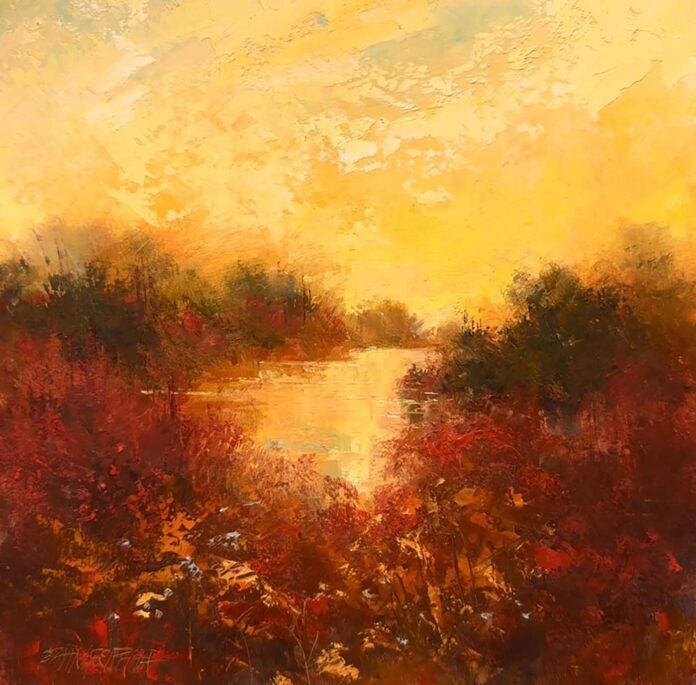
“Simply Aglow,” Bonnie Zahn Griffith, oil on panel, 10 x 10 in; Idaho Art Gallery, Meridian, ID
Bonnie Zahn Griffith: Bonnie Griffith’s “Simply Aglow” captivates with its warm, harmonious tones and impressionistic style. Inspired by the beauty of the western landscape, Griffith renders her vision in oils and pastels, inviting viewers to step into the scene and craft their own story. Her work showcases the timeless allure of nature through her mastery of light and texture. Griffith works both en plein air and in studio and has work represented in several galleries across the west
As part of our effort to continue to help artists and art galleries thrive, we’re proud to bring you this week’s “Virtual Gallery Walk.” Browse the artwork below and click the image itself to learn more about it, including how to contact the gallery.
The Totem, Robert Peters, oil, 12 x 9 in; Artzline.com
***
Living Waters – Study, Robert Peters, oil, 12 x 9 in; Artzline.com
Want to see your gallery featured in an upcoming Virtual Gallery Walk? Contact us at [email protected] to advertise today. Don’t delay, as spaces are first come, first served, and availability is limited.
There is a lot of superb contemporary realism being made these days; this article by Allison Malafronte shines light on a gifted individual.
For more than 15 years, Fan Yu (b. 1985) was a successful groomer and handler of show dogs in competitions and seminars around the world. In 2009, little did he know that his innate artistic talent was about to intersect with his current career and lead him on a new path of creating clay and bronze sculptures of dogs.
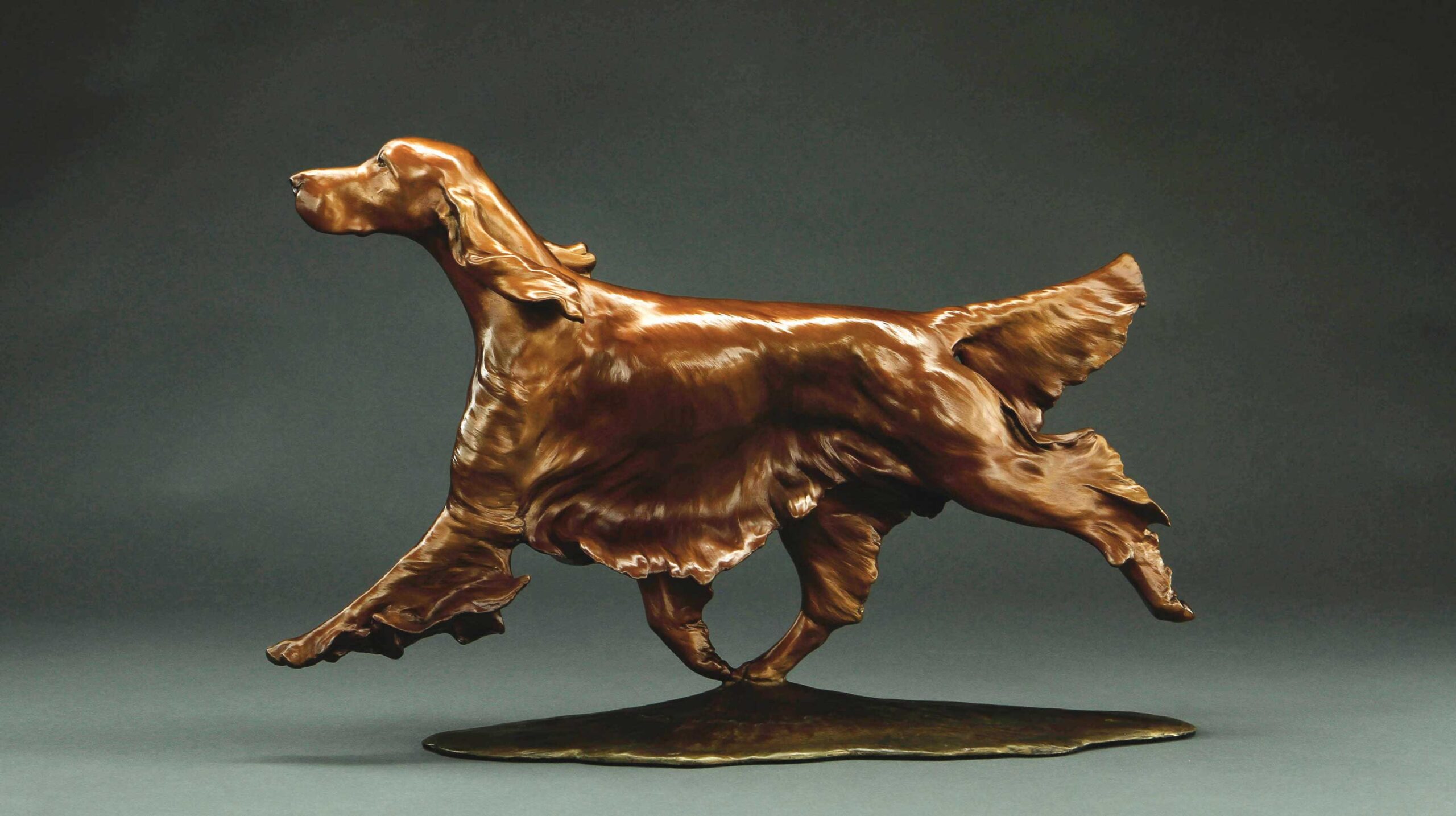
Fan Yu, “Irish Setter (Blaze of Glory),” 2020, bronze (edition of 9), 14 x 21 x 5 in., available through the artist
Fan grew up in China’s culturally rich Imperial City, Beijing, in a visually sophisticated family. His parents dedicated most of their lives to Chinese classical architecture and exposed Fan to aesthetics at an early age. As a child obsessed with animals, he often accompanied his father to the zoo with a sketchbook in hand, and he amassed a large collection of animal books to sketch from as well.
As he got older, Fan realized the pressures of the Chinese education system didn’t suit him, so he pursued other paths. When an injury kept him bedridden for half a year, he began learning about purebred dogs through a book his father had bought him. Once recovered, Fan took a dog show handling class in Beijing and slowly began entering the profession.
In 2009 Fan created his first sculpture of the striking Kerry Blue Terrier “Mick” — the winner of several Best in Show awards — to present to Mick’s professional handler, Bill McFadden, who has long inspired him. Fan’s intimate understanding of the canine spirit, attained through many years of grooming and handling, allowed his hands to sculpt with informed ease, and the results were not only eye-opening for him but also for the public.
He began receiving numerous inquiries and commissions from owners, breeders, and kennel clubs worldwide. Clearly Fan had found his niche and started dedicating more time to his new passion, finally leaving the world of professional dog handling in 2017. “The hustle and bustle, triumphs, and frustration of my dog show career inspired me to follow my intuition, and once that intuition was awakened, I just followed the momentum,” the artist says.
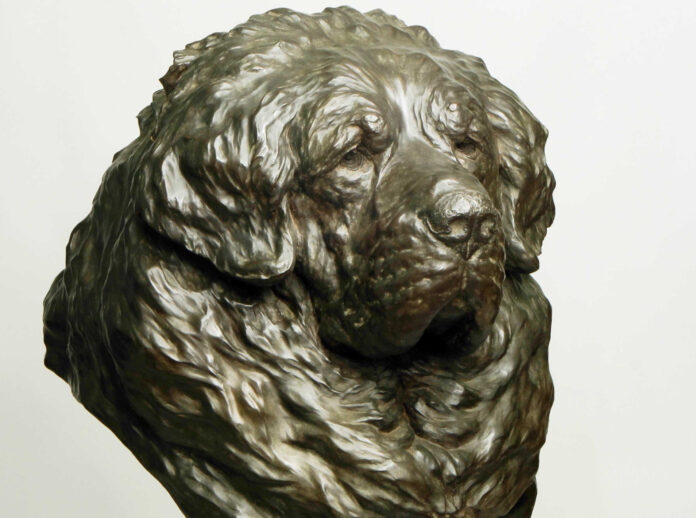
Tibetan Mastiff, by Fan Yu
Today Fan resides in Claremont, California, with his wife, Amy, and his sculptures are celebrated both in the dog show community and in the field of fine art. Particularly rewarding is the fact that, every day, Fan gets to create art that is a culmination of his lifelong interests and passions.
“The loyalty, kindness, simplicity, and directness I see in dogs’ eyes has always moved me,” the artist explains. “Every time I finish a sculpture, I feel like it has also sculpted a piece of my inner soul. As time passes, the dogs have sculpted me into who I am. In a sense, we are one.”
Attention Art Collectors! May 20-22, 2025: Visit the Plein Air Convention & Expo’s robust pop-up art gallery at the Nugget Casino Resort in Reno, Nevada, where hundreds of artists, including our master faculty, will have studio and plein air works on display and ready to purchase. Register for the full event at PleinAirConvention.com now.
James McArdell (1728/9?–1765), engraved after a painting by Francis Hayman (1708–1776), "Mr. Woodwarde in Character of ye Fine Gentleman in 'Lethe',” 1750, mezzotint on paper, 14 1/2 x 10 1/2 in., DeWitt Wallace Decorative Arts Museum, museum purchase, 1973-318
Celebrity Portraits in Print History > Before the 18th century, consumers in Great Britain and its American colonies lacked access to images of famous people other than monarchs. Broad circulation of engraved portraiture changed all that; now people could put a recognizable likeness or caricature with a name they had read about. Soon a market emerged for images of writers, actors, criminals, athletes, politicians, military figures, social climbers, models, and fashionable society women.
This year, the DeWitt Wallace Decorative Arts Museum — one of the Art Museums of Colonial Williamsburg — is presenting the exhibition “Celebrity in Print,” which pairs portrait prints with porcelain, silver, archeological fragments, and other artifacts that together illustrate the powerful impact celebrities made.
According to Katie McKinney, Colonial Williamsburg’s curator of maps and prints, “Just as today we use ever-expanding technologies to shape and share our image, so artists, actors, politicians, athletes, and socialites of the past used the printed word and images to expand their influence and fame.”
“Celebrity in Print”
DeWitt Wallace Decorative Arts Museum
Williamsburg, Virginia colonialwilliamsburg.org
through November 8, 2025
Among the most recognizable of colonial government notables was Benjamin Franklin (1706–1790). In a 1763 mezzotint made after a portrait painted by Mason Chamberlin, several of Franklin’s most famous experiments are depicted around him, including the lightning rod. After the print was published in England, his son ordered 200 copies to sell in Philadelphia. Franklin himself greatly enjoyed handing the print out to friends and correspondents, as this was one of his favorite likenesses.
Actors were often depicted in costumes or striking poses from their most famous roles. Their printed portraits often served as inspiration for ceramic figurines and were transferred to handkerchiefs, snuffboxes, and drinking vessels. One example featured in “Celebrity in Print” (and illustrated here) is the British comedic actor Henry Woodward (1714–1777).
Bow Porcelain Manufactory (London), “Figure of Henry Woodward,” 1750–53, soft-paste porcelain, 10 1/4 x 4 7/8 x 5 in., DeWitt Wallace Decorative Arts Museum, museum purchase, 1968-228
This pair includes a print and a porcelain figure showing him as “The Fine Gentleman” in David Garrick’s first play, Lethe, or Esop in Shades, first performed in London in 1740. Woodward’s character, dressed in an absurd outfit, poked fun at the wealthy Englishmen who traveled through Europe on their “Grand Tour.”
Upon their return, it was feared that they would adopt foreign dress, customs, and tastes. Garrick’s play was soon performed to huge acclaim in New York, Philadelphia, Annapolis, and Charleston.
Printed likenesses also celebrated ordinary people who led extraordinary lives. In the 18th century, 50 was the threshold of “old age.” It is not surprising, then, that Margaret Patten, who in 1737 claimed to be 136 years old, attracted attention. The mezzotint engraving of her is based on a portrait by John Cooper that was painted at the request of local officials to commemorate her long life.
The exhibited prints — and also other examples kept elsewhere at Colonial Williamsburg — can be explored in depth on two 65-inch touchscreens available for visitors’ use in the galleries.
Edgar Degas (1834–1917), "Dancers with Fans," c. 1898, pastel on paper, 24 1/2 x 27 1/2 in., Wadsworth Atheneum Museum of Art, 1945.209
The Wadsworth Atheneum Museum of Art holds a superb collection of nearly 1,250 European drawings, watercolors, and pastels, but can rarely display them as they are sensitive to light. On view this season is the exhibition “Paper, Color, Line,” featuring 65 masterworks dating from the 16th through the late 20th centuries.
This trove is particularly strong in the 19th and 20th centuries, and among the talents represented are Courbet, Degas, Toulouse-Lautrec, Schiele, Klee, and Miró. Another collection strength is theatrical designs, including works by Picasso, Léon Bakst, and Natalia Goncharova. Led by its curator of European art, Oliver Tostmann, the museum has made some exciting discoveries, all documented in the Wadsworth’s first ever catalogue devoted to this material.
“Paper, Color, Line”
Wadsworth Atheneum Museum
Hartford, Connecticut thewadsworth.org
Through April 27, 2025
As part of our effort to continue to help artists and art galleries thrive, we’re proud to bring you this week’s “Virtual Gallery Walk.” Browse the artwork below and click the image itself to learn more about it, including how to contact the gallery.
Clarissa Payne Uvegi, Crystal The Muse, oil on canvas; 72 x 36. Clarissa Payne Uvegi
Want to see your gallery featured in an upcoming Virtual Gallery Walk? Contact us at [email protected] to advertise today. Don’t delay, as spaces are first come, first served, and availability is limited.
Diego Rivera (1886–1957), "Dos Mujeres (Two Women)," 1914, oil on canvas, 77 3/4 x 63 1/2 in., 1955.010
The Arkansas Museum of Fine Arts has organized the innovative exhibition “Rivera’s Paris.” It gathers an array of paintings, drawings, and photographs to explore the Mexican artist’s formative early years in Spain and France, particularly his encounters with cubism that resulted in “Dos Mujeres” (1914), a signature artwork in the museum’s own Foundation Collection.
Dos Mujeres is a portrait of Rivera’s common-law wife, Angelina Beloff (standing), and their artist friend Alma Dolores Bastián. It earned acclaim when first exhibited in Paris and was gifted to the museum in 1955 by Abby Rockefeller Mauzé, sister to Arkansas’s future Governor Winthrop Rockefeller.
Rivera’s Paris
Arkansas Museum of Fine Arts
Little Rock arkmfa.org
Through May 18, 2025
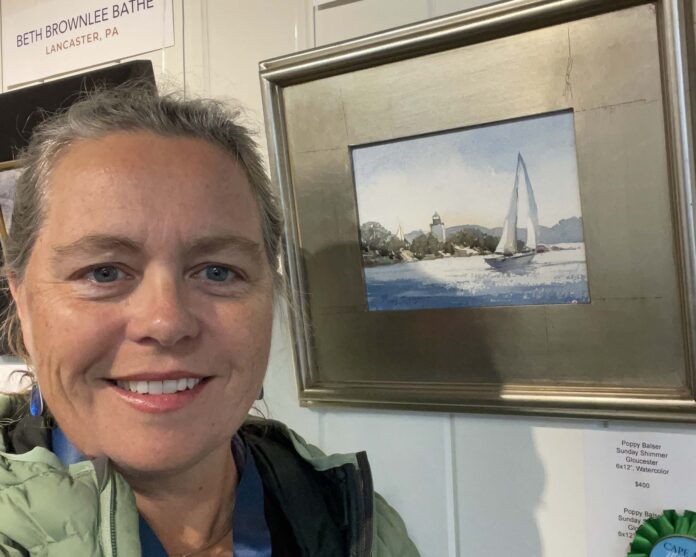
How did you develop your unique style? Poppy Balser: It was when I began with watercolours that I started to make progress with my paintings. I started painting outside shortly after that. Having to work quickly at a pace to keep up with the changing light of the sun helped me develop what has become my way of painting. I was not consciously seeking a “style” I was simply painting things I like to look at: water, boats, the seashore of the Bay of Fundy. Over years and lots of practice I found what worked for me to make pictures that I like to look at. I have been blessed that viewers like what they see too.
What is the most interesting thing you have painted and why? Poppy Balser: I did a number of paintings of herring weirs. These are fishing structures that once dotted the shores of the Bay of Fundy, made of tall poles strung with netting. As the tide rises and falls, the nets strung from pole to pole are a fascinating visual subject. Weirs have almost entirely disappeared now so I paint them to document an important part of the local history of where I am from.
Olga Volkova (b. 1994), "Portrait of Anna," 2022, oil on canvas, 23 1/2 x 19 1/2 in.
Building an Art Collection – a Fine Art Collection Profile >
Tom Vining is a retired veterinarian who lives in a small town 75 miles west of Houston. His home is adorned with approximately 275 paintings, almost all of them on display with — amazingly — enough wall space for more. Ranging from figures and still lifes to landscapes and cityscapes, these works have been created by impressionist and realist artists in America, Russia, and Ukraine, most of them after 1980, though a few before.
Art collector Tom Vining
Tom says he did not grow up with original art: “I remember my dad doing some paint-by-numbers and framing prints of famous paintings, but the real spark for my interest in art was beginning a new relationship at age 40. In 1992 my partner and I made our first visit to Santa Fe, where we purchased three landscape paintings by Don Brackett, Eric Wallis, and [the late] Louisa McElwain. I was hooked, so when we returned home, I began seeking out galleries near our second residence in rural Texas, between Houston and Austin. Luckily, I found The Gallery at Round Top, which was owned by two artists willing to answer my questions and educate me more than I ever could have on my own.”
One of those generous artist-gallerists was Karen Vernon, and Tom began purchasing paintings by local and regional artists she represented, then joined an organization in which she was active. Arts for Rural Texas is dedicated to providing arts education for youngsters who would otherwise never be exposed. Its programming includes after-school and summer art camps, exhibitions of student and professional artists, and the subsidized transport of pupils to attend live performances in large school auditoria throughout Fayette County.
Every year Arts for Rural Texas mounts Art Walk, a juried exhibition presented in the main square of Fayetteville (population 258). Over the years Tom has bought lots of art there and has also taken many more trips to Santa Fe, especially off-season, when dealers and artists are better able to relax and share their insights at length. In time, he discovered and “fell in love” with comparable artworks from the Soviet Union, Russia, and Ukraine, and he is especially fond of the students who are sustaining this artistic tradition at the Repin Institute in St. Petersburg. (Sadly, the availability of their art in the U.S. has been challenged by trade sanctions imposed on Russia since 2022.)
Today, the Vining Collection encompasses works by such American talents as George William Allen, William Alther, Sunny Apinchapong, Suzie Baker, Phil Beck, Ovanes Berberian, Kathie Boehneman, Don Brackett, Michelle Chrisman, Graydon Foulger, Kaye Franklin, Greg Glowka, Walt Gonske, A.D. Greer, Eric Harrison, Rick Hodgins, Qiang Huang, Eric Jacobsen, William Scott Jennings, Robert A. Johnson, Roger Hayden Johnson, Rusty Jones, Ramon Kelley, Sonja Kever, Phoenix Kooper, Margie Leach, Calvin Liang, Chen Liang, Huihan Liu, Frances Macaulay, Sally Maxwell, Janice McCubbin, Ken Muenzenmayer, C.W. Mundy, Lenore Prudhome, Manfred Rapp, Jean Reavis, Laura Robb, Bob Rohm, Don Sahli, Mary Scott, Carol Swinney, Gary Taylor, Linda Tibolla, Hsin-Yao Tseng, T.W. Vanya, Karen Vernon, Scott Wallis, and Bruce Williamson.
Suzie Baker (b. 1970), “Ralph’s Barn,” 2015, oil on linen panel, 20 x 16 in., painted at Wisconsin’s Door County Plein Air Festival
The Russian and Ukrainian artists represented include Lyudmila Agrich, Nikolai Babasyuk, Arthur Bakhtiyarov, Ekaterina Belova, Olga Grigoryeva-Klimova, Vladimir Kholuev, Viktor Kiselev, Slava Korolenkov, Valery Koserukov, Sergei Kovalenko, Vladimir Kovalov, Olga Kuzmina, Oleg Lomakin, Piotr Marmanov, Andrew Piankovski, Erik Rebane, Semon Rotnitski, Andrey Selenin, Alexander Shabadei, Irene Sheri, Boris Spornikov, Vadim Suvorov, Evdokia Usikova, Helve Viidalepp, Ivan Vityuk, Nina Volkova, Olga Volkova, Edvard Vyrzhikovski, Fedor Zakharovich Zakharov, Zinaida Zatsepina, and Tuman Zhumabaev.
Tom says he buys regularly from artists themselves; about 30 of those represented in the collection have had the pleasure of visiting him, and indeed four paintings have actually been created in his house. All visitors are struck by the intelligence of Tom’s juxtaposition of artworks from different regions; on one wall, for example, hang complementary tree scenes painted in 1979 by Fedor Zakharovich Zakharov (1919–1994) and just last year by Eric Jacobsen (b. 1966). The close aesthetic connection between Old and New Worlds is epitomized by the presence of two masters in the Vining Collection: Nicolai Fechin (1881–1955) and Sergei Bongart (1918–1985) both immigrated to the U.S. and thrived here, introducing generations of their new compatriots to “the Russian School.”
Tom also buys regularly from galleries and is quick to credit three dealers as particularly inspirational: Paul Eubanks at Paul Scott Gallery (formerly Gallery Russia) in Scottsdale, Dianna Eaton at Kyiv International Gallery (formerly Art of Russia International) in Santa Fe, and Vanessa Rothe in Laguna Beach. He admits he is stunned by “the determination of younger artists to bypass the gallery system.” He says, “They do not seem to realize that few artists will prosper without someone promoting their work and investing time and money to do so. Being discovered on the Internet is like finding a needle in a haystack. Even established artists will fade away if they are not promoted constantly.”
Tom continues to show support for artists by attending fundraisers that benefit Arts for Rural Texas and other nonprofits, and when local galleries invite their artists to teach on site, they frequently come to visit his collection. (In fact, entire art classes from local schools have come through.)
Not every acquisition is straightforward, of course. Tom confides: “Sometimes, I find too many great pieces at the same time. Fortunately they seem to wait for me to come back and collect them. One piece took three years because there was always another one I liked more. Once I had to wait eight years for a very expensive painting, and sometimes I find that a desirable painting I passed on has later shifted to another gallery at a moment when I can actually acquire it.”
Clearly, patience has been an essential virtue in the Vining Collection’s formation, and will continue to be so.
Maxfield Parrish (1870–1966), "Reveries," 1913, oil on canvas, 39 x 45 3/4 in., private collection courtesy National Museum of American Illustration (Newport, Rhode Island)
The Flagler Museum is presenting “The Ethereal Worlds of Maxfield Parrish,” an exhibition of 25 works demonstrating the genius of the Philadelphia-born master (1870–1966) whose paintings evoke a dreamlike world that hovers between reality and reverie. Parrish was a leading figure in the Golden Age of American Illustration, whose approximately 900 commissions for advertisements, magazines, books, stage sets, murals, stationery, and children’s books made him world-famous. By 1925, one out of every four households in America possessed reproductions of his art in some form.
On view this season are artworks featuring his highly saturated colors (especially the distinctive “Parrish Blue”) and lustrous glazing techniques. The compositions often depict figures in lush landscapes that are both romantic and fantastical, often with a neoclassical flourish.
Originally named “Whitehall,” the Flagler Museum was built by the real estate developer Henry Flagler at the heart of his most prestigious creation, Palm Beach, Florida. It is a highly appropriate venue for this exhibition as its heyday overlapped with Parrish’s. When it was completed in 1902, the house was hailed by the New York Herald as “more wonderful than any palace in Europe, grander and more magnificent than any other private dwelling in the world.” Parrish often depicted such grand, idealized buildings, too.
Details at a Glance:
“The Ethereal Worlds of Maxfield Parrish”
Flagler Museum, Palm Beach, Florida flaglermuseum.us
Through April 20, 2025
Fill your mind with useful art stories, the latest trends, upcoming art shows, top artists, and more. Subscribe to Fine Art Today, from the publishers of Fine Art Connoisseur magazine.