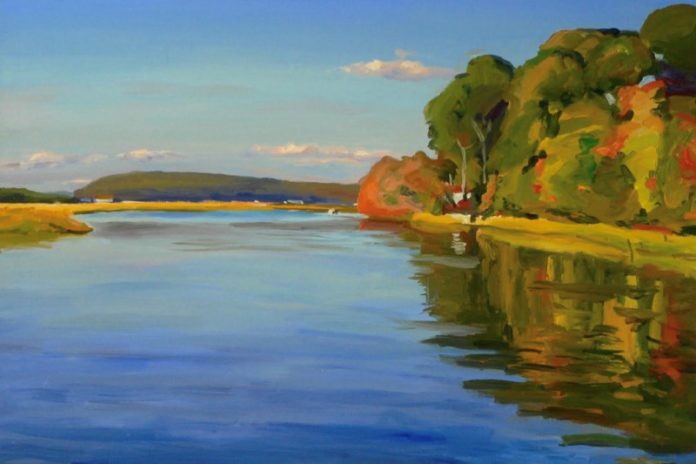

Beth Bathe is an artist residing in Lancaster, PA who paints primarily en plein air and participates in high-profile juried and invitational competitions from Maine to Washington State. In 2017 she is a juried artist in ten competitions, including Plein Air Easton, MD, Door County WI, Cape Ann MA and Richmond VA. Her paintings have won numerous awards and honors.
Critics have described her representational paintings as “evoking nostalgia, like that of an old sepia toned photograph,” often with just touches of color.
Beth’s painting style is unique. A viewer often wonders, “Is it a watercolor or is it an oil painting?” The answer is, “somewhat both.” Beth works with Cobra Water Mixable Oil Colors in a limited tonalist palette with unconventional tools such as squeegees and cotton swabs, along with her brushes.
Highly influenced by American Regionalist painter Andrew Wyeth, Beth’s subject matter is often what she refers to as the “vanishing landscape.” The paintings depict beauty in the buildings, barns and old towns of a time gone by. Scenes often include structures beyond their prime: an old barn, a Victorian farmhouse, a back alley, a fire escape, an old mill or an old split rail fence down a country road.
Beth paints primary on location to catch her subject at a specific time, especially how the light and shadows play on the surface creating drama and emotion. “It’s a moment that I’m after, a fleeting moment, but not a frozen moment,” said Andrew Wyeth.
Beth has a BFA from Virginia Commonwealth University. She teaches classes and leads workshops at her studio, Short Dog Studio, in Ephrata, PA, where she shares her space with her photographer partner and three Cardigan Welsh Corgi dogs. She is currently represented by Brazier Gallery in Richmond VA and Crystal Moll Gallery, Baltimore MD. Her work will also be included in the “Artist’s of the New Century” show at The Bennington in Vermont in September 2017.
Christopher Richard Wynne Nevinson, “Returning to the Trenches (detail),” 1916, drypoint, 8 3/8 x 11 inches, Metropolitan Museum of Art
The World Wars had such an impact on culture and the visual arts that historians use them as a categorical benchmark — “pre- and post-war.” In just a few weeks, the Metropolitan in New York aims to explore the impact of World War I on the visual arts through this gripping exhibition.
On July 31, the Metropolitan Museum in New York City will open a disturbingly beautiful exhibition aimed at detailing the major impact that war — specifically World War I — had on the visual arts. On view through January 7, “World War I and the Visual Arts” is a moving exploration into how early 20th-century artists both reacted to and represented the horrors of modern warfare. According to the museum, “The works on view will reflect a variety of responses, ranging from nationalist enthusiasm to more somber reflections on the carnage and mass devastation that resulted from the war.”
Among the artworks included in the exhibition are prints, drawings, photographs, paintings, illustrated books, posters, periodicals, trading cards, and sculpture. Continuing, the Met writes, “[The exhibition] will reveal how artists — including Otto Dix, Fernand Léger, George Grosz, Käthe Kollwitz, C.R.W. Nevinson, Gino Severini, and Edward Steichen — reflected a myriad of styles, approaches, ideologies, and mediums in response to the war. Among the styles represented are Cubism, Dada, Futurism, Expressionism, New Objectivity, and Vorticism.
“Like their countrymen, many artists, writers, and intellectuals initially welcomed the war for a range of reasons — some because of nationalist sentiments, others due to a naïve desire to experience an adventure they assumed would be over in a few months, and still others because of a mistaken belief that, after this final conflict, a more peaceful, spiritual, and anti-materialist era would begin. Numerous artists experienced combat firsthand, either as soldiers, medics, or war artists documenting life at the front; many suffered severe injuries and some even death. As the reality of the war became apparent, several figures changed their positions to express fierce condemnation, mournful regret, or pacifist sentiments.”
This article was featured in Fine Art Today, a weekly e-newsletter from Fine Art Connoisseur magazine. To start receiving Fine Art Today for free, click here.
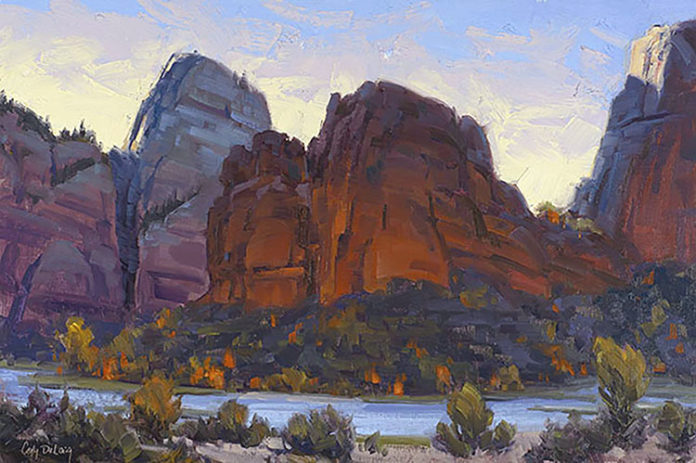
Peter de la Fuente, “Alternate Route,” 2015, egg tempera, 7 1/4 x 14 1/4 inches
Gerald Peters Gallery in Santa Fe, New Mexico, opens this weekend a tantalizing exhibition of remarkable landscapes by Spaniard Peter de la Fuente. What is the skilled watercolor and tempera painter up to these days? Brilliance.
Friday, July 14 at Gerald Peters Gallery in Santa Fe marks the opening of an anticipated solo exhibition of watercolors and tempera paintings by acclaimed artist Peter de la Fuente. In conjunction with the National New Deal Preservation Association, the artist and gallery will also host a public lecture on Saturday, July 15.
Peter de la Fuente, “Second Gate,” 2015, watercolor, 10 x 14 inchesPeter de la Fuente, “Study for New Mexico Drive-By,” 2016, watercolor, 8 x 11 3/4 inches
“Born in Seville, Spain in 1959,” the gallery writes, “de la Fuente and his family relocated to his mother’s home of New Mexico just four years following. De la Fuente continues to live and work in New Mexico, dedicated to preserving and furthering his family’s legacy in the arts.
Peter de la Fuente, “The Red Gate,” 2013, egg tempera, 20 x 32 inches
“Disenchanted with traditional art academies, de la Fuente turned to his family for formal training. As the son of Carol Hurd Rogers and grandson of Henriette Wyeth and Peter Hurd, de la Fuente had the unique opportunity to study and develop his skills under the guidance of the Wyeth/Hurd family. Building on these traditions, de la Fuente paints landscapes uninterrupted by either human or animal life. Working in egg tempera, de la Fuente focuses on the detail and luminosity of his paintings to impart the works with a sense of place. Less concerned with photorealism, de la Fuente instead chooses to capture the character of a given setting, to capture the mood and feeling of scene.”
Peter de la Fuente, “My Stack in Snow,” 2013, watercolor, 13 1/4 x 19 inches
The artist himself suggests, “I try to evoke a sense of place. I paint the places I love. I want the viewer to feel the landscape of New Mexico — so that they can step into the painting, with a sense of familiarity; perhaps the feeling of having been there before…”
The exhibition, titled “Cuentos,” will hang through September 30. To learn more, visit Gerald Peters Gallery.
This article was featured in Fine Art Today, a weekly e-newsletter from Fine Art Connoisseur magazine. To start receiving Fine Art Today for free, click here.
Dinah Worman, “Barns & Cows,” oil on canvas, 24 x 48 inches
A beautiful array of fresh landscape paintings by this female master are currently hanging through August 1 in an esteemed Colorado gallery. Will you be a lucky viewer?
Award-winning artist Dinah Worman is currently showcasing several of her newest landscapes at Ann Korologos Gallery in Basalt, Colorado, during “America at Heart: From Above.” On view through August 1, the solo show is a continuation of Worman’s “exploration into stacked landscape compositions as well as works that give the viewer an up-close perspective of what lies within the landscape,” the gallery reports. “Light filters through the trees and streams and between the clouds. [Worman] is able to retain this vitality because she is continually renewing her vision.”
Dinah Worman, “Summers End,” oil on canvas, 30 x 30 inchesDinah Worman, “Counting Cows in the Landscape,” oil on canvas, 40 x 30 inches
Discussing her work, Worman notes, “I work to press beyond method and into a flow of creative instinct; using pastel, oil, acrylic, or printmaking to express myself with unusual compositions and expanding vision. My interpretation is more important to me than the object itself. You realize that your wisdom is coming from some subconscious place rather than from copying something else. I want to do work that, though rooted in reality, is more and more conceptual.”
This article was featured in Fine Art Today, a weekly e-newsletter from Fine Art Connoisseur magazine. To start receiving Fine Art Today for free, click here.
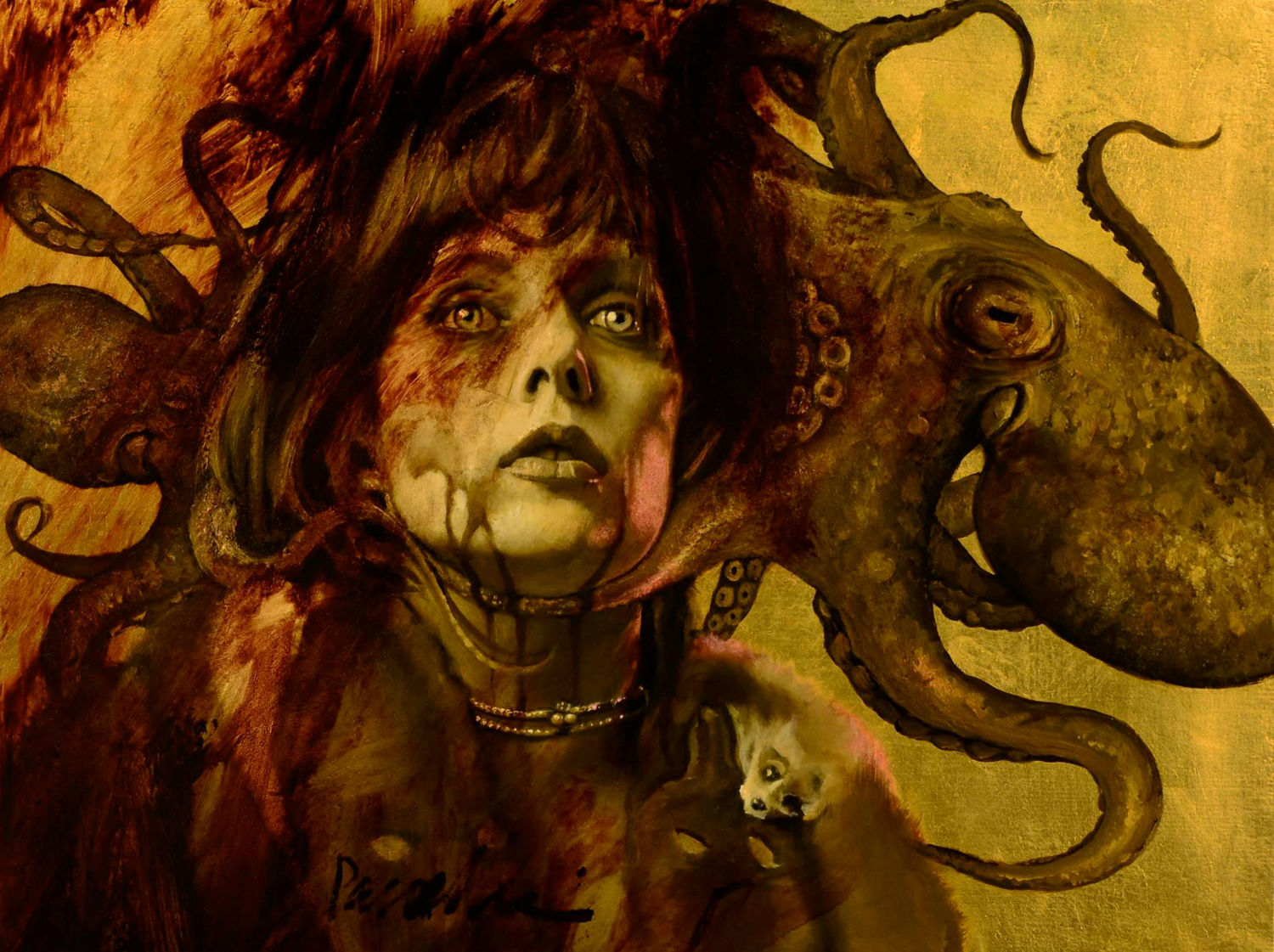
Doug Hatch, “Leit Motif,” oil on Baltic birch panel, 10 x 8 inches
More than 40 top artists from around the country are currently featured during this must-see summer salon in Wisconsin. Who and where? Details here.
Tory Folliard Gallery in Milwaukee, Wisconsin, is currently exhibiting a diverse selection of artworks by over 40 top-tier artists. On view since July 7 and continuing through September 9, “The Salon Show” will soon host Artist Talks on Gallery Day, July 22 at 4 p.m.
Robert Cocke, “Actuality,” oil on canvas, 26 x 26 inches
“The Salon Show” at Tory Folliard is the gallery’s largest annual exhibition and showcases painting, photography, and sculpture. Exhibiting artists in 2017 include Rodger Bechtold, Mary Bero, Craig Blietz, Mark Brautigam, Derrick Buisch, Jessica Calderwood, Mark Chatterley, Robert Cocke, Marion Coffey, Terrence Coffman, Laura Dronzek, Andy Fletcher, Mark Forth, Ben Grant, Harold Gregor, Gerit Grimm, Doug Hatch, Kathy Hofmann, Ron Isaacs, Keith Jacobshagen, Mary Jones, Clare Malloy, Nancy Mladenoff, Mark Mulhern, Charles Munch, Katie Musolff, Dennis Nechvatal, William Nichols, Michael Noland, Melanie Parke, Bill Reid, Jan Serr, Elizabeth Shreve, Brook Slane, Trina May Smith, Claire Stigliani, Fred Stonehouse, Paula Swaydan Grebel, Richard Taylor, Stephanie Trenchard, Tom Uttech, and Mary Alice Wimmer.
This article was featured in Fine Art Today, a weekly e-newsletter from Fine Art Connoisseur magazine. To start receiving Fine Art Today for free, click here.
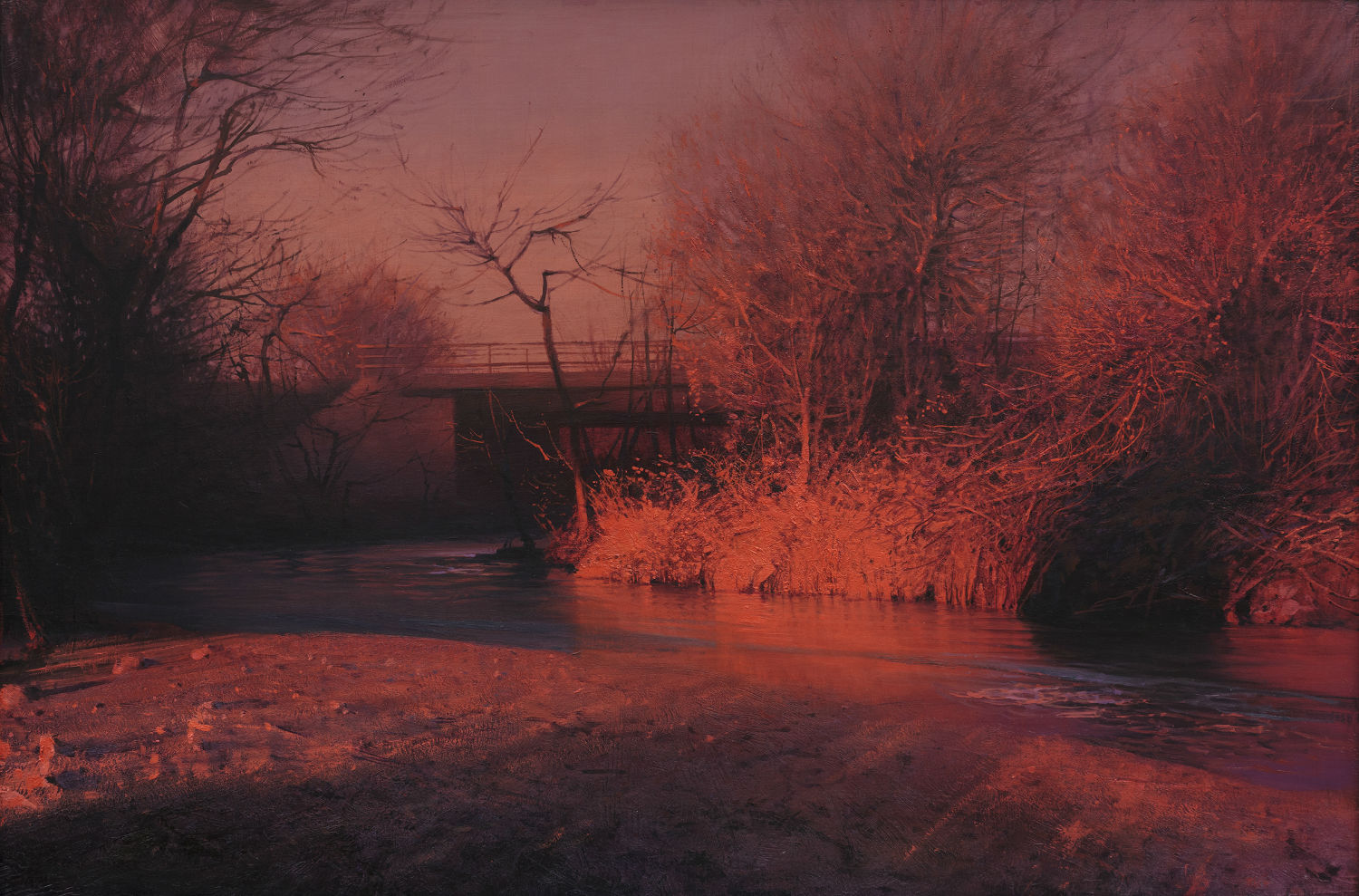
Paolo Caliari, “Lucrecia,” 1580, oil on linen, 109.5 x 50.5 cm. Kunsthistorische Museum, Vienna
Nearly 100 masterful works hailing from 16th-century Venice will embellish the walls of this Spanish museum through September. What’s the theme, and who are the principle players? Find out more here.
Madrid’s Museo Thyssen Bornemisza is currently exhibiting a significant selection of Renaissance artworks from Venetian masters this Summer. “The Triumph of Beauty and the Destruction of Painting” runs through September 24 and “sets out to show how the specific devices of Venetian painting, from the use of chiaroscuro and color as the bases for representing figures and space to a closer attention to nature than was advocated by the classical tradition, more idealistic in its conception, embodied a fully Renaissance idea of beauty that was on par with, and sometimes superior to, the art then being produced in Rome, Parma, and Florence,” the museum reports.
Titian, “The Penitent Mary Magdalen,” circa 1540-46, oil on linen, 125.6 x 94.7 cm. Private CollectionGiovanni Cariani, “The Musicians,” 1520, oil on linen, Fondazione Accademia CarraraGiovanni Battista Moroni, “Titian’s Schoolmaster,” oil on linen, 98.8 x 74.3 cm. National Gallery, WashingtonPaolo Caliari, “Saint John the Baptist Preaching,” 1562, oil on linen, 208 x 104 cm. Galleria Borghese
Among the major artists represented are Titian, Tintoretto, Paolo Veronese, Jacopo Bassano, Giorgione, and Lorenzo Lotto. Continuing, the press release reads, “Curated by Fernando Checa Cremades, professor of Art History at the Universidad Complutense, the show examines this hub of art production, which is essential to understanding the history of painting, through a careful selection of the subjects depicted by the masters who earned it universal fame rather than from a chronological or stylistic approach. It features an outstanding group of paintings and a few sculptures, prints, and books from private collections and museums such as the Galleria dell’Accademia in Venice, the Fondazione Accademia Carrara in Bergamo, the Palazzo Pitti in Florence, the Kunsthistorisches Museum in Vienna, the Galeria degli Uffizi in Florence, the Musée du Louvre in Paris, and the National Gallery in London.”
A full outline of the exhibition and its 10 sections can be found here. To learn more, visit the Museo Thyssen Bornemisza.
This article was featured in Fine Art Today, a weekly e-newsletter from Fine Art Connoisseur magazine. To start receiving Fine Art Today for free, click here.
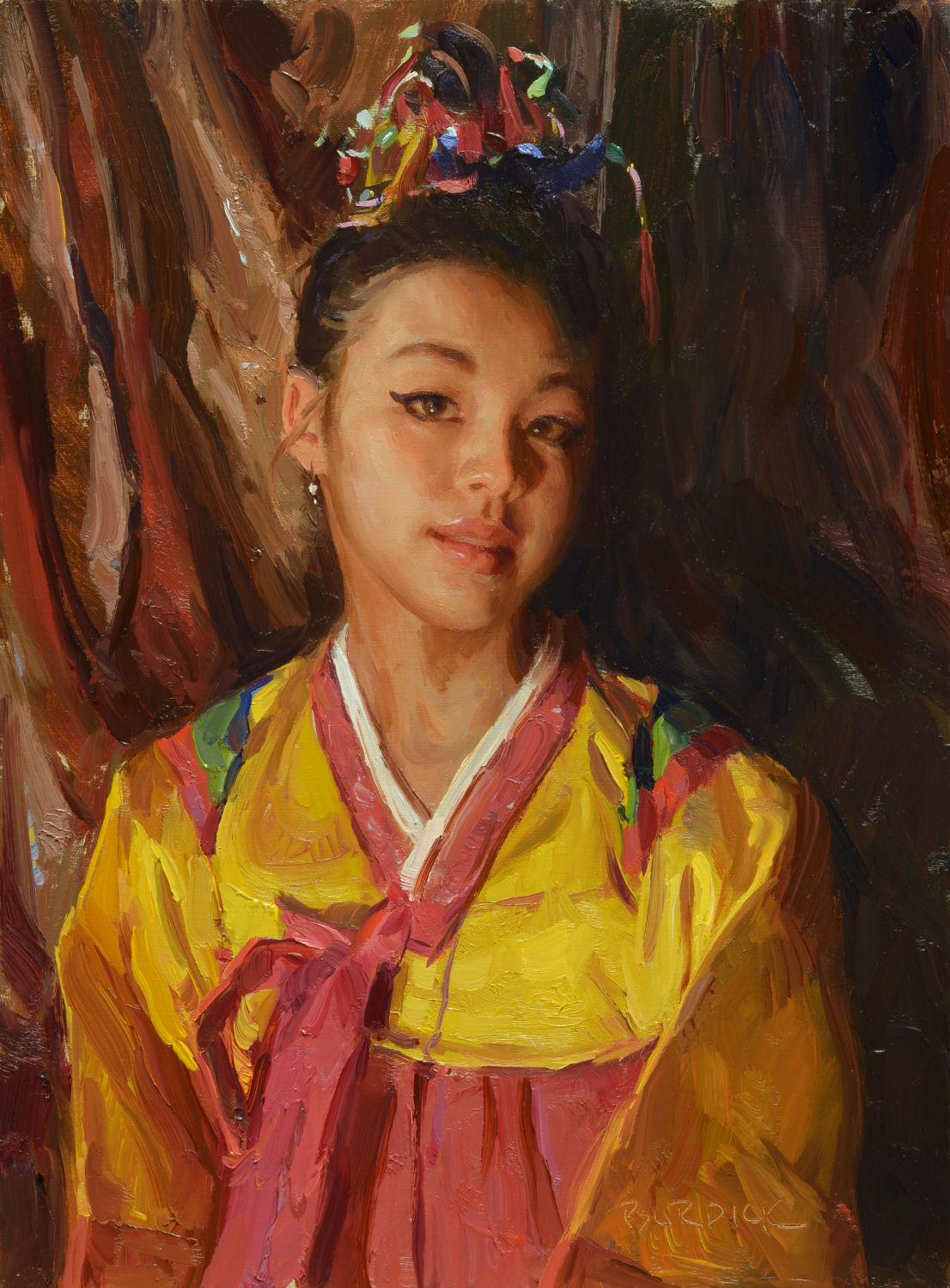
As part of its Artist Lecture Series, the Seven Bridges Foundation in Greenwich, Connecticut, will soon be hosting one of America’s leading figure, portrait, and still-life painters and one of the world’s most renowned pastelists. He has perfected his craft for over 65 years, and you don’t want to miss hearing him detail his artistic odyssey.
On Saturday, July 22, at 2 p.m., Gallery 1 at Seven Bridges Foundation in Greenwich, Connecticut, will welcome acclaimed American artist Daniel E. Greene to discuss his creative journey in art in addition to his evolution over a career than spans 65 years. Greene is “one of America’s leading figures, portrait, and still-life painters and has been internationally acclaimed as one of the world’s most renowned pastelists,” the foundation reports. “His portrait subjects include leaders of government, banking, education, industry, and include First Lady Mrs. Eleanor Roosevelt, author Ayn Rand, publisher William Randolph Hearst, and commentators Bryant Gumbel and Bob Schieffer. His works now hang in more than 700 public and private collections including the Metropolitan Museum of Art. He has taught at the Art Students League and at the National Academy of Design. Mr. Greene is the author of two definitive books, Pastel and TheArt of Pastel, which have been translated into nine languages.”
The foundation continues, “In 2001, the Portrait Society of America presented Daniel E. Greene with the Medal of Honor for his distinguished body of work. In 1999, he was awarded the Artists Fellowship Benjamin West Clinedinst medal for the achievement of exceptional artistic merit. In 1995, the American Society of Portrait Artists honored Greene with the John Singer Sargent Award for life-long dedication to the achievement of excellence in portraiture. In 1992, the Oil Painters of America Society named him to their Hall of Fame. In 1983 Mr. Greene was inducted into the Pastel Hall of Fame.”
With so many accolades under his belt, the artist is sure to have a wealth of fantastic stories and words to the wise. To learn more, visit Seven Bridges Foundation.
This article was featured in Fine Art Today, a weekly e-newsletter from Fine Art Connoisseur magazine. To start receiving Fine Art Today for free, click here.
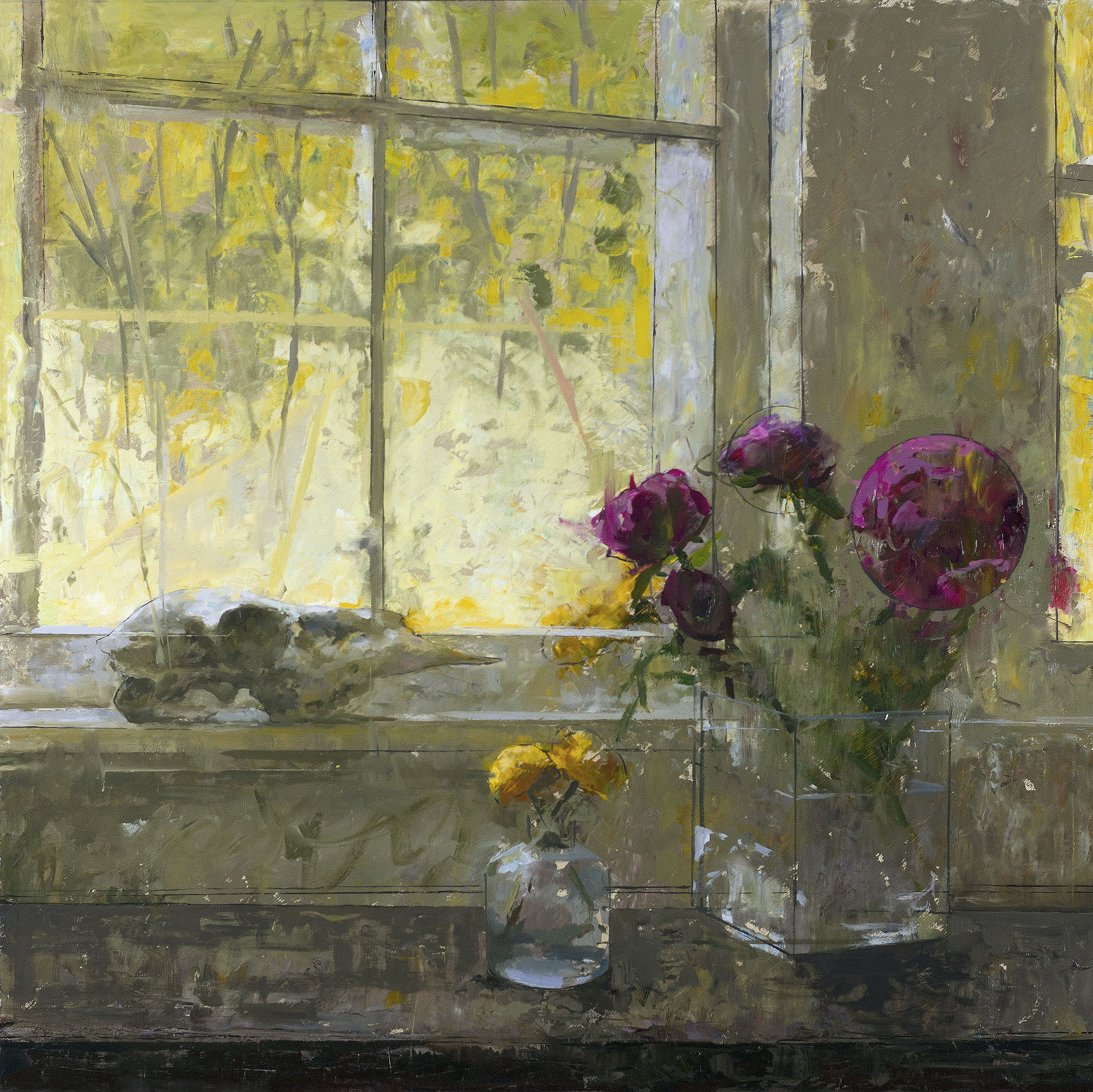
Jesus Navarro, “Catching a Ride,” oil on canvas, 20 x 31 inches
The mesmerizing hyper-realist paintings by Spaniards Jesus and Iban Navarro feature during a blockbuster joint exhibition at this established gallery in the Southwest.
“Oil & Water” will leave viewers stunned and awestruck at the capabilities a few possess to turn pigment, vehicle, and support into seeming three-dimensional perfection in two dimensions. Featuring the hyper-realist paintings of Jesus Navarro and Iban Navarro, Gallery 901 in Santa Fe, New Mexico, can barely wait to open its doors for “Oil & Water” on July 28.
Iban Navarro, “The Catch of the Day,” egg tempera and watercolor, 24 x 36 inches
The show, which will remain on view through August 28, will be both artists’ first in the United States, and each will be in attendance at the gallery for the opening reception, slated for 5 p.m. on July 28. “Father and son painters Jesus and Iban Navarro form a duo of talented artists that reach a remarkable level of hyper-realism,” the gallery writes. “Skillfully manipulating color and light, the two exceptional painters capture a stunning representation of every scene they create, ranging from vibrant floral arrangements to waves crashing against the Spanish coast. Perhaps most importantly, the influence they impart on each other proves that similarity may be found in diversity. Through employing different artistic techniques and images, both artists compose their works with classical foundations while adding unique technical elements to their paintings. Jesus masterfully uses oils, while his son Iban favors watercolors as his primary material. Despite the disparity in media, the pair works together to prove that in the art world, oil and water may sometimes mix.”
This article was featured in Fine Art Today, a weekly e-newsletter from Fine Art Connoisseur magazine. To start receiving Fine Art Today for free, click here.
Roy Nuse, “Peace of Mind,” n.d., oil, 30 x 25 inches, Bucks County Intermediate
Believe it or not, many of our nation’s public and private schools have remarkable art collections. The James A. Michener Art Museum explores the phenomenon during this fascinating show.
The James A. Michener Art Museum in Doylestown, Pennsylvania, recently mounted an interesting exhibition aimed at showcasing the longstanding tradition of art collecting by public educational institutions in southeastern Pennsylvania.
Walter Baum, “The Brook,” circa 1930, oil on canvas, 32 x 40 inches, School District of PhiladelphiaJoseph Crilley, “Country Road to Bucks County,” circa 1952, oil on canvas, 18 x 24 inches, New Hope-Solebury School District
Opened on July 8 and running through January 7, 2018, “Dedicated, Displayed, Discovered: Celebrating the Region’s School Art Collections” is a remarkable collaboration of six educational institutions that, from the 1890s to the mid-20th century, “embraced opportunities to introduce original works in hallways and classrooms, advancing a holistic approach to educating and enriching the lives of students,” the museum reports. “The Michener Art Museum is presenting the first-ever exhibition of these long-hidden artistic treasures, inviting the public to view these historically significant works and to learn the stories of the schools, artists, and educators behind them.”
Henry Ossawa Tanner, “A Horse and Two Dogs in a Landscape,” 1891, oil on canvas, 30 x 38 inches, School District of PhiladelphiaColin Campbell Cooper, “The Bird Refuge,” circa 1915, oil, 42 x 52 inches, Pennridge School DistrictGeorge Sotter, “Two Roads,” circa 1951, oil, 26 1/2 x 30 1/2 inches, Pennridge School District
“For well over a century, the connection among artists, educators, and students has been an important part of the rich artistic heritage of this region,” added Adrienne Neszmelyi-Romano, the Michener’s director of interpretation and innovation. “We are delighted to be able to present for the first time how these connections evolved over the decades and benefited everyone involved — especially students, whose intellects were shaped by continuous exposure to and discussions about the original works of art in their classrooms and hallways.”
This article was featured in Fine Art Today, a weekly e-newsletter from Fine Art Connoisseur magazine. To start receiving Fine Art Today for free, click here.
Frank Hagel, “Sunrise on the Upper Missouri,” oil, 30 x 40 inches
Two great galleries recently celebrated the First Thursday Artwork in Whitefish, Montana, and it featured the gorgeous works of Frank Hagel, Jack Lyons, Laurie A. Stevens, and Ben Pease. What’s the buzz?
On Thursday, July 6, Frame of Reference Fine Art and Dick Idol Signature Gallery opened two fantastic shows as part of Whitefish, Montana’s First Thursday Artwork. “Western Perspectives,” which opened at Frame of Reference Fine Art, features the recent works of three major artists: Frank Hagel, Jack Lyons, and Laurie A. Stevens. All three artists were on hand and discussed their works during the opening.
Whether it be an extended experience, a split-second moment, or a historical account met through research, Hagel is always ready for his next painting’s subject to reveal itself. When the spark of inspiration hits, Hagel’s methodical process begins, a course that is finely tuned and has consistently yielded breathtaking results. “My paintings are almost always inspired by Montana,” Hagel suggested, “whether landscapes, animals, or humans, they are all familiar to me and interesting in an historical or pictorial sense.” Hagel is one of the preeminent painters of the American West, and his connection with Montana and Western culture runs extremely deep and, to be sure, well beyond his art.
Laurie A. Stevens, “Morning Dove,” oil and gold leaf, 36 x 24 inches
Also on view are the works of Laurie A. Stevens, also one of the most collected painters of the American West. Her work “reflects the small daily wonders of the land she calls home,” the gallery said, “the first crocus of spring, the resilient beauty of the plains, or that special sense of hope and possibility that is only found in the West. Stevens is also interested in regional history, particularly the interactions of Native Americans and white settlers during the Reservation Period. Many of her paintings are an exploration of this dynamic and a meditation on the taming of the West.”
Balancing the two-dimensional works of Stevens and Hagel is the exquisite cabinetry of Jack Lyons. “He is known throughout the region for his ability to combine an artist’s creative vision with stunning craftsmanship, and then create something unique and enduring: handcrafted beauty you can reach out and touch,” the gallery continued. “Lyons’ work over the years has been diverse — building custom furnishings and imaginative themed spaces for model homes, designing and building his own homes and of course all the furniture; building several artists’ studios, custom artistic furniture, metal art pieces and expressive wood carvings.”
Jack Lyons, Walnut Cabinet, 35 x 26 x 19 inches
Certainly not outdone by Frame of Reference Fine Art is Dick Idol Signature Gallery, which mounted “Breaking Sacred Ground: An Indigenous Introspective” featuring the works of Ben Pease. Via their press materials, Pease says, “Throughout my life, I’ve tried to soak up as much cultural, societal, and traditional aspects of what it means to be an aboriginal from North America in the whirlwind of today. I find my definition of being Native to this land as an interpersonal physical and spiritual relationship which is connected to all surrounding entities, beings, organisms, and geological features.
“I come from the Crow and Northern Cheyenne Nations in South Eastern Montana.
Ben Pease, “Nacerima,” 2017, acrylic, digital paint print, ink, and stamps on canvas, 24 x 18 inches
“I have been practicing as a professional Native Artist for almost 4 years around the country. My work and process are currently evolving, for the more I learn, the less I know. I’ve recently crossed paths with the self-appointed task of narrating the Aboriginal struggles and aesthetics through my personal interpretation. Whether my art focuses upon statements drawn from the aspect of an activist or based on cultural recording, I feel the need to educate and speak volumes. I will continue my transition from a so-called ‘Rez-Kid’ to a culturally rich contemporary storyteller.”
This article was featured in Fine Art Today, a weekly e-newsletter from Fine Art Connoisseur magazine. To start receiving Fine Art Today for free, click here.
Fill your mind with useful art stories, the latest trends, upcoming art shows, top artists, and more. Subscribe to Fine Art Today, from the publishers of Fine Art Connoisseur magazine.