Paul Signac (1863–1935), "Port-en-Bessin," The Rocks of Calvados, 1883, oil on canvas, 17 3/4 x 25 in., photo: Kent Pell
Fine Art Collection on View > In Salisbury, North Carolina, the Waterworks Visual Arts Center is hosting the exhibition “Never Before Seen … Modern Masterpieces from the Collection of Julian and Josie Robertson.” On view are 40 paintings and sculptures created by 28 European artists including Monet, Renoir, Pissarro, Fantin-Latour, Picasso, Chagall, Kandinsky, and de Kooning, spanning a range of movements from impressionism to abstract expressionism.
All of the works are from the collection of the late New York City philanthropists Julian and Josie Robertson, who began buying art in earnest after Julian (1932–2022) founded the hedge fund Tiger Management in the 1980s. He was born in Salisbury and remained dedicated to his hometown for the rest of his life.
It was there that he learned the importance of community from his parents, Blanche and Julian Robertson, both active members of the town’s church and civic life. Blanche was also instrumental in establishing Waterworks as a recognized organization in the late 1970s.
On a national level, the younger Robertsons became generous supporters of the arts, medical science, education, environmental conservations, and efforts to combat poverty. In 1997, they established the Blanche and Julian Robertson Family Foundation to support causes in Salisbury and in Rowan County, of which it is the county seat.
As plans were laid to tour the Robertson Collection, it was agreed that it should be seen in Salisbury first. Its 12-month presentation there is attracting visitors from throughout the region, and it’s impressive that Waterworks and the foundation have partnered to ensure that every child in Rowan County — some 19,000 students — will visit during the show’s long run.
Exhibition Details At a Glance:
“Never Before Seen … Modern Masterpieces from the Collection of Julian and Josie Robertson”
Waterworks Visual Arts Center, Salisbury, North Carolina waterworks.org
Through August 30, 2025
As part of our effort to continue to help artists and art galleries thrive, we’re proud to bring you this week’s “Virtual Gallery Walk.” Browse the artwork below and click the image itself to learn more about it, including how to contact the gallery.
Want to see your gallery featured in an upcoming Virtual Gallery Walk? Contact us at [email protected] to advertise today. Don’t delay, as spaces are first come, first served, and availability is limited.
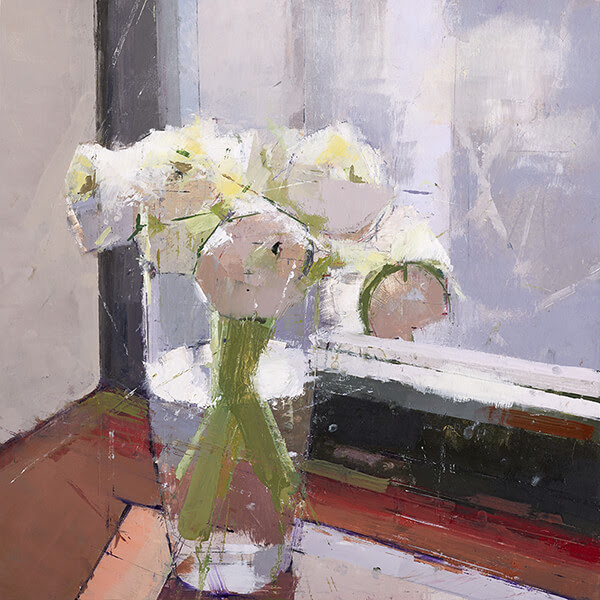
Lisa Breslow, "Bloom," 2024, oil and on panel, 12 x 12 inches
Contemporary Paintings for Sale:
“Lisa Breslow: From This Place”
Kathryn Markel Fine Arts
New York, New York www.markelfinearts.com
Through March 29, 2025
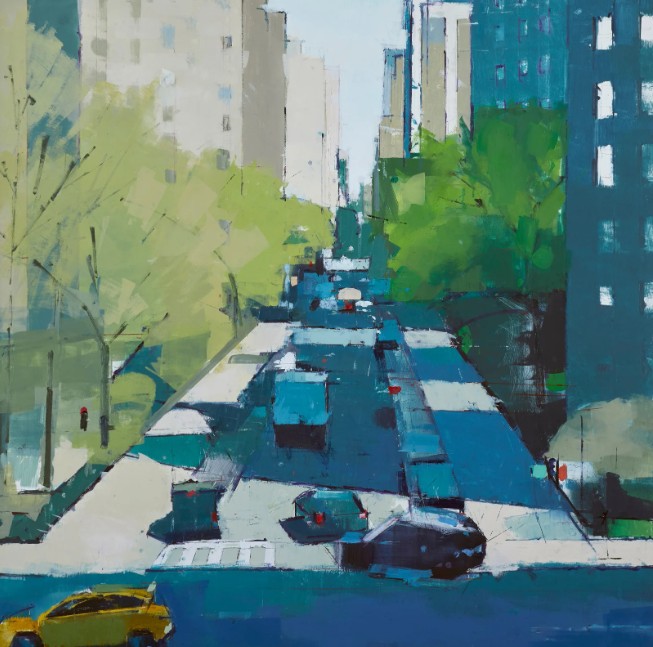
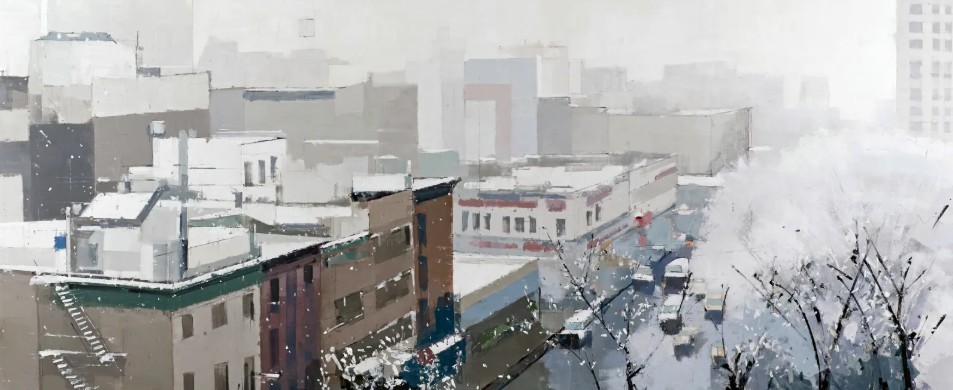
Lisa Breslow, “Right Turn,” 2024, oil and pencil on panel, 30 x 30 in.
From the gallery:
Lisa Breslow painted this collection of work during a period of immense productivity following the devastating loss of her husband. The act of making became a solace for the artist and she focused this energy to push her painting further than ever before. Each distinct brushstroke is more confident and bold and each scene deeply emotionally resonant. Her rich surfaces reveal the time and care spent with every mark.
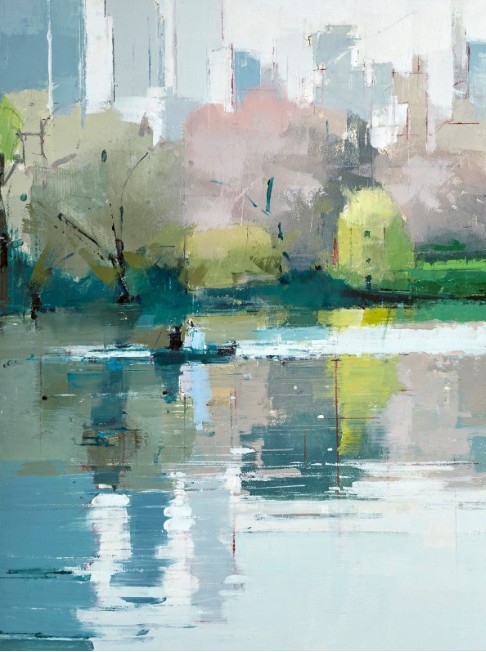
Lisa Breslow, “Daydream,” 2024, oil and pencil on panel, 16 x 12 in.
Breslow’s paintings are reflective, personal expressions of her everyday surroundings. The process of choosing what to paint is intuitive, as she describes it, “I tend to gravitate toward scenes that are quieter and more meditative. It’s always the lighting that draws me in initially, with its interplay of colors and forms that evokes a particular feeling or mood. When I see it, I know immediately that this is something I would want to paint.”
Each composition sits at an intersection of busy city life and the quiet of nature. The artist distills these experiences into introspective snapshots that feel both optimistic and tender as she captures the memory of a place.
Lisa Breslow, “Balcony View,” 2024, oil and pencil on panel, 29 x 70 in.
Lisa Breslow has exhibited extensively in the United States, including recently at the Heritage Museum and the Heckscher Museum. She has been awarded two Pollock-Krasner Foundation awards, as well as an award from the National Academy Museum in New York, and was an Invited Artist at the Center for Contemporary Printmaking. She lives and works in New York City.
Attention Art Collectors! May 20-22, 2025: Visit the Plein Air Convention & Expo’s robust pop-up art gallery at the Nugget Casino Resort in Reno, Nevada, where hundreds of artists, including our master faculty, will have studio and plein air paintings for sale. Register for the full event at PleinAirConvention.com now.
"Wild Flowers" by Janell James; private collection
There is a lot of superb contemporary art being made these days; this article by Allison Malafronte shines light on a gifted individual.
Janell James(b. 1974) does not feel the need to define her subject matter in any particular way, nor to confine herself to a specific form of expression. Her portfolio includes multi-layered acrylic-on-glass works, representational oil paintings, abstract paintings, mixed-media three-dimensional pieces, and most recently large acrylic-glass hanging mobiles. This intellectually curious artist is constantly experimenting and pushing the boundaries of her capabilities to see how far she can go and what creative possibilities await.
James is classically trained, but, according to her artist’s statement, she “untrained herself through deconstruction of the formal art process, intentionally looking for a way to take what is old and make it new.” She continues, “My goal has always been to bridge the gap between traditional and contemporary art. Approaching my work from a modern and abstract perspective allows for endless possibilities.
“In ateliers in Paris and Belmont, California, I first learned to paint light and about the technique of luminescence through layering paint and glazes, as well as the suspension of paint in glazes, to create depth of field. Fifteen years into my career, I began layering painted sheets of acrylic glass to reveal the layers and create a 3-D depth. As I painted on the front and back of five sheets of acrylic glass, 10 separate layers of paint began to play with light, to cast shadows, and to come alive.”
Janell James (b. 1974), “Punctuating the Blue,” 2020, acrylic on layered acrylic glass, 48 x 44 in., RARE Gallery (Jackson, Wyoming)
The interconnectedness of these elements — layers of paint, light, color, shape, dimension — gives James’s work a surge of kinetic energy and vibrancy that is best experienced in person. Even remotely, however, viewers can get lost in the compelling mosaic-like construction. For “Punctuating the Blue,” James turned again to one of her greatest inspirations, nature, to create a kaleidoscope of shape, color, and design. The outdoors has long been the artist’s playground, and when she is not in her studio, she is hiking, walking her dog, and collecting visual stimuli in the mountains of her home state of Utah.
“Nature is a source of abstraction and color for my artist’s eye,” she says. “It is the muse that gives life to the work I do, regardless of the medium I choose for the expression. Seeing nature through this lens provides me endless opportunities to explore and create.”
Attention Art Collectors! May 20-22, 2025: Visit the Plein Air Convention & Expo’s robust pop-up art gallery at the Nugget Casino Resort in Reno, Nevada, where hundreds of artists, including our master faculty, will have contemporary art, including plein air works, on display and ready to purchase. Register for the full event at PleinAirConvention.com now.
Jaime Byrd, "The Soaked Earth," 2024, oil on wood, 18×24×2 inches. Courtesy of the artist.
The Asheville Art Museum is presenting “Asheville Strong: Celebrating Art and Community After Hurricane Helene,” a poignant and inspiring exhibition on view February 13–May 5, 2025, in the Appleby Foundation Exhibition Hall. This non-juried exhibition showcases the works of artists from the Helene-affected Appalachia region, celebrating their resilience, creativity, and strength while highlighting the power of art to inspire and bring communities together.
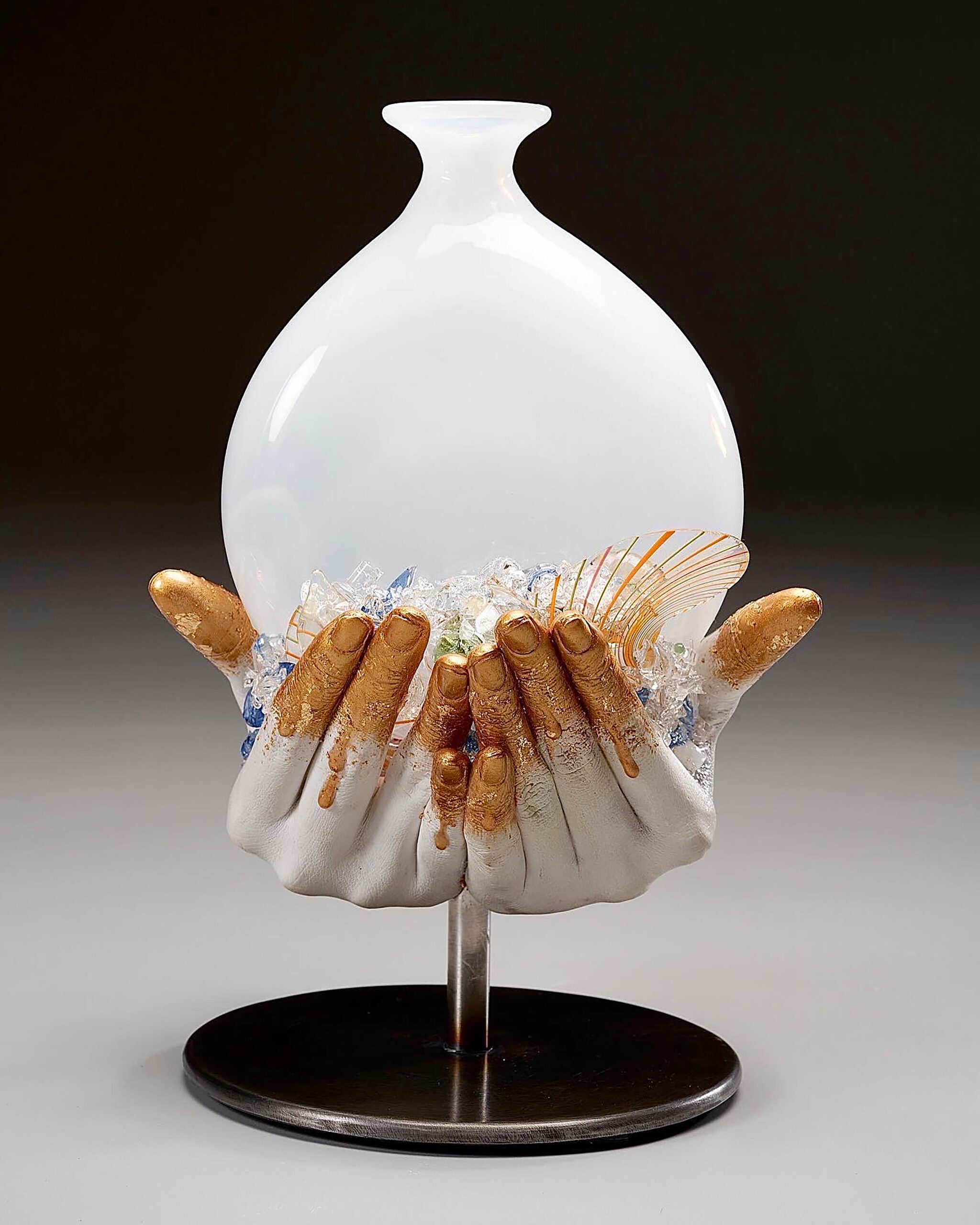
Kate-Lan Johnson, “The Cost of the Price,” Plaster, blown glass, and found glass, 12x8x4 inches. Courtesy of the artist.
The Museum issued an open call for artist submissions, collaborating with local and regional arts networks to reach artists from the Southern Appalachian community impacted by Hurricane Helene. The response was overwhelmingly positive, with over 150 submissions showcasing a diverse range of works.
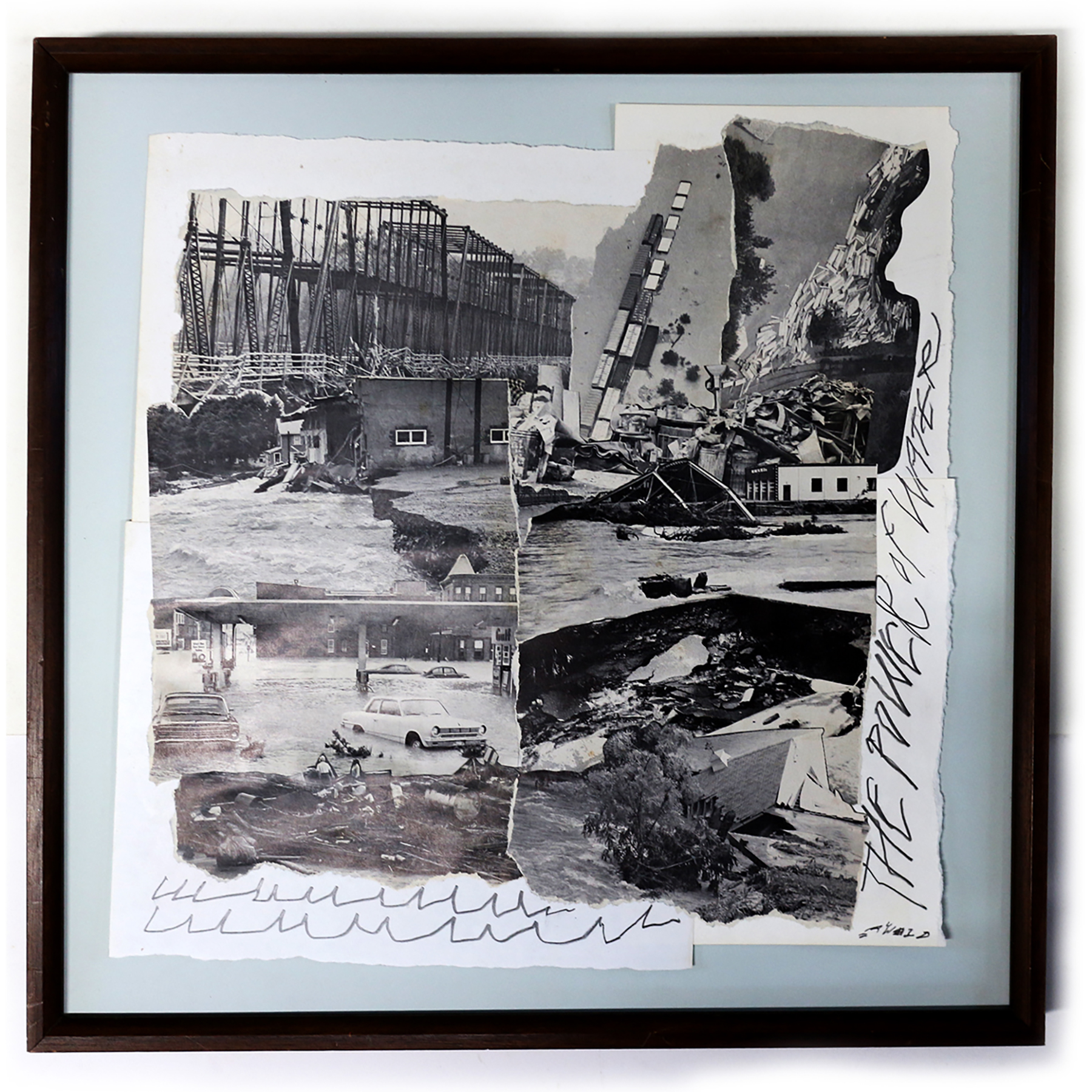
Adam Void, “The Power of Water,” 2024, collage on paper, 19×19×1.5 inches. Courtesy of the artist.
“Hurricane Helene was devastating for everyone, and as a public-serving arts institution, we really wanted to recognize the impact the storm had on artists,” said Jessica Orzulak, Associate Curator and Manager of Curatorial Affairs. “Artists are an integral to the bedrock of our communities in WNC. Our goal has been to create space for impacted artists to showcase their work to a broad public, opportunities for artists to connect with each other and collectors, and a means for us all to join together in a collective act of resilience.”
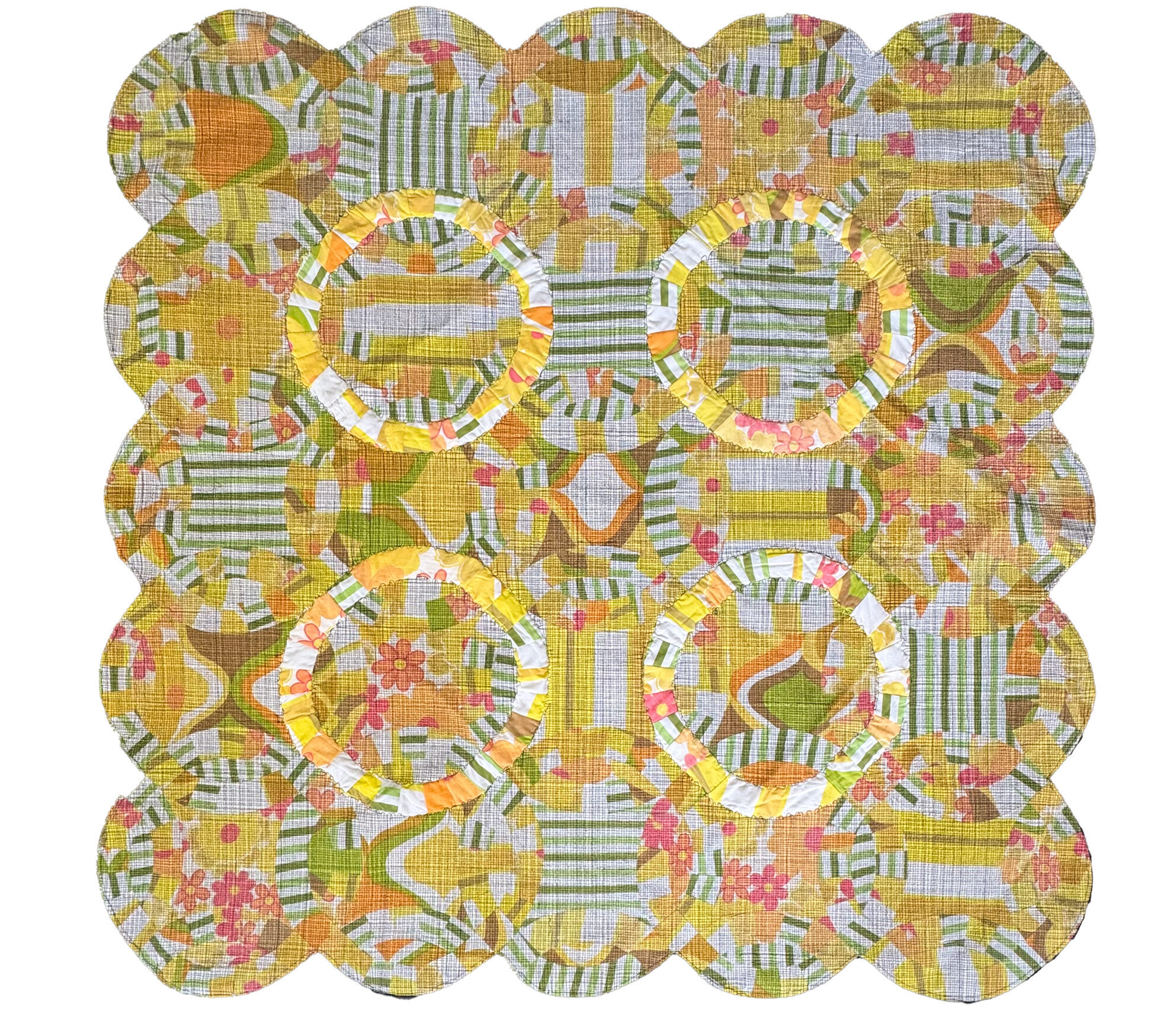
Luke Haynes, (DWR #12) “Vintage Yellow,” 2022, Recycled vintage sheets and reclaimed clothing, 60×60×1 inches. Courtesy of the artist.
Asheville Strong features a variety of mediums, including painting, drawing, printmaking, sculpture, ceramics, and photography. Each work is accompanied by the artist’s information, allowing viewers to connect and learn more about the creators. For more information, please visit www.ashevilleart.org.
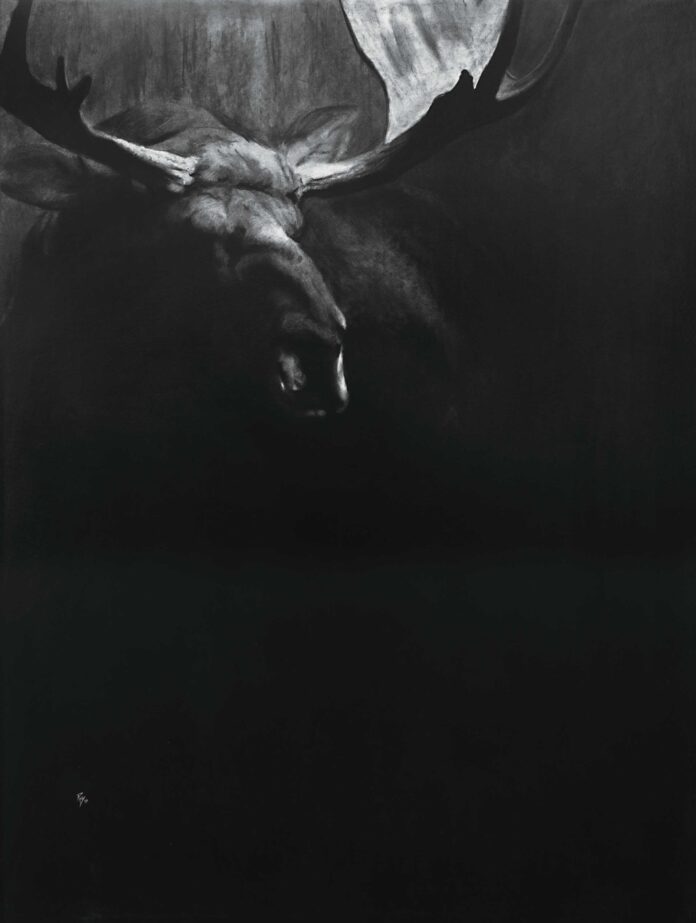
Ray Brown (b. 1966), "Veiled," 2024, charcoal on paper mounted on board, 48 x 38 in.
Wildlife Art on View (and much more):
Southeastern Wildlife Exposition
Charleston, South Carolina sewe.com
February 14-16, 2025
The Southeastern Wildlife Exposition (SEWE) is ready to celebrate its 43rd anniversary and fill the streets of downtown Charleston with animal lovers of all stripes. Once again, SEWE will program a fine art gallery and an exhibition of artisans and craftsmen alongside its popular demonstrations of dogs and birds of prey in action, plus lively displays by conservation organizations and the South Carolina Department of Agriculture. Drawing at least 50,000 visitors each year, these activities highlight the urgent need to protect wildlife and preserve our natural resources.
The art exhibition features more than 90 painters and sculptors, both established and emerging. They range from the hand-carved feather artistry of sculptor Chris Maynard (Olympia, Washington) to international big game painters like Grant Hacking (South Africa) and Audubon-inspired artists such as Art LaMay (Palm Coast, Florida).
This year’s featured artist is Ray Brown, whose charcoal drawing “Veiled” (above) will be visible everywhere on the festival’s official poster. Illustrated here, this original wildlife art will be on display at the Gallery by SEWE, then auctioned during the VIP gala and sale on February 13. Brown has joined a small, distinguished circle of SEWE’s featured artists including John Banovich, Greg Beecham, Kathleen Dunphy, Julie Jeppsen, and Ryan Kirby.
“This is truly an honor and a validation of the work I’ve done over the years,” Brown declares. “But more than that, it’s a full-circle moment for me. SEWE was the first show where I exhibited my work, more than 20 years ago. To be chosen now takes me back to that first time I walked into the ballroom, and I feel proud of what I’ve accomplished since then. I’m grateful that SEWE has continued to support me and provide a platform to showcase my work and passion for wildlife.”
Brown is known for evocative charcoal pieces, and his choice of medium reflects his commitment to simplicity and authenticity. He strives to convey profound depth and emotion through textures and thoughtful compositions. In “Veiled,” he depicts an enormous bull moose, which symbolizes the noble qualities of wildlife.
Brown’s journey began with a B.S. degree in visual communications, which led to a career in commercial illustration and graphic design in his hometown of Baltimore. Longing to capture the spirit of nature, Brown seized an opportunity in 2003 to relocate to Southern California, where he has pursued fine art full-time.
Throughout the year, SEWE welcomes art lovers to its Gallery by SEWE in The Shops at Charleston Place downtown. This space is a continuation of the festival’s popular fine art venue, and is also home to a program of artist residencies.
As part of our effort to continue to help artists and art galleries thrive, we’re proud to bring you this week’s “Virtual Gallery Walk.” Browse the artwork below and click the image itself to learn more about it, including how to contact the gallery.
Shrine Hallway, Cyrus Afsary, oil, 12 x 9; artzline
Out Of The Shadows, Dennis Schmidt, oil, 25 ½ x 35 ¼; artzline
***
Eve’s Reflection, Lin Yang, oil on linen, 40 x 24; Lin Yang
Want to see your gallery featured in an upcoming Virtual Gallery Walk? Contact us at [email protected] to advertise today. Don’t delay, as spaces are first come, first served, and availability is limited.
Watch a special two-part series that exposes the secret criminal network dealing in Nazi art theft during World War II.
In the decade leading up to 1945, it’s estimated that the Nazis stole one-fifth of all artwork in Europe – the majority from Jewish families and other “undesirables” – in a culture war that was designed to rewrite European history. But that was just the beginning. A new two-part “Secrets of the Dead” special reveals the secret networks of curators and dealers, many of them Nazis like Bruno Lohse (the “Plunderer”) who made fortunes on the back of Nazi-looted art, perpetuating a decades-long war crime that has never been fully exposed or resolved.
Plunderer: The Life and Times of a Nazi Art Thief premieres on Wednesdays, February 19-26, 2025 at 10/9con PBS (check local listings), pbs.org/secrets and the PBS App.
Historian Jonathan Petropoulos, the John V. Croul Professor of European History at Claremont McKenna College, investigates the life of former Nazi art dealer Bruno Lohse, Hermann Göring’s one-time “man in Paris.” Petropoulos conducted multiple interviews with Lohse over the course of nearly 20 years until the German’s death in 2007.
To uncover the truth about the extent of the Nazi-looting operation, and just what role Lohse played, Petropoulos also speaks with gallery owners, curators, art investigators, Lohse’s close friends, and descendants of victims of Nazi art theft. Looking at breathtaking masterpieces and an extensive archive of personal letters, “Plunderer” reveals the dark underbelly of the international art world, much of it built upon wartime tragedy.
“Nazi art looting was the greatest art scandal of the 20th century,” said Petropoulos. “I had no idea the shocking discoveries this investigation would uncover, nor the tangled mess I was getting myself into.”
“While some of the reveals are thrilling, it’s important to remember that most of the looted art has never been recovered and most of those involved have suffered no consequences,” said producer John S. Friedman. “My hope is that this documentary will spark an interest in helping these families regain their lost pieces, which, for them, mean more than just the art’s monetary value – it also represents a link to their past.”
Watch: “Plunderer: The Life and Times of a Nazi Art Thief” premieres on Wednesdays, February 19-26, 2025 at 10/9con PBS (check local listings), pbs.org/secrets and the PBS App.
First Place Overall: “Dawn’s Grace” (oil, 16 x 20 in.) by Chris Bell
Please help us congratulate Chris Bell for winning Overall First Place in the December 2024 PleinAir Salon, for the oil landscape painting “Dawn’s Grace.”
This round was judged by Diane Waterhouse of Waterhouse Gallery. “I liked the composition,” she said, “the light, shadow, and warmth the painting radiates with the late afternoon sun, and I liked all the details in the foreground.”
“As a painter and teacher, I have a desire to share my vision and experiences with others. I want to paint scenes so that they convey a reality filled with emotion and inspire the viewer to observe their surroundings in new ways. We live in a fast-paced world, and I’m afraid we sometimes fail to fully appreciate the light falling upon our town, the towering clouds on a summer day, or the common interactions between people and their environment. I relish the challenge of responding to these moments in paint. My efforts on linen give me an opportunity to savor the splendor of our world and hopefully pass along this joy to others.”
From his website:
Chris’ ancestors settled in the mountains of western North Carolina in the early 1800s, where he was born on his family’s farm along the Little Tennessee River in 1989. Although no one in his family were “painters,” they were people who made things with their hands. These farmers, blacksmiths, carpenters, mechanics, seamstresses, etc. instilled in him an appreciation for craftsmanship and a sentimentality toward the landscape. Throughout his childhood, Chris was constantly drawing and with the encouragement of others, he began to develop his gift. After high school, he forewent a university art education and instead became an apprentice to the English-born artist Julyan Davis in Asheville, NC. Working closely with Davis, Chris received a foundation in studio craft and art history upon which he has applied countless hours in the studio.
As a result of the Great Recession, Chris became a witness to the struggles of artists in the Asheville area and received a unique education as he saw creatives adapting to the changing environment. As his time with Davis came to an end, Chris enrolled at Western Carolina University. He earned degrees in education and history and became both a social studies teacher and art teacher. However, he was determined to continue to paint and build a career as a professional artist. His teaching salary bought paint, supplies, and travel opportunities while he worked to find his voice as an artist.
Today, Chris is a prolific artist who is constantly inspired by his surroundings in the Carolinas and his travels abroad. He is greatly influenced by the various manifestations of Impressionism, from the Russian school to the California Impressionists of the 20th century.
About the PleinAir Salon:
In the spirit of the French Salon created by the Academie des Beaux-Arts in Paris, this annual online art competition, with 11 monthly cycles, leading to the annual Salon Grand Prize winners, is designed to stimulate artistic growth through competition. The PleinAir® Salon rewards artists with $50,000 in cash prizes and exposure of their work, with the winning painting featured on the cover of PleinAir® Magazine.
Winners in each monthly competition may receive recognition and exposure through PleinAir Magazine’s print magazine, e-newsletters, websites, and social media. Winners of each competition will also be entered into the annual competition. The Annual Awards will be presented live at the next Plein Air Convention & Expo.
The next round of the PleinAir Salon has begun so hurry, as this competition ends on the last day of the month. Enter your best art in the PleinAir Salon here.
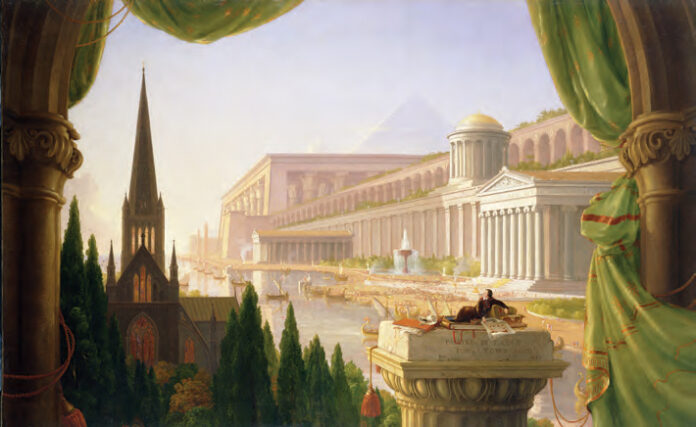
"The Architect’s Dream," Thomas Cole (1801–1848), 1840, oil on canvas, 53 x 84 1/16 in., Toledo Museum of Art (Ohio), purchased with funds from the Florence Scott Libbey Bequest in Memory of Her Father, Maurice A. Scott, 1949.162 Photo: Richard Goodbody Inc.
By David Masello
Architect Peter Pennoyer is reluctant to cut and paste a document or fire up the CAD drawing software typical in his industry. Instead, he and his staff architects prefer to do much of their designing by hand, actually drawing the moldings and staircases, fireplace surrounds, and coffered ceilings that figure into his residential projects.
Peter Pennoyer, Architect; Photo: Peter Olson
“Hand drawing connects you to the human scale,” says Pennoyer from his New York office, where for decades he has been designing scores of America’s most notable, traditionally styled residences. The latest are featured in his book Peter Pennoyer Architects: City/Country (Rizzoli). “You realize quickly that drawing teaches you humility, and you realize that people, architects in particular, who drew regularly in their day did it better than we can today. Some things should be difficult. Struggle isn’t always bad.”
Such methodologies echo why Pennoyer has remained fascinated by “The Architect’s Dream” (above), an 1840 canvas by Thomas Cole (1801–1848) that is in the permanent collection of Ohio’s Toledo Museum of Art. Within a span of just five weeks, Cole, also a trained architect, painted this monumental canvas for his commissioning client, I. Town, a prominent New York architect of the day. The painting reveals a kind of timeline of architectural styles through the ages.
“The moment I saw the Cole, I remember being absolutely stunned,” Pennoyer recalls. “He probably made a smaller-scale sketch of this, a cartoon. He was astonishingly talented at then laying down paint on a canvas.”
The scene, which depicts an amalgam of idealized buildings — a glowing neo-Gothic church, the looming form of an Egyptian pyramid, an arched Roman aqueduct, towering obelisks, circular edifices, an Assyrian temple — is presented to the viewer as a skyline of structures. Indeed, the architectural panorama is viewed from what Pennoyer surmises is a Romanesque-style loggia, its opening framed by billowing green curtains.
Fronting the array of structures is a public gathering space populated by an inestimable number of people, who appear to be attending a ceremony. Of the buildings the artist chose to depict, Pennoyer feels confident that “Cole is definitely editorializing, holding up the Greek as the pinnacle of architecture. Where does the brightest light shine in the painting? On the Greek temple.”
A visit to Pennoyer’s Manhattan office reveals not only teams of architects busy at their drafting tables, but also floor-to-ceiling bookcases filled with architectural volumes, pattern books, and monologues — a repository of design wisdom and inspiration practically on the scale of the lost library of Alexandria.
In a metaphorical sense, then, it is fitting that Pennoyer is able to “read” even more into Cole’s scene than is initially presented to the viewer. Pennoyer points to the architect in the painting, who is depicted lounging atop a column, surrounded by volumes larger than he. “I’m an old-fashioned footnotes person,” he says, “and I’m pretty sure I remember learning that Town paid Cole for the work in architectural treatises.” Pennoyer surmises that such volumes might have included Claude Perrault’s 17th-century editions of his translations of the tenets of Roman architect Vitruvius. (Pennoyer has two copies in his office.)
“Just as hand drawing connects you to the human scale, so here does Cole relate the scale of the architecture,” Pennoyer emphasizes. Recognizing that computer technology does have its advantages, Pennoyer zooms up the image on his screen and comments on the crowd that appears to be marching in a procession from the Greek temple. “The fires suggest a pagan ritual, but while we can’t get in the head of Cole, it’s impressive to see how much he manages to pile on in this painting.”
***
Fine Art Today covers artists and products we think you’ll love. Linked products are independently selected and linked to for your convenience. If you buy something using a link on this page, Streamline Publishing may receive a small share of that sale.
Fill your mind with useful art stories, the latest trends, upcoming art shows, top artists, and more. Subscribe to Fine Art Today, from the publishers of Fine Art Connoisseur magazine.