Wisconsin’s only ARC-approved atelier just opened its “Student/Faculty Show” in Green Bay with some fantastic results.
The Art Garage in Green Bay, Wisconsin, is hosting tonight an opening reception for the Academy of Fine Art’s “Student/Faculty Show.” The atelier, located in Denmark, Wisconsin, is the state’s only ARC-approved academy. Among the instructors at the academy are Molly Johnson, Lori Beringer, Marcia Brice, David Carpenter, and Patrick Burke. The exhibition will run through June.
This article was featured in Fine Art Today, a weekly e-newsletter from Fine Art Connoisseur magazine. To start receiving Fine Art Today for free, click here.
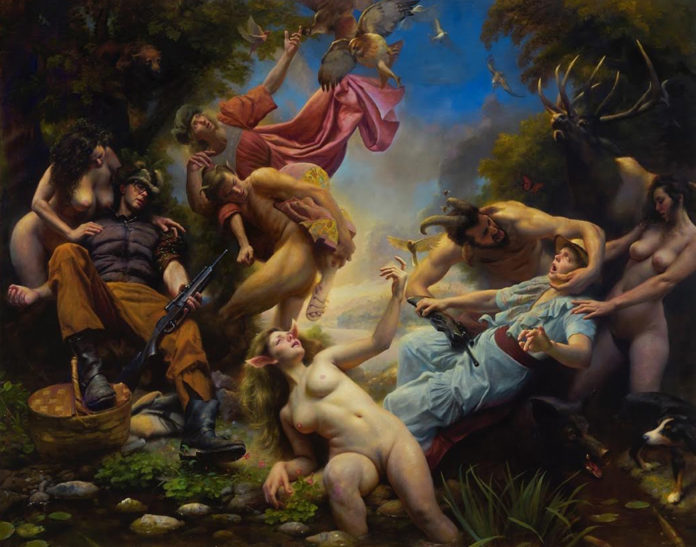
Daniel Sprick, “Souls in Purgatory,” 2016, oil on board, 30 x 48 inches
Opening soon, Gerald Peters Gallery in New York is offering a fantastic and comprehensive exhibition aimed at surveying American realism today. Who are the big names who were carefully curated into the show?
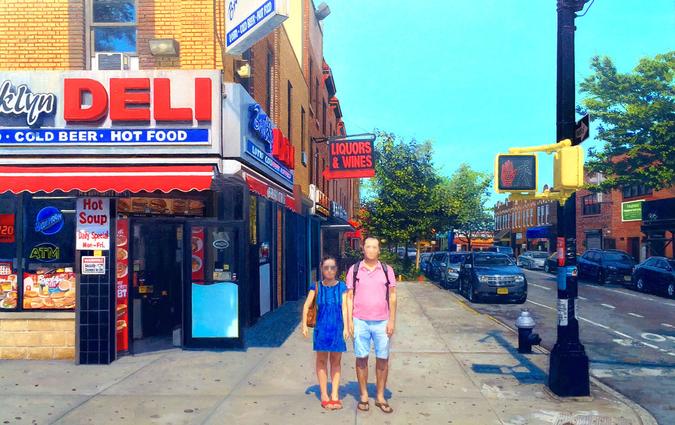
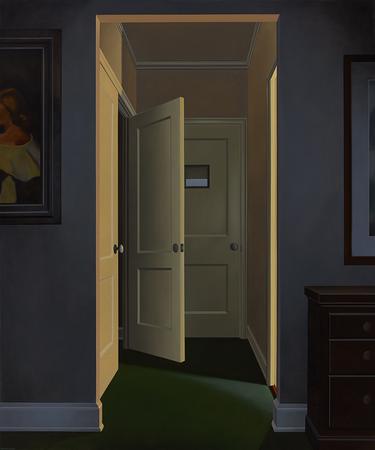
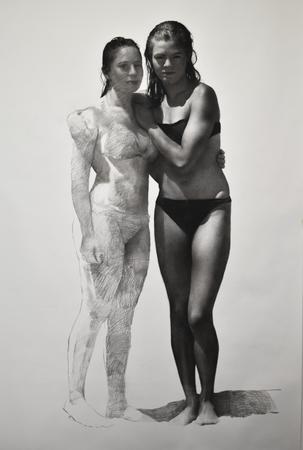
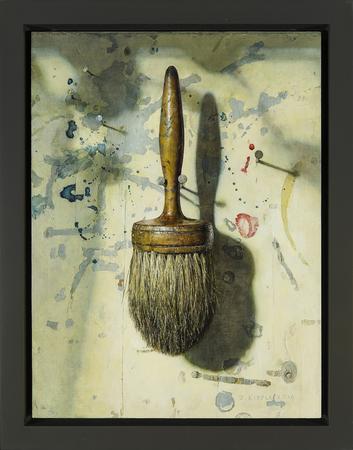
Curated by major representational painter Daniel Sprick and gallery owner Peter Marcelle, “American Realism: A Survey” is a stunning exhibition opening May 18 at Gerald Peters Gallery in New York City. The exhibition was born from the friendship between the two curators and their mutual love for realist art.
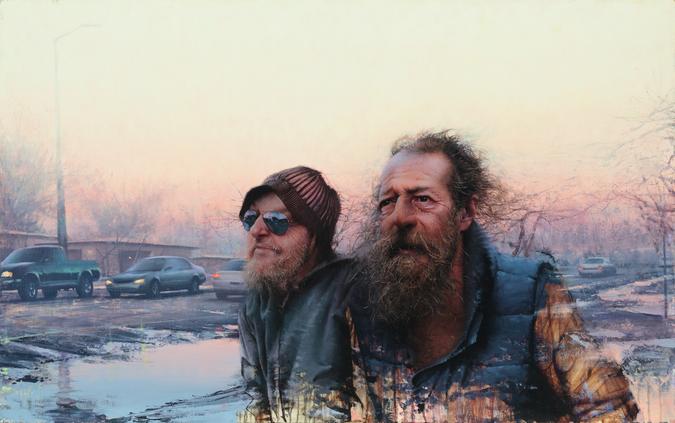
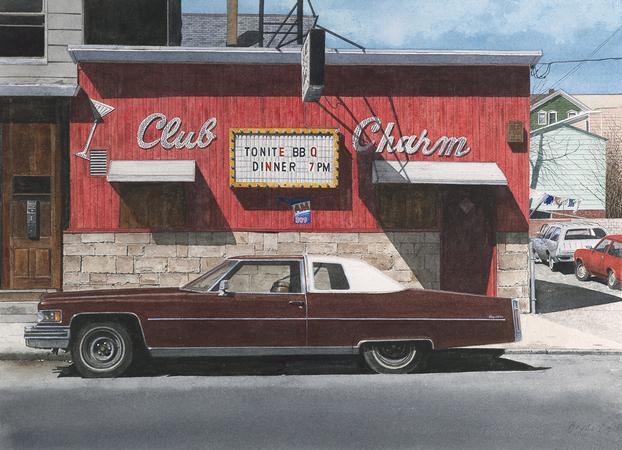
John Baeder, “Club Charm,” watercolor on paper, 20 3/4 x 28 1/2 inchesBob Bartlett, “The Observer,” 2008, oil on linen, 48 x 66 inchesDavid Desimone, “Brooklyn Gothic,” 2016, oil on canvas
The show will feature a range of paintings, drawings, and sculpture and “explores the pluralistic nature of the realism movement,” according to the gallery. “What constitutes realism? Over time the definition has been blurred by the vast diversity of styles within realist art. Realism has remained a constant in American painting, though appearing in various guises: traditional realism, photo realism, hyper realism, magic realism, painterly realism, neo-academic realism, and many more, all fall within its ever-widening parameters.”
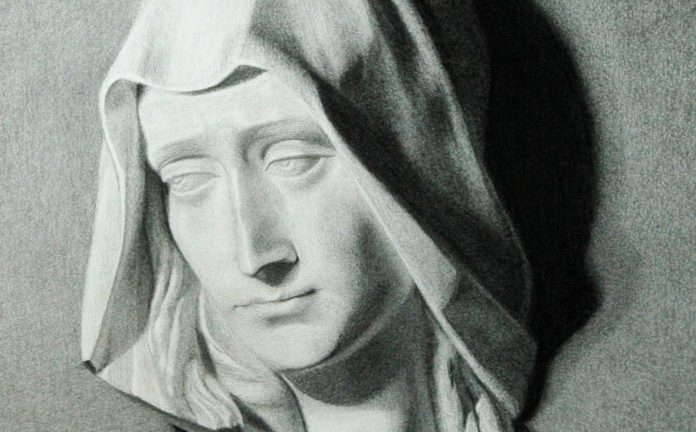
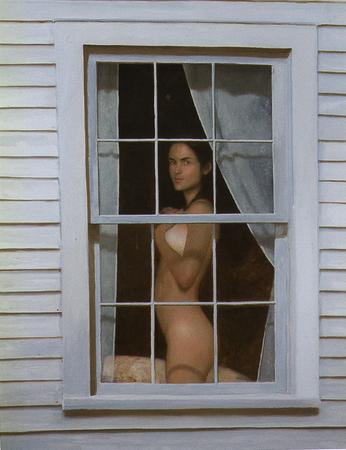
Kenton Nelson, “A Night Out,” 2014, oil on canvas, 54 x 45 inchesClio Newton, “The Bathers,” 2015, charcoal on paper, 88 1/2 x 59 inches
The gallery continues, “The exhibition will highlight the works of notable contemporary luminaries such as Jamie Wyeth, Daniel Sprick, Harvey Dinnerstein, and Steven Assael, while paying homage to past exemplars such as John Koch and Andrew Wyeth. Through varying styles, each artist presents their interpretation of reality; all use a direct visual language to convey their individual truth.”
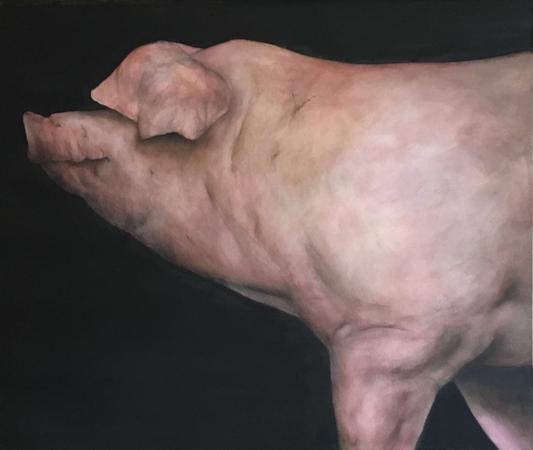
Jeffrey Ripple, “Brush,” 2016, oil on panel, 12 x 9 inchesRafael Soares, “White Breed with Lop Ears,” 2016, watercolor on paper, 25 x 30 inches
Artists included in the show are Steven Assael, John Baeder, Bo Bartlett, Michael Bergt, Derek Buckner, Davis Cone, David Desimone, Harvey Dinnerstein, Miriam Dougenis, Jeanne Duval, Eric Fischl, Scott Fraser, Susan Grossman, Quang Ho, Michael Klein, Alan Magee, Kenton Nelson, Clio Newton, Louise Peabody, Jeffrey Ripple, Marc Sijan, Rafael Soares, Daniel Sprick, David Uhl, Michael Viera, Andrew and Jamie Wyeth, and Brenda Zlamany.
This article was featured in Fine Art Today, a weekly e-newsletter from Fine Art Connoisseur magazine. To start receiving Fine Art Today for free, click here.
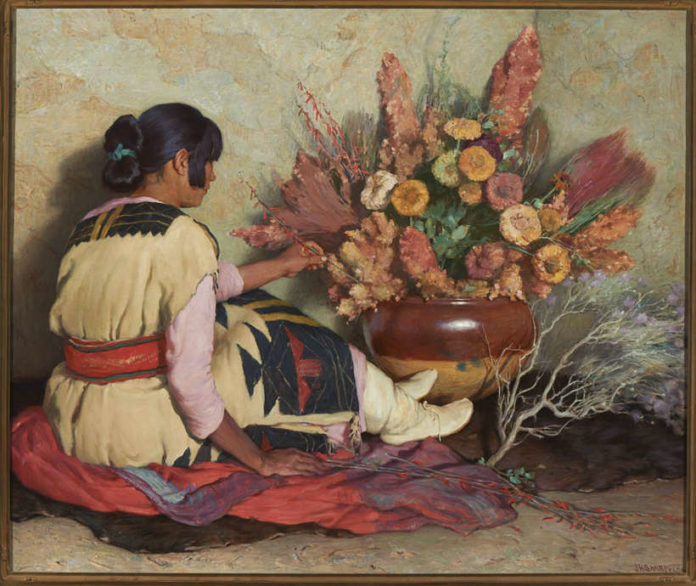
Joseph Henry Sharp, “Crucita-Taos Indian Girl in Old Hopi Wedding Dress and Dry Flowers (Winter Bouquet),” oil, Gilcrease Museum, Tulsa
The Couse Foundation of Taos, New Mexico, is hosting a major celebration and gala fundraiser this weekend that features this grand opening. What is it and where?
This weekend, on June 10 and 11, the Couse Foundation of Taos, New Mexico, hosts its 5th Biennial Couse-Sharp Gala. The event will begin on the 10th at the Harwood Museum of Art with a lecture by Peter Hassrick, director emeritus and senior scholar for the Buffalo Bill Center of the West. The lecture will cover the studios of Joseph Henry Sharp and is designed to highlight the grand opening of Sharp’s newly restored second studio, which will showcase a new, permanent exhibition dedicated to the artist. Although the grand opening is slated for Sunday, attendees will have much to do after Hassrick’s lecture, as a gala fundraiser at the El Monte Sagrado Resort begins at 5 p.m.
Via the Couse Foundation, “Saturday’s gala event will include a wine and hors d’oeuvres reception, a silent and live auction and a gourmet dinner with live music. The studio grand opening and exhibition, ‘Joseph Henry Sharp: The Life and Work of an American Legend,’ on Sunday will be held in the adobe studio designed and built by Sharp, and will allow a peek into his art career that will include significant works of art, personal ephemera and Native American artifacts that he collected throughout his life. Many of the artifacts on display have appeared in his paintings. The exhibit will mark the first permanent exhibition dedicated to Sharp.
“‘The Couse-Sharp Gala Weekend is a beautiful event full of fun, art and history,’ said Karina Armijo, Director of Marketing and Tourism for the Town of Taos. ‘It’s wonderful to see people come out and celebrate the rich history of art and creative thinking that Taos was built upon.’”
This article was featured in Fine Art Today, a weekly e-newsletter from Fine Art Connoisseur magazine. To start receiving Fine Art Today for free, click here.
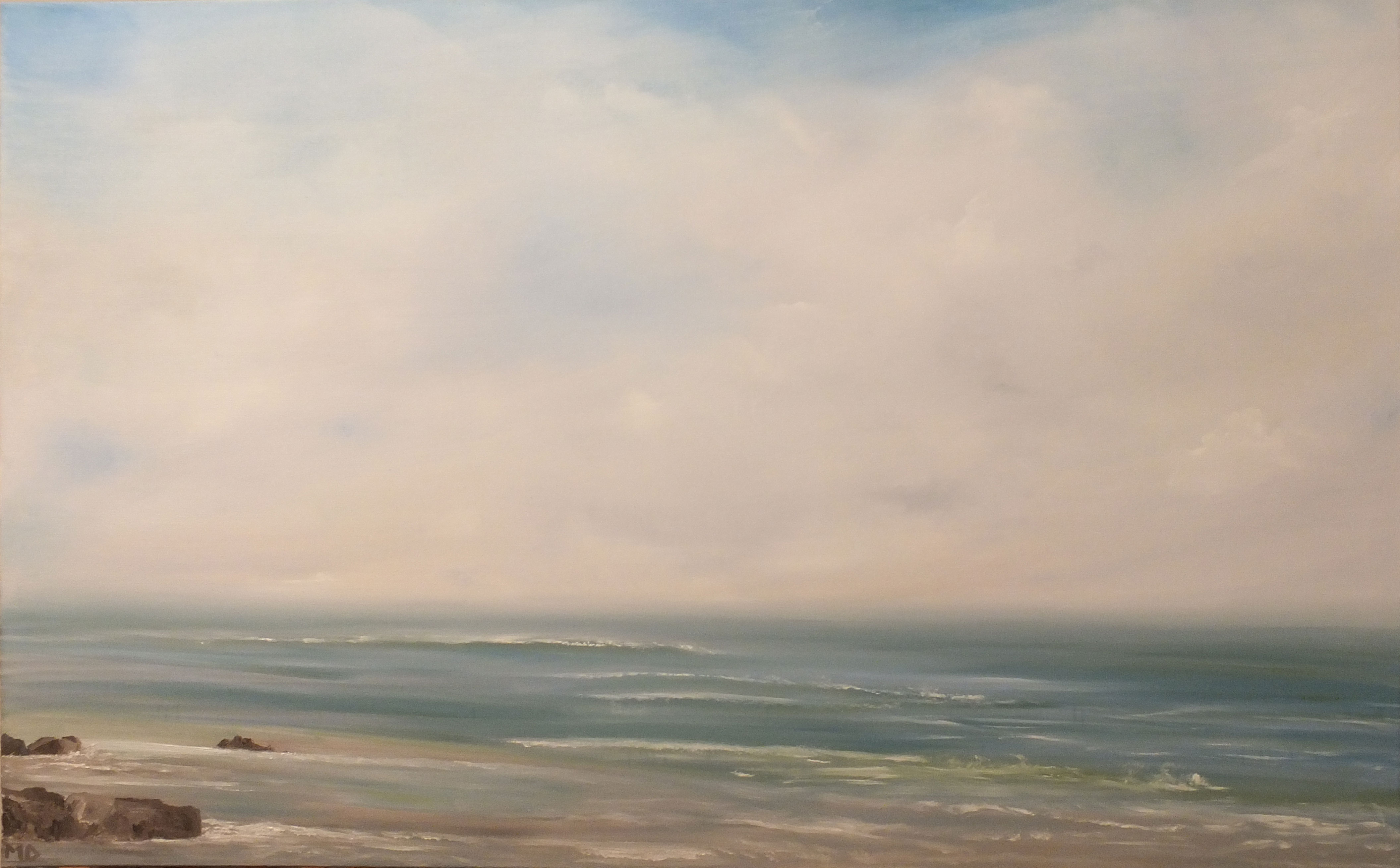
Mary Derrick, “Daydreaming,” 2016, oil on canvas, 48 x 60 inches
It was December 2016 when we first met Ontario painter Mary Derrick and discovered the incredible story of how a special person helped lead her to art. Now she’s attending festivals and mounting this fantastic exhibition.
On view from June 3-18, “Dreamscapes: Paintings from my mind’s eye” is a lovely solo exhibition at Kawartha Artists’ Gallery & Studio in Ontario, Canada, featuring recent works by landscape painter Mary Derrick. Derrick has a knack for landscape and, in particular, atmospheric light and moody space.
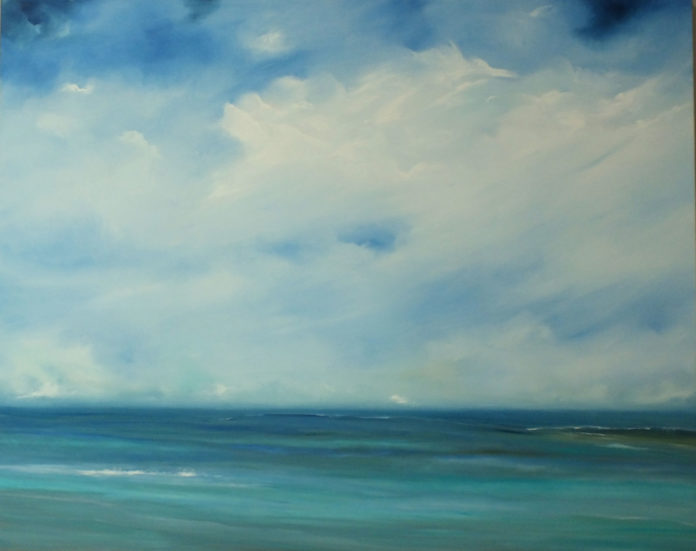
Mary Derrick, “Water’s Edge,” 2016, oil on canvas, 30 x 48 inches
“I paint using oils as I love their flexibility and the depth that I can achieve using them,” she says, “yet still paint starkly in order to clearly impress the emotions of the piece through the use of color, texture, composition, and movement. While my paintings use representations of nature, they have really nothing to do with nature, or a specific place, and everything to do with emotions. When I start a painting, I have no preconceived idea of what it will be. I let the canvas and the emotions running through me evolve onto the canvas, each becoming its own journey of discovery for me and, hopefully, you the viewer.”
This article was featured in Fine Art Today, a weekly e-newsletter from Fine Art Connoisseur magazine. To start receiving Fine Art Today for free, click here.
Adam Miller, “A Dream of Paradise Remembered by the Morning Light,” oil on canvas, 78 x 62 inches
An incredible body of contemporary paintings that explore the universal struggle to retain memory and identity is currently gracing the walls of Booth Gallery in New York.
Visitors to New York City’s Booth Gallery will be able to view masterful multi-figural paintings by Jean-Paul Mallozzi, Adam Miller, and Lou Ros from June 3 through July 1. Titled “SOLACE,” the exhibition is a striking demonstration of how contemporary realist painters use traditional techniques to explore modern psychological and existential themes.
Lou Ros, “INC10,” multimedia on canvas, 65 x 50 cm.
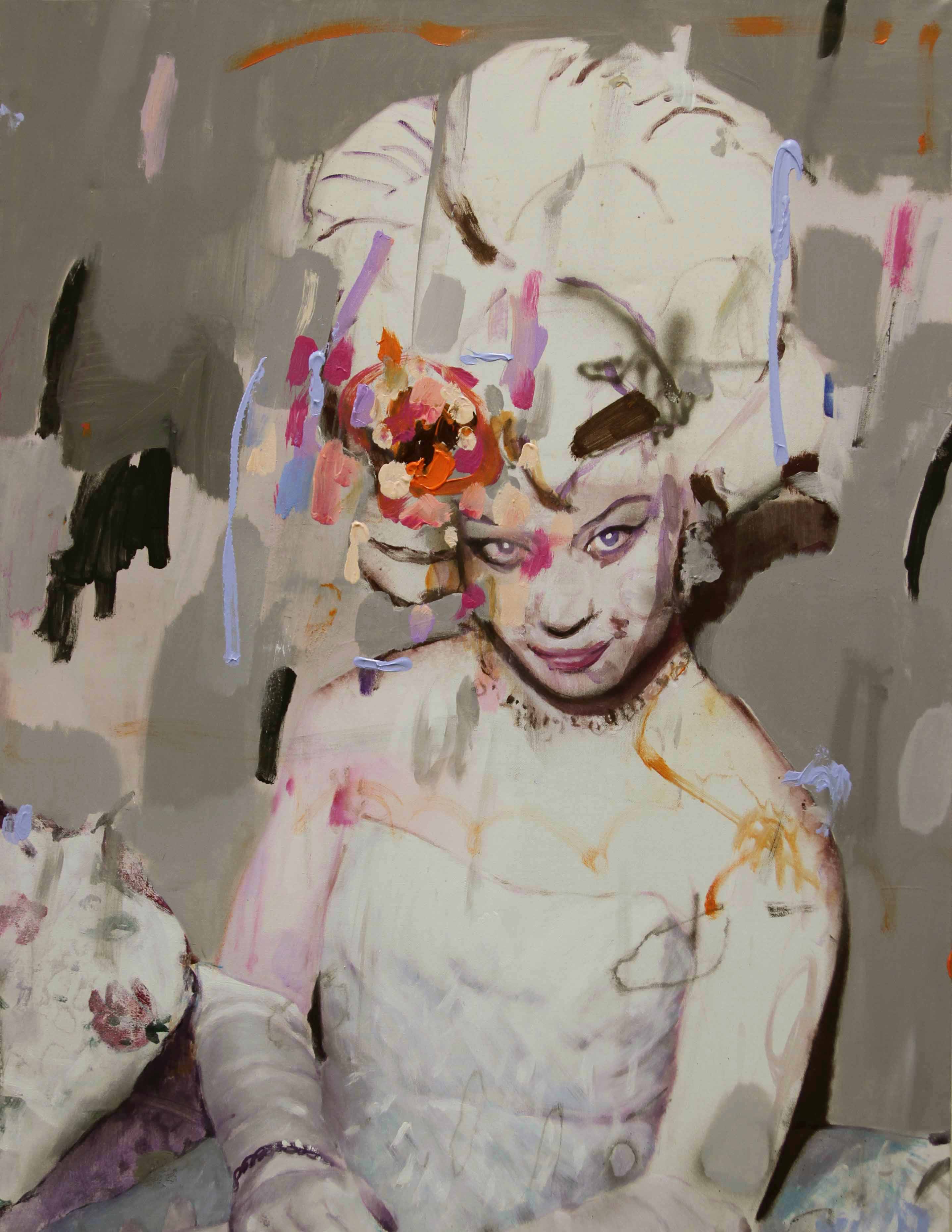
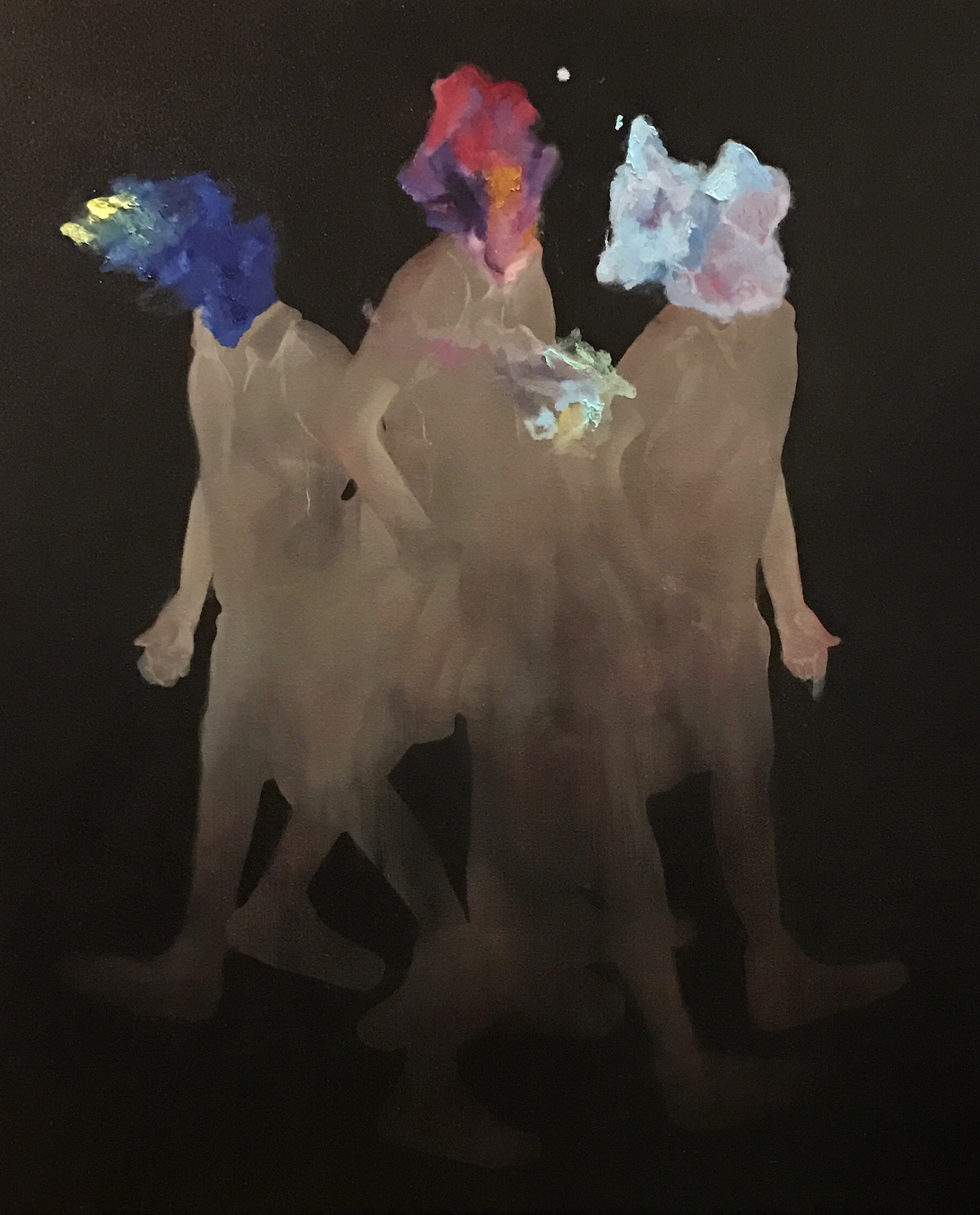
“Jean-Paul Mallozzi paints figures that inhabit their environment in isolation, even in groupings that denote relationships” the gallery suggests. “He depicts an emotional state that has been represented by colorfully abstracted, thick pools of saturated paint. The faces and identity of the figures have been purposefully distorted, so as not to be read in an analytic fashion, but rather poignantly felt. His figures find solace in each other, or from within.
Jean-Paul Mallozzi, “Broadway & Prince,” multimedia on canvas, 42 x 36 inchesLou Ros, “Playmate #6,” multimedia on canvas, 200 x 160 cm.
“Adam Miller orchestrates garden themes in a Grand Manner straight out of the 16th century Baroque. In his enormous painting ‘Quebec,’ he takes on the two incredible tasks at once. One, he tells the story of a nation’s struggle for autonomy in the face of racism, class struggle, and the inevitable in-fighting that every revolution faces. And two, he takes on the mantle of History Painting, once considered the highest form of painting in the West, and which has not been attempted on a level this ambitious in decades.
Jean-Paul Mallozzi, “Goomba,” multimedia on panel, 48 x 36 inches
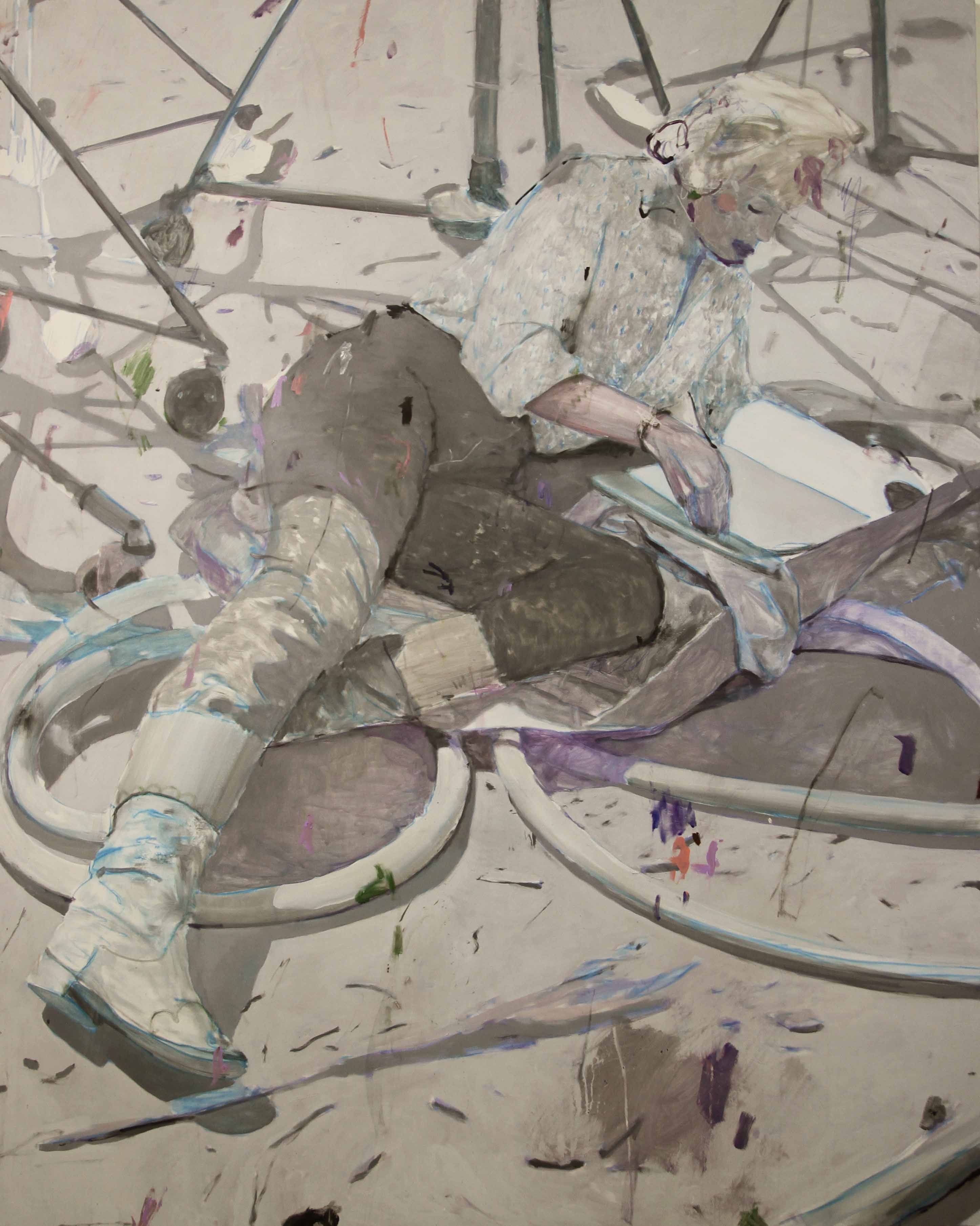
“Lou Ros is a self-taught, former graffiti artist whose Expressionistic portraits and multiple figure compositions are painted in the pale colors of faded nostalgia. His bittersweet imagery conveys a sense of loss, of remembered details that evoke a memory but are not enough to bring it clearly to the forefront of consciousness. In not saying too much, he says more, leaving the unfinished narratives up to the viewer to resolve.”
This article was featured in Fine Art Today, a weekly e-newsletter from Fine Art Connoisseur magazine. To start receiving Fine Art Today for free, click here.
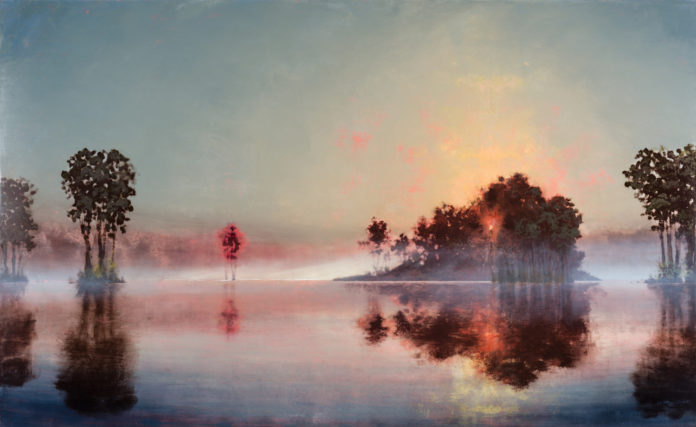
Stephen Hannock, “Flooded River with Red Maple,” 2016, oil on canvas, 44 1/8 x 72 inches
Grenning Gallery in New York will soon open a major exhibition of landscapes by this celebrated American painter. He’s widely collected and found in major public collections around the country; do you recognize his work?
Grenning Gallery in Sag Harbor, New York, is poised to open a significant solo show of recent landscapes by American painter Stephen Hannock (b. 1951). Although Hannock uses modern techniques and themes in his works, there is an undeniable luminousness to his work that recalls the great Hudson River School and other 19th-century masters.
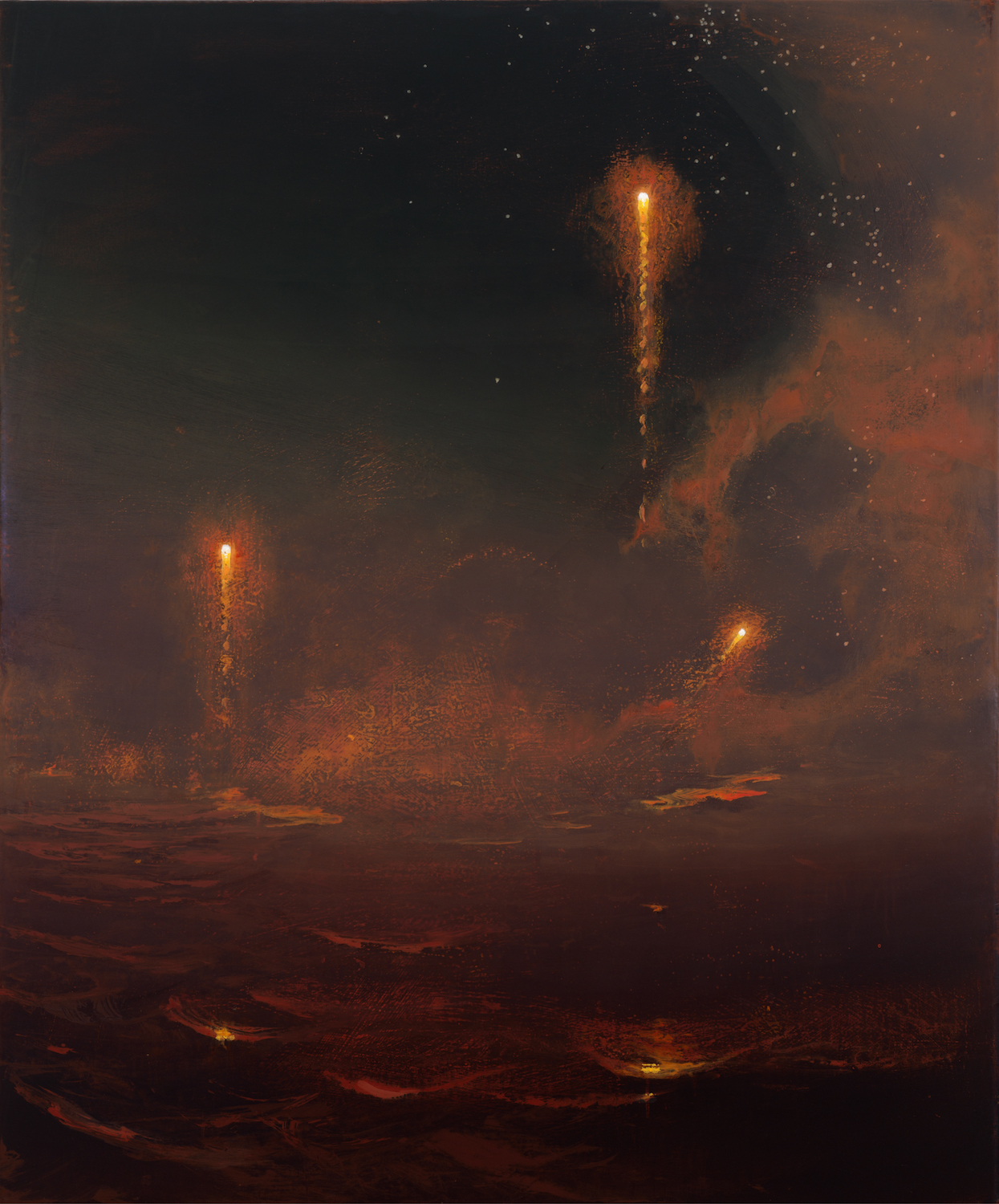
Stephen Hannock, “Incendiary Nocturne with Stormy Sea,” 2016, oil on canvas, 48 x 40 inches
The exhibition, which opens June 10, includes a diverse range of Hannock’s landscapes, from the large to the small, atmospheric to crisp, and from morning to nocturne. The largest painting in the show, titled “Flooded River with Red Maple,” is a clear demonstration of Hannock’s proficiency as a colorist. Peeking through a group of trees along the horizon, the sun has just begun to pierce through a morning fog, creating a stunning blend of warm hues that radiate into the cool, jewel-like blues and greens of the sky and water. Hannock explains that he is commenting on “seasonal sweeping away of debris gathered over the winter, which is an annual event.” The gallery adds, “Rather than looking at the devastation one can see in a flood, Hannock prefers to think about the cleansing ramifications.”
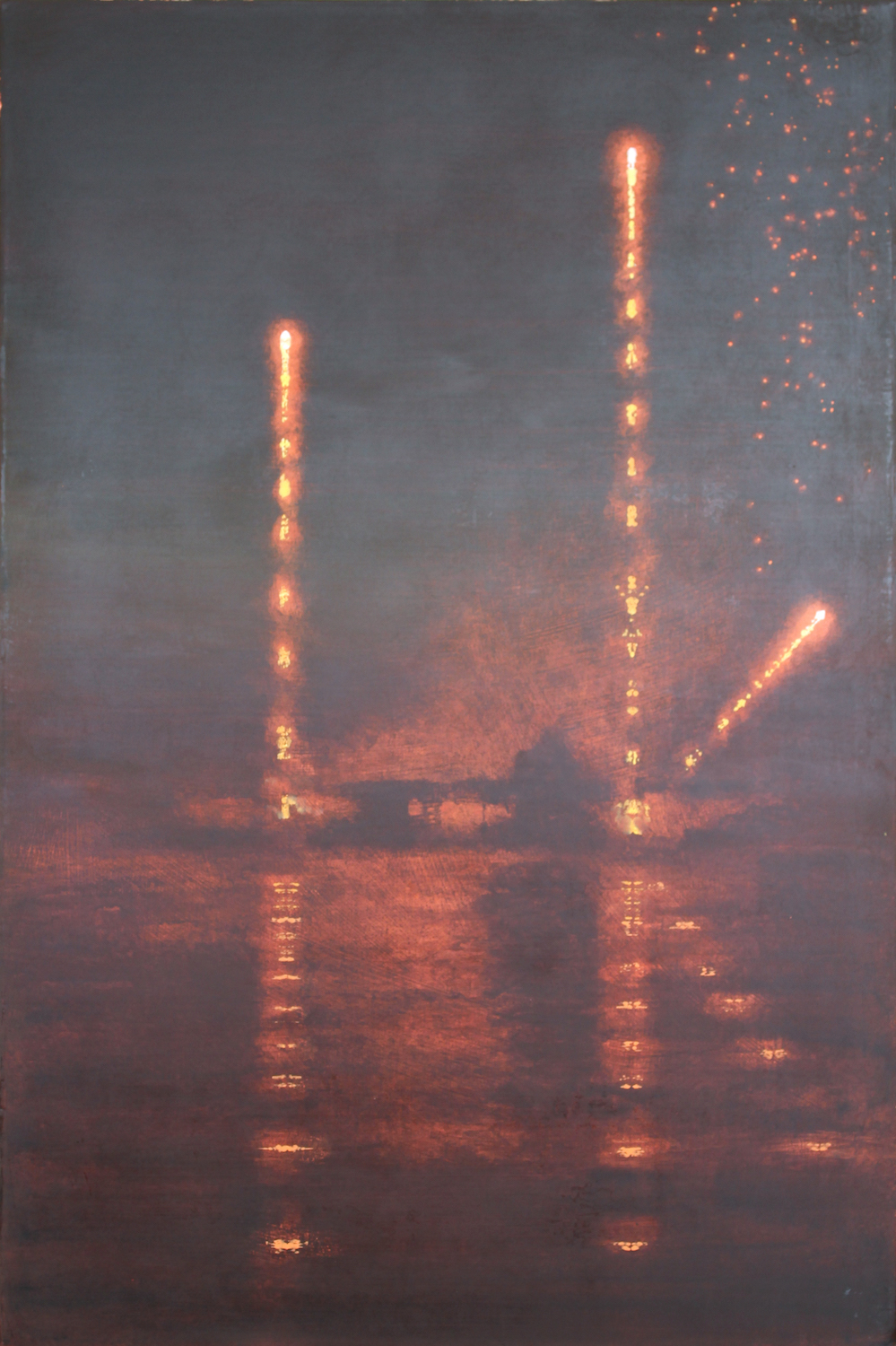
Stephen Hannock, “Incendiary Nocturne, Bridge Launch,” 2015, mixed media on canvas, 54 x 36 inchesStephen Hannock, “Flooded River, Summer Dawn,” 2016, oil on panel, 36 x 60 inches
Also included in the exhibition are a number of rocket nocturnes, which were inspired by similar pictures by Whistler. There is a great deal of anticipation in these works, as the artist has strived to capture the stream of light as a rocket darts across the sky before the starburst explosion.
The exhibition will be on view through July 2. To learn more, visit Grenning Gallery.
This article was featured in Fine Art Today, a weekly e-newsletter from Fine Art Connoisseur magazine. To start receiving Fine Art Today for free, click here.
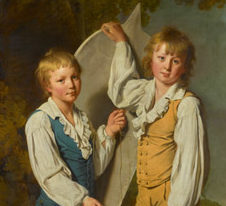
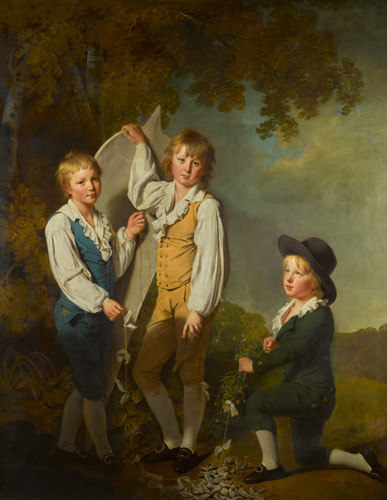
Joseph Wright of Derby, “The Three Eldest Children of Richard Akwright with a Kite,” oil on canvas, 77 x 60 inches
In this ongoing series for Fine Art Today, we take a longer look at the history and features of a soon-to-be-available artwork of note. This week we feature a lovely group portrait by a British master of light.
Joseph Wright of Derby’s (1734-1797) fascination with capturing dramatic shadow and light served him well throughout his artistic career in the late 18th century. In addition, Wright was at the forefront during the Age of Enlightenment and many of his most iconic paintings chronicle the birth of science and its struggle against established religious views. Some scholars have proclaimed the painter to have been the first to express the spirit of the Industrial Revolution.
Joseph Wright of Derby, “The Three Eldest Children of Richard Akwright with a Kite,” oil on canvas, 77 x 60 inches
Wright was also an accomplished portraitist and executed many for the British elite during his lifetime. One such work — a group of three children in full length — features during Sotheby’s upcoming July 6 “Old Masters” Evening Sale in London. Although at first glance the painting appears to be a rather typical 18th-century portrait, subtle characteristics — such as the strong shadow towards the boys’ legs — reveal Wright’s unique touch.
The three boys are brothers, the children of Richard Arkwright, and are shown in casual dress, with a large white kite. The radiance of their faces is particularly brilliant, blushed with red as if they have just paused in their play long enough for a snapshot.
Auction estimates are between $2 million and $3 million. To learn more, visit Sotheby’s.
This article was featured in Fine Art Today, a weekly e-newsletter from Fine Art Connoisseur magazine. To start receiving Fine Art Today for free, click here.
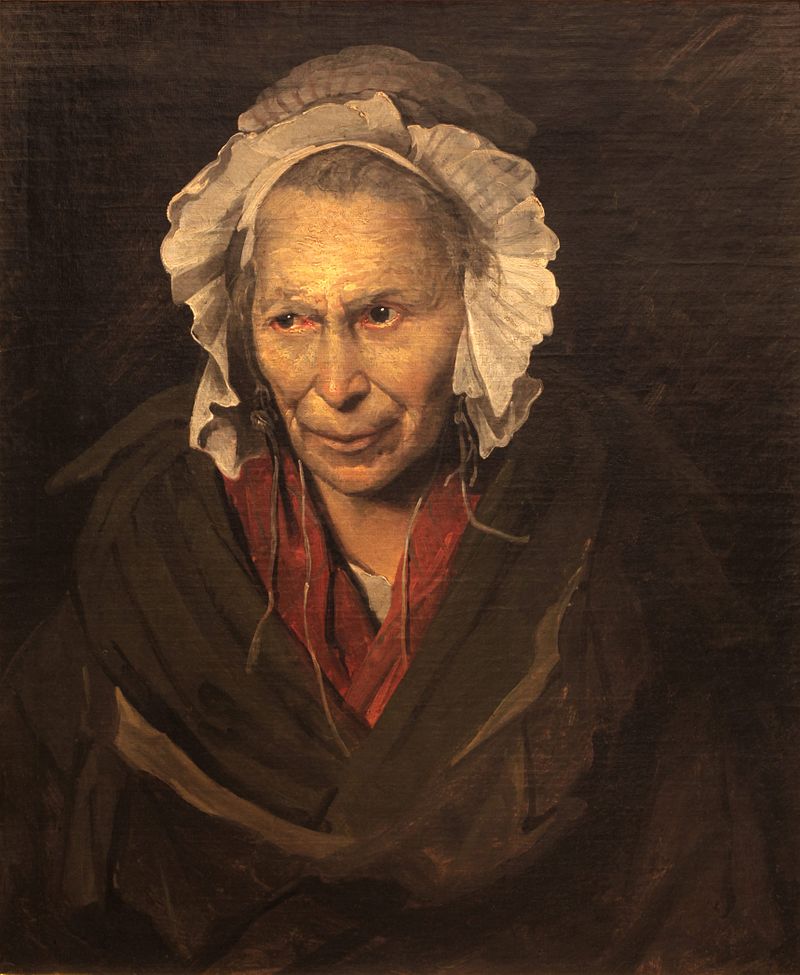
Théodore Géricault, “La Monomane de l’envie,” 1822, oil on canvas, (c) Musée des Beaux-Arts de Lyon, 2016
In this ongoing series, Fine Art Today delves into the world of portraiture, highlighting historical and contemporary examples of superb quality and skill. This week: “La Monomane de l’envie.” Click here to learn more.
Perhaps best known for his monumental history painting “The Raft of the Medusa,” French romantic painter Théodore Géricault (1791-1824) was also an outstanding portraitist. During the waning years of the painter’s career in the early 1820s, Géricault was commissioned to execute a series of portraits by Dr. Georget, head of the Paris Asylum. These studies of the mentally ill — with their incredible sensitivity and psychological intensity — are portraits that have rarely been bettered in history.
Théodore Géricault, “La Monomane de l’envie,” 1822, oil on canvas, (c) Musée des Beaux-Arts de Lyon, 2016
Located in the Fine Arts Museum in Lyons, France, this week’s feature portrait is a dramatic visual probing of a female subject struck with “obsessive envy.” Painted in 1822, the subject is presented in half-length against an empty background. Géricault’s choice of presentation was adroit, as the tightly cropped space and lack of any spatial context forces the viewer to confront — rather uncomfortably — the disturbed sitter directly. Close inspection of the visage reveals a multitude of information and the subject is captured with incredible sensitivity. The woman — who is in advanced age — menacingly looks out of the picture toward the viewer’s left. Her mouth is very tightly pressed while her eyes are worn with red-rimmed emotion. Perhaps caught during an episode of her mania, Géricault has revealed physical facts with authenticity and verisimilitude, which contrast rather sharply from the painter’s early idealized portraiture.
Interest in mental illness among Géricault and his romantic contemporaries was a well-documented phenomenon and followed a burgeoning pseudo-science that believed the human face could reveal much about an individual’s character, especially with regard to madness, criminal activity, and the moment of death. The sad state of Géricault’s own health during this time might have also affected his interest in and thoughtfulness about the subject. In fact, Géricault died in 1824 after a long period of declining health, in particular a chronic tuberculosis infection. What is more, it seems Géricault’s own family had a history of insanity, making the psychological discomfort of his subjects all the more poignant. Undoubtedly weakened by his worsening condition, one could reasonably assume Géricault felt a certain identification with his subjects. All told, the five portraits that survive from this series, including the portrait here, are firmly positioned in the pantheon of great historical portraiture.
This article was featured in Fine Art Today, a weekly e-newsletter from Fine Art Connoisseur magazine. To start receiving Fine Art Today for free, click here.
Born in 1959, and living all his life in Southern Ontario, Ron Kingswood has painted this countryside most of his existence. The natural world has played an important role in the development of his paintings. Over the last decade, Mr. Kingswood has set representational aside to search within himself for a deeper meaning, quoting “I believe when one guards him or herself and their work too tightly with all sorts of fears and apprehensions, the accidental and perhaps the incidental no longer breaths. The work no longer remains a thought or belief, it is suffocated by fear. Strange, Man has fear in imagination, that in something so limitless and endless, he must place restraint. The hunger is no longer, the thirst is quenched and kindled with applause, the approval is the acclaim, which has now superseded the defenseless, and the unguarded. This is the descent of rational judgments, seasoning themselves away from, inventiveness and absolute passion that one is given at birth. The survival of a voice is a determination, only by those ready to unearth oneself.”
Western Visions® is the National Museum of Wildlife Art’s largest and longest running fundraiser, with a variety of exciting events. The show features a wide selection of art for sale. Western Visions® painters and sculptors participate in the art portion of the show and sale and as many as 2,000 people attend the events.
Available through the 2017 Buffalo Bill Art Show and Sale, Cody, WY
“If it is within the realm of human evolution, or the whim of the Divine, to allow one individual to possess the gift of a natural sense of design, then Charlie Hunter is certainly the lucky winner. No master of the pure line can surpass what Charlie, almost matter-of-factly, does when he takes pencil in hand.” – Richard Schmid, ALLA PRIMA II
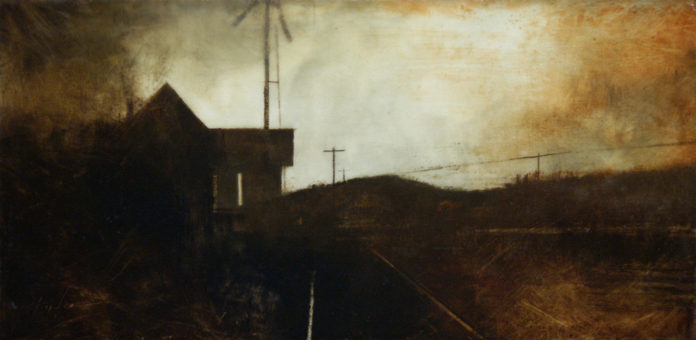
Charlie Hunter’s distinctive limited-chroma paintings have won wide renown for their distinct, evocative sense of place. Combining spare, elegant draftsmanship and haunting atmospherics, Hunter’s works evoke both the worlds of Hopper and Kline, Sheeler and Keifer.
After emerging on the national scene in 2012 with a feature in PleinAir magazine, Hunter has quickly leapfrogged to the forefront of that world, routinely winning awards at plein air events around the country.
His work is now appearing with increasing frequency in museums and larger art shows. Collectors include MSNBC host Rachel Maddow and Tampa Bay football player Logan Mankins.
Hunter grew up in small-town New Hampshire and Vermont, and often returns to the themes of rural deindustrialization in his work. His studio, appropriately, is in the former mill town of Bellows Falls, Vermont, which provides almost unlimited subject matter, though he is also fond of decrepitude wherever it may be found, be it the deep south or the far west.
Fill your mind with useful art stories, the latest trends, upcoming art shows, top artists, and more. Subscribe to Fine Art Today, from the publishers of Fine Art Connoisseur magazine.