Home Blog Page 348

Kunkle’s Next Step

0
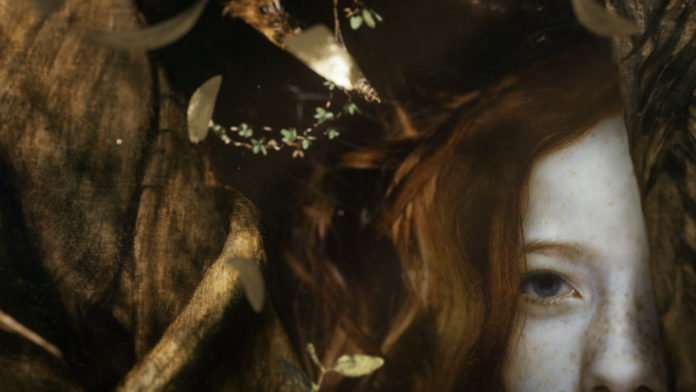
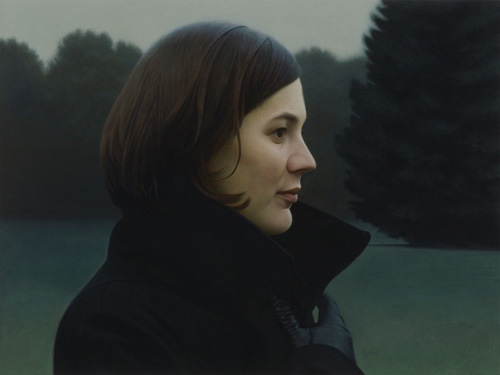
Image still from the Main Title of Anne with an E, Imaginary Forces Studios

Nationally known representational painter Brad Kunkle recently announced some big news involving his directing of an imaginative film set to premier on Netflix. In what capacity? Find out here.

Brad Kunkle is in high demand these days. The representational painter, known for his stunning use of gold and silver gilding with sensuous female figures, recently announced the release of Anne with an “E” — a television series on Netflix for which Kunkle was art director. The series is a reimagining of the classic book and musical Anne of Green Gables by Lucy Maud Montgomery; the book was first published in 1908.The story is a coming-of-age tale surrounding a young orphan (Anne) who is seeking love, acceptance, and her place in the world. Kunkle produced a series of original paintings that were used in the main title/opening for the series.

This article was featured in Fine Art Today, a weekly e-newsletter from Fine Art Connoisseur magazine. To start receiving Fine Art Today for free, click here.

Modern Identity Through Traditional Means

0
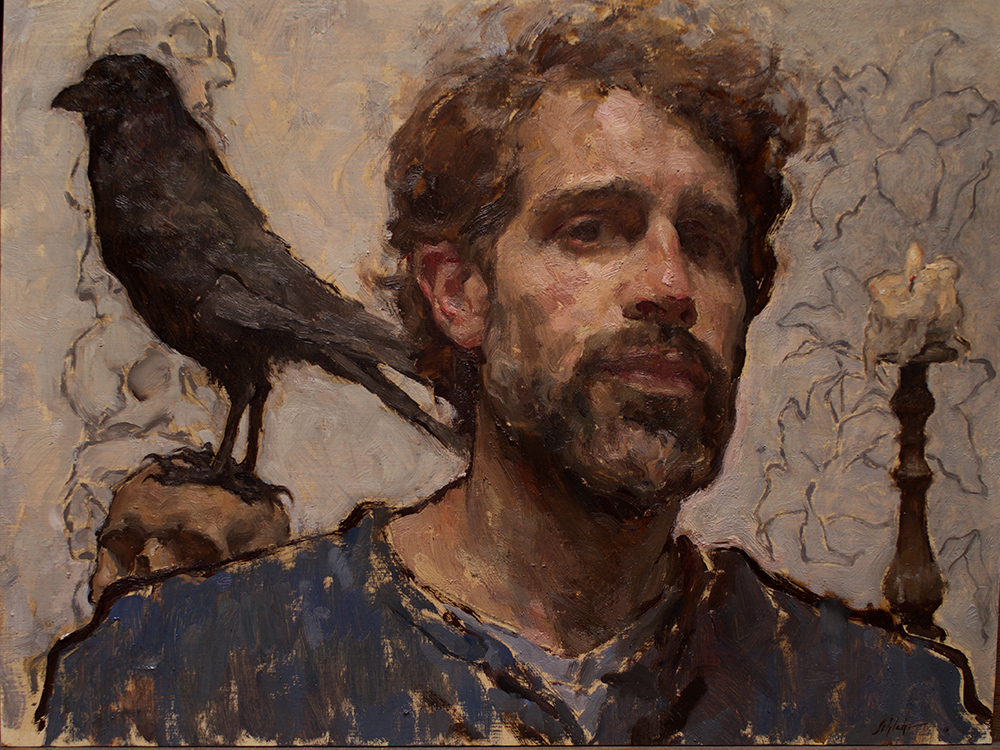
Colleen Barry, “Self Portrait with St. Jerome,” 2015, oil on panel, 9 x 12 in. © Eleventh Street Arts

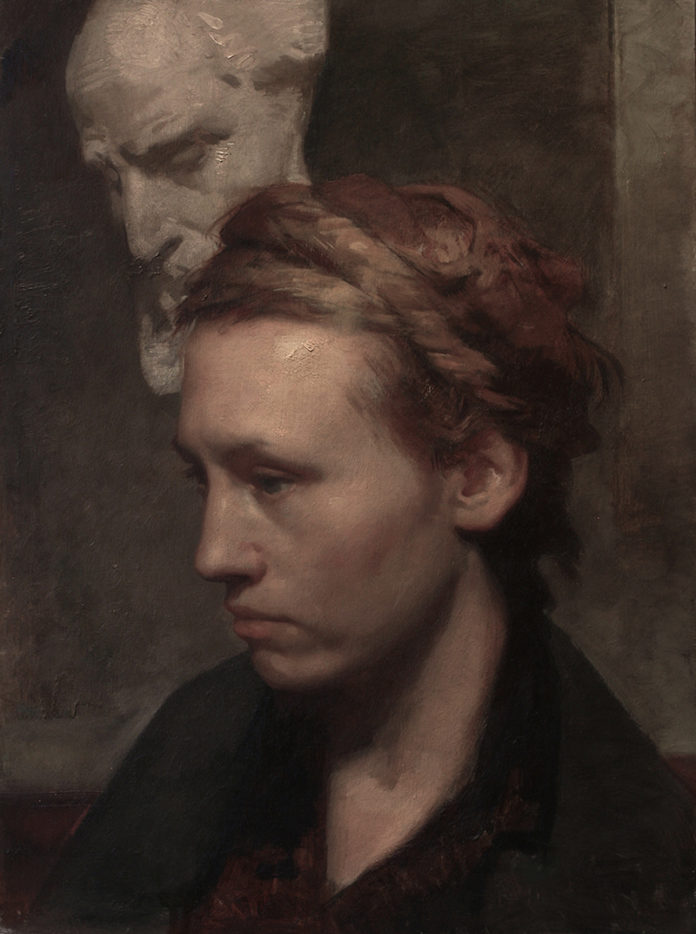
Twenty-seven leading artists of the contemporary realist revival investigate modern character and identity through their own visages during this outstanding group exhibition in New York. Who are they, and where? Details here!

Located in Long Island City, New York, Eleventh Street Arts has a reputation for mounting must-see exhibitions. Representing the top realist painters every year, that exhibition trend certainly continues through “Self-Portrait,” opening April 20 and continuing through June 20.

Travis Schlaht, “In Between, Self Portrait Age 40,” 2016, oil on linen, 12 x 16 in. © Eleventh Street Arts

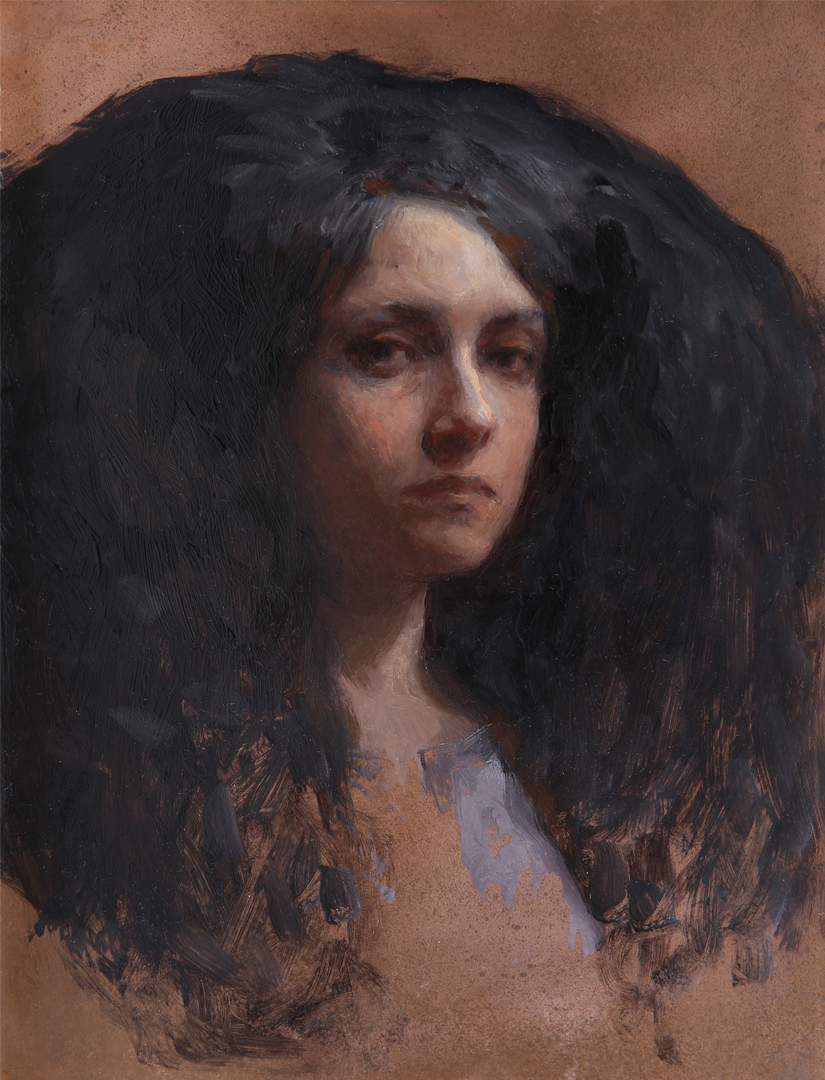
“Self-Portrait” showcases paintings of this genre by 27 of the top contemporary representational painters, including Daniela Astone, Colleen Barry, Stephen Bauman, Benjamin Bjorklund, Patrick Byrnes, Jacob Collins, Kamille Corry, Hollis Dunlap, Louise Fenne, Richard Greathouse, Amaya Gurpide, Daniel Graves, Cornelia Hernes, Brendan Johnston, Joshua LaRock, Rodrigo Mateo, Edward Minoff, Gregory Mortenson, Carolyn Pyfrom, Edmond Rochat, Irvin Rodriguez, Travis Schlaht, Jordan Sokol, Will St. John, Nicolas Uribe, Charles Weed and Justin Wood.

Daniela Astone, “Self Portrait,” 2016, oil on copper, 8.4 x 6.4 in. © Eleventh Street Arts

As one of the most complex and vibrant genres, self-portraiture has allowed each of these artists to probe their identities in a world of “shifting artistic values,” the gallery writes. “Exhibited works display a cross-section of styles, many representative of the pedagogies of the world’s foremost art academies: The Lyme Academy, The Florence Academy of Art, Grand Central Atelier, The School of Visual Arts and The Art Students League. Celebrating an artistic practice that reaches back to the Renaissance, the works of ‘Self-Portrait’ offer compelling evidence that the legacy of great western art continues to live on through the practice of artists alive today. With the self-portrait as the shard origin of inspiration, these works present a dazzling synthesis of technical skill and personal vision.”

To learn more, visit Eleventh Street Arts.

This article was featured in Fine Art Today, a weekly e-newsletter from Fine Art Connoisseur magazine. To start receiving Fine Art Today for free, click here.

Portrait of the Week: X Marks the Spot

0

In this occasional series, Fine Art Today delves into the world of portraiture, highlighting historical and contemporary examples of superb quality and skill. This week we consider a famous portrait of an infamous seductress.

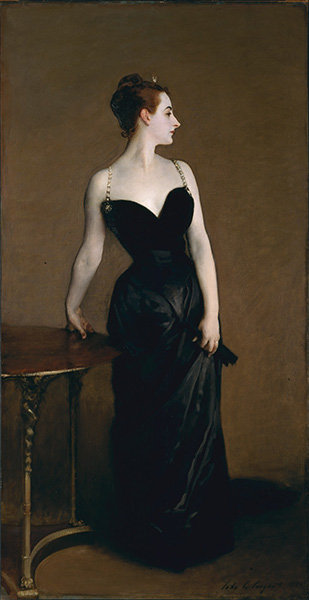
Traditional three-quarter and full-length portraits of the elite highlight the career of 19th-century American painter John Singer Sargent (1856-1925). However, when the artist was not creating his lifelike visions of paying patrons, he often found himself crafting exploratory portraits of his closest friends and confrères.

“Portrait of Madame X” is as notorious a portrait as the subject was in person. Unveiled at the Paris Salon in 1884, the painting was greeted with immediate scandal and controversy over the sitter’s identity and suggestive clothing (the upper strap of the dress was originally shown having fallen off her shoulder — giving the work erotic undertones). A young Parisian socialite, Virginie Amélie Avegno was a model and American expatriate who became notorious among the bourgeois for her beauty and rumored infidelities. Scholars have suggested that the poor reception of the painting in Paris solidified Sargent’s departure from France; he had been struggling to find audience there.

After the Paris Salon of 1884, Sargent reworked the dress strap and renamed the painting “Madame X,” which undoubtedly imbues the work with a sense of mystery, drama, and seduction. In 1916, Sargent sold the painting to the Metropolitan Museum of Art, where it remains on display today. After the sale, Sargent remarked to the museum’s director, “I suppose it is the best thing I have ever done.”

This article was featured in Fine Art Today, a weekly e-newsletter from Fine Art Connoisseur magazine. To start receiving Fine Art Today for free, click here.

Featured Artwork: Jude Tolar, PSA

0
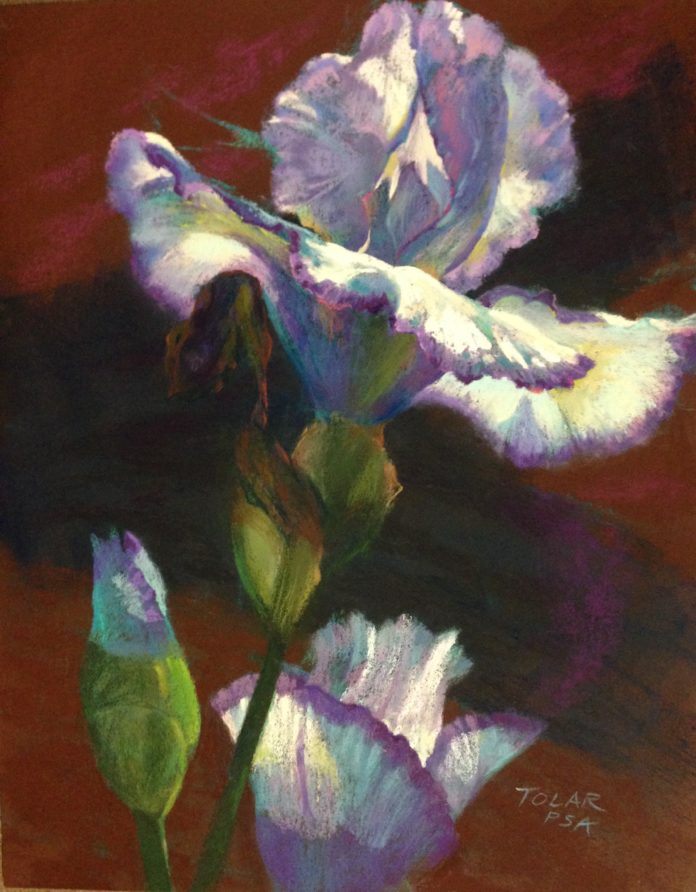
“Sweet Irises” by Jude Tolar, PSA

“Sweet Irises”

Pastels on sanded paper

14 x 11 in.


About the Artist:

My pastel paintings are lyrical views of the beauty and joy I see in the world. My wonder and awe lead me first to light, then line and color.

I love to work from life, preferably en plein air. My favorites are tree and floral portraits outdoors and glass still lifes indoors.

Seasonal florals provide me with nearly endless plein air possibilities. Here in Oklahoma we have blooms from late January to late November.

Currently it’s iris season here. It’s an ‘iris-fest’, as I’m wooed each week by a succession of colors and varieties. Some are frilly, making me smile and call them “fancypants.” Other intrigue me with color, whiskers or other traits.

This featured iris has a beautiful lavender edge on the falls and a very sweet scent. I painted its portrait with backlighting, for drama and glow. I included young buds and an old, dried-up flower, to show the iris’ life cycle. “Sweet Irises” is available through my website, www.judetolar.com.

I began painting with pastels 11 years ago, after a long career in graphic design and illustration in OKC and Stillwater (OK). I have a psychology degree from Oklahoma State University and two post-baccalaureate years of fine arts and illustration classes at University of Oklahoma.

After retirement, a desire to work from life en plein air led me to pastels and studies with master pastelists, most extensively with Clive Tyler.

Soft pastels and sanded papers changed my art world. This forgiving medium lets me paint freely and in layers. I’m fearless with strong colors and values. This adds impact to the stories and portraits I paint.

My pastel paintings have generated strong responses. I’ve juried into many national and international shows, including Pastel Society of America and International Association of Pastel Societies. I’ve won awards on various levels, including two PleinAir Salon awards from PleinAir magazine, two Pastel 100 awards from Pastel Journal, and five Best of Shows.

My work has been featured in PleinAir magazine, PleinAir Today, and Pastel Journal. It’s also shown in The Cyber Art Show online, and in an article I wrote for Pastel Journal (April/May 2016). I’m in the current Pastel Journal issue (April/May 2017) as a Pastel 100 winner.

I’ve shown in numerous solo, invitational and members shows at galleries and elsewhere. My pastels are in collections across the US.

I’m a Signature Member of Pastel Society of America and Oklahoma Art Guild, and a member of American Impressionist Society, Oklahoma Pastel Society, Pastel Society of New Mexico, and Stillwater (OK) Art Guild.

I give pastel demonstrations and teach pastel workshops on various subjects. When not painting, I can be found gardening, reading, hiking or mowing. I live in Stillwater, Oklahoma, with my husband and a studio full of soft pastels.

Jude Tolar, PSA

Eyewitness Views

0
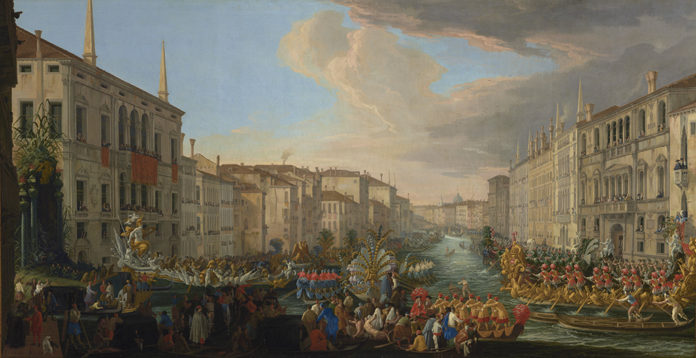
Luca Carlevarijs, “The Regatta on the Grand Canal in Honor of King Frederick IV, King of Denmark,” 1711, oil on canvas, J. Paul Getty Museum

We live in a time where images — especially of a documentary nature — abound. At every turn of the head, click of a mouse, or swipe across a screen, we can see spectacular events from around the globe in near real time. What did they do in the 18th century? This.

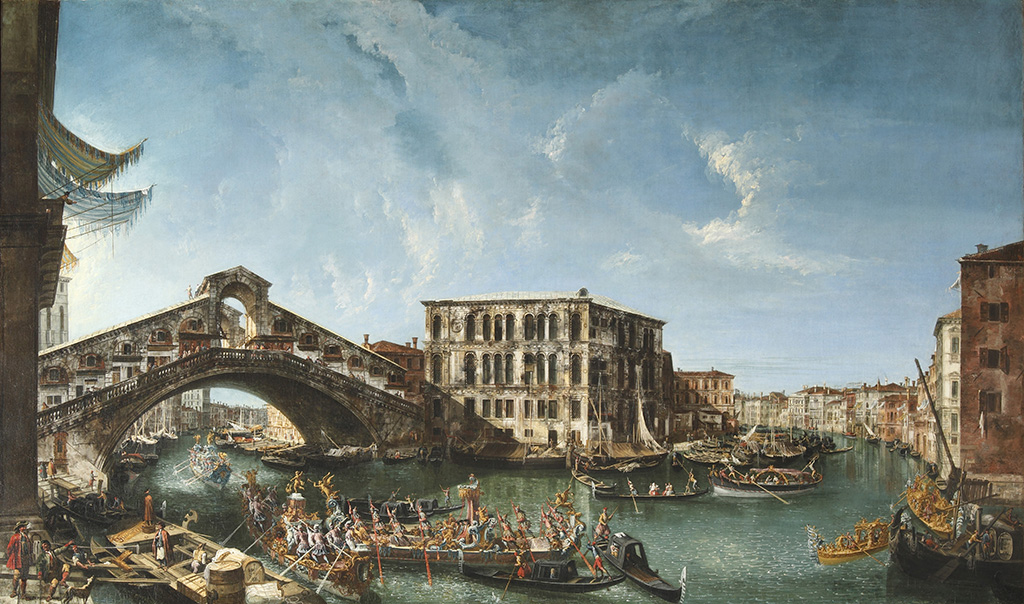
For millennia, Europe’s most iconic cities have been the scene of events ranging from magnificent coronations, to festivals, and sometimes to disasters, all of which presented artists with ample opportunity to showcase their skills and document important events. During the 18th century, a number of princes, popes, and ambassadors took this a little further, specifically commissioning master painters such as Canaletto and Panini to record memorable happenings.

Michele Marieschi, “The Rialto Bridge with the Festive Entry of the Patriarch Antonio Correr,” 1735, oil on canvas, The Palmer-Morewood Collection

This 18th-century trend is explored through more than 40 works in Los Angeles at the J. Paul Getty Museum. Opened on May 9 and continuing through July 30, “Eyewitness Views: Making History in Eighteenth-Century Europe” is the first exhibition to focus on view paintings as documentary depictions of contemporary events.

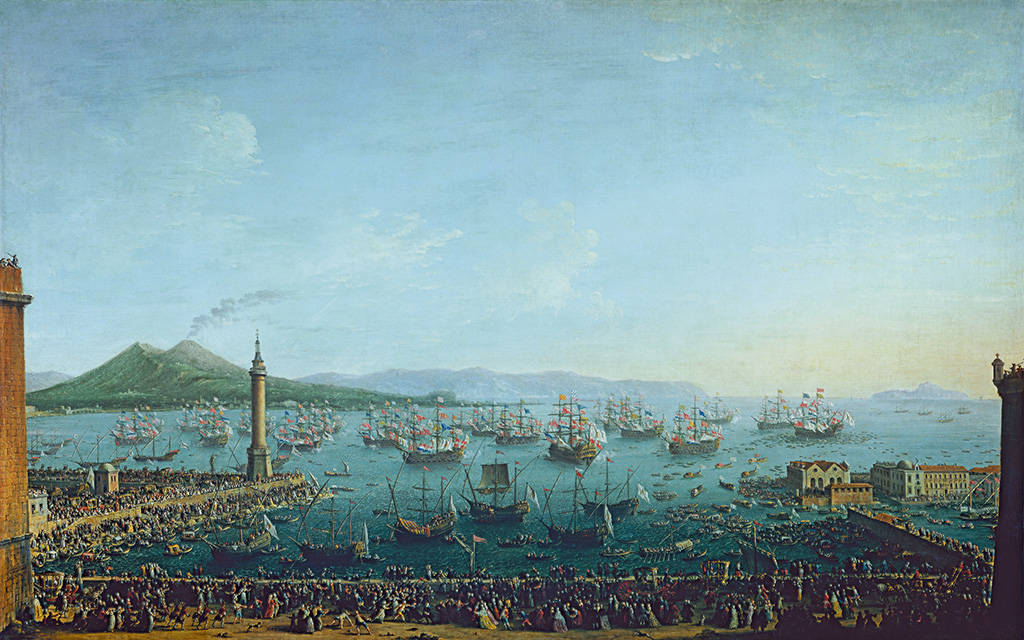
Antonio Joli, “Departure of Charles III from Naples to Become King of Spain,” 1759, oil on canvas, Museo Nacional del Prado

“‘Eyewitness Views’ brings together an incredible array of international loans to tell the fascinating story of how artists captured, and in many ways created, history in 18th-century Europe,” says Timothy Potts, director of the J. Paul Getty Museum. “Both in their subject matter of spectacular public occasions, such as papal visits, and in the brilliance of their execution, these colorful panoramic views provide a window into history as well as a testament to the achievements of some of the era’s greatest painters. Ambitious exhibitions of this kind increasingly require the commitment of partner institutions, and we are particularly grateful to our colleagues in Minneapolis and Cleveland for their support in helping us realize this exhibition.”

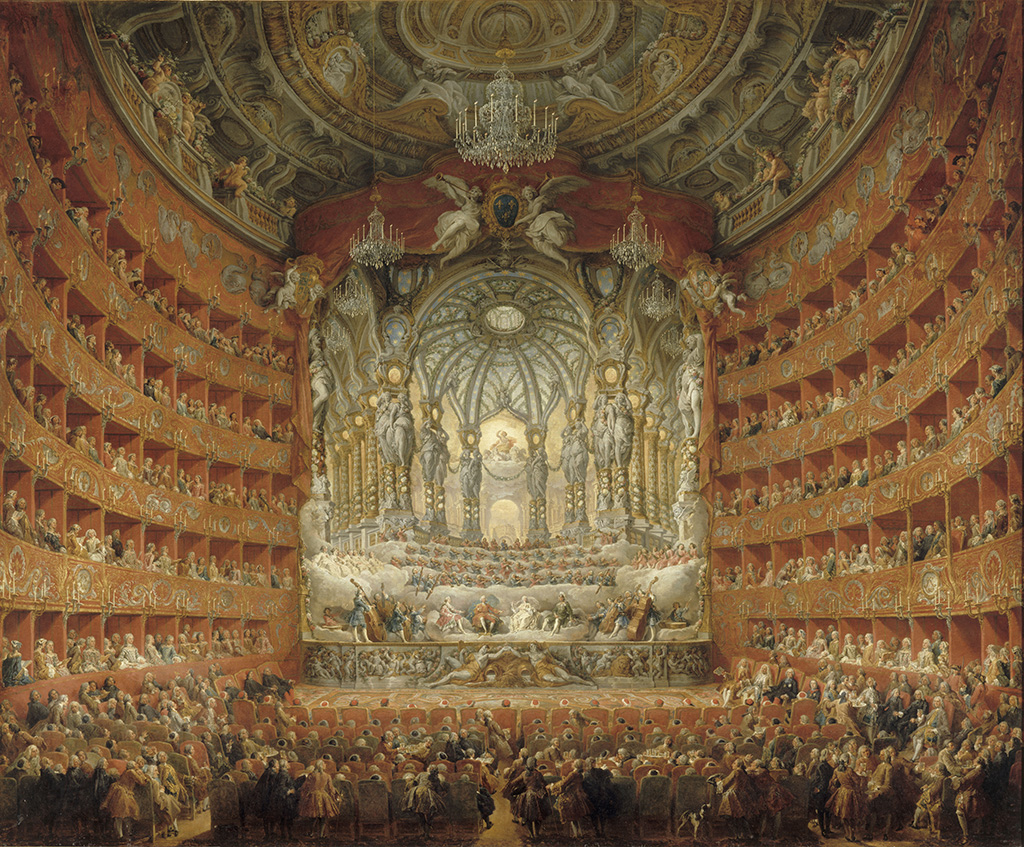
Giovanni Paolo Panini, “The Musical Performance in the Teatro Argentina in Honor of the Marriage of the Dauphin,” 1747, oil on canvas, Musée du Louvre
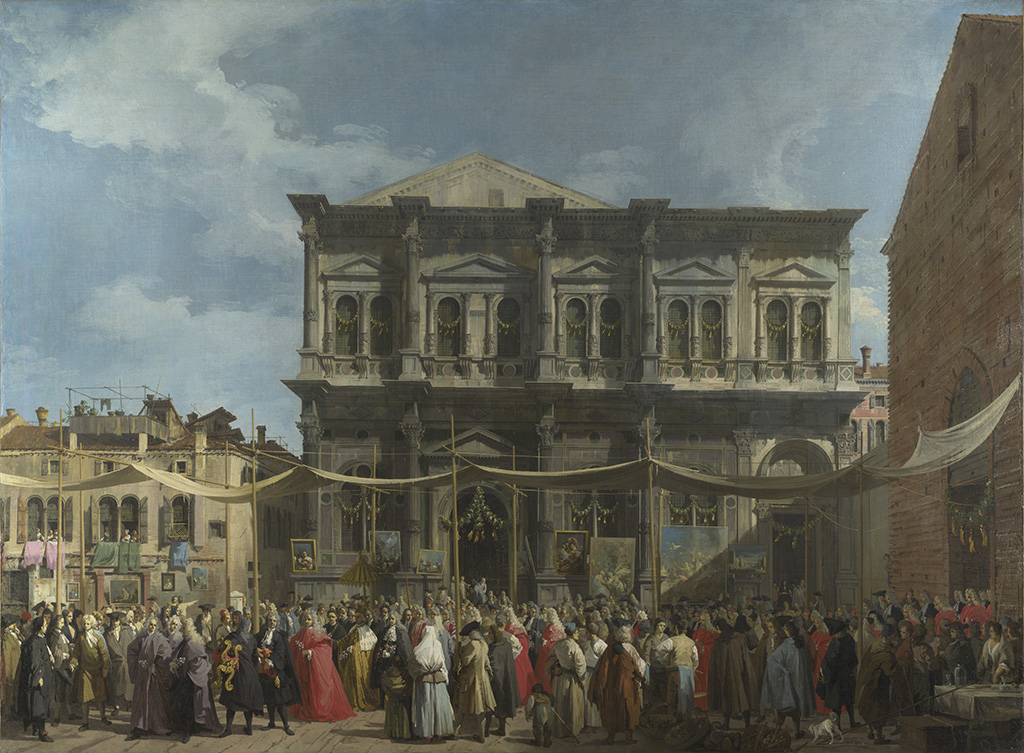
Canaletto, “The Procession on the Feast Day of Saint Roch,” circa 1735, oil on canvas, The National Gallery, London

To learn more, visit the J. Paul Getty Museum.

This article was featured in Fine Art Today, a weekly e-newsletter from Fine Art Connoisseur magazine. To start receiving Fine Art Today for free, click here.

Pissarro Seized and Returned?

0
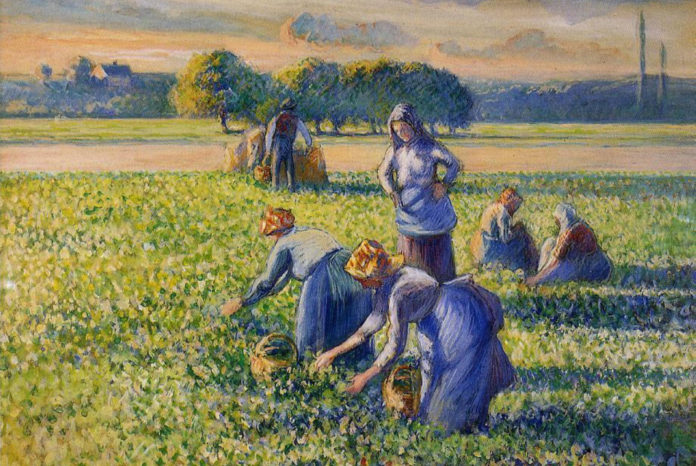
Camille Pissarro, “Pea Harvest,” 1887, gouache, 53.3 x 64.4 cm., private collection

Seventy-three years ago, in 1944, several outstanding works of art belonging to Jewish collector Simon Bauer were confiscated and sold by an art dealer designated by officials from France’s wartime Vichy regime. One of the works, a lovely scene by impressionist master Camille Pissarro, recently turned up.

A stolen painting titled “Pea Harvest” by impressionist master Camille Pissarro recently turned up in an exhibition in Paris, France. Now, relatives of Simon Bauer — the Jewish man who owned the painting, along with 92 other artworks — are seeking its return from the U.S. couple who had loaned it.

Bauer’s collection was seized in 1944 by French authorities and promptly sold by a designated art dealer. Bauer, who was interned but avoided the Nazi death camps and was released in September 1944, spent the last three years of his life trying to reclaim his looted works. When he died in 1947, he had recovered only a small portion of his collection.

Jean-Jacques Bauer — Simon’s grandson (now 87 himself) — recently learned that one of his grandfather’s paintings, “Pea Harvest,” was on display in Paris at the Marmottan as part of a Pissarro retrospective exhibition. He has since asked a top Parisian court to order that the painting not be allowed to move pending further action to determine its ownership. The court said a ruling is scheduled for May 30.

To learn more, visit ArtDaily.

This article was featured in Fine Art Today, a weekly e-newsletter from Fine Art Connoisseur magazine. To start receiving Fine Art Today for free, click here.

GÉRÔME

0
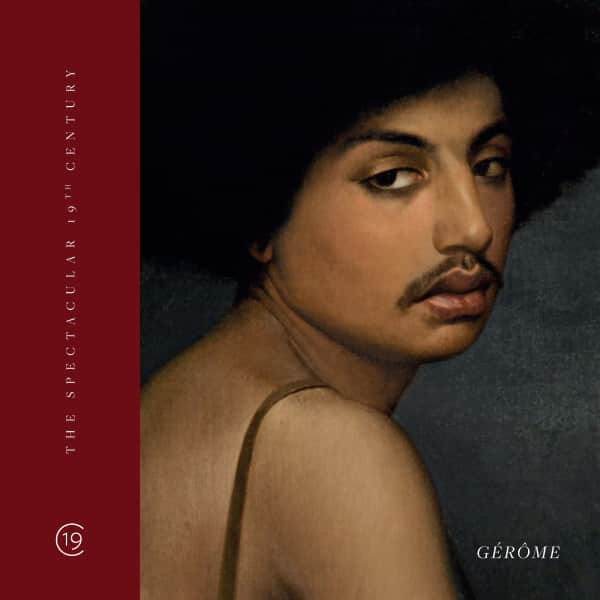
Cover of Catalogue Gérôme, Gallery 19C

Gallery 19C is — as its name suggests — one of the preeminent destinations for the highest quality paintings and sculptures from the 19th century. Just last week, it announced the release of this…

Gallery 19C recently announced the arrival of its second catalogue on the famed 19th-century painter Jeon-Léon Gérôme. “We have assembled a group of five important paintings from different periods in Gérôme’s career,” the gallery says. “They highlight not only his focus on Orientalism but also his early interest in Néo-Grec subject matter.

“A common thread linking these paintings is their early American provenance, which can be traced back to important American collectors, such as Catharine Lorillard Wolfe, one of the Metropolitan Museum of Art’s first benefactors.

“A primary goal of Gallery 19C is to present exceptional examples of the wide-ranging paintings that define the 19th century. Jean-Léon Gérôme will always feature prominently in any discussion of the period. The unparalleled technical virtuosity of his technique continues to attract us and beckons us to marvel at his art.”

Want to take a look? You can download a PDF version of the catalogue here.

To learn more, visit Gallery 19C.

This article was featured in Fine Art Today, a weekly e-newsletter from Fine Art Connoisseur magazine. To start receiving Fine Art Today for free, click here.

Now This Is Exciting…

0
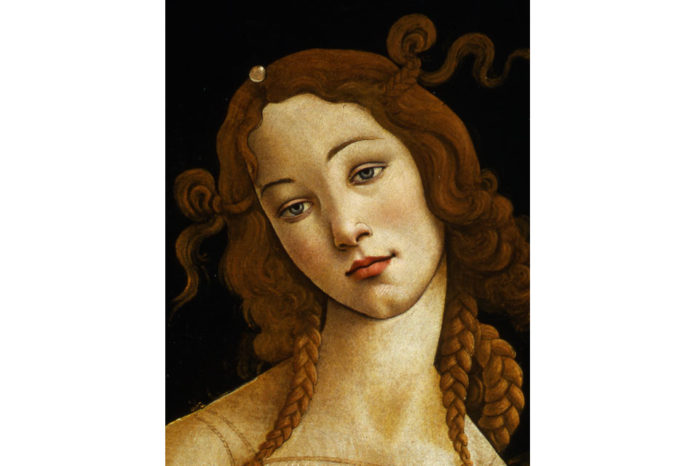
Sandro Botticelli (1445-1510), “Venus (detail),” circa 1484-1490, tempera on wood, © Sabauda Gallery, Turin 2017

The largest exhibition of paintings by this canonical Renaissance painter ever shown in the United States recently landed at this East Coast institution. Who and where?

Any painting that survives today by the hand of Renaissance master Sandro Botticelli (1445-1510) is one worth viewing — especially if you don’t necessarily have to travel to Europe. The Museum of Fine Arts Boston is overjoyed to currently be presenting the largest exhibition of the artist’s work ever on U.S. soil. The exhibition was first shown at the Muscarelle Museum of Art in Williamsburg, Virginia.

Now on view in Boston now through July 9, “Botticelli and the Search for the Divine” is being called “the most important Botticelli exhibition ever seen in the United States,” the museum reports. “Every phase of the artist’s tumultuous career is represented in this selection, as well as nine works by his master Filippo Lippi, the only pupil of Masaccio. Botticelli was guided to success by the Medici dynasty, the patrons for sacred altarpieces and sensuous paintings of classical mythology, including several in this unprecedented exhibition. After the fall of the Medici, many of his paintings were lost in the bonfires of the vanities.”

To learn more, visit the Museum of Fine Arts Boston.

This article was featured in Fine Art Today, a weekly e-newsletter from Fine Art Connoisseur magazine. To start receiving Fine Art Today for free, click here.

BP Portrait Awards 2017

0
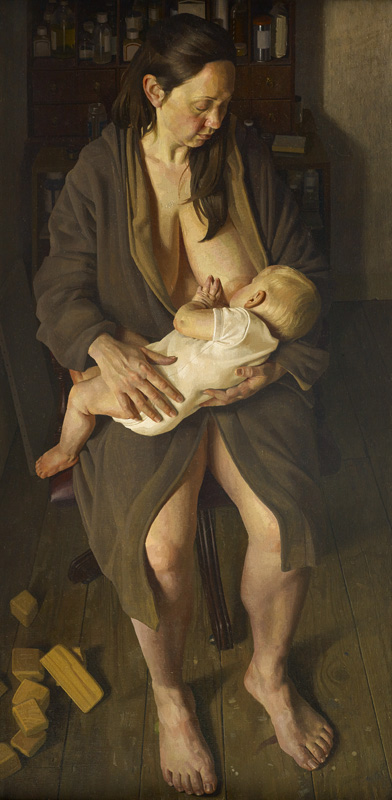
Benjamin Sullivan, “Breech!,” 2017

It’s perhaps the most competitive and prestigious portraiture contest in the world, hosted annually by the National Portrait Gallery in London. We’ve got a shortlist of honorees at 2017’s BP Portrait Awards.

More than 2,500 works of portraiture by artists from 87 countries around the world were submitted for consideration in 2017’s BP Portrait Awards in London. Although the exhibition of winners does not officially open until June 22 (running through September 24), organizers have revealed who’s under consideration for the grand prize.

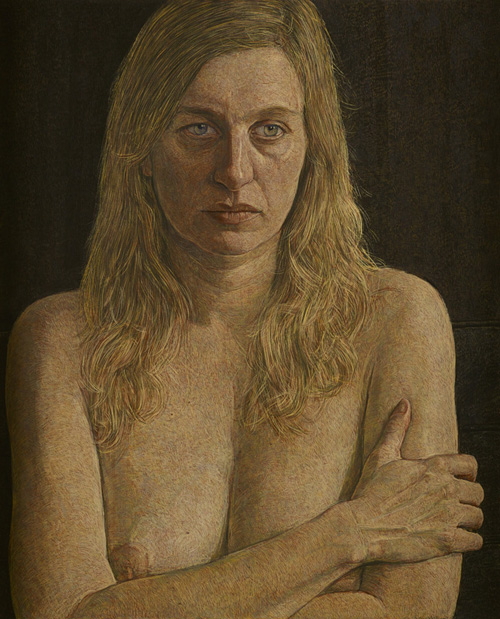
Antony Williams, “Emma,” 2016

Three works have been isolated as potential winners: “Double Portrait” by French illustrator Thomas Ehretsmann; “Breech!” by Benjamin Sullivan; and “Emma” by Antony Williams. The grand prize winner will receive £30,000, plus, at the judges’ discretion, a commission worth £5,000, to be agreed between the National Portrait Gallery and the artist.

Second prize is worth £10,000, third place £8,000, and the BP Young Artist Award is valued at £7,000. Finally, a BP Travel Award worth £6,000 will also be handed out.

Thomas Ehretsmann, “Double Portrait,” 2016, acrylic on board, 30 x 40 cm.

This year’s BP Portrait Awards were judged from the original paintings by a panel that included Nicholas Cullinan, director, National Portrait Gallery (chair); Sarah Howgate, contemporary curator, National Portrait Gallery; Michael Landy, artist; Kirsty Wark, broadcaster and journalist; Camilla Hampshire, museums manager and cultural lead, Royal Albert Memorial Museum; and Exeter Des Violaris, director, UK Arts & Culture, BP.

To learn more, visit the BP Portrait Awards.

This article was featured in Fine Art Today, a weekly e-newsletter from Fine Art Connoisseur magazine. To start receiving Fine Art Today for free, click here.

Pride of Place for Michelangelo

3
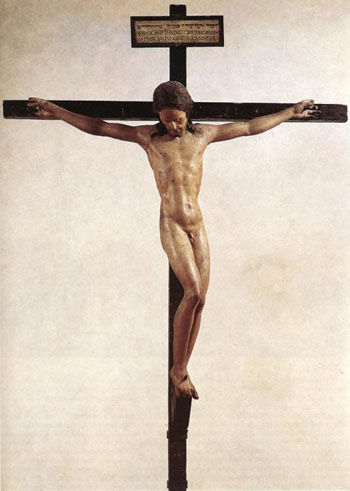
Michelangelo Buonarroti, “Crucifixion,” circa 1493, wood, 4 feet, 6 inches, © Santo Spirito Church

Even at 18 years old, famed Renaissance artist Michelangelo Buonarroti was well on his way to becoming one of the most celebrated artists in Europe. Arguably his first masterpiece — a wooden crucifix — was recently found, restored, and unveiled at a new home.

Those who visit Florence, Italy’s Santo Spirito Church will now be treated to something extra special: the newly restored wooden crucifix by Michelangelo — said to have been created when he was just 18 years old.

As has been well documented, Michelangelo lived for some time during his adolescence with benefactor Lorenzo de Medici. After Lorenzo’s death, Michelangelo lived for about a year with a community of Augustinian monks at Santo Spirito. It was here that Michelangelo received intimate training in human anatomy in the hospital the monks ran. Significantly, Michelangelo sculpted a stunning wooden crucifix as a thank you for their welcome.

For many decades in the late 19th century, it was believed the sculpture had been destroyed or lost forever, but it was eventually rediscovered in a convent — apparently barely recognizable due to the number of overpaint layers.

After massive restoration and a tour around Italy, the famed crucifix will now remain in the church it was originally intended for: suspended above Santo Spirito’s old sacristy.

This article was featured in Fine Art Today, a weekly e-newsletter from Fine Art Connoisseur magazine. To start receiving Fine Art Today for free, click here.

WEEKLY NEWS FROM THE ART WORLD

Fill your mind with useful art stories, the latest trends, upcoming art shows, top artists, and more. Subscribe to Fine Art Today, from the publishers of Fine Art Connoisseur magazine.

  • This field is for validation purposes and should be left unchanged.