It’s been a long time coming, but that doesn’t take away from the celebration and excitement emanating from Point Park University in Pittsburgh, Pennsylvania. What’s the story you need to hear?
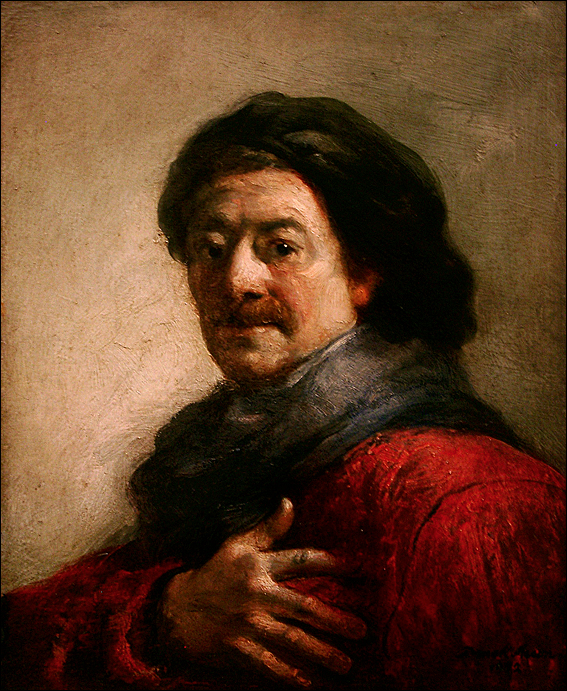
Iconic artist Frank Mason has been a longtime member and supporter of Artists Fellowship, Inc., receiving the Benjamin West Clinedinst Memorial Medal in 2002. The Fellowship recently announced news that the Lawrence Hall Gallery at Point Park University in Pittsburgh will now house a permanent exhibition of Mason’s works.
“Recently part of that collection travelled and was shown at Indiana (PA) University,” the Fellowship reports. “The Cleveland-born master was associated with the Art Students League as a teacher for many years and ArtWatch International, which he co-founded. So many artists do not have that singular institution to carry their banner. In this instance, high marks go to Frank’s widow, Anne, and Jack Tomayko, a longtime collector and Trustee at Point Park, for making it happen.” The exhibition will feature 16 oil paintings ranging from portraits and figure studies to landscapes and seascapes.
This article was featured in Fine Art Today, a weekly e-newsletter from Fine Art Connoisseur magazine. To start receiving Fine Art Today for free, click here.
Trailside Galleries is proud to showcase recent works by landscape painter Jay Moore. Having been raised in Colorado and spent most of his life outdoors, Moore has a beautiful, finely tuned picture ready for your mantel.
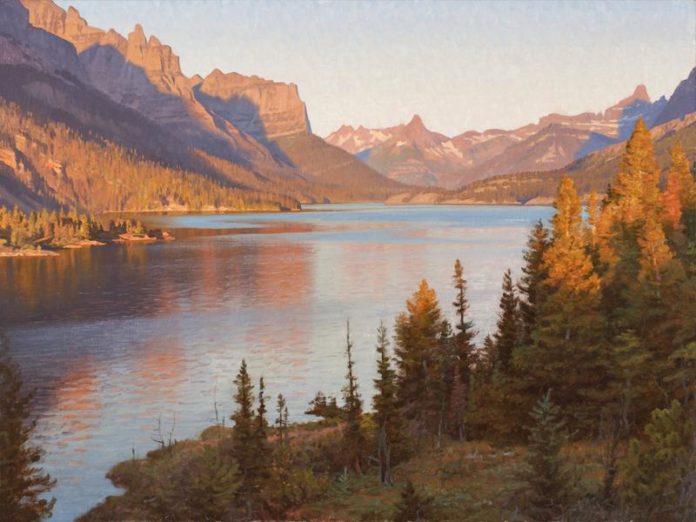
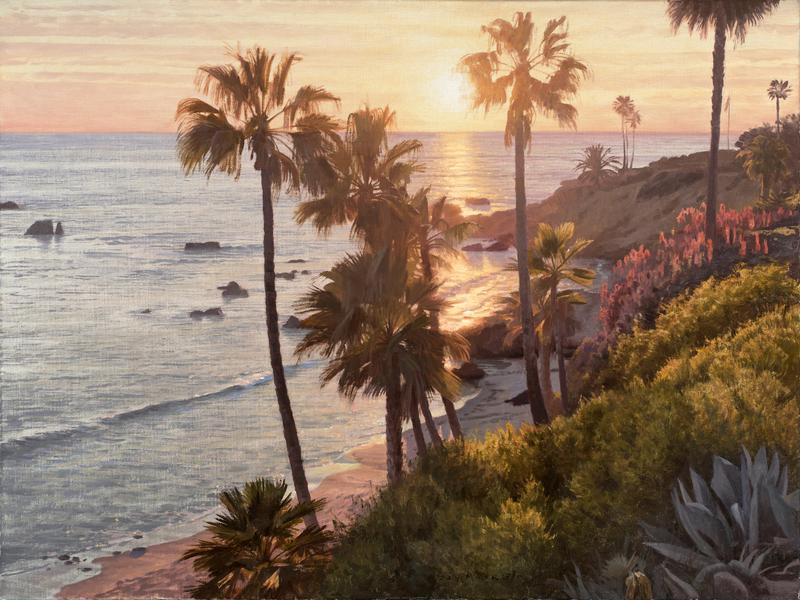
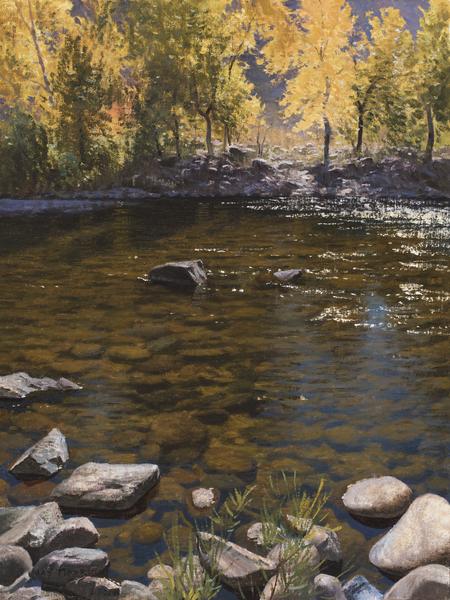
On view through April 7 at Trailside Galleries’ Scottsdale, Arizona, location is a luminous display of landscape beauty from Colorado artist Jay Moore. “Moore is a modern-day naturalist,” the gallery suggested, “more at home amongst the elements, observing the natural world. The artist’s years spent exploring the Colorado highlands has given him a keen eye for the subtleties of the great outdoors. He can look at a patch of snow on the ground and tell you what month it is. He can even tell, often to the minute, when rain will fall by looking at the cloud patterns in the sky.”
All of Moore’s attention to detail surfaces with brilliance in his landscapes, which are tightly rendered and could easily fool the eye. “As an artist,” Moore asserts, “a painting is like a conversation: I hear what the terrain says to me and respond on the canvas. I am very excited about the show because it will include paintings from my usual haunts in Colorado as well as explorations in the past year to Glacier National Park, the California coast, and Hawaii. I am broadening out and finding whole new subject matter that is very inspiring. I have been easel painting for over 20 years, but am as excited as ever.”
This article was featured in Fine Art Today, a weekly e-newsletter from Fine Art Connoisseur magazine. To start receiving Fine Art Today for free, click here.
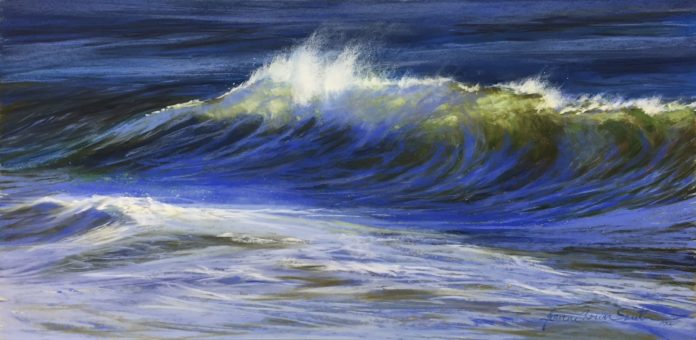
Award-winning artist Jeanne Rosier Smith studied art at Georgetown University and at the New Jersey Center for Visual Art and the DuCret School of Art in New Jersey. After earning her Ph.D. and spending ten years teaching college English, she began painting professionally when her youngest child started school in 2004.
Smith fell in love with pastels fifteen years ago, at first touch. Their velvety richness and direct touch makes them her medium of choice. She is known for her active, dramatic wave paintings, her opulent still lifes, and her expressive portraits. Her year spent in Nice, France, in a dorm room with a sea view began a lifelong love of the water—one she is currently exploring in her wave series. She returns to coastal South Carolina, as well as the cape and islands of the Massachusetts coast year round, and she’s fascinated with the challenge and potential of painting crashing water with dry pastel.
Smith is a signature member of the Pastel Society of America, the Connecticut Pastel Society and the Pastel Painters Society of Cape Cod, and a juried artist member of the Copley Society, the Salmagundi Club and Academic Artists. She has exhibited at the Massachusetts State House, the Boston Artists Guild, and nationally at the Pastel Society of America, the Catherine Lorillard Wolfe Arts Club and American Artist Professional League shows, among others.
She has won numerous awards, including First Place in the 2017 Pastel Journal 100, the IAPS Prix de Pastel in 2012, the Grand Prize in International Artist Magazine’s 2012 Seascapes Competition, and the Art Spirit Foundation Gold Medal Award for Excellence in Pastel from American Artists Professional League. Her work has been featured in International Artist Magazine, American Art Collector, and The Pastel Journal. Her paintings are in collections across the US, to Monte Carlo, to New Zealand.
Jeanne Rosier Smith is represented by Cecil Byrne Gallery in Charleston, South Carolina.
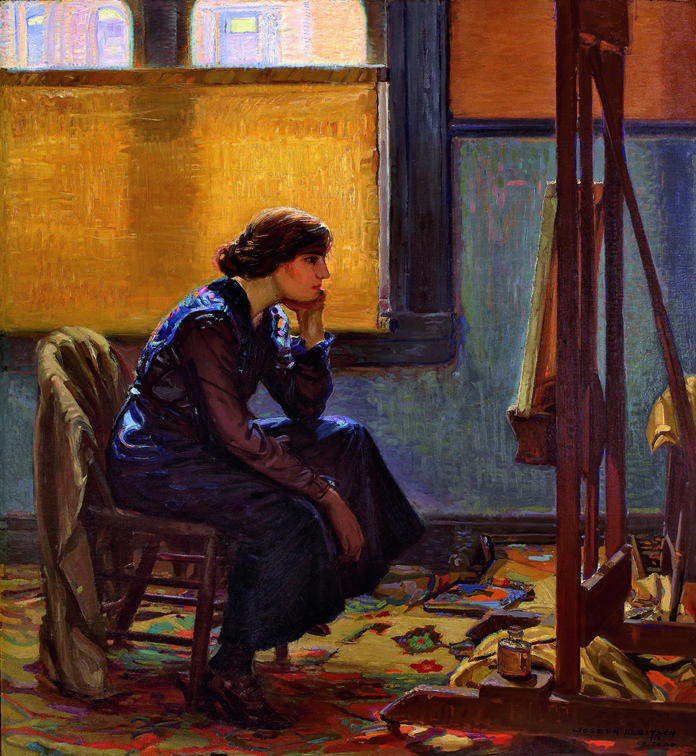
A California institution is proud to have recently opened a major exhibition that delves into the life and career of an Impressionist widely recognized as one of the state’s most influential. Although he fell into obscurity after his untimely death, the script has flipped with “The Golden Twenties.”
Born in Hungary in 1882, Joseph Kleitsch (1882-1931) immigrated to the United States in 1902, eventually taking up residence in such vibrant cities as Cincinnati, Denver, and Chicago. However, it was Kleitsch’s migration to the West Coast, particularly Laguna Beach, that proved to be the most important move, as he eventually became one of California’s most influential and important impressionists.
Although his death in 1931 lead to the artist’s relative obscurity, the Pasadena Museum of California Art (PMCA) — along with scholar and author Patricia Trenton, PhD — are quickly changing the narrative with a brilliant exhibition on view this year.
Opened on March 5 and continuing through August 6, “The Golden Twenties: Portraits and Figure Paintings by Joseph Kleitsch” is not only the first museum exhibition to focus on Kleitsch, but also one that “characterizes Southern California during this tumultuous decade through depictions of the people who helped shape it,” the museum writes.
“Noting the mild climate of Laguna Beach and perhaps the success Edgar Payne, his friend and fellow Chicago artist, found there, Kleitsch moved to the artist’s haven in 1920. He quickly became a leading member of the art colony. He was involved with the Laguna Beach Art Association and was an in-house portraitist for the esteemed Stendahl Gallery, then located in the elegant Ambassador Hotel. The artist also pursued his newfound interest in landscape painting, becoming an important part of the California Impressionism movement.
“Kleitsch’s career is often mistakenly divided into two parts: his early portraits painted in Hungary and Chicago and his impressionistic and increasingly abstract landscapes painted in California during his later years. However, Kleitsch continued to paint portraits and figurative works in California and was considered Laguna Beach’s premier portrait painter until his untimely death in 1931.
“In his relatively short career, Joseph Kleitsch’s innate sensitivity propelled him to uncover the depth of his subjects. With a jewel-toned palette and pattern influenced by his native Hungary and a golden, impressionistic palette developed after his arrival in California, the artist’s figure paintings and portraits of friends, dignified businessmen, and glamorous movie stars convey the character of each sitter and recount the personal stories of California in the twenties. This selection of 42 of Kleitsch’s bold and diverse paintings represents a significant artistic legacy, which has been assembled, for the first time, in this focused and intimate study.”
This article was featured in Fine Art Today, a weekly e-newsletter from Fine Art Connoisseur magazine. To start receiving Fine Art Today for free, click here.
An early goal for historical artists was to begin breaking down the artificial barrier (or picture plane) between the created world and the viewer’s world, using inventive new strategies. This member of the Russell Skull Society has taken this idea to gorgeous new heights.
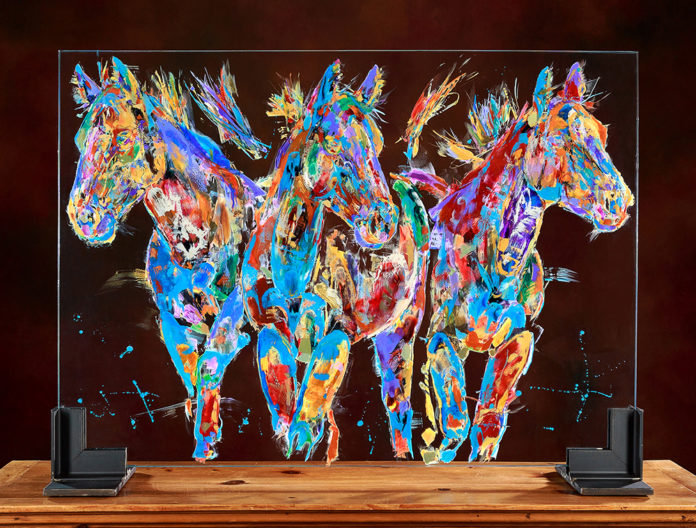
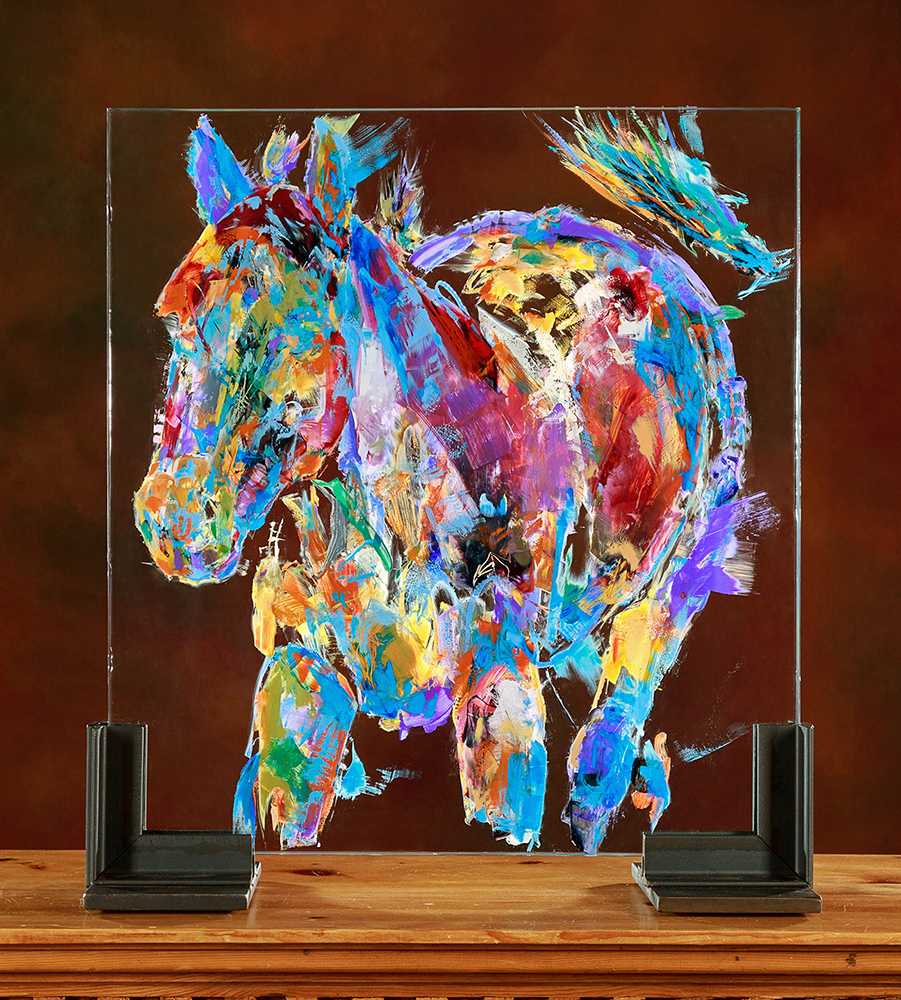
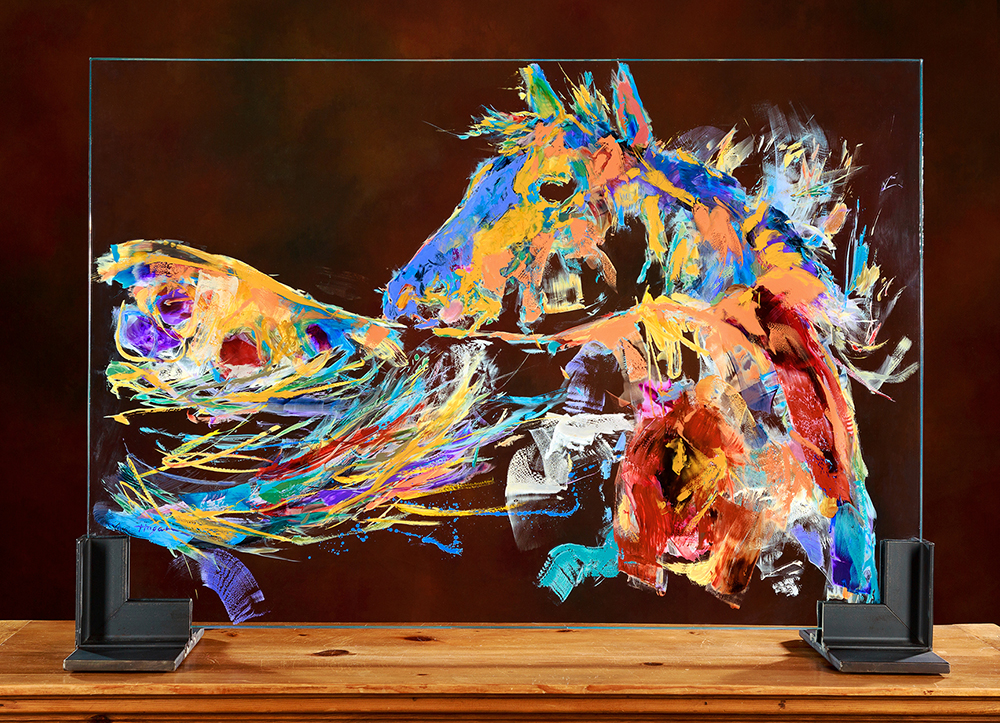
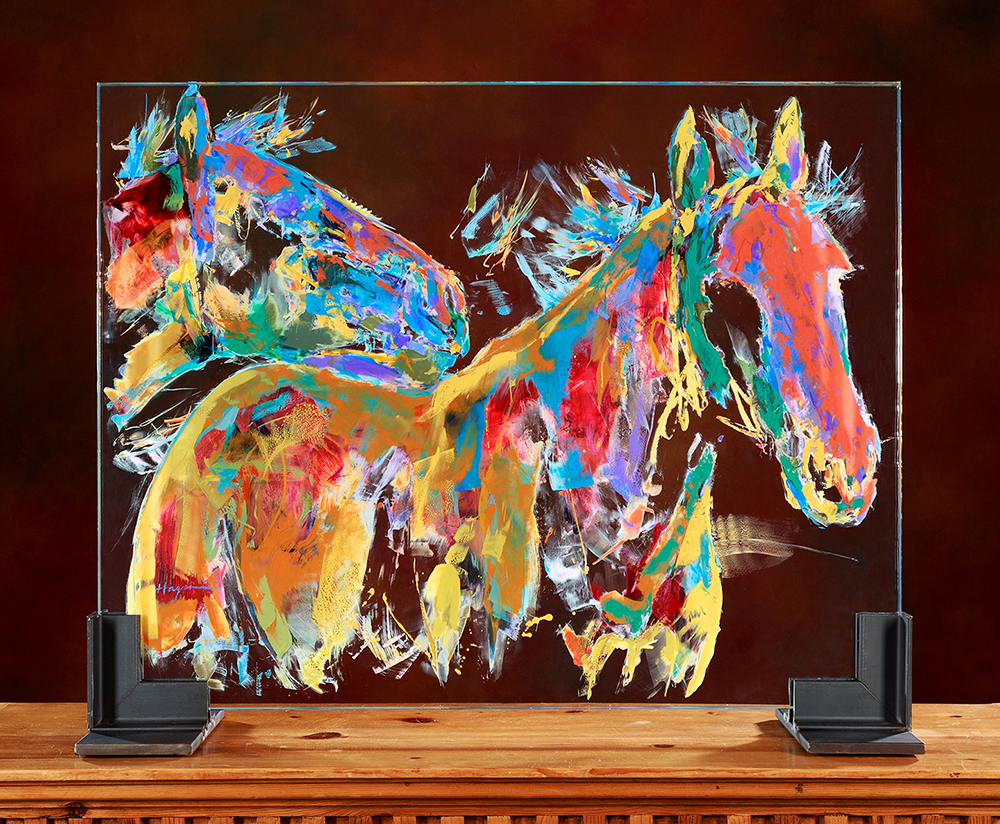
Using glass as her support along with colorful oils and cold wax, artist Carol Hagan is giving collectors and connoisseurs something fresh to look at with a stunning new series she calls “Glass Horses.” A self-taught artist, Hagan considers herself a contemporary expressionist and colorist, two elements that are highlighted beautifully in this new series of paintings.
As her works suggest, Hagan has an affinity for horses as her subjects, and she captures their majestic beauty with simple, expressive, but very deliberate and descriptive stokes of the brush. While their bold forms are clearly recognizable, closer inspection of the details reveals Hagan’s skill and understanding of color relationships. In fact, to ignore the form of the horses is an exercise that only reveals stunning abstract expressionist qualities.
Of her subjects, Hagan says, “Horses are old souls. The quiet exchange of positive energy and communication that takes place just from standing next to a horse, or within a group of horses, is simply extraordinary. They hold within them a silent calm, yet a powerful sense of acceptance, grace, wisdom, and strength.”
The effect of Hagan’s glass painting is also extraordinary, as her equine subjects truly appear to occupy the viewer’s space. It’s hard to find adequate ways to describe the spatial relationship between the viewer and artwork because it’s not quite something one typically encounters. Be that as it may, there’s little doubt that the technique works, leaving one wondering if other artists may one day try it for themselves.
Discussing this new series, Hagan writes “The ‘Glass Horses’ series is inspired by my desire to incorporate both light, and spatial elements, in my work. Painting on sheets of thick glass allows me the opportunity to explore the dimension of light, and the free-standing works can be viewed from both sides. Shadows are cast from the horses themselves, through their positive and negative spaces. These works possess a three-dimensional presence, depending on how each piece is lit for display.
“A complete work incorporates two sheets of glass, with painting on both sheets working together to create a single image. I use oils and cold wax together, creating transparent washes and glazes, opaque strokes, and richly textured areas. These all interact with the element of light, and bring its ever-changing qualities into play. I chose to have my glass sheets finished with flat polished edges, as this allows for yet another aspect of light prisms to reflect from the painted images, and enhances the interesting shadows that they create.”
Collectors will soon have a chance to view these — and other gorgeous, more traditional, paintings — during the C.M. Russell Museum’s exhibition and sale, slated to open next week (March 16-18 in Great Falls, Montana). More specifically, Hagan is one of only two female artists in the Russell Skull Society of Artists. Hagan, along with her fellow members, will be showcasing works all week at the Mansfield Convention Center.
If you would like to learn more, visit Carol Hagan. More information about the Russell Skull Society of Artists can be found here.
This article was featured in Fine Art Today, a weekly e-newsletter from Fine Art Connoisseur magazine. To start receiving Fine Art Today for free, click here.
Although “Ivy League” is a term most closely associated with academic excellence, selectivity in admissions, and social elitism, it can also be used to describe an outstanding exhibition of nearly 300 objects from Enlightenment Europe on view now at Yale University.
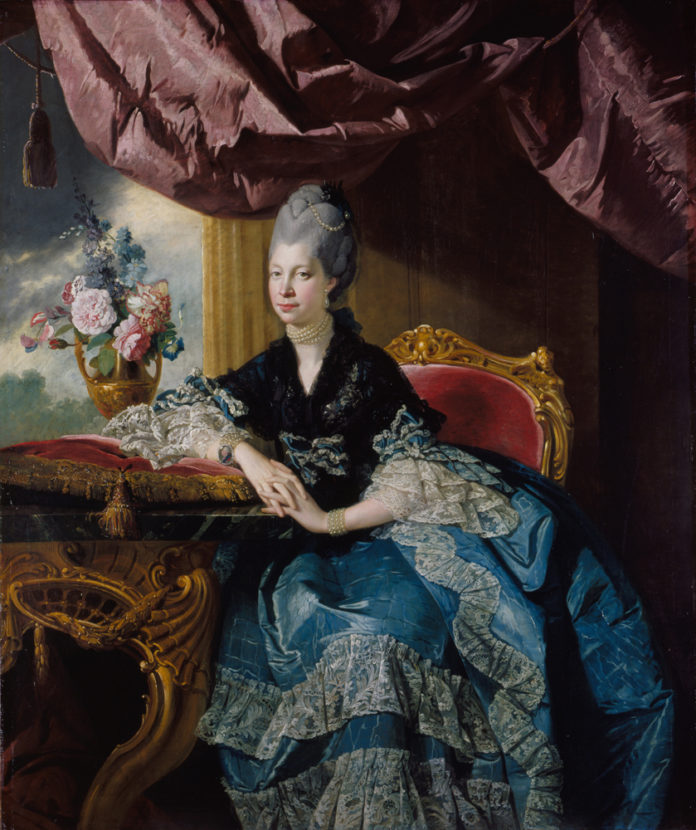
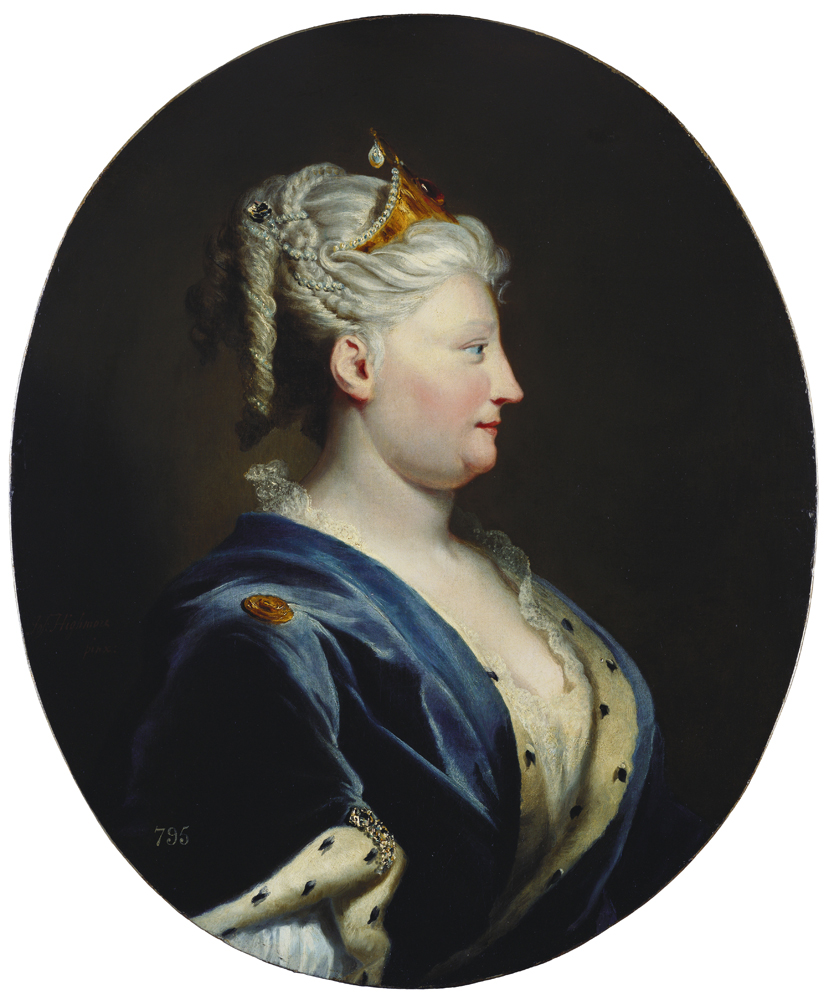
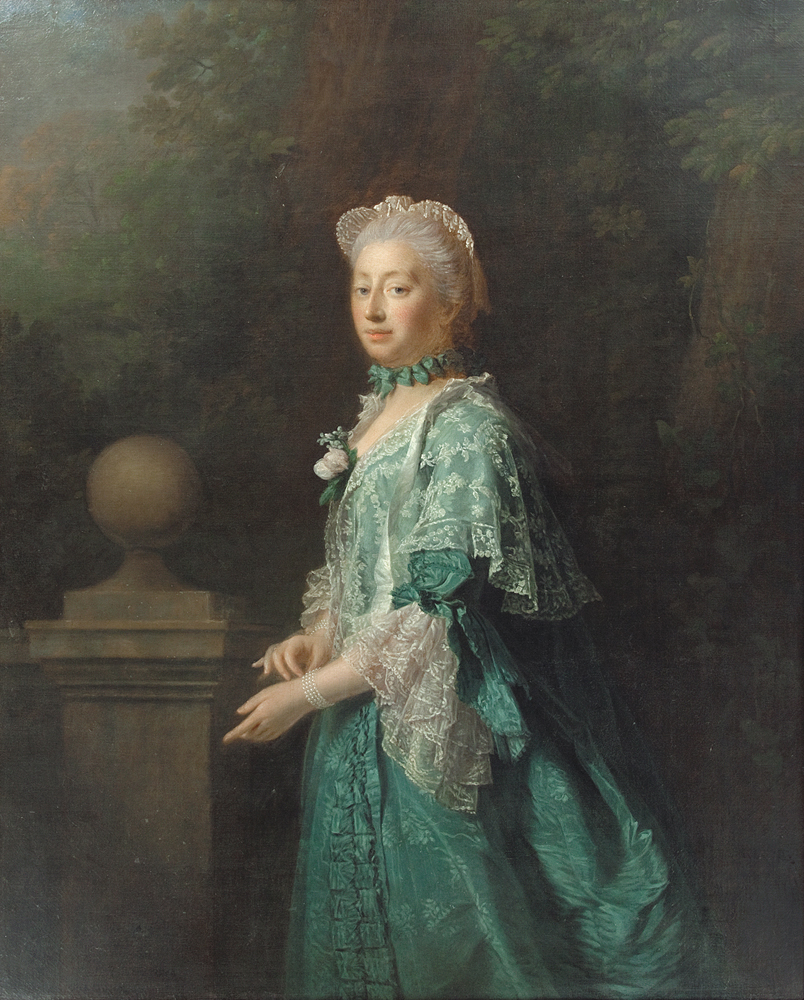
Caroline of Ansbach, Augusta of Saxe-Gotha, and Charlotte of Mecklenberg-Strelitz — three German princesses who married into the British royal family in the 18th century — are the focus of a stunning exhibition of nearly 300 artworks at the Yale Center for British Art in New Haven. Opened on February 2, “Enlightened Princesses” explores the lasting legacies of these important women and how each shaped courtly life. “They encouraged the greatest philosophers, scientists, artists, and architects of the day,” the center notes, “and they brought art, music, dance, enlightened conversation, and experimentation into the palaces and royal gardens, and supported industry, trade, and imperial ambition.”
Joseph Highmore, “Queen Caroline of Ansbach,” circa 1735, oil on canvas, Royal Collection Trust
On view through April 30, the exhibition includes important artworks and manufacture, which either belonged to the women themselves or their families, or was commissioned by them. Among the highlights are works by Hans Holbein, William Kent, Allan Ramsay, Sir Joshua Reynolds, George Stubbs, Thomas Gainsborough, and Johan Zoffany.
Continuing, the center writes, “[the exhibition] focuses on five themes, explaining the princesses’ activities and interlocking contributions over the course of their lifetimes. Firstly, ‘Cultures of Learning: Powerful Conversations’ examines how Caroline, Augusta, and Charlotte built pivotal relationships with leading cultural and intellectual figures of their age, and the far-reaching consequences of those exchanges. This leads into a consideration of ‘The Court as a Stage,’ not only in the literal sense for the performance of music, dance, and theater but also as a political and cultural arena in which the princesses had to navigate the inherently political nature of public and private life.
“‘Royal Women: Mothers of the Nation’ considers the princesses’ engagement with evolving contemporary philosophies about childhood, both as active contributors to the educational programs devised for their own children and in their public roles as encouragers and protectors committed to the development of wide-reaching philanthropic projects. Next, ‘To Promote and Protect: The Princesses and the Wider World’ shows how the princesses supported enterprising industrialists and furnished their own homes and developed their gardens, so as to champion national manufacturers and the produce of empire. Finally, a concluding section on ‘Political Gardening’ shows how Caroline, Augusta, and Charlotte explored contemporary garden philosophies and exercised their architectural ambitions for both personal and political ends, all the while reacting to a volatile commercial environment as well as a changing perception of the bonds between the dynasty, nationhood, and empire.”
This article was featured in Fine Art Today, a weekly e-newsletter from Fine Art Connoisseur magazine. To start receiving Fine Art Today for free, click here.
In this ongoing series, Fine Art Today delves into the world of portraiture, highlighting historical and contemporary examples of superb quality and skill. This week we detail a visage that will undoubtedly leave you smiling.
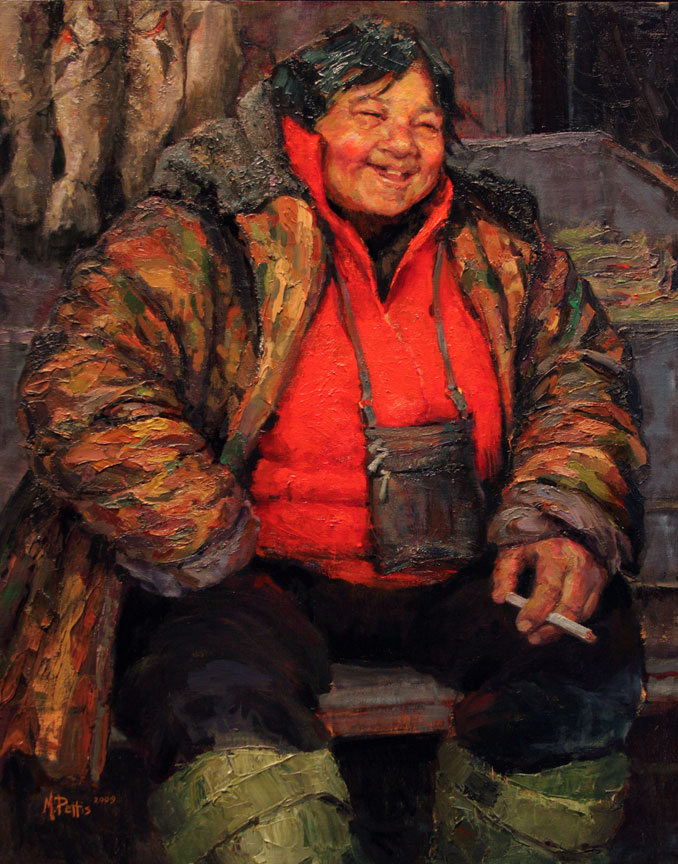
If everyone could be as happy as Mary Pettis’ “Russian Fisherwoman” all the time, the world would be a much better place. With Pettis’ careful yet expressive touch, this week’s feature portrait radiates pure joy and character. Tightly cropped and captured in full length, a hearty and hefty woman sits on a bench in front of her merchandise while enjoying a cigarette. As she casually leans toward the viewer, Pettis has captured her visage in a snapshot instant. Warmth and happiness emanate from her face, her eyes piercing and her cheeks flushed. I like to believe she’s been caught in the midst of retelling a fantastic story or local joke, a welcoming proposition that gives the piece intimacy and familiarity.
It was 2009, and Pettis — along with a group of several other artists — was traveling through rural Russia. Although it was bitter cold and deep within the Siberian winter, routine continued with fervor in a small fish market. “I first saw her from the window of our bus traveling along the outskirts of a little Russian village,” Pettis recalls. “We hadn’t planning on stopping at the makeshift fish market, but several of us called out at once, ‘Stop the bus!’” There must have been something special about the market that spoke to this group of creatives, perhaps a strong sense of local, untouched culture, the Siberian natives, or perhaps the flashes and ribbons of color in an otherwise bleak season.
Pettis says, “I was struck immediately by her large, homespun happy aura (I’m thinking that a good day fishing may be akin to a good day painting!). I loved the raw contrasts — the incongruities: the bright red shirt under camouflage, her unabashed joy amid the February bleakness. I felt her powerful presence would be best expressed with a close, pyramidal composition, heavy textures, and lively, unedited alla prima brushwork. To this day, I can’t help but smile when I look at this painting of her.”
Indeed, Pettis achieved her goal with such success that reactions from viewers are largely the same. It’s hard not to feel the subject’s sense of satisfaction, joy, leisure, character, and warmth — perhaps the ultimate indicator of a superb portrait.
This article was featured in Fine Art Today, a weekly e-newsletter from Fine Art Connoisseur magazine. To start receiving Fine Art Today for free, click here.
A great Midwest museum is offering a rare glimpse into the life and career of one of the 20th century’s most acclaimed graphic artists and masters of illusion.
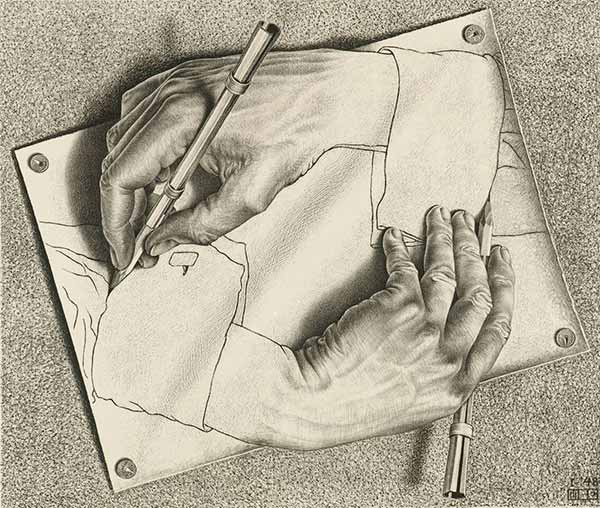
Known for his imaginative tessellations of bids, frogs, and lizards, and his impossible never-ending staircases and waterfalls, Dutch artist M.C. Escher (1898-1972) created some of the most popular images in modern art. The fascinating worlds Escher created in his drawings, lithographs, and woodcuts have proven to be timeless, appearing on the covers of albums and on the walls of countless teenagers’ bedrooms and college dormitories.
March 4 marked the opening of “M.C. Escher: Reality and Illusion” at the Leigh Yawkey Woodson Art Museum in Wausau, Wisconsin. On view through May 28, the exhibition includes some 120 woodcuts, lithographs, mezzotints, and drawings that “delve deeper into both the literal and impossible worlds Escher created over a career spanning five decades,” the museum writes. “Drawn from a large private collection, ‘Reality and Illusion’ includes early figure drawings, lesser-known book illustrations, detailed Italian landscapes, the tessellations for which he became famous, and examples of his signature architectural fantasies in which stairways seem to go both up and down.”
This article was featured in Fine Art Today, a weekly e-newsletter from Fine Art Connoisseur magazine. To start receiving Fine Art Today for free, click here.
The 16th and 17th centuries were important periods of artistic exchange in Europe, especially with regard to prints and drawings. A captivating exhibition opened last week on the East Coast that delves into these mediums, from the Netherlands to Naples. Learn more here!
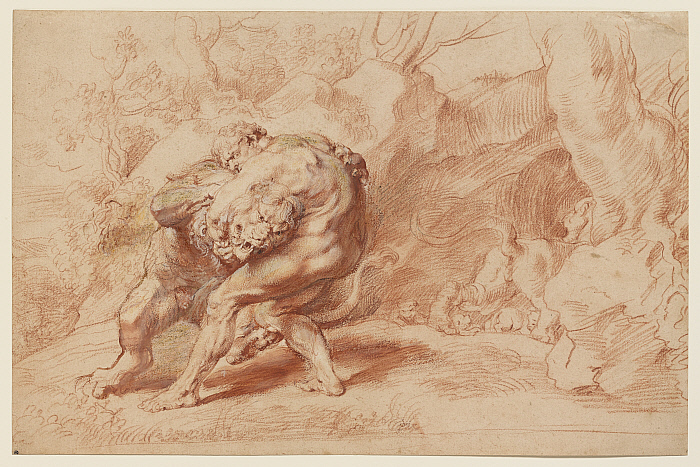
The Clark Art Institute’s world-class permanent collection of prints and drawings from the 16th and 17th centuries are currently on radiant display during “Looking North and South: European Prints and Drawings 1500-1650.” Opened on March 5 and continuing through May 29, the exhibition investigates the ways in which both Northern and Southern European artists engaged in artistic exchange through prints, drawings, and books.
Drawn exclusively from the institute’s permanent collection, “[the exhibition] considers how artists responded to the work of their contemporaries in different regions of early modern Europe, revealing intersections and divergences in artistic production and the important role played by works on paper — portable and more affordable than painting — in shaping the exchange of ideas,” according to the Clark.
Among the artists represented in the show are Albrecht Dürer, Giovanni Antonio Boltraffio, Jacopo Palma il Giovane, Antonio del Pollaiuolo, Maarten de Vos, Giorgio Vasari, Rembrandt van Rijn, and Peter Paul Rubens. The Clark Art Institute is located in Williamstown, Massachusetts.
This article was featured in Fine Art Today, a weekly e-newsletter from Fine Art Connoisseur magazine. To start receiving Fine Art Today for free, click here.
Fill your mind with useful art stories, the latest trends, upcoming art shows, top artists, and more. Subscribe to Fine Art Today, from the publishers of Fine Art Connoisseur magazine.