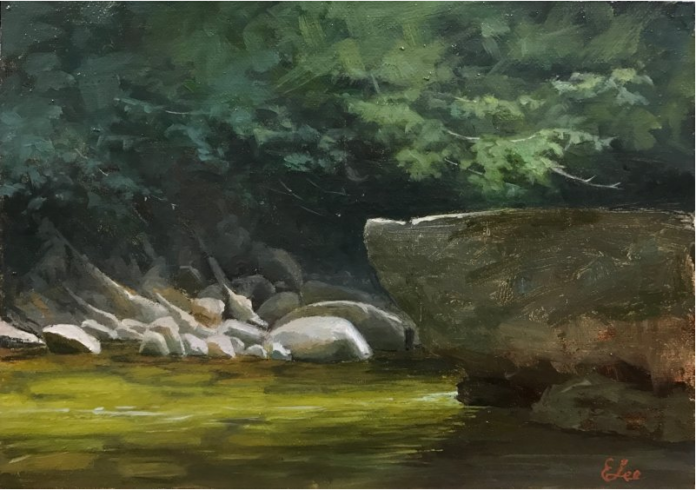
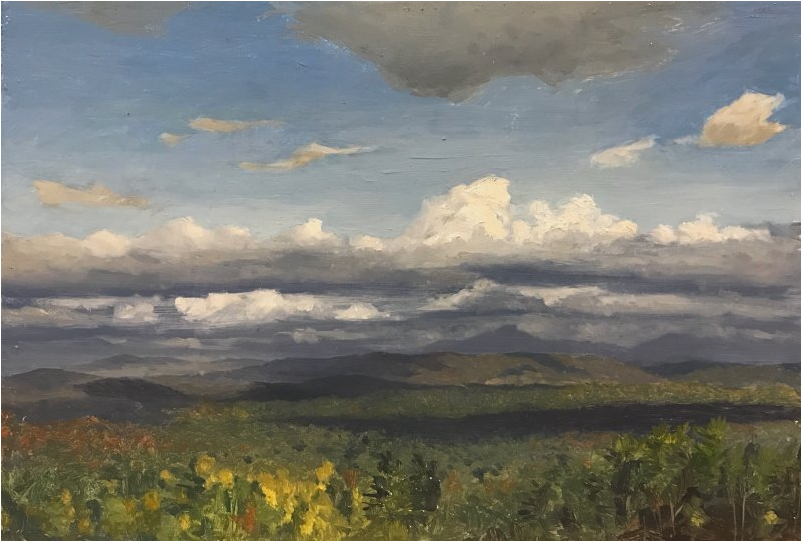
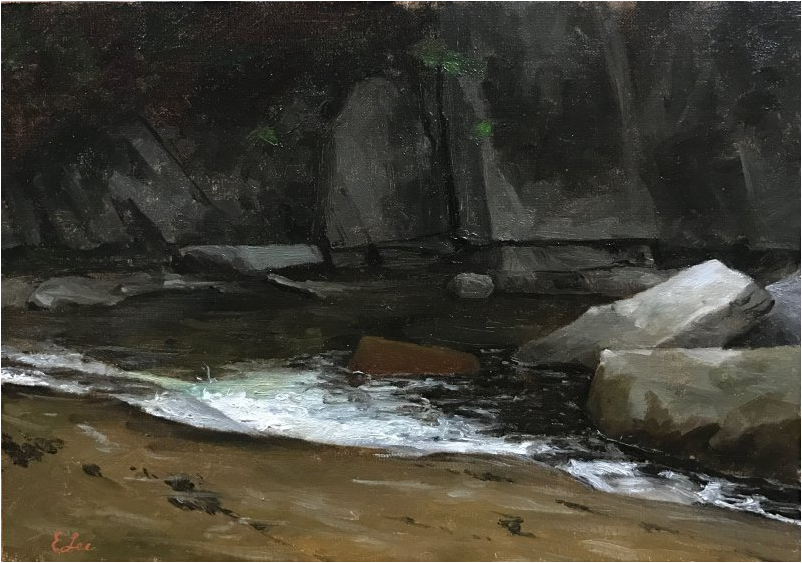
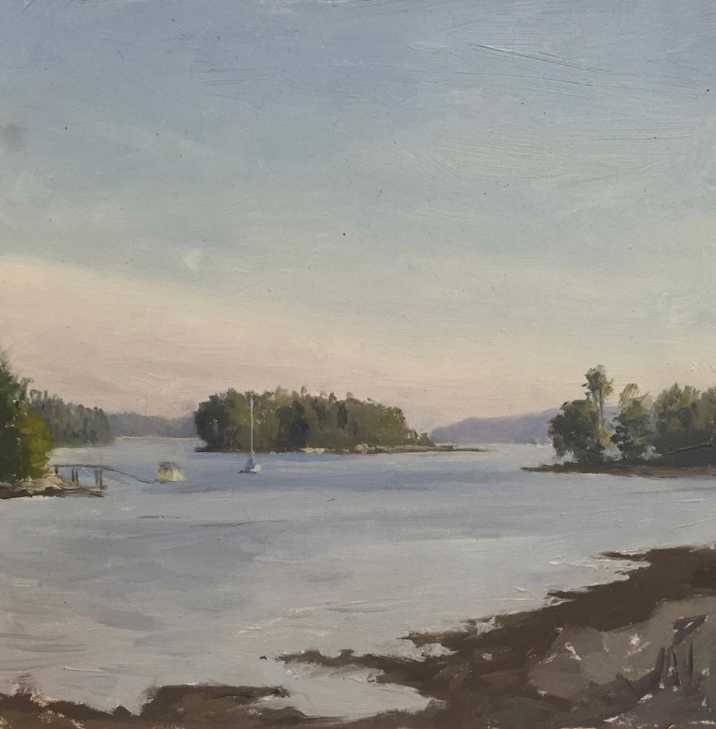
Many individuals with creative minds seek New York City, while others embark on journeys far beyond the city limits. One accomplished painter spent 2016 away from Manhattan, using the time for exploration and self-discovery. The results currently hang here.
A classically trained painter working in the Hudson River School tradition, Emilie Lee uses drawing, note-taking, and plein air sketching to create beautiful large-scale paintings that “are a distillation of time, memory, and close observation of the natural world,” she suggests.
On view February 1 through February 17, “After New York” is a fascinating look into Lee’s journey outside New York in 2016, when the artist traveled from Maine to California and Costa Rica. Located at New York’s Dacia Gallery, “After New York” features approximately 16 paintings produced without the use of photography — a break from the artist’s normal process. “I chose this limitation so I can be completely present with the dynamic, living qualities of my subject,” Lee says, “and embrace the unpredictable results that occur during the painting process. When I’m painting in nature, absorbed in the intricacies of light and color, I feel bursting with gratitude for the perfection of life and the fun of painting. Of course, I am usually alone in the woods when this occurs, so it is my sincere pleasure to share this work with you now.”
This article was featured in Fine Art Today, a weekly e-newsletter from Fine Art Connoisseur magazine. To start receiving Fine Art Today for free, click here.
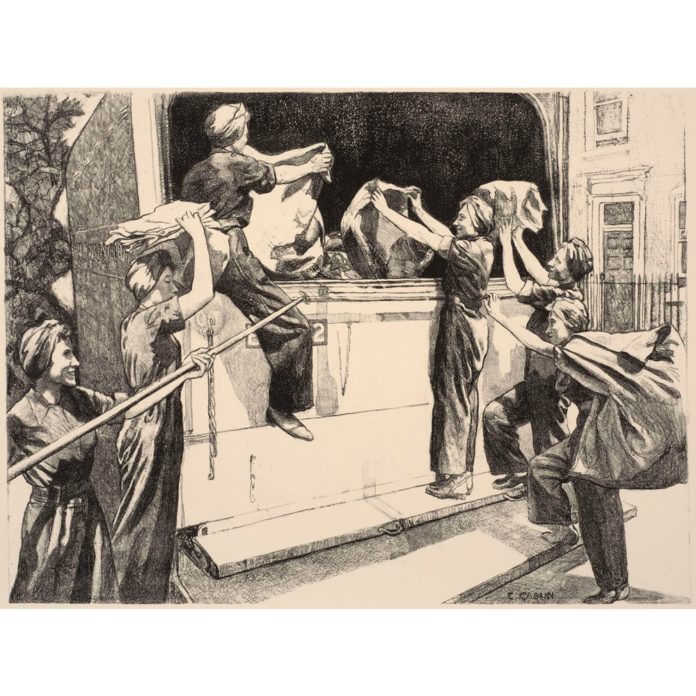
Wonderful prints by a near-forgotten female historical artist headline an exhibition this February that’s sure to delight the connoisseur. She was an Official War Artist of the Second World War, and her powerful images deserve your attention.
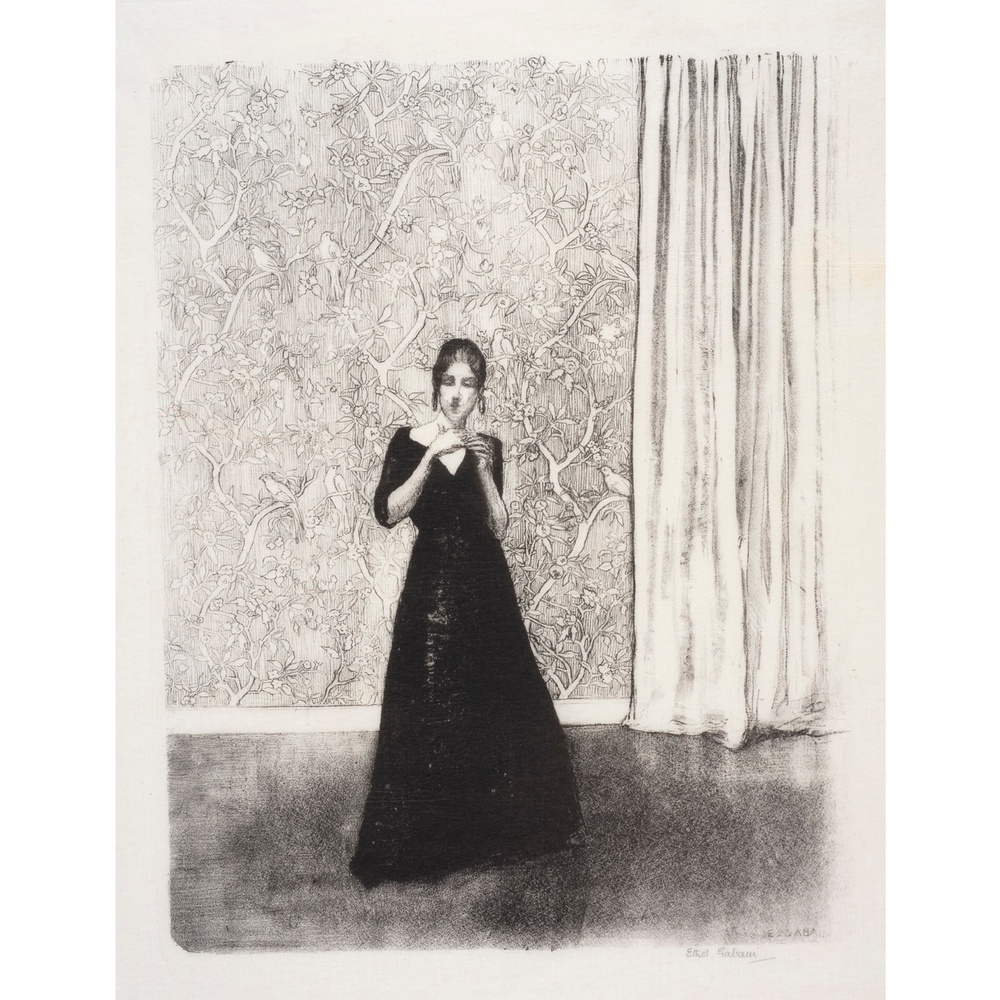
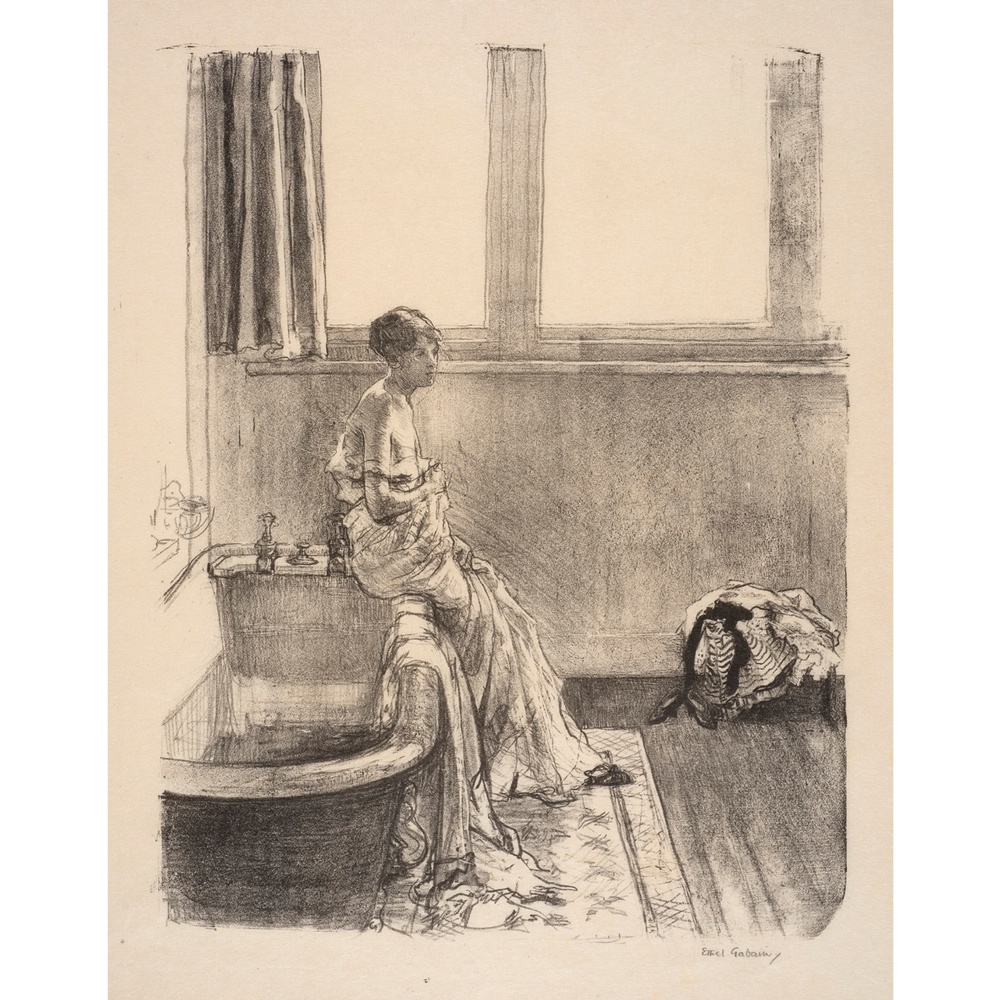
The Fine Art Society, located in London, England, yesterday opened a memorable exhibition surrounding the life and career of near-forgotten artist Ethel Gabain (1883-1950). A successful printmaker and painter, Gabain is currently experiencing some renewed appreciation for her achievements as an Official War Artist during World War II.
On view through February 28, “Ethel Gabain: Life Studies” delves into the artist’s powerful images of war — but not necessarily the subjects one might expect. In fact, Gabain was given the task of depicting British women workers, and “her lithographs celebrate robust and determined women working together,” the gallery writes. “Gabain was able to emphasize both their femininity and their bravery, grasping their personal emotion in the collective action. Ethel Gabain’s emotional subtlety and technical brilliance are combined in images which are distinctive. Although she would have been quite surprised at the idea of being called a feminist artist, she was possibly one of the most insightful and important artists of her age.”
This article was featured in Fine Art Today, a weekly e-newsletter from Fine Art Connoisseur magazine. To start receiving Fine Art Today for free, click here.
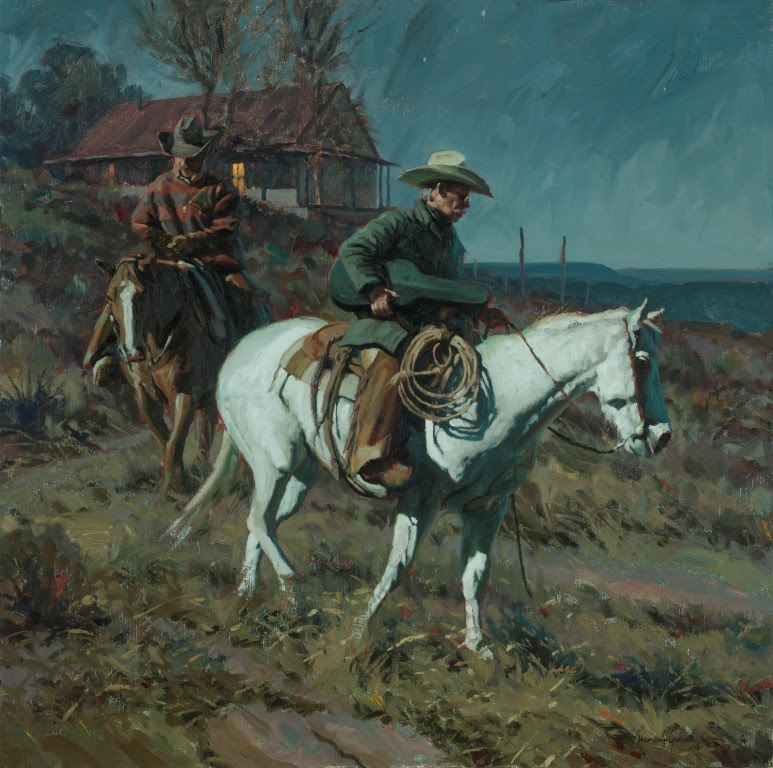
Not to worry if you don’t because there’s a fantastic opportunity to learn this weekend in Fredericksburg, Texas. You won’t be disappointed if you take a look here.
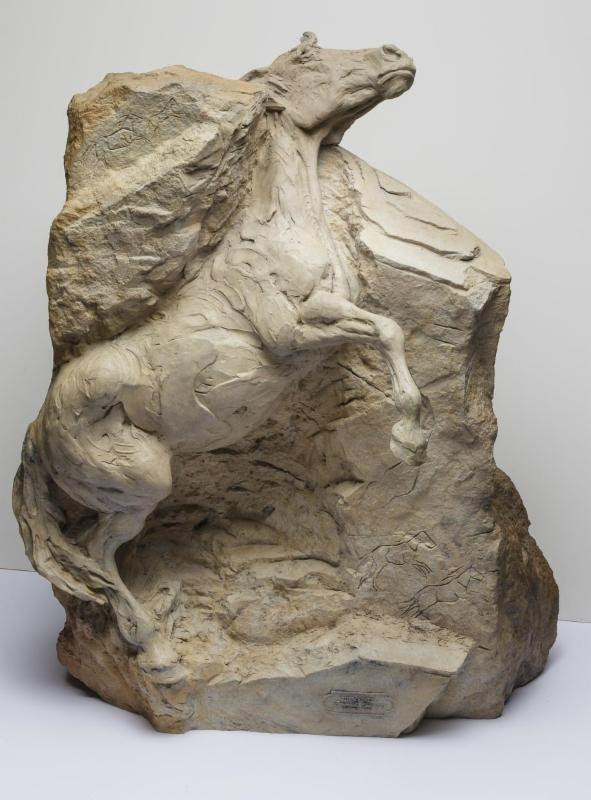
Brilliant paintings and sculptures by renowned artist Bruce R. Greene, CA, will soon grace the walls of InSight Gallery in Fredericksburg, Texas. It opens tomorrow, February 3, and the gallery will host a reception between 6 and 8 p.m. And just as exciting is a sculpting demonstration slated for Saturday, February 4 from 1 to 3 p.m.
This article was featured in Fine Art Today, a weekly e-newsletter from Fine Art Connoisseur magazine. To start receiving Fine Art Today for free, click here.
Lovers of Victorian painting and watercolor will be tickled pink to learn about this monumental exhibition just opened at an esteemed gallery. Among the highlights are works by Frederic Leighton, Lawrence Alma-Tadema, and Edward John Poynter. Enough said?
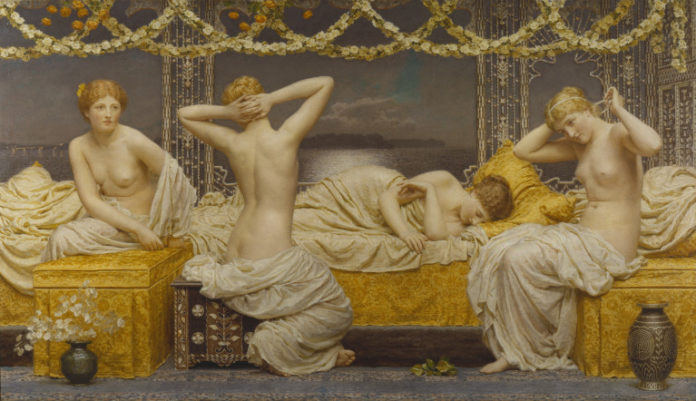
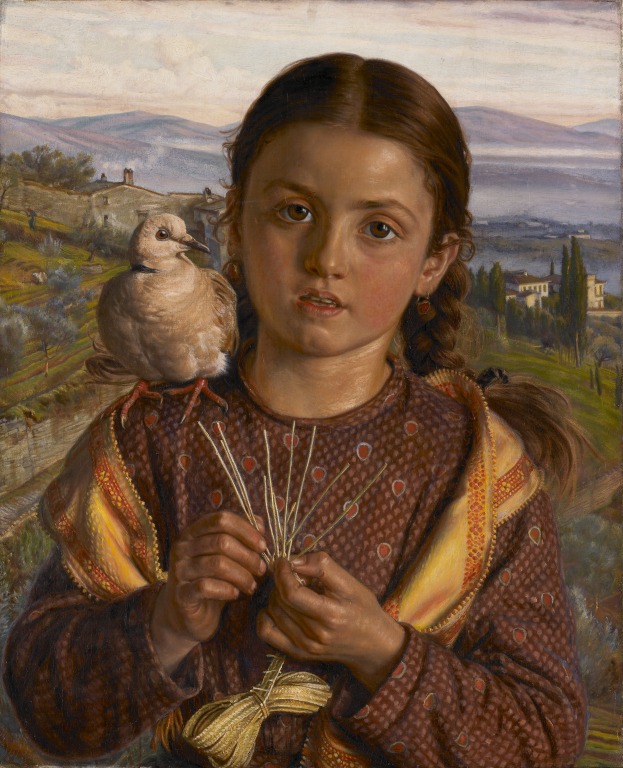
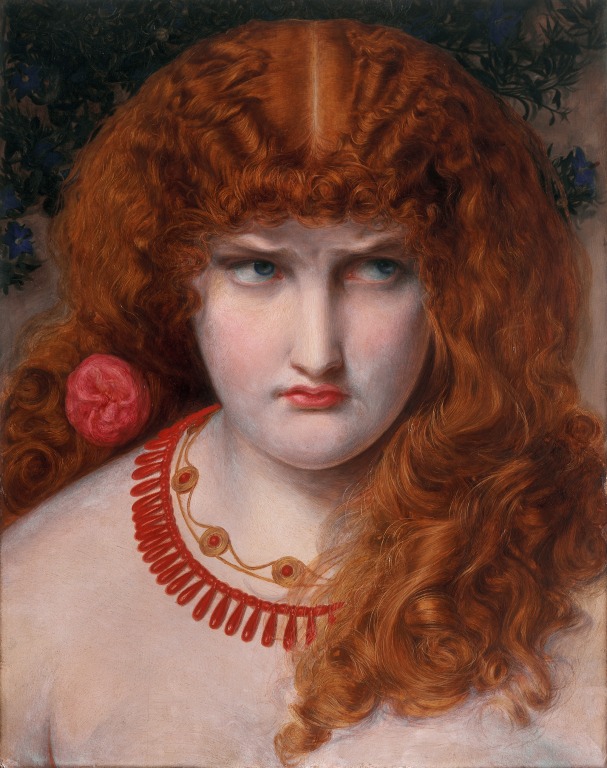
More than 60 stunning Victorian paintings and watercolors by many of the period’s most accomplished artists are currently on view at the Walker Gallery in Liverpool, England. Titled “Victorian Treasures,” the exhibition delves into a period marked by important change “in the way people used and viewed art,” the gallery writes. “Painters focused on the imagination of the spectator and began exploring new, challenging subjects. They explored the fundamentals of human existence and painted emotional scenes inspired by legend and mythology. Artists were also interested in classification, documentation, and enlightenment and freely experimented with new ways of representing the physical world.”
Along with the aforementioned, other artists featured in the show include Pre-Raphaelite masters John Everett Millais, Dante Gabriel Rossetti, and William Holman Hunt. “Victorian Treasures” opened on January 27 and will be on view through May 7. To learn more, visit the Walker Art Gallery.
This article was featured in Fine Art Today, a weekly e-newsletter from Fine Art Connoisseur magazine. To start receiving Fine Art Today for free, click here.
A recently opened exhibition is a disturbing yet beautiful exploration of how several historical artists captured images of war.
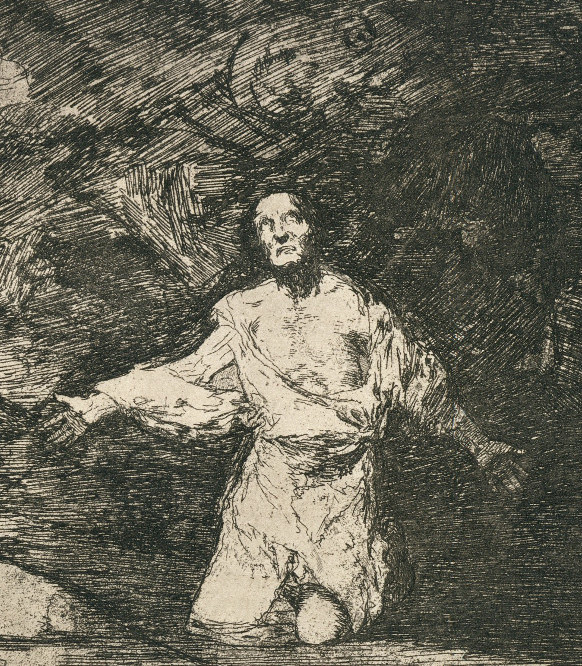
More than 100 outstanding etchings and lithographs compose a gripping exhibition at the Timken Museum of Art in San Diego, California. “Witness to War” opened on January 27 and will continue through May 28, and it is being met with great acclaim.
Depicting searing images from the 17th to the 20th centuries, “Witness to War” features the works of Francisco de Goya, Jacques Callot, and George Bellows. Among the wars represented are the Thirty Years War, the Napoleonic War, and the First World War. Via the museum, “When war again is once a crucial issue ‘Witness to War’ speaks to its violence. Difficult to look at with the many scenes of savagery and suffering it yields compassion for victims of such suffering and abuses. ‘Witness to War’ highlights the way art speaks in different voices to different generations, and transcends the particularities of a specific war, encouraging viewers to integrate the artist’s intention with our own experiences and beliefs to create meaning for these works of art.”
This article was featured in Fine Art Today, a weekly e-newsletter from Fine Art Connoisseur magazine. To start receiving Fine Art Today for free, click here.
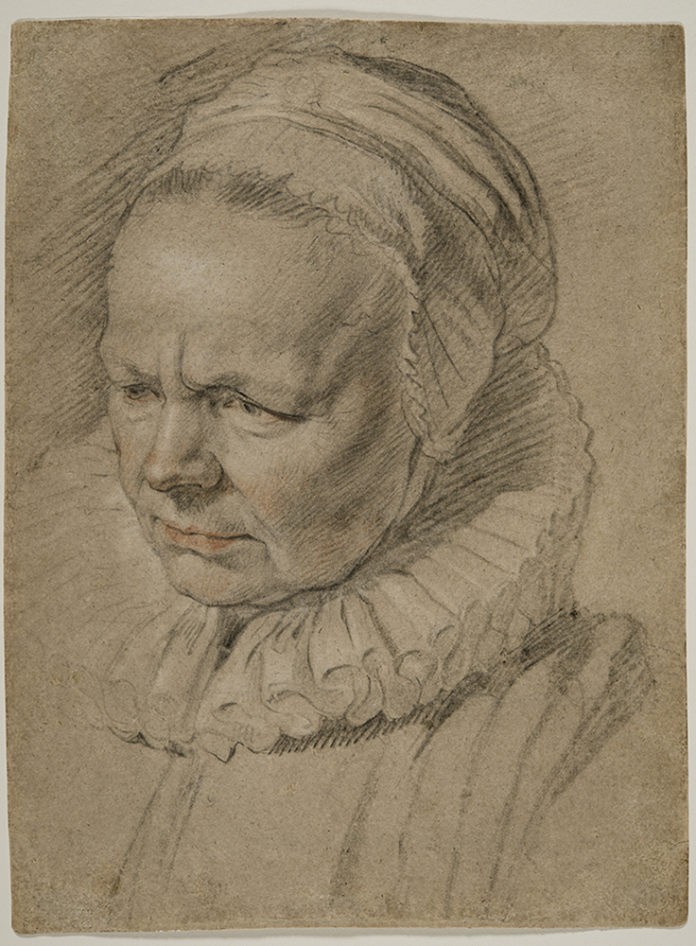
Jacob Jordaens, “Portrait of Elizabeth van Noort,” circa 1630s, black, red, and white chalk on paper, 12-3/8 x 9-5/8 in. (c) Ackland Art Museum 2017
News out of Chapel Hill, North Carolina, late last week was making waves in the museum world as UNC alumni Sheldon and Leena Peck made one heck of a gift. The inside scoop is here.
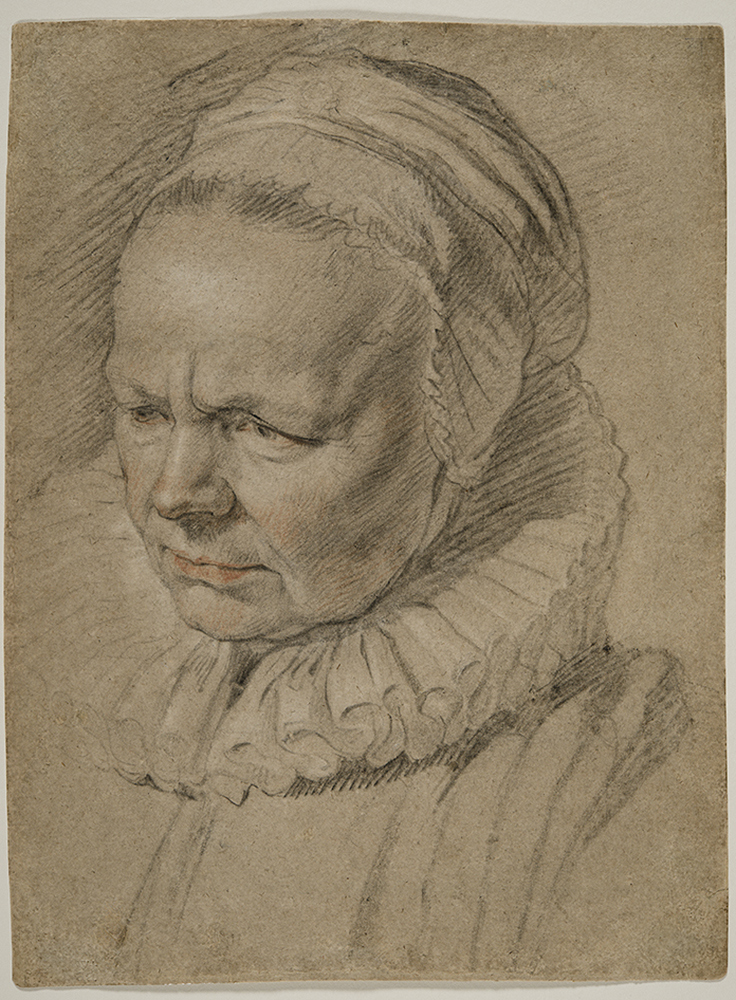
Administrators of both the University of North Carolina and its on-campus art institution, the Ackland Art Museum, are jumping for joy after renowned alumni Sheldon and Leena Peck made a stunning donation valued at over $25 million. The unprecedented gift includes an $8 million endowment to support a new curator. More importantly, the gift features 134 17th-century masterworks, including several drawings by Rembrandt van Rijn.
Jacob Jordaens, “Portrait of Elizabeth van Noort,” circa 1630s, black, red, and white chalk on paper, 12-3/8 x 9-5/8 in. (c) Ackland Art Museum 2017
Not only does the donation significantly bolster the Ackland’s current collection, it marks a historic moment for university museums around the country. With the gift, the Ackland Art Museum becomes the first university art museum to own a collection of Rembrandt drawings. University Chancellor Carol L. Folt said, “This amazing gift of European Golden Age art treasures — preserved for nearly 400 years and lovingly collected by the Pecks over the past 40 years — delights us today with its timeless beauty and will forever inspire future generations of students, scholars, and visitors that come to our historic campus. These drawings are a remarkable window through which we glimpse past cultures and times through the eyes of masters. We are honored by the inestimable value of the Pecks’ gift because it advances Carolina’s public mission to serve the people of North Carolina and makes the university a destination for people of all ages from around the world for all time.”
This article was featured in Fine Art Today, a weekly e-newsletter from Fine Art Connoisseur magazine. To start receiving Fine Art Today for free, click here.
It always comes with great excitement to report on great artists receiving well-deserved honors. Recent news from Australia has us buzzing. Why?
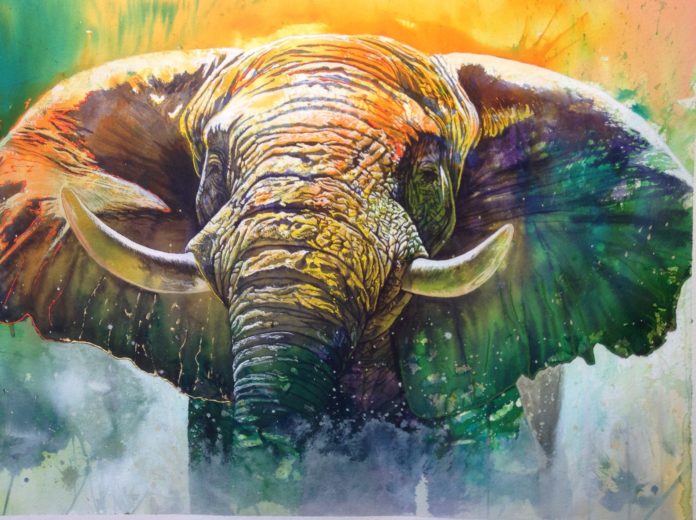
On January 26, 2017, Australian artist Graeme Stevenson, known for his colorful watercolors of wildlife, received an incredible honor: the Order of Australia Medal, or OAM. Stevenson was chosen this year for his outstanding contributions to the Australian and global art community. In particular, Stevenson’s project entitled “Put Some Colour in Your Life,” a film series featuring talented artists of Australia and presented worldwide, has achieved great success.
Via the press release: “Beginning on the Gold Coast in 2010, Graeme created ‘Put Some Colour in Your Life’ with the hopes of creating a video library of the artists of the world, to preserve for future generations. His efforts have not only led to the television series creating more than 200 episodes, while travelling from Australia to New Zealand and the United States, but have now been recognized nationally with his receiving of the OAM.
“Stevenson has spent the past six years working tirelessly to get the television series across the globe, partnering with companies such as Princeton Artist Brush Co. and Royal Talens and a number of other major art brands across the world, to film incredible artists from Australia to New Zealand and the United States. With new film crews coming on board in the USA, UK, Canada, India and a number of European countries, ‘Put Some Colour in Your Life’ promises to become one of the biggest names in the global artistic community.
“An artist from the age of twelve, Stevenson has spent his life travelling the world with a paintbrush in hand. As some of the great artists he’d admired all his career began to pass, he realized it was time for a means of preserving their incredible talents and legacy so future generations might one day learn from masters of the arts.”
We congratulate Stevenson on his well-deserved award!
This article was featured in Fine Art Today, a weekly e-newsletter from Fine Art Connoisseur magazine. To start receiving Fine Art Today for free, click here.
An Impressionist master is getting his first retrospective in the United States in over 20 years at a great New England space. A collection of unforgettable treasures awaits your gaze here.
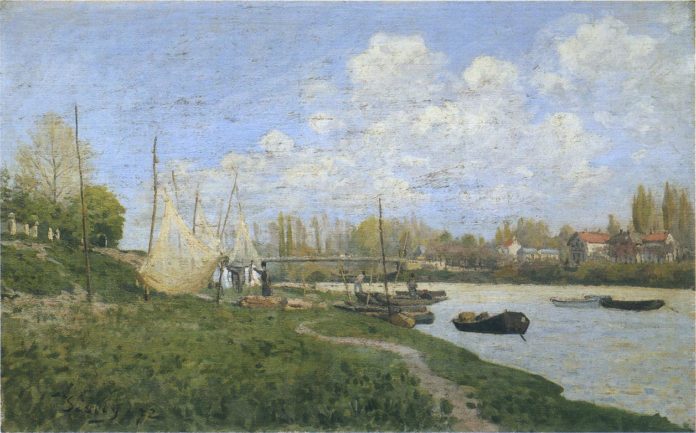
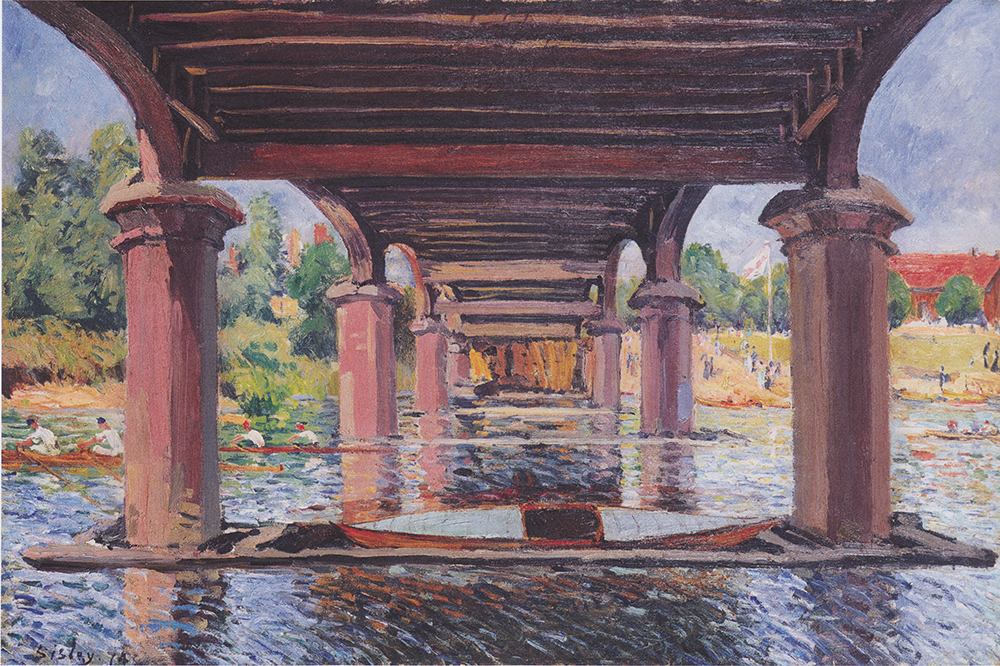
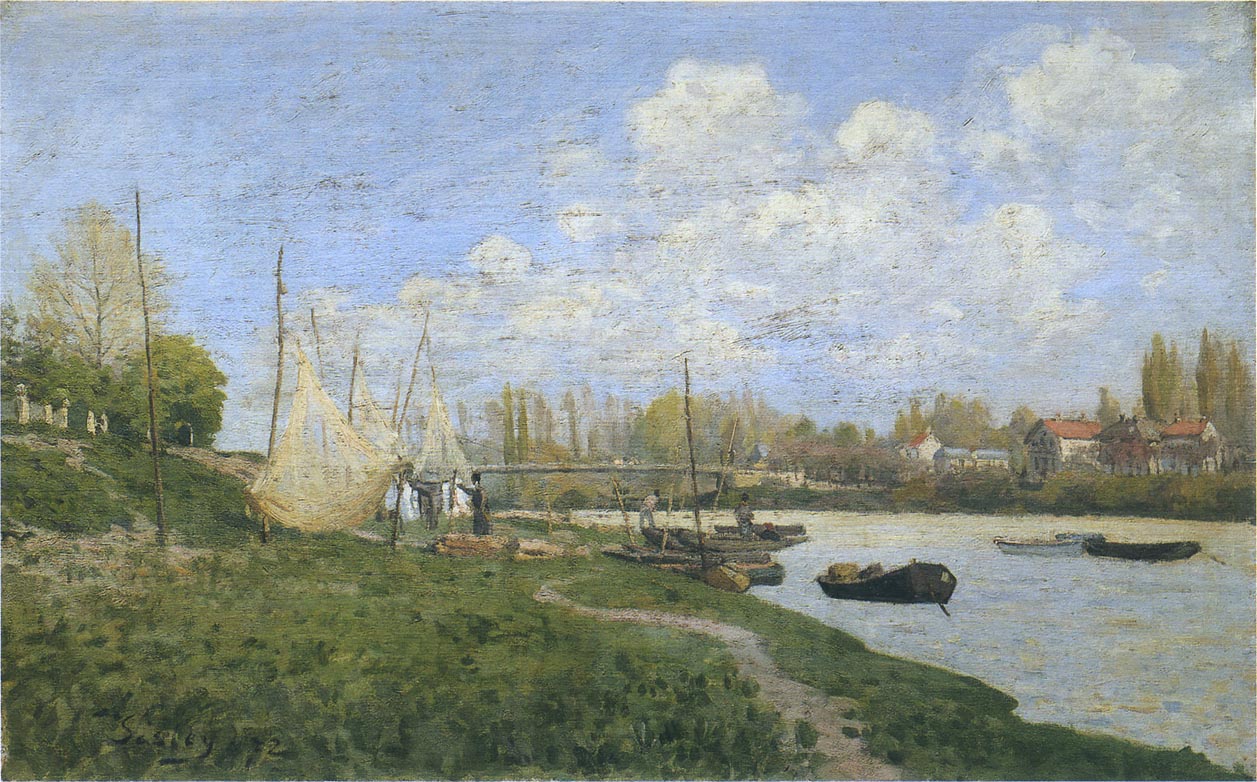
In concert with the Hôtel de Caumont Centre d’Art in Provence, France, the Bruce Museum recently opened a wonderful exhibition showcasing the works of Alfred Sisley (1839-1899). Located in Greenwich, Connecticut, the Bruce Museum is presenting around 50 of the artist’s masterworks, giving viewers a comprehensive look into Sisley’s entire oeuvre and career.
Titled “Alfred Sisley: Impressionist Master,” the exhibition represents Sisley’s first retrospective in the United States in over 20 years. Further, the Bruce Museum will be the lone venue to premiere the exhibition in the United States. Via the exhibition webpage, “A friend of Claude Monet and Pierre-Auguste Renoir, Sisley initially worked in the naturalistic landscape tradition of the Barbizon School but increasingly adopted a proto-Impressionistic style, creating a body of work that has an impressive internal consistency and cumulative authority. Throughout his career, Sisley adhered to the style of divided light and color, momentary effects of illumination, and an acute responsiveness to atmosphere that are the signature attributes of Impressionism. He dutifully painted en plein air in all manner of weather, recording his favorite sites in the environs of Paris — Bougival, Louveciennes, Marly-le-Roi, Saint-Mammès — in exhaustive detail, in all seasons, and under ever-changing skies. Born in Paris to British parents, Sisley studied the landscape paintings of Constable and Turner before enrolling in Charles Gleyre’s studio where he met Monet and Renoir. Little biographical information about his life has survived so his art must speak for itself, and does so with haunting beauty. The magic with which he was able to capture light sparkling on water, winter sun on snow, and trees rustled by a breeze creates some of the most memorable Impressionist images.”
This article was featured in Fine Art Today, a weekly e-newsletter from Fine Art Connoisseur magazine. To start receiving Fine Art Today for free, click here.
In this ongoing series, Fine Art Today delves into the world of portraiture, highlighting historical and contemporary examples of superb quality and skill. This week we delve into a propagandistic portrait of arguably Rome’s greatest Emperor.
When learning the history of art, there are literally thousands of artworks worthy of extended discussion. Despite this fact, there exists a select pantheon of objects from the Prehistoric period through modern times that, simply put, can never be overlooked. This week’s feature portrait just happens to be one of them.
When Julius Caesar was brutally assassinated on March 15, 44 BCE, it was the climax of a dark period in the Republic’s storied history. Society was in disarray, and the government was rife with corruption. Fast forward to 14 CE — some 58 years later — and the scene couldn’t have been more different. The newly established Roman Empire was flourishing, reaching new economic and military heights that, as it would happen, would never be reached again.
This sudden rebirth of Rome is largely credited to its beloved emperor, a man named Gaius Octavius (63BCE-14CE), who politically negotiated a peace treaty — called the Pax Romana — that allowed the economy and arts to explode. Further, Octavius ordered numerous infrastructural improvements throughout the empire, elevating the quality of life for millions, and they loved him for it.
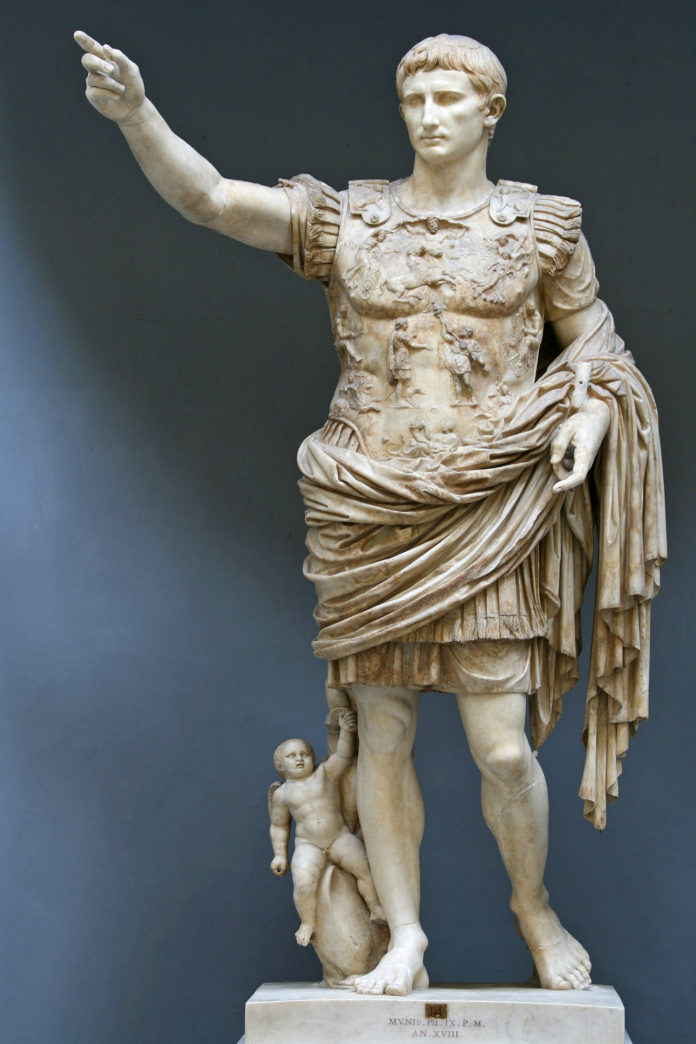
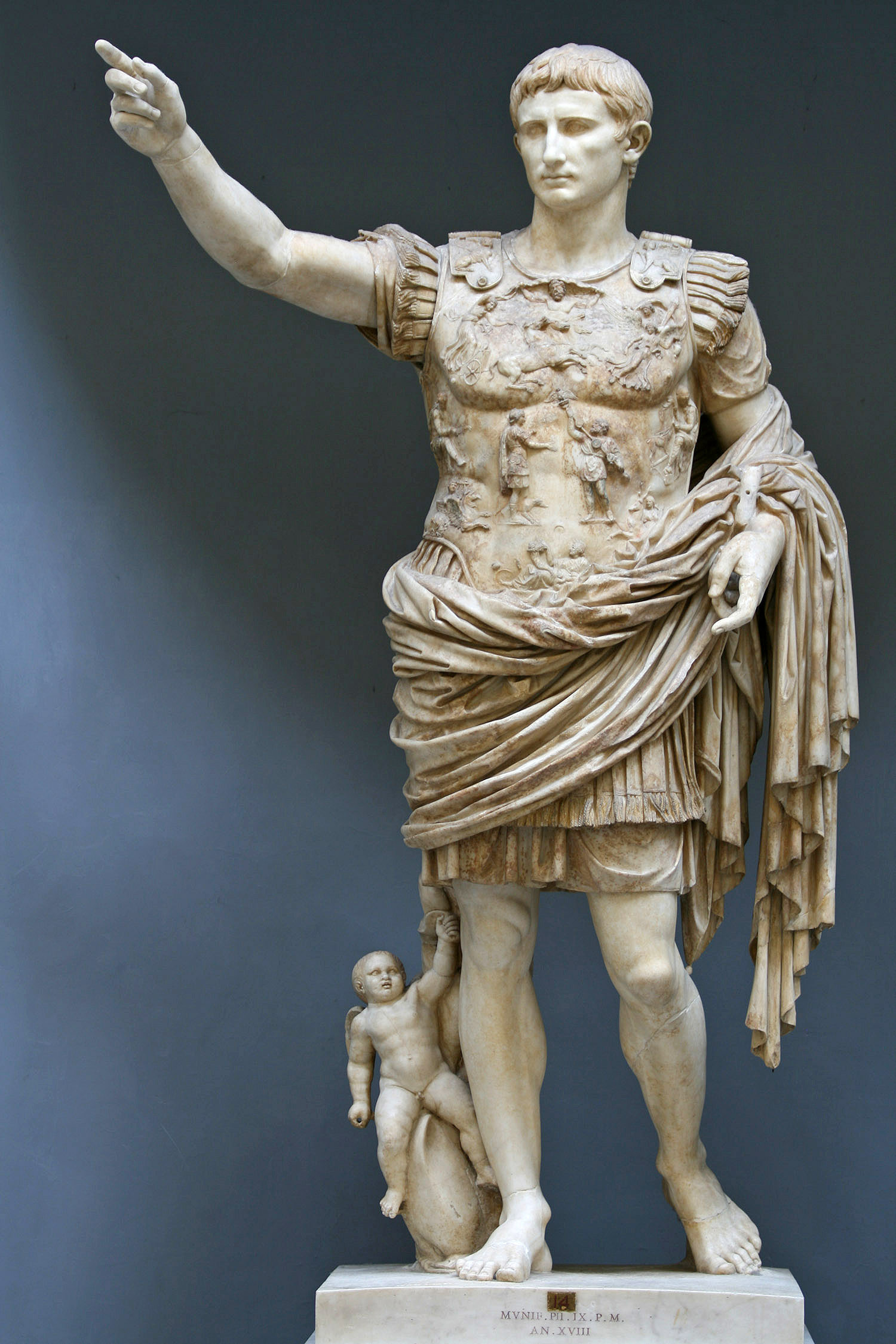
As should come as no surprise, much art and architecture was commissioned to serve this beneficent emperor, both publicly and privately. “The Prima Porta Augustus” — as it is called — is a remarkable idealistic portrait of Octavius, likely produced in multitudes and displayed prominently in public areas. Particularly fascinating is how carefully constructed Octavius’ portrait was. An investigation of the portrait’s imagery reveals a life of its own.
To begin, the sculpture was produced toward the end of Octavius’ life, as he neared age 80, but the portrait is that of a beardless youth, in the prime of his physical might. Further, he stands in full military dress, his right arm raised as if poised to direct his people or army. In his left arm rests his spear and cloak. Octavius’ stance is significant — it’s a direct copy of the “Doryphorous,” a famed sculpture from Classical Greece by Polykleitos. The Doryphorous represented for the Greeks perfect human form based on mathematical ratio, and Octavius, in quoting this sculpture, inherits these qualities while connecting his empire to Greece’s glorious past.
Other imagery on the sculpture provides similar propaganda. The artificial support that braces his right leg is sculpted to show the winged child Eros (commonly known as Cupid), riding the back of a diving dolphin. Venus, the mother of Eros, was also the mother of Aeneas, the legendary founder of Rome. Scholars believe the baby’s inclusion was meant to subtly legitimize Octavius’ claim to the throne through blood. The dolphin is less clear, perhaps alluding to the Battle of Actium, a fantastic naval conflict in which Octavius defeated Mark Antony to secure his position as leader. Other imagery exists on the breastplate of Octavius, commemorating his Pax Romana and celebrating the wealth and abundance his various exploits and victories had brought to the empire.
Today, the sculpture is held by the Vatican Museums in Rome and remains one of the most iconic and important artworks to have survived over the centuries.
This article was featured in Fine Art Today, a weekly e-newsletter from Fine Art Connoisseur magazine. To start receiving Fine Art Today for free, click here.
In this ongoing series for Fine Art Today, we take a longer look at the history and features of a soon-to-be-available artwork of note. This week’s painting is by a founder of the 19th-century Ashcan School. Will you recognize his name?
The Ashcan School, also called the Ash Can School, was a loosely organized art movement during the early 20th century best known for works depicting everyday life in New York City. Rebels against American Impressionism, the group’s members sought a “journalistic” approach to their work, seeking to use art to more accurately portray early modern life in poorer regions of Manhattan.
The group’s spiritual father, Robert Henri (1865-1929), encouraged his friends and protégés to create a new, more realistic art that spoke directly to their own time and experiences. Henri was also a key organizer of a controversial 1908 exhibition entitled “The Eight” at Macbeth Galleries in New York. Igniting considerable criticism and debate, the show was aimed at challenging the National Academy of Design’s exhibition policies and narrowness of taste.
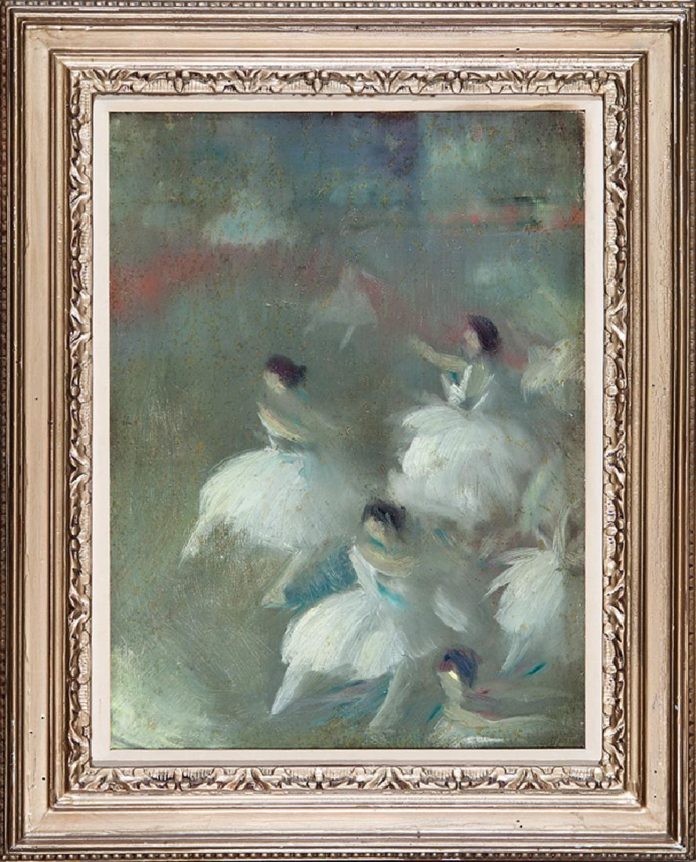
Henri’s oeuvre is incredibly varied and eclectic, ranging from tightly rendered figures to highly expressive cityscapes. Heading to auction on February 11 via Neal Auction Company is a splendid picture of ballerinas that, ironically, recalls the works of Edgar Degas. Regardless, the magnificent piece displays a group of loosely rendered dancers against a colorful abstracted background. Indeed, the spatial context of the scene is not known, but the painting still contains a lovely amount of vitality, narrative, and color. Scholars Milton Brown and Theresa Brakeley suggest, “In this painting offered here, Henri uses a dark palette reminiscent of Edouard Manet and Edgar Degas. The dimness of the room is amplified due to the harsh light from the orchestra illuminating the dancers, who are clustered in the lower right quadrant of the canvas. Henri captures the frenzy of the stage and elegant movement of the dancers with lively brushstrokes.
“Ever the meticulous diarist, Henri kept detailed record books of his paintings, which he would label with a code of numbers and letters. This canvas is marked ‘126 A3’ and is listed as ‘“Ballet-Black Crook” Phila 1894.’ He also made notes about the color palette used here, a ‘gray greenish light’ as well as the composition, ‘many figures, six prominent.’”
Auction estimates are between $15,000 and $25,000. To learn more, visit Live Auctioneers.
This article was featured in Fine Art Today, a weekly e-newsletter from Fine Art Connoisseur magazine. To start receiving Fine Art Today for free, click here.
Fill your mind with useful art stories, the latest trends, upcoming art shows, top artists, and more. Subscribe to Fine Art Today, from the publishers of Fine Art Connoisseur magazine.