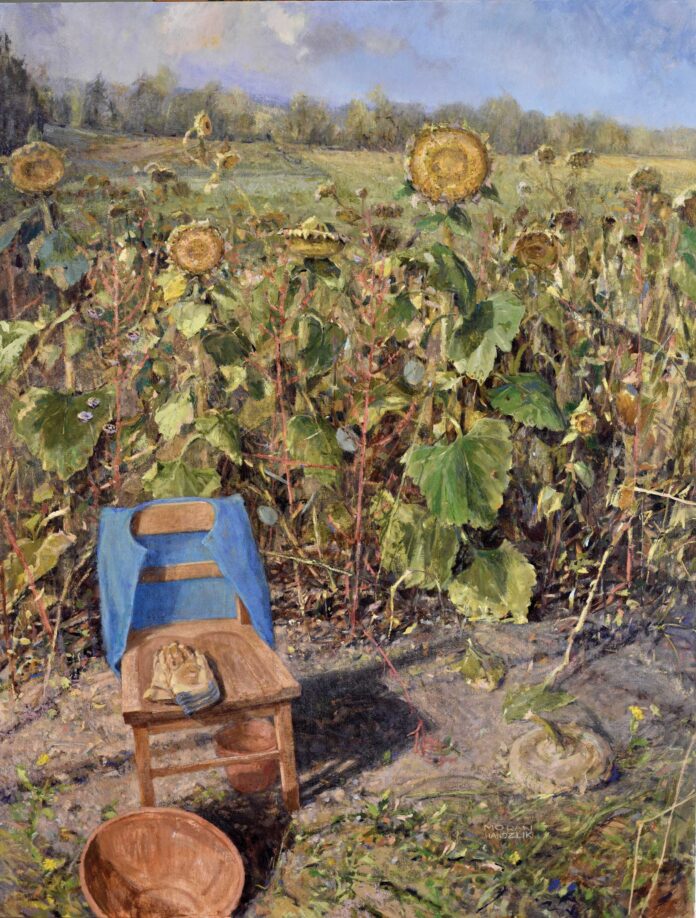
Bethann Moran-Handzlik, "This Joy Is Electric," 2021, oil on canvas, 52 x 40 in., available through the artist
There is a lot of superb contemporary realism being made these days; this article by Allison Malafronte shines light on a gifted individual.
The plein air paintings being created by Bethann Moran-Handzlik (b. 1965) are impressive not only for the amount of detail, vibrant color, and emotional content they capture but also for their sheer size, often averaging 50 inches in each direction. The Wisconsin artist does not paint small sketches outdoors to quickly gather information for larger studio landscapes. Rather, she completes almost the entire painting outdoors, sometimes spending weeks in the same spot to capture what she sees.
Take “This Joy Is Electric,” for example, which found the artist standing along a busy highway in Whitewater, Wisconsin, for more than two weeks in order to compose this large scene of a sunflower field. “No doubt there are challenges to working on large canvases outside for a prolonged time,” Moran-Handzlik admits.
“I painted this at the end of August — I got sunburned and wind-whipped and had to strap the canvas to my van at one point to keep it from blowing around. However, it’s worth the effort. The changing light, animal sounds, and smell of the air all contribute something toward the final painting, as it evolves within the same conditions it depicts.”
Moran-Handzlik describes her experiences painting in nature in almost spiritual terms; during many hours of concentration she will lose herself in the composition, snapping back to reality only due to a pesky mosquito bite or falling temperatures. “Sometimes while painting, language leaves me,” she says. “Sometimes I feel like I disappear. When the painting is complete the viewer can re-see, re-experience what I saw, and then be drawn repeatedly into contemplation of everything within the painting and within themselves. My hope is that the paintings will help create an appreciation for the natural world and assist people on their paths toward joy.”
Moran-Handzlik earned a B.A. from Wisconsin’s St. Norbert College and then an M.F.A. from the University of Wisconsin — Milwaukee. She has taught at several universities and teaches workshops regularly. She and her husband, the poet Patrick J. Moran, have three children and live in Fort Atkinson, Wisconsin.
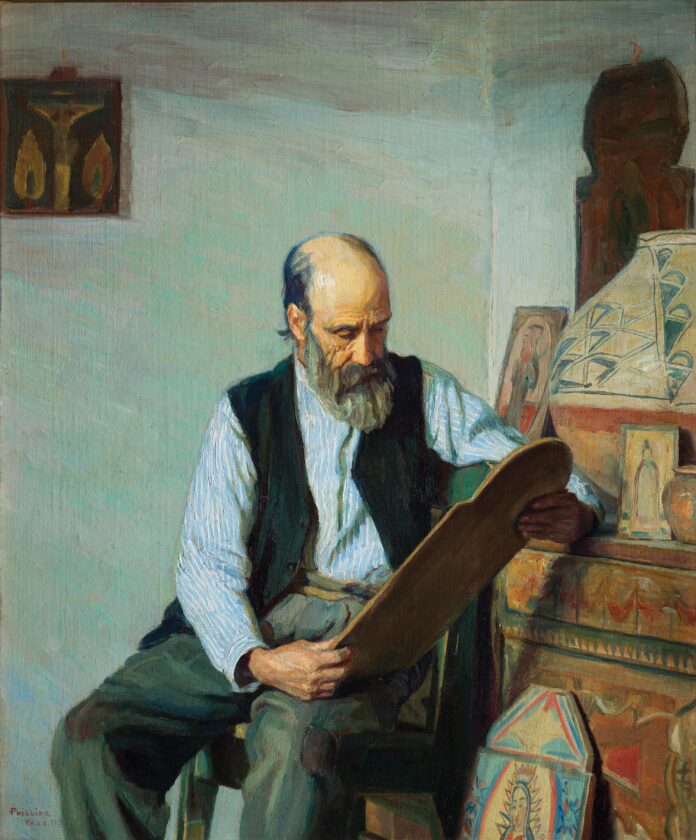
Bert Geer Phillips, "The Santero," c. 1918, oil on canvas, 30 x 26 in., American Museum of Western Art—The Anschutz Collection, photo: William J. O’Connor
VECINOS Y AMIGOS
Couse-Sharp Historic Site
Taos, New Mexico couse-sharp.org
through February 28, 2025
The Couse-Sharp Historic Site (CSHS) has opened “Vecinos y Amigos: Bert Geer Phillips and His Neighbors,” an exhibition that explores, for the first time, a small yet revealing aspect of one of the co-founders of the Taos Society of Artists.
In 1898, Bert Geer Phillips (1868–1956) and his fellow student Ernest Blumenschein came to Taos on a painting trip. Phillips remained there until shortly before his death in 1956. When he painted figures, he usually depicted Native Americans, so, as CSHS executive director and curator Davison Koenig explains, “This exhibition seeks to expand our knowledge of the context of those few paintings in which people in the Hispanic community modeled, to identify them, and to enrich Bert’s stories with theirs.”
Phillips knew that his buyers were part of a mainstream U.S. public fascinated by, but largely ignorant of, the cultures of the Southwest. Guest curator James C. Moore, director emeritus of the Albuquerque Museum, notes, “These paintings are not portraits as such, but imaginative tableaux in which people served as actors in stories that Phillips felt would have success in broadening his reputation on the exhibition circuit.”
When he first arrived in Taos, Phillips exhibited bigotry toward many of his neighbors, famously provoking a deadly riot when he refused to remove his hat for a religious procession on the street. In time, “He learned to appreciate the area’s cultural milieu and foster more respectful relationships,” Koenig says. Phillips later was part owner of a curio shop, trading in Native artwork and santos, local religious art objects in a Spanish colonial tradition.
Research into the models’ families and recognition of who they were “gives significance to those who have long been anonymous, broadening our view of the larger social dynamic of Taos,” Koenig adds. He is quick to credit CSHS site coordinator Jake Cisneros and members of the Hispano Advisory Council, as well as Alicia M. Romero, curator of history at the Albuquerque Museum: “Their work has broadened the scope of the Lunder Research Center here on our campus, and is a perfect illustration of the kind of enrichment of narratives that we aim for.”
As part of our effort to continue to help artists and art galleries thrive, we’re proud to bring you this week’s “Virtual Gallery Walk.” Browse the artwork below and click the image itself to learn more about it, including how to contact the gallery.
Two For The Road, Cheryl English, oil, 24 x 18 in; Artzline.com
Swine Song, Sandy Scott, bronze, 9.5 x 9.5 x 6.5; Artzline.com
***
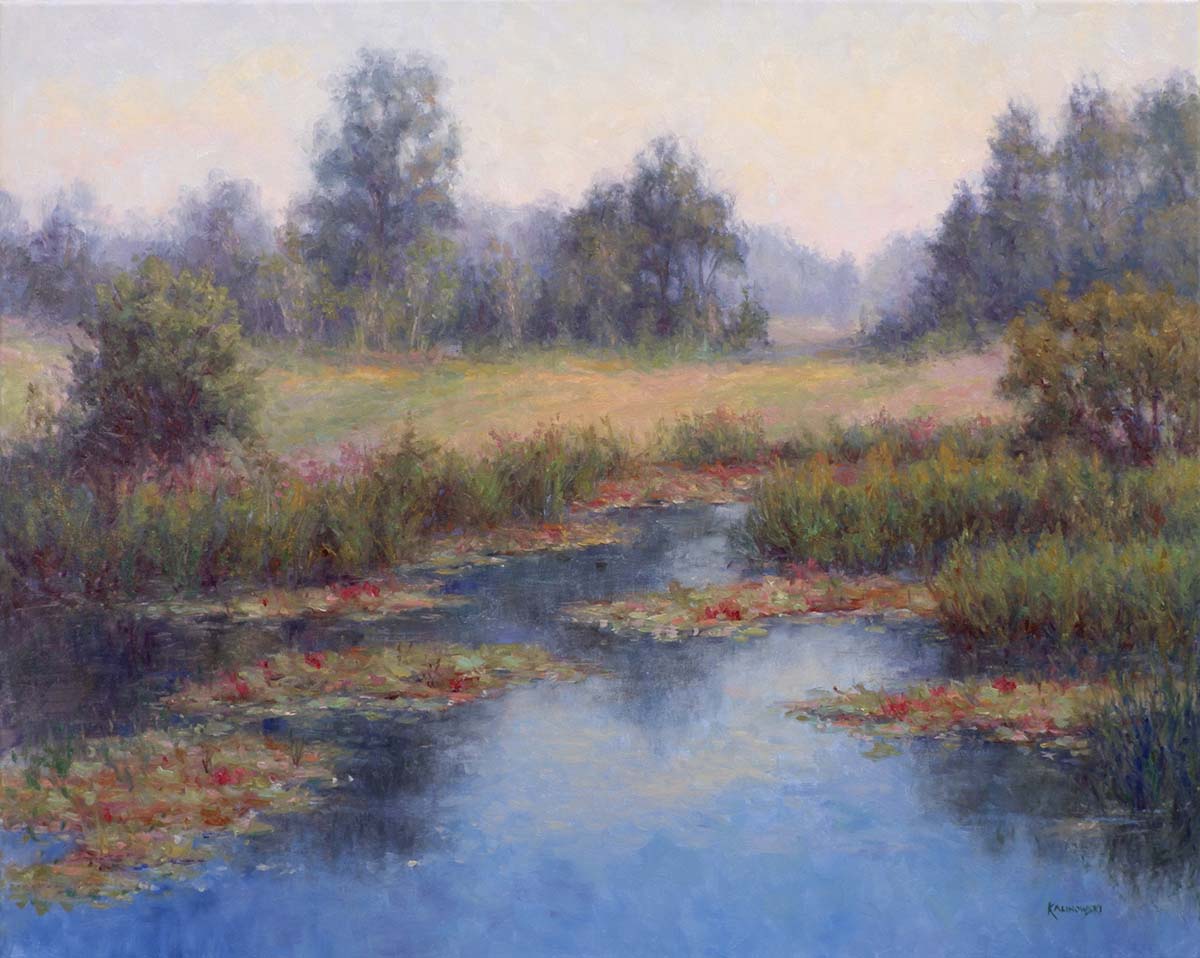
Her Water Garden, Kathleen Kalinowski, oil on linen, 24 x 30 in; Kalinowski Fine Art
***
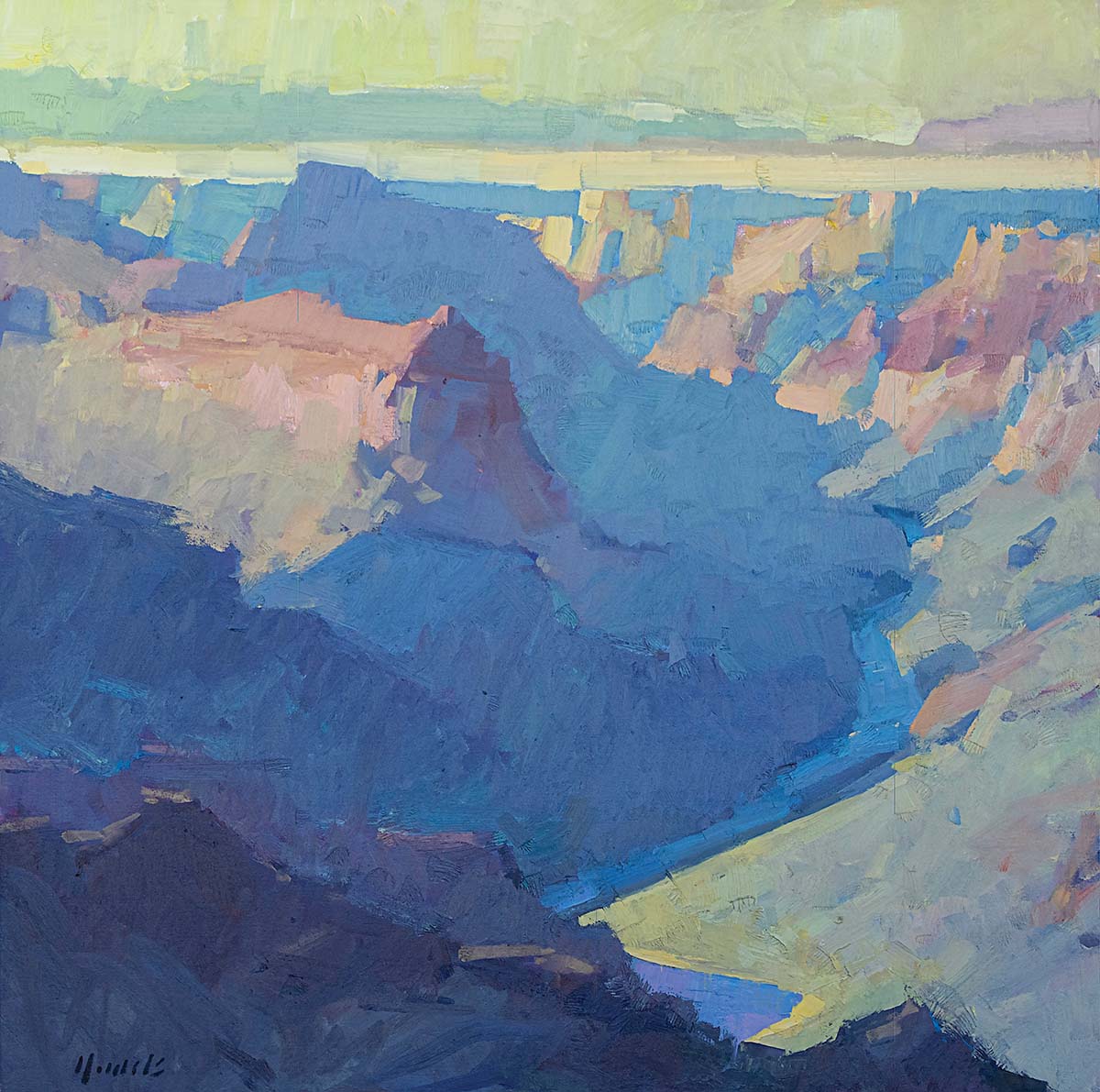
Days End Sandias, Albert Handell, oil, 24 x 32 in; Albert Handell
Want to see your gallery featured in an upcoming Virtual Gallery Walk? Contact us at [email protected] to advertise today. Don’t delay, as spaces are first come, first served, and availability is limited.
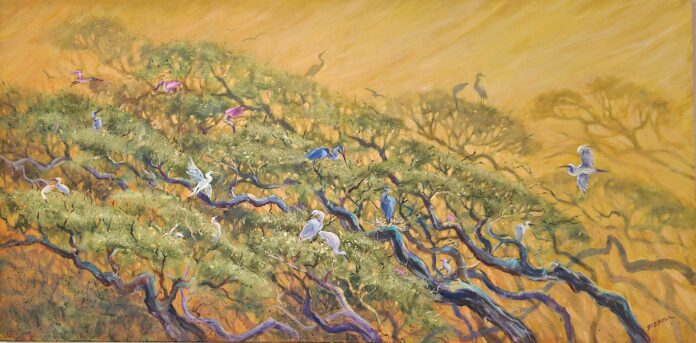
Anita Diebel (b. 1940), "Nesting Season," 2023, acrylic on canvas, 24 x 48 in.
A Fine Art Collection Profile >
Melba and Tom York are proud residents of Rockport, a once-sleepy fishing town that has blossomed into a lively arts enclave on the coast of South Texas, 30 miles northeast of Corpus Christi.
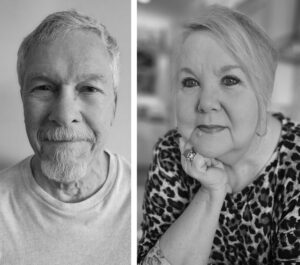
Art collectors Tom and Melba York
Melba says she dabbled in ceramics in her mid-twenties and later took classes with the realist artist Wayne Floeck, who specialized in depicting animals, primarily from Africa. Under his tutelage she painted a desert ram in fine detail, which was a particular pleasure because she and Tom had visited Africa themselves. But then, she laughs, “My short-lived art journey was brought to a halt by the birth of our daughter, and so began my deep appreciation for artists and the joy their creations bring. I realized that I would have to live my Bohemian art life through others.”
Shortly after they married, the Yorks visited Tom’s parents in Rockport during its annual Independence Day festival, where artists from across the country exhibit their latest works. “At that moment,” Melba recalls, “we fell in love with coastal art and became interested in meeting the artists and acquiring their art.” They have been doing that ever since, and now own more than 100 paintings. Among the artists represented in the York Collection are Joey Blazek, Angalee DeForest, Anita Diebel, Shirley Farley, Larry Felder, Susan Forest, Lisa Baer Frederick, Robin Hazard, Caro Jackson, Elsa Lopez Mathews, Jeffrey Neel McDaniel, Lisa Millard, Bonnie Lou Prouty, Rebecca Bridges Rice, Clementina Rivera, Barb Robinson, Steve Russell, Alison McLean Schuchs, Betty Shamel, Debbie Stevens, and V. Vaughn.
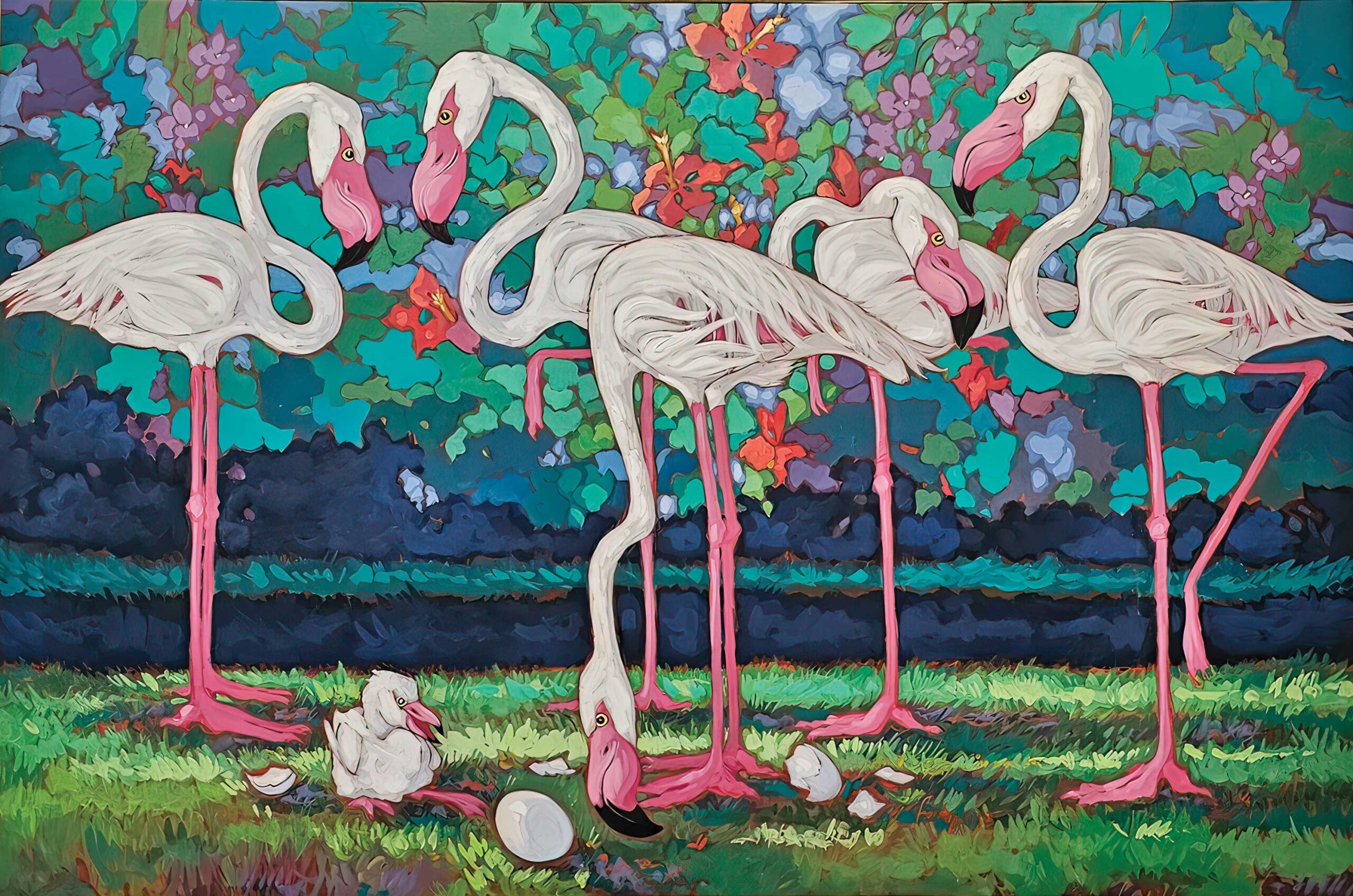
Shirley Farley (1930–2017), Untitled, late 1970s–early 1980s, oil on canvas, 48 x 72 in.
The Yorks’ first purchase of an original artwork was a quirky scene of angry pelicans painted by Shirley Farley (1930–2017), who had grown up in Hollywood (her cousin was Marlon Brando) before moving to Rockport. Melba later sold that piece because it didn’t suit her home decor, but she came to regret that decision later. She takes up the story: “So I walked into my favorite antique/resale shop in Rockport, where the owner was busy preparing a large estate sale. I spotted a large painting a good 50 feet away and shouted, ‘Braxton, is that a Farley?’ He replied, ‘Yes, but you’ll have to wait until the sale starts. And it’s pricey!’ Melba responded, ‘I don’t care. I want to buy it now!’ So Braxton wrote up the receipt, and now we have that large Farley [illustrated above] hanging over our fireplace. Since then, we have learned that if you see a painting you love, don’t hesitate to pull the trigger because someone else will love it, too.”
The Yorks are particularly pleased to have spotted on Chairish (a website worth checking) a small pen-and-ink drawing created by the founder of the Rockport Art Colony, Simon Michael (1905–2002). He was the original occupant of the Spanish-style hacienda compound named Tortilla Flats that the Yorks purchased, renovated, and occupied upon retiring. Melba confides, “I think the ghost of Simon Michael inhabited my spirit after we moved into the house because that is when I really became interested in collecting art.”
Most of the couple’s acquisitions have come directly from local artists participating in Rockport’s annual festival or exhibiting at local galleries. They are active supporters of the Rockport Center for the Arts, which was devastated in 2015 by Hurricane Harvey but in 2023 reopened in an impressive new building shepherded into existence by executive director Luis Puron. It’s clear the Yorks are devoted to their community; Melba explains, “I look at our artworks every day and love the memories they evoke, and I love the people who painted them.”
Indeed, the Yorks know most of these artists personally and have become close friends with many of them. When Harvey severely damaged the residence of artist Anita Diebel, Tom and Melba had her move into Tortilla Flats until her home was habitable again. Since then, Diebel has opened a thriving gallery that features a range of artists and synchronizes its events with Rockport’s monthly art walks.
Melba says the couple’s passion for art makes it easy to meet new friends. Among their closest are artist Elsa Mathews and her husband, Lloyd; Bob and Jean James, who introduced the Yorks to the art made by another gifted local, Brother Cletus (1933–2016); and Richard and Denise Smith, who also have, in Melba’s words, “a beautiful art collection.”
Given the heat and humidity for which South Texas is known, the Yorks keep their artworks out of direct sunlight, with many under ultraviolet-resistant glass, and monitor their air conditioning to ensure a stable temperature. Most of the works are displayed by theme, and Melba admits she gets “teased that I’m going to have to start hanging pictures from my ceilings.” She says, “I believe in the philosophy that more is not enough, and my goal is never to need to paint my walls again because they are covered with art!”
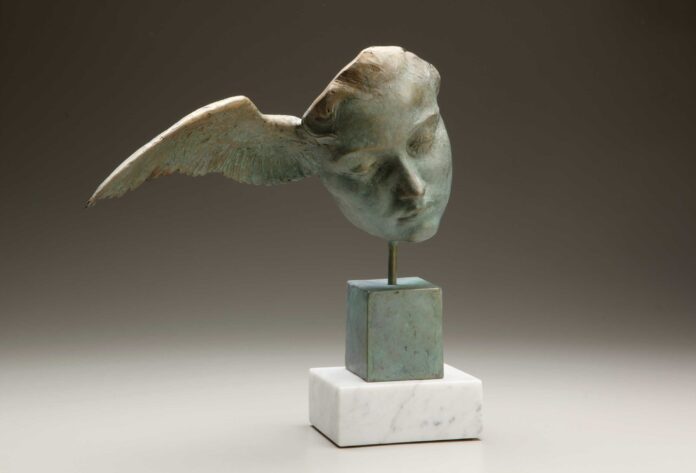
Julia Levitina, "Invisible Bird Sing" (edition 1/8), 2021, bronze, 13 3/4 x 14 x 4 1/2 in., private collection
Contemporary Sculpture Spotlight > There is a lot of superb realism being made these days; this article by Allison Malafronte shines light on a gifted individual.
Born in Odesa, Ukraine, Julia Levitina (b. 1981) is a classically trained sculptor, currently residing in Philadelphia, who creates poignant bronzes packed with metaphorical meaning. After earning a B.A. from Georgetown University, she joined the graduate program at the Pennsylvania Academy of the Fine Arts, followed by in-depth figurative studies at the Schuylkill Academy of Fine Art (both in Philadelphia).
As Levitina’s education and life experience continue to evolve, so too does the way she sees the world and seeks to convey it. “The gift of being an artist is twofold: seeing the extraordinary in the ordinary and communicating that sense of wonder by way of art,” she notes. “I am inspired, challenged, and moved to my deepest core by the beauty present in ordinary existence.”
The physical act of creating is as compelling a motivator to Levitina as the finished artwork itself. In her Philadelphia studio and foundry, the artist is in charge of the entire creative process, from concept to clay to casting. “To be a sculptor is to be a craftsman,” she states. “I mix my own clay, make metal armatures to support my sculptures, and create molds for reproducing my finished pieces in wax. I coat these waxes in heat-resistant ceramic to produce bronzes via a centuries-old cire perdue [lost-wax] process.” The artist then pours her own bronzes, welds and finishes the metal, and builds supports for the completed sculptures.
Levitina depicts figures and animals, but a particularly moving contemporary sculpture created in 2021 is an amalgam of figure and animal, one that points to her artistic lineage demarcated by the Greeks, Michelangelo, and so on. “Invisible Bird Sing,” illustrated above, is a delicately designed composition connecting a forlorn but resilient face to the outstretched wing of a bird in flight.
“Conceived at the height of the international [Covid] lockdowns, this work is the unspoken verse about our shared experiences,” Levitina says. “Not only of the pandemic and the isolation that ensued, but also of human resilience and ingenuity in the face of despair, in the face of war even. It’s a powerful reminder that hope has an enduring and continuing presence.”
Frederic Leighton, "The Bay of Cádiz, Moonlight," 1866, oil on canvas, 8 x 11 1/2 in., Leighton House, Royal Borough of Kensington and Chelsea
The first exhibition devoted to plein air landscape sketches made by Frederic, Lord Leighton (1830–1896) is now being held in his former home and studio in London, Leighton House. Co-curated by Hannah Lund and Pola Durajska, it presents the Victorian artist in a new light — as an experimental artist who documented the people and places he encountered as he traveled.
On view are 50 plein air paintings, some returning to the house for the first time in over 120 years. Leighton scarcely ever exhibited his landscapes, and his papers shed no light on why or how they were created. Together they offer intriguing views and settings, generally avoiding famous landmarks in favor of backstreets, hills, rocks, or trees that caught his attention. In this regard, the activity of painting was an intensely private, reflective activity for Leighton.
The earliest work dates to 1856 (made during a trip to Cervara, a town near Rome) and the latest to the year of Leighton’s death four decades later. He had been introduced to the format by his Italian friend Giovanni Costa. Leighton employed different-sized canvases, some no larger than a sheet of paper, though this did not prevent him from capturing huge subjects and vistas. Among his destinations were Italy, Spain, Greece, Syria, and Egypt.
At a Glance: Leighton House, London rbkc.gov.uk/museums
Through April 27, 2025
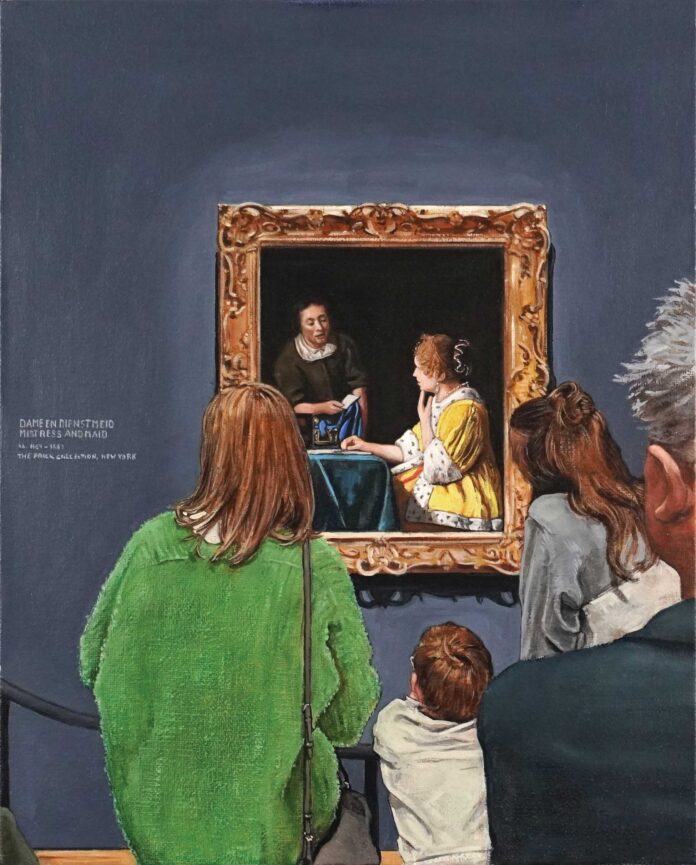
Joe Fig, "Vermeer: Mistress and Maid / Rijksmuseum," 2023, oil on linen mounted on MDF board, 11 1/2 x 9 1/4 in.
Vermeer-Inspired Art > The artist Joe Fig (b.1968) is renowned for his ongoing “Contemplation” series — small, intimate paintings of people looking at artworks in museums and galleries. For nearly a decade, he has depicted exhibitions nationally and internationally, registering not only artists’ techniques and processes but also visitors’ interactions with art. In these scenes he contemplates our collective experience in public spaces and distills what he himself has observed.
On view at the Sarasota Art Museum are 16 new paintings that document Fig’s encounter with the blockbuster Johannes Vermeer exhibition mounted at Amsterdam’s Rijksmuseum last year. That sold-out show featured 28 of the Dutch master’s 37 known paintings and will never be repeated in our lifetimes because his works are increasingly fragile and expensive to transport.
“I enjoy capturing the historical nature of exhibitions,” Fig explains. “They are up for a limited time and very fleeting. My paintings allow me to share them with people who may not have the chance to see them otherwise. I traveled to Amsterdam specifically for this project… and this installment of my ‘Contemplation’ series cements that moment in time.”
Back in his Sarasota studio, Fig studied the photographs he had taken in Amsterdam, selected details, and painstakingly configured the placement and scale of the spectators to perfect the balance of light, shadow, and color before he started to paint on canvas.
This show makes sense at the Sarasota Art Museum, which is part of the Ringling College of Art and Design, where Fig serves as department chair of both the fine arts and visual studies programs.
At a Glance:
Joe Fig: Contemplating Vermeer
Sarasota Art Museum
Sarasota, Florida sarasotaartmuseum.org
Through April 13, 2025
As part of our effort to continue to help artists and art galleries thrive, we’re proud to bring you this week’s “Virtual Gallery Walk.” Browse the artwork below and click the image itself to learn more about it, including how to contact the gallery.
Wave Dance, Kathleen Kalinowski, oil on canvas, 36 x 48 in; Kalinowski Fine Art
Day’s End, Sandias, Albert Handell, oil, 24 x 32 in; Albert Handell
Want to see your gallery featured in an upcoming Virtual Gallery Walk? Contact us at [email protected] to advertise today. Don’t delay, as spaces are first come, first served, and availability is limited.
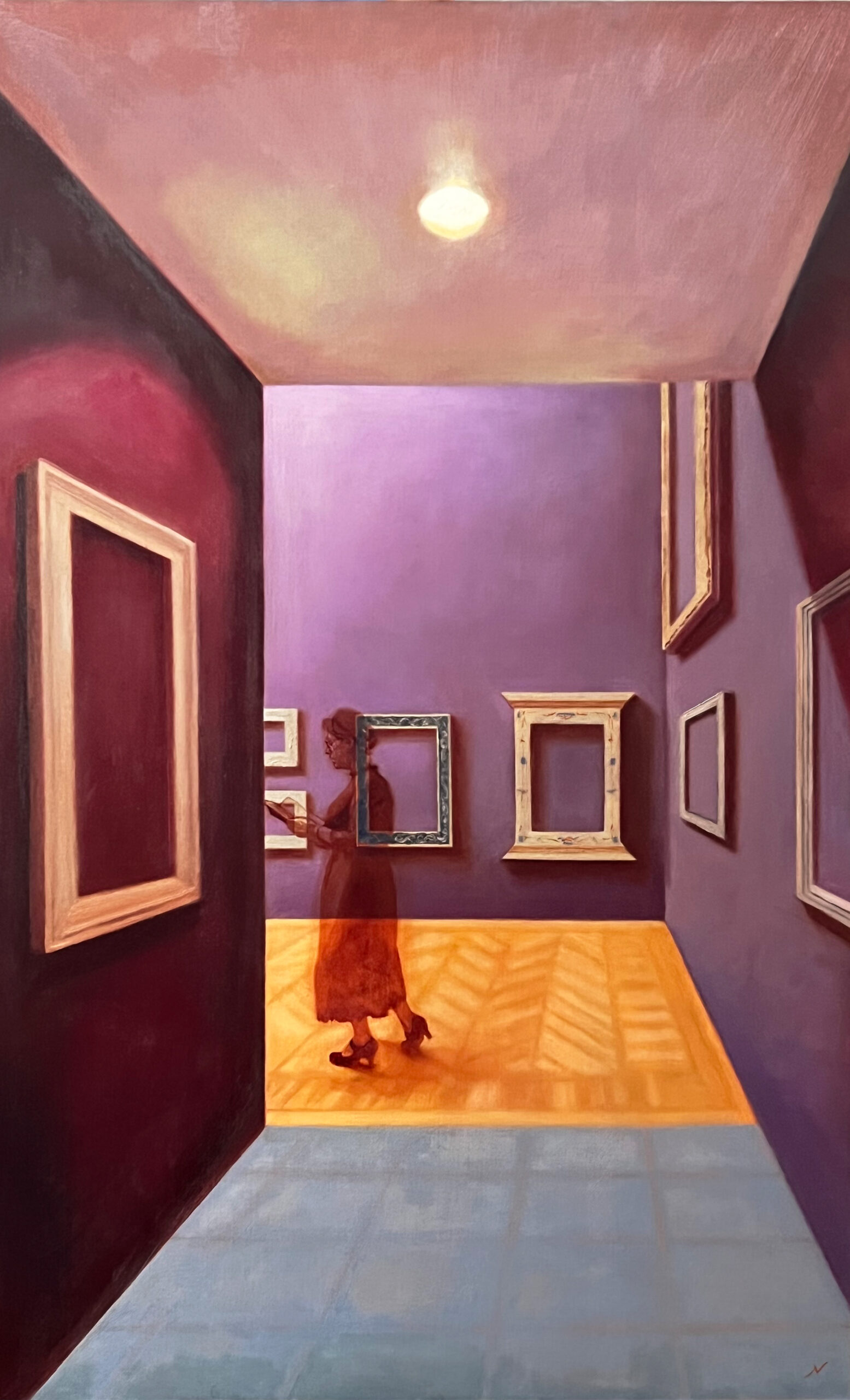
Nathan Bertling, "Batignolles," oil on linen over panel, 20 x 32 in.
Contemporary Realism Art on View:
New works by Nathan Bertling
Dacia Gallery
New York, New York www.daciagallery.com
December 12, 2024 to January 5, 2025
Nathan Bertling, “Memory (Louvre),” oil on linen over panel, 25 x 40 in.
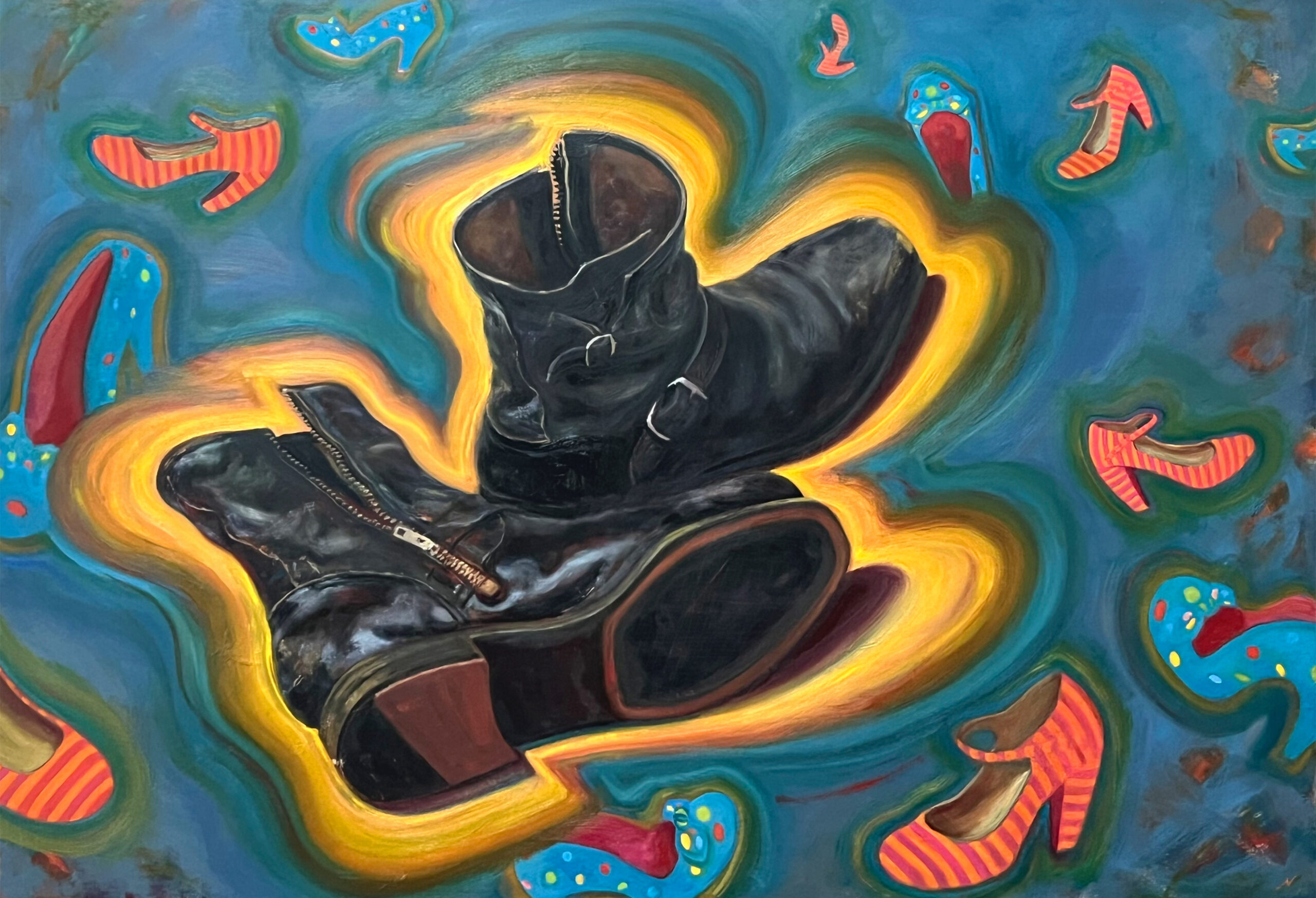
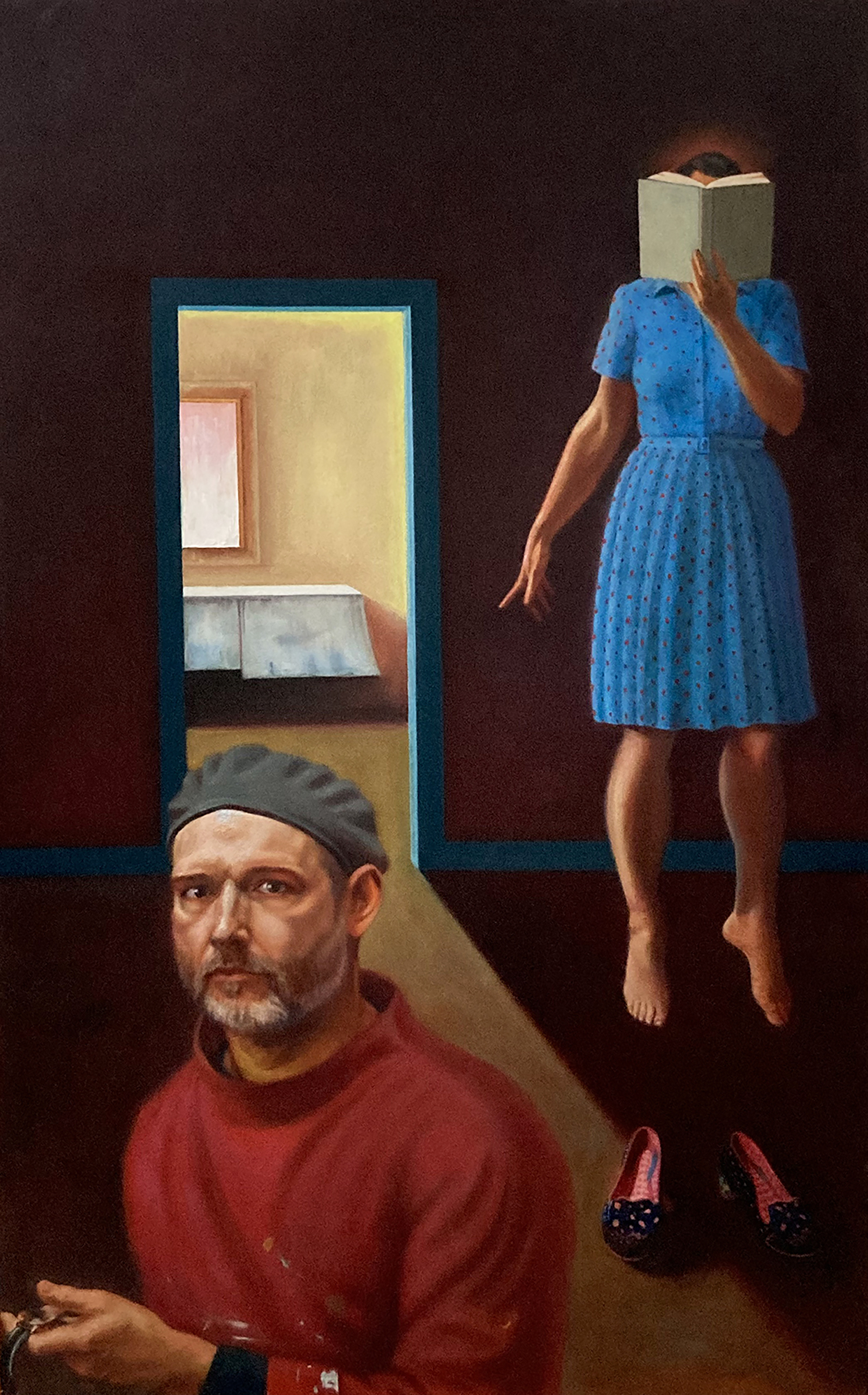
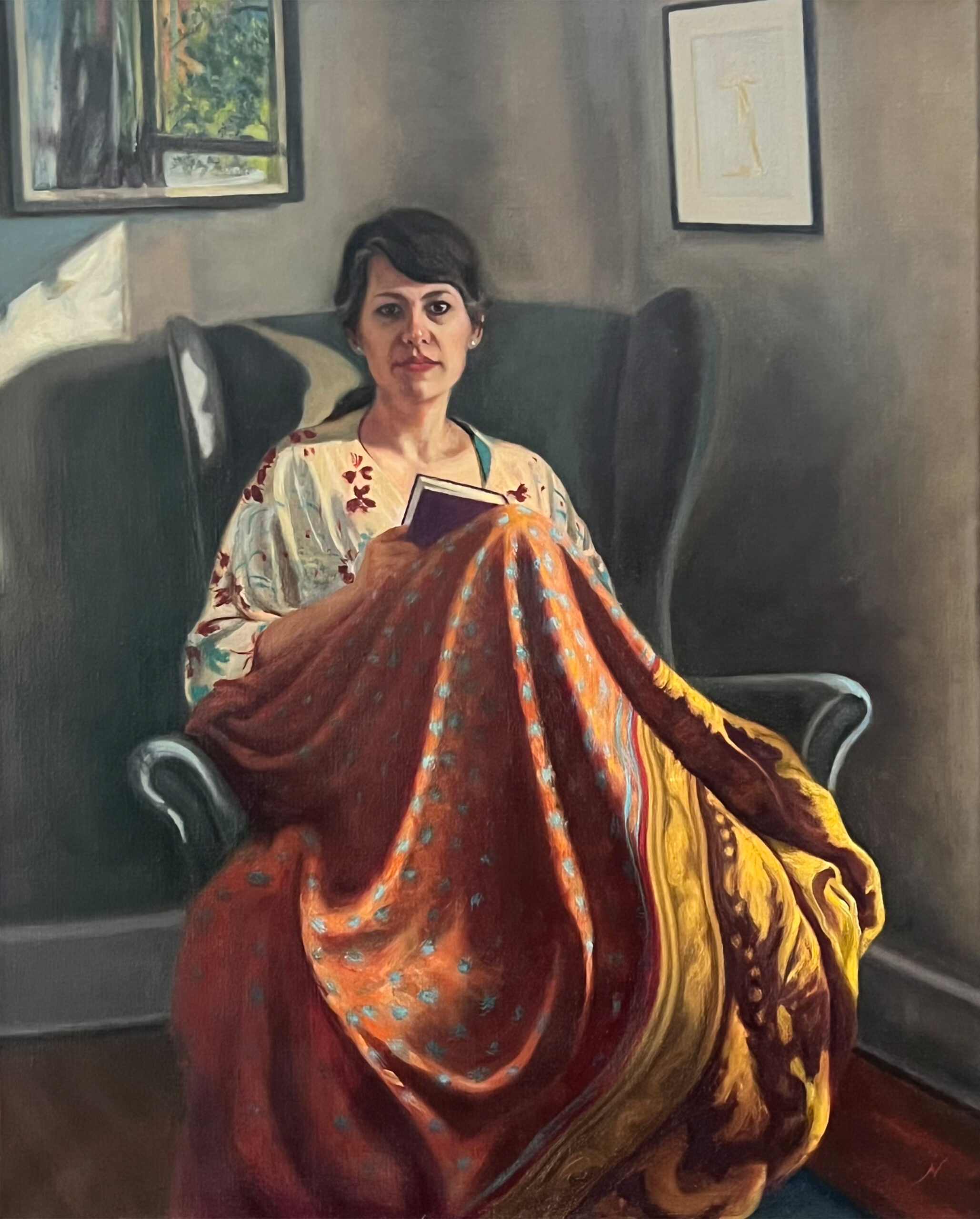
“This collection of paintings embodies both traditional and imaginative approaches to contemporary realism,” Nathan said. “In refusing to be held captive by restrictive conventions, I pay tribute to the depth and diversity of my aesthetic influences. With all these works side by side, I draw from master artists old and new: from Titian and Velazquez to Degas and Fantin-Latour; from Sargent and Sorolla to Hopper and Thiebaud; from Arthur Rackham, Pietro Annigoni, and Jamie Wyeth to Benjamin F. Long, IV, Bo Bartlett, and more.
“Multiplying my range of choices, I explore varied stylings and subjects—all in the freedom of serious play. In this spirit, I also honor my wife Hallie’s infectious love for her work as an author and illustrator of children’s literature. In opening myself to her contagious sense of wonder, I’m caught up by the power of the fantastic & the whimsical to lift the heart and light the imagination.”
Nathan Bertling, “Boots,” oil on panel, 47 x 32 in.Nathan Bertling, “Both / And,” oil on panel, 35 x 56 in.
About the Artist:
Nathan Bertling (b.1974) studied visual arts and communications at Furman University, graduating cum laude in 1996. From 2002-2008, he joined the atelier of American master Benjamin F. Long, IV in Asheville, NC. There Bertling studied drawing and painting in the Old Master tradition, eventually teaching portrait drawing at the school over his final two years. He has been named a Living Artist by the Art Renewal Center, and in 2020 was selected as a Semi-Finalist in the ARC’s 15th Annual International Salon. During the summer of 2022, he was awarded “Best in Show” at the annual Open Painting, Sculpture, & Graphics Exhibition held by the Salmagundi Club, where he is now a member.
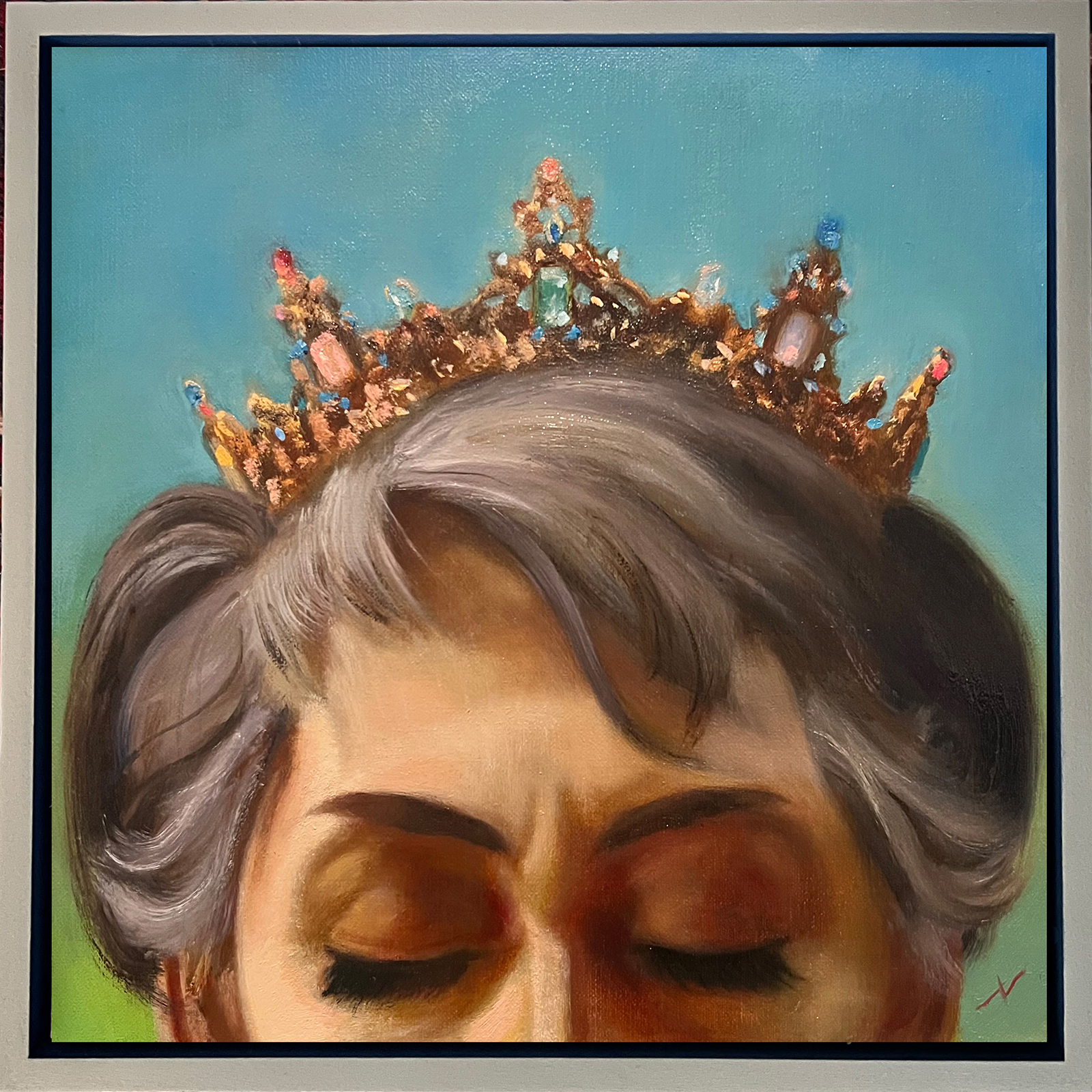
Nathan Bertling, “Bright Spot,” oil on linen, 24 x 30 in.Nathan Bertling, “Crowned,” oil on linen over panel, 12 x 12 in.
Nathan Bertling, “Embers” [Detail], oil on linen over panel, 25 x 40 in. (full image)As a private tutor, Bertling shares his knowledge and practice with students in his home studio in Greenville, SC. His works hang in numerous private collections. In March of 2022, Bertling had his debut solo show in NYC at Dacia Gallery, where he is now represented. Later that April of 2022, he and his wife Hallie attended an artist’s residency in Roskilde, Denmark. In March of 2023, Bertling completed Studio Escalier’s three-week Paris-based drawing intensive, Spring Portrait at the Louvre. January of 2024, he studied at the Scottsdale Artists’ School in Arizona. Bertling anticipates further opportunities to travel, teach, and study abroad while continuing to hone his craft. (www.nathanbertling.com)
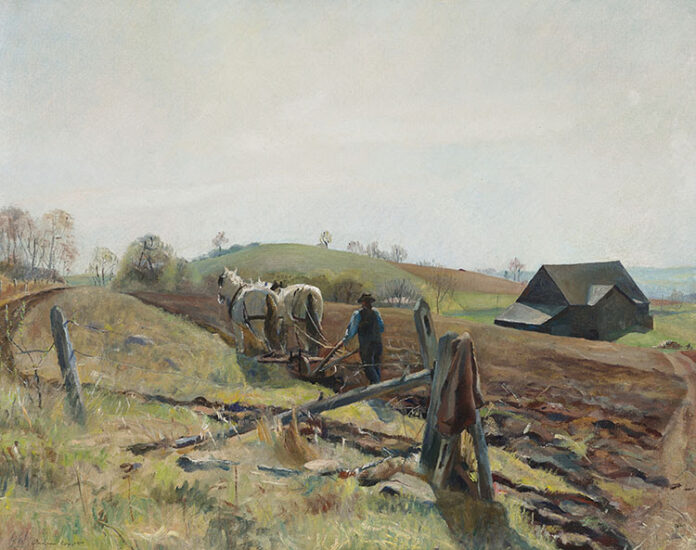
Andrew Wyeth (1917–2009), Spring Landscape at Kuerners, circa 1934, oil on canvas, 32 x 40 inches, Museum purchase, supported by Sasha and Edward P. Bass
The Farnsworth Art Museum has announced a significant addition to its collection: “Spring Landscape at Kuerners,” a captivating oil painting by Andrew Wyeth, created circa 1934. This remarkable acquisition, crafted during Wyeth’s early formative years as he embarked on his artistic journey, was made possible by philanthropists Sasha and Edward P. Bass of Fort Worth, Texas, who have deep ties to New England and a longstanding appreciation for Wyeth’s work.
More from the museum:
“This acquisition enriches the Farnsworth’s narrative of Andrew Wyeth, allowing the museum to tell a fuller story of the artist, beginning at a remarkably young age,” Christopher J. Brownawell, Executive Director of the Farnsworth, notes. “This painting invites visitors to explore the early inspirations that shaped Wyeth’s legendary career.”
“Spring Landscape at Kuerners” showcases one of Wyeth’s most beloved subjects: the Kuerner farm in Chadds Ford, Pennsylvania. Wyeth reminisced about the farm, saying, “Some of my earliest watercolors were done there. I had an urge to paint it when I was about ten years old. It never became a conscious effort; then, all of a sudden, I’ll have a strong compulsion to go back.” Completed around the age of 20, this painting reflects the profound influence of Wyeth’s father, the celebrated illustrator N.C. Wyeth.
“We are very fortunate to have found this remarkable Andrew Wyeth painting and to have had the opportunity to facilitate the Farnsworth acquiring it,” Edward Bass said. “Bringing it into the Farnsworth’s Wyeth collection adds one more thread in the multigenerational tale of this remarkable family of true American artists.”
The Basses are passionate art patrons and dedicated advocates for conservation and the environment. Edward P. Bass has played pivotal roles in various initiatives, including the rebuilding and expansion of the Peabody Museum at Yale. He is the director emeritus of the World Wildlife Fund. He also co-founded the transformative Biosphere 2 project in Arizona, and his contributions to urban revitalization in Fort Worth have received national acclaim.
The unveiling of “Spring Landscape at Kuerners” is poised to be a highlight of the upcoming exhibition “Home Places: Andrew Wyeth in Chadds Ford,” running from April 5 to October 19, 2025. This exhibition will spotlight Wyeth’s enduring fascination with a small group of historic homes in his birthplace, revealing how he found beauty and meaning in the weathered structures often overlooked amid gentrification.
As Wyeth eloquently stated, “You can be in a place for years and years and not see something, and then when it dawns, all sorts of nuggets of richness start popping all over the place.”
Fill your mind with useful art stories, the latest trends, upcoming art shows, top artists, and more. Subscribe to Fine Art Today, from the publishers of Fine Art Connoisseur magazine.











![Nathan Bertling, "Embers" [Detail], oil on linen over panel, 25 x 40 in. (full image)](https://fineartconnoisseur.com/wp-content/uploads/2024/12/Bertling_Embers-Detail.jpg)