Home Blog Page 431

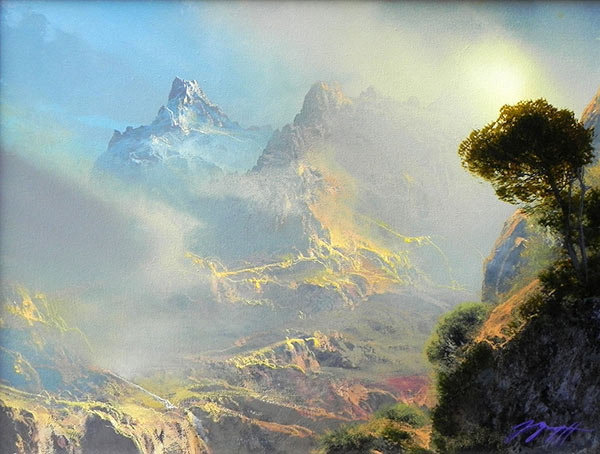
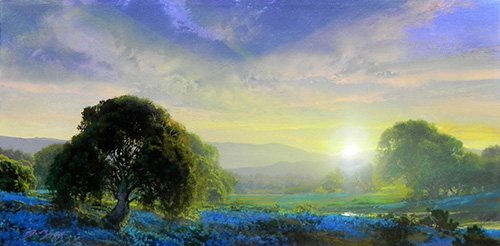
Featured Artwork: Camille Przewodek

0

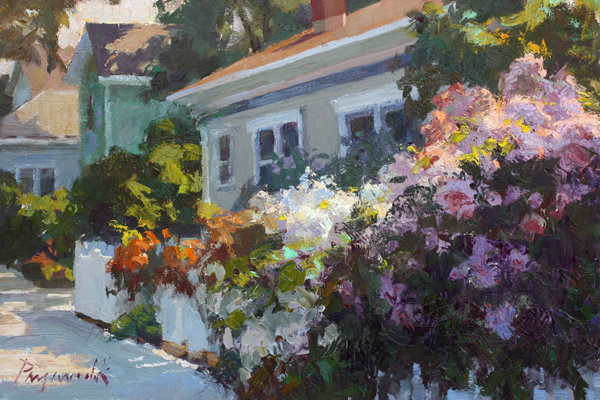
“Rose Cascade”
Oil on panel
9 x 12 in.

www.przewodek.com
 
“Color that expresses the light key of nature can make any subject strikingly beautiful.”
 
About the artist:
 
Plein air colorist Camille Przewodek is an acknowledged authority on color and a much sought after instructor who annually teaches painting workshops across the country, and offers regular weekly classes close to home at her studio in Northern California. A nationally known artist, she is one of a handful of contemporary exponents of the Cape School approach to capturing light in painting.
 
Contact Information:
 
Website: www.przewodek.com
Color Blog: www.camilleprzewodek.com
Email: [email protected]
Phone (9am-8pm, Pacific Time): 707.762.4125
 
Upcoming Events and Workshops in 2016:
 
Mar 7-11, Color Boot Camp, Scottsdale Artists’ School, Scottsdale AZ
Apr 25-28, 4-Day Landscape, New Harmony IN
May 21-28, Italian Plein Air Painting Adventure, Umbria Italy
Jun 20-24, Color Boot Camp, Petaluma CA
Jul 18-22, Color Boot Camp, Easton MD
Aug 1-5, Color Boot Camp, Bend OR
Aug 22-26, Color Boot Camp, La Pointe WI
Sep 12-16, Color Boot Camp, Petaluma CA
 
Weekly landscape and figure classes are also offered (please visit website for updated schedule and details).

Van Eyck Gets Fresh Look at the MET

0

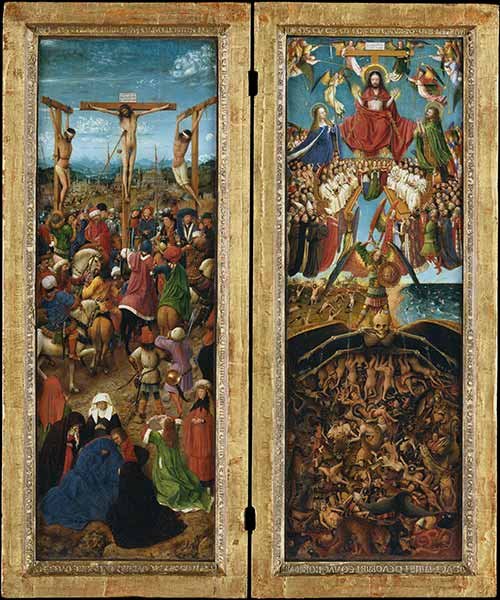
A beautiful masterpiece from Flemish painter Jan van Eyck is the subject of an exhibition at the Metropolitan Museum of Art in New York.
 
Jan Van Eyck’s (1390-1441) “Crucifixion” and “Last Judgment” paintings, circa 1440, have been a subject of constant fascination for Renaissance and Gothic scholars. A new exhibition at the Metropolitan Museum of Art in New York seeks to highlight the findings of a recent study on the paintings, which could shed new light on their proposed relationship — or add to the mystery.
 
“Are they intended to be viewed as a pair?” has long been the question surrounding the two works. For hundreds of years, it has been unclear whether Van Eyck’s “Last Judgment” and “Crucifixion” were meant to be paired as a diptych, displayed separately, or to appear as the wings in a triptych whose center panel was lost long ago.
 
Organizers, researchers, and curators believe they have uncovered new evidence that helps paint a clearer picture of the relationship between the two. Using the latest x-ray and infrared reflectography technology, researchers have uncovered Gothic script on the frames of the paintings. Via ArtDaily, “The technical investigation of the Metropolitan’s Crucifixion and Last Judgment is part of a longer ongoing study of Van Eyck’s works, including the cleaning and restoration of the Ghent Altarpiece, one of the seminal works of Western European art, and a comprehensive study of the artist’s oeuvre through the Verona Project at the Institut royal du Patrimoine artistique (KIK/IRPA) in Brussels. A Sunday at the Met program on April 17, 2016, will present the findings of these groundbreaking investigations.

“This small exhibition is the latest in a series of highly focused presentations initiated by the Museum’s Department of European Paintings as part of their technical investigations of key paintings in the Met collection. Another exhibition in the series, now on view, examines the creative process of Andrea del Sarto by looking closely at his ‘Holy Family with the Young Saint John the Baptist.’”
 
To learn more, visit the Metropolitan Museum of Art.
 
This article was featured in Fine Art Today, a weekly e-newsletter from Fine Art Connoisseur magazine. To start receiving Fine Art Today for free, click here.
 

Veteran Sculptor Sabin Howard Earns National Commission

0

The United States WWI Centennial Commission announced this week that renowned sculptor Sabin Howard’s design was chosen for “The Great War’s” National Monument.
 
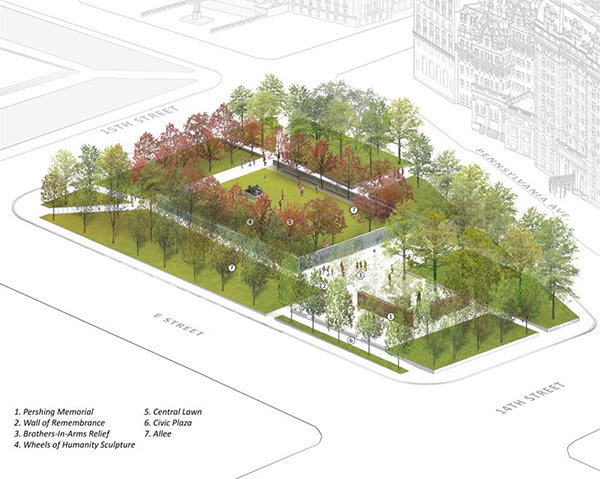
Soon there will be a new national monument near the White House in Washington, D.C., that will honor the more than 116,000 soldiers who died in World War I and the nearly 5 million individuals who served. Veteran sculptor Sabin Howard, along with 25-year-old architect Joe Weishaar, were awarded the commission, undoubtedly cementing Howard’s legacy as one of the nation’s top artists.
 
Via the U.S. Department of Defense, “The design concept met the challenges of creating a concept for such an important memorial. Those challenges included finding an appropriate way to honor the magnitude of the service and sacrifice of the nearly 5 million people who served.”
 
Edwin Fountain, the U.S. WWI Centennial Commission’s vice chairman, suggested, “The design concept had to work into the surrounding landscape, complement the iconic architecture and design of historic Washington, and serve as a city park. The winning concept will go through an extensive design review from a number of agencies, including the Commission of Fine Arts, the National Capital Planning Commission, and the National Park Service. The commission hopes to begin construction on Veterans Day 2017, with a possible dedication on Veterans Day 2018. The commission is looking to raise $30 million to $40 million for the memorial.”
 
To learn more, visit the U.S. Department of Defense.
 
This article was featured in Fine Art Today, a weekly e-newsletter from Fine Art Connoisseur magazine. To start receiving Fine Art Today for free, click here.
 

Sandy Scott: A Retrospective

0

For 45 years and counting, sculptor Sandy Scott has provided the art world with countless works of beauty. Featuring paintings, etchings, drawings, and sculpture, Brookgreen Gardens in Murrells Inlet is proud to present the prolific artist’s retrospective.
 
January 23 marked the date that Brookgreen Gardens in Murrells Inlet, South Carolina, opened Sandy Scott’s retrospective exhibition. What’s more, a public lecture by the artist is scheduled for January 30 in the Lowcountry Center Auditorium.
 
Scott has gained acclaim for her outstanding bronze animal sculptures. The artist’s website states, “A lifelong interest in aviation has been invaluable to her work as an artist. A licensed pilot for almost 50 years, she says, ‘I believe my knowledge of aerodynamics has been helpful in achieving the illusion of movement in my bird sculptures.’ Her knowledge of aerodynamics was particularly evident in ‘Mallard Duet,’ a sold-out sculpture that won the Ellen P. Speyer Award at the National Academy of Design in New York. This sculpture is in the permanent collection of Brookgreen Gardens and the National Museum of Wildlife Art.
 
“When asked what influenced her work most she replies, ‘First was the time I spent at the Kansas City Art Institute, it opened my eyes to the fundamentals of art and imparted a life long interest and love of art history; second was my trip to the north country and Lake of the Woods when I was a kid, it introduced me to what would become a never ending source and inspiration; third has been teaching workshops: teaching is an ongoing discipline — I’ve learned and continue to learn through teaching.’”
 
“Sandy Scott: A Retrospective” will be on view through April 24.
 
To learn more, visit Brookgreen Gardens.
 
This article was featured in Fine Art Today, a weekly e-newsletter from Fine Art Connoisseur magazine. To start receiving Fine Art Today for free, click here.
 

Poetry in Beauty

0

Sunday marks the last day visitors can see an exhibition featuring the outstanding works of one of the few female professional painters working in the Pre-Raphaelite movement. Where?
 
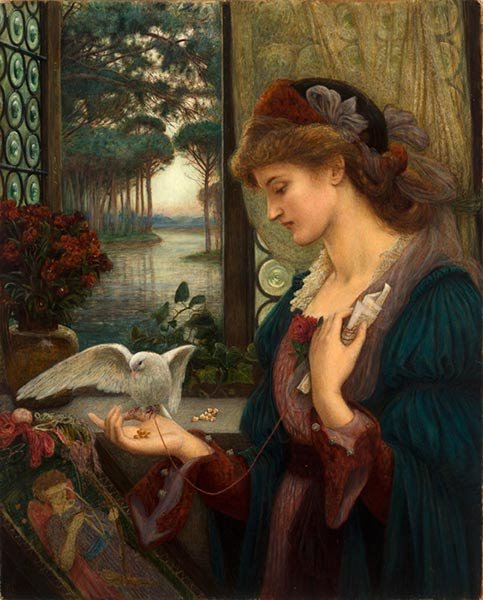
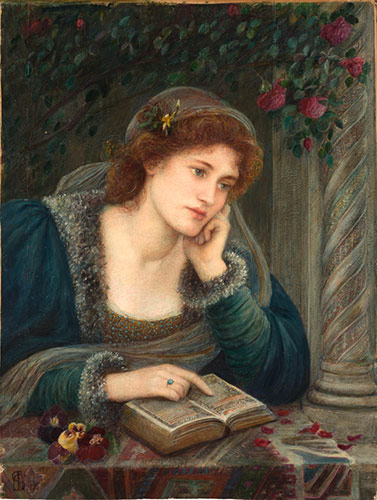
Sunday is the last day to see a tantalizing exhibition of Marie Spartali Stillman’s (1844-1927) gorgeous paintings at the Delaware Museum of Art. As one of the few female professional artists working in the second half of the 19th century, she was a vital presence in the Victorian art world and was closely associated with members of the Pre-Raphaelite movement. “Poetry in Beauty: The Pre-Raphaelite Art of Marie Spartali Stillman” showcases approximately 50 works by the artist.


Marie Spartali Stillman, “Beatrice,” 1896, watercolor and gouache on paper, 23 x 17 in.
(c) Delaware Museum of Art 2016

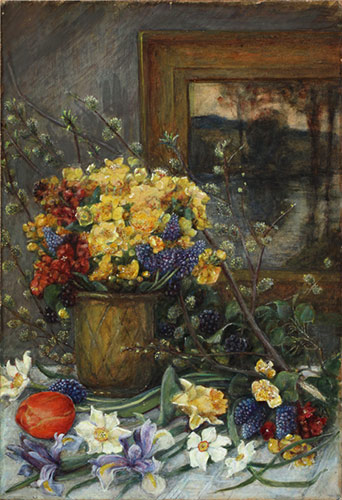
Via the exhibition webpage, “Spartali Stillman’s style reflects her British Pre-Raphaelite training as well as the influence of Renaissance art, derived from the many years she lived and worked in Italy. Works from public and private collections in the United States, United Kingdom, and Canada, many of which have not been exhibited since Spartali Stillman’s lifetime, will also be on view.


Marie Spartali Stillman, “Still Life,” watercolor and gouache on paper, 19 5/8 x 13 1/2 in.
(c) Image courtesy Delaware Museum of Art 2016, Private Collection

 
“‘Poetry in Beauty: The Pre-Raphaelite Art of Marie Spartali Stillman’ is co-curated by Margaretta Frederick, Chief Curator and Annette WoolardProvine Curator of the Delaware Art Museum’s Bancroft Collection of Pre-Raphaelite Art, and Pre-Raphaelite scholar Jan Marsh. The Delaware Art Museum is the only United States venue for this landmark exhibition. It will travel, in reduced format, to the Watts Gallery, Compton, Guildford, England, where it will be on view March 1-June 5, 2016.”
 
To learn more, visit the Delaware Museum of Art.

This article was featured in Fine Art Today, a weekly e-newsletter from Fine Art Connoisseur magazine. To start receiving Fine Art Today for free, click here.
 

VIDEO: Sculptor Richard MacDonald Receives Lifetime Achievement Award

0

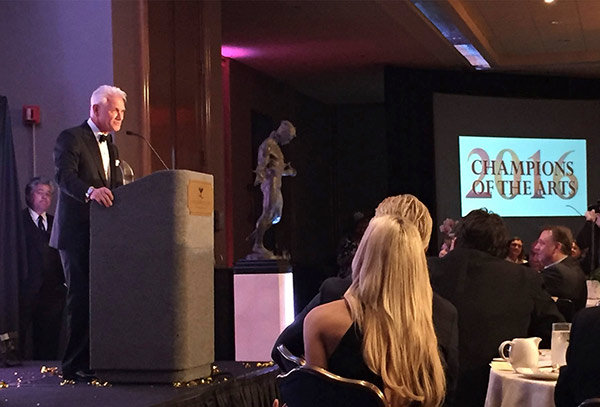
Renowned sculptor Richard MacDonald was recently honored with this year’s Champions of the Arts Lifetime Achievement Award in Monterey, California. The talented filmmaker Gonzalo Fernandez de Cordova created this video for the ceremony.


This article was featured in Fine Art Today, a weekly e-newsletter from Fine Art Connoisseur magazine. To start receiving Fine Art Today for free, click here.
 

Down to Earth

0

Peder Hegland’s artistic style and career have been evolving for many years, and this journey has brought the potter face-to-face with some of the medium’s most renowned figures and its ancient origins. His fascinating story is one you’ll enjoy.
 
The power to manipulate earth’s materials into something beautiful is an ability that all human beings share, but few master. Pottery is one of the oldest forms of artistic creation, and, since its beginnings, the medium has required that its practitioner possess both three- and two-dimensional aesthetic skill. Moreover, audiences are offered a multi-sensory relationship with the objects through function, which itself has subtle degrees of success and failure. These fundamental principles of pottery are challenging — at best — to crack, requiring years of development, trial and error, triumph and failure. Peder Hegland has experienced all of the above, and through it all he’s emerged with outstanding results.
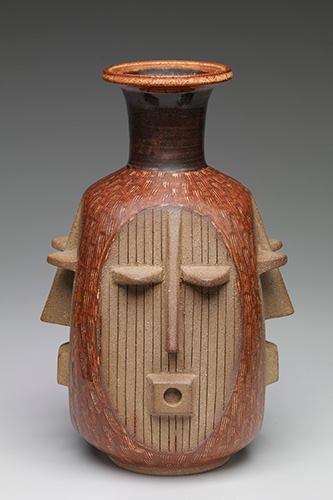


Peder Hegland, “Faces of the Wind Vase,” stoneware, cone 8 oxidation, (c) Peder Hegland 2016, Photo Peter Lee

 
Hegland hails from Racine, Wisconsin, and his journey to becoming a successful artist was quite unexpected. “I was a chemistry major as an undergraduate at Luther College in Decorah [Iowa],” says Hegland, “and my whole background had been in science. I enjoyed science and remember taking a test early on in which I scored high in that area. Art wasn’t on my radar. My roommate, however, was an artist, and I remember watching what he was doing. It was really interesting, and he seemed to be having such a good time doing it.” Hegland’s roommate would, during their senior year, end up teaching a beginning pottery class in lieu of Dean Schwarz, who had taken a sabbatical in Korea. The opportunity proved too tempting, and Hegland gave it a try.
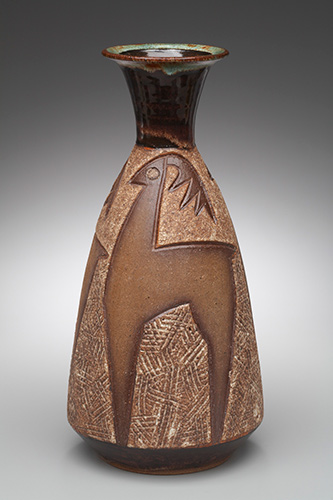


Peder Hegland, “Deer Vase,” stoneware, cone 8 oxidation, (c) Peder Hegland 2016, Photo Peter Lee

 
“By the end of the first week, I was completely into it,” he says. “Pottery was so exciting, and it was like a whole new world opening up to me.” Hegland graduated that year with his Bachelor’s in Chemistry, but the experience with his roommate was the first domino — and all it took.
 
Today, Hegland’s work blends traditional full forms with clean abstract patterning and, frequently, images of wildlife and plants. Hegland regularly looks to nature for his sources of inspiration in addition to ancient pottery from North and South America, Greece, and the Near East. His stylistic approach developed early in his career while attending summer workshops with Bauhaus-trained master potter Marguerite Wildenhain (1896-1985) at her Pond Farm near Guerneville, California. Wildenhain’s legacy is far-reaching, and she’s known for having taught the importance of endowing each piece with life, heart, and soul. Hegland suggests, “Nature has always been the main interest for me, and that was a big part of Marguerite’s teaching. She always told us that there was an infinite amount of lessons in nature and to look at things — to try and see what’s there.”  Hegland also noted his relationship with Wildenhain’s longtime assistant, David Stewart, whose mentorship – and friendship – greatly influenced his career.
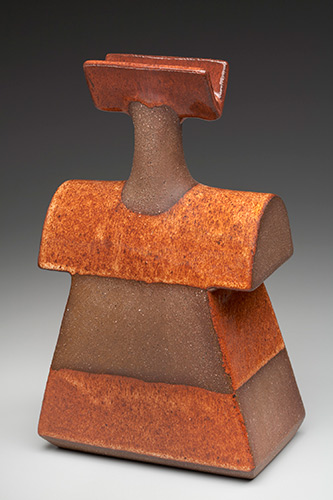


Peder Hegland, “Naxos,” stoneware, cone 8 oxidation, (c) Peder Hegland 2016, Photo Peter Lee

 
Part of Wildenhain’s rigorous training at the Bauhaus involved glaze and clay alchemy. Students were required to formulate their own recipes and build their work from the ground up. Enter Hegland’s chemistry background. Although Wildenhain’s teaching focused on good form and aesthetics, Hegland took Marguerite’s Bauhaus lessons to heart.  Years of personal experimentation have allowed him to develop his own unique clay body and palette of glazes. The resulting works are incredibly unique, but one can easily detect the potter’s interest in ancient surface decoration through the simplification of form. Hegland’s clay body is a beautiful dark, earthy tone with soft yet gritty textures. Using glazes, slips (liquid clay), other colorants, and carving, the surfaces of his work present the eyes — and hands — with an epic aesthetic journey.
 
“What’s most important to me is that the surface design accentuates and complements the form” Hegland says. “I try to keep my designs simple and patterned so that both the two-dimensional and three-dimensional are in balance.” However simple the motifs may be, they visually communicate to audiences with clarity and ease.
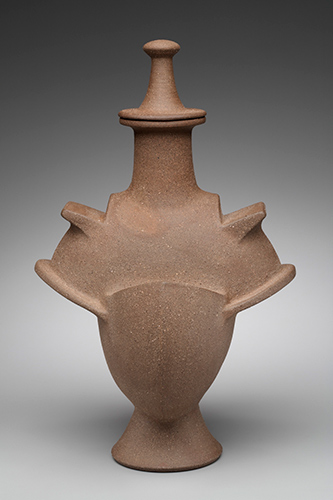


Peder Hegland, “Dave’s Bottle,” stoneware, cone 8 oxidation, (c) Peder Hegland 2016, Photo Peter Lee

 
Recently, Hegland has begun to experiment with his work off the potter’s wheel. Using rolled slabs of clay, Hegland cuts and constructs his pieces like a builder. The results are more geometric, perhaps architectural, but always functional. “The process is much longer with hand-building, but it allows me to invest myself more into each individual work,” he says. “The simple geometry of the works also recalls ancient designs and sometimes the figure.” Indeed, the daunting task of tackling the figure is an element Hegland seeks to explore in future works. With his style firmly established, it is tantalizing to wonder how it might translate into figurative imagery.
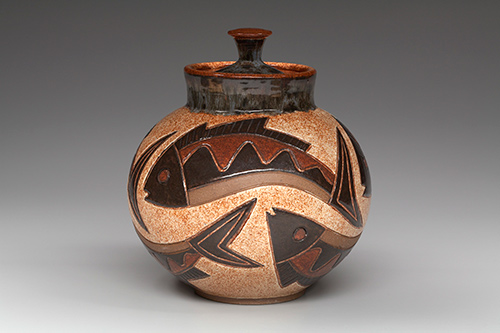


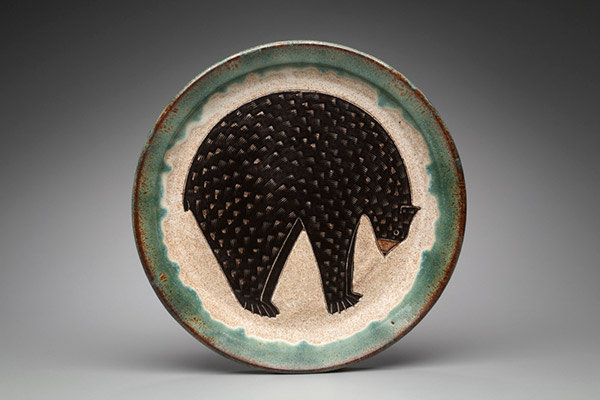
Peder Hegland, “Swimming Fish Jar,” stoneware, cone 8 oxidation, (c) Peder Hegland 2016, Photo Peter Lee

 
Hegland is one of the most down-to-earth artists you’ll ever meet, and he’s never pushed for widespread acclaim or notoriety. In truth, this may be a blessing in disguise because the quiet seclusion has allowed Hegland to focus on that which matters most: his art. In this way, Hegland’s work is pure, original, highly developed, and sophisticated — all ingredients for an artistic legacy that will stand the test of time.
 
To learn more, visit Peder Hegland.
 
This article was featured in Fine Art Today, a weekly e-newsletter from Fine Art Connoisseur magazine. To start receiving Fine Art Today for free, click here.

Only Days Left

0

If you haven’t already seen the incredible exhibition of four Georgian artists at East West Fine Art in Naples, Florida, book it now before it closes.
 
Mesmerizing, fantastic, and incredible are all appropriate words for a group exhibition at East West Fine Art in Naples, Florida. The exhibition, titled “Legends of Tbilisi,” showcases the works of four artists hailing from the Republic of Georgia. Only days remain for a show that was on view for just two weeks. The exhibition will be on view through Sunday.


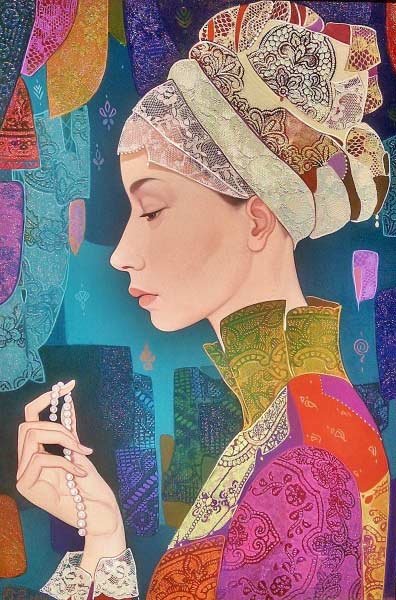
Mamuka Didebashvili, “The Mathematician,” oil on canvas, 41 x 25 in. (c) East West Fine Art 2016

 
Included in the show are Maia Ramishvili, Mamuka Didebashvili, Merab Gagiladze, and Nodar Khokhobashvili. Each artist is exquisitely skilled and displays an individualistic talent and style. Ramishvili’s portraits are richly patterned and colored. Although slightly flattened in appearance, there exists a wonderful juxtaposition between the three-dimensional forms of her figures and the lushly composed backgrounds.


Merab Gagiladze, “Orchestra,” oil and gold leaf on canvas, 32 x 40 in. (c) East West Fine Art 2016

 
Also noteworthy are Didebashvili’s portraits, which recall early Renaissance portraiture in their precise depiction of every curve and feature of the human face. The gallery suggests that the portrait’s “incredibly realistic features, translucent skin, and eyes look right into your heart.”


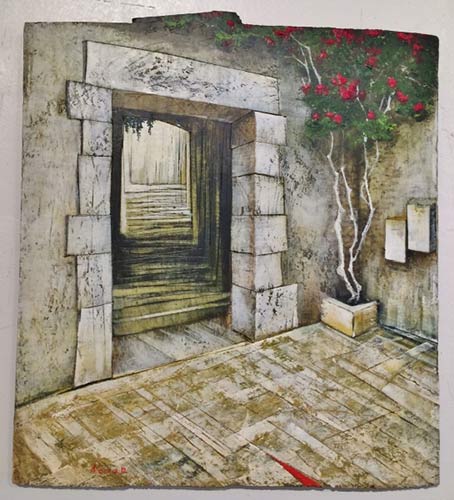
Nodar Khokhobashvili, “Amelia Arch Umbria,” oil on board, 21 x 19 in. (c) East West Fine Art 2016

 
To learn more, visit East West Fine Art.
 
 This article was featured in Fine Art Today, a weekly e-newsletter from Fine Art Connoisseur magazine. To start receiving Fine Art Today for free, click here.

 

Mysterious Light and Mesmerizing Landscapes

0

February 13 marks the date when painter Dale Terbush showcases his electrifying paintings during a solo exhibition. Where?
 
The landscapes by painter Dale Terbush, a master of light and naturalism, have a timeless and mysterious beauty that could recall the works of Albert Bierstadt. On view beginning February 13, Terbush’s first solo exhibition at Southwest Gallery in Dallas, Texas, will showcase his latest pictures.


Dale Terbush, “Just to Keep the Memory,” acrylic on canvas, 10 x 20 in. (c) Southwest Gallery 2016

 
Thirty-three works will compose the show, and each displays a full spectrum of colors and precision with the brush. Paintings such as “Just to Keep the Memory” have storybook beauty and radiance. Terbush’s use of light creates a mysterious mood that wraps the viewer in subjective narrative. Further, “Into the Depth of a Dream” displays deep space that evokes in the viewer a sense of awe at the grandeur and majesty of nature. Although many of the works are small in size, the impact and emotional power of the pictures is quite the opposite.
 
To learn more, visit Southwest Gallery.
 
This article was featured in Fine Art Today, a weekly e-newsletter from Fine Art Connoisseur magazine. To start receiving Fine Art Today for free, click here.
 

Color’s Symphony

0

A burst of colorful activity is coming to the esteemed Haynes Gallery at its Nashville, Tennessee, location.
 
A visual symphony awaits those visiting the lovely Haynes Gallery in Nashville, Tennessee. “Symphony in Color” is a tantalizing exhibition that features the stunning floral still lifes of renowned watercolorist Susan Headley Van Campen. The show opens on February 12 and will be on view through March 26.

Van Campen’s works are absolutely marvelous and showcase her acute observational skill and dexterity with the brush. Set against a plain white background, the subjects leap from the page and seem to emanate vitality. Via the gallery webpage, “A master watercolorist, Van Campen presents vibrant, sophisticated arrangements that speak to the artful beauty of flowers. Lush blossoms are assembled in glass vases and set against simple white backgrounds. A naturalist in addition to artist, Van Campen finds her inspiration in the flowers she tends to at her home in rural Maine. Their shapes, shades and endless variety have kept her brushes busy for the last forty years.  Upon first glance, her paintings might appear like straightforward, colorful still lifes. But in reality Van Campen’s still lifes craft a balance between the calculated and the spontaneous, the objective and the expressive, and the traditional and modern.


Susan Headley Van Campen, “Cymbidium,” watercolor on Arches, 29 x 41 in. (c) Haynes Galleries 2016

 
“The exhibition of Van Campen’s florals will be accompanied at Haynes Galleries by vignette shows of other floral-themed works. Fine examples of the artistic union of figures and flowers will be on display with works by Tersea Oaxaca, Lynn Sanguedolce, Stephen Scott Young, and more. Flower still lifes by other gallery favorites will show the artistic range that Contemporary Realists are achieving in the beloved genre. From large bouquets of roses to a lone orchid, it will be a visual feast at Haynes Galleries this spring.”
 
To learn more, visit Haynes Galleries.

This article was featured in Fine Art Today, a weekly e-newsletter from Fine Art Connoisseur magazine. To start receiving Fine Art Today for free, click here.
 

WEEKLY NEWS FROM THE ART WORLD

Fill your mind with useful art stories, the latest trends, upcoming art shows, top artists, and more. Subscribe to Fine Art Today, from the publishers of Fine Art Connoisseur magazine.

  • This field is for validation purposes and should be left unchanged.