Home Blog Page 450

From an Italian’s Perspective: Celebrating Britain

0

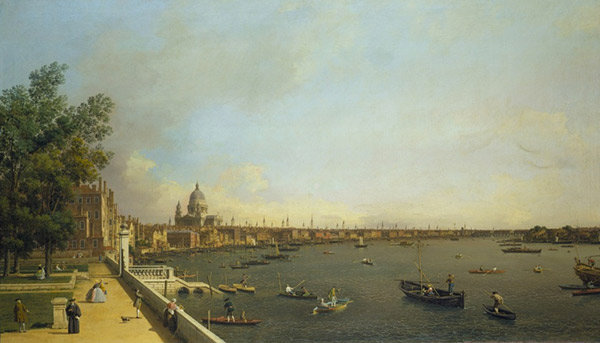
Giovanni Antonio Canal (1697–1768), better known as Canaletto, is considered by many to have been one of Italy’s greatest view painters. The Venetian Canaletto’s images of the city’s canals, streets, and monuments are in the permanent collections of some of the world’s most acclaimed museums. The artist would have a brief tenure in Britain, between 1746 and 1755, the products of which are the subjects of an exhibition in Cumbria, United Kingdom.
 
To be sure, Canaletto was a prolific colorist as well, exquisitely skilled in the play and subtle effects of light, a feature common among painters hailing from the “floating city.” Popular during the 18th century was “The Grand Tour,” a trip undertaken by wealthy well-bred English gentlemen that made stops all across Europe, especially Venice and Rome. During these tours, the Englishmen would delight in collecting artworks from antiquity and by contemporary painters, among them Canaletto, who became known for producing outstanding views of their cities, a perfect product for members of the tour. When war caused the tours to diminish and, later, cease, Canaletto followed his patronage to Britain, where he remained for nine years, painting a number of beautiful city- and landscapes.

For the first time ever, many of these works from Canaletto’s tenure in England have been brought together for a tantalizing exhibition at Abbot Hall Art Gallery in Cumbria, United Kingdom. The exhibition opened on October 22; the gallery writes, “Through a series of astonishing canvases and drawings, Canaletto celebrated the accomplishment, success and wealth of the rising British nation and its latest achievements in architecture and engineering. By the time of Canaletto’s arrival in London most of the first generation of classical Palladian architects were dead and Britain’s increasing prosperity and confidence allowed for a more eclectic and liberal attitude to its newly-designed buildings.

“Canaletto’s London is busy but beautiful with its abundance of new landmarks: Wren’s Baroque churches, the majestic St Paul’s Cathedral and the naval palaces of Greenwich; Hawksmoor’s ‘Gothick’ towers for Westminster Abbey, William Kent’s new Palladian Horse Guards building and the Rococo pleasure gardens at Vauxhall and Ranelagh. The construction of two marvels of engineering, the new bridges across the Thames at Westminster and Walton, is documented in magnificent detail.”

“Canaletto: Celebrating Britain” opened on October 22 and will be on view through February 14.
To learn more, visit Abbot Hall Art Gallery.

This article was featured in Fine Art Today, a weekly e-newsletter from Fine Art Connoisseur magazine. To start receiving Fine Art Today for free, click here.

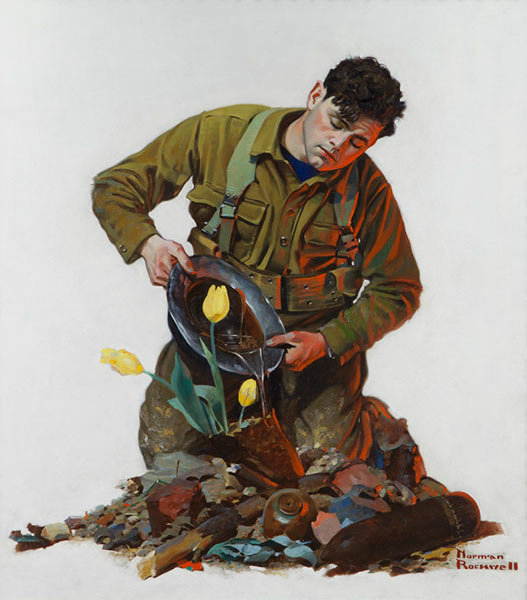
Featured Lot: Norman Rockwell, “Easter (Soldier Watering Tulip)”

0

In this ongoing series for Fine Art Today, we take a longer look at the history and features of a soon-to-be-available artwork of note. This week: Norman Rockwell, “Easter (Soldier Watering Tulip).”
 
Norman Rockwell (1894–1978) is remembered as perhaps the greatest painter and illustrator of American wartime culture, and his works are, without a doubt, some of the most coveted and highly collected artworks today. Born in New York, Rockwell pursued an art career early. His passion and talent were even noticed by age 15, when he painted his first commission of four Christmas cards. Still in his teens, Rockwell landed his first major commissions from Boys’ Life, the official publication of the Boy Scouts of America. At age 22, Rockwell painted his first cover for The Saturday Evening Post, which would become the artist’s launch pad to national acclaim and success. Over the next 47 years, Rockwell would paint an additional 321 covers for the Post, part of more than 4,000 original works during his lifetime, cementing his place in history and in the hearts and minds of millions of Americans.
 
Still enjoying widespread popular appeal, Rockwell’s style was characterized by idealistic and sentimentalized portrayals of American life and culture. This was especially true during the end of World War I and throughout World War II. As part of the effort to mobilize America for the war effort, Rockwell turned his artistic lens away from the youthful subjects seen in his illustrations for Boys’ Life and toward inspiring subjects.
 
Unfortunately, many of Rockwell’s original works belong to public and private collections or have been destroyed. Rarely do originals head to auction, but, when the occasion presents itself, prices are expected to soar. That’s what Dallas Auction Gallery is expecting during its November 4 “Fine Art Auction” when Rockwell’s “Easter (Soldier Watering Tulip)” becomes available. An early work, dating to 1918, the painting is a rare example from Rockwell’s work with Leslie’s Illustrated Weekly and was produced during the waning months of the First World War, even as it seemed the conflict might never end.
 
The painting is absolutely exceptional, packed with powerful symbols of war, peace, and hope. Kneeling and in full combat gear, an American soldier gracefully pours water from his helmet onto a group of brilliant yellow tulips. The flowers emerge from a pile of debris and rubbish, complete with broken wood, rubble, and a large mortar shell to the right. Set against a strong white background, the saturated colors are in high contrast with their surroundings, drawing even more focus on the subject. As telling are the glowing red highlights that blanket the right side of the figure, perhaps setting the figure near the front lines, the glow emitting from the flash of exploding ammunition.
 
Dallas Auction Gallery offers, “‘Easter (Soldier Watering a Tulip)’ conveyed a touch of hope, that even though our husbands, sons, and fathers were off fighting a war, they were still able to find the simple beauties and small moments of peace in life.” Auction estimates are between $300,000 and $500,000, but the hammer price could exceed $1 million.
 
To view the entire catalogue, visit Dallas Auction Gallery.
 
This article was featured in Fine Art Today, a weekly e-newsletter from Fine Art Connoisseur magazine. To start receiving Fine Art Today for free, click here.
 

A Salute to Cowboy Artists

0

Scottsdale’s Museum of the West is overjoyed to be presenting next week a 50th-anniversary retrospective exhibition showcasing the extraordinary talents of the Cowboy Artists of America.
 
For 50 years, the Cowboy Artists of America (CAA) has represented some of the best that Western representational art has to offer. Beginning with four prominent Arizona artists, the organization has grown to encompass 77 artists — both current and former. Opening on November 7 at Scottsdale’s Museum of the West, the exhibition is entitled “A Salute to Cowboy Artists of America and a Patron, the Late Eddie Basha: 50 Years of Amazing Contributions to the American West.”  It will feature one painting or bronze by each of the 77 artists who have ever been members of the CAA. Moreover, the exhibition will pay tribute to the late Eddie Basha, a passionate collector and patron of Western art who spent years supporting artists of the CAA. Several works from Basha’s collection will also be on view, part of the largest privately owned collection of contemporary Western American and American Indian art in the country.  


Martin Grelle, “A Time to Dance,” 2001, watercolor and acrylic, (c) Eddie Basha Collection 2015

 
Michael J. Fox, museum director and CEO of Scottsdale’s Museum of the West, reports, “The upcoming 50th-anniversary exhibition will be the first time in five years that the CAA exhibition has been in the valley. For more than 30 years, the CAA exhibition was a highlight of the valley’s arts and culture season. Many local residents are familiar with the artists and look forward to meeting with them and attending the opening-weekend events.”


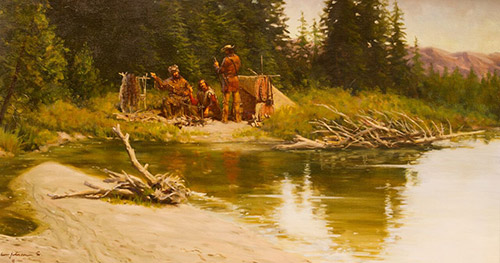
Harvey Johnson, “Summer Camp,” oil on canvas, (c) Tim Peterson Family Collection 2015


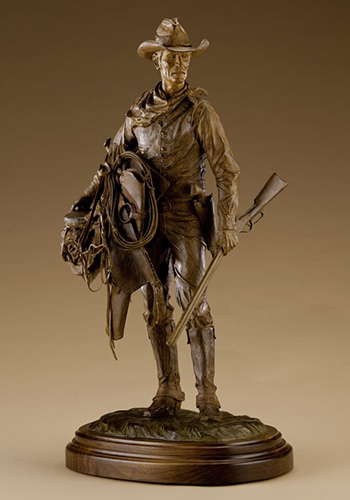
Bill Nebeker, “The Eyes of Texas,” 2011, bronze, 34 x 19 x 16 in. (c) A.J. and Jesse Monongye Collection 2015


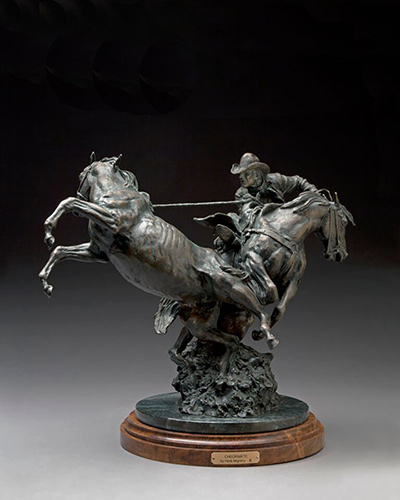
Herb Mignery, “Checkmate,” 1985, bronze, (c) On loan from Artist, Herb Mignery 2015

 
In conjunction with the exhibition, the Scottsdale Artists’ School — located across the street from the museum — will host a series of workshops and events during the week leading to the opening of the show. Registration and a list of the workshops can be found here.
 
The school writes, “In 1964, as a trio of men gathered around a fall campfire, a spark of an idea was born — to form a group that would enjoy campfires and roundups, and also promote the cowboy life in fine art. A year later, in Sedona, Arizona, artists Joe Beeler, Charlie Dye, John Hampton and George Phippen met with western writer Robert MacLeod, and the Cowboy Artists of America was born. Their vision of an organization in which cowboy artists would gather to create, exhibit and teach about the culture of the Old West is now 50 years strong. The CAA mission is as vital as it was at the beginning — to authentically preserve and perpetuate the culture of Western life in fine art.
 
“This year, Scottsdale Artists’ School is proud to provide a venue where artists can experience these same feelings felt by the founders of Cowboy Artists of America.
 
“In celebration of the 50th anniversary of CAA, Scottsdale Artists’ School will be hosting a week of workshops highlighting a handful of cowboy artists who share a common commitment to art and the West. Workshops will take participants on an artistic journey and will celebrate the art of the West. Workshops will be led by: John Coleman, Bruce Greene, Martin Grelle, Paul Moore, Jim Norton, Grant Redden and Jason Scull.
 
“Throughout the week, participants will gain a deeper understanding of the history of CAA and the passion they share for insuring the authentic representations of the life of the West, as it was and is today.”

The Cowboy Artists of America exhibition is also featured within Fine Art Connoisseur Magazine’s November/December 2015 issue, scheduled to be released this week. 
 
To learn more about the CAA exhibition, visit Scottsdale’s Museum of the West.
 
This article was featured in Fine Art Today, a weekly e-newsletter from Fine Art Connoisseur magazine. To start receiving Fine Art Today for free, click here.
 

Breath of Freedom

0

Expressive, gestural, dramatic, and beautiful are but a few words to describe the internationally renowned sculptures by Matteo Pugliese, who is poised to open a highly anticipated solo exhibition in a few days at Bertrand Delacroix Gallery in New York City.
 
Most can remember the first time they set eyes on the magnetic figurative sculptures by the Italian Matteo Pugliese — muscular male bronzes that are fragmented but emerge dramatically from the gallery walls (Extra Moenia series). The words “captivating,” “original,” and “highly inspirational” capture only part of the myriad possible responses. Opportunities to view Pugliese’s work in the United States have been, well, nonexistent, making his debut at Bertrand Delacroix Gallery in New York City all the more exciting and must-see.


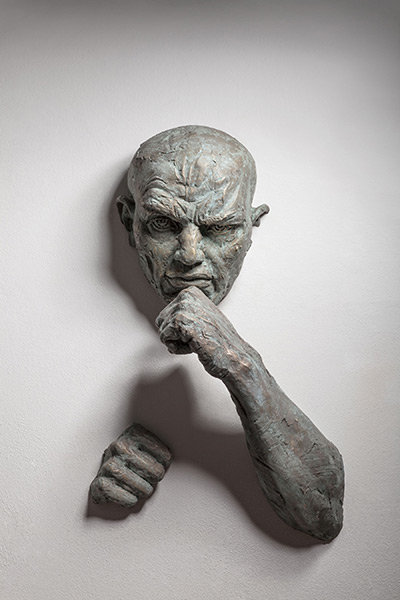
Matteo Pugliese, “Kriya,” 2014, bronze, 26 3/4 x 25 1/2 x 7 3/4 in. (c) Bertrand Delacroix Gallery 2015


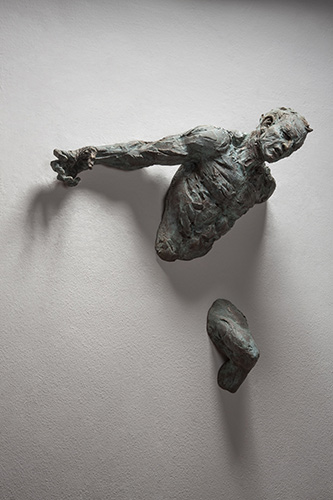
Matteo Pugliese, “Specchio (detail),” 2013, bronze, 38 x 22 3/4 x 13 3/4 in. (c) Bertrand Delacroix Gallery 2015
 

The gallery reports, “Although classical in their defined musculature, Pugliese’s powerful ‘Extra Moenia’ sculptures are wholly contemporary in the contorted positions and broken up presentation. The expressive works are innovative in the relationship to their surroundings; the blank walls on which they are installed become crucial to the viewer’s visual experience. In fact, in ‘Extra Moenia,’ the tension is derived from the presence of the wall itself. Is there anything better than a wall to represent the block, the circumstances that trap and repress us? The desire to break free from this constraint translates into a struggle, one visible in the faces and bodies of the sculptures, aiming to restore a positive physical and mental condition. Tackling this limit is the starting point and creates the opportunity for rebirth, for a new life, far from those compromises and frustrations that one had decided to accept for so long. In such a way, Pugliese’s ‘Extra Moenia’ become not only aesthetically stunning but metaphors for life experiences.”


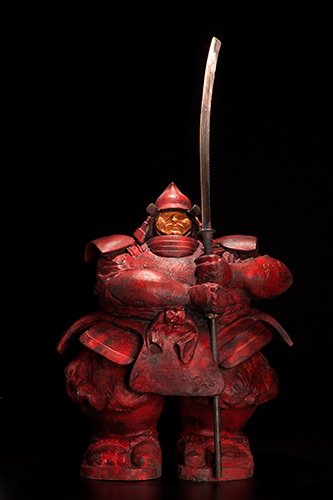
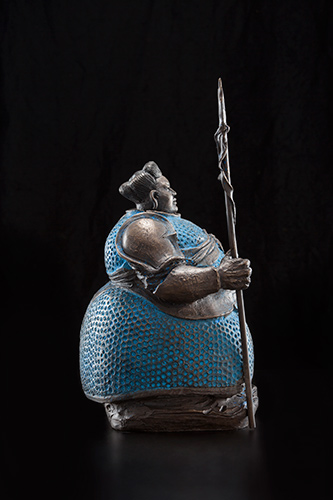
Matteo Pugliese, “Samurai Guardian V,” 2010, bronze and terracotta, 82 3/4 x 55 x 49 1/4 in.
(c) Bertrand Delacroix Gallery 2015


Matteo Pugliese, “Indian Guardian (Vaishrava),” 2015, bronze, 17 x 9 3/4 x 8 1/2 in.
(c) Bertrand Delacroix Gallery 2015
 

Audiences at Bertrand Delacroix Gallery will also be able to view Pugliese’s recent bronze and terracotta warrior sculptures, part of his “The Guardians” series. The gallery writes, “In ‘The Guardians,’ the urge to break loose from the block that we see in ‘Extra Moenia’ translates into the awareness of already having been through it and coming out the other side. Battles, wars and frustrations have been left behind and only the features necessary to win those battles are visible: a strong balance, a great awareness and determination. These concepts are expressed by overturning the traditional proportions: very large and steady feet, powerful and focused bodies, determined faces and aware gazes, often with half-closed eyes — the faces are calm without fear. The figures are rounded and impressive despite their small dimensions. ‘The Guardians’ are greatly inspired by the stone guardians venerated by the Balinese animists. Like the Indonesian idols standing in front of homes to ward off evil spirits, Pugliese’s figures, with grimacing and glowering faces, hold clubs and wait in a crouching position ready to spring into the fight.”
 
“Breath of Freedom” opens at Bertrand Delacroix Gallery on November 5 and will be on view through December 4.
 
To learn more, visit Bertrand Delacroix Gallery.
 
This article was featured in Fine Art Today, a weekly e-newsletter from Fine Art Connoisseur magazine. To start receiving Fine Art Today for free, click here.
 

The California Classicist

0

In dialogue with universal, humanistic ideas and themes, the Classical canon comes alive in the magnetic works of David Ligare at the Laguna Art Museum in California.
 
An idealist rather than a realist, artist David Ligare has built an esteemed career surrounding exquisite paintings that revive the classical principles of beauty, harmony, and order — the symmetria or commensurability of part to part and part to whole. The resulting “literate pictures,” as Ligare calls them, are much more than representations of the artist’s unrivaled skill, but seek to direct and define Western culture while illuminating ancient ideas that, as noted by the museum, “inform our modern world and shared humanity.”


David Ligare, “Prospectiva,” 2000, oil on canvas, 80 x 96 in. (c) Laguna Art Museum 2015,
Collection of Marsha and Darrel Anderson

 
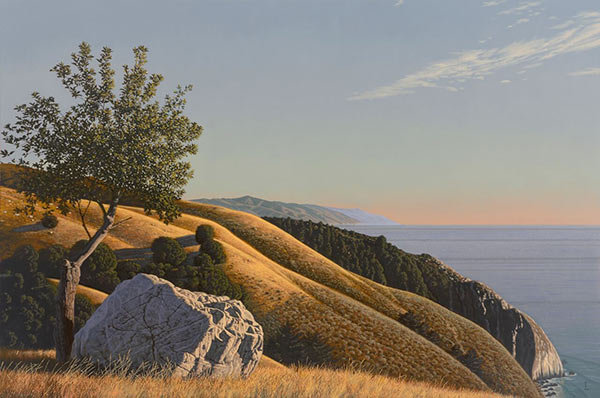
Ligare says, “Making paintings is a passion for me, but it is a passion of ideas rather than just pigment. I believe deeply that art can make a difference in the way we view the world, and in the way we act in it.” Indeed, Big Sur has never been imaged so idealistically and beautifully as in his “Grimes Point, Big Sur.” Standing on the sloping hills along the Pacific coast, the viewer is whisked away to a world where every detail is within its perfect place and space. A captivating golden light blankets the rolling slopes as they descend to the shore. No leaf, grass, tree, stone, or shrub has been forgotten, each treated with the utmost care and attention. The painting also has a stillness that connotes stability, permanence, timelessness, and idealism.


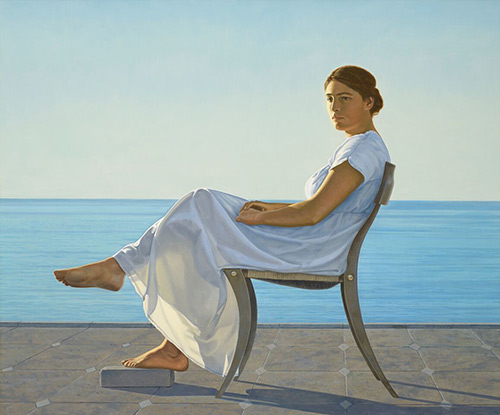
David Ligare, “Penelope,” 1980, oil on canvas, 40 x 48 in. (c) Crocker Art Museum 2015

 
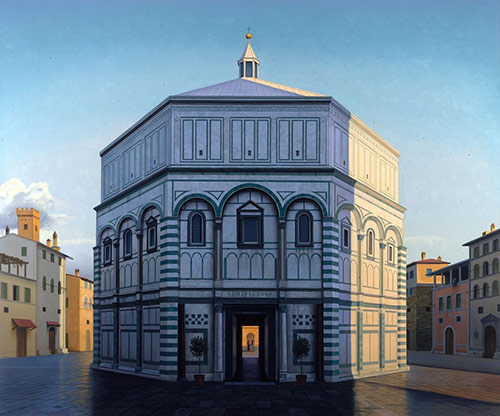
The allusions to Classicism are more obviously asserted within “Perspectiva,” a perfectly rendered view of the famed Florentine Baptistery. The beautiful Romanesque structure is presented at center and symmetrical, while details of the white and green marble are captured with photographic accuracy.


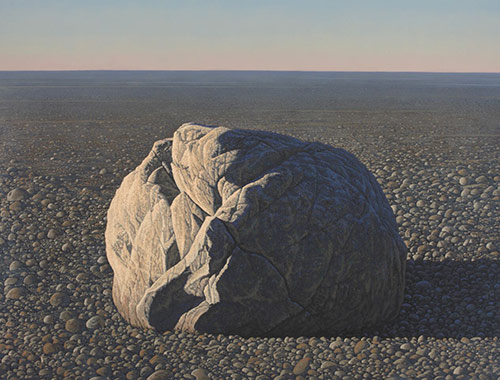
David Ligare, “Rock,” 2012, oil on canvas, 60 x 80 in. (c) Laguna Art Museum 2015, Collection of Loma and Dennis Calas

 
In fact, the painting’s subject and title recall the famous experiment conducted by the renowned Renaissance architect, sculptor, and engineer Filippo Brunelleschi (1377–1446), who is credited with having developed linear perspective. Legend suggests Brunelleschi painted a geometrically incorrect view of the Florentine Baptistery. While holding a mirror, Brunelleschi peered through the back of his painting through a hole. The reflection of his painting could then be juxtaposed directly next to the actual subject, which allowed the artist to observe and correct his perspective mistakes. The discovery, which revolutionized the ways in with painters represented three-dimensional space on two-dimensional surfaces, is frequently cited as a representative example of the period’s cultural, scientific, and artistic innovation. Just beyond the doors, the viewer can find two figures as they shake hands. They are undoubtedly in Renaissance costume — could one assume that Brunelleschi himself is represented? The prospect is tantalizing.


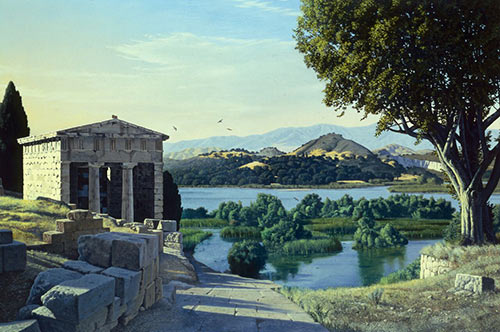
David Ligare, “Landscape for Baucis and Philemon,” 1984, oil on canvas, 32 x 48 in.
(c) Wadsworth Atheneum Museum of Art 2015

 
“David Ligare: California Classicist” opened on October 18 at the Laguna Art Museum and will be on view through January 17.
 
To learn more, visit the Laguna Art Museum.
 
This article was featured in Fine Art Today, a weekly e-newsletter from Fine Art Connoisseur magazine. To start receiving Fine Art Today for free, click here.
 

A Lifetime of Collecting Adventures

0

Admirers of Victorian art should race to Ottawa to enjoy the exhibition “Beauty’s Awakening: Drawings by the Pre-Raphaelites and Their Contemporaries from the Lanigan Collection.” Organized by the National Gallery of Canada (NGC) and on view October 9–January 3, this show traces the diversity and flair of British draftsmanship during the reign of Queen Victoria (1837–1901). Its title has been borrowed from an 1899 play in which a knight seeks to find and awaken “the Spirit of all things beautiful,” just as these artists did.
 
A longtime resident of the Canadian province of Saskatchewan, the oral and maxillofacial surgeon Dennis T. Lanigan has spent four decades acquiring Victorian artworks. He has focused primarily on the years 1850–75, when the Pre-Raphaelite and Aesthetic Movements constituted Britain’s avant-garde. Today he owns more than 400 works by roughly 100 artists, principally drawings and watercolors, but also paintings, original prints, sculpture, medals, stained glass, and decorative objects.
 
Of these, the NGC is presenting 124 drawings representing 57 makers. Among them are the Pre-Raphaelites Edward Burne-Jones, John Everett Millais, William Holman Hunt, and Dante Gabriel Rossetti, the Royal Academicians E.J. Poynter and Frederic Leighton, and other major figures like William Morris, James McNeill Whistler, and J.W. Waterhouse. Their drawings range from preparatory sketches to highly finished scenes exhibited in their own right, and they include pportraits, life studies, landscapes, allegories, and scenes from religious and literary narratives.
 
“I had no plan to build a ‘collection’ per se,” Lanigan explains. “It basically ‘grow’d like Topsy’ until it took on a life of its own. I have always had an interest in collecting, however: As a boy I assembled a collection of fossils. My first real exposure to great art came in 1972, when I toured the U.K., and it was then I started my habit of exploring the major art gallery of every large city I visited. Upon my graduation from dental school in 1972, my parents gave me $500, so I decided I would spend it on art. Fate intervened when I spotted a Parian sculpture by Minton & Co. at a Toronto antique shop. It was dated c. 1851 and priced at $450, so I bought it. It became my first piece of art, and it just happened to be British and Victorian. Later that year, I stumbled upon a fictional autobiography of Whistler, which introduced me to all the leading artists of his era. In retrospect, I realize that I had already been exposed to famous Victorian painters through illustrations in the literature I read as a child, including the Arthurian stories and Greek myths.”
 
Lanigan recalls, “In 1976, I arrived in London just in time to see an important Burne-Jones retrospective at the Hayward Gallery. If there is such a thing as a ‘road to Damascus’ for collectors, that was mine. I exited thinking that if I could own even one drawing by Burne-Jones, I could die happy. That year I made my first visit to the Tate Britain in London, where I found the Pre-Raphaelites languishing in one small room, and also to the Leighton House Museum, where my collection will hang next spring. This is also when I began visiting London commercial galleries that handle Victorian art, and soon I was making my first appointment to see artworks in a museum’s storeroom.”
 
“Early on,” Lanigan admits, “I still harbored hopes that I would be able to buy paintings by major Victorian artists; I had never really thought about buying drawings. It was only later, when the prices of paintings rose out of sight, and when my tastes had developed somewhat, that I began to appreciate drawings more. I have grown to love them so much that, even if I could afford to collect major Pre-Raphaelite paintings, I would continue concentrating on drawings. At first, I sought out working drawings for major paintings, but as time went on, I started buying drawings as independent works or those related to design, particularly for illustration or stained glass. I grew interested in acquiring works by the same artist that show him working in various media and at different periods of his career.”
 
Lanigan continues, “Since 1984, I have returned to the U.K. at least once a year, and I have tried to attend every major exhibition involving the Victorian artists I admire. But if I have succeeded as a collector, much credit must go to those who have acted as my art agents — Daniel Perrin, Rachel Moss, and now Sarah Colegrave. I have always been able to count on their expert advice when they preview a work that interests me coming up for auction in the U.K.”
 
In summation, Lanigan says, “Forming this collection has been a great pleasure, and I hope that my ongoing donation of it will eventually make the National Gallery of Canada one of the leading centers for the study of Victorian drawings.” Interestingly, the NGC received its first Victorian painting in 1882 — only two years after its establishment — from no less a donor than Royal Academy president Frederic Leighton. The first work of art Lanigan bought by the group of artists he really wanted to collect was an oil sketch by Leighton for “Greek Girl Dancing.” It makes perfect sense, therefore, that the Lanigan exhibition will make its second and final stop at London’s Leighton House Museum next spring — February 12 through May 29.
 
Information: National Gallery of Canada; 380 Sussex Drive, Ottawa, Ontario K1N 9N4, Canada, 613.990.1985, gallery.ca/beauty
 
Leighton House Museum, 12 Holland Park Road, London W14 8LZ, England, UK, 44.207.602.3316, rbkc.gov.uk/subsites/museums/leightonhousemuseum1.aspx.
 
The exhibition is accompanied by a magisterial catalogue edited by NGC curator Sonia Del Re. It contains an essay by the British scholar Christopher Newall; Lanigan himself has authored not only an essay, but also 80 of the artworks’ entries.
 
Some Special Moments in Dennis Lanigan’s Collecting Journey
 
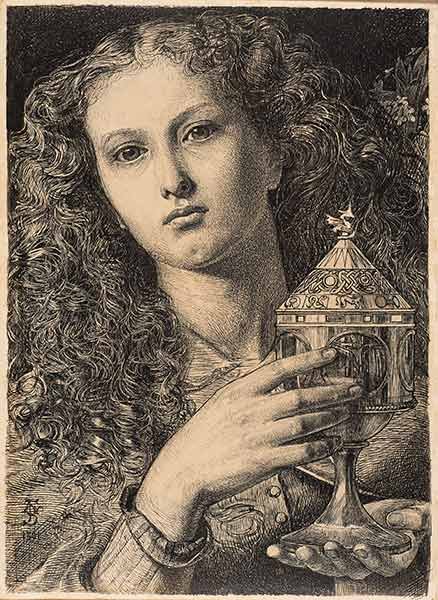
“In 1986, I met the brilliant scholar and collector Douglas Schoenherr, Ph.D., who served as an associate curator at the National Gallery of Canada from 1986 through 1997. On October 27, 1995, I received a fax from Douglas telling me about a drawing that I might like coming up for sale on November 1 at Sotheby’s New York, the Sandys illustrated here. I had admired it ever since seeing it illustrated in Betty Elzea’s catalogue for the groundbreaking Sandys exhibition at the Brighton Museum and Art Gallery in 1974. This is one of Sandys’s masterpieces, and it is the first work for which I ever left a bid with an auction house, because I did not know anyone in New York I could ask to bid on my behalf. My exhilaration was unimaginable when Sotheby’s called to say I had acquired it. Had it come up in London, it would have sold for much more, and I doubt I would have been so lucky.”


1) Frederick Sandys (1829–1904), “King Pelles’s Daughter Bearing the Vessel of the Sanc Graal,” 1861, pen and black ink on paper, 12 5/8 x 9 1/4 in. Promised gift to the National Gallery of Canada from the Lanigan Collection
 
“In May 1984, I went to London to see the major Pre-Raphaelite retrospective organized by the Tate. While in London, I paid my first visit to Julian Hartnoll’s gallery. I was helped by Julian’s assistant, Jenny Newall, because Mr. Hartnoll was out of town. She brought out some recent acquisitions from a drawer to show me, including a very powerful Burne-Jones study for the Slave in The Wheel of Fortune. I liked this drawing very much, but she had no idea what the asking price was, or even if Mr. Hartnoll had priced it yet. As I was due to return to Canada the next day, I discussed the drawing with my dealer Dan Perrin, and he talked to Mr. Hartnoll about it on my behalf. I later found out that Mr. Hartnoll was not happy that I had been shown the drawing because he had planned to offer it to his principal client in New York, Frederick Koch. In the end, however, he agreed to sell it to me, and it still remains the favorite of all my Burne-Jones drawings.”
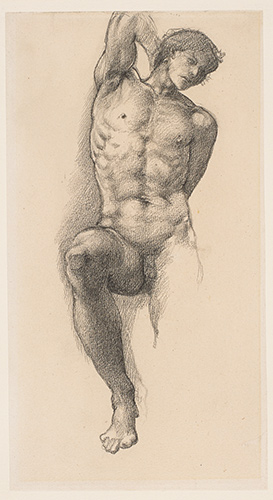


2) Edward Burne-Jones, “Study for the Slave in ‘The Wheel of Fortune’,” ca.1875-1883, Black chalk on paper, 11 3/4 x 6 1/4 in. Promised gift to the National Gallery of Canada from the Lanigan Collection
 
“In September 1983, I got a letter from the London-based agent-dealer Dan Perrin telling me that an Albert Moore drawing I had always liked, a study for ‘Kingcups,’ had been ‘bought in’ when it had initially come up for auction and asking me if I was interested. I called Dan and said that I would be even more interested in the Rossetti drawing of Love for ‘Dante’s Dream at the Time of the Death of Beatrice’ that I had always admired, if it was still available. It so happened that the Rossetti had also not sold upon its initial sale, but, alas, it was already consigned to an upcoming Sotheby’s auction. I therefore had to pay extra to have it withdrawn from the sale. I have never regretted the decision to buy it, though, because I would no longer be able to afford a Rossetti colored chalk drawing of this size and quality.”
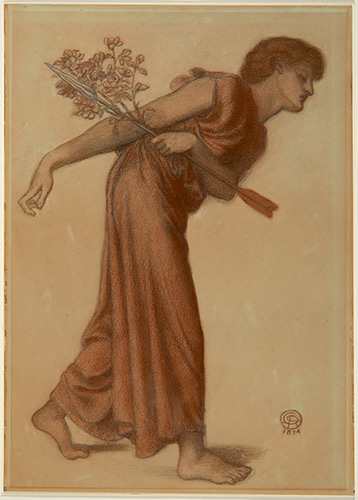


3) Dante Gabriel Rossetti (1828-1882), “Study of the Figure of Love for ‘Dante’s Dream at the Time of the Death of Beatrice’,” 1874, red, gray, and brown chalk on paper, 23 1/4 x 16 3/4 in. Donated in 2015 to the National Gallery of Canada from the Lanigan Collection
 
This article was featured in Fine Art Today, a weekly e-newsletter from Fine Art Connoisseur magazine. To start receiving Fine Art Today for free, click here.

 

Facing a Facade

0

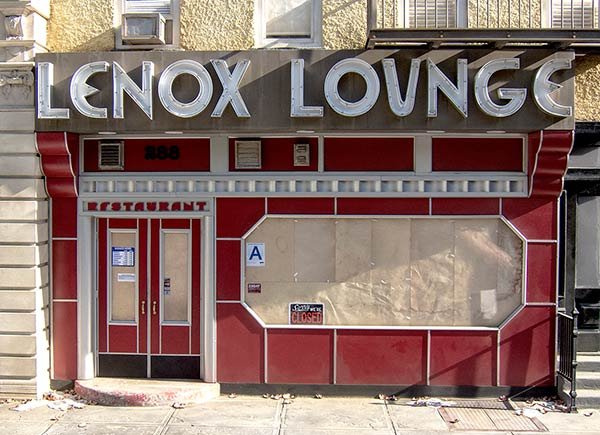
Photographs? Paintings? Sculptures? Other? The photorealistic works by artist Randy Hage are sure to leave you guessing during his solo show at Flower Pepper Gallery in Pasadena, California.
 
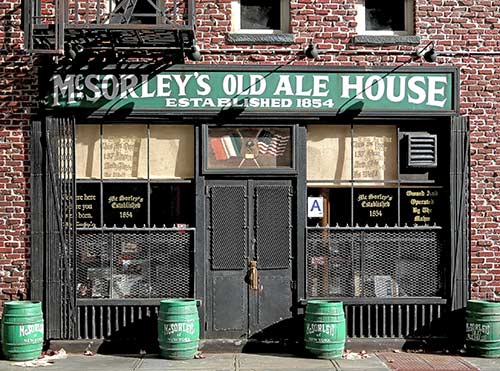
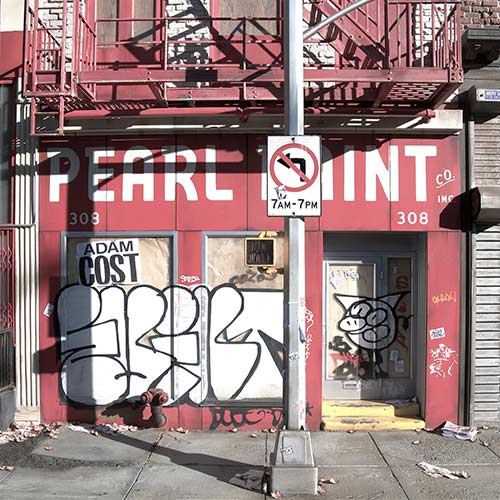
Over the past 15 years, artist Randy Hage has made it his goal to preserve the memory and history of a place by capturing aging storefronts. As cities and towns continue to evolve and grow, these nostalgic facades are being demolished or neglected, or are becoming platforms for gang symbols and other vandalism. The collection of Hage’s works depict “a wide range of mom and pop shops that once acted as pillars of their communities but are now either facing the impending threat of elimination, or have already shut their doors,” as the gallery reports.


Randy Hage, “McSorley’s Old Ale House in Miniature,” mixed media (1/12th scale), 24 1/2 x 20 x 12 in.
(c) Randy Hage 2015

 
Just as intriguing as Hage’s concept are his materials and methods of presentation. At first glance, photographs of Hage’s work appear to be just that: photographs of his subjects. In fact, however, Hage draws upon his experience as a TV and film set and prop expert to skillfully re-create store façades in miniature. As the gallery relates: “Photos that Hage creates of his completed sculptures are virtually indistinguishable from photos of the real life original structures themselves. This side by side comparison only enhances the enchantment felt when viewing his meticulously crafted works. His photos are able to capture moments within his sculptures that give credit to the illusion created and intentionality of each mark.


Randy Hage, “Pearl Paint in Miniature,” mixed media (1/12th scale), 22 1/2 x 22 1/2 x 10 in. (c) Randy Hage 2015

 
“Every one of Randy Hage’s photorealistic sculptures has a story and immense history that is told through each brick and beam replicated. Some buildings are grand and historic, while others appear to be more mundane, but all were once cherished by those who kept [them]. By preserving the exterior of these locations, the artist honors all of the passion that was once held within them. The communities they served and the unique place they held in history, all play a part to communicate what is in danger of being lost. ‘Façade’ by Randy Hage is a tribute to these stories and a reflection of an artist who is able to help tell them.”
 
“Façade” opened on October 10 and will be on view through November 18.
 
To learn more, visit Flower Pepper Gallery.
 
This article was featured in Fine Art Today, a weekly e-newsletter from Fine Art Connoisseur magazine. To start receiving Fine Art Today for free, click here.

 

Spear-O Inspiration

0

Deep within northeast Wyoming lies the sprawling mountain campus of Sheridan College at Spear-O-Wigwam. Surrounded by the breathtaking Bighorn Mountains, the campus and the adjacent wilderness recently became the site — and source — of inspiration for nine artists.
 
The “Spear-O at the Brinton Museum” exhibition, as well as its newly renovated venue, are sure to turn heads and impress viewers for the month of November. Featuring drawings, pastels, watercolors, and oils, “Spear-O” highlights the ways in which the deep Wyoming wilderness continues to be a source of infinite artistic inspiration. In July, nine artists spent a weeklong retreat on the “Mountain Campus” of Sheridan College, where they discussed art, collected ideas, and, of course, sketched and painted.


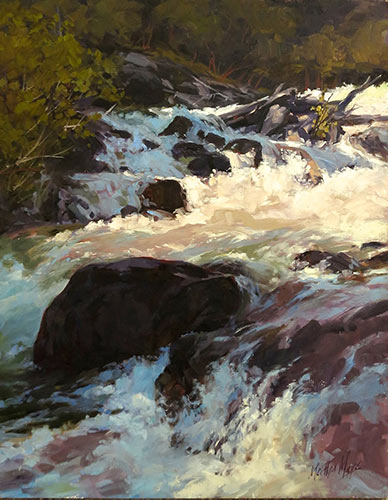
Marty Mans, “Rapid Creek Cascade — Bighorns,” 2015, oil, 20 x 16 in. (c) The Brinton Museum 2015

 
After morning coffee, the artists would venture into the surrounding landscape in search of that perfect view for the next piece. The results were outstanding and are now on view at the newly renovated Brinton Museum in Big Horn, Wyoming. Participating artists include Bruce Graham, Lloyd Kelly, Joanne Lavender, Marty Mans, Lisa Norman, Joel Ostlind, Chessney Sevier, Paul Waldum, and Dan Young.
 
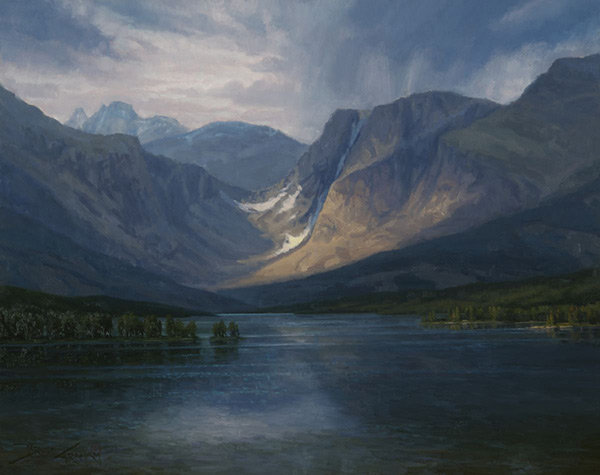
Although many paintings could be dubbed highlights of the show, Bruce Graham’s “Showers on the Mountain” commands consideration. The picture captures the majesty and presence of the Bighorn Mountains with clarity and passion. Viewers find themselves standing along the shores of a gorgeous lake as scattered showers roll across the region. Composing the majority of the painting are the towering peaks of several mountains above the lake. A beautiful quilting of colorful blues, purples, whites, and greens dominates the subjects. Our eyes are gracefully led across the lake and up into the range through a sloping valley at center, which sparkles within a patch of sunlight. Above a peak to the right, one can detect the faint details of rain bands as they cruise into the distance. The piece is absolutely magnetic.


Joanne Lavender, “Renewal,” 2015, oil, 18 x 18 in. (c) The Brinton Museum 2015

 
Marty Mans’s “Rapid Creek Cascade — Bighorns” is a tighter composition but equally compelling. Particularly noteworthy is the painting’s luminance, which is captured skillfully and with energy. The subject is a torrent of rushing water as it crashes through boulders and stones on its way down the mountains. A large, shadowed boulder splits the creek at center while above, the sun glistens through the water. The palette of the piece is full and balanced, with harmonious purples, whites, and blues composing the submerged stones along the right edge and luminous greens, oranges, and yellows within the foliage along the shore.


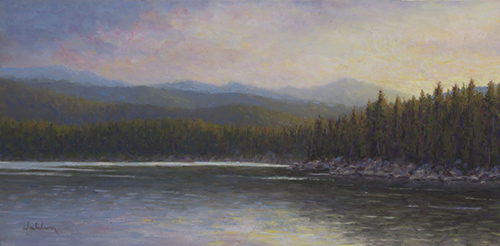
Paul Waldum, “Park Reservoir Evening,” 2015, pastel, 12 x 24 in. (c) The Brinton Museum 2015
 

In addition to the wonderful works of art, visitors can admire the Brinton Museum’s recent transformation. This past summer, the museum was renovated from a small, aging boutique to a major 24,000-square-foot state-of-the-art institution. At a cost of $15 million, the update was made possible by Forrest E. Mars Jr. and includes climate-controlled galleries and storage, a bistro, and a museum store.
 
“Spear-O at the Brinton Museum” opened on October 25 and will be on view through November 22.
 
To learn more, visit The Brinton Museum.
 
This article was featured in Fine Art Today, a weekly e-newsletter from Fine Art Connoisseur magazine. To start receiving Fine Art Today for free, click here.


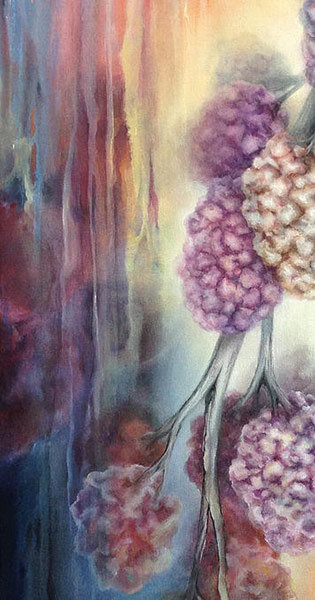
Featured Artwork: Kathy Buist

0

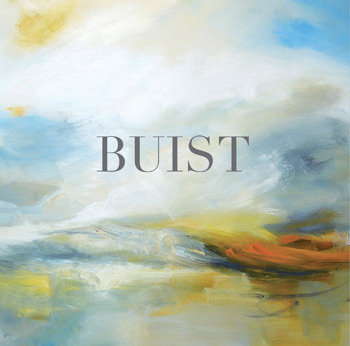
“Reflecting Light”
Mixed Media
52 x 52 in.
$12,900
 
www.kathybuist.com

Buist’s work has won praise from The New York Times and has been shown in museums and galleries throughout the country, including the Andrews Art Museum, Andrews, North Carolina, Parrish Art Museum in Water Mill, New York, and the Long Island Art Museum, in Stony Brook,
NY. She has been a resident artist at centers in Vermont and Virginia and her paintings are part of myriad prestigious private collections internationally.
 
“ Ms. Buist’s small, swiftly captured sensations can be particularly convincing.”
 
-The New York Times, Phyllis Braff
 
“ There is a generous amount of visual energy in Kathy Buist’s Long Island and Vermont scenes, so richly brushed they make the paint seem almost sensual. Her views are powerful and successful, for each wide stroke abbreviating a unit of vegetation takes on a comparatively grand scale in this format.”
 
-The New York Times, Phyllis Braff


An intimate look at Buist’s paintings and life. This beautiful hardcover book has over 260 images and more than 250 pages.  The book is available via Amazon.com

November 6: All Gallery Show

0

Join DiagnosisART, the Religious Academy, and LivvnArt Monthly for a captivating “All Gallery Show.”

Opening on November 4 with a reception on November 6, the Religious Academy, LivvnArt Monthly, and DiagnosisART will feature a number of outstanding works during their joint “All Gallery Show” in Denver, Colorado.  

Among the artists represented are Vera Anderson, Diane Burchett, Paul Grass, Penny Oliver, Heidi Rierra, John Stadler, and many more. 

To learn more, visit DiagnosisART.

WEEKLY NEWS FROM THE ART WORLD

Fill your mind with useful art stories, the latest trends, upcoming art shows, top artists, and more. Subscribe to Fine Art Today, from the publishers of Fine Art Connoisseur magazine.

  • This field is for validation purposes and should be left unchanged.