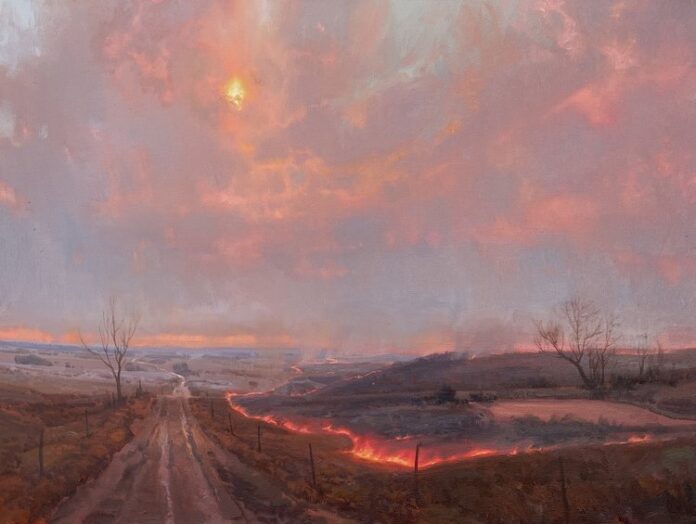
Michael Albrechtsen, "Renewal," oil on canvas, 18 x 24 in.
The biennial show of the American Tonalist Society opens in New York on April 28, 2023, featuring 67 paintings of 30 top North American artists working in the Tonalist style.
The opening weekend will also feature demos by Ken Salaz and Dennis Sheehan as well as a presentation by Adrienne Bell, the foremost authority on the work of George Inness. For more information about the show and events, visit the ATS website: americantonalistsociety.com.
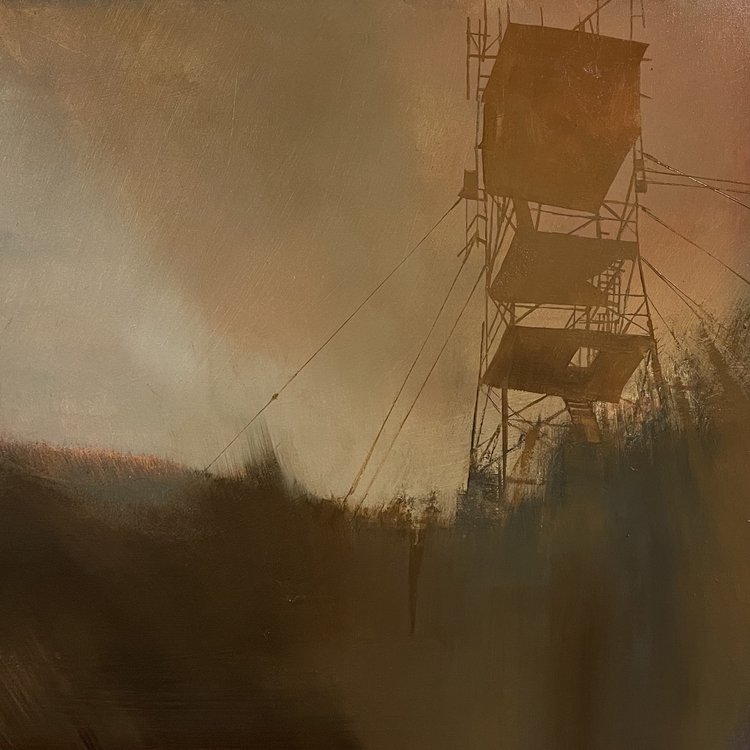
Charlie Hunter*, “The Lord Is In This Place, How Dreadful Is This Place (Federal Hill Firetower),” oil on canvas, 20 x 20 in.
From the American Tonalist Society:
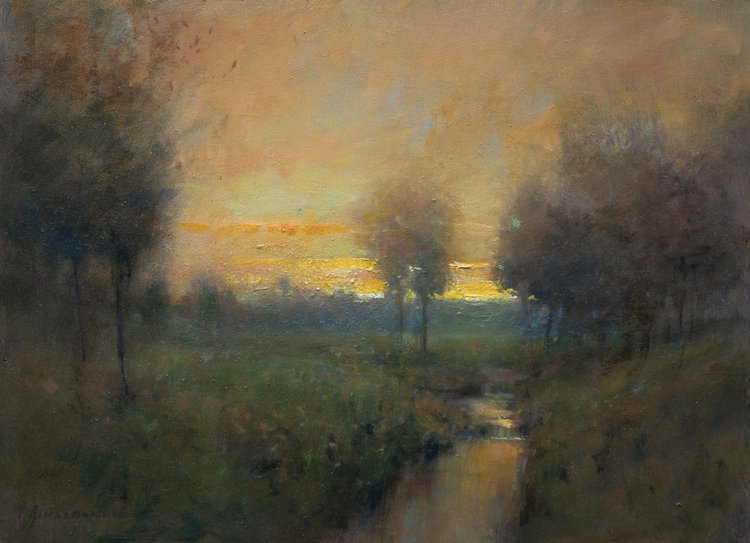
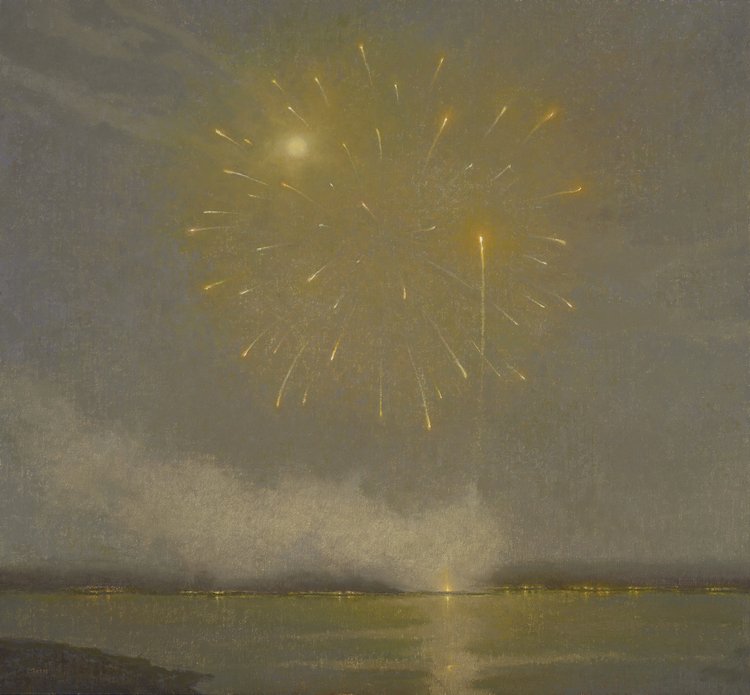
In the tradition of Tonalist masters, Harrison, Inness, Kahn, and Whistler, this year’s exceptional collection of tonalist paintings explores a variety of subjects and emotions to present a modern-day interpretation of our world.
The artists, using skillful paint application, color, tone, and technical excellence, evoke mood and mystery in both styles of Aesthetic Tonalism and Expressive Tonalism. Our curators have chosen over 60 artworks to represent the best of American Tonalism today. We hope you enjoy this years’ biennial show Shades of Gray II.
John MacDonald*, “Berkshire Dusk,” oil on panel, 12 x 16 in.Jennifer Moses, “Moonrise Celebration,” oil on linen, 24 x 26 in.
The American Tonalist Society is an organization that promotes the art Movement called Tonalism and tonalist artworks by our member artists. Our mission is to recognize, promote and showcase the current tonalist movement, and to continue the tradition of the American Tonalists of the 1800s through workshops, exhibitions and catalogues.
The tonalist movement illustrates the departure from emphasis on color, strong contrasts, bravura brushwork, high chroma, and detail. Instead, it focuses on emotion, spirituality, feeling and mood, encompassing luscious, luminous, and evanescent atmospheric effects featuring foggy mornings, evocative moonlit nights with a minimal palette of neutral hues. Like visual poetry, tonalist paintings have a quiet statement of contemplation, mystery, and intrigue.
*This artist is part of the PaintTube.tv series of art video workshops on how to paint. Includes many more artists featured in the Shades of Gray II exhibition, such as Ken Salaz, Eric Koeppel, Mary Garrish, and Thomas Kegler.
As part of our effort to continue to help artists and art galleries thrive, we’re proud to bring you this week’s “Virtual Gallery Walk.” Browse the artwork below and click the image itself to learn more about it, including how to contact the gallery.
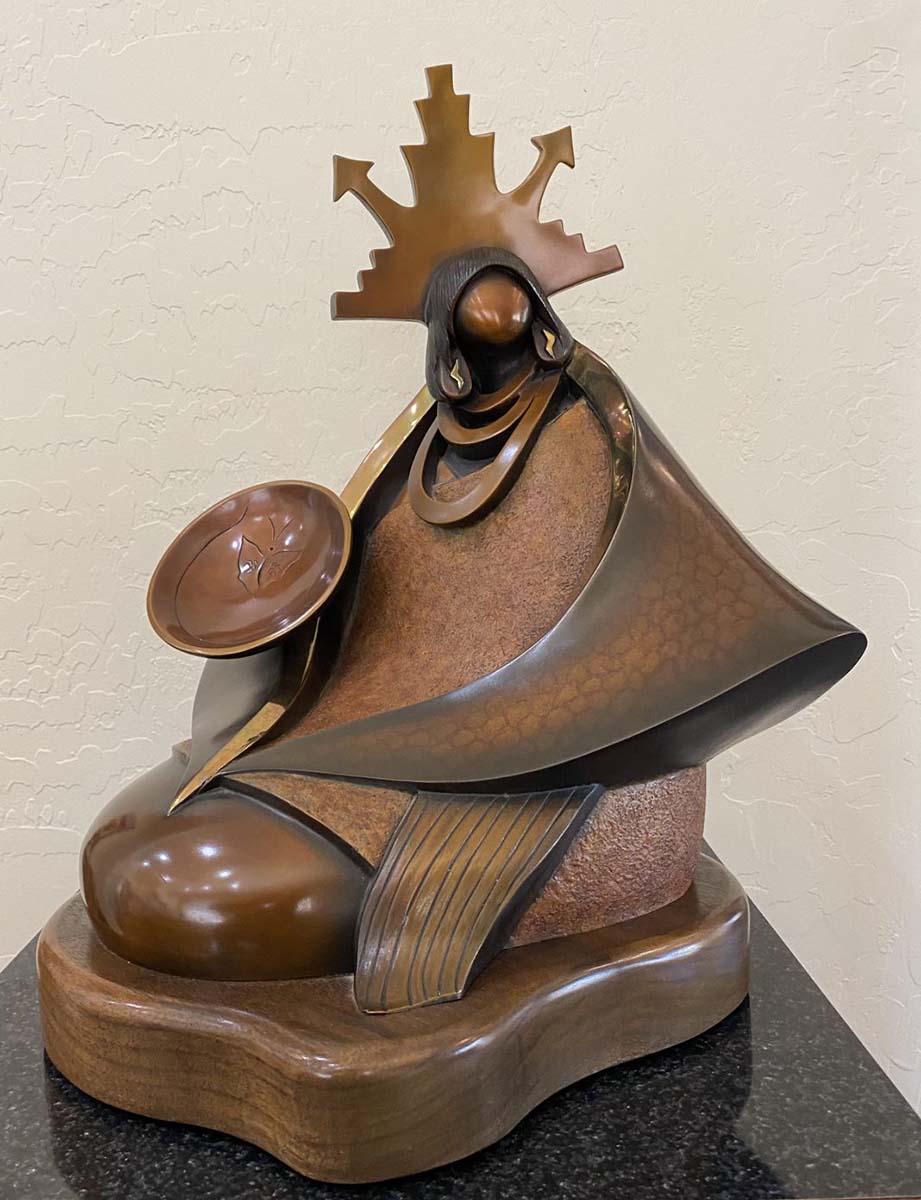
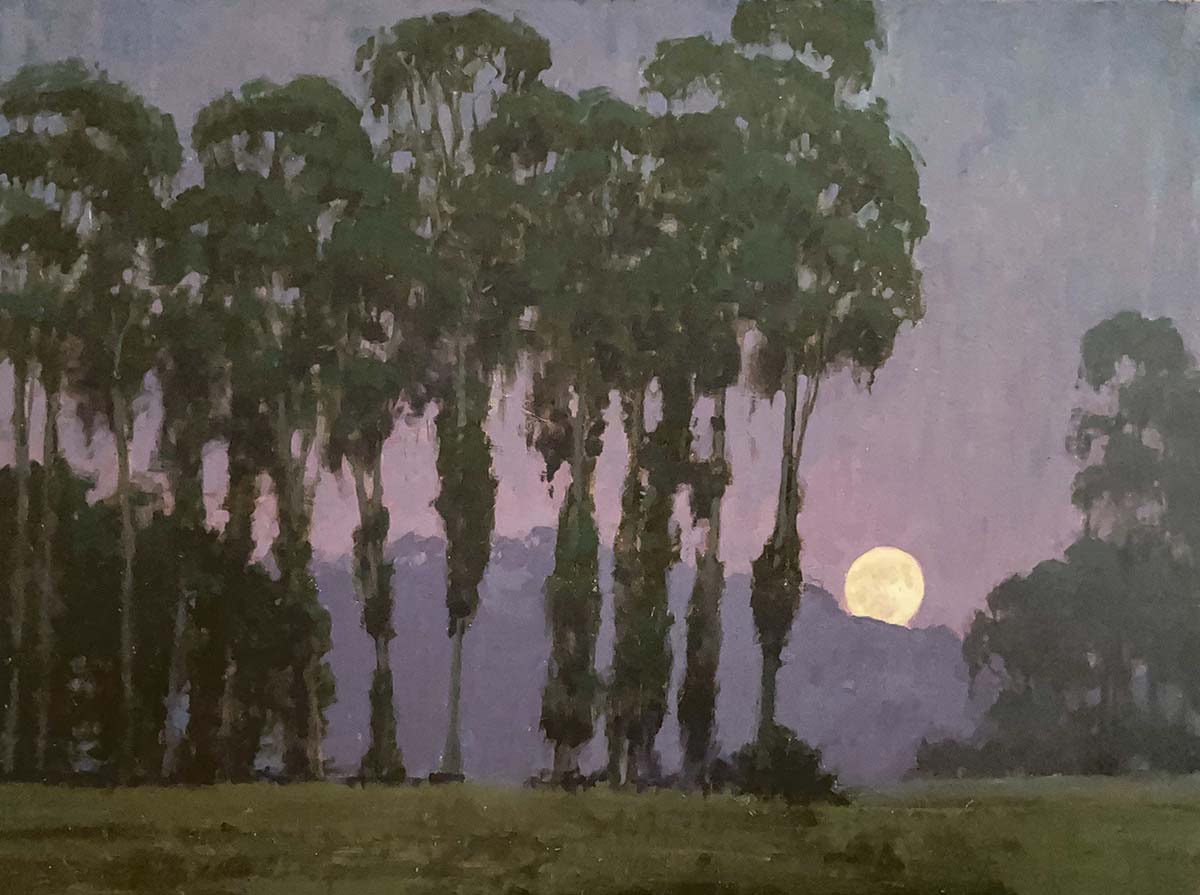
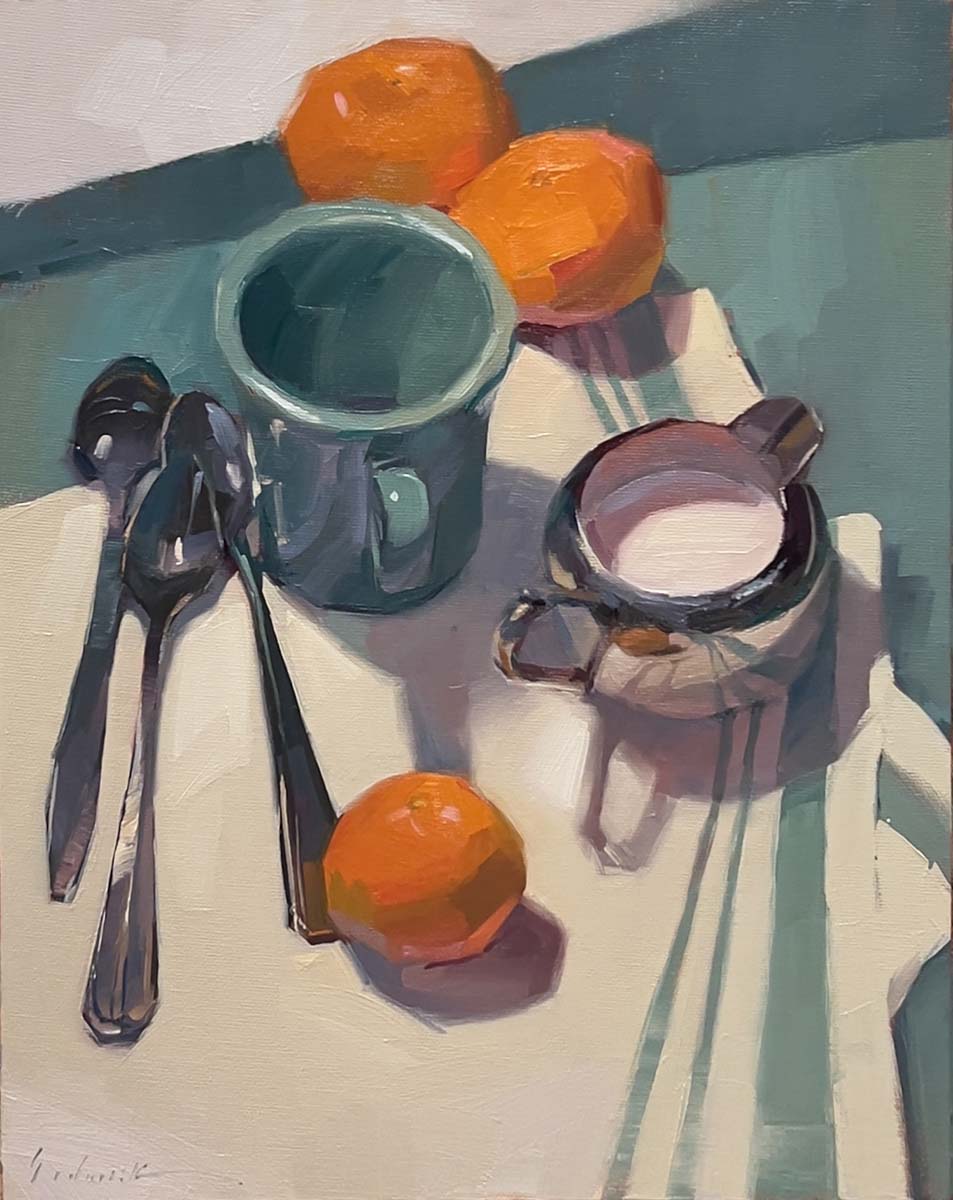
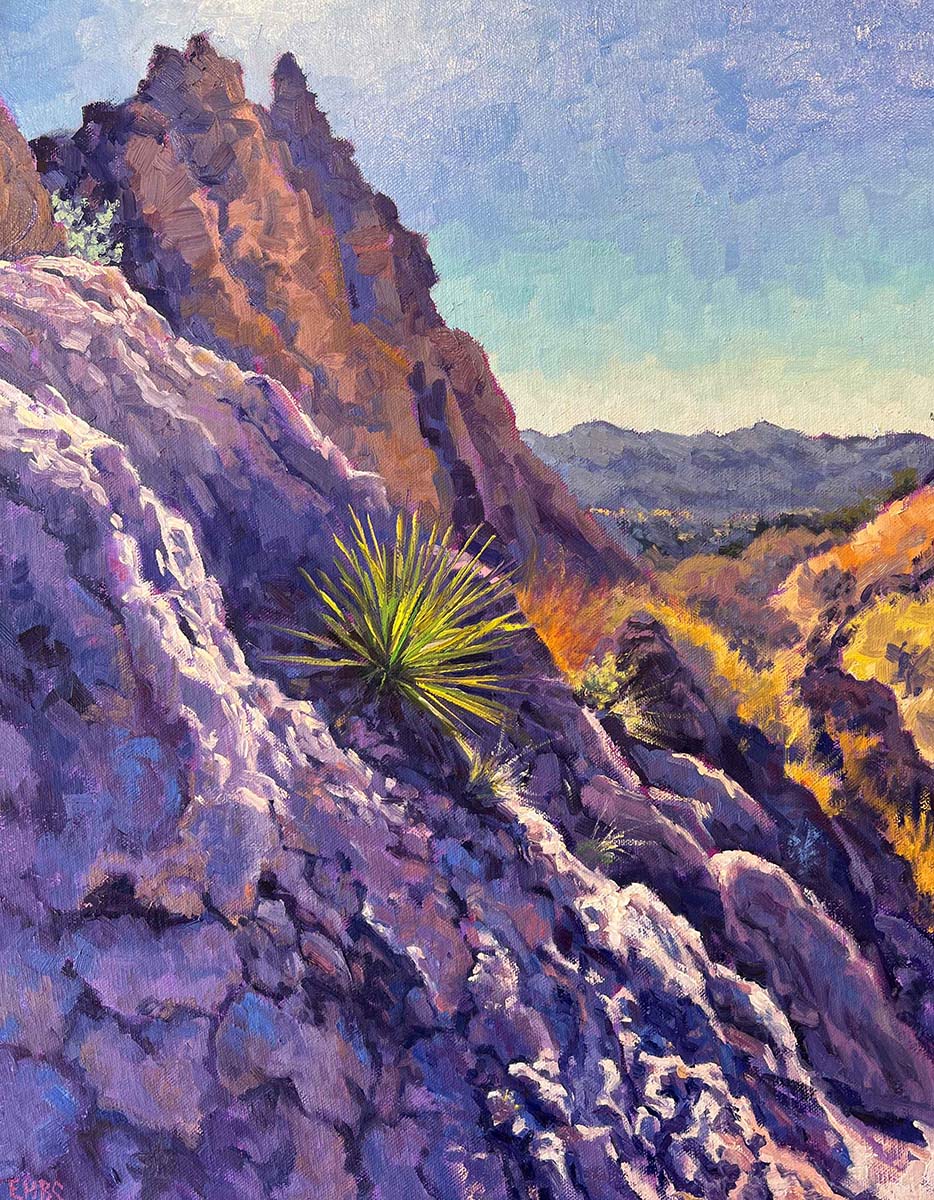
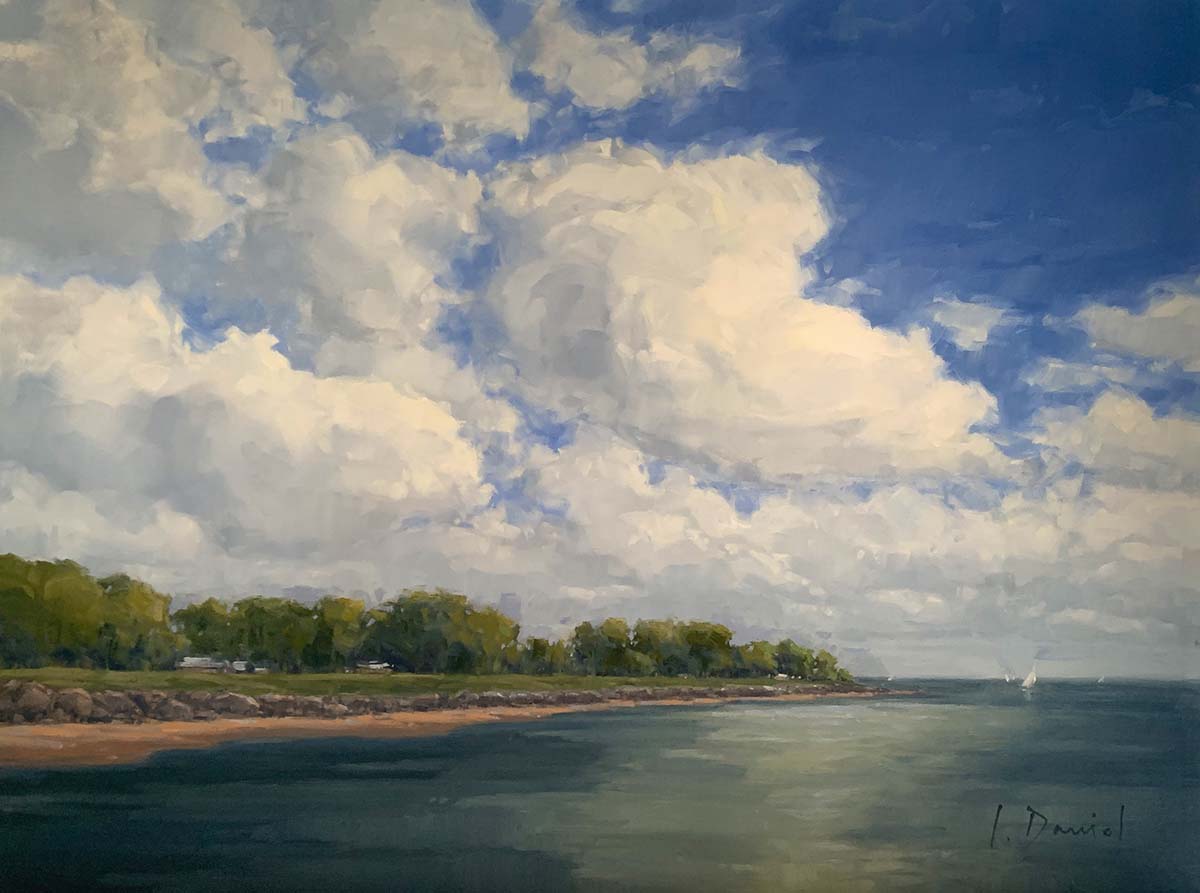
Kneeling Butterfly, Kim Obrzut, bronze, 17 x 14 x 11.5in; ArtzLine.comStrawberry Supermoon, Randall Sexton, oil, 30 x 40 in; Randall SextonTeal Fiesta, Sarah Sedwick, oil on canvas, 11 x 14 in; Sarah SedwickModesto Canyon Morning, Elizabeth Bartlett Culp, oil on canvas, 16 x 20 in; Elizabeth Bartlett CulpSeaside, Laurel Daniel, oil, 30×40 in; Laurel Daniel
Want to see your gallery featured in an upcoming Virtual Gallery Walk? Contact us at [email protected] to advertise today. Don’t delay, as spaces are first come, first served, and availability is limited.
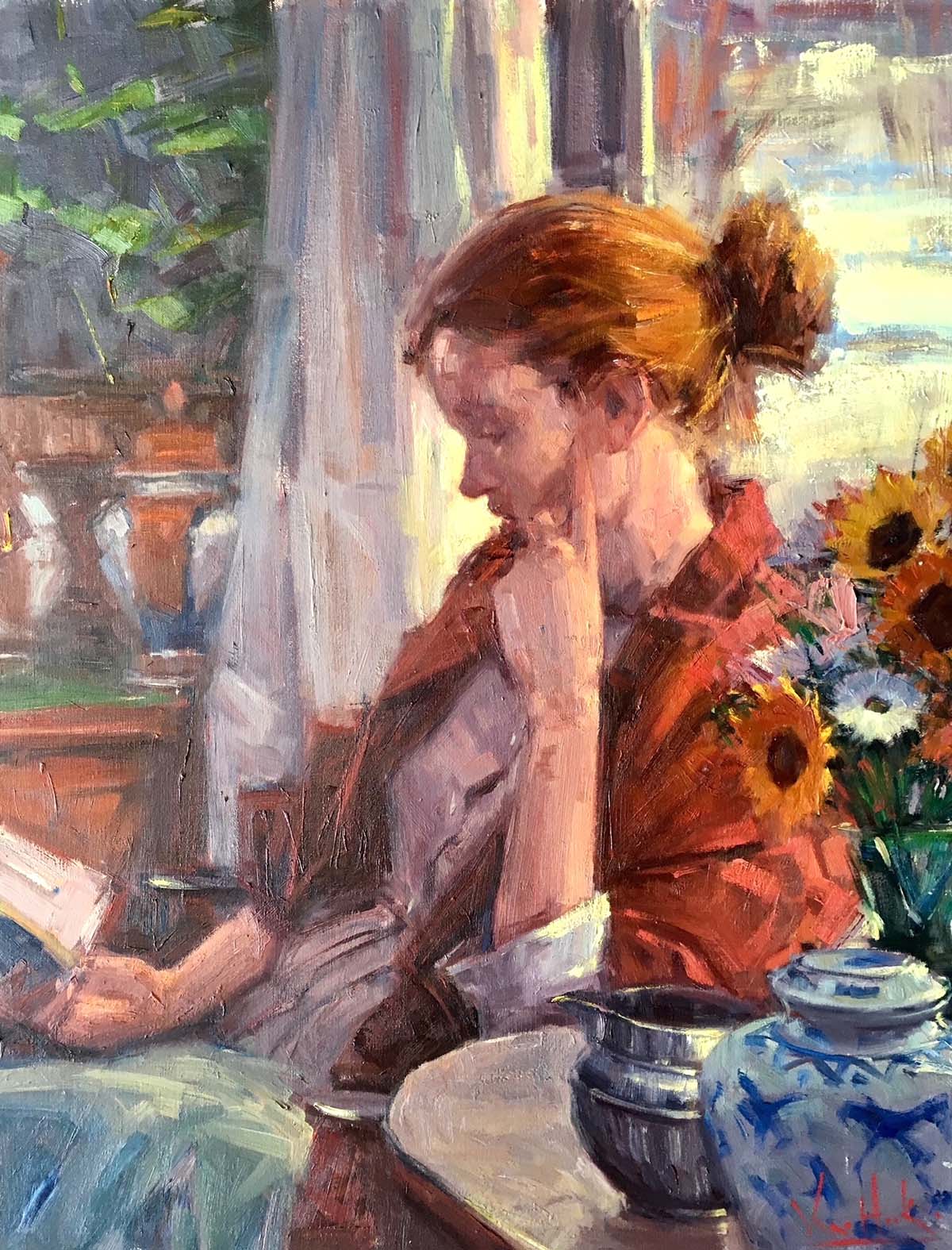
Following college, George travelled through France, Italy and Holland making numerous paintings “en plein air”. This is still his practice today.
How did you get started and then develop your career? George Van Hook: I began painting at a very early age, my sister (one year older than me) is also a professional artist, so we spent a great deal of time painting together as kids. That just naturally flowed into my becoming an artist, and I have never done anything else. I was fortunate enough to be surrounded by many others who had similar ambitions, and over time the professional aspect of my career developed.
How do you find inspiration? George Van Hook: I have never sought out “inspiration”. I think that if you’re committed to being an artist, you find it everywhere. The real joy of following this path is having your inner feelings mirrored by the external world, and being able to marry them into a work of art.
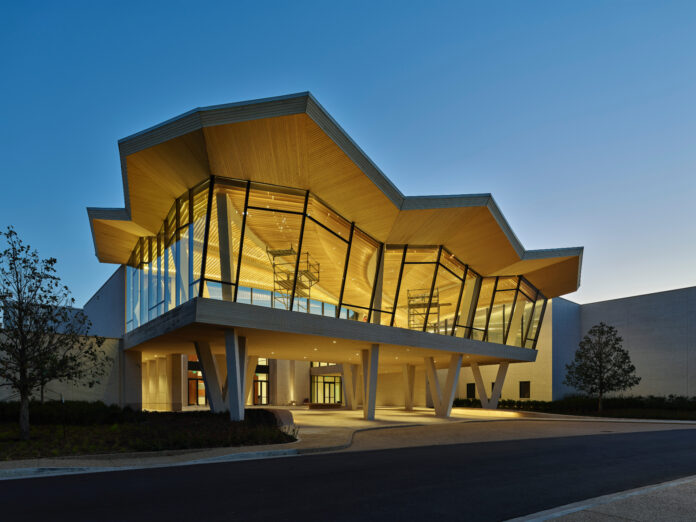
Art Museum Grand Opening > The Arkansas Museum of Fine Arts (AMFA) has revealed the exhibitions and site-specific commissions slated for its grand reopening on April 22, 2023. The oldest and largest cultural institution of its kind in Arkansas, AMFA has reimagined its building and 11-acre campus in downtown Little Rock. Former President Bill Clinton joined AMFA’s leadership team and Little Rock Mayor Frank Scott Jr. for the New York announcement at The Pool at the Seagram Building in Manhattan.
“My predecessor as governor, Winthrop Rockefeller, was right to call the Arkansas Museum of Fine Arts ‘more than a museum,'” said President Clinton. “I’m thrilled that with this transformation, visitors from around the corner and around the globe will enjoy a world-class facility in the heart of Little Rock. This project is such a great model of public/private cooperation – for small cities and big cities alike – and I’m grateful to everyone who came together to make it possible.”
AMFA’s new 133,000-square-foot building will house its permanent and international collection of 14,000 works of art dating to the 14th century.
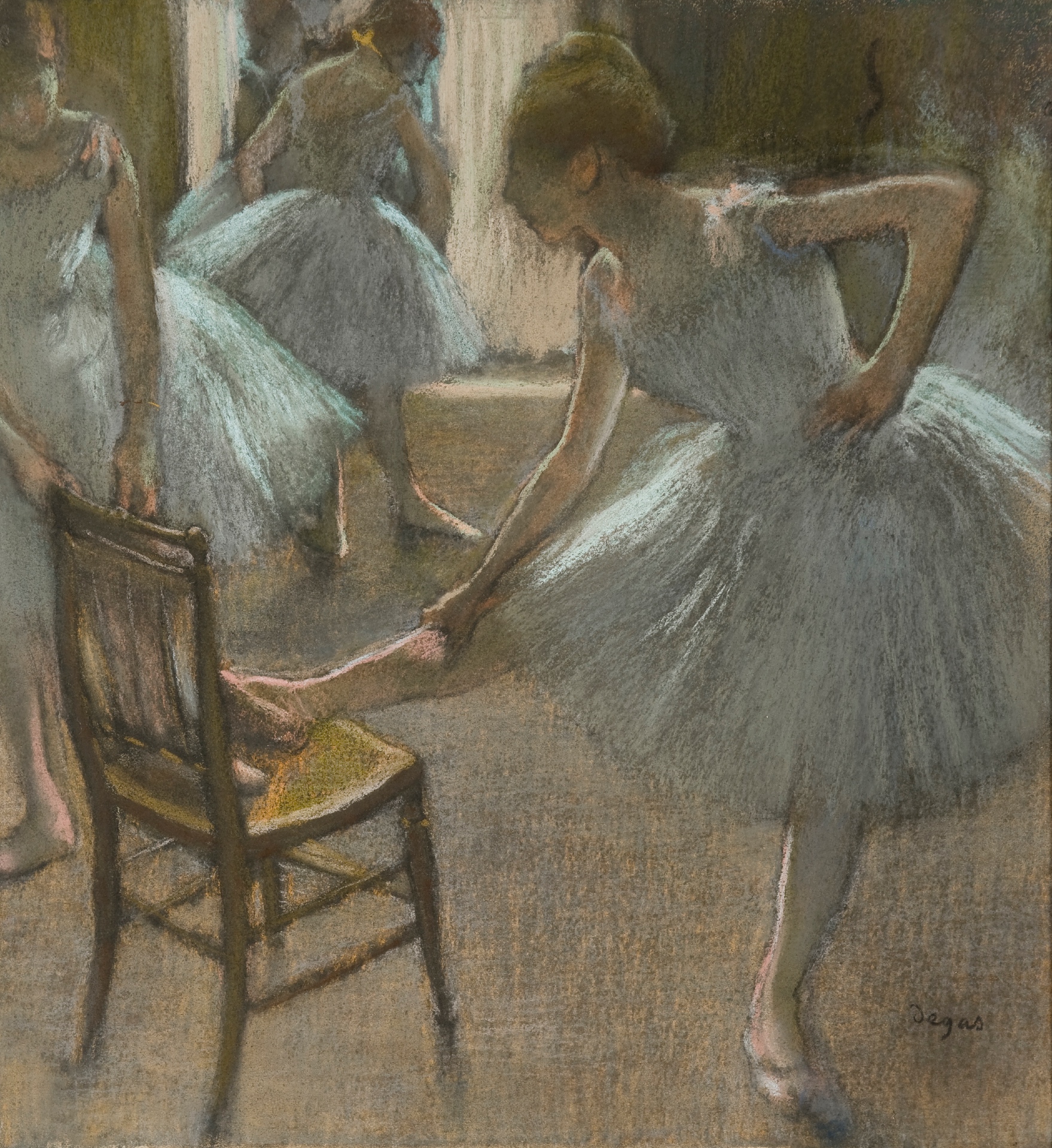
From the collection: Edgar Hilaire Germain Degas (Paris, France, 1834 – 1917, Paris, France), “Danseuse bleue (Avant la classe, trois danseuses) [Blue Dancer (Before Class, Three Dancers)],” 1886 – 1890, pastel on paper, 21 1/4 x 19 3/4 in., On loan from the Jackson T. Stephens Charitable Trust for Art.The opening permanent collection installation at the art museum will showcase some of it’s most significant works – including drawings by Signac, Marin, and O’Keeffe and rare paintings by Rivera and Elaine de Kooning – and the “Drawn to Paper” art museum exhibition will illustrate the depth of AMFA’s holdings of 20th century American and European works on paper.
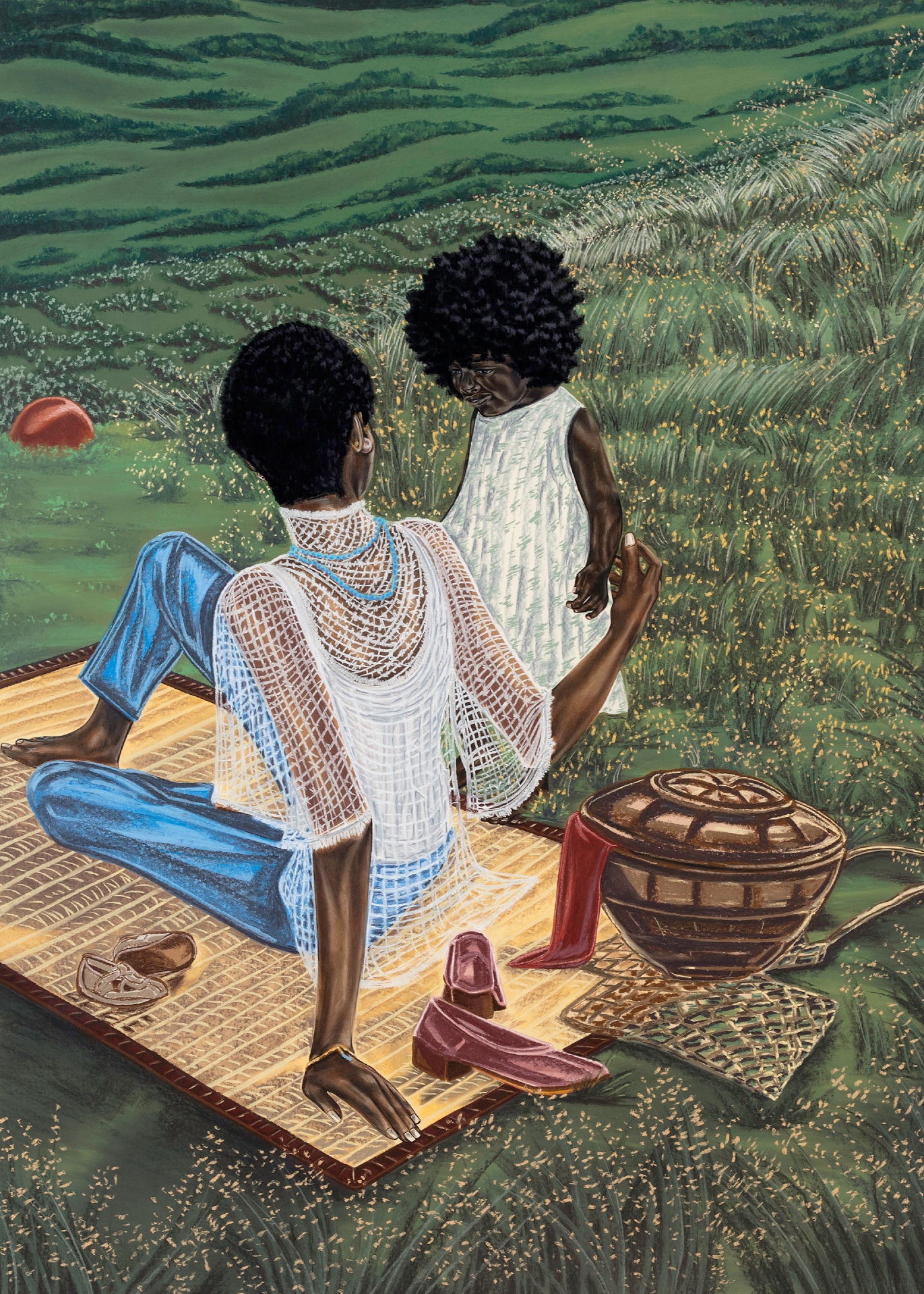
The reopened AMFA will also feature site-specific commissions by contemporary artists Anne Lindberg and Natasha Bowdoin; a special exhibition of the work of Chakaia Booker; and the Museum’s New Media Gallery featuring the animated video Tears of Chiwen by Beijing-based artist Sun Xun. Comprised of new acquisitions and loans by artists such as Elias Sime, Ryan RedCorn, LaToya Hobbs, and Oliver Lee Jackson, the banner inaugural exhibition at the art museum, “Together,” is a celebration of art that explores our connectedness to each other and the natural world.
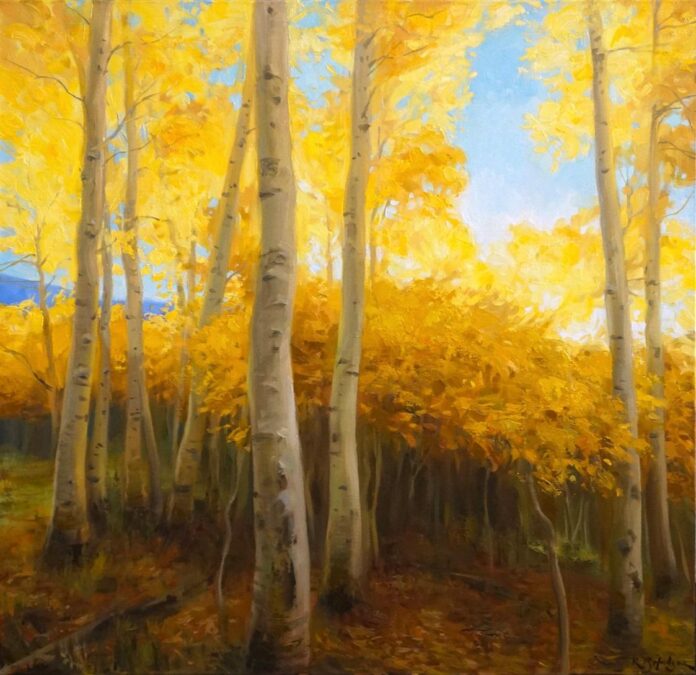
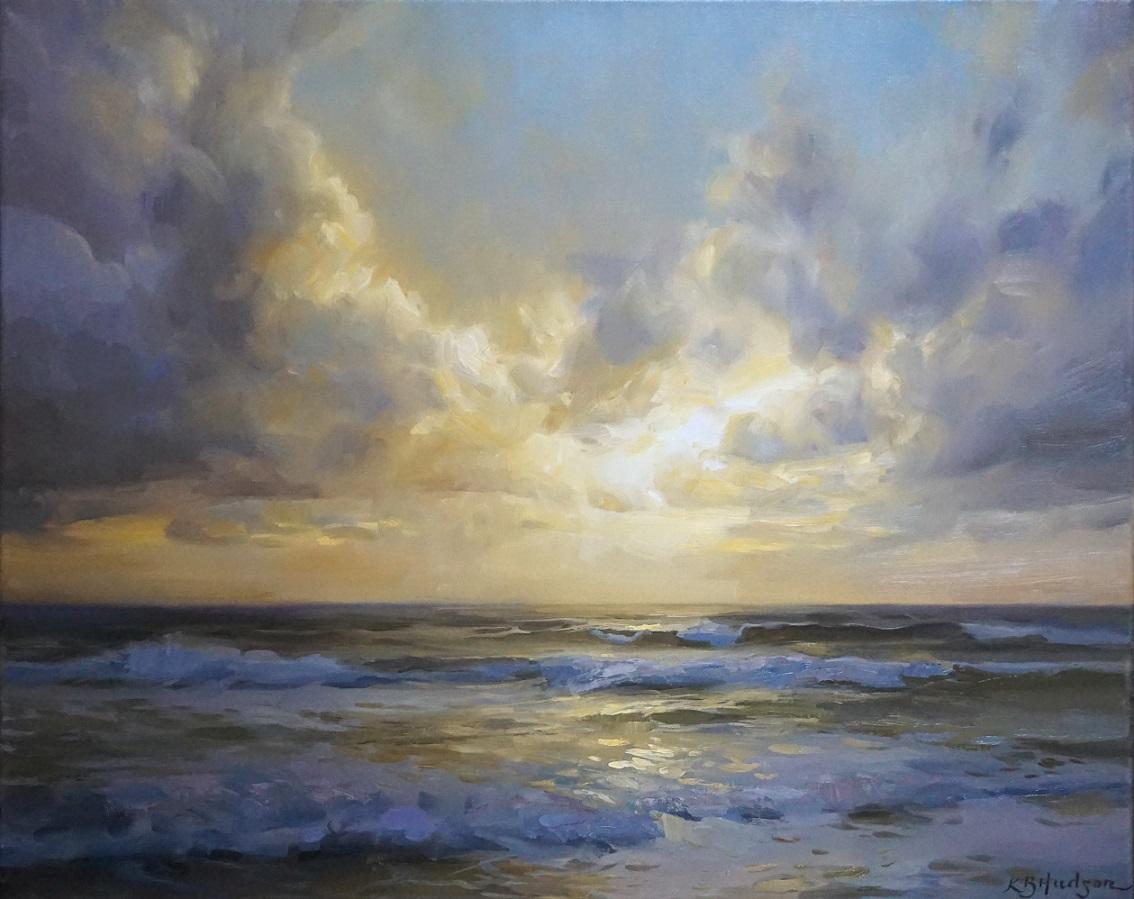
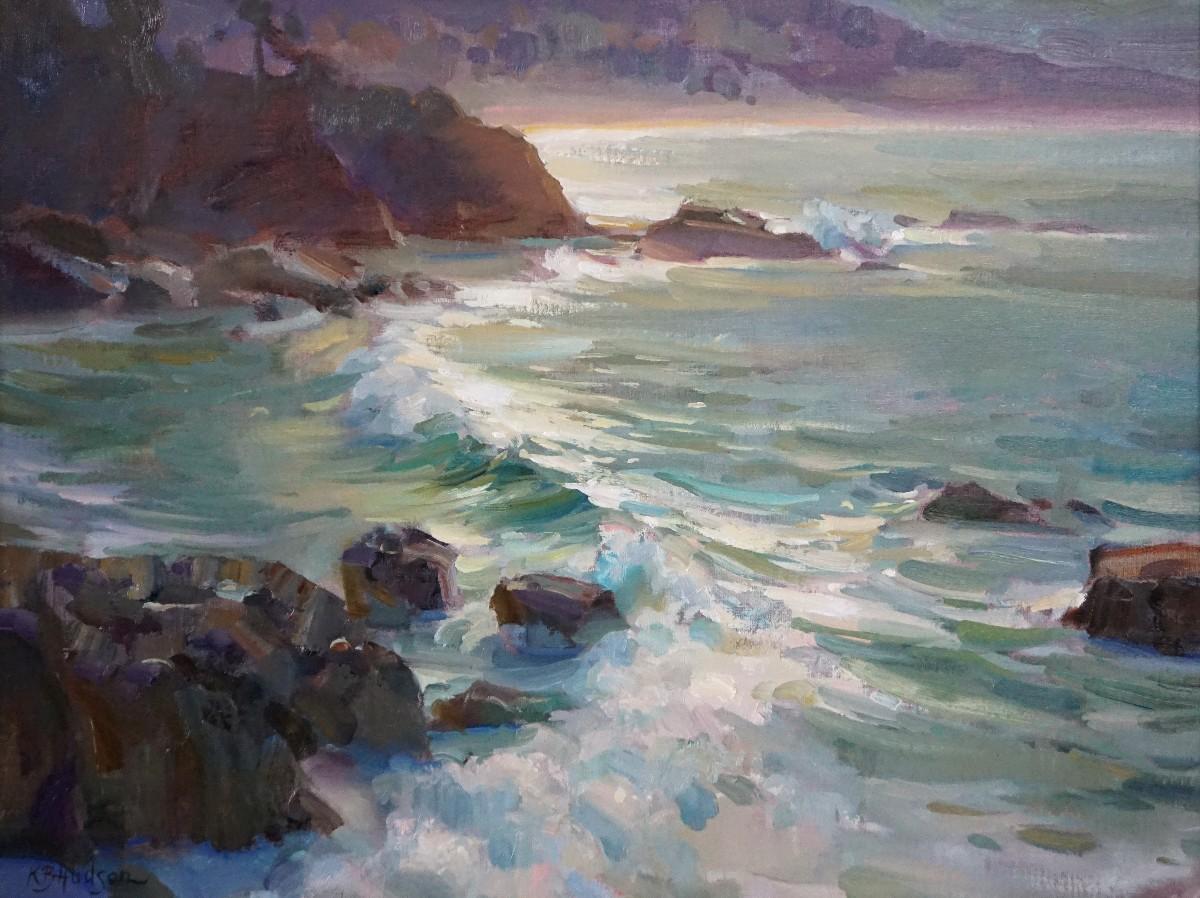
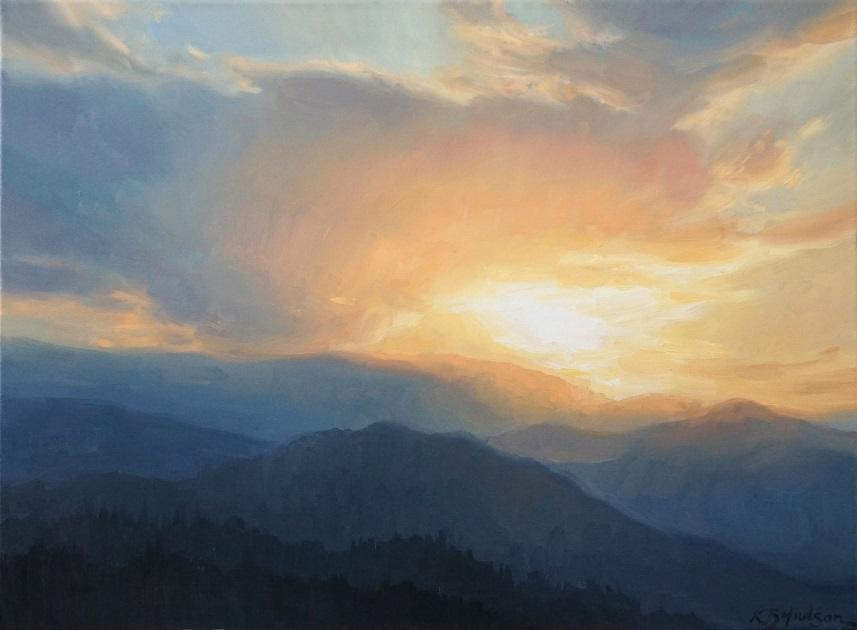
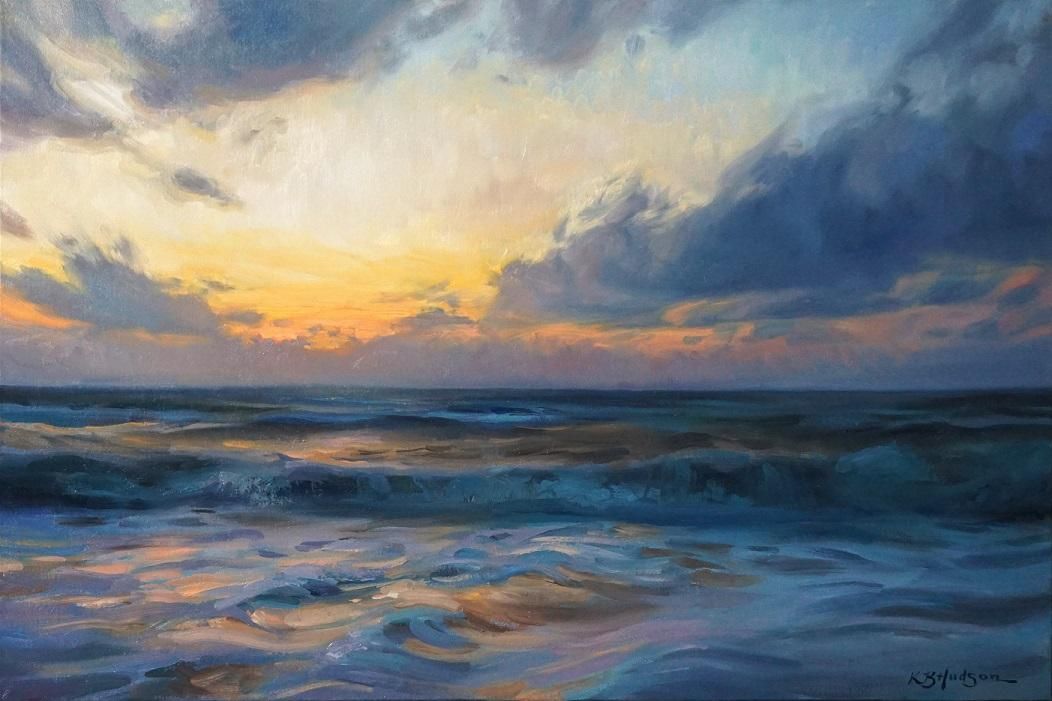
Colorado treasure Kathleen Hudson applies an inspired visual intelligence to landscapes, seascapes, and waterfalls, almost mystically capturing their centuries-old history and beaming it into our present moment.
“Sunbreak,” 24×30, oil, by Kathleen Hudson
Hudson’s landscapes are on view at Cole Gallery (Edmonds, Washington) through May 2, 2023.
“Morning Light,” 20×24, oil, by Kathleen Hudson
More from the gallery:
Newly welcomed to Cole Gallery from her seat in Colorado Springs, Kathleen gathers the majestic natural forces around her and scatters them over and through her paintings.
“Mountain Sunset,” 18×24, oil, by Kathleen Hudson
Artist’s Statement
The landscape has always been my chief source of artistic inspiration. I love to capture sweeping views of rugged terrain, shimmering waves, and dramatic atmospherics. According to my family, I began painting as soon as I was old enough to hold a brush. Oils became my favored medium during middle school when I painstakingly copied several of John Singer Sargent’s works. I enjoyed an unconventional upbringing and traveled broadly, exploring new terrain and—notably—dozens of art museums. Viewing awe-inspiring places like Yosemite, the Wye Valley in Wales, and Niagara Falls left me with a desire to recreate some of these scenes on canvas.
To this day I try to evoke that same childhood sense of wonder in my landscapes. My paintings represent specific places and moments in time: the brief point during a sunrise when the sun fills the air with an ethereal golden glow; a break in a storm where light pierces through heavy clouds; or the sight of glacial runoff sending waterfalls down the side of a mountain wreathed in fog.
Scenes like this are real, but because my paintings highlight rare moments of particular beauty, they tread a fine line between the “real” and the otherworldly.
What makes a landscape otherworldly or sublime?
The short answer: light and atmospheric movement.
A mountain may become more than just a mountain when you stand beneath it and watch the sunlight dance across its slopes’ jagged contours. You listen to the wind whistle overhead as it enters rock crevices and rushes downward; moments later, you feel its breath across your face. The same atmospheric forces that make the mountain arrestingly beautiful—moving light, air, clouds—envelop you, too. You become part of the landscape. It is then that the mountain becomes part of a visual drama that can awaken something within you, filling you with wonder and even longing.
When I envision a new painting, I focus on points of shifting light and atmosphere in the scene. To me, these are the source of a landscape’s beauty: the things that make us stop and look before continuing on our way. ~Kathleen Hudson (kathleenbhudson.com)
“Dusk Over the Sea,” 24×36, oil, by Kathleen Hudson
Let Kathleen Hudson teach you how to paint beautiful landscapes:
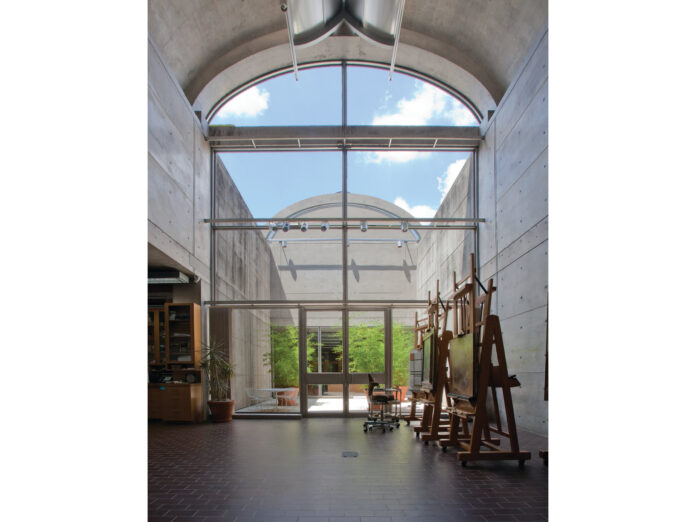
The Kimbell Art Museum is presenting an art conservation panel discussion, “The Past, Present, and Future of Conservation at the Kimbell,” on Saturday, April 22, 2023, at 10 a.m. To mark the 50th anniversary of the museum, Kimbell conservators past and present will look back at memorable research and treatments, discuss the vital role of the conservation program within the museum and reflect on changes in the profession.
More from the organizers:
The program will begin with a welcome from Eric M. Lee, director of the Kimbell Art Museum, and the panel will include Claire Barry, director of conservation emerita, Kimbell Art Museum; Michael Gallagher, Sherman Fairchild Chairman of the Department of Paintings Conservation, The Metropolitan Museum of Art, New York; Elise Effmann Clifford, head of paintings conservation, the Fine Arts Museums of San Francisco; Bart J.C. Devolder, chief conservator, Princeton University Art Museum, New Jersey; and Peter Van de Moortel, chief conservator, Kimbell Art Museum.
The art conservation panel, from left to right: Claire Barry, Elise Effmann Clifford, Bart J.C. Devolder, Michael Gallagher, Peter Van de Moortel
“The Kimbell has had a distinguished history in conservation, and many leading conservators have been associated with its department,” said Eric M. Lee, director of the Kimbell Art Museum. “The panel will be a reunion of sorts, with current and former Kimbell conservators looking at where the department and field of conservation has been, where it is now, and where it is going.”
Admission is free and no reservation is required, but seating is limited. The discussion will take place in the Pavilion Auditorium and be simulcast in the Kahn Auditorium.
Claire Barry has been the Kimbell’s director of conservation emerita since April 2021, when she retired from her full-time position. She first joined the museum in 1984, when she was hired as the Kimbell’s first full-time conservator. Barry set up the conservation department with state-of the-art equipment and developed the conservation program to examine and care for the needs of the Kimbell’s collection, with an emphasis on paintings. In 1992, she initiated a joint conservation program at the Kimbell Art Museum to care for the museum’s European paintings as well as the American paintings at the neighboring Amon Carter Museum. In addition to hands-on treatment of paintings, Barry also published numerous technical studies devoted to artists’ creative practices, ranging from Michelangelo, Federico Barocci, Georges de La Tour, Bartolomé Esteban Murillo, Francisco de Zurbarán and Claude Monet to Charles Demuth, Thomas Cole, Winslow Homer and Thomas Eakins. In recognition of her contributions in conservation at the Kimbell, Barry was appointed director of conservation in 2011. She lectures regularly on artists’ painting techniques and consults with museums and private collectors. Barry also serves on the board of Save Venice Inc., where she participates in the projects committee to choose and fund restorations in the Venice region. Additionally, she serves on the Meadows Museum Advisory Council and the Visiting Committee for the Sherman Fairchild Paintings Conservation Department at the Metropolitan Museum of Art.
Elise Effmann Clifford is head of paintings conservation at the Fine Arts Museums of San Francisco, where she has been since 2007. Her prior position was at the Kimbell Art Museum as assistant conservator of paintings starting in 2003. She trained at the Conservation Center, Institute of Fine Arts, New York University, with her final year internship spent at the Metropolitan Museum of Art, followed by an Andrew W. Mellon Fellowship at the Philadelphia Museum of Art. She has published on such diverse topics as the rediscovery of a painting by Thomas Cole, the painting technique of the Pre-Raphaelite John Roddam Spencer Stanhope, the reattribution of an early work by Canaletto and the materials and techniques of the Le Nain Brothers, a study co-authored with Claire Barry.
Bart J.C. Devolder received his M.A. in painting conservation from the Royal Academy of Fine Arts, Antwerp, Belgium, in 2002. He held internships at the Akademia Sztuk Pieknych, Krakow, Poland, the Royal Institute for Cultural Heritage (KIK-IRPA), Brussels, and the Musée du Louvre, Paris. He also received a fellowship from the Straus Center for Conservation at the Harvard University Art Museums (2003–4) and was the Andrew W. Mellon Fellow in Painting Conservation at the National Gallery of Art, Washington, D.C. (2004–7). Devolder has worked for the Kimbell Art Museum and Amon Carter Museum of American Art in Fort Worth, Texas, first as assistant conservator of paintings (2007–10) and later as associate conservator of paintings (2010–12). Before joining the Princeton University Art Museum as conservator of collections in the summer of 2018 and, since 2020, as chief conservator, he worked in Belgium as the on-site coordinator and painting conservator for the restoration of the Ghent Altarpiece by the brothers Hubert and Jan van Eyck (2012–18).
Devolder has studied, published and lectured on a wide variety of topics, ranging from Fayum portraits, Early Netherlandish canvas paintings and the representation of gold brocades in Netherlandish paintings to the methods and techniques of Cubist paintings. He is also particularly interested in the newer applications of computer sciences to the field of studying old master paintings. Devolder likes to use an understanding of the ways artworks are created as a catalyst to interact with people and students from different backgrounds and disciplines.
MichaelGallagher, who was born in Liverpool, undertook post-graduate training in the conservation of easel painting at the Hamilton Kerr Institute, University of Cambridge, England. Following a fellowship at the J. Paul Getty Museum, he was appointed assistant conservator of paintings at the Kimbell Art Museum in 1992. As a contractual conservator from 1995 to 1999 for the Gemäldegalerie in Berlin, he conserved six panels from an altarpiece by the Master of the Crispin Legend, wings of an altarpiece by the Master of the Darmstadt Passion and Saints Gregory, Maurus, Papianus, and Domitilla by Peter Paul Rubens. In May 1999, he was appointed keeper of conservation at the National Galleries of Scotland, where he oversaw more than two dozen staff members in the Conservation and Registrars’ Departments and was directly responsible for the conservation of a number of major paintings. These works include Sandro Botticelli’s The Virgin Adoring the Sleeping Christ Child, Thomas Gainsborough’s William 1st Earl Cathcart, Bartolomé Esteban Murillo’s A Young Man with a Basket of Fruit, Giovanni Domenico Tiepolo’s The Rape of Europa and Anthony Van Dyck’s St. Sebastian Bound for Martyrdom.
Gallagher took up his position at the Metropolitan Museum of Art in October 2005. He initiated and oversaw the major refurbishment of the Sherman Fairchild Painting Conservation Center that was completed in March 2009. In addition to his managerial role, since arriving at the museum he has worked on paintings by Bassano, Cranach, Gerard David, Giaquinto, Giovanni da Milano, La Tour, Le Brun, Pietro Lorenzetti, Moretto, Perino del Vaga, Poussin, Reynolds, Rubens, del Sarto, Subleyras, Titian, Valentin, and Velázquez. He has served on numerous cross-departmental committees and in 2015–16 was Chairman of the Forum of Curators, Conservators, and Scientists at the museum. He has published articles on specific treatments and broader themes and has lectured regularly throughout his career.
Peter Van de Moortel is chief conservator at the Kimbell Art Museum, a role he assumed in 2021. He joined the Museum in 2017, as assistant conservator, and became associate conservator in 2019. During his time at the Kimbell, Van de Moortel both worked on European and American pictures by artists such as Girolamo Romanino, Bartholomé Esteban Murillo, Nicolas Lancret, and William-Adolphe Bouguereau and has conducted technical research on works by Winslow Homer, Frederic Remington, Salvador Dalí and Francisco de Zurbarán. Prior to joining the Kimbell, Van de Moortel was the Sherman Fairchild Fellow in Paintings Conservation at the Metropolitan Museum of Art in New York and held postgraduate positions at the Royal Museum of Fine Arts Antwerp, Belgium; the Royal Institute for Cultural Heritage (KIK-IRPA) in Brussels, Belgium; and the Stichting Restauratie Atelier Limburg in Maastricht, The Netherlands. Van de Moortel holds an M.A. in art history and archaeology from the Vrije Universiteit Brussel, Belgium, as well as a B.A. and an M.A. in conservation and restoration from the Royal Academy of Fine Arts of Antwerp, Belgium.
As part of our effort to continue to help artists and art galleries thrive, we’re proud to bring you this week’s “Virtual Gallery Walk.” Browse the artwork below and click the image itself to learn more about it, including how to contact the gallery.
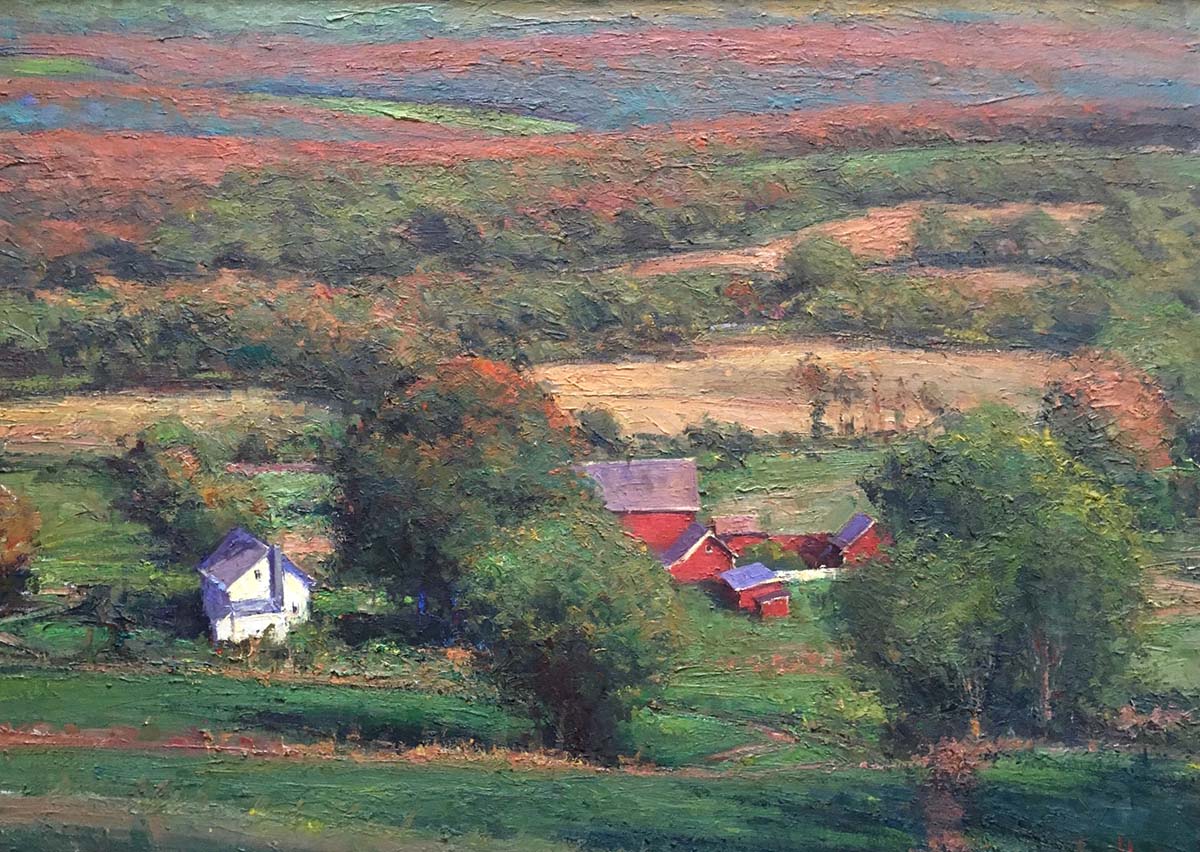
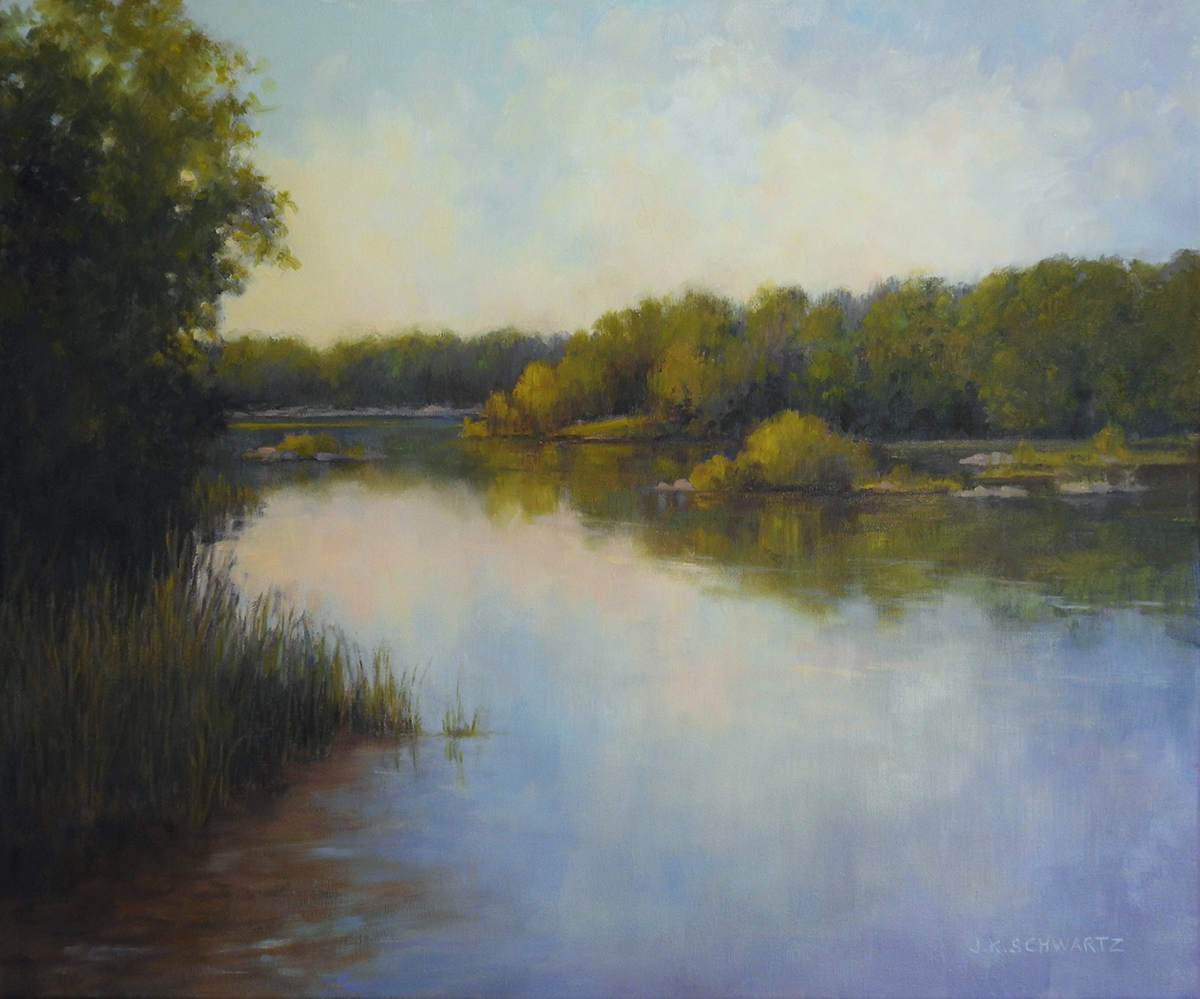
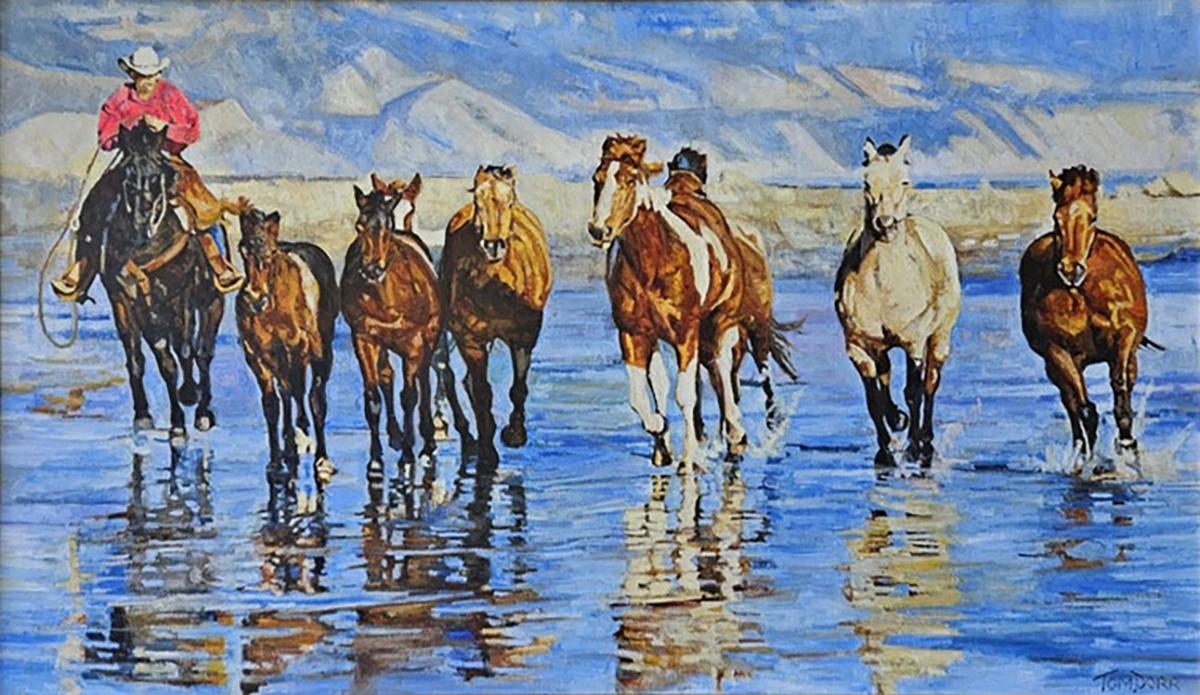
Turn of the Season, Jean Schwartz, oil on linen, 20 x 24 in; Jean SchwartzOn The Run, Tom Dorr, oil, 24 x 40 in; ArtzLine.comMiracle in the Desert, Elizabeth Bartlett Culp, oil on canvas, 8 x 10 in; Elizabeth Bartlett Culp
Want to see your gallery featured in an upcoming Virtual Gallery Walk? Contact us at [email protected] to advertise today. Don’t delay, as spaces are first come, first served, and availability is limited.
Jessica Le Clerc, “Cobalt Violet,” oil on canvas, 24 x 36 in, 2022
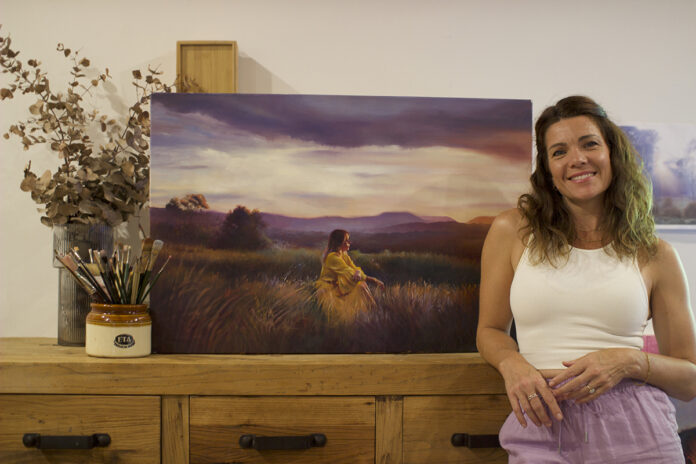
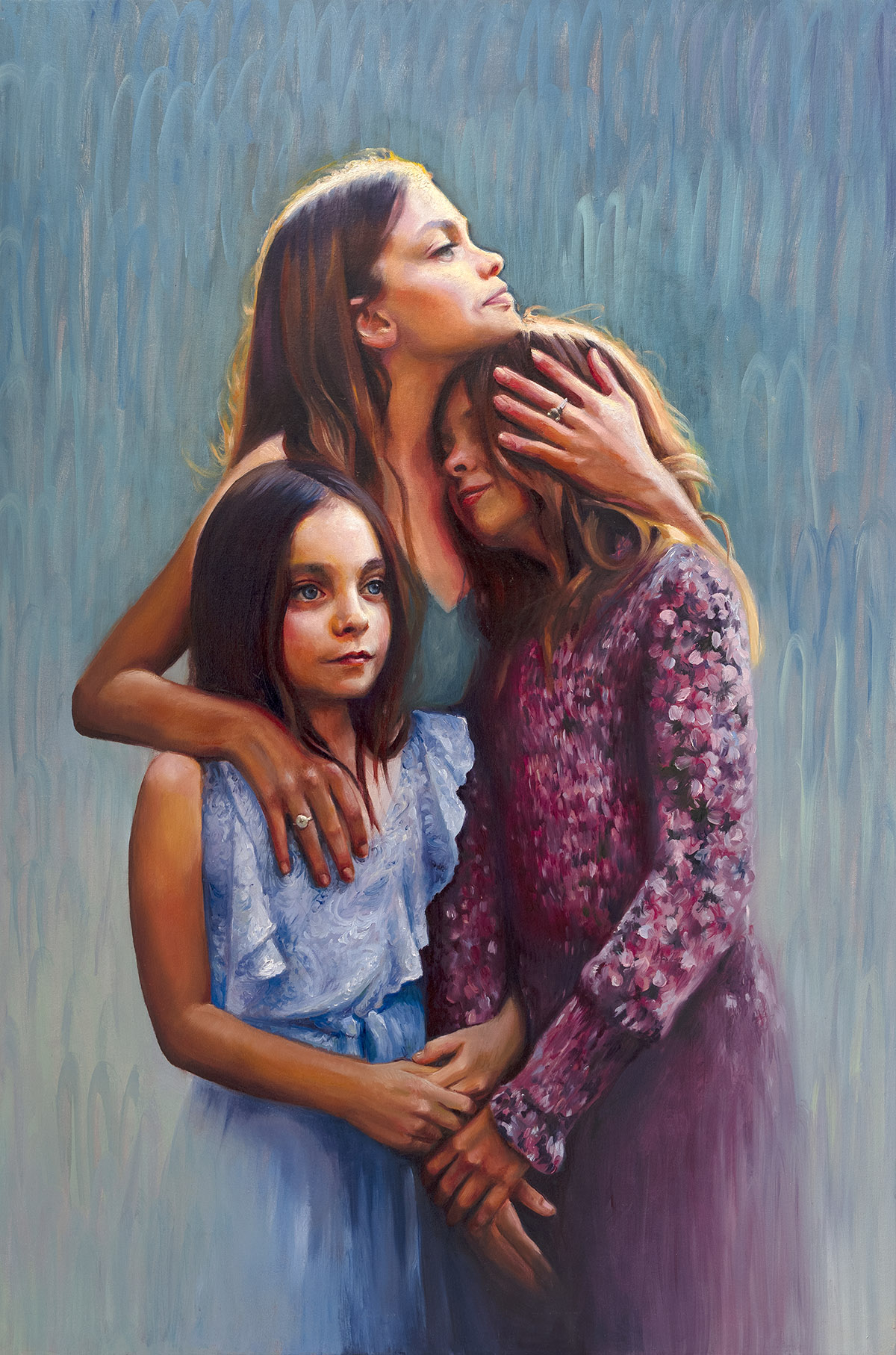
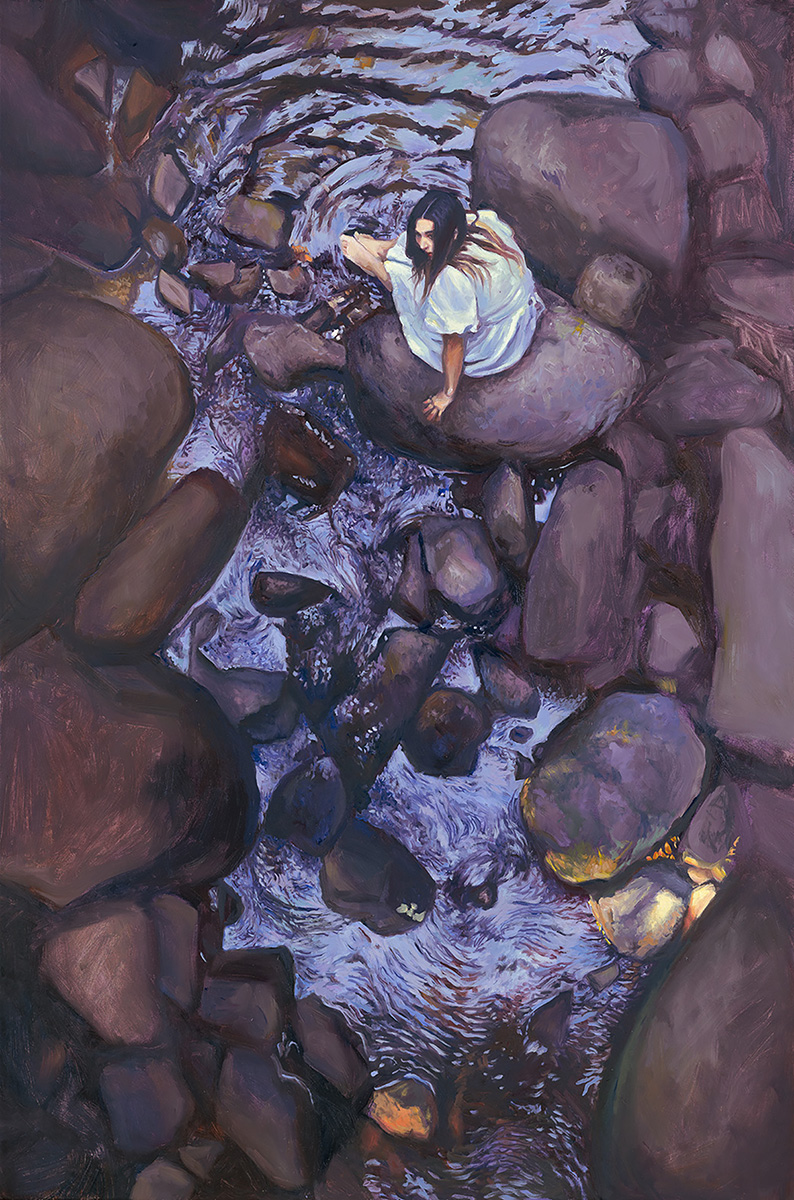
How do you find inspiration? Jessica: I didn’t grow up with poetry, music, or art. I didn’t get to go to a normal school, in fact I was the only kid in my class for all of primary school. I grew up on a farm, pretty isolated, my dad taught me to see the land as my magic. He was so in love with trees and the wind, the smell of the clover, the crunch of the icy ground in the winter. Being outside was our art. As an adult, the thing that lights me up most is the outdoors and people. The land, the sky, the sea, and so I find endless inspiration in the Australian landscape, the place where I learned my first language, the language of belonging. I like to place people in landscapes, to show our relationship with the environment. I am most at home outside, and painting people under the sky is how I see the world so it’s what I’ve always gravitated towards.
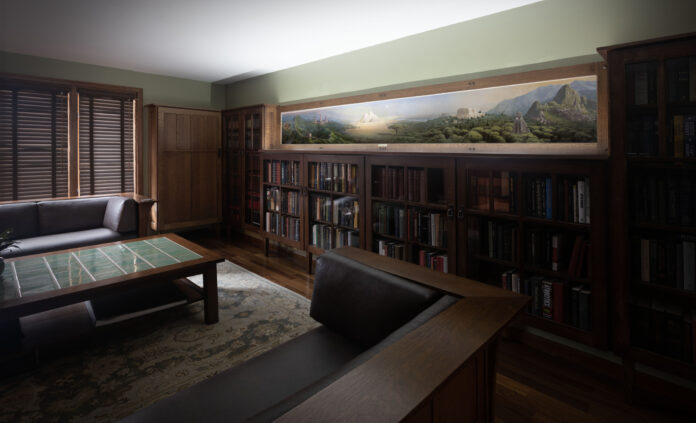
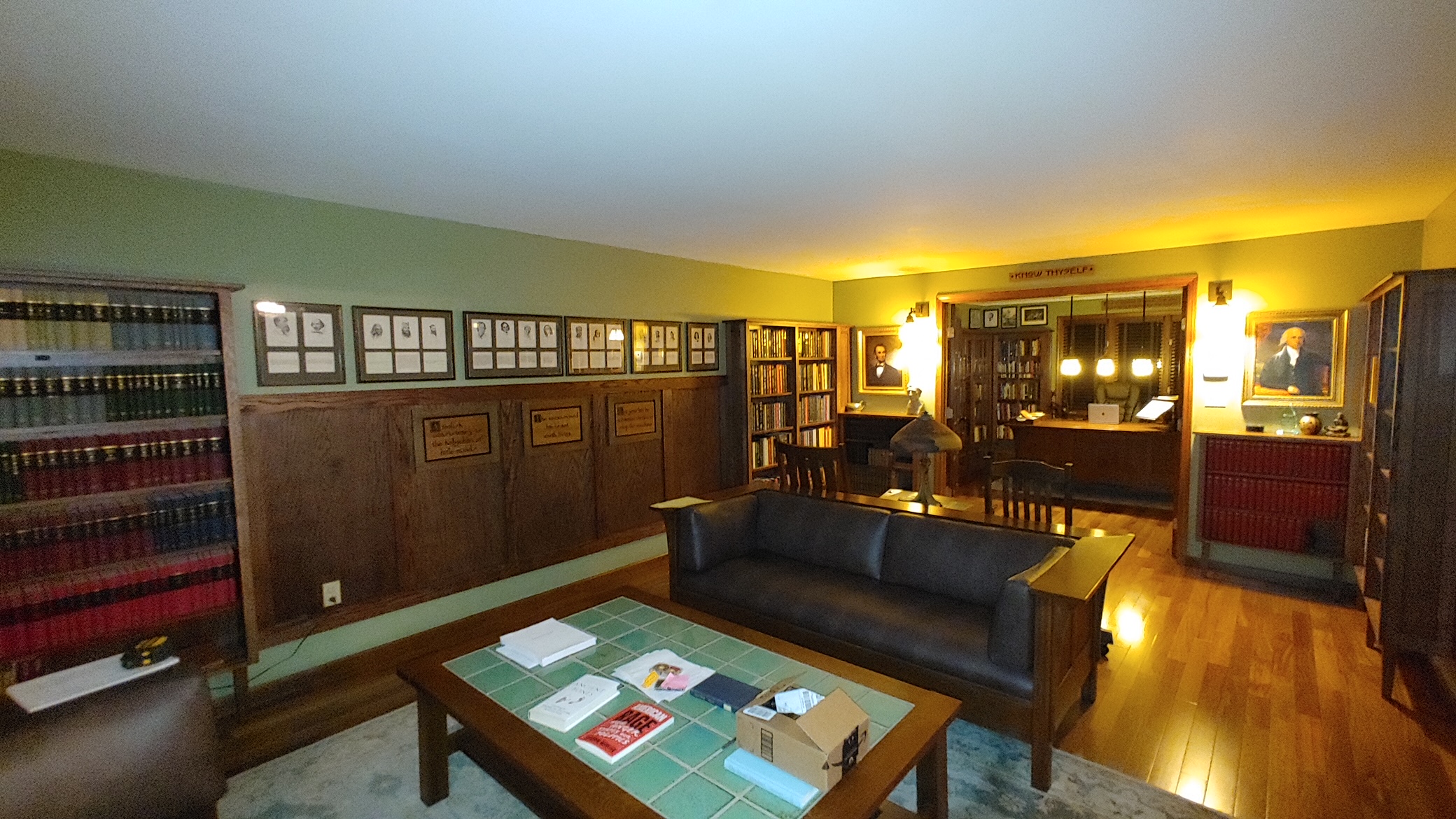
Installation view of the mural; Photo credits: Aurora Custom Cabinetry, auroracustomcabinets.com
This is a mural commission story that begins in East Aurora, New York. There, a community of makers has built a reputation for high-quality craftsmanship that continues with its base at the Roycroft Campus, the “birthplace of the Arts & Crafts Movement in America.”
Thomas Kegler is a contemporary landscape painter and a Roycroft Modern Master Artisan whose style drew the eye of a political scientist with an artistic vision for his home library.
When Fine Art Today saw the finished work, we had to know more. The following is our interview with Kegler, who takes us behind the scenes of this tremendous project. The mural, a landscape that incorporates historical references, was designed from the beginning to integrate seamlessly with the existing architectural elements of the room it was intended for.
Our conversation begins with the first color study and winds through the process all the way to the custom lighting and cabinets, including Thomas’s advice for artists and collectors who are interested in a similar commission.
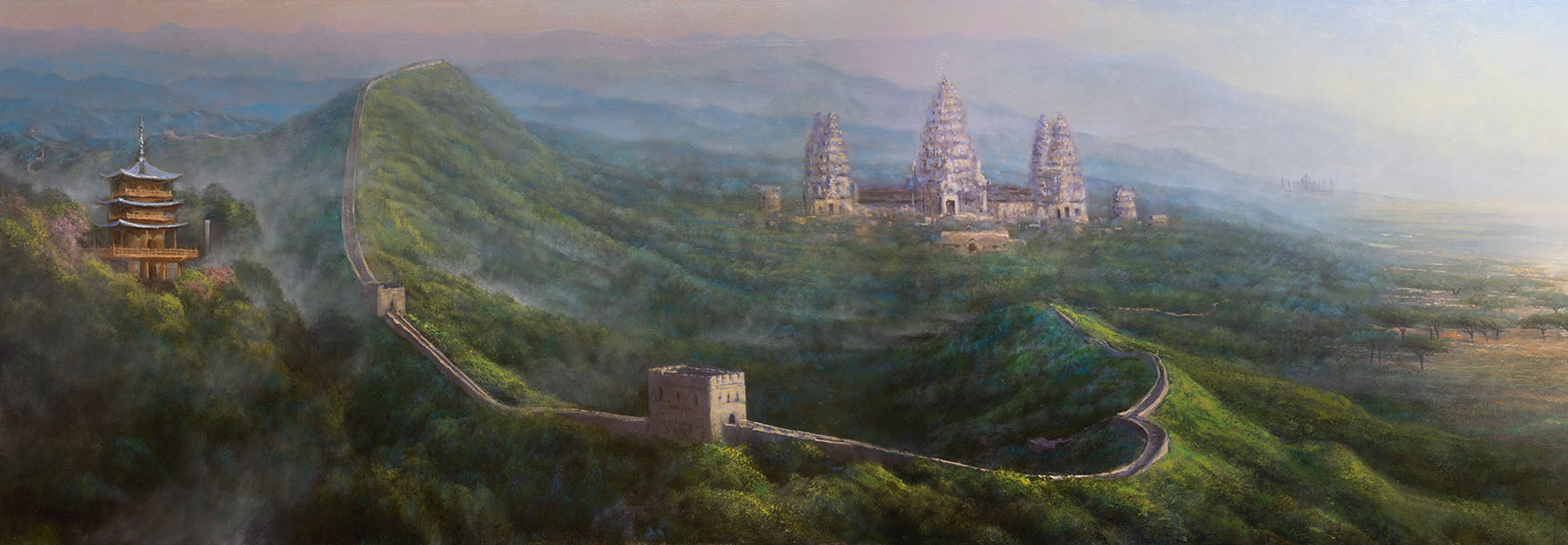
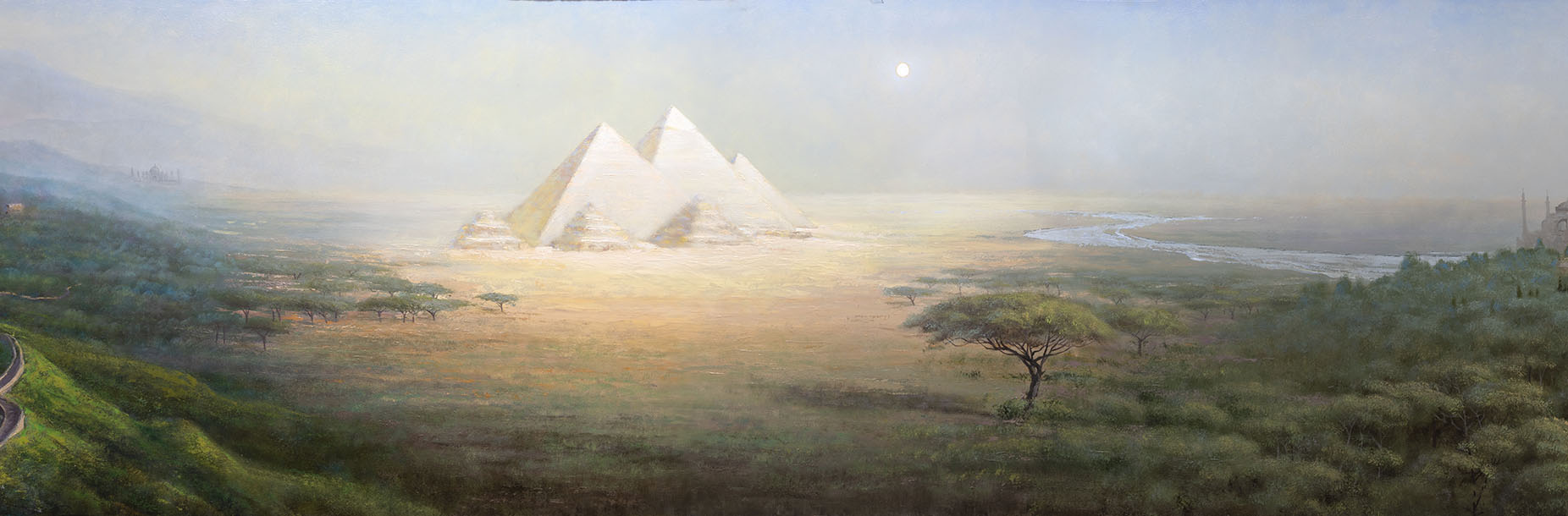
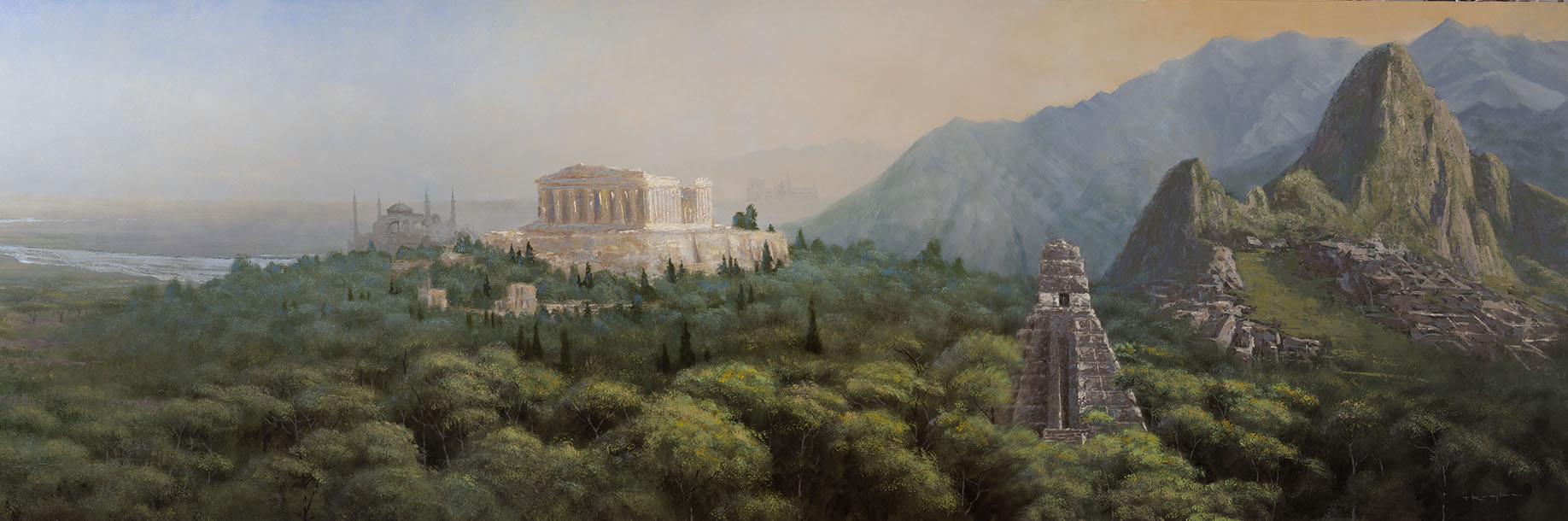
Thomas Kegler, “Continuum, Isaiah 52:7,” oil, 16 x 118 1/2 in.
Cherie Dawn Haas: I love that your client had the vision to see that he wanted a Roycroft-inspired mural in his own home. Going to the beginning of your process, tell me about the initial drafts for the project. You said you started with Photoshop and a color study, for example.
Thomas Kegler: Yes, the client had shared with me the concepts and many reference images. So I Photoshopped a rough composition by putting things inside relationships because there were so many pieces of the puzzle in this, to try to see how we were going to integrate them, and what was going to be the foreground or the background. Creating this was the easiest way to hash out a quick composition, and also be able to make very fast changes with the client based on his input.
Once the Photoshop composition was approved, then I went to the color study. It was quite small: 2 by 10 inches. It was used to work out the color scheme more than the details at that size. It let us know where the major elements were.
Cherie Dawn Haas: What was the conversation like when you showed him the study? Were there many changes after that?
Thomas Kegler: Most of the changes were happening in the Photoshop compositional arrangement. Once that was pretty well set, we had a good discussion on the overall mood and color concept. After I worked up the small color study, there were only a couple of small, very slight color enhancements, to help call attention to certain architectural features.
Detail of the mural commission; far left sectionDetail of the mural commission; middle sectionDetail of the mural commission; far right section
Cherie Dawn Haas: Tell us about the custom woodworking architectural components.
Thomas Kegler: Here in my hometown, I worked with an artist who isn’t a Roycroft artisan but works in the same vein. He’s a custom cabinetmaker specializing in arts and crafts, and quarter-sawn oak, which was a dominant feature.
Cherie Dawn Haas: And you mentioned that the lighting was a big part of the mural installation.
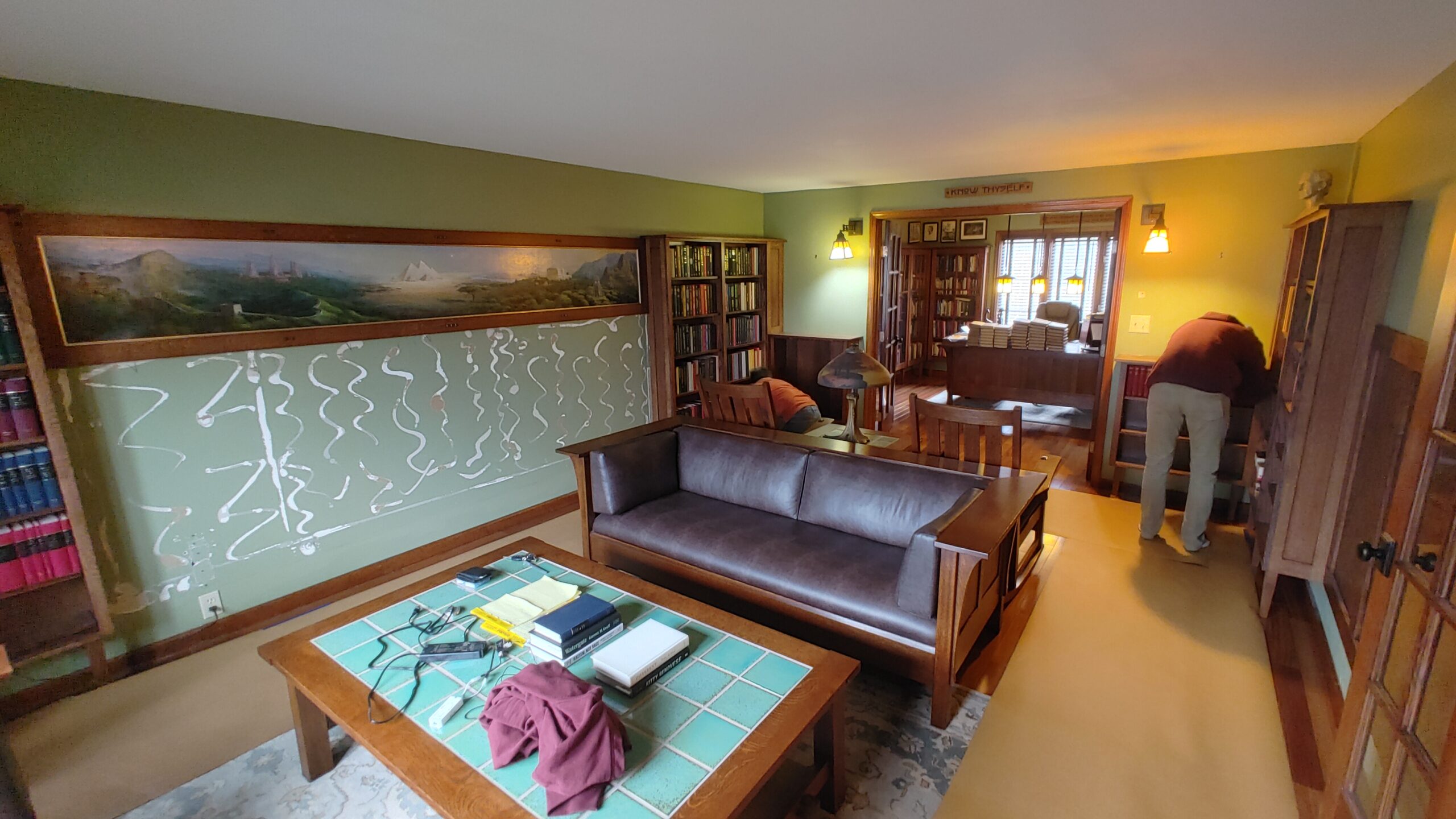
Thomas Kegler: We, the client and I, expressed the challenges of how to illuminate a 10-foot-long painting and not have hot spots and have an even light. The cabinetmaker did a little investigation and came across the solution. It’s a fairly flat system where you route a channel into the wood below the painting. You lay in a light track that goes all the way across. It’s beautiful because you can even put a soft filter on top that diffuses the light.
Being able to dial in not only the brightness and darkness, but also the temperature, was really interesting, because in the painting there are, I would say, cool passages in rainforests, and also warm passages of the desert. When you go from a warm light to a cool light on the painting, it’s amazing to see how some areas would just literally disappear and become unimportant, while other areas come into dominance. So the Egyptian section just pops and glows, and if you dial down to the cool, that just kind of dissipates, and then the rainforest comes to light. It’s really interesting to see that experience happening live.
There’s also the in-between light, which is what the client always keeps it at. So you’ve got the warm and the cool and the neutral, which is what you’re seeing in the reference photos. Usually, I paint in a fairly neutral light, so that’s the experience that he’s also getting.
The “Before” photo of the home libraryThe home office project in progress
Cherie Dawn Haas: What advice do you have for artists who may be asked to do a similar type of project?
Thomas Kegler: Commissions are kind of a dance in themselves. When you’re working with a client, obviously, the first thing you want is clarity, really good communication, and knowing exactly what the client is looking for.
I’ve worked with enough clients over the years to know that some of them are extremely open, and they really know your work and trust that. They have a vague idea, and they want you to kind of run with it and do your own thing. And then other clients can be at the other extreme, where they have a very clear vision of what they want the artist to do.
Whatever the situation is, I think it’s really important that the artist establishes clarity and communication: what services they’re offering, and having a clear agreement or a contract that outlines it (once everything has been hashed out, get it all in writing). And having clear expectations of the size and a timeline.
I always also build in space for modifications. Often my contract includes two minor modifications, and after that, the client will be billed X number of dollars per hour.
In addition to clarity and communication, it’s important to not surprise the client. Don’t just take the information they give you and then do the painting. I think it’s so important to do small preliminary sketches and color studies to show the client so that everybody’s on the same page. It’s all part of that clear communication.
Cherie Dawn Haas: On that note, what advice would you have for art collectors?
Thomas Kegler: Clear communication (laughs). Ask what they’re looking for, be clear, and discuss the timeframe. It’s kind of like working with a building contractor. Almost always, it takes longer than anticipated, and unusual things can arise or we build in extra time. And then if you deliver to the collector early, it just builds an even better relationship for future work.
I would say 99 percent of the time, I do come in early on the timeframe. It’s always best to leave with a good taste in the mouth on both sides. Coming in with an open mind, and also celebrating the artist’s vision, and not trying to dictate too much. Give some parameters, obviously, because it’s going to be living in your space, and you want to have a connection, but at the same time, you’re approaching an artist for a reason. And hopefully, it’s because the client has a really strong connection with past work. Look at it as an opportunity to not only celebrate the artist, but also challenge them into pushing their creativity a little bit and being open to that.
Cherie Dawn Haas: I agree, and I think that when people do that, it gives the artist room to surprise them in a great way.
Thomas Kegler: Absolutely. I had a really unusual one during the middle of the pandemic. I got this random e-mail from a guy in Australia. So it was a red flag that it was going to be a scam. He wanted to do a commission, so I said, “Sure.”
I usually put Bible verses with my titles, so he asked if I could do a painting based on a verse he chose. I said yes and asked what he wanted the painting to look like. He said, “Surprise me.”
This was a big painting, so it wasn’t cheap, and I thought, “This is completely a scam.” Well, to make a long story short, he sent me a check for half down. Two months later, I sent the painting to him, but he paid for it in full before I even sent it, and he loved it. What a pleasure that was, to simply have a few words as the springboard and have a client just let me run with it. You never know what you’re going to get with commissions.
Cherie Dawn Haas: I bet that was a dream job. I’m glad that you mentioned the titles because I was curious whether you titled this particular painting we’re featuring, and if so, what was your inspiration?
Thomas Kegler: The title is “Continuum, Isaiah 52:7.” Typically when I’m working on a painting, the final title, 90 percent of the time, comes at the end. I’ll ponder what the painting is about.
This collector had visited a lot of these places so he wanted the painting to celebrate a lot of different monuments and significant points of interest in the world. So to me, the painting was about humanity, and about society and culture.
What I typically do is search for Bible verses pertaining to the painting’s meaning, whether it’s as simple as hope, love, or whatever. The majority of the time a verse will just pop to me and say that’s the one that needs to live with that title.
How beautiful on the mountains are the feet of those who bring good news, who proclaim peace, who bring good tidings, who proclaim salvation, who say to Zion, “Your God reigns!” — Isaiah 52:7
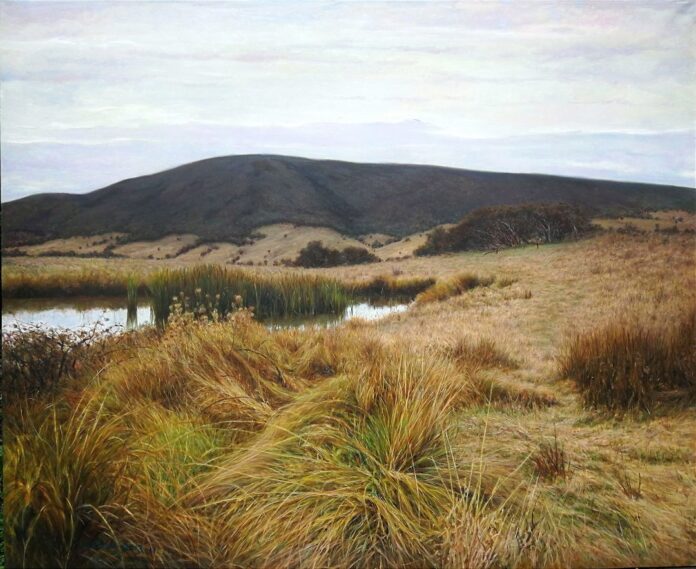
Hui Li, “Metaphor of Plants Series No.8,” oil, 59 x 71 in.
We’d like to congratulate Hui Li for winning Overall First Place in the February 2023 PleinAir Salon, judged by Scott Shields, the Ted and Melza Barr Chief Curator and Associate Director at the Crocker Art Museum.
Hui Li on “Metaphor of Plants Series No.8”
This is one of my paintings series inspired by the ancient land of Australia, where I lived for more than 20 years. It was also inspired by the very personal experience of my awe of Nature.
The landscape I’ve chosen was a farm that one of my friends, Arthur (a Greek immigrant), had been settled in. It was located by the pond and hills of Bathhurst, near the Blue Mountains of Sydney. It’s a place with vast land and varieties of eucalyptus trees and all different sorts of grass, and a scarcity of water resources. The Emergent plant leaning by the pond had instantly caught my attention – I had spent time observing and listening before I recorded and sketched the plant with the surroundings.
This was a later work in comparison to other paintings in the series. In “Metaphor of Plants No. 2” I had painted a pond, and I thought I could consider a more comprehensive picture with grass beside the pond, therefore No.8 came up.
Diversity is the charm of art, and I sincerely hope other creative artists can fully express what they truly like with all their heart.
About the PleinAir Salon:
In the spirit of the French Salon created by the Academie des Beaux-Arts in Paris, this annual online art competition, with 11 monthly cycles, leading to the annual Salon Grand Prize winners, is designed to stimulate artistic growth through competition. The competition rewards artists with $46,000 in cash prizes and exposure of their work, with the winning painting featured on the cover of PleinAir Magazine.
Winners in each monthly competition may receive recognition and exposure through PleinAir Magazine’s print magazine, e-newsletters, websites, and social media. Winners of each competition will also be entered into the annual competition. The Annual Awards will be presented live at the next Plein Air Convention & Expo.
The next round of the PleinAir Salon has begun so hurry, as this competition ends on the last day of the month. Enter your best art in the PleinAir Salon here.
Fill your mind with useful art stories, the latest trends, upcoming art shows, top artists, and more. Subscribe to Fine Art Today, from the publishers of Fine Art Connoisseur magazine.