I began planning my studio six years ago, only to set it aside once I got the first quote. With two kids in or headed to university, it wasn’t the right time to embark on such a financial commitment. And then, 2020 hit.
By 2020, both kids’ graduations were on the horizon, and I found myself with a freshly emptied calendar due to Covid. So I gathered ideas (thank you, Pinterest), contacted a contractor and an architectural designer, and returned to the drawing board.
A year and a half later, I was moving into my new studio. Along the way, I learned a few things. Read on if you want to update or build an art studio. Perhaps the solutions I came up with will help you sand down some rough edges in your construction plans.
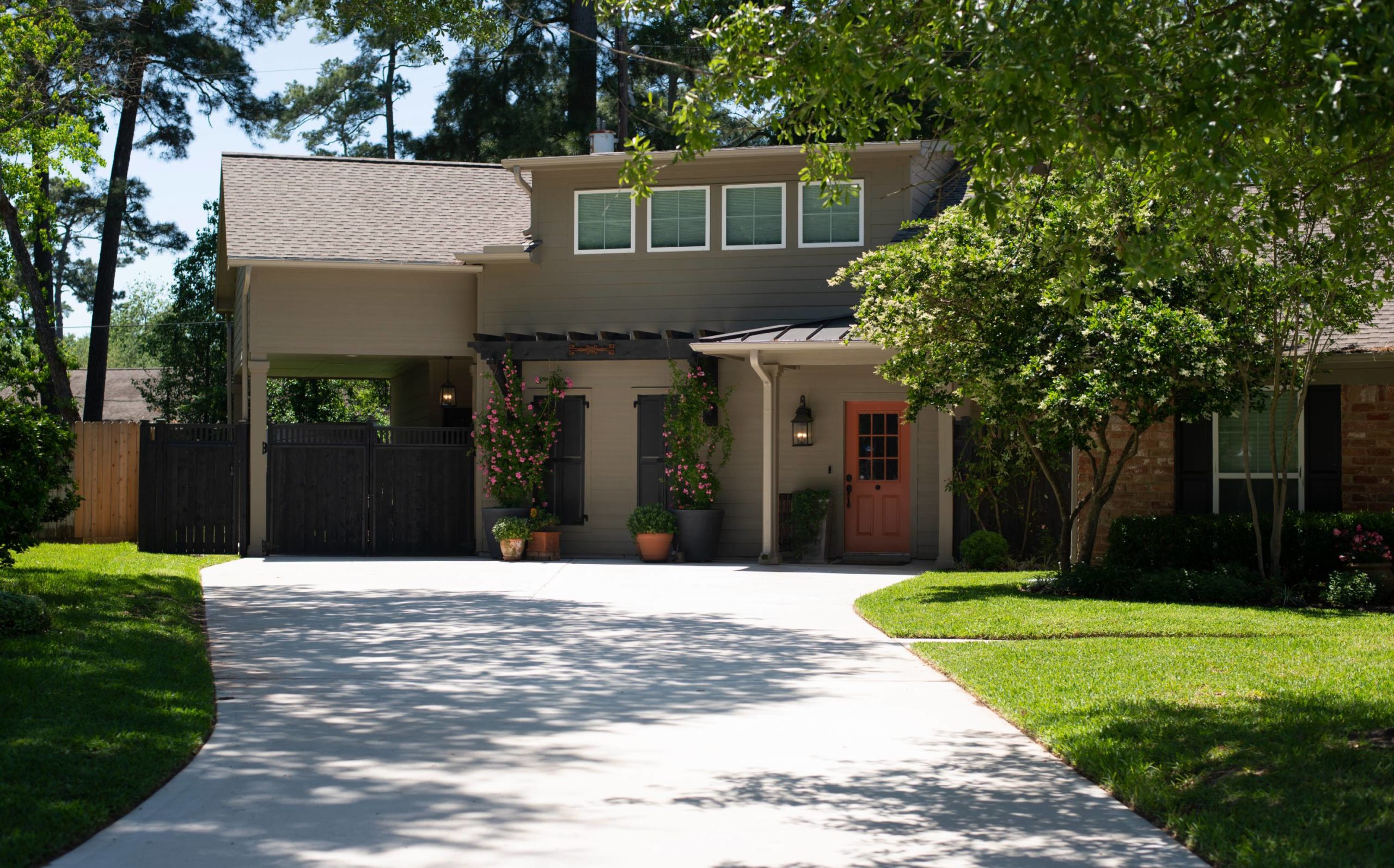
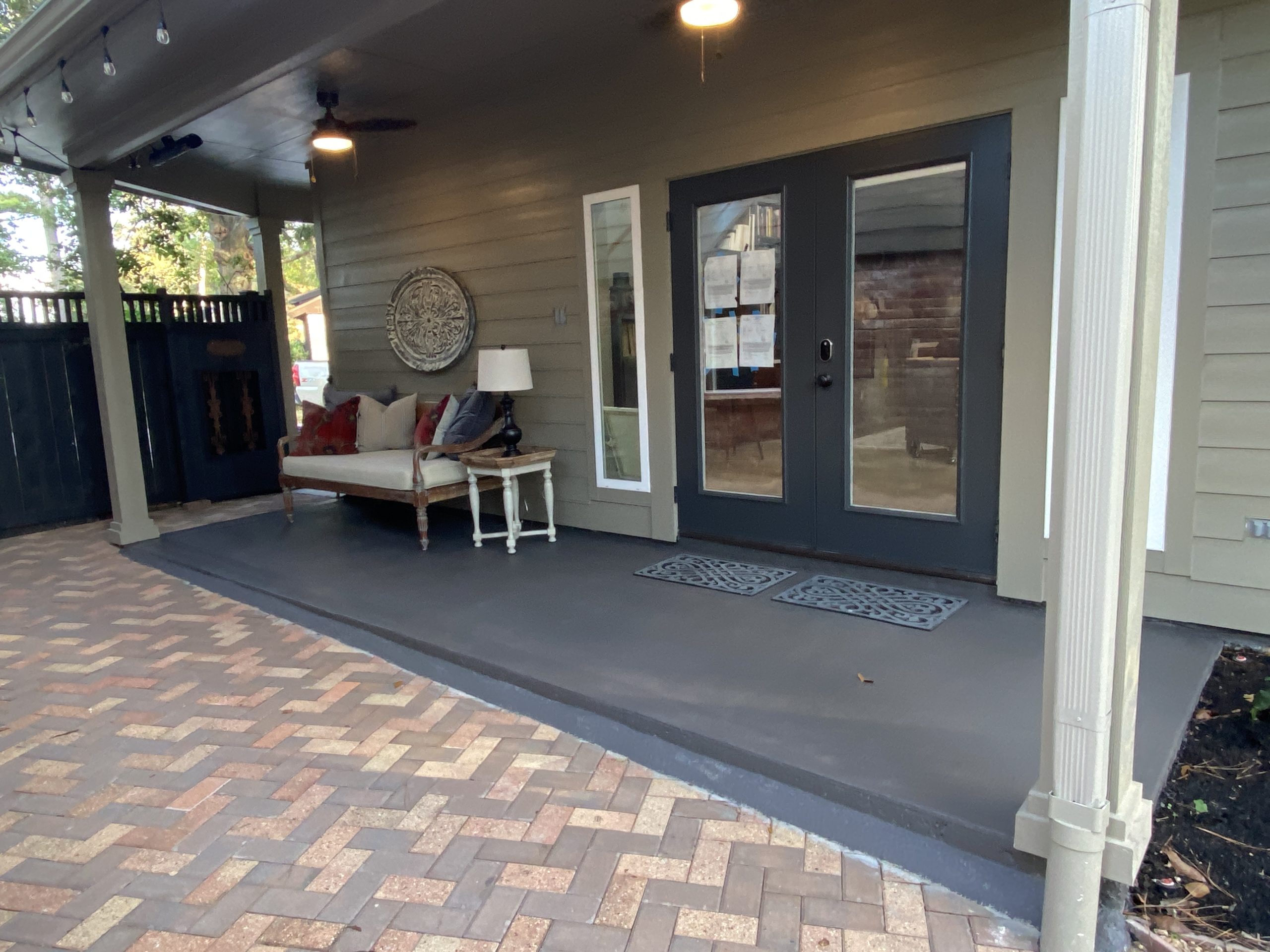
The outside of Baker’s art studio
Let’s start with four tidbits of advice to get you off on the right foot.
1. Get Advice
“None of Us is as Good as All of Us.” ~ Ray Kroc
After getting my ideas together and the initial drawings established, I went to Facebook. I asked for the collective wisdom of artists who have gone before me in the studio building process, asking: “Please share your brilliant studio ideas, best choices, can’t live without, and should-a-duns! Photos and article links are appreciated. Lay it on me y’all!!” Here are some highlights from that online dialogue:
“Good lighting. Make it a special place where you will love spending time. Spare no expense. A sink is helpful. Comfortable chair and bookcases. Picture hanging system and gallery lighting.” ~ Andre Lucero
“I’ve felt a lot better since getting an exhaust fan to expel the bad air. An air purifier was not enough.” ~ Anette Power
(Followed by) “Yes….very important, especially when working with oils & mediums…. we often don’t feel lung damage until it’s too late.” ~ GV-Artist Voorhies
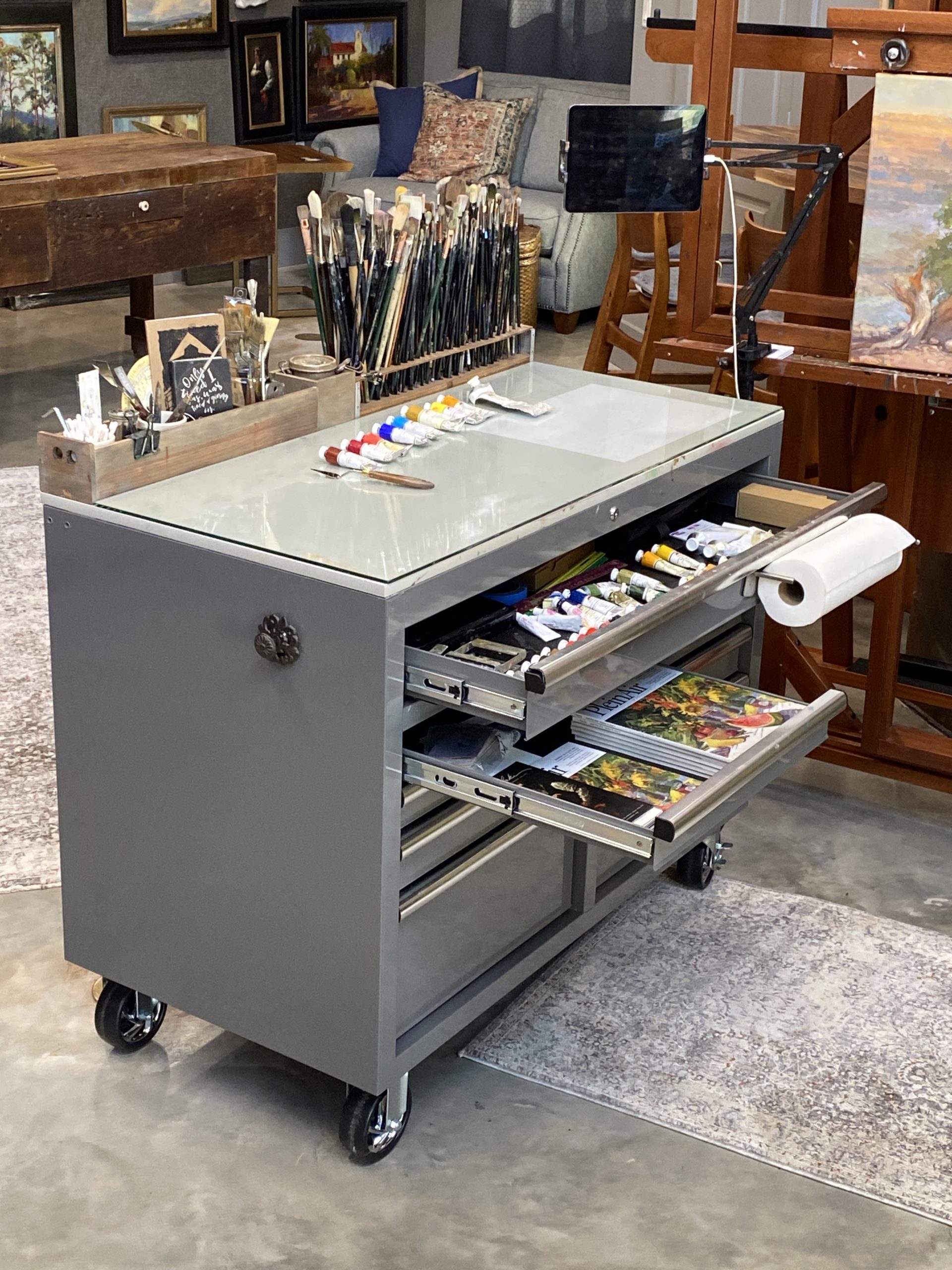
Lori Putnam said, “North Light, Wine Racks, Floor Plugs,” and many more ideas. Lori included a link to her rolling workbench, which she converted to a taboret. I must admit, I was going to steal that workbench idea from her before she suggested it.
The most common comments were concerning storage.
I encourage you to go to my “Suzie Greer Baker” Facebook feed and search for that July 2020 post. There are plenty of idea starters there.
2. Establish a firm foundation
“Well begun is half done.” ~ Aristotle
The planning stage took nearly as long as the construction stage. Much of the added time was due to navigating the time delays of city governance, meeting requirements, and accommodating restrictions. Fortunately, this protracted delay resulted in thinking through and revising details, avoiding hasty missteps.
3. Seek a fresh, knowledgeable perspective while still in the planning stage.
“Sometimes a change of perspective is all it takes to see the light.” ~ Dan Brown
I was on round two of my building design when I showed the plans to my friend and fellow artist John Michael Carter, OPAM. Right away, he noted a significant issue. Michael reminded me that this space was, first and foremost, a studio and recommended revising the location of the loft to open up the north wall for more light. I had been looking at the plans too long and trying to make the studio accommodate too many purposes. Michael’s fresh eyes and years of experience saved me from making a big mistake. Whew!
4. Warning to the eternal optimist, it WILL take longer and cost more than you planned.
“Keep Calm and Carry On” ~ British Government 1939
There will be setbacks, inclement weather, building mistakes, scheduling conflicts, and backlogged materials. Take a deep breath and remind yourself to be patient. You want the space to be correct. You will forget the extra time and added expense when it is said and done.
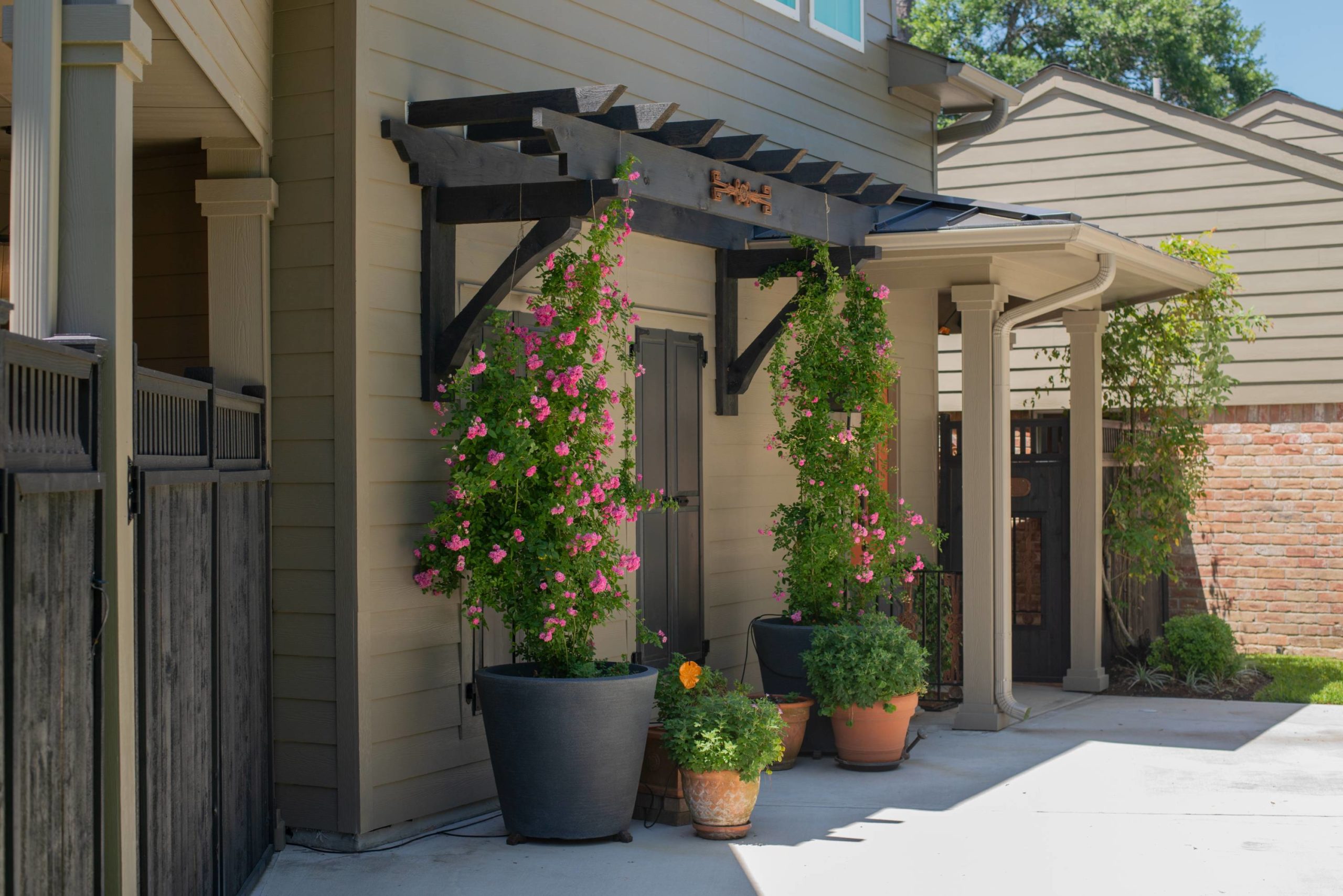
One of the outside spaces
#StudioGoals
My old studio took up my house’s whole formal living and dining room. As a result, I found myself constantly organizing and reorganizing my space to get my work done. As my career grew, so did the need for storing frames, panels, shipping boxes, packing material, booth panels, easels, paint and brushes, and so much more. All this, combined with a desire for good lighting and an open workspace, made the need for a dedicated studio imperative.
With this in mind, my studio design goals included ample storage, an open modular workspace with multiple work areas, thoughtful lighting, and a living space for visitors, including a bathroom and kitchenette. Here’s how it turned out.
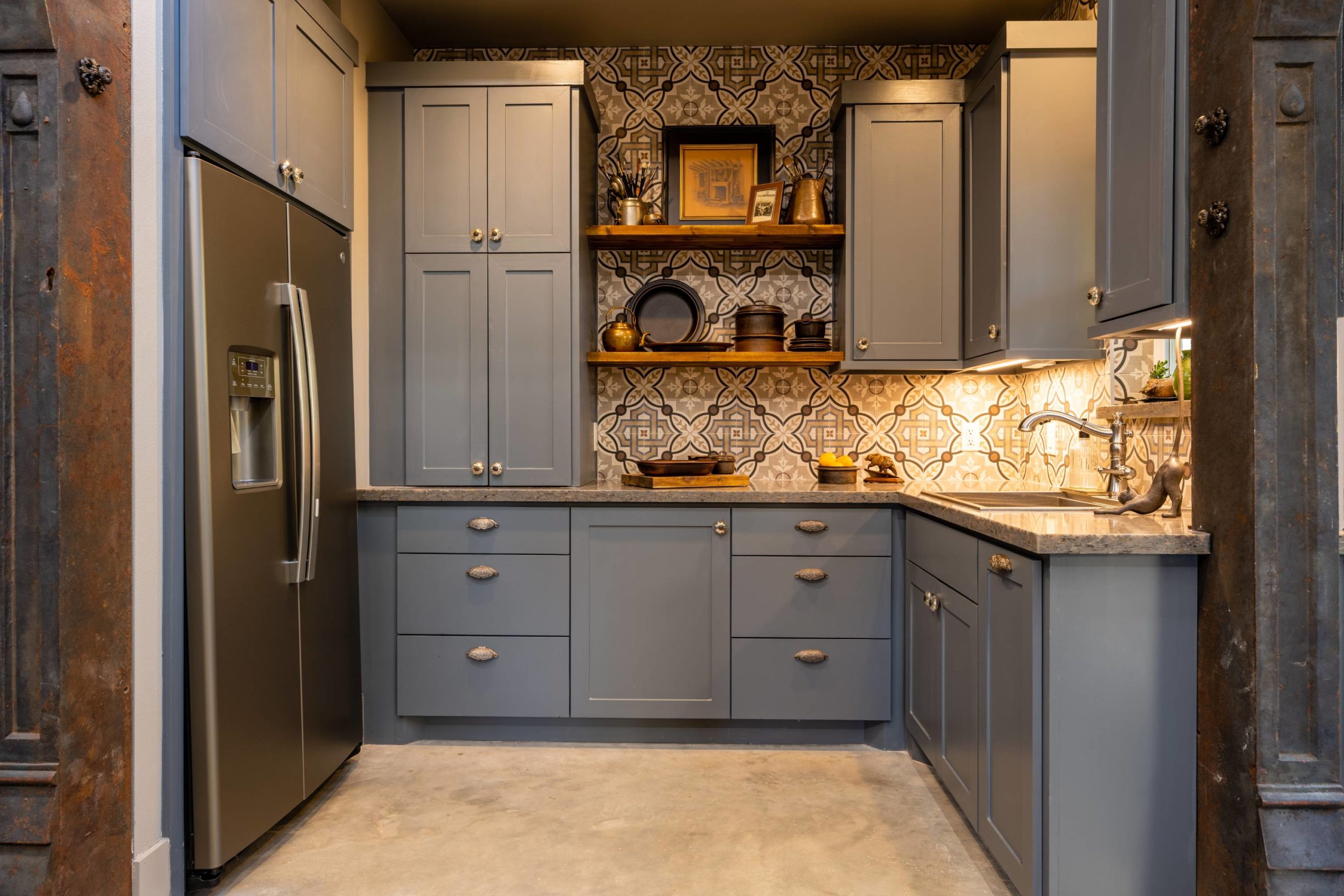
The kitchenette includes a coffee bar, sink, and fridge. Plus, a bedroom, full bath, and patio make this space perfect for visiting family and artist friends.
The studio’s kitchenette; Ceramic tile that mimics tin and rusted metal carries an industrial design continuity into the bathroom.The back patio
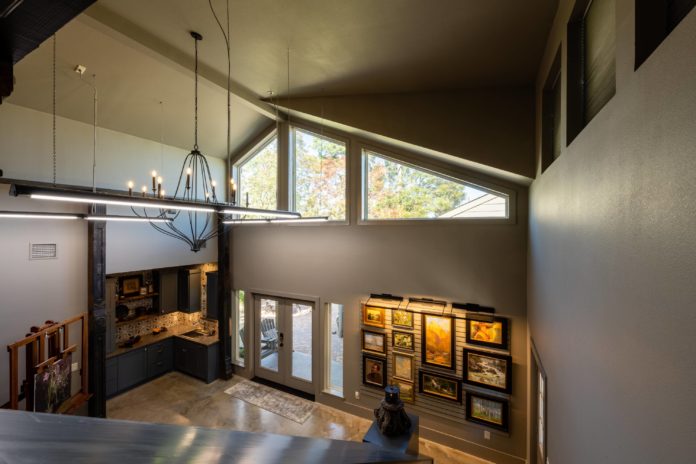
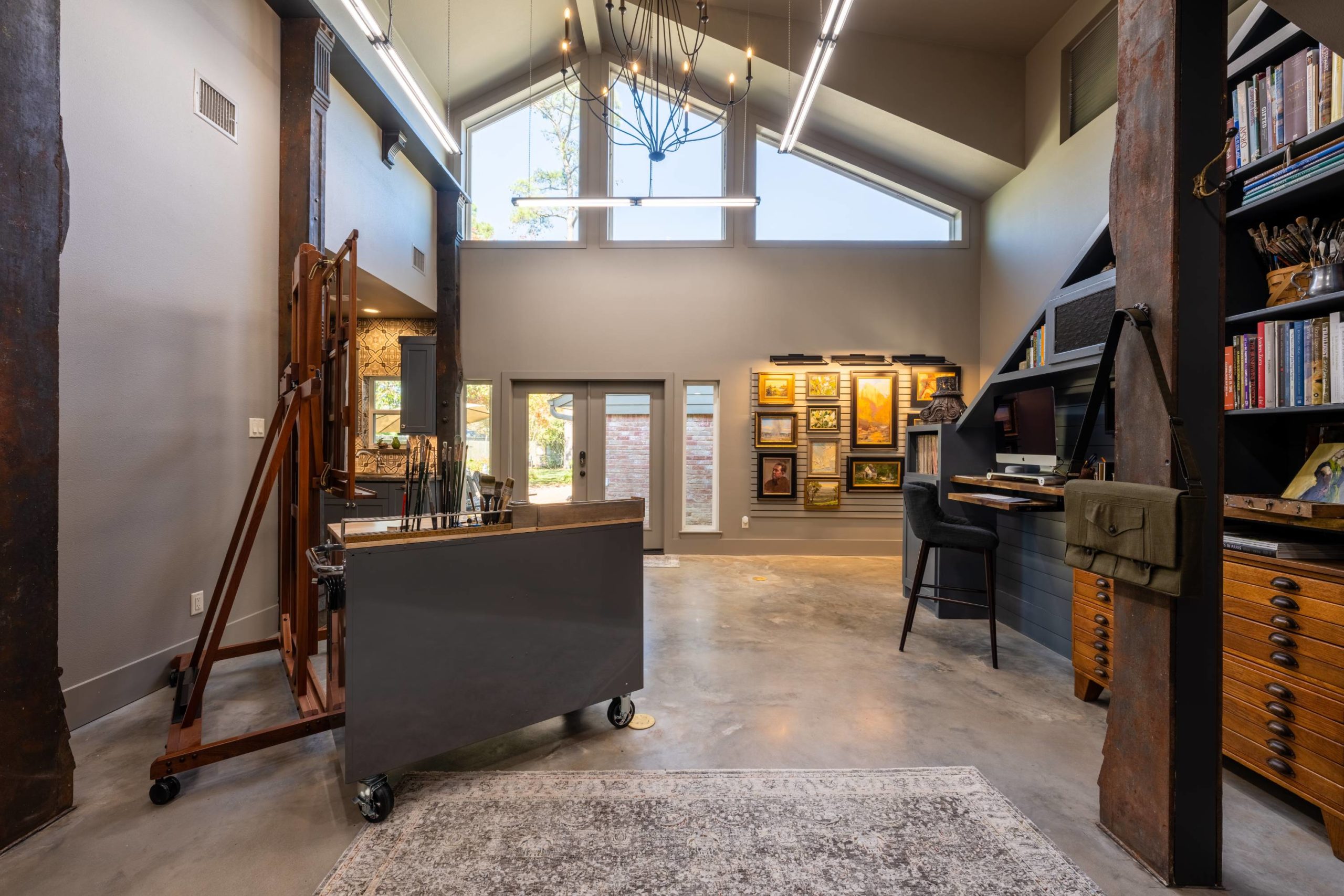
Proper, consistent, and controllable lighting is essential to any artist. Researching lighting and planning its implementation can make your head spin. My working light consists of the north light windows and a U of shop lights using 12 Waveform, 5000k Bulbs with a 95+ CRI rating. Each 8-foot section, made of joined together 4” shop lights, is on its own switch. I added a chandelier to mix some form into all that function.
Note the art studio lighting shown here.
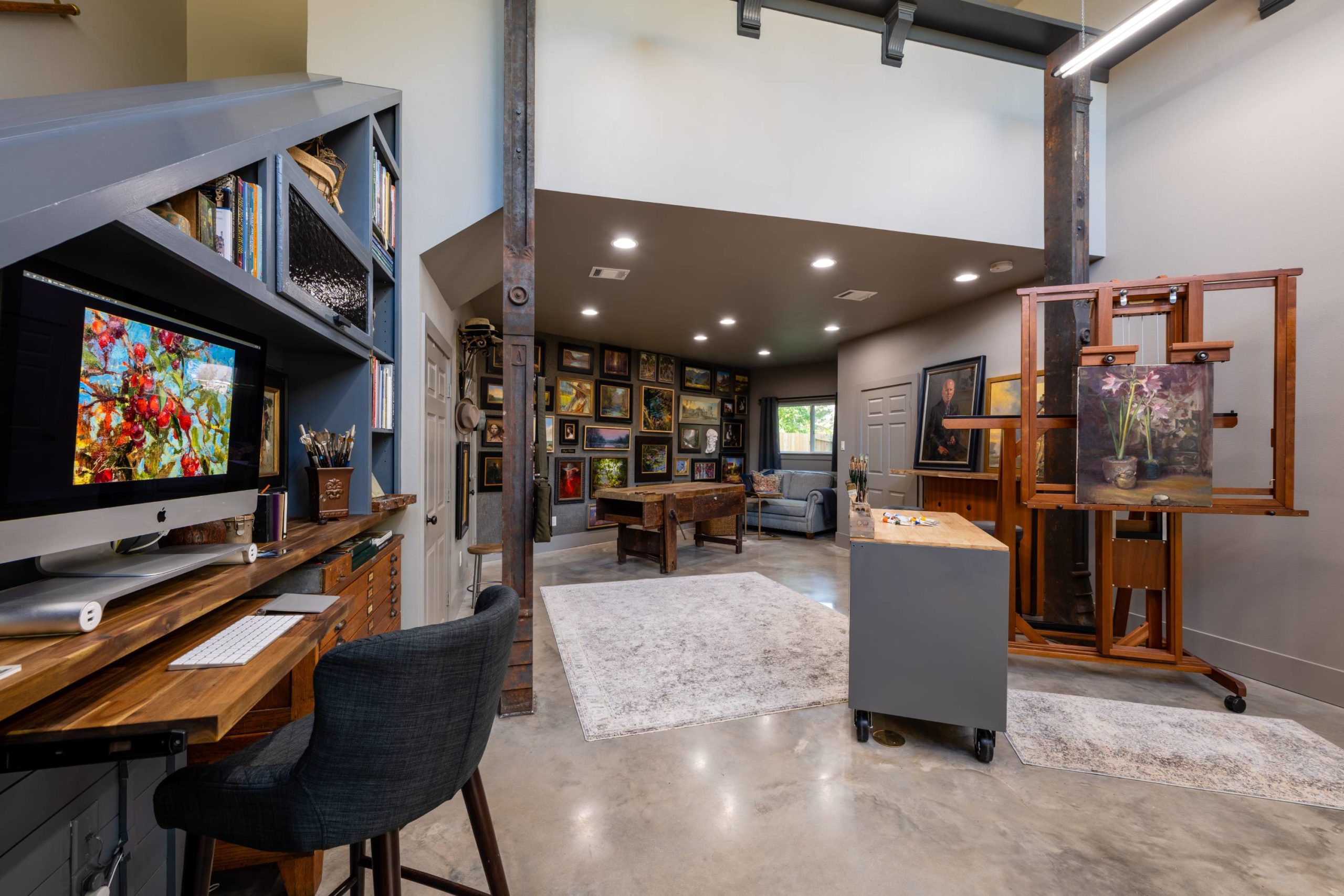
These ground floor views show north light windows, concrete floors, Hughes 4000 Easel, and Husky tool chest taboret. The four iron beams, an architectural find, became central to the design of the space.
View of Baker’s art studioBaker’s taboret
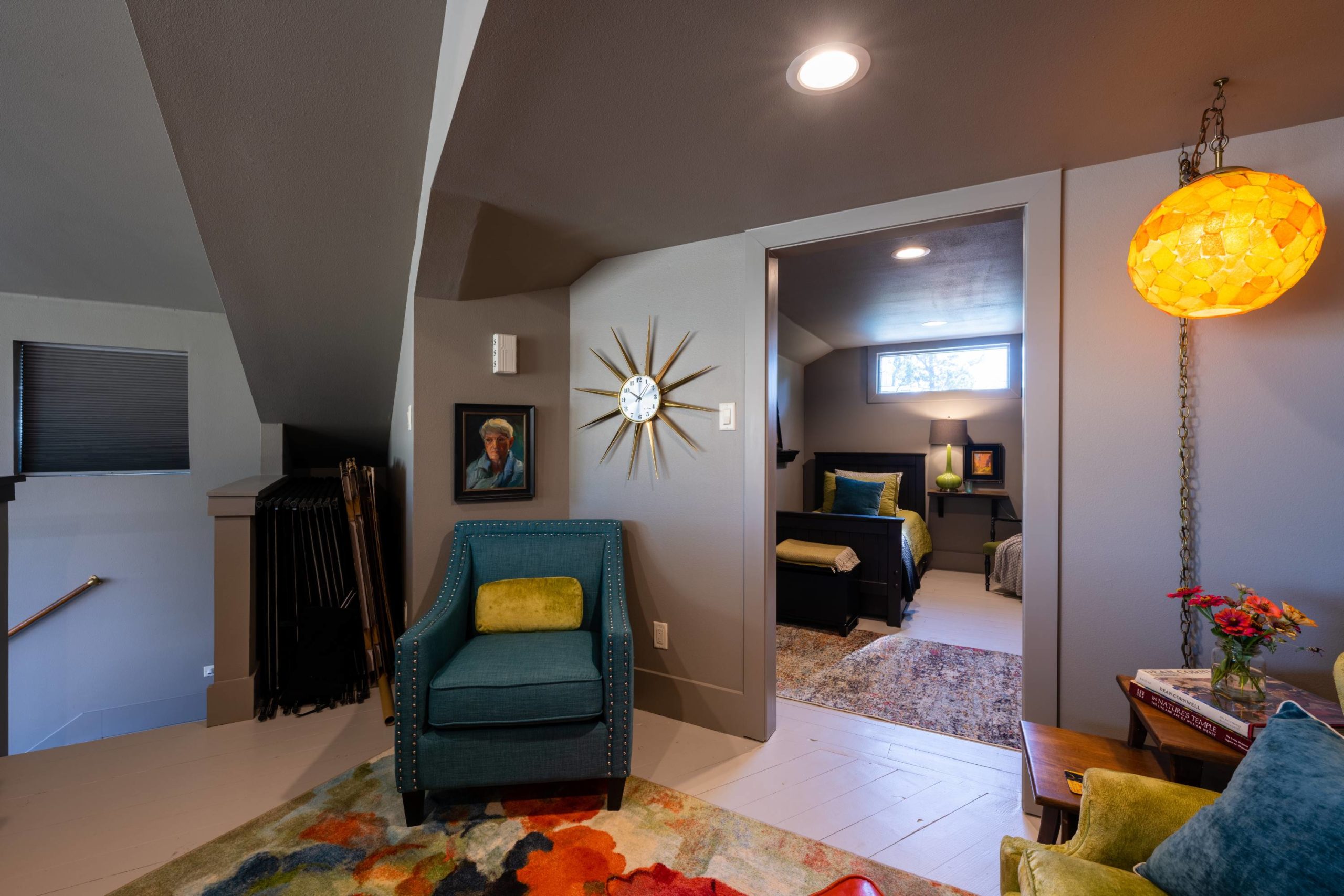
The upstairs guest space includes an eclectic mix of furnishing and vintage pieces my Dad hung onto since the 70s.
Upstairs guest space
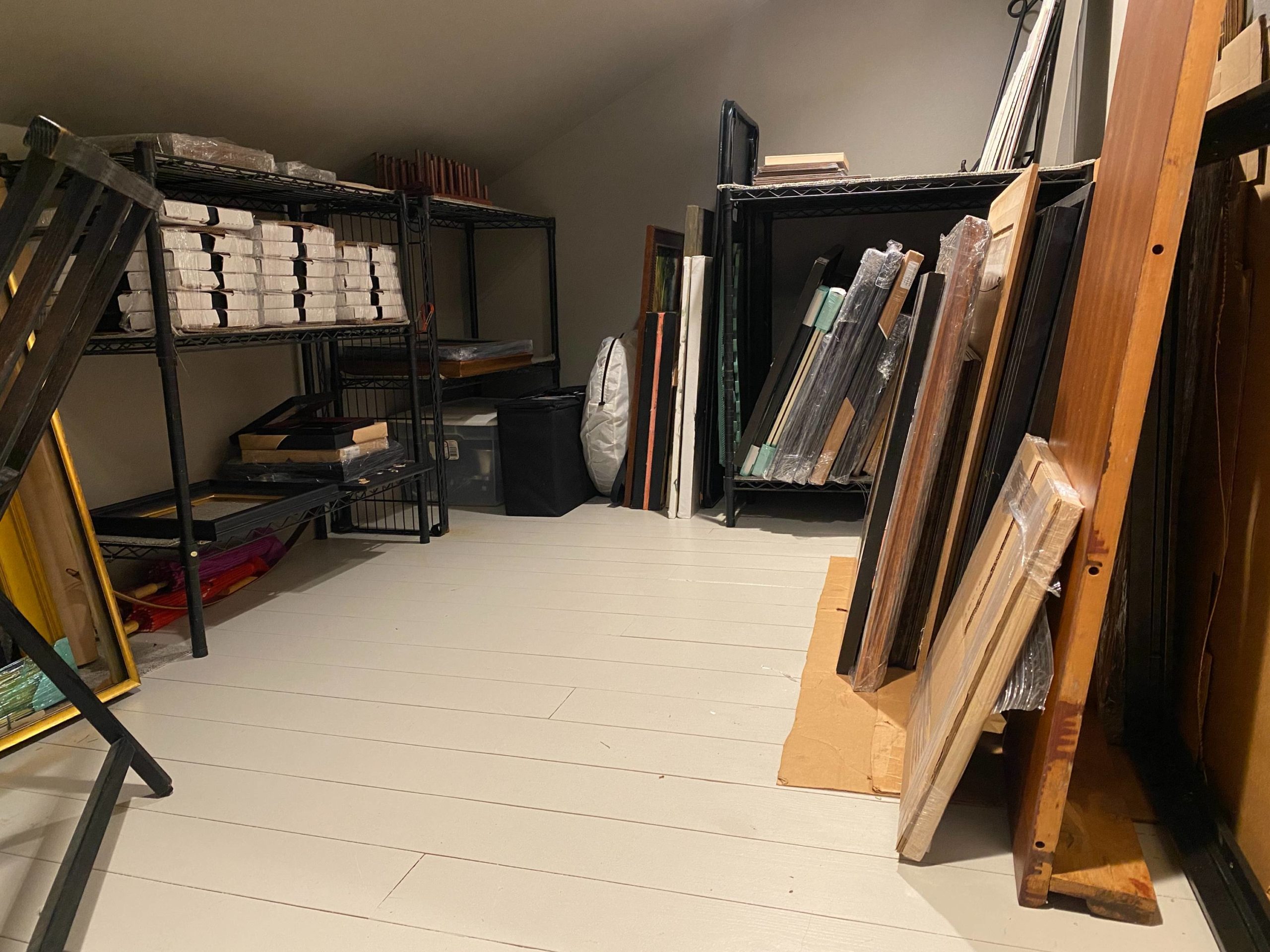
Two sloped-roof but sizable storage areas are to the left and right of this room. Frames are on the left, with packing materials on the right. Keeping these items handy but out of the way is a huge plus.
One of the art studio storage areas
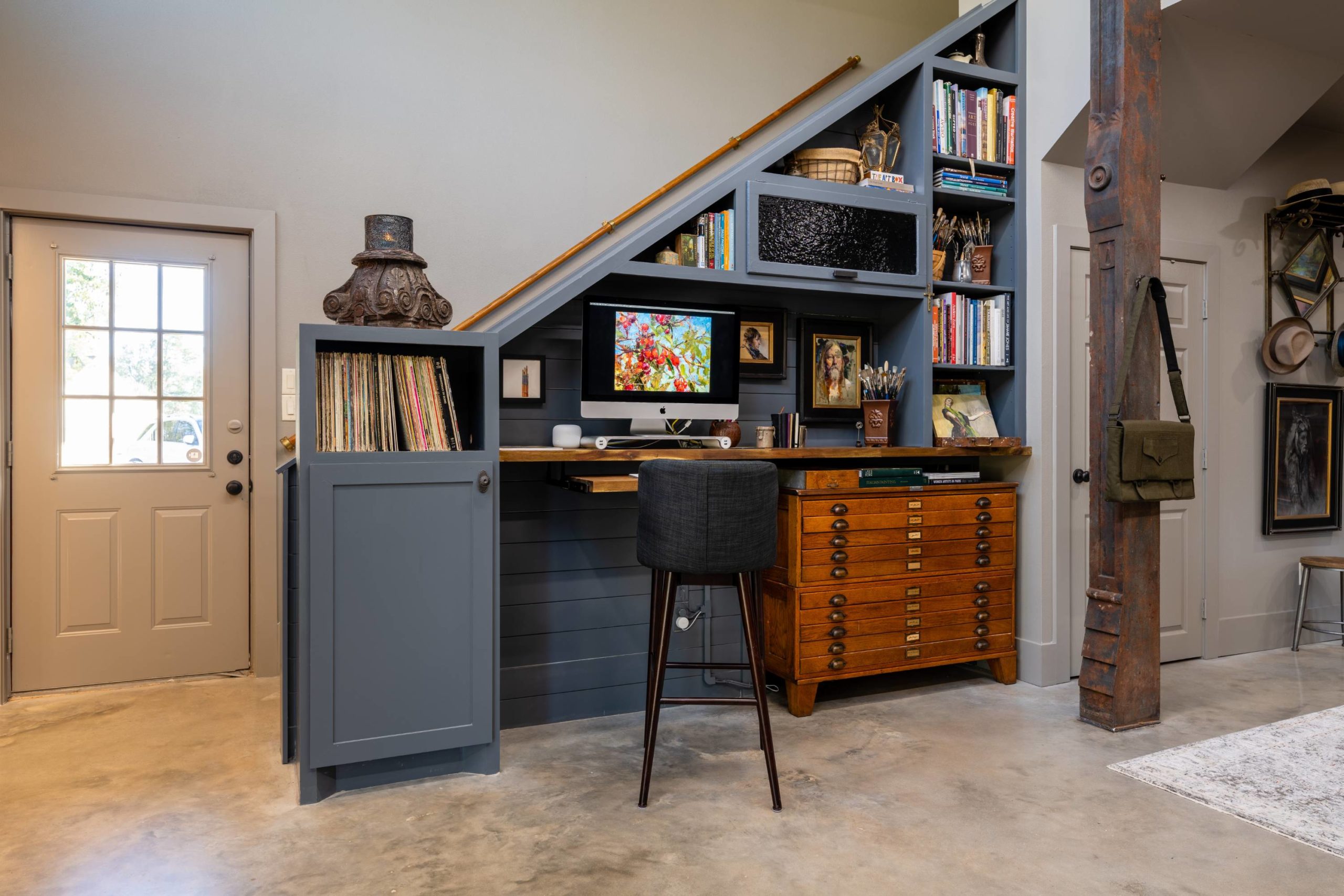
I designed this built-in (below) to keep the open floor plan as open as possible. A space-hogging 36” deep flat file tucks under the slope of the stairs. Old school furnishing and up-to-date tech merge in the desk area with an Ethernet cable planned for just the right spot. The horizontal glass door was salvaged off an old cabinet from my Dad’s shed.
Built-in storage for the art studio
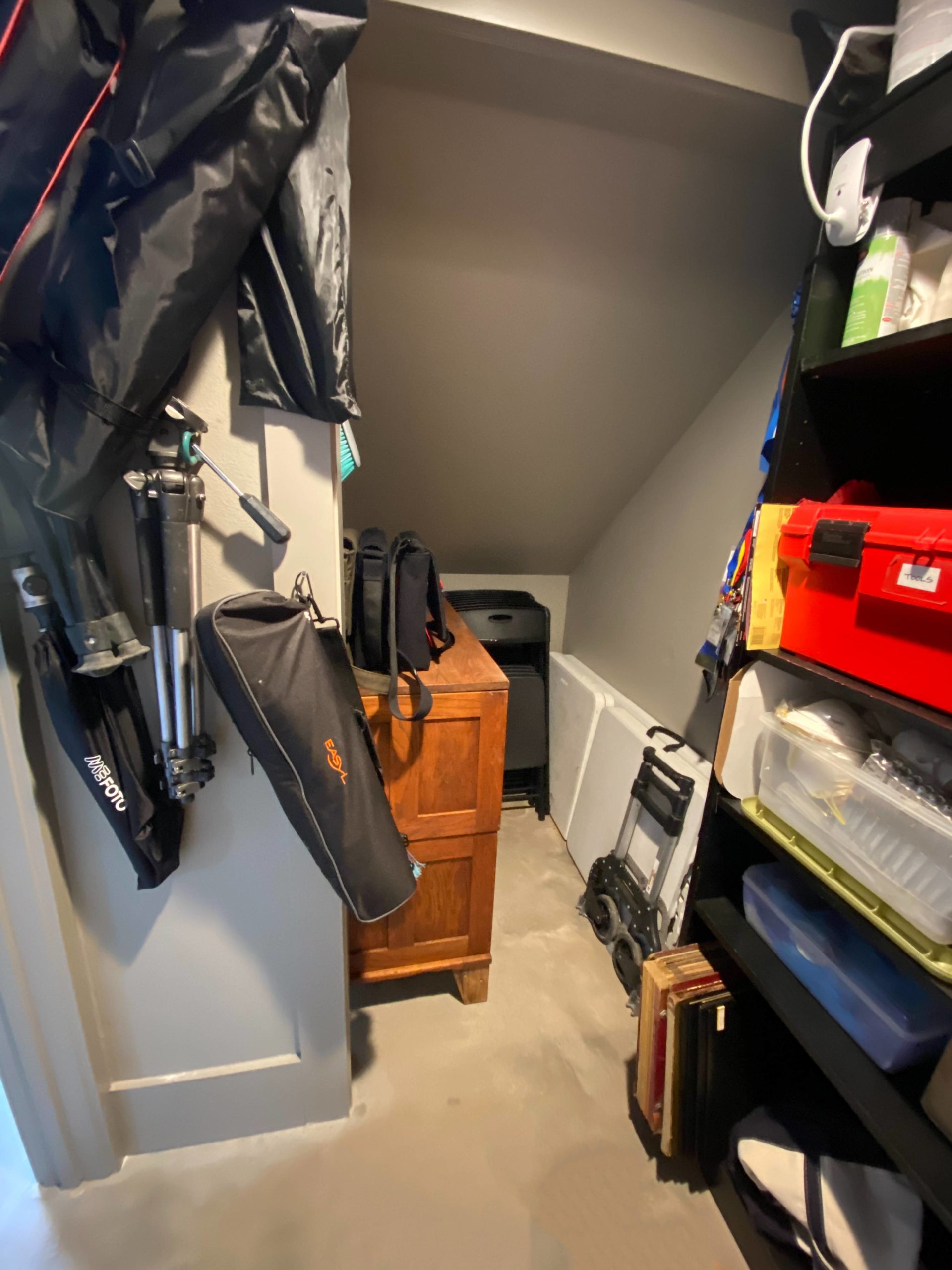
Unter the stairs storage: My storage goal was to keep all stored items one deep, so I could see everything at a glance. This photo shows the back of my flat file, leaving room for folding chairs and extra tables.
Under-the-stairs storage area
This delightfully distressed workbench (shown below) will only get more interesting with a bit more paint, don’t you think?
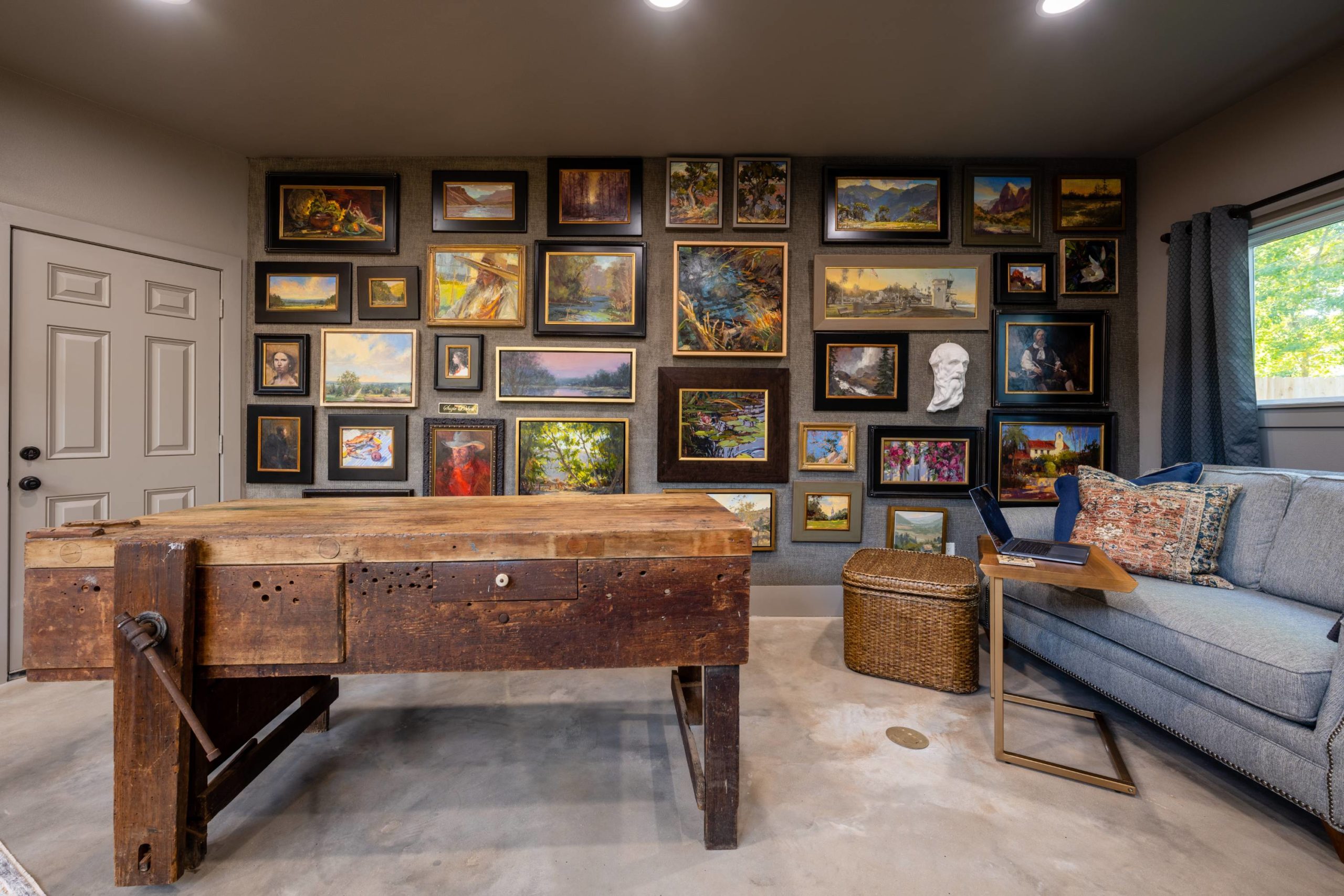
The studio workbench, with a gallery wall behind it
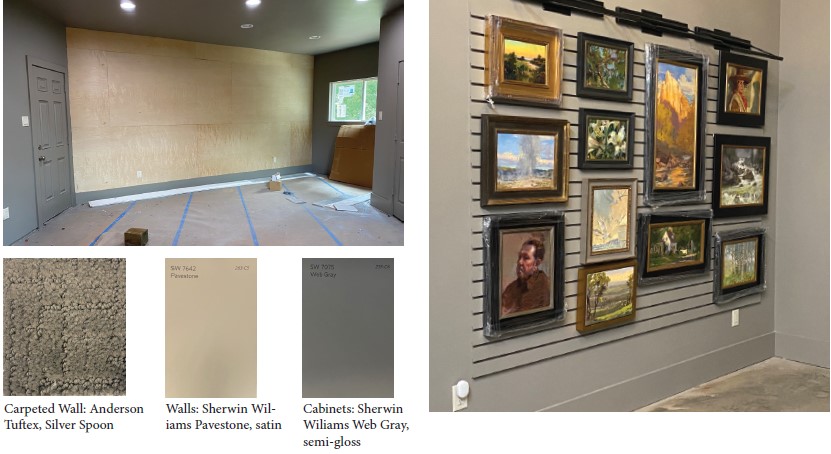
Nearly every surface and material choice is meant to be forgiving as it wears. Since everything will likely get oil paint on it at some point. I chose two interior paint colors for everything, including the baseboards and ceilings, for easy touch-ups.
Solutions for hanging artwork
Artwork Hanging Solutions
I had the builder install a short pile carpet over a plywood wall. This allows me to nail, hang, and repeat throughout the year as paintings move in and out to collectors, galleries, and exhibitions. Another modular solution I found was a slat wall. This hanging system is standard in retail spaces and can be purchased at your area home improvement store. I looked at many hanging systems. These are the two I decided would work best for me.
The stairs and loft floors are painted standing seam subfloor. The brass and wood handrail is ship salvage from Nautical Antique Warehouse in Galveston, Texas.
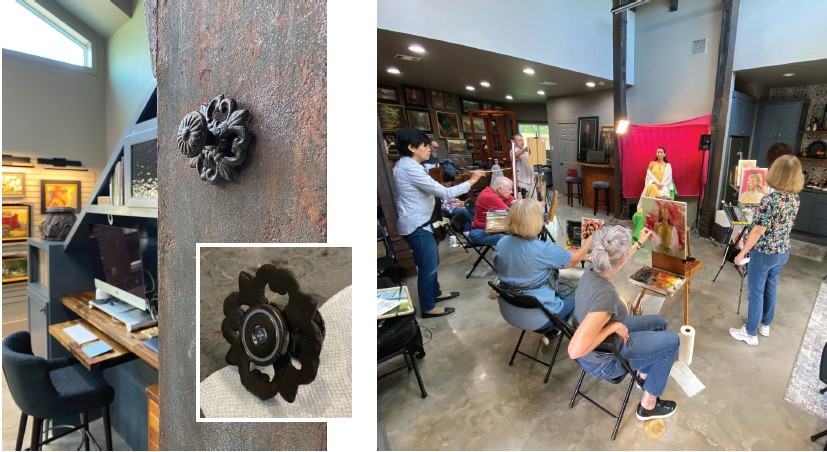
Strong magnets ordered online, combined with decorative knobs from Hobby Lobby, made for super helpful magnetic hooks. These magnets are so strong that I could use them to hang the drapery behind the model for our local portrait group.
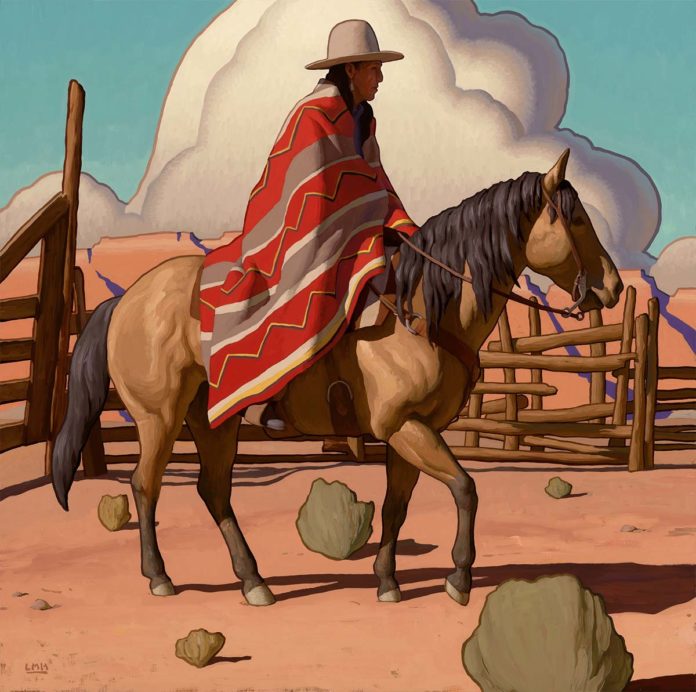
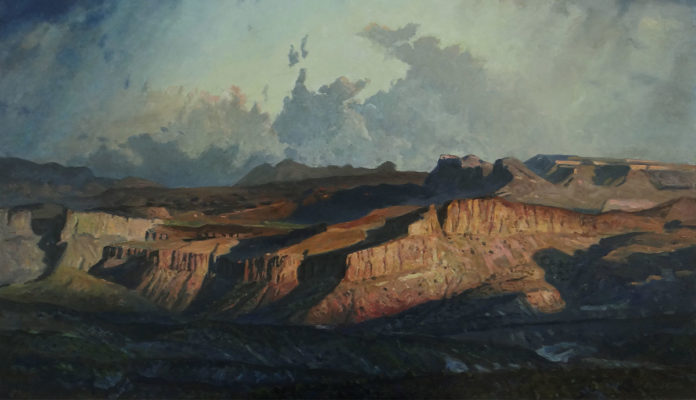
Old Corral at Vermilion Cliffs
By Logan Maxwell Hagege
30 x 30 in.
Oil on linen
MASTERS OF THE AMERICAN WEST exhibition and sale returns February 11-March 26, 2023, Autry Museum of the American West in Griffith Park, Los Angeles, California. The Art Sale night will be February 25, 2023.
Logan Maxwell Hagege is one of over fifty-five extraordinary nationally recognized artists showing work in this prestigious exhibition and sale.
Logan Maxwell Hagege (pronounced Ah-jejj) is a Los Angeles–based contemporary artist with modern visions of the West. His paintings exhibit all the hallmarks of his classical art training from an academy in Southern California, a modern-day atelier, in which students refined their skills by drawing and painting live models every day for years.
Yet it is in the artist’s departure from strict realism where his work now draws its strength and where his vision is fed by a heady mix of nature and imagination. A power born of observation, recollection, and creative inspiration imbues Hagege’s images of the American Southwest.
Hagege’s mature style, which he terms “stylized realism,” has made him a master of design. His signature clouds often mimic the shapes of the blanketed figures in the foreground, creating visual roadmaps for the viewer and further adding to the design and narrative of each composition.
Texas Art on View > From the rugged mesas of the Panhandle and the steep-sided mountains of Big Bend Country to the waterways of the Gulf Coast and rolling grasslands of the prairies, visitors will journey through the diverse ecological regions of Texas as interpreted by individual artists.
Details at a Glance:
“Art of Texas State Parks”
Through April 30, 2023
Bullock Museum
Austin, Texas www.thestoryoftexas.com
More from the museum:
For the first time in the Texas State Park System’s 100-year history and in celebration of its centennial, the Texas Parks and Wildlife Department has commissioned Texan artists to paint scenes from their parks. Thirty artists were tasked with exploring and painting 65 parks, natural areas, and historic sites in the state park system. The selection of 34 paintings on view are as varied as the parks themselves and offer a snapshot of Texas’s ecosystems and history.
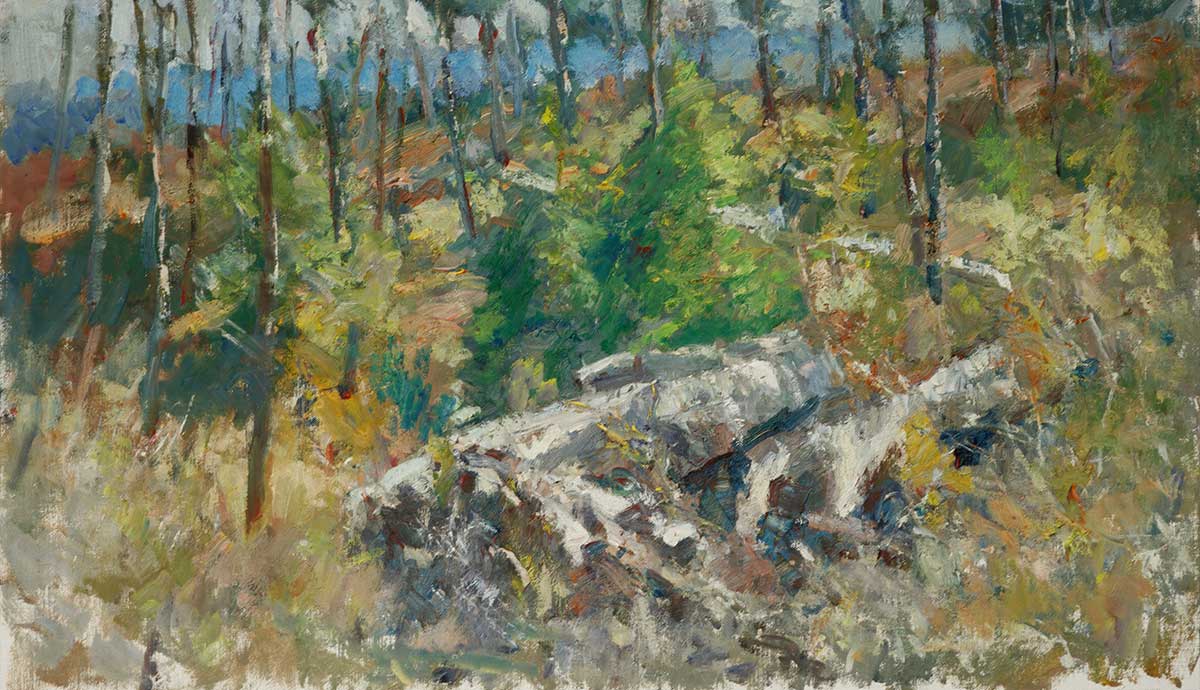
Gordon Fowler, “Coming Back,” oil on linen
As a collection, these works are more than a visual representation of the state’s park system. They prompt meaningful reflection on the natural beauty of public lands and their significance as places of solace, rejuvenation, recreation, and refuge. Some depict broad vistas and wide-open spaces, others focus on intimate forest scenes or iconic historic monuments. Some are abstractions of natural elements, others are detailed depictions of flora and fauna in their natural habitat. The artists’ mediums of choice are as diverse as the scenes — oil, acrylic, pastel, watercolor, charcoal, and Batik are all represented. Read in the artists’ own words what inspired them and why they fell in love with Texas’s state parks.
Established in 1923 by the 38th Texas Legislature to provide conservation and management of public lands, the Texas State Park System has expanded to 89 sites that represent 640,000 acres of public land. These sites — 74 state parks, 6 state historic sites, and 9 state natural areas — preserve Texas’ landscapes, provide refuge and habitat for native plants and animals, and offer an increasingly urban population places to connect to the natural world.
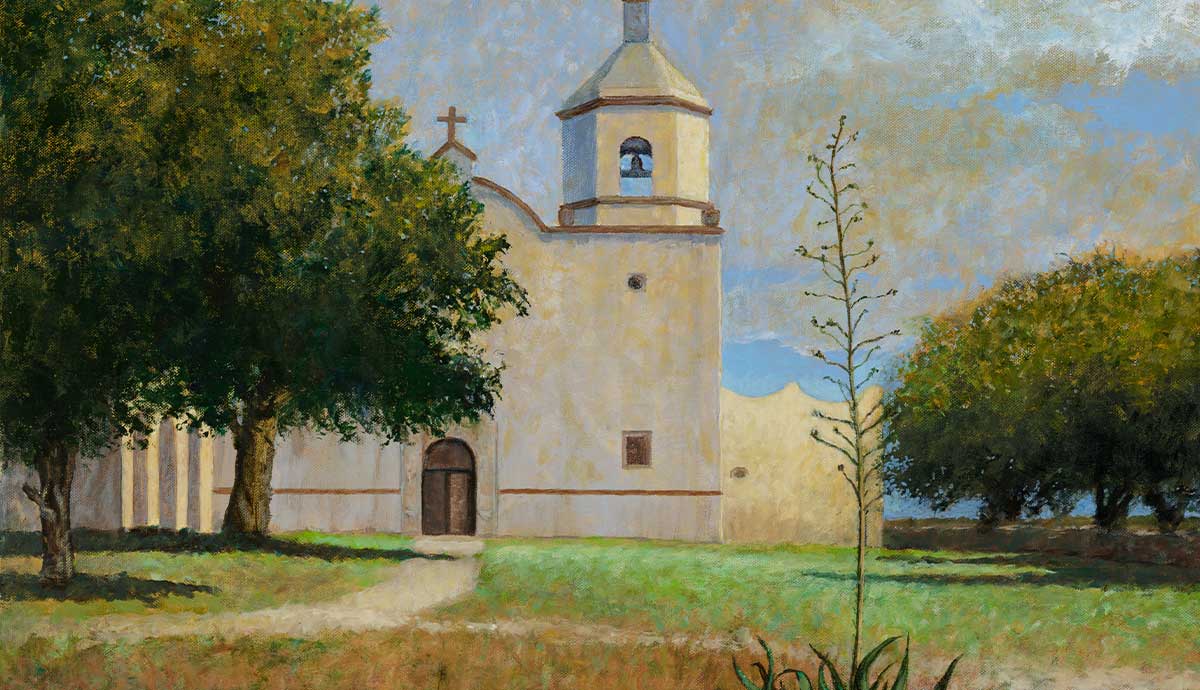
Talmage Minter, “Mission Espiritu Santo,” acrylic on canvas
Discover more about the artists and the centennial celebration in The Art of Texas State Parks: A Centennial Celebration 1923–2023. The book is available for purchase online and in the Bullock Museum Store.
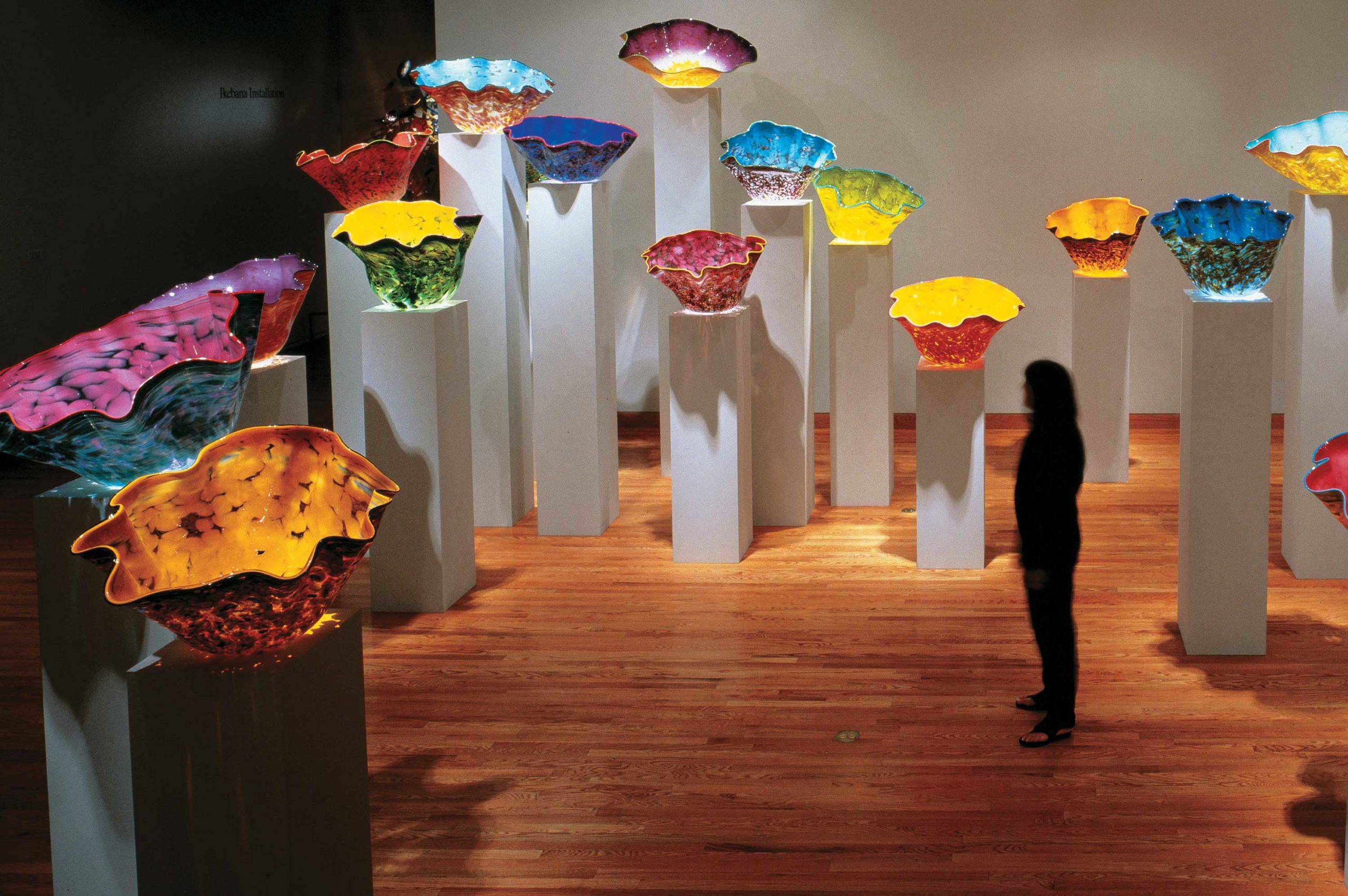
The Seattle-based artist Dale Chihuly (b. 1941) is known worldwide for colorful, expressive creations in glass that have — during his five-decade career — revolutionized our understanding of this material, which had long been discounted by connoisseurs of fine art as “merely” decorative or industrial. Through his efforts, glass has become another legitimate medium in the field of sculpture, as integral to it as bronze or clay. Chihuly’s work has grown in scale as production technologies become more sophisticated, and he continues to draw inspiration from diverse aesthetic traditions, including those of Italy, Ireland, Japan, the Czech Republic, and the Middle East.
Glass has always captivated us — for its translucency, for its familiarity, for the thrilling possibility that it can shatter — yet Dale Chihuly has empowered it to excite even more people through his compelling arrangements. Given the general perception that Chihuly is a maximalist who adores bright colors and soaring heights, it may seem odd to align him with the minimalist movement that arose in the late 1960s.
In fact, his repetitive use of an industrially produced element (glass) does link him to canonical minimalists like Donald Judd, who stacked and wall-mounted steel boxes painted with enamel. Perhaps more evident is Chihuly’s link to the movement of process art, with its emphasis on non-traditional materials and the act of creation, rather than on the finished product as a precious, irreplaceable treasure. (Chihuly’s crew members never fret when a piece of glass breaks during installation; they always bring along extras.)
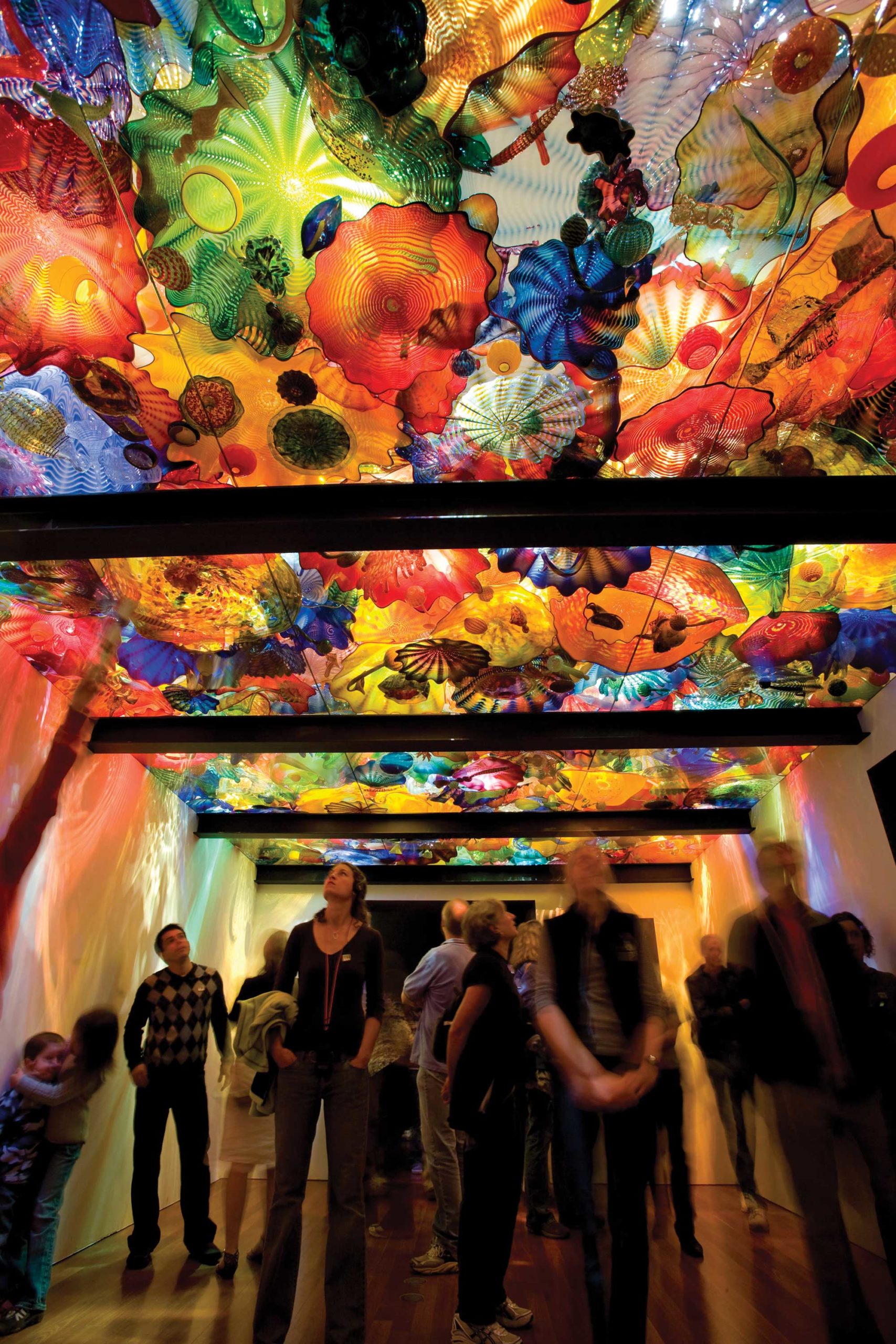
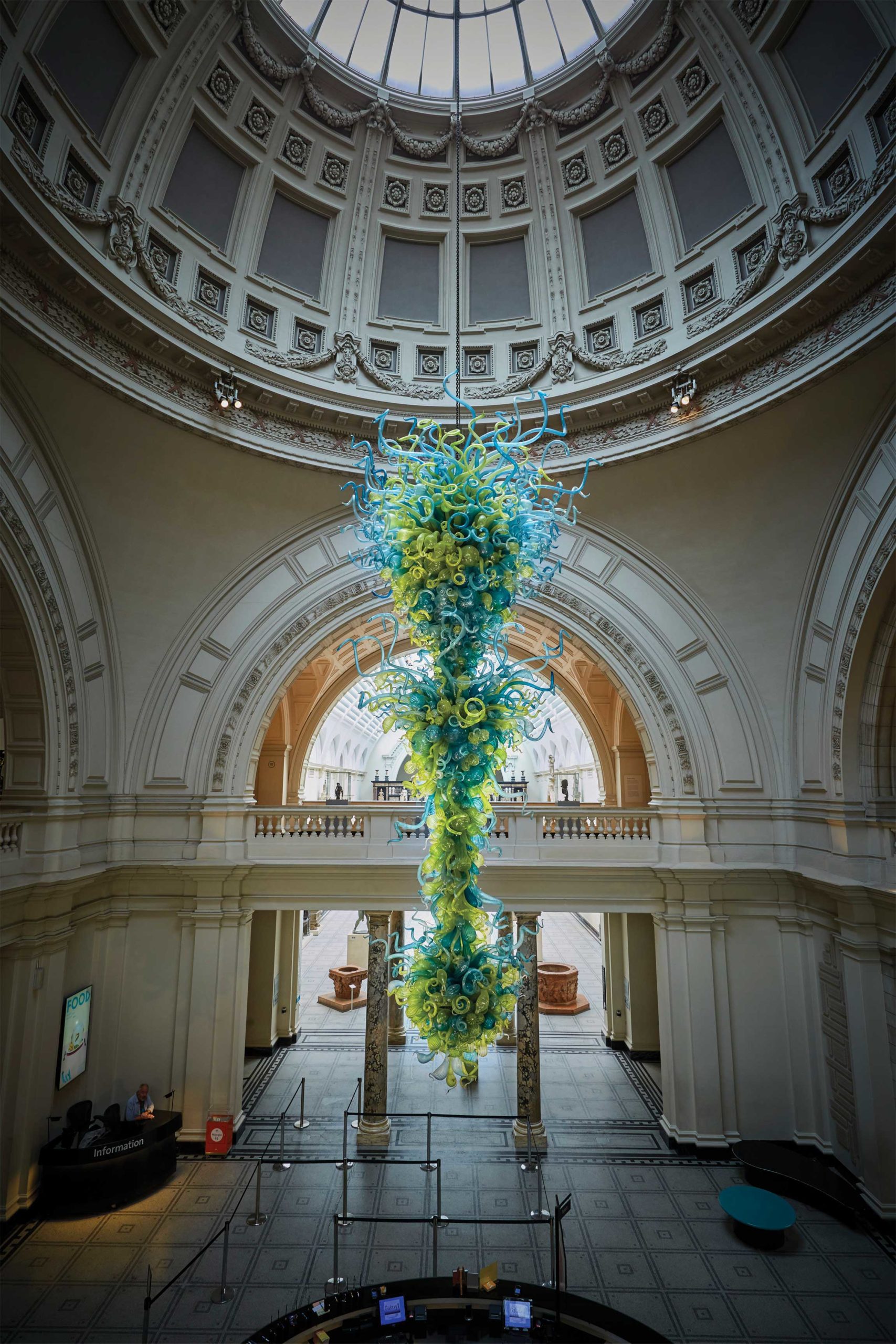
And surely no one can miss the role Dale Chihuly has played in our era’s embrace of installation art. Of his monumental, site-specific, often gravity-defying displays, the artist explains, “I want people to be overwhelmed with light and color in some way they’ve never experienced.” Now more than ever, experience is king, and Chihuly is especially successful when he places objects above our heads. Be they Chandeliers or Persian Ceilings, his installations literally immerse and involve viewers in colorful beauty, dazzling light, potential danger, and an almost childlike sense of wonder.
Today Chihuly’s art can be found in more than 200 museum collections worldwide, and Chihuly Studio has become an entrepreneurial juggernaut that distributes enormous quantities of editioned glass works, editioned prints made after his gestural drawings, colorful blankets and scarves bearing his designs, substantial books, and eye-catching posters. This output has never wavered in quality since my first encounter with the studio in 1996 when I helped (as a junior administrator) present a hugely popular Chihuly exhibition at the Baltimore Museum of Art.
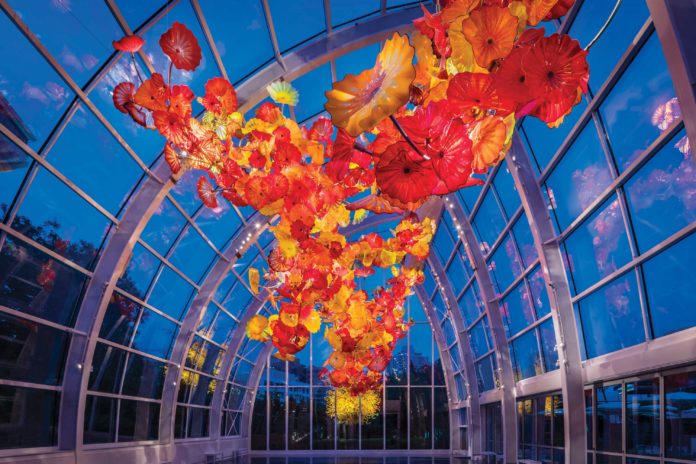
In February 2020, the leaders of Chihuly Studio kindly invited me to Seattle to see what they were doing nearly 25 years later. My first pleasant surprise was exploring Chihuly Garden and Glass, a long-term exhibition located at the foot of the iconic Space Needle. Inside is a suite of galleries introducing Chihuly’s career through eight impressive room-installations accompanied by helpful videos of the artist and his hot-shop team at work. The visit culminates with ogling a 100-foot-long arrangement hung from the ceiling of a 40-foot-high glasshouse, then strolling through a garden featuring more installations and a pavilion offering live glass-making demonstrations.
Unlike the public, I was also invited to the Boathouse, the large complex facing Lake Union where Chihuly supervises his energetic glass-making team in the hotshop. Finally, I visited the administrative headquarters of Chihuly Studio, which contains a by-appointment gallery for top clients and a high-ceilinged warehouse where every commissioned project is tested before shipment to the client.
Sometimes when I already know and like something, I stop seeing it clearly. I have always admired Chihuly’s works in glass, but the Seattle visit reminded me of how essential it is to move around his deftly arranged massings of them — better yet, through them. This trip showed me that half of Chihuly’s artistry relates not to glass but to his brilliance in presenting it. The latter owes much to his early training in interior design and architecture (I had no idea), and also to how he arranges, and lives with, his own collections of art and artifacts. (Again, I had no idea.)
Always Innovating
It helps to review how Chihuly got here. During his first year attending the University of Puget Sound in his hometown of Tacoma, he successfully remodeled his mother’s recreation room and enjoyed the experience so much that he decided to pursue architecture and interior design at the University of Washington in Seattle. In a weaving class, he incorporated glass shards into woven tapestries, signaling an alertness to boundary-crossing that became evident later. In 1965, Chihuly earned his B.A. in interior design, confident enough of his ability to conceive, draw, and fill up spaces that he later worked for a Seattle architecture firm (briefly).
The young man had already caught the glass bug, however, so in 1966–67 he earned an M.S. at the University of Wisconsin (Madison) while studying glassblowing under Harvey Littleton, who had launched America’s first glass program there. The next academic year was spent earning an M.F.A. at the Rhode Island School of Design (RISD) in Providence, where Chihuly began exploring environmental works using neon, argon, and blown glass. This led to a Fulbright fellowship allowing him to become the first American blower to work in the hotshop at Venice’s famous Venini glass factory. There he observed the team approach to blowing glass, not the solo approach normally used by Americans that kept the scale of their creations modest. (The more people lifting and turning the molten glass, the larger the pieces to be made.)
In 1969, Chihuly established RISD’s own program in glass and taught there for 11 years. Two years later he co-founded the Pilchuck Glass School, an hour north of Seattle and initially envisioned as a summer-only program. The rest is history, as Pilchuck’s (and Chihuly’s) success has since transformed the Pacific Northwest into America’s leading regional hub for glass art. That summer, Chihuly created his first environmental installation featuring glass objects floating on water. At RISD the following year, he partnered with James Carpenter to make the installations “20,000 Pounds of Ice and Neon” and two “Glass Forests,” and in 1971 their collaborations were shown at New York City’s Museum of Contemporary Crafts.
Though he was spending most of the year on the East Coast, Chihuly was still very much a Westerner. In 1975, he began the Navajo Blanket Cylinder series, and the following year three examples of it were acquired by New York’s Metropolitan Museum of Art. Naturally this breakthrough encouraged Chihuly; in 1977, his Basket series was inspired by a visit to the Washington State Historical Society in Tacoma, where he admired Northwest Coast Indian baskets that seemed to be slumping under their own weight.
Later that year he exhibited “100 Pilchuck Baskets” at the Seattle Art Museum on a steel table. Like their inspirations, most were monochromatic and only a few were asymmetrical, but that soon changed: Chihuly became more comfortable allowing gravity, centrifugal force, and the fire’s heat to form Baskets with undulating walls. This willingness to “let go,” and a shift toward brighter and more diverse coloring, was an inheritance from Jackson Pollock and other abstract expressionists, whose randomness Chihuly had long admired.
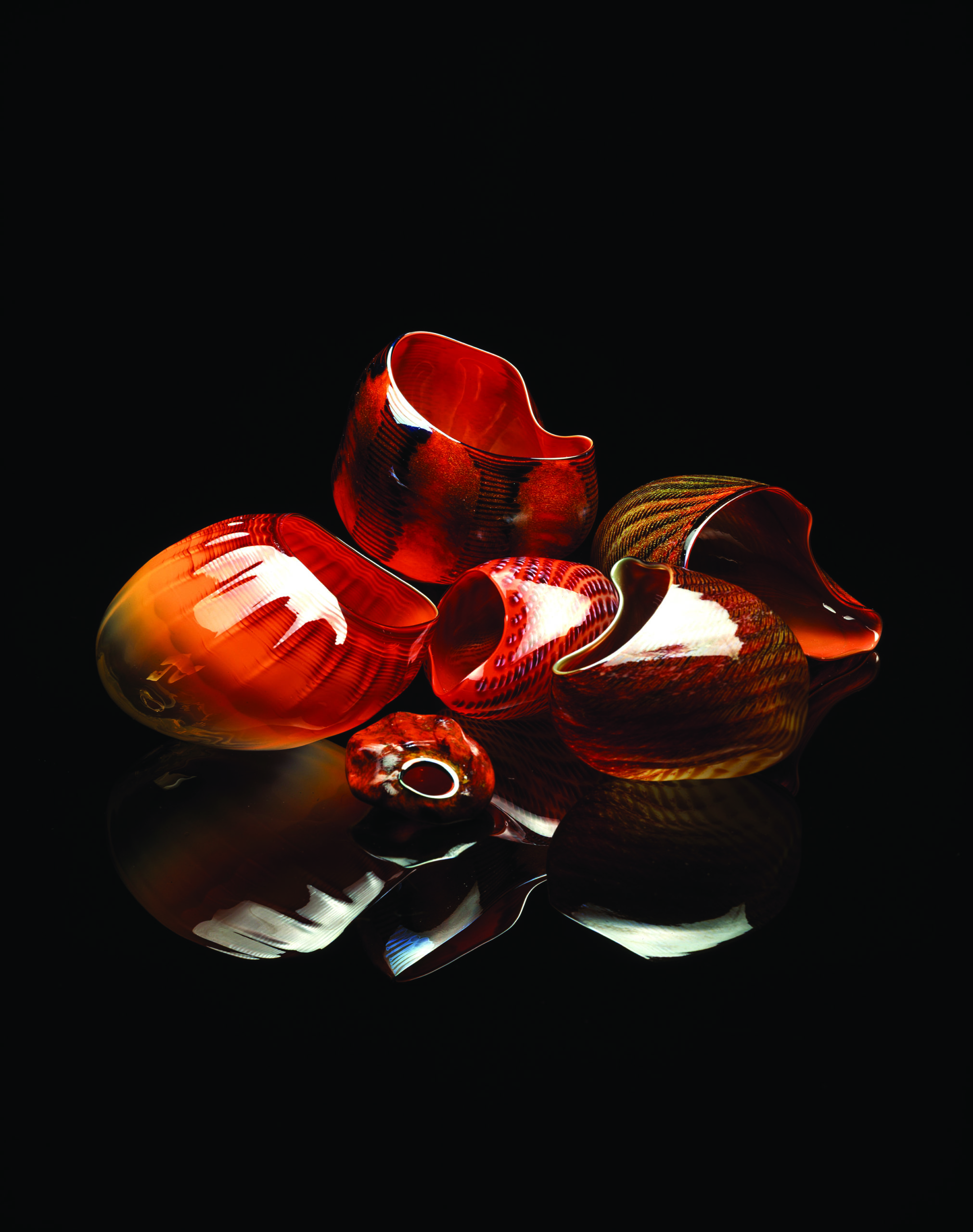
In the late ’70s, Chihuly began thinking about space in new ways. Influenced by the Standing Stones of Stenness — a site he had visited in the Orkney Islands — he assembled mini-installations (what he calls “sets”) of smaller glass pieces that fit into and around a larger one. This impulse took on new energy in 1980 with the Seaforms, baskets that began to resemble shells, and a year later with the Macchia, spotted baskets he massed on tabletops and pedestals as Macchia Forests. (Their name was coined by his sculptor friend Italo Scanga [1932–2001] because “macchia” means “stain” in Italian.)
Other expressions of his desire to activate space include his windows for Shaare Emeth synagogue in St. Louis (1980) and sets for two musical productions (Debussy’s Pelléas et Mélisande, Seattle Opera, 1992; and Bartók’s Bluebeard’s Castle, Seattle Symphony, 2007).
In 1985, Chihuly began making glass in vaguely ancient forms with the Persians series. These were often wall-mounted or stacked on shelves and wall cases, and soon he was setting them onto pergolas through which viewers look up; they can even be found under plate glass at the bottom of his own lap pool. From his training in design and architecture, Chihuly knew how to light for maximum impact, and also which wall colors boost the intended effects.
The significance of light took center stage in 1992, when Chihuly launched his Chandelier series with an exhibition at the Seattle Art Museum; four years later, the first permanent outdoor one was inaugurated in Leavenworth, Washington. In 1996, he realized a personal dream to install 14 Chandeliers over the canals and piazzas of Venice. Planning for that project got underway in 1994, just as Christo and Jeanne-Claude were famously wrapping Berlin’s Reichstag in silver fabric. During his visit with them there, Chihuly was deeply impressed by the ambition and public-spiritedness of their mega-installation and adapted some of their strategies for Chihuly over Venice.
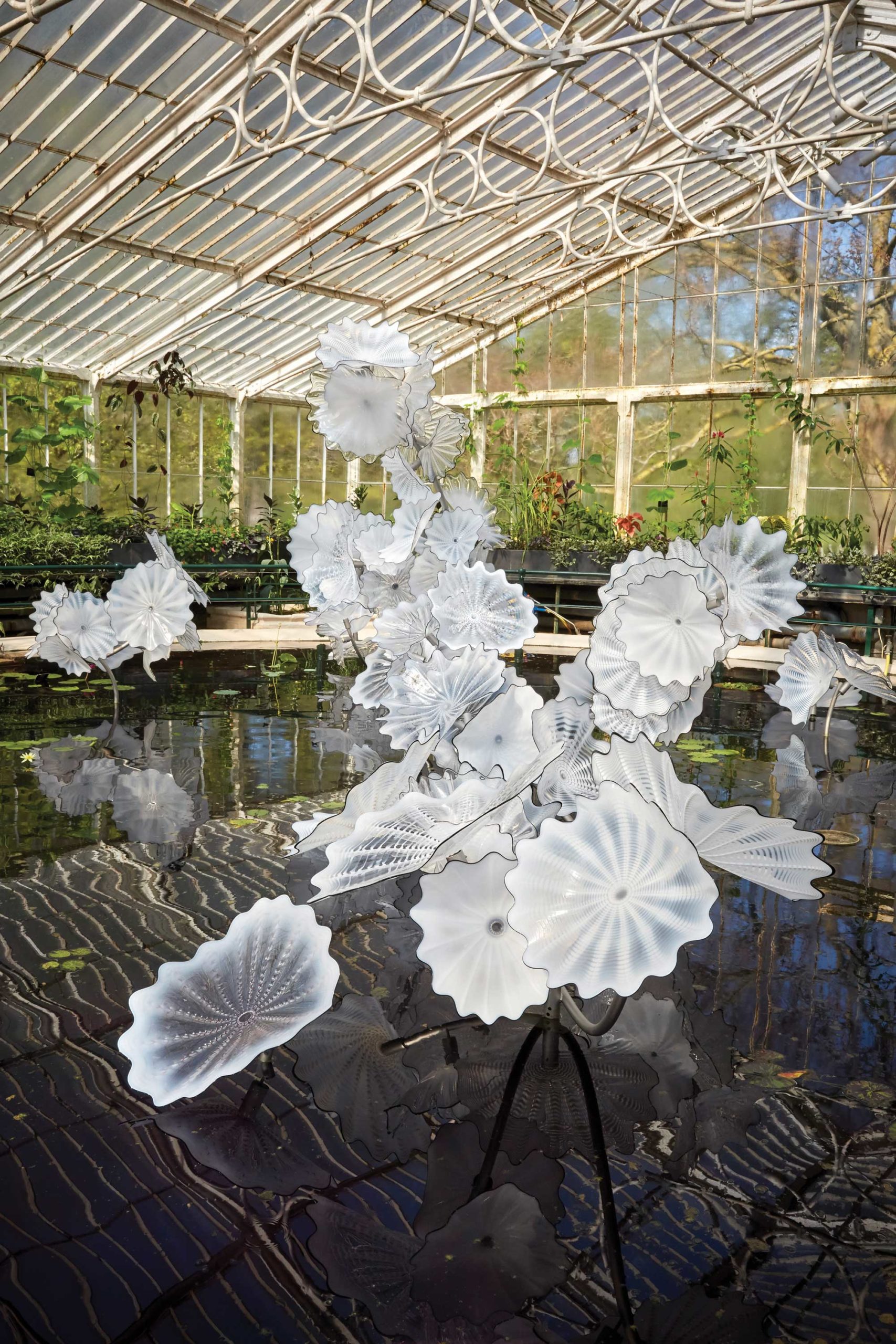
A new chapter opened in 2001 at Chicago’s Garfield Park Conservatory. This was the first of many interventions in botanical venues worldwide, where Chihuly’s organic forms interact well with those of nature. The latest such presentation is on view at Nashville’s Cheekwood Estate and Gardens (July 18, 2020–January 10, 2021).
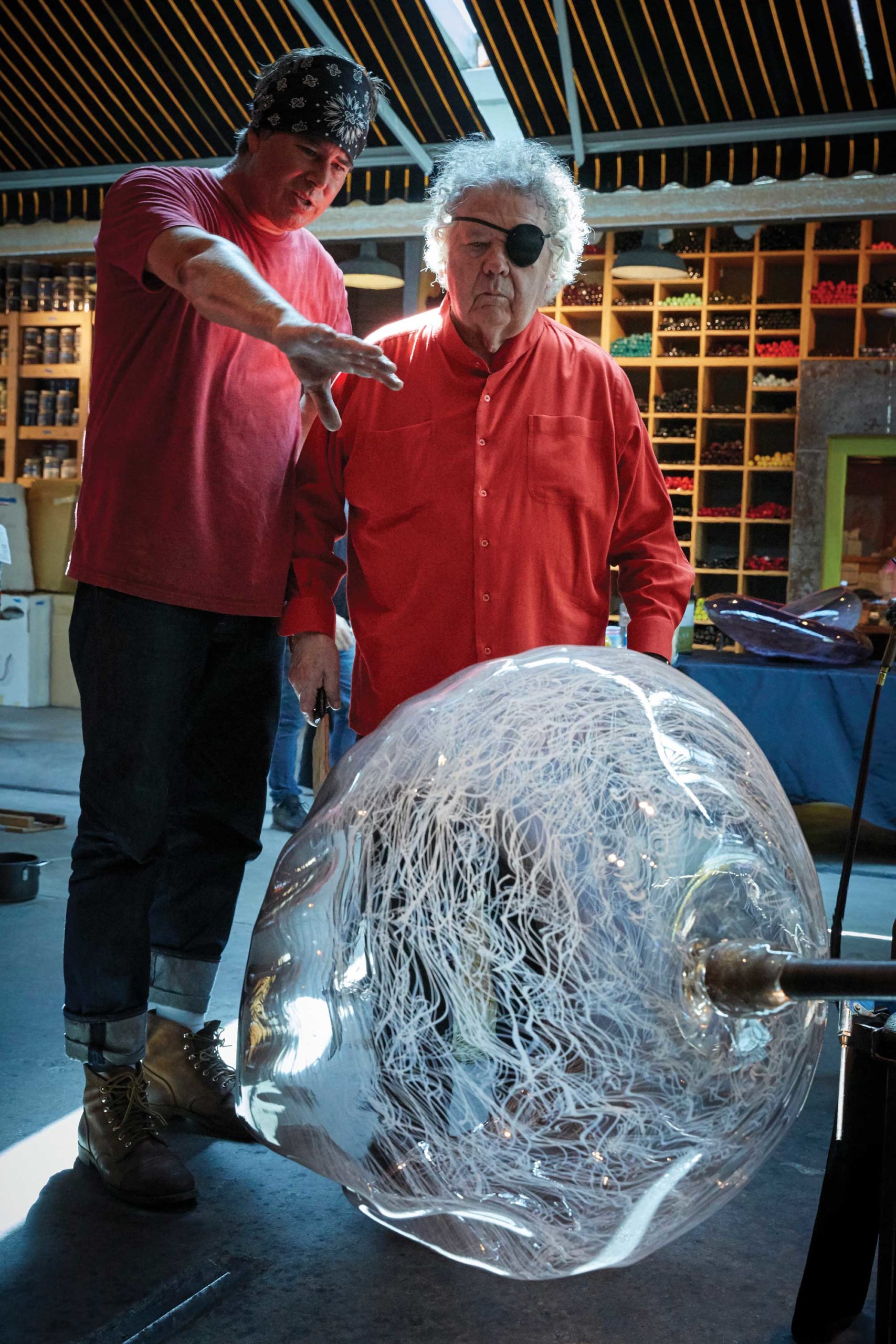
Chihuly continues to innovate. Around 2019 he experimented with a Venetian cane-working technique called merletto (“lace”). He departed from its customary precision in order to convey a more expressive energy by applying mesh-like drawings of white cane glass onto his Baskets. “This series mimics the feel of lace, the way it moves and drapes easily into soft forms,” he explains.
Chihuly Studio CEO Leslie Jackson Chihuly sees Chihuly Merletto as “another example of how Dale continues to explore the medium of glass and stretch his vocabulary through new ideas and old techniques.” The fruits of this labor can now be enjoyed on Traver Gallery’s website, which presents the glass works alongside his drawings for them.
Dale Chihuly – His Own Little Museum
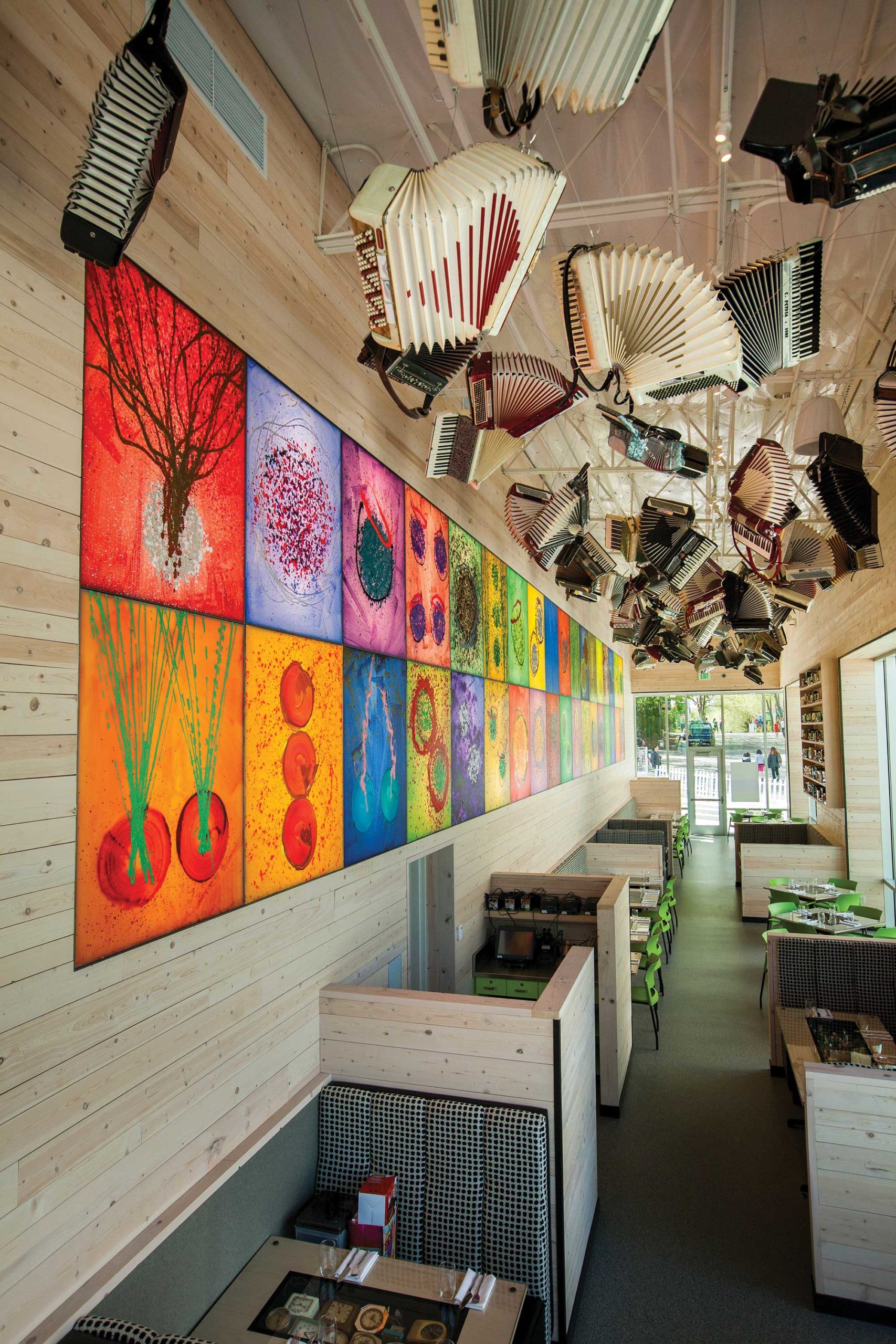
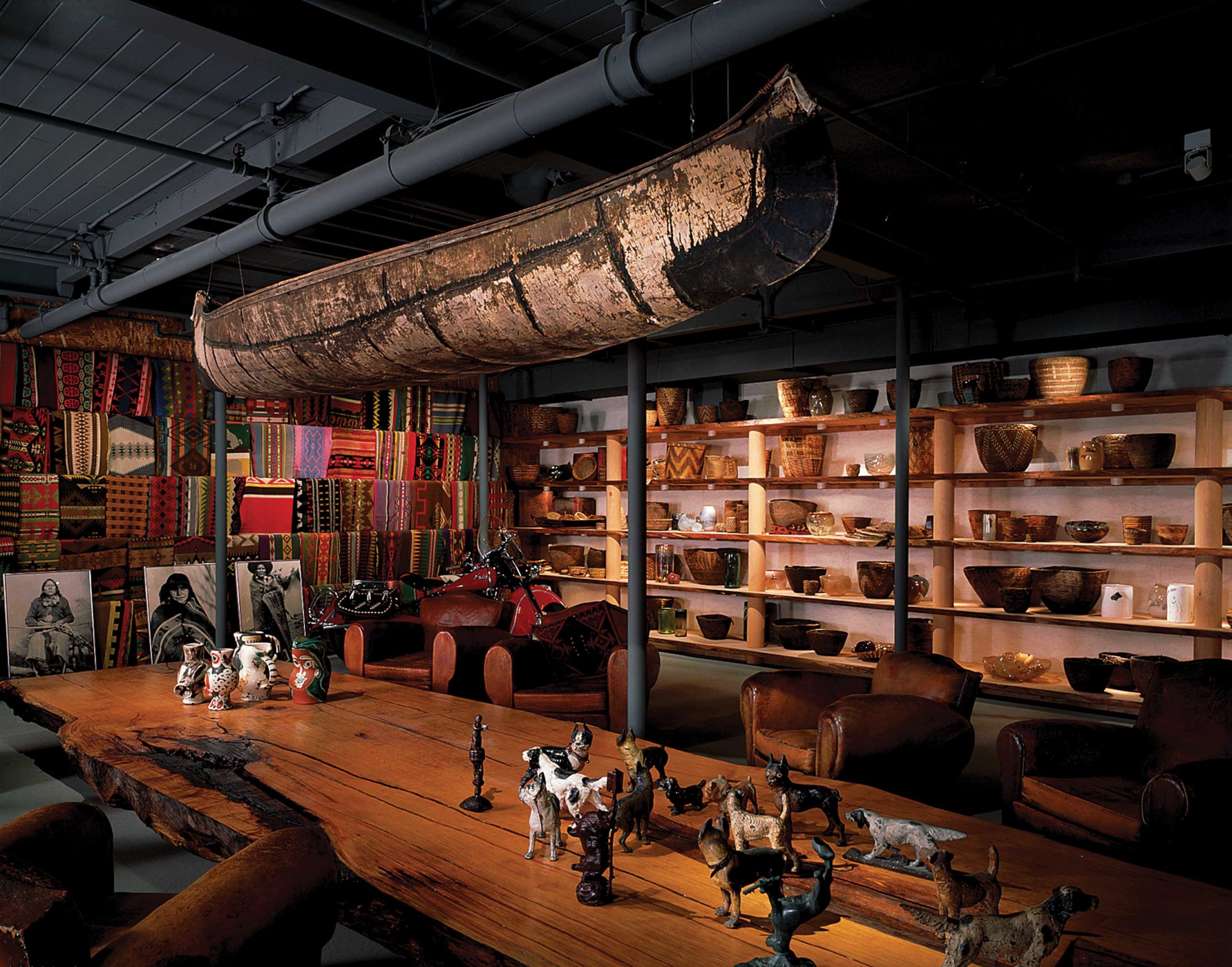
Chihuly’s knack for arranging things also stems from his parallel life as a passionate acquisitor. “When I start to collect something,” he says, “I often don’t start with a single object. Sometimes I start with 10 or 20 or a hundred. It is like creating my own little museum.” Chihuly carefully organizes and catalogues his discoveries, then displays them with dramatic flair. During my visit I was delighted to find every corner of the Boathouse adorned with collections; there’s a lot to see, but it doesn’t feel like an episode of Hoarders.
Like much of his generation, Chihuly started by gathering stamps, then anything automotive (actual or miniature). Having grown up in the West, he has an affinity for historic Native American baskets and blankets, hand-carved canoes, and the sepia-toned photogravures of Native Americans taken by Edward S. Curtis (1868–1952). It also makes sense that a master of glassmaking collects ancient handblown glass, primarily from the heyday of the Roman Empire: “I love the patina that only time and age can give the surface of an object,” Chihuly notes.
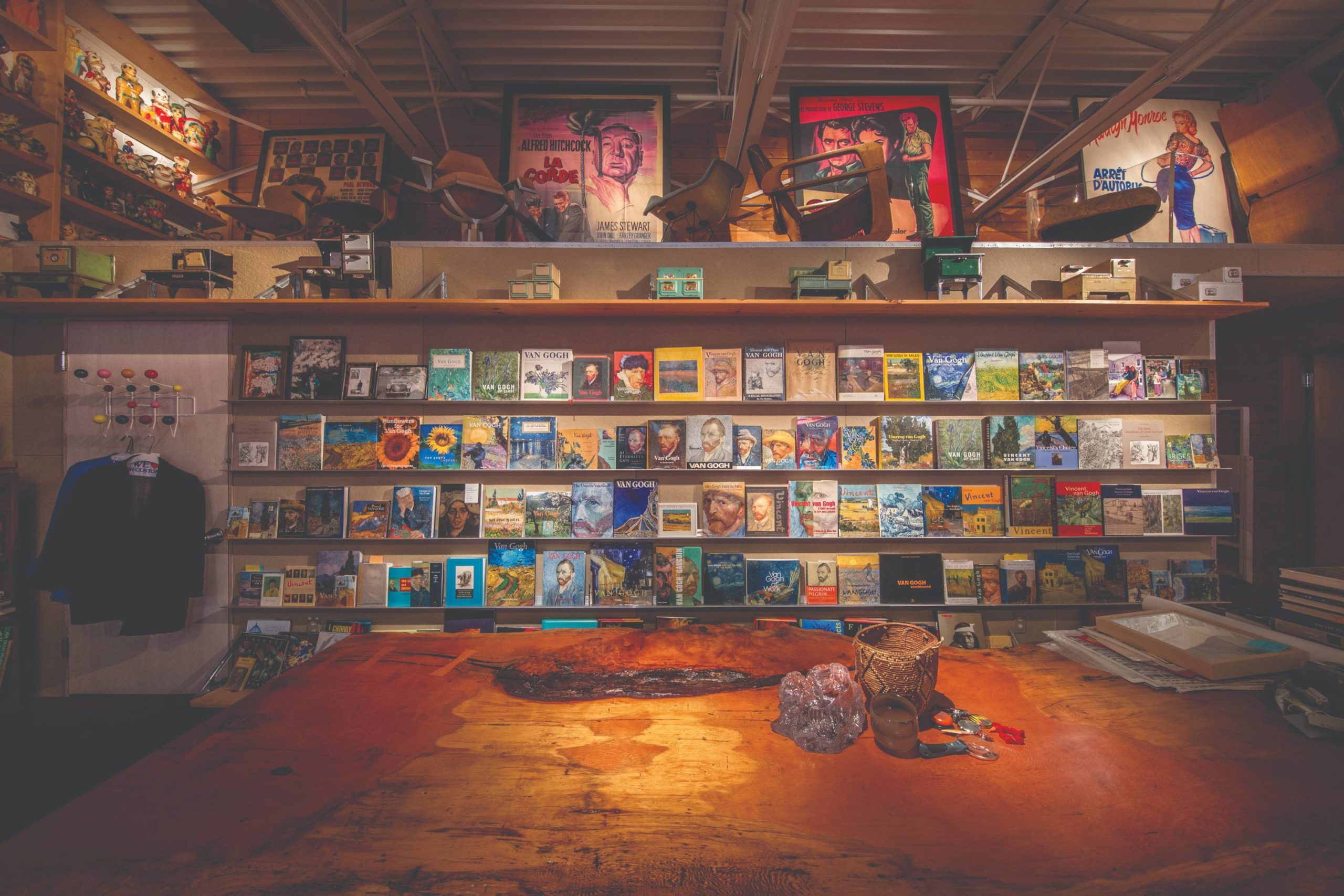
This artist is an unabashed fan of other artists. His private rooms contain entire walls covered with art books with their attractive covers facing out; one features more than a hundred volumes devoted to Vincent van Gogh, though Chihuly also admires Winslow Homer, Charles Demuth, and John Marin, among other historic masters.
The bulk of the collections, however, have little to do with fine art: “I love to find the beauty in everyday objects,” Chihuly notes. Thus there are enormous holdings of accordions (which his father and brother played); album covers; anonymous black-and-white photographs; bottle openers; cameras; cast iron doorstops; chairs (primarily from the mid-20th century); dollhouse furniture; fishing decoys; inkwells; juicers; kitchen-related items, including children’s tin stoves and Fiestaware ceramics; matchbooks; paperweights; papier-mâché masks; pocketknives; postcards; posters; radios; shaving brushes; toy soldiers; and much more. And the quest continues: “I’m always looking,” Chihuly admits.
Dale Chihuly was already an enthusiastic collector in 1967 when he began a lifelong friendship with Italo Scanga, who made neo-Dadaist assemblages of found objects. Visiting flea markets was their inexpensive hobby, a pastime also pursued by another RISD faculty member, the painter Richard Merkin. Yet another role model for voracious collecting was Andy Warhol, with whom Chihuly traded artifacts. The two met in 1970 when the Manhattan-based pop artist curated a show at RISD’s museum titled Raid the Icebox 1. This necessitated Warhol’s rummaging through the permanent collections during five visits to campus; ultimately he exhibited an array of half-forgotten items from the storerooms including shoes, chairs, parasols, wallpaper, hatboxes, Native American blankets, and more.
So why does Chihuly’s mélange of masterworks and detritus matter? “My collections inspire me and are often a source for new ideas,” he replies.
Most importantly, the arranging of collections both informs and benefits from Chihuly’s concurrent arranging of glass. In 2017 his artist friend Bruce Helander published a richly illustrated book, Chihuly: An Artist Collects, that offers a glimpse inside. He wrote that Chihuly’s glass art is “irrefutably about beauty, craftsmanship, and contour, as well as the aesthetics of repetition and organization (cultivation) of a collection of handblown objects that are all different, but are strongly connected by a universal trait.” Indeed, Chihuly’s gorgeous glass works would be less impactful without his deft contrasting of their distinctions and similarities through placement and lighting.
My stroll through room after room of Chihuly’s bottle openers, fishing decoys, and matchbooks could have been a claustrophobic ordeal, but it became a visual revelation thanks to the eye that had ordered them. I may never need to see another toy soldier, but am already anticipating my next immersion in a room of Chihuly’s glass.
Master Drawings New York (MDNY) has announced its 2023 exhibitor list, expanding to 25 participants from last year’s 21. The fair will return to Manhattan’s Upper East Side from Friday, January 20 through Saturday, January 28, 2023.
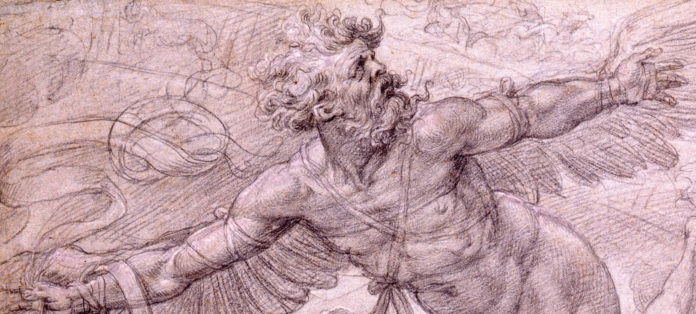
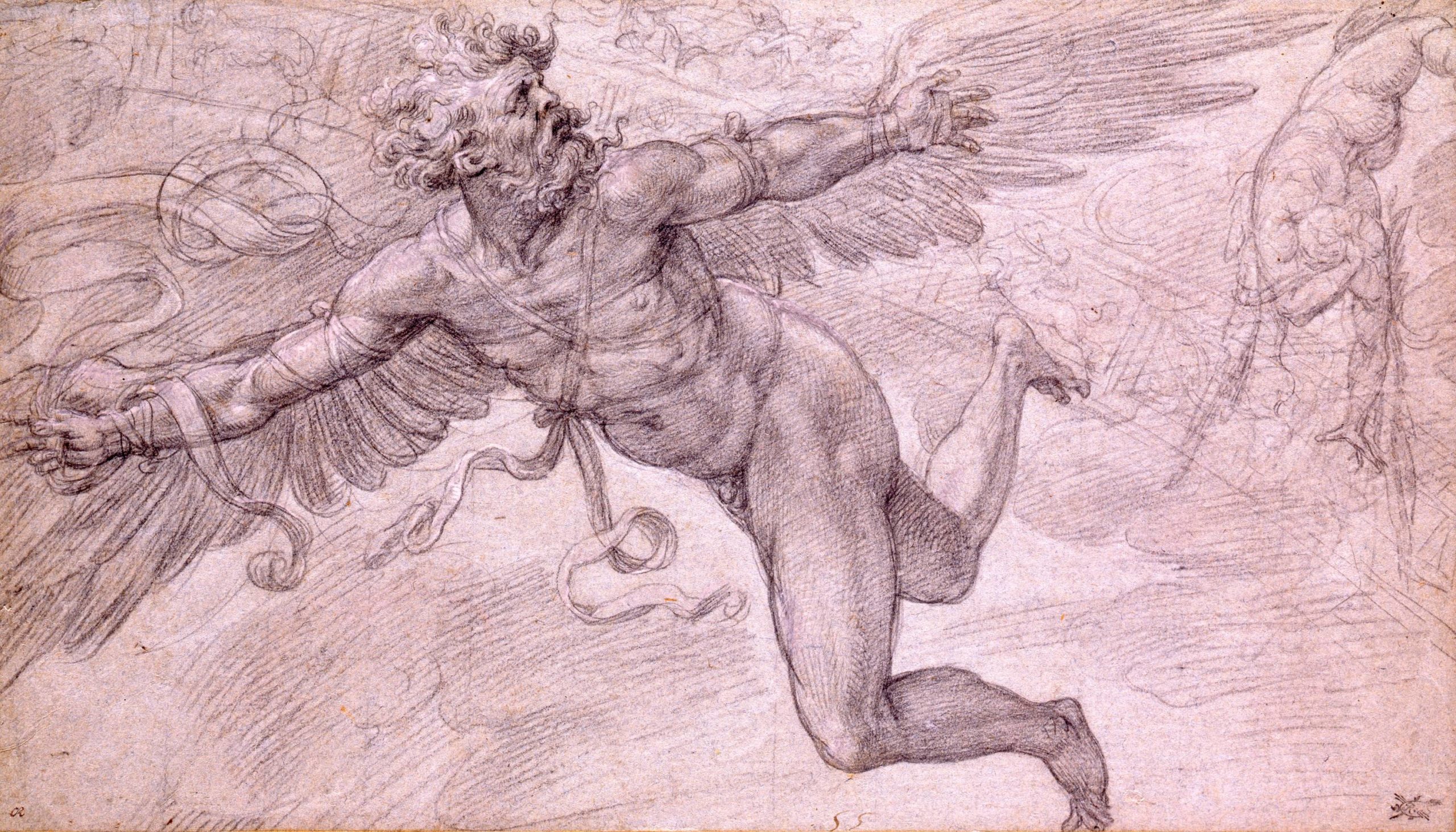
Orazio Samacchini (1532-1577), “The Flight of Daedalus and Icarus Black,” 1560, Black chalk, heightened with white on blue paper, partially squared in black chalk, Colnaghi New York, 8 3/4 x 15 1/4 in. • 222 x 387 mm
From the organizers:
Now in its 17th year, the annual week-long event includes a focused series of exhibitions by New York-based galleries, pop-up exhibitions by leading dealers from Europe, and special presentations mounted in private spaces. Located largely along Madison Avenue, the exhibitions will feature an outstanding array of drawings, paintings, watercolors, and sculptures from the 14th to the 21st centuries.
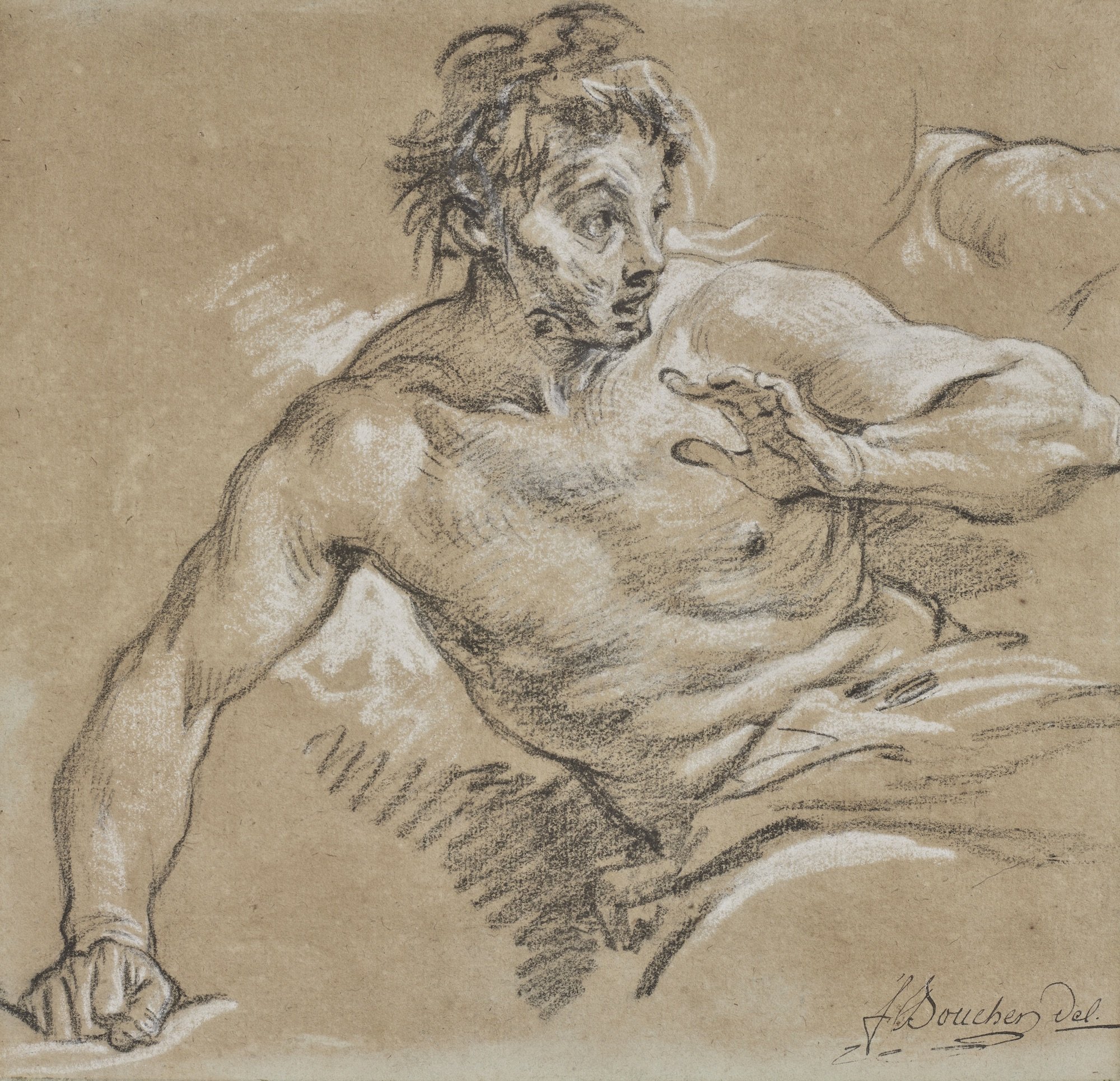
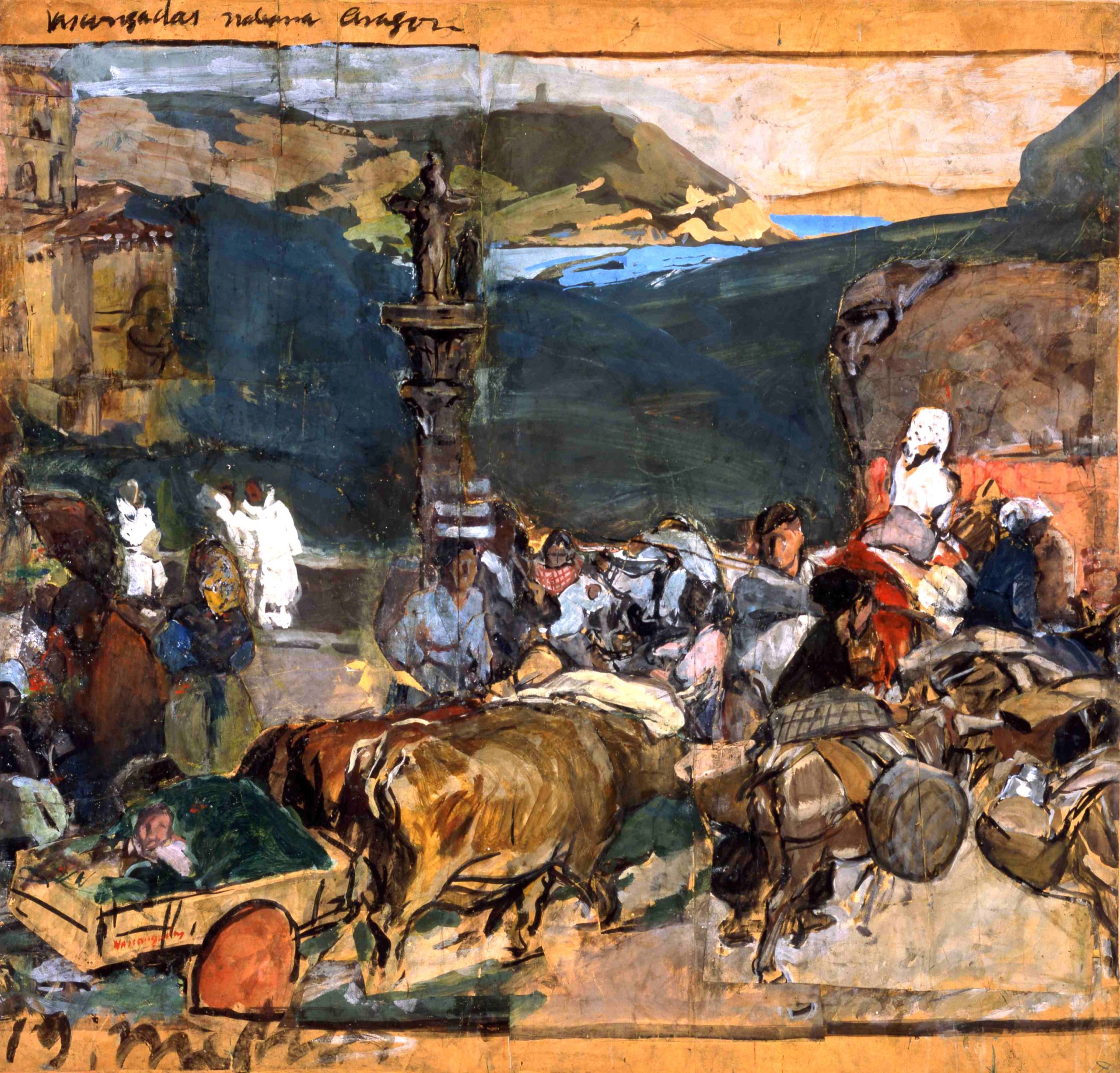
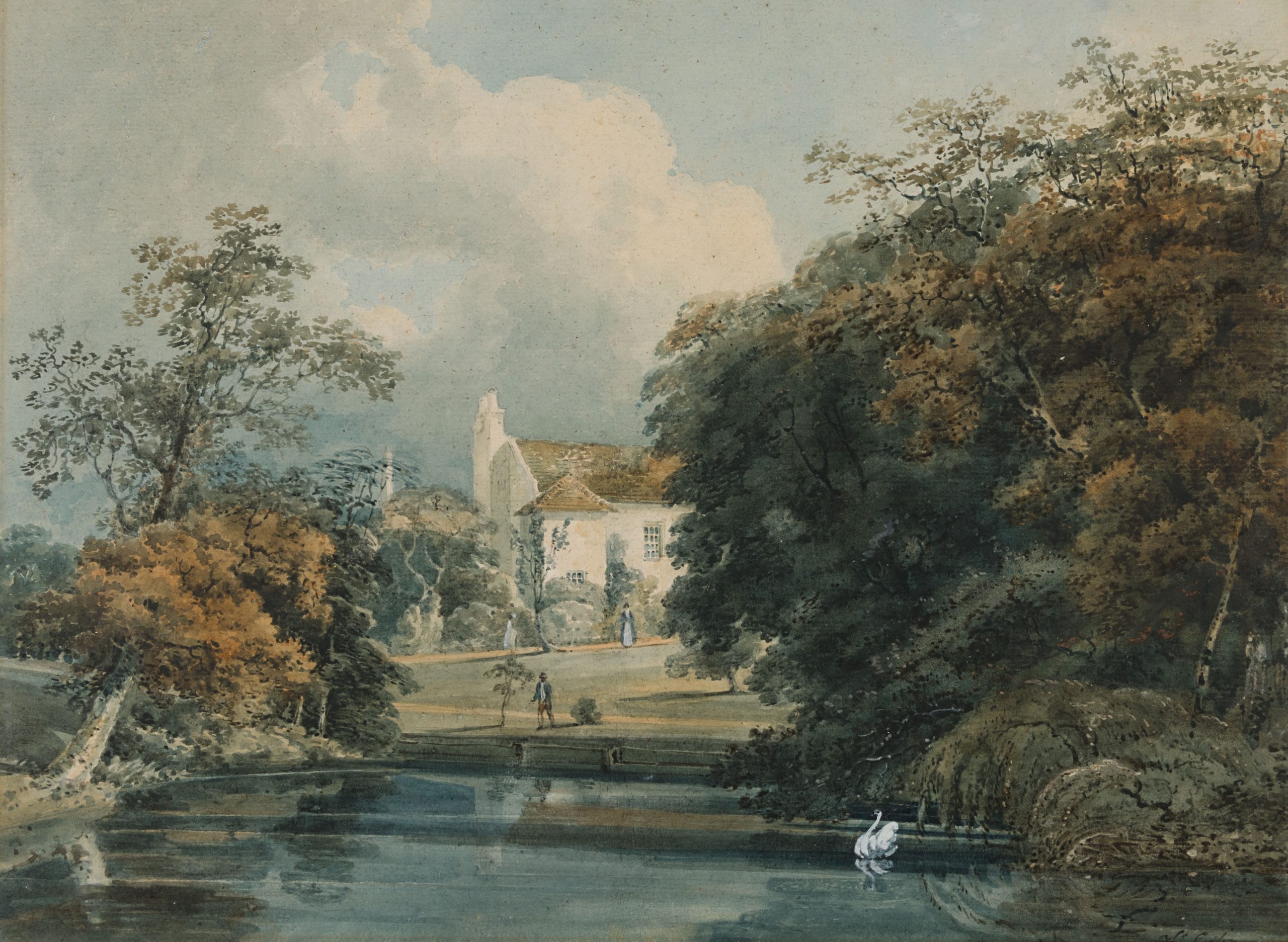
François Boucher (1703 – 1770), Study of Mars for “Mars and Venus Surprised by Vulcan”, Circa 1754, Black chalk, white chalk, with highlights in pastel on beige, once greyish-blue, paper, Didier Aaron, 10 1/8 x 9 5/8 in. • 255 x 245 mmJoaquín Sorolla y Bastida (1911-1919), Sketch for the Provinces of Spain. Basque Provinces, Navarre and Aragon, Gouache on paper, 106 x 110 cm, Hispanic Society Museum & Library (A1521)Thomas Girtin (1775-1802), “The North Front of Chalfont Lodge Buckinghamshire,” circa 1799, Watercolor over traces of pencil heightened with bodycolor, Guy Peppiatt Fine Art, 16 1/2 x 21 5/8 in. • 420 x 549 mm
Reflecting on the announcement, Crispian Riley-Smith, Managing Director and CEO of MDNY said: “Master Drawings New York is such a unique event. It’s wonderful to see devoted followers—from museum curators and collectors to interior designers—and new visitors embrace the medium of drawing in the late days of January each year. We look forward to an even larger fair this year, with several new exhibitors such as Patrick Bourne & Co., Marty de Cambiaire, Colnaghi Elliott Master Drawings, Henrique Faria + Herlitzka & Co., The Fine Art Society, David Nolan Gallery, and Sprüth Magers.
“The branding of the event is Master Drawings, but we are proud to have developed over the years, and to include Master Paintings, Sculptures, and Photographs in this year’s iteration. There is also an exceptional lineup of exciting programming with our institutional partners not to be missed!”
As part of our effort to continue to help artists and art galleries thrive, we’re proud to bring you this week’s “Virtual Gallery Walk.” Browse the artwork below and click the image itself to learn more about it, including how to contact the gallery.
Kumquat Safari, Elizabeth Butler, oil & copper leaf on panel, 30 x 60 in; Celebration of Fine ArtA Day In The Clouds, Phil Starke, oil, 42 x 48 in; ArtzLine Curse of Triton, Nik Anikis, oil on canvas, 51 × 51 in; Nik AnikisVintage Scuba Helmet, Emily Copeland, Charcoal on Stonehenge paper, 38 x 27 in; RJD Gallery
Want to see your gallery featured in an upcoming Virtual Gallery Walk? Contact us at [email protected] to advertise today. Don’t delay, as spaces are first come, first served, and availability is limited.
Barbara Jaenicke, “Mountainside Iridescence” (in progress), 30 x 40 in., oil, 2022;
Illume Gallery West, Philipsburg, MT
How do you describe success? Barbara Jaenicke: I suppose there’s the side of success that’s concerned with living my passion, and then there’s the practical side.
In regard to living my passion, I feel I achieve success when I can maintain the perseverance to push through the many aggravating days of painting “misses” and experience the rare occurrences of what I deem painting “hits.” I’m pretty sure that at the end of my life, I’ll feel that I conquered this pursuit if I know I pushed my painting skills as far as they could go.
Regarding the practical side, many artists feel it’s taboo to boil it down to money. I get it. But I think for those of us who are providers for our family, it truly is a tremendous sense of accomplishment when it’s done with a career we love. Since I come from a marketing background, I actually find it fulfilling to manage the business side of my painting career, too. When my passion and profession can comfortably intertwine, life is good!
How do you find inspiration? Barbara Jaenicke: I search for it. Constantly. It typically finds me working away at the easel after about a half dozen failed paintings.
Michael Godfrey, "Going Home," oil on board, 18 x 24 inches
The California Art Club unveiled the winners of “Winter Wonderland,” the latest installment of its Excellence in Traditional Fine Art Competition.
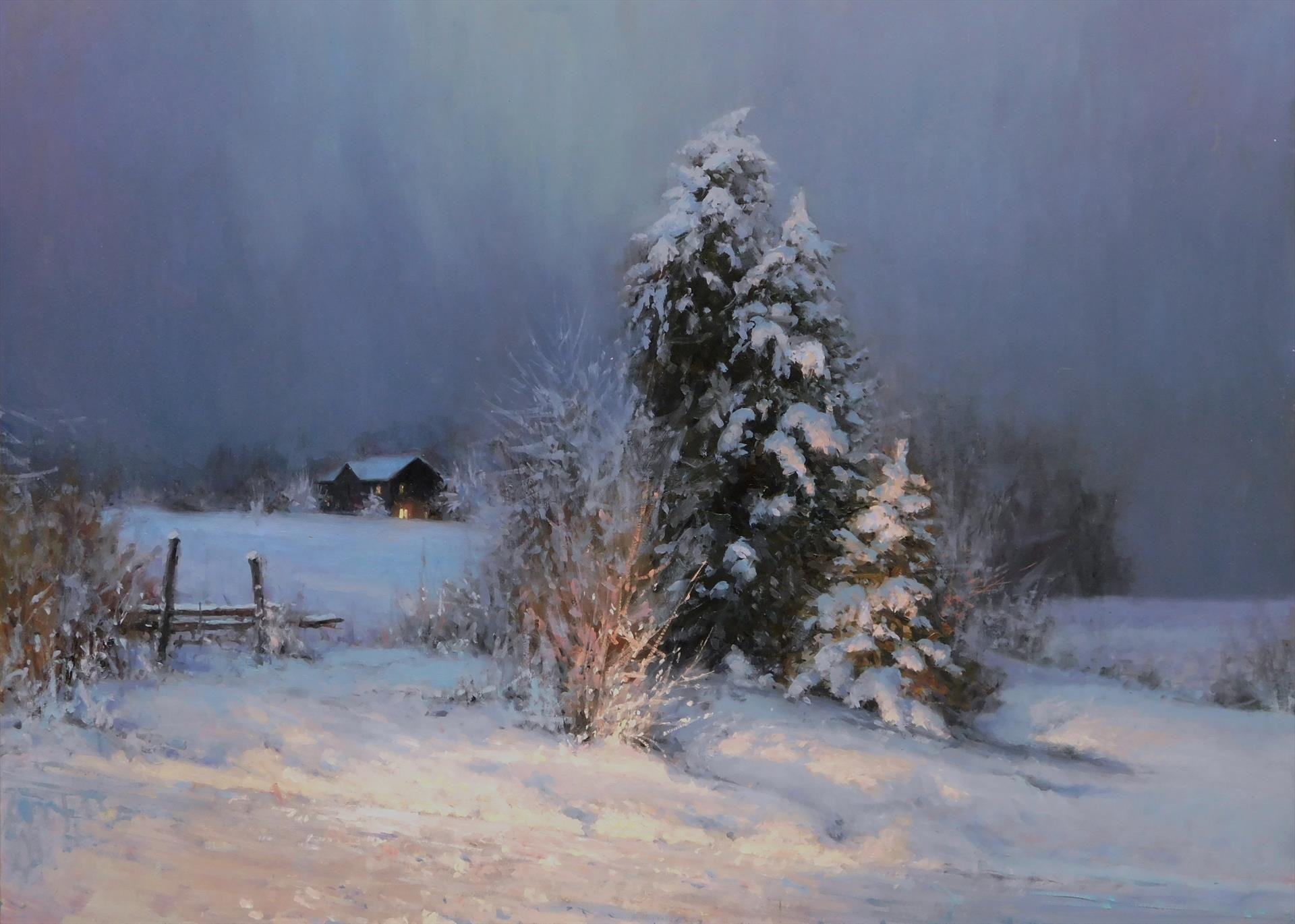
First place went to Michael Godfrey for his oil painting “Going Home.” His award-winning artwork and that of the other 32 finalists identified for honors and cash prizes may be viewed at californiaartclub.org/wintercompetition.
The guest judge for this competition, Eric Rhoads, CEO of Streamline Publishing, said of Godfrey’s painting, “I love that this painting draws me in with the carefully placed spot of light, almost as if the car had pulled up to the gate and is lighting the snow-covered tree. The distant house with the tastefully rendered lit window creates a warm welcome, making me want to walk back through the cold snow for a warm fireplace and hot chocolate.”
California Art Club, Winter Wonderland: The Winners
First Place – $1,000 Prize
Michael Godfrey, “Going Home,” oil on board, 18 x 24 inches
Michael Godfrey, “Going Home,” oil on board, 18 x 24 inches
Second Place – $500 Prize
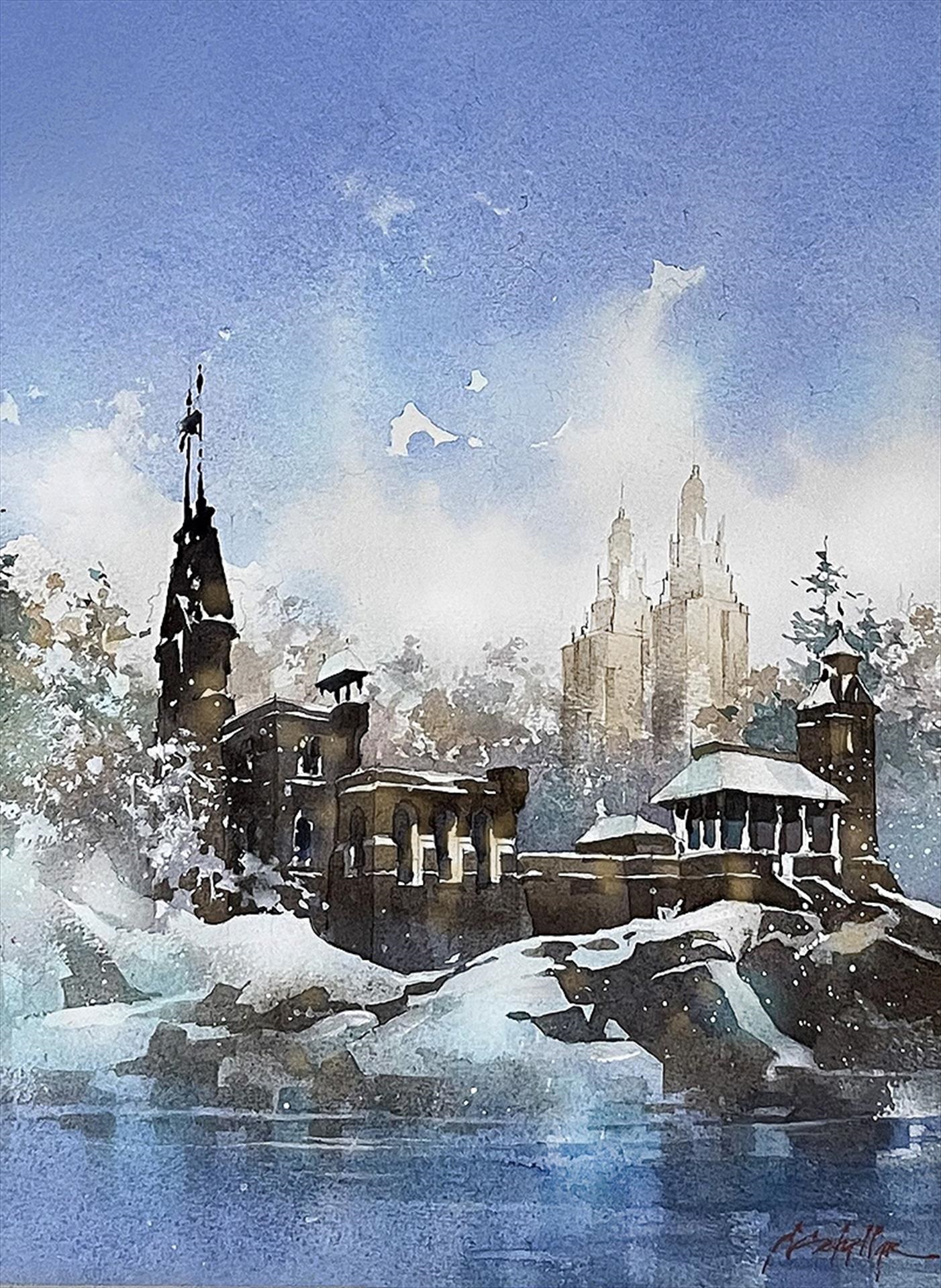
Thomas Schaller, “Winter – Belvedere Castle,” watercolor on paper, 15 x 12 inches
Thomas Schaller, “Winter – Belvedere Castle,” watercolor on paper, 15 x 12 inches
Third Place – $250 Prize
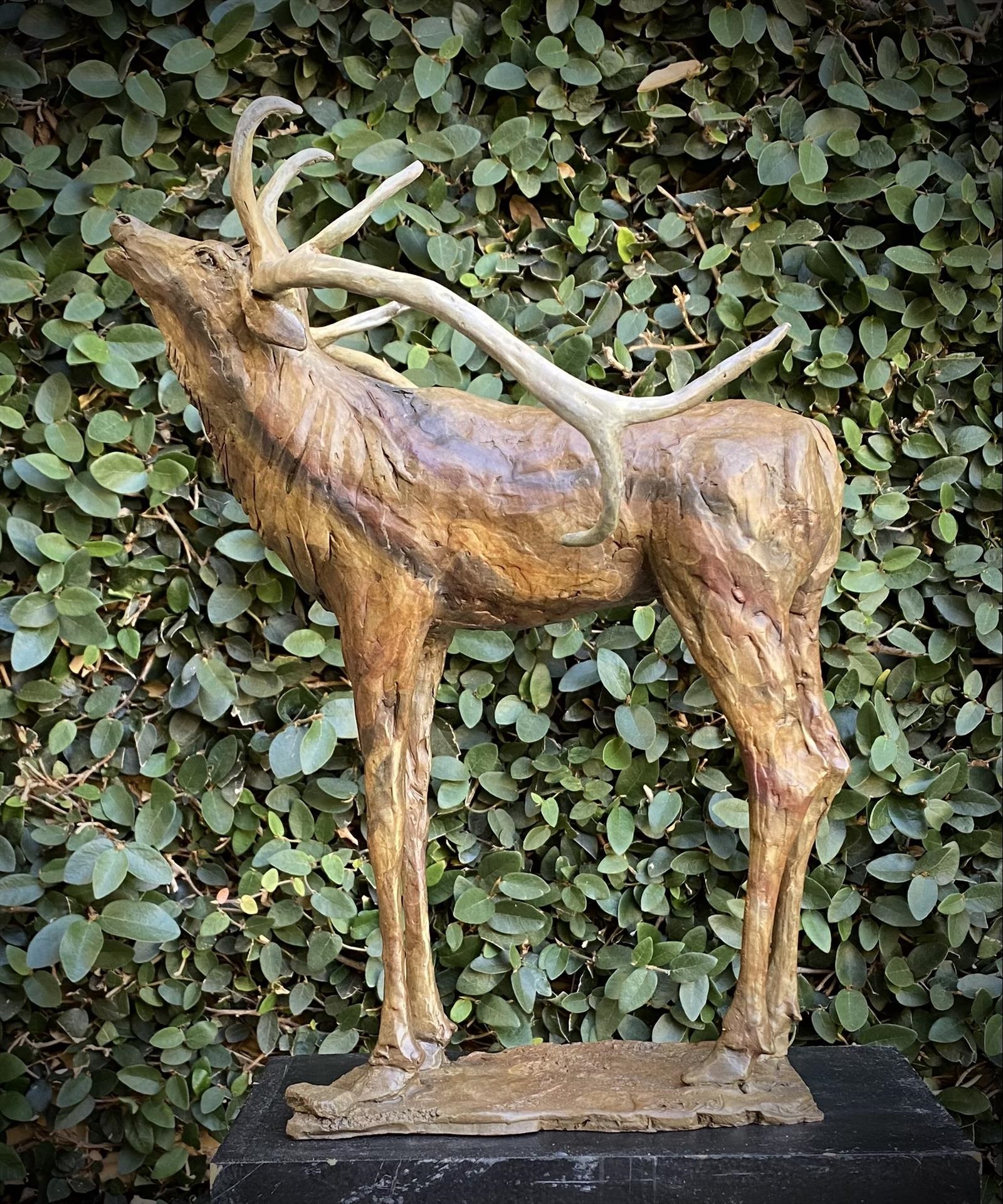
Annette Siegel, “Bugle Boy,” cast bronze, 12 x 17 x 12 inches
Annette Siegel, “Bugle Boy,” cast bronze, 12 x 17 x 12 inches
The exhibition, which celebrates the beauty of the coldest season of the year, may be viewed on the CAC website through March 20, 2023, and all works are available for acquisition.
This quarterly competition of the historic California Art Club encourages artists to develop and refine their classical art skills and spotlights their mastery by providing a new platform for showcasing contemporary-traditional works of art.
As part of our effort to continue to help artists and art galleries thrive, we’re proud to bring you “Virtual Museum Walk.” Browse the artwork below and click the image itself to learn more about it, including how to contact the gallery.
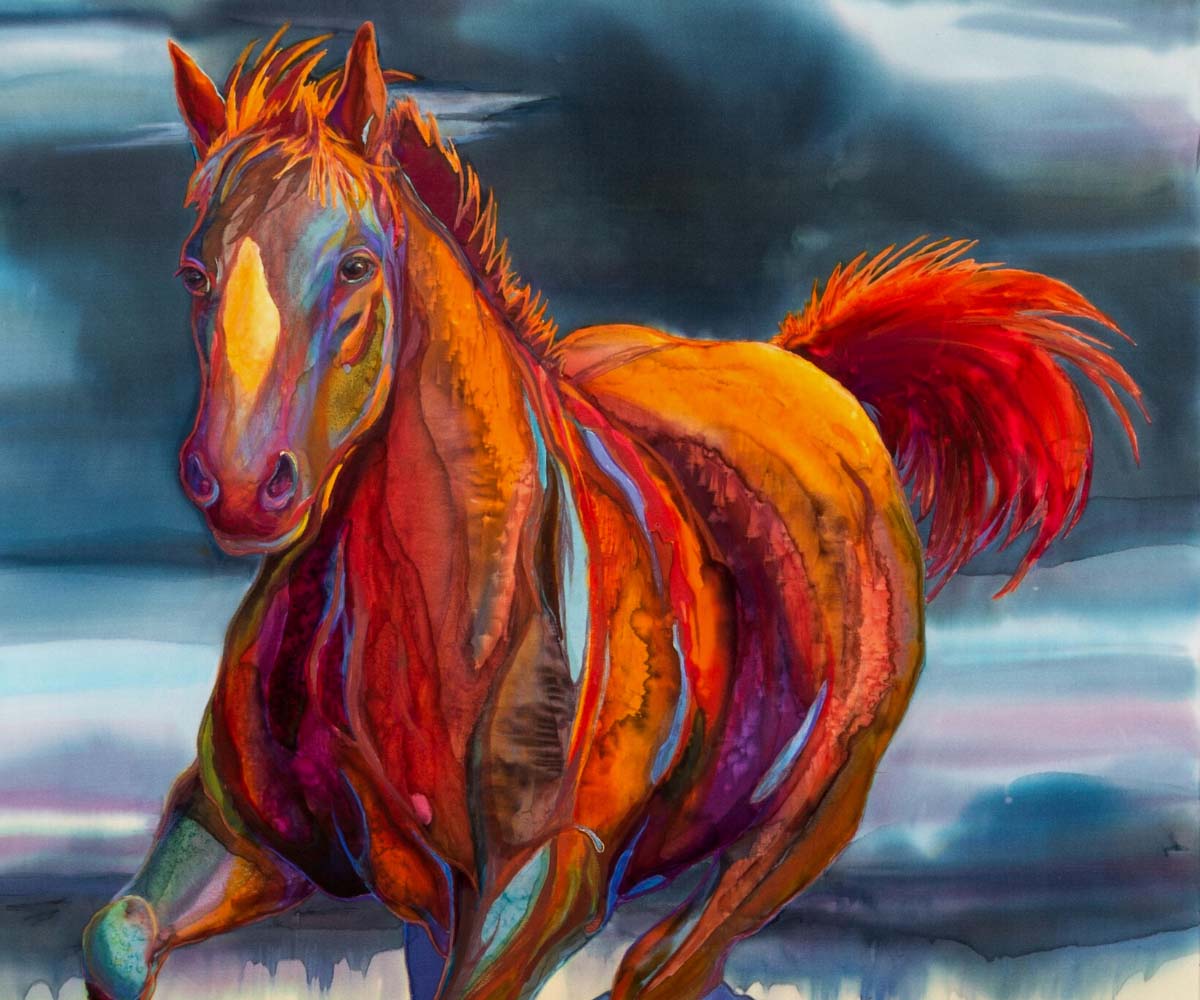
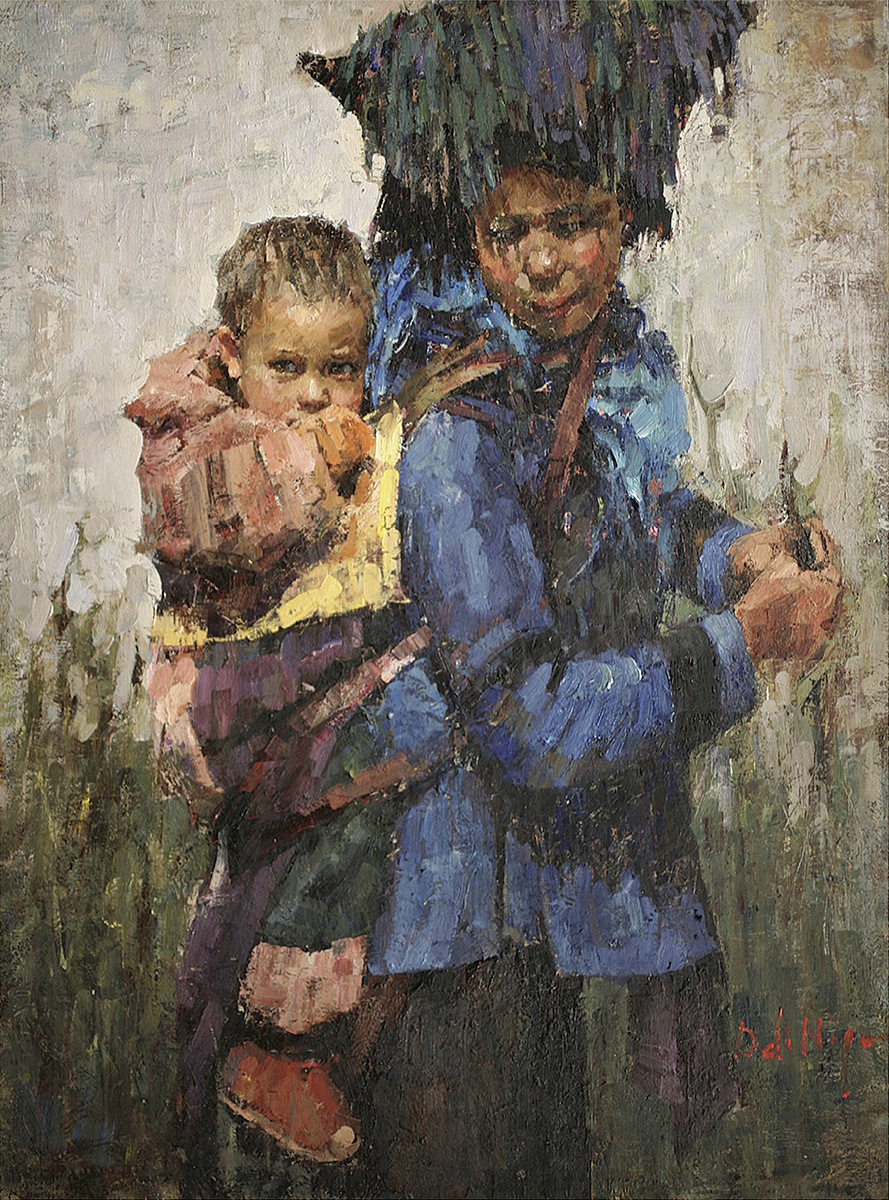
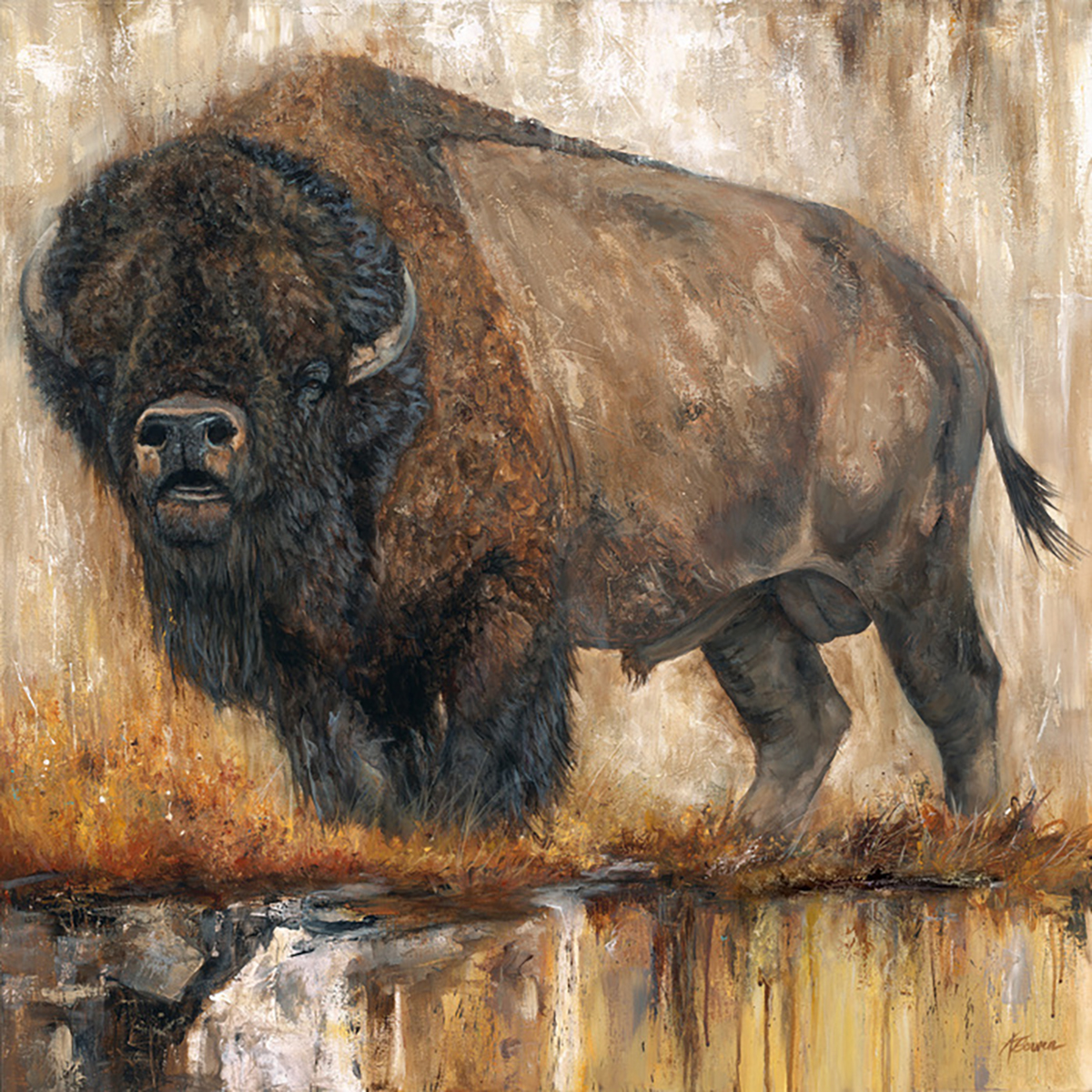
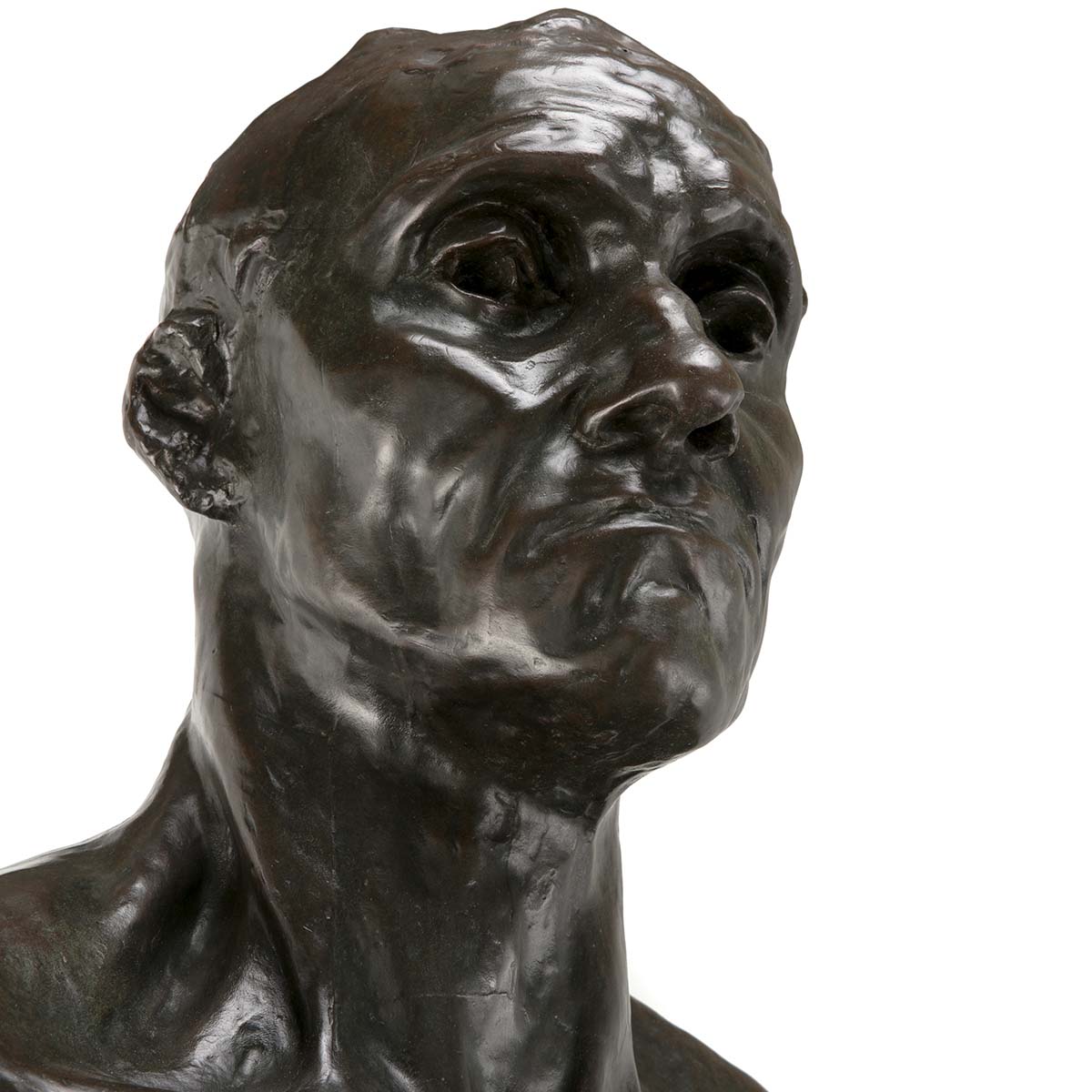
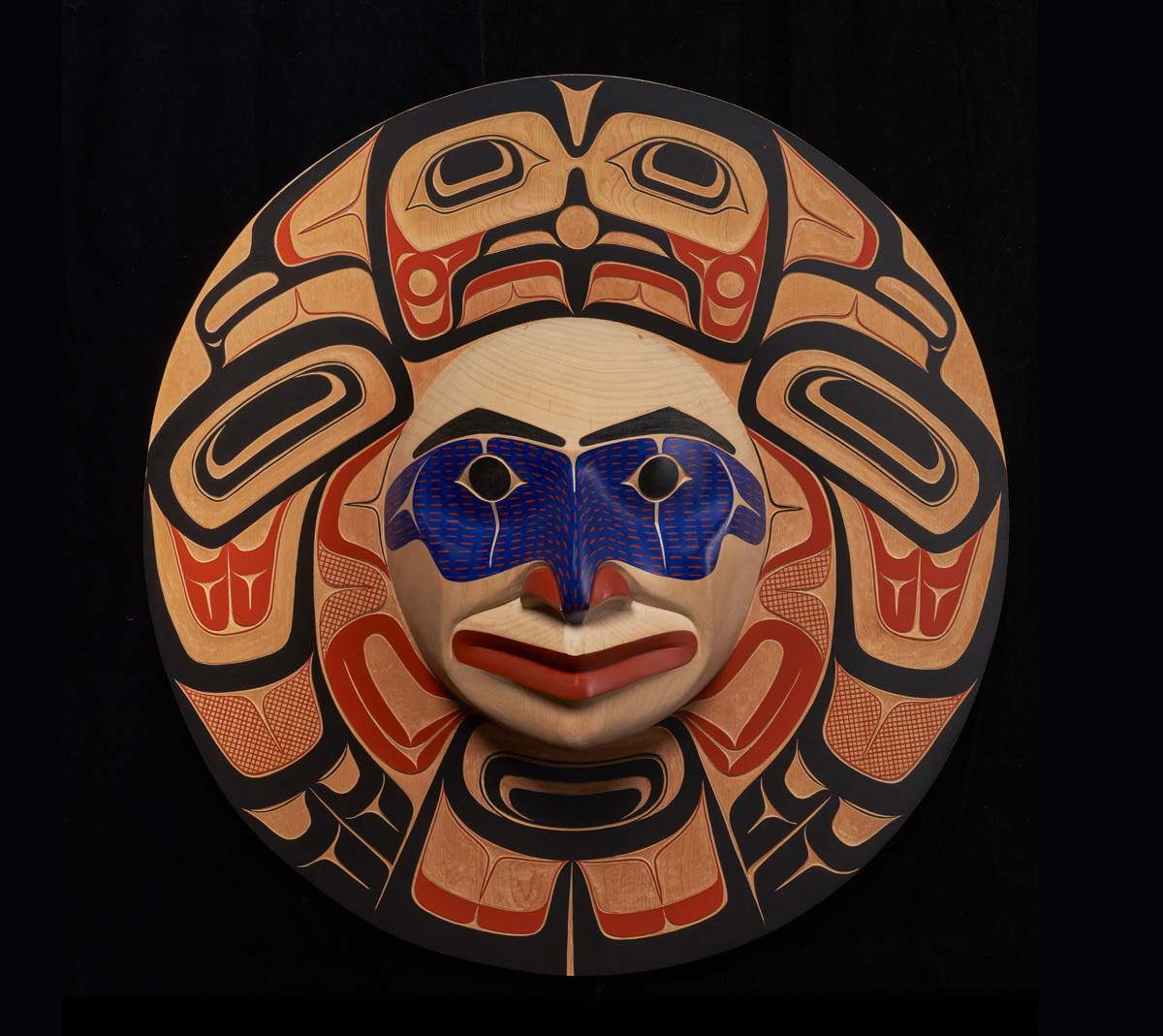
Thunder on the Plains, Nancy Dunlop Cawdrey, dye on silk, 48 x 36 in; Peaks, Plains, and Beyond, March-June 2023; Hockaday Museum of Art, Kalispell, MTConsumed, Jeffrey S. Hein, oil on canvas, 99.6 x 77.5 in., SMA Permanent Collection on display in exhibition “Grand Ambitions”; Springville Museum of ArtLooking Beyond, Dali Higa, 40 x 30 in., oil on canvas; California Museum of Fine ArtLarge Caliber, Kimberly Bowen, 36 x 36 in., acrylic; Western Spirit Art Show and Sale, March 11 – 23, 2023; Cheyenne Frontier Days™ Old West Museum Western Spirit Art Show and SaleJean d’Aire (detail), Auguste Rodin; Rodin: Contemplation And Dreams, January 28 – April 23, 2023, Selections from the Iris and B. Gerald Cantor Collections; The Rosen Galleries at Brookgreen GardensLegend Adaox, David Boxley (Tsimshian, b. 1952), ash, alder, paint; 26.5 x 25 x 6 in., Collection of George and Colleen Hoyt 1; Hallie Ford Museum of Art
Want to see your gallery featured in an upcoming Virtual Gallery Walk? Contact us at [email protected] to advertise today. Don’t delay, as spaces are first come, first served, and availability is limited.
As part of our effort to continue to help artists and art galleries thrive, we’re proud to bring you this week’s “Virtual Gallery Walk.” Browse the artwork below and click the image itself to learn more about it, including how to contact the gallery.
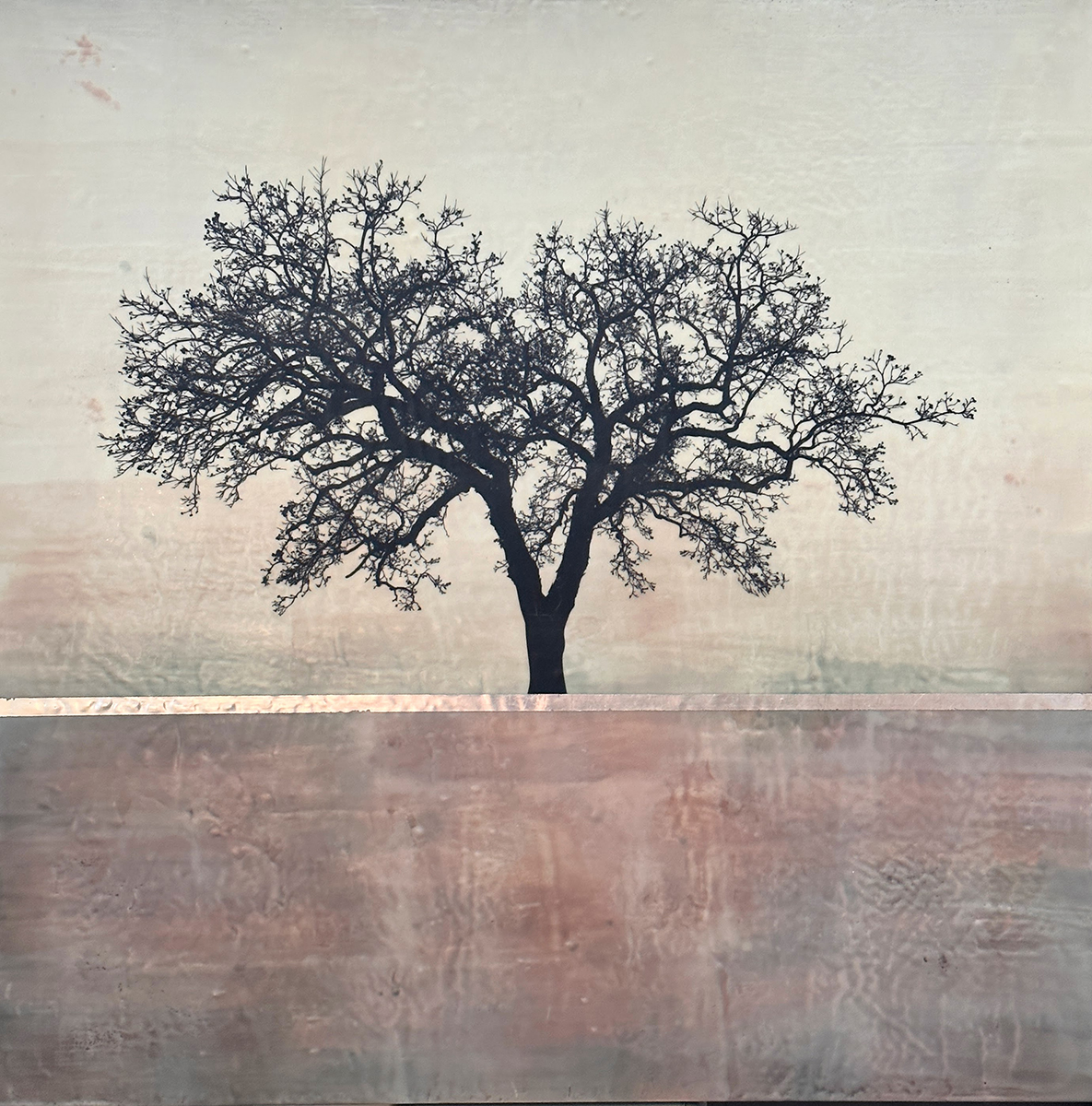
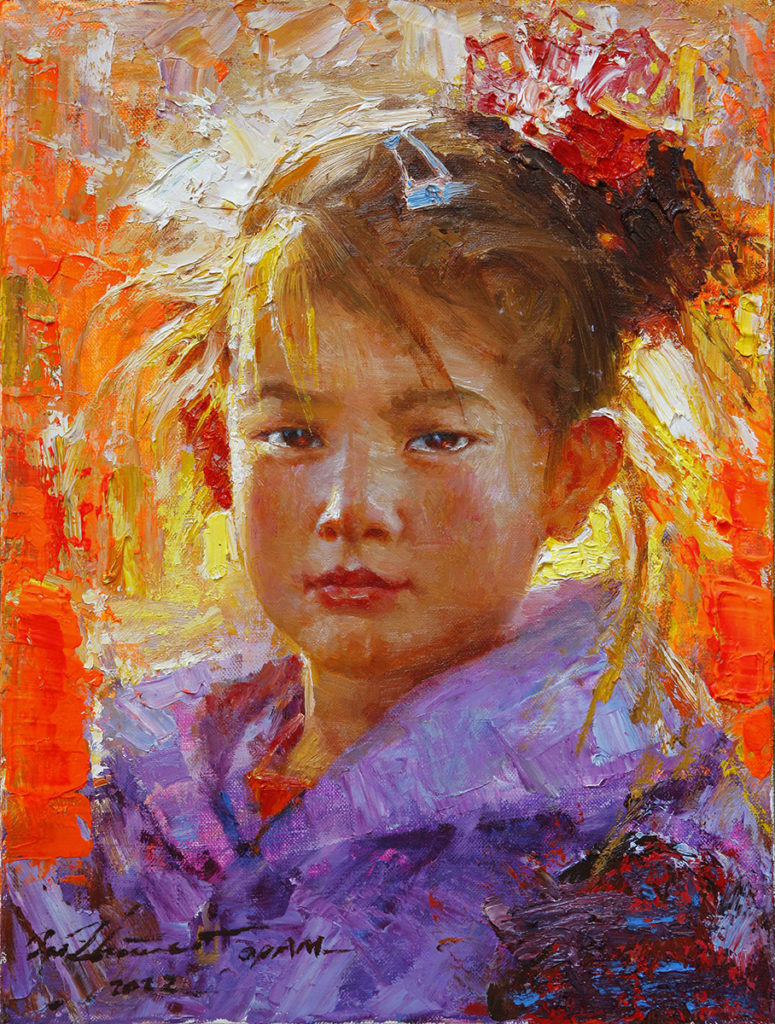
The Mauve Hour, Shair Lyon, Encaustic, 48 x 48 in; Celebration of Fine ArtA Mischievous Girl, Zhiwei Tu (OPA/AIS Master), oil on canvas, 16 x 12 in; Reinert Fine Art
Want to see your gallery featured in an upcoming Virtual Gallery Walk? Contact us at [email protected] to advertise today. Don’t delay, as spaces are first come, first served, and availability is limited.
Fill your mind with useful art stories, the latest trends, upcoming art shows, top artists, and more. Subscribe to Fine Art Today, from the publishers of Fine Art Connoisseur magazine.