
Now through March 7, 2026, Plato Gallery (NY) is presenting a solo exhibition of contemporary realism works by Émile Brunet in “Are They Peasant.”
From the gallery:
Émile Brunet (b. 1989, Montréal, Canada) employs the codes of Western Renaissance and Medieval art to present history and popular culture from common, yet unfamiliar perspectives. His stylized imagery and meticulous sense of detail question the strive for artificial idealization of our surroundings and examine self-representation through time. Exploring classical forms of figuration such as portrait, landscape, and still life through Northern Renaissance oil painting techniques, Brunet’s work embodies a timeless yet paradoxical form of symbolism where traditions and archaic technologies aid in understanding contemporary condition through a lens of humor and irony.
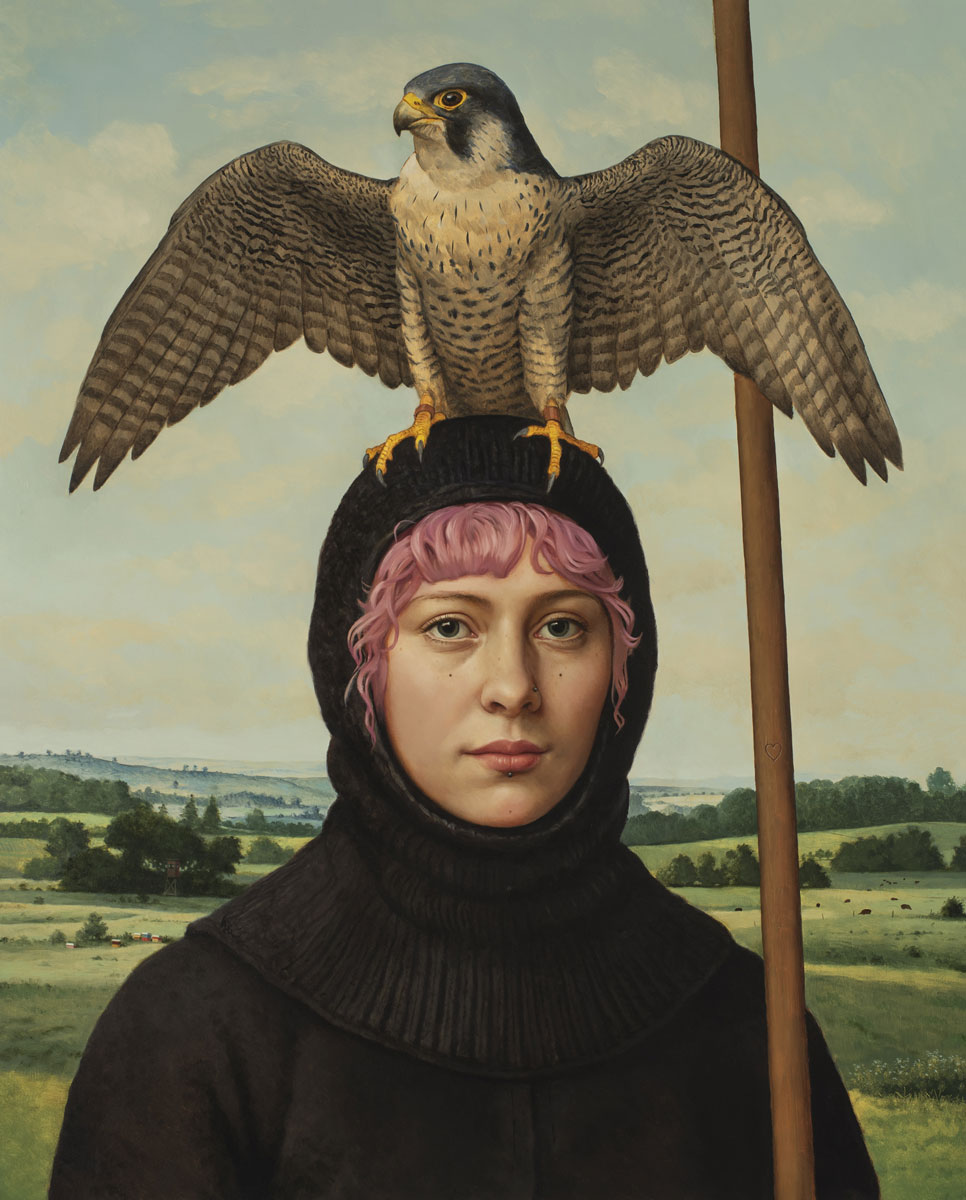
In the artist’s own words: “’Are They Peasant’ is a series of Renaissance-inspired portraits of today’s neo-rural characters.” These men and women are less resemblant of agrarian workers toiling in the countryside than of young professionals with remote jobs, picking apples and tending to bees in the after hours. They inhabit their adopted roles with charm and gusto, much like nobility performing pastoral fantasies in Rococo paintings, where earls and countesses disguised themselves as shepherds.
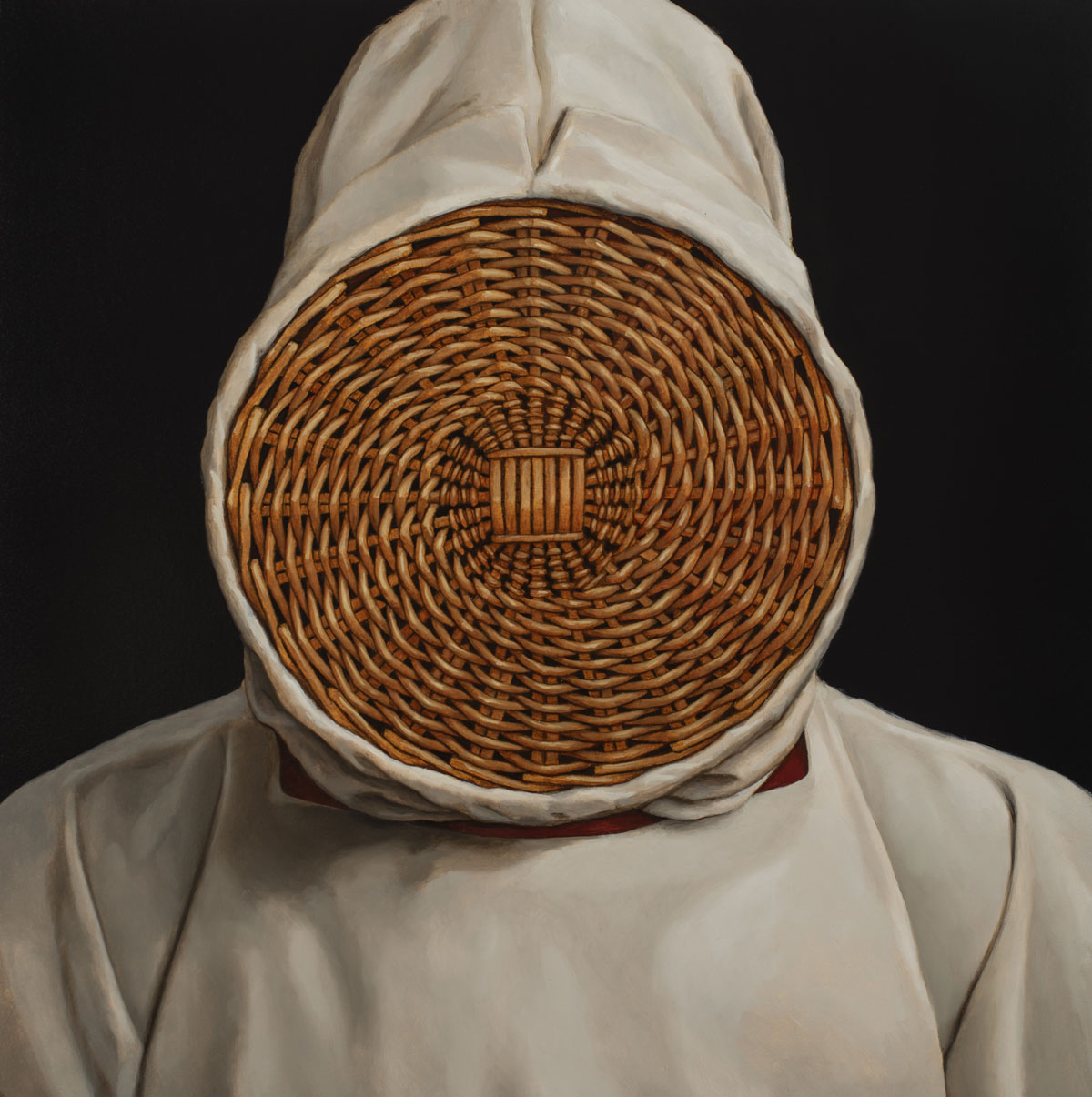
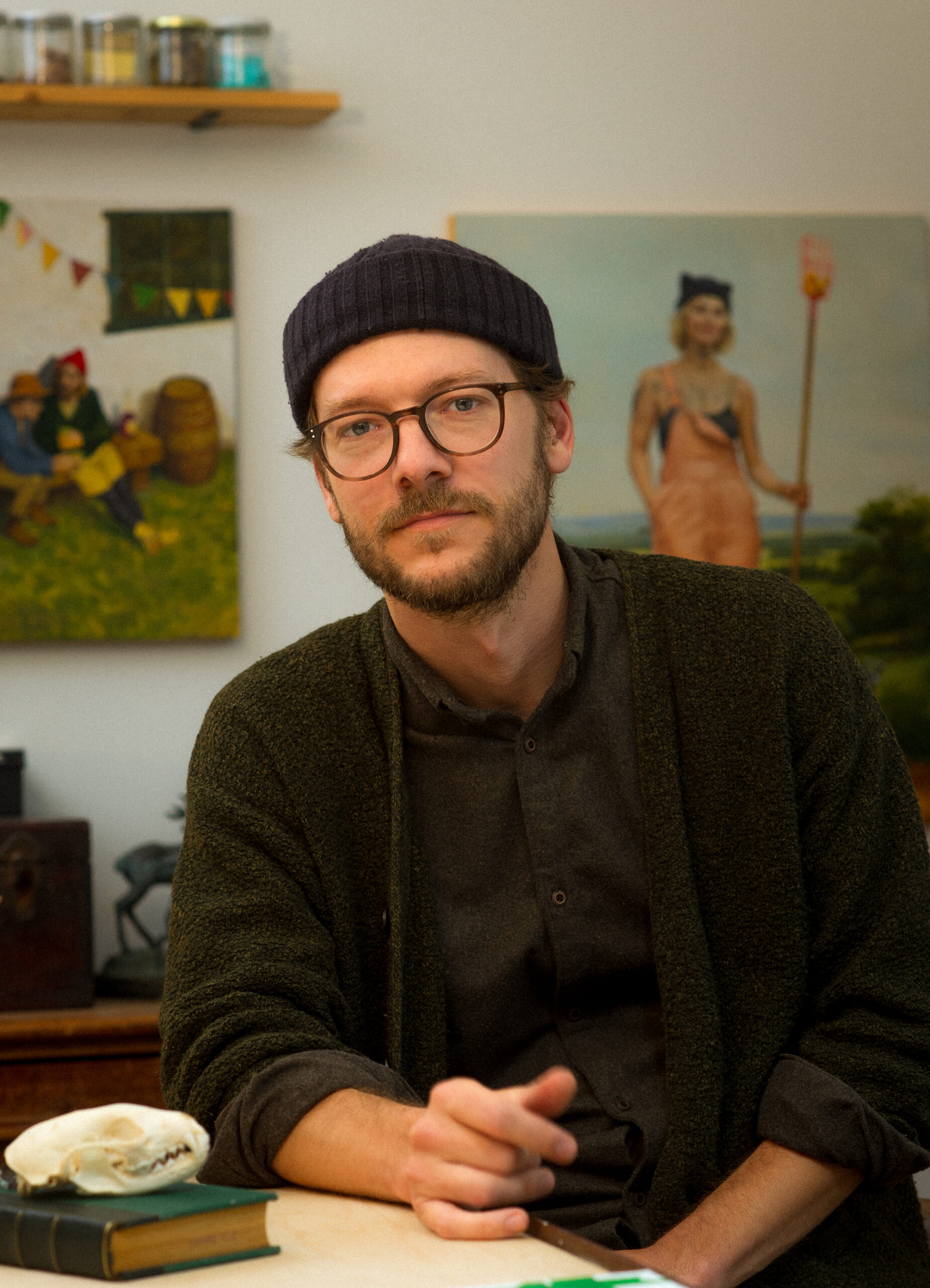
The series originated with the artist’s relocation from Montreal to the small town of Stanstead, on the U.S.–Canada border, during the global pandemic in search for a simpler life. A neo-alchemist of sorts, Brunet is deeply interested in handmade objects and raw materials, which led him to explore traditional practices such as mixing herbs, producing cosmetics, soap, wine, and cider, as well as working for a small art materials manufacturer—whose oil paint he still uses exclusively. For similar reasons, Brunet turns to Northern Renaissance portraiture as a primary reference. He admires the old masters’ intimate knowledge and discerning use of materials, resulting in images that function as precious artifacts.
Each of Brunet’s paintings begins with an impression glimpsed from real life—a fleeting visual memory whose mystery he seeks to unravel. He then sketches out ideas and assembles a bank of images that he merges and collages, occasionally using AI to aid his intuition. Once the concept crystalizes, he creates an underdrawing directly on an oil-primed wood panel, overlays it with a golden imprimatura, and starts to paint with a mixture of oil and resin, a technique strongly influenced by traditional Flemish methods.
Although nearly all of his sitters are imaginary, Brunet often draws his inspiration from the eclectic cast of characters in his village – locals as well as recent transplants from both sides of the border and beyond. These figures coexist in relative harmony, united by their love of the countryside, or inability to escape it. Complex and often brooding, with a spark of intellect and self-reflection in the eyes, Brunet’s villages feel faintly familiar, like good-natured, long forgotten friends.
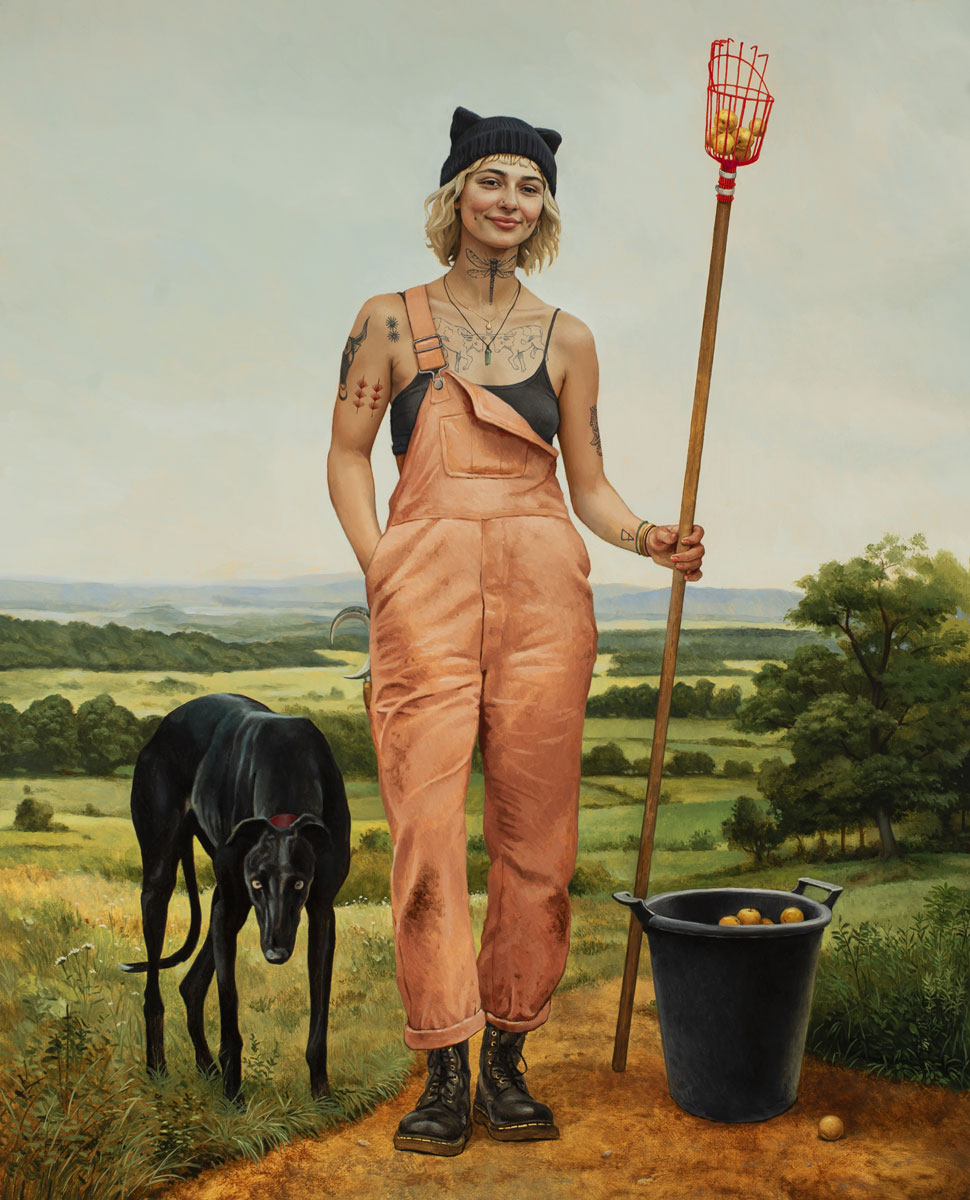
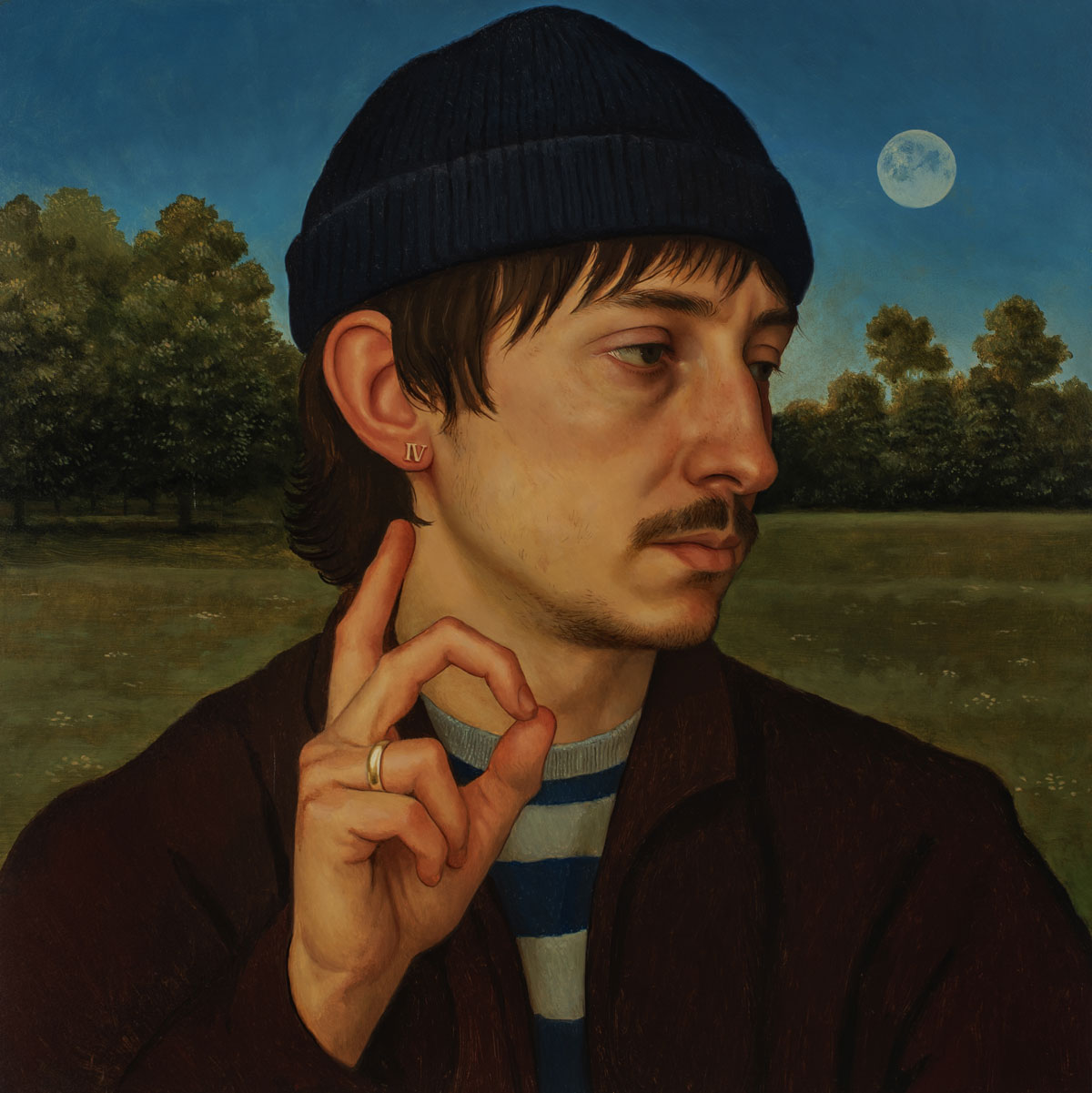
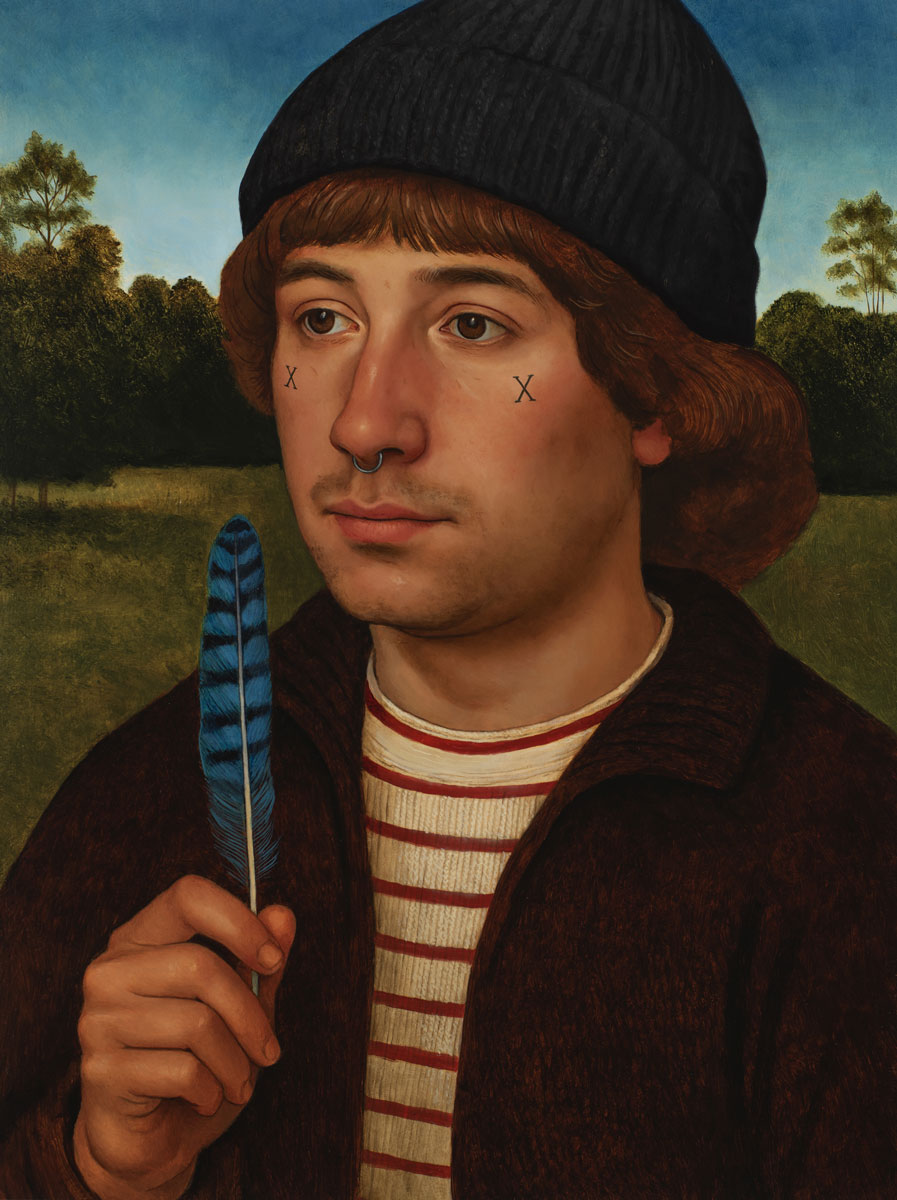
“The Apple Picker” presents a contemporary reinterpretation of the ancient Roman goddess of the hunt and wilderness, Diana. Guarded by her loyal hunting dog and adorned with nature-inspired tattoos, she wields a basket on a stick instead of a spear, while a sickle in her pocket parodies Diana’s crescent-moon diadem. “Man with a Feather” directly references Hans Memling’s “Portrait of a Young Man” (c. 1480). Half a millennia later, the youth’s counterpart sports a beanie, a nose ring, and X-shaped tattoos on his face.
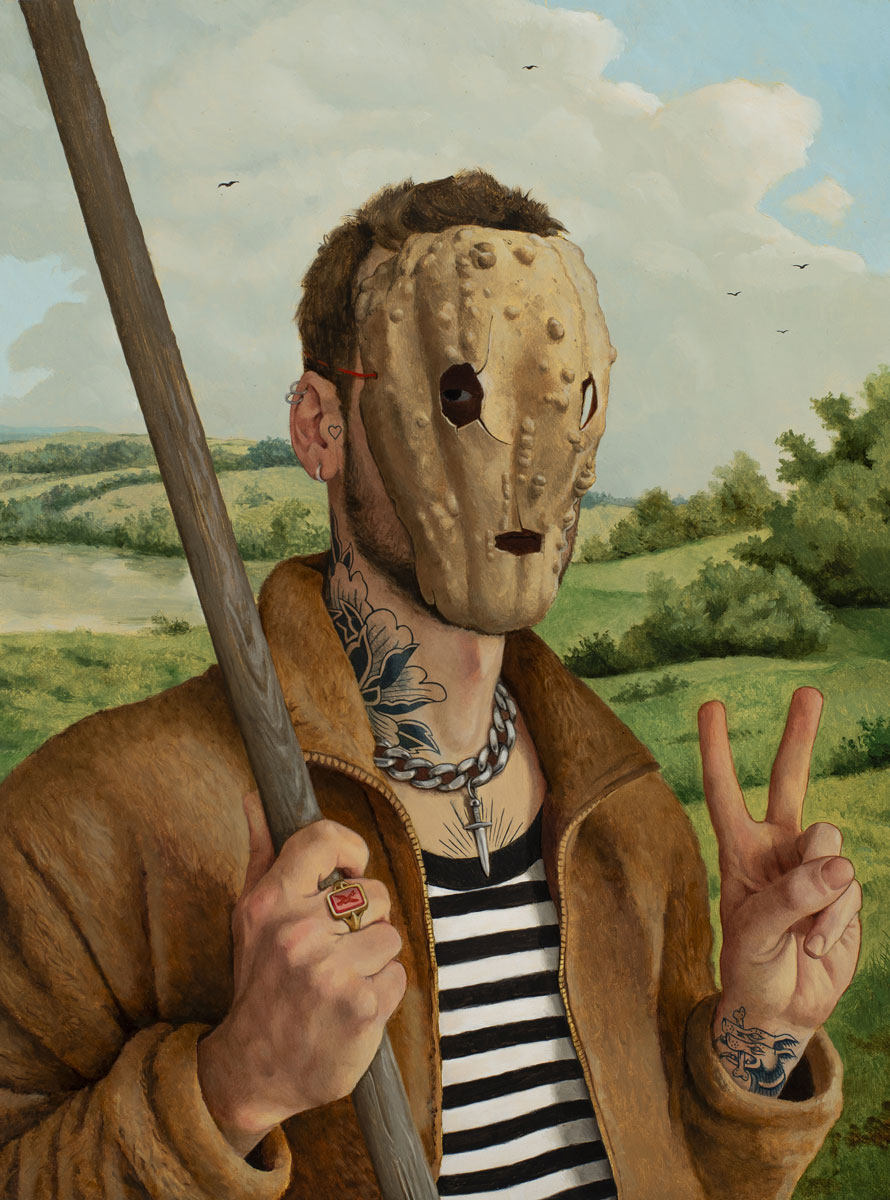
According to the artist, tattoos function throughout the series “like spices,” providing the right “seasoning” for each portrait. In “Self-Portrait with a Squash,” Brunet imagines tattoos for himself—or his alter ego—including a floral motif on the neck, a tiny heart on a pierced ear (a sign of a good listener?), and two dogs fighting over a bone on his wrist. An impromptu mask made from a Halloween gourd and a V-sign gesture nod to selfie culture and social media self-fashioning, apparently in vogue in the countryside. So too are dog portraits, echoing European nobility’s tradition of immortalizing their beloved pets—even though the original aristocrats might have found the “Dad’s Babe” inscription on the collar a bit more risqué than touché.
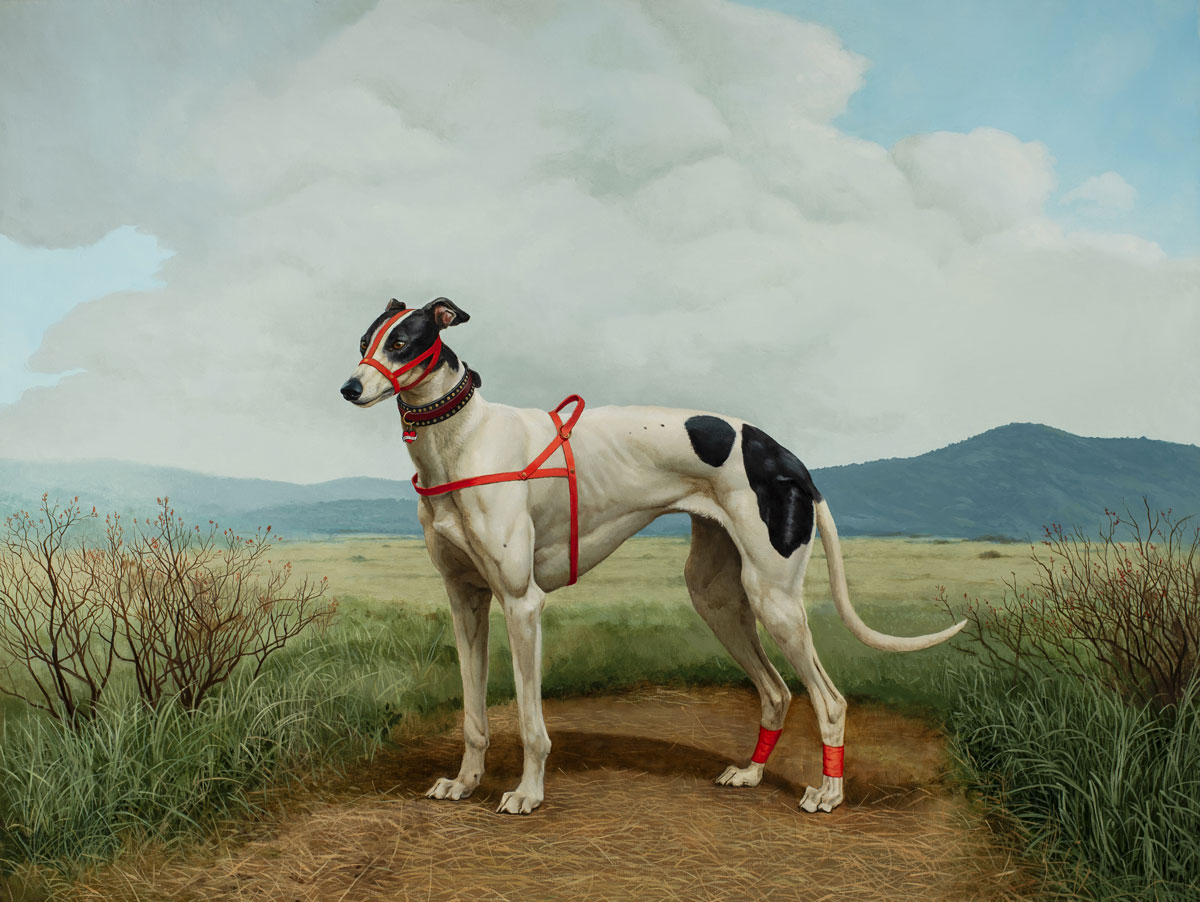
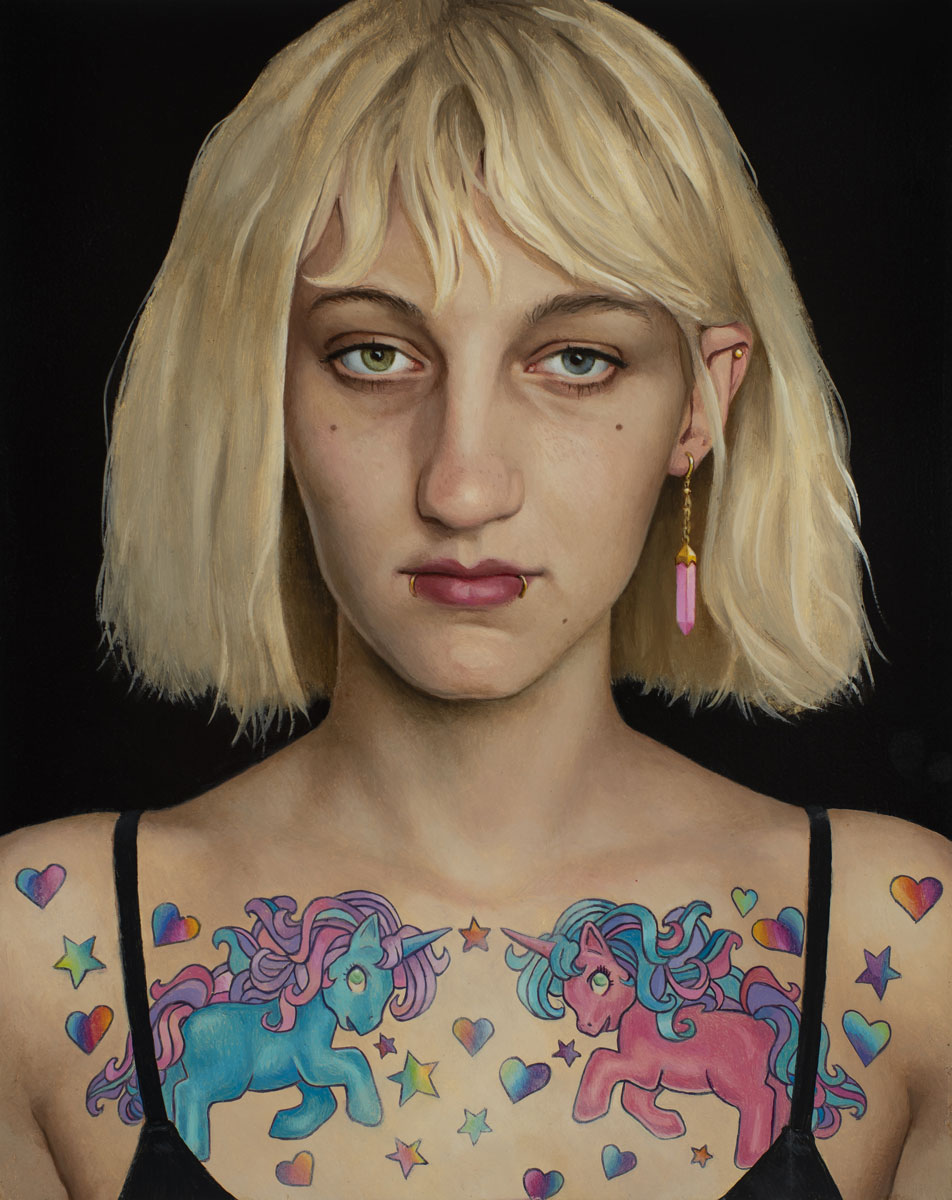
Counterbalancing “The Hound,” the largest painting in the exhibition, one of the smallest works also features animals—albeit imaginary ones. In “Two Unicorns,” a pair of blue and pink magical creatures emblazon the chest of a young woman loosely resembling Anne of Cleves from Hans Holbein the Younger’s 1539 portrait. Surrounded by stars and hearts, they suggest a youthful mistake or a desire to quite literally embody the joys of childhood. Notably, these tattooed creatures are the only unicorns Brunet has ever painted, despite working for years on a series called Unicorn Hunters. Perhaps they serve as a reminder that the objects of our quests and desires are sometimes nothing more than myths or illusions—not unlike the fantasy of going feral in a modern countryside.
For more information about “Are They Peasants,” please visit www.platogallery.com.
Sign up here for the weekly Fine Art Today newsletter, which brings you high-level content while providing you with current and upcoming art exhibitions and events, late-breaking stories, and more from the art collecting world.