
Founded in 1932, the Courtauld Institute of Art is Britain’s leading center for the study of art history, holding not only an important collection of fine art but also unparalleled archival resources consulted by students, researchers, art trade professionals, and the public.
The Courtauld recently completed an 18-month project to digitize its Witt Photographic Collection (“The Witt Library”), which contains more than 2 million images of Western art spanning eight centuries. Anyone can visit the Courtauld website to explore this trove of photographs, reproductions, and clippings of artworks dating from the 13th century through today.
Founded in the 1890s by Robert Witt, one of the Courtauld’s co-founders, this holding began during his undergraduate years at Oxford, where he specialized in the Italian Renaissance. It expanded significantly in 1899 following his marriage to Mary, a fellow collector of photographs of Western art. Their brainchild was acquired by the Courtauld in 1944, and now is arranged into 26 different national “schools” categorized by artist and subject.
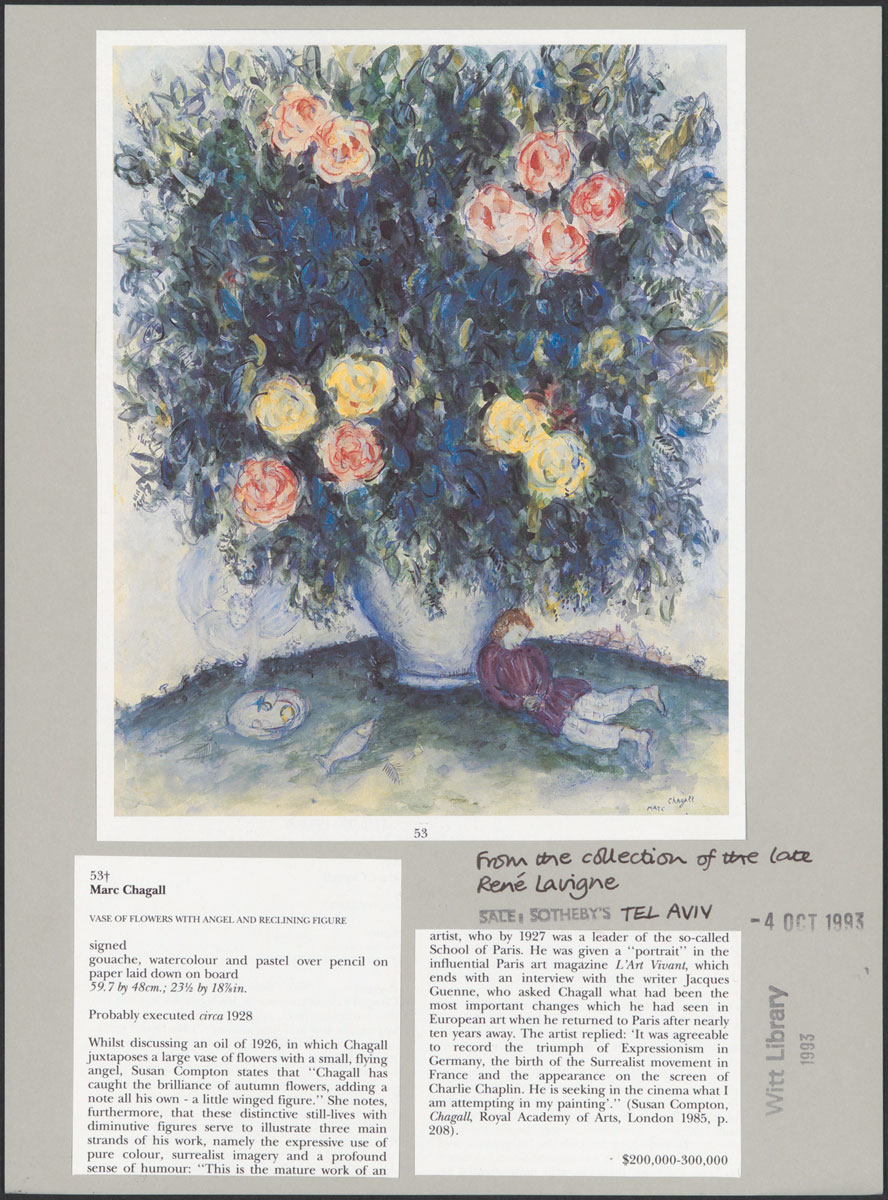
Since the 1890s, its sturdy cardboard sheets have been pasted up with clippings from auction cataogues, books, newspapers, and periodicals, even with original photographs and prints.
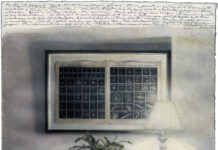
Previously stored in more than 19,000 boxes occupying almost a mile of shelf space, in 2023 the collection was shipped to the Dutch firm Picturae BV, where every item was photographed in high resolution. A useful example is illustrated above, showing Marc Chagall’s painting “Vase of Flowers with Angels and Reclining Figure” (c. 1928). Everything on this card was clipped from the catalogue of a Sotheby’s Tel Aviv auction held in 1993, the same year the card was created by a librarian, who annotated it by hand with the name of the seller. Even today, finding such obscure information online is difficult, so it’s no wonder the Witt Library features regularly as a filming location on the BBC’s hit television series Fake or Fortune.
Soon the Courtauld staff will begin transcribing all of the cards’ information and creating keywords so online users can search the entire collection by title, subject matter, and concept. In 2023, a team of 14,000 volunteers completed a similar five-year-long campaign for the Courtauld’s Conway Library of photographs of world architecture, architectural drawings, sculpture, decorative arts, and manuscripts. Also in 2023, the Courtauld Gallery launched its searchable website cataloguing its more than 33,000 original artworks.
Resources like these are expensive to create and maintain, but priceless for users who no longer must travel to London to study them by appointment. The Courtauld deserves much praise, and financial support, for sharing its riches with the public in these ways.