
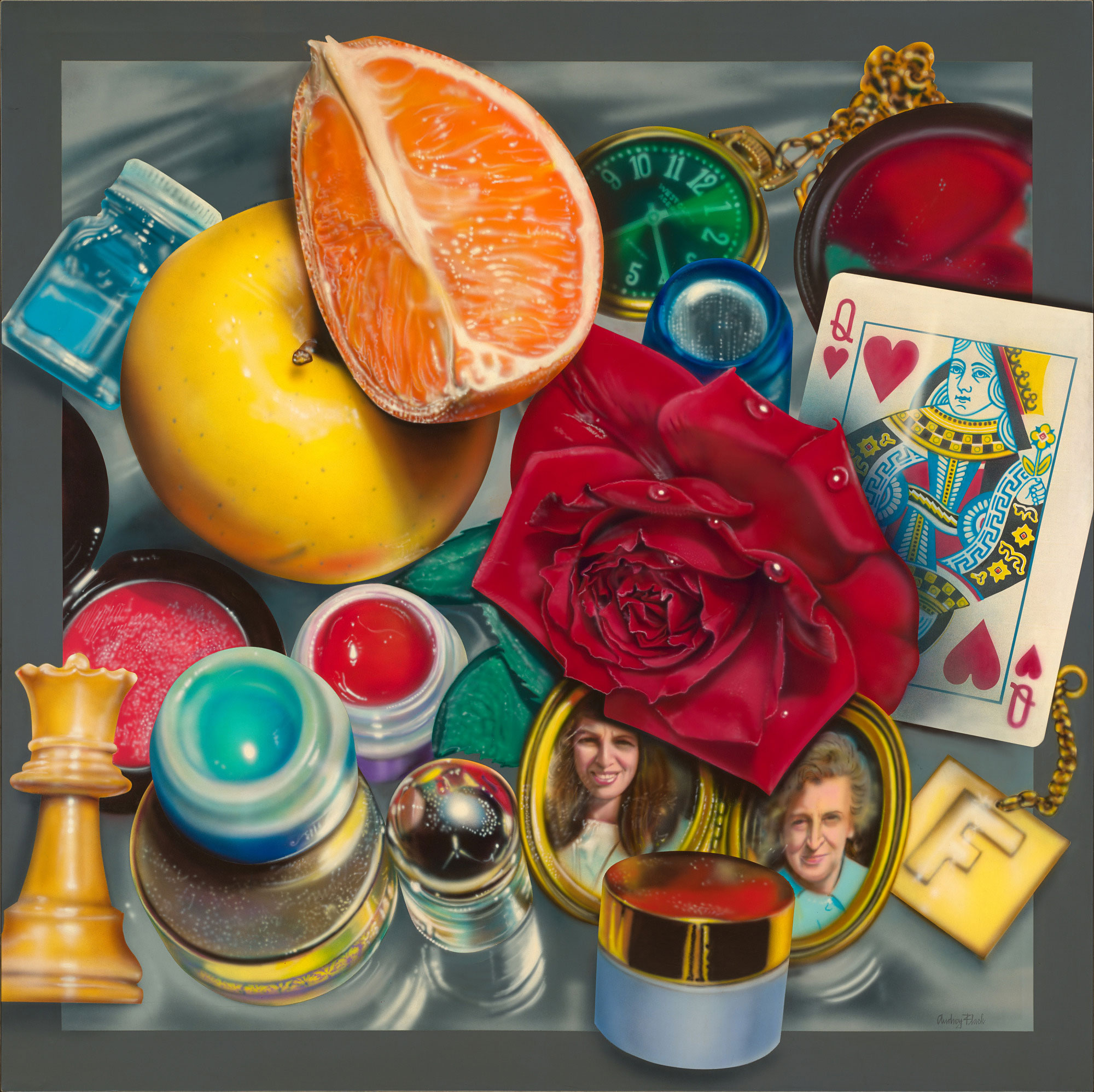
Audrey Flack (1931–2024) was a painter, sculptor, printmaker, teacher, author, feminist, and artists’ advocate. She grew up in New York City and studied fine art at Cooper Union and Yale, as well as art history at New York University’s Institute of Fine Arts. In the 1950s, Audrey painted alongside the leading Abstract Expressionists, but shifted toward New Realism and then pioneered the genre of Photorealism. In 1966, hers was the first Photorealist painting acquired for the Museum of Modern Art’s permanent collection. In the 1980s Audrey turned her attention to sculpture, primarily monumentally scaled female figures with a Baroque flair, but she returned to painting in 2016. I thoroughly enjoyed my half dozen encounters with Audrey, especially our time looking at historical artworks together, and so was delighted when the Hudson Valley-based artist Nadine Robbins (b. 1966) — another longtime friend of Fine Art Connoisseur — offered to chronicle her own encounter with this much-missed, larger-than-life talent. ~ Peter Trippi
Painting the Queen of Photorealism
By Nadine Robbins
nadinerobbinsart.com
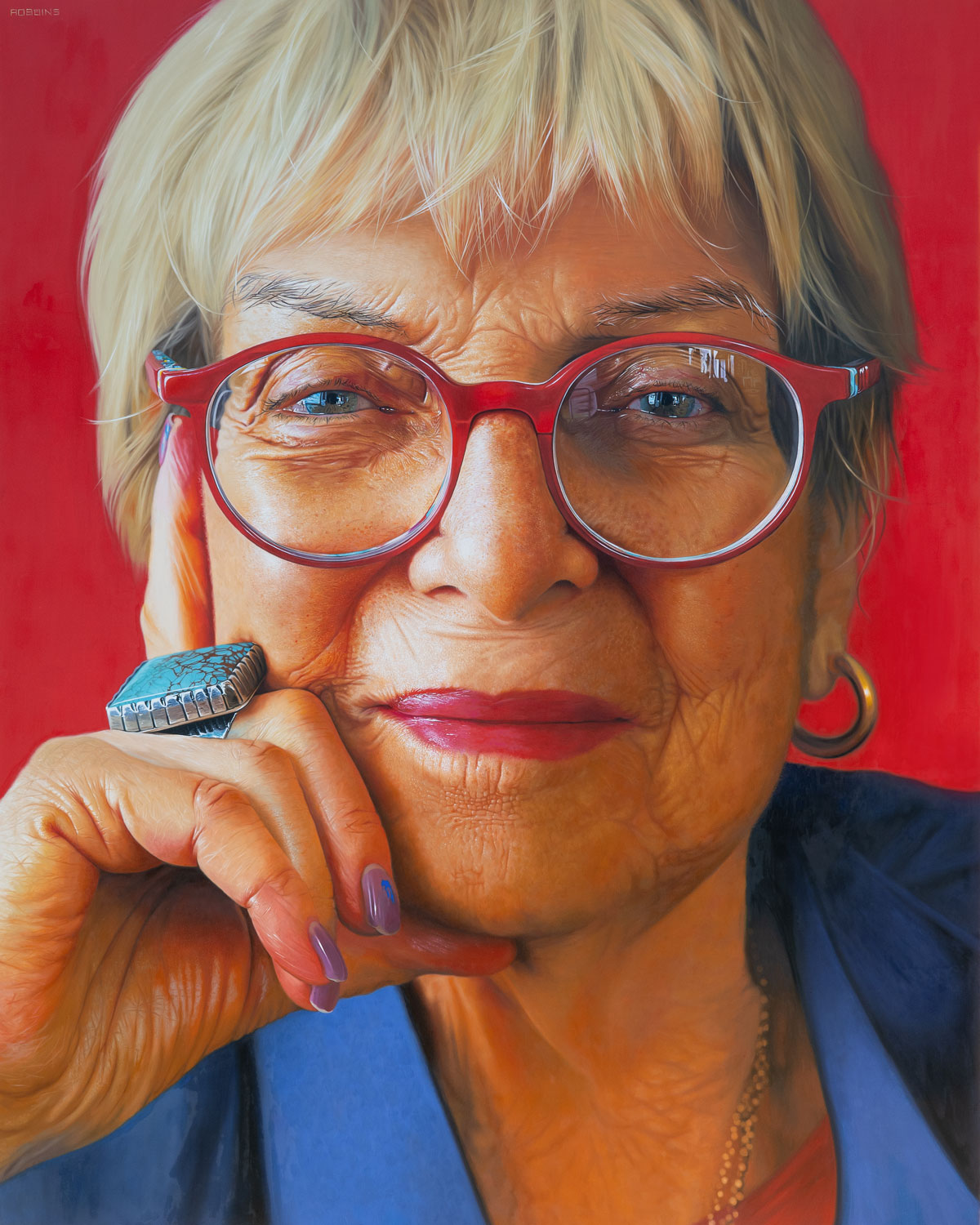
I photographed and painted a portrait of Audrey Flack, the matriarch of Photorealism. It was a long time coming and could have come sooner, but I lacked the confidence to approach Audrey directly … As luck would have it, I was invited to the Artists’ Fellowship awards ceremony honoring Audrey in Manhattan.
I entered the ceremony, and there she was. I swallowed hard and started sweating, but I walked right over to Audrey, congratulated her on the award, and asked if I could paint her portrait. She agreed, thanked me, and said I should speak with her assistant, Severin (“Sevi”) Delfs.
Before I lost my nerve, I introduced myself to Sevi. He had already checked me out online, and he liked my work. He noted that a well-known male artist also wanted to paint Audrey. Without missing a beat, Joyce replied, “But he’s a man!” You have to love Joyce.
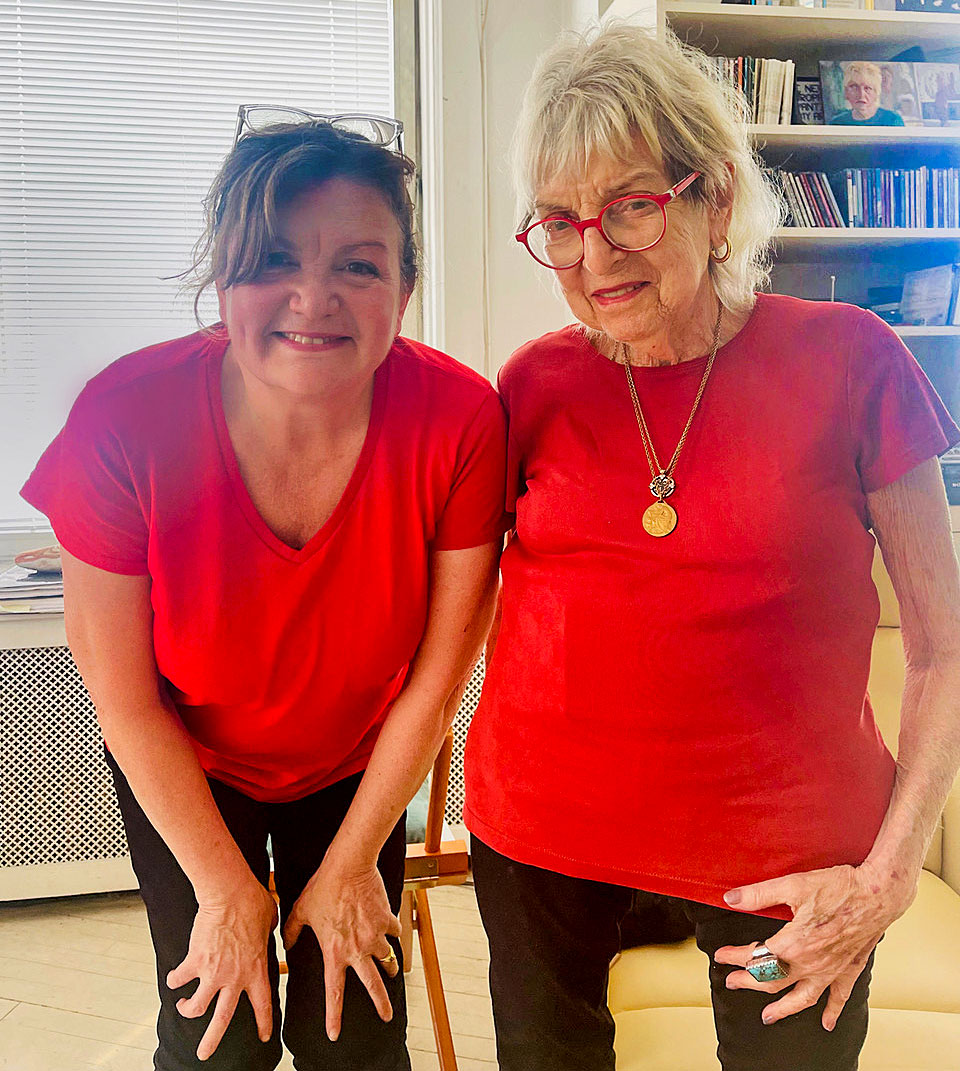
After what seemed like months, though it was only a few weeks, I received a text from Sevi about setting up a photoshoot in May 2023. Yes!
A friend had told me that if I ever photographed Audrey, I had better bring her along. A few days before the shoot, I called the friend and said, “Don’t ask where we’re going, but we need to visit the city for a secret adventure.” I’m terrible at keeping secrets, so I ended up revealing the truth by the end of the call. She was ecstatic.
On the day of the photoshoot, we went to Audrey’s Upper West Side studio and chatted with her and Sevi as I snapped away. We discussed cameras and why Audrey painted so large, though I was so nervous I can barely recall what anyone said. I moaned about misogyny in the art world and some of my experiences with it — a challenge Audrey understood all too well.
Thirty minutes later, I was looking through my new photos with her. I knew which shot I wanted as my reference for the painting, but would Audrey pick the same one? She did, and then she announced, “I’m done.” We said our goodbyes and left, very much hoping to meet her again to unveil the portrait and continue our conversation.
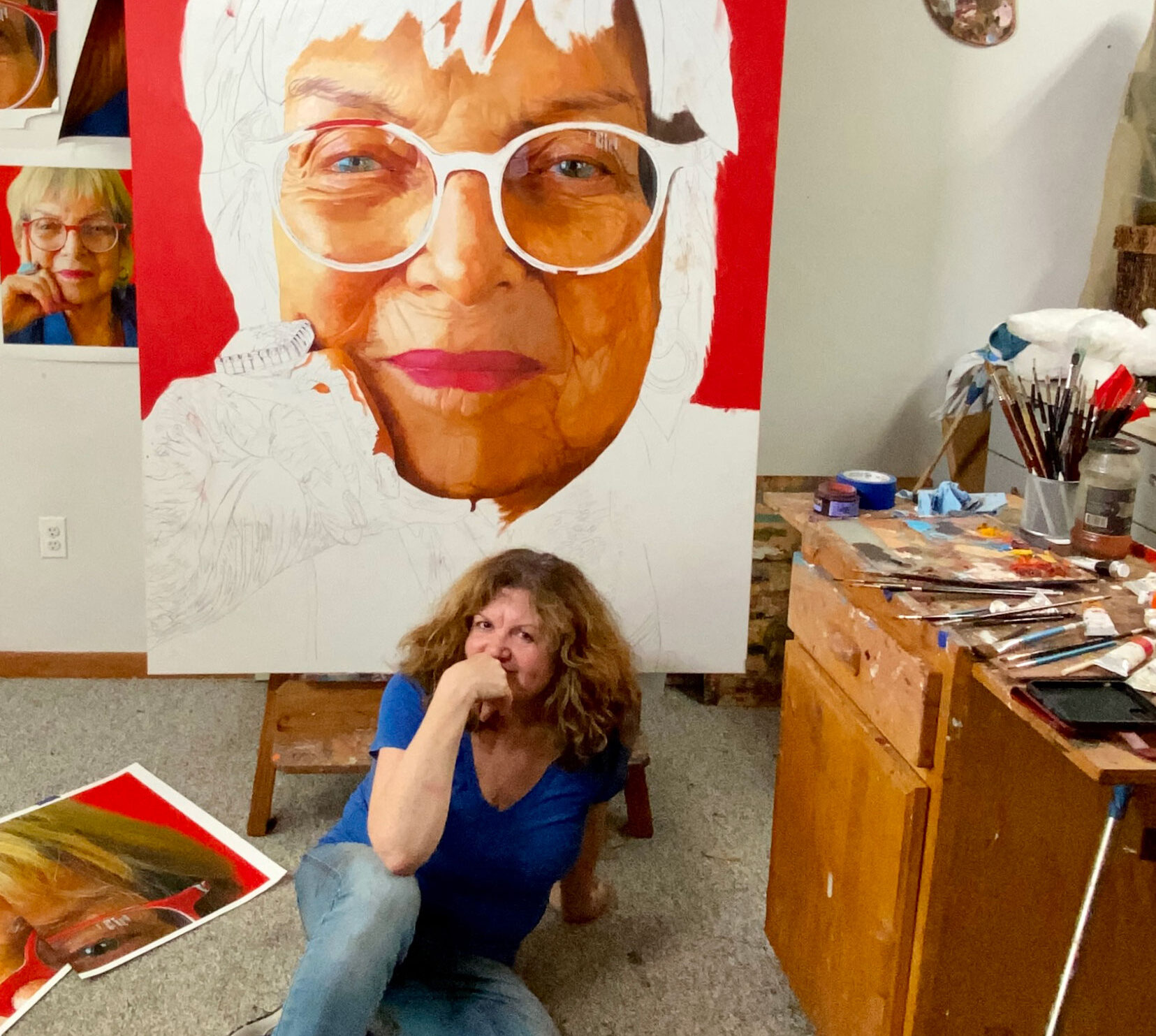
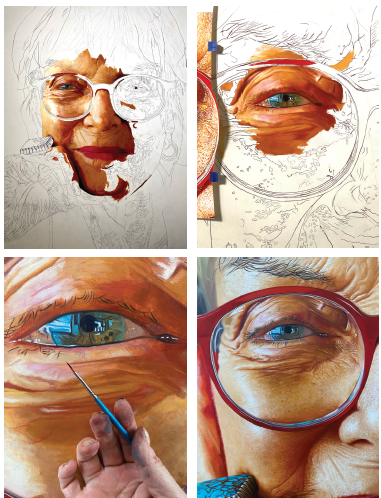
Fast-forward six months to November 2023, when I finished painting the portrait of Audrey. I had realized it was important the moment I started. I felt lots of pressure, but I took my time to carefully represent her with dignity, grace, and a little bit of defiance. I worked on it for four months and shared just a few in-progress shots with Audrey, Sevi, and my gallery. Once it was completed, I sent everyone a high-resolution photo. I received a message from Audrey that I still cherish, one that still keeps me painting on those days when it’s not easy being an artist:
Dear Nadine,
Thanks for sending the portrait [a digital scan] you did of me. It’s a terrific painting and I’ve been getting lots of nice feedback on it. My studio manager says you’ve really captured my smirk and personality beautifully. Congratulations and enjoy Art Miami.
Sending love,
Audrey
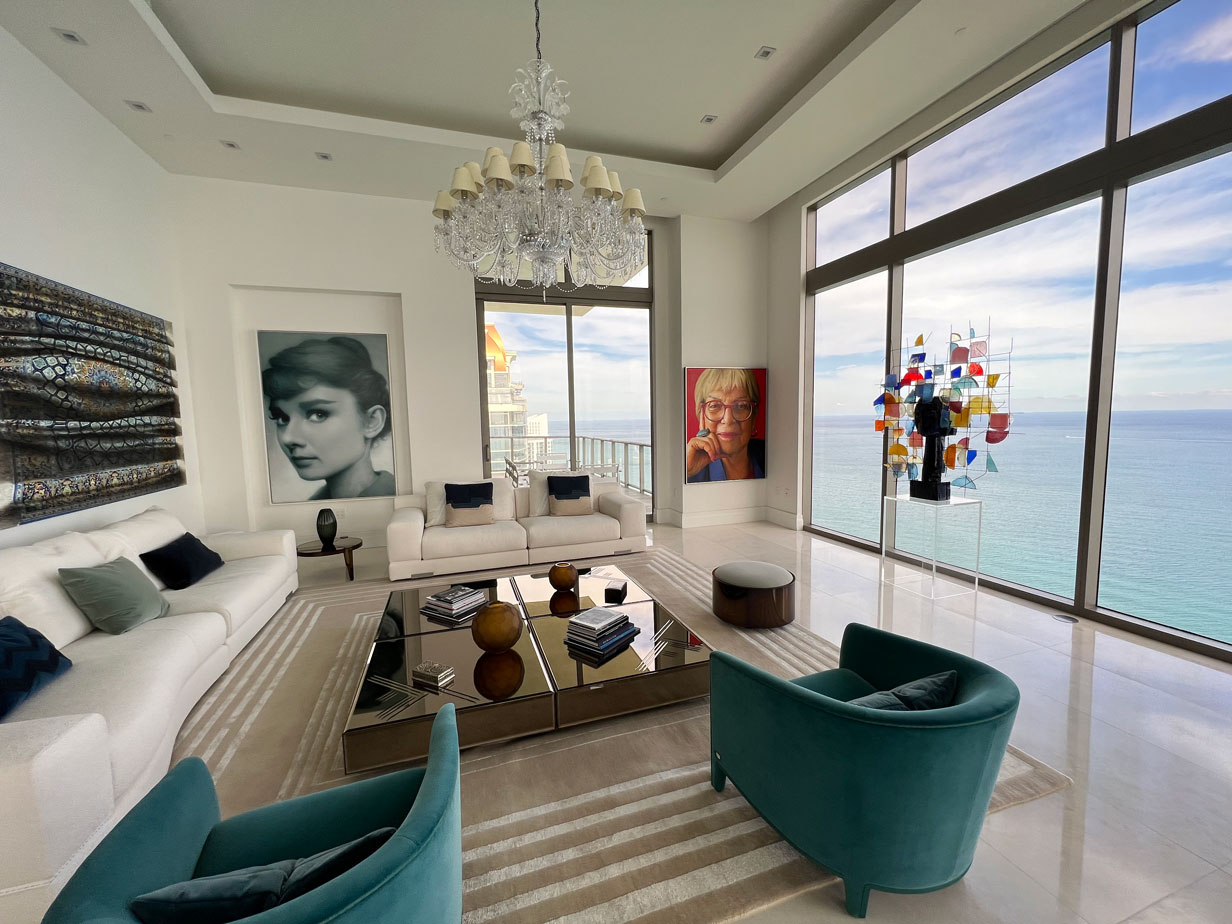
Visiting the Miami fairs is always fun, but it was extra special this time because I was showing a large portrait — displayed prominently — of Photorealism’s matriarch. On the fair’s final day, a well-known collector purchased my painting, and the Anthony Brunelli Fine Arts (Binghamton, New York) team hung it in their Miami home the next day. Although I was thrilled about this acquisition, it left me in a dilemma about how to show the actual painting to Audrey. I asked the gallery if the collector might welcome her for a visit, and they thought this sounded great. In the back of my mind, I started planning how to get Audrey to Miami. Should I fly her there? Can she fly at her age? Who might want to come along? So many (exciting) questions.
But it wasn’t meant to be. On June 28, 2024, Audrey passed away suddenly at the tender age of 93.
I learned of her passing while scrolling on my phone in the backseat of a car coming home from Cape Cod. My husband and son were in the front chatting as I read the announcement posted by the gallerist Louis Meisel, a longtime friend of Audrey’s. I started to cry. How unfair that — in the midst of (finally) enjoying her way-overdue moment as a woman in the art world — she had passed away.
With Darkness Came Stars, Audrey’s lively memoir published only three months before her death, is filled with stories of joy and sadness that always seemed to happen in parallel. Why should her untimely death be any different? Strangely, it all makes sense, but that doesn’t make it easier for us to lose a pioneer like Audrey Flack. How could the passing of someone I barely knew make me so emotional?
Audrey’s Instagram profile said, “Artist, Mother, Teacher, Rebel.” She personified each of these words. Upon reflection, I have a few words to describe her that may explain my emotional reaction. Meeting an artist of Audrey Flack’s caliber was a dream I made into reality because she was generous, accessible, passionate, genuine, candid, inspiring, and witty. She is the rebel I want to be. Audrey was an artistic superhero on many levels and impacted everyone around her.
Looking back, I realize how generous it was of Audrey to make herself available to me. She didn’t have to do this for someone she didn’t know, but she did because she was Audrey. Her portrait is as sincere a painting as I’ve ever created. I hope she is now with her late husband, Robert Marcus, busy painting large canvases of Pop Rococo superheroes and giving everyone hell.
Sign up here for the weekly Fine Art Today newsletter, which brings you high-level content from the art collecting world.
Story prepared for the web by Cherie Dawn Haas, Editor of Fine Art Today