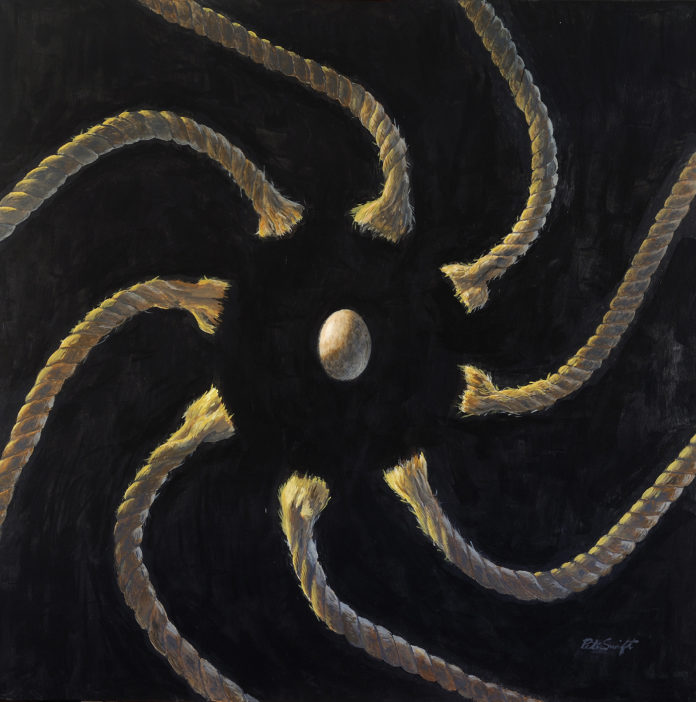
Peter Swift, “Egg and Eight Ropes”, acrylic on canvas, 48 x 48 in, 2021
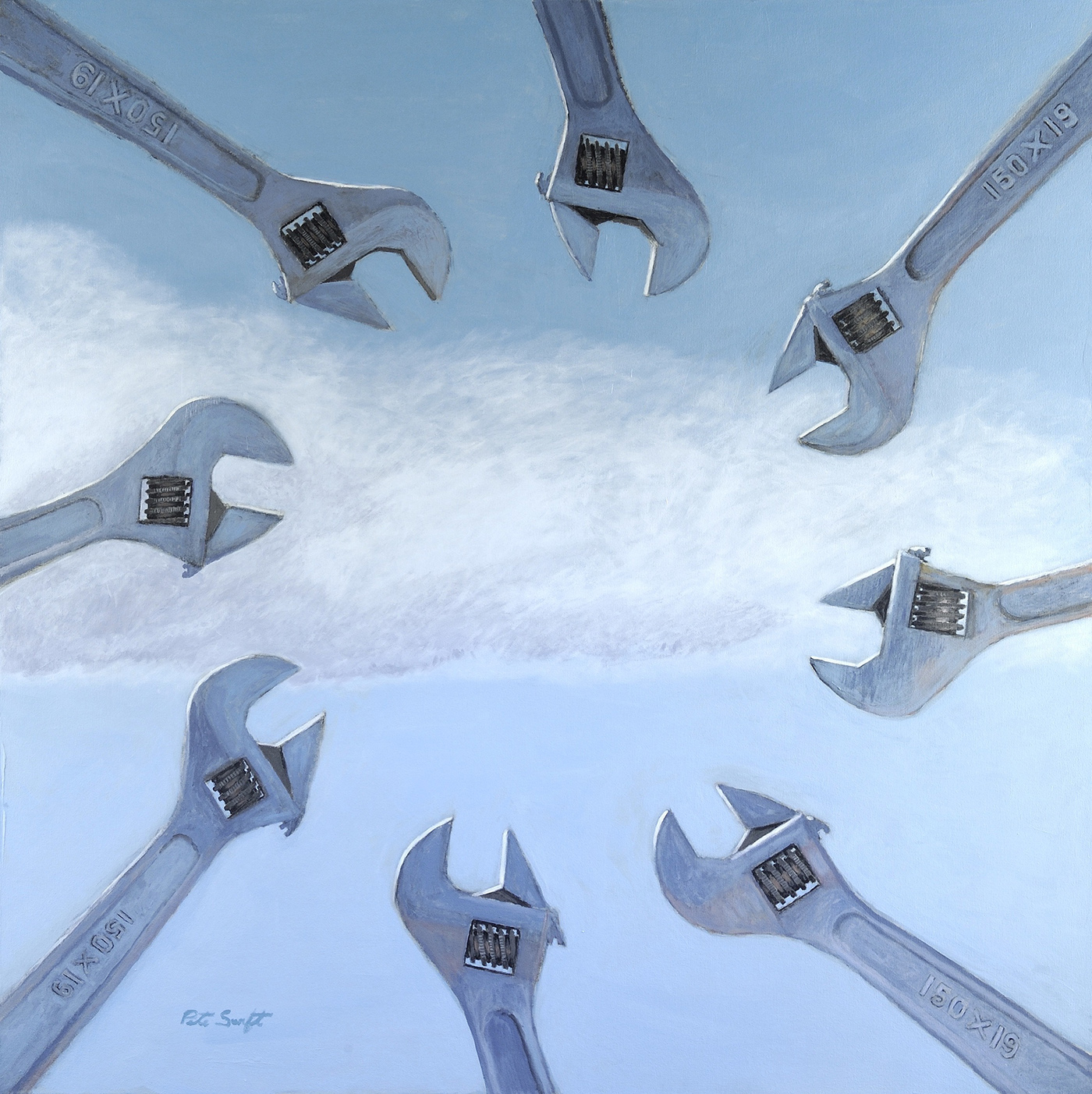
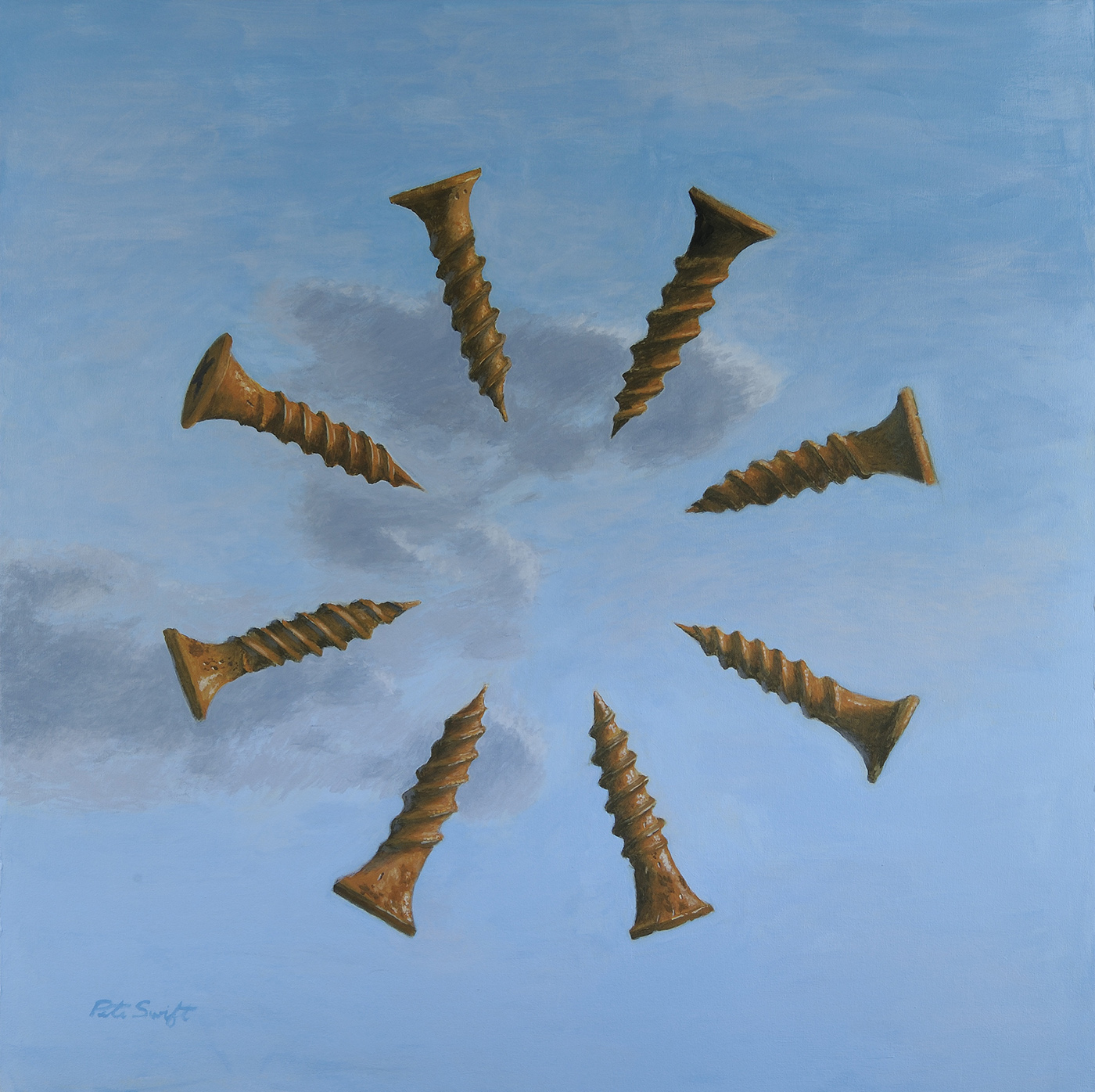
Peter Swift: My style is unique because it combines two distinct elements: classical realistic still-life painting and symmetrical design. I have coined the phrase “Symmetrical Realism” to describe my work.
Most of my work features circles, because I believe that the human brain has a deep psychological connection to circles. The circle is a fundamental symbol in many of the world’s religions because it represents harmony, unity, tranquility, completion and wholeness.
Peter Swift, “Dignity of Work – Eight Wrenches”, acrylic on canvas, 48 x 48 in, 2022Peter Swift, “Dignity of Work – Wood Screws”, acrylic on canvas, 48 x 48 in, 2022
Icons – A Solo Show of New Western Paintings by S.M. Chavez
Acosta Strong Fine Art
Santa Fe, New Mexico acostastrong.com
August 8-22, 2022
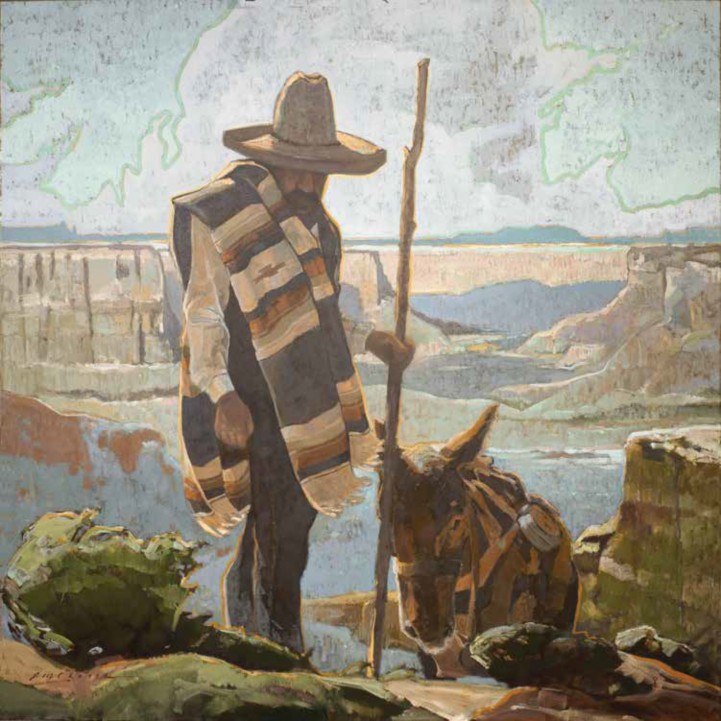
S.M. Chavez, “Thick-Skinned (Serenity),” oil on canvas, 48 x 48 in.
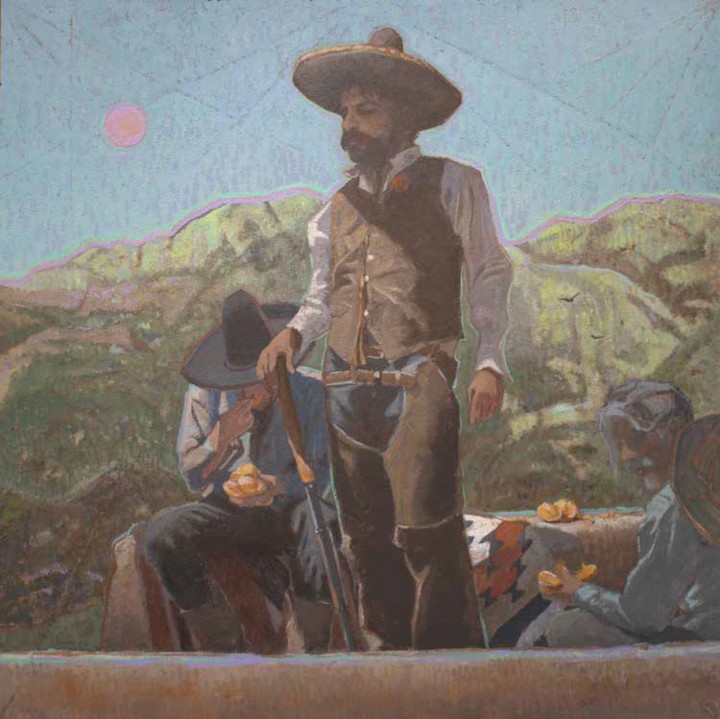
“I’m proud to present rising star Sean Michael Chavez, his first two shows with us completely sold out. I’m excited to see what this new show brings”, said Carlos Acosta, gallery owner. “Sean paints our culture, heritage and scenic beauty, basically paints what he knows, feels and lives. He’s bringing to new light our Mexican Vaqueros, the original western cowboys, who tend to be underrepresented in the art market.”
S.M. Chavez, “Mesa Brisa,” oil on canvas, 48 x 48 in.
More from the gallery:
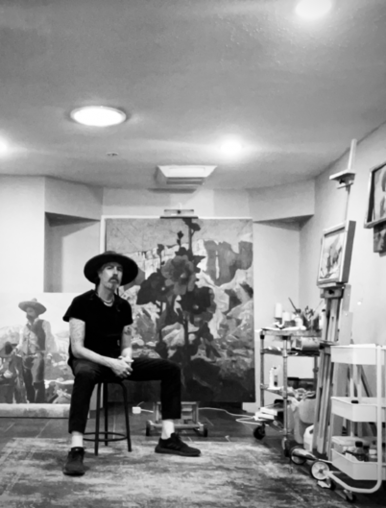
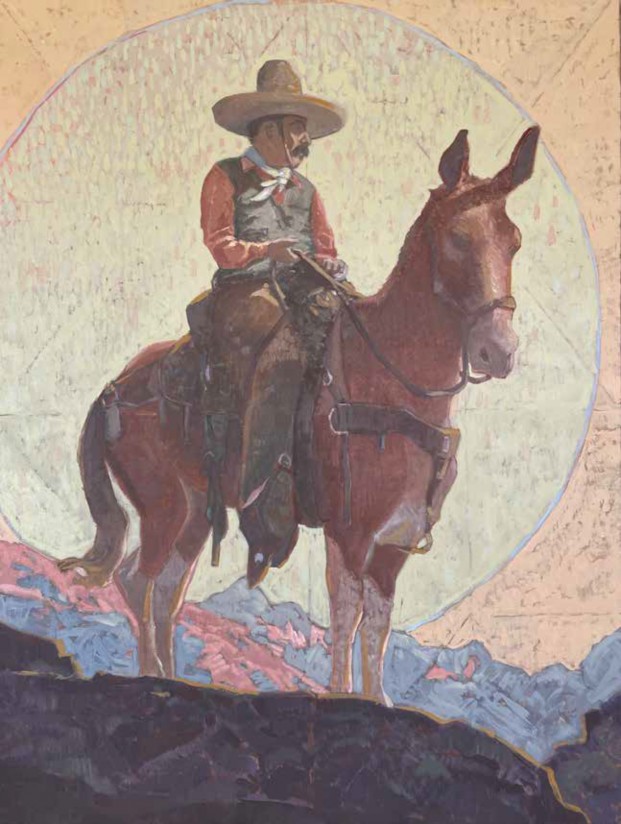
With around 20 paintings both large and small planned for the show, Chavez’s newest work will further expand upon the themes and subjects that he has come to be recognized for (vaqueros, landscapes, and hollyhocks) while tightening his techniques and range of color pallets. He will be taking his new work to a new level.
S.M. Chavez, painting title pending, oil on canvas, 48 x 36 in.
“This show will be bigger and better than the last, with a few surprises in store”, said S.M. Chavez about his new show, which will further reinforce his distinctive style and strong design aesthetic within the contemporary western genre.
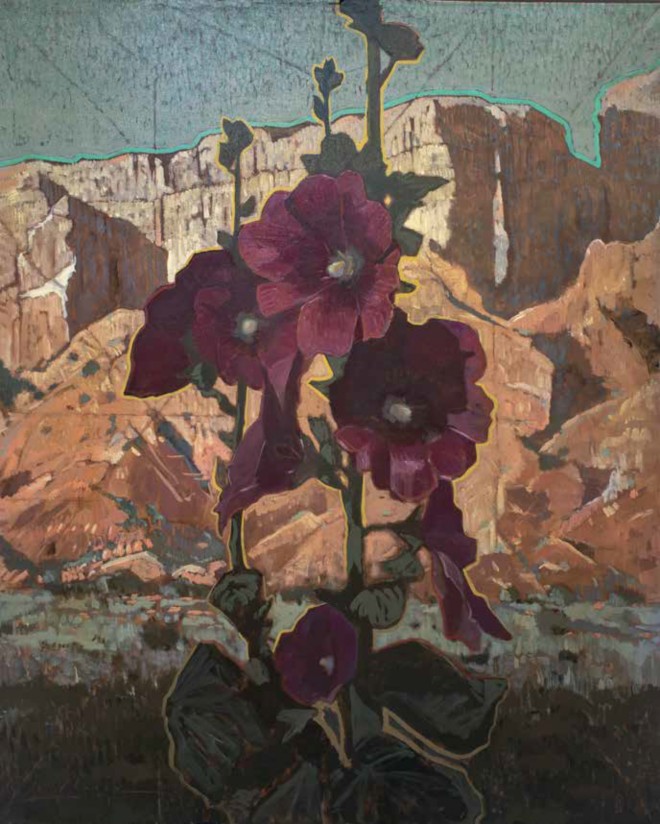
S.M. Chavez, “Hollyhock with Landscape,” oil on canvas, 60 x 48 in.
Chavez’s recent success includes accolades from both regional (New Mexico Magazine) and national publications (Western Art Collector, Southwest Art), invitations to national exhibitions (Coors Western Art) and Museums (National Cowboy and Western Heritage Museum).
> Visit EricRhoads.com to learn about more opportunities for artists and art collectors, including retreats, international art trips, art conventions, and more.
> Sign up to receive Fine Art Today, our free weekly e-newsletter
On View: Moments in Time with Joe Gyurcsak
Hagan Fine Art
Charleston, South Carolina HaganFineArt.com
Through August 31, 2022
View 15 new original oil paintings that explore the artist’s connection with his surroundings:
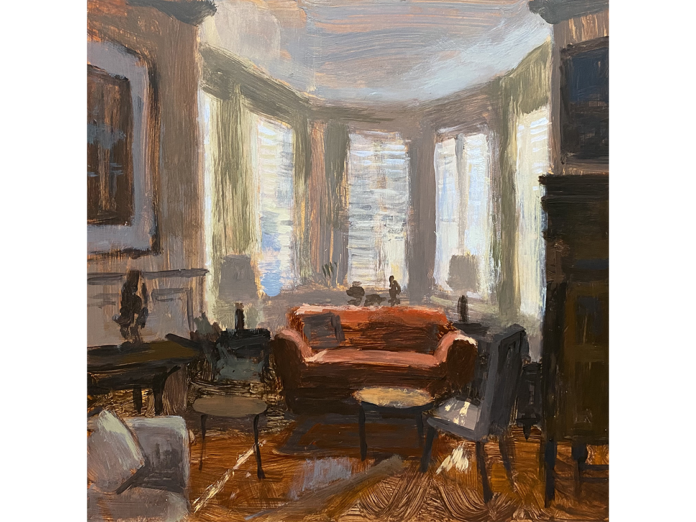
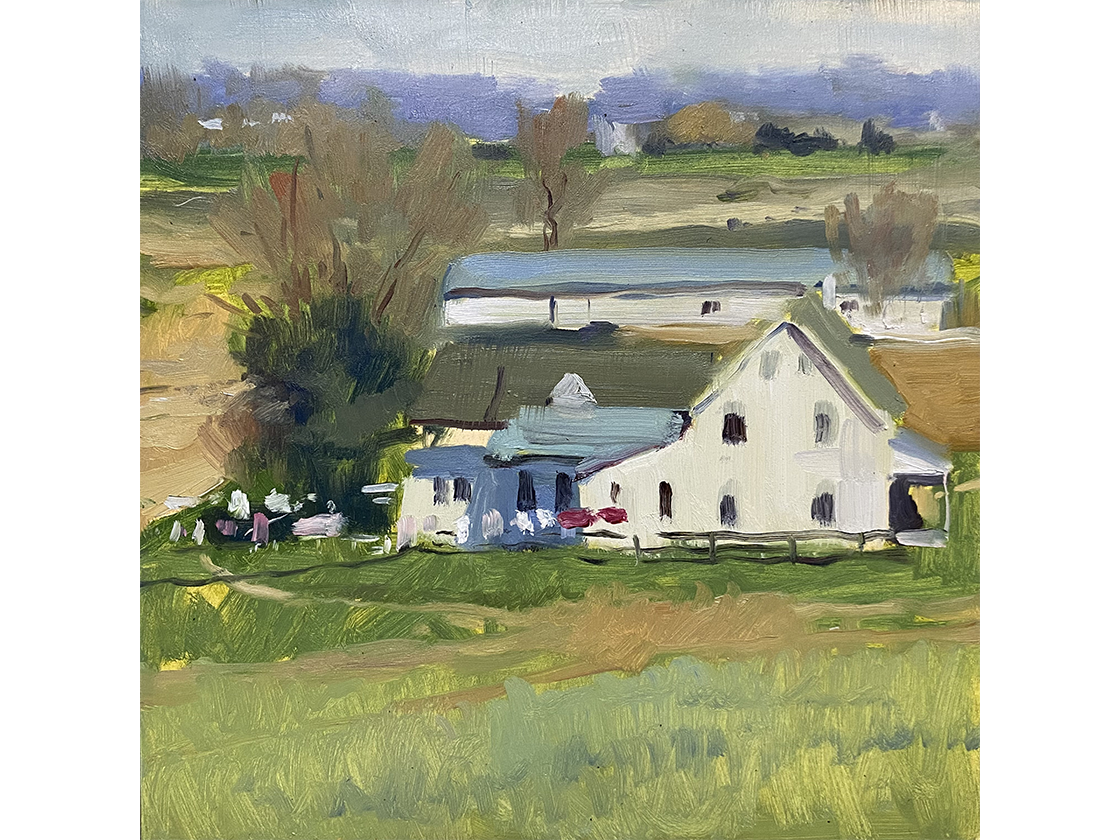
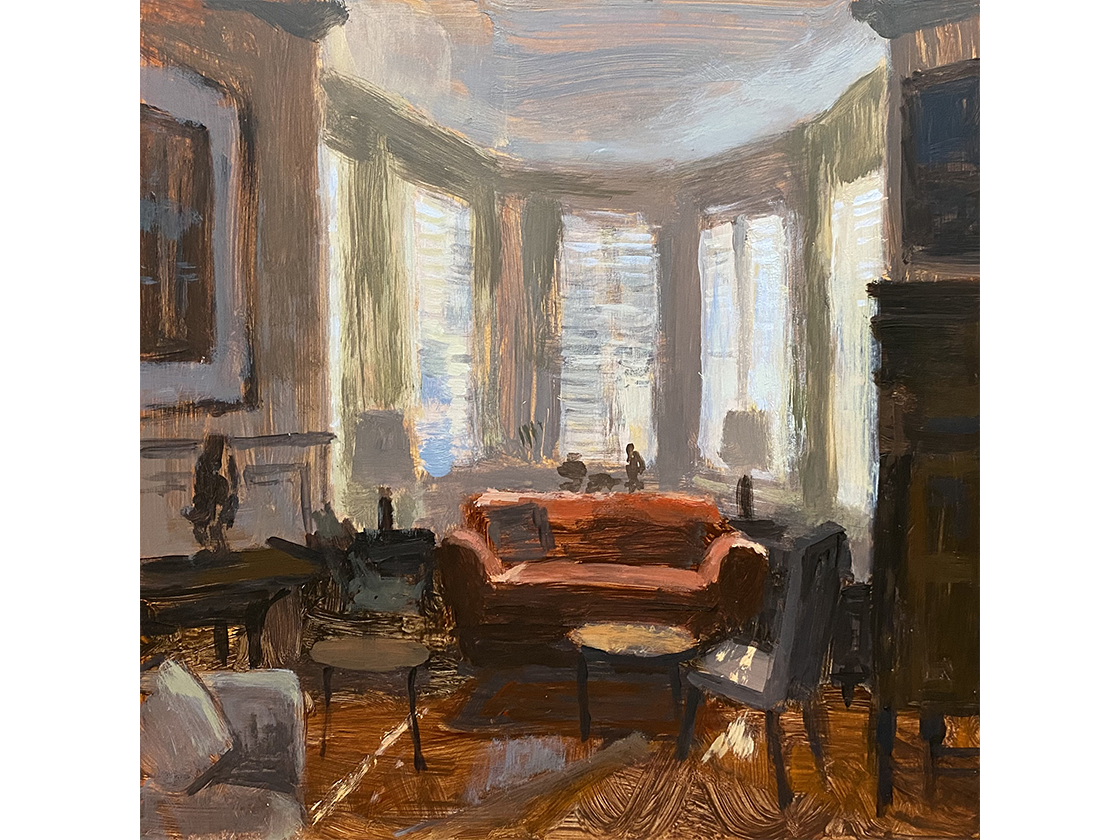
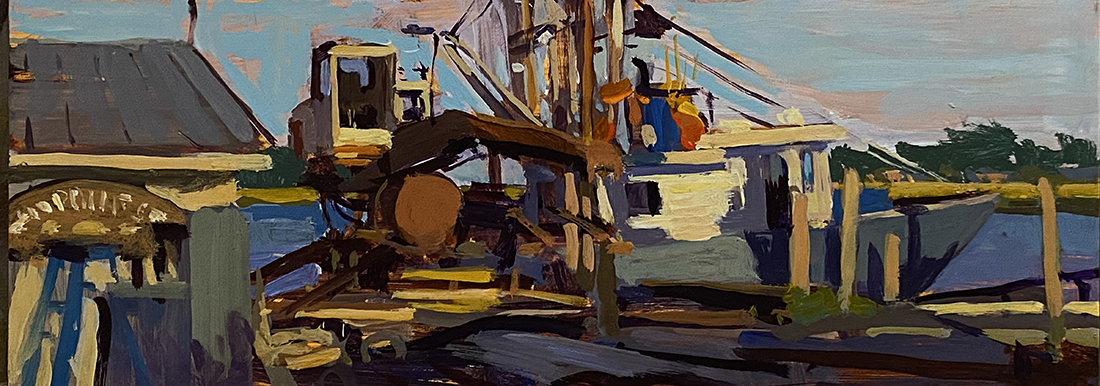
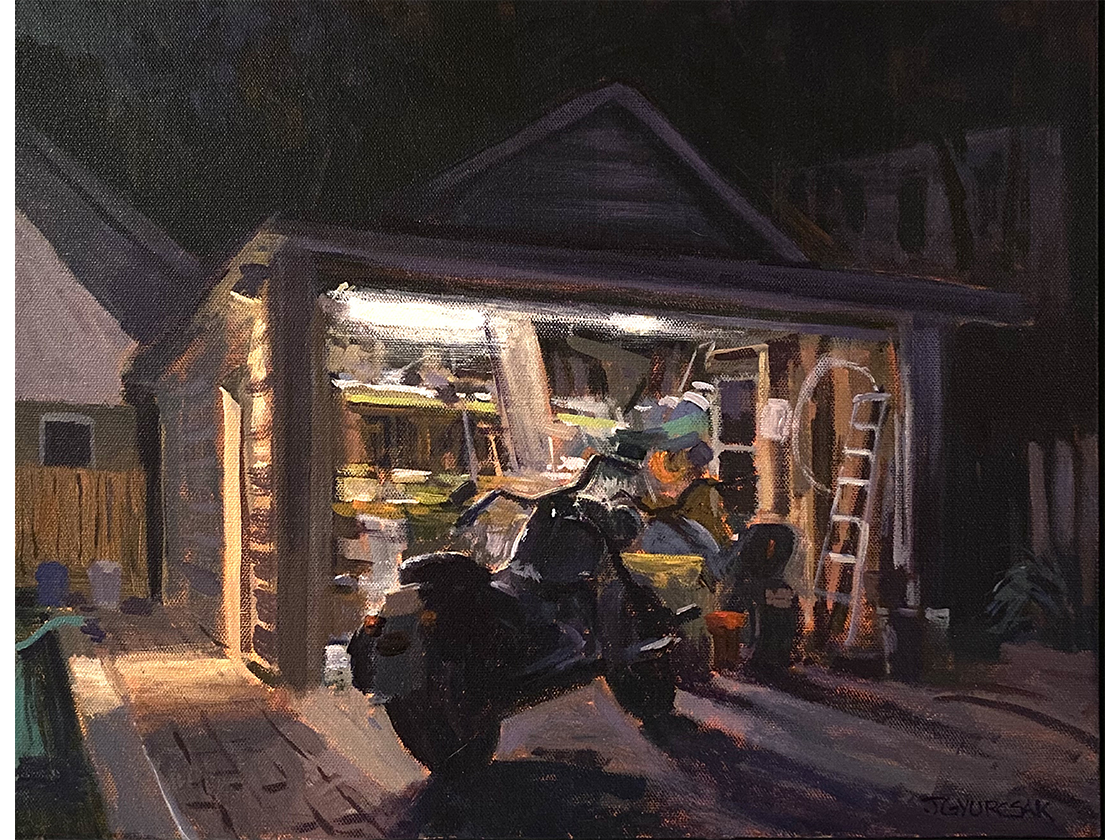
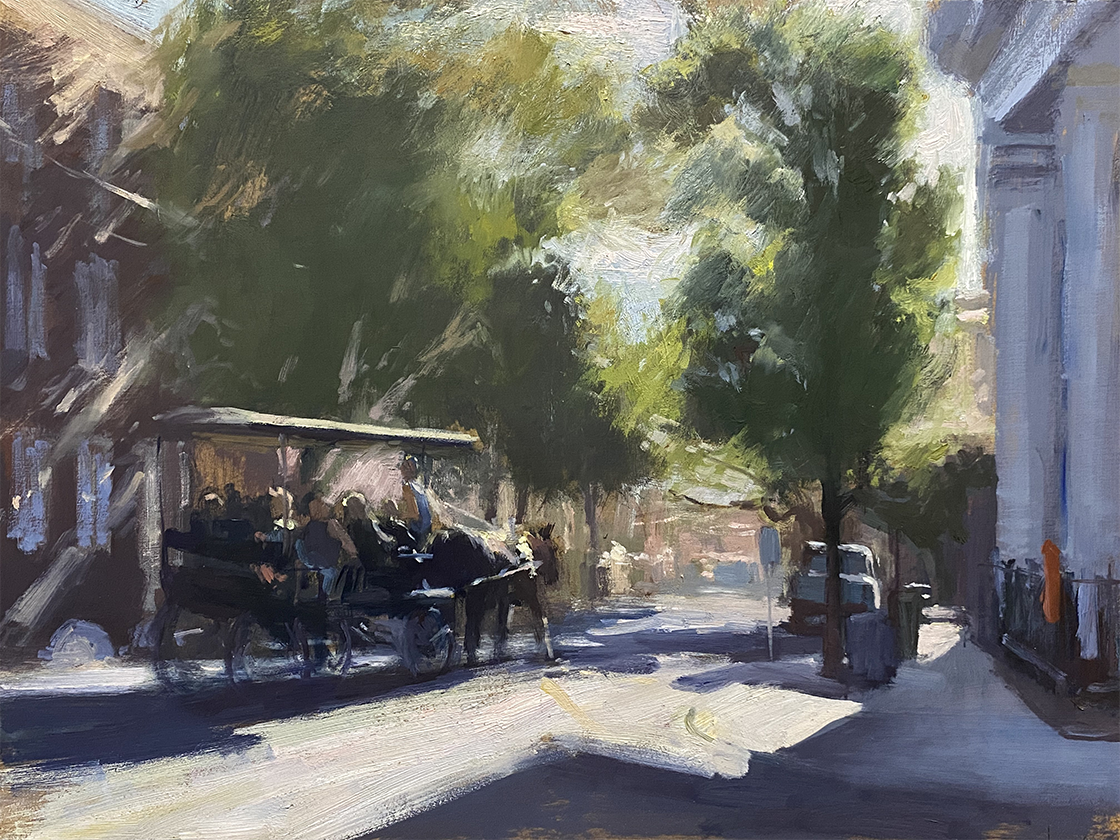
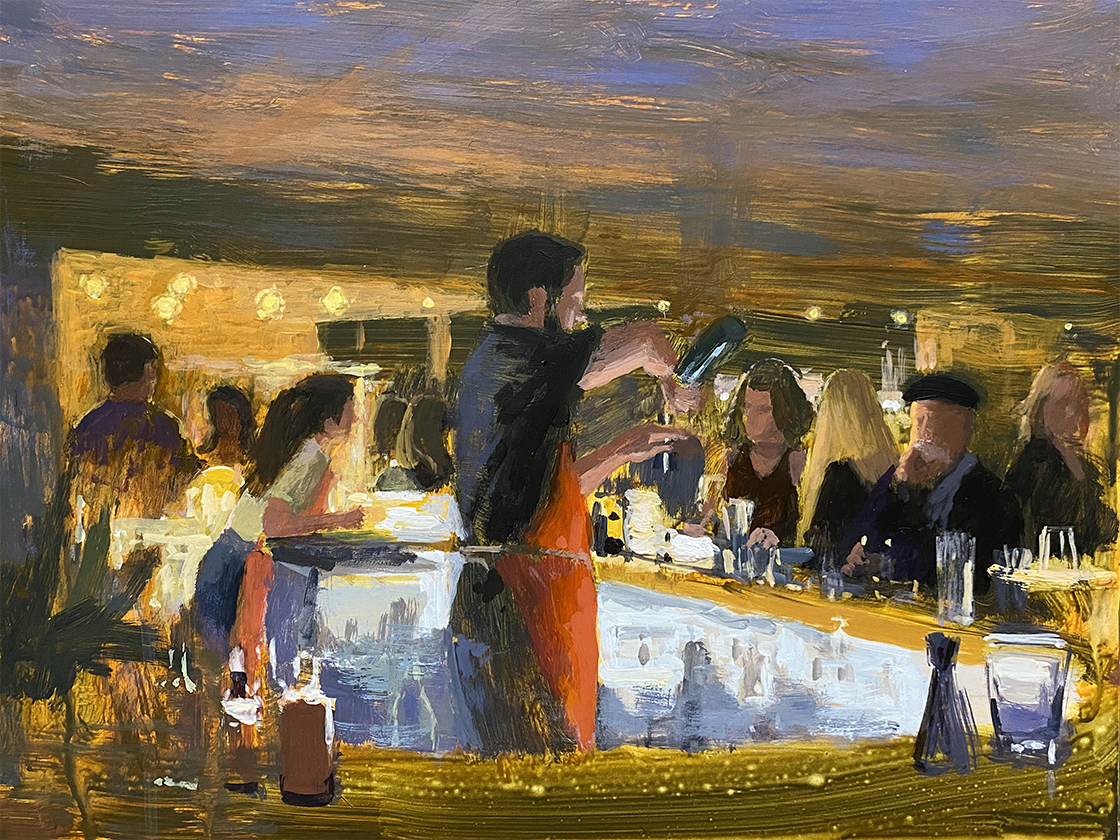
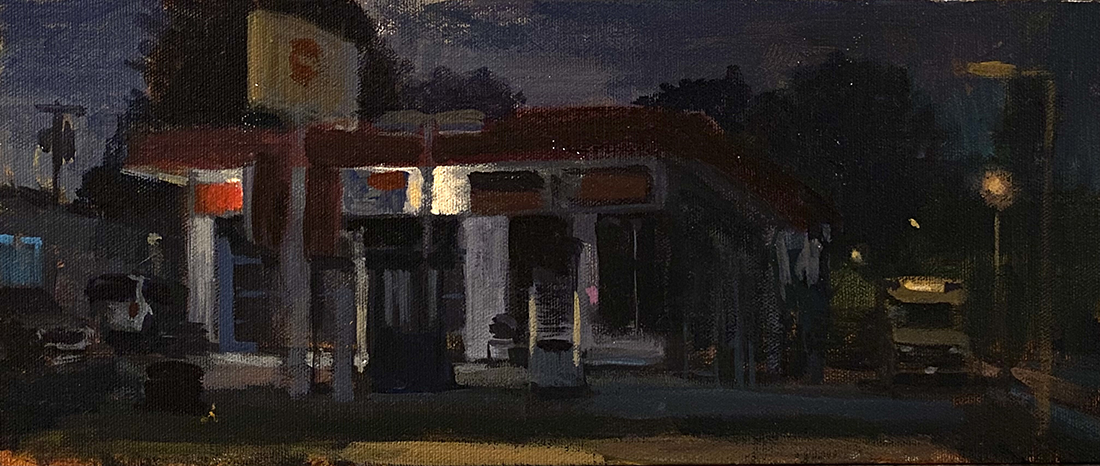
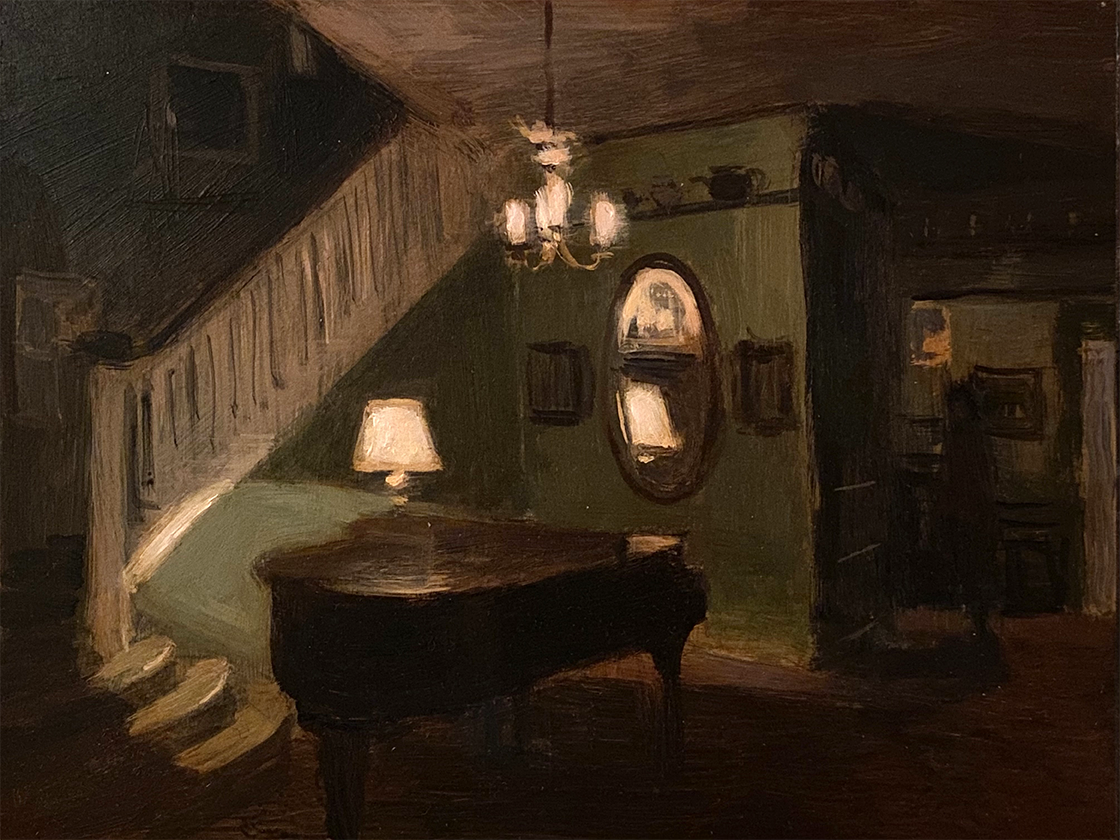
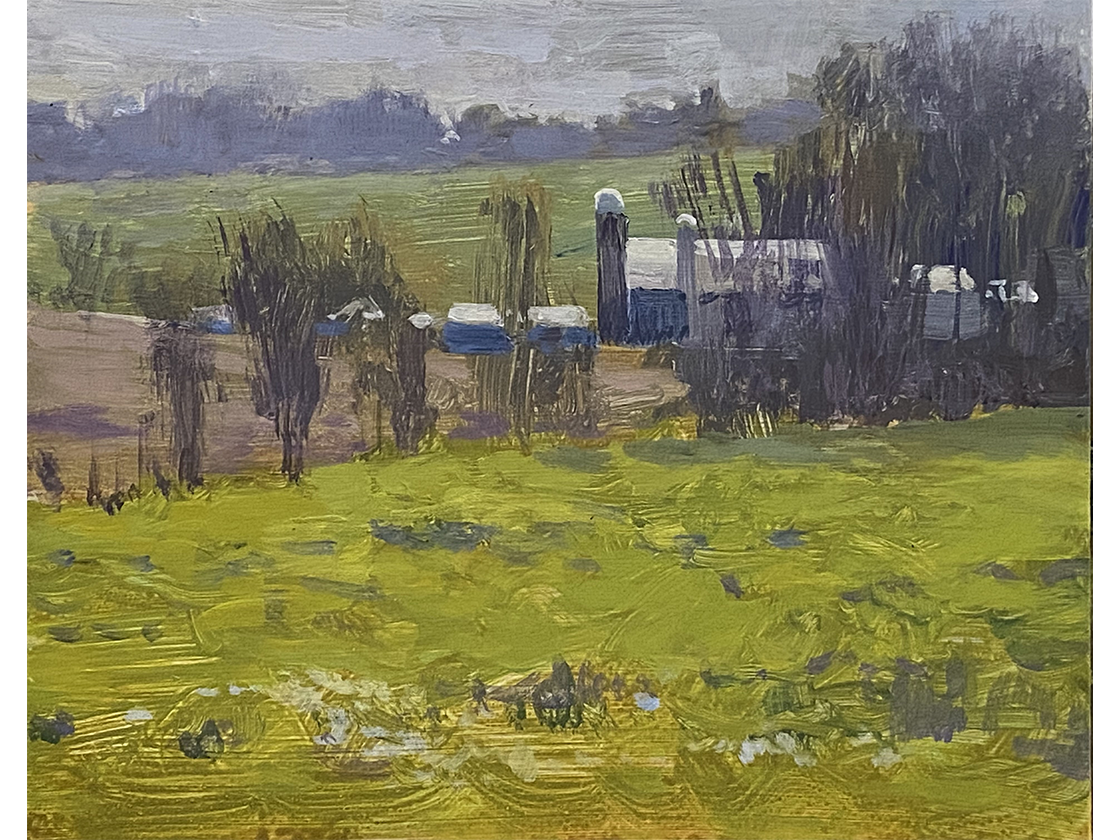
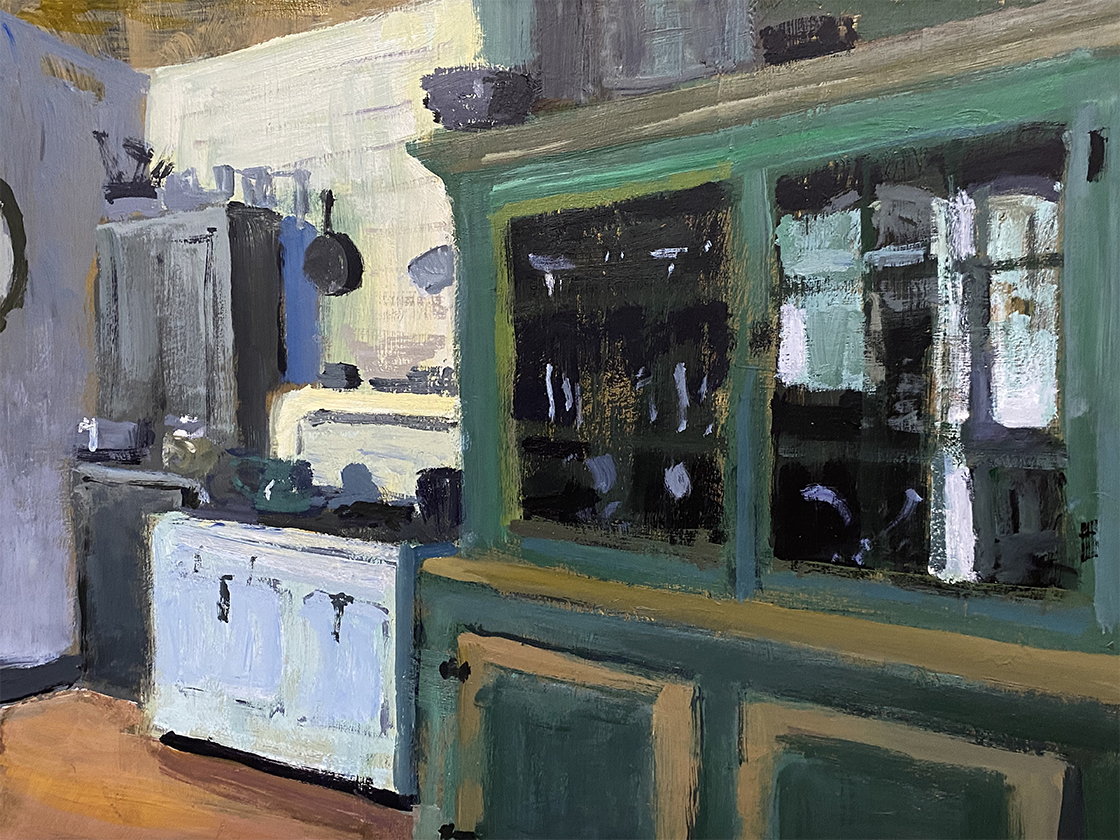
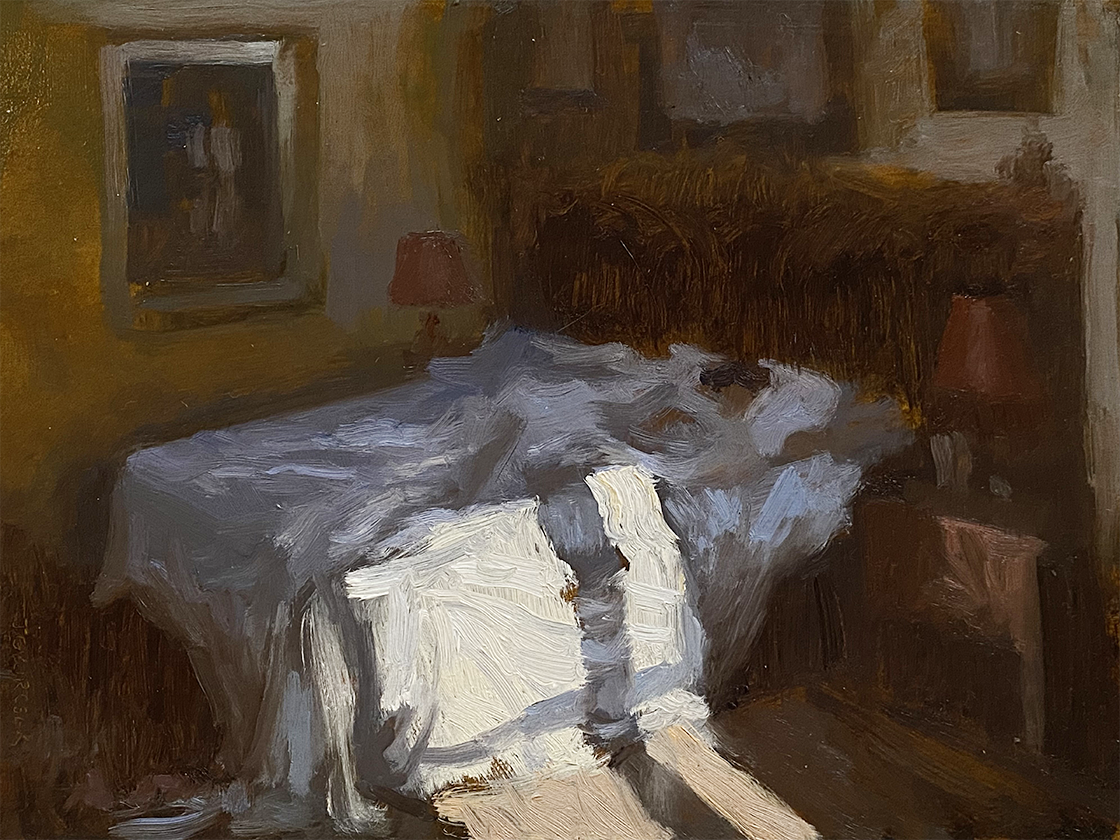
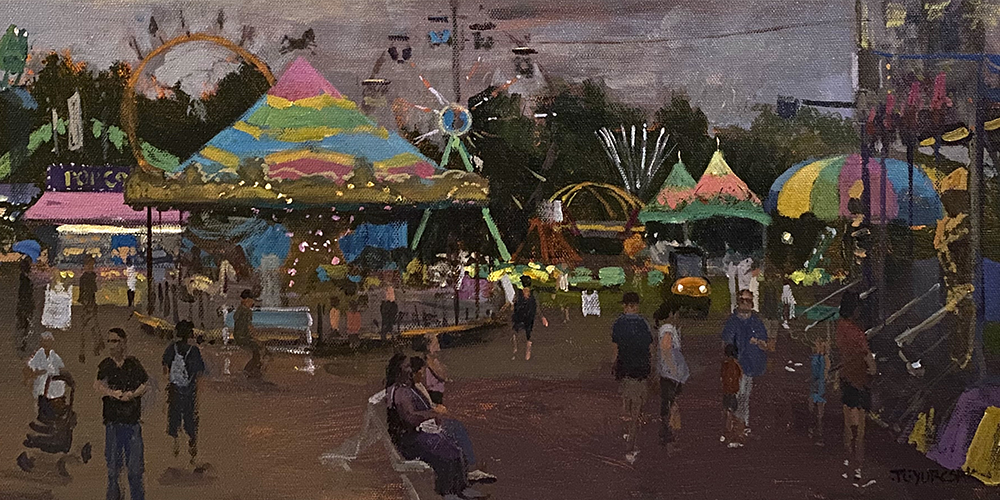
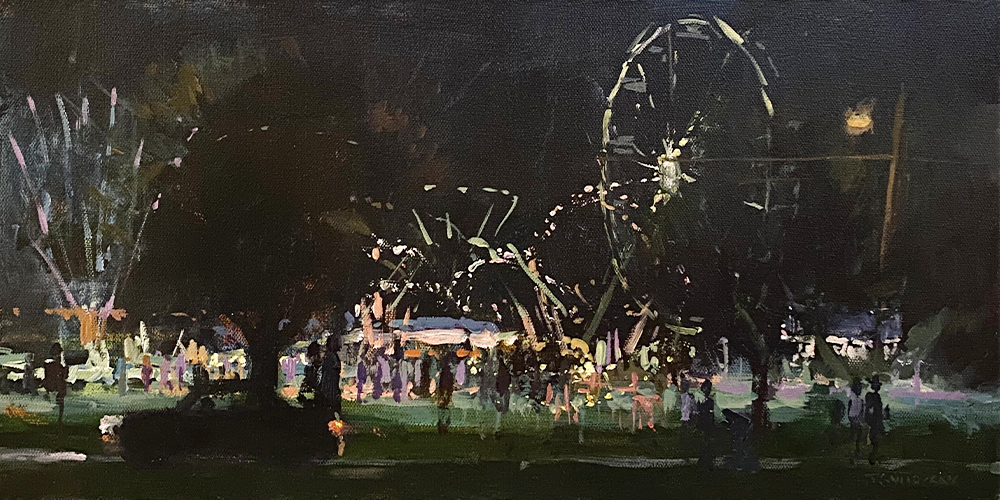
Joe Gyurcsak, “Above the Farm,” oil, 12 x 16 in.Joe Gyurcsak, “New Years Eve,” oil, 12 x 12 in.Joe Gyurcsak, “Southern Light,” oil, 12 x 12 in.Joe Gyurcsak, “Cherry Point Seafood,” acrylic, 6 x 16 in.Joe Gyurcsak, “Cherry Point,” oil, 9 x 12 in.Joe Gyurcsak, “Jim’s Garage,” oil, 14 x 16 in.Joe Gyurcsak, “Charleston Charm II,” oil, 12 x 16 in.Joe Gyurcsak, “Frannie and the Fox,” acrylic, 12 x 16 in.Joe Gyurcsak, “Meet Me at Moe’s,” oil, 6 x 14 in.Joe Gyurcsak, “The Piano,” oil, 9 x 12 in.Joe Gyurcsak, “Early Spring,” acrylic, 8 x 10 in.Joe Gyurcsak, “Country Kitchen,” acrylic, 12 x 16 in.Joe Gyurcsak, “Morning Light Streams,” oil, 9 x 12 in.Joe Gyurcsak, “Carnival III,” acrylic, 10 x 20 in.Joe Gyurcsak, “Carnival IV,” acrylic, 10 x 20 in.
In Case You Missed It:
.
> Visit EricRhoads.com to learn about more opportunities for artists and art collectors, including retreats, international art trips, art conventions, and more.
> Sign up to receive Fine Art Today, our free weekly e-newsletter
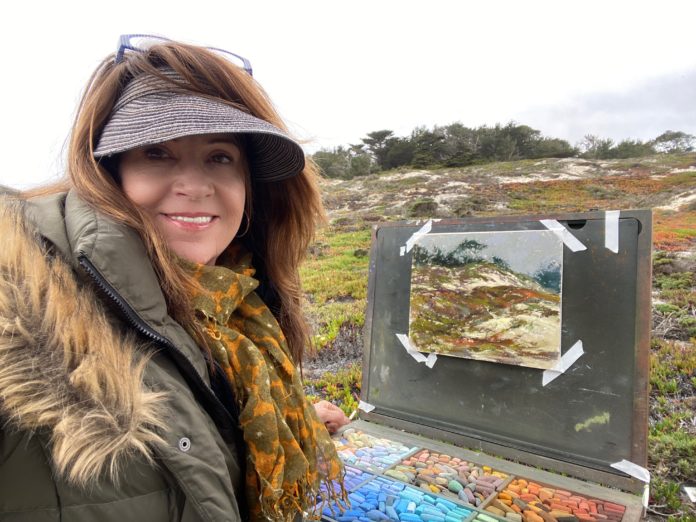
Plein air artist Kim Lordier painting on location in Monterey, California.
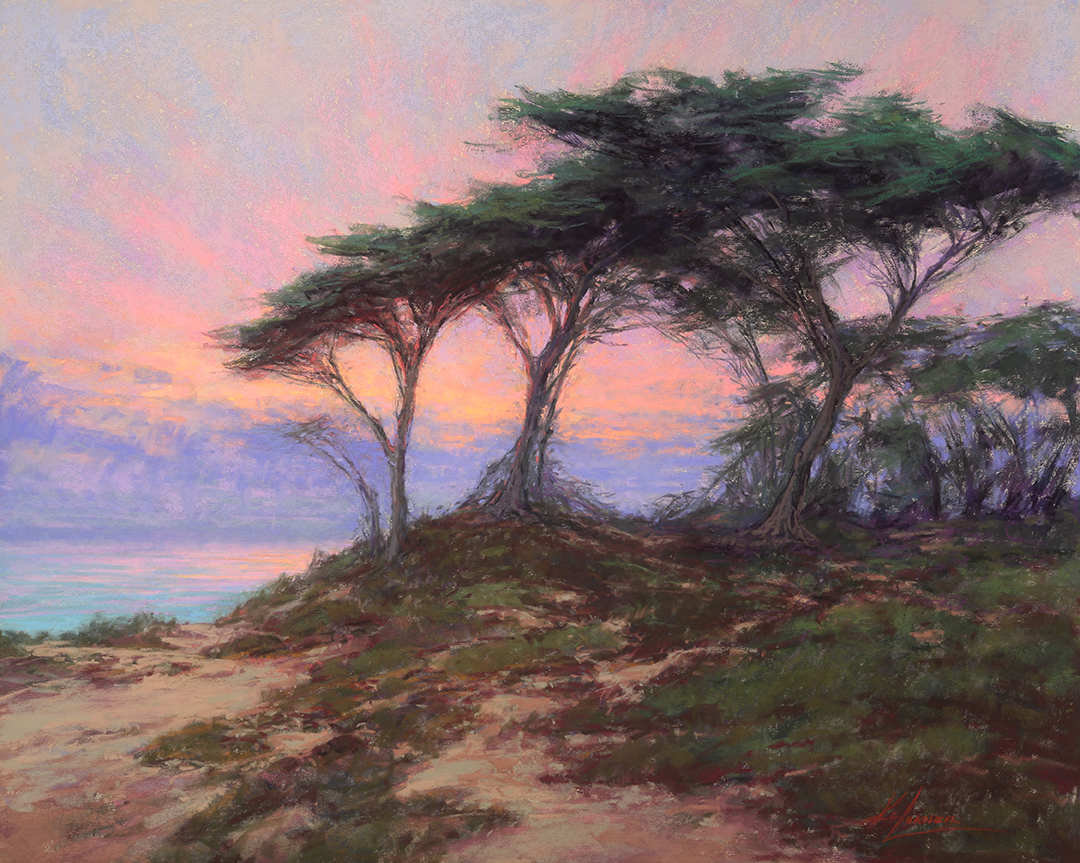
Rieser Fine Art has announced “Kim Lordier: Illuminated Impressions – A Visual Journey,” featuring a new collection of plein air and studio pastel paintings focusing on the California and Monterey Coast.
From the organizers:
Jim Rieser is honored to exhibit this collection as he celebrates the gallery’s 25th Anniversary. Representing Historical and Contemporary landscape artists, Rieser invited Lordier to join his gallery in 2006. Quickly becoming a top selling artist, Lordier continues to bring a fresh view of the California Coastal scene with her 8th Solo Show at Rieser Fine Art.
Lordier says about her medium and new work, “It’s just pure pigment. Pastel. But through an artists’ lens, pure pigment becomes a visual impression upon a flat surface. When passion, paint and perspective combine… the effort becomes effortless. Whisked away to a remembered place or striking a chord in your heart, this collection is about color and light.”
For the virtual art tour please click here.It includes a timelapse of one of the paintings being created, close-ups of the works available for sale, and a studio tour with Kim Lordier.
Exhibition Details:
“Kim Lordier: Illuminated Impressions – A Visual Journey”
Rieser Fine Art
Carmel, California RieserFineArt.com
August 6 – 31, 2022
Reception: August 6
An anchor piece, “Waltzing at Dusk,” was inspired by a painting trip to Monterey. A heavy rain cell, just finished soaking the ground, began to move off the coastline leaving the dramatic flash of color as the sun set.
Kim Lordier, “Waltzing at Dusk,” 2022, Pastel on Archival Board, 24 x 30 in., Studio
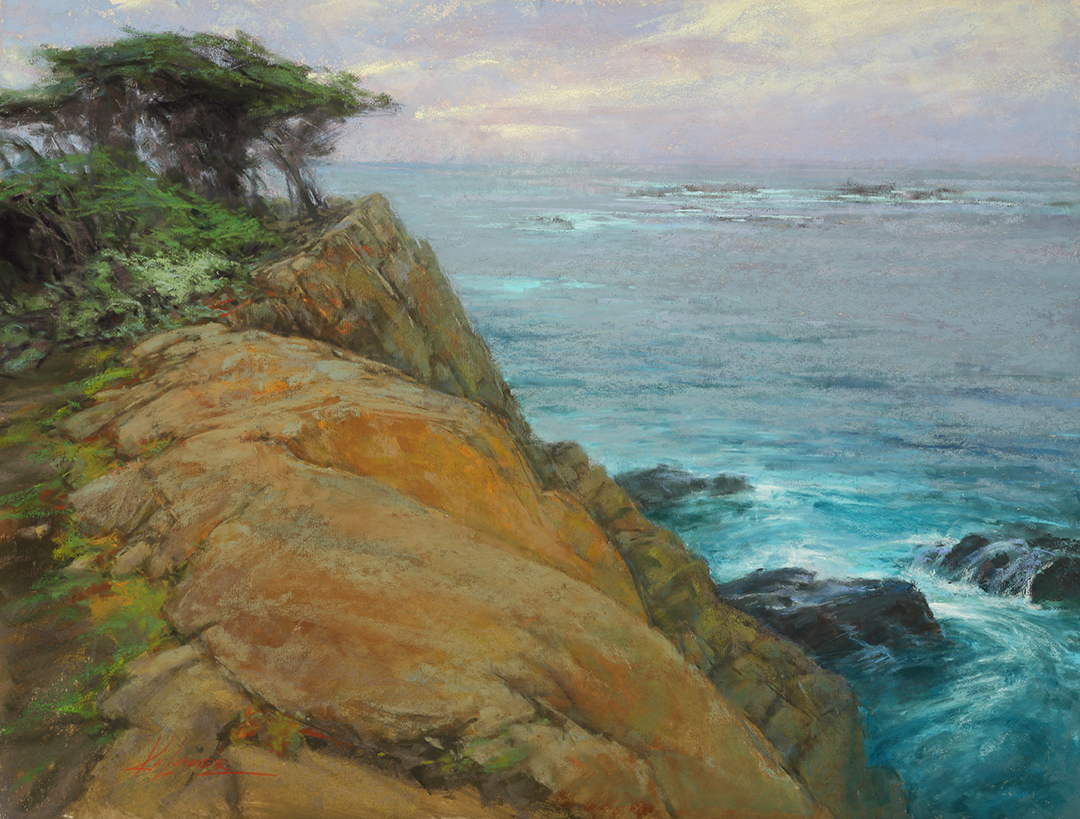
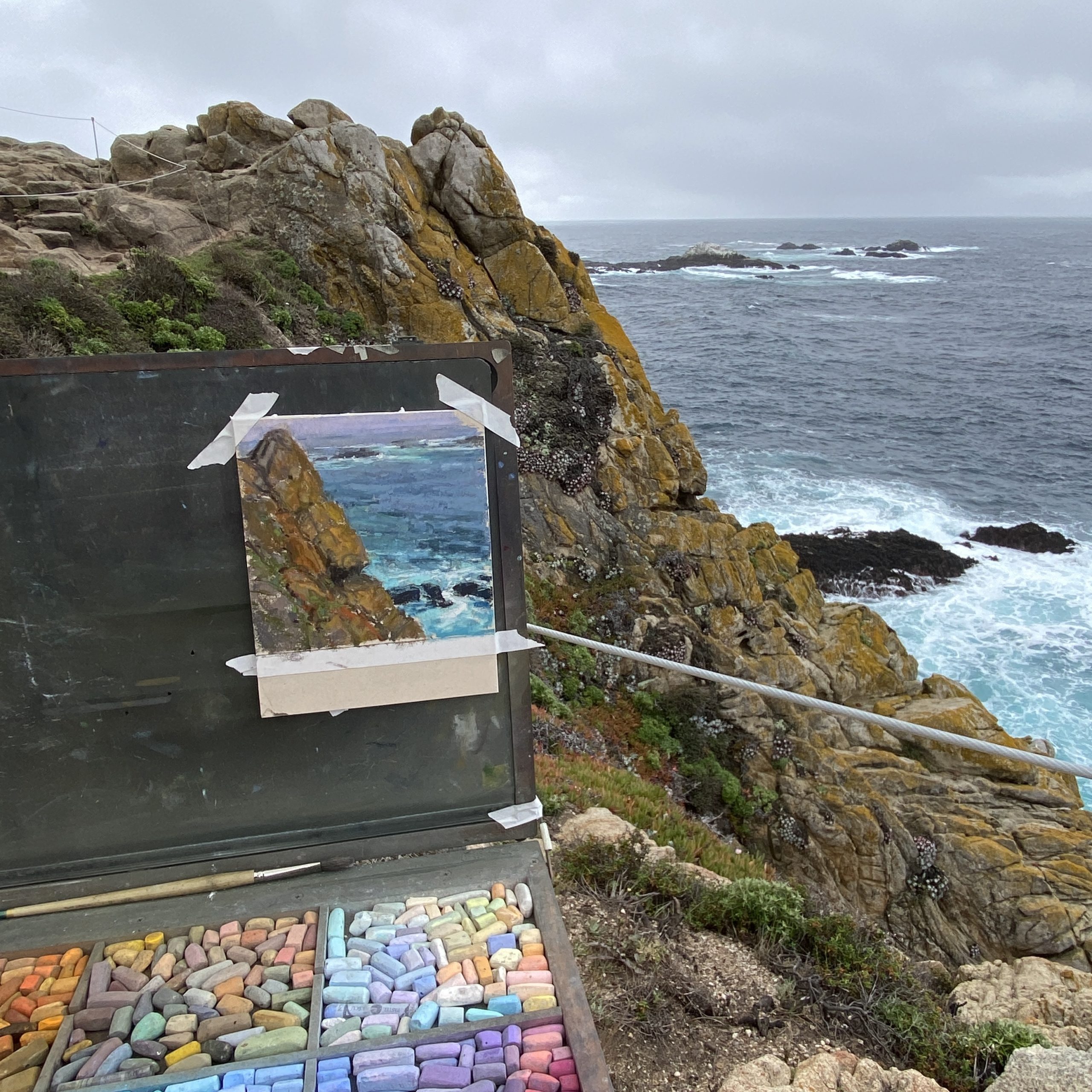
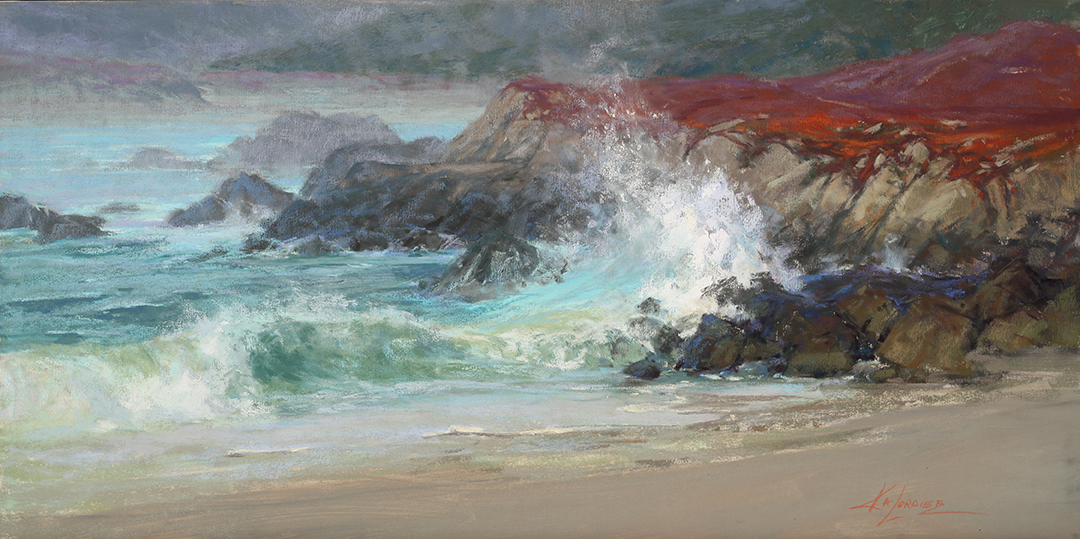
“Gold Lichen and Turquoise Seas” was created in the studio based off of a plein air trip to Point Lobos State Park. Lordier was captivated by the turquoise and gold theme.
Kim Lordier, “Gold Lichen and Turquoise,” 2022, Pastel on Archival Board, 20 x 26 in., Studio, based off of a plein air studyKim Lordier, Plein Air Study for Gold Lichen and Turquoise, Point Lobos, CA, 2022
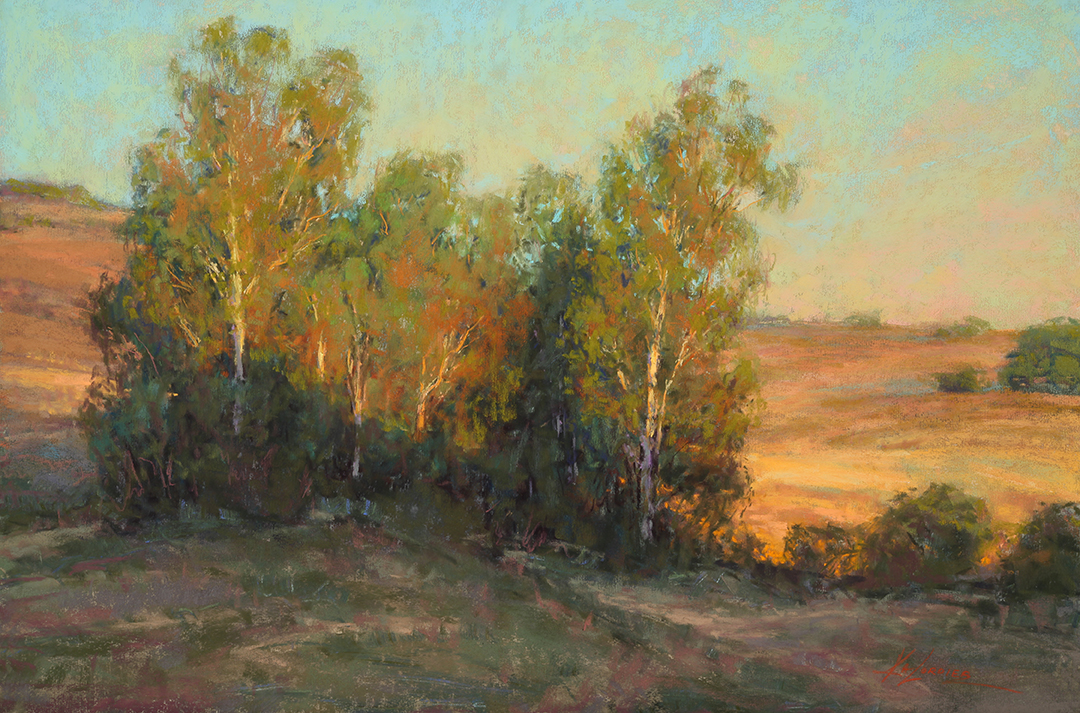
Additional Pastel Paintings by Kim Lordier
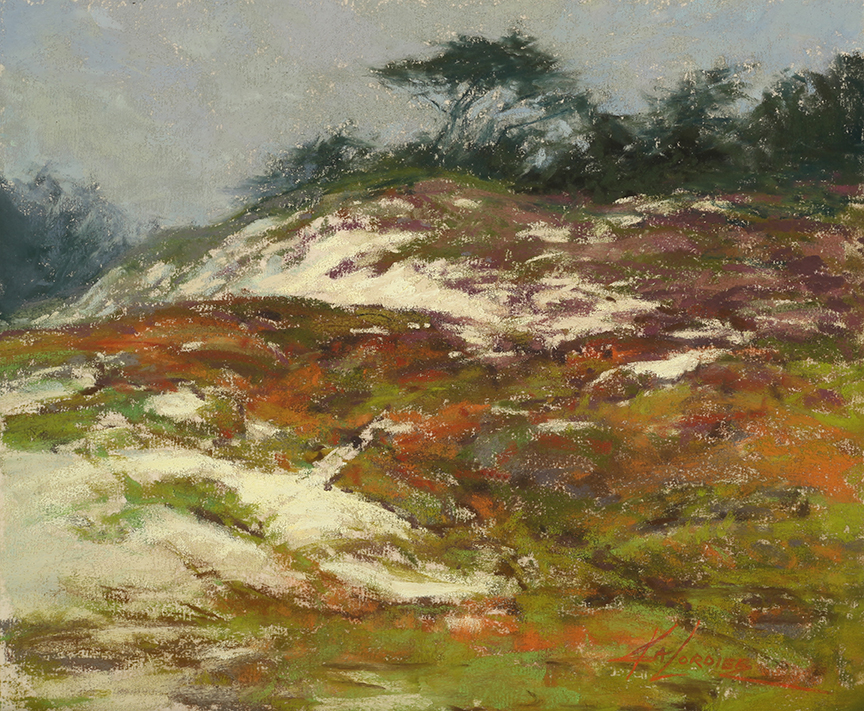
Kim Lordier, “On The Threshold,” 2022, Pastel on Archival Board, 16 x 24 in., StudioKim Lordier, “Coastal Allure,” 2022, Pastel on Archival Board, 12 x 24 in., StudioKim Lordier, “Colorful Carpet,” 2022, Pastel on Archival Board, 12 x 12 in., Plein Air
> Visit EricRhoads.com to learn about more opportunities for artists and art collectors, including retreats, international art trips, art conventions, and more.
> Sign up to receive Fine Art Today, our free weekly e-newsletter
As part of our effort to continue to help artists and art galleries thrive, we’re proud to bring you this week’s “Virtual Gallery Walk.” Browse the artwork below and click the image itself to learn more about it, including how to contact the gallery.
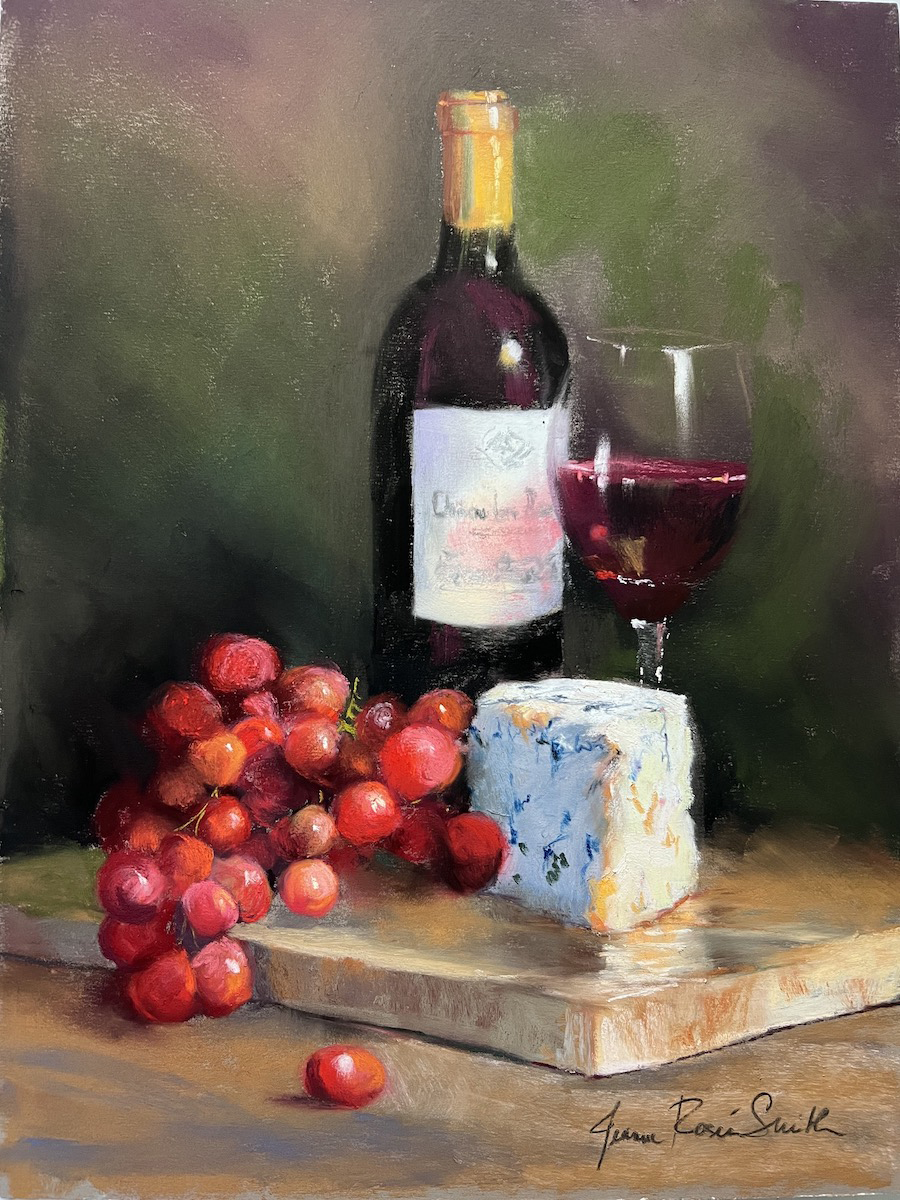
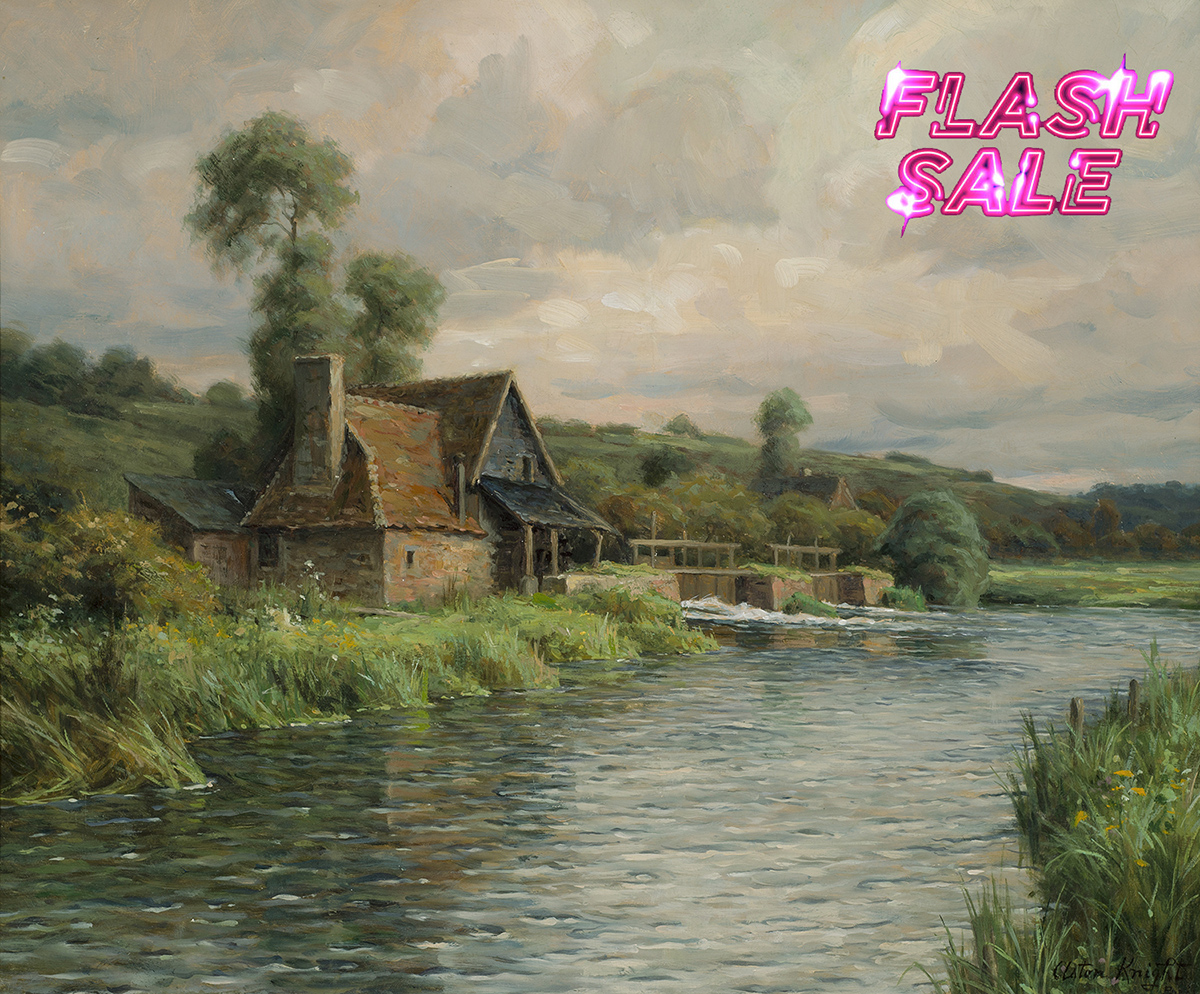
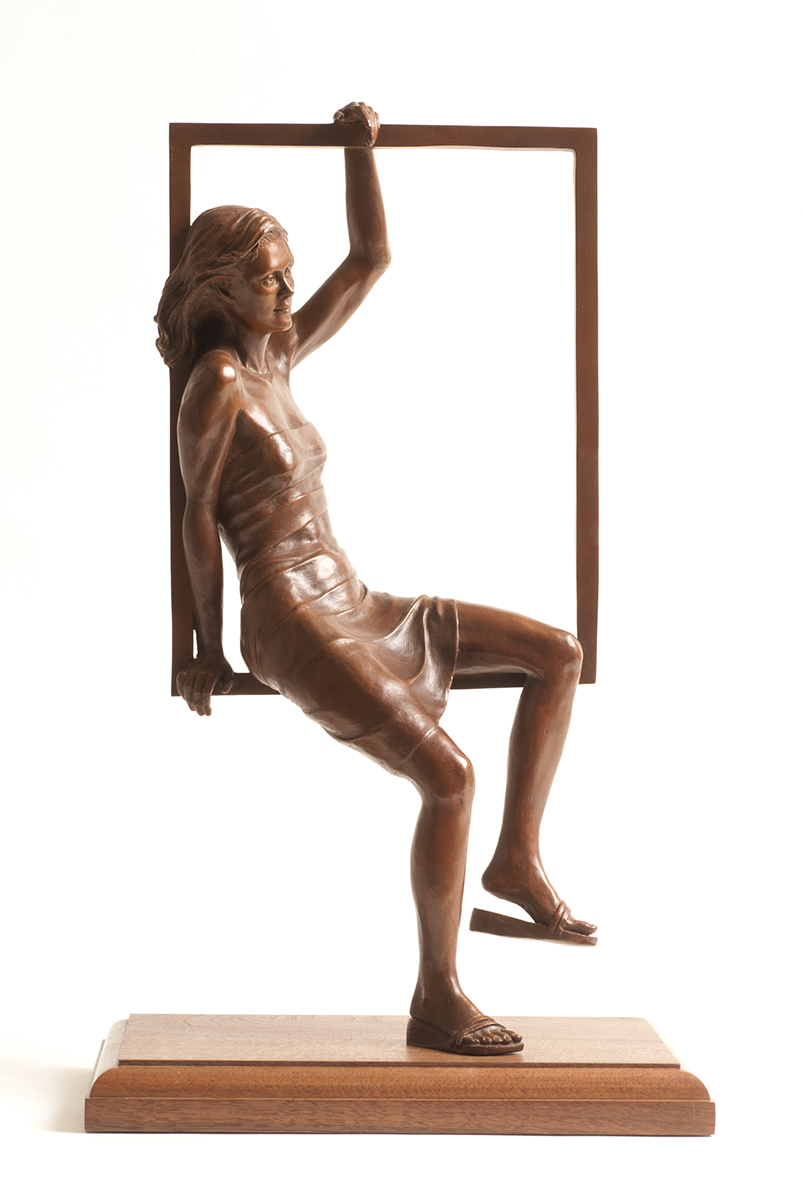
Reds & Blue, J. R. Smith, pastel, 16 x 12 in; Anderson Fine Art GalleryMy Mill, Louis Aston Knight (1873 – 1948), oil on canvas, 18 1/2 x 21 1/2 in, Signed and inscribed Paris; Rehs Galleries, Inc.Strawberry Shortcake, Beth Sistrunk (Born 1978), acrylic and oil on panel, 6 x 6 in, Signed; Rehs ContemporaryWaiting Game, Susie Chisholm, Bronze, 21 x 12 x 7 in; Susie Chisholm
Want to see your gallery featured in an upcoming Virtual Gallery Walk? Contact us at [email protected] to advertise today. Don’t delay, as spaces are first come, first served, and availability is limited.
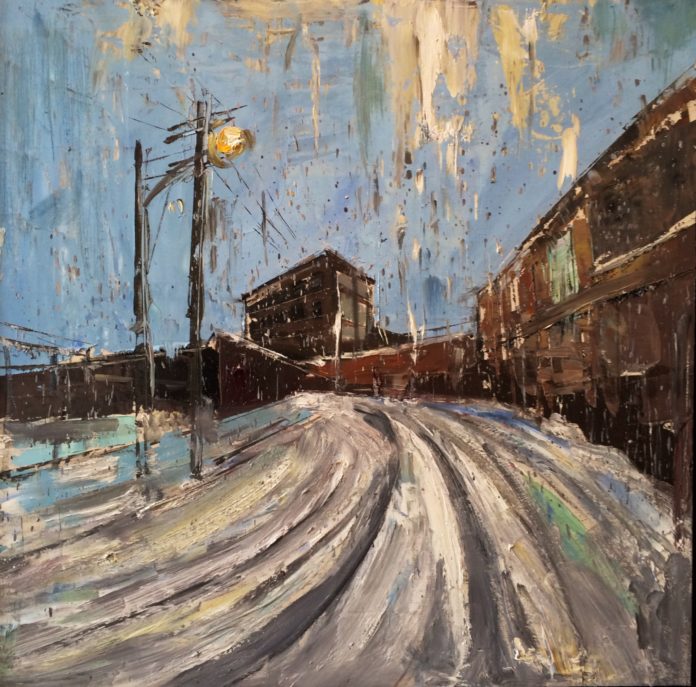
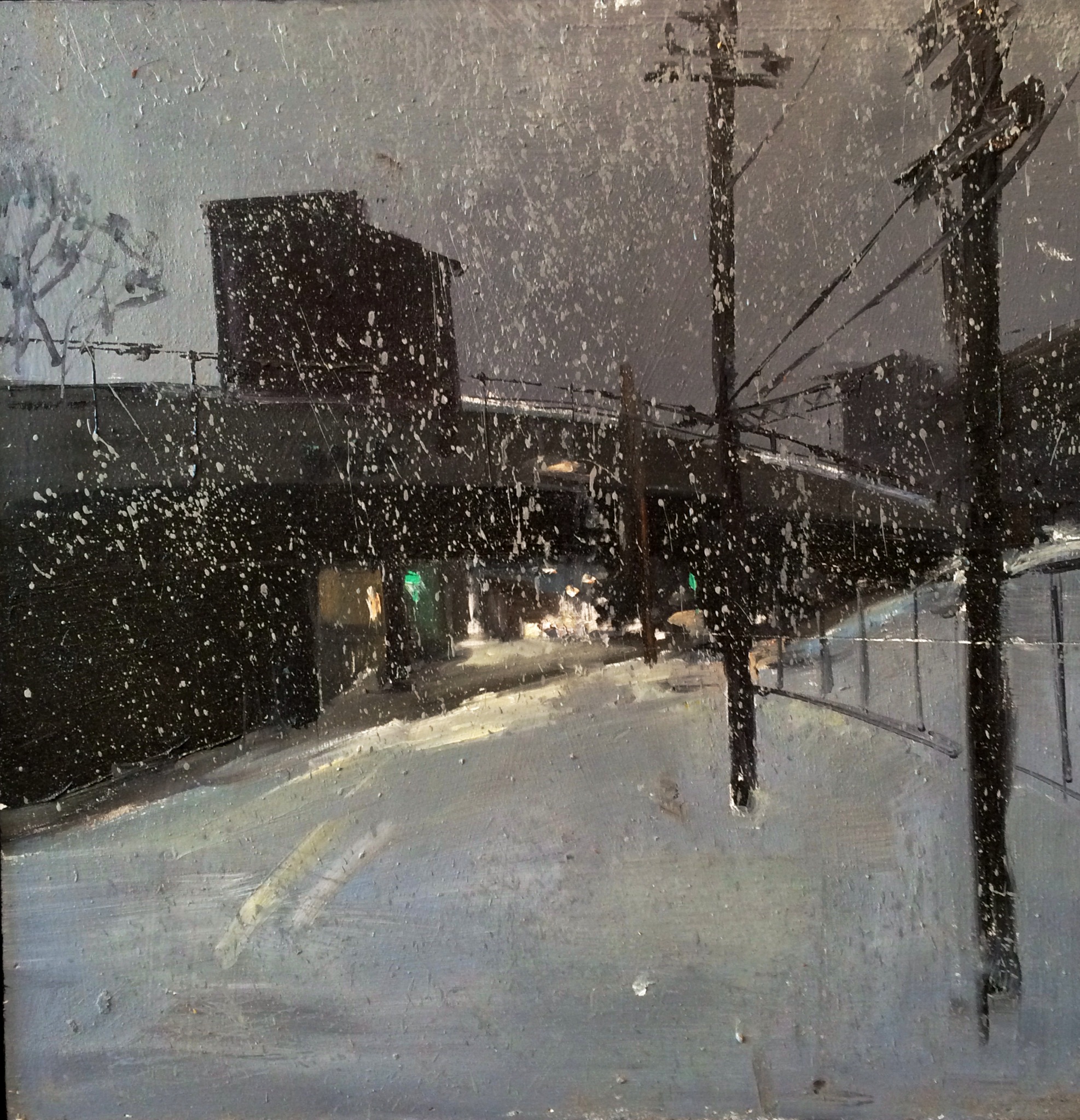
Gregory Prestegord, "Industrial Snow Storm," 24 x 24 inches, Oil on panel
Paintings of Philadelphia > “My response was to paint and portray this Rust Belt city whose factories and jobs have been lost in the meltdown of American manufacturing.”
Beauty and Grit
By Gregory Prestegord
Many artists try to capture the energy of the time in which they live. Look at the work of great masters—they tend to paint the times. I remember as a child my Dad would always say, “Don’t paint pretty things.” When I would ask him why, he would reply, “Look around you. Look at all the industrial buildings that are falling apart. Look at all the poverty around us. Paint these things; they are the sign of our times.”
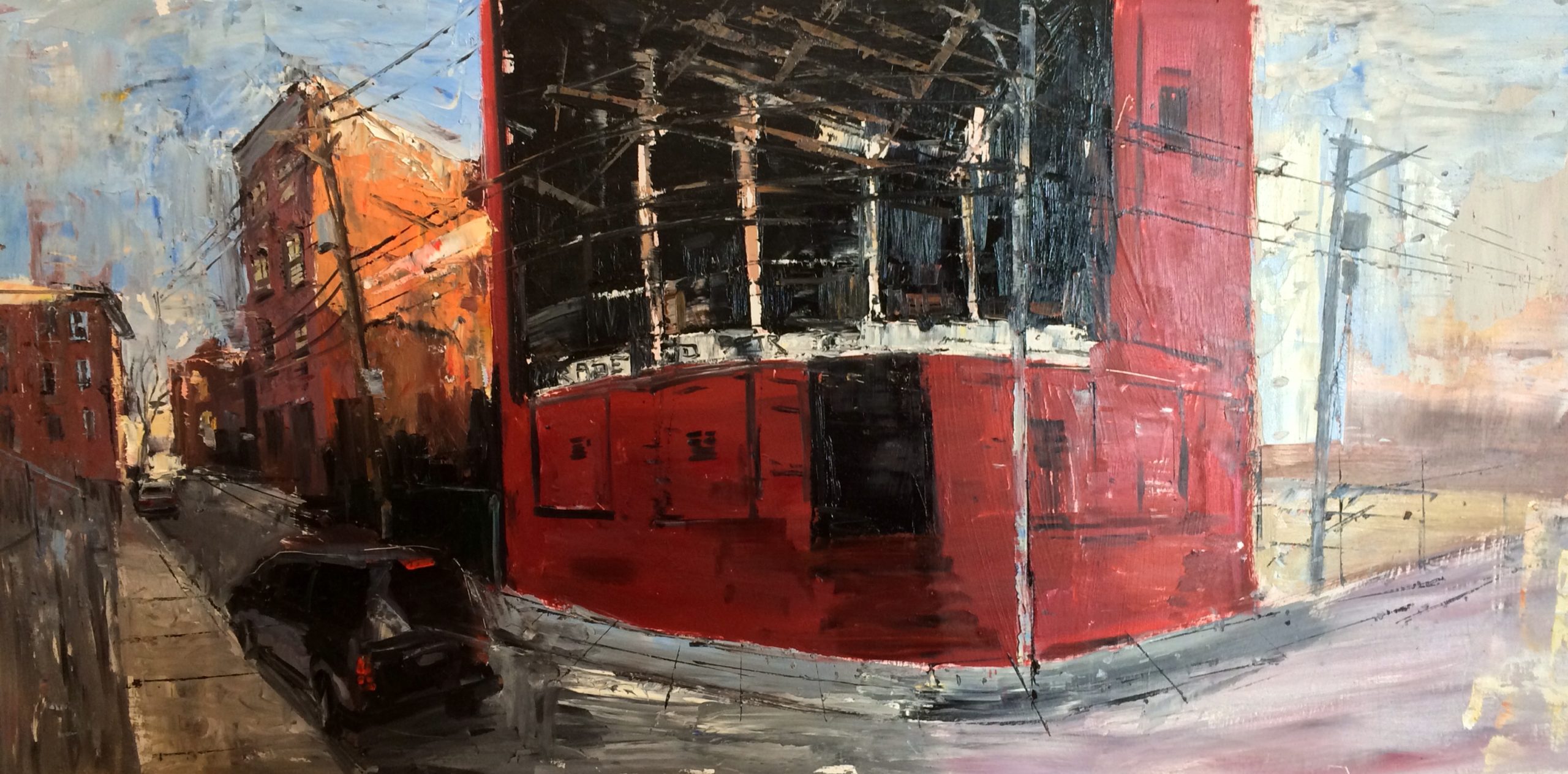
Indeed, he was right. Many years later as a young man walking the streets of Philadelphia, I found myself working hard, low-paying labor jobs, building scaffolding for murals in rough areas while looking at all the amazing graffiti, and teaching art to inmates in prison. I thought to myself, “What a harsh world we live in. There are lots of poor, broken-down buildings, and people surviving on crack. Wow, it looks like a bomb went off in this city.” My response was to paint and portray this Rust Belt city whose factories and jobs have been lost in the meltdown of American manufacturing.
Gregory Prestegord, “Gray Scale,” 48 x 24 inches, Oil on panel
Painting was the only thing I ever really loved to do. I have been drawing and painting since I was three years old. My parents discovered that if I had a crayon or marker in my hand, I could settle down and focus. We lived in the Fairmount section of Philadelphia, so the Philadelphia Museum of Art a few blocks away was my playground. I learned to rollerblade backwards down the museum’s steps, took weekend art classes, and loved just hanging around the place and paintings.
I was never a great student, but was accepted into Creative and Performing Arts High School on the strength of my art. I had a fascination with graffiti, and after a brush with the police, I found myself doing community service at Philadelphia Mural Arts, the most impressive mural program in the country, founded by Jane Golden. From the age of 16, I worked for PMA erecting scaffolding and learning from other muralists about the art of mural making and painting big.
At 18, I was enrolled at the Pennsylvania Academy of Fine Arts, where I received a rigorous classical art education. We studied everything from still life to figure painting, printmaking, and sculpture. I had amazing teachers who were also working artists.
Sydney Goodman taught me not to be afraid of the paint and showed me how an ordinary scene could be packed with meaning and metaphor. Murray Dessner taught us to paint light like the Impressionists and to create a world that the viewer could step into. Al Gury taught me about color, color planes, and the techniques of Alla Prima—also known as direct painting or wet-on-wet painting, which gives a fresh, spontaneous look to a piece. The sculptor Alex Hromych sent us out into the street and beyond to salvage old materials to remake into tools (chisels made from rebar, for example), canvases, and sculpture. Finally, Scott Noelle taught me about structure and shape, and he encouraged and inspired me to start painting cityscapes—to go out and paint what I saw on the streets.
Gregory Prestegord, “Broken Down Brewery,” 24 x 48 inches, Oil on panel
It was then that I noticed all the beauty in the grittiness. Gritty is a term for real things and real places and real events, not a Hollywood flick. It’s like having a choice between an old guitar and a new one, which one would you choose? The new one looks pretty, but the old one carries amazing sound from years of having been played. The painter makes multiple mistakes, trying to make things right in his or her work, just as people make multiple mistakes while trying to fix the world. Then the muse comes in and you’re completely at peace.
Gregory Prestegord, “Night Snow Storm,” 24 x 24 inches, Oil on panel
How does one see beauty in the grit amongst all the chaos of the world? I think painters have been at this task for thousands of years. My work is evolving, although it is still informed and inspired by my surroundings in an aging Northeast city. A few blocks from my studio stands “the Beast”—an electrical power plant with three smokeless stacks, another relic of the industrial revolution. It captivated my imagination—and was a subject of my painting for many years. I still explore the poorest sections of the city to seek out abandoned people and landscapes, but my subject matter has broadened.
Whatever the subject, I strive to reveal the energy, mood, and beauty of a person, space, or place. My own evolution as an artist seems like the natural progression of so many artists I admire. My work is hard to define, but has leaned toward expressionism.
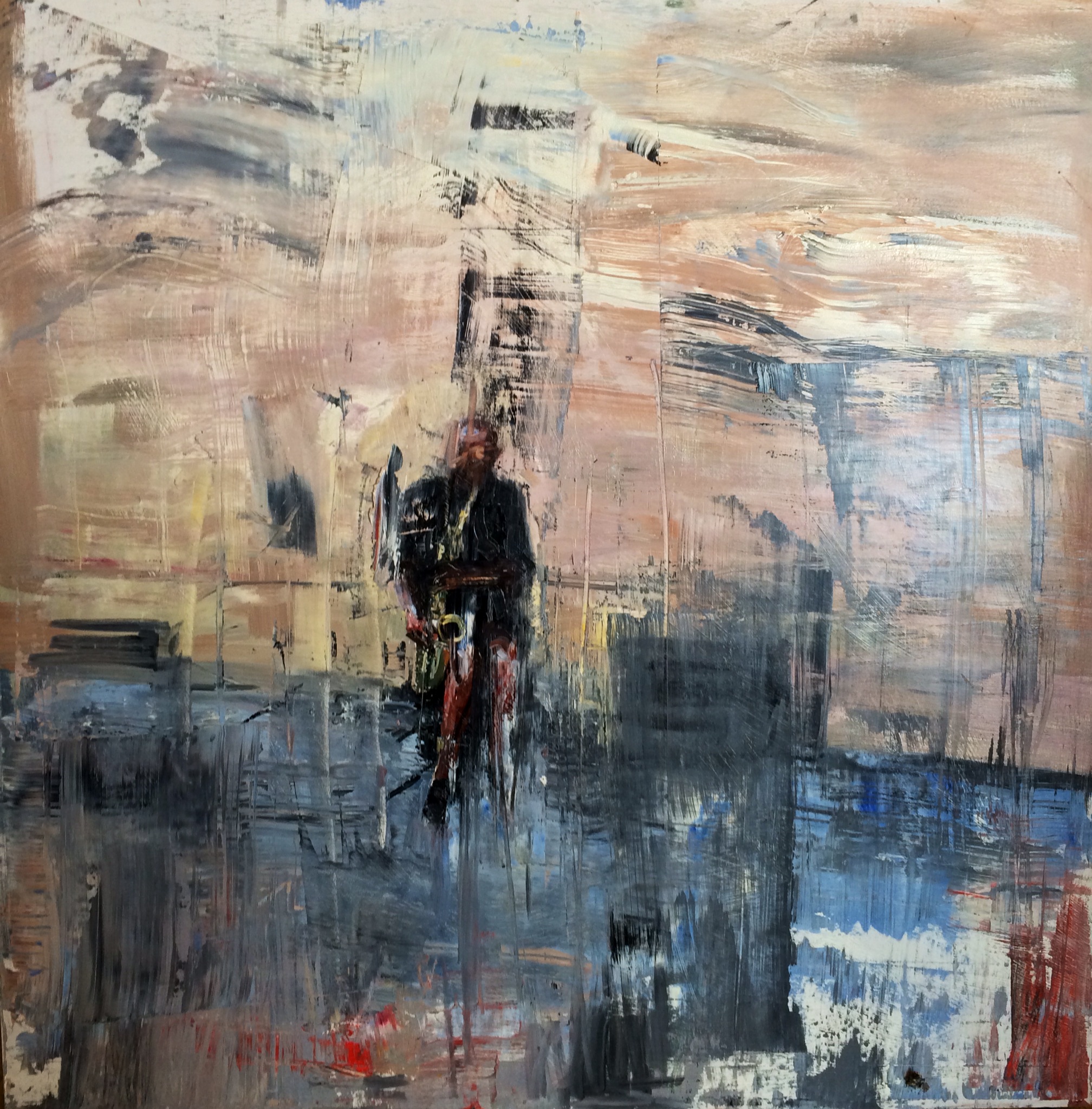
Gregory Prestegord, “Abstract Jazz Man,” 48 x 48 inches, Oil on panel
Recently, I have been adding more elements of abstraction for emotional depth and heft. A painting of street musicians veers off into an abstraction of the music they are creating and playing. I paint with a palette knife and other miscellaneous objects almost like a sculptor. I start out building up the two-dimensional surface with layers of paint as in a relief, and then remove layers as necessary to create feeling and a sense of space and time. I don’t want to be perfect. I enjoy the final effect of mistakes in my subject matter and work.
The process is my meditation, my way of finding and conveying truth.
The article above was originally written for our sister publication, Artists on Art (now Realism Today), and published in 2014.
> Visit EricRhoads.com to learn about more opportunities for artists and art collectors, including retreats, international art trips, art conventions, and more.
> Sign up to receive Fine Art Today, our free weekly e-newsletter
Phillip Juras (b. 1976), "Pulling Away (Upson County, Georgia)," 2022, oil on canvas, 30 x 42 in.
ON VIEW: “The View from Here: Three Painters Consider the Landscape”
Morris Museum of Art
Augusta, Georgia themorris.org
through September 11, 2022
The Morris Museum of Art has mounted the exhibition “The View from Here: Three Painters Consider the Landscape,” which compares and contrasts the distinct yet complementary approaches being pursued by a gifted trio.
They are John L. Cleaveland, Jr. (based in Farmington, Georgia), Julyan Davis (Asheville, North Carolina), and Philip Juras (Athens, Georgia).
> Visit EricRhoads.com to learn about more opportunities for artists and art collectors, including retreats, international art trips, art conventions, and more.
> Sign up to receive Fine Art Today, our free weekly e-newsletter
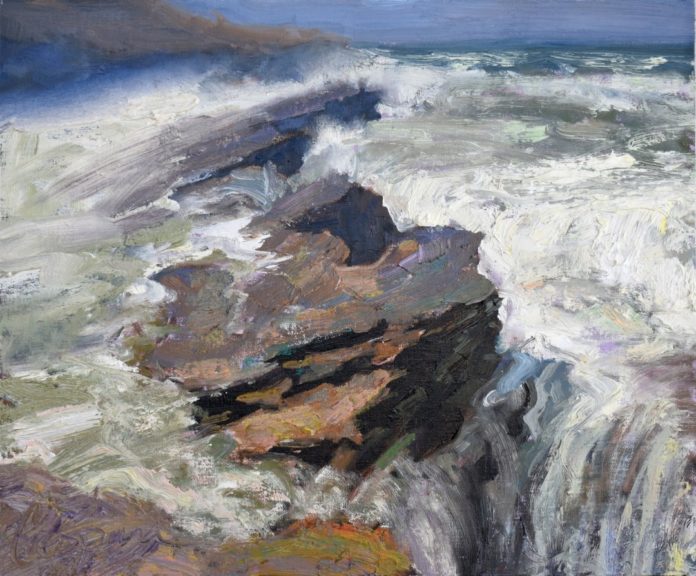
Help us congratulate Robin Caspari, whose oil painting, “The Edge,” won first place in the May 2022 round of the PleinAir Salon.
“I responded to [‘The Edge’] at first glance,” said juror Karen Hagan. “It has a movement that’s very exciting, taking the eye around and around the painting. When I’m jurying a show, I don’t look at titles or even size.
“In this painting, I saw great composition and sense of place paired with varied brush work. I loved the depth of field and the foreground detail leading to the gray mistiness of the background. Mostly it’s the movement that the artist captured that got my eye! It’s an exciting painting, one I’d like to see every day in my home.”
The rushing water over the rocks and portraying the feeling that man didn’t, or couldn’t, belong in this space was the inspiration behind the painting. I wanted viewers to feel the raw power of water and rock colliding. My goal is to paint a large piece of this design to really enhance the “fear factor” or adrenaline rush that comes with encountering nature in its dangerous and raw state.
My Palette
What is mostly unique about my process is my “Valor Palette.” This simple invention allows me to work the value scale and the color wheel simultaneously while I paint. I slowly invented it over the years, and shared it with my students. Once I added the color wheel around the perimeter, it just popped! We all love it because it’s information at our fingertips, and allows us to get into the flow of our painting instead of wasting too much energy thinking about value and color.
I keep my palette simple with the three primaries of Quinacridone Red, Ultramarine Blue, and Cad Yellow Light, and Titanium/Zinc White. I then mix my secondaries from my primaries. I have been adding in some radiants by Gamblin so that I can shift value and color at the same time. It’s just a time saver. At this point, I have eliminated all browns and neutrals that are from a tube. Not because it’s better, but because that’s just where I am right now. I’m loving how clean my darks are without using dark browns.
When I limited my palette to the primaries and secondaries I noticed an immediate harmony to my work. Recently, I have been playing around with a VERY limited palette, and it has been magical to understand the large band width I still retain, and the harmony is on steroids seemingly. So much to learn in this game of painting!
My Composition
I spotted the composition within a larger photo reference I had taken while visiting Point Loma, CA. I zoomed in, and then began playing with shapes. I painted three or four small studies until I found the one that was most powerful.
Challenges
I see painting as a juggling act. You have all these balls in the air that have to move in rhythm together. If one ball falls at any time, the whole painting falls apart. The artistic flow is of utmost importance. I do see a difference in training and performing.
Tools
I like to use a variety of brushes when I work so I can achieve interesting strokes. I tend to like angles and filberts as my go to. My all-time favorite workhorse brush is the Catalyst by Princeton #6. It was given to me by a vendor when the Plein Air Convention & Expo was in San Diego. I teach with this brush because I can make a million shapes with it on many different paintings.
Derek Penix introduced me to the Shiraz Filbert by Rosemary. The #10 is a great brush for large strokes with some control.
Carolyn Anderson introduced me to Rosemary’s Ultimate Pointed Round #4. I use it to make interesting smaller shapes and start a painting. I also love Rosemary’s Extra Long Filberts. They are great for all around use.
In general I hold the belief that one should use the biggest brush possible in the space they are filling with paint. I’m sure I used all of these brushes while making “The Edge.”
View the rest of the PleinAir Salon winners soon at pleinairsalon.com. Note: Judges are not provided with contestant names.
The next round of the PleinAir Salon has begun so hurry, as this competition ends on the last day of the month. Enter your best art in the PleinAir Salon here.
New This Year! We’re now offering a People’s Choice Award in each monthly cycle, with a prize of $100! (When you enter your painting, you’ll be able to “promote your artwork” with a special link.)
About the PleinAir Salon:
PleinAir Magazine presents the 12th annual PleinAir Salon Art Competition. In the spirit of the French Salon created by the Academie des Beaux-Arts in Paris, this annual online competition, with 11 monthly cycles, leading to the annual Salon Grand Prize winners, is designed to stimulate artistic growth through competition. The competition rewards artists with over $33,000 in cash prizes and exposure of their work, with the winning painting featured on the cover of PleinAir Magazine.
Winners in each monthly competition may receive recognition and exposure through PleinAir Magazine’s print magazine, e-newsletters, websites, and social media. Winners of each competition will also be entered into the annual competition. The 12th Annual Awards will be presented live at the Plein Air Convention & Expo in May 2023.
CONTEMPORARY ART > As “Beyond Description” reminds us, human perceptions can endure, captured as individual visions, and expressed through the unique discipline of painting.
On View: “Beyond Description” Figure Ground Art Gallery
New York City & Seattle figuregroundgallery.com
Through September 30, 2022
“Josephine at Home” by Dean Fisher
The strategies of the artists in “Beyond Description” take many paths, including investigations of the processes of seeing and representing, exploring the materiality of the painting medium, and fragmenting and rebuilding the observed in time and space. But every painter, in his or her fashion, examines what it means to see the world today, and re-make it on canvas or panel.
Our surroundings do not stay still, and neither do we. Our understandings and even our perceptions shift with time, place and vantage point. But as “Beyond Description” reminds us, human perceptions can endure, captured as individual visions, and expressed through the unique discipline of painting. In these two exhibitions, the results ultimately speak for themselves, as varied, intense and eloquent as the artists themselves. ~John Goodrich
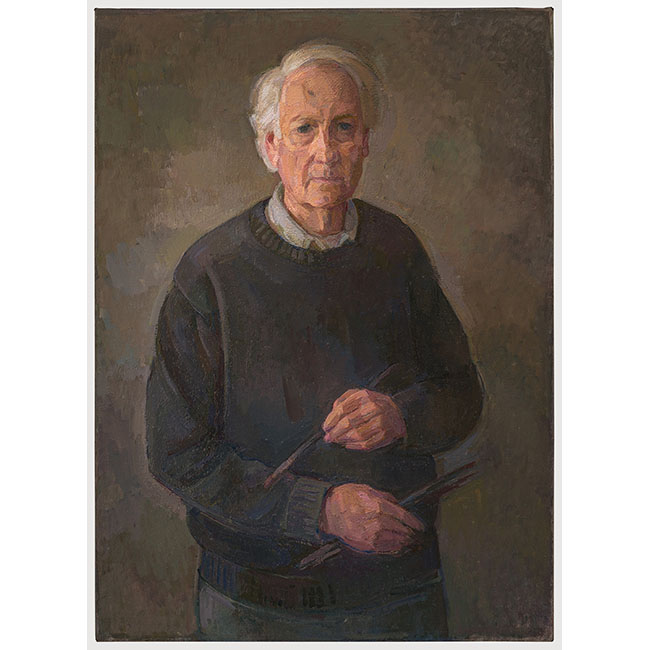
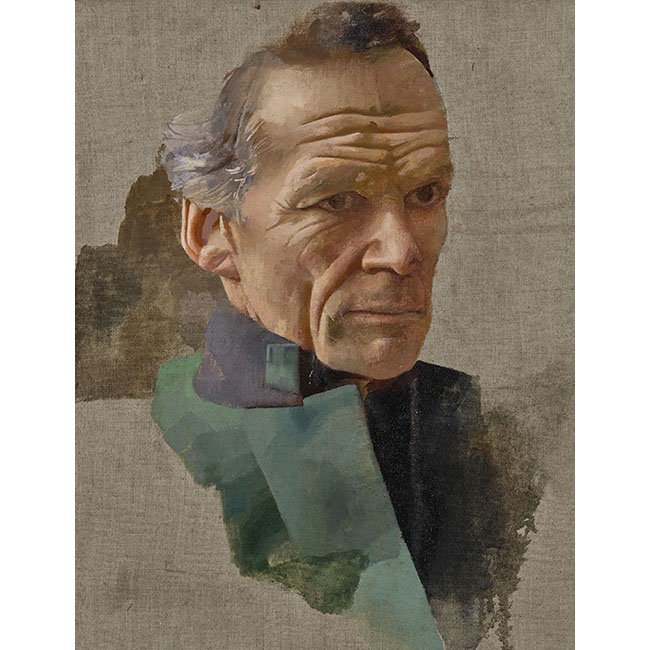
“Self Portrait” by Wilbur Niewald
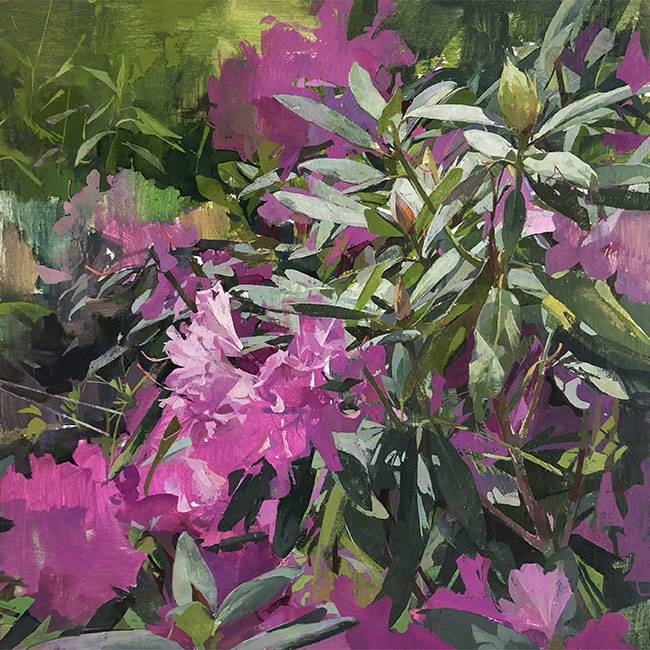
“Beyond Description” presents 18 painters in dialogue with the visible world, seeking to translate felt perception into paint. For them, meaning is located in the form itself, derived and generated in the relationships between the artist, the motif, and the painting. Each painter sees the world through their own particular lens, yet all ask themselves how it is possible to bring colored mud to life, and what that might say about the world we live in, and what it means to be human. ~ Eric Elliot & Jordan Wolfson
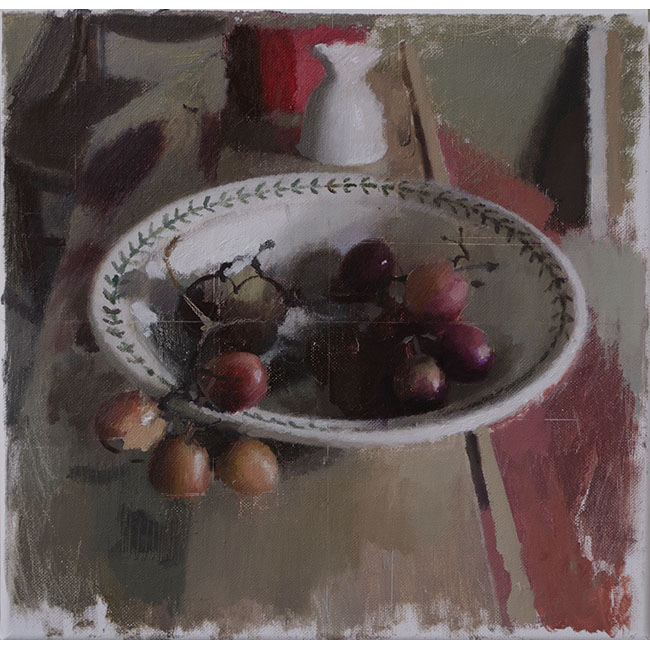
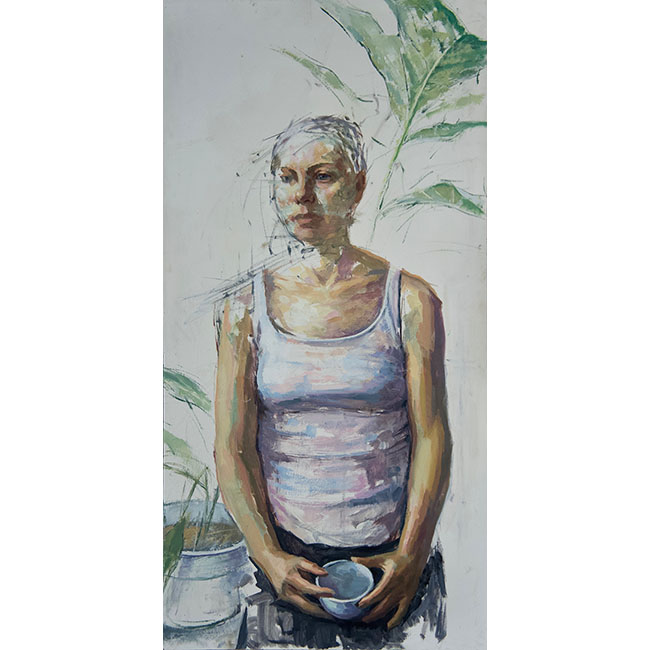
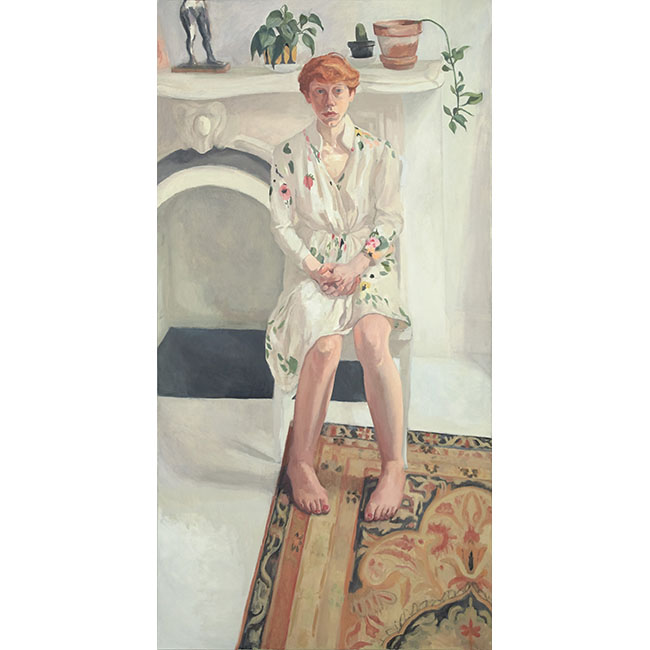
“Alannah in Mori Dress” by Alix Bailey“Sevastopol” by Diarmuid Kelley, on loan from the Offer Waterman Gallery“May Rhododendron” by Christina Weaver
> Visit EricRhoads.com to learn about more opportunities for artists and art collectors, including retreats, international art trips, art conventions, and more.
> Sign up to receive Fine Art Today, our free weekly e-newsletter
As part of our effort to continue to help artists and art galleries thrive, we’re proud to bring you this week’s “Virtual Gallery Walk.” Browse the artwork below and click the image itself to learn more about it, including how to contact the gallery.
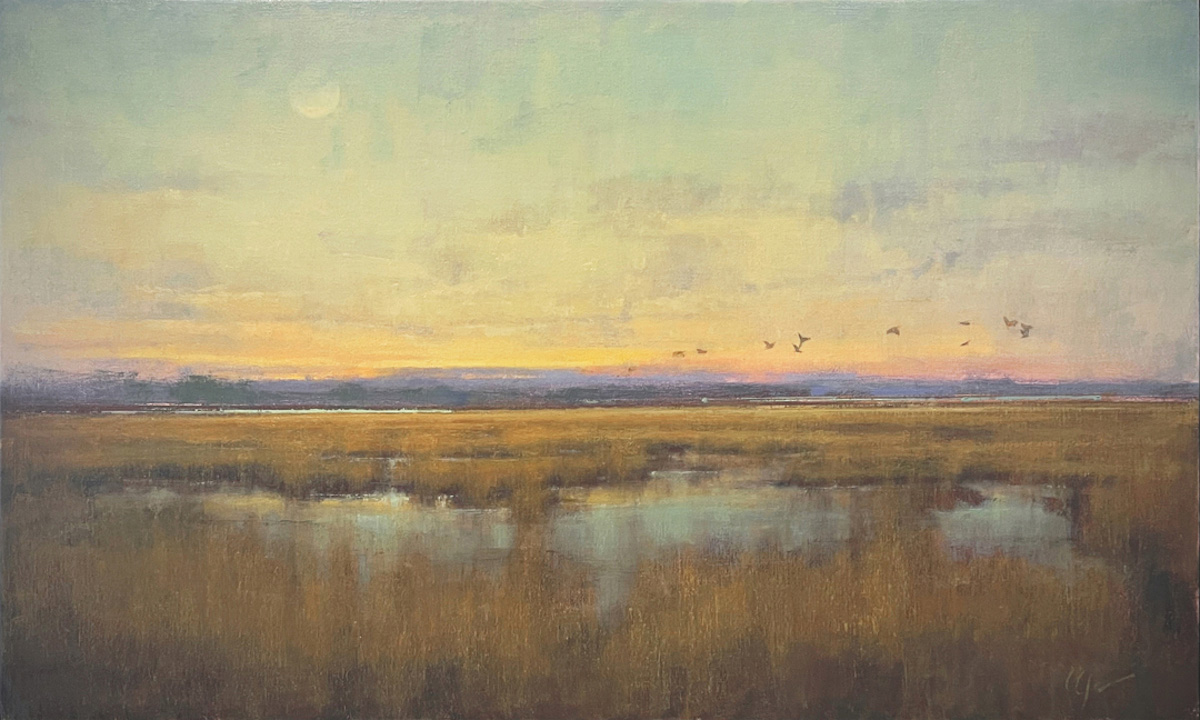
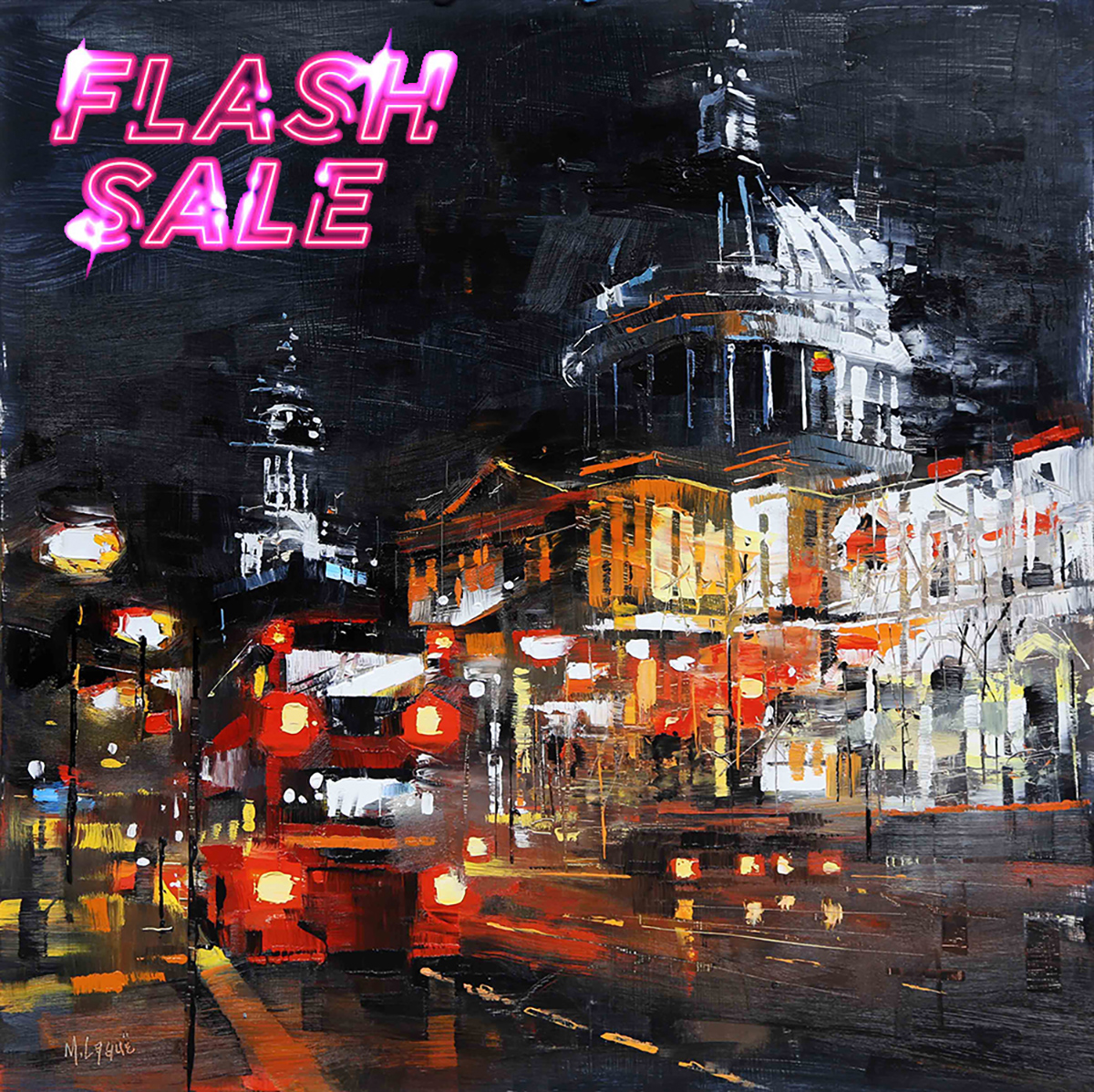
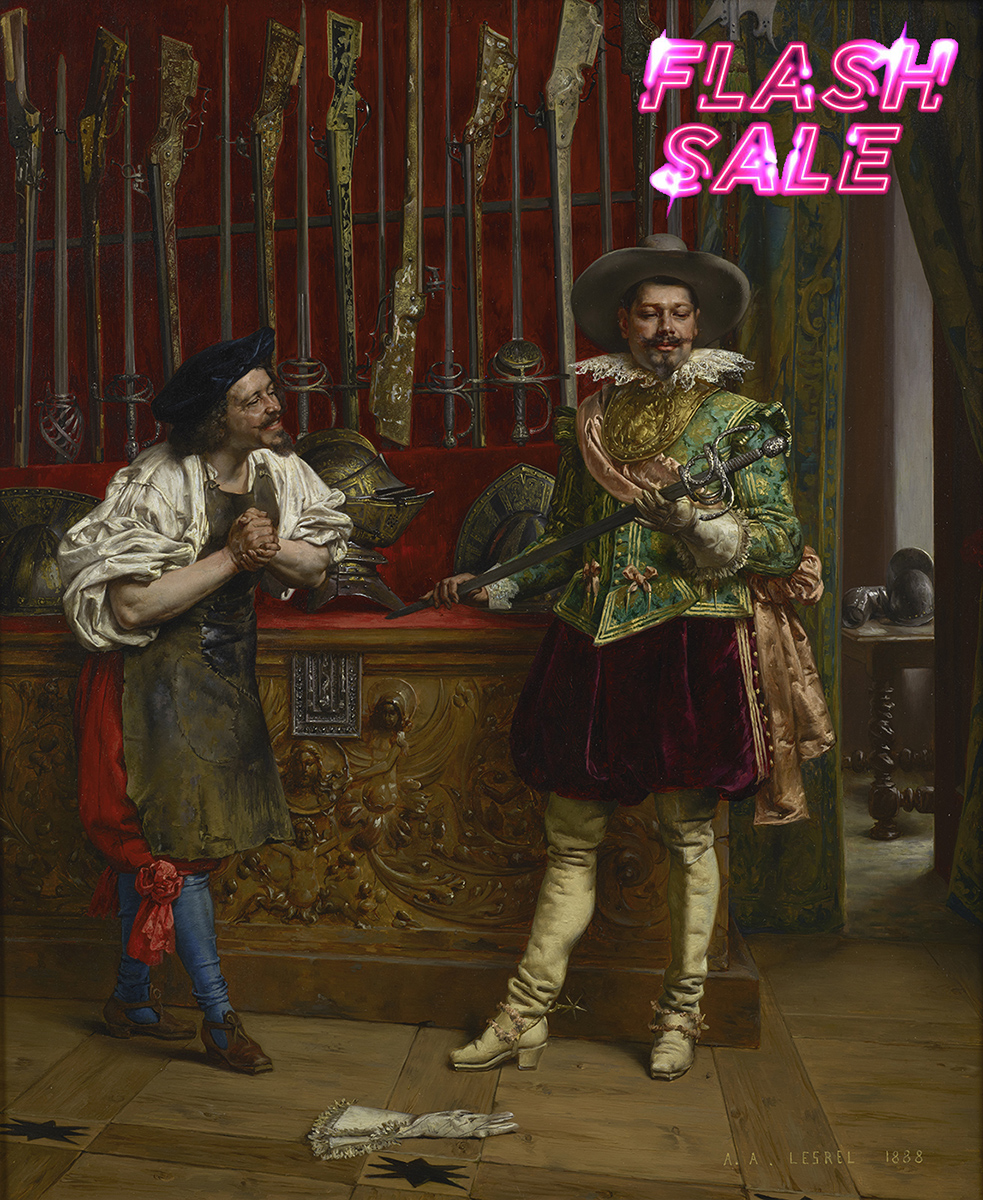
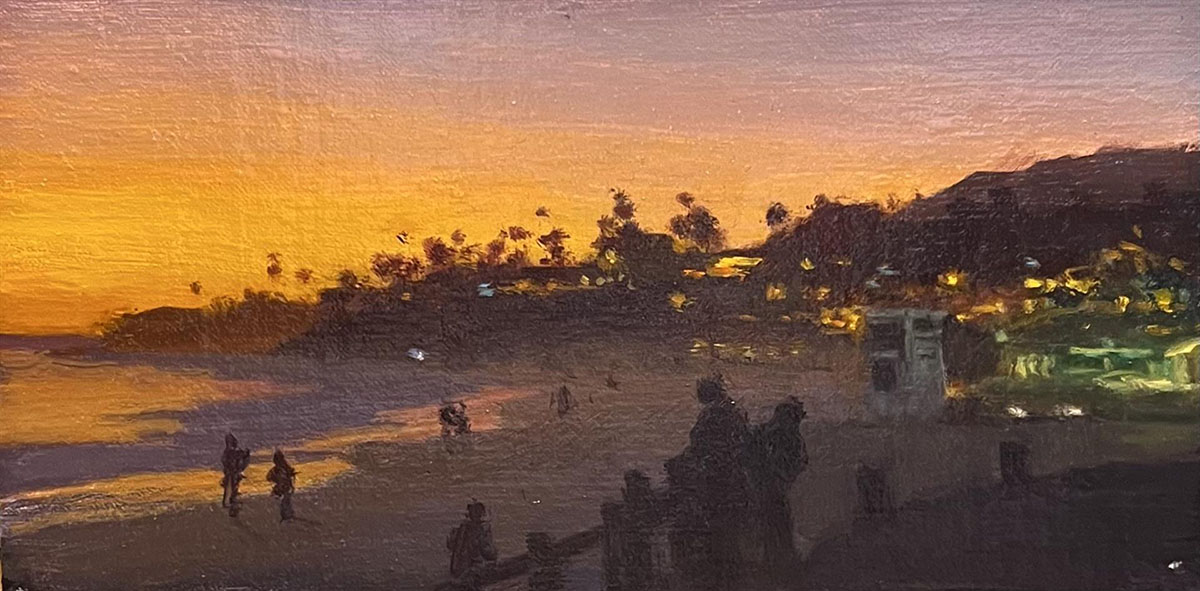
Sunset Moonrise, Chris Groves, oil, 18 x 30 in; Anderson Fine Art GalleryLondon Night, Mark Laguë, oil on panel, 20 x 20 in, Signed; Rehs ContemporaryA New Sword, Adolphe Alexandre Lesrel (1839 – 1929), oil on panel, 21 3/4 x 18 in, Signed and dated 1888; Rehs Galleries, Inc.Dusk at Main Beach, Carl Bretzke, 4 x 8 in., oil, 2022; LPAPA Art Gallery “16th Annual Less is More” Juried Exhibition, July 4 through August 1, 2022
Want to see your gallery featured in an upcoming Virtual Gallery Walk? Contact us at [email protected] to advertise today. Don’t delay, as spaces are first come, first served, and availability is limited.
Fill your mind with useful art stories, the latest trends, upcoming art shows, top artists, and more. Subscribe to Fine Art Today, from the publishers of Fine Art Connoisseur magazine.