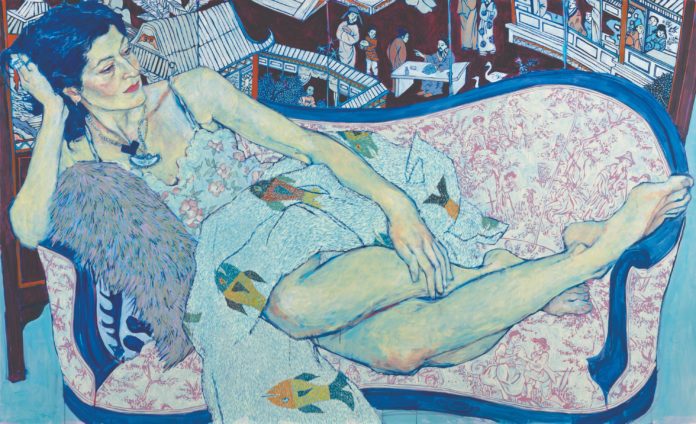
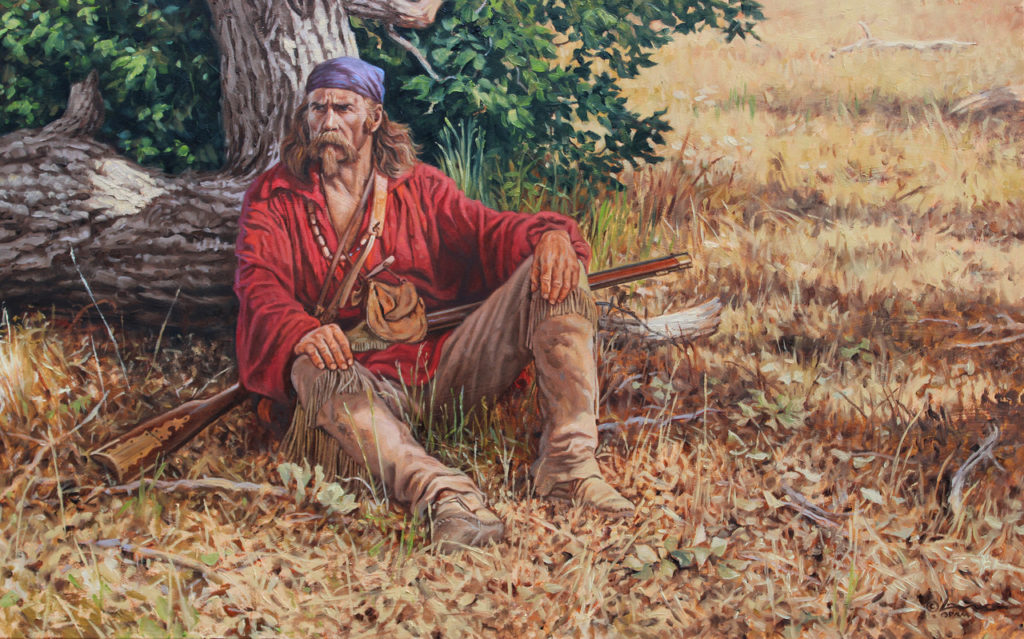
HOPE GANGLOFF (b. 1974), "Queen Jane Approximately," 2011, acrylic on canvas, 66 x 108 in., collection of Alturas Foundation, San Antonio; photo: Susan Inglett Gallery, New York City
Modern Art Museum of Fort Worth Fort Worth themodern.org
Through September 25, 2022
“Women Painting Women” is a title we see often. Now the Modern Art Museum of Fort Worth is presenting its own take on this important theme through an exhibition of approximately 60 portraits created by 46 women from around the world since the late 1960s.
Chief curator Andrea Karnes says, “The pivotal narrative is how these artists use the conventional portrait of a woman as a catalyst to tell another story outside of male interpretations of the female body. They conceive new ways to activate and elaborate on the portrayal of women. Replete with complexities, realness, abjection, beauty, complications, everydayness, pain, and pleasure, the portraits connect to all kinds of women, and they make way for women artists to share the stage with their male counterparts in defining the female figure.”
To achieve these goals, the show highlights four themes. First, the body, ranging from unidealized to fantasized nudes, is seen by such artists as Alice Neel, Jenny Saville, Sylvia Sleigh, Mickalene Thomas, and Lisa Yuskavage. Next comes “Nature Personified,” in which artists like Joan Semmel, Luchita Hurtado, Susan Rothenberg, and Tracey Emin look to the mythology of woman as it relates to mother earth figures, priestesses, and goddesses, as well as to the metaphysical powers associated with being female.
The exhibition’s third section highlights “Color as Portrait,” revealing how exaggerated or dramatic usage of color and form can convey specific content about female identity, including race, gender, and archetypes. The artists represented here include Emma Amos, Faith Ringgold, Joan Brown, and Amy Sherald. Finally comes a section about selfhood, in which subtleties of gesture, posture, and setting capture the energy or presence of a sitter’s psychological (sometimes physical) state. On view here are works by Nicole Eisenman, Maria Lassnig, Elizabeth Peyton, Marlene Dumas, Jordan Casteel, and others.
“Women Painting Women” is accompanied by a 172-page catalogue published by DelMonico Books.
> Visit EricRhoads.com to learn about more opportunities for artists and art collectors, including retreats, international art trips, art conventions, and more.
> Sign up to receive Fine Art Today, our free weekly e-newsletter
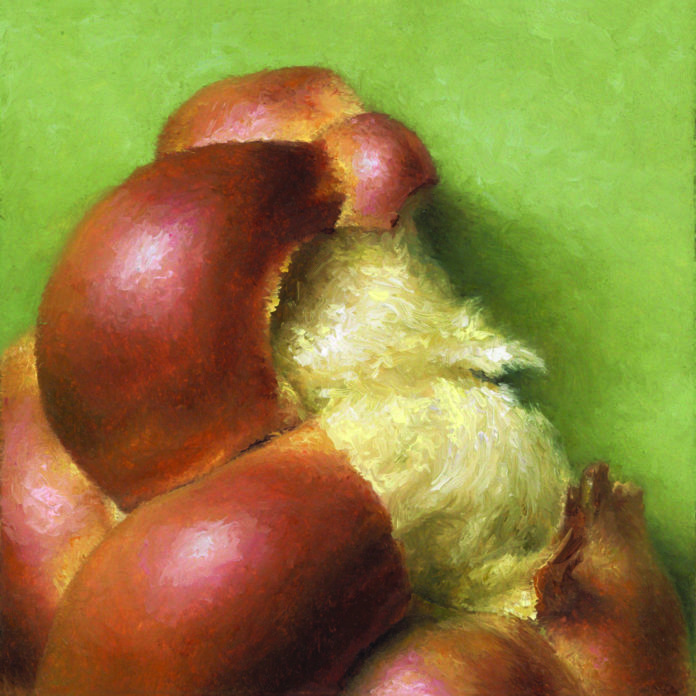
KEN GOSHEN (b. 1988), "Moore," 2019, oil on paper, 8 x 8 in., private collection
By David Masello
The subject was ready for its close-up. The painter Ken Goshen (b. 1988) ensured that sunlight and shadow were balanced perfectly in his Astoria, Queens, studio so as to best capture the nuances of his sitter: a torn loaf of challah bread, with its billowing, yeasty interior and shiny browned crust.
Goshen’s series of challah bread paintings epitomizes his work as a portraitist and also his adherence to techniques both classical and contemporary. “With these works,” explains the boyishly exuberant artist, “I want to combine the visual language of classical paintings with the way we look at art today. Bread has a way of influencing our associative image bank, like when you look at clouds and see faces, animals, bodies. In addition, challah has a cultural significance for me,” says Goshen, who was raised in Jerusalem but now works in New York as an artist and teacher. “Where I come from, bread brings people together. I feel an extra responsibility to paint the challah well, knowing it’s not going to be shared or consumed. I need to deliver on doing a really good painting of it.”
On Sunday afternoons, you might well find Goshen at the Metropolitan Museum of Art, leading his students through drawing and sketching exercises. There he often brings them before masterworks by Ingres, Rembrandt, Velázquez, and Caravaggio. Goshen is a thoughtful and spirited teacher, urging students to look — and keep looking — at the image before them. His goal during these four-week-long sessions is to teach light and shadow: “Understanding these two elements is the most fundamental lesson of drawing — how to take something out there and put it into shapes with the correct measure and proportion.”
Goshen is also a tireless painter of people. After serving three years in the Israeli army, where there was no time for painting, he became an artist “so that I could paint all day long. I had built up a creative energy by not being able to, so now no amount of painting feels overwhelming. I could paint 12 hours a day.”
Indeed, Goshen works as long as he can, resulting in an ever-growing body of paintings that includes an eerily lifelike self-portrait hearkening back to ancient Egyptian encaustics. Now he sees another objective in the distance — “to create my own art school. I have such a passion for painting that I’m just as happy to look at students’ finished works as my own.”
> Visit EricRhoads.com to learn about more opportunities for artists and art collectors, including retreats, international art trips, art conventions, and more.
> Sign up to receive Fine Art Today, our free weekly e-newsletter
As part of our effort to continue to help artists and art galleries thrive, we’re proud to bring you this week’s “Virtual Gallery Walk.” Browse the artwork below and click the image itself to learn more about it, including how to contact the gallery.
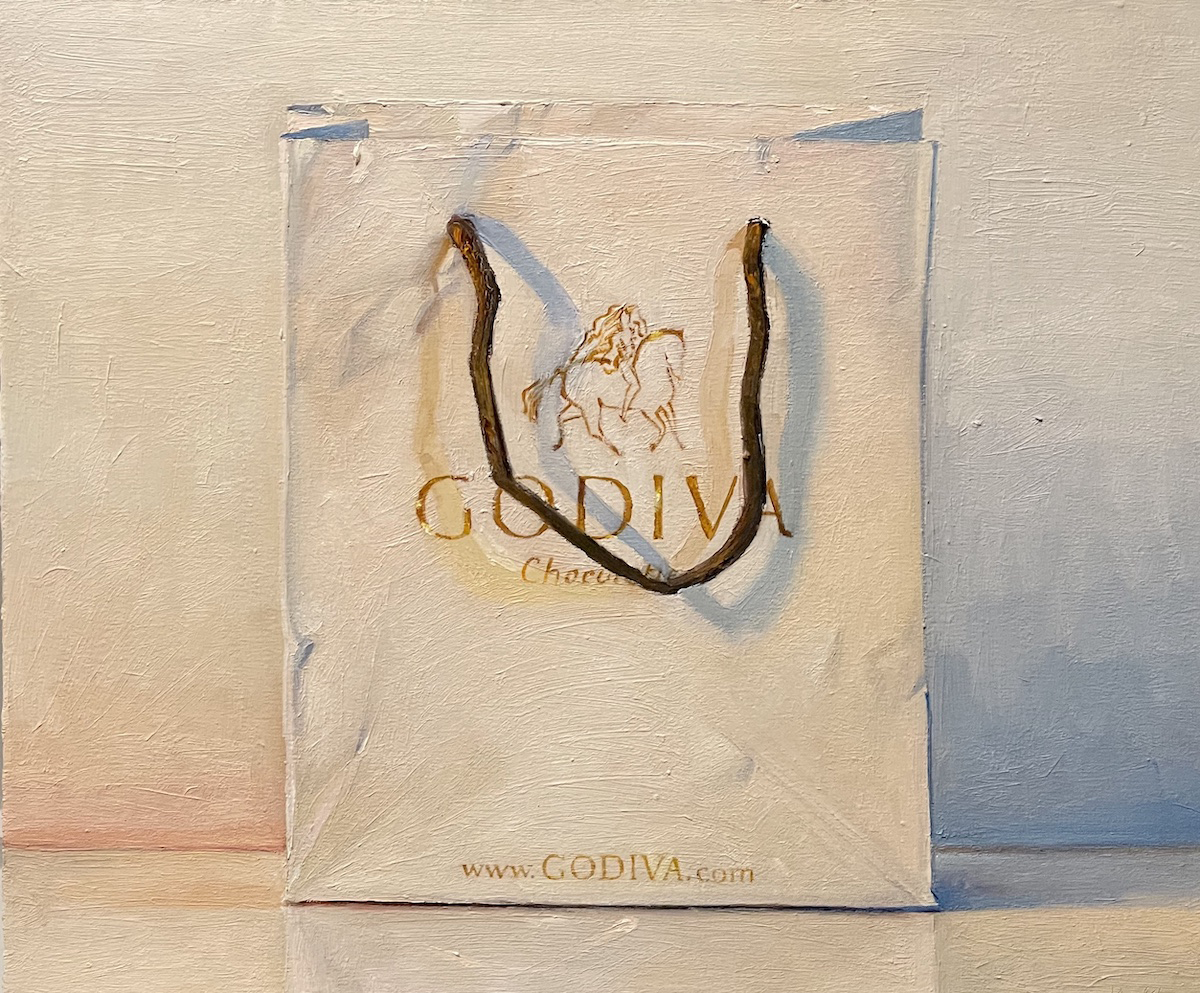
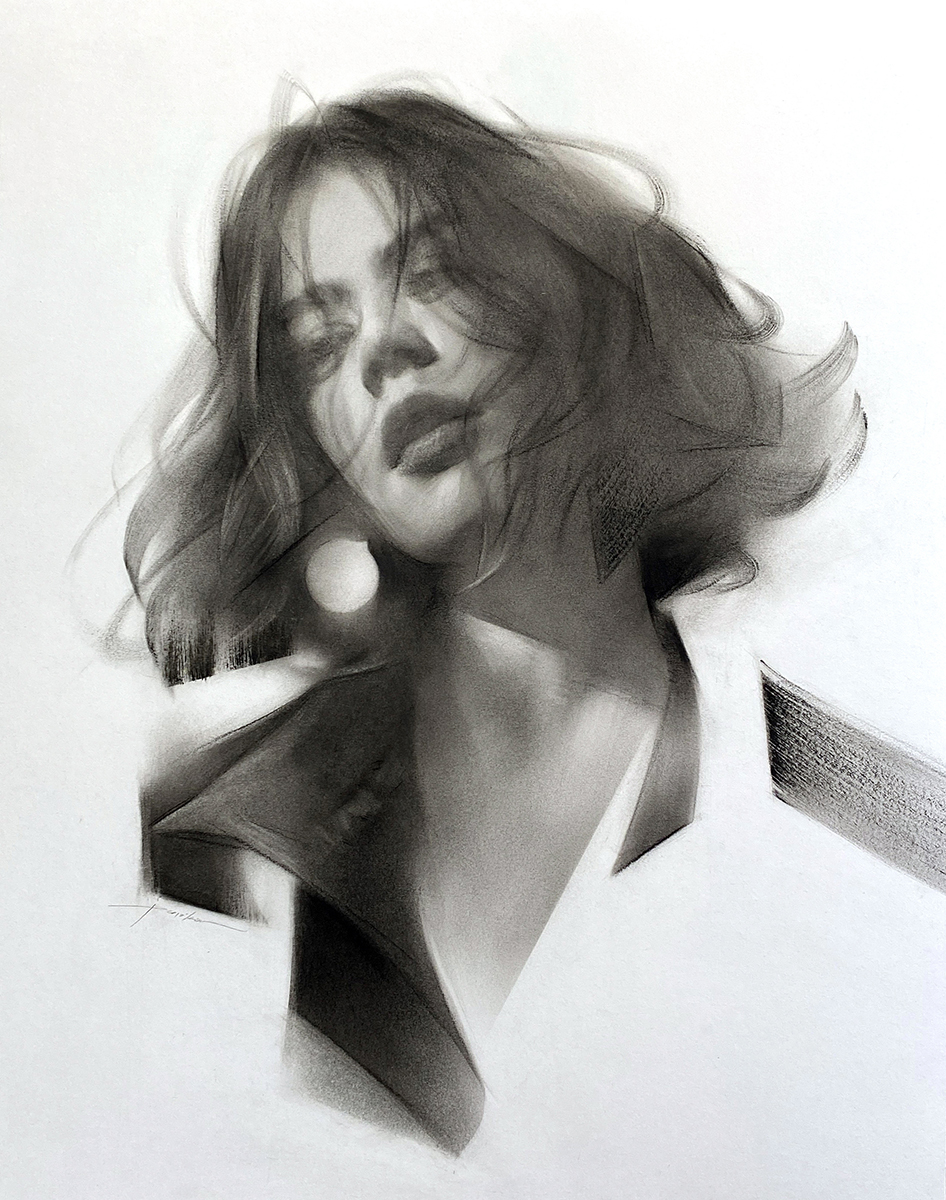
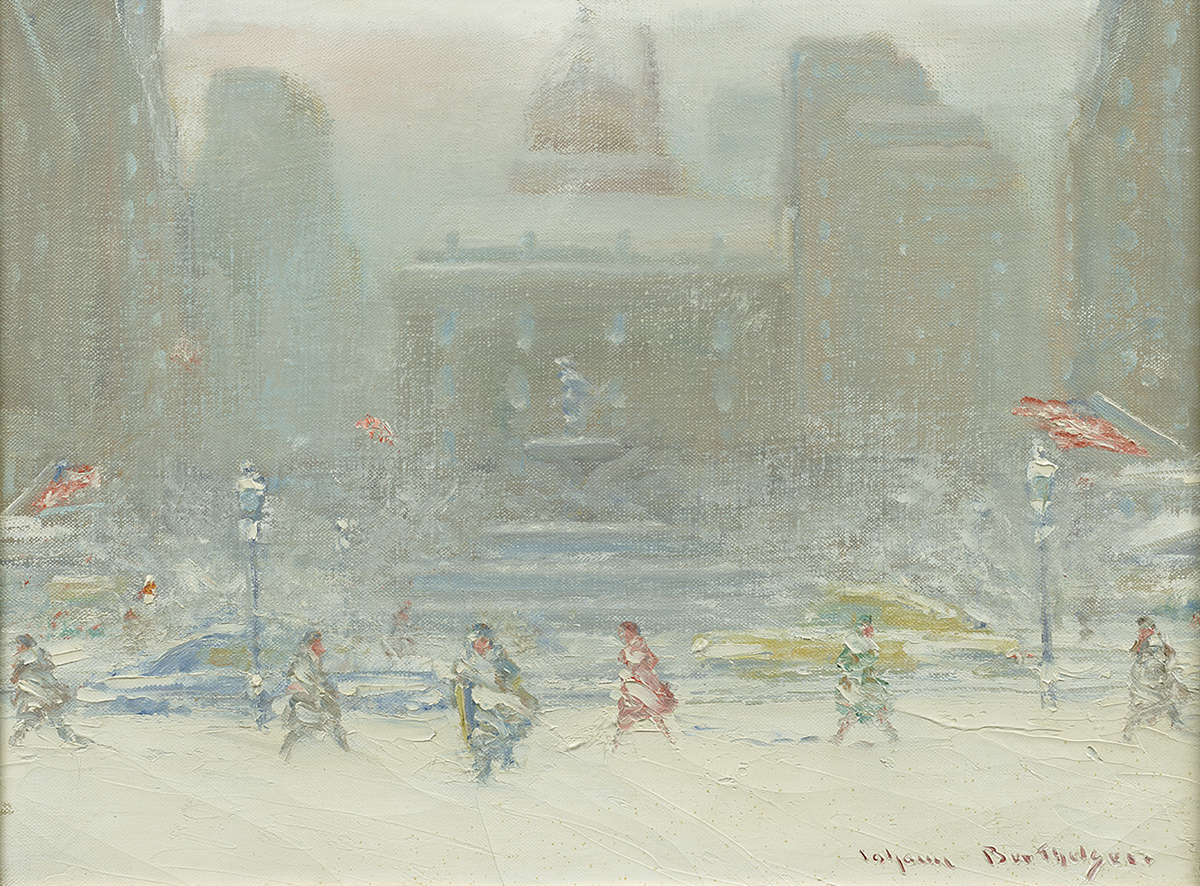
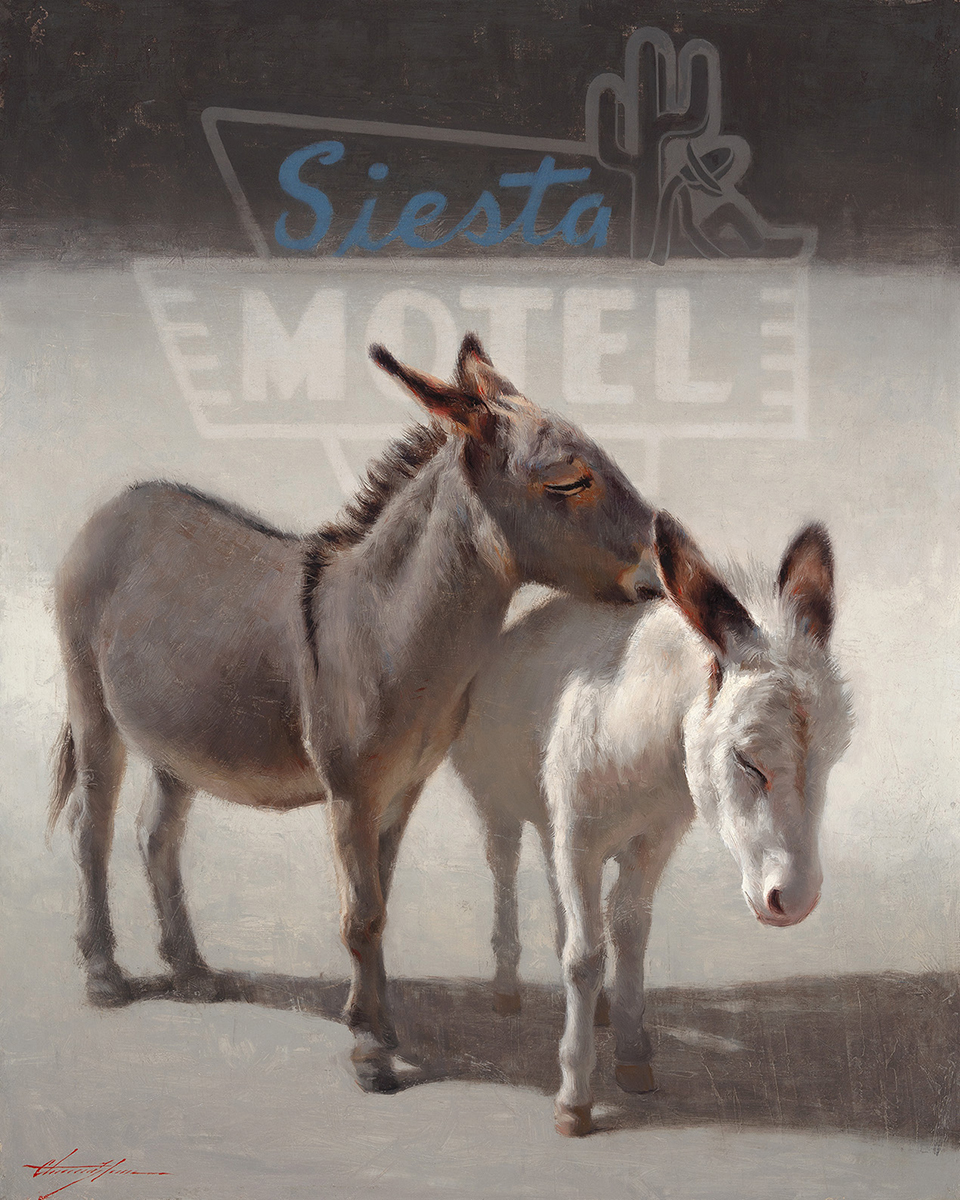
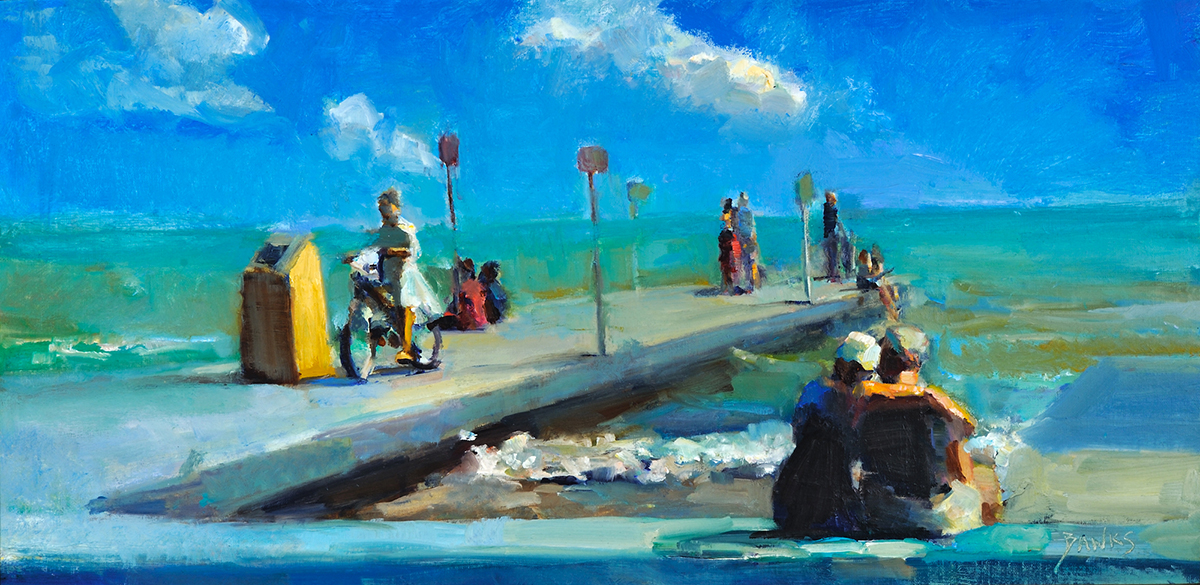
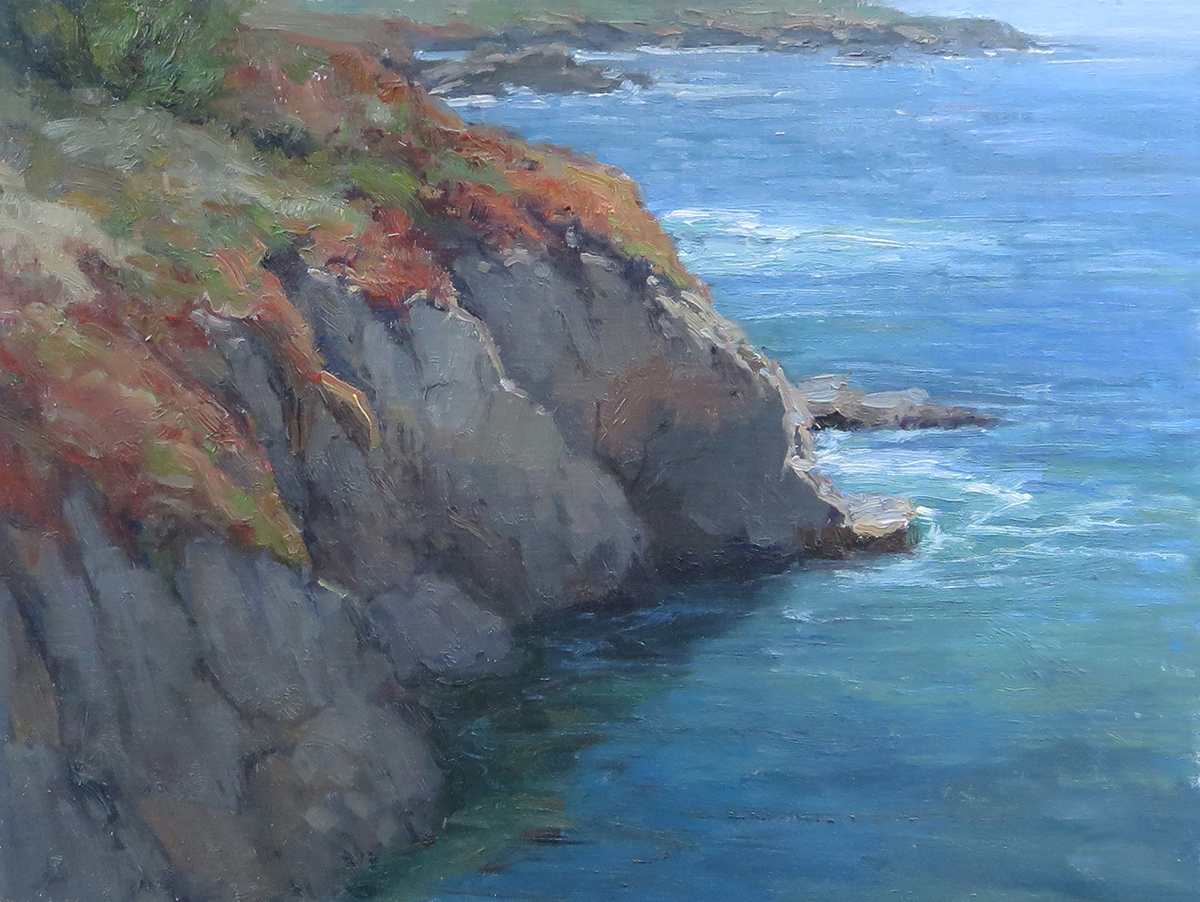
Godiva Bag, Ray Kleinlein, oil, 24 x 24 in; Anderson Fine Art GalleryLiKimm (featured in INsight), Roman Pankov, Drybrush on paper, 11 4/5 x 15 3/4 in.; Signed; Rehs ContemporaryCentral Park, Grand Army Plaza, Johann Berthelsen, Oil on canvas, 12 x 16 in.; Signed; Rehs Galleries, inc.Siesta, Chauncey Homer, 16 x 20 in., Oil on linen; Chauncey HomerLove by the Sea, 12 x 24 in., Oil on linen-lined panel; Jill BanksGarrapata Colors, Kathleen Dunphy, 12 x 16 in., oil, 2022; Laguna Plein Air Painters Association Art Gallery/ LPAPA Art Gallery; “Outside Insights” by Kathleen Dunphy, Exhibition Dates: June 2nd through July 4th, 2022, Plein Talk: June 4, 2022
Want to see your gallery featured in an upcoming Virtual Gallery Walk? Contact us at [email protected] to advertise today. Don’t delay, as spaces are first come, first served, and availability is limited.
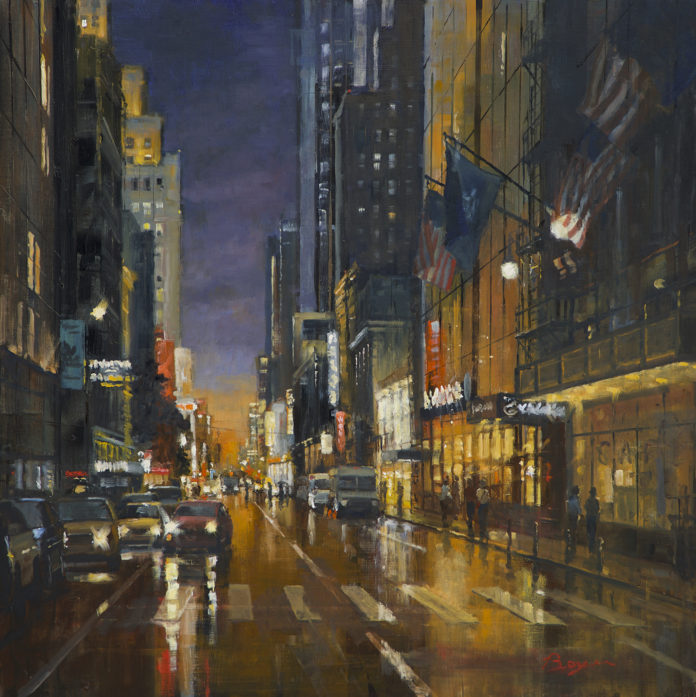
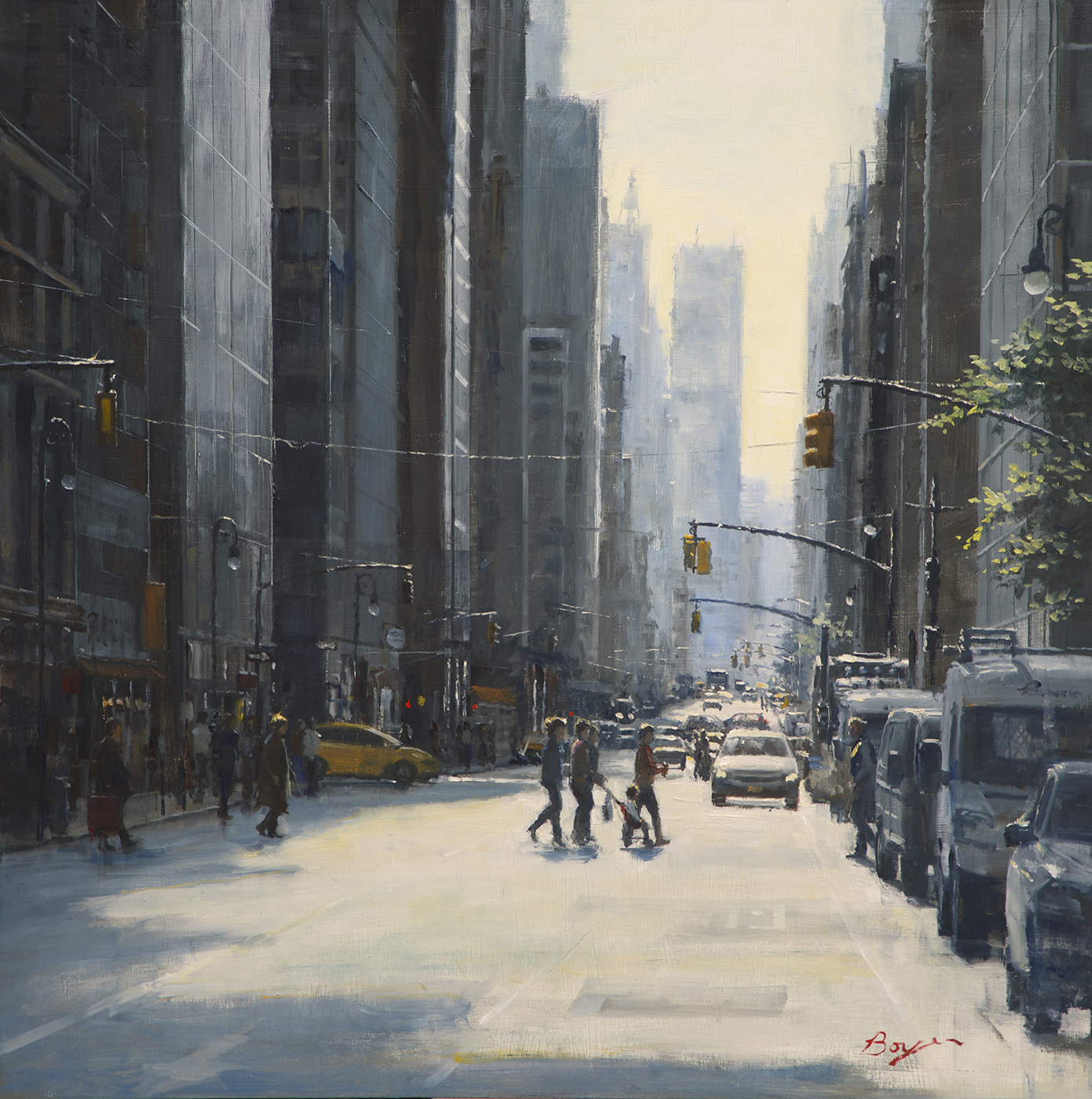
Richard Boyer, Clearing Storm in Manhattan, 30 x 30 in., oil on Board - Berkley Gallery, Warrenton, VA
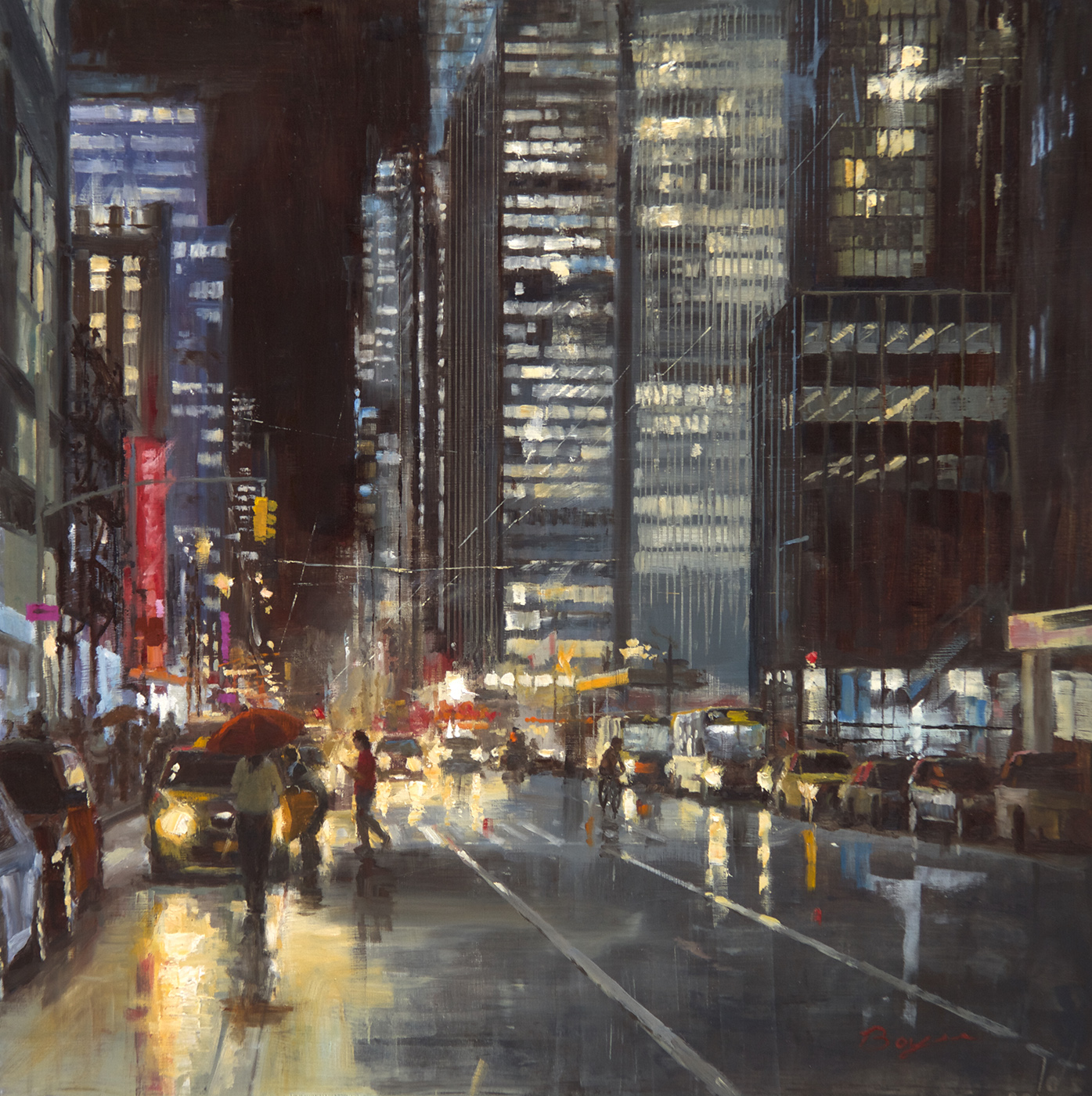
Richard Boyer: I had a request from Berkley Gallery in Warrenton, VA to do some more Manhattan painting for some of their clients. The owner told me they seemed to hit a chord with collectors. 2. “Taxi Ride into the City”, won the best building Award during the 9th Annual Plein Air Salon.
The inspiration for these works was from a trip we did to Manhattan just before Christmas, the rain just made the city glow.
Richard Boyer, Taxi Ride into the City. 30 x 30 in., oil on board – Berkley Gallery, Warrenton, VARichard Boyer, Midday in Manhattan, 30 x 30in., Oil on board – Berkley Gallery, Warrenton, VA
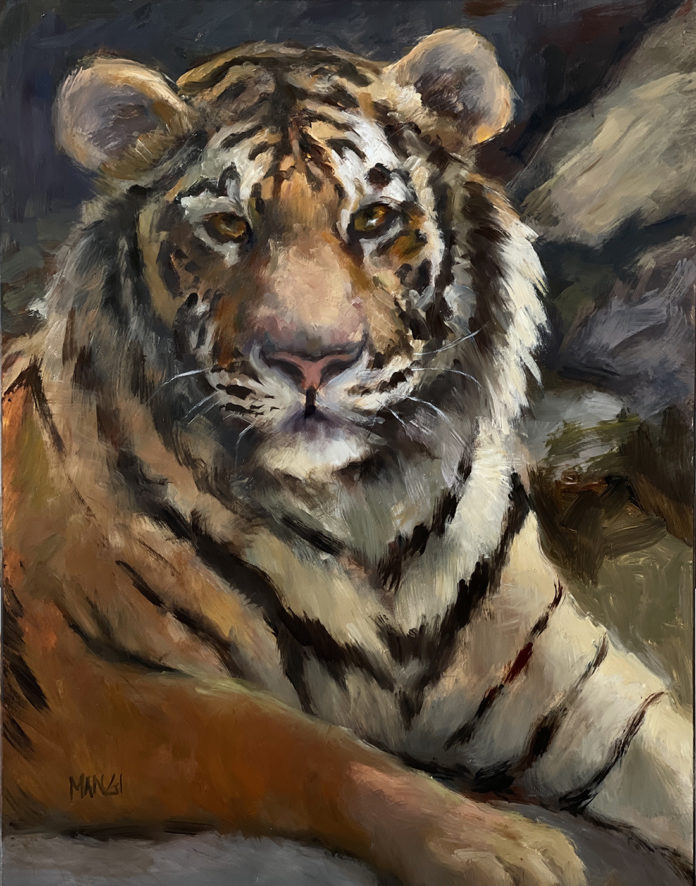
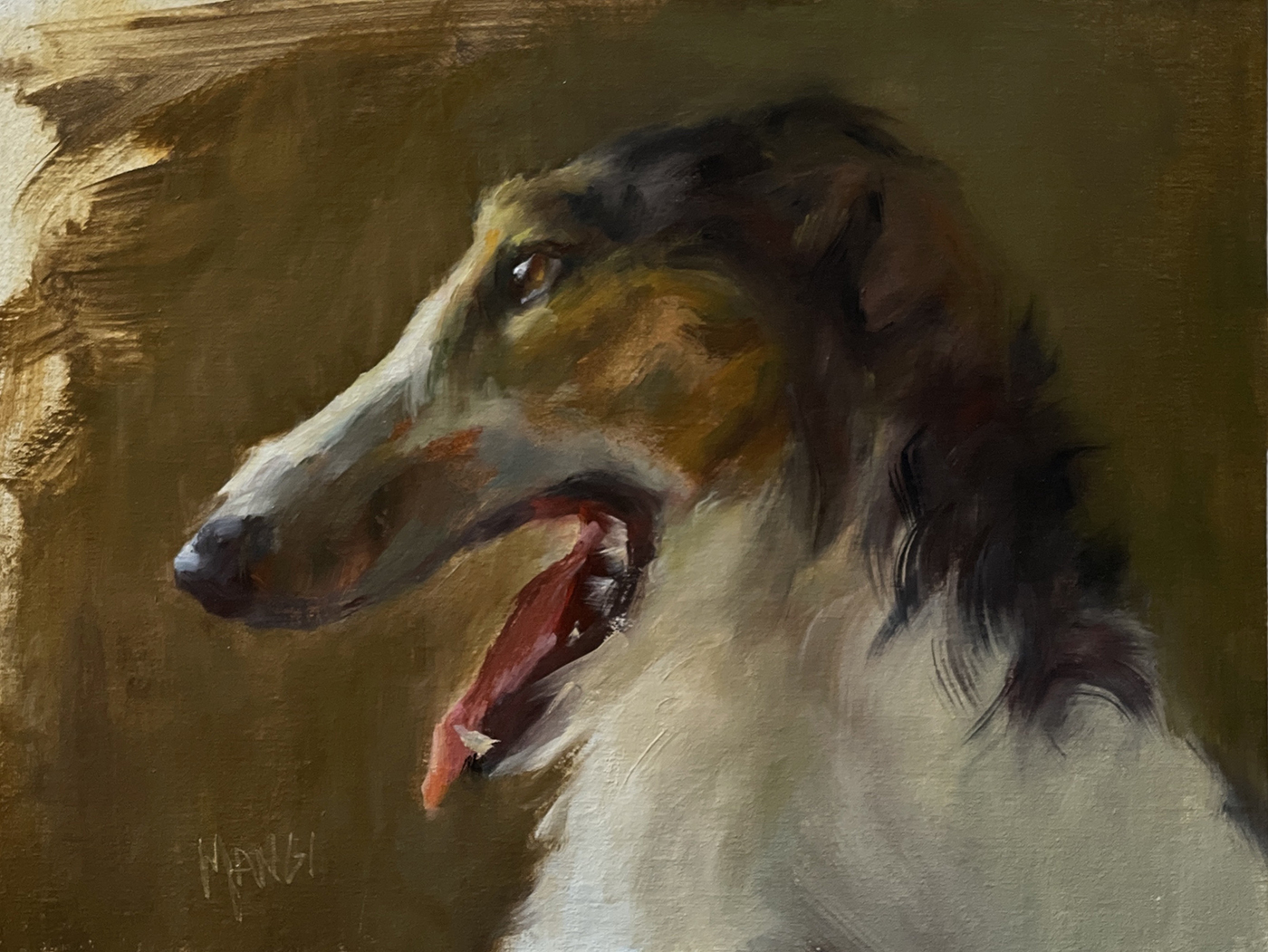
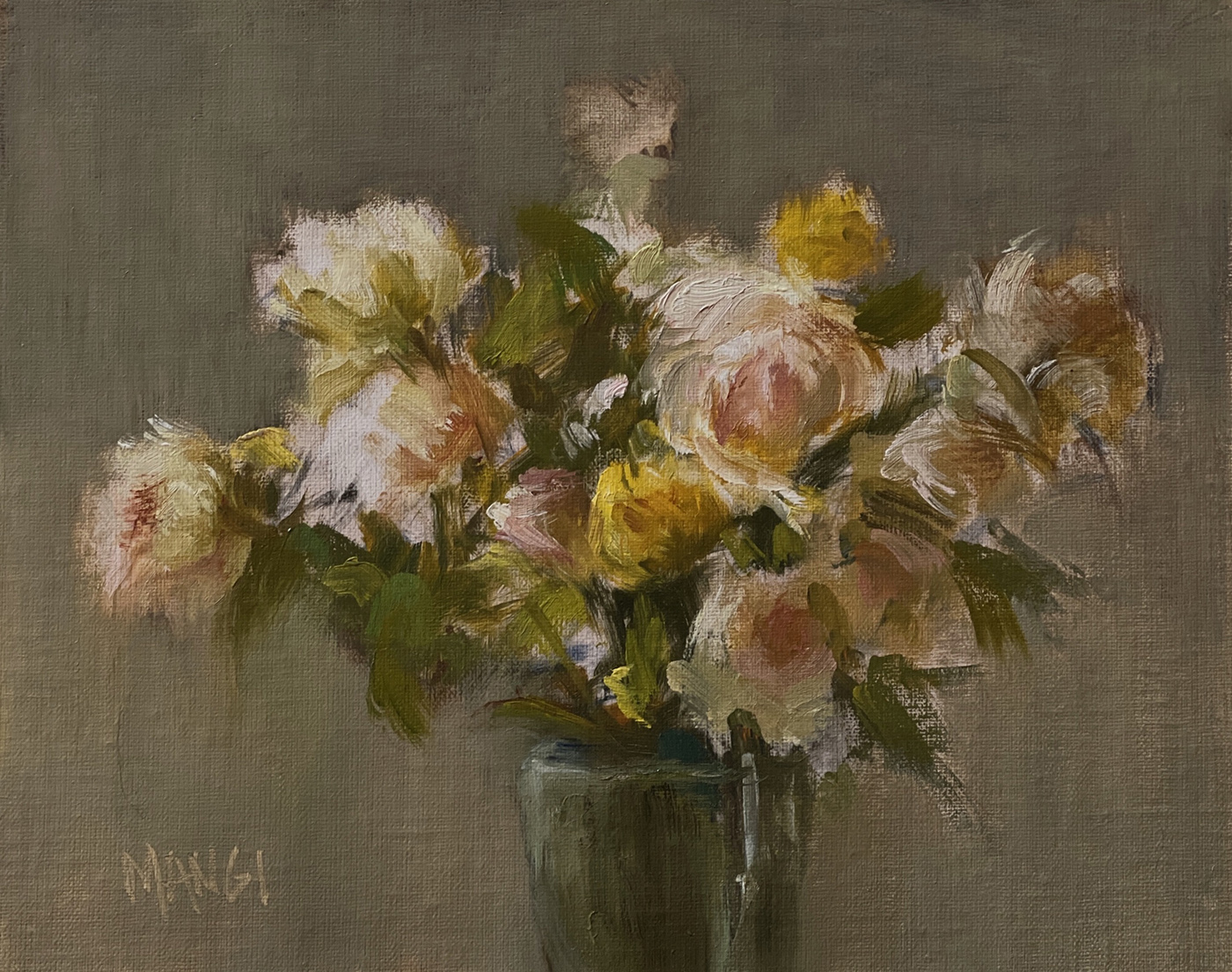
Johanne Mangi: Although I’m known for painting dogs, I actually paint a variety of animals, people and things. Dogs just happen to be my happy place.
These images are all new works. The Tiger is not quite finished but veeery close! Reka was a favored Tiger at the Beardsley Zoo. I’ve painted her before. The Borzoi started as my Demo at PACE22. I liked it so much, I finished it. And the roses were painted from life. I love sticking flowers in vases and moving them around painting them outside or by a window.
How did you get started and then develop your career?
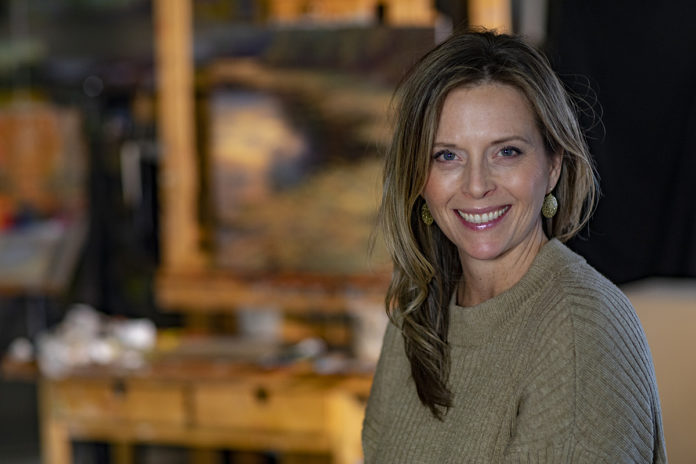
In the beginning I didn’t think of painting as my career, I just knew I needed to paint. It didn’t even feel like it was a conscious decision at the time, more like an internal drive and desire that couldn’t be ignored. I soon realized that if I were to spend my life painting, I needed to earn a living doing so and that training and education would be necessary in order to become the best I could be. Thirty years later, this very not straight and narrow path has led me here, an eternal student of life and painting. My quest for studying the countless nuances of color remains. Painting has supported me and my family for decades now and continues to do so. In 2008, I founded the St Croix River School of Painting in Minnesota where I live, teach, breath, and paint. I am currently in the final stages of writing and editing my book on painting and seeing the relativity of color to share with all.
How do you describe success?
For me success is not about ‘being’ successful but living this precious life to its fullest. To me, the art is our life, and painting my means of expression and communication. Success for me is the practice of being present in the moment, which is not always easy to do, but it’s a practice I bring awareness to every day. Saying yes to opportunities and painting my way through this journey. Success is being able to wake up and do it again tomorrow.
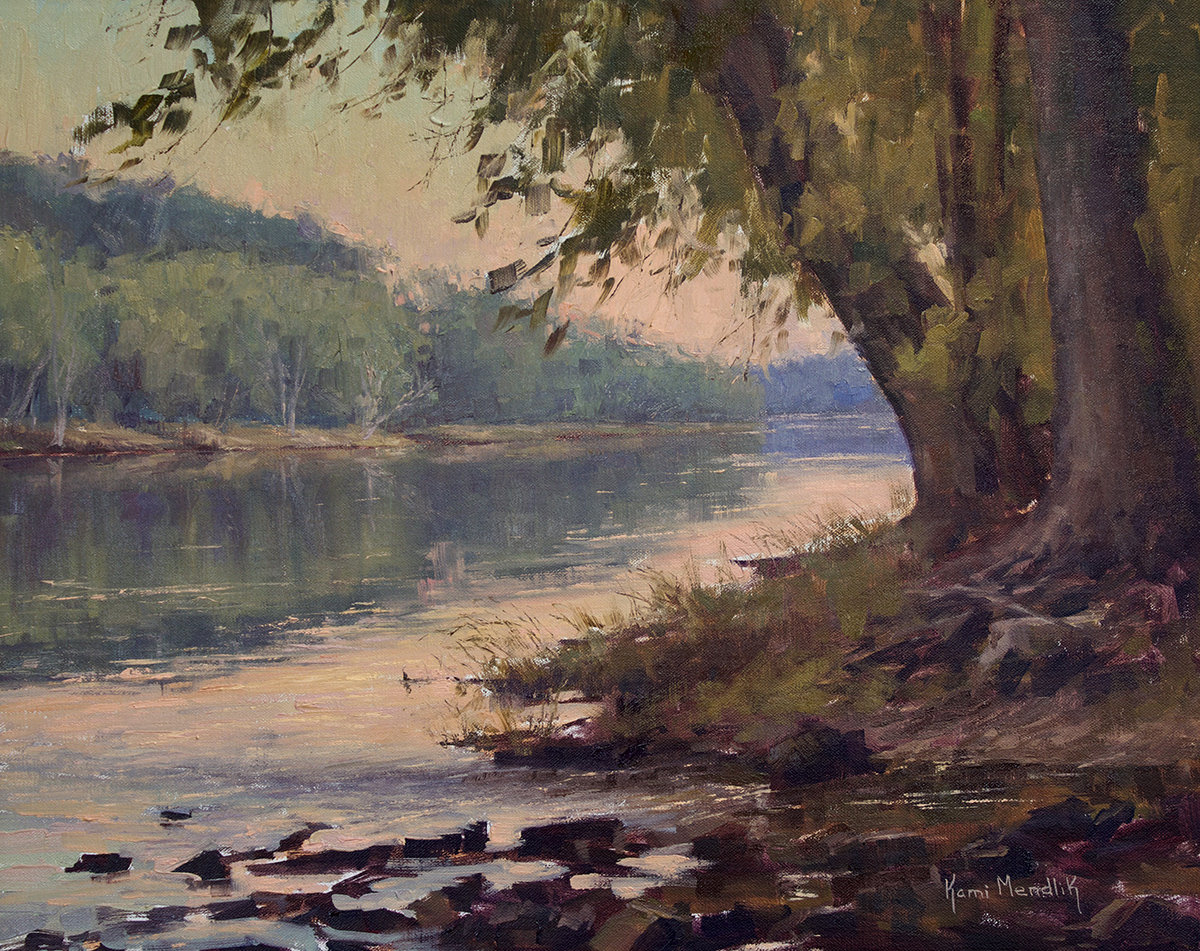
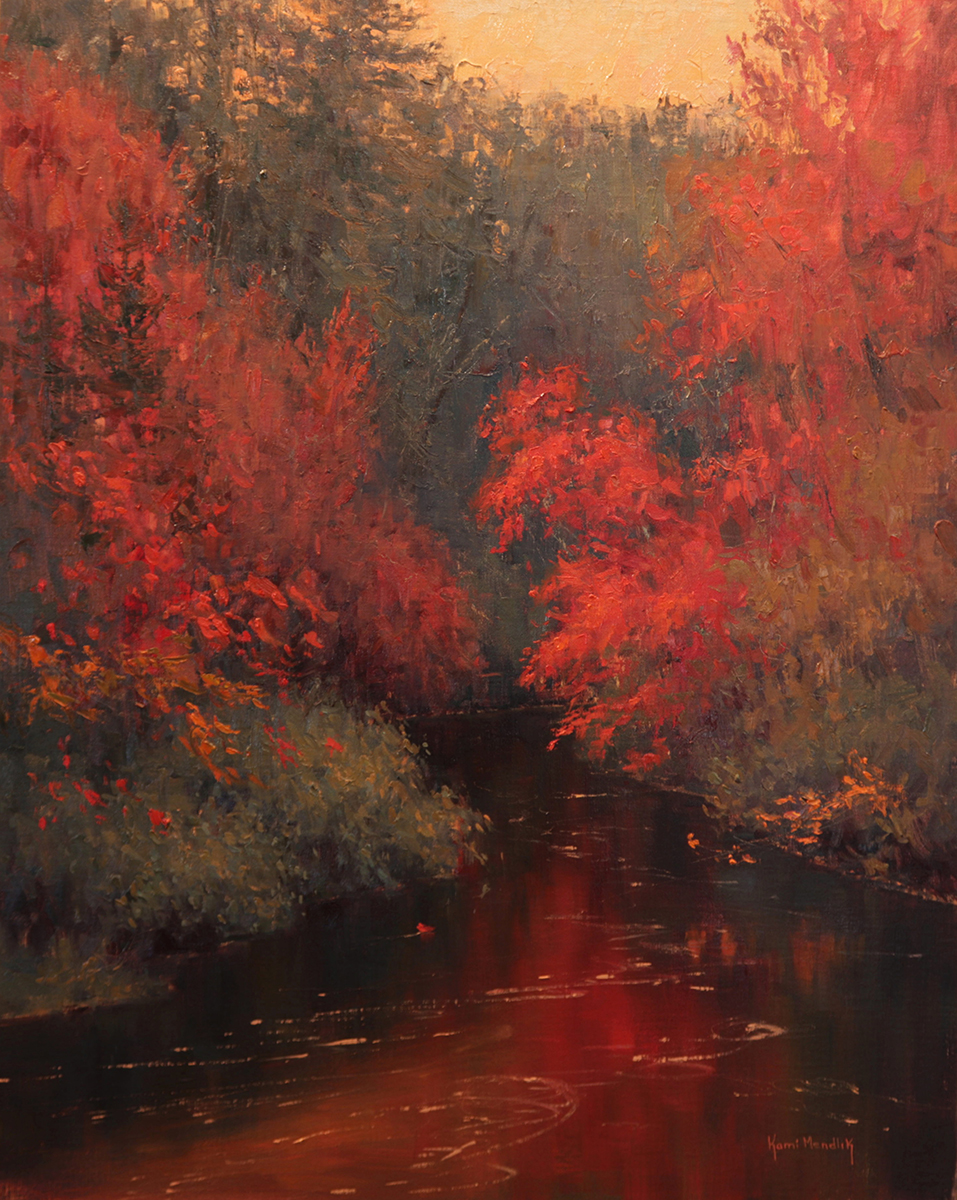
Kami Mendlik, Merging Waters – St. Croix, 16 x 20 in., oil on linen panel, 2022Kami Mendlik, Take Me to The River – Brule, 30 x 24 in., oil on linen panel, 2022
As part of our effort to continue to help artists and art galleries thrive, we’re proud to bring you this week’s “Virtual Gallery Walk.” Browse the artwork below and click the image itself to learn more about it, including how to contact the gallery.
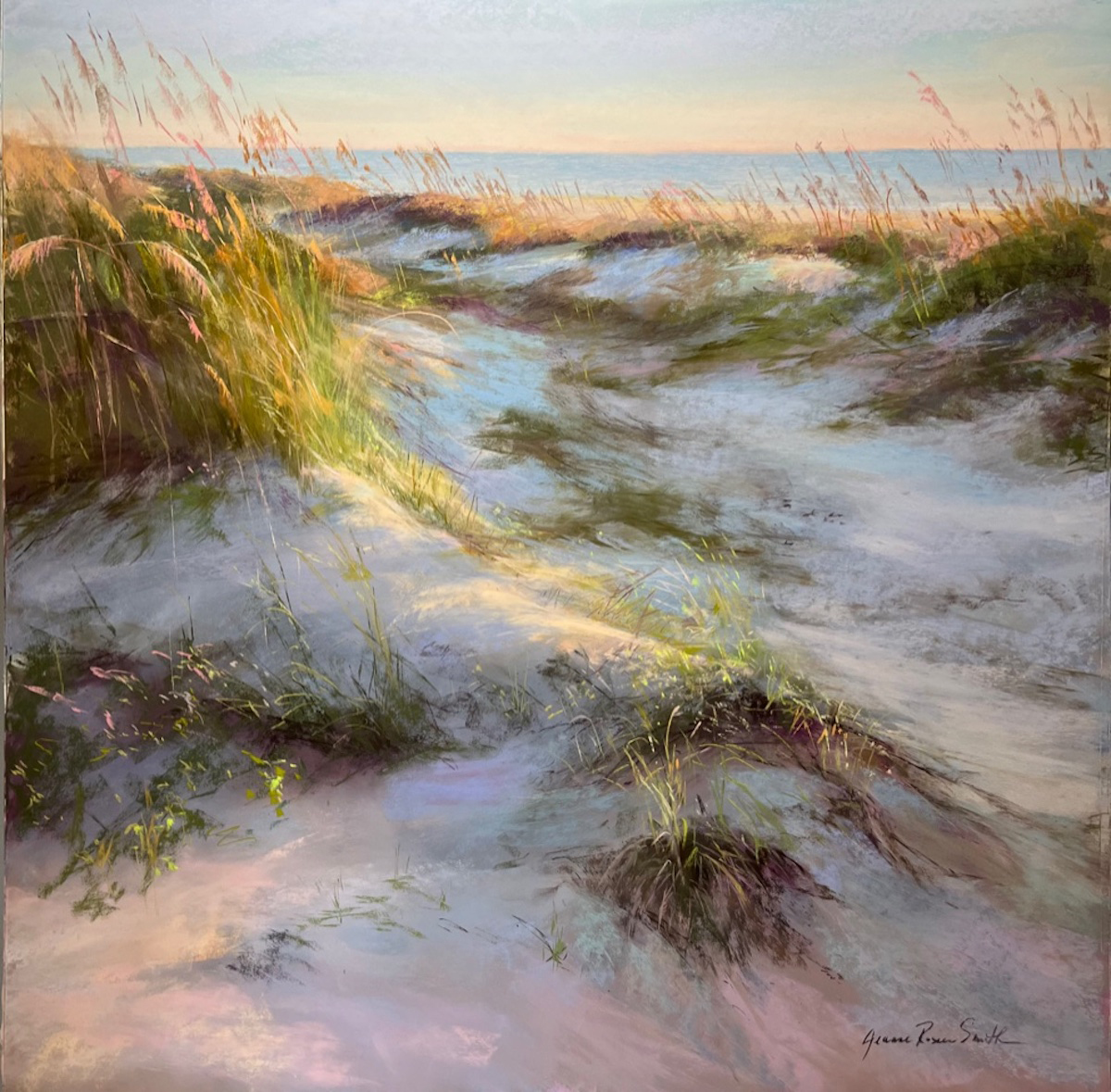
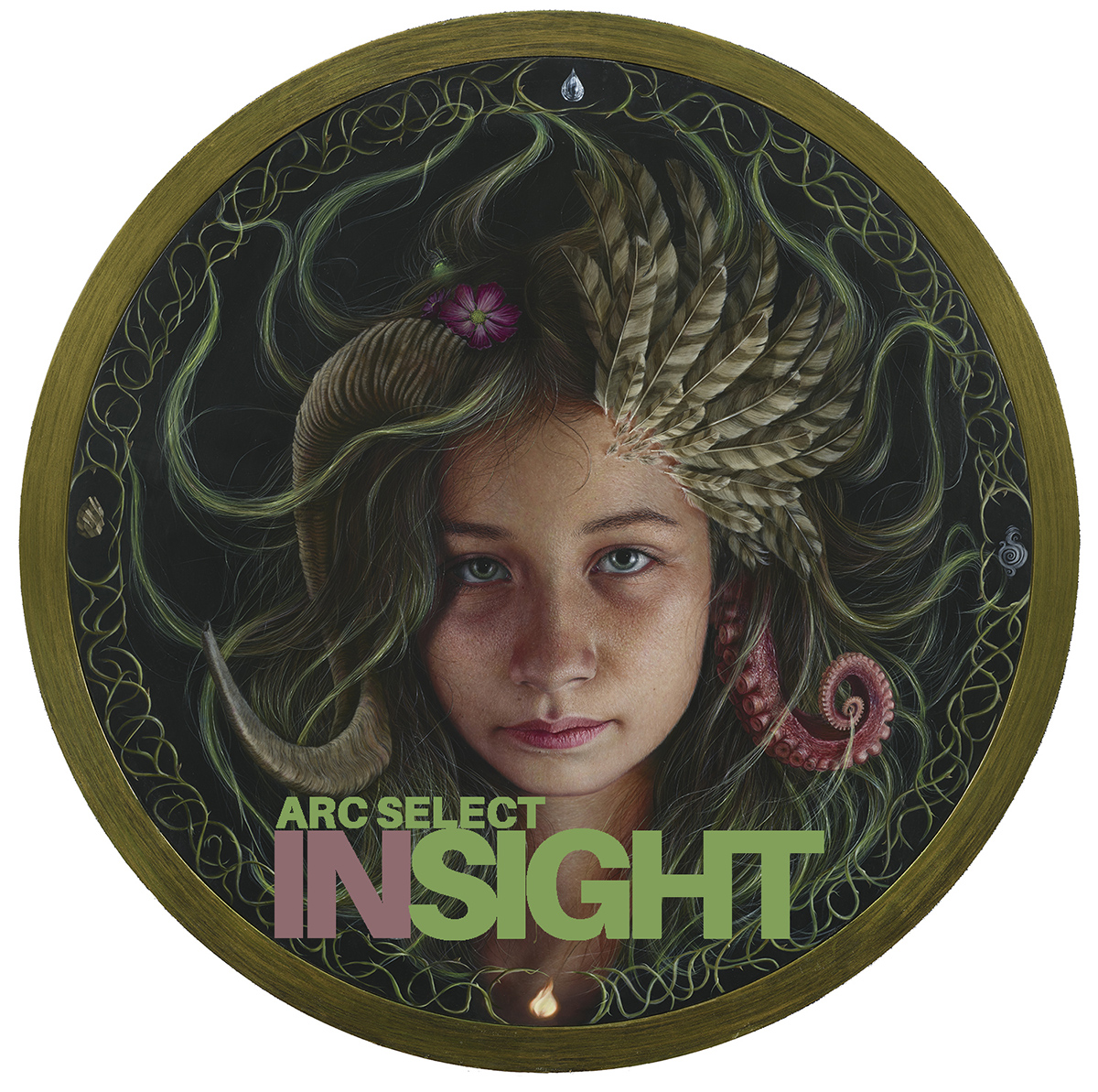
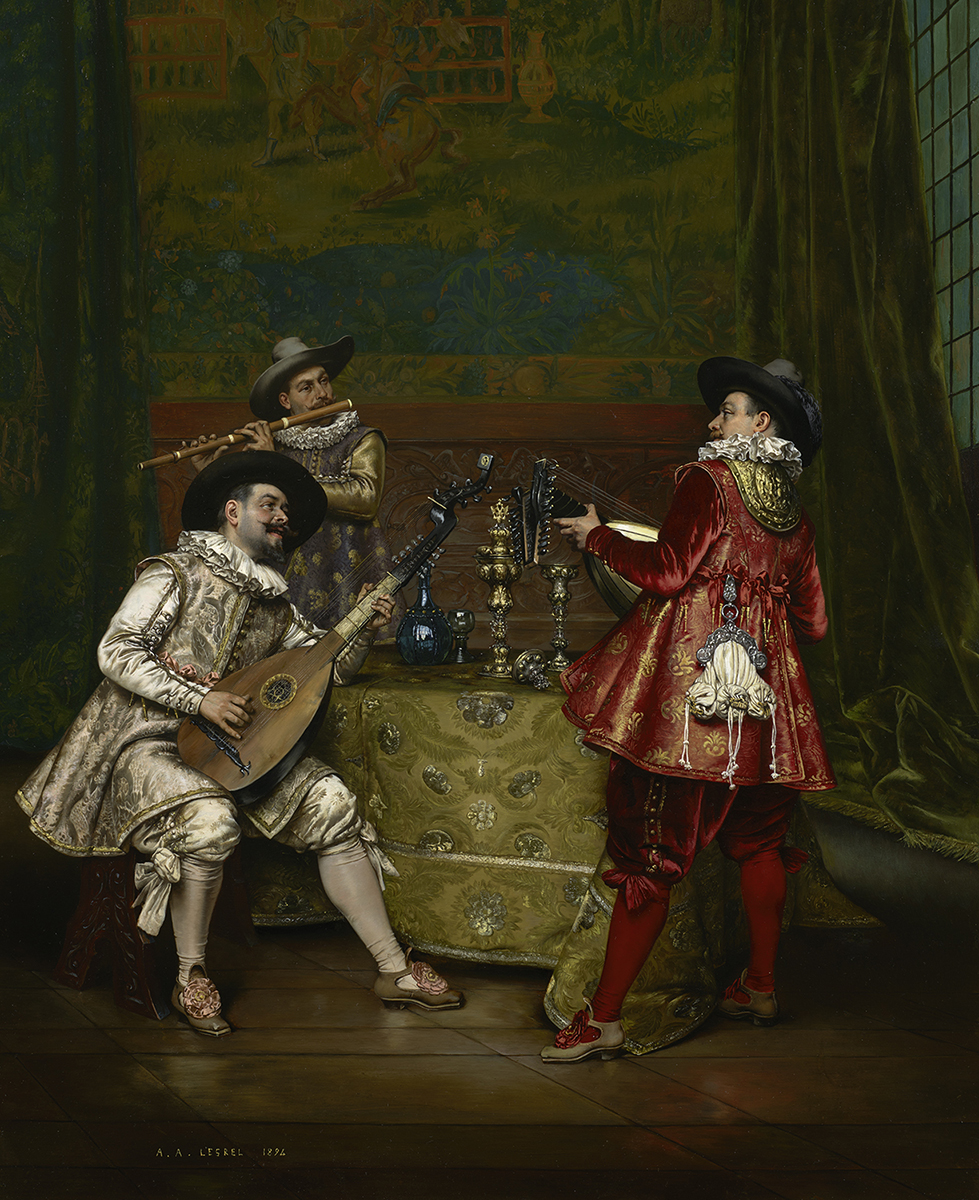
Dune Waves, Jeanne Rosier Smith, pastel, 30 x 30 in; Anderson Fine Art GalleryFifth Element, Jesús Inglés, Oil on canvas, 31 3/8 diameter; SignedUn trio, Adolphe Alexandre Lesrel (1839 – 1929), Oil on panel, 22.875 x 18.625 in; Signed and dated 1894; Rehs Galleries, Inc.a
Want to see your gallery featured in an upcoming Virtual Gallery Walk? Contact us at [email protected] to advertise today. Don’t delay, as spaces are first come, first served, and availability is limited.
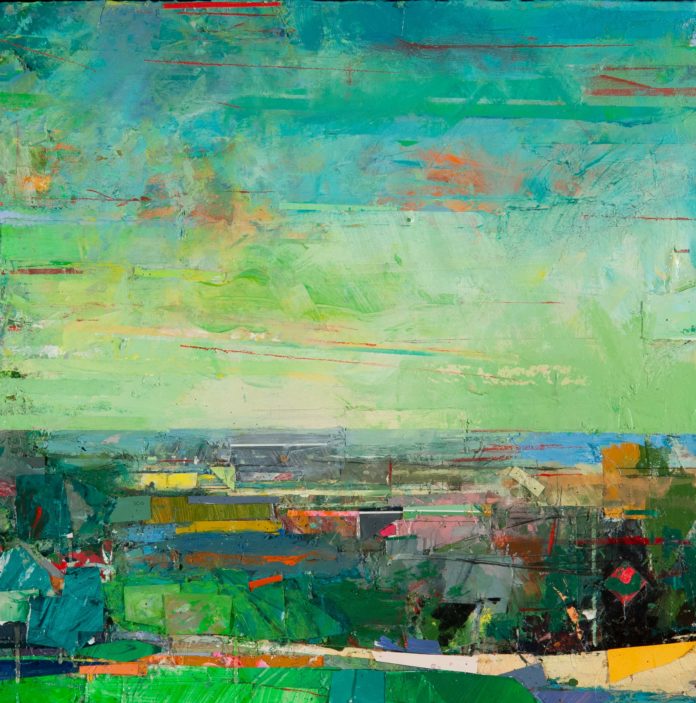
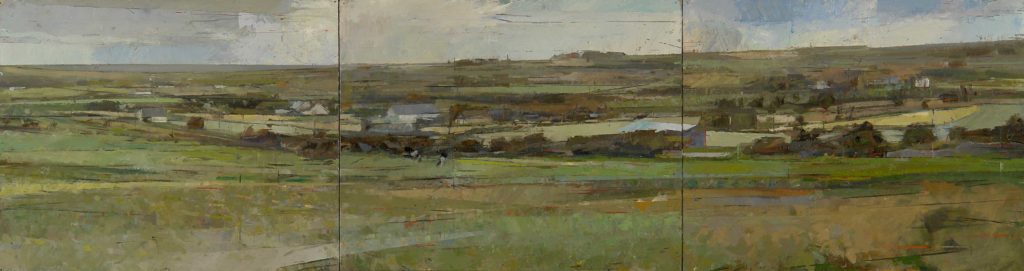
Andrew Wykes, "12 Hours of Sunset," 30 x 30 inches, Mixed media on canvas
Coming out of our teachers, the places we loved, and how we find ourselves now.
By Andrew Wykes
The English landscape painter John Constable once wrote, “I should paint my own places best.” Indeed that is the whole pretext of my early work. I was born in Surrey, England and grew up with the country of the gentle rolling North Downs on one hand, and on the other the engaging, changeable urban buildup of suburbs developing to the City of London.
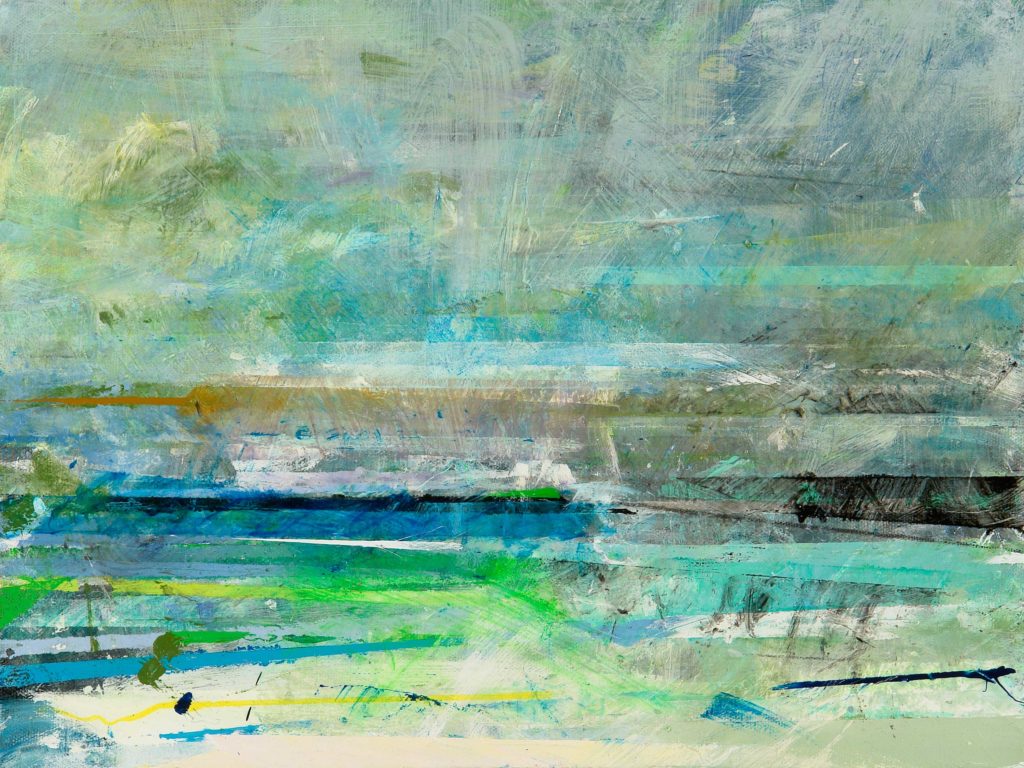
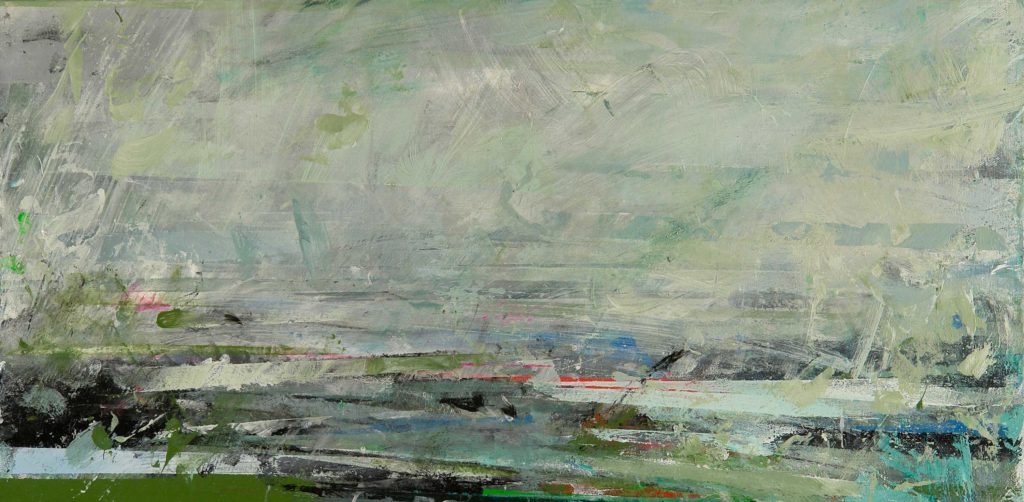
Andrew Wykes, “North Atlantic,” 12 x 16 inches, Acrylic on canvas
For me, painting is synonymous with seeing. I have always got great pleasure through the eyes. Many years ago, commuting to Art College in London, I would relish the train journey, preferring to look out the grimy railway carriage window instead of reading or sleeping. It was with great delight I was viewing the Green Belt unfolding to unpretentious urban and then to city landscape. I was seeing the familiar become unfamiliar through the shift of light, juxtaposition of spaces, colours and forms.
Much of my work before I relocated to Minnesota was coming out of a passionate if not adoring attachment to my surroundings. I thought that position would not change, but it did. For the first ten years in my new home I was at a loss, homesick and depressed. Do we not often find the loss of something or a person that was important to us as having a strange but not contradictory relationship?
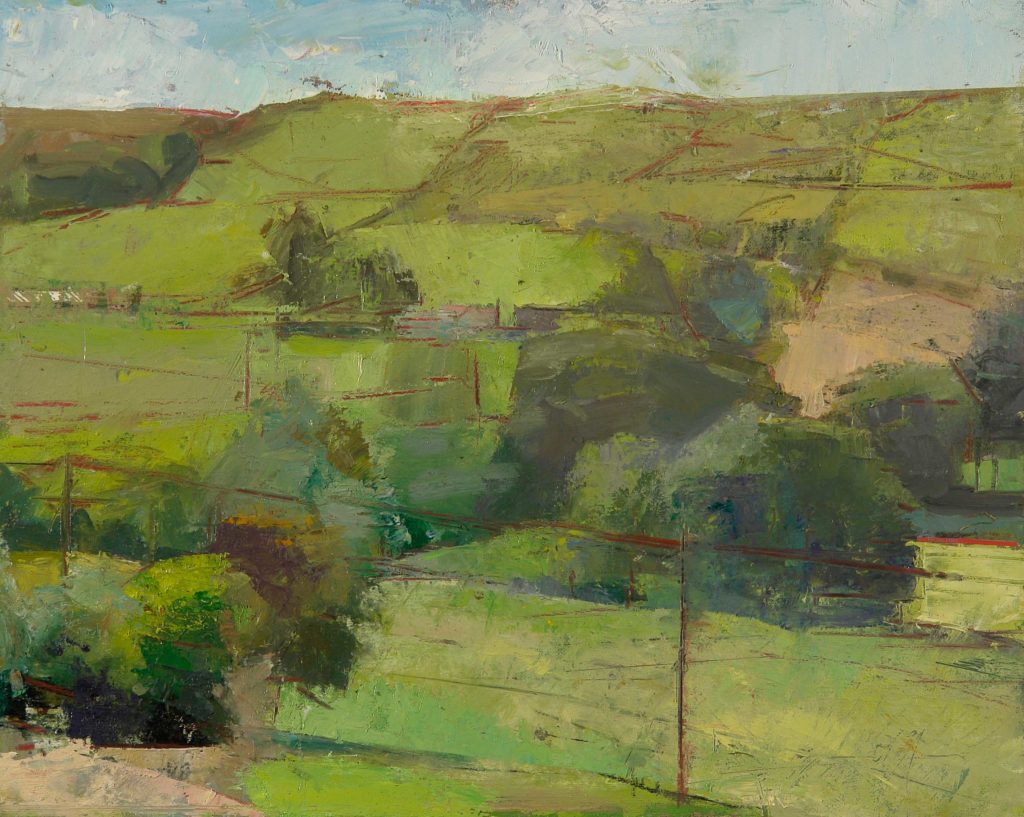
Andrew Wykes, “Ballingelen, Mayo Ireland,” 16 x 20 inches, Oil on board
The opposite of loss is possession. If something is important to us, we begin to possess it internally—perhaps more strongly than when we possessed it externally. One’s memories become more significant, valid, richer and almost palpable in their tender absence. This is not nostalgia, it is not the looking into the past, but perhaps in a curious way looking into or directed towards the future. This is not unique to me; I am stealing, as all artists and writers do.
One might say I came from a privileged background, growing up in the 1960s through to the early 90s in West London. I now feel fortunate in the sense that I could be part of a rich assortment of treasure and deep history to tap into. I had easy access to the major free collections of the London galleries, the Tate Gallery and The National Gallery with its prominent international exhibits of the day. All this happened in the milieu of a society that houses so many of the major past and contemporary inspiring artists and art movements. Of course this all seemed natural to me and only on moving later in life to the Midwest of the United States did I realize these opportunities that shaped me as an artist.
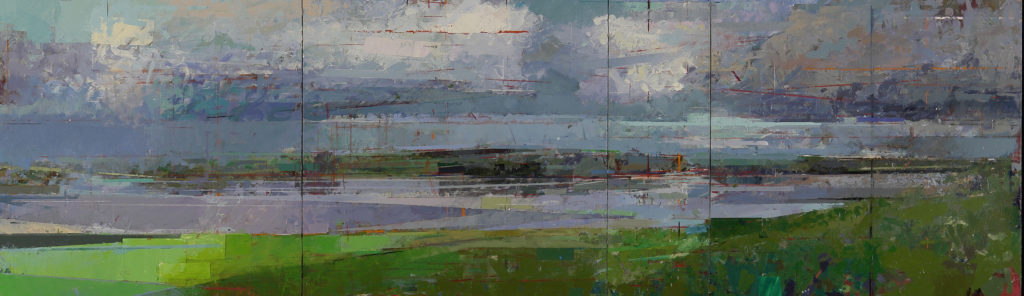
Andrew Wykes, “Killara Bay, Ireland,” 24 x 92 inches, Mixed media on four canvases
At the age of fifteen, I was struck by the Constable paintings in the National Gallery collection in London—shadowy, dramatic with an inherent poetic quality. I felt more was going on than mere depiction. The drive behind them was on one level a personal experience of place, and yet the work holds a pantheistic view of the world. I treasured the dusky tonal colors of horizons and trees; subdued chrome greens and gray pallid Prussian blues.
These also had a direct and recognizable characteristic that I saw and enjoyed in the landscape. In reproductions of Constable this does not come through. Also what impressed me, and still does, is Constable’s determination to get it right. While employing a controlled, well-ordered direct means of working, his goal was to make a parallel of what he sees in real time and space, on a flat surface and to give it immutability.
The painter Stanley Lewis, my old friend and former teacher at American University, would impress upon me that “we are all coming out of our teachers.” Lewis draws and paints on-site what he sees—his own backyard and local streets of Leeds, Massachusetts.
His paintings are about seeing—seeing objectively and with detachment. The proposition is a constant that all painting is abstract. As I am, Lewis is coming out of the sensibilities of eighteenth- and nineteenth-century European painting, from Ruisdael to Constable to Cézanne—a direct linkage. But with Lewis there are other influences, such as Jean Hélion and Leland Bell, his teacher at Yale.
The question in Stanley’s mind is, “How can paint address the quality of light and presence of a place so as to rival the experience of the place itself?” This is a question of timelessness that continues to haunt me.
Another distinctive voice that I have been engrossed with is the British painter Patrick George (1923-2016). For his painting “Hickbush” (1961-1965), I discovered it was painted on the spot over a period of five years. I was curious about the length of time and seamlessly minor changes on the painting that I had known from a well-loved postcard on my studio wall as a student. Some thirty years later, I saw the original in the Tate Gallery. The size and reworking of the surface was so refreshing, almost a shock; seeing it made sense that the intent of the painting was to fix on something tangible and not ephemeral. George chose measure over the unstable effects through uncertain changeable seasons. The end result was a synthesis of time and change in preference for something more constant, more real and not yearning.
What I’m getting at is that in our own being we carry a natural allegory to landscape that is timeless and constant. As a professor of Painting in a liberal arts American college, I have been stimulated to think in cross-curricular ways. A geologist in England, Professor Jay Appleton, has been writing about landscape and natural symbolism.
In Appleton’s theory of a natural symbolism of habitat, he suggests that there is a basic symbolism present in our landscape environment (including garden landscape, buildings, street scenes, countryside, etc.) that survives from man’s earliest beginning. Perceptions of this symbolism in visual representations are hypothesized by him to elicit specific feelings descendent from our drive for survival: prospect, which signals opportunity to see or explore; refuge, which implies protection; and hazard, which stirs feelings of wanting to escape.
Andrew Wykes, “Carrowmoor, Mayo Ireland,” 20 x 80 inches, Oil on three boards
It is interesting to note that in a great deal of landscape painting, the concepts of prospect and refuge are jointly present; in fact, these notions find their way into most visual renderings. In Ruisdael’s painting of Haarlem, the artist’s viewpoint is from a high vantage point of prospect above small, domestic, warmly lit dwellings symbolizing refuge, and then out to the prospect of the straight, low horizon extending under a vast sky of billowing cumulus clouds.
I have often seen this as a universal animal response. And it is possibly what we carry around in our subconscious—at times a deep, timeless universal connection.
I have always been conscious of and muse about what it is that I bring to the landscape before me, on any particular moment, or what it gives to me. My cultural and geographical influences certainly play their part in how I view my surroundings, but there is also my personal visual history and emotional recollection from the past.
These are hazy memoirs, often lodged deep in my unconscious, and at best, I have only vague ideas about their sources. But these states of mind are charged with palpable feelings that are set off unexpectedly during the act of looking at and painting the land before me: how brilliant midday sun is absorbed into the night-dark foliage of an aging oak tree; the distant hum of a pale blue horizon seen unexpectedly from around a corner. The experience of painting a landscape “on site” can bring me feelings of refuge or unease as well as melancholy or hope—feelings that hold me in the present moment. I am aware that the landscape itself is unresponsive. The love I feel for it will not change it from its position of indifference.
Andrew Wykes, “North Atlantic from Mayo Coast,” 12 x 18 inches, Arcylic on canvas
I always remember what Bridget Riley said, “Other artists teach you. There is one thing I say to my students and that is this: look at great painters; don’t be frightened of them, they have seen more clearly, experienced more genuinely and are more explicit. Weaker artists are confused. Read. The best look at the best. Don’t rely on your contemporaries. Look at the past.”
> Visit EricRhoads.com to learn about more opportunities for artists and art collectors, including retreats, international art trips, art conventions, and more.
> Sign up to receive Fine Art Today, our free weekly e-newsletter
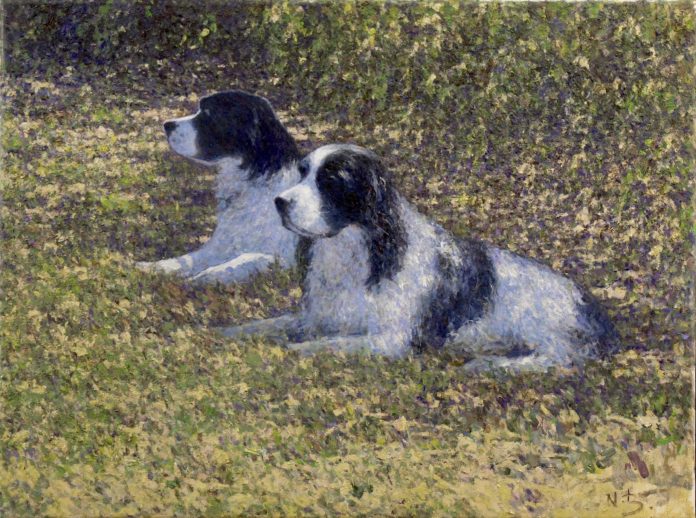
Nikolo Balkanski, "Garden Shadows," 2022, oil on canvas, 18 x 24 in.
Oil Painters of America (OPA) Holds its 31st National Juried Exhibition of Traditional Oils
Hosted by the Steamboat Art Museum, Steamboat Springs, Colorado
Through August 27, 2022
From the organizers:
Over 1,200 professional artists from across the United States and Canada vie for only 200 spots in this highly competitive annual competition. Included at this year’s exhibition will be impressive pieces of work by OPA’s distinguished Master Signature artists: Daud Akhriev, Kathy Anderson, Kenn Backhaus, Cindy Baron, Roger Dale Brown, Ken Cadwallader, John Michael Carter, James Crandall, Nancy S. Crookston, Louis Escobedo, Albert Handell, Nancy Howe, Robert Johnson, Jeff Legg, Calvin Liang, Ned Mueller, Camille Przewodek, William Schneider, Michael Situ, James Tennison, Deborah Tilby, and Christopher Zhang.
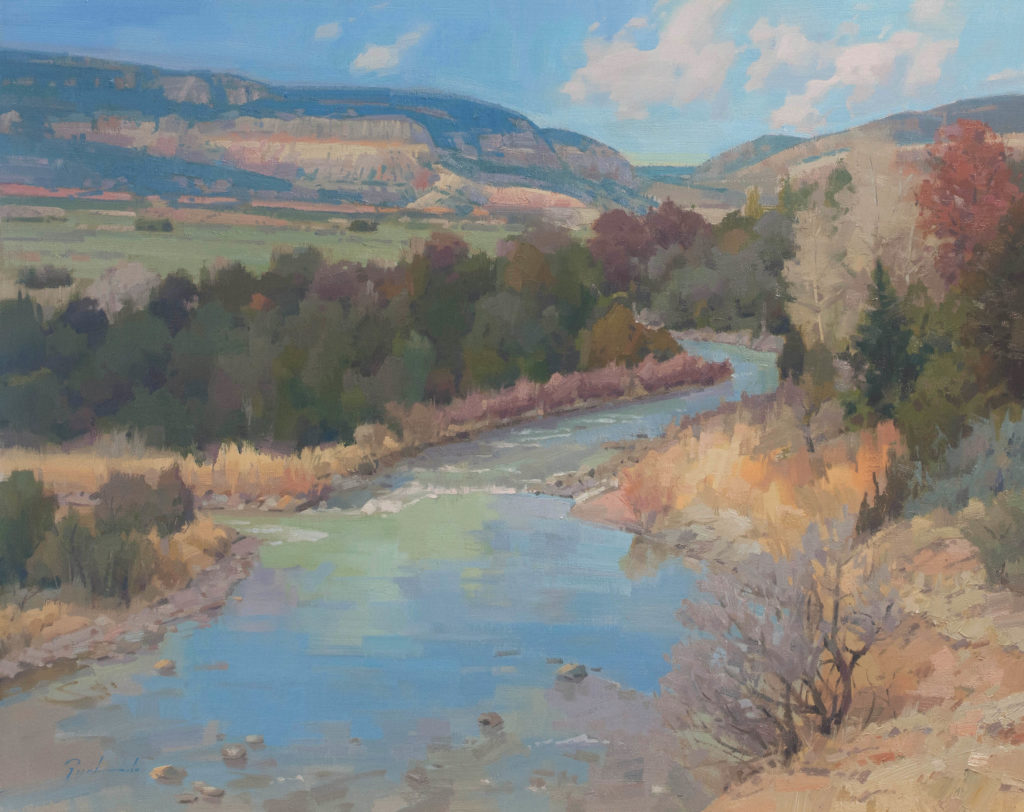
Louis Escobedo, “Mountain River,” 2022, oil on linen, 24 x 30 in.
OPA Master Signature artist, two-time OPA National Gold Medal winner, Johanna Harmon, will serve as the Juror of Awards. Ms. Harmon will award participating artists approximately $100,000 in cash and merchandise awards, including the prestigious Gold Medal $25,000 cash prize.
OPA is pleased to announce the Second Annual Student Art Competition for students aged 14 to 23. Students can submit two paintings for consideration. The award winners will be announced in March and will be invited to exhibit their works in conjunction with this year’s National Exhibition in Steamboat Springs.
Steven Lang, “Shady Rest for Ol Pen,” 2022, oil on canvas, 18 x 29 in.
The exhibition will be available online on both the OPA and Steamboat Art Museum websites. The exhibition and convention are open to all artists, art lovers, collectors, and students. For more information: steamboatartmuseum.org
> Visit EricRhoads.com to learn about more opportunities for artists and art collectors, including retreats, international art trips, art conventions, and more.
> Sign up to receive Fine Art Today, our free weekly e-newsletter
On View: “The Male Nude: Turning the Gaze”
New York Artists Equity Gallery, Manhattan nyartistsequity.org
Through July 9, 2022
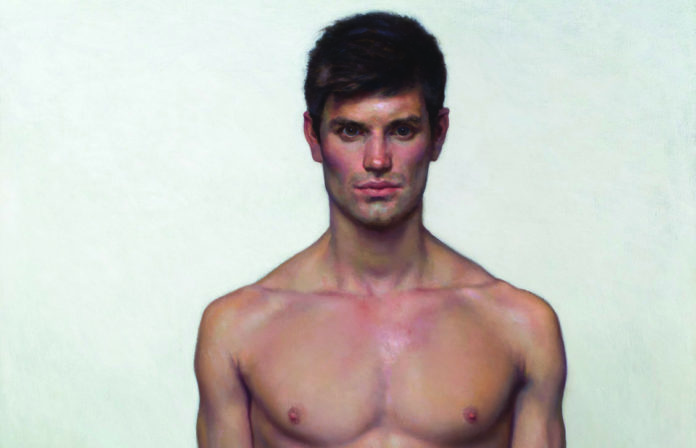
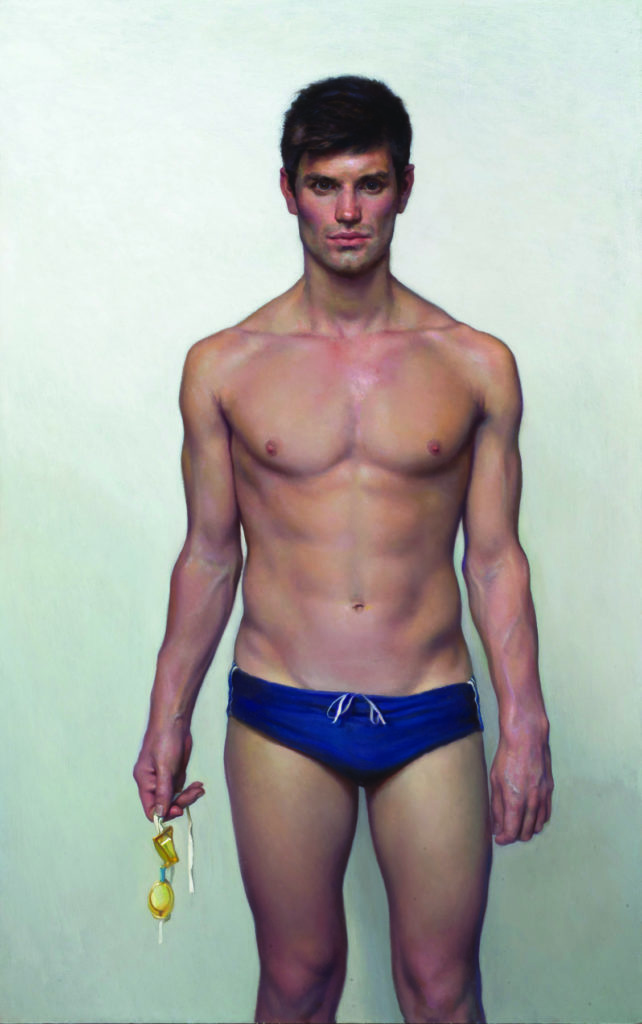
NELSON SHANKS (1937–2015), “Swimmer,” 2010, oil on canvas, 54 1/4 x 34 1/4 in., estate of the artist
The New York Artists Equity Gallery is set to present a group show with the somewhat provocative title “The Male Nude: Turning the Gaze.” Co-curated by gallery director Michael Gormley and Fine Art Connoisseur editor-in-chief Peter Trippi, it contains works in various media by approximately 35 artists who were invited or juried in.
While the female nude has long played a conspicuous role in Western art, the genre’s symbolic scaffolding of gender hierarchy, and the accompanying sexualized objectification (if not exploitation) of women, have rendered in high relief our current culture’s questioning of gender roles and specifically the assumed dominance of the male (predatory) gaze.
“The Male Nude” aims to turn that gaze around and level the visual field through a full-frontal celebration of men’s bodies. It will feature a salon of erotic and non-erotic works in a range of media and styles that explore the compositions, postures, and role-playing within this flourishing yet still underexposed genre.
Almost all of the artists involved are still at work, though a few (like Nelson Shanks, whose “Swimmer” is illustrated here) are deceased.
> Visit EricRhoads.com to learn about more opportunities for artists and art collectors, including retreats, international art trips, art conventions, and more.
> Sign up to receive Fine Art Today, our free weekly e-newsletter
Fill your mind with useful art stories, the latest trends, upcoming art shows, top artists, and more. Subscribe to Fine Art Today, from the publishers of Fine Art Connoisseur magazine.