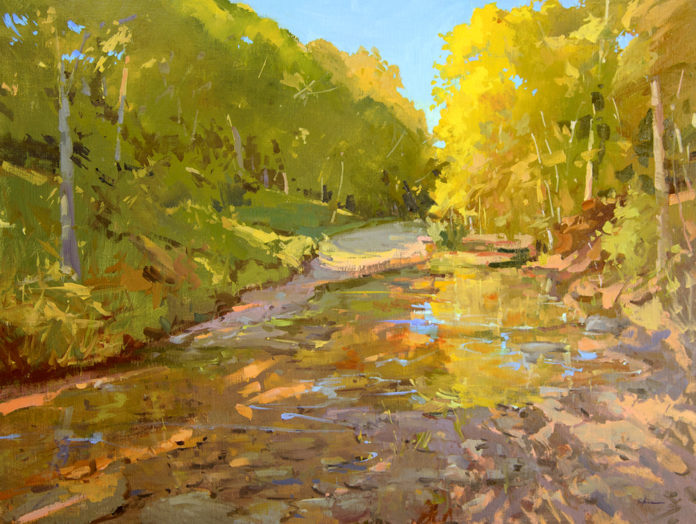
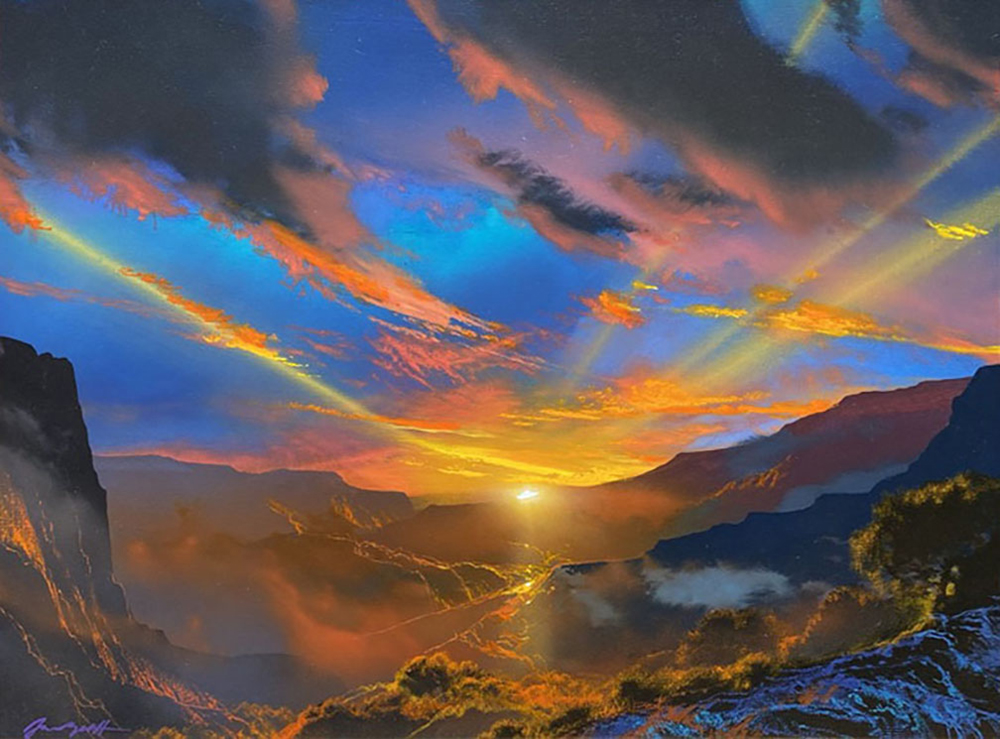
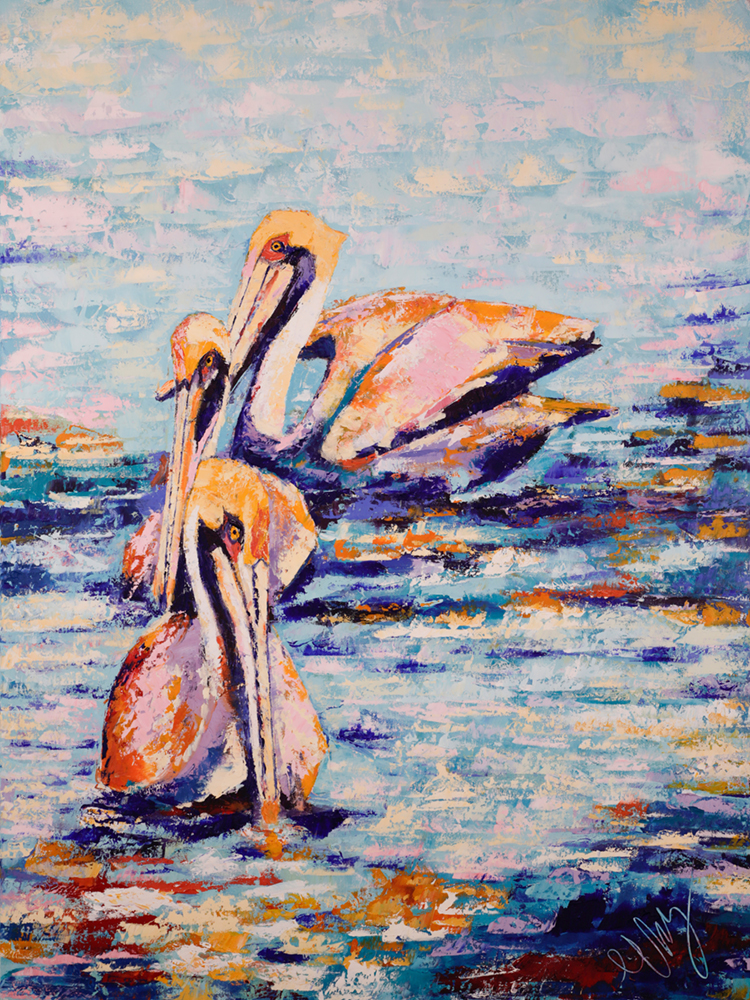
Tennessee Ford
By Lori Putnam
36 x 48 in.
Oil on linen
2021
Native Tennessee artist Lori Putnam spent the last two years creating a new body of work inspired by the landscape that surrounds her. In her upcoming solo exhibition, “Lori Putnam: Close to Home” the artist celebrates each of the four, distinct seasons with landscapes ranging in size from 8 x 10 inches to 36 x 48 inches. Shown here is a studio work created from a plein air sketch made just two miles from her Charlotte, Tennessee studio.
Having grown up in the countryside with no neighbors for miles, Putnam credits her passion and familiarity with the area’s colors, natural harmonies, rhythms, and patterns to those many hours spent exploring nature as a young child.
She is the Vice President of Art Ambassador for a Colorful World, and winner of last year’s PleinAir Salon Art Competition Annual Grand Prize presented by PleinAir Magazine.
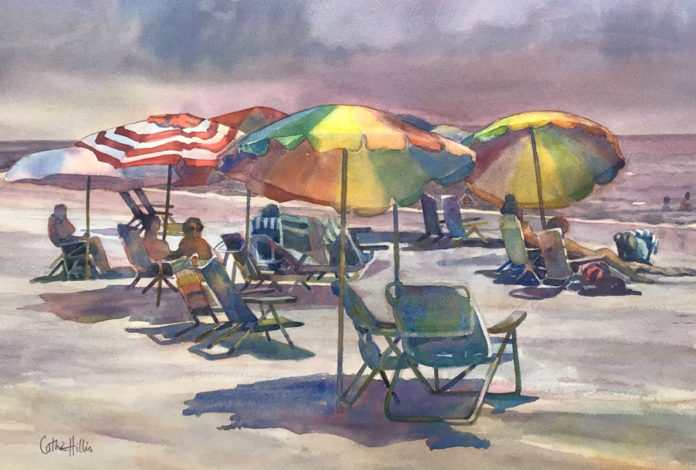
Let A Smile Be Your Umbrella
18 x 28 in.
Watercolor
$1,800
Available through Anderson Fine Art Gallery on Saint Simons Island, GA
Catherine Hillis: “I watched these happy sunbathers gathered at the beach from early morning until storm clouds approached. The group seemed determined to remain at this favorite spot forever. I left as the rain rolled in, taking my photos into the studio and creating Let A Smile Be Your Umbrella.”
Award winning artist, Catherine Hillis, travels the world to find just the right narrative for her watercolor paintings. Working en plein air and in the studio, Hillis has garnered many awards and signature memberships from watercolor organizations and plein air competitions across the country. Known for her commonsense approach to teaching, the artist presents workshops throughout the year.
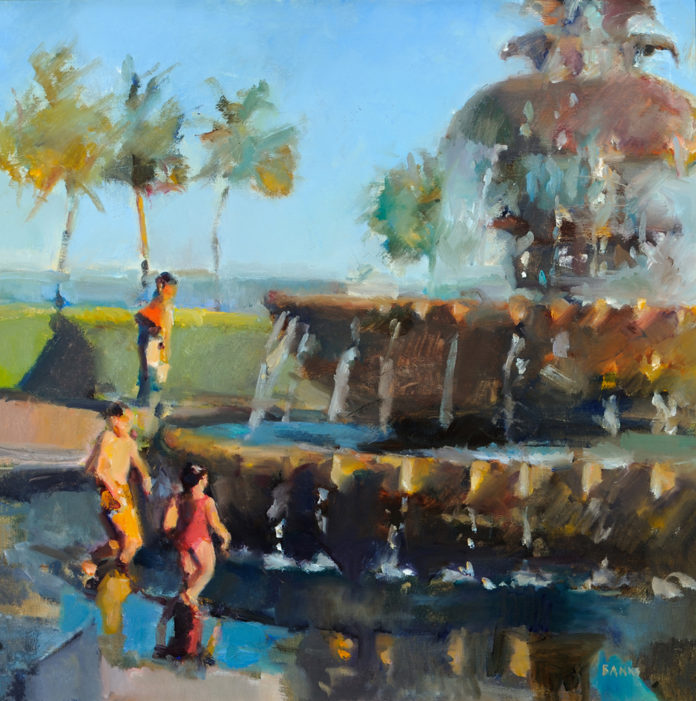
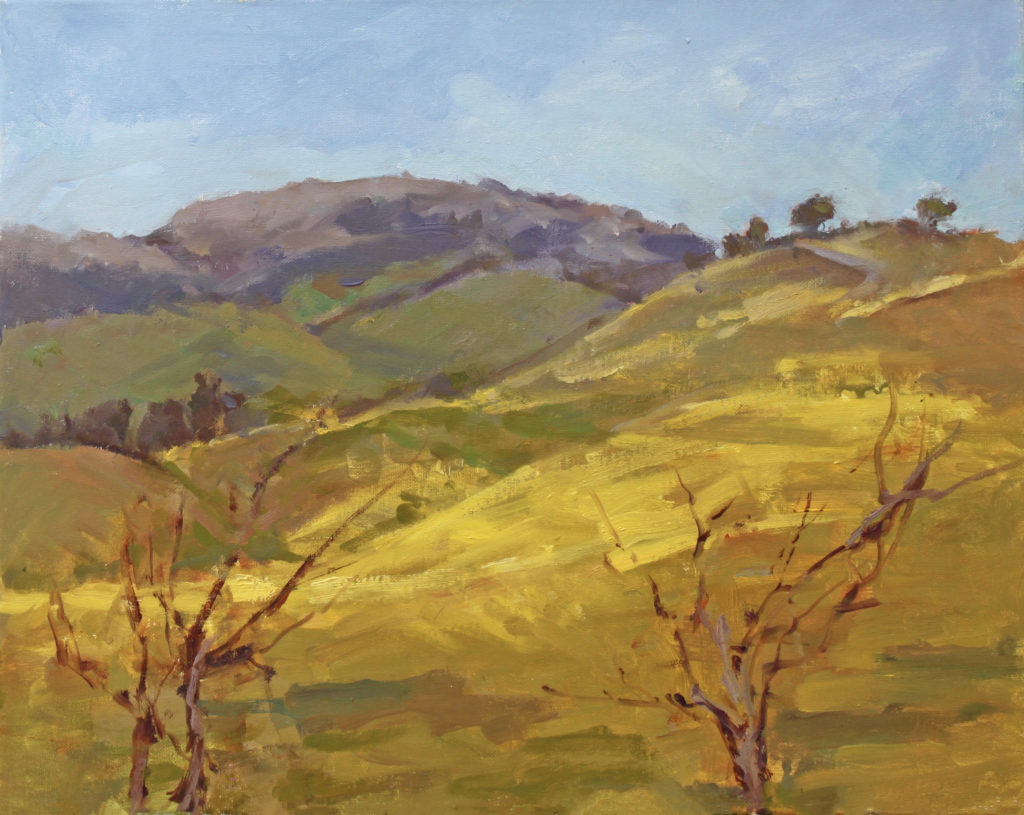
Wade Away was started plein air on location in Charleston, South Carolina, but went through a couple of iterations on the canvas before arriving on this one. One of the aspects of painting on location I love is the ability to really observe and soak in what is special about the scene. Here it was the joy of youngsters playing in the fountain, a permitted activity. My two sketches below this painting had a wider view. Focusing more closely on the joy of those splashing youths made all the difference.
My paintings are about capturing life in oils. I want you to feel what it’s like to be there witnessing the scene unfold.
More info about those events and other exhibits can be found on my Events page.
My studio is in a wonderful space I share with fellow artists in Great Falls, Virginia, at 756 Walker Road. Come visit by appointment or during regular open hours on Wednesdays, noon to 4pm; Saturdays, 10am to 2pm and First Friday Art Walks, 6-8pm most of the year. Send me an email about your plans to visit to make sure I’ll be in. I’d love to see you!
For information about this plein air painting, please contact the gallery.
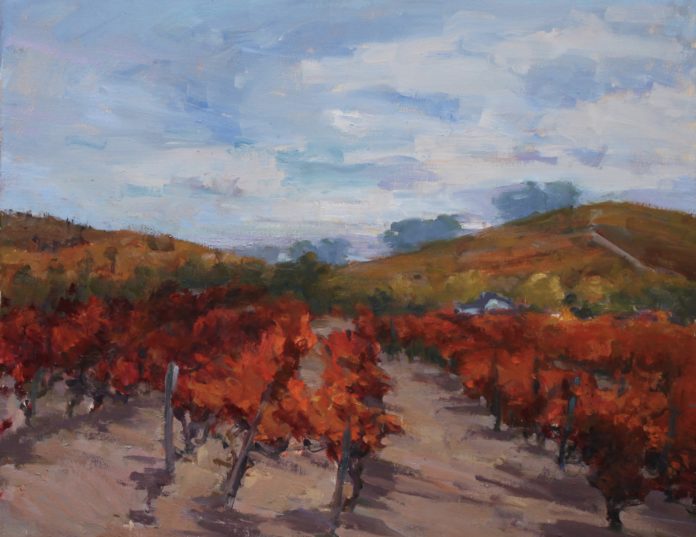
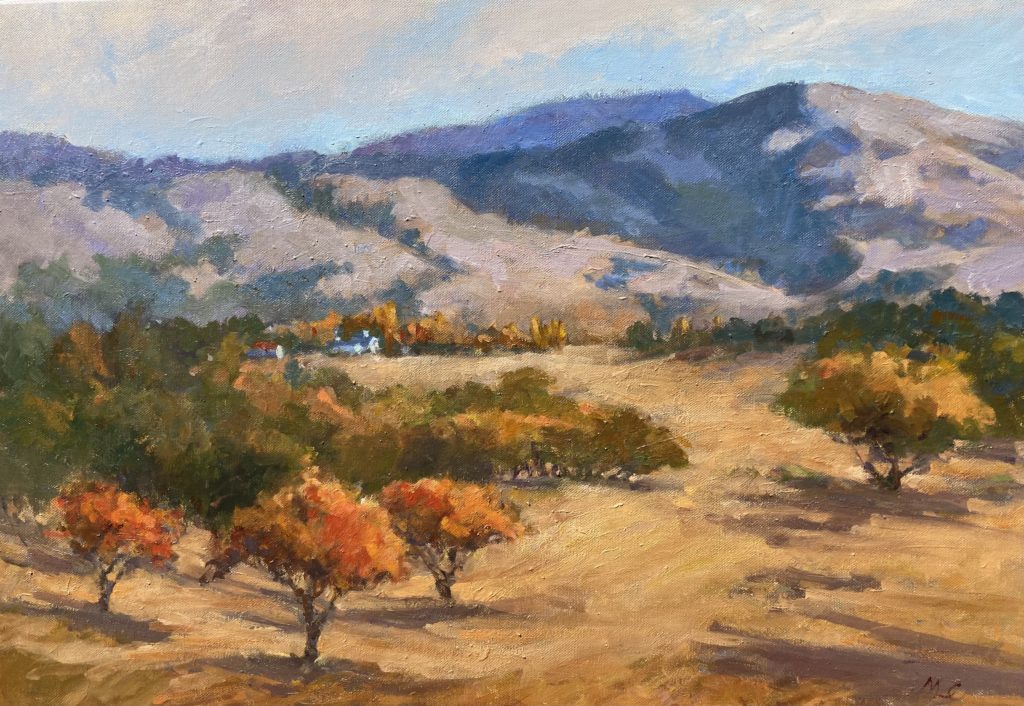
Plein Air Paintings for Sale > MaryLou Correia is the Benicia Plein Air Gallery featured artist in September with her exhibit “September, Colors of Joy,” through September 30, 2021. The show features retrospective collection of works painted during the pandemic.
“Our lives were changed, our freedoms restricted by the unrelenting challenges of COVID, but artists continued with healing creativity,” she said. “I found myself taking solace in painting out in nature, close to home throughout the shutdown.”
MaryLou continues, “For me the adventure is the process of painting. The meditative, absorbing challenge of capturing a moment, a sense of place. Painting is my way of cherishing nature and welcoming the surprises and the unexpected gentle creatures I meet along the way.”
For information about this plein air painting, please contact the gallery.For information about this plein air painting, please contact the gallery.
Also on exhibit is the new collection of plein air paintings by all 12 of the gallery’s artists showcasing a colorful variety of media and styles.
Benicia Plein Air Gallery is located at 307 First Street in the heart of historic downtown Benicia, California. For more details, please visit Beniciapleinair.com.
> Visit EricRhoads.com to learn about more opportunities for artists and art collectors, including retreats, international art trips, art conventions, and more.
> Sign up to receive Fine Art Today, our free weekly e-newsletter
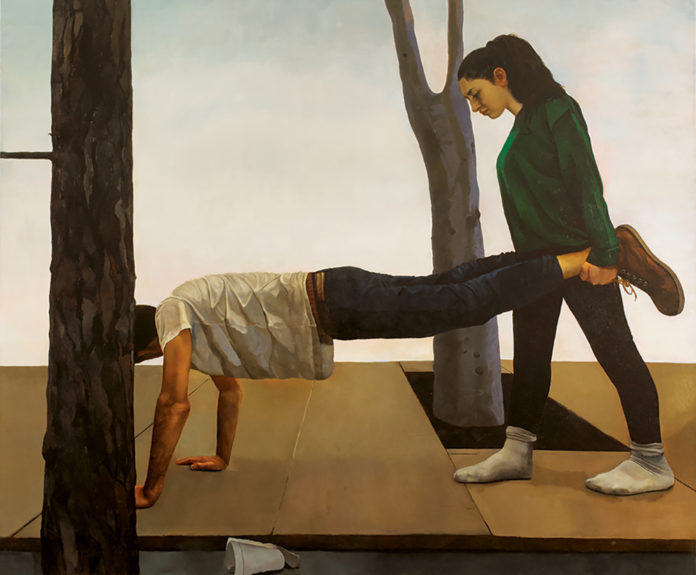
Talking About Leaving
By Rebecca Orcutt
Oil on canvas, 2021
60 x 72 inches
$9,000
Rebecca Orcutt constructs quiet, theatrical spaces in her ambiguously narrative paintings. She deliberately establishes moments where the characters seem to wait for events to unfold, the nature and outcomes of which are unclear. Within this uncertainty, she seeks to allow the familiar to transcend functionality and the commonplace, opening the viewer to the subtle emotions continually at play in our daily lives. With carefully arranged compositions stripped of detail until only the vital remains, the figures come to occupy spaces more psychological than physical and every relationship, be it between figures or between figure and object, becomes a point of tension. Within these unsettled relationships Orcutt builds a sense of tension and expectation, inviting the viewer to their own conclusions.
A woman holds the ankles of a man in a strange game of wheelbarrow in the surreal Talking About Leaving. Her eyes are downcast, but more in introspection than in focus on her partner. She is in motion, while he seems paused, his head turned slightly as if turning to regard her. The landscape is sparse, offering no further clues to their interaction. No conversation is depicted, suggesting the unusual pose is a metaphor for their dialogue. Muted colors and a limited palette hint to melancholy and quiet. Is “leaving” the split of a relationship or a journey, together, to a new place? Talking About Leaving is currently included in the traveling exhibition Rising Voices 2: The Bennett Prize for Women Figurative Realist Artists organized by the Muskegon Museum of Art.
Orcutt received a bachelor’s degree in painting from Gordon College in Wenham, Massachusetts and an MFA from the New York Academy of Art in New York City. While enrolled at the NYAA, she was a President’s Scholar and was awarded the Leipzig International Art Programme Residency in Germany. Her work has appeared in shows around New York and the United States and internationally in exhibitions in Copenhagen, Denmark; Leipzig, Germany; at the National Portrait Gallery in London; the Scottish National Portrait Gallery in Edinburgh, Scotland; and the Ulster Museum in Belfast, Ireland. In 2019, Orcutt was awarded an honorable mention in the inaugural Bennett Prize.
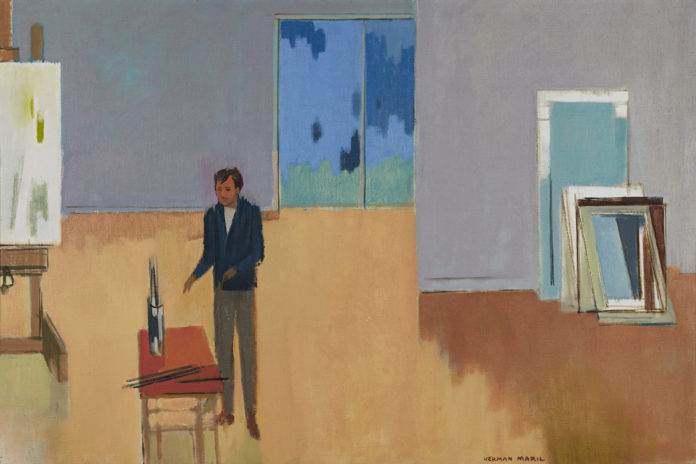
Herman Maril, "Studio with Figure," 1971, oil on canvas, 40 x 60 inches
Fine Art Oil Paintings on View > Herman Maril (1908–1986), nationally recognized Modernist painter, is noted for his seductive paintings of subdued domestic interiors, sundrenched seaside vistas, and expansive landscapes. Maril was decidedly a contemplative artist who balanced intellect with intuition—creating figurative works that eliminate all but the barest essentials.
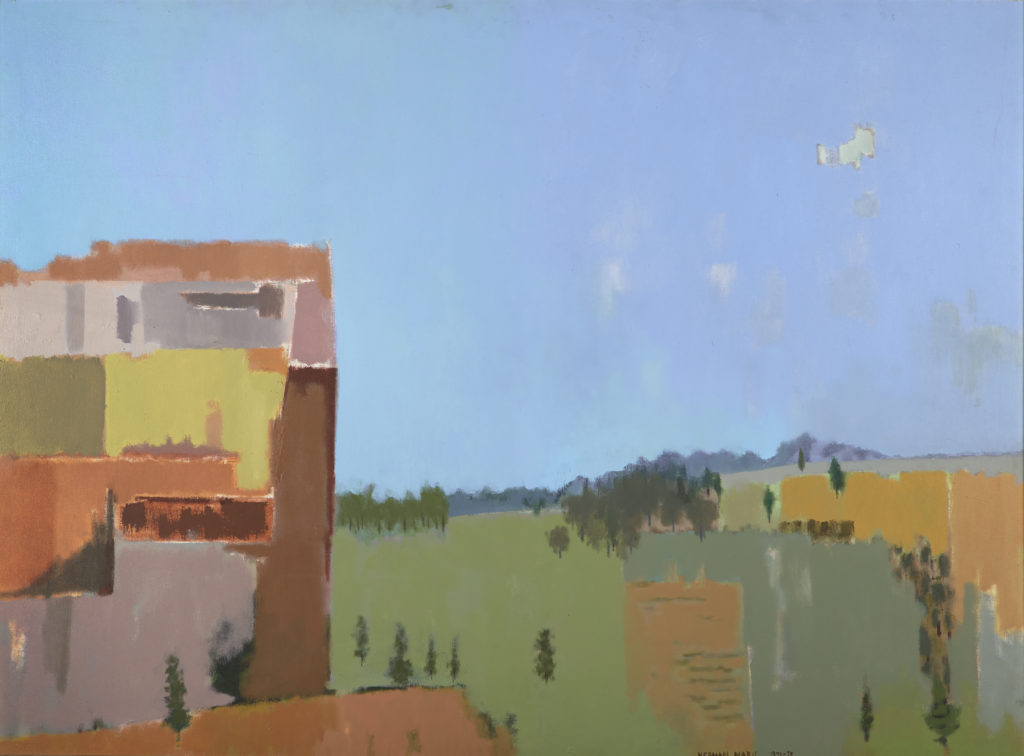
Herman Maril, “Southwest,” 1970 to 1979, oil on canvas, 44.25 x 60 inches
An exhibition of Maril’s oil paintings from the 1930s through the 1980s, entitled “A Life in Art,” is on view through October 2, 2021 at LewAllen Galleries in Santa Fe, New Mexico.
From the gallery:
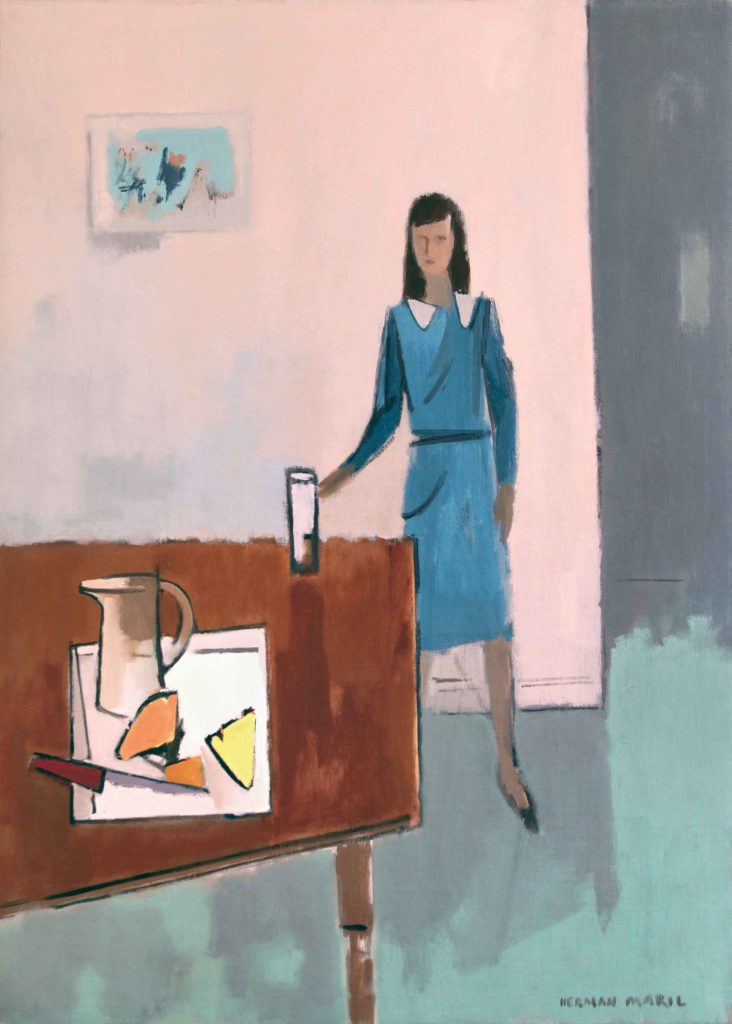
Herman Maril’s oil paintings consistently demonstrate a clarity of structure and color that bears the hallmarks of thoughtful abstraction. His forms and figures are often depicted in a flattened, spare, but highly orchestrated manner, reducing his forms to broad, flat areas of restful and delicate colors loosely applied. The geometries of the compositions are based largely on subtle relationships among washes of color, and this interplay consistently provides the organizing and emotive power in his works.
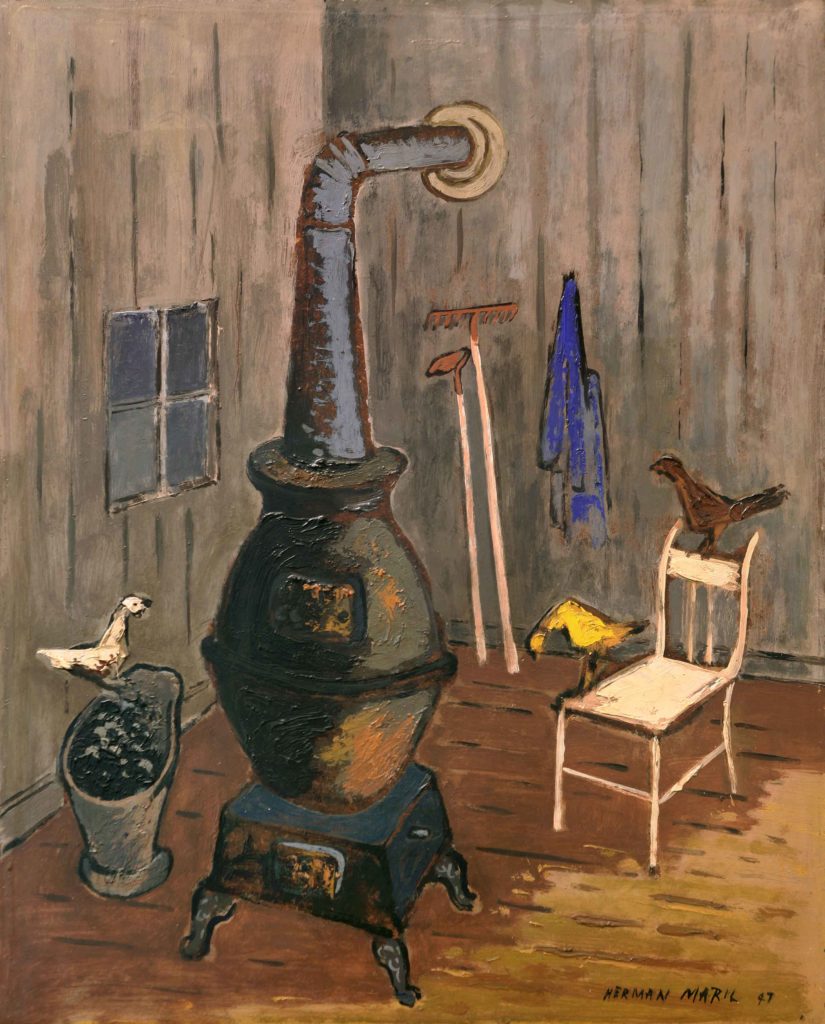
Born in Baltimore in 1908, Herman Maril graduated from the Maryland Institute—Baltimore’s nationally prestigious art academy—in 1928, at which point he had already become respected in Baltimore as a sophisticated Modernist artist. Early in his career, Maril often outlined his images with dark lines, using vertical and lateral forms to create structure, tension, and energy (his use of outline fell away in his later work). At this time his imagery also demonstrated the strong influence of the Ashcan Art movement, which celebrated scenes of everyday life. Maril infused these works with tight structure and a joyful juxtaposition of shapes and colors.
In 1935, the American Magazine of Art published a review by the noted art critic, Olin Dows, who captured the essence of Maril’s works—an essence that remained true throughout the artist’s lifetime: “Each picture has its core; each is beautifully conceived and organized…. Each is distinct in mood… and clothed in poetry.”
Herman Meril, “In the Barn,” 1947, oil on panel, 20 x 16 inches
In 1934, Maril and his work were discovered and ardently admired by the legendary Duncan Phillips, founder of the Phillips Collection in Washington, DC, which now owns an extensive collection of Maril’s works as it does of the paintings of Milton Avery, Maril’s close friend. In 1934, First Lady Eleanor Roosevelt chose a painting by Herman Maril of the Baltimore waterfront to hang in the White House. Years later, in 1977, “Maril’s Interior with Cat,” a 1972 oil painting, was selected to hang in the office of U.S. Vice President Walter Mondale (1977-81).
In the 1940s, Abstract Expressionism changed the face of American art with new artistic reorientations that obliquely provided Maril tacit permission to further develop his own artistic vocabulary. Maril’s newly expanded vision of art embraced the vastness of the beaches, tumbling surf, and extensive ocean vistas of Provincetown, where he spent each summer from 1948 onward. Importantly, Maril also developed friendships with other artists in Provincetown, particularly Milton Avery. Maril and Avery frequently visited each other’s studios and discussed each other’s work, developing a kinship that would impact both artist’s careers.
Herman Meril, “Adolescent,” 1970, oil on canvas, 50 x 36 inches
The art that Maril created in the 1940s proved to be a crucial turning point in his paintings. His canvases became larger, and the sense of space opened up to provide a feeling of expansiveness. His colorations, while still of a limited palette, become more emotional, nuanced, and intimate. His compositions became freer and more daring, and the imagery often energetically tilted toward the viewer as if offering the details for the viewer’s closer perusal. The reductive exposition and warm colorations provide an immediate sense of intimacy with the works—an intimacy that lasted through the decades of his career.
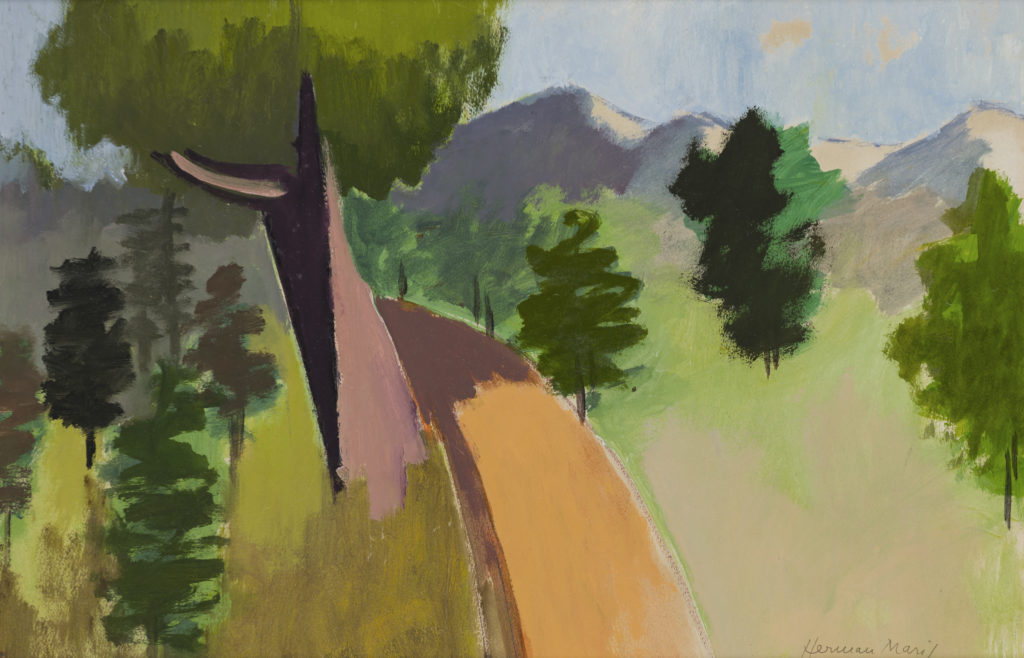
Herman Maril, “Approach to the Adirondacks,” 1965, oil on board, 15.13 x 22.38 inches
Maril’s art is consistently warm and lyrical, but does not easily fit into any specific category of Modernism. His thoughtful, yet intuitive approach culminated in the creation of a body of work that invites his viewers to enter into his painted worlds, through its gently abstracted imagery and nuanced, joyful colorations. As Herman Maril once stated, “I want a stark statement, but a statement that is full of human feeling.”
Maril’s works are in the permanent collections of more than 75 national and international museums, including The Whitney Museum, The Metropolitan Museum, the Walters Art Museum, and the Baltimore Museum of Art. In Washington, DC, Maril’s works can be found in the collections of the Smithsonian American Art Museum, the National Portrait Gallery, and The Phillips Collection. His work is also in the collections of the Bezalel National Art Gallery in Israel. In 1978, Maril was inducted into The American Academy of Arts and Letters.
For more details about Herman Maril and his oil paintings featured in “A Life in Art,” please visit LewAllenGalleries.com.
> Visit EricRhoads.com to learn about more opportunities for artists and art collectors, including retreats, international art trips, art conventions, and more.
> Sign up to receive Fine Art Today, our free weekly e-newsletter
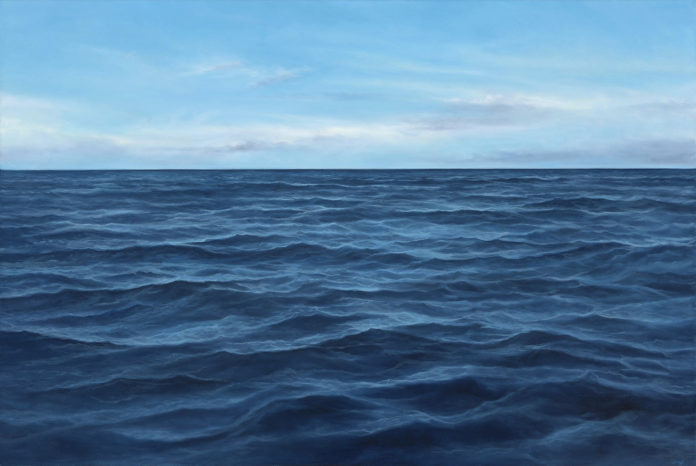
Edward Duff, "The Deep," oil on canvas, 24 x 36 in.
On View > The George Billis Gallery in Westport, Connecticut will be featuring nine new paintings by Michigan based artist Edward Duff, in a show opening on September 1, 2021.
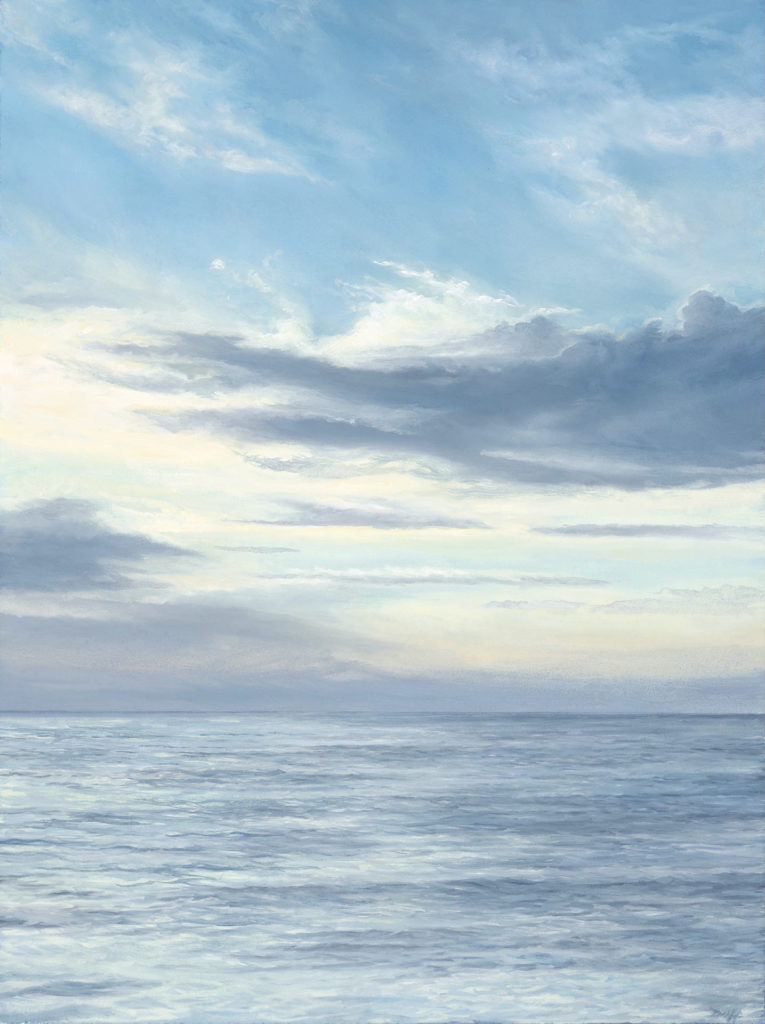
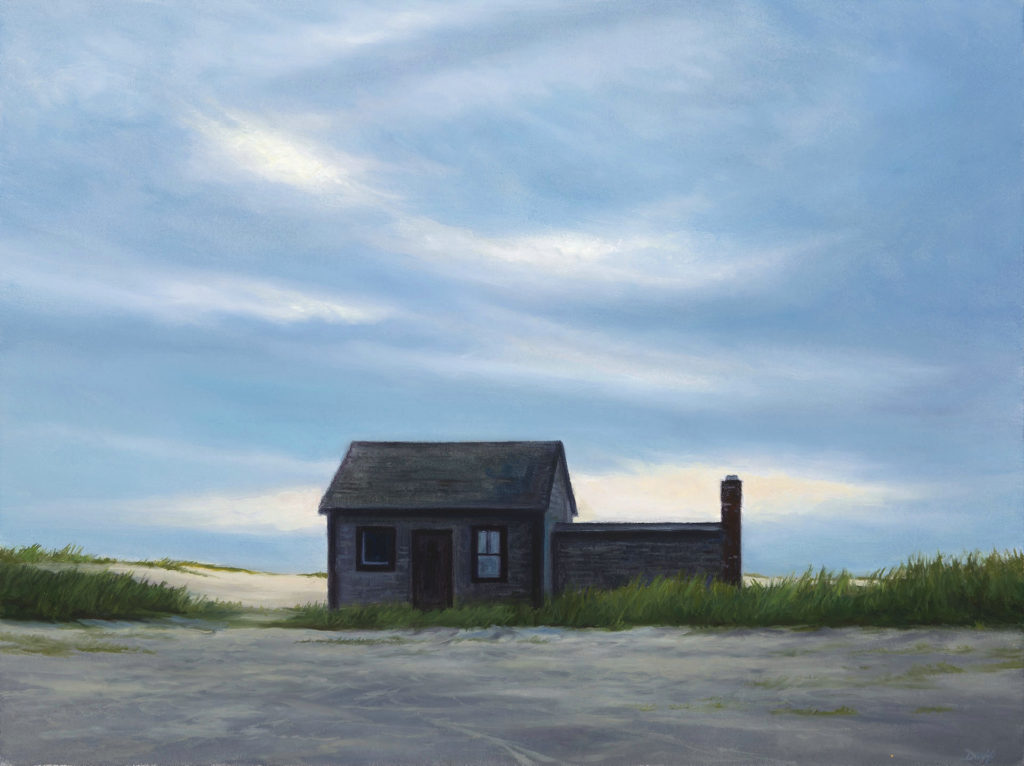
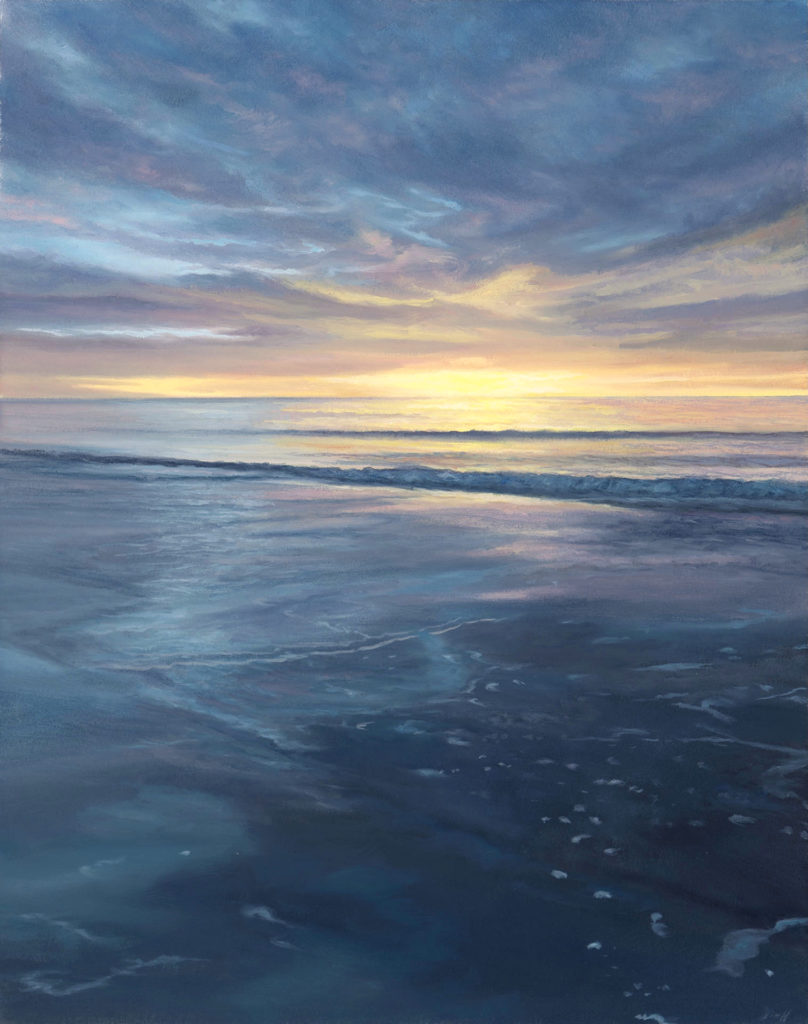
Duff’s oil paintings depict coastal views that are an exploration of the quiet beauty in both the mundane and extraordinary.
Lone houses, storms, fast moving clouds, large expanses of water, and the fleeing effects of light are common themes throughout his work.
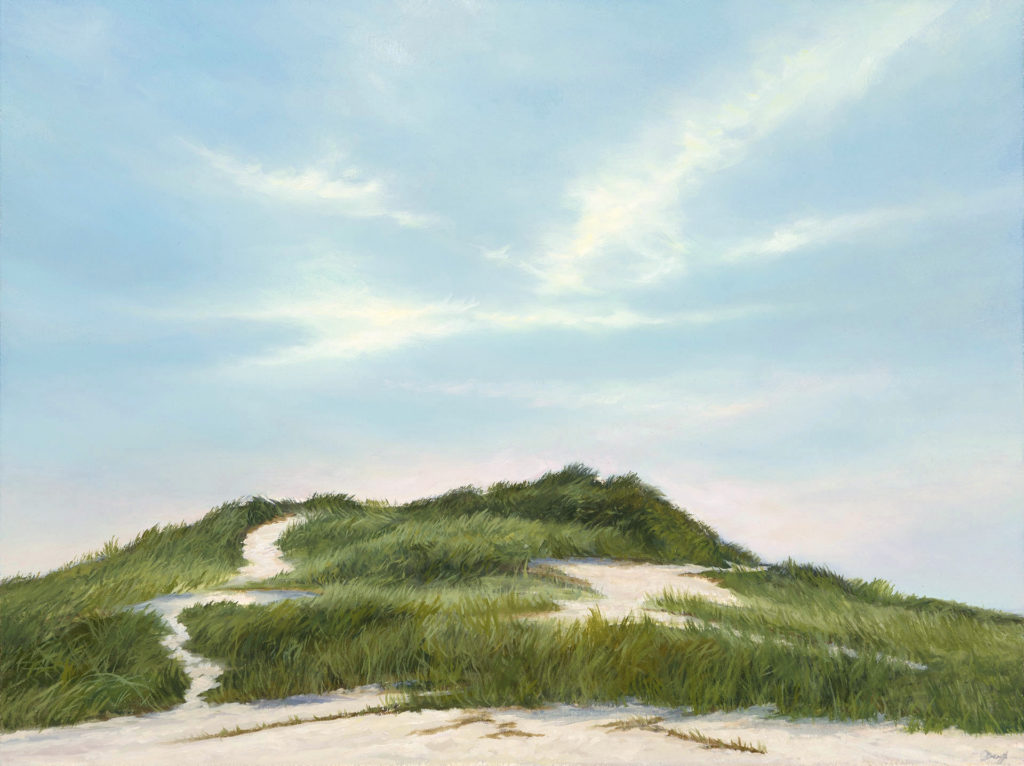
Edward Duff, “Elevate,” oil on panel, 14 x 11 in.Edward Duff, “The Boat House,” oil on panel, 12 x 16 in.Edward Duff, “End of Day,” oil on panel, 14 x 11 in.Edward Duff, “Dune Trails,” oil on panel, 12 x 16 in.
The exhibition will run September 1 through October 3 with an opening reception on September 1. For more details, please visit GeorgeBillis.com.
> Visit EricRhoads.com to learn about more opportunities for artists and art collectors, including retreats, international art trips, art conventions, and more.
> Sign up to receive Fine Art Today, our free weekly e-newsletter
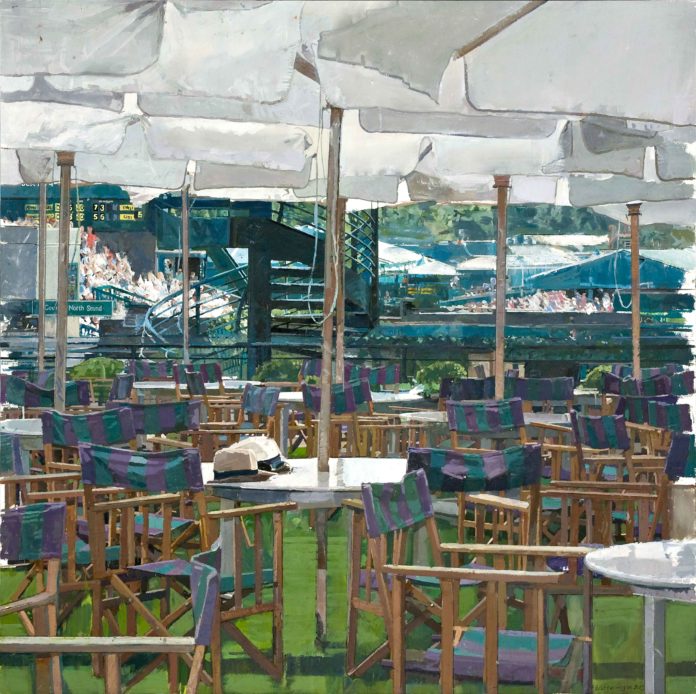
Eileen Hogan, "Members’ Tea Lawn 1," 2009, oil on paper, mounted on board, 34 1/2 x 35 3/4 in., Collection of the All England Lawn Tennis & Croquet Club
From Fine Art Connoisseur’s “Today’s Masters” series on contemporary master artists, a spotlight on Eileen Hogan >>>
Master Artists > Eileen Hogan: Painter-Craftsman
BY PEYTON SKIPWITH
Eileen Hogan (b. 1946), the subject of a 2019 retrospective at the Yale Center for British Art, is one of the most admired figurative artists working in Britain. Though not a familiar name in the often sensation-seeking world of contemporary art, she is no recluse, instead serving as professor of fine art at University of the Arts London, trustee of the Royal Drawing School, and former dean of Camberwell College of Art, where she founded the Camberwell Press.
Over the years Hogan has completed major projects for the Imperial War Museum, the All England Lawn Tennis & Croquet Club at Wimbledon, H.R.H. Prince Charles, and London’s Garden Museum, where she served as artist-in-residence in 2017. These activities and many others are recorded in the well-illustrated, multi-author catalogue Eileen Hogan: Personal Geographies (Yale University Press) that accompanied the exhibition. On view were 70 paintings, 20 sketchbooks, and a dozen books, most never exhibited in North America before.
Now in her early 70s and at the height of her powers, Hogan is truly a painter-craftsman.
Born in London of Irish stock, she has been a compulsive observer, draftsman, reader, recorder, and note-taker since childhood; these habits were honed from age 9, when she was confined to a hospital bed with rheumatic fever for an entire year. At 14 Hogan was already attending Saturday-morning classes at Camberwell School of Art and Design, and she became a full-time painting student there two years later.
Her four years of study were followed by three more at the Royal Academy Schools in London, then a year’s scholarship to the British School at Athens and a further three years at the Royal College of Art. This trajectory constituted a thorough grounding by any standard, but also allowed Hogan a slow and steady development.
At Camberwell, Hogan was obliged to take a subsidiary subject and opted for lettering, submitting herself to the rigors of cutting individual letters in lino from which to print texts. Words have always attracted her, both for their letter-forms and their quirks of usage: they appear frequently not only in her heavily annotated sketchbooks, but also as the motifs that have kick-started various series of paintings.
Examples include the names of such fishing boats as Bountiful, Sweet Promise, and Golden Gain (along with their ports of registration), the names of the beehives in the artist-poet Ian Hamilton Finlay’s renowned garden at Little Sparta in Scotland, or even his battered watering can, Kettle Drum.
A city-based landscape painter may seem to be something of a contradiction, but like the London Impressionist before her, Paul Maitland (1863–1909), that is exactly what Hogan is. Sky, for example, is of little interest to her and is almost invariably omitted from her landscapes.
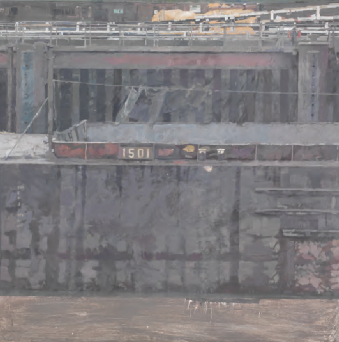
In his introduction to the catalogue of Maitland’s memorial exhibition in London, Walter Sickert described him as living in “Kensington Gardens by day and on the Chelsea Embankment by night.” This is a pattern that Hogan instinctively appreciates; with its rich grays and rusty-clover tints of old iron, her “Trinity Buoy Wharf 1” echoes Maitland’s Thames-side evocations.
Eileen Hogan, “Trinity Buoy Wharf I,” 2015, oil and wax on paper, 26 x 26 in., collection of the artist
Here we see a grim industrial site with its clutter of rusting metals; on a gray day they possess a certain melancholy beauty, bearing witness to the fact that no aspect of the London landscape is too humble to escape Hogan’s scrutiny.
She finds equal delight in the quotidian and the grand, having painted settings as mundane as a community garden, a deserted football ground, and rubbish skips that residents have converted into planters, and as prestigious as the bluebell woods at Kew Botanical Garden and the patrician squares of London’s West End. In all of these instances, Hogan has gravitated toward enclosures rather than rolling countryside.
In 1998 Hogan painted a series of works based on four squares in London — Bryanston, Manchester, Montague, and Portman — through which she walked most mornings on her commute from home to studio. These, and others such as Edwardes Square, which she has also painted, are both public and private: everyone can walk by and admire them through the railings, but only owners of the surrounding houses hold keys to access the enclosed gardens.
In Hogan’s depictions these squares are usually bereft of people, though she notes “there may be an echo or a trace of someone — a bench just vacated, a man in a hat disappearing at the edge.” These squares represent for her the contrast between the human and inhuman aspects of London — a city that is at once a hive and a place of loneliness, a dichotomy that never ceases to intrigue her. In fact, Hogan is also a considerable painter of portraiture, a discipline she says she became involved in “by stealth.”
PEOPLE
Early in Hogan’s career, she saw trees as more important — more individual — than people. For her, a tree has always been specific, not generic, particularly the great London plane trees with their irregular, knobbly trunks and scaly bark, which she loves to draw and paint. People, on the other hand, tended to be little more than cyphers, useful for rhythm or color notes as needed.
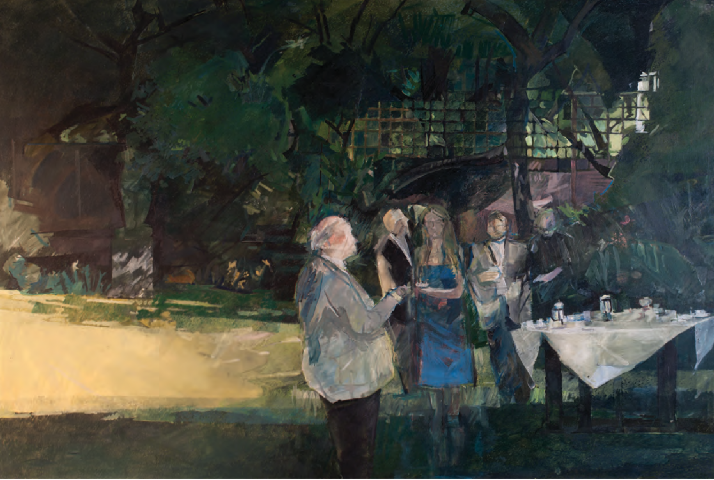
By the early 1990s, however, this began to change. While painting a picture inspired by a luncheon in the gardens of the Chelsea Arts Club, her Royal College tutor, Carel Weight, began to emerge as an identifiable figure. Though not depicted in detail, he is clearly recognizable to all who knew him by his stance.
Eileen Hogan, “Lunch at the Chelsea Arts Club,” 1991, oil on board, 35 1/2 x 47 1/4 in., private collection
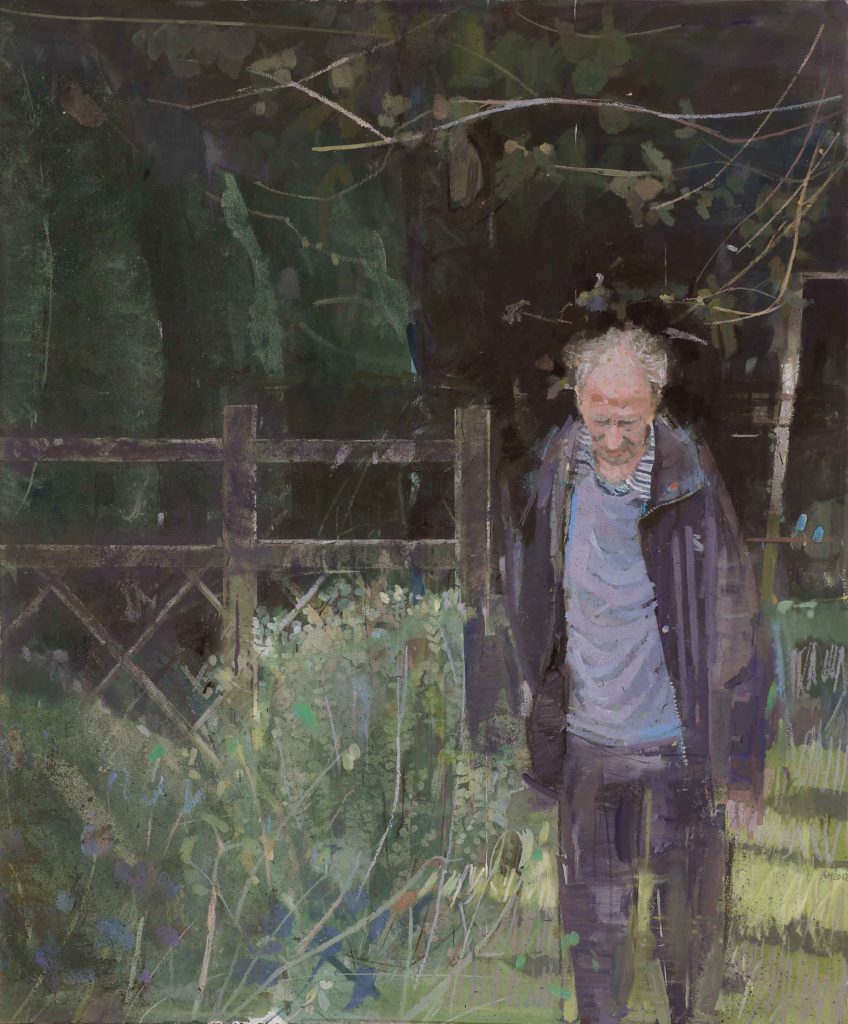
Since then, Hogan has continued to capture the body language of her subjects, as we can see in the series of paintings of Ian Hamilton Finlay, one of which is now in the Yale Center for British Art’s permanent collection. Hogan had originally encountered Finlay when her partner, Cathy Courtney, was interviewing him for the British Library’s oral history initiative.
Eileen Hogan, “Ian Hamilton Finlay,” 2012, oil, wax, and charcoal on paper, mounted on board, 39 3/8 x 33 1/4 in. (framed), Yale Center for British Art, acquired with funds from the Bequest of Daniel S. Kalk
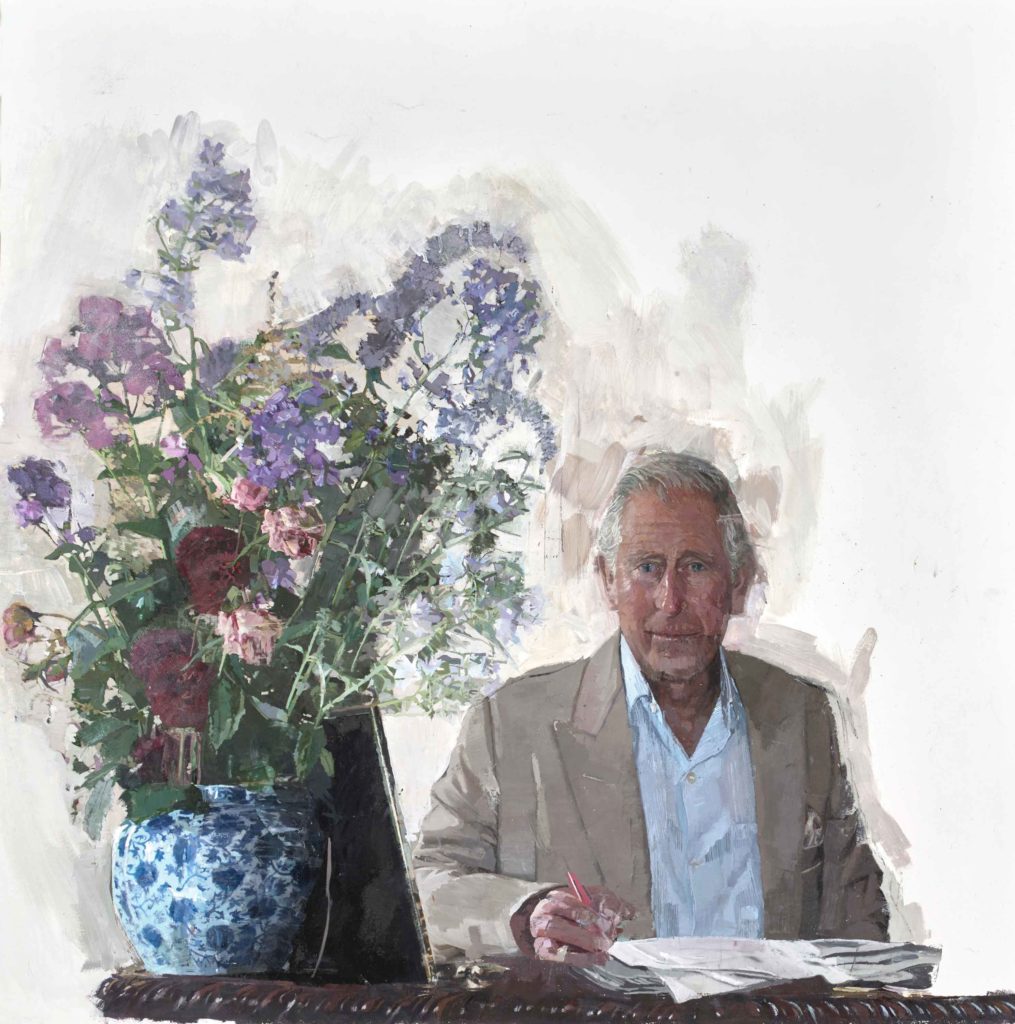
Since then, Hogan has sat in on the interviews of many other individuals, noting how their expressions and postures change as they describe different experiences and phases of their lives. Her portrait study of Brian Webb wearing the robes of Master of the Art Workers’ Guild caught the attention of the Prince of Wales, leading him in 2015 to commission portraits of “Tony” Leake and Alistair Urquhart as part of a series he conceived to honor the surviving veterans of D-Day 70 years on. Later Prince Charles commissioned portraits of himself and the Duchess of Cornwall, as well as a record of the wedding of Prince Harry and Meghan Markle last July.
Eileen Hogan, “His Royal Highness, The Prince of Wales” (Version 2), 2016, oil, wax, and charcoal on paper, mounted on board, 34 1/4 x 34 1/4 in., Garden Museum, London
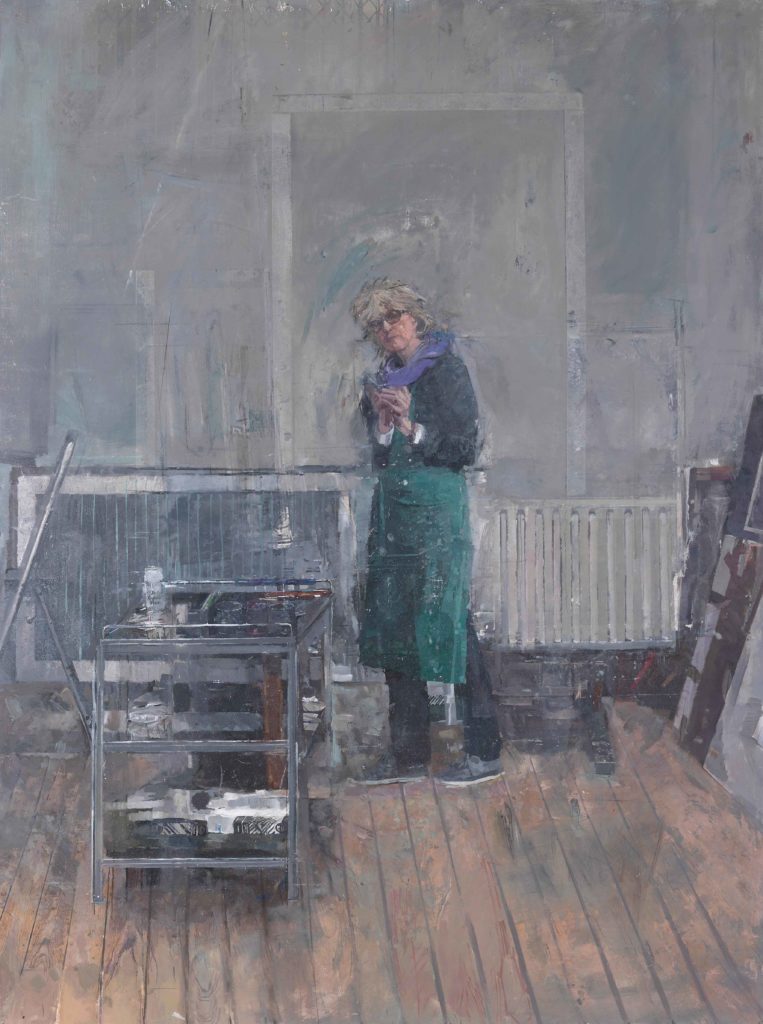
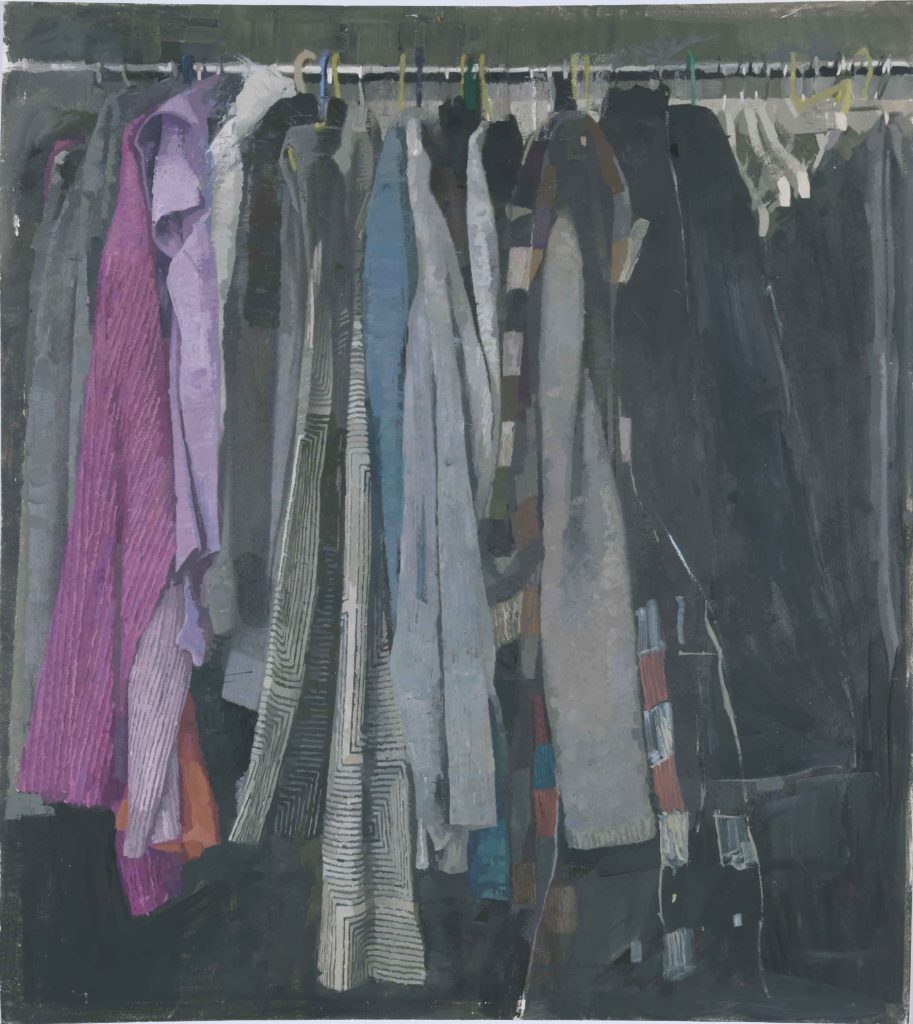
For any artist, the most readily available model is oneself. Hogan’s large “Self-Portrait in Pembroke Studios” — in her typical hues of gray, gray-green, and mauve, with strong emphasis on the geometrical pat-tern of furniture, the paint trolley, and bare floorboards — is one of her most ambitious to date. She has also painted Self-Portrait through Wardrobe 2; though she does not actually appear here, her presence, individuality, sense of style, pattern, and design clearly identify her as the absent sitter.
Eileen Hogan, “Self-Portrait in Pembroke Studios,” 2015, oil, wax, and charcoal on paper, mounted on board, 54 3/4 x 40 1/4 in., collection of the artistEileen Hogan, “Self-Portrait through Wardrobe 2,” 2015, oil and wax on paper, 24 x 17 3/4 in., collection of the artist
STARING FOR LONG STRETCHES
Pattern and design have always interested Hogan, coming to the fore during her year in Greece, where the strong, clear sunshine dramatized contrasts between light and shade. This particularly impressed her as she sat in sidewalk cafes observing the world, leading to a series of paintings and watercolors based on chairs and shadows.
The ornithologist W.H. Hudson, while recalling his boyhood on Argentina’s pampas in Far Away and Long Ago, describes his ability to stand motionless “staring at vacancy,” a propensity that disturbed his mother until she discovered he was observing birds and insects. Hogan shares this ability, and indeed the poet W.H. Davies’s lines — What is life if full of care / We have no time to stand and stare? — could almost have been written for her.
Some years ago, Hogan sent me a postcard from Tuscany illustrating a detail of a painting by Piero della Francesca — one of her favorite artists. On its back she wrote, “The churches and museums have been almost empty so lots of room to draw and stare for long stretches. It’s perfect.”
Hogan is contemplative by nature. She works slowly and thoughtfully, and her paintings evolve by degrees. She draws and redraws her subject, starting from notes and sketchbook jottings, which may be no more than a few seemingly random lines, then gradually working up her composition. Hogan often uses photographs as an aid, computer-manipulating them to help isolate and define the underlying geometry of her composition.
Initially she works on a small scale to produce a near-definitive study, often no bigger than a postcard. If this pleases her, Hogan will paint a larger version, laying her paper flat and covering the surface with a layer of wax before starting to define the composition with small marks, made with sable brushes to create a delicate tracery. Then, after adding another layer of wax, she mounts the paper onto thick card so she can place it on her easel and start working more freely with larger brushes and with charcoal.
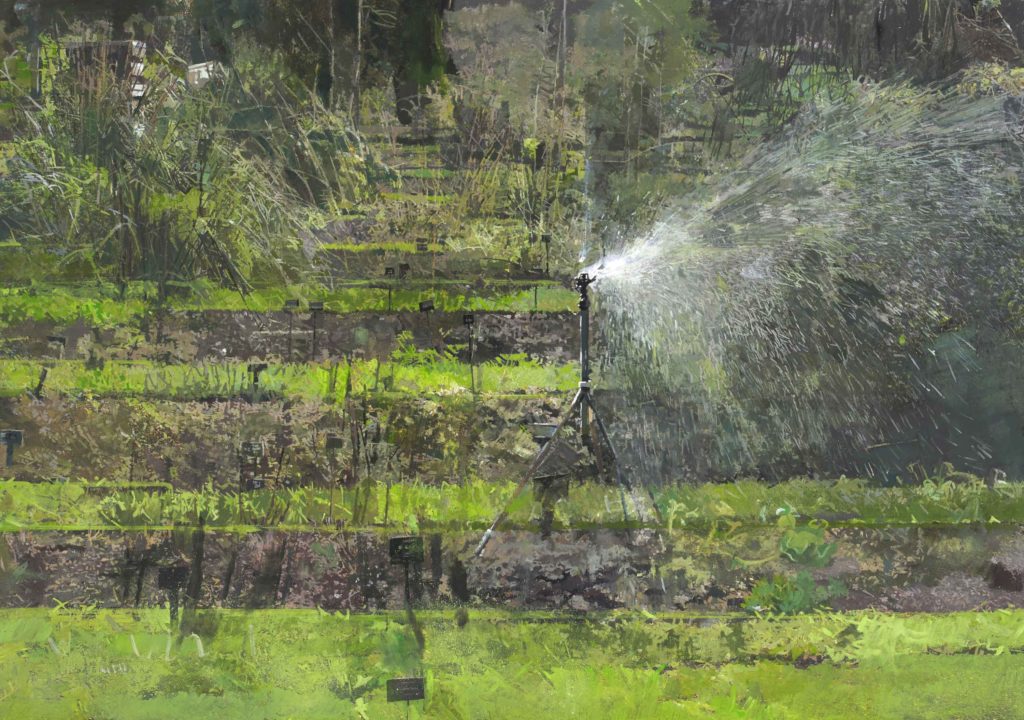
In this painstaking manner, Hogan’s grand compositions finally emerge. Few are grander and more reflective of this technique than “Chelsea Physic Garden 2, 8 September 2016,” in which every touch of the brush is as light and sparkling as the airborne water droplets emitted by the sprinkler itself.
Eileen Hogan, “Chelsea Physic Garden 2, 8 September 2016,” 2018, oil, wax, and charcoal on paper, mounted on board, 39 1/4 x 62 1/4 in., collection of the artist
In 1956 the suspense filmmaker Henri-Georges Clouzot directed his only documentary, The Picasso Mystery. In it, the maestro created an entire painting on camera, but then Clouzot reversed the footage to show the brushstrokes being “removed” one by one. For a moment, the painting improved before the whole thing fell to pieces.
I have known Eileen Hogan for almost 40 years and have watched her develop as an artist; she has seldom, if ever, spoiled a work by going too far. Just the opposite, in fact, as she has never been beguiled by the heavily laden brush and bold gestures. Even early in her career, though confident, she would stop short rather than outrun her ability to control the final image. Those works from the 1980s retain a tentative yet delightful quality.
I recall one instance when Hogan borrowed back an older painting of seagulls from this period for an exhibition; having grown in experience, she recognized its shortcomings and proceeded to take it a stage further, ignoring the fact that it was no longer her property. Fortunately, the owner, a practitioner of the law, agreed that she had considerably improved it, but still felt bound to issue a written reprimand, which Hogan remembers to this day.
It is incredible to think that, at some future date, Hogan might look back on “Self-Portrait in Pembroke Studios” or “Chelsea Physic Garden 2” and wish to improve them, yet, despite her 73 years, she feels she is still learning. It is rare, and a true distinction, for an artist’s later works to be her best, but Hogan seems destined to join that elite circle.
> Sign up to receive Fine Art Today, our free weekly e-newsletter to discover more spotlights on master artists
How did you get started and then develop your career?
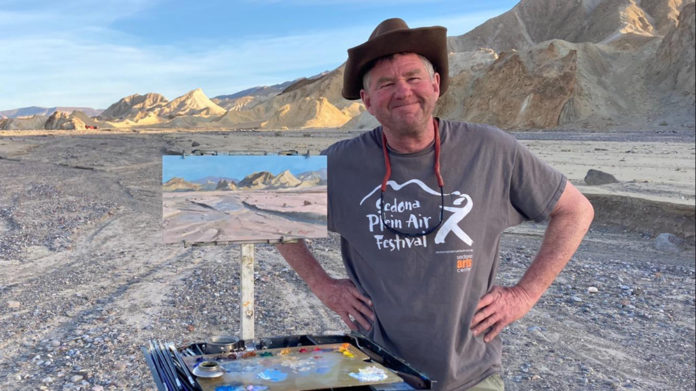
Richard Boyer: In grammar school the art teacher must have noticed something, and every year she put together an art box filled with supplies and hand delivered it to me during class. In high school I sold my first painting at an art street festival, a painting of the Andromeda Galaxy for a hundred dollars, and there was no going back after that!
I went to the University of Utah and studied portrait painting under an English professor, then started knocking on gallery doors. They told me they were not looking for any new artists and don’t let the door hit you on the way out!
Years later as one gallery owner put it, “I only really consider artists after they have painted 10,000 works.” I finally got into my first gallery.
How do you describe success?
Success in my book is more or less making a living from your artistic endeavors. The bottom line is you as an artist you need to pay the bills and support yourself and the family. Easier said than done, I know. How many times do you get knocked down, brush off the dust, and hit it all again? Maybe this describes the successful artist — that blind determination to keep trying until you get it right!
How do you find inspiration?
Inspiration starts when you consider it a job and start painting every day with a set amount of working hours. The more you paint, the easier it becomes to come up with subject matter.
What is the best thing about being an artist?
The hours by far are the best thing, then the traveling to different locations to paint.
Who do you collect?
As an established artist I have traded many works with some contemporary art friends to the point where I almost have too much!
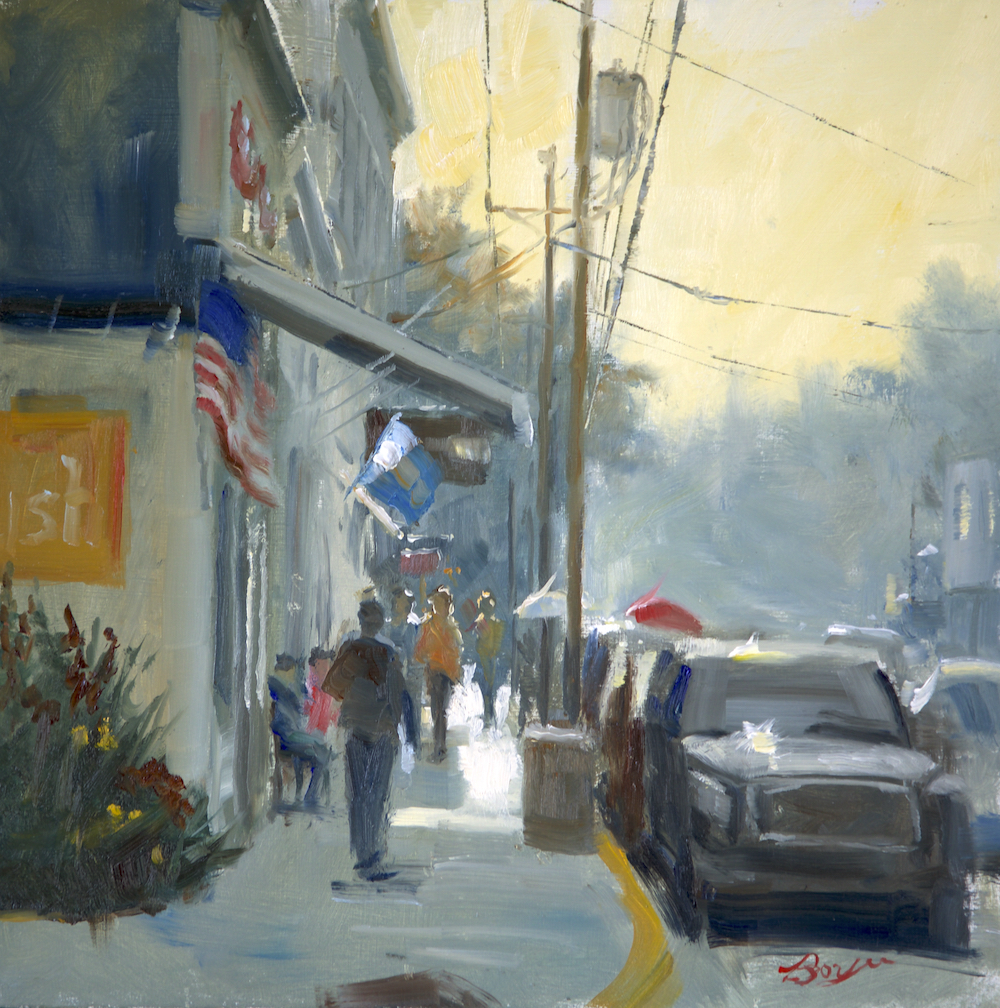
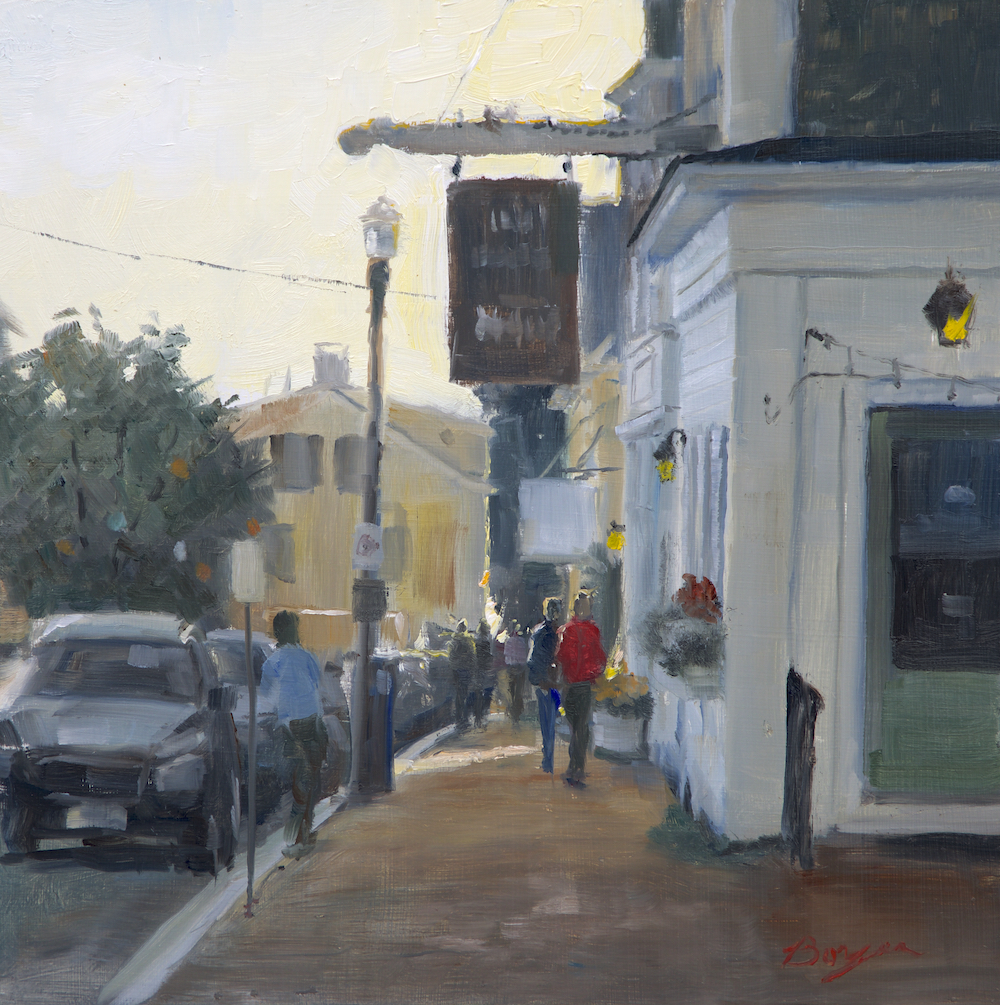
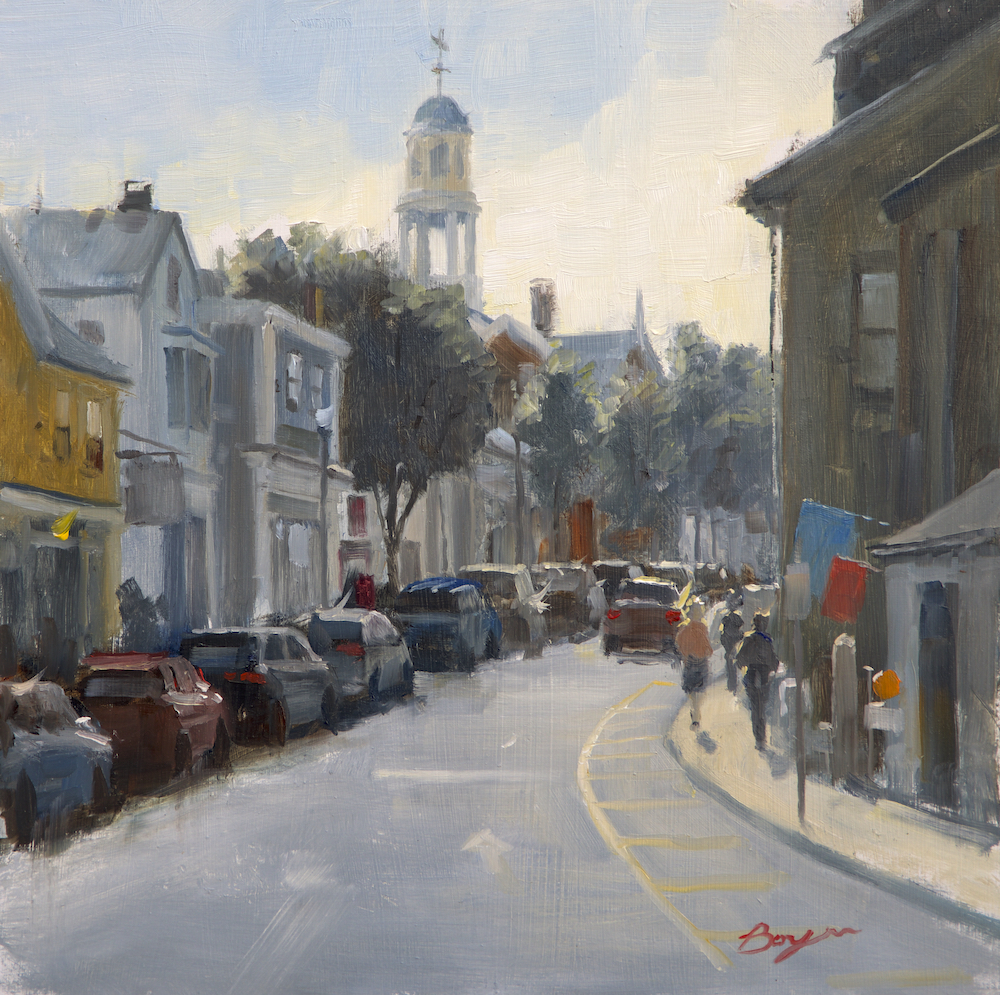
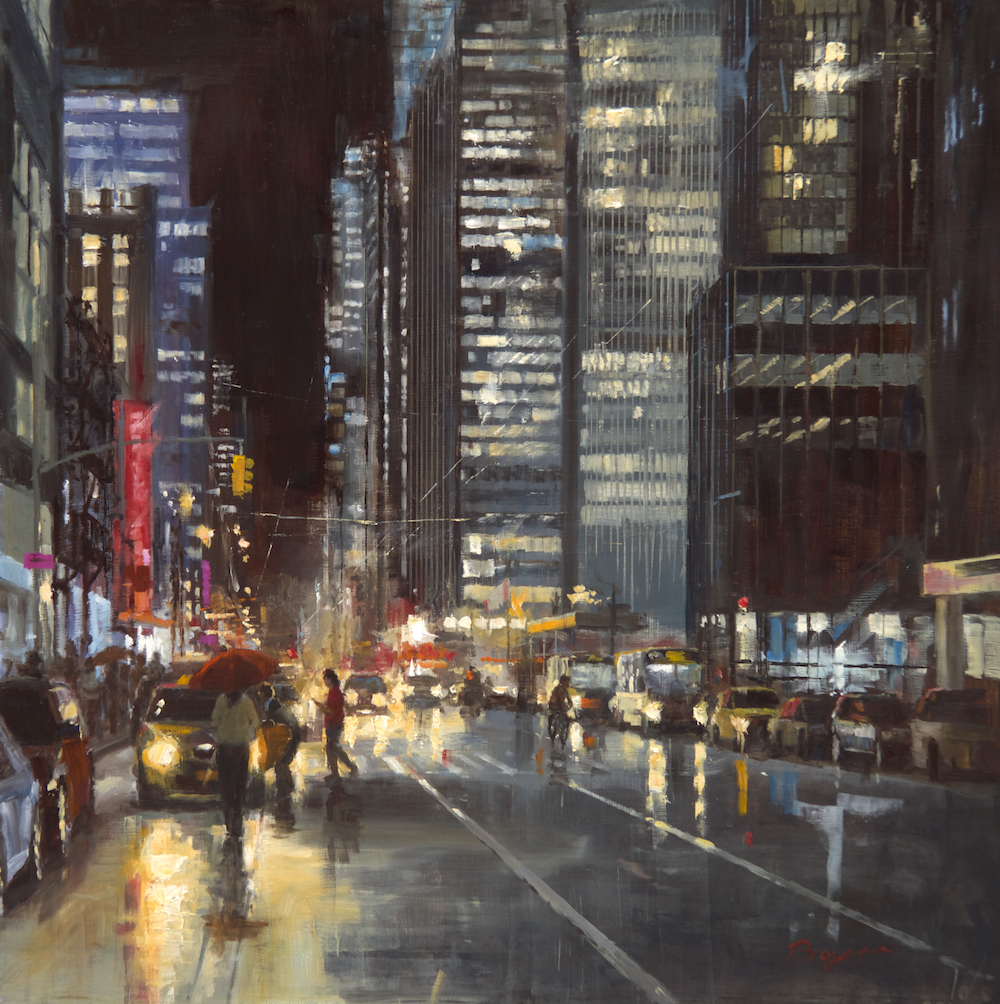
Richard Boyer, “Fish Creek, Wisconsin,” 12 x 12 in., oil on board, 2021Richard Boyer, “Gallery Walk in Rockport,” 12 x 12 in., oil on board, 2021Richard Boyer, “Main Street in Rockport,” 12 x 12 in., oil on board, 2021Richard Boyer, “Taxi Ride Home,” 30 x 30 in., oil on board, 2021
As part of our effort to continue to help artists and art galleries thrive, we’re proud to bring you this week’s “Virtual Gallery Walk.” Browse the artwork below and click the image itself to learn more about it, including how to contact the gallery.
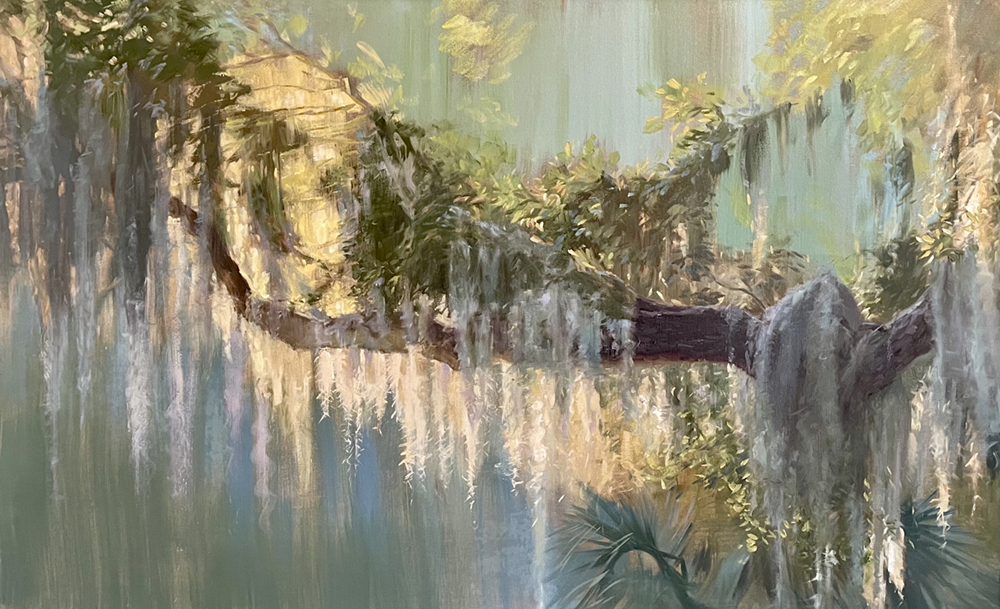
Moss Curtain by Rani Garner, Oil, 30 x 48 in. (32 x 50 in. floater frame); Anderson Fine Art Gallery
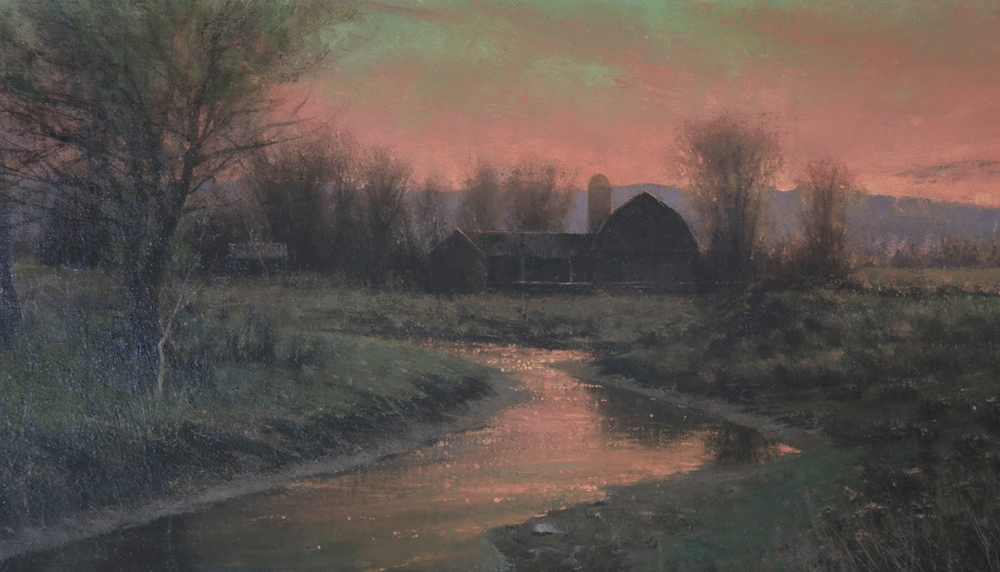
Pastoral Dusk by D. Eleinne Basa, Oil on linen, 12 x 24 in.; American Tonalist Society
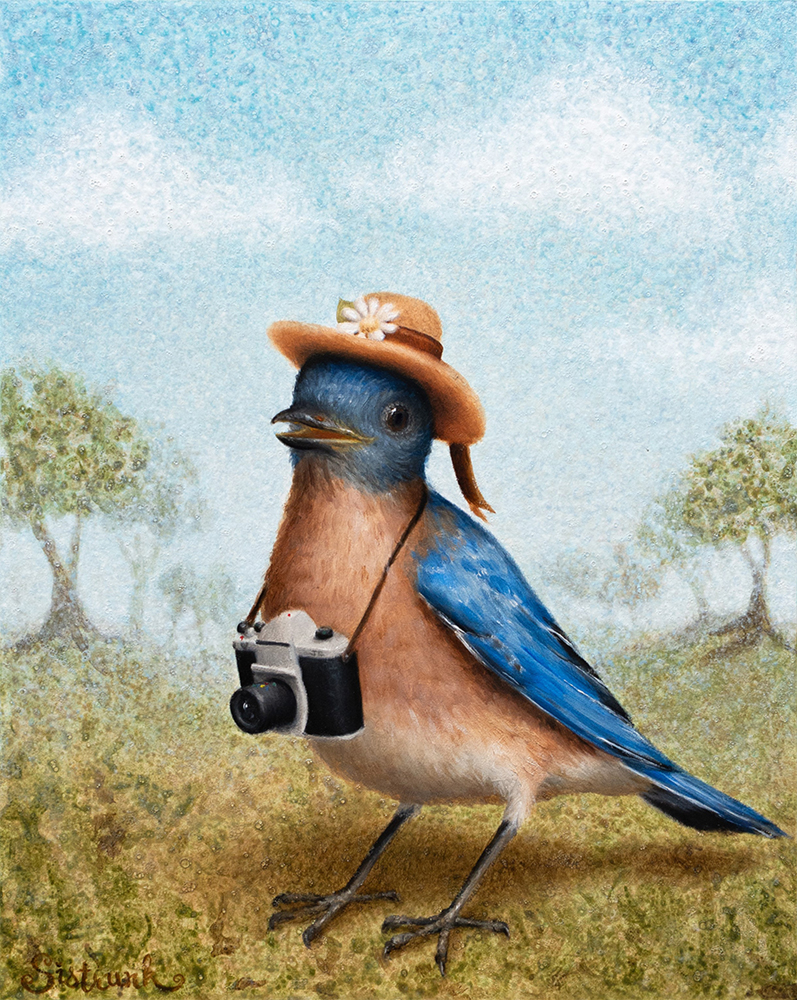
Photography Expedition by Beth Sistrunk, Acrylic and oil on panel, 10 x 8 in., Signed; Rehs Contemporary
Theatre du Vaudeville by Antoine Blanchard, Oil on canvas, 18 x 21.25 in., Signed; Rehs Galleries, Inc.
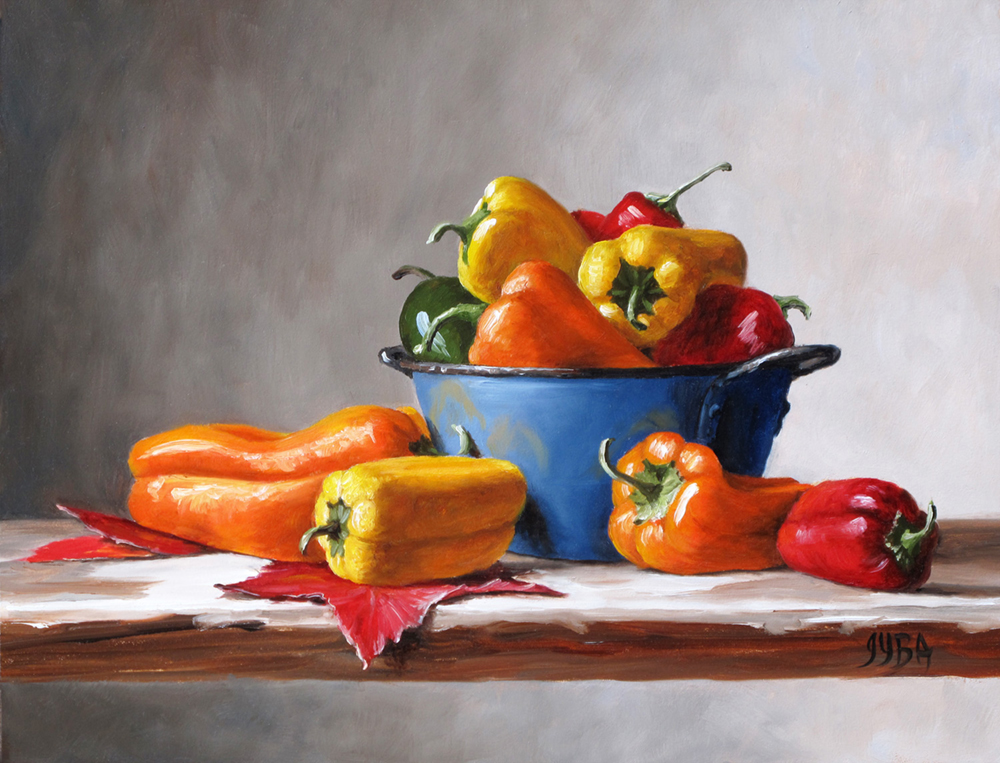
Colorful Peppers by Julie Y Baker Albright, Oil on panel, 8 x 10 in., 16 x 18 in. framed; Vermont Artisan Designs
Perhaps You’ve Heard The Song by Dale Terbush, Acrylic, 18 x 24 in., ArtzLine.com
Three Amigos by Geoffrey C. Smith, Original oil on canvas, 36 x 48 in.; Geoffrey C. Smith Galleries
Want to see your gallery featured in an upcoming Virtual Gallery Walk? Contact us at [email protected] to advertise today. Don’t delay, as spaces are first come, first served, and availability is limited.
Fill your mind with useful art stories, the latest trends, upcoming art shows, top artists, and more. Subscribe to Fine Art Today, from the publishers of Fine Art Connoisseur magazine.