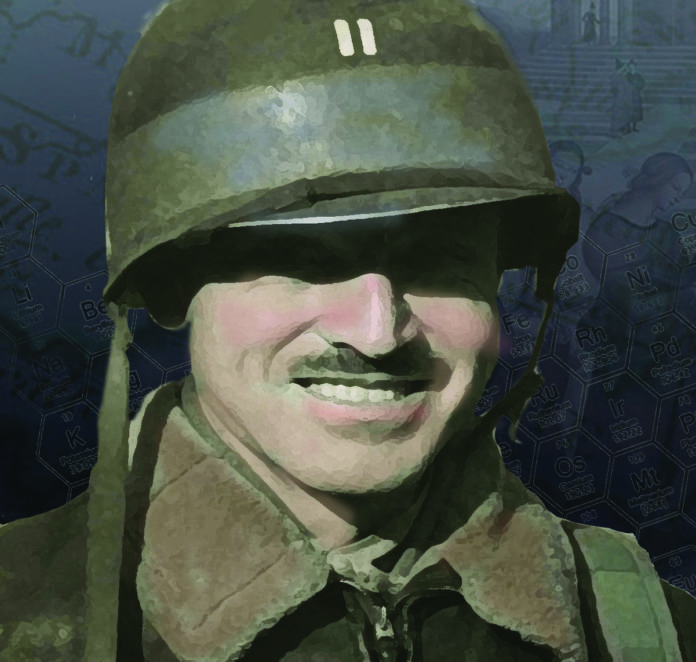
The new 81-minute documentary Stout Hearted: George Stout and the Guardians of Art tells the story of George L. Stout (1897–1978), an art student from Winterset, Iowa, who led the Monuments Men during World War II.
This now-famous military unit was tasked with retrieving stolen art from the Nazis.
The film goes on to explore Stout’s pioneering efforts in art conservation, which elevated that discipline into a modern science.
Many of his innovations are used today to preserve masterworks from deterioration.
Today, the U.S. Committee of the Blue Shield continues the work of Stout and the Monuments Men by protecting cultural heritage globally.
The film was directed by Kevin Kelley and produced by Marie Wilkes for New Mile Media Arts and is distributed by Heritage Broadcasting Service.
Below, watch a video related to the film and the Monuments Men:
.
> Visit EricRhoads.com to learn about more opportunities for artists and art collectors, including retreats, international art trips, art conventions, and more.
> Sign up to receive Fine Art Today, our free weekly e-newsletter
On View: “George Catlin on Indigenous Land”
The Heard Museum (Phoenix, Arizona) heard.org
through Summer 2022
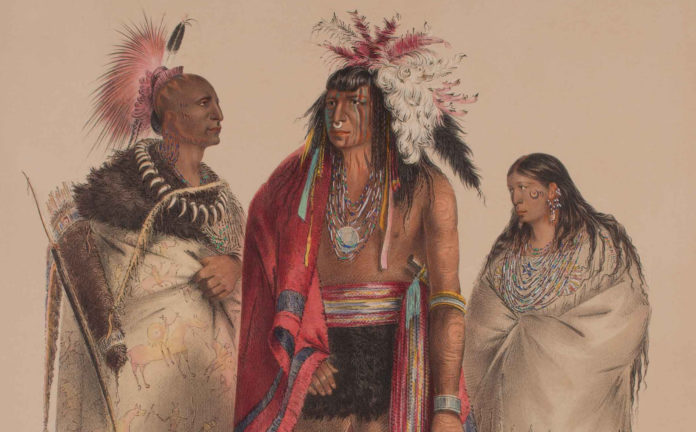
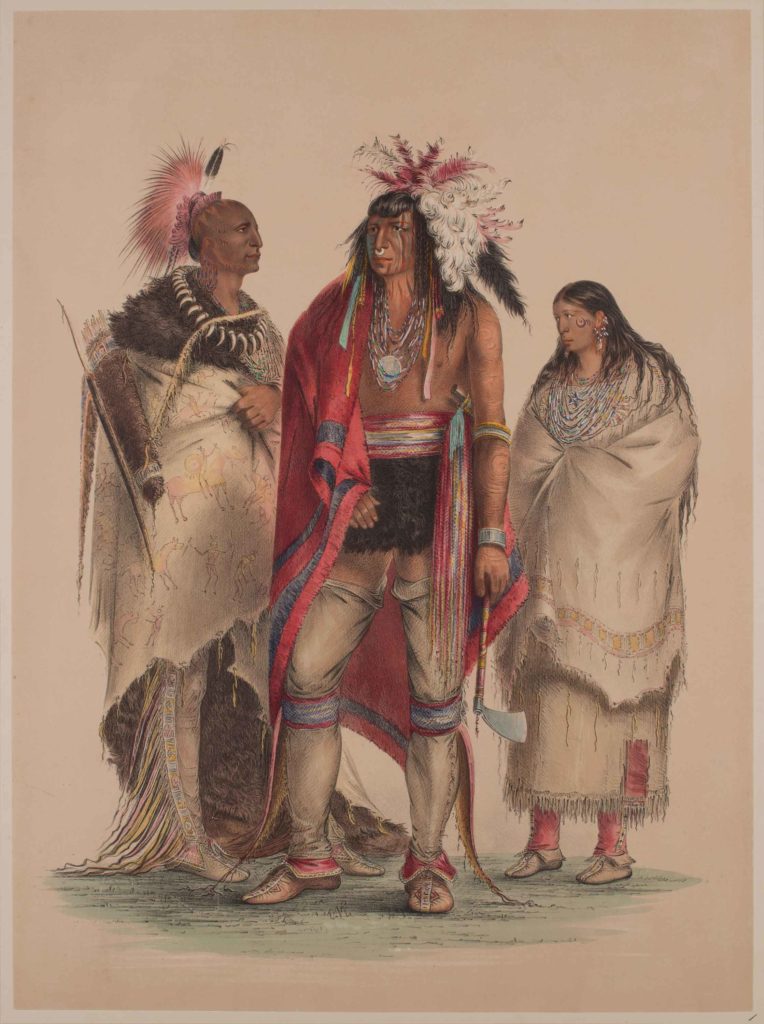
GEORGE CATLIN (1796–1872), “North American Indians” (Plate 1 in the North American Indian Portfolio), 1844, hand-colored lithograph on paper, 17 1/2 x 13 in., Heard Museum, gift of Laura and Arch Brown
The Heard Museum’s current exhibition, “George Catlin on Indigenous Land,” features selections from an 1844 portfolio of 25 hand-colored lithographic plates, donated recently by the collectors Laura and Arch Brown.
A self-trained artist who had practiced law for two years, George Catlin made five trips through the West between 1830 and 1836, producing the single largest pre-photographic record of its indigenous peoples. Ultimately, he painted more than 300 portraits of people from nearly 40 tribes, as well as 175 landscapes and many scenes depicting customs and daily life.
Catlin was respectful of the people who posed for him, though he never shared the profits he made while exhibiting and publishing his “Indian Gallery” throughout the U.S. and Europe. In fact, he repeatedly faced financial hardships, including a jail term for indebtedness in London, where these particular lithographs were printed.
> Visit EricRhoads.com to learn about more opportunities for artists and art collectors, including retreats, international art trips, art conventions, and more.
> Sign up to receive Fine Art Today, our free weekly e-newsletter
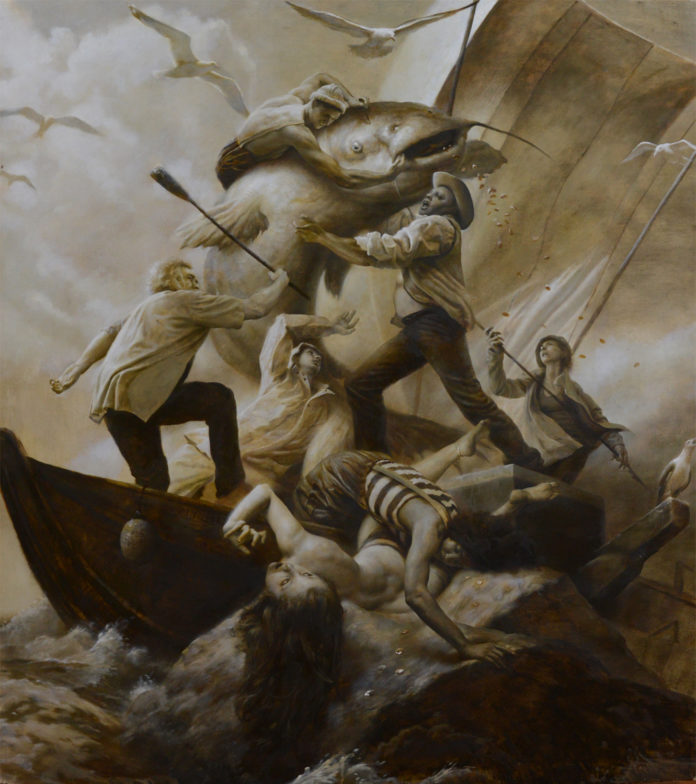
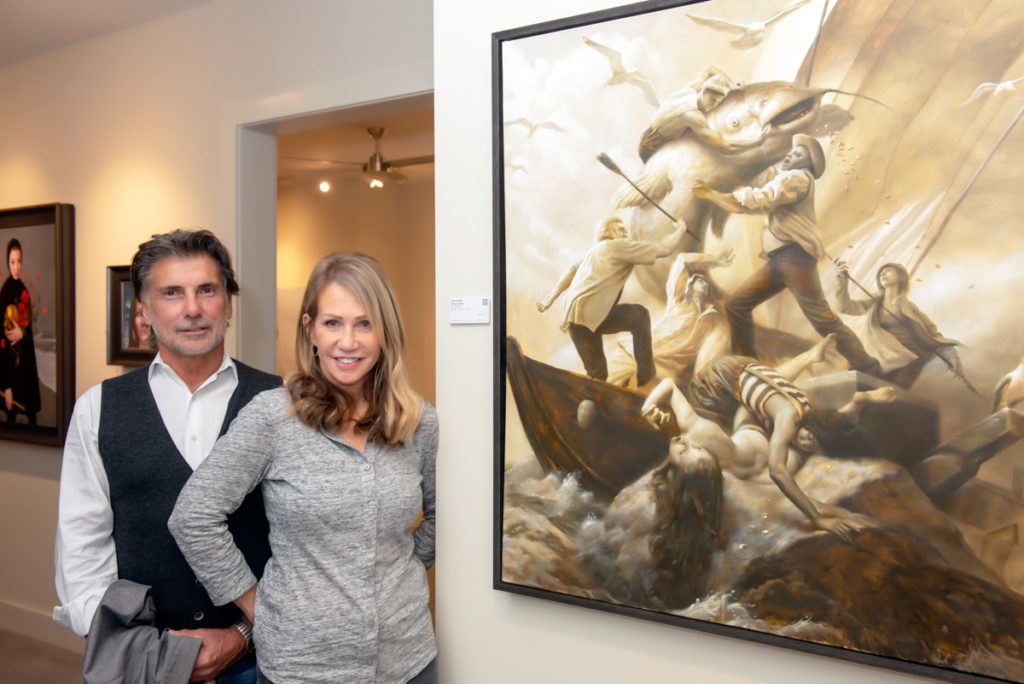
ADAM MILLER (b. 1979), "Taming Leviathan," 2014, oil on canvas, 40 x 36 in.
Featured Art Collection > Mike and Liz Delesia live in a sun-filled house in suburban Long Island. “Our art collection is modest,” Mike explains, “but it does give us a certain feeling of accomplishment. It truly warms our home and enriches our family life.”
Mike and Liz Delesia
Mike says that his parents lacked the resources to expose their family to any art forms, so it was not until 2008 that he and Liz made their first serious acquisition at a benefit auction — a print by Clifford Bailey titled “The Hornets.” Since then, the couple have assembled a collection that includes works by Michael Carson, Nova Czarnecki, Dana Hawk, Andrea Kowch, Shana Levenson, Adam Miller, Yana Movchan, Kadir Nelson, Kevin Sartin, Margo Selski, Armando Valero, and Pamela Wilson.
Most of these purchases have been made from RJD Gallery in Bridgehampton, which is located 65 miles east of the Delesias’ home. Meeting the gallery’s principal, Richard Demato, marked a key “turning point” in their collecting adventure, Mike says, though a few works have been acquired directly from the artists. The Delesias now consider Andrea Kowch a friend and they correspond regularly with Shana Levenson. Mike notes, “I cherish every opportunity we have to meet the artists represented in our collection.”
He continues, “In the very short time I have been collecting, I am concerned to observe ‘a rush to produce.’ Talent and meticulousness are important to me; in some cases, it appears that artists are expediting their works through the process, for one reason or another.” Though this does not pertain to the works hanging at the Delesias’ home, it is nonetheless a situation that everyone involved should be concerned about.
On a brighter note, Mike adds: “I still find myself staring at the artworks with all of the wonder I felt when we first hung them on the walls.” Surely no artist could ask for more.
> Visit EricRhoads.com to learn about more opportunities for artists and art collectors, including retreats, international art trips, art conventions, and more.
> Sign up to receive Fine Art Today, our free weekly e-newsletter
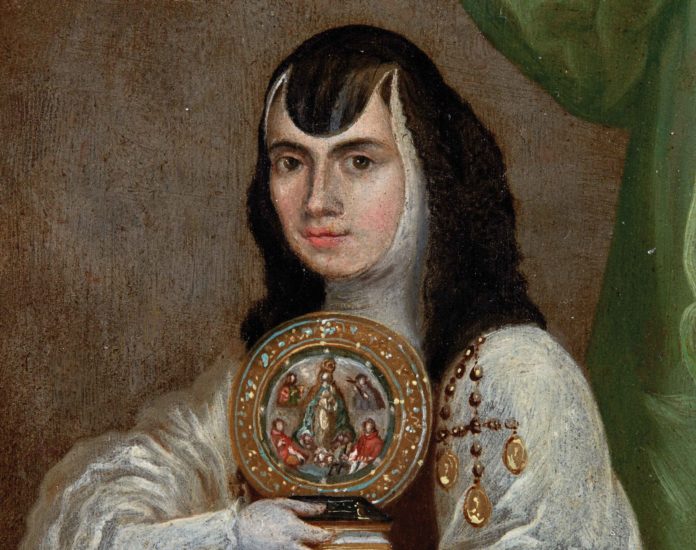
Detail of "A First Portrait of Sor (Sister) Juana Inés de la Cruz at the Age of 25" (full portrait below)
Colnaghi Gallery has announced “Discovering Viceregal Latin American Treasures,” the first commercial exhibition on this topic staged on such a large scale.
More from the gallery:
At Colnaghi’s locations in New York and London will be more than 100 paintings, sculptures, textiles, and objects from the 17th and 18th centuries, along with Pre-Columbian and modern works from the region.
The checklist has been assembled with the Montevideo-based expert Jaime Eguiguren, and all works can be examined via the virtual reality tour on Colnaghi’s website.
As the Spanish began colonizing Latin America, art became a powerful tool for the Catholic Church.
At first, sculptures and paintings were imported from Spain, but soon the church set up guilds and workshops to train indigenous artisans.
Illustrated here is a previously unpublished portrait of the poet Sor Juana — the only known extant image created while she was alive.
Anonymous (Mexico), “A First Portrait of Sor (Sister) Juana Inés de la Cruz at the Age of 25,” 1673, oil on copper, 4 1/2 x 3 1/2 in., on view at Colnaghi London
At a Glance:
“Discovering Viceregal Latin American Treasures”
New York and London colnaghi.com
Through September 10, 2021
> Visit EricRhoads.com to learn about more opportunities for artists and art collectors, including retreats, international art trips, art conventions, and more.
> Sign up to receive Fine Art Today, our free weekly e-newsletter
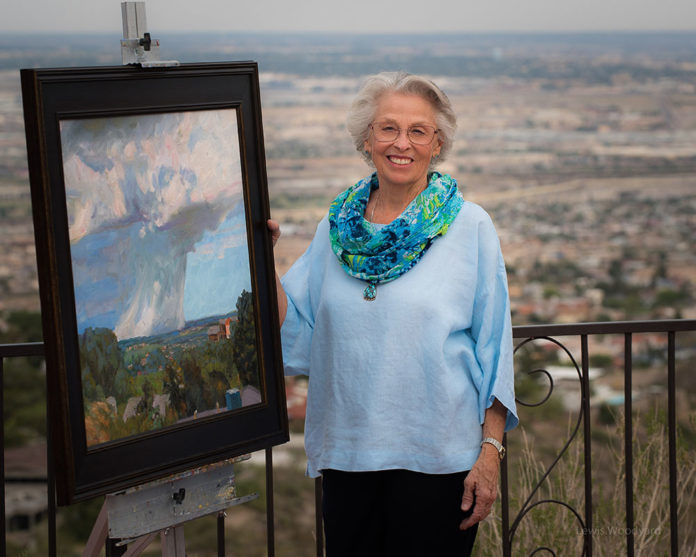
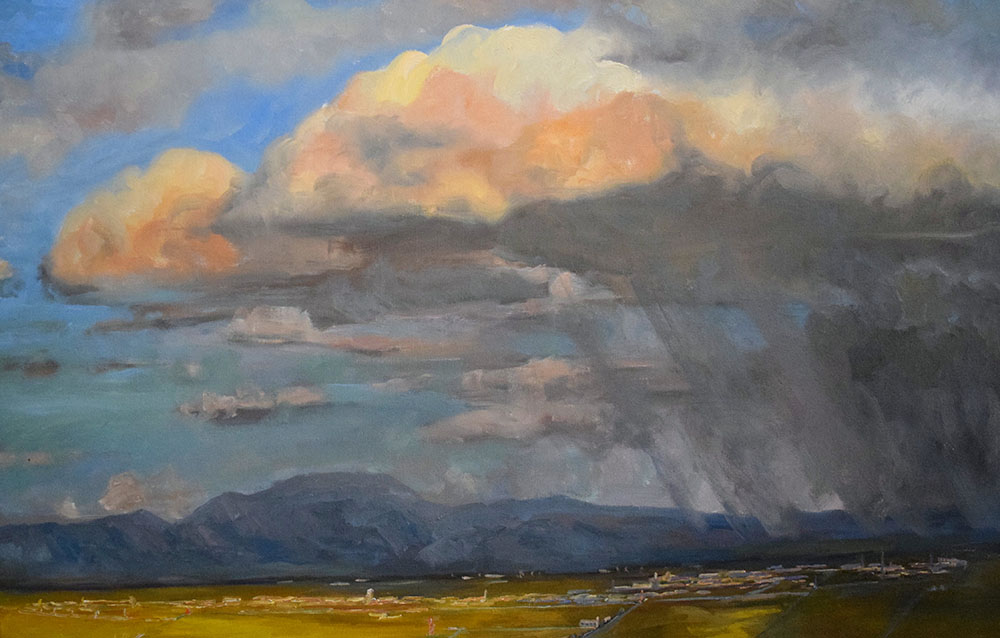
Nina Cobb Walker with her painting “Cloudburst,” 24 x 30 in., oil, 2013
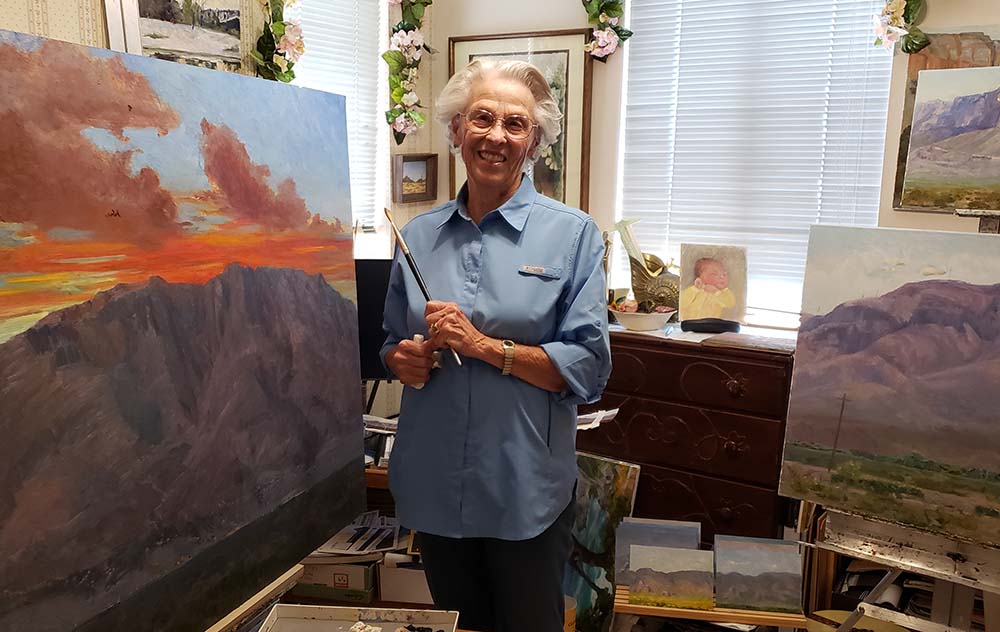
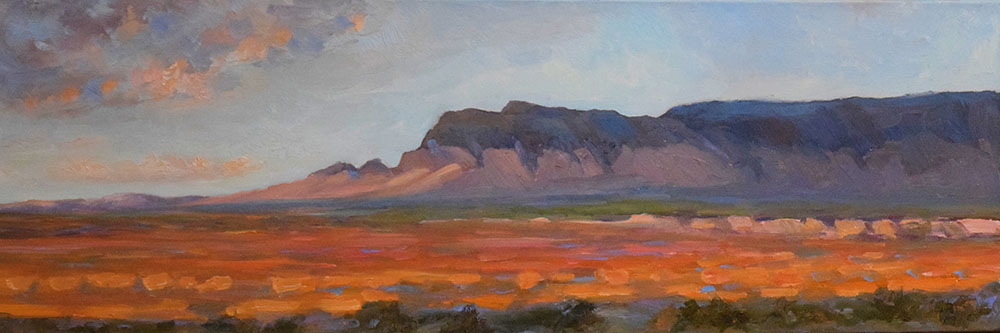
Nina Cobb Walker in her studio working on her mountain series
How did you get started and then develop your career?
Nina Cobb Walker: After years of attending art events and plein air sessions with my mother, Lee Cobb, a local artist, and her artist friends, I finally realized I really liked to do this. I had a lot of exposure to art growing up, and after my first child was born, I didn’t have to work full-time; I had the opportunity to pursue my interest in art. I worked with stained glass, pastels, and watercolors. After meeting a Russian artist who made El Paso his home, his work made my heart sail, and I knew I wanted to paint in oils. He became my teacher, mentor, friend, and to this day is a huge influence in my art. I realize that the more I know, the more I don’t know. I continue to paint, read, go to art shows, exhibits, and museums.
I feel that my career began to take off once I was accepted into art exhibits, festivals, and publications. I was lucky enough to even win some awards. Knowing that I wanted to always paint at a higher level, find my own voice, and continue to challenge myself to grow as an artist, I began teaching and attending art conventions. I had the opportunity to see high level artists demonstrating their technique and learn about marketing. I was able to take my career in a more positive direction. I was gaining recognition and really finding my own voice and style. As a result, I was chosen by a gallery, Cate Zane, who represents me and they have been a big boost to my career with weekly newsletters, promotions, and exhibits.
Now, I find myself delving deeper into subject matter; at the moment, I am working on a collection of large pieces, a challenging area for me—painting the eastside of the Franklin Mountains and trying to convey the beauty and magnificence of the area.
How do you describe success?
Success to me is my art patrons purchasing my art to hang in their home to be part of their life, and when I see my students continue to grow, learn, and be successful. My success also comes from the support of my family and collectors.
How do you find inspiration?
As a native El Pasoan who loves the border and the southwest region, with its varied landscapes, my surroundings are a constant source of inspiration. As a trailside impressionist, I try to convey feelings of peace and tranquility in my work. I live on the east side of the Franklin Mountain (Tom Lea’s inspiration) and have a wonderful view of El Paso, New Mexico, and Mexico landscapes. However, lots of thing inspire me: Waking up in the morning, going for a morning walk, enjoying what we are given every day, my family, and my friends. I wouldn’t make it without them.
What is the best thing about being an artist?
The best thing about being an artist is meeting people who are inspired by art and nature, attending art events, and seeing all of the amazing art that is out there.
Who do you collect?
I think I have a nice collection of people that I admire and have had the opportunity to work with: Aleksander and Lyuba Titovets, Kevin McPherson, Carolyn Anderson, John Hanna, Brad Holt, along with my colleagues and students. If I see something that I can’t live without, I make an effort to get it. I also have an extensive collection of art books.
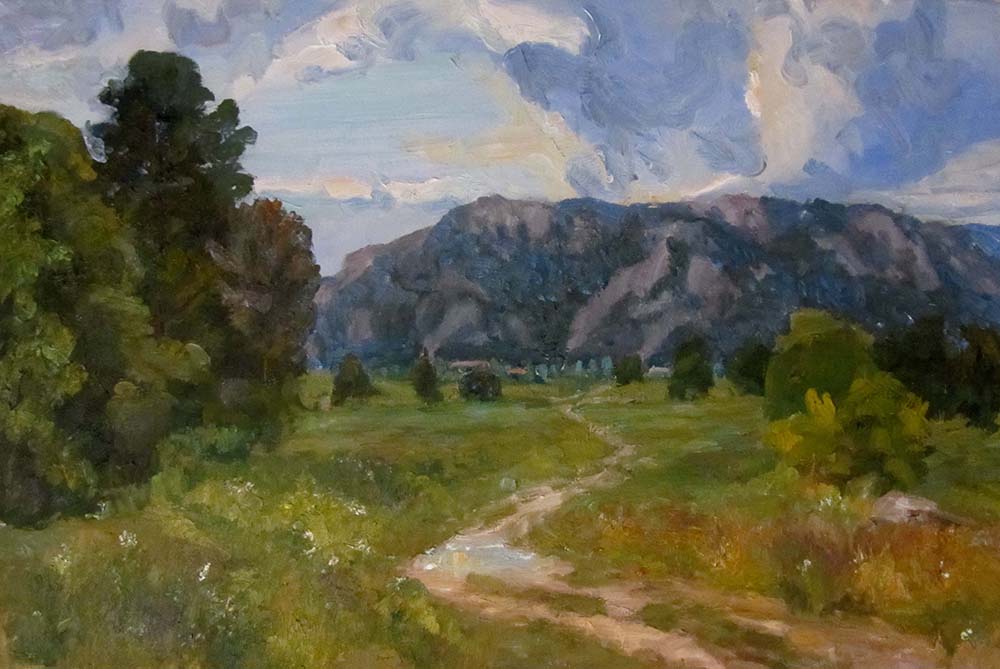
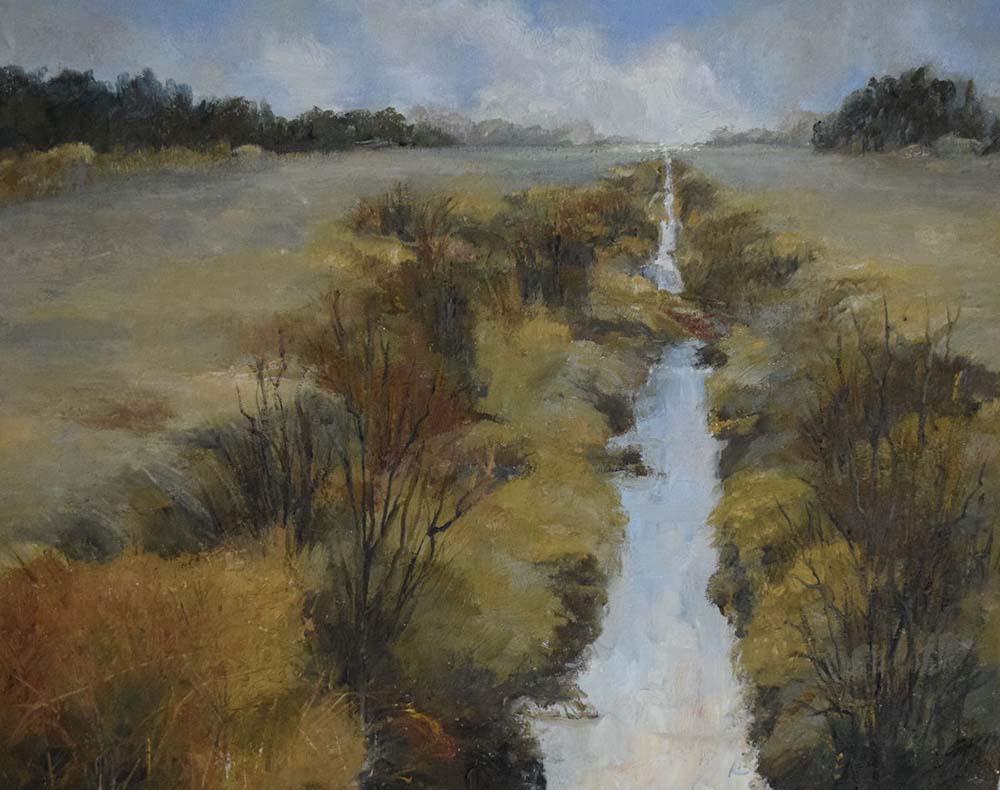
Nina Cobb Walker, “Compliments of the Day,” 12 x 36 in., oil, 2018Nina Cobb Walker, “Foreboding,” 24 x 36 in., oil, 2018Nina Cobb Walker, “Summer Joy,” 24 x 36 in., oil, 2014Nina Cobb Walker, “Trail’s End,” 16 x 20 in., oil, 2018
As part of our effort to continue to help artists and art galleries thrive, we’re proud to bring you this week’s “Virtual Gallery Walk.” Browse the artwork below and click the image itself to learn more about it, including how to contact the gallery.
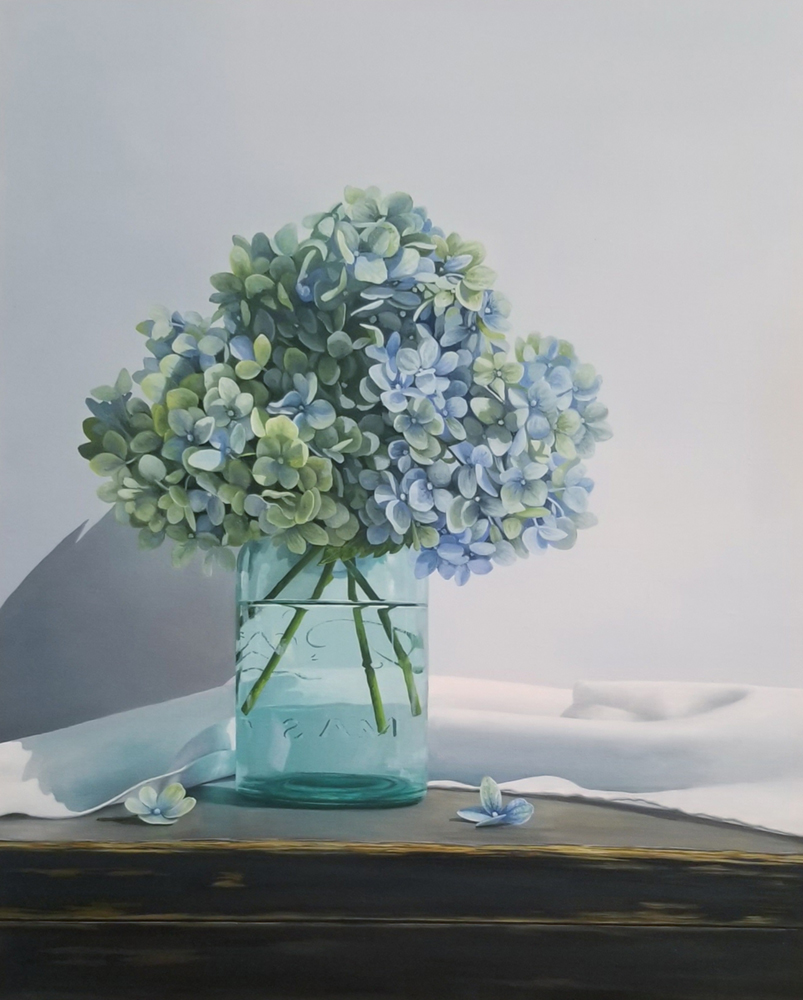
Hydrangeas In Mason by Loren DeBenedetto, Oil, 24 x 30 in. (gallery wrap); Anderson Fine Art Gallery
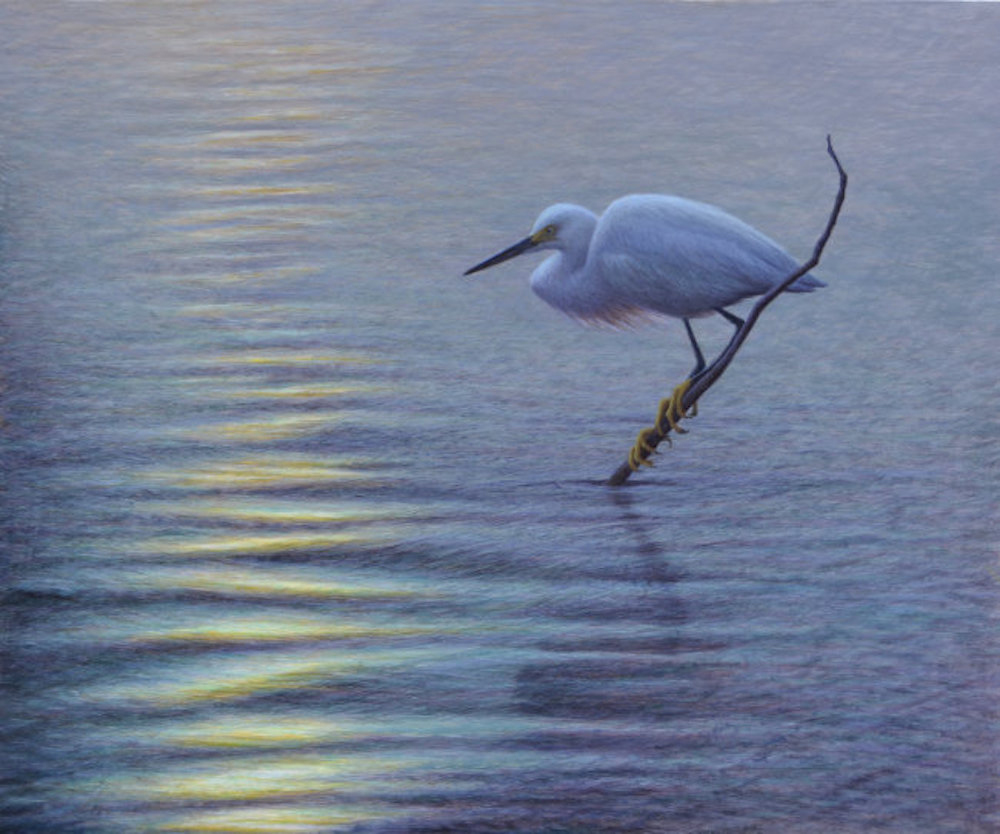
May Twilight by Daniel Ambrose, Egg tempera, 20 x 24 in.; American Tonalist Society
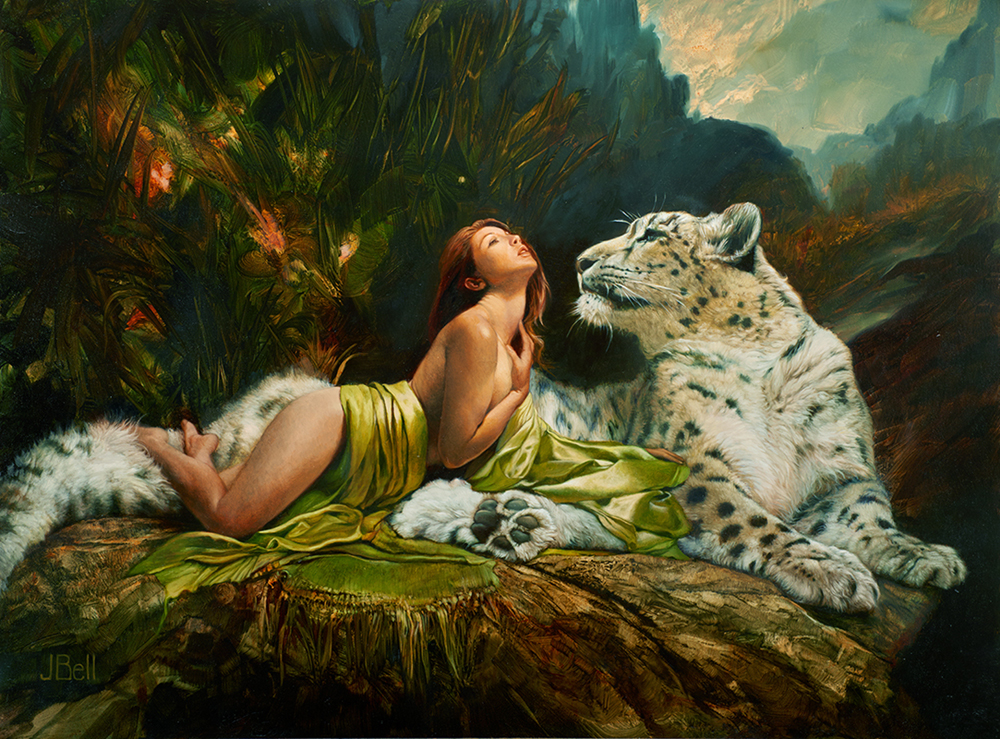
Paradise Green by Julie Bell, Oil on panel, 17 3/4 x 23 3/4 in., Signed; Rehs Contemporary
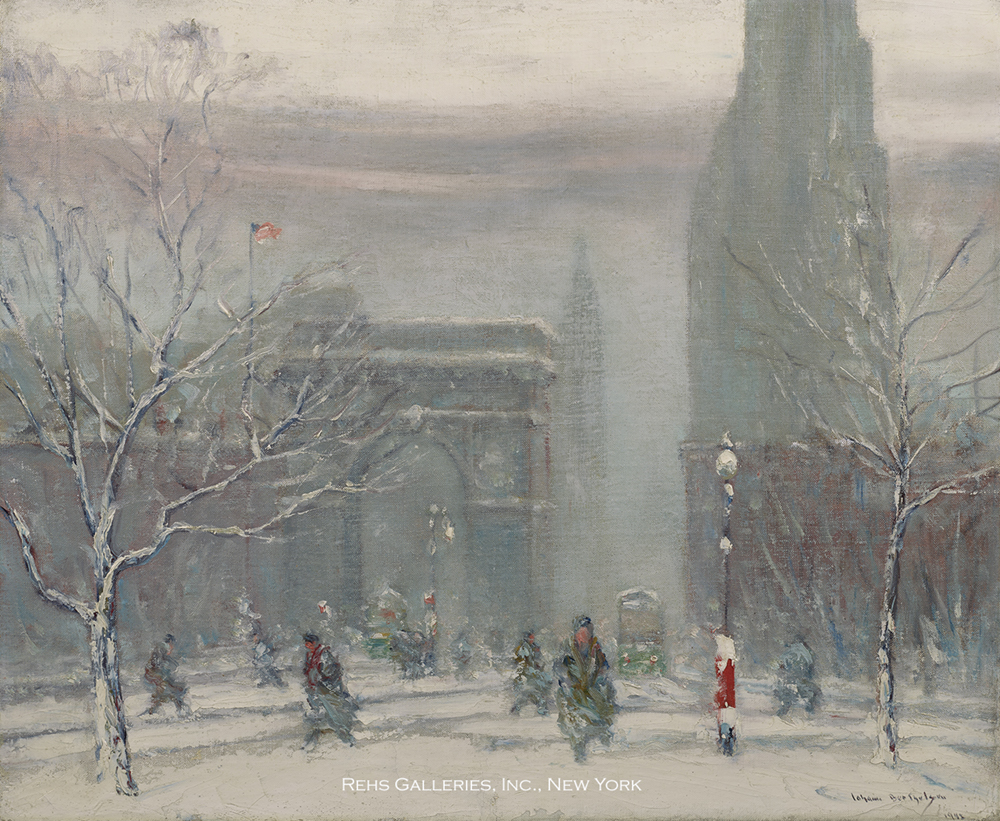
Washington Square Park by Johann Berthelsen (1883 – 1972), Oil on canvas, 20 x 24 in., Signed and dated 1942; Rehs Galleries, Inc.
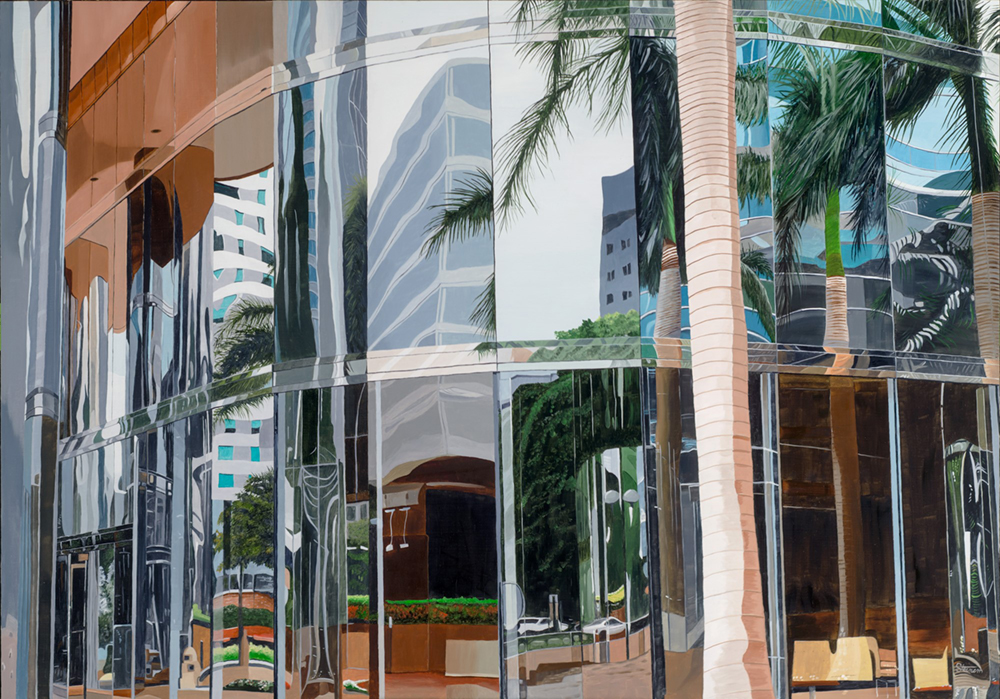
Miami Prism by Robert Steinem, Oil on panel, 28 x 40 in. (29 x 41 in. framed); Vermont Artisan Designs
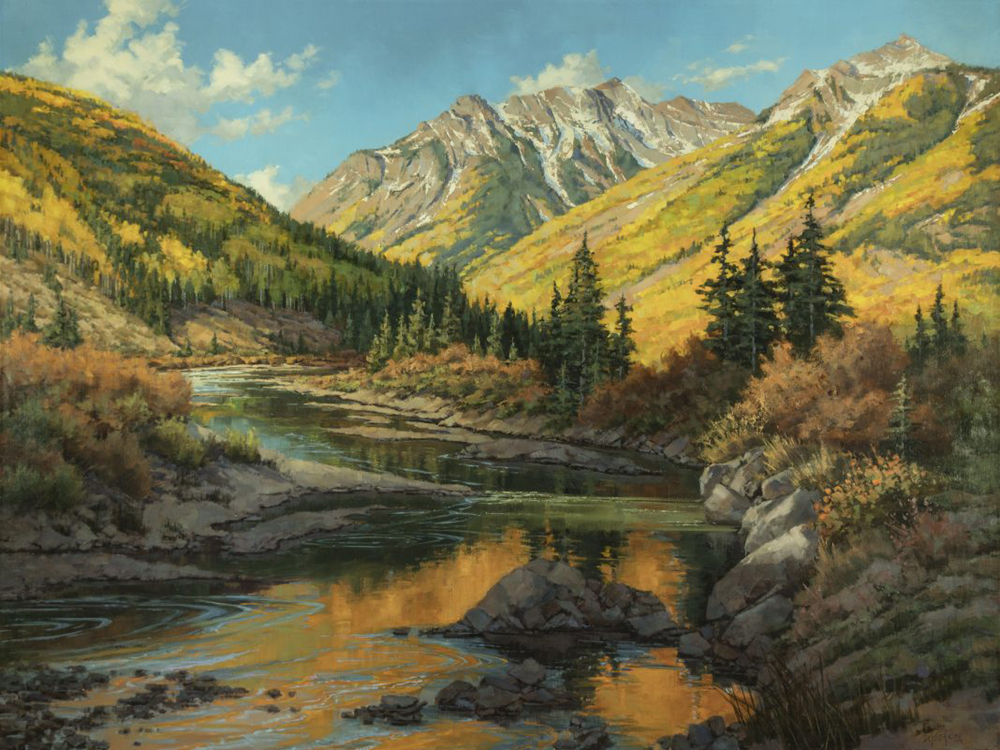
Autumn Sunrise Slipping In by Darcie Peet, Oil, 30 x 40 in., ArtzLine.com
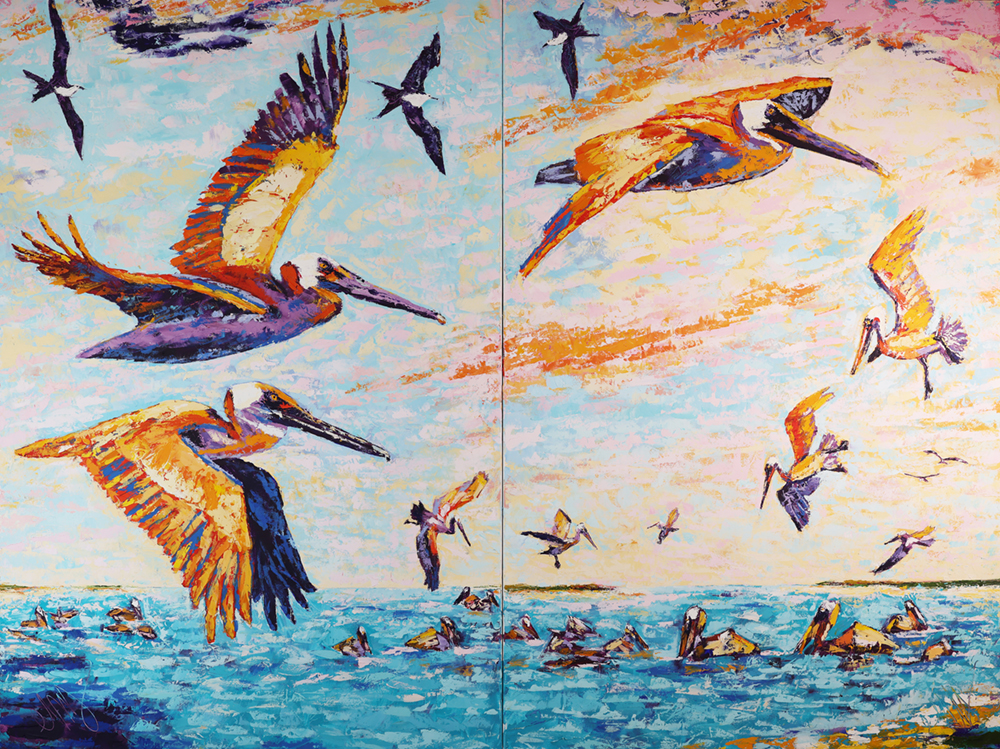
Mullet Run Diptych by Geoffrey C. Smith, Original oil on canvas, 96 x 72 in. (48 x 72 in. each); Geoffrey C. Smith Galleries
Want to see your gallery featured in an upcoming Virtual Gallery Walk? Contact us at [email protected] to advertise today. Don’t delay, as spaces are first come, first served, and availability is limited.
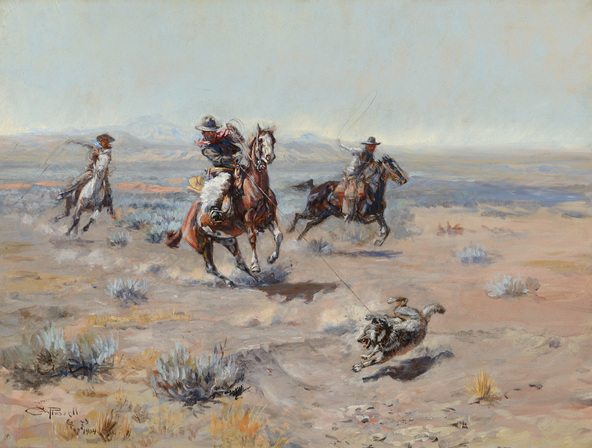
CHARLES M. RUSSELL (1864-1926), Roping a Wolf, (1904), oil on canvas, 15 × 20 inches; signed and dated lower left
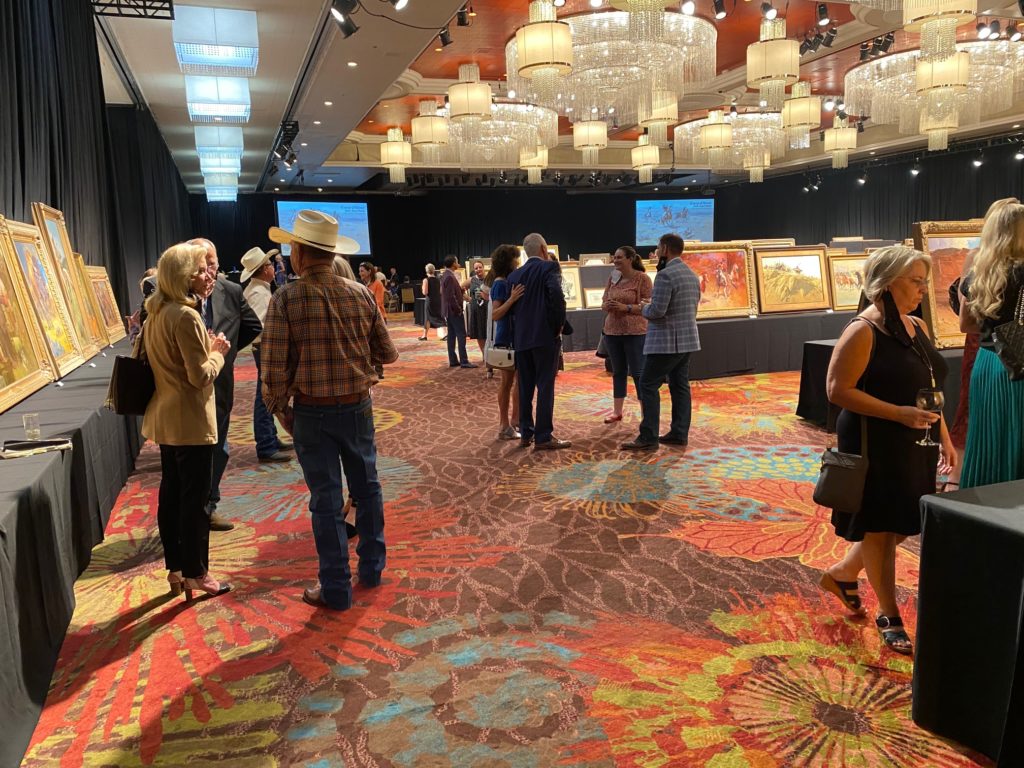
The Coeur d’Alene Art Auction brought a strong total of over $ 17.5 million during this year’s sale.
More from the organizers:
The highlight of the 2021 sale was Auction mainstay Charles M. Russell’s Roping a Wolf (1904), which sold for over $ 1.7 million – the highest total for the influential Western artist in over seven years, and the tenth-highest total all-time. The largest single-auction event in the classical Western and American Art field saw over 30 lots eclipse the $100,000 price point, realizing a sales rate of over 94% for the July 31 sale.
While the feverish bidding for Roping a Wolf brought the packed house to applause, several other Russell works elicited their own fireworks, including: Mexicans Leaving an Inn (1906), which realized $ 242,000; Cowboy on a Bronco (1898), Indian on a Pinto (1898), and Friend Con Letter (1910), each sold for $ 157,300; and Friend Ad Letter (1923), with a $133,100 sales price exceeding its presale estimate of $ 60,000 – 90,000. Overall, works by Charles M. Russell garnered more than $ 3.2 million in sales.
Significant contemporary sales included Dustin Van Wechel’s Prairie Dog POV at $ 45,375, establishing a world record for the artist. G. Harvey’s Among the Silence of Canyon Echoes sold for an impressive $ 217,800 versus a presale estimate of $ 80,000 – 120,000. Other notable sales included Martin Grelle’s Days of the Coldmaker ($ 169,400), Richard Schmid’s Hewick Church, North Yorkshire, England ($ 121,000), Bob Kuhn’s Where the Deer and the Antelope Play ($ 96,800), and Tim Cox’s God’s Gift to Man ($ 96,800).
> Visit EricRhoads.com to learn about more opportunities for artists and art collectors, including retreats, international art trips, art conventions, and more.
> Sign up to receive Fine Art Today, our free weekly e-newsletter
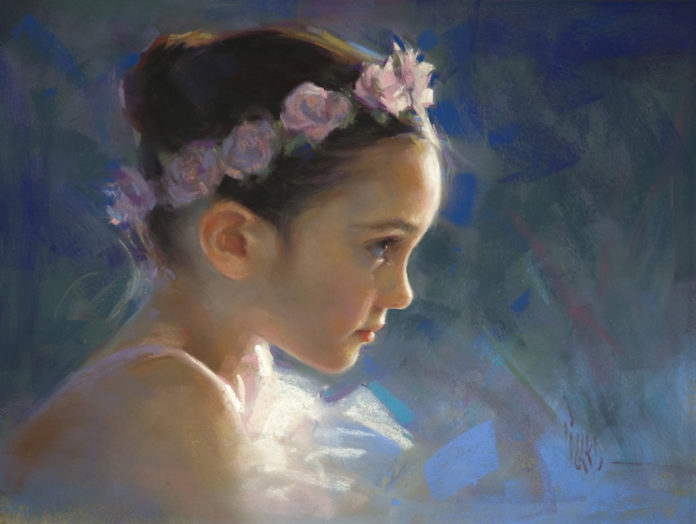
Alain Picard, "Wonder," pastel on LaCarte Card, 12 x 16 in.
Artist, instructor, and author Alain J. Picard has a passion: To reveal beauty through art and help artists develop their creative potential.
Watch and learn from Alain Picard during Pastel Live, August 19-22, 2021 (Beginner’s Day August 18)
Picard is on the faculty of the upcoming virtual art conference, Pastel Live. We asked him to share his inspiration behind one of his incredible pastel portraits, titled “Wonder” (shown above).
“My neighbor Cailee is an amazing dancer,” Picard said. “She posed for me in a series of young ballerina paintings, and this one is still my favorite. I just love the beautiful rim lighting and childlike beauty.
“’Wonder’” is a great example of using dynamic contrast in mark-making and color. The skin of this child is pearlescent and smooth, with very refined skin tones.
“For contrast, I used bold marks and color accents in the tulle skirt beneath her face, as well as the flower crown and background. These bold marks contrast in color, refinement, and shape to the sensitively refined skin.”
Additional Pastel Paintings by Alain Picard:
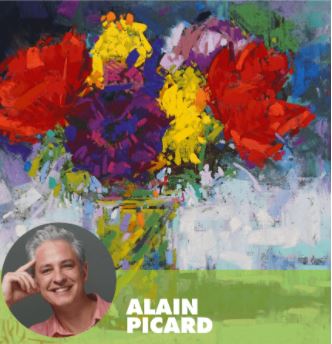
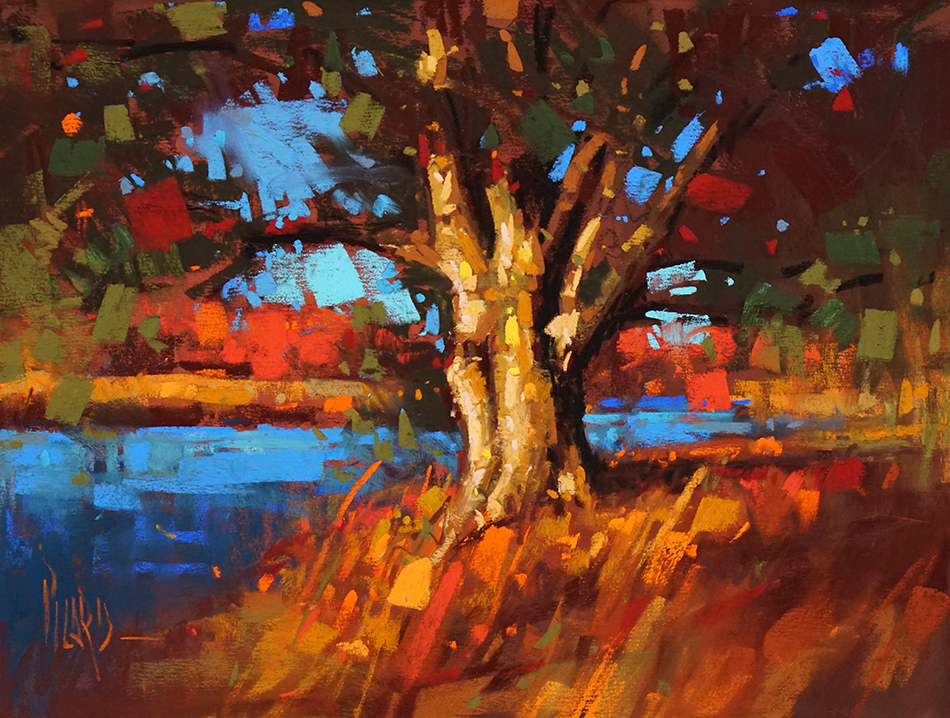
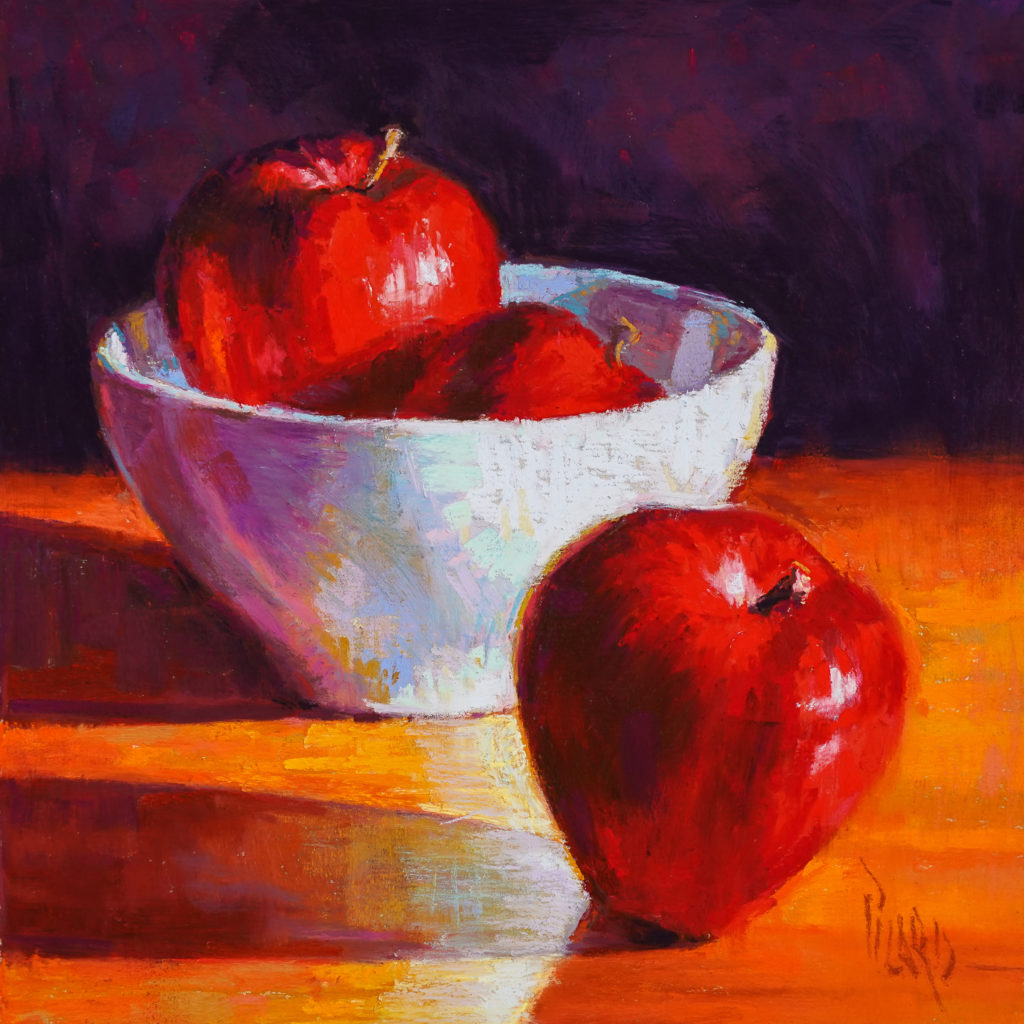
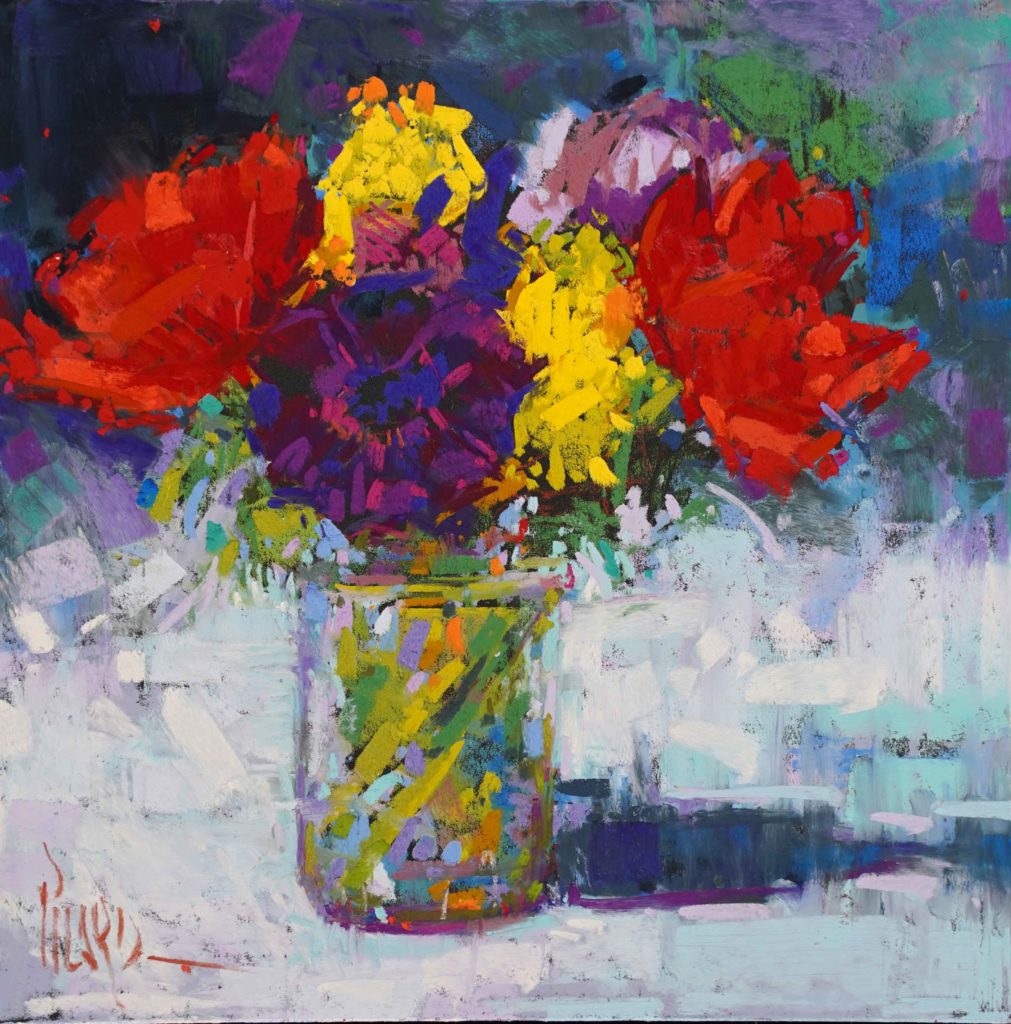
Pastel landscape by Alain PicardPastel still life by Alain PicardPastel floral still life by Alain Picard
“The objective for my upcoming Pastel Live lesson is to share a painterly depiction of an arrangement of orange slices,” Picard added. His lesson will demonstrate “dynamic contrast with bold marks, edge variety, and complementary color contrast to stimulate the viewer’s senses in a loose, citrus-inspired painting. It’s going to be such fun!”
> Visit EricRhoads.com to learn about more opportunities for artists and art collectors, including retreats, international art trips, art conventions, and more.
> Sign up to receive Fine Art Today, our free weekly e-newsletter
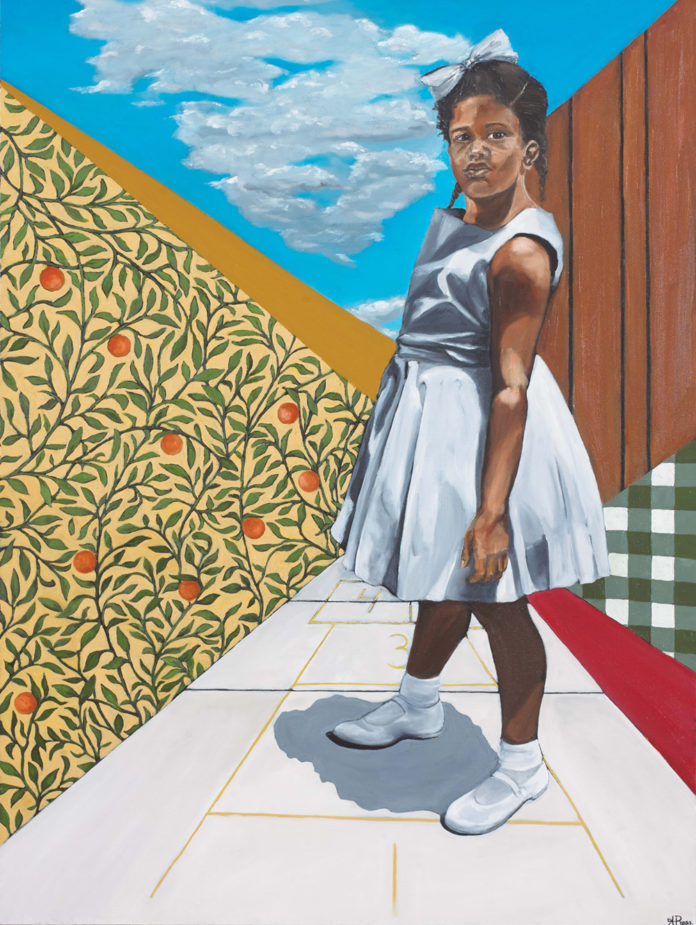
My Turn
By Ayana Ross
Oil on canvas, 2020
48 x 36 in.
$7,400
Ayana Ross creates visual narratives that explore issues of identity and cultural awareness while highlighting moments of racial disparities and intergenerational mobility and progress among African Americans. Her everyday figures are often informed by events in her own family history, one rooted in the American South, but have proven to reflect a greater connection of shared experiences, values, and aesthetics. Ross combines visual nostalgia with contemporary motifs that draw connections between the past and the present. Her fragmented spaces of bold, graphic fields of pattern and color energize the composition providing context and visual cues. Her fragmented stories offer an opening for viewers to insert themselves and illuminate their own parallel or intersecting experiences.
A young girl stands boldly in My Turn, the outlines of a game of hopscotch laid out on the ground below her. Bold patterns and color set in large triangles point to the future, one hidden behind her. Clad in vintage dress, she is a figure of the past, a memory of self or others. But her turn is about more than the game, it is her moment to define her own future, to be the focus of attention as she claims her place in the world. The painting thus becomes a celebration of the potential of young Black women and a challenge to those that would deny them the opportunity to realize their potential. My Turn is currently included in the traveling exhibition Rising Voices 2: The Bennett Prize for Women Figurative Realist Artists organized by the Muskegon Museum of Art.
Ayana Ross is the winner of the 2021 Bennett Prize for Women Figurative Realist Painters. She received a BS in Apparel Design and Merchandising from Georgia Southern University and began her professional career as a designer in the fashion industry. She later returned to school to study Art Education at Greensboro College and received a MA in Liberal Arts from the University of North Carolina, Greensboro. Ross recently completed a MA degree in painting from the Savannah College of Art and Design and balances her painting career with her work as a secondary art teacher. Ross has exhibited in various group shows throughout Georgia and her works are held by private collectors throughout the US and abroad.
You can learn more about the artist at her website at www.ayanaross.com and follow her on Instagram at ayanarossart.
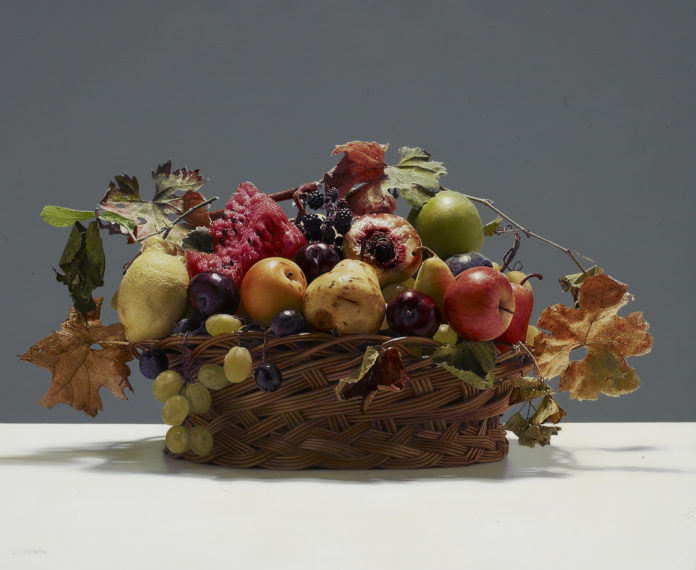
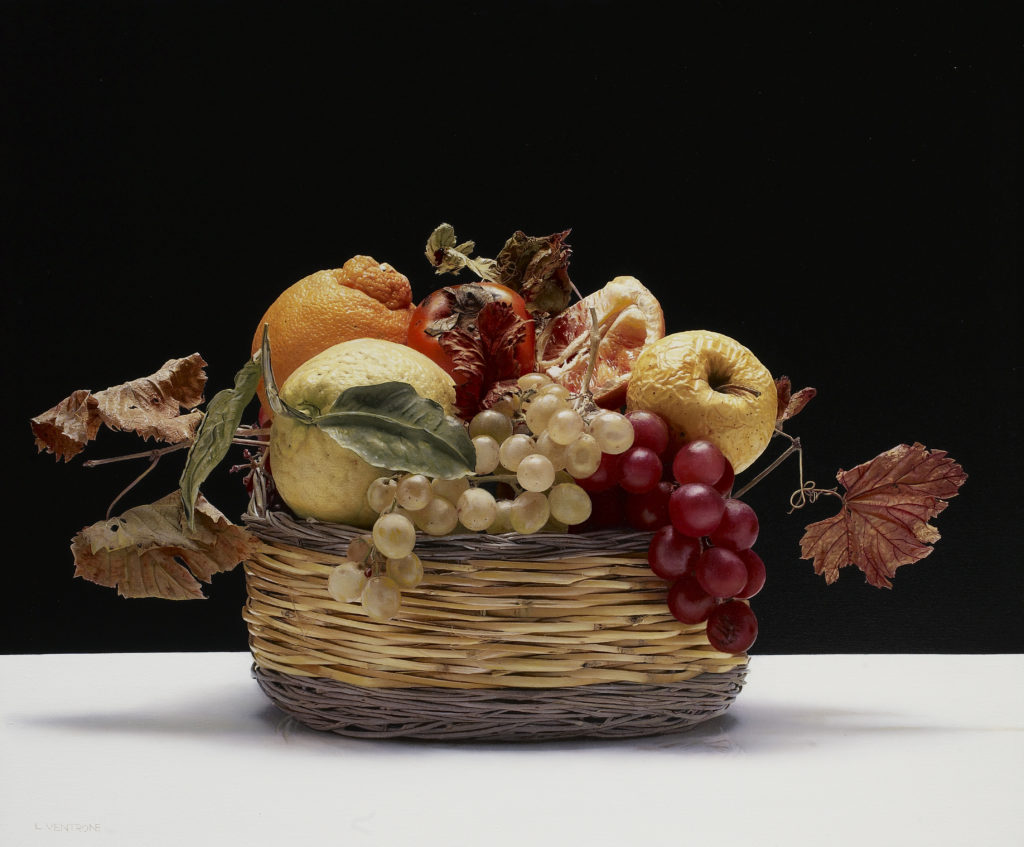
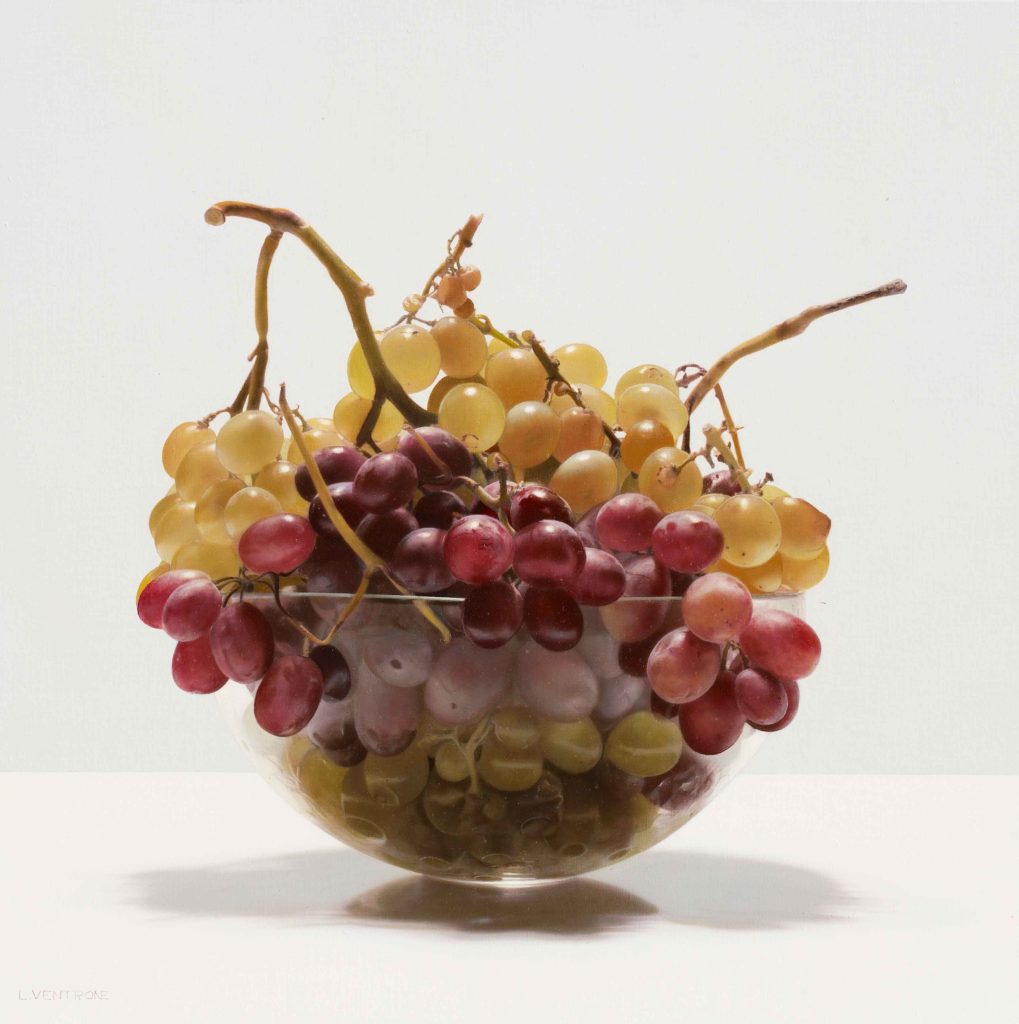
Luciano Ventrone, "Varietà," 2012-2018 (Oil on mixed media on linen, 90 x 110 cm / 35.4 x 43.3 in)
Contemporary Realism on View > Albemarle Gallery is showing an exclusive, posthumous exhibition of paintings by the Italian master, Luciano Ventrone. This a solemn occasion for the gallery as it marks the end of a long and creative association. Sadly, Luciano Ventrone died in April this year.
More from the gallery:
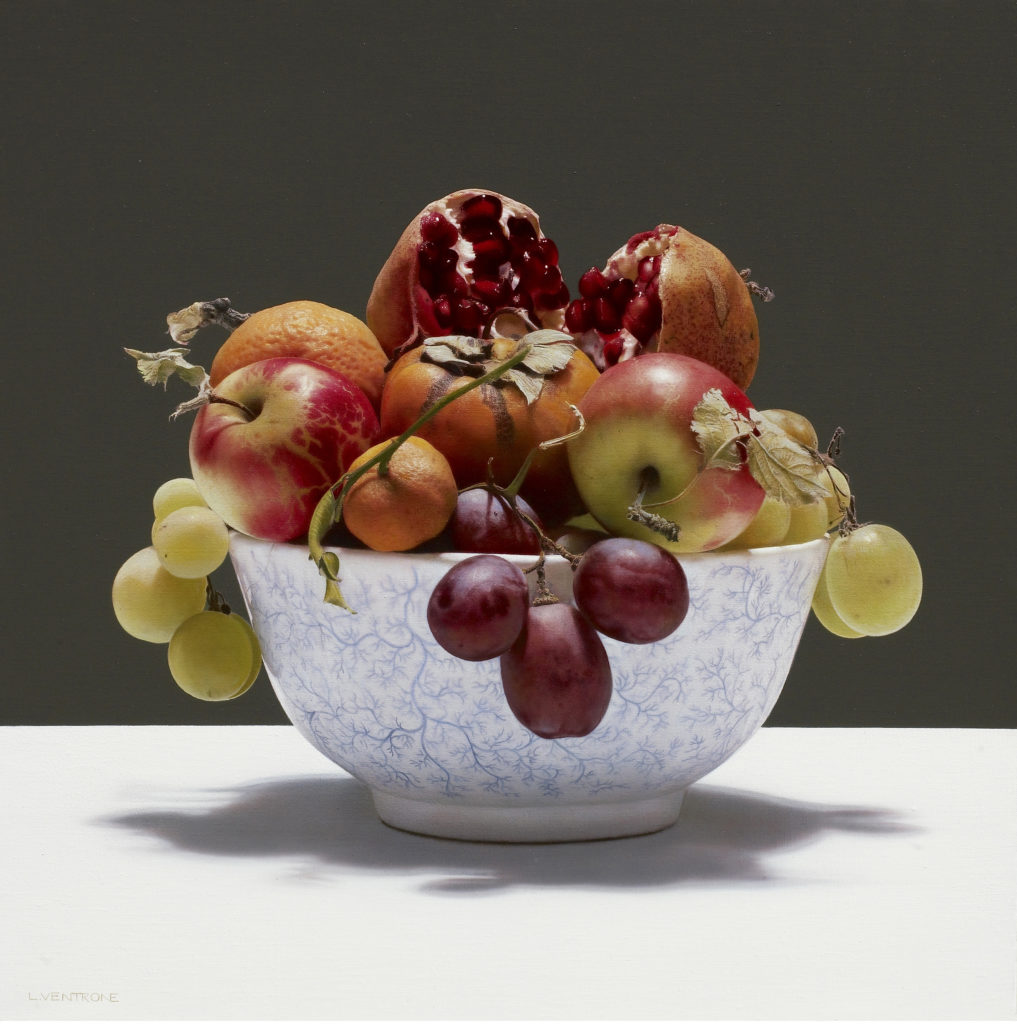
The core of this show are realism works that came directly from Luciano’s studio, intended for an exhibition in 2020 that had to be cancelled because of the pandemic. There are an additional fourteen works from the estate and the personal collection of Luciano’s widow. This is a unique and poignant opportunity to view new and unseen paintings and also to experience a retrospective survey of his accomplishment.
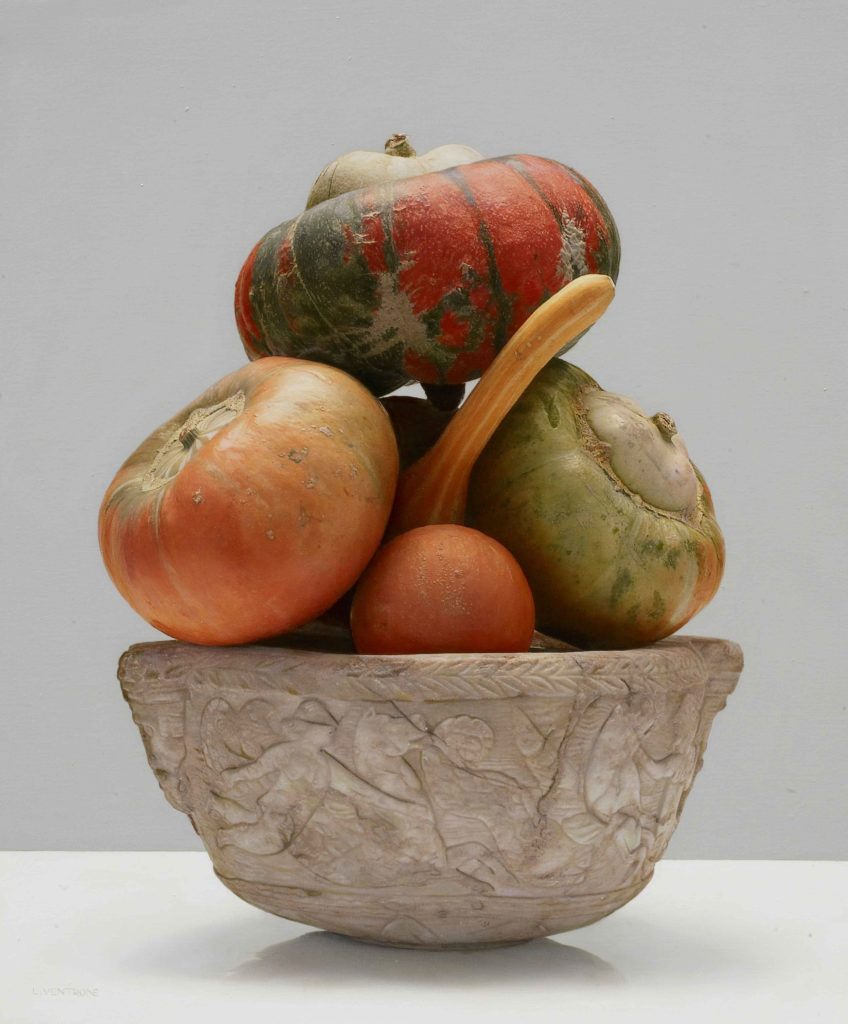
Luciano Ventrone, “Orto Romano,” 2018 (Oil on mixed media on linen, 60 x 50 cm / 23.6 x 19.7 in)Luciano Ventrone, “Passioni” (2014 – 2020, Oil on mixed media on linen, 50 x 60 cm / 19.7 x 23.6 in)
Born in 1942, Luciano Ventrone had a long and distinguished career, the outcome of a prodigious talent and a determined and painstaking commitment to its development. Collected worldwide, with an international reputation, he was, at heart, a thoroughly Italian painter. His practice was steeped in the spirit of classicism and the tenets of order and beauty, forged in the Italian Renaissance, particularly the Cinquecento.
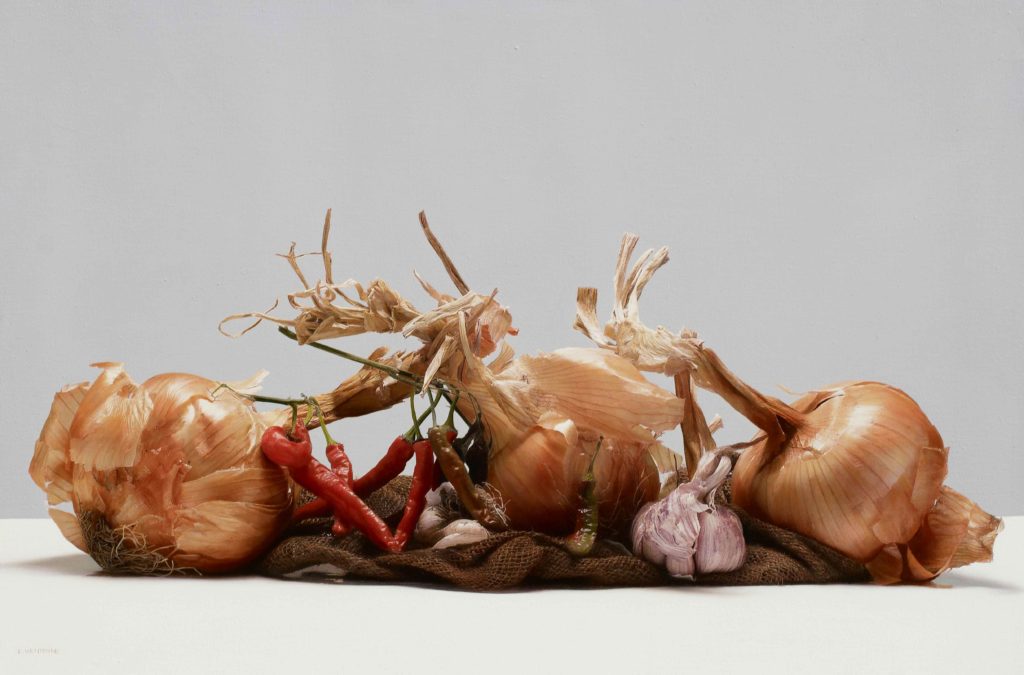
Luciano Ventrone, “Meridione” (2010 – 2017, Oil on mixed media on linen, 60 x 90 cm / 23.6 x 35.4Luciano Ventrone, “Musica Latente” (2012 – 2017, Oil on mixed media on linen, 60 x 60 cm / 23.6 x 23.6 in)
Albemarle Gallery enjoyed a close relationship with Luciano Ventrone and feels honoured to have aided him in his vocation. It has been a great pleasure for all who worked with him to witness the flourishing of his art over so many productive years. His remarkable pictures remain as a testament to his vision.
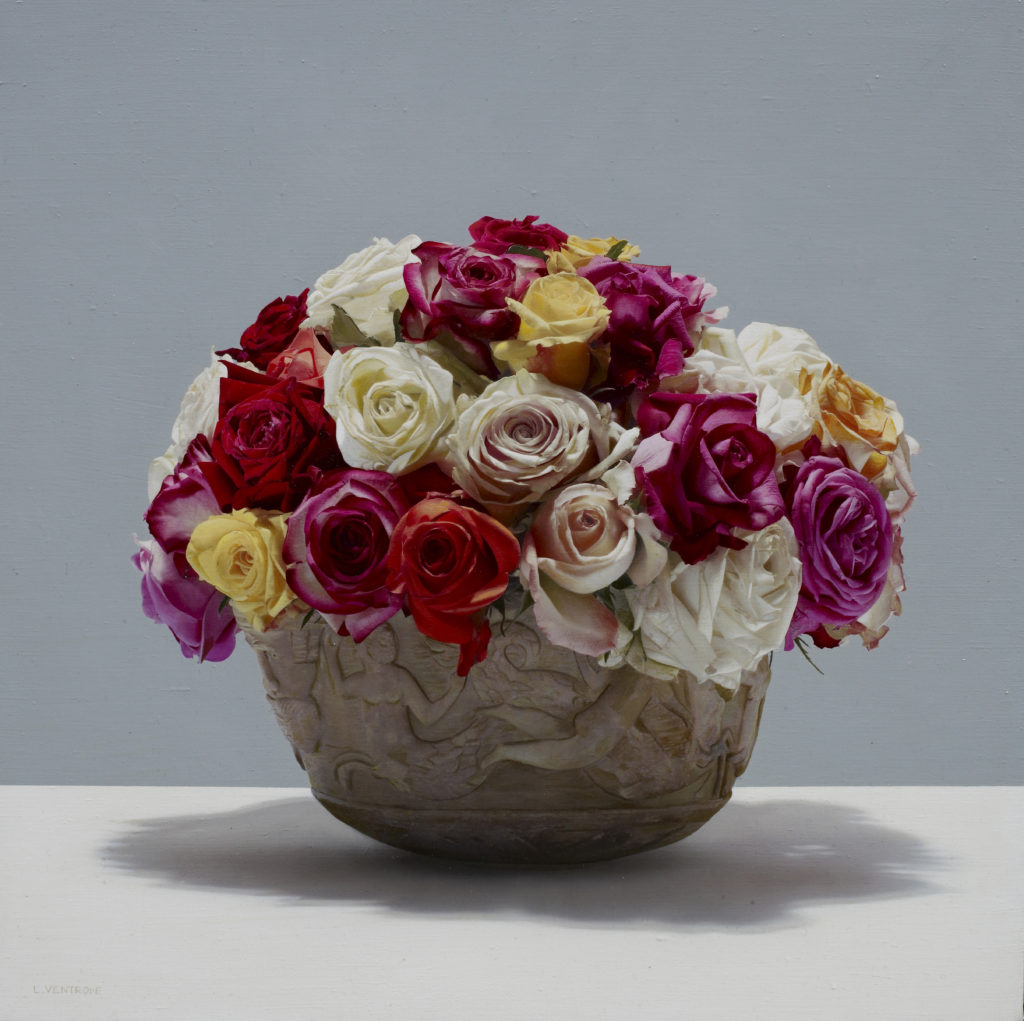
Luciano Ventrone, “Maternità” (2012, Oil on mixed media on linen, 50 x 50 cm / 19.7 x 19.7 in)Luciano Ventrone, “Celtico” (2013, Oil on mixed media on linen, 50 x 50 cm / 19.7 x 19.7 in)
Through September 5, 2021
Albemarle Gallery, UK Gallery Website
> Visit EricRhoads.com to learn about more opportunities for artists and art collectors, including retreats, international art trips, art conventions, and more.
> Sign up to receive Fine Art Today, our free weekly e-newsletter
Fill your mind with useful art stories, the latest trends, upcoming art shows, top artists, and more. Subscribe to Fine Art Today, from the publishers of Fine Art Connoisseur magazine.


 While the feverish bidding for Roping a Wolf brought the packed house to applause, several other Russell works elicited their own fireworks, including: Mexicans Leaving an Inn (1906), which realized $ 242,000; Cowboy on a Bronco (1898), Indian on a Pinto (1898), and Friend Con Letter (1910), each sold for $ 157,300; and Friend Ad Letter (1923), with a $133,100 sales price exceeding its presale estimate of $ 60,000 – 90,000. Overall, works by Charles M. Russell garnered more than $ 3.2 million in sales.