Deep Promises
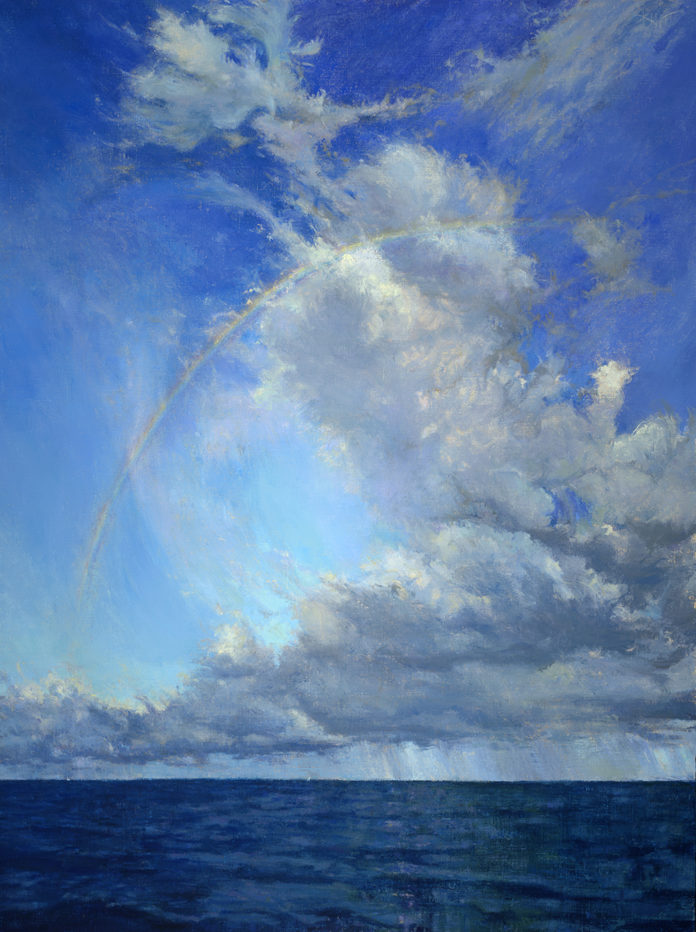
By Karen Ann Hitt – An Original Hitt
48 x 36 in. (56 x 44 in. framed)
Oil on linen
Available through Hughes Gallery Boca Grande, FL: 941-964-4273
Karen Ann Hitt: There is no sweeter gift on earth than being a rainbow in someone’s cloud. That is what we received as we headed sixty miles out into the amazing deep cobalt blue waters of the gulf, 130’ deep in a small 30’ fishing boat; driving full throttle to our fishing marker, rain pelting our faces, yet the sun shined, in unusually calm gulf waters with rolls of glass—not breaks and straight ahead of us directly on our course—there is this glorious view. An instant—all is well!
No matter one’s beliefs, when one looks up and sees a rainbow, peace and joy fills the air with a promise that good is ahead. That is Deep Promises. We literally had one of the best grouper fishing days we could have hoped for, fishing our limit between the four of us. So, to depict a rainbow—well…2020 behind and now into 2021—seems the perfect time to bring that rainbow into view.
A beloved Michelangelo quote shares, “The greatest danger for most of us is not that our aim is too high and we miss it; but that it is too low and we reach it.” Along with, “The true work of art is but a shadow of the divine perfection.”
Simply, as an Artist, the desire to reflect the awe of the ‘at that moment…’ that was given to us—even as Michelangelo shares, if only a shadow of it—it, remains a gift to be shared… And yes, look closely at the Deep Promises horizon, for on it you see just how we measure on life’s grand scale and the perspective of this glorious view. Therefore, Deep Promises, became a major Studio oil, painted from actual events for upcoming Solo Exhibit at the Hughes Gallery that opens 1 March 2021. Amidst these Covid times still being upon us, the gallery is going forth with exhibits, but no large gatherings or receptions.
To stay connected with Karen Ann’s projects through her announcements, receive a gratis greeting card, or to just stay connected with her new works of art, you may contact her through her website: www.anoriginalhitt.com or directly go to contact info here, and be sure to add your address in the comments, along with letting the artist know if you would like a gratis greeting card.
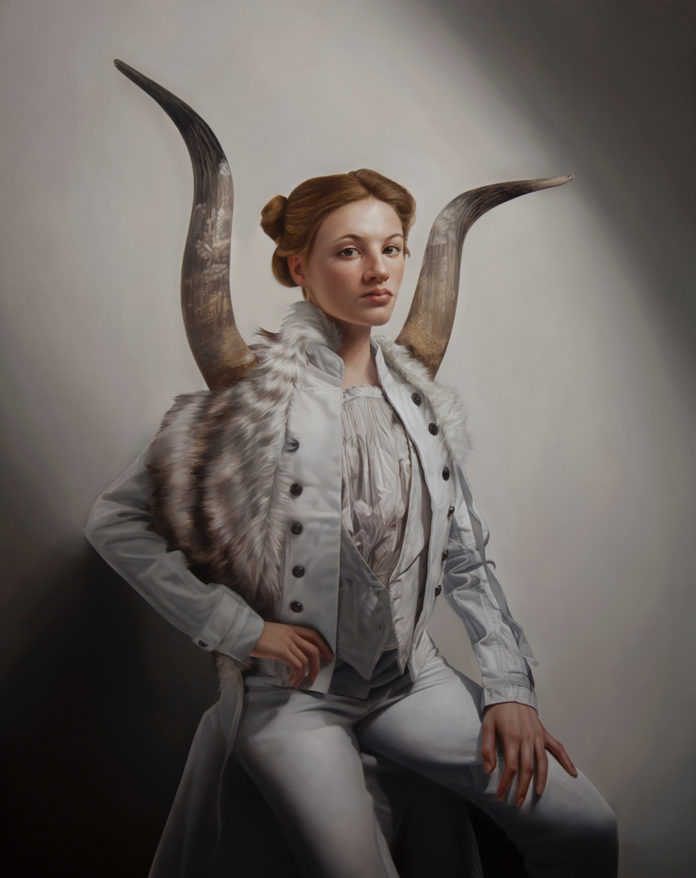
Mary Jane Ansell: In “Antiope” I imagined a host of a new royalty, a tribe of people embracing their own powers, their crowns and scepters, not hewn from the gold and gems that signify monarchies and commerce, but instead taken from the natural world, and showing their reverence to nature by featuring natural tokens – and relics – from their spirit animals. Her pose echoes the swagger portraits of the 17th and 18th century. She wears white, denoting strength through peace, and her fur a synergy with nature.
I’m celebrating the nobility of the individual, rather than the typically lauded upper echelons of society which in many ways we have lost faith in. She is not meant to be a literal character but an archetype, her name, derived from “against” and “voice” is my homage to the women who speak up, those dissenting voices of change that seem, thankfully ever increasing in number.
I’ve always had a passion for Greek mythology, and the name Antiope roughly translates as a confronting voice, which felt perfect for this character especially as my young model is currently beginning a very promising career as a singer… a synergy was clearly taking place as she sat!
Antiope reflects the power, creativity, and gentleness within her, and potentially within us all.
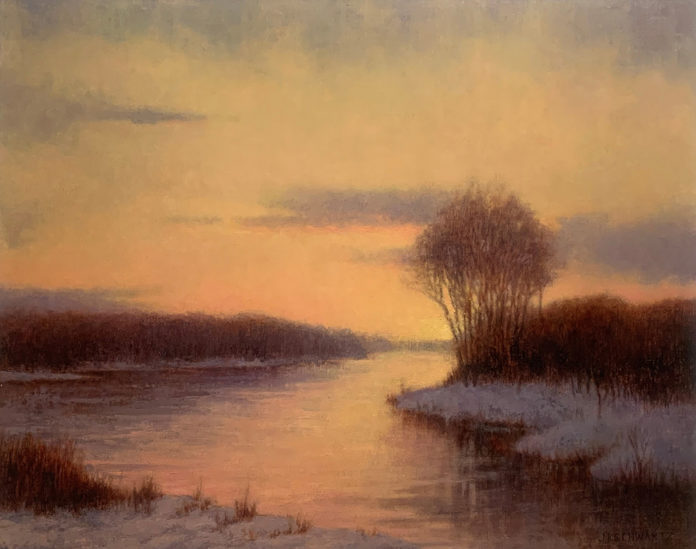
There is a sense of tranquility and focus in this new winter scene by Jean Schwartz. Referencing the places she knows well, she often prefers to work from memory, infusing the landscape with light and color expressive of the mood she wants to set. In this painting the quiet but intense glow of a winter sunset draws the viewer back to the horizon. The Potomac River near her home was the inspiration for this piece, and bodies of water are frequent subjects in her paintings. She loves them for their movement and reflection of light.
“More than ever, painting for me has become an introspective and solitary experience. In the main this is due to Covid, but I find it also suits my nature. I am used to working primarily in the studio during the winter months, but since the outbreak of the pandemic, I have been working in isolation for a longer period of time. Accordingly, I find my work changing.
My compositions have become simpler, my palette more limited, and my focus more on atmosphere. Painting is meditative for me, and I hope to draw the viewer into a quiet contemplation of the scene. I have always admired the Luminists and Tonalists, and these recent paintings have an affinity with those schools.”
Although Jean’s paintings are inspired by the places she loves and knows best, her approach is to ignore the details of the location and make the landscape more universal. The viewer should find a familiarity in the scene and emotionally connect to the color and light.
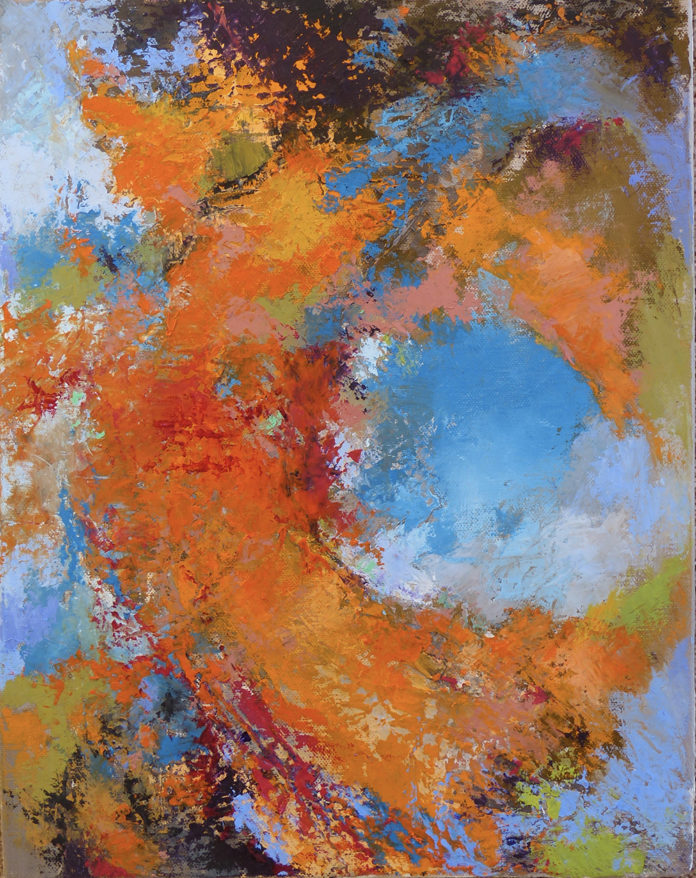
Bobbi Miller’s current work is based on reactions to a change of place when she found herself in Florida during the initial virus sequestration and not in her rural Wyoming home. Walks on the beach allowed for time to meditate on world happenings. These meditative diversions fostered new perceptions of color and shape and texture, widening her imagination and creativity.
Abstractions, based on the natural world, feed a curiosity for experimentation while she acknowledges her ongoing desire to hone the craft of representational art through the practice of figure, portrait, landscape and still life motifs.
Bobbi’s education includes bachelor and master degrees in Special Education with minors in Fine Art, which have been augmented with many diverse national and international classes. Several notables are the Salzburg International Summer Academy of Fine Arts, the New York Studio School and workshops with Wolf Kahn and Wayne Thiebaud, and mentorship by Jeremy Morgan of the San Francisco Art Institute. After leaving the teaching world, she earned an associate degree in graphic design, and following freelance work, commenced her own art making.
Of utmost importance to Bobbi’s journey of Embracing Place, is a focus on the camaraderie resulting from initiating the gathering of artists, whether pioneering an art critique group in North Carolina or a plein air group in Wyoming and in supporting the arts community on a local level. Her current concentration, motivated by the worldwide virus pandemic, is on Suicide Prevention Awareness. Proceeds from her sales of art prints currently benefit the National foundation for Suicide Awareness. In the summer of 2021, an exhibit of her work will benefit St. John’s Health Foundation in Jackson Hole, Wyoming, a non-profit organization.
To stay connected to these projects through her website, or to purchase prints of artwork, visit her website.
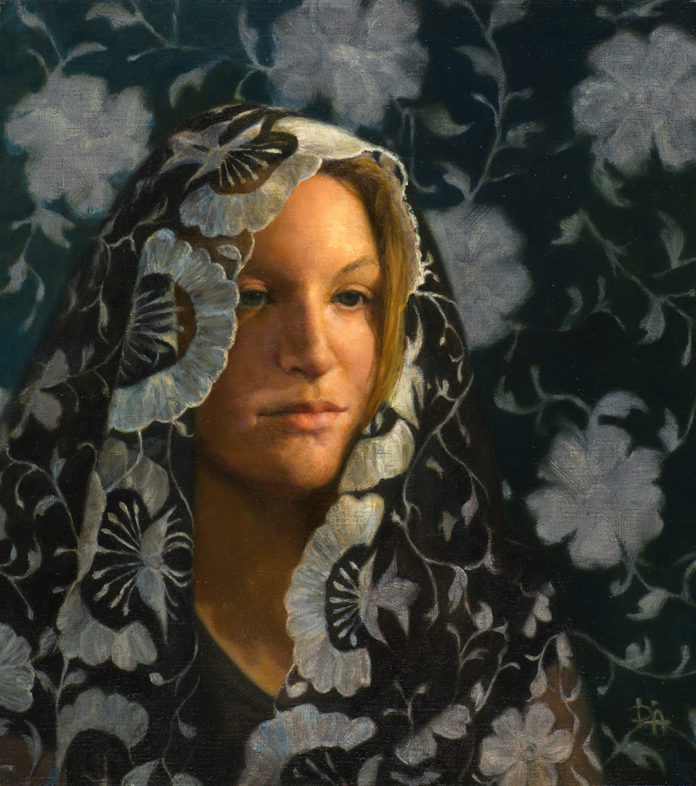
Deborah Allison: Art is powerful, and the creation of art is a means of expressing and invoking power. As an artist, I am not always aware of how my work might affect a viewer. In fact, as I am painting, I can only be sure of my feelings and reactions toward my piece. It is my desire to create beautiful and evocative paintings that touch and inspire the viewers. I build a relationship with my models and fall in love with them as I am putting their faces on the canvas. Whether I am painting in a traditional realism style based on observation, or a more whimsical painterly fashion using an intuitive approach, it is my goal to portray their soul beauty as well as their physical likeness. Once the painting is complete, the relationship between the viewer and the model is then out of my hands.
My painting of “Faith” started out as an exploration into the effect of light and lace on the model’s features. Following my initial studies, I realized how intense her expression was and how that intensity conveyed her personal strength and conviction. These days, our faith is being tested and questioned and compared to other’s beliefs. The head covering represents more traditional, orthodox doctrines, while the floral decorative pattern and the background feels more contemporary and worldly. Still, the light in her eyes reflects her willingness to be apart from the world.
My portraiture journey has led me to study with Tony Ryder, David Kassan, Xiang Zhang, Milt Kobayashi, Perrin Sparks and others, absorbing their diverse techniques and qualities. Memberships in Portrait Society of America, Oil Painters of America, Women Artists of the West and NOAPS, have provided opportunities for me to take part in national and regional juried exhibitions. This year, I have moved my studio to Santa Fe, New Mexico, following many years teaching, painting and gallery ownership in Texas. My work is currently on display at Holder Dane Art Gallery in Grapevine, Texas, and I have work in the 51st National WAOW Exhibition at the Museum of Western Art in Kerrville, Texas, through March 19, 2021.
Make sure you check out my website for more artwork, upcoming shows, and a monthly newsletter.
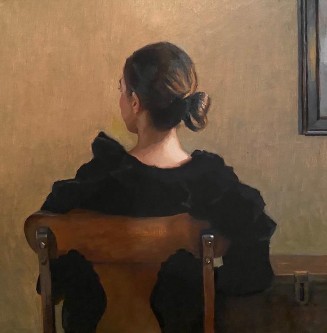
Jane Manco, "Evening in the Drawing Room," oil, 12 x 12 in.
The Salmagundi Club (New York) is hosting the exhibition “Figuratively Speaking,” on view February 2-19, 2021.
“When the Village art scene took a left turn in the late 1940’s, our members kept going straight ahead, adhering to the purity of representational art,” said Nick Dawes, Chairman of Salmagundi, of New York’s oldest artist club, established 150 years ago this year.
More from the organizers:
Today over 1,000 members keep the flame of representational, academic art burning, but many consider what they do as supremely, is subtly, very modern. You are invited to judge for yourself over the next three weeks as “Figuratively Speaking.”
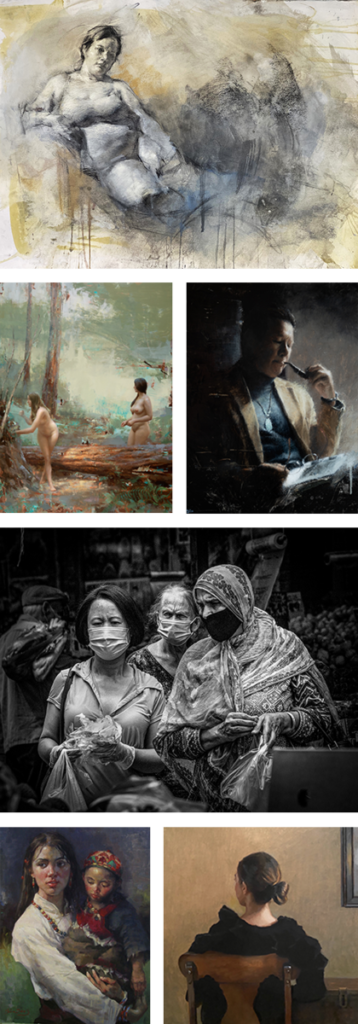
Pictured: (left to right, top to bottom): Susan O’Neill, “Eloquent”, Charcoal and Water-Soluble Graphite, 28″ 36″ Elizabeth Zanzinger, “Foragers”, Oil on Panel, 20″ x 15″ Anton Zhou, “Folklore”, Oil, 24″ x 18″ Anthony Almeida, “Connections in Time and Place”, LE Black and White Photo on Aluminum Substrate, 24″ x 30″ Christopher Zhang, “Mother and Child”, Oil, 28″ x 22″ Jane Manco, “Evening in the Drawing Room”, Oil, 12″ x 12″
Related > Salmagundi Art Club’s 150th Year Anniversary – Prestigious Library Commission Competition
Online, February 01, 2021 – June 01, 2021
Artists Are To: Create and paint two panels for the Salmagundi Club Library inside-facing doors with an award of $15,000 ($7500 per painted panel.) These paintings will be permanently attached to the Salmagundi Club Library entry doors. Details for this call to artists can be found here.
As part of our effort to continue to help artists and art galleries thrive, we’re proud to bring you this week’s “Virtual Gallery Walk.” Browse the artwork below and click the image itself to learn more about it, including how to contact the gallery.
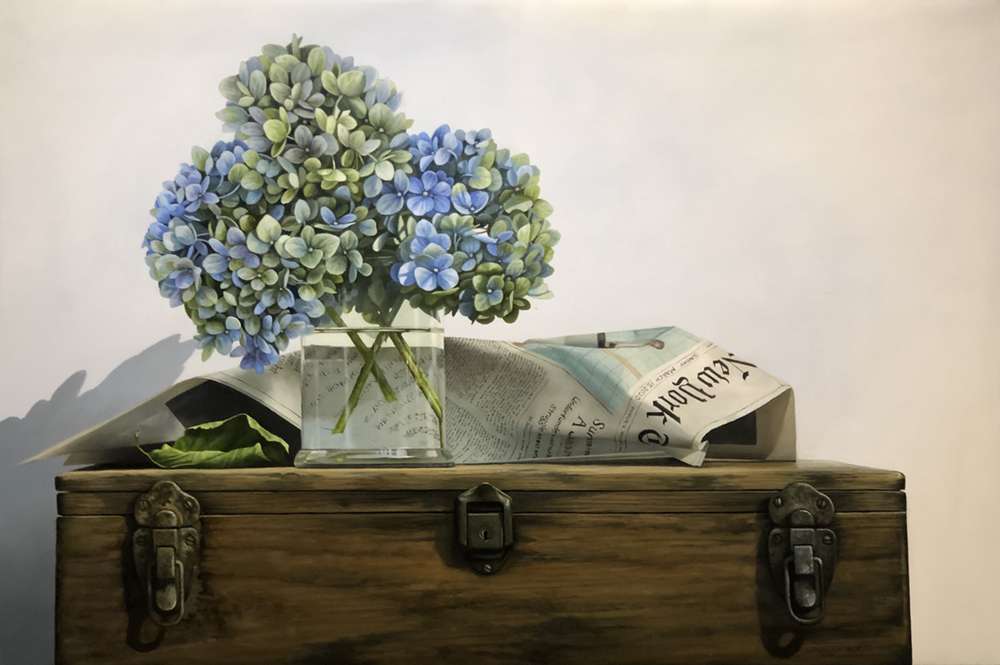
Ides of March by Loren DiBenedetto, Oil, 24 x 36 in.; Anderson Fine Art Gallery
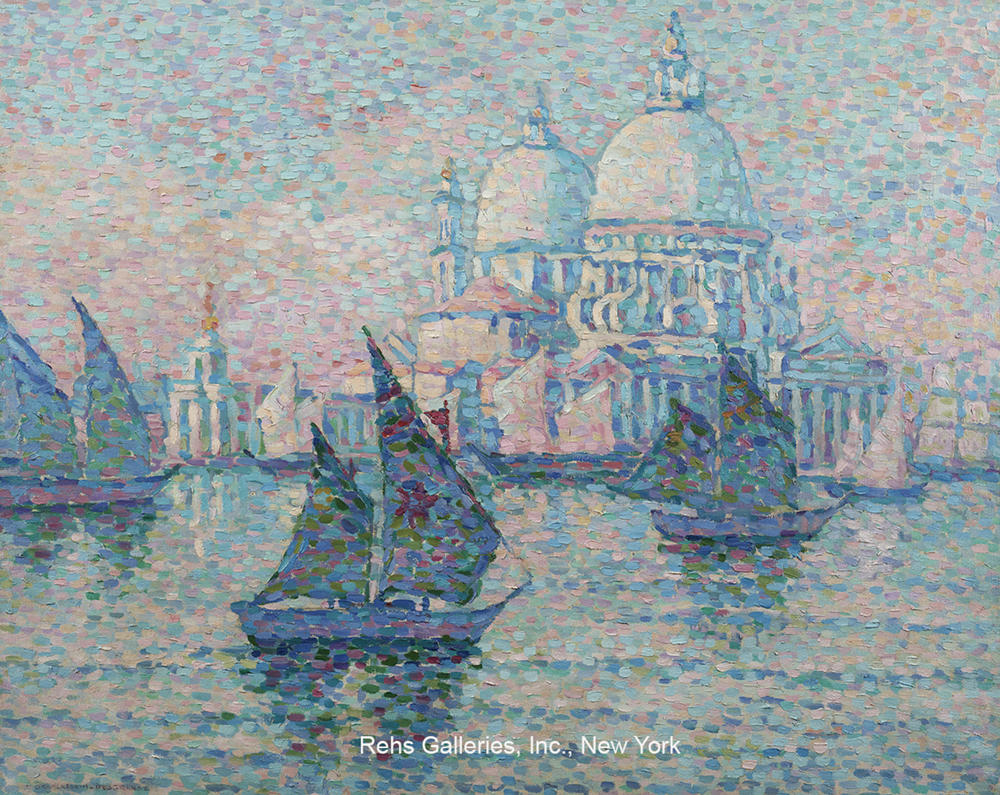
Basilica di Santa Maria della Salute by Jeanne Selmersheim-Desgrange (1877 – 1958), Oil on canvas, 28.75 x 36.25 in., Signed; Rehs Galleries, Inc.
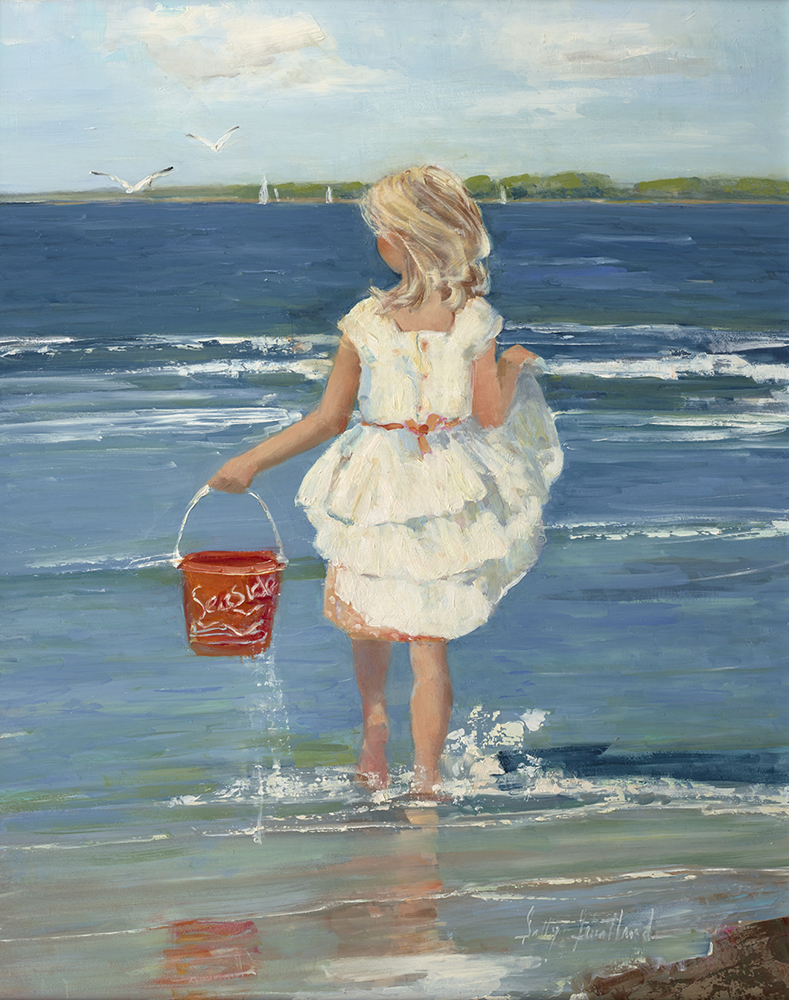
Fun in the Surf by Sally Swatland (Born 1946), Oil on panel, 20 x 16 in., Signed; Rehs Contemporary
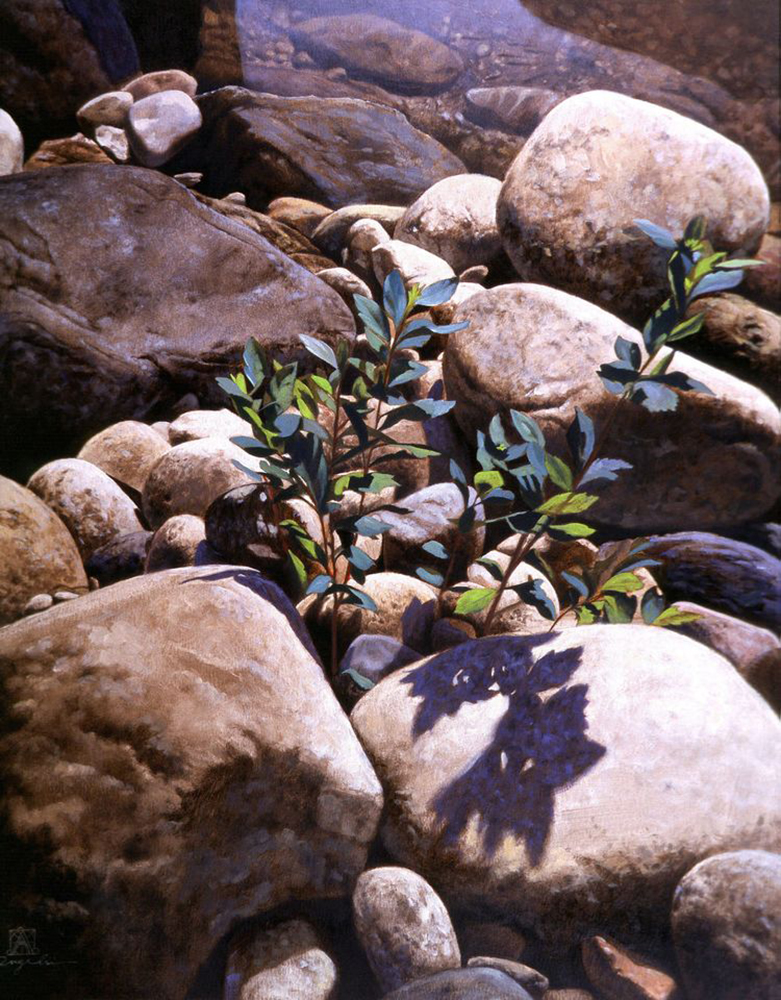
Zen 1 by George Angelini, Oil on panel, 30 x 24 in., (37 x 31 in. framed); Vermont Artisan Designs
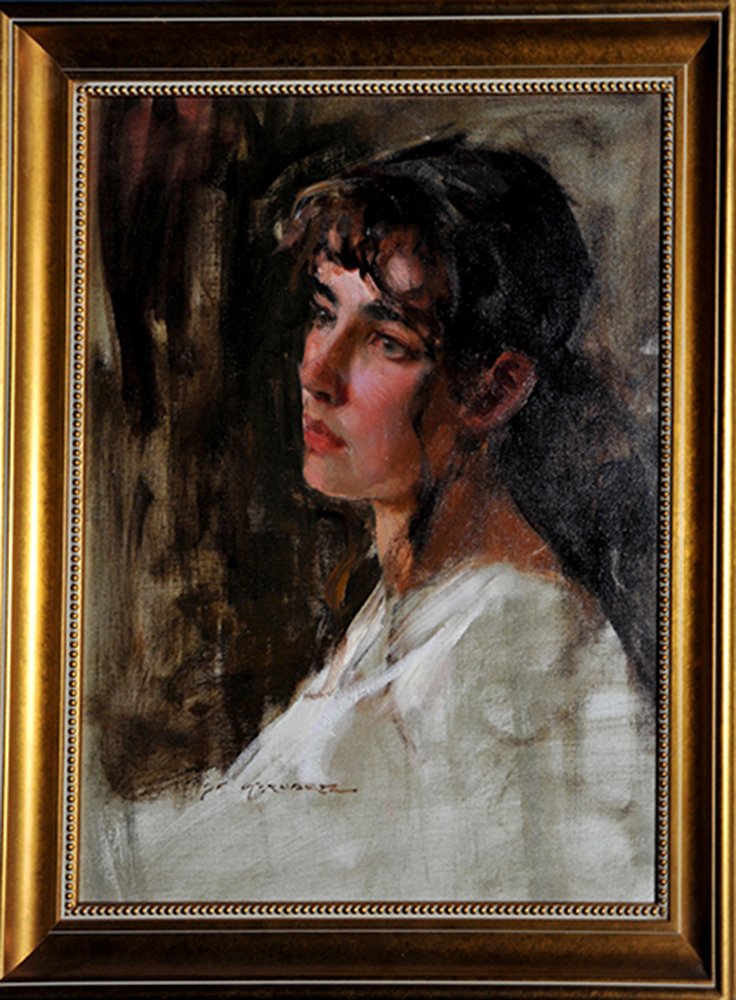
Female #1 by Dan Gerhartz, Oil on canvas, 22 x 18 in.; Liliedahl Enterprises, Inc.
Want to see your gallery featured in an upcoming Virtual Gallery Walk? Contact us at [email protected] to advertise today – don’t delay, as spaces are first-come first-serve and availability is limited.
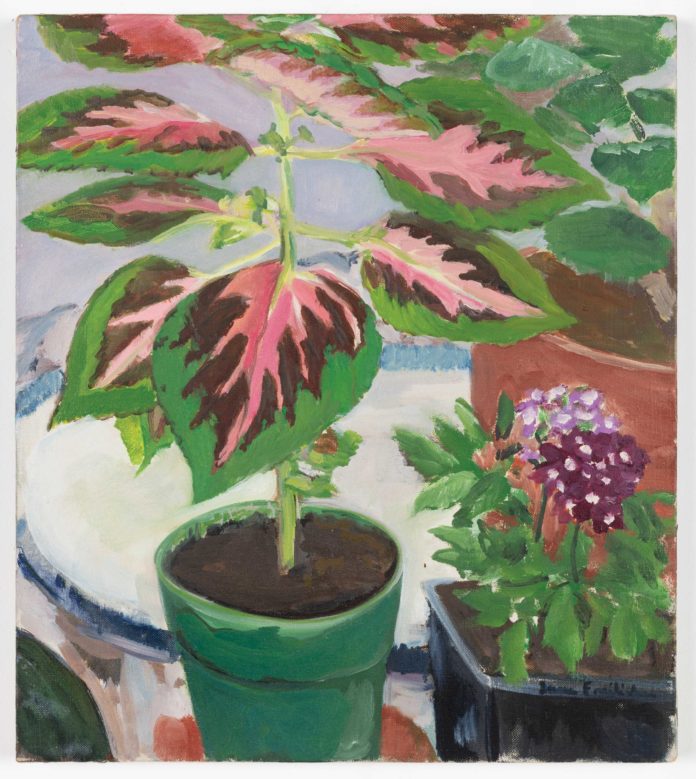
Jane Freilicher (1924–2014), "Coleus and Verbena," 1973, oil on canvas, 15 3/4 x 14 in., Kasmin Gallery and the Estate of Jane Freilicher, photo: Diego Flores
Born in Brooklyn, Jane Freilicher (1924–2014) studied with Hans Hofmann and came of age in the heyday of abstract expressionism. Though she moved comfortably among such abstractionists as Willem de Kooning and Joan Mitchell, she remained committed to representation in her own art, much like her colleagues Fairfield Porter and Alex Katz.
Kasmin Gallery began representing Freilicher’s estate in 2017, and now its second show, “Parts of a World,” highlights her intimate domestic subject matter through 15 still lifes ranging in date from the 1950s through the 2000s.
Many of the works depict flowers, which Freilicher painted in the same spirit as Pierre Bonnard and Henri Matisse, unconcerned by their traditional associations with femininity. They are seen, up close or at a distance, among the casual disorder of the artist’s studios in lower Manhattan and Long Island.
Exhibition Details: “Parts of a World”
Through February 27, 2021
Kasmin Gallery, New York City kasmingallery.com
Cynthia Rosen, "Mirrored Image," 24 x 18 in., (Available through artist)
Contemporary Paintings > In 2020, Cynthia Rosen found time to experiment with her colorful abstractions of the landscape, and moved toward something many of us can relate to from the year: the still life. Here’s how and why her art has changed, and the relevance of a common, but unexpected, shape in her paintings.
Forty years ago, I moved to Vermont to surround myself with the beauty of the great outdoors. I raised my family here and taught here; and for some years since, have sojourned in Massachusetts, New York, and Arizona, all of which offer outdoor gifts. Recently I moved back to Vermont where I reside full time. I am once again finding celebration in the sights and am delighted with the constant change of passing seasons, but now, I have come back in a truly new way. I have returned as a painter, quite often enjoying painting outside.
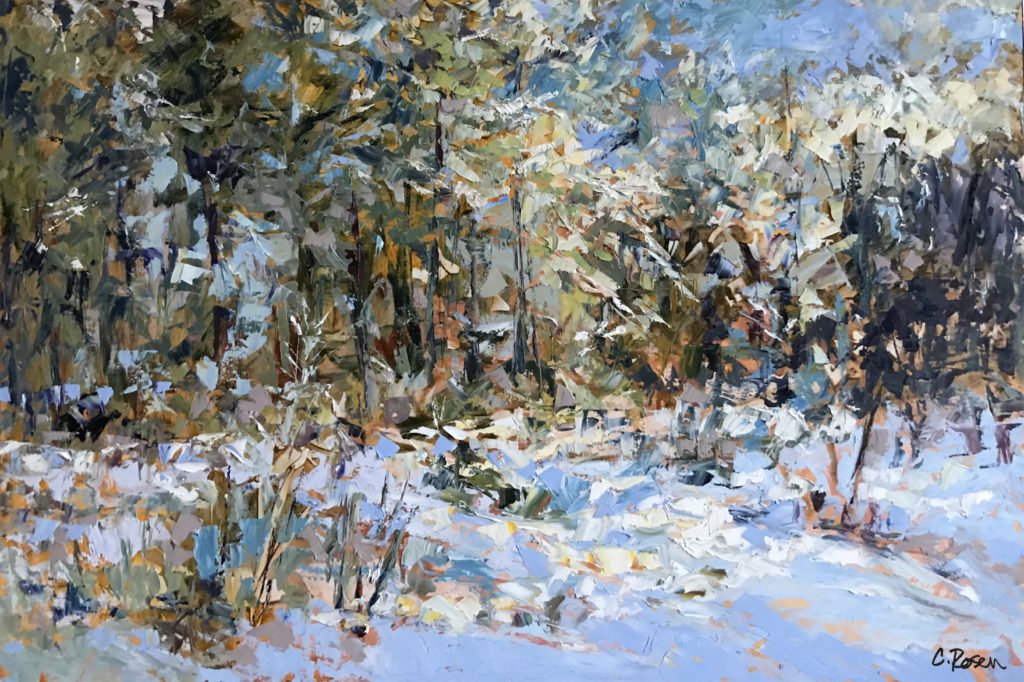
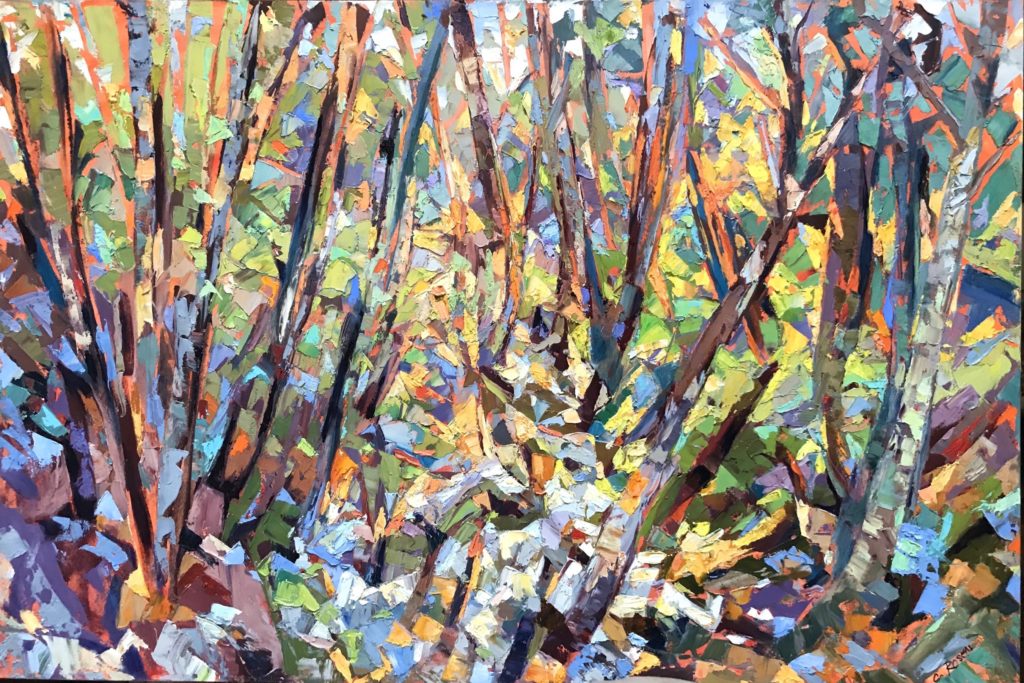
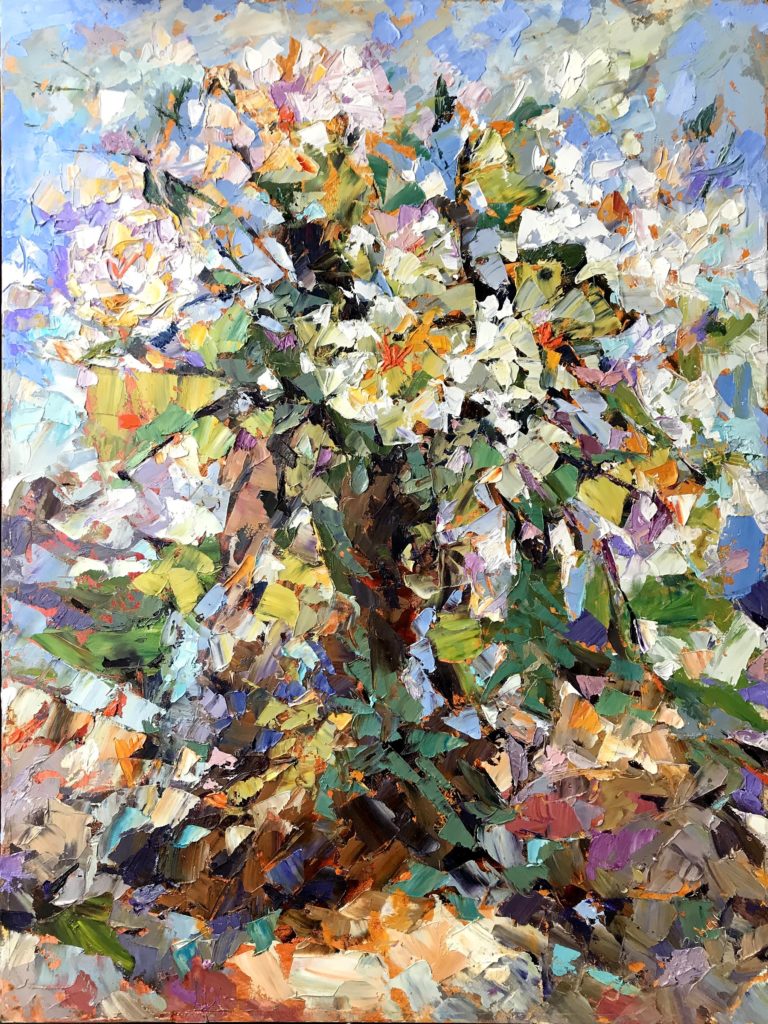
For those who don’t know me, I am a palette knife painter. I love the brush, and occasionally use it, but I am smitten with the knife. I love the purity of thick paint color, which I apply in conjunction with quick definitive strokes. It is not necessarily a gentle process, nor are my paintings. Rather, they are imbued with a restless energy, in my mind, reflective of the world about me. My landscapes are flooded with bits of color moving across the surface, often correlated by others to be ‘a painters version of stained glass’. I typically use broken color in which colors sit alone as opposed to blending adjacent colors.
Cynthia Rosen, “The Magic of Winter,” 24 x 36 in. (Gallery 46, NY)Cynthia Rosen, “Woodland Treasure,” 24 x 36 in., (The Trippe Gallery, MD)
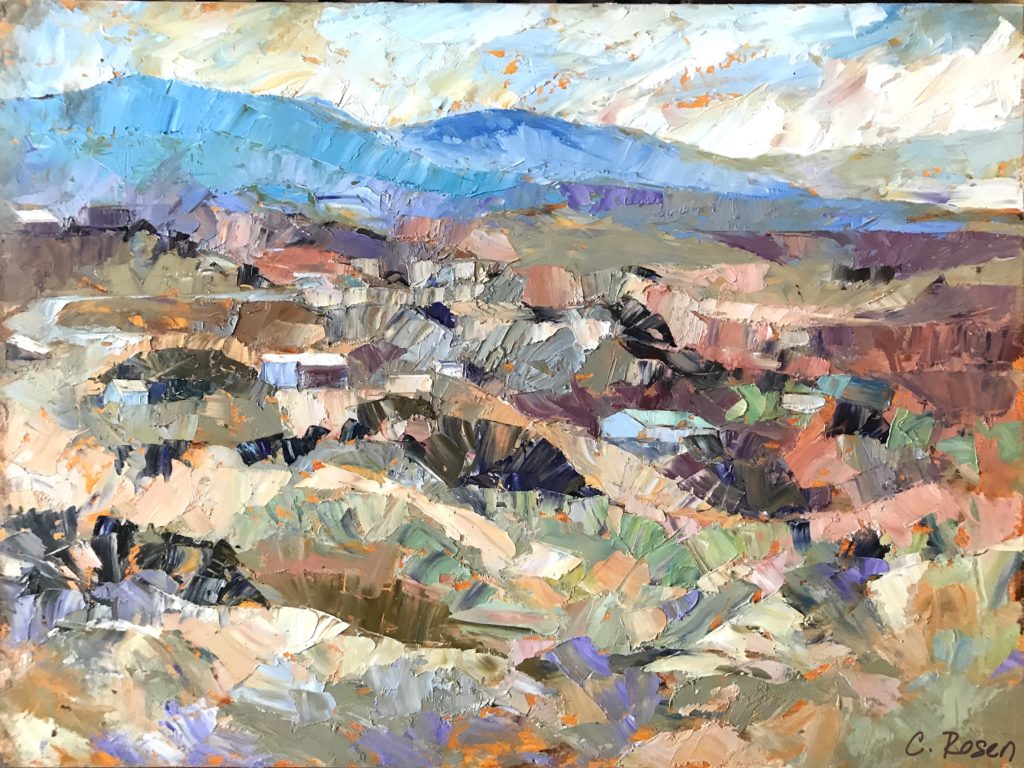
While some of my landscapes are seen as abstractions, I consider them merely interpreting the essence of what I am seeing. The immense range of colors about me, the constantly changing light, more drastic than that in less treed and flatter lands, the flutter of leaves in the breeze and a world merely specked with the occasional inorganic structure created by civilization. But this year, Covid-19 hit and our lives were significantly changed, as reflected by an added direction in my painting.
Cynthia Rosen, “Dance Across the Desert Hills,” 18 x 24 in., (Available through artist)
Travel plans were canceled, galleries shut down and/or closed, at least temporarily, the nature of gatherings was altered, and for days on end, it all seemed like life turned a bit upside-down (in addition to added social/political stresses). While some chose to maintain life as previously known as much as possible during the pandemic, my family and I chose to maneuver through these new times with an abundance of caution. This brought me to a time of experimentation.
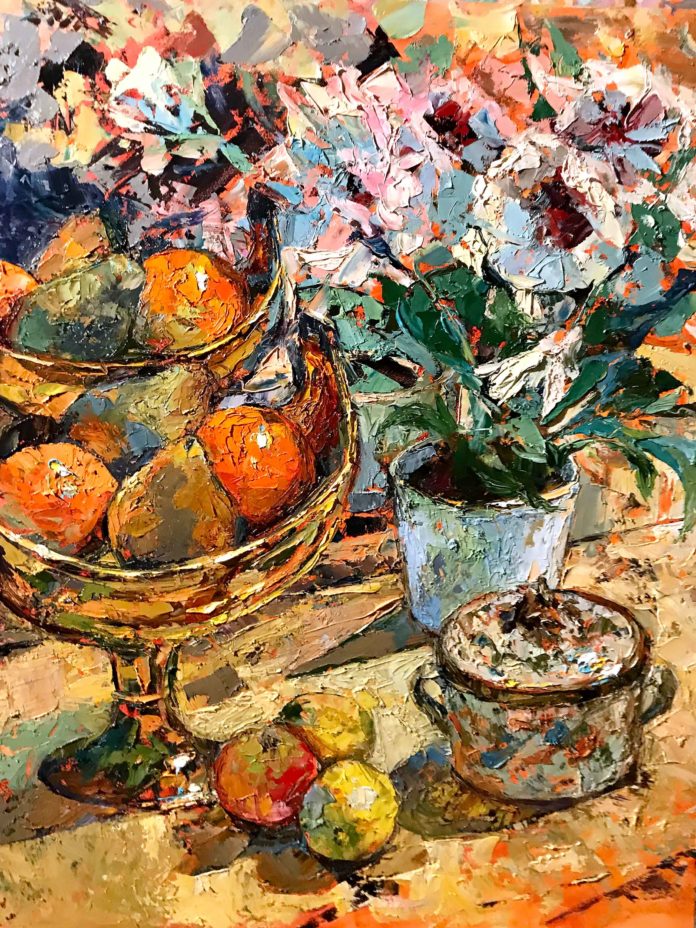
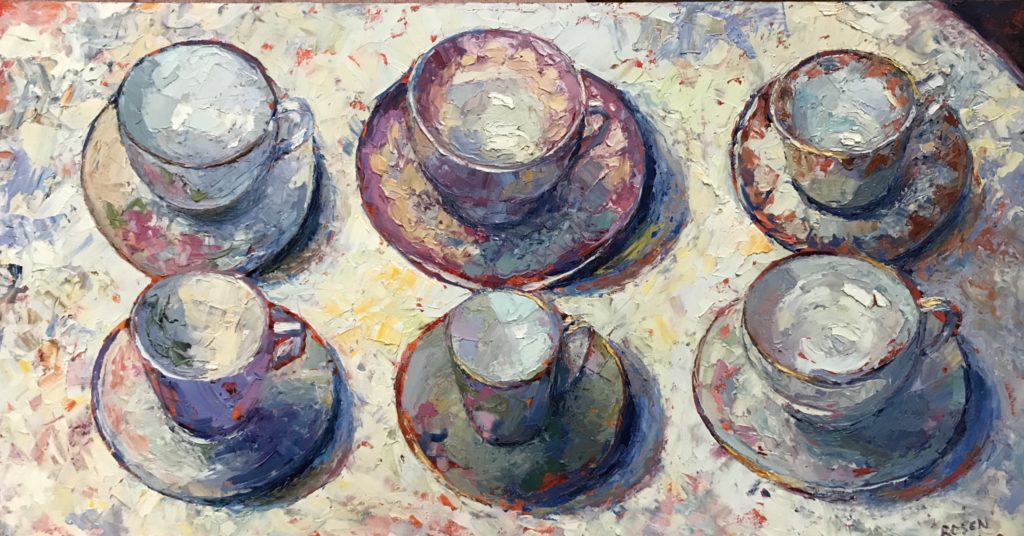
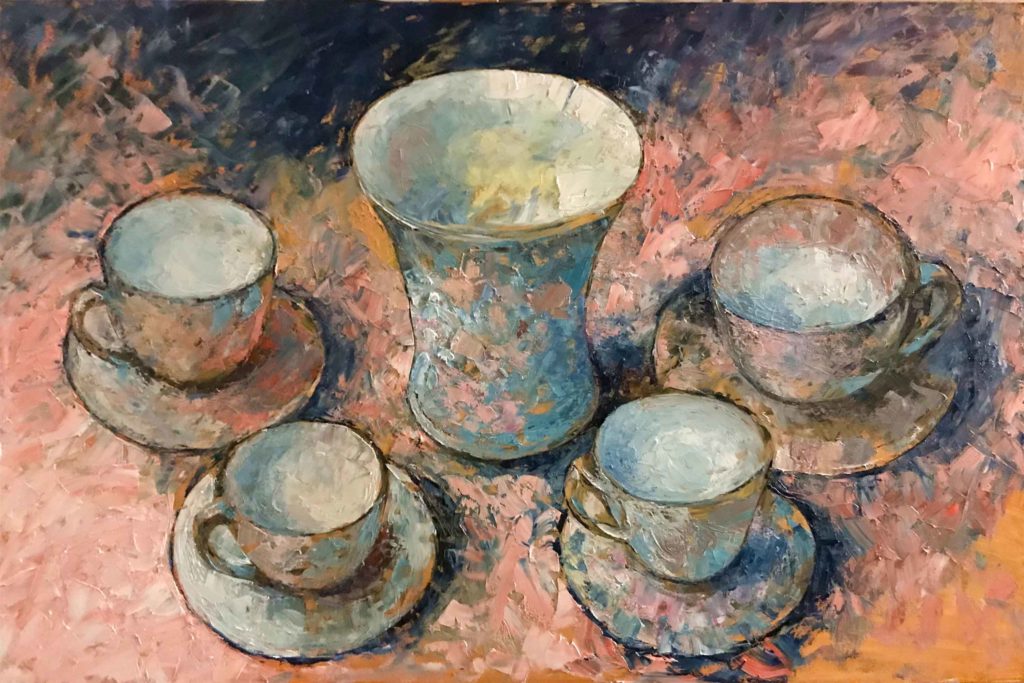
Cynthia Rosen, “Tea with Thiebaud,” 12 x 24 in., sold
In an effort to learn how to paint, I have always ventured across boundaries of various medium and genres. And while most of my paintings have been landscapes in oil, I have enjoyed painting still lifes for the rare occasional change, particularly when hitting a streak of extreme weather. I chose not to endure the frigid temps while painting plein air. In doing so I realized there is something really nice and secure about in dealing with a still life. In fact, I painted a still life for an instructional video through Streamline Art Video. Is it a great painting? No, those don’t happen intentionally just because we have a desire or a few hours with which to produce. That would require working over a longer period of time. The quality of instruction is the intent of an instructional video.
A ‘Still Life’
Controlled light (if painted in a studio) and objects that don’t move! How nice is that? And my trusty palette knife, an old friend at this point, even for painting still lifes. (My favorite knife being the RGM #50 or other brand equivalent in shape, size, and flexibility, which does not hold too much paint, making it very controllable and an angled neck to keep my fingers out of the paint.)
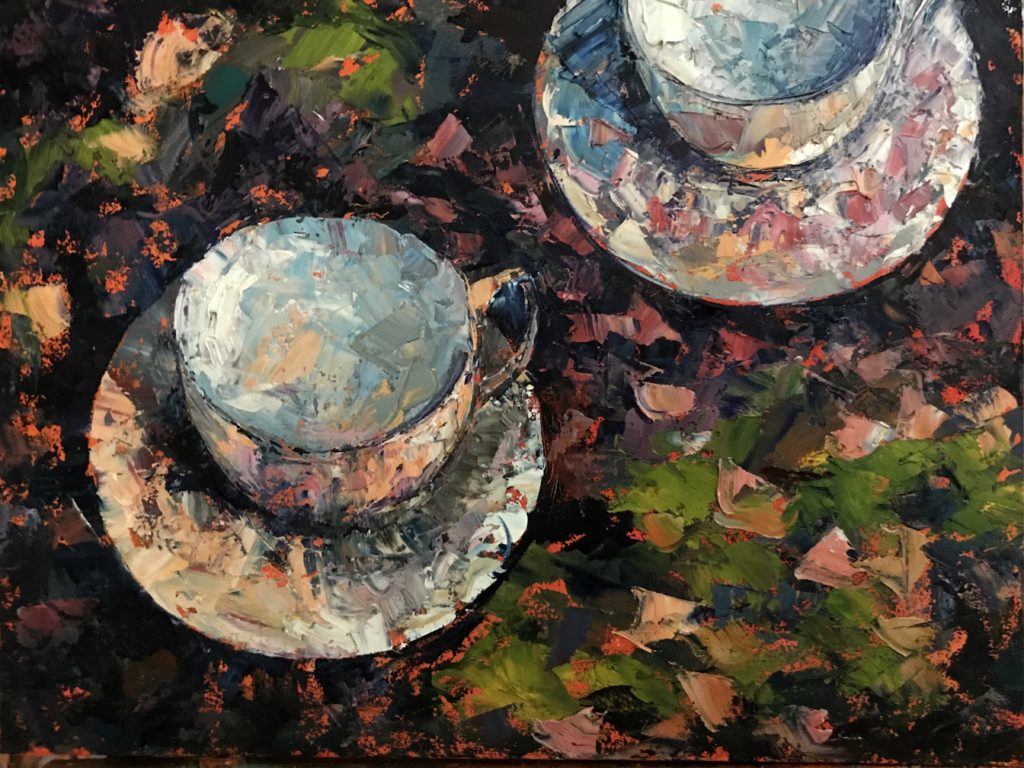
Cynthia Rosen, “Tea for Two,” 12 x 16 in., (Available through artist)
Stability in Shapes
But, interestingly enough, I have recently found myself drawn to painting circles. And, I attribute this to being stuck at home. Am I walking in circles? Is my mind going around and around, over details or thoughts? Actually I think it is the comfort a circle provides. A circle gently contains. Well, you say: ‘So does any geometric shape’. Yes…but a circle acts like a target and you can not get cornered into a section like you can with straight edged geometric shapes.
A square contains but due to its flat surface seems to ground one more. A triangle directs the eye like the tip of an arrow. A more organic shape, like an amoeba, is related but adds a sense of a fluid movement due to the uneven weight distribution. But a circle simply contains. I have rarely used circles in painting…until now. Yes, I have painted objects such as vases with the fullness they embody and the elliptical curvature of their base and/or top; but never painted circles as the focus of a painting, until now.
Excuse me for a moment as I will digress to tell you when my interest in circles and still lifes began. Upon learning art history in the 70’s, I remember loving the boldness of Wayne Thiebaud’s color, his clearly defined use of shapes, and at times, patterns, usually viewed from above. I simultaneously loved the gentleness of William Bailey’s tonal works, also with clearly defined shapes but from a frontal perspective with a virtual opposite kind of formal structure.
During this time, my own image making was either on the grey scale (somewhere between the extremes of black and white) or basically monochromatic (the variations of one color) without well defined shapes, for I had transitioned from tightly drawn images to the world of ‘Color Field’ painting (part of the Abstract Expressionist movement). I was creating primarily monochromatic modulating surfaces onto which I drew a movement of slightly colored marks reflecting the movement of time. Time…seems to be a subliminal obsession that can still be found in my work to date.
Cynthia Rosen, “Floral Symphony,” 24 x 18 in., sold
So jumping to today, thank you to Covid-19, age, and too many cold grey days for my liking, I have found myself spending part of my time painting still lifes. But, instead of the occasional endeavor, these paintings seem to be becoming part of a series, a series filled with circles. I am loving the control and containment that circles afford, in a time so out of our control.
Where will this fledgling series will take me? I am not sure. For now, circles are comforting and the stability of shapes are a wonderful alternative from my normally energetic mosaic-like strikes of color highlighting movement and change.
Has my technique changed? No, I am still a committed palette knife painter (for now) but I have found comfort in the more controlled shapes and structure that have found voice in my present vocabulary. Our journey in making art will always be an adventure spurred on by the curiosities of our hearts and mind.
About “Still Life with Palette Knife”
.
Cynthia Rosen’s “Still Life with Palette Knife” workshop is is perfect for artists who are screaming out for help or who have reached a point of frustration and want to find their own personal voice as they expand their skills.
Artists wishing to go beyond traditional approaches will absolutely LOVE this! Don’t shy away from this video just because you may never have used a palette knife — it’s SO much more than that.
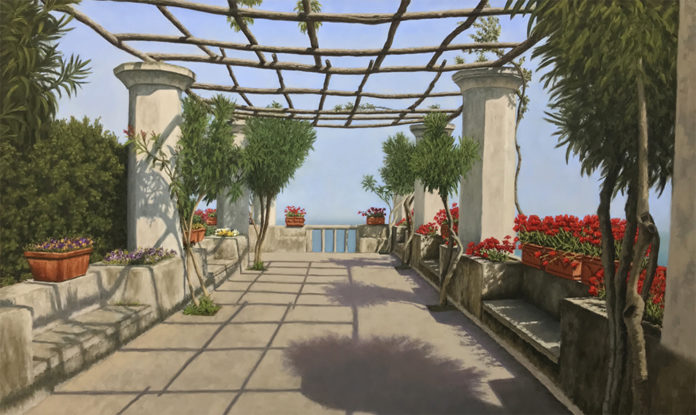
Lisa Cunningham: “The Gardens of Villa Rufolo sit high atop the Amalfi Coast in the beautiful town of Ravello, a charming village in Southern Italy. I found this place to be peaceful and serene, with stunning views of the coastline below. I loved the patterns created by the sunlight beaming through the pergola above and the towering columns lining the walkway of this cliffside paradise.”
Lisa is a signature member of the Pastel Society of America and her work is held in private and corporate collections. She is also a member of American Women Artists, The Salmagundi Club, the Catherine Lorillard Wolfe Art Club, and the American Artists Professional League.
See more of Lisa’s work on her website
Stay connected with Lisa and subscribe to her newsletter
Galleries:
Cooper & Smith
10 Main Street
Essex, CT 06426
Patricia Hutton Galleries
47 West State Street
Doylestown, PA 18901
Fill your mind with useful art stories, the latest trends, upcoming art shows, top artists, and more. Subscribe to Fine Art Today, from the publishers of Fine Art Connoisseur magazine.