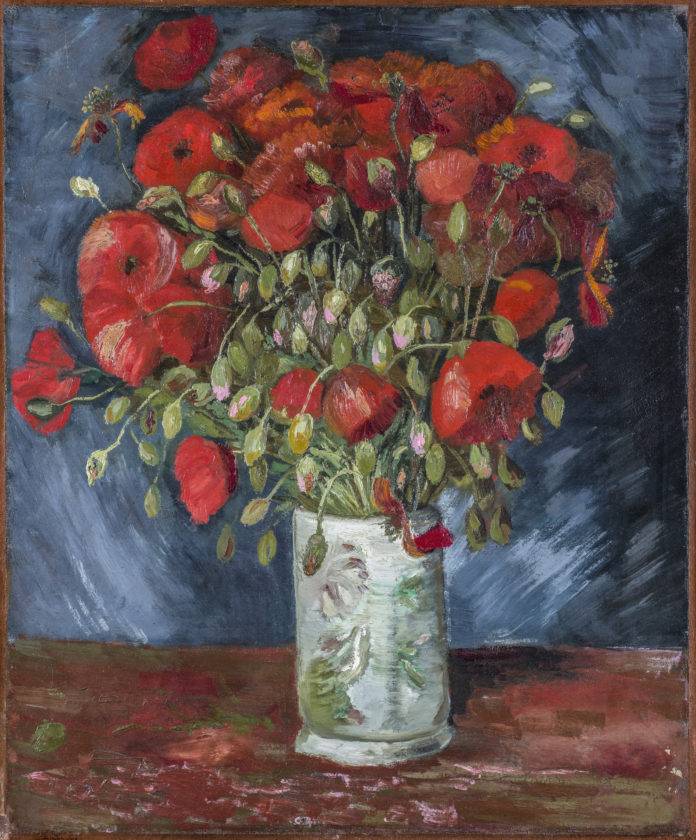
Vincent Van Gogh (Dutch, 1853–1890), “Vase with Poppies,” c. 1886, oil on canvas, 21 1/2 x 17 3/4 in. Wadsworth Atheneum Museum of Art. Bequest of Anne Parrish Titzell. (1957.617)
After nearly 30 years of doubt, the Wadsworth Atheneum’s painting “Vase with Poppies” by Vincent Van Gogh, has now been fully authenticated by specialists at the Van Gogh Museum.
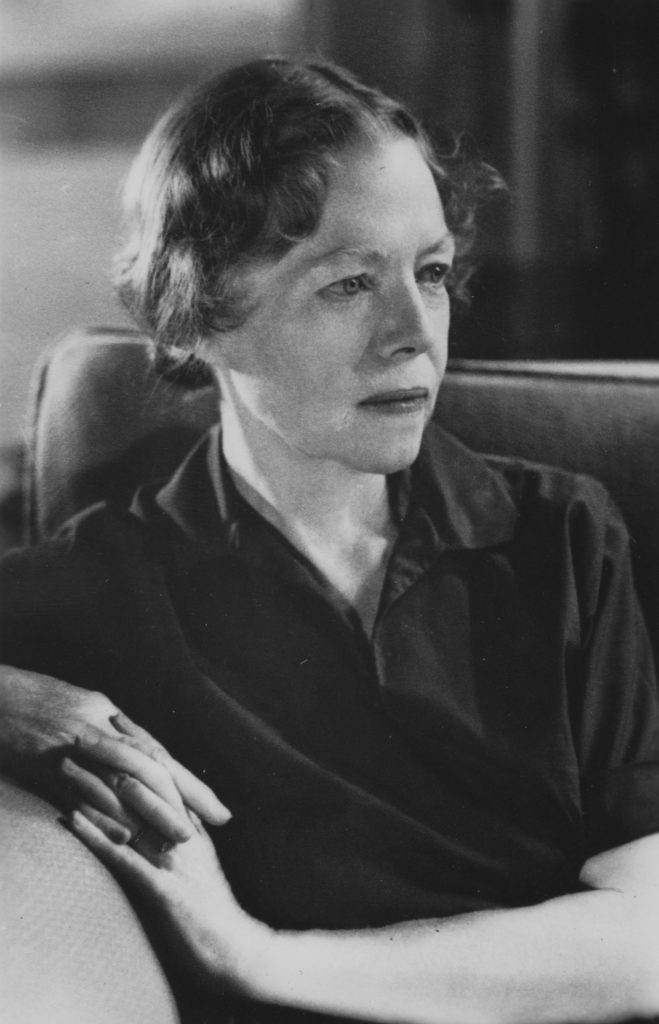
Photograph of Anne Parrish Titzell, c. 1950. Photograph Collection, Wadsworth Atheneum Museum of Art Archives. (RG9_1_F3661.2)
While the painting came to the Wadsworth in a bequest from the writer and French Impressionist collector Anne Parrish Titzell in 1957 along with works by Renoir, Monet, and Redon, “Vase with Poppies” has been difficult to confidently attribute since questions about Van Gogh’s practice remained unresolved. Experts in Amsterdam following scientific and art-historical inquiry have determined that the painting technically and stylistically concurs with Van Gogh’s documented work in 1886.
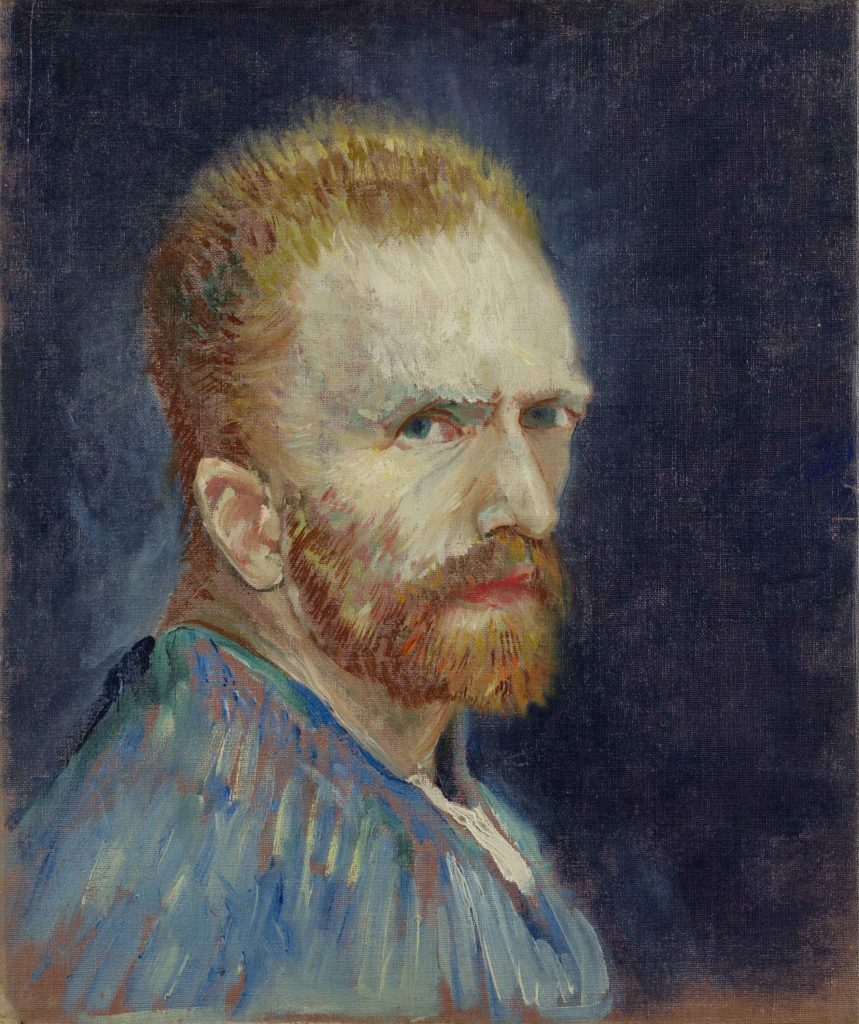
Vincent Van Gogh (Dutch, 1853–1890), “Self-Portrait,” c. 1887, oil on canvas, 15 15/16 x 13 3/8 in. Wadsworth Atheneum Museum of Art. Gift of Philip L. Goodwin in memory of his mother, Josephine S. Goodwin. (1954.189)
This new finding means that the Wadsworth is home to two Van Goghs; “Vase with Poppies” will join “Self Portrait,” both painted during his Paris period 1886–1887 atop earlier paintings.
“Vase with Poppies” fits stylistically with a group of works the artist made shortly after arriving in Paris in the spring of 1886. Van Gogh took advantage of the easy access to flowers as he reinvented his stylistic approach after two years of depicting peasant life in Nuenen. His embrace of a more vibrant palette and light-filled renderings of humble subjects — flowers, nuts, fruit — is evident in this simple composition of cut poppies in a plain cylindrical vase.
In his words in an 1886 letter to fellow artist Horace M. Livens, “And now for what regards what I myself have been doing, I have lacked money for paying models else I had entirely given myself to figure painting. But I have made a series of color studies in painting, simply flowers, red poppies, blue corn flowers and myosotys, white and rose roses, yellow chrysanthemums — seeking oppositions of blue with orange, red and green, yellow and violet seeking les tons rompus et neutres to harmonize brutal extremes.”
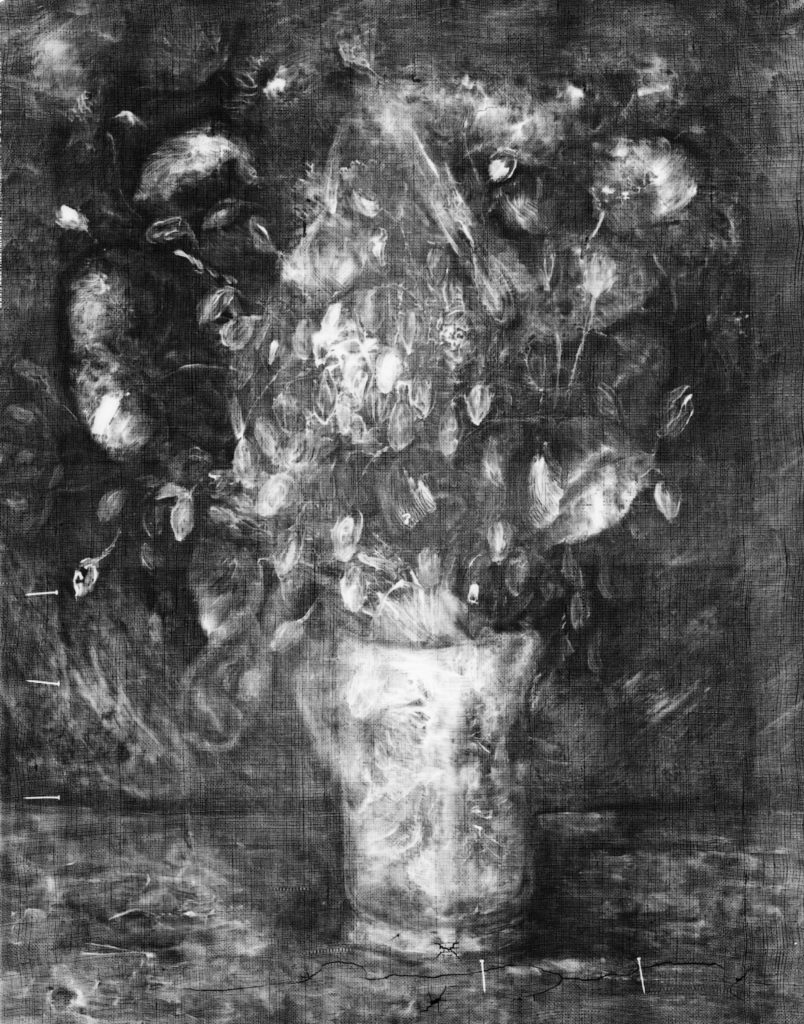
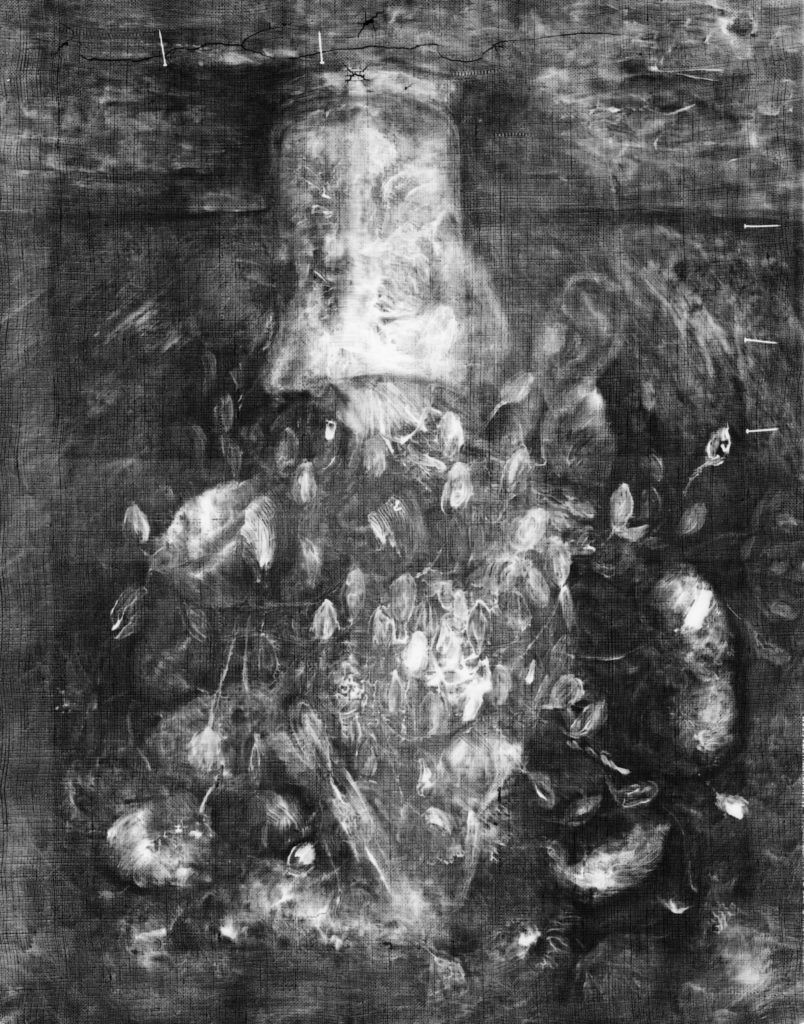
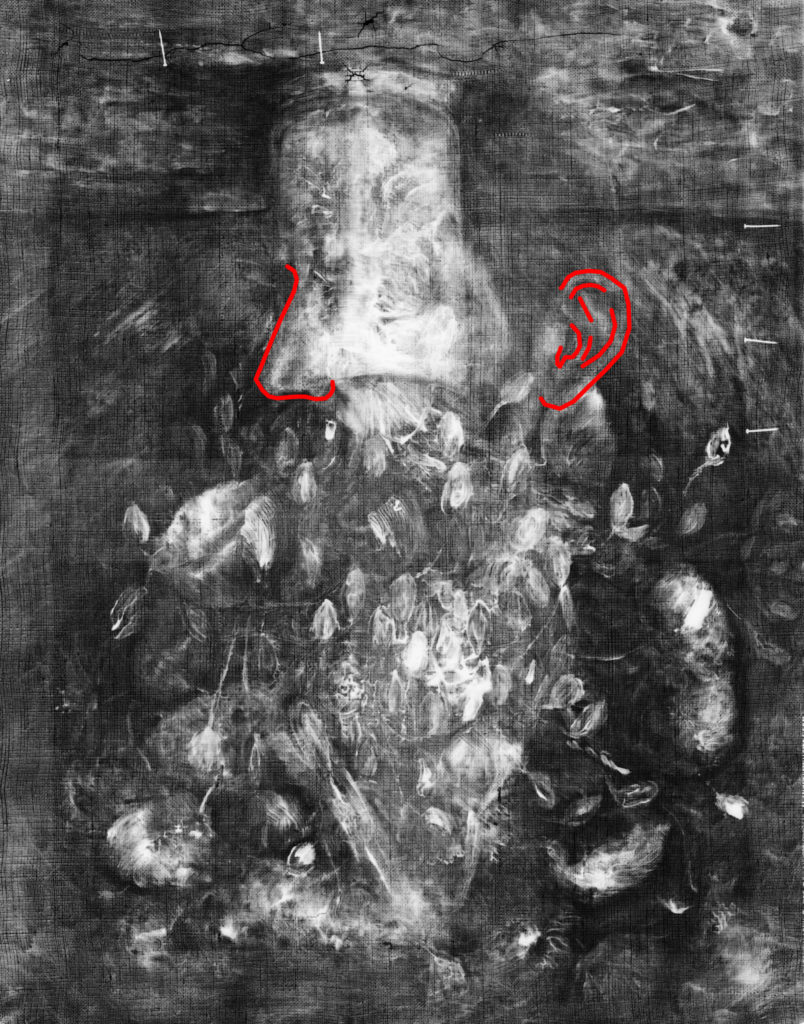
Concurrent to the physical examinations by the team at the Van Gogh Museum, recent investigations uncovered that the painting was exhibited at the watershed 1913 Armory Show in New York City. These new investigations were all prompted by the Wadsworth conservation lab using newly acquired imaging equipment through the generosity of the Sherman Fairchild Foundation. Digital x-ray and advanced infrared reflectograms revealed with greater clarity than ever before the presence of an earlier painting beneath the current composition. These early forensic findings made sending “Vase with Poppies” to the Van Gogh Museum for advanced study the logical next step. Their work — analyzing the paint, materials, linen, style — enabled a level of professional scrutiny and artist-specific context to arrive at this new judgment of authenticity with great confidence.
X-ray of “Vase with Poppies,” c. 1886 by Vincent Van Gogh. Wadsworth Atheneum Museum of Art Conservation Lab.X-ray (rotated), “Vase with Poppies,” c. 1886 by Vincent Van Gogh. Wadsworth Atheneum Museum of Art Conservation Lab.X-ray (rotated and annotated), “Vase with Poppies,” c. 1886 by Vincent Van Gogh. Wadsworth Atheneum Museum of Art Conservation Lab.
“It was a pleasure for our museum to work together with the Wadsworth Atheneum on this particular project,” says Louis van Tilborgh, Senior Researcher, Van Gogh Museum, and Professor of Art History, specializing in Van Gogh, University of Amsterdam. “When in 1970 Van Gogh’s oeuvre catalogue by De la Faille was published, it was seen by many as a progress report. It contained too many “floaters” in terms of both dating and authenticity to admit that a firm, unequivocal, authentic oeuvre had been established, to quote the eminent art historian Ronald Pickvance. Now, almost fifty years later, one can say that slowly but surely, real progress is being made in Van Gogh studies. Some of these floaters even turned out to be firmly anchored in Van Gogh’s oeuvre, and ‘Vase with Poppies,’ I am happy to say, is one of them.”
The painting will return home to the Wadsworth Atheneum in Hartford, Connecticut, just in time for the opening of the 38th Annual Fine Art and Flowers on Friday, April 26, 2019. “Vase with Poppies” will next go on loan to Europe for the Museum Barberini’s exhibition, “Van Gogh: Still Lifes” (Potsdam, Germany, October 26, 2019, to February 2, 2020), where it will join a number of these transitional works, allowing the public and scholars alike access to this exciting development through side-by-side display.
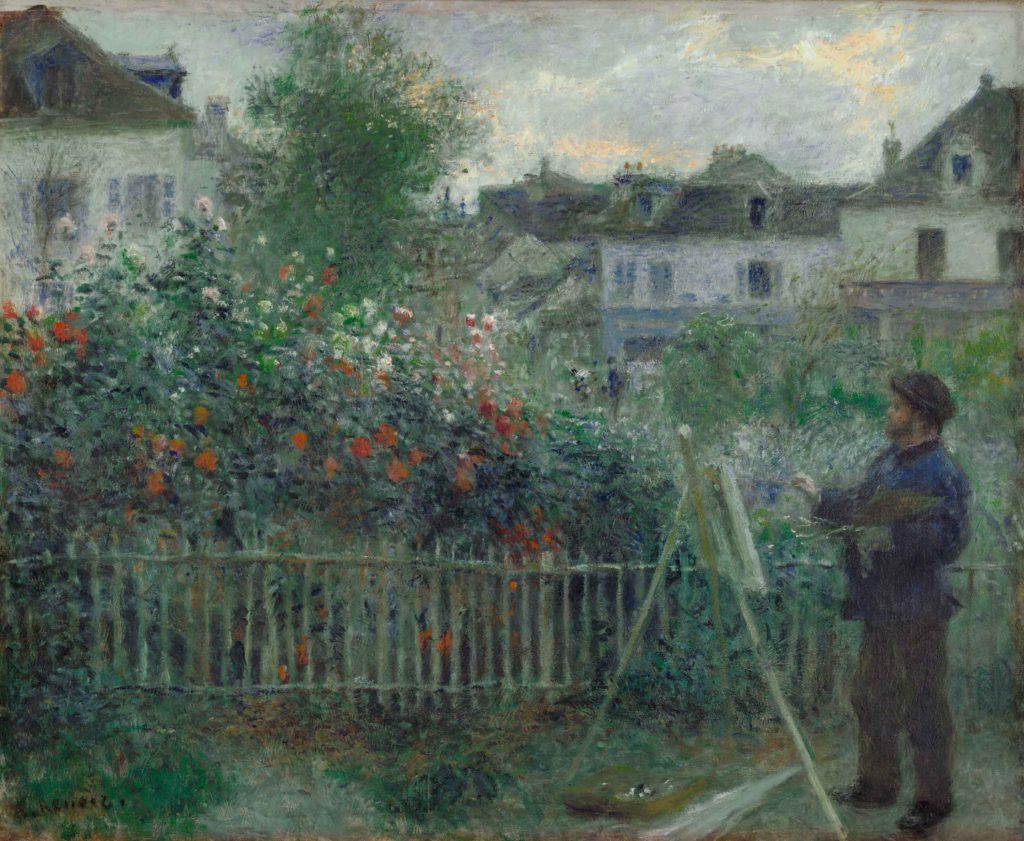
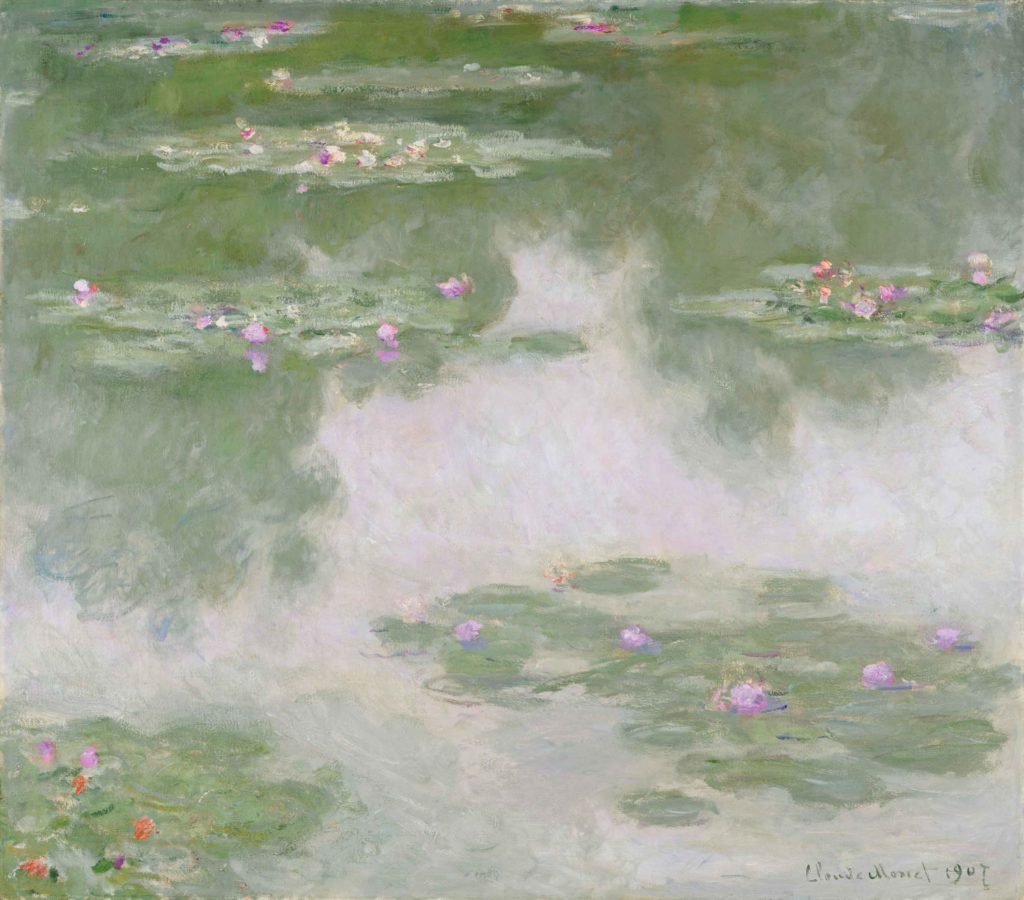
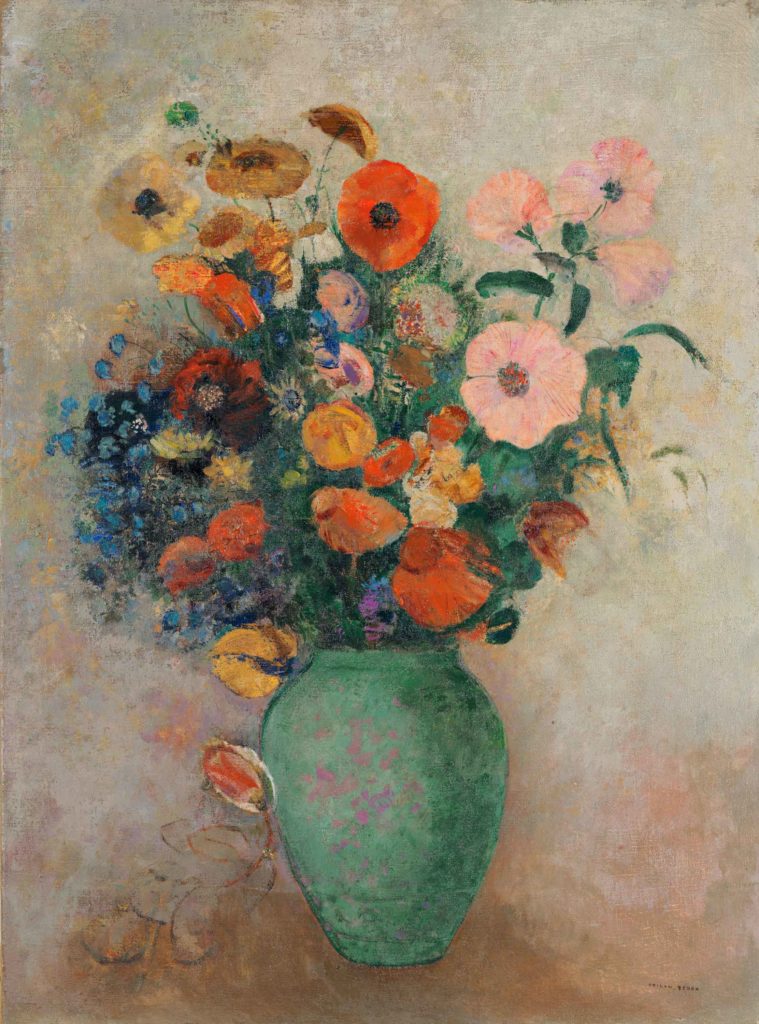
Pierre-Auguste Renoir (French, 1841–1919), “Claude Monet Painting in His Garden at Argenteuil,” 1873, oil on canvas, 18 3/8 x 23 1/2 in. Wadsworth Atheneum Museum of Art. Bequest of Anne Parrish Titzell. (1957.614)Claude Monet (French, 1840–1926), “Nymphéas (Water Lilies),’ 1907, oil on canvas, 31 7/8 x 36 1/4 in. Wadsworth Atheneum Museum of Art. Bequest of Anne Parrish Titzell. (1957.622)Odilon Redon (French, 1840–1916), “Bouquet of Flowers in a Green Vase,” c. 1915, oil on canvas. 28 3/4 x 21 1/4 in. Wadsworth Atheneum Museum of Art. Bequest of Anne Parrish Titzell. (1957.618)
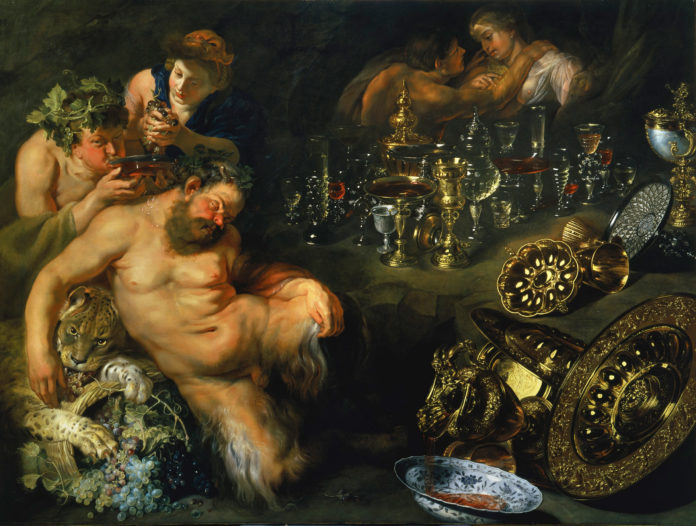
Peter Paul Rubens (Flemish, Seigen 1577–1640 Antwerp), “The Dreaming Silenus,” 1610–1612, oil on canvas, 62 1/4 × 85 3/8 in. (158 × 217 cm). Gemäldegalerie der Akademie der bildenden Künste Wien (Academy of Fine Arts Vienna)
In 1608, after a period of intense artistic study in Italy, Peter Paul Rubens (1577–1640) returned to his hometown of Antwerp. He found a city eager to renew its visual culture and ready to support him, a bold artist who worked at a rapid pace and dramatic scale that could satisfy the demand for religious images while also supplying private collectors with works of ancient history and mythology.
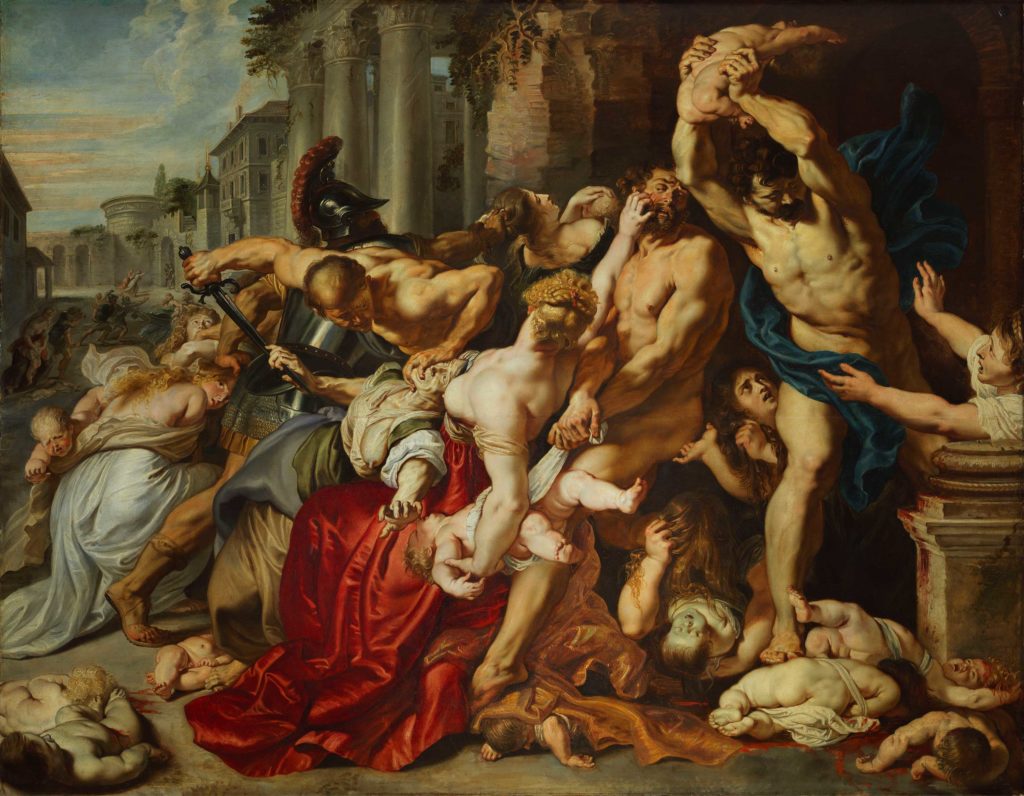
Peter Paul Rubens (Flemish, Seigen 1577–1640 Antwerp), “The Massacre of the Innocents,” ca. 1610, oil on panel, 55 7/8 × 72 1/16 in. (142 × 183 cm). The Thomson Collection at the Art Gallery of Ontario. Photograph by Sean Weaver, Art Gallery of Ontario
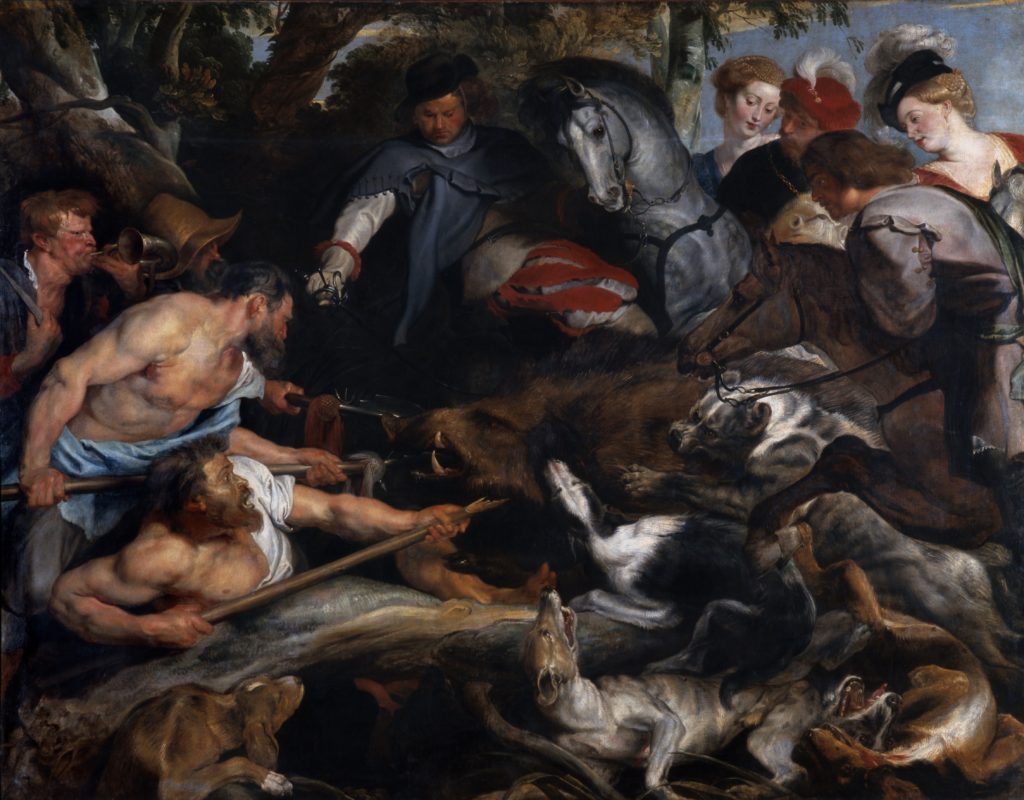
“Early Rubens” is the first exhibition dedicated to the pivotal years between 1609 and 1621, when the Northern Baroque master established his career. In more than 30 paintings and 20 works on paper, the exhibition will trace Rubens’s early development as a master painter with a unique gift for depicting seductive and shocking narratives. Rubens was not only a sought-after artist, but also a diplomat, shrewd businessman, and a friend to scholars and monarchs. “Early Rubens” will explore the artist’s meteoric rise to the first rank of European painters through a series of social and artistic choices that laid the groundwork for his international fame.
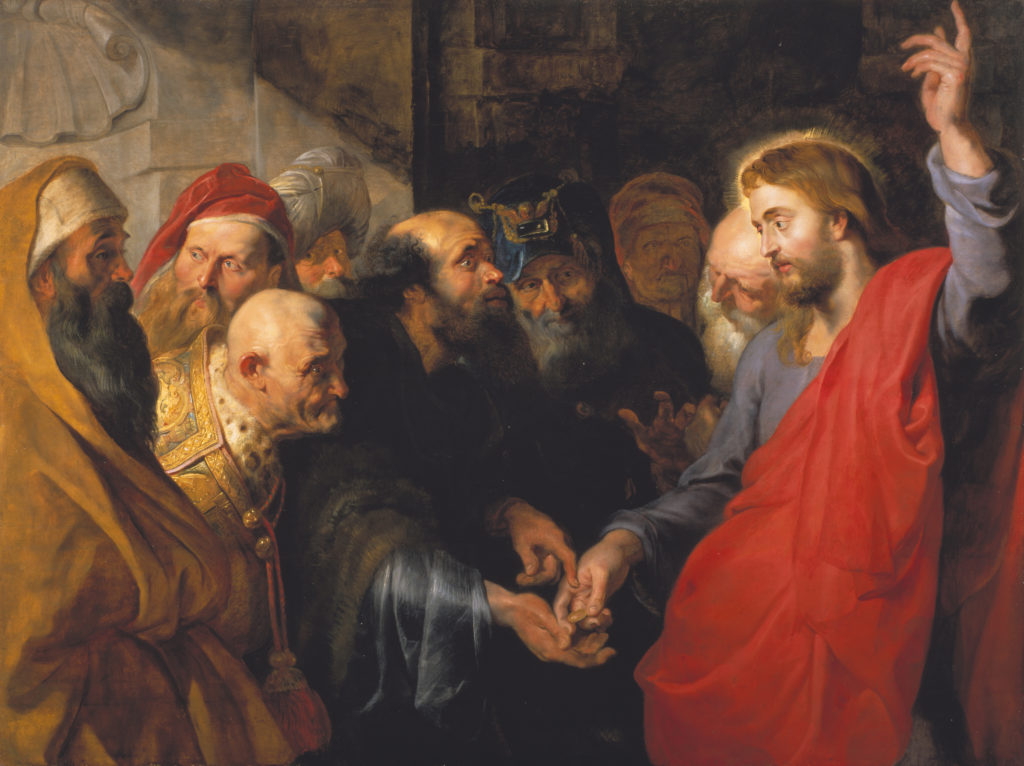
Peter Paul Rubens, “The Tribute Money,” ca. 1612, oil on panel, 56 ¾ × 74 ¾ in. (144.1 × 189.9 cm). Fine Arts Museums of San Francisco, Museum purchase, M.H. de Young Art trust Fund, 44.11. All Images courtesy of the Fine Arts Museums of San Francisco
“Peter Paul Rubens was both a prodigious and influential artist and one of the most extraordinary figures of the 17th century,” says Thomas P. Campbell, Director and CEO of The Fine Arts Museums of San Francisco. “We are delighted to present this examination of Rubens’s early work at the Legion of Honor in partnership with the Art Gallery of Ontario. Inspired by continual scholarship and study of our collections of work by Flemish masters, the exhibition will contextualize Rubens’s importance and legacy for our audiences.”
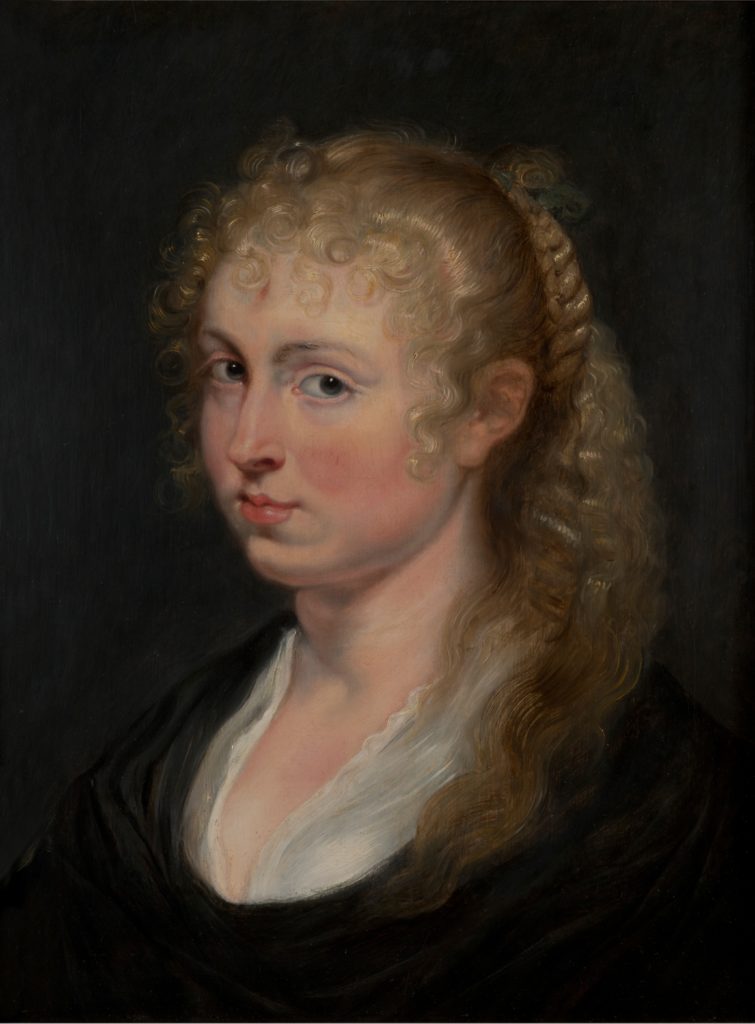
Peter Paul Rubens (Flemish, 1577–1640), “Young Woman with Curly Hair,” ca. 1618–1620, oil on panel, 21 × 15 3/4 in. (53.3 × 40 cm). The Armand Hammer Collection, Gift of the Armand Hammer Foundation. Hammer Museum, Los Angeles.
More than 50 works from private and public collections in Europe and North America — including the Royal Museum of Fine Arts, Antwerp; the Kunsthistorisches Museum, Vienna; the Princely Collections of Liechtenstein; the Rijksmuseum, Amsterdam; the British Museum, London; the National Gallery of Art, Washington, D.C.; and the Metropolitan Museum of Art, New York will be brought together for the exhibition. Many will be exhibited in North America or on the US West Coast for the first time. The exhibition is arranged thematically, thereby revealing Rubens’s mastery of a broad range of visual styles and subject matter, both historical and mythological.
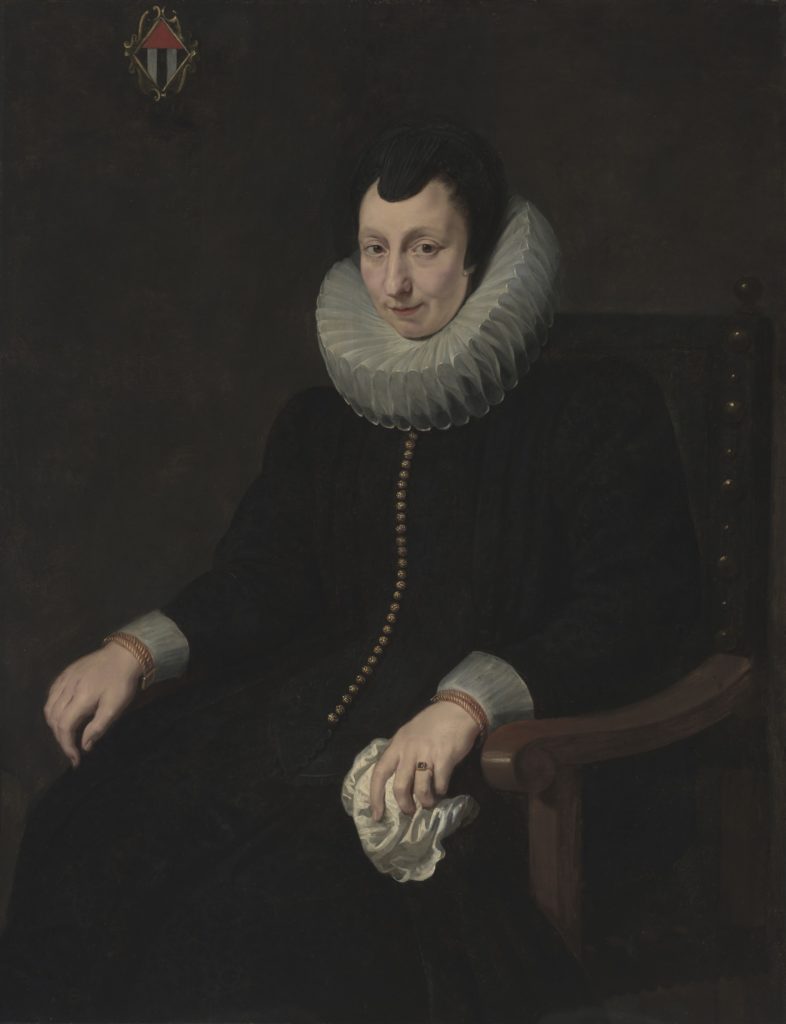
Peter Paul Rubens (Flemish, 1577–1640), “Portrait of Sara Breyel,” ca. 1611, oil on panel, 46 1/2 × 36 3/16 (118.1 × 91.9 cm). Collection of the Fine Arts Museums of San Francisco
“What distinguished Rubens and made his pictures so thrilling for his early viewers, was his ability to re-interpret important models he encountered both on the Italian peninsula and in the Low Countries through his own developing sense for vibrant, naturalistic color and his virtuoso brushwork,” says Kirk Nickel, assistant curator of European painting at the Fine Arts Museums of San Francisco. “His inclination to work quickly and at a large scale was essential for Rubens’s success in repopulating the city’s churches with religious images, even while he painted startling episodes of ancient valor, obscure Greco-Roman mythologies, and unsettling moments of biblical history for private collectors.”
“Early Rubens” is anchored in “The Tribute Money” (ca. 1610–1615), a treasured Flemish Baroque masterpiece from the collection of the Fine Arts Museums of San Francisco, and the recently rediscovered “The Massacre of the Innocents” (ca. 1611–1612), a centerpiece of the Art Gallery of Ontario’s collection.
“Early Rubens” is organized by Kirk Nickel, assistant curator of European paintings at the Fine Arts Museums of San Francisco, and Sasha Suda, curator of European art and R. Fraser Elliott Chair of Prints and Drawings at the Art Gallery of Ontario, Toronto. The exhibition will be on view at the Legion of Honor (San Francisco, CA) from through September 8, 2019, and then at the Art Gallery of Ontario from October 12, 2019, through January 5, 2020.
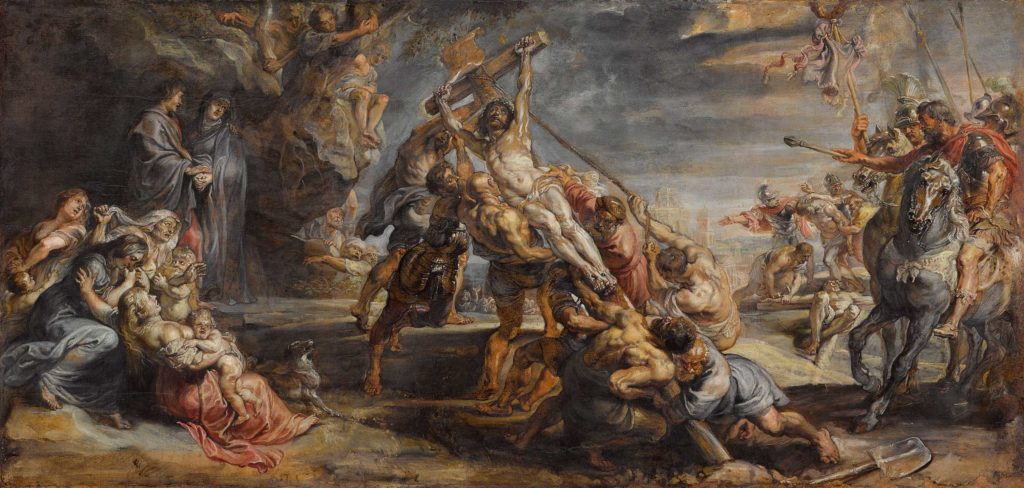
Peter Paul Rubens (Flemish, Seigen 1577–1640 Antwerp), “The Raising of the Cross,” ca. 1638, oil on paper, later mounted on canvas, 28 3/8 × 52 1/4 in. (72.1 × 132.7 cm). Art Gallery of Ontario, Purchase, 1928. Photograph by Craig Boyko, Art Gallery of Ontario
More from the museum:
After an eight-year sojourn in Italy, Rubens returned to Antwerp in 1608 to attend to his dying mother. Italy had been transformative for Rubens, both in terms of his artistic skills and his professional ambitions. A group of works from Rubens’s Italian years, including altarpiece commissions and smaller cabinet pictures, will open the exhibition, setting the context for the artist’s later artistic developments.
Rubens’s experience in Italy informed the social and intellectual circles that he sought to join in Antwerp. A selection of portraits — some commissioned, others intimate portrayals of close friends and family members — will show how Rubens sought to establish himself as a “gentleman painter” and how he acquired increased social and professional footing through his relationships with Antwerp’s mix of humanists, merchants, and religious thinkers. The Fine Arts Museums of San Francisco’s portraits (ca. 1611) of silk merchant Rogier Clarisse and his wife, Sara Breyel, reflect his widening network of relationships that also touched the humanist Jan Woverius and the leadership of Antwerp’s religious communities.
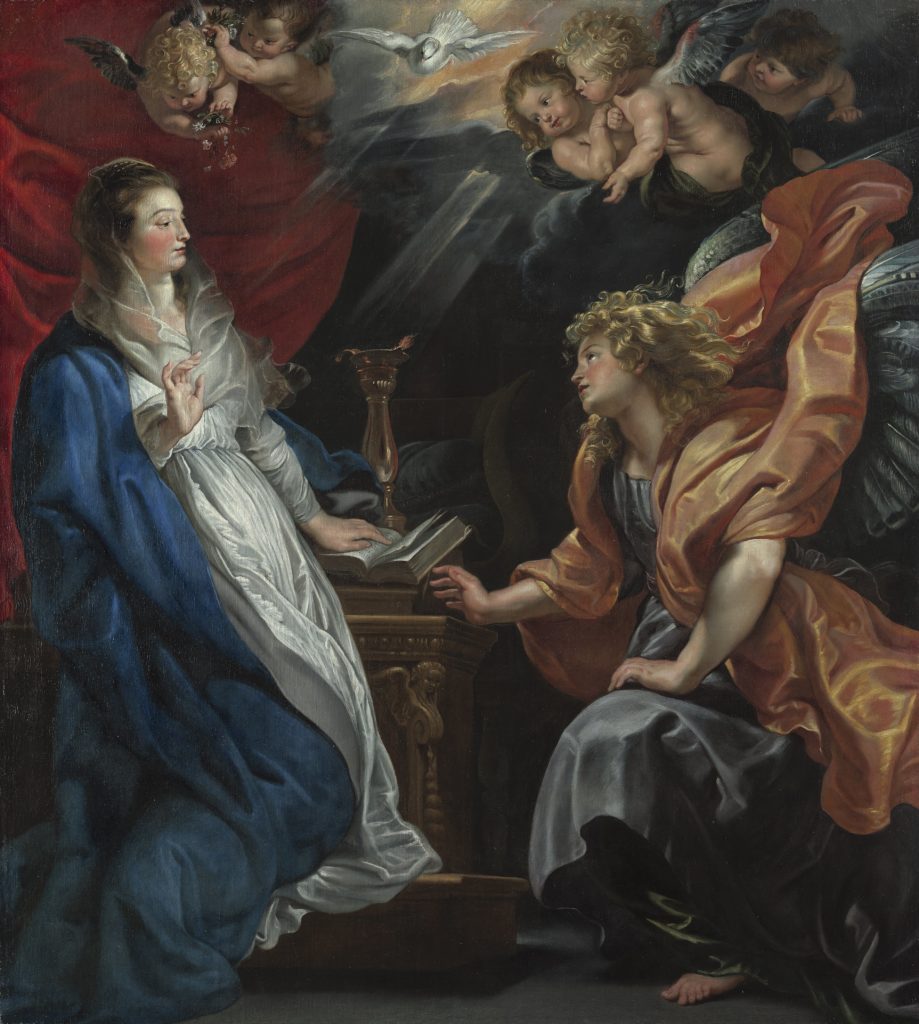
As a bastion of Catholic faith in the face of Dutch Protestantism, Antwerp was eager for a visual language to match its strident support of Rome’s Counter-Reformation priorities. Rubens’s talent for capturing emotion and complex psychology in the movements of the human body was essential to his success as a painter of Christian history. The jewel-toned “Annunciation” from the Kunsthistorisches Museum, Vienna, alongside “Christ on the Straw” (the Michielsen Triptych) from the Royal Museum of Fine Arts, Antwerp, will introduce a gallery featuring scenes from the life of Jesus. These images not only stunned Antwerp at the time of their unveiling but also set a new template for religious images in Europe and far beyond.
Rubens’s talent for portraying gripping human drama was not limited to devotional imagery; it was also integral to his success as a painter of scenes for domestic spaces and galleries. His patrons were well informed about antique art and literature, as well as recent artistic developments in Italy, and they were delighted by Rubens’s skill at incorporating these sources into his own works. The psychological drama in paintings such as “The Tribute Money” and “The Massacre of the Innocents” exemplifies his aptitude for distilling a narrative to its moment of highest dramatic tension.
During the 1610s, Rubens began to consider how best to publish his pictorial inventions through reproductive engravings, and he cultivated relationships with the engravers he felt could best translate his compositions to print. With major examples such as “The Raising of the Cross” and “The Battle of the Amazons” from the Rijksmuseum, the exhibition will present the varied array of printmaking projects in which Rubens collaborated.
As large-scale paintings by Rubens began to enter the collections of aristocrats and royal advisors during the 1610s, his international reputation soared. By the 1620s, Rubens was a favorite of monarchs in France, England, and Spain, and capable of conducting international diplomacy alongside his artistic activities at foreign courts. The exhibition culminates with a selection of Rubens’s large gallery pictures, scaled to compete with tapestry or fresco painting. Mural-size works such as the National Gallery of Art’s “Daniel in the Lions’ Den” (1614/1616) will be joined by other life-size scenes, allowing visitors to the exhibition to appreciate the scope of Rubens’s ambition while also understanding the role his workshop played in his international success.
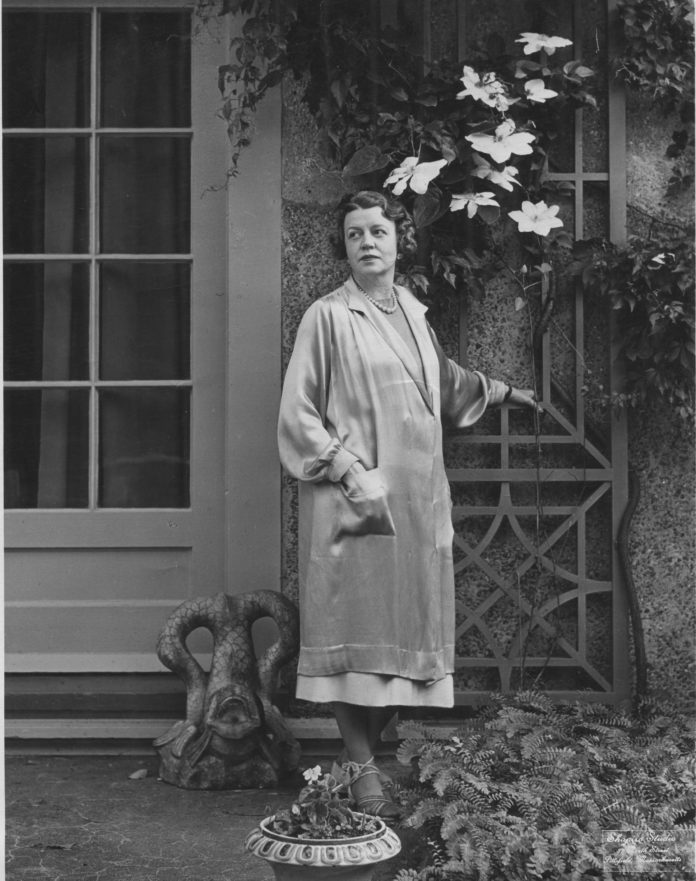
Margaret French Cresson in front of the Chesterwood Studio, 1944. All photos are Courtesy Chapin Library, Williams College, Gift of the National Trust for Historic Preservation/Chesterwood, Stockbridge, MA
Chesterwood, the home, studio, and gardens of sculptor Daniel Chester French, celebrates its 50th anniversary with a special exhibition recognizing French’s daughter, Margaret French Cresson (1889–1973) as an artist in her own right as well as honoring her dedication to preserving Chesterwood.
French, best known for his sculpture of Abraham Lincoln at the Lincoln Memorial in Washington, D.C., divided his time between New York City and Stockbridge, Massachusetts, where he and his family spent their summers starting in 1897. His only child, Margaret, enjoyed entertaining friends in the country and often sculpted alongside her father in his studio. After French and his wife, Mary, passed away, Margaret inherited Chesterwood, making it her full-time home in the 1950s.
Passionate about keeping her father’s artistic legacy alive, she donated Chesterwood, with the exception of the Residence, where she lived until her death in 1973, to the National Trust for Historic Preservation, a private, nonprofit organization based in Washington, D.C., which opened the property as a historic site to the public on June 9, 1969. After Cresson’s death, the Residence and its contents became the property of the National Trust as well.
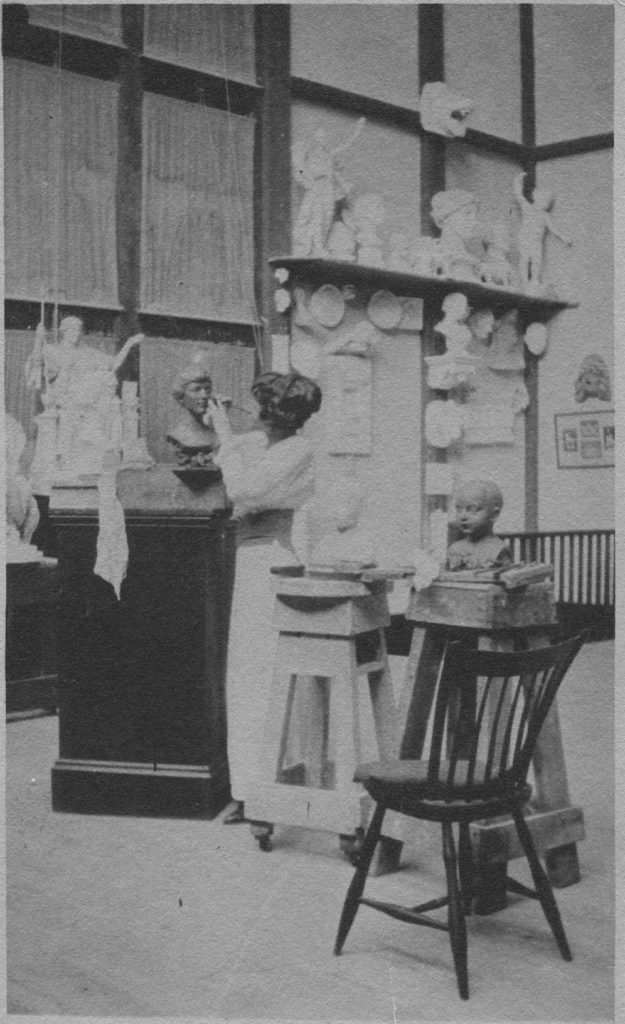
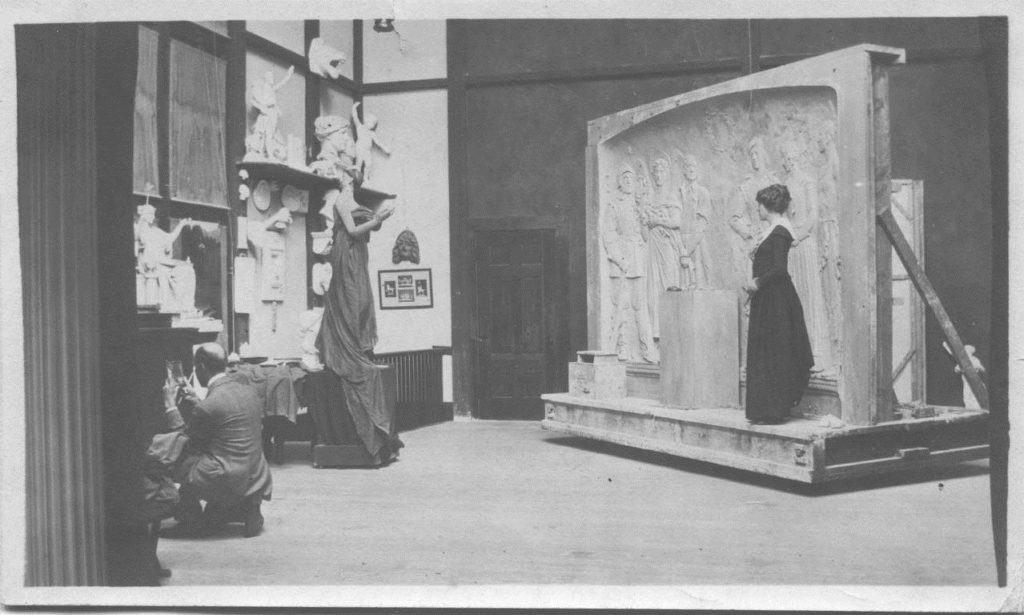
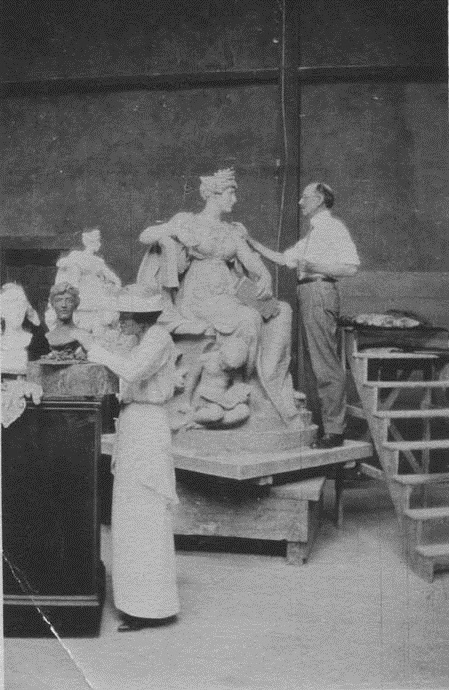
Margaret French Cresson sculpting in the studio at Chesterwood, 1915Margaret French Cresson posing as Evangeline for Daniel Chester French’s Henry Wadsworth Longfellow Memorial (Cambridge, MA) in the studio at Chesterwood, 1914Margaret French Cresson and Daniel Chester French in the studio at Chesterwood (DCF is working on his model for “Brooklyn”), ca. 1915
“Margaret French Cresson: Her Artistic Life and Legacy in Preserving Chesterwood” will feature historical photographs that illustrate Cresson’s life at Chesterwood: modeling for her father, socializing with friends and family, and creating sculpture in the studio, as well as photographs of her as the “keeper” of Chesterwood. The exhibition will also highlight her work as a sculptor through portrait reliefs, small bronzes, exhibition photographs, and catalogues. Other personal objects, such as diaries, scrapbooks, writings, and ephemera will contribute to an understanding of Cresson’s life and her involvement in civic activities in Stockbridge and the Berkshires at large.
“Margaret French Cresson’s remarkable life as the daughter of a famous American artist was shaped by Chesterwood and the Berkshire community that she eventually called home. It seems only fitting as we celebrate the site’s 50th anniversary that we acknowledge her role in preserving Chesterwood, as well as her own creative pursuits,” said Donna Hassler, Chesterwood’s executive director and co-curator of the exhibition.
“Margaret French Cresson: Her Artistic Life and Legacy in Preserving Chesterwood” is on view at the Stockbridge Library, Archives, and Museum (Massachusetts) through April 30, 2019. The exhibition has been generously sponsored, in part, by Owen Lewis and Susan Ennis, and Sohn Fine Art.
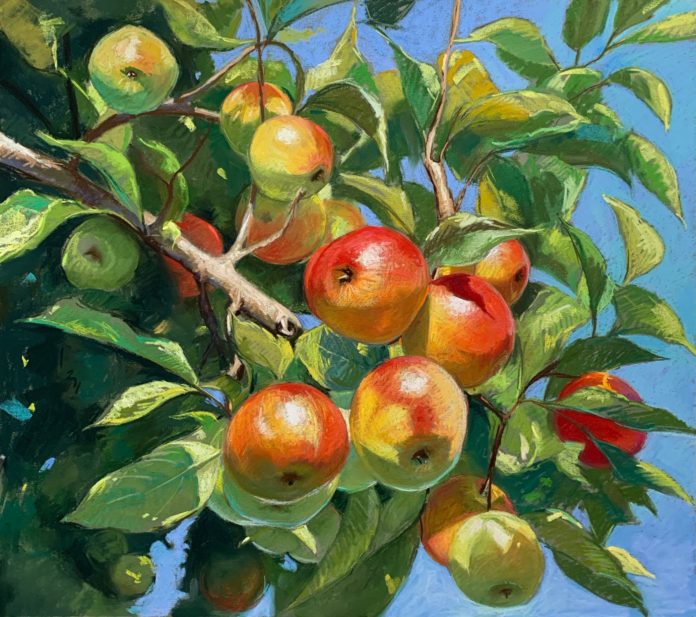
Summer’s Bounty
Pastel
20 x 23 in.
$3200
Available from the artist
Atlanta artist Lisa Gleim comes from a family of many deeply-rooted, Southern artists. A graduate of the Pennsylvania Academy of the Fine Arts (PAFA), Lisa is strongly influenced by the great American Impressionists such as Mary Cassatt, Cecelia Beaux and Childe Hassam.
“I’m drawn to capturing the beauty of light and shadow, especially how light effects a subject, whether it be an animal, coastal landscape or object. The bright summer sunlight hitting the apples was what drew me to paint Summer’s Bounty. I loved how the warm red and orange of the apples popped against the cool green leaves and the blue sky. I find green to be an extremely challenging color to work with and I often say I hate painting green, but it seems I gravitate to it and paint it continuously!”
After graduating from PAFA, Lisa’s love of pastels took off when a family friend gifted her a set of French pastels. She was immediately hooked. “The medium,” she says, “allows me the ability to capture the effect of light with extreme vividness. The richness painting with pure pigment provides me is unmatched.”
Lisa looks at all daily visuals she encounters as possible paintings. She never leaves home without her camera or telephone so she always has the option to catch a perfect moment. Although her work is primarily created in her studio, she does paint in plein air whenever possible. Each year she takes a week-long painting trip, usually to a location near water.
Both her portraits and landscapes can be found in many private collections across the United States including the Children’s Hospital of Philadelphia, Astra Zeneca Pharmaceutical, the Court of Chancery in Wilmington, Delaware. Her pastels have also been included in numerous publications, including several issues of the book Strokes of Genius: The Best of Drawing series by Northlight Books.
“Lisa Gleim is one of our gallery’s best-selling artists. When I first asked Lisa to join our gallery, I was most interested in her lowcountry landscapes and seascapes; however, as I learned more about her work, I happily discovered her talent far exceeded my original expectations. Collectors marvel at her ability to render fruit and floral still-life with incredible attention to detail in her favored medium, pastel,” says Cheryl Newby, owner of Cheryl Newby Gallery, Pawleys Island, South Carolina.
Awards:
Audubon Artists 2012 & 2016 Gold Medal of Honor for Pastel
Audubon Artists 2013 Art Spirit Foundation’s Gold Medal Award for Pastel.
Atlanta Branch of the National League of Pen Women’s 2016 Artist of the Year.
Select memberships:
American Society of Marine Artists signature member
Master Circle Member of the International Association of Pastel Societies
Society of Animal Artists, juried associate member
After living and working in Philadelphia for eight years, she returned to her native home of Atlanta in 2000 where she maintains her studio and residence with her husband and 12-year-old daughter.
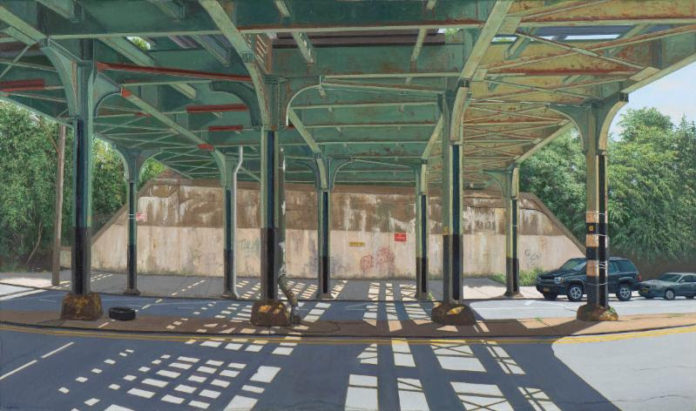
Valeri Larko, "Underpass Dyre St,Train Station", 2018, oil on linen, 33" x 56"
“Spaces of Uncertainty” features the work of painter Valeri Larko and photographer Linda Kuehne. Presenting landscapes of graffiti-covered buildings, vacant lots and shuttered storefronts, the artists expose the unexpected pathos and poetic beauty of these marginal and mostly forgotten areas. To the passerby these sites might appear desolate and abandoned. However, by forcing us to look more closely, the artists expose fleeting histories and hidden narratives, revealing spaces that are in fact brimming with life and potential.
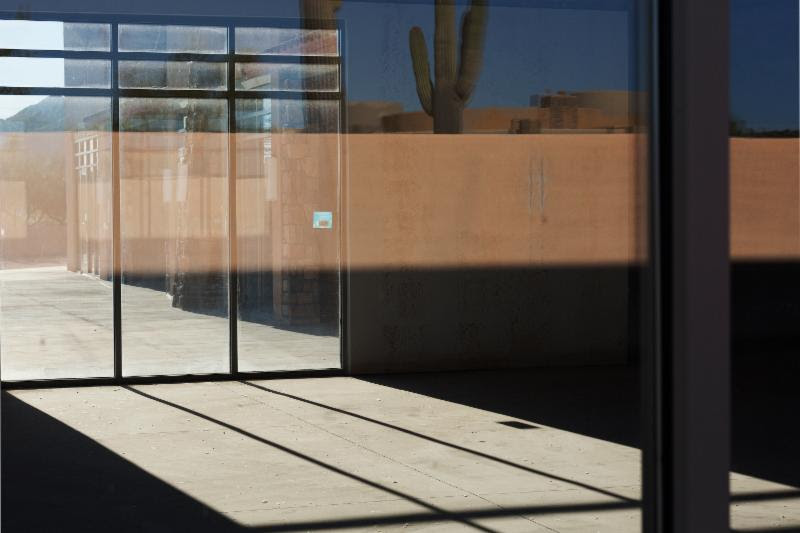
Linda Kuehne, “Office Space (Available), Fountain Hills, Arizona,” archival pigment print, 24″ x 34″, ed. of 9
Photographer Linda Kuehne uncovers striking compositions and hints of the sublime in even the most mundane of subject matters. She focuses her lens on the suburbs, capturing the deteriorating commercial sprawl and disused retail structures of the 50’s, 60’s and 70’s. She photographs empty convenience stores, abandoned fast food restaurants and vacant storefronts documenting the banal homogeneity of our nation’s commercial architecture, whether in the Northeast where she now lives, or out West where she regularly spends time.
Valeri Larko’s richly detailed oil paintings portray the decaying infrastructure, derelict industrial waterways, and neglected neighborhoods of New York City’s urban fringe. She captures these areas in transition as they become recolonized by nature, graffiti, or individuals with no other place to go. Larko paints en plein air in all seasons, revisiting her site for weeks or months at a time until her painting is done. She says, “The process of painting on location over a long period of time is crucial to my working method because it allows me to form a deeper connection to a particular place through careful observation and personal interaction with the people I meet there.”
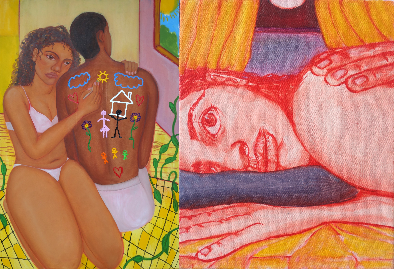
Mónica Hernández
Left: “I want a house,” Oil on canvas, 2018, 48 x 72 in
Right: “Moonlight 3,” 2019, Oil on canvas, 8 x 10 in
Images courtesy of the artist
This spring’s edition of “Affordable Art Fair NYC” boasts unique and exciting programming, with something for everyone: fun parties, special guests and performances, private tours for families, and more.
On March 28 Art After Dark will feature a performative experience by the talented Philadelphia-based painter and musician, Vessna Scheff. Colors, movements and sounds will come together in a multi-sensory experience as Vessna and her collaborators pair acapella and acoustic sounds, dance, percussion and paint on the surface of a giant canvas, spread across the fair’s inspiration lounge.
Affordable Art Fair NYC’s Young Talent Exhibition is a dedicated platform that supports emerging artists and curators within the contemporary art community. This spring, New York-based artist, Mónica Hernández, will showcase her thought-provoking oil-on-canvas works featuring the female figure and the power of the female gaze. Always looking to challenge how women represent themselves, Hernández is certainly one to watch as a breakout emerging artist, with 103K followers on Instagram and recently named 30 under 35 in CULTURED for 2019.
A new program launching this spring is Stroller Hours, a fun and accessible way for parents to enjoy the fair, discover art and shop with their little ones, hassle-free. With crowded sidewalks and the endless onslaught of bikes, buses and people, parents are hard-pressed to secure elbow room on a casual stroll with their children and strollers. Affordable Art Fair NYC eliminates this struggle, with doors opening early for parents and children only, before opening to the public, on March 30 and 31.
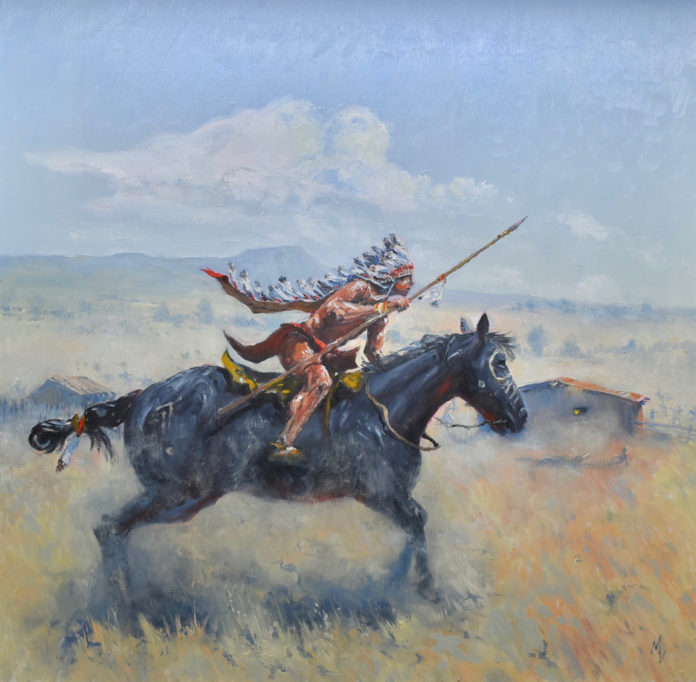
Michael Ome Untiedt, “Quanahat Adobe Walls,” oil on canvas, 40 x 40 in.
The Briscoe Western Art Museum has recently announced its 2019 Night of Artists Exhibition & Art Sale, featuring 80 premier Western artists.
Collectors Summit, Opening Weekend Events: March 29–30, 2019
Public Exhibition & Sale: March 31–May 5, 2019
Each year, Night of Artists draws artists, collectors, and art enthusiasts to the Briscoe Western Art Museum for a weekend of festivities on the banks of the iconic San Antonio River Walk with the chance to view and purchase nearly 300 works of painting, sculpture, and mixed media by some of the country’s leading Western artists.
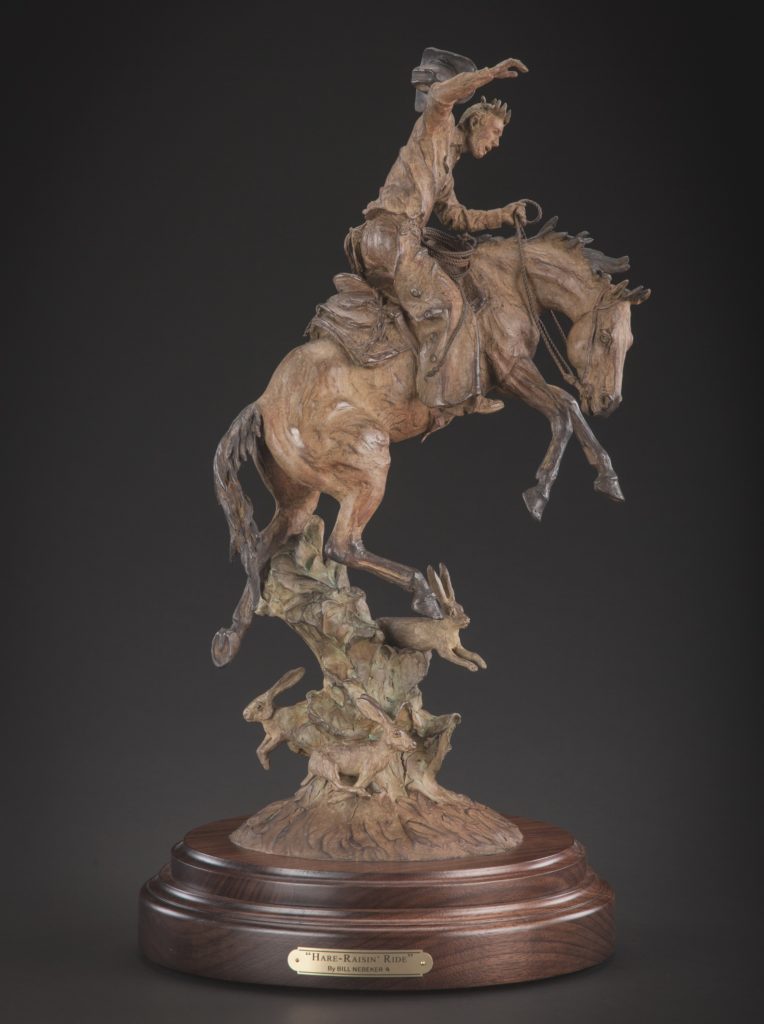
Bill Nebeker, “Hare Raisin’ Ride,” sculpture 23 x 12 x 9 in.
“Night of Artists has become a premier showcase of this region’s emerging and well-renowned contemporary Western artists,” said Michael Duchemin, president & CEO of the Briscoe Western Art Museum. “Last year’s response and art sales were overwhelmingly successful, and we are looking forward to another remarkable year.”
Night of Artists 2019 kicks off with the 2nd annual Briscoe Collectors Summit at the Hotel Contessa on the San Antonio River Walk. This two-part ticketed summit is intended for beginner stage and seasoned art collectors and takes place on Friday, March 29, and Saturday, March 30, 2019. Featuring nationally recognized Western artists, attendees will enjoy a panel discussion exploring the emerging Western art market and trends.
Friday, March 29, is the Exhibition Preview, Artist Awards Dinner, and Live Auction at the Briscoe Western Art Museum’s Jack Guenther Pavilion. Guests will enjoy an evening of cocktails in the galleries, an elegant seated dinner, a vivacious live auction, and the 2019 Artist Awards presentation, including cash prizes.
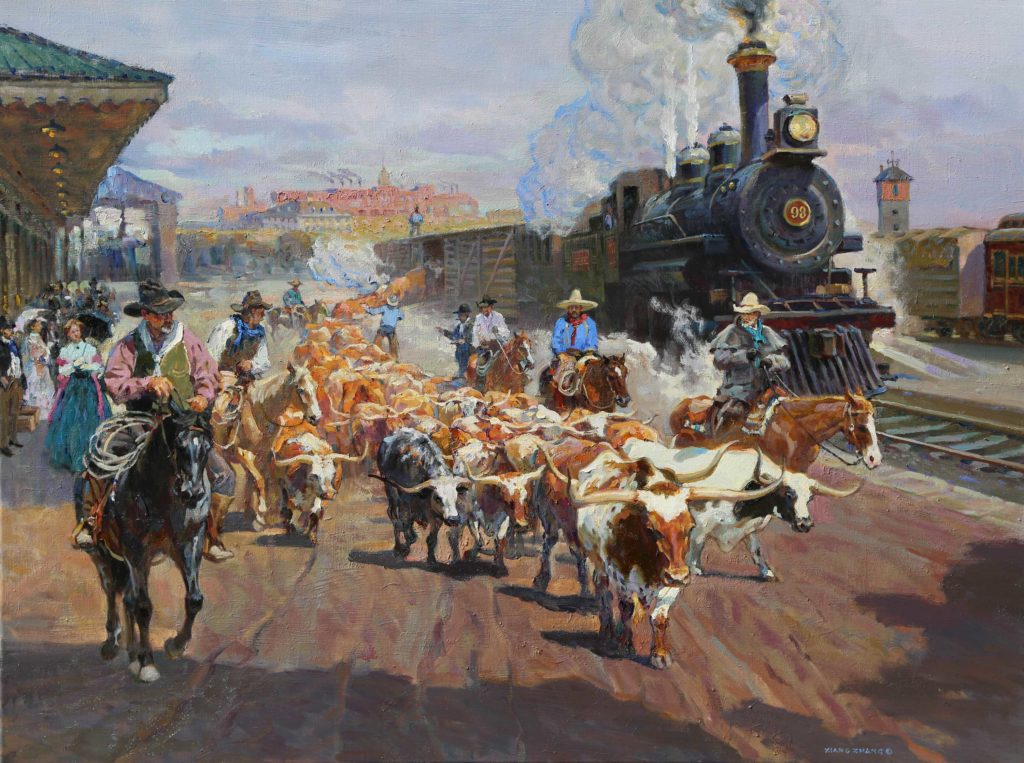
Zhang Xiang, “The Arrival,” oil on linen, 36 x 48 in.
Night of Artists’ signature event, the Grand Exhibition Opening, Art Sale & Reception takes place Saturday, March 30. This memorable evening includes the “Luck of the Draw” Art Sale, where all works of art are available for purchase; and delicious food stations, libations and live music under the stars from Mickey and the Motorcars. The museum’s public exhibition follows from March 31 to May 5, 2019, with all unsold artwork available for purchase.
The wide range of artworks and artist genres reflects the vastness of the great American West. From scenic landscapes, inspired Native Americans, and classic cowboys to stunning wildlife and detailed portraiture, there is something for every attendee and art enthusiast to enjoy. Some of the featured artists include John Coleman, John DeMott, C. Michael Dudash, Martin Grelle, George Hallmark, Z. S. Liang, Mark Maggiori, Jan Mapes, Billy Schenck, Kim Wiggins, and Xiang Zhang.
Notable new artists participating this year include R. Tom Gilleon, Doug Hyde, Joe Kronenberg, Ed Kucera, Bonnie Marris, Randy Van Beek, Joseph Valezquez, Jeremy Conrad Winborg, and Greg Woodard. Night of Artists is the largest fundraiser for the Briscoe Western Art Museum, with proceeds directly supporting the institution.
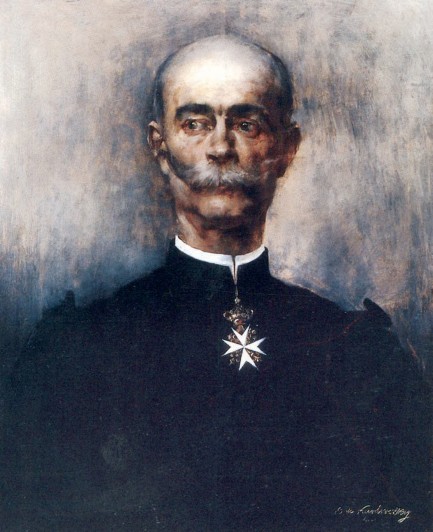
KARLOVSZKY, Bertalan von 1858 – 1938Hungarian SchoolPORTRAIT OF A KNIGHT OF MALTA, circa 1880/90Oil on panel. 28 3/4" x 23 3/8" (73 x 59.4 cm). Signed at lower left: B. de Karlovszky/Paris. On verso: a Paris art supplier’s stamp.
“The Symbolist Vision” is on view at Shepherd W&K Galleries (New York) through April 20, 2019. The exhibition is organized by Robert Kashey and David Wojciechowski.
From the catalog (by Kashey and Wojciechowski):
How long has there been a Symbolist vision in the history of art? The answer is, for as long as man has created art.
To choose what is “Symbolist” in art for this exhibition, we surveyed the 19th to the 21st centuries for the Symbolist element, regardless of whether the artists have been categorized as Symbolists or not.
In our survey, many of the works have a religious aspect. The concept of the Sacred and the Profane is essential to the tenets of Symbolism, as it liberates the artist from the materialistic world.
Dream, in which the mind is freed from rational thought, is a source of inspiration in Symbolism.
Horror is often a subject. By facing demons, the artist attempts to tame fear itself.
Death and the afterlife figure prominently in many of the works. Here, the artist confronts mortality and attempts to reveal its secrets.
The erotic is fundamental to Symbolist imagery.
Especially depicting the conflicting attitudes of the 19th century up to the present, human sexuality — desire, fear, hostilities — are all ripe subjects for the Symbolist.
Lastly, many of the aforementioned subjects have been cloaked in mythology, to validate the Symbolist vision.
Symbolists are visionaries who reveal alternate realities and seek out the inner mystique otherwise obscured by the mundane.
The Symbolist Vision Catalog Preview:
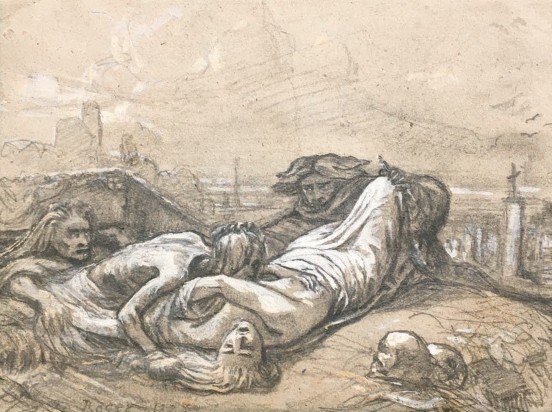
ROGER, Eugène 1807 – 1840, French School, PREPARATORY STUDY FOR “GHOULS,” 1828, black chalk, some graphite, and white heightening on heavyweight, grayish wove paper. No watermark. 6 1/2″ x 8 1/2″ (16.5 x 21.6 cm). Signed and dated lower left: Roger 1828. On verso: drapery study with white heightening and sketch of a woman in Renaissance costume. Some inscriptions.
Eugène Roger had a short but very promising career. At age 22 he won the second prix de Rome; at age 24 he exhibited for the first time at the Salon; at age 30 he won the first prix de Rome. During his stay at the Villa Medici he painted the portrait of his fellow pensionnaire, the architect Victor Baltard (1805–1874), and he became good friends with the artist Hippolyte Flandrin.
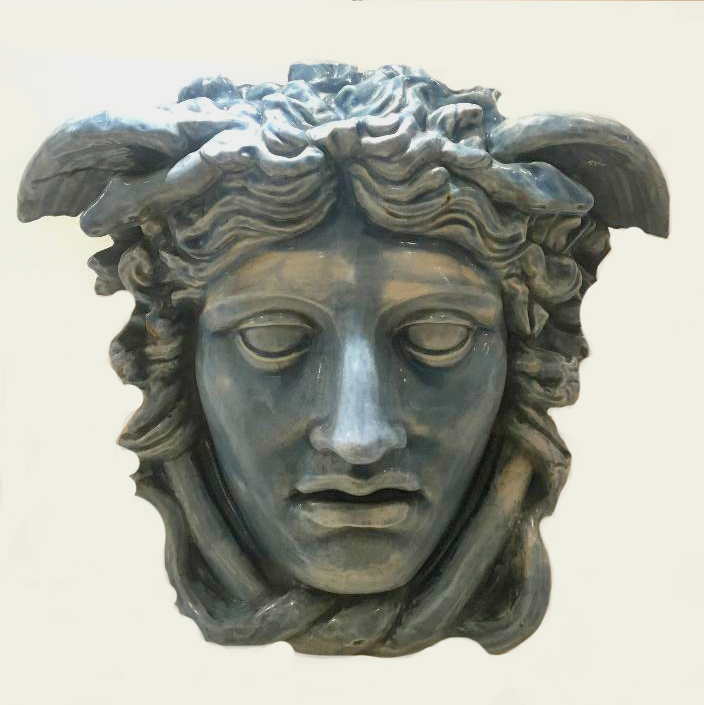
EMILE MULLER et Cie French School “Medusa,” circa 1900 Glazed ceramic. Height, from top of Medusa’s head to the snakes’ bodies under her chin: 15″ (38 cm); width, from left wing tip to right wing tip: 17″ (43.2 cm); depth, from front peak of Medusa’s hair on the top of her head to the rear: 7″ (18 cm). Impressed on verso: MULLER.IVRY/1,24.
Bertalan von Karlovszky was one of the most sought-after portrait painters in Budapest during the decade before World War I. The present work is inscribed as being painted in Paris, but it shows little resemblance to French portraits of the 1880s. The psychological intensity is similar to works by the Austrian Anton Romako, an outsider in the second half of the nineteenth century. The powerful use of black and the hazily lit background may also reflect the influence of Spanish art, to which Karlovszky would have been exposed in Paris (as extensively documented by the Metropolitan Museum’s exhibition Manet/Velázquez, March 4–June 29, 2003).
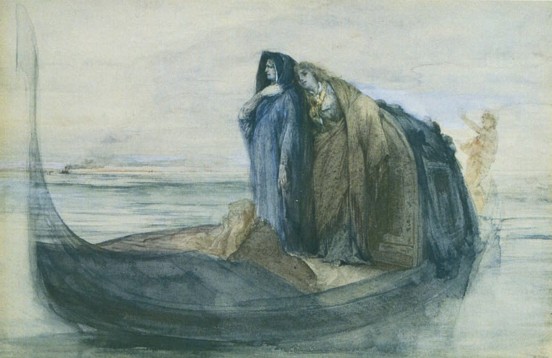
CLAIRIN, Georges-Jules-Victor 1843 – 1919, French School, SICK WOMEN BEING REMOVED FROM VENICE, circa 1896, Watercolor and graphite on heavyweight cream wove paper. No watermark. 10 1/2″ x 15 3/16″ (26.7 x 40.1 cm). On verso, inscribed in pencil: G. Clairin.
The plagues in Venice became topical with Thomas Mann’s “Death in Venice” (1912), after the disease had struck the city for decades. In the Salon of 1896, Clairin exhibited a painting “The Convalescents Re-entering Murano-Venice” (Les convalescents reentrant à Murano-Venice). It depicts healed women, happily sent back to Venice. The present watercolor depicts sick women being ferried on a gondola to a hospital outside Venice. The present watercolor is clearly related to the Salon entry.
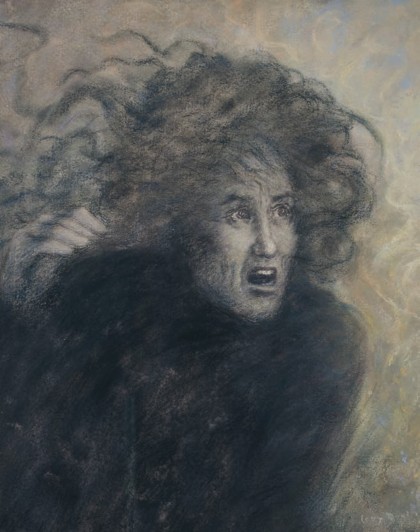
LÉVY-DHURMER, Lucien 1865 – 1953, French School, THE TERROR, circa 1898 (L’effroi), Pastel on paper. 15 3/4″ x 12 1/2″ (40 x 31.8 cm). Signed lower right: LEVY DHURMER.
Lucien Lévy-Dhurmer was born in Algiers into a Jewish family. It is not evident when he or his family moved to France. To differentiate himself from numerous other Levys, he adopted a part of his mother’s maiden name (Goldhumer). His education did not follow the routine path of École des Beaux Arts, Rome prize, Salon debut. Instead, after studying with Raphael Collin for a few months, Lévy-Dhurmer became a potter. He was artistic director in the manufactory of Clément Massier on the Côte d’Azur for eight years, inventing new forms and techniques and signing his pieces L. Levy. After a row with Massier he left and went to Italy around 1895. The encounter with Italian Renaissance art was to influence him for the rest of his life.
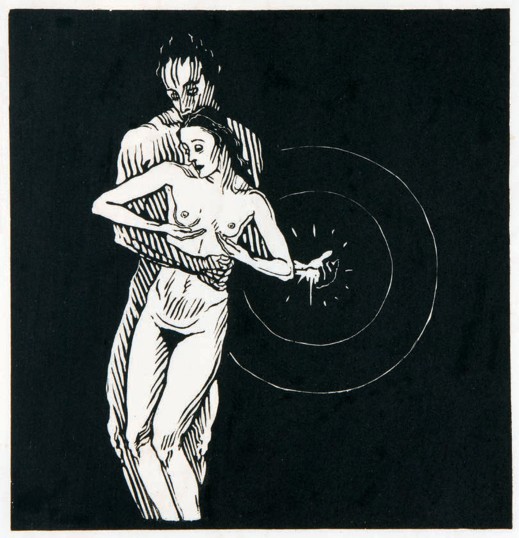
LANG, Erwin 1886 – 1962 Austrian School, THE COUPLE DANCING, ARTIST AND WIFE, FOR THE CYCLE: “DANTE’S VITA NOVA,” 1912/13, Woodcut. Image size: 10″ x 9 1/2″ (25.4 x 24 cm)
Grete Wiesenthal met Erwin Lang at a ball in 1904. She was soon a welcome member in the Lang family. Gustav Mahler was an often-seen guest in the same house. However, when Mahler cast Wiesenthal in the title role of the Mute Girl of Portici, he stepped on the toes of the ballet director Josef Hassreiter, and the scandal led to the departure of Grete Wiesenthal from the opera ballet. However, this gave Wiesenthal the freedom to pursue her solo career, which led her to Max Reinhardt in Berlin. Erwin Lang worked in Berlin at the same time, drawing designs for the Hebbel Theater and costumes for Grete Wiesenthal’s performances. He also created several paintings of her, as well as a series of woodcuts.
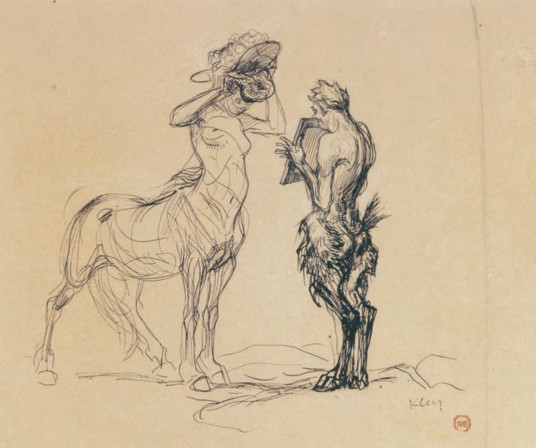
KLEY, Heinrich 1863 – 1945, German School, Recto: FAUN HOLDING MIRROR TO CENTAURESS TRYING ON A HAT, circa 1900 Verso: SEATED SATYR PULLING ON A PAIR OF STOCKINGS, Black ink on medium-weight off-white wove paper. No watermark. 9 1/4″ x 7 13/16″ (23.5 x 19.7 cm) (irregular edges). Signed in black ink at lower right: Kley. Collector’s stamp in red ink at lower right: GE (encircled)(Gustav Engelbrecht, Hamburg; Lugt 1148). On old mat: inscribed in brown ink at bottom center: HEINRICH KLEY 1853 [sic]. In graphite at lower right: 20.-. In graphite at top right: 42/29. On verso of old mat: label with black ink at lower right: Erworben / von Brakl München / 17. September 1910.Formerly: Franz Josef Brakl, Munich.Ex-collection: Gustav Engelbrecht, Hamburg.
Throughout his career, Kley drew illustrations and cartoons. Once he moved to Munich in 1908, the artist dedicated himself almost entirely to pen line drawing. Combining savage humor with brilliant draughtsmanship, Kley was soon widely known for his wildly capricious and satirical illustrations that he produced for Simplicissimus and Jugend. The present drawing is most likely from his early years in Munich. After the 1910 publication of Skizzenbuch II — the second of two sketchbooks — Centaurs appear much less frequently in Kley’s oeuvre.
New to art collecting? Robby Felder, of Felder Gallery, shares his advice for buying art at a gallery.
Felder Gallery was founded by San Antonio natives Linda and Larry Felder when they moved to the art community of Rockport, Texas, in 2004. Robby Felder took over operations in February 2009, relocating to the island-resort community of Port Aransas. Felder Gallery, LLC, was formed in 2017 and opened in its new location in San Antonio, Texas. Their revolving exhibits include a mix of contemporary representational art, traditional painting, sculpture, and pure abstracts.
On Buying Art at a Gallery
Robby Felder, of Felder Gallery
By Robby Felder
Plan to have a relationship with an art gallery. There are many places to buy artwork in today’s market, but I believe the brick and mortar galleries remain relevant because of our ability to create and maintain personal relationships. We as gallerists have insight into the artist’s processes and personality. This can be the difference between liking something and making a deeper connection. Galleries are immersed in the art world and develop their own connections they can share with potential buyers.
Another piece of advice is to be transparent. Although my job is sales, my passion is art. When you come in looking for art, you can help yourself by letting the gallerist know your likes and dislikes and be open to stepping outside your comfort zone.
Take the time to learn and be patient. We are all short on time these days, but if you admire a painting by a particular artist and the gallerist says they can provide more information, schedule a private talk, or plan a studio tour with the artist, you should. Art is a visual medium, but talking is key.
Be bold. Many people have predefined how they will go about building their collection. I think this approach is fantastic; however, sometimes you need to open the floodgates and let fresh water in. Take chances — they will likely be the best decisions.
If a painting speaks to you and you can’t explain why, visit the piece as many times as you need. Take it home on approval, ask friends their opinions — it might shed light on why you love it.
Lastly, get comfortable knowing you may make a mistake when collecting art and that is okay. Don’t be discouraged; you are going to purchase pieces that will become your most prized possessions.
What advice would you give to others who are new to art collecting? Share it in the comment section below!
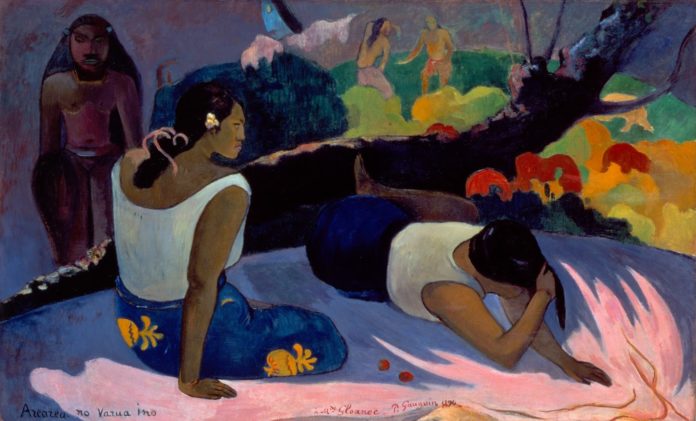
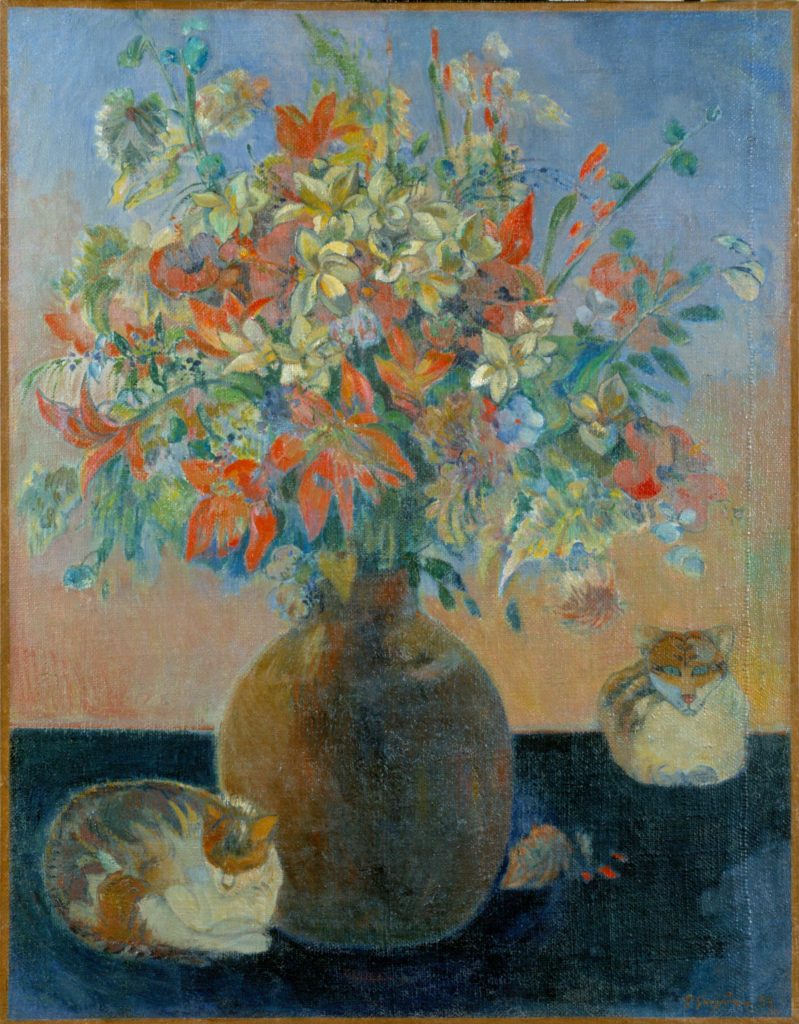
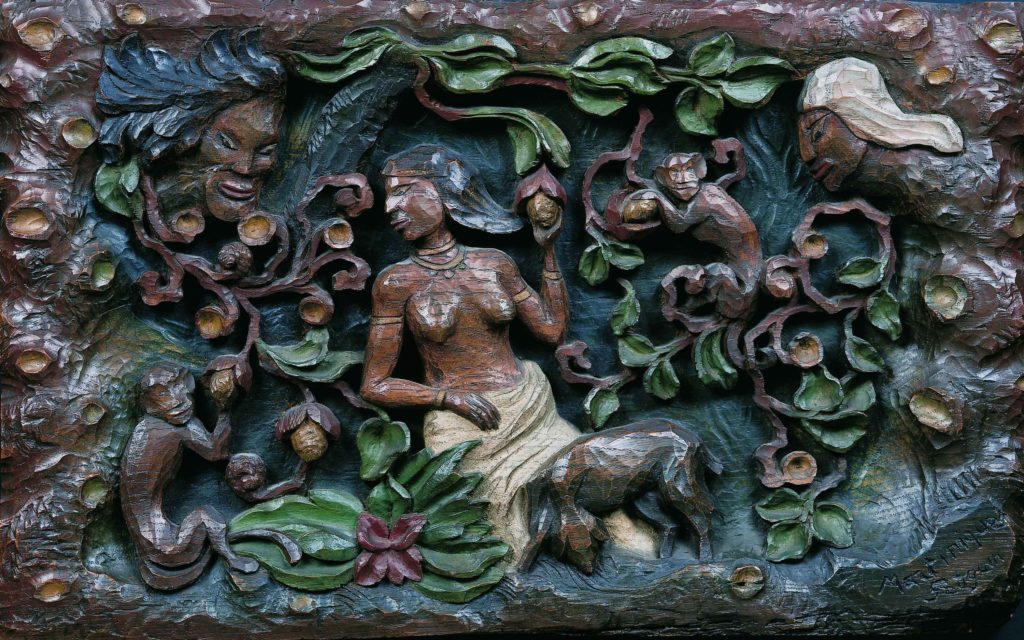
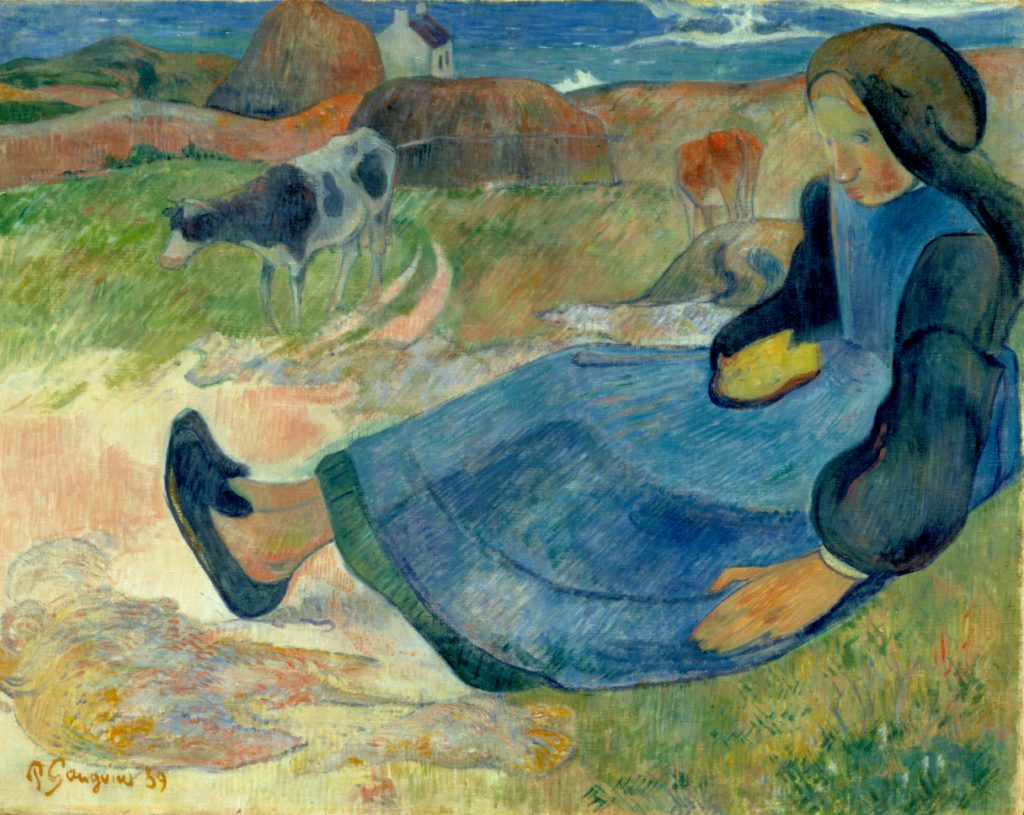
The Fine Arts Museums of San Francisco (FAMSF) are proud to announce “Gauguin: A Spiritual Journey,” at the de Young museum. The first exhibition at FAMSF dedicated to the work of Paul Gauguin (1848–1903) will explore two themes central to his career: the relationships that shaped his life and work, and his quest to understand spirituality, both his own and that of other cultures he encountered. Through an exceptional partnership with the Ny Carlsberg Glyptotek in Copenhagen, more than 60 Gauguin works will be on view—ranging from oil paintings and works on paper to wood carvings and ceramics—alongside art of the Pacific Islands from the FAMSF collection. Combined, these works encompass distinctive phases of Gauguin’s career to show the development of his ideas, the scope of his oeuvre, and the inspiration he found in New Zealand, the Marquesas Islands, and Tahiti.
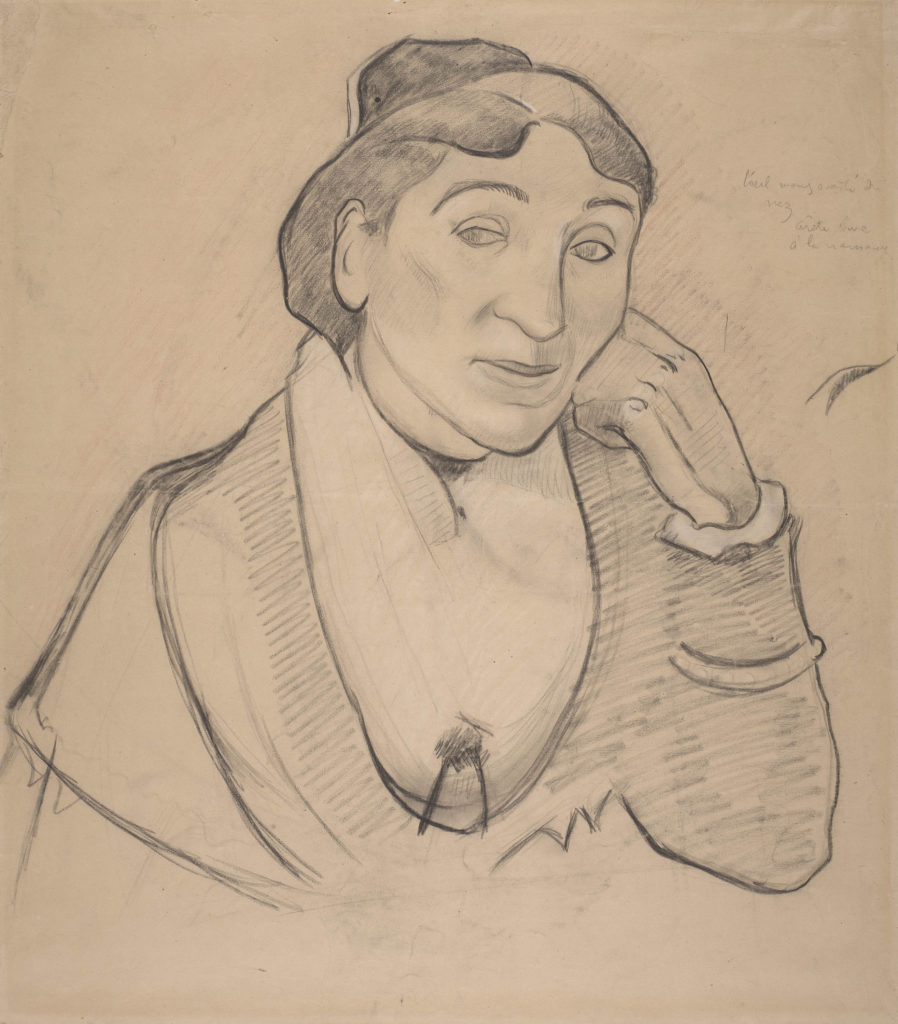
“The Fine Arts Museums of San Francisco have the largest repository of works on paper in the western United States, including numerous works by Gauguin—among them, ‘The Woman from Arles,’ one of his most important drawings,” says Melissa Buron, director of the Art Division at FAMSF. “Putting these works on view with Gauguin’s stunning oil paintings provides an unprecedented opportunity for our collection to shine and take its place in the larger historical narrative.”
“Gauguin: A Spiritual Journey” will feature works showing the deep influence that other artists, places, and relationships had on the arc of Gauguin’s career. Embarking on a profession in painting with no formal training, Gauguin was mentored by Impressionists including Camille Pissarro and Edgar Degas. (In fact, as an avid collector himself, Gauguin originally owned two of the Pissarro paintings on view in the exhibition.) Later collaborations with Vincent van Gogh and Émile Bernard show experiments with Symbolism as Gauguin developed his own distinctive style of painting, using flat fields of bold color and dark outlines that in turn influenced artists including Pablo Picasso and Henri Matisse.
The exhibition will take visitors on a journey through the progression and scope of Gauguin’s work, from an early drawing of his wife, Mette Gad (ca. 1873), to better-known paintings inspired by his travels to Tahiti, such as “Tahitian Woman with a Flower (Vahine no te tiare),” from 1891. Although Gauguin is best known as a painter and printmaker, the exhibition also features 15 experimental ceramics and intricate wood carvings interspersed with period photography and excerpts from his own letters and writings.
Paul Gauguin, French, (1848–1903), “L’arlésienne, Mme. Ginoux (The Woman from Arles, Madame Ginoux),” 1888, beige chalk under charcoal with stumping, with salmon-colored pastel, heightened with white chalk on beige wove paper, Sheet: 22.06 x 19.38 in. Fine Arts Museums of San Francisco, Memorial gift from Dr. T. Edward and Tullah Hanley, Bradford, Pennsylvania 69.30.78. Image courtesy of the Fine Arts Museums of San Francisco
Gauguin was greatly influenced by Pacific art and culture, from his time spent in the region en route to Tahiti in 1895. Corresponding to this period of Gauguin’s travel and work in the Pacific, carvings and images from New Zealand, the Marquesas Islands, and Tahiti will be on view from FAMSF’s own extensive holdings in Oceanic arts. Works such as the striking Māori gable figure of Tüwhakairiora, purchased by founder M. H. de Young from the 1894 California Midwinter International Exposition in Golden Gate Park, will add to visitors’ understanding of the Pacific histories, beliefs, and art that inspired Gauguin and captured his imagination. (Tüwhakairiora was an ancestor who avenged the death of his grandfather and became a leader of all the peoples of New Zealand’s northeast coast of the North Island in the seventeenth century.)
“It is exciting to bring so many Gauguin works to San Francisco,” says exhibition curator Christina Hellmich, curator in charge of the Arts of Africa, Oceania, and the Americas at the Fine Arts Museums of San Francisco. “I am pleased that we can highlight some lesser-known aspects of his life, including his wife’s critical role in his career, and offer contemporary perspectives through a new video installation. The striking works of Māori, Marquesan, and Tahitian art from our own collection will allow visitors to learn about Gauguin’s fervent interest in the art and spirituality of Oceania.”
Among many of Gauguin’s paintings are subjects believed to depict indigenous Māhu, or Tahitian “third gender” individuals. In Sāmoa, the equivalent is known as a Fa’afafine, an indigenous queer minority considered to be gifted in the spirit of more than one gender. Sāmoa-based interdisciplinary artist Yuki Kihara has been commissioned to create a new video work that will debut with this exhibition. Filmed in Upolu Island, Sāmoa, her piece, titled “First Impressions: Paul Gauguin,” shows a group of Fa’afafine friends discussing works that Gauguin created during his time in the Pacific.
“Gauguin: A Spiritual Journey” is on view November 11, 2018, through April 7, 2019, at the de Young Museum (San Francisco, California). For more information, please visit www.famsf.org.
Fill your mind with useful art stories, the latest trends, upcoming art shows, top artists, and more. Subscribe to Fine Art Today, from the publishers of Fine Art Connoisseur magazine.