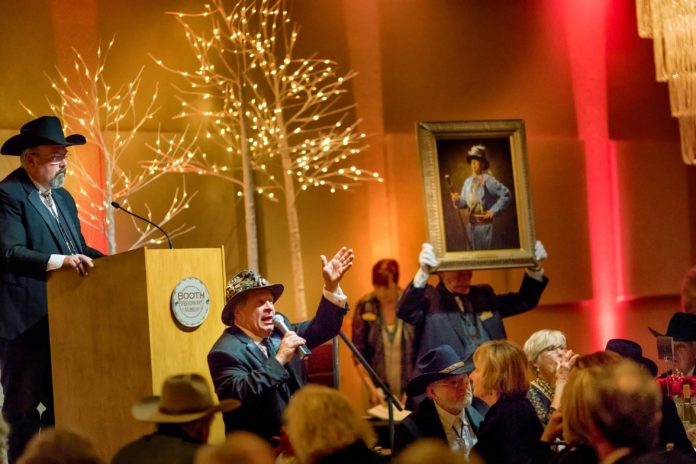
A scene from last year’s “For the Love of Art Gala & Art Auction”
Coming soon: The Booth Western Art Museum’s largest annual fundraiser, the “For the Love of Art Gala & Art Auction,” features art, jewelry, and travel experiences offered in both live and silent auction formats.
The evening’s highlight is the presentation of the museum’s Artist of Excellence Award to artist John Coleman, who will also have been feted at a brunch earlier that day. The weekend of festivities kicks off with the first ever Booth Quick Draw and Miniatures Auction on February 22.
For more information about the “For the Love of Art Gala & Art Auction” in Cartersville, Georgia, February 23, 2019, please visit boothmuseum.org.
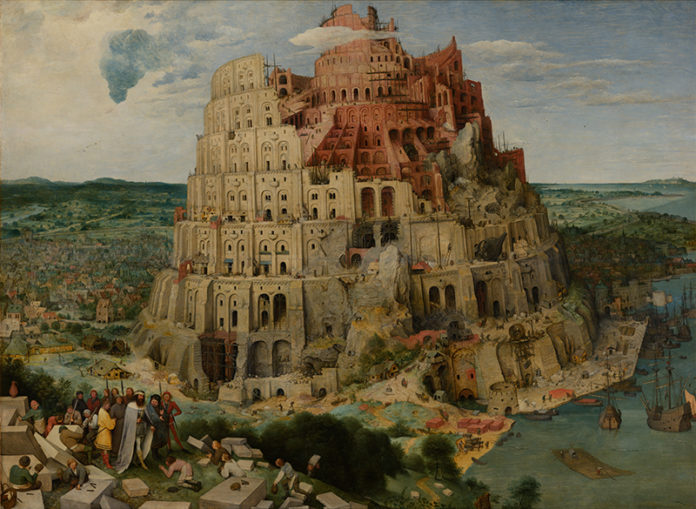
Pieter Bruegel the Elder (1526–1569), “The Tower of Babel,” 1563. The mountain-like tower reaching toward heaven can be seen as both an image of the human desire to create something monumental and a symbol of an impossible enterprise.
“Mountains and the Rise of Landscape” is the culmination of a curatorial project and a research seminar conducted at the Harvard University Graduate School of Design, the latter focusing on the question, How do you model a mountain?
by By Pablo Pérez-Ramos, Edward Eigen, Michael Jakob, and Anita Berrizbeitia:
To ask when we started looking at mountains is by no means the same as asking when we started to see them. Rather, it is to question what sorts of aesthetic and moral responses, what kinds of creative and reflective impulses our newfound regard for them prompted. It is evident enough that in a more or less recent geological time frame mountains have always just been there. It is possible that mountains, like the sea, best provide pleasure, visual and otherwise, when experienced from a (safe) physical and psychical distance. But it might also be the case that the pleasures mountains hold in store are of a learned and acquired sort.
Which is also to say that mountains themselves, for all their unforgiving thereness, are themselves the products of unwitnessed Neptunian and Vulcanian tumults or divine judgment. For the late seventeenth-century theologian and cosmogonist Thomas Burnet, mountains were “nothing but great ruins.” A dawning appreciation of these wastelands appeared in the critical writings of John Dennis. Satirized as “Sir Tremendous Longinus” for his rehabilitation of the antique aesthetic category of the sublime, Dennis expressed the complex concept of “delightful horror.” Mountain gloom was ready to become mixed with mountain glory. More work was still to be done on the literary and philosophical front before the Romantic breakthrough, one high vantage point being the dream of essayist Joseph Addison of finding himself in the Alps, “astonished at the discovery of such a Paradise amidst the wildness of those cold hoary landscapes.”
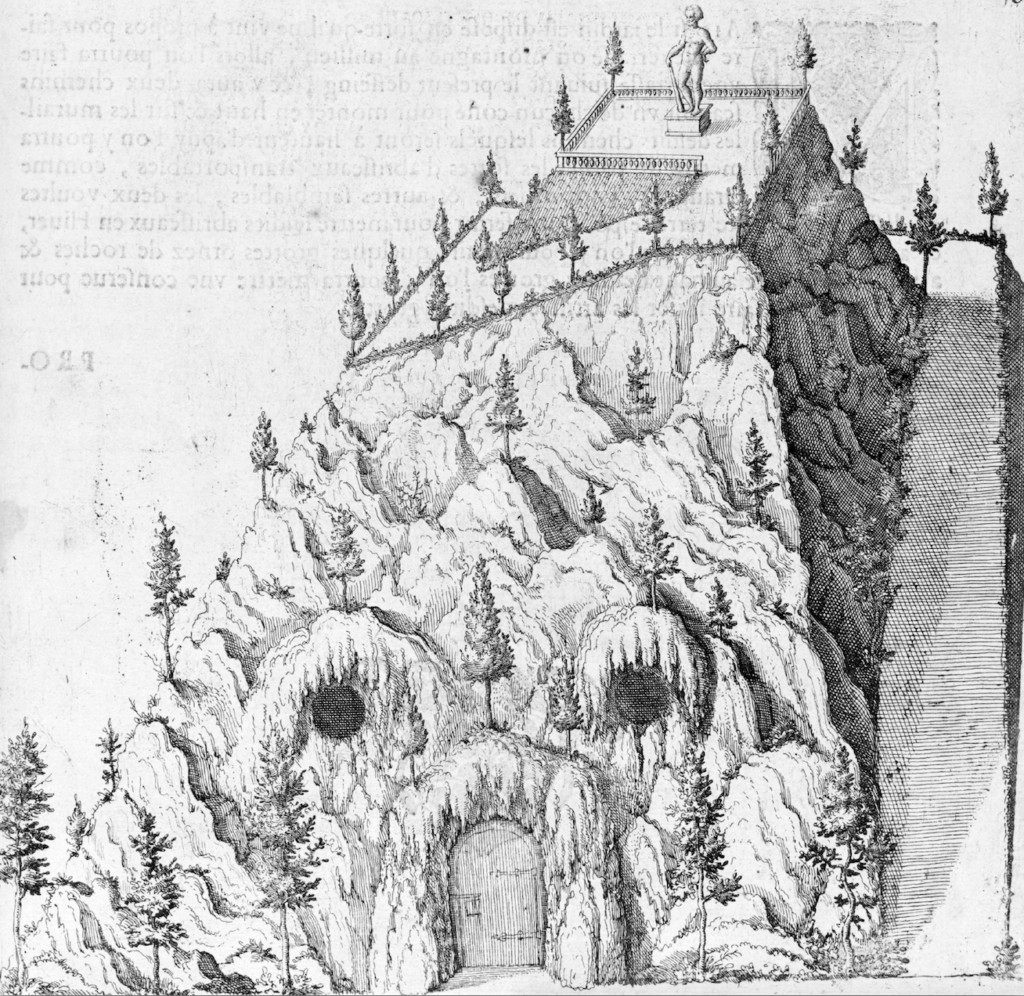
Salomon de Caus, “Les raisons des forces mouvantes,” Paris (1624)
But a kindred innovation in seeing and feeling was called for in the formation of mountains and the rise of landscape. Mountains, among other earth forms, are both the medium and outcome of still-evolving habits of experiencing, making, and imagining. Architects and landscape architects, mutually occupied with the horizontal surface, have had a touch equally as searching as that of mountaineers and poets in sensing the terrain.
“Mountains and the Rise of Landscape” is the culmination of a curatorial project and a research seminar conducted at the Graduate School of Design, the latter focusing on the question, How do you model a mountain? The installation in the Druker Design Gallery and continuing in the Frances Loeb Library collects diverse objects and scientific instruments, drawings, photographs, and motion pictures of built and imagined projects and presents invitingly challenging modes of seeing (and hearing!) mountains of varied definition. Allied with the work of artists, visionaries, and interpreters of natural and cultural meaning, they propose new and foregone possibilities of perception and form-making in the acts of leveling and grading, cutting and filling, shaping and contouring, mapping and modeling, of reimagining “matter out of place,” and finally of stacking the odds and mounting the possibilities.
“Mountains and the Rise of Landscape” is on view at Harvard University Graduate School of Design through March 10, 2019.
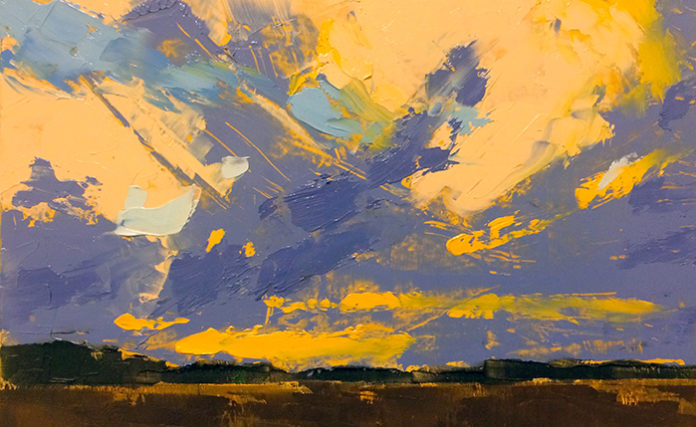
Using the ever-changing color and light of an impression, the artistry of Mary Bentz Gilkerson’s paintings connect people to the experience of place.
“Almost daily for the last seven years I’ve made a small painting inspired by the landscapes I travel through, mainly near the roads and highways around Columbia, SC, especially Lower Richland,” says Gilkerson.
Mary is drawn to the ordinary spaces we move through, especially ones that are within view from the road.
“In a roadside view I find a strange intersection of nature and culture. We move so fast that we don’t take time to observe the world around us in the way that people did before modern transportation and technology came along. In my work, I seek to focus on the shifting patterns of light and color that tell us what time of day and season it is, to note the small and subtle, as well as the large and grand.”
Gilkerson holds an MFA in drawing and painting from the University of South Carolina. A native South Carolinian, she lives and works in her Columbia studio after retiring as a professor of art at Columbia College. She has received grants from the South Carolina Arts Commission and the Cultural Council of Richland and Lexington Counties in addition to having been selected as a Southern Arts Federation Fellowship Finalist. Her work is in the permanent collections of Morris Museum, McKissick Museum, Palmetto Health, Morris Communications Company, and Seibels Bruce Group, among others.
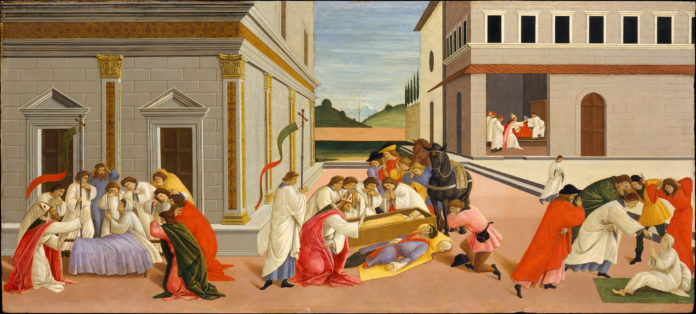
Sandro Botticelli (Italian, 1444 or 1445–1510), “Three Miracles of Zenobius,” ca. 1500, tempera on panel, 67.3 x 150.5 cm (26 1/2 x 59 1/4 in.). Metropolitan Museum of Art, New York
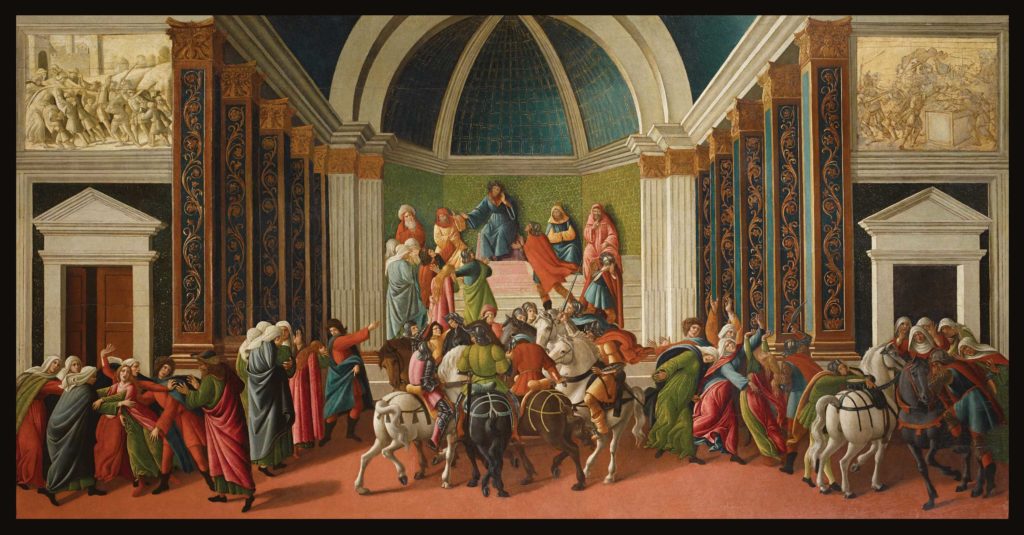
The Isabella Stewart Gardner Museum will be the sole venue in the United States to reunite Renaissance master Sandro Botticelli’s The Story of Lucretia from the Gardner Museum collection with the painter’s Story of Virginia, on loan from Italy for the first time. This presentation explores Botticelli’s revolutionary narrative paintings and brings them into dialogue with contemporary responses.
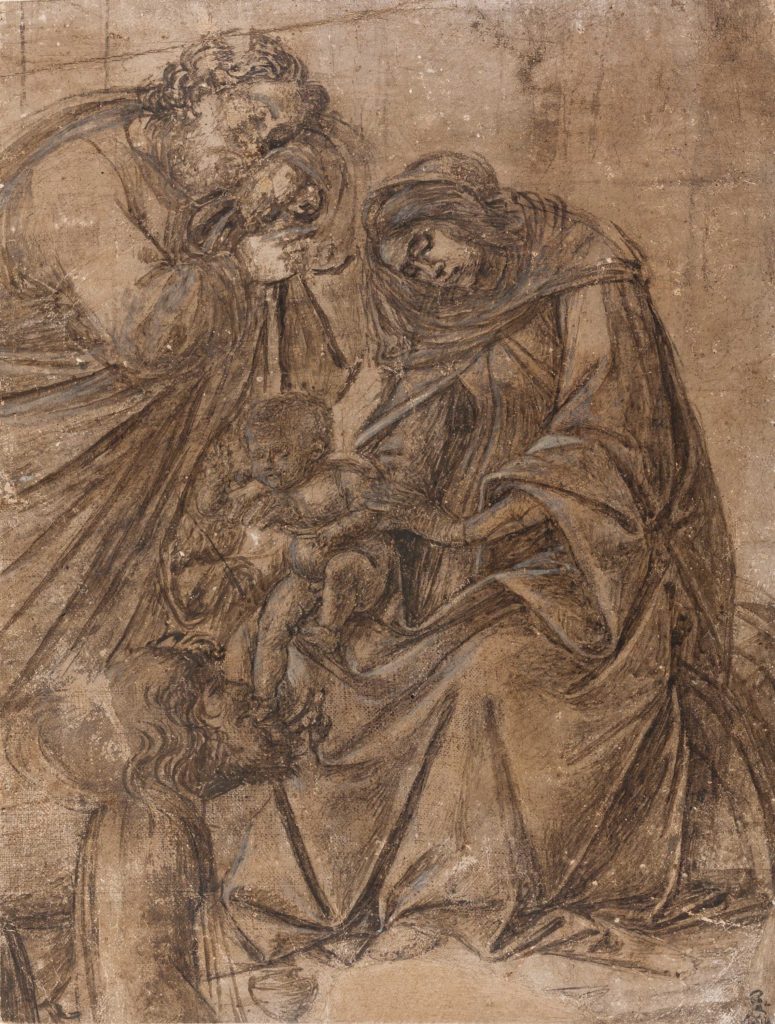
Sandro Botticelli, “Virgin and Child with Saint Joseph and a Magus” (fragment of “The Adoration of the Magi”), ca. 1500, brush and brown egg tempera, heightened with white, over charcoal or chalk on prepared linen, 30.9 x 23.4 cm. The Fitzwilliam Museum, Cambridge. The Fitzwilliam Museum, Cambridge
From the museum:
Painted around 1500, eight monumental works — including important loans from museums in Europe and the U.S. — demonstrate Botticelli’s extraordinary talent as a master storyteller. He reinvented ancient Roman and early Christian heroines and heroes as role models, transforming their stories of lust, betrayal, and violence into parables for a new era of political and religious turmoil.
Sandro Botticelli, “The Story of Virginia,” ca. 1500, tempera and gold on panel, 83.3 x 164.9 cm (32 13/16 x 64 15/16 in.) Accademia Carrara, Bergamo
Considered one of the most renowned artists of the Renaissance, Botticelli (about 1445–1510) was sought after by popes, princes, and prelates for paintings to decorate Italian churches. His Medici-era madonnas elevated Botticelli to a household name in Gilded Age Boston. Yet the painter achieved iconic status through his secular paintings — like the Primavera — for the Renaissance home. All of the works in the Gardner’s exhibition originally filled the palaces of Florence, adorning patrician bedrooms with sophisticated modern spins on ancient tales.
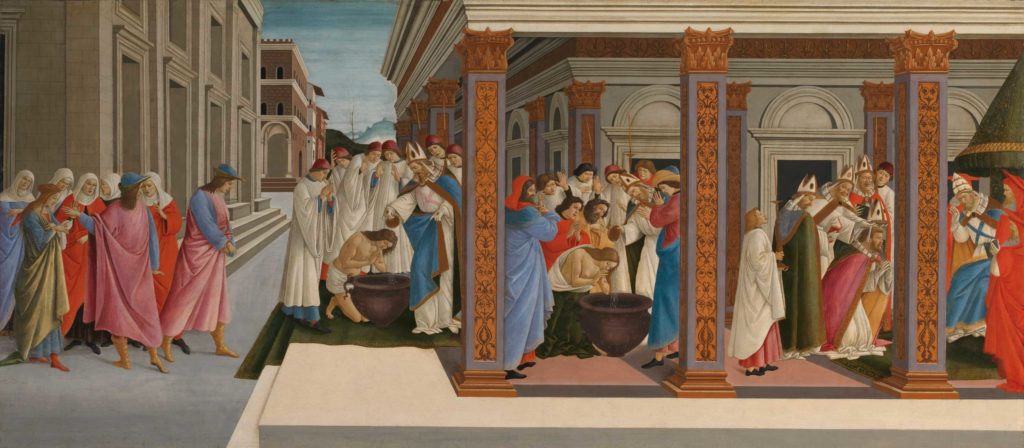
Sandro Botticelli, “Four Scenes from the Early Life of Zenobius,” ca. 1500, tempera on panel, 66.7 x 149.2 cm (26 1/4 x 58 3/4 in.) National Gallery, London. National Gallery, London / Art Resource, NY
“Botticelli: Heroines and Heroes” is the first-ever exhibition dedicated to Botticelli’s spalliera, a new genre of domestic painting. Deriving from the Italian word spalla or shoulder, the name indicated the height at which Renaissance viewers experienced these captivating images. As the leading painter of Florence, Botticelli looked to the city’s legendary past for heroines and heroes whose lives he reimagined to deliver political, patriotic, and moralizing messages into the residences of the Florentine elite.
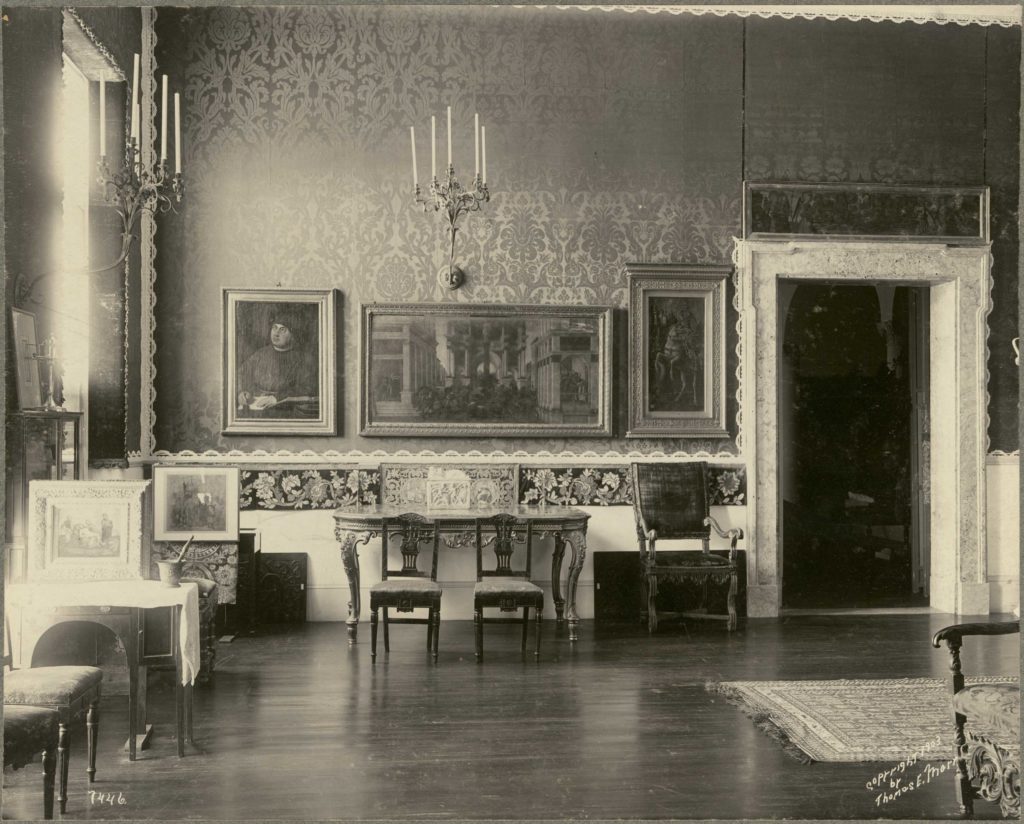
Thomas E. Marr & Son (active Boston, 1870s–1954), Raphael Room, Isabella Stewart Gardner Museum, 1903. Gelatin silver print, 30.4 x 35.7 cm (11 15/16 x 14 1/16 in.) Isabella Stewart Gardner Museum, Boston
Unprecedented loans for this exhibition include The Story of Virginia from the Accademia Carrara, Bergamo, never before seen in the United States. Thanks to the exceptional generosity of the National Gallery, London, and the Metropolitan Museum of Art, New York, the Gardner exhibition also reunites three of four panels from another spalliera depicting the story of the early Christian saint, Zenobius, celebrated in Florence as the city’s first native bishop. Botticelli’s unique, unfinished Adoration of the Magi, on loan from the Galleria degli Uffizi, Florence, offers a rare insight into his working methods while two large-scale drawings of the same composition from the Fitzwilliam Museum, Cambridge, illuminate how he reworked figure groups for multiple compositions of diverse functions.
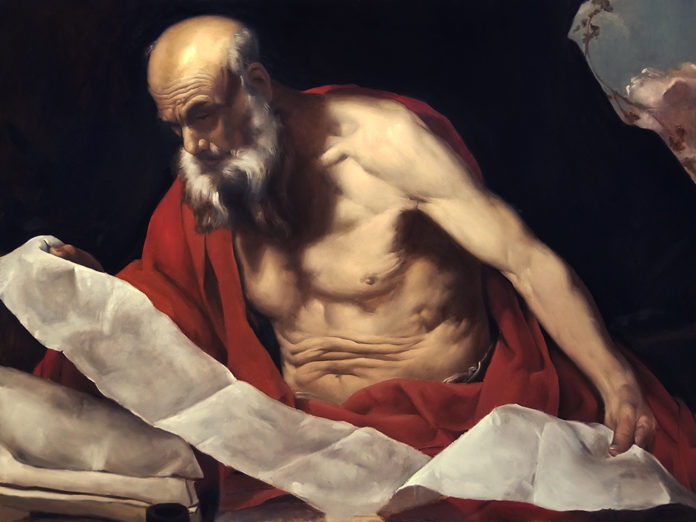
Jon Brogie, St. Jerome, copy after Hendrick van Somer, 2018, 31.5 x 23.6 in., oil on canvas
On view: “Jon Brogie – Studies from Rome”
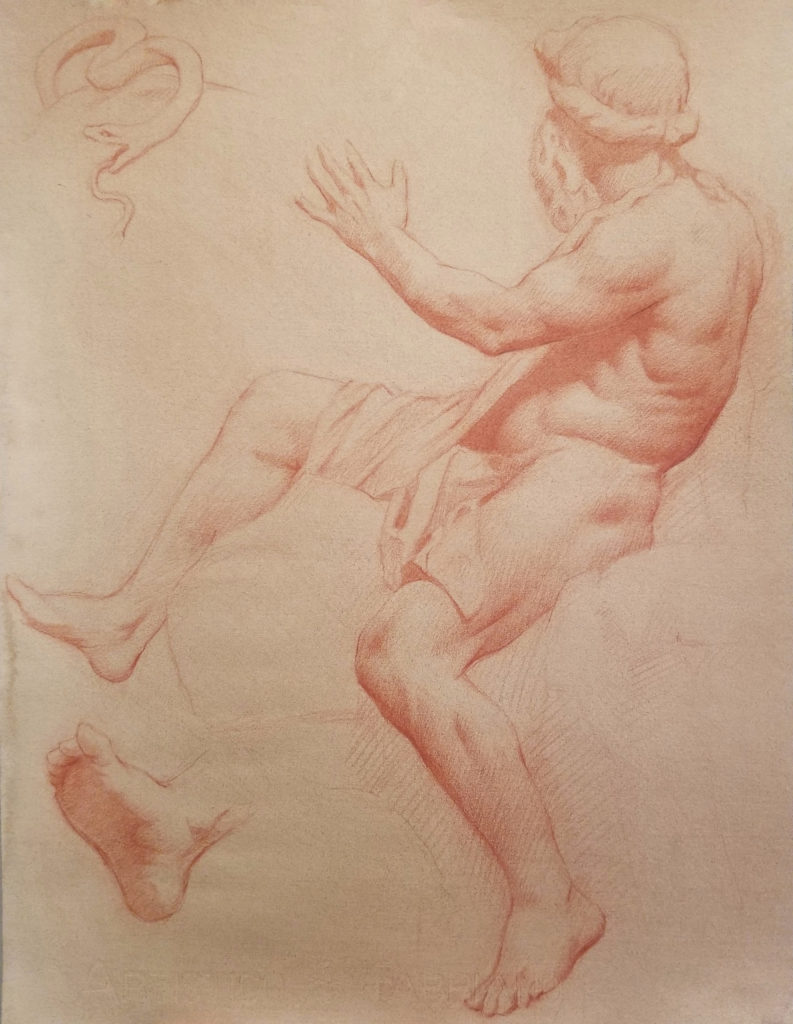
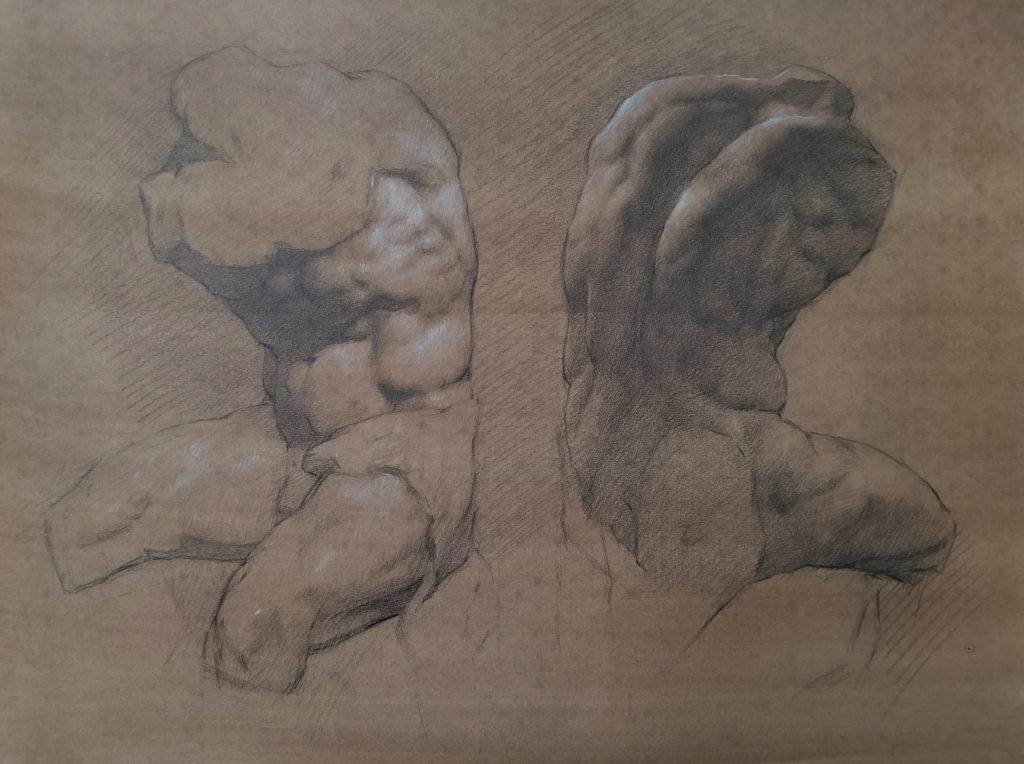
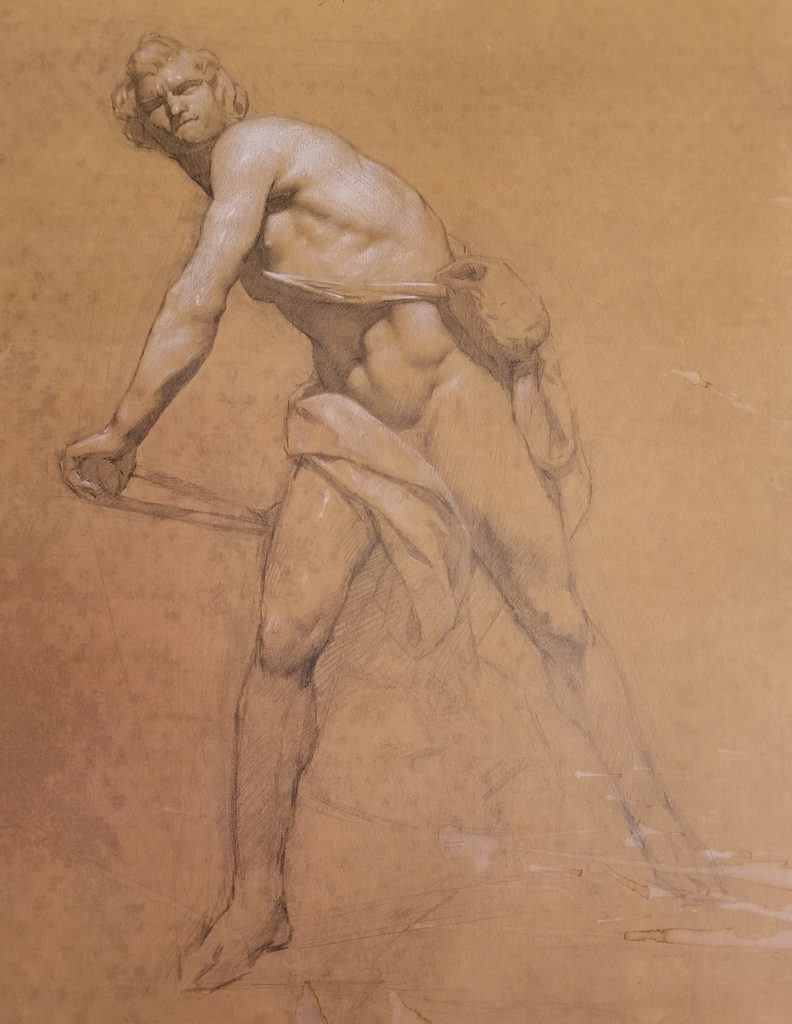
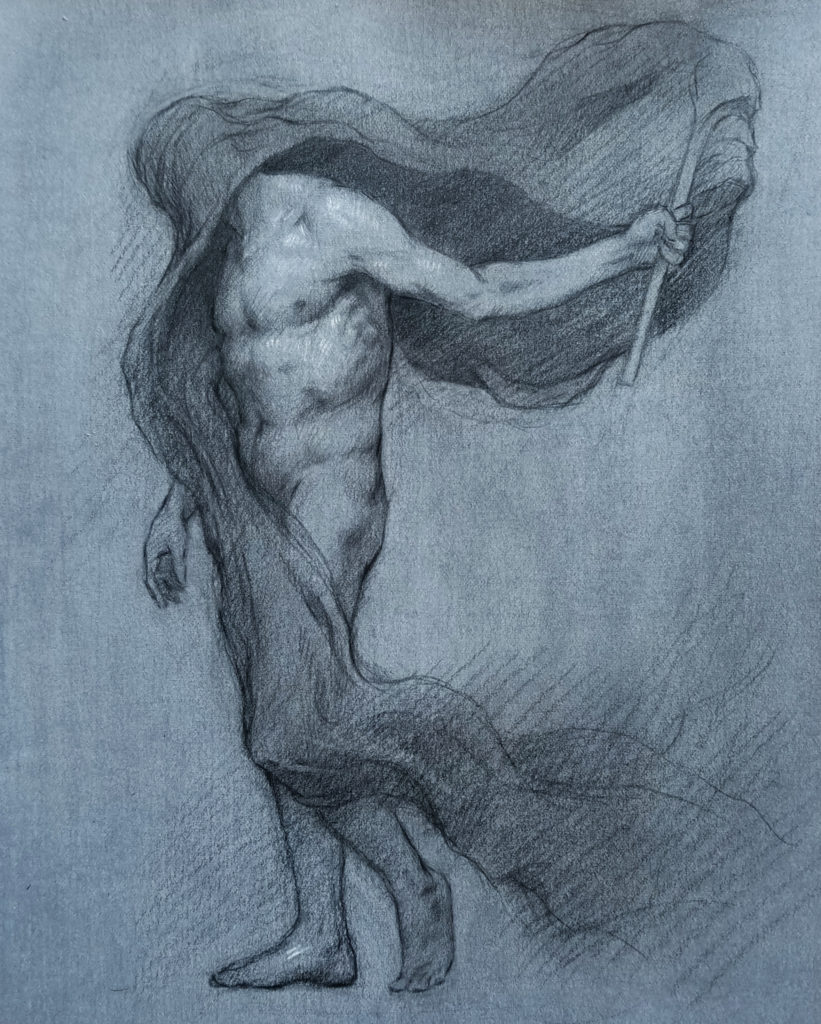
Eleventh Street Arts is pleased to announce a new exhibition, “Jon Brogie – Studies from Rome,” showcasing work from 2017 Alma Schapiro Prize winner Jon Brogie created during his three-month stay at the American Academy in Rome. The exhibition features over 30 drawings and paintings made on location from a selection of Rome’s most iconic masterpieces.
Jon Brogie, Study of Bernini’s Danube, 2018, 11.25 x 15 in., red chalk on paper
Jon Brogie was born in southern California in 1989 and raised in Phoenix, Arizona. He earned his undergraduate degree in Fine Art from Arizona State University, where he graduated with honors in 2011. The following year he moved to New York City to study drawing and painting under Jacob Collins at the Grand Central Atelier. He graduated in 2016 and is currently a resident artist at GCA in Long Island City, New York. In 2017 Jon was awarded the Alma Schapiro Prize, a biannual affiliated fellowship at the American Academy in Rome. Jon’s work is exhibited at Eleventh Street Arts in New York and is in private collections across the country.
Jon Brogie, Belvedere Torso Study, 2018, 19 x 15 in., graphite and white chalk on paper
The Alma Schapiro Prize is awarded to advance the career of an artist recipient and to foster the continuity of knowledge of the classical tradition as a vital aspect of contemporary culture around the globe. The centerpiece of the prize is a three-month affiliated fellowship at the American Academy in Rome, the premier American overseas center for independent study and research in the fine arts and humanities.
Jon Brogie, Study of Bernini’s David, 2018, 15 x 19 in., graphite and white chalk on paper
Jon Brogie, Figure Study for Allegory of Ideology, 2018, 9 x 11 in., black and white chalk on paper
About Eleventh Street Arts: Eleventh Street Arts is an art gallery that exhibits contemporary realism drawings, paintings, and sculptures. Founded in 2014, ESA presents new work that invokes, challenges, and celebrates the classical tradition. Adjacent to the artist studios of Grand Central Atelier.
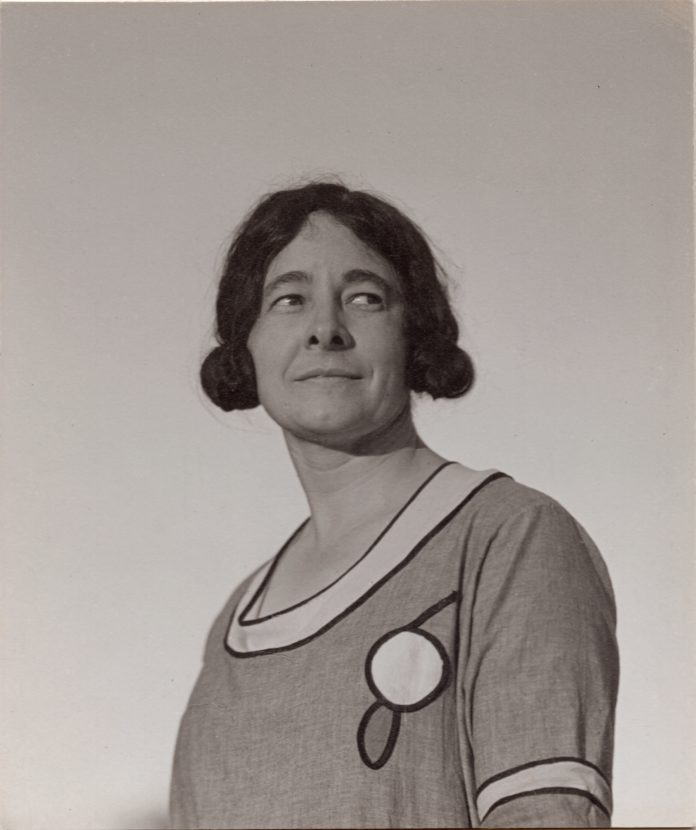
Alfred Stieglitz, "Ida O' Keeffe," 1924, gelatin silver print, Collection of Michael Stipe
The Dallas Museum of Art has announced the first solo museum exhibition of works by Ida Ten Eyck O’Keeffe (1889–1961) and the most comprehensive survey of the artist’s work to date. “Ida O’Keeffe: Escaping Georgia’s Shadow” will bring together approximately 40 paintings, watercolors, prints, and drawings for the first time, including six of the artist’s seven lighthouse paintings, whose previously unknown locations were revealed during exhibition research and which have not been exhibited together since 1955. The exhibition explores Ida’s mastery of color and composition, which caught the eye of critics, as well as her complex relationship with her well-known sister Georgia O’Keeffe and the effect it had on Ida’s life and professional aspirations.
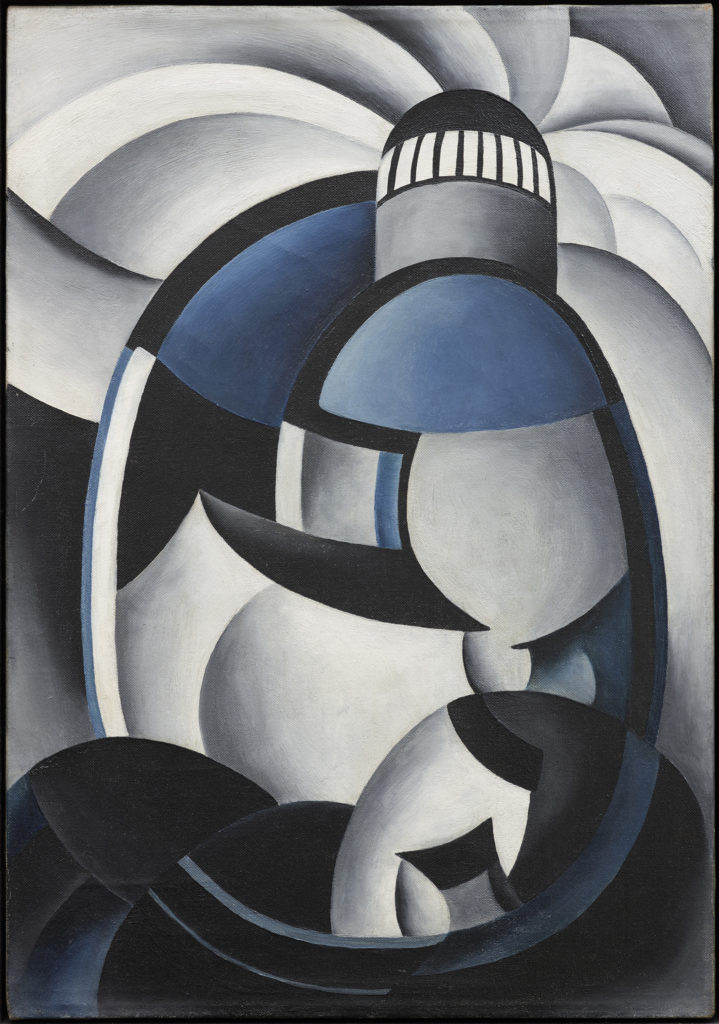
Ida Ten Eyck O’Keeffe, “Variation on a Lighthouse Theme II,” c. 1931- 32, oil on canvas, Private Collection, Dallas, Texas
“The DMA has a strong history of collecting, presenting, and contributing to scholarship on American art, and this exhibition offers visitors the opportunity to discover a new facet of this history through Ida O’Keeffe’s fascinating works of art,” said the DMA’s Eugene McDermott Director Agustín Arteaga. “We are especially pleased to share with our audiences many works that have never been seen, most of which our incredible curatorial team uncovered through years of rigorous research and a commitment to providing new insight on this under-recognized artist.”
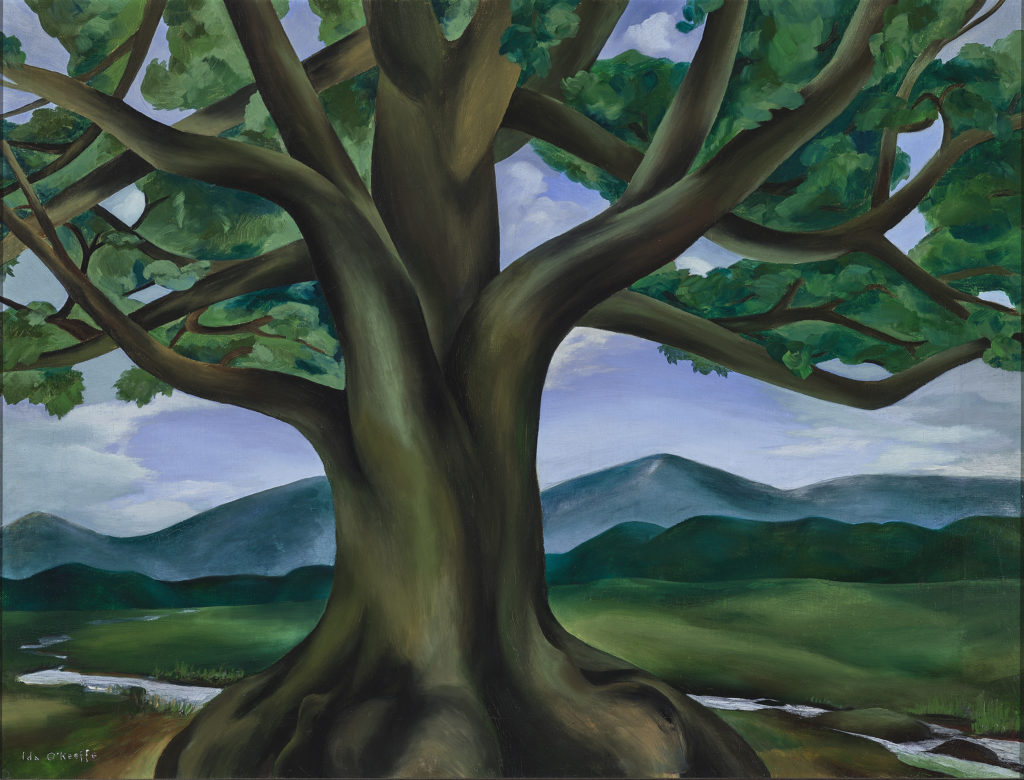
Ida Ten Eyck, “Royal Oak of Tennessee,” 1932, oil on canvas, Private Collection, New York
Ida Ten Eyck O’Keeffe was a professionally trained artist who graduated with an MFA from Columbia in 1932. Her small triumphs as an artist became a source of competitive tension between Ida and her acclaimed sibling Georgia, who eventually withheld support of her younger sister’s professional ambitions. Unlike Georgia, who had the early support and promotional expertise of her husband, Alfred Stieglitz, Ida struggled to keep one foot in the art world of New York while teaching on short-term contracts at various colleges along the Eastern seaboard and in the South and the Midwest during the Great Depression of the 1930s.
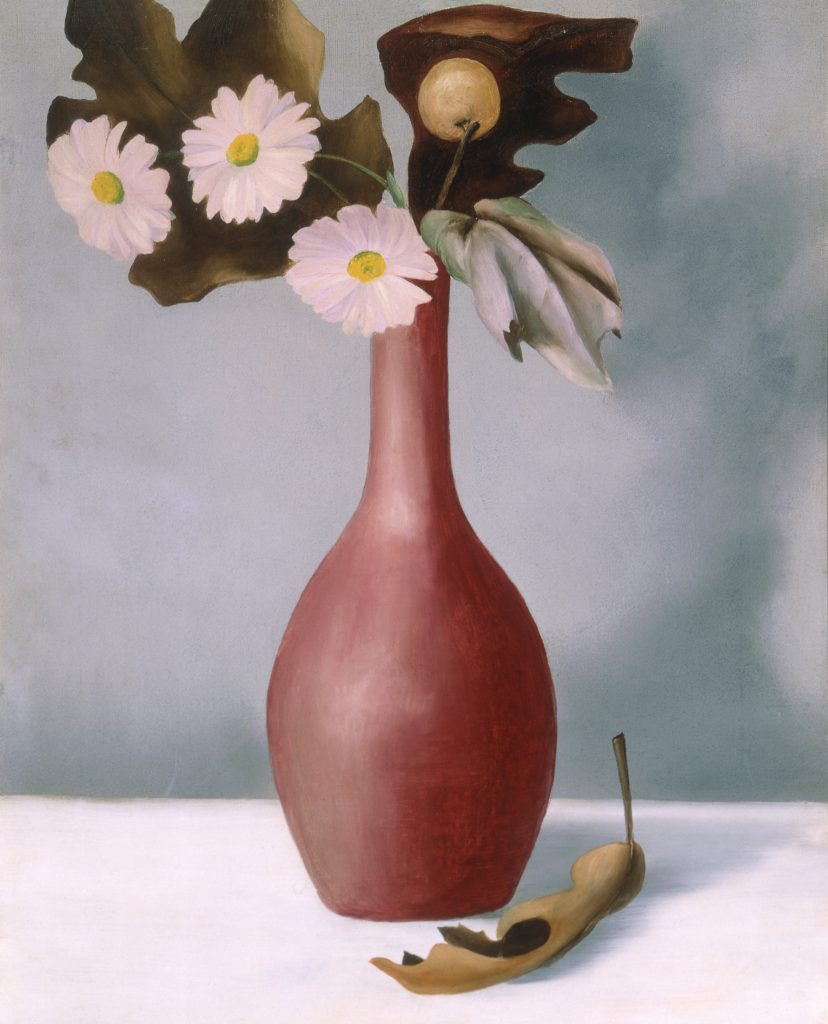
Ida Ten Eyck, “Peach-Blown Vase,” 1927, oil on canvas, Peters Family Art Foundation
Organized chronologically, “Ida O’Keeffe: Escaping Georgia’s Shadow” begins with O’Keeffe’s paintings of the late 1920s and early 1930s, which appeared in her first exhibitions in gallery shows in Wisconsin and New York. Her MFA studies brought a new sophistication to her work, most notably showcased through six of the seven documented lighthouse paintings she created and exhibited in 1933. To produce these abstracted representations, O’Keeffe relied on “dynamic symmetry,” a compositional concept that linked art and mathematics.
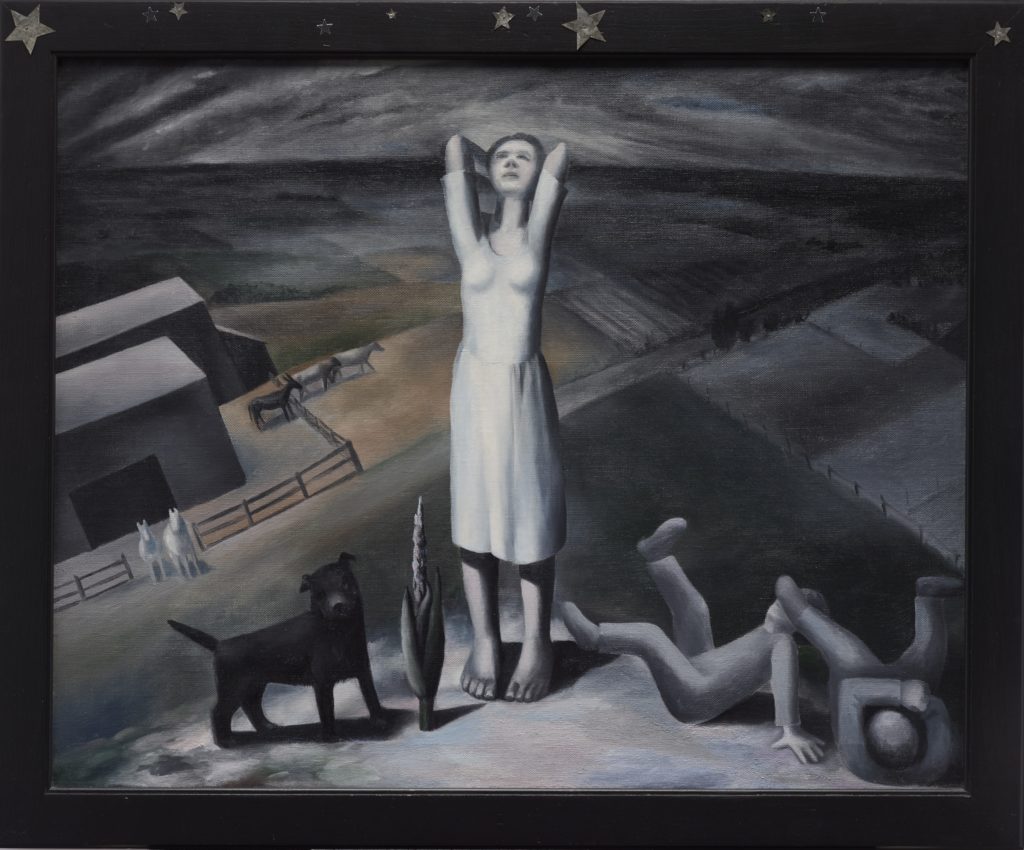
Ida Ten Eyck, “Star Gazing in Texas,” 1938, oil on canvas, Dallas Museum of Art, General Acquisitions Fund and Janet Kendall Forsythe Fund in honor of Janet Kendall Forsythe on behalf of the Earl A. Forsythe family, 2017.36
By the late 1930s, O’Keeffe’s work took another great shift toward a regionalist look that, although more subdued and lyrical, is also undergirded by the same structural principles from earlier in the decade. Throughout, Ida was also a printmaker who used an electric iron as her printing press to make her monotypes. The exhibition will include a selection of several monotypes by the artist, as well as etchings and drypoints.
The exhibition also features the painting “Star Gazing in Texas” (1938), a work that was acquired by the DMA in late 2017. In this work, created during her year of teaching in San Antonio, Texas, Ida wittily achieved a magical melding of subject and frame in which a young woman bathed in moonlight contemplates the stars in the heavens that appear, not in the painting, but on the upper molding of the frame. This work highlights how Ida’s peripatetic existence provided her with exposure to new environments and subject matter, serving as inspiration for many works.
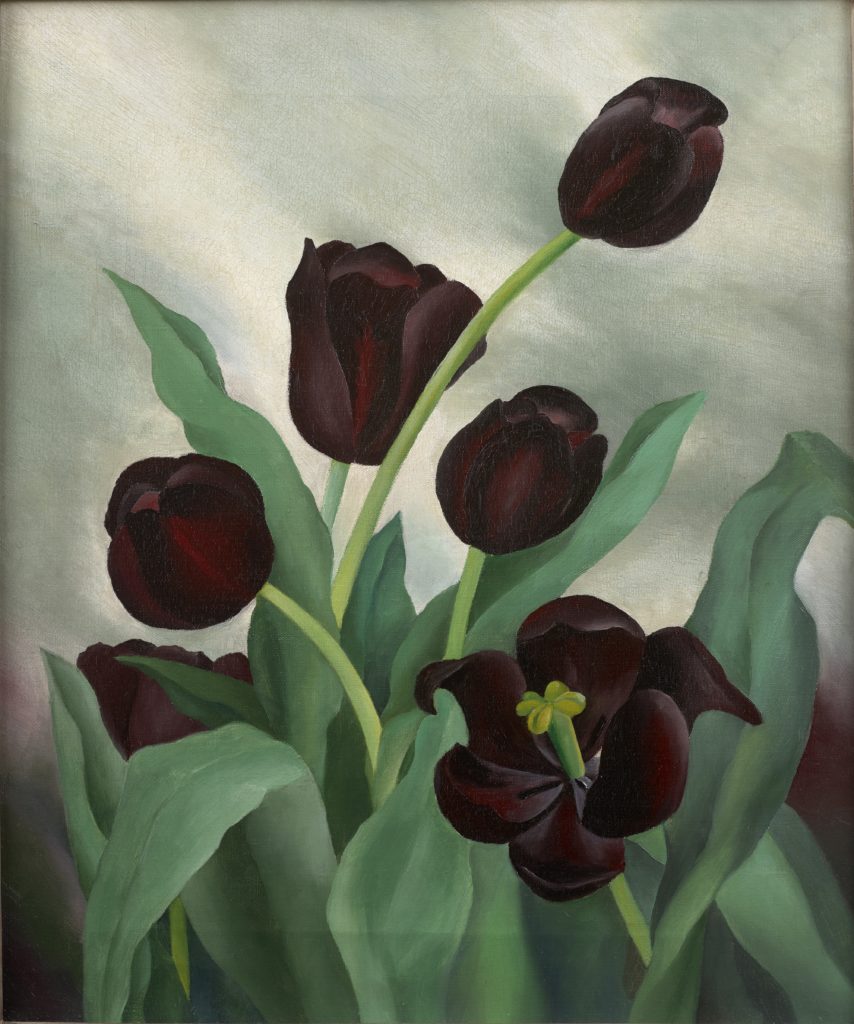
Ida Ten Eyck, “Tulips,” 1936, oil on canvas, Collection of Mark and Debra Leslie
Offering additional context for O’Keeffe’s practice, the exhibition will feature ten photographs of her by Alfred Stieglitz. Created during a period when the sisters were still close, drawings and photographs display the enjoyment they took in each other’s company prior to their estrangement in the early 1930s. Some of Stieglitz’s images reveal his fascination with Ida, and his suggestive inscriptions on their reverse indicate that he would have welcomed a relationship of a more intimate nature.
“When one sees the caliber of many of Ida O’Keeffe’s works, it seems incredible that she has remained relatively unknown—especially given the fame of her sister, Georgia,” said Sue Canterbury, organizing curator of the exhibition and the Pauline Gill Sullivan Associate Curator of American Art at the DMA. “Ida is fascinating not only because of the dynamics within her famous artistic family but also for the distinct approach of her work, which reflects a range of contemporary influences, such as American Modernism and Regionalism.”
The Museum continues to conduct research on Ida Ten Eyck O’Keeffe and welcomes any information regarding additional unknown works by her, as well as supporting materials (e.g., correspondence, photographs, and ephemera) related to the artist.
Opening November 18 with generous support from the Kaleta A. Doolin Foundation, the DMA-organized exhibition will also include 1920s photographs of Ida O’Keeffe by Alfred Stieglitz, Georgia’s husband. It will be on view at the Dallas Museum of Art (Texas) through February 24, 2019.
Anthony Baus, “NYC Figs.,” 2018, green pencil, walnut wash, and pen, 14 x 14 in.
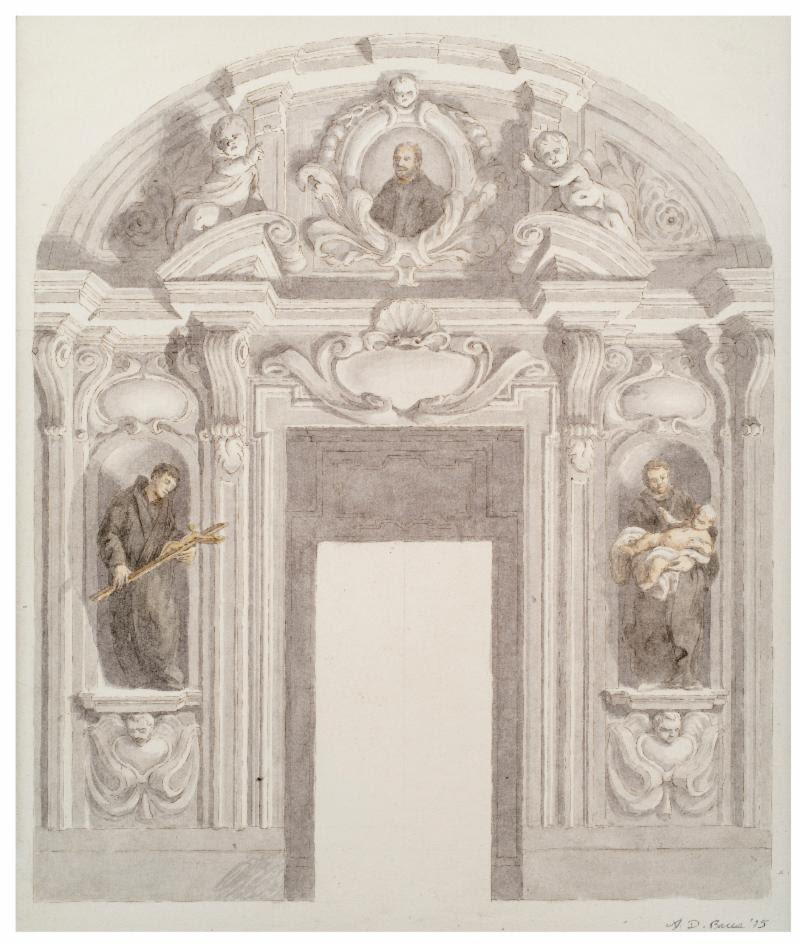
Drawings and paintings by the American artist Anthony Baus (b. 1981) are currently featured in “After the Antique,” an exhibition at Robert Simon Fine Art in Manhattan. As the title indicates, the exhibition is intended to introduce the artist’s work to a new audience.
Anthony Baus, “Pozzo Corridor (Ruins of St. Ignatius),” 2015, brown ink pen and blue wash, 14 x 12 in.
From the gallery:
The timing of the exhibition, during New York’s Master Drawings week, will permit collectors of both contemporary art and Old Masters to experience Baus’s unique vision, which mines the world of antiquity as source material for contemporary issues, expressed through an astonishing graphic facility derived from intense study of Italian baroque drawing.
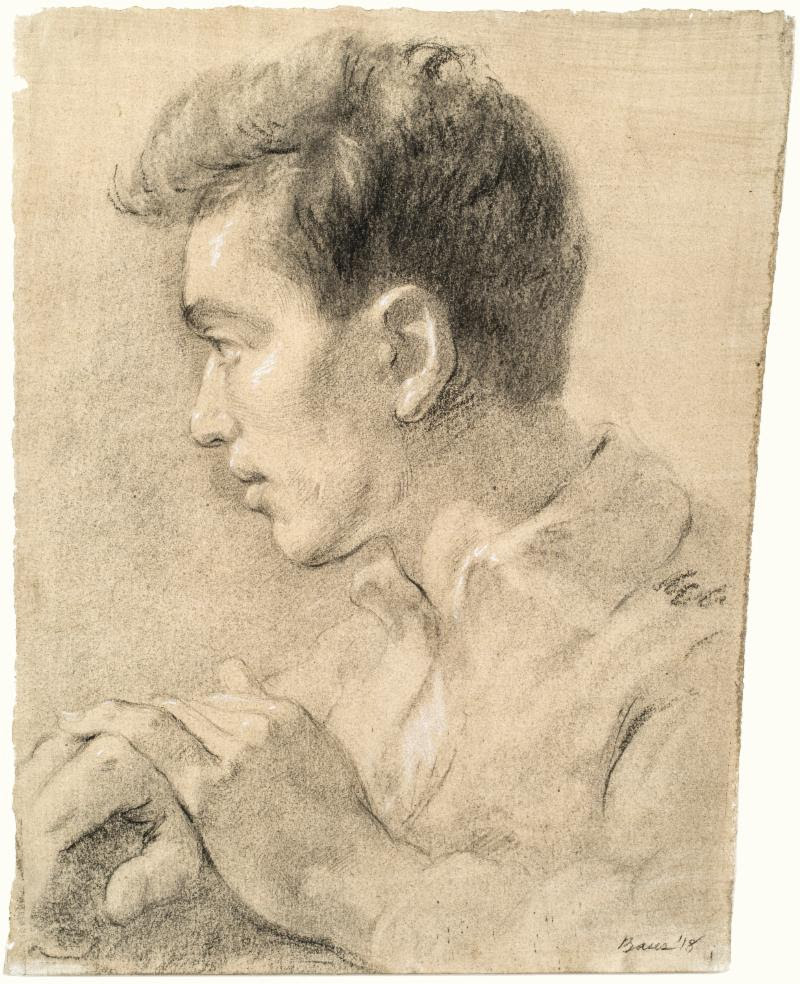
Anthony Baus, “Portrait of a Boy in Profile, 2018, white and black pencil and charcoal on toned paper, 11 x 9 in.
The phrase “After the Antique” has two associations. The first is conventional cataloguing terminology that describes a work of art derived or copied from an ancient model or source. The second is purely chronological: “after” in time. Anthony Baus’s work meets both criteria, but his references from the ancient world are never literal; rather they are romantic, meditative, and original. His impressive technique does not reflect the mind of a copyist.
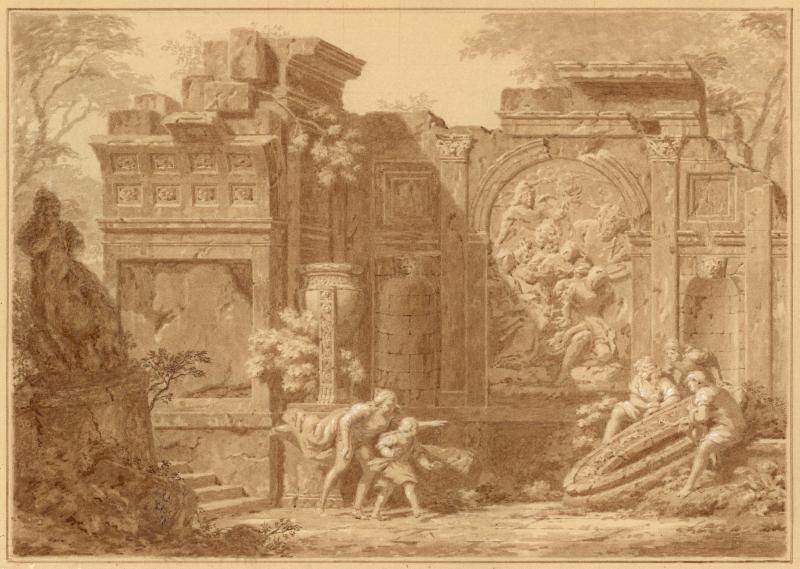
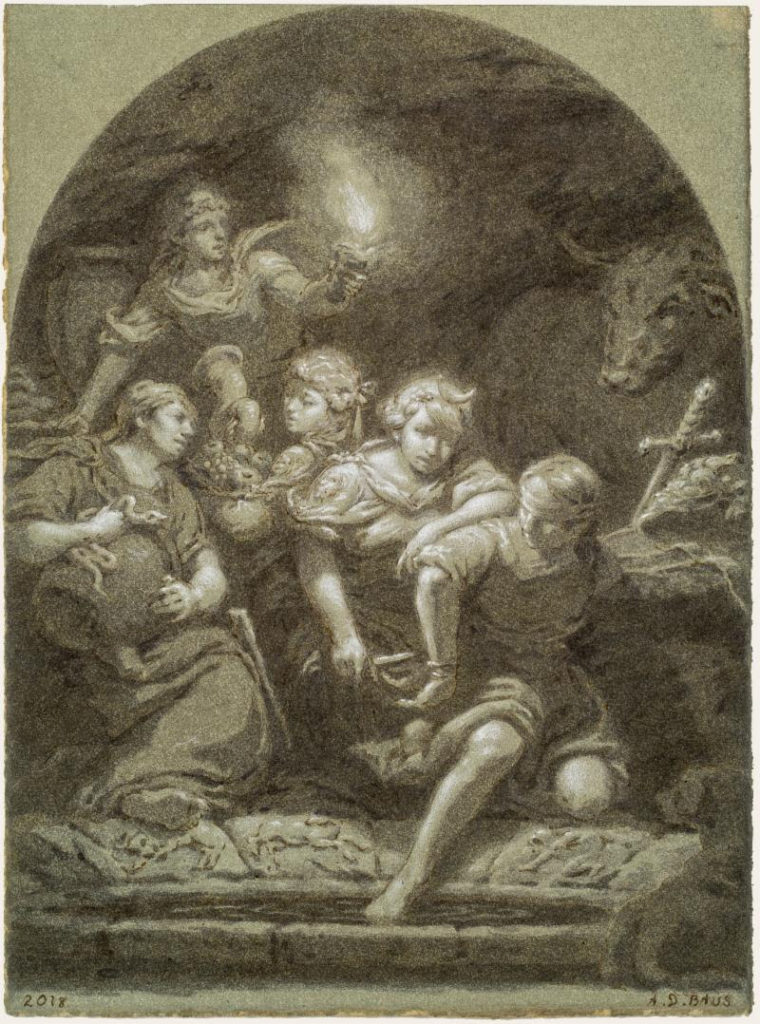
Anthony Baus, “Gabriel (Youth Approaching a Well),” 2018, sepia wash and pen with white gouache on toned paper, 18 x 25 in.
The style of Old Master drawings that Baus has embraced is his preferred language of expression, but his content is entirely personal. Baus has described it as “romantically inspired narratives created on scaffolding of ancient architecture, richly imbued with symbolism and mystery.”
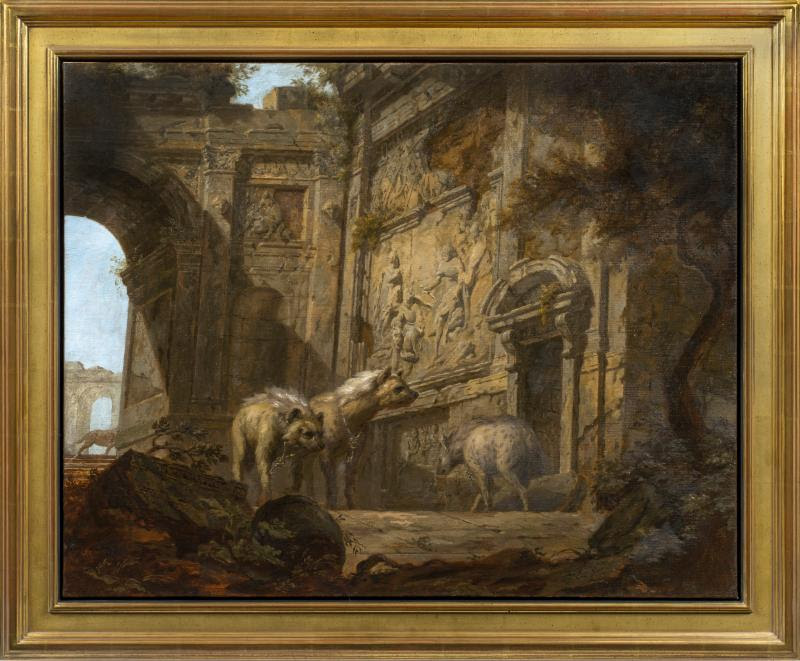
Anthony Baus, “Time (Ruins of the Mithraic Mysteries),” 2018, oil on linen, 24 x 30 in.
For the artist the present exhibition began as a meditation on time. Months spent in Rome drew Baus into study of and contemplation on the Mithraic Mysteries, the cult religion practiced there from the first to the fourth centuries A.D. The characters that inform Mithraism provide the starting point for Baus’s rumination on thought and the position of man in the universe, expressed through symbolism both historical and fantastical.
Anthony Baus, “The Baptism,” 2018, brown ink pen, blue wash, white charcoal on green-toned paper, 10 x 7 ½ in.
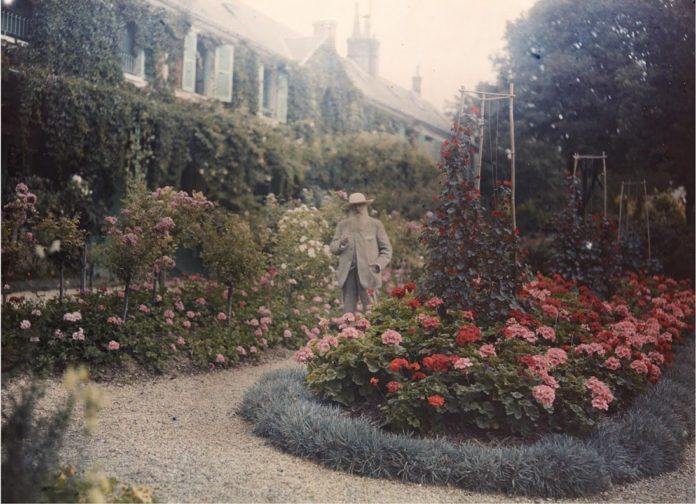
Anonymous, “Monet in His Garden at Giverny,” 1921, autochrome, 7 x 9 1/2 in. (17.8 x 24.1 cm)
Collection of the Troob Family Foundation
Images courtesy of the Fine Arts Museums of San Francisco
The Fine Arts Museums of San Francisco and the Kimbell Art Museum are proud to announce “Monet: The Late Years,” the first exhibition in more than 20 years dedicated to the final phase of Monet’s career. Through approximately 60 paintings, the exhibition will trace the evolution of Monet’s practice from 1913, when he embarked on a reinvention of his painting style that led to increasingly bold and abstract works, up to his death in 1926.
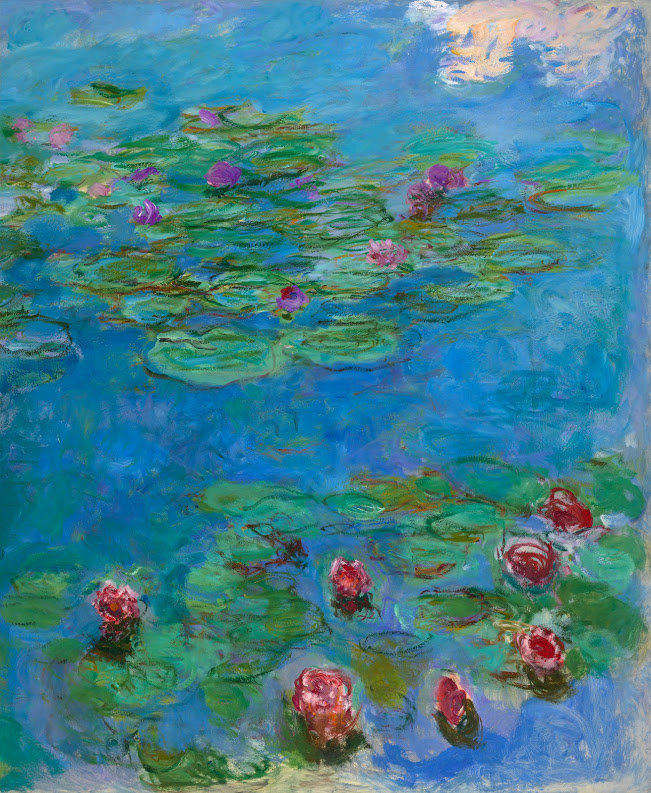
Claude Monet (French, 1840–1926), “Water Lilies,” ca. 1914–1917, oil on canvas, 65 3/8 x 56 in. (166.1 x 142.2 cm). Fine Arts Museums of San Francisco, Museum purchase, Mildred Anne Williams Collection, 1973.3
Assembled from major public and private collections in Europe, the United States, and Asia, including the holdings of the Fine Arts Museums and the Kimbell, “Monet: The Late Years” will include more than 20 examples of Monet’s beloved water lily paintings. In addition, the exhibition will showcase many other extraordinary and unfamiliar works from the artist’s final years, several of which will be seen for the first time in the United States. Majestic panoramas will be displayed alongside late easel paintings, demonstrating Monet’s continued vitality and variety as a painter.
This exhibition will redefine Monet — widely known as the greatest landscape painter of the Impressionists — as one of the most original artists of the modern age.
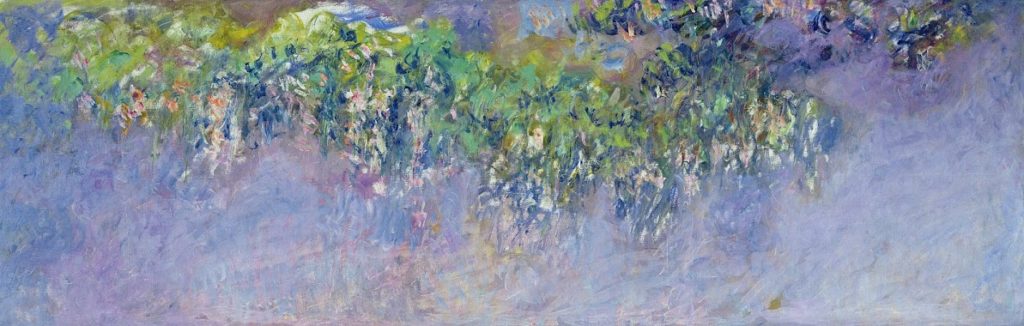
Claude Monet, “Wisteria,” 1916–1919, oil on canvas, 39 3/8 x 118 1/8 in. (100 x 300 cm). Musée Marmottan Monet, Michel Monet Bequest, 1966, inv. 5124
“Monet: The Late Years” focuses on the period when the artist, his life marked by personal loss, deteriorating eyesight, and the threat of surrounding war, remained close to home to paint the varied elements of his garden at Giverny. His worsening vision and a new ambition to paint on a large scale stimulated fundamental changes in the tonality and intensity of his palette, toward vivid color combinations and broader, more apparent, application of paint.
The complex surfaces of his canvases reveal layers of activity spread out over the course of days, months, and years. The result was a remarkable new body of work with increasingly feverish, dramatic brushwork. Far removed from his earlier, more representational production, the artist’s late paintings close in on a stylistic threshold into abstraction.
Thematically arranged, the exhibition opens with a prologue concentrating on scenery from Monet’s outdoor studio at Giverny. Paintings from the late 1890s and early 1900s include depictions of the Japanese footbridge over the newly created lily pond, and the artist’s house as seen from the rose garden — all sources of inspiration that he would revisit in his late career.
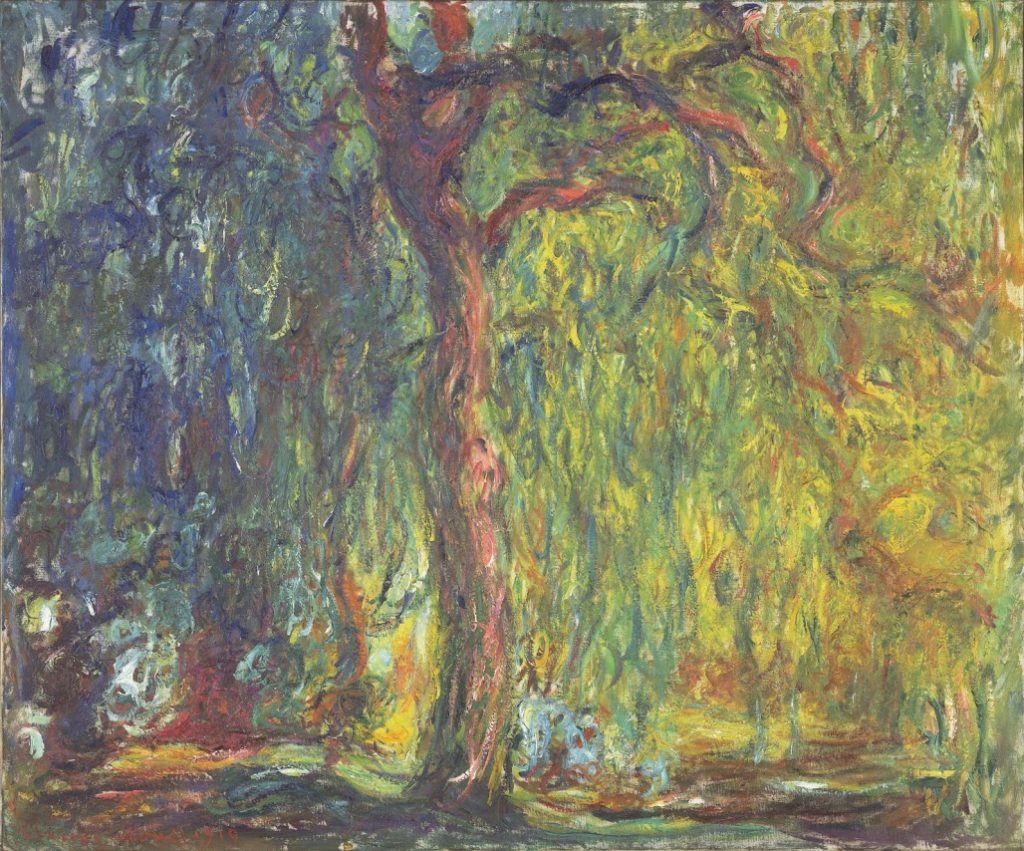
Claude Monet, “Weeping Willow,” 1918–1919, oil on canvas, 39 1/2 x 47 1/4 in. (100 x 120 cm). AP 1996.02. Photograph: Robert LaPrelle. Kimbell Art Museum, Fort Worth
Next, the exhibition enters the period between 1914 and 1919, when Monet returned to painting anew after a hiatus in work prompted by the loss of his second wife, Alice, and his eldest son, Jean. Opening with the vibrant 1914–1917 Water Lilies from the Fine Arts Museums’ collection, the section features a number of the dynamically rendered water lily paintings from this period, juxtaposed with audacious large-scale floral studies from the evolving scenery of his garden. Continuing to study natural phenomena, the artist focused on elements that had been relegated to the fringes in earlier works, such as “Day Lilies,” “Agapanthus,” and “Yellow Iris,” in addition to “Water Lilies,” among the 20 paintings on loan from the Musée Marmottan Monet, Paris.
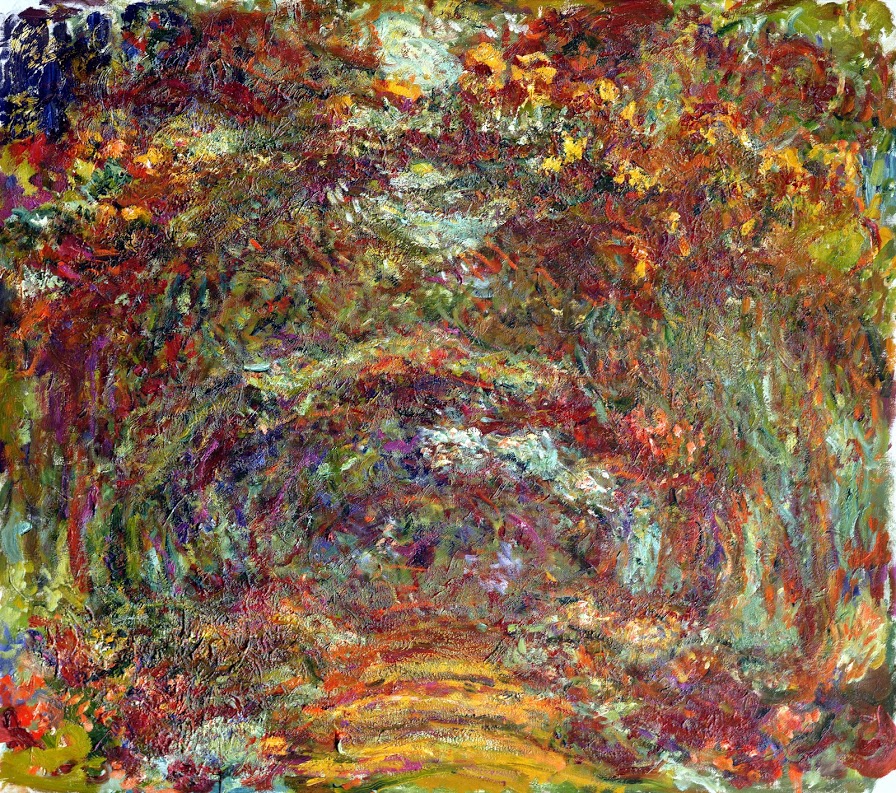
Claude Monet, “Path under the Rose Arches, Giverny,” 1918–1924, oil on canvas, 35 x 39 3/8 in. (89 x 100 cm). Musée Marmottan Monet, Michel Monet Bequest, 1966, inv. 5089
Monet’s ambitions as a muralist, in contrast with his renewed activity as an easel painter, are explored next. With the completion of a vast studio building on his property in 1916, Monet was able to undertake significantly larger canvases, measuring between 14 and 20 feet wide, forming a series of mural-style paintings now known as the Grandes Décorations. In such immersive, panoramic paintings as “Agapanthus” from the Saint Louis Art Museum, more than 6 x 14 feet in size—the artist paralleled themes undertaken in an important series of paintings of his water lily pond, each about 3 x 6 feet, their number rivaling the scale and ambition of his mural project.
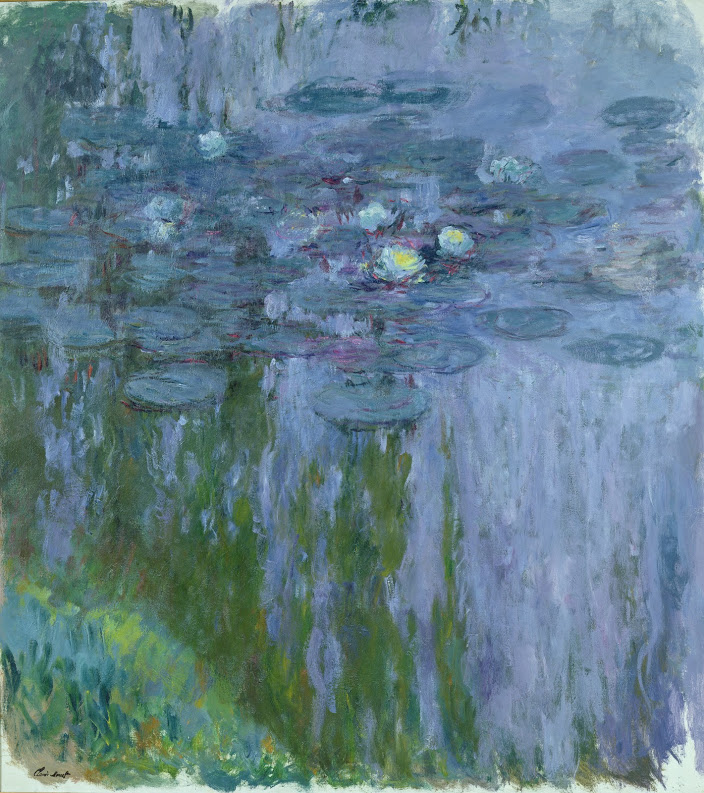
Claude Monet, “Water Lilies, Willow Reflection,” 1916–1919, oil on canvas, 78 3/4 x 70 3/4 in. (200 x 180 cm). Musée Marmottan Monet, Michel Monet Bequest, 1966, inv. 5119
Groups of paintings from his late garden series — several on view in the United States for the first time — conclude the exhibition. During his final years, while continuing to perfect his largest panels, Monet returned to working in smaller-format paintings, on the scale of his famous series paintings of the 1890s and early 1900s. Working again in his classic serial method, he revisited familiar motifs on his property, such as the Japanese bridge and the rose-covered trellises over the path leading from his house to the edge of his flower garden.
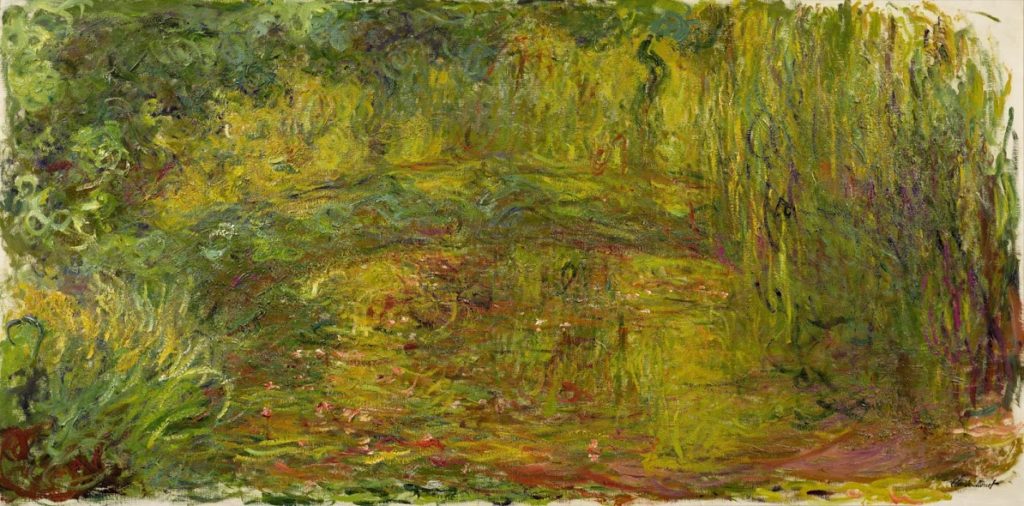
Claude Monet, “Japanese Bridge,” 1918–1924, oil on canvas, 39 3/8 x 78 3/4 in. (100 x 200 cm). Musée Marmottan Monet, Michel Monet Bequest, 1966, inv. 5077
The exhibition showcases these works in greater numbers than ever before attempted: in addition to seven studies of the Japanese bridge at Giverny, six compelling portrayals of a tree with a twisting trunk and craggy outreaching branches are shown. Among these is “Weeping Willow,” a masterwork from the Kimbell Art Museum’s collection, painted in 1918–1919 in mournful response to the tragedies of World War I.
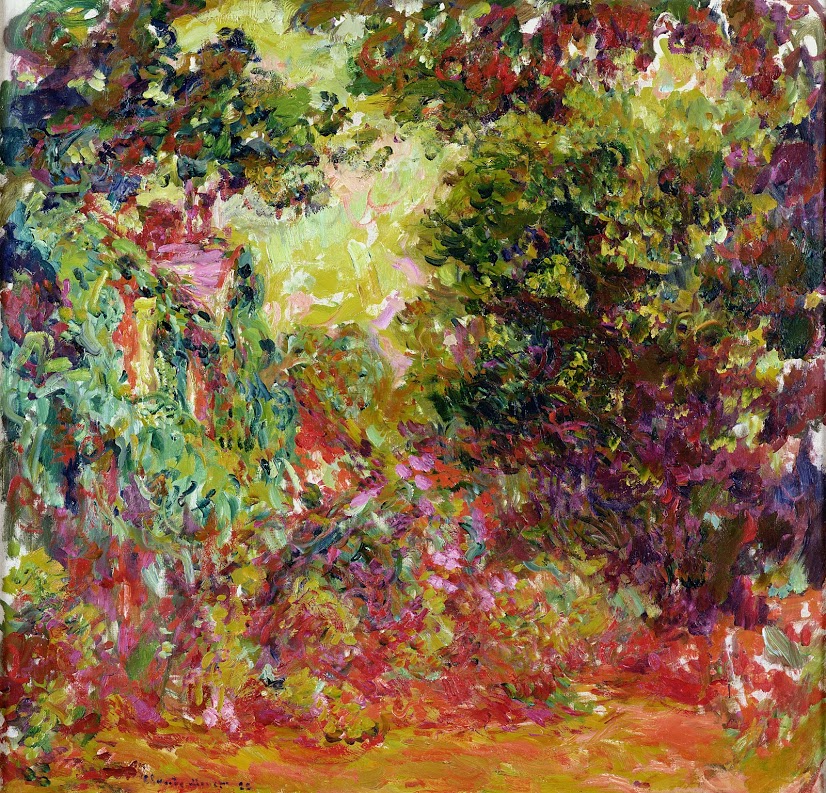
Claude Monet, “The Artist’s House Seen from the Rose Garden,” 1922–1924, oil on canvas, 35 x 36 in. (89 x 92 cm). Musée Marmottan Monet, Paris France, W.1944
By his final years, Monet’s cataracts had affected the tonal balance of his perception. Nonetheless, as seen in “Path under the Rose Arches” and “The Artist’s House Seen from the Rose Garden,” both on loan from the Musée Marmottan Monet, the artist triumphed over this adversity by producing his most radical works yet. The expressive style of these paintings, with a complex layering of gestural strokes in red and yellow hues over blue and green, affirms Monet’s continued vitality as a painter and redefines him, in the near abandonment of subject matter in favor of increasingly rapturous execution, as a pioneer of abstraction.
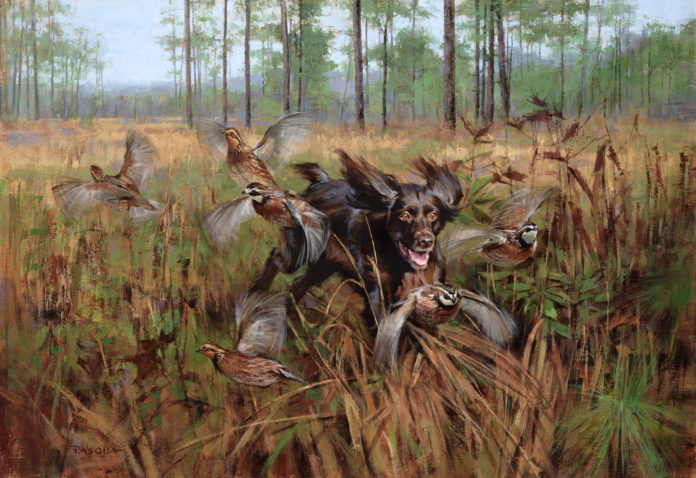
Southeastern Wildlife Exposition (SEWE) has announced its Featured Artist and Featured Painting for the 2019 event, marking 37 years of excellence in wildlife art, conservation, and the sporting life. Lou Pasqua has been named the 2019 event’s Featured Artist. His painting “Little Havoc” (above), has been selected as the Featured Painting and subject of the official SEWE 2019 poster.
The 37th annual SEWE will be held in multiple venues throughout downtown Charleston, South Carolina, from February 15–17, 2019 with VIP events beginning on Thursday, February 14.
From the organizers:
An avid sportsman, Lou Pasqua’s lifelong passion for the outdoors and wildlife translates to his artwork. Coupled with his 20+ years in the graphic design industry, his ability to capture emotion and movement has made him one of the most sought-after sporting and wildlife artists in the country. Residing in Etna, Pennsylvania, Pasqua has work in collections and galleries across the nation, as well as on the covers of numerous publications.
“I feel privileged to be selected as Featured Artist for the 2019 Southeastern Wildlife Exposition,” says Pasqua. “To be chosen as the Featured Artist among so many talented individuals confirms to me that people appreciate my efforts and the body of work I have created. This recognition is encouragement to keep painting and improving.”
“Little Havoc” depicts a Boykin Spaniel and gives the viewer a front-row seat to the thrill of flushing a covey of quail.
“At its core, SEWE desires to present the finest wildlife art available. With that in mind, Lou Pasqua was an obvious choice for the 2019 Featured Artist. Lou’s sporting paintings are unmatched, and it is a privilege to showcase his work,” says SEWE art curator, Natalie Henderson.
“On the heels of Ezra Tucker (2017) and Kathryn Mapes Turner (2018) SEWE could not be more excited to announce Lou as the 2019 Featured Artist,” says John Powell, SEWE executive director. “Lou’s work taps into the sporting art roots of SEWE now going 37 years strong. I believe Lou’s body of work will resonate with men and women who have spent time in the field walking behind a good dog or in a quiet patch of woods where they connect to the outdoors. Lou understands these traditions and how to translate them to the canvas.
“With the artists present and engaging with collectors during SEWE week, people often refer to the connections and relationships made here in Charleston,” adds Powell. “For those of us fortunate to view Lou Pasqua’s collection at SEWE 2019, I believe his work will connect all of us and tell a story about the love we share for the outdoors and our traditions.”
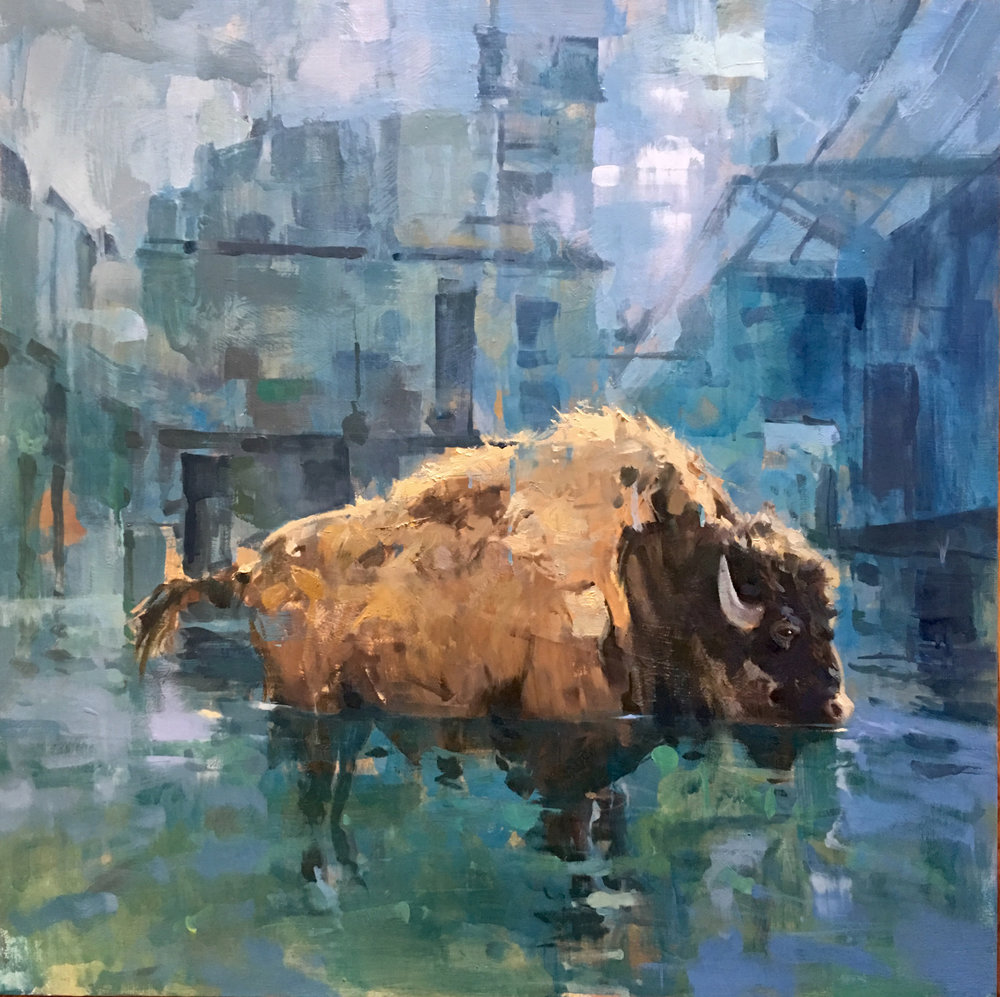
Larry Moore returns as an exhibitor with his new series, “Intrusion,” including “The Rising” (oil on wood, 30 x 30 in.).
With a continuing focus on bringing renowned wildlife and sporting art to Charleston, SEWE also welcomes Guest Artists Walter Matia and Sandy Scott.
Walter Matia began casting bronze sculptures in 1980. He is as accomplished as he is talented. Initially concentrating on bird life, over the years he has worked on sporting dogs, other mammals, and large fountain and garden pieces, which include a fountain and bronze wall frieze for the United States President’s guest house. Matia resides in Dickerson, Maryland.
Sandy Scott believes wildlife artists should be in the field to accurately present their subject to the viewer. A lifelong interest in aviation has been invaluable to her work. “I believe my knowledge of aerodynamics has been helpful in achieving the illusion of movement in my bird sculptures,” says Scott. Headquartered in Lander, Wyoming, Scott has experienced and lived what she depicts in her sculptures, winning her many accolades throughout the years.
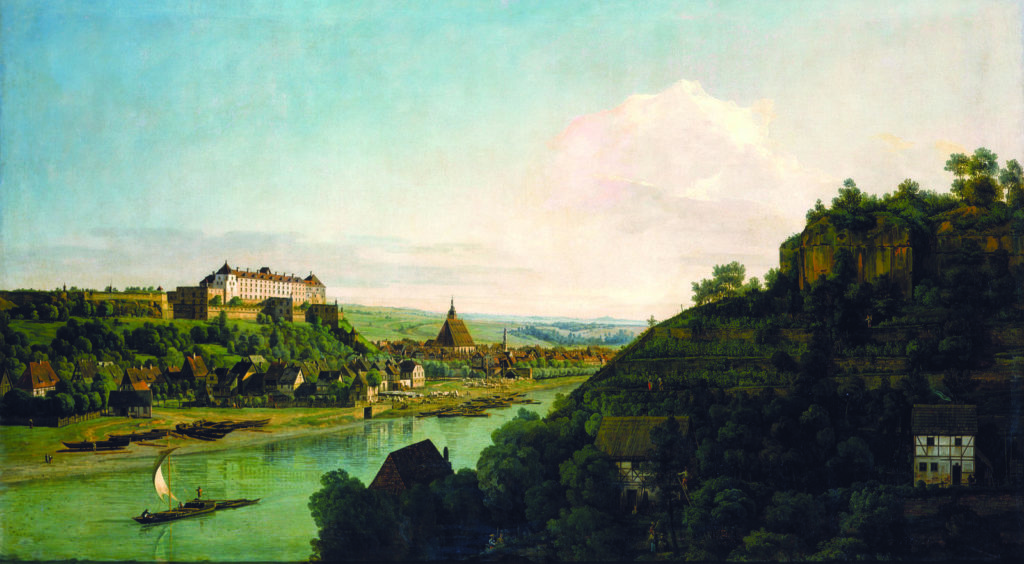
Bellotto Exhibition at the Kimbell Art Museum Transports Viewers to the Splendor of 18th-Century Dresden
From the Kimbell:
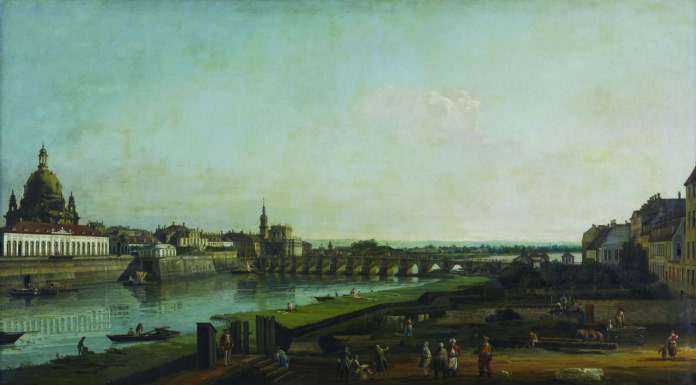
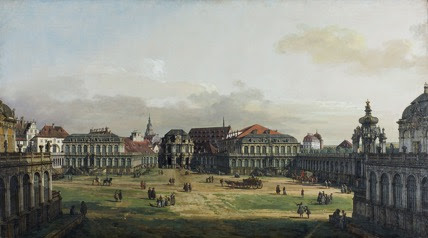
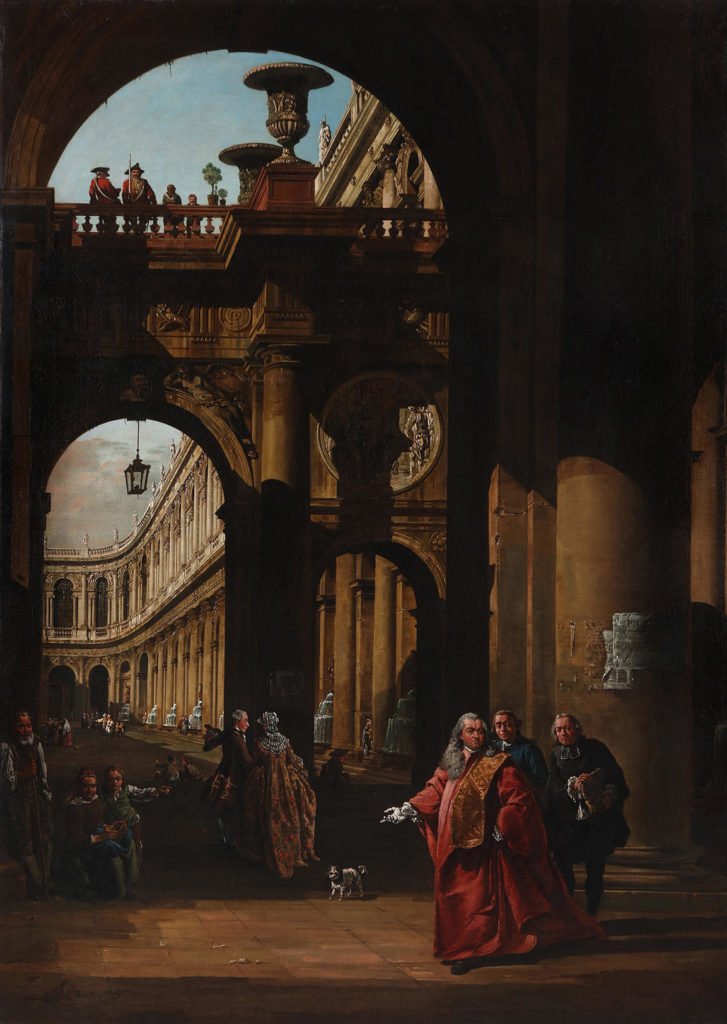
Bernardo Bellotto is recognized as one of the greatest view painters in history, acquiring his fame in mid-18th-century Dresden as the court painter for the elector of Saxony, Frederick Augustus II, who was also King Augustus III of Poland. Over the course of a decade, Bellotto produced dozens of breathtaking depictions of the city and its environs, most measuring over eight feet in width. The success and renown of these grand, comprehensive works would earn Bellotto prestigious commissions at prominent courts throughout Europe.
Bellotto’s magnificent paintings of Dresden are now in the collection of the Gemäldegalerie (Picture Gallery) of the Dresden State Art Collections and will be on loan to the Kimbell Art Museum for the special exhibition “The Lure of Dresden: Bellotto at the Court of Saxony,” on view February 10 through April 28, 2019. They will be accompanied by portraits and allegories of the elector and his queen, as well as view paintings of Venice and Saxony by Bellotto’s uncle and teacher Antonio Canaletto and Dresden court painter Alexander Thiele.
Bernardo Bellotto, “The Zwinger Complex in Dresden,” 1751/52, oil on canvas. Gemäldegalerie Alte Meister, Staatliche Kunstsammlungen Dresden, photo: Elke Estel/Hans-Peter Klut
“These enormous and expansive paintings cannot be fully appreciated unless you are among them,” commented Eric M. Lee, director of the Kimbell. “The magnitude of their depth and scale, along with their extraordinary detail, draw the viewer into the scene. We’re grateful to the Gemäldegalerie for the loan of these important masterworks.”
Visitors to the exhibition will have the unique opportunity to view the majesty that was Dresden in the 1700s. One of the greatest cities of 18th-century Europe, it is only now, following its near-total destruction in the Second World War, being rebuilt to its former glory — with the aid of Bellotto’s pictorial legacy.
“The Lure of Dresden: Bellotto at the Court of Saxony” is on view at the Kimbell (Fort Worth, Texas) February 10 through April 28, 2019.
Fill your mind with useful art stories, the latest trends, upcoming art shows, top artists, and more. Subscribe to Fine Art Today, from the publishers of Fine Art Connoisseur magazine.