
Home Blog Page 260

Actor, Model, Artist

0
Fine art oil portraits
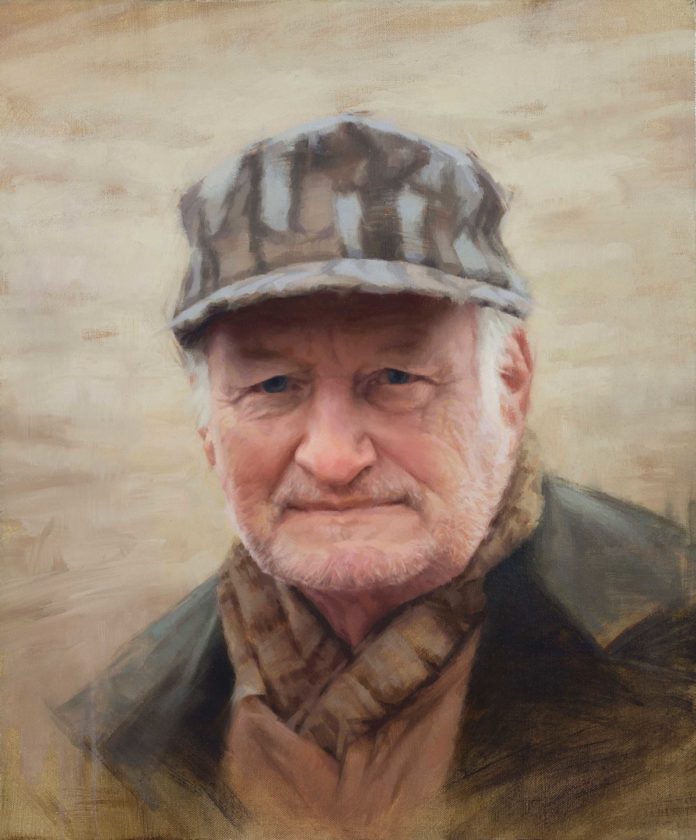
Brent Witt, “Grandpa,” 2017, oil on linen, 16 x 20 in., Private collection

Brent Witt (b. 1985) lives in Los Angeles but was born in Wisconsin and began training at 18 at Sarasota’s Ringling College of Art + Design with a focus on illustration. After his own research and discoveries in art history, he turned his attention to the Old Masters, and eventually made his way to the Florence Academy of Art to pursue a traditional approach to drawing and painting.
Fine art oil portraits
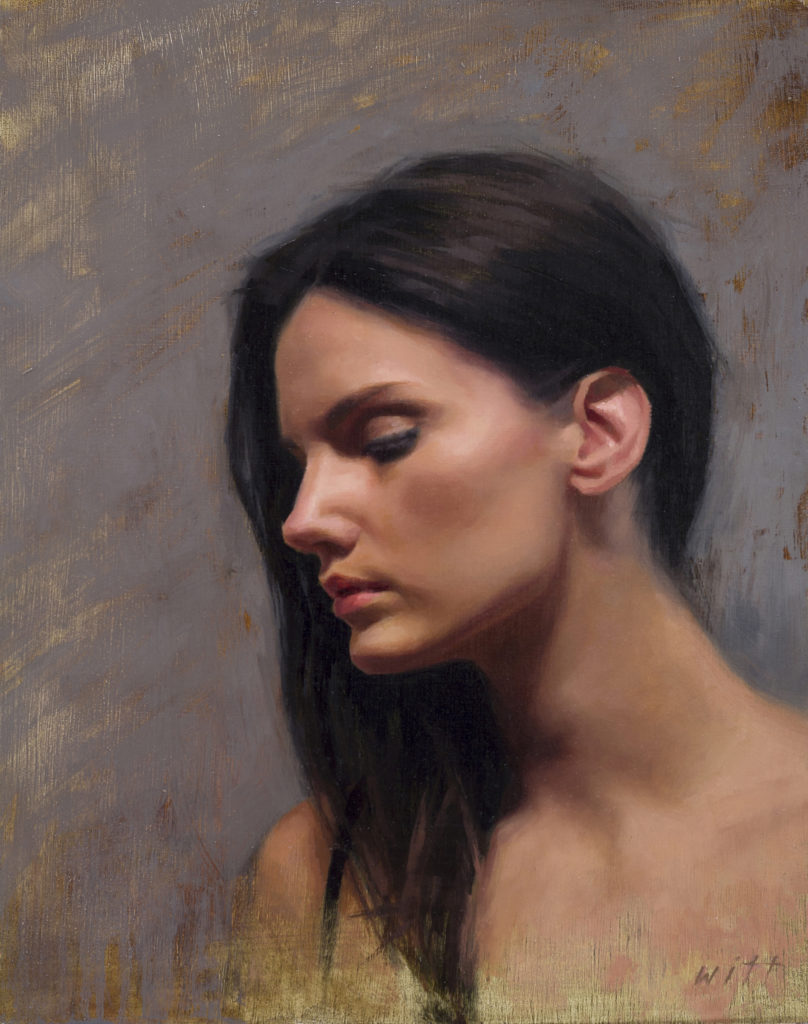
Brent Witt, “Kinga,” oil on wood, 11 x 14 in.

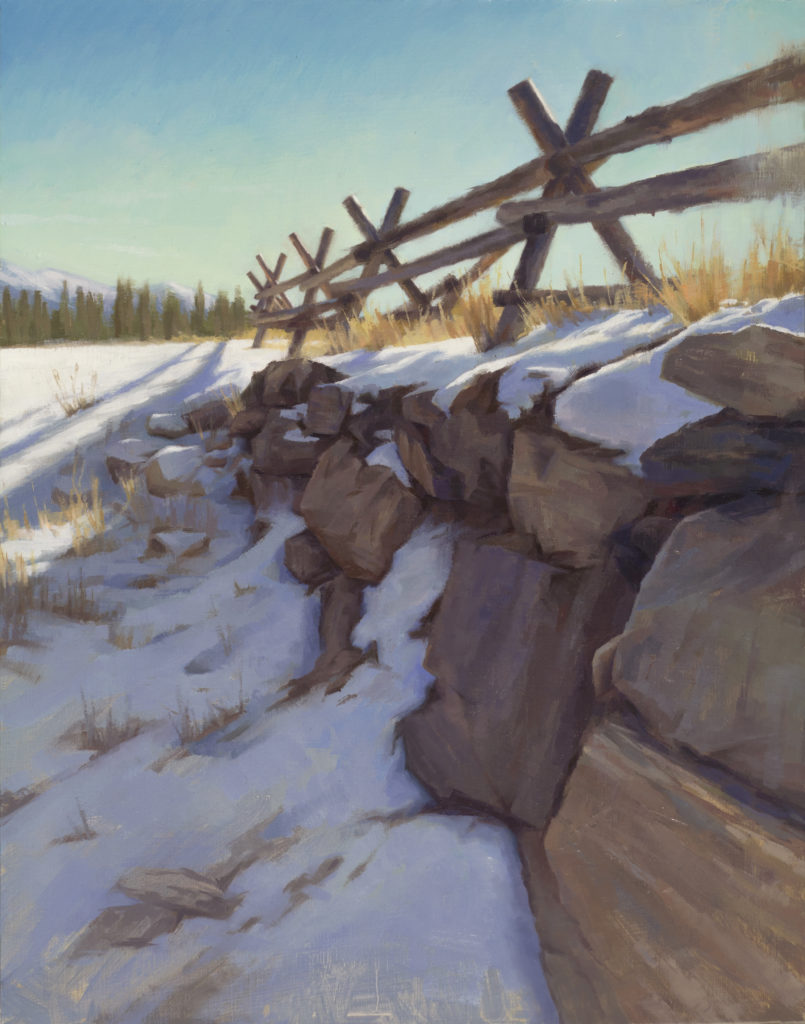
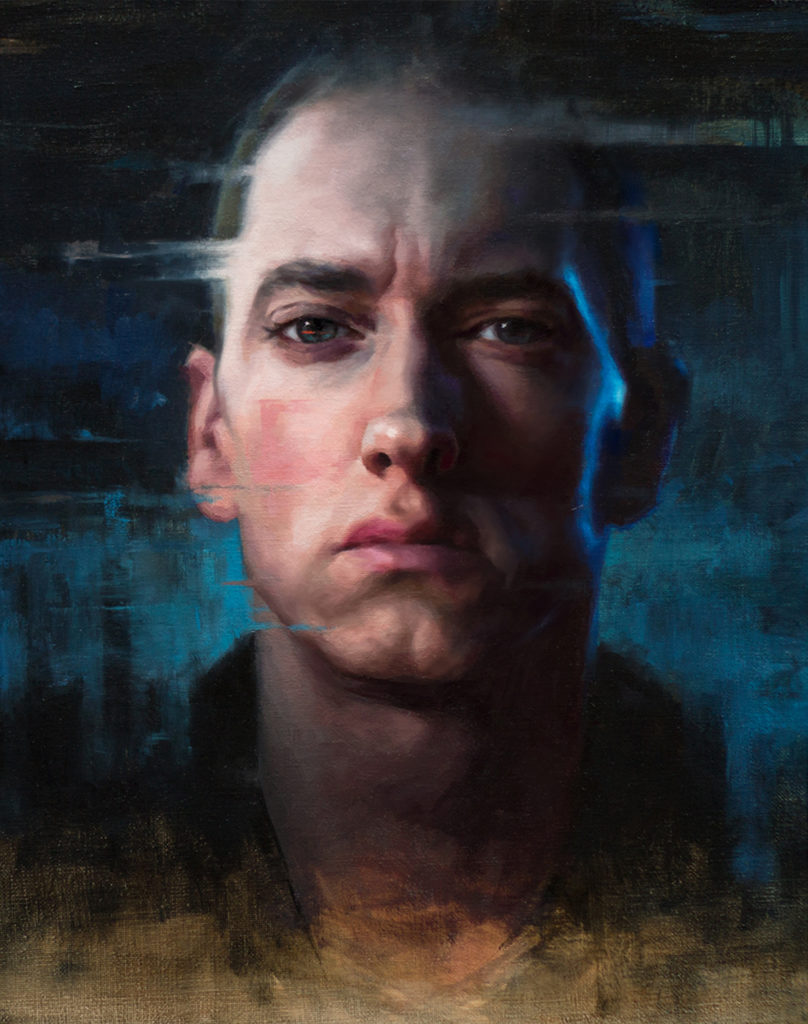
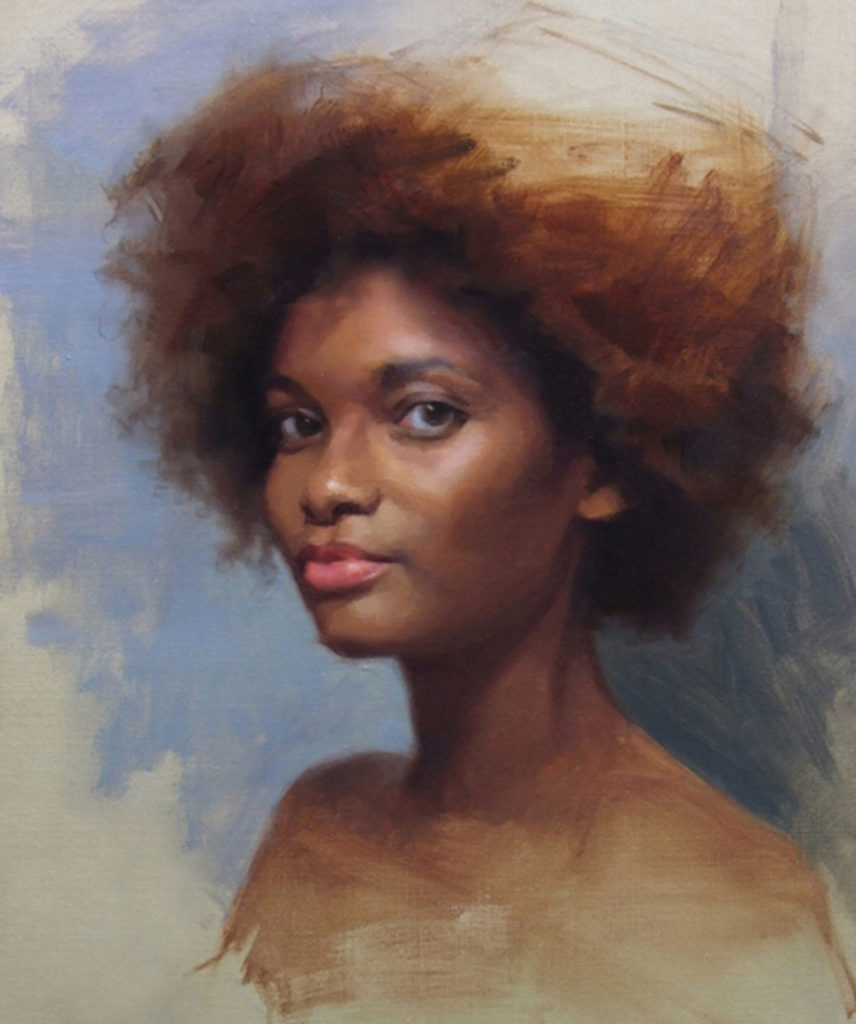
Witt — who is also an actor and model — now predominantly paints figures and portraits (as well as some notable landscapes) in oil: some in a tight, realistic style inspired by an academic approach and others incorporating more graphic geometric elements, likely inspired from his illustration days, using a looser hand. When looking through his portfolio, one can also detect a sense of directness and daring in the works: Witt is using his ability to paint realistically to send both straightforward and subtle messages — some tongue-in-cheek, others with a mild dose of facetiousness, others with deadpan truthfulness. Either way, we experience a sense of curiosity and mystery about what the artist was thinking and about the subject pictured, a trait sometimes lacking in others’ work with a strong focus on technique or verisimilitude.
Fine art oil paintings
Brent Witt, “Devil Ranch,” oil on wood, 11 x 14 in.

There is another section of Witt’s work wherein he becomes a biographer and paints not only his sitter’s appearance but also his or her life story. One example is a posthumous portrait of his grandfather, done with careful observation and attention to detail. “Painting my grandpa was a very satisfying and unique experience,” the artist remembers. “I spent countless hours observing him in ways I never had before. We all have an idea of what family and friends look like from the time we spend together, but rarely do we have the chance to really study one’s features and nuances to tell a story. This painting was done for a family member, so it was not only an honor but also a challenge to capture his likeness and essence as we all remembered him.”
Fine art oil portraits
Brent Witt, “EM,” oil on linen, 14 x 16 in.
Fine art oil portraits
Brent Witt, “Candice,” oil on linen, 16 x 20 in.

Visit Brent Witt’s website at www.brentwitt.com.


Sign up to receive Fine Art Today, the free weekly e-newsletter from
Fine Art Connoisseur magazine.
10 Spontaneous Landscape Paintings

0
Fine art landscape paintings
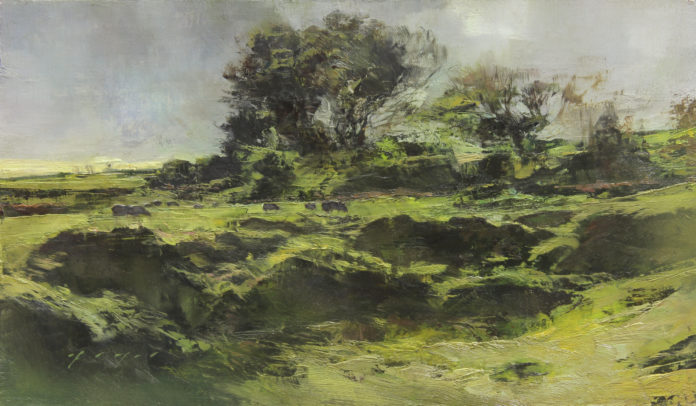
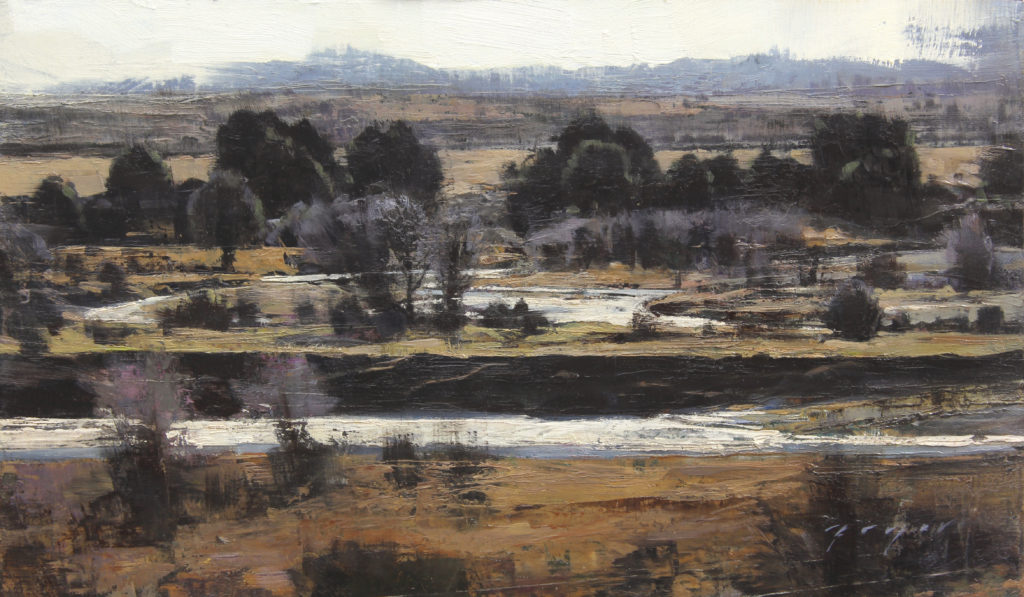
Douglas Fryer, “Irish Farmland, North Coast,” oil, 7 x 12 in.

Meyer Gallery Announces One Man Show for Contemporary Landscape Painter Douglas Fryer

From Kelly Skeen / Meyer Gallery:

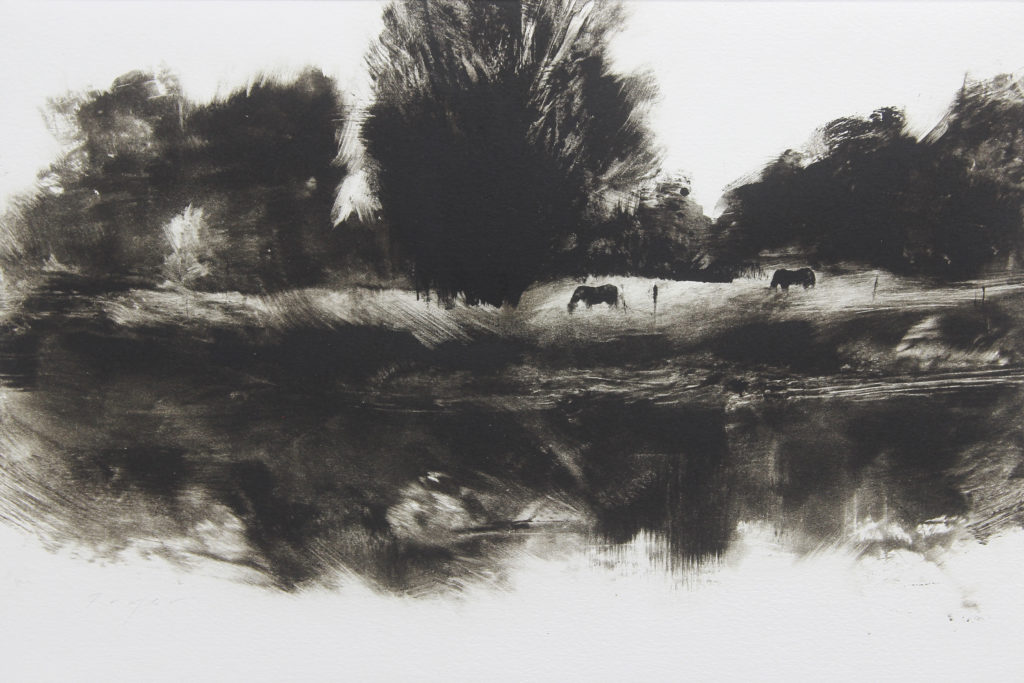
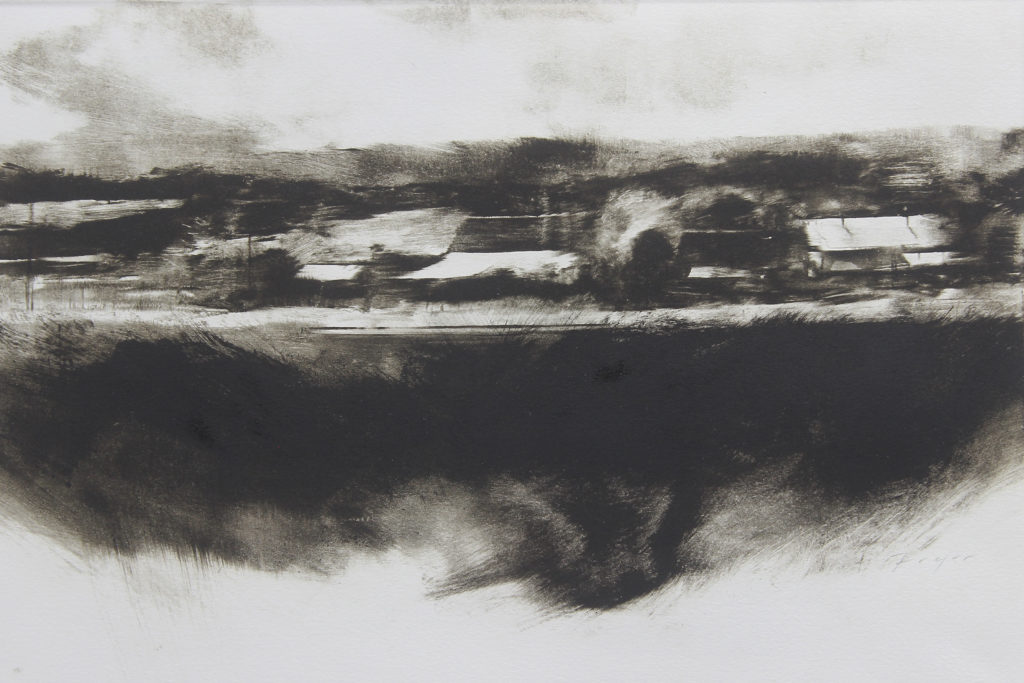
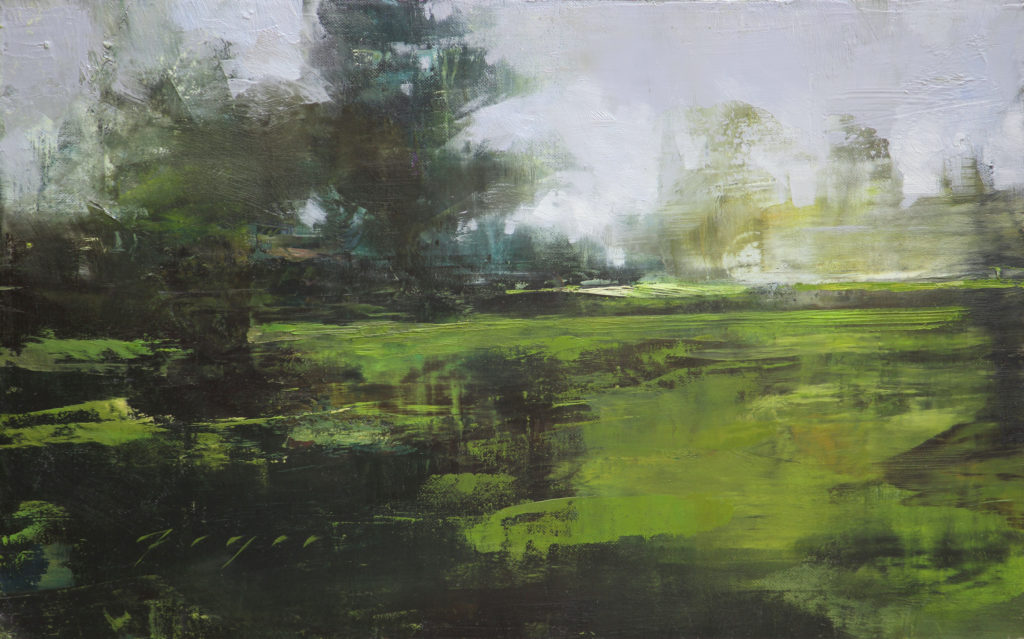
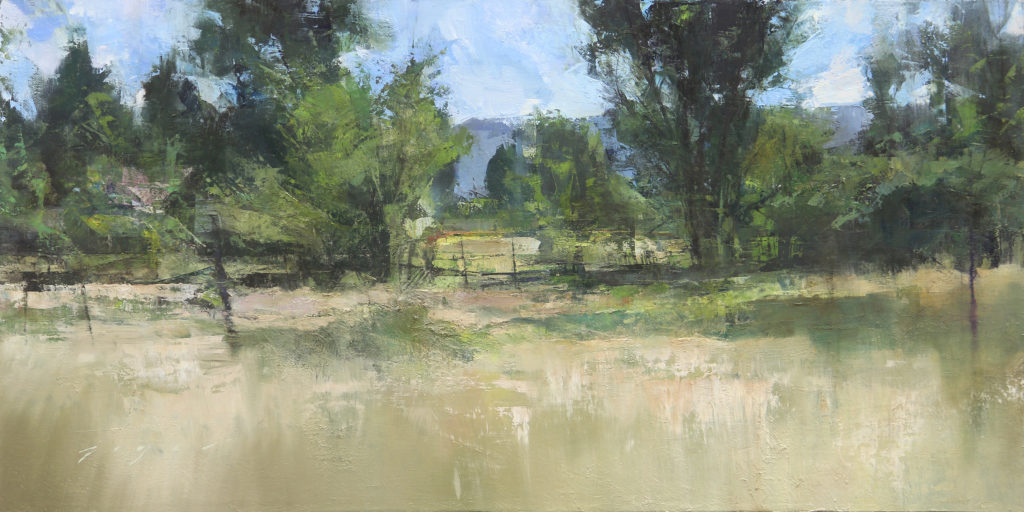
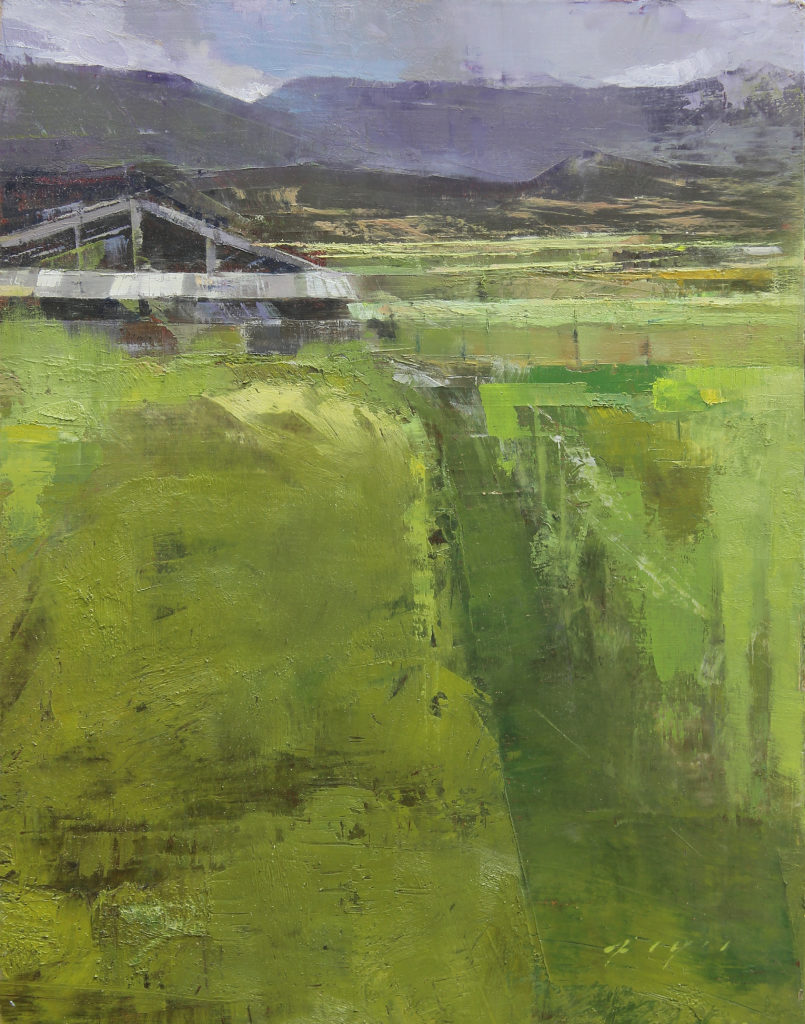
Douglas Fryer’s loosely discernable landscapes are formed from abstract marks, soft edges, and washed layers that reveal nature’s complex beauty. Through this spontaneous painting process Fryer suggests rather than explains the landscapes that inspire him, which are typically less than picturesque. “A scene that is a little less stereotypically lovely often becomes fascinating in a different way,” says the artist. Fryer’s paintings in his upcoming solo show are a continuation of this unique approach to landscape painting, but with added insight and refined methods.

Fine art landscape paintings
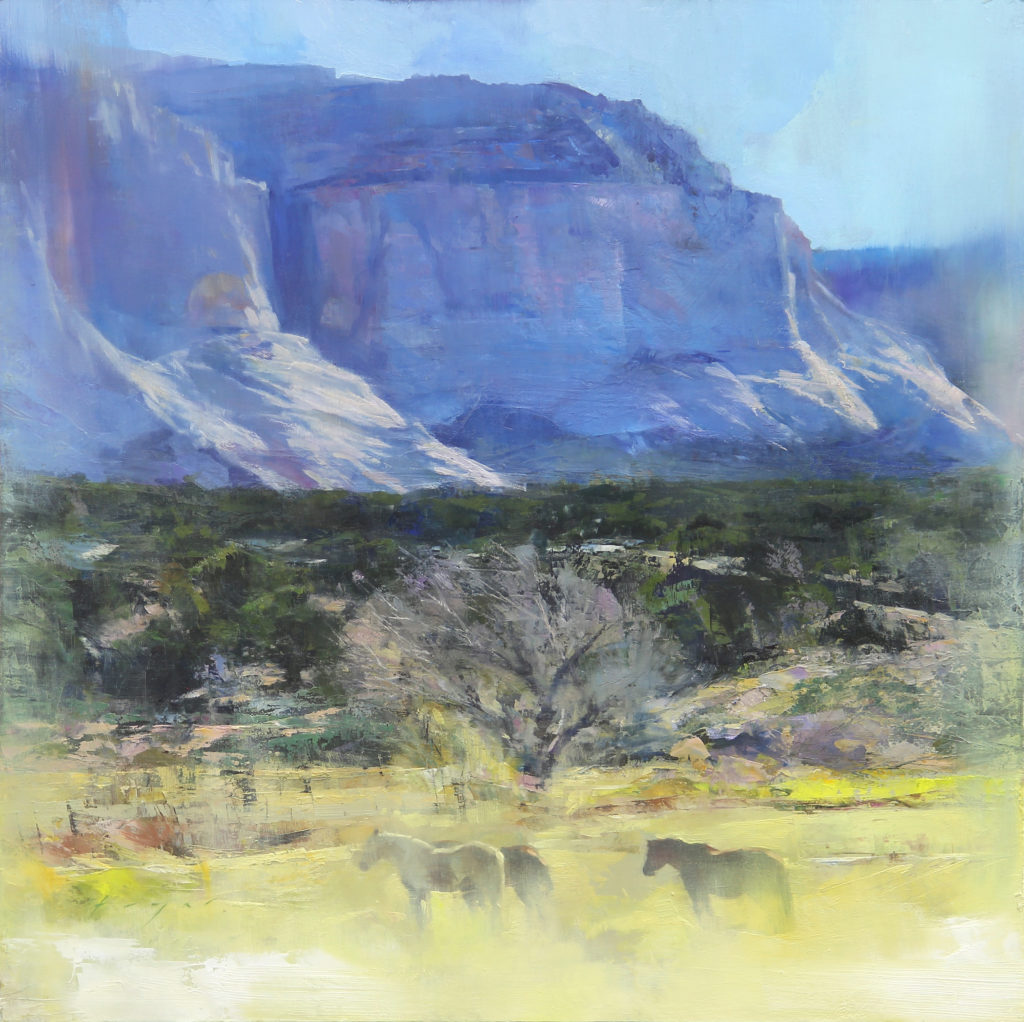
Douglas Fryer, “Spring Sunlight, Kanab,” oil, 16 x 16 in.

“I want to get closer each time to revealing and giving significant form to that elusive image that resides in the back of my head,” says Fryer of his evolving artistic endeavors. “The point of departure for the process is an emotional response to my environment — the subtleties of nature, the divisions of space, the notes of color and value that enliven my senses and arouse the interest in making a sort of parallel statement in paint.” Fryer’s new work is a response to his natural environment in central Utah, where he closely observes and interprets craggy mountain silhouettes, broad green valleys, and foggy winter skies. In this exhibition in this exhibition Fryer also plans to feature still life and floral works that focus on the abstract elements of the subjects themselves. “It doesn’t mean that the subject is unrecognizable,” says Fryer of this approach. “It’s just subordinate to the process and materials, playing a supporting role to the content rather than being the content itself.”

Fine art landscape paintings
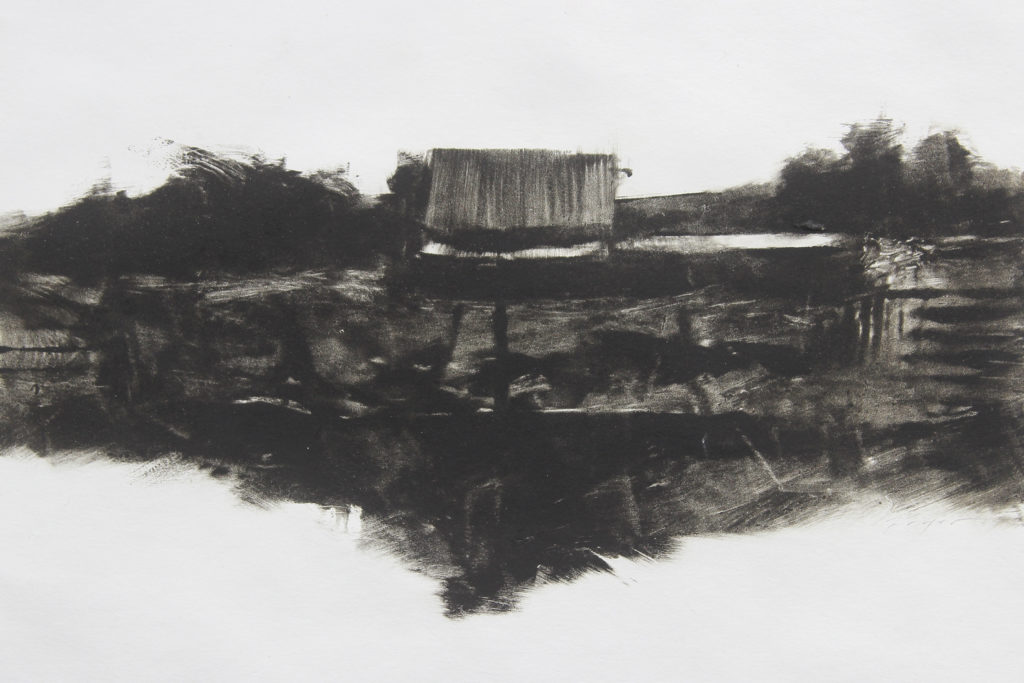
Douglas Fryer, “Spring City Barnyard in Twilight,” oil, 8 x 12 in.

Douglas Fryer was born in Salt Lake City, Utah, and raised in Illinois and California. He received his BFA from Brigham Young University, where he also completed an MFA in painting and drawing. Fryer has taught fine art and illustration at BYU, the University of Hartford in Hartford, Connecticut, and the Fashion Institute of Technology in New York City. He currently lives and works in Spring City, Utah.

Fine art landscape paintings
Douglas Fryer, “Meadow,” oil, 8 x 12 in.
Fine art landscape paintings
Douglas Fryer, “Grazing in Tall Summer Grasses,” oil, 8 x 12 in.
Fine art landscape paintings
Douglas Fryer, “Farmland, Northern New Mexico,” oil, 8 x 12 in.
Fine art landscape paintings
Douglas Fryer, “Edge of an English Village,” oil, 6 x 9.5 in.
Fine art landscape paintings
Douglas Fryer, “Brough Land,” oil, 12 x 24 in.
Fine art landscape paintings
Douglas Fryer, “Dyches Farm,” oil, 14 x 11 in.
Fine art landscape paintings
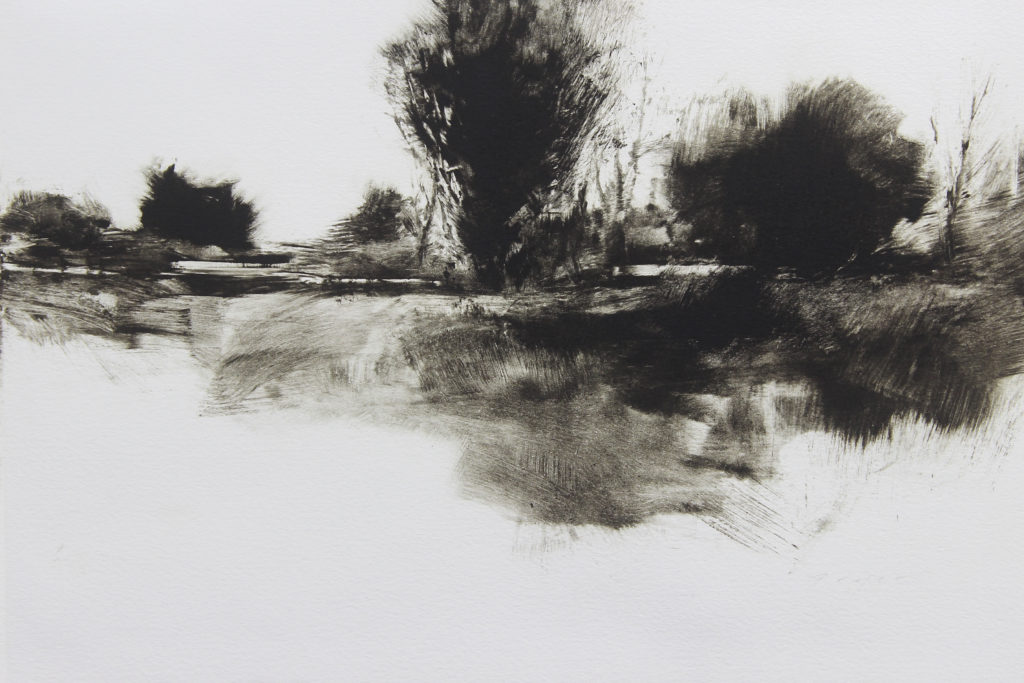
Douglas Fryer, “Turns on the Sevier River, Winter,” oil, 7 x 12 in.

“Douglas Fryer: One Man Show” runs November 16–23, 2018, at Meyer Gallery (Santa Fe, New Mexico). For more information, please visit www.meyergalleries.com.


Sign up to receive Fine Art Today, the free weekly e-newsletter from
Fine Art Connoisseur magazine.
From the Artist’s Perspective — November/December Edition

0
Artists on Art magazine
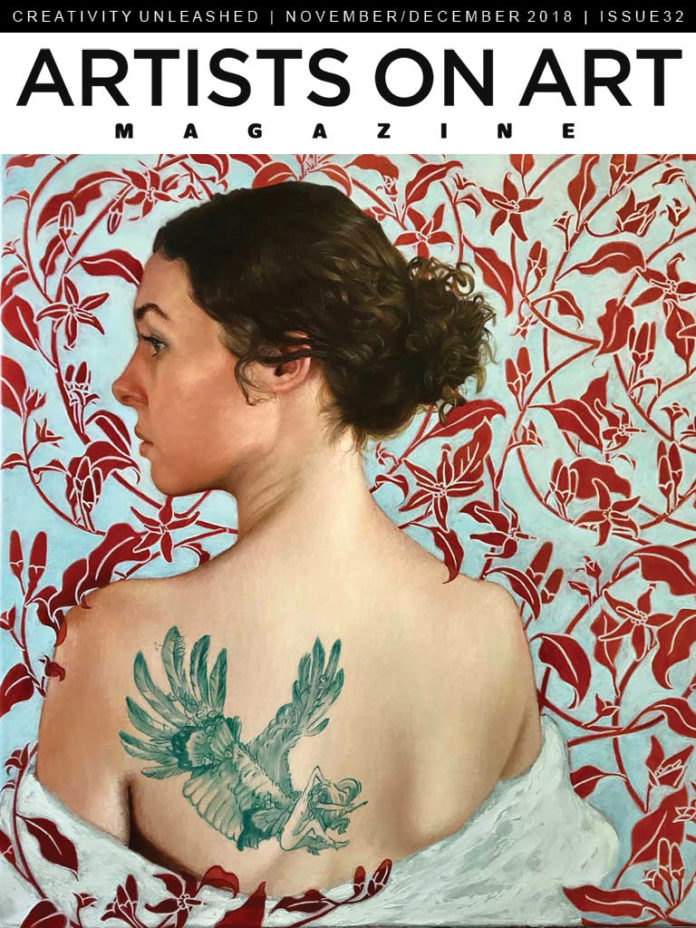
Cover art by Aixa Oliveras

The November/December 2018 issue of Artists on Art magazine features Gaining Strength Through Art; Beyond the Studio Walls; Toxic Art; Developing a Narrative in Your Figure Paintings; The Secret Energy of Successful Artists; Drawing with Expression, Not Expectation; and more.

Here’s a sneak preview of the new Artists on Art magazine:

From Gaining Strength Through Art
(includes step-by-step oil painting demonstration)

“The painting ‘Resilience’ (featured on cover) is a piece that reflects all of that life experience, and it speaks to the broader theme that my thesis work will be about — death and rebirth,” says Aixa Oliveras. “This painting in particular symbolizes the inner strength that I needed to draw from in order to manage all the hardships and sense of loss I was feeling. In a sense, my old identity was dying.

“Who I am now is not the same as who I was merely a year before. The process of growth — growing into yourself, into a new identity — can be a process full of chaos. Chaos in the sense of opposing forces battling within you: your old thought patterns and defense mechanisms battling against the new knowledge about yourself that you’ve acquired. It is both of these inner and outer forces of chaos that I am depicting through the botanical pattern of the piece.”

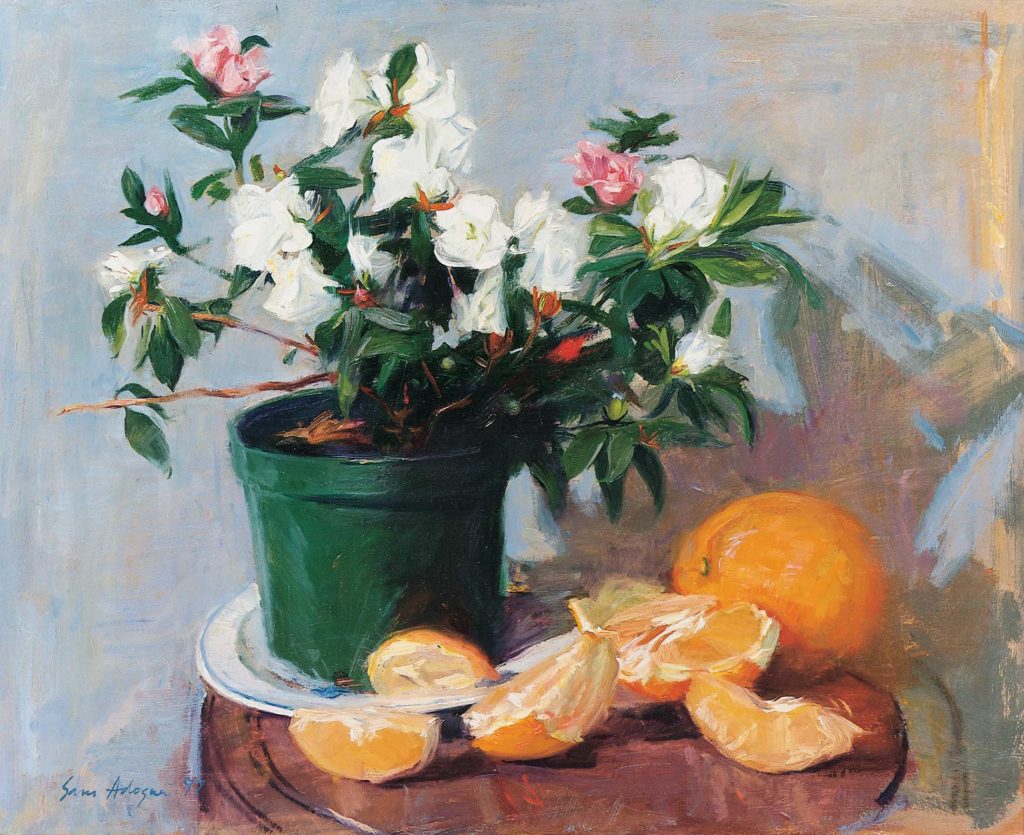
Samuel Adoquei, “Arrangement in Greens, Blues, and Oranges,” 2004, oil, 16 x 20 in., Private collection

From The Secret Energy of Successful Artists

“Like all great achievements, until misfortunes determine otherwise, the dreamer must have one goal and only one goal in mind, and all efforts will be channeled toward attaining that dream,” says Samuel Adoquei. “Through different paths, different applications and different tactics, all energy is directed and aimed at achieving the goal.

“Humans face the same fate, but sometimes by forgetting what is important in their pursuit, they choose an inharmonious direction; they avoid responsibilities toward life and nature. In return, the societies and groups we invent suffer the fate and consequences of going against the natural laws of our advancing world: the practical and logical world where inspiration attracts the brave and the prepared.”

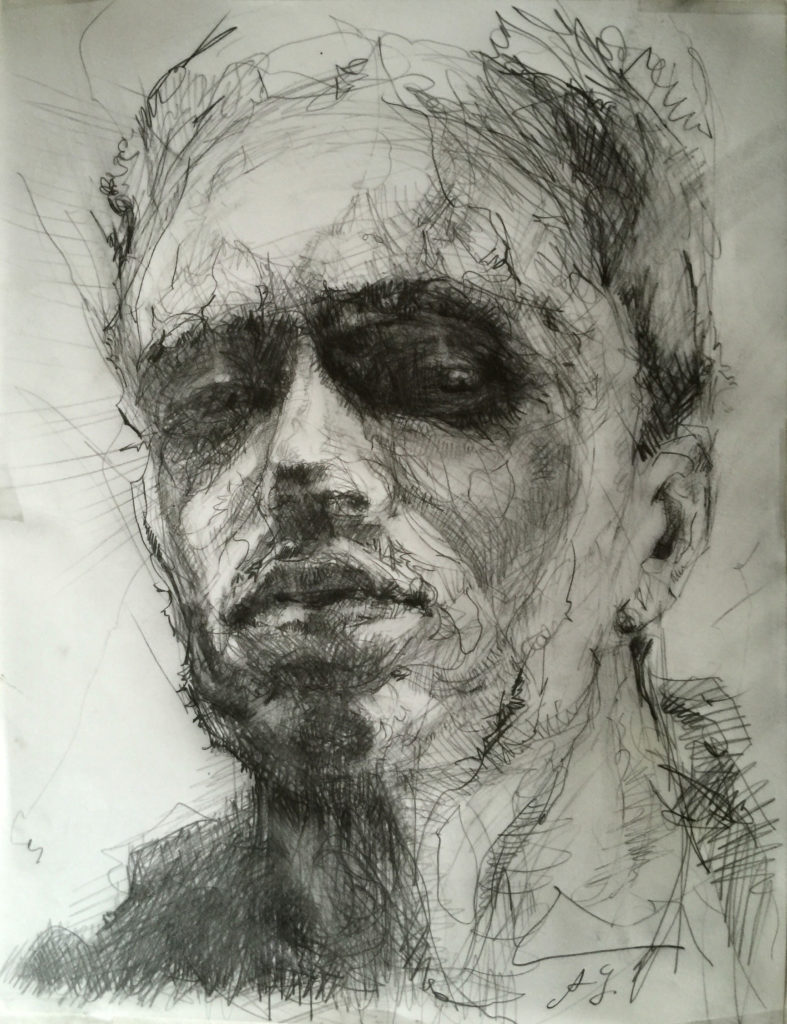
Agnes Grochulska, “Portrait #17,” graphite, 9 x 11 in.

From Drawing with Expression, Not Expectation”

“Of all the parts of the body, hands are often considered to be the hardest to draw,” says Agnes Grochulska. “It is true that their intricate construction and seemingly infinite number of possible positions and gestures might feel overwhelming at times. The only way to be able to draw the hand is to understand it, and the way to understand it is by both studying the anatomy and mechanics of the hand, and practicing drawing and painting it . . .

“Recognizing and learning from our ‘bad drawings’ might be the most valuable part of the whole practice! Being comfortable exploring different options and not focusing on being ‘right’ allows our own sensitivity to explore different ideas and ways of representing what’s in front of us and eventually finding our own artistic voice.”

• Download this issue or subscribe to Artists on Art magazine
• Read the Editor’s Note from the November/December issue.
• See a gallery highlighting the featured artists from this issue.


Sign up to receive Fine Art Today, the free weekly e-newsletter from
Fine Art Connoisseur magazine.
TBT Painting of the Week: Venetian Canal, c. 1925

1
Art history - FineArtConnoisseur.com
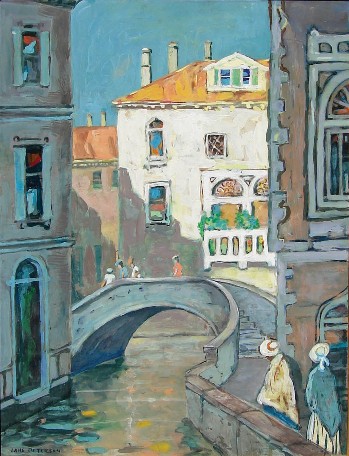
Jane Peterson, "Venetian Canal," c. 1925, Oil on canvas, 24 x 18 inches, Private collection, Miami

In this new weekly “throwback Thursday” series from Fine Art Connoisseur, take a look at an important artist or historic artwork.

This week’s feature: The talented painter Jane Peterson (1876-1965) lived on her own remarkable terms, demanding a top-tier education and exploring the world, often on her own.

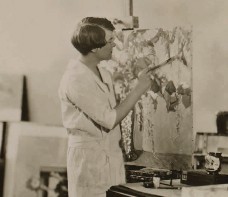
Jane Peterson painting c. 1928; photo: Underwood & Underwood Studios; courtesy Archives of American Art, Smithsonian Institution

by Patricia Jobe Pierce

Until modern times, inbred prejudice, ignorance, and complacency obscured the talents of women in almost every field of activity. The Italian painter Artemisia Gentileschi (1593-1651/53) became the first female recognized for contributing profoundly to the art of her time. However, more than 200 years would pass before American women were acknowledged as being able to compete with or outperform their male peers.

The wealthy expatriate Mary Cassatt (1844-1926) was the first American woman widely accepted as an equal. In 1866, she left the Pennsylvania Academy of the Fine Arts and sailed for Paris to study. At the Salon of 1872, her canvas On the Balcony (now in the Philadelphia Museum of Art) caught the eye of Edgar Degas. Although it was considered improper for women to fraternize publicly with men in Paris, Cassatt exhibited with the Impressionists from 1879 to 1886. Through those years and beyond, she experimented with her art and helped pave the way for women artists to attain respect on both sides of the Atlantic. One of those beneficiaries was Jane Peterson (1876-1965) of Elgin, Illinois.

Art history - FineArtConnoisseur.com
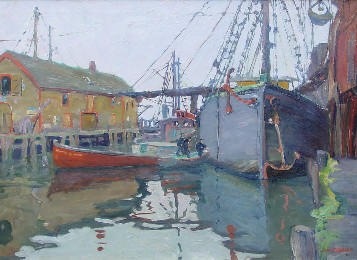
Jane Peterson, “Gloucester Harbor,”
1917, Oil on canvas, 30 x 40 in. Private collection, New York
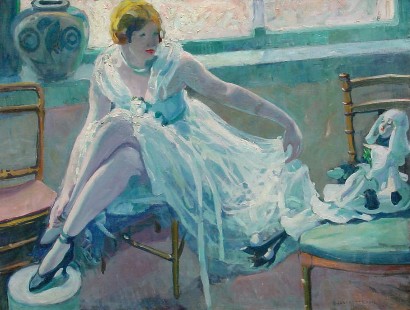
Jane Peterson, “Girl with Doll,”
c. 1920, Oil on canvas, 30 x 40 in. Private collection

Ignoring bigotry and discrimination, Peterson demonstrated a talent and drive that won admiration from her most gifted male colleagues. (Interestingly, she claimed there was no double standard in art and that gender had nothing to do with whether an artist was competent.) She went on to develop a highly individual style that eventually brought her awards and fame, yet it must be remembered that her self-confidence and independent lifestyle were unusual at the time. In general, Americans believed women should become obedient wives and mothers, so those who were noticeably talented, gregarious, aggressive, or otherwise unconventional were considered odd.

Art history - FineArtConnoisseur.com
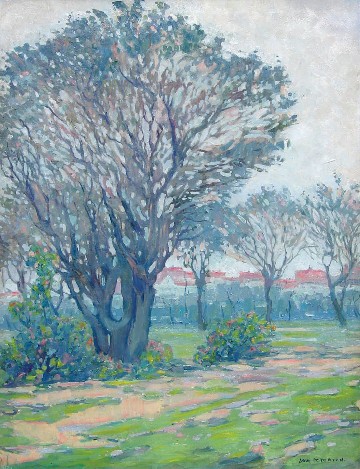
Jane Peterson, “Giverny,”
c. 1920, Oil on canvas, 40 x 30 in., Private collection
Art history - FineArtConnoisseur.com
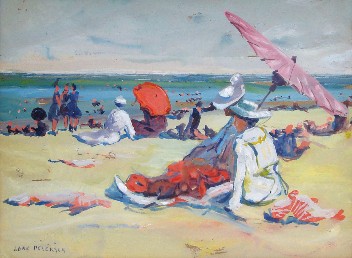
Jane Peterson, “Ladies at the Beach,”
c. 1918-25, Gouache on paper, 9 x 12 1/2 inches, Private collection, Florida

Today, female artists are judged primarily on their ability, not their gender. That would have pleased Peterson, who in 1940 observed, “Art tells the story. Art uncovers the very soul of man.” It goes without saying that her definition of “man” included women. Because Peterson handled paint so deftly, her death in 1965 did not diminish her fame, and her future looks as bright as her canvases.


Sign up to receive Fine Art Today, the free weekly e-newsletter from
Fine Art Connoisseur magazine.
Featured Artwork: Eileen Eder

0

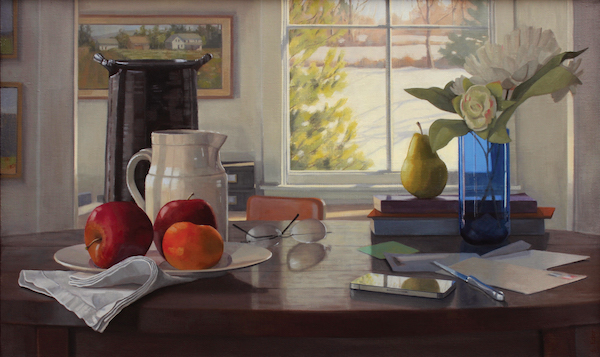
Winter’s Day
24 x 40 in.
Oil
$8,000
Available through the artist

How does a New England painter who loves working outside deal with constantly changing and unpredictable weather, not to mention the temperatures in winter? Fortunately for Eileen Eder, she loves both plein air and still life painting. Living in Connecticut requires the flexibility of working indoors or out depending on the forecast. In the studio painting Winter’s Day, Eileen has combined her two favorite genres with an interior still life and a view onto a winter landscape.

Eileen chooses to use simple, common still life objects that are chosen for their design elements to construct a still life that holds interest on many levels. While her classical painting style is traditional the contents have a contemporary look so they work in any setting and appeal to a wide variety of ages.

Eileen has an MFA from The New York Academy of Art. She is a popular instructor of still life painting, drawing, and plein air painting at the Lyme Art Association, Old Lyme, Connecticut. A painter for 20 years, she has won numerous national and regional awards for both her landscapes and still life. Eileen is a member of the Salmagundi Club, Oil Painters of America, Hudson Valley Art Association, American Impressionist Society, Laguna Plein Air Association, Connecticut Plein Air Painters, and a Lyme Art Association Elected Artist. She exhibits with Susan Powell Fine Art in Madison, Connecticut.

Eileen participated in both Wayne PA and Bucks County Plein Air events in 2018 and received awards at both venues.

A new series of indoor/outdoor paintings are on the agenda as cold weather approaches. Stay tuned for new work in 2020.

View more of Eileen’s work at www.eileeneder.com.

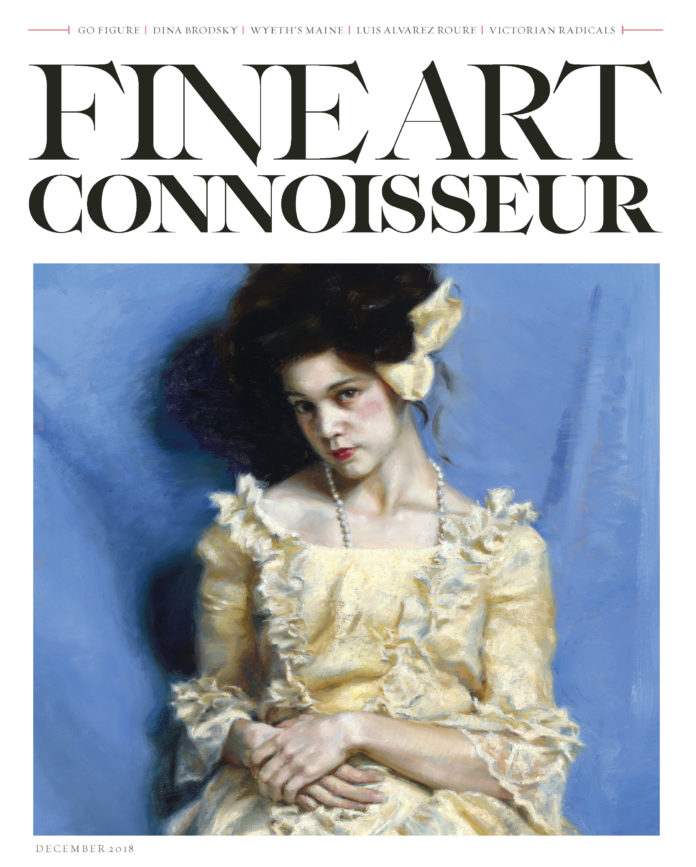
Thinking Long Term — Fine Art Connoisseur November/December 2018

Fine Art Connoisseur magazine
Cover art by Teresa Oaxaca

Fine Art Connoisseur November/December 2018, Editor’s Note:

By Peter Trippi

This summer I stumbled upon a book that got me thinking about why some younger folks I admire do not collect original art. Its title is No Thanks Mom: The Top Ten Objects Your Kids Do NOT Want (and What to Do with Them), and it was published last year by the certified appraiser Elizabeth Stewart, Ph.D. The premise, as you may have guessed, is that Stewart has learned the hard way that millennials (those born between 1981 and 1997) minimize their household decorations to an unprecedented degree. Oh, except that the next younger generation — whatever we call them now — wants even fewer household possessions!

With humor and citations, Stewart explores the complex reasons behind this situation and explains what older folks should consider as they start downsizing and dispersing their worldly goods. First, you should be relieved to know that fine art (such as paintings and sculptures) did not make it on to Stewart’s top ten list. It includes instead things like silver plates, porcelain figurines, linens, books, antique furniture, and Persian rugs. Anyone who has been to an antiques center recently can confirm that even top examples in these categories are virtually being given away, and that situation is unlikely to improve. Of course, much of this owes to fashion: In the 1980s everyone threw out their Mad Men furniture from the 1950s and ’60s, but now young people pay a fortune for knock-offs when they cannot obtain the real (restored) thing. The pendulum will always swing back, but how long must we await it?

Stewart’s book, then, does not address the status of fine artworks, and that’s all right. Yet she got me thinking about how vulnerable paintings, sculptures, drawings, and prints are generally, and particularly when an older person is downsizing or — heaven forbid — disappears all of a sudden. There is nothing more heartbreaking than seeing original artworks festering in a Goodwill shop or flea market, priced low and decidedly unwanted. Somehow I feel more deeply about a fine artwork than I do about furniture — the former was hand-made and signed by a unique individual, and even if it’s not the greatest example, it is worrisome to spot it floating around the world on its own. (Bargain hunters surely feel differently, but not every orphaned artwork is highly collectible — it just needs a home.)

Bottom line: now more than ever, it is crucial to inventory your fine artworks, not only for your insurer’s purposes, but also for your inheritors’. Please have frank and friendly conversations with your near and dear about who wants what. If it’s a valuable artwork and you’d rather see it sold to benefit your inheritors, create a selling plan. Do not assume that your beneficiaries know as much as you do about which auctioneer or dealer is best suited to handle that sale; write it down in the inventory so they don’t have to make things up as they go. And if you are considering donating to a museum or other charity, please approach them now to hear their thoughts; they may already have a finer example, and it’s better to know the sad truth now than to leave the problem to your inheritors.

I certainly do not mean to be morose, or to discourage you from collecting more art. In fact, once you establish a working plan for your artworks’ futures, you may actually feel more focused about what you want to buy more of — or perhaps less. Being a Fine Art Connoisseur is not just about the pleasures of art enjoyed today, but also about stewarding the artworks responsibly into posterity and giving pleasure, through them, to a future connoisseur whose name you may never know.Fine Art Connoisseur magazineDownload the November/December 2018 issue here, or subscribe to Fine Art Connoisseur today so you never miss an issue.


Sign up to receive Fine Art Today, the free weekly e-newsletter from
Fine Art Connoisseur magazine.
Great Art Nationwide

0
Fine Art oil paintings
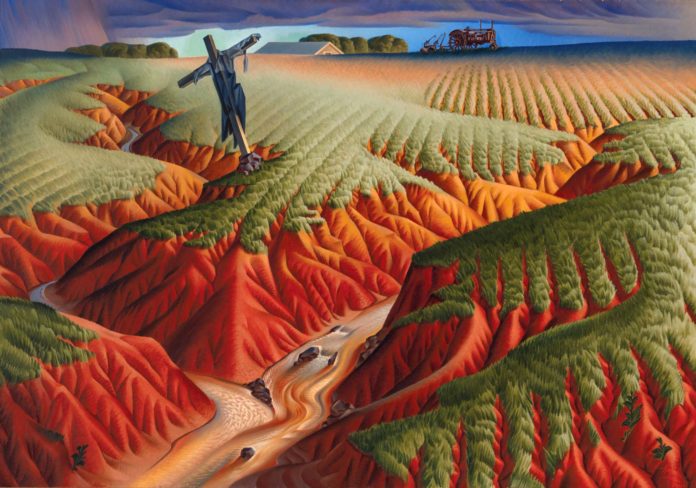
Alexandre Hogue (1898-1994), "Crucified Land," 1939, oil on canvas, 41 3/4 x 59 7/8 in., Gilcrease Museum, Tulsa, on view on the Princeton University Art Museum this season.

From the latest issue: Download the November/December 2018 issue of  Fine Art Connoisseur magazine to read the feature article “Great Art Nationwide,” in which we survey 10 top-notch projects this season.


Sign up to receive Fine Art Today, the free weekly e-newsletter from
Fine Art Connoisseur magazine.
Scholarships for Artists: Deadline Approaching

0
Art Scholarships
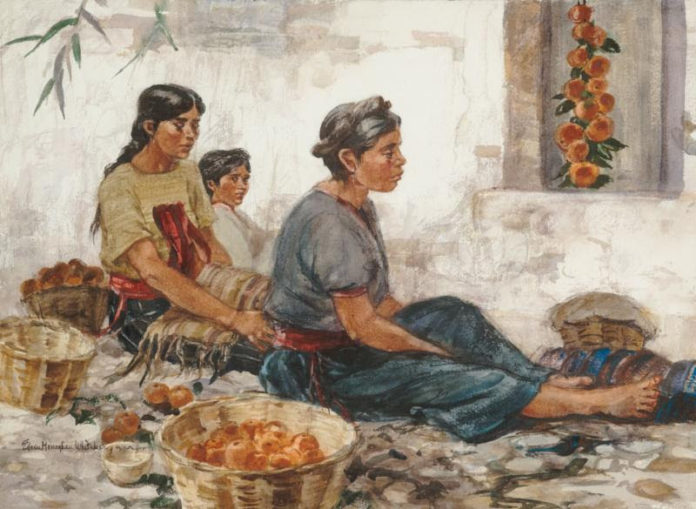
Eileen Monaghan Whitaker, “Se Vendan Naranjas,” 1975, 22 x 30 in.

Learn about these scholarships for artists, including who is eligible and how to apply.

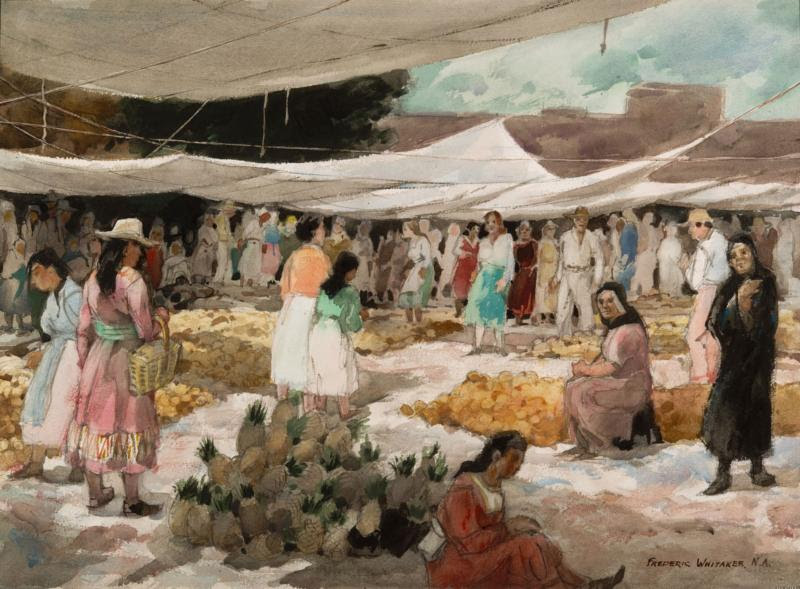
Art students entering today’s professional art and museum world are expected to have rigorous training and a diverse educational background. The Frederic Whitaker and Eileen Monaghan Whitaker Scholarship Program was established in 2014 to assist art students whose undergraduate degree includes an emphasis on watercolor or art history/museum studies, in meeting those demands.

Over the course of the application process, students will demonstrate their knowledge of Frederic Whitaker and Eileen Monaghan Whitaker’s paintings and history, by submitting a short essay or the applicant’s own watercolor paintings.

Scholarships for artists
Frederic Whitaker, “The Fruit Market,” 1969, 22 x 30 in.

Three art scholarships are being awarded:
Two (2) $2,000 Bachelor of Fine Art scholarships (watercolor emphasis)
One (1) $2,000 Bachelor of Art in Art History or Museum Studies

Upon evaluation, scholarships will be awarded for Spring 2019. Learn more at https://whitakerwatercolors.org and apply for these art scholarships HERE by November 15, 2018.


Sign up to receive Fine Art Today, the free weekly e-newsletter from
Fine Art Connoisseur magazine.
Perfectly Stopping Time: Brett Scheifflee

0
Landscape oil paintings
Brett Scheifflee, "Before the Breeze," oil on canvas, 36 x 36 in.

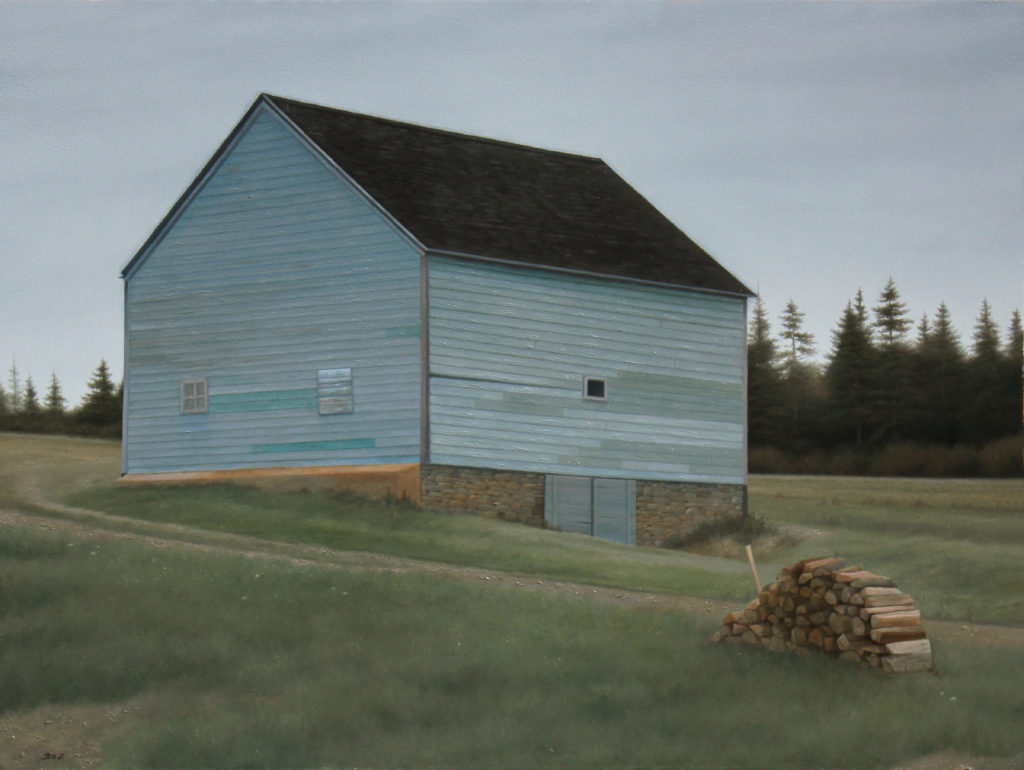
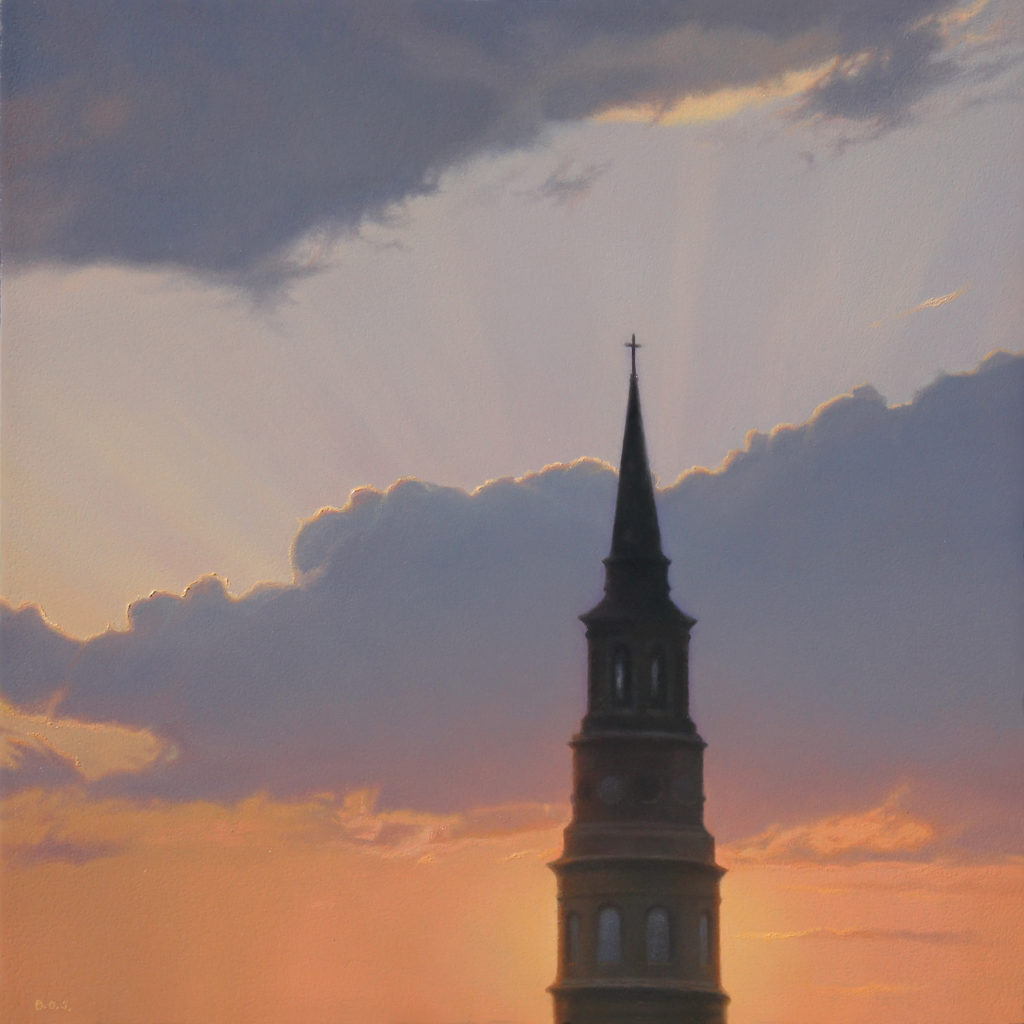
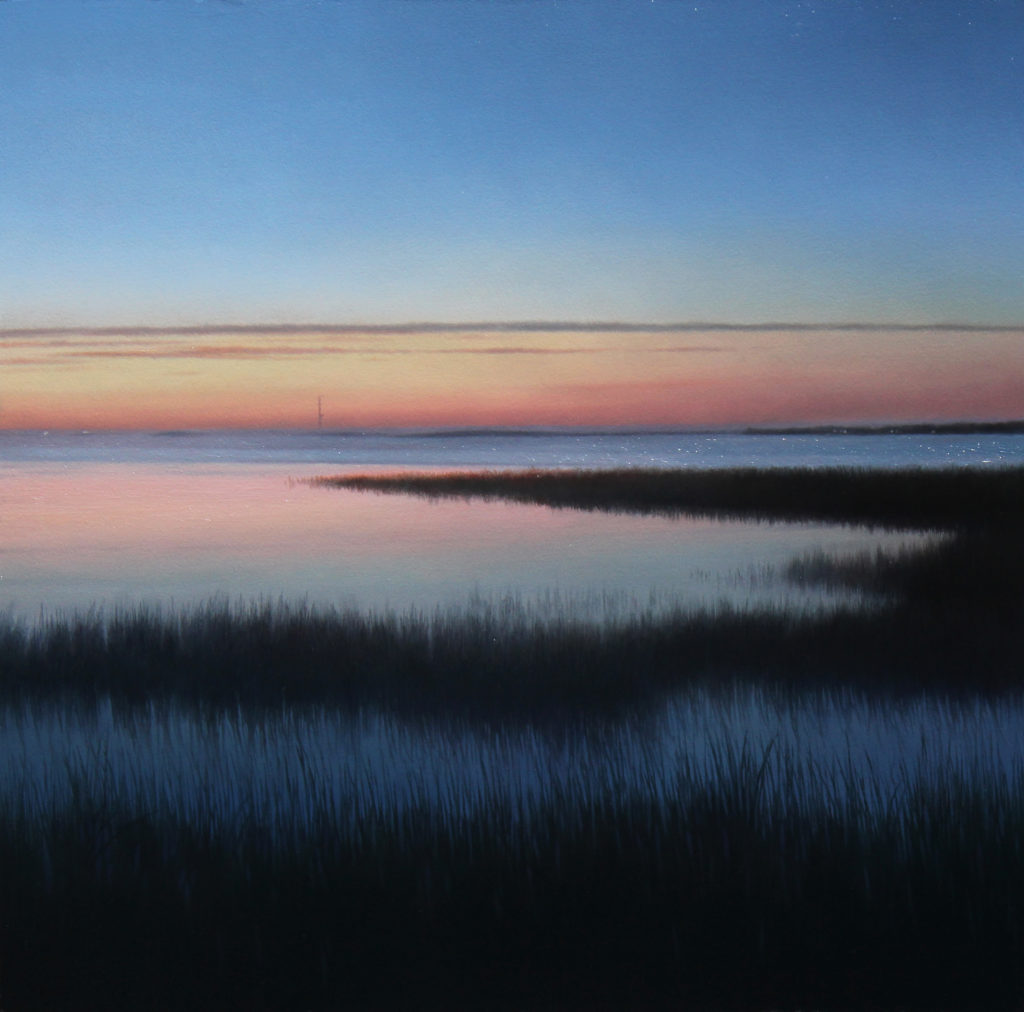
Robert Lange Studios’ upcoming fine art exhibit, “Ephemeral,” features the work of the contemporary realist landscape artist Brett Scheifflee. “Ephemeral” is a series of oil paintings that capture fleeting moments in time, specifically focusing on the natural world.

Landscape oil paintings
Brett Scheifflee, “Over Sullivans,” oil on panel, 5 x 5 in.

“The show title that I have been working with and I think suits the work is ‘Ephemeral,’ as the paintings are focused on moments in the outdoors that are short-lived,” says Scheifflee. “When thinking back to what initially inspired me to become a landscape painter, I would have to say it was these temporary, but astounding, moments that made me want to go to work in an attempt to preserve them. Ultimately, I can’t help but feel grateful to live on a planet with billowing clouds at dusk, fragile moments where it seems the season is about to change, the slow rise of the full moon, or the lovely colors that bring us in and out of every day.”

Landscape oil paintings
Brett Scheifflee, “Preparations,” oil on panel, 12 x 16 in.

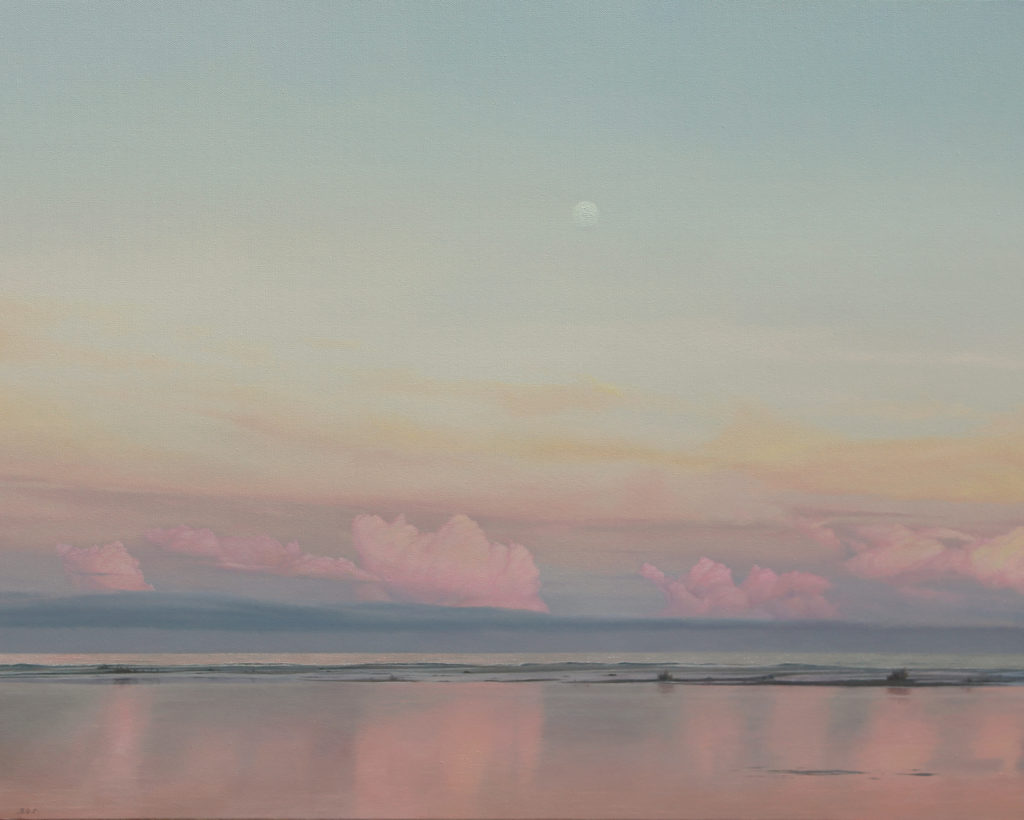
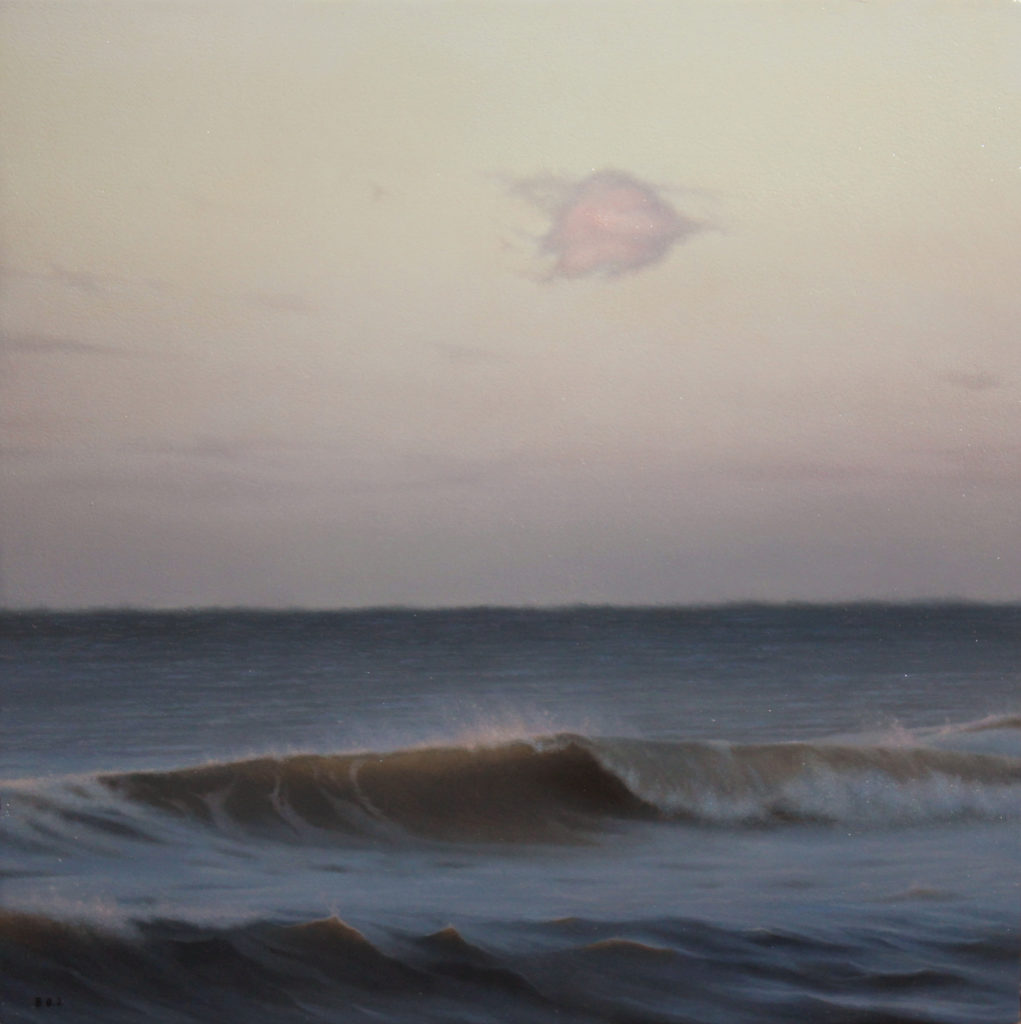
Sheifflee has perfectly stopped time in each painting and chosen just the right moment to share with the viewer. One of the pieces for the show, “Pink Giants,” is a painting of dreamy pink skies filled with clouds; the horizon line fades off into the distance as the moon sits above the waves. The 24-by-30-inch oil on panel piece creates a perfect escape for the viewer. Brett says of the piece, “The painting ‘Pink Giants’ is a depiction of one of those evenings along the southern coast where the storm clouds have broken and are departing, but the sun has shone through again to illuminate the beautifully chaotic break up which hangs suspended under a full moon. It’s in these magical instances where I think everyone lucky enough to witness them becomes reverent and the stress of daily life also floats out to sea and you too feel suspended in the moment.”

Landscape oil paintings
Brett Scheifflee, “Pink Giants,” oil on canvas, 24 x 30 in.

This exhibit is a celebration of the peace and mindfulness that exists in the natural world and the artist’s deep appreciation and understanding of nature. Scheifflee says, “Growing up in the rural countryside of western New York, I’ve always felt connected to the land and especially to the passing seasons. Planting vegetables in late spring, splitting and stacking firewood in early autumn, and enduring winter/enjoying summer. It’s a cool place and often cloudy, the land feels more like an acquaintance with the sunshine, not a close relative, and when it breaks through on a grey day to dazzle for a moment or two, it is not taken for granted. Birds, wildlife, trees, plants, and people, these brief moments are enjoyed for every second that they last. With this background, I guess I never had much choice in what to paint. I’ve painted what I know and what I love, the land.”

Additional Landscape Oil Paintings:

Landscape oil paintings
Brett Scheifflee, “Holy City,” oil on panel, 8 x 8 in.
Landscape oil paintings
Brett Scheifflee, “Harbor Sunrise,” oil on panel, 8 x 8 in.
Landscape oil paintings
Brett Scheifflee, “Autumn Moon,” oil on panel, 12 x 16 in.
Landscape oil paintings
Brett Scheifflee, “As It Seemed,” oil on panel, 15 x 30 in.
Landscape oil paintings
Brett Scheifflee, “An Early Visitor,” oil on panel, 8 x 6 in.
Landscape oil paintings
Brett Scheifflee, “Alone,” oil on panel, 8 x 16 in.
Landscape oil paintings
Brett Scheifflee, “Rise and Roll,” oil on panel, 8 x 8 in.
Landscape oil paintings
Brett Scheifflee, “Pink Giants,” oil on canvas, 24 x 30 in.

Sheifflee has shown work in both New York and Colorado before joining Robert Lange Studios in 2015. He studied painting at the Rochester Institute of Technology, where he received a BFA.

The exhibition will hang from November 2–30, 2018, at Robert Lange Studios (Charleston, SC).


Sign up to receive Fine Art Today, the free weekly e-newsletter from
Fine Art Connoisseur magazine.
Military Veterans and Trauma Survivors Honored

0
Portraits of military veterans
Art by Susan J. Barron

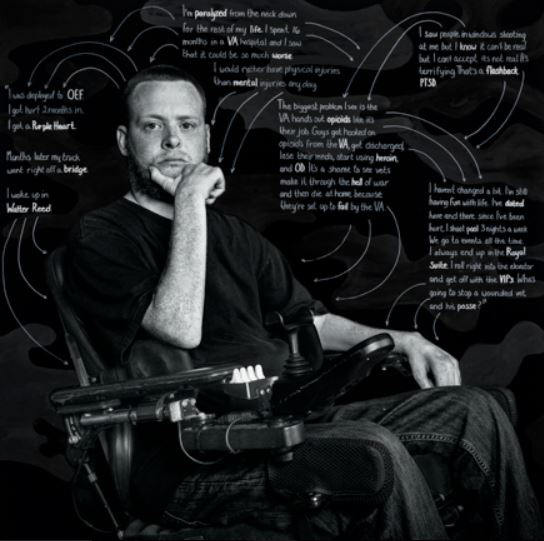
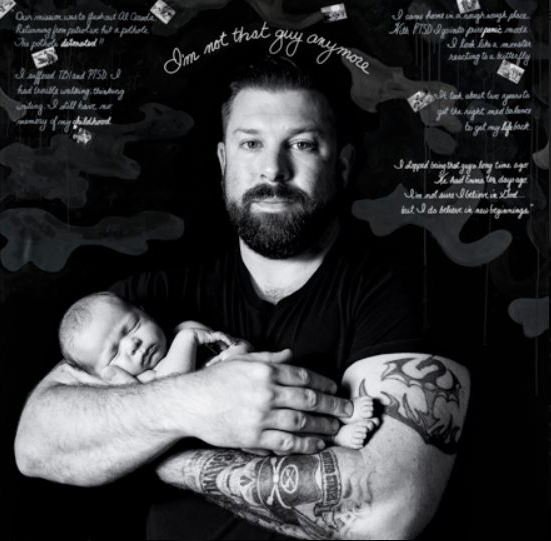
Portraits of veterans and trauma survivors > Susan J. Barron’s oversized black-and-white photos are painted with the subjects’ stories in their own words.

Thirteen military veterans who suffer from post-traumatic stress disorder (PTSD) have shared their stories with New York–based artist Susan J. Barron. Barron created large-scale mixed-media portraits of the veterans that she will present in her new solo show, “Depicting the Invisible,” at HG Contemporary.

From the organizers:

A private gallery reception for the participating veterans will take place on Veterans Day, November 12. Barron will be selling a book of the portrait series — the proceeds from which will benefit organizations that support veterans’ causes. The exhibition will also toast Services for the Underserved, an organization that supports veterans in their struggles with PTSD and mental health, and which has graciously voiced their enthusiasm for this exhibition.

Barron’s work shines a spotlight on 13 American veterans who have survived the trauma of war or terrorism. The artist’s oversized black-and-white photographic portraits are painted with the subjects’ stories in their own words.

Portraits of military veterans
Art by Susan J. Barron

The elegance of the images contrasts with the brutality of the narratives depicted. As they stare unflinchingly at the camera, the subjects are both vulnerable and headstrong. One work depicts Corporal Burke with his dog as he recounts the horrors of war: “When I got back from Iraq, I’d have this one recurring nightmare — I had to watch my buddy die.” He notes that he was united with his service dog after his second suicide attempt. In another work, Sergeant Carter sits in a wheelchair and reflects: “I’m paralyzed from the neck down for the rest of my life. I spent 16 months in a VA hospital, and I saw that it could be so much worse.”

In the portrait of Sergeant Trotter the story of her rape by a star soldier captures the intersection of military sexual assault and the #MeToo movement.

Barron’s intent is not to deify the veterans but to illuminate their experiences and to initiate a conversation around the sensitive issue of PTSD. “Twenty-two veterans commit suicide every day in our country,” says Barron. “The invisible wounds of war are just as devastating as the visible ones. My mission is to bring awareness to the PTSD epidemic and to provide a platform for veterans to share their stories.”

In an interactive work, “A Table for the Fallen,” visitors are invited to sit at a table for one and to create a personal tribute to a fallen soldier whom they wish to honor. Each participant will be filmed ultimately composing a video piece.

“Depicting the Invisible” is on view at HG Contemporary (New York, New York) November 9–26, 2018.


Sign up to receive Fine Art Today, the free weekly e-newsletter from
Fine Art Connoisseur magazine.
WEEKLY NEWS FROM THE ART WORLD

Fill your mind with useful art stories, the latest trends, upcoming art shows, top artists, and more. Subscribe to Fine Art Today, from the publishers of Fine Art Connoisseur magazine.
  • This field is for validation purposes and should be left unchanged.