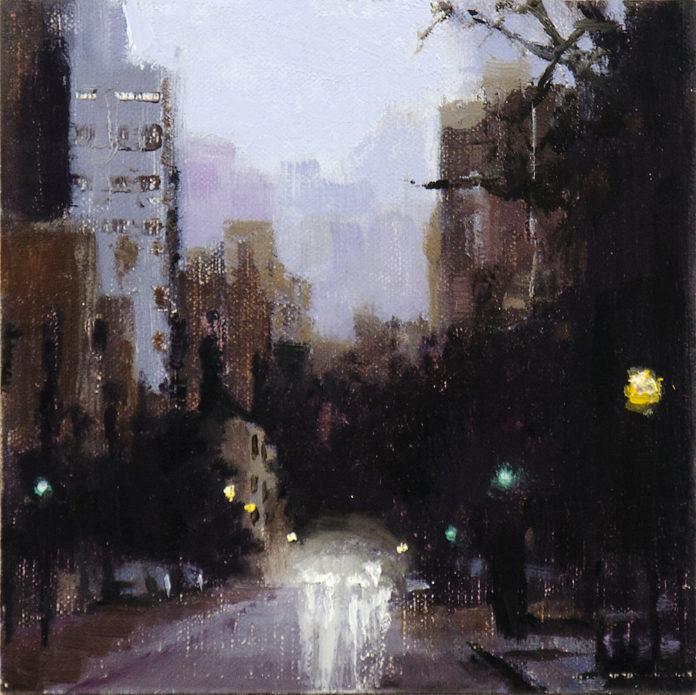
Looking South On Dearborn
6 x 6 in.
Oil Available at Reinert Fine Art, Charleston (843) 694-2445
William A. Schneider’s work has evolved since he finished his studies at the American Academy of Art. Workshops with Carolyn Anderson, Dan Gerhartz, Scott Burdick, Harley Brown, Scott Christensen, Huihan Liu, David Leffel, and Richard Schmid among others solidified his understanding of the basics. But he credits the many hours he spent studying and copying masterworks by Nicolai Fechin with loosening up his brushwork and approach to edges.
He also describes four days of intense study and analysis at an exhibit of the works of J.W. Waterhouse in Montreal as an “epiphany” in his understanding of composition.
William commented, “The wonderful thing about art is that you can always get better. I view myself as a perpetual student!”
Bill was awarded signature status in Oil Painters of America (OPA). In addition the Pastel Society of America has recognized him as a “Master Pastelist,” IAPS (The International Association of Pastel Societies) has named him to the Masters’ Circle and AIS made him a Master Signature Member (AISM).
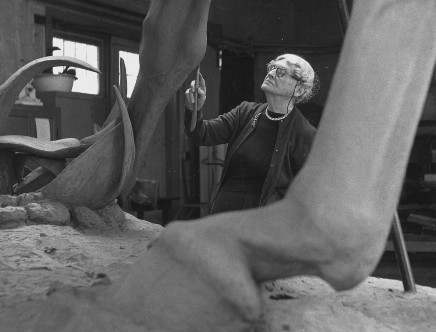
Archer Milton Huntington (1870–1955) and his wife, Anna Vaughn Hyatt (1876–1973), were individuals with modest personal style and rare artistic vision. Huntington’s philanthropy extended from coast to coast, founding museums and providing financial support to countless arts, literary, and historical organizations.
In 1923, after he married the prominent 20th-century sculptor, Anna Hyatt, they established an outdoor museum of American figurative sculpture and supported numerous artists during the Great Depression. Together, their beneficence was far-reaching and influential. The lecture focuses on the creation of Brookgreen Gardens and their legacy.
Robin R. Salmon, Brookgreen Gardens, Vice President, Art and Historical Collections & Curator of Sculpture
Lecture Title: American Sculpture and the Huntington Legacy
Speaker: Robin R. Salmon
Date: November 6, 2018
Location: Claire Trevor School of the Arts, UC Irvine, California
About the Speaker:
A native of Columbia, South Carolina, Robin R. Salmon has been on the staff of Brookgreen Gardens since 1975. She oversees the acquisition, exhibition, and conservation of Brookgreen’s art, history, library, and archives collections, and directs the activities of the Carroll A. Campbell Jr. Center for American Sculpture at Brookgreen Gardens. Salmon has a BA degree in history and an MA in art history from the University of South Carolina and is a graduate of the Museum Management Institute. She has been an elected member of the National Sculpture Society since 1991, serves on its board of directors, and on the editorial board of its magazine, Sculpture Review. In 2007, Salmon received the Society’s Sculpture House Award given for outstanding service to American figurative sculpture. She is the 2018 recipient of the Gari Melchers Memorial Medal of Artists’ Fellowship, Inc. for materially furthering the interest of the profession of the fine arts.
Robin Cole, “The Uncertainty Principle,” oil on panel, 32 x 48 in., $8,800.
Gallery 1261 presents “Animas,” a solo exhibition of contemporary oil paintings by Robin Cole.
“My work explores an inner wilderness by way of an outer one; I believe that the natural world is not only an inherent part of us as human beings (and we of it), but that it is the original, exquisitely sensitive mirror in which we find our own inner terrain and wildness reflected,” Cole says. “My work has always been an act of reverence for the natural world. There is an element of science in it, in the desire to study and observe. But there is an element of spirit, too, in the continual reaching for something just beyond the visible.
“Though the devoted naturalist in me is always present, these images come as often from within as without, informed as significantly by emotional texture as observation. I am interested in moments of elemental experience that feel resonant in this way, in the way of dreams. Sometimes the forces of our world seem to align, and the concentric motion of insects, the unique geometry of the land, or the slow-waning glow of green things at dusk lends a feeling of otherworldliness to something previously familiar. These are the times when the veil feels thin, when an omnipresent but unnoticed magic moves beneath the surface of the ordinary. We are finely tuned to these existential currents. In my work, I aim to cultivate a receptivity to them, to pair our desire for understanding with an equally honest experience of imagination.”
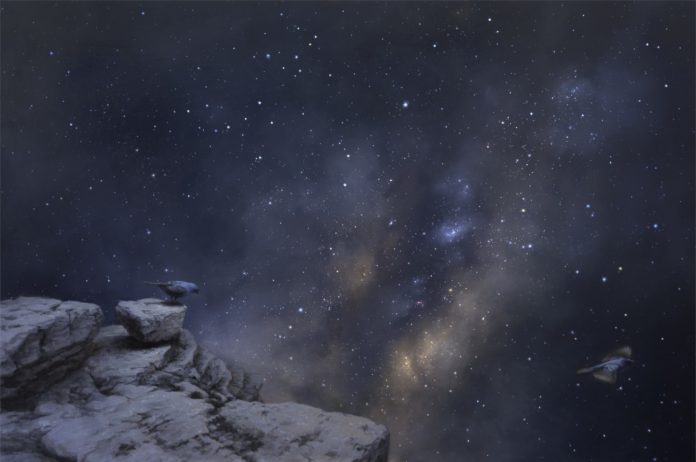
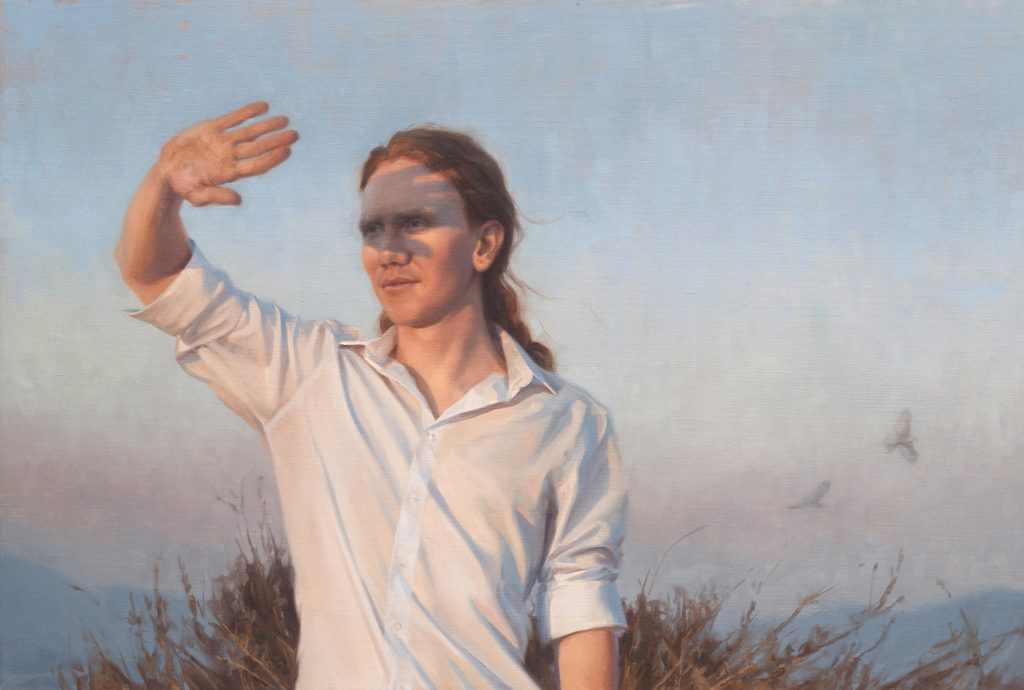
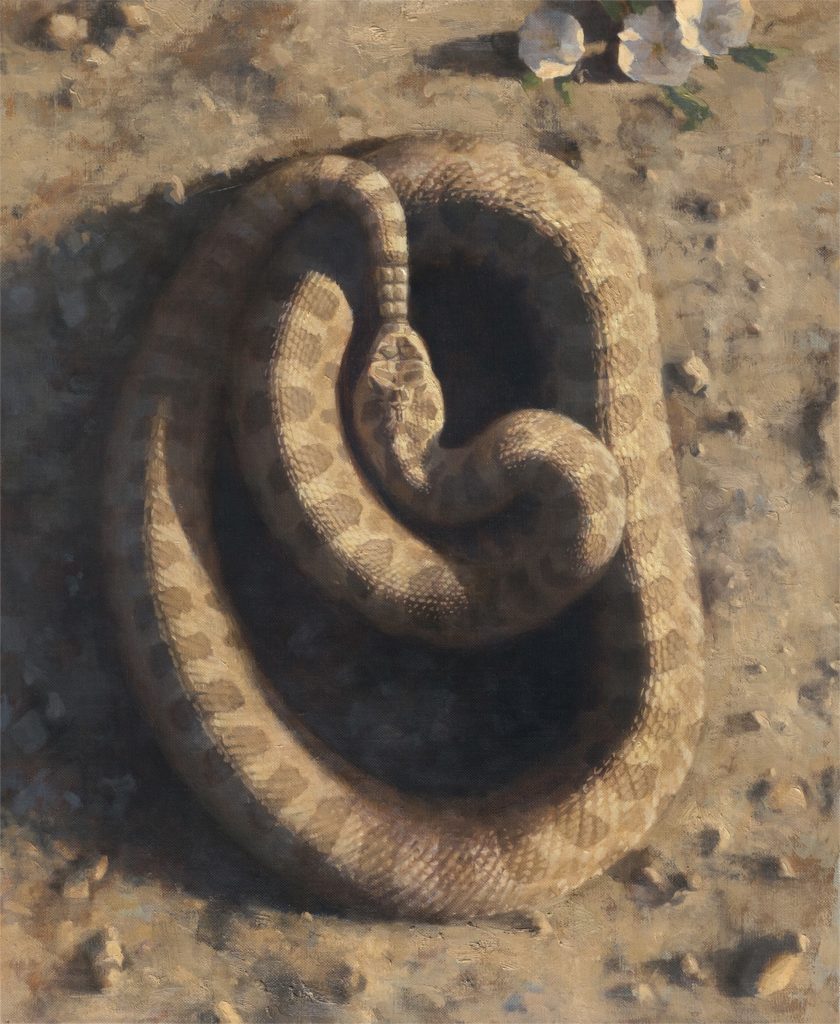
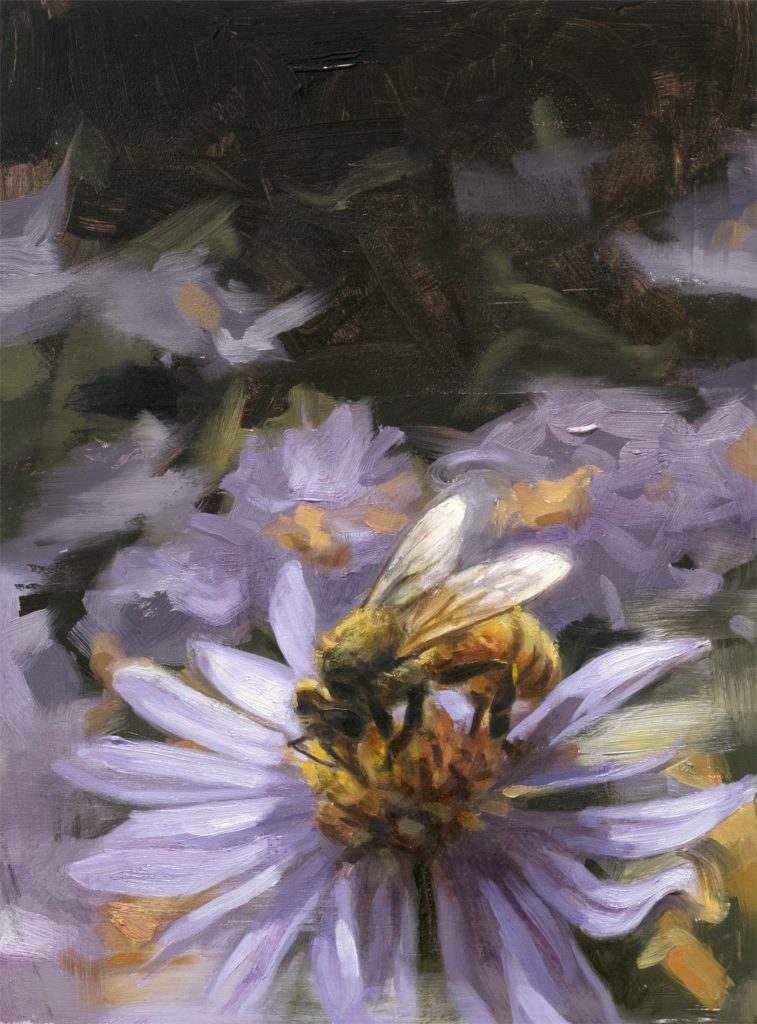
Robin Cole, “Wayfarer,” oil on linen, 20 x 30 in. $5,800.Robin Cole, “Ouroboros,” oil on linen, 20 x 16 in., $3,200.Robin Cole, “Desire Guides Imagination,” oil, 24 x 30 in. $6,900.Robin Cole, “Visitor,” oil, 8 x 6 in., $1,000.
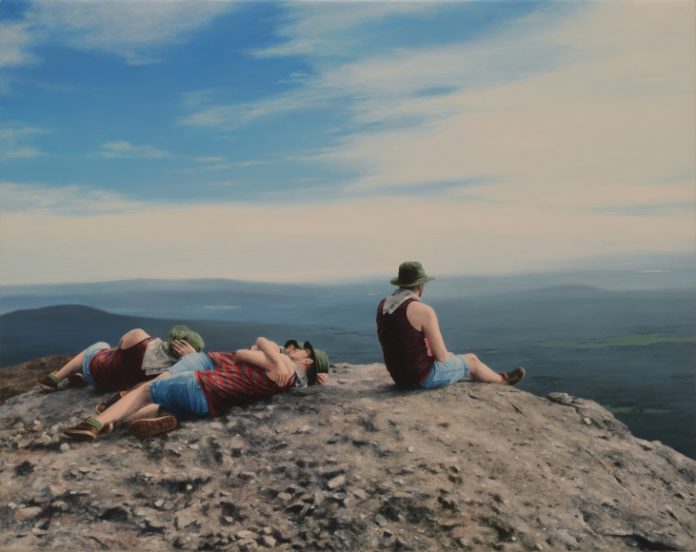
Cobi Moules, Untitled (Catskill 2), 2018, oil on canvas, 8 x 10 in
Lyons Wier Gallery is pleased to present “That’s All They Really Want,” contemporary landscape paintings by Cobi Moules.
From the gallery:
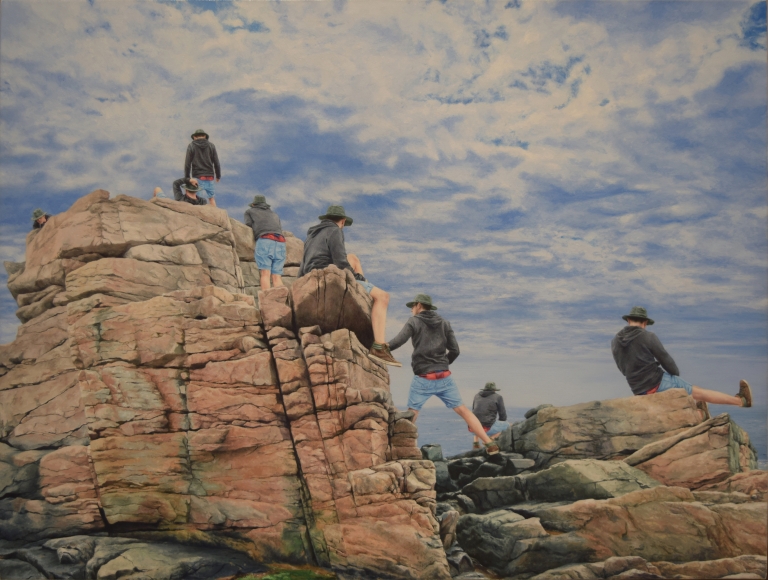
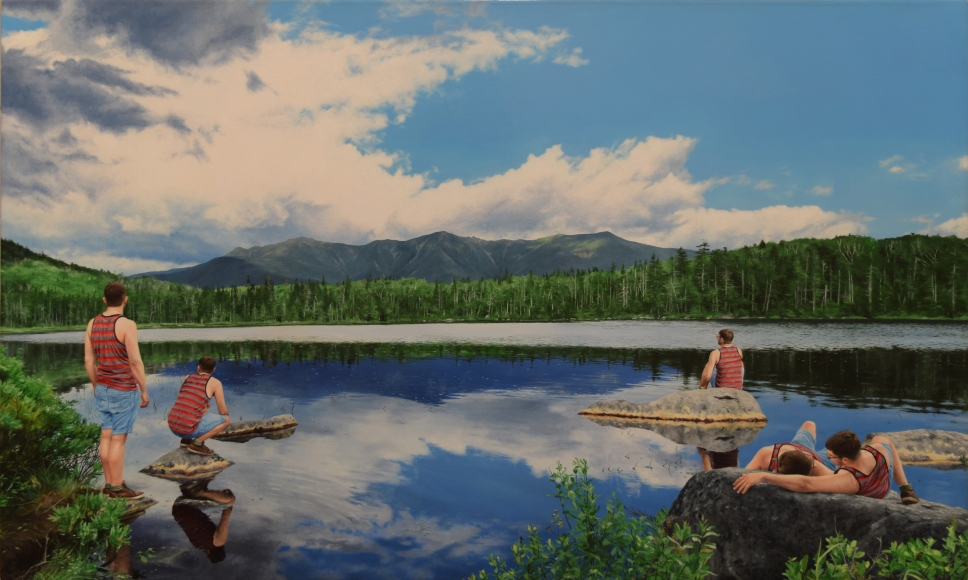
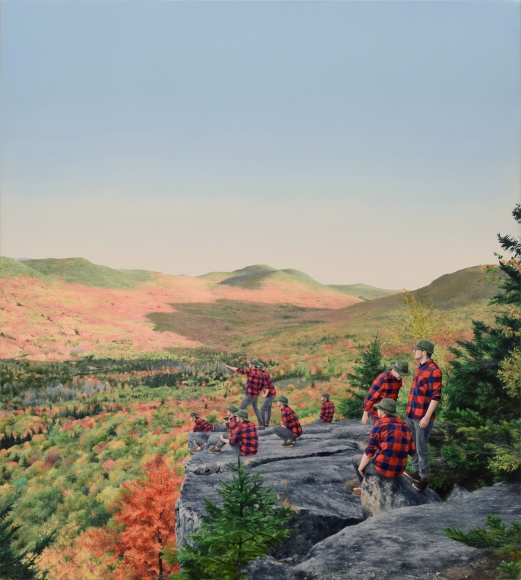
Driven by the desire for adventure and discovery, Cobi Moules embraces the beauty of nature all the while shifting its weight through the exaltation of his own existence within and as part of it. This is best exemplified by the way he incorporates multiple self-portraits throughout his compositions. The multiplicity of self takes both precedence over and integration into the landscape, creating a world with a sense of excitement, self-worth, and play.
Cobi Moules, Untitled (Cliffs of Mount Desert Island 2), 2018, oil on canvas, 12 x 16 in.
The locations of Moules’s compositions are equally important. All the locations were previously depicted in paintings by the Hudson River School. Through the exploration of the grand American landscape and the reflection on mid-19th-century American landscape painting, Moules navigates the parallels between the Hudson River School and the religious ideology that was an integral part of his formative years. Shared throughout both is the elevation of purity, virginity, and the honor of sacrificing one’s selfhood for the glory of God. As the Hudson River School artists’ work embodies the overpowering force of God made manifest through nature, so do the religious voices of Moules’s past against the validation of his existence.
Cobi Moules, Untitled (Lonely Lake), 2018, oil on canvas, 12 x 20 in.
Moules states, “As a queer and trans person, I seek to renegotiate my relationship with this upbringing and the act of being told I am ‘unnatural’ through such a Christian lens. I utilize traditional representation as a way of seeking inclusion while disrupting the original narrative. Creating a space for personal significance and a queer and trans presence, the importance becomes the experience of my multiple and overall presence. It is a community of me playing, exploring my selves, exploring nature, and being part of it.”
Cobi Moules, Untitled (White Mountains 2), 2018, oil on canvas, 20 x 18 in.
Images courtesy of the Boston International Fine Art Show
From the show organizers:
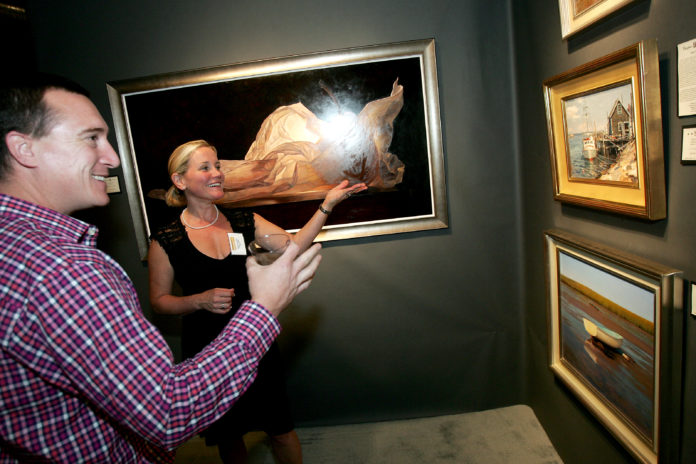
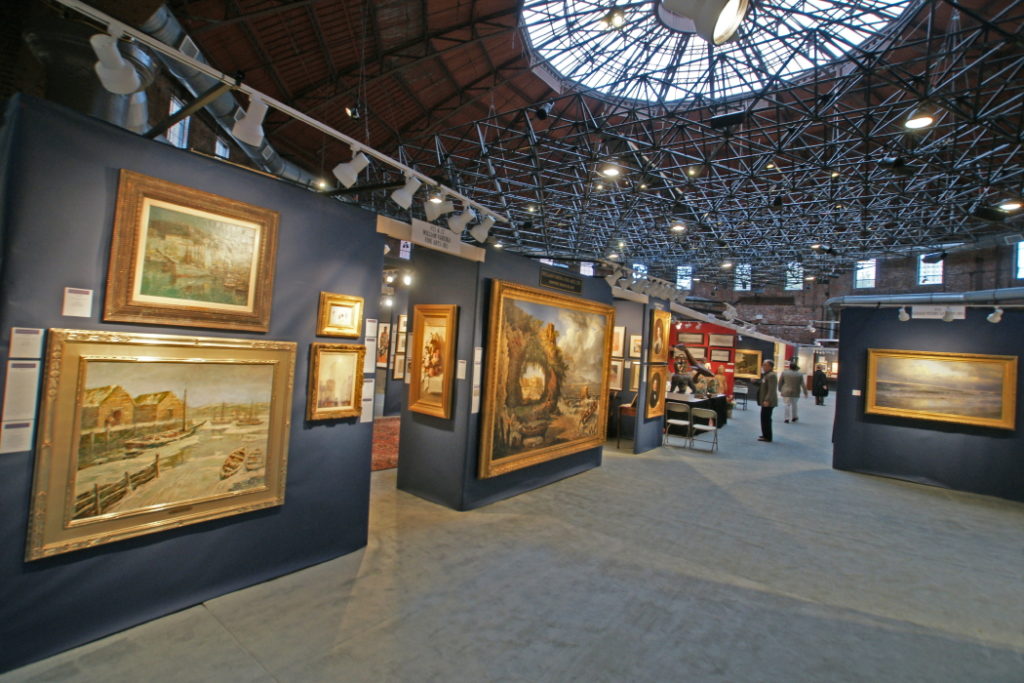
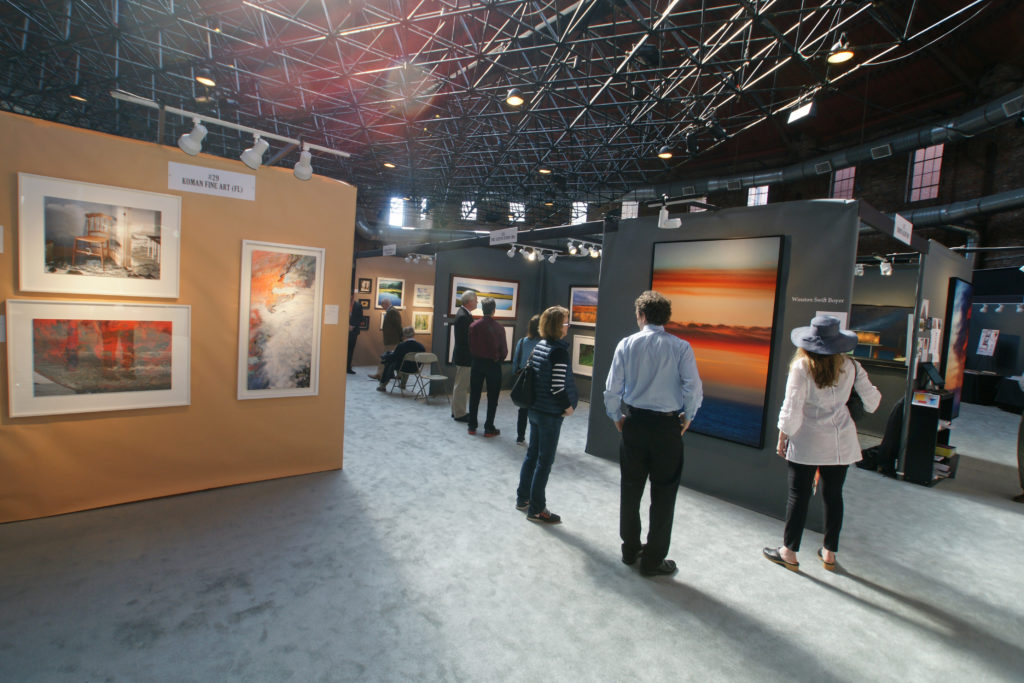
The 22nd Annual Boston International Fine Art Show is the only show and sale of its kind in New England, featuring a stunning array of historic, modern, and contemporary fine art. The show takes place October 18–21, 2018, at the Cyclorama, Boston Center for the Arts. Co-Producers Tony Fuso and Robert Four are honored to announce that the Gala Preview of the 22nd Annual Boston International Fine Art Show (BIFAS) on October 18 will benefit the Art for Justice Fund.
In June 2017, visionary arts advocate Agnes Gund donated $100 million from the sale of a beloved painting to launch a new fund focused on addressing mass incarceration in America. By using artwork to create the Art for Justice Fund, Ms. Gund seeks to show that art can be a powerful force for justice.
The Art for Justice Fund makes grants to organizations, advocates, and artists leading impactful and cutting-edge work to safely reduce jail and prison populations across the country, while strengthening education and employment opportunities for people leaving the system. The fund also supports art-related programs that expose the injustice of mass incarceration and its impact on individuals and communities around the country. The first round of grants was awarded in November 2017 with $22 million going to 30 organizations.
Ms. Gund hopes to inspire other philanthropists and art patrons to join the fund, and since its inception nearly 30 other donors have made contributions of at least $100,000. Organizers plan to distribute all funds over the next five years, with the next round of grants to be announced in the spring of 2018.
“Mass incarceration is one of the major social issues of our times,” comments BIFAS co-producer Tony Fusco. “We are proud to bring the Art for Justice Fund to the attention of donors and art collectors, and to offer 100% of Gala Preview ticket sales to this cause.”
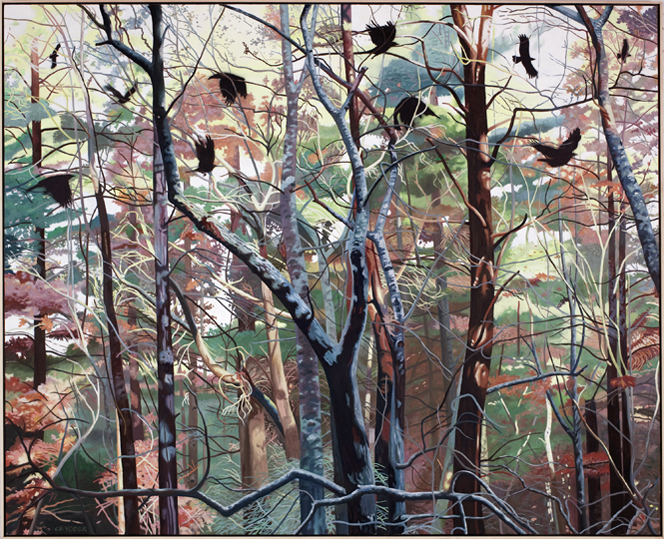
Charles Yoder, “A Light Touch,” 2005, oil on canvas, 48 x 62 in.
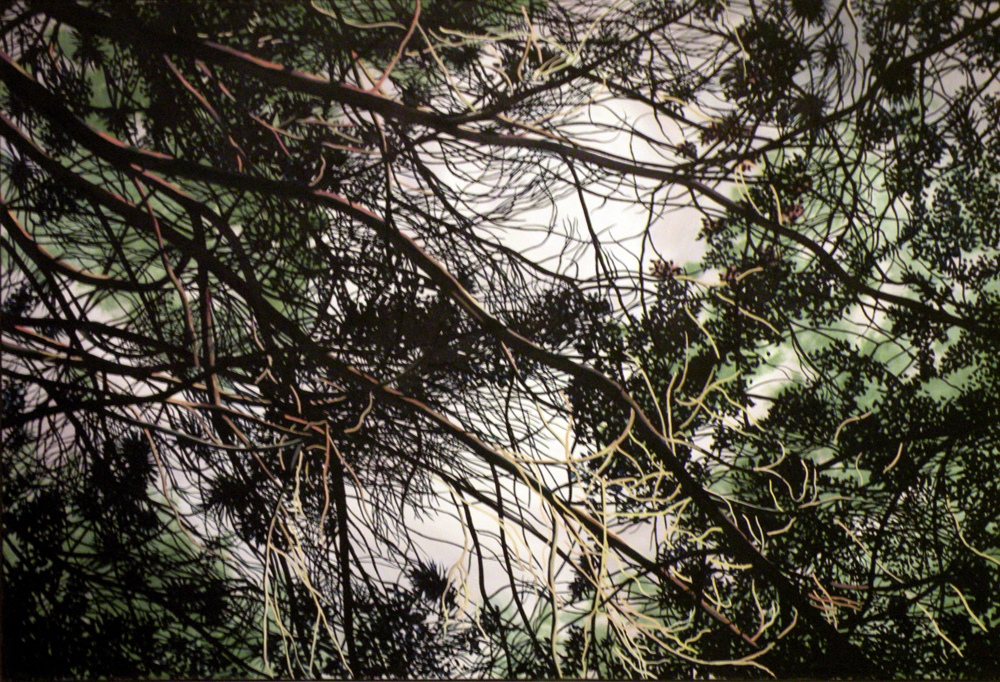
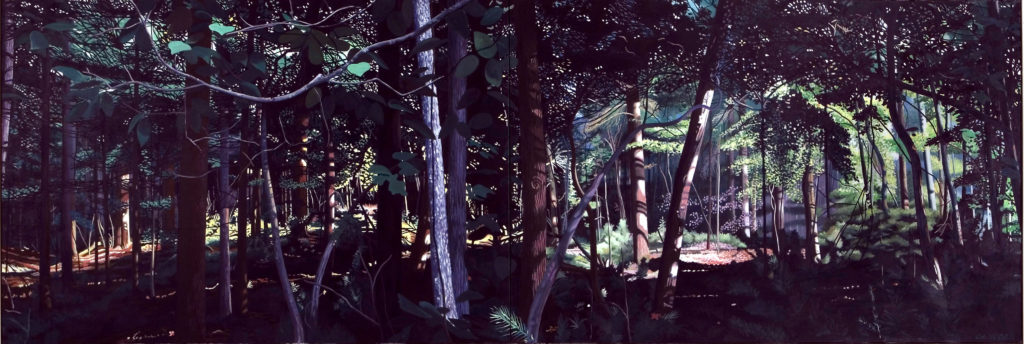
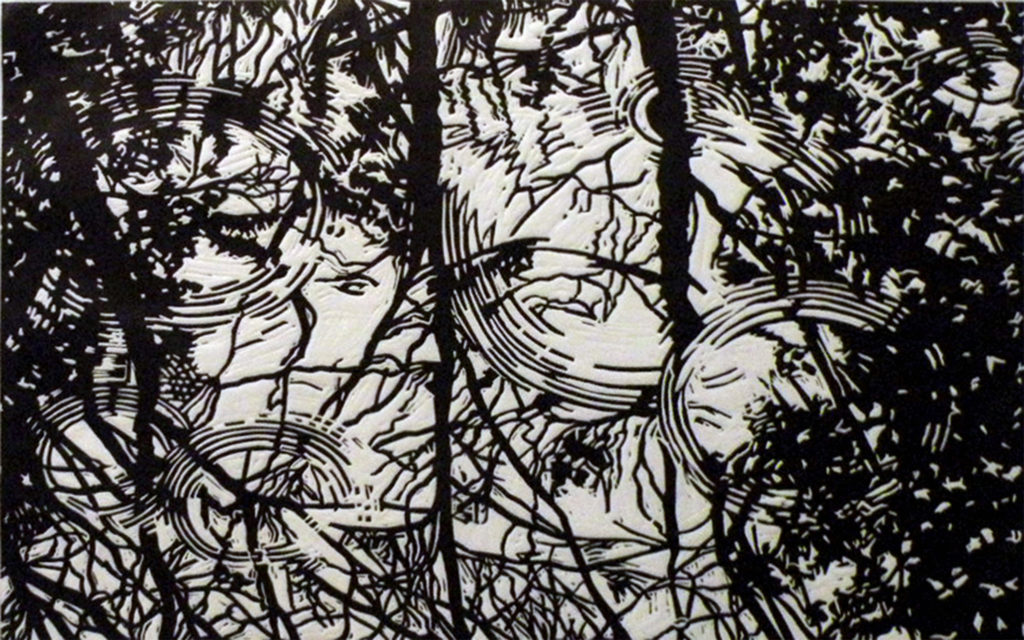
The Atelier at Flowerfield announces “Charles Yoder: Natural Resources,” an exhibition showcasing an eclectic selection of East End artist Charles Yoder’s large-scale landscapes created in oil, acrylic, monotype, linocuts, silkscreen, and other media. Featuring 20 works ranging from medium-sized to monumental (the anchor piece is a 24-foot-wide triptych), the exhibition highlights paintings that Yoder created over the last 20 years — his most prolific and inspired period of production since experiencing a pivotal moment in the woods in the late 1990s.
Charles Yoder, “Color Field,” 2014, acrylic and oil on canvas, 38 x 56 in.
From the Atelier:
Coming of age as an artist in New York in the 1970s and 1980s, Yoder’s educational path took many interesting turns. While a student at Pratt Institute, he dabbled in illustration before moving on to printmaking, silkscreen, and finally painting. He landed his first job at Castelli Graphics in New York City in his 20s, where he began as an assistant and five years later left as the director. “I was doing prints myself, and I was the only one who knew the difference between a silkscreen and an etching,” the artist stated in a recent article in The East Hampton Star. Working at the height of the Pop Art movement in New York City, Yoder was rubbing elbows with such Castelli artists as Andy Warhol, James Rosenquist, Claes Oldenburg, Dan Flavin, and Robert Rauschenberg.
Charles Yoder, “Murder Incorporated,” 2010, acrylic and oil on canvas, 71 x 88 in.
The innovative painter Robert Rauschenberg (known for his “Combines” of nontraditional materials) ended up offering Yoder a job as his curator. For the next 12 years, Yoder traveled the world working for an artist at the center of the contemporary art world. During this time Yoder often put into practice what he was learning and observing, searching for his own style through experimentation in both traditional and modern media. It was not until 1997 that Yoder experienced what he can only describe as an artistic epiphany. Walking through the moonlit Northwest Woods of his East Hampton backyard late one night, Yoder was stopped in his tracks.
Charles Yoder, “Short Cut,” 2006–2007, acrylic and oil on canvas, 52 x 160 in.
That instinctual impulse toward nature and being in the present moment has become the foundation of Yoder’s artistic output. Careful not to forsake his fortuitous exposure to the brave minds of Modern art, Yoder has instead allowed all of his experiences and education to coalesce and find a crescendo in his distinctive abstract and representational prints and paintings. Like Thoreau who, after spending two years isolated in the woods, declared he could never have enough of nature, Yoder has found his artistic home in the great outdoors.
The artist’s ability to convey a specific moment of light could only come from spending hours soaking in the various ways light and shadow change course throughout the day and night. Working large-scale, Yoder must also coordinate and harmonize many different aspects of the picture — line, shapes, patterns, value, tone, chroma — to create the fluidity of movement and sense of musicality he consistently achieves.
Charles Yoder, “Tree Rings,” 2012, one-color lino cut, 16 x 26 in., edition 14
The Atelier at Flowerfield’s director, Kevin McEvoy, has long been an admirer of Yoder’s work and is thrilled to be presenting these one-of-a-kind paintings at Atelier Hall. “Charles Yoder’s expansive canvases welcome the viewer into quiet moments of nature, inspired by the year-round, constantly changing beauty of Eastern Long Island’s woodlands,” McEvoy says. “At a staggering 24 feet in width, Yoder’s ‘Full Circle’ is a still testament to the passage of time, returning on itself.”
“Charles Yoder: Natural Resources” is on view through November 15, 2018, at the Atelier at Flowerfield (St. James, New York). For more information, please visit atelierflowerfield.org.
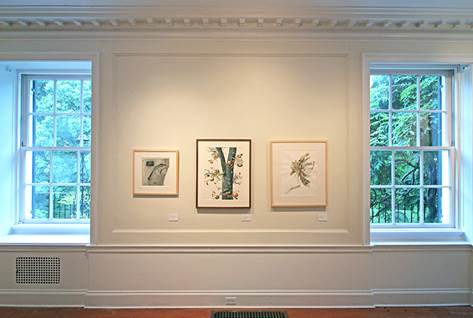
North Gallery, left to right: Ingrid Finnan, “Wave Hill European Copper Beech,” 2017, ‘Fagus sylvatica’ 'Atropurpurea', oil on paper, 12 ½ x 12 ½ inches (mat opening), 19 ¾ x 19 ¾ inches (frame size); Lucy Martin, “Valley Oak with Oak Galls and Lichen,” 2018, ‘Quercus lobata’; Oak galls generated by wasps of the Cynipidae family; ‘Teloschistes chrysophthalmus, Evernia prunastri, Usnea sp., Xanthoria parietina, Flavopunctelia flaventior, Flavoparmelia caperata,’ gouache on paper, 23 x 17 inches (mat opening), 29 x 23 inches (frame size); Ksenia Mamonova, “Maple Samaras,” 2017, ‘Acer platanoides,’ watercolor and graphite on paper, 20 x 16 inches (mat opening), 28 x 24 inches (frame size).
In a new collaboration, Wave Hill is partnering with the American Society of Botanical Artists (ASBA) to produce and host the juried 21st Annual International exhibition. ASBA advances the tradition and contemporary practice of botanical art. On view in Wave Hill’s Glyndor Gallery will be botanical artworks by 47 international artists from the United States, Australia, Canada, France, Japan, Russia, Slovenia and the UK. The artworks were selected from a competitive pool of more than 180 submissions, and juried by garden lecturer, author and photographer Ken Druse, botanical artist Karen Kluglein and Eileen Jeng Lynch, Wave Hill’s Curator of Visual Arts.
New Partnership Marries Horticultural and Artistic Excellence
Exhibitions Committee Chair Patricia Jonas, also on Wave Hill’s Friends of Horticulture Committee, explains that “For over 50 years, Wave Hill’s vibrant arts program has inspired gardeners as much as artists; and its gloriously creative horticulture has inspired artists as much as gardeners. It is hard to imagine, then, a more perfect partnership than Wave Hill’s with the ASBA, whose members’ art is inspired by the plant world in all of its beauty, diversity, and complexity.”
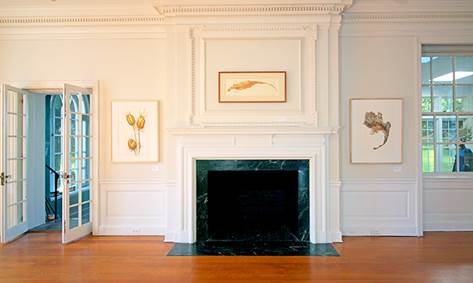
Exhibition Features Varied Interpretations This year’s exhibition features native and exotic flowers, fruits, roots, trees and vegetables, including some specimens found at Wave Hill: Asuka Hishiki’s “Wave Hill Little Gangsters” (2018) features four succulents and their unique characteristics — from the round, prickly, segmented shape of Euphorbia obesa to the fleshy stem and compact leaves of Glottiphyllum nelii — along with a deceased bee. The vibrant red hue of the leaves and purplish-blue berries of Myra Sourkes’s watercolor “Virginia Creeper” (2018) epitomizes the fall season. Ingrid Finnan’s “Wave Hill European Copper Beech” (2017) is a close-up and detailed rendering in oil paint on paper of the silvery-gray bark of the more than 100-year-old, iconic tree.
South Gallery, left to right: Dick Rauh, “Nigella Capsules x 6,” 2017, ‘Nigella damascene’, watercolor on paper, 28 x 19 inches (mat opening), 34 x 26 inches (frame size); Rose James, “Gustavia: Fairchild Botanical Garden,” 2017, ‘Gustavia superba,’ watercolor on vellum, 8 x 28 inches (mat opening), 13 x 33 inches (frame size); Ksenia Panferova, “Oak leaf,” 2018, Quercus robur’, watercolor on paper, 28 ½ x 21 inches (mat opening).
Unique points of view, bolstered by an attention to detail that is almost excruciating, emerge from the interpretations offered, with the power to astonish and provoke us. Ken Druse explains in his essay in the accompanying catalog: “Nature is exquisite in its own rights. But very often, it takes a special eye to remind or show us for the first time how glorious it is. Photography makes a record, like seeing the world through the screen of a phone — perish the thought. Botanical art makes us stop, just like gardening: we can’t text a friend and dig a hole at the same time or weed or nurture a precious seedling.”
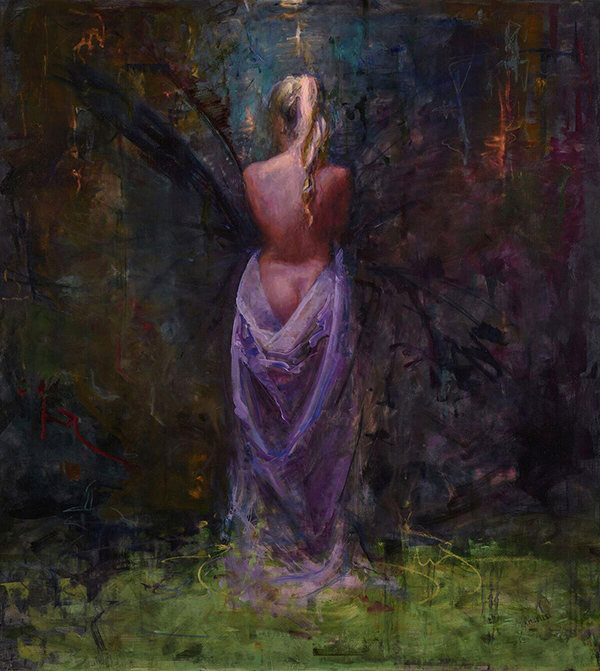
Emergence reflects a shift and discovery in the life of artist Ann Moeller Steverson. The work evolved in two stages and was once “finished” and shown, only to be dramatically reworked. The first version of the painting had clearly stated wings, but these were revisited and painted over.
When asked about the change, Ann recounted being in an intuitive painting workshop with Stanka Kordic and feeling she was “being called to lay down her wings.”
“The story now relates to our own rebirth as our beautiful imperfect human selves,” says Ann.
The artist also shared her excitement for working on a large scale and exploring big brush movements, experimenting with oil sticks and automatic mark making in this work.
Ann’s work had been described by critics as bold, expressive, and painterly, and as having a mood that connects to a timeless era. Her paintings have been exhibited nationally at venues including the Salmagundi Club in New York and the Abend Gallery in Denver, Colorado. Her upcoming solo show OPEN opens in February of 2019 at the Little Green Store and Gallery on Monte Sano Mountain. This body of new work has been described as a reflection of her personal journey of letting go and letting in peace, love, intense beauty, and joy. Ann is also traveling to teach: her next workshop is at Quinlan Art Center this May.
Additionally, Ann is the creator of a copper composite panel now offered by the national art supply company Artefex. Copper being her favorite surface, Ann uses a wide variety of oil painting materials, from lead white to oil bars, rollers and scrapers to the finest handmade brushes, and also paints on panels, linen, and aluminum composite.
Honored by the Portrait Society of America in their Select 50 in the International Competition for her portrait of her daughters, titled Mariposa, and her painting Backyard Queen earned her the Bold Brush award, a distinction an artist can receive only once in their lifetime. Ann was also a featured artist in ‘Artist Spotlight’ in Professional Artists Magazine in 2017 and her work has been included in Fine Art Connoisseur Magazine.
With her two daughters, Ann lives in Huntsville, Alabama, where she shares a studio with Rebekah Bynum and Jonny Scull at Lowe Mill ARTS & Entertainment. Lowe Mill is the largest privately-owned arts facility in the United States and open to the public. Ann is also co-owner of Protégé Atelier with Rebekah Bynum and Danielle Damson. Protégé brings master artist workshops to North Alabama.
Rob Evans (b. 1959), “Flight Pattern,” 2001, Digital print on paper, 15.75 x 24 in., James A. Michener Art Museum. Museum purchase.
Since its founding in 1988, the Michener Art Museum has expanded its vision, facility, and programs as well as its permanent collection, which now comprises more than 3,500 paintings, sculptures, photographs, and works on paper. To commemorate its 30th anniversary, the Michener is presenting “30 Years: Art at the Michener, 1988-2018,” a special exhibition that invites visitors to learn new stories about familiar works of art and discover objects from the Museum’s vault that have never before been on display.
The process of how many works in the Michener’s collection arrived at the Museum through significant gifts and bequests is a particular focus in the exhibition. “30 Years” commemorates these legacies, explores the stories behind the art and the collectors, and celebrates the generosity of individuals to transfer private collections into the public trust, ensuring that their art will be experienced and enjoyed for generations to come.
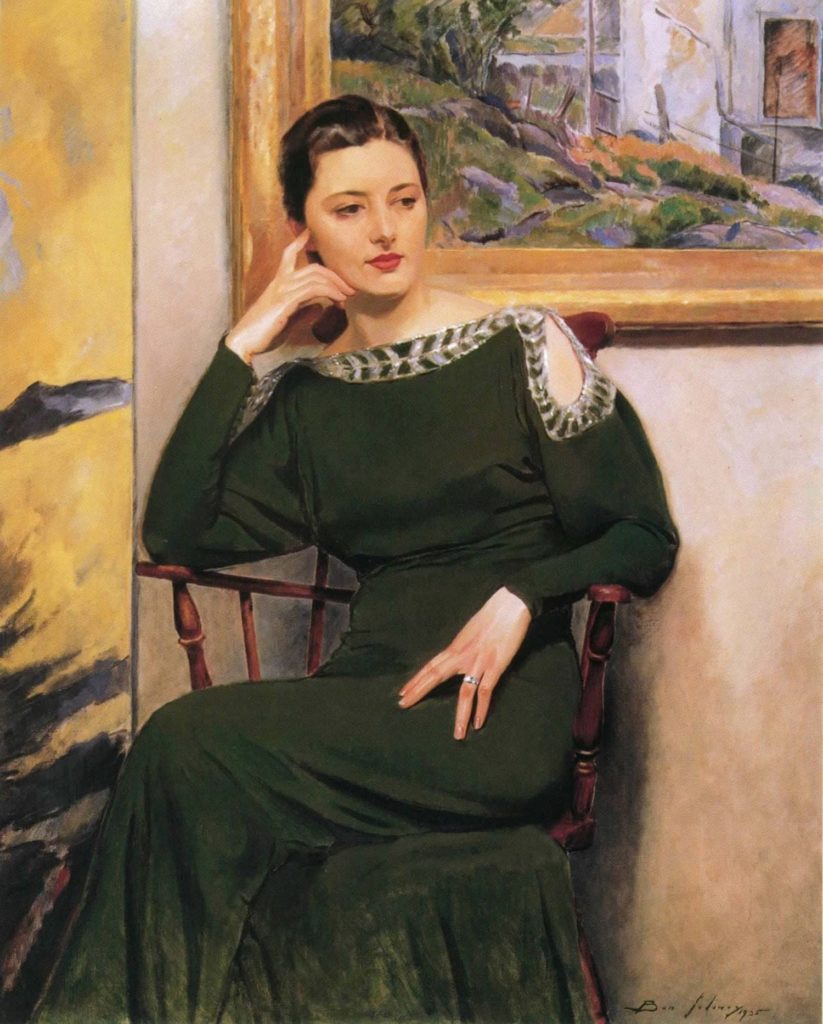
Ben Solowey (1900-1978), “Rae Seated (Green Dress),” 1935, Oil on canvas, 45 x 36 in., James A. Michener Art Museum. Museum purchase funded by Anne and Joseph Gardocki. Courtesy of the Studio of Ben Solowey, Bedminster, PA.
The exhibition also features a selection of works curated by local students enrolled in the Michener’s Student Curator’s class. Local teens excited about art and history worked with Michener curatorial and education staff to create the Michener’s first-ever fully student-curated exhibition, “American Visions,” as part of the exhibition.
They selected works from the Museum’s collection that have not been exhibited in the galleries before, engaged in archival and library research while writing object labels for the artworks, and collaborated with peers and Museum staff on the exhibition design. Don’t miss out on the opportunity to experience the permanent collection through a new lens, and to learn about their interest in how art and culture can shape a meaningful vision for America.
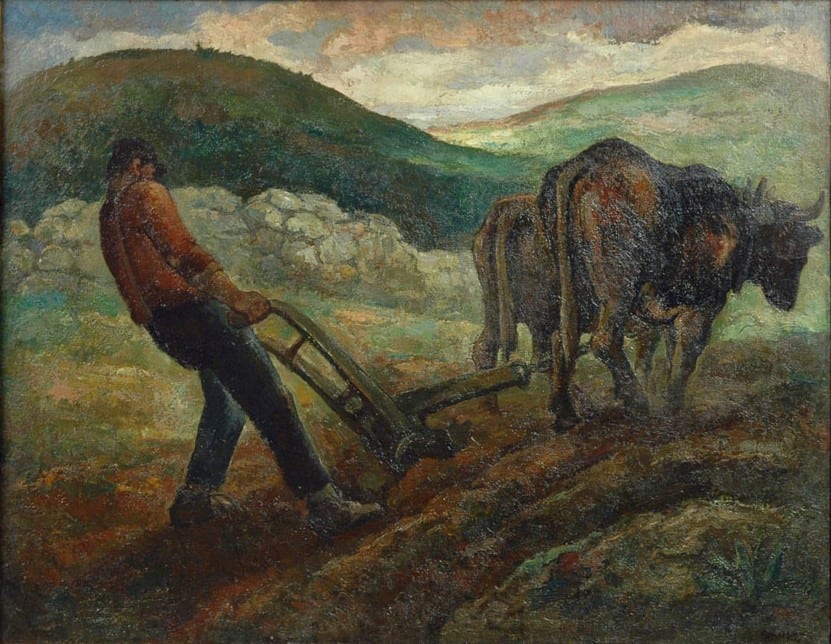
Eugene Higgins (1874-1958), “A Connecticut Ploughman,” n.d., Oil on canvas, 26 x 33 in., James A. Michener Art Museum. Gift of the John P. Horton Estate.
Put your brushes down. I’m about to make you uncomfortable.
If you really love something, you should have an open mind, don’t you think? I’m going to tell you something that is sooo incredibly simple that you might find it hard to do. I can instantly make you a better painter. I didn’t say great. I said better. But hey, it’s a start. More than that is up to you.
I know you are struggling with drawing, edges, color, design, etcetera, etcetera etcetera! We all do. Maybe not all of that all the time but some of it part of the time.
I can’t make you want to draw better, although I’m guessing the reason you don’t want to is because it’s uncomfortable! But that’s not what I’m here to talk about. We’ll save that for another time because, frankly, I love to draw. I didn’t say I was great, but I love it. It’s a start. Anyway, I digress.
I just went to the Salmagundi Club the other night to watch Sherrie McGraw do a mind-blowing demo. Now if you know anything about Sherrie, she’s not really us. She’s got it and tries to share it with the rest of us. You know the type. They make it look so easy. But then we try it and just make a mess. What I’ve come to learn is that we tend to complicate the simplest of concepts. It’s right in front of us. Really. And the true masters are showing us the way. We just choose to make it hard!
OK, here we go. I’m talking about value. Yes, I know you know. But do you really? Because basically all you have to do is look down at your palette and choose a value. Any old color will do if it’s the right value. And don’t worry if it’s the correct value. Get close. You can always fix it. You just have to take the first step and put it on the canvas!
Is that spot lighter than the other? Darker? Of course it is or isn’t! And don’t try and make 20 values. A few will do. Lump a group together. Those transition areas that are hard to determine? Just make an executive decision. Make it either in the light or in the dark. See? Simple. Sort of.
I know you’re all worried about the right temperature and the right color. I’m telling you, forget all that. First and foremost, pick a value. Then another. You’ll think you’re a genius. There’s still time to make a mess of it when you start adding color, but in the meantime you will be brilliant because you just painted an amazing painting based on value. How do I know this? Because I frequently catch myself getting caught up in the wrong things. I’m so ahead of myself that I’m behind! Then out of frustration I’ll start to realize that I’m focusing on the wrong thing. It’s a process, and I just skipped three steps!
I learned something many years ago at the beginning of my former career as a marketing executive and consultant. KISS. You’ve heard it too: Keep it simple, stupid.
Fill your mind with useful art stories, the latest trends, upcoming art shows, top artists, and more. Subscribe to Fine Art Today, from the publishers of Fine Art Connoisseur magazine.


 For more information, please visit
 Is that spot lighter than the other? Darker? Of course it is or isn’t! And don’t try and make 20 values. A few will do. Lump a group together. Those transition areas that are hard to determine? Just make an executive decision. Make it either in the light or in the dark. See? Simple. Sort of.
 ***
***