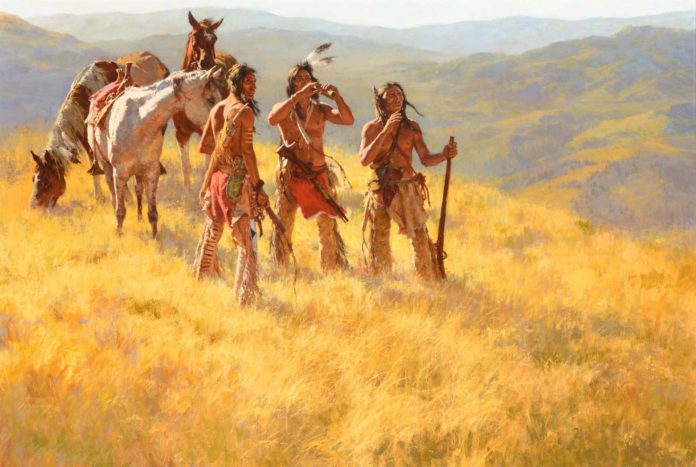
Howard Terpning (b. 1927), "Dust of Many Pony Soldiers," (1981), oil on canvas, 38 x 56 in., Sold at auction: $819,000
The Coeur d’Alene Art Auction, specializing in Fine Western and American art, recently announced that its 2018 auction exceeded $13.2 million in sales with over 90% of lots sold.
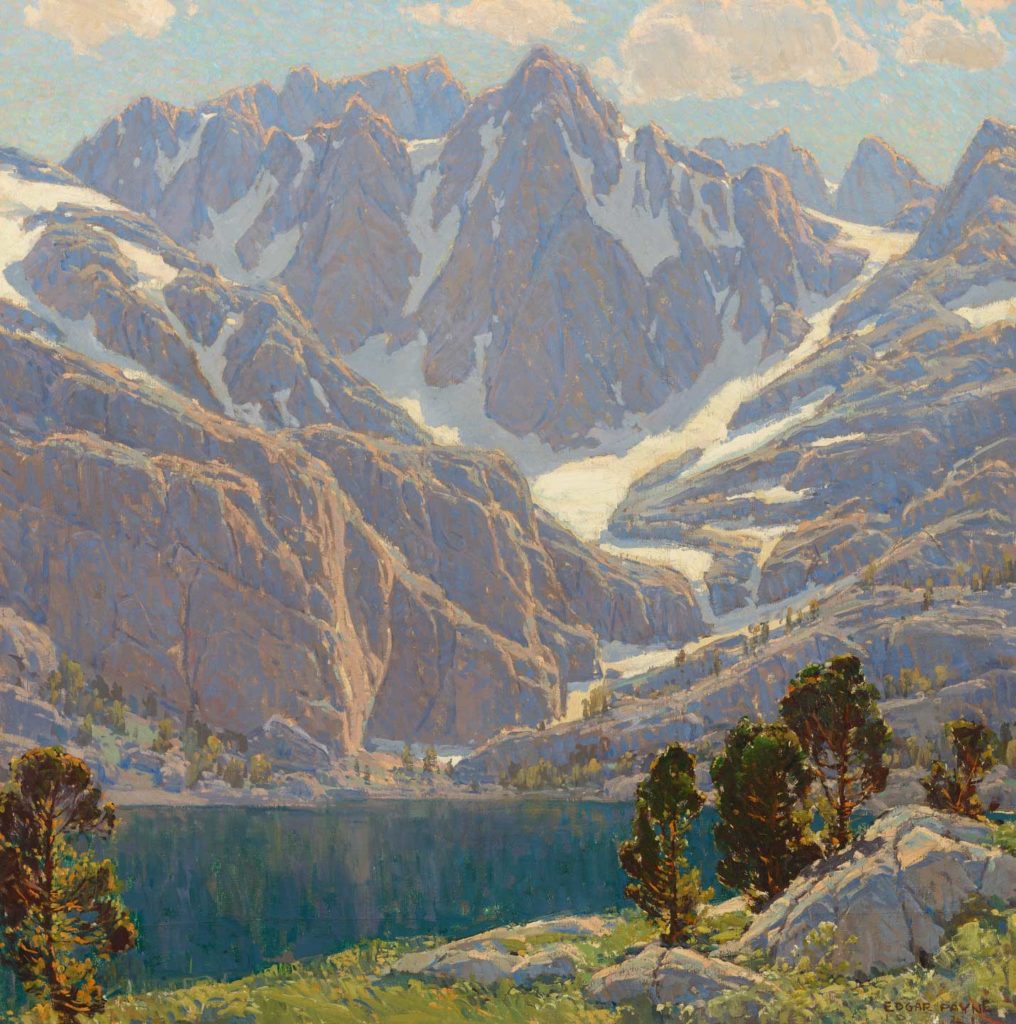
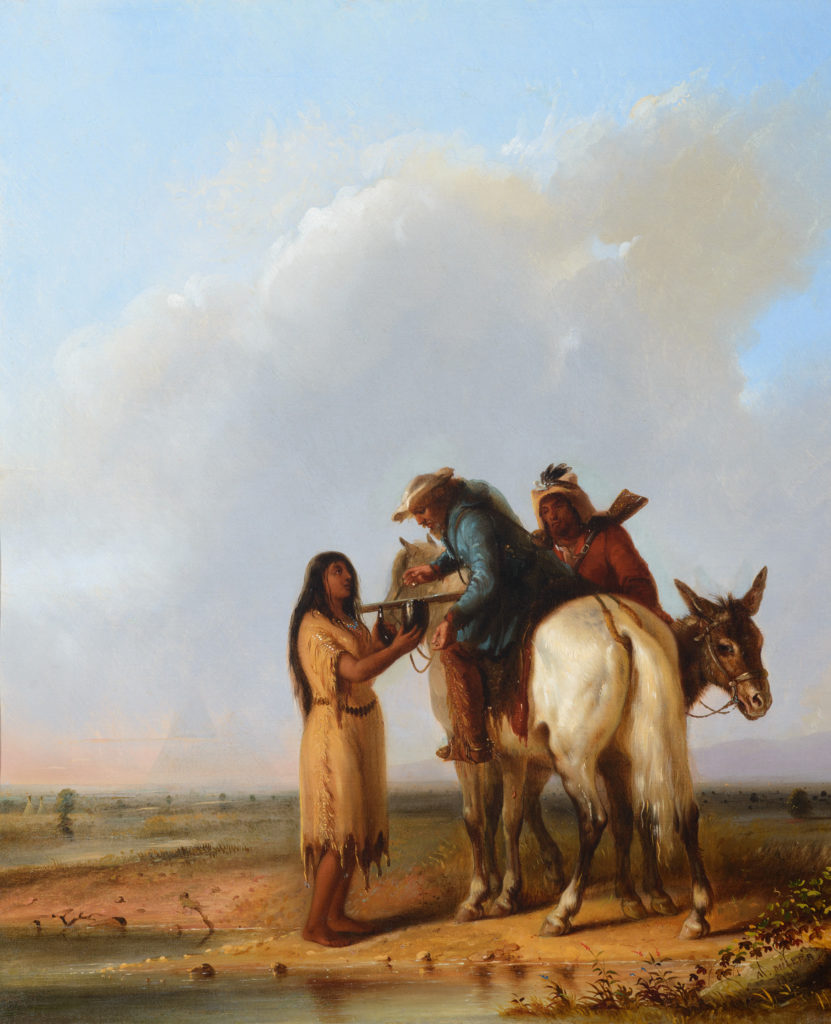
Edgar Payne (1883–1947), “Solitude’s Enchantment,” 1921, oil on canvas, 43 × 43 in., Sold at auction: $476,000Alfred Jacob Miller (1810-1874), “The Thirsty Trapper,” 1850, oil on canvas, 24 x 20 in., Sold at auction: $1,715,000
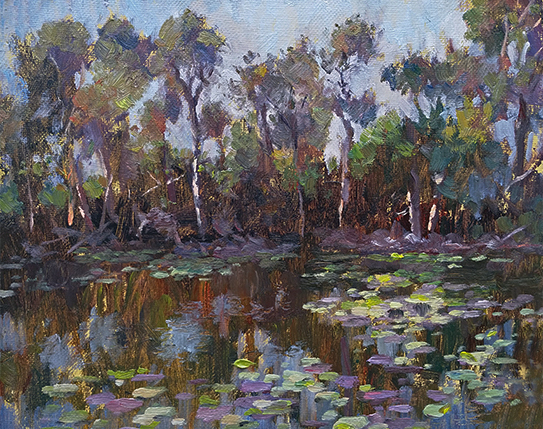
Morning At The Pond
8 x 10 in.
Oil on canvas
Available through the artist
Attention to detail and painterly strokes make the plein air paintings of Shawn Escott uniquely his own. From capturing sunrises and sunsets, to painting the light of a fleeting moment, Shawn enjoys chasing the effect of nature’s brilliance.
Blain Johnson, a collector, sums up Shawn’s work in a very eloquent way:
“Shawn is a master of emotional painting—a playful fusion of joy and discipline that comes through in each stroke. In addition to accurate rendering of his subject matter, Shawn is able to infuse life, vitality and energy that shows in subtle brush work, bold color choices, and an innate understanding of the elements that make truly memorable paintings.”
Shawn was born in Ohio but has spent most of his adult life in South Florida. He studied for a short time at the Lyme Academy of Art but is mostly self taught.
He participates regularly in juried and invitational plein air events. His painting Delray Beach was awarded first place at Plein Fun Fest in 2016, and Shawn was a Florida Ambassador for the world famous Forgotten Coast Paint Out in 2018. His artwork has been shown at Sotheby’s International Realty, the Boca Raton Museum All Florida Exhibition, The Boca Raton Museum of Art School, The Boca Raton Historical Society, The Cornell Museum and the Plein Air Convention and Expo.
Shawn’s major influences are the American Impressionists, Plein Air Painters of America and many contemporary artists working today. Shawn’s paintings have been published in PleinAir Magazine, Voyage Miami Magazine and the Forgotten Coast Catalog.
When not painting, Shawn teaches classes at the Boca Raton Museum of Art School and holds workshops around South Florida.
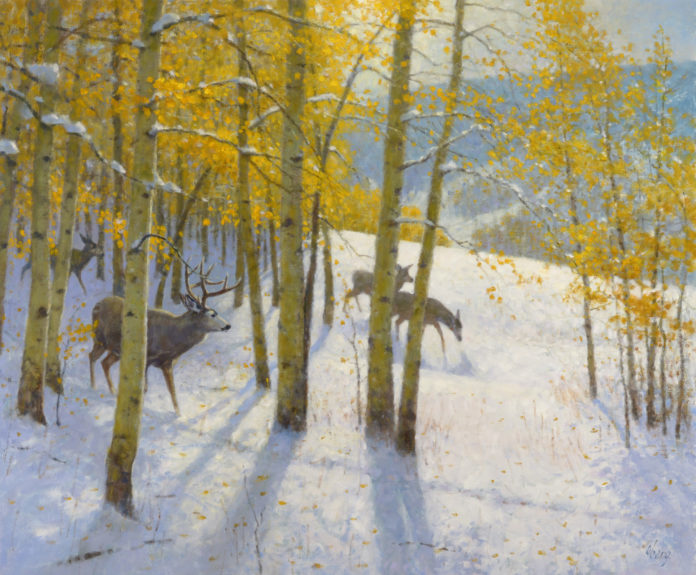
Highlights of Ralph Oberg’s 40 year career includes the National Museum of Wildlife Arts’ 2012 Trustees’ Purchase Award; the 2014 California Art Clubs’ 103rd Gold Medal; the Northwest Rendezvous Groups’ 2012 Legacy Award; the Buffalo Bill Art Shows’ 2015 Wells Fargo Gold Award the 2001 and 2002 Painting Awards, and the 1988 William Weiss Purchase Award. He has shown at the Autry Museums’ Masters Show, National Cowboy Museums’ Prix de West Exhibit, the Briscoe Museums Night of Artists, the Eiteljorg Museums’ Quest for the West.
About Western Visions:
More than 200 paintings, sculptures, and sketches by living Artists will be on display and available for purchase during the 31st Annual Western Visions® in Jackson Hole Wyoming. The Museum has carefully curated the work of some of the top living artists depicting animals today, both traditional and contemporary. Proceeds from the Western Visions Show & Sale benefit the National Museum of Wildlife Art’s educational mission to enrich and inspire appreciation and knowledge of humanity’s relationship with nature.
Whispered Memory
10 x 12 in.
Oil on canvas
$1300 Available at South Street Art Gallery, Easton MD
The compressed value patterns and limited palette in Valerie Craig’s painting, Whispered Memory, help convey a brooding mood and and sense of loneliness of an abandoned situated in a remote area of the Eastern Shore. The early sunrise enlivens the scene and helps to create a bit of quiet drama. While painting, Valerie imagined the many stories contained in this house, wondering what the home had witnessed and held on to in days gone by. The painting recently won Third Place in the People’s Choice Award during South Street Art Gallery’s Invitational Plein Air Exhibition.
Known for her atmospheric landscapes and gutsy brushwork, Valerie especially enjoys painting outside in all kinds of weather.
“Standing in the midst of a snowfall, dense fog, or early morning mist fires up my spirit and I am compelled to paint.” While Valerie’s subject matter varies from urban scenes to quiet woodland interiors, working directly from life is key. “To me it is all about light quality, strong shapes, and somehow conveying the essence and unique temperament of a scene.”
In 1998, Craig left her career in nursing administration to pursue her passion for painting on a full-time basis. Painting offers a unique opportunity to intimately interact with nature and humanity. “If my work can somehow evoke a response or inspire the viewer, I have been successful.”
Select Accomplishments:
In March, 2018, Valerie was awarded the Bold Brush Award and in 2017, she received the Artists’ Choice Award in Ireland’s Art in the Open. She won the Gold Prize in Ireland’s 2013 Art in the Open. In 2016, Valerie’s painting Whitewashed was awarded Second Prize in PleinAir Magazine’s annual Plein Air Salon.
Additional Honors:
Valerie has been invited to judge national and international painting competitions, including Ireland’s Art in the Open, Floyd Plein Air, Long Beach Island’s Plein Air Plus, Solomons Island Plein Air and Norfolk Plein Air. Valerie has had numerous solo exhibitions and enjoys teaching landscape painting workshops in the USA and in Ireland.
Recent Honors include:
Bold Brush Award, March 2018 in the Bold Brush Competition
Artists’ Choice Award, 2017 Ireland’s Art in the Open International Festival
Second Place, 2017 Plein Air Easton Small Painting Competition
Juror’s Award, 2017 and 2016 Wayne Plein Air Festival
Award of Distinction, American Impressionists’ Society 2014 National Show
Silver Prize, 2014 Ireland’s Art in the Open
Gold Prize, 2013 Ireland’s Art in the Open
Grand Prize, 2013 American Women Online Juried Competition
Best in Show, 2011 and 2008 Wayne Plein Air Competition
Second Place, 2011 Plein Air Easton
Artists’ Choice Award, 2010 Plein Air Easton
Visit Valerie’s website to view more work and connect with her Valerie on Facebook.
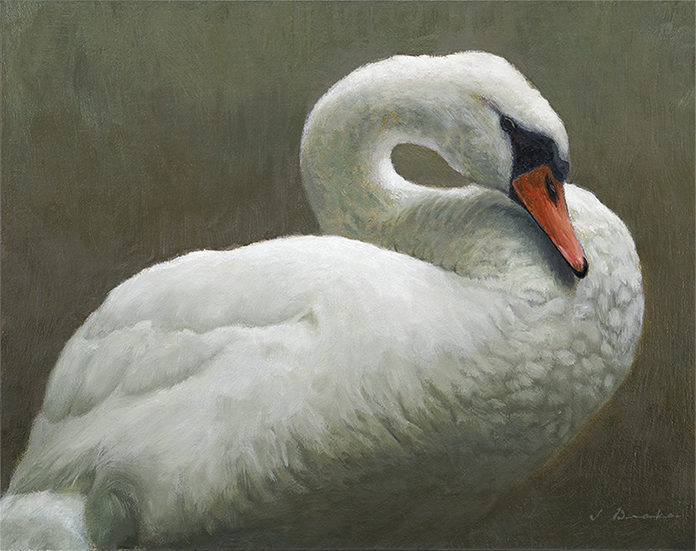
The Swan at Bayview Lake
11 x 14 in.
Oil on linen
$1,800
Available at Blowing Rock Frameworks & Gallery Small Works Exhibition, August 6-20, 2018
Call 828.295.0041
During a recent plein air event, Jason set his easel next to a small lake and was soon joined by a swan who seemed intent on posing for most of an hour. When encounters with nature happen with such alacrity, an artist is compelled to respond. A portrait style image emerged as the most appropriate way to capture the beautiful form of this bird.
Fine Art Connoisseur Magazine recently featured Jason in their “Three to Watch” article. Writer Allison Malafronte suggested, “With so much thought, observation, and reflection behind each piece, it is clear why Drake’s paintings frequently cause viewers to pause.”
Jason Drake is an American realist painter whose work is focused on the landscape, the figure, and the beauty of animals in the natural world. His style elevates uniqueness over the banal, the deep spark over the quick flash. He believes that his art should lift you up, elevate your perspective and help you hold onto things that have meaning.
Gallery owner Tim Miller wrote, “The depth and emotion of his paintings captures the attention of every client who enters the gallery and he’s quickly become a sought after name amongst our patrons. Jason’s work is as stimulating as it is mature, as beautiful as it is timeless.”
Regarding a recently sold egg tempera piece, one collector wrote, “At age 67, I welcome all the pauses I can come by and I am sure that I will spend many hours enjoying this painting. You have obviously done something special here.”
Living with his wife Holly and his dog Max in the Appalachian Mountains near Boone, North Carolina, Jason paints the wonder of nature that surrounds him and finds beauty in ordinary things and close friends. He is committed to producing works that reflect the glory of God and the dignity of Man.
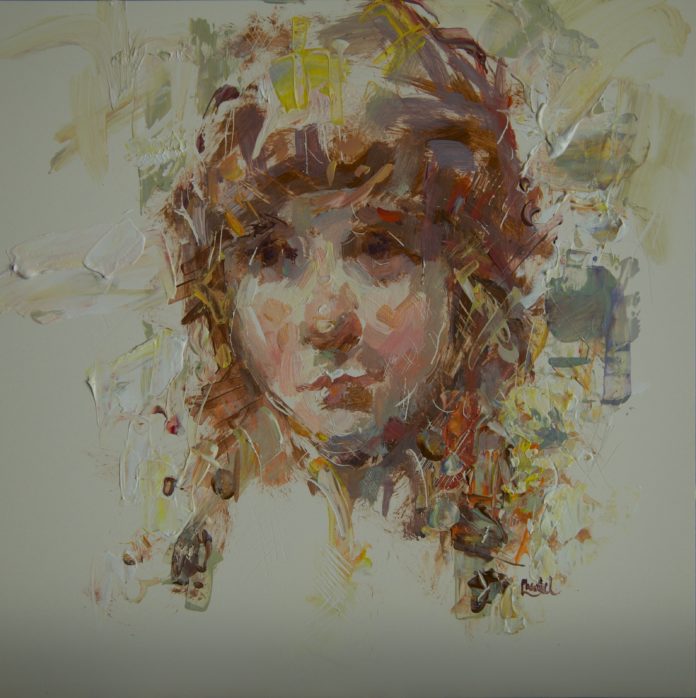
Here’s what’s being said about Chantel’s work:
“The definition of a gem is something that is prized because of its beauty or worth. Each time I see one of Chantel’s pieces, I think “What a little gem!” Working as small as she does is a whole new art, but Chantel repeatedly captures both the emotion of the story and the energy of the moment in such a small space… and with such passion! And it’s her brushwork, sort of a controlled chaos, that gives her work such a distinct spirit. Breathtaking!”
-Kathie Odom
Chantel’s passion for art began flourishing at age 12 when she was mentored under local San Diego artists. She continued to study art, largely self-taught, while living in Newport, Rhode Island, and Keflavik, Iceland. While enrolled in a college art course, a fellow student introduced her to acrylic paints, and she soon found it to be a medium dominated by abstract art. But her first love was portraiture for which she found little advice. As she dreamed of perfecting her skills as an acrylic portrait artist, Chantel continued to learn from professional oil painters and translated their teachings into acrylic techniques. All the while, she remained active in local art communities, including serving as President of Artists’ Link in Memphis, Tennessee.
In 2006, Chantel opened her own art business called Chantel’s Originals near Memphis, Tennessee. Chantel soon benefited from workshops and demonstrations with outstanding artists including Dawn Whitelaw, Michael Shane Neil, Suzie Baker, and Marc Hanson. Chantel is currently the National Coordinator of the State Ambassador program for the Portrait Society of America, and is also a member of The Chestnut Group and the National Oil & Acrylic Painters’ Society.
Chantel has been featured in solo art shows and juried exhibitions. Her award winning paintings are in private and public collections throughout the United States and overseas. Her work is published in Acrylic Artist magazine, American Art Collector, Southwest Art, The Artist’s Magazine, Fine Art Connoisseur Magazine, International Artist and several books. She regularly blogs at chantellynnbarber.com. Chantel resides in Bartlett, Tennessee, where she teaches online and in workshops throughout the United States and Canada.
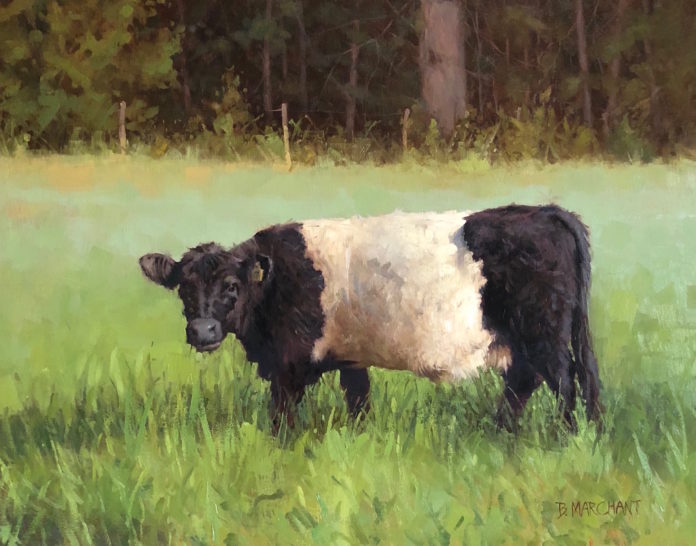
Near Beth Marchant’s home in Richmond, Virginia, is a farm with belted galloways. Several times she has walked amongst the cows taking dozens of photos. Lakenvelder is a product of a recent visit. Beth finds, whether painting a cow or a dog, the eyes of an animal tell a lot about the purity of the soul of the creature.
Beth has been drawing and painting professionally for over thirty years. She is best known for her architectural subjects and has had more than 1000 private commissions from all over the United States. Clients have included the US Navy, The Federal Reserve Bank of Richmond, The American Heart Association and Historic Garden Week in Virginia.
A studio art major in college, Beth is constantly learning by reading books by acclaimed artists and participating in workshops. She credits her love of architecture to the success she has had through the years for architectural renderings and house portraits in watercolor. For over 20 years she has been the designated illustrator for The Guidebook for Historic Garden Week in Virginia, painting around 30 watercolors for that publication per year.
After her children left for college, she returned to oils – painting landscapes, cityscapes, children and animals, including dogs, cats, horses and cows.
“I am mostly a studio painter but l love to paint en plein air whenever possible,” says Beth. “I received a BA in Studio Art but consider myself a self-taught artist. For me, the learning never stops. Every chance I have to gain invaluable knowledge and insight from participating in many wonderful workshops over the years, I am there! I think that drawing is my strength and I have started giving drawing workshops.”
Until recently most of her paintings were commissions, but in the past several years, she’s been painting increasing for gallery exhibits. Her most recent solo show was at Brazier Gallery in Richmond, Virginia.
Beth’s accomplishments include acceptances into the Oil Painters of America Eastern Regional Juried Exhibitions, 2008, 2009, 2013. She received a Third Place award in Plein Air Richmond 2012, Honorable Mention for Plein Air Richmond 2016 and 2017, First Place in the Fast and Fresh Competition 2016, and an Award of Excellence in 2018. Recently Beth was juried into the NOAPS 2018 “Best of America Small Painting National Exhibition”, where she won an award for Best Use of Light and Color; and into NOAPS 2018 “Best of America National Exhibition”.
Professional affiliations:
Oil Painters of America
Plein Air Painters of the Southeast (PAP-SE)
National Oil and Acrylic Painters Society (NOAPS)
Virginia Watercolor Society
Virginia Plein Air Painters
Founding member – Hang Five (a group of five professional Richmond artists).
The 10th annual Grand Canyon Celebration of Art will feature 25 artists painting plein air at the Grand Canyon September 8-15, 2018, with an exhibit and sale of their work opening at Kolb Studio on the South Rim on September 16. The exhibit and sale will be open daily through January 21, 2019.
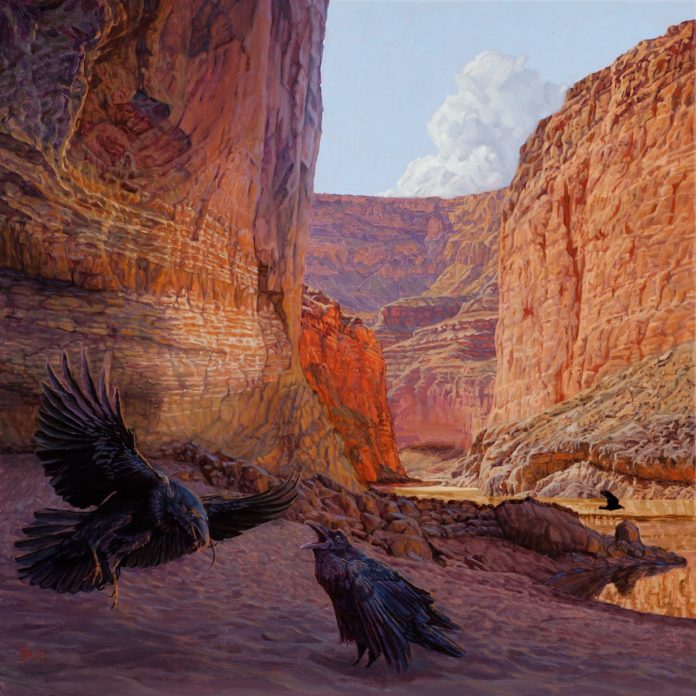
Elizabeth Black was awarded the PleinAir Magazine’s Best of Show at the 2017 Celebration of Art. The artist from Boulder, Colorado, first painted in the Grand Canyon in 1975 while working as a river guide on the Colorado River. Although the boat flipped and soaked all her watercolor sketches, Black says about half of them were immensely improved! That incident gave her a tiny glimpse of the exciting potential ahead. She has continued to explore the West with her husband, photographer Christopher Brown, by boat and on foot, frequently painting on-site. 2018 will be her 9th time participating in the GCA CoA.
Each of the participating CoA artists creates a studio painting for the exhibit, which will hang in the exhibit along with the plein air work they paint during the event.
For her studio painting for this year, Rowdy Redwall Ravens, Black returned to the river to capture in her work the ravens that are frequent visitors to campsites there. She explains:
“Redwall Cavern, like other popular stops on a river trip, supports a resident raven family who both harass and entertain river-runners. Ravens supplement their diet of insects, rodents and lizards with human food and bars of soap (their favorite). They unzip backpack pockets to steal goodies, and carry entire sandwiches away in their beaks. Highly intelligent and loyal, they hold grudges against people who have hurt them, use tools to obtain food, and remember locations of their many food caches for months. Watch for teenaged raven gangs playing on thermals along the canyon rim, challenging each other with amazing acrobatic feats.”
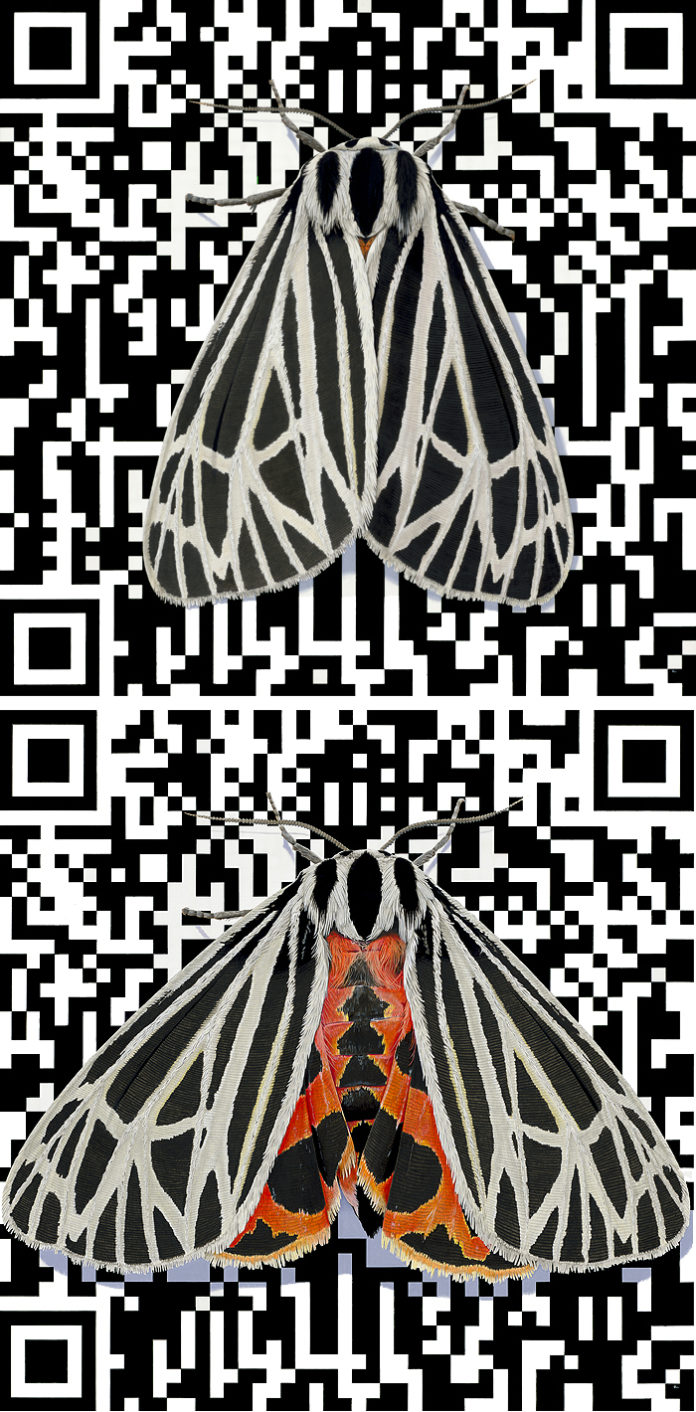
QR Code VTM and QR Code VTMO
24 x 24 in. each
Acrylic on panel
Rick Pas is an artist intrigued with surface textures and creating paintings that portray them in highly realistic detail. The goal of a painting is to feel like one can run a hand over the feathers or grasp an object in the painting. The subjects painted are usually based on the patterns and textures of nature and human interaction with nature.
Among his awards are an Arts for the Parks Regional Award, Society of Animal Artists Award of Excellence, Art Renewal Center Salon second, third, and honorable mention awards, and the Indiana Migratory Bird Stamp design. His art has appeared in national and regional publications. Influenced by Ingres, O’Keefe, Bateman, Lansdowne, photo-realism and impressionism.
Rick has exhibited at the Fort Lauderdale Museum of Art, Anchorage Fine Arts Museum, Flint Institute of Arts, Kalamazoo Institute of Arts, and the Field Museum of Natural History in Chicago.
His work can be found in collections across North America, including Ameritech and General Motors Corporation in Detroit, MI, and the Leigh Yawkey Woodson Art Museum in Wausau, WI.
For more images and information please visit www.rickpas.com.
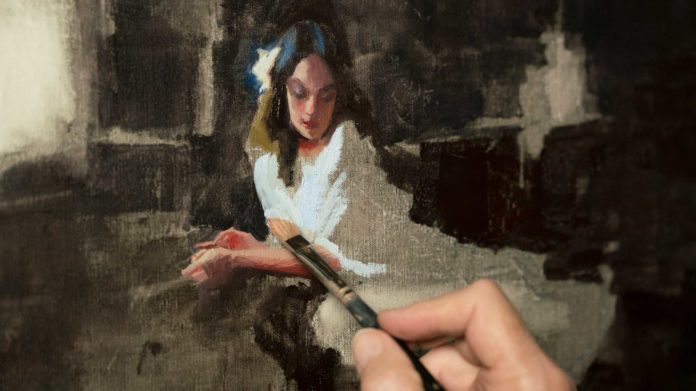
A preview of William Schneider's upcoming Liliedahl art workshop video, "Figure Painting Design & Composition in Oils"
Why do some artists get to a certain level and then stagnate, while others keep improving? Heed this advice on how to improve your art.
By William Schneider
Why do some artists get to a certain level and then stagnate, while others keep improving their entire lives? Some of the artists seem to make the same mistakes month after month . . . clearly “practice does not make perfect.” In fact, coaches have now amended that saying to “perfect practice makes perfect.”
On the other hand, some artists keep steadily climbing the ladder. One of my workshop students was eager, but not very accomplished. When she took another workshop from me the following year, her skill level had jumped a hundred percent! She continued to study and learn and is now winning national competitions and launching a professional career. (By the way, she is not a young prodigy; she started on this path when her kids were out of school.) This topic is of particular interest to me because I went back to art school when I was in my 40s and had to pursue it on a part-time basis until only 10 years ago.
Here are three actions I have found helpful to improve your art:
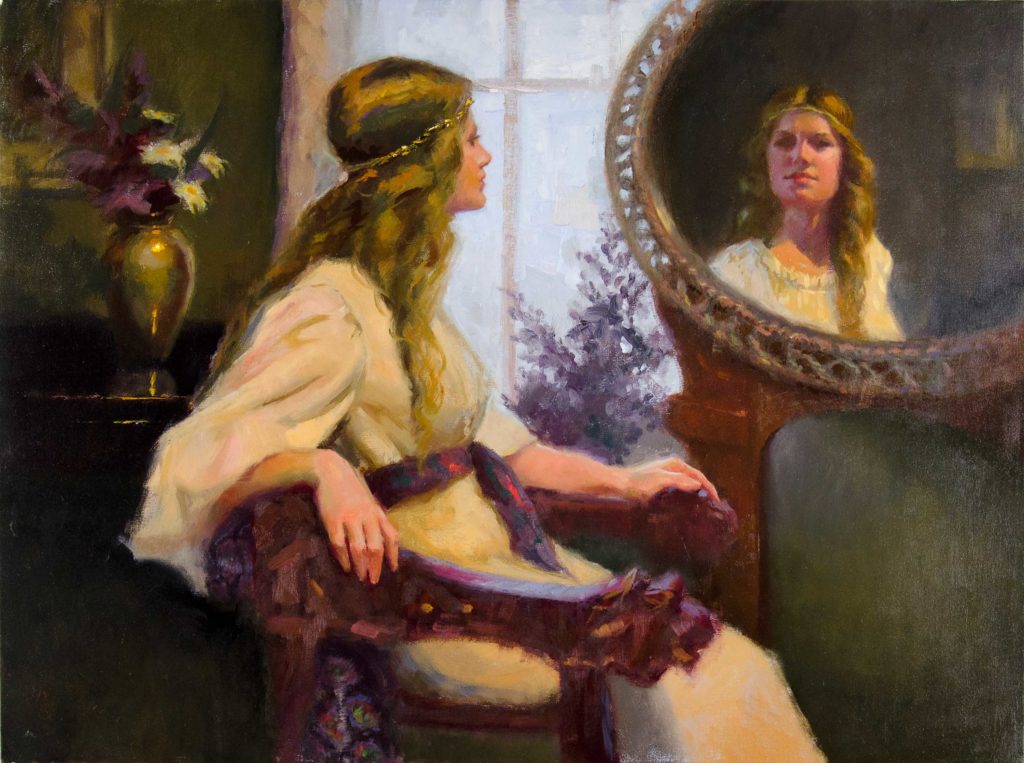
1. Research (and analyze). I look at art books and go to museums frequently to try to figure out why some pieces work better than others; I think of “reverse engineering” them. My wife and I took a trip to Montréal (in February . . . brrrr) to see an exhibition of J. W. Waterhouse. I would walk three blocks from our hotel to the Musée des Beaux-Arts and study the masterworks. I’d return to the hotel, eat lunch with my wife, and then both of us would return to the museum for more study and analysis. Then we’d leave to eat supper and she would go to the spa or watch TV while I went back to the museum. I filled my sketchbook with drawings and notes. Where did Waterhouse place his key figures? What was the pattern of lights and darks? What was the overall color harmony? Was there an explicit narrative? I tried to imagine what he painted first, what was second, and so on. After three days of this, the light bulbs began to come on and I started to understand the logic to his art composition.
2. Take a class. With the expanding number of schools and ateliers it’s easy to sign up for an evening or weekend class. Again, thanks to our new technology we can take online classes with instructors who are half a continent away. Most of today’s representational masters also teach workshops.
In my case I learned much of my pastel technique by taking workshops year after year from the great Harley Brown. Even though I now teach workshops myself, I still try to study with an artist I like at least once a year. You can also get instructional DVDs.
Hint: treat an art video workshop like a class. Stop the DVD after each section and practice the techniques shown at your own easel.
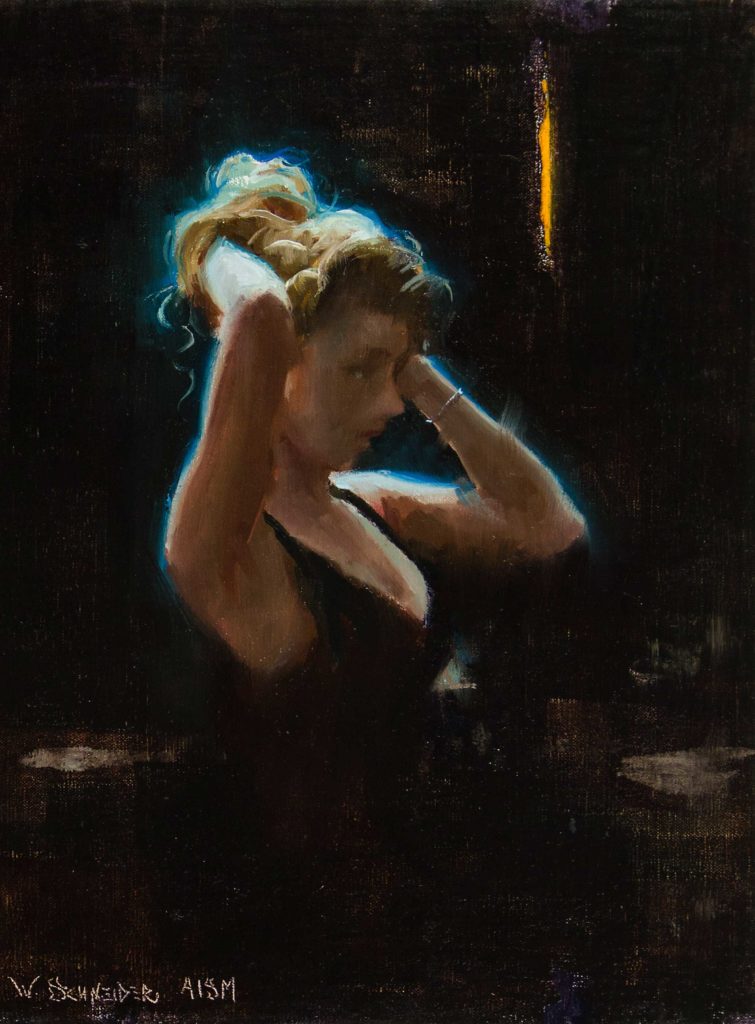
“Updo” by William Schneider
3. Paint from life. This probably should have been number one. The camera lies to us! There are four key elements to a representational painting: shape (drawing), value, color temperature, and edge. In a photo, three of the four are ALWAYS wrong! Values are the worst offender. The two or three darkest values turn into black, and the lightest areas get “blown out” to pure white. In a photo all edges are equally sharp . . . but that’s not the way we see. (The center of our field of vision is sharp, but the periphery is in soft focus. As we glance around a scene we can see each edge sharply — sequentially, but not simultaneously).
Color temperature is also distorted. We are limited by the phosphors in our computer screens, or — worse yet — the dyes in our printer’s inks. The fourth element, shape, may or may not be distorted, depending on how close we were to the subject when we took the photo. If we work exclusively from photos we become really good . . . at painting inaccuracies! There are a couple of other benefits to working from life. It imposes a time limit that forces us to be selective. It also forces us to “Be Here, Now”; in other words, “mindful” in the Zen sense.
Fill your mind with useful art stories, the latest trends, upcoming art shows, top artists, and more. Subscribe to Fine Art Today, from the publishers of Fine Art Connoisseur magazine.