
Home Blog Page 289

Rembrandt and the Inspiration of India

1
Rembrandt Mugahl drawings
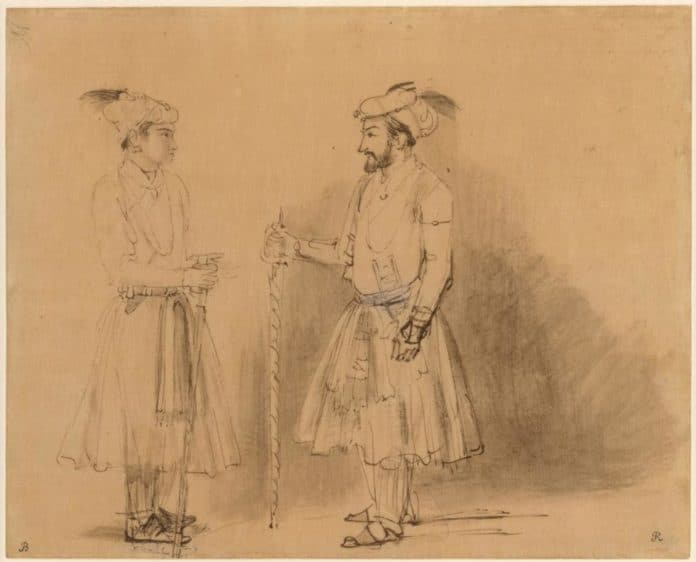
Rembrandt Harmensz. van Rijn (Dutch, 1606 - 1669), “Two Mughal Noblemen,” about 1656 - 1661, Dutch, Pen and brown ink with brown and grey wash, touched with white and with some scraping-out, Unframed: 6 3/4 × 8 7/16 in., Framed: 17 3/4 × 23 3/4 in., EX.2018.3.9, The British Museum, London Repro Credit: © The Trustees of the British Museum. All rights reserved

Through June 24, 2018
J. Paul Getty Museum

From The Getty Museum:

One of the most intriguing series in Rembrandt’s oeuvre comprises his drawings made in the style of artists serving the Mughal court in India. Juxtaposing Rembrandt’s depictions of Mughal rulers and courtiers with Indian paintings and drawings of similar compositions, this exhibition reveals how contact with Mughal art inspired Rembrandt to draw in an entirely different, refined style prompted by his curiosity for a foreign culture.

Among the most surprising aspects of Rembrandt’s prodigious output are 23 surviving drawings closely based on portraits made by artists working in Mughal India. These drawings mark a striking diversion for this quintessentially Dutch “Golden Age” artist, the only time he made a careful and extensive study of art from a dramatically different culture. Rembrandt and the Inspiration of India explores for the first time the artist’s Mughal drawings, exhibiting them alongside the Mughal paintings that inspired them to assess the impact of Indian art and culture on Rembrandt’s artistic interests and working process as a draftsman.
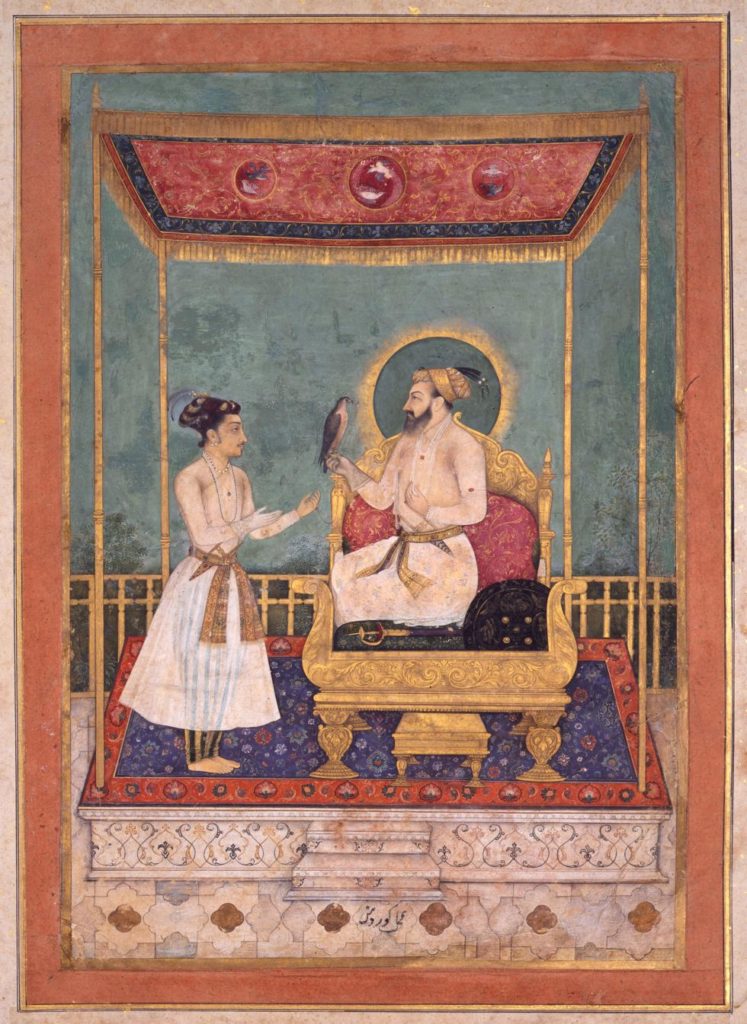
Govardhan (Indian (Mughal), active 1596 – about 1645), “Shah Jahan accepts a falcon from Dara Shikoh,” about 1630, Indian (Mughal), Opaque watercolor and gold on paper, Unframed: 11 7/16 × 7 13/16 in., Framed: 27 1/16 × 16 15/16 in., The San Diego Museum of Art, Edwin Binney 3rd Collection, 1990.347, San Diego Museum of Art, USA / Bridgeman Images

“Rembrandt may be one of the most famous painters in European art history, but there are still remarkable discoveries to be made about his work,” says Timothy Potts, director of the J. Paul Getty Museum. “This exhibition is a case in point, demonstrating how Rembrandt turned to the art of India to produce some of his most intriguing images. This vivid example of cultural exchange reminds us how artists on different continents take inspiration from one another, a reality that of course continues to this very day.”

The exhibition pairs 20 of Rembrandt’s surviving drawings depicting Mughal emperors, princes, and courtiers with Indian paintings and drawings of similar compositions, which had been brought to Amsterdam from the Dutch trading post in Surat. Rembrandt’s portraits reveal how his contact with Mughal art inspired him to draw in a newly refined and precise style.
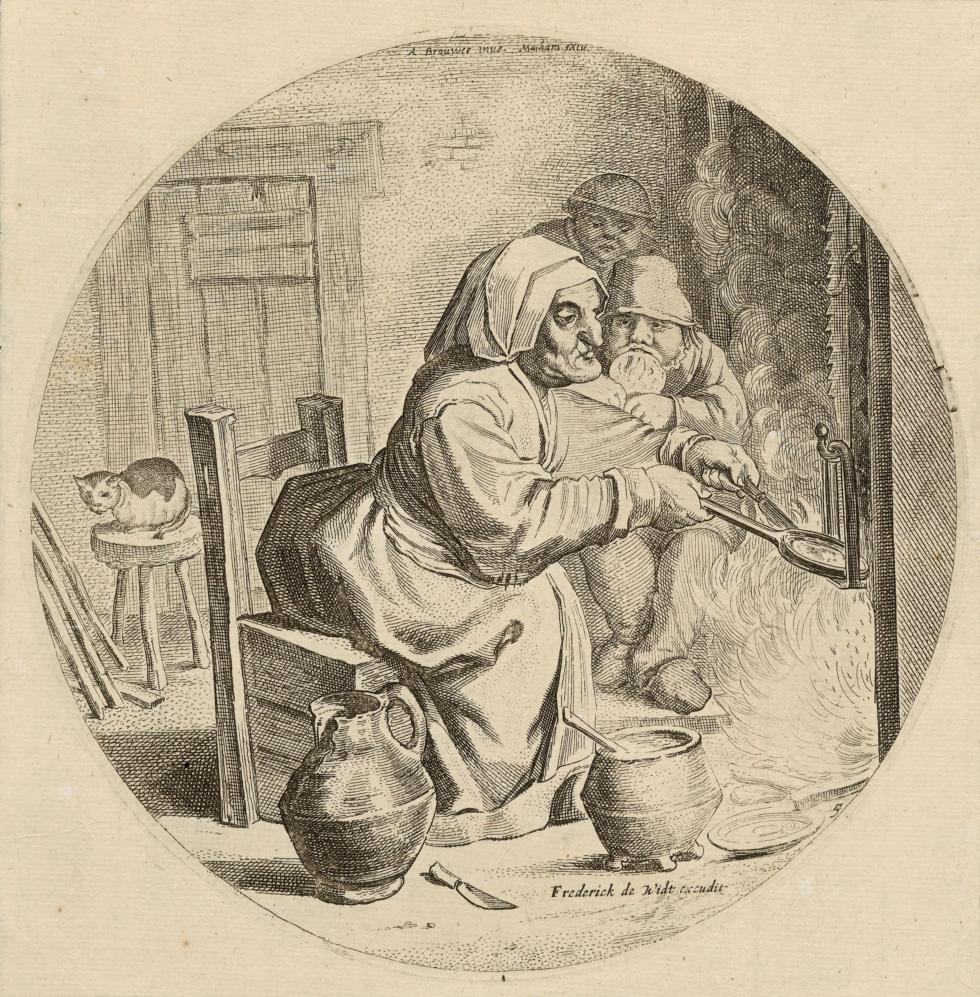
Theodore Matham (Dutch, 1605/6 – 1676) and After Adriaen Brouwer (Flemish, about 1605 – 1638), “Peasant Woman Baking Pancakes,” 1634 – 1676, Dutch, Etching, Unframed: 7 1/8 in. diameter, EX.2018.3.12, The British Museum, London Repro Credit: © The Trustees of the British Museum. All rights reserved

Rembrandt and the Inspiration of India also examines how global trade and cultural exchange impacted artists working for Mughal emperors in India, who were in turn inspired by Dutch and Flemish printed images of European rulers and scenes of daily life. Among the treasures found in a Dutch East India ship, which sank en route to China, was a package that contained four hundred prints by and after Dutch and Flemish artists. This astounding quantity suggests that Dutch merchants thought that art would help them gain access to the Asian market in the sixteenth and seventeenth centuries.

These prints were particularly interesting to Mughal court artists, who were already accustomed to working with single-tone drawings and calligraphy. Rather than copy the European compositions exactly, Mughal artists adapted them to their own artistic purposes, as seen in Keshav Das’s “Roman Hero” (about 1590-95), based on prints by the Dutch artist Hendrick Goltzius. The use of these prints illuminates the range of images that found a positive reception in India long before Rembrandt made his creative copies.

Rembrandt Harmensz. van Rijn (Dutch, 1606 – 1669), “Four Mughal Elders Seated Under a Tree,” about 1656 – 1661, Dutch, Pen and brown ink with brown and grey wash, touched with white and with some scraping-out, Unframed: 7 5/8 × 4 7/8 in., Framed: 23 3/4 × 17 3/4 in., EX.2018.3.5, The British Museum, London Repro Credit: © The Trustees of the British Museum. All rights reserved

The Mughal Emperor Shah Jahan (r. 1627-1658) was well known for his patronage of the arts — most notably the building of the Taj Mahal. Shah Jahan’s rule of Mughal India spanned the years that Rembrandt worked in Leiden and Amsterdam. In his eight drawings of Shah Jahan — more than he made of any other Mughal ruler — Rembrandt carefully studied the trappings of imperial magnificence, as seen in “On Horseback (Shah Jahan)” (about 1656-61). The poetic claim that Shah Jahan was “Royal Rider of the Piebald Steed of the World” was not lost on Rembrandt.
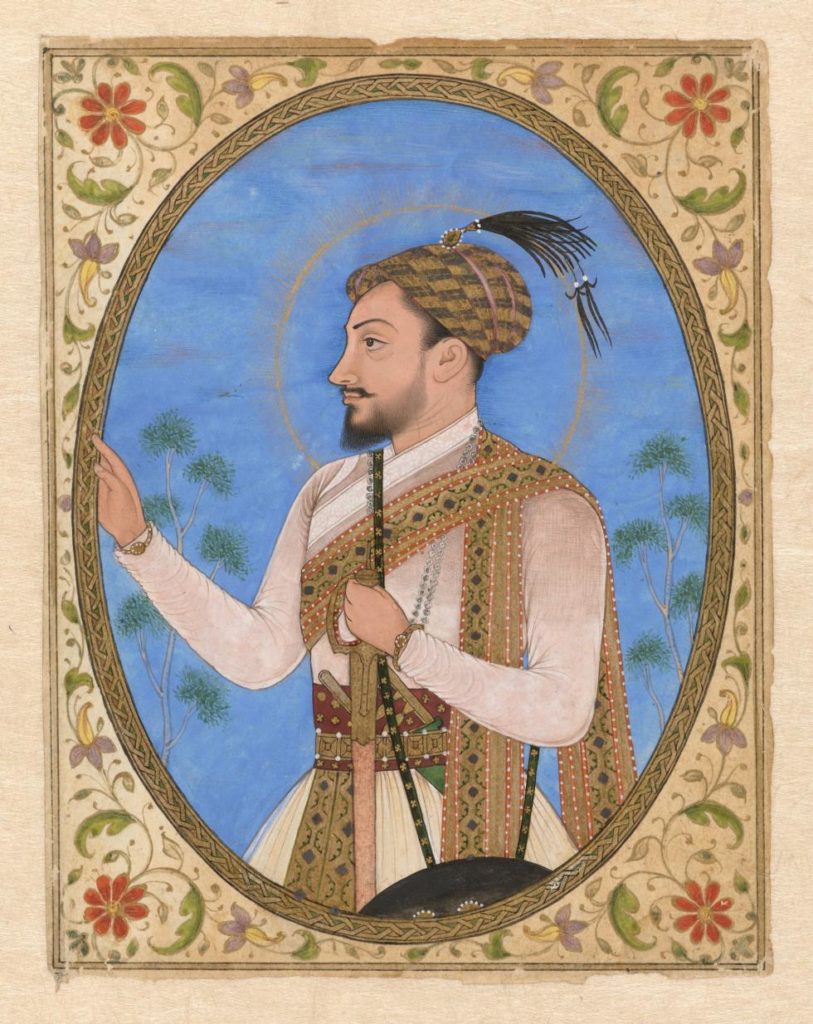
Unknown creator, “Portrait of Muhammad Adil Shah, Shah of Bijapur,” about 1685, Indian (Deccani), Gouache and gold on paper, Unframed: 4 3/4 × 3 11/16 in., EX.2018.3.34 Repro Credit: Rijksmuseum, Amsterdam

Rembrandt’s drawings after Mughal compositions constitute the largest group, by far, of his copies after other works of art. Moreover, they are his only surviving drawings on expensive Asian paper, which suggests the high value the artist himself placed on them. “Shikoh” (about 1656-60) is quite different from the typically known “late Rembrandt” style of drawing. His careful attention to details of clothing, jewelry, turbans, and footwear pays tribute to Mughal artists’ exceptional artifice.

On almost every level, Rembrandt and the Indian court painters operated in completely different worlds. Yet such differences did not prevent these innovative artists from appropriating foreign imagery to reflect upon and enrich their own more familiar artistic practice and culture.


Sign up to receive Fine Art Today, the weekly e-newsletter from
Fine Art Connoisseur magazine.
Preview the 9th Annual Texas Masters Art Show

0
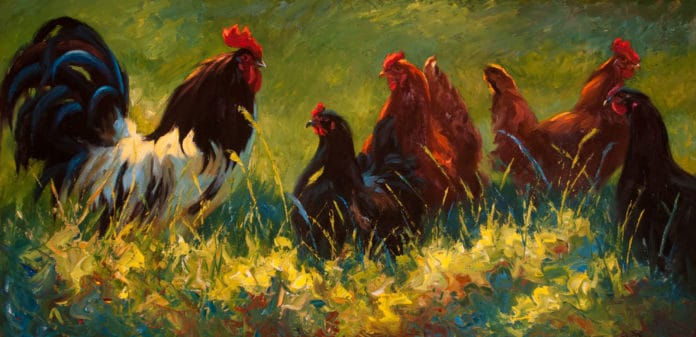
Cheri Christensen, “Protecting the Flock,” oil, 18 x 36 in.

InSight Gallery is proud to host its 9th annual Texas Masters art show, featuring new works by the finest Texas artists living and working today, each with their own unique voice but collectively as diverse as the State of Texas.

Visitors can expect more than 40 new works from gallery artists Roy Andersen, Mary Ross Buchholz, Nancy Bush, Jill Carver, Cheri Christensen, Douglas Clark, Teresa Elliott, Jim Eppler, Bruce Greene, George Hallmark, Francois Koch, Mark Haworth, Kyle Ma, Kay Northup, Robert Pummill, Gladys Roldan-de-Moras, Aleksander Titovets, Lyuba Titovets, and Ann Kraft Walker, and guest artists David Griffin and Brian Grimm.

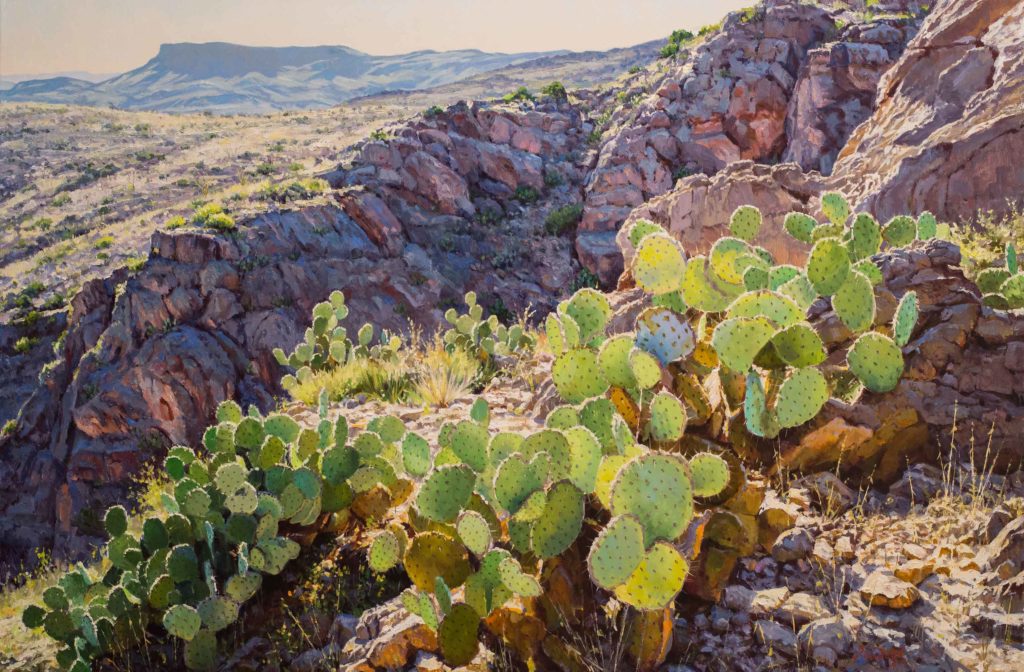
Bruce Greene, “A Cowpuncher’s Paradise,” oil, 34 x 52 in.
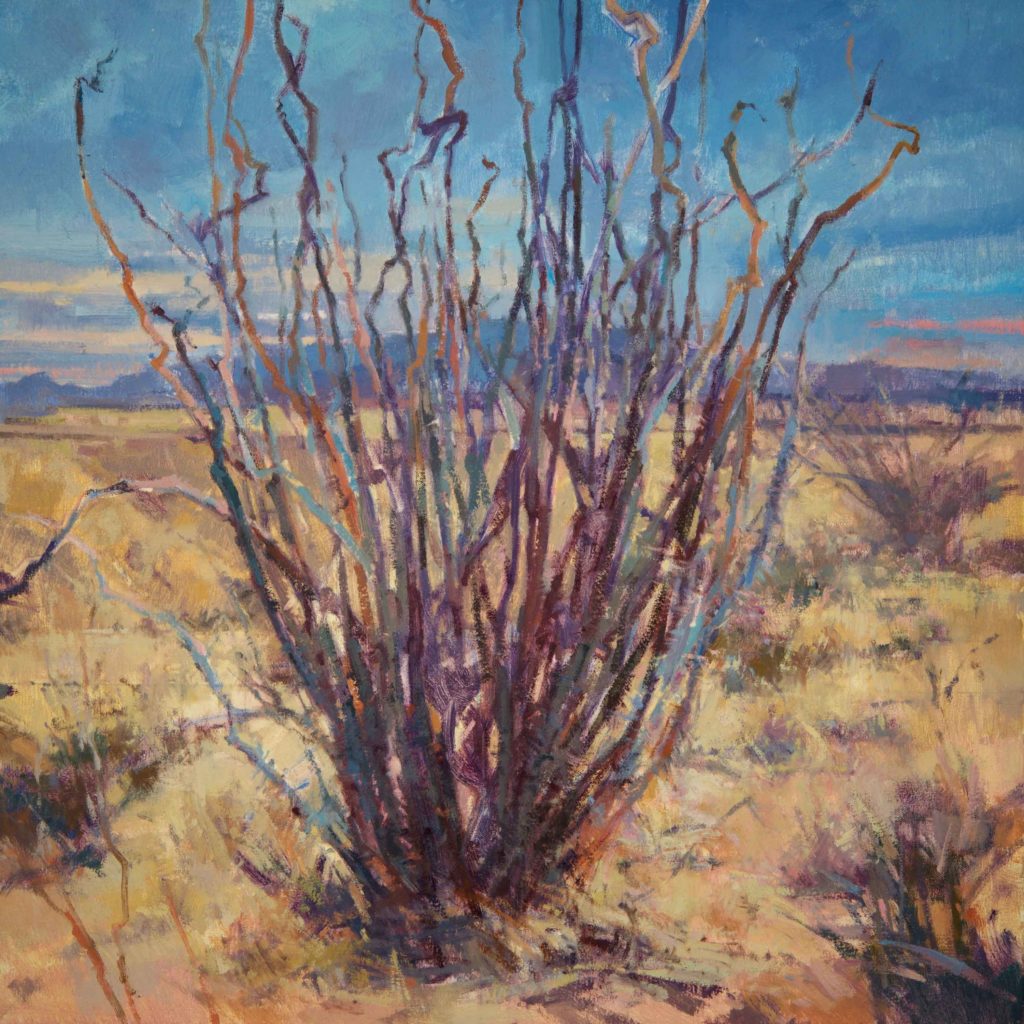
Jill Carver, “Ocotillo,” oil, 24 x 24 in.
Mark Haworth, “Precarious Horizon,” oil, 24 x 36 in.
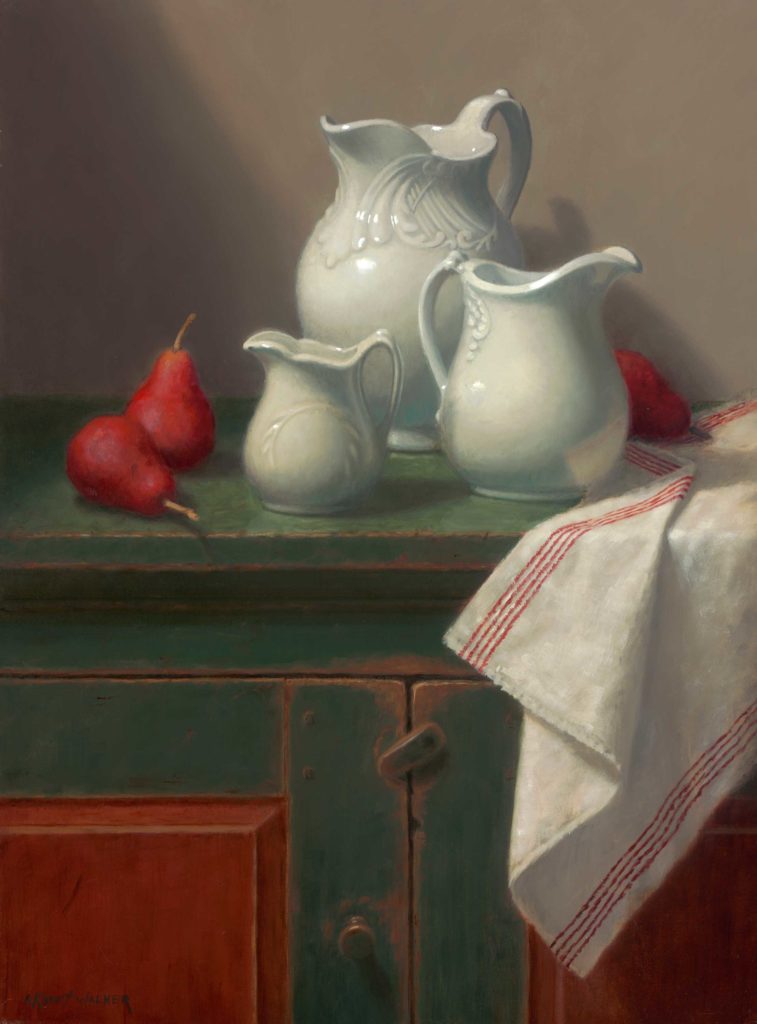
Ann Kraft Walker, “A Sweet Memory,” oil, 27 x 20 in.
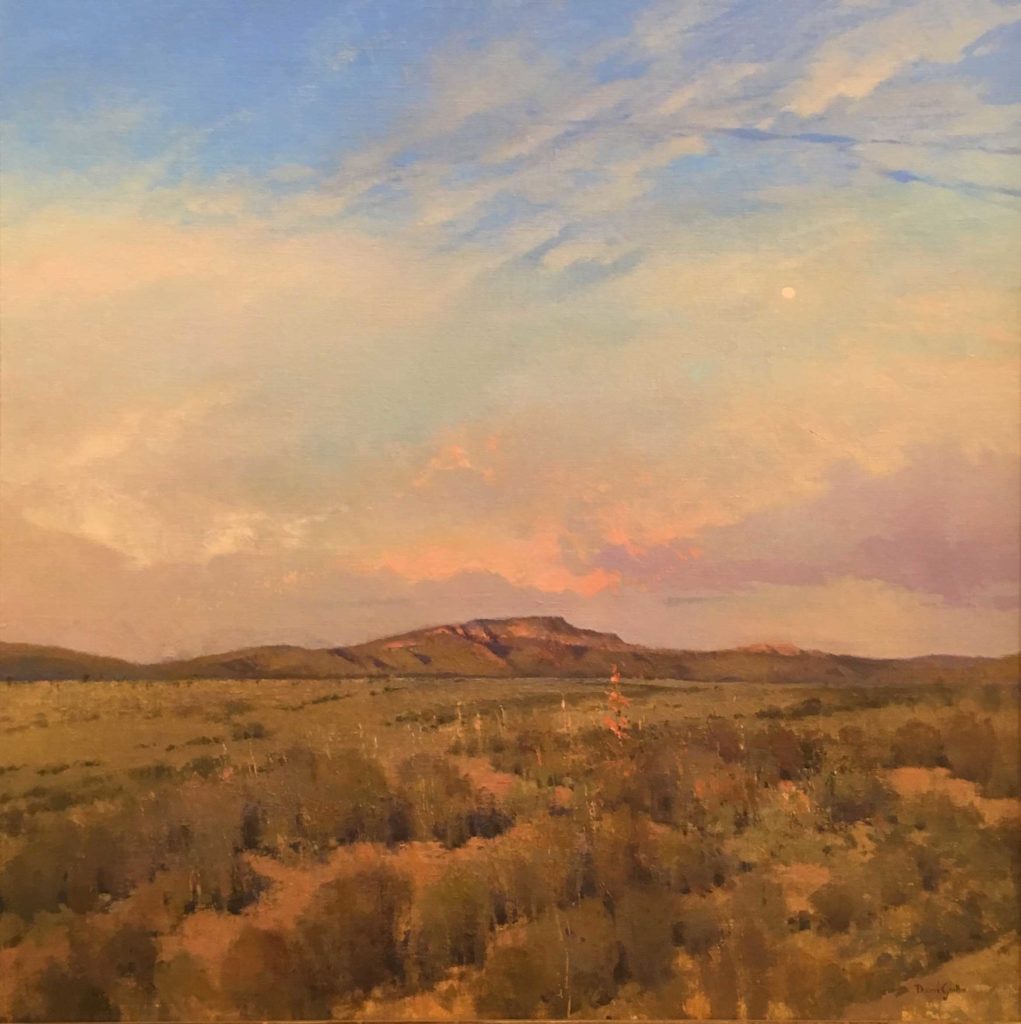
David Griffin, “Dawn’s Early Light, Big Bend,” oil, 34 x 24 in.
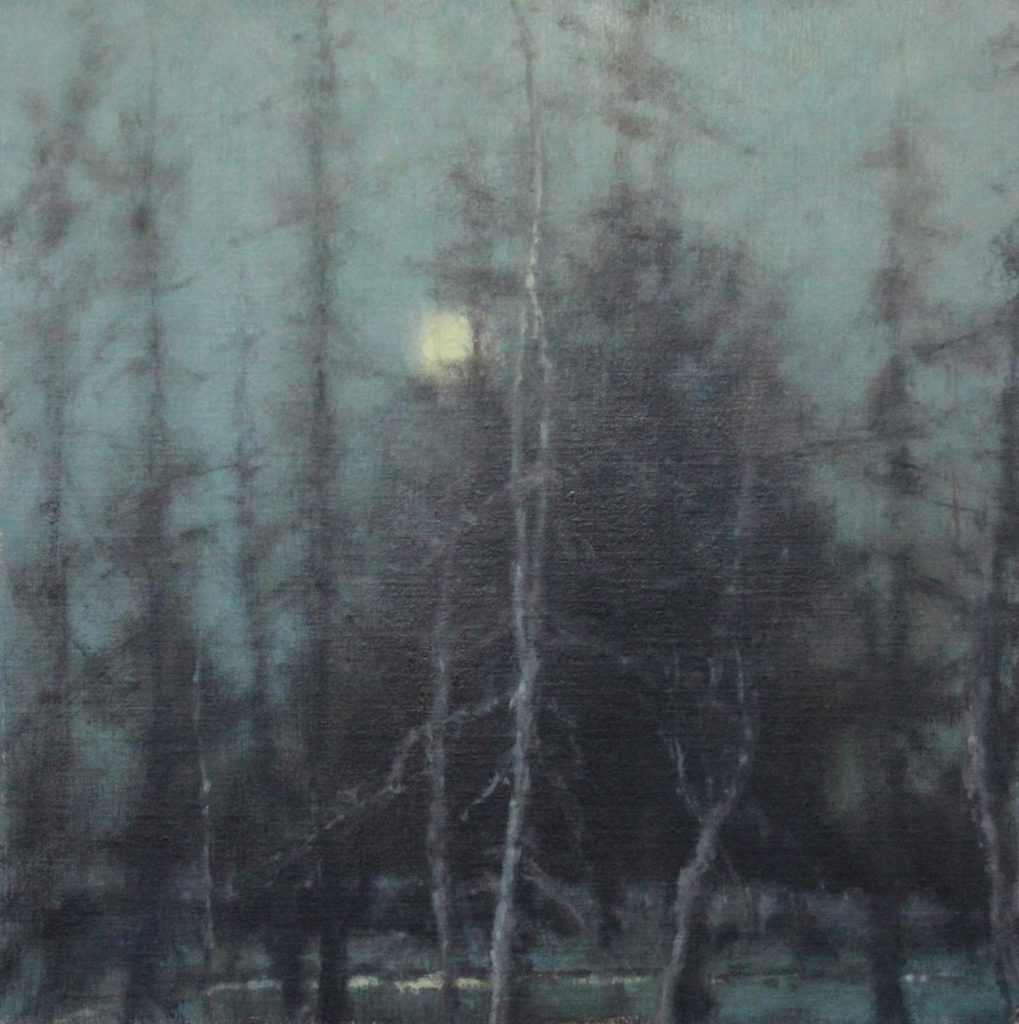
Nancy Bush, “Moon and Fog,” oil, 20 x 20 in.
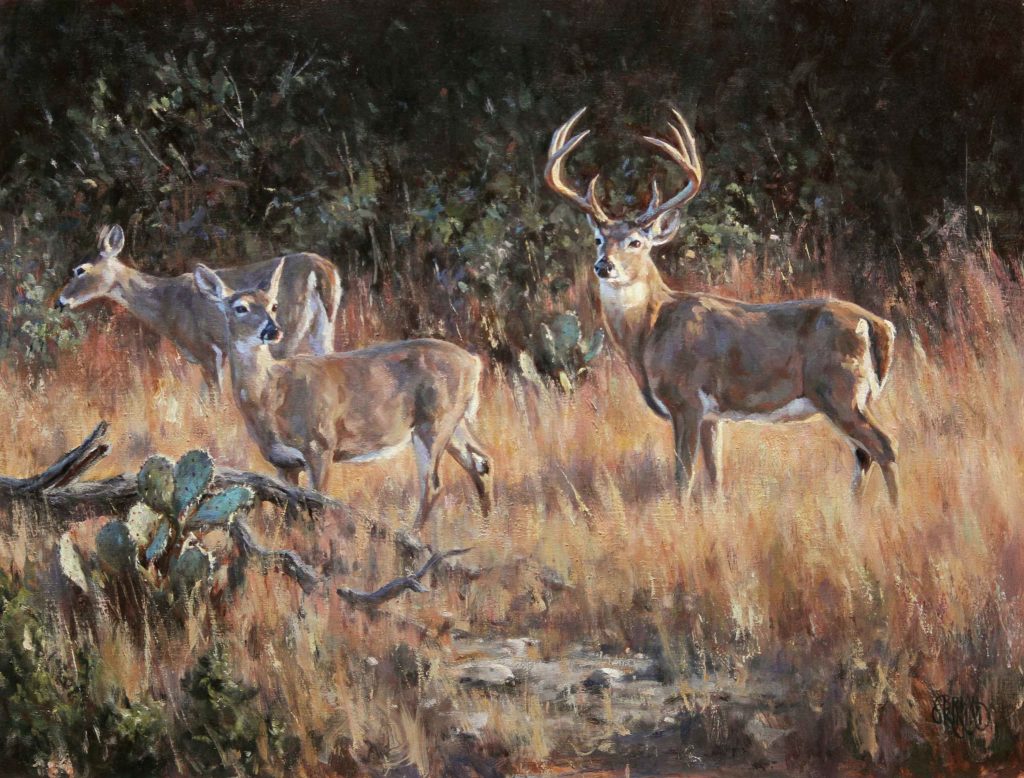
Brian Grimm, “The Courtship,” oil, 19 x 25 in.

Sign up to receive Fine Art Today, the weekly e-newsletter from
Fine Art Connoisseur magazine.

A $50,000 Biennial Prize Recognizing Women Figurative Realist Painters

0
Susanne Mitchell, "Waiting (from the Silence of the Ordinary)," 2015, oil and mixed media on canvas, 65 x 60 in.

From the organizers of the Bennett Prize:

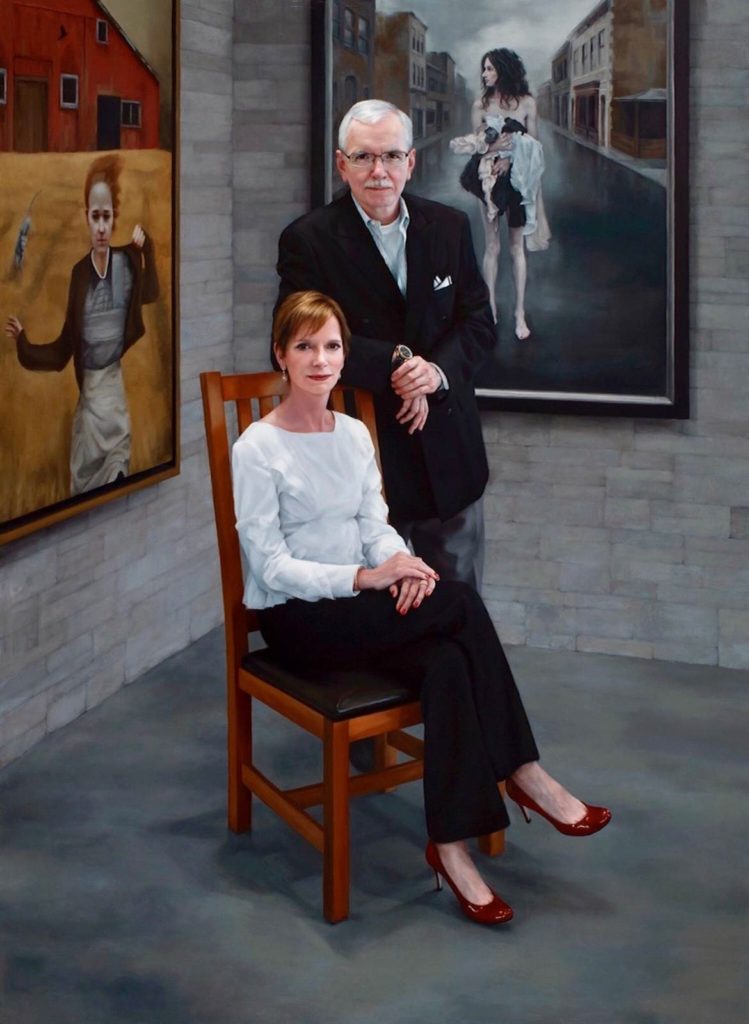
The Bennett Prize, the largest ever offered solely to women painters, was announced today by art collectors Steven Alan Bennett and Dr. Elaine Melotti Schmidt, who are endowing the $50,000 biennial prize at The Pittsburgh Foundation.

The prize will spotlight women artists who paint in the figurative realist style, and who have not yet reached full professional recognition — both new artists and those who have painted for many years. It will allow the winner to create her own solo exhibition of figurative realist paintings, which will first be shown at the Muskegon (Michigan) Museum of Art, and then travel the country. The prize is designed for women artists who are, or seek to become, full-time professional painters.

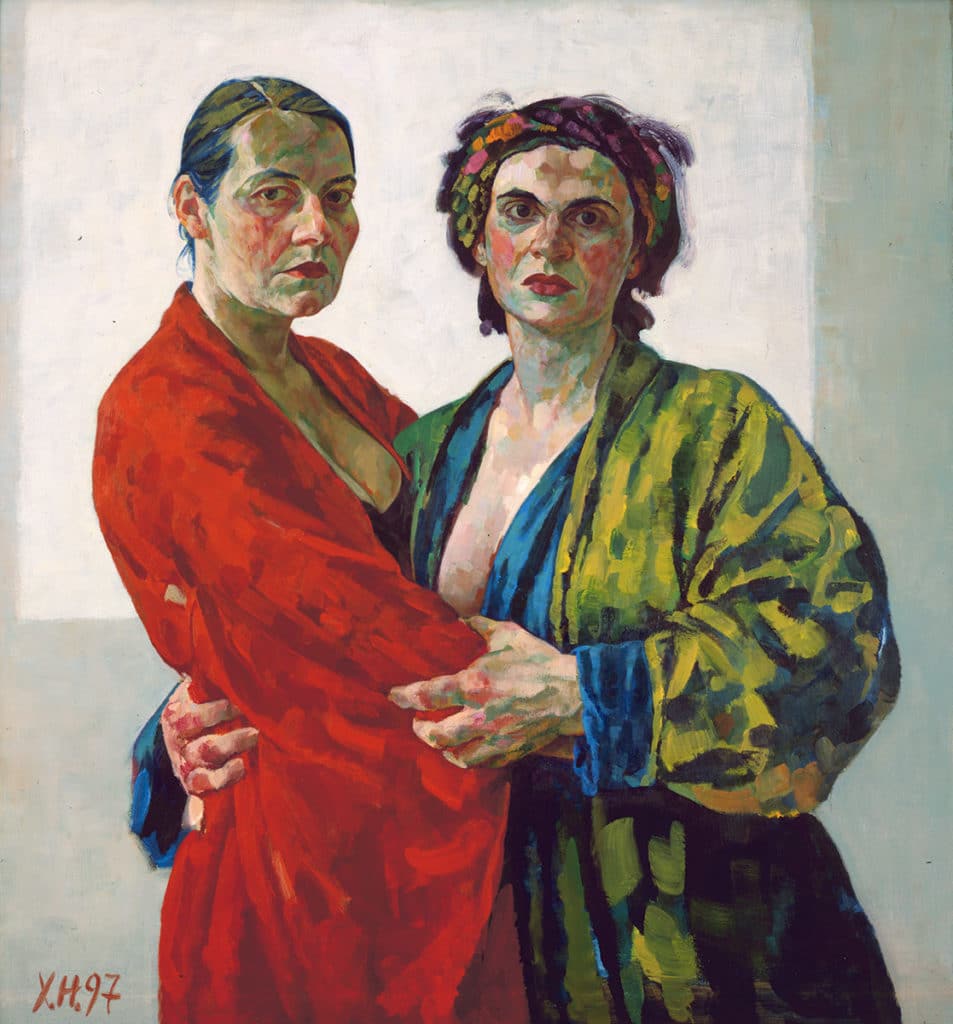
Xenia Hausner, “Alles Walzer (Let’s Dance),” 2017, acrylic on panel, 61 x 57 in.

The Bennett Prize also aims to expand opportunities for the public to learn more about the creative vision of talented women painters in the increasingly popular style of figurative realism.

“We are excited to announce The Bennett Prize at a time when women are creating important figurative realist paintings that should be seen by a wider audience,” Bennett said. “Figurative realist painting features the human form in all of its diversity. It has an important role to play in a society struggling to understand human differences and commonalities, including race, gender, and social status.”

Steven Bennett and Elaine Schmidt, of San Antonio, Texas, have endowed a $3 million fund at The Pittsburgh Foundation to ensure that the prize will be awarded every two years in perpetuity. The Bennetts were referred to The Pittsburgh Foundation, specifically to the Foundation’s Center for Philanthropy, where donors, staff and community experts develop innovative new projects.

Harmonia Rosales, “Creation of God,” 2017, oil on canvas, 48 x 60 in.

“The Bennett Prize is a perfect example of how community foundations can help philanthropists take an idea from incubation to reality,” said Foundation President and CEO Maxwell King. “Steven and Elaine were familiar with our history of funding individual artists, particularly those whose work and unique points of view might otherwise be overlooked. By endowing the prize at The Pittsburgh Foundation, the Bennetts have created a permanent mechanism for supporting and elevating the work of women painters.”

A four-member jury, including renowned realist artists Maria Tomasula and Andrea Kowch, will select 10 painters from among the entrants. The 10 finalists will each receive $1,000 to participate in an exhibition opening May 2, 2019 at the Muskegon Museum of Art, where the winner will be announced.

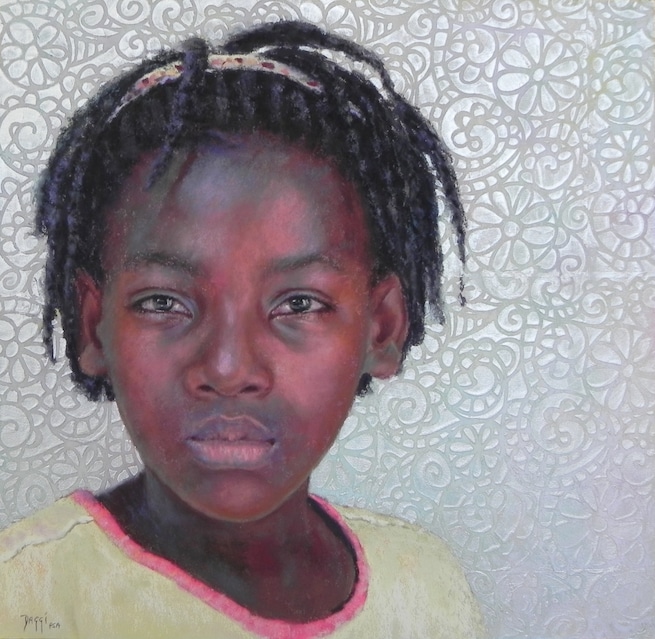
Daggi Wallace, “Quiet Beauty I,” 2017, oil on canvas, 12 x 12 in.

“The beauty of this prize is in the extended significance of its effects: not only will it recognize recipients’ past achievement, it will also help foster their future accomplishment,” said artist and juror Maria Tomasula, “I know how important both of these things are to the life of an artist.”

The Bennetts, along with The Pittsburgh Foundation, consider the Muskegon Museum of Art one of the great hidden gems among American museums. It was chosen as the inaugural venue for The Bennett Prize due it its commitment to both women and realism, as evidenced by the art on its walls and the exhibitions it sponsors.

“The Muskegon Museum of Art has built a reputation over the past decade for redefining what a small city art museum can accomplish,” said Kirk Hallman, executive director of the museum. “Serving as inaugural host of The Bennett Prize is a wonderful opportunity for the museum to continue showcasing innovative programs.”

Katie O’Hagan, “Portrait of the Collectors Steven Alan Bennett and Dr. Elaine Melotti Schmidt,” 2016, oil on canvas, 78 x 58 in.

The winner will receive $25,000 annually for two years, so she can devote the time necessary to mount a solo exhibition, which will open in Muskegon in 2021 and then travel the country.

Andrea Kowch, artist and juror shared, “I know firsthand the amount of diligence, passion, and perseverance it takes to become a successful artist when there are no additional opportunities available to further support one’s efforts. A prize such as this will prove to be a game changer for many, and I am honored to be part of the prize’s inaugural debut.”

The call for entries runs from April 13 – Sept. 28, 2018. Full details are available at www.thebennettprize.org. The Bennett Prize is not open to hobbyists, students or artists who have been paid, or received an award of $25,000 or more for any single work of art.

Bennett and Schmidt are among the country’s top collectors of figurative realist art and are committed to seeing that talented women painters receive long overdue recognition for their superb artistry.

“We want to showcase the work of talented women figurative painters and enable them to take their rightful place among the most celebrated painters working today,” Schmidt said. “We’ll know we have succeeded when there are as many paintings by women as men in museums, commanding the same prices and critical esteem.”


Sign up to receive Fine Art Today, the weekly e-newsletter from
Fine Art Connoisseur magazine.

Featured Artwork: Heather Arenas

0

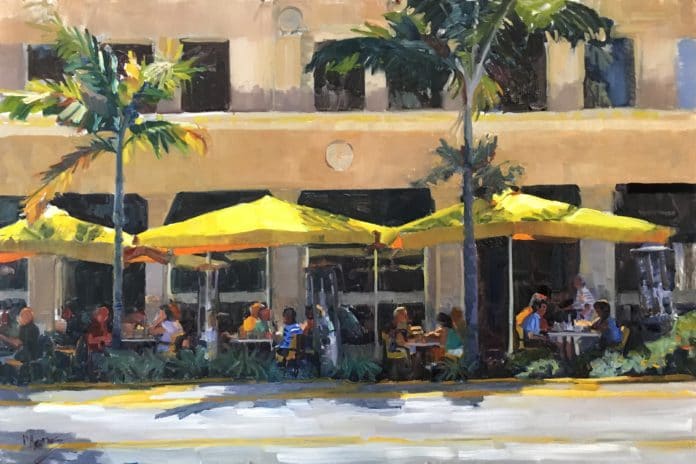
Naples Cafe
24 x 36 in.
Oil on wood

Artist’s Statement
One of my goals is to say more with a painting than can be said with a photograph. My works are fresh and full of colors that I see that may not be seen by the typical viewer. My work is constantly evolving and represents my artistic voice.

Influence
My grandmothers were both artists and I was provided with various art supplies growing up. I was taught to appreciate many forms of art. My favorite artists include living artists include Richard Schmidt, Tibor Nagy, Jeremy Mann, Kim English, and Dan McCaw. Deceased influences include Honore Daumier, John Singer Sargent, Anders Zorn, Richard Diebenkorn and Joaquin Sorolla.

Art Education
Over the last 20+ years, I have put myself through a rigorous course of independent study by reading books on drawing and painting and taking workshops from artists I admire. While earning a degree in biology with emphasis on anatomy in the early 1990’s, I also studied art history and ceramics.

Organizations
Women Artists of the West, Master Signature Member American Women Artists, Associate with Distinction

Galleries
Reinert Fine Art, Charleston, SC and Blowing Rock, NC
Reflection Gallery, Santa Fe, NM
Mary Williams Fine Art Gallery, Boulder, CO
RS Hanna Gallery, Fredericksburg, TX
East West Fine Art, Naples, FL

Recent Awards
WAOW Spring Online, March 2018, “Modern Day Venus”, Honorable Mention Gateway Intl Painting Contest, December 2018 for “Passion”, Finalist
Sedona Art Prize, August 2017 for “It Takes All Kinds”, Finalist
Sedona Art Prize, June 2017 for “Red in the Sun”, Finalist
Bold Brush, May 2017 For “Oscar and Sharon’s Big Day Out”, Best of Show
Sedona Art Prize, May 2017 for “Colorful Subject”, Finalist
WAOW Nat. Juried Exhibition 2016 for “Home on the Range”, Art of the West Editor’s Choice AWA National Juried Exhibition 2016 for “Orange Taffeta”, Finalist
WAOW Hot Summer Nights 2016 for “After the Dance”, Best Overall
WAOW Hot Summer Nights 2016 for “31st and Lexington”, Honorable Mention
OPA Online Showcase Spring 2016 “Belizean Chef”, Honorable Mention
AWA Spring Online Show 2016 for “Margaritas in Tubac”, Finalist

Upcoming Workshops
See website for details.

“Old News” That Inspires Fresh Dialogue

0
Adam Straus, “Old News: In the Garden,” 2017, oil and graphite on newspaper transferred and adhered to canvas, 65 x 60 in. Straus has been represented by Nohra Haime Gallery in New York City since 1990.

Adam Straus: Oncoming
Through April 15, 2018
Grenning Gallery, Sag Harbor, New York

From the gallery:
Adam Straus is known for his majestic and luminous depictions of the sublime, which are often saturated with a concern about social and environmental issues. His penetrating dark humor can transport the viewer to post-apocalyptic worlds and often offers a wry observation on how humans have altered the natural landscape.

True to Grenning Gallery aesthetics, Straus is dedicated to a highly refined craft in his contemporary realist paintings, yet he overlays a deeply personal social commentary. Straus also merges his high level of craft with modern experimentation, inspiring a dialogue on political, environmental, and sociological issues.

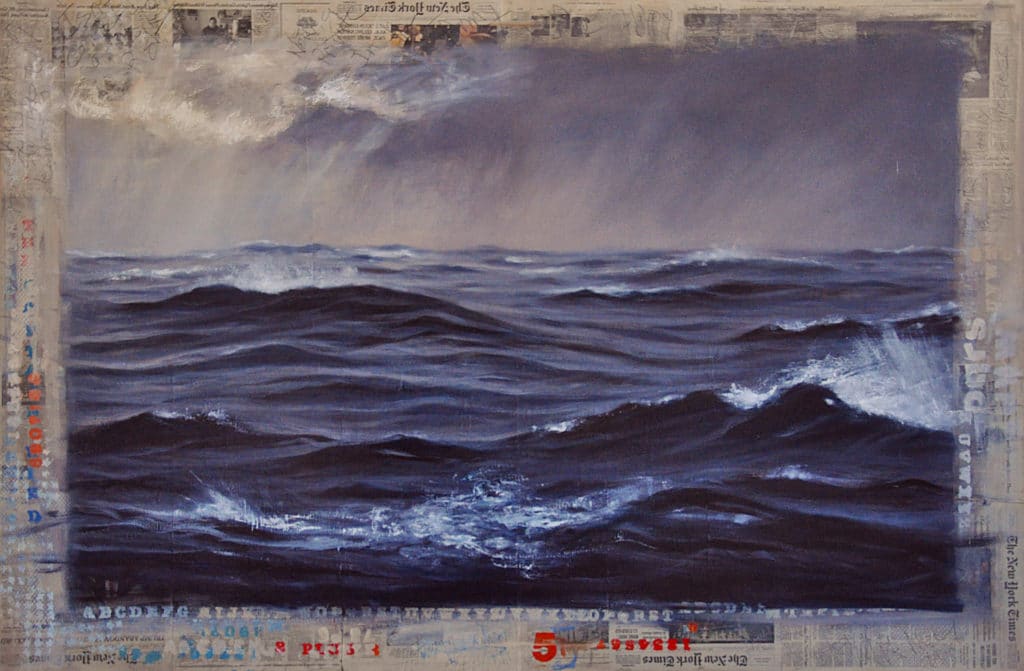
For instance, his recent “Old News” series is painted with a skilled dexterity yet mounted on newspaper, which is then archivally affixed onto the canvas. Straus admits that this series was inspired by the 2016 presidential election.

“I read the New York Times daily and have for years,” Straus says. “The paintings were begun as an escape route of this bad news and grew into an interest on contrasting the timeless with the day-to-day events of humanity.”

Adam Straus, “Old News; Oncoming Storm,” 2017, oil and graphite on newspaper transferred and adhered to canvas, 48 x 72 in.

Straus emanates a more whimsical philosophy with his second painting in this series. He notes “Old News; In the Garden” (at top) was meant to convey life and a crazy kind of growth coming out of bad news. “It is my belief that how we deal with our place in nature and our effect on the environment is the most important issue of our time,” he says. By overlaying a colorful, wild garden on the troubling headlines, Straus creates a sense of hope. In the darkest of days, the natural world will maintain its lively light. However, within that light lives natural evils. For instance, the focal point of the painting is a large, white daisy in full bloom. Yet just above the flower, a large mosquito pierces the canvas, in an attempt to devour life from within.

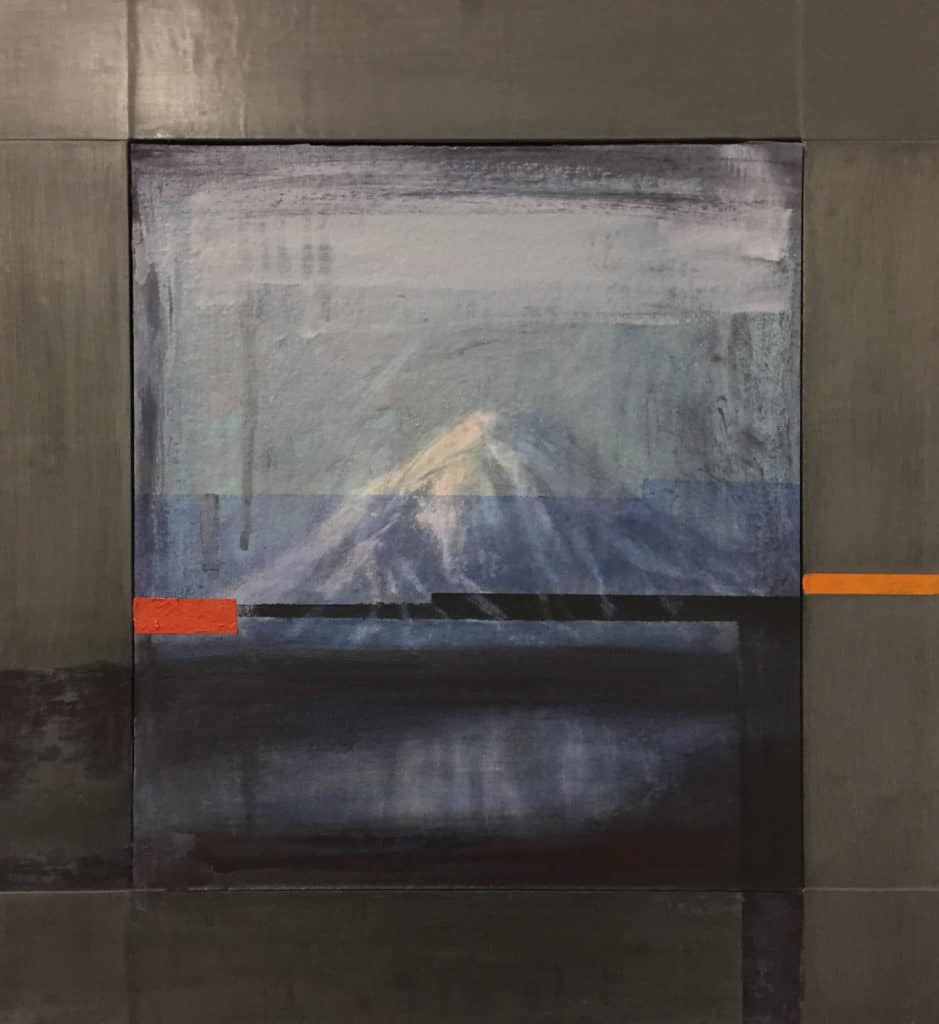
Adam Straus, “Volcano Glitch 2,” 2016, oil on rice paper over acrylic on canvas framed in lead, 21.5 x 20 in.

Straus’s concern for the environment carries on throughout his oeuvre. For instance, in his recent “Glitch” series of paintings, Straus’s commentary is obvious and well-defined. He is noticeably interested in the boundless accessibility we currently have to otherwise remote like Antarctica, as a result of modern technology.

Straus’s process includes taking a photograph of an Arctic landscape, and then running it through an iPhone app called “Glitch.” This allows technology to distort, and literally make its mark on the photo. Straus then paints these technological distortions onto his classical landscape, and he breaks the plane of the canvas by painting on the frame. This accentuates the power of the hand of man and mankind on nature.

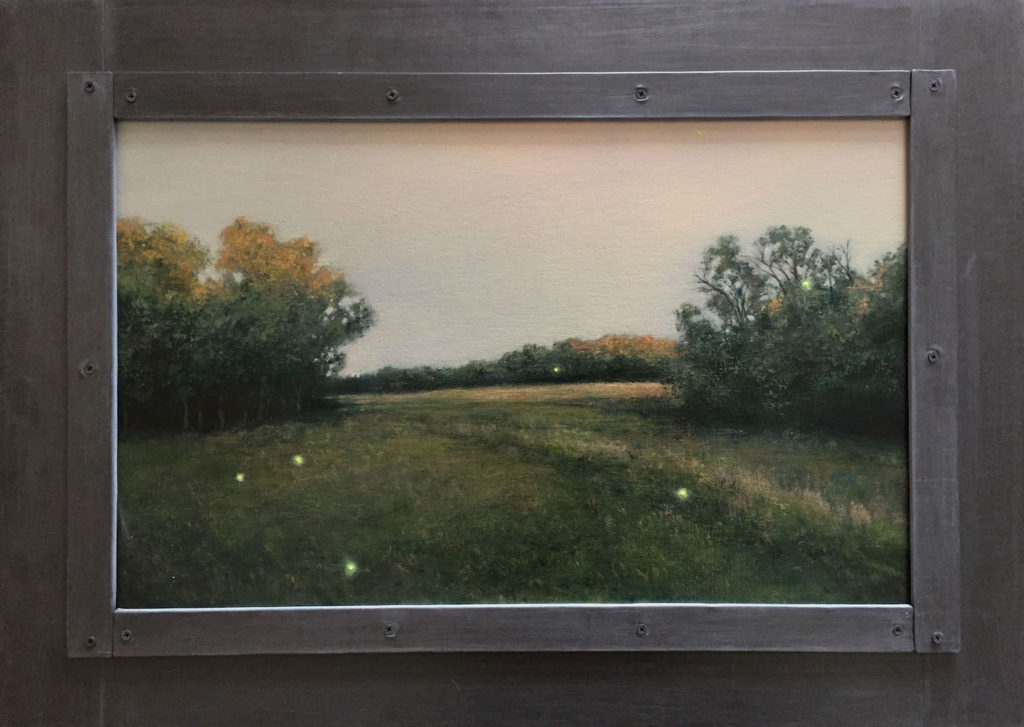
Adam Straus, “Fireflies,” 2007, oil on canvas, 22.27 x 31.75 in

In “Fireflies,” Straus’s socio-environmental commentary is less obvious. The picture depicts a grassy meadow at twilight, mystically spotted with fireflies, beneath an open, cream-colored sky. Straus has not distorted the image, or utilized unusual materials; he has simply painted a beautiful landscape and has omitted any sign of human intervention, recalling the tradition of the Hudson Valley painters. Even the romantic spectacle of sporadic spots of light exist because of the natural phenomenon that is bioluminescence.

Straus contemporizes this classically painted landscape by encasing it in his own hand-crafted lead frame. This symbolizes man’s intervention and containment of nature’s limitlessness. Even though this chemical element is highly toxic, lead is often used by humans, in order to facilitate industrial progress — a seemingly top priority for many.


Sign up to receive Fine Art Today, the weekly e-newsletter from
Fine Art Connoisseur magazine.

Capturing a Vision: The Portuguese Bend Tradition

0
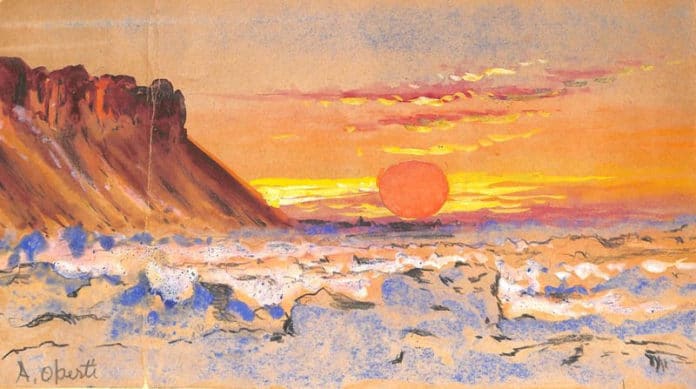
Albert Operti, “Arctic Sunset”

March 16 through April 22, 2018
Rancho Palos Verdes, California

From the Palos Verdes Art Center:

Many artists today continue the long tradition of sketching outdoors, en plein air, as a necessary step that leads to an easel painting. Exemplars of this tradition, the Portuguese Bend Art Colony have captured the Palos Verdes coastline with their oil, watercolor, and pencil sketches at all times of day through the seasons. For the first time, these artists — Stephen Mirich, Daniel W. Pinkham, Vicki Pinkham, Amy Sidrane, Kevin Prince, Thomas Redfield, and Richard Humphrey — have generously agreed to show their oil paintings, each of which is paired with its preparatory sketch.

Capturing a Vision: The Portuguese Bend Tradition will give a glimpse of the creative process; starting with a first plein air sketch, to the creation of the final vision — an oil painting, finished in the studio.

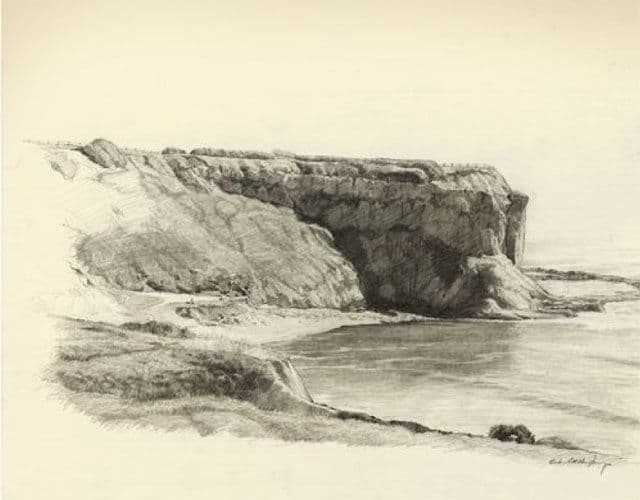
Rich Humphrey, “Abalone Cove”

Rick Humphrey’s pieces focus on pencil drawing as an aid to teaching studio painting, demonstrated in his sketch of Abalone Cove, which poetically captures the detail of the cliff rock formations.

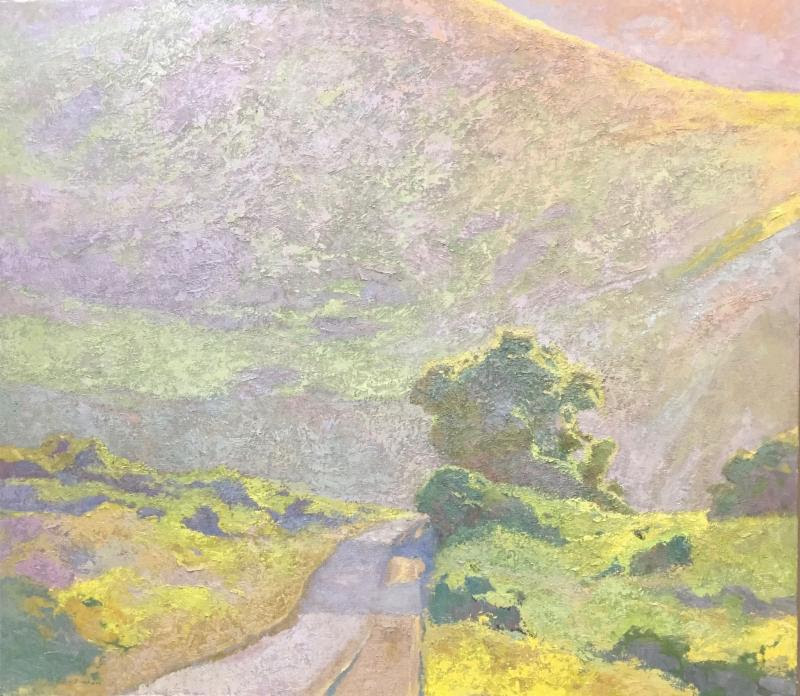
Daniel W. Pinkham, “Old Coast Road, Palos Verdes Drive South”

Daniel W. Pinkham’s sketch of the Villa Narcissa Gate House Courtyard dwells on the chiaroscuro created by oblique light. You can see the same play expressed in color in his oil painting “Old Coast Road, Palos Verdes Drive South.”

Sketches are also an indispensable part of the creative process for artists working in three dimensions. Included in the exhibition are also the tiny detailed sketches by Portuguese Bend resident Marianne Hunter, used to create her enamel jewelry. There will also be costume designs for the UCLA opera department, mural sketches by Steve Shriver (also of Portuguese Bend), and hidden away for almost a hundred years, the beautiful sketchbooks of Clover Cox, sister of Narcissa Cox Vanderlip, for whom Villa Narcissa was named. Tom Redfield will lend some of his great-great grandfather’s sketches, by the famous nineteenth-century American artist Edward Willis Redfield.

On loan by The Explorer’s Club (founded 1904 in New York City) is a rare find — the sketchbook of Albert Operti, made when the artist accompanied arctic explorer Robert E. Peary to document the first expeditions to the North Pole. Also on view will be Operti’s very large sketches, recently re-discovered in the Explorer’s Club archives. In spite of the hardships he and other members of Peary’s expedition endured, Operti still managed to record magical moments, like his sketch of the Arctic Sunset (shown at top).


Sign up to receive Fine Art Today, the weekly e-newsletter from
Fine Art Connoisseur magazine.

A European Take on American Realism

American Realism - Edward Hopper
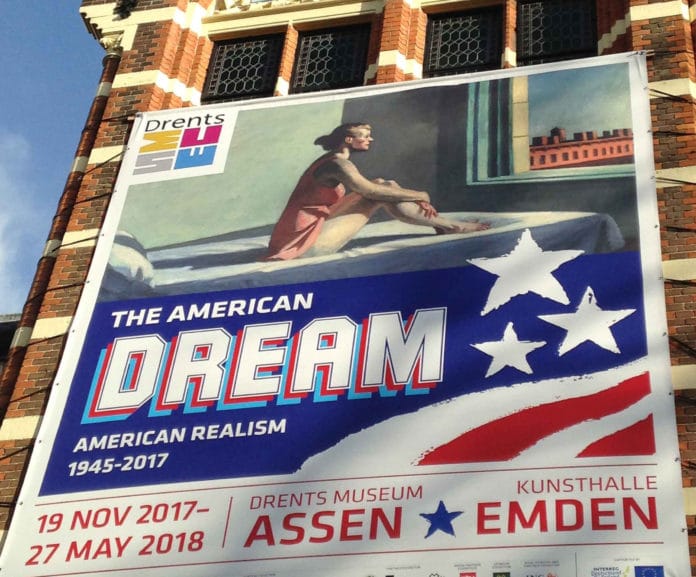
A banner featuring Edward Hopper’s “Morning Sun” (1952, Columbus Museum of Art, Ohio) adorns the Drents Museum.

An exclusive excerpt from the March/April 2018 issue of Fine Art Connoisseur (subscribe here).

Readers of Fine Art Connoisseur already know that realist art never died in twentieth-century America, though it certainly came close to doing so during abstract expressionism’s heyday in the 1950s. The survival and evolution of American realism since World War II are, however, not a familiar story in Western Europe. There, even artworks by American realists as famous as Edward Hopper and Andrew Wyeth are surprisingly hard to find because European museums have somehow not acquired them.

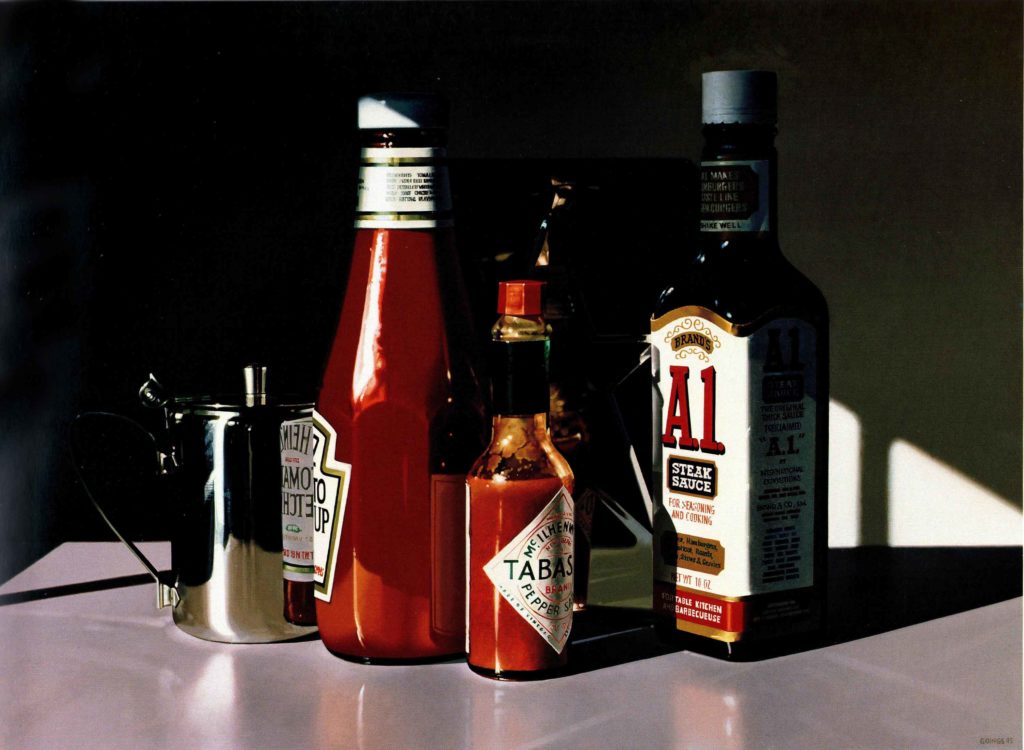
Ralph Goings (b. 1928), “A1 Sauce,” 1995, oil on canvas, 28 x 32 in., Seven Bridges Foundation, Greenwich, CT

This gap has recently been tackled head-on by two energetic partners: the Drents Museum in Assen, a town of 60,000 people in the northeast of the Netherlands, and the Kunsthalle Emden in Emden, a German town of 52,000 in northwestern Germany. Located just over an hour’s drive apart, the institutions came together several years ago to begin co-organizing the exhibition The American Dream: American Realism 1945–2017.

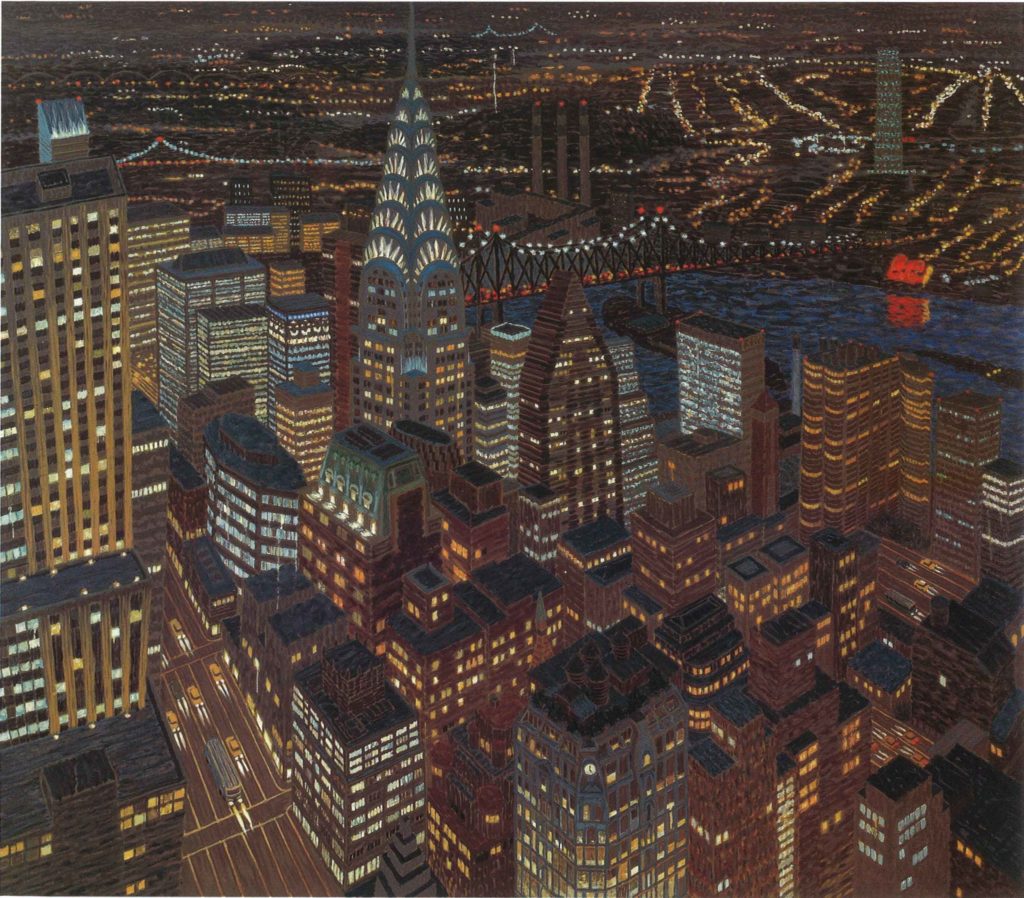
Yvonne Jacquette (b. 1934), “Chrysler Building Composite at Dusk,” 1997, oil on canvas, 75 x 86 in., Rose and Morton Landowne, New York

In a spirit of collegiality that has characterized the entire project, they decided to split the checklist of artworks in two: most dating from 1945 to 1965 went to Assen, and later works to Emden. The grand total is just over 220, in every possible medium including photography and video. Both halves have been on view since November 2017, and will remain so until May 27, 2018. All visitors are encouraged to see both presentations, so a joint ticket is sold to make achieving this goal easier. (The second half of the ticket can be used anytime before May 27; one does not need to see both halves on the same day.)

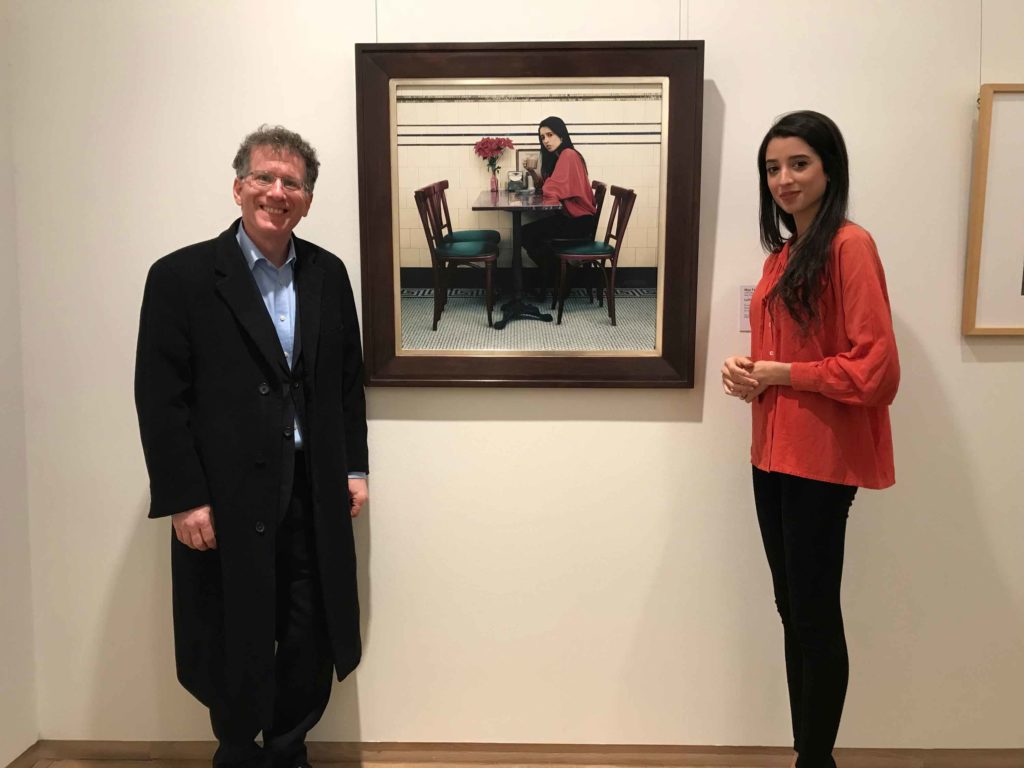
Max Ferguson (b. 1959) and his model Luara Skrzek before Ferguson’s “Coffee,” 2015, oil on panel, 27 x 27 in., Seavest Collection, Rick and Monica Segal; photo: Frank Bernarducci

Ironically, Americans who love their own country’s realist art may find this foreign survey more revealing than any such show they might have seen in the U.S. Indeed, one reason the two museums took on the project at all is because it has not been done properly in America — yet. (Continue reading in the March/April issue of Fine Art Connoisseur)

For more details on the fine art exhibition “The American Dream: American Realism 1945–2017,” visit https://www.visittheamericandream.nl.


This article originally appeared in Fine Art Connoisseur magazine (subscribe here).

Sign up to receive Fine Art Today, the weekly e-newsletter from
Fine Art Connoisseur magazine.

Eclectic and Impressive: A Recap of Art Palm Springs

0
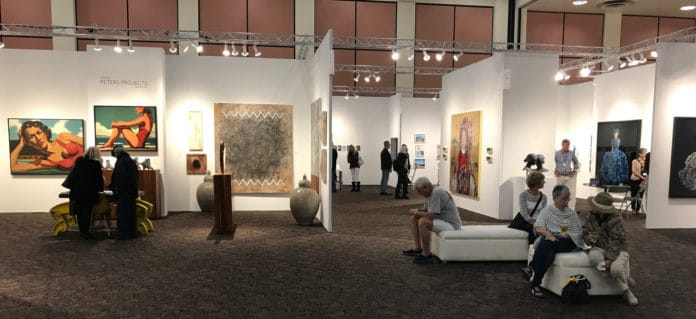
Beautiful open layout of the Art Palm Springs fine art fair, right before opening

By Vanessa Françoise Rothe

Now in its seventh year, the innovative Palm Springs art fair, known as ”Art Palm Springs” has been growing, and boasted 70 galleries at the Palm Springs Convention Center this last week. With events and tours led by scholars, curators, and critics, the well-rounded event has become quite a hotspot indeed.

Supported by the Palm Springs Museum, and with new awards recognizing patrons, artists, and curators for their contributions and support of the arts, the fair attracts a large crowd, with attendance higher than ever this year.

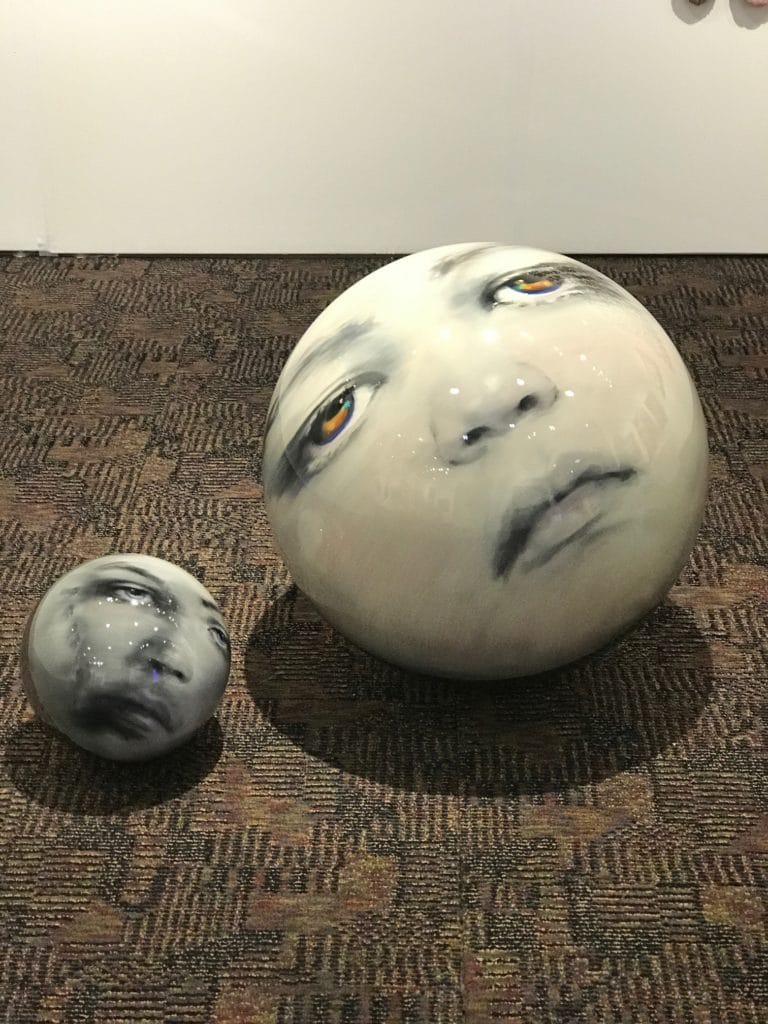
Realism meets modernism in these clever sculptures

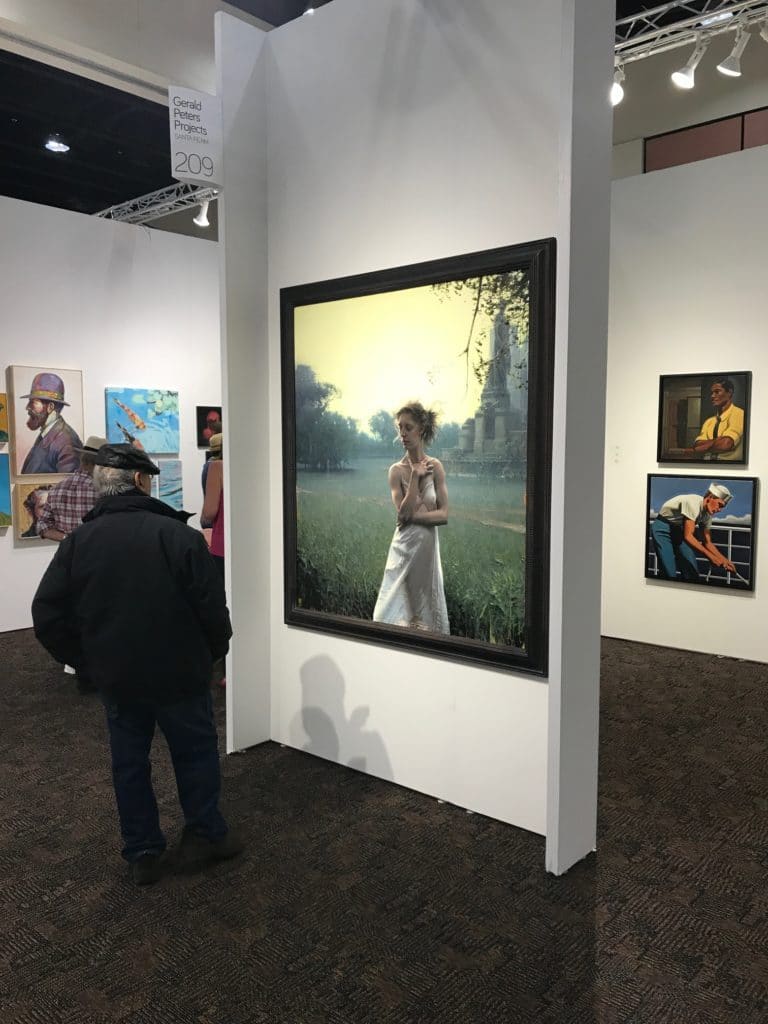
With an eclectic mix of styles and genres, the fair hits a great range of collectors and now proves to be of note for collectors of realism and representational works. From a few California impressionist works, to contemporary realist works by leading artists today, the exhibit highlights historical international works as well. Gaining more galleries each year in these genres, the fair includes top realist or partially representational galleries such as Arcadia Contemporary, Maxwell Alexander Gallery, Gerald Peters Projects, George Billis Gallery, David Klein Gallery, and more.

Beautiful large scale work by Daniel Sprick

Of particular note were strong new works by Daniel Sprick, Joseph Todorovitch, Jeremy Lipking, and beautifully rendered Western works by Mark Maggiori. Contrasting with these finished works are the thick brush strokes of Eric Bowman and Malcolm Liepke, for example.

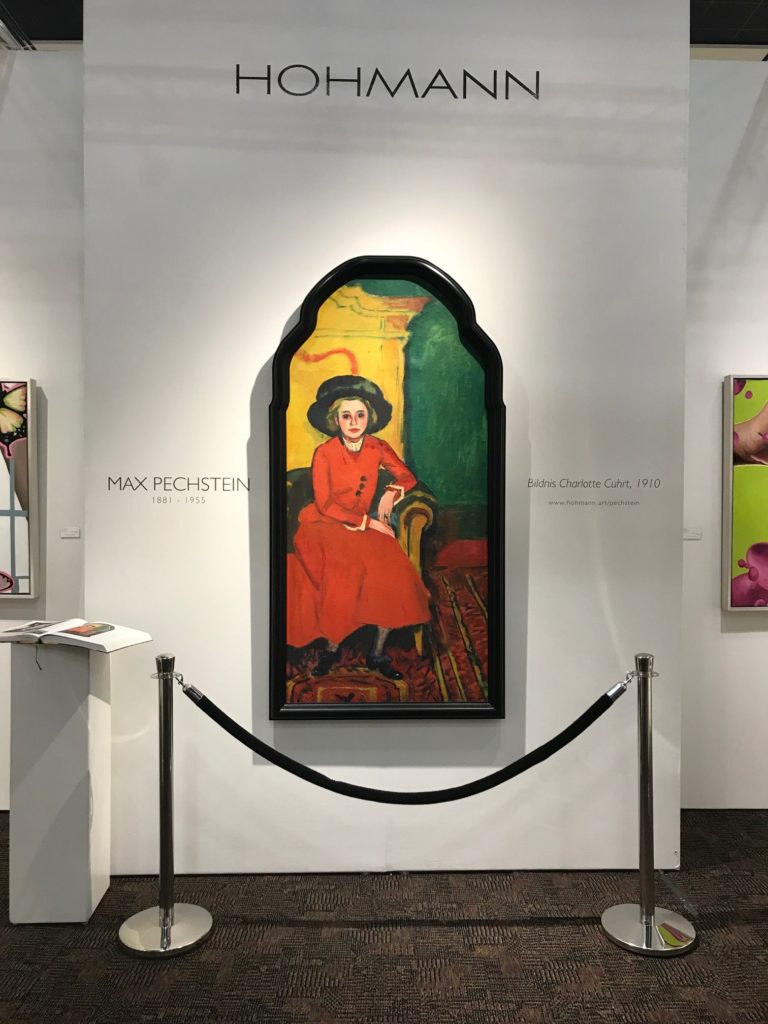
Historical work by Max Pechstein in the Hohmann gallery

Another interesting addition was a historical piece created by German artist Max Pechstein (1881-1955), an expressionist with figures rooted in representational style. The work available is a portrait of Charlotte Churt, standing nearly 70 inches tall and 34 inches wide in a vaulted frame. Pechstein was born the son of a craftsman, and had early contact with the art of Vincent Van Gogh, which stimulated his development toward the mix of realism and expressionism. This work is available through Hohman Art.

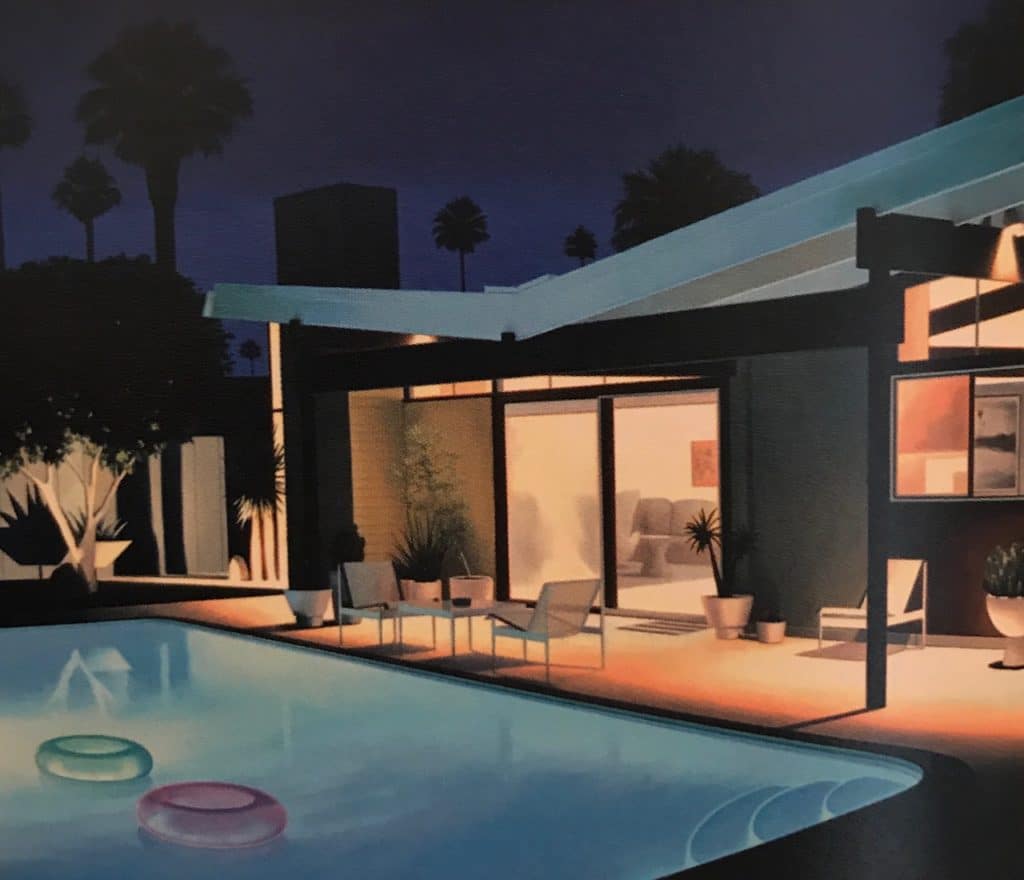
Danny Heller, “Twin Palms Evening,” (detail), 2017, oil on canvas, 38 x 54 in.

Surprising new finds include bold works by Kelly Reemtsen and Denis Sarazhin. The fair would not be complete without the Iconic Palm Springs pools. One such tightly rendered artwork, considered hearty American Realism, was by Danny Heller titled “Twin Palms Evening,” depicting a typical mid-century modern Palm Springs home and pool with palms.

All in all the fair was quite impressive. It was small enough to see in a few hours with a very pleasing venue, and the art, along with the warm desert air and iconic landscapes, was definitely worth the journey west.


Sign up to receive Fine Art Today, the weekly e-newsletter from
Fine Art Connoisseur magazine.

Featured Artwork: Michele Byrne

0

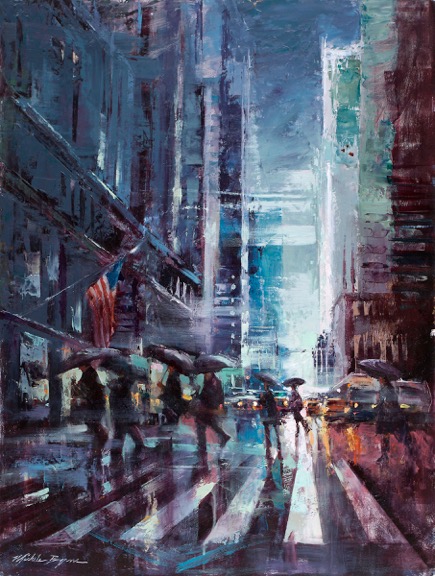
Night Moves
24 x 18 in.
oil on panel
$2800
Available through the artist

The connection of humanity and the need to interact and connect with others are the foundation of my work.

My paintings tell stories–whether real or imagined by the viewer. I want my Art of Conversation paintings to create stories of their own–create a dialogue among the viewers. What’s going on? What are these people doing? What are they talking about or what are they thinking?

Doing plein air painting on location for the past 15 years I feel very comfortable painting just about anywhere. In contrast to the typical plein air painter who wants to be left alone in the landscape, I thoroughly enjoy meeting people at my easel and conversing with them. Never have I painted in a city and not made a memorable connection with a passerby–by inspiring a stranger to go home and be creative or having someone say something profound that totally changed my perspective. To influence and be influenced is something I try to be totally open to.

We are all wrapped up in our own lives and perspectives. I want my work to reflect the multilayered lives and personalities around us. We are all different, but we all have a basic simple human need to connect.

Between plein air painting jaunts, I like to switch gears to concentrate on studio work using many different tools to manipulate the paint. Recent lifestyle changes have brought me a fascination with intersecting lives, intersecting lines, crossroads, points of intersection and how they all affect our lives. In my series of crossroads and crosswalks I attempt to capture this vibrant energy.

Many accidental connections have certainly made a difference in my art career and my personal life. I believe seemingly random, chance interactions we experience happen for a reason, bringing potential to greatly enhance our lives.

Museum Collections:
The Bennington Museum, Bennington, VT
The Mennello Museum of American Art in Winter Park, FL (10 painting acquisition)

Memberships and Affiliations:
Signature Member of the American Impressionist Society
Member Oil Painters of American, RMPAP, Artists’ Fellowship, Inc. and The Salmagundi Club

Recent Professional Awards and Benchmarks:
2018
LILIEDAHL ART INSTUCTION VIDEOS release of an Instructional Video of my painting process: PALETTE KNIFE PAINTING with Michele Byrne
Salmagundi Club, Landscape Exhibit, Michael Harding Award, New York, NY

2017
Reading Hospital 150th Anniversary Commission for Commemorative Painting
Salmagundi Club Thumb-Box Exhibit Memorial Award, New York, NY
Rocky Mountain Plein Air Painters (RMPAP) award of membership
American Impressionist Society 18th National Juried Exhibition, Montgomery Honorable Mention Award, Lee Fine Art, Park City, UT. Juror Albert Handell
LILIEDAHL ART INSTRUCTION VIDEOS release: PAINTING IMPRESSIONISTIC FIGURES with Michele Byrne
Grand Teton National Park Foundation: Permanent collection acquisition, Moose, WY
Rocky Mountain Plein Air Painters Invitational Award of Excellence, Jackson Hole, WY. Juror Scott Jones
Lighthouse Arts Festival Honorable Mention, Jupiter, FL. Juror George Van Hook
Tennessee Williams Plein Air Event First Place Award, Key West, FL

2016
PleinAir magazine Aug/Sept Salon Second Prize Overall
Rocky Mountain Plein Air Painters Invitational Award of Excellence, Grand Teton Nat’l Park, WY
Oil Painters Of America Eastern Regional Exhibit–Eisele Gallery of Fine Art, Cincinnati, OH
American Impressionist Society 17th National Juried Exhibition, Howard/Mandville Gallery, Seattle,WA
American Impressionist Society: Awarded Signature Membership

2015
Salmagundi Club Fall Auctions Jane Impastato Award. Juror Elizabeth Spencer
Oil Painters Of America Eastern Regional Exhibit-Eckert & Ross Gallery, Indianapolis, IN
American Impressionist Society 16th National Juried Exhibition, Trailside Galleries, Scottsdale, AZ
Southwest Art Magazine “Women in Art” feature article

Education:
BFA–Kutztown University in PA
Figure and Portraiture classes, Pennsylvania Academy of Fine Arts (PAFA), Philadelphia, PA
Studied with Carolyn Anderson, CW Mundy, Quang Ho, Richard Schmid, and Ken Auster

Gallery representation:
Eckert & Ross Fine Art, Indianapolis, IN
Reinert Fine Art, Charleston, SC

Michele Byrne Studio
32 Wyomissing Hills Blvd.
Reading, PA
610.670.7932 | [email protected]

Join me on Facebook and Instagram and follow my blog.

The Benefits of Bi-Coastal Living

0
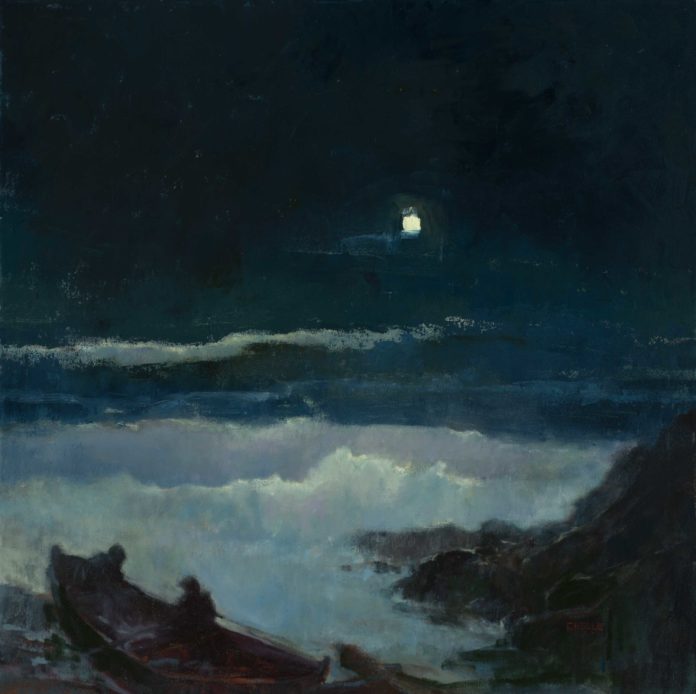
Michelle Jung, "In the Night," 2016, oil on canvas, 30 x 30 in., Available from the artist

By Charles Raskob Robinson

There is much to be said about the recent success of the painter Michelle Jung (b. 1964), but what has mattered most to her is finding her artistic voice. Now that she has it, she feels totally liberated and enthused about expressing it as fully as she can. This is driven by both discipline and dedication, evidenced, for example, by the fact Jung spends half of her time in Wellesley, Massachusetts, and the other half in California (Santa Cruz and Atherton). It is particularly interesting to learn how her bi-coastal living and working arrangements have affected how and what she paints.

Michelle Jung, “Eucalyptus,” 2017, oil on canvas, 40 x 48 in., Available from the Guild of Boston Artists

Jung’s bi-coastal commute provides cherished time in the air, during which she continues her study of art by reading books and articles. She also values the “mirror effect” gained by leaving paintings in her studio on one coast and returning to those on the other.

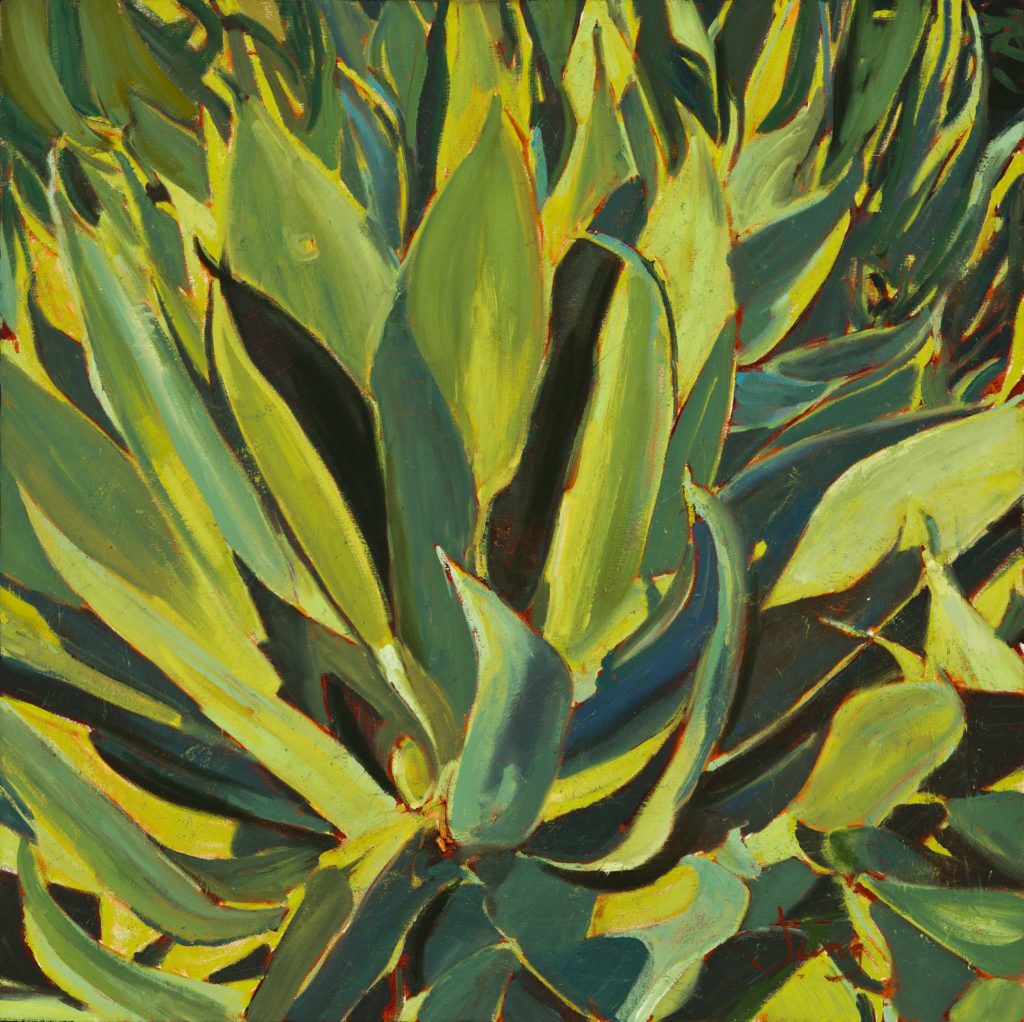
Michelle Jung, “Agave,” 2017, oil on canvas, 30 x 30 in., Available from the artist

“Some artists use mirrors or turn their work upside down to gain a new perspective, but I get a fresh look after having been away for a couple of weeks,” she says. “I find this an important part of my creative experience, especially in light of the very different painting environments on the East and West Coasts. At first it was a huge adjustment: it gets dark very early in the East and the light is flatter, with fewer shadows. I had to adjust everything and stick to values. That made me think about color more. Yet the longer I observed the contrast between coasts, the more I could capture it. I believe my work is very distinctive because of that. The value scale is much tighter on the East Coast. The color is more muted, with less contrast. In California, the colors are more vibrant, much more saturated.”

Michelle Jung, “The Pinnacle,” 2015, oil on canvas, 30 x 24 in., Available from the artist

Jung’s gravitation to the coasts and to marine scenes generally is a natural outgrowth of having been around boats and water for much of her life. Although she is bi-coastal, Jung confides, “Neither side of the U.S. has a monopoly on my heart. I was born and raised in Connecticut, so I will always be a New Englander. I will always be nostalgic about the East Coast. But on the West Coast, the sunset on the water is so different from the sunrise. That drama is what I’m drawn to. It’s a matter of nostalgia and mood versus drama and color. And I love them both.”

Read the entire article in Fine Art Connoisseur (March/April 2018), available online here.


Sign up to receive Fine Art Today, the weekly e-newsletter from
Fine Art Connoisseur magazine.
WEEKLY NEWS FROM THE ART WORLD

Fill your mind with useful art stories, the latest trends, upcoming art shows, top artists, and more. Subscribe to Fine Art Today, from the publishers of Fine Art Connoisseur magazine.

  • This field is for validation purposes and should be left unchanged.