Out of a dark world in which death seems commonplace, a spark of light flashes through the intensely powerful and personal artworks by Alice Leora Briggs. Fine Art Today recently caught up with the artist, who graciously revealed parts of her artistic visions and personal journeys.
Hindsight is 20/20, and thank goodness Alice Leora Briggs failed at just about every creative expression she tried, be that music, dance, or theater. Why? Because those failures led her to the visual arts, more specifically printmaking and drawing, two mediums in which the artist has become nearly unrivaled in skill and personal expression.
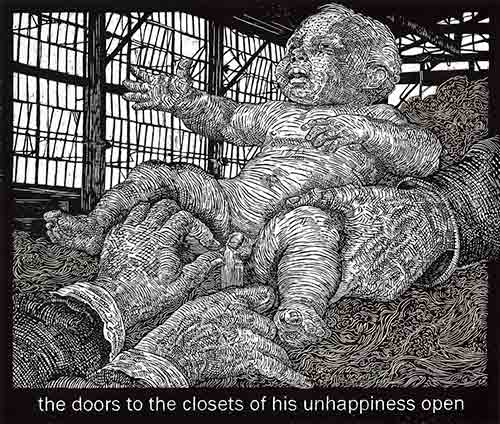
Alice Leora Briggs, “the doors to the closets of his unhappiness open,” woodcut print
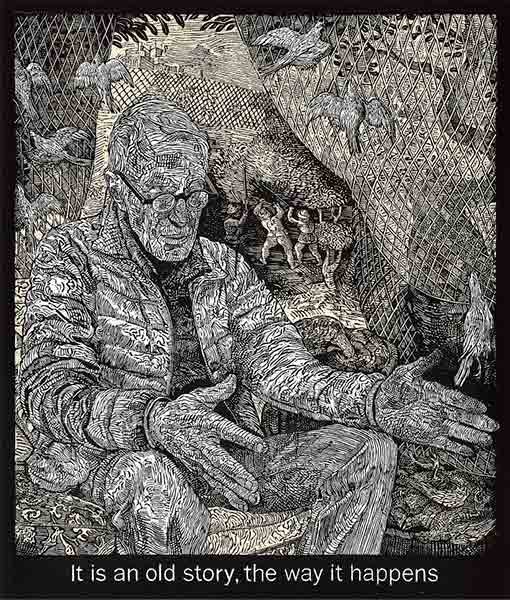
“Apparently, I like to cut things” she asserts. “Whether I am making a sgraffito drawing or a woodcut, I cut white marks into black fields. Each slash throws a spark into dark territory; each mark is a scar. I have a manic duty to botch up surfaces. Each of my images is an accumulation of thousands of marks that chart how my eyes jerk and scan through spaces and whatever these spaces contain. For me, poetry comes from mortal substance — the physical experience of my body moving through the world and an acute awareness that my presence in the world is temporary.”
Alice Leora Briggs, “where the farmer sits and stares,” woodcut print
Indeed, the triumph over personal tragedy often reveals the strength of one’s resolve, and Briggs’s art has “evolved as an effort to comprehend the black hole that replaced a family member I had not yet learned to distinguish from myself,” she said.
Buzzing about her studio in strife-torn Juárez, Mexico, Briggs is no stranger to death and chaos, and it is an environment that has proven to be a point of clarity for the artist. She writes, “I am drawn to places where death is familiar. I do not romanticize such circumstances; they simple clarify what matters to me.”
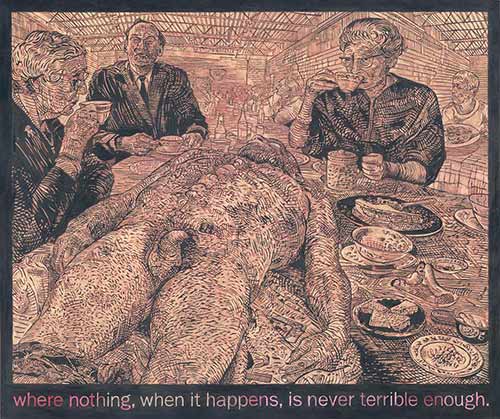
Through exquisite detail and powerful, expressive marks, prints such as “where nothing, when it happens, is never terrible enough” remind us all of that which we might care not to see, or admit. Recalling the controversial painting “Dead Christ” by the Renaissance artist Andrea Mantegna, a deceased body, highly foreshortened, lies on a dinner table. All around, individuals drink their beverages and sip their tea without acknowledging the cadaver. Beneath the composition are the words, “where nothing, when it happens, is never terrible enough.” The work is unsettling, but masterfully composed and executed.
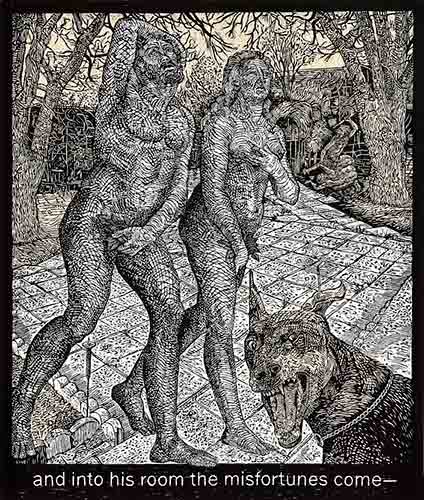
Alice Leora Briggs, “and into his room the misfortunes come-,” woodcut print
Of her artistic goals, Briggs writes, “I am trying to find something beautiful, even though it is clear to all of us that we often have to look through a dense thicket of atrocities to see it. I have grown to love even this dense undergrowth that blackens our view.”
Alice Leora Briggs, “where nothing, when it happens, is never terrible enough,” woodblock in-process
The future is bright for Briggs, who recently began an ambitious five-year project, details of which are tantalizingly vague. The artist did, however, offer this: “Five large-scale drawing/constructions (each 80+ square feet).” More broadly speaking, Briggs will “continue to move forward with visual narratives in printmaking, including a long-anticipated return to engraving and drypoint.”
This article was featured in Fine Art Today, a weekly e-newsletter from Fine Art Connoisseur magazine. To start receiving Fine Art Today for free, click here.
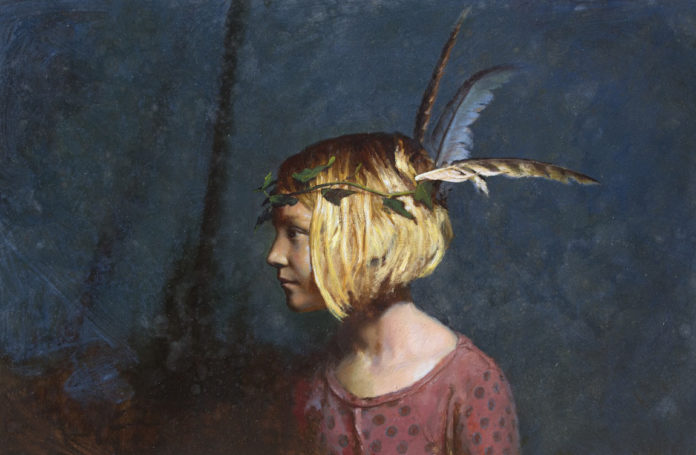
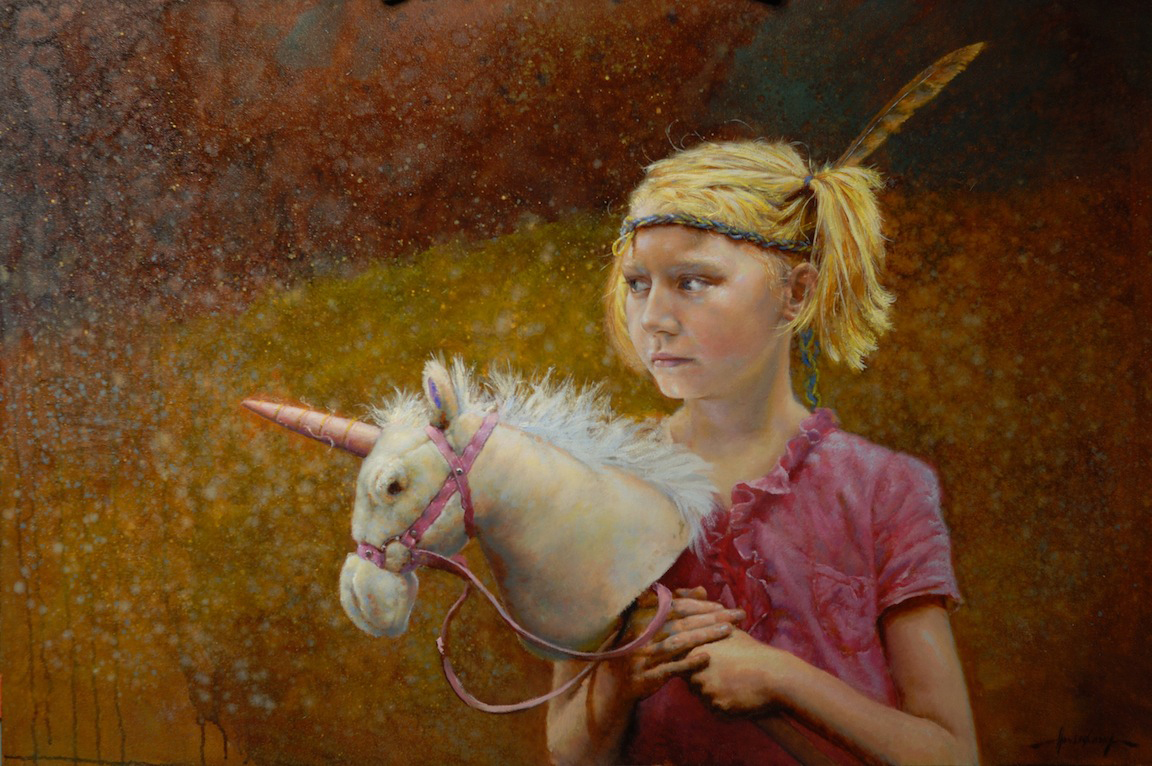
Seth Haverkamp, “Essie’s Feathers,” oil on panel, 24 x 36 inches
Both imaginative narrative and artistic talent are on display during Haynes Galleries’ current exhibition. This rising star in American contemporary realism captures drama and emotion in figure paintings that are sure to captivate collectors and connoisseurs alike.
At their Thomaston, Maine, location, Haynes Galleries is current showcasing the exciting figurative works by rising star Seth Haverkamp. Hanging through September 9, “The Magical & Mystical Paintings of Seth Haverkamp” is sure to captivate audiences through the artist’s creative use of color, innovative composition, and deeply moving narrative.
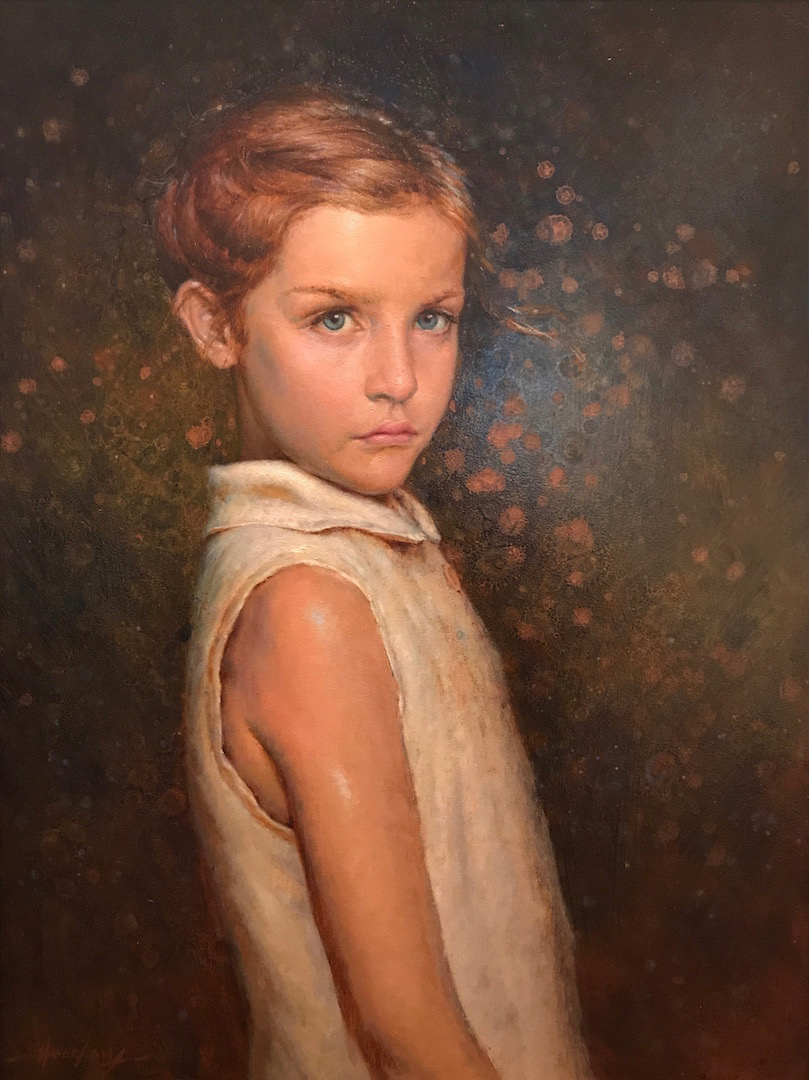
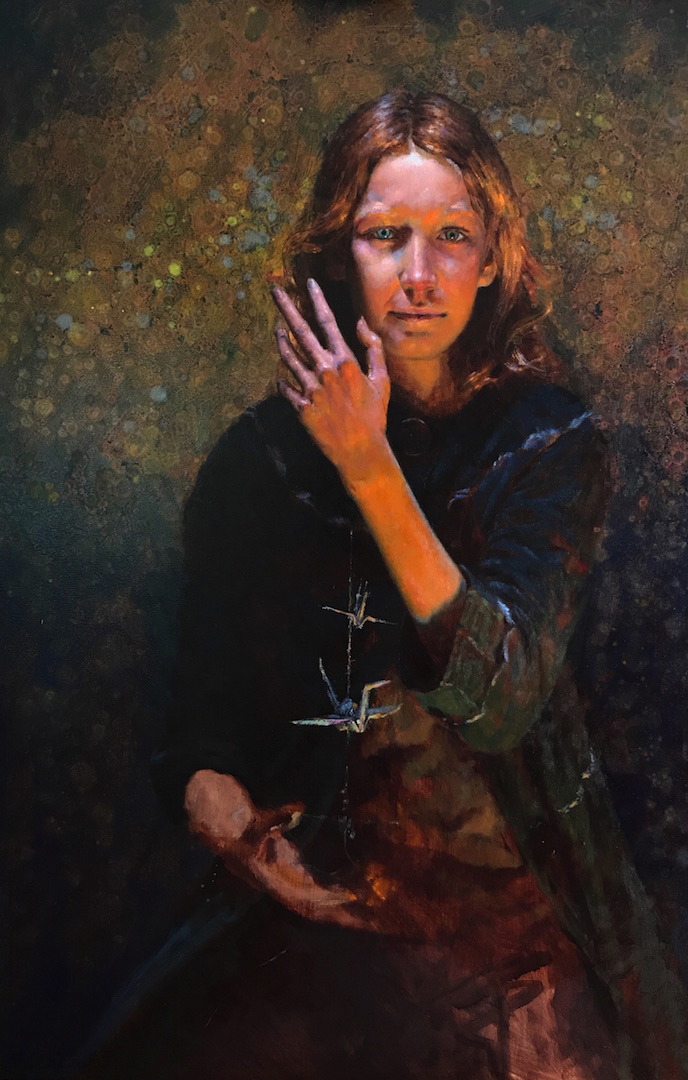
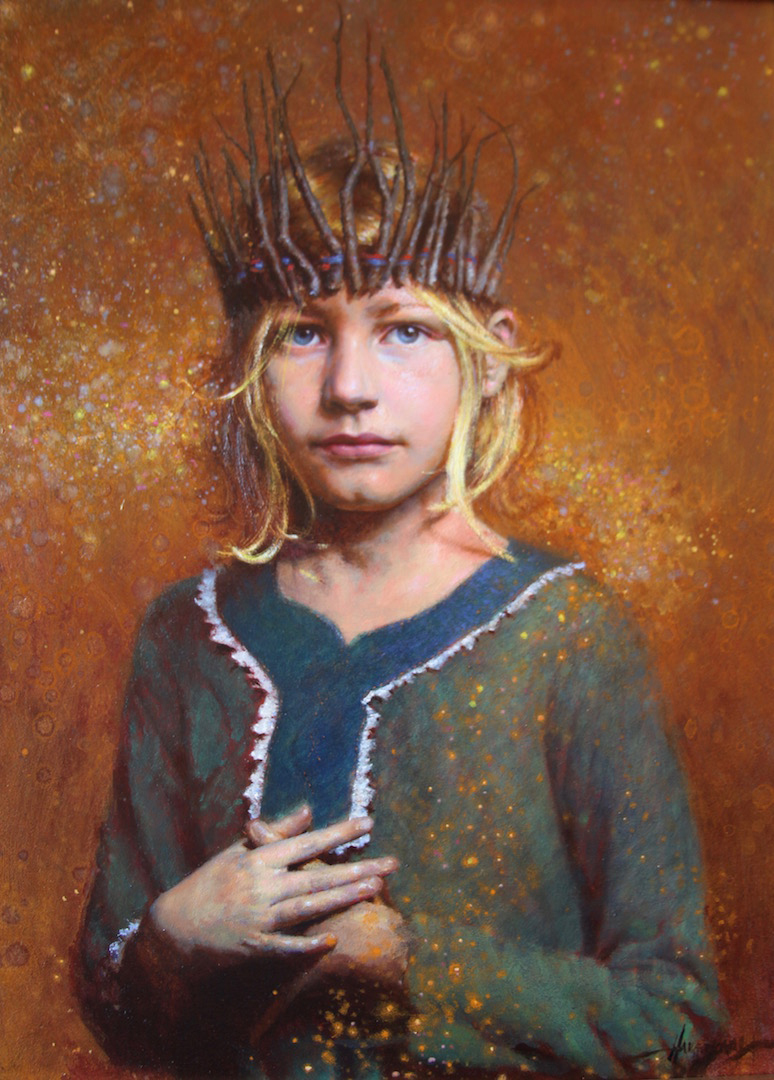
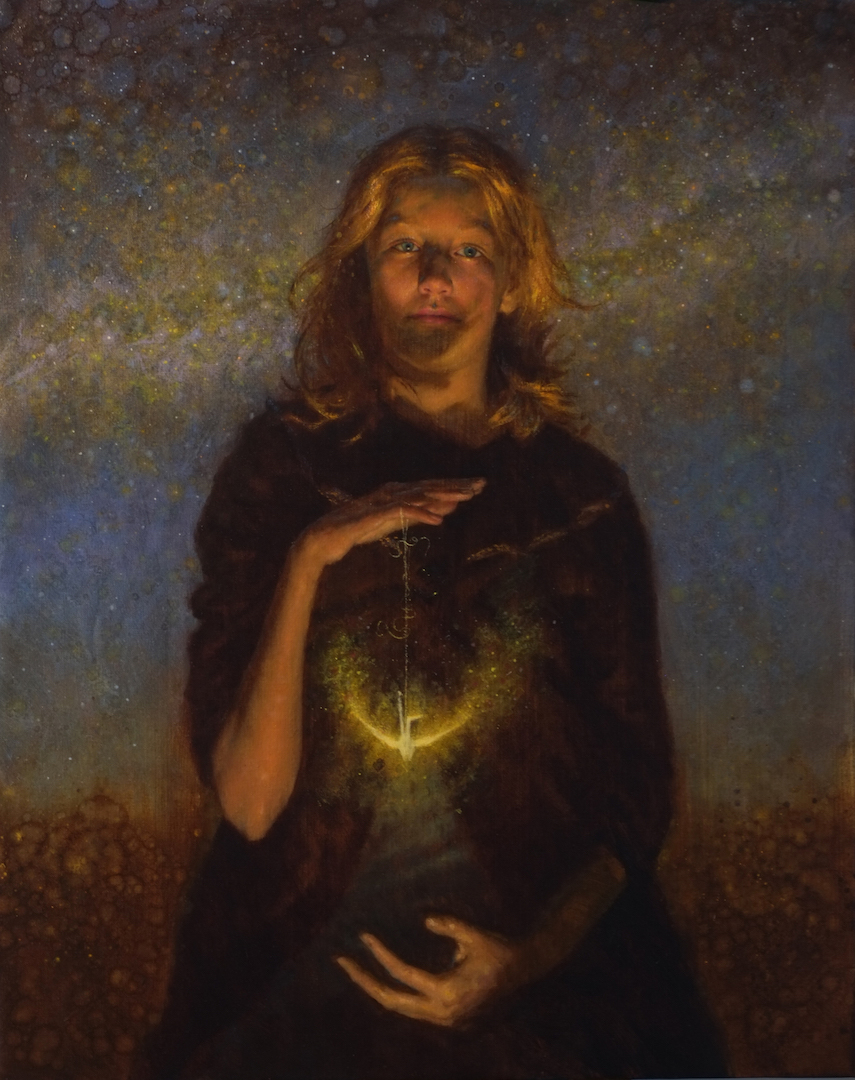
Seth Haverkamp, “Penelope,” oil on linen, 24 x 18 inchesSeth Haverkamp, “Essie’s Crane,” oil on panel, 35 1/2 x 23-1/2 inches
As the gallery writes, “For the last several years, Haverkamp has been consistently creating some of the most noteworthy portraits of contemporary representational art. Haverkamp’s paintings are bold images of the people in his life — his children, family, and friends. The paintings though are remarkably universal. They take one moment in time and capture drama, emotion, and mystery with color and care.”
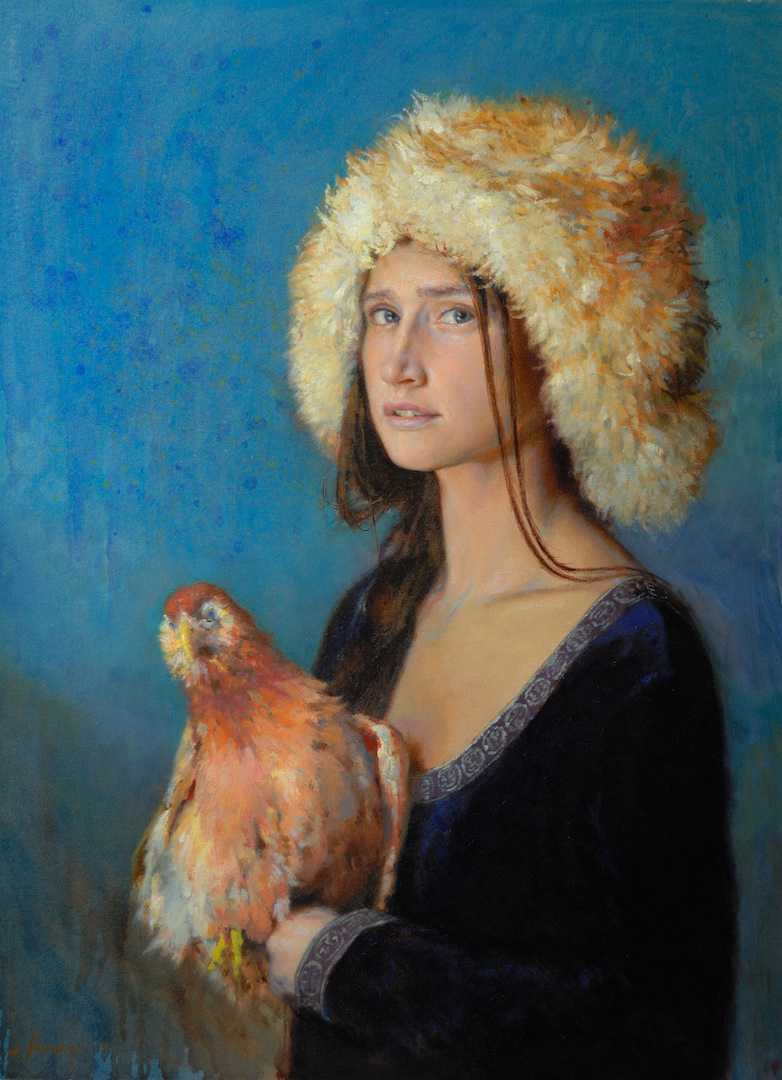
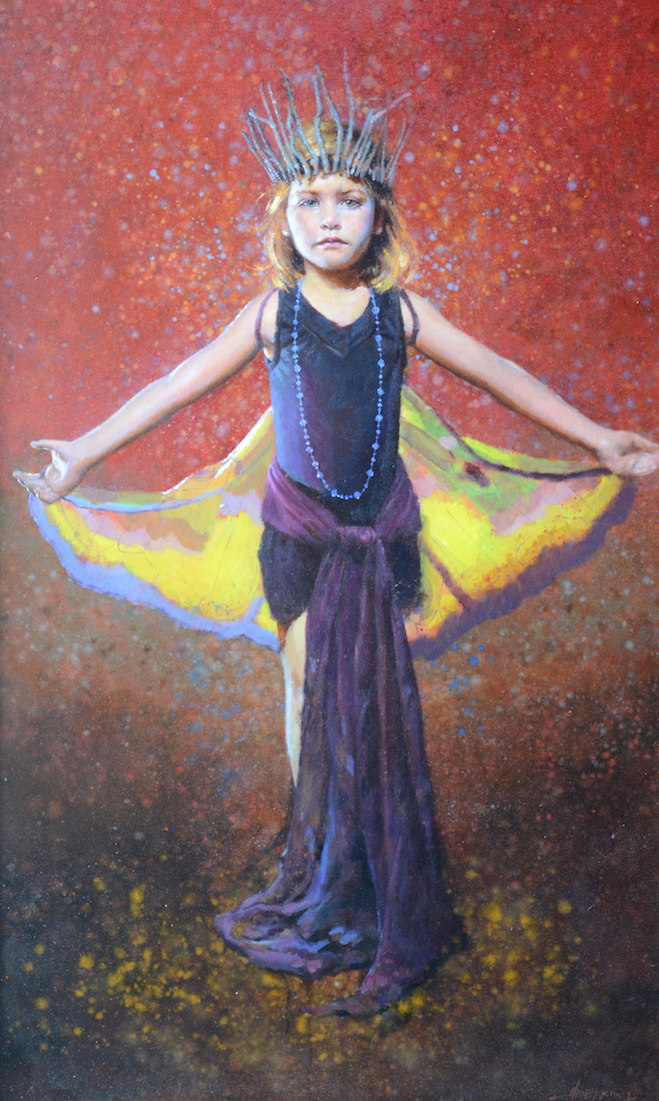
Seth Haverkamp, “Feathers and Fur,” oil on panel, 30 x 22 inchesSeth Haverkamp, “Fairy Wings,” oil on panel, 36 x 22 inches
Specifically, Haverkamp has a unique way of composing his backgrounds, which consist of a nondescript mix of studio backdrops and delicate paint splatter. The addition of rather odd accessories — such as sheets, fabric, twigs, feathers, and headdresses — in combination with his ephemeral backdrops, imbues the works with an enchanting, storybook quality.
Seth Haverkamp, “Fable,” oil on panel, 24 x 18 inchesSeth Haverkamp, “Essie’s Unicorn,” oil on panel, 24 x 36 inches
“Haverkamp has said about all his portraits that he just tries to paint what is beautiful and what he finds interesting,” the gallery continues. “There is no planned deeper meaning to them. The inspiration can hit at any moment. Usually one of his children will be doing something in their home — playing with a toy, building something, dressing up — that Haverkamp finds visually interesting. He’ll recreate the activity and the moment in the studio to get it just right to capture in paint.”
Seth Haverkamp, “The Crane,” oil on linen, 29 3/4 x 23 1/2 inches
Admittedly, however, both admirers of his work and the gallery find it difficult not to probe for deeper meaning behind his works. “They are full of intrigue and visual splendor,” the gallery says. “[The exhibition] compels viewers to look longer, to explore the mystery, and revel in the visually alluring images of a distinct voice in contemporary realism.”
This article was featured in Fine Art Today, a weekly e-newsletter from Fine Art Connoisseur magazine. To start receiving Fine Art Today for free, click here.
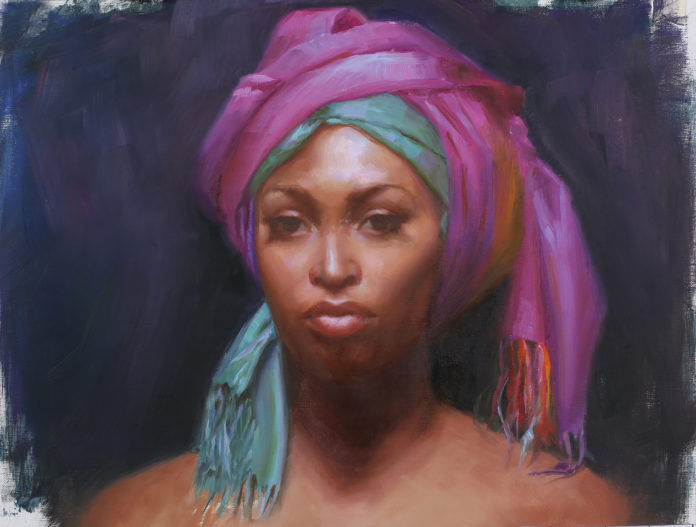
Fatima Atallah, “Brandy,” oil on linen, 12 x 16 inches
Artists Linda Harris Reynolds, Elizabeth Floyd, and Fatima Atallah recently participated in the Portrait Society of America’s Cecilia Beaux Forum Mentorship Program, leading to some incredible testimonials we think you’ll enjoy reading.
In 2005, the Portrait Society of American formed the Cecilia Beaux Forum as a committee to address considerations faced by women in the arts. The nine-month program creates mentoring opportunities for women artists by fostering relationships between established and emerging artists. Having just completed the program, these fine artists offered their thoughts on the program and some details about their experience:
This year I was extremely honored to have been one of five professional artists selected by Portrait Society of America to be a mentor. Within the Portrait Society, there is an organization called the “Cecilia Beaux Forum,” created to foster women in their artistic journeys and careers. One of their main vehicles in doing this is their mentoring program, which has been in existence since 2005. It pairs an established working artist with an “up and coming” artist.
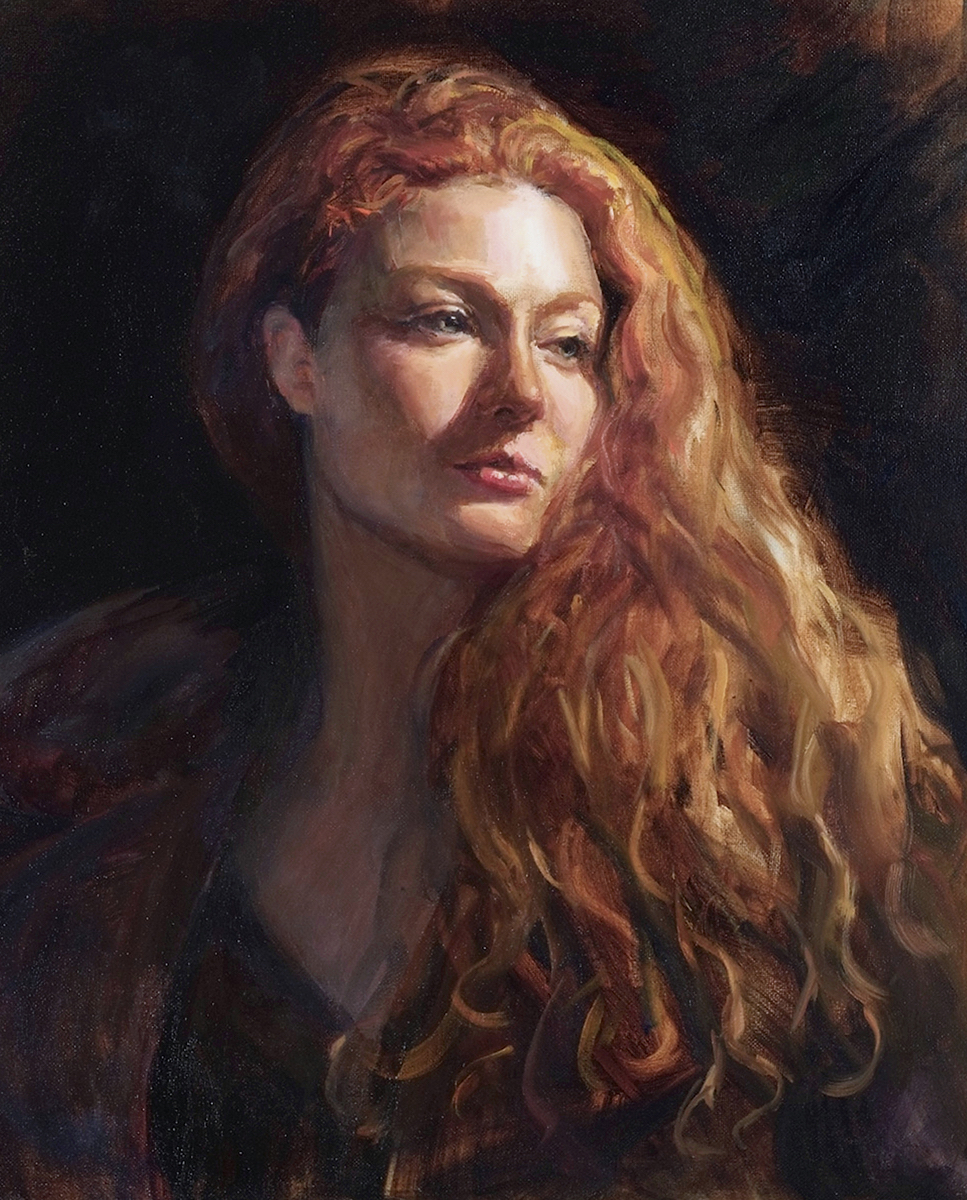
Linda Harris Reynolds, “Red,” oil on linen, 12 x 16 inches
I have had the privilege of working with a lovely woman named Fatima Atallah, who lives most of the year in Dubai, in the United Arab Emirates … I live in Wilmington, Delaware. Though our backgrounds are very different, we share a great many similarities! Our desire to portray the inner spiritual life of people, for one.
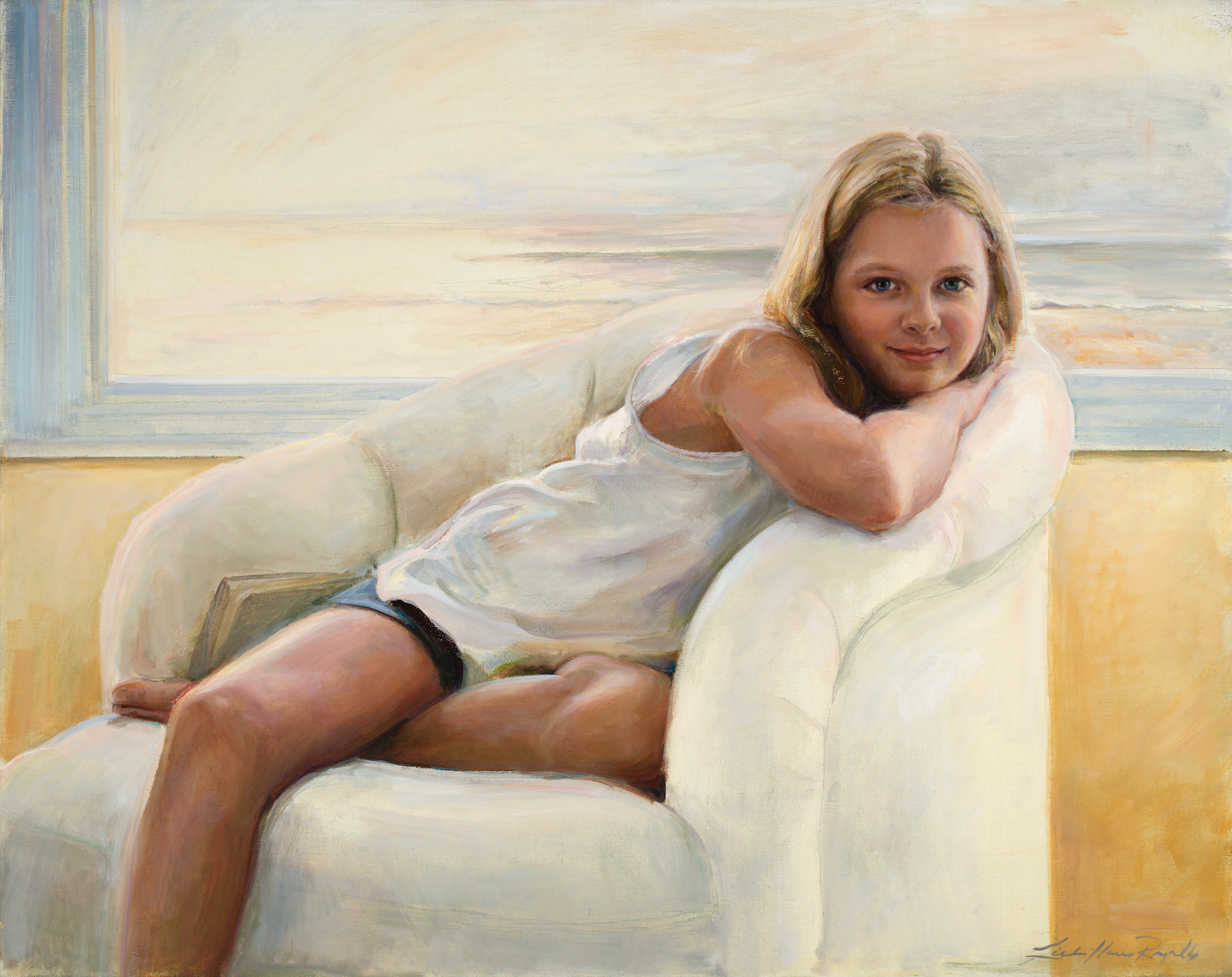
Linda Harris Reynolds, “Remy,” oil on linen, 21 x 30 inches
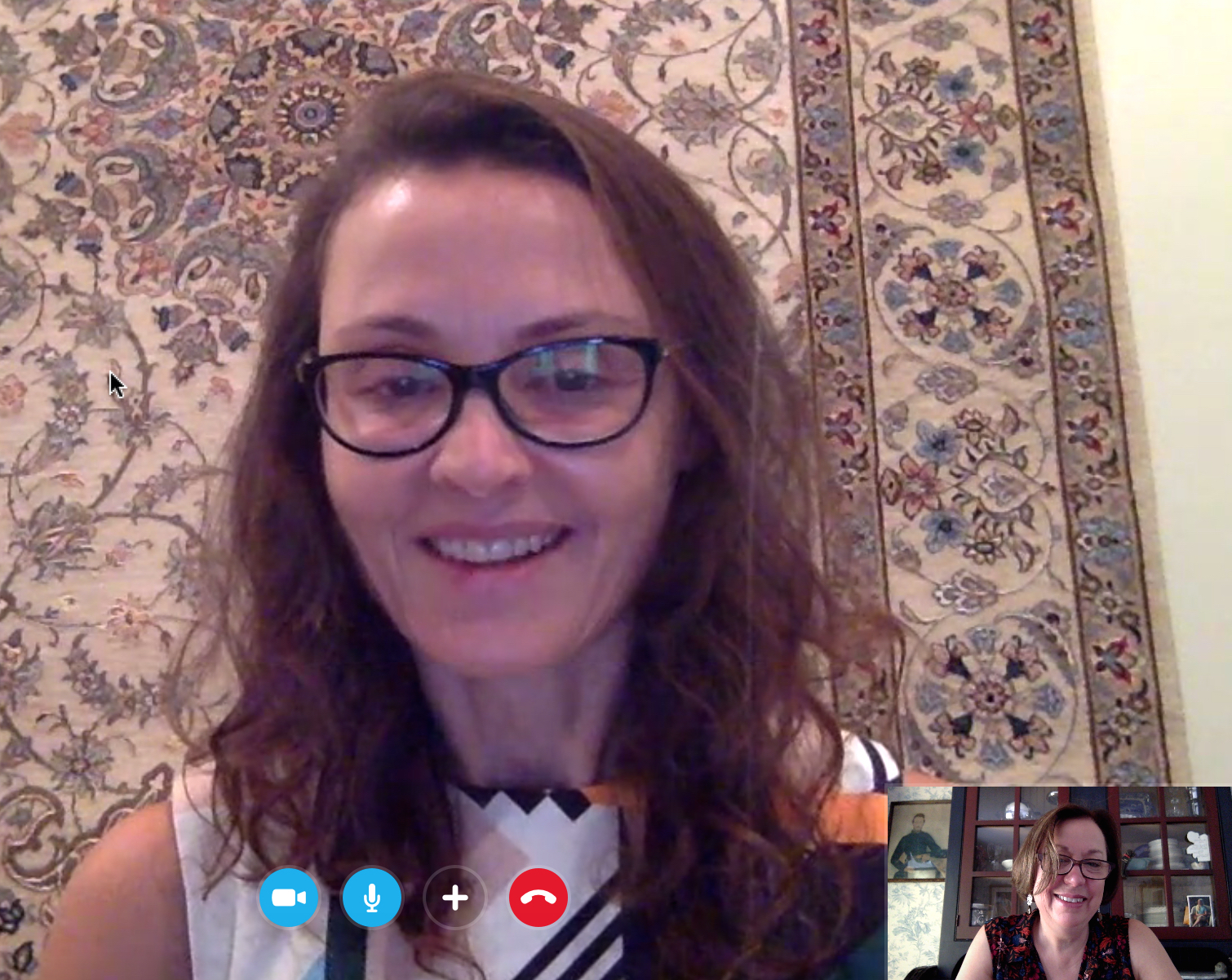
Due to the great distance between us physically, we have been conducting our bi-monthly talks over Skype. Generally, Fatima will send me something she has been working on in advance of our session, and we will then discuss it — its concept, technical approach, composition, and thought processes which led to its creation. Recently we have color-corrected reference photos with Adobe Photoshop and photo-collaged images to consider the best possible compositions for future pieces. I have seen Fatima’s work develop and mature, over these last several months. She has attended several outstanding workshops in the U.S., adding a fluid sophistication to her style.
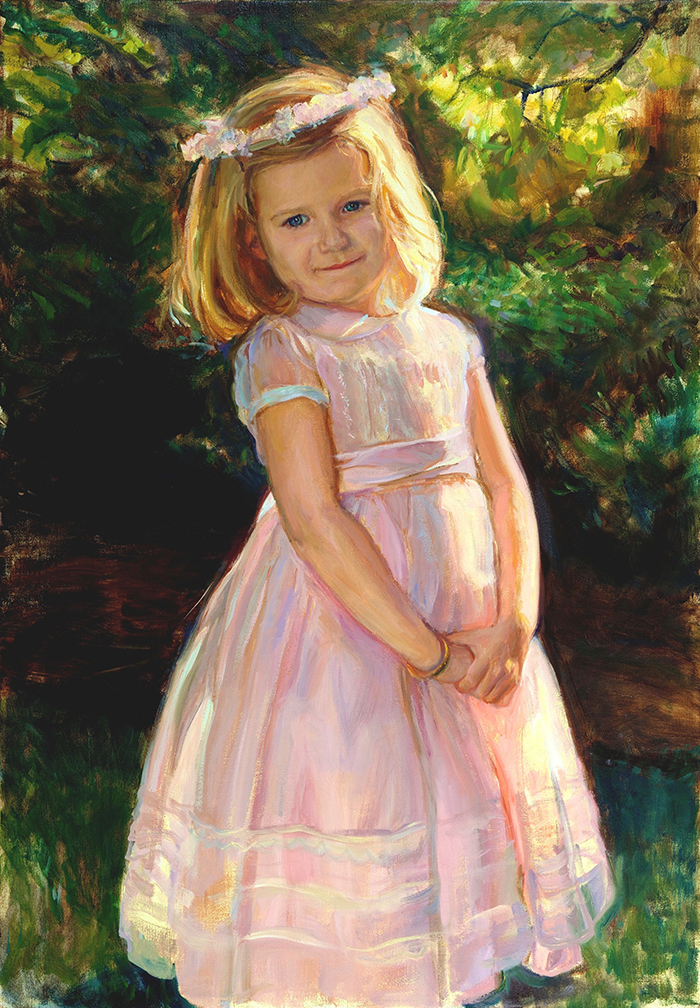
Linda Harris Reynolds, “Nina in Summer,” oil on linen, 27 x 34 inches
Our aesthetics are both based in Classical Realism, with a leaning toward a painterly Impressionistic approach. We are both mothers, wives, and passionate about our work! Fatima’s interests also lie in still life painting, where she has a great sensitivity. I have thoroughly enjoyed this unique opportunity to interact with a fellow female artist, passing along some tips from my years of working in the portrait field, and gaining fresh insights from her beautiful work.
Linda Harris Reynolds, “Man’s Best Friend,” oil on linen, 24 x 28 inches
Elizabeth Floyd—Mentee (Anna Rose Bain was her mentor)
I was motivated to apply for the Cecilia Beaux Mentorship Program because I wanted to gain momentum in my art career while also being the primary caregiver to my young daughter, who at the time had a few health issues that required a lot of time and commitment.
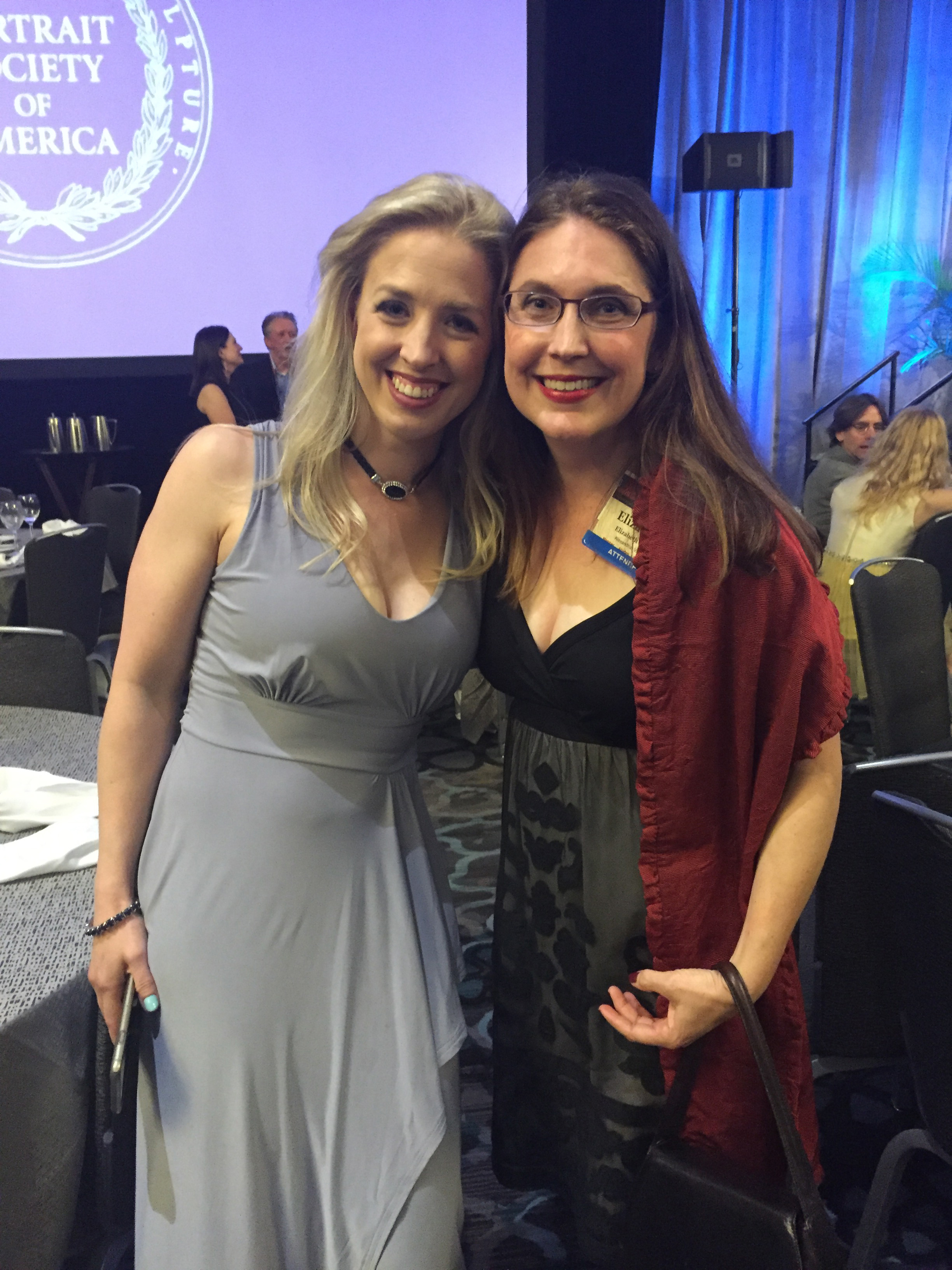
Anna Rose Bain (left) and Elizabeth Floyd (right) together at the Portrait Society of America Conference
I was fortunate to be paired with the talented Anna Rose Bain. Anna is the mother of a young daughter, and with her advice I have implemented new systems into my studio routine that have helped me find more time to paint. She has also provided invaluable advice in working from photo references.
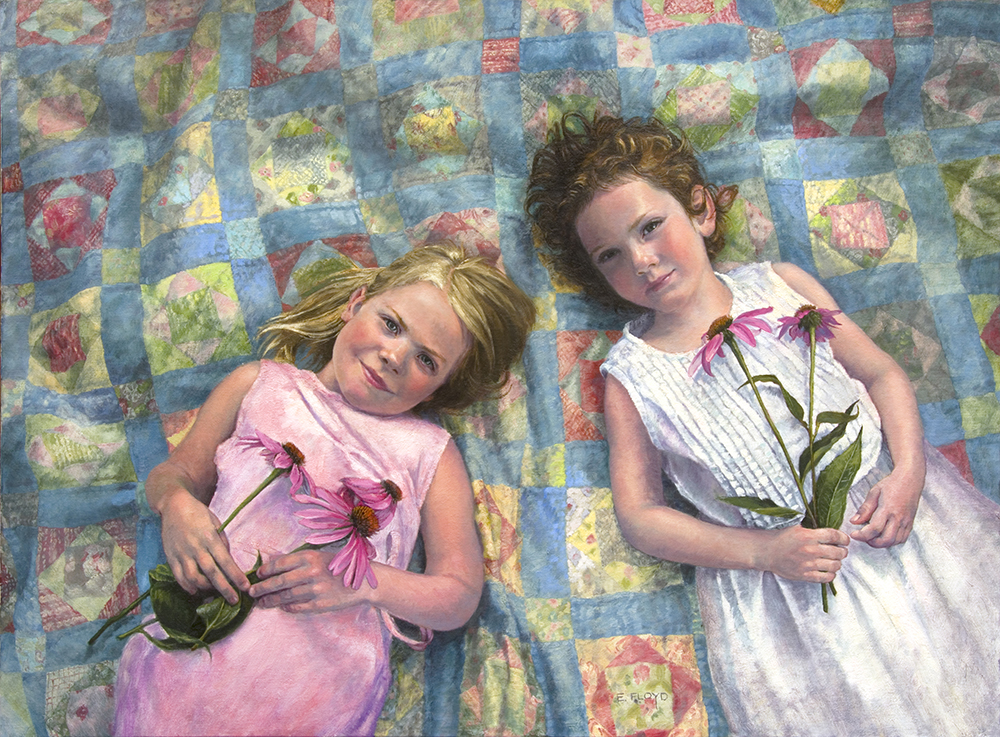
Elizabeth Floyd, “Friendship,” oil, 30 x 40 inches
Anna lives in Colorado, while I live in Northern Virginia. During this year we have met only once in person, and this occurred at the Portrait Society of America Conference held in Atlanta this past April. Because of distance, we hold our monthly meetings via FaceTime. In between, we also communicate via e-mail and text messages.
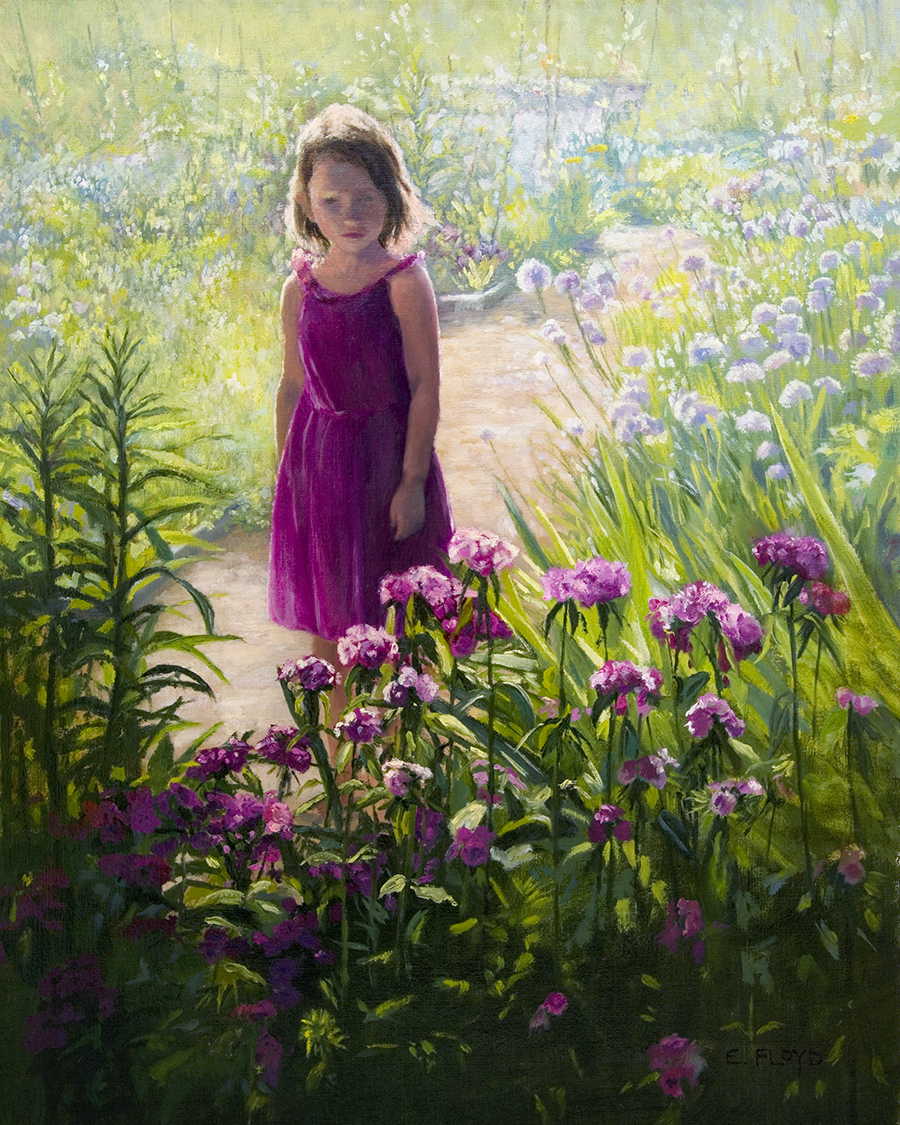
Elizabeth Floyd, “Morning Ramble,” oil, 20 x 16 inches
It is impossible to identify all the ways Anna Rose Bain has helped me during our mentorship relationship; however, I do know that I have gained more than I could have ever anticipated.
Fatima Atallah—Mentee (Linda Harris Reynolds was her mentor)
I graduated from an online art school in 2010. My art training was lacking many things: working from life, hands-on instructions, and many other aspects that frustrated me for a long time. My transition from school to work in the art field was and still is a struggle. I lacked confidence. I had no structure for my working days in the studio, and I was not motivated.
Fatima Atallah and Linda Harris Reynolds connect via Skype during the program
As days and years passed I found myself drifting away from the thing I love most: drawing and painting. With every attempt, I faced more challenges. I decided to seek help. I knew I needed to surround myself with a positive and supportive community, where we share, we work, and we talk about art. I started attending workshops with artists that I admire, and this has been very beneficial, but not the continuity I was looking for.
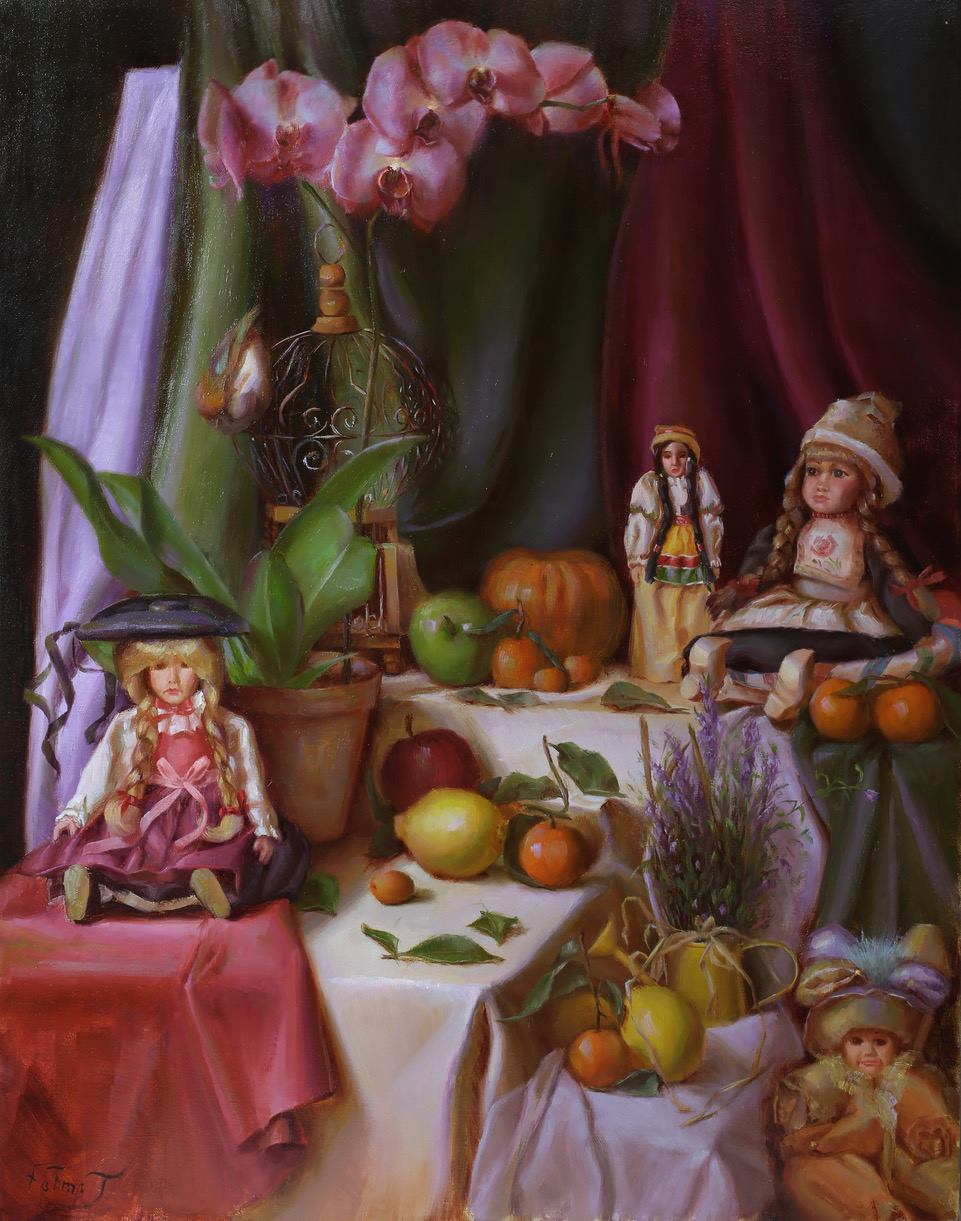
Fatima Atallah, “Harvest in Wonderland,” oil on linen, 28 x 34 inches
I applied for the Cecilia Beaux Mentoring program at the Portrait Society of America. I had several goals that I wanted to work on, and I needed the help and support of a mentor. I was lucky enough to be selected for the 2017 program and was paired with Linda Harris Reynolds.
Having a mentor, a professional and accomplished artist who is willing to work with me and help me advance, was exactly what I needed. Linda brings a fresher eye and perspective, to honestly and professionally critique my work … to challenge me and to help me work to achieve my goals. I think having a mentor for guidance, feedback, and input is imperative. We are located on opposite sides of the globe, me in the Middle East, and Linda in the USA. Our dialogue has involved the differences in culture, customs, women’s role in art and society. This has made the experience much more enriching.
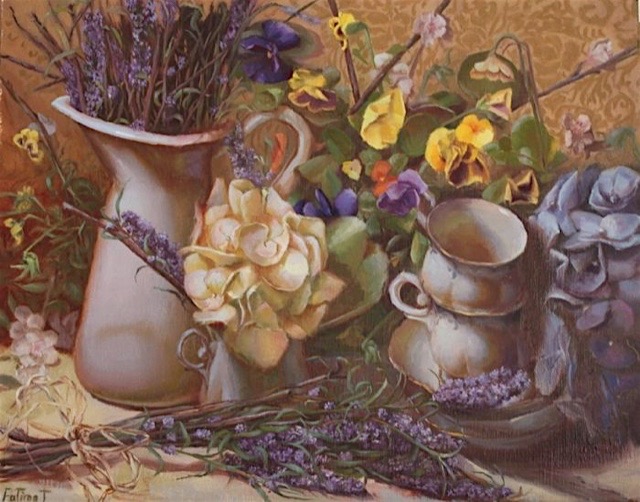
Fatima Atallah, “Lavender & Hydrangeas,” oil on panel, 16 x 20 inches
Linda and I have connected on many different levels; I value her opinion and I am inspired by her work. Having an artist to talk to, discuss and share opinions about art and art-related subjects, is invaluable. I needed to hear what’s working and what’s not from an expert; working alone in my studio, I could not advance in the same way.
Our discussions involve ideas, concepts, compositions, paint, and all technical aspects of creating art. They involve structure and working habits, discussing Masters’ works, books and artists to study! Recently we started talking about the importance of exposure and presenting myself as working professional artist submitting work for competitions as a must first step toward professionalism.
I greatly appreciate my mentor always reminding me about my goals, where I am and how much I have advanced … the importance of realizing my achievements and setting new goals. Challenging discussions about the purpose and the concepts I want to communicate through my work impacts the way I approach new projects.
This article was featured in Fine Art Today, a weekly e-newsletter from Fine Art Connoisseur magazine. To start receiving Fine Art Today for free, click here.
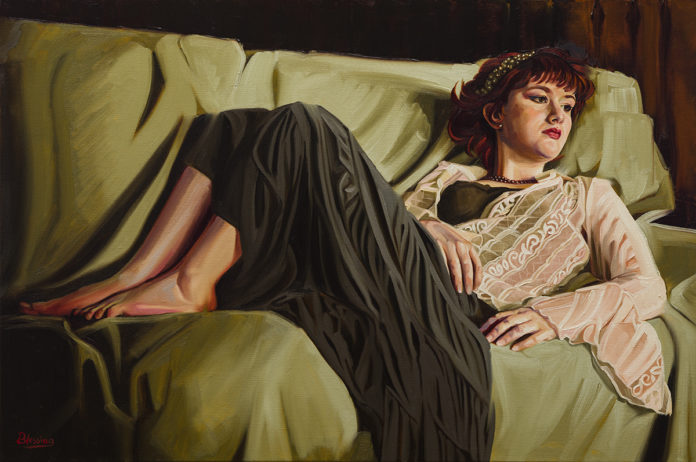
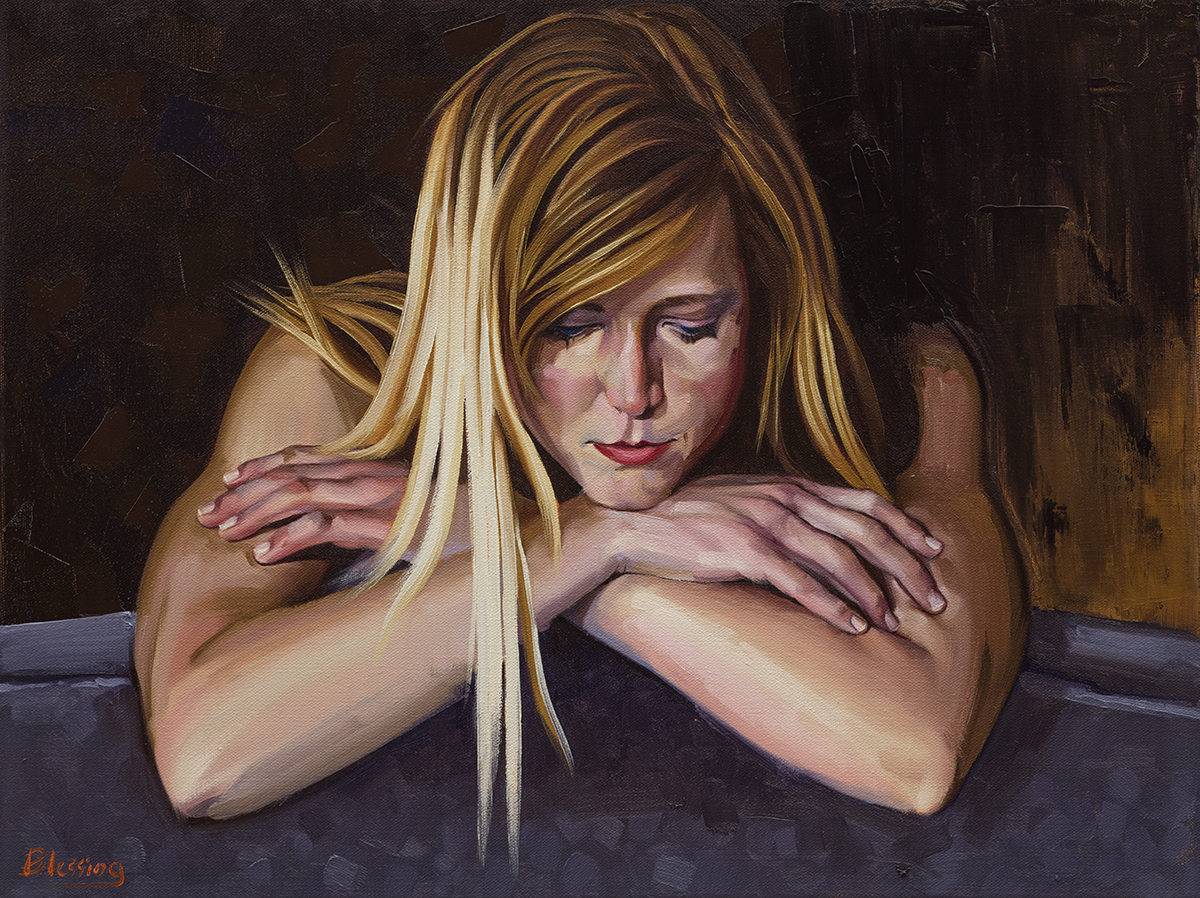
Michael Blessing, “A Quiet Contemplation,” oil on canvas, 24 x 36 inches
Painting the human figure on canvas allows artists to communicate a broad scope of concepts, ideas, emotions, and much more. It’s a complex and challenging subject, one that painter Michael Blessing has tackled during his current solo exhibition here.
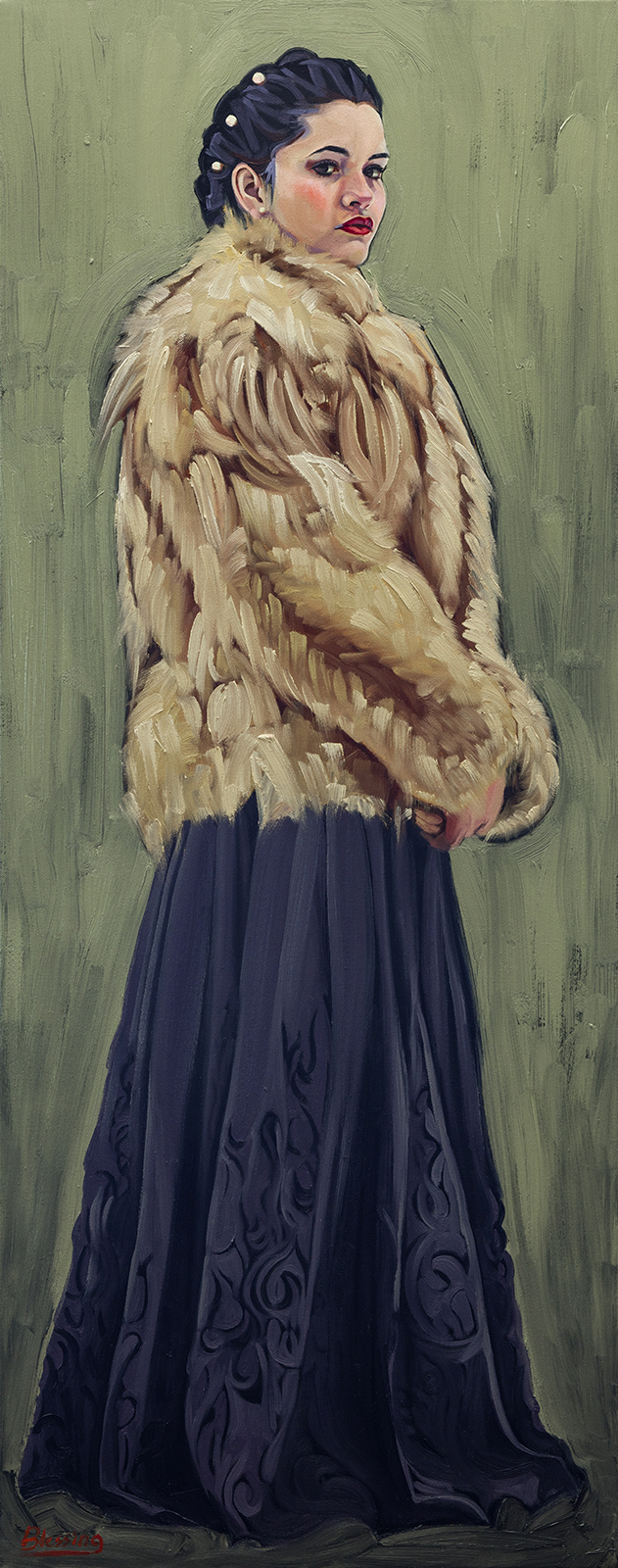
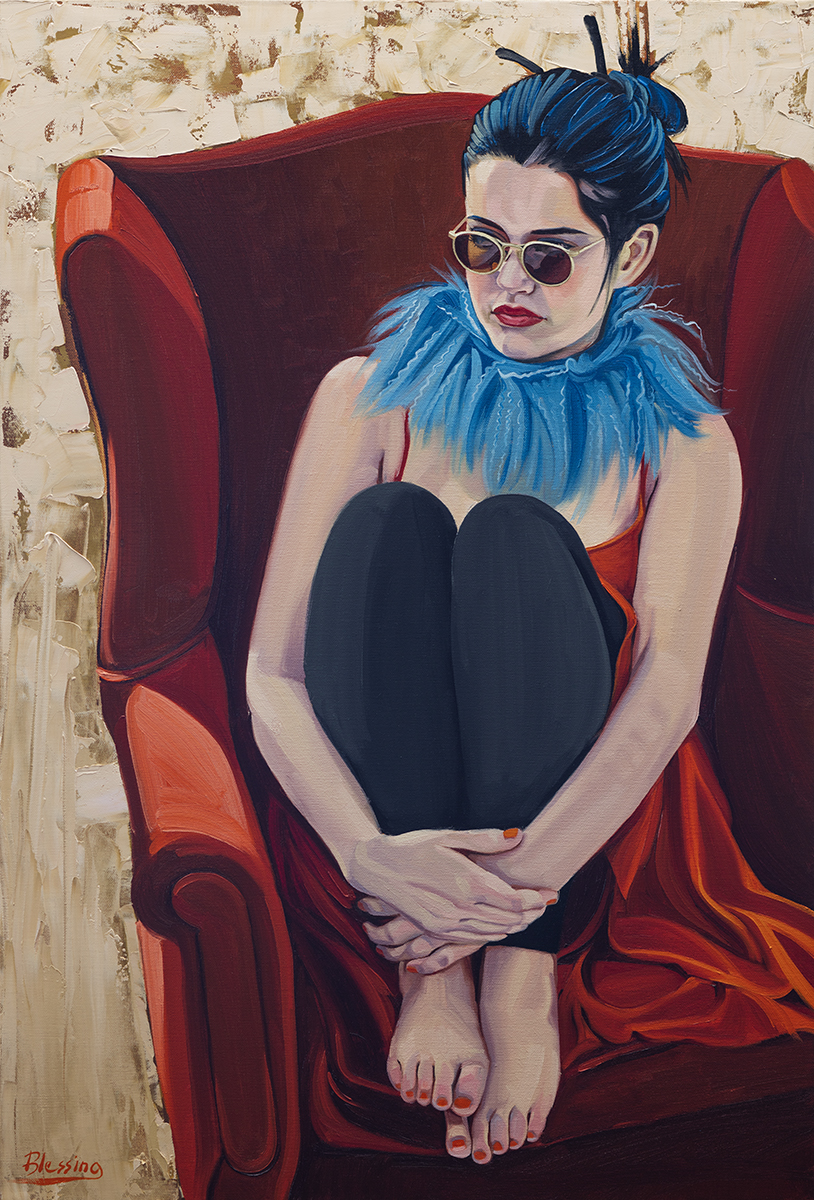
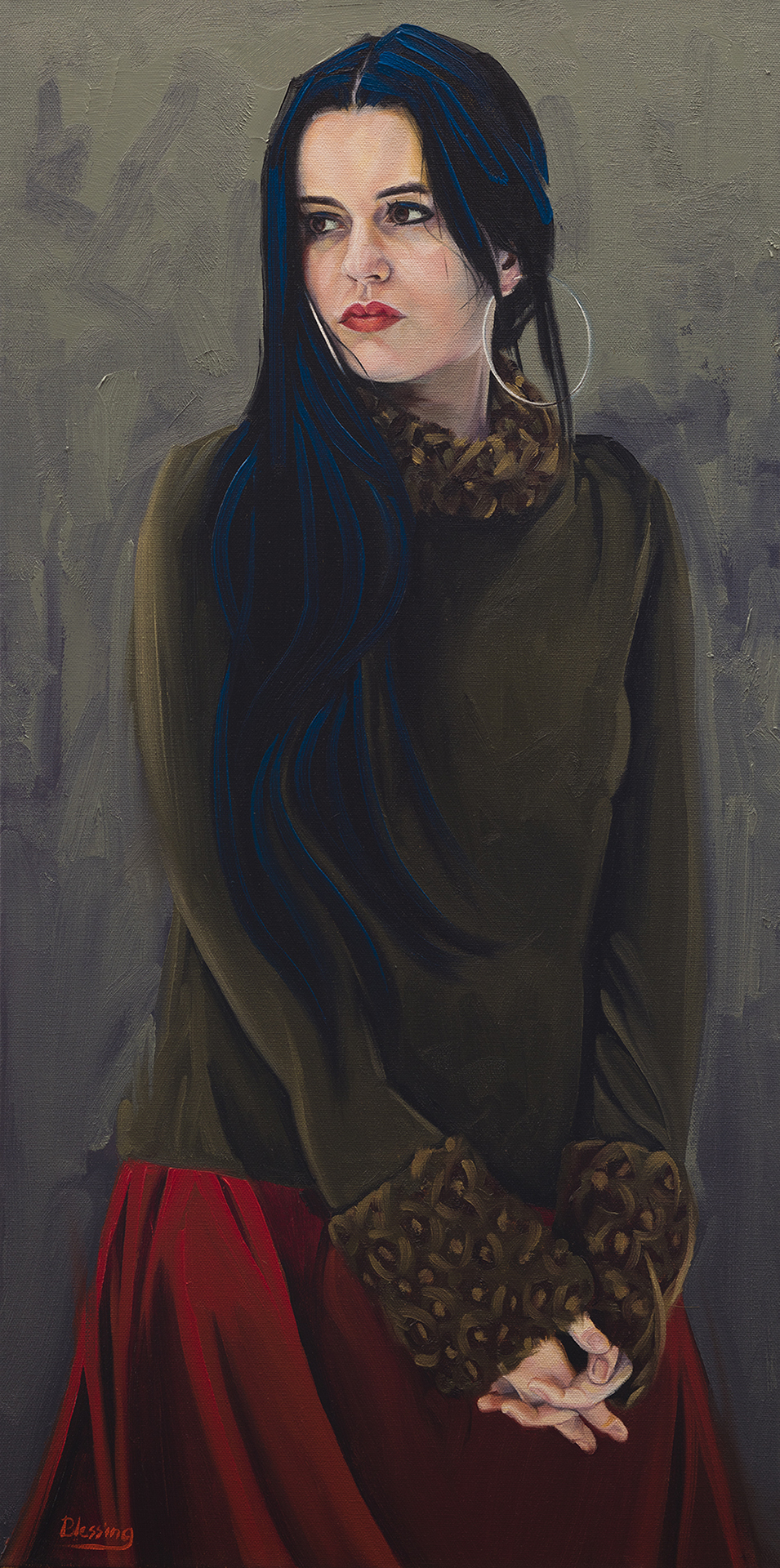
Recently opened at Bozeman, Montana’s Old Main Gallery & Framing, “Allure” is a prolific display of figurative works by painter Michael Blessing. The project is a result of Blessing’s longing to paint figures with a single focus and purpose. “I have painted commissioned portraits for clients across the country and had focused exclusively on figure painting for the first 12 years of my career in the visual arts,” the artist writes. “It is with joy that I return to my artistic roots and have the opportunity to paint a subject I love. The female form is one of God’s most beautiful creations, and what you see here is my committed effort to capture that beauty in a respectful and honest way.”
Michael Blessing, “Butterfly,” oil on canvas, 18 x 24 inchesMichael Blessing, “Dame,” oil on canvas, 40 x 16 inchesMichael Blessing, “Ingénue,” oil on canvas, 36 x 24 inchesMichael Blessing, “Nocturne,” oil on canvas, 30 x 15 inches
As evidenced through his work in “Allure,” Blessing is compelled by the shapes within a composition. “Having discovered an initial inclination toward figurative painting, he favors a candid view of his subjects, often depicting unexpected everyday moments and emotions that are universally relevant,” the gallery suggests. “As a kid growing up in mid-20th-century America, brightly lit neon signs often captured his imagination and interest. Michael felt he could combine his love of painting the figure with his love of the nostalgic pull of neon, and his ‘Neon Gunslingers’ series was born. As a rule, Michael is drawn to strong compositions, vibrant color, and bold lines. His figurative work and paintings of vintage Western nostalgia are widely appealing and have an edgy quality that is both contemporary and timeless.”
This article was featured in Fine Art Today, a weekly e-newsletter from Fine Art Connoisseur magazine. To start receiving Fine Art Today for free, click here.
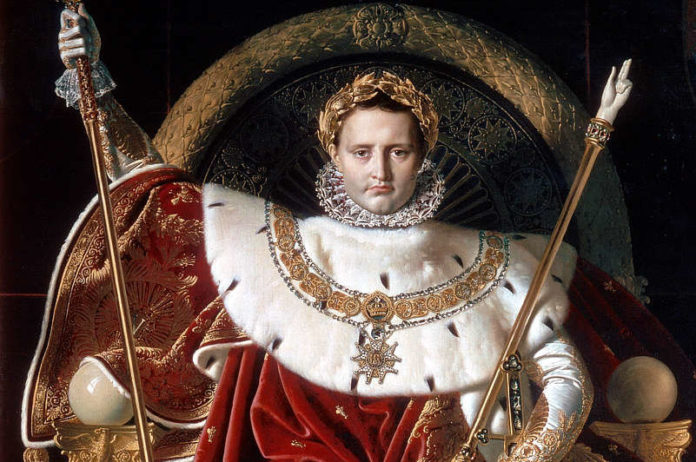
Jean-Auguste-Dominique Ingres, “Napoleon on His Imperial Throne [detail],” 1806, oil on canvas, 8 feet, 5 inches x 5 feet, 4 inches, Musée de l’Armée 2017
In this occasional series, Fine Art Today delves into the world of portraiture, highlighting historical and contemporary examples of superb quality and skill. This week we look at one of history’s most ambitious and stunning royal portraits.
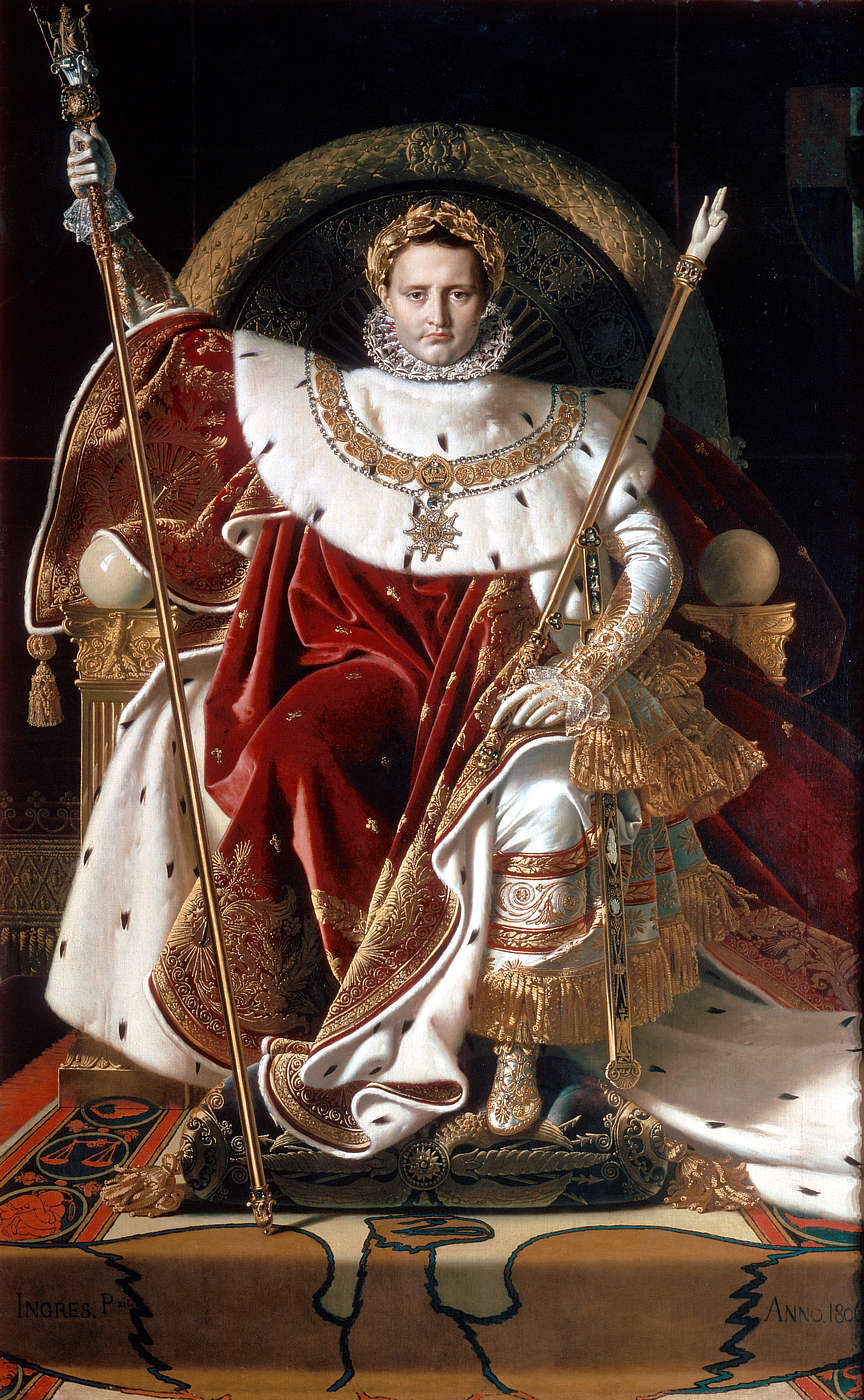
Politics and art. Few world leaders have better understood the efficacy of art as public propaganda than Napoleon Bonaparte — and one of his portraitists, Jean-Auguste-Dominique Ingres, was perfectly suited and talented for the task. Circa 1806, Ingres executed one of history’s best-known examples of art as propaganda: a monumental portrait of Napoleon on his Imperial Throne — a picture in which every conceivable detail, from the Emperor’s defiant expression down to each golden thread in his infinitely elaborate regalia, is captured with unrivaled skill, intimacy, and care. In fact, the portrait is executed in such a way that it not only makes clear Napoleon’s power as ruler of the French, but verges on portraying the emperor as a divine ruler, if not God the Father himself.
Sound a bit too far? If your answer was yes, Napoleon finds himself smiling in his grave today because he knows Ingres did his job — and did it well. Historians agree that Ingres modeled his enthroned portrait after Jan van Eyck’s masterful imaging of God the Father found in the center panel of the Ghent Altarpiece, a painting which was at the time housed in the Musée Napoléon (now the Louvre Museum). However, as our readers can imagine, the overall enthroned composition is only a small, overarching message that is continually reinforced and expanded through the picture’s detailed features.
Jean-Auguste-Dominique Ingres, “Napoleon on His Imperial Throne,” 1806, oil on canvas, 8 feet, 5 inches x 5 feet, 4 inches, Musée de l’Armée 2017
A quick glance around the portrait reveals several spread-winged imperial eagles, the largest of which is presented directly in the foreground, embroidered on the rug. The same eagle is repeated in the capitals of the armrests, which support massive ivory spheres. Also found in the rug are the scales of justice, a common governmental symbol. Cleverly placed in the darkness just above Napoleon’s left shoulder is a partially visible heraldic shield — a marker of Italy and the Papal States, tying the emperor to the Holy Catholic Church and proclaiming him King of Italy, which — of course — he was, as of 1805. All this before the sitter himself is considered.
Among the most recognizable accouterments on the emperor himself is the golden wreath that crowns his head — a symbol of kingship and victory that is traced to Classical Roman emperors. Napoleon holds not one, but two scepters. The scepter to the viewer’s right is topped by the hand of justice, while to the left is the staff that belonged to the 9th-century Holy Roman Emperor Charlemagne. Finally, an extravagant medal from the Légion d’honeur hangs from the sitter’s shoulders by an intricate, jewel-encrusted gold chain.
While the scope of this brief article cannot begin to deconstruct every detail and element of this massive and deeply complex portrait (about 8 1/2 feet tall and 5 1/3 feet wide), what we’ve detailed here highlights how adroit portraitists can employ hundreds of strategies, symbols, composition, and iconography to create a visual identity that communicates several different messages. Indeed, there can be no doubt that the neoclassical Ingres was one of history’s best, and his portrait of Napoleon on his imperial throne ranks among the most masterful portraits ever painted.
This article was featured in Fine Art Today, a weekly e-newsletter from Fine Art Connoisseur magazine. To start receiving Fine Art Today for free, click here.
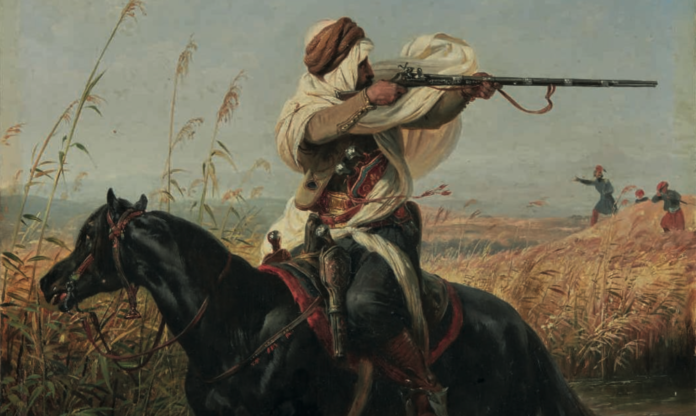
Horace Vernet, “Arab Rider (detail),” 1839, oil on canvas, 16 x 13 1/4 inches
In this ongoing series for Fine Art Today, we take a longer look at the history and features of a soon-to-be-available artwork of note. This week we highlight a magnificent tableaux by a 19th-century French painter regarded as the master of battles.
On Tuesday, September 19 in Paris, France, Christie’s will open a stunning auction of Tableaux pictures circa 1400-1900. Among the highlights of the sale is a stunning portrayal of an oriental soldier on horseback by 19th-century Frenchman Horace Vernet (1789-1863) — considered by many of his contemporaries (and current historians) to be the greatest painter of military history of his generation.
According to the National Gallery of Art, Washington, Vernet was “predestined for art by family inheritance: the grandson of the engraver Jean Moreau le Jeune on his mother’s side and, on his father’s side, of Joseph Vernet, France’s foremost painter of land- and seascapes.” Indeed, from an early age, Horace displayed incredible natural gifts in art and was considered a prodigy, becoming a professional artist in his teens.
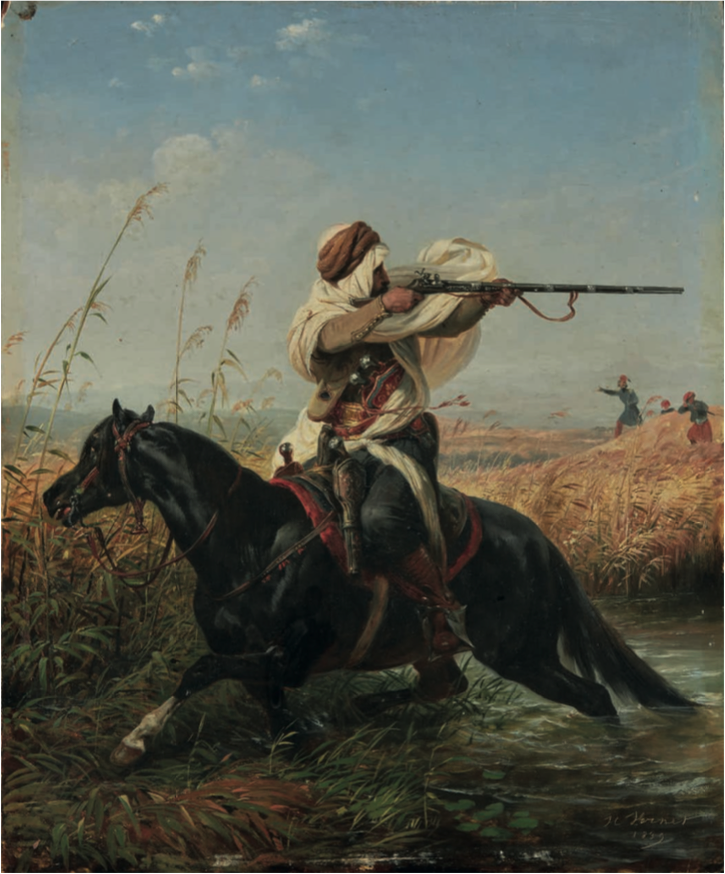
Horace Vernet, “Arab Rider,” 1839, oil on canvas, 16 x 13 1/4 inches
“In a series of battle scenes from the Revolutionary and Napoleonic Wars, [Vernet] gave a foretaste of what was to become his specialty,” the NGA continues. “The Revolution in July 1830, which raised Louis-Philippe, Vernet’s patron, to the throne, opened vast opportunities of official employment to him. The rapid flow of state commissions for battle pieces that now came his way taxed even his prodigious facility. Four very large canvases for the Galerie des Batailles at Versailles, shown at the Salon of 1836, were followed by a second series in 1841. Accepting his calling as that of a painter of modern national subjects, specifically of scenes of combat, Vernet conceived of his work as a form of eyewitness reportage that required observation at the actual theaters of war. In five long visits to North Africa (1833, 1837, 1839-1840, 1845, 1853), he gathered on-the-spot documentation of the French conquests in Algiers and Morocco, material that he later worked up into wall-size canvases destined for Versailles. Louis-Philippe’s overthrow by the Revolution of 1848 and the advent of Napoleon III in 1849 scarcely affected his activity. The year 1850 found him at the French siege of Rome; in 1854, he visited the battlefields of the Crimea. He had in the meantime enjoyed the lucrative patronage of Czar Nicholas I during two long visits to Russia in 1836 and 1842-1843.”
Highlighting the September 19 auction at Christie’s is a beautiful work from France’s campaign to annex Algeria between 1830 and 1834. Completed in 1839, the work — titled “Arab Rider [La Retraite]” — was inspired by Vernet’s official visit to Algeria in 1833 as official painter to Louis-Philippe. Although many of France’s artists, such as Eugene Delacroix, were fascinated by the exploits of the French Army, Vernet was equally inspired by the oriental fighters, as evidenced by this Arab cavalier.
According to Christie’s, “Arab Rider” is a small but “monumental” painting. “Vernet’s excellence is represented by the picturesque details, which he carefully captures with care and accuracy. The shining coat of the thoroughbred, brilliant leatherwork, and dynamic character of the composition make this work a real jewel.”
Auction estimates are between $82,000 and $120,000. To learn more, visit Christie’s.
This article was featured in Fine Art Today, a weekly e-newsletter from Fine Art Connoisseur magazine. To start receiving Fine Art Today for free, click here.
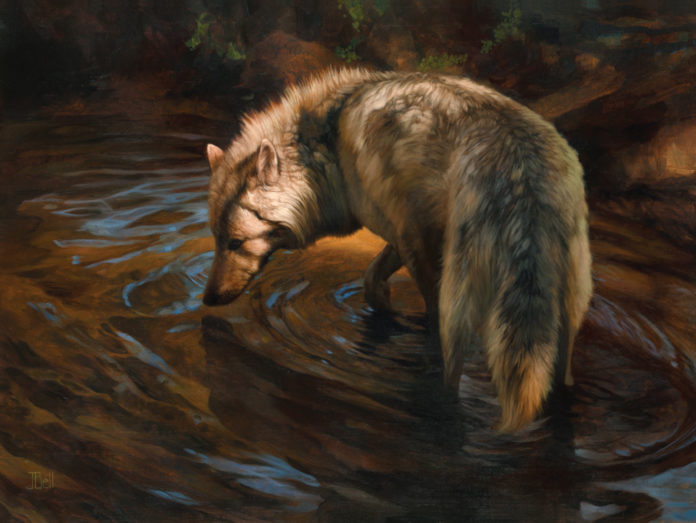
Julie Bell, "Gazing Pond," 2016, oil on linen, 18 x 24 inches
written by Louise Joyner
The career of Julie Bell (b.1958) is a testament to the enduring power of realism in American art. Focused on eight recent paintings, this article reveals the depth of her inspiration and sensitivity to her subject matter, even as it underscores the broad range of influences she has absorbed and made her own.
Julie Bell, “Champion,” 2016, oil on linen, 60 x 48 inches
The daughter of an architect father and artist mother, Bell grew up in Beaumont, Texas, in an environment that nurtured her desire to become a painter. Drawing has mattered as long as she can remember, yet she only began to study art formally during high school, then majored in drawing at DeKalb County Community College in Atlanta. There Bell was inspired by her teachers and introduced to color theory, which she has so evidently come to master. Her studies continued under the wildlife artist Jerry Newman at Lamar University (in Beaumont), where she made her first serious life drawing study. At Northern Michigan University, Bell probed the psychology underlying animals’ appearances with the sculptor Wolf Niessen. By 1982, she was a married mother of two living in Ohio, yet found time to take drawing classes at Lorain County Community College while accepting commissions to illustrate children’s books.
This is an excerpt from “Julie Bell: Looking Back, Looking Within”. Find the full article in the July / August 2017 Edition of Fine Art Connoisseur Magazine.
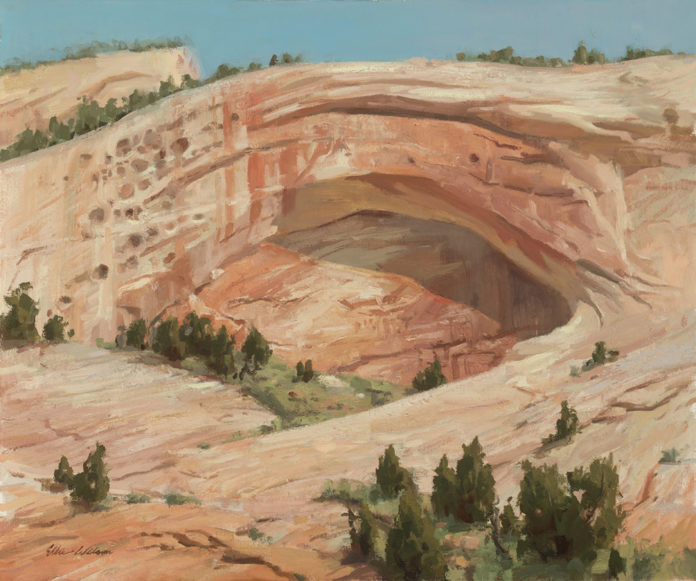
Growing up in the Wasatch Mountains of northern Utah, Ellie Wilson’s love for nature and beauty grew at an early age. After painting outdoors for the first time as a young college student, she knew she had found what she wanted to do with her art. Upon graduating with a BFA from Brigham Young University, she sold-out a 22-piece solo show and launched her professional career.
To capture the vitality of natural scenes, all of Ellie’s landscapes begin as plein air studies using a limited palette. Through rigorous efforts in school, studying independently and working with several influential landscape painters, Ellie has gained a greater understanding of value, edge control, and composition. She paints outdoors every week to keep her eye fresh, but generally finishes her work in her studio. She keeps her paints with her on the road at all times so she’s prepared to capture a beautiful skyline, storm, or sunset.
Ellie will be a first-time participant in the Zion National Park Plein Air Invitational this fall. She will be joined by 23 other artists who will be painting in the park November 6-12, giving free demonstrations and selling their work to support the Zion National Park Forever Project. As the official nonprofit partner of the park, the Forever Project provides much-needed funding for park improvements and programs.
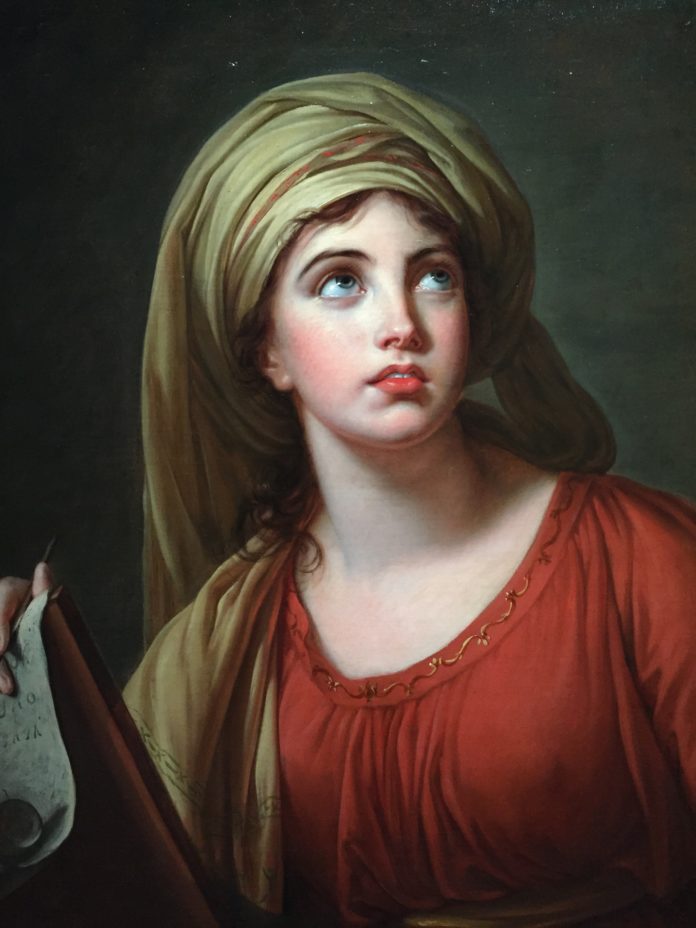
Elisabeth Vigée-Le Brun, “Lady Hamilton as Sybille of Cumes,” 1791-92, oil on canvas, 95 x 78 cm, Stéphane Barbier-Mueller Collection, Photo: Luis Lourenço
Though it dates back to 1959, La Biennale des Antiquaires has only now become an annual event, renamed La Biennale Paris.
La Biennale Paris is now an annual event in 2017! Hosted at the historic Grand Palais, the international antiques and fine art fair has 92 confirmed prestigious exhibitors this year. A unique celebration of the French art de vivre, La Biennale Paris has been exhibition the finest works from some of the world’s most impressive galleries, antique dealers and jewelers for more than 50 years.
This year’s fair is overseen by new leadership in the Biennale Commission, Christopher Forbes, who remarked “The Paris Biennale is the most important fair of its kind in France, and one of the greatest in the world, alongside TEFAF Maastricht and the Winter Show in New York. To follow in the wake of Henri Loyrette, whom I admire deeply, is at once a privilege and an honor. I am committed to maintaining the level of excellence established by my eminent predecessors and look forward to being part of transforming this Biennale into the most brilliant edition that has ever taken place.”
La Biennale Paris will take place between September 11-17. To learn more, visit La Biennale Paris.
This article was featured in Fine Art Today, a weekly e-newsletter from Fine Art Connoisseur magazine. To start receiving Fine Art Today for free, click here.
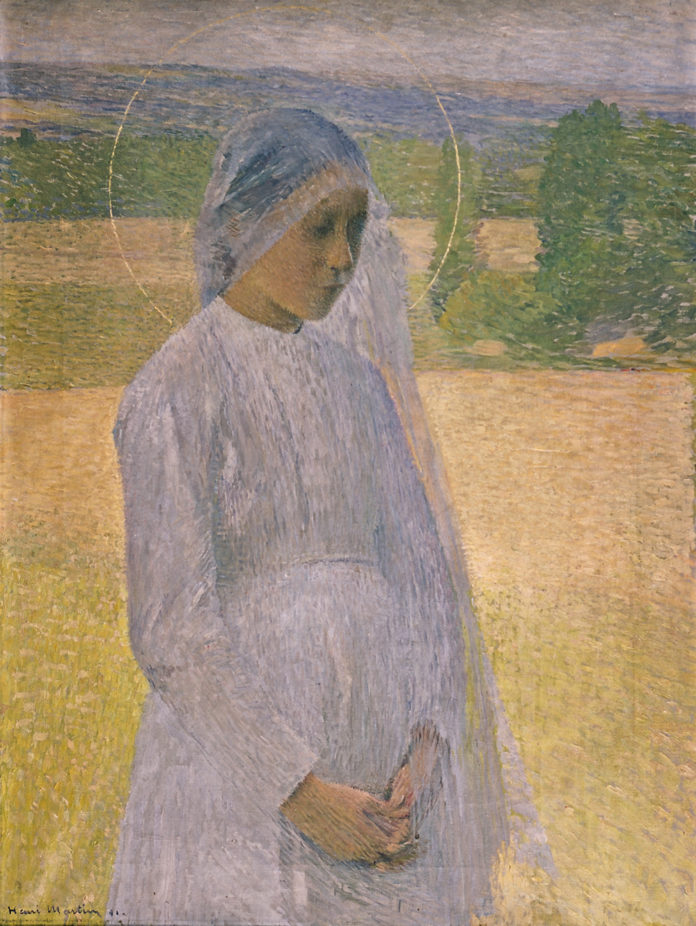
Henri Martin, “Young Saint (Jeune sainte),” 1891, oil on canvas, 65.4 x 49.3 cm, Musée des Beaux-Arts, Brest, France
The Salon de la Rose+Croix in Paris was a short-lived (1892-1897) series established by the eccentric French author and critic Joséphin Péladan to represent the doctrines of his Rosicrucian order—a fraternal, esoteric religious sect. What is “Mystical Symbolism”? The Guggenheim has an answer.
Hosted at various galleries around Paris, the Salon de la Rose+Croix was considered an international crossroads for artists, some conservative, some radical, yet most seeking to underscore the spiritual dimension of art and provoke visionary states of mind in their viewers. The Guggenheim Museum in New York City is currently presenting a unique exhibition titled “Mystical Symbolism”, which is the first-ever of its kind, featuring only works that were shown in the R+C. “This historically inflected lens” the museum says, “allows for a reconsideration of the complexities of Symbolism, particularly the movement’s more numinous branch.”
On view now through October 4, among the artists represented include Vasily Kandinsky, František Kupka, Piet Mondrian, Henri Martin, and more. To learn more, visit the Guggenheim Museum.
This article was featured in Fine Art Today, a weekly e-newsletter from Fine Art Connoisseur magazine. To start receiving Fine Art Today for free, click here.
Fill your mind with useful art stories, the latest trends, upcoming art shows, top artists, and more. Subscribe to Fine Art Today, from the publishers of Fine Art Connoisseur magazine.