
Home Blog Page 384

Liepke You’ll Love in California

0

He is one of the country’s most influential figurative painters; collectors and connoisseurs will regret missing out on this extraordinary solo exhibition of recent works by Malcolm T. Liepke.
 
Opening October 22 at the esteemed gallery Arcadia Contemporary is a colorful display of figurative mastery by painter Malcolm T. Liepke. The artist’s first solo show on the West Coast in some 10 years, these new works “explore a contemporary twist on figurative painting, executed in his signature lush style,” the gallery writes.


Malcolm T. Liepke, “Balloons & Confetti,” 2016, oil (c) Arcadia Contemporary 2016

 
What is this “Lush,” you ask? You’ll need to see it in person for the full effect. Employing a lighter, cooler palette, “Limbs, garments and faces arrive in striking compositions as a distinctly contemporary atmosphere pervades the works,” the gallery describes. “Stark pastels and bold primaries hang in a unique balance around the artist’s familiar constellation of bodies.”
 
To learn more, visit Arcadia Contemporary.
 
This article was featured in Fine Art Today, a weekly e-newsletter from Fine Art Connoisseur magazine. To start receiving Fine Art Today for free, click here.
 

Beautiful Botticelli

0

Since July of 2015, two of the most visited rooms in Florence’s Uffizi Gallery have undergone extensive updates. Two of Sandro Botticelli’s celebrated masterpieces weren’t left out of the party. How?
 
It’s always exciting to hear about old masterpieces being restored and cleaned —technology has advanced to the point that the process preserves as it restores the works’ former glory. Such is the case at the world’s most famous Renaissance museum,  the Uffizi Gallery in Florence. Rooms 9 and 15 — two of the most visited rooms in the gallery — recently underwent extensive renovations, and their esteemed occupants were cleaned and freshened up for their new space. And that includes two of Sandro Botticelli’s masterpieces.
 
Now on view with renewed vibrancy, “Spring” and “Birth of Venus” are more beautiful than ever before — and beautifully lit as well. All of the works in the two rooms are now predominantly lit using natural light-wells and ceiling windows, which Director Eike Schmidt suggested would allow visitors to contemplate the paintings more fully. Among the other occupants of the room are seminal works from Pollaiolo, Hugo van der Goes, and Domenico Ghirlandaio.
 
To learn more, visit the Uffizi Gallery.
 
This article was featured in Fine Art Today, a weekly e-newsletter from Fine Art Connoisseur magazine. To start receiving Fine Art Today for free, click here.
 

Mirror, Mirror On the Wall

0

Embracing the human form in several mediums and concepts, “The Nude Figure” and “The Nude, Mirror of Desire” are co-exhibitions juried from 430 works by nearly 250 artists. Who made the cut?
 
Juried by renowned artists Scott Noel and Paul DuSold, “The Nude Figure” and “The Nude, Mirror of Desire” is a fascinating exploration of the human figure by a range of talented creators. Selected from 242 artists with 430 entries, Noel and DuSold narrowed the field to just 71 accepted artists represented by 86 works of art.


Elise Schweitzer, “Parachute, Parsonage,” oil, (c) Wayne Art Center 2016


Chris Smith, “Antigone Enthroned,” cast (c) Wayne Art Center 2016

 
Opened on October 16, the two exhibitions are being held at the Wayne Art Center in Wayne, Pennsylvania. Over $3,000 in awards sponsored by the host were presented on October 16 as well. Elise Schweitzer took home Best in Show honors for her work “Parachute, Parsonage” while Tamie Beldue earned honors for Best Drawing. Chris Smith was awarded Best Sculpture and Patrice Poor took Best Narrative Figure.
 
To learn more, visit the Wayne Art Center.
 
This article was featured in Fine Art Today, a weekly e-newsletter from Fine Art Connoisseur magazine. To start receiving Fine Art Today for free, click here.
 

Exploring the Realities of Our Time

0

He’s been doing it for decades — exploring the sometimes unbearable truths of contemporary reality through vivid and masterfully executed paintings. Renowned master Max Ginsburg offers viewers a trip through the 20th century during a compelling retrospective.
 
Opening Saturday, November 12 at San Antonio’s TwoTen Fine Art is a remarkable retrospective for master Max Ginsburg that is both beautiful and gripping. Featuring paintings that “explore the realities of our time,” Ginsburg’s images confront viewers with the sometimes uncomfortable truths that often surround America’s social, political, economic, and cultural atmosphere.


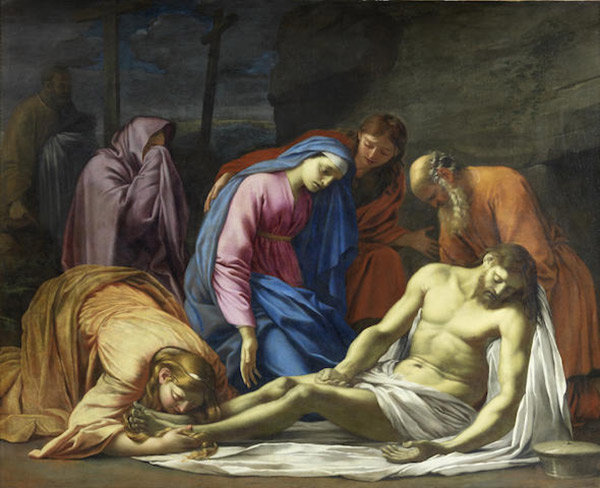
Max Ginsburg, “War Pieta,” 2007, oil, 50 x 60 in. (c) TwoTen Fine Art 2016

 
Often described as belonging to the category of Social Realism, Ginsburg’s controversial images are technically profound, executed with incredible detail, sharpness of form and color, and dramatic composition. He is a living master, and those in Texas should take advantage of this opportunity to both meet Ginsburg and view his historically significant pictures.
 
To learn more, visit TwoTen Fine Art.
 
This article was featured in Fine Art Today, a weekly e-newsletter from Fine Art Connoisseur magazine. To start receiving Fine Art Today for free, click here.
 

You’ve Got to See these Masterpieces

0

An extraordinary display of some of the most celebrated paintings produced in California between 1890 and 1940 is now on view at the Irvine Museum. You won’t want to miss this rare opportunity.
 
On view now through January 19 at California’s Irvine Museum, “Masterpieces of California Art” is a once-in-a-lifetime opportunity to view rarely exhibited works from many of the Golden State’s most celebrated painters from 1890 through 1940. Among the artists represented is Guy Rose (1867-1925) — considered by many as California’s most important impressionist painter. Three spectacular paintings by Rose will be on view, including his remarkable canvases “The Green Parasol,” “The Blue House,” and “Laguna Eucalyptus.”
 
Also included in the exhibition are pictures by Arthur F. Mathews, Joseph Kleitsch, Alfred Mitchell, Franz A. Bischoff, Alson S. Clark, Colin Campbell Cooper, John Frost, Anna Hills, Edgar A. Payne, Granville Redmond, Donna N. Schuster, Millard Sheets, and Marion K. Wachtel.
 
To learn more, visit the Irvine Museum.
 
This article was featured in Fine Art Today, a weekly e-newsletter from Fine Art Connoisseur magazine. To start receiving Fine Art Today for free, click here.
 

Reader’s Choice: Daniel Sprick in New York

0

You’ve spoken! In this occasional series, we highlight one of most popular articles among Fine Art Today readers. This week we revisit the amazing solo show of recent works by master Daniel Sprick, on view now in New York City.
 
Contemporary master Daniel Sprick will soon showcase a number of recent works in New York City. Ranging from extraordinarily realistic portraits to haunting still lifes and beyond, there’s something here for every fine art connoisseur.


Daniel Sprick, “Nefertiti,” 2015, oil on board, 20 x 16 in. (c) Gerald Peters Gallery 2016

 
The artworks of Daniel Sprick represent some of the best contemporary realism and imaginative realism have to offer. Blending modern psychological and human experiences with traditional techniques, Sprick is on the cutting edge of fine art in the 21st century.


Daniel Sprick, “Wake from a Dream,” oil on board, 60 x 54 in. (c) Gerald Peters Gallery 2016

 
Featuring 16 stunning new works at Gerald Peters Gallery in New York City, the show offers a range of interesting subjects, including hyper-realistic portraiture, still life, and urban landscape. Via the gallery, “There is a tension at play in his work as he explores the dichotomy between realism and abstraction, beauty and grit, tradition and experiment, planned and improvised. He exhibits extraordinary attention to detail, but then by leaving an unfinished edge or a sweeping gestural brushstroke, he reminds us that these are, after all, still paintings.”
 
“Daniel Sprick: Recent Works” opened on October 13 and will be on view through November 5. To learn more, visit Gerald Peters Gallery.
 
This article was featured in Fine Art Today, a weekly e-newsletter from Fine Art Connoisseur magazine. To start receiving Fine Art Today for free, click here.
 

Portrait of the Week: Diego Velázquez, “Las Meninas”

4

In this occasional series, Fine Art Today delves into the world of portraiture, highlighting historical and contemporary examples of superb quality and skill. This week: Diego Velázquez, “Las Meninas.”
 
With a title that translates as “The Ladies-in-Waiting,” Diego Velàzquez’s remarkable group portrait “Las Meninas” is, perhaps, the most well-known example of a painting communicating much more than it initially seems to. Indeed, the massive painting, which visually centers around the delightful Infanta Margaret Theresa and her maids of honor, also creates a series of complex ulterior narratives surrounding the painting’s production, the viewer’s relationship with the characters, and so much more. That’s why “Las Meninas” is almost certainly one of the most widely analyzed paintings in the history of art.
 
Painted in 1656 during the reign of King Philip IV of Spain, “Las Meninas” was one of the first paintings ever to capture the production of, arguably, itself. Standing along the left edge of the painting and staring out upon the viewer is Velàzquez himself. The large canvas before him —cut off by the painting’s cropping — is believed by many to be that of “Las Meninas” itself. This remarkable inclusion creates a great deal of uncertainty when considering the viewers and their relationship to — and possibly within — the painting. More typically, the viewer assumes the position or vantage of the artist, who captures the scene that lies in front of him. However, Velázquez’s position within the scene would make this impossible. In the background, a mirror reflects the visages of the Queen and King, suggesting perhaps it is their viewpoint that we, the viewer, occupy.
 
Indeed, no interpretive consensus has ever been reached among scholars except for the remarkable nature and importance of the painting. Some have suggested the painting is a perfect representation of popular concerns of the Spanish Baroque, namely the relationship between illusion and reality — which also figures largely in the best-known work of Spanish Baroque literature, Don Quixote.
 
Renowned scholar and philosopher Michel Foucault wrote, “We are looking at a picture in which the painter is in turn looking out at us. A mere confrontation, eyes catching one another’s glance, direct looks superimposing themselves upon one another as they cross. And yet this slender line of reciprocal visibility embraces a while complex network of uncertainties, exchanges, and feints. The painter is turning his eyes towards us only in so far as we happen to occupy the same position as his subject.”(1) Continuing, Foucault argues, “Now he (the painter) can be seen, caught in a moment of stillness, at the neutral centre of his oscillation. His dark torso and bright face are half-way between the visible and the invisible: emerging from the canvas beyond our view, he moves into our gaze; but when, in a moment, he makes a step to the right, removing himself from our gaze, he will be standing exactly in front of the canvas he is painting; he will enter that region where his painting, neglected for an instant, will, for him, become visible once more, free of shadow and free of reticence. As though the painter could not at the same time be seen on the picture where he is represented and also see that upon which he is representing something.”
 
To be sure, hundreds of books, articles, essays, and other writings have attempted to successfully and succinctly encapsulate “Las Meninas” and all of its philosophical potential. Through all of its uncertainty, what remains certain is that the painting is a striking example of how one man — with canvas, paint, and brushes — can create a work of profoundly beautiful art that forever captures the hearts and minds of connoisseurs and enthusiasts.
 
This article was featured in Fine Art Today, a weekly e-newsletter from Fine Art Connoisseur magazine. To start receiving Fine Art Today for free, click here.
 

Featured Lot: Norman Rockwell, “She Gave Me a Parker 61 (Happy Birthday to Dad)”

0

In this ongoing series for Fine Art Today, we take a longer look at the history and features of a soon-to-be-available artwork of note. This week: Norman Rockwell, “She Gave Me a Parker 61 (Happy Birthday to Dad).”
 
Norman Rockwell (1894–1978) is remembered as perhaps the greatest painter and illustrator of American wartime culture, and his works are, without a doubt, some of the most coveted and highly collected artworks today. Born in New York, Rockwell pursued an art career early. His passion and talent were noticed as early as age 15, when he painted his first commission of four Christmas cards. Still in his teens, Rockwell landed his first major commissions from Boys’ Life, the official publication of the Boy Scouts of America. At age 22, Rockwell painted his first cover for The Saturday Evening Post, which would become the artist’s launch pad to national acclaim and success. Over the next 47 years, Rockwell would paint an additional 321 covers for the Post, part of more than 4,000 original works during his lifetime, cementing his place in history and in the hearts and minds of millions of Americans.
 
Still enjoying widespread popular appeal, Rockwell’s style was characterized by idealistic and sentimental portrayals of American life and culture. This was especially true during the end of World War I and throughout World War II. As part of the drive to mobilize America for the war effort, Rockwell turned his artistic lens away from the youthful subjects seen in his illustrations for Boys’ Life and toward inspiring subjects.
 
Unfortunately, many of Rockwell’s original works belong to public and private collections or have been destroyed. Rarely do originals head to auction, but, when the occasion presents itself, prices are expected to soar. That’s what Sotheby’s is expecting during its October 20 “American Art” sale when Rockwell’s “She Gave Me a Parker 61 (Happy Birthday to Dad)” becomes available.

Dating to 1959, the painting is a rare example of Rockwell’s work with the Parker Pen Company, which commissioned the work. Sotheby’s writes, “In 1956, the Parker 61 was introduced, notable for its advanced, self-filling features and slimmer, more pleasing profile. For its holiday season promotional campaign in 1959, Parker commissioned Norman Rockwell to illustrate a three-month series of ads. This would be the third time that Parker and Rockwell would work together. In 1928, his first illustration for a Parker Pen advertisement appeared on page 65 of the December 1 issue of the Saturday Evening Post. The next year another seasonal advertisement by Rockwell for the Parker Pen appeared in the December 14, 1929 issue of the Post. Not surprisingly, both the 1928 and 1929 ads were Christmas themed. Now Parker took a slightly different tack with its illustrator now as famous as its pens. The first ad appeared in October with an encouragement to write home often. The November ad had a birthday theme with a special gift that when unwrapped thoroughly delighted father. The final December ad in the sequence was, of course, Christmas based with a young, happy couple entwined under the mistletoe. This work was reproduced in an advertisement for the Parker Pen Company in the 28 November 1959 issue of the Saturday Evening Post.”
 
Auction estimates are between $120,000 and $180,000
 
To learn more, visit Sotheby’s.

This article was featured in Fine Art Today, a weekly e-newsletter from Fine Art Connoisseur magazine. To start receiving Fine Art Today for free, click here.
 

Her Reprieve from Isolation

0

Fine Art Today recently caught up with sculptor Kirsten Stingle for an in-depth inquiry the artist and her work. Her responses were attentive, complete, and sure to intrigue our readers.

Fine Art Today: Tell us a little about your creative process. What inspires you, and how do you approach an artwork from the beginning? 
 
Kirsten Stingle: When I first started sculpting, most of my work was inspired by the found object. I would envision an old hay trolley as a post-apocalyptic creature or a lamp cage as a merry-go-round and would then create a piece with that in mind. As I grew as an artist I began to work under conceptual umbrellas and with each piece ask questions and explore different themes with regard to the concept. This conceptual umbrella became a stable construct for me to bounce within creatively. For example, one idea I return to often is the idea of self-restraint.
 
I ask, “Why do we hold ourselves back? Is it to provide ourselves a period of rest? Is it the beginning of a metamorphoses? Is it out of fear?” And, “How and when do we leave our restraints, and what happens if we never do?” I then transfer these inquiries and the concomitant explorations into my narratives. I never seek a definitive answer or strive to put forward an agenda, but instead take the approach of a sociologist trying to understand the world around me and my place in this world.


Kirsten Stingle, “Threads of Truth (detail),” porcelain, underglaze, and mixed media, (c) Allison Parssi 2016

 
In terms of approaching an overarching theme or concept, I usually start by creating a book of images, thoughts, writings, etc. that speak to me. Whether they are discordant or not doesn’t come into the equation. It is more a process of thinking about and researching ideas and recording all materials that speak to me in some way during that period. This process can last a while but is extremely important as it anchors my work for the collection and is something I can turn to again and again for inspiration and add to at will.
 
As the narratives start to develop, I then create a storyboard for each piece with images from my notebook and ideas that develop during the clay building process. This storyboard is furthered during the assembly (mixed media) process. Looking at these storyboards, I can trace how I diverged from the original ideas and the development of the narrative.


Kirsten Stingle, “Redemption,” porcelain, underglaze, and mixed media, (c) Allison Parssi 2016

 
What I have described may seem methodical, but that does not mean there isn’t plenty of room for spontaneity, change, and inspiration. I find this system provides me with a line of continuity between the point I start working on a piece and the time, months later, when I finish the assembly work.
 
Moreover, not everything I make is created in this process. There are times when I start a piece without a specific story in mind, especially before and after a big collection. Or sometimes a story hits me that I must tell but is outside the scope of the conceptual umbrella. I feel these pieces are just as valid as the other works I do. These untethered pieces prevent the work from becoming overly cerebral and allow spontaneity and inspiration to play a more active role in my work. Sometimes this play leads to later narratives and technical forms of expression.
 
Fine Art Today: Could you dive into the process of a specific work that will be featured in the article? Perhaps you could recall when, where, and how you were moved to create it and the process involved in its realization?
 
Kirsten Stingle: The following is a description of creating “The Air We Breathe.” Its evolution was the foundation for the three installations and collaboration in “Sacred and Profane.”
 
The initial idea “The Air We Breathe” developed fairly quickly as I was exploring universal ideas for sacred and profane. At its essence, this piece is an examination of the sacred and profane of womanhood through a female lens. We all understand that the parental role can have a lasting imprint on a child’s development and, in general, for females the mother/daughter relationship forms the foundation for who we grow to be. Absent or present, open or closed, nurturing or toxic, as women, this relationship has reverberations for the rest of our lives. I wanted to express both the nourishing and toxic possibilities of this bond. I symbolized the beneficial importance of this relationship through the umbilical cord that runs between mother and child. But this umbilical cord is actually attached to gas masks, indicating possible toxicity and suffocation or protection from the societal poisons.
 
However, as I started to build the piece I realized that this idea needed more than just one voice. The concept then expanded to an installation. I wanted to speak to the universality of this concept and recognize the myriad ways women experience this relationship. I was deeply influenced by Ann Hamilton’s idea of “being alone, together” and the idea of shared experiences. Therefore, I reached out to more than 20 visual and performing artists, and provided them with three-yard fabric strips. These would act as apron strings (an older symbol of the ties between mother and child). Each artist was asked to embellish the strip in any way to represent their experience of this female relationship, either as a daughter or a mother.


Kirsten Stingle, “But a Dream, Fig. 2,” porcelain, underglaze, and mixed media, (c) Allison Parssi 2016

 
What I did not anticipate is the transformative effect this act had on many of the artists as they worked on their pieces. Some were forced to deal with issues that they thought were put to rest, while others gained a sense of closure. Some used this as an opportunity to include their aging mothers in the process, creating mutual recognition of this bond. The process itself contributed to the intent of the piece as a whole, and provided further meaning.
 
During the assembly process of creating the apron, I did a lot of small embellishment including beadwork and hand-sewing. I found this process slow and tedious and was impatient with how out of pace this work was with the tempo of today. But the more time I spent on this “small work,” the more I was able to muse on the historical importance of what is seen as “women’s work.” These repetitive and contemplative tasks allowed space to think and reflect — two things in short supply in contemporary life. I wanted to recognize the drudgery and the value of this largely unrecognized work and the historical significance.


Kirsten Stingle, “But a Dream, Fig. 2 (detail),” porcelain, underglaze, and mixed media, (c) Allison Parssi 2016

 
Christine Kosiba took this idea a step further. Christine shared her interest in the process birds have of collecting small things to build their nests. In the installation, her ceramic ravens use the apron strings to nest. Some picking at the embellishments. It became a perfect expression of the small things that can build a life.
 
Fiber artist Gina Panorfi furthered the idea of small work as she created the backdrop for this piece. The delicate, often sheer, wool and silk panels suspended from the ceiling are embellished with hundreds of tiny seed beads, largely hidden from the height at which the panels hang. This backdrop provides a soft environment in which these figures dwell. Each panel represents a different stage of womanhood and the idea of what is considered sacred and profane in female development. As the stages develop, the panels become heavier, with pod-like pockets representing the physical and psychological baggage we carry through life.
 
I feel compelled to state that while all my work is through a female lens — because I am a woman and this is my understanding and these are my explorations — I have hesitated creating anything too “woman centered,” not only because I feel my work speaks to issues beyond a certain gender, but also, I am aware of the sometimes dismissive attitude towards these concepts. “The Air We Breathe” is in-depth look at womanhood and embodies ideas and emotional triggers that are very close to me.
 
Fine Art Today: You talk about connection, human experience, and narrative in your artist statement. Elaborate a little more on the ways in which your surfaces and materials reflect those ideas.
 
Kirsten Stingle: I feel so much of how we interact with one another is within a polite societal veneer. Through technology, we have increasing ways of communicating with one another but often don’t share and connect with others beyond the superficial. That is why narrative sculpture is so compelling to me. Stories are an entertaining way that we share thoughts and feelings. They give us a better understanding of ourselves and others, and we see the commonalities of humanity. Stories bring us together and remind us of possibilities.


Kirsten Stingle, “The Air We Breathe,” porcelain, underglaze, and mixed media, (c) Allison Parssi 2016

 
Each part of my sculpture helps to tell the narrative, including the surfaces. The surfaces of my sculptures are highly texturized and layered because I am trying to show all the layers that make us who we, whether revealed on the outside or hidden beneath. Further, my figures wear pared-down body stocking-type garments reminiscent of the performing arts. Shakespeare said humans are just “petty players, strutting and fretting our hour on the stage.” I want my figures to demonstrate this aspect of the human condition. I also often blur where the clothing or costume begins and where it ends, because I use clothing as another way to reveal who the person is on the inside.
 
Fine Art Today: What are your primary goals, and what do you hope your audiences take away from your art?
 
Kirsten Stingle: With each piece I hope to create a dialogue with the viewer to examine ideas and challenge beliefs. I want my work to remind the viewer that while we are all on our own separate paths, we are on life’s journey together. I don’t say that in a Pollyanna-type way. I am not hoping for universal harmony, but rather a reprieve from isolation and misapprehension. My work is layered with light and shadow because we can’t truly understand ourselves and one another — that is, what it means to be human — if we can’t grapple with both.


Kirsten Stingle, “Voices,” porcelain, underglaze, and mixed media, (c) Allison Parssi 2016

 
More recently, I have been focused on trying to create surreal installations into which the viewer can escape. Rather than displaying my work as a lone piece on a pedestal, I want the viewer to feel as if they have entered a different world in which the characters, although strange, are recognizable. This has led to more collaborative work with visual and performing artists, which is very exciting. As I write this I realize I want my work to be more than a thing … I want it to be an experience.
 
Fine Art Today: Talk to us a little about your attraction to the figure. Why do you feel it is such a great vehicle for your artistic expression?
 
Kirsten Stingle: The figure is an easily relatable vehicle for storytelling. I can’t say I was very conscious of making a decision to work with the figure, but I do know that I experimented with different forms to express ideas that ultimately were inadequate and unfulfilling. I think my interest in theater naturally drew me to the human form. There is endless emotional depth and narrative expression with each gesture and pose. At this point, I gravitate toward realism because I want each work to read as a whole, and I do not want abstraction to be a distraction. Moreover, understanding and expressing the human form is a challenge that I never tire of.
 
Fine Art Today: Tell us more about your surfaces; they have such depth and vitality. They vibrate with life and energy. How and why is this important to your work?
 
Kirsten Stingle: My surfaces are an integral part of my storytelling. Each piece has up to 20-30 layers of slips, underglazes, and stains. Some of it is applied carefully and methodically, and others are applied in an energetic, gestural manner. In between the application of layers, I tear into the surface with different mark-making techniques. All of this is to indicate the complex interior layers that make up an individual. I want to create a surface that is dynamic and expresses the vivacity of life not only for conceptual reasons, but also to counterbalance the tightness of the figure. These figures are not porcelain dolls, static and perfect, but represent vibrant characters on a very human journey.


Kirsten Stingle, “Unspoken,” porcelain, underglaze, and mixed media, (c) Allison Parssi 2016

 
My surfaces were largely influenced by my time working in Rome, Italy. Rome is a contemporary kaleidoscopic city that wears its history like a skin. Because so much of the city is built on top of and in conjunction with earlier architecture, you can see all that the city has seen through the centuries on the streets and alleyways. In addition to these layers of history, there is contemporary graffiti, tags, and street murals. This combination of visual layers perfectly describes the character of Rome.
 
Fine Art Today: What has your journey to becoming a successful artist been like? Were you always interested in art?
 
Kirsten Stingle: My journey to become an artist has been quite circuitous. I was creative as a child and took advantage of all the things my father refused to throw away (coming from farming roots, you never throw anything away that can be repurposed or reused), building creations and worlds from the bits and bobs.


Kirsten Stingle, “Crane’s Song,” porcelain, underglaze, and mixed media, (c) Allison Parssi 2016

 
Looking back, one of the through lines has been storytelling. I loved the magic of the performing arts and received my BFA in Theater. While too shy to be on stage, I worked backstage in costuming and stage management. I loved working with all the different disciplines in theater to create a miraculous whole. After undergraduate, I began the first whiplash jump to receive my Masters in Public Affairs at Columbia University in New York City. Yet, even as a social welfare policy analyst, the research studies I was involved with were qualitative studies, which focused on the stories of the participants rather than reducing them to statistics. This research used the actual words of those trying to make the transition from welfare to work to point out policy gaps and inadequacies.
 
While this work was fulfilling in some respects, the lack of value given to improving the social welfare of those that most needed it was incredibly frustrating. I began to feel like I was not reaching anyone, and part of me yearned to be creative again. The second whiplash moment came on 9/11. Working in the city that day was a turning point for me. I began taking community classes in ceramics and never looked back.


Kirsten Stingle, “Crane’s Song (detail),” porcelain, underglaze, and mixed media, (c) Allison Parssi 2016

I often wonder what life would be like for me if I knew that I wanted to be a sculptor from a young age, and am envious of the learning time I have missed. However, as I develop as an artist, I realize I am applying the skills that I developed in the theater and as an analyst in my approach to ceramics and collaborative work.
 
Fine Art Today: Why ceramics and not wood, metal, or other sculptural material?
 
Kirsten Stingle: There is something very therapeutic about working in clay. Finding One’s Way with Clay by Paulus Berensohn had a huge impact on me when I first started in ceramics. There was a range of about 15 clays, and I spent about a year just pinching pots and noticing the different characteristics of each clay. It was such a meditative process to slowly learn the limits and timing of each clay body. Each type of clay has a personality, and you have to get to know it with your approach and temperament. When people ask me how I build without armature or work with a temperamental clay body, I always reply, “The clay and I have established an understanding. I know when to push and when to let it rest.” I feel like the clay is more of a partner or collaborator than a material.
 
Fine Art Today: Finally, where are Kirsten and her art in five years? How do you see your career and artwork evolving in the future, and what are some things you seek to achieve?
 
Kirsten Stingle: Of course I would like to continue developing my technical skills in ceramics and mixed media. I feel there is so much more room for me to grow. However, most of all, I would like to continue the type of collaborative installation work that I did with “Sacred and Profane.” I am very interested in reaching out to the public by creating a universe the viewer can explore and be inspired by.


Kirsten Stingle, “Release,” porcelain, underglaze, and mixed media, (c) Allison Parssi 2016

 
Collaborating with other artists, both visual and performing, can be challenging because there is a certain sense of loss of control, but the process can be so much more meaningful, and the outcome more powerful, than any one voice could produce. It reminds me of my work as a stage manager, working with each artistic vision to create a unified and cohesive whole.


Kirsten Stingle, “But a Dream, Fig. 1” porcelain, underglaze, and mixed media, (c) Allison Parssi 2016

 
I would also like to work on collaborative projects that provide a level of direct community involvement. Perhaps a project that not only provides awareness about a social issue(s) but involves the identified community in its creation and/or production. I have linked some shows in the past to social justice fundraising efforts, but I would like to collaborate on an artistic level. I am currently working with another artist to create a dark fairytale installation, speaking to the isolation and challenges of children living in poverty. If this project were to come to fruition, we would like to involve the children in the creation of the actual fairytale storyboard on which the installation would be based.
 
—-
 
Stingle is overjoyed to mount a stunning exhibition, “The Sacred and Profane,” at Atlanta’s Signature Contemporary Craft on October 22. The show will run through November 26. To learn more, visit here or Kirsten Stingle.
 
This article was featured in Fine Art Today, a weekly e-newsletter from Fine Art Connoisseur magazine. To start receiving Fine Art Today for free, click here.
 

Featured Artwork: Joseph Burrough

0

“Dozier Slips in Urbanna” by Joseph Burrough

“Dozier Slips in Urbanna”
Plein Air Oil on Panel
12 x 16 in.
 
About the Artist:
Joseph Burrough first picked up his brushes at age 15. He grew up in the small town of Tappahannock, Virginia on the banks of the Rappahannock River, a tributary of the Chesapeake Bay. Joseph taught himself to paint by reading books on drawing, sketching, and painting, and by closely studying oil paintings in galleries and museums. Throughout high school, his college years at the University of Richmond and into his adult life, he painted whenever he could.
 
The experience, for Joseph, begins with the very smell of oil paint. Then the rich colors, the depth of a three-dimensional reality on a two-dimensional canvas, the thick impasto strokes over thin oil washes, the feel of buttery paint at the end of a brush, and the rich, heavy smell of linseed oil and exotic fragrances of aromatic varnishes–all add up to a full, sensory experience for him.
 
At the easel, he enjoys capturing the many moods of nature in a style of loosely-rendered realism, be it a peaceful, relaxing vista, or a fleeting, windswept moment. Having grown up on a navigable river, his fascination with boats has lead him to focus on the aging skiffs and small boats of the Chesapeake Bay, depicting their peeling paint with generous dollops of palette knife work.
 
See more of Joseph’s work at:  http://www.josephburrough.com/dozier-slips-in-urbanna.html
 

WEEKLY NEWS FROM THE ART WORLD

Fill your mind with useful art stories, the latest trends, upcoming art shows, top artists, and more. Subscribe to Fine Art Today, from the publishers of Fine Art Connoisseur magazine.

  • This field is for validation purposes and should be left unchanged.