

Populated with quaint villages, seafood shacks, lighthouses, ponds, and ocean views, Cape Cod, Massachusetts, has long been a favorite destination — and home — for artists. The Cape Cod Museum of Art, which encapsulates the artistic wonders and history of the peninsula, has added another jewel to its crown.
2016 is the year that the Cape Cod Museum of Art (CCMoA) will celebrate its 35th anniversary. It features a stunning and robust permanent collection of over 2,000 works of art from more than 500 artists, and one only need to walk through its doors to understand the significance of Cape Cod and Provincetown for generations of artists working in every style and every medium.
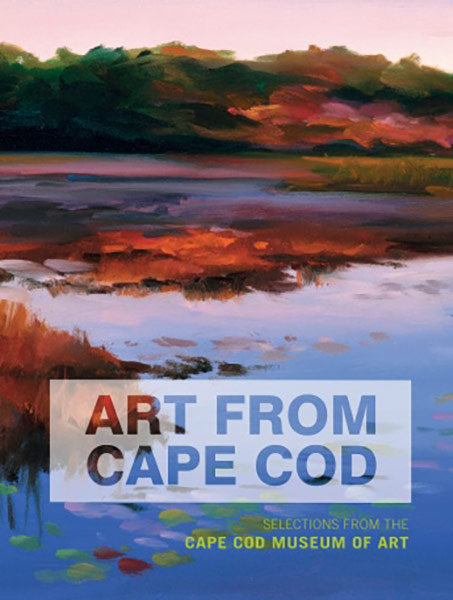
On August 20, the museum excitedly announced the publication of its first ever permanent collection catalogue — a beautifully illustrated and written book that vividly captures the fascinating artistic tale of the Massachusetts peninsula. Art from Cape Cod: Selections from the Cape Cod Museum of Art is co-edited by Edith A. Tonelli, Ph.D. and Deborah Forman. Tonelli, the museum’s director, will be on hand for an entertaining presentation and book-signing on September 9, 2016 at the museum.
The spellbinding 272-page book features 122 artists and their prized works, “which are included in this fine collection that has been built over three decades,” the museum writes. Tonelli, speaking about her forthcoming presentation on September 9, remarked, “We hope that it will feel a bit like the book has come to life within the galleries. We want the visitor to walk through the museum as though they are walking through the pages of the book. We present so many dramatic temporary exhibitions throughout the year, that we rarely have an opportunity to highlight our own amazing permanent collection. This is a reminder to our community about our essential mission to collect and preserve regional art, and a very special opportunity for the museum and for our visitors.”
The hardcover book is priced at $59.99 and can be found here. To learn more, you can also visit the Cape Cod Museum of Art.
This article was featured in Fine Art Today, a weekly e-newsletter from Fine Art Connoisseur magazine. To start receiving Fine Art Today for free, click here.
One More Thing to Love
An Artist with ‘Forensic’ Vision
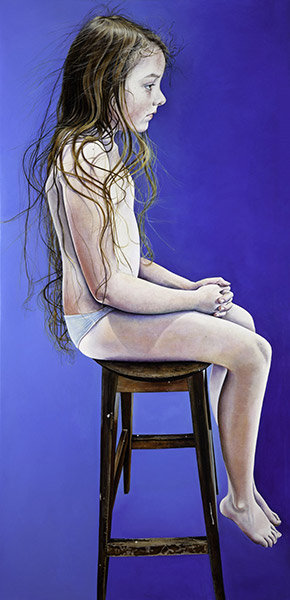
A moving exhibition is scheduled to open at New York City’s Flowers Gallery next month featuring the incredibly veristic and emotionally powerful portraits of an ascending British painter.
Precision and detail are design features that some choose to capture while others do not. British painter Ishbel Myerscough belongs to the category of artists who capture their subjects with amazing verisimilitude, and a wealth of her recent works will be on view soon at New York’s Flowers Gallery starting September 8.
Myerscough’s technical proficiency is but one of the elements that contribute to the allure of “Up Close” — the title given to the exhibition. As has been the case for nearly three decades, Myerscough infuses her portraits with a captivating degree of frankness or, in other words, unapologetic and unflinching honesty. Whether the subject includes friends, fellow artists, or herself, Myerscough’s paintings “demonstrate a clear, forensic vision,” as suggested by curator Sarah Howgate.
The works on view during “Up Close” may particularly resonate with a female audience. As Flowers Gallery notes, “The present selection of paintings can be seen as containers for an intensely personal experience of womanhood, beginning with images of childhood and culminating with recent self-portraits, interspersed with grouped or paired figures that address the relationships between family, lovers and friends. Myerscough’s particular inquiry of the nude has charted an evolving idea of self through the contemplation of form, evoking the longings and anxieties of female experience through discreet observations of physicality and gesture.”
“Up Close” opens on September 8 and will hang through October 15. To learn more, visit Flowers Gallery.
This article was featured in Fine Art Today, a weekly e-newsletter from Fine Art Connoisseur magazine. To start receiving Fine Art Today for free, click here.
Have You Ever Been On the Periphery?
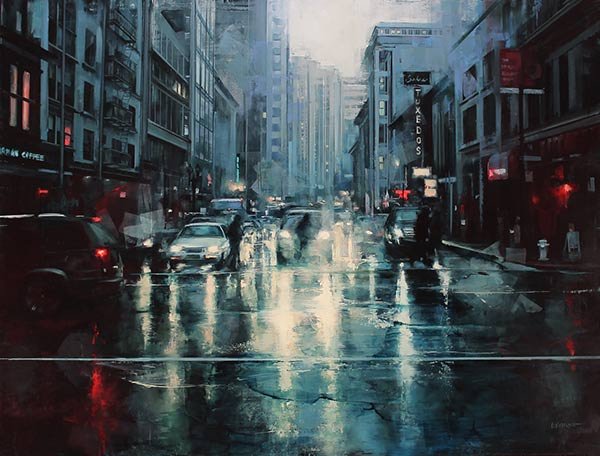
Distinct, unique, and engaging. The stylistically significant works of three painters head to the walls of a special Denver, Colorado, gallery in September. Hailing from Sweden, Detroit, and San Francisco, these artists have incredible visions from their unique environments.
The fall exhibition season at Denver’s Abend Gallery kicks off with a blockbuster exhibition featuring three engaging painters. Benjamin Björklund, Lindsey Kustusch, and Felicia Forte will headline “On the Periphery” — a group show to feature each artist’s creative take “on their environments and the people, animals, and objects that populate them,” as the gallery says.
Presenting incredibly original bodies of work, the exhibition will undoubtedly provide diverse subjects and styles — a direct result of the artists and their homes. Björklund, who comes to Abend Gallery via Uppsala, Sweden, “largely features people and animals depicted with deep, psychological overtones,” the gallery reports. “Stylistically, Björklund often renders his subjects without fully realized facial features, highlighting only the most important elements. By doing so the artist is able to create incredibly gripping and emotive portraits.”
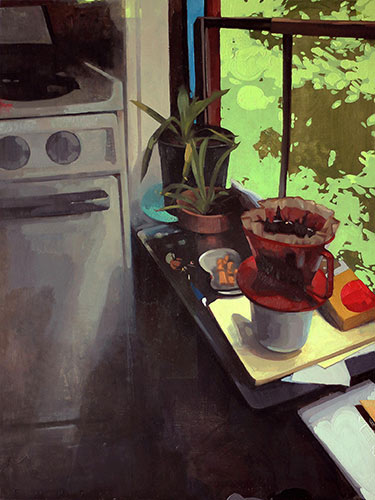
Felicia Forte, “Point of View,” oil on panel, 24 x 18 in. (c) Abend Gallery 2016
Via the Bay Area, Kustusch brings a more architectural approach to the equation. The gallery suggests, “Kustusch’s ability to execute incredibly realistic depictions of each individual place is only rivaled by her ability to make each piece exude a true sense of those gritty, lived-in parts of the Bay area.”
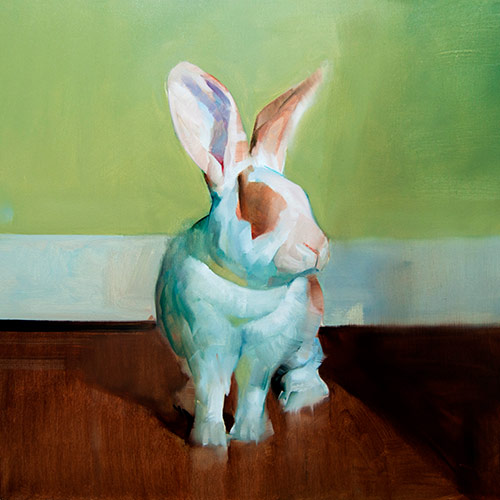
Benjamin Björklund, “Gwyneth,” oil on linen, 19 1/2 x 19 1/2 in. (c) Abend Gallery 2016
The can be no doubt that Detroit, Michigan, has suffered immensely as a result of economic turmoil — a condition that affects every citizen living within her city limits, including Felicia Forte. However, Detroit is a city of amazing culture and diversity, all of which is displayed with beauty through Forte’s work. The gallery writes, “Her body of work for this exhibition will feature numerous paintings by the artist that provide a narrative which speaks to the objects, places, and people that characterize Forte’s world. When viewed together the paintings act almost autobiographically, showing the viewer a glimpse into her daily life. The vivid color choices paired with Forte’s unique approach and sense of her subject matter make these paintings an incredibly interesting and dense body of work to sift through.”
“On the Periphery” opens on Friday, September 2 and will hang through October 1. To learn more, visit Abend Gallery.
This article was featured in Fine Art Today, a weekly e-newsletter from Fine Art Connoisseur magazine. To start receiving Fine Art Today for free, click here.
Amorous Arboreal
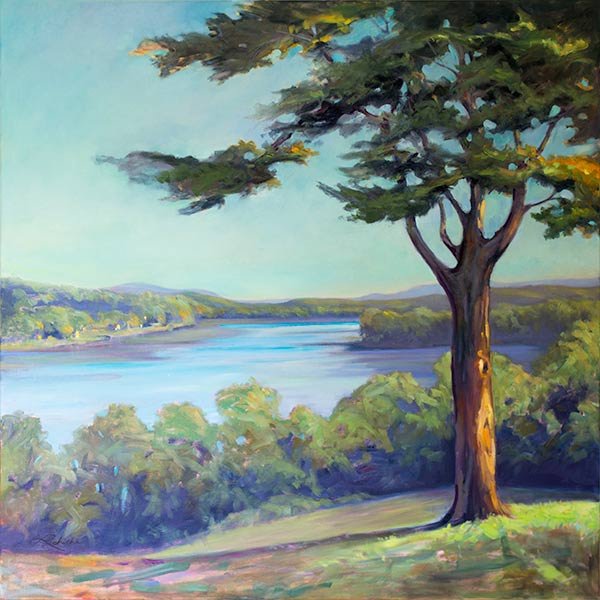
Ponte Vedra Beach’s Cultural Center recently invited two outstanding artists to participate in a joint exhibition that focuses on trees. The results are fantastic!
“Arboreal” is defined as “living in trees,” which is what patrons will experience through the gorgeous works of Linda Richichi and Seth Satterfield next month at Florida’s Ponte Vedra Beach Cultural Center. Opening on September 9, the exhibition will be a lovely display of aesthetic — and technical — variety.
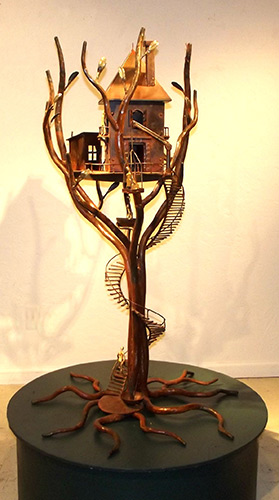
Seth Satterfield, “Richard’s Dream,” forged iron, 48 x 24 in. (c) The Cultural Center 2016
Richichi, a Signature Member of the NY and International Plein Air Painters, has achieved considerable renown across the country and abroad for her stunning plein air oils and pastels of landscapes and trees, and through her discerning eye and brilliant use of color and light. Richichi’s collectors often comment on the spiritual energy and creative force that emanate from her pictures. There can be no doubt that this, and more, will be on vivid display during “Arboreal.”
Equally moving are the forged iron sculptures by Seth Satterfield, which will provide a different aesthetic and technical approach to the same subject. The Cultural Center reports that Satterfield “creates inventive pieces of contemporary art as well as authentic antique reproductions.”
In you’re in the area, treat yourself to this remarkable exhibition from September 9 through October 14. To learn more, visit The Cultural Center.
This article was featured in Fine Art Today, a weekly e-newsletter from Fine Art Connoisseur magazine. To start receiving Fine Art Today for free, click here.
How One Artist Became a Maverick Modernist
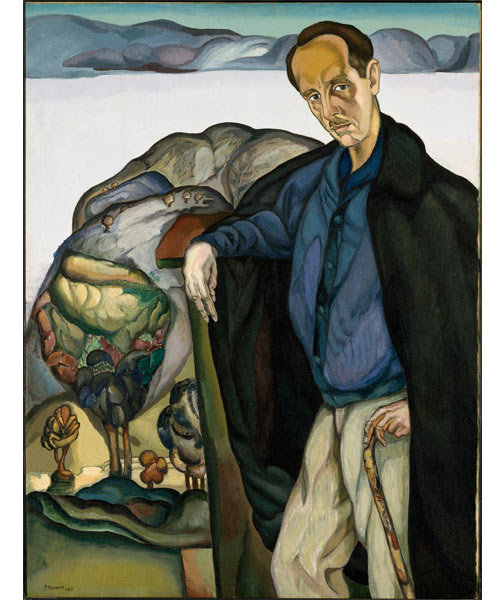
The Laguna Art Museum is proud to be hosting a major comprehensive exhibition for an accomplished Art Deco artist — the first in nearly 40 years. Connoisseurs of both painting and sculpture will enjoy.
Although he was born in the Ukraine, artist Peter Krasnow (1886-1979) spent most of his life in the United States, where for nearly 70 years he explored social, political, and cultural realities, earning considerable renown.
The Laguna Art Museum in Laguna Beach, California, is overjoyed to revisit the life and career of Krasnow during a major comprehensive exhibition — the first since the artist’s death in 1979.
Having immigrated to the United States in 1907, Krasnow would eventually settle in Los Angeles in 1922 after studying at the School of the Art Institute of Chicago and living in New York for several years. The museum reports that Krasnow’s early works were “largely realist portraits and symbolic carved sculptures; accomplished examples of social realism and Art Deco. His abstract paintings, whose bright, synthetic colors he chose to contrast with the dark political realities of the 1940s, are schematic tableaux that employ calligraphic symbols referencing spiritual ideas and organic processes. In both sculpture and painting, Krasnow developed styles that have surprising contemporary currency.”
The show — titled “Peter Krasnow: Maverick Modernist” — will feature approximately 50 paintings and 20 sculptures that survey the artist’s entire career. Among the highlights of the show are Krasnow’s “Demountables,” which were constructed during the 1930s and 1940s. These sculptures were hand-carved from wood and assembled using interlocking parts. The museum adds that these works are “organic abstractions drawing on traditions of folk and tribal art.”
The exhibition will be accompanied by a full-length catalogue — the first of its kind. “Peter Krasnow: Maverick Modernist” opened on June 26 and will remain on view through September 25. To learn more, visit the Laguna Art Museum.
This article was featured in Fine Art Today, a weekly e-newsletter from Fine Art Connoisseur magazine. To start receiving Fine Art Today for free, click here.
Tracking History, Pt. 2

Fine Art Today’s exclusive look into master sculptor Sabin Howard’s progress for the United States World War I Centennial memorial in Washington, D.C., continues. You won’t believe it!
Soon there will be a new national monument near the White House that will honor the more than 116,000 soldiers who died in World War I and the nearly 5 million individuals who served. Veteran sculptor Sabin Howard, along with 25-year-old architect Joe Weishaar, were awarded the commission, undoubtedly cementing Howard’s legacy as one of the nation’s top living artists.
Already extremely busy in his studio, Howard has graciously allowed a sneak peek into the monument’s design in addition to his thoughts behind the evolving composition. Earlier this summer, Fine Art Today initiated Part One of “Tracking History,” which gave our readers their first glimpse into the monument’s progress. Since then, Howard has made stunning advances in the design, which we are delighted to share with you here.
Commenting on his evolving monument, Howard offered this:
“A Soldier’s Journey” — by Sabin Howard
This is one soldier’s voyage through World War I as told through an emotionally charged visual narrative. The story unfolds over a 75-foot-long bronze relief, beginning on the right with all the characters moving at different speeds leftward, toward the future.
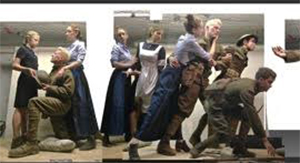
Detail from above, Image (c) Sabin Howard 2016
The figures are elevated two feet off the ground to give the composition a sense of monumentality as well as to show the immense, epic nature of World War I.
The soldiers, nurses, wives, and children all tell a story through their body language and poses. The relief will be sculpted in medium to low relief, giving a sense of drama and passion as the figures move out toward the viewer and then recede back into space away from us. The viewer travels the length of the wall from left to right and so witnesses and experiences the soldier’s journey.
The visual narrative has been structured with a beginning, a middle, and an end. Each section carries different emotions and kinetic energy. The relief carries a vital message about the suffering of war and how it affects all people.
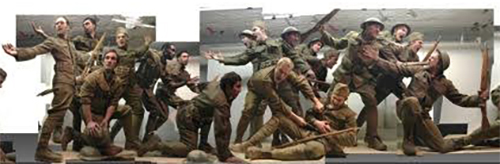
Detail from above, Image (c) Sabin Howard 2016
The beginning of the relief speaks to the female experience of war; a woman is portrayed in three different scenes. The initial scene begins with the family and the connection of wife and children to the soldier’s life. A kneeling soldier, our protagonist, tenderly says goodbye to his child as she hands him his helmet. The wife stands stoically behind her husband, remaining strong for their child.
Moving to the right, the wife turns to grab a nurse. Her gesture asks the nurse to intercede on her behalf as a healing figure of war in the larger picture, through medicine and the healing arts. She is pleading: Please safely return her husband to her. In the next portrayal of the husband-and-wife, everything that she cannot show her child, but that she shares with her mate, comes out. She holds onto her husband with a feeling of abandonment and fear. The wife’s future is leaving her as her husband goes off to war with the other soldiers.
Entry into battle begins, and the story quickens. The soldiers pull forward and call other soldiers into action. Their heads turn from the home front toward the battlefield.
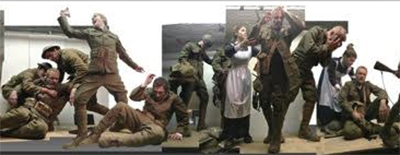
Detail from above, Image (c) Sabin Howard 2016
The central section of the relief begins with the battle scene. In the foreground, at the left, is a grouping of three soldiers. In the beginning of the scene, a young soldier kneels. He is still innocent. Our protagonist soldier has entered into battle; he has turned into an aggressor — he screams directly out at the viewer with rage. He clutches his fallen comrade’s tunic to his right. This is the result of war: death and loss.
The battle erupts with aggression. There’s an animalistic nature and chaotic force written on the faces of the soldiers as they surge forward toward a central figure on the right. This figure screams with aggression, his mouth open wide. His pistol is cocked and raised high toward the heavens. All emotional restraint has disintegrated.
Below this figure lie terrified soldiers, wounded and cringing. Then, wounded, the protagonist soldier appears again. He is aided by other soldiers toward the right in the scene.
The final scene, called “The Cost of War,” ends with a processional of wounded, emotionally damaged soldiers. Within this group there is one proud heroic soldier who carries a young man from the initial scene. In their pose, the young man he carries is almost a part of him. For even in victory, war exacts a terrible toll. They struggle toward the soldier’s child, who holds a helmet in her hands. Blind, shell-shocked, and emotionally and physically wounded soldiers all move toward this child. She represents the next generation, as she looks into her father’s empty helmet. This is the terrible cost of war.
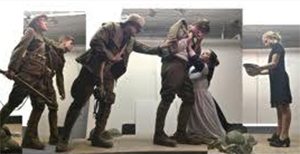
Detail from above, Image (c) Sabin Howard 2016
This child begins the relief and ends the relief. Our protagonist soldier reappears here as a noble and heroic man. The soldier comes forward directly at you on the left. He brings with him the burden of war and the loss and madness that he has seen. He has gained wisdom through suffering. He has looked inside himself; there has been an internal examination on an individual level where he has seen incomprehensible things about humanity.
Our protagonist is helped by the nurse. In this scene, on a larger picture, she represents a moral compass. She holds up a mirror to war so humanity can see the devastation. On the personal level, she helps the wife by taking care of her husband in this devastation. Sisterhood, alongside the brotherhood of soldiers in arms, is implied.
Further to the right, in the last depiction, our soldier leans forward, blind and injured. His used gas mask dangles and despite his wounded arm, he fights to get back. Pushing forward, striving to reach the normalcy of the past, he presses on toward his daughter and the future.
This article was featured in Fine Art Today, a weekly e-newsletter from Fine Art Connoisseur magazine. To start receiving Fine Art Today for free, click here.
Add Another Feather to His Cap
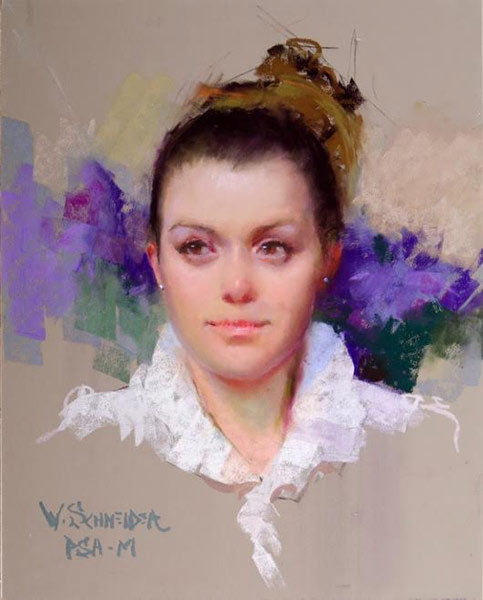
Sponsored by the Sierra Pastel Society, the international juried exhibition “Pastels on High” recently doled out awards to some deserving participants, including this familiar master.
The subject gazes out of the frame and toward the viewer’s left, surrounded by a lush array of expressive purples, blues, and greens. Her soft features are captured sharply and skillfully, allowing her likeness to lift from the page with convincing reality. Her white blouse — masterfully rendered with minimal strokes — provides a point of rest and highlights the sitter’s eyes and earrings.
Titled “Emma,” this amazing pastel portrait by William A. Schneider was recently honored with an Award of Excellence during the 11th Annual Pastels on High International Juried Exhibition, running through September 3 at the Sacramento Fine Arts Center in Carmichael, California. The exhibition is sponsored by the Sierra Pastel Society and has long represented the most accomplished pastel artists working today.
We congratulate all the deserving winners! To learn more, visit the Sacramento Fine Arts Center.
This article was featured in Fine Art Today, a weekly e-newsletter from Fine Art Connoisseur magazine. To start receiving Fine Art Today for free, click here.
History, Mystery, and Discoveries

Many of the nation’s top museums have permanent collections so eclectic and robust that rediscovering their old masterpieces can lead to something extraordinary. That was — and is — the case at the NCMA.
History, mystery, and discovery are appropriate words for a remarkable exhibition recently opened at the North Carolina Museum of Art in Raleigh. “History and Mystery: Discoveries in the NCMA British Collection” has blossomed into so much more than an exhibition showcasing the institution’s best Old Master British paintings and sculpture from 1580 to 1850. In concert with students and faculty from UNC-Chapel Hill and Duke University, the museum has launched a series of tantalizing seminars, lectures, and presentations that will “reexamine familiar favorites in the collection from new perspectives and … display a few ‘hidden treasures’ that have rarely — or never before — been on public view.”
The museum’s related events with the exhibition will commence on September 10 at 10 a.m. with an exciting seminar that “offers participants a chance to hear experts on the Tudor era discuss changing conceptions of aristocracy and power on display in the Tudor and Jacobean portraits that are the focus of the ‘History and Mystery’ exhibition,” the museum writes. “They will also learn how art conservators use technology and artistic skill to preserve the paintings and reveal secrets of their creation and history.”
Lectures and events will continue on September 11, 18, and 23; October 7, 21, and 28; and November 15. Descriptions of the topics covered — which range from drawing workshops, fashion, social circles, and, of course, history and mystery — can be found here.
“History and Mystery: Discoveries in the NCMA British Collection” opened on August 6 and will run through March 19, 2017. To learn more and purchase tickets for related events, visit the North Carolina Museum of Art.
This article was featured in Fine Art Today, a weekly e-newsletter from Fine Art Connoisseur magazine. To start receiving Fine Art Today for free, click here.
Featured Lot: Eugene Alexis Girardet, “The Attack”
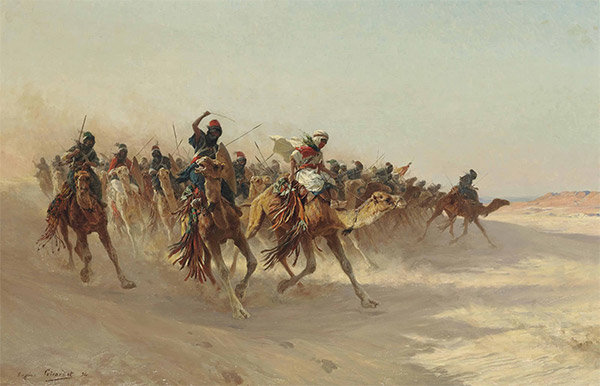
In this ongoing series for Fine Art Today, we take a longer look at the history and features of a soon-to-be-available artwork of note. This week: Eugène Alexis Girardet, “The Attack.”
A founding member of the French Orientalist movement in the late 19th century, Eugène Alexis Girardet(1853-1907) spent most of his career capturing the exotic lands of Algeria, Biskra, and Egypt. Often composed with an immense amount of detail and vivid color, Girardet’s most common subjects involved the lives of desert nomads — their culture, homes, journeys, and more.
Girardet’s fascination with the Orient began under the subject’s greatest champion, Jean-Léon Gérôme (1824-1904), during the artist’s studies at the School of Fine Arts in Paris. Girardet’s original interest in art must have come from his family, which had a storied history in engraving and lithography. However, while the artist’s uncles, cousins, and brothers followed the family tradition in printmaking, Eugène found himself continually drawn to the brush.
Following Gérôme’s footsteps, Girardet left for Spain and Morocco in 1874 as an academically trained artist — full of energy, wonder, and imagination. The artist’s search for exotic lands introduced him to strange cultures and customs, which he delighted in capturing with his discerning eye. Scholar Janet Whitmore noted the monochromatic palette of the artist’s pictures during these early years, “very like the Realist palettes of Girardet’s Paris colleagues; and the subject matter is clearly in line with Realist ideals of depicting ordinary people going about their daily life.” However, it shouldn’t come as a surprise that the vivid colors and textures of Spanish and North African fabrics would cast an emotional and artistic spell on Girardet.
It was back in Paris, around 1877, when the artist — along with his mentor and other like-minded artists — created the Society of French Orientalist Painters. Along with Gérôme and Girardet, other members were Paul Leroy, Benjamin-Constant, and Léonce Bénédite (curator at the Musée du Luxembourg). Girardet and his fellow Orientalists would frequently exhibit at the Paris Salon and at their own hosted events. In 1900, Girardet had majors shows at the Exposition Universelle and the Coloniale de Marseille of 1906.
Collectors’ chance to own a brilliant piece by Girardet is upon us via Christie’s London, on September 8. A highlight of the house’s “19th Century European Art” sale, “The Attack” is a masterful, rushing, and dramatic image. The viewer is thrust along the flanks of an oriental cavalry, shown from the side, their swords raised as dust from the camel stampede billows from behind. Dated to 1894, the painting is a beautiful synthesis of the artist’s aesthetic evolution, displaying his favorite subjects and brightened palette. In addition, the light and details in texture are truly extraordinary.
“The Attack” will feature as Lot 115 during Christie’s “19th Century European Art” sale on September 8, 2016. Auction estimates are between GBP 20,000 and GBP 30,000 ($26,260–$39,390)
To view the full catalogue, visit Christie’s
This article was featured in Fine Art Today, a weekly e-newsletter from Fine Art Connoisseur magazine. To start receiving Fine Art Today for free, click here.
Featured Artwork: Marian Fortunati
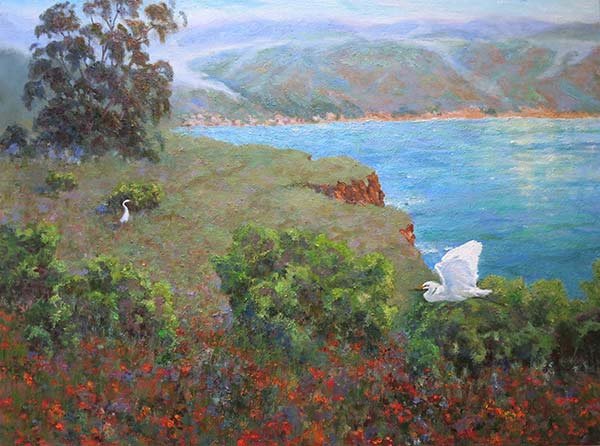
“Spring”
oil on canvas
30 x 40 in.
http://marianfortunati.com/works/1284185/spring
(818) 943-7538
www.marianfortunati.com
[email protected]
About the Artist:
My friend, Kay, and I were exploring and painting along the California coast before we arrived in Cambria. We stopped at an interesting spot, then scrambled up the bluff from the beach and were immediately mesmerized by the carpet of small yellow spring flowers. We saw an egret fly by. As we tried to get closer, we saw another. They were beautiful! We kept going around the bend…
Ahhhhhh……………………..
A field of poppies.
Delight!
We both found our spots and began to paint, entranced and carried away by the surrounding scene.
***********************************************************************************
I consider myself “one lucky artist” because art has enabled me to see more of the beauty in our world. (And because my name, Fortunati, means “lucky”.)
I enjoy painting outdoors to try to gather and interpret the feeling of place. When I’m using my plein air sketches in the studio, I’m as focused on entertaining the viewer with interesting forms and playful paint as I am with depicting a specific scene. I paint so that each time a viewer takes a moment with my work, they see something new and can create their own special thoughts and emotions that make the painting special for them.
***********************************************************************************
Biography
After a long career as a Teacher and Elementary Principal, Marian Fortunati has combined her past professional experience with her love of travel, working on location as often as possible. Fortunati’s travels and life experiences provide the foundation from which her artwork is created.
Oil is Fortunati’s favored medium as it offers a variety of ways to create interesting experiments with texture and color. Her wide mixture of learning opportunities has established a strong foundation in the Impressionist tradition of seeing and painting shapes of light and color. She has been influenced by numerous historic artists, most notably Joaquin Sorolla, John Singer Sargent and William Waugh. Fortunati has studied almost continuously for the last five years with Master landscape and undersea artist, David C. Gallup. All of these influences have allowed Marian Fortunati to establish her artistic style and unique way of seeing.
Resume
BA in Zoology MS in Education
Teaching and Administrative Education Credentials – 39-year career with LAUSD as a Teacher and Principal
Art instruction includes workshops and classes from Scott Burdick, Karl Dempwolf, Kathleen Dunphy, David Gallup, Frank Gardner, Kevin Macpherson, Ray Roberts, Matt Smith, Johanna Spinks and John Paul Thornton.