

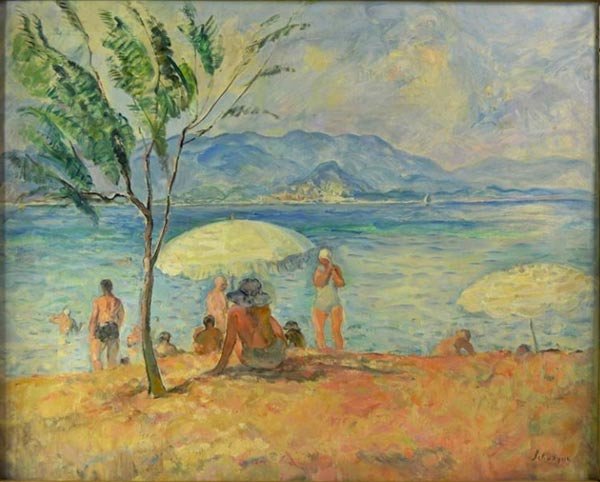
In this ongoing series for Fine Art Today, we take a longer look at the history and features of a soon-to-be-available artwork of note. This week: Henri Lebasque, “Baigneuses (Bathers).”
Henri Lebasque (1865–1937) is a name recognized by few. However, critics celebrated the post-impressionist — born in Champigné, France, in 1865 — during his lifetime for the stunning color palette of his works, the joy in their forms, and their leisurely themes. In 1885, the 20-year-old Lebasque traveled to Paris to study at the prestigious École des Beaux-Arts, where he frequently took part in the Paris Salons and exhibitions shown annually for the art society. By 1903, he had met Henri Matisse, and together the two founded the Salon d’Automne, which exhibited works by the famed “Les Fauves,” among others. By 1924, Lebasque settled in Le Cannet, and he passed away in 1937.
Lebasque’s paintings can be found all across the world and in important private and public collections. Spirited bidding is expected at Rosebery’s, London when one of Lebasque’s oils, titled “The Bathers,” becomes available on September 8. The painting displays a common theme for the artist, who delighted in the casual. Using a gorgeous feathery stroke so characteristic of the age, Lebasque shows us a group of figures, most with their backs toward the viewer. While the foreground is empty, the middle of the image displays a lone female, taking advantage of what little shade nature has to offer. Her shaded form is the only dark reprieve for our eyes in an otherwise shining bright picture. The strong warm hues of the sandy beach are balanced with the cool greens and blues of the water, sky, and mountains in the distance.
“The Bathers” will be featured September 8 during Rosebery’s “Fine Art Auction featuring Decorative Arts and Modern Design” beginning at 10 a.m.
To view the full catalogue, visit Rosebery’s.
This article was featured in Fine Art Today, a weekly e-newsletter from Fine Art Connoisseur magazine. To start receiving Fine Art Today for free, click here.
Featured Lot: Henri Lebasque, “Baigneuses (Bathers)”
Awakening the Land
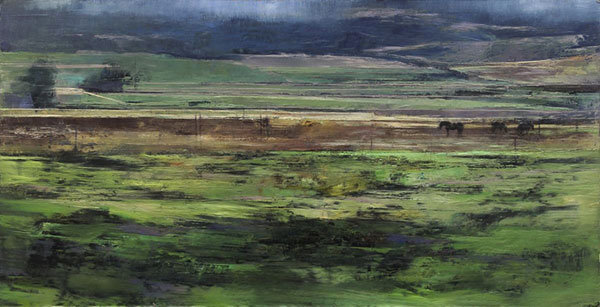
Landscape comes alive during an upcoming solo exhibition of Douglas Fryer’s latest oils.
“Art happens in the heart and in the mind and in the soul, not just the hand,” observes Douglas Fryer, and it is a philosophy that surfaces with stunning results in the artist’s landscapes. Filled with predominantly soft, graceful strokes, Fryer’s paintings have an atmospheric essence that filters into the viewer’s space, encapsulating that viewer in a fury of emotional experience.
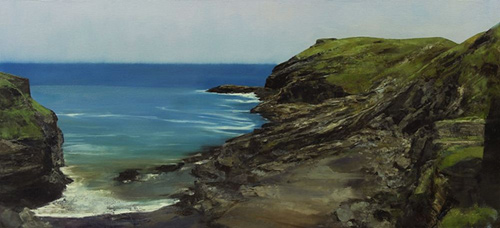
Douglas Fryer, “Tintagel,” oil, 20 x 45 in. (c) Meyer Galleries 2015
Strong, horizontal strokes give “Night’s Rain Passing” a linear quality that creates dramatic movement from one side to the other. While it is largely abstracted, representational forms emerge from the planes of color, including a small group of horses to the right and perhaps a barn or two in the upper left.
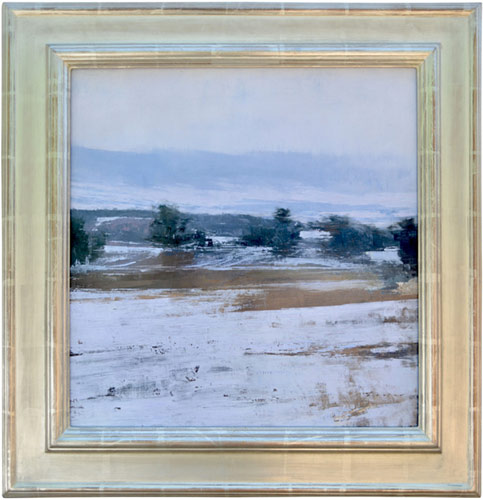
Douglas Fryer, “Ranch in the Cedars,” oil, 18 x 18 in. (c) Meyer Galleries 2015
“Tintagel” is a superb example as well, its rocky forms defined with a sharpness and clarity that seems very distant from “Night’s Rain Passing.” A small cove, represented softly but activated by swaths of white, is surrounded by the grass-covered, imposing cliffs of a rocky shore. These, along with 12 other paintings of varying size, will feature in an upcoming solo exhibition at Meyer Galleries in Santa Fe, New Mexico.
For those who seek to pick up one of their own, time is of the essence. “Douglas Fryer” opens on September 11 and will hang through September 18: one week.
To learn more, visit Meyer Galleries.
This article was featured in Fine Art Today, a weekly e-newsletter from Fine Art Connoisseur magazine. To start receiving Fine Art Today for free, click here.
Sailing in Light
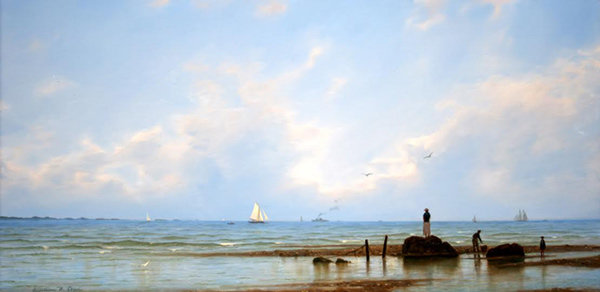
While his maritime subjects are inspired by his childhood experiences exploring the islands about Lewis Bay, admirers and collectors have come to covet William Davis’s mastery of luminosity and light.
It is hard to believe that William R. Davis is a self-taught painter. His pictures breathe with life, character, and light that seem possible only for a well-trained painter. That’s what 38 years of full-time trial and error can accomplish, and Davis is still excelling in ways that continue to captivate.
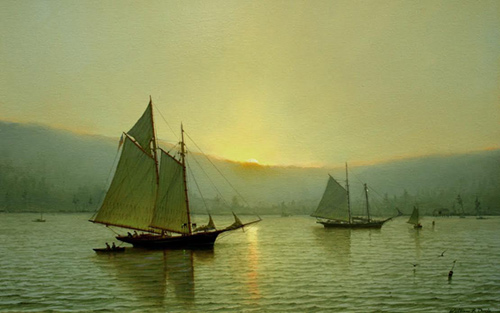
William R. Davis, “Safe Anchor, Southwest Harbor,” 2012, oil on canvas, 24 x 36 in. (c) William R. Davis 2015
Davis is among the world’s most renowned maritime painters, and, like so many before him, his journey to become an artist began early in life. “The inspiration certainly comes from my childhood,” says Davis. “I filled my days playing along the shores of Hyannis Port, Massachusetts, a wonderful place to grow up. By 10 years old, I was sailing single-handed small catboats, exploring every small island and cove in and about Lewis Bay.” The young Davis developed an acute and discerning eye for light as it cascades across the waters, a realist observation that surfaces in all his work. “Sailing also gave me the self-confidence and patience in developing my skills,” he notes.
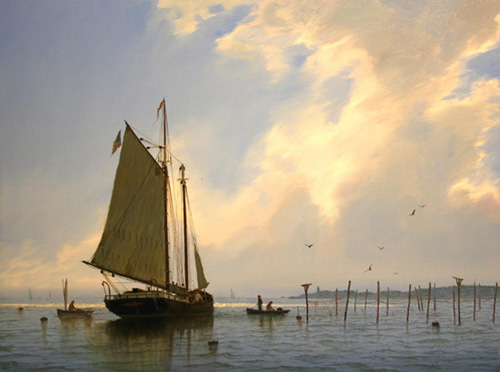
William R. Davis, “Weir Fishermen off West Dennis Beach,” 2014, oil on panel, 12 x 16 in. (c) William R. Davis 2015
Davis’s process often begins with painting the scene’s sky from top to bottom, which allows the artist to match the water’s reflective colors exactly. Broad and simplified details above the horizon are imaged and blended in the wet paint before the piece is allowed to dry. Details slowly begin to emerge after this point, when Davis begins to outline his wooden boats and other elements in the landscape. The final process involves adding details in the water and boats and highlighting points of highest luminosity.
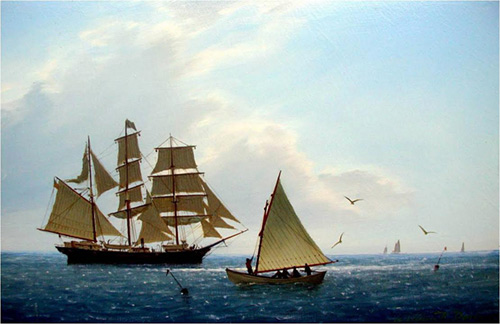
William R. Davis, “Raising the Peak,” 2009, oil on panel, 8 x 12 in. (c) William R. Davis 2015
Particularly lovely about Davis’s paintings is their nostalgic allure, with most pictures depicting the traditional wooden sailboats that are nearly impossible to find since the introduction of fiberglass. This is an important element for Davis, who, along with his collectors and admirers, longs to see harbors populated with the elegant and character-filled vessels. Inspired by artists of the Hudson River School in addition to such masters as Edward Moran, Antonio Jacobsen, and Fitz Henry Lane, Davis’s paintings have a level of detail, quietness, and glow that is timeless. Indeed, it is the inner glow and radiance of his paintings that has harnessed the most attention.
“My customers have always expressed their enjoyment at having my works hanging in their homes,” says the artist. “Even many years later, I’m approached by people who want to tell me how the light changes on their painting several times a day. What I take away from this is a satisfaction from producing something that people love and want to live with.”
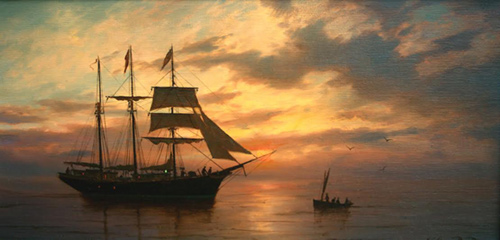
William R. Davis, “The Rendezvous,” 2013, oil on canvas, 10 x 16 in. (c) William R. Davis 2015
Who wouldn’t want “Weir Fishermen off West Dennis Beach” adorning their home? Albeit small, the painting packs a significant impact. Calmly resting in center left is a beautiful vessel, its sails extended as they are silhouetted against the waning light of the sky. “Distant Ships” is another outstanding picture, itself having an old-time tone as the boats glide across the horizon. “Safe Anchor, Southwest Harbor” has a greenish glow to its light, in some ways giving the piece an aged appearance.

William R. Davis, “Light Snow over the Marsh,” 2015, oil on panel, 12 x 24 in. (c) William R. Davis 2015
The future is exciting for Davis, who seeks to expand the scale of his paintings, which have remained relatively small throughout his career. “The most important effort has been increasing the size of my paintings and maintaining the same luminosity and color on a grand scale,” he says. One can only imagine, if he is successful, the wonders in store.
To learn more, visit William Davis.
This article was featured in Fine Art Today, a weekly e-newsletter from Fine Art Connoisseur magazine. To start receiving Fine Art Today for free, click here.
Beauty Through Devastation

As we mark the 10th anniversary of Hurricane Katrina, many still are — and will forever be — scarred by the unimaginable destruction witnessed in the Southern United States. Time and again, however, Americans emerge stronger than ever, turning tragedy into triumph and ugliness into art.
In August of 2005, most Americans watched on their televisions as the Gulf Coast — and especially the city of New Orleans — was rocked by the costliest and nearly the deadliest natural disaster in U.S. history. A category 5 hurricane, Katrina had wind speeds as high as 174 MPH and killed nearly 2,000 people. The images transmitted through our screens were stunning in their truthfulness to the destruction of the storm and the dire situation in which many residents found themselves.
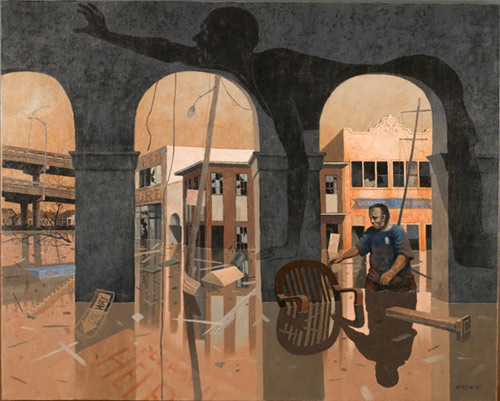
Rolland Golden, “Arches of Misery,” 2007, acrylic on canvas, (c) The Historic New Orleans Collection 2015
The physical, mental, and visual experience of the storm was very different for those who found themselves in its path and struggling to survive in its wake. Following the storm, as communities began to rebuild, many were already beginning to reflect on the events, and it seems only natural that artists of the region would express their experiences in new and unique ways. One of those artists was Rolland Golden, and for about two years following Katrina, he recorded his observations and feelings in 32 major works, 14 of which are now on view at The Historic New Orleans Collection.
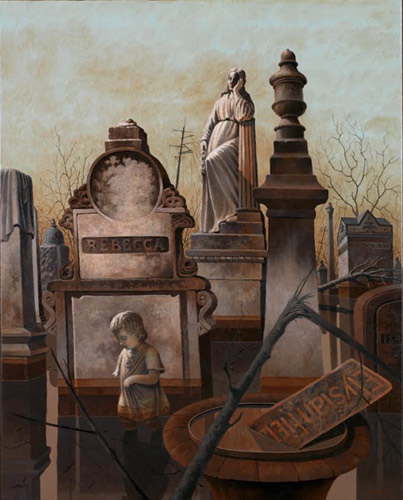
Rolland Golden, “Elysian Fields, Land of the Gods,” 2006, acrylic on canvas,
(c) The Historic New Orleans Collection 2015
“Desperation” is one such picture, and it is gripping in its raw emotional content. At center right in the foreground, we find an elderly figure wearing a horrified expression. Surrounding the figure are a number of destroyed homes, their siding and wood panels scattered across the ground. Although the destruction is magnetic, it is the figure with whom we identify and on whom we concentrate. There is a pain and sorrow emanating from her that is absolutely moving, and the brilliant red hue of her garment leaps from the surface, pushing the figure uncomfortably close to the viewer. Golden doesn’t want us to shy away, but to confront and bring to the fore the experiences of Gulf Coast residents.
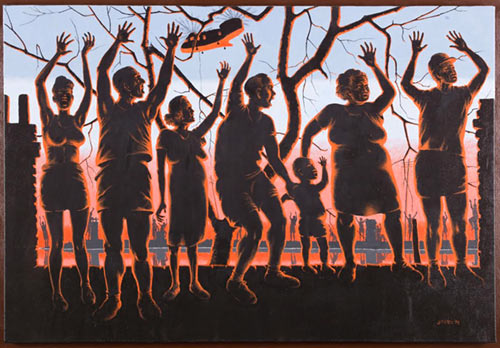
Rolland Golden, “Throw Me a Line, Mister,” 2006, acrylic on canvas, (c) The Historic New Orleans Collection 2015
The situation is perhaps more ominous in “Throw Me a Line, Mister,” which displays a family of African Americans stranded on a rooftop. With minimal details, the figures are silhouetted, highlighted with a fiery red-orange that has a hellish tone. Within the gaps between their bodies, we find other desperate individuals, everyone holding their arms high in hopes of rescue.
“Rolland Golden’s Hurricane Katrina Series: A Selection” opened on July 29 and will be available through January 16.
To learn more, visit The Historic New Orleans Collection.
This article was featured in Fine Art Today, a weekly e-newsletter from Fine Art Connoisseur magazine. To start receiving Fine Art Today for free, click here.
Manet Madness
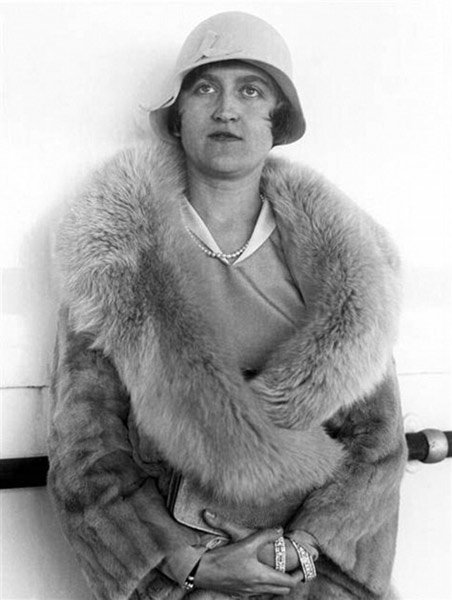
The death of an individual can sometimes lead to disagreements among those who feel entitled — by blood or law — to acquire their possessions. This was recently demonstrated in the case of the late heiress Huguette Clark.
Huguette Marcelle Clark (1906-2011) was considered a great philanthropist, donating much of her inherited fortune to various charities. However, the late heiress was also labeled a recluse, living in a hospital for more than 20 years while her mansions remained empty. That hospital, Mount Sinai Beth Israel in New York City, recently found itself in a legal battle with Clark’s distant relatives over donations she made to the institution more than 15 years ago.
Among the items donated to the hospital was a beautiful painting by Édouard Manet, “Peonies in a Bottle” (1864), worth an estimated $3.5 million. In addition to the painting, Clark donated cash gifts totaling nearly $1 million to the institution over several years.
Relatives argued that museum staff and administrators frequently approached Clark for donations during her tenure with the hospital, taking advantage of her old age and manipulating her into giving away her prized possessions.
Last month, Manhattan Judge Nora S. Anderson ruled in favor of the hospital, deeming that the statute of limitations had long passed, since it was in October of 2002 that Clark made her last donation. However, relatives are still able to pursue separate lawsuits against doctors and nurses who cared for Clark.
To learn more, visit here.
This article was featured in Fine Art Today, a weekly e-newsletter from Fine Art Connoisseur magazine. To start receiving Fine Art Today for free, click here.
Golden Exhibition
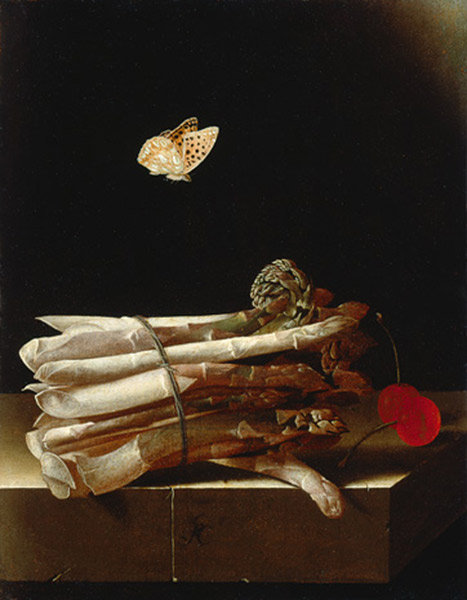
Sip the finest wines and taste the most exotic foods, as portrayed by some of the most renowned oil masters of the 17th century.
The Dutch Golden Age, which spanned roughly the entire 17th century, was an era of profound economic growth for the Netherlands as exotic goods from all across the world entered its trading harbors. Spearheaded by the Dutch East India Company, the Dutch were able to amass considerable wealth through trading, leading to a stronger desire to showcase their fortunes in the form of lavish paintings.
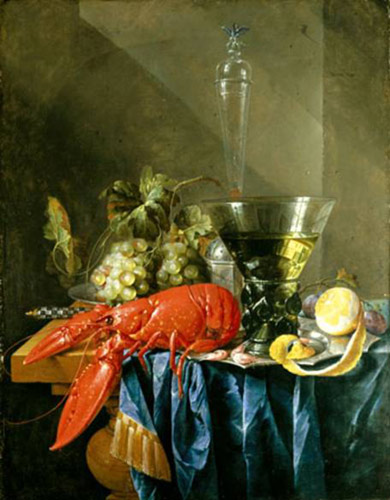
Cornelis de Heem, “Stilleben mit Hummer,” ca. 1655, oil on copper, 63 x 49.5 cm. (c) Kunsthaus Zürich 2015
The Kunsthaus Zürich already has impressive holdings of Dutch Golden Age painting, but a current exhibition has brought together an additional 40 paintings from a private collection in Zürich. “A Golden Age” features a number of rarely seen cabinet pieces that — while small in size — undeniably highlight the exquisite skill possessed by many artists of the period, including Jan Brueghel the Elder, Adriaen Coorte, Hendrick Avercamp, Jan van Goyen, and Aert van der Neer. The exhibition will include the full range of subjects explored by Dutch Golden Age painters, including still life, landscape, and genre paintings. The museum notes, “They were the first to produce works to this extent for a broad market and develop a high degree of specialization in a variety of genres outside religious art.”
“A Golden Age” opened on August 28 and will be on view through November 29.
To learn more, visit the Kunsthaus Zürich.
This article was featured in Fine Art Today, a weekly e-newsletter from Fine Art Connoisseur magazine. To start receiving Fine Art Today for free, click here.
Loss of a Legend
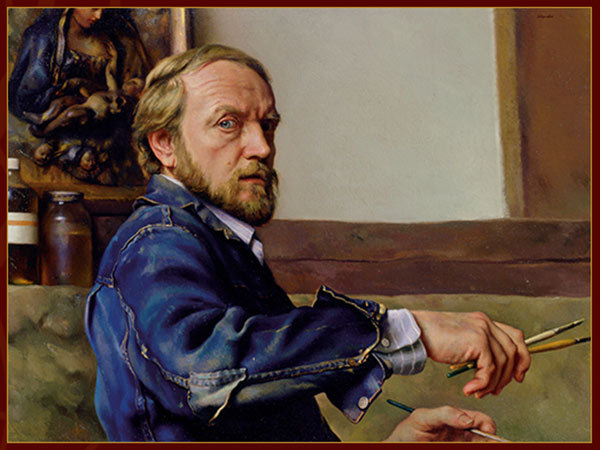
One of the world’s most renowned artists has bade farewell.
Princess Diana of Wales, William Jefferson Clinton, and Pope John Paul II are only a few of the esteemed clients who sought the talents of celebrated artist Nelson Shanks (1937-2015). It was with heavy hearts that the world learned of his passing last Friday, August 28, at the age of 77. Shanks was — in addition to his artistry — a recognized art historian, teacher, connoisseur, and collector of fine arts.
At 18, Shanks began his tenure at New York’s famed Art Students League, where he caught the eye of John Koch, who took on the young artist as a private student, mentoring and encouraging him. Earning quick success with his immense talent and dedication, Shanks studied in Florence with Pietro Annigoni at the Accademia de Belle Arti before teaching himself in Memphis, Chicago, and Pennsylvania for nearly three decades.
As noted on the artist’s website, “Shanks’s work has been exhibited in museums and galleries worldwide, including the National Gallery of Art in Washington, D.C., the Royal Palace in Stockholm, Kensington Palace in London, and Fortezza Firmafede in Sarzana, Italy. During the summer and fall of 2011, he had solo exhibitions in Russia at the Russian Museum, St. Petersburg, and the Russian Academy of Art, Moscow.”
All of us at Fine Art Connoisseur send our heartfelt condolences to Nelson’s wife, Leona Shanks, and all their friends and family.
To learn more, visit here.
This article was featured in Fine Art Today, a weekly e-newsletter from Fine Art Connoisseur magazine. To start receiving Fine Art Today for free, click here.
Amorous Arboretum

Some trees are large and magnificent while others are impactful and small, but regardless, they are stunningly beautiful in their color and variety. One artist has turned her lens toward our oxygen-creating friends in an outstanding solo show.
If it were possible to get tired of the gorgeous Rocky Mountains in Denver, Colorado, residents and visitors alike would need only to turn to the Abend Gallery during the month of September. Deb Komitor is an accomplished painter known for her naturalistic views of nature’s best, but her upcoming solo show brings trees and perspective to the fore. “For the Love of Trees” is a tantalizing exhibition that will feature 26 of Komitor’s latest oils, which explore the diverse beauty of trees. In addition to masterfully observed species of birch and pine, the artist also probes an array of creative points of views and perspectives, highlighting how one’s perception of a subject can evolve depending on one’s position.

Deb Komitor, “Soulmates,” oil on canvas, 34 x 32 in. (c) Abend Gallery 2015

Deb Komitor, “Home of the Soul,” oil on canvas, 72 x 48 in. (c) Abend Gallery 2015
“Dancing with an Autumn Breeze” is a lovely example from the show, featuring a patterned arrangement of strong yellow, blue, and red hues. The perspective appears to be from below a group of magnificent birch trees, their grays and whites contrasting with the wash of colors behind. “Soulmates” is another exceptional piece, which again displays Komitor’s unique artistic touch. The artist creates her subjects, rendered on a black background, using short, bold strokes of pure color with little mixing. The result is a beautiful abstraction of nature with nearly every stroke visible, nearly recalling mosaic tesserae. As one steps back from the piece, the colors merge and the paintings become more naturalistic and well-defined — a fun and engaging exercise.
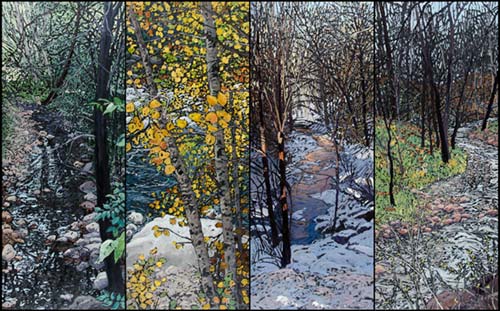
Deb Komitor, “Chapters: Summer, Fall, Winter, Spring,” oil on canvas, 60 x 96 in. (polyptych)
(c) Abend Gallery 2015
“For the Love of Trees” opens on September 4 with a reception from 6 to 9 p.m. and will be on view until September 26.
To learn more, visit the Abend Gallery.
This article was featured in Fine Art Today, a weekly e-newsletter from Fine Art Connoisseur magazine. To start receiving Fine Art Today for free, click here.
Life of Beauty
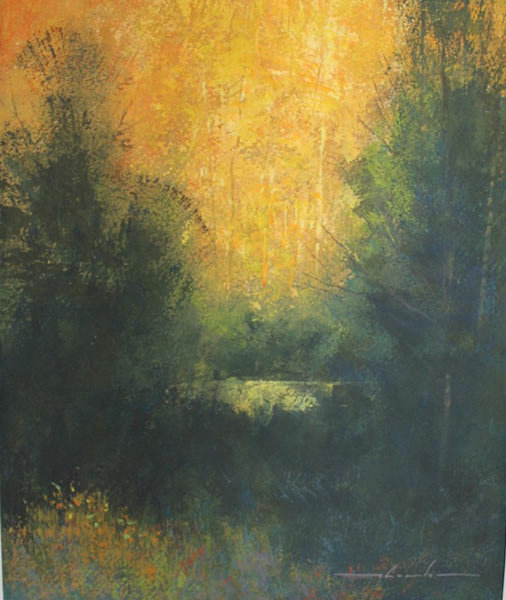
Although he passed in late 2014, the art and legacy of William Thomson endures during a retrospective.
A prolific painter and a fine person, William Thomson (1931-2014) took to heart the ways in which he communicated on canvas, and his memory and paintings are highlighted this month at Bowersock Gallery in Provincetown, Massachusetts. “He unleashed a power; an unseen energy pulsates throughout every landscape, figurative piece, and abstract,” the gallery recounts. “William Thomson was truly one of our great contemporary masters, and this exhibit is a stunner, evidence of his absolute excellence.”
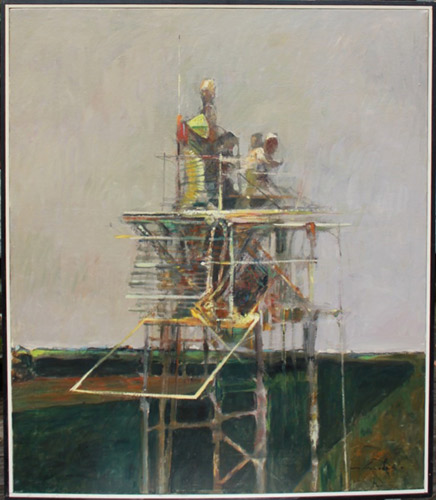
William Thomson, “10th Tower,” encaustic on canvas, 35 x 30 in. (c) Bowersock Gallery 2015
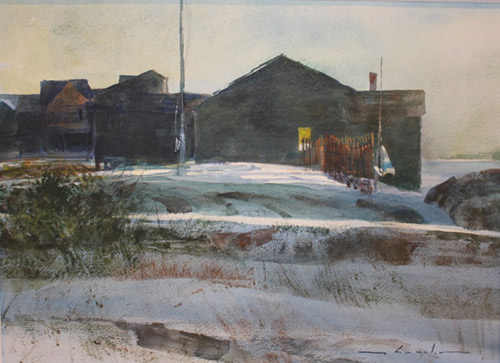
William Thomson, “New England Cottage,” watercolor, 20 x 15 in. (c) Bowersock Gallery 2015
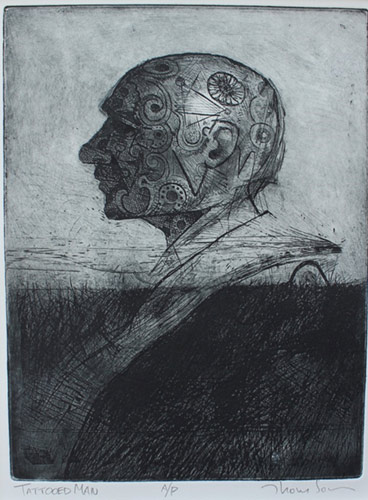
William Thomson, “Tattooed Man,” etching, 13 x 10 in. (c) Bowersock Gallery 2015
The retrospective will feature many of the artist’s familiar series, along with a few works that have never before been shown. Moreover, the Thomson’s ability to work in multiple mediums is showcased, as pieces in mixed media, acrylic, encaustic, tempera, oil, and watercolor will be on view.
“Retrospect: William Thomson, A Life of Beauty” opens on September 4.
To learn more, visit the Bowersock Gallery.
This article was featured in Fine Art Today, a weekly e-newsletter from Fine Art Connoisseur magazine. To start receiving Fine Art Today for free, click here.
Points in History
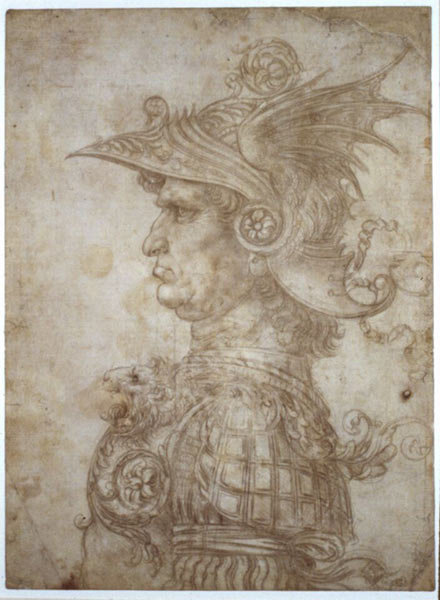
Discover how masters from Leonardo to Jasper Johns have employed metalpoint techniques in a superbly beautiful exhibition in London.
Organized by the National Gallery of Art in Washington, D.C., and in association with the British Museum, London, is an exceptional exhibition offering some of the biggest names in the history of art. Featuring — among others — Rogier van der Weyden, Leonardo da Vinci, Albrecht Dürer, Rembrandt, Jasper Johns, and Otto Dix, “Drawing in Silver and Gold: Leonardo to Jasper Johns” is a once-in-a-lifetime opportunity to view nearly 100 master drawings done in metalpoint.

Raphael, “The Virgin and Child,” ca. 1509, silverpoint, 143 x 111 mm. (c) British Museum 2015
The technique involves the artist using a metal stylus, typically made from silver, on paper coated with an abrasive ground. When the stylus is dragged across the paper, tiny pieces of metal flake off and adhere to the page. The results are often outstanding, though the artist must be careful, as reworking is very difficult. The hardness of the metal allows the artist to create extremely fine and detailed line quality. Over time, the silver oxidizes and turns a beautiful maroon color, a feature collectors have come to admire.
The exhibition explores the technique’s development and evolution over six centuries, highlighting the variety of artistic styles it has seen. The museum reports, “During the Renaissance metalpoint became popular both north and south of the Alps boefore cheaper graphite replaced it from around 1550. In northern Europe metalpoint continued to be used in preparation for prints or in travel sketchbooks. From the late 17th century the technique was virtually forgotten until the 19th century when the admiration for Renaissance art sparked its renewed use.”
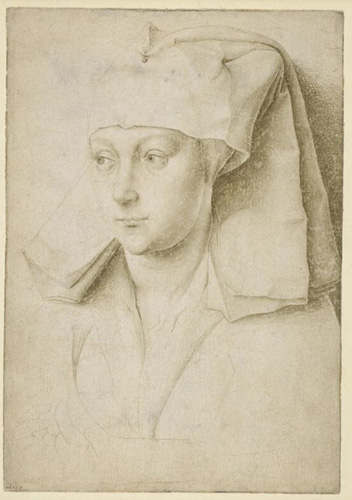
Rogier van der Weyden, “Portrait of an Unknown Woman,” ca. 1435, silverpoint, 166 x 116 mm.
(c) British Museum 2015
An outstanding example from the exhibition is Leonardo da Vinci’s “Bust of a Warrior in Profile,” circa 1475–1480. The famous drawing is absolutely stunning in the amount of detail and convincing form it achieves. The lines, which are extremely fine, are nearly undetectable even viewed close up. Another highlight of the show is Raphael’s “The Virgin and Child” of 1509. The study shows a minimally executed sketch of the two, the Virgin’s hair and body indicated by only a few lines while the infant Christ is seen in the lower right, joyfully gazing out of the frame. Although the work is limited, Raphael was capable of capturing graceful form, emotion, and naturalism.
“Drawing in Silver and Gold: Leonardo to Jasper Johns” opens on September 10 at the British Museum and will be on view through December 6.
To learn more, visit the British Museum.
This article was featured in Fine Art Today, a weekly e-newsletter from Fine Art Connoisseur magazine. To start receiving Fine Art Today for free, click here.