
Home Blog Page 52

Found Painting Valued at More Than $30K

0
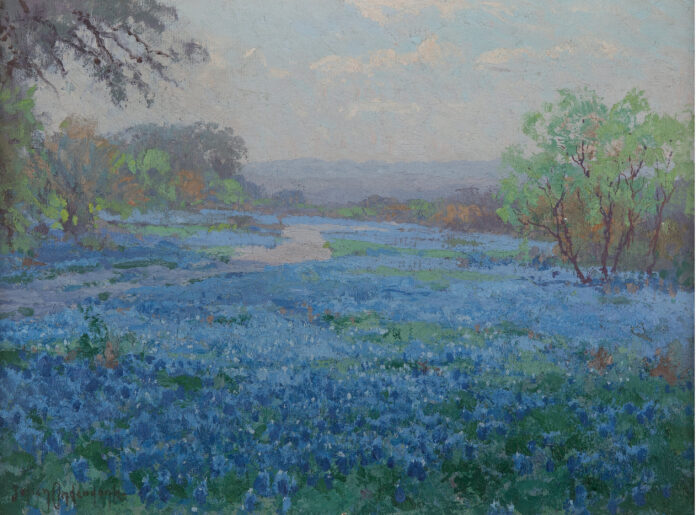
Julian Onderdonk, "A Field of Bluebonnets, San Antonio," 1921
Julian Onderdonk, "A Field of Bluebonnets, San Antonio," 1921; Image credits: Heritage Auctions, HA.com

The painting was loaded into a trailer along with other donations and was headed to Goodwill, where it would have sat until someone noticed its charismatic beauty. Bluebonnet paintings — a mainstay of American West artists for a century — are not hard to come by, but this one was different.

The owner, a woman on her way to a West Coast retirement, whose family had packed her things, called out for it. “It’s too pretty to surrender.” It had been a gift to her, sent to Illinois from an extended family member in Texas, to commemorate her birth in 1922; she had looked upon it all her life, and she wanted it on the wall of her last home. The painting was retrieved from the packed trailer, and the woman continued to enjoy the painting in her final years. Then, her Washington-based daughter fondly displayed it in her own dining room. No one in the family knew a thing about the artist.

That is, until recently, when the daughter and her son did some digging and realized that the work was an original by “the father of Texas painting” — Julian Onderdonk himself — and that this painting was a particularly stellar example from the acclaimed artist in his absolute prime. Onderdonk, in fact, invented the entire category of bluebonnet painting, and no one has topped his oeuvre when it comes to capturing the state flower’s presence on the Texas landscape. This work, “A Field of Bluebonnets,” San Antonio, painted in 1921, comes to Heritage and is one highlight of its June 29, 2024, Texas Art Signature® Auction.

“It was a family heirloom all these years,” says the original owner’s grandson. “But it was decoration. We hadn’t considered researching it. And now, it should go to someone who will genuinely appreciate it.”
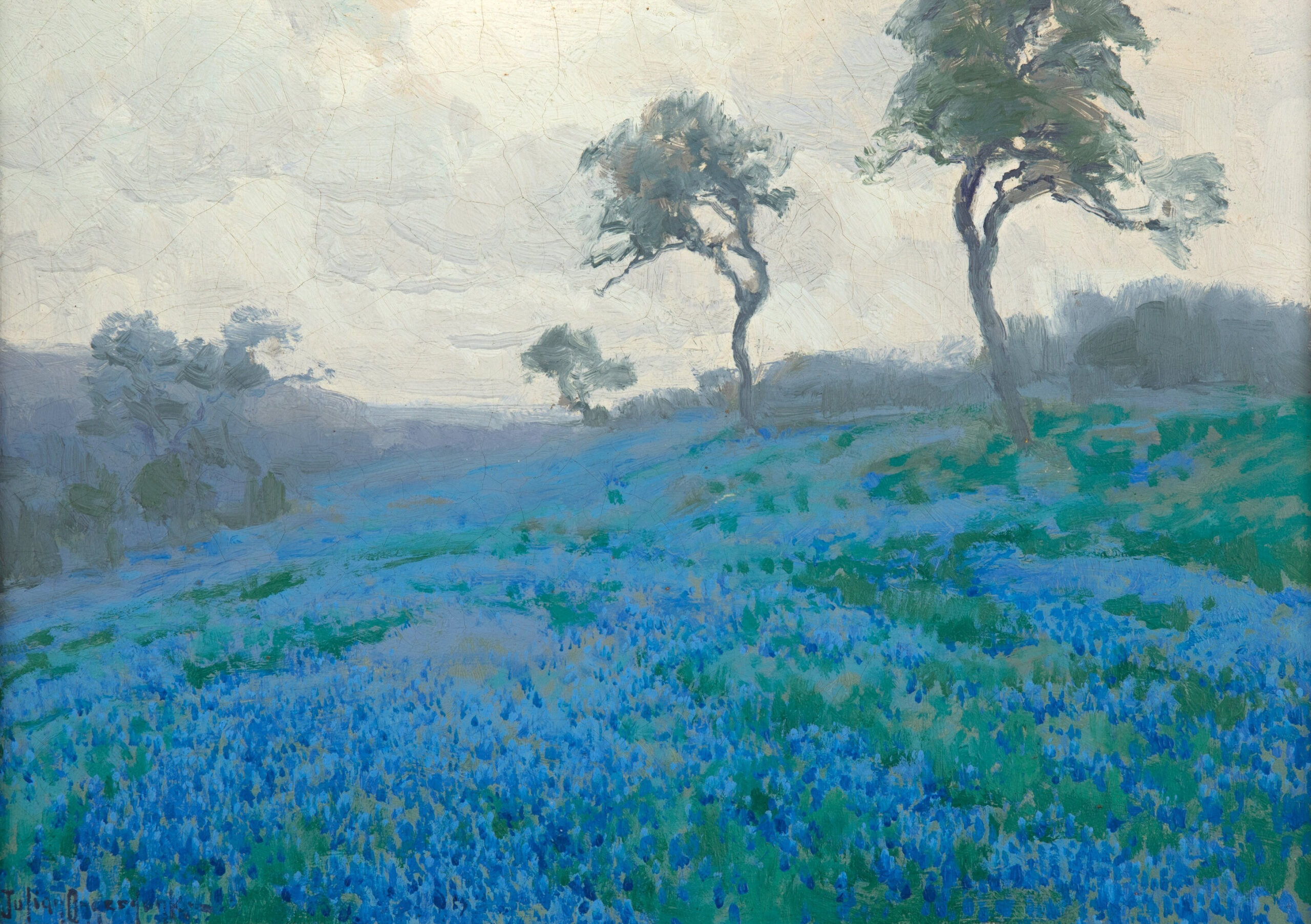
Julian Onderdonk, "Blue Bonnets on Grey Day, North of San Antonio, Texas," 1916
Julian Onderdonk, “Blue Bonnets on Grey Day, North of San Antonio, Texas,” 1916

That Onderdonk gem, replete with the artist’s hallmark extended vista, atmospheric haze, and densely packed fields of bluebonnets, is joined in the auction by another triumph from the famed Texas Impressionist: his “Blue Bonnets on Grey Day,” North of San Antonio, Texas, from 1916. In this intimate masterpiece, Onderdonk has situated the perspective from about halfway up a gentle slope. The sky is restive with gathering clouds, and individual flowers in the foreground glow in the overcast light. As your eye moves down the hill into the distance the color disperses into Onderdonk’s ethereal soft purples, blues, and grays. Like the painting mentioned above, it presents the artist at the height of his power.
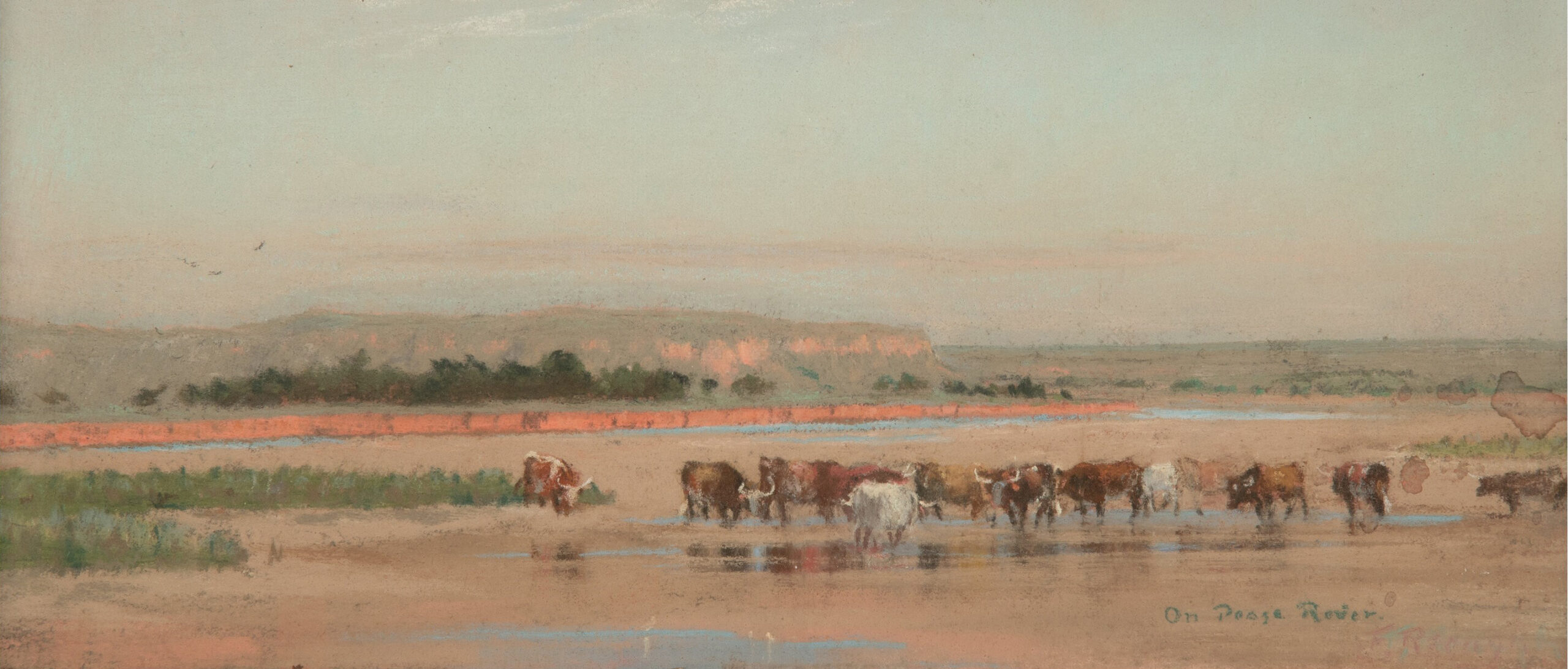
Frank Reaugh, "On Peace River"
Frank Reaugh, “On Peace River”

This auction, tightly curated and yet stacked with Texas wonders, showcases the region’s artists at their best, whether the work is a century old or merely a decade or two, and proves the breathtaking range of their visions. From Frank Reaugh to David Bates, from Porfirio Salinas and Fred Darge to Nancy Lamb and Robyn O’Neil, the event is made up of works that inspire collectors of all types.

Preview the auction at fineart.ha.com.
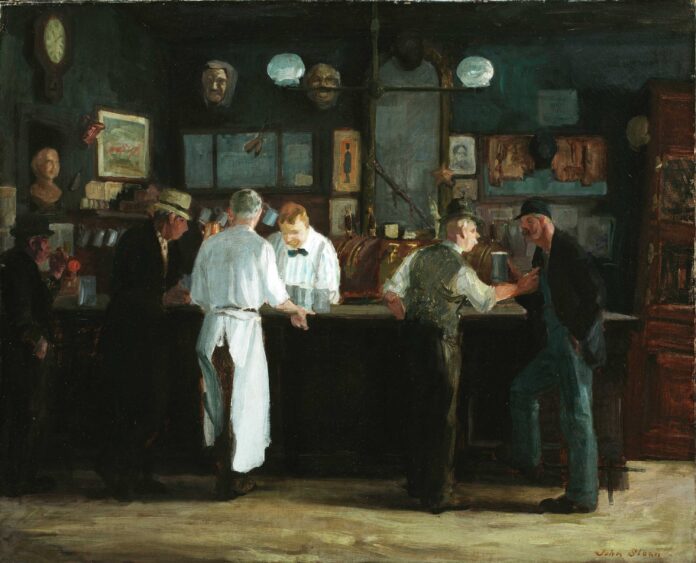
A Favorite Painting: “McSorley’s Bar” by John Sloan

0
John Sloan (1871–1951), "McSorley’s Bar," 1912, oil on canvas, 26 x 32 in., Detroit Institute of Arts, Founders Society Purchase, General Membership Fund, 24.2

Many family road trips in the 1960s involved stopping at natural attractions or visiting grandparents, taking in a small-town carnival or reaching a lakeside cabin for a stay. For Elizabeth Goldstein, they meant piling into the car with her parents and sister and driving from their home in the Bronx to other cities to see Rembrandts and Goyas, Picassos and Mondrians.

“I come from an itinerant family always in search of art,” says Goldstein, who serves as president of New York’s Municipal Art Society (MAS), the influential nonprofit that advocates for preservation of the city’s built and natural environments. Goldstein recalls one of her earliest memories of such driving expeditions. “My parents had stopped at the Munson museum [in Utica, New York], and, as a 4- or 5-year-old, I remember playing in the children’s room there as they went off to look at art.”

Elizabeth Goldstein, President, Municipal Art Society

Most of the time, though, Goldstein and her sister went hand-in-hand with their parents through museum galleries in New York and other American cities. “For one of my father’s sabbaticals, he took my sister and me out of school when I was 13, and we all went to Europe to see art. For three months, we looked at art in Amsterdam, Brussels, Rome, Florence.”

But it was on a girlhood visit to the Whitney Museum of American Art with her grandmother that Goldstein recalls seeing her first John Sloan painting, “Backyards, Greenwich Village” (1914), an iconic depiction of a snowy streetscape with children building a snowman and a black cat frolicking in the drifts. “It’s why I also love this painting so much,” says Goldstein, referring to Sloan’s “McSorley’s Bar.”

“But why does it have to be in the Detroit Institute of Arts [DIA] instead of in New York?” she asks with mock outrage, acknowledging that the venerable Manhattan bar still exists on East 7th Street, where it has been a presence since the 1850s.

Goldstein notes, “I am a big fan of Dutch art, and so I think I’m drawn to dark atmospheric canvases in general. Of course I know McSorley’s, but the first time I saw this painting in a traveling exhibition, I didn’t recognize it as the bar. When I looked at the label and realized it was McSorley’s, a light bulb went off.”

Though Goldstein has also seen the work in situ at the DIA, she continues to look at images of it. “My grandmother owned a couple of Ashcan School paintings by a minor artist, and I was so intrigued by what the artists depicted that I’ve been collecting books and catalogues about that group ever since.”

While McSorley’s continues to serve patrons, and looks much — in its appealing, ramshackle way — as it has for nearly 170 years, Goldstein points out that the barkeeps no longer wear aprons quite as long as those in the painting. “The bar’s age is definitely part of its attraction, and you can tell there’s been a lot of cigarette smoking in there, a lot of whiskey splashed on the bar, and a lot of beer soaked up by sawdust on the floor. Sloan captured a place where you can still go, an example of a wonderful aspect of New York. And in my role at the MAS, I’ve become very interested in legacy businesses like McSorley’s.”

McSorley’s third-generation owner, the late Matty Maher, an Irish immigrant who died in 2020, oversaw during his long tenure one of the bar’s major social changes — the admission of women. Up until 1970, the bar’s slogan read: “Good Ale, Raw Onions, and No Ladies.” When a gender discrimination lawsuit changed that policy, women were allowed to pony up to the bar, although a women’s restroom wasn’t installed until 1986. “Of course that old policy bothered me,” says Goldstein, “but by 1975 I was old enough to begin wandering the East Village by myself, and I came upon the place. By college, I was able to venture inside. Now, there’s a long line down the block to get in.”

She concludes, “The reason this painting remains a little jewel to me is because Sloan was a master of configuring the atmosphere of a place. You can feel the sawdust underfoot just looking at it — and you can still feel the real thing by going inside.”

Raqib Shaw: Ballads of East and West

0
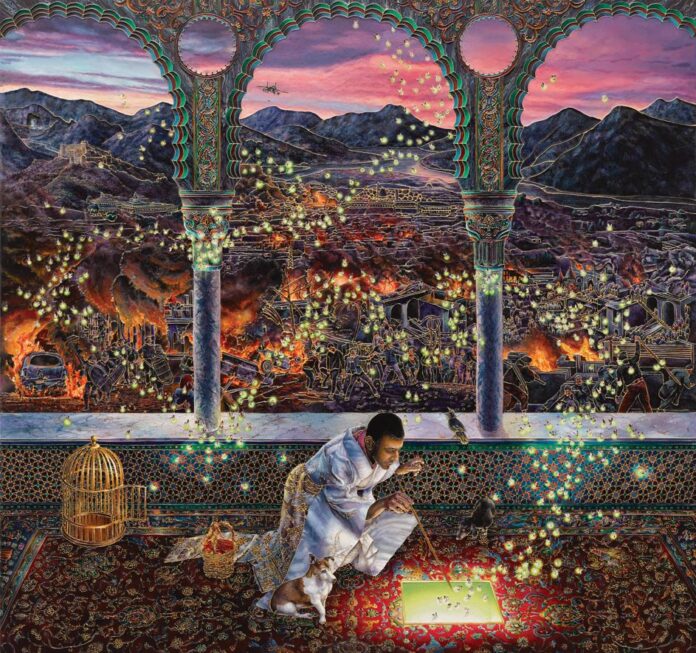
Raqib Shaw (b. 1974), "Ode to the Country without a Post Office," 2019–20, acrylic liner and enamel on birch, 53 7/8 x 42 7/8 in., private collection; photo © White Cube (Ollie Hammick)

The Museum of Fine Arts, Houston is the current stop on the national tour of “Raqib Shaw: Ballads of East and West.” Born in 1974, the Indian painter spent most of his childhood in the beautiful Valley of Kashmir, a region long marred by sectarian strife. He moved to New Delhi in 1992 and became immersed in his family’s business selling jewelry, textiles, and carpets.

During a visit to London in 1993, Shaw fell in love with Old Master paintings at the National Gallery, and eventually he moved to the British capital, where he has lived ever since.

Shaw has never lost his fascination with such historical Italian masters as Carlo Crivelli and Giovanni Paolo Panini, and today he creates intricate paintings of dream-like, mysterious realms that blend Eastern and Western influences.

Organized by Nashville’s Frist Art Museum and the Isabella Stewart Gardner Museum in Boston, the show takes its title from Rudyard Kipling’s poem “The Ballad of East and West,” often cited for the line “Oh, East is East, and West is West, and never the twain shall meet.” But in fact, explains curator Zehra Jumabhoy (University of Bristol), “Shaw is inspired by Kipling’s next lines, which propose the opposite: when like-minded souls meet ‘there is neither East nor West’ even if ‘they come from the ends of the earth!’”

Shaw blurs the lines between art and ornament; Japanese aesthetics, Mughal artifacts, Islamic textiles, and Indo-Persian architecture converge with citations from Renaissance masters. He paints with porcupine quills and fine needles to render the precise details of delicate flowers or distant mountains, which are outlined in embossed gold.

Though viewers are often beguiled by Shaw’s iridescent surfaces, conflict is present in almost every scene, evoking Kashmir’s turbulent history.

Illustrated above is “Ode to the Country without a Post Office,” which characteristically juxtaposes the tranquil and the horrific. Sitting on a palatial balcony is a kimono-clad Shaw, gazing into an opening in the floor, from which hundreds of fireflies are emerging. Beyond this enchanting scene, however, fire and chaos rage in the town beyond. Once seen, warns Houston’s organizing curator Alison de Lima Greene, Shaw’s paintings “are never forgotten.”

The show is on view through September 2, 2024. For more details, please visit mfah.org.

Summer in New England

0
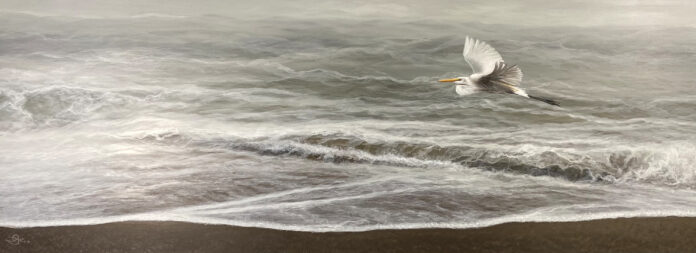
Del-Bourree Bach, “Over the Bounding Main,” Acrylic, 9 x 24 inches

Art Exhibition: Summer in New England
Through August 17, 2024
Susan Powell Fine Art, Madison, CT
www.susanpowellfineart.com

From the Gallery:

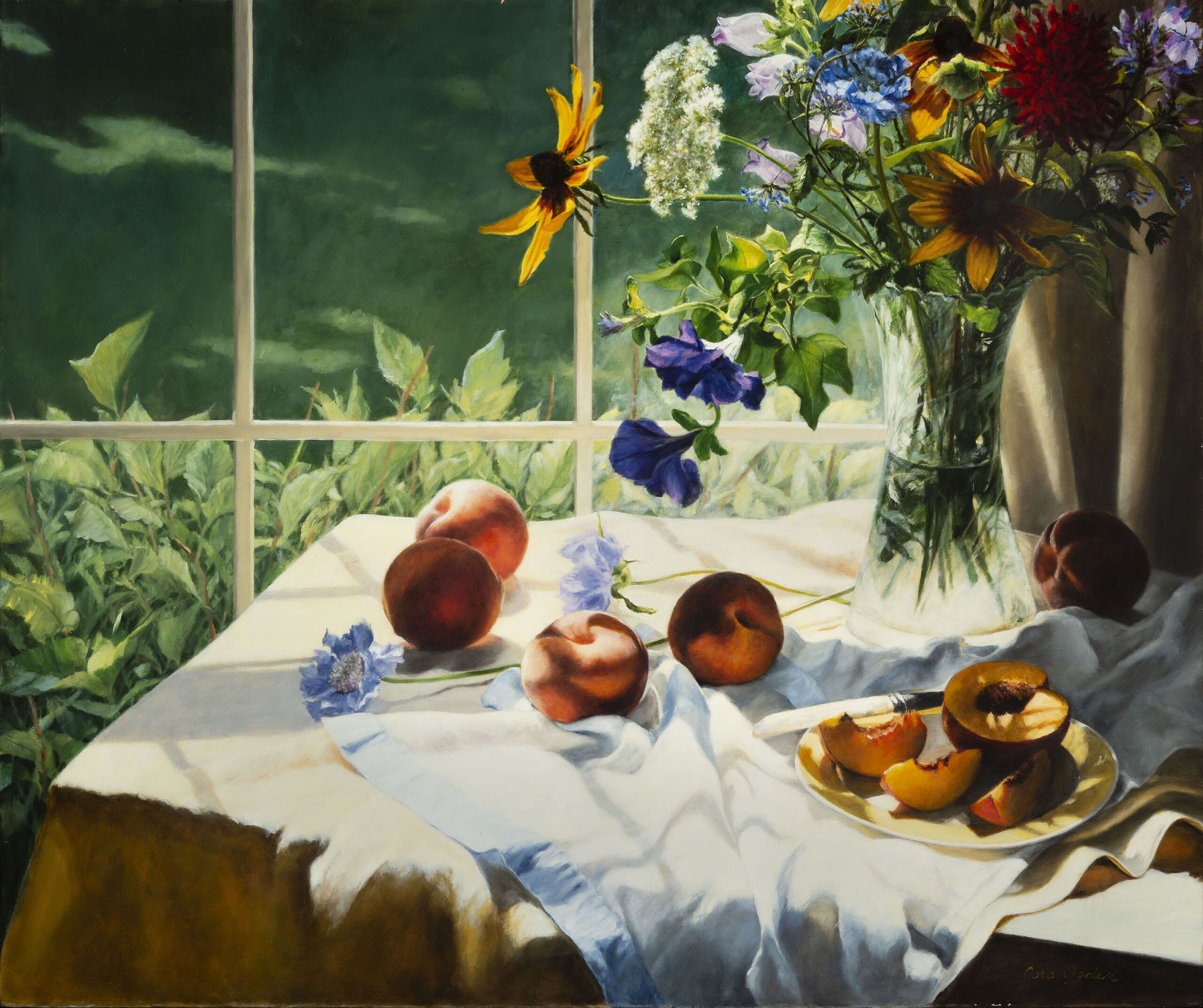
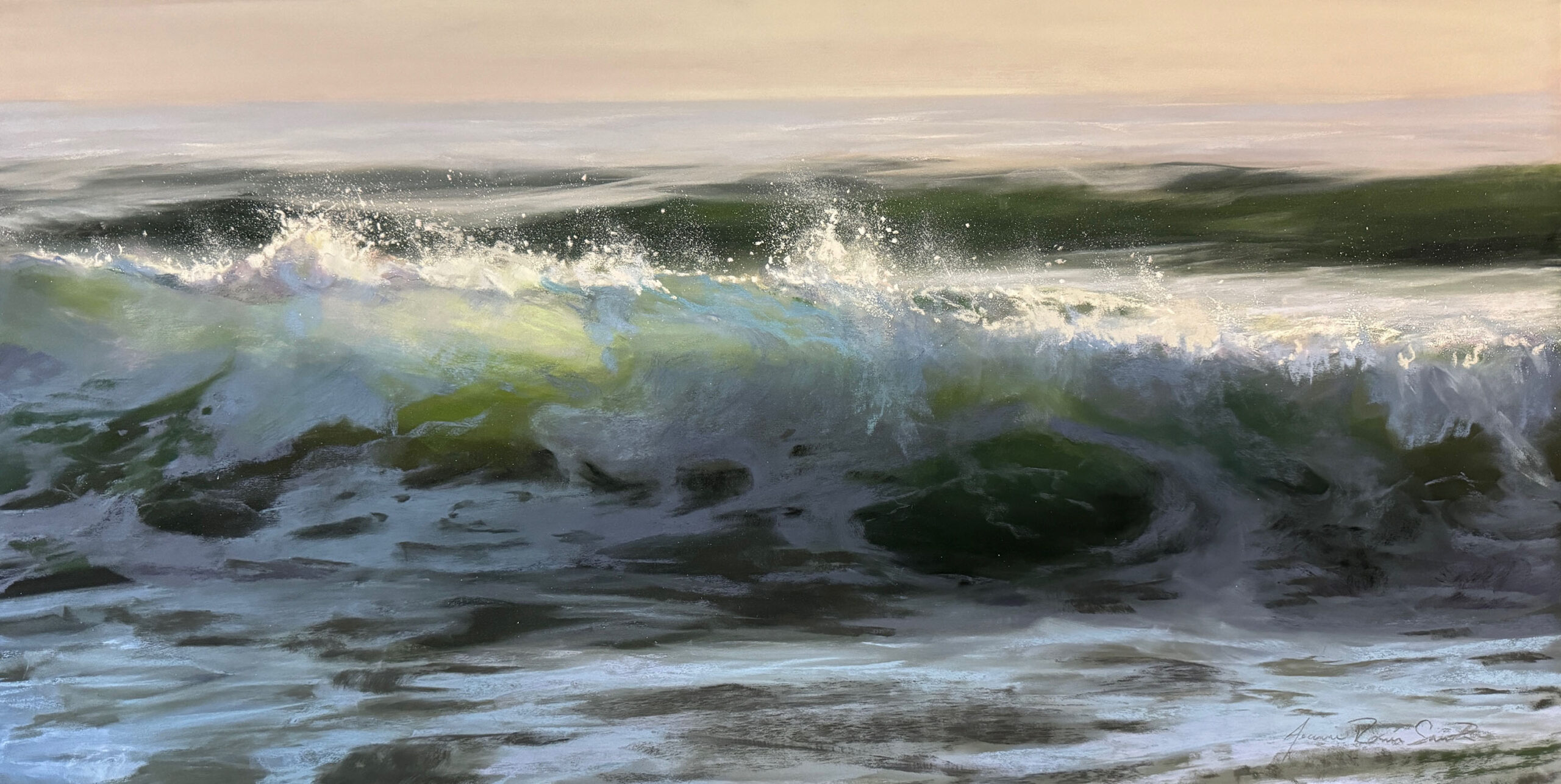
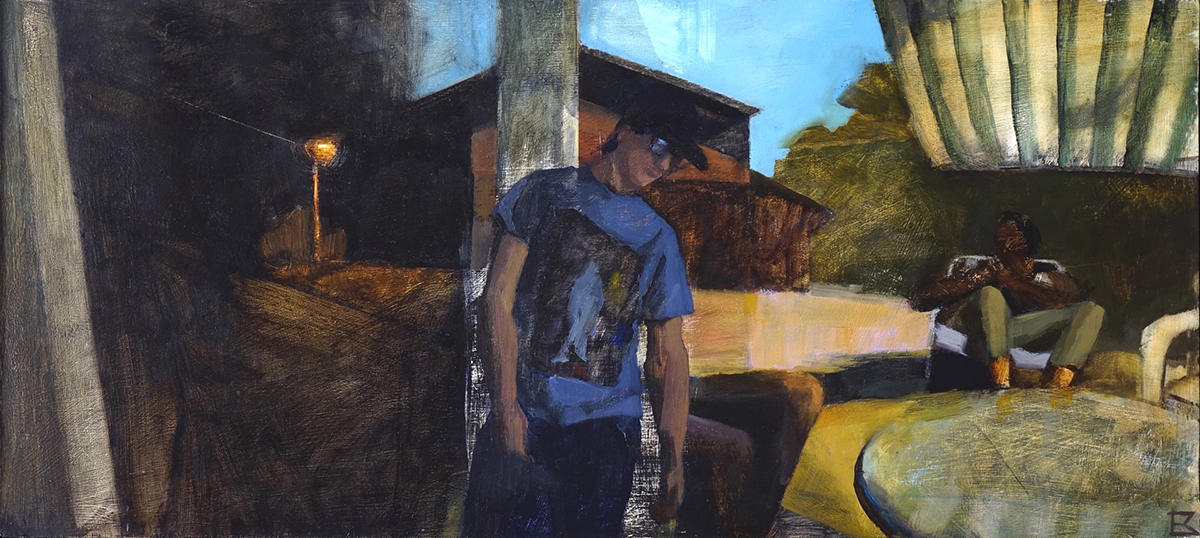
Thirty award-winning artists including Del-Bourree Bach, Paul Beebe, Zufar Bikbov, Kelly Birkenruth, Grace DeVito, Neal Hughes, Tom Hughes, Andrew Lattimore, Leonard Mizerek, Cora Ogden, Jeanne Rosier Smith, George Van Hook, Sandra Wakeen, and Christopher Zhang will be included in one of our most popular shows, Summer in New England, returning for its 21st year.

Working in styles ranging from traditional realism and impressionism to contemporary, these talented artists celebrate New England’s coastal charm of idyllic marshlands, beaches, seascapes, dinghies, sailboats, shorebirds, and nocturnes. A sunlit summer studio and the brilliant colors of summer flowers with peaches are unique, colorful works that perfectly capture the essence of the season. “The lure of light, the atmospheric effect drawing the artists to a particular place result in paintings that feel peaceful and beautiful,” says gallery owner Susan Powell.

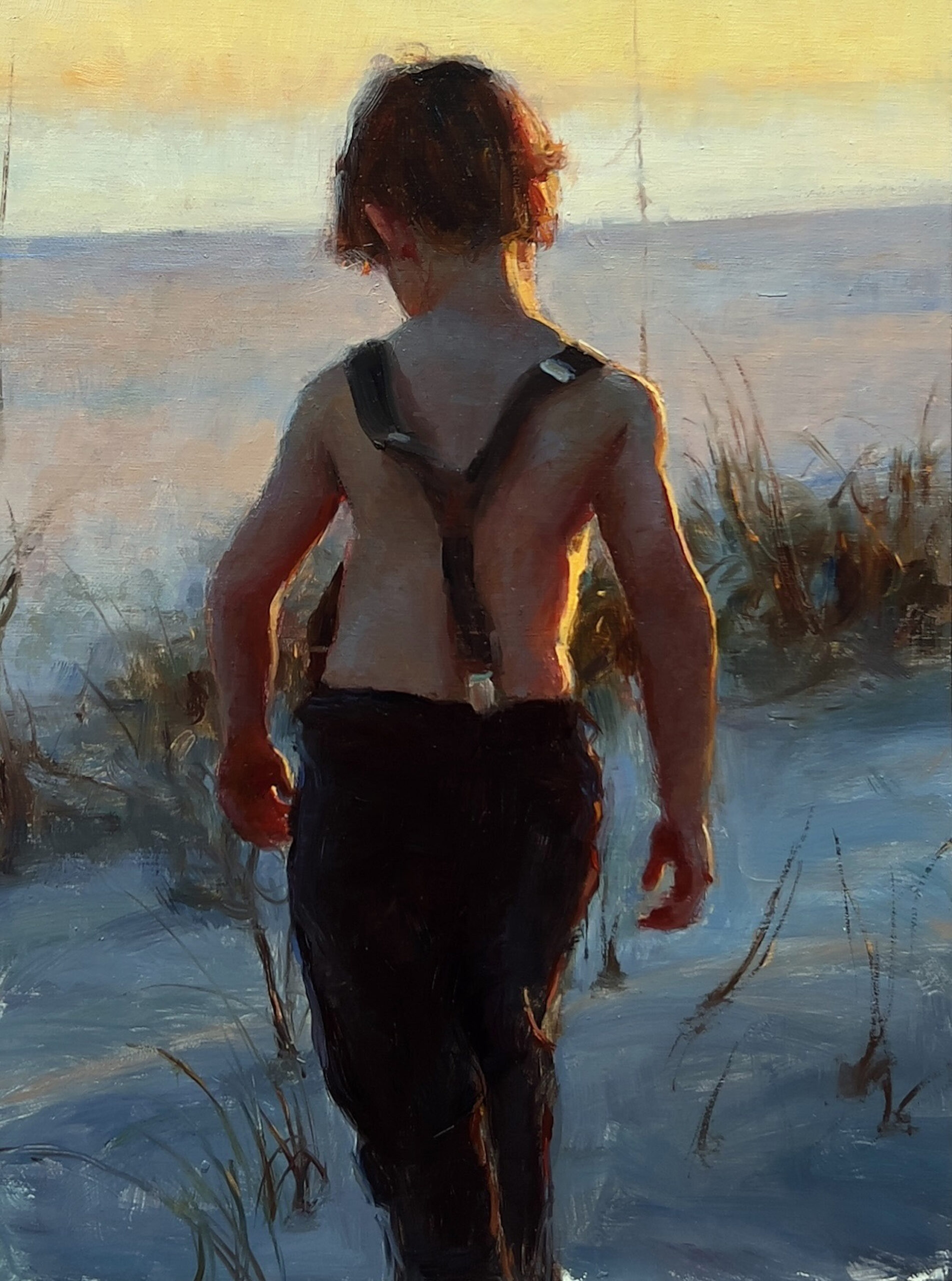
Timothy Rees, “Evening Mosey,” Oil, 12 x 9 inches

Timothy Rees on “Evening Mosey,” shown above:

“I am captivated by the many facets of humanity, and none more so than that of childhood; the transition from a creature barely aware into one of discovery, teetering on the cusp of growing up. I strive to illuminate these moments to viewers, often raw and untempered by fear of judgments, that we all once shared. In the case of ‘Evening Mosey’, it is my son – out for an evening stroll at the beach. The whole world was his. It’s a moment marked by his confidence and playfulness, and heightened by the drama of the setting sun. While the sun has set on that moment, the painting remains, a reminder to hold onto those most admirable qualities of our youth; those that may slip from us as time marches us forward into adulthood.”

Additional Paintings in “Summer in New England”

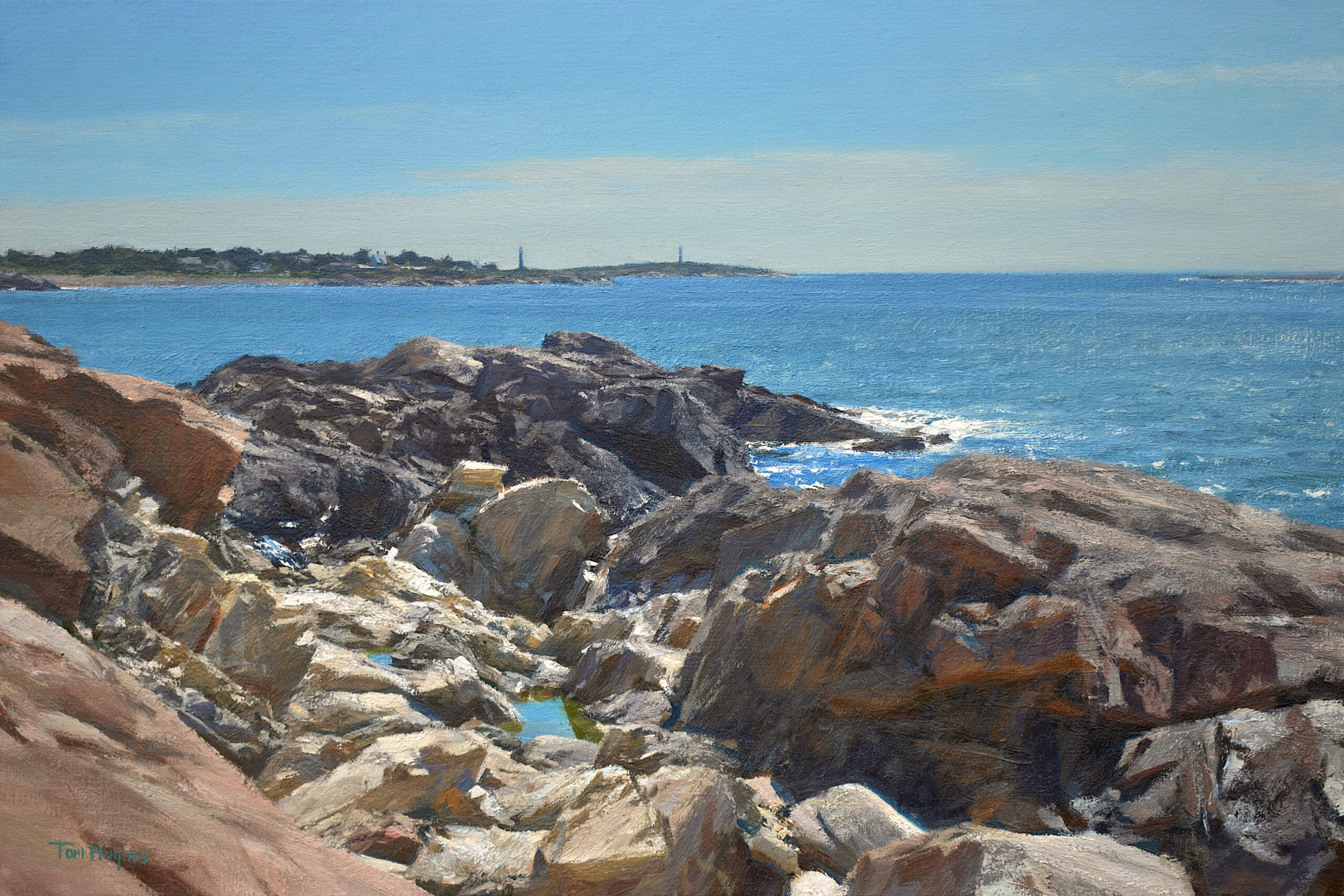
Tom Hughes, “Sunlit Rocky Coast,” Oil, 20 x 30 inches
Cora Ogden, “Afternoon Light,” Oil, 25 x 30 inches
Jeanne Rosier Smith, “Dreaming of Morning,” Pastel,18 x 36 inches

View more fine art gallery exhibitions here at FineArtConnoisseur.com.

Virtual Gallery Walk for June 21st, 2024

0
Friday Virtual Gallery Walk

As part of our effort to continue to help artists and art galleries thrive, we’re proud to bring you this week’s “Virtual Gallery Walk.” Browse the artwork below and click the image itself to learn more about it, including how to contact the gallery.

Before, Emma Kalff, oil on panel, 11 x 24 in; Emma Kalff

***

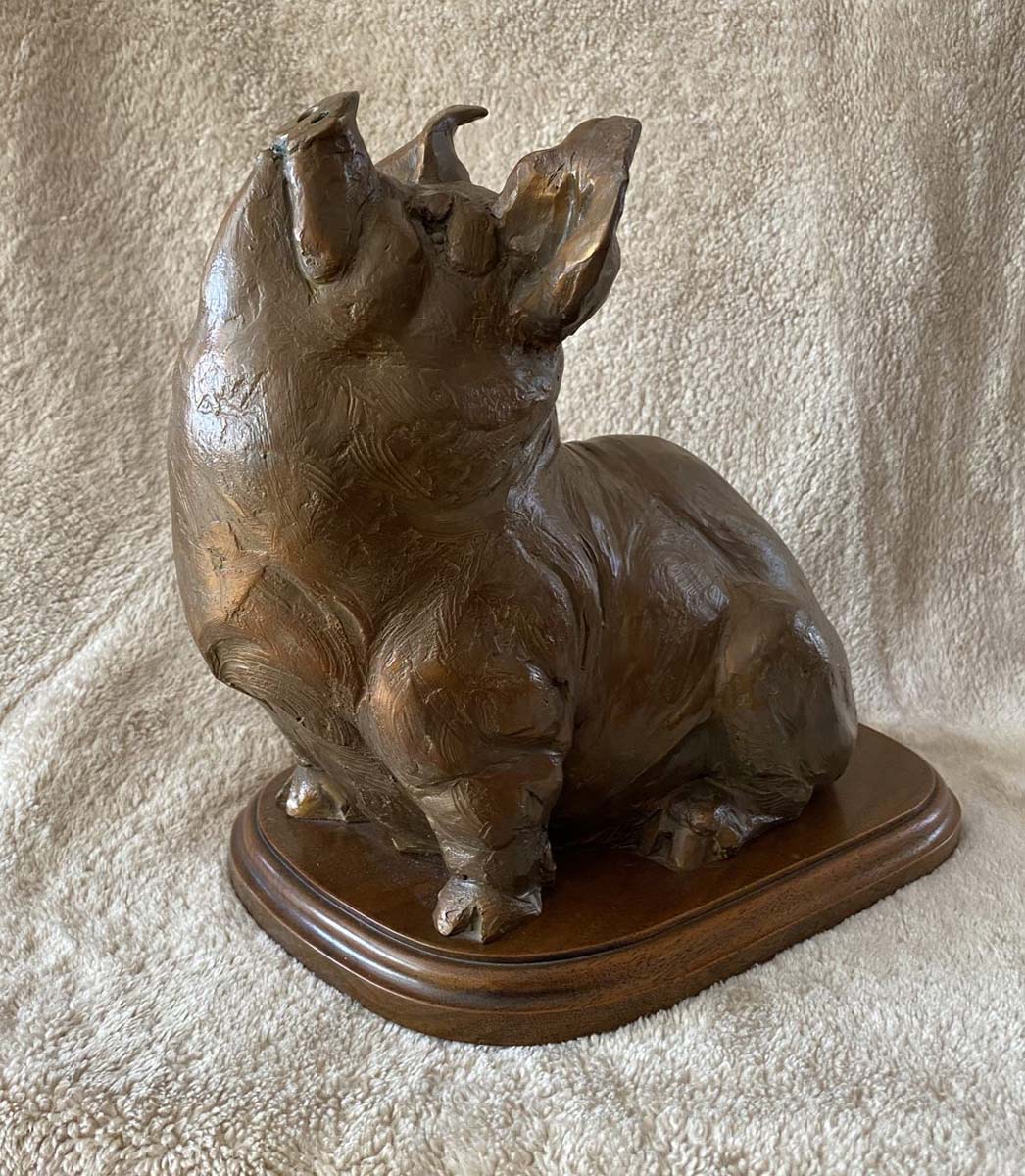
Swine Song, Sandy Scott, bronze #18/100, 9.5 x 9.5 x 6.5 in deep; Artzline.com

***

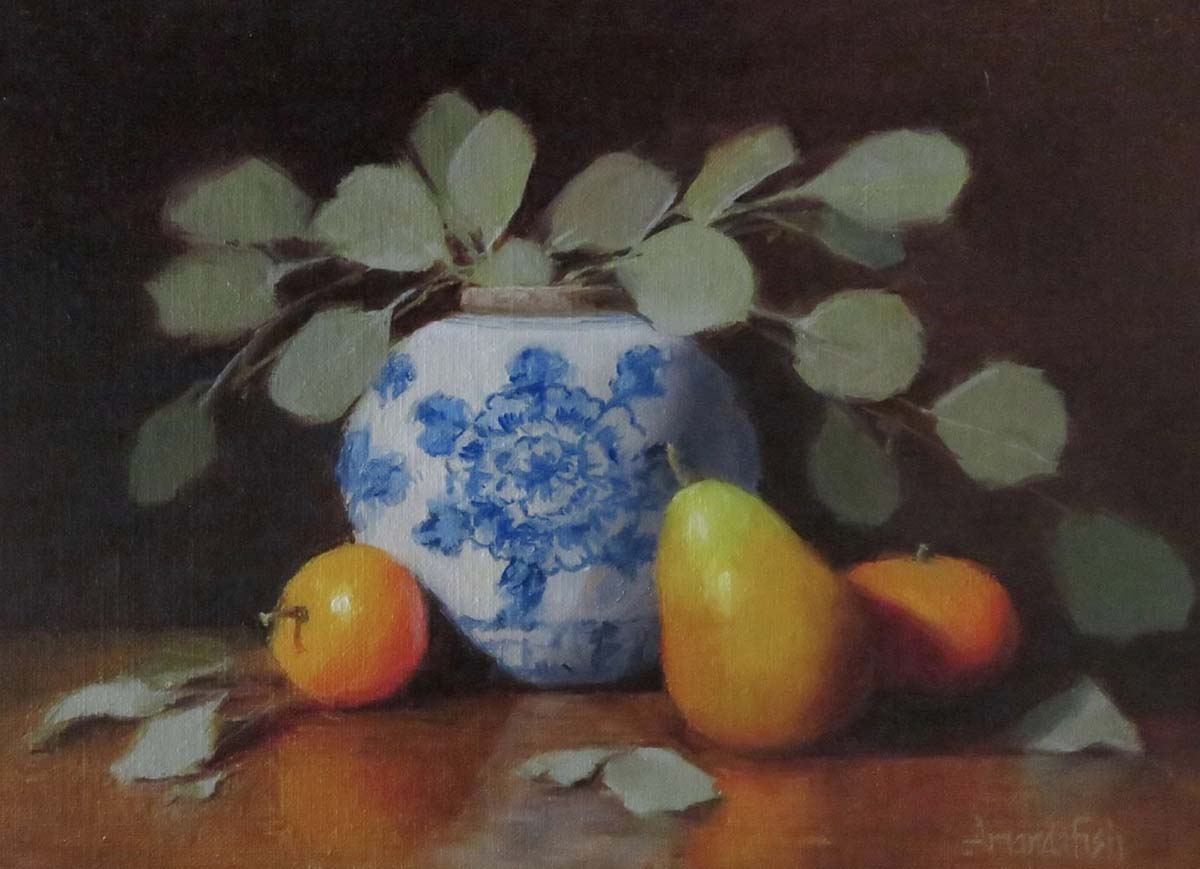
Mandarins Delight, Amanda Fish, oil, 9 x 12 in; Huse Skelly Gallery

***

Beach Composition, Timothy Rees, oil, 24 x 20 in; Summer in New England, June 21-August 17, 2024; Susan Powell Fine Art

Want to see your gallery featured in an upcoming Virtual Gallery Walk? Contact us at [email protected] to advertise today. Don’t delay, as spaces are first come, first served, and availability is limited.

Jivan Lee: Arboreal

0
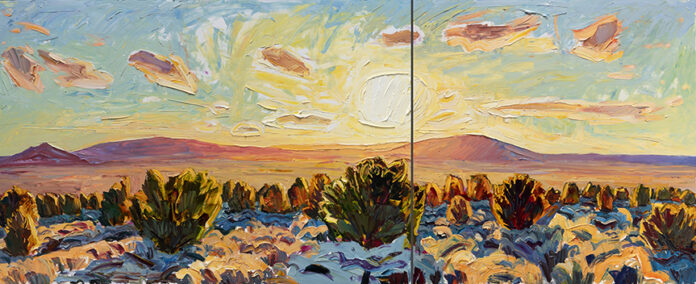
Jivan Lee, "Fresh Light (Thank You Daniel)," diptych, 2024, Oil on panel, 48 x 120 in.

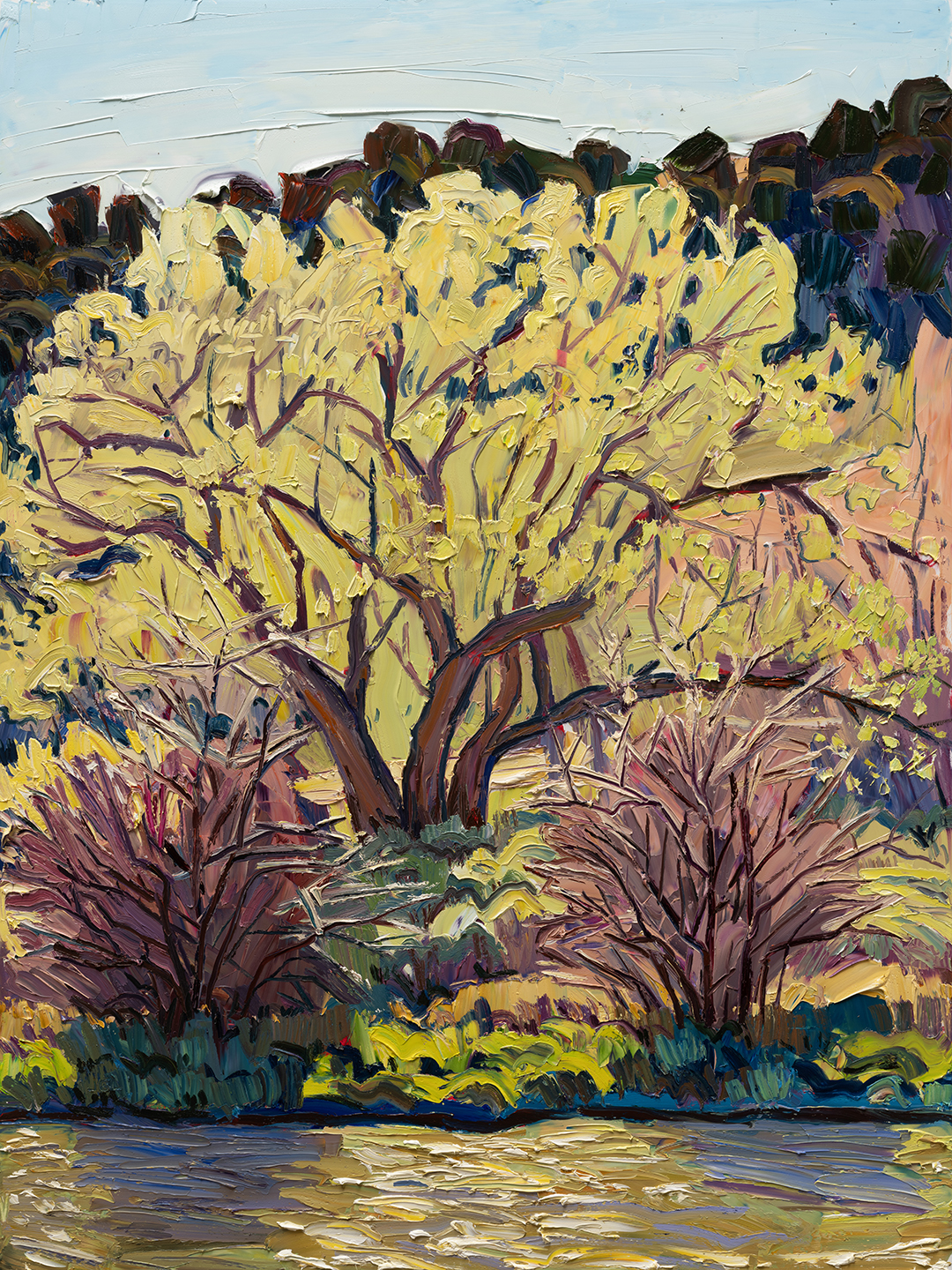
Jivan Lee has gained an esteemed reputation as a leading contemporary painter of the landscape of New Mexico, lauded for his profound connection to nature and his highly-physical process of plein air painting. He is celebrated for his vibrant use of color, textured application of painting, and his thoughtful, introspective approach to his subjects. Lee’s new exhibition, “Arboreal,” with its focus on the tree itself as primary subject matter, is a logical extension of his landscape painting practice. The show remains on view at LewAllen Galleries (Santa Fe, NM) through July 20, 2024.

Jivan Lee, "Budding Out by the River," 2024, Oil on panel, 48 x 36 in.
Jivan Lee, “Budding Out by the River,” 2024, Oil on panel, 48 x 36 in.

More from the gallery:

As an artist, Lee ponders the idea that trees, since time immemorial, have occupied a special place in the imagination of humankind and possess deep and sacred meanings in numerous religious and folk traditions. They symbolize the ubiquitous cyclicality of growth, death and rebirth. The image of the Tree of Life and the Tree of Knowledge are foundational in many mythologies. Lee reminds the viewer in these paintings that our spirits soar when we walk into nature and encounter these living sculptures and, with their sublime beauty, how we literally walk into wellbeing.

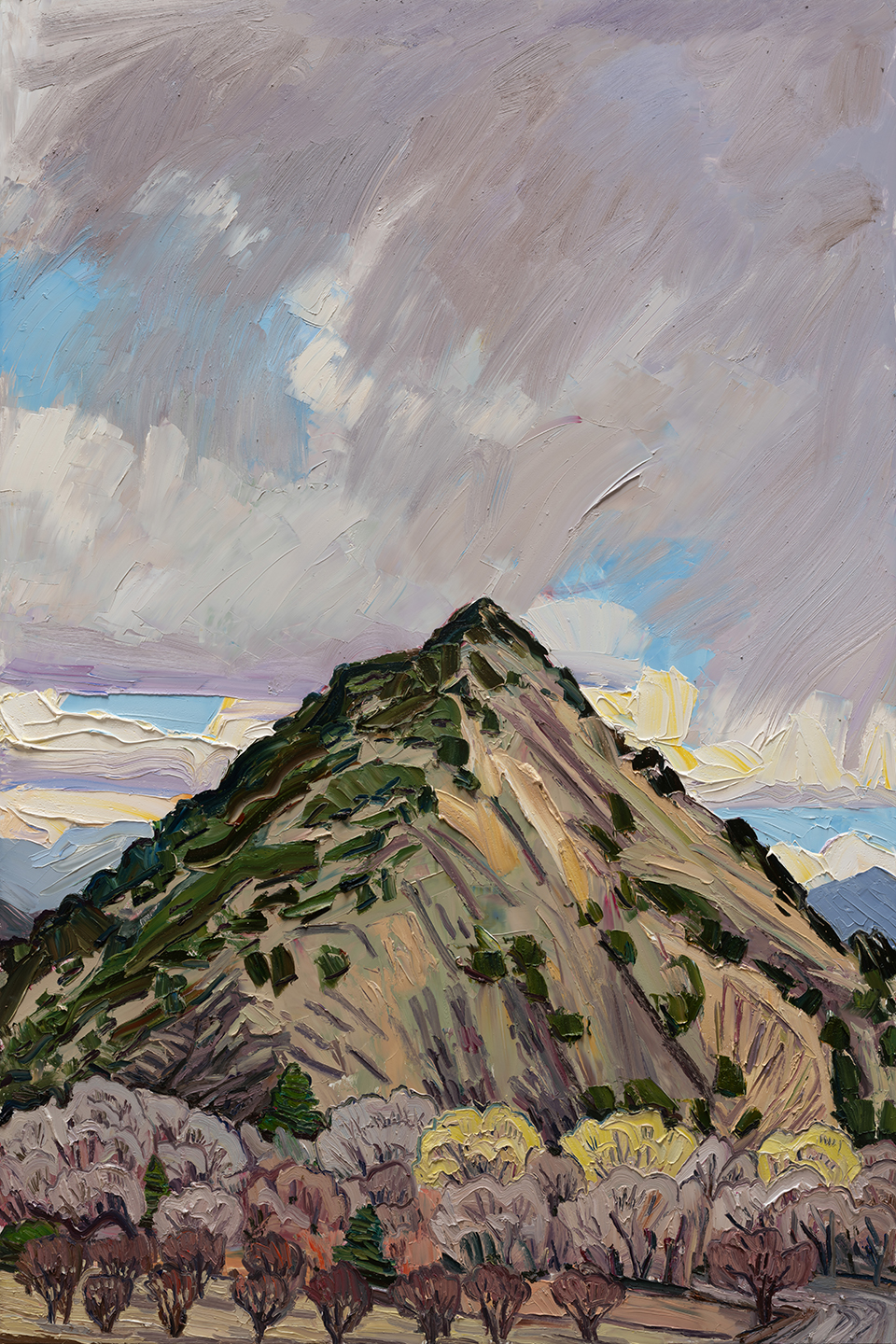
Jivan Lee, "Storms Down," 2024, Oil on panel, 60 x 40 in.
Jivan Lee, “Storms Down,” 2024, Oil on panel, 60 x 40 in.

Instead of blending brushstrokes, Lee preserves the sculptural quality of his gestural marks, showcasing them as spontaneous sources of pattern and rhythm. The surface of a Jivan Lee painting transforms into a mosaic of color cells or a dynamic panorama, teeming with fluid activity that can even evoke the spirit of action painting.

Lee’s plein air practice is intentionally designed to capture the land as it transforms before his eyes—the morning sun illuminating the earth, or an afternoon storm gathering, breaking, and dissipating. As hours, days, and seasons pass, Lee’s art emphasizes the interplay of time and the forces of nature and humanity.

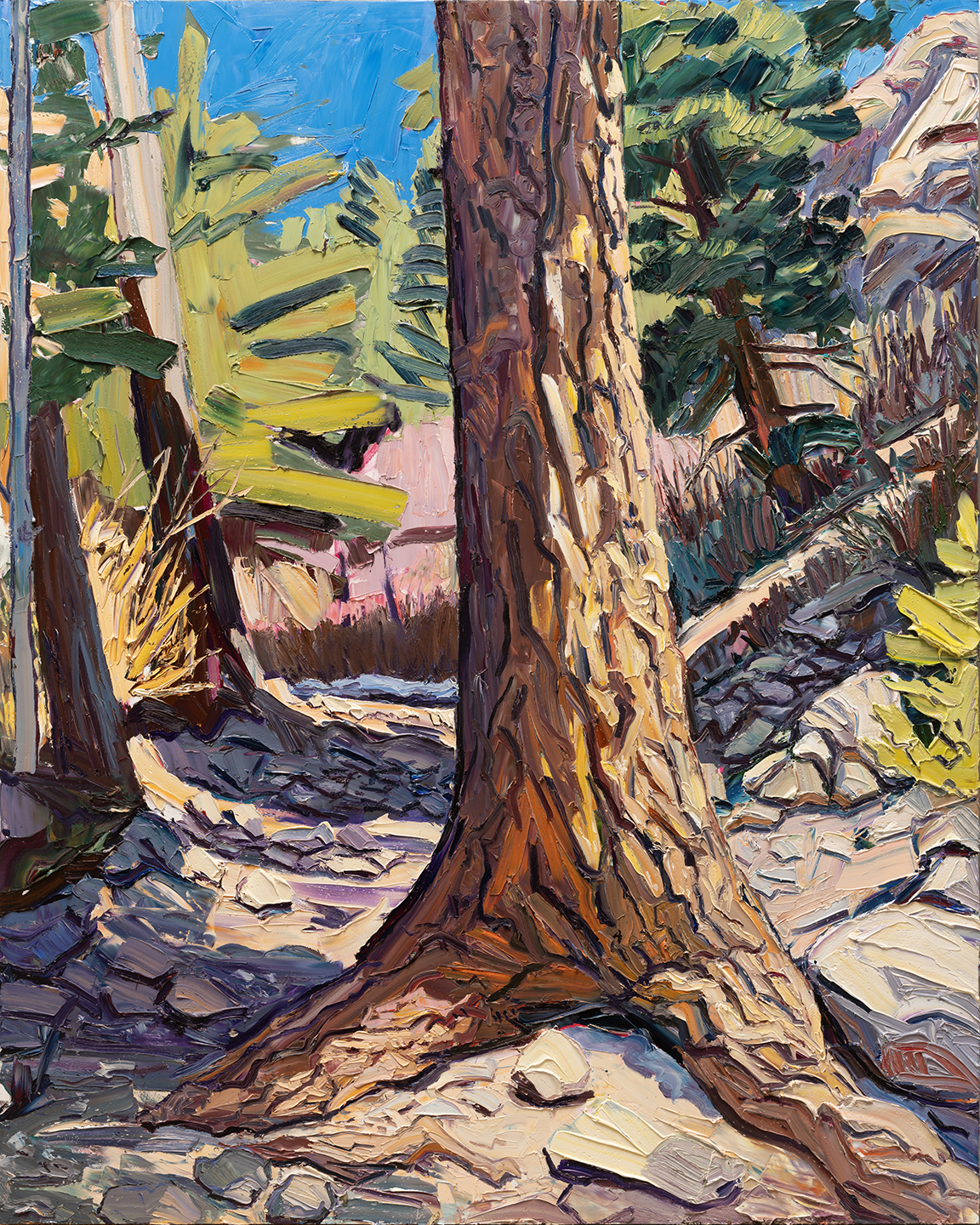
Jivan Lee, "Tree in the Trail," 2024, Oil on panel, 60 x 48 in.
Jivan Lee, “Tree in the Trail,” 2024, Oil on panel, 60 x 48 in.

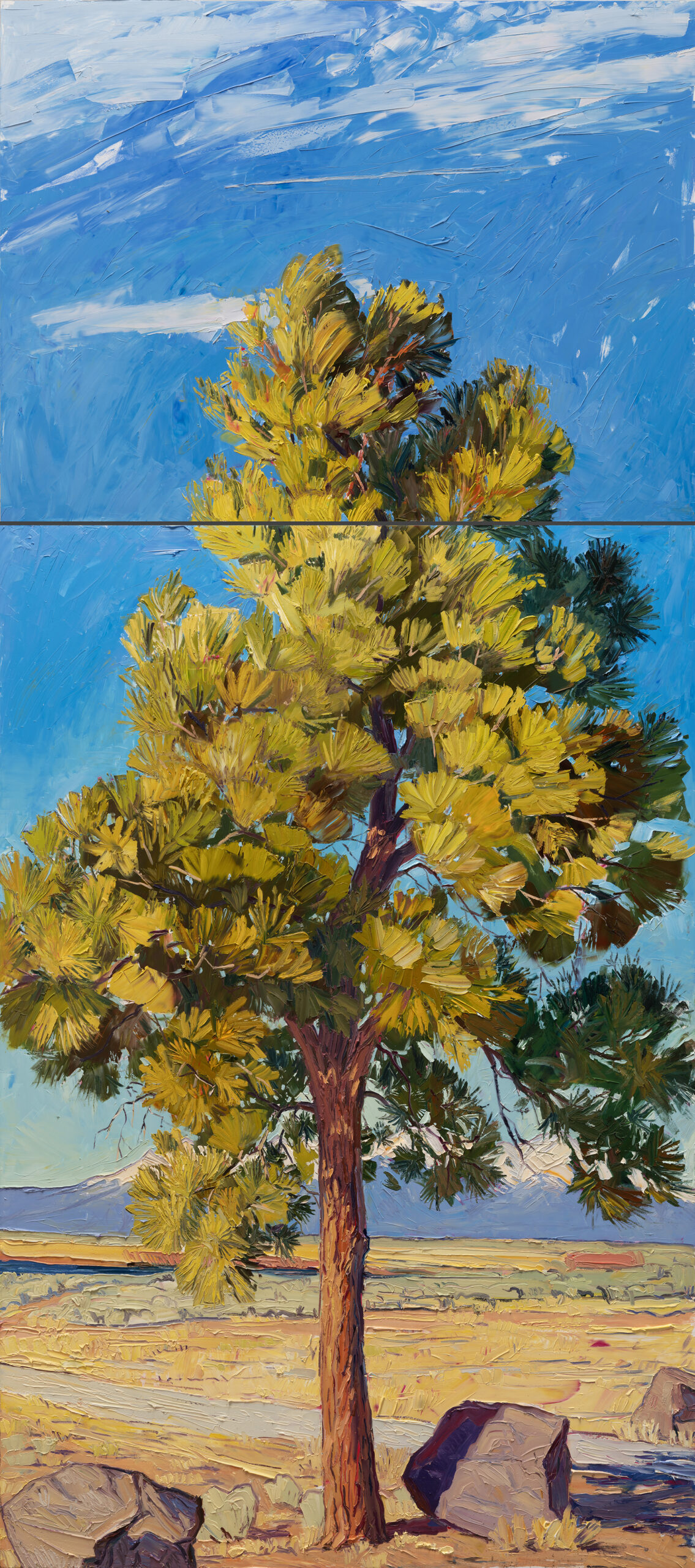
The works in “Arboreal” continue to illustrate the challenges and rewards of Lee’s process. Whether capturing an alpine conifer in “Tree in the Trail” by hauling 60 pounds of gear through rugged terrain and winds, or setting up his canvas at a rest stop at the Colorado border amidst horrendous winds and dust for “Young Ponderosa Beneath the Vastness of Blanca Peak,” Lee follows the essential wisdom of letting the process prevail.

Jivan Lee, "Young Ponderosa Beneath the Vastness of Blanca Peak," diptych, Oil on panel, 108 x 48 in.
Jivan Lee, “Young Ponderosa Beneath the Vastness of Blanca Peak,” diptych, Oil on panel, 108 x 48 in.

Originally from Woodstock, NY, Lee studied painting and environmental policy at Bard College in Annandale-On-Hudson, NY. Following graduate school, he taught for the University of New Mexico in Taos, and founded and directed the Project for Art and the Environment. His paintings have been exhibited nationally at museums and educational institutions and covered in numerous publications such as Western Art & Architecture, Southwest Contemporary, The Santa Fe New Mexican, Phoenix Home and Garden, Fine Art Connoisseur, Southwest Art, Art Business News, and PleinAir Magazine.

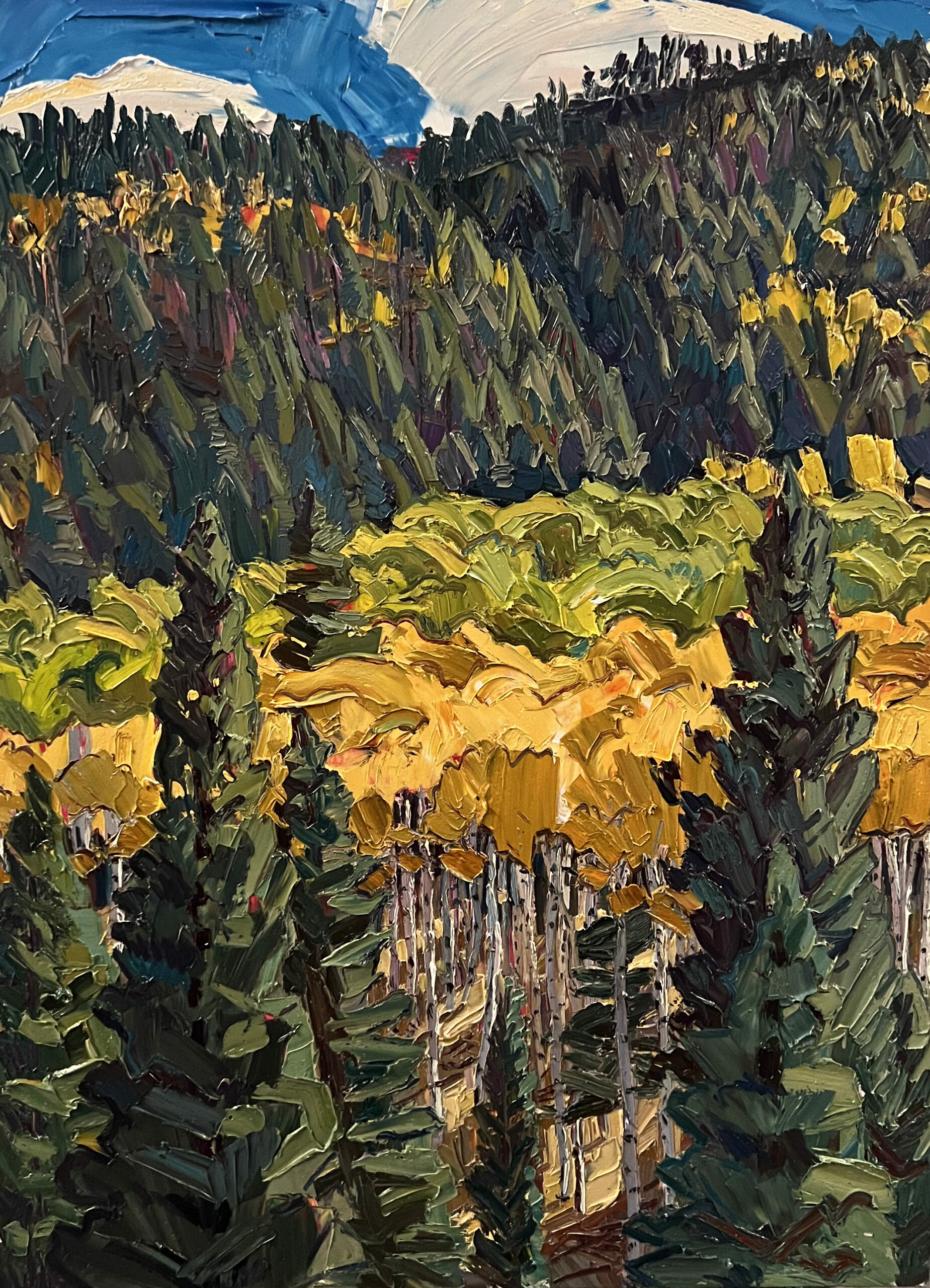
Jivan Lee, "Taos Ski Valley Aspens," 2023, Oil on canvas, 40 x 30 in.
Jivan Lee, “Taos Ski Valley Aspens,” 2023, Oil on canvas, 40 x 30 in.

Lee notes, “My approach to painting is animated by a few beliefs: One is that by painting outdoors, amidst the landscapes I know – the places I live, the trees I see, the trails I walk – I will find something of the universal and be able to share it in the form of finished work. The belief is not that I will necessarily understand it (or even know that I’ve found it); only that the act of looking closely – deeply – at the landscape is powerful and opens up new perceptual possibility.”

Welcome Words From an Art Collector

An Art Collection Spotlight >

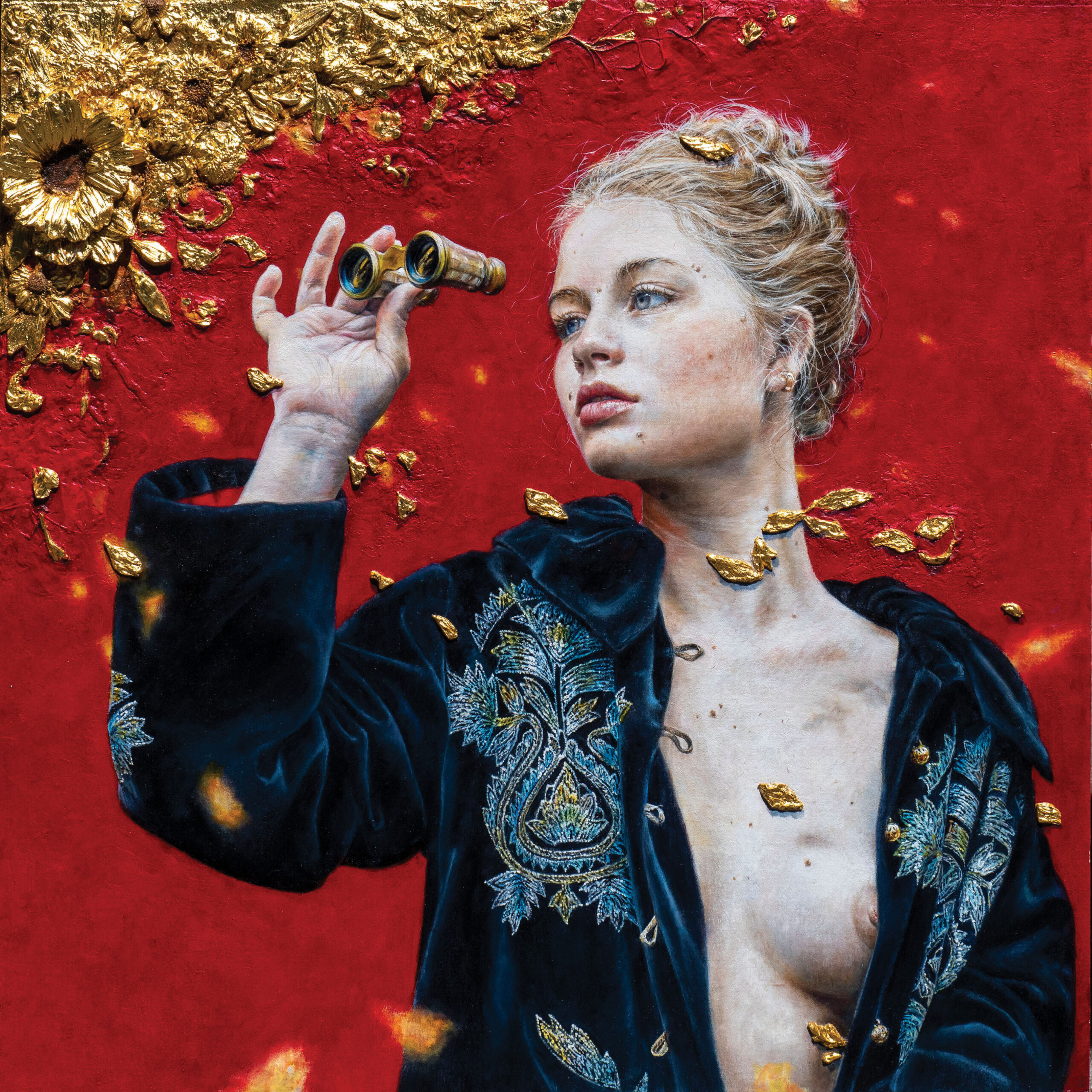
Art collection - June Stratton (b. 1959), "Visionary," 2021, oil, linen, alpha plaster, marble paste, and 23-karat gold leaf on linen mounted on panel, 24 x 24 x 3 1/2 in.
June Stratton (b. 1959), “Visionary,” 2021, oil, linen, alpha plaster, marble paste, and 23-karat gold leaf on linen mounted on panel, 24 x 24 x 3 1/2 in.

Michael Mouser grew actively interested in art in 2011 when, fresh out of college, he bought a house and found himself with yards of blank wall space. He asked several artistic friends if they would create something, but none followed through, so Michael bought some supplies and began making his own paintings. He recalls, “I began to discover contemporary artists who were painting what I was trying to capture and realized they were much better at it than me.”

In fact, Michael’s first acquisition was not an original work, but a master copy of Vermeer’s famous “Girl with a Pearl Earring” painted by the French artist August Aupault in 2016. Michael found the copyist on eBay, and soon they became close friends, even meeting up in Pittsburgh (where Michael lives) to visit its outstanding Carnegie Museum of Art together. Michael promptly commissioned his friend to copy Sargent’s “Venetian Interior,” a standout in the Carnegie’s collection, and now owns eight of Aupault’s master copies, including scenes by Bouguereau and Millet. “These,” he explains, “are so much better than commercial prints, and I hope to add many more to my art collection.”

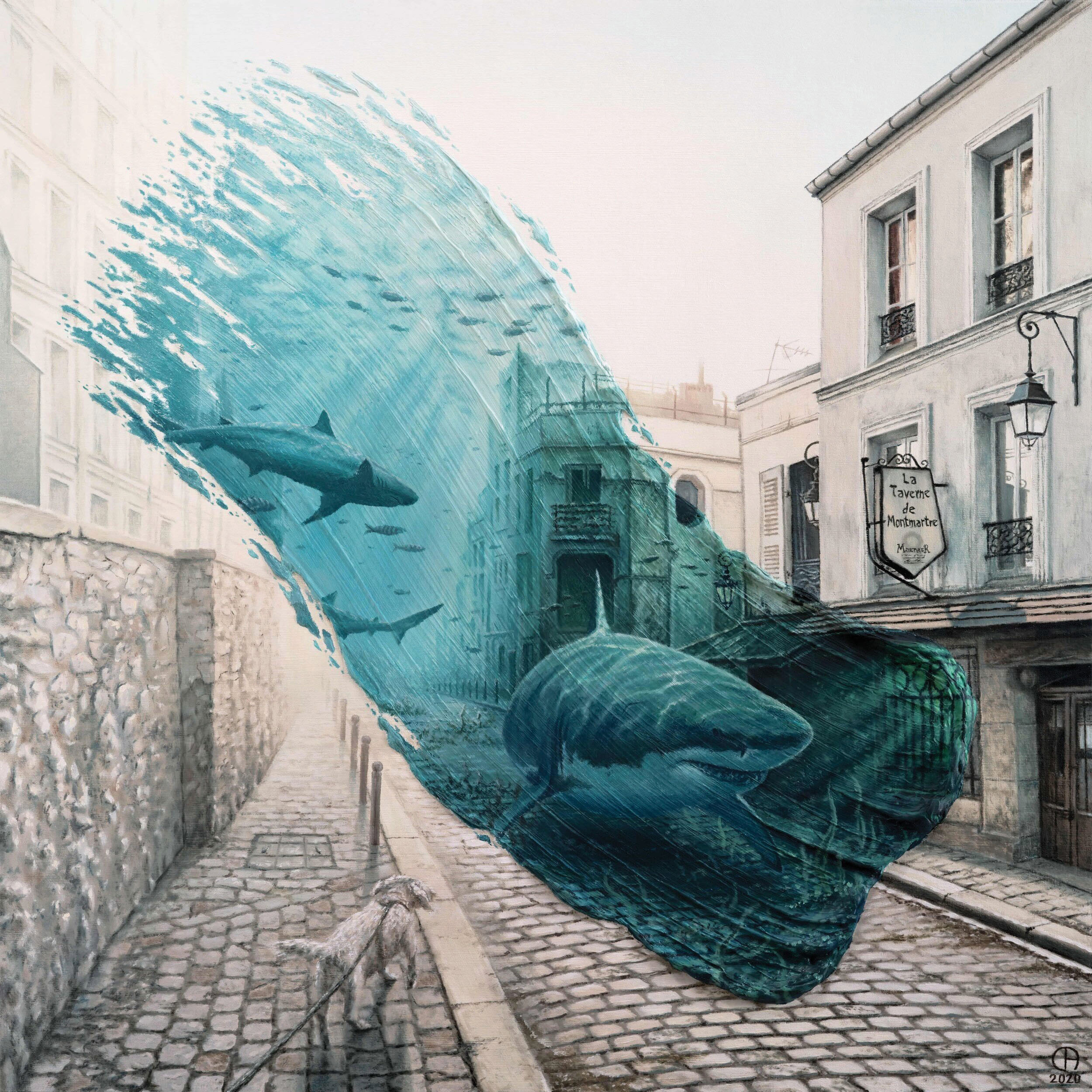
art collection - David Ambarzumjan (b. 1999), "Sharks in Montmartre," 2020, oil on wood panel, 20 x 20 in.
David Ambarzumjan (b. 1999), “Sharks in Montmartre,” 2020, oil on wood panel, 20 x 20 in.

It’s not actually such an aesthetic leap from the historical masters to those living today, so Michael’s first purchase of contemporary art came in 2019, when John Darley posted on Instagram a painting he had just completed. Now — just four years later — he owns pieces by more than 30 talents, including Craig Alan, David Ambarzumjan, Mark Arian, Casey Baugh, John Darley, Jasper DeMichael, Michelle Dunaway, Jaq Grantford, Amanda Grieve, Rob Hefferan, Frank E. Hollywood, Melinda Jane, Miles Johnston, Joshua LaRock, Damian  Lechoszest, Ela Lechoszest, Brianna Lee, Marina Marina, Anna Marinova, Annie Murphy-Robinson, Dan Pearce, Nathalie Picoulet, Jai Raphael, Anne-Christine Roda, Christopher Schulz, June Stratton, Clare Toms, Jason Walker, Johannes Wess-mark, Jiannan Wu, and Yifan Zhang.

Michael’s main methods of finding artworks are Instagram, Artsy, and e-mails sent to him from both artists and galleries. But, he observes, “There is no feeling better than buying, or commissioning, artworks directly from the creators and listening to their reasons for putting brush to canvas, or having them tell you about things happening in their daily lives that provide the emotional background for their art.” Michael appreciates “the immense gratitude” many artists feel that “someone is interested in what they do and is willing to spend their hard-earned money so that they continue to do what they love for a living.”

Michael goes on, “Each piece I have purchased directly from the artist, especially once I have created a bond with him or her, is so much more special to me.” Not surprisingly, he has developed more than a few good friendships with “his” artists, who live as far afield as Australia, the Netherlands, France, Wales, Savannah, and San Francisco. “I try to keep in touch as much as possible without being a bother.  For example, if they have won an award, I will reach out to congratulate them. Sometimes I’ll just tell them I love whatever their newest thing is.”

Michael is mindful of how challenged the gallery system is today: “I realize how important galleries are for the art community and how much harder their job became with the rise of social media, where artists can almost represent themselves. Without galleries, most of the artists I have collected might never have made it onto my radar. I get the same rewarding feeling when buying from a gallery because the staff work tirelessly and have the same passion for the art they’re selling as do the people creating and buying it.” Michael contributed in his own way to a gallery’s success last summer, when he guest-curated the PoP Up show for Chicago’s 33 Contemporary, where he has bought art previously.

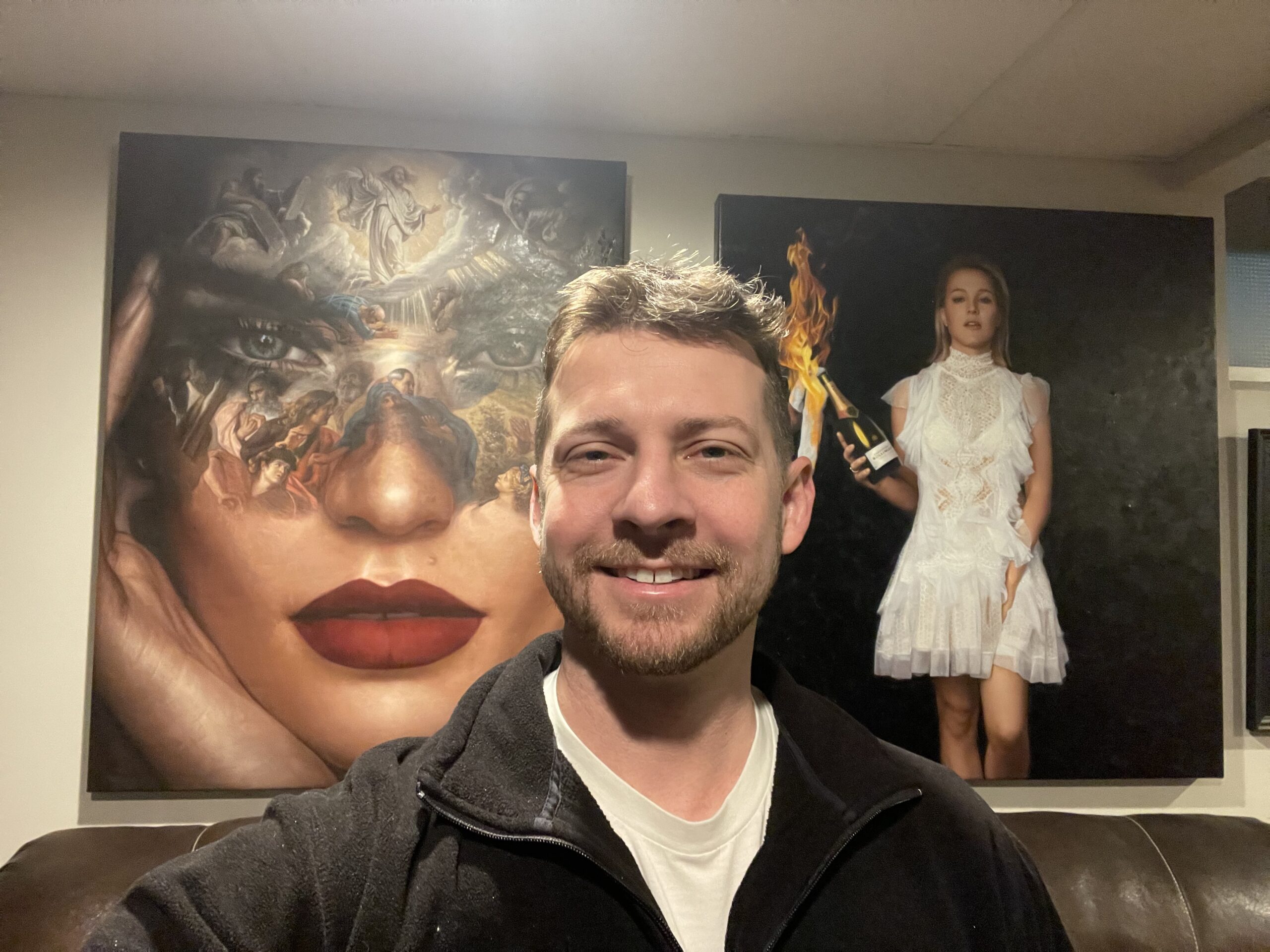
Michael Mouser, art collector

Looking forward, Michael keeps “finding more styles and pieces that are so ‘different’ from what I would ‘normally’ buy, but that I love just as much.” He admits there is “room for just a few more paintings, and then I’m going to need a bigger house! But I don’t want to keep any art in storage; I buy art to enjoy and I want to see it every day.” Surely these are welcome words to the artists who pour so much of themselves into their creations, and Fine Art Connoisseur applauds collectors like Michael who see art as far more than an investment asset.

View more artist and collector profiles here at FineArtConnoisseur.com.

Subscribe to Fine Art Connoisseur magazine here for expert art collection advice, gallery exhibition news, and more.

Artist Spotlight: Susan Hediger Matteson

0
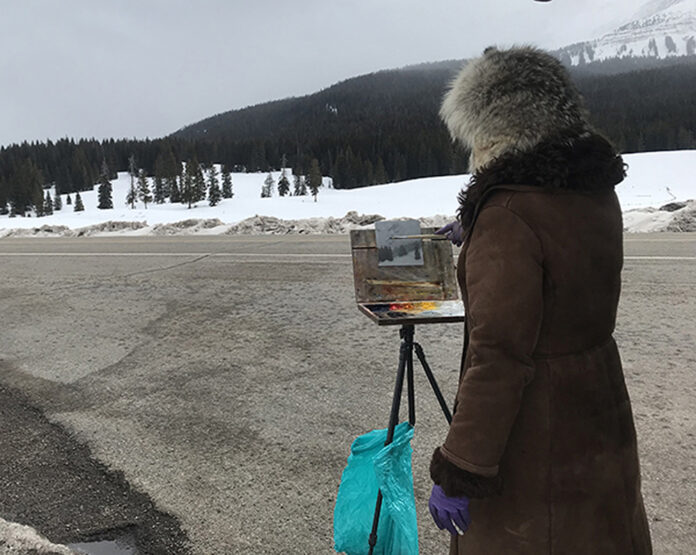
Susan Hediger Matteson in her winter painting gear — fur cap, not her hair!

What is the most interesting thing you have painted and why?
Susan Hediger Matteson: The most interesting things I have painted, are the snowy scenes or dusk, early morning scenes. The subtle colors that shift ever so slightly. Snowing scenes are a favorite of mine with the fading to nothing. If we ever had fog where I live, that would also be a favorite. It is a challenge to get the softness, the mystery, that any of these scenes.

How did I develop your unique style?
Susan Hediger Matteson: The soft and subtle variations are an inspiration. For these scenes it is the desire to capture the feeling and look. You just have to keep practicing.

To see more of Susan’s work, visit:
Website

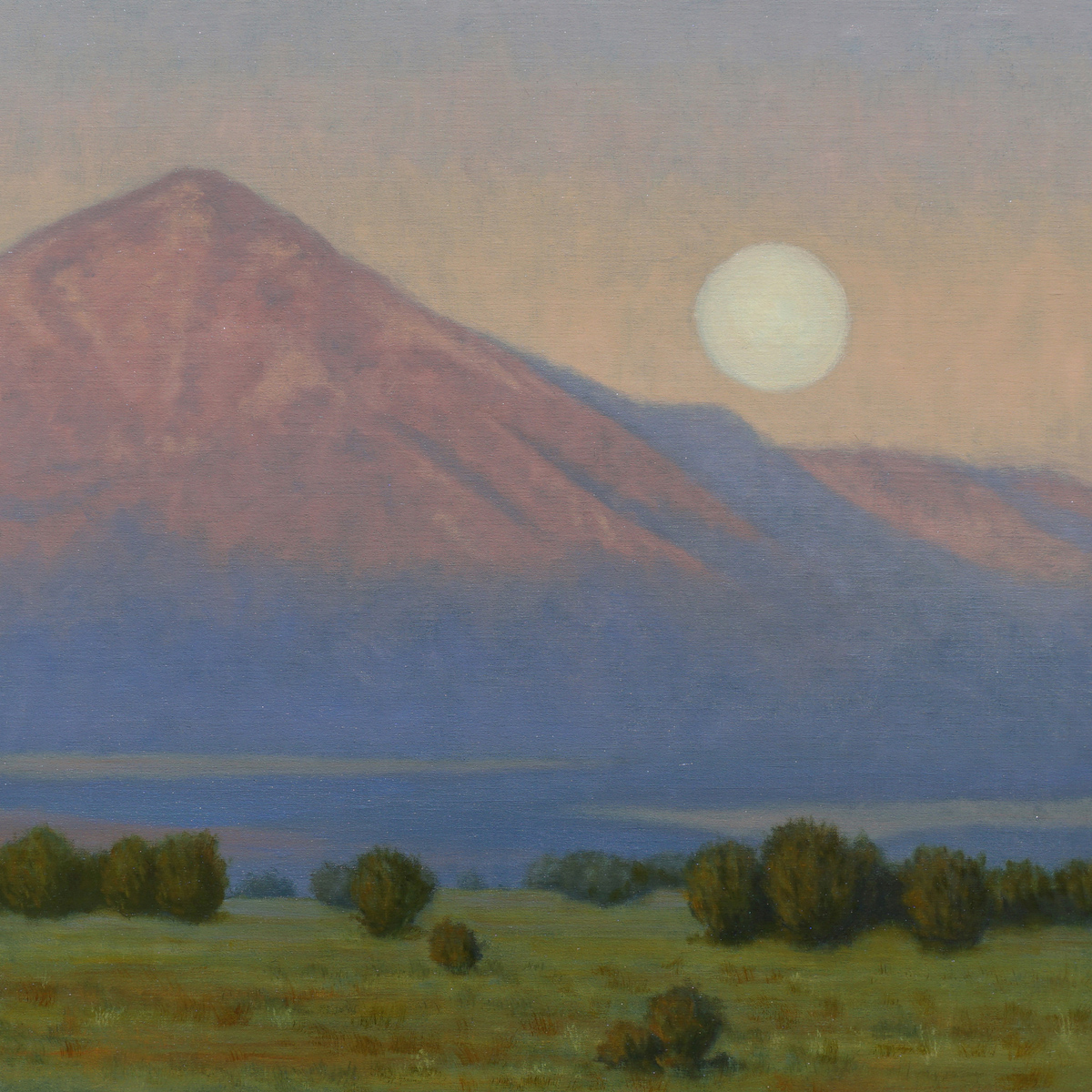
oil painting of sunset with mountain range in middle ground, trees and grass in foreground
Ute Mountain Moonset, Susan Hediger Matteson, oil on linen, 30 x 30 in; 2023; The soft evening colors, a perfect end to a day


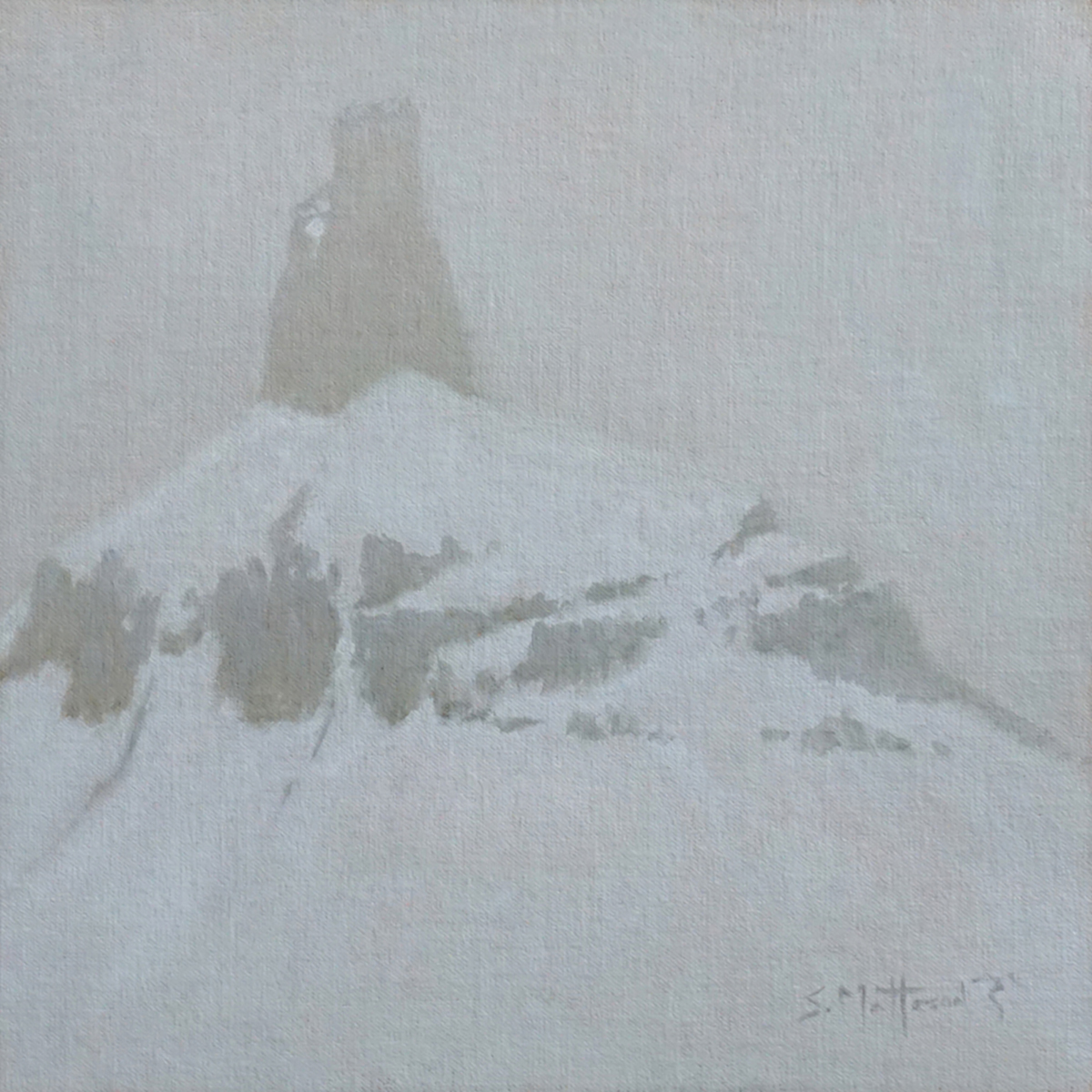
oil painting of mountain in a snow storm; dark areas of mountain not covered in snow
Lizardhead Snows, Susan Hediger Matteson, oil on linen, 12 x 12 in; 2023; The snow was coming and going over 13,000’ Lizardhead peak

Buyers Beware: A Primer for Buying Art

0
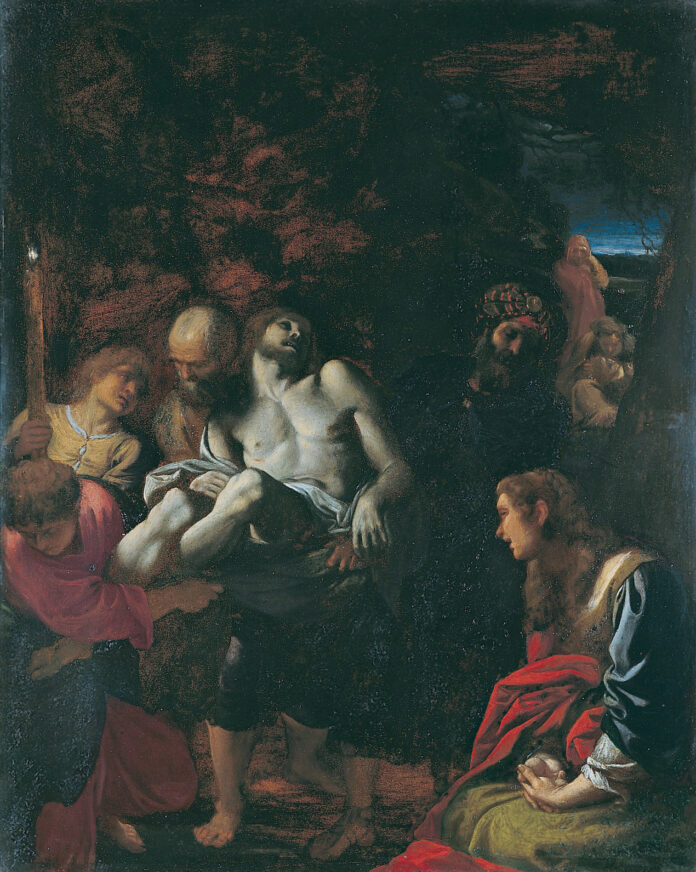
Annibale Carracci (1560–1609), "The Burial of Christ," 1595, oil on copper, 17 1/4 x 13 3/4 in., Metropolitan Museum of Art, New York City, 1998.188

By Daniel Grant

Buying art and antiques is exciting, educational, and fun, but it can also make people nervous. Will I be embarrassed if my tastes change in a few years? Will interest in, and prices for, this artist’s work diminish? Can I trust my dealers to know what they are talking about, or is this all salesmanship? Making this realm seem even more perilous is the fact that the collectibles trade is still, in large part, a handshake industry that requires a high degree of trust — in yourself, in the advice offered to you, and in the market (now and in the future).

Naturally, the sheer monetary value of the art and antiques trade has fostered a growing number of lawsuits and legislation. As a result, the market is increasingly being regulated through the courts and government agencies. Consumers should be aware of their rights and their ability to negotiate better deals for themselves.

The Real Deal

A key legal provision is that an object has to be what the dealer says it is — known as the warranty of authenticity. Fakes and forgeries, as well as objects that are misattributed (for instance, a “Rembrandt” painting that was actually created by someone in the “Circle of Rembrandt”), must be taken back and fully refunded by the dealer if the sale was based on the item being authentic. But there is no warranty if the dealer just hazarded a guess or opinion on the attribution — only if it was stated as fact.

The costs of proving an artwork is correctly attributed to a specific artist falls on the seller. But even when dealing with an ethical seller, prospective buyers should purchase with care. They should request a written agreement (not just a receipt) that stipulates some or all of the following: the transfer of ownership; all known provenance (the item’s history of ownership); an assertion that title to this work is unencumbered (no bank liens or questions about its having been stolen); a condition report (especially for items over 100 years old); a statement by an authentication or catalogue raisonné committee (if one exists) that the artwork is officially recognized as part of an artist’s body of work or, lacking that, testimonials by experts that it was created by that artist. If there is scientific or even AI-generated information that helps make the case, ensure it is included.

The purchase agreement should also contain a rescission clause that obligates the seller to take the artwork back and return the buyer’s money if it is later found to be stolen, a forgery, or otherwise misattributed. The seller should warrant that the work “is authentic and that all information in the seller’s possession about the work, including any prior third-party authenticity opinions,” was turned over to the buyer, according to Megan Noh, a partner in the New York law firm Pryor Cashman LLP.

Art law / buying art - Megan Noh of Pryor Cashman LLP
Megan Noh of Pryor Cashman LLP

Under the Uniform Commercial Code (UCC), the body of law covering transactions in all 50 states, there is an express warranty of four years in which a buyer may go back to the seller for a refund. Noh warns, however, that “there is no evidentiary standard under the UCC,” which means a decision as to authenticity will likely have to be argued in court through dueling experts. Christie’s and Sotheby’s have increased the length of time buyers can return a work to five years, although you should expect some negotiation about who the testifying experts will be. Accepting the return of a misattributed work has become standard practice among dealers, except where there is a dispute over what the dealer actually said about the object or a disagreement over its authenticity. Then the problem may have to be resolved in court.

Lawsuits occasionally have been filed when auction houses misattribute works consigned to them. However, their attributions need not be wholly accurate if they were made in good faith. A legally protected mistake occurred in 1998 when EST, Inc., a Pennsylvania firm that buys and sells art internationally, brought a 17th-century painting titled “The Burial of Christ” to Christie’s New York. In their sale catalogue, the auctioneers attributed it to Sisto Badalocchio (1585–1620?), a pupil of the renowned Bolognese master Annibale Carracci. After the sale, which brought $12,000, EST discovered that it was painted by Carracci himself, which would have increased its worth to $300,000. (It was purchased from the sale by the Metropolitan Museum of Art in New York.) EST’s lawsuit against Christie’s was dismissed by the courts in 2001.

“The only way Christie’s could be liable was if it had been grossly negligent in its attribution,” says Ralph E. Lerner, Manhattan attorney and co-author (with Judith Bresler) of a bestselling book on art law. “For instance, if the work was signed by the artist, and they said it was by someone else.” Joshua Kaufman, a lawyer in Washington, D.C., notes that an expert’s opinion — even when wrong — is protected as long as “there was no intention to defraud, no bad faith, or no conflict of interest.” He continues, “You won’t get a good faith opinion if good faith opinions aren’t protected.”

Continue reading in Fine Art Connoisseur Magazine, July/August 2023.

View contemporary artist and collector profiles here at FineArtConnoisseur.com.

Horizons: Landscapes and Figures by Robert and Susan Perrish

0
Horizons: Landscapes and Figures by Robert and Susan Perrish

Husband and wife artists Robert and Susan Perrish have distinctly different artistic voices, but both painters take a romanticist approach to contemporary subjects. Through rich colors, intricate details, and beautifully rendered light and shadow, idyllic rural scenes of Michigan and fanciful depictions of the figure reimagine our world as something full of wonder and dream-like possibilities.

“Horizons: Landscapes and Figures by Robert and Susan Perrish”
At Crooked Tree Arts Center
(CTAC Petoskey, Michigan)
Through August 31, 2024
CrookedTree.org

Susan S. Perrish is an award-winning portrait-figurative artist living in Michigan. Susan’s art is of a traditional realist manner, but also tells a contemporary story. Her works include oil, soft pastel, and graphite, and charcoal. Susan began studying portrait and figurative drawing in 2014 under the tutelage of Amy Foster, and subsequently at the Atelier School of Art. Since 2016, she has been a member of the De La Vie Studio, where she regularly paints and draws from life.

Susan has exhibited in many shows around the country, including the International Guild of Realism, where she recently received the John Singleton Copley Award of Excellence. She has been a finalist in the 14th and 16th Art Renewal Center International Salons, and a semi-finalist in the 15th Salon. She has also had paintings in numerous Oil Painters of America and National Oil & Acrylic Society competitions, recently receiving an Award of Excellence in the NOAPS Best of America Exhibition.

Robert Perrish is an award-winning designer, sculptor, and painter whose love of nature is evident in everything he creates. This was first expressed through wildlife painting and sculpture and has since evolved into painting landscapes, portraits, and still life.

Robert worked in the commercial art field in illustration and design for 30 years. A lifelong resident of Michigan, he has lived with his family in Livonia for the past 34 years. He has traveled extensively throughout the United States and abroad, capturing as much as he can on canvas along the way. Plein air painting has become a regular habit and has helped his studio work as well. He is one of the co-founders of Michigan Plein Air Painters and paints with them on a regular basis, as well as traveling out of state for other painting opportunities.

Organizations and Affiliations: Oil Painters of America, New Mexico Plein Air Painters, Michigan Plein Air Painters, Laguna Plein Air Painters. Awards include Michigan Wildlife Artist of the Year, Ducks Unlimited Artist of the Year, as well as DU Carver of the Year 3 times, 16 Best-of-Shows in national and international carving competitions. His artwork and sculptures have appeared in national magazines, calendars, books, limited edition prints, and various art galleries.

WEEKLY NEWS FROM THE ART WORLD

Fill your mind with useful art stories, the latest trends, upcoming art shows, top artists, and more. Subscribe to Fine Art Today, from the publishers of Fine Art Connoisseur magazine.

  • This field is for validation purposes and should be left unchanged.