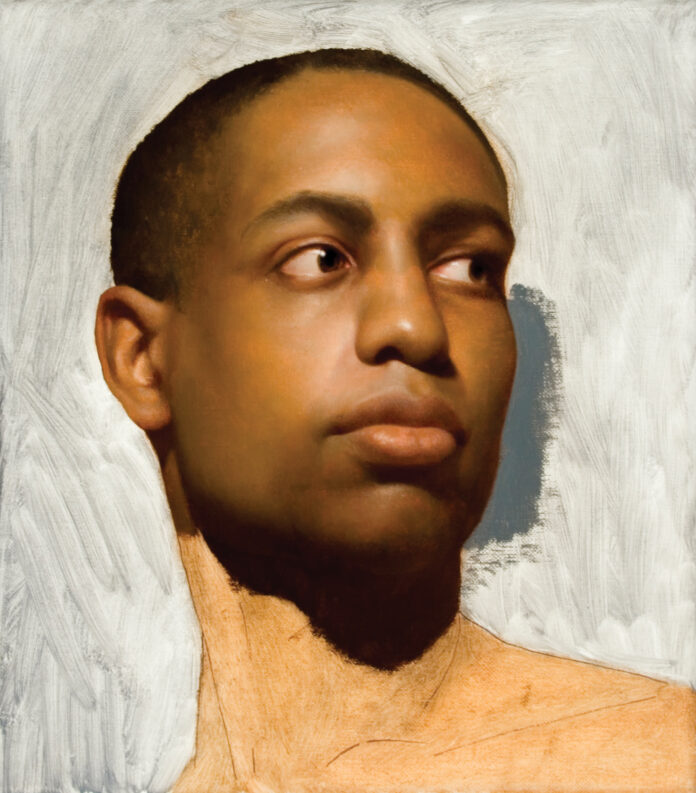
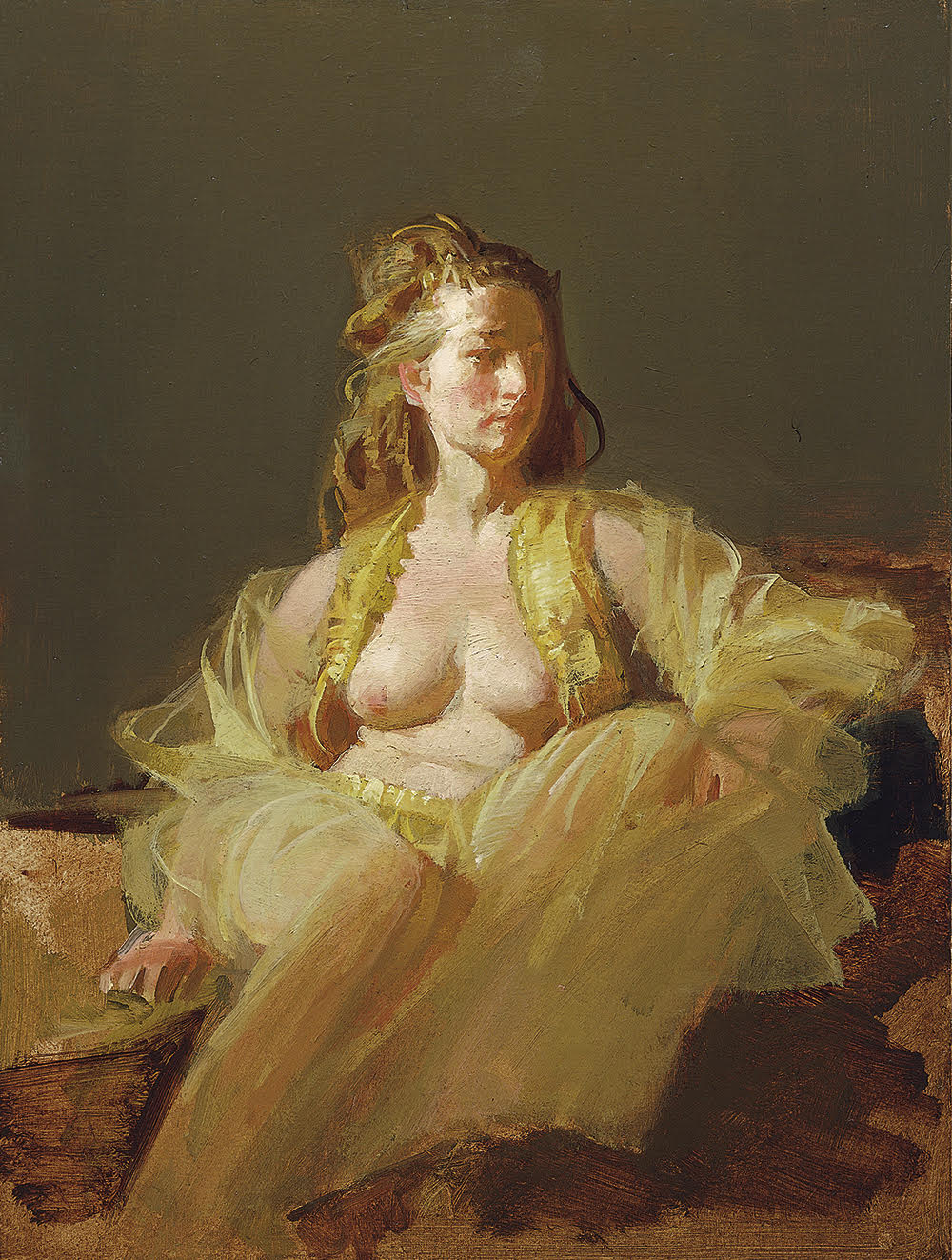
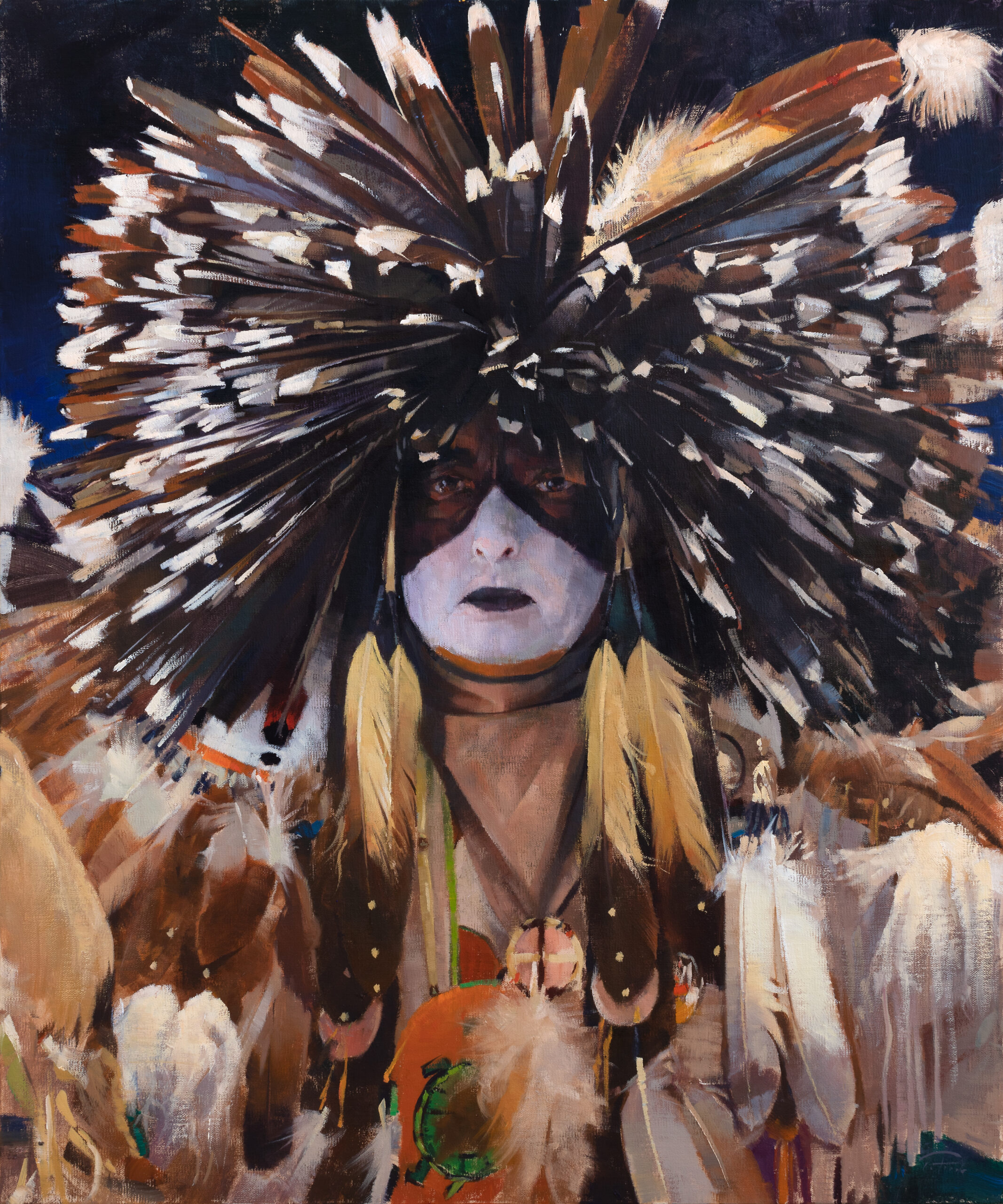
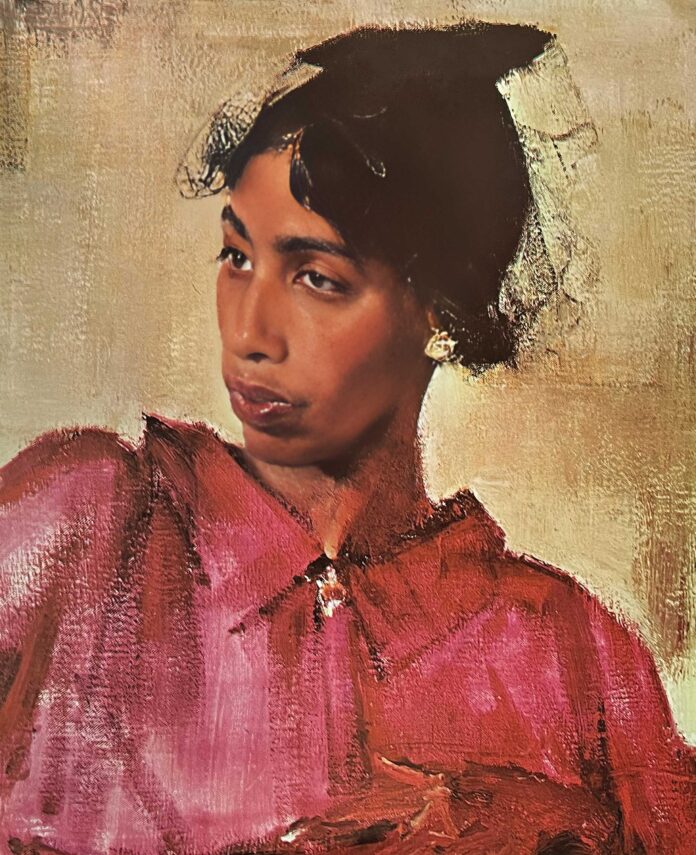
Devin Cecil-Wishing (b. 1981), "Juan Michael," 2014, oil on linen, 9 x 8 in.
The Salmagundi Club has a pair of complementary exhibitions on view this spring. Curated by artist-member Michael Fetherston, “Face to Face: Realist Portraiture of the Twenty-First Century” features paintings, drawings, and sculptures by more than 20 talents, including Colleen Barry, Patrick Byrnes, Devin Cecil-Wishing, Thomas Lapine, Giovanni Priante, Eddie Rochat, and Alex Venezia.
Elsewhere in the building is a small but mighty show of 19th-century portraits from the collection of Lukas Charles. Among the legends represented are Léon Bonnat, William Merritt Chase, Frank DuMond, Antonio Mancini, Ilya Repin, Solomon J. Solomon, and Eduardo Zamacois.
Details:
Salmagundi Club
New York, New York salmagundi.org
Through May 31, 2024
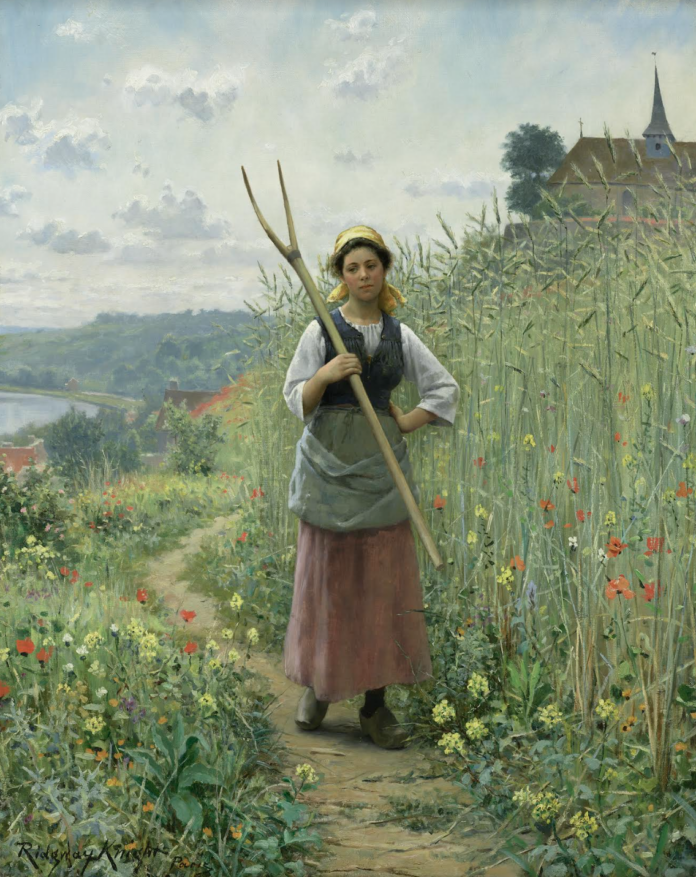
Daniel Ridgway Knight (1839–1924), “Coming through the Rye,” c. 1900, oil on canvas, 32 ½ x 26 in., Rehs Galleries (New York City)
Taking place April 25-28, 2024, The Philadelphia Show boasts more than 40 exhibitors specializing in fine art, collectible design, antiques, Americana, folk art, ceramics, porcelain, silver, jewelry, textiles, and decorative arts.
The exhibition takes place at the Philadelphia Museum of Art.
Instead of the usual Loan Exhibit, there will be a special installation of works that have been purchased at the show and are now a part of the museum’s personal collections.
From the organizers:
The Philadelphia Show, held annually on the East Terrace of the Philadelphia Museum of Art, showcases an outstanding selection of collectible antiques, art, and design presented by over forty of America’s leading dealers. Learn more about the joy of collecting through educational dealer talks, show tours, or take part in a self-guided treasure hunt. Come experience the amazing array of fine art, Americana, furniture, folk art, ceramics, porcelain, silver, jewelry, textiles, decorative arts, and feel the thrill of the hunt.
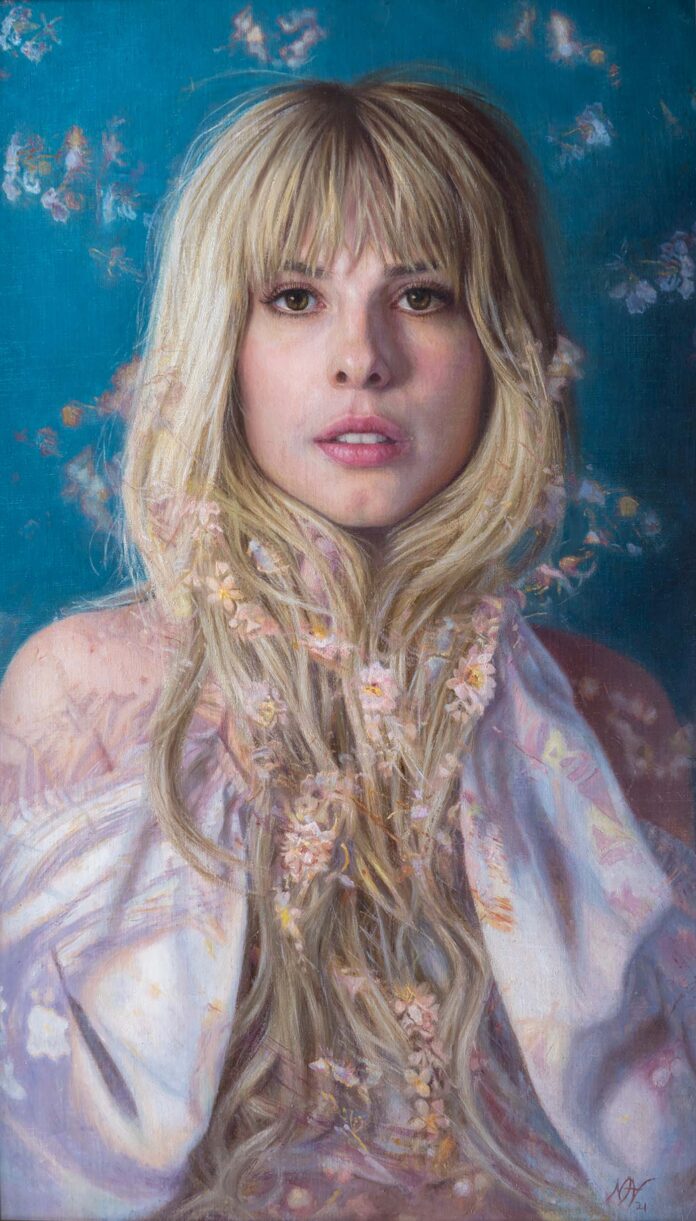
Nanci France-Vaz, “Emergence, A Story of Spring,” oil on linen panel; The flying flowers that merge into the hair become the foreground representing the waterfall of life; ARC Purchase Award, Sothebys Exhibition
Nanci France-Vaz: Metamorphosis Solo Exhibition/Portraits Of Song Concert:“3/25 – 5/2/2024, artist Nanci France-Vaz, ARC Living Master, has 28 paintings on display honoring female artists of Monmouth County, NJ. These artworks depict transitions in life, with models representing various art forms and inspired by narratives from film, literature, or poetry. France-Vaz’s Imaginative Portraits blend allegorical symbols with storytelling, primarily featuring determined female artists. The exhibition is in conjunction with the free concert Metamorphosis: Portraits of Song on 4/26. See details in the links below:”
To see Nanci France-Vaz’s work at the Metamorphosis: Portraits of Song April 26 at 8 pm. The opening reception is FREE to the public, however paid admission tickets are required to attend the concert. Contact [email protected] with questions.
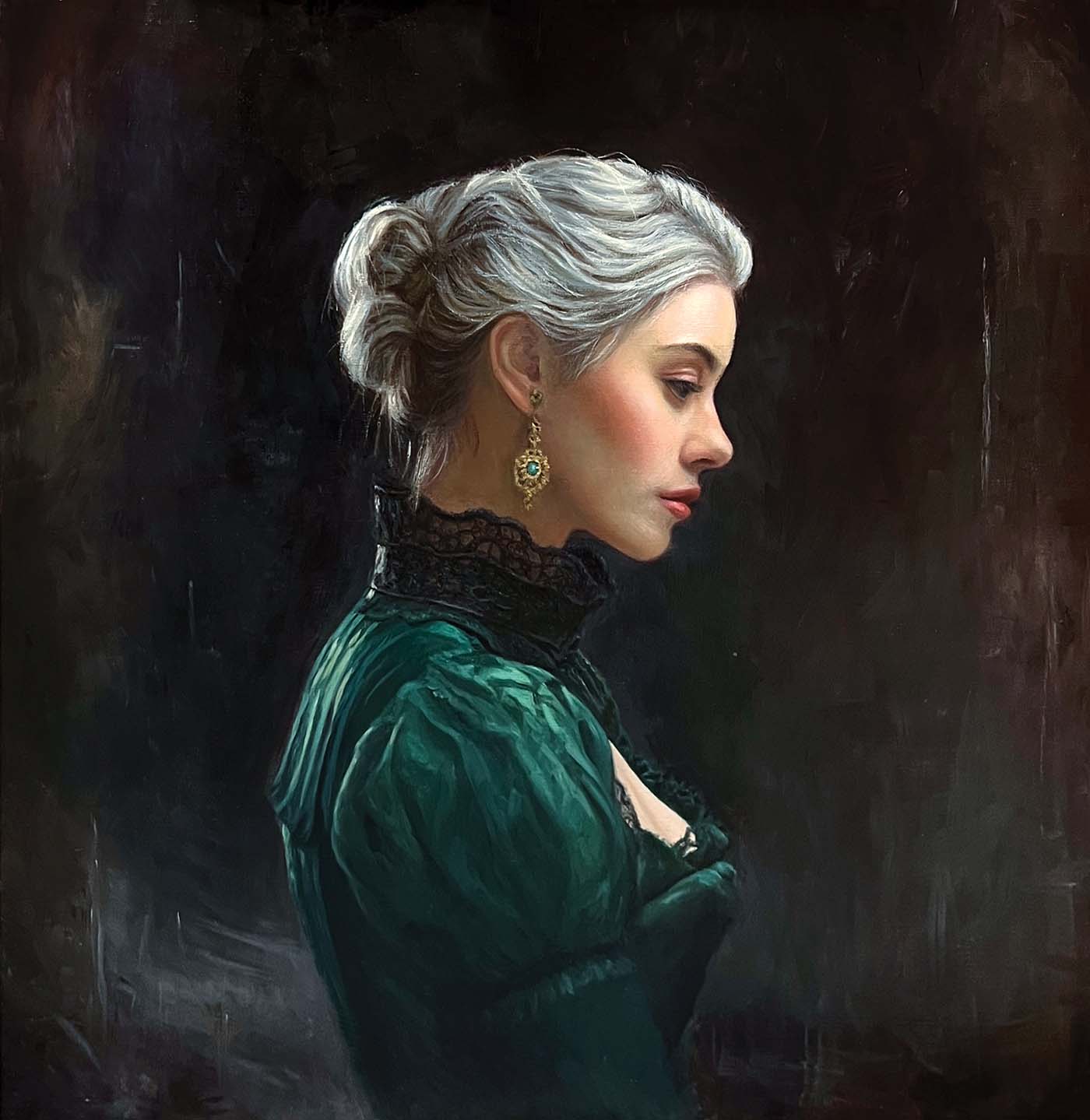
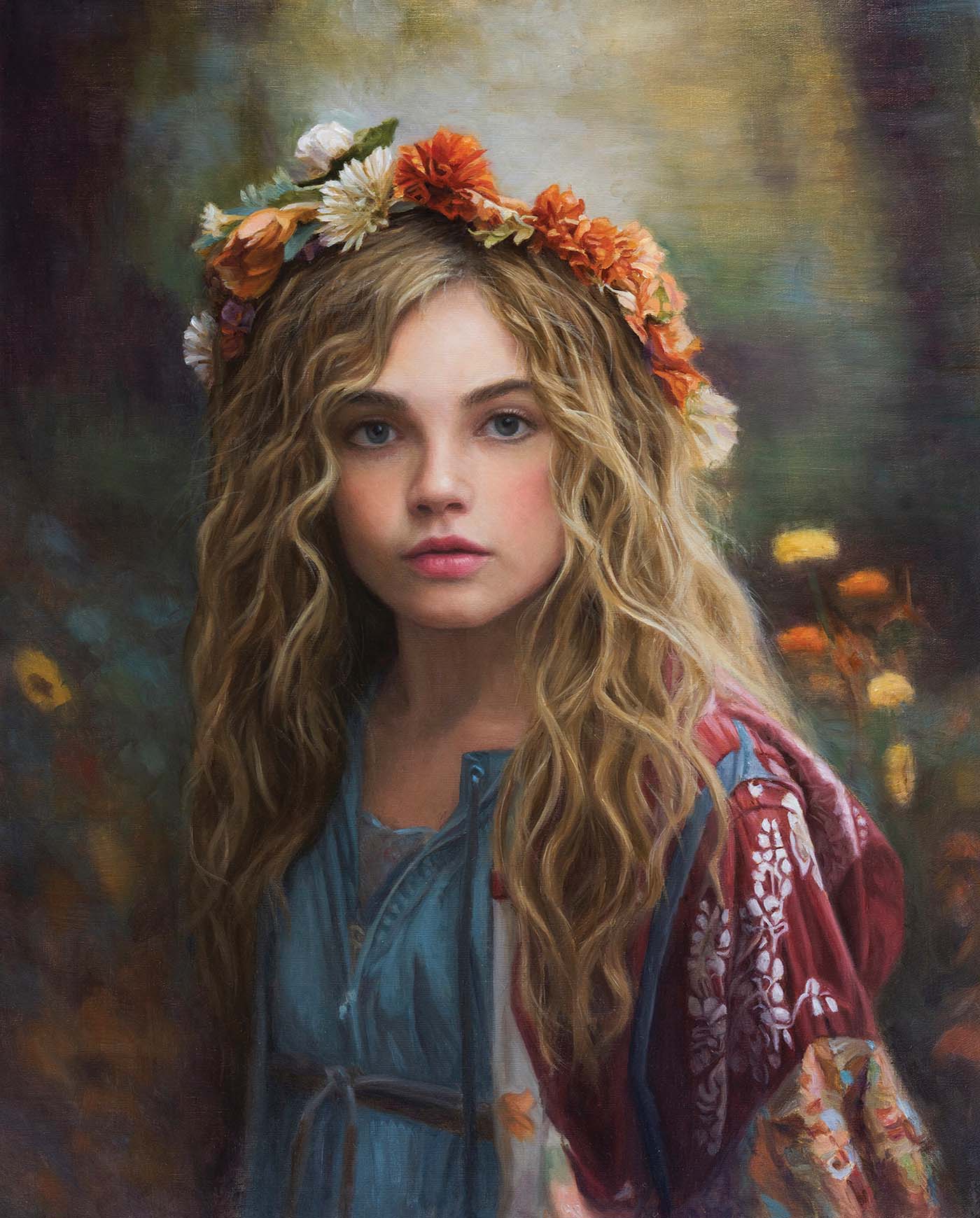
Nanci France-Vaz, “For All I Lov’d I Lov’d Alone,” oil on linen panel; Available through Pollak Gallery; based on Alone by Edgar Allan Poe. Virginia Poe, Edgar’s wife, died of TB at 24. Her lips are red, hair is white to express the age of life and death.Nanci France-Vaz, “Guinevere,” oil on linen panel; Available through Pollak Gallery; based on interpretation of Guinevere at the age of 12. Determined expression and almost adult presence and identity of who she wants to be.
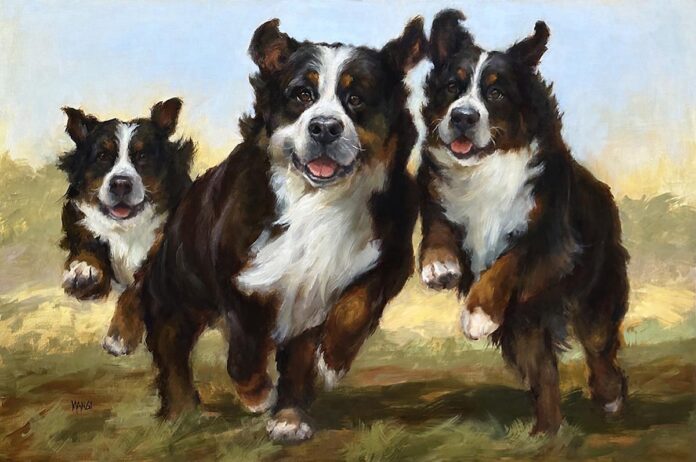
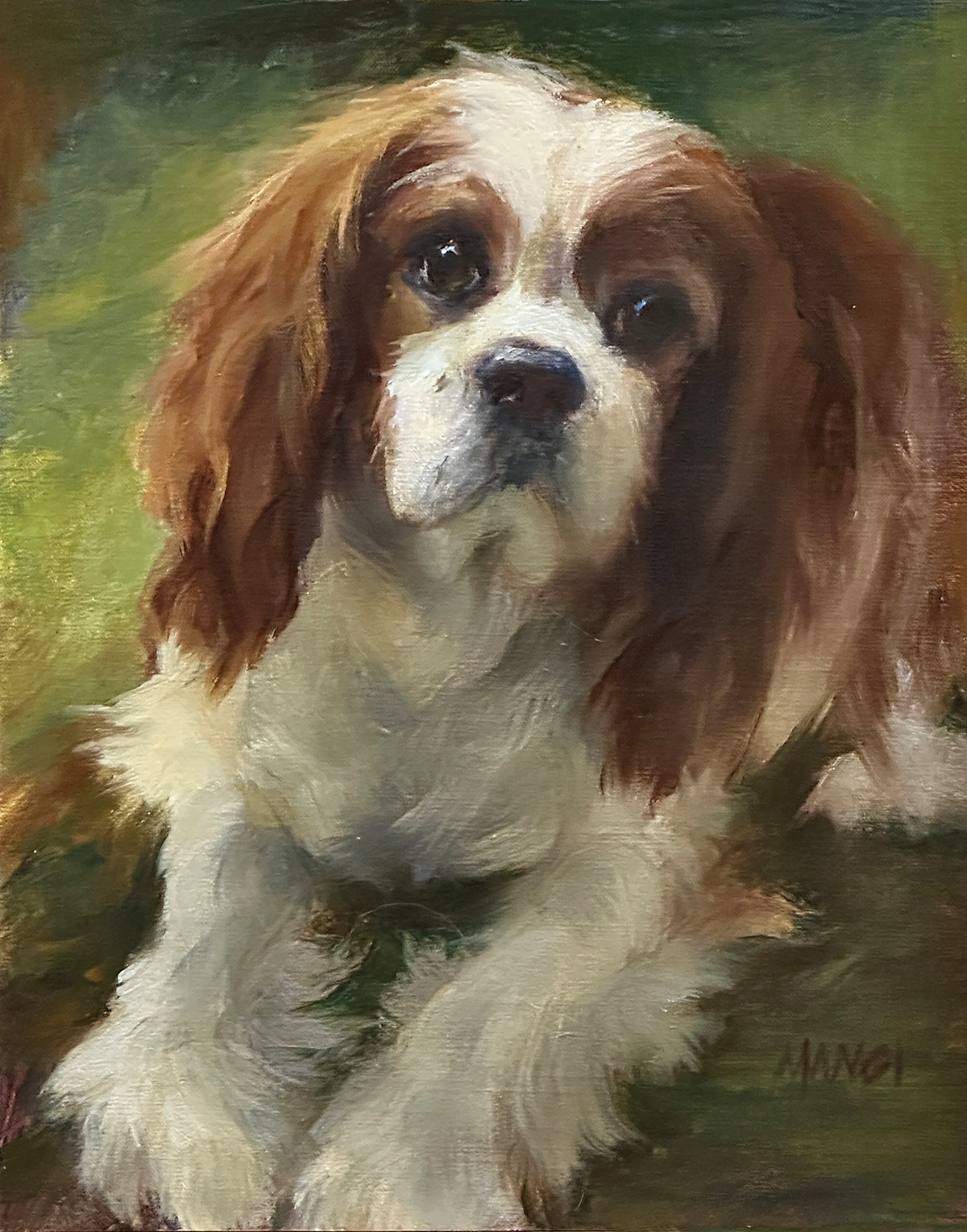
Johanne Mangi, Berner Joy, oil on linen, 24 x 36 in; available through artist
How did you develop your unique style? Johanne Mangi: I have no idea! HaHa!! Actually, I think my experience of painting from life has a lot to do with it. My own pack of dogs have been strong references for me. Most, if not all, commission work is done with photos which is not ideal. Having live dogs around is a handy tool. I’ve developed observational skills over the years that have served me well not only structurally but in their behaviors. If I get lost, I only need to look at one of my furry family.
How do you find inspiration/ do you describe success? Johanne Mangi: When I first started seriously painting, I was overwhelmed by the choices to paint. Once I identified my true passion I never looked back. I am constantly inspired by animals that I interact with or who has an interesting story. It’s such an important component especially if you define success coming from within. If I don’t paint what’s important to me then how can I be fulfilled? I love accolades and recognition, but I believe you’re only as good as your next painting.
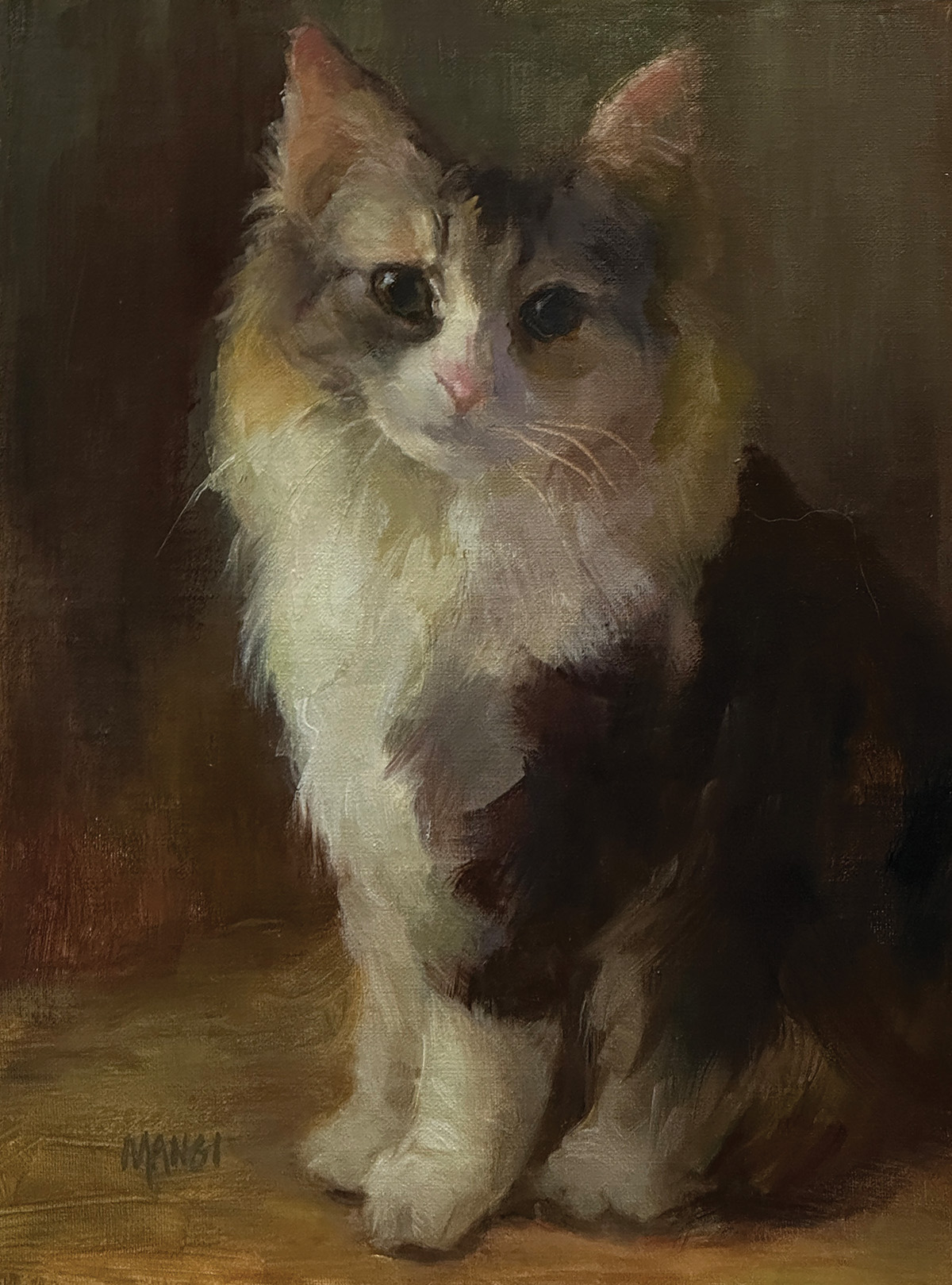
Johanne Mangi, Peaches n’ Cream, oil on linen, 12 x 9 in; available through artistJohanne Mangi, Blenheim Wonder, oil on linen, 10 x 8 in; available through artist
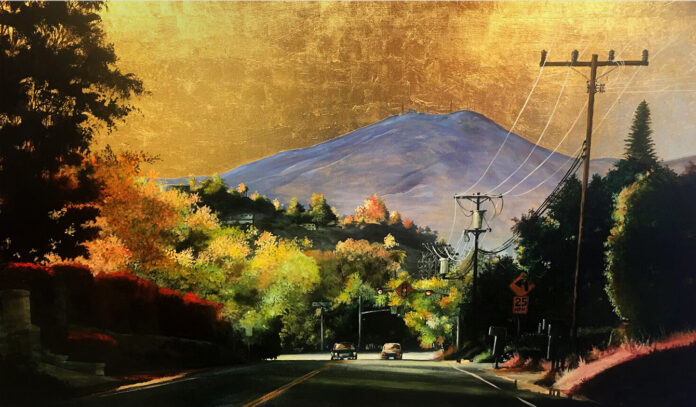
Duke Windsor, "Mt. San Miguel," acrylic and gold leaf, 86.25 x 50.25 in.
Duke Windsor’s success as a contemporary artist lies in his ability to infuse ordinary subject matter with his own ingenuity. Known for his predisposition to paint the crowded alleys of North Park, burgers dripping with grease, or trash cans put out to the curb, Windsor treats each with the reverence of a beloved relic. To commemorate 30 years as a professional working artist in San Diego, this series, titled “Reflections” at Sparks Gallery, focuses on the city’s streets.
Windsor’s works are on view at Sparks Gallery through April 30th, 2024 with an opening reception on Sunday, April 14.
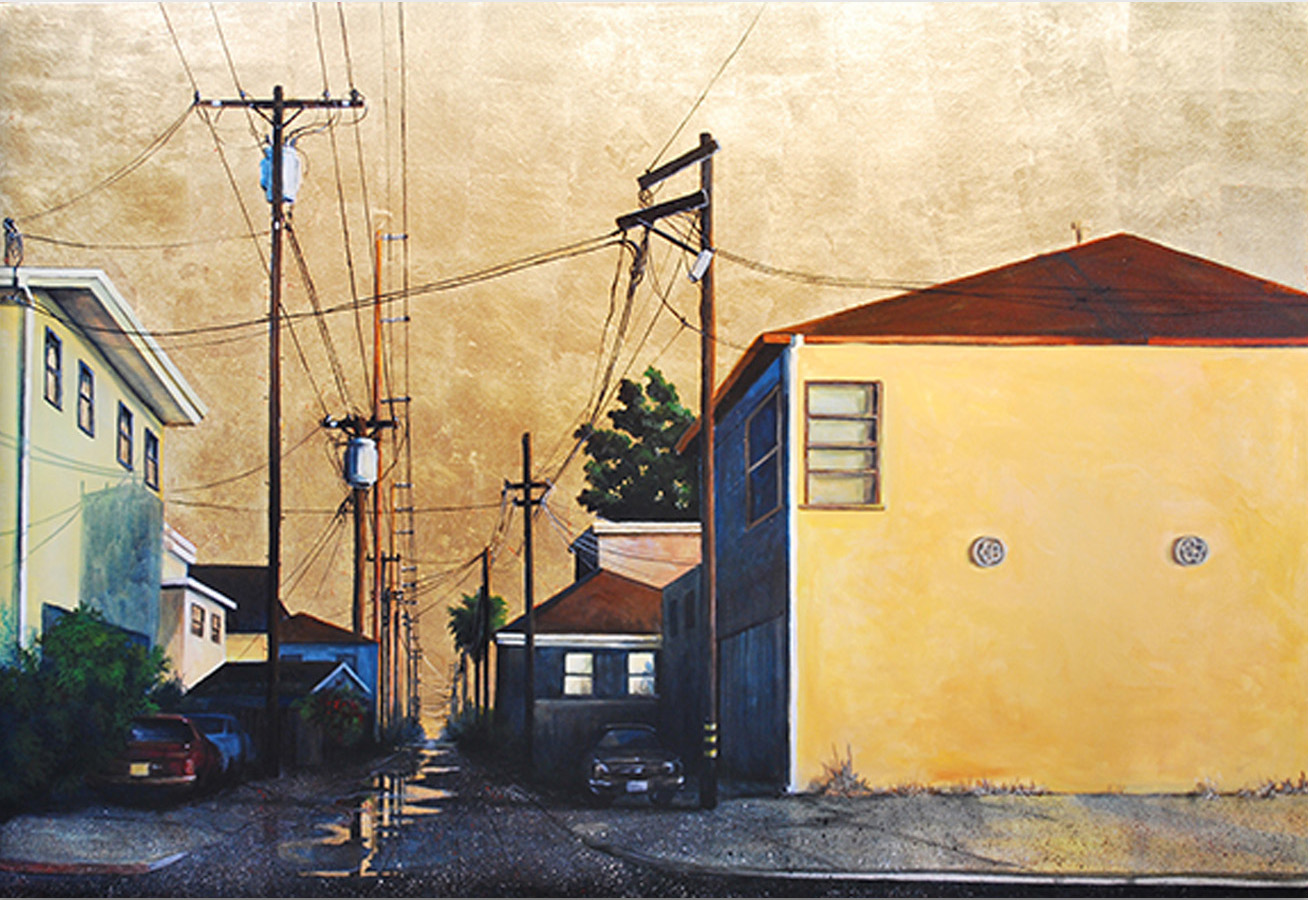
Duke Windsor, “Golden Sunrise Alley,” acrylic and gold leaf, 72 x 50 in.
More from the gallery:
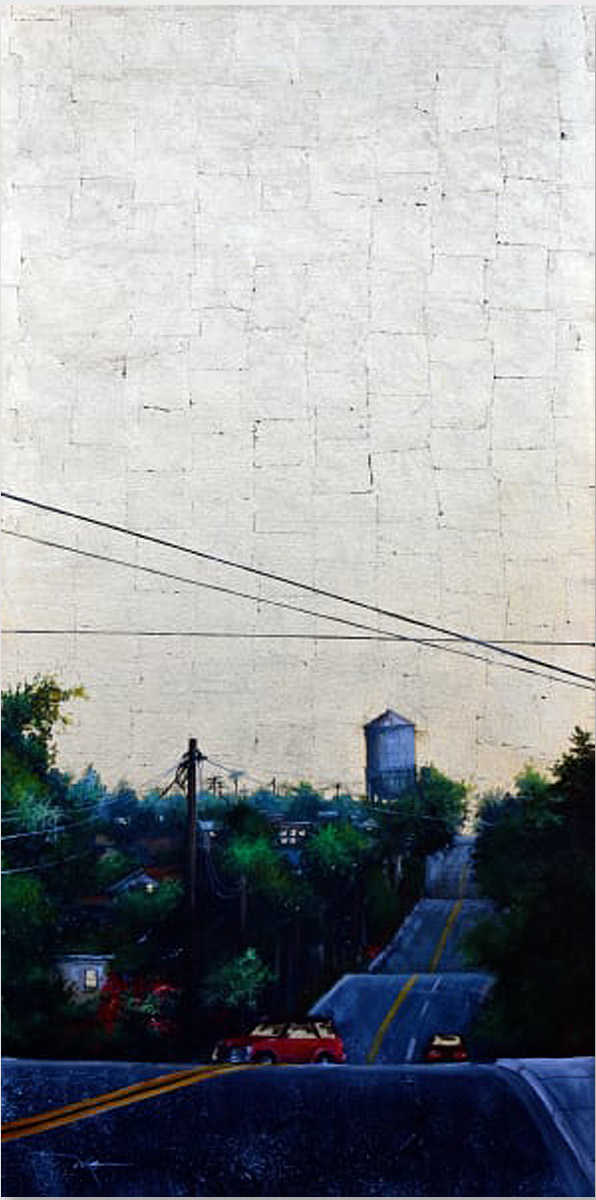
Each painting is gilded with lustrous gold leaf, a technique inspired by that used for old Russian icons. By delivering a kind of sacred designation to these secular, worldly scenes in his art, Windsor implores the viewer to rethink what is deemed as valuable and treasured in our everyday environment.
“The exhibition ‘Reflections’ is a unique exploration of the liminal space between urban landscapes and spiritual introspection,” Windsor said. “Through large-scale acrylic paintings, I invite viewers to delve into the transformative power of art in ordinary alleys. The gold leaf skies in these paintings symbolize a deep spiritual reverence within the solitude of the depicted spaces, offering a unique perspective on the familiar. This exhibit features several contemporary cityscapes and the work on display was created using acrylic, and imitation gold leaf.
“The artworks in this exhibition are a testament to the transformative power of light. As you move around the pieces, the illumination shifts, revealing new perspectives and changing the dynamics of the work. With meticulous attention to detail and thoughtful composition, I have captured the essence of overlooked alleys, turning them into portals of contemplation and tranquility. The golden skies that dominate these canvases serve as a metaphor for the divine presence that infuses even the most mundane corners of our world, urging us to pause, reflect, and find beauty in the everyday.”
Duke Windsor, “Howard Avenue (North Park Tower),” acrylic and gold leaf, 24 x 48 in.
Why gold leaf? “Gold is the color of extravagance, wealth, riches, and excess and shares several of the same attributes as yellow,” Windsor continued. “Gold is a warm color that can be bright, cheerful, somber, and traditional. Its cousin, yellow, and the color brown is also associated with illumination, love, compassion, courage, passion, magic, and wisdom. In Art, the Golden Mean or Golden Ratio is the theory that the natural world has perfect symmetry by divine design. Gold is a spiritual reverence held for ancient gods in worship. The Golden Rule in the Old Testament refers to the high standards of treating everyone equally. Gold is a symbol of divinity and is mentioned throughout the Bible. Pagan idols were often made from gold, and the Ark of the Covenant was overlaid with gold (Exodus 25:10-17). The gift of gold to the Christ child symbolized His divinity—God in the flesh.
“In ‘Reflections’, I hope to transcend mere representation, encouraging viewers to experience a sense of awe and wonder in the familiar. Imbuing my paintings with a spiritual depth challenges us to look beyond the surface of things and discover the hidden beauty within the ordinary and the unassuming. I consider the sacred in the seemingly profane to seek solace and inspiration in the most unexpected of places. My Art serves as a poignant reminder of the interconnectedness of all things and the potential for transcendence in the humblest of surroundings. With each brushstroke, I invite you to embark on a journey of introspection and discovery, where the urban alley becomes a gateway to the divine, and the mundane becomes a source of wonder and reflection.”
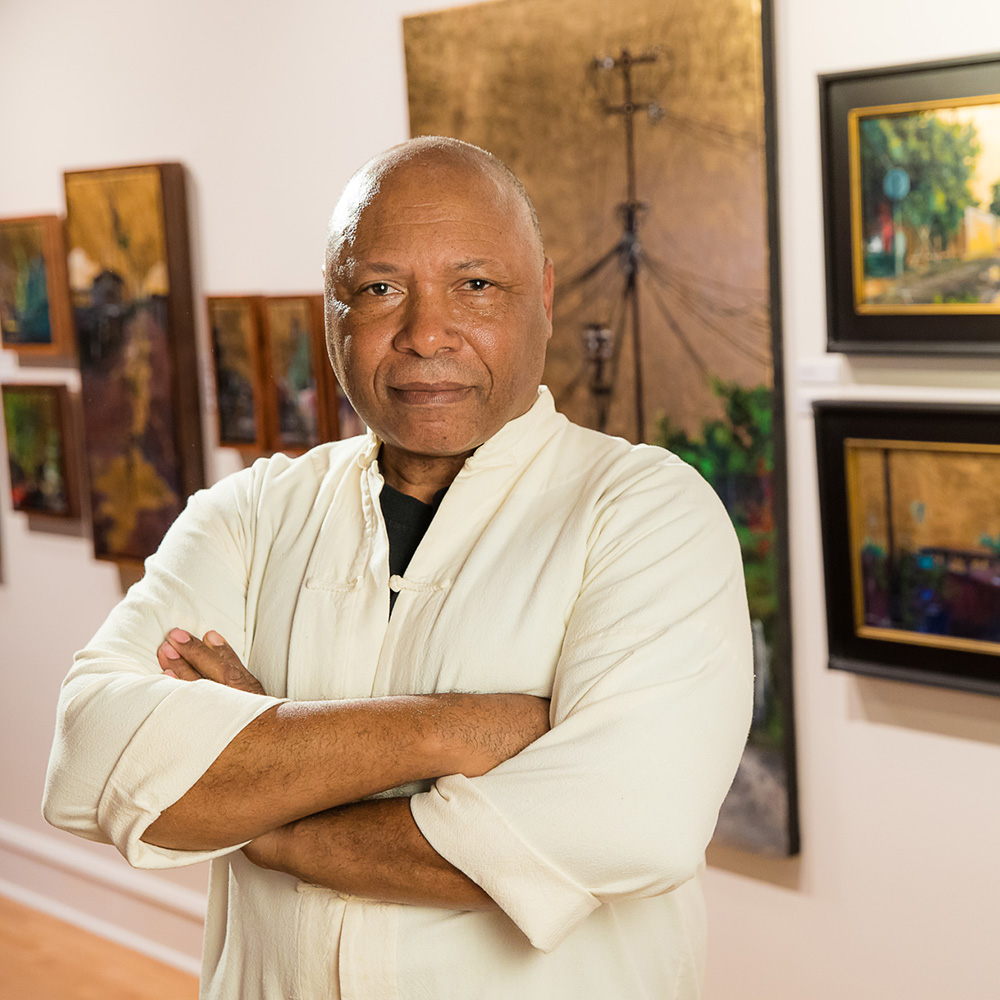
Artist Duke Windsor
About the Artist:
Duke Windsor was born in Texarkana, Texas, and served in the U.S. Marine Corps as a radio operator, combat illustrator, and drill instructor. After leaving the service, Windsor was a freelance illustrator and amateur rodeo cowboy, competing in bull-riding, bareback and steer wrestling events. He subsequently studied classical voice at San Diego State University and performed professionally with the San Diego Opera Chorus. Windsor holds the rank of 4th Degree Black Belt in Kempo martial arts, and he continues to be an active singer-songwriter, guitar player, and solo performer.
Windsor has over 15 years of museum exhibition design and installation experience; he has worked for the San Diego Museum of Art, the San Diego Museum of Man, the San Diego Natural History Museum, the San Diego History Center, and Mingei International Museum. Windsor served for seven years as founding Director of Exhibits at the USS Midway Museum. Currently, Windsor is CAD Design Engineering Manager at Full Swing Golf Simulators, headquartered in Carlsbad, California.
Windsor is an Associate Artist of the California Art Club, and a former board member with A.R.T.S., A Reason to Survive, which empowers troubled youth through the arts. He is also former Education Chair of the San Diego Museum of Art Artist Guild. Windsor has also served as a member of the Public Arts Selection Committee for the San Diego Regional Airport Authority Art Program.
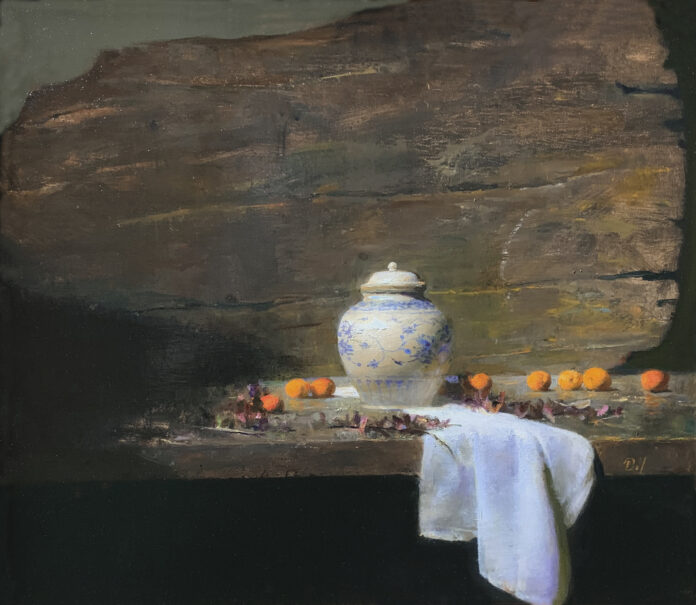
David Leffel, OPAM, "Landscape with Apricots," oil on canvas, 17 x 20 in.
Oil Painters of America (OPA) will hold its 33rd National Juried Exhibition of Traditional Oils at Mark Arts in Wichita, Kansas through May 31, 2024.
Visitors will experience a collection of original oil paintings representative of the high quality of work produced by some of today’s best representational artists. Over 2,000 professional artists from across the United States and Canada vie for only 200 spots in this highly competitive annual competition.
Jan Peng Wang, OPAM, “Light,” 2023, oil on board, 16 x 20 in.
Included at this year’s exhibition will be works by OPA’s distinguished Master Signature artists: Kathy Anderson, Nikolo Balkanski, Cindy Baron, Roger Dale Brown, Ken Cadwallader, John Michael Carter, Warren Chang, James Crandall, Howard Friedland, Albert Handell, Nancy Howe, Robert Johnson, Steven Lang, Jeff Legg, Ruo Li, Calvin Liang, Kevin Macpherson, Sherrie McGraw, David Mueller, Camille Przewodek, Mary Qian, Scott Royston, Patrick Saunders, Michael Situ, Craig Tennant, James Tennison, Jan Peng Wang, and Jeffrey Watts.
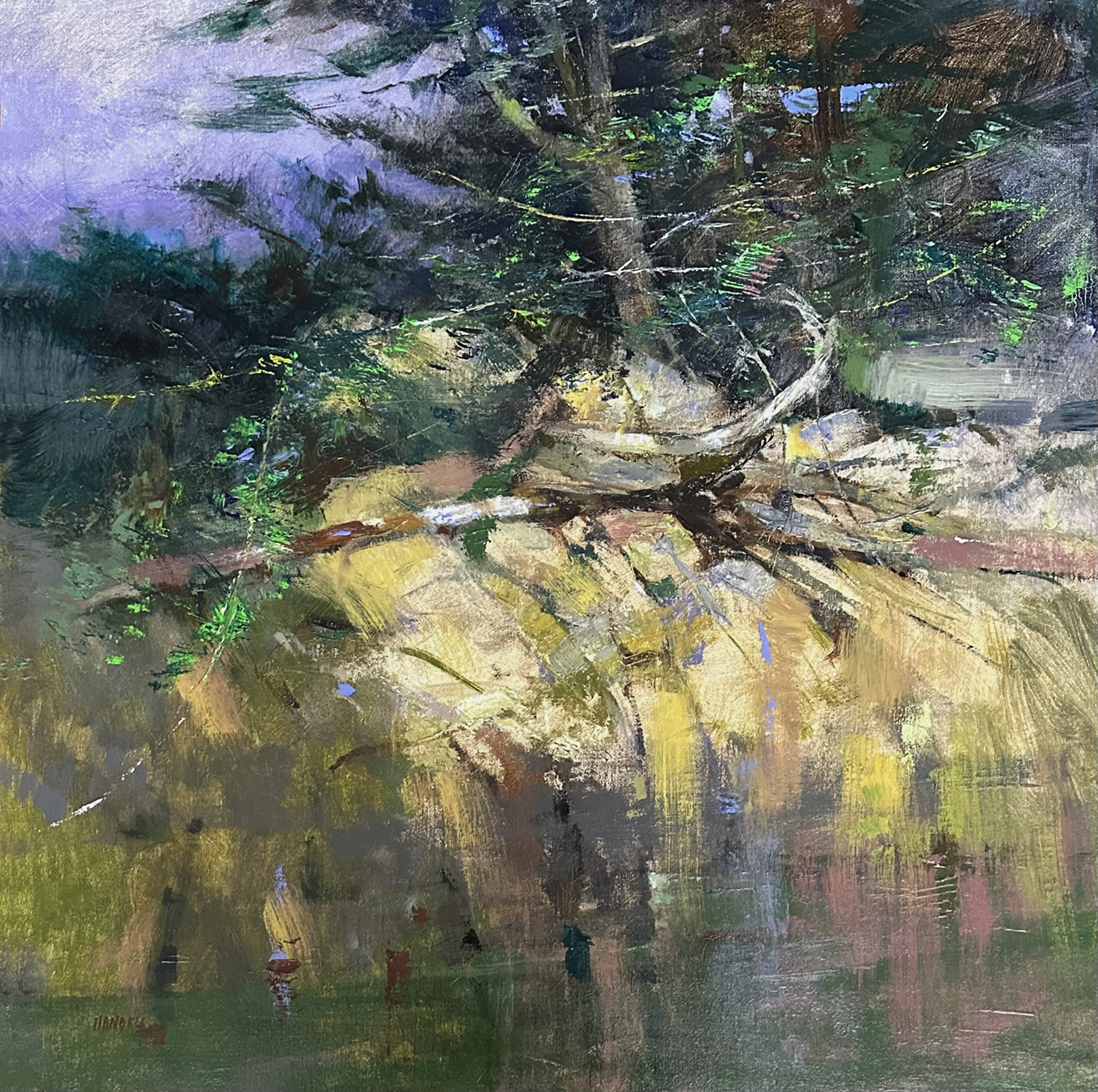
Albert Handell, OPAM, “Deep Woods,” 2023, Belgium linen mounted on board, 28 x 28 in.
OPA Master Signature artist Sherrie McGraw will serve as the Juror of Awards and will award participating artists approximately $100,000 in cash and merchandise awards, including the prestigious Gold Medal $25,000 cash prize.
Sherrie McGraw, OPAM, “Maria in Gold,” oil on board, 16 x 12 in.
OPA is pleased to include the Fourth Annual Student Art Competition for students aged 14-18 and 19-23 at the National Exhibition. The top three award winners in each division will be invited to exhibit their works in conjunction with this year’s National Exhibition.
Patrick Saunders, OPAM, “Radiant,” 2024, oil on linen, 20 x 24 in.
The exhibition will be available to be viewed online on both the OPA and Mark Art at www.markartsks.com. For more information about how to purchase a painting, please contact Mark Arts directly at (316) 634-2787. The exhibition and convention are open to all artists, art lovers, collectors, and students.
Nicolai Fechin (1881–1955), "Carmelita," n.d., oil on canvas, 24 x 20 in, estimate $300,000–$500,000
Returning this spring is the Scottsdale Art Auction, one of America’s leading sales of Western art. Its lots encompass every genre, from landscape and wildlife to figures and still life. The auction takes place April 12-13, 2024.
The highlight is a rare oil painting by Charlie Russell, “The Broken Rope” (estimate $5 million–$7 million). Completed in 1904, a key moment in this master’s artistic development, it depicts the fraught moment right before the collision of a cow and a cowboy. Russell is also represented by an important bronze, “A Bronc Twister,” which carries an estimate of $200,000–$300,000.
Among the other historical greats on offer at the art auction are Frederic Remington, J.H. Sharp, E.I. Couse, Walter Ufer, Maynard Dixon, William R. Leigh, and Winold Reiss. Particularly impressive is the portrait by Nicolai Fechin illustrated above.
As usual, the auction has a strong group of works by G. Harvey and members of the Cowboy Artists of America, and the living masters include Mark Maggiori, Logan Hagege, and Kyle Polzin.
About the Scottsdale Art Auction:
Under the banner, Scottsdale Art Auction, dealers Mike Frost (Bartfield Galleries of New York City), and Brad Richardson (Legacy Galleries of Scottsdale, Arizona and Santa Fe, New Mexico) joined together and presented their first sale on April 2, 2005 at Richardson’s Legacy Gallery on Main Street in Scottsdale, Arizona. Mike Frost, who has been instrumental in building significant public and private collections of historically important western art throughout the country and Brad Richardson whose Legacy Galleries have become a national leader representing several members of the Cowboy Artists of America, National Academy of Western Art, and a number of exhibiting artists from the annual Prix de West in Oklahoma City and Western Masters exhibition and sale at the Autry Museum in Los Angeles.
As part of our effort to continue to help artists and art galleries thrive, we’re proud to bring you this week’s “Virtual Gallery Walk.” Browse the artwork below and click the image itself to learn more about it, including how to contact the gallery.
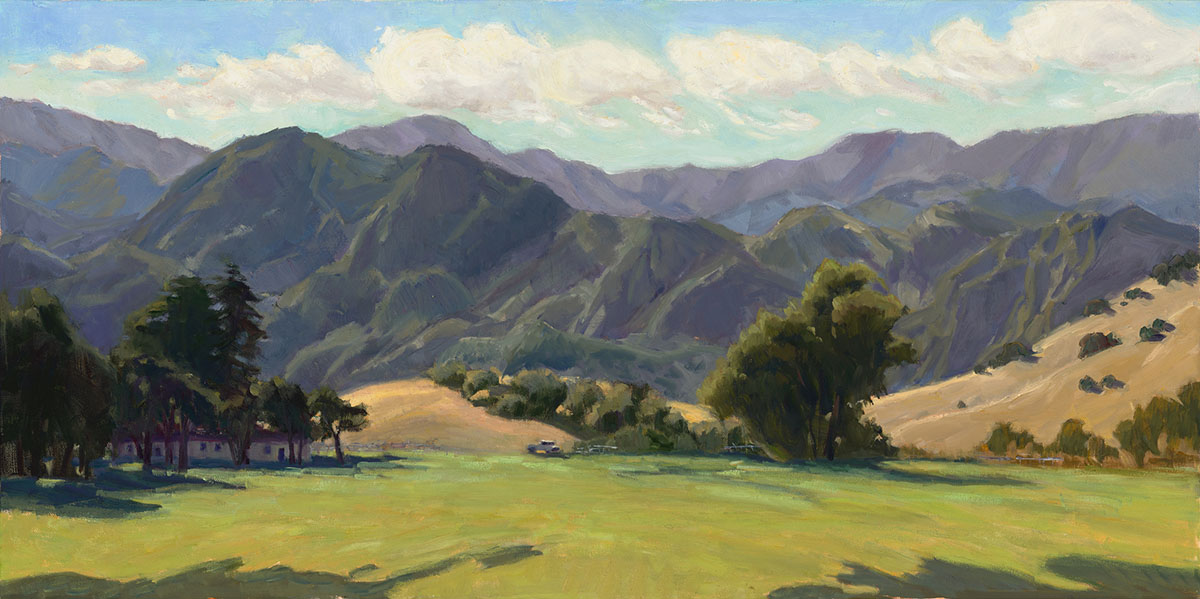
Malibu Mountains, Laurie Hendricks, oil on canvas board, 18 x 36 in; Laurie Hendricks
***
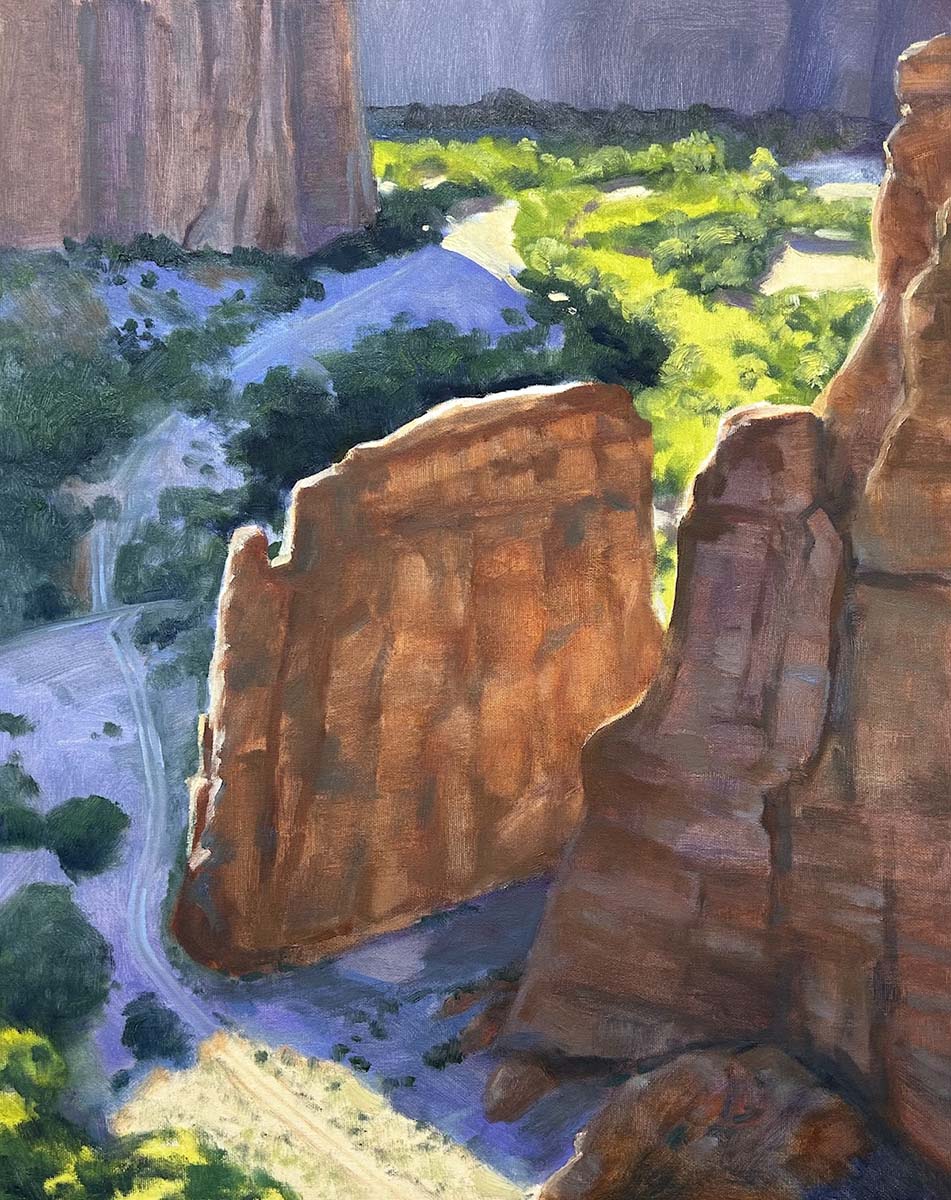
Reflections on a Canyon, Nita Harper, oil, 20 x 16 in; Santa Paula Museum
***
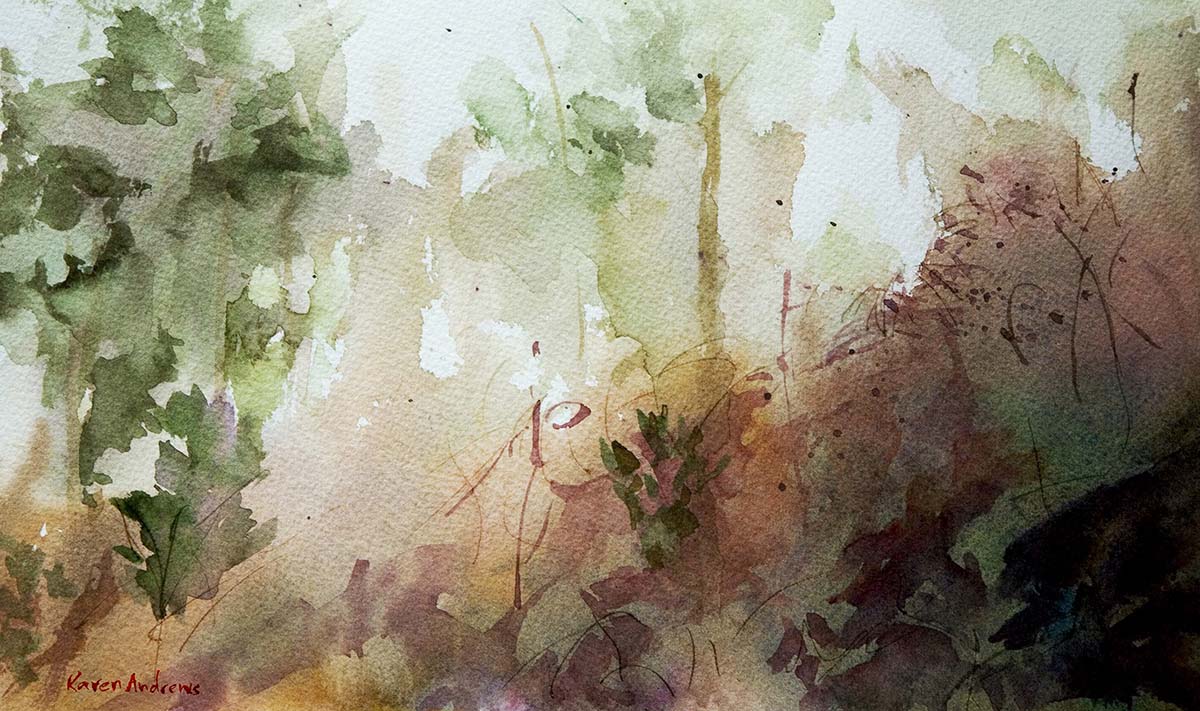
Red Forest, Karen Andrews, watercolor on paper, 19 x 32 in; Karen Andrews
***
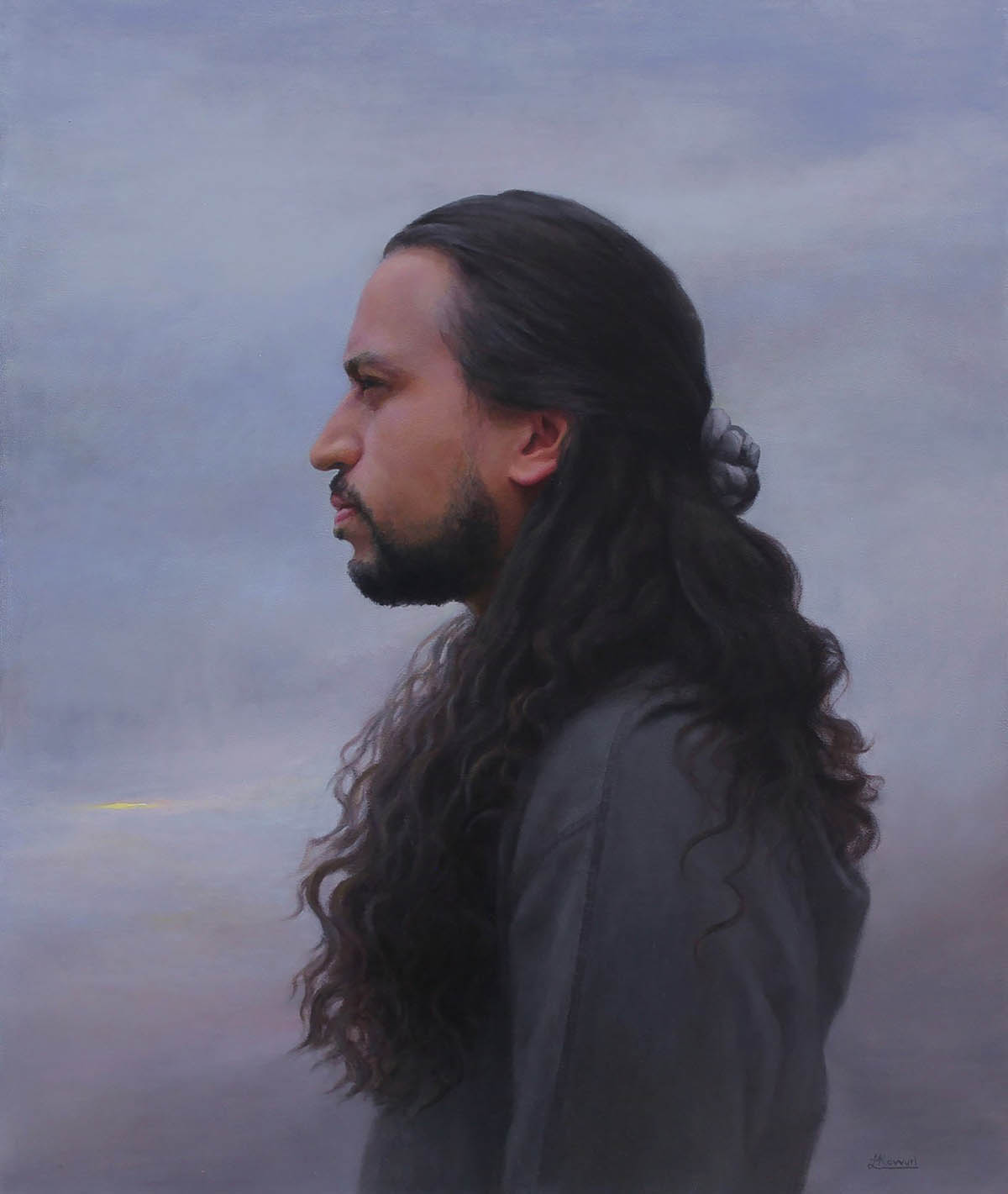
Elements, Lisa Kovvuri, oil on aluminum, 24 x 20 in; ARTNOVA Gallery, 463 Main Street, Chatham, MA (508) 469-9222
Want to see your gallery featured in an upcoming Virtual Gallery Walk? Contact us at [email protected] to advertise today. Don’t delay, as spaces are first come, first served, and availability is limited.
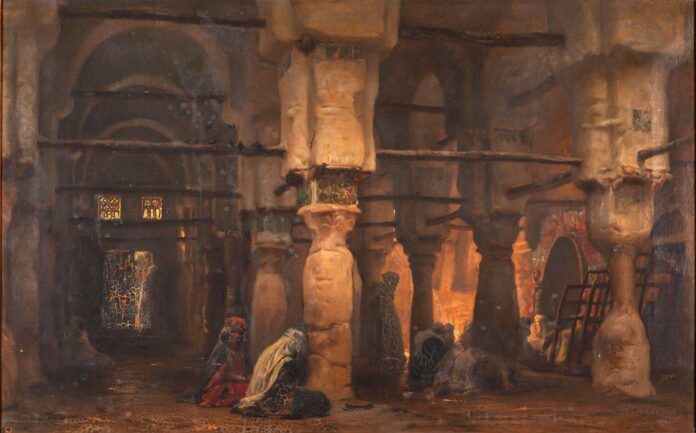
Frederick Arthur Bridgman (American, 1847-1928), "Sanctuary in the Sahara"
Bellmans is pleased with the results of its Old Masters, British, and European Paintings auction on Thursday, 28th March 2024. The three artists’ collections with works by 19th-century artists all came from descendants, were new to the market, and did very well. Two of which are well-known for their outstanding work depicting animals and in particular dogs and wild cats, Herbert Dicksee and Arthur Wardle, and Frank Dicksee, who was best known for his portraits and landscapes, while Arthur Croft also excelled in the latter.
More from Bellmans:
The highlight of the collection from the family of the artist Arthur Croft (1828-1902) was an oil painting by fellow artist Frederick Arthur Bridgman (American, 1847-1928), “Sanctuary in the Sahara,” signed and dated 1879. It had been estimated at £10,000 – £15,000, but the hammer came down at £26,000 (£32,500 incl. Buyer’s premium) and went to a European private buyer.
It was first exhibited in London at the 1880 annual exhibition of the Royal Academy and is the product of Bridgman’s second visit to Algeria. While he focused on Algiers during his first trip in 1872-73, during his second trip to North Africa, he decided to investigate the smaller towns and villages south of the metropolis, which remained less westernised, despite French control of the region.
Works by Herbert and Frank Dicksee from the collection of the late Pamela Service, Herbert’s great-granddaughter: All works, a few original drawings and paintings, and many etchings, by the two artists sold in the auction reaching a total of almost £15,000 hammer. Herbert often used family pets as his models and included in this collection is an adorable portrait of Pamela’s bull terrier, William, which was top lot of the Dicksee sale selling for £1,700 (£2,125) against an estimate of £300 – £500.
The studio sale of another contemporary of the former, Arthur Wardle (1860-1949), offered a superb collection of oil paintings, pastels, watercolours, sketches, and sculpture by one of the foremost British animal artists of the late 19th and early 20th centuries. Most works sold reaching a total of over £26,000 hammer, including a self-portrait of the artist that had carried an estimate of £1,000 – £1,500 and sold for £2,400 (£3,000).
Top lot of the auction was an almost 2-metre wide oil on canvas depicting The Fall of King Nebuchadnezzar, who was by an unknown artist of the Northern European School from the 17th Century. It sold for £48,000 against an estimate of £1,000 – £1,500 to a European private buyer.
A watercolour and gouache on paper of watermelon traders by Vladimir Egorovitch Makovski (Russian, 1846-1920) sold for £15,000 (£18,750), three times its mid estimate.
A portrait by Henry Scott Tuke (British, 1858-1929) of Lord Ronald Charles Sutherland-Leveson-Gower (1845-1916) sold to a Tuke collector in the room for £4,000 (est. £1,500 – £2,500, £5,000), who was pleased to add the portrait as well as another oil by the artist to his collection.
And a 19th-century English school portrait of a greyhound had been expected to sell for £100 – £150, but sold for £3,500 (£4,375).
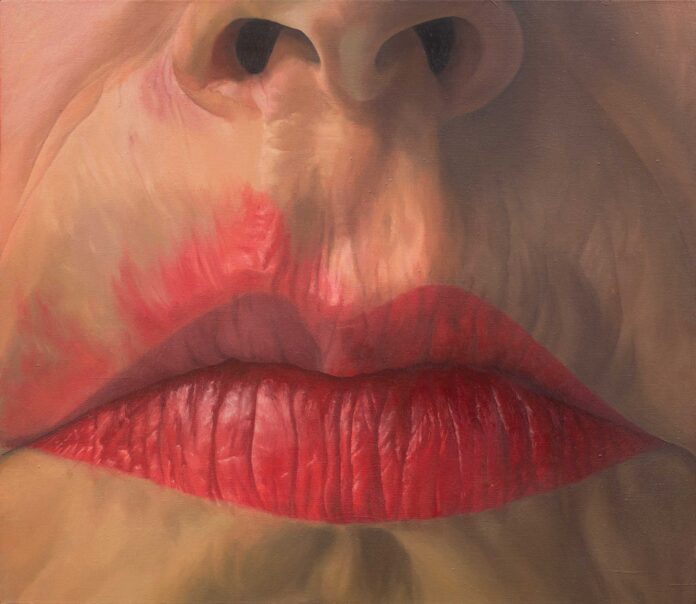
Catherine Murphy, “Persimmon,” 1991, oil on canvas, 25 3/4 x 29 1/2 in., collection of Dixie Sheridan
Catherine Murphy: Always Looking
by Daniel Grant
Catherine Murphy (b. 1946) considers herself an “observational painter,” not the photorealist that many of her works might suggest, nor the surrealist that other of her paintings might bring to mind. Perhaps even “observational painter” isn’t the correct term. “I once had a conversation with one of the old realist painters,” Murphy recalls, “and he said, ‘Well, you’re not really an observational painter because you make things bigger than life.’ And I said, ‘Okay.’” Still, she continues, “I call myself an observational painter. I don’t know if other people would, but I do always work from what I’m looking at.”
So the more interesting questions may be, what is this artist looking at, and what does she see? But first, what do we see?
Take the 1991 painting “Persimmon,” which zooms in on the lower half of a woman’s face; we see lipstick smeared on her upper lip. We search for content and meaning, our natural response to realist imagery: was this person kissed by someone who wore the same shade of lipstick? Was she too distracted to apply her lipstick carefully? Does the bright lipstick seek to cover her sadness, which is suggested by her downturned lips? Something seems to be happening here, but Murphy isn’t offering any hints.
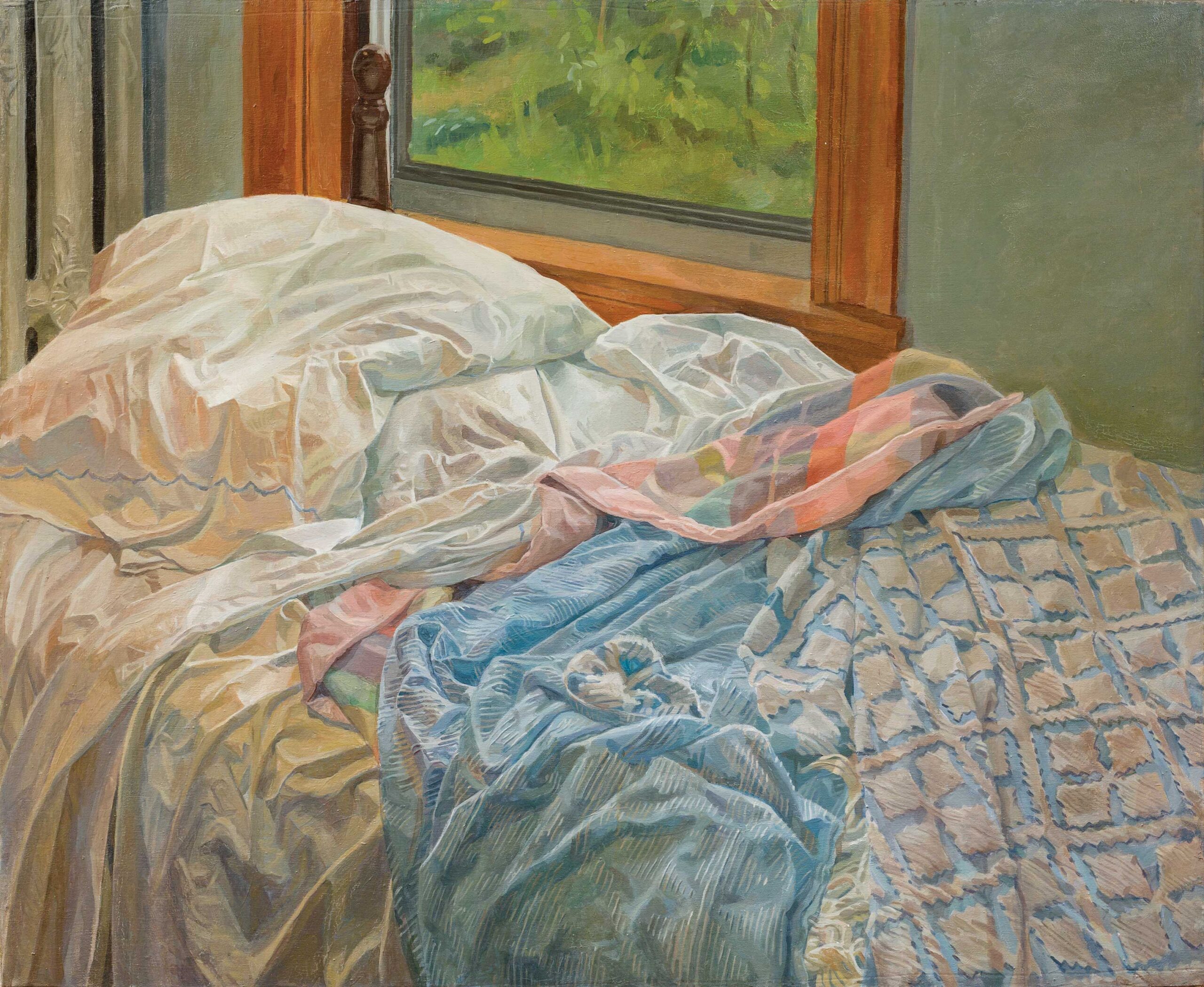
Catherine Murphy, “Unmade Bed,” 1969, oil on canvas, 44 x 36 in., private collection
Then there’s the 1969 painting “Unmade Bed,” a tumult of colors, textures, and patterns in the sheets, blankets, and bedspread. Behind them is a blank green wall and a window that reveals the greenery of summer. There is a “look what I can do” element to the painting — that question of whether Murphy is at heart a photorealist comes up again — but still we wonder if there is a significance to the bed itself, which suggests a human story. Is someone just not tidy, or was there a reason this person rushed out of bed? Again, we aren’t offered any help from the artist.
“I love the fact that, when viewers look at my paintings, they make up narratives all their own. I sort of think that’s fantastic,” Murphy says. “If you want to spend enough time with a painting that you’re making up your own narrative, that’s cool. I mean, my narrative is just a portal into the possibilities of what happens in life.”
Bring your own associations to that unmade bed, and that’s just as good as anything else. “There are so many things that happen in bed,” Murphy notes, identifying some of the possibilities as sex (satisfactory or disappointing), trauma, or just sleep. “It could be any of those things. I don’t complete the story. I leave it open-ended.”
Establishing the ultimate meaning of Murphy’s art, then, may not be altogether possible. It becomes the viewer’s job to put the pieces together to determine what is going on (or the artist’s intention). This may be easier to do when we look at a number of her paintings rather than just one at a time.
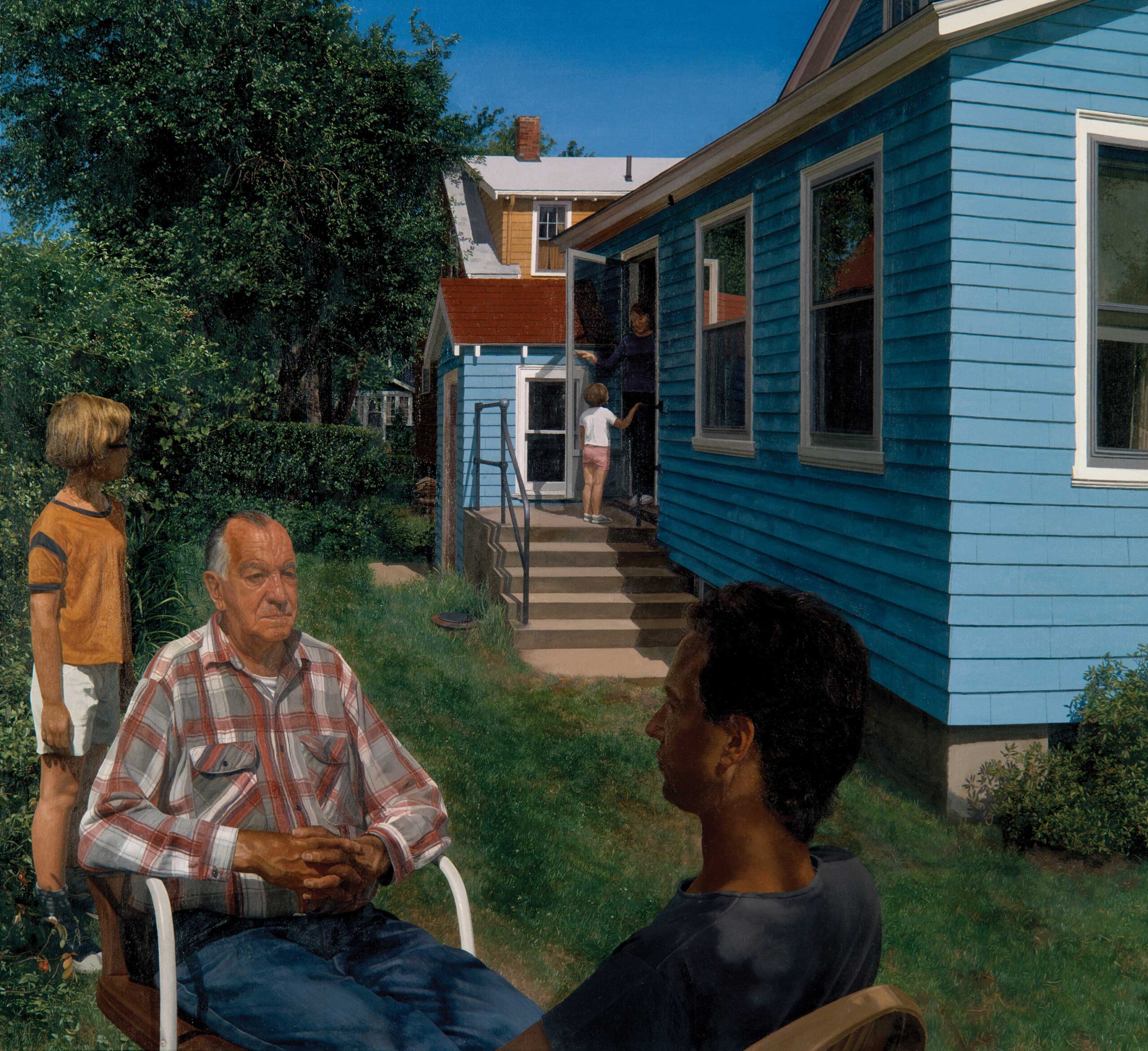
Catherine Murphy, “Frank Murphy and His Family,” 1980, oil on canvas, 41 x 46 in., private collection
For instance, the first thing one notices in her paintings of people — friends and family members, in many cases — is that no one is smiling, or even communicating. “Frank Murphy and His Family” (1980) features the artist’s father and husband in the foreground, sitting in close proximity but silently looking in different directions.
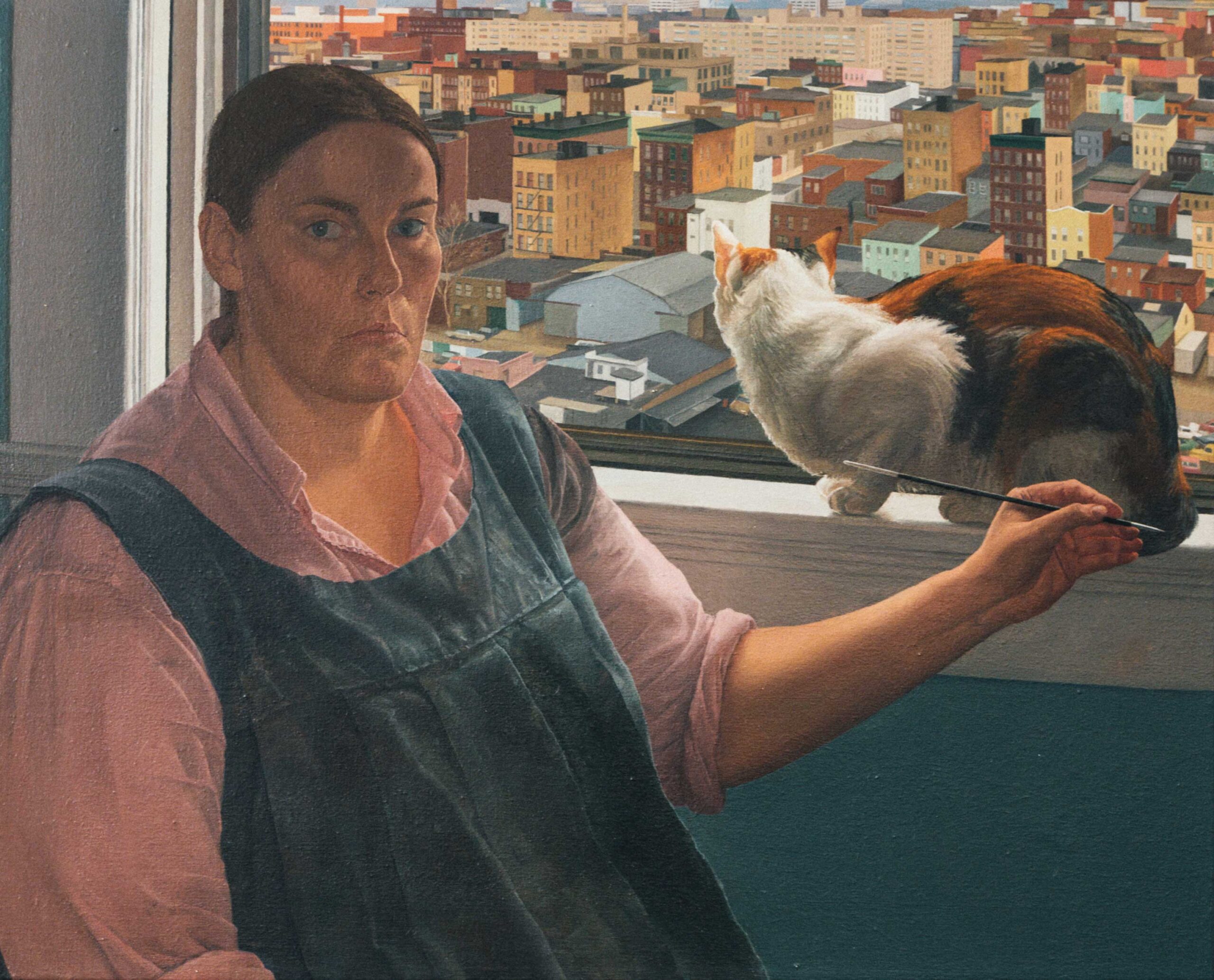
Even in her 1975 “Self-Portrait with Pansy,” the artist looks in our direction with a sober expression while her cat on the windowsill turns its attention to the city below.
Catherine Murphy, “Self-Portrait with Pansy,” 1975, oil on canvas, 21 x 26 in., collection of the artist
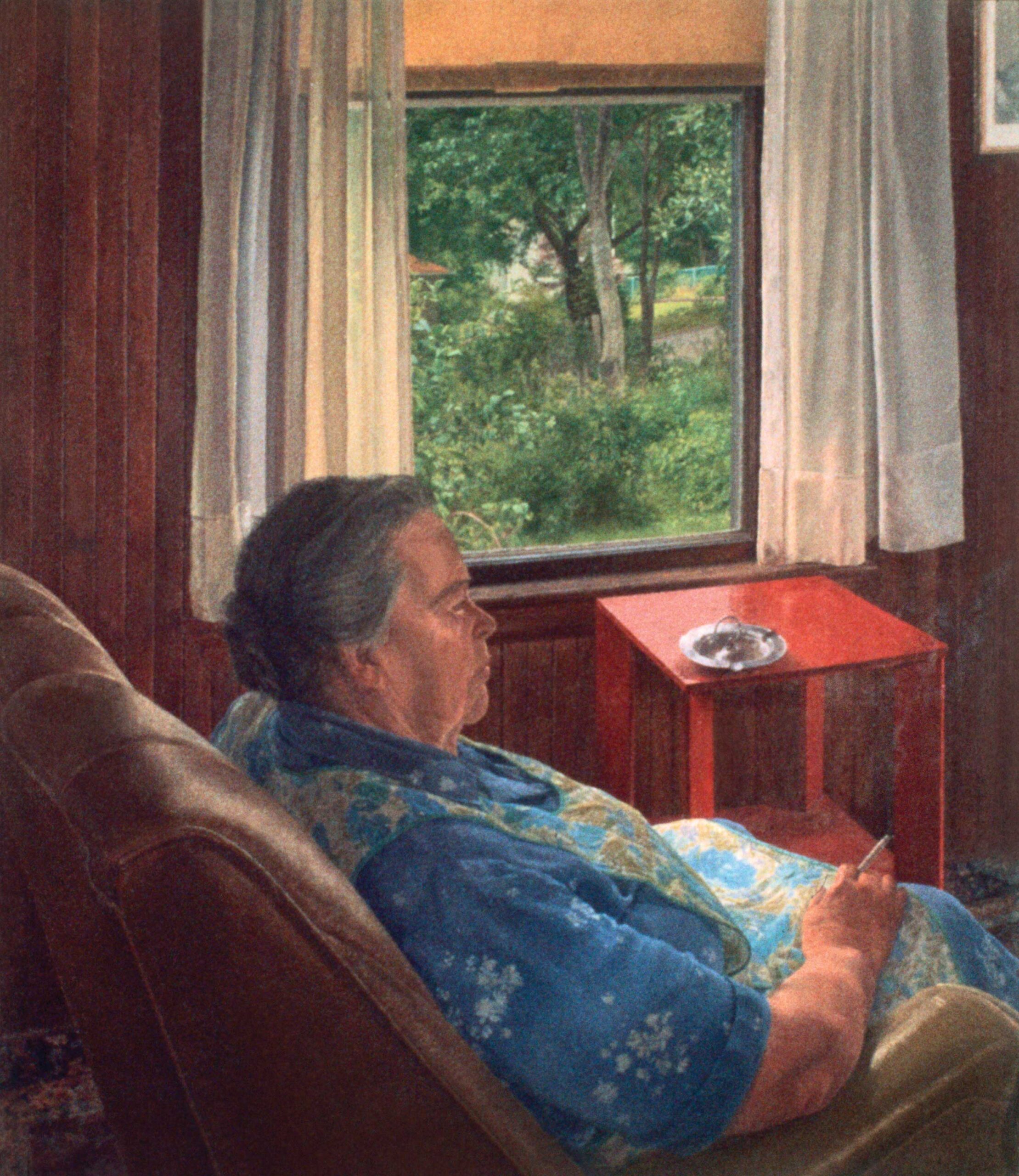
Perhaps one of the glummest images in Murphy’s entire body of work is a 1979 painting of her mother, Catherine O’Reilly Murphy, sitting in profile in a dark-paneled room around midday, cigarette in hand. She stares blankly at an unseen television while a window in the far wall reveals the lush verdure of a summer day.
In 2011, University College London neurobiological researchers conducting brain-scanning experiments found that looking at art triggered a surge of the pleasure-inducing chemical dopamine in test volunteers. Judging from this scene, however, it may also be that the creation of art does not necessarily make either artists or their subjects any happier.
Catherine Murphy, “Catherine O’Reilly Murphy,” 1979, oil on canvas, 32 x 28 in., private collection, collection of Levi Strauss & Co.
Fill your mind with useful art stories, the latest trends, upcoming art shows, top artists, and more. Subscribe to Fine Art Today, from the publishers of Fine Art Connoisseur magazine.