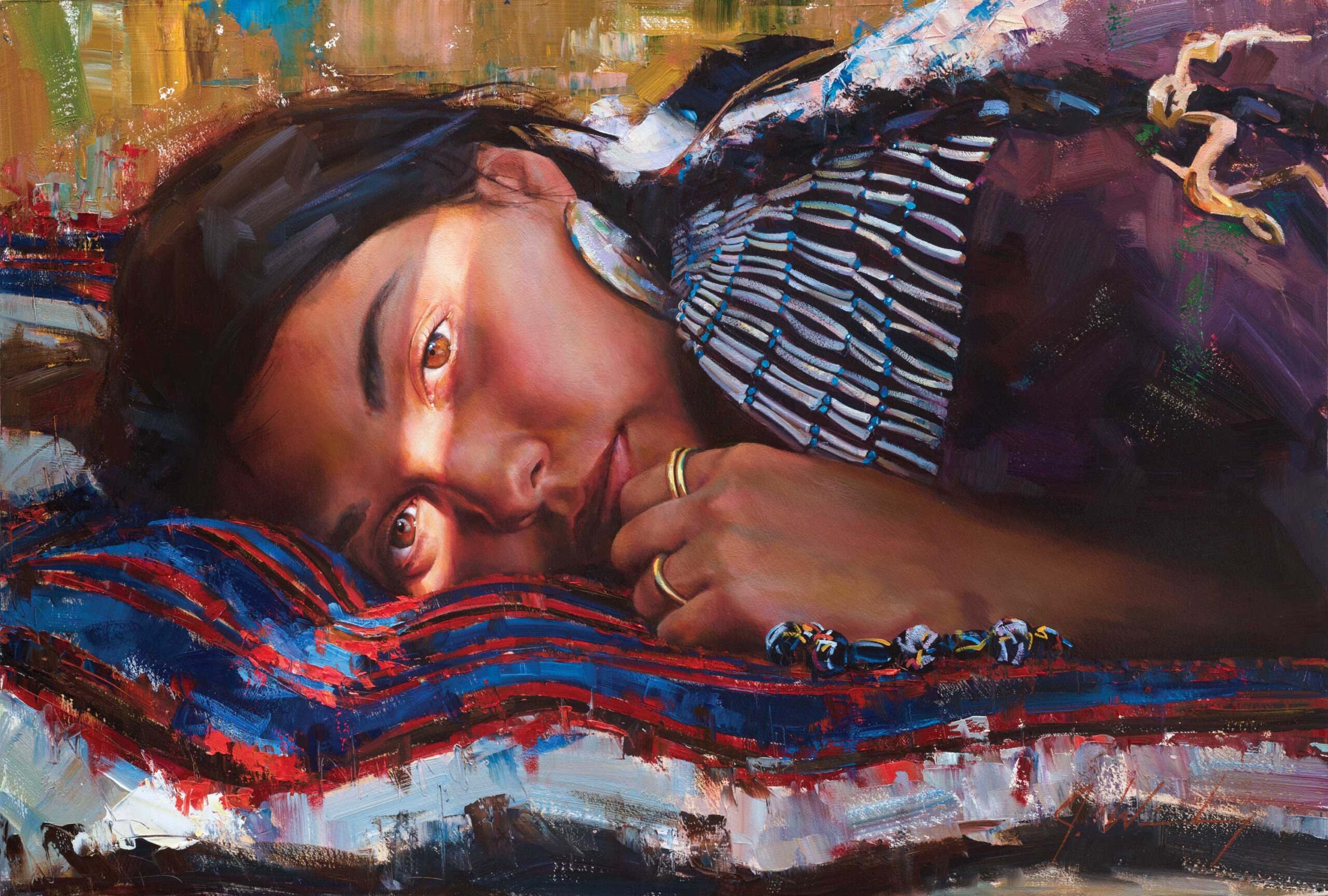
Home Blog Page 89

Saints, Sinners, Lovers, and Fools

0

“Saints, Sinners, Lovers, and Fools: 300 Years of Flemish Masterworks”
Dallas, Texas
dma.org
through June 25, 2023

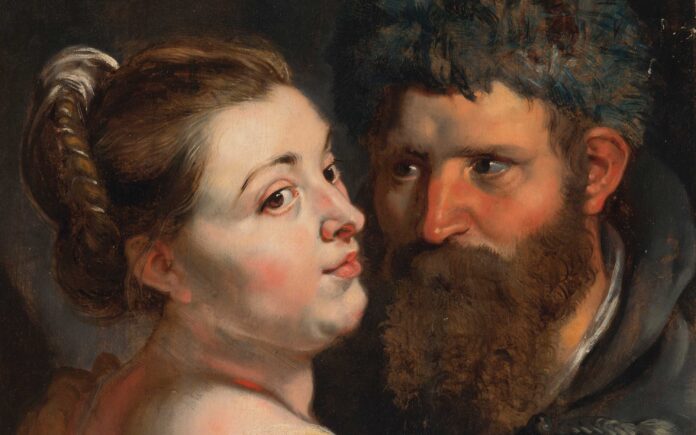
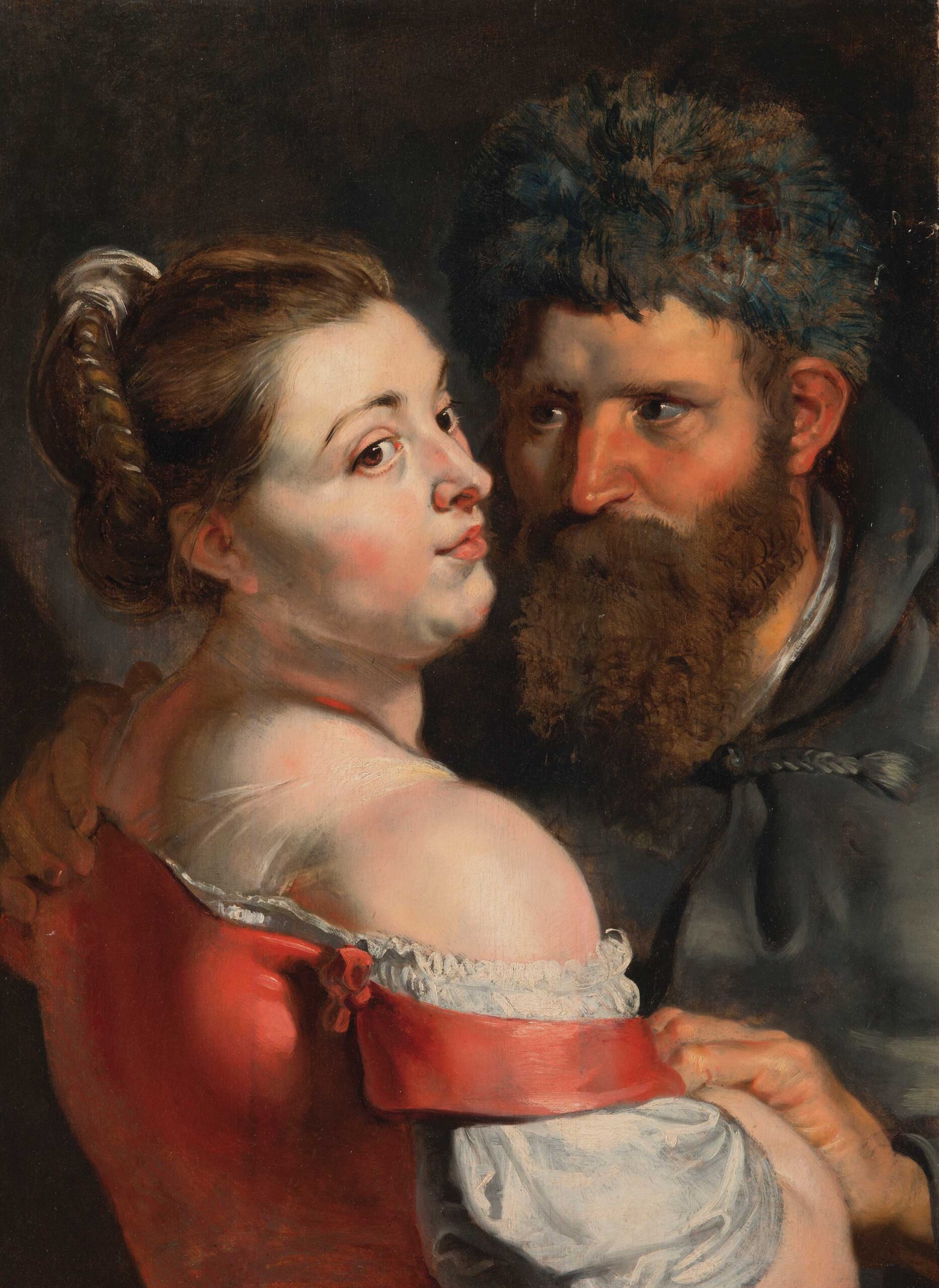
Peter Paul Rubens (1577–1640), "A Sailor and a Woman Embracing," c. 1615–18, oil on panel, 39 3/8 x 31 1/4 in., © Phoebus Foundation, Antwerp
Peter Paul Rubens (1577–1640), “A Sailor and a Woman Embracing,” c. 1615–18, oil on panel,
39 3/8 x 31 1/4 in., © Phoebus Foundation, Antwerp

The Dallas Museum of Art is the final stop for the touring exhibition “Saints, Sinners, Lovers, and Fools: 300 Years of Flemish Masterworks.” On view are more than 130 works loaned by Antwerp’s Phoebus Foundation that mirror the extraordinary cultural developments that occurred in Flanders and Europe generally between 1400 and 1700.

Among the artists represented are Hans Memling, Peter Paul Rubens, Anthony van Dyck, and Jan Gossaert. The project was organized by the Denver Art Museum and curated by the foundation’s chief of staff, Katharina Van Cauteren.

See the Largest-Ever Retrospective of Johannes Vermeer

0
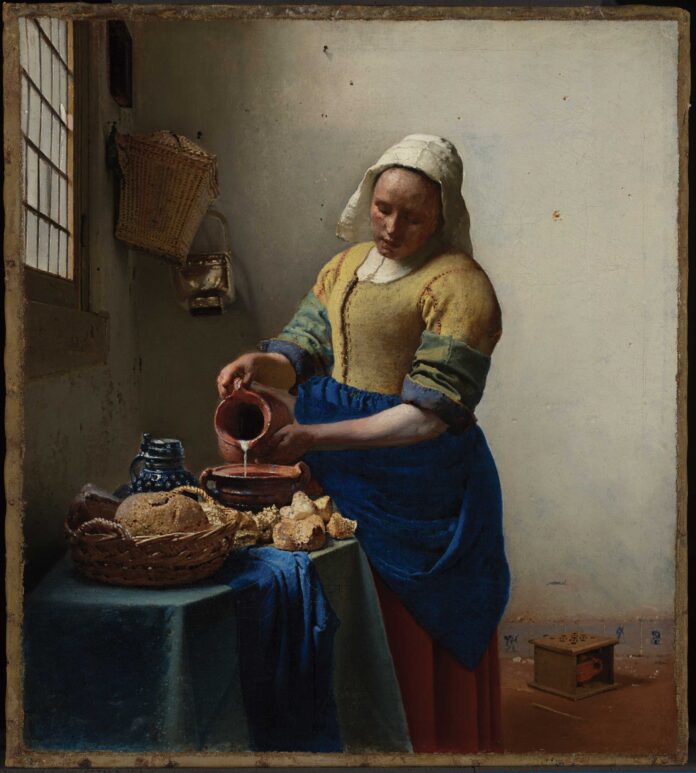
Johannes Vermeer (1632-1675), "The Milkmaid," 1658-59, oil on canvas, 18 x 16 1/8 in., Rijksmuseum, Amsterdam

Closer to Johannes Vermeer
Rijksmuseum, Amsterdam
rijksmuseum.nl/en/johannes-vermeer
through June 4, 2023

The Rijksmuseum, the national museum of the Netherlands, is the only venue for the largest-ever retrospective of the brilliant painter Johannes Vermeer (1632–1675), who lived and worked in the Dutch city of Delft. Amazingly, this is the first time the 225-year-old museum has dedicated a show to Vermeer, so it’s only fitting that it’s the largest one ever, presenting 28 of his known existing 37 works.

Vermeer is admired globally for his tranquil, introverted interior scenes, his unprecedented use of bright, colorful light, and his convincing illusionism. Unlike his contemporary Rembrandt, Vermeer left a remarkably small oeuvre, and luckily the Rijksmuseum owns four of the 37 works known, including The Milkmaid illustrated here.

Visitors to Amsterdam this season are enjoying the thrill of seeing so many together, especially since this is likely the last such gathering. The staggering insurance values and laborious planning of transport, security, and climate control — not to mention the difficulty of convincing owners to lend their treasures in the first place —make the mounting of such blockbusters extremely difficult today. (Just for example, Vienna’s Kunsthistoriches Museum opted out because its Vermeer appeared in six exhibitions from 2000 to 2008 and now is too fragile to travel.)

Works never before shown to the public in the Netherlands include the newly restored “Girl Reading a Letter at the Open Window” from Dresden’s Gemäldegalerie Alte Meister. And Americans should be proud that New York City’s Frick Collection has loaned all three of its Vermeers, marking the first time they have been shown together outside New York since their acquisition more than a century ago. Two of those paintings have undergone extensive examination at the Rijksmuseum. Alas, the Metropolitan Museum of Art across Fifth Avenue could not lend two of its four Vermeers due to conditions imposed by their original bequests. And of course Boston’s Isabella Stewart Gardner Museum cannot lend its example because it was stolen in 1990.

For years now, a team of curators, conservators, and scientists from the Rijksmuseum have been collaborating closely with colleagues from the Mauritshuis in The Hague and the University of Antwerp to conduct research on Vermeer’s paintings. Their findings have shed light on the artist, offering new insights about his social position, living environment, and contact with fellow artists and citizens.

Modern technology has contributed profoundly to this progress. For example, intensive scanning of “The Milkmaid” has revealed two previously invisible objects: a jug holder and a fire basket. (Vermeer himself painted over them later.)  Experts can now also see some underpainting, and indeed underpaintings have also been detected in other works such as  “Woman Holding a Balance” at Washington’s National Gallery of Art (NGA).  The conventional understanding that Vermeer painted slowly and with great thought — without planning ahead — must therefore be revised. His end results may appear contemplative, but his working method was rigorous and far-sighted.

Unusually, a debate has emerged about the authenticity of another of Washington’s pictures, “Girl with a Flute”; the Rijksmuseum says it’s by the master, but the owner recently mounted a fascinating exhibition concluding that it was, in the words of NGA curator Marjorie E. Wieseman, produced by “an associate of Vermeer.” This, then, is one of three paintings that the Rijksmuseum-led team has “upgraded.” (The other two are in private collections.)

Gregor J.M. Weber, head of fine arts at the Rijksmuseum and co-curator of the exhibition, says, “Vermeer’s painting technique has always had something of a mystery.  How did he accomplish this miracle of light and color? With the discovery of a first sketch in black paint, we get a much better picture of his working method.”

His co-curator, Pieter Roelofs, the Rijksmuseum’s head of paintings and sculpture, adds, “The mystery of Vermeer, also known as the Sphinx of Delft, has clung to the artist for more than 150 years and has become part of his reputation. Connecting what we now know about his personal life with his work brings us closer to him.”

These two scholars have edited the 320-page catalogue that accompanies the show, and Weber has also produced a 168-page biography (Johannes Vermeer: Faith, Light and Reflection) that exposes the huge influence the Jesuit order of the Catholic Church exerted on the painter, who was raised Protestant before converting to Catholicism. Located next door to Vermeer’s home was a “hidden church” (Dutch Catholics could not then worship in the open), as well as a Catholic girls’ school where his daughters were educated. Weber has discovered a drawing by the church’s priest,  Isaac van der Mye, who was also a trained artist, that clearly reflects the characteristics of a camera obscura.

For those who can’t make it to Amsterdam, don’t worry: the Rijksmuseum’s digital experience,  “Closer to Johannes Vermeer,” is available on its website. There the British actor and art lover Stephen Fry explores the artist’s work and life, encouraging users to zoom in on tiny pigment particles via ultra-high-resolution photographs, or to compare recurrences across the paintings, such as pearls or the color ultramarine.

And for those who find themselves in The Hague during the exhibition’s run, don’t be surprised to find something fun on the wall at the Mauritshuis, where “Girl with a Pearl Earring” usually hangs. Now anyone can upload their own take on that famous painting to the museum’s website; the best ones will be displayed on a screen there and also on Instagram (@mygirlwithapearl).


Roman Landscapes in San Antonio

0
San Antonion Museum of art Roman painting
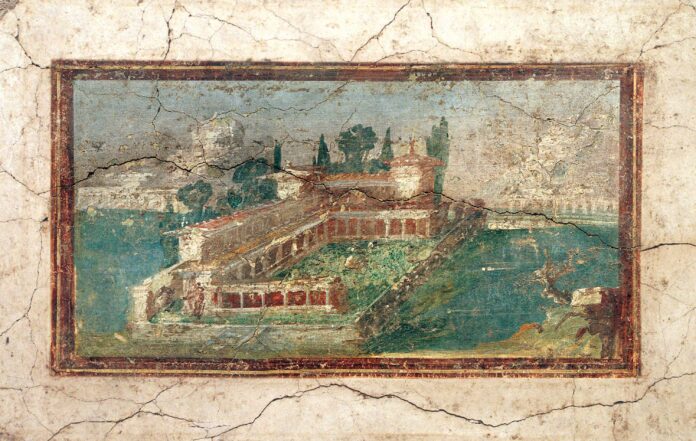
Roman wall painting with a seaside villa, Stabiae, mid-1st A.D., century pigment plaster, on 11 13/16 x 19 11/16 in., Parco Archeologico di Pompei, 62518, photographed by permission of Italy’s Ministero della Cultura

San Antonio Museum of Art, Texas
samuseum.org
through May 21, 2023

The San Antonio Museum of Art has long been admired for its superb collection of antiquities, and now it has organized — and is the sole venue for — a groundbreaking exhibition, Roman Landscapes: Visions of Nature and Myth from Rome and Pompeii. This is the first show mounted in the U.S. to explore landscape scenes as a striking (and little studied) form of ancient Roman art.

On view are more than 65 examples of wall paintings, sculptures, mosaics, cameo glass, and silver vessels created in Roman Italy between 100 BCE and AD 250. These works have been gathered from around the world — including Italy, France, and Germany — many coming to the U.S. for the very first time. Several years in the making, the project is grounded in original research undertaken by SAMA curator Jessica Powers.

Most of us readily recognize ancient Roman statues depicting gods and heroes, or scenes of battle and ritual carved into friezes or adorning pottery. But few of us have had the opportunity to experience Roman wall paintings in person, with their fluid, almost impressionistic brushwork and somewhat unexpected use of bird’s-eye perspective. Many offer an imaginary vision of a countryside dotted with seaside villas and rural shrines, where gods and mythological heroes mingle with mortal travelers, herdsmen, and worshippers.

Powers notes, “The artistic innovation of showing human figures within visually dominant natural settings began during the tumultuous final decades of the Roman Republic, as civil war in Italy resulted in changes in land ownership and territorial expansion continued in the eastern Mediterranean. In that context, landscape imagery was particularly resonant because of its portrayal of an idealized rustic past and its emphasis on traditional Roman religion. Roman authors recognized the novelty of these images, though the concept of a ‘landscape’ scene did not arise until the Renaissance.”

The exhibition has five thematic sections: Garden Landscapes, Coastal Views & Cultivated Landscapes, Sacred Landscapes, The Dangerous Landscapes of Myth, and Landscapes in the Tomb. Illustrated here is a coastal view that was excavated at the Villa San Marco near ancient Stabiae, just south of Pompeii. Depicting an elaborately constructed villa on a platform that extends into the sea, it celebrates the wealth and power of someone capable of paying for such a construction, as well as the engineering mastery of the Romans, whose buildings grew in structural complexity and sophistication.

Roman Landscapes is accompanied by a lavishly illustrated scholarly catalogue, and Trinity University (located nearby) has dedicated a springtime lecture series to the exhibition.

Virtual Gallery Walk for March 24th, 2023

0
Friday Virtual Gallery Walk

As part of our effort to continue to help artists and art galleries thrive, we’re proud to bring you this week’s “Virtual Gallery Walk.” Browse the artwork below and click the image itself to learn more about it, including how to contact the gallery.

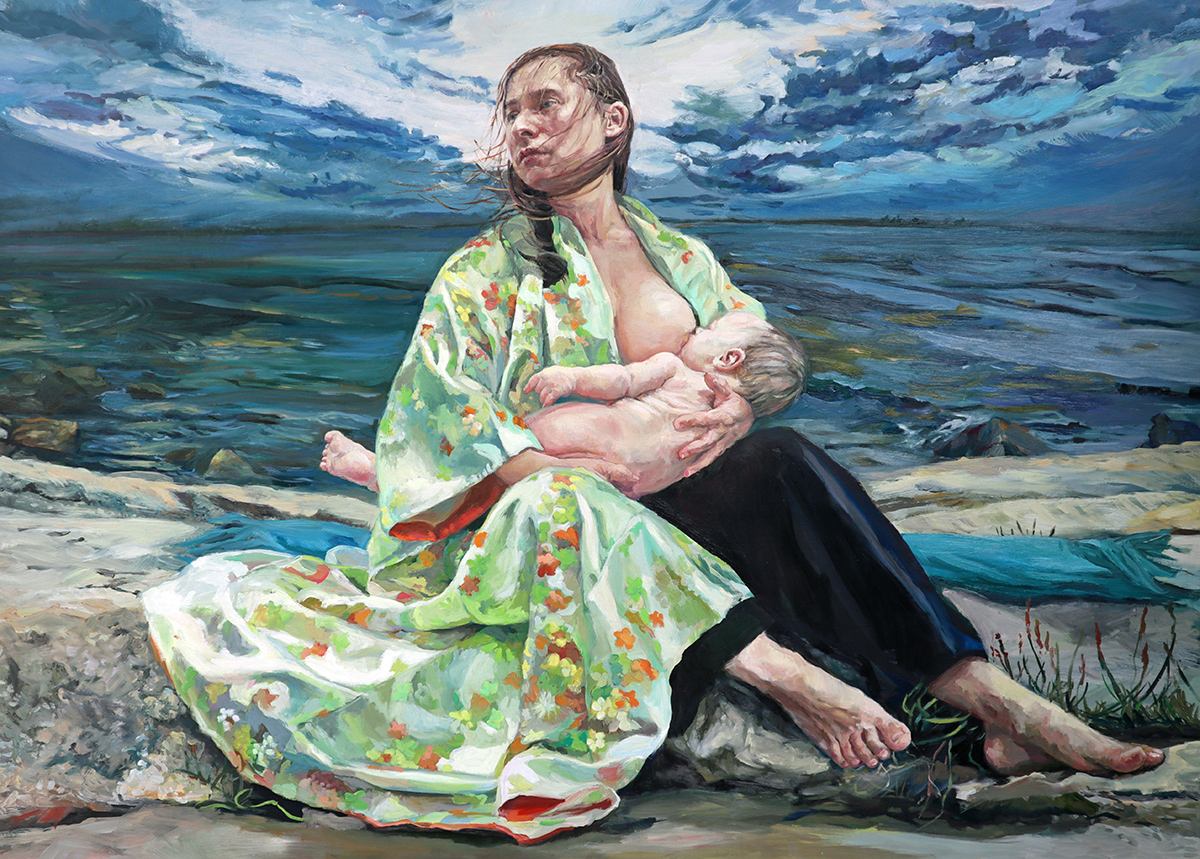
Star of the Sea, Patricia Schappler, oil on cradled board, 36 x 48 in; 33 Contemporary
Golden Autumn, Graydon Foulger, oil, 24 x 30 in; Celebration of Fine Art
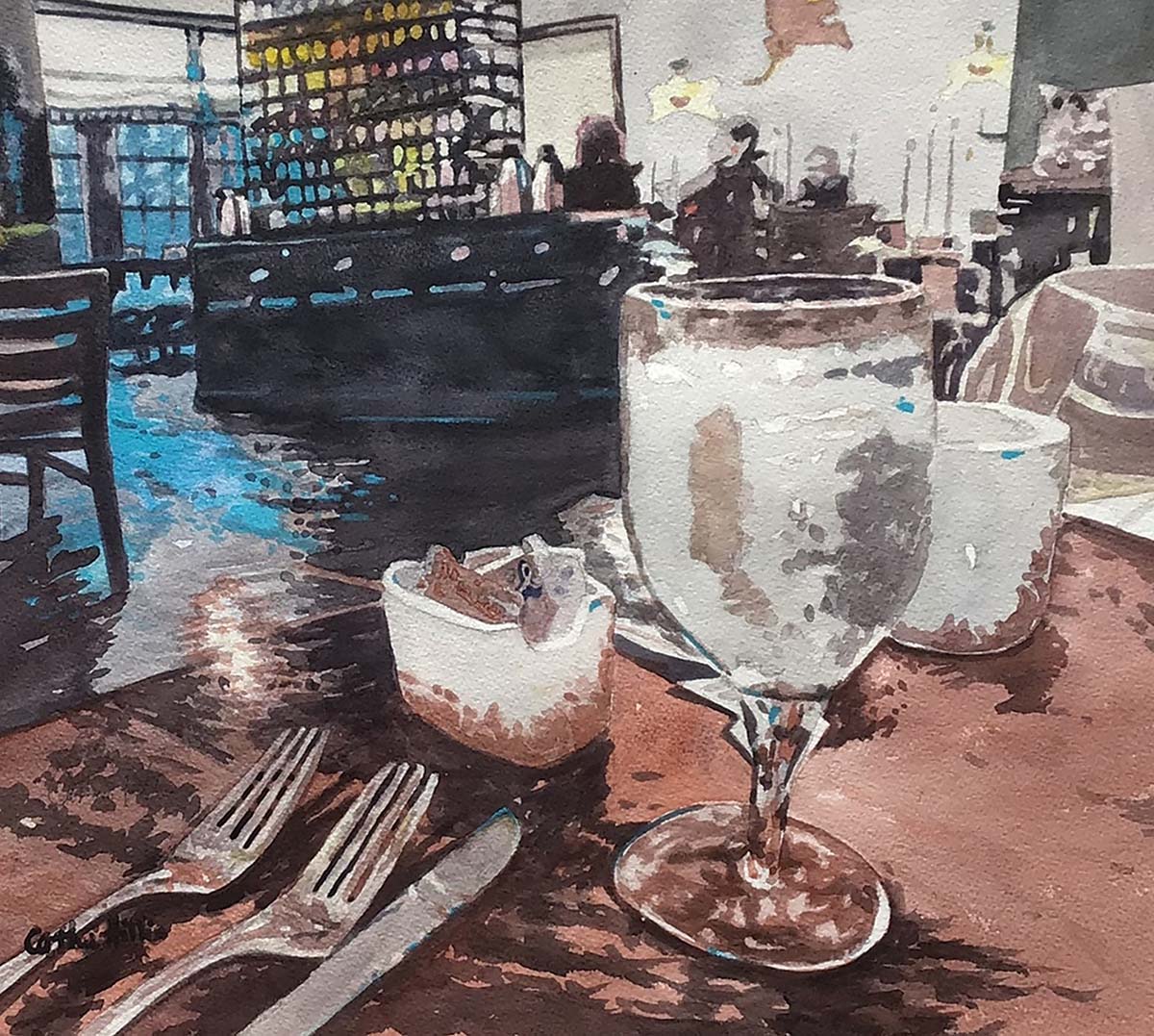
Come Sit Beside Me, Catherine Hillis, watermedia, 15.5 x 18.5 in; Catherine Hillis; Anderson Fine Art Gallery, Saint Simons Island, GA
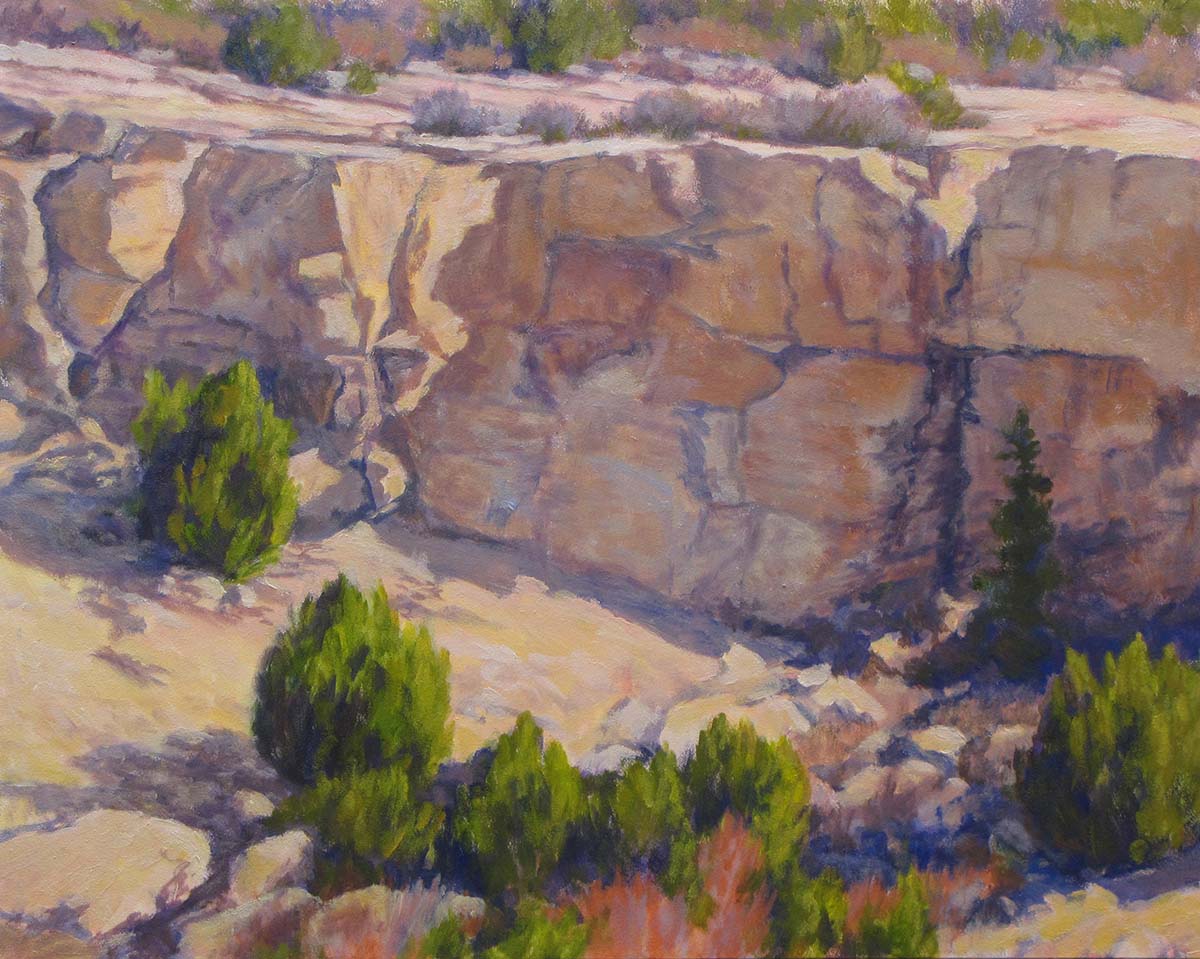
Ojito Rocks, Lee McVey, oil, 16 x 20 in; Lee McVey
David and Bathsheba, Terry Strickland, oil on canvas, 36 x 58 in; 3 Contemporary
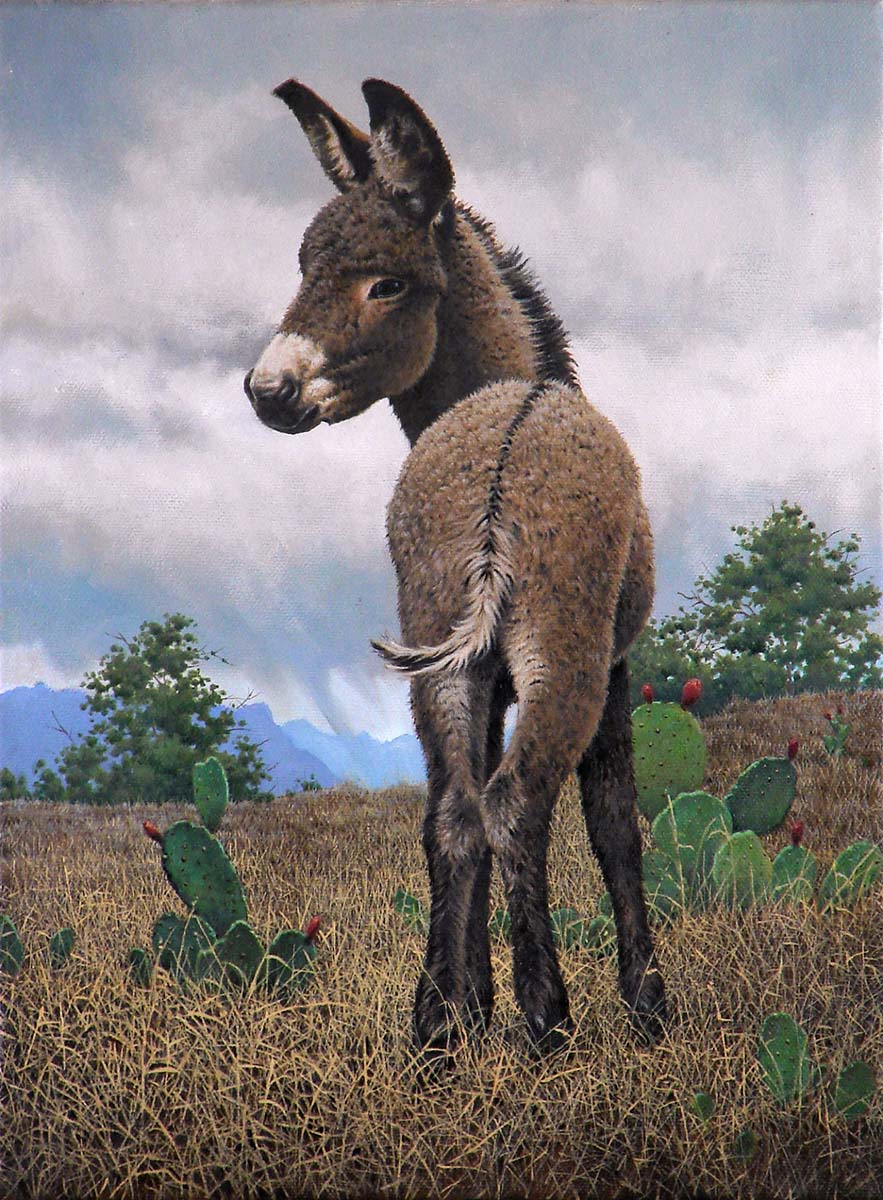
Smarty Pants, Elizabeth Lewis Scott, oil on canvas, 12 x 9 in; Elizabeth Lewis Scott
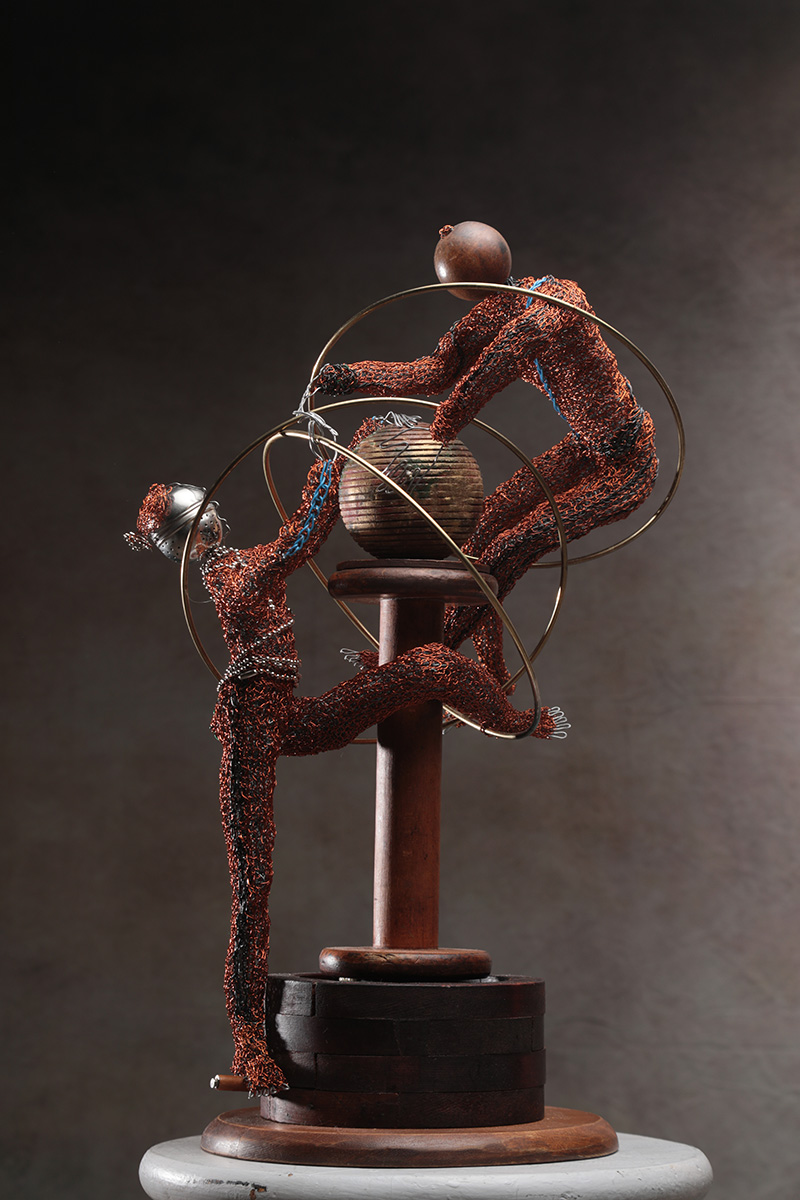
CAN WE WORK TOGETHER? Fay Wood, galvanized & copper wire, brass rings, wood & metal found objects, approx. 12 x 4 x 8 in; Fay Wood; 7th work -Three Ring Pandemic Circus

Want to see your gallery featured in an upcoming Virtual Gallery Walk? Contact us at [email protected] to advertise today. Don’t delay, as spaces are first come, first served, and availability is limited.

Featured Artwork: Lori Putnam

0
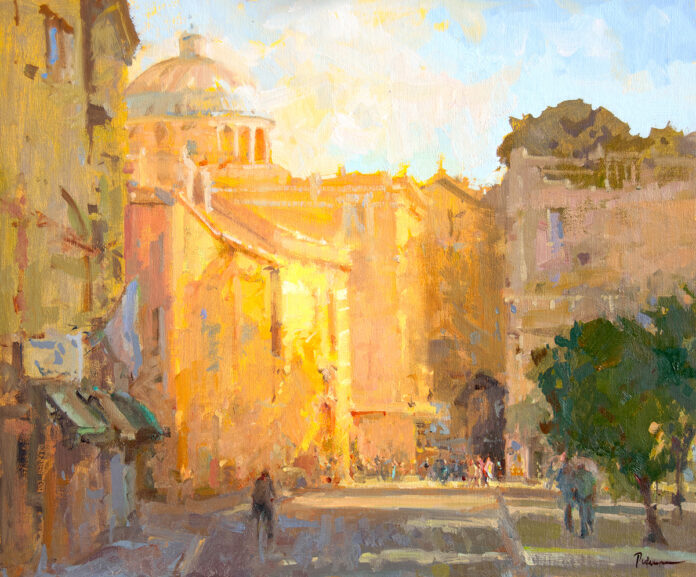
oil painting of sun shining off buildings and a courtyard; people walking through
Lori Putnam, “Illuminated,” oil, 20 x 24 in. OPA National Juried Exhibition, March 31-April 30. Reinert Fine Art, Charleston, SC

Lori Putnam: Lori Putnam’s paintings capture each scene’s essence, conveying its mood, atmosphere, and emotions. Infused with a sense of dynamism, Putnam seeks to capture a subject’s fleeting light and ever-changing character. Using luminous and vibrant hues that are both bold and harmonious, her colors have a vibrancy that adds a sense of vitality to her paintings. The works shown here are excellent examples of the artist’s ability to convey different times of day and locations.

To see more of Lori’s work, visit:
www.loriputnam.com
IG: @loriputnamart
www.reinertfineart.com
www.thedistrictgallery.com
www.forfineart.com 

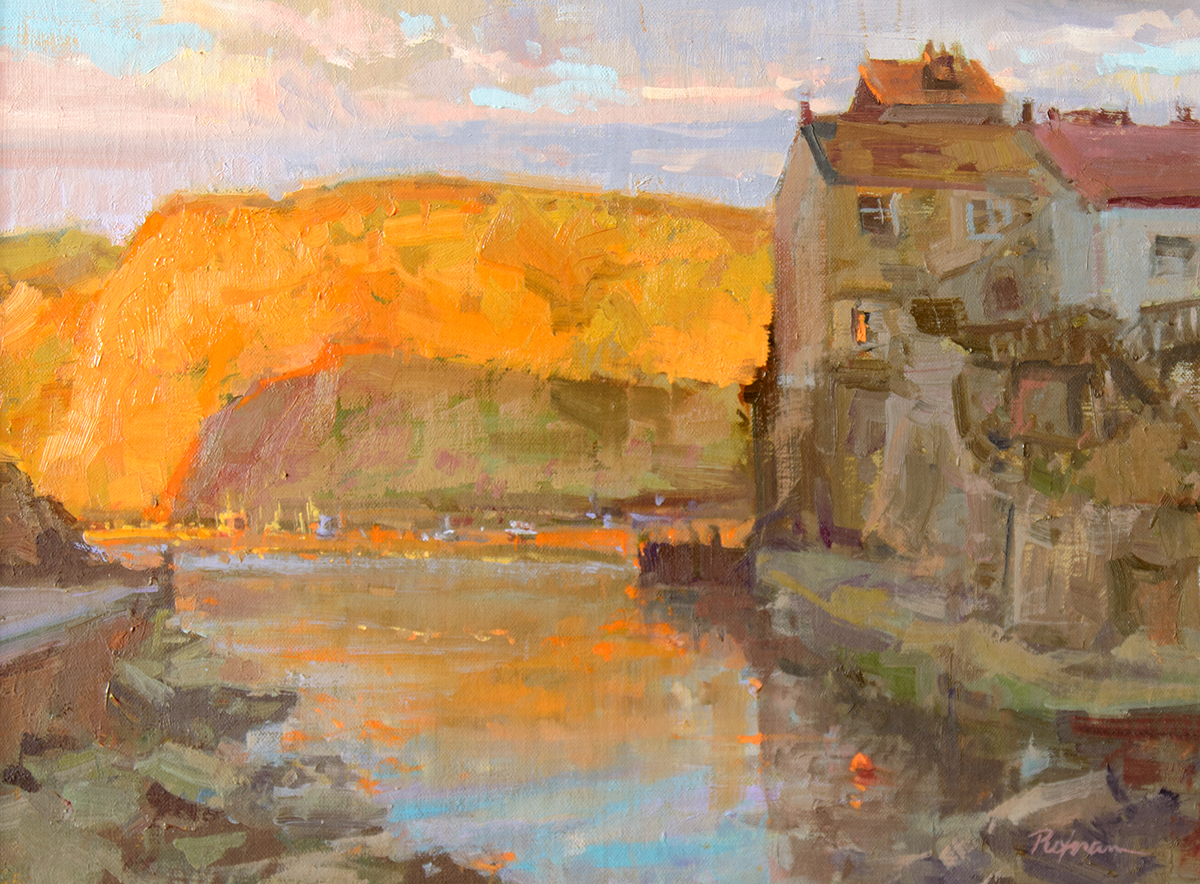
oil painting of sunset over water with a house on the clif on right side
Lori Putnam, “Sun Setting on Penny Nab,” oil, 12 x 16 in. AIS Small Works Exhibition, April 14-May 20. The District Gallery, Knoxville, TN
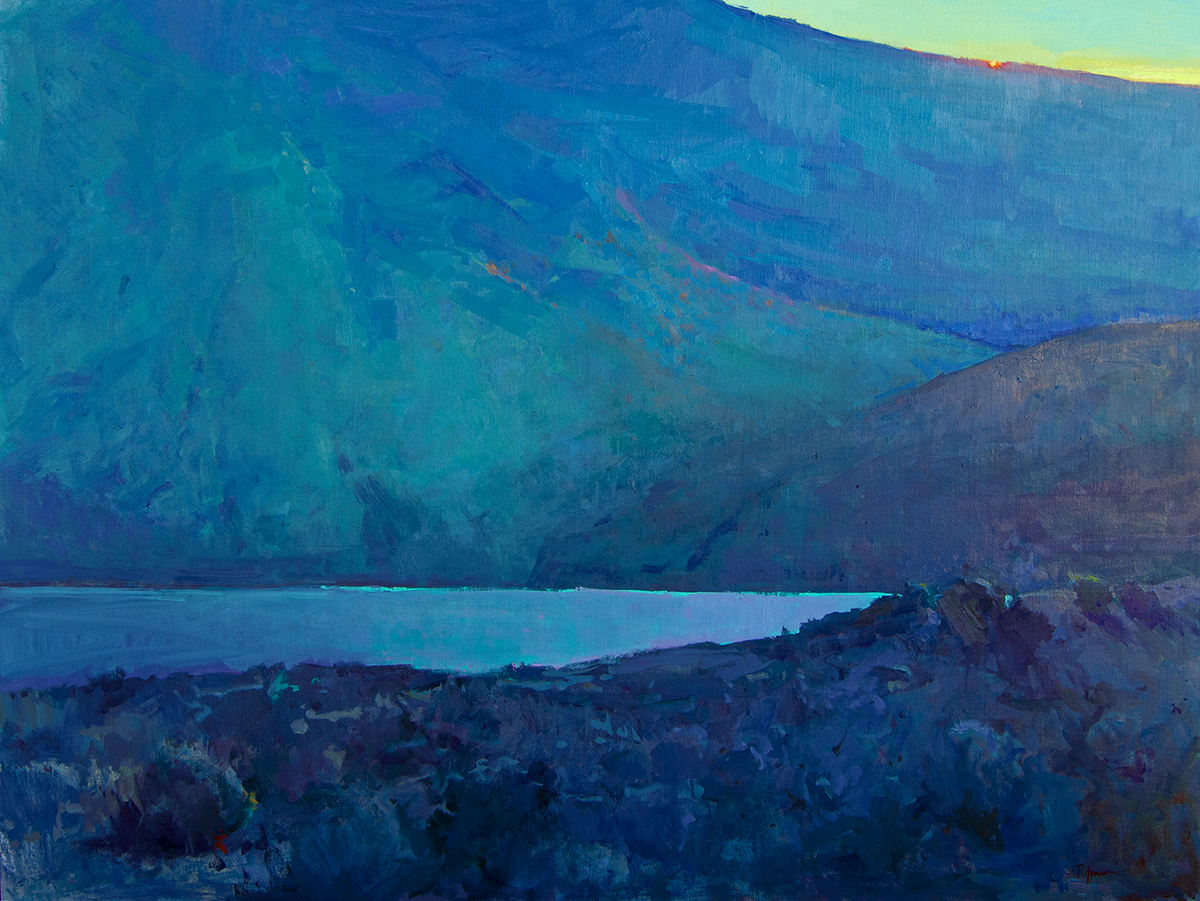
oil painting of mountain range with water flowing through; painting has blue & green tones
Lori Putnam, “Up Before the Dawn,” oil, 36 x 48in. Available at FoR Fine Art, Big Fork, MT

Drawing in Britain, 1700–1900

0
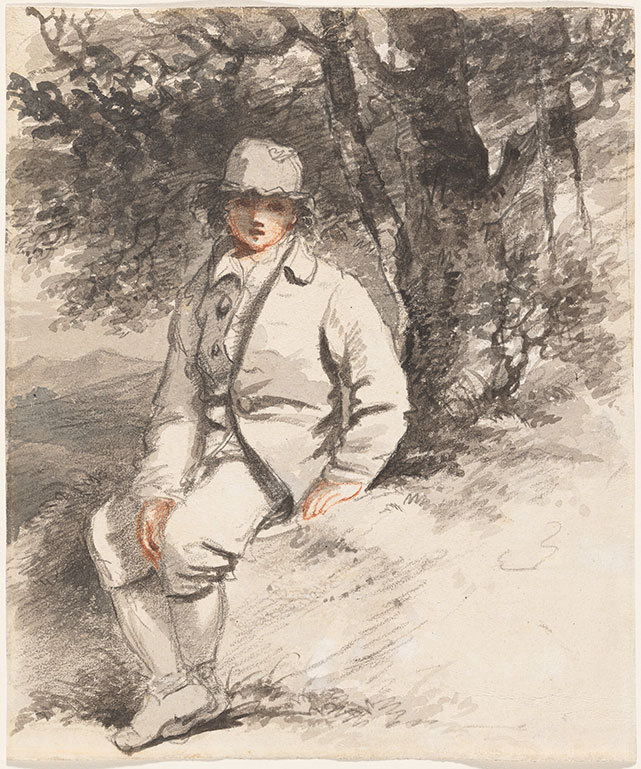
John Hoppner drawing A Young Boy Seated Beneath a Tree
John Hoppner, "A Young Boy Seated Beneath a Tree," c. 1790s/1810, red and black chalk with brush and grey and black ink, Gift of Funds from the Krugman Family Foundation, 2022.78.1

Selected entirely from the National Gallery’s permanent collection in Washington, DC, this exhibition of approximately 80 recently acquired drawings and watercolors provides an overview of two centuries of British art. The exhibition is on view through August 6, 2023.

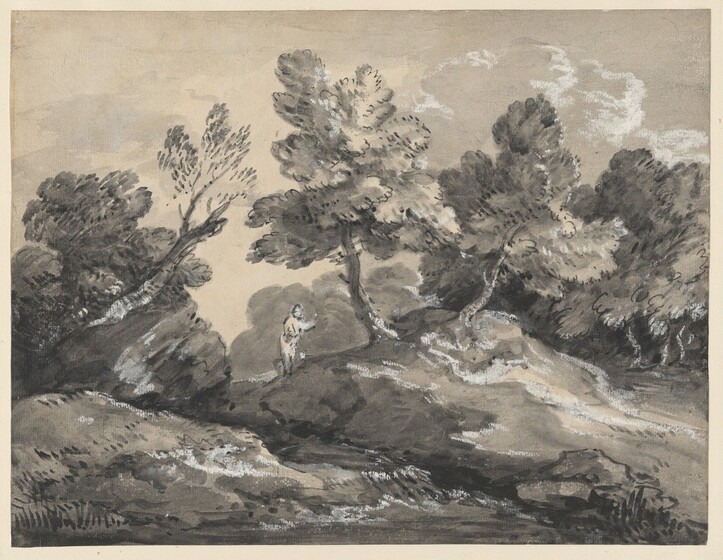
Thomas Gainsborough drawing Rocky Wooded Landscape
Drawing by Thomas Gainsborough, “A Rocky Wooded Landscape with a Figure by a Stream,” 1781, black and gray wash with pen and black ink on tan laid paper, Gift of Donald Stone, 2022.40.56

Works on view reveal European influences on British art starting in the 1700s. They trace the development of watercolor as a national specialty and introduce the varied approaches that emerged during the Victorian era.

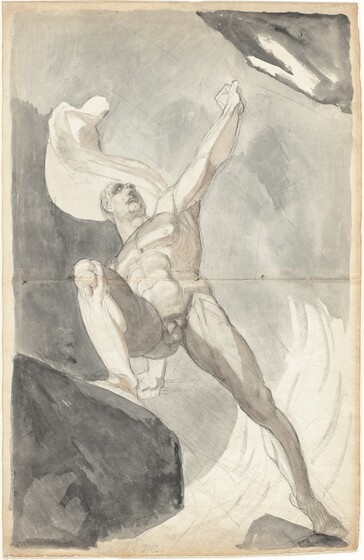
Henry Fuseli Satan Defying the Powers of Heaven
Drawing by Henry Fuseli, “Satan Defying the Powers of Heaven,” late 1790s, graphite, black chalk, and brown and gray wash on laid paper, Purchased as the Gift of Andrea Woodner, 2015.10.1.a

“Drawing in Britain” not only includes significant examples of the landscapes that are traditionally associated with British art, but it also highlights portraits, history scenes, and nude studies. Works by British women provide glimpses into the lives and work of several fascinating yet little-known artists.

The exhibition is curated by Stacey Sell, associate curator of old master drawings, National Gallery of Art, Washington.

The National Gallery of Art, founded as a gift to the nation, serves as a center of visual art, education, and culture. Our collection of more than 150,000 paintings, sculpture, decorative arts, photographs, prints, and drawings spans the history of Western art and showcases some of the triumphs of human creativity. Across 363 days a year, the National Gallery offers a full spectrum of special exhibitions and public programs free of charge.

Discover more art museums and exhibitions here at FineArtConnoisseur.com.

50 Portraits of Veterans, From Every State

0
Watercolor portraits of veterans by Mary Whyte
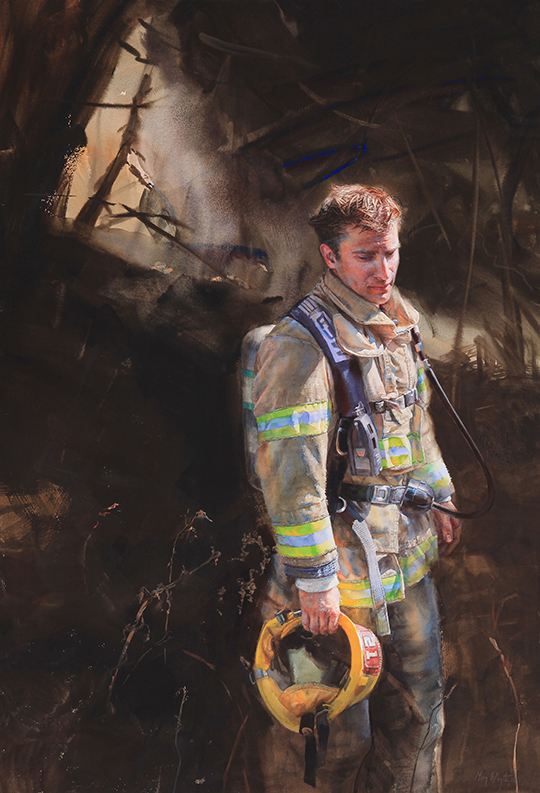
Mary Whyte, "Battleground," Watercolor on paper, 40.75 x 28.75 inches, firefighter, Bend, Oregon, Army

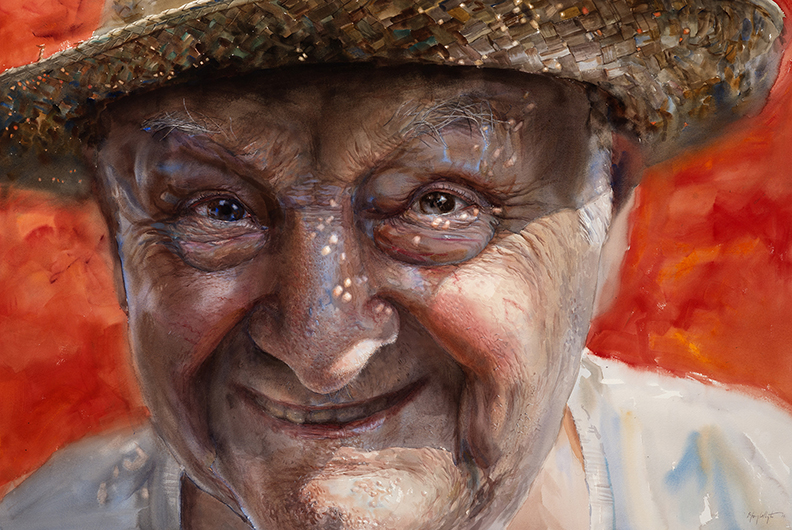
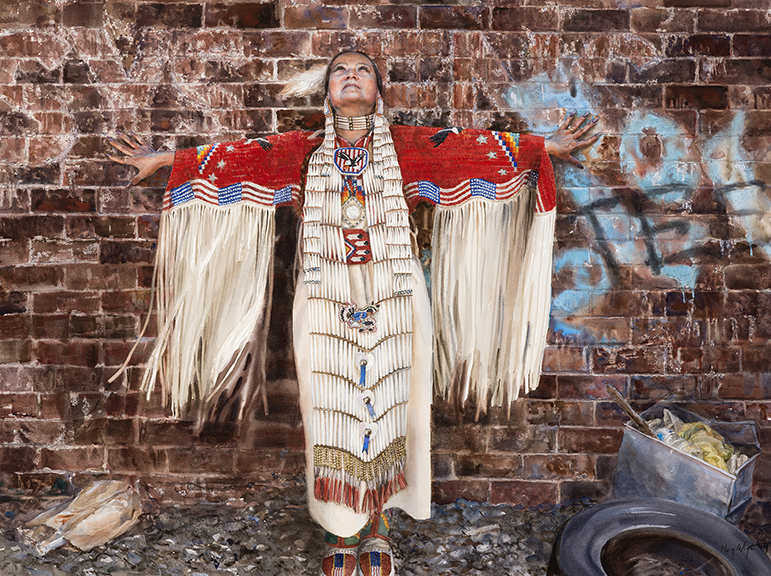
“We the People: Portraits of Veterans in America” is an exhibition of watercolor paintings by Mary Whyte.

“Mary Whyte’s, ‘We the People’ is a moving and important tribute to our nation’s greatest patriots – the men and women who served our country with courage, selflessness, and honor.” Major General James E. Livingston, Medal of Honor

Watercolor portraits of veterans by Mary Whyte
Mary Whyte, “Battleground,” Watercolor on paper, 40.75 x 28.75 inches, firefighter, Bend, Oregon, Army
Watercolor portraits of veterans by Mary Whyte
Mary Whyte, “Tomato Pie,” watercolor on paper, 50.5 x 70.5 inches, gardener
South Plainfield, New Jersey Coast Guard

Now through July 14, 2023, see it in person at the National Museum of the U.S. Army in Fort Belvoir, Virginia. Visit on April 21 for Whyte’s book signing and tour at the museum.

Watercolor portraits of veterans by Mary Whyte
Mary Whyte, “America,” watercolor on paper, 40 x 53 inches, Native American traditional dancer, Aberdeen, South Dakota, Army
Mary Whyte at the National Museum of the U.S. Army

For more details about Mary Whyte’s exhibition of veteran portrait paintings, please visit www.thenmusa.org.

Related: Well-known watercolorist Mary Whyte takes you inside her studio to paint a watercolor portrait from start to finish in her workshop, “Mastering Watercolor Portraiture with Mary Whyte.”

32nd National Juried Exhibition of Traditional Oils

0
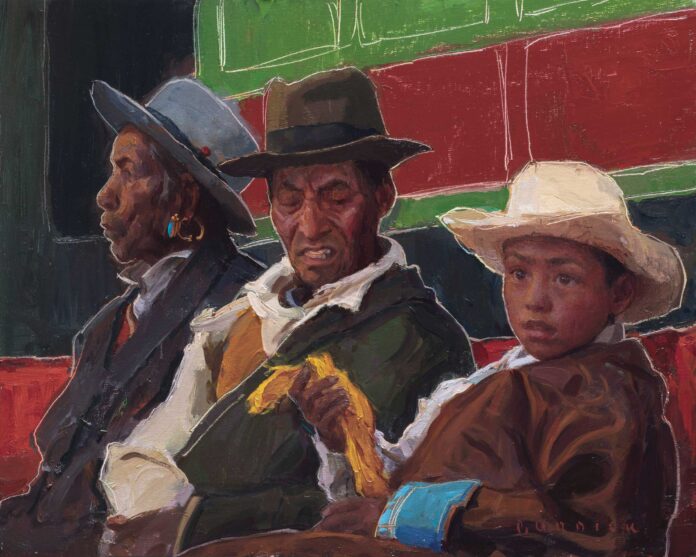
Oil Painters of America - Scott Burdick (b. 1967), "The Hope of Freedom: Tibet," 2022, oil on canvas, 16 x 20 in.
Scott Burdick (b. 1967), "The Hope of Freedom: Tibet," 2022, oil on canvas, 16 x 20 in.

Oil Painters of America > 32nd National Juried Exhibition
Reinert Fine Art
Charleston, South Carolina
oilpaintersofamerica.com and reinertfineart.com
March 26–April 30, 2023

The nonprofit organization Oil Painters of America (OPA) will mount its 32nd National Juried Exhibition of Traditional Oils at Charleston’s Reinert Fine Art this spring. More than 1,800 professional artists from across the U.S. and Canada vied for only 200 spots in this prestigious show.

Among the participants will be a range of OPA’s Master Signature artists: Daud Akhriev, Kathy Anderson, Nikolo Balkanski, Cindy Baron, Roger Dale Brown, Ken Cadwallader, John Michael Carter, James Crandall, Nancy S. Crookston, Howard Friedland, Albert Handell, Nancy Howe, Robert Johnson, David Leffel, Ruo Li, Calvin Liang, Kevin Macpherson, Sherrie McGraw, David Mueller, Ned Mueller, Camille Przewodek, Scott Royston, Patrick Saunders, William Schneider, Michael Situ, William A. Suys, James Tennison, Deborah Tilby, Zhiwei Tu, Jeffrey Watts, and Christopher Zhang.

The show will also feature a display of works by the award winners in OPA’s third annual competition for students aged 14 to 23.

The show’s opening week (March 26–April 1) centers on OPA’s annual convention, which requires pre-registration. Its highlight will occur on March 30, when Master Signature artist Daud Akhriev will, as juror of awards, headline the recognition ceremony. That evening he will distribute approximately $100,000 in cash and merchandise awards, including Best in Show ($25,000). Also on offer that week will be demonstrations, educational presentations, and social events.

Don’t Miss: 2023 Night of Artists Western Art Auction

0
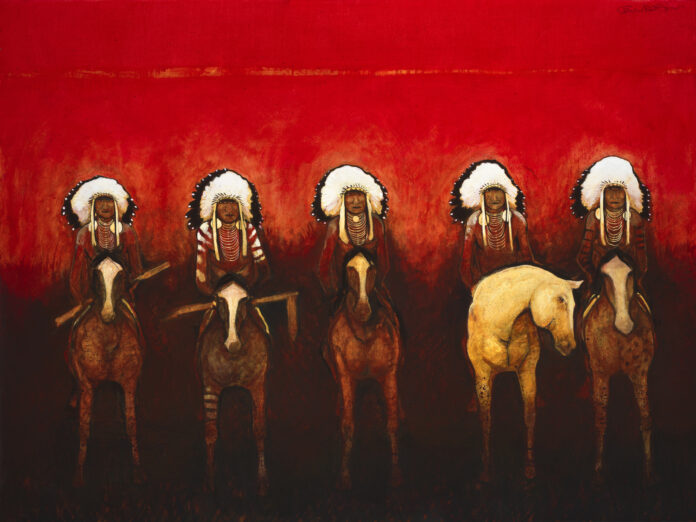
Kevin Red Star, "Parade of Warrior Chiefs - Crow Indians of Montana, USA," acrylic and mixed media on canvas, 30 x 40 in.

Western Art Auction > 2023 Night of Artists
Briscoe Western Art Museum
briscoemuseum.org
March 24–25: Opening Weekend Events, Celebration and Live Auction
March 26–May 7: Public Exhibition and Sale

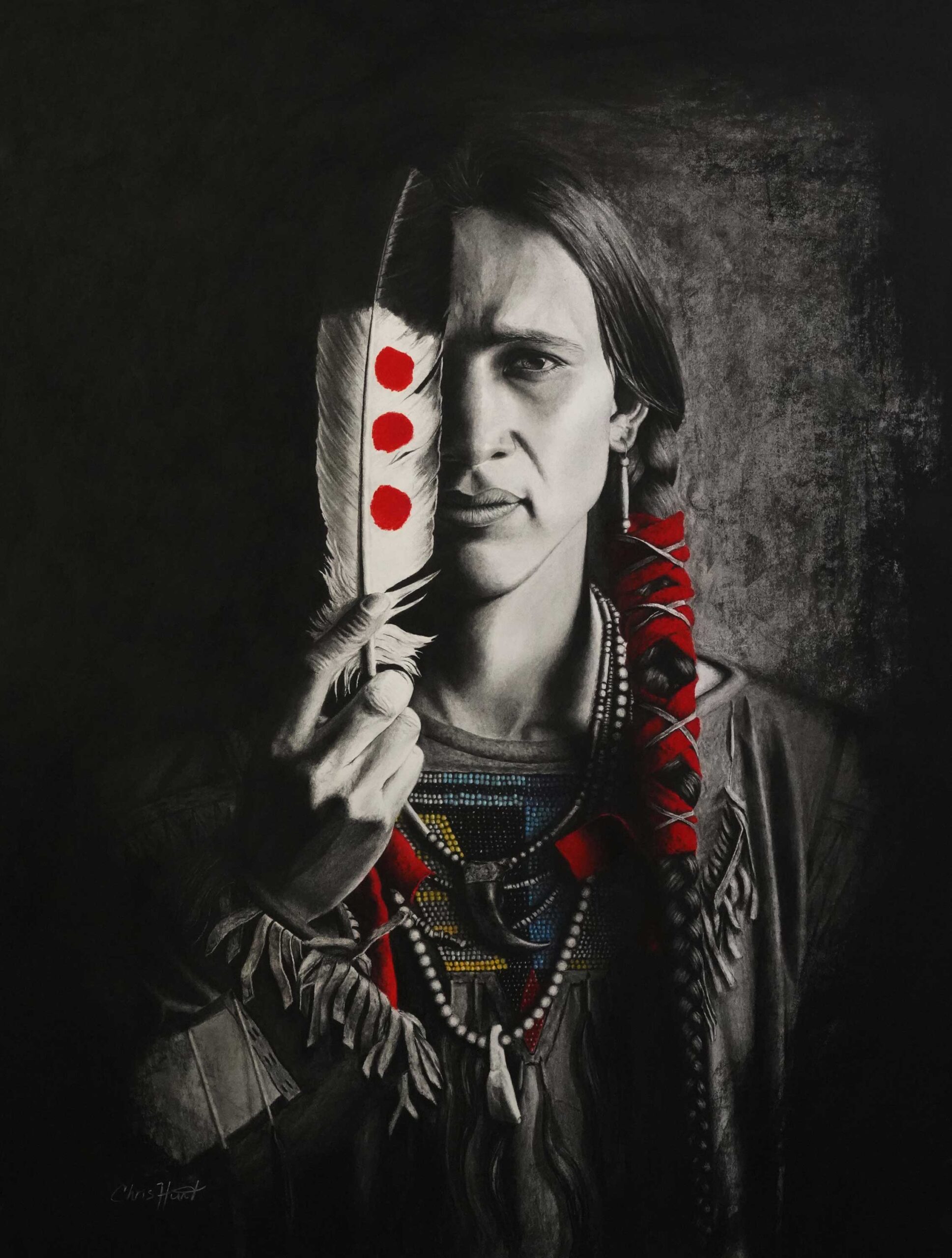
Western art - Chris Hunt, "Counting Coup," charcoal and pastel on paper, 26 1/2 x 35 in.
Chris Hunt, “Counting Coup,” charcoal and pastel on paper, 26 1/2 x 35 in.

From the organizers:

One of the premier Western art events in the world, Night of Artists includes the viewing and sale of over 270 new works of painting, sculpture, and mixed media by more than 75 of today’s leading contemporary Western artists.

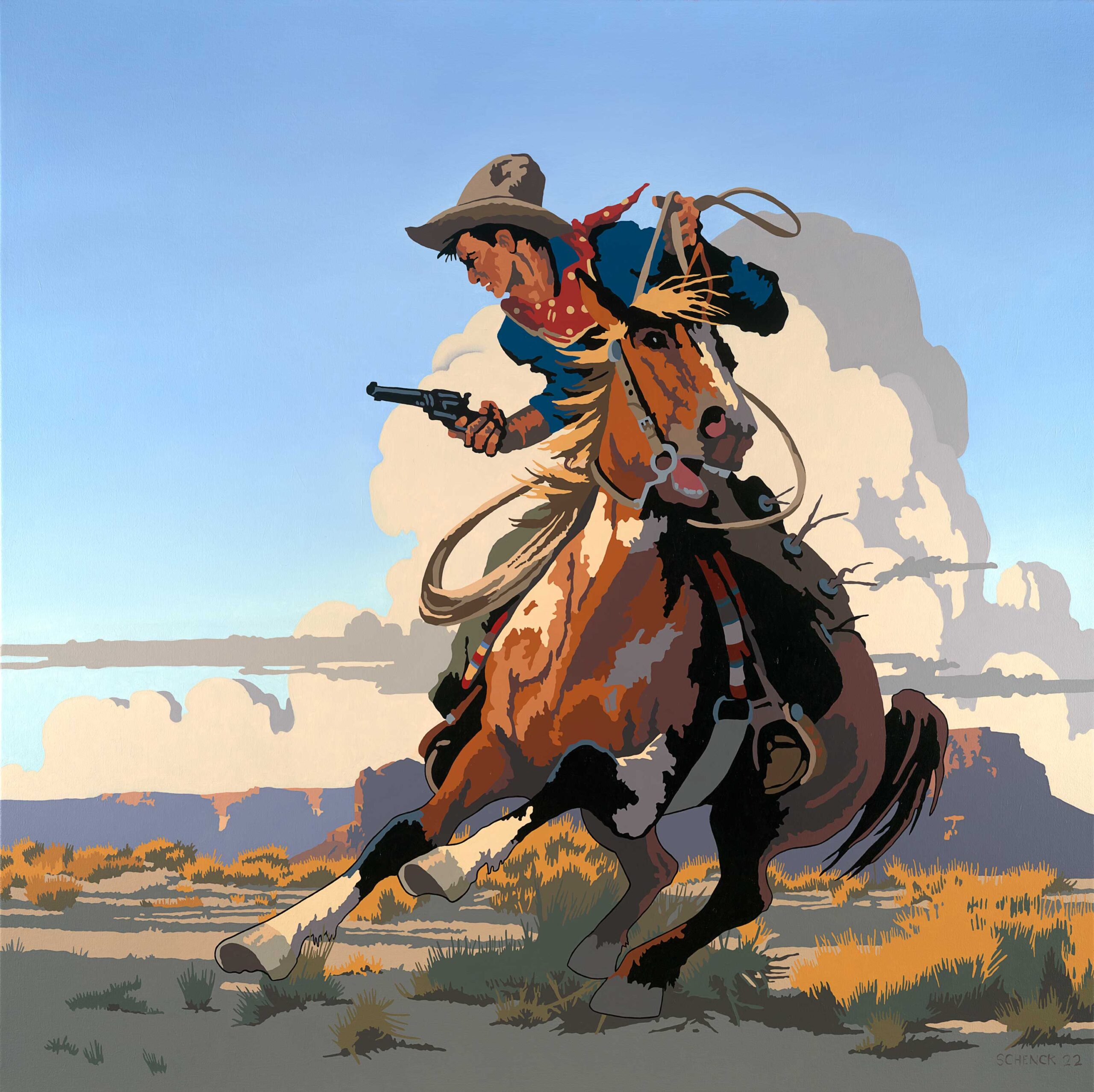
Painting of a cowboy - Billy Schenck, "Rider from the Heart 3 Ranch," oil on canvas, 45 x 45 in.
Billy Schenck, “Rider from the Heart 3 Ranch,” oil on canvas, 45 x 45 in.

The Briscoe Western Art Museum’s 2023 Night of Artists Exhibition and Art Sale includes the Briscoe Collectors Summit, a preview dinner and live auction, an artists’ awards luncheon, the exhibition opening and the popular “Luck of the Draw” sale.

Western art - Jeremy Winborg, "Dream Catcher," oil on board, 24 x 36 in.
Jeremy Winborg, “Dream Catcher,” oil on board, 24 x 36 in.

The public exhibition is a unique opportunity to see a fantastic array of the best of today’s contemporary Western art before the works join private collections, making the opening weekend and the exhibition itself something all art fans should see.

Browse more western art at FineArtConnoisseur.com

Featured Artwork: Manu Saluja presented by Didi Menendez

0
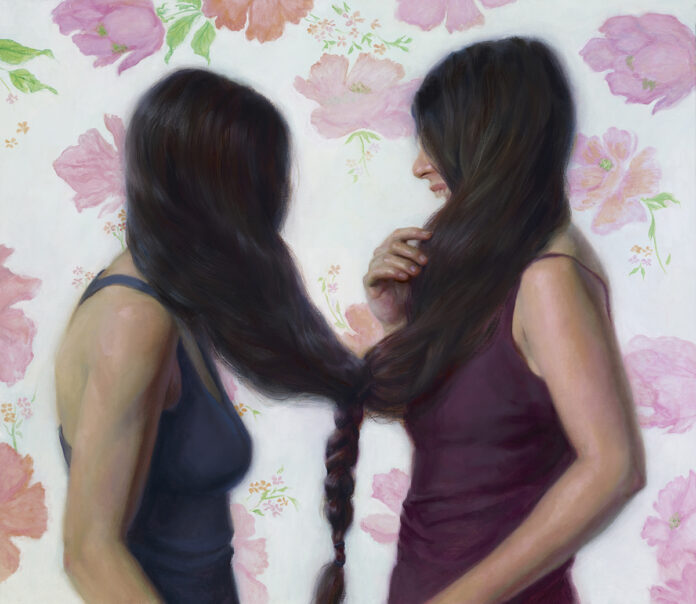
two girls with dark hair braiding and intertwining their hair; flower wallpaper-esque in the background

Unraveling
By Manu Saluja
30 x 26 in.
Oil on canvas
2023

“Unraveling” began as a way to show the bond between siblings but became a deeper expression of the ways in which family keeps us bound to old scripts – difficult to untangle. A central feature of my newer work is both my daughter’s long hair. Their identities as Sikh-American girls and my own intimate experience washing, brushing, and braiding their hair throughout their lives, made it important for me to include in the paintings symbolically and as a tactile feature of the work.

Manu Saluja, “The color and textures found in the backgrounds are inspired by my personal surroundings both past and present from my childhood wallpaper to the urban landscape I lived in for 30 years. I employ a variety of brushwork – from loose, chromatic drips and thick strokes, to more subdued and refined expressions of light flowing over form.”

View more of Manu’s work at https://www.artsy.net/artwork/manu-saluja-the-unraveling

WEEKLY NEWS FROM THE ART WORLD

Fill your mind with useful art stories, the latest trends, upcoming art shows, top artists, and more. Subscribe to Fine Art Today, from the publishers of Fine Art Connoisseur magazine.

  • This field is for validation purposes and should be left unchanged.