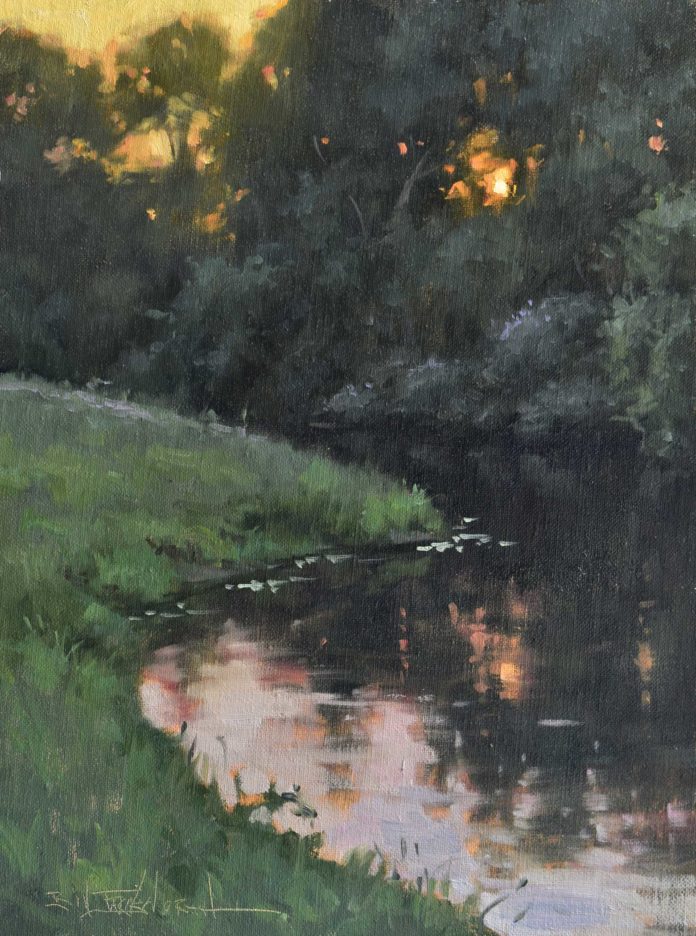
The National Oil & Acrylic Painters’ Society (NOAPS) is presenting its 5th Best of America Small Works National Juried Exhibition at Beverly McNeil Gallery in Birmingham.
On view are 175 works — all measuring 320 square inches or smaller — created by artists from around the world.
The opening week kicked off with a plein air paint-out and competition, followed by the awards presentation and opening reception.
Later, master artists Paula Holtzclaw and Bill Farnsworth will demonstrate their techniques in the gallery.
NOAPS was founded 31 years ago by a group of enthusiastic artists and arts advocates including James Baumgartner, Betty Fitzgerald, Kenneth Gerardy, Martha Mitchell, William R. Mitchell, Joseph Orr, Rita Orr, Pete Peterson, Donald Ruthenberg, and Dennis T. Yates.
> Visit EricRhoads.com to learn about more opportunities for artists and art collectors, including retreats, international art trips, art conventions, and more.
> Sign up to receive Fine Art Today, our free weekly e-newsletter
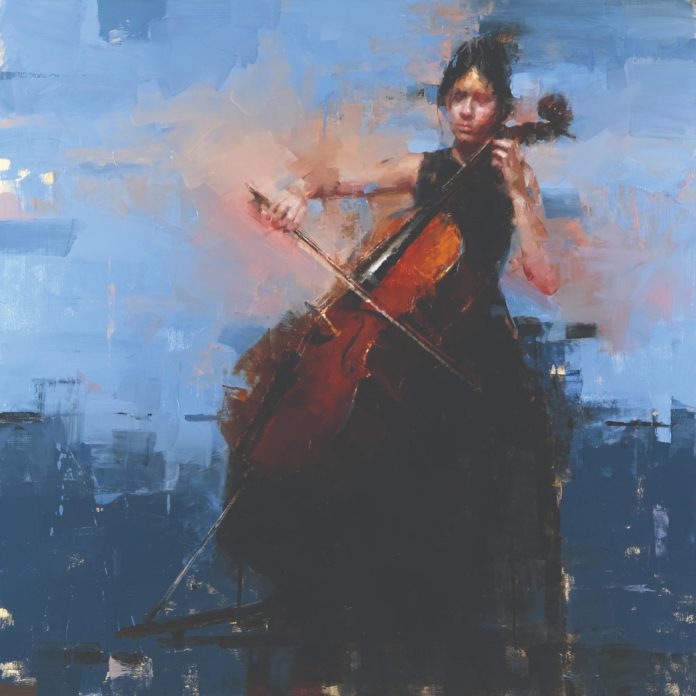
JACOB DHEIN (b. 1978), Classical Musician #3, 2020, oil on panel, 39 x 39 in., collection of the artist
There is a lot of superb contemporary realism being made these days; this article by Allison Malafronte shines light on a gifted individual.
The artist JACOB DHEIN (b. 1978) paints a variety of subjects — city streets slick with rain, performing artists in dynamic motion, nudes, portraits — in such a manner that it seems as if the image is comprised of both paint and megapixels. In some images, the duality between digital influence and painterly tradition is held in perfect tension; in others, sections of realism break open into energetic explosions of color, dragged palette-knife streaks, and slashing brushstrokes. In still others, there is an almost classical stillness to the form and tonalist palette Dhein uses to portray more atmospheric motifs.
When it comes to subjects for his portraits and figures, this artist finds interest in a variety of people, in particular other creatives. Mid-movement stills of ballerinas dancing across the canvas are a common theme, as are portraits of various types of musicians.
In his painting “Classical Musician #3,” for instance, Dhein pays homage to a gifted cellist. “The classical arts are a great source of inspiration,” he shares. “Recently a professional cellist gave an elegant private performance during a modeling session, and it was a very unique experience. Getting to know the musician personally also helped stimulate my creativity. After experiencing such grandeur, my goal was to create something beautiful with a modern twist, by combining a contemporary and traditional approach.”
Dhein’s penchant for traditional and contemporary was acquired both from artists he admires and his self-education and experimentation. He received his B.F.A. from the University of Wisconsin (Oshkosh) in 2006. Upon graduating, he held a day job while continuing to pursue further education through workshops and taking on portrait commissions. In 2009 Dhein committed to painting full-time. Realizing he needed to extend his education further, he decided to earn his M.F.A. from Academy of Art University (San Francisco). He graduated in 2014, and began teaching drawing and painting there that same year.
> Visit EricRhoads.com to learn about more opportunities for artists and art collectors, including retreats, international art trips, art conventions, and more.
> Sign up to receive Fine Art Today, our free weekly e-newsletter
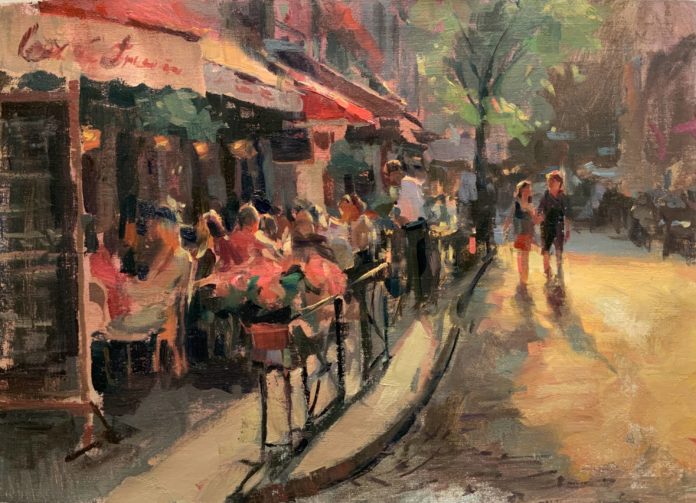
James Richards AISM, "The Cafe," 11 x 14 in., Oil, $2800
6th Annual AIS Impressions Small Works Showcase 2022
Wilder Nightingale Fine Art
Taos, New Mexico
May 12-June 19, 2022
The American Impressionist Society’s 6th Annual Impressions Small Works Showcase will open on May 12, 2022 at Wilder Nightingale Fine Art in Taos, New Mexico.
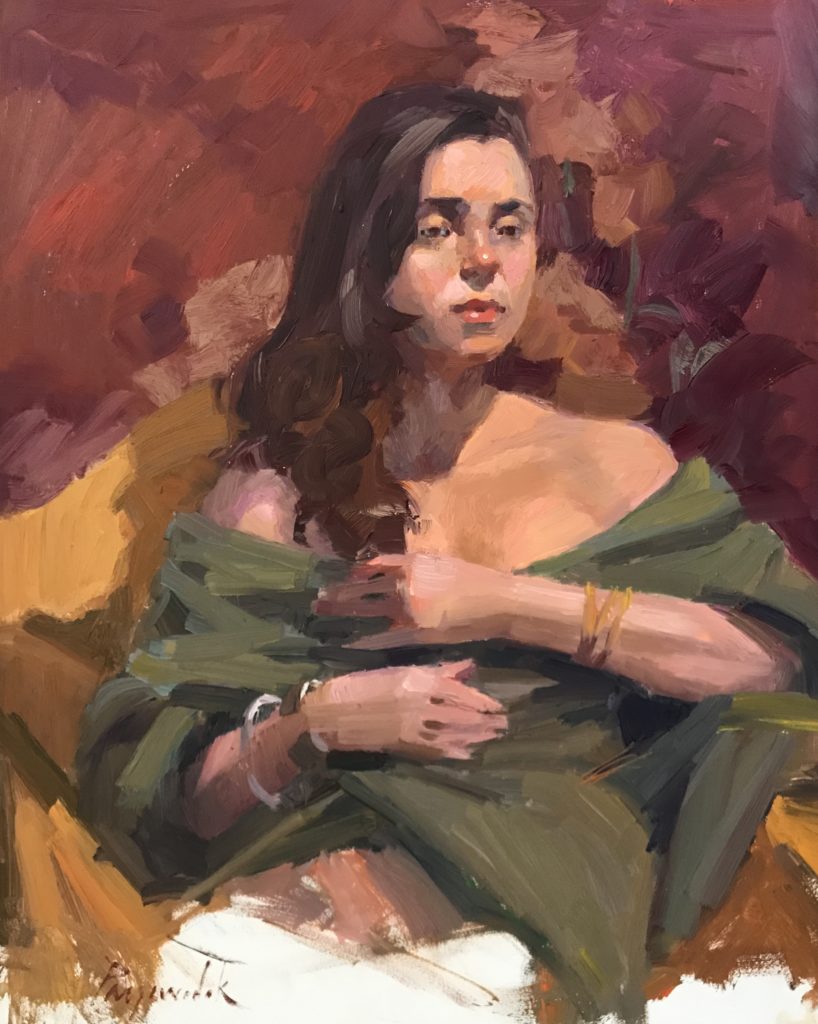
Camille Przewodek AISM, “Girl in Green Shawl,” Oil, 14 x 11 in., $2700
The opening reception including a Wet Wall Show will be Saturday, May 14 with over $15,000 in prizes/awards. The Awards Judge is James Richards AISM who resides in Cornelia, Georgia. Richards will teach a two day workshop on location at the Fechin Studio at the Taos Art Museum as well as a demo and critique.
The exhibition will feature approximately 150 works of art selected through a five member jury. An additional 20 paintings from AIS Masters, Board, Officers and Founder will be on display. All work is available for purchase and can be viewed on the AIS website. The exhibition will close on June 19, 2022.
The opening week includes a workshop, demo, studio tours, critiques and panel discussion. All AIS members are encouraged to participate in a Paint Out with no fee to participate in any event except the workshop.
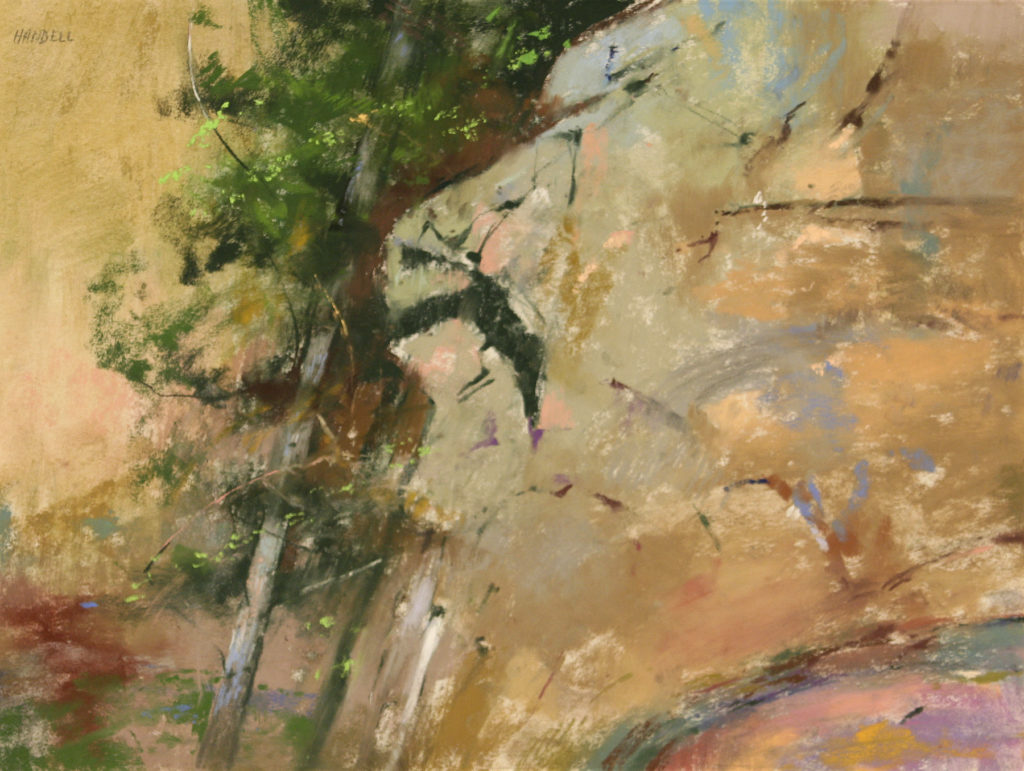
Albert Handell AISM, “Somewhere,” Pastel, 11 x 15 in., $6000
2nd Annual AIS Associate Member Online Exhibition
The American Impressionist Society’s 2nd Annual Associate Member Online Exhibition features approximately 250 works of art selected through a five member jury. The live Awards Ceremony is April 30, 2022. The Awards Juror is Signature Member Ann Larsen.
All work is available for purchase and can be viewed on the AIS website on April 30, 2022. Over $5,000 in prizes/awards will be presented.
> Visit EricRhoads.com to learn about more opportunities for artists and art collectors, including retreats, international art trips, art conventions, and more.
> Sign up to receive Fine Art Today, our free weekly e-newsletter
On View: “Murillo: Picturing the Prodigal Son”
The Meadows Museum
Dallas, Texas meadowsmuseumdallas.org
through June 12, 2022
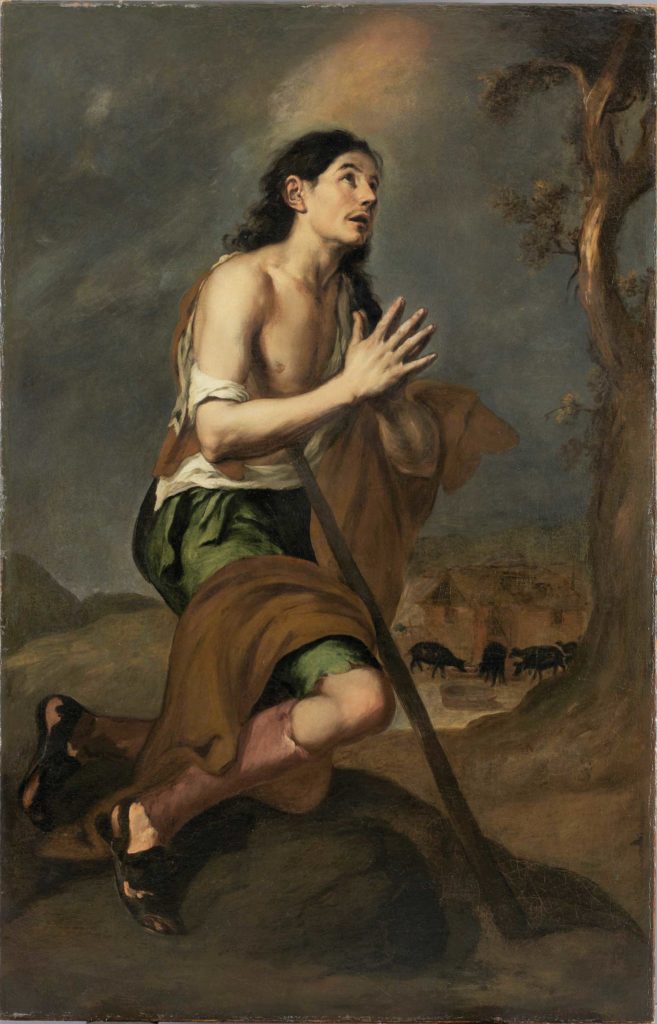
Bartolomé Esteban Murillo (1617–1682), “The Prodigal Son Among the Swine,” 1656–65, oil on canvas, 63 5/8 x 41 1/8 in., Hispanic Society of America, New York, LA1791
The Meadows Museum is home to America’s largest collection of paintings by the 17th-century Spanish master Bartolomé Esteban Murillo, and thus a logical home for the exhibition “Murillo: Picturing the Prodigal Son.”
The artist depicted six episodes from this famous biblical parable, all now in the collection of the National Gallery of Ireland and recently conserved.
Making their first and only visit to the U.S. this season, they are accompanied by relevant works from the Meadows’s rich collection and important loans from other institutions.
Having already been shown at Madrid’s Museo Nacional del Prado, the exhibition was organized at the Meadows by curator Amanda W. Dotseth, who became its interim director last year after the untimely death of its longtime director Mark A. Roglán, who had instigated the project.
> Visit EricRhoads.com to learn about more opportunities for artists and art collectors, including retreats, international art trips, art conventions, and more.
> Sign up to receive Fine Art Today, our free weekly e-newsletter
As part of our effort to continue to help artists and art galleries thrive, we’re proud to bring you this week’s “Virtual Gallery Walk.” Browse the artwork below and click the image itself to learn more about it, including how to contact the gallery.
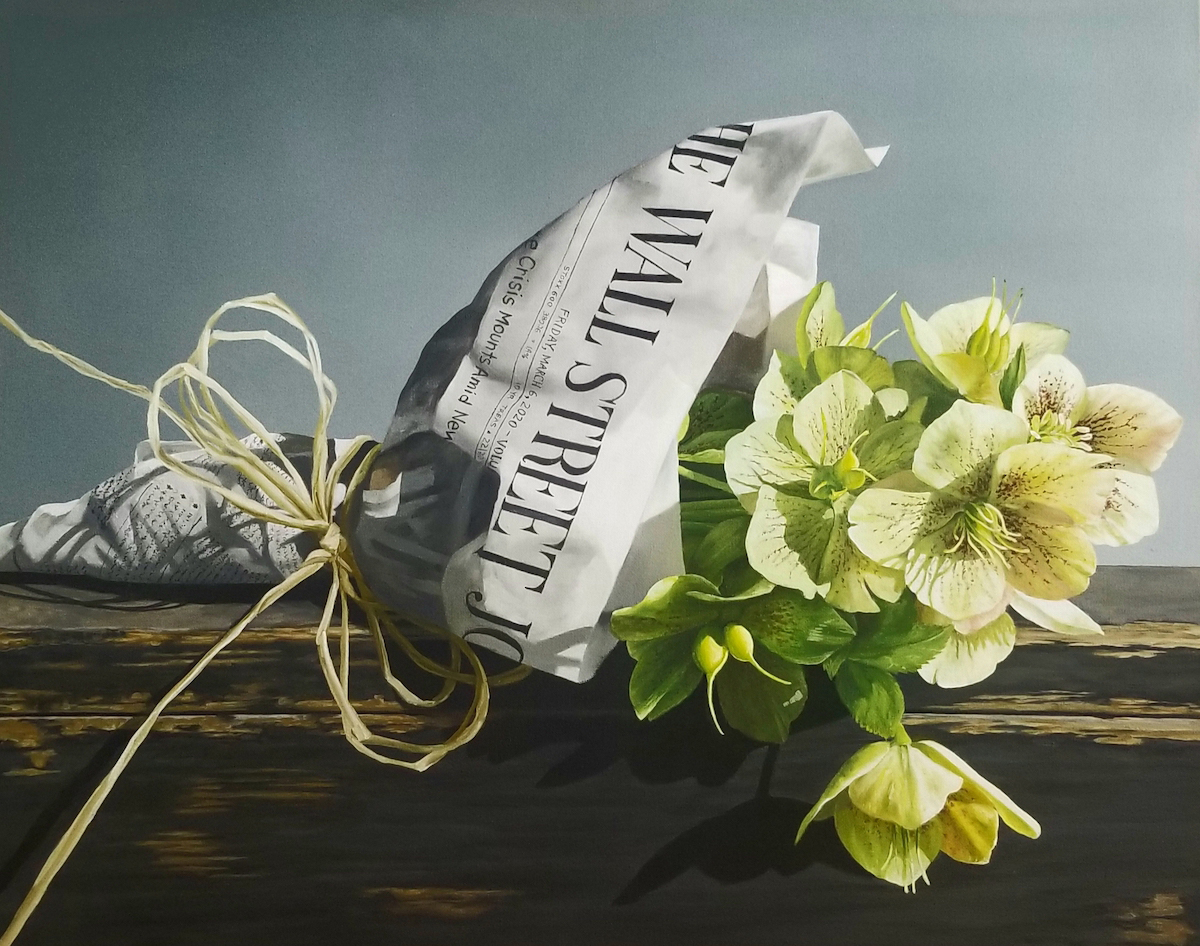
Lenten Rose in Wall Street Journal, Loren Di Benedetto, oil, 24 x 30 in; Anderson Fine Art Gallery
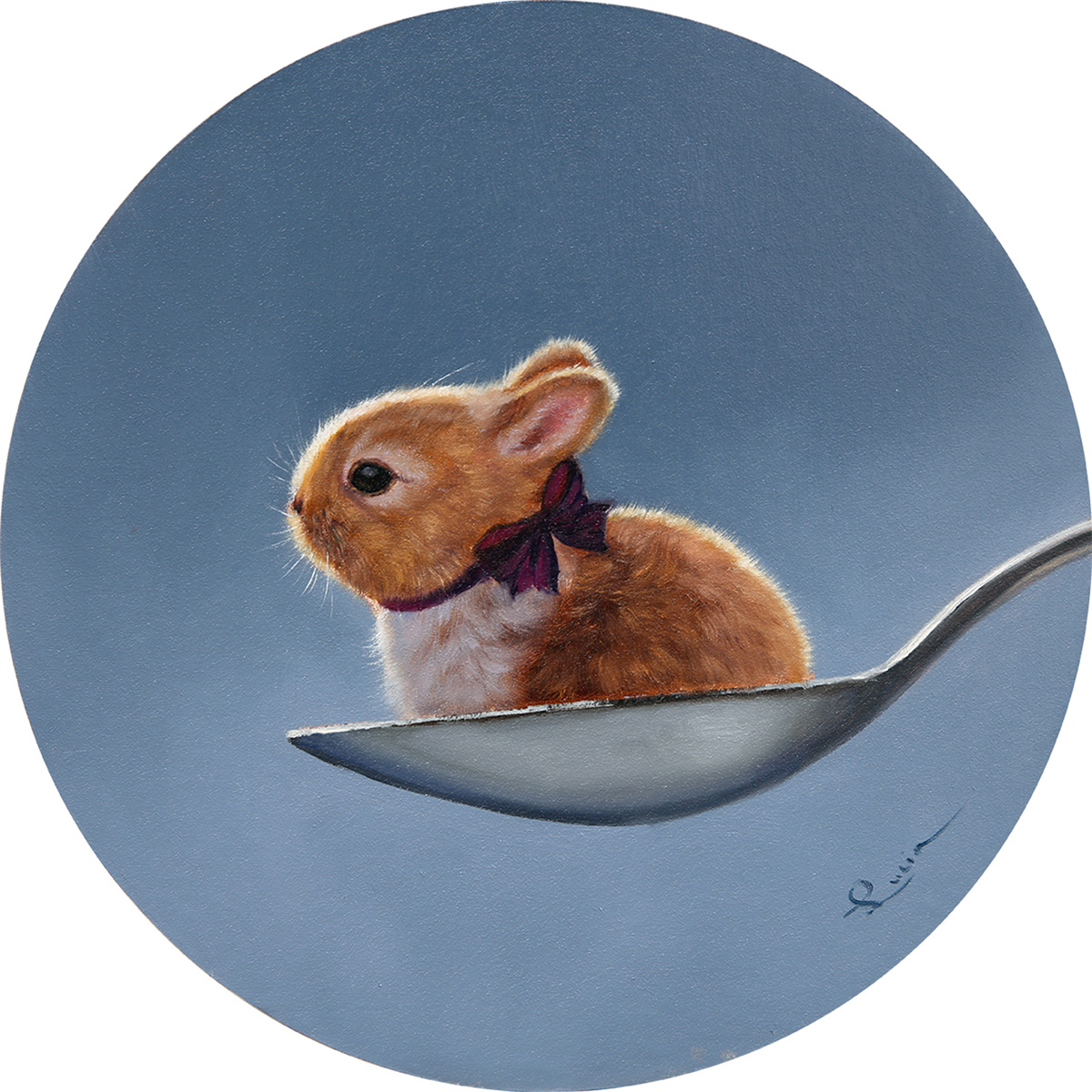
Sugar, Lucia Heffernan (Born 1966), Oil on panel, 10 x 10 in; Signed; Rehs Contemporary
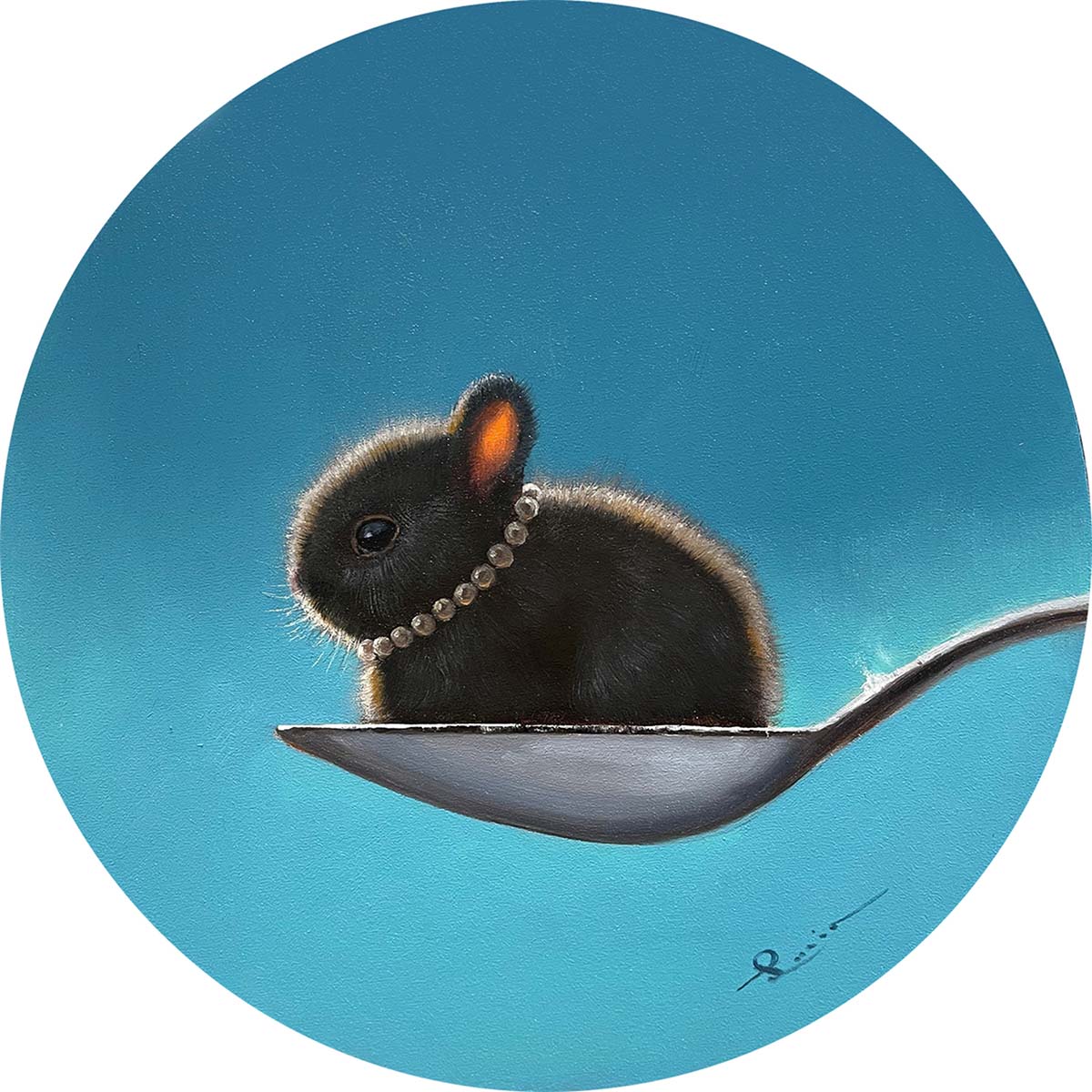
Spice, Lucia Heffernan (born 1966), oil on panel, 10 x 10 in; Signed; Rehs Contemporary
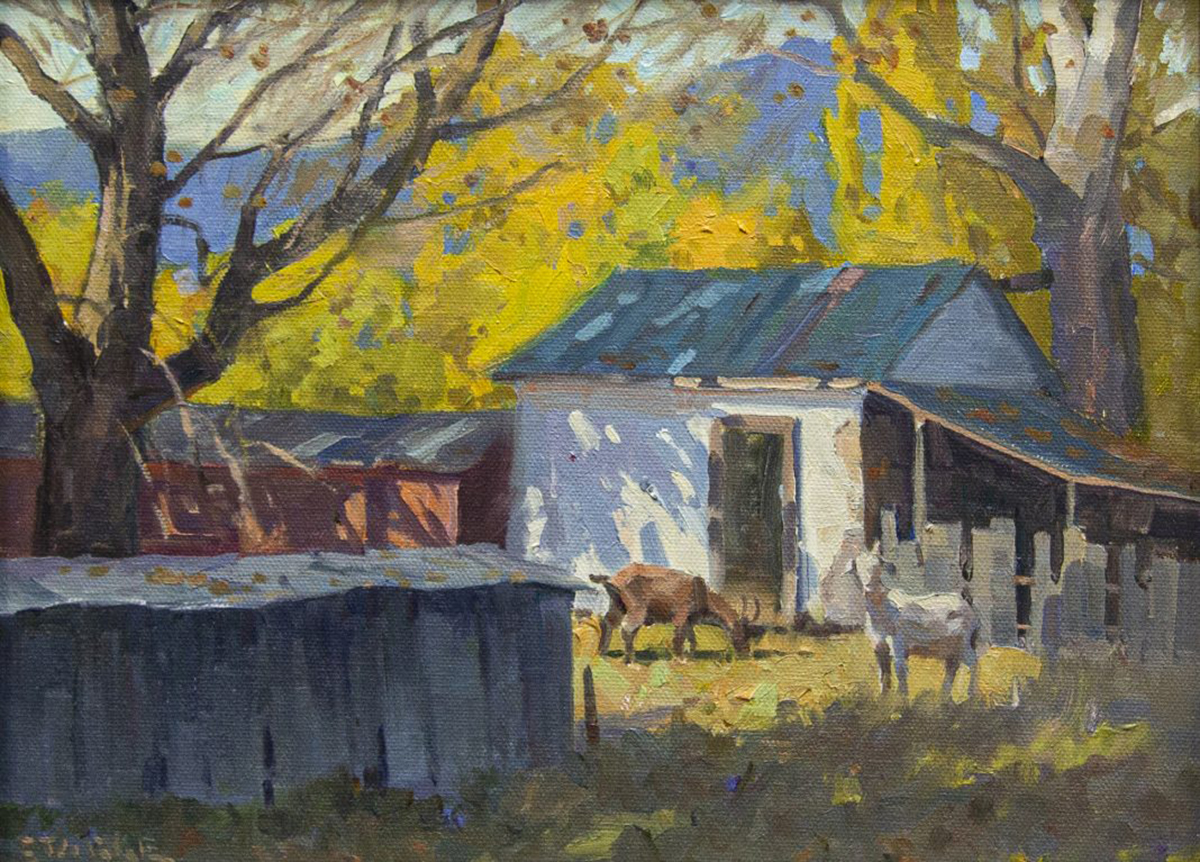
Goat Farm – San Patricio, New Mexico, Phil Starke, oil, 9 x 12 in; Artzline.com
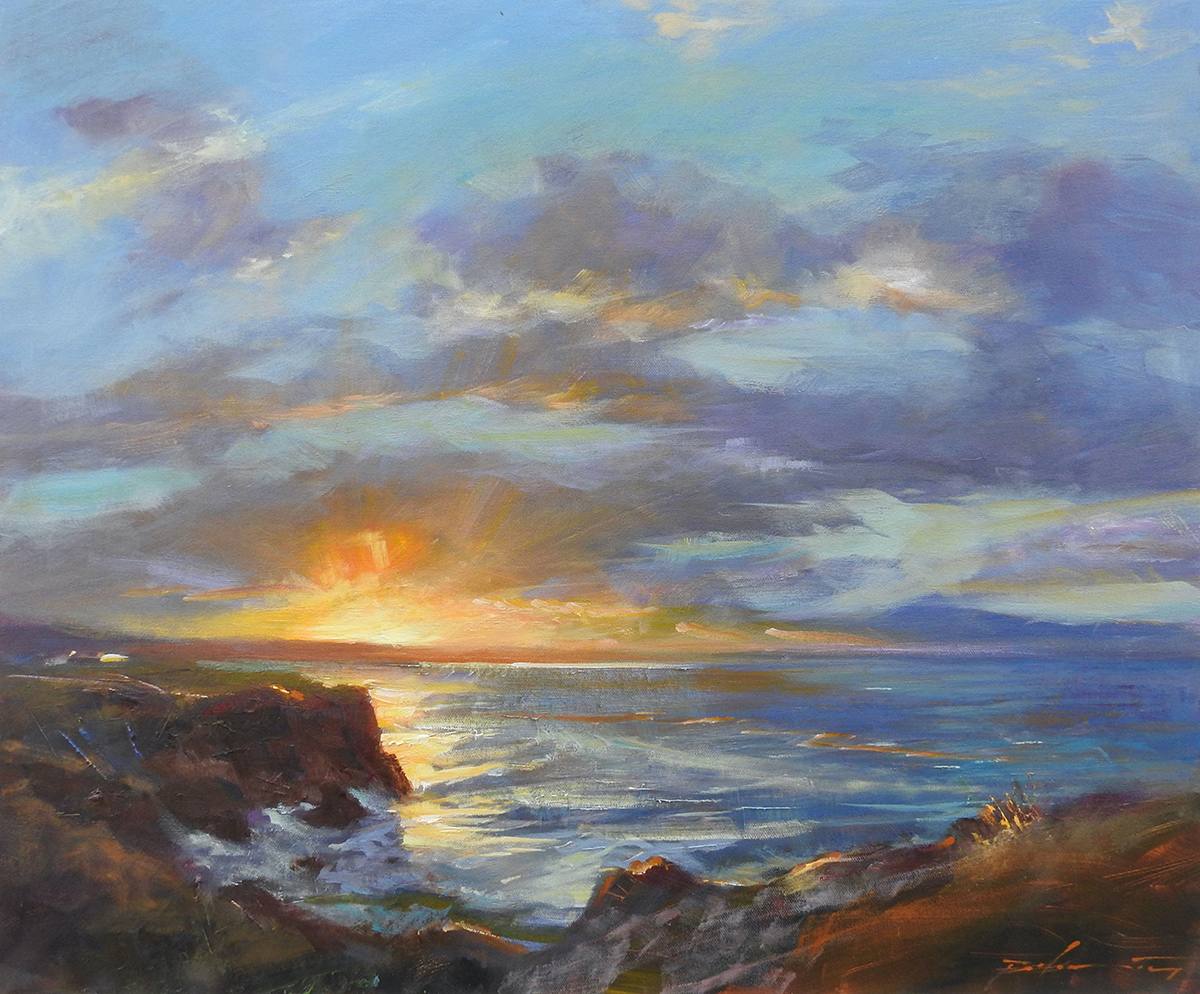
Evening Choir, Rick J Delanty, Acrylic, 20 x 24 in; LPAPA Art Gallery; RICK J. DELANTY & SHUANG LI “Making a Splash in Acrylics & Watercolors!” April 7th thru May 2nd, 2022
Want to see your gallery featured in an upcoming Virtual Gallery Walk? Contact us at [email protected] to advertise today. Don’t delay, as spaces are first come, first served, and availability is limited.
As part of our effort to continue to help artists and art galleries thrive, we’re proud to bring you this week’s “Virtual Gallery Walk.” Browse the artwork below and click the image itself to learn more about it, including how to contact the gallery.
Want to see your gallery featured in an upcoming Virtual Gallery Walk? Contact us at [email protected] to advertise today. Don’t delay, as spaces are first come, first served, and availability is limited.
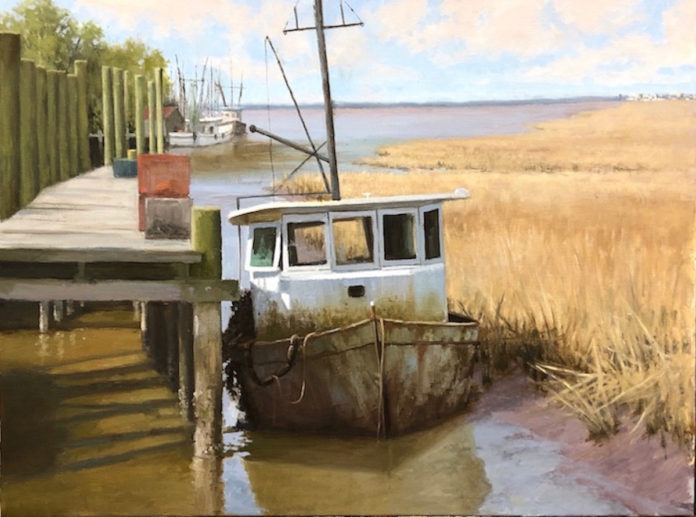
Beverly Evans, Stuck at Low Tide, 18 x 24in, oil on linen, available through SEWE
How did you get started and then develop your career?
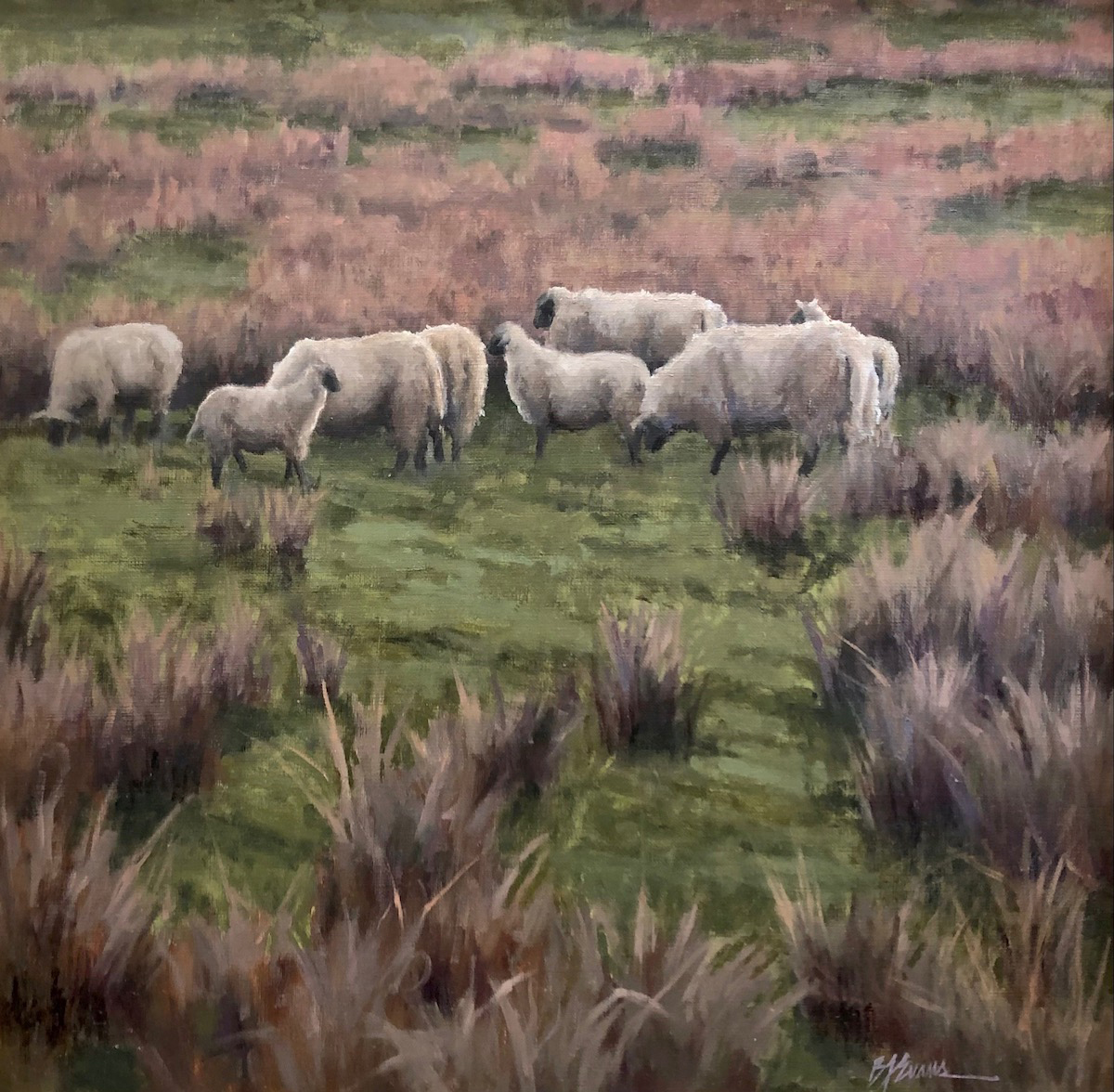
Beverly Evans: I began my painting career in 2002 after a successful career as an interior designer. Art has always been a part of my life since I was a child. Placing fine art in my customers homes was one of the most rewarding parts of my job as a designer. I finally got the opportunity to jump into being an artist and I took it. I haven’t looked back. I am so blessed to continue to grow and explore this gift of art, this passion to create and be able to make a living doing what I love.
How do you find inspiration?
Beverly Evans: My inspiration comes from enjoying and observing the beautiful world and animals created for us. The best part about being an artist for me is to watch people enjoy my work. Watching them mentally or emotionally travel to a special place or memory, that is evoked by viewing one of my paintings, is so very special.
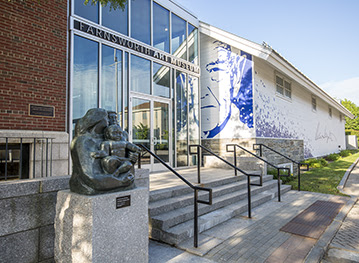
The Farnsworth Art Museum (Rockland, Maine) has announced the completion of a four-year fundraising campaign to strengthen the museum, allowing it to better serve its growing audiences locally, regionally, and across the nation. Entitled “Building Tomorrow’s Farnsworth,” gifts to the campaign increased the museum’s endowment, satisfied a long-term legacy debt, and enhanced its financial operations.
“The Farnsworth ends this year stronger than ever because of one reason: The goodwill of its donors,” commented Farnsworth Board President Gerald A. Isom. “We managed to get through the raindrops without getting soaked, thanks to the excellent support of our museum members, friends, foundations, and community organizations.”
As part of the campaign, contributors donated more than $2.2 million to permanently fund the Phyllis Wyeth Chair for Learning and Engagement at the Farnsworth, an enthusiastic affirmation of support for the museum’s nationally recognized education programs. As the first director, Gwendolyn Loomis Smith, who joined the Farnsworth in 2021, will lead the museum’s efforts in education, community outreach, and collaborative partnerships.
The museum also upgraded its facilities with improvements to its auditorium, including audiovisual capabilities, its native gardens on Main Street and along the walk to the Wyeth Center, created new audio tours, and many other campus improvements. The Farnsworth’s online experience was also enhanced with a new digital learning studio and investments in technology and marketing.
Closed just 101 days in 2020, the Farnsworth lifted all pandemic restrictions in June of 2021. Prior to the pandemic, the museum served some 72,000 visitors. Visitation is now rebounding with last summer’s attendance surpassing seasonal admissions from 2020. During the pandemic, online attendance grew dramatically with online lectures, events, and art classes.
“The crisis pushed us to be creative and flexible, and it certainly underscored the need to strengthen and sustain our institution to meet future challenges and opportunities,” said Farnsworth Director Christopher J. Brownawell.
Philanthropic support also helped the museum look forward to the future. The Farnsworth recently completed a two-year master planning process that includes a comprehensive survey of all buildings and structures on its architecturally diverse campus in the heart of Rockland. The plan also provides a framework for future capital improvements and investments. The Olson House—a National Historic Landmark in Cushing and the subject of more than 300 works by Andrew Wyeth—is also among the top priorities.
In 2019, the Farnsworth received a prestigious Save America’s Treasures grant from the National Park Service, enabling it to conduct a historic structures assessment. This assessment will guide restoration and preservation efforts at the house, portions of which likely date to the late 18th century.
“The Farnsworth’s community of supporters responded to the museum’s needs with the grit and determination legendary of Mainers,” said Isom. “It has been a transformative time, one which will be remembered for the individuals and groups whose generosity ensured a bright future for the Farnsworth and expanded its ability to serve its community.”
Founded in 1948, the Farnsworth was the first museum in Maine to be accredited by the American Alliance of Museums, in 1973, and provides an annual economic impact of $58 million to the region. Visit the art museum online at farnsworthmuseum.org.
> Visit EricRhoads.com to learn about more opportunities for artists and art collectors, including retreats, international art trips, art conventions, and more.
> Sign up to receive Fine Art Today, our free weekly e-newsletter covering art museum news, galleries, and more
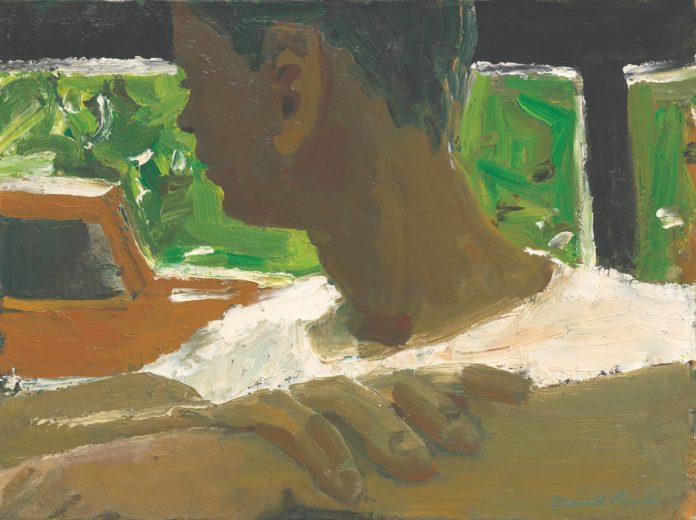
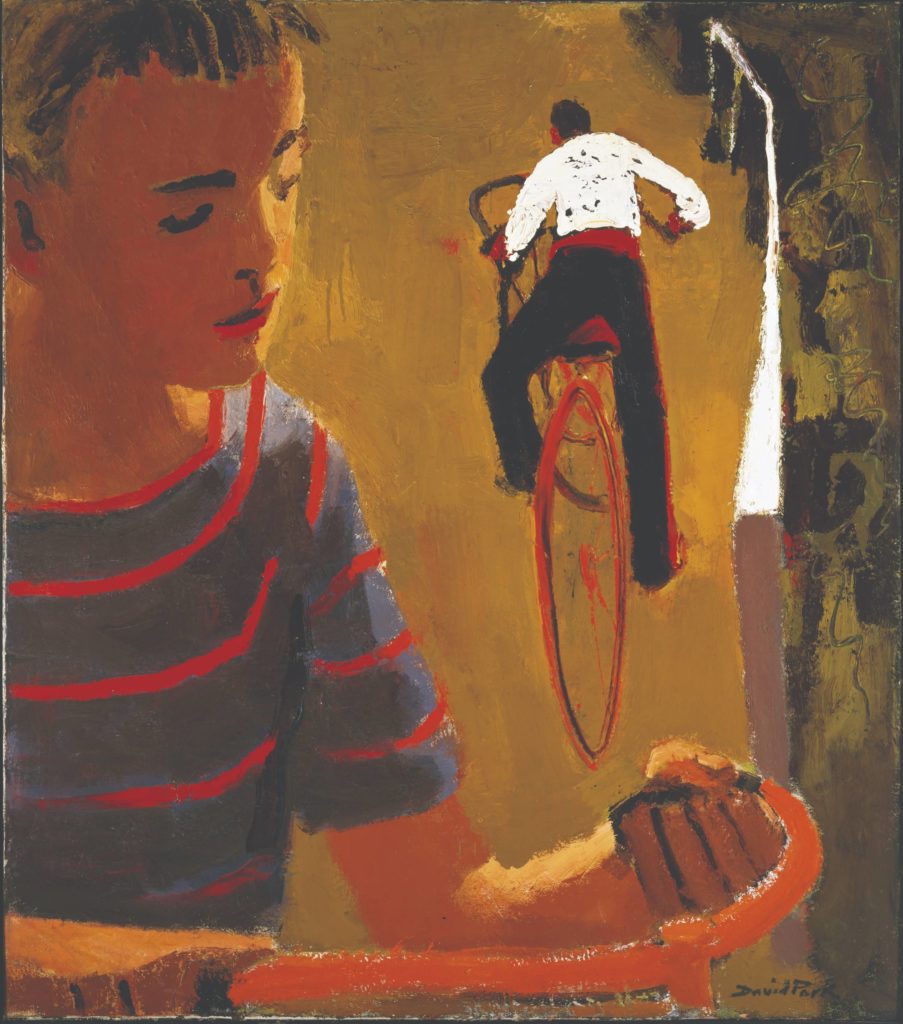
David Park, "Boy and Car," 1955, oil on canvas, 18 x 24 in., private collection
A look at the dramatic shift of David Park (1911–1960), an abstract painter who later became one of the founders and most prolific practitioners of the Bay Area Figurative Art Movement.
Figuring it Out
By David Masello
The two Bay Area softball-league teams took to the field for another game. The team known as the Figs (composed of figurative painters) appeared to be the aesthetic underdogs against the Creepy Crawlers (abstract expressionists) — especially during seasons from the mid-1940s to the early 1950s. That’s when the loudest roars from the bleachers favored abstraction, the preferred style. While the scores of those games are not recorded for posterity, the debate continues as to which team won.
When the painter David Park (1911–1960) took to the field for the Figs, while he was teaching at San Francisco’s California School of Fine Arts from 1944 to 1952, he could actually have played on both teams. Park, who soon became one of the founders and most prolific practitioners of the Bay Area Figurative Art Movement, had previously painted abstract works, almost all of which he destroyed. (Legend has it that, around 1950, he either burned the canvases or tossed them into a dump.) Though he embraced figuration, he produced art that still flirted with abstraction.
This dramatic shift, which lasted until his death at the age of 49, was celebrated and revealed to its fullest glory in “David Park: A Retrospective,” a show of 125 works mounted by the San Francisco Museum of Modern Art (SFMoMA).
“David Park charted his own path at a moment when painting from the figure was anything but the cool thing to do,” says Janet Bishop, SFMoMA’s chief curator and curator of painting and sculpture, who conceived and realized this project. “He painted in the abstract view in the postwar period, when the most interesting avant-garde painters on both coasts were doing the same. But it never felt authentic to him. When he stopped doing those works, he went on to make some of the most powerful figurative canvases of the 20th century.”
By embracing the human form, especially in motion — nudes wading in a river, jazz musicians blowing horns and fingering saxophones, a balloon seller working a city street — Park proved, ironically, to be the radical artist of his time, not his contemporaries, who included the likes of Jackson Pollock and Clyfford Still.
In fact, Park’s friend Richard Diebenkorn, upon seeing one of those early figurative works, “Kids on Bikes” (1950), said, “My God, what’s happened to David?” — as though only a misguided artist would render a discernible depiction of figures at play and think it appropriate. (In time, Diebenkorn, who remained close with Park, would also embrace a more realistic approach. He became a leading member of the so-called Bay Area Figurative Painters, along with Park, Elmer Bischoff, and Paul Wonner.)
David Park, “Kids on Bikes,” 1950, oil on canvas, 48 x 42 in., Myron Kunin Collection of American Art, Minneapolis
And yet Park appears never to have been dogmatic about his shift. During a 1952 interview, quoted in Bishop’s catalogue essay, he said, “I believe that the best painting America has produced is in the current non-objective direction,” a more polite term for abstraction.
As to why he chose to depart from the movement that then ruled the galleries and art schools, Park added, “…I often miss the sting that I believe a more descriptive reference to some fixed subject can make.” While he acknowledged that some non-objective canvases can be “visually beautiful,” he also found them “insufficiently troublesome, not personal enough.” Though objections to his figuration were often personal in nature, he was diplomatic and generous enough to recognize the merits of both approaches. He could play on both teams in those softball games, though his preferred uniform was that of the Figs.
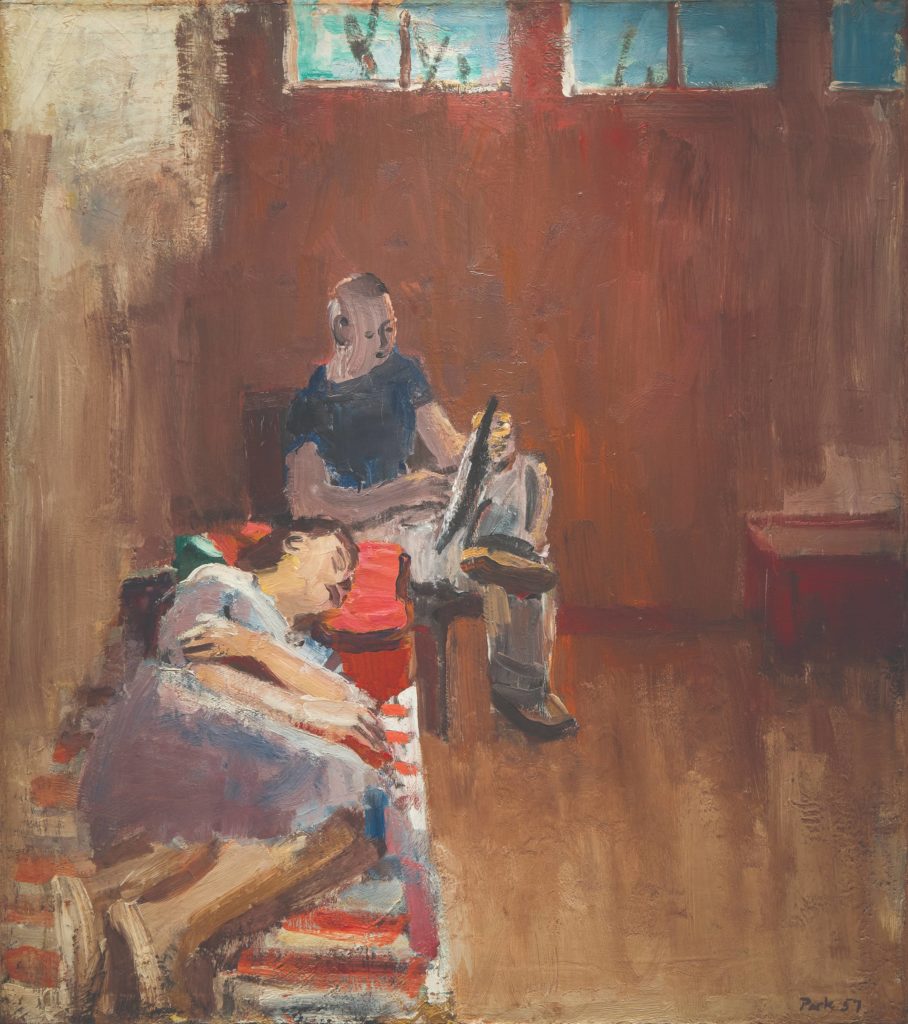
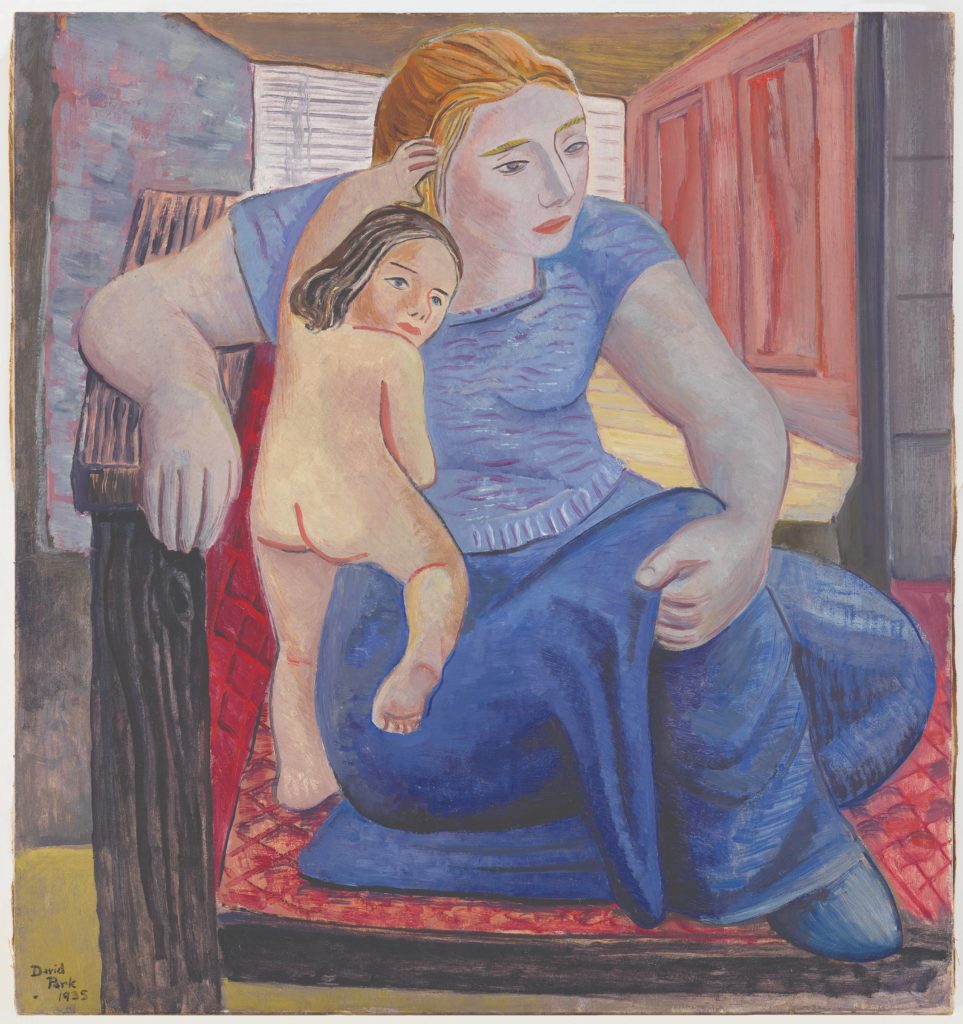
David Park, “Interior,” 1957, oil on canvas, 54 x 48 in., private collection, photo: Joshua Nefsky
Sara Wessen Chang, SFMOMA’s curatorial assistant of painting and sculpture, was responsible for organizing the museum’s accompanying show, “David Park and His Circle: The Drawing Sessions.” She also emphasized the “radical” nature of what Park produced when he was producing it: “At the California School of Fine Arts, he felt very uncomfortable and forced to work in the abstract manner,” says Chang. “He was the first one in his group to turn his back on the movement, and to make a bold move to paint what he wanted.”
While it may be facile to say that those who prefer figurative art are, by nature, more people-oriented, remarks by Park certainly suggest he was involved with, and keenly observant of, day-to-day life. In 1952, he emphasized his desire “to paint subjects that I know and care about… in commonly seen attitudes. It is exciting to me to try to get some of the subject’s qualities, whether warmth, vitality, harshness, tenderness, solemnness, or gaiety, into a picture.”
Park’s wife, Lydia, whom he married in 1930, remained a constant champion of his work and methodology, even when he impetuously quit his post in 1952 at the California School of Fine Arts (now called the San Francisco Art Institute) after a new director promulgated abstraction only. By that point, Park and his wife had two young daughters, Helen (who in 2015 published “David Park, Painter: Nothing Held Back”), and Natalie.
It would be misleading to say Park enjoyed no success with his figurative scenes. When “Kids on Bikes” (1950) won an award at the San Francisco Art Association Annuals, Lydia wrote to her sister-in-law, “It was a scream to see all the old kind of stuff, the non-objective, etc., with all the old ‘modern’ look about them in the gallery and to see this with a prize label on it.”
Bishop recounted how Park’s peers derided him for “chickening out” or suffering from a “failure of nerve” in his desire to paint what is discernible, real, all around us. Yet, even though the subject of “Kids on Bikes” is immediately graspable, the perspective from which Park chose to depict the boys is far from predictable. One boy looming in the immediate foreground is backdropped by another pedaling away on a bicycle with oddly large wheels; we see this retreating figure from an aerial perspective. Ghostly suggestions of other figures appear behind a white fence. Somehow the painting manages to be colorful, poetic, animated, and narrative in quality while the main figure appears contemplative as he grasps his curvaceous orange handlebars.
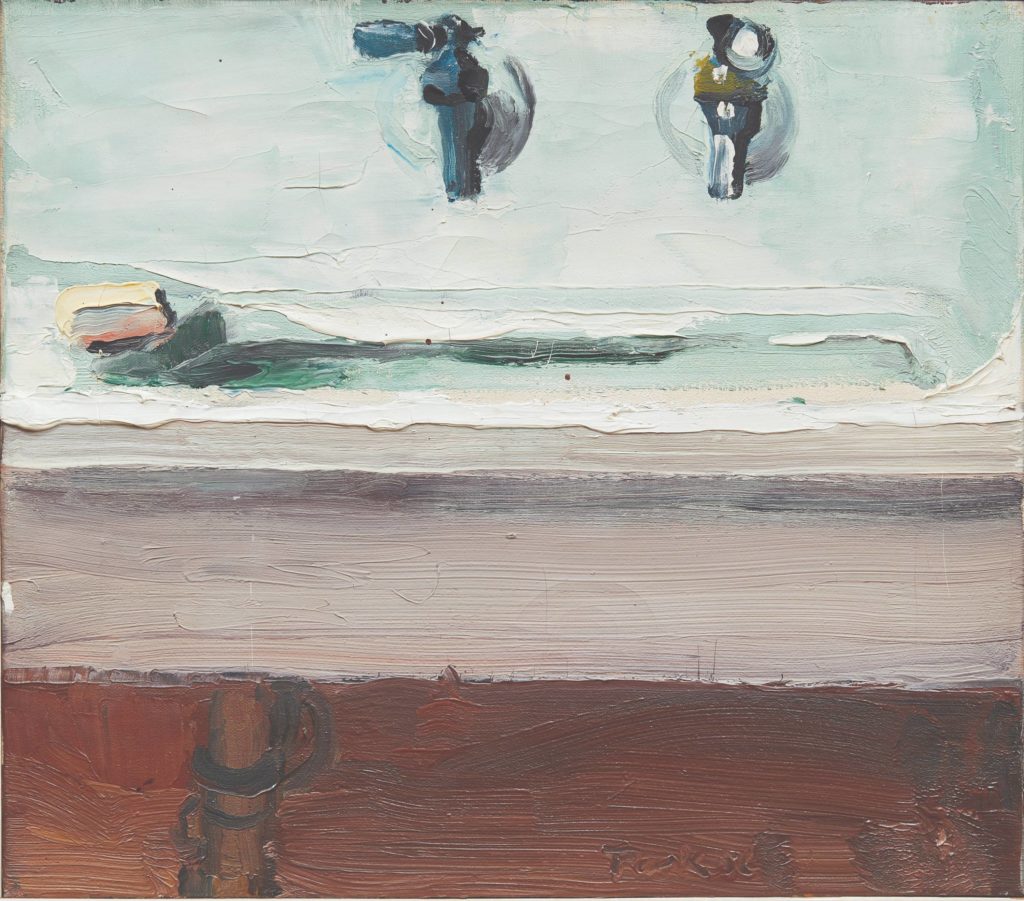
Park’s gift for lively brushwork and unexpected color combinations is evident in “Sink,” 1956, oil on canvas, 14 x 16 in., private collection, photo: JKA Photography
MAKING HIS OWN WAY
Park was born in Boston. Even though his family was learned and worldly, composed of teachers and ministers, he received little encouragement to become a painter, except from an aunt who lived in Los Angeles. At 17, he moved west to live with her while attending that city’s Otis Art Institute. Upon graduating, at the height of the Depression, Park began painting murals through the Works Progress Administration (WPA). His future wife was the sister of Gordon Newell, a sculptor with whom he shared a studio in Los Angeles.
By 1936, Park, his wife, and their daughters returned to Boston. The late Paul Mills, who headed the Oakland Museum’s art department in the 1950s, and who was responsible for conceiving the 1957 exhibition of the Bay Area New Figurative painters (the first of its kind), wrote that by 1941, Park had “moved from the figure styles of WPA art into the startling adventures of Cubism and other modernisms.”
Park and his family moved to the Bay Area, where he began teaching and indulging in what he tried to convince himself was his métier: abstraction. “By 1949 or 1950 he decided that the work he had been doing in this style was invalid, and he took almost all of his abstract canvases to the Berkeley dump and destroyed them,” Mills wrote.
Throughout the 1950s, as Park’s figurative art gained a following — praise eventually outweighing derision — he secured teaching jobs, commissions, and, ultimately, a solo show at New York City’s Staempfli Gallery in 1959. According to Chang, Park took a year’s sabbatical from teaching to create more paintings for that show, a fortunate development given that some of his strongest works resulted during this period.
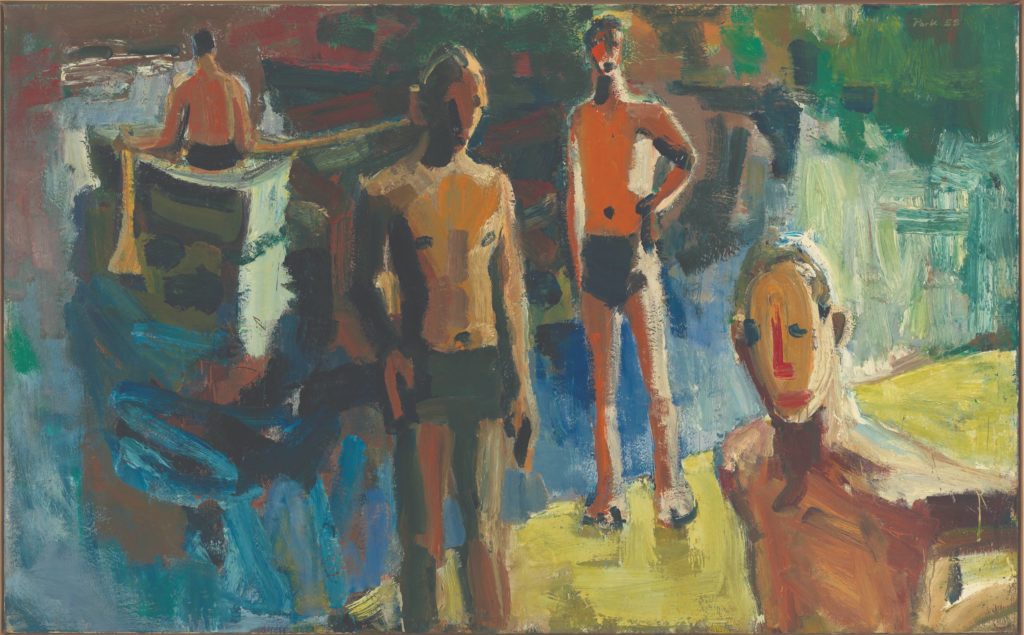
These included “Four Men” (1958), one of whom might be a self-portrait; in this respect it was not the first of its kind, as the rakishly handsome artist is thought to have depicted himself in other works, such as the frankly depicted figure in “Standing Male Nude in Shower” of 1955. (Chang notes that Four Men has been rarely exhibited at the Whitney Museum of American Art since a 1988 Park show there.)
David Park, “Four Men,” 1958, oil on canvas, 57 x 92 in., Whitney Museum of American Art, purchase, with funds from an anonymous donor
Of this highly productive period leading up to the 1959 show, Bishop says, “Park was painting with an incredible command of his materials. And there’s almost a teetering between recklessness and control. What resulted are potent, psychologically charged, energetic canvases.” Though Park had typically painted in oils on canvas, he was shifting toward watercolors and gouache on paper.
On Painting Figurative Art: “He Loved People”
Many of Park’s figures from the late 1950s loom extra-large, close up on the canvas, their faces filling the ground, their gestures and expressions unignorable. His nude men and women are both painterly and alluring. “He loved to paint and he loved people,” says Bishop. “He enjoyed drawing from both the female and male figure. He really was a humanist. And in his series of bathers, you don’t see a preference for either clothed or unclothed figures.” Chang adds, “He focused on moments of human experience, moments between people.”
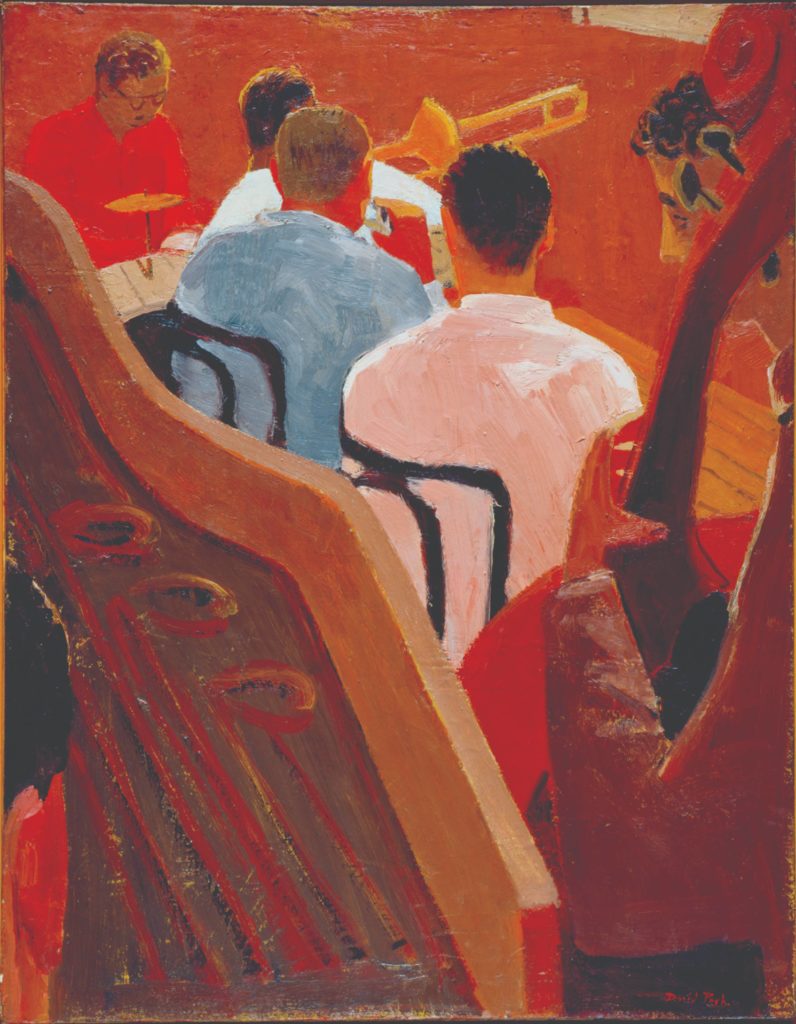
David Park, “Rehearsal,” c. 1949–50, oil on canvas, 46 x 35 3/4 in., Oakland Museum of California, gift of the Anonymous Donor Program of the American Federation of Arts
By 1959, Park was afflicted with debilitating chronic back pain and, as it turned out, cancer, which would claim him a year later. During Park’s initial illness, Diebenkorn and other friends built for him a special desk at which he could paint on the ground floor of his Berkeley home. (He had recently been teaching at the University of California, Berkeley.)
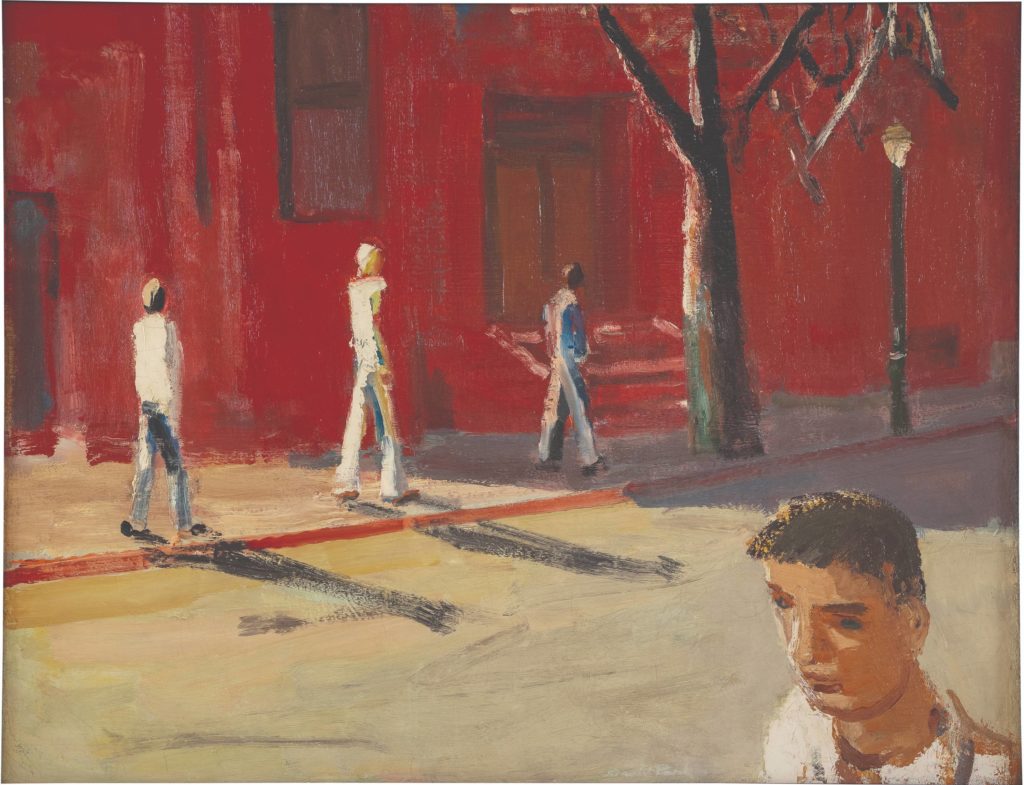
Lydia bought him all eight colors of what was then a brand-new medium, felt-tip pens. She also purchased a 30-foot-long roll of shelf paper. Every day, in his customized workspace, Park would unspool more of the scroll and produce another drawing, one melding with another, yet each its own distinct scene. Many referenced his boyhood, notably animated scenes from Boston Common — Sunday picnickers, rowboaters, sailors on leave, and nearby streetscapes.
Mills likened the scroll to “a marvelous, spontaneous jazz improvisation,” adding that “the style, the handling of the different subjects, the gradual or abrupt shifts of scene, everything about it suggests something that just happened as Park moved along.”
Many scholars regard the scroll as a kind of visual autobiography, though Park departed from the chronology of actual events. Bishop emphasizes that the artist drew himself into many of its scenes. Because of his infirmity, Park apparently never saw the entire completed work, unspooled end to end; he would simply roll up the finished work after it dried and begin a new one on a blank surface. Due to the fragility of the scroll and the risk of further fading (early felt-tip ink is notoriously fugitive), portions of the scroll were shown only at SFMoMA, while digital images of the full work were shown earlier in the national tour.
Almost too ironically, the scroll’s final panel depicts a balloon seller, behind whom looms a street sign announcing “Dead End,” accented with a skull-and-bones. Mills noted that, by this point, Park’s illness had still not been diagnosed as final, though he seems to have grasped his fate. Referencing Park’s entire output, Mills concluded, “He created a remarkable series of figures and heads imbued with a profound seriousness and directness as they stare at us, wide-eyed.”
So self-aware and confident was Park that in 1957 he was quoted in the catalogue accompanying Mills’s show as saying, “As you grow older, it dawns on you that you are yourself — that your job is not to force yourself into a style, but to do what you want.”
Park’s art exemplifies the ongoing power of figuration. His people are expressive, yet elusive. We know where they are and what they are doing, but enough remains only suggested to keep the viewer questioning. Even with figures whose features are deliberately blurred or rudimentary, we somehow know their personalities and characters. Park painted from life, scenes of life. The people he saw, we now see.
> Visit EricRhoads.com to learn about more opportunities for artists and art collectors, including retreats, international art trips, art conventions, and more.
> Sign up to receive Fine Art Today, our free weekly e-newsletter for collectors covering figurative art, still life, Western art, and much more
David Casterson, "Checking in," oil on panel, 12" x 10"
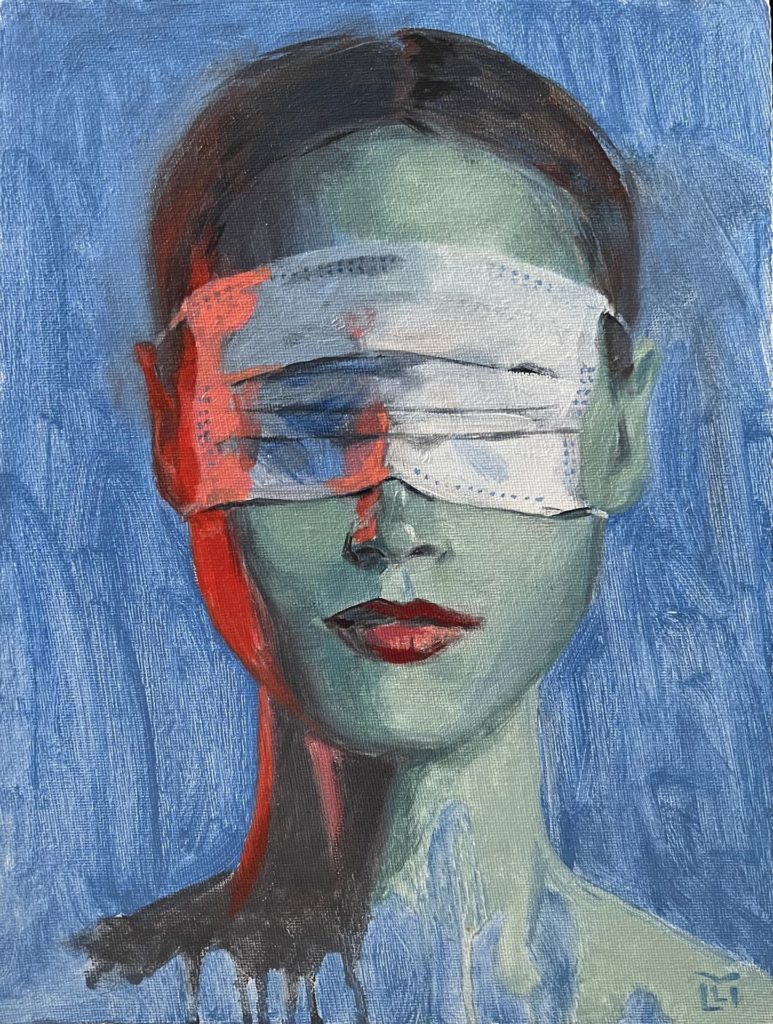
Texting family? Waiting for Uber? Breathing filtered air in the middle of a metropolis. 2020 brought new levels of connection and isolation.
California Art Club artists reflect upon how the world was abruptly upended by the global COVID-19 lockdowns with the upcoming exhibition “2020 Hindsight,” on view through May 1 at Bird Dog Arts in Tejon Ranch, California.
The display spotlights shared experiences and personal silver linings as the 27 exhibiting artists reveal with their works the challenges faced and unexpected lessons learned as they adapted to a “new normal” for daily life.
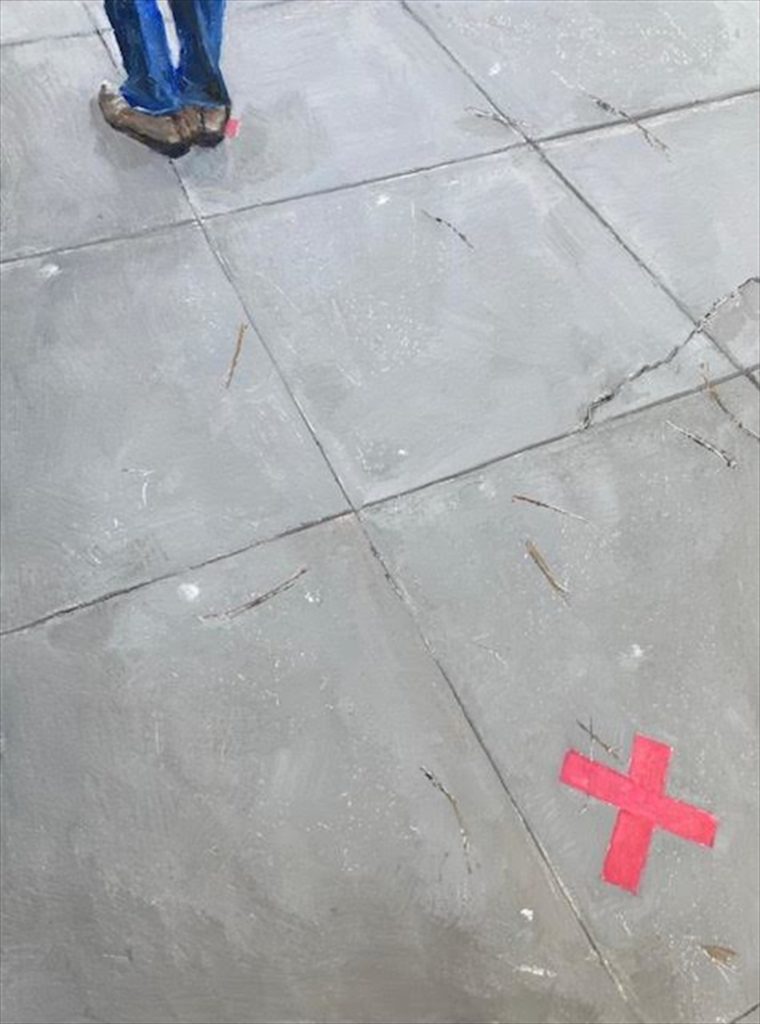
Nina Warner, “Social Distance,” Oil on panel, 12″ x 9″ People became fearful, isolated and alone. As social beings, this is not our usual behavior and the effect has been felt deeply. This was our first foray out to shop after a month of lockdown. There were big X’s made with red duct tape on the sidewalk and everyone patiently waited on their spot until you could move up.
“The California Art Club is thrilled to collaborate with Bird Dog Arts for the first time to present more than 30 thought-provoking paintings in ‘2020 Hindsight,’ allowing us to contemplate the many ways our lives have been altered – and even surprisingly enhanced – as we mark the two-year anniversary of the global lockdowns,” said Eire Hoke, Manager of Exhibitions for the historic art organization.
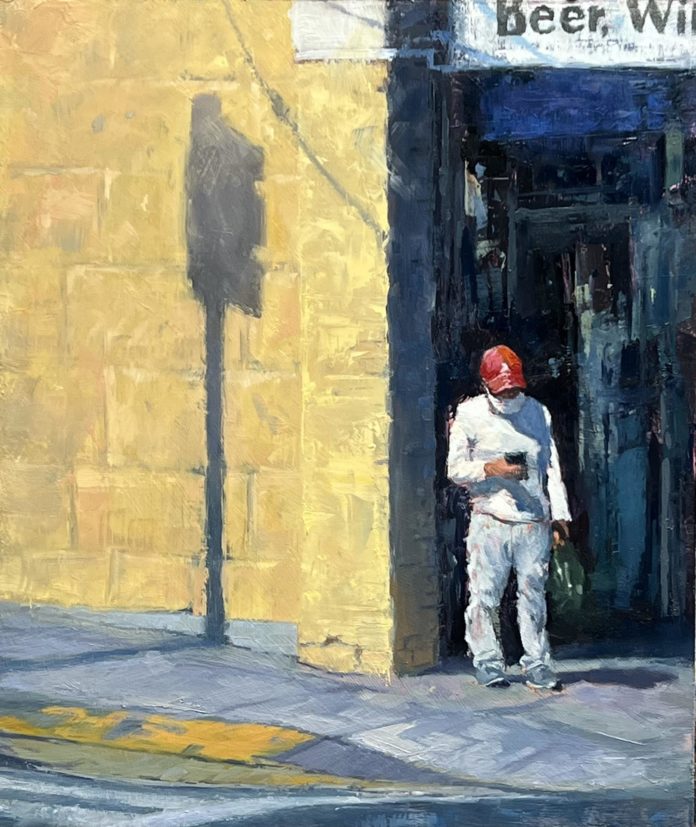
Lawrence McAdams, “All Masked Up,” oil on panel, 12″ x 9″ Follow the science, not the politicians. Following the science is hard and is always changing and sometimes you may not like what you end up seeing.
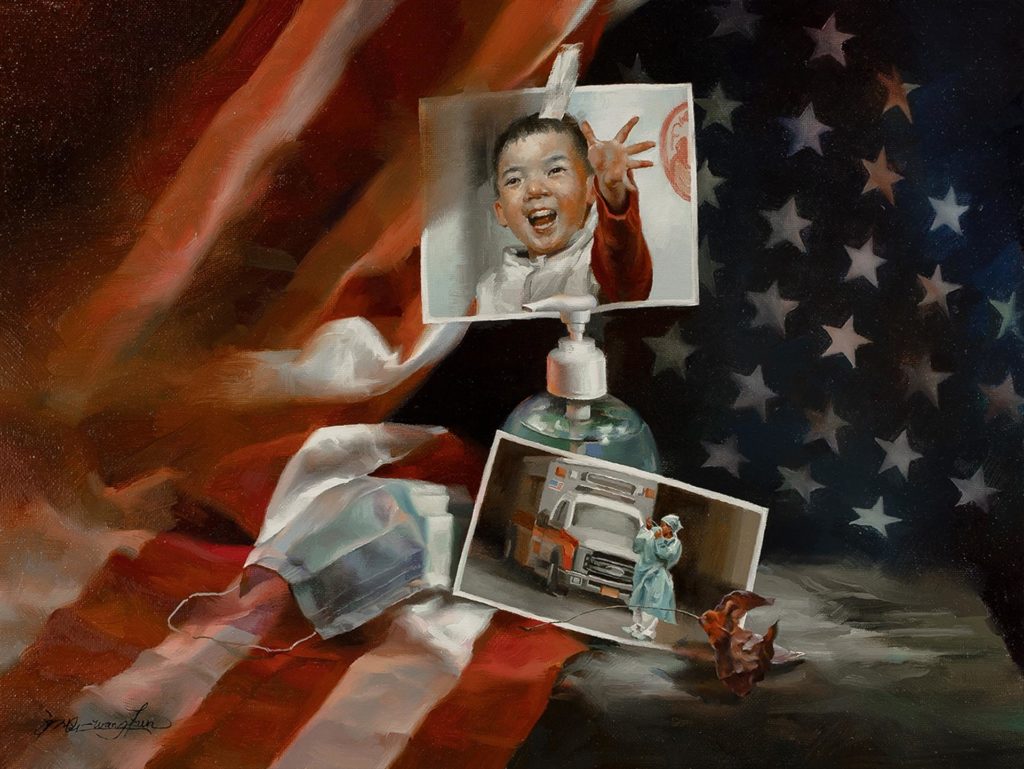
The collective works include panoramic vistas of unpeopled places, portraits of front-line heroes, still lifes of personal protective equipment, and images of other ubiquitous reminders of how individuals learned to cope and stay safe as the deadly virus circulated around the globe.
Kun Wang, “Breathe Freely,” oil on canvas, 12″ x 16″ During Covid-19 healthcare workers made a great contribution to the society. They risked their own lives to save the lives of others. We should remember and appreciate their hard work to protect us. Now the hard times are nearly over, and we hope our children can breathe freely and play freely again.
All the participating artists are members of the California Art Club and include Peter Adams, Rebecca Arguello, Ned Axthelm, Michael Bartlett, Nikita Budkov, Maura Carta, David Casterson, Warren Chang, Lynn Christopher, Bets Cole, Nancy Seamons Crookston, Michael Hill, Jeff Horn, Chuck Kovacic, Lawrence McAdams, Patricia McGeeney, Jim McVicker, David Michaels, Lisa Mozzini-McDill, Michael Obermeyer, Daniel Raminfard, Thomas Schaller, Alexey Steele, Kun Wang, Nina Warner, Durre Waseem, and Mason Williams.
The works are available for acquisition and a portion of the proceeds benefit the California Art Club’s educational programs. The exhibition may be viewed online at californiaartclub.org/2020hindsight.
Fill your mind with useful art stories, the latest trends, upcoming art shows, top artists, and more. Subscribe to Fine Art Today, from the publishers of Fine Art Connoisseur magazine.