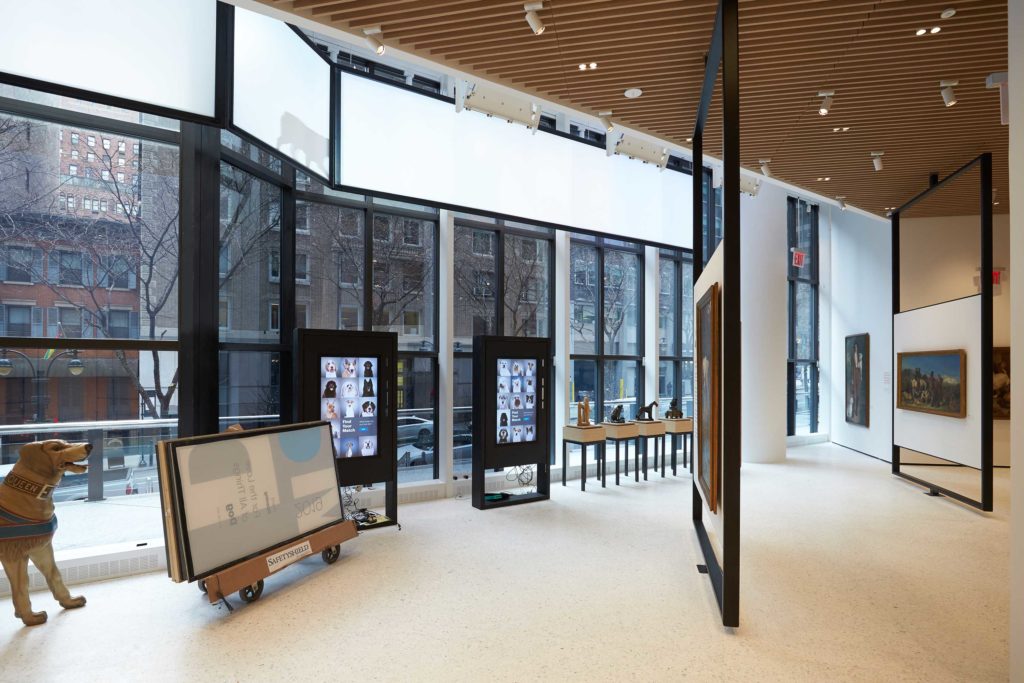
A view of the main floor gallery of the AKC Museum of the Dog, celebrating dogs in art
The AKC Museum of the Dog, the country’s premier museum dedicated to all things dog, makes its return to New York City this January.
From the museum:
The AKC Museum of the Dog is home to one of the largest collections of dog art in the world and is an important part of the AKC’s history and future.
The AKC Museum of the Dog, founded in 1982, was originally housed in the New York Life Building, located at 51 Madison Avenue. In 1987, the museum was moved to a temporary space in the historic Jarville House, located in Queeny Park, West St. Louis County, MO.
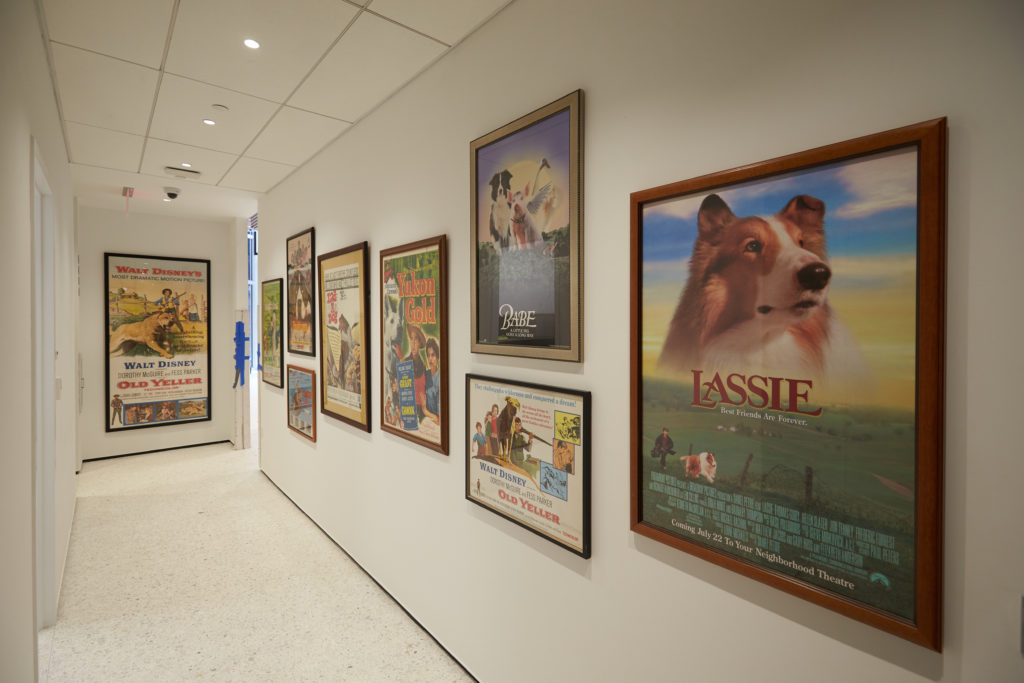
Corridor with famous movie posters featuring dogs
In early 2019, the museum will open its doors at 101 Park Avenue in Midtown Manhattan, marking the first time the museum will be located in NYC in 32 years. The newly designed space will house art from famous dog painters and sculptors like Sir Edwin Landseer, Maud Earl, and more. It also has a two-story glass vitrine that encases rare pieces.
AKC Museum of the Dog main floor gallery with “Find Your Match” photo booths
It will also feature interactive exhibits that bridge the digital and physical and bring new life to the collection. The new museum spans two floors with a double-height atrium space at the stair. The gallery includes interactive exhibits such as a “Find Your Match” kiosk that takes your photo, aligning its likeness with an AKC-registered dog breed. A “Meet the Breeds” touchscreen table allows visitors to explore breeds’ physical features, traits, and history.
The museum also has an app where kids can interact with the exhibits with “Arty,” a virtual dog/tour guide, throughout the museum. It creates a new user experience for kids and kids at heart.
“It is exciting to bring this collection back to New York City,” says Alan Fausel, executive director, AKC Museum of the Dog. “This museum is a beautiful ode to man’s best friend, and we are thrilled to bring these pieces and exhibitions to new audiences.”
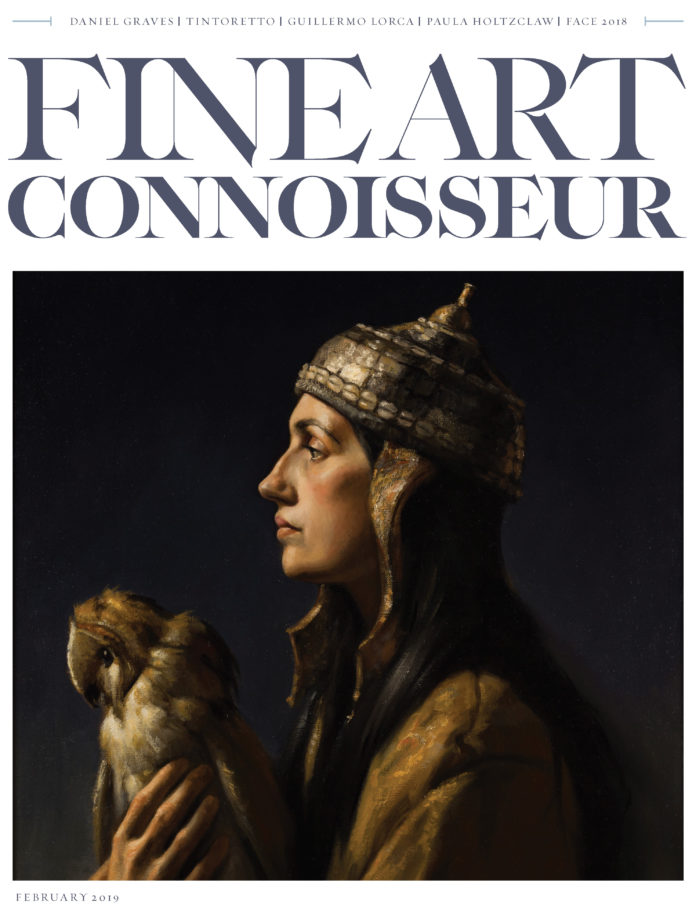
Cover art: Daniel Graves (b. 1949), “The Power of Wisdom and Beauty” (detail), 2013, oil on canvas, 31½ x 23⅔ in. For details, see the January/February 2019 issue of Fine Art Connoisseur
Fine Art Connoisseur January/February 2019, Editor’s Note:
Something to Keep an Eye On
By Peter Trippi
It’s a matter of debate how the art market is faring today, but one thing we know for sure is that the world’s approximately two dozen “super-galleries” are going from big to bigger. Operating not only in New York City and London but also in other money centers like Hong Kong and Los Angeles, these mega-firms offer eye-wateringly expensive cutting-edge contemporary and classic modern art.
Examples of these galleries include Gagosian, White Cube, Hauser & Wirth, Pace, David Zwirner, and Lévy Gorvy. Extremely effective at grooming rising stars and getting their artworks into museums’ collections and exhibitions, they have earned their success. And some of them are behaving like more than galleries — in fact, like foundations and museums.
For example, Hauser & Wirth (H&W) has established the Hauser & Wirth Institute, an independent nonprofit private operating foundation dedicated to supporting art historical scholarship and enhancing researchers’ access to the archives of modern and contemporary artists. Directed by a distinguished former curator of contemporary art, the institute is, according to co-founder Iwan Wirth, “a natural extension of our gallery’s support of living artists and the noteworthy estates and foundations we have represented for over 25 years.”
Recently the institute announced the three senior scholars who have won its first crop of research fellowships, and also that it has underwritten online catalogues raisonnés devoted to Jason Rhoades (whose estate H&W represents) and Franz Kline (whose it does not).
Such enlightened self-interest complements the magnificent facilities H&W offers its artists and clients. In New York City it is temporarily housed in the four-story building where the Dia Art Foundation once mounted exhibitions; it contains a bar, a bookshop selling the gallery’s self-published books, and a space for its own educational programs. (Sounds like a museum, no?) And H&W is constructing a permanent home down the street on a 7,400-square-foot site. That is a lot of real estate in New York.
H&W is not alone in planning for steroidal growth. Next September, just three blocks north, Pace Gallery will open a headquarters that stands eight stories high, with 75,000 square feet of usable space including a 10,000-volume research library open to the public by appointment. (Sounds like a museum, no?) A block away, in 2020 David Zwirner Gallery will open a five-story building with 50,000 square feet of exhibition space designed by American museums’ favorite architect, Renzo Piano. Once complete, this will bring the number of Zwirner locations in New York to four, and in the world to seven.
As with so much in our society, the big keep getting bigger and cultural spheres continue to mix it up. (Think, for example, of Miuccia Prada and Giorgio Armani’s creation of museum-like venues that exhibit contemporary artists.) Readers of Fine Art Connoisseur might want to follow what the biggest galleries do next because ultimately their success (or failure) will affect how everyone else regards the art world.
No matter their size, all galleries play important roles in our art ecosystem. There are so many artists out there who need and want to work with dealers, not to mention all the collectors who look to them for guidance. Ensuring all players are healthy and appreciated will always benefit our field as a whole.
You’ll want to carve out some time this winter to visit, browse, and shop for your next piece of fine art from among more than 200 artists in all media in Scottsdale, Arizona.
15th Annual Arizona Fine Art Expo
Scottsdale, AZ
Through March 24, 2019
Visit 124 studios filled with artists demonstrating their techniques and creating original works of art for 10 weeks during the Arizona Fine Art Expo.
Throughout the expo, artisans will sketch in pencil, charcoal, and pastels; sculpt and fire clay; chisel and shape stone; and saw and carve wood sculptures.
Artists also will paint in all media; stain and etch gourds; design lost-wax casting; solder and weld jewelry; assemble mosaics; blow glass; and fuse and kiln-form glass sculptures.
Art is for sale and commissions are welcomed. Learn more about the 15th Annual Arizona Fine Art Expo at arizonafineartexpo.com.
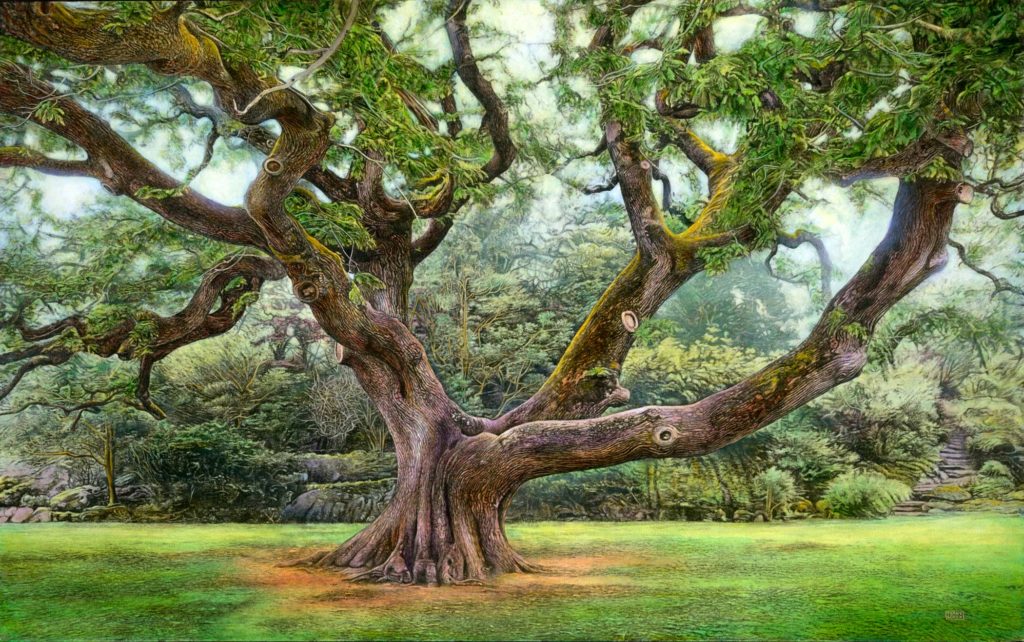
Thane Gorek (b. 1973), “Just as You Imagined It Would Be,” 2018, gouache and oil on canvas, 30 x 48 in.
Celebration of Fine Art
Scottsdale, AZ
Through March 24, 2019
Nearly 30 years ago, the Celebration of Fine Art transformed the way people experience art when it debuted in downtown Scottsdale. Now a linchpin in Arizona’s art, culture, and tourism scene, the Celebration of Fine Art hosts 100 of the country’s top artists and sees nearly 50,000 visitors from around the globe on average each year.
The Celebration of Fine Art takes place in north Scottsdale under the signature “big white tents” and features 40,000 square feet of working artist studios and works of art. The juried invitational show has come to be recognized not only for its exceptional art but also its welcoming experience and interactive atmosphere.
Learn more about the Celebration of Fine Art at celebrateart.com.
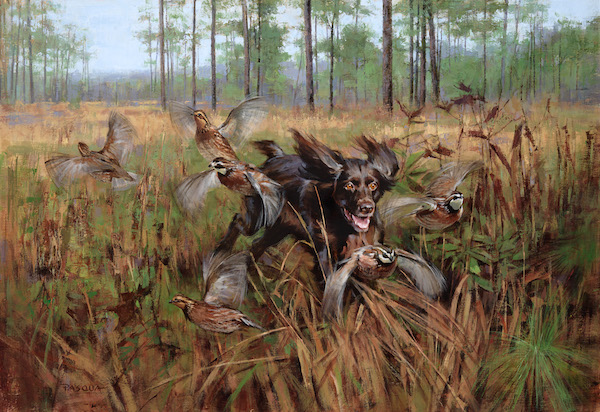
Southeastern Wildlife Exposition (SEWE) announces its Featured Artist and Featured Painting for the 2019 event today, marking 37 years of excellence in wildlife art, conservation and the sporting life. Lou Pasqua has been named the 2019 event’s Featured Artist. His painting, Little Havoc, has been selected as the Featured Painting and subject of the official SEWE 2019 poster.
An avid sportsman, Lou Pasqua’s lifelong passion for the outdoors and wildlife translates to his artwork. Coupled with his twenty plus years in the graphic design industry, his ability to capture emotion and movement has made him one of the most sought-after sporting and wildlife artists in the country. Residing in Etna, Pennsylvania, Pasqua’s work can be found in collections and galleries across the nation, as well as on the covers of numerous publications.
“I feel privileged to be selected as Featured Artist for the 2019 Southeastern Wildlife Exposition,” says Pasqua. “To be chosen as the Featured Artist among so many talented individuals confirms to me that people appreciate my efforts and the body of work I have created. This recognition is encouragement to keep painting and improving.”
Little Havoc depicts a Boykin Spaniel and gives the viewer a front row seat to the thrill of flushing a covey of quail.
“At its core, SEWE desires to present the finest wildlife art available. With that in mind, Lou Pasqua was an obvious choice for the 2019 Featured Artist. Lou’s sporting paintings are unmatched, and it is a privilege to showcase his work,” says SEWE Art Curator, Natalie Henderson.
Pasqua’s original painting will be available at auction during the VIP Preview Gala and Sale, February 14, 2019. The Official 2019 Poster is available for purchase now.
“On the heels of Ezra Tucker (2017) and Kathryn Mapes Turner (2018) SEWE could not be more excited to announce Lou as the 2019 Featured Artist,” says John Powell, SEWE Executive Director. “Lou’s work taps into the sporting art roots of SEWE now going 37 years strong. I believe Lou’s body of work will resonate with men and women who have spent time in the field walking behind a good dog or in a quiet patch of woods where they connect to the outdoors. Lou understands these traditions and how to translate them to the canvas.
“With the artists present and engaging with collectors during SEWE week, people often refer to the connections and relationships made here in Charleston,” adds Powell. “For those of us fortunate to view Lou Pasqua’s collection at SEWE 2019, I believe his work will connect all of us and tell a story about the love we share for the outdoors and our traditions.”
With an ongoing focus to bring renowned wildlife and sporting art to Charleston, SEWE also welcomes Guest Artists and Walter Matia and Sandy Scott.
Walter Matia began casting bronze sculptures in 1980. He is as accomplished as he is talented. Initially concentrating on bird life, over the years he has worked on sporting dogs, other mammals and large fountain and garden pieces, which includes a fountain and bronze wall frieze for the United States President’s guest house. Matia resides in Dickerson, Maryland.
Sandy Scott believes wildlife artists should be in the field to accurately present their subject to the viewer. A lifelong interest in aviation has been invaluable to her work. “I believe my knowledge of aerodynamics has been helpful in achieving the illusion of movement in my bird sculptures,” says Scott. Headquartered in Lander, Wyoming, Scott has experienced and lived what she depicts in her sculptures, which has won her many accolades throughout the years.
ABOUT SOUTHEASTERN WILDLIFE EXPOSITION:
Now in its 37th year, the Southeastern Wildlife Exposition has proudly presented the finest in wildlife art, conservation and the sporting lifestyle. The 37th annual SEWE will be held in multiple venues throughout downtown Charleston, South Carolina from February 15-17, 2019 with VIP events beginning on Thursday, February 14. SEWE draws more than 40,000 each year from across the nation. General admission and VIP tickets go on sale to the public October 12. For more information on participating as an artist, exhibitor, VIP member or corporate partner, visit sewe.com.
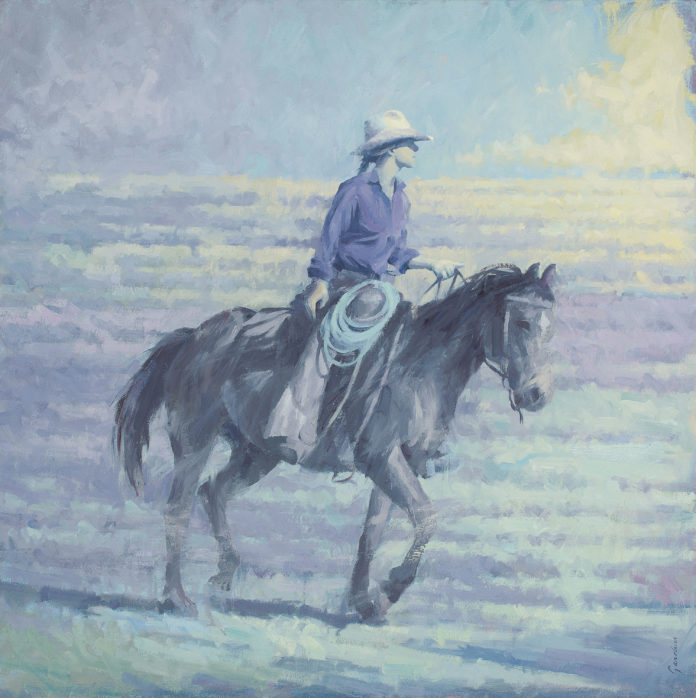
Terry Gardner, “The Purple Rider,” oil, 40 x 40 in.
Coors Western Art Exhibit & Sale
Denver, Colorado
January 12–27, 2019
The 2019 Coors Western Art Exhibit and Sale benefits the National Western Scholarship Trust. Award-winning oil painter Terry Gardner has been named the 2019 Featured Artist of the 26th annual event.
The exhibit features 60 contemporary realists from North America and Europe who capture the Western way of life and is open to the public during the National Western Stock Show, January 12–27, 2019.
Last year over 1,000 people attended the Red Carpet Gala Reception on opening night, and over 30,000 viewed the exhibit during the National Western Stock Show. Learn more at www.coorswesternart.com.
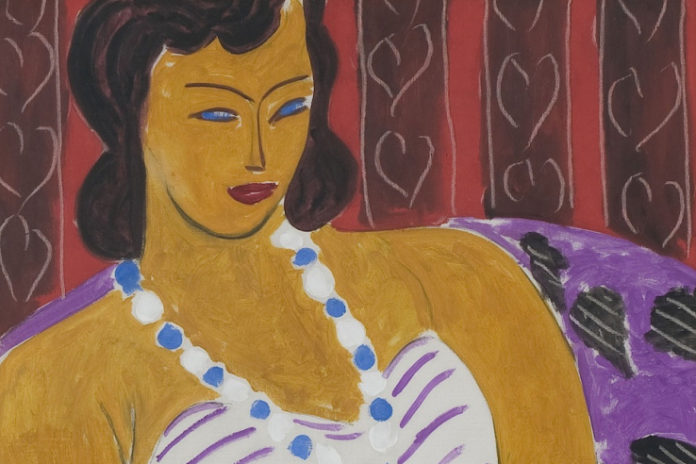
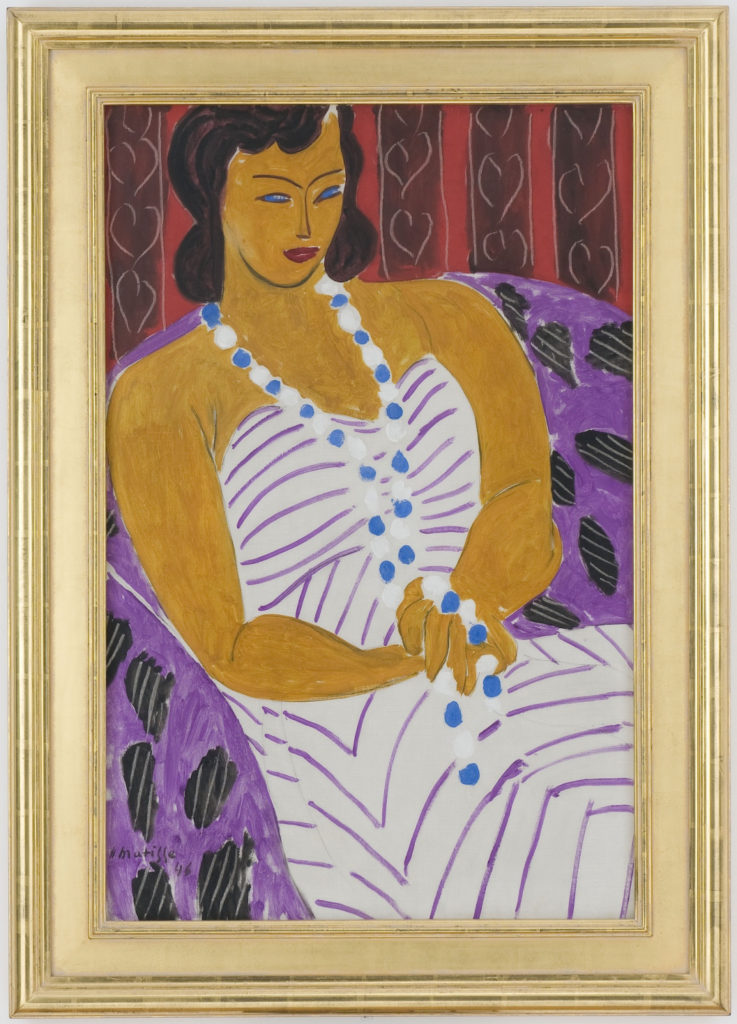
Detail of “Dame à la robe blanche (Woman in White)” by Henri Matisse
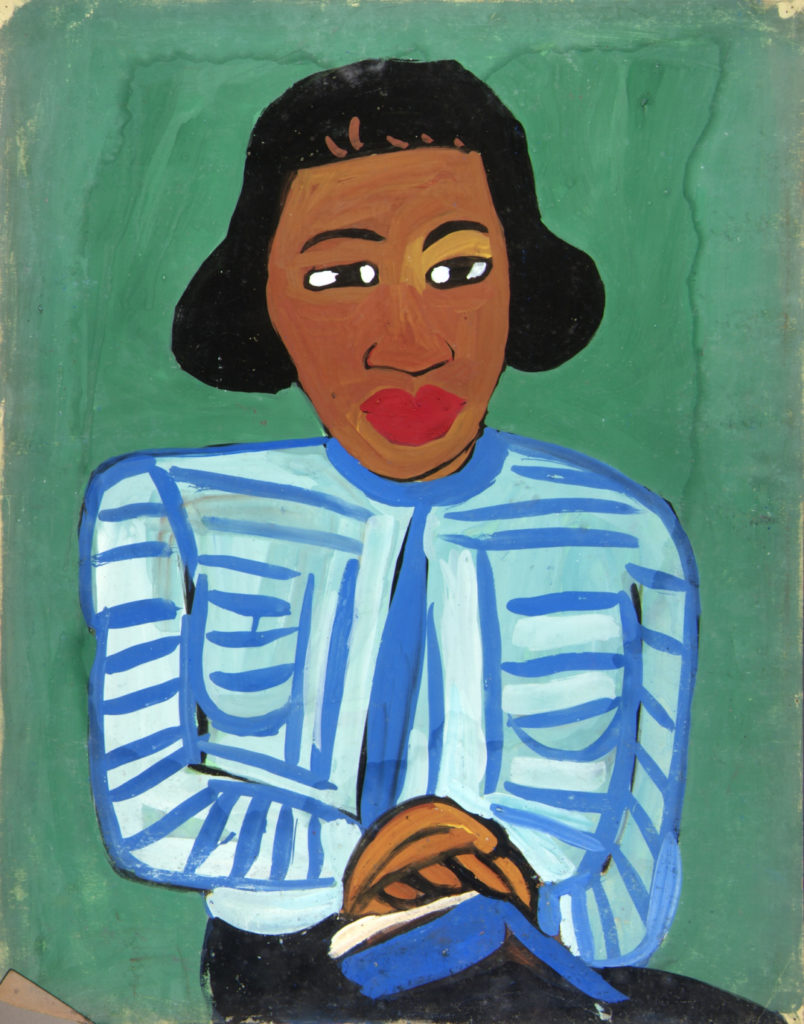
Tuesday, January 15, 2019, at 6:30 p.m. curator Denise Murrel will offer a lecture on “Posing Modernity: The Black Model from Manet and Matisse to Today” at the Art Students League of New York. (Read more about the exhibition in this preview.)
William H. Johnson, “Portrait of Woman with Blue and White Striped Blouse” (ca. 1940–42), tempera on paperboard, 28 × 22 1/16 inches, Smithsonian American Art Museum, Washington, DC, gift of the Harmon Foundation (image courtesy Smithsonian American Art Museum, Washington, DC)
Who:
Denise Murrel is the Ford Foundation Postdoctoral Research Scholar at the Miriam and Ira D. Wallach Art Gallery at Columbia University and Curator of the Wallach’s exhibition “Posing Modernity: The Black Model from Manet and Matisse to Today,” based on the dissertation for her 2014 Columbia PhD. She earned two other degrees from Columbia, a master’s in 2004 and an M.Phil in 2010, and is also the author of the exhibition’s catalogue, published by Yale University Press.
What:
A lecture and discussion on “Posing Modernity.” This exhibition proposes that the changing representation of the black female figure has been central to the development of modernism from Édouard Manet’s “Olympia” (1863) to the present. Murrel will discuss her commitment to expanding diversity within the curatorial field and academic art history, and to developing exhibition programs that introduce overlooked narratives to new and broader museum audiences, as well as her research and dissertation on the female form.
When:
Tuesday, January 15, 2019
6:30–8:00 p.m.
Where:
The Phyllis Harriman Mason Gallery, Art Students League of New York
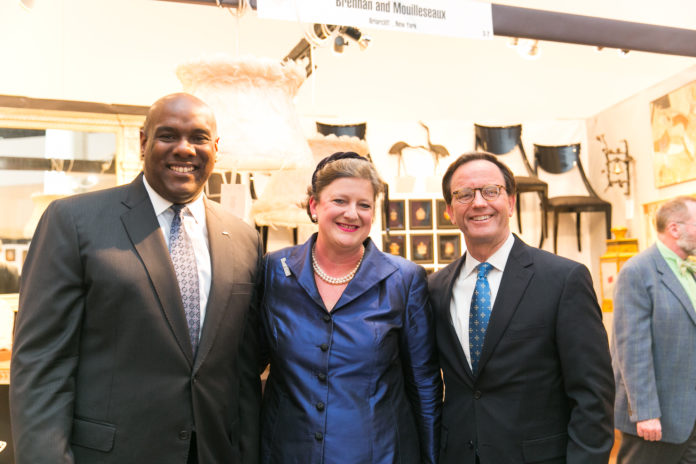
The Washington Winter Show, the Washington Antiques Show, was founded in 1955 for the purpose of raising funds for local charities serving the needs of at-risk children and families by sponsoring an annual show devoted to antiques and fine arts.
This year’s Washington Winter Show will spotlight a number of high-profile tastemakers within the arts and design world including:
Bronson van Wyck: Celebrity event designer and producer
Whitney Robinson: Editor-in-chief of ELLE DECOR
Leanne Ford: Star of HGTV
Sarah Bartholomew & Eddie Ross: Celebrated interior designers
2019 Washington Winter Show Highlights:
Takes place January 10–13
Location: American University’s Katzen Center
Over 40 dealers from across the US and Europe
Tickets starting at $25 for general admission
Luncheon hosted by celebrated event designer and producer, Bronson van Wyck
Designer Panel moderated by Whitney Robinson, Editor-in-Chief of ELLE DECOR
Saturday lecture hosted by William Allman, former White House curator
Loan exhibit provided by George Washington’s Mount Vernon, themed around elegant entertaining
Show benefits three local charities: the Founders Board of St. John’s Community Service, the Bishop T. Walker School for Boys, and THEARC.
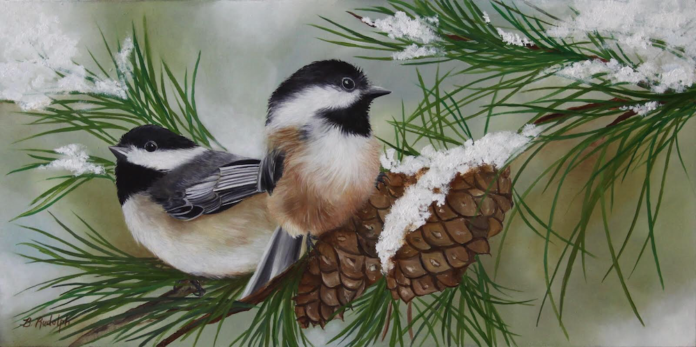
Barbara’s realistic oil paintings tell a story. They are unique, thought-provoking and often have a sense of humor. Paying special attention to detail, her subjects include a birds, sports, music and wildlife. Barbara resides in Phoenix, Arizona. You can find her work, along with the work of 100 other artists, at the Celebration of Fine Art in Scottsdale, Arizona, from January 12 – March 24, 2019.
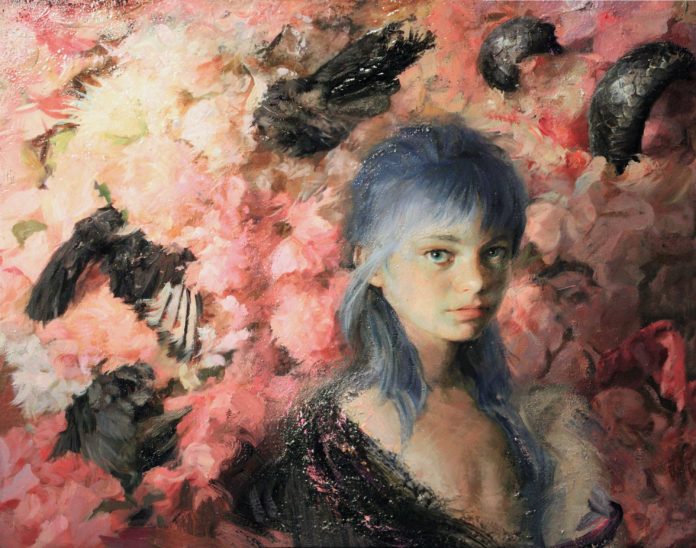
Guillermo Lorca, "The Girl of the Birds," 2018, oil and acrylic on canvas, 19 2/3 x 27 1/2 in., private collection, Chile
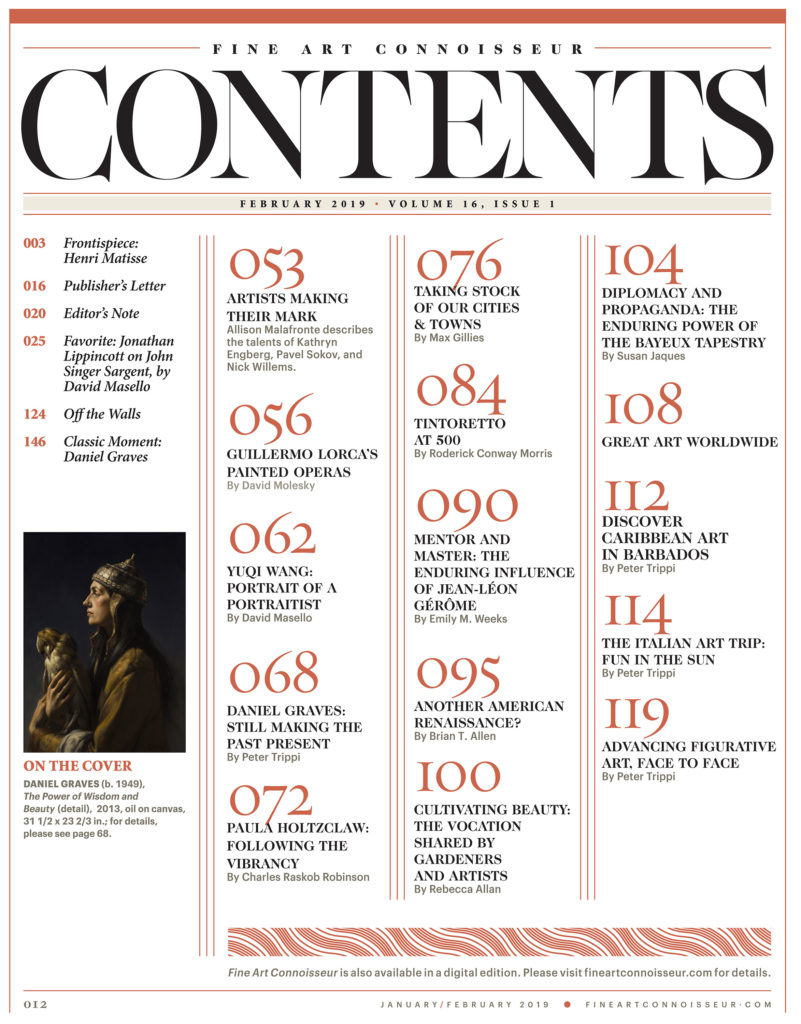
From the latest issue: Download the January/February 2019 issue of Fine Art Connoisseur magazine to read the feature article “Guillermo Lorca’s Painted Operas” and much more.
Related > Today’s “Super Galleries” It’s a matter of debate how the art market is faring today, but one thing we know for sure is that the world’s approximately two dozen “super-galleries” are going from big to bigger. Peter Trippi explains in this preview of the newest issue of Fine Art Connoisseur magazine. [read more]
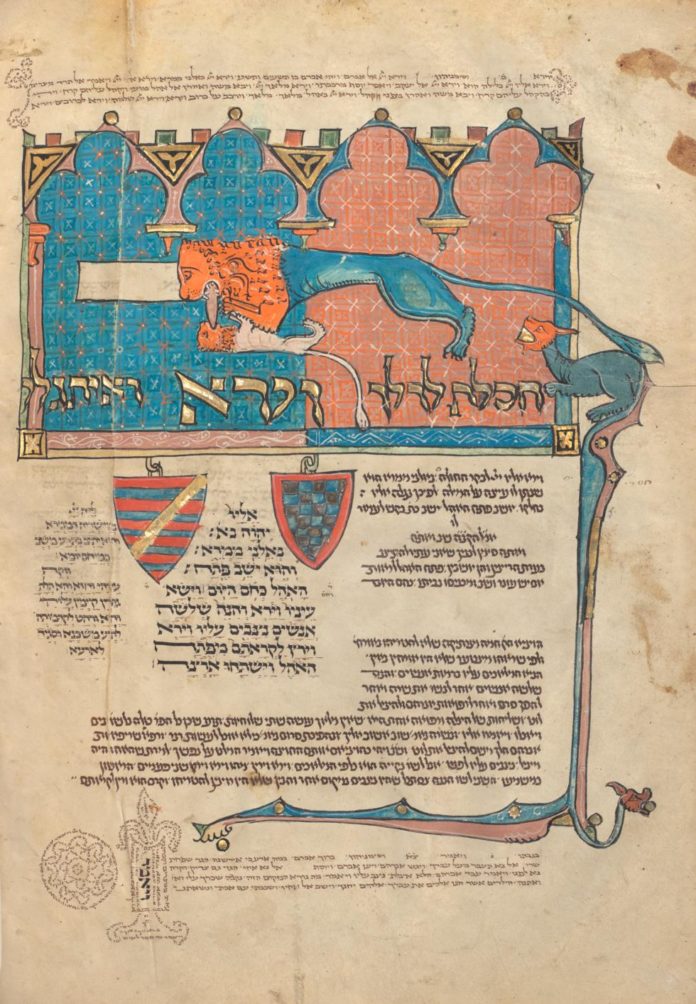
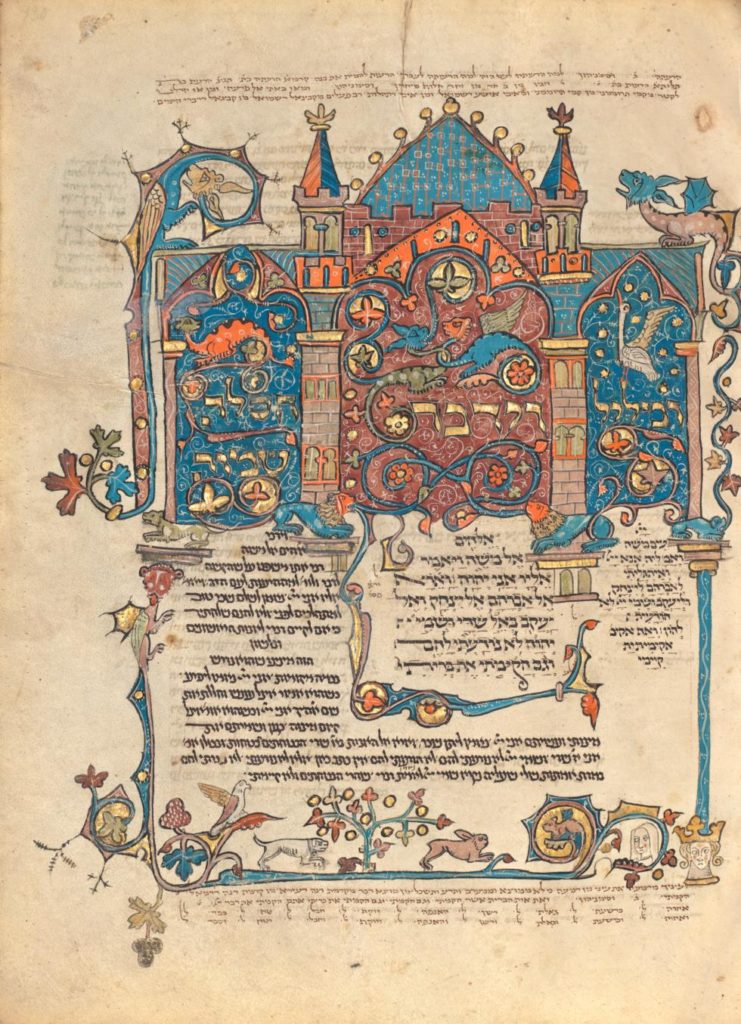
Decorated Text Page (Book of Genesis) from the Rothschild Pentateuch, France and/or Germany, 1296. Leaf: 10 7/8 x 8 1/4 in. (27.5 x 21 cm). Ms. 116 (2018.43), fol. 32v
The J. Paul Getty Museum recently announced the acquisition of the Rothschild Pentateuch, a manuscript of the first five books of the Hebrew Bible, known as the Torah. Its acquisition, coupled with works already in the Museum’s manuscripts collection, allows the Getty to represent the medieval art of illumination in sacred texts from the three Abrahamic religions — Judaism, Christianity, and Islam.
“This landmark acquisition fulfills one of the Museum’s longstanding goals of adding to our collection a Hebrew manuscript that can stand comparison in quality and importance to our finest illuminated manuscripts of other languages and faiths,” explains Timothy Potts, director of the J. Paul Getty Museum.
“It has taken 35 years, but the Rothschild Pentateuch fills this gap more brilliantly than we could ever have imagined,” he says. “An amazingly rare and beautiful object, richly illuminated with all manner of real and imaginary animals, it also broadens greatly the narratives we are able to tell about life, culture, and religion in the Middle Ages.
“The acquisition will be a highlight of an upcoming exhibition that brings together — for the first time at the Getty — the sacred texts of the three Abrahamic religions, something that I am sure will deepen the experience of these works for many of our visitors, and be a rich subject of study for scholars.”
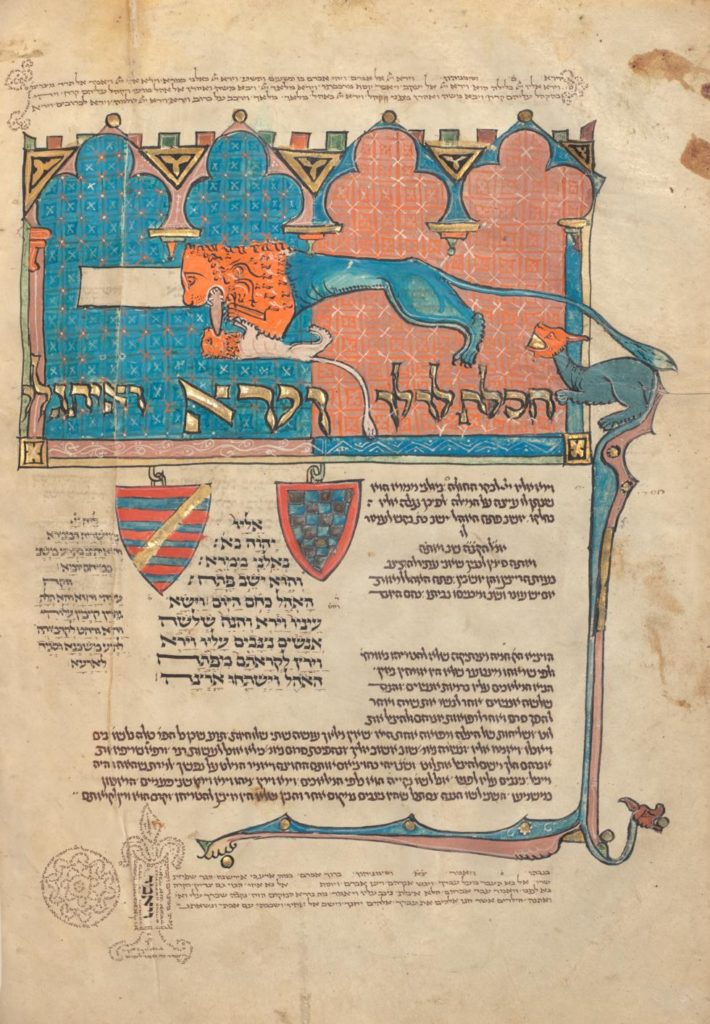
Decorated Text Page (Book of Genesis) from the Rothschild Pentateuch, France and/or Germany, 1296. Leaf: 10 7/8 x 8 1/4 in. (27.5 x 21 cm). Ms. 116 (2018.43), fol. 32v
Judaism, Christianity, and Islam trace their belief in the singular God to a common patriarch, the figure of Abraham. The practitioners of all three religions have been called “people of the book” for their shared belief in the importance of the divine word, here rendered in medieval manuscripts in glowing gold and luminous colors on parchment.
The Torah is the central sacred text of Judaism. In the strictest sense, the word refers to the Pentateuch, which consists of the books of Moses: Genesis, Exodus, Leviticus, Numbers, and Deuteronomy. Illuminated copies of the Hebrew Bible in codex form, rather than Torah scrolls, began to appear in the mid-thirteenth century.
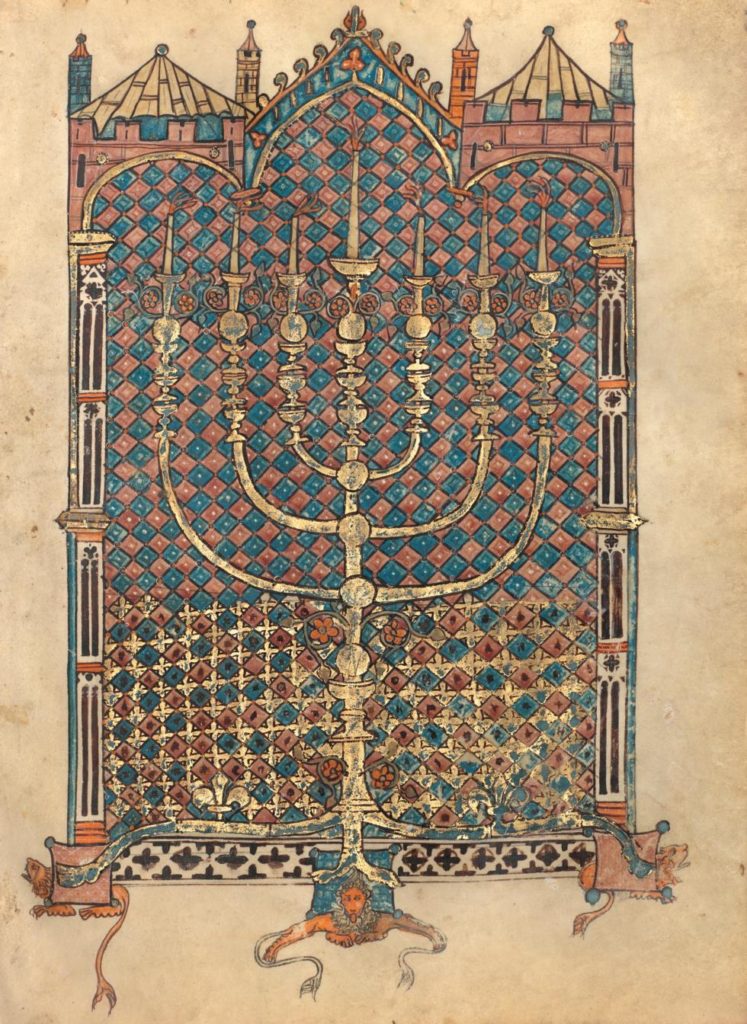
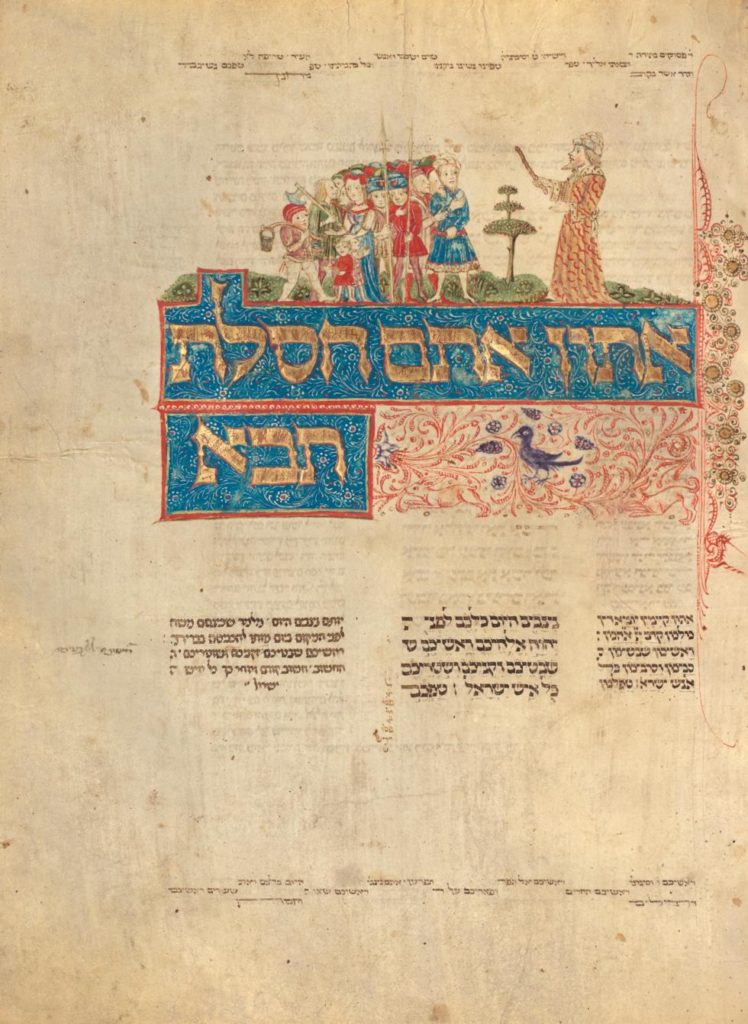
In northern Europe, these manuscripts served the needs of members of the Ashkenazi Jewish community who had settled in the area along the Rhine River. Lavishly illustrated Hebrew manuscripts are exceedingly rare, since Jewish artisans were forbidden by law to join painting guilds. Hebrew manuscripts were often written by itinerant Jewish scribes and illuminated by local, sometimes Christian, artists. Illumination of the Hebrew Bible centers on the calligraphic forms of the letters, such as initials, word panels, or decorative frames around blocks of text.
Decorated Text Page (Book of Exodus) from the Rothschild Pentateuch, France and/or Germany, 1296. Leaf: 10 7/8 x 8 1/4 in. (27.5 x 21 cm). Ms. 116 (2018.43), fol. 130
“The three objects on display are exceptionally beautiful artworks that we hope will spark meaningful dialogue among various audiences,” said Elizabeth Morrison, senior curator of manuscripts at the Getty Museum. “Museums offer more than simply an aesthetic experience. Through exhibitions such as this one, they foster a deeper understanding of history that helps us to reflect on our own shared experiences.”
Among the earliest bound and illuminated codices from the Mediterranean world are copies of the Christian Bible written in Greek, Latin, Syriac, Ge’ez, Armenian, and other languages. The first part of the Christian Bible consists of texts from the Hebrew Bible, referred to since the second century by Christian writers as the Old Testament. Medieval Christians understood it not only as a historical document but also as a body of prophecy that specifically foretold the coming of Christ.
The New Testament comprises accounts of Christ’s life in the Gospels, the founding of Christianity in the Acts of the Apostles, letters to churches or individuals from his disciples, such as apostles Peter and Paul, and a text about the end of time known as Apocalypse or Revelation. Illuminated Bibles — handwritten and printed alike — are among the most enduring forms of Christian book art produced during the Middle Ages.
Menorah of the Tabernacle (Book of Leviticus) from the Rothschild Pentateuch, France and/or Germany, 1296. Leaf: 10 7/8 x 8 1/4 in. (27.5 x 21 cm). Ms. 116 (2018.43), fol. 226v
The words that the angel Jibril (Gabriel) recited to the prophet Muhammad ibn Abdullah, about 560–632, formed the sacred text of the Qur’an. The opening line, “In the name of Allah, most gracious, most merciful,” a central tenet of Islam that expresses submission to the will of Allah, is repeated in almost every surah, or chapter.
Muslims transmitted scripture through oral tradition for the first few centuries and later recorded it through beautiful and ornate calligraphy. Artists incorporated Qur’anic verses into books, textiles, coins, ceramics, and architecture, demonstrating reverence for the written word. Throughout the Middle Ages, the Islamic world spanned a vast territory, from the Iberian Peninsula to northern and coastal Africa, across the Mediterranean basin, and as far as Central and Eastern Asia.
Moses Addressing the Israelites (Book of Deuteronomy) from the Rothschild Pentateuch. Joel ben Simeon, Italy, about 1450–1500. Leaf: 10 7/8 x 8 1/4 in. (27.5 x 21 cm). Ms. 116 (2018.43), fol. 478
“Art of Three Faiths: A Torah, a Bible, and a Qur’an,” is on view through February 3, 2019, at the J. Paul Getty Museum (Los Angeles, California). For more information, please visit www.getty.edu.
Fill your mind with useful art stories, the latest trends, upcoming art shows, top artists, and more. Subscribe to Fine Art Today, from the publishers of Fine Art Connoisseur magazine.


 Download the January/February 2019 issue here, or