A Style All Her Own
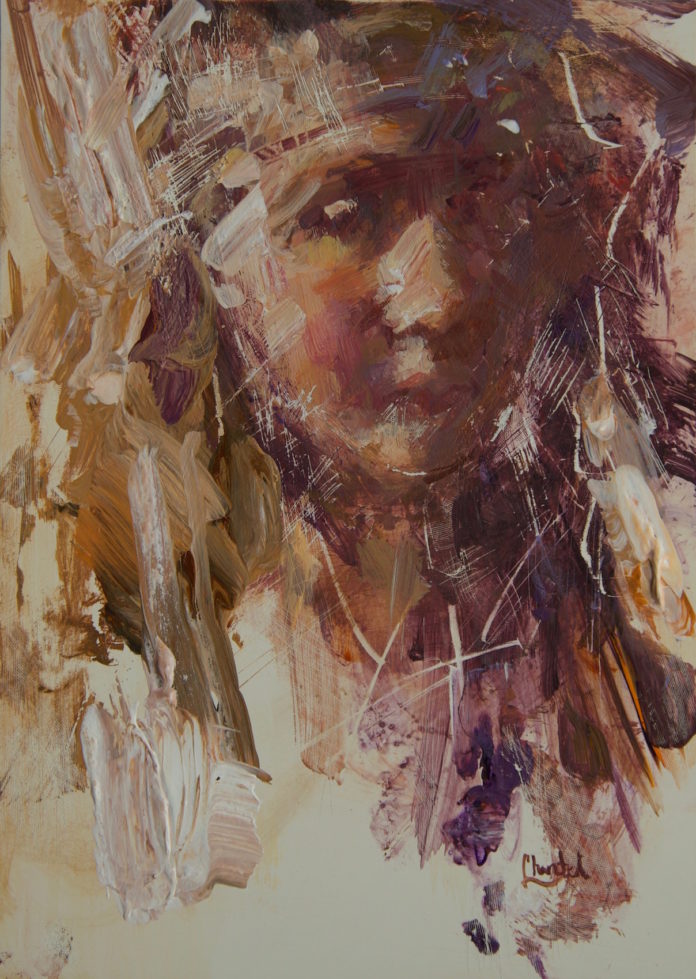
7 x 5 in., acrylic on panel
Available through the artist’s website
Chantel’s passion for art began flourishing at age 12 when she was mentored under local San Diego artists. She continued to study art, largely self-taught, while living in Newport, Rhode Island, and Keflavik, Iceland. While enrolled in a college art course, a fellow student introduced her to acrylic paints, and she soon found it to be a medium dominated by abstract art. But her first love was portraiture for which she found little advice. As she dreamed of perfecting her skills as an acrylic portrait artist, Chantel continued to learn from professional oil painters and translated their teachings into acrylic techniques. All the while, she remained active in local art communities, including serving as President of Artists’ Link in Memphis, Tennessee.
In 2006, Chantel opened her own art business called Chantel’s Originals near Memphis, Tennessee. Chantel soon benefited from workshops and demonstrations with outstanding artists including Dawn Whitelaw, Michael Shane Neil, Suzie Baker, and Marc Hanson. Chantel is currently the National Coordinator of the State Ambassador program for the Portrait Society of America, and is also a member of The Chestnut Group and the National Oil & Acrylic Painters’ Society.
Chantel has been featured in solo art shows and juried exhibitions. Her award-winning paintings are in private and public collections throughout the United States and overseas. Her work is published in Acrylic Artist magazine, American Art Collector, Southwest Art, The Artist’s Magazine, Fine Art Connoisseur, and several books. She regularly blogs at chantellynnbarber.com. Chantel resides in Bartlett, Tennessee, where she teaches online and in workshops throughout the United States and Canada.
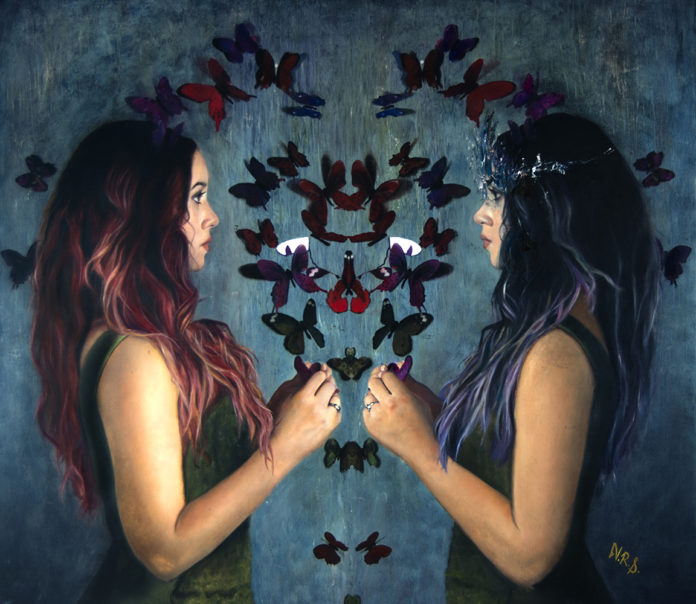
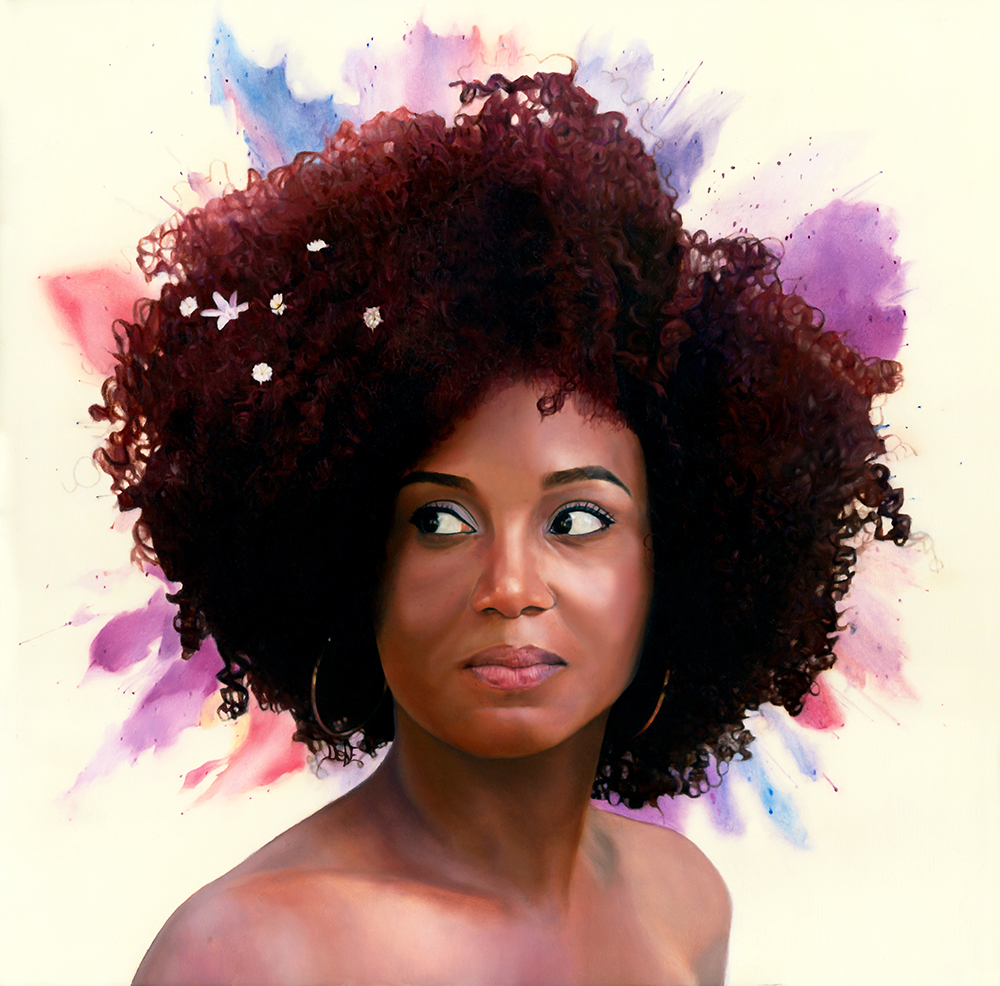
Victoria Steel, “Familiarity Breeds Contempt,” oil on panel, 18 x 20 in.
“Imagine”
Rehs Contemporary Galleries, New York
Through May 18, 2018
From the gallery:
The most powerful tool each of us have is our imagination — we can create alternate realities, bend the laws that govern the world we live in, or dream up fantastical beings that have never been pondered by another . . . and we can do it all in our mind. That sentiment could not hold truer than with respect to the arts. An artist, with an imagination at their disposal, can create anything . . . and further, a capable artist can share their imagination in ways others cannot — visually. The genre of Imaginative Realism, to put it simply, is the art of the unseen — things that never existed or might exist in a distant future.
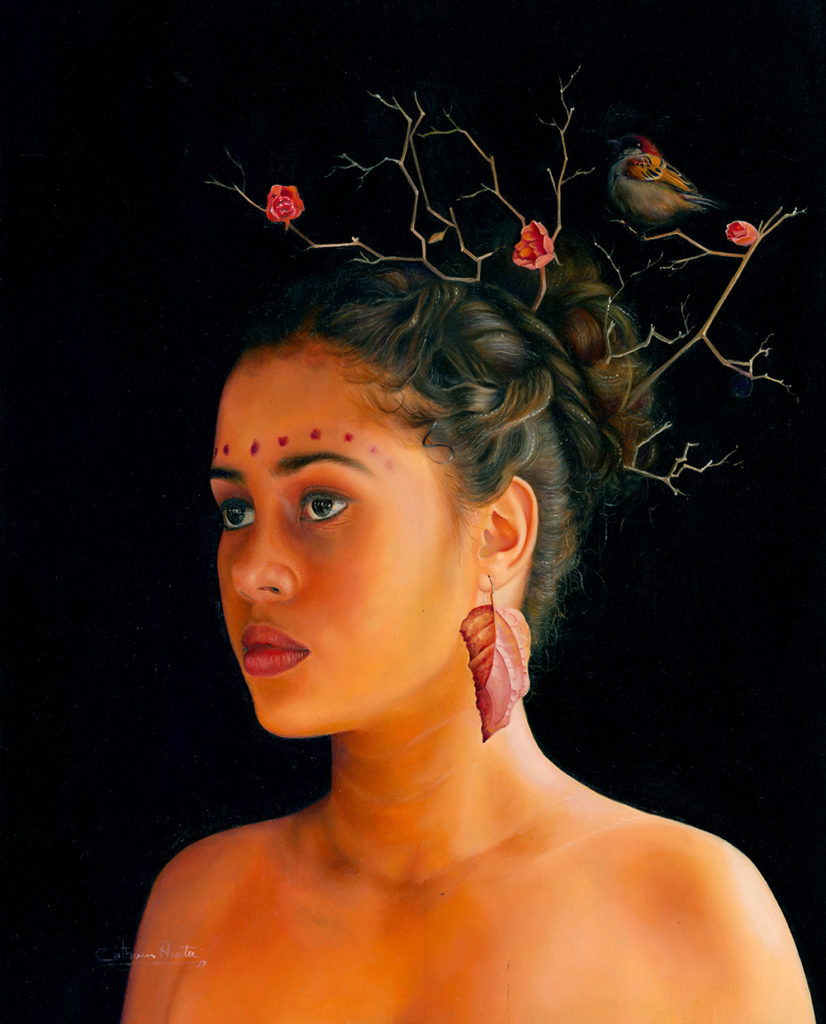
Catherine Acosta, “Esperanza,” oil on panel, 20 x 16 in.
Rehs Contemporary’s upcoming exhibition, “Imagine,” aims to highlight that ingenuity of the artist’s mind. Works by Ani Art Academy students, alumni, and instructors will be on display alongside a contingent of contemporary icons working in Imaginative Realism. Rehs teamed up with Pat Wilshire, founder of Illuxcon (the world’s largest annual showcase of Contemporary Imaginative Realism), to bring together an influential group regarded as some of the finest artists working in the genre.
Among the featured artists are Boris Vallejo, Julie Bell, Donato Giancola, David Palumbo, Tenaya Sims, Michael C. Hayes and Eric Velhagen . . . works by Anthony Waichulis, Timothy Jahn, Edward Dillon, Kevin Moore, and a juried selection from the Ani Art Academies will be featured as well. This exhibition will give viewers an opportunity to see the heights that Imaginative Realism can be taken to, while also providing a chance to see up-and-coming artists who are exploring the field — the future of Imaginative Realism.
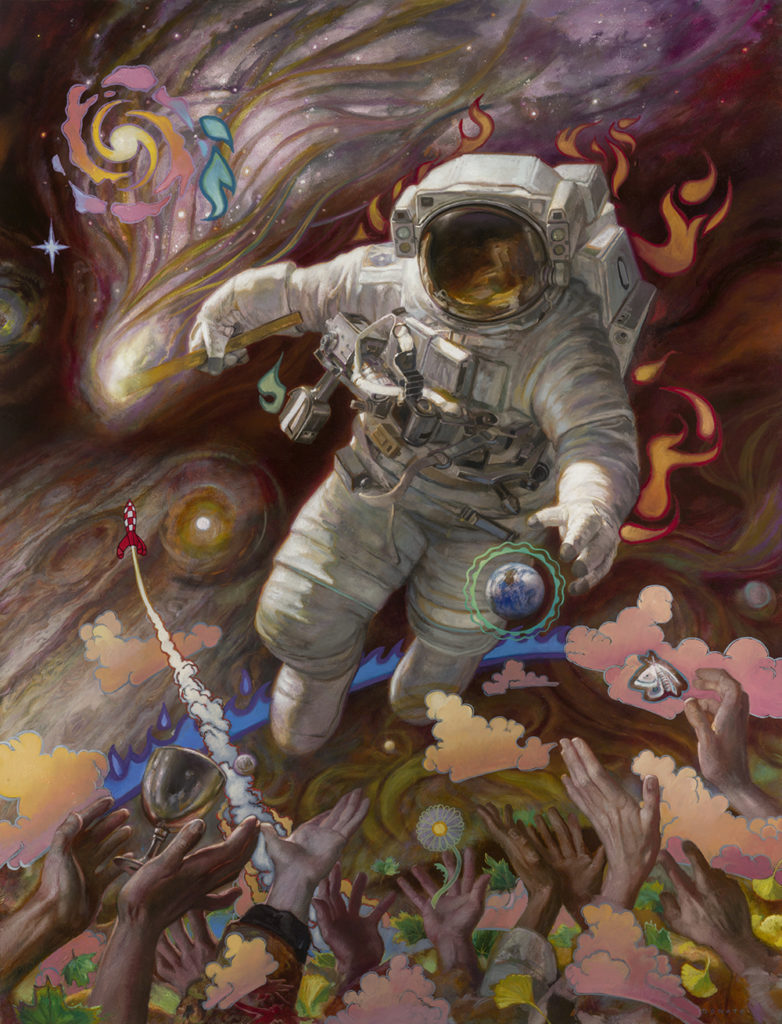
Donato Giancola, “Life Seeker,” oil on panel, 48 x 36 in.
The beauty of the genre is that it allows for exploration within as well as outside of ourselves, all inside the framework of highly skilled, technically proficient realism. As Anthony Waichulis (Founder of the Ani Art Academies) says, “When developing our curriculum, we sought to minimize particular aesthetic influences so as to purposefully create a deficit that would be filled by the personal preferences, interests, and cultural perspectives swirling within the individual. I believe this strategy promotes creative development alongside the more conventional (technical) skill set that will eventually need to draw from it.” This approach allows for an expressive and evocative investigation of the human experience while providing the foundation for creating meaningful works of art that are relevant to our contemporary lives.
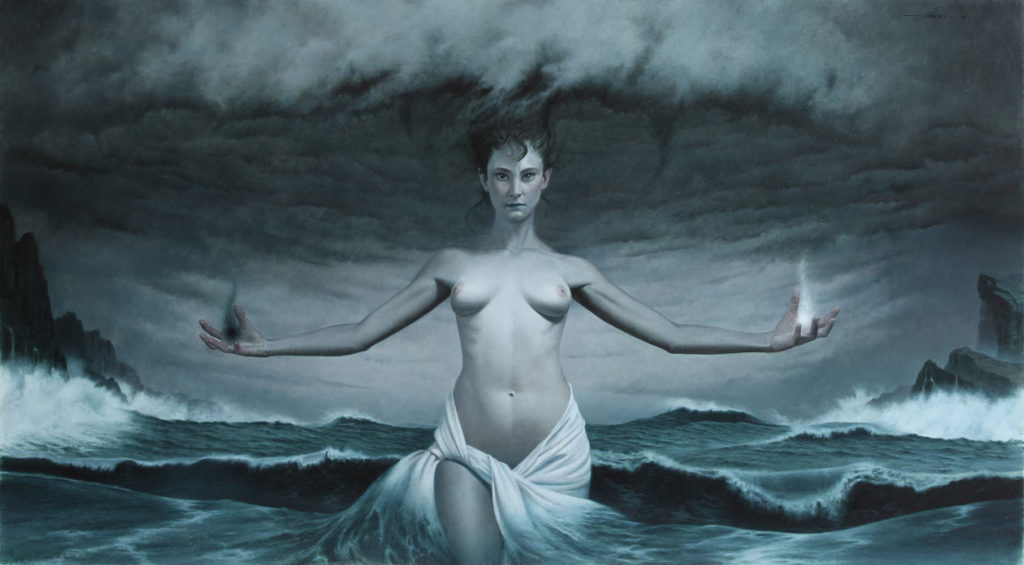
Vince Natale, “Stormbringer,” oil on panel, 15 x 27 in.
As Wilshire notes, “This fresh insight is nowhere more prevalent than in the younger generation of artists. Raised with this foundation of the fantastic, it is a natural, obvious progression for young artists to want to share their own ‘vision of never,’ utilizing their highly proficient, skills-based training to illuminate their deepest inner vision.” The selection of imaginative works that comprises the bulk of “Imagine” demonstrates the powerful results, bringing the next generation of imaginative realists to the walls of Rehs Contemporary alongside established masters of Imaginative Realism — the artists who are responsible for growing the genre from its late twentieth-century status as a byproduct of the publishing industry to a vital artistic movement that sits at the vanguard of contemporary realism.
Deborah Lloyd, “Just Imagine,” oil on panel, 11 x 11 in.
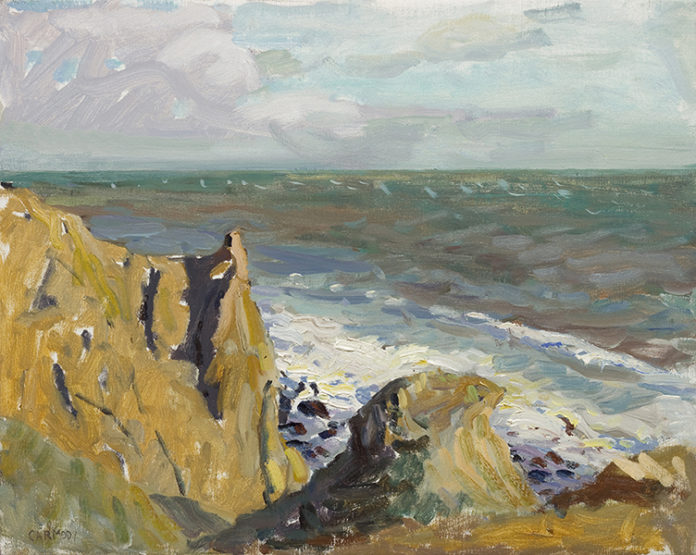
Kelly Carmody, “Wind at the Cliffs,” 2017, oil on linen, 16 x 20 in.
“Kelly Carmody: Solo Show”
Sloane Merrill Gallery
Boston, Massachusetts
May 4 through June 1, 2018
From the gallery:
This exhibition is a view into Carmody’s past year of travel and exploration, highlighting time spent in St. Petersburg, Maine, Martha’s Vineyard, and Long Island. Born in Massachusetts in 1977, Carmody attended the Massachusetts College of Art of furthered her studies at the historic Art Students League of New York and in the studio of Numael Pulido.
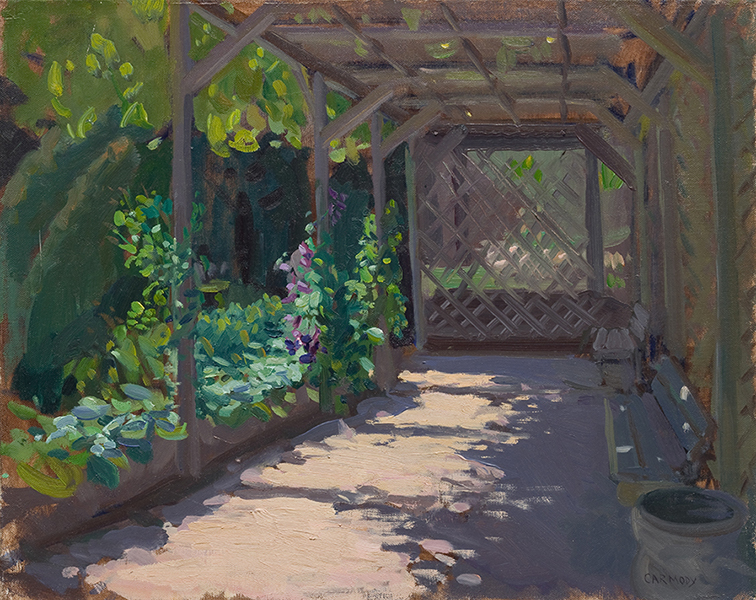
Kelly Carmody, “Latticework,” 2017, oil on linen, 16 x 20 in.
The paintings in the exhibition range from calm interiors and florals to haunting nocturnes and windswept seascapes. Carmody achieves a beautiful balance while embracing both new terrain and difficult elements — namely ever-changing light as seen in “Latticework,” and powerful gusts felt in “Wind at the Cliffs.”
The quest of the painter is to tackle what lies before their eyes; Carmody demonstrates her ability to thoughtfully handle the paint in the studio, as well as viscerally lay the paint down outdoors. It’s exciting to see Carmody tackle and surmount new territories, both in terms of traveling to new places and exploring her artistic depth.
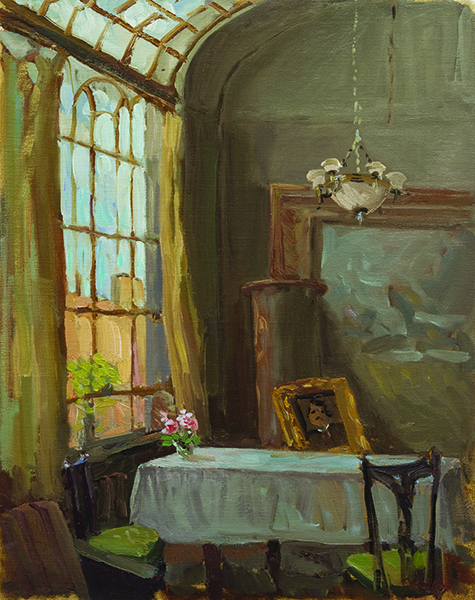
Kelly Carmody, “St. Petersburg Studio,” 2017, oil on linen, 20 x 16 in.
Carmody was selected for the 2015 BP Portrait Award at the National Portrait Gallery in London and the 2016 Outwin Boochever Portrait Competition at the National Portrait Gallery in Washington, DC. Her work can be found in private collections throughout the U.S. and Europe. Carmody paints and teaches in her Waltham, MA studio.
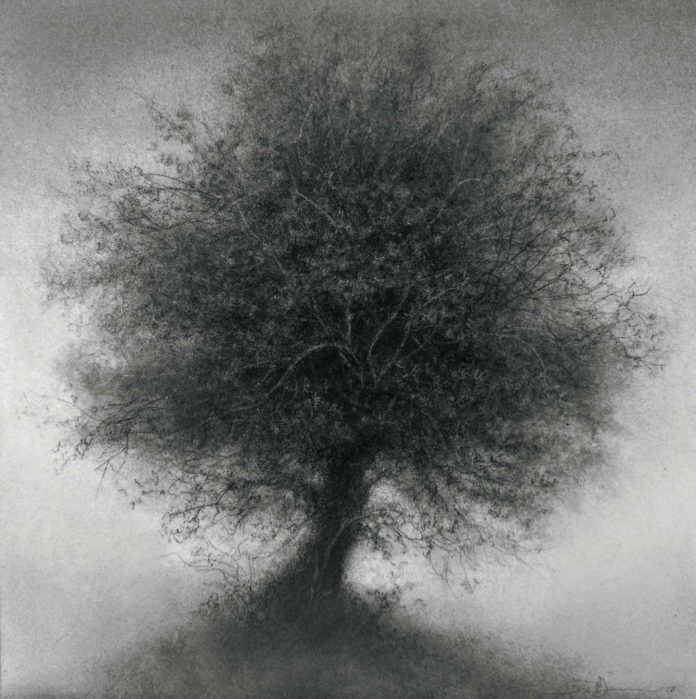
Sue Bryan, "Trinket,” 2018, charcoal and carbon on Arches paper mounted on wood, 10 x 10 in.
Through June 22, 2018, New Jersey
From the Florence Academy of Art U.S. (FAA):
The FAA is excited to present “On Paper, An Exhibition of Drawings,” held at the FAA U.S.’s Mana Contemporary location. This exhibition coincides with Mana Contemporary’s open house. FAA’s exhibit will showcase a selection of drawings by more than 30 of today’s figurative artists.
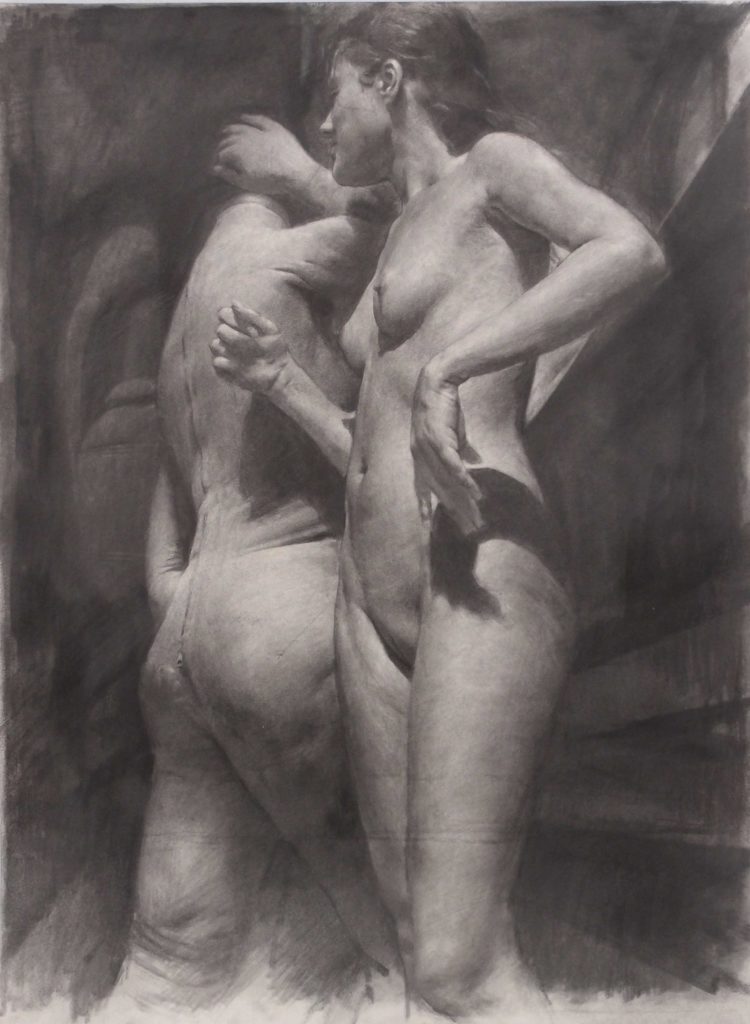
Michael Grimaldi, “Untitled Study for a Painting,” 2018, graphite and charcoal on paper, 24 x 18 in.
“Drawing is the bedrock of visual discovery and the cornerstone of an artist’s education,” explains Jordan Sokol, Director of the Florence Academy of Art’s U.S. location and co-curator of “On Paper, An Exhibition of Drawings.” Jordan curated the exhibition along with FAA principal instructor Amaya Gurpide. Amaya elaborates, “Drawing is one of the oldest forms of human expression and this exhibition is a celebration of its significance, not only as the visualization of a thought, or a preliminary study, but as an art form in its own right.”
All drawings are priced at or below $5,000 in an effort to make this exceptional collection accessible to the public. For more information, visit www.florenceacademyofart.com.
Daniela Astone, “Scilla,” 2017, charcoal and white chalk on toned paper, 26 x 40 in.
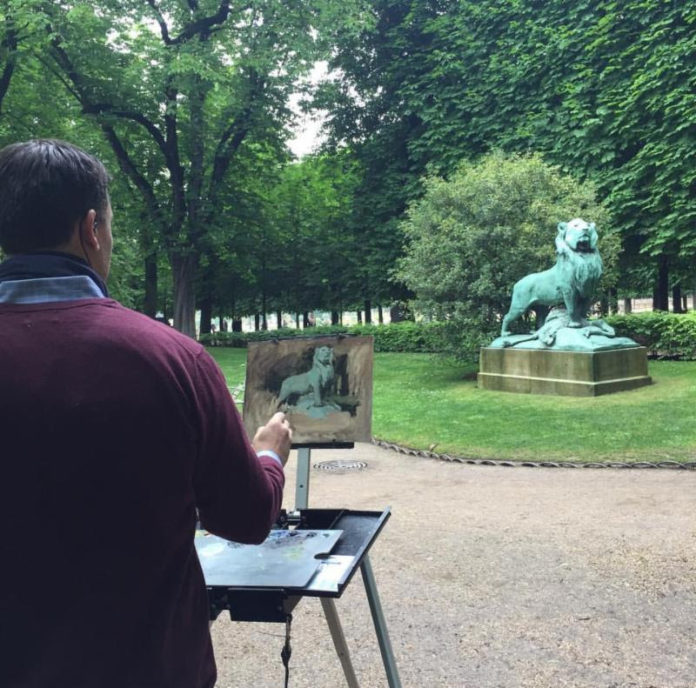
Ryan Brown in the Luxembourg Gardens last year with the artists in Paris, painting famous statue that was painted by William Merritt Chase, John Singer Sargent and many others.
Arcadia Contemporary, Los Angeles, CA (opening May 12, 2018), and
Galerie L’Oeil du Prince, Paris, France (opening May 24, 2018)
From a recent announcement:
Paris, the “City of Light,” the capital of fine art, fashion, and cuisine. With museums housing many of the most famous paintings in the world, top fashion houses creating elegant collections, renowned chefs serving up delicacies, authors and poets conjuring up unforgettable tales, it’s no wonder artists flock to this enchanting city.
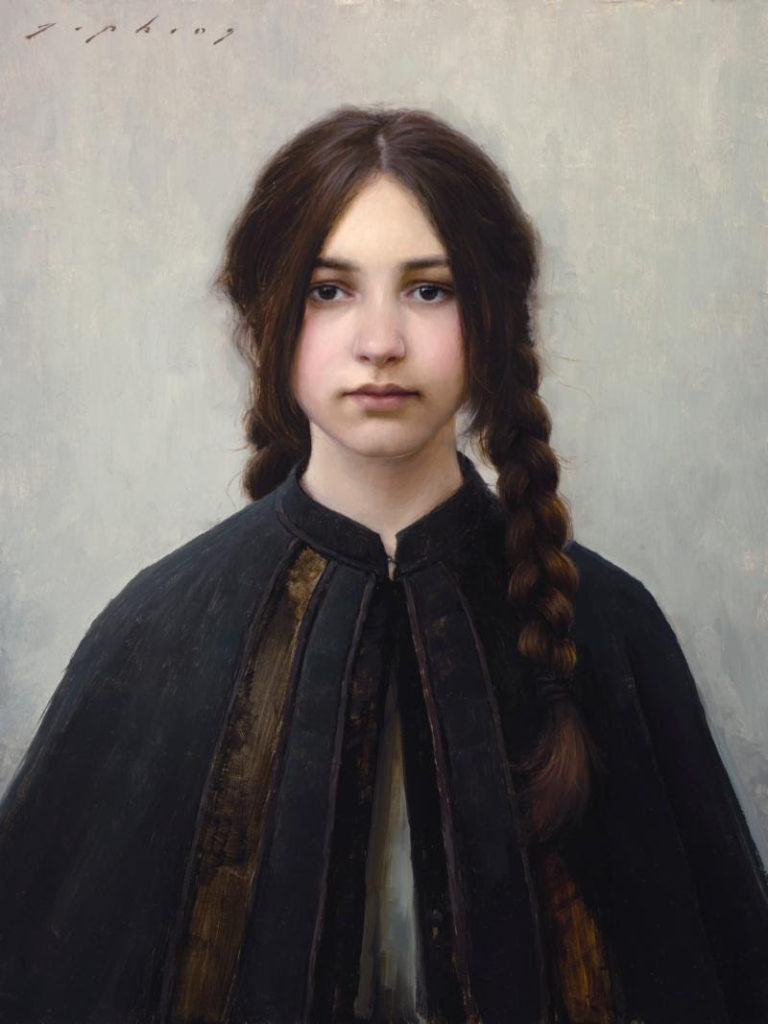
This beautiful portrait called “Serenity” (16×12 in.) is by Jeremy Lipking, and is available at Arcadia contemporary, Americans in Paris exhibition.
Fifteen well-known American realist painters were inspired by Paris, the city of light, love, fashion, and art. They were influenced by its many museums’ luxurious interiors, historical masterworks, renowned literature, and architecture, and were also inspired by one another on recent travels there. Two collections of their NEW inspired works will be shown in these rare bi-continental exhibitions. Join us in Los Angeles and Paris, and see why the enchanting city of Paris has inspired artists for centuries.
Following in the footsteps of the great American painters before them, this group of artists from various schools and regions of the US, traveled to France last year. There they painted together, studied the masters face to face at the top museums, gleaned how literature can play a role in inspiring great paintings, influenced one another with their colors, styles and subjects, discussed artists from the past, and painted on location, capturing the ethereal light of the city.
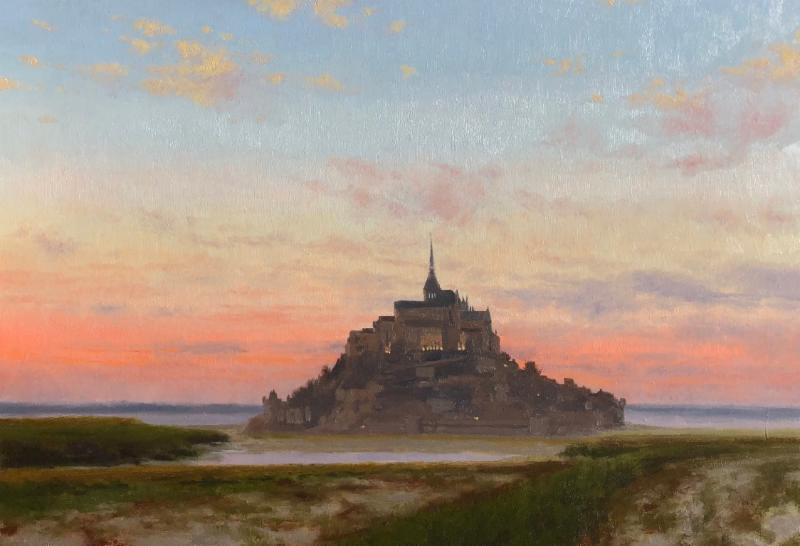
Mont St Michel by Ryan Brown, 14 x 18 in., available at the Gallery L’Oeil du Prince in Paris France.
Each artist has created a new set of paintings to exhibit together in Los Angeles and Paris. They took inspiration from the actual works of American artists who spent time there (perhaps a self portrait by Chase), or they were influenced by a French novel, or a poem by Baudelaire. Perhaps they captured enchanting lights of the city, or were inspired by the multitude of blues and grays that changed their palette. Others were perhaps inspired by the world of fashion, the rich interiors with velvet sofas, or the historical architecture that abounds. Each took a part of Paris back with them. We will see first-hand how the experience of Paris played a role in shaping their works of today.
Howard Lyon, “After the Dance,” (2017) Oil on panel. Private Collection.
By Micah Christensen, PhD Fine Art Connoisseur magazine contributor
There is and always has been a pecking order among artists and collectors; a kind of unspoken understanding of the difference between bon gout and faible couture. For centuries a codified hierarchy ranked artists, establishing the critical and financial fortunes of an artwork. This hierarchy was upended with the advent of Modernism. But now, as increasing numbers of artists seek out traditional techniques in art and compete for prizes, the question of hierarchy may be worth visiting, if only to explore our own stubborn biases.
Perhaps the most famous codifier of art was the French architect and historian André Félibien (1619-1695):
He who produces perfect landscapes is above another who only produces fruit, flowers or seashells. He who paints living animals is more estimable than those who only represent dead things without movement, and as man is the most perfect work of God on the earth, it is also certain that he who becomes an imitator of God in representing human figures, is much more excellent than all the others . . . a painter who only does portraits still does not have the highest perfection of his art, and cannot expect the honor due to the most skilled. For that he must pass from representing a single figure to several together; history and myth must be depicted; great events must be represented as by historians, or like the poets, subjects that will please, and climbing still higher, he must have the skill to cover under the veil of myth the virtues of great men in allegories, and the mysteries they reveal.
Félibien did not invent this list or its order. He repeated what had been the status quo from at least the late fifteenth century. It was, after all, Michelangelo (1475-1564) who once reportedly said “Good painting is nothing else but a copy of the perfection of God and a reminder of His painting.”
Today, making any such statements that would potentially rank one genre of art over another would not only seem politically incorrect, but also just incorrect. Is there any way of quantifiably comparing the arsenals of skills used by William-Adolphe Bouguereau (French, 1825-1905) to make a nude, with those of Frederic Edwin Church (American, 1826-1900) — who would rank high on the genre chart — to create a monumental landscape such as “Niagara Falls.” Apples and oranges.
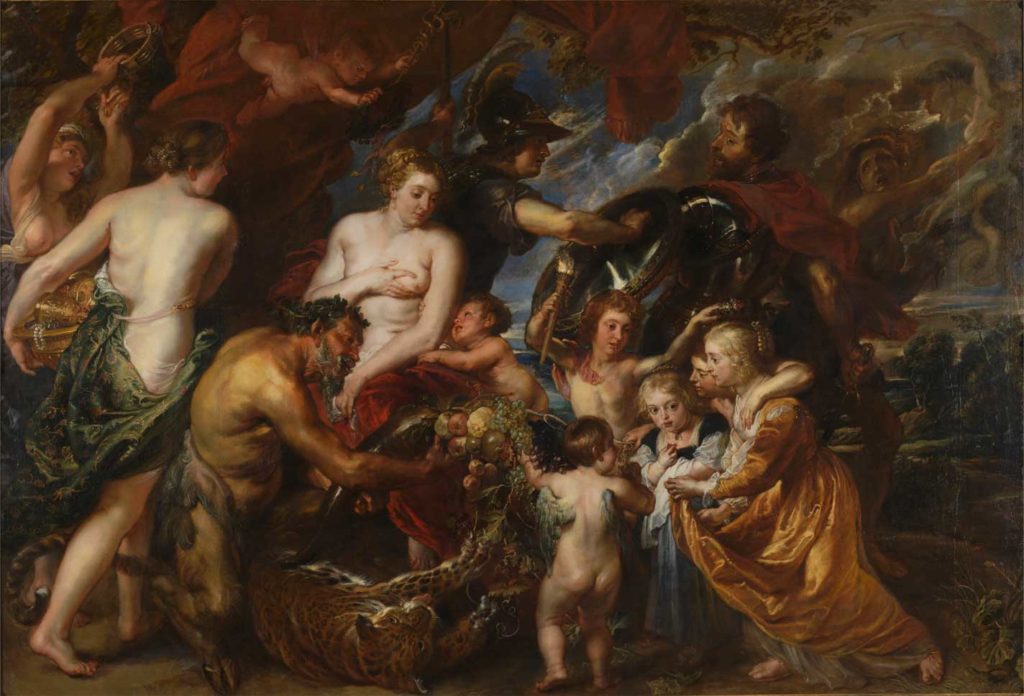
Peter Paul Rubens (Flemish, 1577 – 1640) “Minerva protects Pax from Mars (Peace and War)” (1629-1630). Oil on canvas. 80 x 117 1/3 in. National Gallery, London.
On one hand, the idea that narrative figural paintings occupied the highest order of art and landscapes near the lowest was simply an acknowledgement of what, today, we would call “socioeconomic differences.” From the Renaissance forward, art was increasingly the domain of gentlemen intellectuals, not the illiterate craftsman of Medieval guilds. These artists and collectors were often fluent in the classics of Greco-Roman literature. This was perhaps no better personified than by Peter Paul Rubens — called “the prince of painters” by the art-collecting King Charles II — who spoke at least eight languages and whose rich interpretations of mythological, biblical, and historical subjects reflect his depth of understanding won through relationships with theologians, kings, and philosophers.
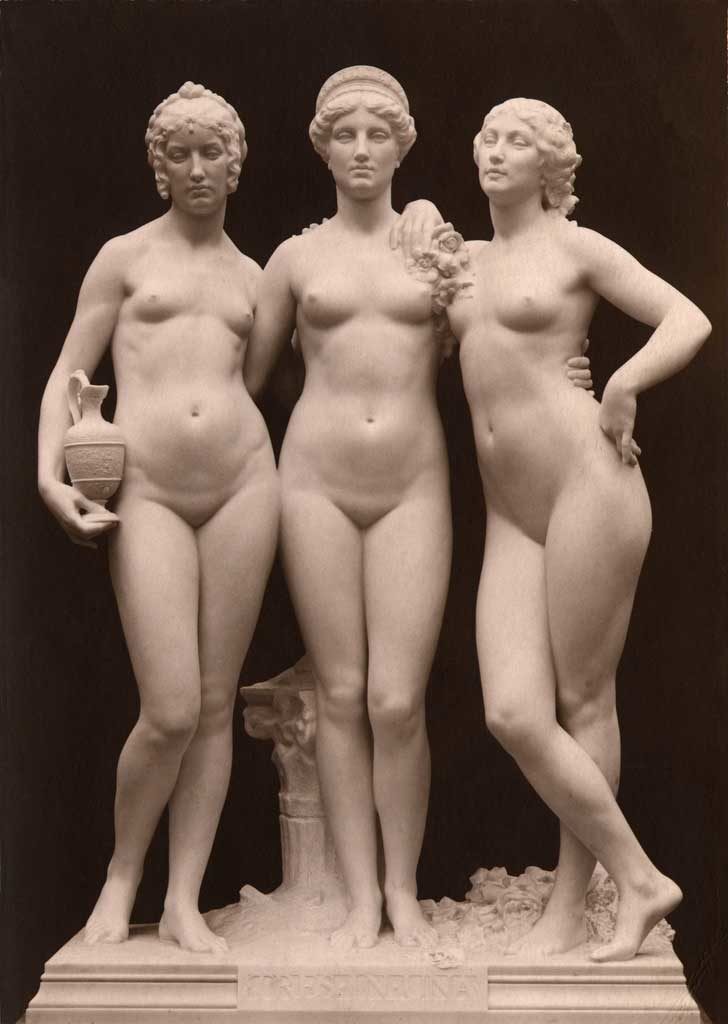
Paul Richer (Chartes, 1849-Paris, 1933) “Tres in una,” (1910), 72 3/4 x 48 3/4 by 23 1/2 in., École des Beaux-Arts, Paris
But dedication to the human figure as a apex of arts education was also an acknowledgement that true mastery required a skill that was difficult to attain. Even the completely uninitiated art viewer can tell if a hand or an ear in a painting just doesn’t quite meet anatomical reality. How often have stories of Michelangelo and Leonardo Da Vinci digging up and dissecting corpses been repeated? (I seriously doubt they did the digging themselves.) This kind of dedication often led science and art to meet in one individual, such as Paul Richer (French, 1849-1933), whose intimate knowledge of anatomy qualified him to serve simultaneously as a professor of the Paris École des Beaux-Arts and surgeon for the Académie National de Médecine.
But the figure was not the only subject that required rigorous understanding. The same Enlightenment that shed light on the human body led to increasing understanding of geology, climate, and nature. The result was generalist artists increasingly being replaced by specialists like George Stubbs (British, 1724-1806), who led dissections of horses at London’s Royal Academy, and the Hudson River School of landscape artists, who rigorously noted the elevation of plants and mineral composition of rocks. By the end of the nineteenth century, the curriculum of the various European academies broadened to teach these additional branches of knowledge.
We are not living in a time when there is increased interest in developing a similar rigor in art, as evidenced in the most recent Art Renewal Center (ARC) Salon. This year more than 3,700 artworks were submitted by artists from 69 counties. The ARC gave awards in nine categories, listed in the following order:
Figurative
Portraiture
Imaginative Realism
Landscape
Plein Air
Animals
Sculpture
Drawing
Still Life
This list, I think, with the exceptions of “imaginative realism” and “plein air” — two concepts that didn’t exist at the time — would have been remarkably familiar to the seventeenth-century André Félibien. Perhaps he would have wondered at the climbing of “landscape” above “animals.”
This list and its order should make any artist or collector pause. Yes, it is wonderful that efforts like the contemporary Hudson River Brotherhood, Florence Academy of Art (Florence), and the Grand Central Academy (New York), Academy of Classical Design (North Carolina) and Masters Academy of Art (Utah) — to name only a handful — are resurrecting a lost intellectual and technical approach to art. But are we also resurrecting old biases?
I recently put this to a crowd of artists, with whom I regularly gather for the Artistic Arsenals lectures. We had just had a discussion about a wonderful artist, Eric Armusik, who just completed a series of monumental canvases depicting scenes from the Divine Comedy (1320) by Dante Alighieri (Florence, c. 1265 – Ravenna, 1321). Armusik is deservedly considered a “Living Master” by the Art Renewal Center. But, after showing his works, I asked my audience: “Please raise your hand if you have ever read The Divine Comedy.” Out of dozens of people, not one hand went up. My heart sank, and I immediately felt a kinship with Allan Bloom, who described a similar result in his UCLA classroom in the book The Closing of the American Mind (1987).
Just as I was inwardly lamenting the death of bon gout, which surely showed on my face, the hand of Howard Lyon went up. Lyon has the distinction of having both won major awards as a fine figurative artist and being on of the world’s foremost fantasy artists. He asked:
“We may not have read Dante. But we have read Tolkien. Tolkien has not only been read by millions. Artwork — movies, paintings, and music — inspired by Tolkien have been experienced by perhaps billions. It is drawn from mythology and explores themes that are arguably as universal as The Divine Comedy, which was itself contemporary fiction. Why can’t we paint that and have it be considered ‘fine art’?”
I did not have an answer for him then. And, I don’t now; other than the acknowledgment that my biases, which lean toward the ancient and well-trod classics, are contradictory.
Paul Raymond Gregory (British, cb. 1949), “The Rise of the Rohirrim,” (1980), 72 x 120 in., Courtesy of Leicester Galleries, London.
Years earlier, I had been in the London home of Peter Nahum, former Director of the Victorian Painting Department at Sotheby’s and the owner of the famed Leicester Galleries. He had been showing the work of Paul Raymond Gregory (British, b. 1949), an artist trained in the tradition of Harvey Dunn and NC Wyeth, who had spent 25 years creating monumental canvases inspired by the Lord of the Rings. Nahum considered Gregory’s works on par with those created by the nineteenth-century artists for whom he was considered an advocate. But Nahum had struggled to find an audience for Gregory’s works in the traditional museum and gallery world. His solution? ComiCon.
It is my impression that very few fine art sales are made at such conventions. Perhaps this is because my fellow fine art connoisseurs and I do not attend them in great numbers. But, rather than pass that off as a given, I would like to suggest something else: We should examine our own personal hierarchies of art (Tolkien versus Ovid, landscape versus figure, illustration versus fine art). And, perhaps, we should move towards a new hierarchy — one that both cherishes the greatness of the past and opens us up to new possibilities.
About the author: Dr. Micah Christensen received his PhD in the History of Art from University College London and his Masters in Fine Art from Sotheby’s Institute (London). For his research. Dr. Christensen, has worked with various institutions, including the Prado Museum, National Gallery, and Musée d’Orsay and Getty Institute. He is currently a partner at Anthony’s Fine Art (www.anthonysfineart.com). Dr. Christensen regularly holds discussions with contemporary artists on Old Masters and art theory, which are recorded and posted on his website: ArtisticArsenals.com.
Kathy Ruttenberg on Broadway: in dreams awake
On view through February 19, 2019
From the Broadway Mall Association (BMA):
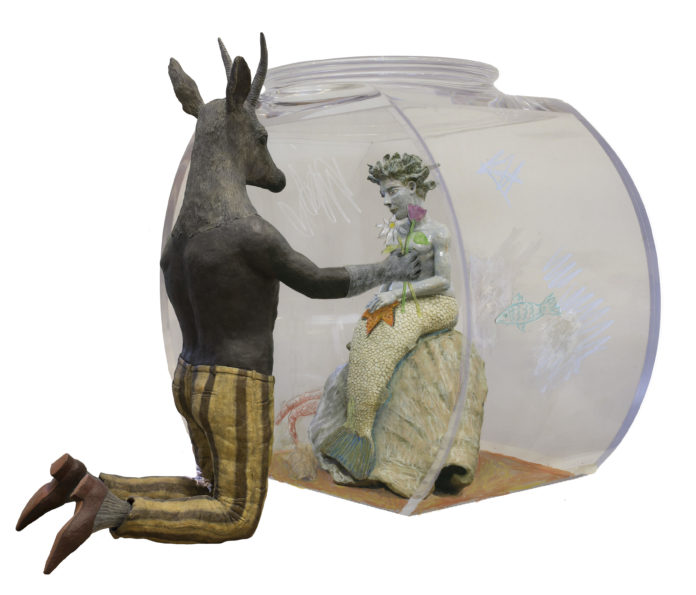
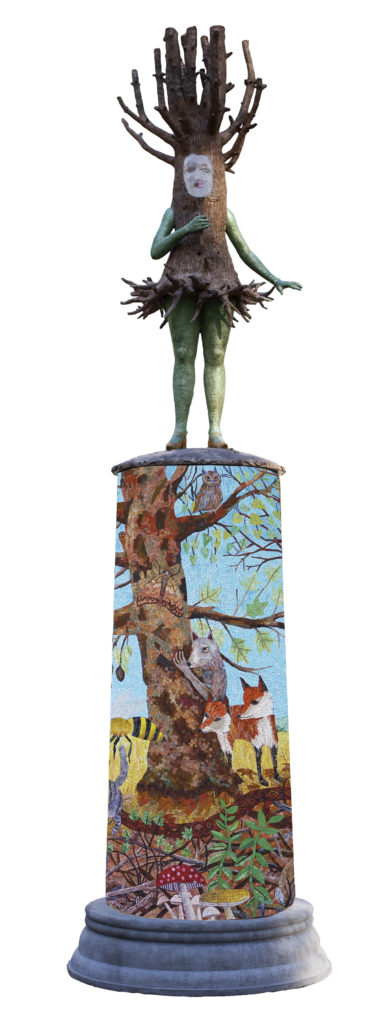
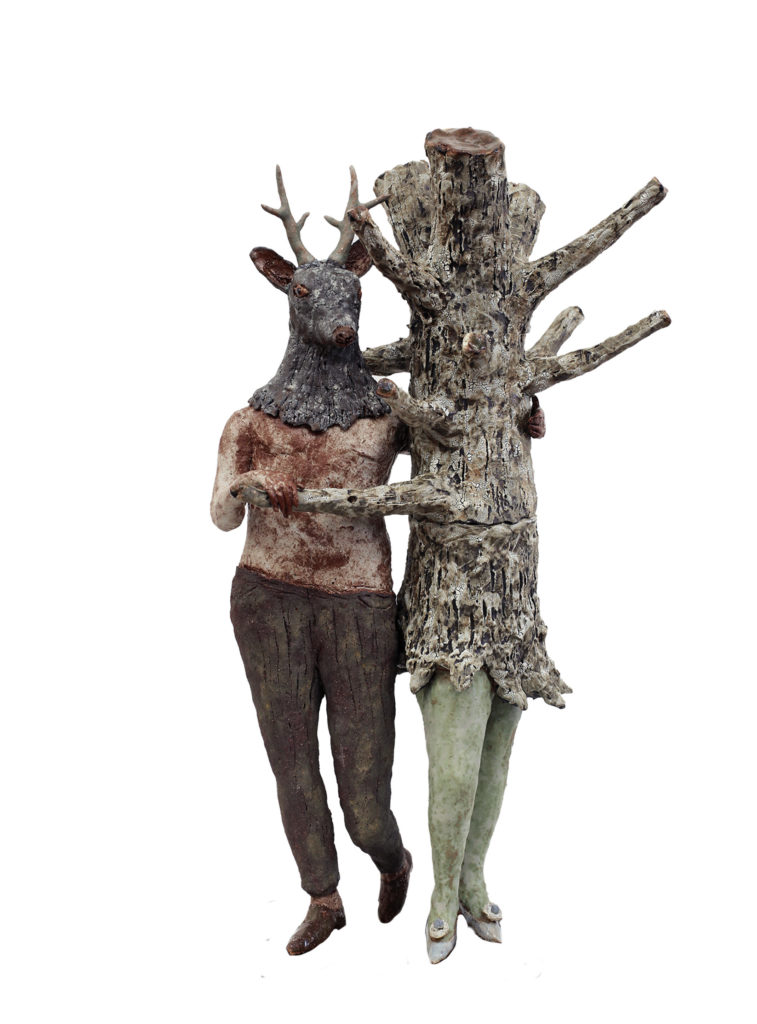
In just days, a fairytale dream will come true on Broadway. The spectacular production is not the latest star-studded musical theater blockbuster. Instead, the performers in this show are six large-scale, figural sculptures by Kathy Ruttenberg, an internationally known artist who makes her Broadway debut as a new kind of story-telling impresario. The installation, titled “Kathy Ruttenberg on Broadway: in dreams awake,” will appear on the Broadway Malls, the tree-lined greenway between 64th and 157th Streets in Manhattan.
“All the World’s a Stage” by Kathy Ruttenberg
Ruttenberg’s fantastical narrative sculptures combine human, animal, and plant forms. Using a wide range of media, Ruttenberg hopes to create an urban escape for those passing by. Taken out of the gallery and onto the streets, her characters embrace even greater significance as they interact with the urban environment. Hosted by the BMA, “in dreams awake” is the artist’s first major outdoor sculpture installation.
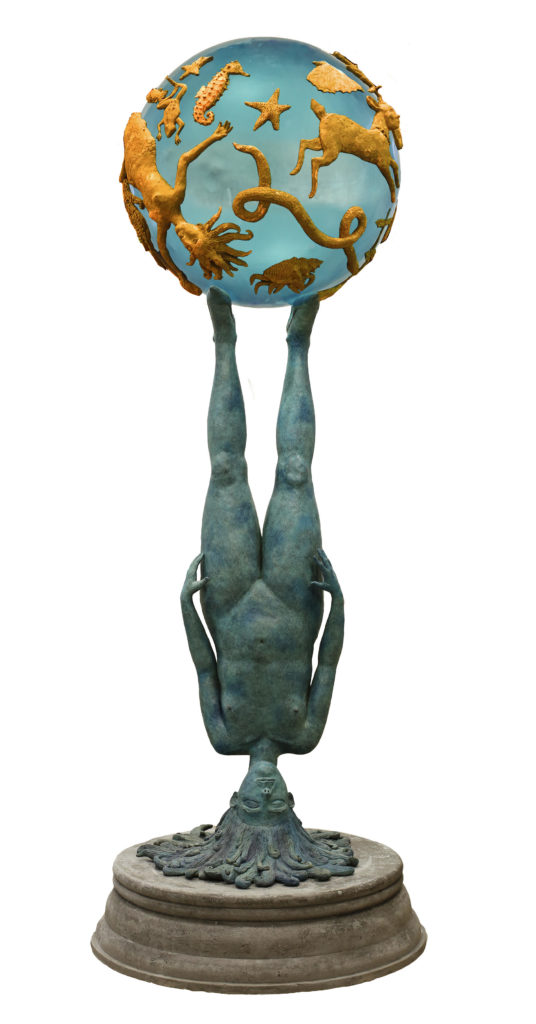
Ruttenberg’s work has been exhibited in museums and galleries since the early 1980s. Taken out of the gallery and onto the streets, her characters embrace even greater significance as they interact with the urban environment. Ruttenberg has painstakingly studied the sites along Broadway, and her carefully placed polychrome players blur the lines between dream and reality: a singing tree performs on a pedestal across from Lincoln Center; a smartly dressed Ms. Mighty Mouse surveys her domain at 79th Street, perhaps dreaming of the cheese at nearby Zabar’s. At 117th Street/Columbia University and Barnard College, Ruttenberg proposes an alternative to Atlas carrying the globe on his shoulders: an acrobatic goddess stands on her head and balances the earth on her feet, presenting a new view of the world to its future leaders.
The artist explains her merging of flora and fauna as “an urban escape into a rural wonderland; the pace of the city contrasts with the rhythms of nature, raising questions of what effect this disparity has on the human psyche; man’s relationship to nature is an underlying concern throughout my work. As the inhabitants of the natural world are increasingly displaced by urban and suburban sprawl, I find myself using anthropomorphic fables to return nature’s creatures to our human consciousness.”
It was Henry David Thoreau who said, “Our truest life is when we are in dreams awake,” and Ruttenberg’s sculptural prowess delightfully breaks the boundaries between art, the urban environment, nature, dream, and reality.
“In Sync” by Kathy Ruttenberg“Topsy Turvy” by Kathy Ruttenberg
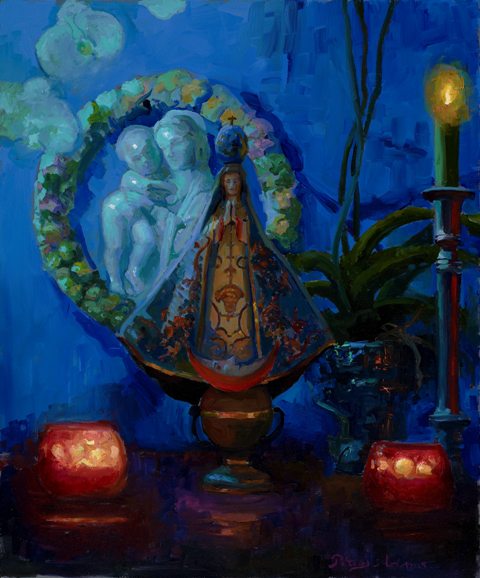
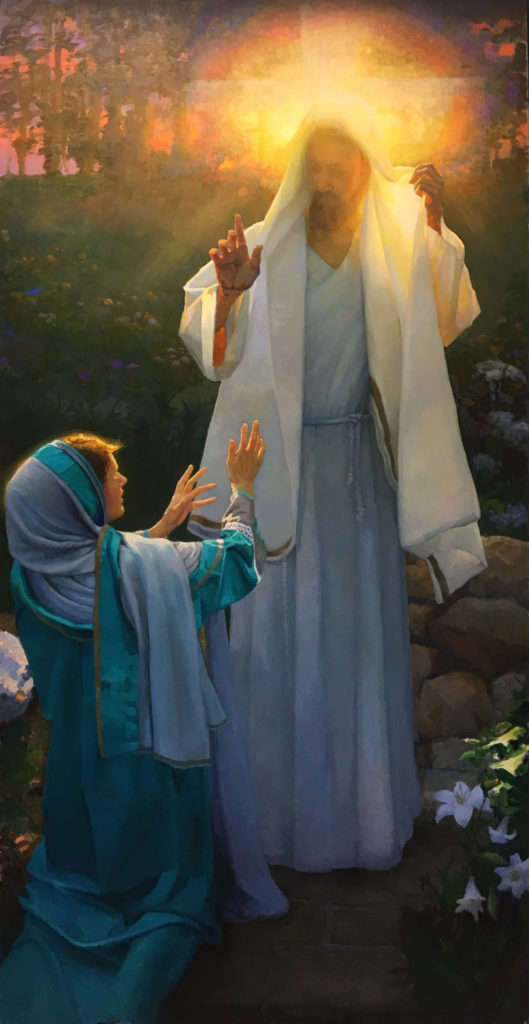
Peter Adams, "Virgin of San Juan de los Lagos," 24 x 20 in.
Peter Adams: Inspirations for the Fourteen Stations of the Cross and Sacred Themes
American Legacy Fine Arts
Los Angeles, California
Through June 16, 2018
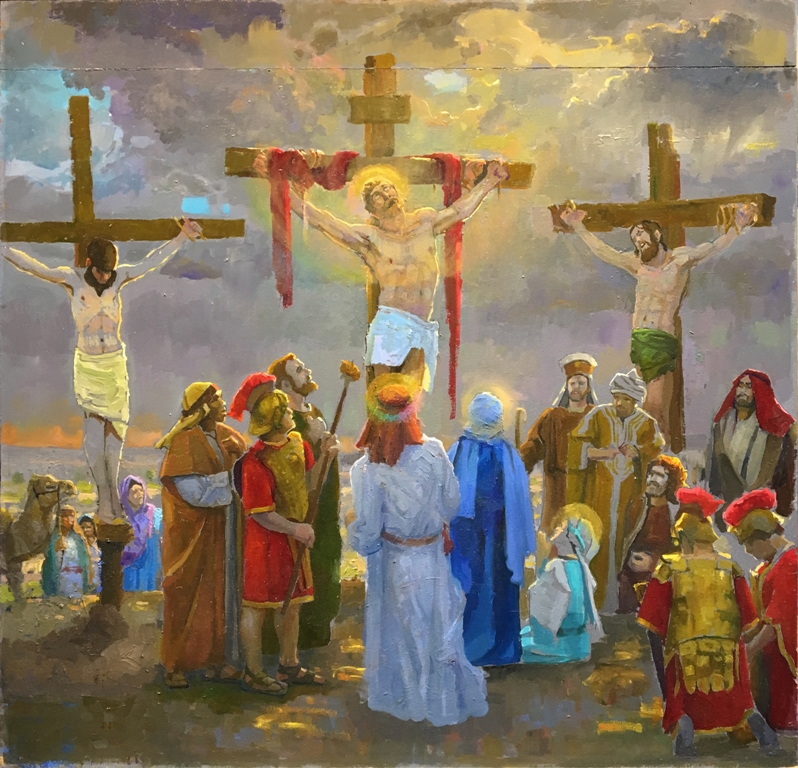
Focusing on Peter Adams’ process in developing the paintings of the Fourteen Stations of the Cross for Our Savior Church and USC Caruso Catholic Center, this solo exhibition includes studies, plein air paintings of the Holy Land, staging photographs, re-enactment video segment, recent Resurrection-inspired paintings, and other Christian-themed subjects.
“I’m deeply honored to have been asked to exhibit my paintings of ‘Inspirations from the Fourteen Stations of the Cross and Sacred Themes’ at the USC Caruso Catholic Center. I believe these paintings represent my most meaningful work, and are certainly closest to my heart. To be able to present this body of work to a college-age audience and to perhaps inspire other artists to create in the genre of sacred art is a great privilege indeed.” — Peter Adams
Peter Adams, “The Resurrection,” 96 x 48 in.Peter Adams, “Study for the 12th Station, the Crucifixion Scene,” 23 x 24 in.
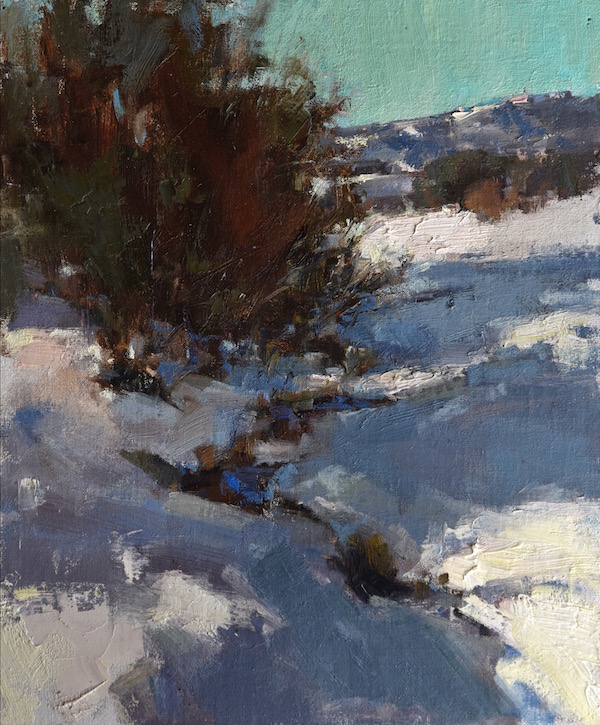
Shadow Play
10 x 12 in., oil on canvas
$1600
Available at Horton Fine Art Gallery, Beaver Creek, CO
The myriad of color and temperature shifts in Valerie’s painting, Shadow Play, reflects the clear light, and warm winter sunshine of Colorado. “Shadows contain a range of hues and temperatures that we just don’t get to see back east.”
Known for her atmospheric landscapes and gutsy brushwork, Valerie Craig especially enjoys painting outside in all kinds of weather. “Standing in the midst of a snowfall, dense fog, or early morning mist fires up my spirit and I am compelled to paint.” While Valerie’s subject matter varies from urban scenes to quiet woodland interiors, working directly from life is key. “To me it is all about light quality, strong shapes, and somehow conveying the essence and unique temperament of a scene.”
In 1998, Craig left her career in nursing administration to pursue her passion for painting on a full-time basis. Painting offers a unique opportunity to intimately to nature and humanity. “If my work can somehow evoke a response or inspire the viewer, I have been successful.”
In 2017, Valerie was awarded the Artists’ Choice Award in Ireland’s Art in the Open. She won the Gold Prize in Ireland’s 2013 Art in the Open. In 2016, Valerie’s painting Whitewashed was awarded Second Prize in PleinAir Magazine’s annual Plein Air Salon.
Valerie has been invited to judge national and international painting competitions, including Ireland’s Art in the Open, Floyd Plein Air, Solomons Island Plein Air and Norfolk Plein Air. Valerie has had numerous solo exhibitions and enjoys teaching landscape painting workshops in the USA and in Ireland.
Recent Honors include:
Bold Brush Award, March 2018 in the Bold Brush Competition
Artists’ Choice Award, 2017 Ireland’s Art in the Open International Festival
Second Place, 2017 Plein Air Easton Small Painting Competition
Juror’s Award, 2017 and 2016 Wayne Plein Air Festival
Award of Distinction, American Impressionists’ Society 2014 National Show
Silver Prize, 2014 Ireland’s Art in the Open
Gold Prize, 2013 Ireland’s Art in the Open
Grand Prize, 2013 American Women Online Juried Competition
Best in Show, 2011 and 2008 Wayne Plein Air Competition
Second Place, 2011 Plein Air Easton
Artists’ Choice Award, 2010 Plein Air Easton
Stephen Coyle, "Start of the Day," oil on canvas, 30 x 30 in.
Fine art landscapes paintings featured in “This Land Is . . .”
Arcadia Contemporary
Through May 12, 2018
Arcadia Contemporary Presents “This Land Is . . .”
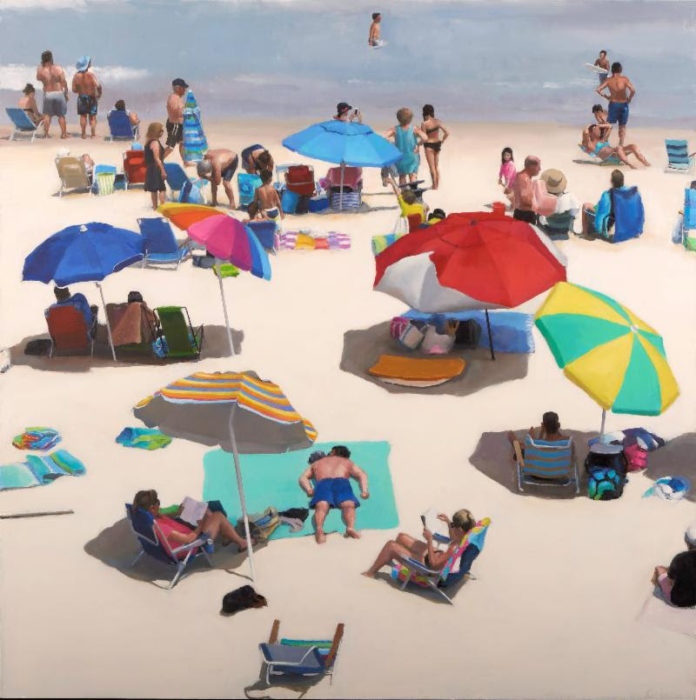
This exhibition features the work of more than 25 painters from around the globe. The first landscape invitational hosted by Arcadia, the gallery sought painters whose works displayed two specific qualities: a very high level of skill and a unique, signature style.
The gallery specifically looked for different “types” of landscapes depicted, from industrial/urban scenes to bucolic, natural environments. From the blazing heat of the midday sun on the beach, to the coolness depicted in nocturnes, the gallery wanted to show a grand diversity of scenes.
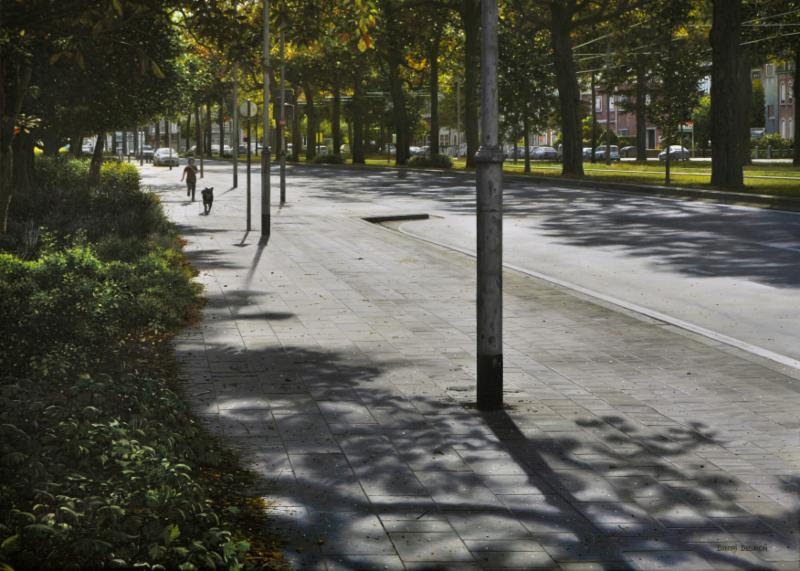
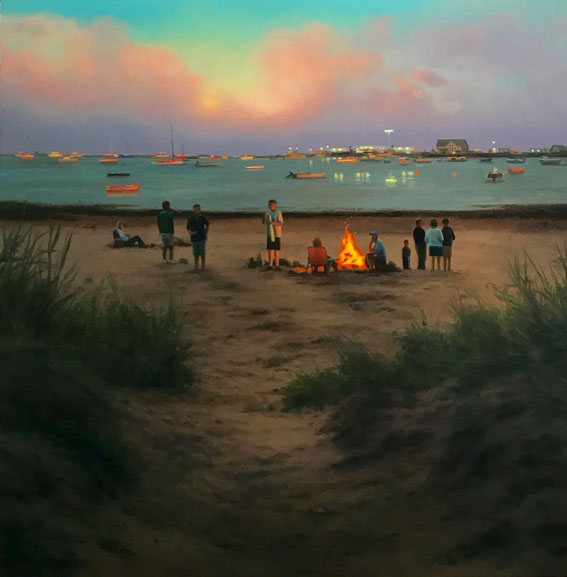
Dimitri Desiron, “Bright Days,” oil on canvas, 20 x 28 in.Scott Prior, “Twilight Bonfire on the Harbor,” oil on canvas, 18 x 18 in.
Fill your mind with useful art stories, the latest trends, upcoming art shows, top artists, and more. Subscribe to Fine Art Today, from the publishers of Fine Art Connoisseur magazine.