
Home Blog Page 352

Khedoori Gets the Nod from PAMM

0
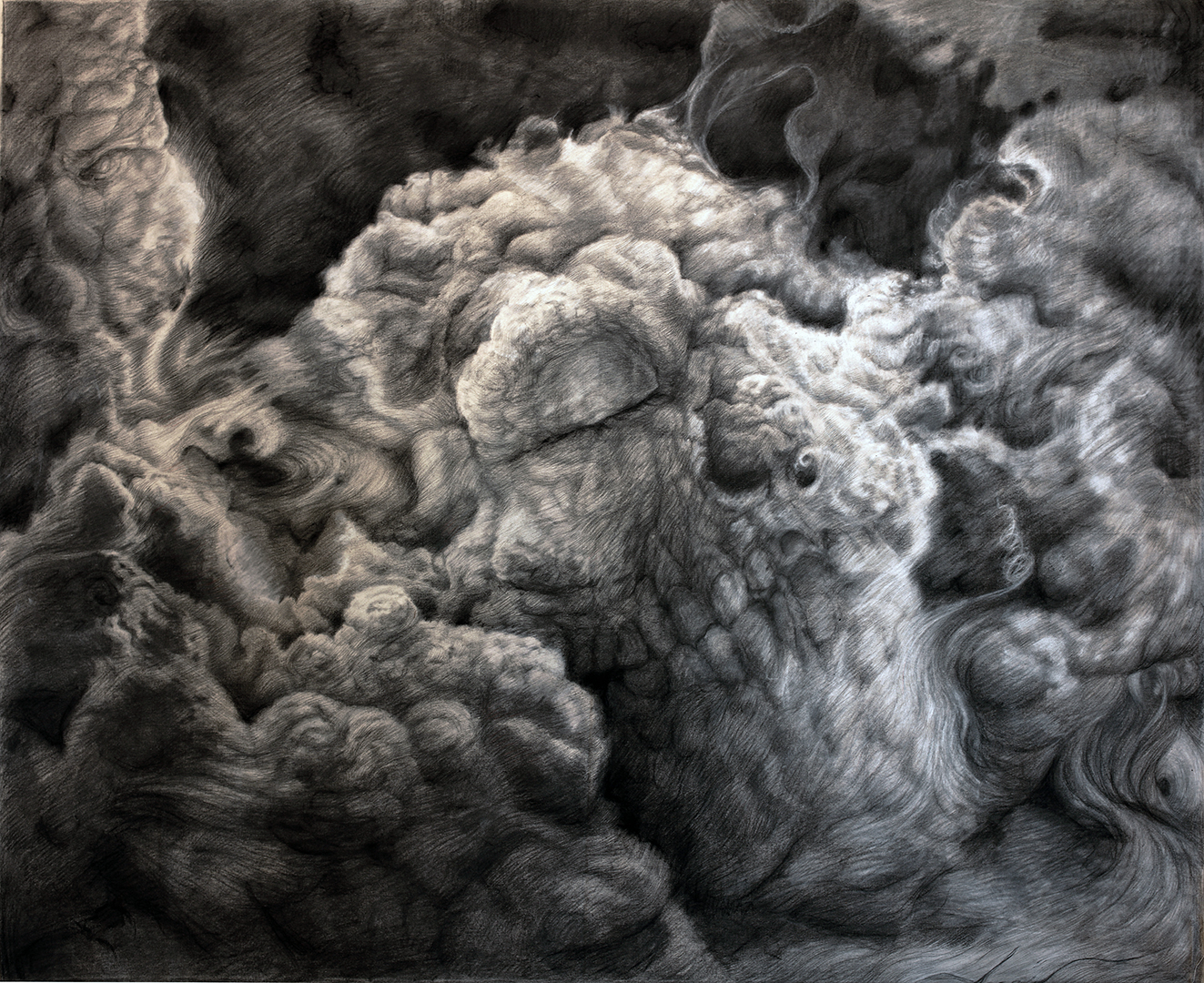
Toba Khedoori, “Untitled (Branches 1),” 2011-12, oil on linen, 31 3/4 x 41 3/8 in. Private Collection

A powerful and nuanced body of work by internationally acclaimed draftswoman Toba Khedoori is being shown at the Pérez Art Museum Miami this summer. Whether large or small in scale, these incredible drawings are sure to make a big impact on you.

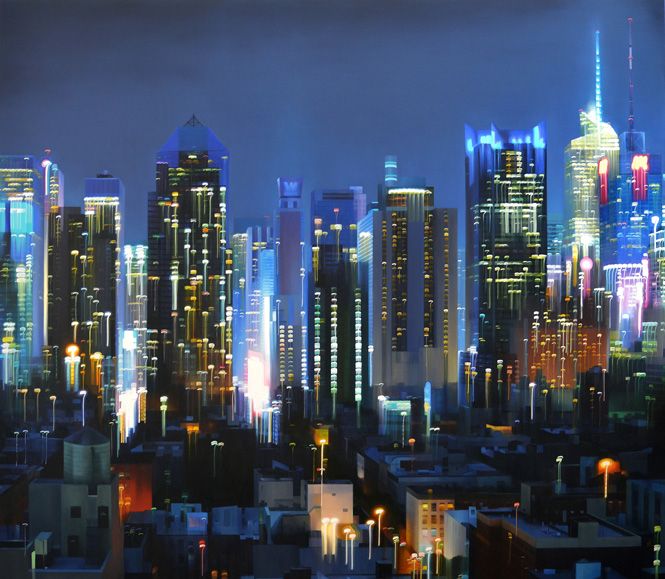
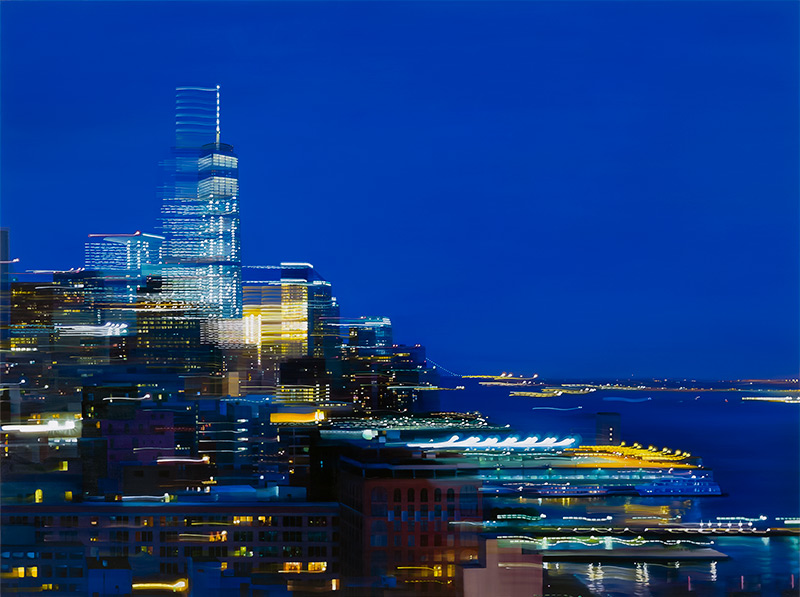
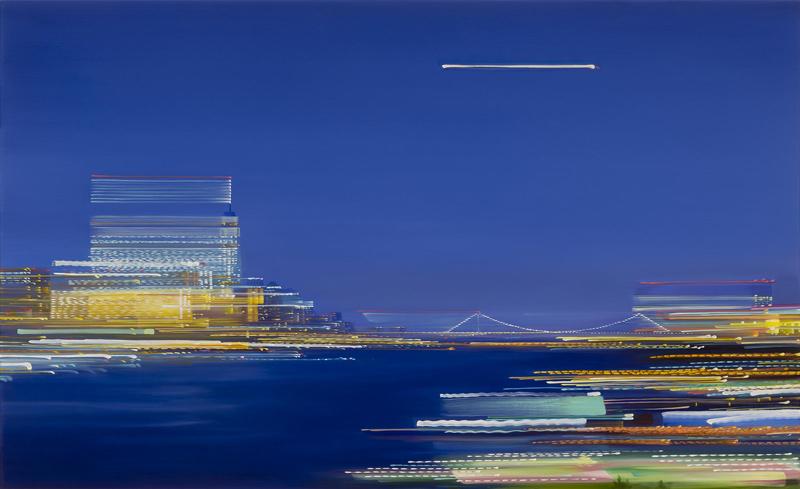
A major survey of Toba Khedoori’s oeuvre over the past 22 years is currently underway at the Pérez Art Museum Miami (PAMM) through September 24. Opening on April 21, the exhibition presents nearly 30 works, including the artist’s most recent oil paintings alongside her well-known large-scale works on paper.

Khedoori’s reputation precedes her, as collectors and institutions have for years been captivated by the artist’s detailed drawings, “often depicting architectural elements or objects detached from their surroundings,” as the museum reports. The current exhibition is nearly comprehensive, exploring the artist’s formative drawings through her current creative musings in oil. However, the presentation of the works begins with Khedoori’s recent body of work before moving back in time. “Such reverse chronology highlights the long development of her work,” the museum adds, “from an intimate scale to a much larger scale than she began with.”

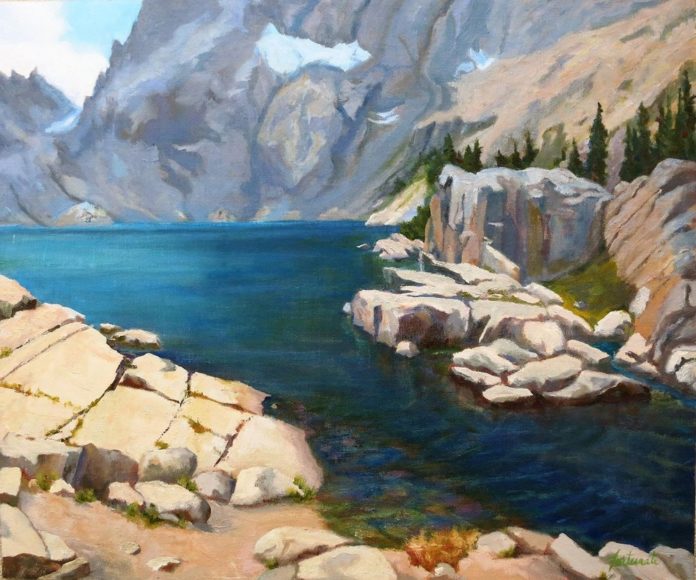
Toba Khedoori, “Untitled (Mountains 2),” 2011-12, oil on linen, 27 1/2 x 40 7/8 in., Emanuel Hoffmann Foundation

PAMM director and exhibition curator Franklin Sirmans suggests, “Toba’s work continually reminds us of the power in the hands of an artist to create with simple means — graphite or paint and a surface to be inscribed upon. The exhibition hopefully slows down time, pace, and the museumgoing experience, and encourages a passion for thoughtful and sustained look.”

The museum continues, “Khedoori’s precise draftsmanship and large-scale works on paper, for which she has become known, render objects and spaces familiar yet decontextualized. In recent years, she has transitioned from paper to canvas, producing smaller scale works that hover between representation and abstraction. Like her earlier compositions, these works are enigmatic and acutely detailed. In an art world awash with rapidly moving images and saturated colors, Khedoori remains committed to the silent, slow, and exacting process of working by hand.”

To learn more, visit the Pérez Art Museum Miami.

This article was featured in Fine Art Today, a weekly e-newsletter from Fine Art Connoisseur magazine. To start receiving Fine Art Today for free, click here.
Regarding the Figure. . .

0
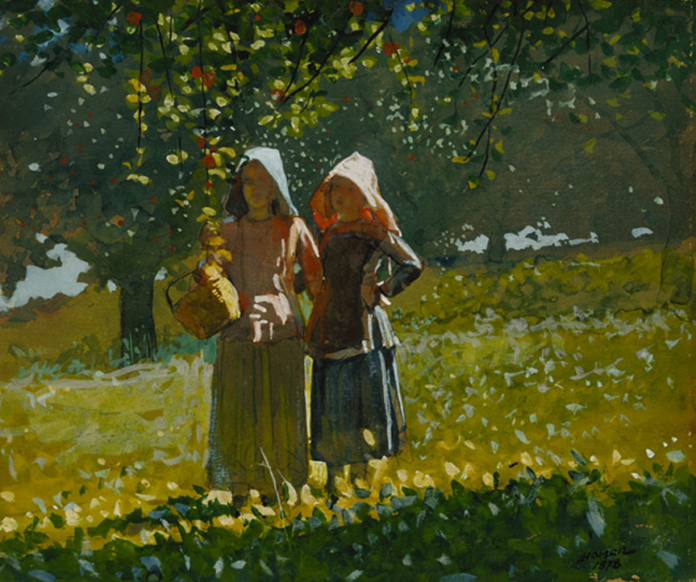
Barkley L. Hendricks, “Lawdy Mama,” 1969, © The Studio Museum in Harlem, 2017

The Studio Museum in Harlem, New York, recently announced a major exhibition series slated for the spring/summer season that’s being met with great anticipation. It’s titled “Regarding the Figure,” and we’ve got all the info you’ll need to decide which ones to see.

April 20 marks the beginning of a series (titled “Regarding the Figure”) of six exhibitions this spring and summer at New York’s The Studio Museum in Harlem that is sure to delight the discerning connoisseur. Three of the exhibitions highlight the ways in which figurative art can both reflect and address African-American history and culture. The first three exhibitions, titled “Rico Gatson: Icons 2007-2017,” “Jamel Shabazz: Crossing 125th,” and “Regarding the Figure” take compelling views on a few different themes.

“Regarding the Figure” will present more than a century of portraiture and figurative work drawn from the museum’s permanent holdings. The following shows showcase the works of Rico Gatson and Jamel Shabazz, exploring each artist’s unique creative vision as African-Americans, including images of African-Americans and cityscapes taken on Harlem’s iconic main street.

Continuing, the museum writes, “These exhibitions are accompanied by two presentations of archival materials. ‘Signature: Graphic Design from the Studio Museum Archive’ explores 50 years of the institution’s history through the lens of printed material; while ‘Smokehouse, 1968-1970’ highlights the Smokehouse Associates, who sought to transform Harlem through public art projects. The latest installation of the popular ‘Harlem Postcards’ project rounds out the season.”

“Regarding the Figure” opens on April 20 and continues through August 6. “Rico Gatson: Icons 2007-2017” and “Jamel Shabazz: Crossing 125th” open April 20 and are on view through August 27. “Signature: Graphic Design from the Studio Museum Archive” is on view through July 2. “Smokehouse, 1968-1970” runs through August 27 while “Harlem Postcards” continues through July 16.

To learn more, visit The Studio Museum in Harlem.

This article was featured in Fine Art Today, a weekly e-newsletter from Fine Art Connoisseur magazine. To start receiving Fine Art Today for free, click here.
The Power of Place in American Art, 1915-1950

0
Thomas Hart Benton, “Tobacco Sorters,” circa 1942-1944, tempera on board, 30 1/8 x 36 in. © Crystal Bridges Museum of American Art

Every fine art connoisseur knows that an artist’s location, home, or region has a profound effect on their art. This exhibition of more than 200 works explores American icons of the mid-20th century and how location means everything.

“Cross Country: The Power of Place in American Art, 1915-1950” is a fascinating exhibition on view at Atlanta, Georgia’s High Museum of Art through May 7. As the show title suggests, the museum has brought together a stunning array of American artworks from the first half of the 20th century to highlight the influence that different places had on artists’ creative voices.

Ansel Adams, “Teton Range and Snake River (Grand Teton National Park, Wyoming, 1942),” 1942, printed 1974, gelatin silver print, 15 11/16 x 19 9/16 in. © High Museum of Art

Featuring over 200 artworks and more than 70 from the High Museum’s permanent collection, the exhibition includes paintings, sculpture, photographs, murals, drawings, and much more. Among the represented artists are N.C. Wyeth, Georgia O’Keeffe, Grant Wood, Thomas Hart Benton, Jacob Lawrence, Grandma Moses, Hale Woodruff, Bill Traylor, Ansel Adams, Dorothea Lange, Alfred Stieglitz, and Peter Sekaer.

Maynard Dixon, “Red Butte with Mountain Men,” 1935, oil on canvas, 95 x 213 in. © Booth Western Art Museum
Andrew Wyeth, “The Stone Fence,” 1946, tempera on panel, 25 x 18 5/8 in. Private Collection
Grant Wood, “Appraisal,” 1932, oil on composition board, © Dubuque Museum of Art

Via the museum, “While the 20th-century city was a significant magnet for modern artists, many sought respite and even refuge in quieter, rural areas. ‘Cross Country’ brings together works by more than 80 artists to explore the impact of the American countryside on their artistic practice and how they adapted the modernist style to express their sense of place.

Roger Medearis, “Godly Susan,” 1942, egg tempera on board, 27 5/8 x 23-5/8 in. © Smithsonian American Art Museum

“The exhibition is organized geographically, according to the region depicted in the artworks. Each section incorporates photography and works by self-taught artists to further underscore the diversity of artistic production in the early 20th century.”

To learn more, visit the High Museum of Art.

This article was featured in Fine Art Today, a weekly e-newsletter from Fine Art Connoisseur magazine. To start receiving Fine Art Today for free, click here.
Portrait of the Week: Jean-Auguste-Dominique Ingres, “Louise de Broglie”

0
Jean-Auguste-Dominique Ingres, “Louise de Broglie, Countess d’Haussonville,” 1845, oil on canvas, 52 x 36 in. (c) The Frick Collection 2016

In this occasional series, Fine Art Today delves into the world of portraiture, highlighting historical and contemporary examples of superb quality and skill. This week: Jean-Auguste-Dominique Ingres, “Louise de Broglie, Countess d’Haussonville.”

It’s hard to find an adequate place to begin a synopsis of Jean-Auguste-Dominique Ingres’ brilliant 1845 portrait of Louise de Broglie — a difficulty that, perhaps, echoes the obstacles encountered during its production. Indeed, every element within the portrait — from the subject’s pose, her stunning gown, and the flash of vermillion red in her hair, to the clever reflection in the mirror — is perfectly composed and executed with unrivaled mastery.

Jean-Auguste-Dominique Ingres, “Louise de Broglie, Countess d’Haussonville,” 1845, oil on canvas, 52 x 36 in. (c) The Frick Collection 2016

It appears as though we’ve stumbled into the intimate boudoir of the young Comtesse d’Haussonville. She coyly leans against an upholstered fireplace, having just discarded her evening wrap and opera glasses. She raises her hand to her cheek, softly touching her chin as if she’s wondering why you’re here. Ingres’ ability to capture a range of textures and colors in the portrait is simply breathtaking. One is immediately struck by the subject’s satin gown, which reflects a lavender sheen. Also noteworthy is the ribbon in her hair, reproduced in a brilliant red, which is repeated in her lips. The red adds a brief flash and highlight within a composition dominated by cooler tones of purple and blue.

Begun in 1842, this gem of a painting was not achieved without infamous trial and error. A great number of preparatory drawings, including full-scale studies, of the Comtesse survive today. In fact, Ingres produced individual drawings of the raised arm, the subject’s head, and the reflection in the mirror — suggesting the composition and pose presented the artist with challenging visual and perspective problems.

The painting has been owned by the Frick Collection since 1927, and the museum reports that a letter written by Ingres suggested that there were many fruits of his labor regarding this particular work and that the finished product “aroused a storm of approval among her family and friends.”

To learn more, visit The Frick Collection.

This article was featured in Fine Art Today, a weekly e-newsletter from Fine Art Connoisseur magazine. To start receiving Fine Art Today for free, click here.
Dichotomy’s Drama and Narrative Mystery

0

Using Renaissance and Baroque traditions as a catalyst for her dramatic narratives, painter Virginia Derryberry invites the viewer into her creative world — one filled with dichotomy, costume, mystery, and more.

Executed properly, narrative painting has near infinite ways to transport the viewer through places, ideas, and experiences. There can be little doubt that painter Virginia Derryberry has mastered this process, establishing herself among the pantheon of Asheville, North Carolina, artists.

Telling Derryberry’s story has many points of entry, but experiences as a young student at Vanderbilt University proved pivotal for her artistic career. An art history major who occasionally experimented in art-making, Derryberry found herself greatly attracted to Renaissance and Baroque imagery, specifically pictures with strong lighting, complex compositions, and engaging narratives. “Many of these images stay with me,” she writes, “so when I begin the drawing/visual research for a new piece, some kind of related scenario pops up in my head. I use that image (or images) as a catalyst for environment, lighting, body language, and costuming for my models. Over time, I’ve really started to think of myself as being like a cinematographer, always visually ‘scanning’ a space or environment for possibilities. I usually work on ‘suites’ of pieces, sort of a small group of images within a larger series, so one piece often tells me what to do next — not exactly like the chapters in a narrative or scenes in a play — but related to the idea of time, performance, and character development.”


Virginia Derryberry, “Celo,” 2015, oil on canvas with attached fabric, 70 x 47 in. (c) Virginia Derryberry 2016

With this in mind, it should come as no surprise that Derryberry was also an avid performer in theater during her undergraduate career. The artist suggests, “The idea of multiple personalities/personae really engaged me, and I think that is still being played out in my paintings. I paint some of the same people over and over again, but in each piece the persona is slightly different according to lighting, composition, body language, and costuming.”


Virginia Derryberry, “The Four Elements,” 2013, oil on canvas, 96 x 54 in. (c) Virginia Derryberry 2016

For nearly a decade, Derryberry’s work has increasingly explored alchemy, a Medieval philosophy based on the principle of rebis — “a belief that most aspects of human nature — and nature in general — are built on the idea of dialogue and contrast,” as Derryberry states. In fact, a number of artists influential to Derryberry, such as Michelangelo Caravaggio, have also found dichotomy and alchemical principles captivating.


Virginia Derryberry, “Peaceable Kingdom,” 2012, oil on canvas with 16 embroidered ‘onesies,’ 96 x 60 in.
(c) Virginia Derryberry 2016

“Peaceable Kingdom” is an outstanding work that brings each of these concepts and influences to the fore. Derryberry explains how Da Vinci’s “Madonna of the Rocks,” Edward Hicks’ “The Peaceable Kingdom,” and other paintings led to the realization of this magnetic picture: “‘Peaceable Kingdom’ began as a portrait and figure narrative to honor my daughter, Elizabeth, and the birth of her daughter (my granddaughter), Virginia, in 2012. I decided to combine a Madonna and Child format (actually a reference to Da Vinci’s ‘Madonna of the Rocks,’ where Jesus is holding up his hand to John in blessing) with Edward Hicks’ version of ‘The Peaceable Kingdom.’ I’ve always loved the naïve quality of Hicks’ paintings and especially his reference to the idea of the ‘lion laying down with the lamb.’ What struck me about the imagery in this painting is how much the wider environment is included and how it suggests a return to the Garden of Eden. Combining three mythic stories in one — the Garden of Eden, an otherworldly mother and child story, and the possibility of wild animals at peace with one another and humanity — excited and challenged me. My other intent was to go past the Biblical story and to suggest the here and now in terms of the complex struggle that we, as humans, have with finding a peaceful relationship with our environment.

“A contemporary aspect is my use of 16 ‘onesies’ (actually worn by Virginia over time) that I embroidered with the letters of the title. I think their inclusion suggests many things — a larger life and experience beyond one particular child, a ‘levity’ that plays against the gravity and physicality of life and even the suggestion of cloud forms over the earth. Many of these, of course, reference alchemical imagery as well.”


Virginia Derryberry, “Sol and Luna Have a Conversation,” 2015, oil on canvas, 94 x 72 in. (c) Virginia Derryberry 2016

Derryberry’s primary goal with works such as “Peaceable Kingdom” is twofold, involving both confusion and revelation. The play between the two offers a chance for viewers to ignite self-inquiry while participating in the discovery of the narratives. Derryberry writes, “I try to guide the viewer first to be puzzled about what they are seeing. For example, sometimes I deliberately use conflicting light sources or I put in an object or form that simply doesn’t belong. Secondly, I want the viewer to be lured into the painting due to the color and sensuality of the surface, caught, if you will, by the complex paint passages. Once they are in there for a while, hopefully they start to ask questions of the image and, ultimately, questions about themselves. That’s the main reason that I address multiple story lines in a painting — so that I am not deliberately illustrating a specific message but asking for a more metaphorical interpretation.”


Virginia Derryberry, “Water Duo,” 2014, oil on canvas, 60 x 36 in. (c) Virginia Derryberry 2016

As Derryberry’s teaching career in the Department of Art and Art History at the University of North Carolina at Asheville concludes, one might assume the artist is fading into the sunset. But the truth is quite the opposite. With teaching playing a decreasing role in Derryberry’s life, personal ventures in painting await through a number of solo exhibitions, and artist residency programs in France and Italy. “I have scheduled four upcoming solo exhibitions, titled ‘Private Domain,’” she says, “essentially a traveling exhibition to four separate venues over the next two years, which will give me the opportunity to explore how viewers — mostly college students — react to my work.”

To learn more, visit Virginia Derryberry.

This article was featured in Fine Art Today, a weekly e-newsletter from Fine Art Connoisseur magazine. To start receiving Fine Art Today for free, click here.
Featured Artwork: Matthew Bird

0
"Heritage Still Life" by Matthew Bird

“Heritage Still Life”
Transparent watercolor on paper

28 x 22 in.


About the painting:

I was staying with my aunt and uncle, while traveling out of state working on a series of figure paintings. While there, I noticed his bagpipes propped against a wall and was immediately inspired to do a still life painting. I began setting up an interesting composition, added the family tartan, some single malt scotch, and soon knew I had something special: a Heritage Still Life.

My medium of choice is transparent watercolor; it has qualities that interest and challenge me as an artist. Without the use white paint, which is opaque, the white of the paper must be carefully preserved for the highlights, as the areas adjacent are built up.

In this way, watercolor captures light. Edgar Whitney said, “White paper showing through a transparent wash is the closest approximation to light in all the media, and light is the loveliest thing that exists.” I tend to agree.

See more work at matthewbird.com

And go behind the scenes via Instagram: _matthewbird_ and Facebook: Matthew Bird Studio

The Landscape Mystery

0
Hercules Segers, “Ruins of the Abbey of Rijnsburg from the South,” circa 1625-30, etching on paper, 7 7/8 x 12 9/16 in. © Staatliche Museen zu Berlin

The eclectic landscapes by a great Dutch experimental printmaker compose an otherworldly exhibition at The Metropolitan, New York, this spring. How will you interpret these thought-provoking impressions?

On view now through May 21 at the Metropolitan, New York, “The Mysterious Landscapes of Hercules Segers” is an entertaining exhibition that explores the life, career, and prints of experimental Dutch printmaker Hercules Segers (1589-1638). The show marks the first exhibition in the United States for the influential artist, whose works were even collected by Rembrandt, who owned eight of Segers’ paintings and a printing plate.

The Met writes, “Segers’ surviving works are extremely rare: only 10 impressions of his prints are in museums in the United States (one in The MET collection), and only 15 paintings have been attributed to the artist. ‘The Mysterious Landscapes of Hercules Segers’ will feature a selection of these paintings, in addition to almost all of Segers’ prints in varying impressions. The Rijksmuseum, Amsterdam, whose collection of Segers’ work is the largest in the world, is generously lending its entire holdings (74 prints, two oil sketches, and one painting).

“Segers’ highly experimental approach to printmaking has given him a cult following among modern and contemporary artists. His works appear so much out of their time that filmmaker Werner Herzog incorporated details of Segers’ landscapes in a piece — titled ‘Hearsay of the Soul’ — that he created for the 2012 Whitney Biennial.”

To learn more, visit The Metropolitan.

This article was featured in Fine Art Today, a weekly e-newsletter from Fine Art Connoisseur magazine. To start receiving Fine Art Today for free, click here.
Why Pastels Can Be Dazzling

0
Linda Dellandre, “Morning Grasses,” pastel

The Pastel Society of Southeast Texas recently announced the dates for its annual national show, featuring nearly 100 luminous artworks sure to dazzle the eyes.

Opening April 18 and running through May 21, the Pastel Society of Southeast Texas will exhibit approximately 75 delightful pastel paintings in the Brazosport Art League Gallery in Clute, Texas. In addition to a $1,950 cash prize, sponsor awards will be presented during the public awards reception Friday evening, April 21, from 6-9 p.m.

Rae Andrews, “Who’s the Boss?,” pastel

“There is nothing more spectacular than an entire room full of luminous vibrant pastel paintings,” Sharon Haney, co-chair of the event, suggests. “You must be there, in the gallery, to fully experience the radiance and depth of pastel art.”

To learn more, visit The Pastel Society of Southeast Texas.

This article was featured in Fine Art Today, a weekly e-newsletter from Fine Art Connoisseur magazine. To start receiving Fine Art Today for free, click here.
Birds of America, 2.0?

0
Thomas Frontini, “Brown Pelican,” 2016, oil on linen, 36 x 24 in. © 101/EXHIBIT

John James Audubon’s monumental Birds of America, originally published in 1838, has been an inspirational starting point for countless artists, including Larry Rivers and others during this outstanding group show in Los Angeles.

Twenty contemporary artists, alongside New York School and Pop artist Larry Rivers, have come together for a compelling group exhibition at 101/EXHIBIT in Los Angeles, California, that highlights their mutual love and respect for John James Audubon (1785-1851) and his seminal publication Birds of America (1838). The artists are experimental, collectively providing a survey of the various painting processes and techniques in use today. Participating artists include Jason Shawn Alexander, Pedro Barbeito, Brett Diemer, Zara Monet Feeney, Robert Fleisher, Thomas Frontini, Chambliss Giobbi, Daniel Horowitz, David Jacobs, Aaron Johnson, Nelson Loskamp, Patrick Neal, Paul Paiement, Tom Sanford, Jorge Santos, Kristen Schiele, Alfred Steiner, Eric White, Kent Williams, and Eve Woods.

Jorge Santos, “Vulture,” 2017, oil on canvas, 36 x 24 in. © 101/EXHIBIT
Kent Williams, “Raven,” 2007, oil on canvas, 24 x 36 in. © 101/EXHIBIT

“The exhibition consists of a survey of works by Rivers, inspired by Audubon’s book, exhibited alongside works by contemporary artists who have been asked to create his or her own interpretation of a plate of their choice from the book,” the gallery reports.

Robert Fleisher, “Yellow Breasted Chat,” 2016, watercolor on paper, 30 x 22 in. © 101/EXHIBIT

“The bird series is an offshoot of another bigger series that Larry executed in the late ’80s to early ’90s, called ‘Art and the Artist,’” says David Joel, executive director of the Larry Rivers Foundation and Rivers’ former studio assistant. ‘Essentially, Larry would focus on an artist and re-paint that artist’s works, incorporating the artist’s portrait into this new work. Rivers treated this series similarly, invoking his soft spot for birds and painting their portraits on canvas while simultaneously incorporating Audubon’s essence into each piece.”

Thomas Frontini, “Brown Pelican,” 2016, oil on linen, 24 x 36 in. © 101/EXHIBIT

Titled “Birds of America: Explorations of Audubon, The Paintings of Larry Rivers and Others,” the exhibition runs through May 13. To learn more, visit 101/EXHIBIT.

This article was featured in Fine Art Today, a weekly e-newsletter from Fine Art Connoisseur magazine. To start receiving Fine Art Today for free, click here.

“The Woman Question”

0
Egon Schiele, “Elisabeth Lederer,” 1913, gouache, watercolor, and pencil on paper, Private Collection

The fixation of male artists on the female body is a well-chronicled fact in the annals of art history, perhaps especially with regard to these three Austrian masters of Modernism. Their iconic works are currently encouraging viewers to consider “the woman question.”

More than 65 paintings, watercolors, and drawings by Viennese Secessionists Gustav Klimt, Egon Schiele, and Oskar Kokoschka are currently on display at Galerie St. Etienne in New York City through June 30.

Gustav Klimt, “Moving Water,” 1898, oil on canvas, 21 x 26-1/8 in. Private Collection

Titled “The Woman Question,” the exhibition seeks to explore they ways in which these monumental modernists explored conceptions of gender relations and sexual identity at the turn of the 20th century. “The exhibition focuses on four principal subjects,” the gallery says, “the formal portrait, the nude, the couple, and the mother. Klimt’s sensuous, flattering drawings of women contrast with the contorted bodies depicted by Kokoschka. Schiele’s nudes were so provocative that some could not, at the time, be publicly exhibited.”

Oskar Kokoschka, “The Dreaming Youths,” 1908, illustrated book with eight color lithographs, 9-5/8 x 11-3/4 in.

The exhibition takes its titled from the artists’ approach, which they themselves referred to as the “woman question,” albeit in slightly different ways. Continuing, the gallery offers, “In turn-of- the-century Vienna, females were viewed as closer to nature and hence more inherently ‘primitive’ than males. Prompted by Darwin’s theories, men hypothesized that allowing women to have influence or power outside the home would lead to a dangerous ‘devolution’ of the human species. Gustav Klimt repeatedly depicted women as amphibious creatures, as in ‘Moving Water,’ 1898, an oil on canvas painting. The wanton sexuality of Klimt’s nudes symbolizes not liberation but inequality.”

“The Woman Question” equally explores the gender dynamics in Kokoschka’s tumultuous lithographs and Schiele’s early mature works, circa 1917. To learn more, visit Galerie St. Etienne.

This article was featured in Fine Art Today, a weekly e-newsletter from Fine Art Connoisseur magazine. To start receiving Fine Art Today for free, click here.
WEEKLY NEWS FROM THE ART WORLD

Fill your mind with useful art stories, the latest trends, upcoming art shows, top artists, and more. Subscribe to Fine Art Today, from the publishers of Fine Art Connoisseur magazine.

  • This field is for validation purposes and should be left unchanged.