Home Blog Page 365

Featured Artwork: Matthew Bird

0
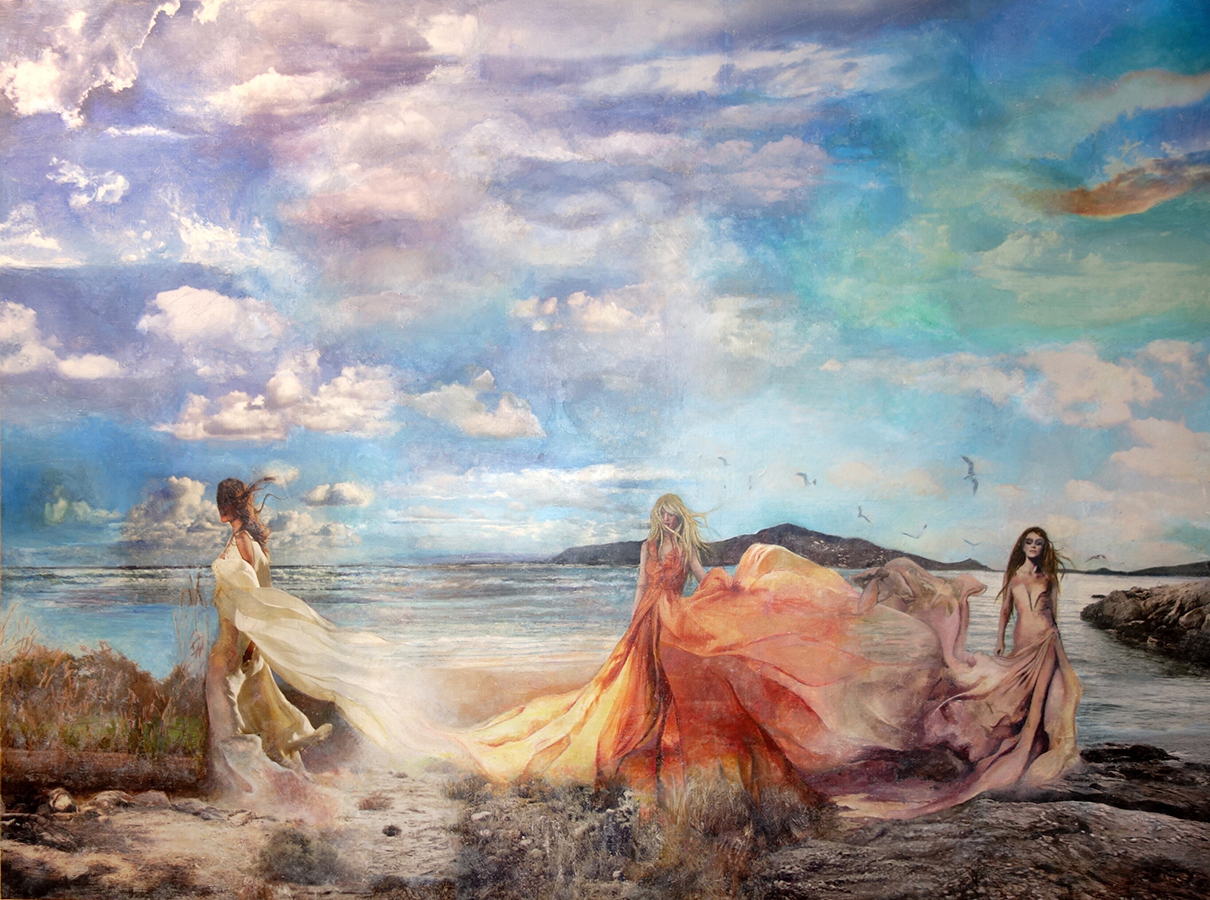
"Once Upon A Time" by Matthew Bird

“Once Upon A Time”

Transparent watercolor on paper

41 in. x 29.5 in.

About the Artist:

I’ve been creating art for as long as I can remember, and always knew that I was going to be an artist “when I grew up.” Raised in the rural landscape of Maryland, my aesthetic in art was honed from an early age. The natural world was inspiring to me, as were the stacks of book my mom would bring home from the library. I pored over the works of great American Illustrators: Norman Rockwell, NC Wyeth, and Howard Pyle.

I think this is where my interest in Narrative imagery started. As a figurative painter, I enjoy a hint of mystery or the thread of an untold story in my work. This is something that has stuck with me as I’ve developed as an artist.

I’m also a great admirer of 19th century academic painting. Artists like Bouguereau and Bouveret were able to express our shared humanity in incredibly poignant images. Whether it be complex and profound, or subtle and sentimental, I want to capture some of that in my work.

My medium of choice is transparent watercolor, which may be a little unusual for someone who has been so influenced by the great oil painters of the classical tradition. But I love the properties of watercolor and the way it captures light. Edgar Whitney said, “White paper showing through a transparent wash is the closest approximation to light in all the media, and light is the loveliest thing that exists.”

I tend to agree.

………………………………………………………………………………………………

See more work at matthewbird.com

And go behind the scenes via Instagram: _matthewbird_ and Facebook: Matthew Bird Studio

Fashion & Impressionism in Fin-De-Siècle Paris

0
Edgar Degas, “The Millinery Shop,” circa 1879-1886, oil on canvas, 39-3/8 x 43 9/16 in. © Art Institute of Chicago 2017

By Vanessa Rothe, West Coast Editor, Fine Art Connoisseur Magazine

Paris in the late 1800s: new industry, haute cuisine, flaneurs, decadence, and the fashion center of the world. It was a time of change and of prosperity, where leisure time could be found, and where artisans making handmade crafts could flourish.

With fashion as a leading extravagance at the time, it’s natural that the millinery, or hat-making, trade became popular. Hats were a way to show your personality, your style, your class. With ribbons, haberdashery, plumes of ostrich feathers, and silk velvet, the patrons of the arts could not only have a work created just for them, but their investment in the arts would also help convey their character (and their pocketbook size) to the world. Hats were considered essential at the time, and therefore fashion and millinery trade became part of the visual culture of Paris.

Henri de Toulouse-Lautrec, “M. Delaporte at the Jardin de Paris,” 1893, gouache on cardboard/wood, 30 x 27-9/16 in. © Ny Carsberg Glyptotek, Copenhagen 2017

The Impressionists at the time were painting “La vie quotidienne,” or everyday life, and as the millinery trade was so prevalent at the time, it naturally became a subject of their paintings. Edgar Degas, Édouard Manet, Pierre-Auguste Renoir, Berthe Morisot, and Mary Cassatt all painted portraits of their clients — men, women and children — in their grand chapeaux. Degas was particularly fascinated with the subject and took it a step further, going into the shops to show us behind the scenes as the working class hat makers sewed and arranged displays of these fine art creations.

Mary Cassatt, “Young Woman in Black (Portrait of Madame J),” 1883, oil on canvas, 31 1/2 x 25 in. © Peabody Art Collection 2017

“Degas, Impressionism and the Paris Millinery Trade,” an exciting new exhibition that discusses this theme and the works of art created around it, opens February 12 at the Saint Louis Art Museum. Working together with the Fine Arts Museums of San Francisco and their curators, the collection pulls together fine works by assorted artists around this central theme. In addition to masterworks in oils and pastels by Degas, Rodin, Manet, Cassatt, Morisot, and Lautrec, among others, the exhibition sprinkles in assorted photographs, poster prints, and actual plumed French hats from the time of 1875-1914.

“This groundbreaking exhibition will provide a stunning experience for visitors while advancing the scholarship of a little known but important part of Degas’ legacy,” says Brent R. Benjamin, the Barbara B. Taylor director of the Saint Louis Art Museum. It will be the first exhibition to explore the height of the millinery trade in Paris from around 1874-1914, as seen through the eyes and in the work of the Impressionists.

Édouard Manet, “At the Milliner’s,” 1881, oil on canvas, 33 1/2 x 29 in. © Fine Arts Museums of San Francisco 2017

A new book/catalogue, edited by Simon Kelly (curator of Modern and Contemporary Art at the Saint Louis Art Museum) and Esther Bell (curator in charge of European paintings at the Fine Arts Museums of San Francisco), is available to accompany the show. With a chronicle of Parisian milliners from Caroline Reboux to Coco Chanel, the book also links the worlds of literature, art, and fashion. Contributors to the exhibition and book include Susan Hiner, Françoise Tétart-Vittu, Melissa Buron, Laura Camerlengo, Kimberly Chrisman-Campbell, and Abigail Yoder.

James Tissot, “The Shop Girl,” circa 1883-1885, oil on canvas, 57-1/2 x 40 in. © Art Gallery of Ontario 2017

The unique exhibition explores the significance of the paintings and drawings of these scenes and portrays the important role they played in everyday life, as well as celebrating the milliners of the time and their works of art. The exhibition runs from February 12 thru May 7, 2017 at the Saint Louis Art Museum; admission is free.

For more information, please visit www.slam.org or call 314.721.0072.

This article was featured in Fine Art Today, a weekly e-newsletter from Fine Art Connoisseur magazine. To start receiving Fine Art Today for free, click here.

Featured Lot: A Steal or Wrongful Attribution?

0
Attrib. Winslow Homer, “The Country Boy,” oil on canvas, 11-1/4 x 8-1/4 in. © Thomaston Place Auction Galleries 2017

In this ongoing series for Fine Art Today, we take a longer look at the history and features of a soon-to-be-available artwork of note. This week’s painting is attributed to an American icon, and if that’s accurate, is very underpriced. You decide.

A loosely executed and small painting featured in Thomaston Place Galleries’ February 12 “Winter Sale” could be your steal of the year. Priced at $2,500, “The Country Boy” has been attributed to the great Winslow Homer (1836-1910). Homer is known particularly for his maritime paintings, but the canvas here displays a lone figure on a low horizon. Represented in profile, a young boy wears a hat, pants, and jacket, with his hands in his pockets. A wooden fence can be see behind him as foliage and grasses compose the foreground.

Few details are included in the painting, perhaps recalling Homer’s “blocky” or sharply outlined figures. Further support for the attribution comes from the painting’s verso, which includes an inscription on the original gold frame that reads “Presented by Homer to Joseph Daniels, also an artist and Historian of Oxford, Maine.”

To learn more, visit here.

This article was featured in Fine Art Today, a weekly e-newsletter from Fine Art Connoisseur magazine. To start receiving Fine Art Today for free, click here.

Are You Leaving Your Mark?

0
Berry Fritz, “Yellow-headed Amazon Parrot,” 2006, colored pencil on toned paper, © Woodson Art Museum 2017

Only a few weeks remain for a lovely exhibition featuring a stunning selection of avian-themed drawings. From quick sketches to intricately detailed illustrations, there’s something for everyone here.

On view through February 19, “Making Marks” is a diverse showcase of more than 60 drawings and sketches of birds by contemporary masters from across the United States. It’s hosted by the Leigh Yawkey Woodson Art Museum in Wausau, Wisconsin, an institution that is no stranger to avian-themed art. Each year, the museum hosts its flagship “Birds in Art” exhibition, a nationally known and highly competitive competition aimed specifically at artistic interpretations of birds and related subjects. “Making Marks” is slightly different, however, highlighting artists’ varied approaches to drawing birds and the importance of field observation.

Pete Marshall, “Emu Chicks,” 2009, pencil on paper, © Woodson Art Museum 2017
Karen Bondarchuk, “Raven Yawking,” 2011, charcoal on paper, © Woodson Art Museum 2017
Anne Senechal Faust, “Head Study: Ruppell’s Griffon Vulture,” 1981, pen and ink on paper, © Woodson Art Museum 2017

The museum writes, “While working styles vary, many artists resolve their compositions and other details before moving to their chosen final medium, whether for a painting or a sculpture. For most preliminary work, a pencil and paper are the likely tools of choice. Why? Pencil marks are forgiving; they can be erased easily, allowing an artist to change elements to achieve the most pleasing composition. Many artists believe drawing and sketching are essential for successfully completing finished works.”

To learn more, visit the Woodson Art Museum.

This article was featured in Fine Art Today, a weekly e-newsletter from Fine Art Connoisseur magazine. To start receiving Fine Art Today for free, click here.
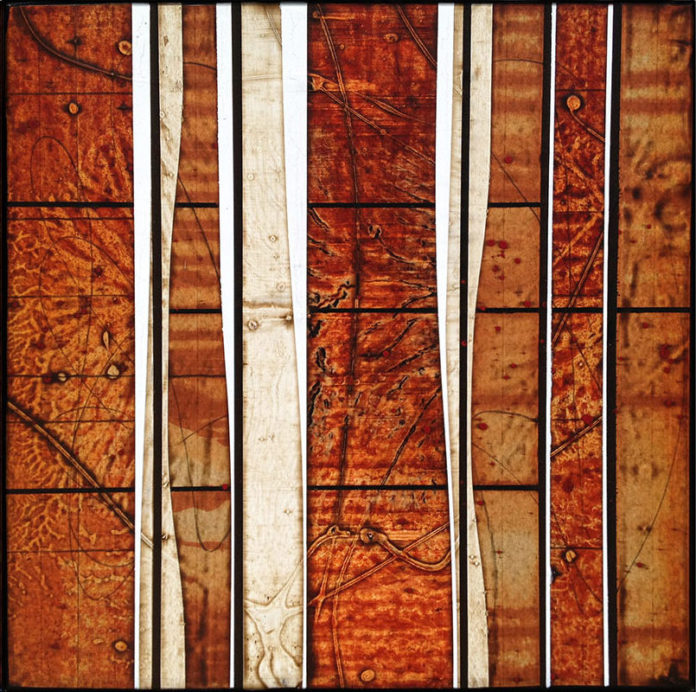
The ‘Show of Force’ (and Beauty)

0
Allan Houser (1914-1994), “Force,” circa 1978-1990, marble, 26 1/2 x 26 x 27 in. © Crocker Art Museum 2017

Sometimes Native American art doesn’t quite get the attention it deserves, which is why our readers should take note of this blockbuster exhibition of sculptural works by this renowned artist. Who and where?

Although it opened in October 2016, there’s still time for you to view a magnificent display of figurative and modernist sculptures by renowned Native American artist Allan Houser (born Allan Capron Haozous, 1914-1994). “A Show of Force” runs through February 26 at the Crocker Art Museum in Sacramento, California, and features 15 works in bronze and stone, several of which were recent gifts to the Crocker from Loren G. Lipson.

Allan Houser (1914-1994), “Holder of Knowledge,” 1977, bronze, 21 1/4 x 13 1/4 x 8 in. © Crocker Art Museum 2017

According to Interim Associate Curator Kristina P. Gilmore, “Allan Houser is arguably the most influential Native American artist in modern art history. His three decades as an art teacher and the example he set through his work still inspire artists to express their own personal heritage and experience in innovative ways. I like to think of him as one of the founders of contemporary Native American art.”

Allan Houser (1914-1994), “Force,” circa 1978-1990, marble, 26 1/2 x 26 x 27 in. © Crocker Art Museum 2017
Allan Houser (1914-1994), “Taos Man,” 1978, bronze, 13 1/2 x 11 1/2 x 11 in. © Crocker Art Museum 2017

To learn more, visit the Crocker Art Museum.

This article was featured in Fine Art Today, a weekly e-newsletter from Fine Art Connoisseur magazine. To start receiving Fine Art Today for free, click here.
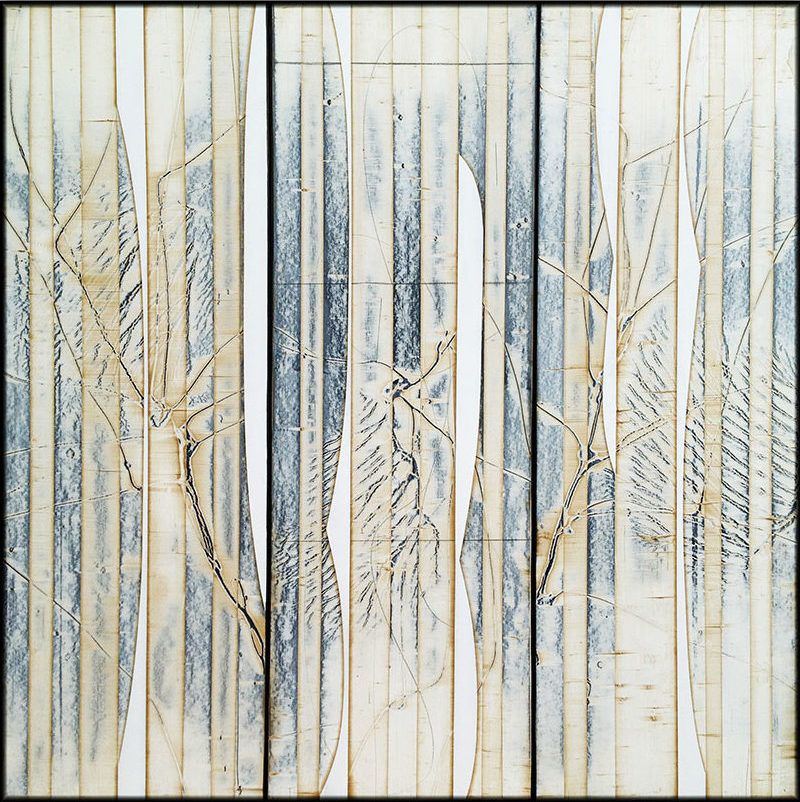
Memories of My Childhood

2
Jeffrey L. Neumann, “Sands Motel,” oil on linen, 42 x 30 in. © Jeffrey L. Neumann 2017

Nostalgia is one of the most powerful sources of inspiration for artists. A case in point is about to be highlighted during a compelling solo exhibition in New York that merits a look.

Opening February 17 at the Millbrook Public Library in New York is a tantalizing solo exhibition of paintings by artist Jeffrey L. Neumann. The works on view will largely explore the artist’s nostalgia for his childhood in the 200-mile expanse between Roswell and Albuquerque, New Mexico.

Discussing one work in particular — “Sands Motel” — Neumann says, “Vaughn, New Mexico, is halfway in the 200-mile expanse between Roswell and Albuquerque. When I was 10 and 11 we lived in Roswell. We would stop in Vaughn and have a bite to eat on family visits to my cousins in Albuquerque.

“I revisited Vaughn and shot the reference photos for this painting in 1991. The Sands Motel was defunct by that time. The neon was long gone and the sign was dark. I restored the neon in the painting. The sky is also more my invention than what was actually there.

“Like much of my work, this painting is steeped in memories of my childhood. My aim is to capture a feeling, to create a mood rather than replicating a scene precisely. Unlike most of my motel paintings, this one doesn’t have the actual motel as part of the subject. The signage, the broad landscape, and the sky were enough to tell the story. If you look closely you can see a ’62 Chevy in the middle distance and the Santa Fe Chief rolling across the plains. These are minor compositional elements, however they are important to the narrative of the piece.”

This article was featured in Fine Art Today, a weekly e-newsletter from Fine Art Connoisseur magazine. To start receiving Fine Art Today for free, click here.

Do You Need a Fresh Perspective?

0
Dinah Worman, “Arrangement of Barns VI,” 2016, oil on canvas, 30 x 24 in. © Trailside Galleries 2017

A beautiful array of fresh landscape paintings by this female master are currently hanging through February 28 in an esteemed Southwest gallery. They are “instantly recognizable for their clarity and depth,” the gallery writes. Will you be a lucky viewer?

Trailside Galleries in Scottsdale, Arizona, is pleased to be currently showcasing a number of outstanding new landscapes by Dinah Worman. Titled “Perspectives,” the solo show is a continuation of Worman’s “exploration into stacked landscape compositions as well as works that give the viewer an up-close perspective of what lies within the landscape,” the gallery reports. “Light filters through the trees and streams and between the clouds. [Worman] is able to retain this vitality because she is continually renewing her vision.”

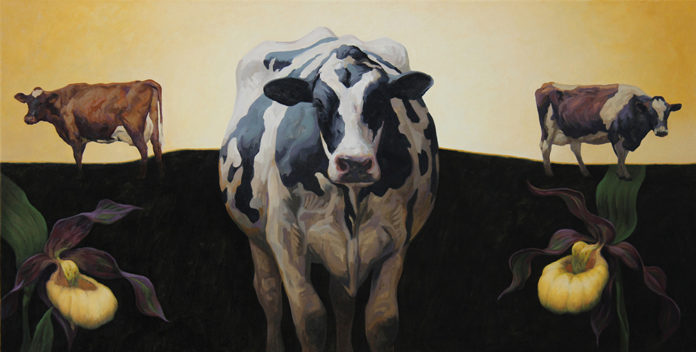
Dinah Worman, “Cows in Show,” 2016, oil on canvas, 40 x 40 in. © Trailside Galleries 2017

Discussing her work, Worman notes, “I work to press beyond method and into a flow of creative instinct; using pastel, oil, acrylic, or printmaking to express myself with unusual compositions and expanding vision.”

Dinah Worman, “Arrangement of Barns VI,” 2016, oil on canvas, 30 x 24 in. © Trailside Galleries 2017

“Dinah Worman: Perspectives” opened on February 1 and will continue through February 28. To learn more, visit Trailside Galleries.

This article was featured in Fine Art Today, a weekly e-newsletter from Fine Art Connoisseur magazine. To start receiving Fine Art Today for free, click here.
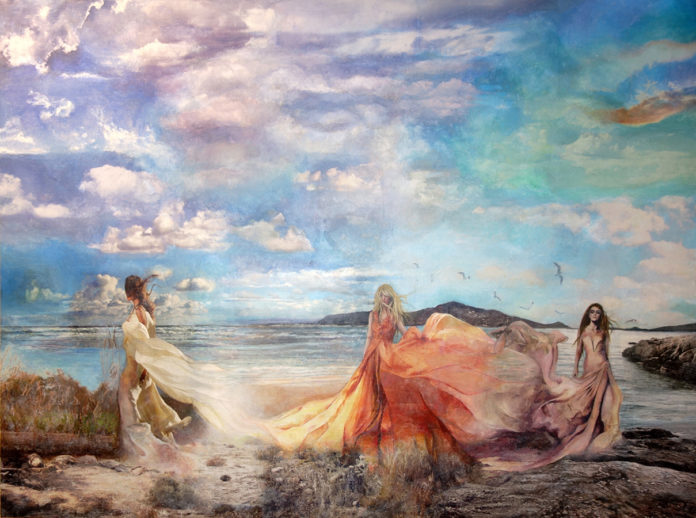
Rare Show Opens in Nevada

0
Maynard Dixon, “San Joaquin Valley, California-Erosion,” 1921, oil on board, 10 1/8 x 13 1/2 in. © Bruce C. Paltenghi Collection 2017

The Nevada Museum of Art is currently hosting a rare exhibition of works by this major American Western artist — some of which have never been seen before. This is certainly a show with must-see status. You’ll surely know his name.

The Nevada Museum of Art in Reno recently opened a major exhibition featuring selections from the Paltenghi Collections. In particular, the show focuses on the iconic Western artist Maynard Dixon (1875-1946), who is surely one of the most coveted and revered American painters of Western landscape. In fact, retrospectives of this subject are increasingly rare, meaning lovers and collectors of Western art will want to catch a view.

Significantly, some of the works on view have never before been shown to the public, including a number of drawings with subjects ranging from mountain and desert landscapes to portraits and nude figure studies. Via the museum: “Drawn from the collections of Bruce C. Paltenghi and Dr. Richard Paltenghi, this exhibition features drawings and paintings by American artist Maynard Dixon. Inspired to begin collecting by their father, the Paltenghi brothers have amassed over sixty artworks that offer an intimate look at Dixon’s life in the American West.”

“Maynard Dixon: The Paltenghi Collections” opened on January 21 and will continue through July 16. To learn more, visit the Nevada Museum of Art.

This article was featured in Fine Art Today, a weekly e-newsletter from Fine Art Connoisseur magazine. To start receiving Fine Art Today for free, click here.
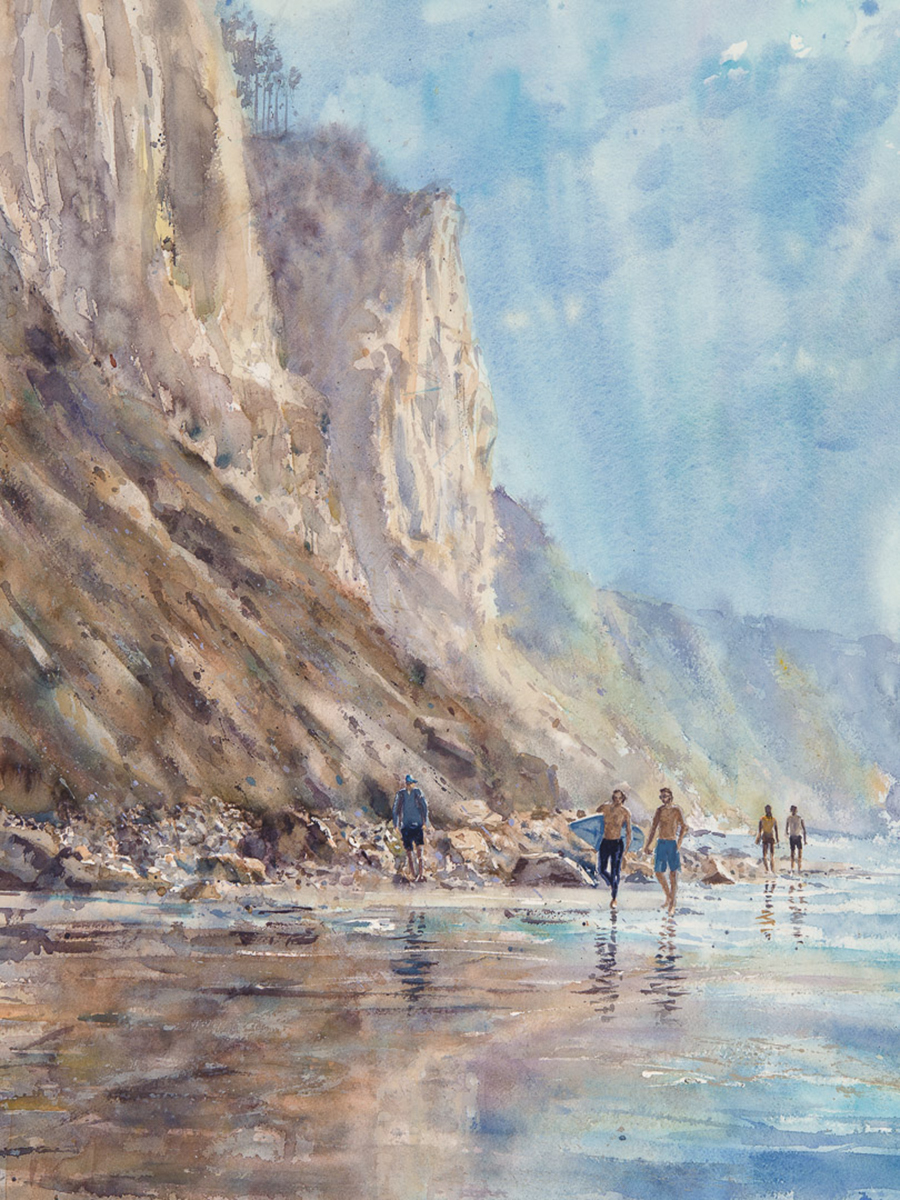
Are Texas Landscapes Special?

0
Julian Onderdonk (1882-1922), “A Road in Late Afternoon,” 1921, oil on canvas, 20 x 30 in. © Museum of Fine Arts, Houston 2017

Well, through the creative vision of important painter Julian Onderdonk (1882-1922), the answer is an emphatic “Yes!” He was an American impressionist with supreme talent, and wonderful selections from Onderdonk’s oeuvre are currently on view here.

As the San Antonio Museum of Art correctly suggests, every Texan knows that there’s something special about Texas landscapes. This was certainly true for Texas native Julian Onderdonk, who made it his artistic mission to capture the Lone Star State’s majestic beauty over a brilliant but short career.

On view now through April 23, “Julian Onderdonk and the Texan Landscape” at the San Antonio Museum of Art features a carefully curated selection of more than 25 paintings spanning the artist’s entire career. William Rudolph, curator of American Art at the San Antonio Museum, said, “Julian Onderdonk’s work still influences the way visitors revere — and artists paint — the Texas landscape. It is exciting to share these works — many from private collections.”

Continuing, the museum reports, “The San Antonio native and American impressionist is best known for his signature bluebonnets and of the Texas countryside; however, he spent his formative years training in New York under American artist William Merritt Chase (a fine example of Chase’s work is represented in the Museum’s collection, Mrs. Chase and Child, circa 1889). It is only after returning to Texas in 1909, that Onderdonk portrayed the distinctive surroundings of his state at different times of day and became admired by collectors.”

To learn more, visit the San Antonio Museum of Art.

This article was featured in Fine Art Today, a weekly e-newsletter from Fine Art Connoisseur magazine. To start receiving Fine Art Today for free, click here.
Have You Seen ‘Rubens to Monet’?

0
Peter Paul Rubens, “Portrait of Charlotte-Marguerite de Montmorency, Princess of Condé,” circa 1610, oil, 43 x 34 in. © The Frick Pittsburgh 2017

There’s still time to catch a viewing of this exhibition featuring a wonderful selection of historic masterpieces from the 16th through 19th centuries. Who and where?

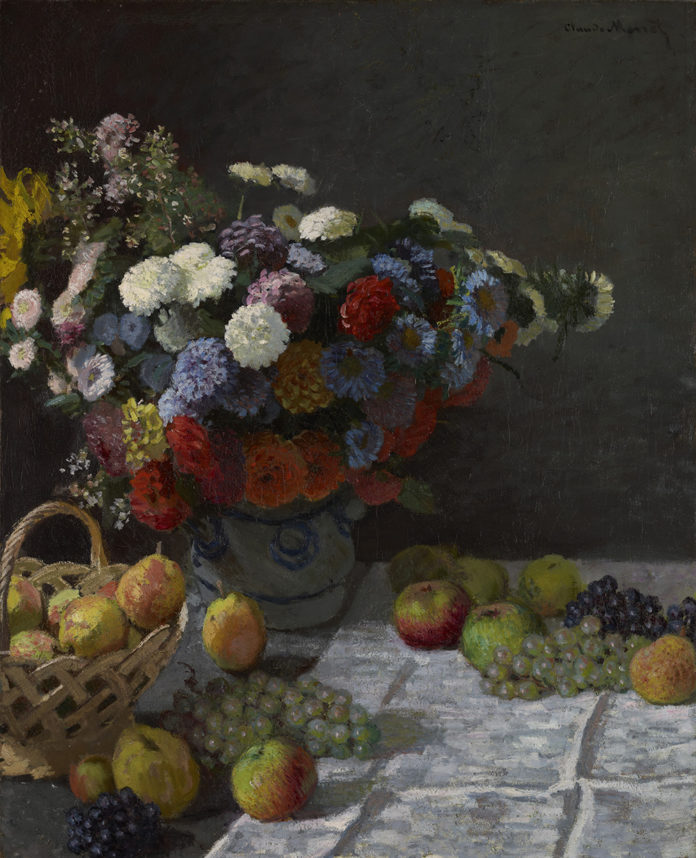
Pittsburgh, Pennsylvania, is a hotspot this spring for a tantalizing exhibition featuring works by some of the greatest artists in history. On view through May 14 at the Frick Pittsburgh, “The Frick Collects: From Rubens to Monet” brings together major acquisitions and gifts in the institution’s permanent collection. Together, the objects tell a fascinating story of the Frick’s evolution and establishment “from Henry Clay Frick’s early purchases, to his daughter Helen’s collecting interests, through to the acquisitions that have been made by the museum in recent years,” as the Frick writes.

As the exhibition’s title suggests, among the artworks on view are brilliant paintings by Peter Paul Rubens, Claude Monet, and Arthur Davis. To learn more, visit The Frick Pittsburgh.

This article was featured in Fine Art Today, a weekly e-newsletter from Fine Art Connoisseur magazine. To start receiving Fine Art Today for free, click here.
WEEKLY NEWS FROM THE ART WORLD

Fill your mind with useful art stories, the latest trends, upcoming art shows, top artists, and more. Subscribe to Fine Art Today, from the publishers of Fine Art Connoisseur magazine.

  • This field is for validation purposes and should be left unchanged.