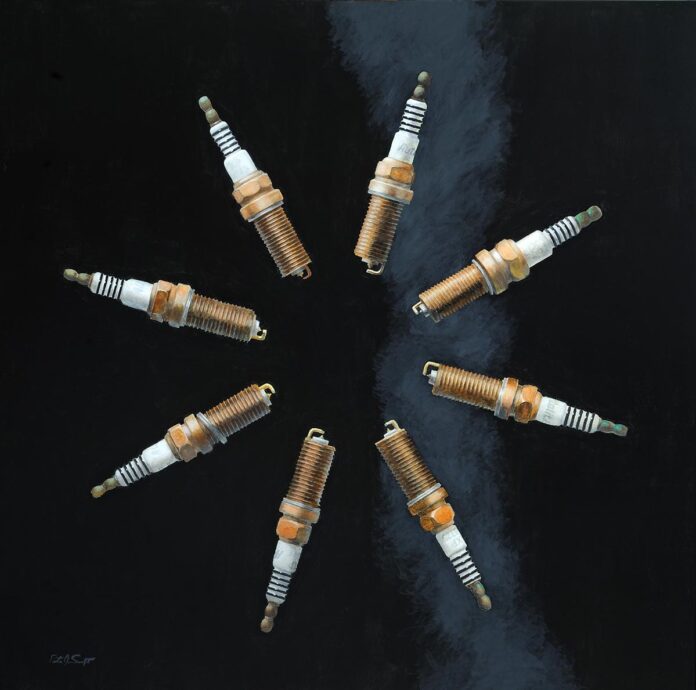
Peter Swift, Dignity of Work – Eight Spark Plugs, acrylic on canvas, 60 x 60 in
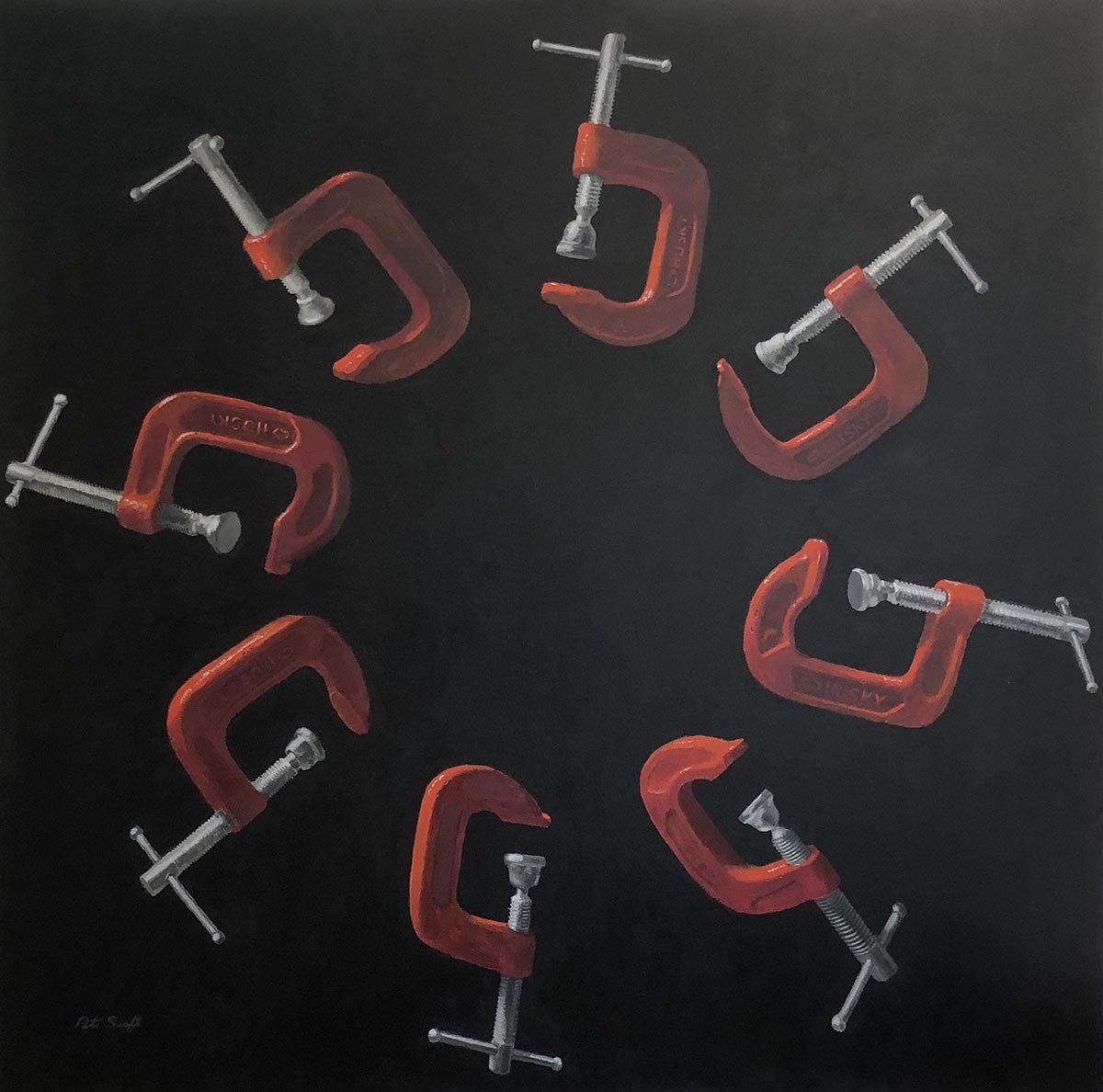
How did you develop your unique style? Peter Swift: My style is unique because it combines two distinct elements: classical realistic still-life painting and symmetrical design. I have coined the phrase “Symmetrical Realism” to describe my work.
Most of my work features circles, because I believe that the human brain has a deep psychological connection to circles. The circle is a fundamental symbol in many of the world’s religions because it represents harmony, unity, tranquility, completion and wholeness.
In my “Dignity of Work” series, I try to honor the men and women who have used their hands, their tools, their savvy, experience and hard work to build our homes, our schools, our roads, and in fact everything we see around us.
My biggest influences have been Louise Nevelson, Martin Puryear and Andy Goldsworthy. Following in the footsteps of these iconic artists, my goal is to use everyday objects to create laconic, resonant symmetries.
Symmetry is a fundamental underlying principle in art. However, over the past century, symmetry has been a factor for the most part only in abstract art, such as the work of Josef Albers and Frank Stella. My work combines both symmetry and realistic rendering, both imagination and meticulous craftsmanship.
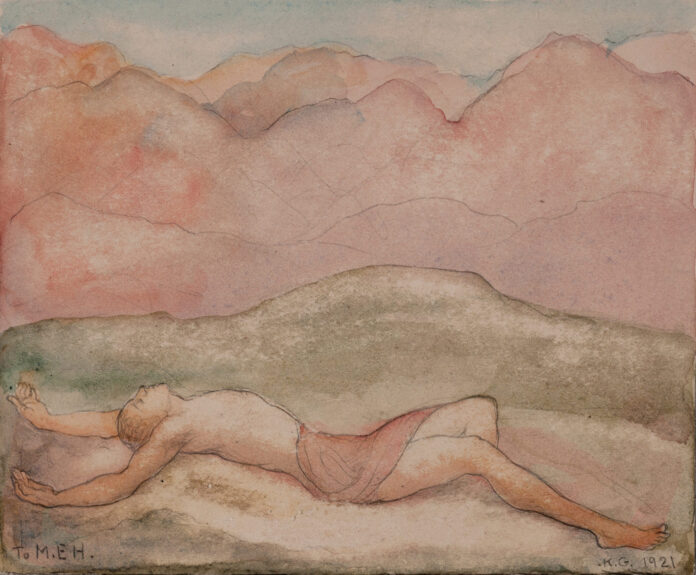
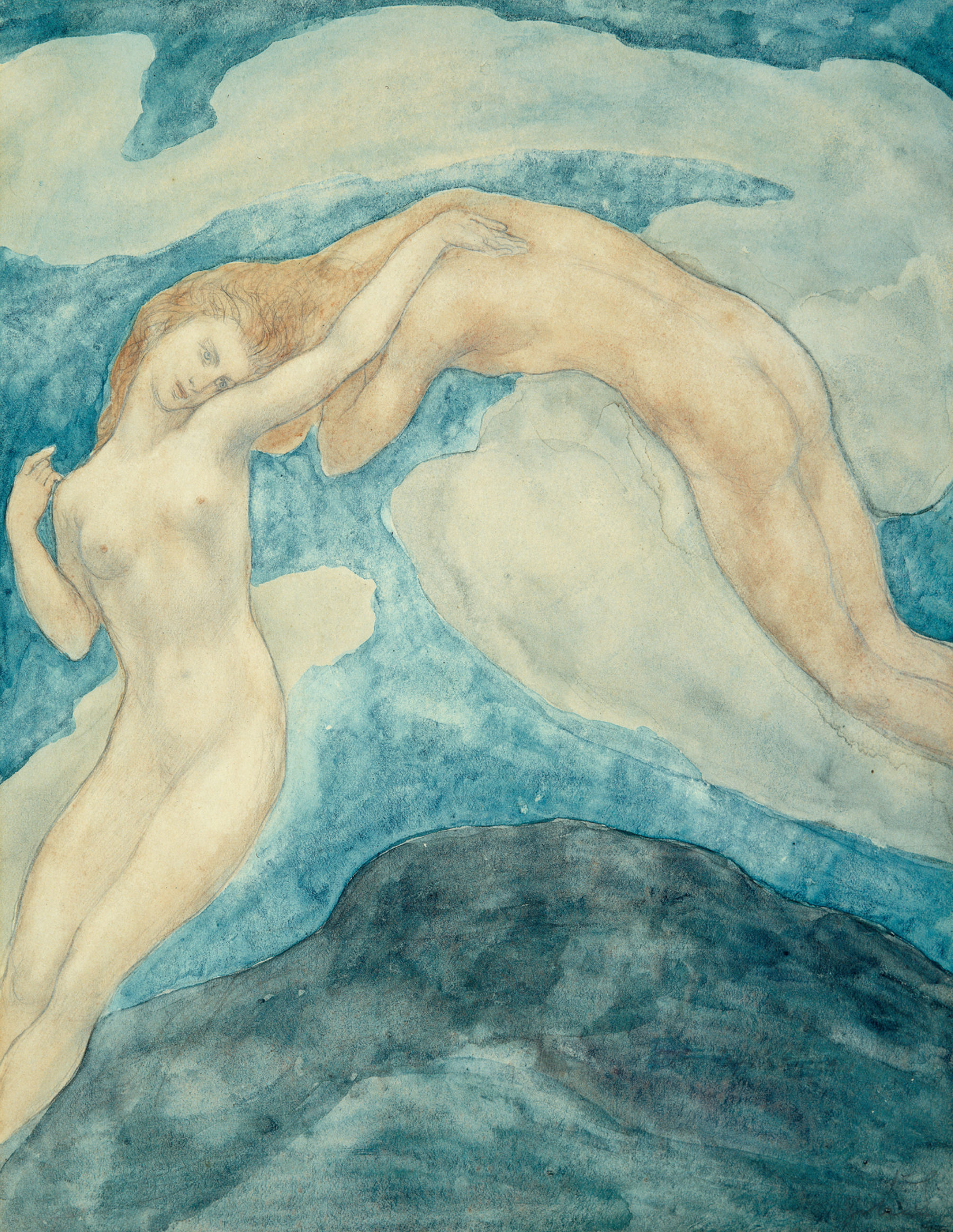
Kahlil Gibran, Untitled, 1921. Watercolor and pencil on paper, 5 x 6 inches (12.7 x 15.2 cm) 16 × 20 inches (40.6 × 50.8 cm). Telfair Museum of Art, Savannah, Georgia, Gift of Mary Haskell Minis. Photography by Daniel L. Grantham, Jr., Graphic Communication
Through September 3, 2023, The Drawing Center presents “A Greater Beauty: The Drawings of Kahlil Gibran,” the first comprehensive exhibition of Kahlil Gibran’s drawings in the United States.
Kahlil Gibran, “The Summit,” c. 1925. Watercolor and pencil on paper, 11 x 8 1/2 inches (27.9 x 21.6 cm). Telfair Museum of Art, Savannah, Georgia, Gift of Mary Haskell Minis. Photography by Erwin Gaspin
Best known as the prolific poet and essayist who authored the 1923 publication ”The Prophet,” Lebanese-American writer Kahlil Gibran viewed himself equally as an artist, producing paintings, watercolors, sketches, illustrations, book covers, and other visual material as a complement to his written work.
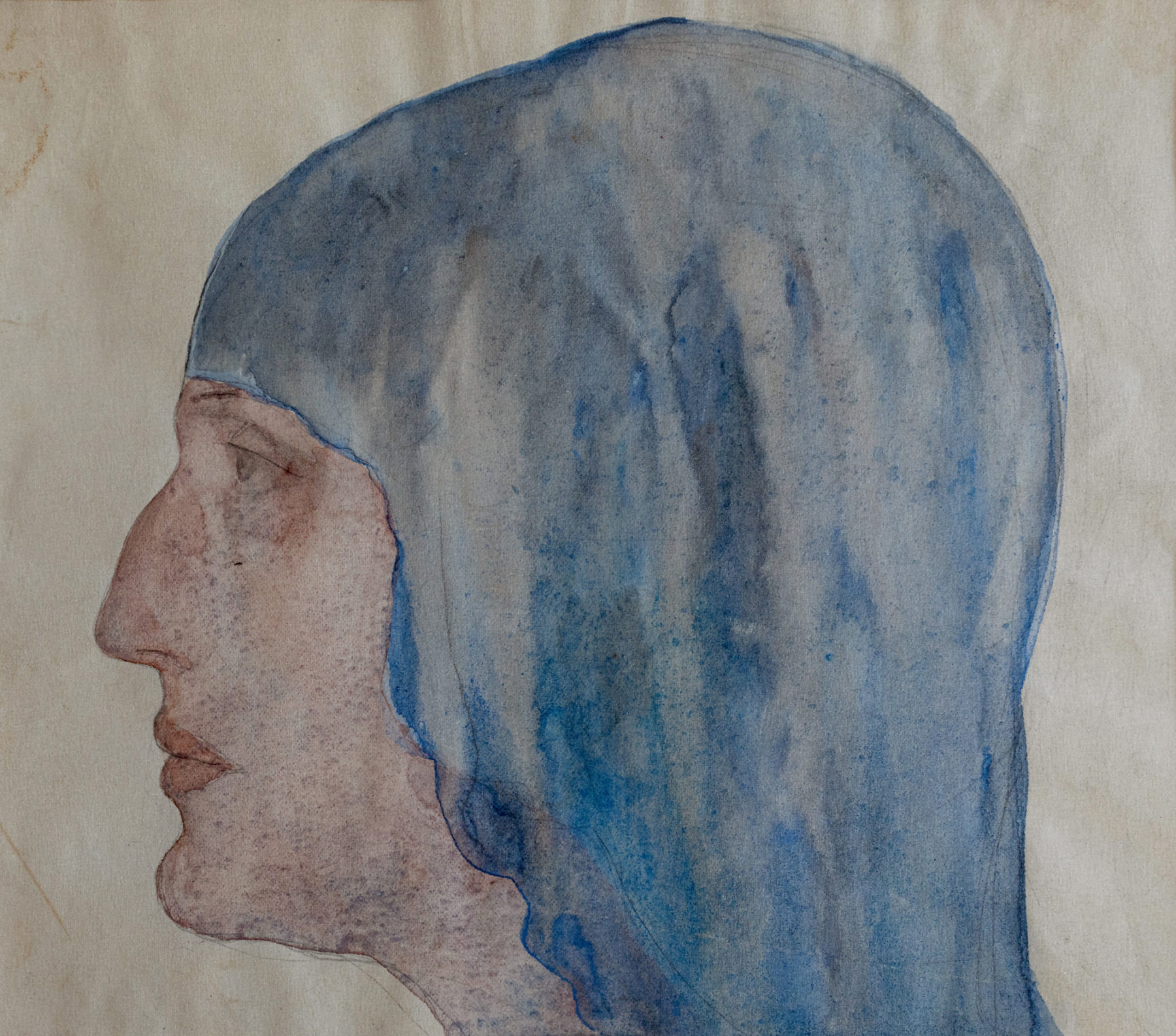
Kahlil Gibran, “A Woman with a Blue Veil,” 1916. Watercolor, 8 1/2 x 10 inches (21.5 x 25.3 cm). Collection of the Gibran Khalil Gibran Museum, Courtesy of the Gibran National Committee
In his writing, Gibran broke with the rigid conventions of traditional Arabic poetry and literary prose, and his non-sectarian approach, which combined elements of Christianity, Islam, Buddhism, and Jungian psychology, was a revelation to Arabic-speaking and immigrant communities in the United States. Gibran took a similar approach in his visual art, practicing an idiosyncratic fusion of symbolist pantheism and spiritual mysticism to create a uniquely egalitarian, universalist aesthetic.
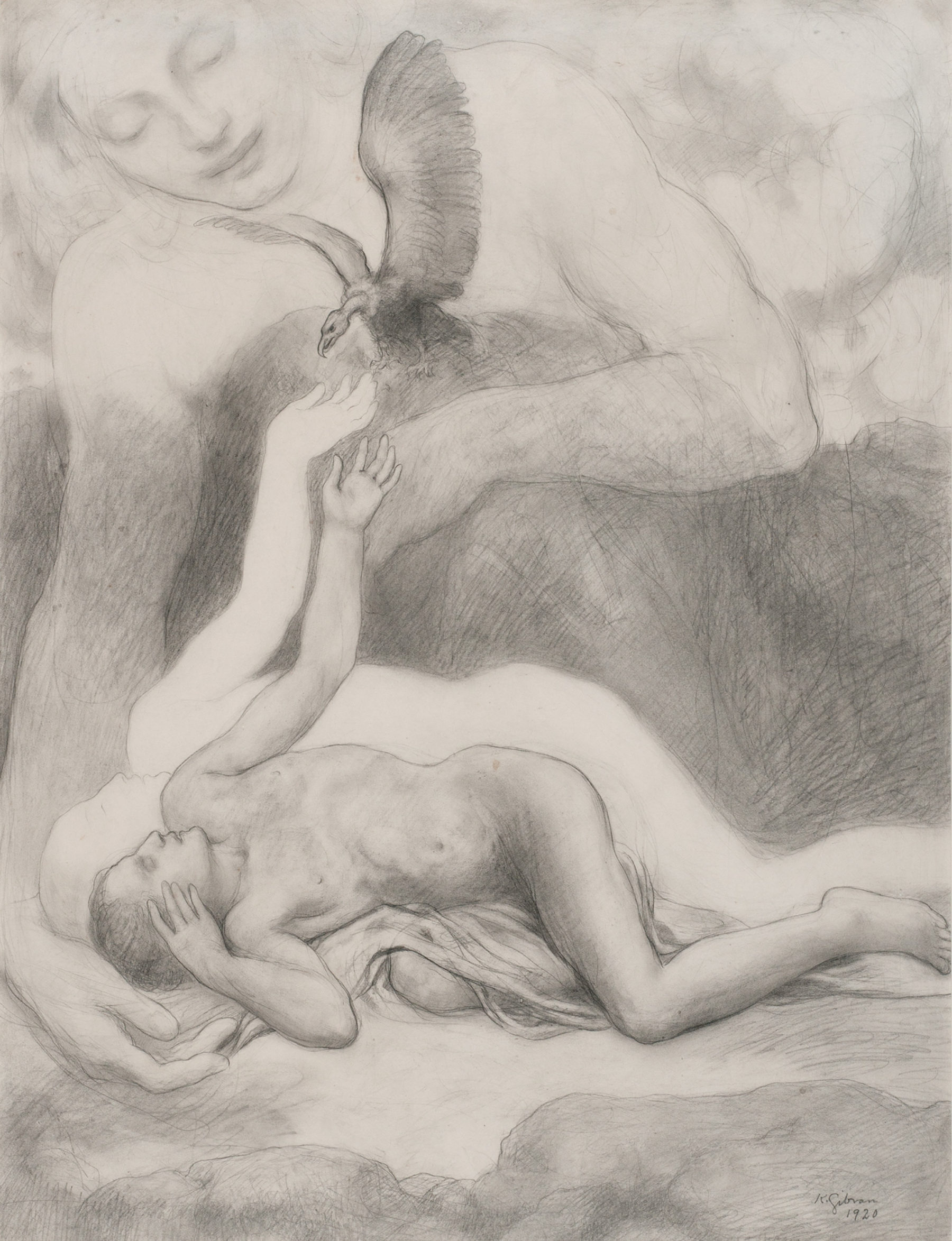
Kahlil Gibran, “The Dying Man and the Vulture,” 1920. Pencil on paper, 22 x 16 3/4 inches (55.9 x 42.5 cm). Telfair Museum of Art, Savannah, Georgia, Gift of Mary Haskell Minis. Photography by Daniel L. Grantham, Jr., Graphic Communication
”A Greater Beauty” will present an overview of Gibran’s drawings and sketches alongside manuscript pages, notebooks, correspondence, magazine illustrations, and first edition publications, providing a glimpse into the artist’s production in the context of his work as a whole.
The exhibition will be accompanied by a robust publication, featuring over 100 images as well as new scholarship by The Drawing Center’s Chief Curator Claire Gilman; Anneka Lenssen, Associate Professor of Global Modern Art at the University of California Berkeley; Joseph Geagea, Director of the Gibran Museum; and Waïl S. Hassan, Director of the Center for South Asian and Middle Eastern Studies and Professor of Comparative Literature and English at the University of Illinois Urbana-Champaign.
Written contributions by three contemporary artists—Ali Cherri (b. Beirut, lives in Paris), Jordan Nassar (b. New York, lives in New York), and Mounira Al Solh (b. born Beirut, lives in Beirut and the Netherlands)—will reflect on the sustained influence of Gibran as well as on negotiating diasporic relationships more generally.
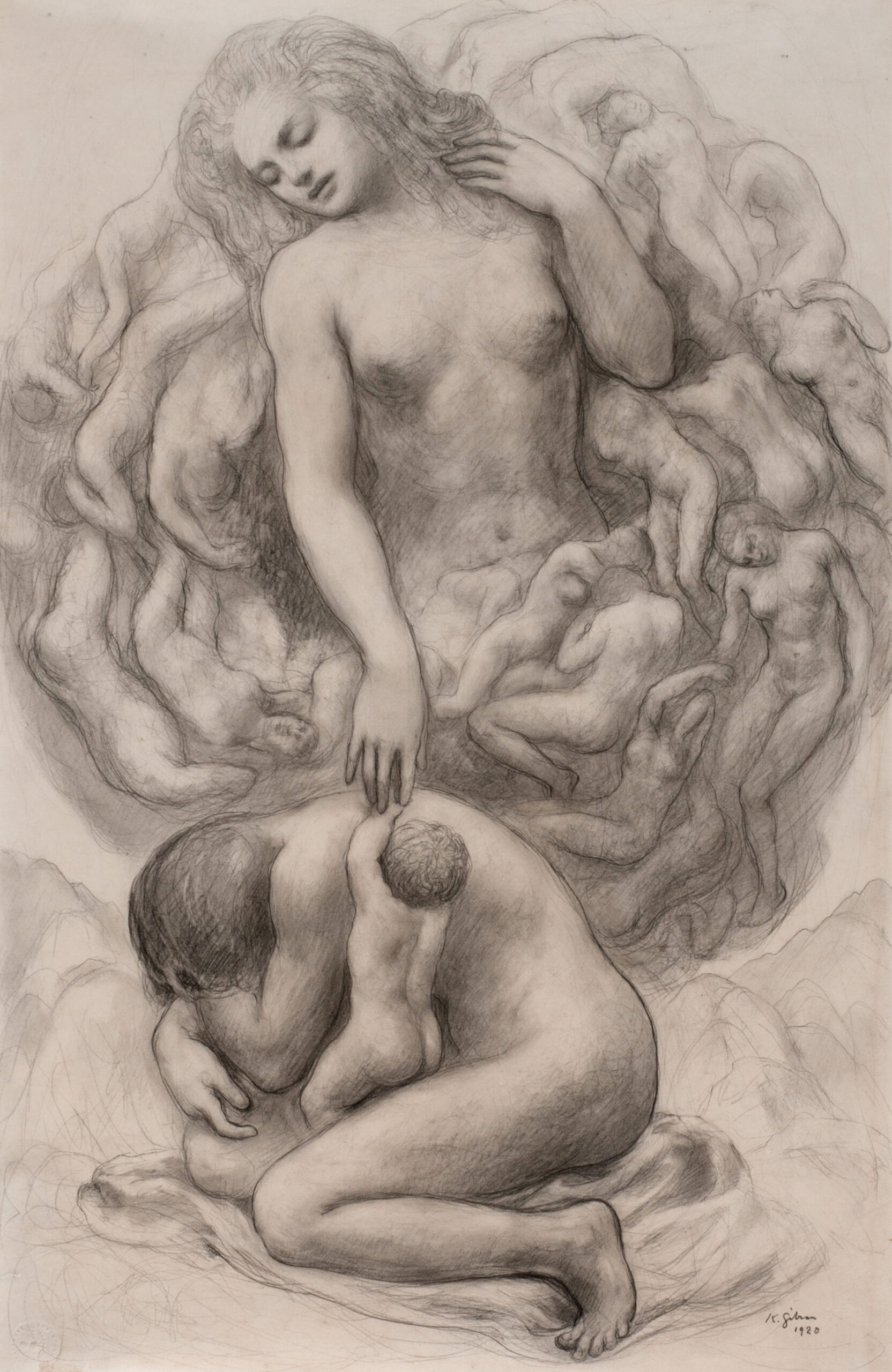
Kahlil Gibran, “The Heavenly Mother,” 1920. Pencil on wove paper, 22 1/4 x 14 1/2 inches (56.5 x 36.8 cm). Telfair Museum of Art, Savannah, Georgia, Gift of Mary Haskell Minis. Photography by Daniel L. Grantham, Jr., Graphic Communication
“A Greater Beauty: The Drawings of Kahlil Gibran” is organized by Claire Gilman, Chief Curator, with Isabella Kapur, Curatorial Associate, and Anneka Lenssen, Associate Professor of Global Modern Art, University of California, Berkeley.
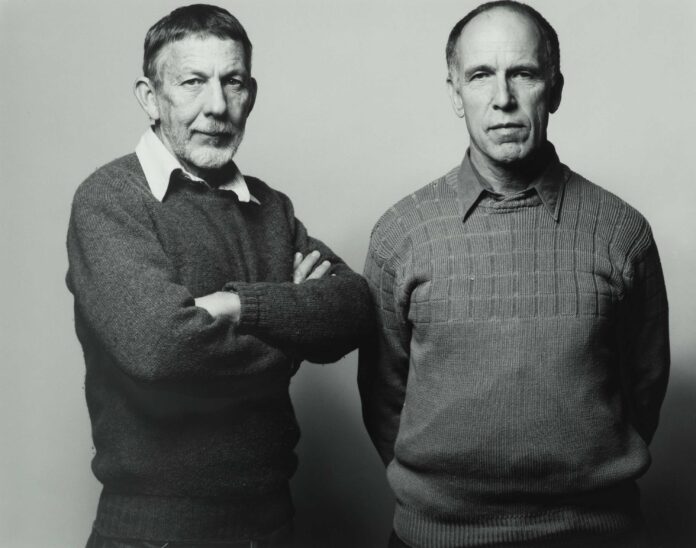
Paul and Bill, 1984. Estate of Paul Wonner and William Theophilus Brown, Crocker Art Museum, Sacramento
“Breaking the Rules: Paul Wonner and Theophilus Brown”
On view through August 27, 2023
Crocker Art Museum
In reaction to the widespread pursuit of Abstract Expressionism in the late 1940s and early 1950s, several avant-garde artists in the San Francisco Bay Area began to reengage with the visible world, applying the gestural style of action painting to depictions of people, landscapes, and still lifes.
The artist couple Paul Wonner (1920 – 2008) and William Theophilus “Bill” Brown (1919 – 2012), both of whom had just completed master’s degrees in art from the University of California, Berkeley, aligned themselves with this new direction and became leading practitioners of the style known today as Bay Area Figuration. The couple subsequently lived in various California cities, pursuing opportunities to paint and teach before finally settling in San Francisco.
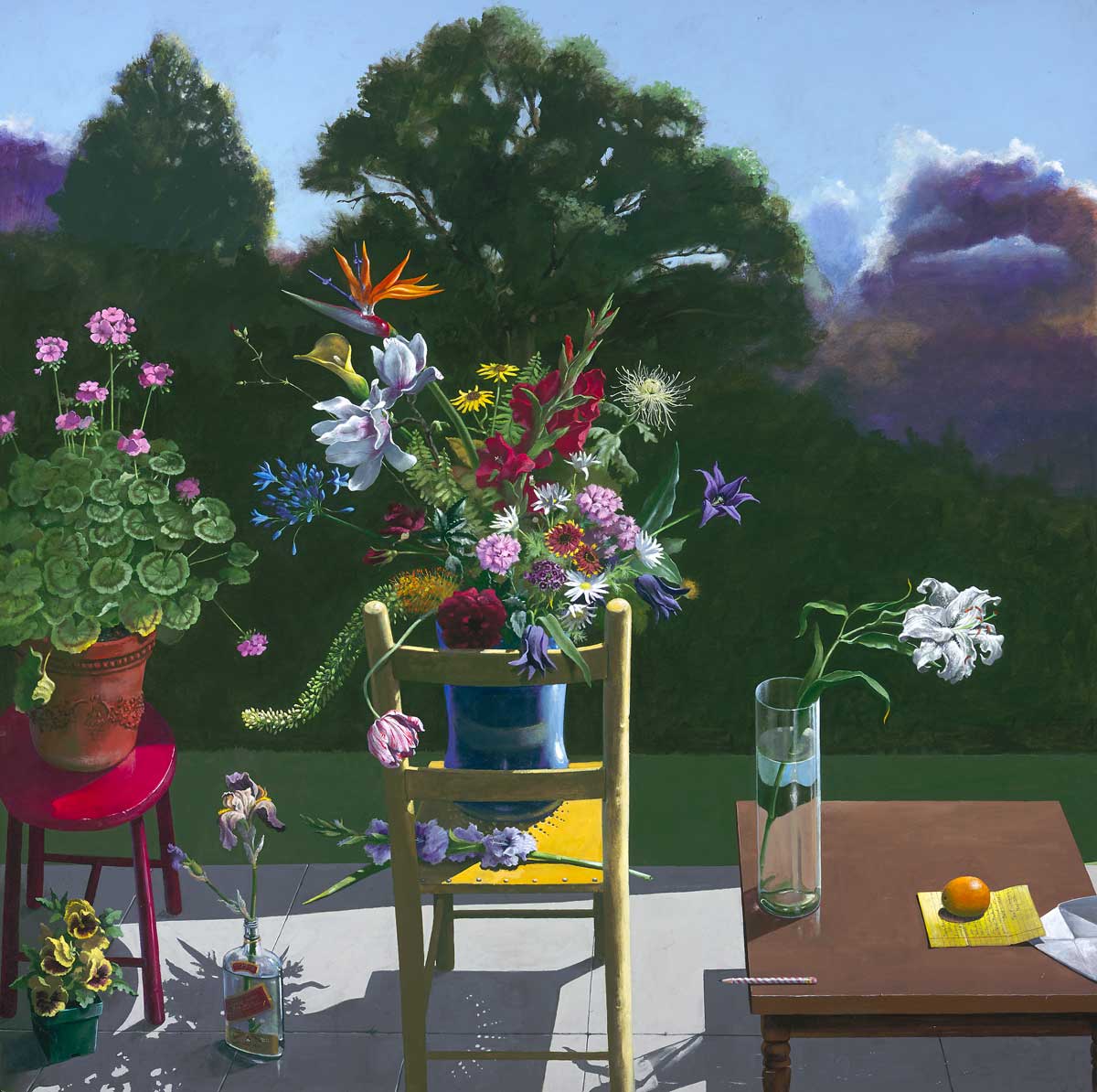
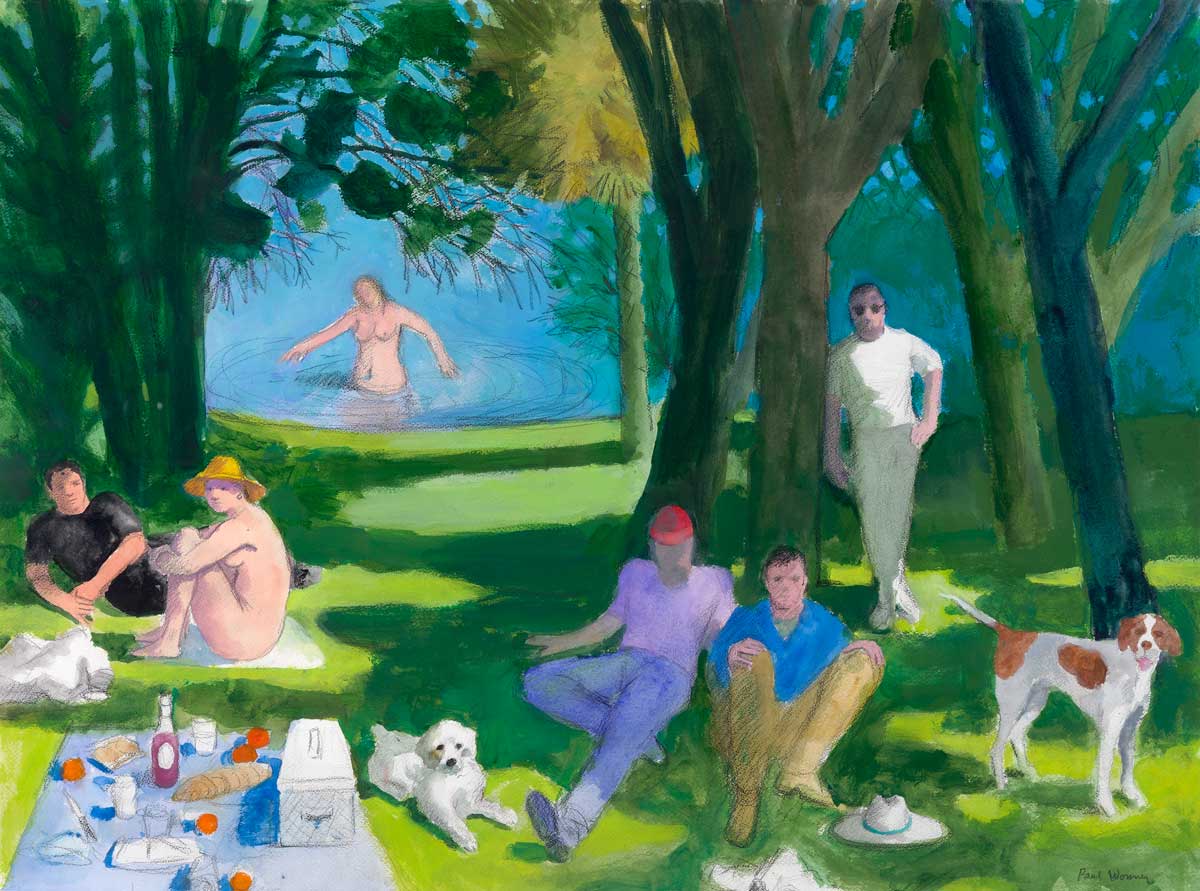
Over time, both artists’ works became less gestural and more overtly representational and, in Wonner’s case, increasingly detailed and precise. Wonner also painted figures but received greatest acclaim for his still lifes laden with everyday objects, animals, and flowers.
Paul Wonner (American, 1920–2008), “Still Life with Flowers and a Note to KMK,” 1992. Acrylic on canvas, 72 x 72 in. Collection of Kevin and Sherry Kearney.Paul Wonner, “Le Déjeuner sur l’herbe (After Manet),” 2004. Acrylic and pencil on paper, 22 1/2 x 30 in. Crocker Art Museum, Estate of Paul Wonner and William Theophilus Brown, 2019.22.3.
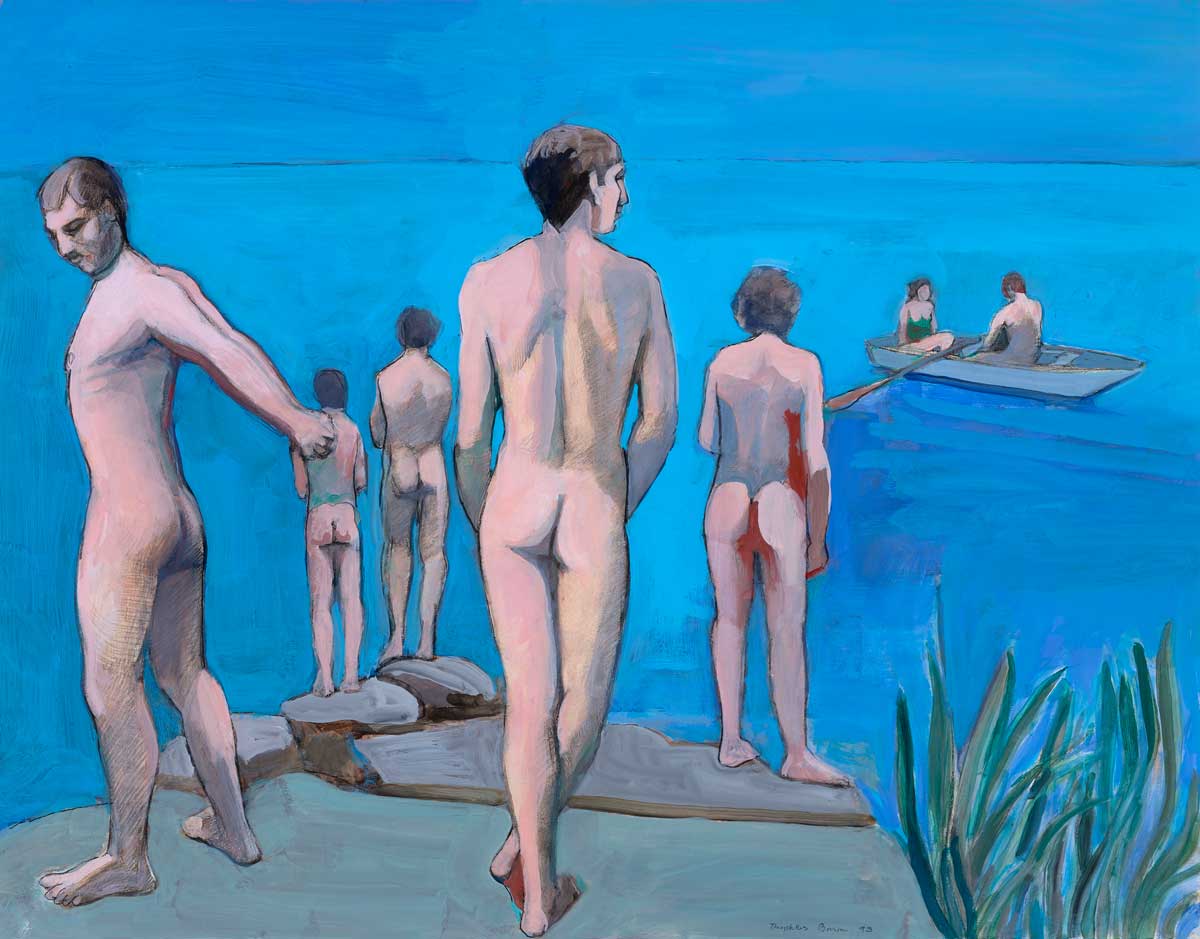
Brown became best known for his psychologically evocative landscapes with classic bathers, as well as for his lonely urban scenes.
William Theophilus Brown (American, 1919–2012), “Standing Bathers,” 1993. Acrylic on paper, 23 x 28 1/2 in. Crocker Art Museum, Estate of Paul Wonner and William Theophilus Brown, 2019.22.7.
For more details about “Breaking the Rules: Paul Wonner and Theophilus Brown” please visit CrockerArt.org.
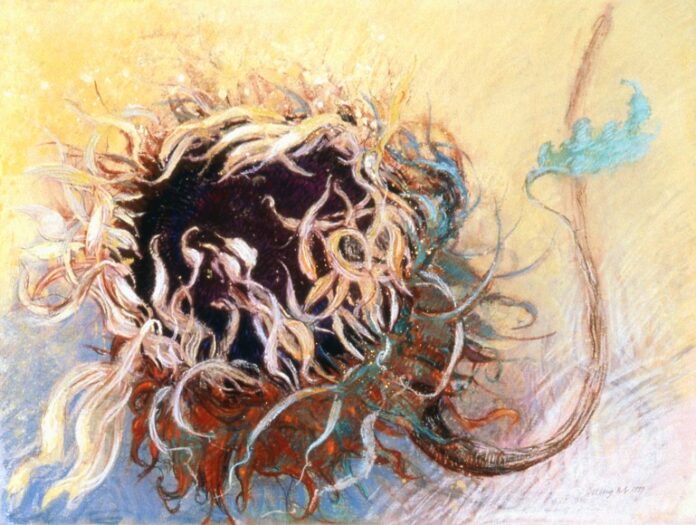
Jimmy Wright, "Sunflower with Blue Leaf," 2000, Pastel on Lanaquarelle paper, 22 x 30 inches
DC Moore Gallery (New York) presents “Jimmy Wright: Emotional Repositories,” the artist’s third solo exhibition with the gallery.
On View through August 10, 2023
Reception with the artist July 19th, 6 – 8 pm www.dcmooregallery.com
From DC Moore Gallery:
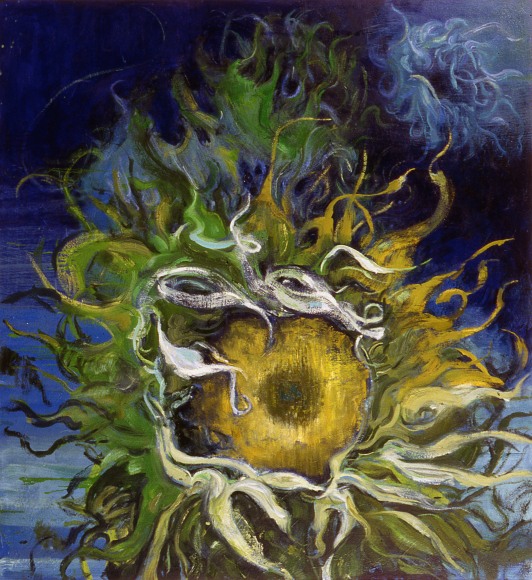
Jimmy Wright’s large-scale oil paintings and pastel works of sunflowers reimagine the subject’s meaning, becoming what the artist calls “repositories of emotion.” Wright began painting still lifes in 1988, during the height of the AIDS epidemic. As he was caring for his partner, who was gravely ill with HIV/AIDS, Wright was looking for a studio practice that would allow him to work intermittently and preserve his sense of self. Never having painted still lifes before, he purchased giant sunflowers from a farmer’s market and watched the petals twist and shrink as the flowers withered. These flowers reflect a broad and fluid array of human emotions, and they became powerful memento mori and vessels for themes of grief, memorialization, selfhood, and resurrection.
Jimmy Wright, “Sun King,” 2001, Oil on linen, 60 1/4 x 55 1/8 inches
Jimmy Wright was born in Union City, Tennessee in 1944, and raised in rural Kentucky. In 1964, he moved to Chicago to study at the Art Institute, where he befriended Roger Brown and other members of the Chicago Imagist movement and studied with Ray Yoshida. In 1974, Wright moved to New York City, where he documented the flourishing queer subculture of gay bathhouses and downtown nightclubs. In the 1980s, Wright turned to his childhood in the American South as subject matter, depicting religious rituals, his grandmother’s hometown in Tennessee, and his family members. From 1988-91, Wright produced his first sunflower paintings, a series of large-scale still lifes on canvases measuring six by six feet.
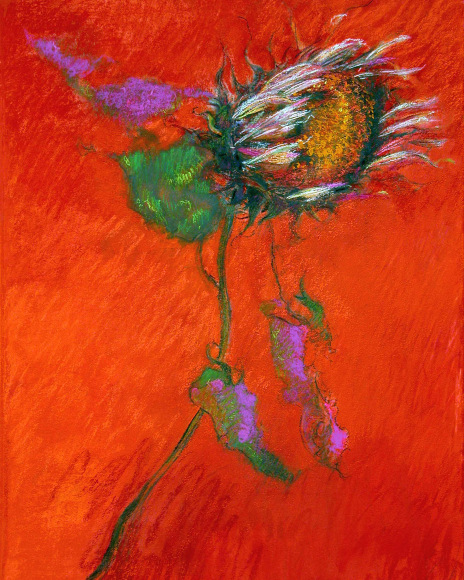
Not all of these blooms are elegiac, many are fiery and exuberant, the capacity for transformation and expressing joy being integral to the work. Wright experiments freely with layering and juxtaposition of bold, vibrating color that pushes beyond observed reality. In some works, monochromatic compositions explore the full range of a color’s possibility, while others play with vivid, complementary hues, recalling the intensity of post-Impressionist painters. Textured surfaces created by cross-hatched pastel marks and thick, impastoed oil paint emphasize the emotional heft contained within the forms.
The works on view, completed in the 2000s and 2010s, involve combinations of dried and fresh flowers, creating variations in form and capturing these ephemeral phases of blooming and decaying. Wright’s decades-long exploration of the subject creates an archive of feeling, pausing time and preserving the most ineffable human emotions.
Jimmy Wright, “Sunflower on Crimson No. 1,” 2008, Pastel on paper, 29 x 22 1/2 inches
Wright has been a New York-based artist since 1974. Recent solo exhibitions include Fierman, New York, NY (2022, 2019, 2016), M+B Gallery, Los Angeles, CA (2019), and Corbett vs. Dempsey, Chicago, IL (2023, 2016). His work is currently on view in the exhibitions Luxe, Calme, Volupté at Candice Madey, New York, NY; Jimmy Wright and Arch Connelly, Southern Illinois University Art Museum, Carbondale, IL; and Flowers at the Fin de Siècle: Renate Bertlmann, Robert Lettner, Jimmy Wright, 1990-1998, Wonnerth Dejaco Gallery, Vienna, Austria. In 2009, The Springfield Art Museum, MO, organized the retrospective, Jimmy Wright: Twenty Years of Painting and Pastels. Wright’s work is in the collections of numerous institutions, including the Art Institute of Chicago, IL; Hammer Museum, Los Angeles, CA; Metropolitan Museum of Art, NY; Speed Art Museum, Louisville, KY; Whitney Museum of American Art, NY; among others.
As part of our effort to continue to help artists and art galleries thrive, we’re proud to bring you this week’s “Virtual Gallery Walk.” Browse the artwork below and click the image itself to learn more about it, including how to contact the gallery.
The Warmth of the Sun, Josh Clare, oil, 47 x 71 in; Southam Gallery
***Want to see your gallery featured in an upcoming Virtual Gallery Walk? Contact us at [email protected] to advertise today. Don’t delay, as spaces are first come, first served, and availability is limited.
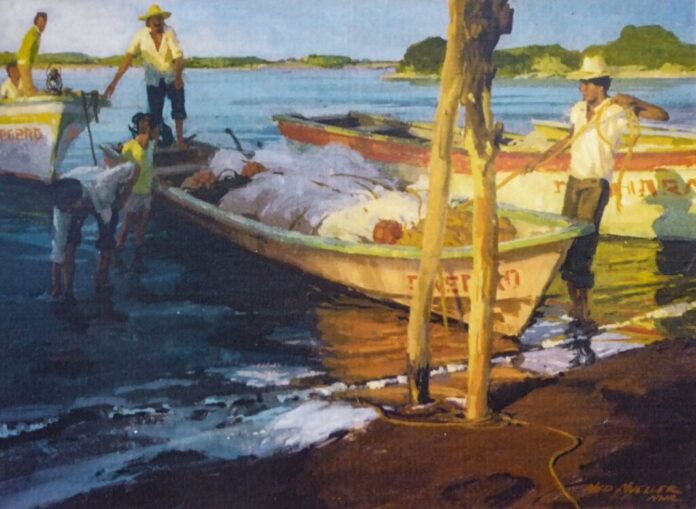
Ned Mueller, “Tying Up – San Blas, Mexico,” gouache, 11 x 15 in.
We’d like to congratulate Ned Mueller for winning Overall First Place in the May 2023 PleinAir Salon.
About the Artist
Born in Wisconsin and raised in Montana, Ned Mueller has been drawing and painting all of his life. He is one of the few artists that have been designated as a “Master Artist” by both the American Impressionist Society and the Oil Painters of America. He graduated from the prestigious Art Center School of Design in Los Angeles where he also taught drawing while still a student. His love for life and art is reflected in his superb paintings of a wide range of subjects including Portraits, Figures, Animals, and Landscapes, both studio and plein air.
Ned worked as an illustrator for 25 years while building a solid foundation of professionalism and has worked as a successful full-time artist since 1984. He continued to enhance his knowledge and skills by taking workshops with master artists Harley Brown, Richard Schmid, Bettina Steinke, Del Gish, and Sergei Bongart.
He has written several articles on painting for the Artists Magazine, is called upon to jury shows, and is a popular and enthusiastic workshop teacher around the country and abroad. He was a consultant for Walt Disney Imagineering where he did wonderful concept work for Animal Kingdom, Tokyo Disney Sea, California, and other projects.
He is a signature member of The Plein Air Painters of America, Portrait Society of America, The California Art Club, The Northwest Watercolor Society, Northwest Pastel Society (Distinguished Pastelist), Northwest Rendezous Society, Laguna Plein Air Painters, Puget Sound Group of Northwest Painters and the American Society of Marine Artists.
He exhibits his work in some of the finest shows and galleries in the country and has won numerous awards. He has been invited to participate in the Great American Artist Show, Artists of America Show, Plein Air Painters of America, Oil Painters of America, National Academy of Western Art, Knickerbocker Show, The Northwest Rendezvous Group, The California Art Club, The Salmagundi Club, Puget Sound Group of Northwest Artists, Pastel Society of America, American Society of Marine Artists and the Autry Western Masters Show. Ned has had two exhibitions and put together two group exhibitions at the Frye Art Museum and gave a demonstration and workshop at the Seattle Art Museum. He continues to challenge and improve his work on location and in the studio.
About the PleinAir Salon:
In the spirit of the French Salon created by the Academie des Beaux-Arts in Paris, this annual online art competition, with 11 monthly cycles, leading to the annual Salon Grand Prize winners, is designed to stimulate artistic growth through competition. The competition rewards artists with $50,000 in cash prizes and exposure of their work, with the winning painting featured on the cover of PleinAir™ Magazine.
Winners in each monthly competition may receive recognition and exposure through PleinAir Magazine’s print magazine, e-newsletters, websites, and social media. Winners of each competition will also be entered into the annual competition. The Annual Awards will be presented live at the next Plein Air Convention & Expo.
The next round of the PleinAir Salon has begun so hurry, as this competition ends on the last day of the month. Enter your best art in the PleinAir Salon here.
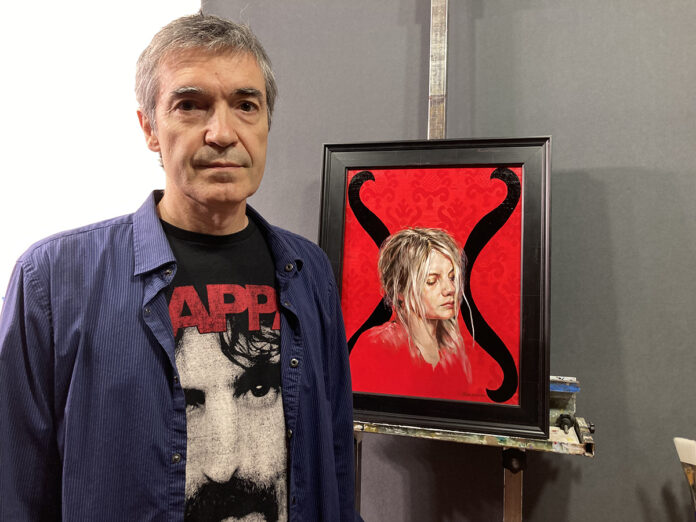
Ivan in his studio with “Sign 2” - oil on linen board, 18x14
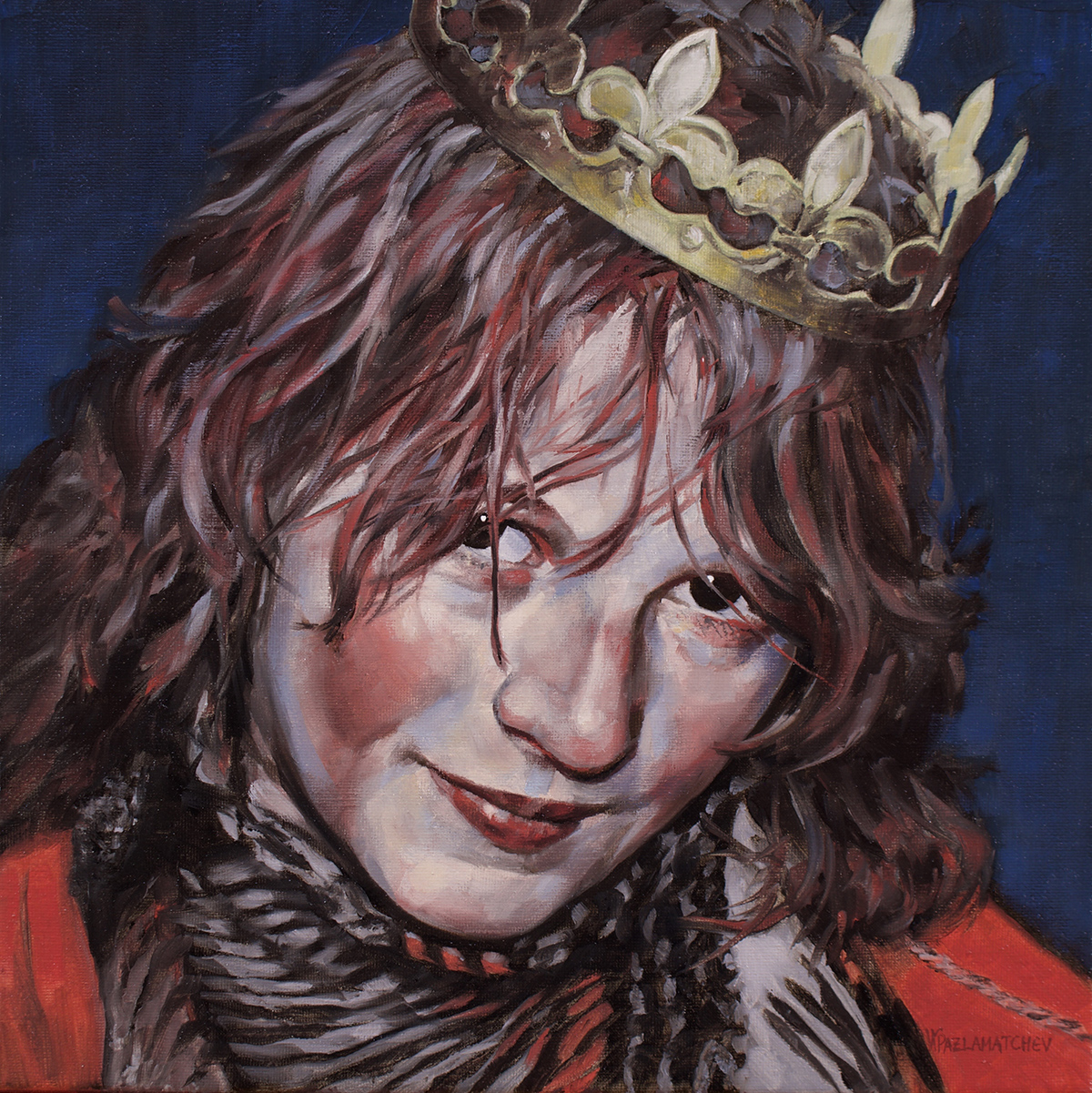
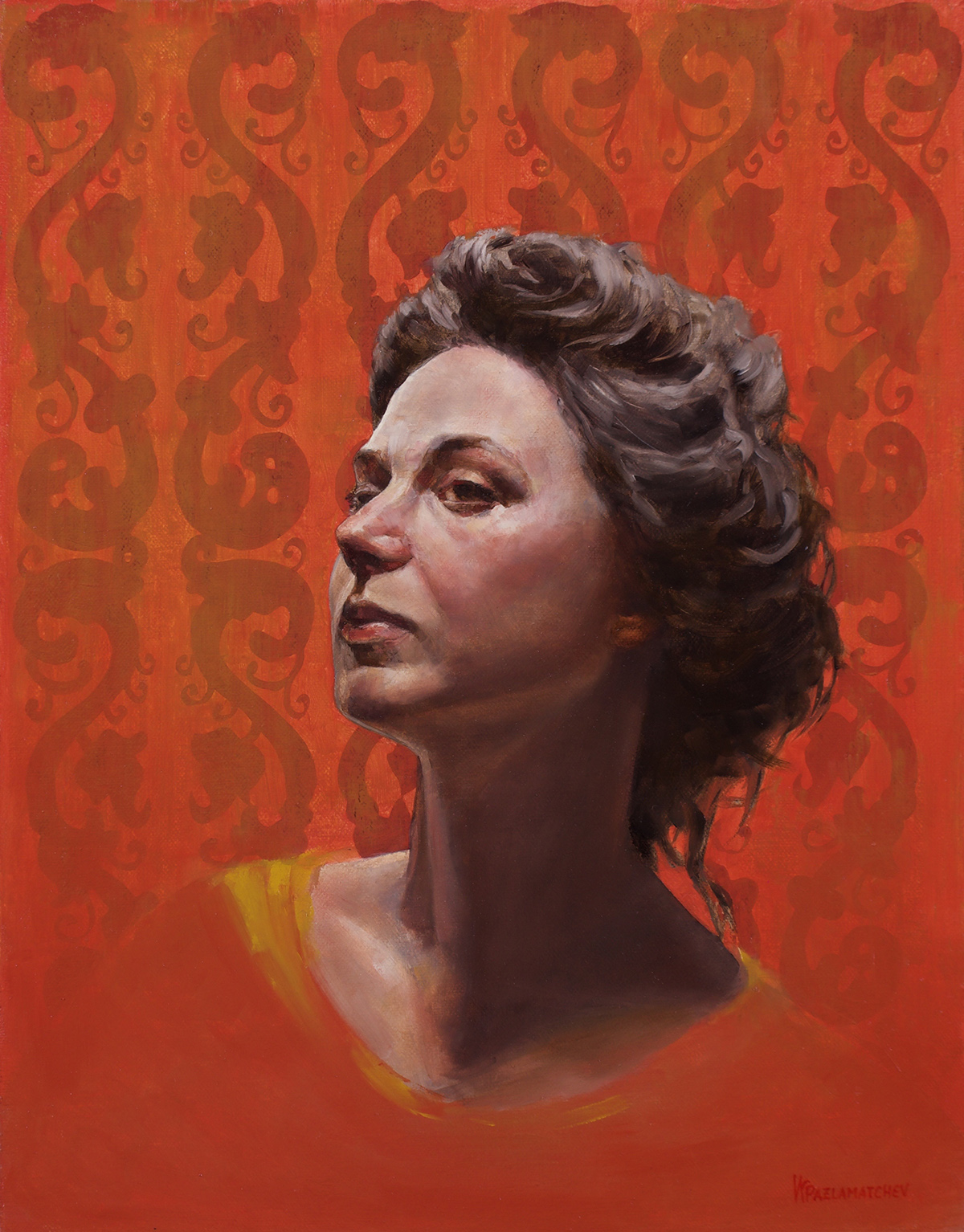
How did you get started and then develop your career? Ivan Pazlamatchev: It started with graduating from Art school in Sofia, Bulgaria. And as the Berlin wall crumbled, I left for Germany. Year and a half later, after two solo shows there, I moved to the US. Did a lot of different things in New York. Had solo shows and participated in group exhibitions in the US and Europe. Then I joined the local Scenic Artists Union and have been working on film and theater productions ever since. Splitting my time between my studio and the scenic shops. All of these experiences have had and still do impact my career as an artist.
How do you find inspiration? Ivan Pazlamatchev: Curiosity is the foundation. From that position there are always things, external or from within, that would make me want to take a multi view approach at understanding them. Would invite me to interpret them for myself. In that process, visual ideas and decisions will start to take shape.
Nina Cobb Walker, “Morning Glory,” oil on linen panel, 8 x 16 in. Will be part of the WAOW 53rd National Juried Exhibition July 22 thru September 15, 2023 at the Carriage House Factory Art Gallery, Newton, Kansas
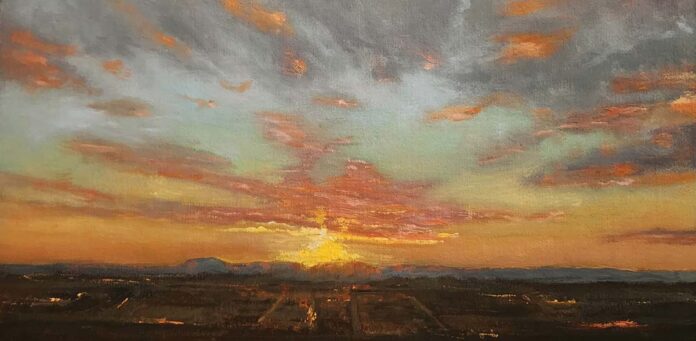
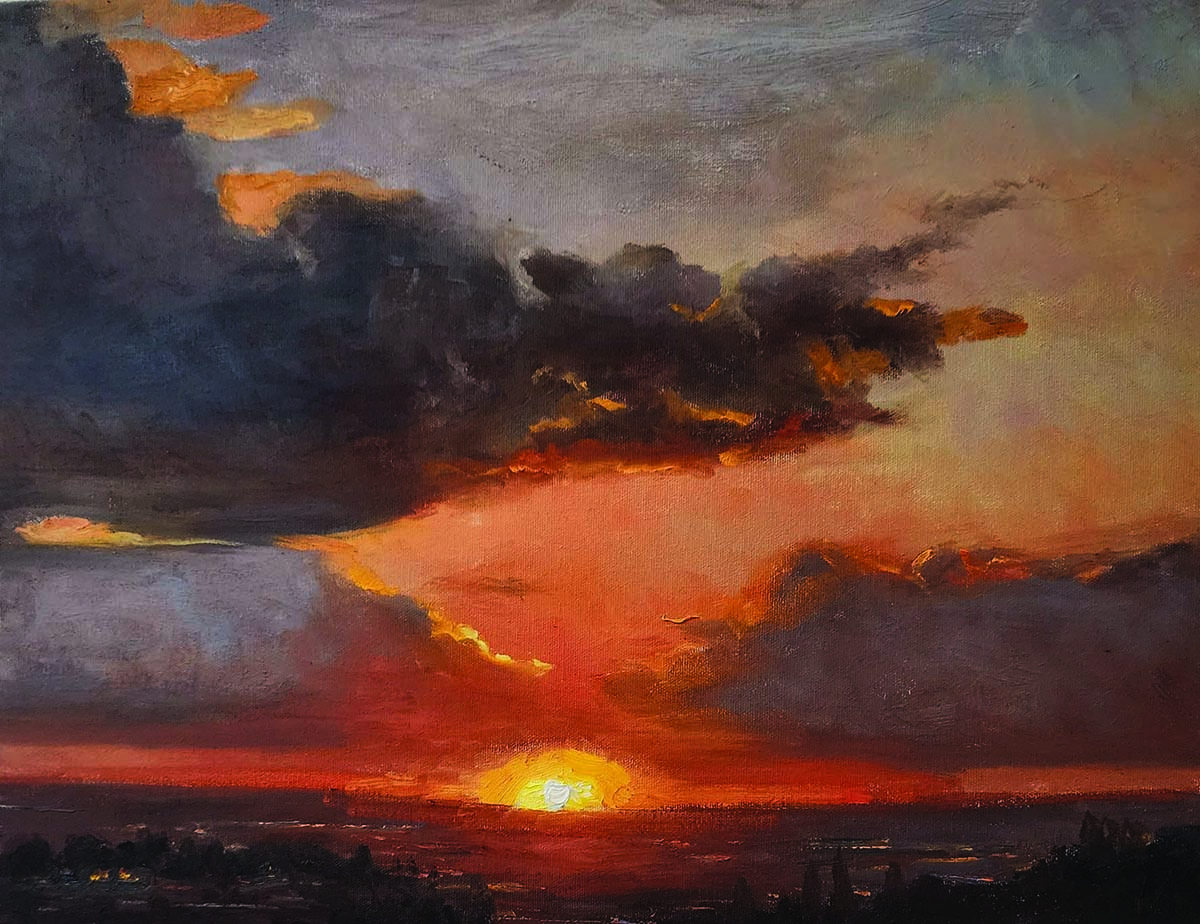
Nina Cobb Walker: Nina continues to paint the landscape looking for peace and tranquility in an effort to create a moment in time which may touch the soul of the viewer and connect with humanity.
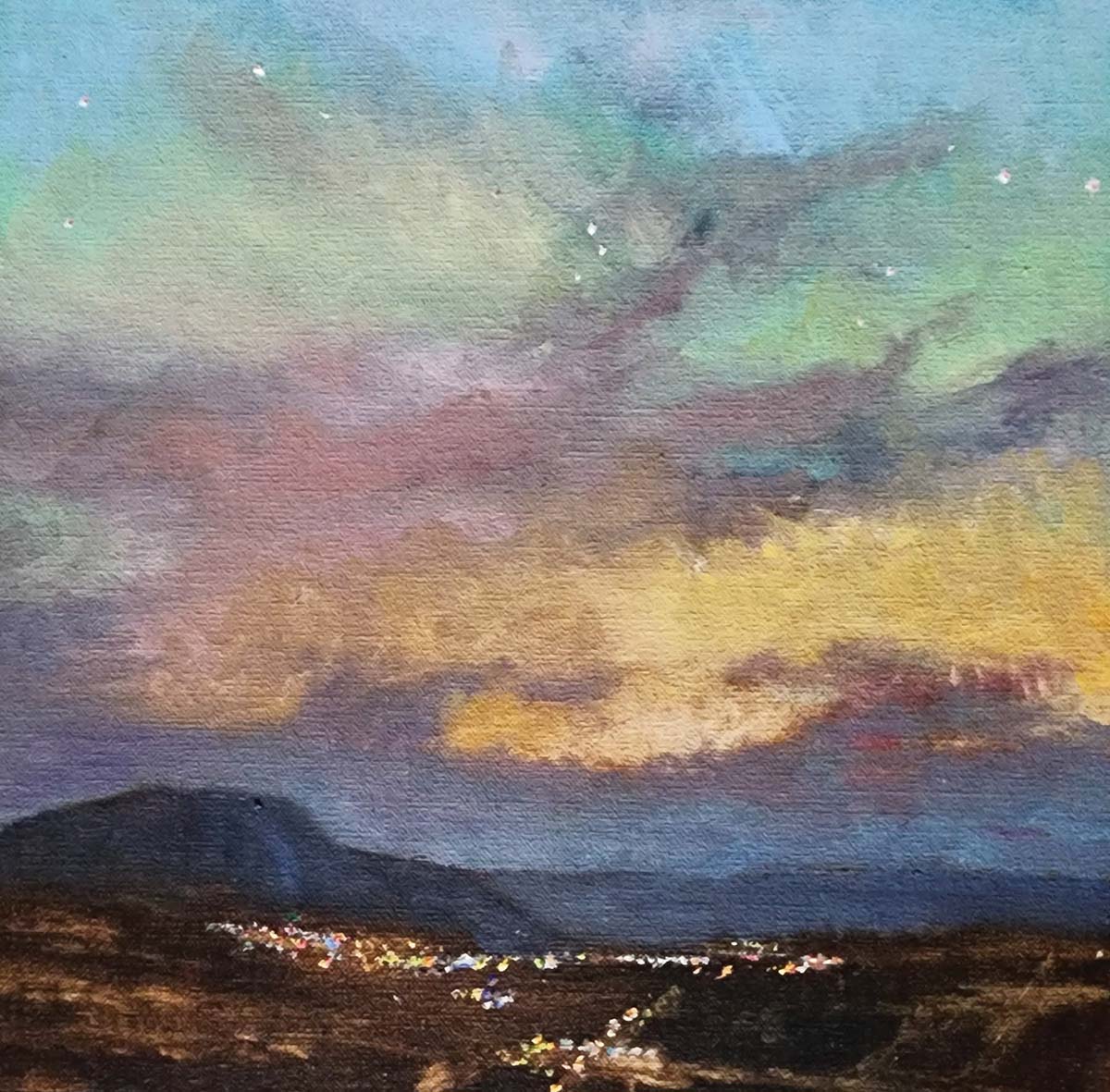
Nina’s Mountainside Gallery is the perfect location to study and paint daily, sunrises and sunsets. These paintings, all sunrises, represent an ongoing study of light. All three painted from her studio view in El Paso, Texas on the East side of the Franklin Mountains.
Nina Cobb Walker, “Noble Dawn,” oil on canvas, 16 x 20 in. Available through the Artist or Cate Zane GalleryNina Cobb Walker, “Morning Star,” oil on linen panel, 12 x 12 in. Available through the Artist or Cate Zane Gallery
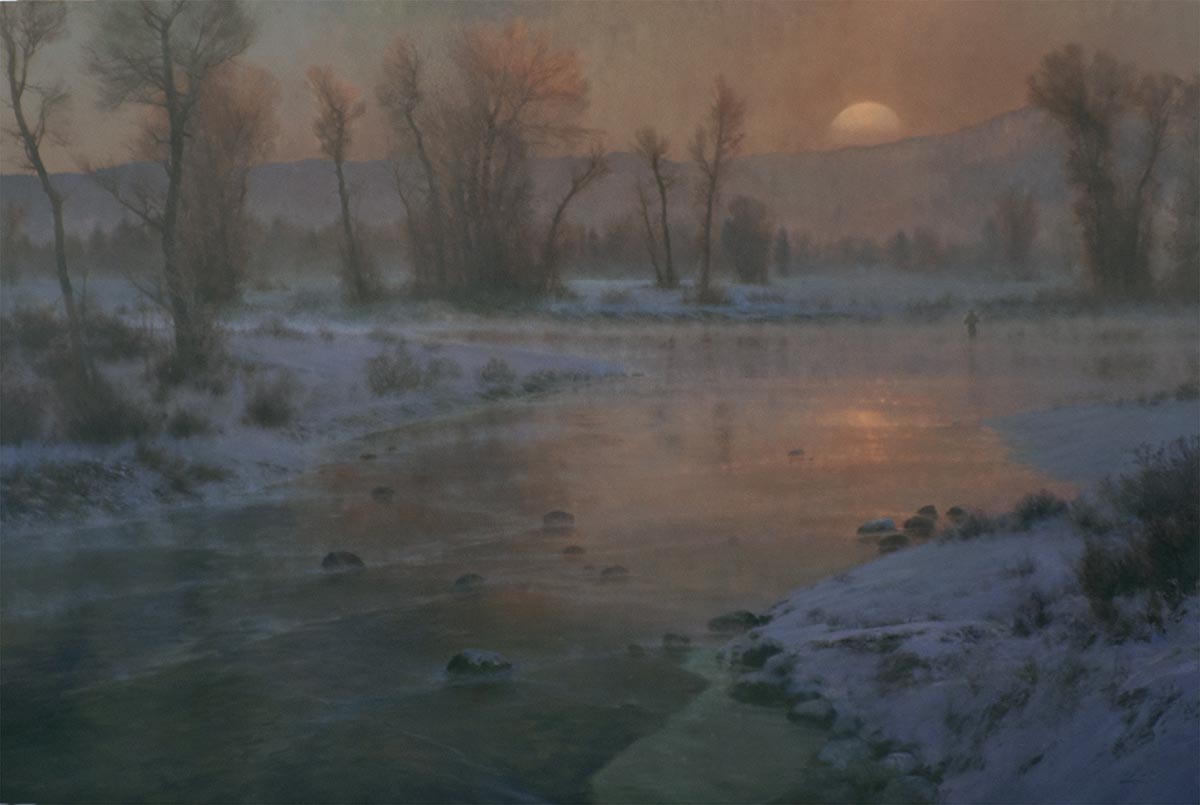
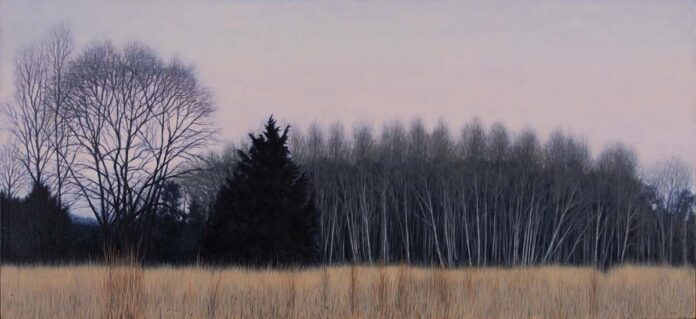
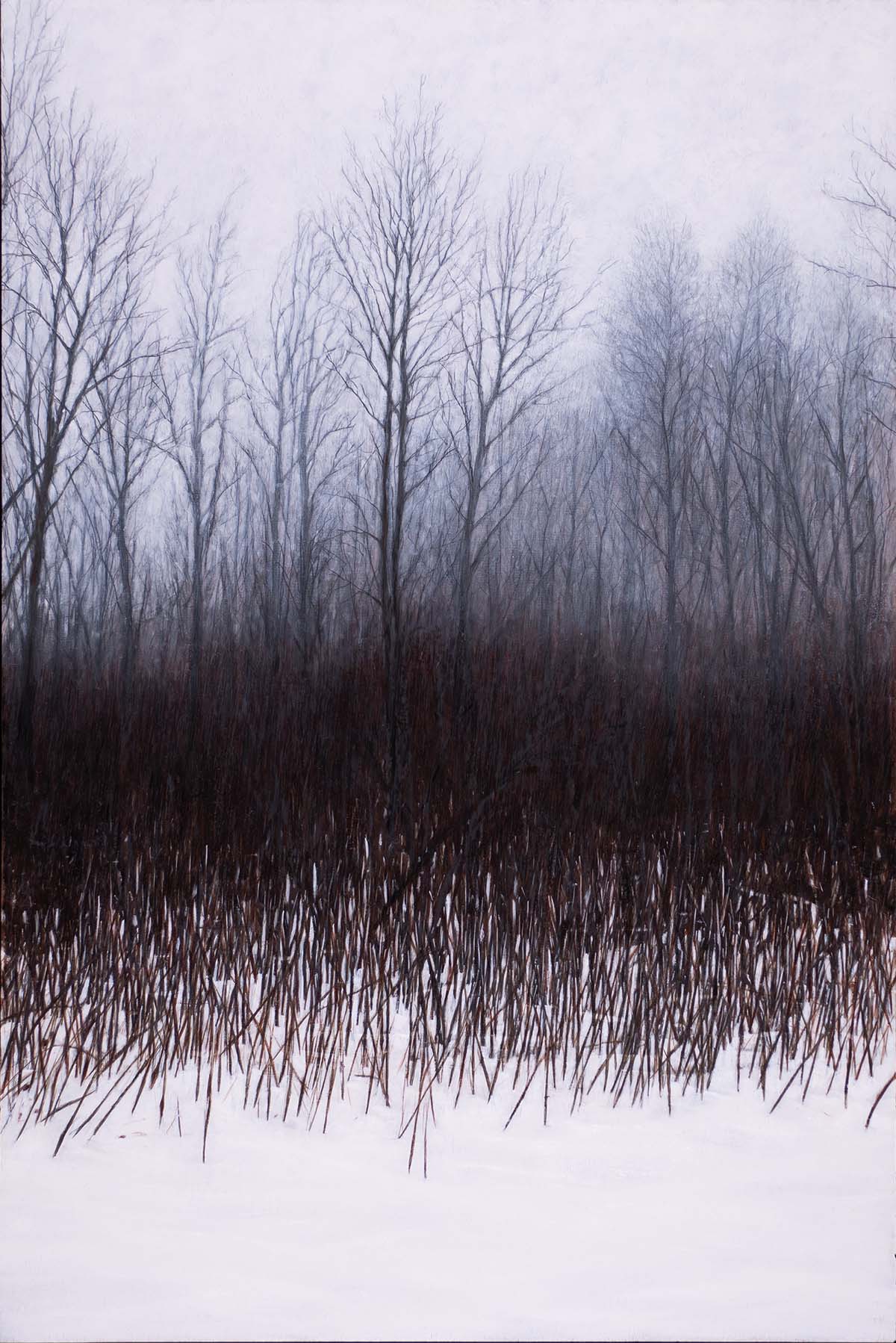
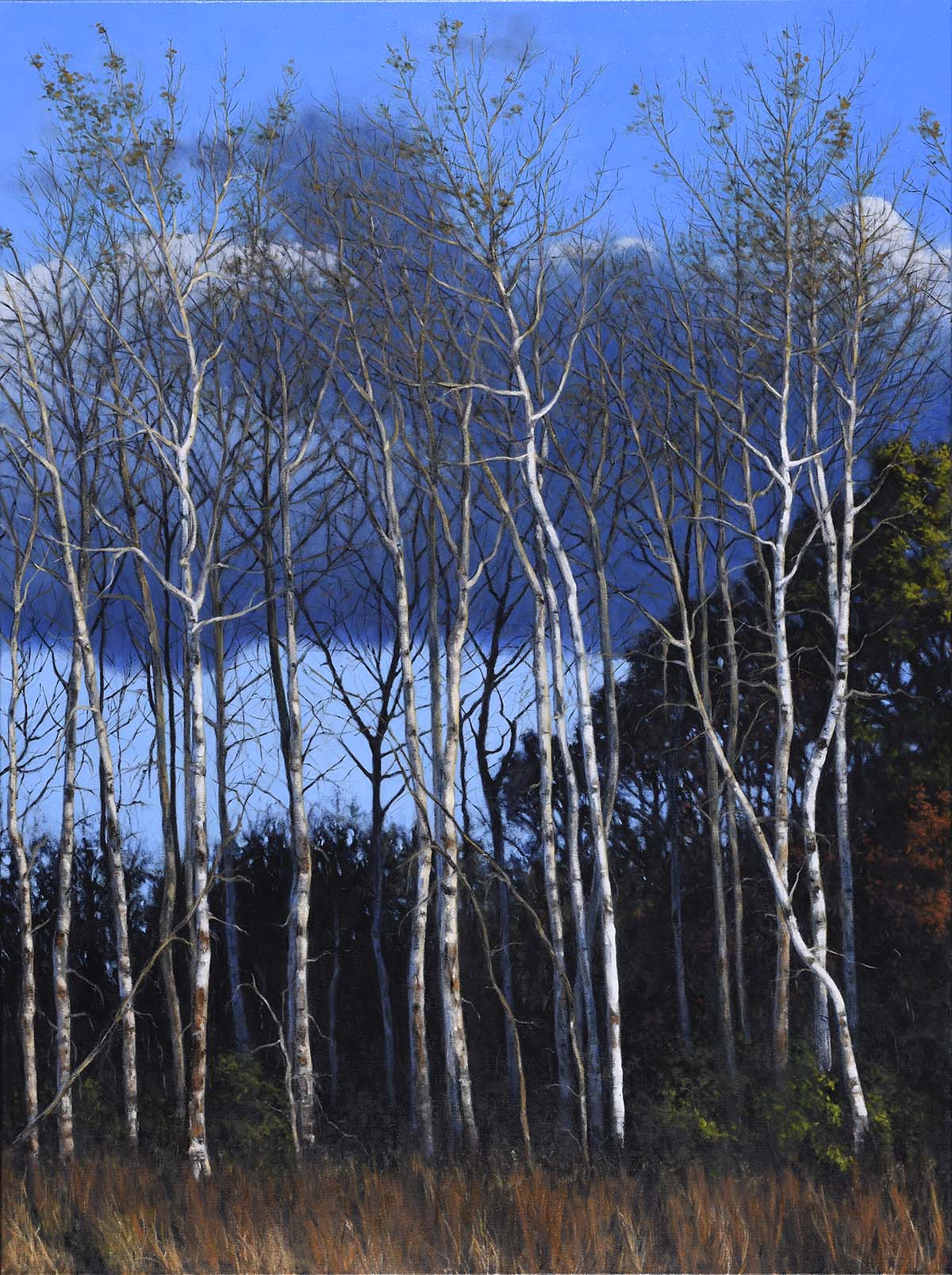
“Token Creek #4,” Douglas Whittle, oil on linen, 24 x 52 in. Available from artist. An evening view of a birch grove in the late fall at Token Creek Park
Douglas Whittle: Token Creek, a small stream passing through a sedge meadow in central Dane County, Wisconsin, gives its name to the county park which it traverses just a mile or two from Douglas Whittle’s home. He makes many visits to the park to paint and photograph the changing seasons, and his series of Token Creek paintings will be exhibited in his upcoming solo show at the Monroe Arts Center, in Monroe, Wisconsin, in April 2024.
“Token Creek #5,” Douglas Whittle, oil on wood, 36 x 24 in. Available from artist. A sedge to forest transition zone in deep winter at Token Creek Park“Token Creek #8,” Douglas Whittle, oil on canvas, 40 x 30 in. Available from Woodland. Studios, Stoughton, WI. A clutch of young birch trees in the early fall at Token Creek Park
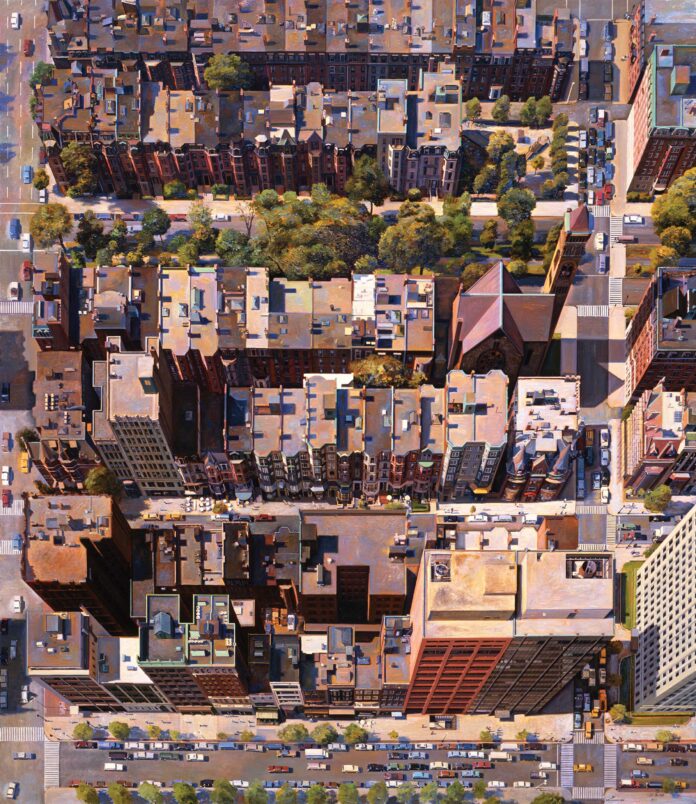
Joel Babb, "Copley Plunge," 1990, oil on linen, 82 x 65 in., Museum of Fine Arts, Boston; featured in the July/August 2023 issue of Fine Art Connoisseur magazine
From the Fine Art Connoisseur July/August 2023 Editor’s Note:
Embracing the Future, Carefully
Every day I seem to be reading another story about Artificial Intelligence (AI) and its potential benefits and drawbacks. Despite stern warnings from the very people who pioneered this new technology, our society is moving full steam ahead, introducing programs like ChatGPT to the public at breakneck speed. Though I lean a little Luddite, I am not automatically opposed to the idea that a chatbot might save us time and brainspace by performing tasks we normally dread. The Internet itself, initially developed for military purposes, has proved a boon to humanity (with the downsides inherent to any technology), so why not AI?
Setting aside the proliferation of — just for example — “deep fake” AI videos designed to mislead viewers, my chief worry for the field of fine art is one that has already existed there: deceptiveness. Years ago I noticed, at an art fair, that visitors were excitedly admiring an enormous oil painting with wonderfully expressive brushwork.
Upon closer inspection, I realized this was actually a photograph onto which the “artist” had applied masses of paint to make that underlying fact less obvious. Problem is, the dealer’s wall label did not mention anything about photography — it was simply an “oil on panel.”
I don’t know whether the painting sold, but the experience immediately reminded me of the phrase “buyer beware,” and that trickery has always been around. Indeed, one reason we publish Fine Art Connoisseur is to show readers the best art so that they can keep refining their aesthetic “eye”; I doubt our longtime readers would have taken the bait at that fair. They would have sensed something was amiss, that it was not an entirely handmade painting.
I relate this tale from the past because now we can fully expect AI technicians to start moving digitally created “artworks” onto the fine art market. Some distributors will acknowledge this heritage right up front, but less scrupulous ones may pretend the art is handmade. This is, obviously, a direct threat to the real-life artists who devote way more time than any software does to creating a genuine work of fine art.
But — and this is crucial — such deceptiveness will only be a threat to artists if potential buyers cannot tell the difference and do not ask sellers how these artworks came to exist. One of the many things I love about looking at art is learning the story of the person who made it. I know I will be amused the first time I encounter an AI-created work (properly labeled!) and learn from its seller about the software that was used; surely I will feel a touch of wonder, but then — within minutes — the boredom will set in.
That software (or app, or program) does not have a human being’s backstory: it did not grow up drawing on the living room walls, it did not drop out of art school, it did not suffer a trauma and then discover it could paint the pain away. “This artwork was made by AI” will be where the dealer’s pitch starts and ends. Boring.
So here is the challenge I assign you today, dear reader. When you are moving through a gallery or fair or festival, do not hesitate to ask the seller about the artist who made the work you admire. First, it will be genuinely interesting to learn who that person is. Second, you will implicitly be putting the seller on notice that you are really looking and listening. Third, sellers will be entering fresh legal territory if they lie to you about who or what made the art. (Please see Daniel Grant’s comprehensive article on page 107 in our July/August issue about the legal rights a buyer has when the seller has been misleading.) The more sellers have to talk, the more power you as the viewer-customer accrue, and the more uncomfortable the unethical sellers will become.
My prediction, then? AI-generated artworks will sell best online, where the buyer sees only the flat, digitized image and cannot inspect the surface closely. That’s also the setting where sellers don’t have to say much — the encounter is transactional, and that’s just the way unethical sellers want it.
I do not mean, for a minute, that we should not be buying art online; if it’s a reputable dealer or artist offering works online, go for it, just as you already have. But, let your “buyer beware” kick in when unfamiliar names and images start appearing on your screen. Ask questions and look not only with your eyes, but also with your ears.
What are your thoughts? Share your letter to the Editor below in the comments.
Fill your mind with useful art stories, the latest trends, upcoming art shows, top artists, and more. Subscribe to Fine Art Today, from the publishers of Fine Art Connoisseur magazine.