As part of our effort to continue to help artists and art galleries thrive, we’re proud to bring you this week’s “Virtual Gallery Walk.” Browse the artwork below and click the image itself to learn more about it, including how to contact the gallery.
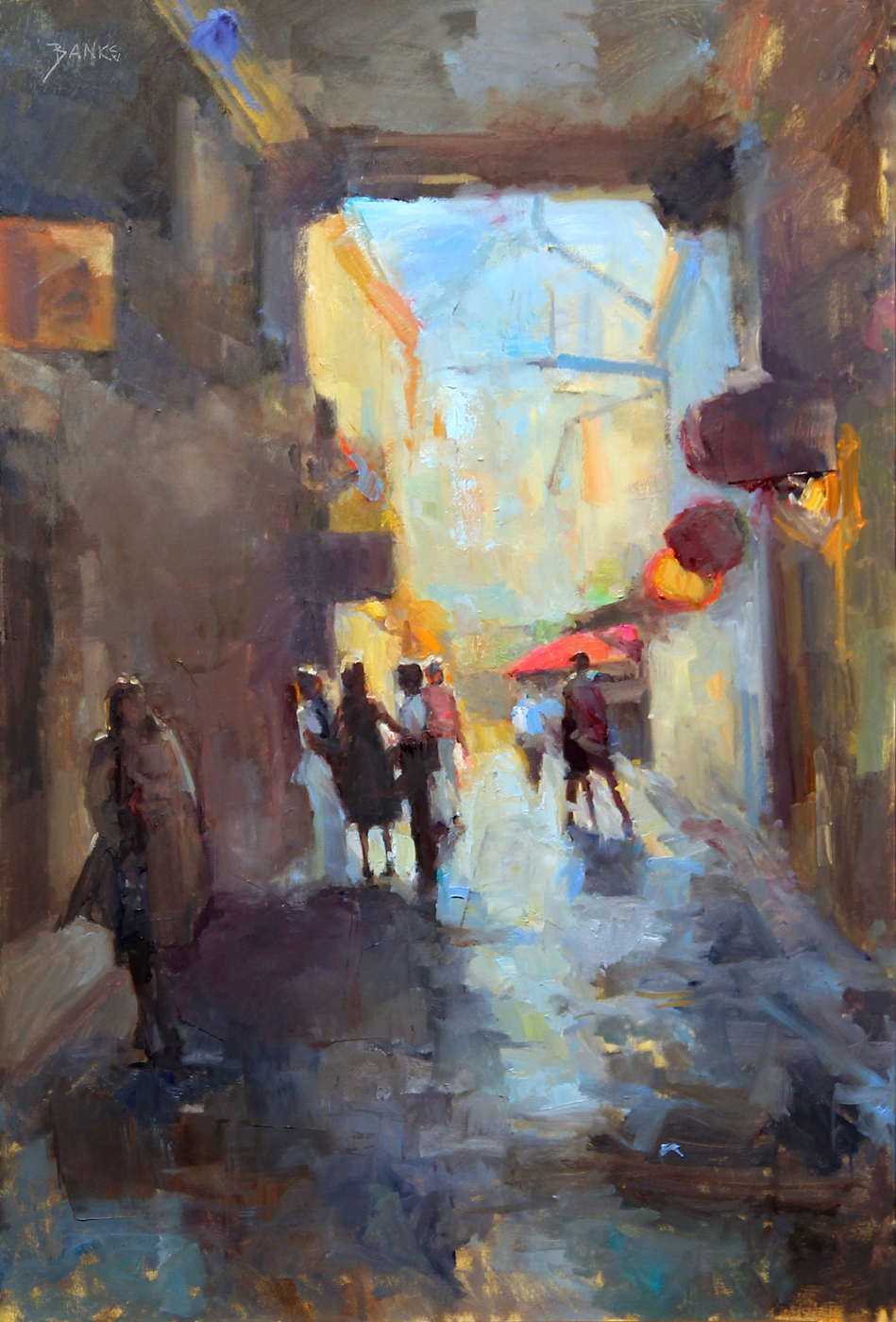
Parisian Passages, Jill Banks, oil on linen, 36 x 24 in., Jill Banks
***
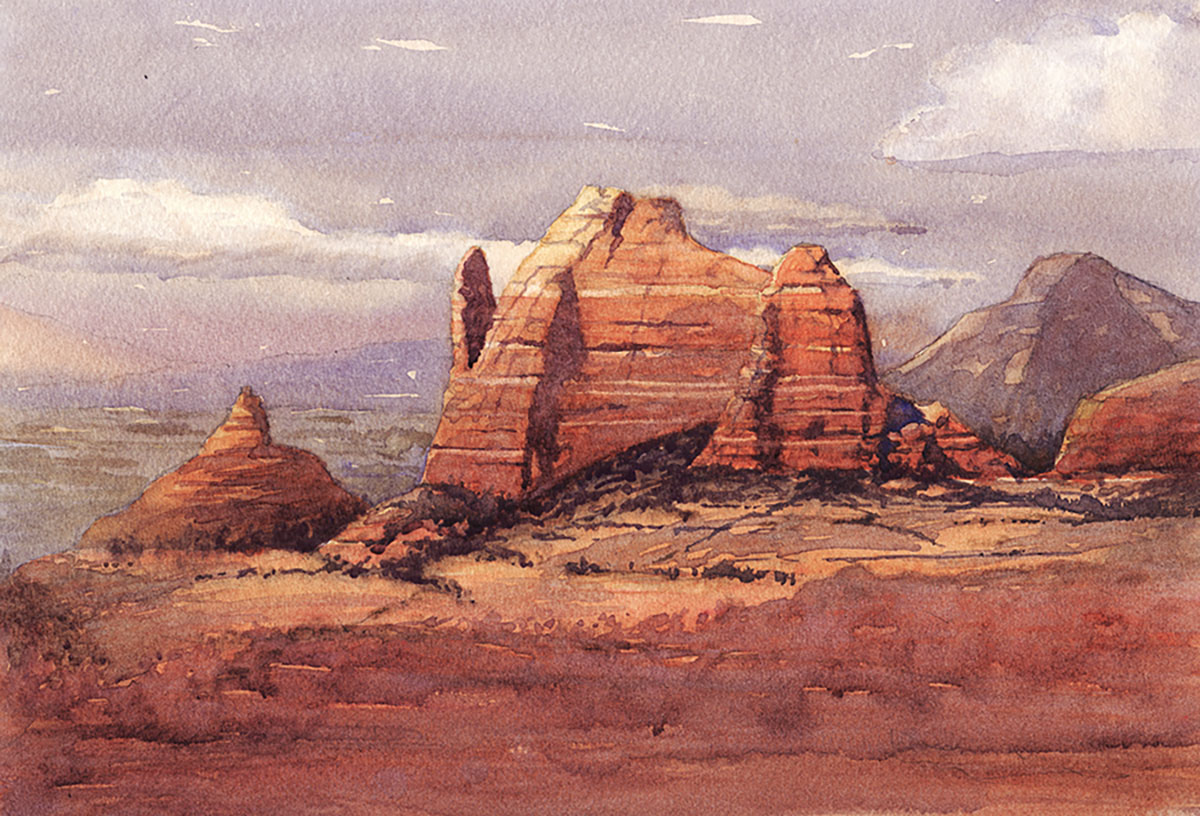
Sedona Sentinel, Larry Cannon, watercolor, 10 x 14 in., Larry Cannon
***
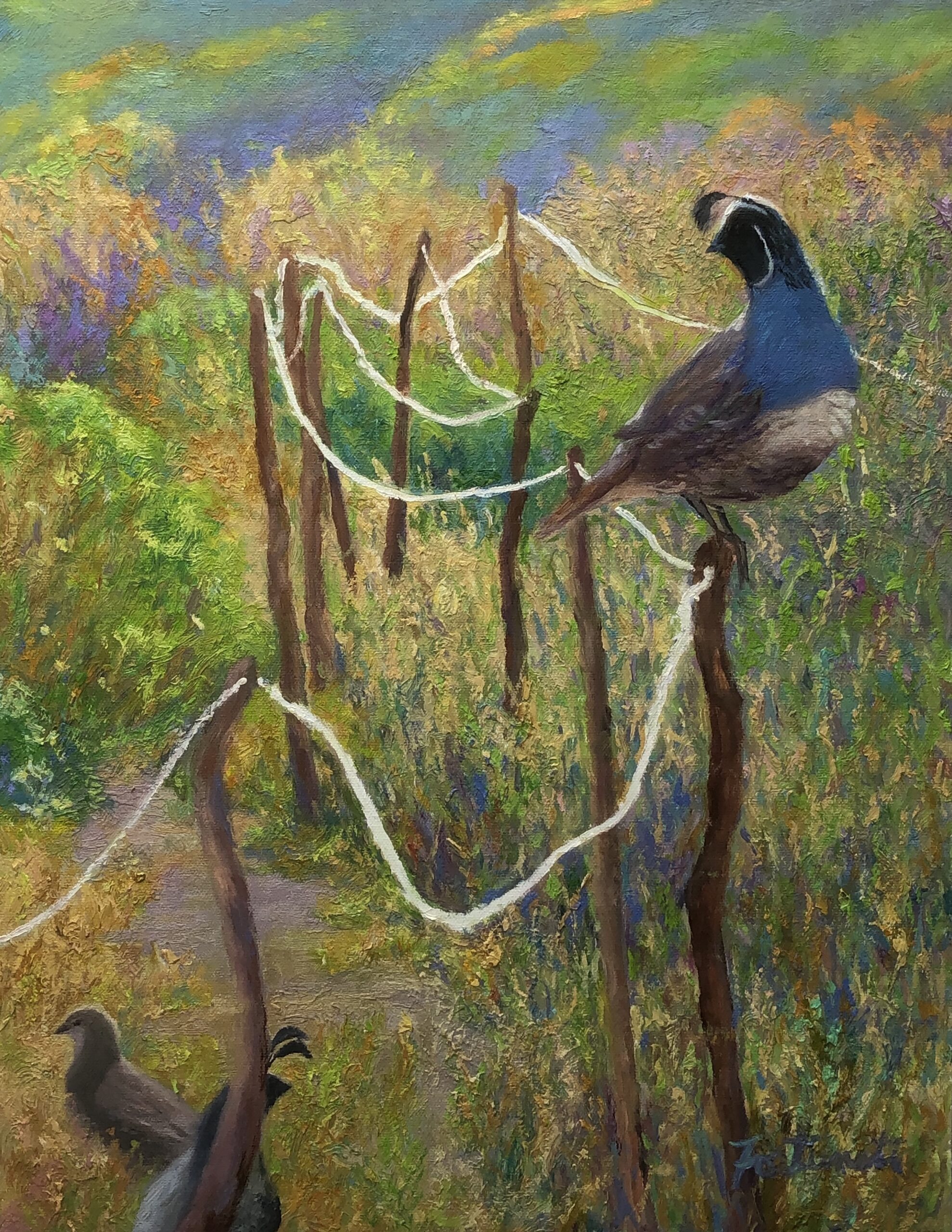
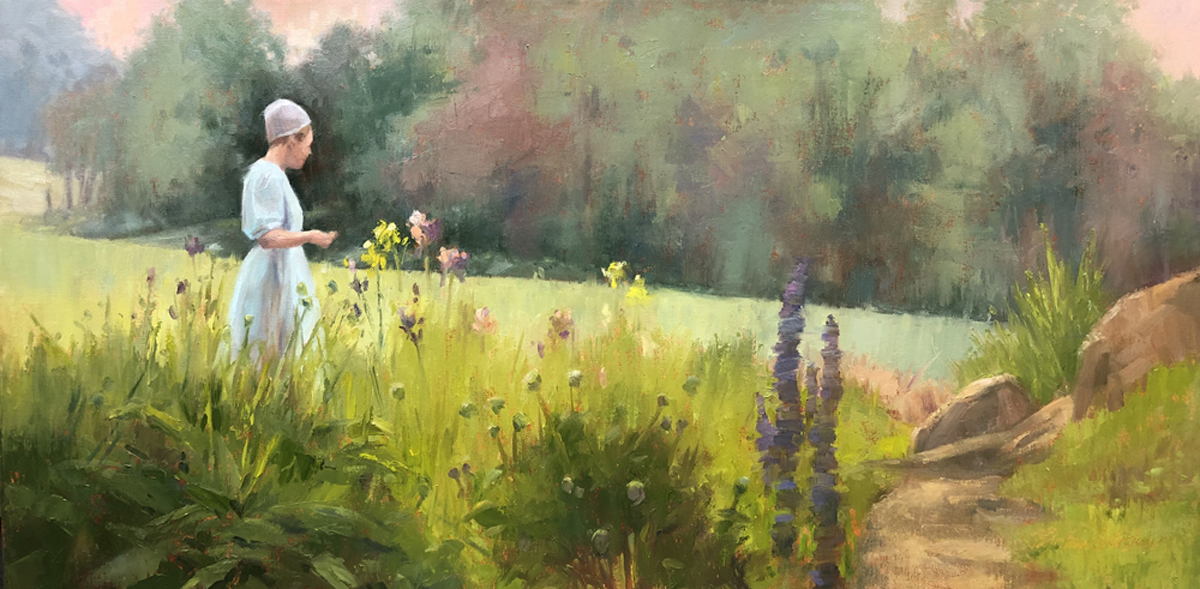
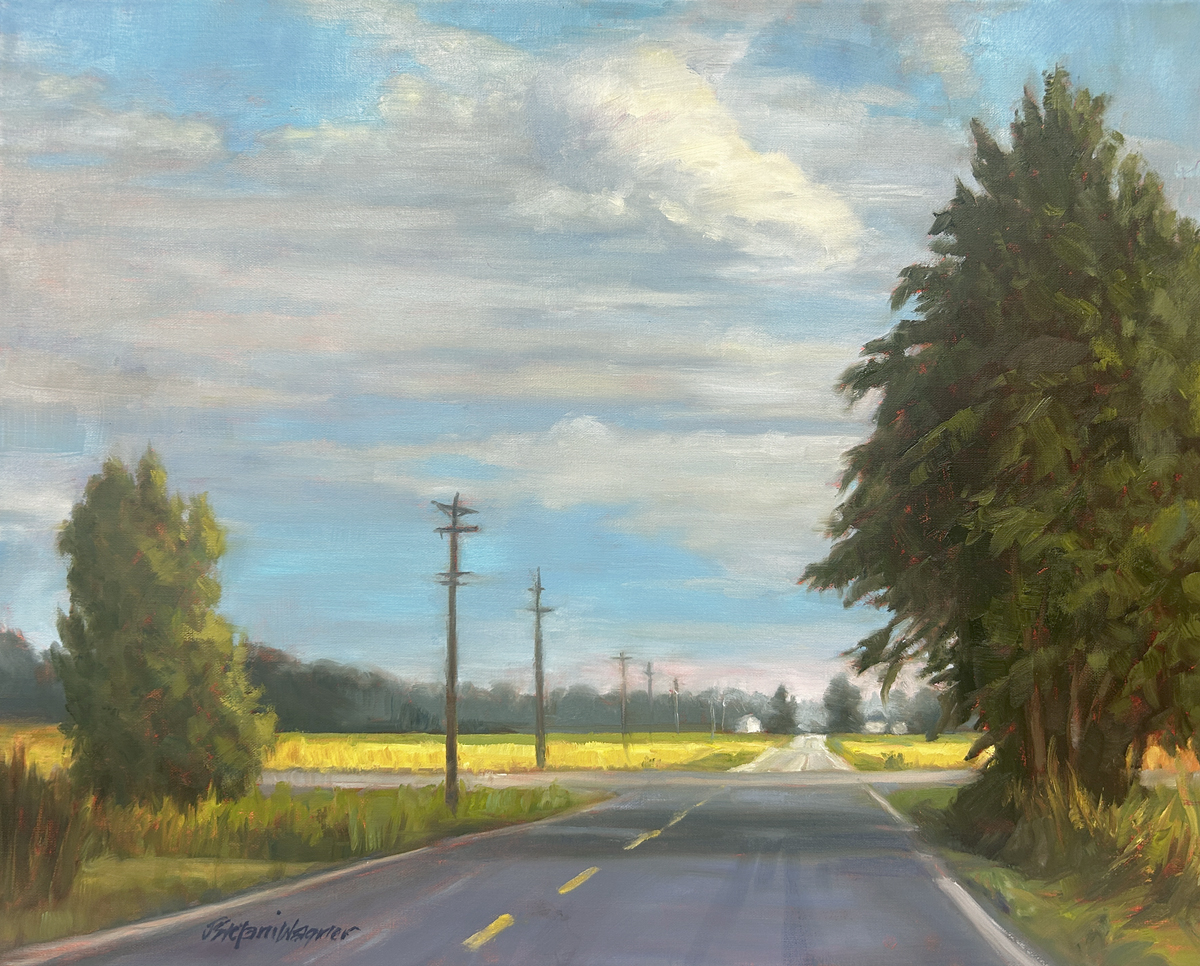
Garden Wander, Jill Stefani Wagner, oil on linen, 15 x 30 in., Jill Stefani Wagner
***
Lloyd, Lon Brauer, charcoal and oil on panel, 30 x 20 in., Lon Brauer
Want to see your gallery featured in an upcoming Virtual Gallery Walk? Contact us at [email protected] to advertise today. Don’t delay, as spaces are first come, first served, and availability is limited.
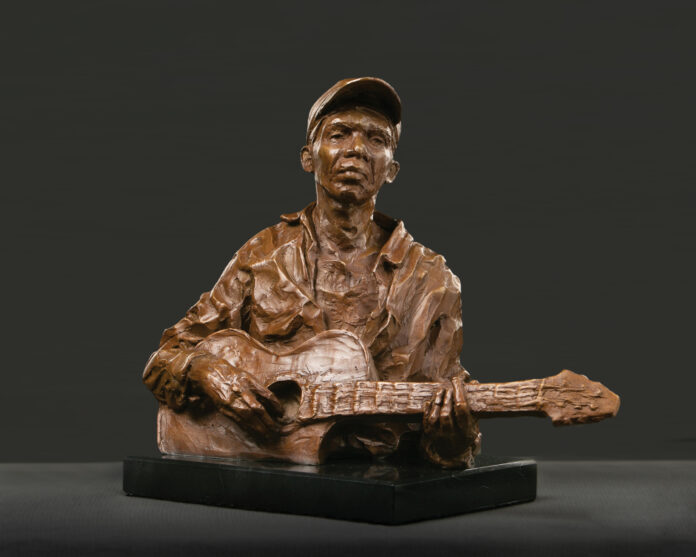
Susan Wakeen, "The Guitar Player," 2020, bronze on marble base (edition of 12), 10 x 11 x 5 in., available through the artist
There is a lot of superb contemporary realism being made these days; this article by Brandon Rosas shines light on a gifted individual.
In the bronze sculptures of Susan Wakeen (b. 1955), one finds a fullness of expression that moves beyond mere description of form to achieve revelation of character. “I strive to capture a personal and sensitive narrative that is unique to each sculpted portrait, yet universal in its emotive quality,” says Wakeen, a signature member of the Portrait Society of America. “One senses immortality in the sculpted portrait. I try to capture the fragility and strength of humanity that can live beyond our lifetimes.”
Born in Massachusetts to an artist and an interior designer, Wakeen found herself longing for a future in art almost immediately after earning her university degree in math and psychology. She took art classes at night while working three part-time jobs until she discovered a knack for doll sculpting that led her to form the Susan Wakeen Doll Company in hopes of funding a return to college.
That business took off quickly, and over the next 30 years Wakeen earned more than 48 awards and nominations from the doll industry. Although she never found time to return to college, she continued to hone her artistic skills through workshops with such artists as Betty Pat Gatliff, Rosalind Cook, and Tuck Langland.
With the support of her family, in 2006 Wakeen decided to leave the doll business for fine art, but a battle with cancer delayed her dream until 2012. Now recovered and working in a studio two miles from her home in Litchfield, Connecticut, she divides her time between teaching and evoking the spirit of subjects that move her. “I am inspired by love,” she explains. “There are all kinds of love in life, and I have truly felt love for each subject I sculpt. This allows me to connect with my subject — and I do need to connect to be inspired.”
The connection with the musician illustrated above occurred during a live modeling session attended largely by painters. “As the guitarist sat down to pose, his true character emerged,” Wakeen recalls. “What kept me most excited was his human spirit and complete immersion in playing. I felt his passion, and it was then that my mind, heart, and hands were all working together to capture this beautiful and fleeting moment.”
Wakeen is represented by Cheryl Newby Gallery (Pawleys Island, South Carolina), Alofft Gallery (Litchfield, Connecticut), and Arnould Gallery (Marblehead, Massachusetts).
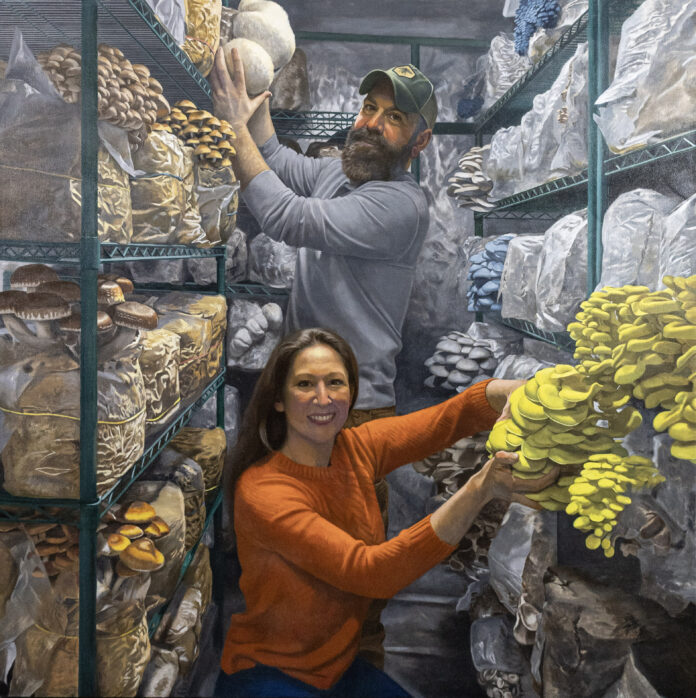
Wende Caporale-Greene, "Mushroom Farmers Spencer & Rebecca," 2025, oil on canvas, 46 x 46 inches, image courtesy of the artist and Mattatuck Museum
A nationally recognized painter and Master Pastelist with the Pastel Society of America, Wende Caporale-Greene is known for her luminous, lifelike portraits and still lifes. Her work has been exhibited at institutions including the Butler Institute of American Art and honored by the Portrait Society of America and the Salmagundi Club, among others.
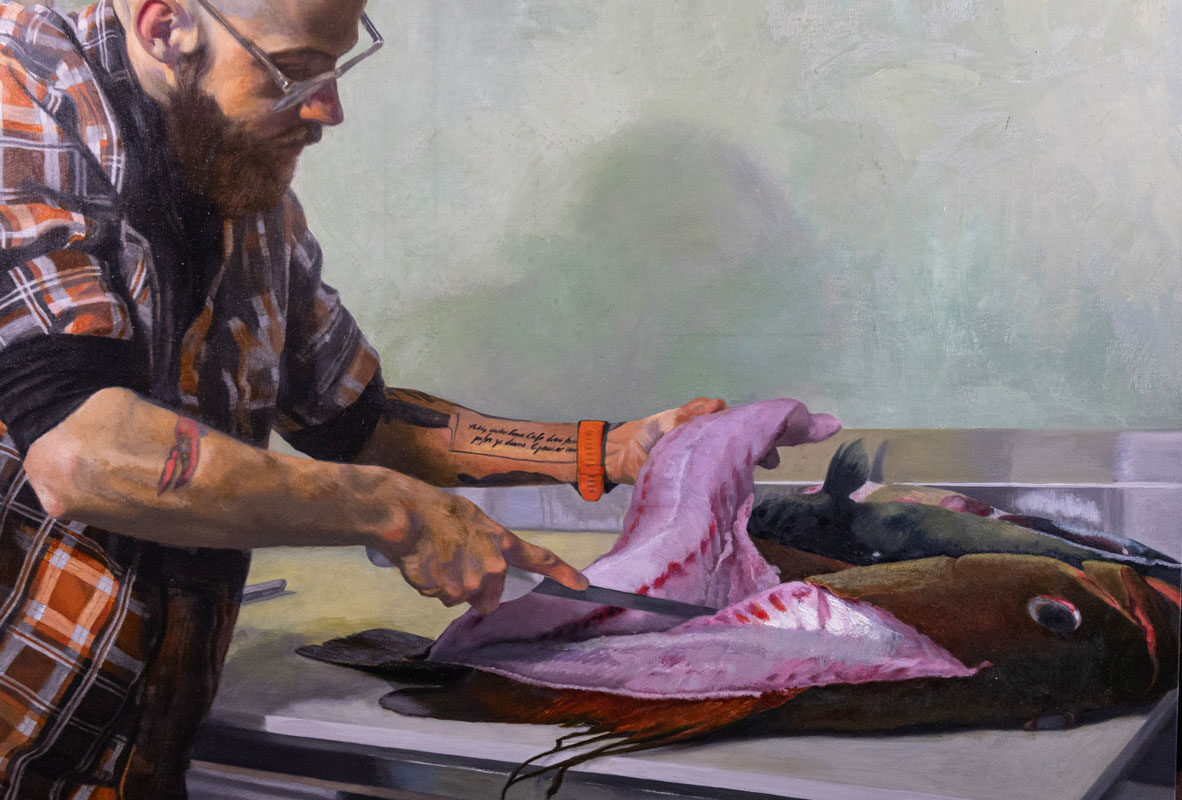
Now through June 7, 2026, the Mattatuck Museum is presenting “Wende Caporale-Greene: The Art of Feeding Community,” a solo exhibition. Through richly detailed paintings in oil and pastel, Caporale-Greene honors the farmers, fishers, cheesemongers, and other food purveyers whose work sustains local communities.
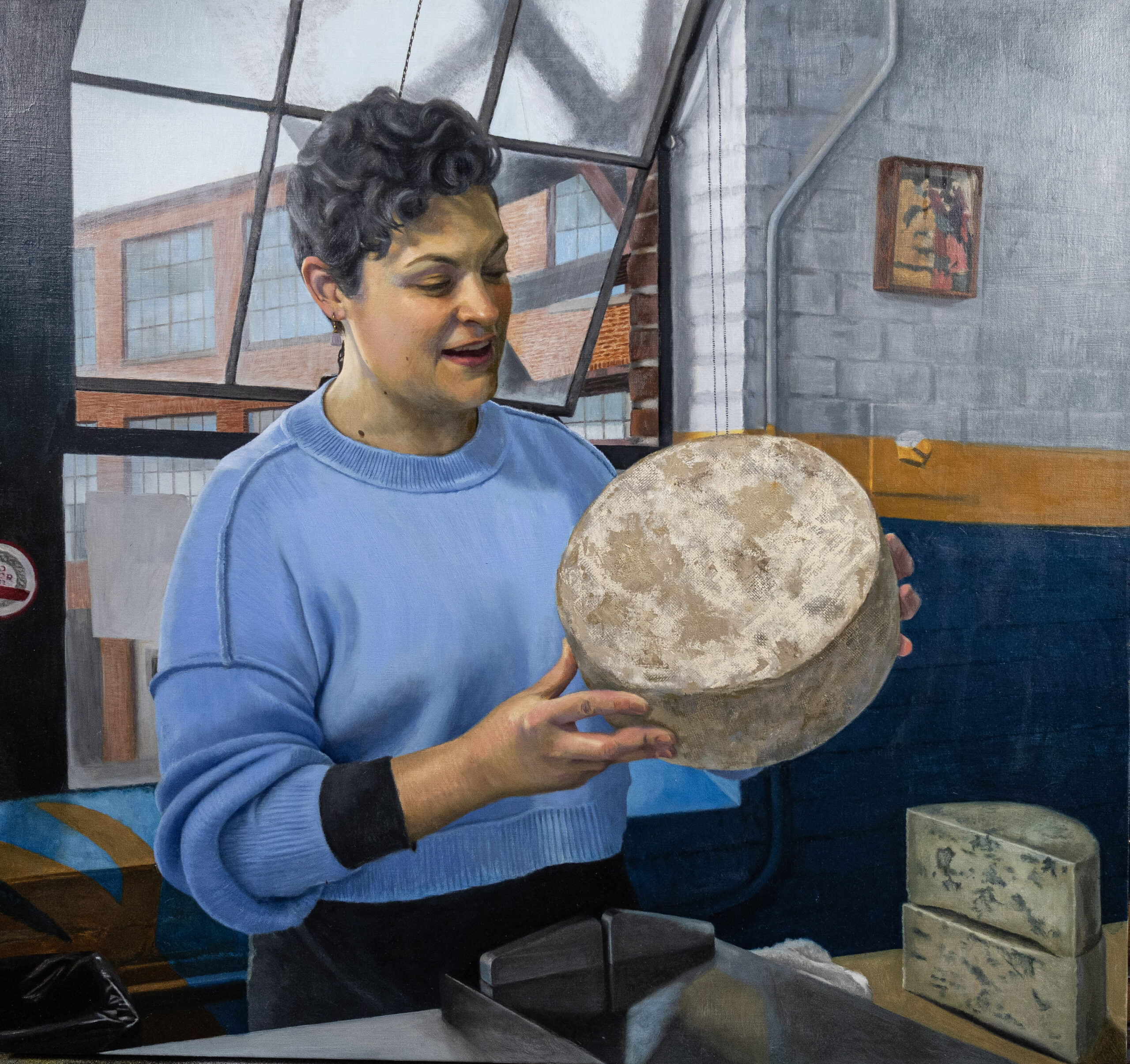
Wende Caporale-Greene, “Kate – Cheesemonger,” 2024, oil on canvas, 32 x 34 inches, image courtesy of the artist and Mattatuck Museum
After relocating to Connecticut in 2021, Caporale-Greene began visiting local farms, markets, and small food businesses throughout the region. Inspired by the people who grow and prepare fresh food close to home, those experiences became the foundation for this deeply personal body of work, which she began in 2023. “Wende Caporale-Greene: The Art of Feeding Community” is the debut solo presentation of these recent paintings, which are joined by two family portraits.
Featured people and places include:
– Kate Truini-Redin of New Curds on the Block in Oakville, Connecticut
– Zachary Redin of To the Gills in Oakville, Connecticut
– Shawn Joseph and Richard Myer of Brass City Harvest, whose work expands access to fresh, affordable food in Waterbury neighborhoods
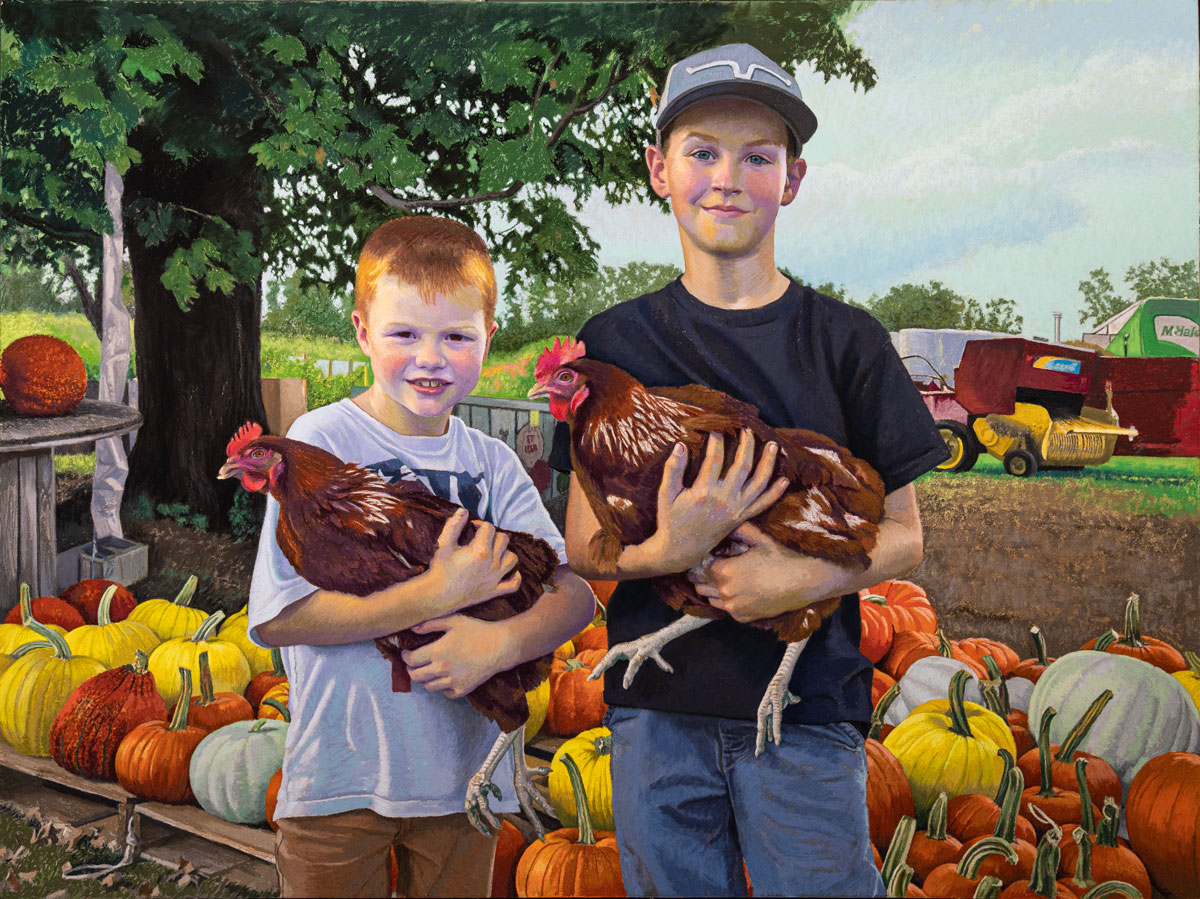
– Mark and Jackson of Ox Hollow Farm in Roxbury and Woodbury, Connecticut
– Shawn Ruest and Skip, regional lobstermen
– Spencer Lord and Rebecca Kuczko of Oracle Mushroom Co. in South Kent, Connecticut
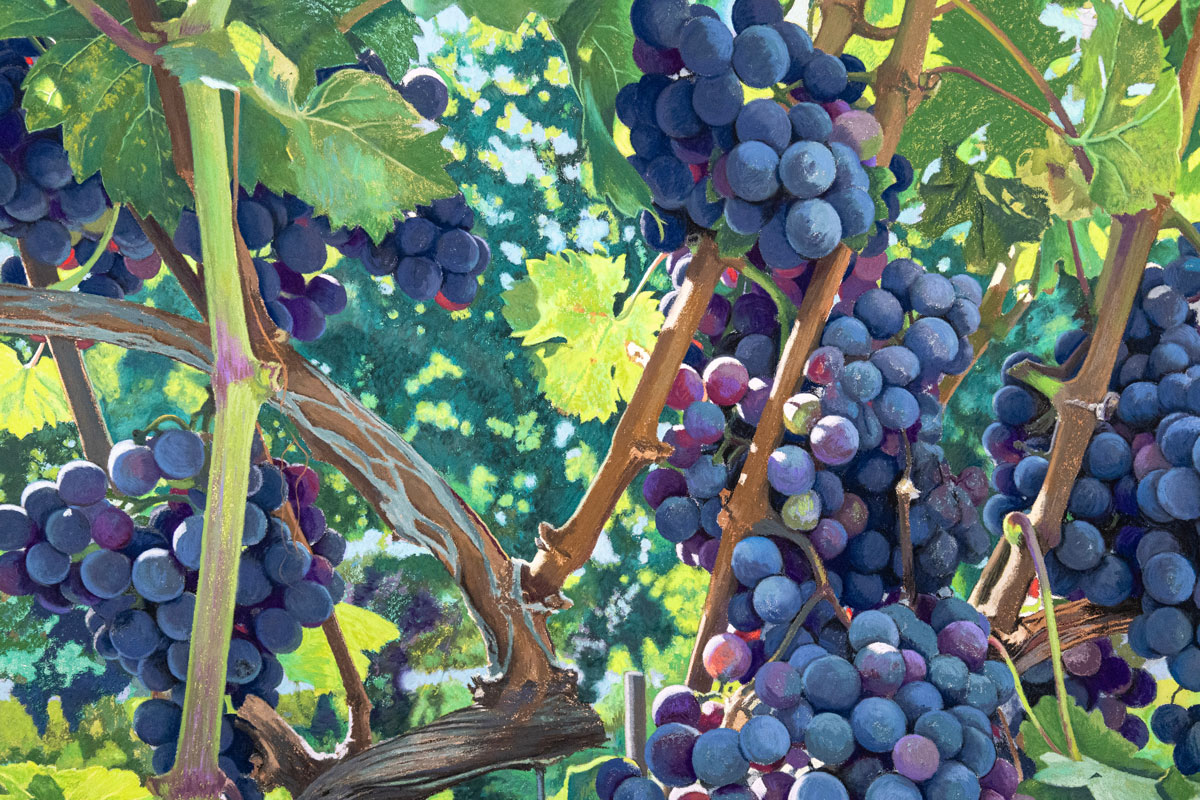
– Millbrook Vineyards & Winery in Millbrook, New York
– Averill Farm in Washington Depot, Connecticut
– Rraci’s Restaurant in Brewster, New York
– Jarrod Sprangler of Maine Meat (MEat) in Kittery, Maine
Wende Caporale-Greene, “Zack – Fishmonger” (detail), 2024, oil on canvas, 43 x 50 inches, image courtesy of the artist and Mattatuck MuseumWende Caporale-Greene, “Millbrook Vineyard & Winery” (detail), 2025, pastel on board, 30 x 40 inches, image courtesy of the artist and Mattatuck MuseumWende Caporale-Greene, “Jackson & Mark – Ox Hollow Farm,” 2026, pastel on board, 30 x 40 inches, image courtesy of the artist and Mattatuck Museum
The exhibition is dedicated to the memory of Caporale-Greene’s husband, noted realist painter Daniel E. Greene, NA, and to her father, Edward Caporale, a longtime produce manager who instilled in her a lifelong appreciation for fresh food.
As part of our effort to continue to help artists and art galleries thrive, we’re proud to bring you this week’s “Virtual Gallery Walk.” Browse the artwork below and click the image itself to learn more about it, including how to contact the gallery.
That Special Day, Jill Stefani Wagner, oil on linen, 16 x 20 in, oil on linen; Jill Stefani Wagner
Want to see your gallery featured in an upcoming Virtual Gallery Walk? Contact us at [email protected] to advertise today. Don’t delay, as spaces are first come, first served, and availability is limited.
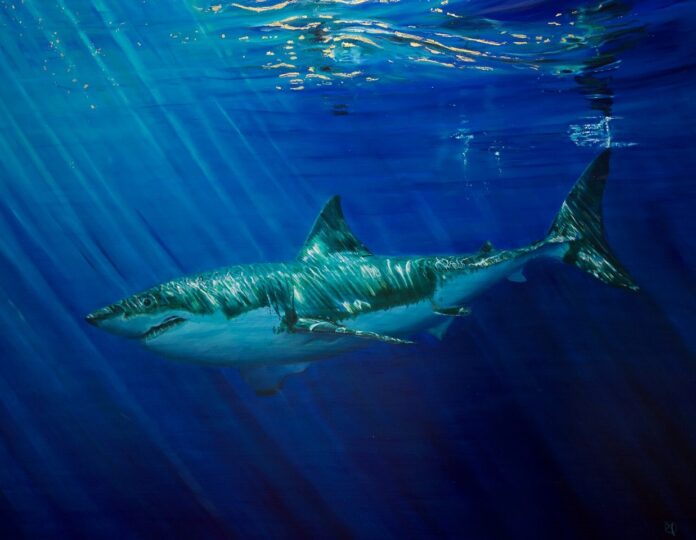
Alexandra Telgmann, "Golden Ocean Reflection - Shark," 2006, oil on canvas, 31.5 x 39.5 in.
Marine Art on View > Cavalier Galleries (New York City) has opened an exhibition that honors America’s maritime legacy through images of the sea’s enduring power and beauty, and of the people, vessels, and ports that interact with it.
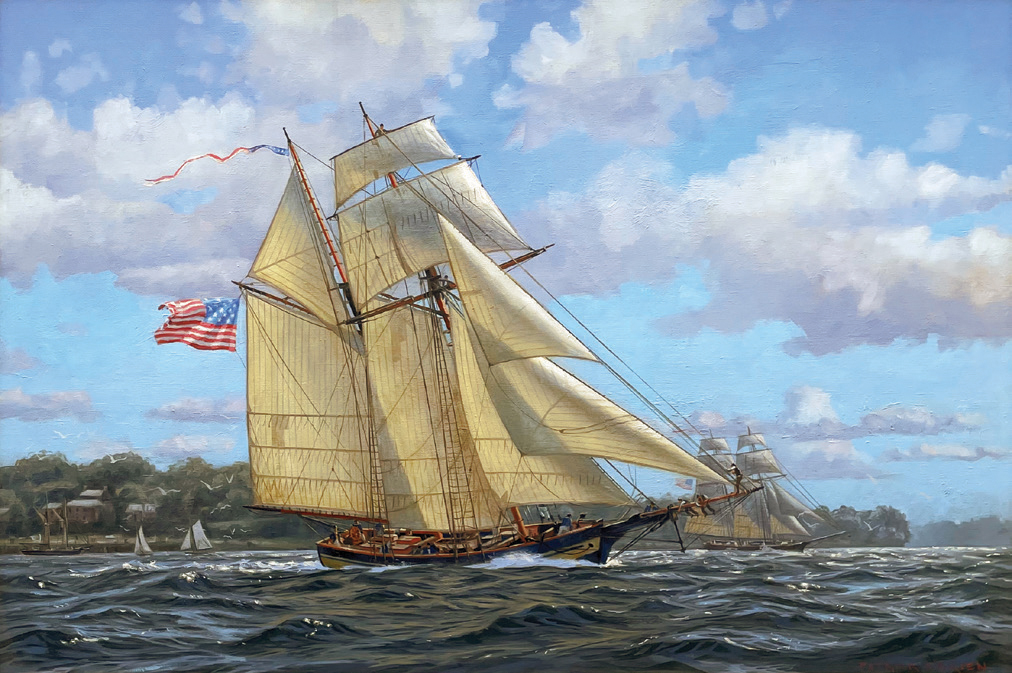
Patrick O’Brien (b. 1960), “USS Spitfire on Patrol,” 2020, oil on canvas, 24 x 36 in.
On view are new works created by seven members of the American Society of Marine Artists, the leading organization of professional artists focused on this genre: David Bareford, Laura Cooper, Shane Couch, Don Demers, Russ Kramer, Richard Loud, and Patrick O’Brien. The show has been co-curated by the society’s president, Patrick O’Brien, with gallery founder Ronald J. Cavalier.
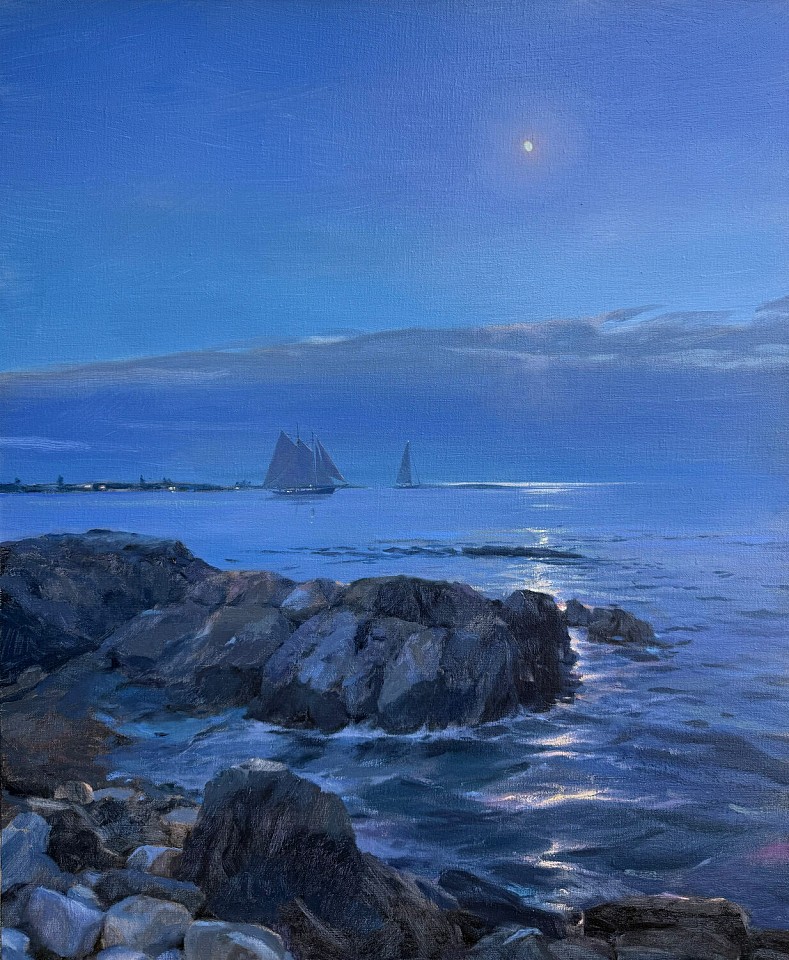
Jaqueline Jones, “Moondrift,” 2026, oil on canvas, 30 x 24 in.
They scheduled the show to highlight America’s 250th anniversary, which will be marked unforgettably on July 4, when 50 tall ships from around the world cruise into New York Harbor as part of the America250 Parade of Sail. This also happens to be Cavalier’s 40th anniversary—another reason to celebrate.
At a Glance:
Modern Marine Masters: Artwork from the American Society of Marine Artists
Cavalier Galleries
New York City, NY cavaliergalleries.com
through July 10, 2026
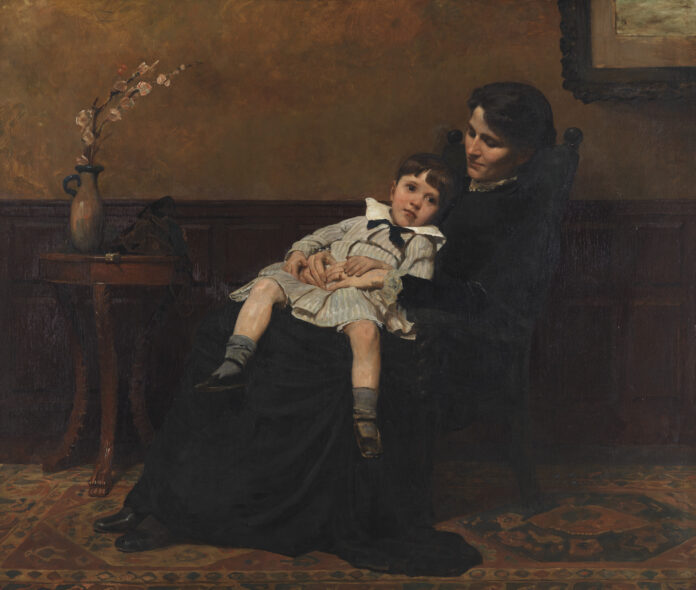
Cecilia Beaux (1855–1942), “Les Derniers jours d’enfrance (The Last Days of Infancy),” 1883–85. Oil on canvas, 45 ¾ x 54 in. Gift of Cecilia Drinker Saltonstall, 1989.21.
The Pennsylvania Academy of the Fine Arts (PAFA) and the Philadelphia Museum of Art (PMA) present A Nation of Artists, a landmark exhibition and collaboration with the private Middleton Family Collection, on view from April 2026 to September 2027.
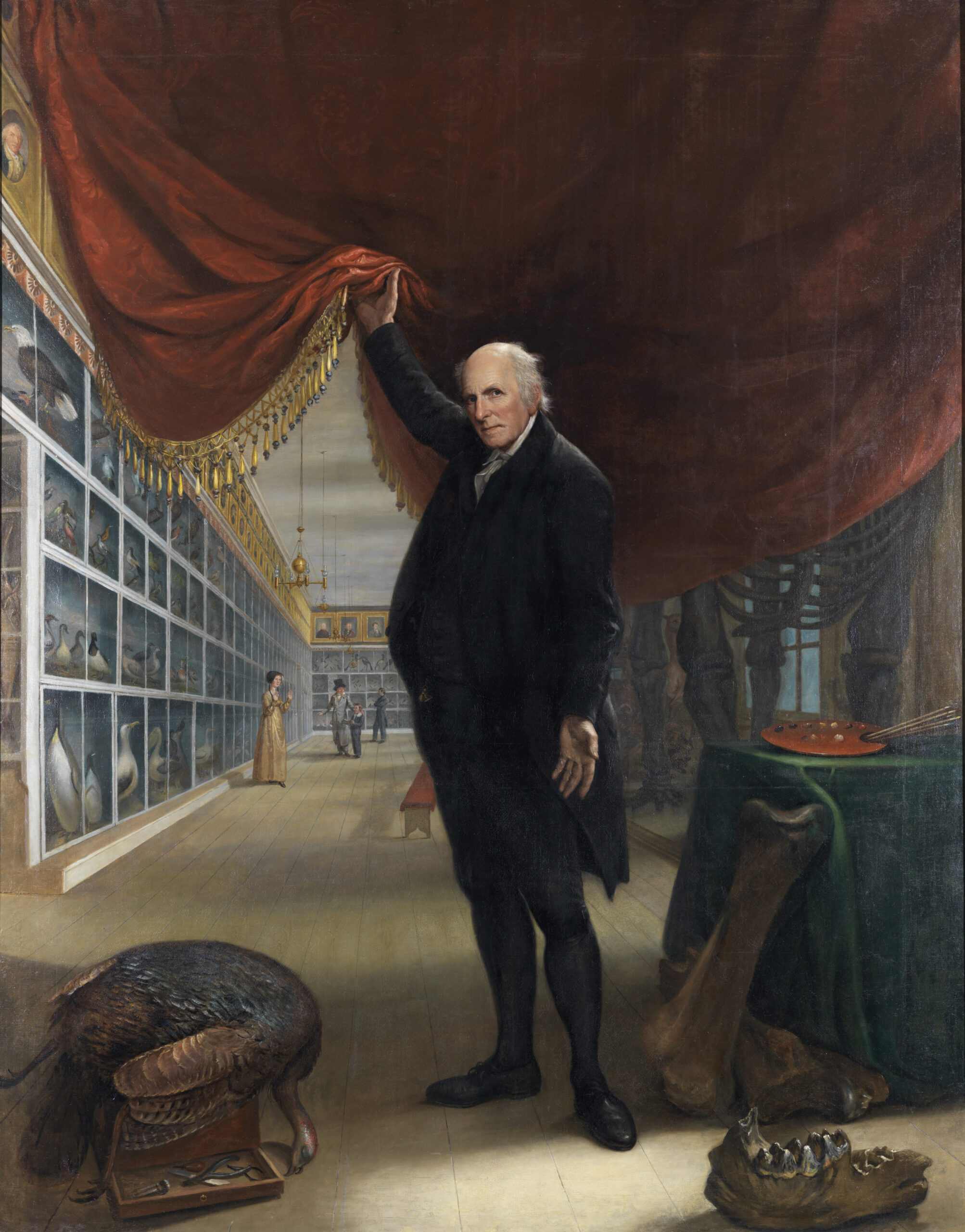
Charles Willson Peale (1741–1827), “The Artist in His Museum,” 1822. Oil on canvas, 103 ¾ x 79 7/8 in. Gift of Mrs. Sarah Harrison (The Joseph Harrison, Jr. Collection), 1878.1.2.
A Nation of Artists: Two Venues, One Exhibition
Organized in conjunction with America’s 250th anniversary, A Nation of Artists examines how artistic production in the United States has been shaped by creativity, exchange, expansion, conflict, and innovation.
At PAFA, works made from the late 18th century to today will be arranged thematically to explore scenes of westward expansion, the rise of industry, and international exchange.
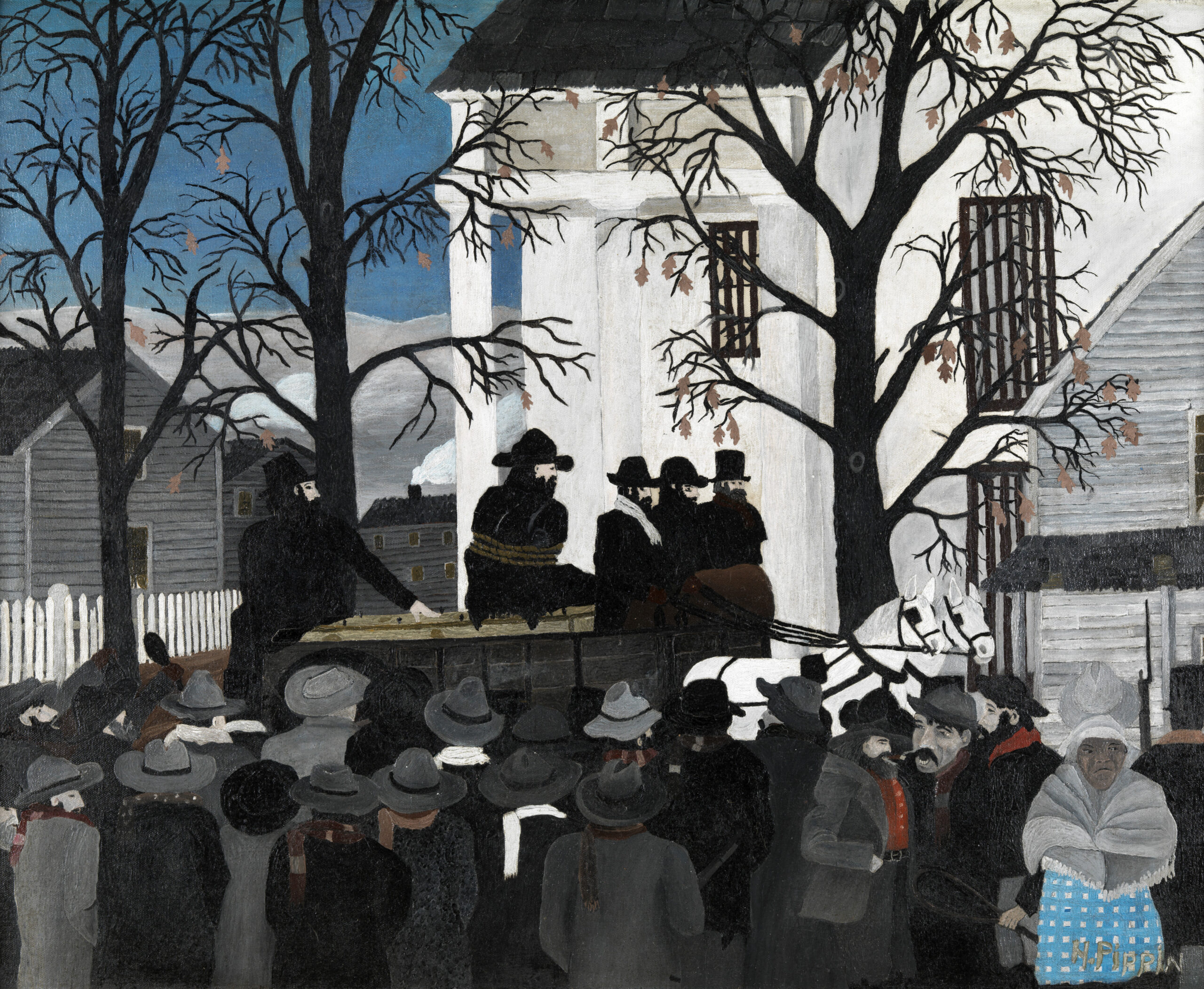
Horace Pippin (1888–1946), “John Brown Going to His Hanging,” 1942. Oil on canvas, 24 1/8 x 30 1/4 in. John Lambert Fund, 1943.11.
At PMA, which is celebrating its 150th anniversary in 2026, visitors will encounter a chronological display of American art from 1700 to 1960, revealing the global connections that spurred artistic and technological innovation, as well as makers inspired by the natural world, western expansion, and dramatic shifts in economic abundance and disparity.
Installed throughout PAFA’s recently restored Historic Landmark Building and PMA’s newly renovated American art galleries, the exhibition will chart America’s history from 1700 to the present day through more than 1,000 paintings, photographs, sculptures, decorative arts, and more. Across both museums, more than 120 rarely seen works from the Middleton Family Collection—one of the nation’s most significant private holdings of American art—will be on public view for the first time.
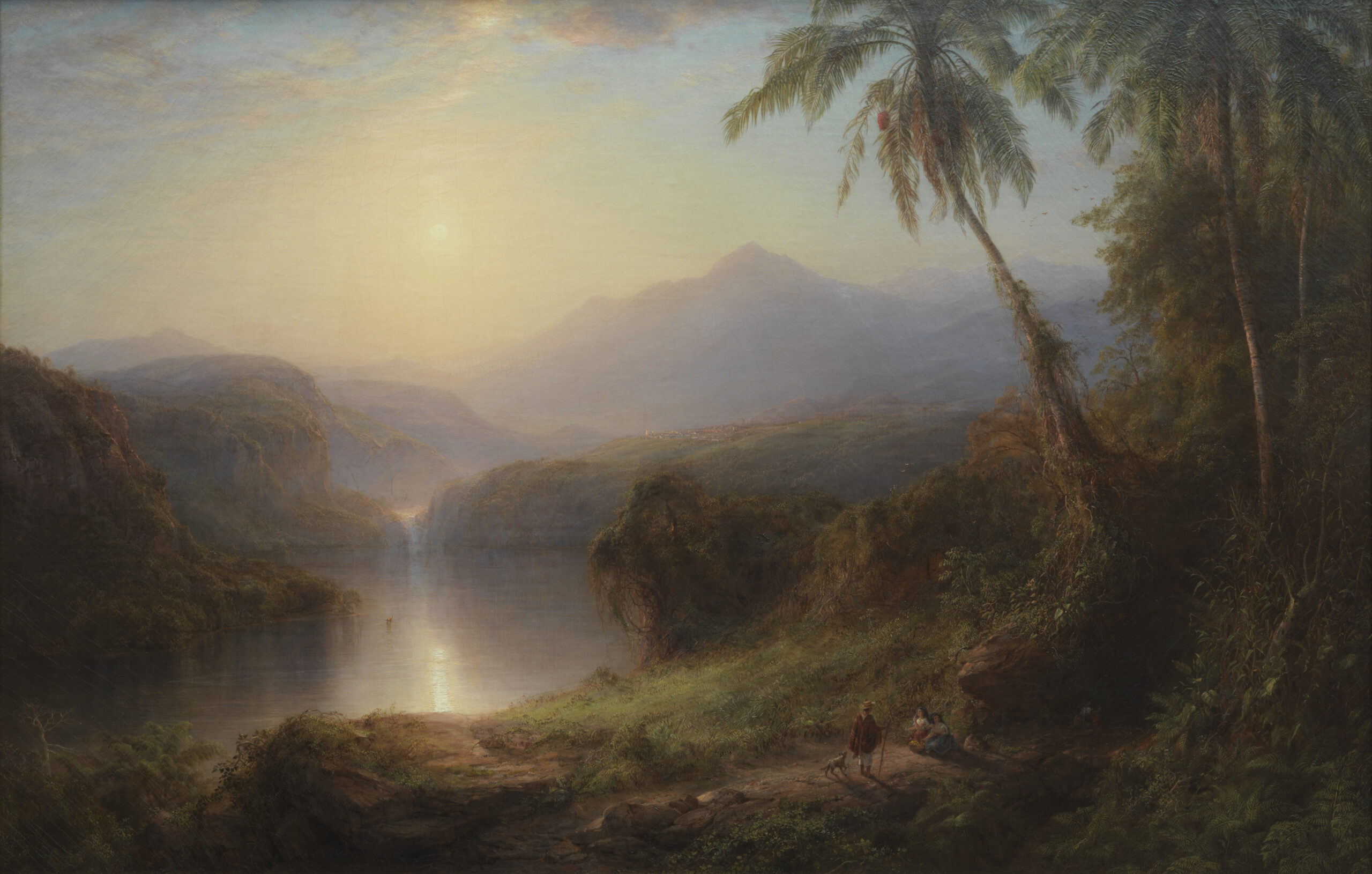
Frederic Edwin Church (1826–1900), “Valley of Santa Ysabel, New Granada,” 1875. Oil on canvas, 39 1/4 x 60 in. Museum Purchase, 2018.10.
Collective highlights from A Nation of Artists will include:
• Large-scale portraiture and figurative paintings, from Charles Willson Peale’s self-portrait and portrait of George Washington to Thomas Eakins’s famous Portrait of Dr. Samuel D. Gross (The Gross Clinic).
• Lush landscapes and scenes of the natural world by Albert Bierstadt, Frederic Edwin Church, Winslow Homer, Rookwood Pottery, and Georgia O’Keeffe
• Explorations of the Civil War period, including a monumental jar made and inscribed by the enslaved potter Dave, who later took the name David Drake.
• Textiles, ceramics, and sculpture by Native American artists
from Haida, Hodínöhšö:ni:h (Iroquois Confederacy), Diné, Hopi, and Pueblo
nations and contemporary Lenape artist Laura Watters Maynor (Delaware Tribe of Indians, Wolf Clan).
• Impressionist paintings by Mary Cassatt, William Merritt Chase, Daniel
Garber, and John Singer Sargent, as well as work by modern masters such as Jasper Johns and Andy Warhol.
• Contemporary artists such as Njideka Akunyili Crosby, Rina
Banerjee, María Berrío, Willie Cole, Clarity Haynes, Gisela
McDaniel, Toyin Ojih Odutola, Catherine Opie, Stephanie Syjuco, Mickalene Thomas, and Kara Walker, and many more.
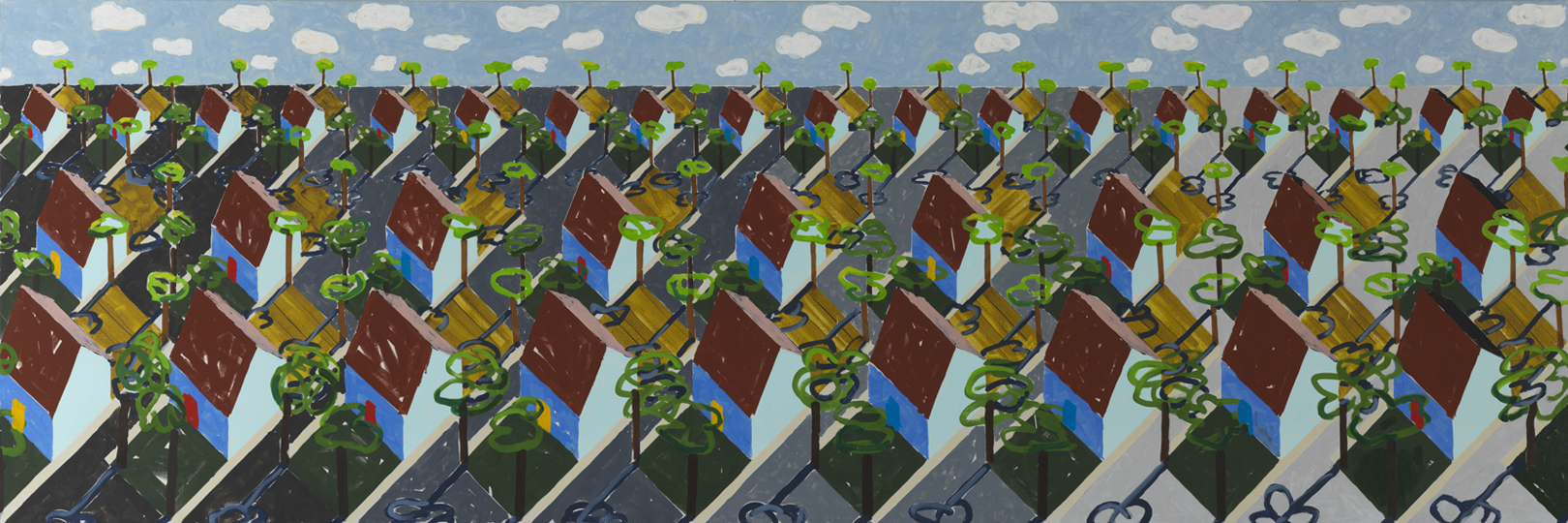
Jennifer Bartlett (1941–2022), “Subdivision,” 1999. Oil on linen, 36 x 108 in. Anonymous Gift, 2015.15.
“Our aspiration is that this exhibition is for everyone—no prior knowledge of art or history required,” noted John S. Middleton. “We believe in the power of storytelling to connect people and are thrilled to partner with these two storied institutions to share the works that have brought our family so much joy and inspiration. Like baseball, art has the power to bring people together and surprise us when we least expect it. With every viewing, there’s something new to discover. It’s an honor to help bring American art to life in a new way during this very special 250th commemoration of our country’s founding.”
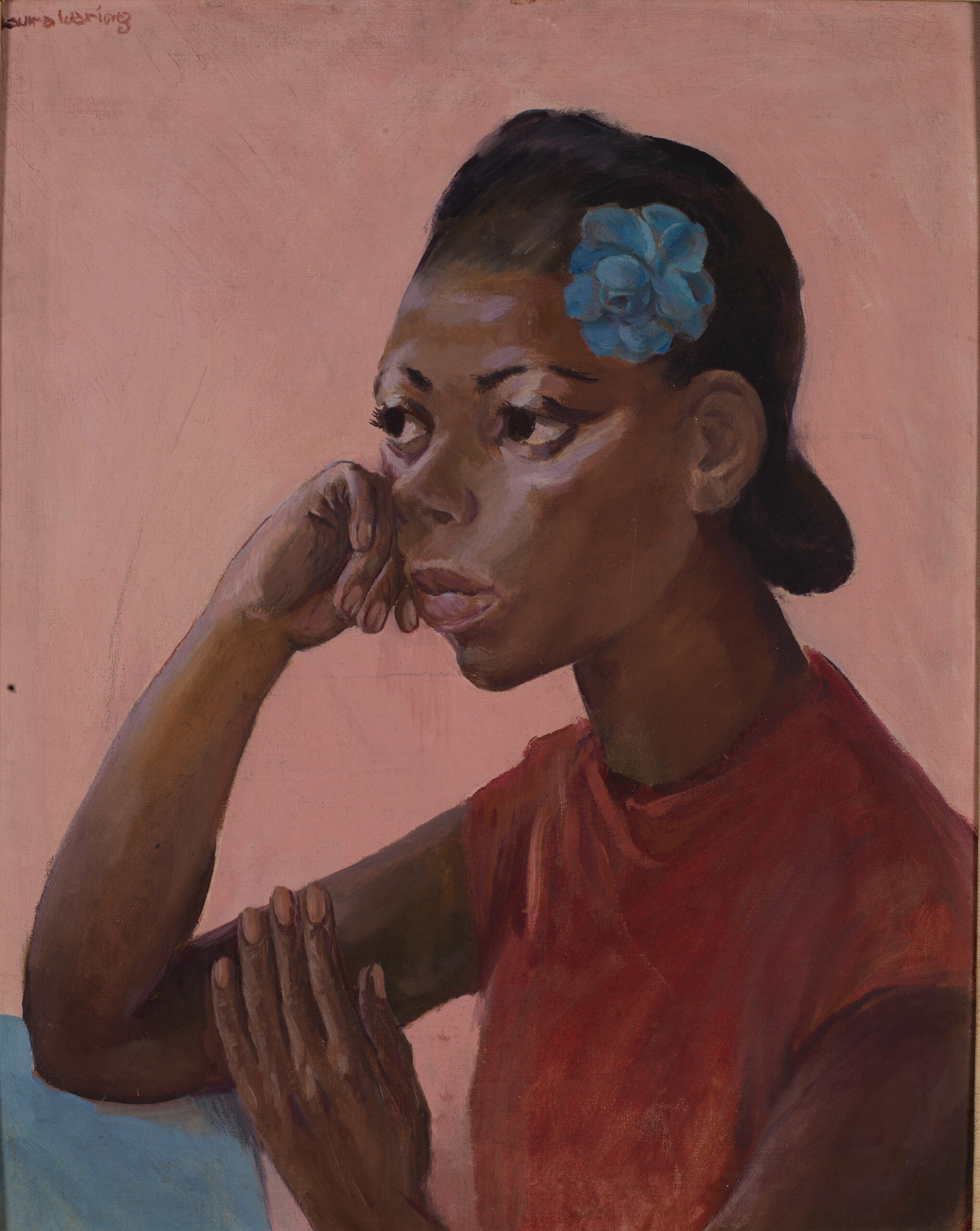
Laura Wheeler Waring (1887–1948), “The Study of a Student,” c. 1940s. Oil on canvas board, 20 x 16 in. Gift of Dr. Constance E. Clayton in loving memory of her mother Mrs. Williabell Clayton, 2019.3.69.
“This is a transformative moment for PAFA and for Philadelphia,” said Kristen Shepherd, President and CEO of the Pennsylvania Academy of the Fine Arts. “As PAFA celebrates its 220th anniversary as America’s first art museum and school and the reopening of the Historic Landmark Building, we invite audiences into a renewed experience—one that reflects our storied legacy as the nation’s first art school and museum, while offering a powerful setting for a reimagined installation of our collection, enriched by works from the Middleton Family Collection. In collaboration with the Philadelphia Museum of Art, we are proud to present A Nation of Artists in a way that is deeply rooted in PAFA’s history, yet forward-looking in its exploration of what defines American art today.”
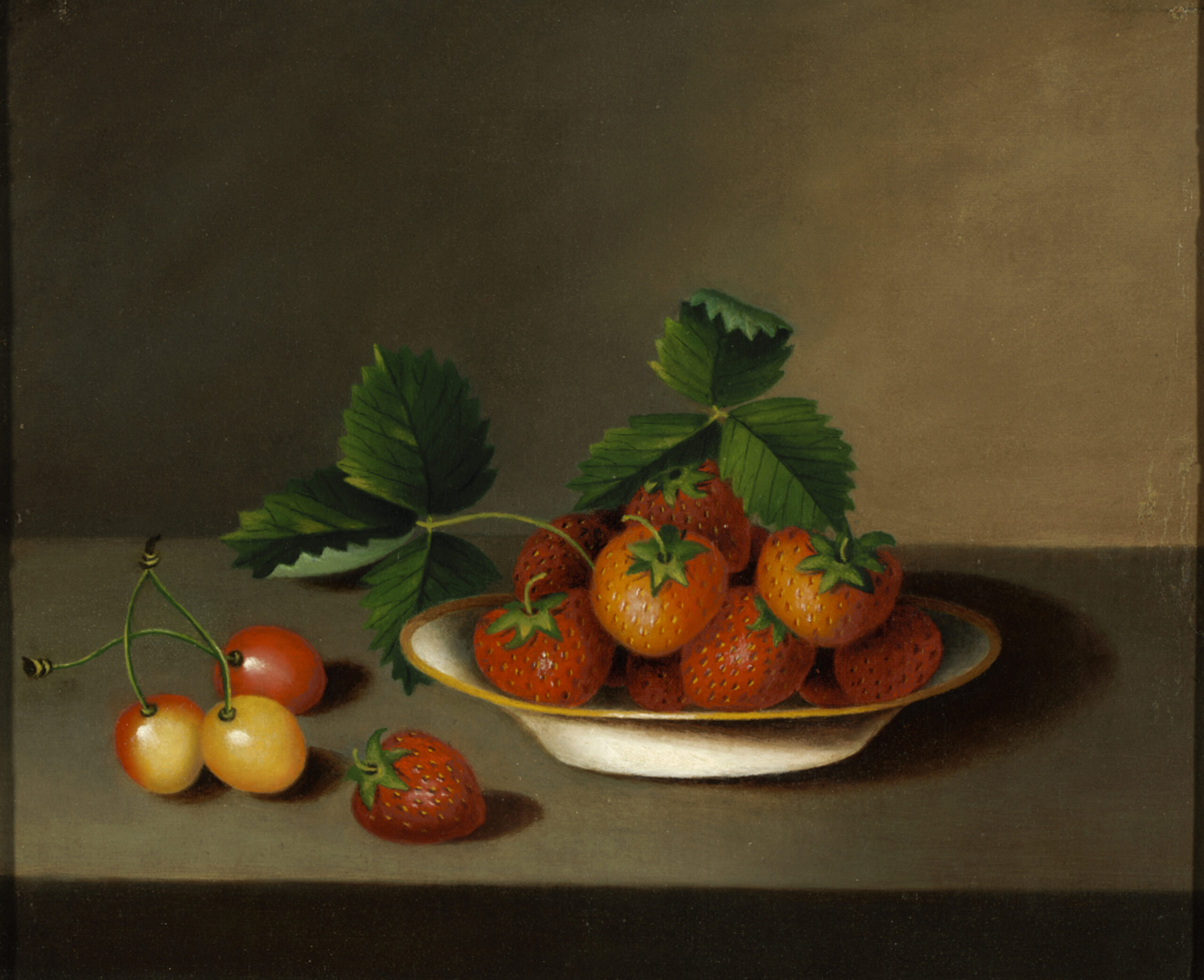
Margaretta Angelica Peale (1795–1882), “Strawberries and Cherries,” c. 1813–1830. Oil on canvas, 10 1/16 x 12 1/8 in. Provenance unknown, 1924.11.
“Commemorating the country’s semiquincentennial and PMA’s 150th anniversary, we are honored to collaborate with the esteemed Pennsylvania Academy of the Fine Arts and the rarely seen Middleton Family Collection,” said Daniel Weiss, George D. Widener Director and CEO of the Philadelphia Museum of Art. “A Nation of Artists will span three centuries of art to trace the ever-evolving story of American creativity. This exhibition, a cultural milestone, will bring together voices from around the country through innovative programs, partnerships, and scholarship.”
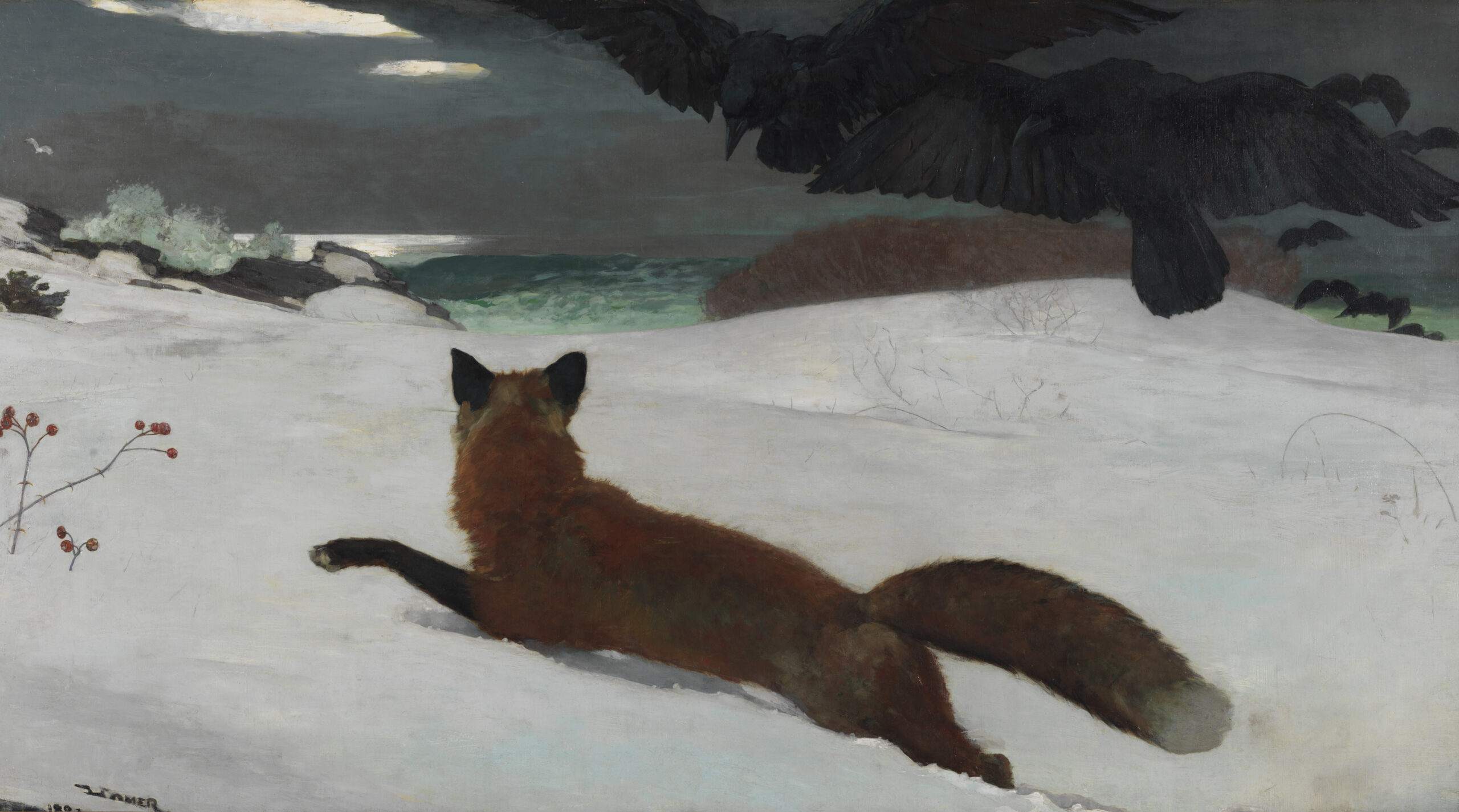
Winslow Homer (1836–1910), “Fox Hunt,” 1893. Oil on canvas, 53 x 83 1/4 x 5 in. Joseph E. Temple Fund, 1894.4.
To learn more about A Nation of Artists, including exhibition details, programming, and visiting information, visit ANationofArtists.org.
As part of our effort to continue to help artists and art galleries thrive, we’re proud to bring you this week’s “Virtual Gallery Walk.” Browse the artwork below and click the image itself to learn more about it, including how to contact the gallery.
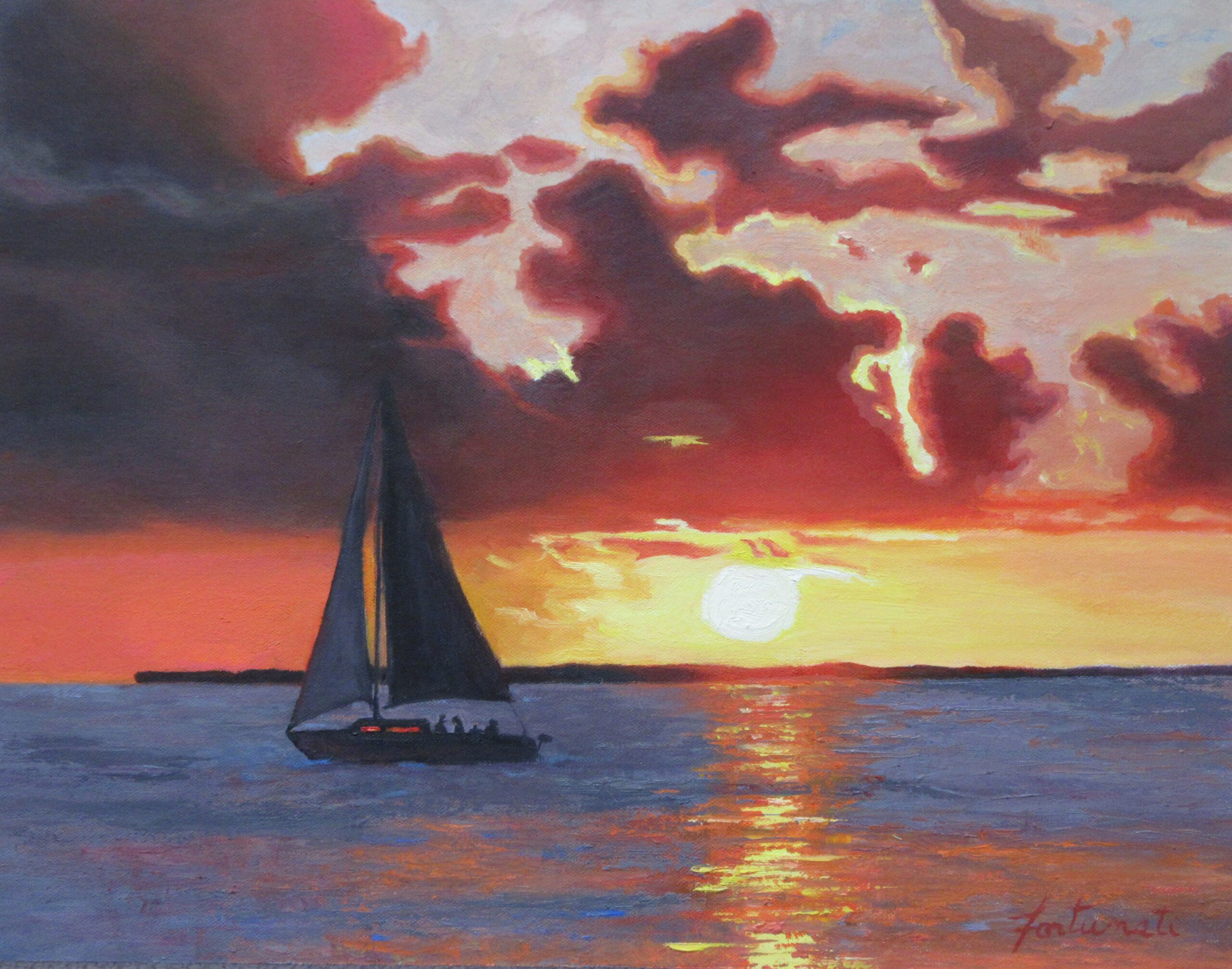
Sunset Sail in the B.V.I., Marian Fortunati, oil on linen panel, 14 x 18 in; Marian Fortunati Fine Art
***
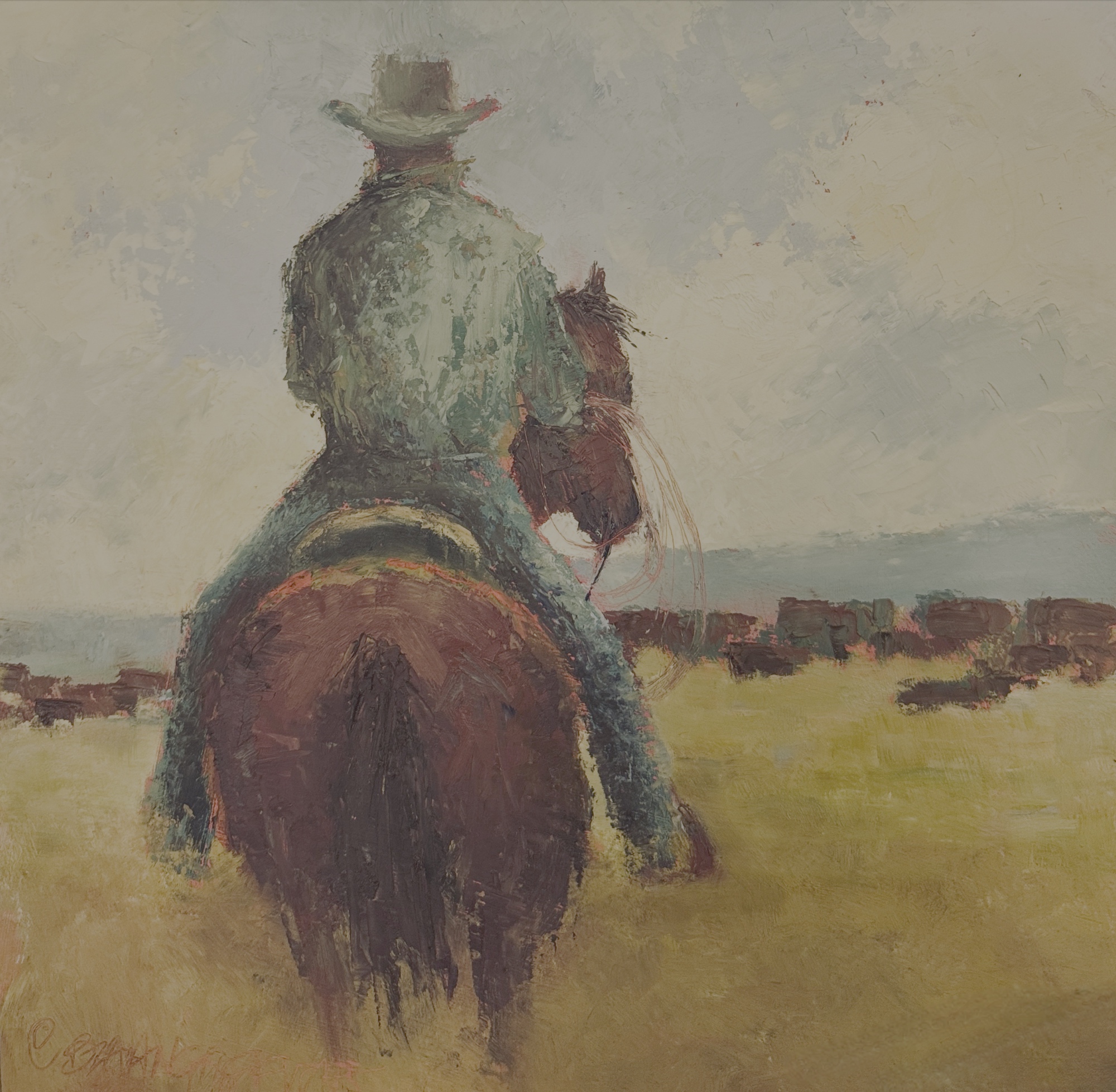
The Cowhand, Bonnie Zahn Griffith, oil and cold wax on board, 12 x 12 in; Idaho Art Gallery
***
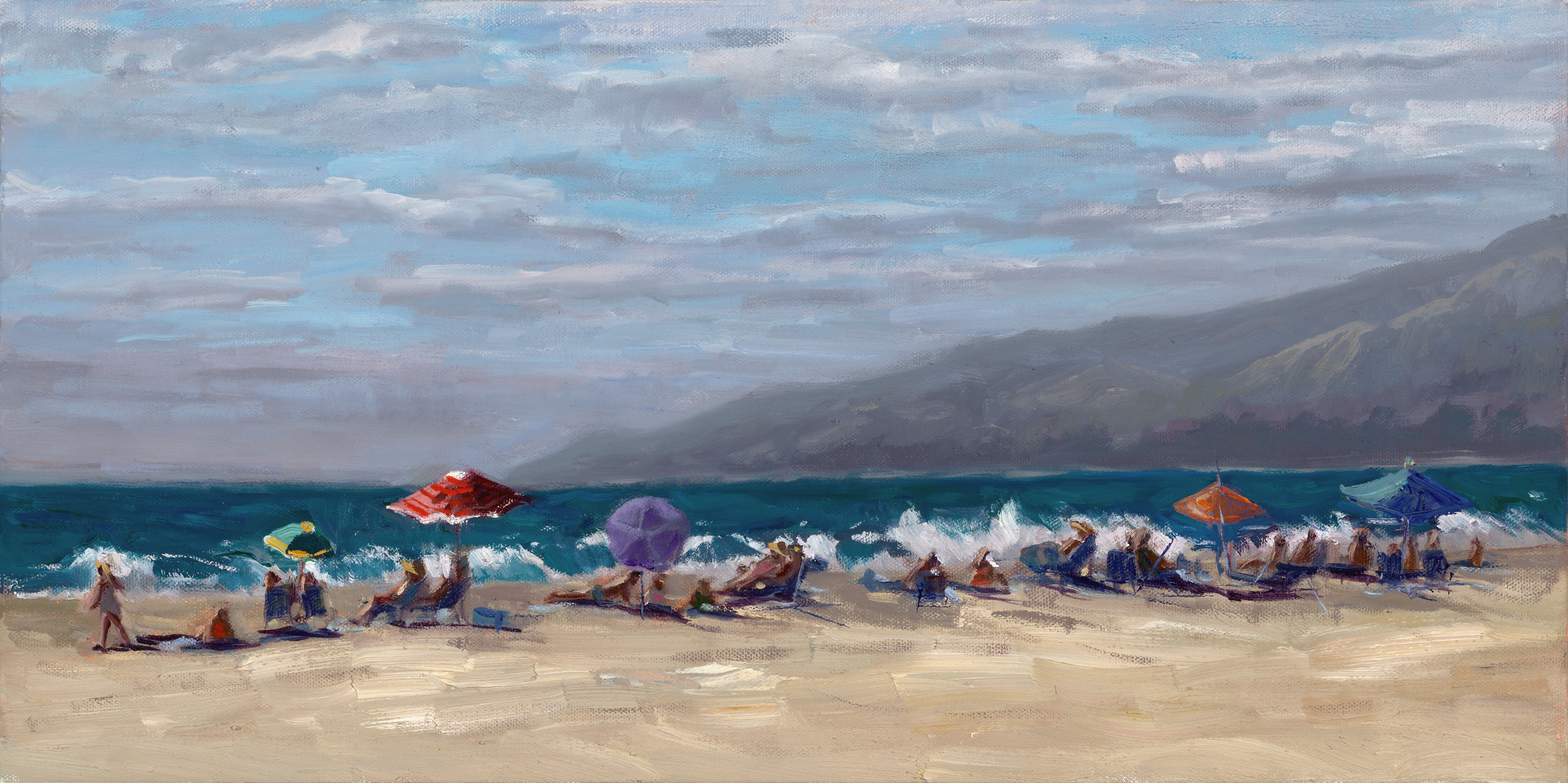
Relaxing Day at the Beach, Laurie Hendricks, oil on canvas board, 12 x 24 in., Laurie Hendricks Art
***
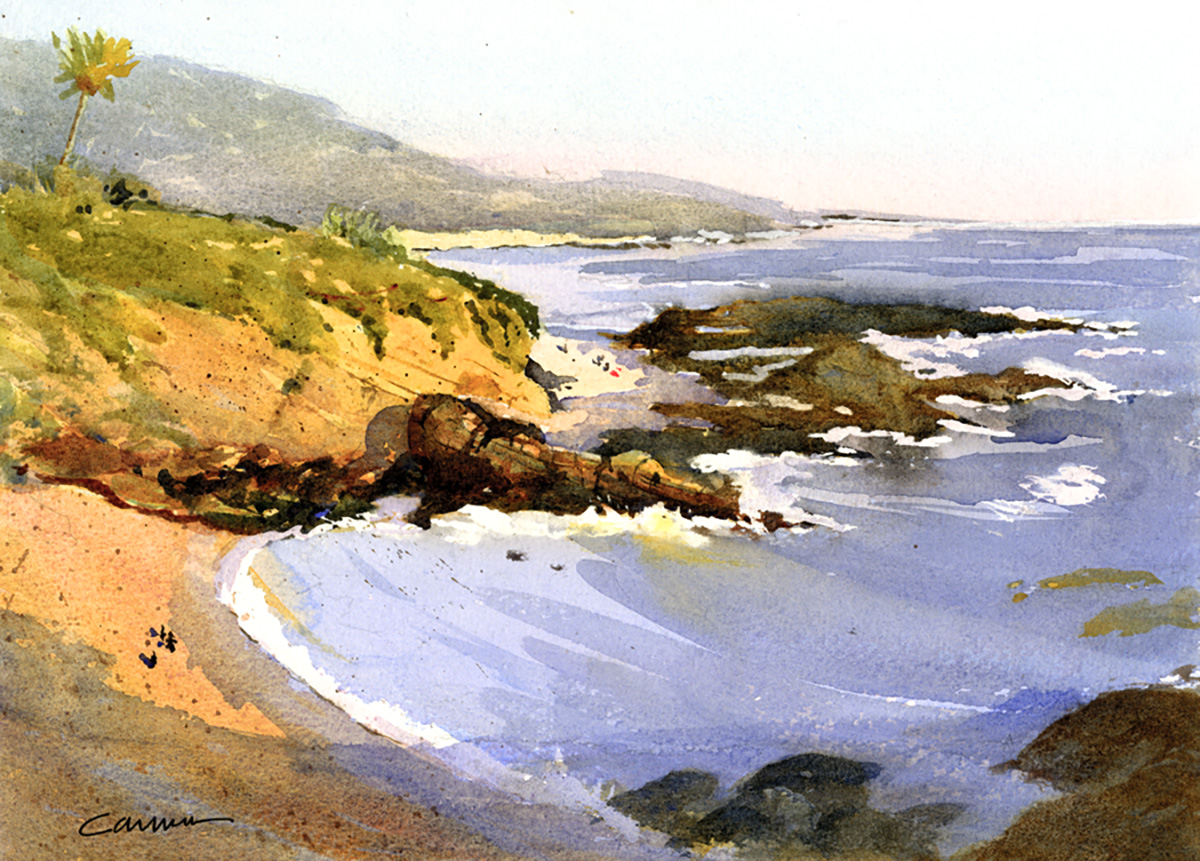
South Laguna View (Plein Air), Larry Cannon, watercolor, 10 x 14 in.; Larry Cannon
Want to see your gallery featured in an upcoming Virtual Gallery Walk? Contact us at [email protected] to advertise today. Don’t delay, as spaces are first come, first served, and availability is limited.
The Taft Museum of Art in Cincinnati, Ohio presents “Rembrandt: Masterpieces in Black and White—Prints from the Rembrandt House Museum,” through May 17, 2026. Co-organized by the Rembrandt House Museum (the artist’s former home and studio in Amsterdam) and the American Federation of Arts, this is the first time in 27 years that this exquisite collection of etchings will be displayed outside of the Netherlands.
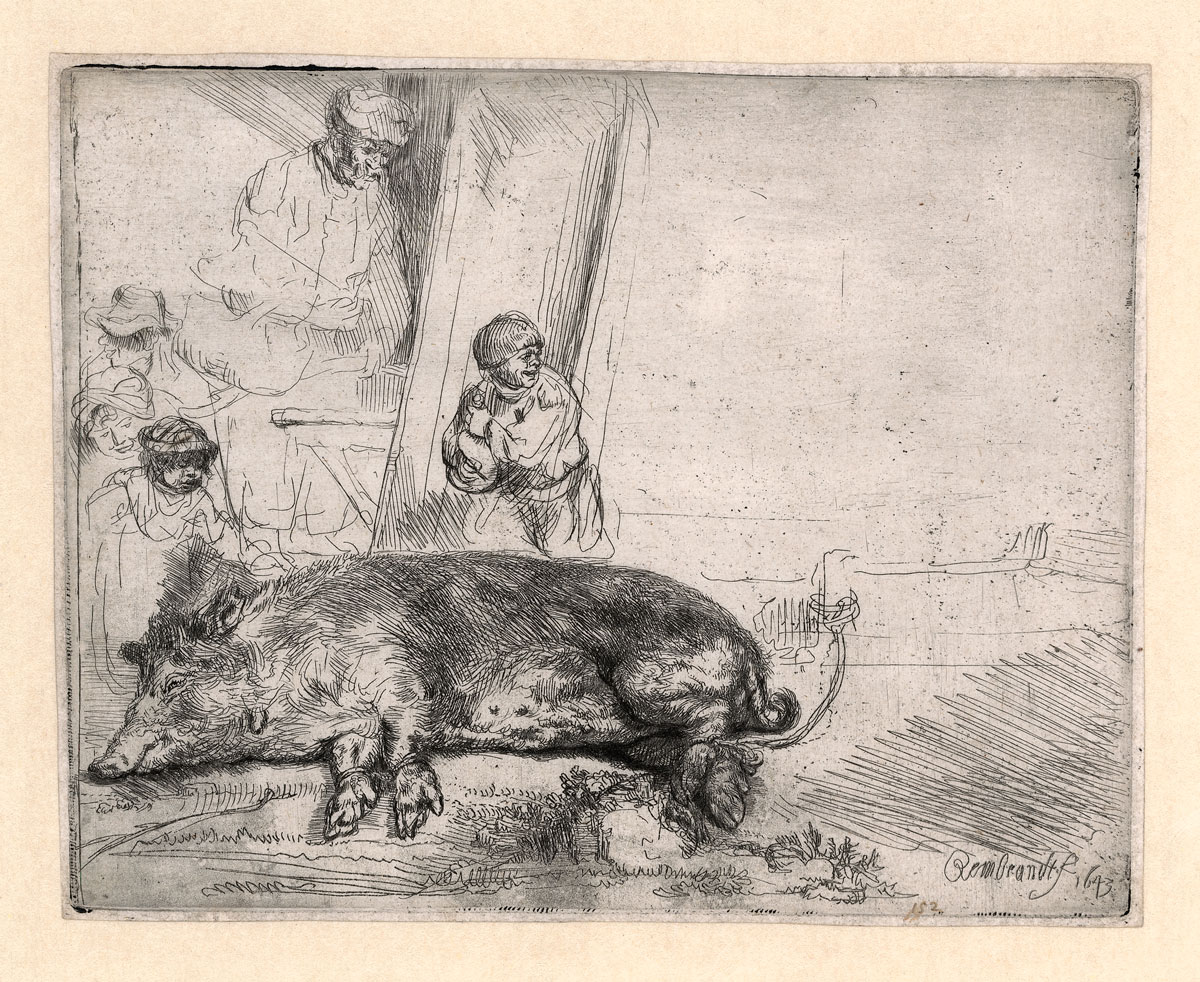
The show includes nearly fifty rarely exhibited works, presenting the depth and breadth of Rembrandt’s etching subjects, including portraits, self-portraits, scenes from daily life, landscapes, narrative scenes, and still lifes. The exhibition also demonstrates his centuries-long impact on the field of printmaking through a select group of etchings by his contemporaries, as well as later admirers including James McNeill Whistler and Pablo Picasso.
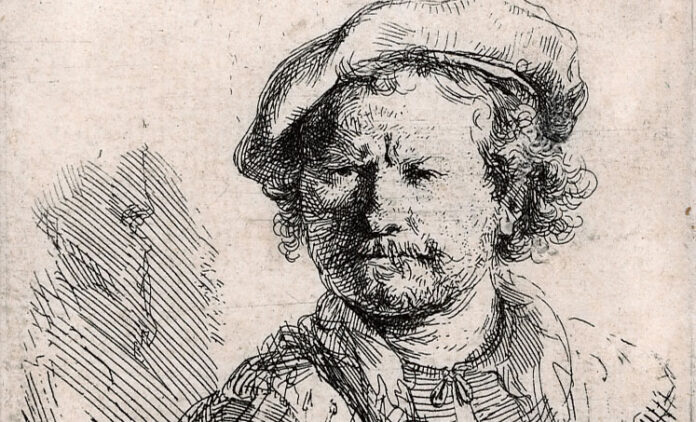
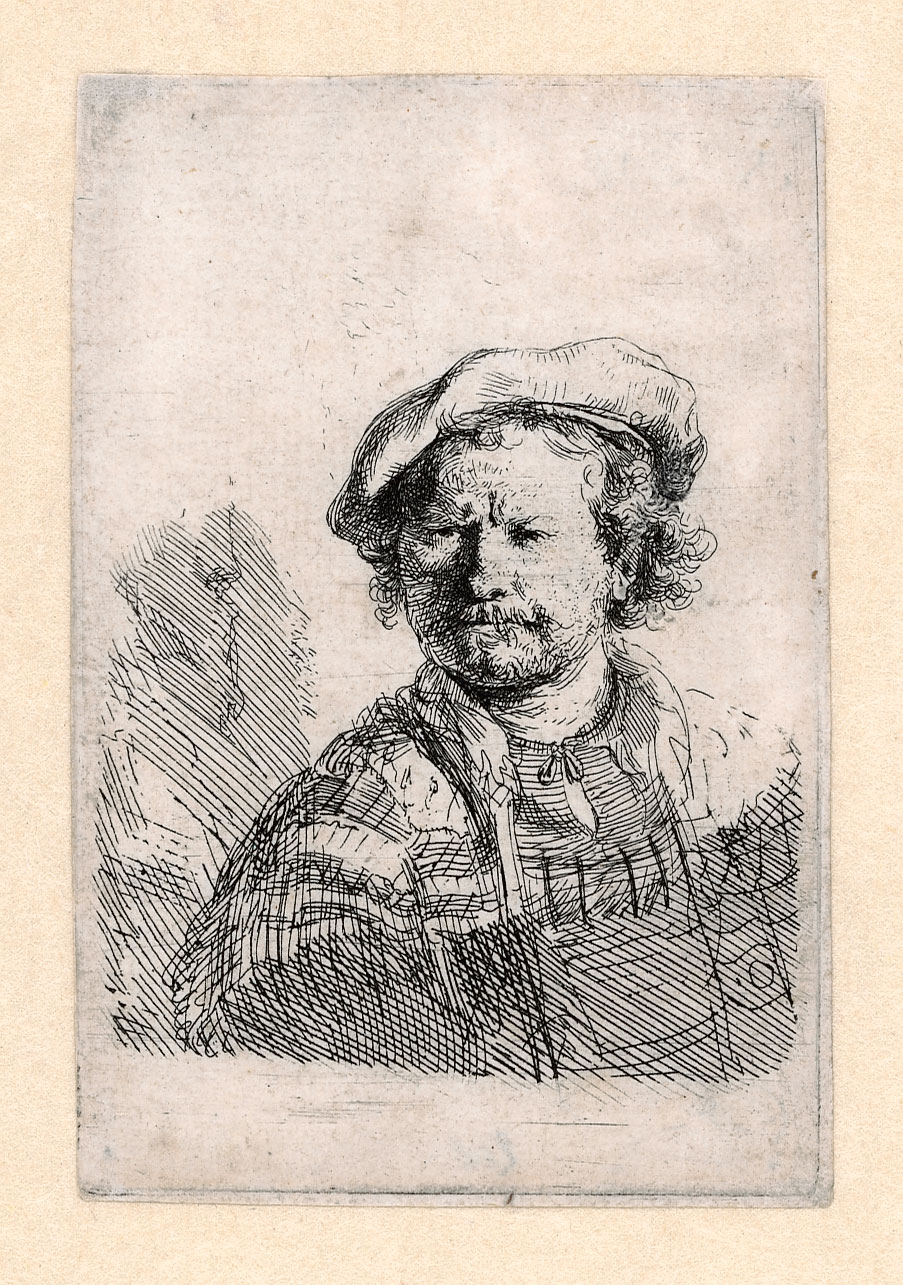
Rembrandt van Rijn, “Self-Portrait, Wearing a Flat Cap,” about 1642, etching, 3 11/16 x 2 7/16 in. Rembrandt House Museum, Amsterdam
Rembrandt van Rijn (Dutch, 1606–1669) is widely regarded as one of the greatest artists of all time. His innovation, creativity, and influence is evident not only in his paintings, but also in the more than 300 etchings he made during his career. At a time when most saw etching primarily as a vehicle to reproduce famous works of art, Rembrandt utilized the medium to create groundbreaking compositions. Filled with delicate lines and velvety shadows, his etchings often convey the same psychological intensity seen in his oil paintings.
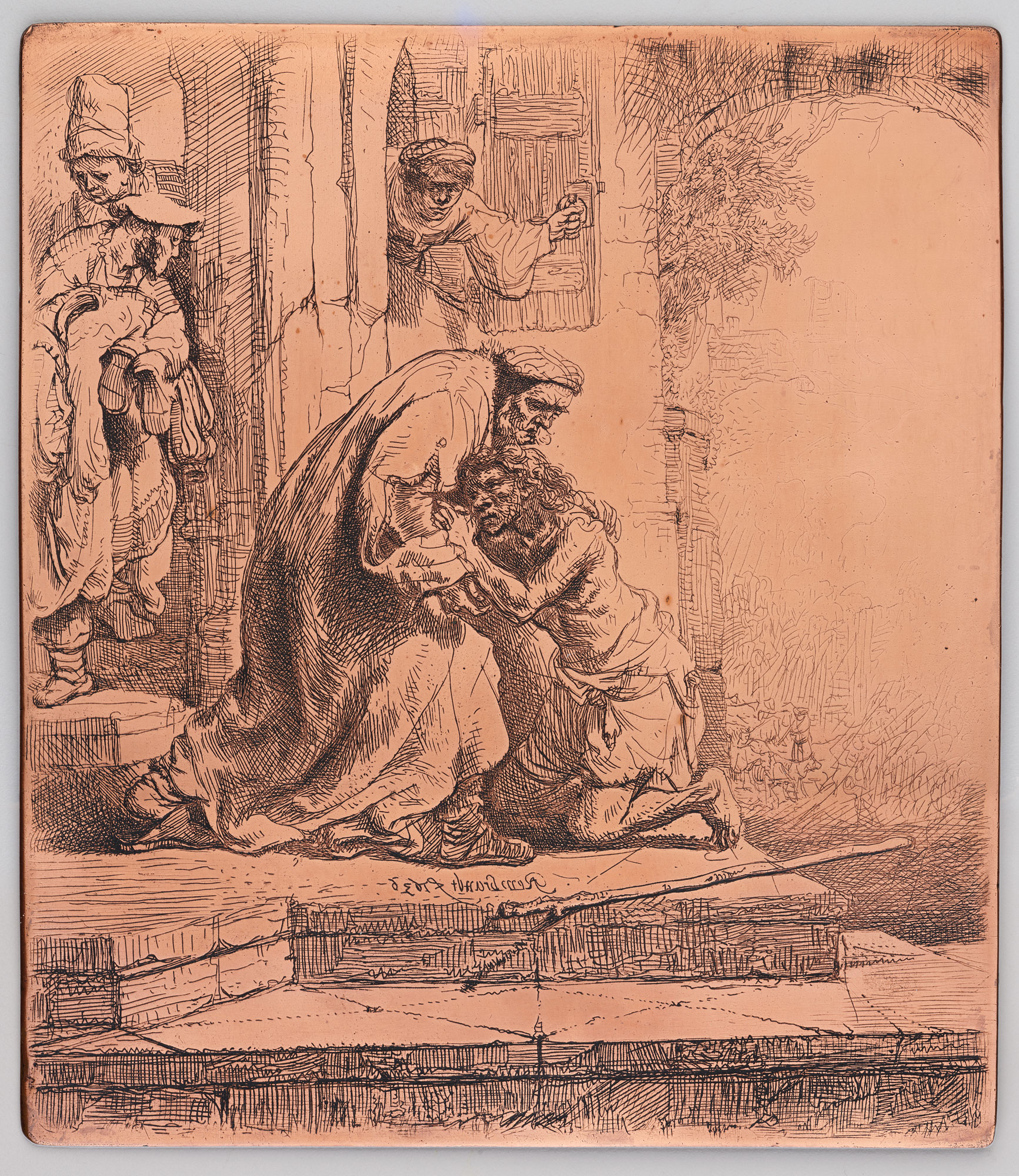
Rembrandt van Rijn, “The Return of the Prodigal Son (etching plate),” 1636, copper, 6 1/8 x 5 3/8 in. Rembrandt House Museum, Amsterdam
“We at the Rembrandt House Museum are delighted to bring Rembrandt’s fascinating prints to audiences outside of the Netherlands,” says Epco Runia, Head of Collections at the Rembrandt House Museum and the show’s curator. “With this exhibition we hope to demonstrate that each of Rembrandt’s prints is a work of art in its own right. If you take the time to look at them closely, a whole world opens up to you: a world in black and white, but with enormous visual richness.”
Rembrandt van Rijn, “The Hog,” 1643, etching and drypoint, 5 11/16 x 7 1/4 in. Rembrandt House Museum, Amsterdam
In the exhibition, forty-five etchings—many among his most well-known—demonstrate Rembrandt’s pioneering approach to printmaking. Eight sections examine themes including the artist’s working directly from life, creating emotional impact through the use of light and dark, and shaping identity through portraits and self-portraits. A special part of the exhibition focuses on how he made his etchings, through video, etching tools and materials, and copper plates used by the artist himself. Finally, fifteen etchings by later artists show Rembrandt’s impact across generations. Throughout, Rembrandt’s innovative visual storytelling emerges in powerful details of human expression, and his lasting legacy becomes evident.
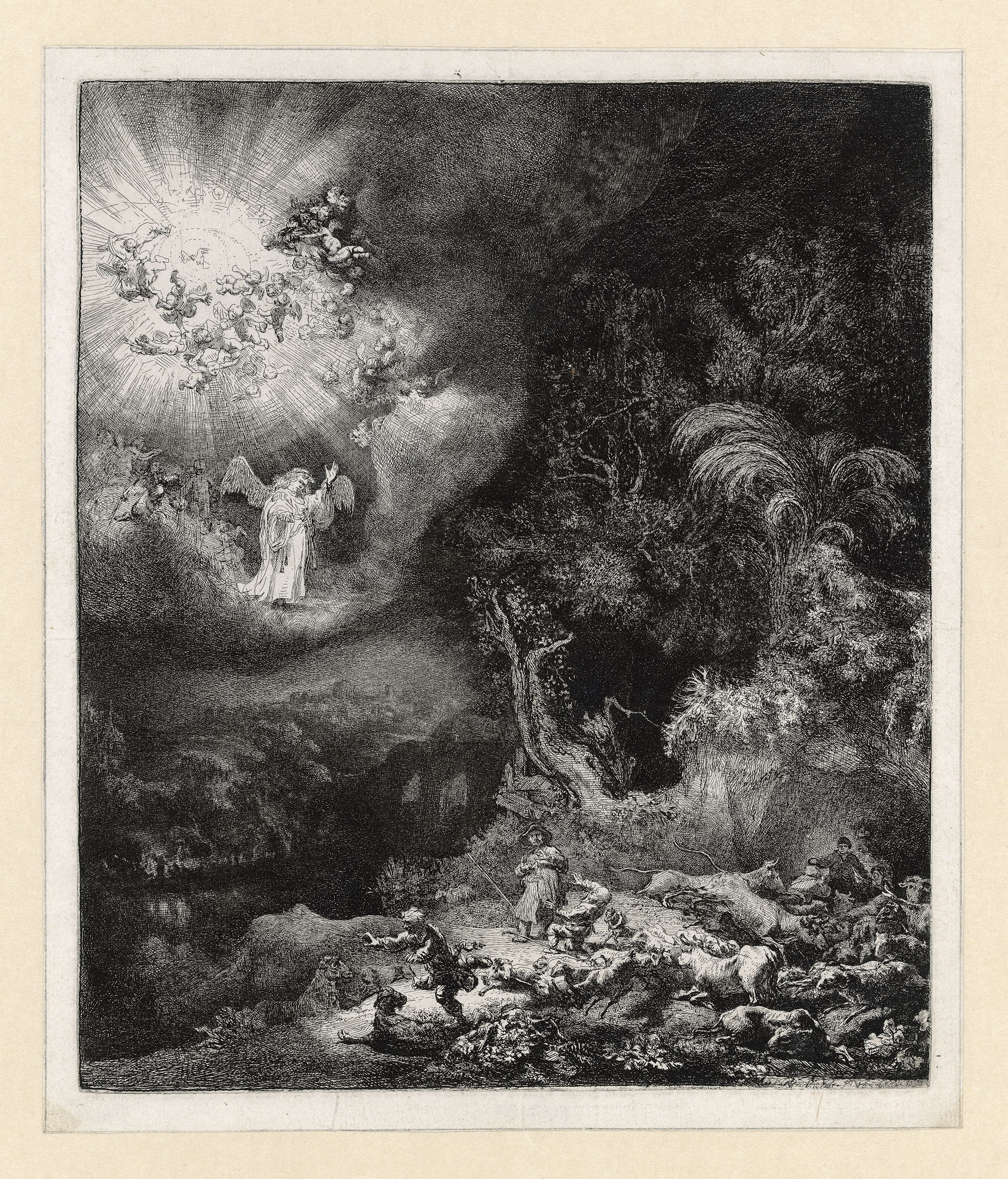
Rembrandt van Rijn, “The Angel Appearing to the Shepherds,” 1634, etching, burin, and drypoint, 10 5/16 x 8 9/16 in. Rembrandt House Museum, Amsterdam
“This is an exciting time to showcase the pioneering techniques of one of the world’s most famous artists,” says Tamera Lenz Muente, curator, who will oversee the presentation of the show at the Taft Museum of Art. “One of the Taft’s most significant and beloved paintings is Rembrandt’s ‘Portrait of a Man Rising from His Chair’, so it’s wonderful to be able to further highlight his artistic achievements. In 1999, the Taft debuted etchings from the Rembrandt House Museum to critical acclaim in the U.S., and we are thrilled to be one of three museums on their second American tour. It’s an opportunity to introduce a new generation to Rembrandt’s remarkable creative vision. The intimacy of his etchings, their awe-inspiring draftsmanship, and their emotional impact make these works still very relevant today.”
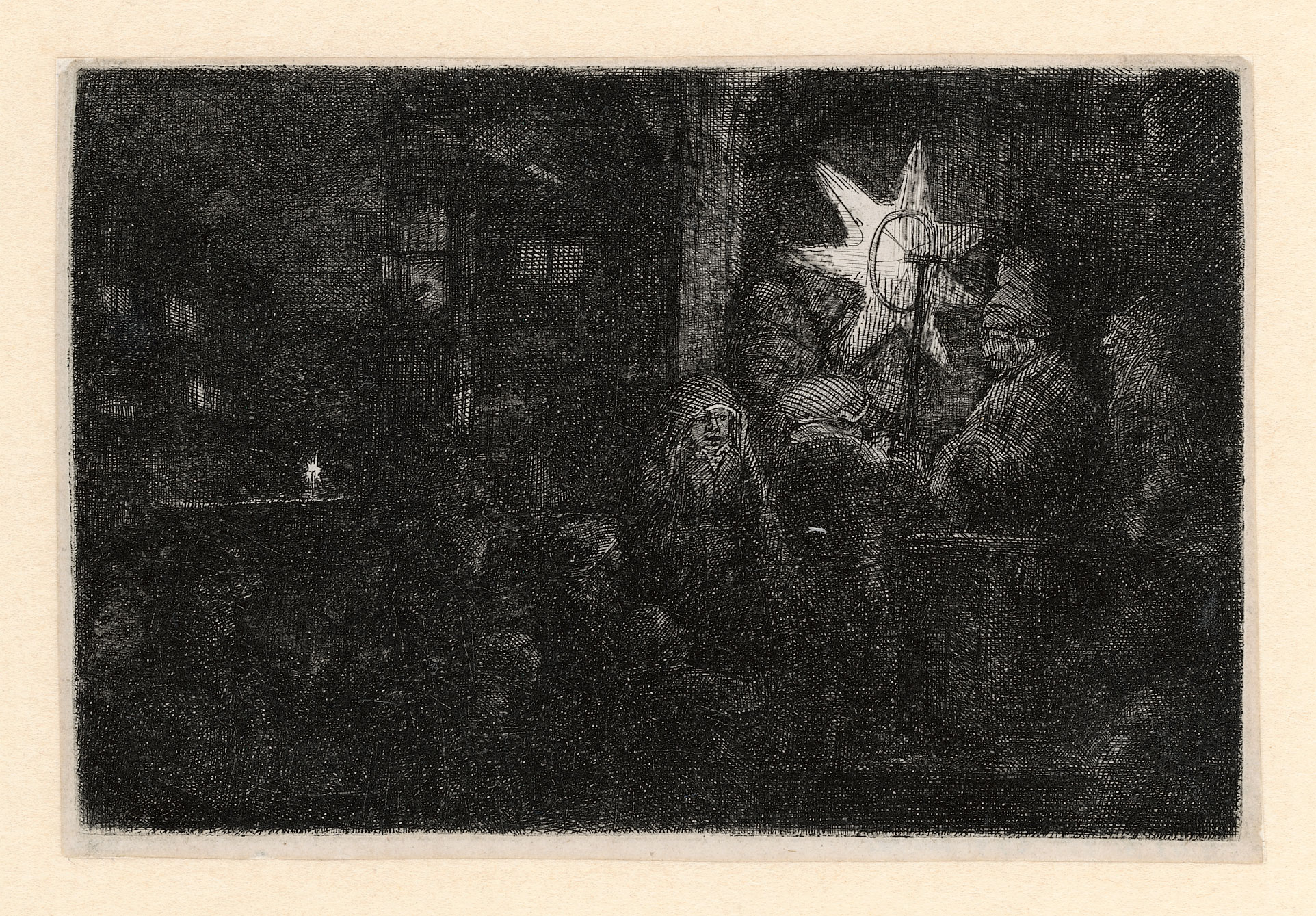
Rembrandt van Rijn, “The Star of the Kings: A Night Piece,” about 1651, etching and drypoint, 3 11/16 x 5 5/8 in. Rembrandt House Museum, Amsterdam
“Rembrandt: Masterpieces in Black and White—Prints from the Rembrandt House Museum” debuted on March 5, 2025, at Birmingham Museum & Art Gallery in Birmingham, UK. Subsequently, this exhibition will travel to the Gibbes Museum of Art in Charleston, South Carolina (October 24, 2025–January 11, 2026), then the Taft Museum of Art in Cincinnati, Ohio (February 7–May 17, 2026), and will be followed by the Naples Art Institute, Naples, Florida (October 10, 2026–January 17, 2027).
Curator
Epco Runia is Head of Collections at the Rembrandt House Museum and a specialist in seventeenth-century Dutch art, particularly Rembrandt. Runia began his career at the Rijksmuseum in Amsterdam, worked at the Frans Hals Museum in Haarlem, and served as a curator and educator at the Mauritshuis in The Hague.
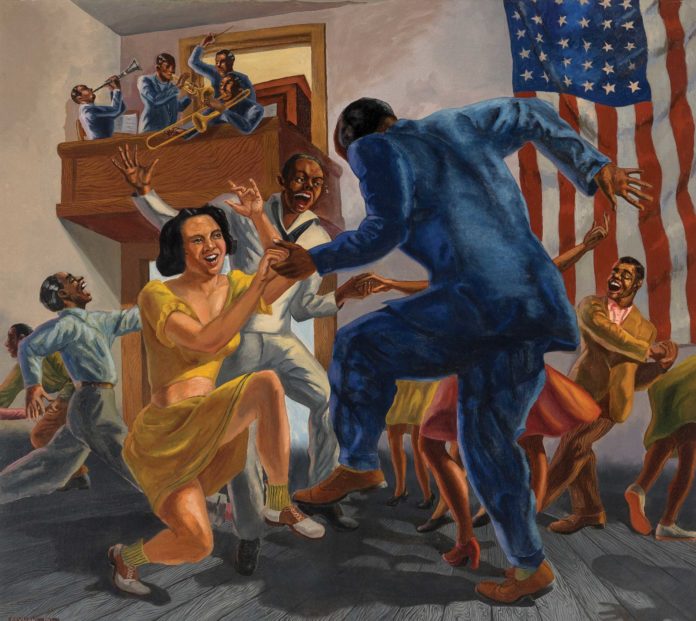
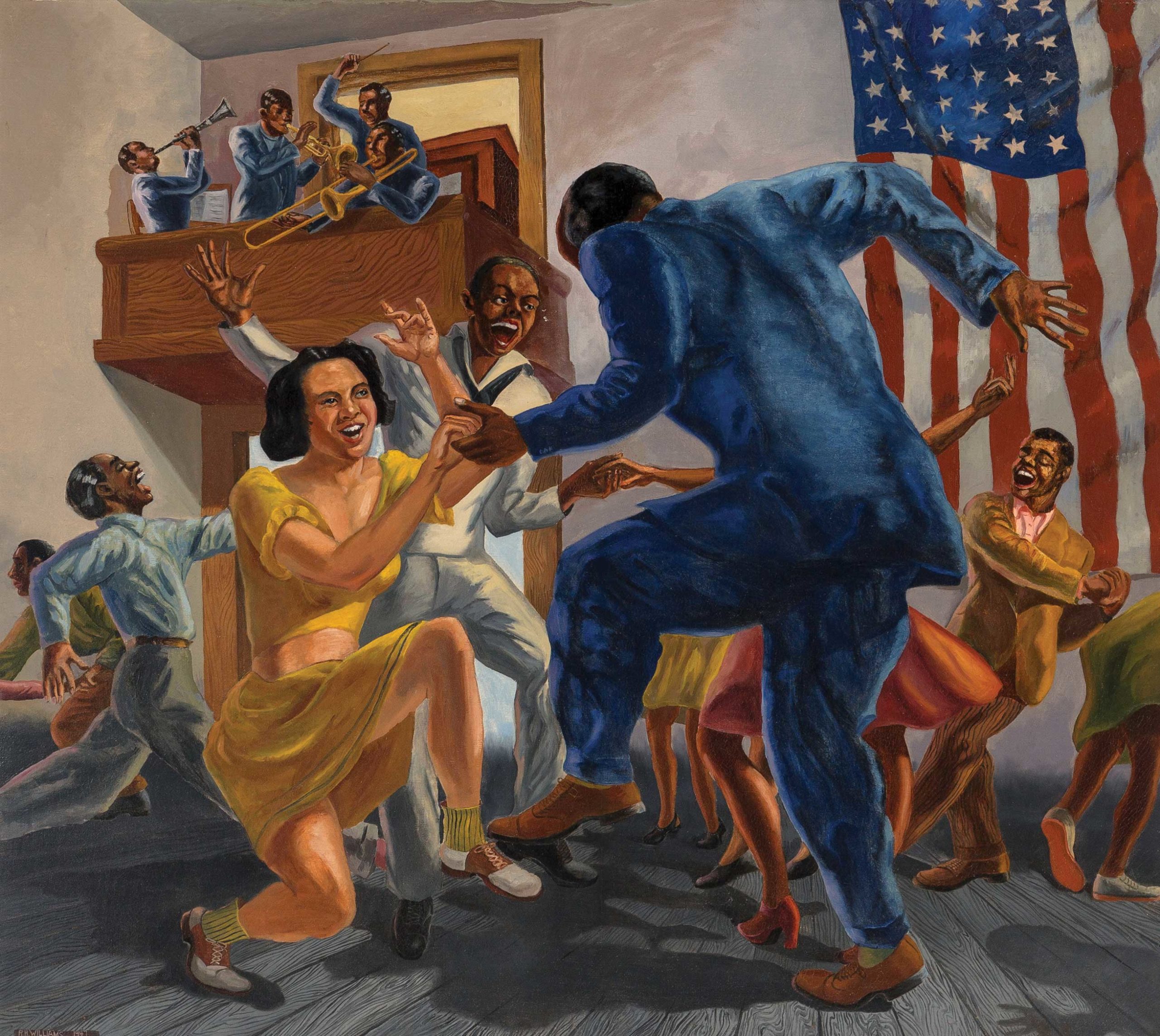
Ramond Hendry Williams (1900–1977), "Pursuit of Happiness," 1947, oil on canvas, 44 x 48 in., collection of the author, photo courtesy Heritage Auctions
As far as we can tell, neither painting was exhibited publicly, yet both are superb examples of 20th-century American social realism.
By Arthur D. Hittner
On the annals of popular music, there are artists remembered only for a single hit song: Norman Greenbaum’s Spirit in the Sky of 1969, for instance, or the 2000 Grammy Award-winning Who Let the Dogs Out by the Baha Men. The phenomenon of the one-hit wonder also exists in the world of fine art where, seemingly out of nowhere, there appears an extraordinary work by an artist largely unknown, a work so exceptional as to be virtually inexplicable in the context of the artist’s lifetime oeuvre.
What prompts the appearance of these minor masterpieces, and what circumstances explain the absence of comparable works from the same artists? The answers are not readily evident, as we shall discover through two paintings now in my family’s collection. As far as we can tell, neither was exhibited publicly, yet both are superb examples of 20th-century American social realism.
A Glance at Art History and Social Realism
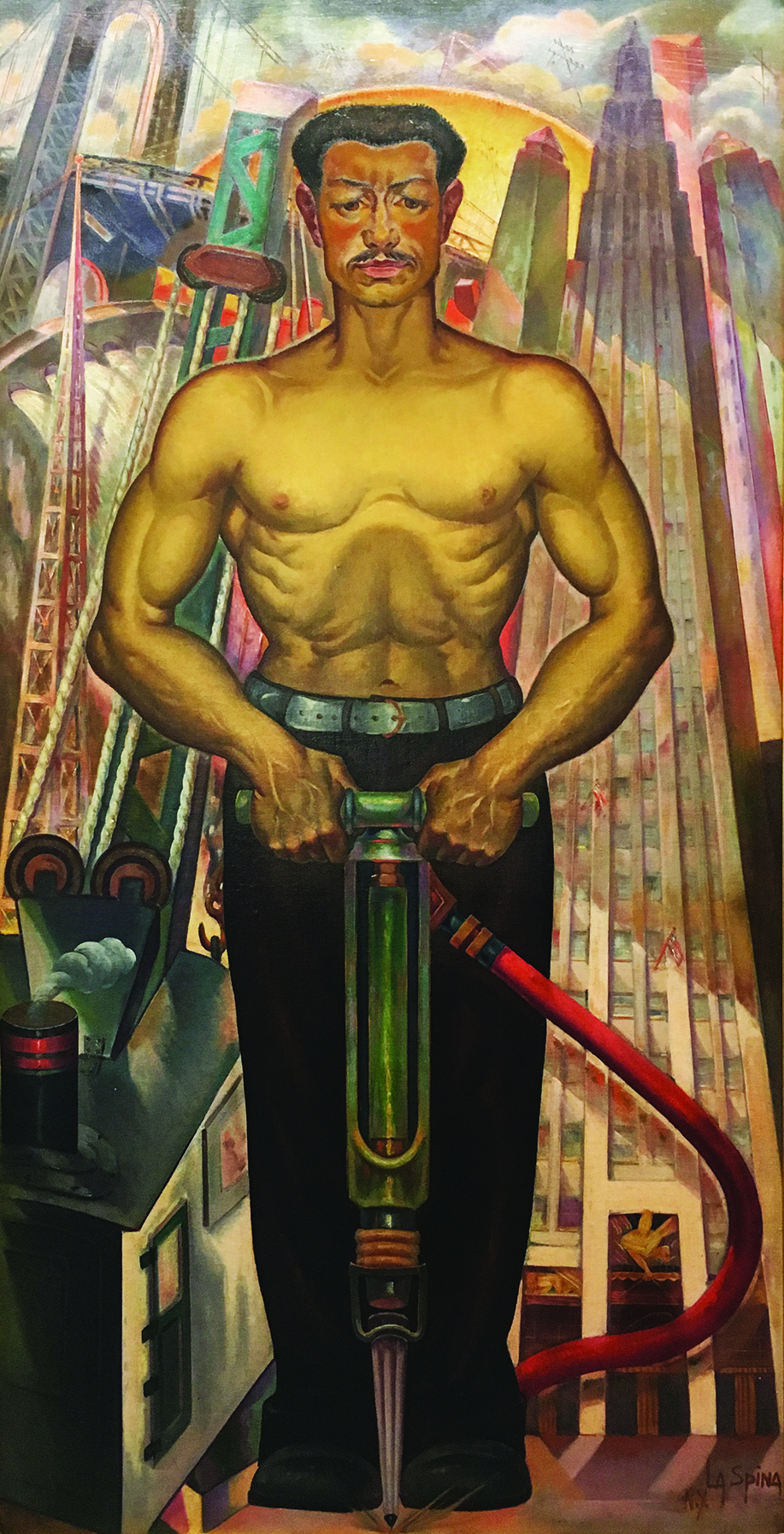
Nunzio La Spina (1900–1988), “Jackhammer,” 1932, oil on canvas, 69 x 36 in., collection of the author, photo courtesy Gratz Gallery & Conservation Studio, Doylestown, Pennsylvania
Jackhammer
First, let’s consider the painting “Jackhammer,” created in 1932 by Nunzio La Spina (1900–1988). Almost six feet high, it depicts a muscular construction worker, possibly an Italian immigrant like the artist himself, operating a pneumatic drill before an iconic New York City background.
On the left appears the George Washington Bridge (completed the year before), and at right the nearly-finished Rockefeller Center. Flanked by heavy construction equipment and silhouetted by an exaggerated sunrise (reminiscent, perhaps, of the halo frequently seen in Renaissance art), the nameless laborer, as indestructible as his handiwork, is heralded as a hero. It is through his sweat that the architectural and engineering marvels of the city have risen.
So who was Nunzio La Spina? Online genealogical sources indicate that he was born in Palermo, Sicily, at the turn of the 20th century, immigrating to America in July 1914, two months shy of his 14th birthday. His father, Giacchino, had arrived eight years earlier. The artist appears in the 1920 census as a Manhattan resident, living with his mother and three siblings and earning his living as a barber.
A registration card indicates that a John La Spina enrolled in an evening class at the Art Students League of New York as early as 1917, while a 1925 New York census shows a person by the same name (living with his wife, Angeline), both of whom are identified as interior designers.
It is likely that John — listed as a participant in the Society for Independent Artists’ annual exhibition of 1928 — was the same person as Nunzio; it was common for recent immigrants to adopt anglicized names to foster assimilation. In fact, New York Times art critic Edward Alden Jewell noted an exhibition in November 1929 featuring modern landscapes and portraits by “John N. La Spina, a young Italian artist,” at the Little Carnegie Playhouse in Manhattan. (The emphasis on his middle initial is mine.)
Military enlistment records from 13 years later (1942) identify Nunzio as a draftsman of slight build (5’5” and 123 pounds) with two years of high school education. His service, however, inexplicably ended within five months, at the height of World War II.
La Spina’s painting “Portrait of Lillian,” shown at the Salons of America exhibition at Rockefeller Center in April 1934, garnered favorable notice from E.A. Jewell. Indeed, it was one of only a few works reproduced in Jewell’s review (from among 5,000 submitted). Despite this promising recognition from The New York Times, La Spina’s career never gained traction.
Circumstantial evidence suggests that he, like countless others, was unable to sustain himself as a professional artist during the Great Depression. His participation in the Works Progress Administration’s artist relief programs (WPA) is confirmed by the existence of two floral still lifes, one dated 1936 and presently in the collection of the New Deal Art Gallery at the Genesee Valley Council on the Arts in Mount Morris, New York. La Spina’s removal from the WPA rolls in 1937 is confirmed by a Times article in which he is identified as one of a pair of plaintiffs suing for reinstatement to the Federal Art Project. (They contended “that they were dropped without legal cause and that their constitutional rights were thereby violated.”) Although the immediate outcome of this legal action is unknown, La Spina was again employed by the federal government by the early 1940s; he is recorded as having decorated a ceiling in the lobby of Bellevue Hospital’s Psychiatric Building under the Federal Art Project’s aegis.
Not long after La Spina’s death in 1988, Paul Gratz, the proprietor of Gratz Gallery & Conservation Studio (Doylestown, Pennsylvania), acquired “Jackhammer,” along with a group of other La Spina works, from the artist’s estate; a New Jersey framing shop acted as the intermediary. He auctioned off most of the paintings soon after, but retained “Jackhammer.”
Gratz set aside this rolled-up canvas in anticipation of eventually restoring it. Almost 30 years later, he finally did so and then offered the painting for sale in 2017. Most of the few works remaining in La Spina’s estate (including a curious self-portrait) were sold at auction in 2000, but nothing even remotely as ambitious as “Jackhammer” has ever appeared on the market.
Ramond Hendry Williams (1900–1977), “Pursuit of Happiness,” 1947, oil on canvas, 44 x 48 in., collection of the author, photo courtesy Heritage Auctions
Pursuit of Happiness
Equally baffling is the work by Ramond Hendry Williams (1900–1977) assigned the title “Pursuit of Happiness” by its most recent owner. Approximately four feet square, this 1947 painting pulses with energy, reveling in the dynamism of swing jazz culture and the exuberance of post-war America.
Born in the same year as La Spina, Williams pursued a long career as an art educator, ceramicist, and sculptor. Born in Ogden, Utah, he received his Bachelor’s degree from the University of Utah in 1926. He spent three years teaching at Logan High School in Logan, Utah, before continuing his art studies at the University of Chicago and Art Institute of Chicago. Williams taught while pursuing a Master’s degree at the University of Wisconsin before heading up the department of ceramics and sculpture at the University of Nebraska’s school of fine arts from 1931 to 1938. He studied sculpture briefly with the Ukrainian-American modernist Alexander Archipenko at the Chouinard School in Los Angeles (probably in 1933), and was a frequent exhibitor of sculpture and ceramics throughout the Midwest and a regular contributor to the national journal Design.
In 1938, Williams was hired to teach at Texas Technological College (now Texas Tech University) in Lubbock, where he remained in its division of architecture and allied arts through 1946, one year before he painted “Pursuit of Happiness.” In the mid-1940s, he relocated his family to Mission, Texas, near the Mexican border. Little is known of Williams’s career beyond this point, although newspaper advertisements indicate he was teaching ceramics privately in nearby McAllen as late as 1974, three years before his death.
While Williams also painted, few of his paintings are known. An unremarkable modernist scene of prickly pear cactuses now in the Museum of Texas Tech University — along with several canvases owned by his descendants — offer little evidence of the virtuosity visible in “Pursuit of Happiness.”
Although my interviews with Williams’s son and daughter have revealed no specific recollection of this painting, family history hints at a credible source for its evolution. They recall that the family lived briefly in Corpus Christi, a few years before Williams painted Pursuit of Happiness. At the time that city maintained an active naval air station, and it was not unusual for entertainers — both black and white —to perform at dances for non-white guests.
The Corpus Christi Caller-Times of June 29, 1945 reported, for example, that “Clyde Lucas and his orchestra will play … for a dance for negro personnel at the Main Station gym on July 3,” adding that “Louis Armstrong’s band will play for a dance for negro personnel at the NAS gym July 30.” The probability that Pursuit of Happiness depicts such an off-duty event is bolstered by the prominence of the uniformed sailor and the American flag, which together underscore African-Americans’ crucial contributions to the victorious war effort.
Lingering Questions
La Spina’s masterful “Jackhammer” apparently remained with him until his death, more than 50 years after he painted it. Was it a mural spurned by the authorities as too risqué, or a speculative effort that, like most art created during the 1930s, found no ready market? We may never know, but its survival after so many years of obscurity is a stroke of luck. La Spina’s status as a “one-hit wonder” is explained by his apparent abandonment of art following the WPA’s termination in the early 1940s.
The singularity of Williams’s “Pursuit of Happiness” is harder to explain. Although he carved out a successful career in the arts, his focus on teaching — and on ceramics — likely discouraged further efforts at painting. That he managed to produce so fine a painting as this — truly a “one-hit wonder” — remains a matter of fortunate happenstance.
ARTHUR D. HITTNER is a retired attorney and the author of three novels (most recently The Caroline Paintings), two biographies, and numerous articles on topics relating to art and baseball. For details, visit hittnerbooks.com. His extensive collection of WPA-era art appears at paintingtheamericanscene.com.
As part of our effort to continue to help artists and art galleries thrive, we’re proud to bring you this week’s “Virtual Gallery Walk.” Browse the artwork below and click the image itself to learn more about it, including how to contact the gallery.
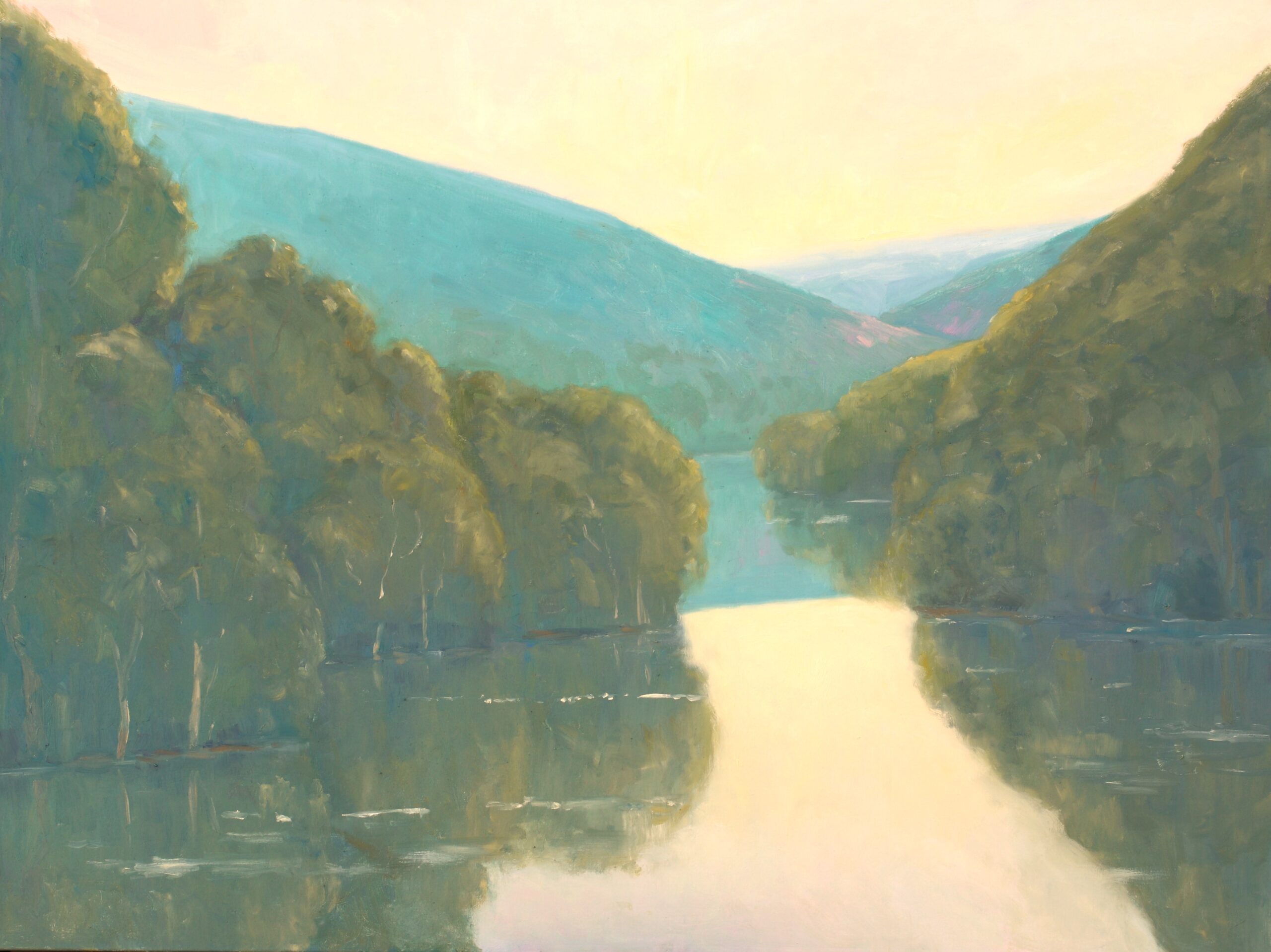
Tranquility on the James, Carson Overstreet, oil on linen, 36 x 48 in., private collection; Carson Overstreet
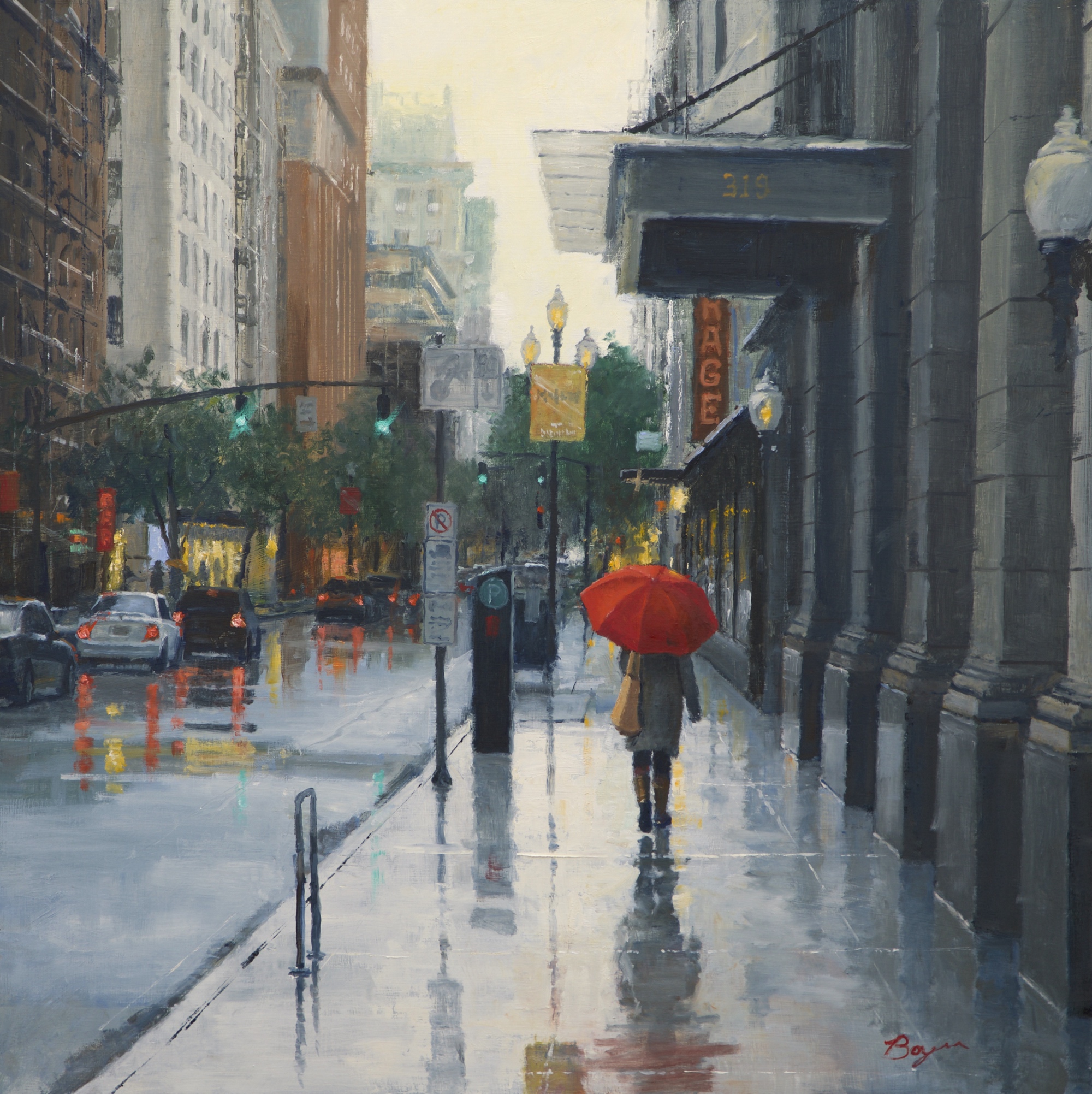
Walk in the Rain, Richard Boyer, oil on board, 30 x 30 in; Mockingbird Gallery
***
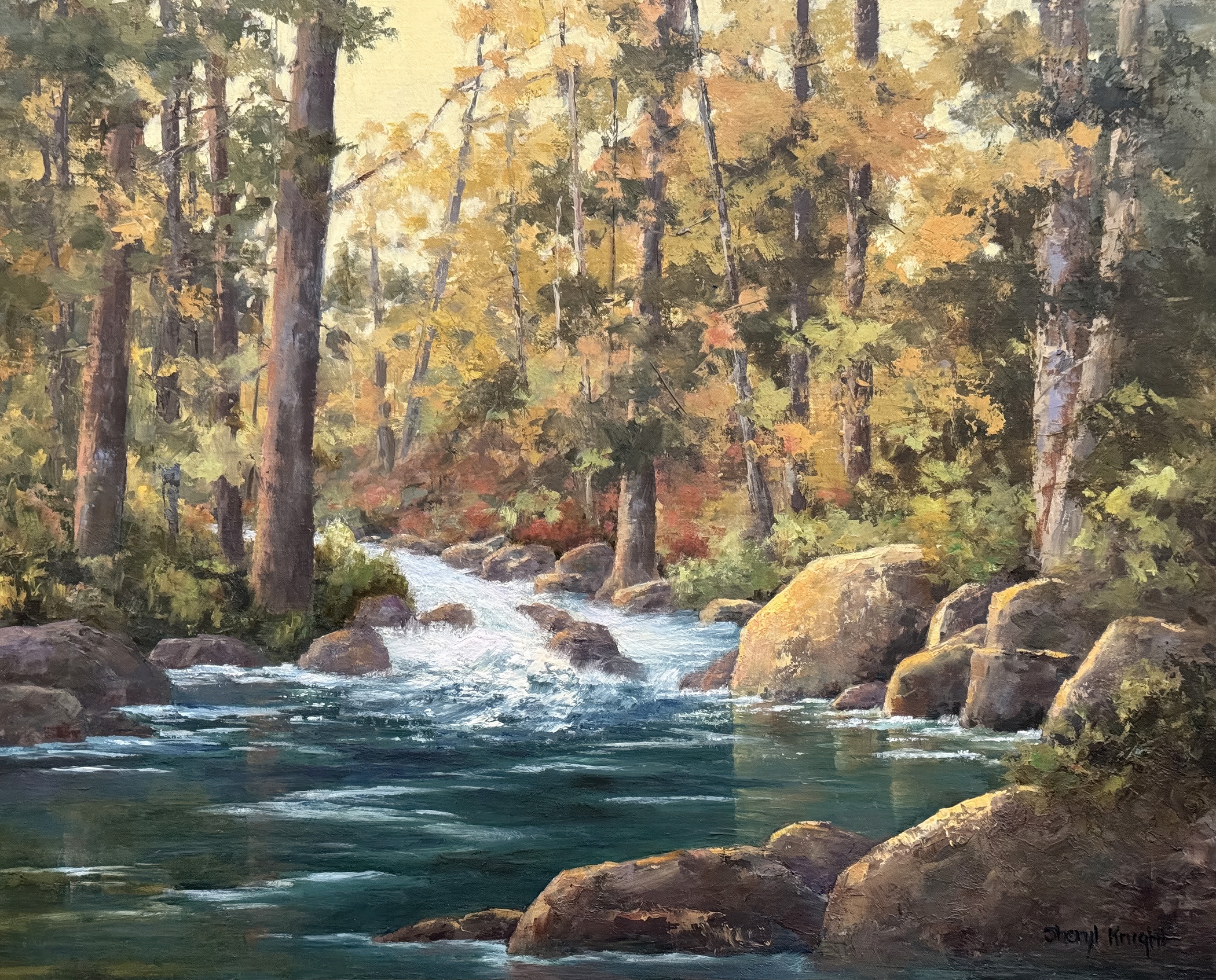
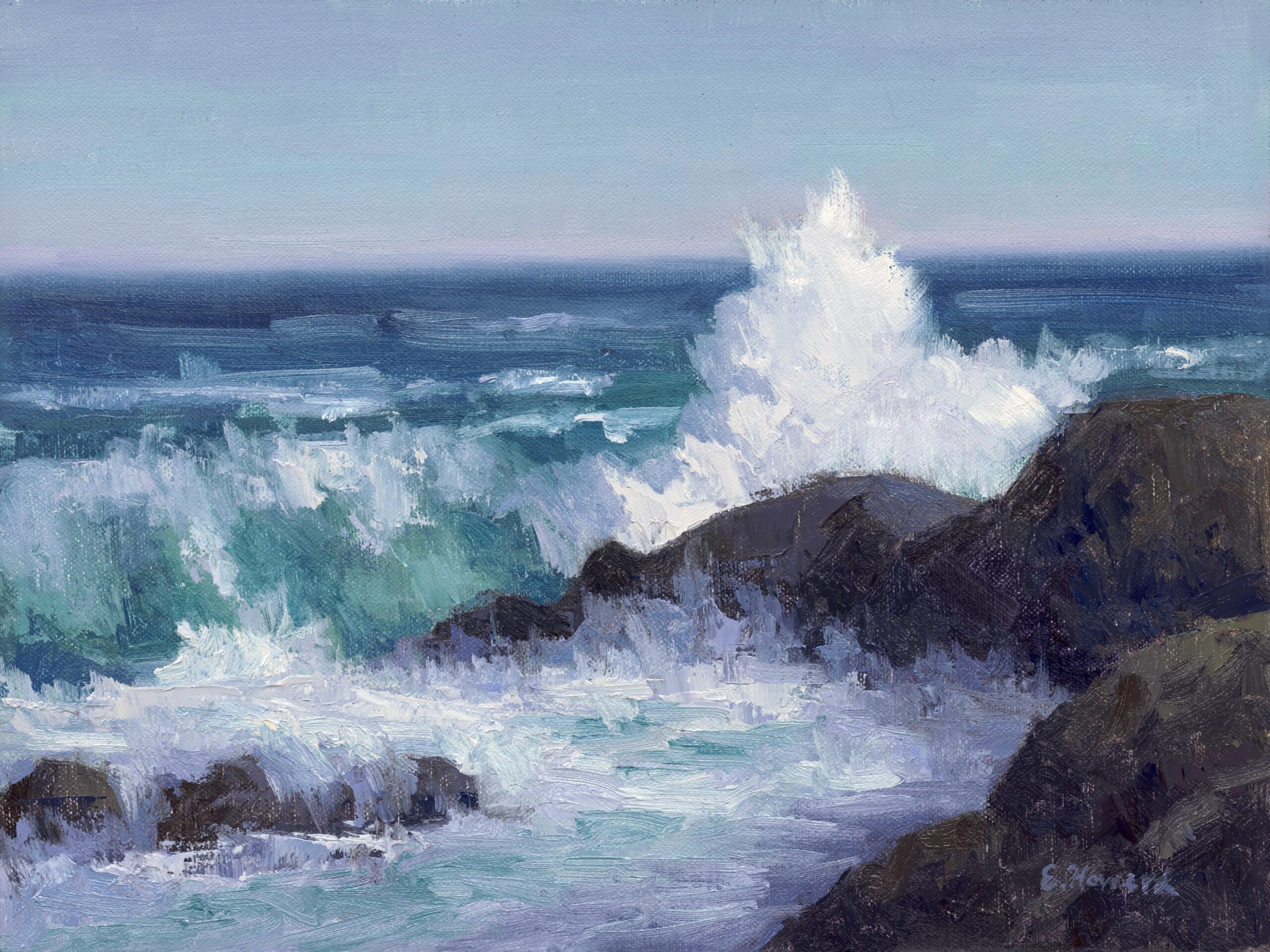
Where the Water Wins, Ellen Howard, oil, 9 x 12 in., Ellen Howard Art
Want to see your gallery featured in an upcoming Virtual Gallery Walk? Contact us at [email protected] to advertise today. Don’t delay, as spaces are first come, first served, and availability is limited.
Fill your mind with useful art stories, the latest trends, upcoming art shows, top artists, and more. Subscribe to Fine Art Today, from the publishers of Fine Art Connoisseur magazine.