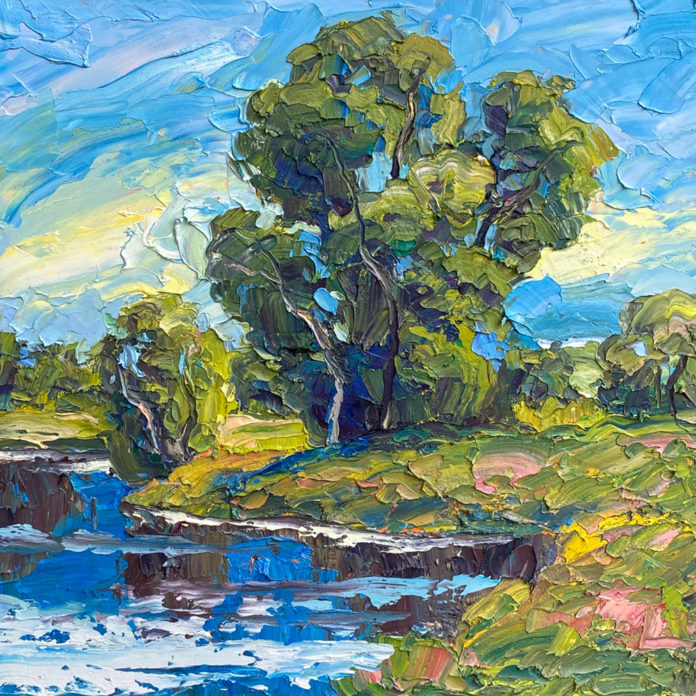
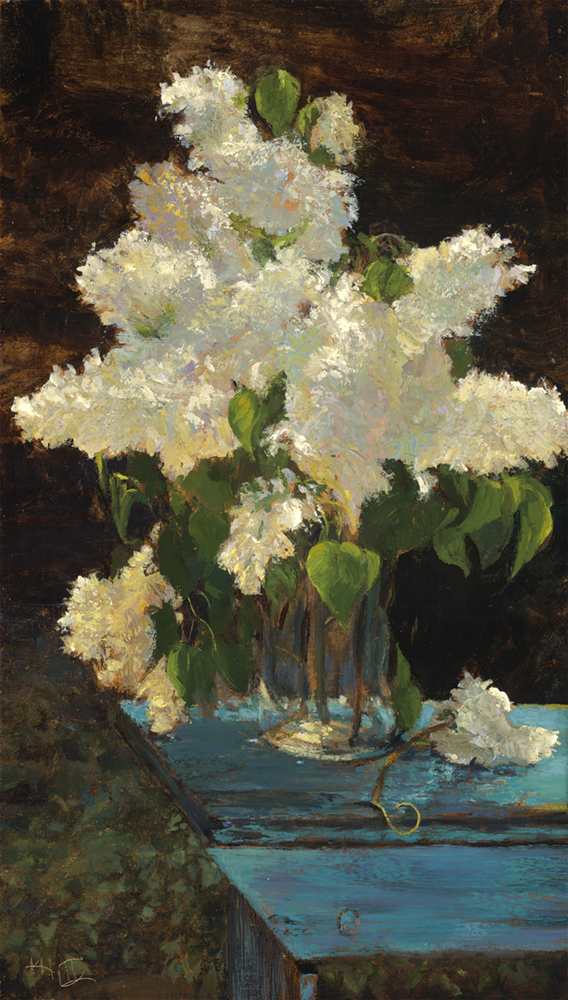
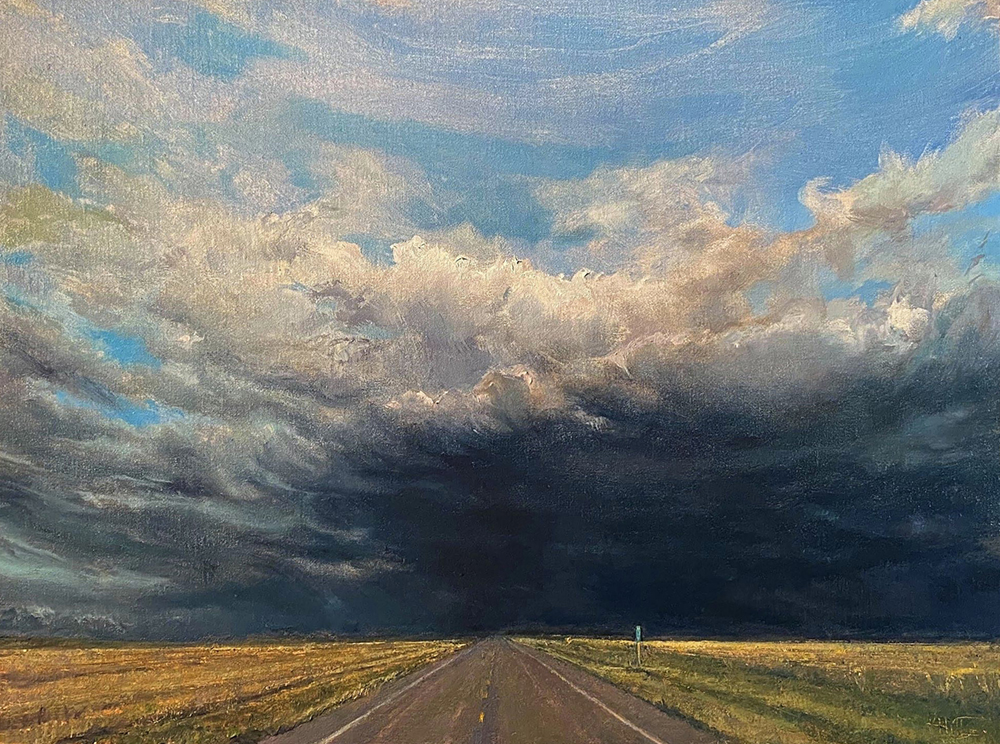
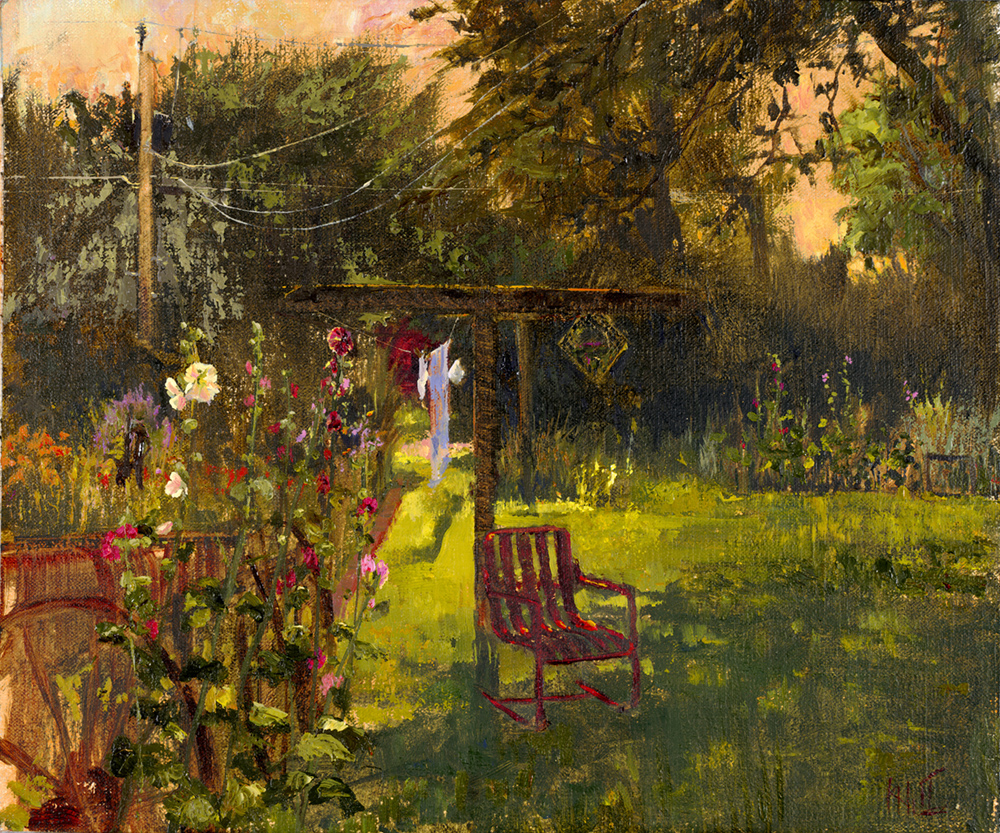
Summer on the Bear River by Brad Teare
18 x 18 in.
Oil on panel
$2,500
Available from Manitou Galleries, Santa Fe, New Mexico
Teare painted the plein air reference for this painting while basking in the summer sun along the Bear River in Utah. The memory of whispering wind, shimmering water, the trill of insects, and birds all merge into the final painting.
Teare typically paints a small plein air sketch, then a larger studio study, culminating in a larger piece, perhaps 36″ to 48″ square. All three phases stand alone and are integral steps in his creative journey.
BRAD TEARE – THE POETRY OF THICK PAINT
During Teare’s artistic education, he took inspiration from artists such as Rockwell Kent, Birger Sandzén, William Wendt, and LeConte Stuart.
After art school, Teare worked in New York as an illustrator for The New York Times and Random House, illustrating projects for authors such as James Michener and Alice Walker. A Van Gogh exhibit at the Metropolitan reinforced his love of texture. Intrigued, and after a decade of textural exploration, he now paints entirely with palette knives in thick, multi-hued strokes.
Teare lives in Providence, a small town in the mountains of Utah. His studio, situated between Yellowstone and Arches National Parks, provides a lifetime of spectacular scenery.
Teare has shown at The Forbes Galleries and The Salmagundi Club, both in New York City. He has been invited to residencies and festivals such as the Forbes/Trinchera Ranch Residency in Colorado, the Maynard Dixon Residency in Mount Carmel, Utah, the LA Art Show, and the Door County Plein Air Festival in Door County, Wisconsin.
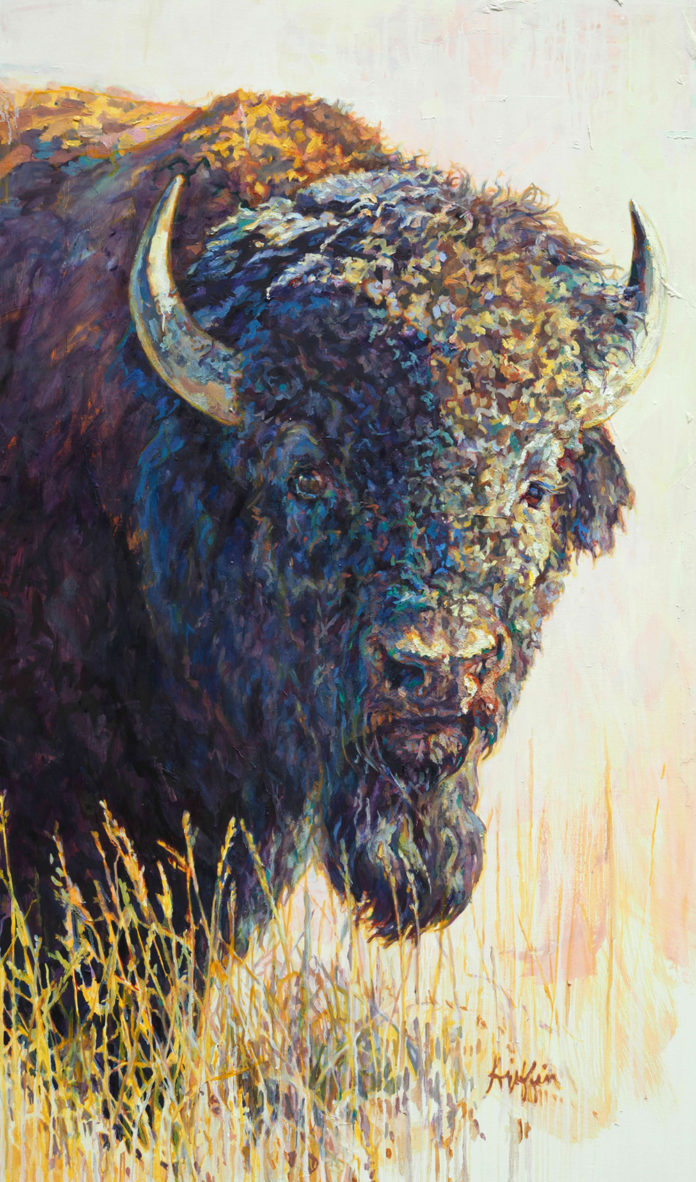
Thor
36 x 60 in.
Oil on linen
Available through Gallery Wild, Jackson, WY, 307.203.2322
Patricia A Griffin:Thor’s grounding personality emanates from thin washes and thousands of strokes of buttery paint. The saturated layers of pigment bring the animal’s essence into the room with the signature style of artist Patricia A. Griffin. Thor engages the viewer in an exchange of strength and tranquil observation.
Patricia is a signature member of Artists for Conservation, BC and has painted for 33 years in homage to nature, with the goal to create awareness.
In Thor she honors the American Bison and its ability to aid in regeneration and carbon sequestration in roots and soils of our perennial grasses.
Patricia A. Griffin embodies the spirit of her subject through contemporary impressionism. Personal observation in the field inspires her paintings, both plein air and studio. She works out of her River Barn Studio in Kelly, Wyoming, and Turkey Ridge Studio in East Stroudsburg, Pennsylvania.
“Paintings are a continuum, a moment of reverence defined for the interpretation of the contemporary.” – Patricia A Griffin
Three Billion, an exhibit in conjunction with the Georgia Audubon, representing the three billion North American birds that have been lost in the past 50 years — February 6 through April 24, 2021
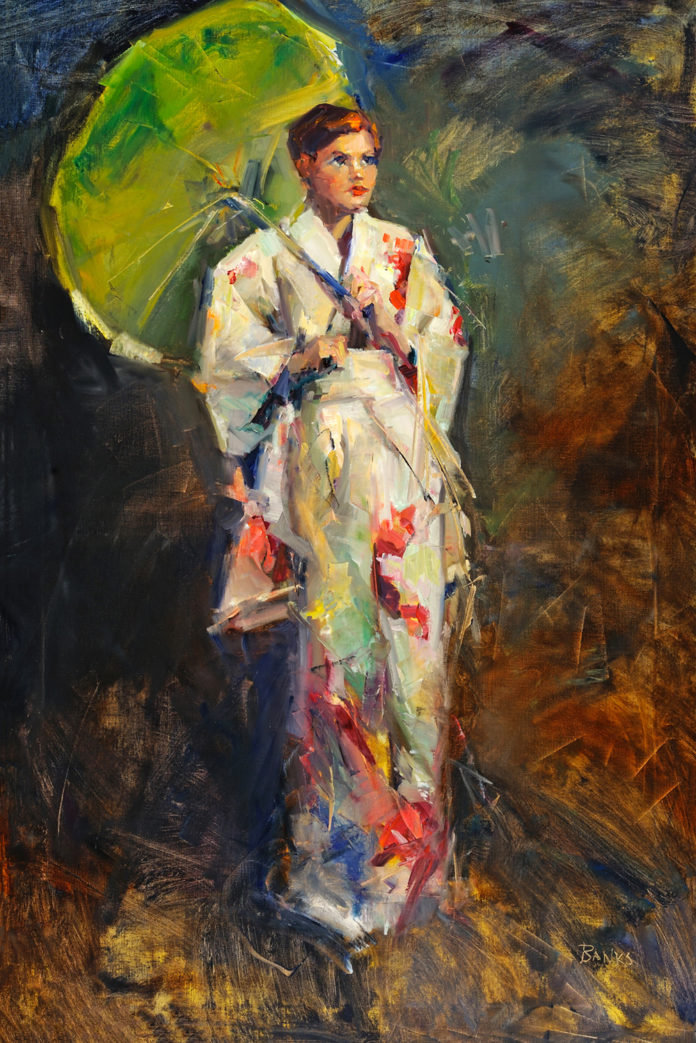
Jill Banks: While staying put at home, I sought to bring as much of that normal joy and inspiration of painting life as possible for myself and others. My favorite times of all, by far, are being at my easel with life playing out in front and around me ¬— enjoying the company of a wonderful subject or many.
When it wasn’t possible to attend open life or ask someone to pose for me, I joined virtual modeling sessions — and “Green Parasol” was created from one of those — while imagining this beautiful subject was standing there in my studio. Painting “Green Parasol” was pure joy. You can tell, right?
Capturing people is what makes me thrive. You can see just how crazy I am about all of you by touring around my website in the Places or Portrait/Figurative Galleries … or delving into my 100 Faces in 100 Days Project from 2011 which really launched my ability to paint people of all ages and moving around, from life.
I’m a signature member of American Women Artists, Women Artists of the West, and the Washington Society of Landscape Painters. Until March 19, you will find my piece, “After Hours” in the 51st National WAOW Exhibition at the Museum of Western Art in Kerrville, Texas. In April, I’ll be returning for the Knoxville Museum of Art’s Artist on Location juried plein air event and have work heading to Tucson for Settlers West’s Summer Show invitational.
Studio in Great Falls, Virginia – come visit by appointment. I can’t wait to see you!
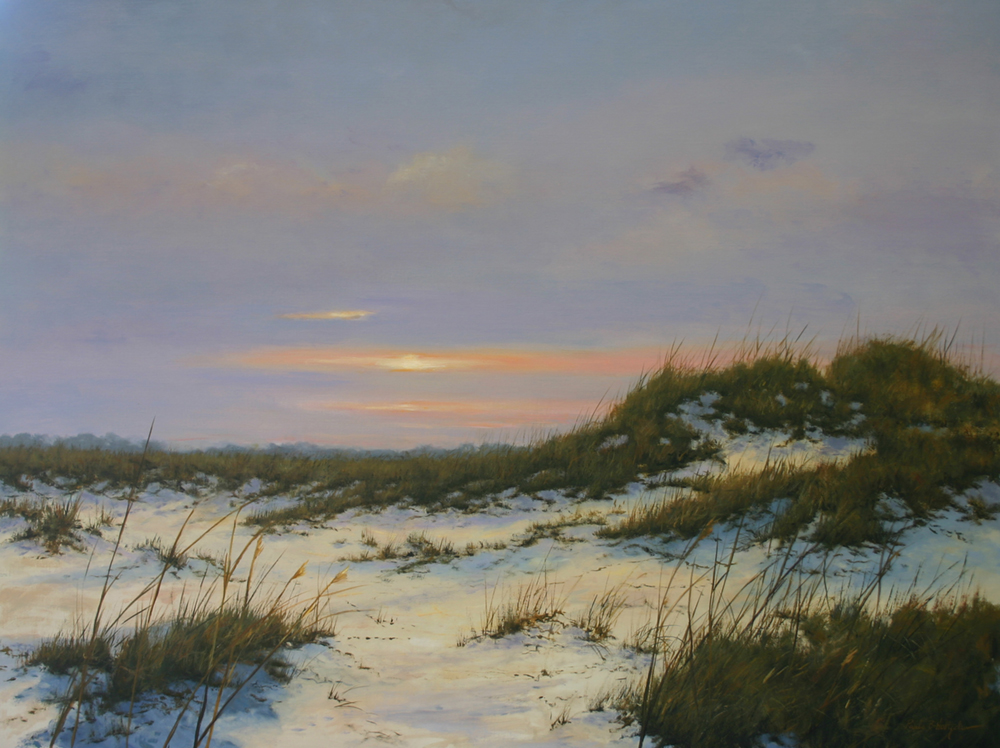
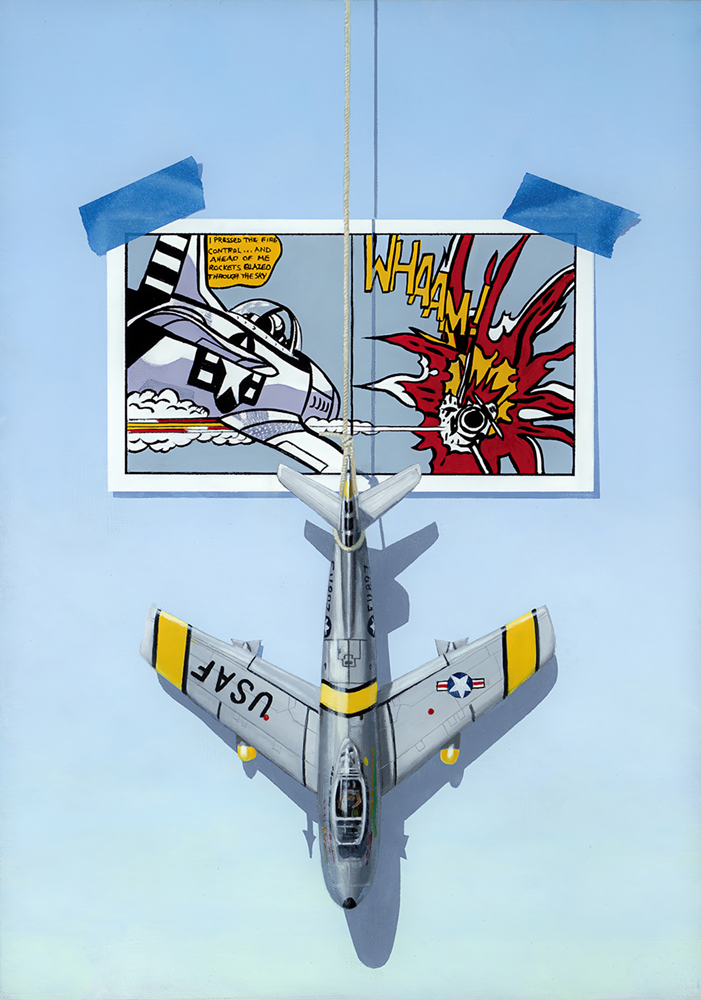
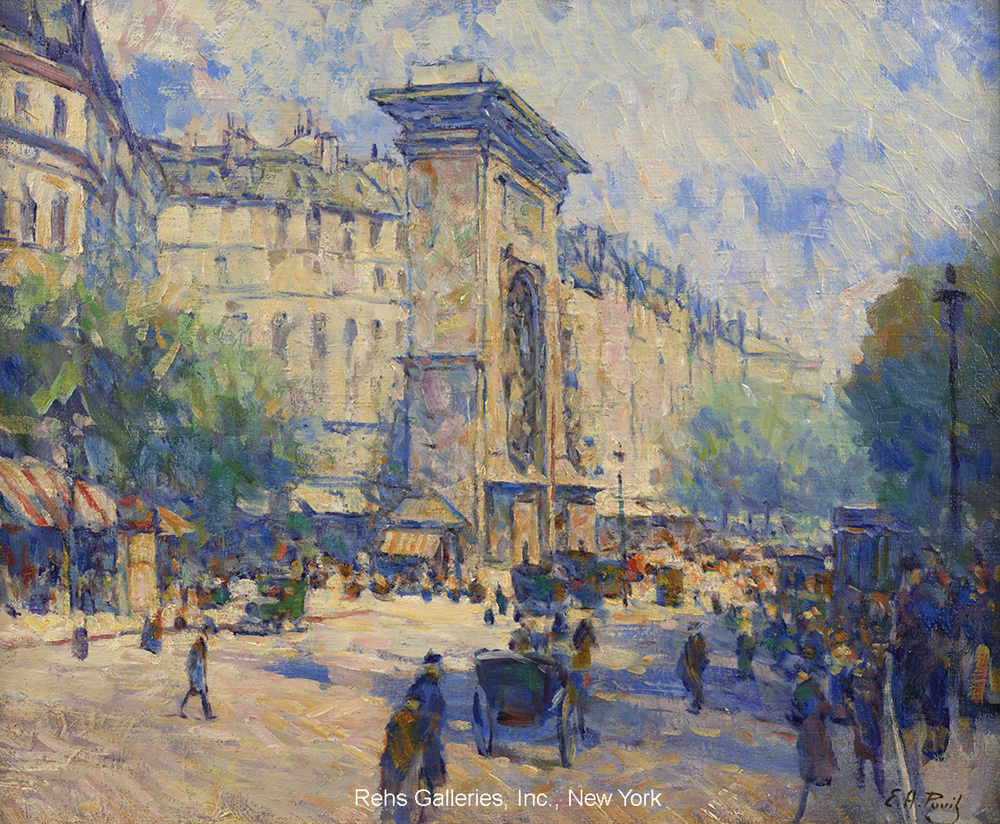
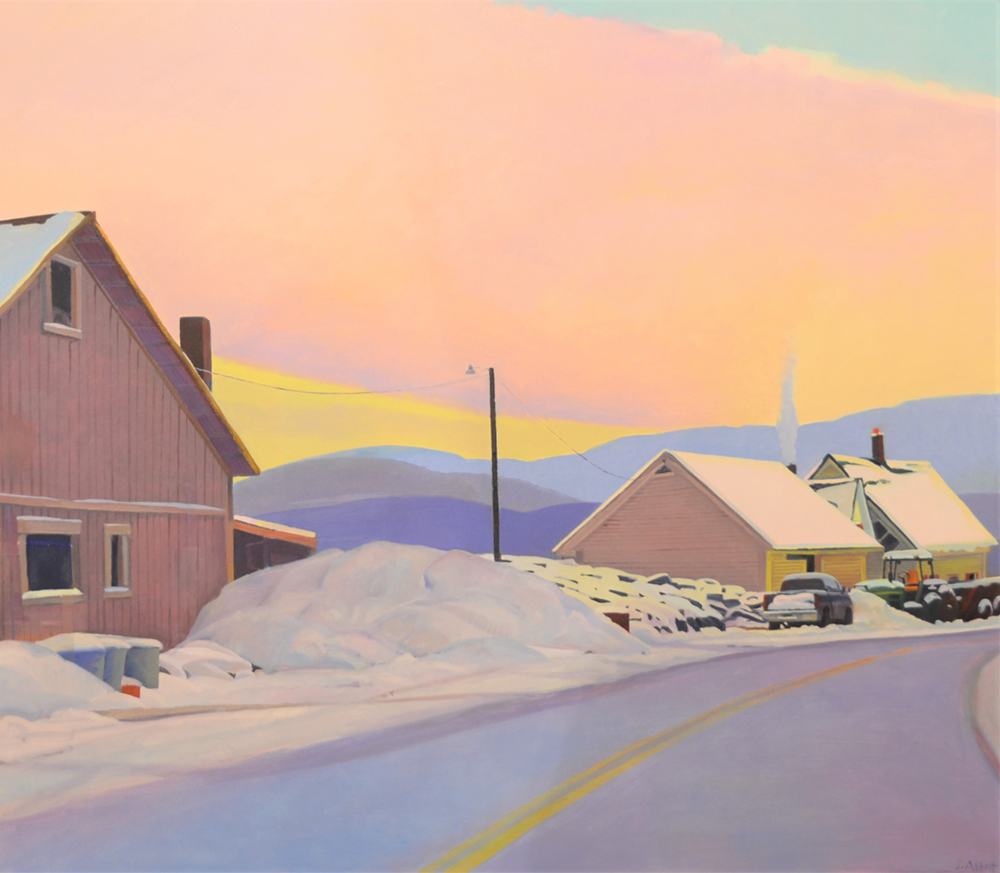
As part of our effort to continue to help artists and art galleries thrive, we’re proud to bring you this week’s “Virtual Gallery Walk.” Browse the artwork below and click the image itself to learn more about it, including how to contact the gallery.
Twilight Harmony by Paula Holtzclaw, Oil, 37 x 47 in.; Anderson Fine Art Gallery
Rocket’s Blazed by Richard Hall (Born 1952), Oil on canvasboard, 13 x 18.5 in., Signed; Rehs Contemporary
Porte St. Denis by Elie Anatole Pavil (1873 – 1948), Oil on canvas, 25.625 x 28.75 in., Signed; Rehs Galleries, Inc.
Road and Farm, Sunrise by Susan Abbott, Oil on linen, 31 x 36 in., (33 x 38 in. framed); Vermont Artisan Designs
Want to see your gallery featured in an upcoming Virtual Gallery Walk? Contact us at [email protected] to advertise today. Don’t delay, as spaces are first come, first served, and availability is limited.
For NAWA member Mary Ahearn, flowers represent to a microcosm of the universe in their cycles of living and loving, families and relationships as well as their quest for survival and eventual senescence and rebirth.
Photo credit: Chris Petersen
It’s easy for some to forget that not that long ago in history, women had few opportunities for making art, much less becoming professional artists. Even today there are challenges, which is why it’s important to highlight the oldest women’s fine art organization in the country, the National Association of Women Artists (NAWA).
“NAWA was founded by a group of women artists not content to be kept out of salons, exhibitions and galleries open to male artists in the 19th century,” Amy Hutto, a juried member of NAWA, says. “While great strides have been made, women artists continue to be underrepresented and our work undervalued monetarily compared to our male counterparts still today. Our goals, among many others, are to educate, inspire, promote and celebrate the art work and accomplishments of women artists, our members in particular.”
NAWA member Lisa Daria Kennedy Since 2009, she has committed to an on-going daily painting project. As a young adult cancer survivor, she discovered living is not just surviving. Each painting seeks to give a voice to the fiber of the everyday.
Hutto, a colorist whose subject focus is on domestic and wild animals, is from Austin, Texas, and currently lives in the Finger Lakes region of New York.
I had the opportunity to ask Hutto a few questions about the importance and benefits of NAWA, including a question that makes women in particular cringe.
Cherie Dawn Haas: Can you tell me a little about yourself please, and why you chose to join NAWA?
Amy Hutto: I chose to join NAWA because of its prestigious reputation, historical significance and its long history of spotlighting the under-represented art of women in a predominately male oriented profession.
I also wanted to connect with other artists across the country, and now I converse regularly with professional women artists in Colorado, South Carolina, and all over. I feel like I have my finger on the pulse of the art world in real-time.
CDH: What is your response when someone says, “They don’t have an association just for men?”
AH: I explain that the art world has traditionally been an association for men. Men have long dominated salons, galleries, and museums throughout history. Many women don’t even sign their full name on their work, just their initials, to remove any preconceived notions about art created by a woman. The National Association of Women Artists is working to change that narrative.
CDH: What are some of the ways in which men can support NAWA and women artists in general?
AH: NAWA does have many men who support us and we appreciate them a great deal! We have men on our Executive Board of Directors who support women artists. Men who are in the business of art whether as creators, gallery owners, curators, etc…acknowledgement; in-kind recognition and more inclusive practices that strive for more balanced representation; and additionally to support efforts for women created works of art to be monetarily valued as equal to that of men’s art.
Non-members of the art world can also show their support of NAWA through financial donations and endowments which allow us to grow our organization, hence increasing awareness of women artists and their contributions to the art industry.
NAWA member Joyce Byrnes is a pastel artist living in Rockland County, NY. In her paintings, she seeks to convey the light, color and textures she finds in nature.
CDH: What are some of the benefits of joining NAWA?
AH: There are so many benefits of joining NAWA; national exposure through NAWA’s website, the ability to participate in exhibitions that are exclusive to NAWA members both online and in exhibition spaces, the contacts one can establish with artists across the country, the support of other artists experiencing the same issues in our industry, access to a wealth of knowledge and expertise shared with other members on our social media sites, as well as having artwork listed in our catalogs and stored in the archives at Alexander Library at Rutgers University. I could go on and on.
I will add just one more thing. Being able to be a part of this historical organization whose sole purpose is to empower women artists, and to see my name alongside artist powerhouses such as Mary Cassatt, Faith Ringgold, and Judy Chicago is an enormous honor. Such a feeling of accomplishment is difficult to put in words.
CDH: Have there been any unexpected positive results for the artists in this association?
AH: Yes, having our organization featured here! Thank you very much for the opportunity to visit with you and share a little about NAWA and our artists. You never know where connections will lead, and you don’t make connections unless you reach out.
I reached out to join NAWA and once I was accepted, a whole world of opportunity opened for me. That’s what we want for our members; to show them that we value them as an artist by selecting them through a juried process to join our esteemed organization and by providing ongoing opportunities for education, inspiration and promotion of their work – connecting with them not only on a professional level, but personal level.
CDH: Does NAWA have any upcoming exhibitions?
AH: We currently have “The Resilience of Grief” and “Winter Small Works,” which are online exhibitions that will carry us into spring. They will be followed by “Special Women / HERstory” and an invitational exhibition, Art Angels which will lead into our first summer exhibition for our new members held in June.
One not to miss premier’s in October with NAWA’s 132nd Annual Members Exhibition. Our Massachusetts, South Carolina, and Florida Chapters are holding both virtual and live exhibitions. A complete list can also be found online at: thenawa.org.
Members and the public alike enjoy an exhibition of art from NAWA
CDH: Anything else you’d like to add?
AH: I’d like to mention that NAWA Headquarters recently moved into a new location. We are now privileged to call the National Arts Club building at Gramercy Park South in New York City our new home. This is a beautiful and historically significant building and when we are able to return to in person shows, we will have an incredible new space to host them in.
In the meantime, please visit our website www.thenawa.org and like our Facebook page @TheNAWA, to see what our incredible artists and the organization is doing. Lastly I want to thank you again for the opportunity to share a little about the National Association of Women Artists. Having a chance to highlight the issue of under-representation of women artists, is critical. Art is an ever-evolving form of expression that belongs to all of us. We each have the power to change the status quo for the betterment of not only ourselves, but the women artists who come after us.
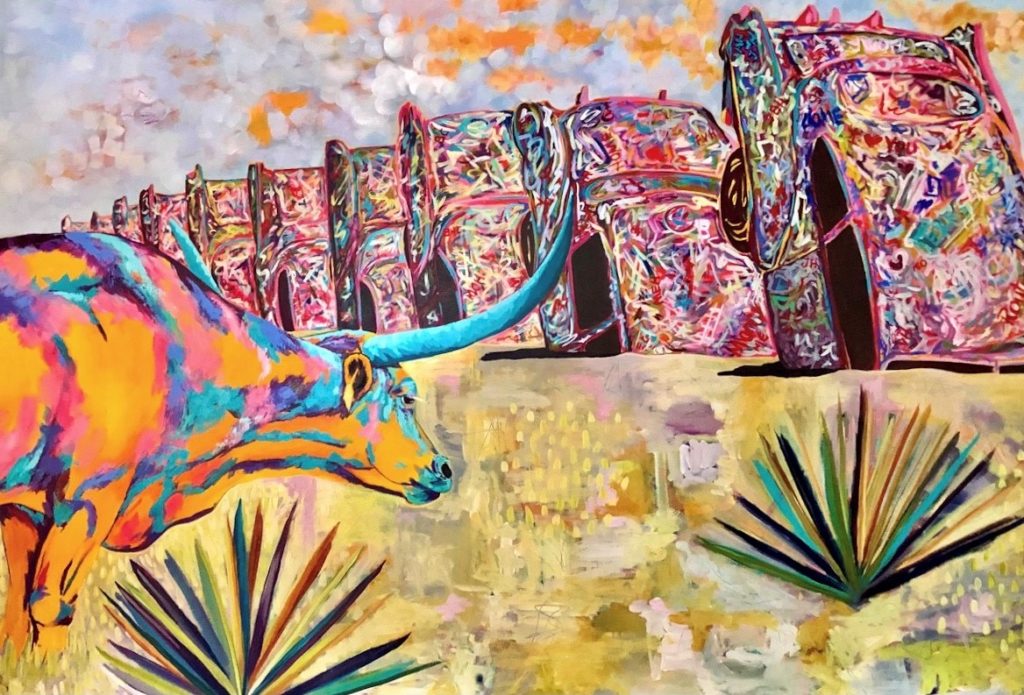
“Cadillac Ranch with Longhorn” by Amy Hutto, NAWA member
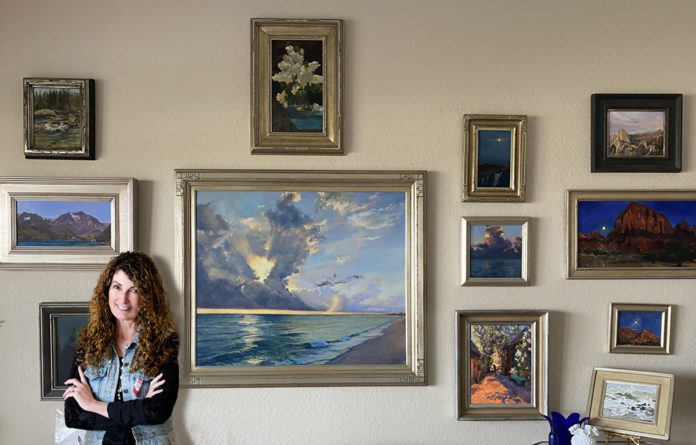
Karen Ann Hitt in front of her home gallery wall where paintings are reviewed before heading to the Hughes Gallery in Boca Grande, Florida; host of Karen Ann Hitt solo exhibit that opens 1 March 2021, marking her 60th year.
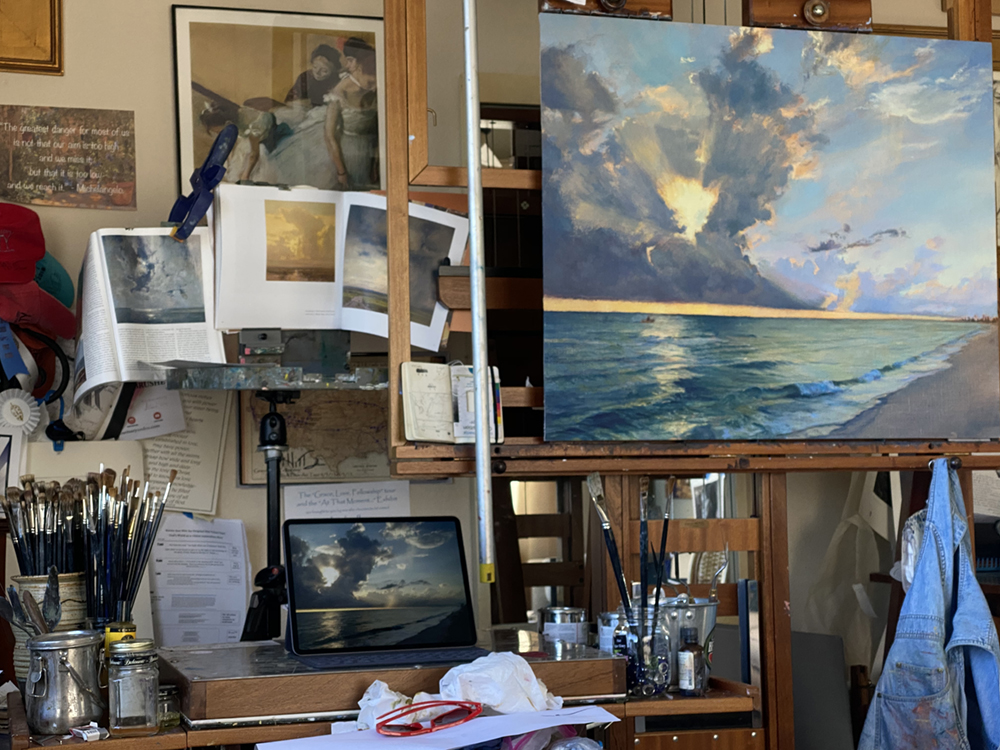
Karen Ann Hitt, Studio Easel Set-up with some of the references, palette, brushes and “Comes Into The Light” in the works, 2020
How did you get started and then develop your career?
Karen Ann Hitt: Ironically, I got started by growing up very tall and very skinny and having to learn to sew at 12 years old to make clothes that fit my rare size. All of that led to my learning Advanced Technical Fashion Design in college level vo-tech high school courses while working for a better dress maker and earning a partial scholarship by designing a wedding dress.
Culminating from all things Art consuming my attentions, towards the end of high school I asked my Fashion Design teacher where I should go to college. She only named one school: Parsons School of Design in New York. Therefore, I applied, all on my own, and resolved that if I did not get in, I would just go to Miami Dade Community College until they accepted me. Well, I was accepted first try, and off I went! A classmate and friend dropped me off on her way back to New Hampshire from Ft. Lauderdale, and there I was — sight unseen — in NYC. When we arrived and were standing in front of the building of my new dorm, my friend said, “I can’t leave you here!” I replied, “you have to, this is my home now.”
The Foundation year at Parsons introduced me to a whole world I never even knew existed. One of our classrooms for costume drawing class was in the basement of the Metropolitan Museum of Art where we were blessed to literally draw Louis XIV clothing in the archives. While in the basement, I saw a layout drawing by Leonardo da Vinci on display that he used to transfer onto a fresco by making pin holes along the lines and chalk; pieces of history like these forever changed me. A priceless education, that grew from the fashion.
A funny tale, in my first painting class the teacher recommended that I paint a “Sargent.” Little did I know she meant a Master Painter — being from a military family I sought out reference for a Sergeant! Back in the classroom I shared with her that it is much easier to find reference for Generals than Sergeants. Yes, she fell out of her chair, and yes, I had a LOT to learn! For that utter embarrassment I am forever thankful, and to this day the American Wing of the Metropolitan Museum of Art remains one of my favorite places on earth.
Studying all original Master Painters’ paintings turned into a lifetime pursuit that still burns in me to this day. Realizing my true passion, I changed my major from Fashion Illustration and Design to General Illustration and Fine Art. The brand “An Original Hitt” was originally for the dress shop I thought I would open one day… now it’s just who I am.
How do you describe success?
Having the opportunity to fully utilize aesthetic abilities in an environment allowing for growth and the continual development of its potential. I love the Michelangelo quote: “I am still learning” spoken at 87. I am honored that the Hughes Gallery in Boca Grande, Florida, beginning its 21st season, is hosting my solo exhibit that opens 1 March 2021, marking my 60th year.
How do you find inspiration?
Inspiration rises from the emotion that causes an ‘at that moment…’ pause, and then the deep desire to capture it — reflecting those influential daily moments that occur in all our lives. Completely unable to ignore what many may pass on by, unnoticed.
What is the best thing about being an artist?
Simply how I am blessed with how I see the world, making a gift of weakness (distractions) and turning it into strength (work). Hopefully making for an opportunity to awaken viewers’ observations into their own lives, turning on their own ‘light bulbs’ — in a way, their own up out of a basement, too?
Who do you collect?
Kevin Courter, Jane Chapin, Stephanie Birdsall, Tony D’Amico, Katie Dobson Cundiff, Melissa Hefferlin, Hodges Soileau on hand. JMW Turner, Edgar Payne, Emil Emerson, John Singer Sargent, Anders Zorn, Fetchin, Degas, Cassette, Maxfield Parrish, Hudson River, some that influence, study always, collecting their books and referencing everything able to see…
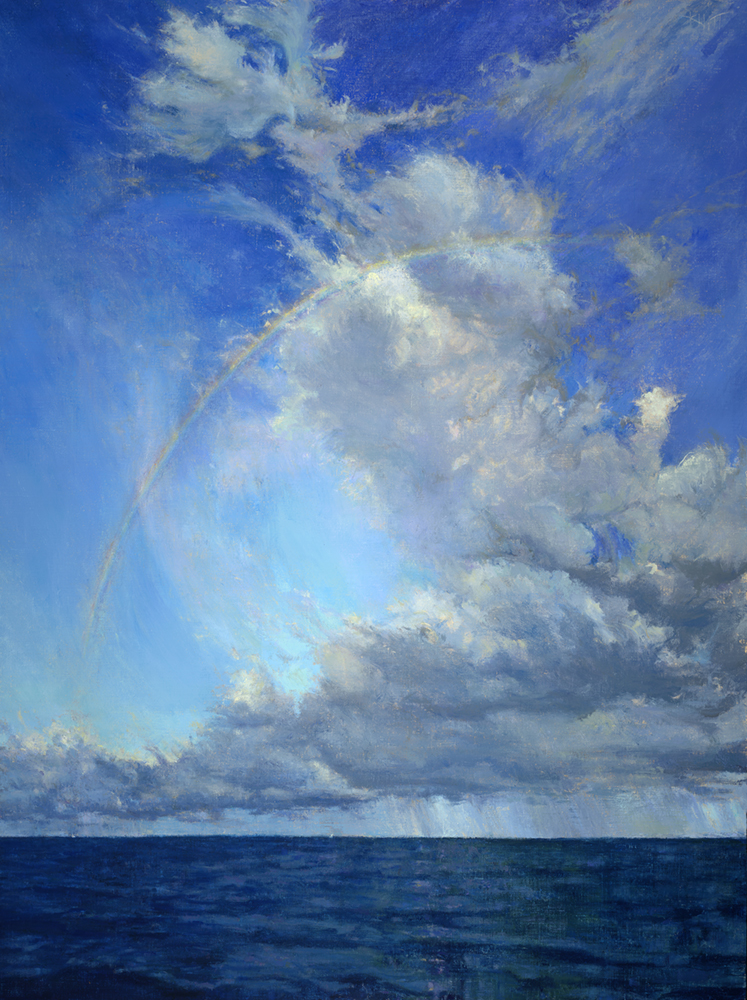
Karen Ann Hitt, “Deep Promises,” 48 x 36 in. (framed 56 x 44 in.), oil on linen, 2020Karen Ann Hitt, “Fragrant Offering,” 16 x 9 in. (framed 23 x 16 in.), oil on linen, 2020Karen Ann Hitt, “Mile Marker 212,” 18 x 24 in. (framed 23 x 29 in.), oil on linen, 2020Karen Ann Hitt, “Cindy’s Gift,” 10 x 12 in., oil on linen, plein air work, 2016
Liliya Muglia: I was born in the former Soviet Union where I studied classical art in an academic setting from the age of nine. During my years in L’viv, Ukraine, I obtained a master’s degree in pharmacy, but after the Chernobyl explosion and subsequent collapse of the economy, I migrated to Canada where I requalified as a pharmacist at the University of Toronto. I also continued my studies at the Academy of Realist Art (ARA) and graduated in 2013.
Today I have left the field of pharmacy and am a full-time artist with my studio located at ARA in Toronto, Canada. As a classically trained artist, I use the realism of my work to support my imaginative disrupted vision of the world which comes from my personal life experience, and future expectations.
I typically paint in oils and develop themes based on a narrative much as a writer who writes a novel with main and supportive characters and frequent changes of composition and color schemes. I do preliminary studies in charcoal and conte with real models and create subjects from different perspectives. In these studies, I use different sceneries, clothing, accessories, and attributes as part of a foundation for the final execution of my work.
The goal of my work is to transform my subjects into a narrative and to capture the subtlety of the human condition. By doing this I bring to life paintings which involve and engage the viewer through the beauty of interpretive realistically painted works within an imaginative disrupted reality. I produce art as a statement of my thoughts, fears, and desires and deliver the viewer my artistic vision.
My creative motifs often illustrate the power and beauty of feminine interpretations. These interpretations can be found in the depictions of feminine forms weather they contain human subjects or not. In addition, each piece is painted with a tension in mind and this tension is felt by the viewer and although sometimes the characters may struggle, fail or perish, the strength of the feminine protagonist is always present.
As a result of disillusionment with conceptual and post-modern art at the end of the 20th Century, many artists have turned to a more traditional figurative representation in order to reach their audience on a higher level of interpretation. Most of these artists studied in ateliers under the curriculum of the Old French Academy (17th to 19th Century) obtaining the technical skills of the old masters in order to create their artistic statement.
I am one of these artists who embraced the traditional forms of classical academic interpretation in order to create new and modern interpretations of classical realism. My works come through the prism of my thoughts with precise execution and this inspires the imagination and affirmation in the mind of the viewer and seeks to change their artistic preference in favour of artwork that is refined and divine.
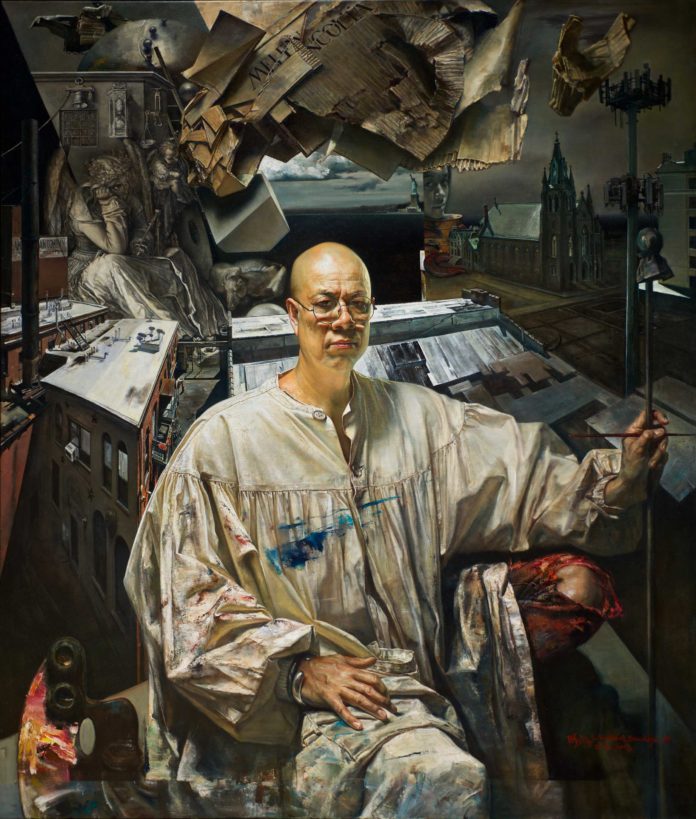
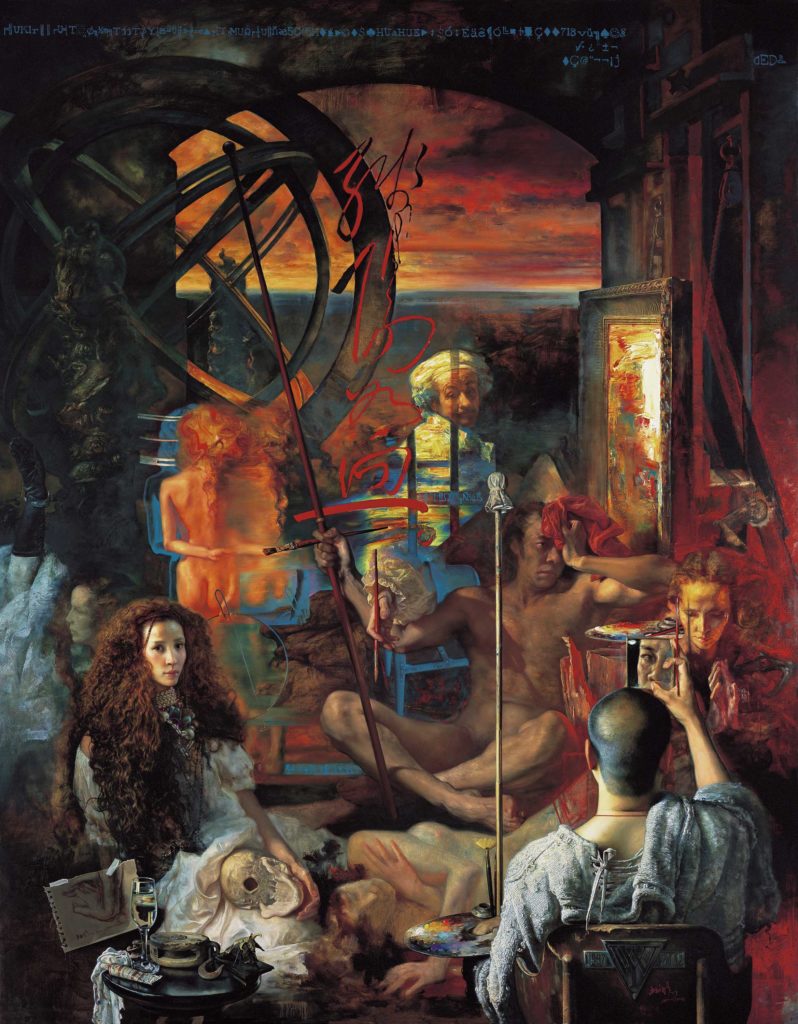
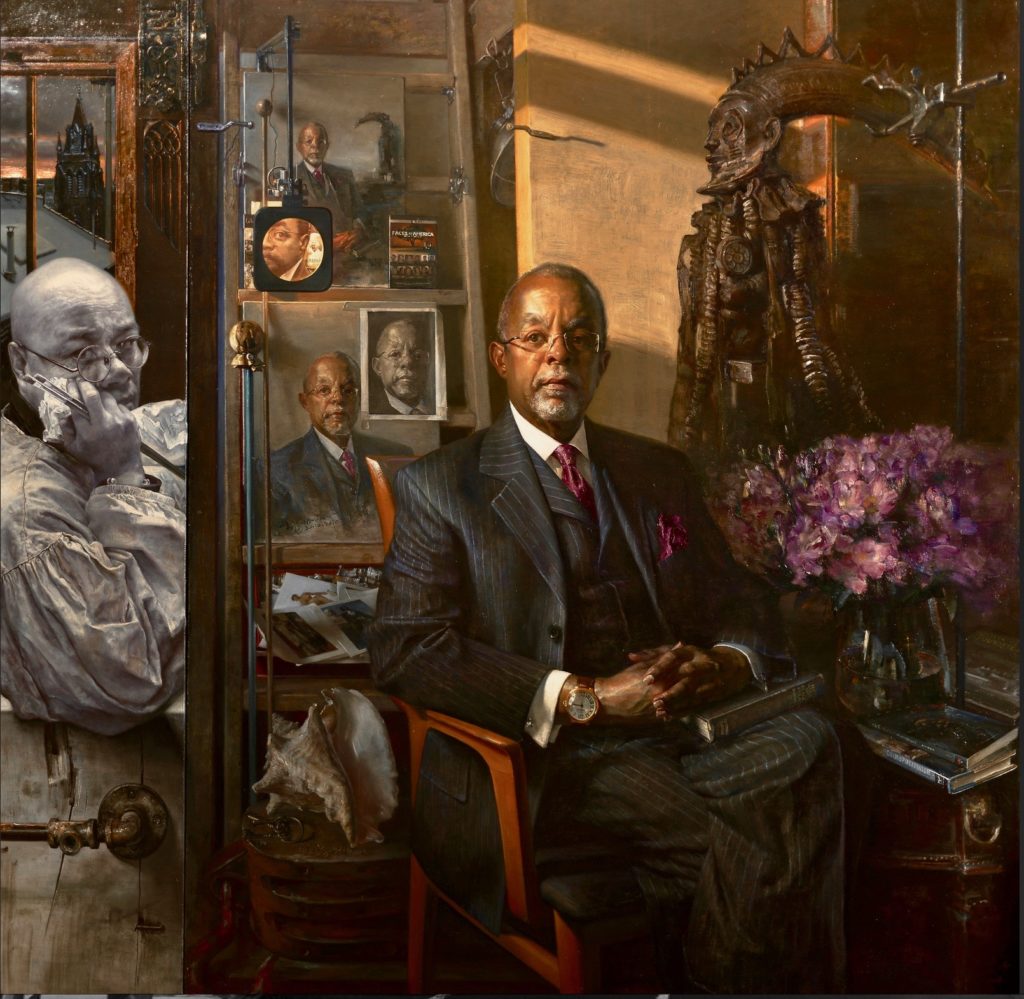
Yuqi Wang, "Red Hook Fantasy," 2018, oil on linen, 68 x 58 in.
How contemporary artist Yuqi Wang, a master of portraiture, discovered Western Art, defied authorities in school, and has answered the question, “Why am I here?”
Portrait of a Portraitist
BY DAVID MASELLO
Yuqi Wang (b. 1958) is looking for the right word. A vintage recording of the great tenor Franco Corelli singing Neapolitan love songs is playing on the phonograph in his Red Hook (Brooklyn) studio, a quiet, contemplative space shot through with beams of sunlight from the west.
“In my portraits, I try to capture something spiritual about the people, their humanity, their interiors — but those are still not the right words I’m after to describe what I want to do as a portrait painter,” Wang says while pointing to various canvases. Although born and raised in China, Yuqi (pro-nounced “Yoo-chee”) Wang speaks English fluently, albeit with an accent, but to find that precise word for his intention, he consults an online Chinese-to-English dictionary.
“Ah, here it is,” he says, holding out the iPhone to show the answer that appears in both English and Chinese characters. “‘Dignity,’ that’s what I want to achieve with everyone who sits for me. Their dignity.”
To look at the many painted faces and figures on the walls and easels of Wang’s loft-like studio is to see the inherent dignity of the men and women he has chosen to depict. Some of the figures are clothed, others are not, and while most are physically beautiful, some wear their years a bit more frankly. Given the way Wang characterizes his subjects, it is not surprising that he cites Rembrandt as among his most important influences.
“Rembrandt tried searching for what was inside a person and putting that on the canvas,” Wang says. “He painted people, yes. But he didn’t always seek out pretty faces or prettily shaped bodies. His figures appear like lighthouses on the sea. You see the real person. The first time I saw Rembrandt paintings, in an art history book as a boy in China, I was very touched. I didn’t recognize the faces he painted as being Western art or Eastern art. They were human faces. That’s what mattered to me.”
Wang came of age as China was convulsed by Mao’s so-called Cultural Revolution, which began in the mid-1960s, and which forced people to shun all things Western, be they political or aesthetic. It wasn’t until Wang was 10 or 11 years old that he saw his first example of true Western art — a black-and-white image in an old newspaper hanging in someone’s window as a makeshift curtain.
He remembers stopping to stare at the image of the figure with long hair and an enigmatic expression. It was Leonardo’s Mona Lisa. “I had no concept of what was or wasn’t Western art at that time, but I couldn’t stop looking, even though the face was a little scary to me.”
Yuqi Wang, “Fatalistic Artist,” 2002, oil on linen, 80 x 68 in.
Later, in high school, he saw more examples of Western art in textbooks and art magazines. Those images, coupled with a truly revolutionary exhibition of paintings loaned by French museums and mounted in Beijing in the late 1970s, provided Wang with a firm context for the subject matter that has propelled him forward ever since.
He cites Chardin, Millet, Waterhouse, Moreau, the Barbizon School, and Courbet as among the artists and movements that helped forge his artistic identity. “Even today, I keep thinking of the Pre-Raphaelite artists and how powerful it was for me to see their works, especially the red-haired woman in the boat in Waterhouse’s The Lady of Shalott,” he says, referring to the legendary figure who died of unrequited love.
Yuqi Wang, “From Red Hook,” 2005, oil on linen, 30 x 30 in.
AN EARLY REVOLUTIONARY
Today Wang is one of the world’s acknowledged masters of portraiture, having won prizes and notable commissions, including a grand prize and first place prize from the Portrait Society of America, and a second prize in the National Portrait Gallery’s Outwin Boochever competition.
Yet the portraiture for which Wang is famous is not actually the genre he pursued as a young artist. When he attended the Academy of Fine Art in his home city of Tianjin, he was assigned to learn printmaking. “In those days, what you were assigned to study in art school was what you had to study for the four years until graduation. There was no breaking of rules. I was warned that if I kept trying to make oil paintings, which is what I wanted to do, I wouldn’t get my certificate at the end.”
In true revolutionary spirit, however, the precocious Wang defied the authorities. For his graduate thesis, he produced a series of paintings depicting Chinese country life, an echo, in many ways, of the 19th-century French pastoral scenes he had recently come upon and admired. “I must admit, I became a kind of star on campus,” he recalls.
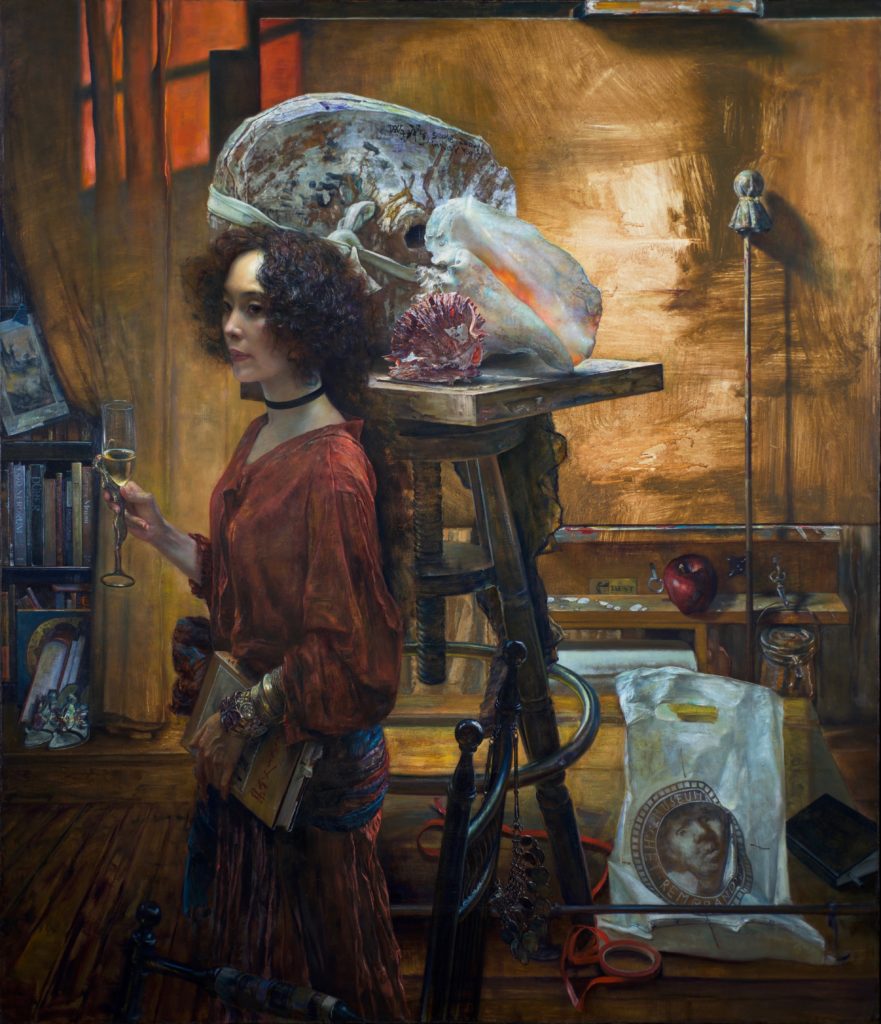
Yuqi Wang, “Champagne,” 2007, oil on linen, 56 x 50 in.
Later, Wang attended Beijing’s Central Academy of Fine Art, where he was finally able to experience the thrill and methodology of painting live models, the technique he continues to use whenever possible. There, renouncing the color palette, notably garish reds, that had been promoted by Communist authorities, Wang painted a poignant scene depicting two farmers — a man and a woman just in from the field, dirty and exhausted but inherently noble — a work that earned him a prize. “That painting was dark and its colors muted; it was realistic in ways that paintings in China had not been for many years.”
In keeping with his passion for depicting real people doing real things, Wang later embarked on a five-part series of paintings of a woman. “I remember as a young kid attending a funeral and I saw a girl there in a dress with a white collar. The sight of her and what she was wearing, both on her and the expression she wore on her face, really touched and moved me.” It was from that memory that Wang produced the canvases that traced the complete life of a woman, from girlhood to old age.
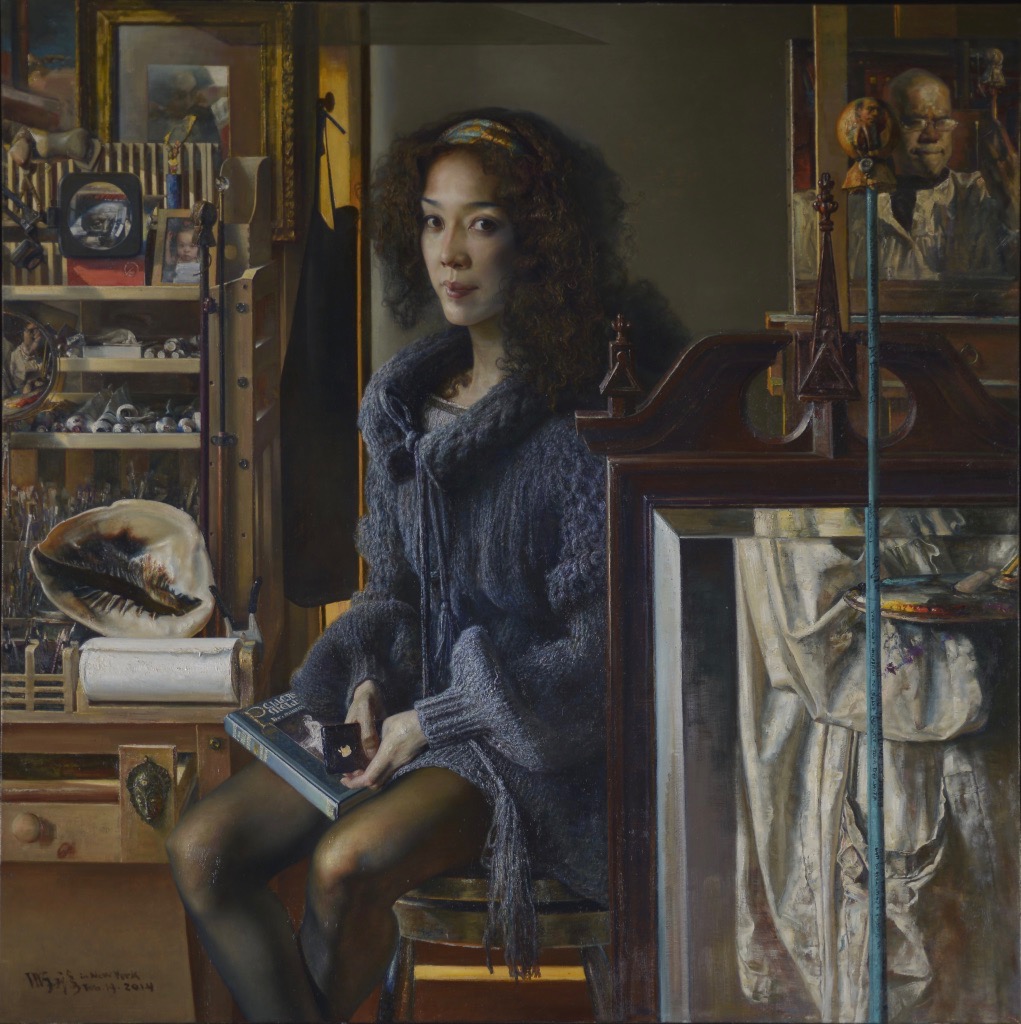
Yuqi Wang, “Yan: Melisand Forever,” 2014, oil on linen, 48 x 48 in.
From the time he was a boy drawing anything and everything to when he became a student and, later, a teacher, Wang learned the importance of cultivating the right subjects. To be a good — now a great — portraitist requires the earning of trust. The sitter needs to trust the artist for whom he or she sits, often for weeks at a time. It also requires a special vision on the artist’s part — the ability to see into a person.
“As a boy, I taught myself to draw as a way to protect my dignity during the disastrous years of the Cultural Revolution,” Wang explains. “I purposely sought out people I knew would be friendly, willing to let me draw and paint them. My first models were family members, neighbors, and classmates.”
Although China had become a very different place by the mid-1990s, Wang was eager to begin a new metaphorical canvas in his life. Chinese friends already settled in Chicago encouraged him to come there.
“There were four reasons I decided to go to Chicago,” Wang recalls. “One was that I had seen in Paris some of Gustave Moreau’s mythological scenes, and I was especially intent on seeing Hercules and the Lernaean Hydra in the permanent collection of the Art Institute of Chicago. I also wanted to see Sir Georg Solti conduct the Chicago Symphony Orchestra, to watch Michael Jordan play basketball, and, maybe, the fourth reason, to see where the Mafia once had so much power.”
While Chicago proved to be the right portal to life in America, Wang continued to feel the pull of New York City, eventually relocating there, where he remains, shuttling daily between his Brooklyn apartment and his studio nearby.
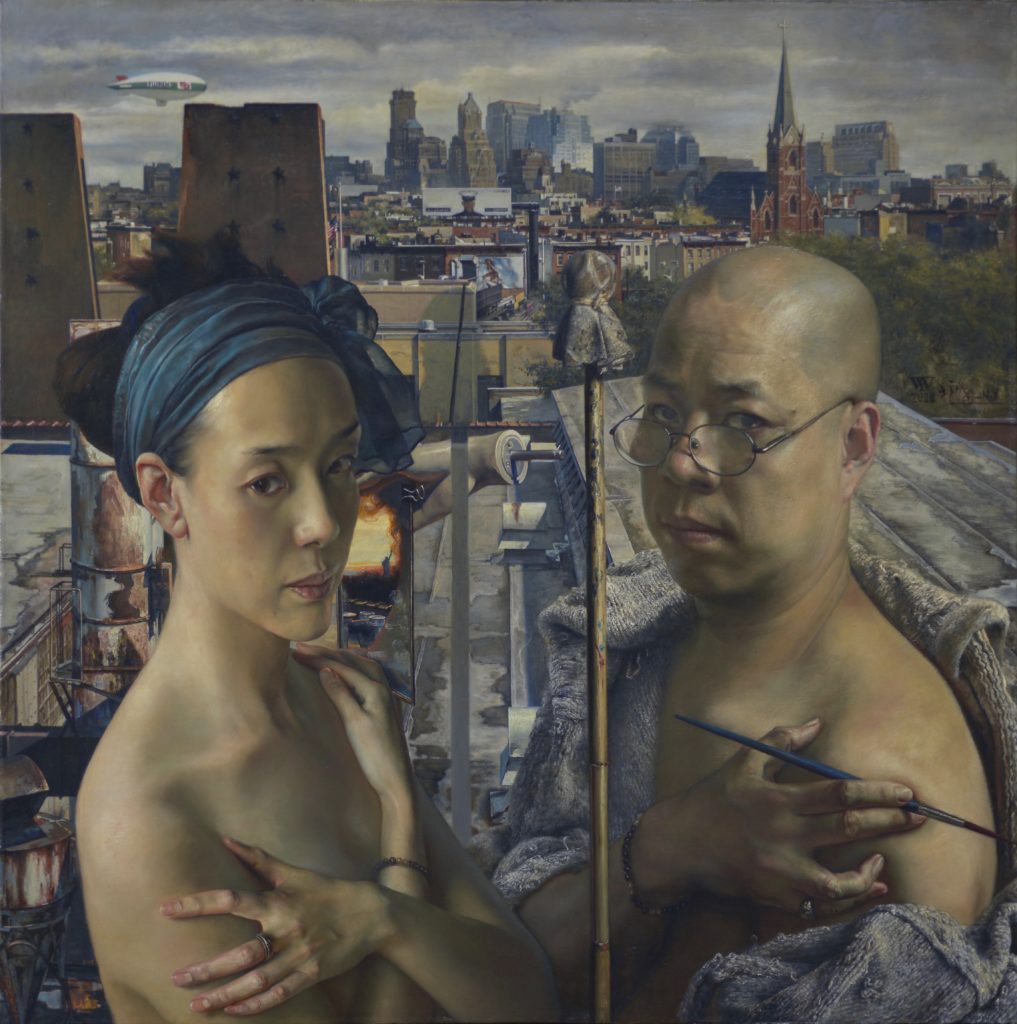
Yuqi Wang, “The Artist with His Subject (Henry Louis Gates, Jr.),” 2010, oil on linen, 64 x 64 in.
Wang remembers his first tour through the rough-and-tumble, post-industrial landscape of Red Hook; he had heard that the light there — and the low rents — were ideal for artists. “The landlord took me up to the roof of this building, and when I saw the 360-degree views from up there — of Brooklyn, Manhattan, the Statue of Liberty peeking between a church and some factories — I thought, this very setting could be my subject.”
Indeed, to look at “Red Hook Fantasy” (shown at top) his recently completed, and quite magnificent, self-portrait, is to see not only the dignity of the sitter, but also the very surroundings and structures just outside his windows. The factories, the Gothic Revival Catholic church on the corner, the same roof from which he first admired that panorama, the noirish alleyways of Red Hook — all appear as the backdrop to the artist in his paint-smeared smock.
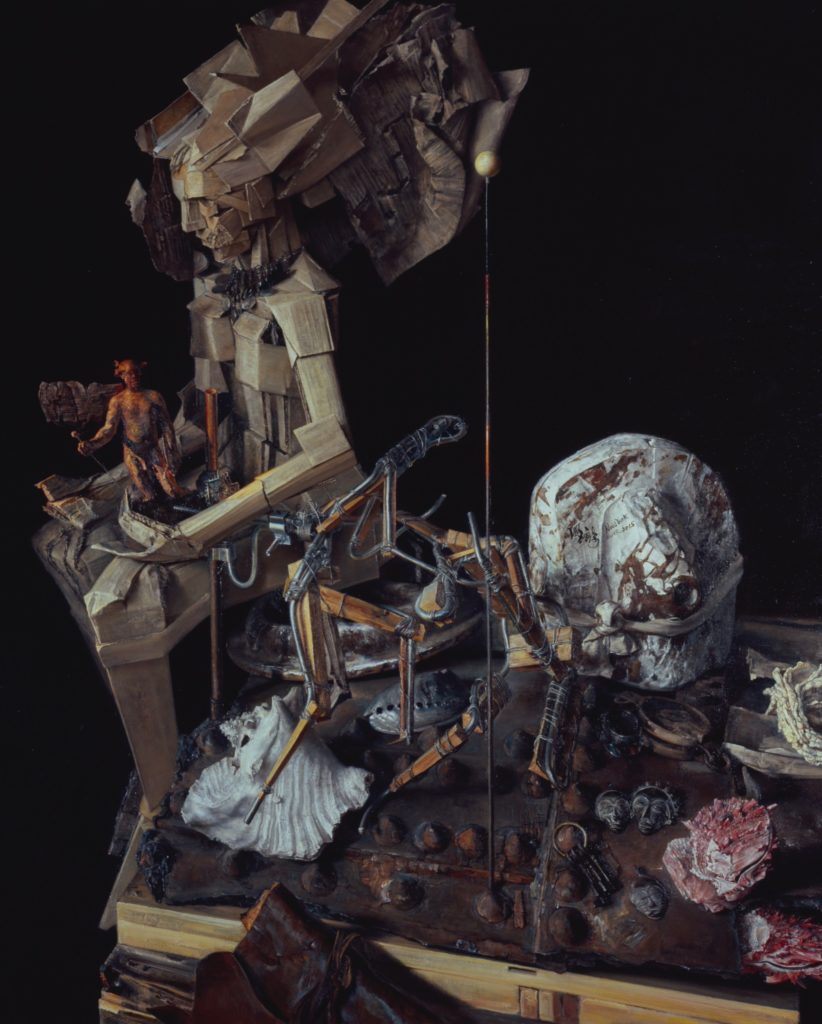
Hovering over this scene — which is decidedly urban and also jarringly post-apocalyptic — is the painted word Melencolia. This references yet another historic master who has influenced Wang: Albrecht Dürer. “I love this word because it evokes the artist’s ‘loneliness,’ which I experienced myself, especially during the Cultural Revolution.”
Wang opens a sketchbook containing some early iterations and ideas for the self-portrait. Page after detailed page reveals a figure, hovering almost angel-like in the background next to him.
Asked about that shadowy figure, Wang replies, “That is Gustav Mahler. I am crazy about Mahler. I wanted to include him, somehow, in a self-portrait because his music is so important to me.” Recognizing, finally, that he was forcing that image onto the canvas in ways that did not feel right, Wang ceded control and instead included an overt reference to Dürer, who represents, perhaps, a more direct artistic bond. Wang’s self-portrait now includes a version of Dürer’s angel from the master’s famous engraving Melencolia I.
Yuqi Wang, “Sunset in Red Hook,” 2015, oil on linen, 56 x 46 in.
ANOTHER PALETTE
In addition to his palette of pigments, Wang works with a musical palette. Whether it’s a recording of Wagner’s Parsifal, a Shostakovich symphony, or, most often, Mahler’s Titan symphony, music accompanies every one of his brushstrokes. “Why Mahler?” Wang asks rhetorically. “Because Mahler is always thinking about the human condition, about philosophy, about religion, about nature, about the meaning of life.”
To further emphasize this musical bond, Wang goes to a corner of his studio and pulls out a canvas that shows a humble house, situated at the end of a long expanse of dense green woods. “This is Mahler’s house in Austria, which I went to see. He had no motherland, really. He was Jewish in a world hostile to Jews. He was always in search of a home, never at home. Even in China, you go from village to village and a person’s accent is different. It marks them as an outsider. I still feel like an outsider, too.”
But feeling like an outsider has advantages for an artist, as it heightens one’s powers of observation. Wang continues to express awe at the people he has met through both serendipity and introductions. One of his most notable models is the Harvard-based scholar Henry Louis Gates, Jr., whom he has painted three times; the most formal version hangs at the National Portrait Gallery in Washington.
Wang points next to a large canvas in progress that depicts a beautiful, discreetly nude woman. He was introduced to the sitter, Charlotte de Broglie, by a neighbor who thought she might make a good model. “It turns out she’s a French princess, the real thing,” Wang explains. When she visited his studio days later and saw Wang’s completed canvases, she was the one to offer herself as a model. “She sat for me four or five times. She stated that she couldn’t commission a portrait, but she did hint that once it was complete, maybe her father would buy it!”
In his large portraits, Wang paints not only his sitters’ likenesses, but also their histories. Just as he did with his self-portrait and that of Gates, he has included motifs that reference the princess’s life — for example, an image of Ingres’s 1851 portrait at the Metropolitan Museum of Art depicting the Princess de Broglie. “That is her direct ancestor,” says Wang, pointing to the woman in a shimmering blue gown he has eerily recreated. Also depicted is another relative of the princess, a man who won a Nobel prize in physics. Today the young princess’s gown, trimmed in what appears to be chinchilla, hangs beside the canvas, ready to be worn should she return for another sitting.
Wang continues to study his self-portrait, which he gave himself as a kind of birthday present. While painting it last year, he suffered a serious gallstone attack during which, he says, he “kissed death.” That episode, coupled with world events that have led him to despair — everything from the current U.S. president to Brexit to the European refugee crisis — is what led him to inscribe Melencolia on the canvas.
“One day, I walked to the end of the Louis Valentino Pier, here in Red Hook, and I looked across the water to the Statue of Liberty. I asked myself, ‘What is the value of life? Why am I here?’” By the time he returned to his studio, he knew the answer. “I’m here to be an artist, and every artist’s mission is to speak out.”
Having described this episode, Wang shifts to a cozy seating area in his studio, furnished with a couch and floor-to-ceiling shelves filled with CDs and LPs. He pulls out a vintage LP and puts on Wagner’s Parsifal, the tale of a man’s quest to find the Holy Grail. “Bach, Mahler, Wagner — they help me find the entrance to my soul,” Wang says as the needle drops.
Surveying the many canvases in Wang’s studio, as well as those in private and public collections, it is clear that Wang has found his soul and is sharing it with the world.
David Masello is an essayist on art and culture, a poet, and a playwright who lives and works in New York. This article was originally published in Fine Art Connoisseur, January/February 2019.
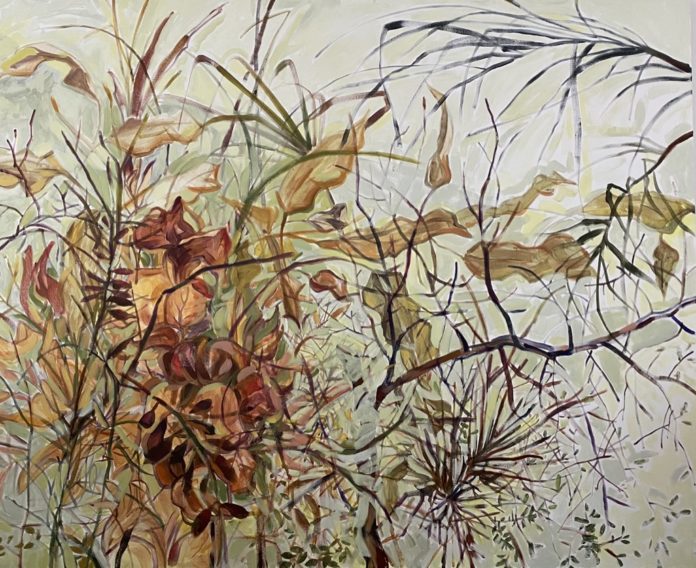
Patricia Brentano, "Red and Orange Debris," acrylic on canvas, 5 x 6 ft
Patricia Brentano developed a spiritual attachment to the natural world growing up in southern Indiana. Her work is rooted in direct observation and a felt sense of nature. She transformed her suburban yard into a native habitat to benefit the migratory birds as well as the local environment. Much of her inspiration comes from her own back yard.
She has partnered with NJ Audubon and The Nature Conservancy of Indiana to create site specific installations. She has received commissions from environmental organizations and hospitals as well as private collectors. As an educator, Pat gives talks on how to transform our yards into native habitats as well as a workshop about learning to see and reconnect to nature.
“We Don’t Own Nature: The Artwork of Patricia Brentano” is on view online and at the Monmouth Museum (Lincroft, New Jersey) through March 15, 2021. Learn more at monmouthmuseum.org.
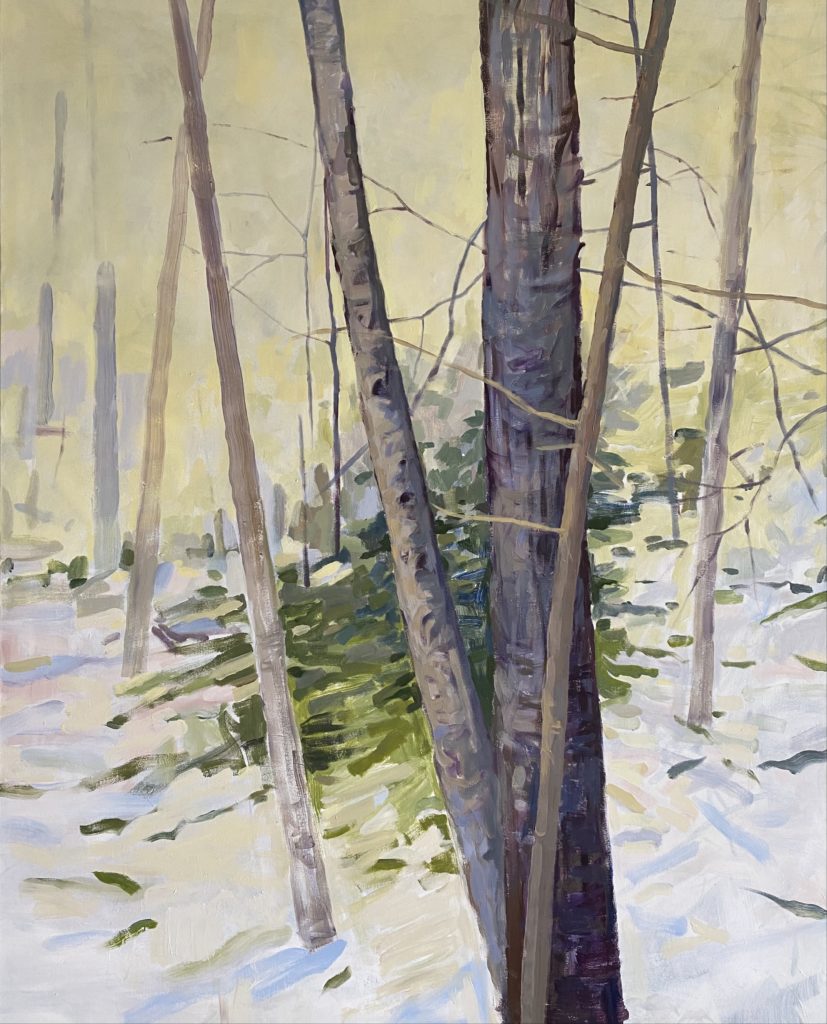
Patricia Brentano, “Winter’s Bone,” acrylic on canvas, 40 x 60 in.
In 2012, PBS nationally aired the NJN State of the Arts documentary about Pat as an artist and environmentalist. The Institute for Women’s Leadership at Rutgers also produced a documentary about her work as part of their Transforming Lives Project. Her work has been exhibited in museums and galleries throughout the Mid-Atlantic States. She is a NJ State Council on the Arts Individual Fellow, and a Puffin Grant Recipient.
Pat’s work on endangered birds received the Curators award at the Chesterwood Museum in MA. She was also awarded a residency at I-Park in Connecticut and The Evansville Museum in Indiana. She earned a BFA from Washington University and an MFA from Tyler School of Art. Pat has studios in Scotch Plains, New Jersey, Naples, Florida and Shohola Pennsylvania.
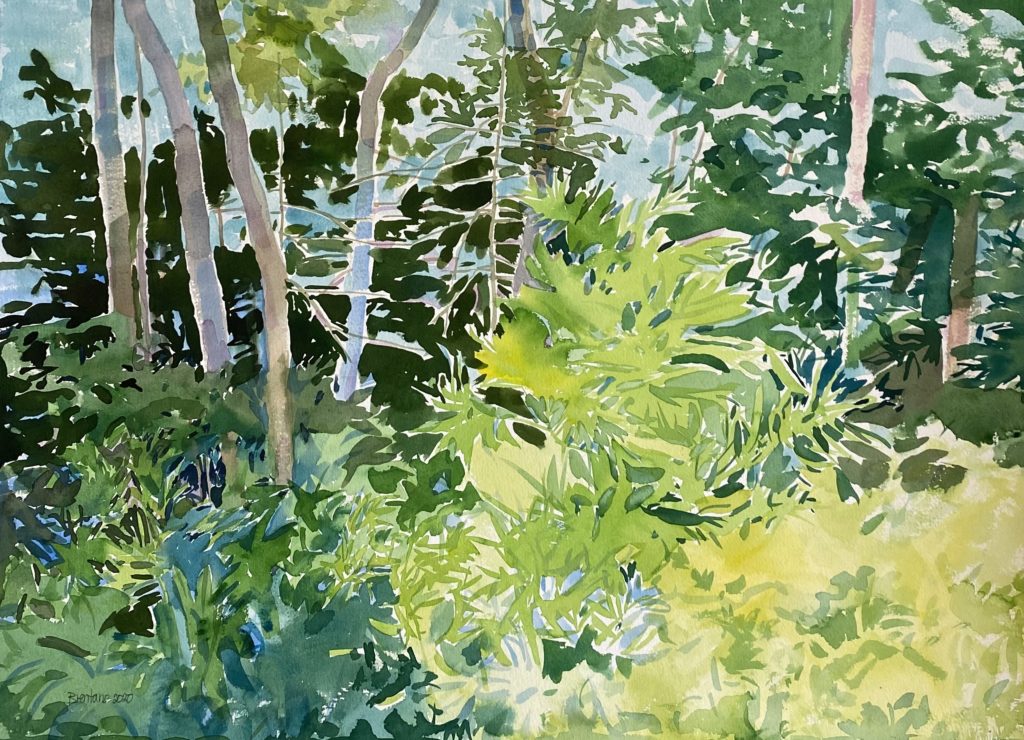
Patricia Brentano, “Sunlit Landscape,” watercolor on paper, 22 x 30 in.
ARTIST STATEMENT
Birds have no arms. They cannot speak. They build nests, hunt for food and defend their young with their beaks. They are delicate creatures that defy gravity and fill the forest with idiosyncratic song. Tragically, since 1970 North America has lost 3 billion birds. In the suburbs we have slowly destroyed their habitat, replacing it with sterile grass and ornamental trees and shrubs cut into balls. We fail to see the beauty and significance of native habitat.
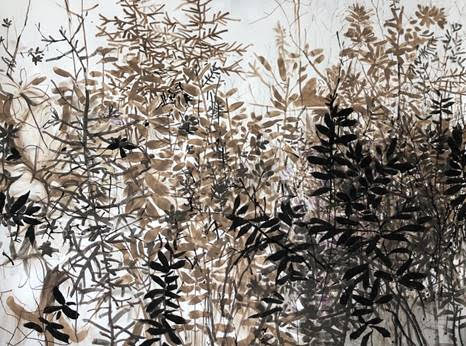
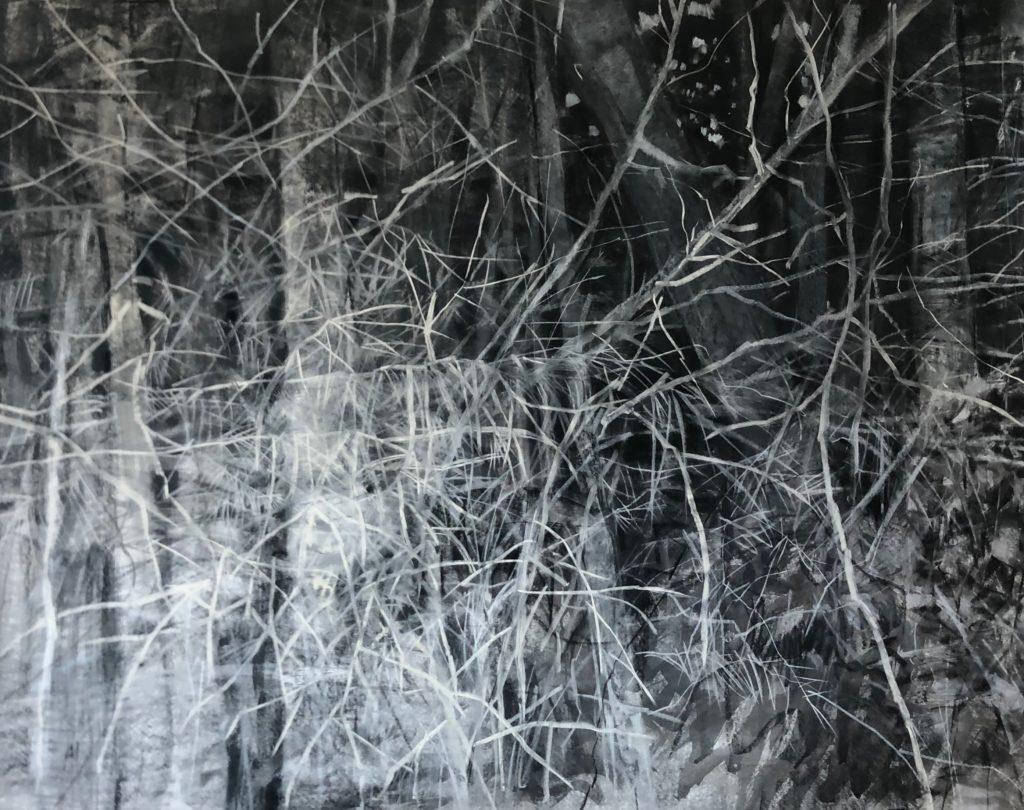
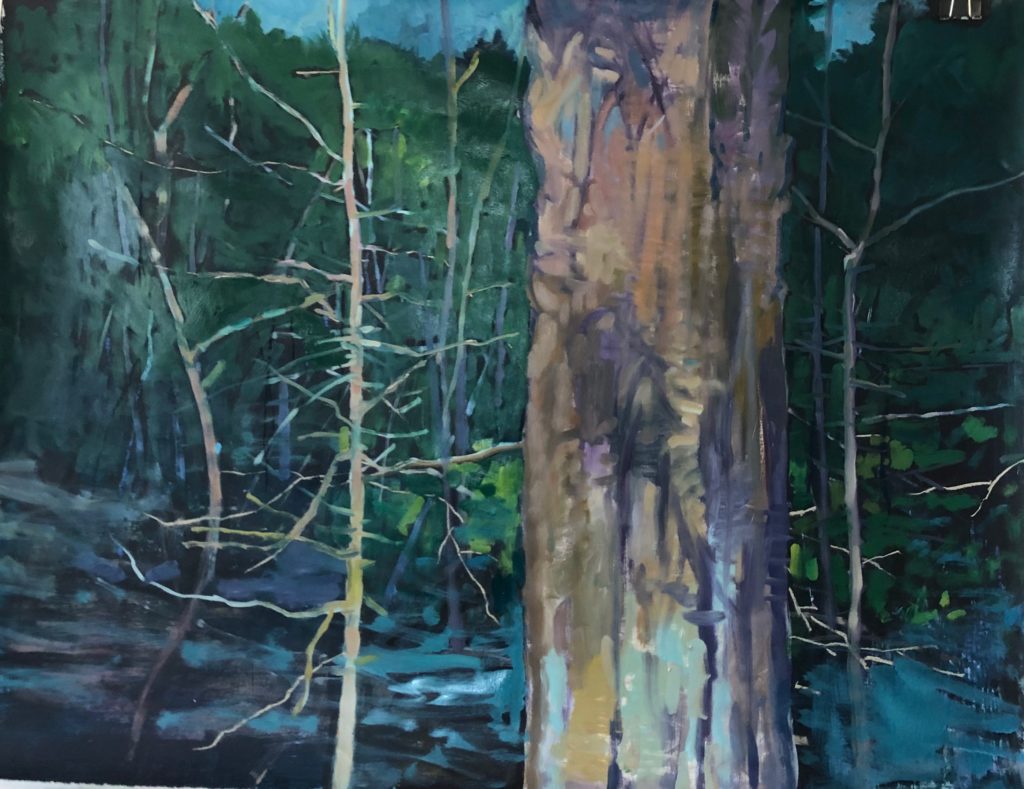
Nature is not neat. It is tangled, layered, textured and ever-changing. The isolation we have endured during the past year has forced us to re-evaluate the way we see the world. Now we look out our windows and walk our neighborhoods. We are finding solace in what has always been there, nature. My work is about seeing this authenticity. We must preserve what remains and educate others to do the same. The artist has always had the capacity to comfort and enlighten. I want my work to be a visual voice for the birds.
Patricia Brentano, “Autumn 2,” ink and mud, 37 x 50 in.Patricia Brentano, “Tangled,” charcoal, 37 x 50 in.Patricia Brentano, “Icy Woods,” acrylic on paper, 37 x 50 in.
As part of our effort to continue to help artists and art galleries thrive, we’re proud to bring you this week’s “Virtual Gallery Walk.” Browse the artwork below and click the image itself to learn more about it, including how to contact the gallery.
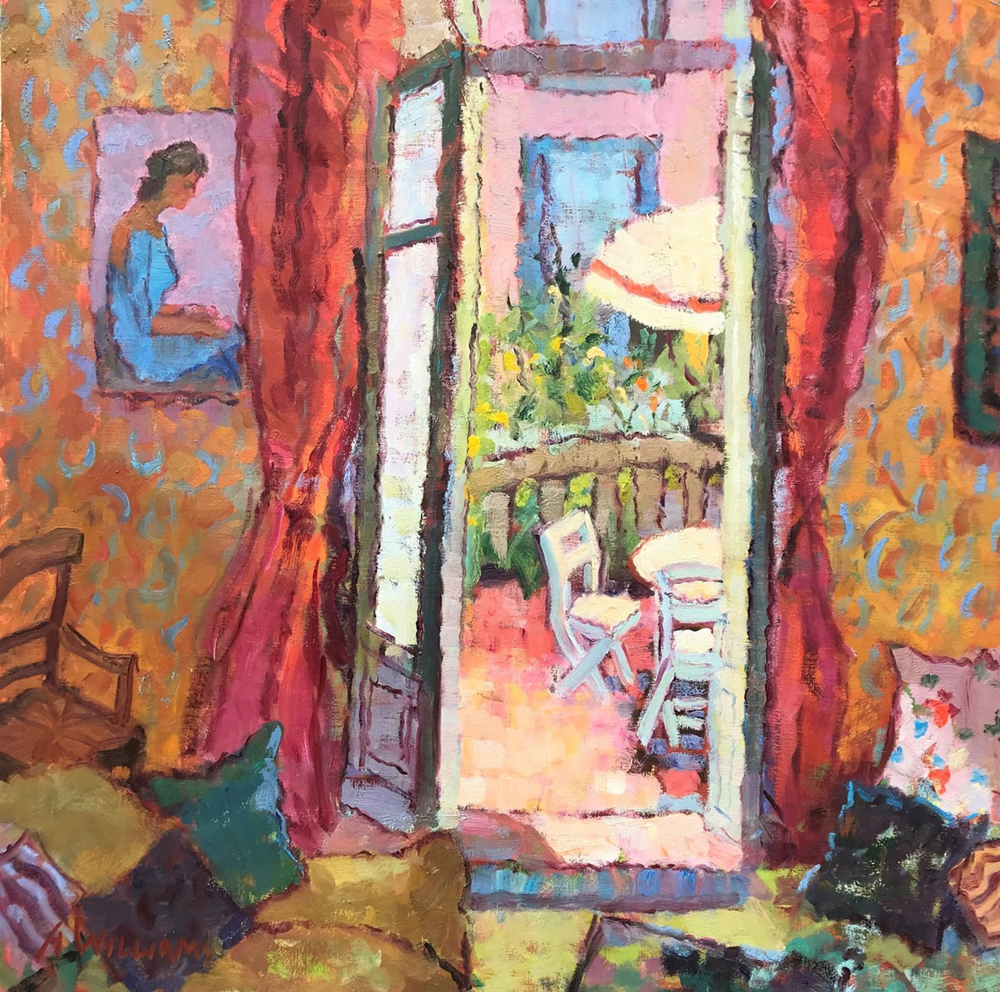
Une Postcard of Coco’s Terrace by Alice Williams, Oil, 39 x 39 in.; Anderson Fine Art Gallery
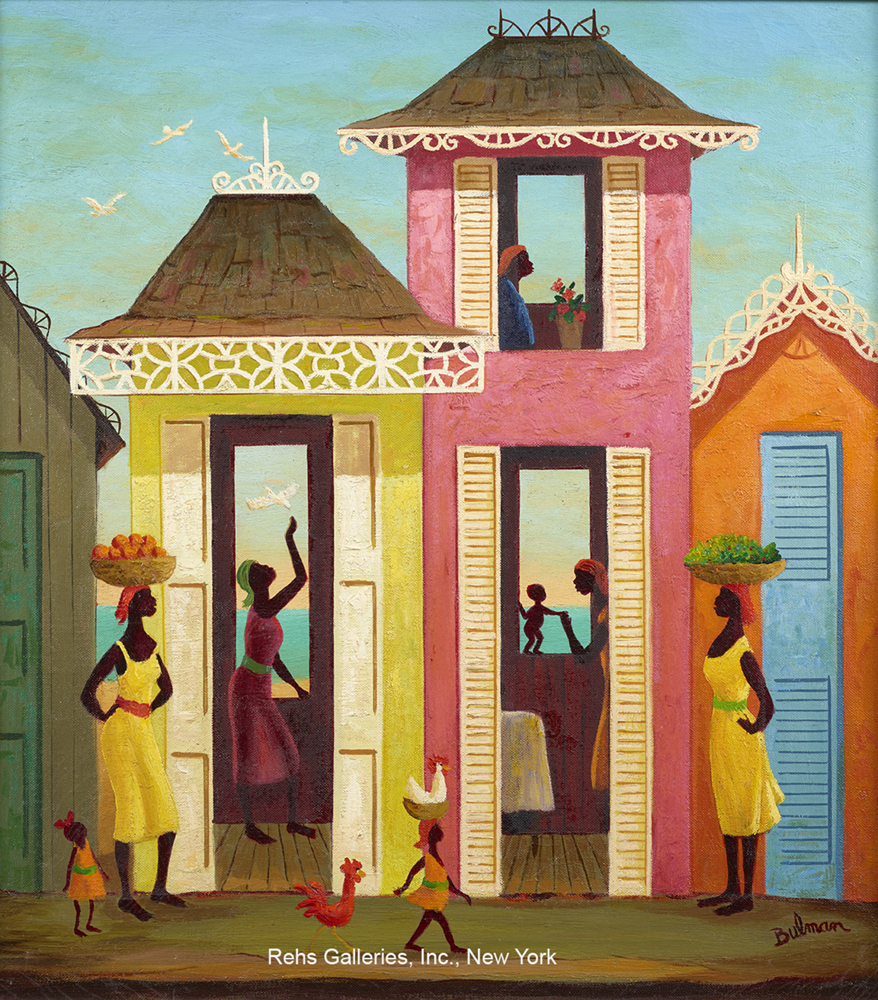
Juchoir by Orville Bulman (1904 – 1978), Oil on canvas, 20.125 x 18.125 in., Signed; also signed, dated 1958, and titled on the reverse; Rehs Galleries, Inc.
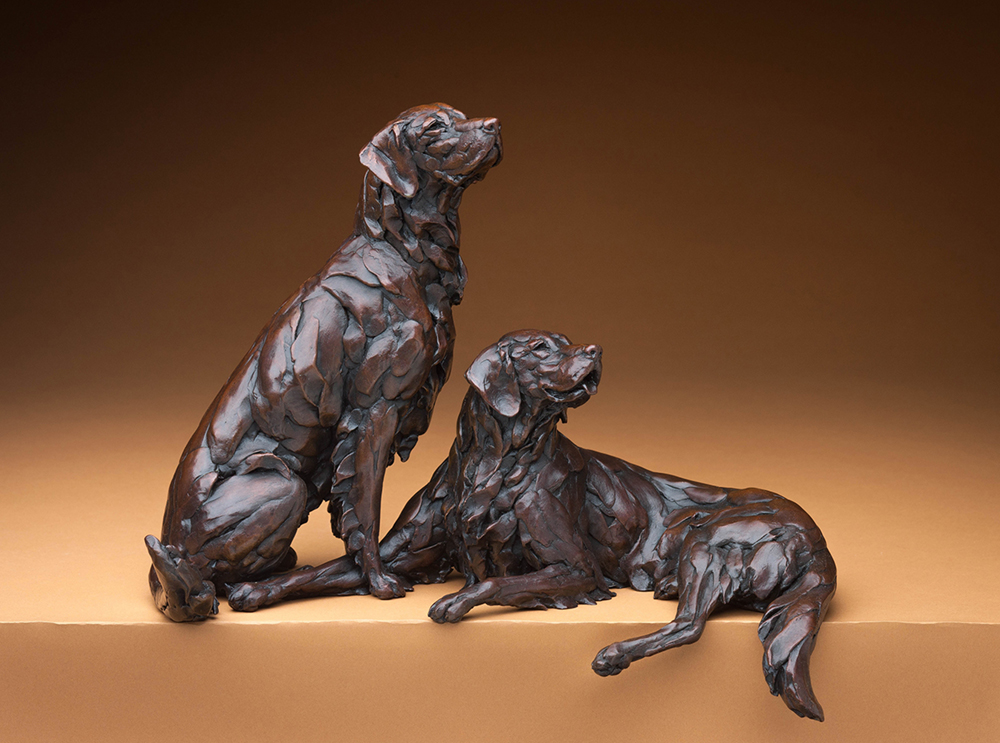
Golden Retrievers by Bart Walter (Born 1958), Bronze, 12.5 x 8 x 17 in., Signed; Rehs Contemporary
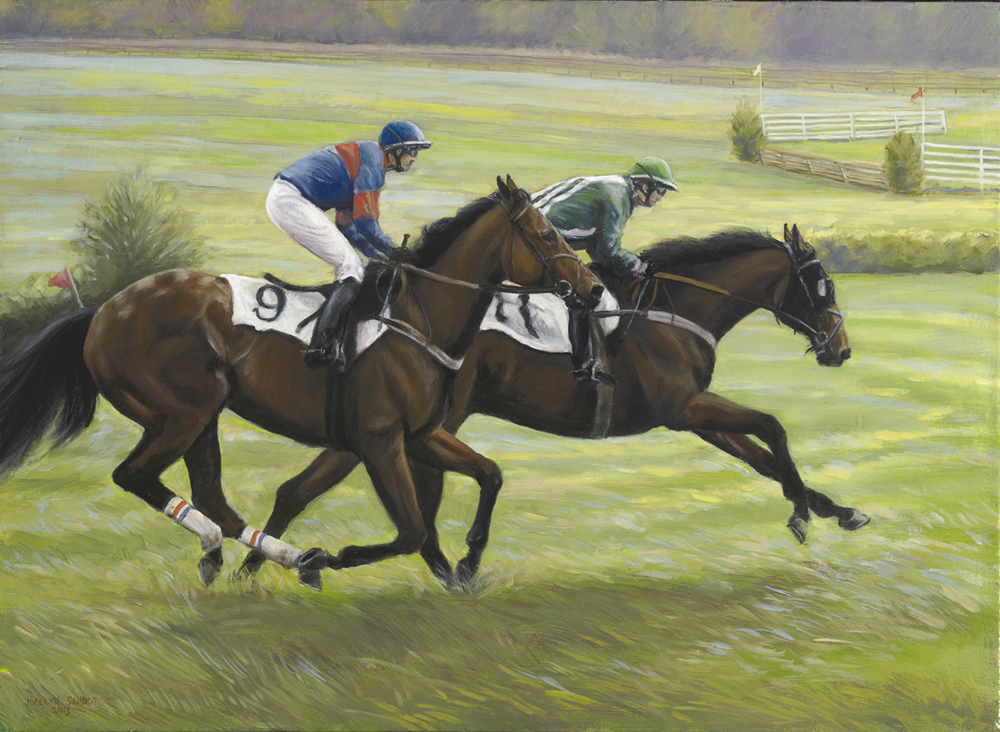
The Stretch by Jocelyn Sandor Urban, Oil on panel, 16 x 22 in., (20 x 26 in. framed); Vermont Artisan Designs
Want to see your gallery featured in an upcoming Virtual Gallery Walk? Contact us at [email protected] to advertise today. Don’t delay, as spaces are first come, first served, and availability is limited.
Fill your mind with useful art stories, the latest trends, upcoming art shows, top artists, and more. Subscribe to Fine Art Today, from the publishers of Fine Art Connoisseur magazine.