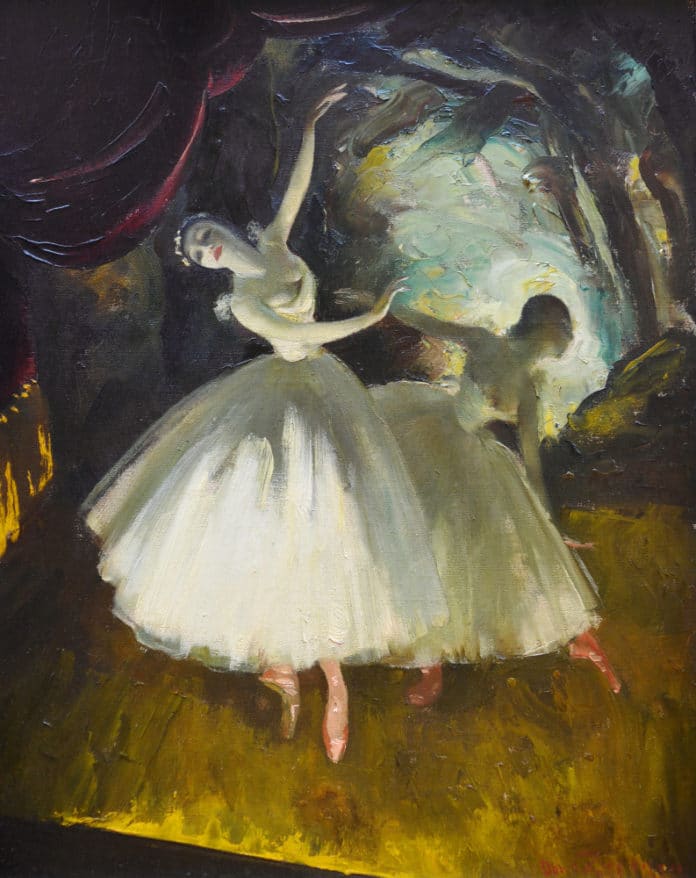
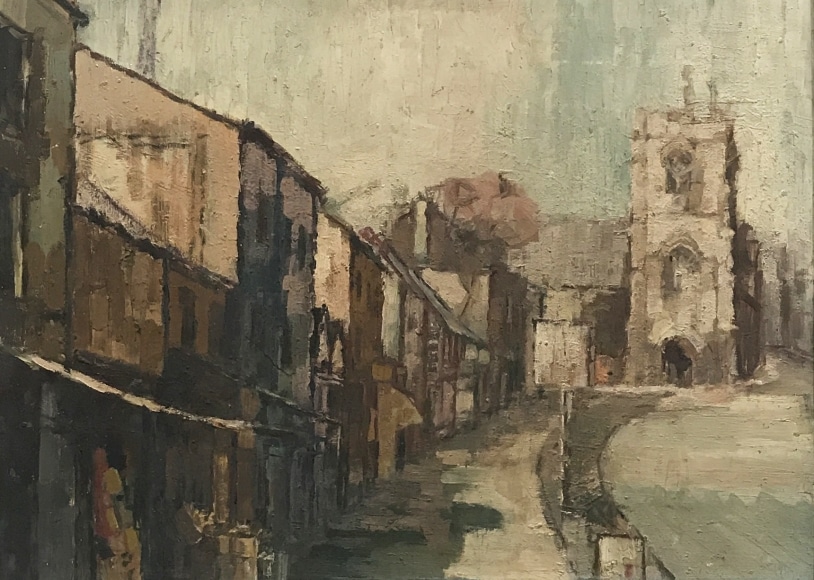
Doris Zinkeisen, “DZ1,” oil on canvas, 24 1/8 x 20 1/8 inches
On view now through December, the United Kingdom’s Aidan Meller Gallery is showcasing works by early 20th-century women that are among Britain’s most important and influential.
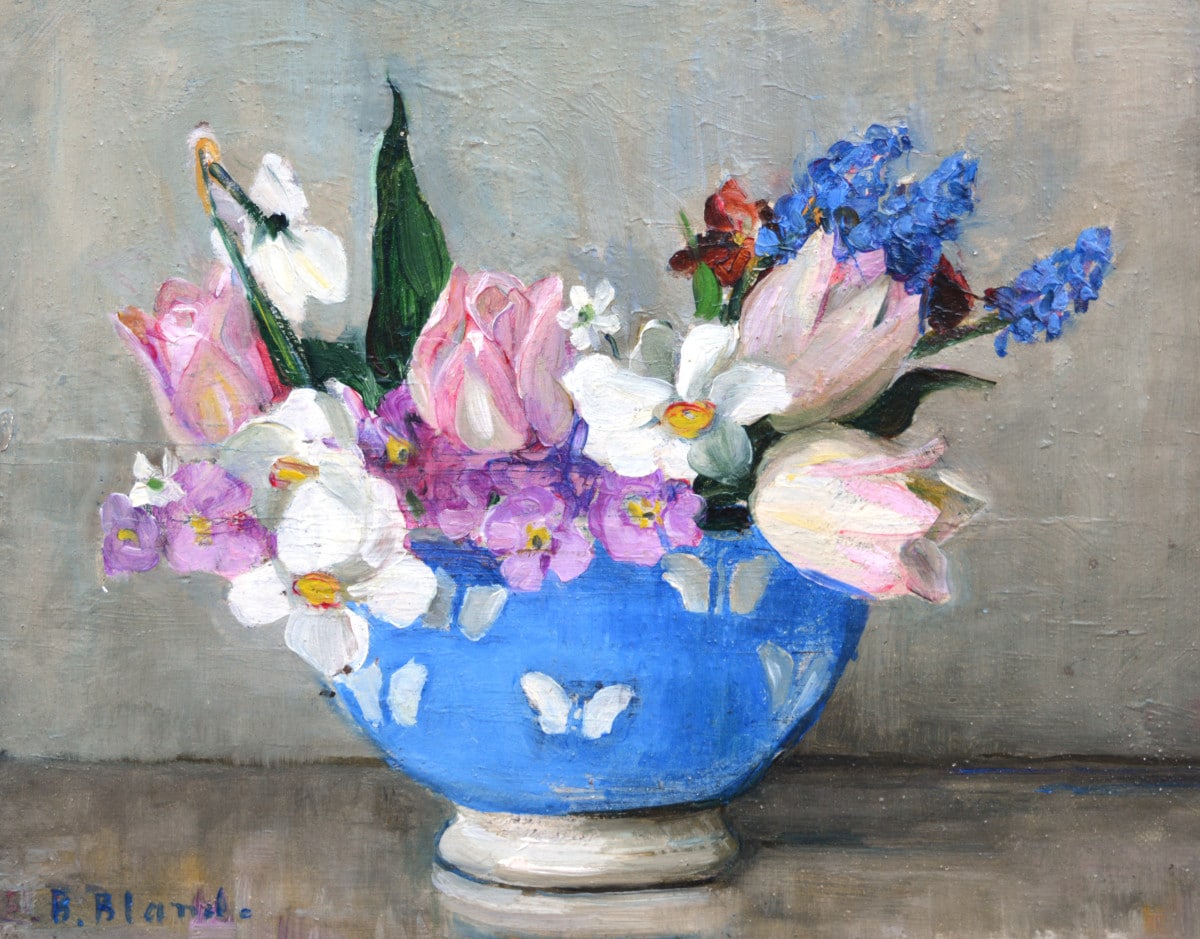
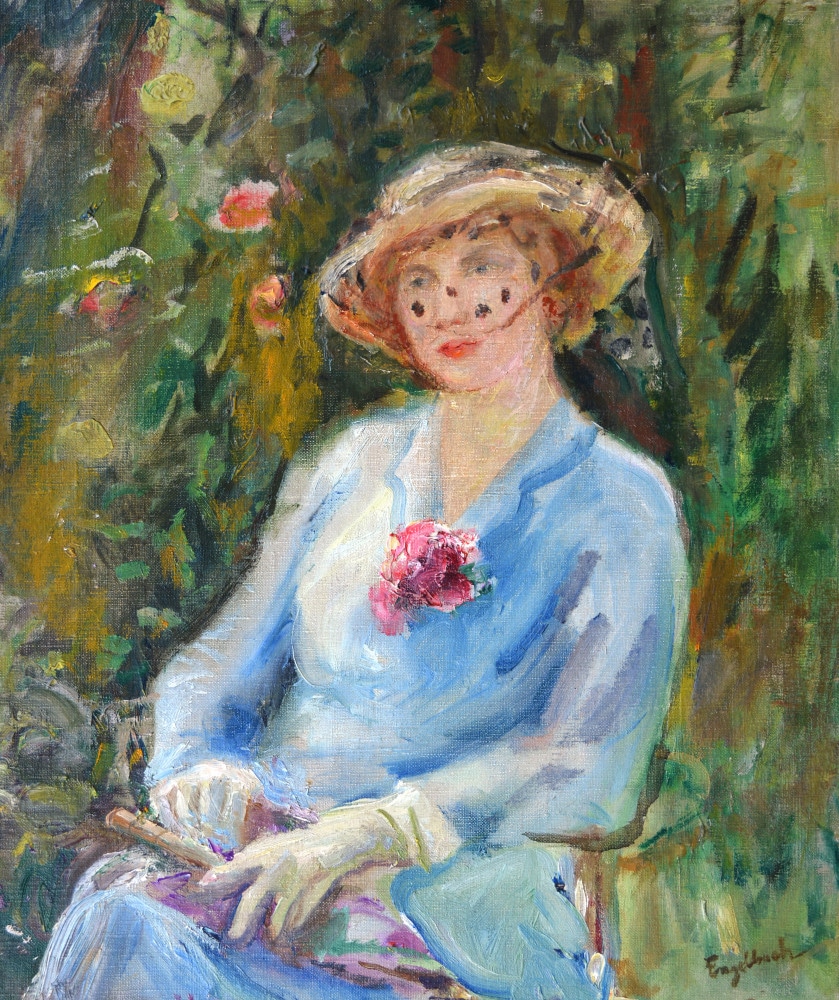
Including Nan Youngman, Mary Godwin, Dorothy Hepworth, Patricia Preece, Florence Engelback, Doris Zinkeisen, Phyliss Bray, Lilian R. Buchanan, Pauline Glass, Emily Beatrice Bland, Alice Fanner, Therese Lessor, and Laura Knight, “Modern British Retold” is a brilliant exhibition at Aidan Meller Gallery celebrating some of the nation’s most important 20th-century women artists.
Alice Fanner, “AF1,” oil on panel, 10 1/4 x 14 1/8 inches
Bringing together original artwork from circa 1910-1970, “Modern British Retold” offers a cutting-edge perspective on one of the most significant moments in British art. According to ArtDaily, “With technological progress and international conflict transforming traditional gender roles, art of this period marks an important step for women’s artistic achievement. Exhibiting the work of artists who had studied at the Slade School of Art during its so-called ‘Crisis of Brilliance,’ the show represents major female contributors of the period. Working alongside the likes of Paul Nash, David Bomberg, Mark Gertler, and Stanley Spencer, these women produced artwork that is just beginning to gain the recognition it deserves. Studying under Henry Tonks, Philip Wilson Steer, and William Coldstream, artists such as Ruth Collett, Dorothy Hepworth, and Nan Youngman were informed by some of the greatest teachers of the period.”
Emily Beatrice Bland, “EBB1,” oil on panel, 9 1/8 x 11 3/8 inchesFlorence Engelbach, “FE1,” oil on canvas, 22 1/8 x 18 1/8 inches
This article was featured in Fine Art Today, a weekly e-newsletter from Fine Art Connoisseur magazine. To start receiving Fine Art Today for free, click here.
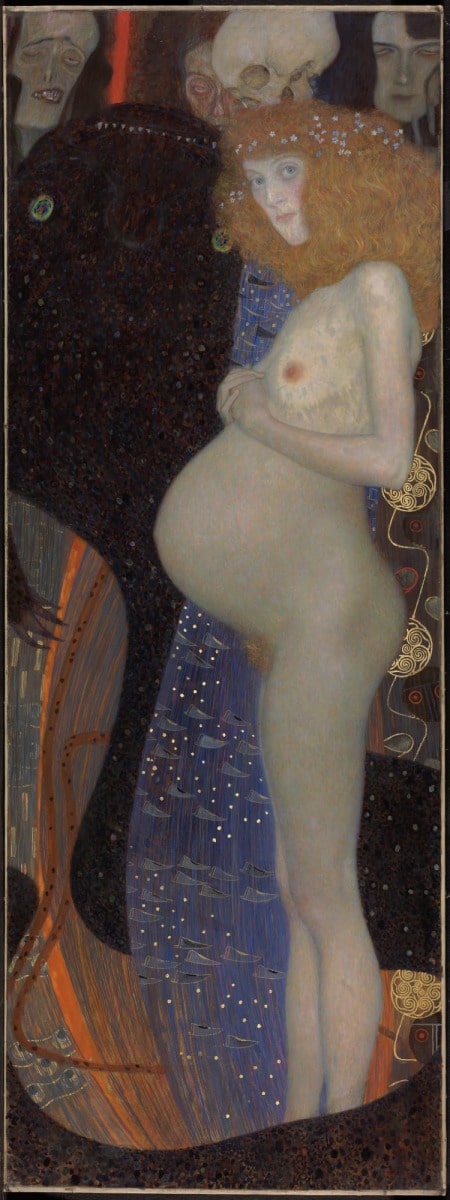
Gustav Klimt, “Hope I,” 1903, oil on canvas, 189 x 67 cm. National Gallery of Canada
The National Gallery of Canada is offering viewers a rare opportunity to see three paintings by Gustav Klimt (1862-1918), including commanding examples of the artist’s trademark female portraiture and impressive landscape ingenuity.
Three outstanding examples from the oeuvre of fin-de-siècle and Viennese Secession master Gustav Klimt (1862-1918) are on long-term display at the National Gallery of Canada in Ottawa. “This long-term display is an unprecedented opportunity to see three exceptional Klimt paintings together in Canada,” said NGC Deputy Director and Chief Curator Paul Lang. “It enables the Gallery to offer a complete survey of the artist’s work spanning two decades of his career. A truly transformative loan, these works will allow our visitors to experience the full visual splendor of one of the most inventive artists of his day.”
The three paintings on view are “Portrait of Elisabeth Lederer,” “Forest Slope in Unterach on the Attersee,” and “Hope I.” Commissioned in 1914 by the artist’s most important patrons, the wealthy Viennese couple August and Szerena Lederer, “Portrait of Elisabeth Lederer” (1914-16) portrays their 21-year-old daughter. Elisabeth Lederer stands life-sized, her expression one of elegant self-confidence and youthful freshness. “Klimt has transformed her cloak into a dazzling, quasi-abstract array of ornamentation and placed her on a brightly-colored carpet that flattens the space while simultaneously drawing the woman out toward the viewer,” says Curatorial Assistant and Provenance Researcher Kirsten Appleyard. “Surrounding her is an assortment of Chinese figures, a nod to the Lederers’ reputation as erudite collectors and a testament to the artist’s own connoisseurship of Asian art. While earlier portraits by the artist seduce via the rich physicality of their ornament — often conveyed in a gold-encrusted mosaic style — here Klimt relies on exotic marvels to evoke curiosity and command attention.”
Appleyard explains, “While the artist is primarily celebrated for his portraits and allegories, his landscapes comprise almost one half of his oeuvre from the last two decades of his life.” Indeed, Klimt devoted himself intensely to this genre, retreating every summer to the countryside around Lake Attersee in Upper Austria to paint and reflect.
“Like the majority of Klimt’s landscapes, ‘Forest Slope in Unterach on the Attersee’ (1916) follows a square format achieved through the use of optical devices such as a telescope or opera glasses,” says Appleyard.
“In this carefully crafted two-dimensional painting, planes are artificially stacked one upon the other, with powerful strokes of related colors creating an overall mood of meditative calm. Klimt’s landscape is withdrawn and timeless — a tranquil daydream. While echoes of Cézanne’s ordered structures and Van Gogh’s expressive handling can be felt, it is nevertheless a work of exceptional daring and originality.”
This article was featured in Fine Art Today, a weekly e-newsletter from Fine Art Connoisseur magazine. To start receiving Fine Art Today for free, click here.
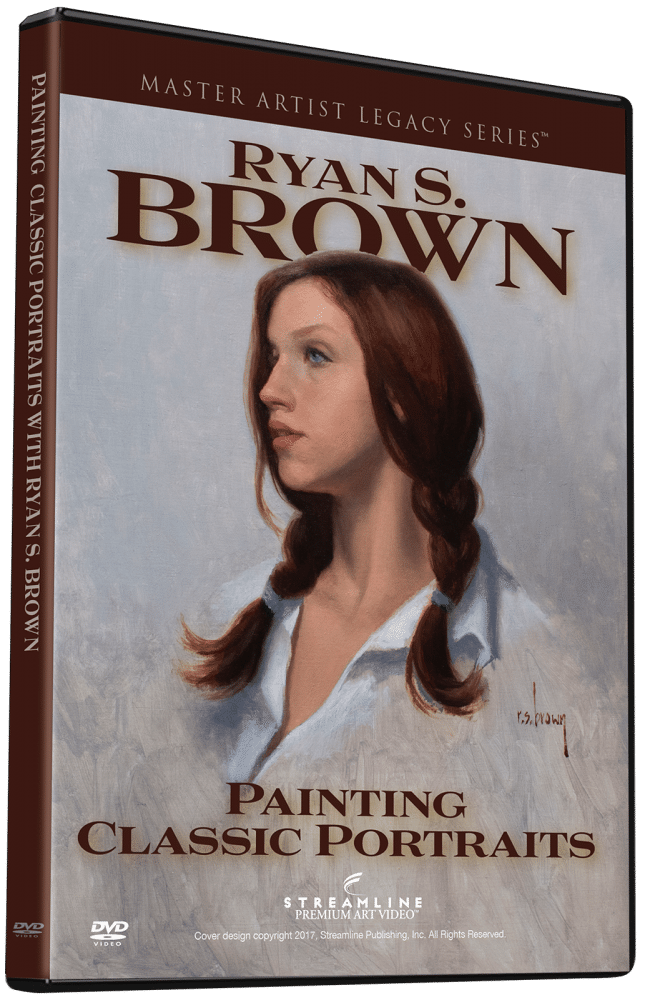
There is nothing that compares to the joy artists feel when they’ve painted a beautiful portrait of someone special. Just imagine painting an incredible portrait of such high quality that you don’t hesitate for one moment to show it off, either giving it as a treasured gift or selling it for top dollar. It’s all possible through a captivating new Streamline Art Video featuring artist Ryan Brown.
For many painters, portraits are off-limits — they can be too difficult and require a lot of time, only for the artist to be unhappy with the results. Capturing lifelike features, flesh tones, and expressions can be frustrating, and difficult to correct along the way.
There is now a way to learn portrait painting that is easier than ever and will take the mystery out of this beautiful art form. You will want to discover these secrets for yourself right away — and now you can.
Streamline Publishing is proud to release PAINTING CLASSIC PORTRAITS with award-winning master artist Ryan S. Brown. In this masterful 13-hour video, Ryan walks you through his exact process for painting arresting portraits that convey an energy, feeling, and liveliness that seem to jump off the canvas.
Here are just a few of the secrets Ryan shares in this incredible training series:
The “secret” skin tone formula and how Ryan discovered it by accident — it happens to be the same formula classical masters used centuries ago, and had been forgotten over time
How to get your viewers to project their own emotions onto a painting, instead of feeling the model’s emotions (and why this is critical to creating a great piece of work)
Why creating a portrait is like building a house (and how to make sure you have a sturdy foundation that stands the test of time)
The three different stages of creating your drawing — and exactly why you need to follow each one, in order, if you want to create a beautiful finished product
Why, even though your drawing is one of the most important parts of your painting, you want to free yourself from its constraints when you begin painting — it’s counterintuitive, but critical to your portrait
How the skin tone of your model is like the musical notes in a symphony — and why the beauty of your portrait depends on finding the perfect notes in the right moments
The simple yet fascinating tool Ryan uses to identify mistakes when he knows something is off but can’t quite figure out what
Why you should always grade different parts of the face with different colors, even though it’s all a single skin tone in real life (and what happens if you don’t)
How the molecular differences between different types of paint affect your final painting (this one thing explains the challenges so many amateur painters face)
WhyRyan sometimes takes over 300 photos of a model before even beginning his drawing
How your peripheral vision can help you perfect the values across your painting
The common traps that cause you to paint an “average” painting, and how to avoid them
Why the single most important part of your painting happens before you ever touch the canvas (and how that dictates every stroke you make once the painting begins)
Why most art school students are terrible at mixing paint to make flesh tones — and what you can do to mix far better
The natural mistakes our eyes want to make when creating a painting, and how to avoid them
Why you should be thinking about the emotional content of your painting just as much as you think about the visual content
Why you must have photos and studies with you as you paint your portrait, even though you have a live model in front of you
The natural facial proportions and measurements you can use to paint accurate faces every time
Why every piece of your painting has “weight” and how understanding this weight is crucial to creating a vibrant, moving painting
How to use your eye like an artist, instead of a student, and how this one shift will change your painting forever
This article was featured in Fine Art Today, a weekly e-newsletter from Fine Art Connoisseur magazine. To start receiving Fine Art Today for free, click here.
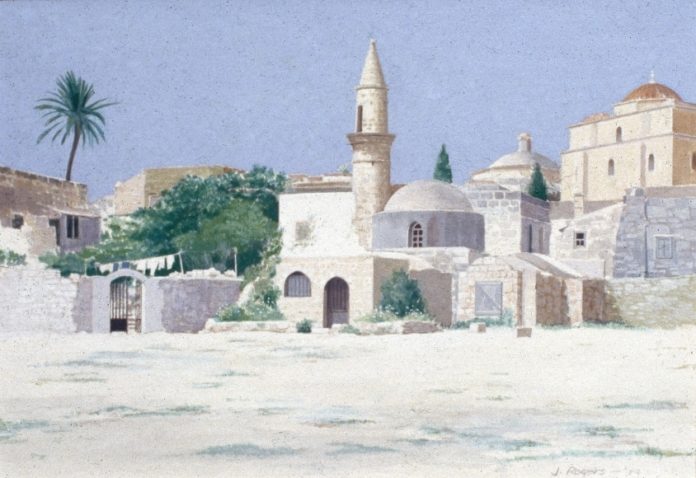
Jack Martin Rogers, “Rhodes,” 1979, gouache on paper, 8 x 11 inches
Anita Rogers Gallery is proud to be currently presenting “Odyssey,” a selection of drawings and paintings by British painter Jack Martin Rogers (1945-2001). Anita Rogers, the gallery’s owner and director, is the daughter of the artist and was raised across England, Turkey, Italy, and Greece, countries that deeply influenced her father’s work.
On view now through December 30, “Odyssey” cannot be described as anything but a perfect, intimate look into the life and career of British painter Jack Martin Rogers. That’s because the exhibition’s host, Anita Rogers of Anita Rogers Gallery (New York City), witnessed first-hand her father’s inspiration as the family migrated across Europe.
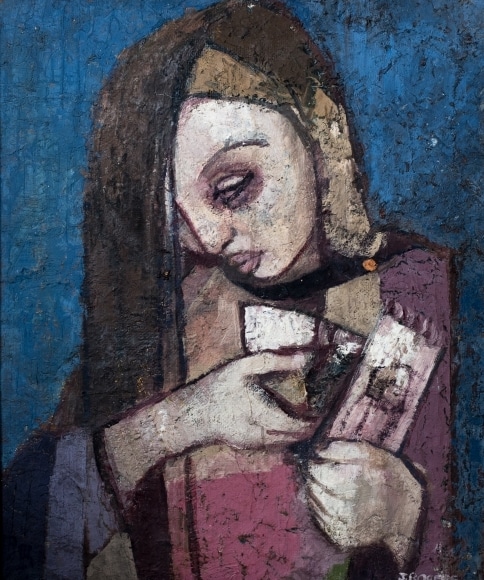
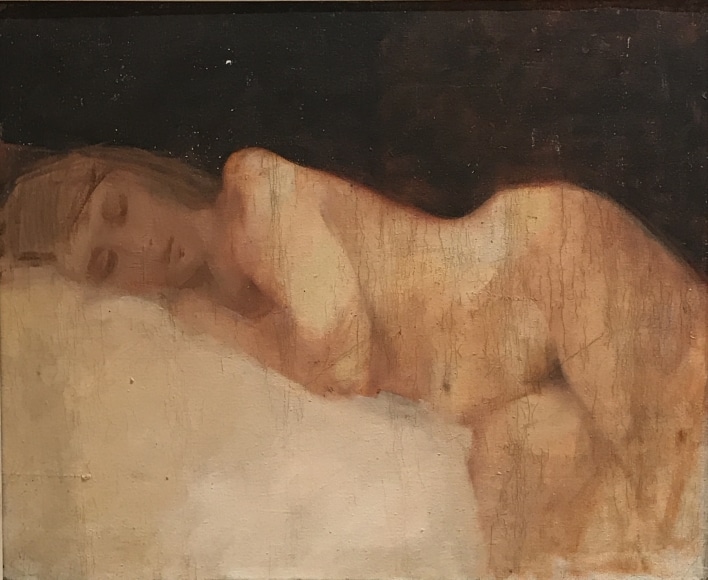
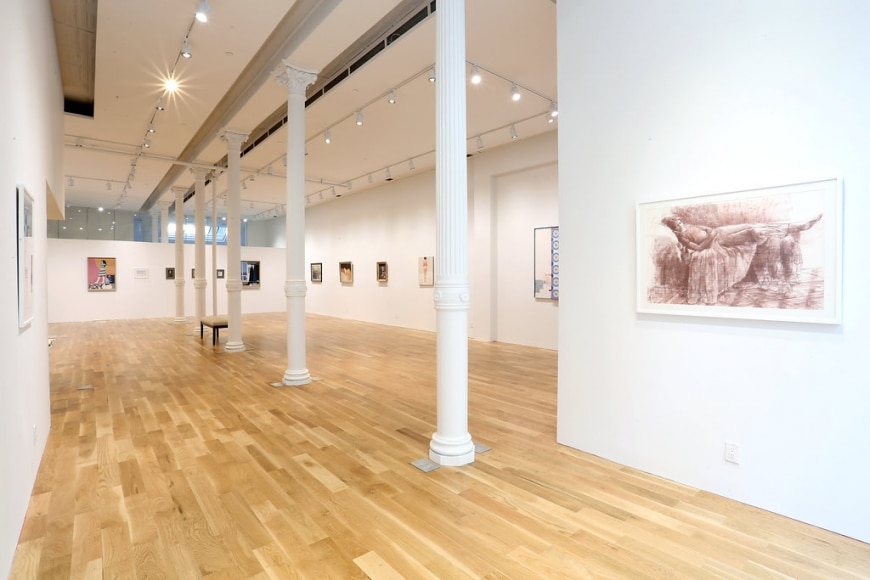
Jack Martin Rogers, “Rosemary,” 1965, oil on canvas, 18 3/4 x 16 inchesJack Martin Rogers, “Nude,” 1964, oil on canvas, 29 3/4 x 24 1/2 inchesJack Martin Rogers, “Reclining Nude,” 1964, oil on canvas, 24 3/8 x 29 inchesJack Martin Rogers, “Warwick,” 1965, oil on canvas, 21 3/4 x 29 1/2 inchesGallery view
“Anita now owns seventy-five percent of his estate,” the gallery says, “and this will be the artist’s first major solo exhibition in the U.S. The works in the exhibition span a period of over forty years, from some of the artist’s earliest work during art school to his final masterpieces. Throughout his life, Rogers continually examined the complex notion of time and its role in the human experience. He believed forward movement and discovery are accomplished through examining history and creating relevance from the past within the present. Rogers spent much of his life studying scientific ideas relating to time and considering how certain discoveries would alter perception and the potential impact of these alterations. His life’s work was dedicated to studying the concept of human identity within the realms of modernity and progress; he firmly believed that the only way forward is to embrace and learn from, rather than reject, the contributions of the past. This dichotomy is captured in his work, which presents traditional subjects, such as classical and religious architecture, alongside modern ones. One of the artist’s most significant works is a large-format, six-part canvas painting of Knossos, the largest Bronze Age archaeological site in Crete. In this painting, Rogers pulls the ancient ruins from the past into the present by using bold colors and abstract motifs.”
This article was featured in Fine Art Today, a weekly e-newsletter from Fine Art Connoisseur magazine. To start receiving Fine Art Today for free, click here.
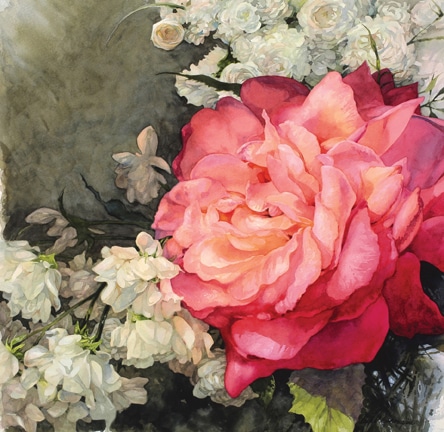
Laurel Lake McGuire, “In the Spotlight,” Best of Show
The 47th National Exhibition of Women Artists of the West has been so well received at the McBride Art Gallery in Annapolis, Maryland, that it is being extended until December 31.
The first East Coast exhibition by the Women Artists of the West (WAOW) — judging by the number of sales and the interest in the show — will certainly not be the last. Over 150 paintings and sculptures by members of the organization are on exhibit at the historic McBride Art Gallery in downtown Annapolis, Maryland. WAOW is the oldest juried women’s art organization in the country. A member must be juried into the organization, and then her work must be juried into the National Exhibition as well. This show encompasses work in all painting mediums and sculpture by some of the most talented and recognized women artists working today. WAOW has over 300 members from across the country. The variety of work in this show is impressive.
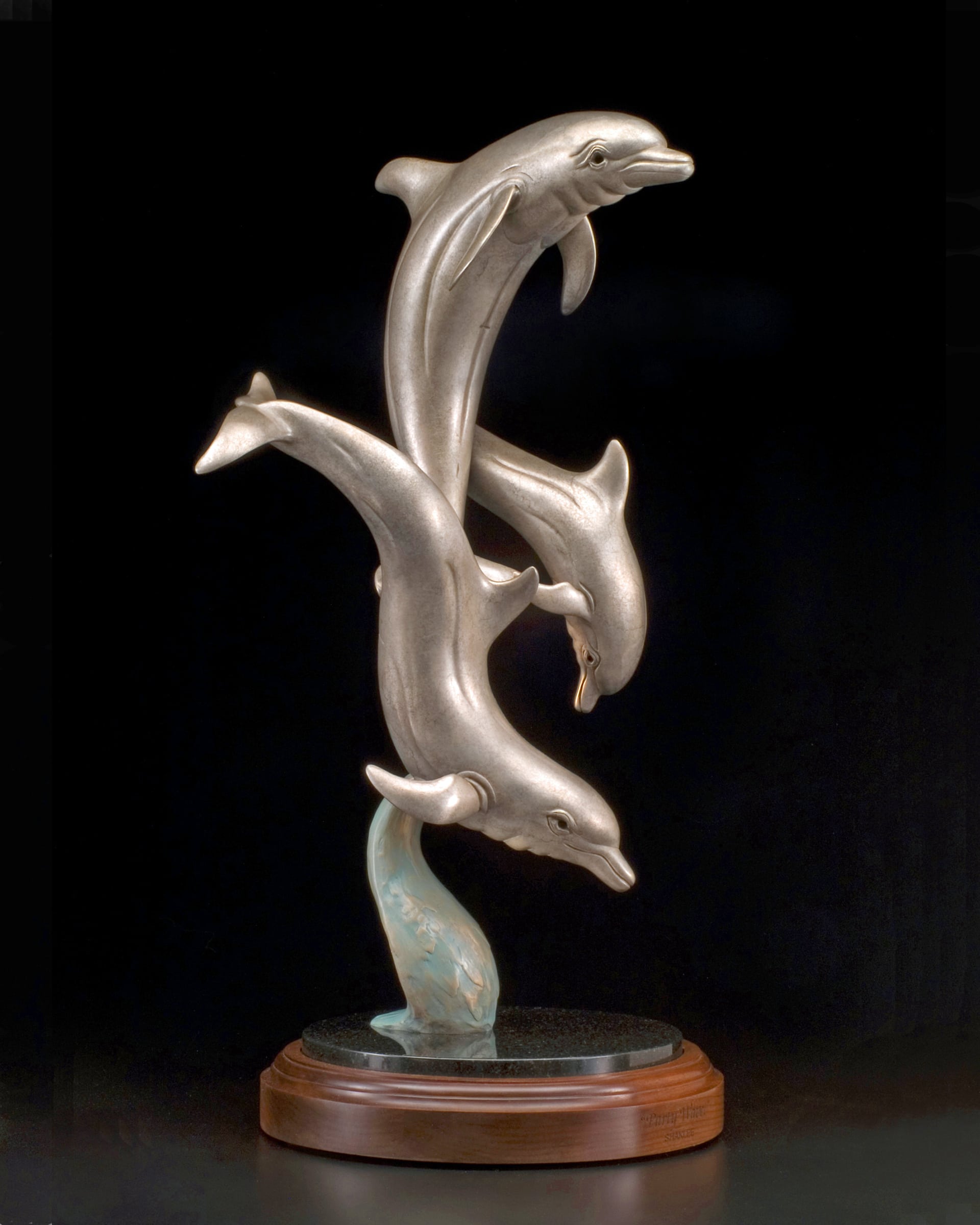
Kim Shaklee, “Party Wave,” Best of Masters
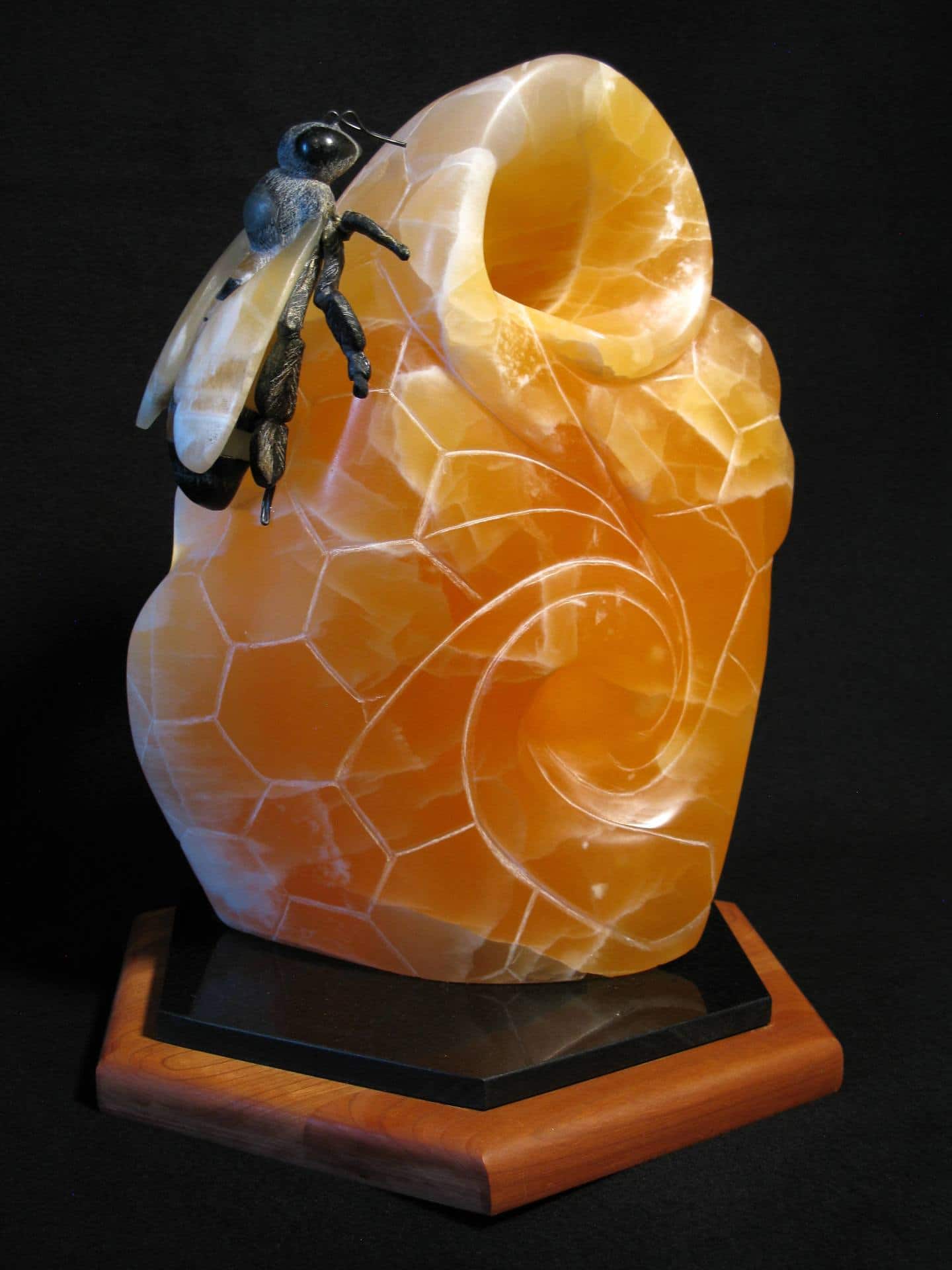
The exhibition also recognizes outstanding works through several awards. Laurel Lake McGuire took Best of Show honors for her brilliant painting “In the Spotlight”; Kim Shaklee’s “Party Wave” was the Best of Masters winner; Carlene Wallace took First Place in the two-dimensional category for “Tiny Dancer”; and finally, Kathryn Vinson’s “Wild Honey” was the First Place winner in the three-dimensional category.
Carlene Wallace, “Tiny Dancer,” First Place, two-dimensionalKathryn Vinson, “Wild Honey,” First Place, three-dimensional
There is still time to see the exhibition before it closes on December 31. If you can’t get to Annapolis, be sure to visit the show online at www.mcbridegallery.com. You can also see the show and learn more about Women Artists of the West by visiting their website — www.waow.org
This article was featured in Fine Art Today, a weekly e-newsletter from Fine Art Connoisseur magazine. To start receiving Fine Art Today for free, click here.
The Royal Academy America is inviting you to experience the unique and vibrant energy of the Los Angeles art scene in February. Details, and prices, here.
$2,500 per person will net you a remarkable experience courtesy the Royal Academy America between February 6-9. The 2018 Patrons Trip will head to Los Angeles, California, on the occasion of the U.S. opening of a Jasper Johns exhibition at The Broad.
The week will include a welcome dinner with Tim Marlow and Edith Devaney; a meet-and-greet and private studio tour with Ed Ruscha; a private collection tour at the home of Michael Ovitz and Tamara Mellon; a private dinner with Usher & Grace Raymond IV; a tour of the Weisman Collection with Billie Milam Weisman; attendance at the curator-led tour and reception for “Jasper Johns: Something Resembling Truth” at The Broad; and finally, breakfast hosted by Gagosian Gallery, followed by a tour of architect Frank Gehry’s studio.
A $1,000 deposit will be due on January 1, 2018. Please contact April Moorhouse, Head of Membership and Programmes at [email protected]
This article was featured in Fine Art Today, a weekly e-newsletter from Fine Art Connoisseur magazine. To start receiving Fine Art Today for free, click here.
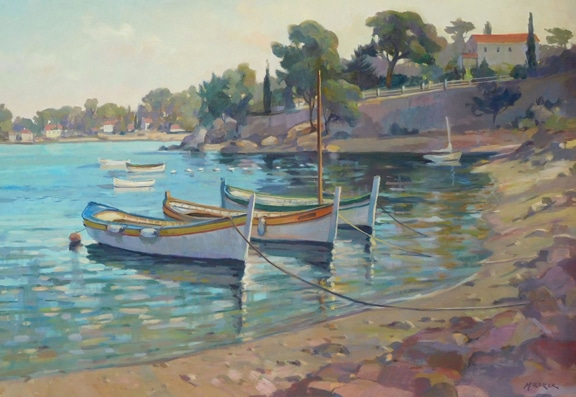
Leonard Mizerek, “Cap d’Antibes,” oil on linen, 26 x 40 inches
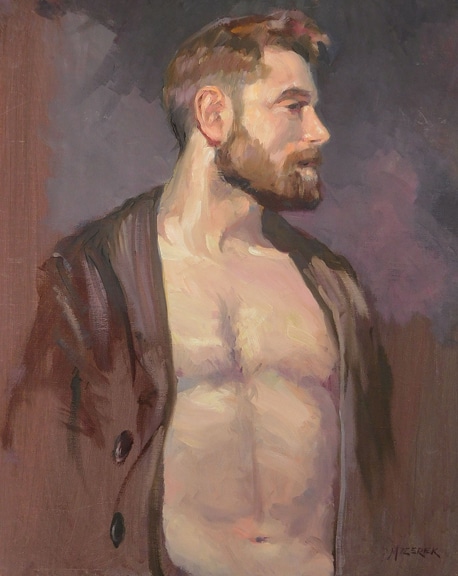
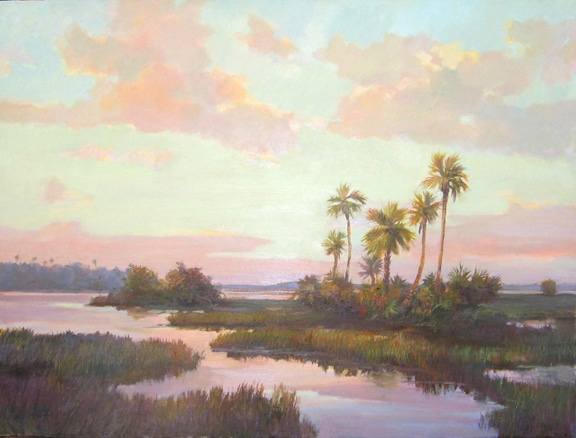
The remarkable works by artist Leonard Mizerek feature during a solo exhibition this winter in Vero Beach, Florida. However, there’s a twist.
JM Stringer Gallery in Vero Beach, Florida, is the upcoming venue for a brilliant solo exhibition of recent paintings by Leonard Mizerek, FASMA. On view through February 10, the show is an exciting opportunity for Floridians to view works by one of the most accomplished painters in America. The show is titled “Classic Beauty: In All Its Forms.”
Leonard Mizerek, “Classic Beauty,” oil on linen, 12 x 9 inches
“Among his many notable affiliations, Mizerek is one of only 27 Fellows of the American Society of Marine Artists and one of the 70 elected members of the prestigious Guild of Boston Artists,” the gallery says. “And having been featured in more than 30 shows at galleries, societies, and museums worldwide, he is internationally known for his luminous seascapes — truly a master of the marine.
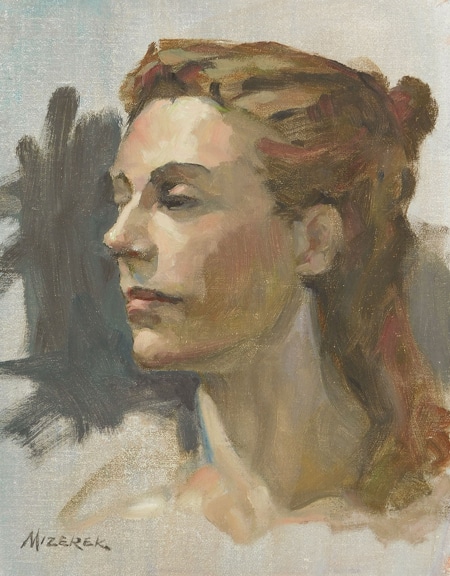
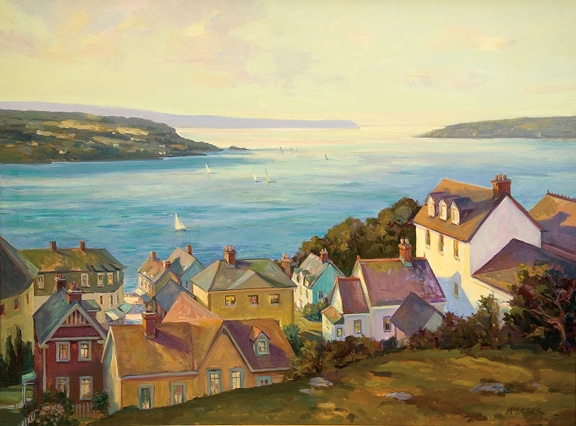
Leonard Mizerek, “Rooftop View (Salcombe, Devon, England),” oil on linen, 36 x 48 inchesLeonard Mizerek, “Sideward Glance,” oil on linen, 20 x 16 inches
“However, the collection JM Stringer Gallery has curated for this exhibition is particularly exciting, as it features not only Mizerek’s sought-after land and seascapes, but also his new venture into figurative work. The exceptional, expressive brushwork throughout demonstrates his classically beautiful handling of light as every object it touches mirrors, shapes, and intensifies it.”
Leonard Mizerek, “Southern Sunrise,” oil on linen, 36 x 48 inches
This article was featured in Fine Art Today, a weekly e-newsletter from Fine Art Connoisseur magazine. To start receiving Fine Art Today for free, click here.
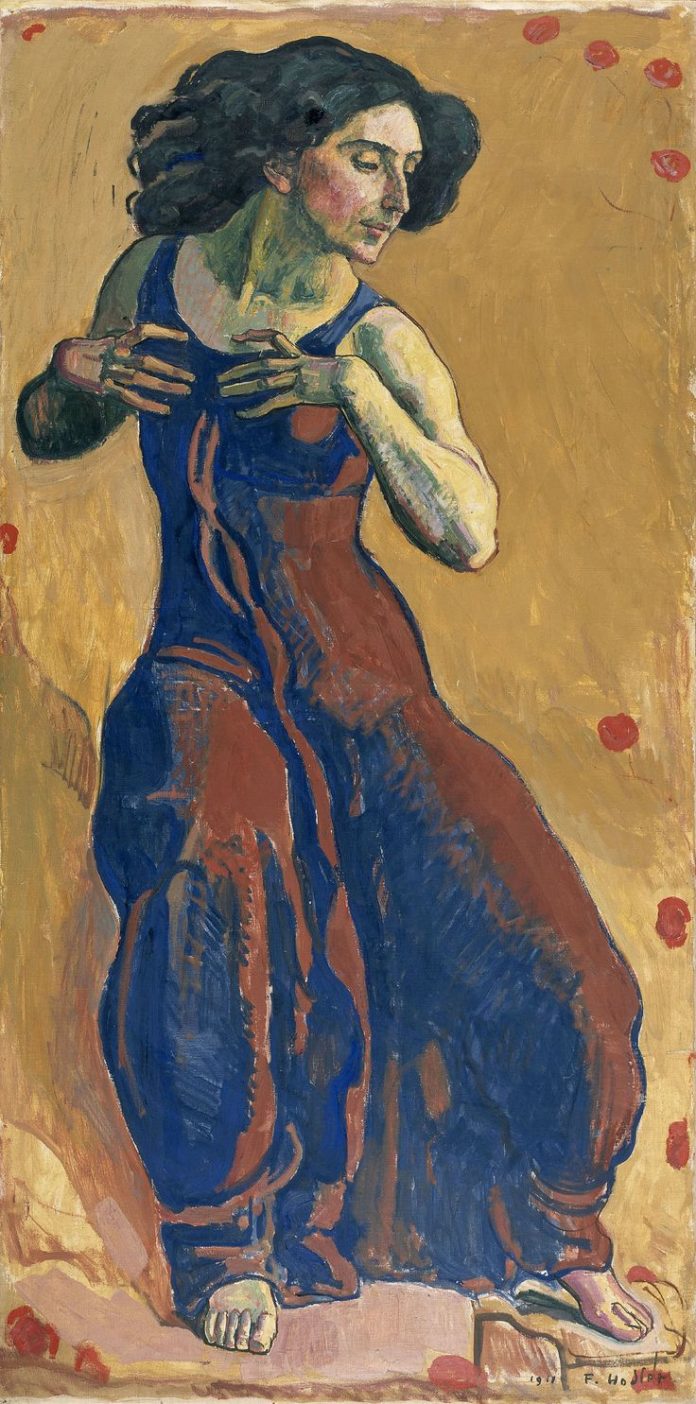
Ferdinand Hodler, “Femme en Extase,” 1911, oil on canvas on wood, Museum of Art and History, Geneva
Opening December 15 at the National Portrait Gallery (NPG) in Washington, D.C., is the first of an inaugural exhibition series that highlights the global context of American portraiture. Each year, the NPG will showcase a portrait created by an international artist affiliated with the lending country.
The new “Portraits of the World” series at the NPG will begin with Switzerland on December 15. The featured work for 2017-18 is “Femme en Extase,” a portrait of the Italian dancer Giulia Leonardi by the great Swiss painter Ferdinand Hodler, on loan from the Museum of Art and History in Geneva.
“Hodler’s experimentation with the abstract elements of color, line, and expression created a vibrant new mode of Swiss art at the dawn of the twentieth century,” the NPG reports. “‘Femme en Extase’ embodies the Swiss modernist approach to expressing emotion through movements of the body — a theory known as eurhythmics — which had an international impact and transformed dance in America. The Swiss painting will be complemented by works from the Portrait Gallery’s collection representing American dancers influenced by this theory of eurhythmics.”
This article was featured in Fine Art Today, a weekly e-newsletter from Fine Art Connoisseur magazine. To start receiving Fine Art Today for free, click here.
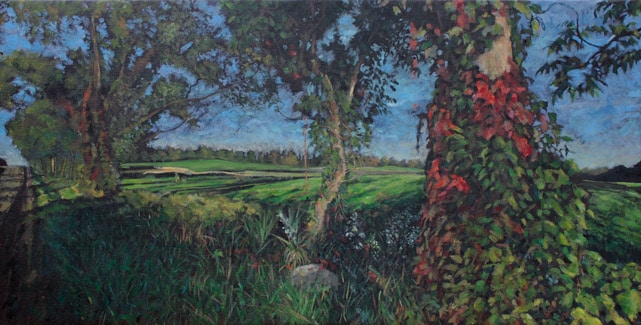
Stephen Horne is an artist who has made his home in the Northern Adirondacks for over 30 years. Yet Horne, like many American landscapists before him, has sought to explore the color, light, and texture of locations far away from his home.
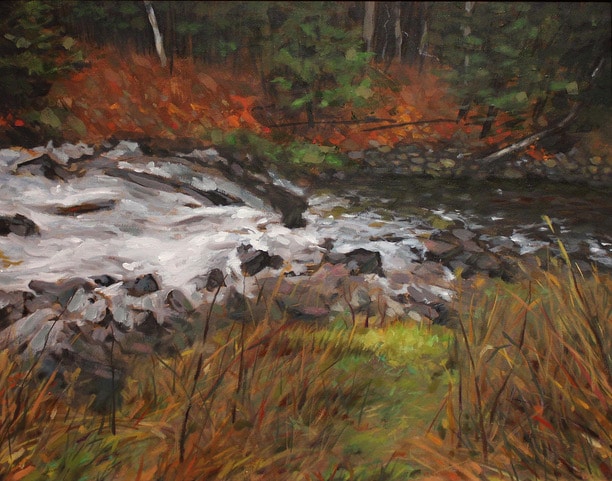
The View Arts Center in Old Forge, New York, is the happy host of “Near & Far,” a solo exhibition of magnetic landscapes by artist Stephen Horne. As the show’s title suggests, the exhibition showcases a number of Horne’s works created both near and far from his home in New York state.
According to the gallery, “Horne’s visual wanderings have taken him to the pastoral farm fields of Central New York, the rocky sea coast of Nova Scotia and wind-swept, sandy Florida dunes. In each, Horne has discovered a new palette and a refreshing view of what it means to ‘see.’
Stephen Horne, “St. Regis River”
“After a forty-year career as an editorial cartoonist, illustrator and museum exhibit designer, Stephen Horne has returned to paints and canvas, with an eye to landscapes here at home, and far away on distant coastlines. Working in acrylic and oil, Horne has spent the last few years exploring these worlds, marveling at the forest floors on trails near his home in Paul Smiths, NY, to be then stunned, on vacation, by the roiling seascapes of Nova Scotia and beach dunes and sunsets of Florida.”
Stephen Horne, “Central New York Hedgerow”
The artist added, “The dense Forest Preserve out my back door forces me to see a landscape of detail, within a few feet, full of the rich greens and browns of the Northern Boreal forest. So, when I travel to the coast — Cape Breton, Ocracoke, North Carolina, or Sanibel Island, Florida, in particular — I am amazed by a world of practically endless horizons, barren of trees, blasted by wind or lit by an entirely different sunlight. I ricochet between the two worlds in my paintings, and am happy for it.”
“Near & Far” opened on November 24 and continues through March 17, 2018. To learn more, visit the View Arts Center.
This article was featured in Fine Art Today, a weekly e-newsletter from Fine Art Connoisseur magazine. To start receiving Fine Art Today for free, click here.
As one of the most coveted and competitive fine art competitions in the world, it’s important to know who will be judging the 13th International ARC Salon. The New York organization recently revealed who they’ll be.
The Art Renewal Center (ARC) recently announced who will be judging entries for the 13th International ARC Salon. As detailed earlier this year in PleinAir magazine, ARC is offering a plein air category in 2018. The deadline for entries into the 2018 competition was December 1.
In the Figurative category, judges include Fred Ross, Yuqi Wang, B. Eric Rhoads, and Dr. Vern Swanson.
In the Imaginative Realism category, judges include Jeannie Wilshire, Fred Ross, Michael John Angel, and Anthony Waichulis.
In the Portraiture category, judges include Kara Lysandra Ross, Daniel Graves, Dr. Vern Swanson, and Michael John Angel.
In the Landscape category, judges include Jean Stern, Tim Newtom, Kara Lysandra Ross, and Dr. Vern Swanson.
In the Still Life category, judges include Yuqi Wang, Dan Thompson, Kara Lysandra Ross, and Anthony Waichulis.
In the Drawing category, judges include Dan Thompson, Fred Ross, Juliette Aristides, and Jeannie Wilshire.
In the Sculpture category, judges include Fred Ross, Daniel Graves, Dr. Vern Swanson, and Tim Newton.
In the Animal category, judges include Kara Lysandra Ross, Tim Newton, Michael John Angel, and Dr. Vern Swanson.
In the Plein Air category, judges include Tom Hughes, Jean Stern, Kara Lysandra Ross, and B. Eric Rhoads.
Finally, the Da Vinci Initiative Award will be determined by Kara Lysandra Ross, Mandy Hallenius, Fred Ross, and Dr. Vern Swanson.
This article was featured in Fine Art Today, a weekly e-newsletter from Fine Art Connoisseur magazine. To start receiving Fine Art Today for free, click here.
Fill your mind with useful art stories, the latest trends, upcoming art shows, top artists, and more. Subscribe to Fine Art Today, from the publishers of Fine Art Connoisseur magazine.